32 Victorian Living Room Ideas for Classic Elegance
32 Victorian Living Room Ideas for Classic Elegance
There is a reason Victorian interiors still stop people in their tracks more than a century after the era ended. Born in the reign of Queen Victoria, this style celebrates craftsmanship, rich materials, and rooms that feel collected rather than decorated. Think deep-buttoned Chesterfield sofas, sparkling crystal chandeliers, carved mahogany, damask wallpaper, and jewel-toned velvets that glow in lamplight. A Victorian living room is not about minimalism. It is about abundance done with intention.
These 32 Victorian living room ideas show how to bring that classic elegance home, whether you live in a period property or a modern apartment. You will find guidance on signature furniture (Chesterfields, wingbacks, chaise lounges), architectural details (marble fireplaces, ceiling medallions, stained glass), textiles (brocade drapes, Persian rugs, embroidered pillows), and the finishing touches that make the style sing (gilt mirrors, candelabras, oil paintings). Each idea includes realistic price ranges and a pro tip so you can build the look at any budget.
The Foundation: Signature Furniture (1–9)
1. Velvet Chesterfield Sofa
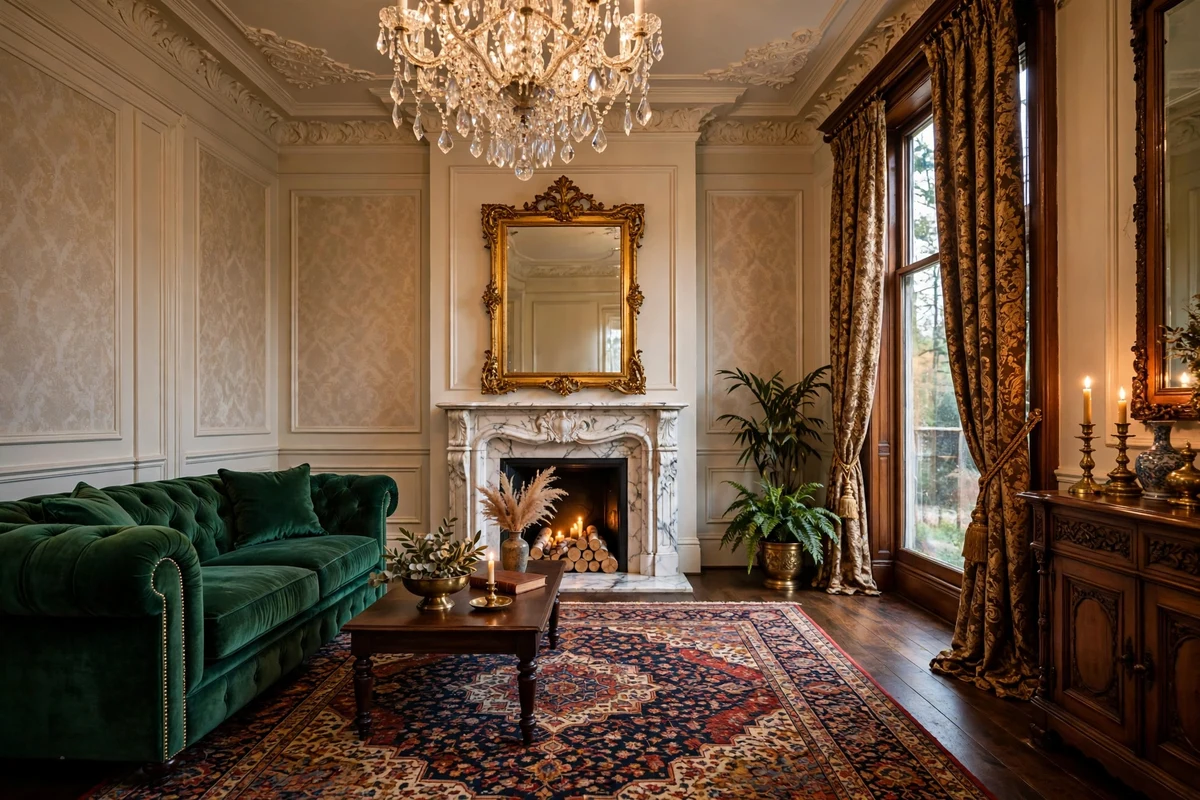
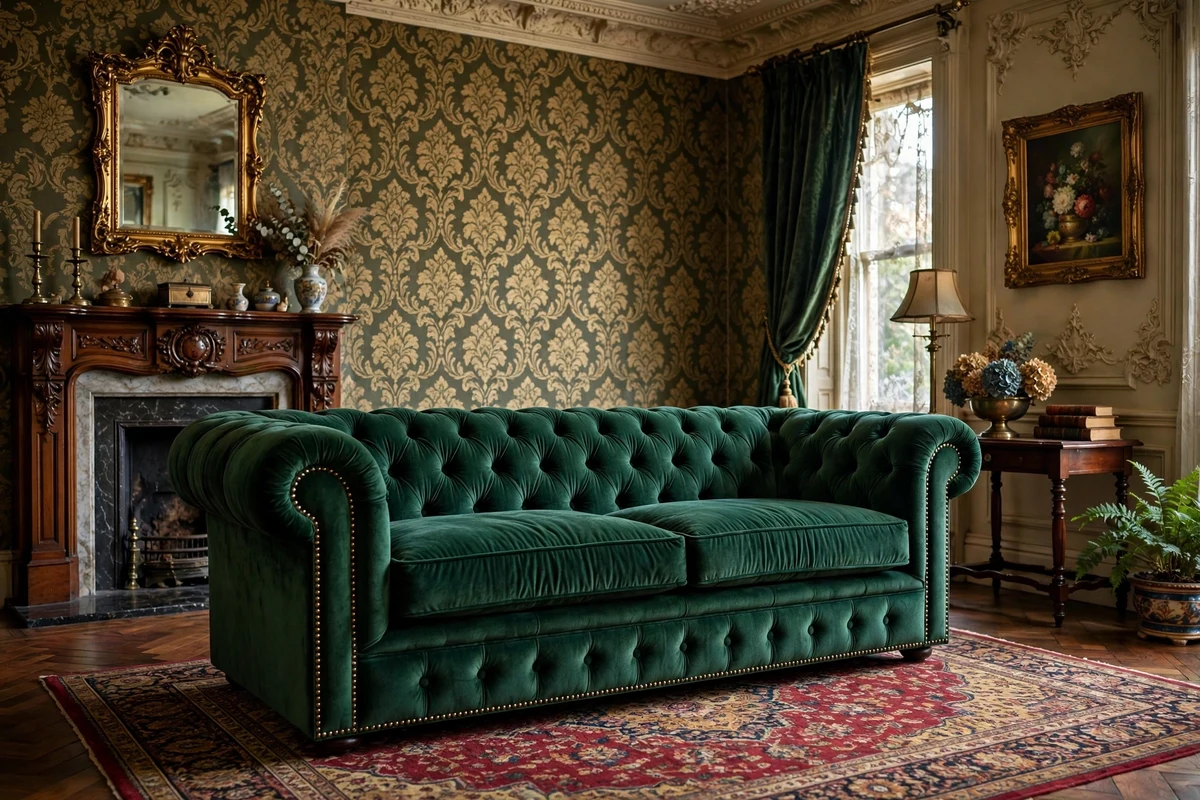
No piece says Victorian quite like a deep-buttoned Chesterfield sofa. With its rolled arms, low back, and hand-tufted upholstery, it anchors the room with old-world authority. Velvet in jewel tones like emerald, ruby, or sapphire feels most authentic, while a rich cognac leather version leans into the gentleman’s club look. Expect to pay $1,200–$3,500 for a quality velvet Chesterfield from retailers like Restoration Hardware or a vintage find restored by an upholsterer. Pro tip: Buy the best quality you can afford for this one piece, since it defines the entire room.
2. Crystal Chandelier
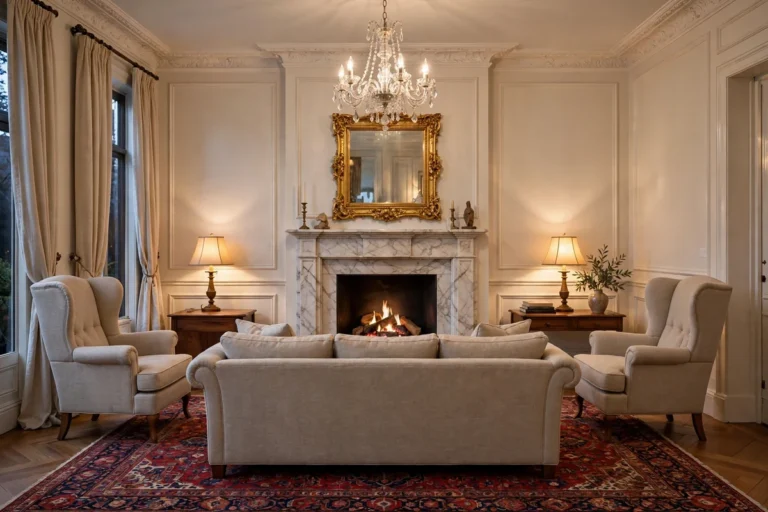
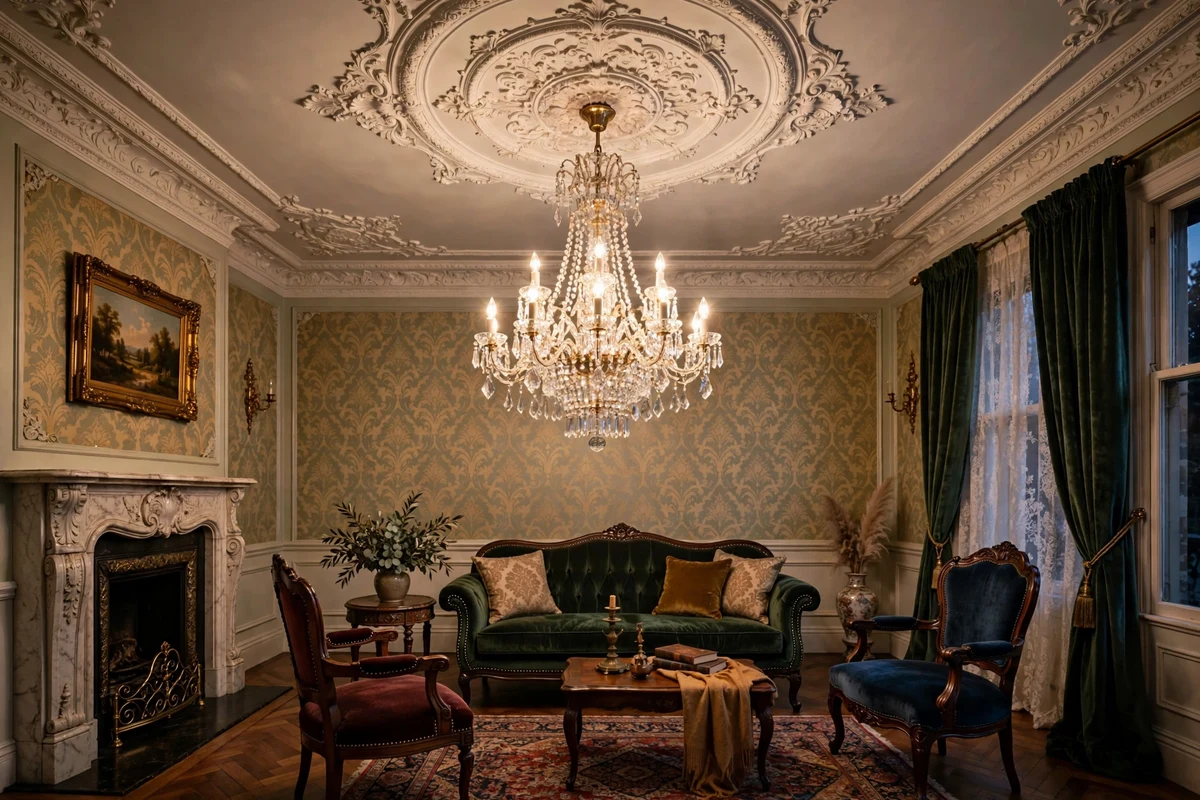
A crystal chandelier is the crown jewel of a Victorian living room. Multi-tier designs with candle-style bulbs cast the warm, flattering light the era is famous for, and cut crystal prisms scatter rainbows across the walls at golden hour. Hang it from an ornate ceiling medallion for full period drama. New chandeliers run $300–$1,500 depending on size and crystal quality, while genuine antique finds at estate sales can be rewired for around $200–$400 by an electrician. Pro tip: Choose a chandelier roughly half the width of your dining or coffee table below it for balanced proportions.
3. Marble Fireplace
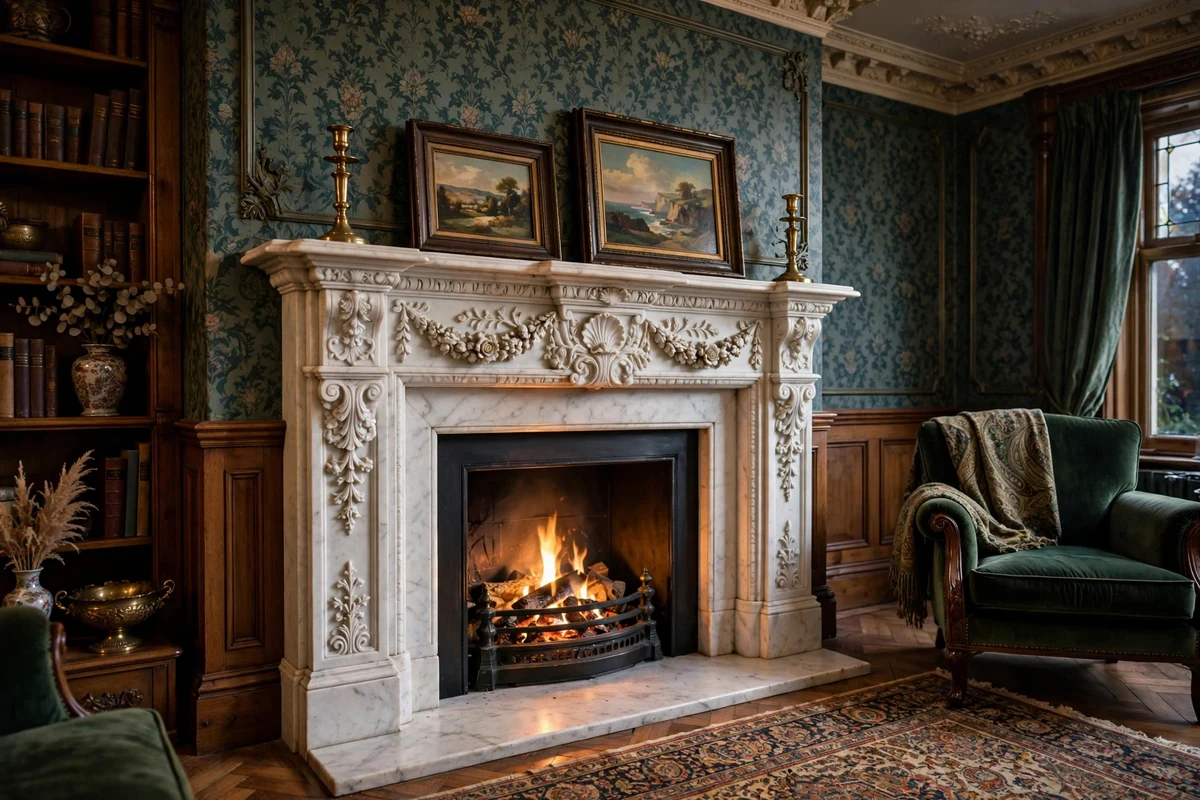
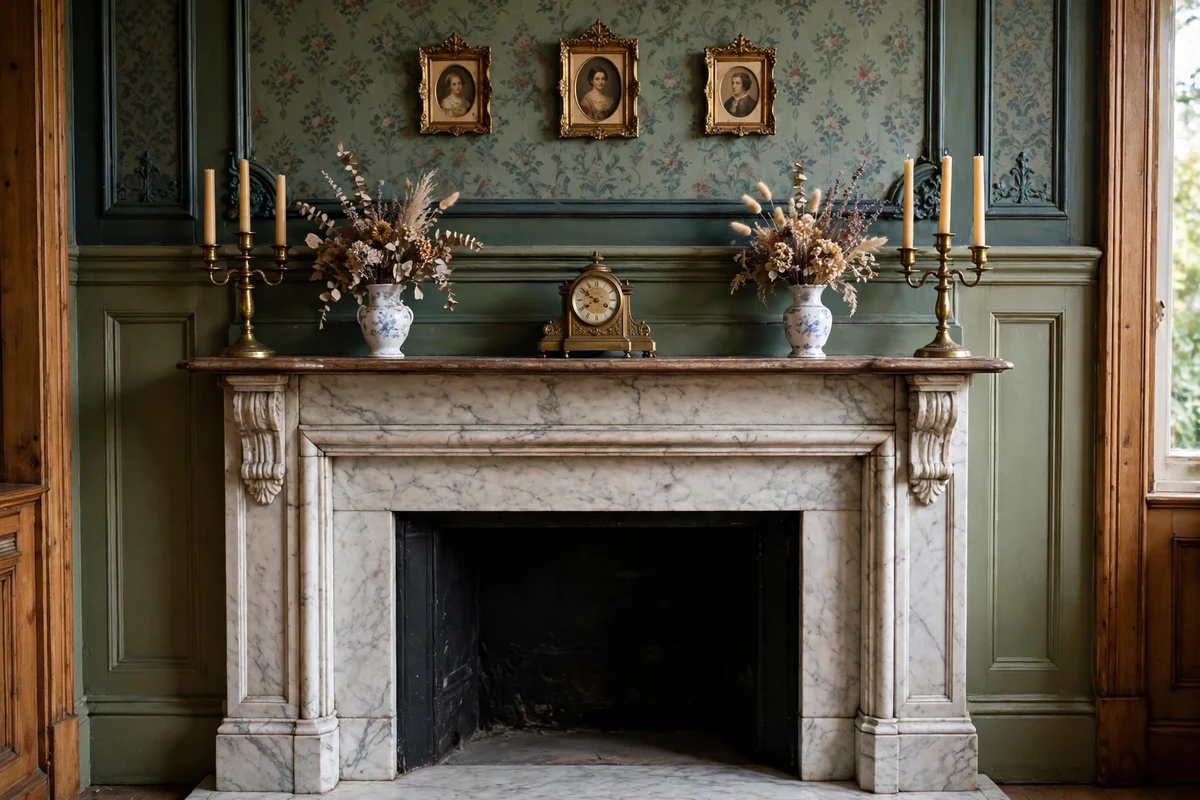
The fireplace was the heart of the Victorian parlor, and a marble surround with a carved mantel delivers instant period authenticity. White Carrara or warm travertine both work beautifully. Style the mantel with a symmetrical arrangement of candlesticks, a small clock, and framed miniatures for that collected Victorian look. A marble fireplace surround costs $1,500–$4,000 installed, or fake the look with a painted wood mantel and marble-look tile for under $500. Pro tip: Keep the firebox simple with birch logs or candles if you do not have a working flue.
4. Oversized Gilt Mirror
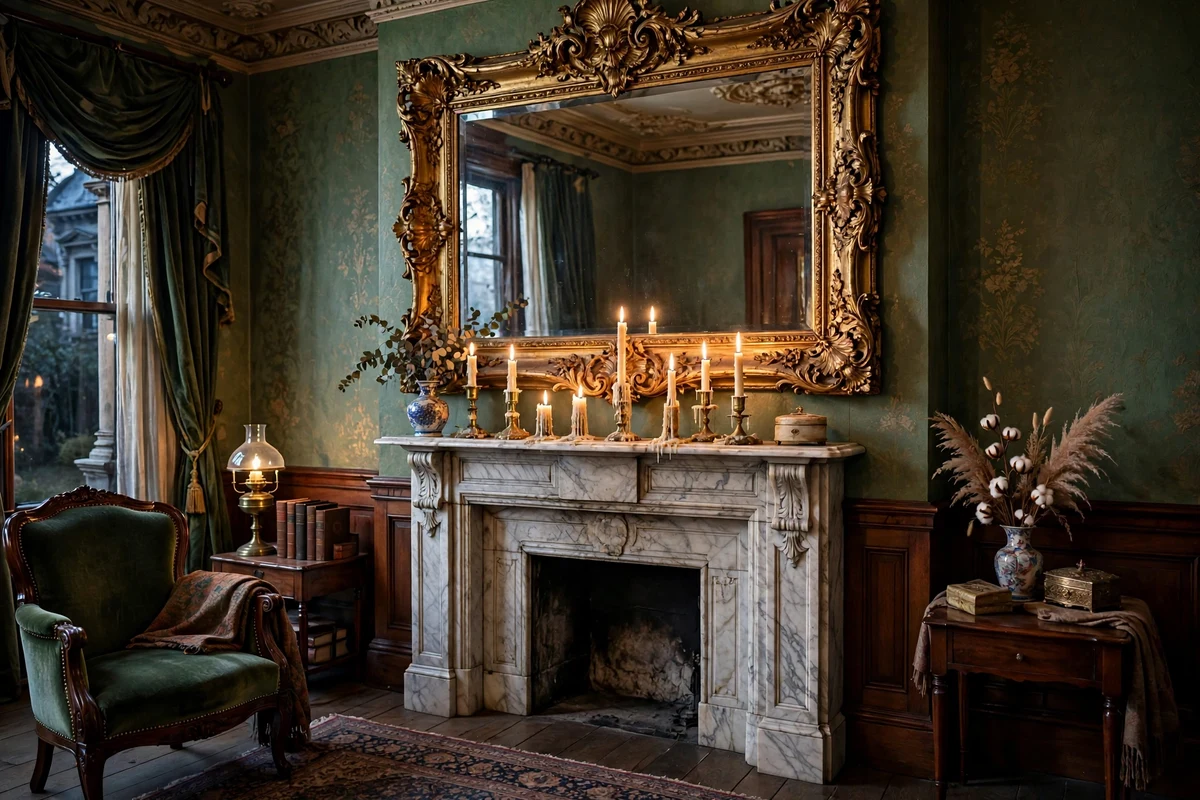
Hang an oversized gilt mirror above the mantel and watch the room double in light and drama. Victorian mirrors feature deeply carved frames, often with acanthus leaves or ribbon motifs, finished in gold leaf or antique gold. The reflection bounces chandelier light around the room beautifully. Quality reproductions cost $250–$900, while genuine antique gilt mirrors start around $600 at auction houses and antique fairs. Pro tip: Tilt the mirror slightly forward on its wire so it catches the chandelier reflection perfectly.
5. Damask Wallpaper Accent Wall
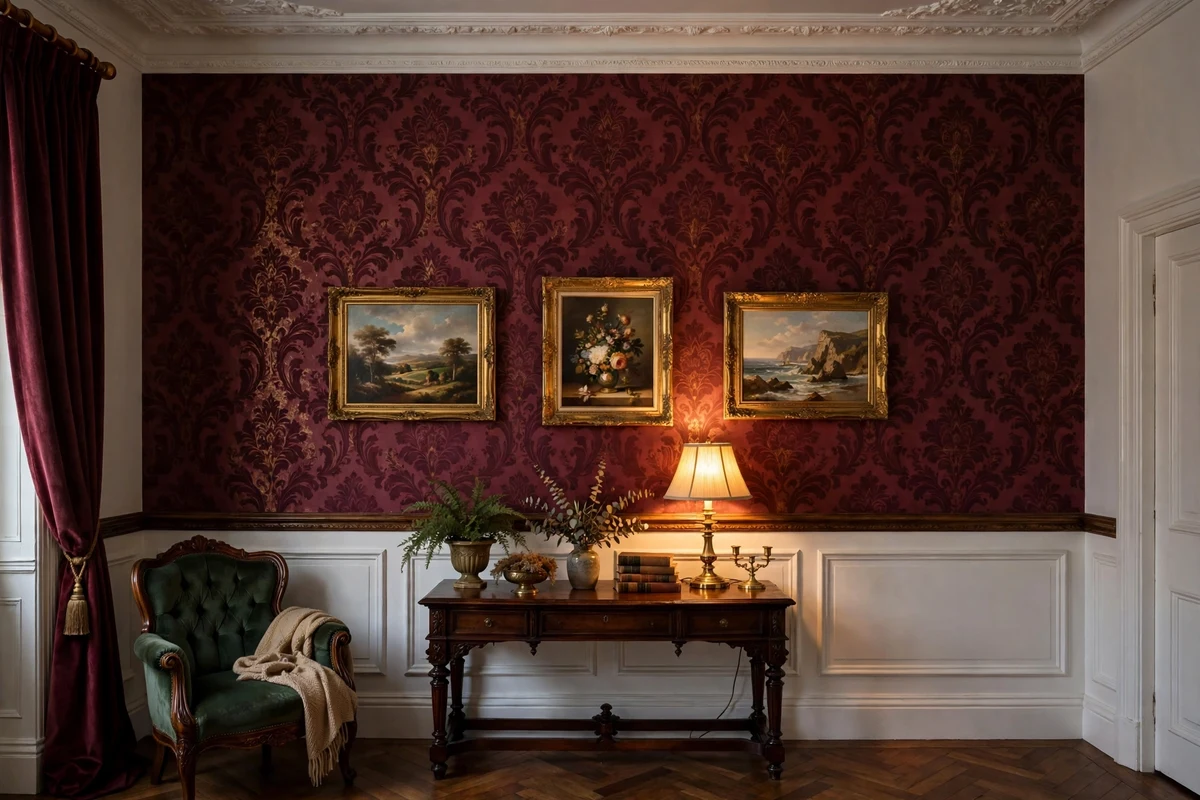
Damask wallpaper is Victorian pattern at its most iconic. A single accent wall in deep burgundy, forest green, or navy damask adds depth and formality without overwhelming the room. Pair it with crisp white wainscoting below and simple painted walls elsewhere so the pattern stays special. Quality damask wallpaper costs $60–$150 per roll, and most accent walls need 2–3 rolls plus paste. Pro tip: Test a large sample in both daylight and lamplight, since damask looks dramatically different under each.
6. Tufted Chaise Lounge
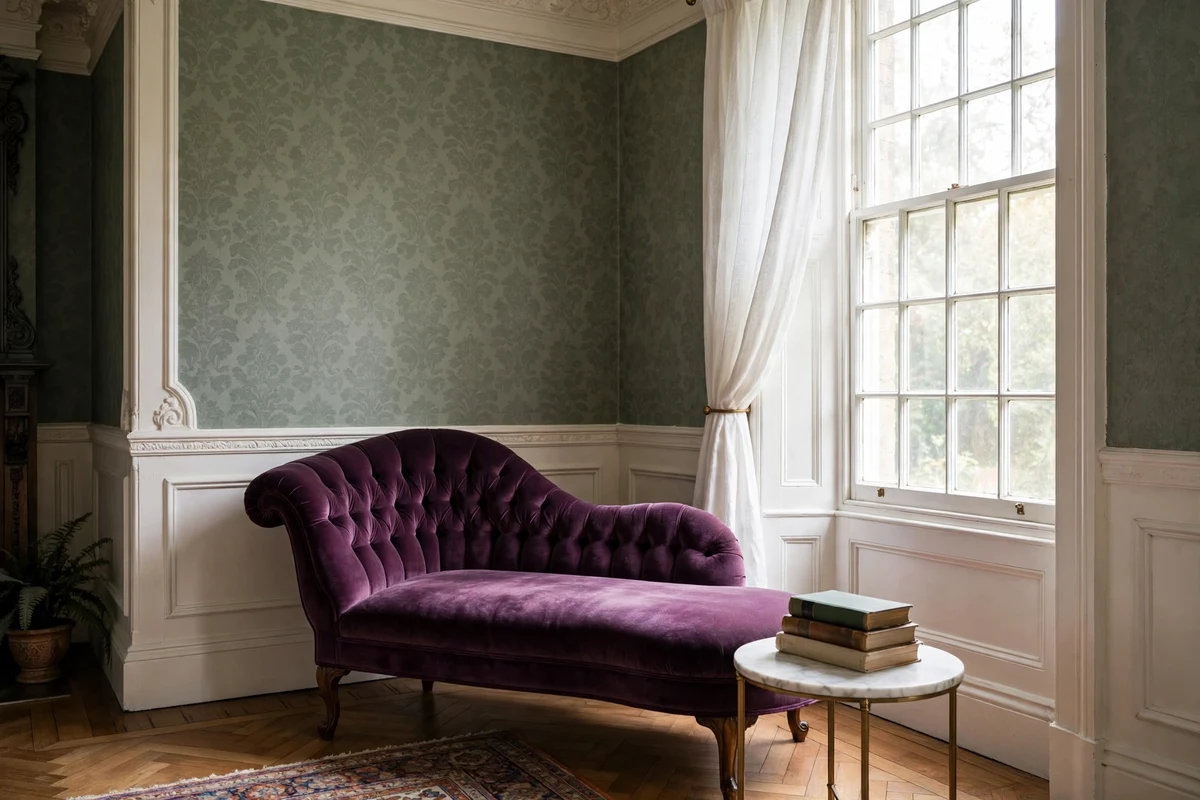
A tufted chaise lounge tucked into a bay window or quiet corner adds pure Victorian romance. These curved-back daybeds were made for reading and afternoon rest, and they bring sculptural elegance to any spot they occupy. Velvet or brocade upholstery in plum, teal, or dusty rose feels most period-appropriate. Expect to pay $500–$1,400 for a new chaise, or $150–$400 for a vintage frame worth reupholstering. Pro tip: Style it with a small side table and a stack of clothbound books to complete the vignette.
7. Ornate Persian Rug
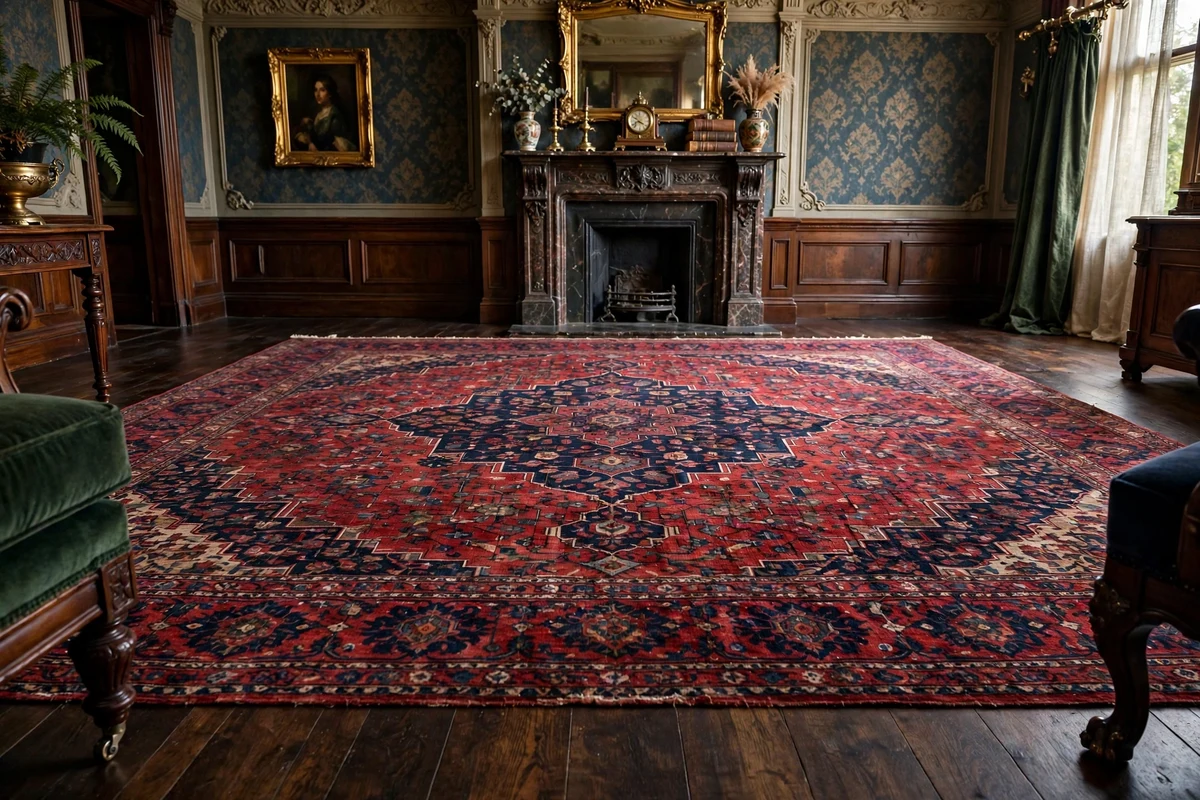
Layer an ornate Persian or Oriental rug over dark hardwood floors to ground the room in Victorian warmth. Deep reds, navies, and ivory patterns with intricate borders complement carved wood furniture beautifully. A large 8×10 rug anchors the seating area, while runners work well in hallways and entryways. Genuine hand-knotted rugs cost $800–$5,000, but quality machine-made reproductions start around $200 and look convincing. Pro tip: Choose a rug with at least the front legs of all seating on it to unify the arrangement.
8. Floor-to-Ceiling Drapes
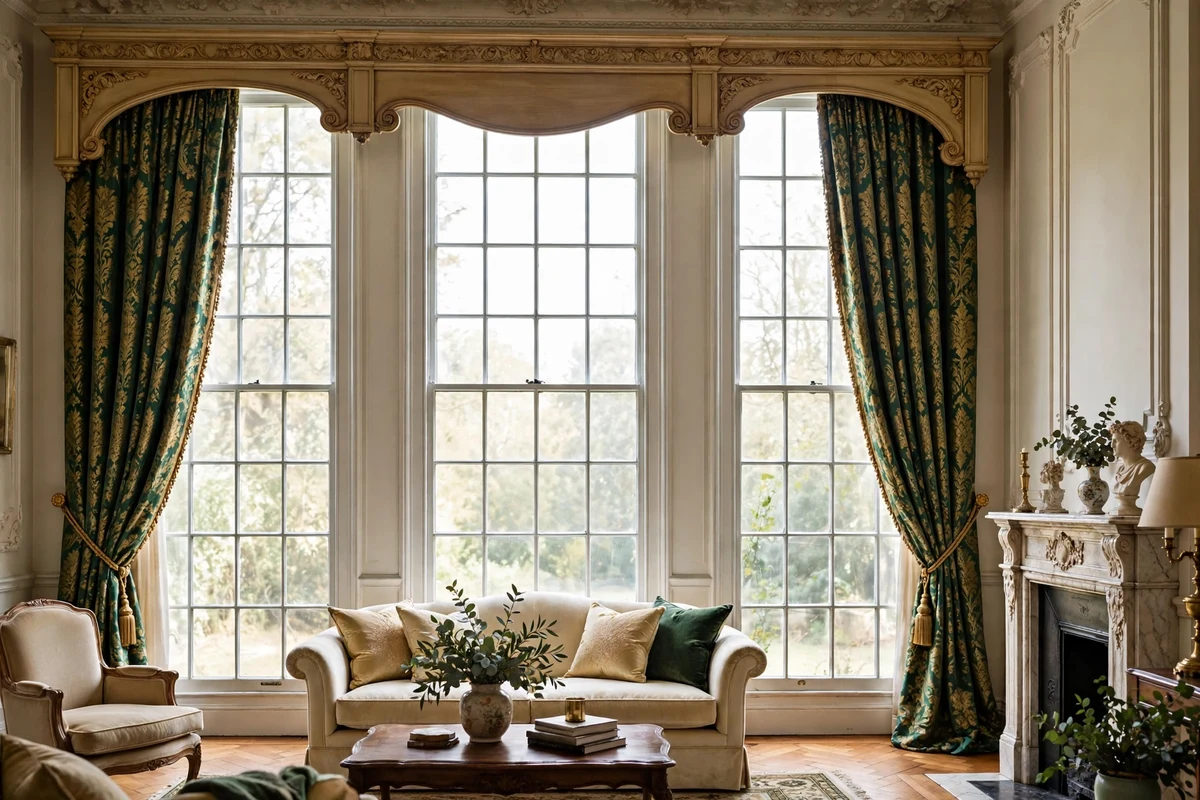
Victorian windows demand drama, and floor-to-ceiling drapes deliver it. Heavy brocade or velvet panels with a shaped pelmet valance or swagged top treatment frame tall windows beautifully. Hang the rod near the ceiling and extend it well past the window frame so the drapes stack on the wall, making windows look grander. Custom drapes cost $400–$1,200 per window, while ready-made velvet panels start around $60 per pair. Pro tip: Use gold or brass tiebacks to hold panels open during the day and show off the window trim.
9. Antique Display Cabinet
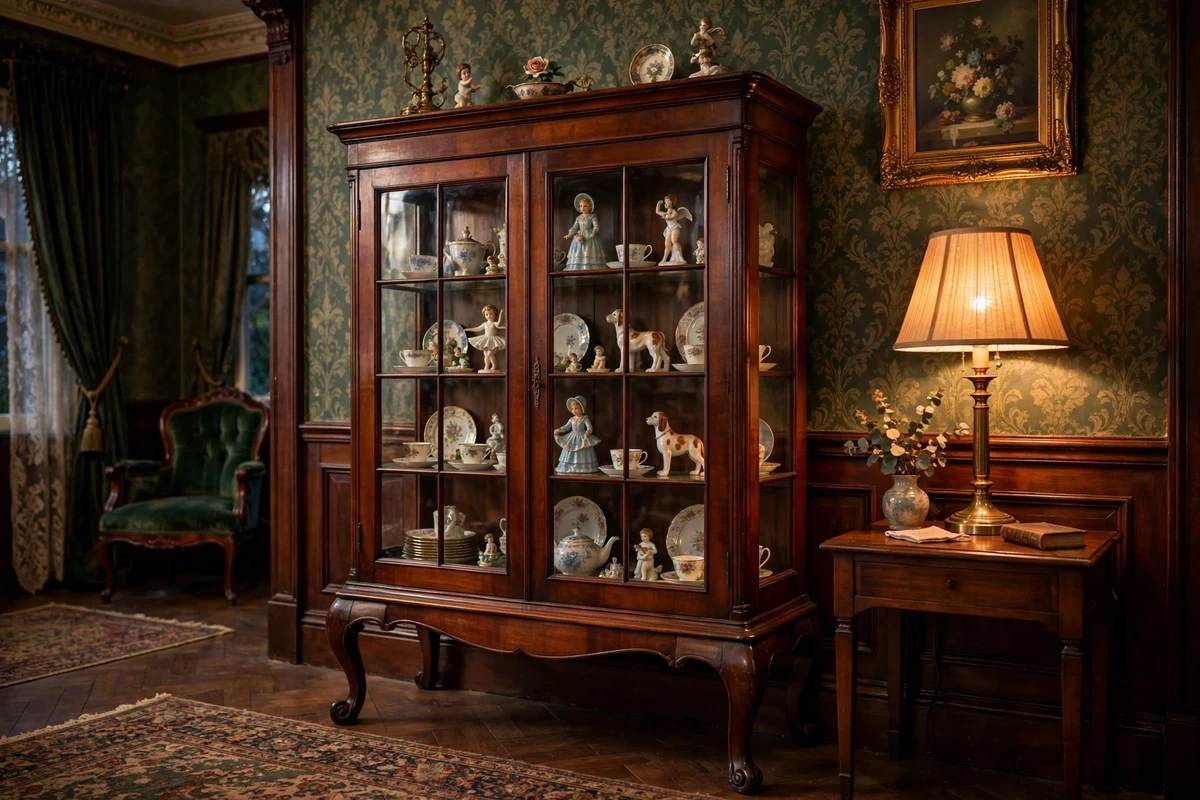
A mahogany or walnut display cabinet with glass doors shows off the collections Victorians loved: porcelain figurines, teacups, silver, and curiosities. Look for curved glass, cabriole legs, and carved details that signal the era. These pieces add height and visual interest while keeping treasured items dust-free. Antique cabinets cost $300–$1,200 at flea markets and estate sales, often less than reproductions. Pro tip: Light the interior with small battery puck lights to make the contents glow at night.
Architectural Details and Light (10–17)
10. Leather Wingback Armchair
A leather wingback armchair with brass nailhead trim brings the gentleman’s library into the living room. The high wings were originally designed to shield sitters from drafts, and they create a wonderfully cocooned reading spot. Cognac, oxblood, or dark brown leather develops a gorgeous patina with age. New wingbacks cost $700–$2,000, while vintage leather chairs with good bones run $200–$600. Pro tip: Condition the leather twice a year to keep it supple and prevent cracking.
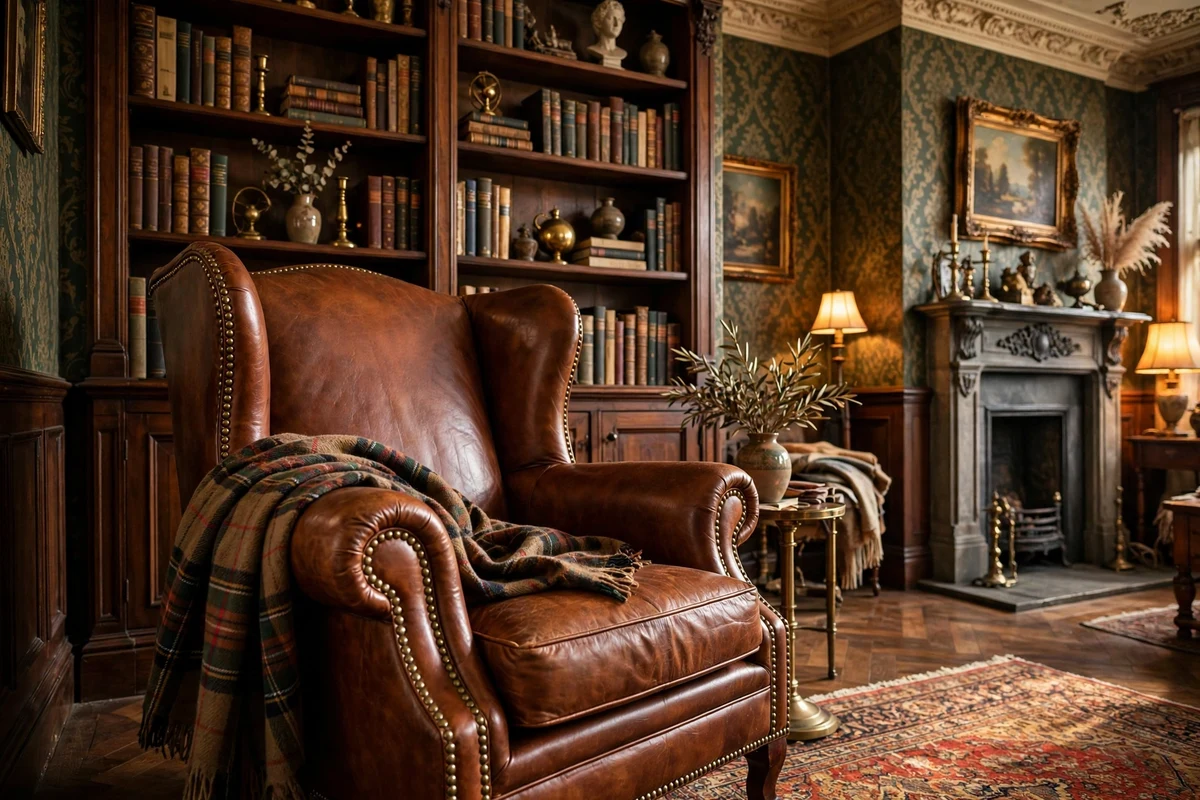
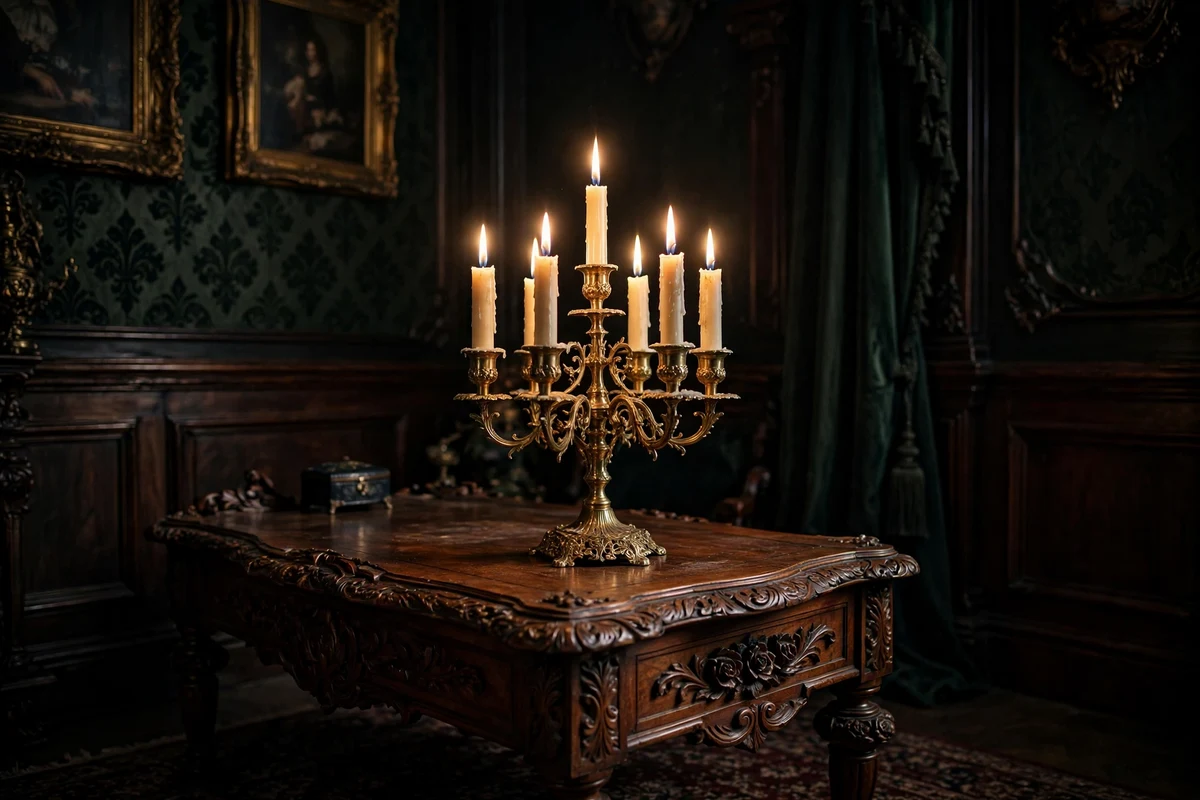
11. Brass Candelabra
Scatter brass candelabras on side tables, the mantel, and the dining-adjacent console for authentic Victorian glow. Tapered ivory candles in polished brass holders catch the light beautifully and cost almost nothing to refresh. Ornate candelabras run $40–$150 each new, or $10–$40 apiece at thrift stores and flea markets. Pro tip: Use flameless LED tapers with a warm 2200K color temperature for the same glow without the fire risk.
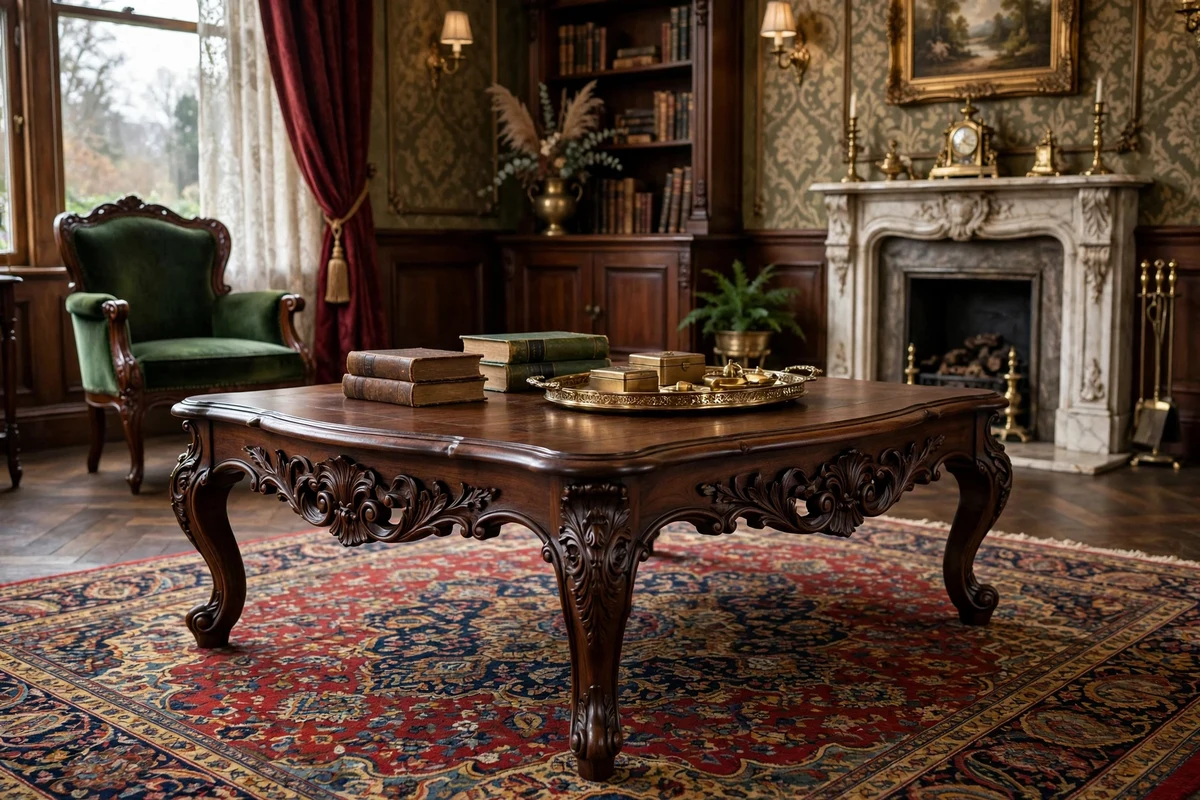
12. Hand-Carved Coffee Table
A hand-carved coffee table with cabriole legs and scrollwork becomes the sculptural center of the seating area. Victorian carving celebrates natural motifs like leaves, shells, and scrolls, so look for pieces with deep, crisp detail. Antique carved tables cost $250–$800 at estate sales, while new reproductions run $400–$1,200. Pro tip: Check the underside for hand-cut dovetails and old screws to confirm a piece is genuinely antique.
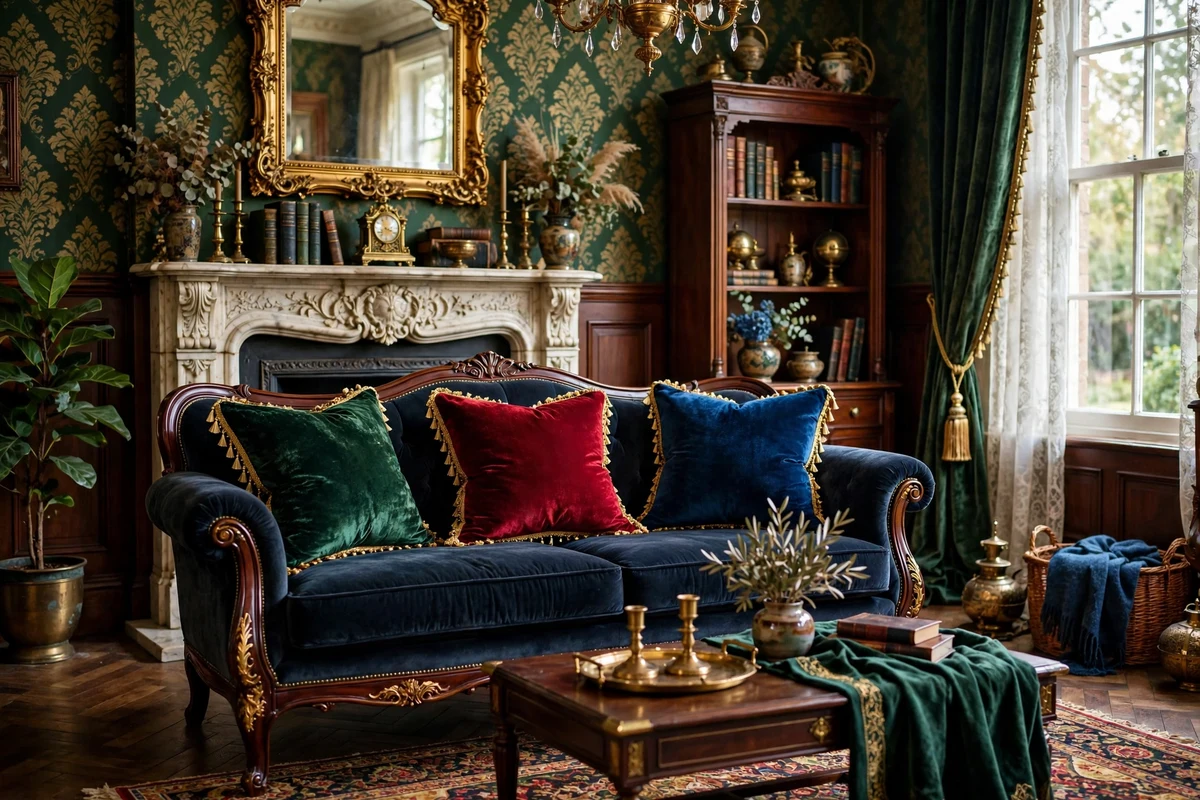
13. Jewel-Tone Velvet Pillows
Layer jewel-tone velvet pillows in emerald, ruby, sapphire, and amethyst across the sofa and chairs. The Victorians loved rich color, and velvet catches lamplight in a way flat fabrics cannot. Mix sizes and add gold trim or tassels for full period effect. Quality velvet pillow covers cost $25–$60 each. Pro tip: Use feather inserts rather than polyfill so the pillows hold their shape and develop that coveted karate-chop crease.
14. Oil Painting Gallery Wall
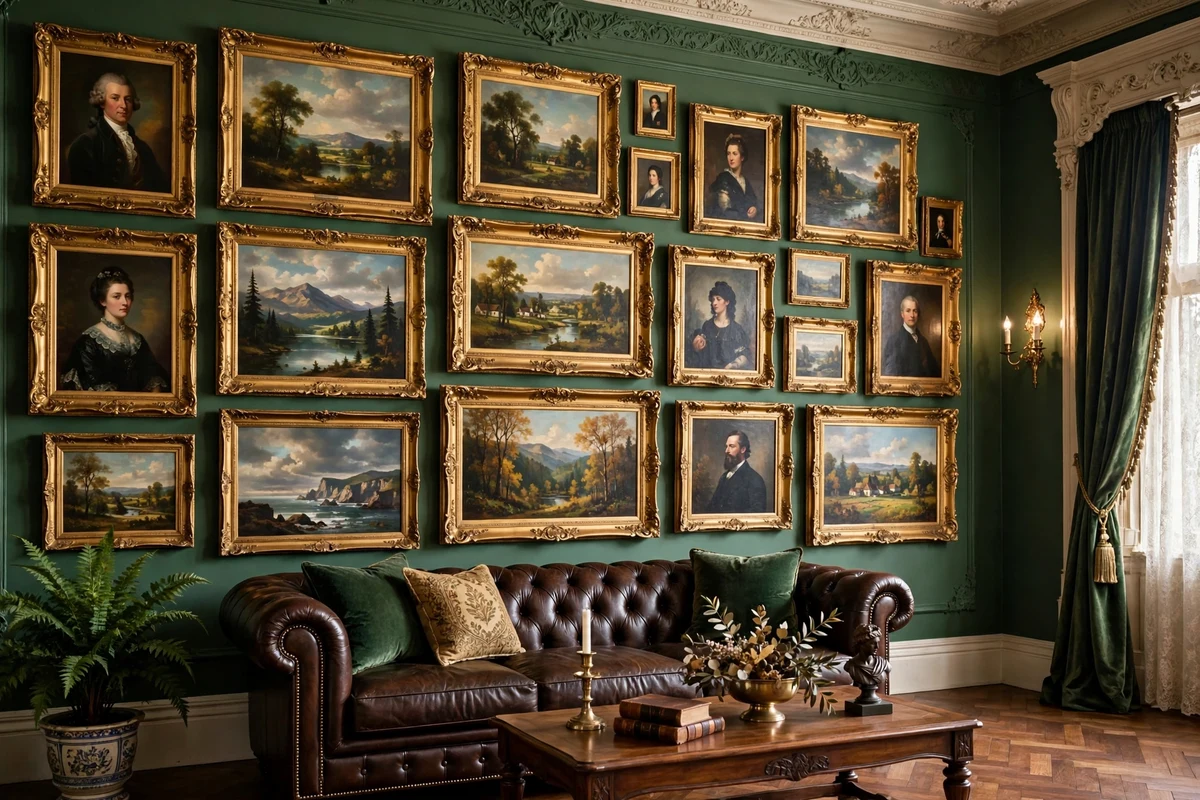
Cover one wall with framed oil paintings in ornate gold frames for a salon-style gallery wall. Victorian homes displayed art floor to ceiling, mixing portraits, landscapes, and still lifes. You can build the look with thrifted art, flea market finds, and even quality prints in vintage-style frames. Budget $15–$80 per framed piece. Pro tip: Lay the arrangement on the floor first and photograph it before hanging anything.
15. Victorian Fainting Couch
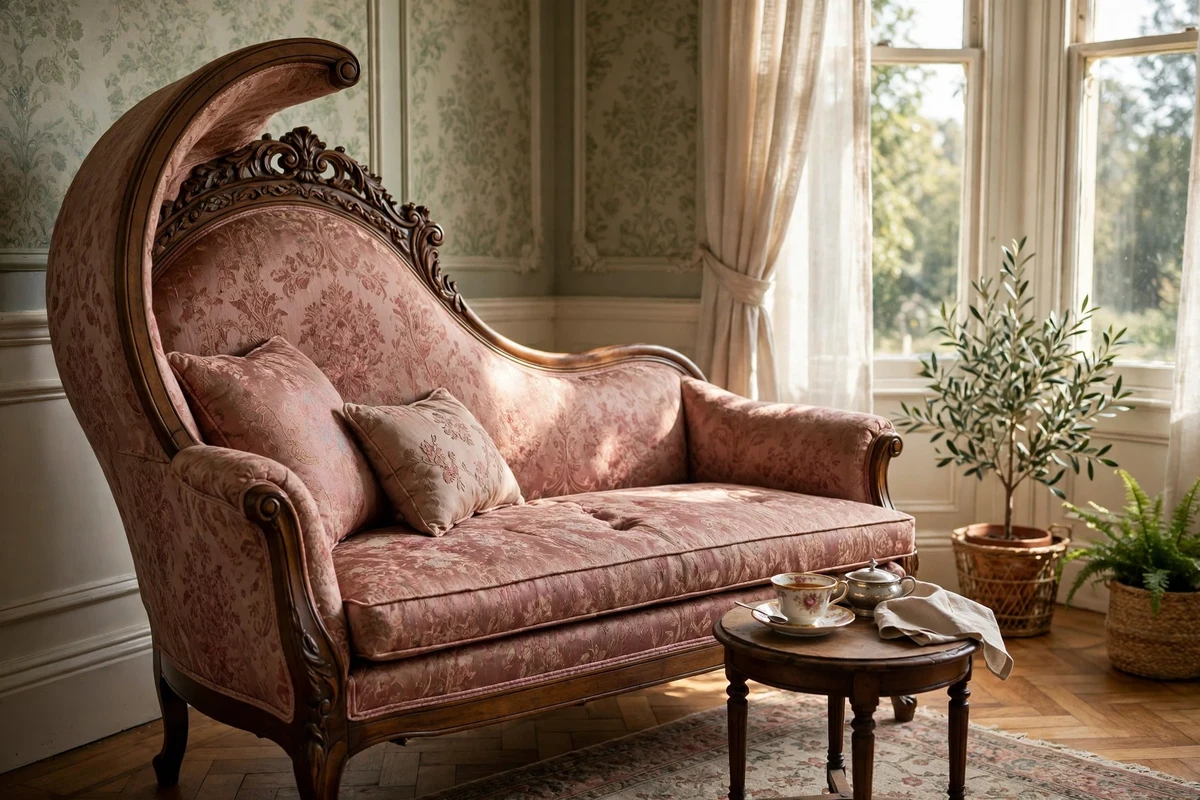
A fainting couch with its asymmetrical curved back is one of the most romantic silhouettes in furniture history. Place one in a sunny corner with a small side table for the ultimate reading nook. Brocade or damask upholstery in dusty rose, sage, or gold feels most authentic. Vintage fainting couches cost $200–$700 at antique shops, with reupholstery running $400–$900 for a full restoration. Pro tip: These were designed to be viewed from the back too, so float one in the room rather than pushing it against a wall.
16. Stained Glass Accent
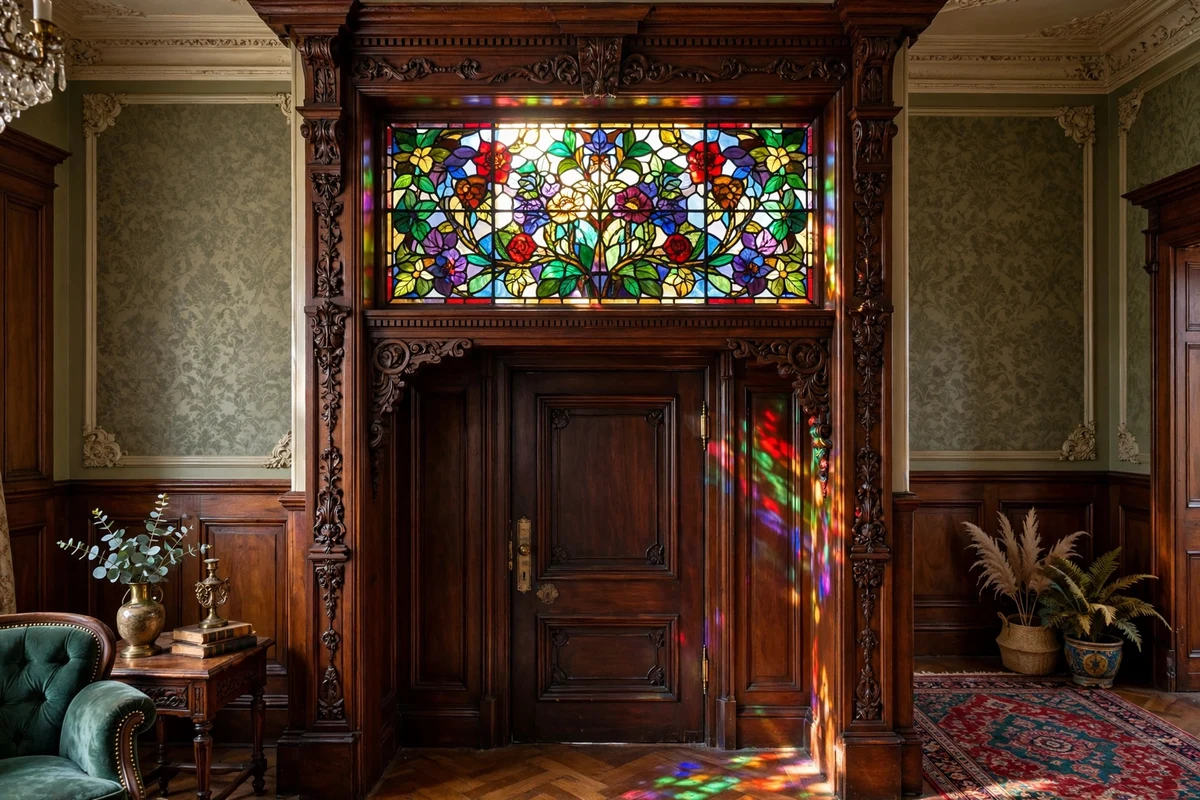
Add a stained glass transom panel above a doorway or in an interior window to bring Victorian color play into the room. Jewel-toned floral and geometric patterns cast gorgeous colored light across the floor in the afternoon. Custom panels cost $300–$1,000, but vintage-look reproduction panels start around $80 at home stores. Pro tip: Hang a stained glass panel in front of an existing window with chains for a renter-friendly version.
17. Library Wall With Rolling Ladder
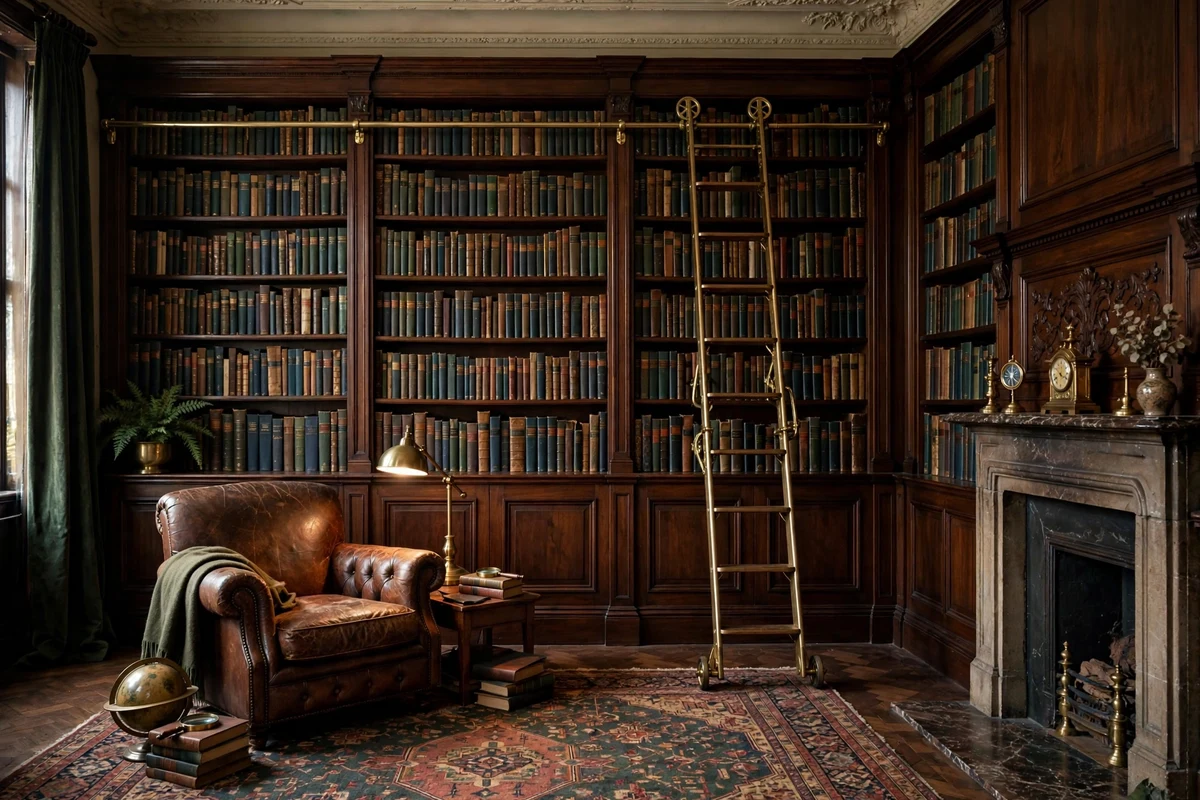
Nothing says Victorian quite like a wall of books with a brass rolling ladder. Floor-to-ceiling dark wood shelves filled with clothbound books create the scholarly atmosphere the era celebrated. New built-in shelving costs $1,000–$3,000, while a rolling ladder runs $200–$600. Budget version: tall IKEA Billy bookcases painted dark green with brass cup pulls. Pro tip: Arrange books by color within each shelf for a curated look that still feels abundant.
Textiles, Color and Pattern (18–25)
18. Antique Piano Corner
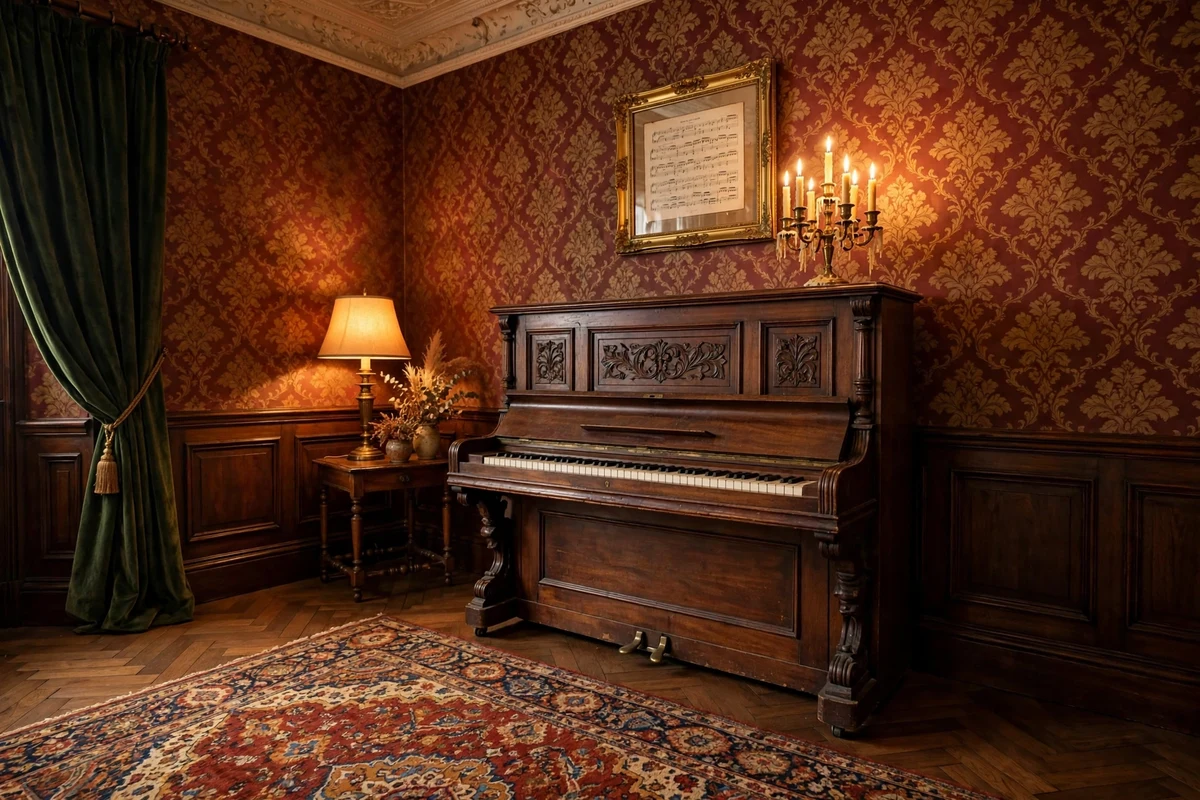
If you play, an antique upright piano turns a living room corner into a Victorian music room. Even as a decorative piece, a piano with a candelabra on top and framed sheet music nearby adds tremendous character. Working antique uprights cost $500–$2,000, while free pianos appear regularly on local marketplaces (budget $300–$500 for professional moving). Pro tip: Have any used piano tuned and inspected before you commit to the moving cost.
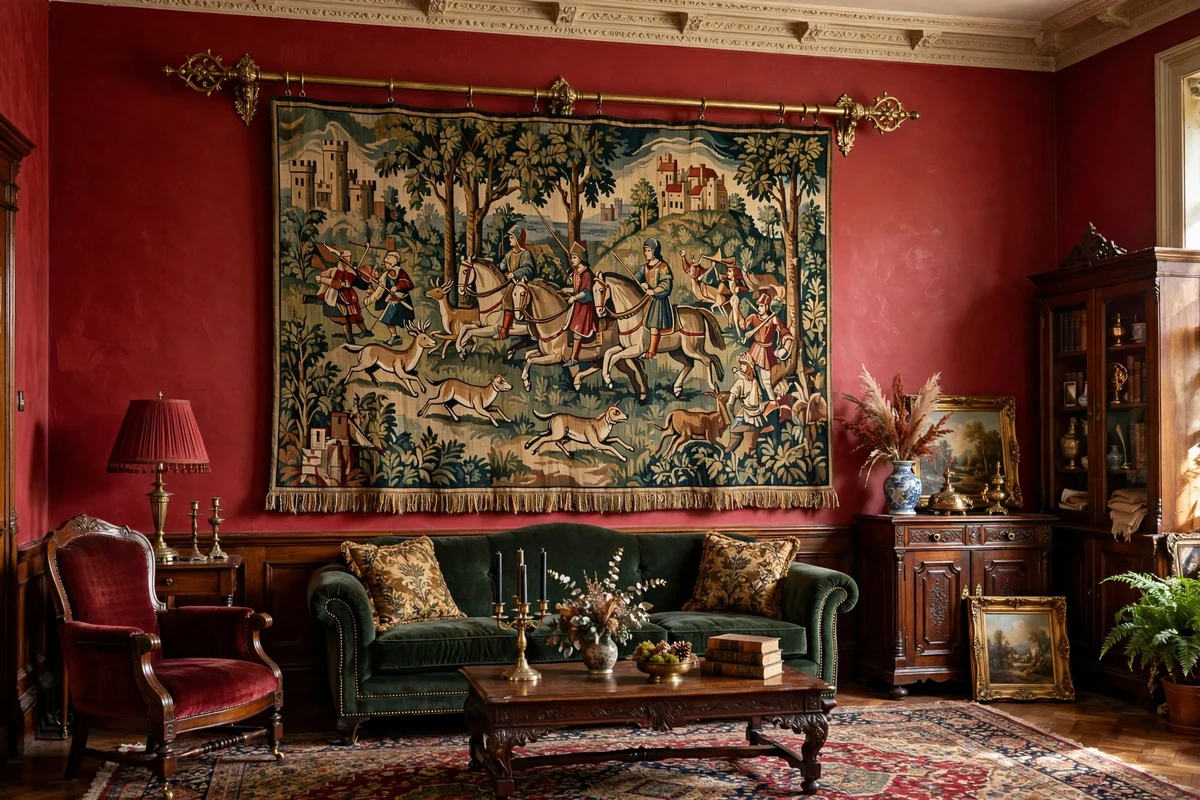
19. Woven Tapestry Wall Hanging
A large woven tapestry brings medieval romance to a Victorian wall. Hunting scenes, millefleur florals, and heraldic designs all fit the era’s love of storytelling through decor. Tapestries also soften acoustics in rooms with hard floors. Quality woven reproductions cost $80–$300 depending on size. Pro tip: Hang tapestries from a decorative rod with large finials rather than nailing them directly to the wall.
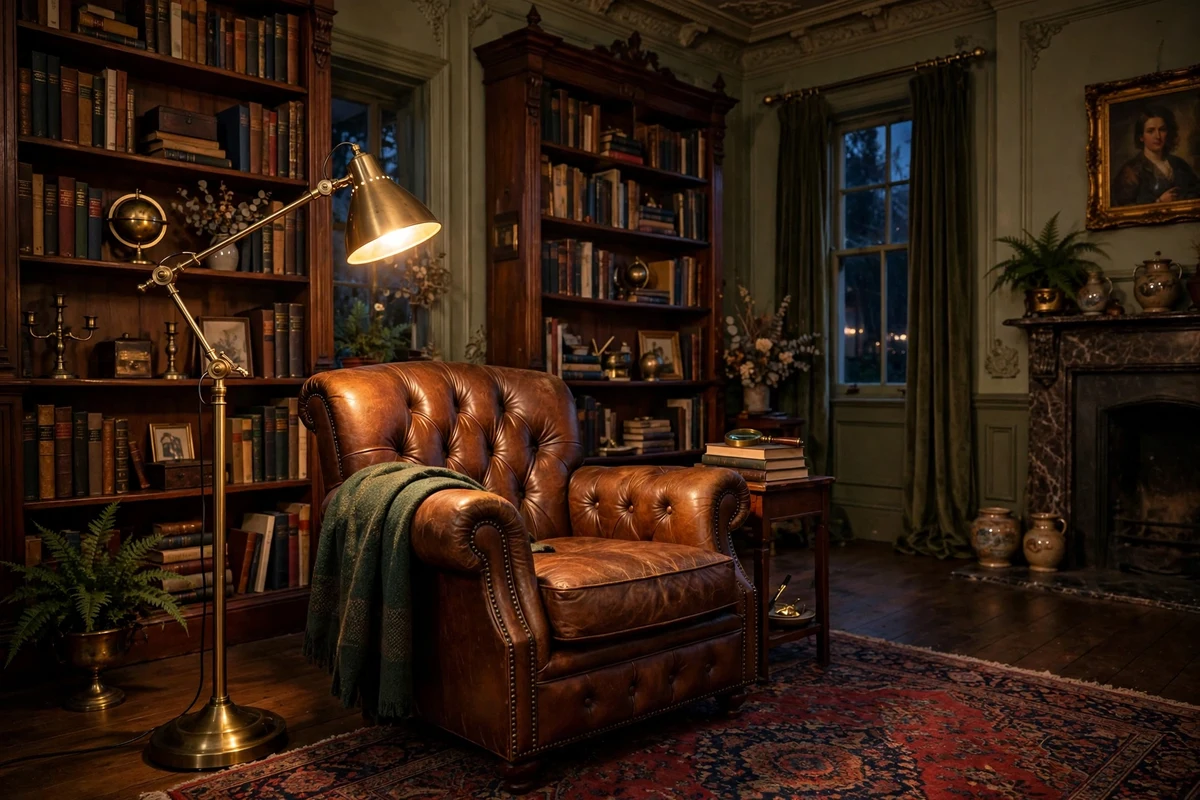
20. Brass Pharmacy Floor Lamp
A brass pharmacy lamp with an adjustable arm brings focused light to your reading chair while adding gleaming Victorian metalwork. The classic banker’s shade in emerald green glass is especially period-appropriate. New brass pharmacy lamps cost $120–$350. Pro tip: Position the lamp so the shade sits just above shoulder height when you are seated for glare-free reading.
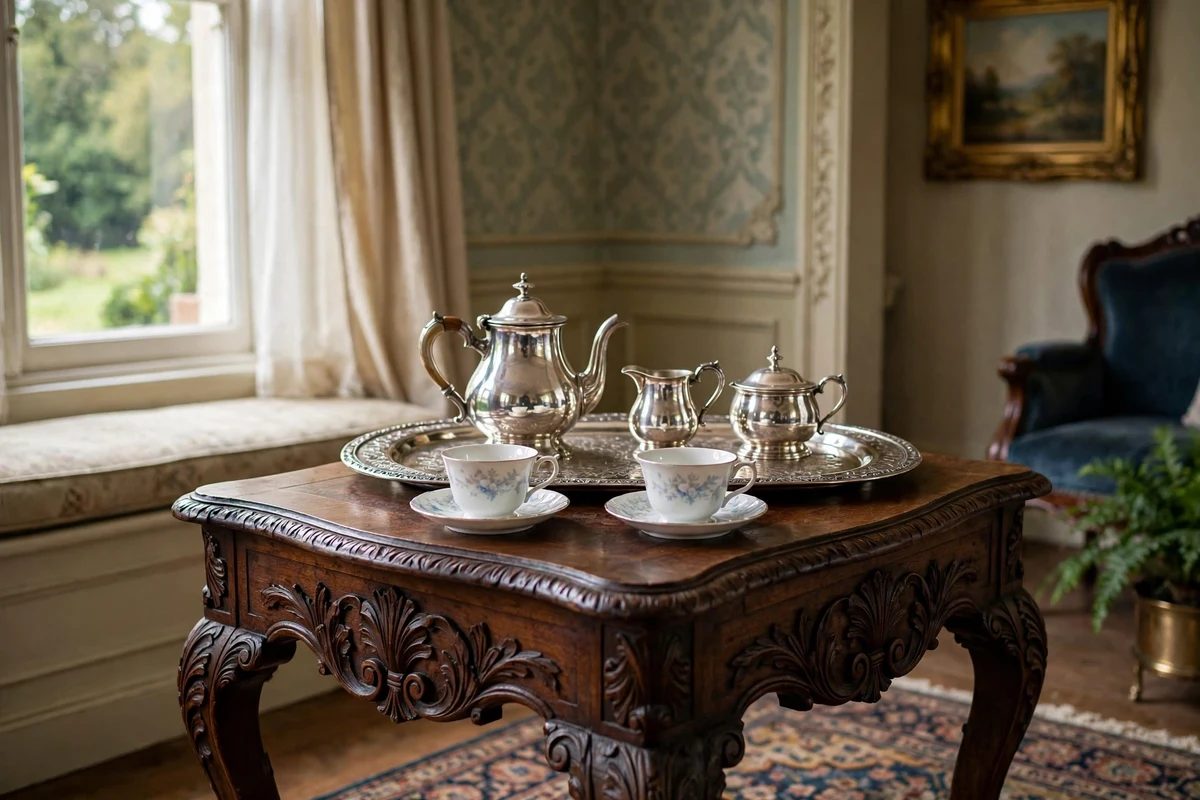
21. Silver Tea Set Display
Display a polished silver tea set on a side table or in the cabinet to honor the Victorian ritual of afternoon tea. Even if you never brew a pot, the gleaming silver adds unmistakable period character. Complete sets cost $150–$600 at antique shops, while individual pieces start around $30. Pro tip: Polish silver with a soft cloth and proper silver cream, never abrasive cleaners that scratch the finish.
22. Styled Mantel Vignette
Treat the mantel as a curated Victorian still life: a small antique clock centered, flanked by matching candlesticks, with porcelain vases and framed miniatures layered in front. Symmetry was the Victorian ideal, so mirror each side. You can build a complete mantel vignette for $100–$400 from thrift and flea market finds. Pro tip: Step back and squint to check the silhouette; the arrangement should read as a pleasing triangle.
23. Velvet Ottoman Centerpiece
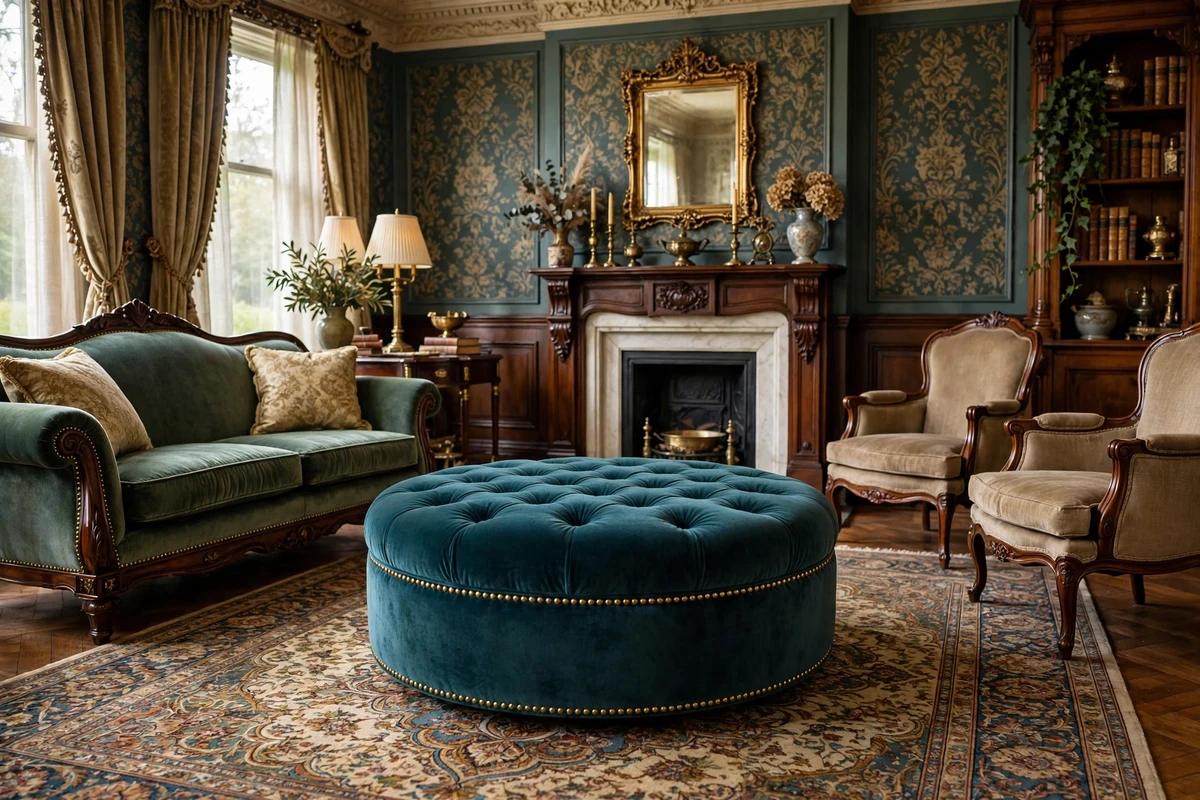
Replace a standard coffee table with a round, deep-buttoned velvet ottoman for softer Victorian luxury. It doubles as extra seating and a footrest, and a tray on top turns it into a serving surface. Teal, burgundy, or mustard velvet with nailhead trim looks stunning. Ottomans cost $150–$500 new. Pro tip: Choose an ottoman on small bun feet so it feels lighter and lets the rug pattern show.
24. Framed Victorian Portraits
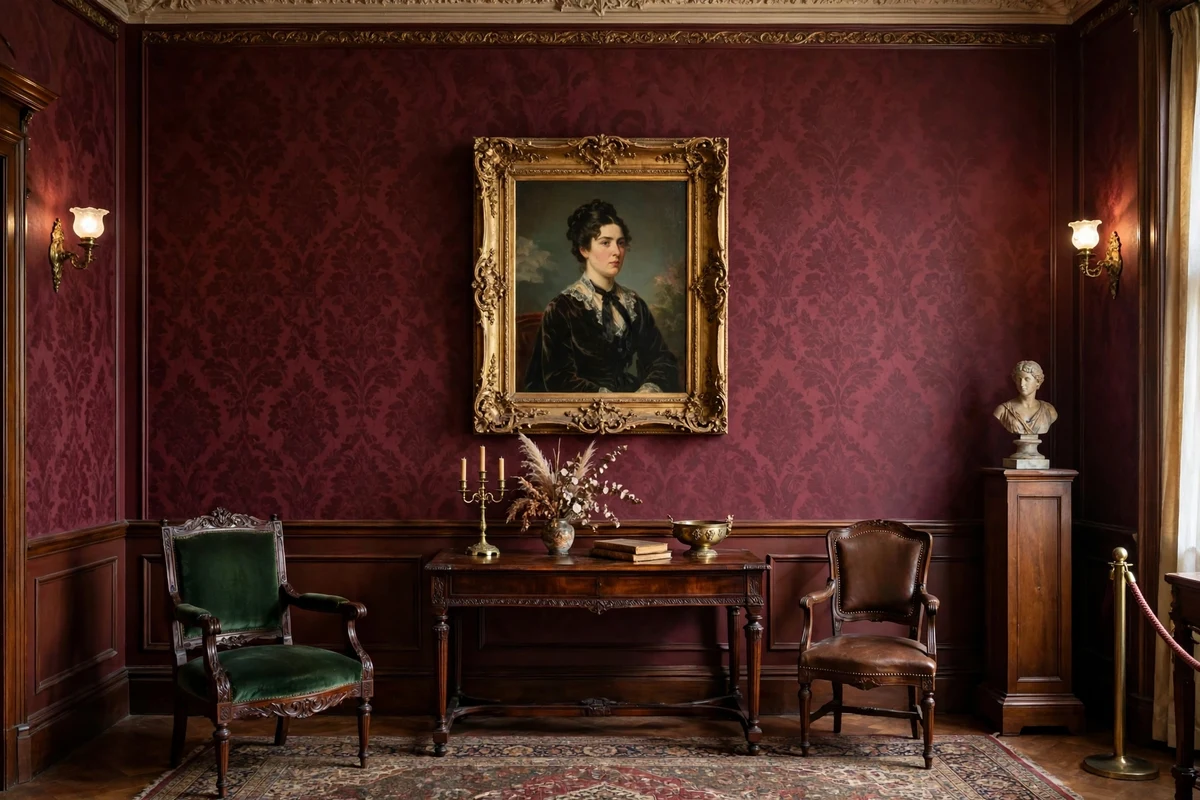
Hang one or two framed Victorian-era portraits for instant old-world soul. You do not need real ancestors; flea markets and antique shops are full of anonymous oil portraits with wonderful character. A single striking portrait in a carved frame becomes a conversation piece. Budget $40–$250 per framed portrait. Pro tip: Look for portraits with interesting light on the face rather than famous names; presence matters more than provenance.
25. Chinoiserie Folding Screen
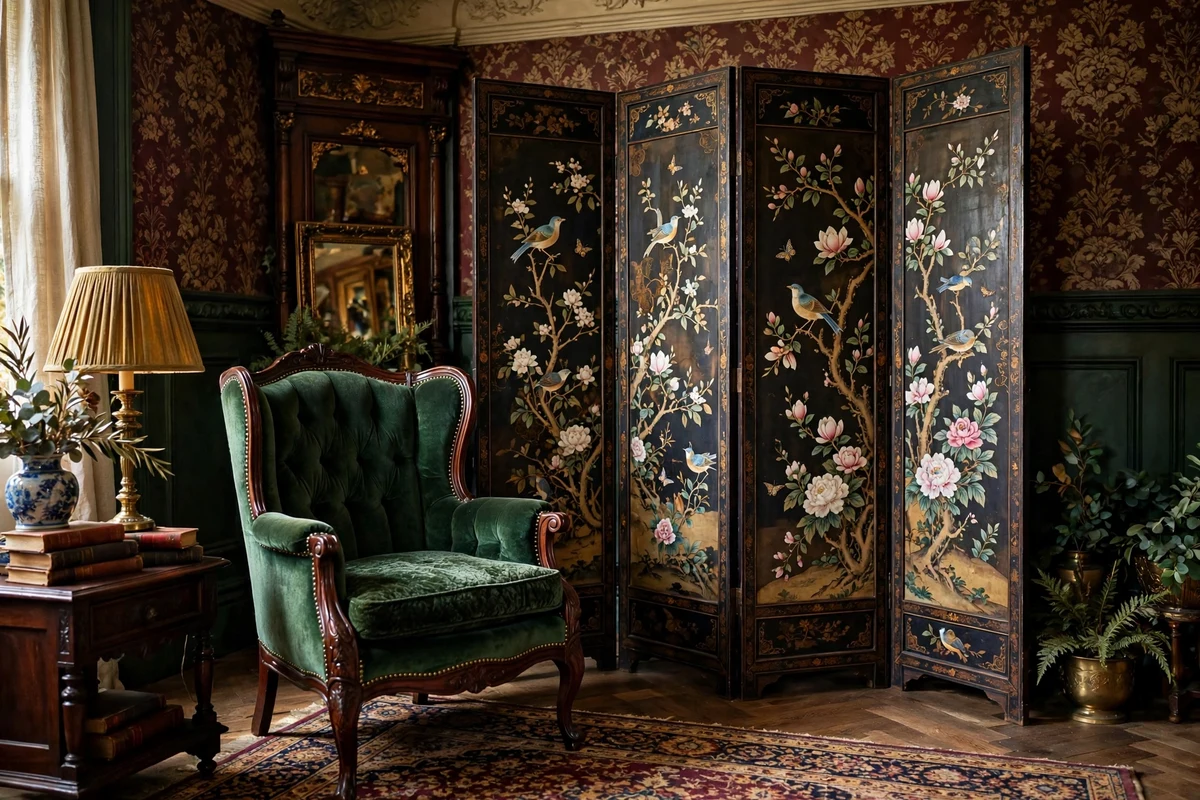
A hand-painted chinoiserie screen adds exotic Victorian flair while defining zones in an open room. The Victorians were fascinated by the East, and screens painted with birds, pagodas, and flowering branches fit the era perfectly. New screens cost $200–$800, while vintage finds run $100–$400. Pro tip: Use a three-panel screen behind a reading chair to create an instant private nook.
Finishing Touches: Victorian Details (26–32)
26. Velvet Curtains With Tiebacks
Swap lighter panels for heavy velvet curtains held with gold rope tiebacks. Velvet blocks drafts beautifully, which is exactly why the Victorians loved it, and the pooled fabric at the floor adds unmistakable luxury. Ready-made velvet panels cost $60–$120 per pair, with tiebacks around $15–$40 each. Pro tip: Let velvet panels puddle 2–3 inches on the floor for the most authentic Victorian look.
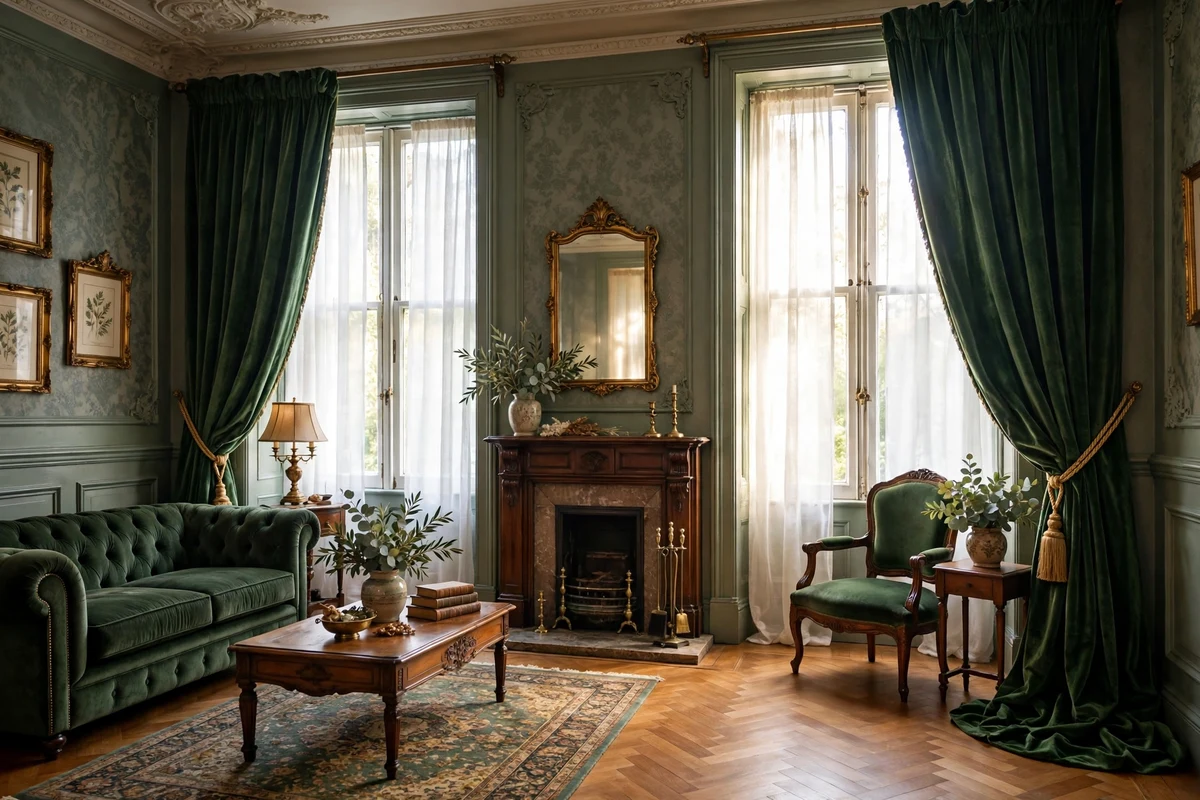
27. Grandfather Clock
A grandfather clock with a carved case and visible brass pendulum brings rhythmic Victorian presence to a hallway or living room corner. The soft tick and hourly chime were the soundtrack of the era. Working antique clocks cost $400–$1,500, while quality new ones start around $800. Pro tip: Have a clock specialist service any antique movement before you buy; repairs can exceed the purchase price.
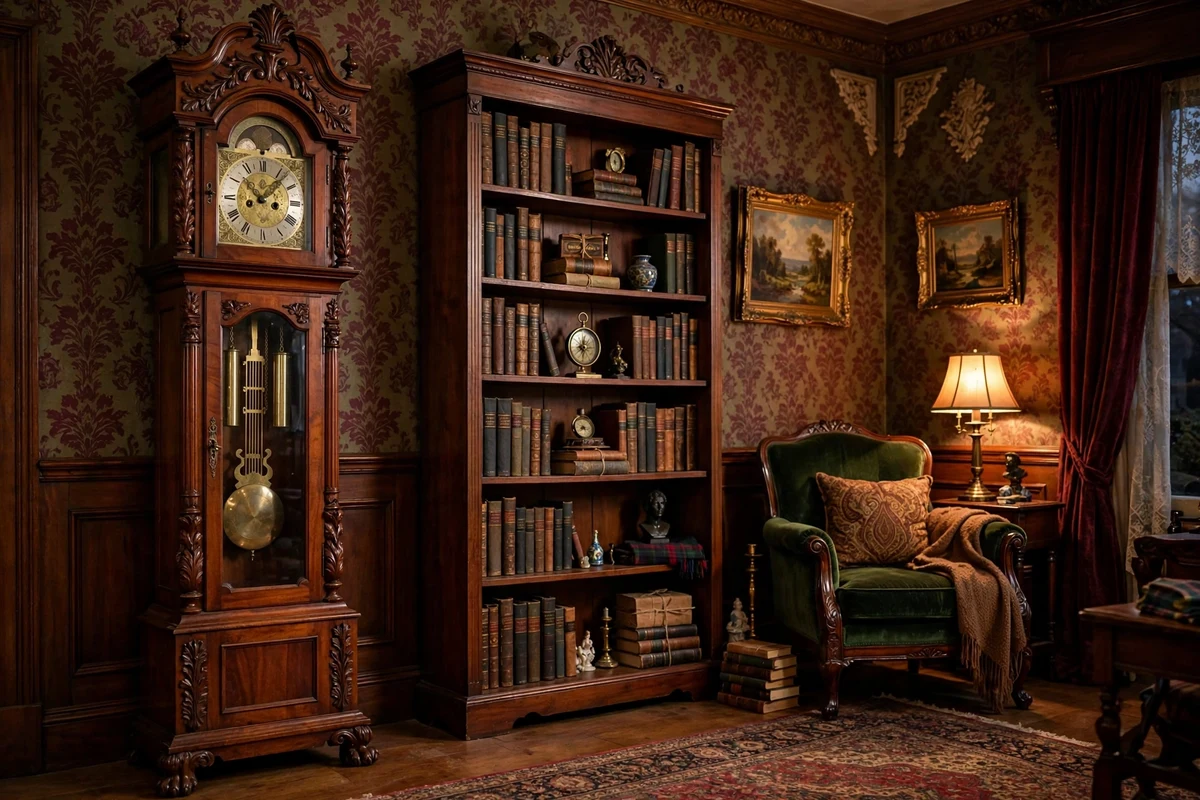
28. Candle-Style Wall Sconces
Flank the mantel mirror or artwork with candle-style wall sconces for layered Victorian lighting. Crystal or brass sconces with flickering LED candles add depth to walls and make evenings feel magical. Pairs cost $60–$250 new. Pro tip: Install sconces at eye level, roughly 60–66 inches from the floor, for the most flattering light.
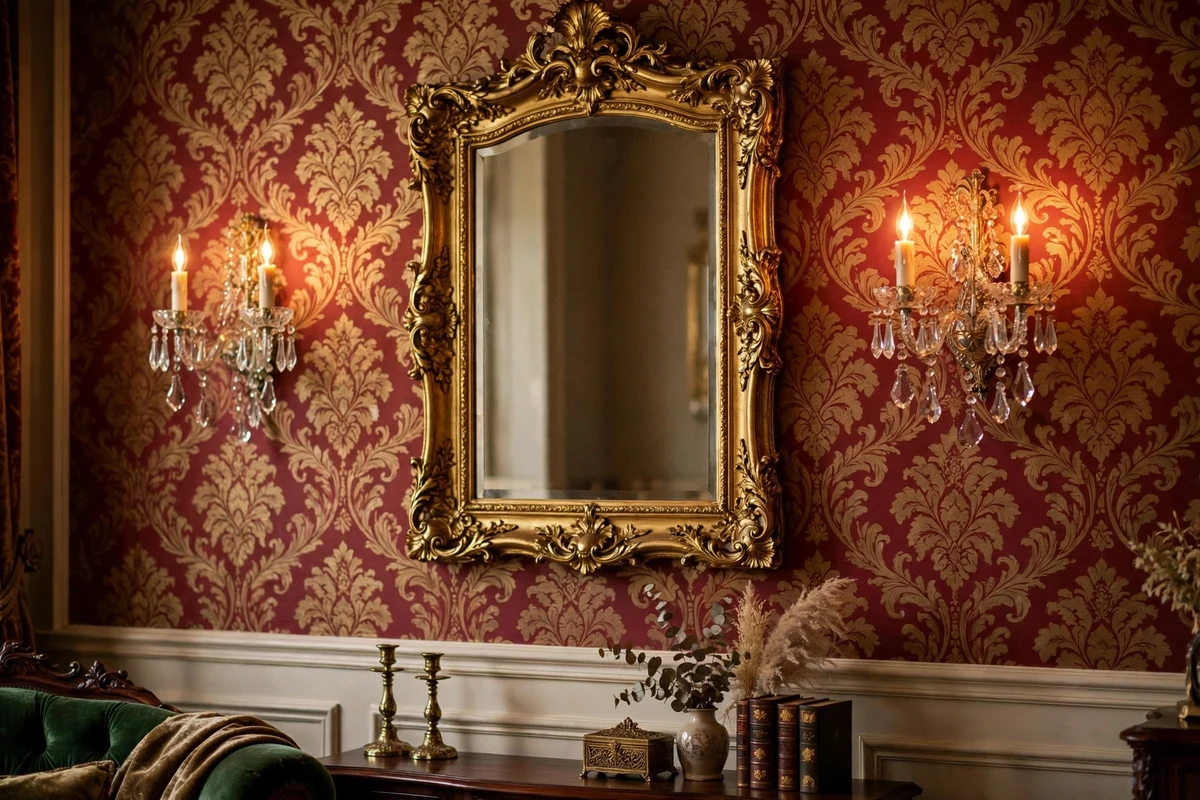
29. Embroidered and Tasseled Pillows
Finish the sofa with embroidered pillows featuring floral needlework, plus tassel and fringe trim. The Victorians adored handwork, and these textile details signal craftsmanship in a way plain pillows never can. Embroidered covers cost $20–$50 each at craft markets and online shops. Pro tip: Mix one or two embroidered pillows with your velvet ones so the textures contrast instead of competing.
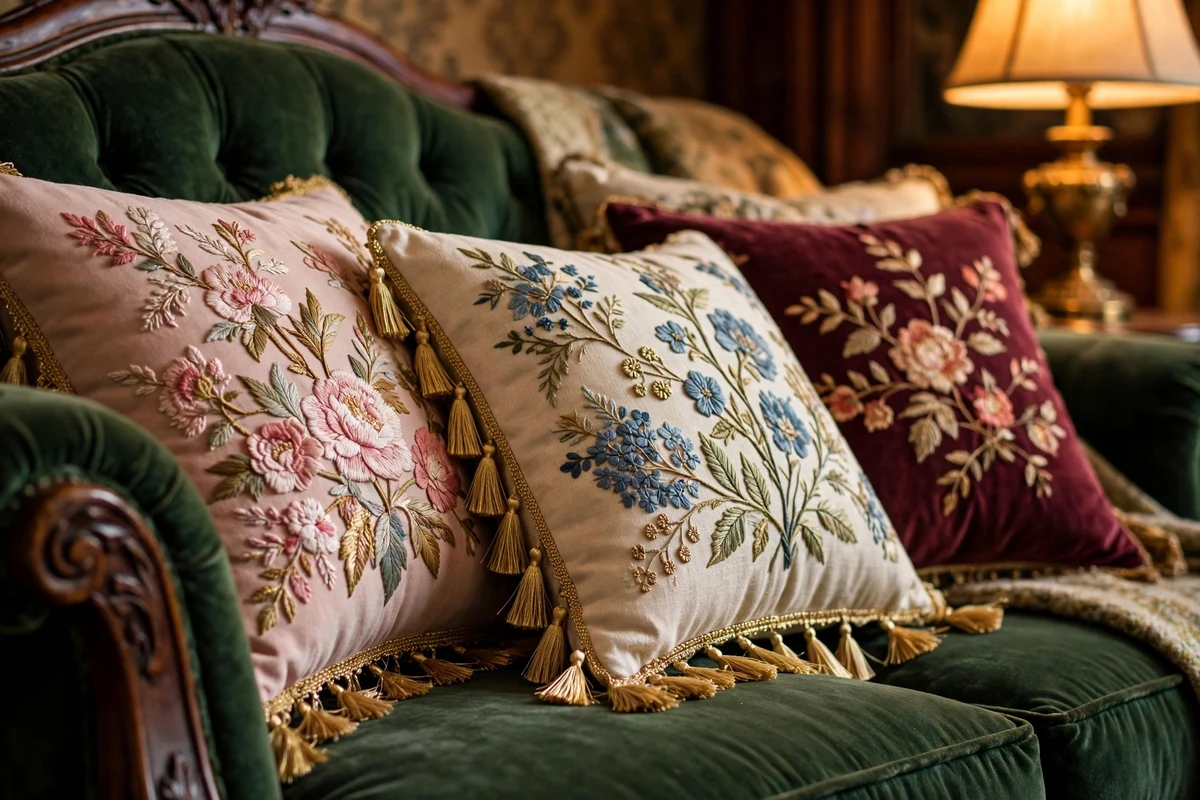
30. Ferns in Ornate Planters
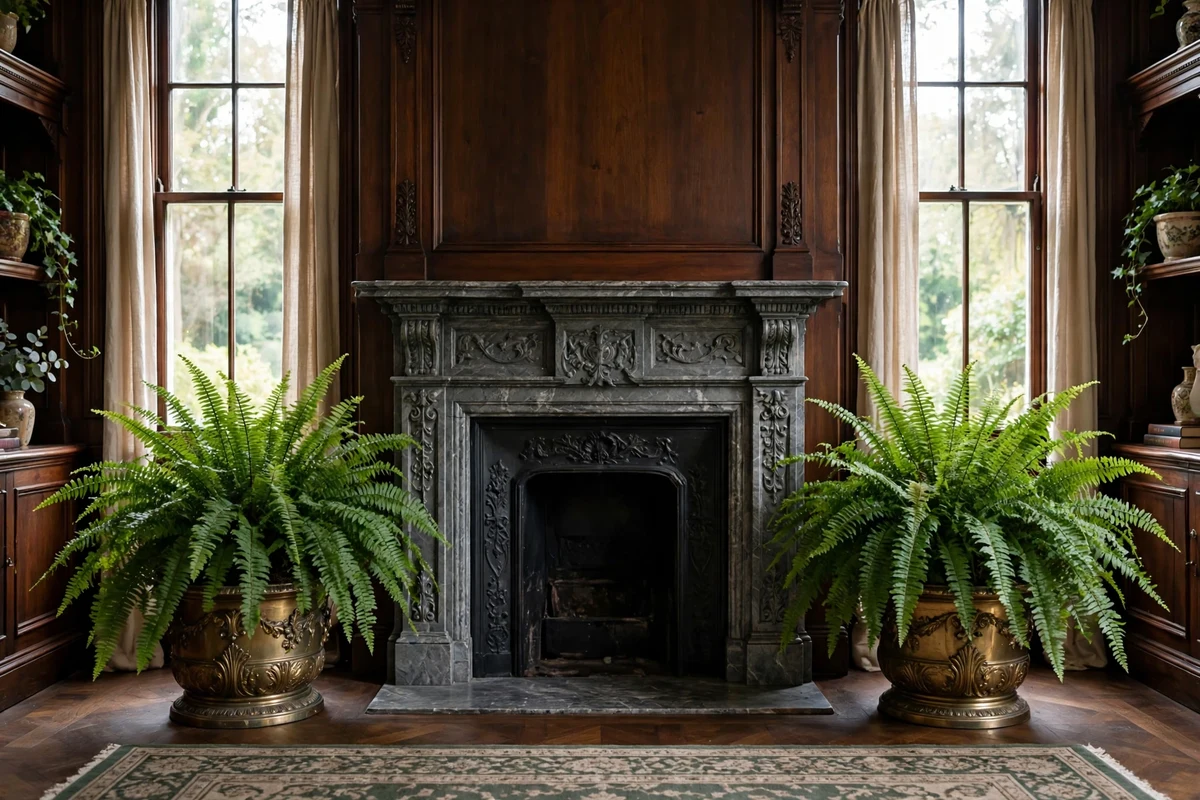
Victorians were obsessed with ferns, and Boston ferns in ornate brass or ceramic planters bring living green into the parlor. Flank the fireplace or place a large fern on a plant stand in a bright corner. Ferns cost $15–$40, with ornate planters running $30–$100. Pro tip: Ferns love humidity, so mist them regularly or group them together to create their own microclimate.
31. Marble-Top Side Table
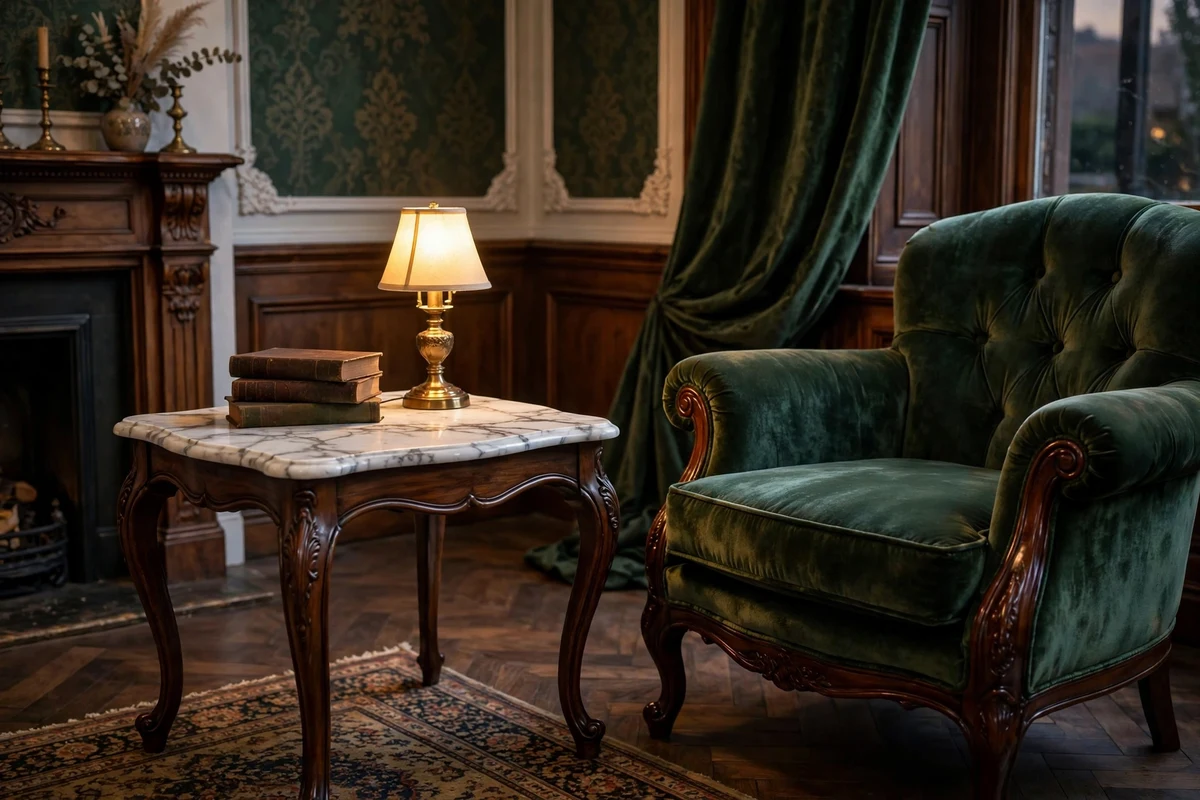
A marble-top side table with curved cabriole legs is the perfect perch for a lamp, books, or a teacup beside your reading chair. The cool marble contrasts beautifully with warm wood and velvet nearby. Antique marble-top tables cost $100–$400 at flea markets. Pro tip: Always use coasters on marble; acidic drinks like coffee and wine can etch the surface permanently.
32. Ornate Ceiling Medallion
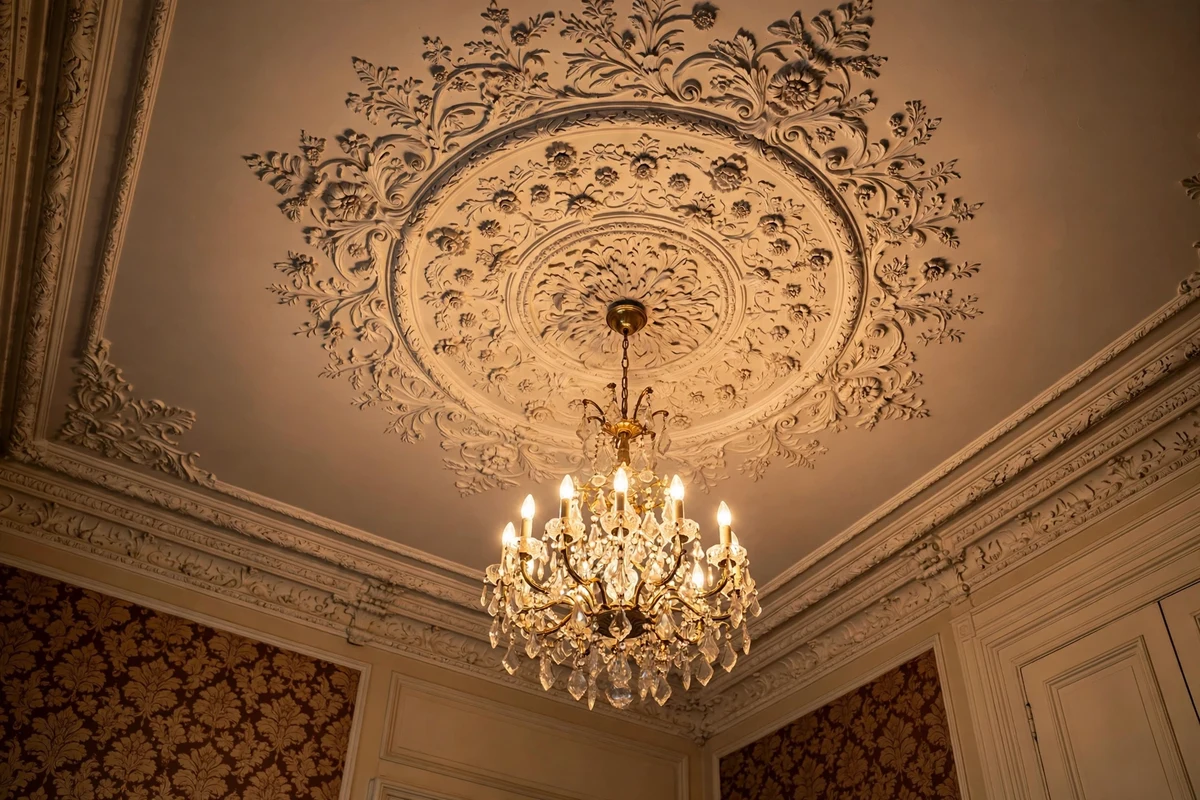
Finish the room overhead with an ornate plaster ceiling medallion around the chandelier. These decorative rosettes were standard in Victorian homes and make any light fixture look grander. Polyurethane medallions cost $30–$120 and install with adhesive in under an hour, no plastering skills needed. Pro tip: Paint the medallion the same color as the ceiling for subtle elegance, or pick out the details in gold for drama.
Frequently Asked Questions
What defines a Victorian living room?
A Victorian living room is defined by rich materials and ornate details: deep-buttoned upholstery like Chesterfield sofas, carved dark wood furniture, crystal chandeliers, marble fireplaces, damask or brocade textiles, Persian rugs, and layered accessories such as gilt mirrors, oil paintings, and candelabras. The palette leans toward jewel tones and deep, moody colors.
How can I get the Victorian look on a budget?
Focus on high-impact, low-cost changes first: thrifted oil paintings in gold frames, velvet pillow covers, a secondhand Persian-style rug, brass candlesticks, and damask wallpaper on a single accent wall. Estate sales and flea markets are treasure troves for genuine Victorian pieces at a fraction of antique shop prices.
What colors work best in a Victorian living room?
Jewel tones are the classic choice: emerald green, ruby red, sapphire blue, and deep plum, balanced with warm neutrals like cream, camel, and walnut brown. Dark, moody walls in forest green or burgundy create authentic drama, while lighter rooms can carry the style through furniture and textiles alone.
Can Victorian style work in a modern apartment?
Absolutely. You do not need high ceilings or original moldings. A Chesterfield sofa, a crystal chandelier, layered rugs, and rich textiles deliver the essence in any space. If you love cleaner lines too, our minimalist living room ideas show the opposite end of the spectrum, while Scandinavian living room ideas blend beautifully with a few Victorian accents.
What is the difference between Victorian and French country style?
Victorian style is darker, richer, and more ornate, with jewel tones, heavy carving, and formal symmetry. French country is lighter and more rustic, with distressed finishes, linen fabrics, and Provençal warmth. If you are drawn to the softer side, explore our French country living room ideas for comparison.
Where should I start with a Victorian living room makeover?
Start with the anchor pieces: the sofa, the rug, and the lighting. A velvet Chesterfield, an ornate rug, and a statement chandelier establish the style immediately. Then layer in textiles, art, and accessories over time. For coordinating bedrooms in complementary classic styles, see our luxury bedroom ideas and rustic bedroom ideas.
Final Thoughts
A Victorian living room is a celebration of craftsmanship, comfort, and character. You do not need a period property or an unlimited budget to capture its magic. Start with one great anchor piece, layer in rich textiles and warm lighting, and let the room grow more collected over time. That slow, intentional layering is the true Victorian secret: rooms that feel gathered across years, not decorated in a weekend. Pick the ideas that speak to you, hunt down a few treasures, and enjoy building a living room with real soul.