
36 Minimalist Living Room Ideas for Clean Calm Style
36 Minimalist Living Room Ideas for Clean Calm Style
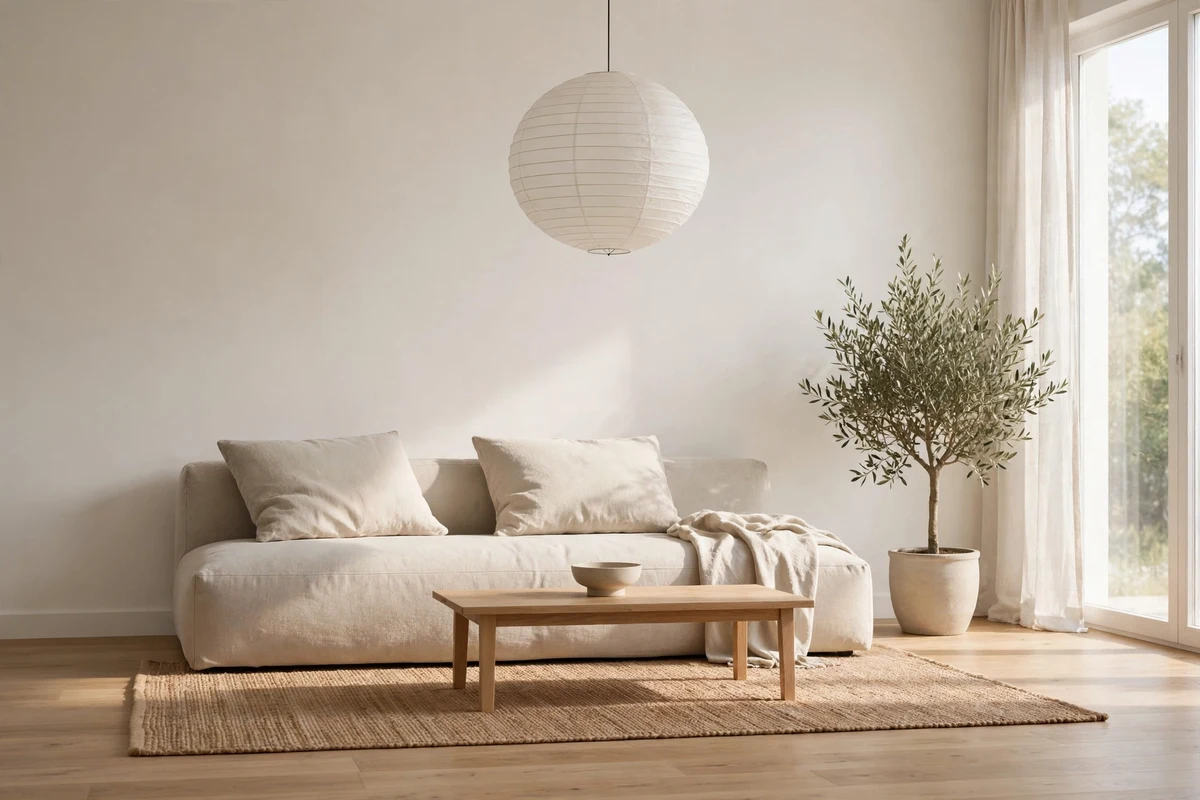
There is a particular peace that settles over you when you walk into a truly minimalist living room. No visual noise competing for your attention, no clutter whispering about unfinished chores, just calm, intentional space that lets your mind exhale. Minimalism is often misunderstood as cold or empty, but done right it is one of the warmest, most inviting styles in interior design. It is about editing ruthlessly so that every remaining piece earns its place, and every surface, texture, and ray of light works harder.
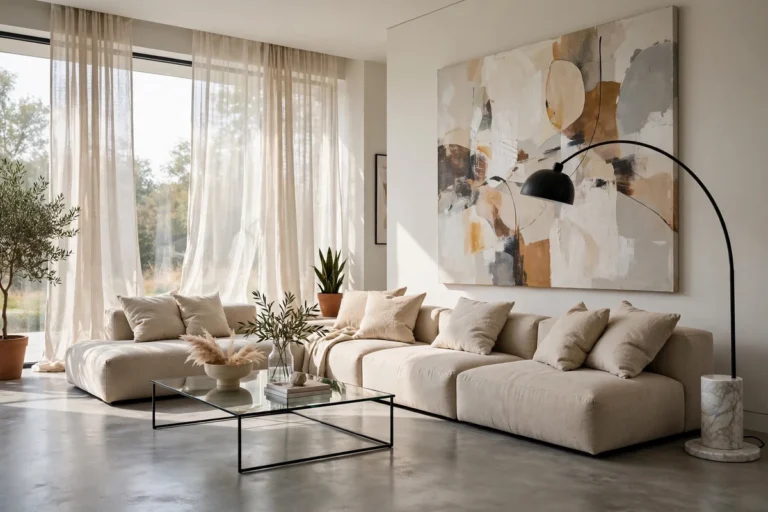
This guide collects 36 minimalist living room ideas that prove less really is more. From warm white foundations and light oak floors to sculptural single-piece furniture, hidden storage that swallows clutter, and lighting that layers softness over the clean lines, each idea includes realistic budget ranges and a pro tip so you can adapt it to your own home. Whether you are starting from scratch or paring back a room that has gathered too much, these ideas will help you build a living room that feels calm, clean, and quietly luxurious.
The Foundation: Walls, Floors and Light
1. Warm White Walls That Glow, Not Glare
Start with the single most transformative minimalist move: warm white walls. Unlike stark cool whites that can feel clinical, warm whites with a hint of cream or greige ($45–$75 per gallon for quality paint) bounce light softly and make the whole room feel sunlit even on grey days. Paint every wall the same shade, including the ceiling in a flat finish, so the room reads as one continuous, seamless volume. The absence of color contrast is what creates that famous minimalist calm.
Pro tip: Test three warm whites on different walls and live with them for 48 hours before committing, because undertones shift dramatically between morning and evening light.
2. Light Wood Flooring for Seamless Flow
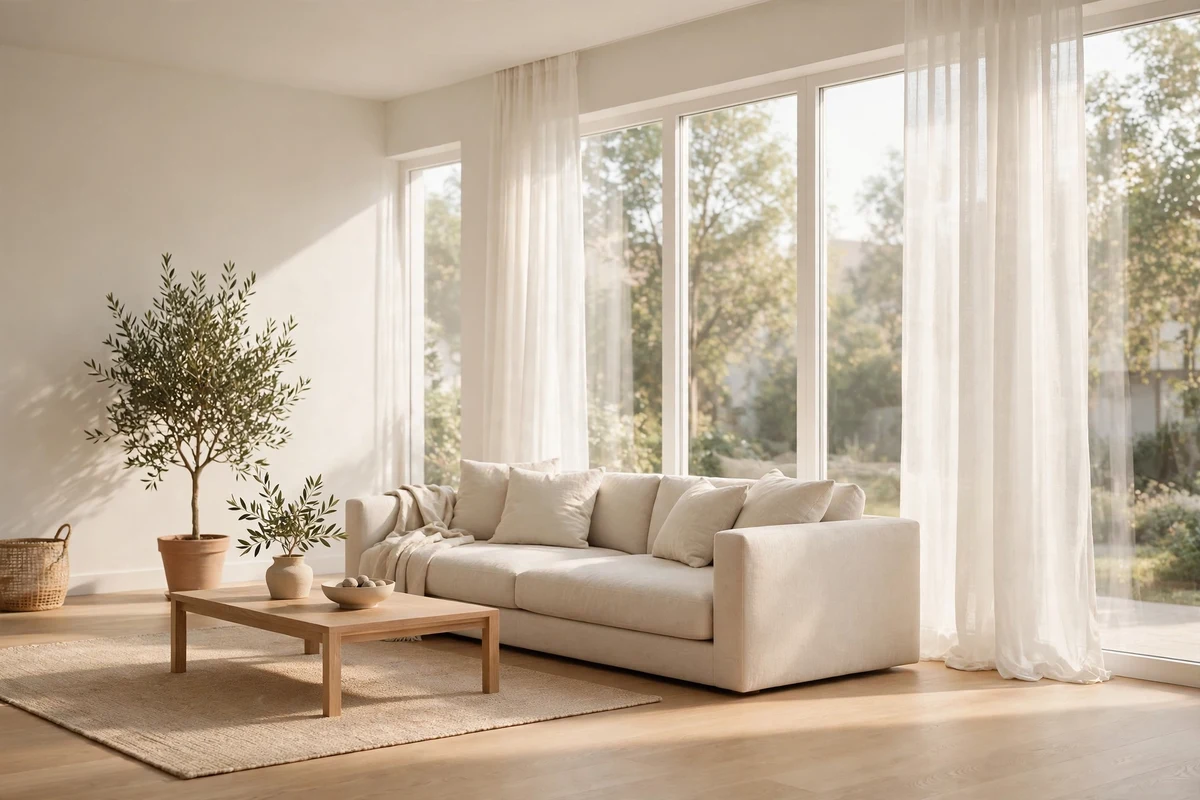
Pale oak or ash flooring ($8–$14 per square foot installed) is the minimalist living room’s best friend. Light wood visually expands the space, reflects daylight deep into the room, and provides just enough warmth to keep neutral rooms from feeling sterile. Run the planks in one direction through the whole open-plan area with no thresholds or transitions, so the floor becomes a single calm plane that unifies everything above it.
Pro tip: Choose a matte or low-sheen finish over glossy, because matte floors hide dust and footprints far better in a pared-back room where every detail shows.
3. A Low-Profile Sofa That Anchors Without Dominating
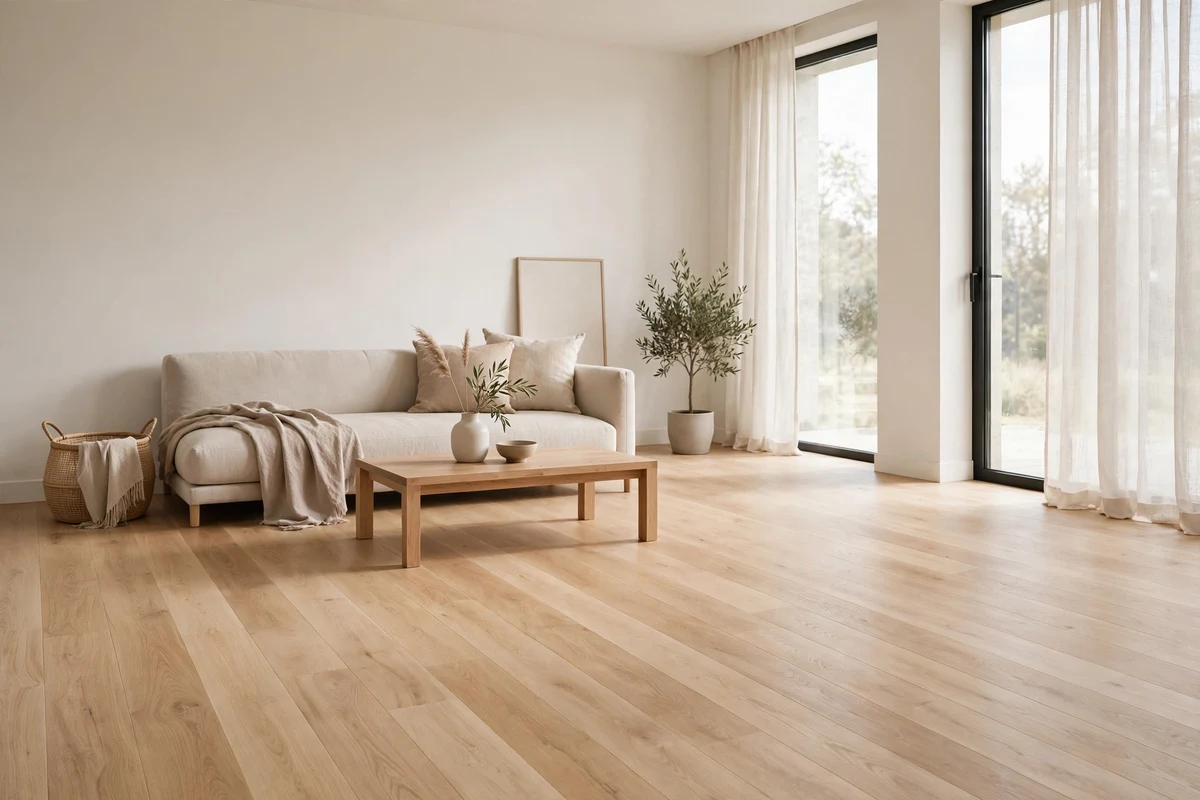
The minimalist sofa sits low, keeps a tight silhouette, and never shouts. Look for clean track arms, a single bench cushion, and legs that lift it slightly off the floor ($900–$2,200). A low profile keeps sightlines open across the room, which is the secret to that airy, uncluttered feeling. Upholster it in a performance linen or bouclé in warm white, oatmeal, or light grey so it blends into the room like a quiet anchor rather than a statement piece.
Pro tip: A single bench cushion instead of multiple seat cushions instantly looks more minimal and tailored, and it is far more comfortable for lounging.
4. Uncluttered Windows With Sheer Simplicity
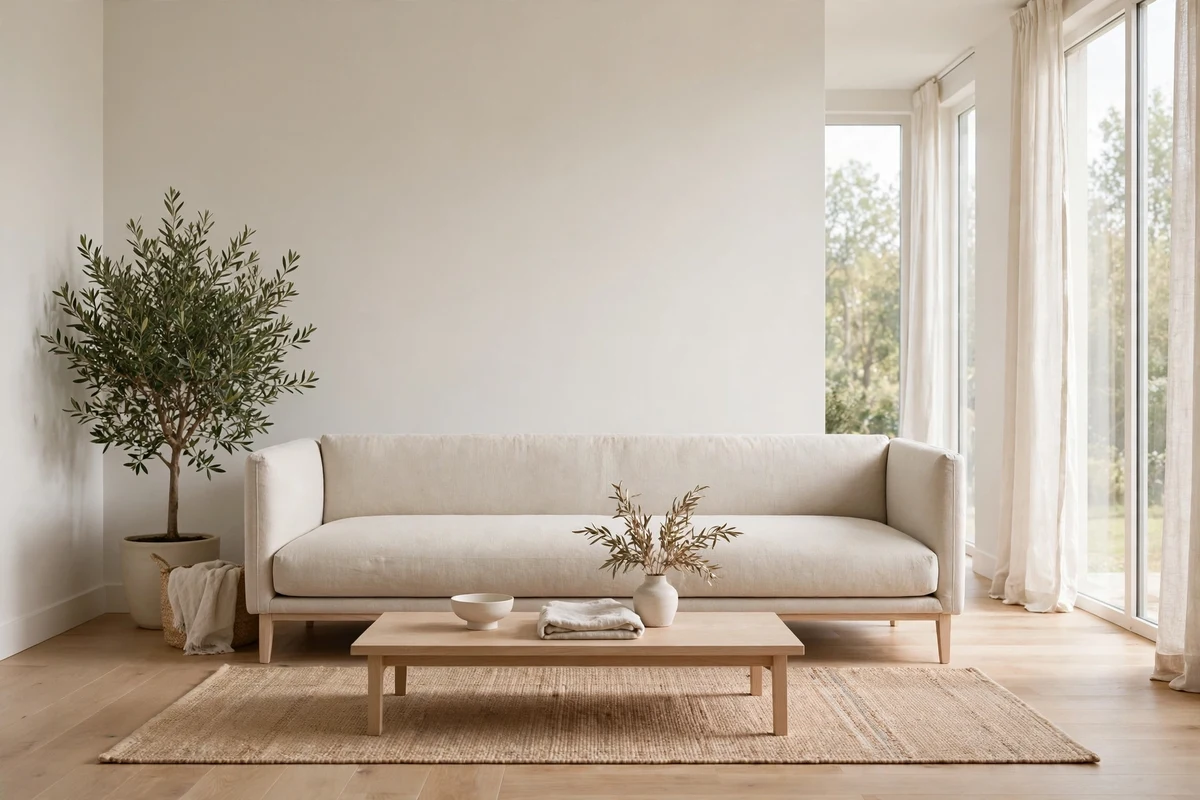
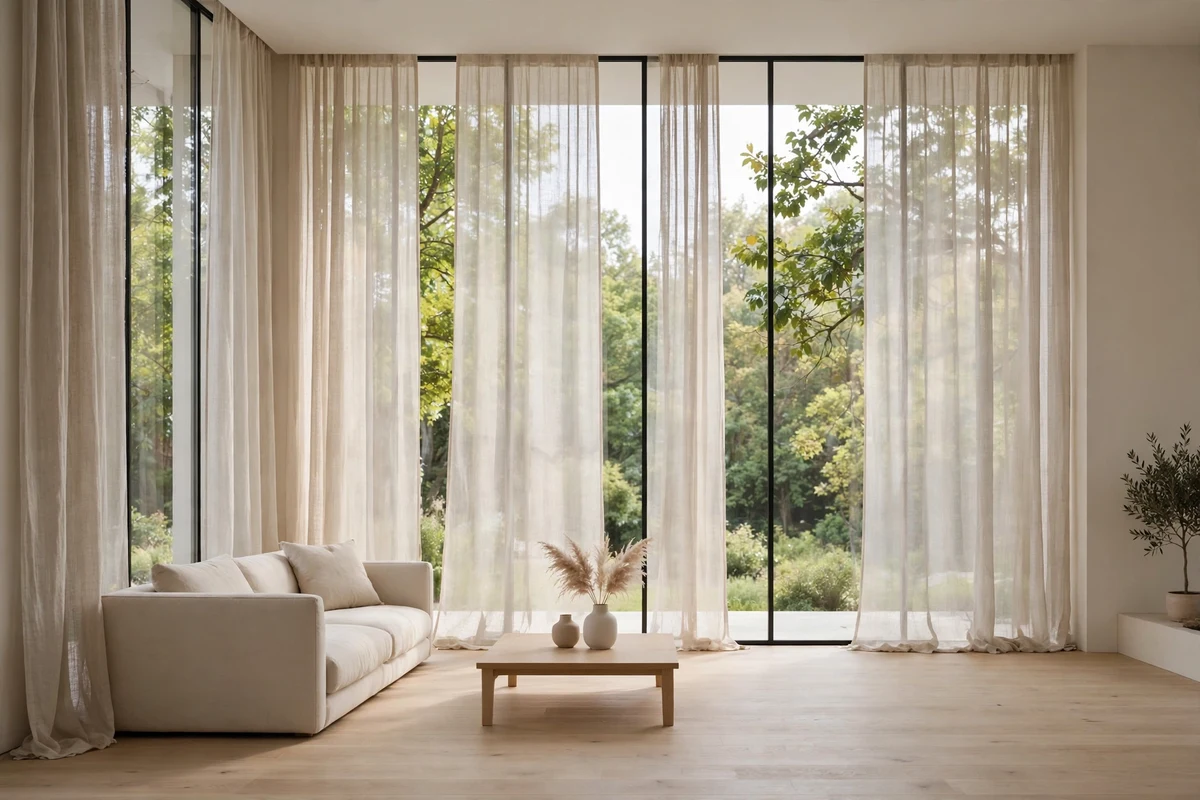
Minimalist windows are dressed simply or not at all. If you need privacy, choose floor-to-ceiling sheer linen panels ($60–$140 per panel) on a slim ceiling-mounted track, which filter light into a soft glow while keeping the view. Skip heavy valances, tiebacks, and layered treatments entirely. The goal is glass that disappears, so daylight becomes the room’s main decoration and the outdoors reads as living art.
Pro tip: Mount sheers as close to the ceiling as possible and let them kiss the floor, because the extra height makes windows look grander and the room taller.
5. Recessed Lighting That Disappears Into the Ceiling
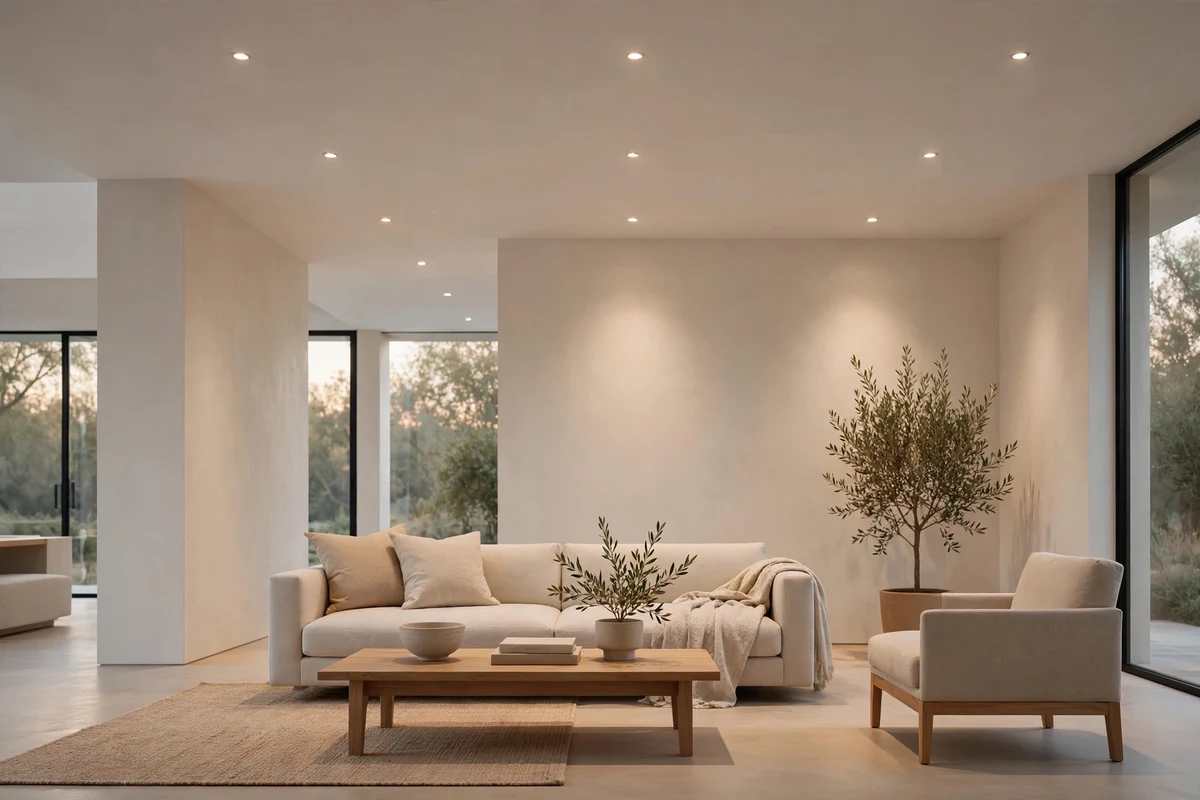
Visible fixtures are visual clutter, so minimalists love recessed downlights ($150–$300 per fixture installed) that wash walls and floors with even, shadowless light. Space them in a quiet grid, put them on dimmers, and choose a warm 2700K temperature so evenings feel cozy rather than clinical. With the ceiling left completely clean, the architecture itself becomes the feature and nothing interrupts the calm overhead plane.
Pro tip: Aim two or three recessed lights at walls rather than the floor, because wall-washing makes the room feel twice as large and shows off art beautifully.
6. Hidden Storage That Swallows the Clutter
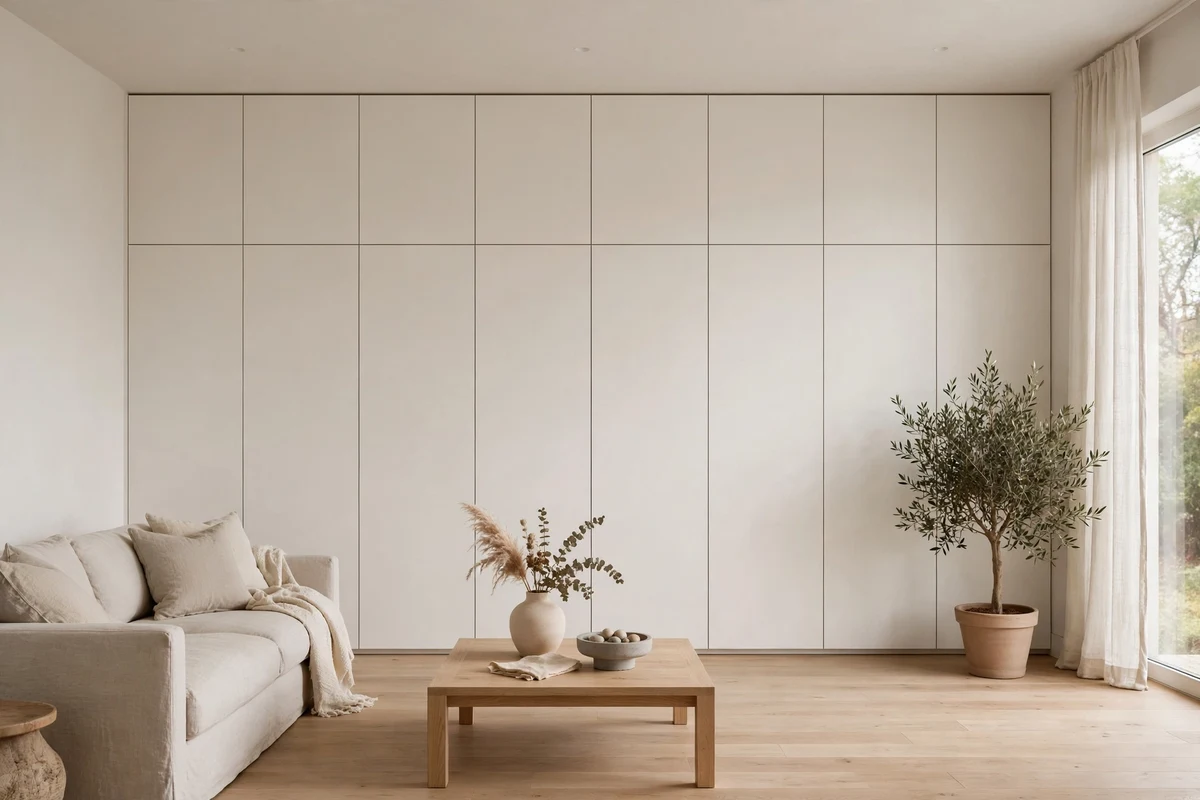
The difference between a minimalist room and a messy one is almost always storage. Built-in wall cabinets with push-to-open fronts ($2,000–$5,000 for a full wall) hide everything from remotes to board games behind seamless panels that read as architecture, not furniture. Keep daily items in lidded baskets inside, and enforce a one-in-one-out rule so the calm you create actually lasts past the first week.
Pro tip: Paint built-in storage the exact same color as the walls, because matching fronts make bulky cabinets visually dissolve into the room.
7. One Oversized Monochrome Art Piece
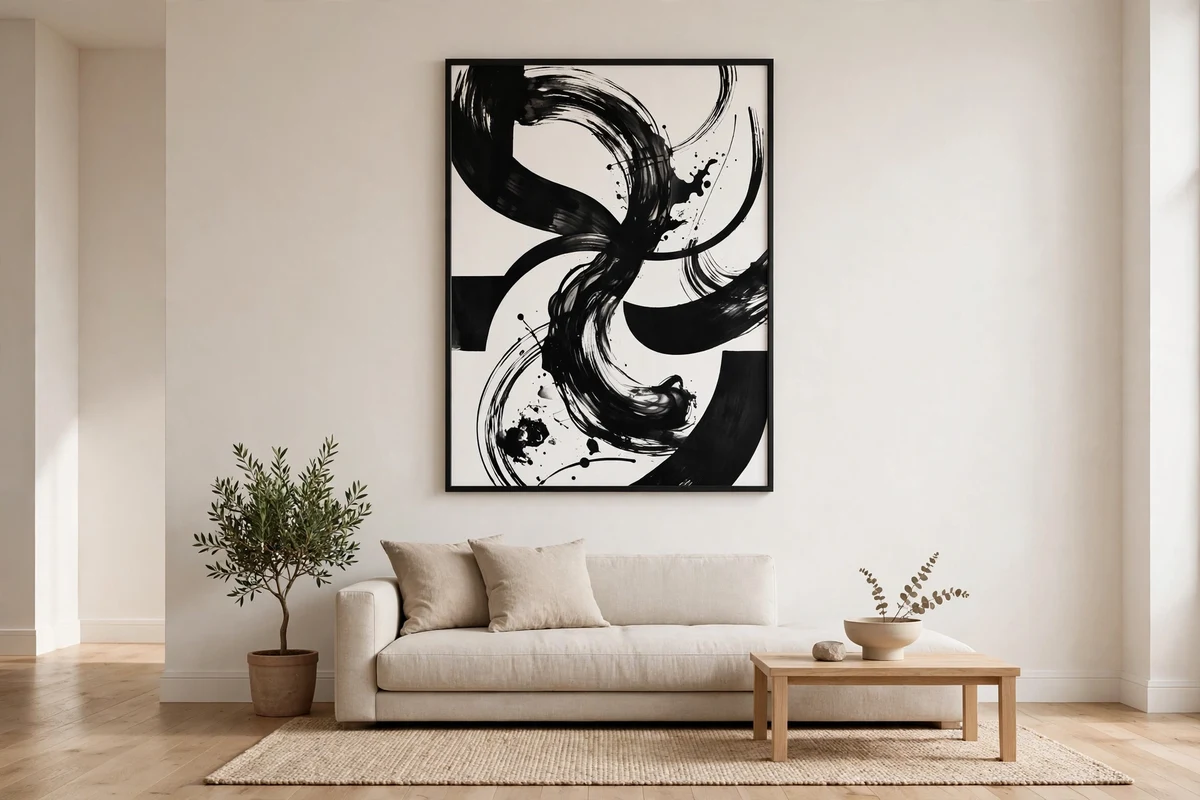
Instead of a gallery wall, hang a single oversized artwork in black, white, or soft neutral tones ($200–$900 for a large print with framing). One confident piece gives the eye a place to rest and adds personality without visual noise. Keep the frame slim and simple, hang it with its center at eye level, and give it generous empty wall space on all sides, because in minimalism the breathing room around art matters as much as the art itself.
Pro tip: Abstract photography or soft ink-wash style prints work best, because representational scenes with lots of detail fight the calm you are building.
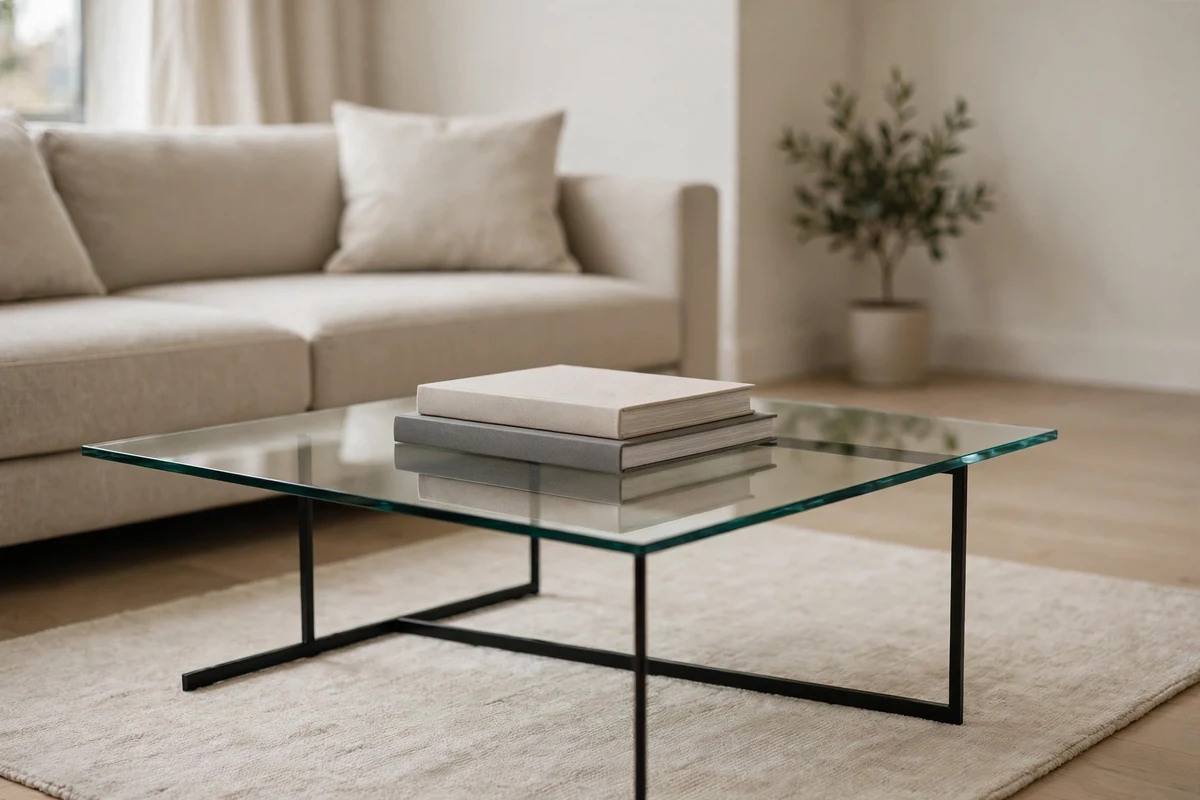
8. A Glass Coffee Table That Visually Vanishes
A glass-top coffee table ($250–$700) is a minimalist magic trick: it provides a real surface for books and coffee while letting your eye travel straight through to the rug and floor beyond. The transparency keeps the center of the room feeling open, which matters enormously in smaller living rooms. Choose a simple metal or wood base with clean lines, and style the top with just two or three objects, never more.
Pro tip: Low-iron glass has less of the green tint of standard glass, so the table looks clearer and more expensive for only a small price premium.
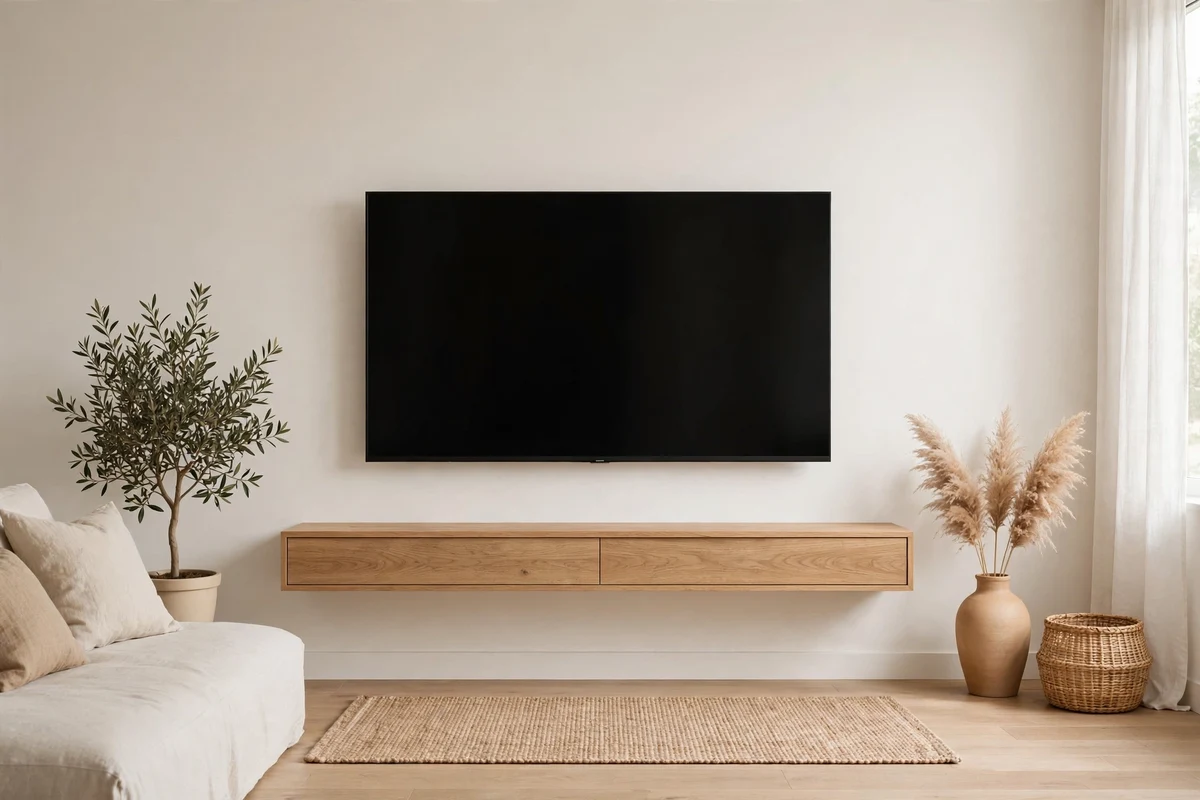
9. A Streamlined Media Wall With Zero Visible Tech
Nothing breaks minimalist calm like a tangle of cables and blinking boxes. Mount the TV flush on the wall ($100–$250 for a slim mount), hide the soundbar in a floating console, and route every cable inside the wall or a paintable channel. When the screen is off, add a digital art display mode or a simple linen cover so the black rectangle does not dominate the room. The result is a media setup that serves you without ever announcing itself.
Pro tip: A recessed outlet installed directly behind the TV eliminates the last visible cable, and most electricians can add one in under an hour.
Furniture That Earns Its Place
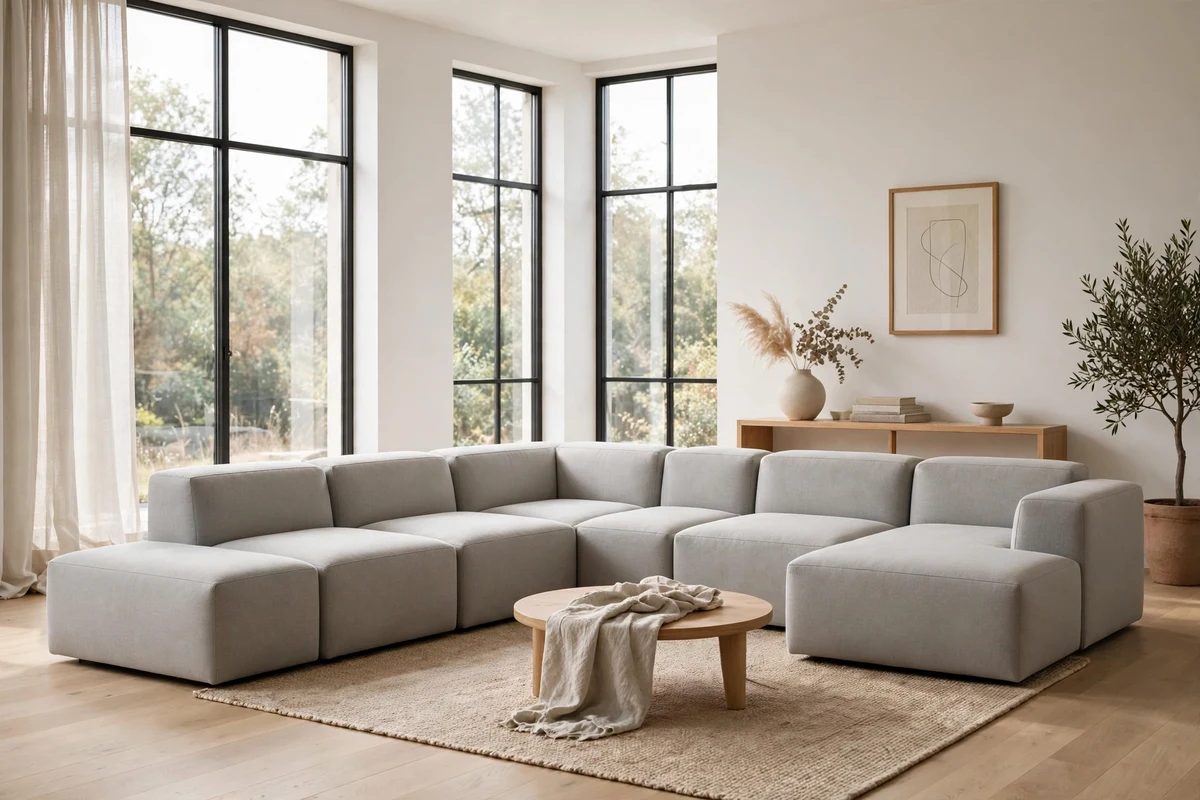
10. A Modular Sofa You Can Reshape
Modular sofas ($1,500–$4,000) are minimalist multitaskers: two or three clean-lined modules you can arrange as a loveseat, chaise, or full sectional as life changes. Because each piece is visually simple, the whole arrangement stays calm no matter the configuration. Stick to one fabric and one color across all modules, and resist the urge to add patterned cushions, because uniformity is what keeps modular furniture looking serene instead of busy.
Pro tip: Buy one extra armless module if your budget allows, because it gives you a spare seat for guests and future layout experiments without a new purchase.
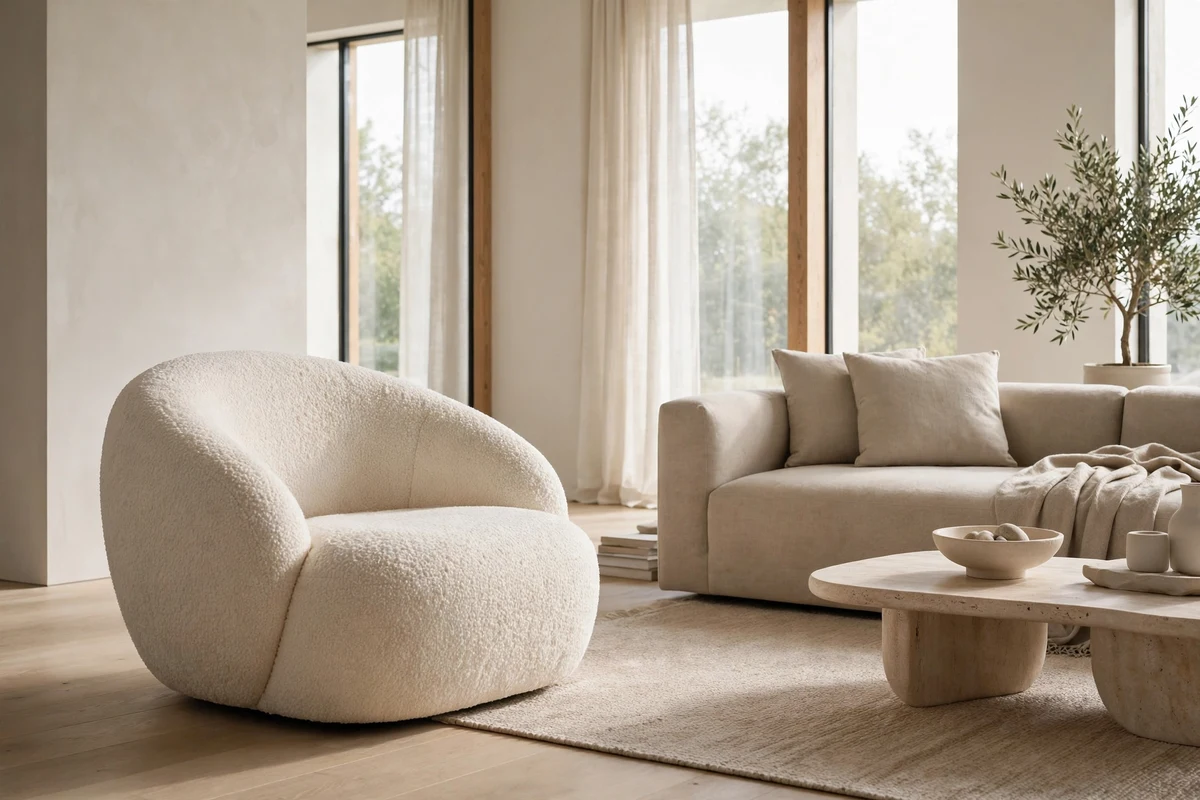
11. One Sculptural Armchair as Functional Art
Every minimalist living room deserves a single chair beautiful enough to be sculpture. A curved bouclé lounge chair, a molded plywood lounger, or a slim leather sling chair ($600–$1,800) adds personality and a perfect reading spot without filling the room. Place it at a slight angle to the sofa to create conversation flow, and let its silhouette be the room’s jewelry, one striking curve in a sea of straight lines.
Pro tip: Shop vintage and secondhand first for sculptural chairs, because mid-century designs are plentiful, well-made, and often cheaper than new reproductions.
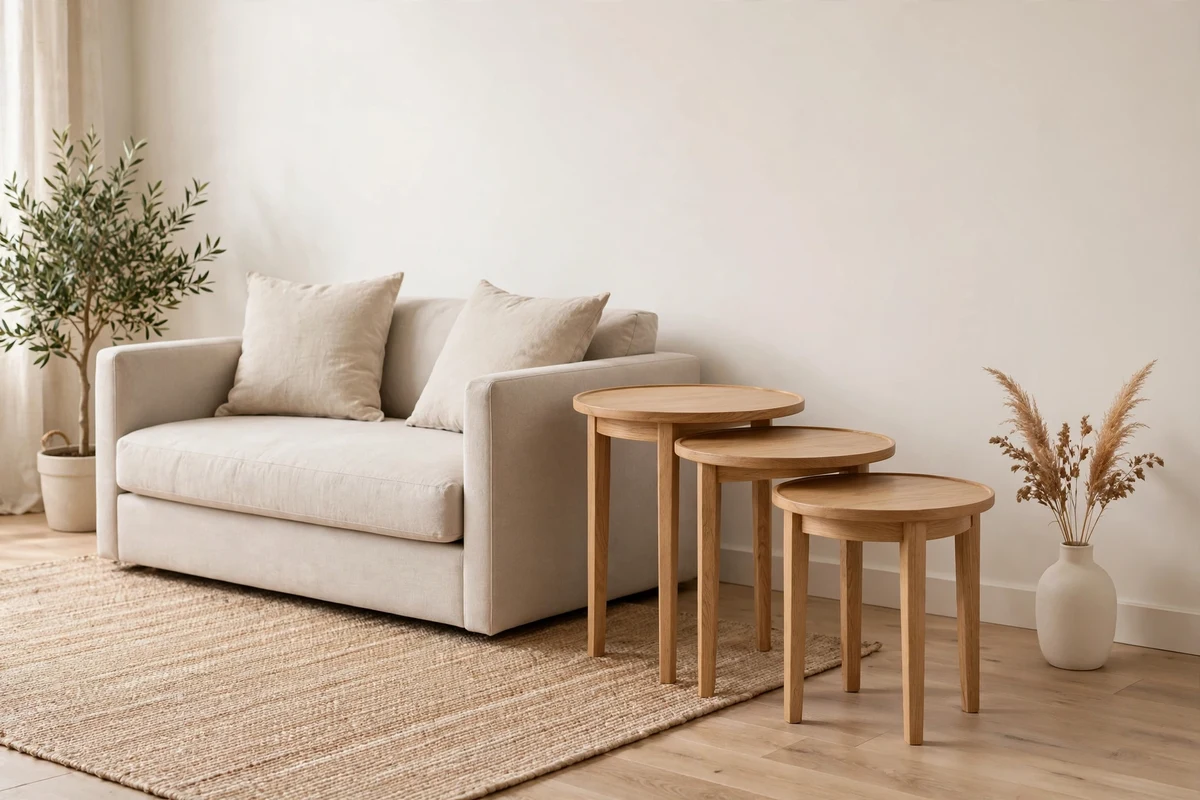
12. Nesting Tables Instead of One Bulky Piece
A set of two or three nesting side tables ($120–$350) replaces the chunky end table with something far more flexible. Use one beside the sofa daily, pull out a second when guests arrive with drinks, and tuck them together when you want maximum floor space. Their small footprints and simple round or square tops keep surfaces available without the visual weight of a large table.
Pro tip: Choose nesting tables in mixed heights but identical finishes, because the repetition looks intentional while the varying heights add subtle interest.
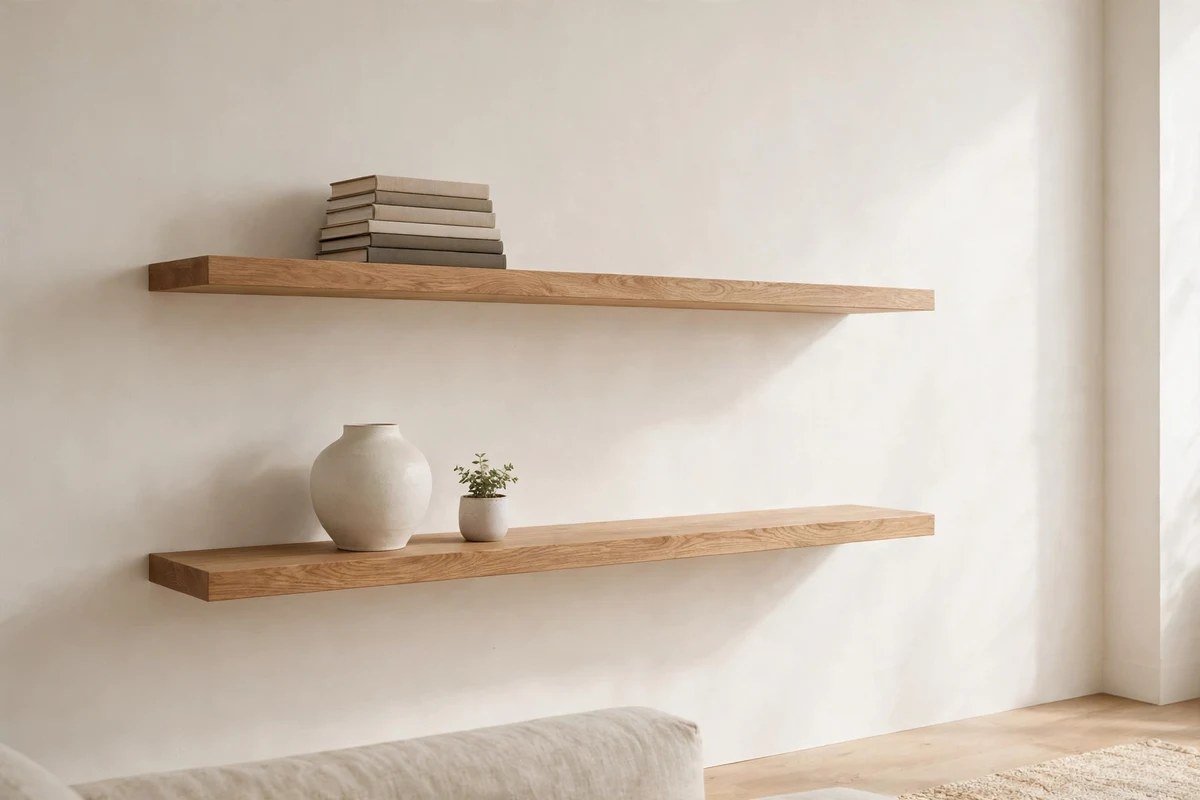
13. Floating Shelves With Ruthless Editing
Two floating oak or white shelves ($80–$200 installed) can hold everything a minimalist needs to display, provided you edit hard. The rule: each shelf gets three to five objects maximum, with generous empty space between them. A stack of design books, one ceramic vessel, one small plant, and done. Anything more and the shelves become clutter; anything less considered and they become the room’s quiet gallery.
Pro tip: Style shelves in odd numbers and vary heights, because a tall vase next to a low stack of books creates rhythm that flat, even rows never achieve.
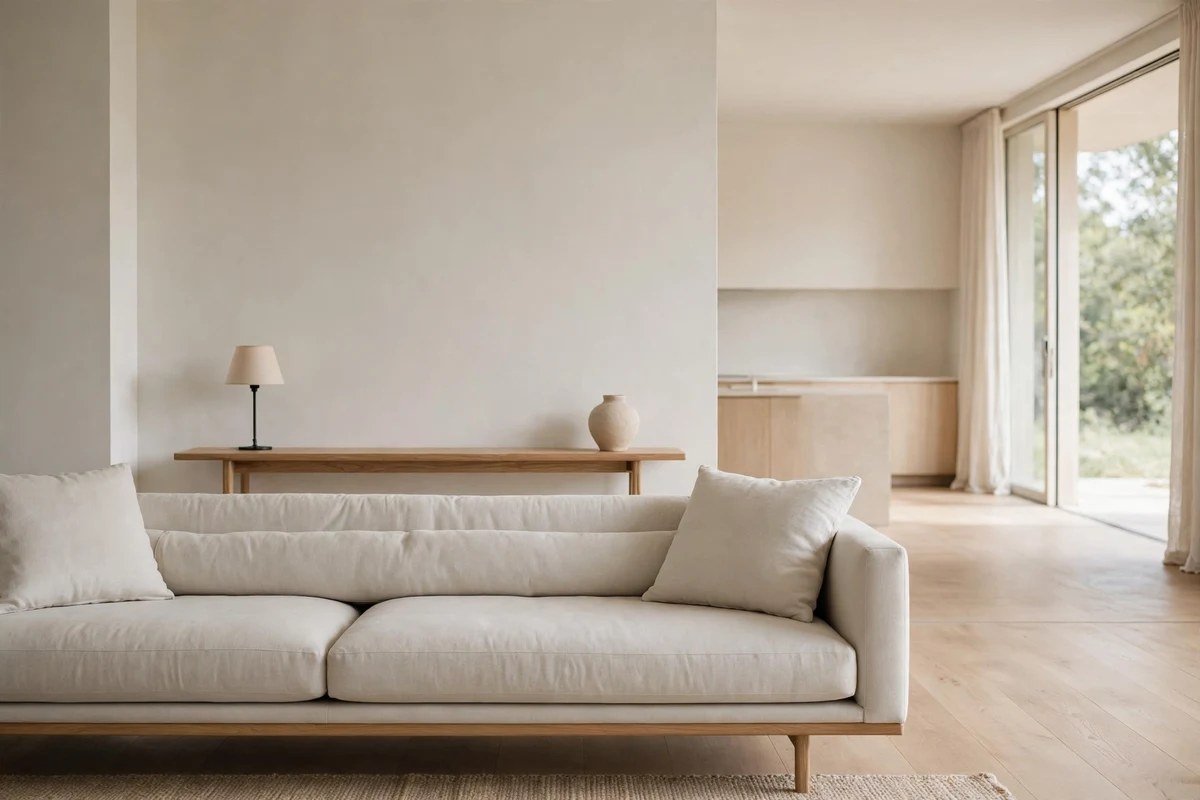
14. A Slim Console Behind the Sofa
A narrow console table ($180–$500) tucked behind a floating sofa solves two minimalist problems at once: it defines the seating zone in open-plan rooms and provides a landing spot for a lamp and one beautiful object. Keep it under 12 inches deep so it never protrudes awkwardly, and style the top with a strict maximum of three items. The console becomes a quiet boundary line that organizes the whole space.
Pro tip: If your sofa floats in the middle of the room, a console behind it instantly makes the arrangement look deliberate instead of stranded.
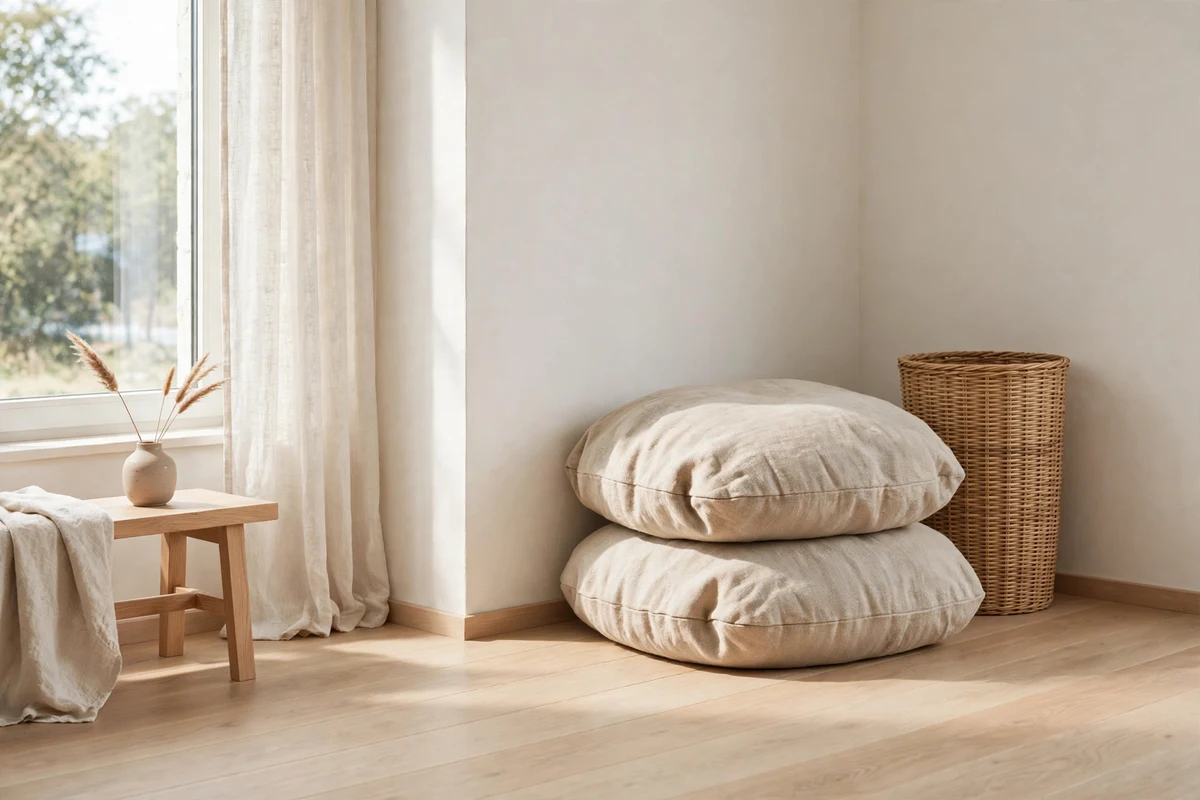
15. Floor Cushions for Flexible Extra Seating
Large linen floor cushions ($50–$120 each) are the minimalist answer to occasional seating: stack two in a corner as a sculptural accent, then pull them out when friends visit. They add softness and a relaxed, unfussy vibe without the commitment of another chair. Choose natural tones that match your palette, and store them in a tall basket when you want the floor completely clear.
Pro tip: Look for cushions with removable, washable covers in a tight weave, because floor seating takes more wear and easy cleaning keeps them looking crisp.
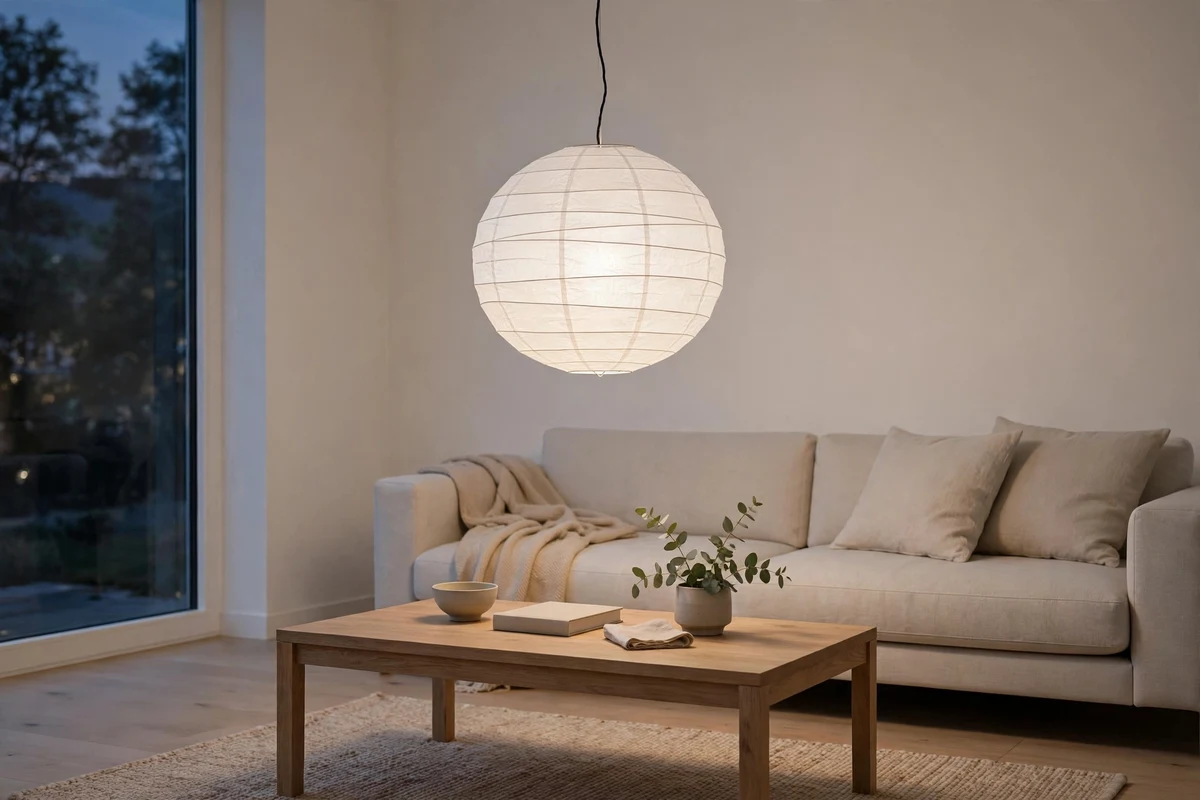
16. A Single Statement Pendant Over the Seating Area
One beautifully simple pendant, a paper globe, a slim brass dome, or a hand-thrown ceramic shade ($150–$600), hung over the coffee table or reading chair, gives the room a focal point without visual noise. A single fixture reads as intentional; a cluster reads as busy. Hang it low enough to feel intimate, around 30 inches above the table surface, and put it on a dimmer so it can shift from task light to evening glow.
Pro tip: A paper or fabric shade diffuses light softly in all directions, which flatters both the room and the people in it far more than a harsh downlight.
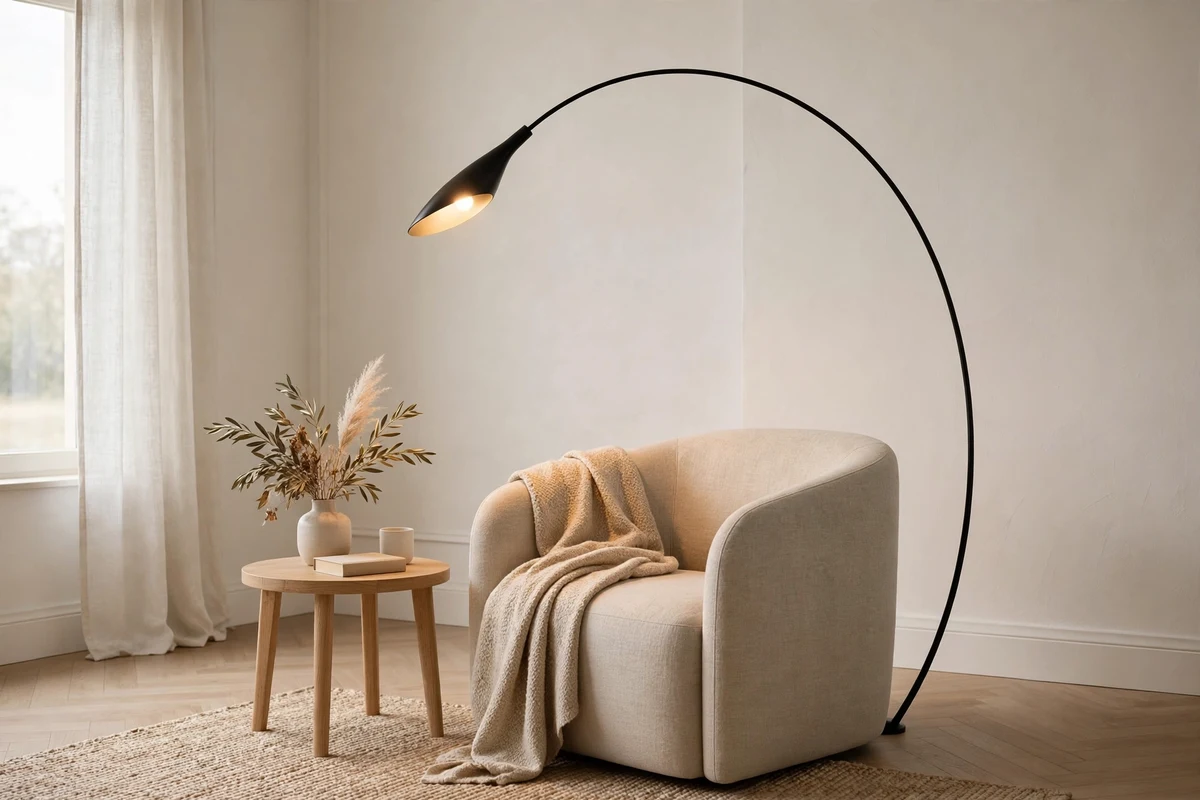
17. A Slim Arc or Tripod Floor Lamp
A floor lamp with a whisper-thin profile ($180–$550) adds evening light exactly where you need it without occupying visual space. Arc lamps curve gracefully over a reading chair, while tripod designs stand like quiet sculptures in a corner. Choose matte black, brushed brass, or white finishes that recede into the room, and always pair the lamp with a warm bulb for that cozy minimalist evening mood.
Pro tip: Plug floor lamps into a smart plug or remote dimmer, because being able to lower the light without getting up makes evening lounging infinitely more pleasant.
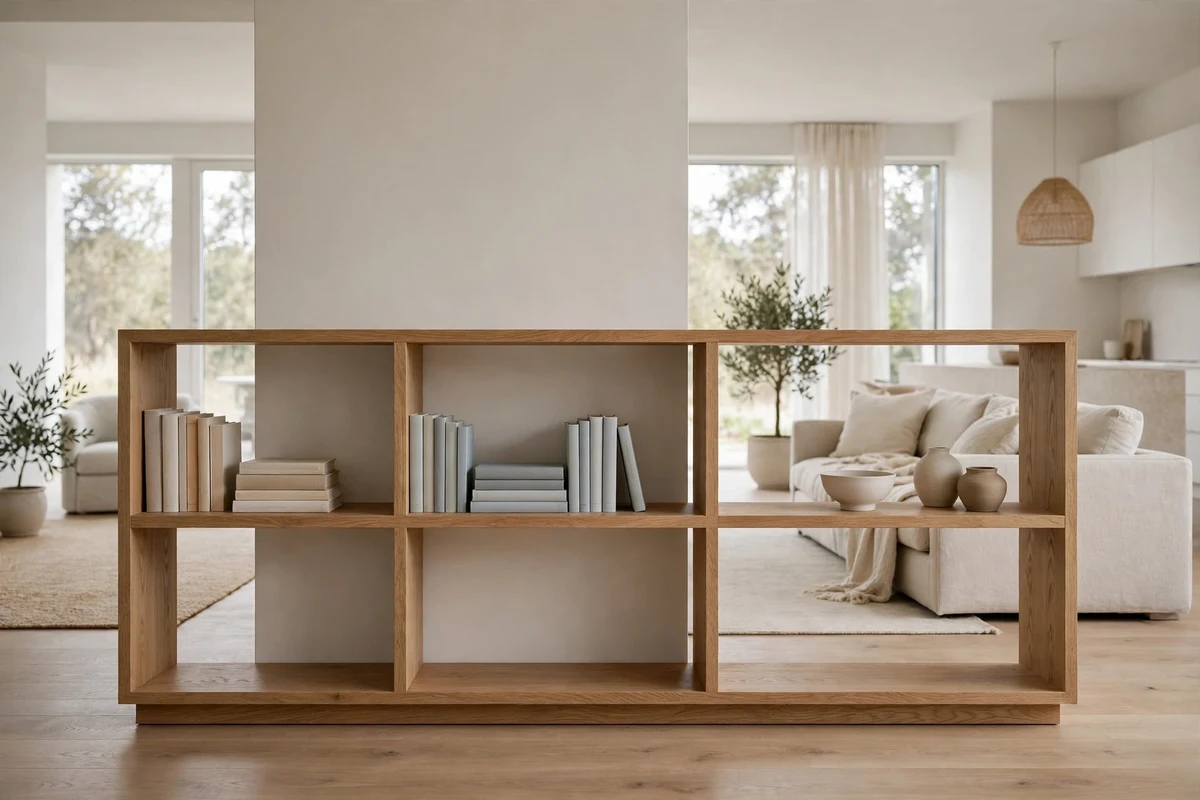
18. A Low Open Bookshelf as a Room Divider
In open-plan spaces, a low bookshelf ($300–$800) set perpendicular to the wall divides living and dining zones while keeping sightlines open. Style it sparsely, books grouped by tone, a few objects, plenty of air, so it reads as a curated installation rather than storage. The low height preserves the room’s airy feel while giving each zone a sense of purpose and boundary.
Pro tip: Leave at least a third of the shelves empty or nearly empty, because the negative space is what makes an open shelf look minimalist instead of crammed.
Neutral Palettes and Quiet Texture
19. The Warm White and Oatmeal Palette
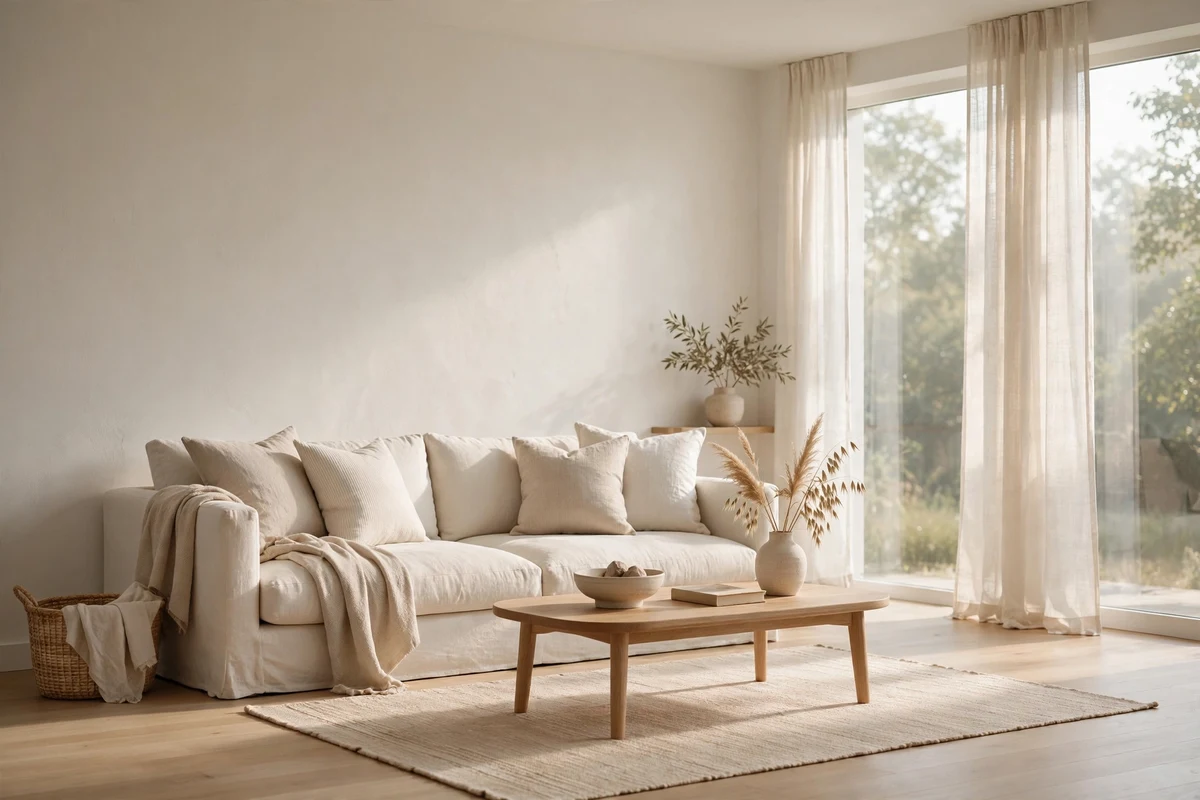
The classic minimalist palette layers warm white, oatmeal, and soft beige ($0 extra if you shop your existing pieces with fresh eyes) for a room that feels like morning light. Keep large pieces in the palest tones and let slightly deeper oatmeals appear in throws and cushions. The tonal layering adds depth without introducing a single competing color, so the room feels rich and calm at the same time.
Pro tip: Gather fabric swatches of every textile in the room and view them together in daylight, because tones that look matching in the store can clash badly at home.
20. Greige Layers for Soft Sophistication
Greige, the perfect marriage of grey and beige ($45–$75 per gallon if you repaint an accent wall), is the minimalist neutral with the most depth. Layer warm greige walls with lighter greige upholstery and deeper taupe textiles, and the room gains a quiet sophistication that pure white cannot deliver. It is forgiving with shadows, hides everyday wear, and pairs beautifully with both light oak and dark walnut wood.
Pro tip: Greige shifts with light more than most neutrals, so test it on a large board you can move around the room through a full day before painting.
21. Strategic Black Accents for Definition
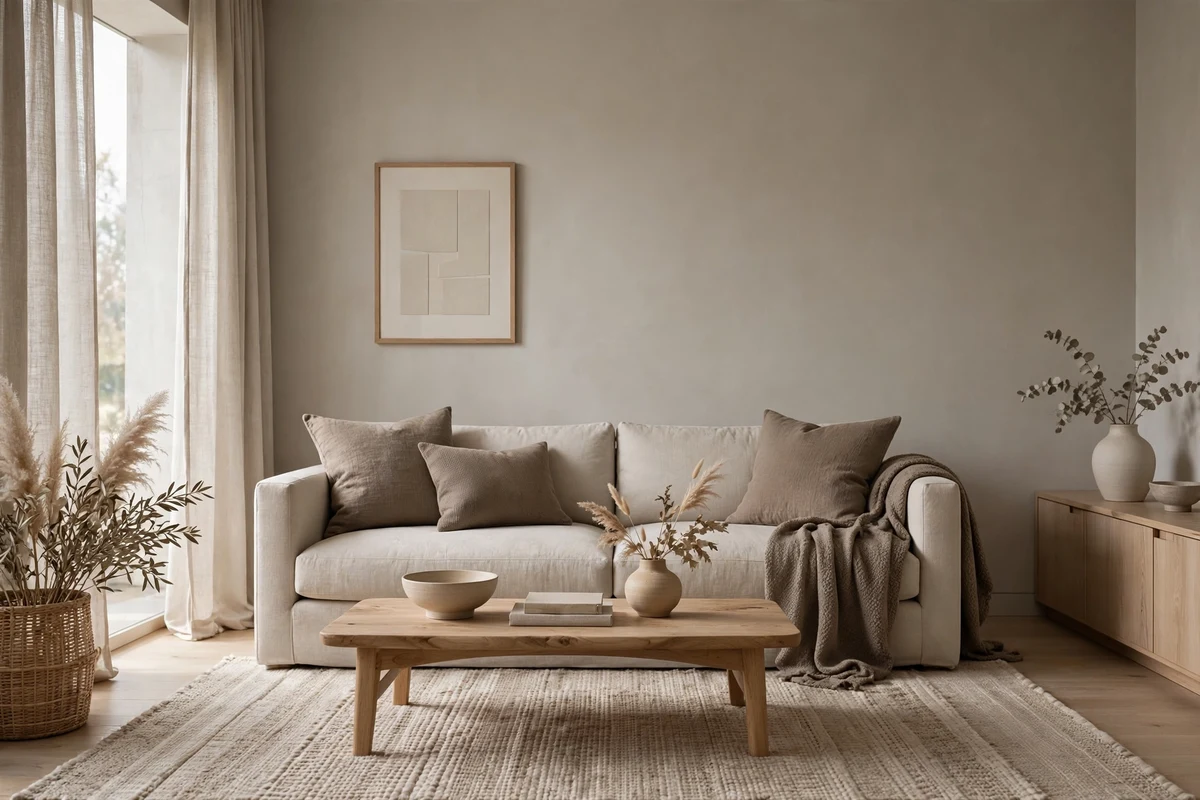
A mostly neutral room needs a whisper of contrast, and black provides it ($30–$150 for frames, lamp bases, or hardware). Think slim black window frames, a matte black floor lamp, thin black picture frames, or black metal table legs. Used sparingly, black outlines the room’s shapes like ink on paper, giving calm spaces the definition they need to avoid looking washed out.
Pro tip: Distribute black in at least three spots around the room, because a single black object looks like a mistake while three look like a decision. For more contrast ideas, see our studio apartment color schemes guide.
22. Linen Textiles for Lived-In Softness
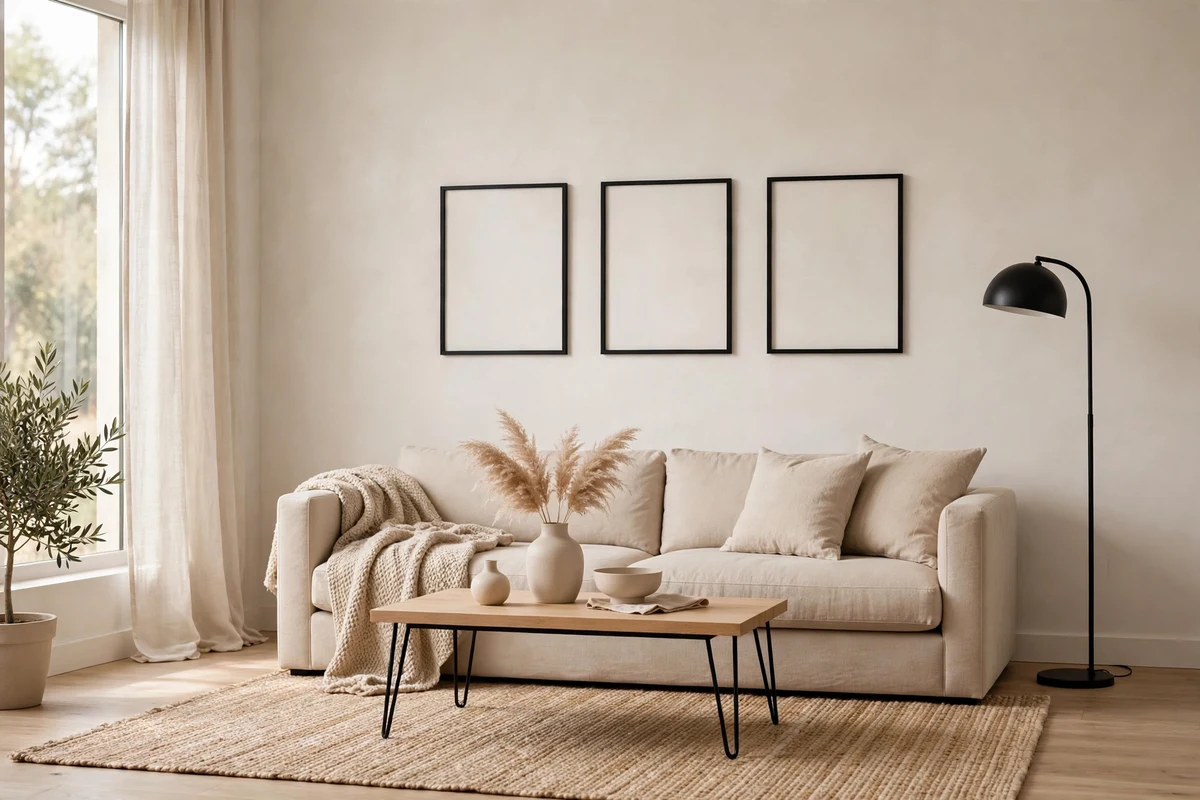
Crisp minimalism can feel cold without the right textiles, and washed linen ($40–$120 per cushion cover, $150–$400 for throws) is the answer. Its natural slub and gentle wrinkles add human warmth that perfectly balances clean lines. Layer linen cushions in tonal shades on the sofa, drape a linen throw over one arm, and choose linen-look upholstery for the main seating, because the texture invites touch in a way flat synthetics never do.
Pro tip: Embrace linen’s wrinkles instead of fighting them, because the relaxed creases are exactly what keep a minimal room feeling like a home rather than a showroom.

23. A Chunky Wool Throw for Cozy Contrast
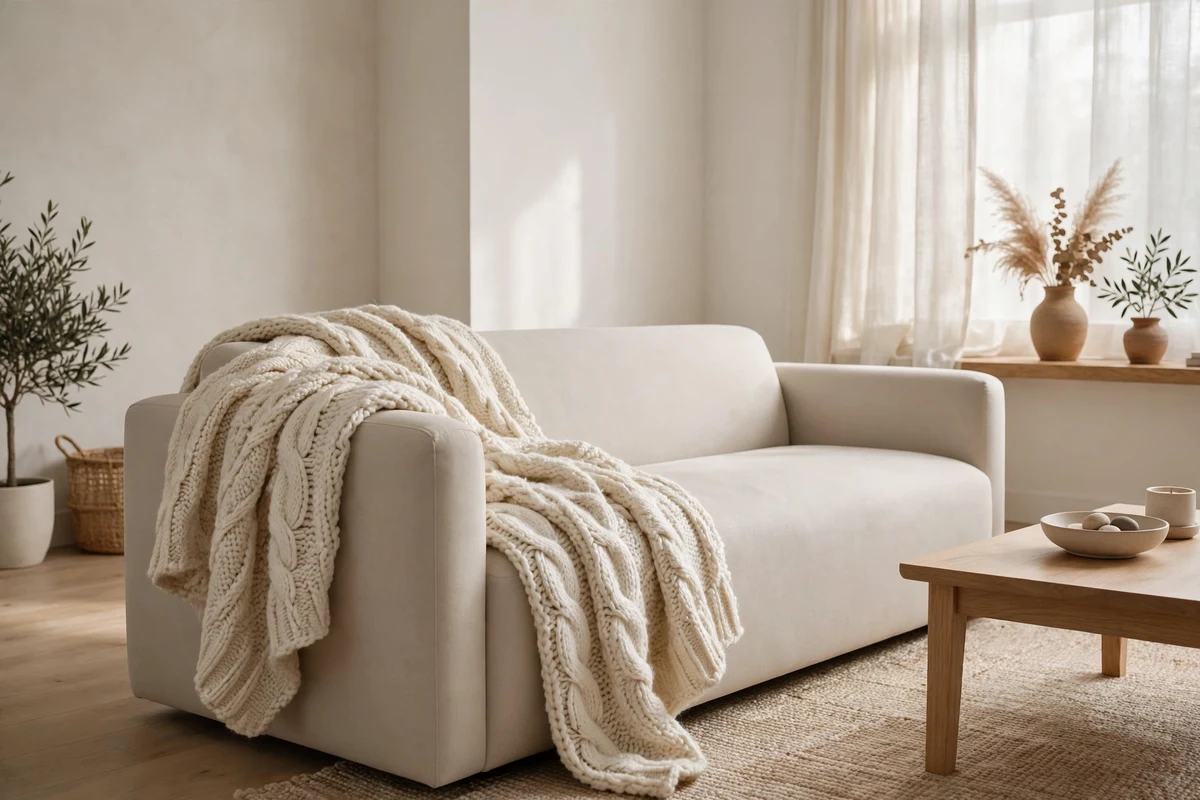
One substantial knit throw in undyed wool or soft cream ($80–$200) draped over the sofa arm is the minimalist’s version of a statement piece. The chunky texture contrasts beautifully with smooth upholstery and sleek tables, adding a layer of coziness you can see from across the room. Fold it in thirds for a tailored look, or let it puddle casually for relaxed Scandinavian-inspired hygge.
Pro tip: Choose a throw large enough to actually use, at least 50 by 60 inches, because a decorative-only throw that cannot cover your legs will annoy you every winter evening.
24. A Natural Jute Rug for Organic Warmth
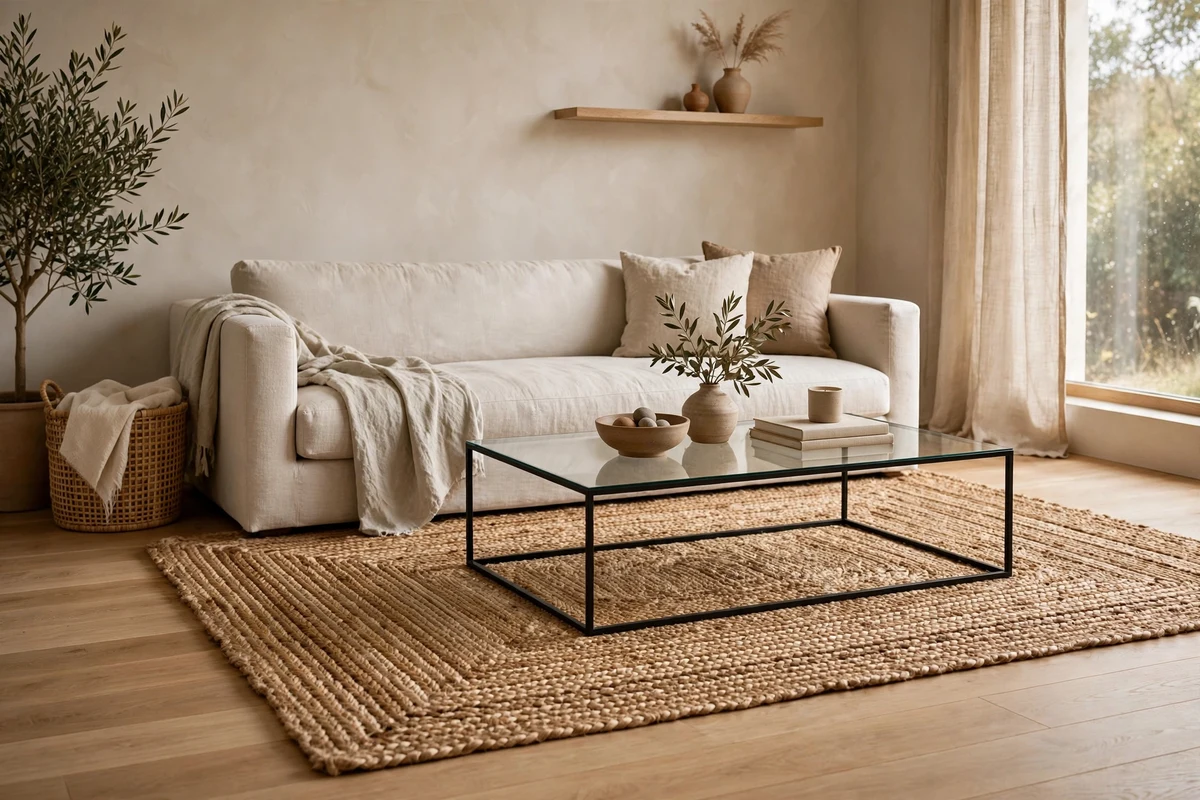
A flat-weave jute or sisal rug ($150–$500 depending on size) grounds a minimalist seating area with organic texture while staying firmly in the neutral palette. Its nubby, handwoven surface adds the earthiness that keeps pale rooms from floating away, and it is durable enough for high-traffic family life. Layer a smaller soft wool rug on top in the seating zone if you want extra comfort underfoot without visual clutter.
Pro tip: Size the rug so the sofa’s front legs and the coffee table both sit fully on it, because a too-small rug is the fastest way to make a minimal room look unintentional.
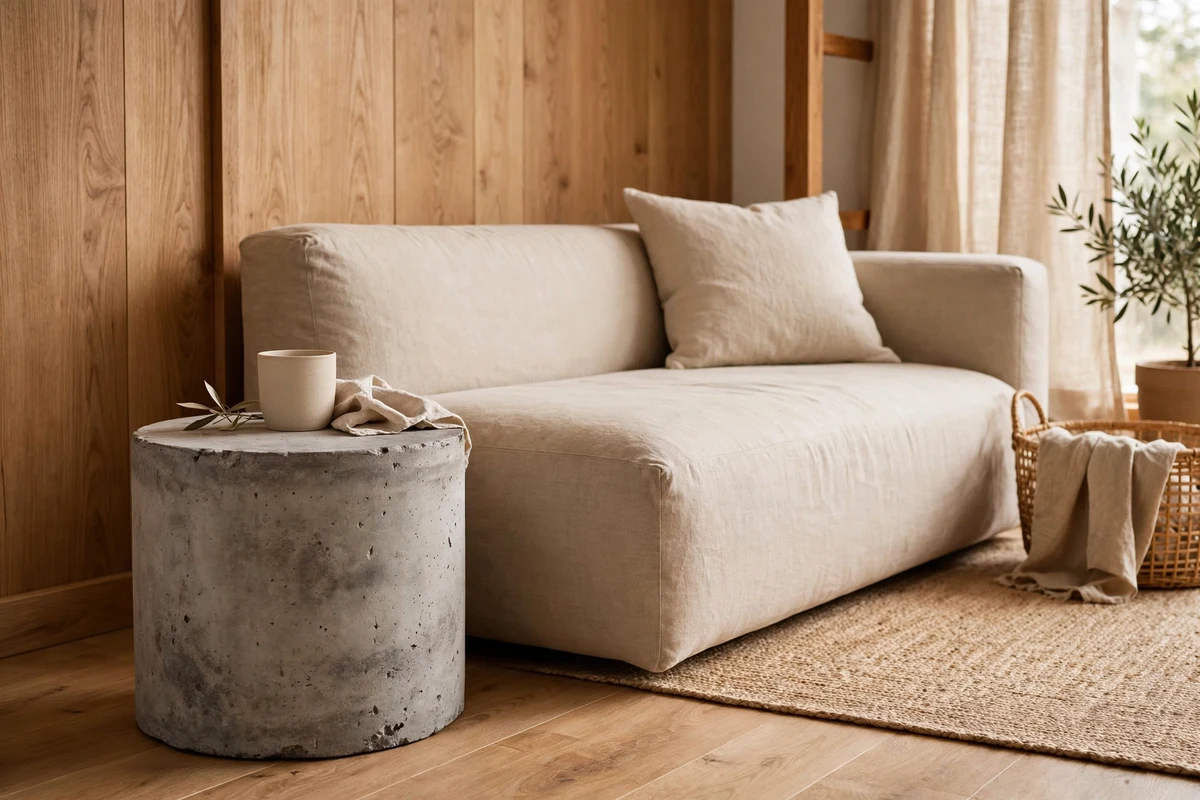
25. One Concrete Detail for Raw Edge
A single concrete element, a small side table, a planter, or a pendant base ($60–$250), introduces raw, honest materiality that keeps minimalism from feeling precious. Concrete’s cool grey tone and subtle imperfections contrast wonderfully with warm woods and soft linens. One piece is the sweet spot; concrete is a strong flavor, and restraint is what makes it feel curated rather than industrial.
Pro tip: Seal concrete decor pieces with a matte stone sealer, because unsealed concrete stains easily and the sealer keeps the raw look while adding practical protection.
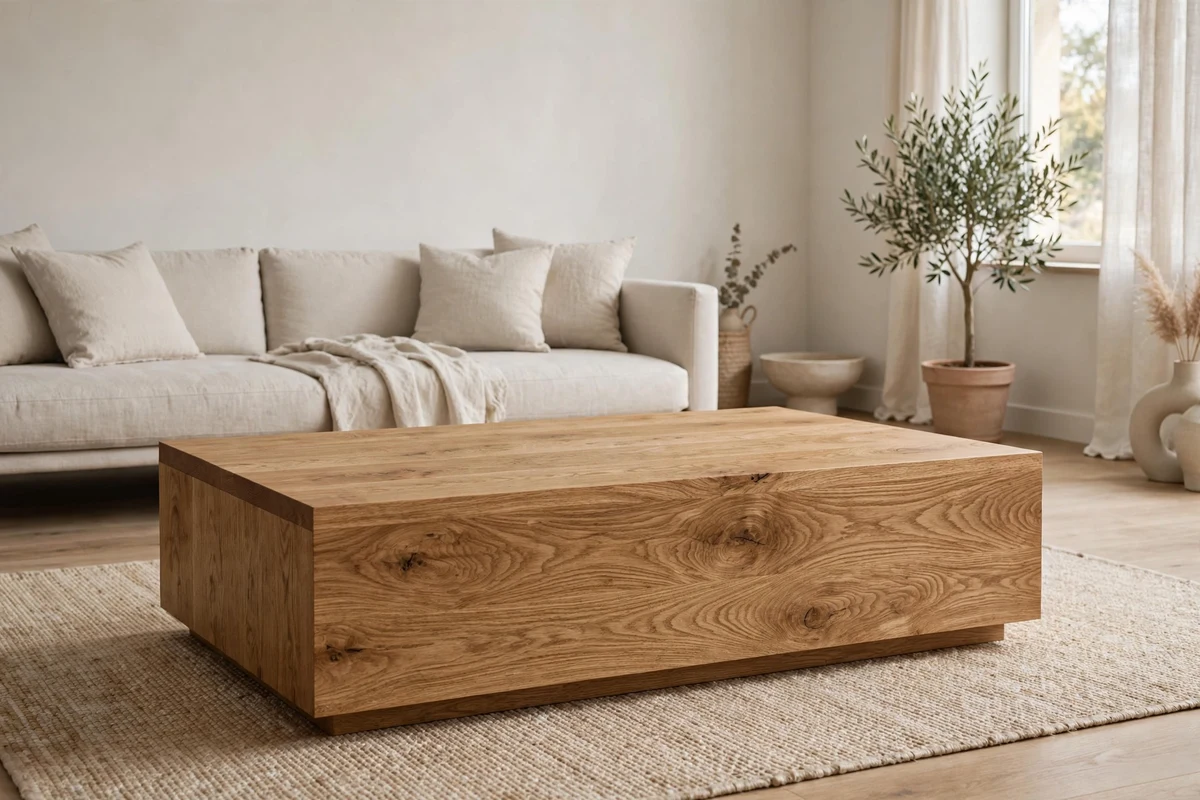
26. Visible Oak Grain for Natural Pattern
In a room with no patterned fabrics, wood grain becomes the pattern. Choose oak furniture with visible, beautiful grain ($400–$1,200 for a coffee table or media console) and let the natural figuring provide all the visual interest the room needs. The organic lines of the grain soften the room’s geometry and prove that minimalism is about editing, not about erasing nature.
Pro tip: Oil-finished oak shows grain more richly than lacquered, and it can be spot-repaired with a dab of oil instead of requiring a full refinish. Pair it with ideas from our coastal living room guide for more natural material inspiration.
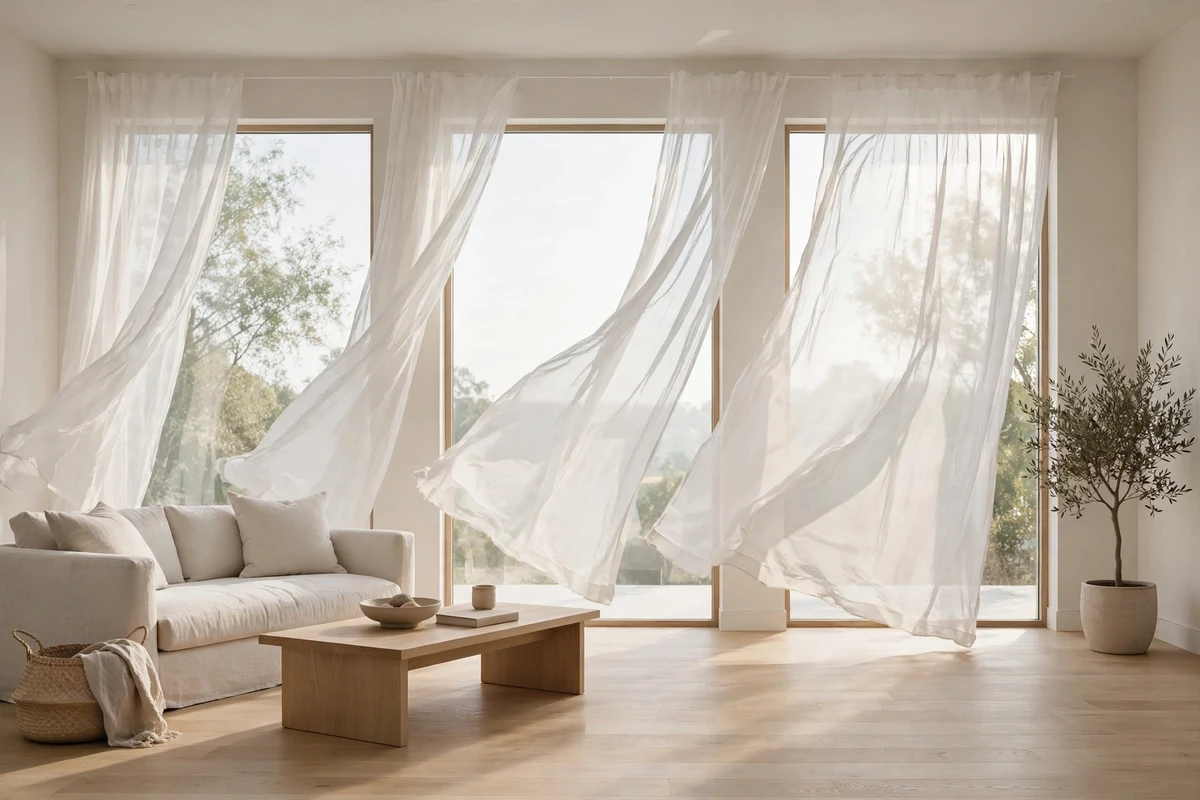
27. Sheer Curtains That Filter, Never Block
Where you need window coverings, sheers in white or ivory ($60–$140 per panel) preserve the minimalist commitment to light. They soften harsh sun into a gentle glow, provide daytime privacy, and add the faintest vertical texture to tall windows. Unlike blackout drapes, sheers never make the room feel closed in, and their translucency keeps the boundary between indoors and outdoors deliciously blurred.
Pro tip: Wash sheers twice a year and hang them slightly damp, because gravity pulls out wrinkles and they will look freshly pressed with zero ironing.
Minimalist Details and Mindful Living
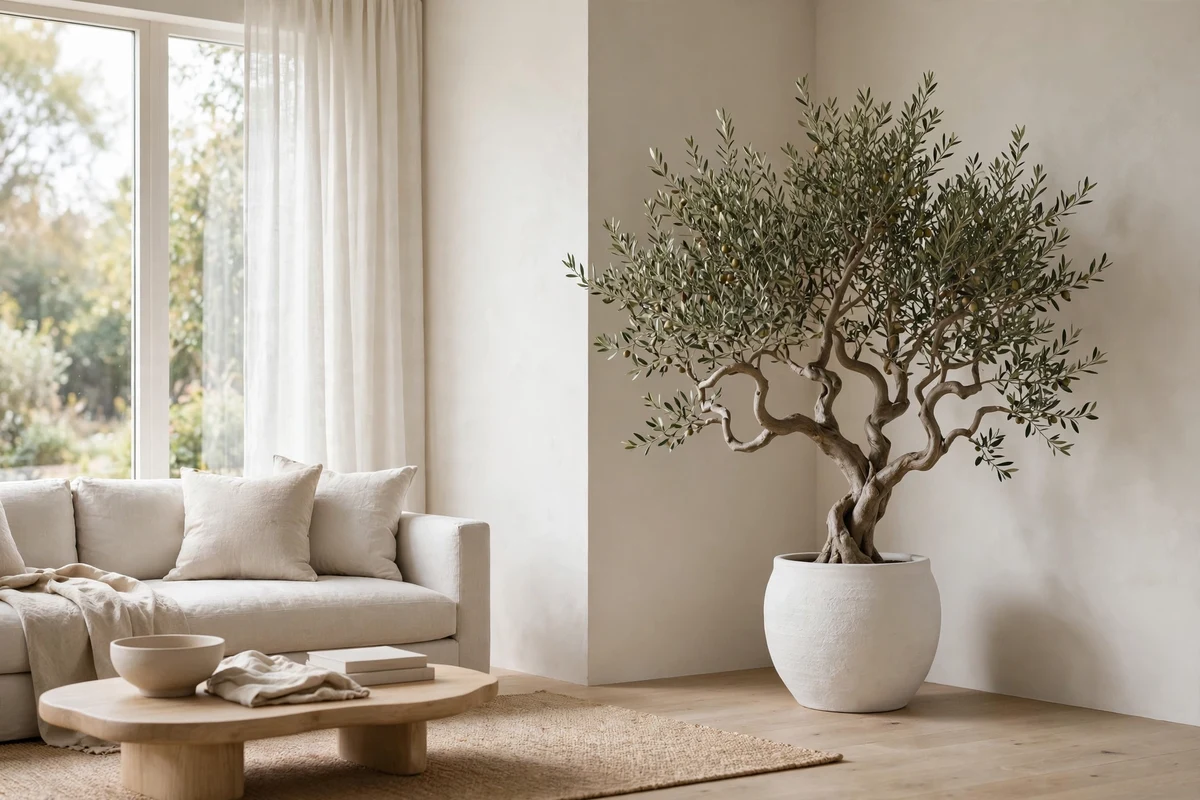
28. A Single Sculptural Plant as Living Art
One perfect plant, an olive tree, a fiddle-leaf fig, or a sculptural snake plant ($40–$150 with a simple pot), treated as living sculpture, brings life into a minimal room without clutter. The key is singularity: one plant in a beautiful handmade ceramic pot makes a statement, while five small plants on every surface make a jungle. Choose something architectural with strong lines that echoes the room’s clean geometry.
Pro tip: Match the pot to your palette, matte white, warm terracotta, or raw concrete, because a clashing plastic nursery pot will undo all your careful editing. Our small living room plant ideas guide has more single-plant styling inspiration.
29. Handmade Ceramics With Quiet Character
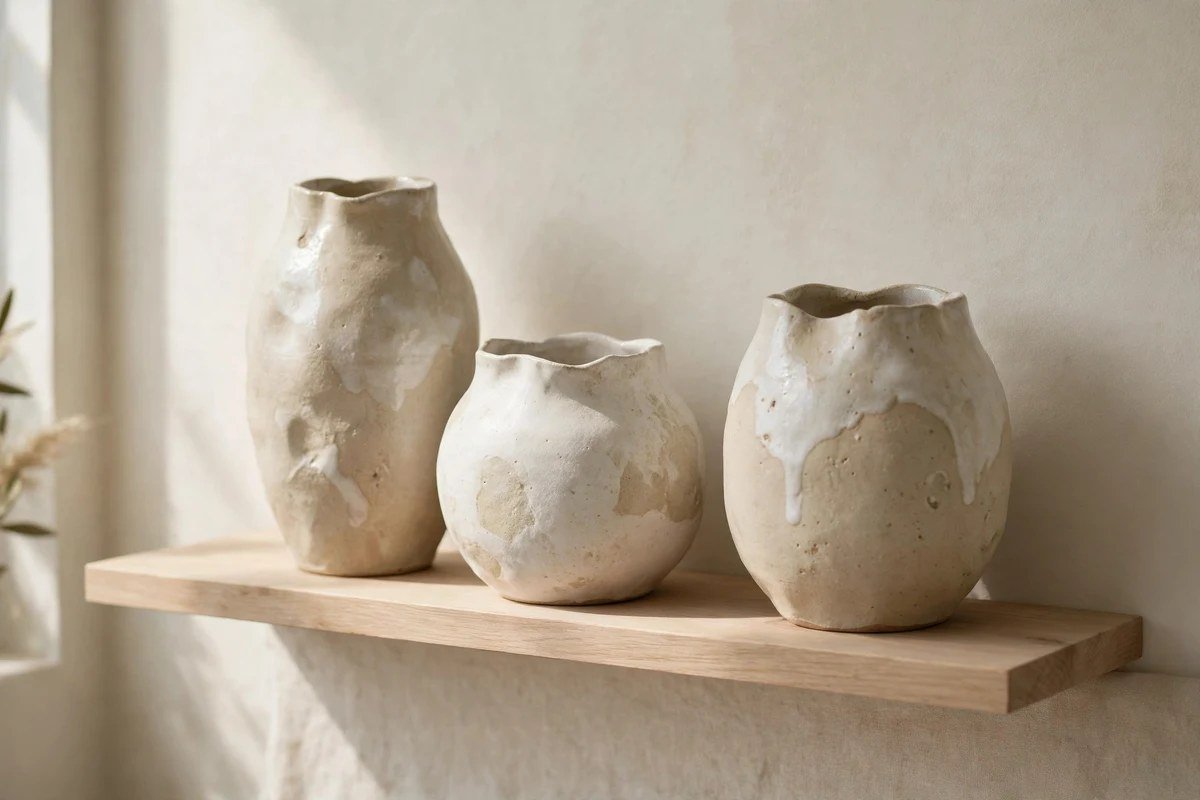
A small collection of handmade ceramic vessels ($30–$90 each) adds soul to minimalist shelves and tables. The slight irregularities of hand-thrown pottery, a wobbling rim, a finger-marked glaze, provide the human touch that machine-perfect minimalism sometimes lacks. Group two or three in tonal glazes, leave the rest of the surface empty, and let their quiet imperfection be the decoration.
Pro tip: Buy ceramics directly from local potters at markets, because you will get unique pieces with real character for less than mass-produced designer versions.
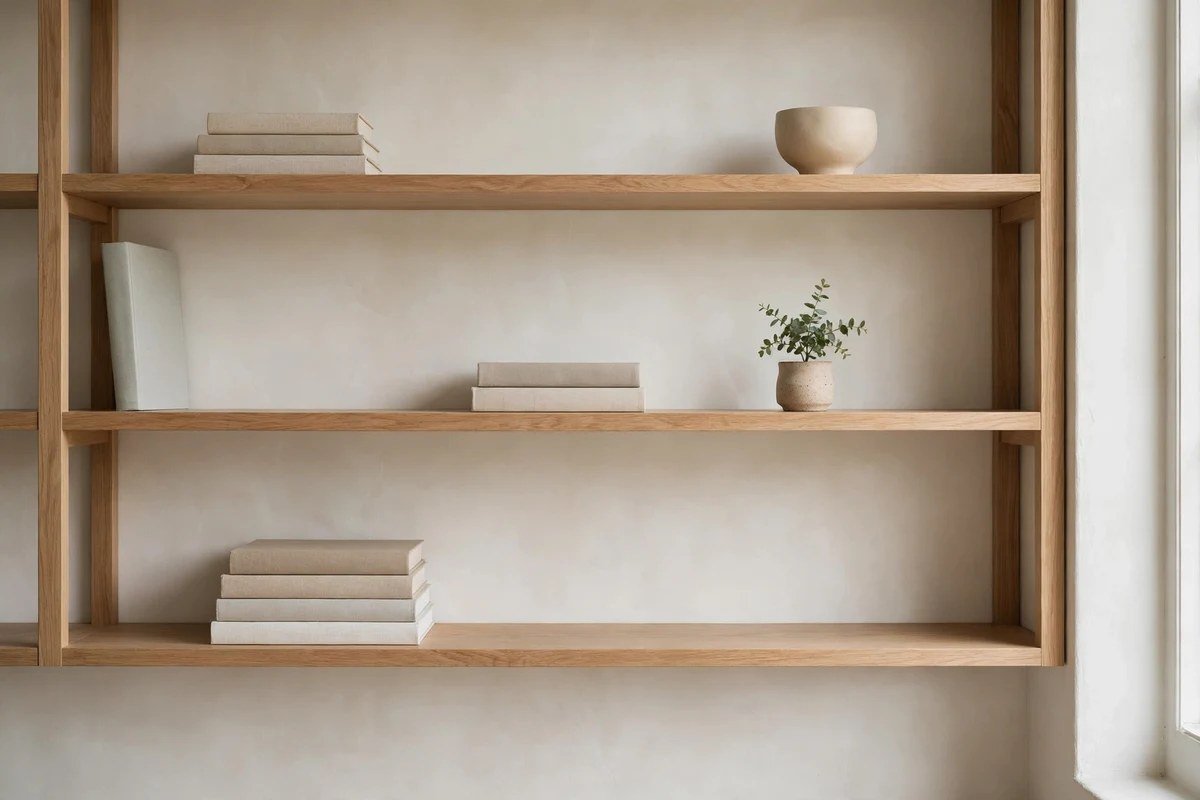
30. An Edited Bookshelf, Not a Library Wall
Minimalists can love books, they just display them differently. Keep one low shelf or a single bookcase ($200–$600) with your most beautiful volumes, arranged with space to breathe and a few objects interspersed. Store the rest in closed cabinets or donate the ones you will never reread. A curated shelf of books you genuinely love is a portrait of your mind; a wall crammed with every paperback you have ever owned is storage.
Pro tip: Turn the spines of your least attractive books inward for a calm tonal look, a stylist trick that instantly declutters any shelf. For more editing strategies, see our space-saving furniture ideas.
31. Invisible Cable Management Everywhere
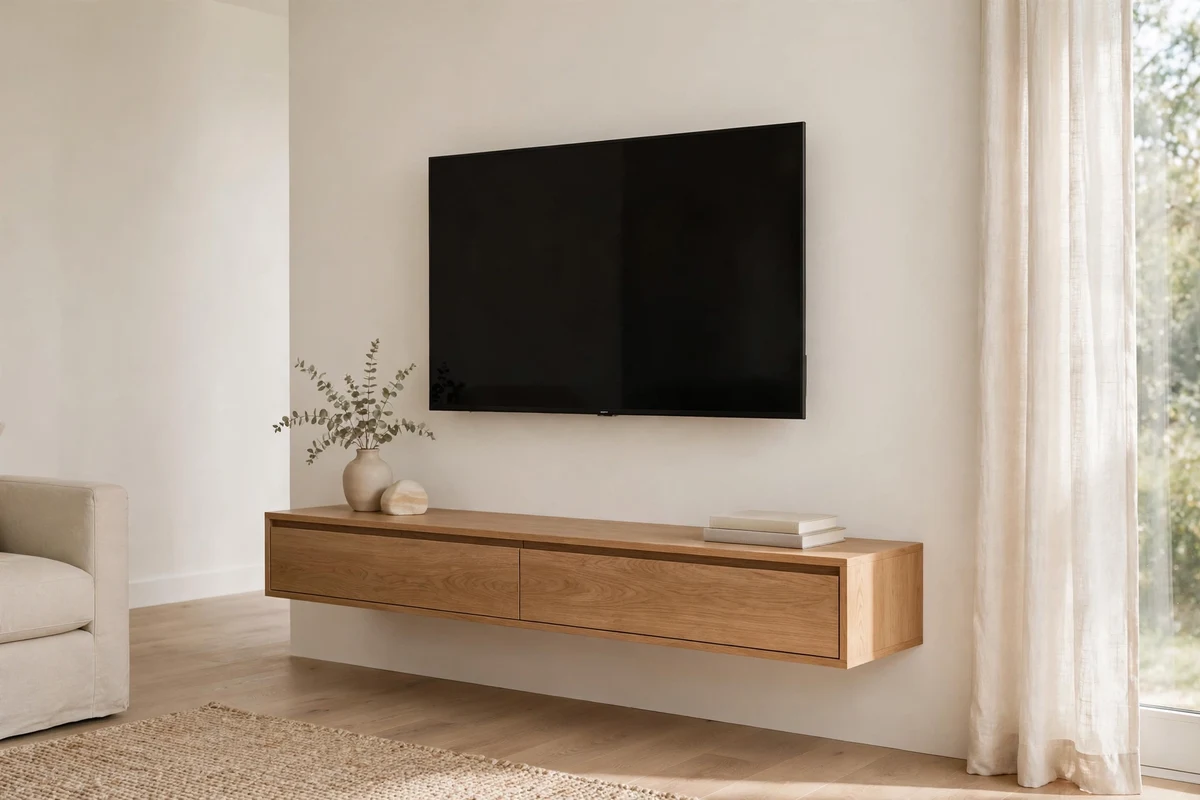
Cables are the enemy of calm, so hunt them down ruthlessly. Use adhesive cable channels painted to match the wall ($15–$40), a cable box for the power strip behind the media console ($25–$50), and velcro ties inside cabinets. Go wireless wherever the budget allows, because every eliminated cable is one less visual distraction. This unglamorous task delivers an outsized calm dividend for almost no money.
Pro tip: Label both ends of every cable with a small tag before you bundle them, because future-you will be grateful when something needs unplugging in a hurry.
32. A Multipurpose Ottoman That Does Triple Duty
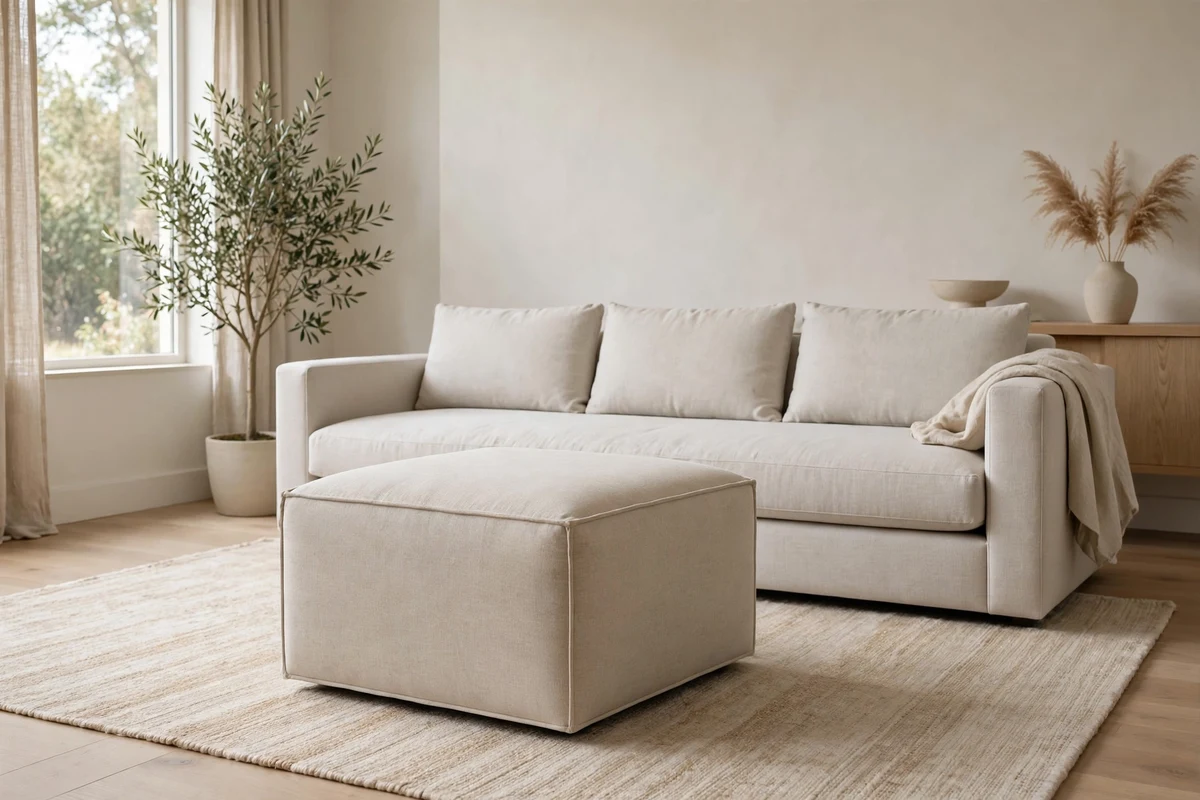
The minimalist ottoman ($150–$400) is a footrest, extra seat, and hidden storage box in one tidy cube. Choose an upholstered version with a lift-off lid in the same fabric as your sofa, and it disappears into the seating arrangement while swallowing throws, remotes, and chargers. When guests arrive, it becomes a perch; when they leave, it goes back to being a footrest. One piece, three jobs, zero clutter.
Pro tip: A tray on top instantly converts the ottoman into a coffee table for drinks, giving you a fourth function from the same compact footprint.
33. Generous Negative Space as a Design Choice
The bravest minimalist move is leaving space empty on purpose. Resist filling every corner and wall; an unadorned stretch of wall or an empty corner ($0) is not unfinished, it is the luxury of restraint. Negative space gives the eye rest, makes the pieces you kept look more valuable, and creates the serene, gallery-like calm that defines the style. When you feel the urge to add something, wait a week and see if you still want it.
Pro tip: Photograph the room and study the image, because the camera reveals clutter and imbalance your eyes have learned to ignore in person.
34. A Picture Ledge for Effortless Art Rotation
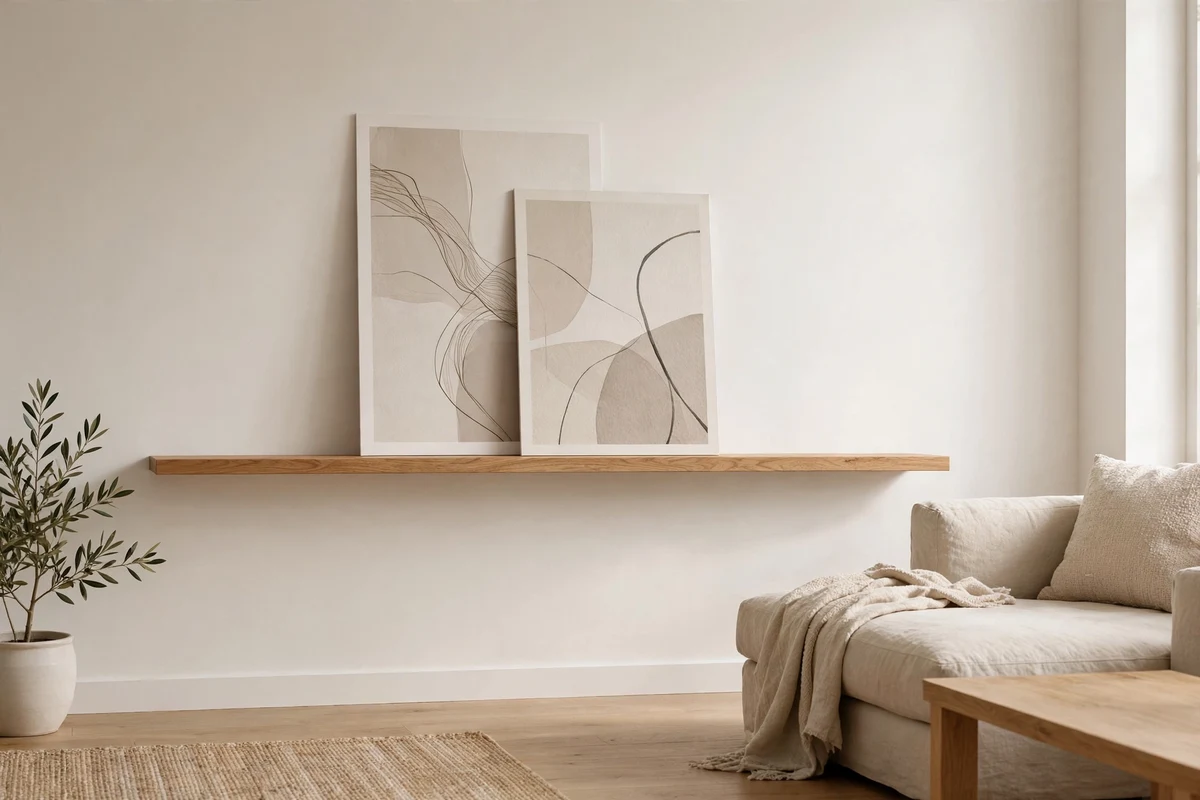
A slim oak picture ledge ($40–$100) lets you lean art instead of hanging it, which means you can rotate pieces with the seasons in seconds, no nails, no holes, no commitment. Lean one large print with a smaller one overlapping slightly, keep the rest of the ledge clear, and swap art whenever the mood strikes. It is the minimalist-friendly way to enjoy variety without permanent visual noise.
Pro tip: Add a thin lip or museum putty behind leaning frames, because even a slammed door can send an unsecured frame sliding on a slick ledge.
35. A Signature Scent for Invisible Atmosphere
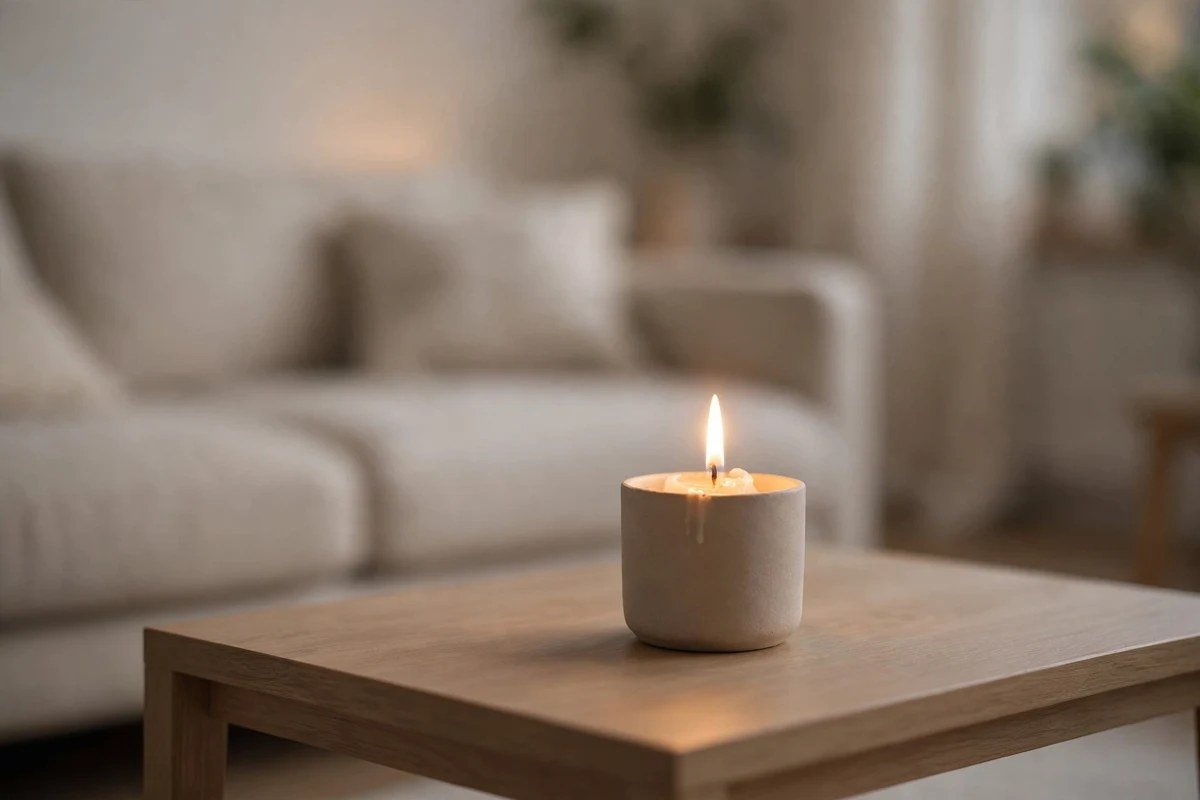
Minimalism engages all the senses, and scent is the invisible layer ($20–$60 for a quality candle or diffuser). Choose one signature fragrance, cedar, white tea, fig, or clean linen, and use it consistently so your living room has an olfactory identity as calm as its look. A single beautiful candle on the coffee table doubles as decor, and lighting it each evening becomes a ritual that signals the day is done.
Pro tip: Stick to one scent throughout the open-plan space, because competing fragrances from different rooms create sensory clutter just as surely as visual clutter.
36. Layered Evening Lighting for After-Dark Calm
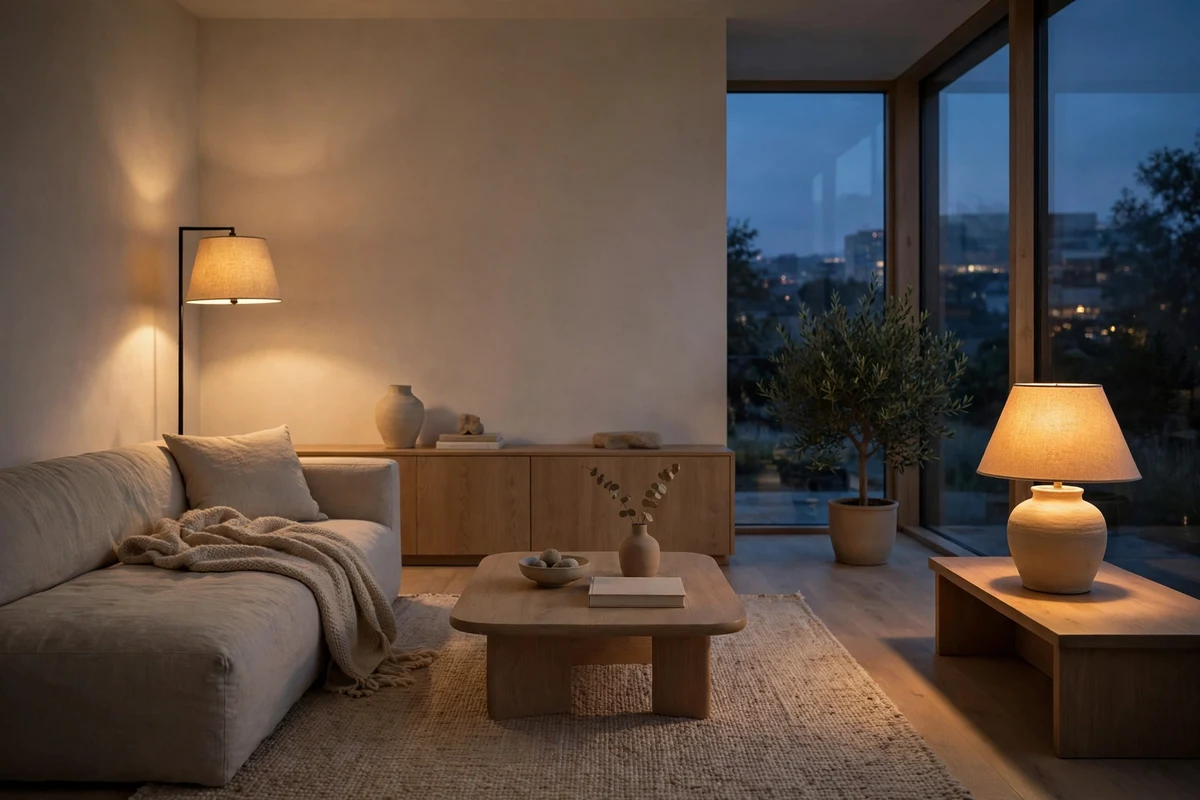
When daylight fades, a minimalist room needs a new kind of calm. Combine your dimmed recessed lights with one floor lamp and one table lamp ($150–$400 total), all on warm 2700K bulbs and dimmers, to create pools of golden light amid soft shadow. Turn off the overheads entirely and let the low lamps do the work; the room will feel intimate, cozy, and completely serene, proving minimalism is warmest after dark.
Pro tip: Put all evening lamps on a single smart scene called “unwind,” so one tap transforms the room from bright daytime to golden evening calm.
Frequently Asked Questions
How do I make a minimalist living room feel cozy instead of cold?
Layer warm neutrals instead of stark whites, add texture through linen, wool, and jute, use warm 2700K lighting on dimmers, and include one or two organic elements like wood grain or a living plant. Coziness in minimalism comes from material warmth and soft light, not from adding more stuff.
What is the ideal color palette for a minimalist living room?
Stick to three to four tones maximum: a warm white base, one mid-tone like oatmeal or greige, one deeper accent like taupe or soft black, and natural wood tones. Keeping every large piece within this tight family is what creates the signature calm.
How much should I budget for a minimalist living room makeover?
A thoughtful refresh using paint, textiles, lighting, and edited styling can cost $800–$2,000. A fuller makeover with a new sofa and flooring runs $5,000–$12,000. Minimalism actually saves money long-term because you buy fewer, better pieces.
Can a minimalist living room work with kids or pets?
Absolutely, with smart choices: performance fabrics that resist stains, hidden storage for toys, washable rug layers, and rounded furniture edges. The key is designing the calm around real life with durable materials and plenty of concealed storage.
How do I start decluttering toward a minimalist living room?
Remove everything from the room, then bring back only what you love or use regularly, one piece at a time. If you hesitate over an item for more than a few seconds, it probably does not earn its place. Photograph the room at each stage to spot what still feels noisy.
What is the biggest mistake people make with minimalist design?
Confusing empty with minimal. A room stripped of all personality feels cold, not calm. True minimalism keeps the pieces with soul, the handmade vase, the beloved chair, the art that moves you, and edits out everything that is merely filler.
Final Thoughts
A minimalist living room is not about having less for the sake of less. It is about making room, literally and mentally, for what matters. Each of these 36 ideas works on the same principle: edit with intention, choose materials that age gracefully, let light do the decorating, and give every remaining piece the space to be appreciated. Start with the foundation, walls, floors, and light, then add furniture one considered piece at a time. Before long you will have a living room that does not just look calm, but actively makes you calmer every time you walk in. That is the real luxury of minimalism, and it is available at any budget.


3 Comments