41 Scandinavian Studio Apartment Ideas for a Calm, Light-Filled Home
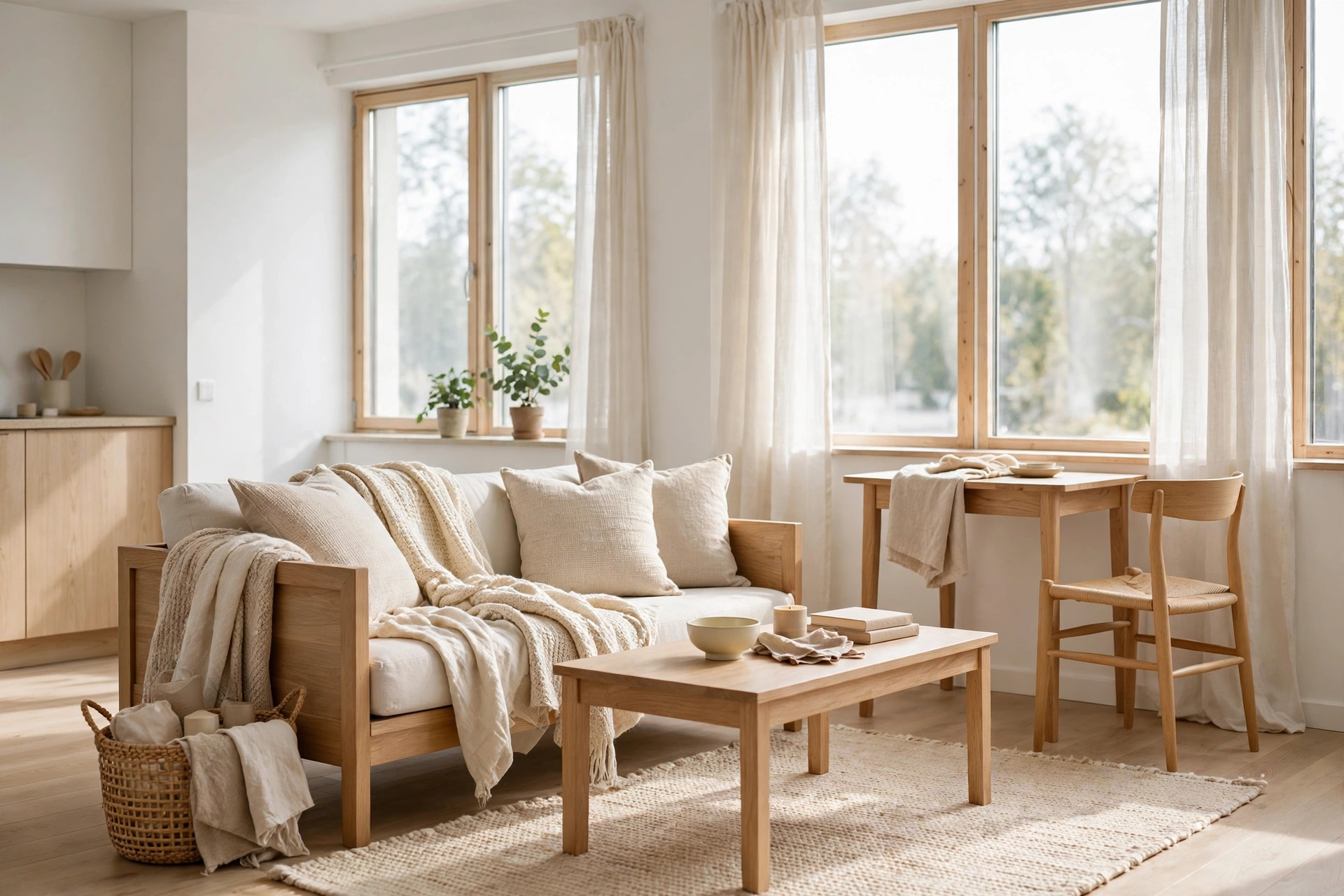
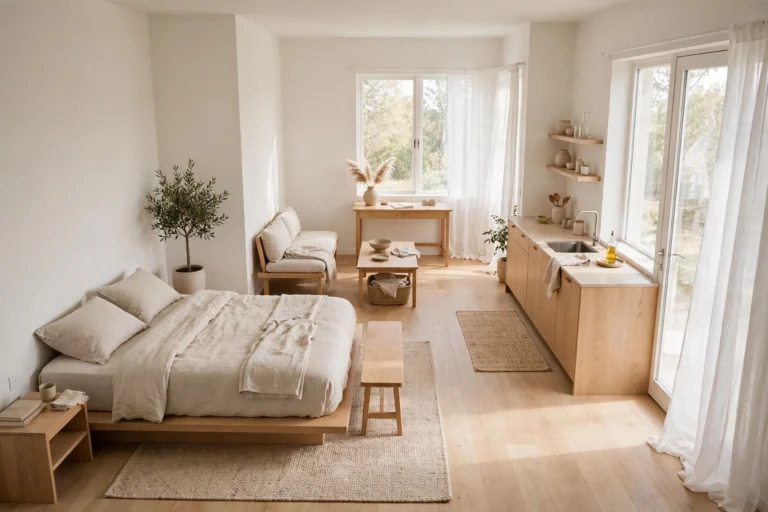
Scandinavian design is the native language of the studio apartment — long, dark Nordic winters taught designers to squeeze maximum light, warmth, and function out of minimal square footage. White walls, pale woods, and layered textiles aren’t just an aesthetic; they’re a survival strategy that happens to photograph beautifully. If your studio feels dark, cramped, or chilly no matter what you try, this is the style that fixes all three problems at once.
This guide rounds up 41 Scandinavian studio apartment ideas that bring calm, light, and hygge into small spaces: airy foundations that multiply daylight, cozy layers for long evenings, natural materials that age gracefully, storage that hides clutter without fuss, soft neutral palettes, and personal touches that keep minimalism warm instead of cold. Every idea includes realistic prices and a pro tip, so you can start wherever your budget allows.
Light & Airy Foundations
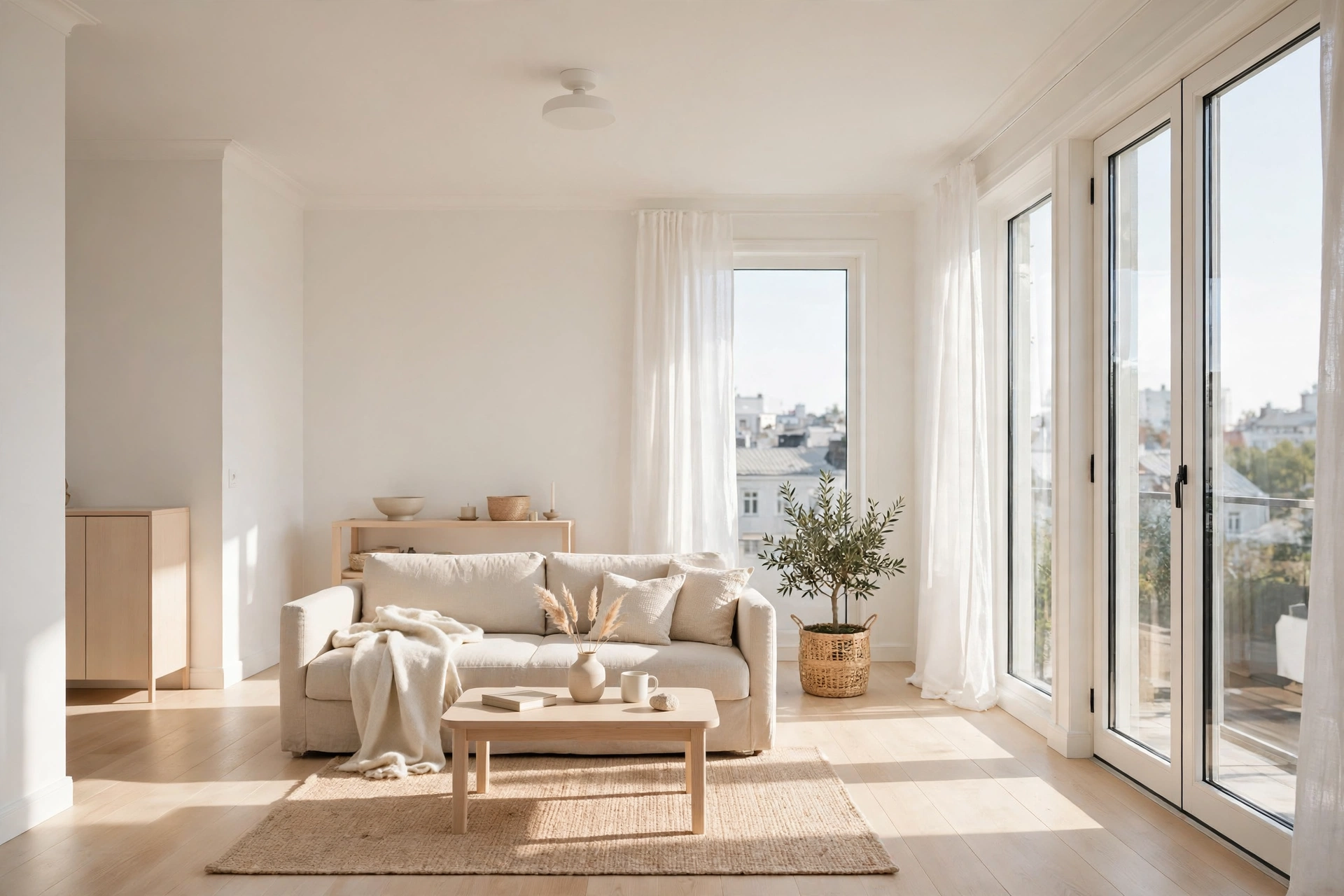
1. Start With Crisp White Walls
White walls are the cornerstone of Scandinavian style — they reflect up to 80% of available light, instantly doubling the brightness of a small studio. A gallon of quality interior paint runs $30–$50 and covers a studio’s main walls in a weekend. The trick is choosing a warm white (think Benjamin Moore White Dove or IKEA’s warm whites) rather than a blue-white that reads clinical under LEDs. Pro tip: paint the ceiling the same warm white as the walls — eliminating the visual line where wall meets ceiling makes the whole room feel taller.
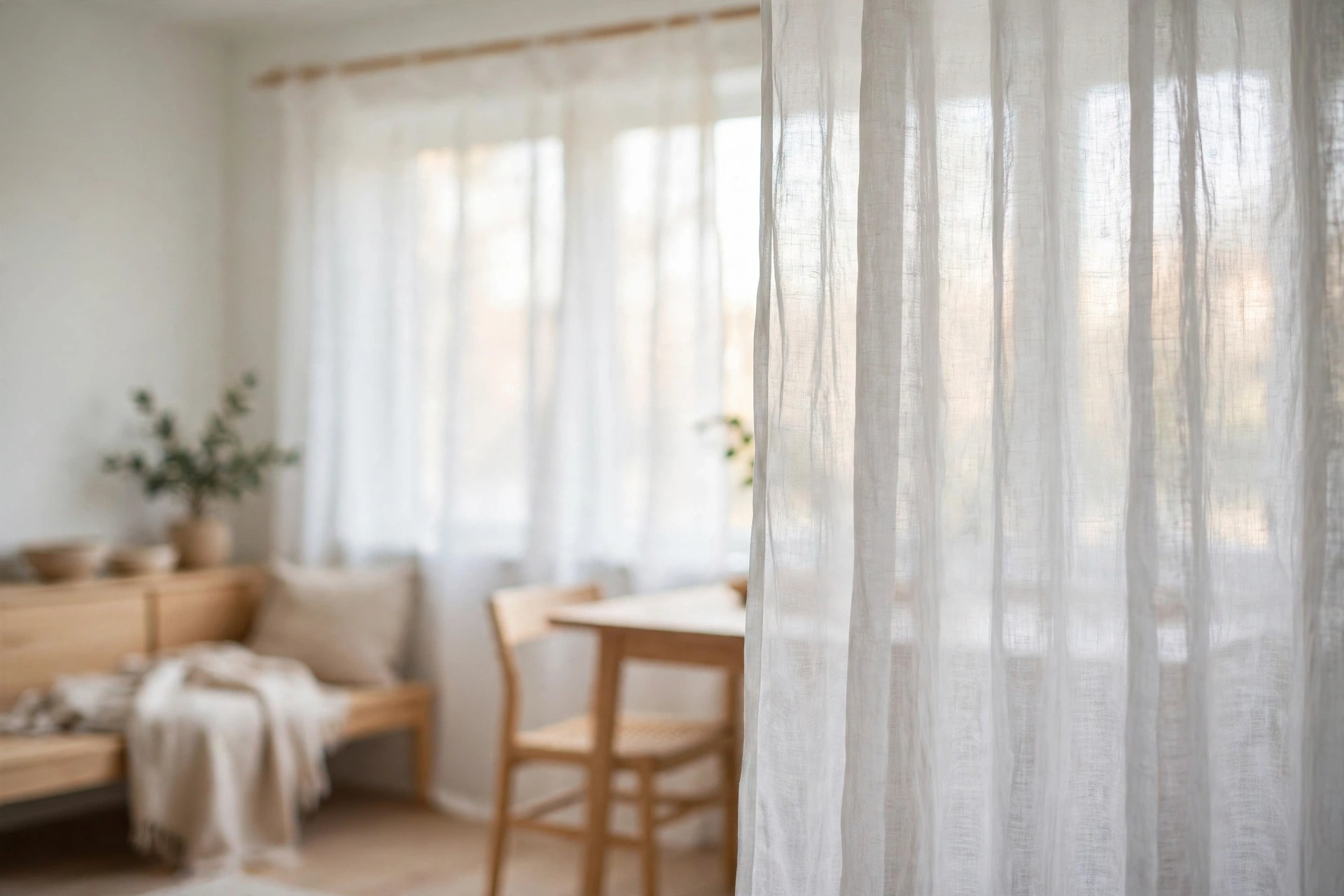
2. Hang Sheer Curtains Instead of Heavy Drapes
Scandinavians don’t block daylight — they filter it. Sheer linen or linen-look curtains ($20–$40 per pair at IKEA or H&M Home) soften harsh sun while letting brightness pour in, keeping the room glowing even on gray days. Hang the rod 4–6 inches above the window frame and 3–4 inches wider on each side for that tailored, taller-window look. Pro tip: skip blackout liners in the living zone and reserve them for a bedroom curtain panel only — the living area should never fight the light.
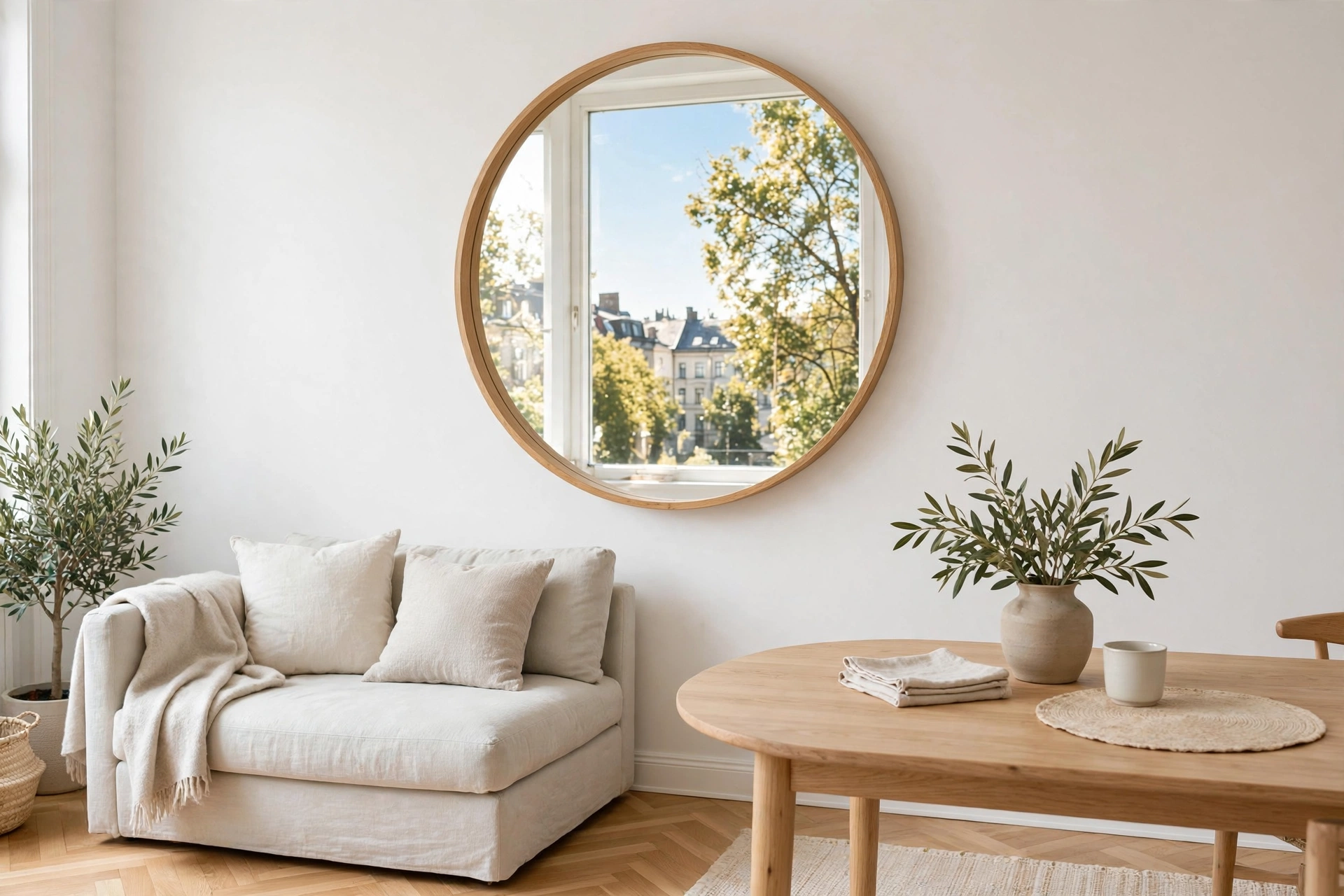
3. Bounce Light With Strategic Mirrors
A well-placed mirror is a second window you don’t have to pay rent for. A large round mirror ($40–$90) hung opposite or adjacent to the main window bounces daylight deep into the studio’s darker corners, effectively doubling your light source. Round shapes are the Scandinavian default — softer and friendlier than harsh rectangles. Pro tip: angle the mirror to reflect the window view, not the cluttered side of the room — you want to multiply sky and trees, not laundry piles.
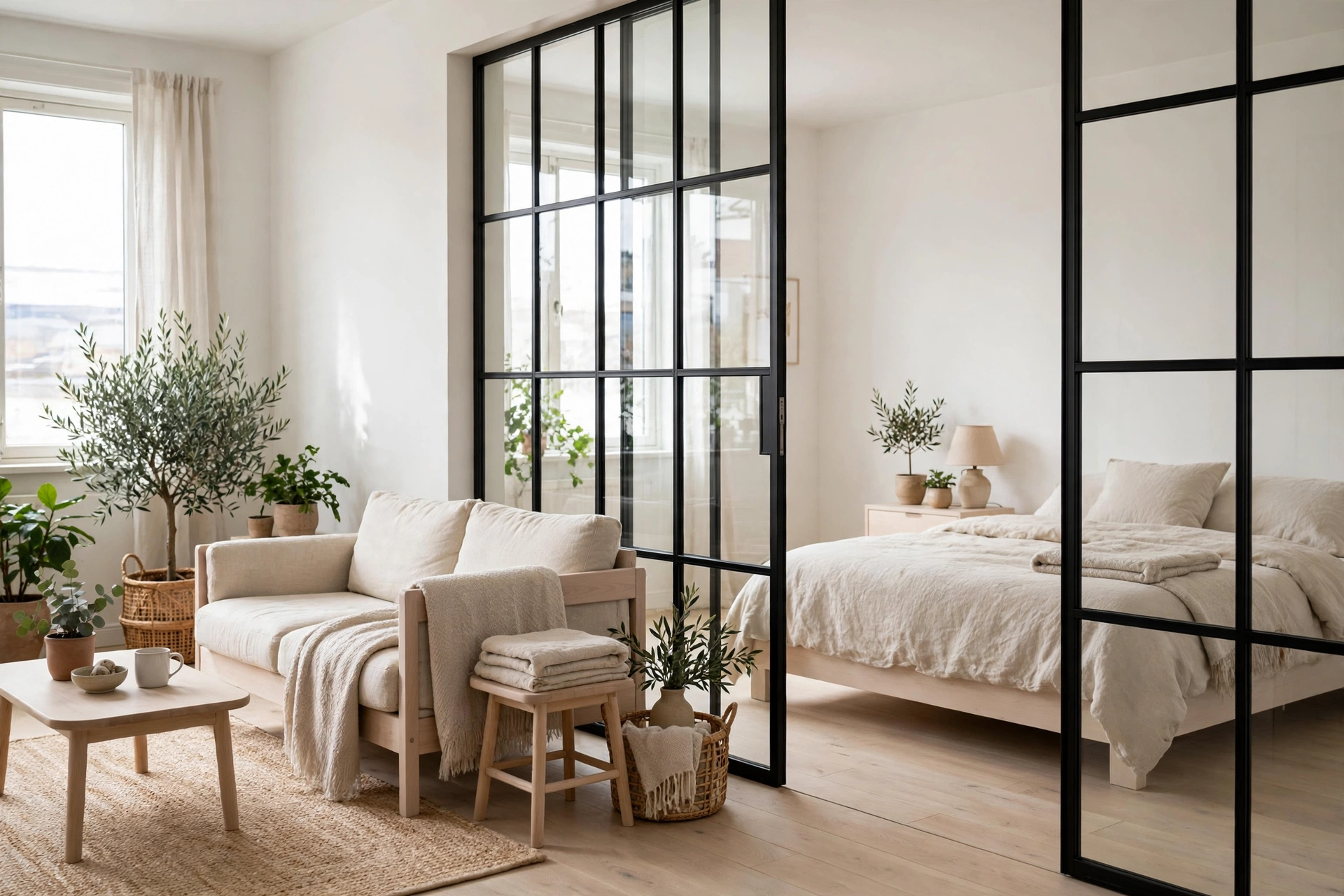
4. Divide With Glass, Not Walls
When a studio needs separation, Scandinavians reach for glass — a glass partition or even a large glass-front bookcase divides zones without stealing a single ray of light. Framed glass room dividers run $200–$500, but a tall open-backed bookshelf ($80–$150) achieves the same airy zoning for far less. Pro tip: apply frosted window film ($10–$20 a roll) to the lower half of any glass divider — you keep the light flow up top and gain privacy where it counts.
5. Zone the Open Plan With One Low-Pile Rug
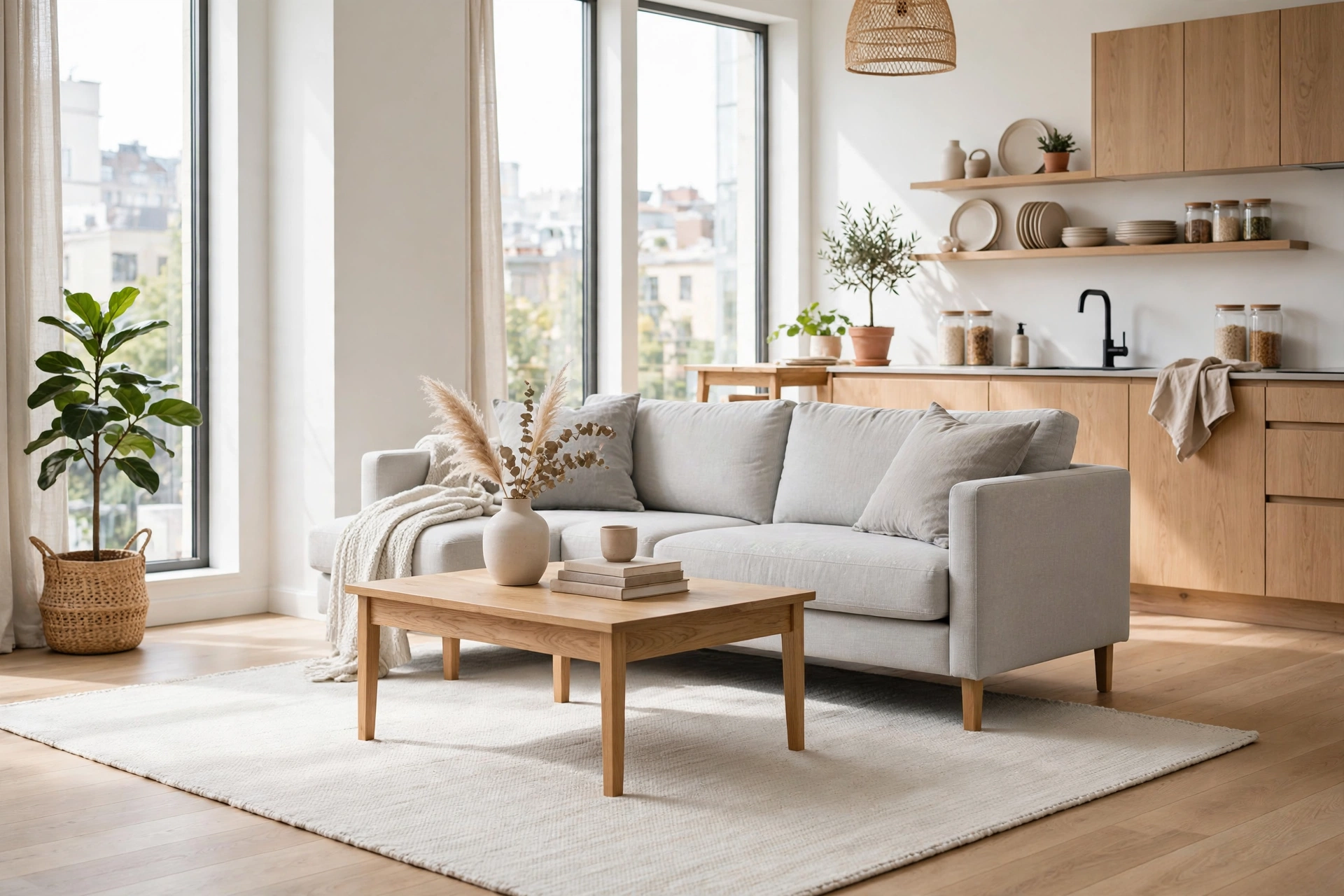
In Scandinavian studios, a single pale rug does the zoning work — it anchors the living area, adds softness underfoot, and keeps the floor visually calm. Choose a low-pile rug in ivory, light gray, or a subtle Nordic pattern ($80–$180 for a 5×7 at IKEA, Rugs USA, or Armadillo) so it defines the zone without chopping up the room. Pro tip: pick a rug that’s pale but not pure white — an ivory or oatmeal tone hides daily life far better while keeping the same airy feel.
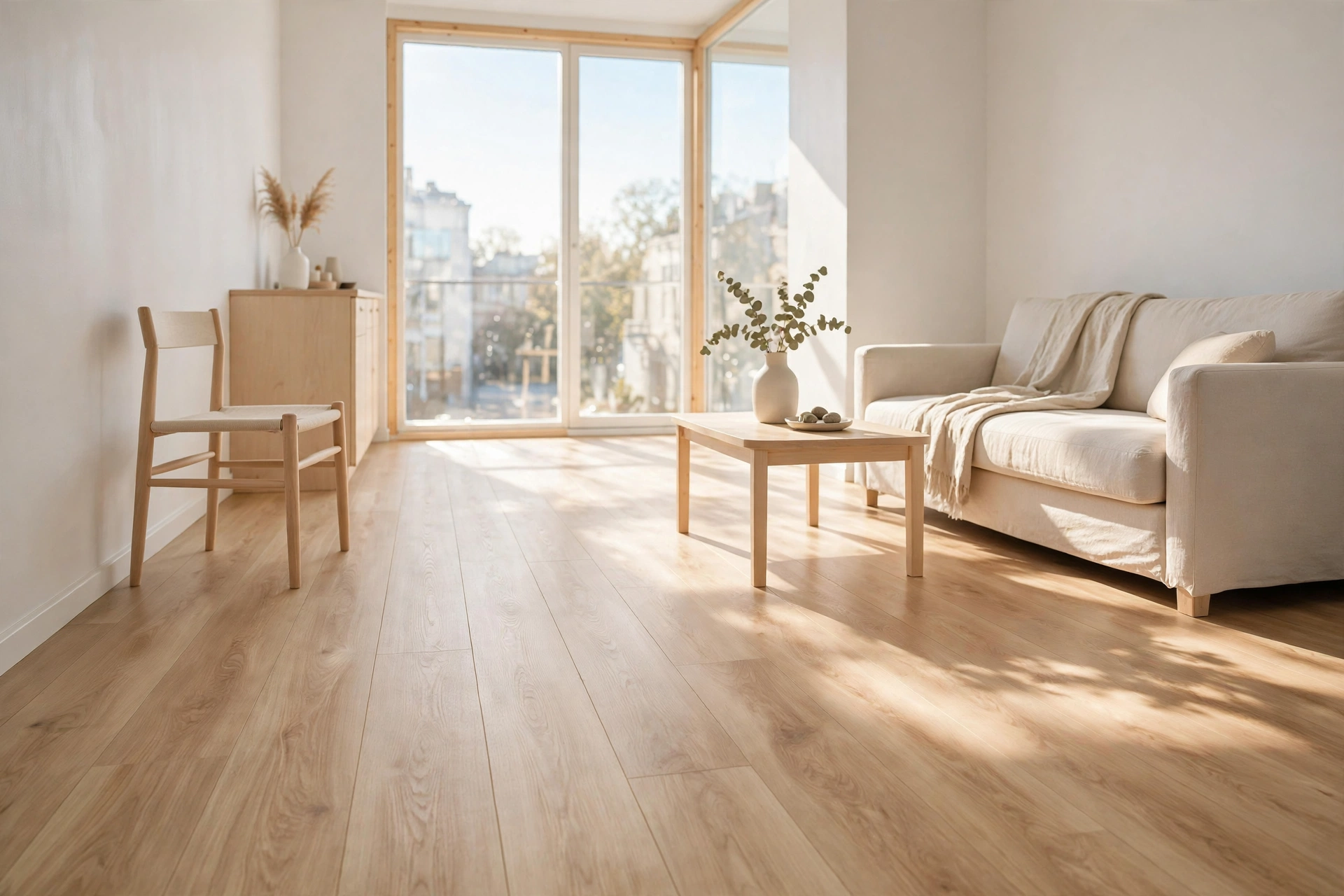
6. Choose Light Wood or Pale Laminate Floors
Dark floors absorb light; pale floors return it. If you’re replacing flooring (or choosing a rental), light oak, ash, or pale laminate ($2–$4 per square foot) is the Scandinavian standard — it brightens the whole room from the ground up and pairs with every neutral palette. Renters can fake it with a large light-toned rug layered over dark floors. Pro tip: run floor planks toward the main window — the lines draw the eye toward the light and make the room feel longer.
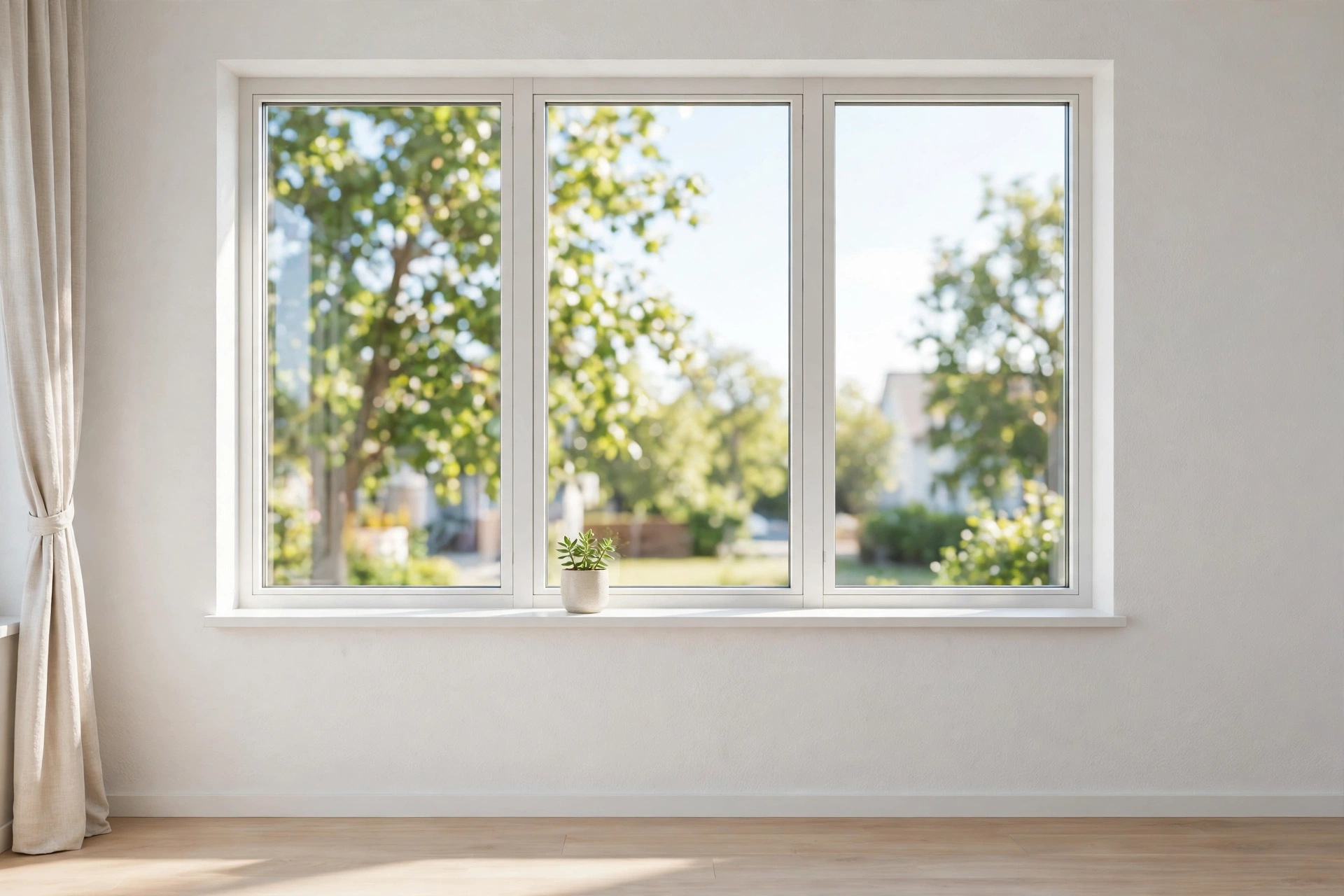
7. Keep Window Frames Minimal and White
Chunky dark window trim eats light and visual space. Scandinavian windows are nearly invisible — slim white frames that disappear into white walls, letting the glass do all the work. If your rental has dark or dated trim, a coat of the same warm white as your walls ($15–$25 for a quart of trim paint) makes it recede instantly. Pro tip: clear the windowsill of everything except one small plant or candle — a clean sill reads as a bigger window.
Hygge Cozy Layers
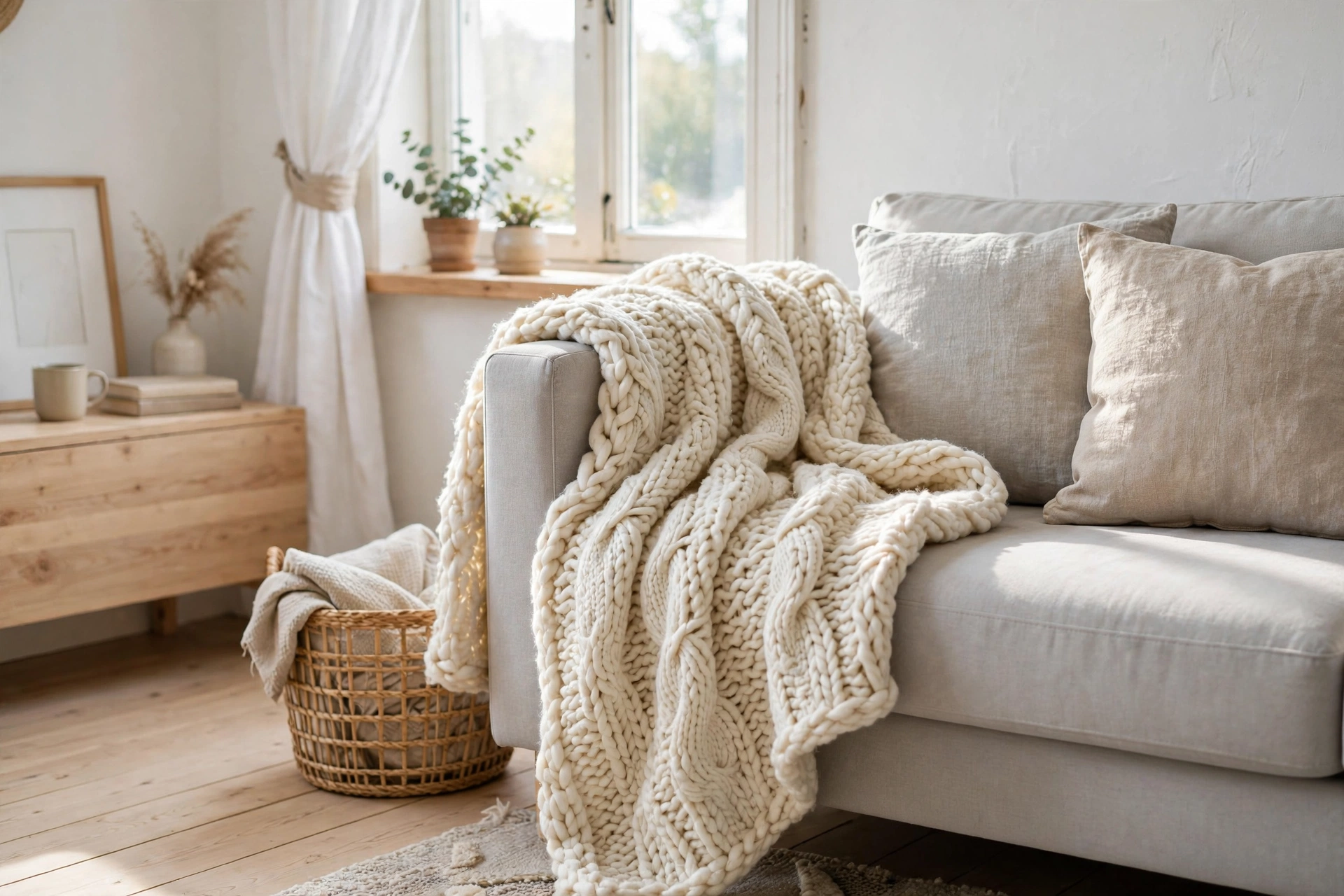
8. Pile On Chunky Knit Throws
Hygge — the Danish art of coziness — lives in texture. A chunky knit throw ($30–$70 at H&M Home, IKEA, or Etsy) draped over the sofa arm or bed corner adds instant warmth you can see and feel. Stick to cream, oatmeal, or soft gray so the layers stay calm rather than busy. Pro tip: drape throws casually over one armrest or across a bed corner — the artful toss looks twice as expensive as a neatly folded square.
9. Layer Sheepskins Over Chairs and Benches
The sheepskin throw is Scandinavia’s most iconic cozy shortcut — draped over a dining chair, bench, or bed corner, it softens hard seating and adds cloud-like texture. Real sheepskins run $40–$80; convincing faux versions cost $20–$40 at IKEA. One or two is plenty; this is an accent, not upholstery. Pro tip: drape sheepskins on dining chairs rather than the sofa — it upgrades the hardest seats in the house and keeps the sofa’s lines clean.
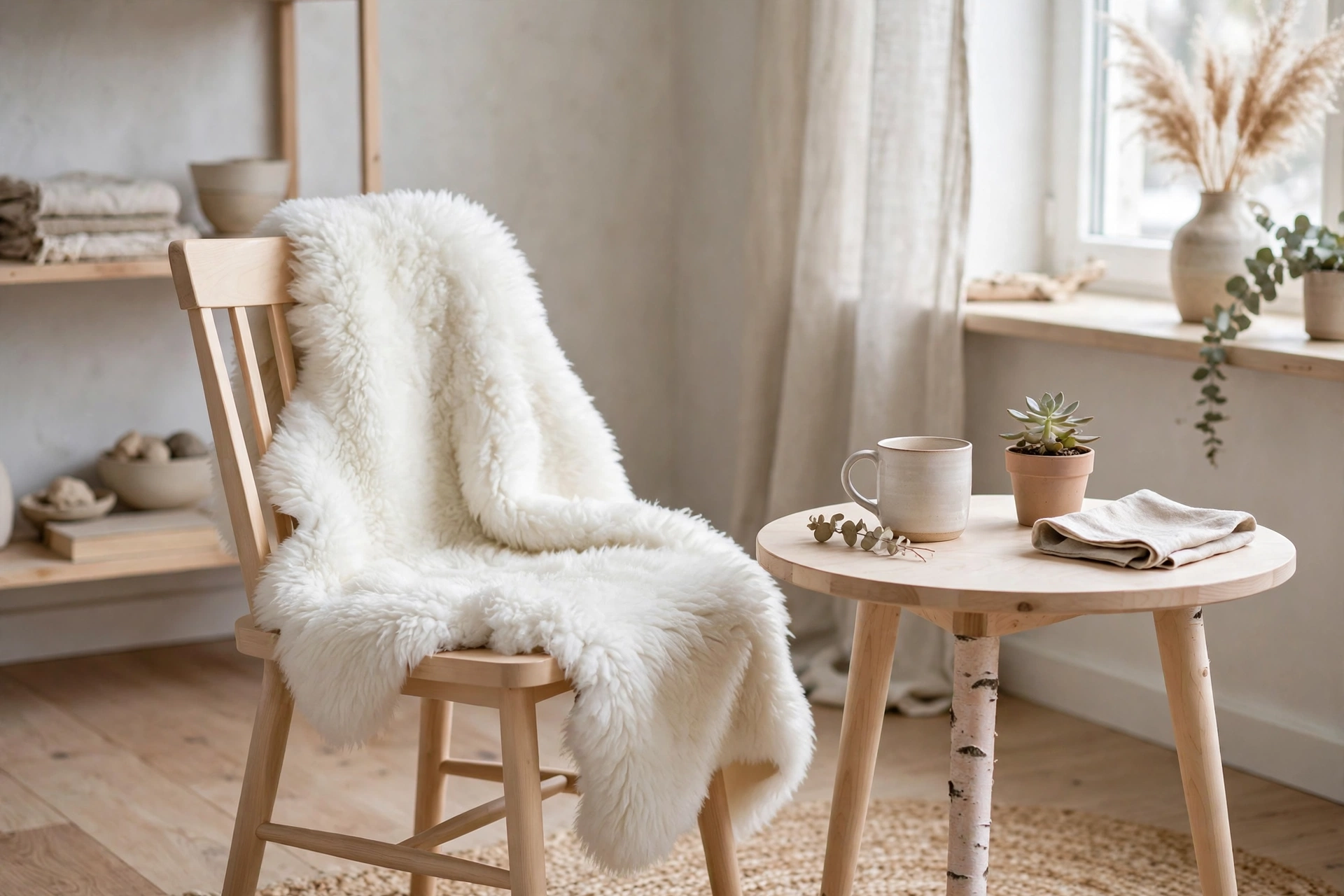
10. Cluster Candles for Evening Hygge
Danes burn more candles per person than anyone on earth — candlelight is hygge’s original light source. Group pillar candles in glass hurricanes or simple holders ($5–$15 each) in odd numbers on the coffee table, windowsill, and dining table. Battery-operated LED candles ($10–$20 for a set) give the same glow where real flames aren’t allowed. Pro tip: use unscented candles in clusters and keep fragrance to one signature scented candle elsewhere — five competing scents in a studio is a headache, literally.
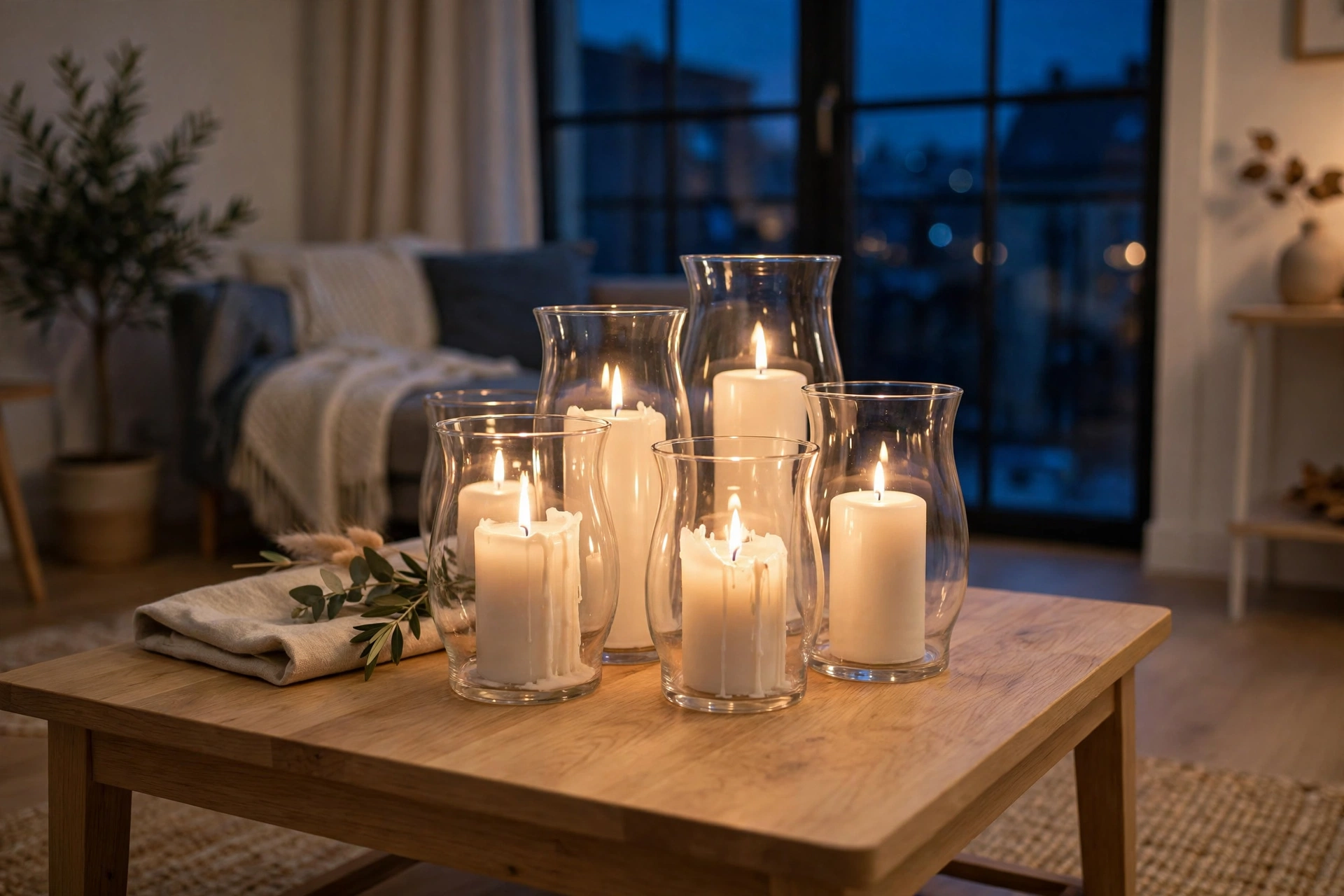
11. Dress the Bed in Stonewashed Linen
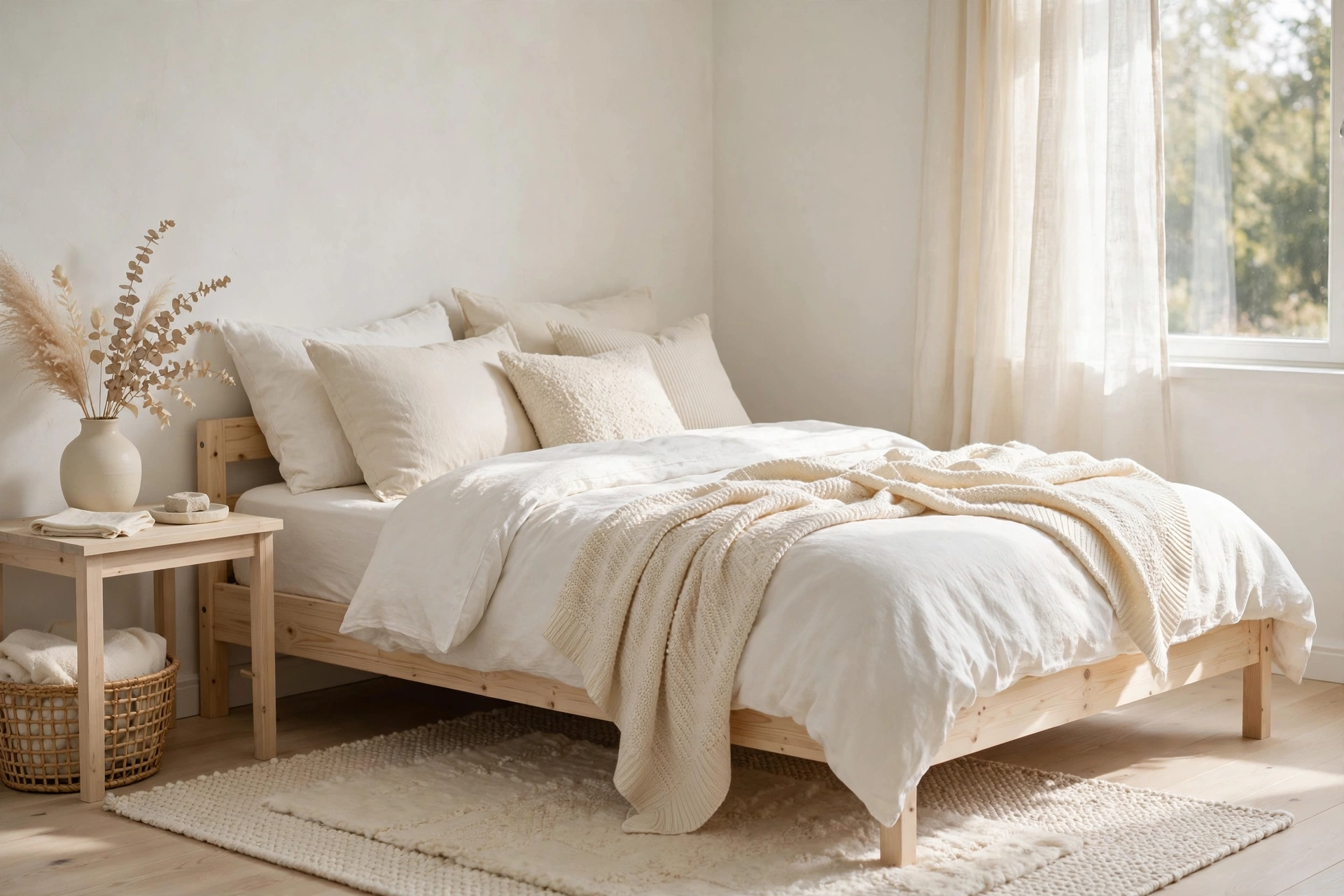
The Scandinavian bed is an invitation: rumpled stonewashed linen in white, flax, or soft gray ($90–$160 for a duvet set) that looks effortlessly lived-in and gets softer with every wash. Since the bed dominates a studio visually, this one upgrade sets the tone for the entire space. It pairs beautifully with the layered approach in our small studio bedroom ideas. Pro tip: buy the duvet cover one size up from your insert — the extra loft creates that plush, hotel-bed look with zero effort.
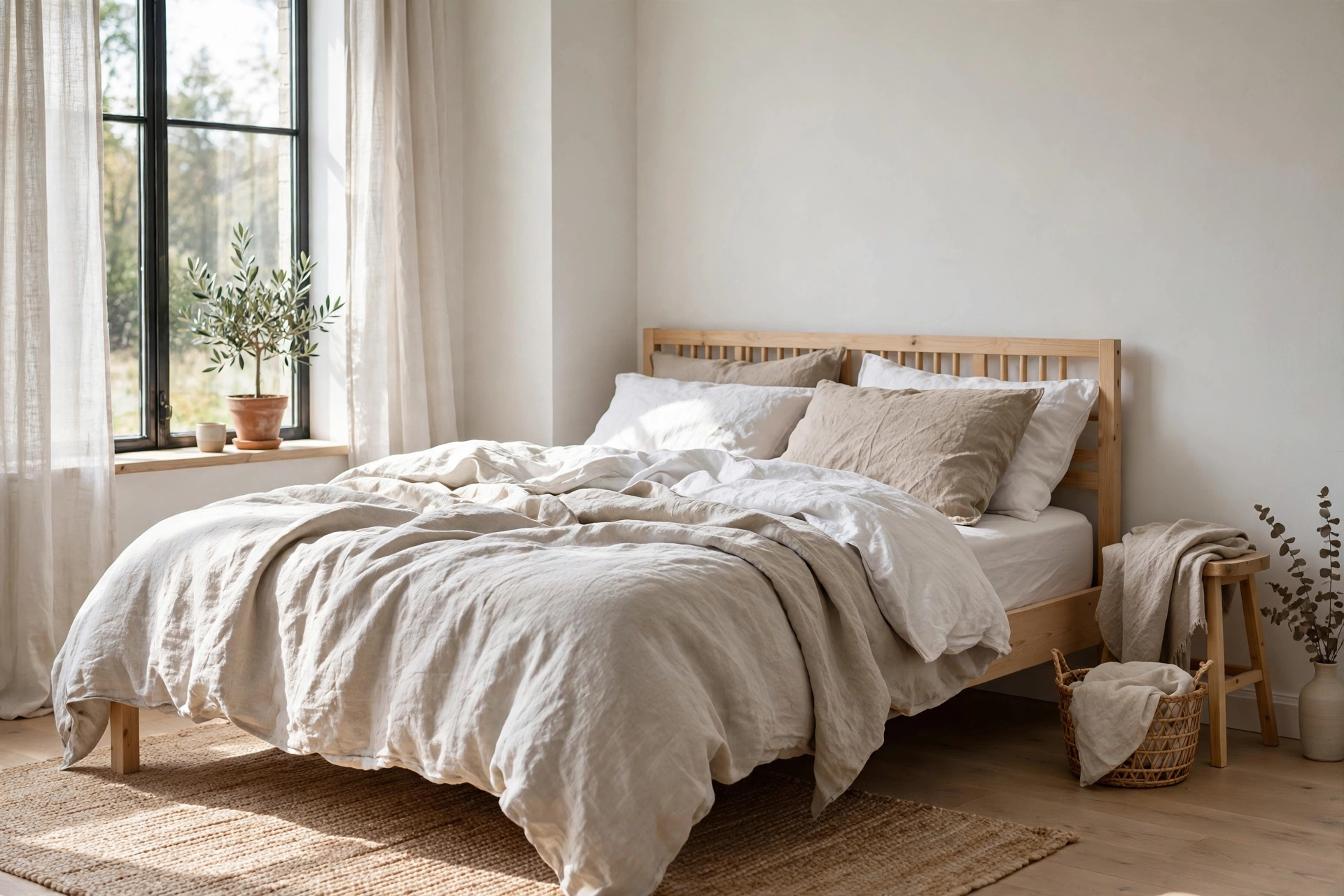
12. Mix Faux Fur and Wool Cushions
A Scandinavian sofa wears its cushions like layers of clothing — mix wool, faux fur, and linen covers ($15–$30 each) in creams, grays, and one muted accent. The variety of textures is what makes a neutral palette feel rich instead of flat. Aim for 3–5 cushions on the sofa, varying sizes. Pro tip: follow the texture rule — no two adjacent cushions in the same fabric — so the arrangement looks collected rather than matched.
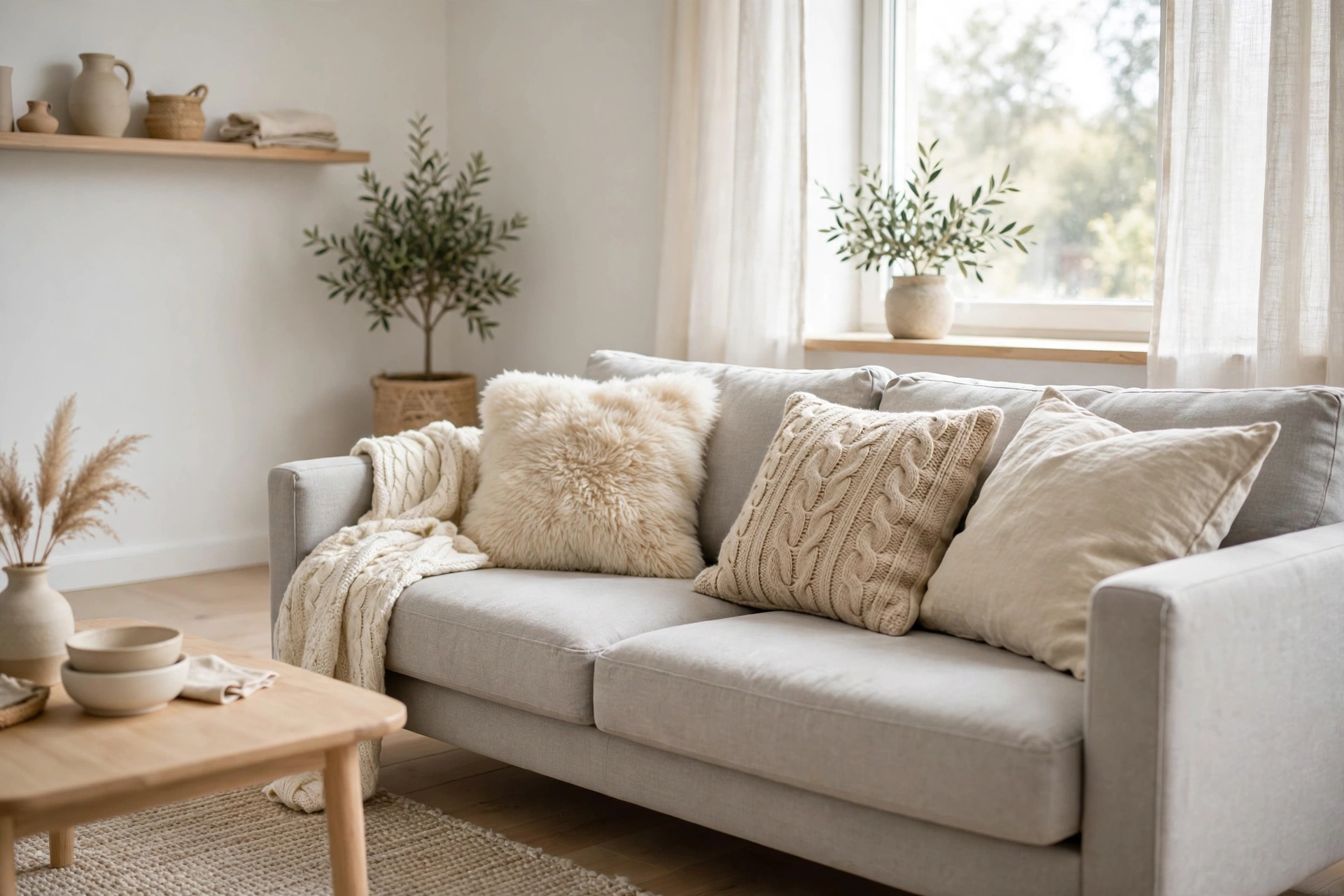
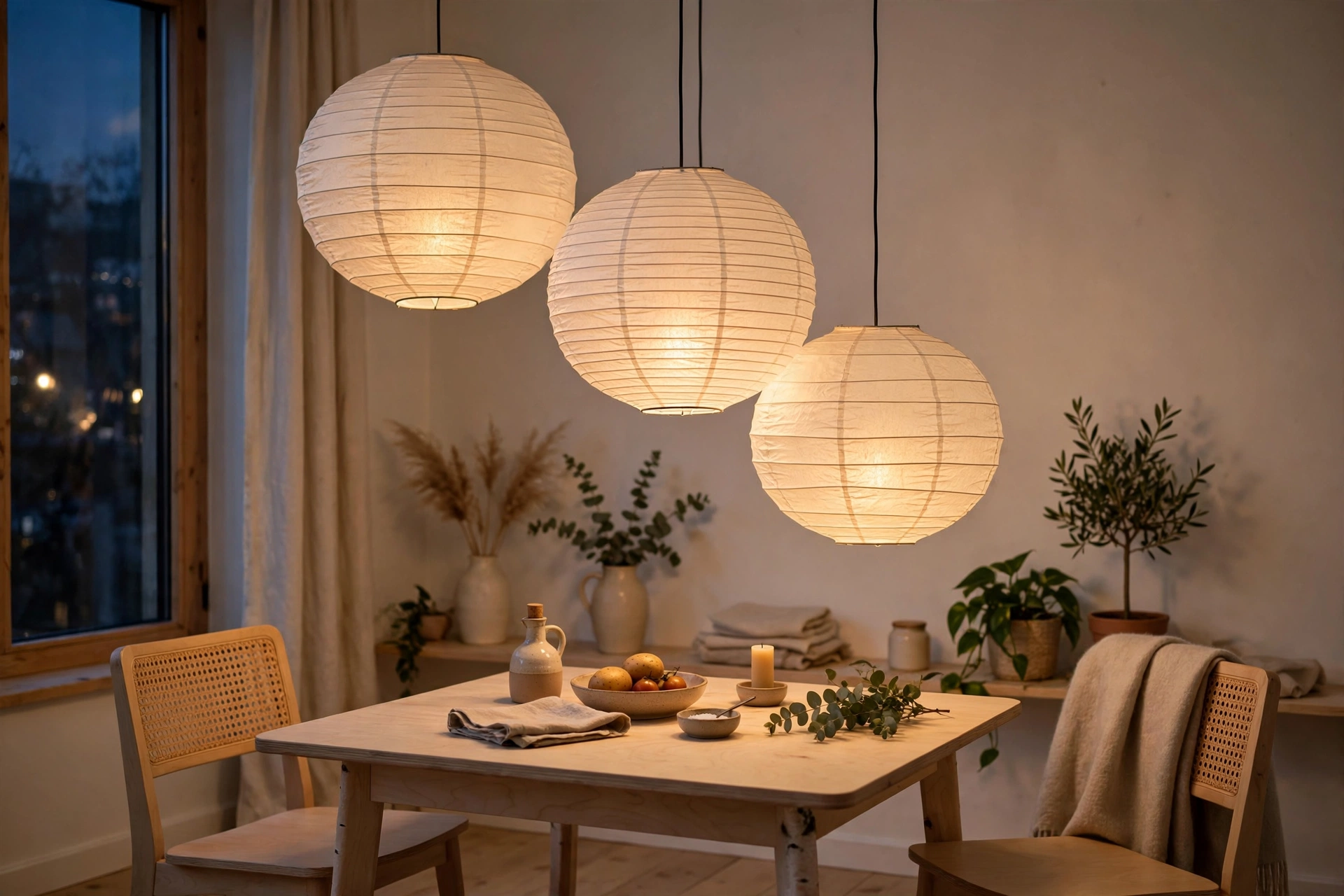
13. Light the Room With Paper Lanterns
The rice-paper pendant is a Scandinavian classic — it diffuses light into a soft, moon-like glow that flatters everything beneath it. Authentic Noguchi-style paper lanterns run $25–$60 and hang beautifully over a dining table or reading corner. This soft, layered approach to light is the heart of our studio apartment lighting ideas. Pro tip: hang two or three paper lanterns at staggered heights over the dining zone — the cluster reads as one sculptural fixture for a fraction of the cost.
14. Build a Window Reading Nook
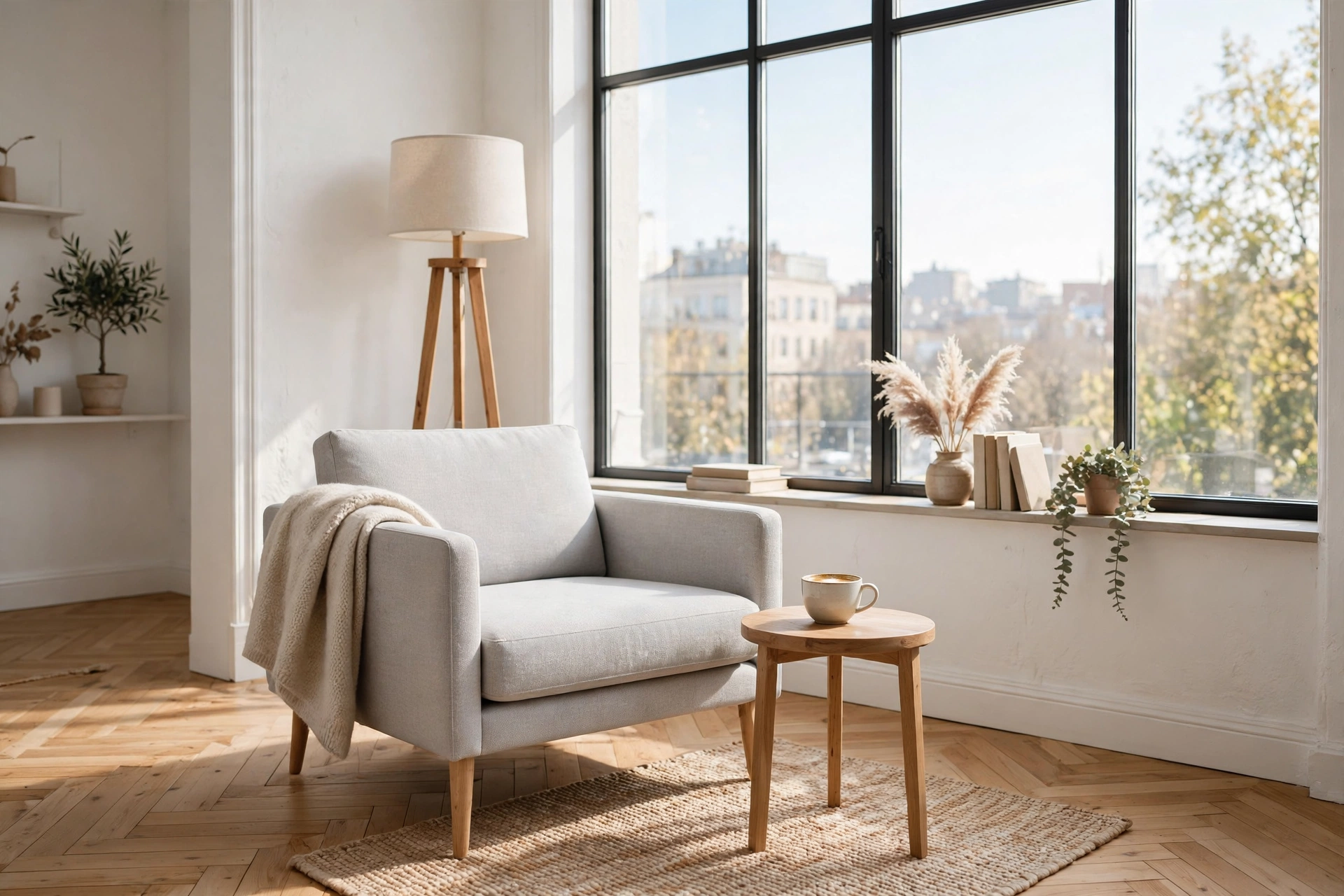
Every Scandinavian home has a spot for slow mornings — a slim armchair pulled up to the brightest window, with a floor lamp and a small side table for coffee. A compact Scandinavian-style armchair runs $150–$300; the daylight is free. In a studio, this nook doubles as your “second room” — a destination separate from the bed and desk. Pro tip: face the chair toward the window, not into the room — watching daylight and weather is the whole point of the nook.
Light Woods & Natural Materials
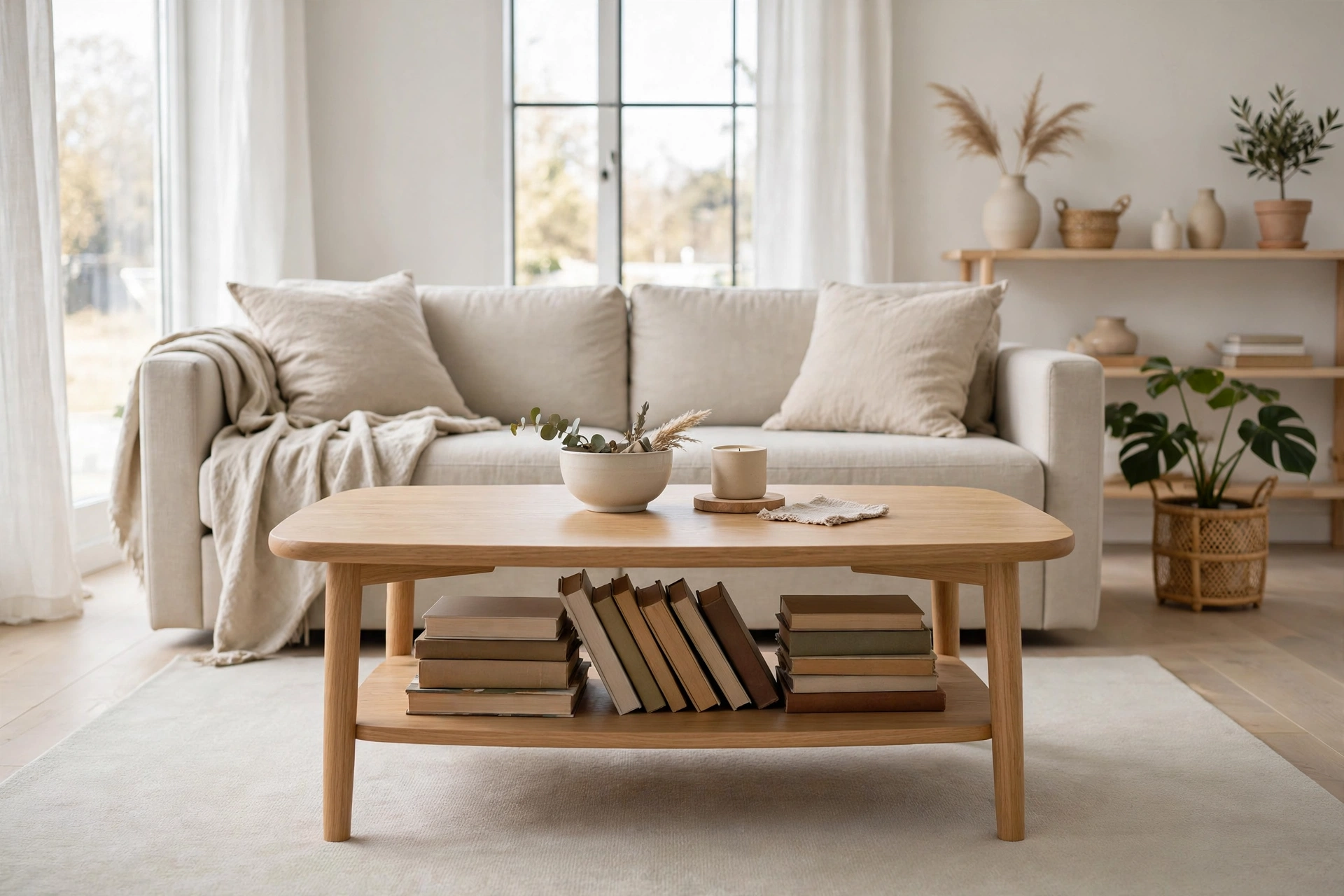
15. Anchor the Living Zone With a Light Oak Coffee Table
Pale wood furniture is the backbone of Scandinavian interiors — a light oak coffee table ($120–$250) grounds the living zone while keeping the visual weight feather-light. Look for clean lines, tapered legs, and a lower shelf for books or baskets. Oak’s warm honey tone stops an all-white room from feeling sterile. Pro tip: choose rounded corners in tight walkways — in a studio, you’ll brush past this table daily, and shins will thank you.
16. Eat at a Birch Drop-Leaf Table
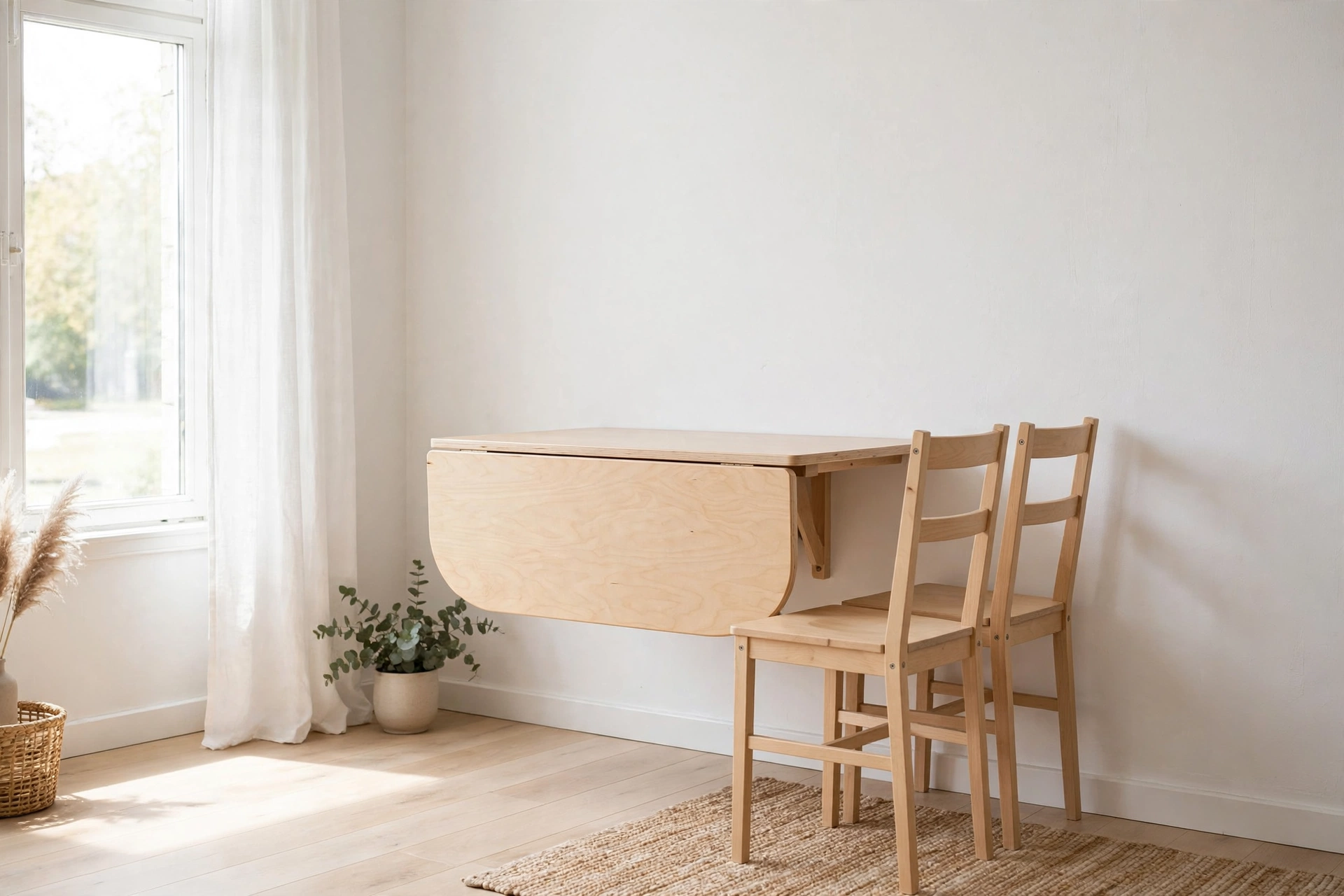
The drop-leaf table is Scandinavia’s answer to small-space dining — a slim console against the wall on weekdays, a full table for four when the leaves come up. Birch versions run $150–$300 at IKEA and secondhand markets, and the pale wood keeps even the expanded table feeling light. Pro tip: store two folding chairs in the closet for expanded mode and use your desk chair daily — no full chair set required.
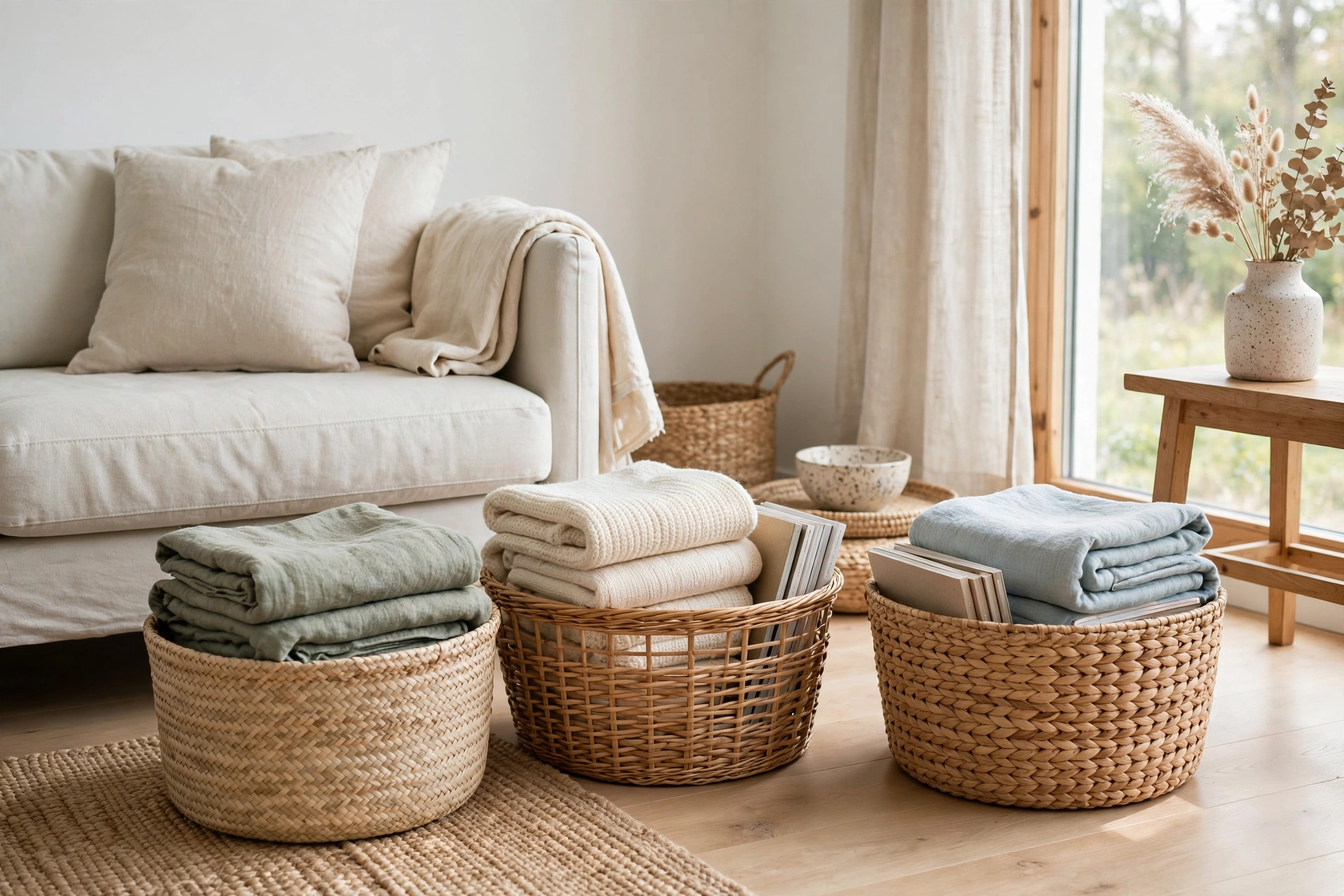
17. Corral Clutter in Woven Seagrass Baskets
Scandinavian storage hides in plain sight — woven seagrass or rattan baskets ($15–$35 each) swallow throws, magazines, toys, and tech clutter while reading as decor. Their natural texture warms up white rooms the way nothing synthetic can. Place one by the sofa, one by the bed, one in the entry. Pro tip: give every basket a job description — “this holds throws, nothing else” — because undefined baskets become junk baskets within a month.
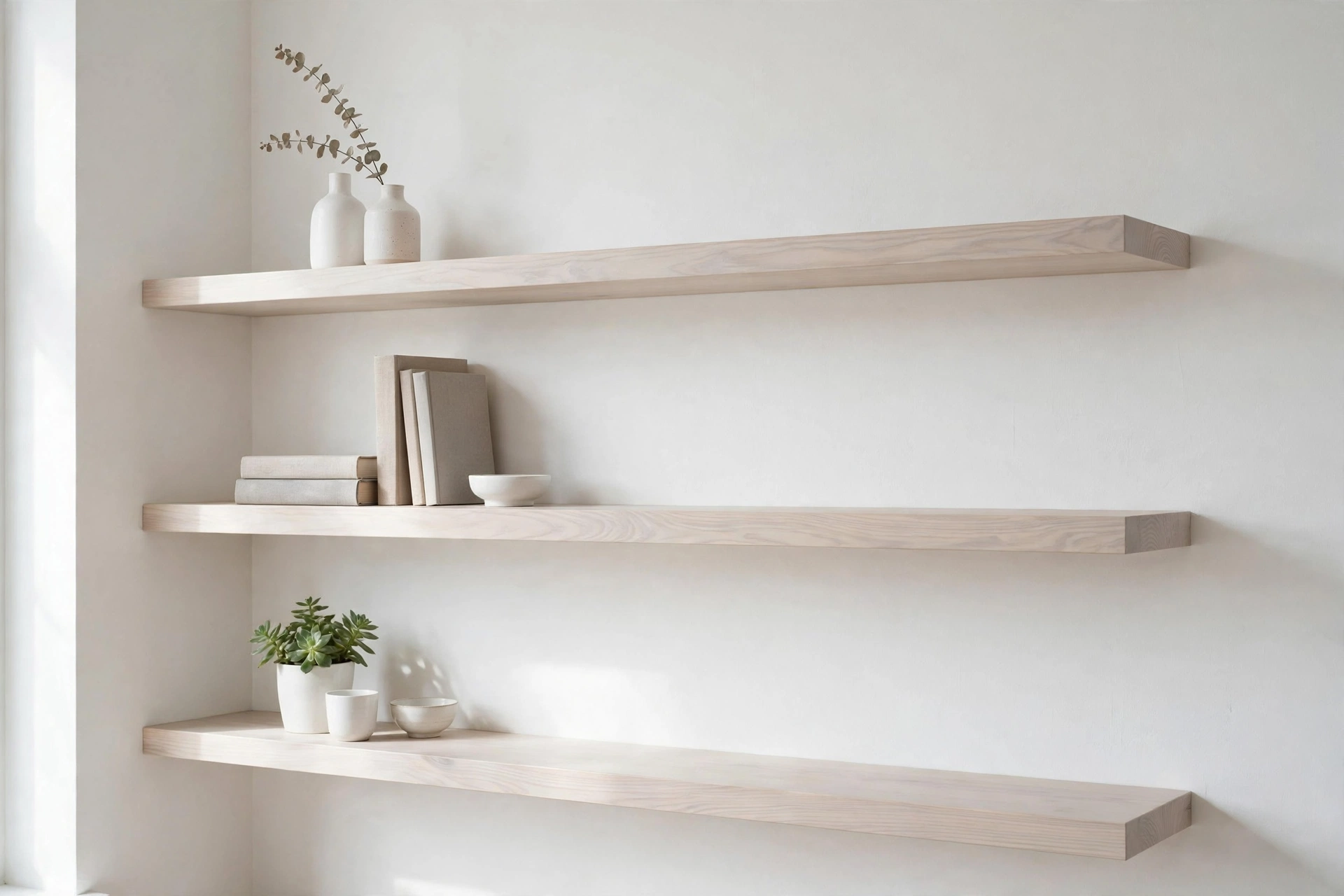
18. Display on Open Ash-Wood Shelving
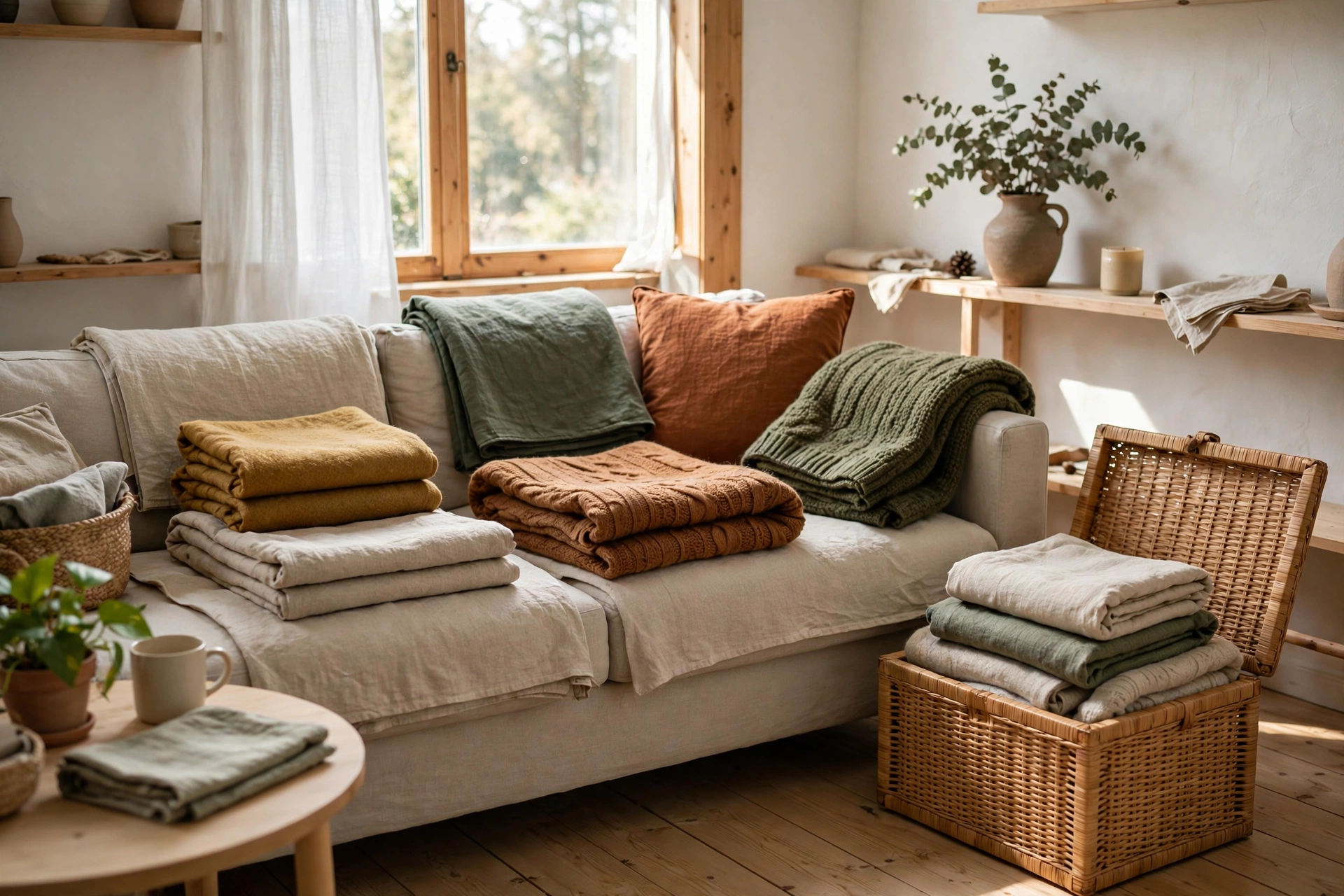
Open shelving in pale ash or birch ($25–$60 per floating shelf) is the Scandinavian display standard — it keeps everyday objects accessible and turns dishes, books, and ceramics into decor. Two or three shelves in the kitchen or living zone are plenty; restraint is the point. Pro tip: leave about 30% of each shelf empty — breathing room is what separates styled shelving from a crowded storage wall.
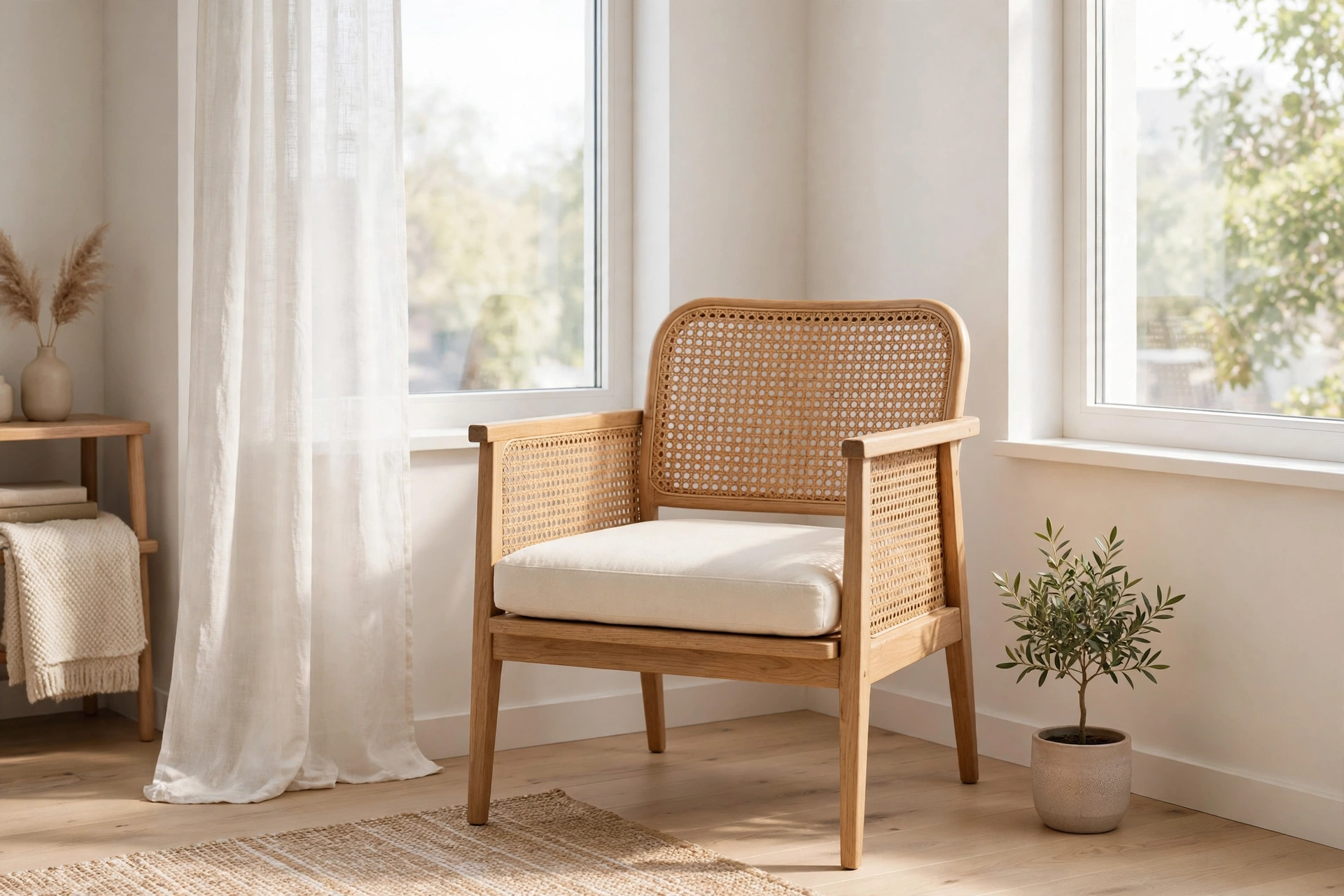
19. Sit on a Cane-Webbing Accent Chair
Cane webbing is having a Scandinavian moment — the open weave reads visually light (crucial in small rooms) while adding beautiful natural texture. Cane accent chairs run $180–$350 and pair perfectly with pale woods and linen upholstery. One chair is enough to introduce the material. Pro tip: keep cane out of direct daily sun — prolonged UV dries and brittles the weave over time.
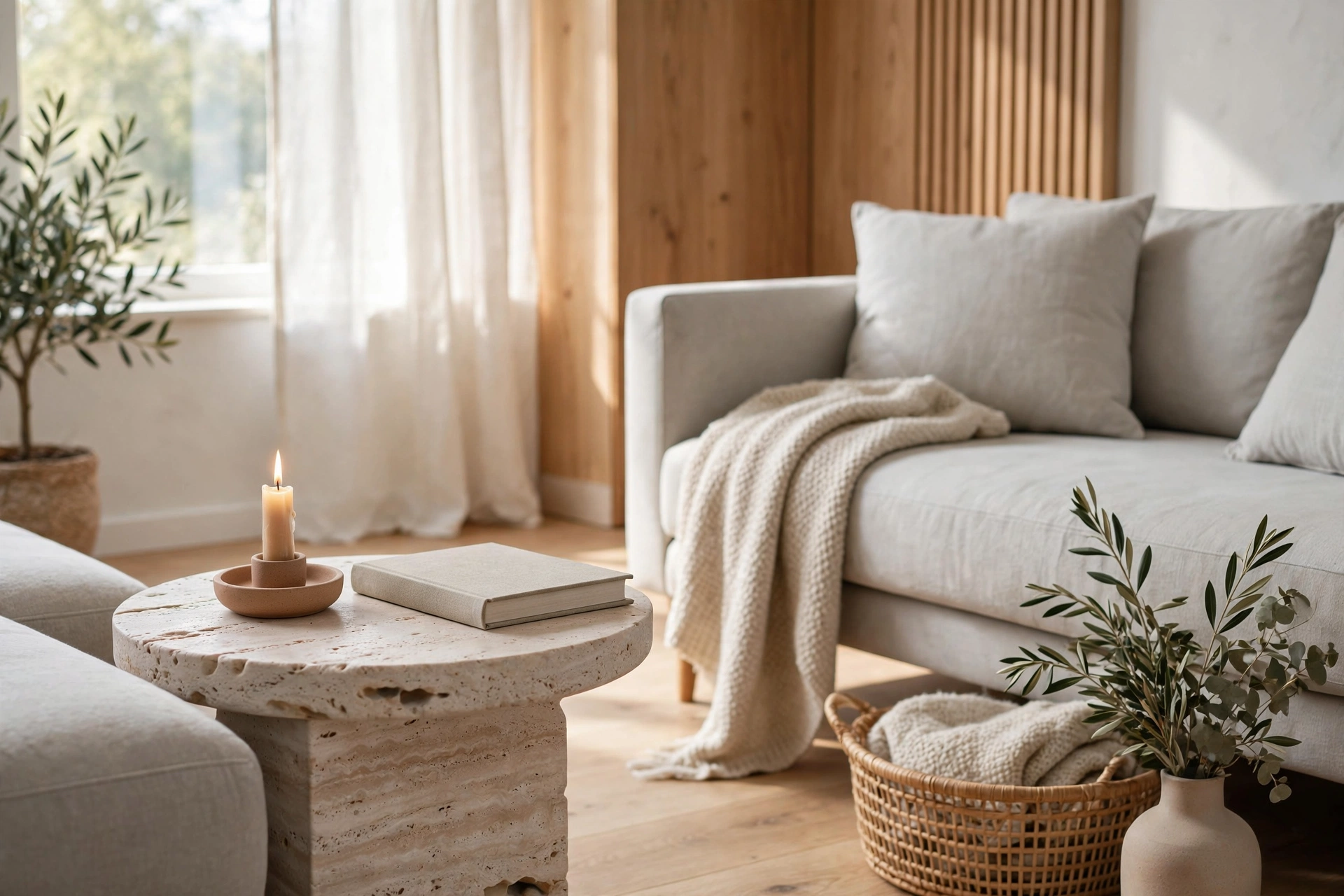
20. Add a Travertine or Limestone Side Table
A small stone side table ($80–$180) is the cool counterpoint Scandinavian rooms need — its weight and cool tone balance all that warm wood and soft textile. Place one beside the sofa or the reading chair for coffee, candles, and books. This mix of warm and cool materials is also a quiet principle in our minimalist studio apartment decor ideas. Pro tip: seal natural stone once a year ($10 sealer, ten minutes) — coffee rings on unsealed travertine are forever.
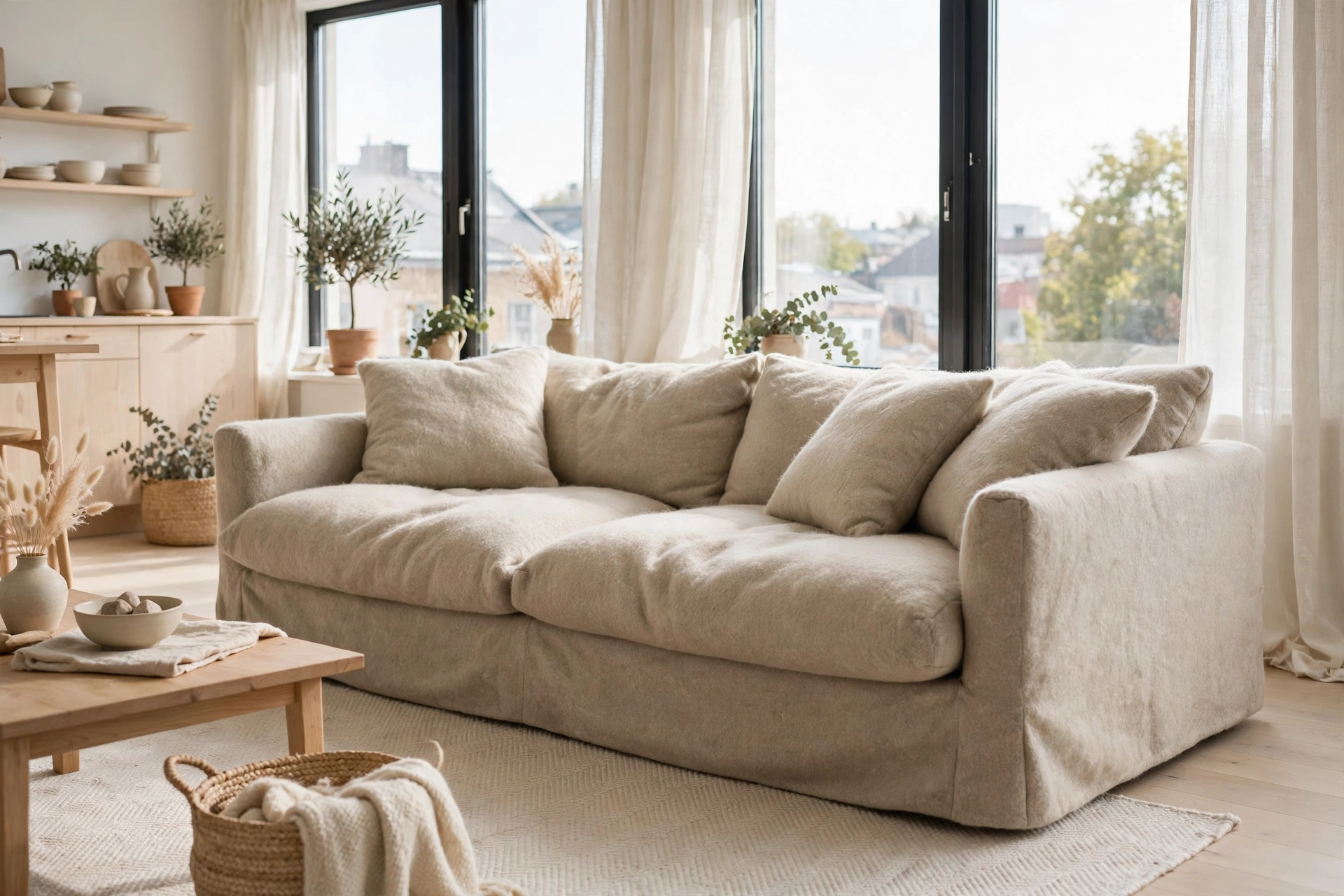
21. Choose a Light Wool-Blend Sofa
The Scandinavian sofa is low, deep, and pale — a light gray or oatmeal wool-blend sofa ($600–$1,200) that invites lounging without dominating the room. Slipcovered models are the smart studio choice: the cover comes off and goes in the wash, so pale upholstery stays practical. Pro tip: buy the slipcover in a washable performance weave and keep a spare — one on the sofa, one in the laundry — and light upholstery stops being scary.
Functional Minimalist Storage
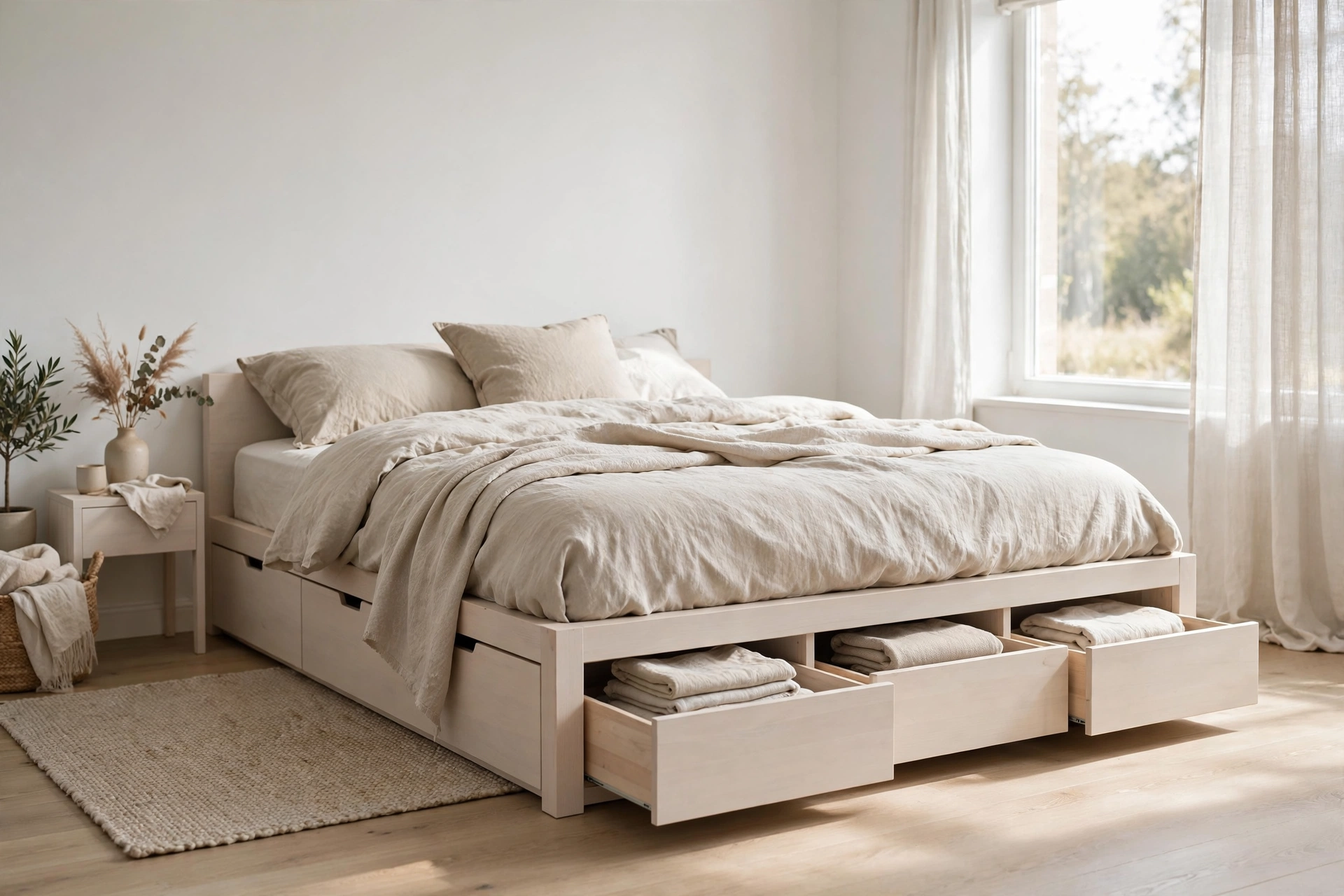
22. Sleep on a Platform Bed With Hidden Drawers
Scandinavian design never wastes a cubic inch — a platform bed with built-in drawers ($300–$600) turns the dead space under the mattress into a full dresser. The clean, low profile keeps the sleeping zone visually calm, which matters when the bed is visible from everywhere. Pro tip: choose drawers on both sides if the bed floats in the room — single-sided drawers trap you into one layout forever.
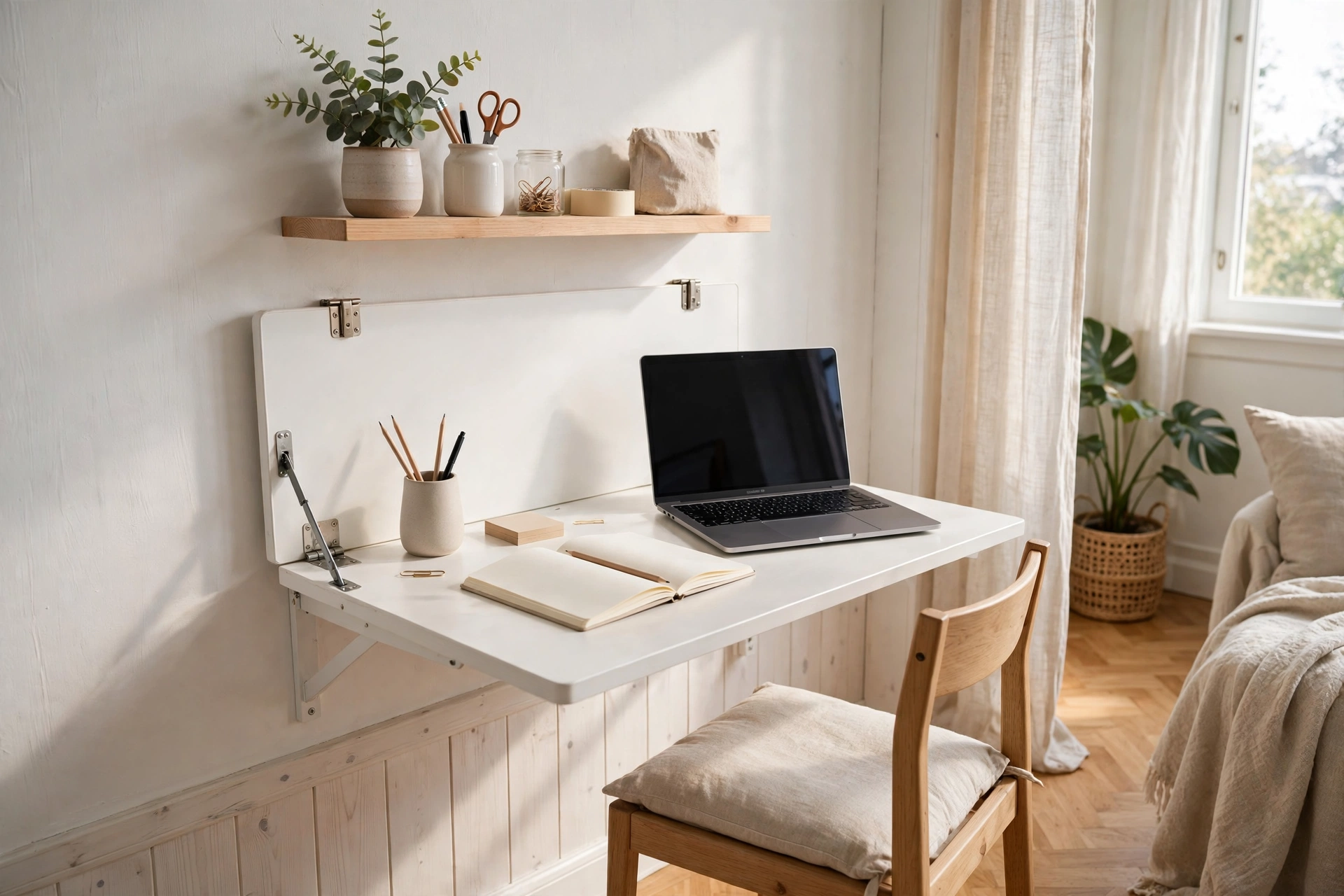
23. Mount a Fold-Down Wall Desk
When the studio barely fits a bed, the desk goes on the wall — a fold-down wall desk ($60–$120) gives you a full work surface that vanishes into a slim cabinet when the laptop closes. Mounted in pale wood or white, it reads as wall art when folded. Pro tip: mount at 29–30 inches high (standard desk height) and add a small wall shelf above for supplies — folded or open, the wall stays functional.
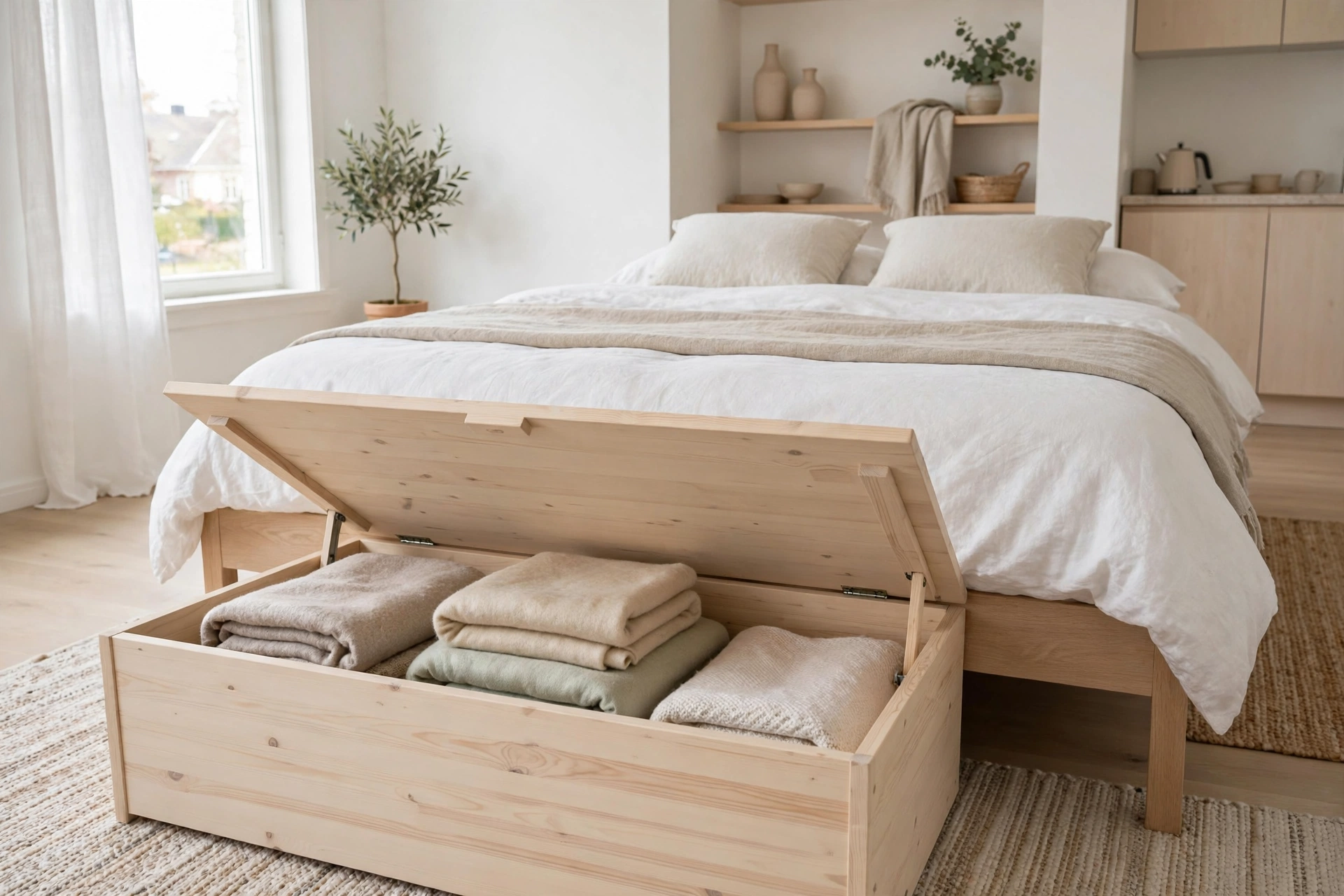
24. Store Under a Lift-Top Storage Bench
A storage bench ($100–$200) at the foot of the bed or in the entry is triple-duty Scandinavian furniture: seating, a surface for the morning’s clothes, and deep hidden storage for off-season bedding or shoes. Choose one in pale wood or upholstered linen. Pro tip: place the bench where you’d otherwise pile things — the entry for bags, the bed’s foot for tomorrow’s outfit — and it absorbs clutter automatically.
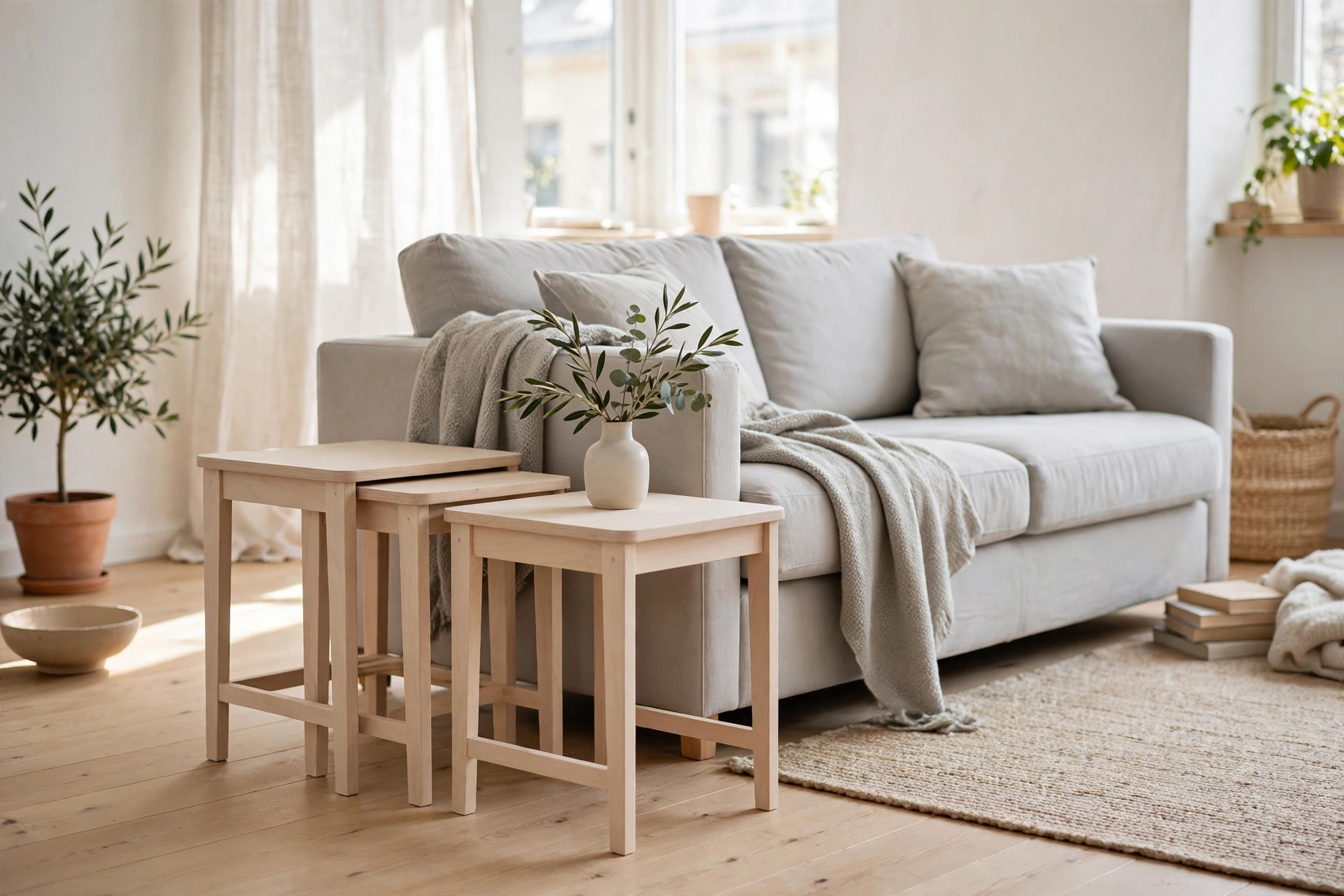
25. Use Nesting Side Tables
Nesting tables ($60–$120 for a set of two or three) are the Scandinavian small-space magic trick — tucked together they occupy one table’s footprint, pulled apart they serve a whole gathering. Pale wood or white tops keep them visually quiet when nested. Pro tip: keep the smallest table permanently nested and pull it out only for guests — daily life needs one surface, not three.
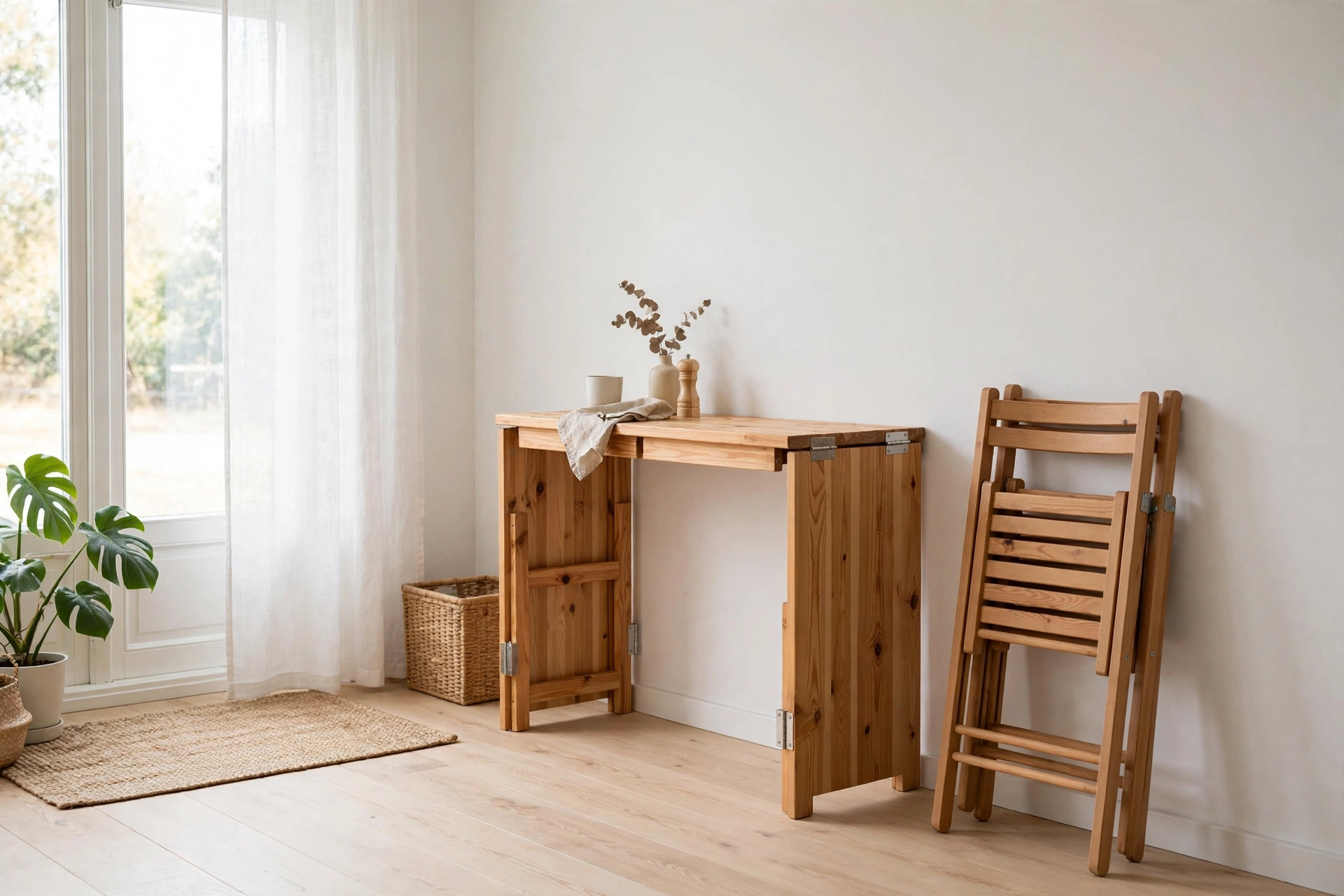
26. Host Dinner on a Gateleg Table
The gateleg table is a Scandinavian heirloom for a reason — folded to a slim console it hugs the wall daily, opened it seats six for dinner. Solid pine or birch gatelegs run $200–$400 and last generations. In a studio, it’s the difference between never hosting and hosting monthly. Pro tip: pair it with stackable or folding chairs stored in a closet — the whole dining setup for six hides in under two feet of wall.
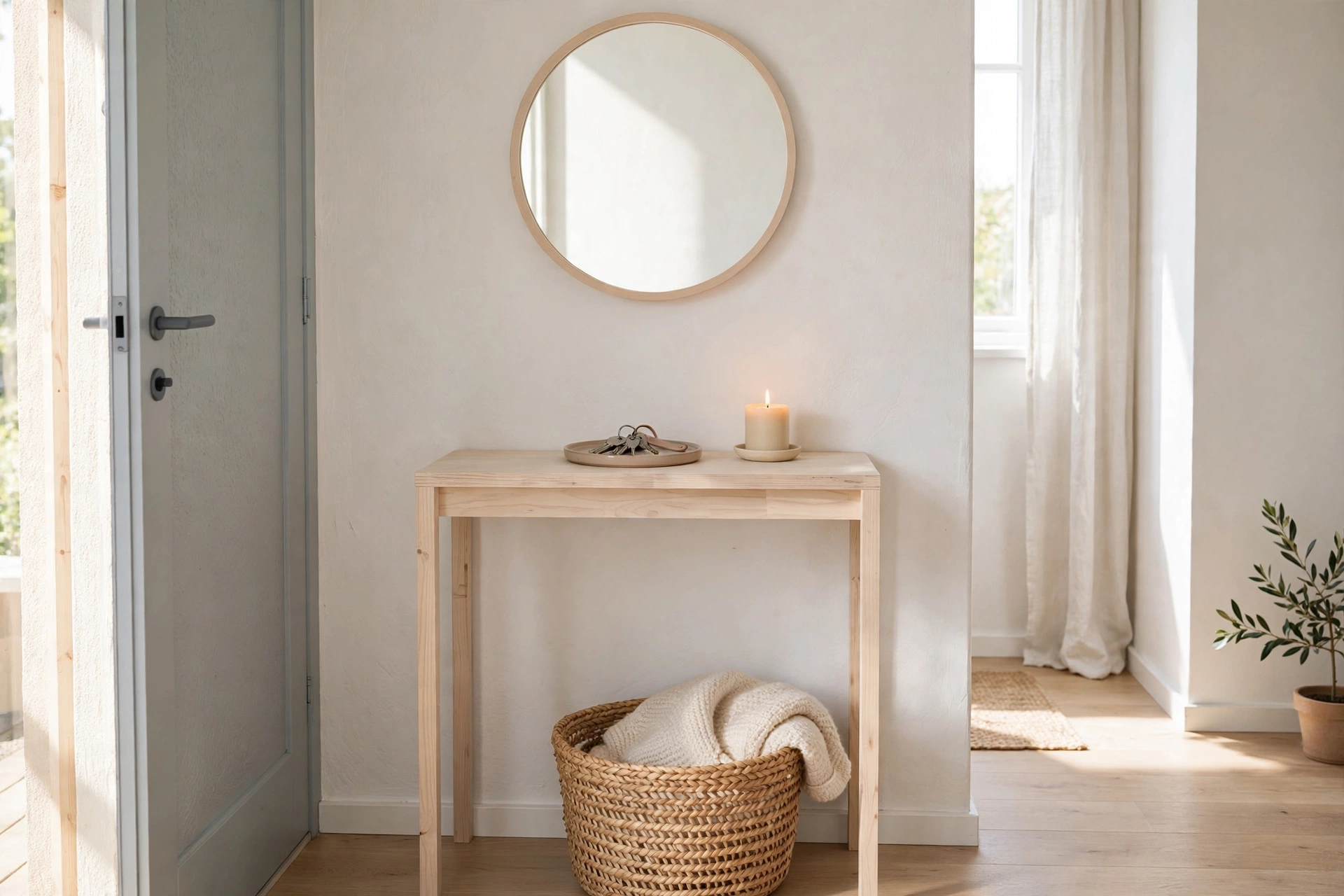
27. Slim Down the Entry With a Narrow Console
Scandinavian entries are ruthlessly slim — a 10–12 inch deep console ($80–$160) holds keys, mail, and a candle without eating the walkway. Add a round mirror above and a basket below, and the tiniest entry feels intentional. Pro tip: mount the console’s mirror at eye level and keep the surface to three objects max — keys, a small tray, one beautiful thing.
Soft Neutrals & Muted Accents
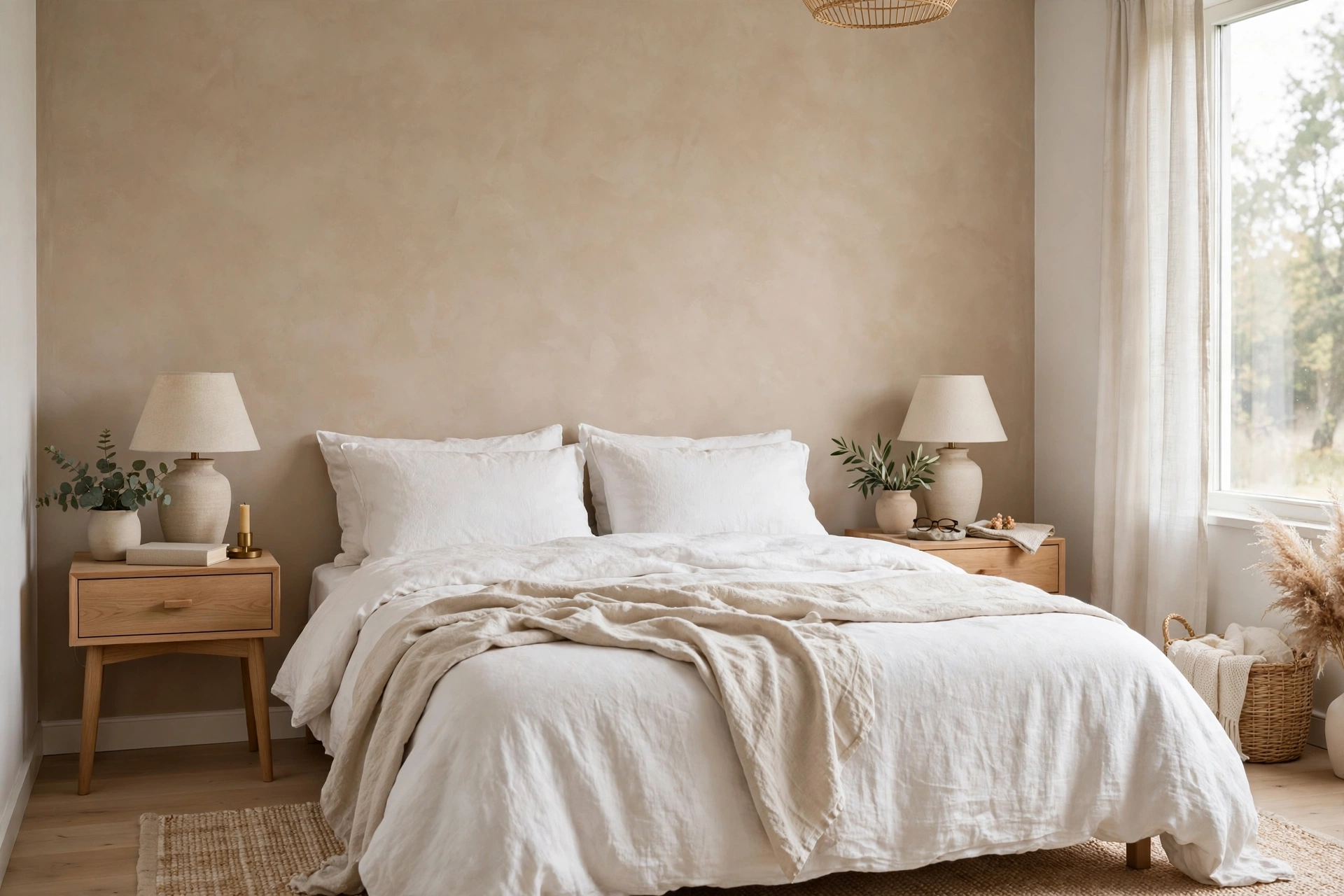
28. Paint One Wall Warm Greige
All-white can feel stark — one wall in warm greige (that perfect gray-beige hybrid) adds depth while staying firmly Scandinavian. A gallon runs $30–$50; put it behind the bed or sofa so the color anchors the room’s largest zone. Our studio apartment color schemes include several more Nordic-approved palettes. Pro tip: test swatches in both morning and evening light — greige shifts dramatically, and you want the warm version, not the muddy one.
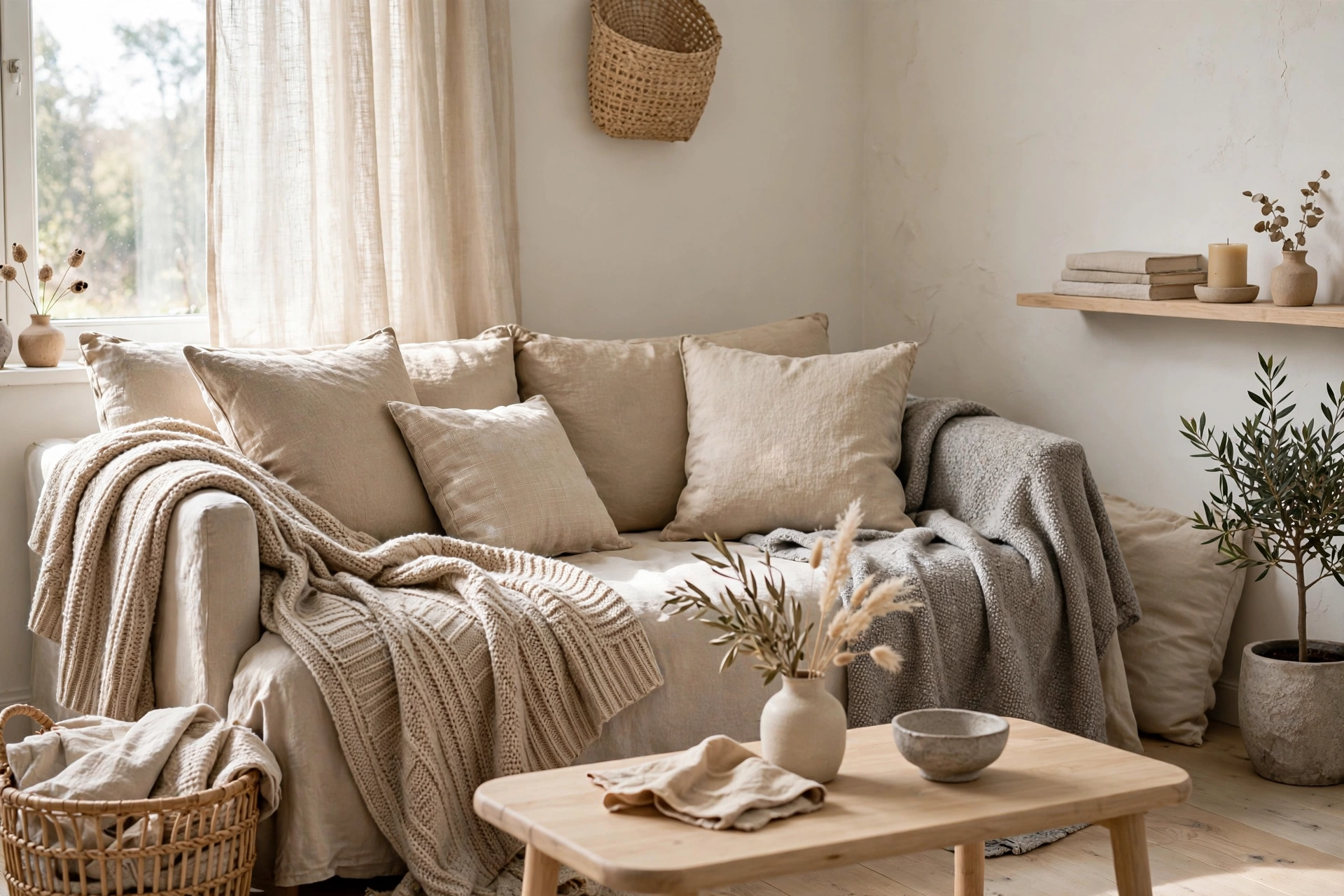
29. Layer Beige-on-Beige Textiles
Scandinavian neutrals get their richness from layering close tones — oatmeal throws over sand-colored cushions on a stone-gray sofa. Each piece ($15–$40) is inexpensive; the luxury is in the combination. Beige-on-beige never clashes and never dates. Pro tip: vary the texture with every layer — knit, linen, wool, boucle — because same-color layers only read as rich when the surfaces differ.
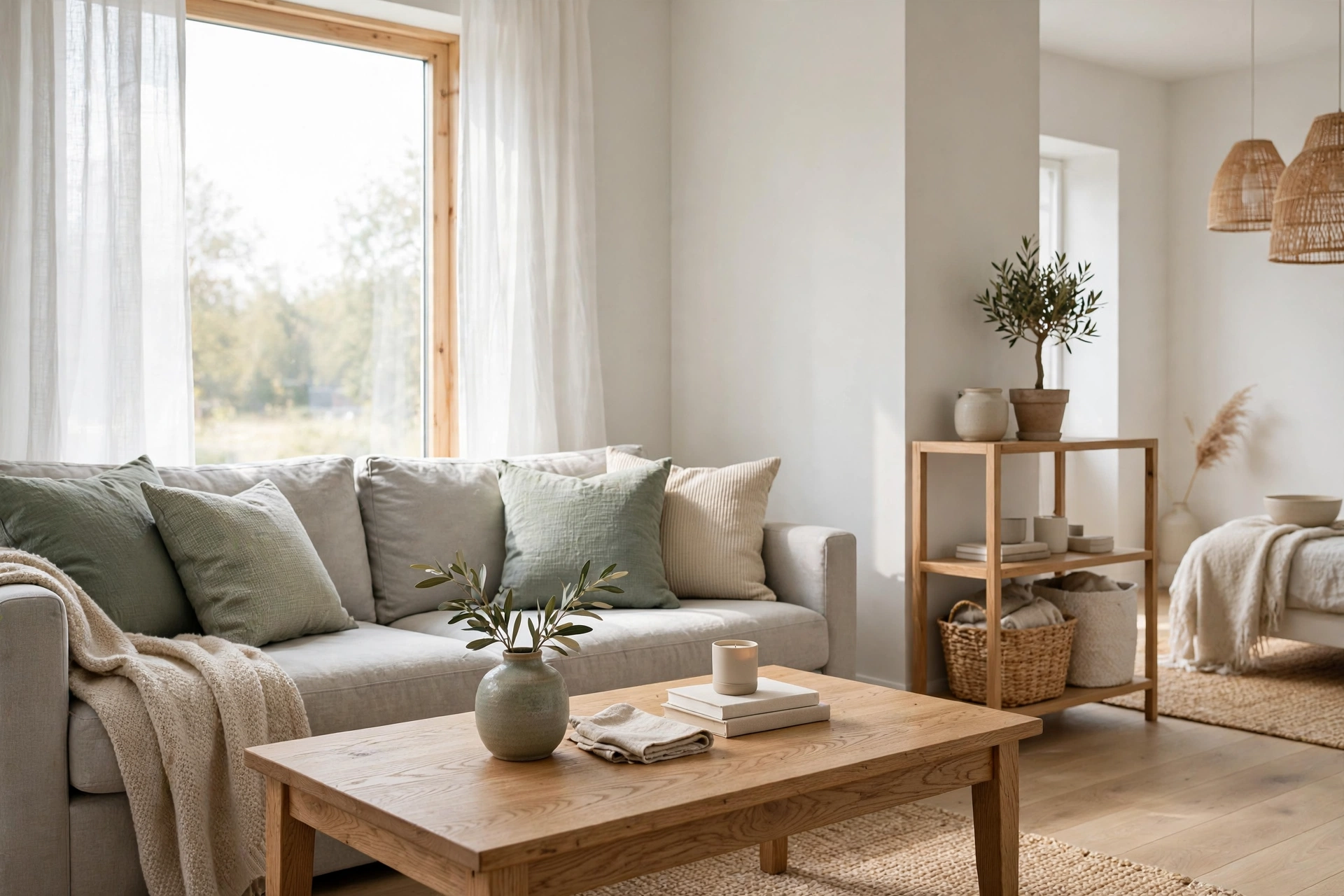
30. Add Muted Sage Accents
If Scandinavian rooms have a signature color, it’s muted sage — the gray-green of Nordic forests, soft enough to live with daily. Introduce it through a cushion, a vase, or a throw ($10–$40) rather than big commitments. Sage bridges the gap between neutral and color beautifully. Pro tip: sage is the easiest accent color for beginners — it pairs with every wood tone and every neutral, so you literally cannot get it wrong.
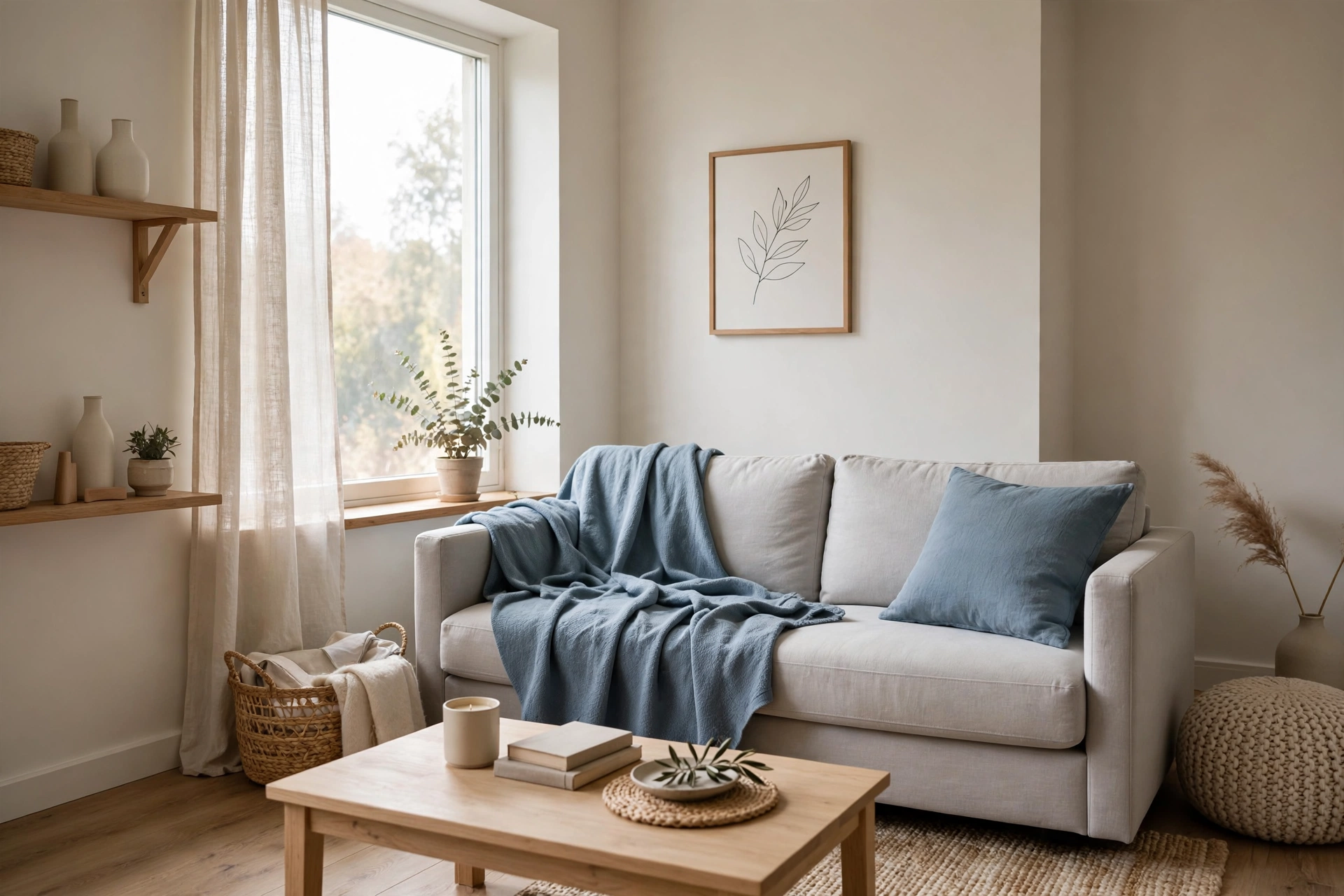
31. Try Dusty Blue in Small Doses
Dusty blue — faded denim, soft slate — is Scandinavia’s cool accent, evoking northern seas and winter skies. Keep it to small doses: one cushion, a folded throw, a piece of art ($10–$35). It cools down an all-warm room without any visual shouting. Pro tip: limit dusty blue to one piece per zone — a little goes a long way, and restraint is what keeps it Scandinavian rather than coastal.
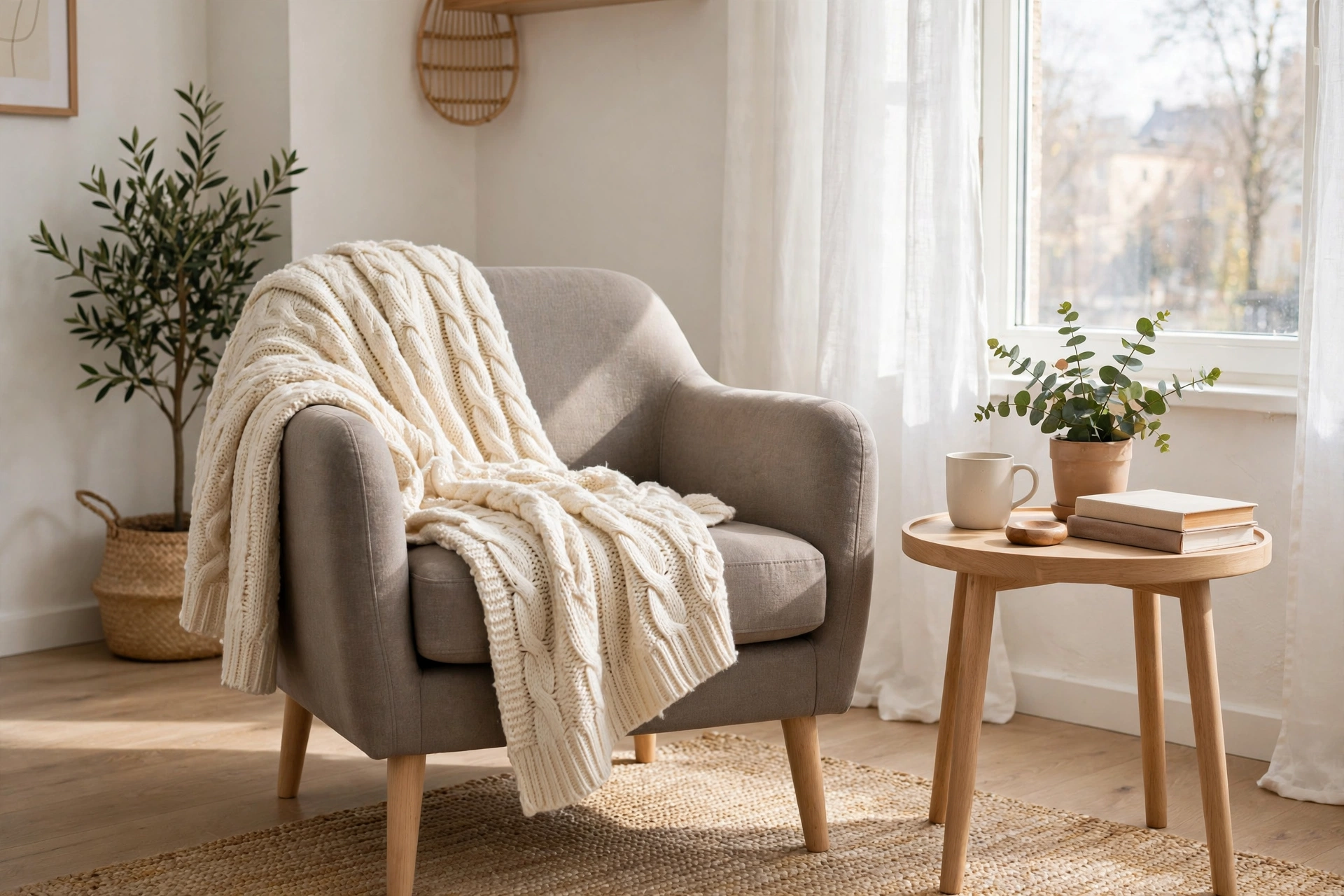
32. Ground the Room With Warm Gray Upholstery
When white feels too bright and beige too yellow, warm gray is the Scandinavian middle path — sophisticated, calm, and endlessly pairable. A warm gray armchair or ottoman ($150–$400) grounds a pale room without the heaviness of charcoal. Pro tip: in north-facing rooms (cool light), always choose warm gray over cool gray — cool gray plus cool light equals a room that feels like a refrigerator.
33. Use Black Sparingly as an Anchor
Scandinavian rooms need a whisper of black — matte black picture frames, a black pendant cord, slim black table legs ($15–$50 per piece). Black gives pale rooms definition and keeps them from floating away visually. The key word is whisper: this is punctuation, not prose. Pro tip: follow the 5% rule — black should cover roughly 5% of what you see. Any more and the room stops feeling Scandinavian.
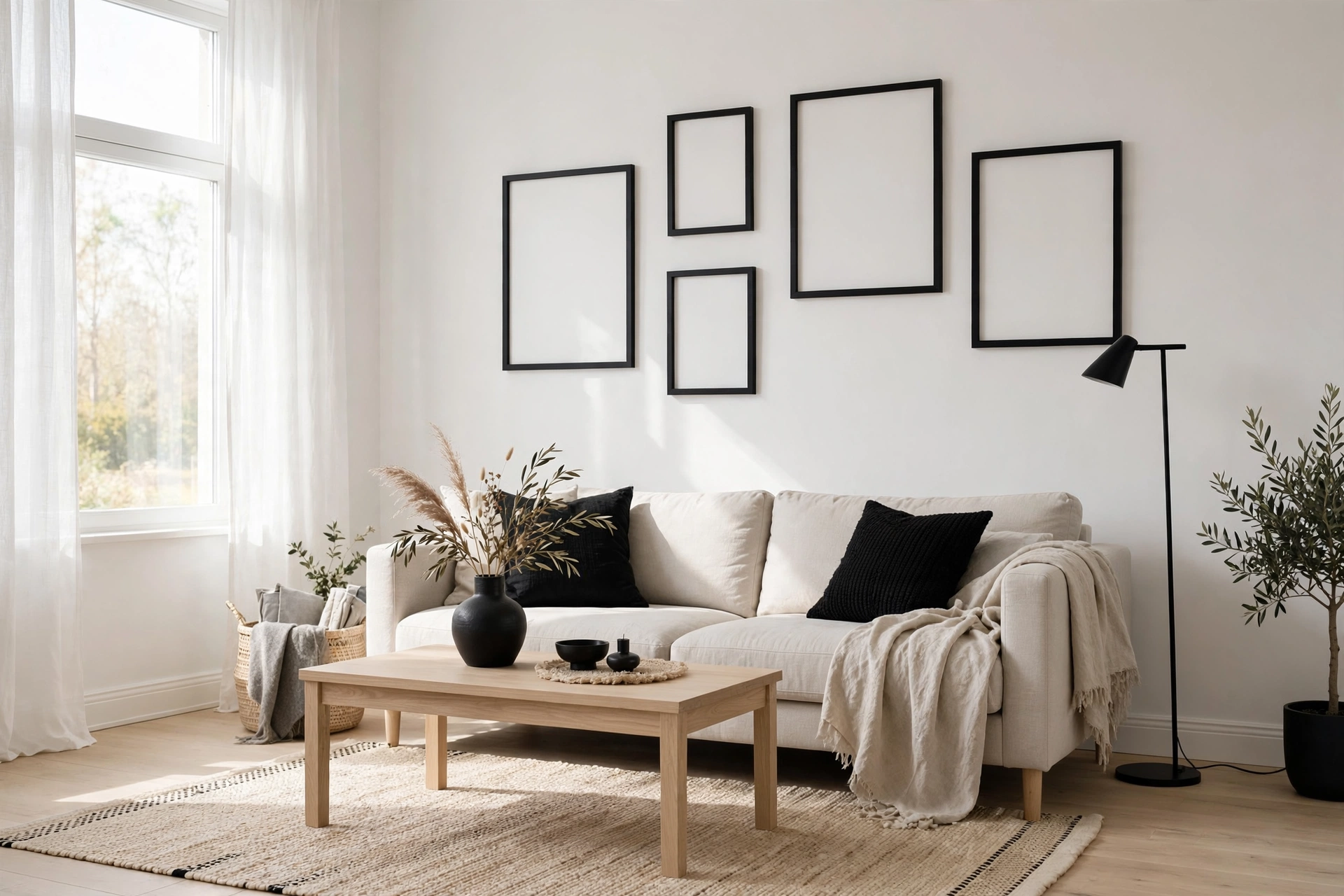
34. Commit to Tone-on-Tone Layering
The most advanced Scandinavian move is also the simplest: build entire zones from variations of a single tone. A sleeping corner in layered whites and creams, a reading spot in stacked grays. Tone-on-tone ($0 extra — it’s a styling choice) creates depth without introducing a single new color. Pro tip: photograph the zone in black and white — if you can still see distinct layers, your tonal range is working; if it all merges, add a darker or lighter piece.
Greenery & Personal Warmth
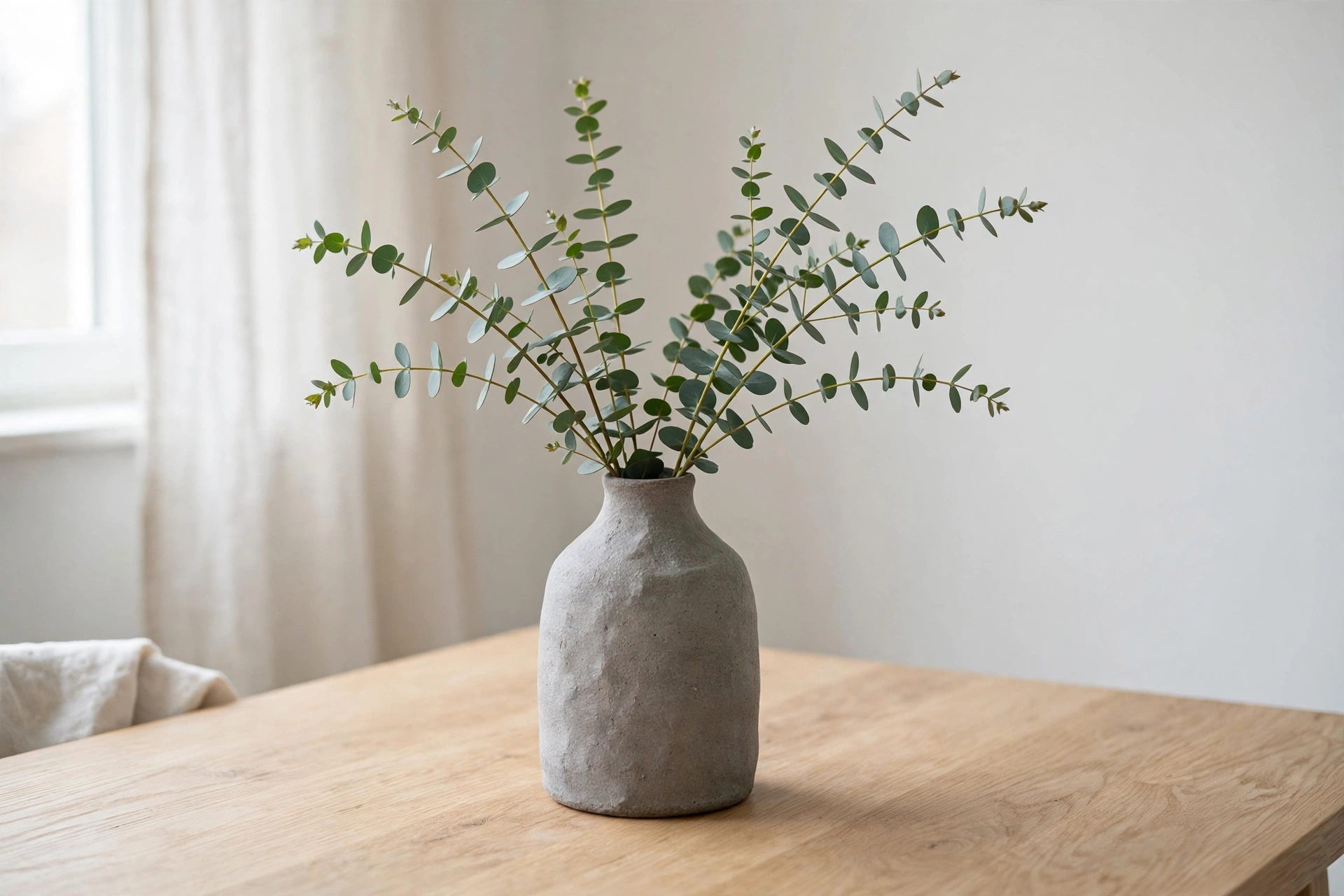
35. Style Eucalyptus Stems in a Stoneware Vase
A handful of eucalyptus stems ($8–$15 a bunch) in a handmade stoneware vase is the Scandinavian floral arrangement — architectural, fragrant, and effortlessly chic. Dried eucalyptus lasts for months, making it the ultimate low-maintenance green. Pro tip: hang a fresh bunch upside down in a dry spot for two weeks to dry it yourself — home-dried eucalyptus keeps its color better than most store-bought.
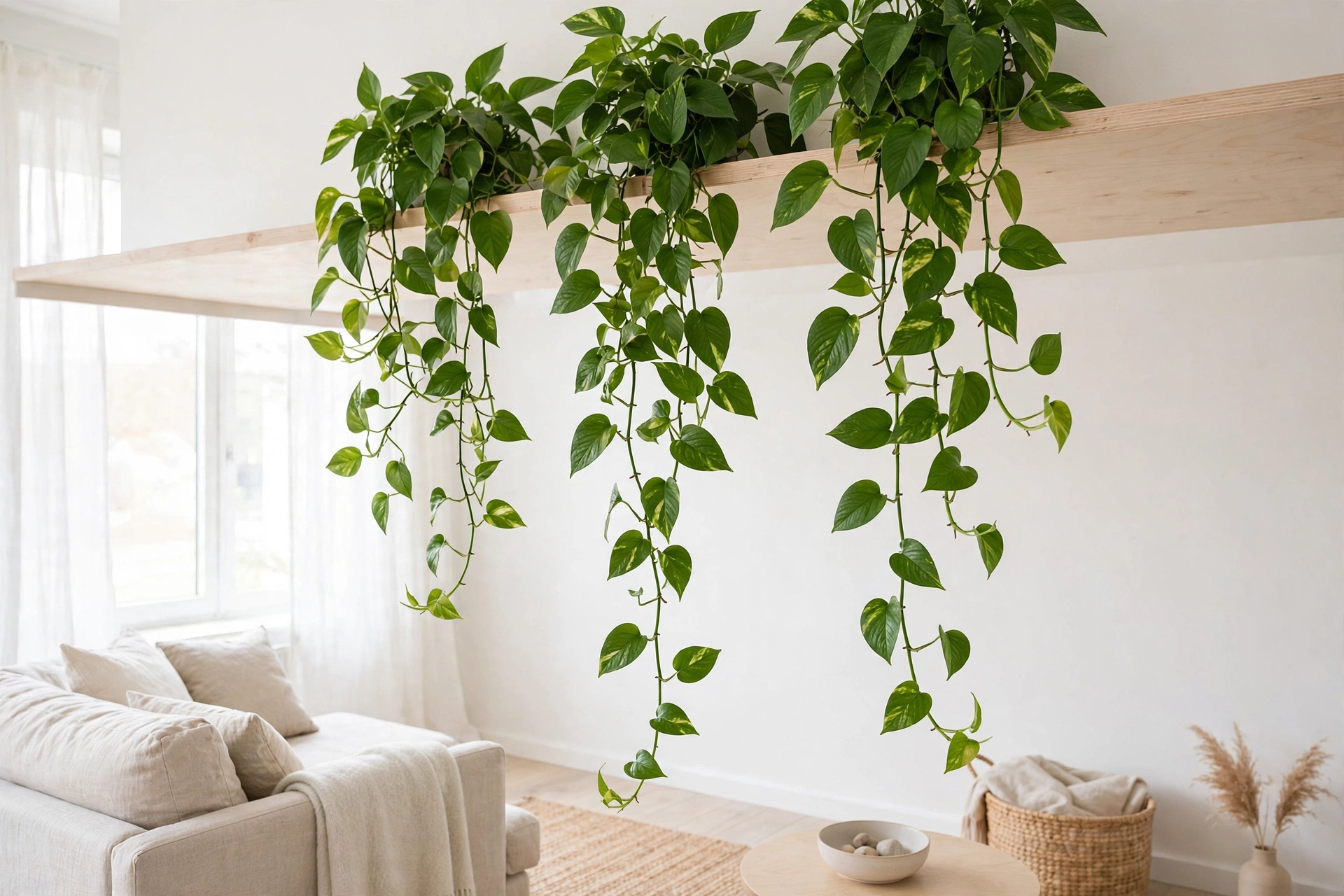
36. Let a Pothos Trail From a High Shelf
One trailing pothos ($10–$20) on a high shelf or bookcase top softens all those clean Scandinavian lines with living green. Pothos tolerates low light and forgetful watering — the rare plant that thrives on Nordic-winter neglect. Pro tip: place trailing plants high and let them cascade — the vertical green draws the eye up and makes ceilings feel taller.
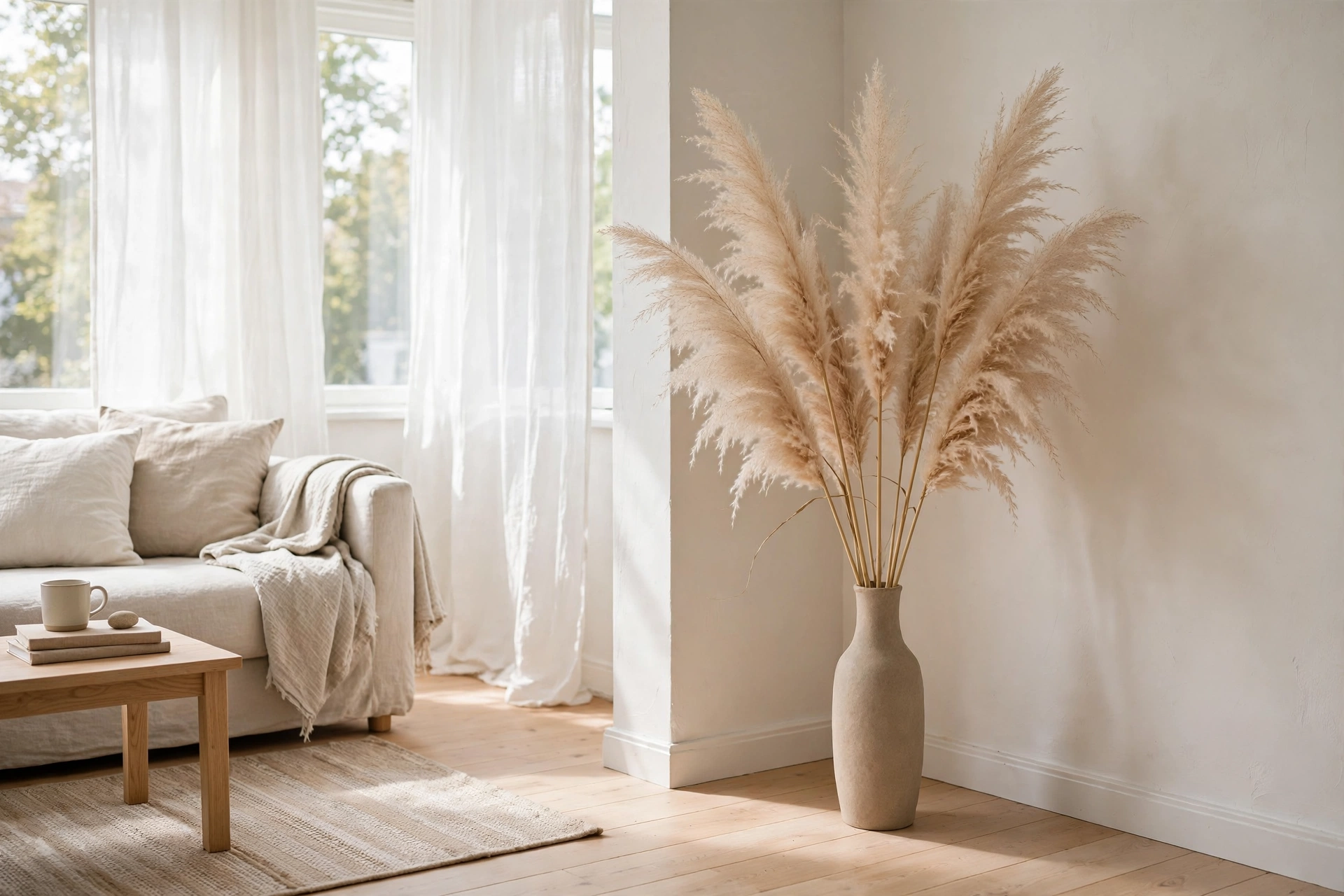
37. Arrange Dried Pampas in a Floor Vase
Dried pampas grass ($15–$30 for a bundle) in a tall floor vase is peak Scandinavian warmth — feathery, sculptural, and completely maintenance-free. One statement arrangement in a corner adds height and softness no furniture can. Pro tip: give pampas plumes a light mist of hairspray when you first arrange them — it dramatically reduces shedding for months.
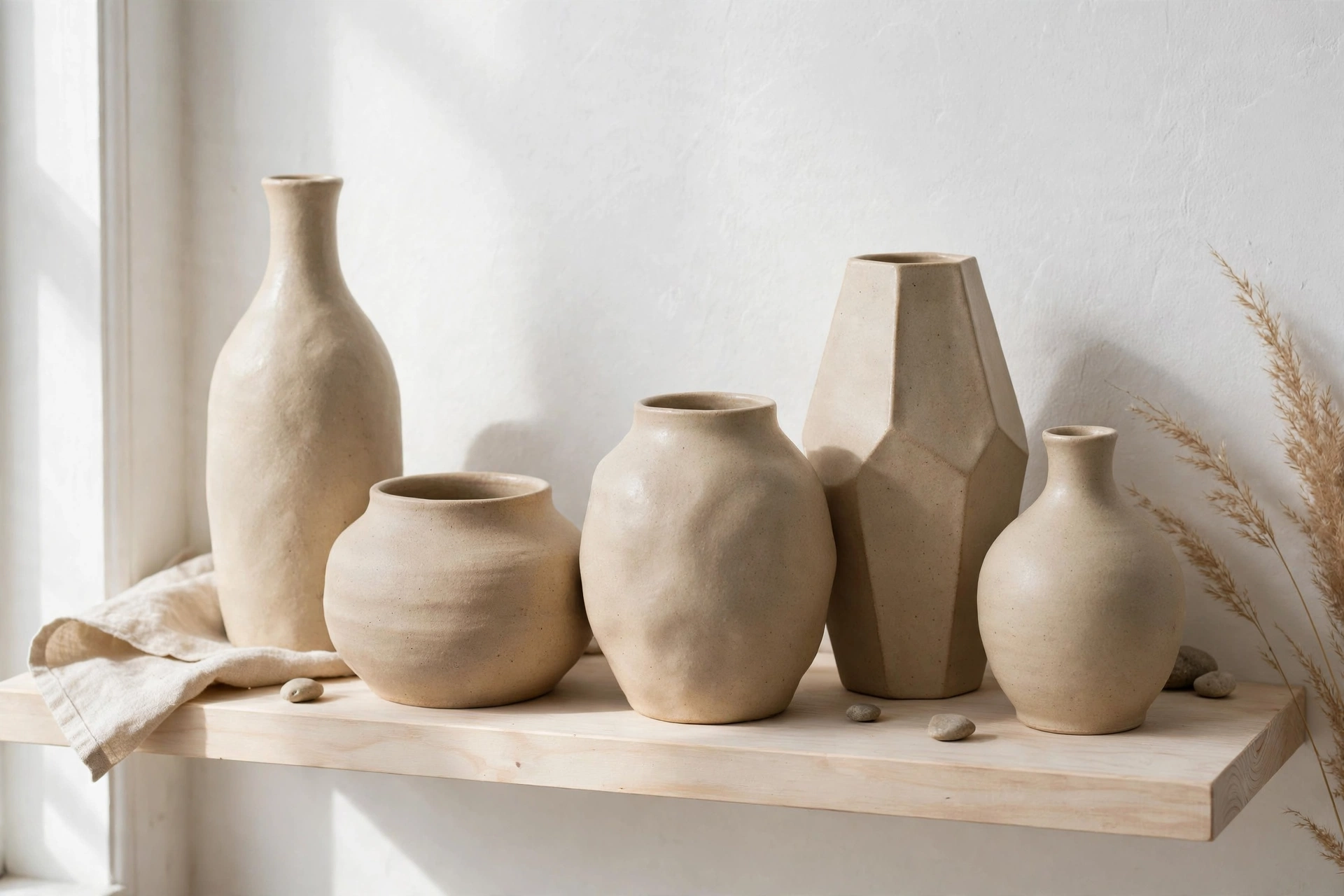
38. Cluster Handmade Ceramic Vases
Scandinavian shelves love a cluster of handmade-look ceramic vases ($12–$30 each) — imperfect, tactile, and beautiful empty or filled. Group them in odd numbers at varying heights on open shelving or the console. The wabi-sabi quality keeps minimalism human. Pro tip: buy vases in the same glaze family but different shapes — the cohesion-with-variety formula that always looks collected, never random.
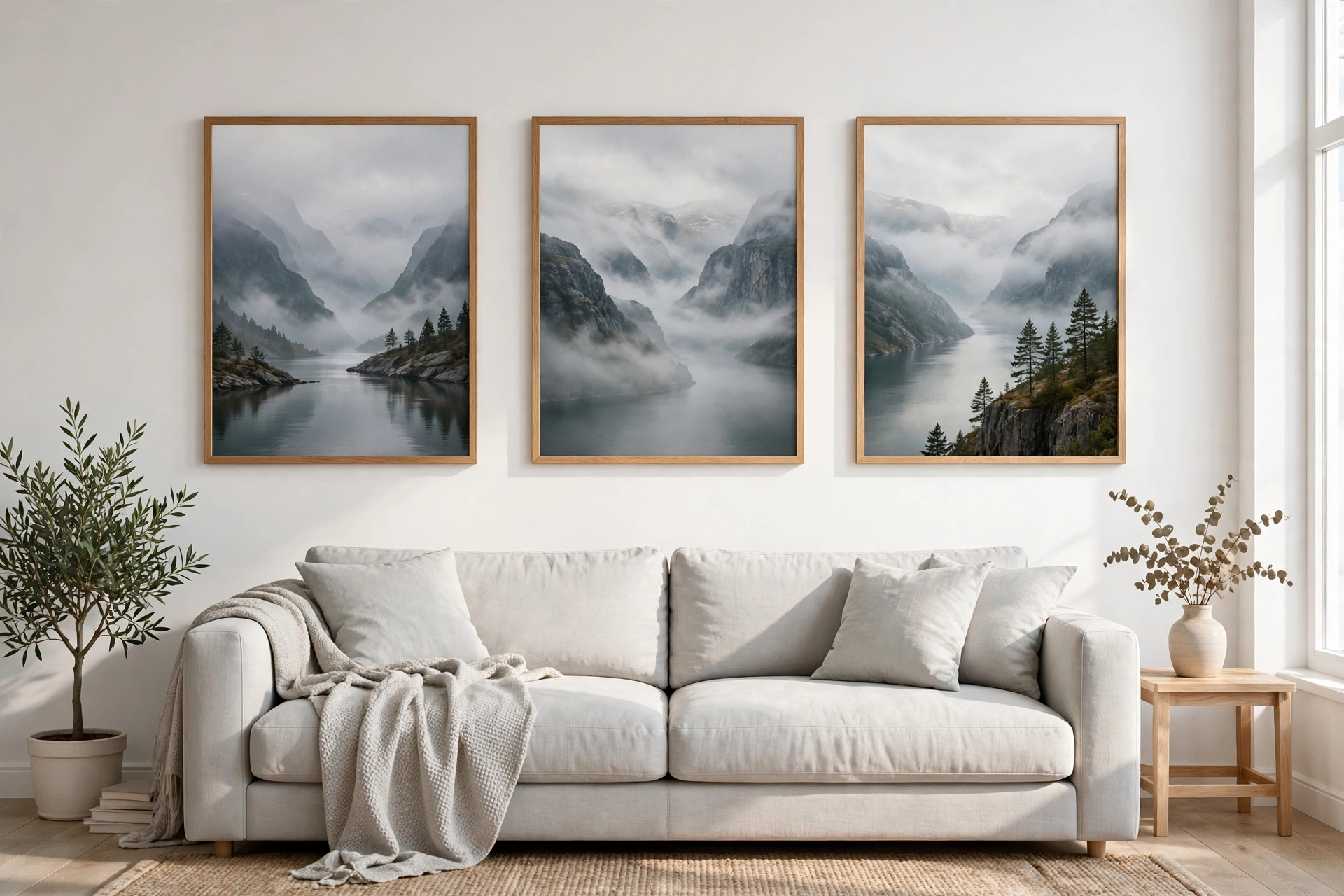
39. Hang Framed Nordic Landscape Prints
Misty fjords, pale forests, abstract northern lights — Nordic landscape prints ($10–$25 each) in thin black or oak frames ($8–$15) are the art this style was made for. A row of two or three above the sofa or bed adds depth without color chaos. Pro tip: keep frames thin and identical — the uniformity lets the art vary while the wall stays calm.
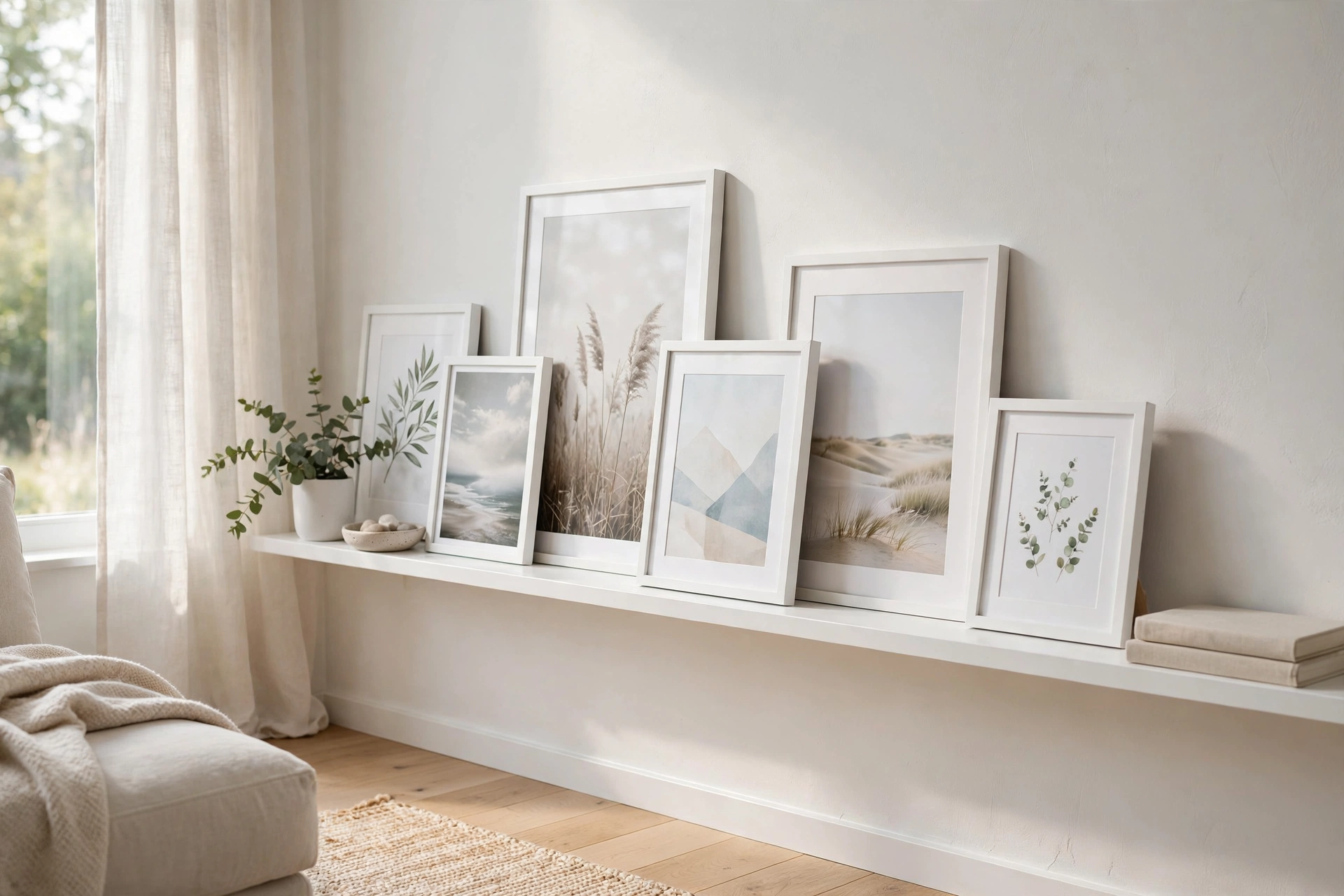
40. Run a Picture Ledge for Personal Photos
Scandinavian minimalism still makes room for your people — a slim picture ledge ($15–$30) lets you lean framed photos and small art without committing to nail holes. Layer frames at different depths for that casual, collected look. Pro tip: print photos in consistent sizes with white borders — the uniformity makes personal photos look like intentional art, not clutter.
41. Swap Textiles Seasonally
Scandinavians dress their homes for the seasons — heavier wools and furs for dark winters, breezier linens for bright summers. Keep off-season textiles in one storage box ($12–$20) and swap throws, cushion covers, and the duvet set twice a year. The apartment feels brand new each season for zero new spending. Pro tip: photograph each seasonal setup before packing it away — next year’s swap takes minutes instead of an afternoon of second-guessing.
Frequently Asked Questions
What defines Scandinavian style in a studio apartment?
Light and function first: white or pale walls that multiply daylight, light woods like oak and birch, a restrained neutral palette with muted accents, uncluttered surfaces, and cozy textile layers (wool, linen, sheepskin) that add warmth. Every piece earns its place through beauty or function — ideally both. In a studio, the style’s small-space DNA shines: it’s literally designed for compact Nordic homes.
How do I keep Scandinavian decor cozy instead of cold?
Texture is the answer — layer chunky knits, sheepskins, linen, and wool in warm neutrals so every surface invites touch. Add candlelight and warm 2700K bulbs for evening glow, keep one warm wood tone running through the furniture, and include living things (plants, eucalyptus). Cold Scandinavian rooms are the ones with hard surfaces and no textiles; cozy ones layer softness everywhere.
What colors work best for a Scandinavian studio?
Start with warm white walls and pale wood floors, then layer creams, oatmeal, warm gray, and greige. Add one or two muted accents — sage green, dusty blue, or soft terracotta — in small doses through textiles and ceramics. Finish with a whisper of matte black (about 5% of the visual field) for definition. The palette should feel like a foggy morning: soft, calm, and quietly varied.
Is Scandinavian style expensive to achieve on a budget?
Not at all — its heroes are IKEA, secondhand markets, and simple materials. The biggest wins are cheap: white paint ($30–$50 a gallon), sheer curtains ($20–$40), a pale rug ($80–$180), and layered thrifted textiles. Splurge only on the pieces you touch daily — the sofa, the bedding, the armchair. Scandinavian style is about restraint, which is inherently budget-friendly.
How do I add enough storage without ruining the minimalist look?
Choose storage that disappears: platform beds with drawers, lift-top benches, nesting tables, and closed cabinets in white or pale wood. Corral visible clutter in woven baskets that read as decor. Follow the one-in-one-out rule for objects, and keep open shelving to two or three styled shelves — the rest of your storage should be behind closed doors.
Can Scandinavian style work in a dark, north-facing studio?
It’s actually the ideal style for it — it was invented for dark Nordic winters. Maximize what light exists with white walls, mirrors opposite windows, sheer curtains, and pale floors. Then layer warm lighting: paper lanterns, candles, and 2700K bulbs everywhere. Choose warm grays and creams over cool tones, since north light runs blue. The result feels intentionally cozy rather than dimly depressing.
Final Thoughts
A Scandinavian studio apartment isn’t about owning less for the sake of it — it’s about choosing well. Pale woods that glow in daylight, textiles that invite you to stay a while, furniture that works twice as hard, and a palette calm enough to lower your heart rate when you walk in. Every idea in this guide shares one principle: light, warmth, and function in equal measure.
Start with the foundations this weekend — the white walls, the sheer curtains, the pale rug — because light is the cheapest transformation there is. Then layer in the hygge: the knit throw, the candles, the sheepskin. Before long, your studio won’t just look Scandinavian. It will feel like the calmest room you’ve ever lived in — bright in the morning, glowing at night, and entirely, effortlessly yours.