41 Boho Studio Apartment Decor Ideas for a Free-Spirited Home
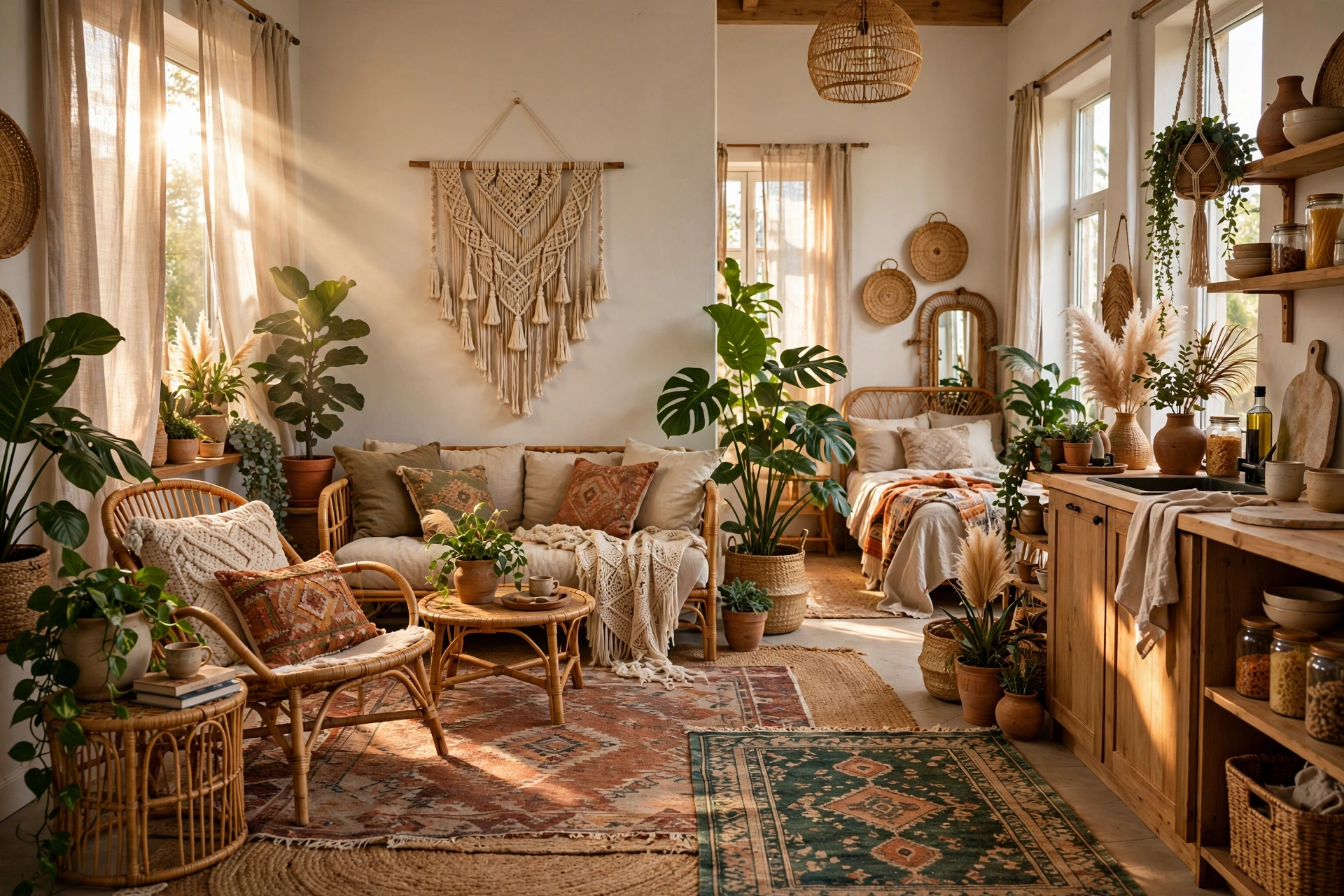
Boho style was practically invented for studio apartments. Born from artists, travelers, and free spirits who mixed what they loved instead of what matched, bohemian decor thrives on texture, warmth, and personality — exactly what a small one-room home needs to feel soulful instead of sterile. The best part? Boho is forgiving: thrifted finds, handmade pieces, and layered textiles all belong, which makes it one of the most budget-friendly styles to pull off in a compact space.
This guide rounds up 41 boho studio apartment decor ideas that bring the free-spirited look home: earthy foundations, layered textiles, rattan and natural materials, an indoor jungle of plants, global handmade accents, and smart small-space tricks that keep the look airy instead of cluttered. Every idea includes realistic prices and a pro tip, so you can build your boho retreat one layer at a time.
Boho Foundations: Color, Texture & Soul
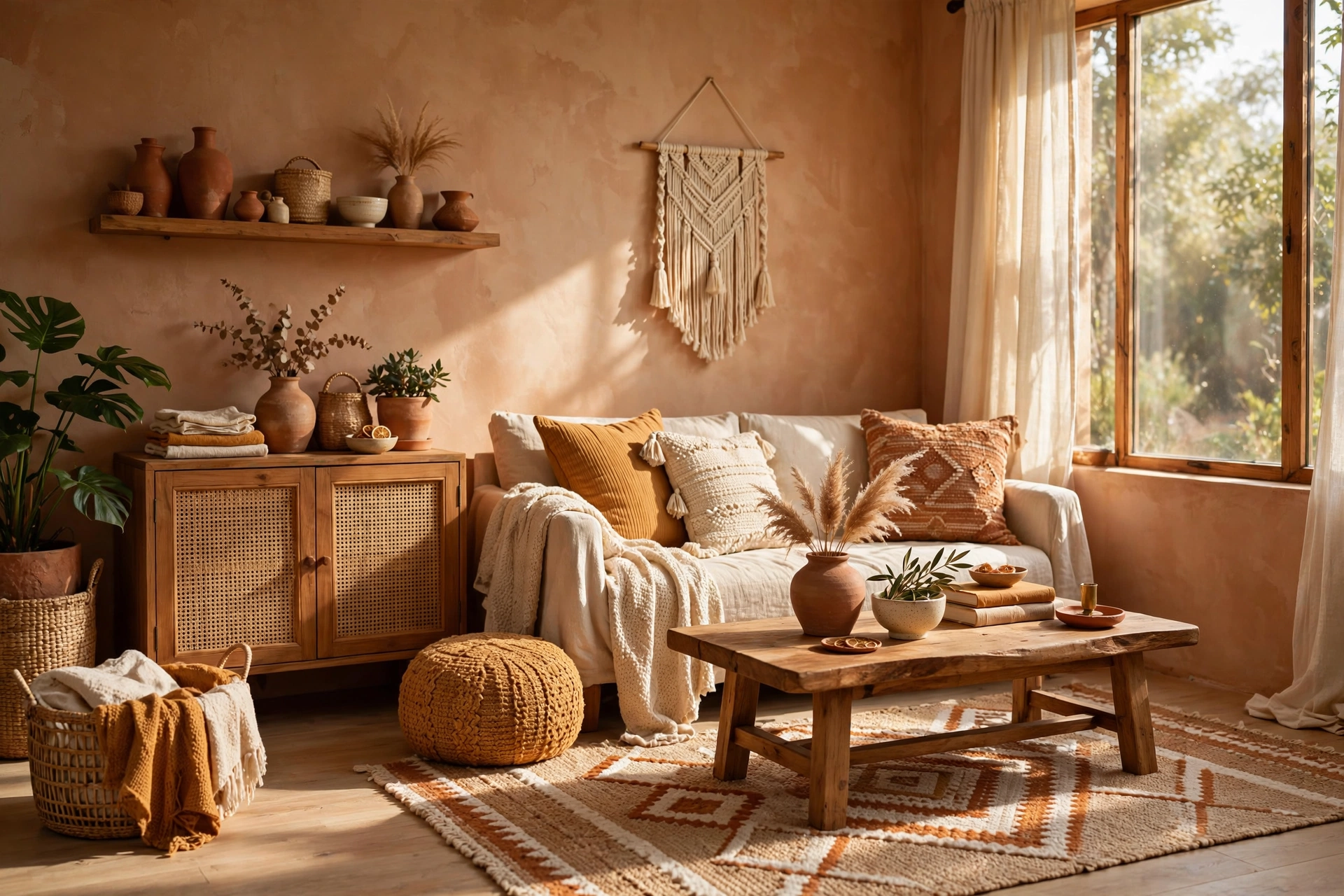
1. Start With a Warm Earthy Palette
Boho color starts with the earth: warm whites, terracotta, ochre, clay, sage, and sunbaked browns. These tones make a small studio feel sun-warmed and grounded rather than stark. Build the base with large pieces — rug, sofa cover, bedding — in warm neutrals, then layer in the richer spice tones through textiles and art. If you want a ready-made palette to steal, our studio apartment color schemes include several earthy combos worth copying. Pro tip: hold every candidate fabric next to each other in daylight before committing — boho palettes live or die on undertones, and warm light bulbs can lie to you at the store.
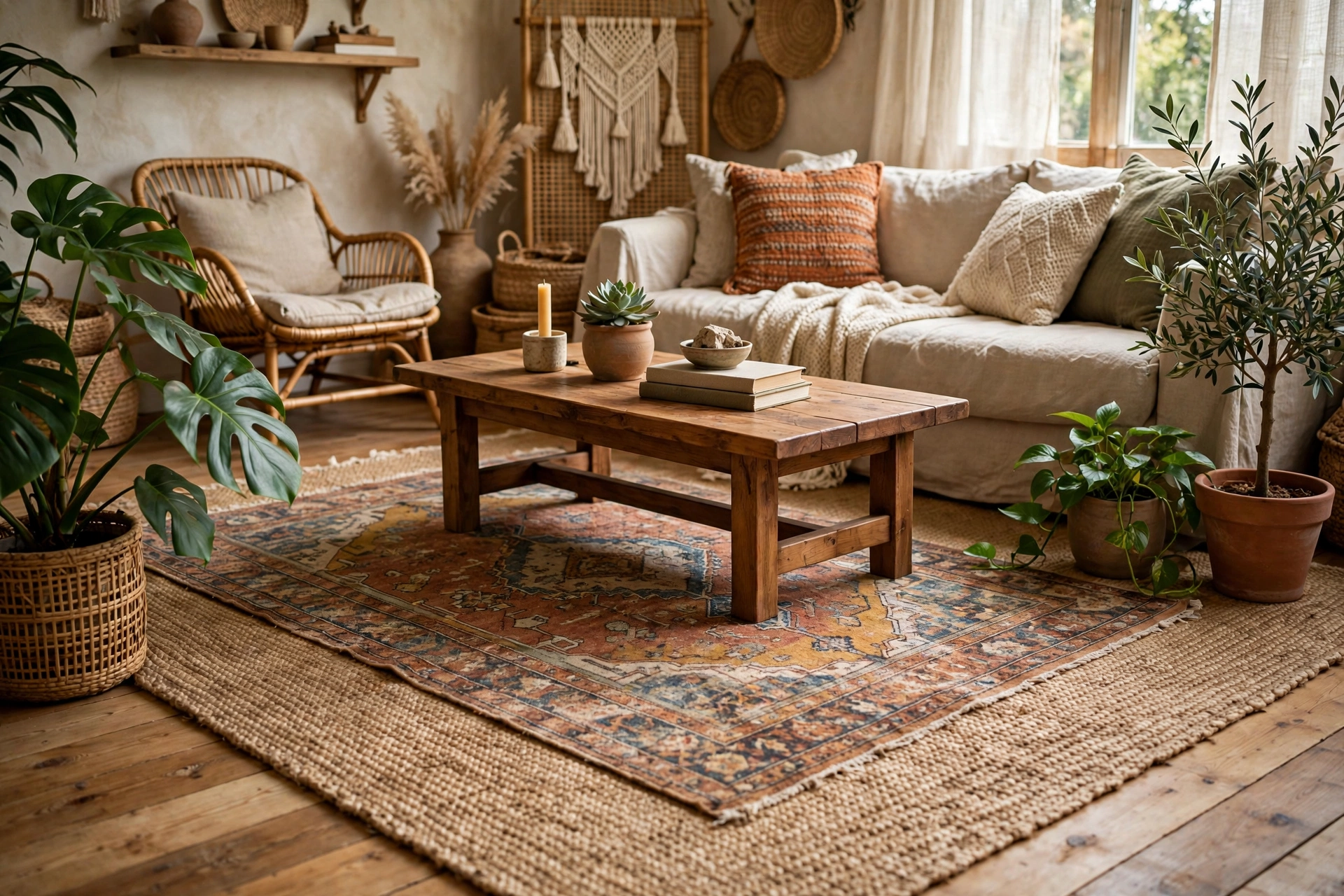
2. Layer a Vintage-Style Rug Over Jute
Rug layering is the signature boho move: a flat natural jute or sisal rug as the base ($60–$120 for 5×7) with a smaller vintage-style patterned rug on top ($40–$90). The combo adds instant depth, defines the living zone, and hides rental flooring in one shot. In a studio, keep the layered stack in the main living area where it gets seen most. Pro tip: use a rug pad between the layers — it stops the top rug from creeping and adds cushioning that makes the whole stack feel expensive underfoot.
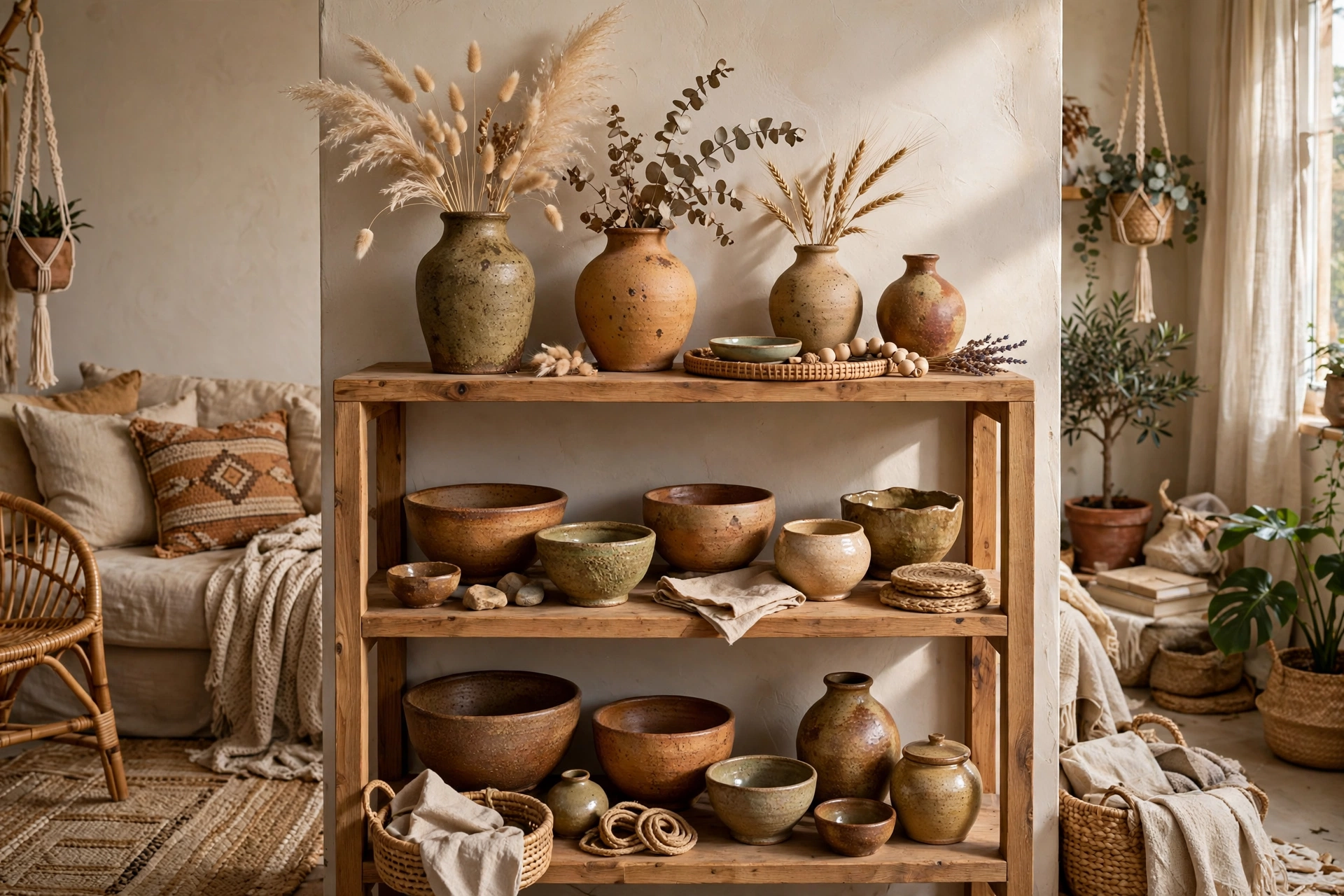
3. Embrace Imperfect Handmade Pieces
Boho celebrates the human hand — slightly wonky artisan ceramics, hand-thrown mugs, uneven weaves. A few handmade pieces ($12–$35 each at craft fairs, Etsy, or thrift stores) give a studio soul that mass-produced decor never can. Style them in small clusters on open shelves where their imperfections read as character. Pro tip: buy handmade in odd numbers and vary the heights — three ceramic vases of different sizes look curated; two identical ones look like a set from a big-box store.
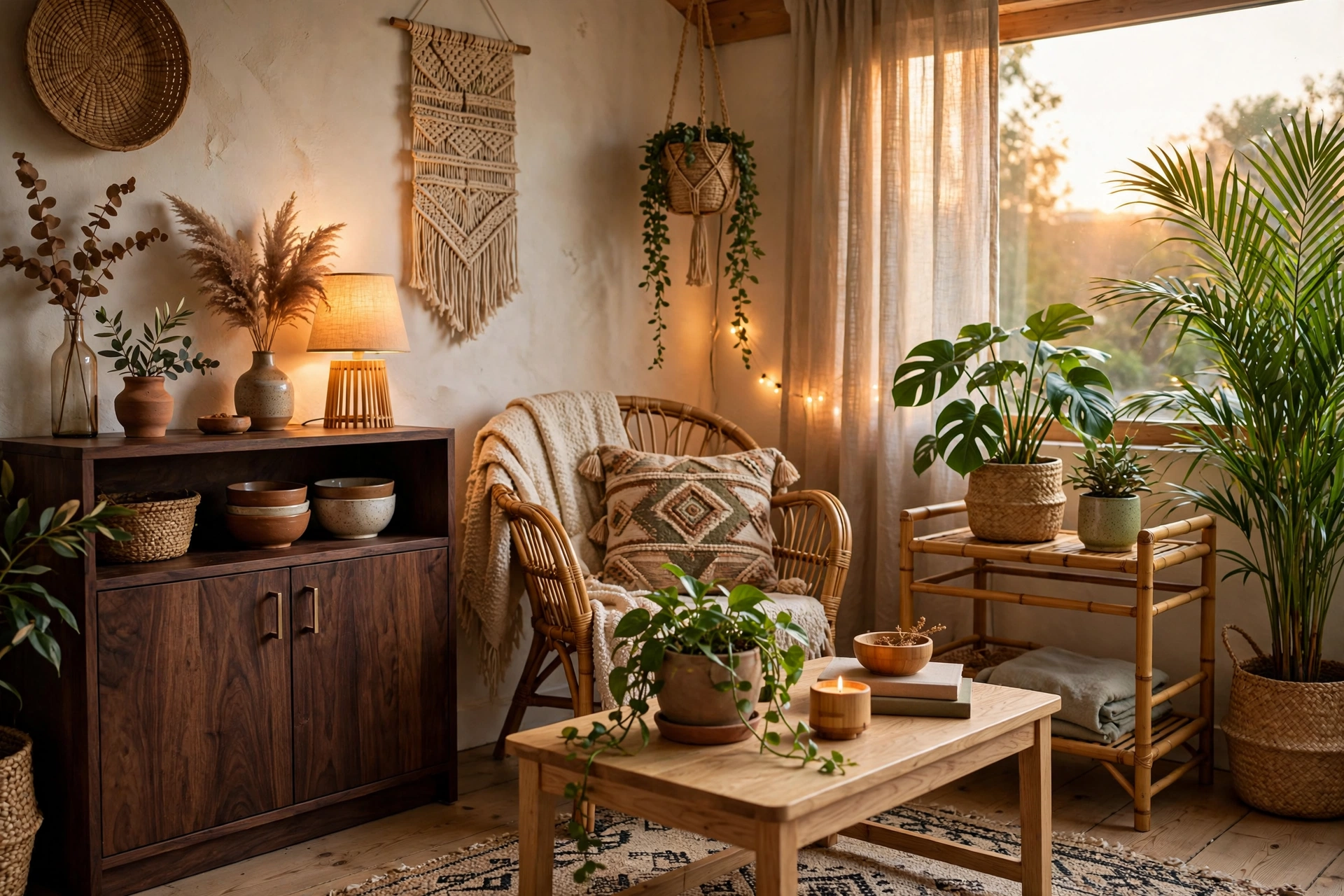
4. Mix Wood Tones Freely
Forget the old rule about matching wood finishes — boho thrives on the mix. Light oak, dark walnut, bamboo, and mango wood can all live in one studio as long as the undertones stay warm. Thrifted wood furniture ($20–$80 per piece) is often better quality than new flat-pack anyway. Pro tip: if two wood pieces clash badly, bridge them with a textile — a runner on the table or a throw on the chair visually separates the tones so the mix looks intentional.
5. Choose a Low-Profile Platform Bed
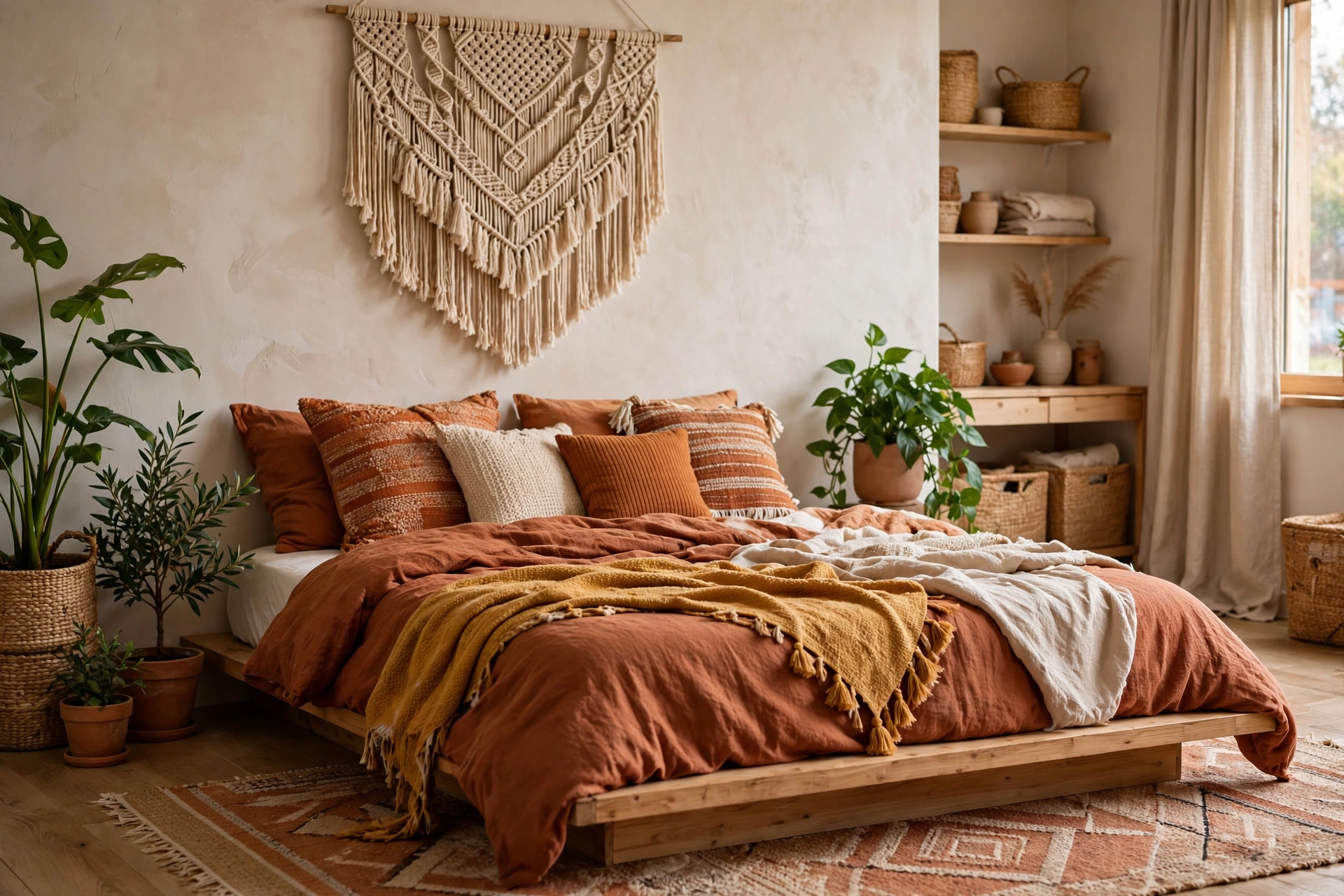
Low platform beds ($150–$350 for a simple wood frame) are the boho bedroom standard — they ground the sleeping zone, make ceilings feel taller, and pair perfectly with layered textiles. Skip the headboard or use a tapestry instead (see idea 27). In a studio, the low profile keeps the bed from visually dominating the room. Pro tip: choose a platform with built-in drawers or clearance for under-bed bins — boho style should never mean sacrificing the storage a studio desperately needs.
6. Paint One Wall Warm White or Clay
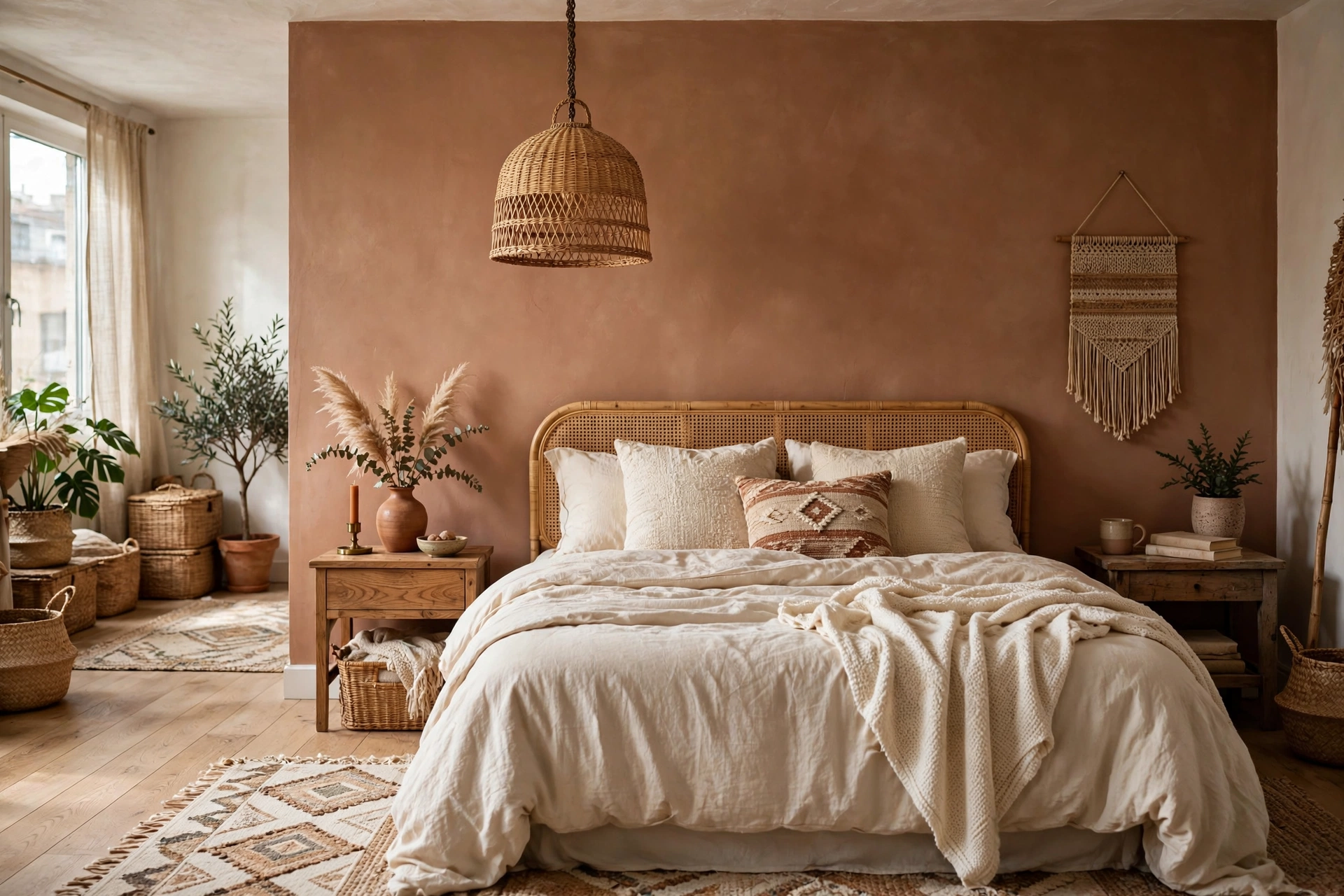
A single warm wall transforms a rental-white box into a boho cocoon. Warm white (not stark white), soft clay, or muted terracotta paint ($30–$45 a gallon) behind the bed or sofa adds depth without darkening the small space. Renters can get the same effect with a large tapestry or peel-and-stick limewash wallpaper ($35–$60 a roll). Pro tip: paint the wall that gets the most natural light — warm color plus sunlight is the combination that makes boho rooms glow in photos and in person.
7. Curate, Don’t Clutter: The Boho Edit
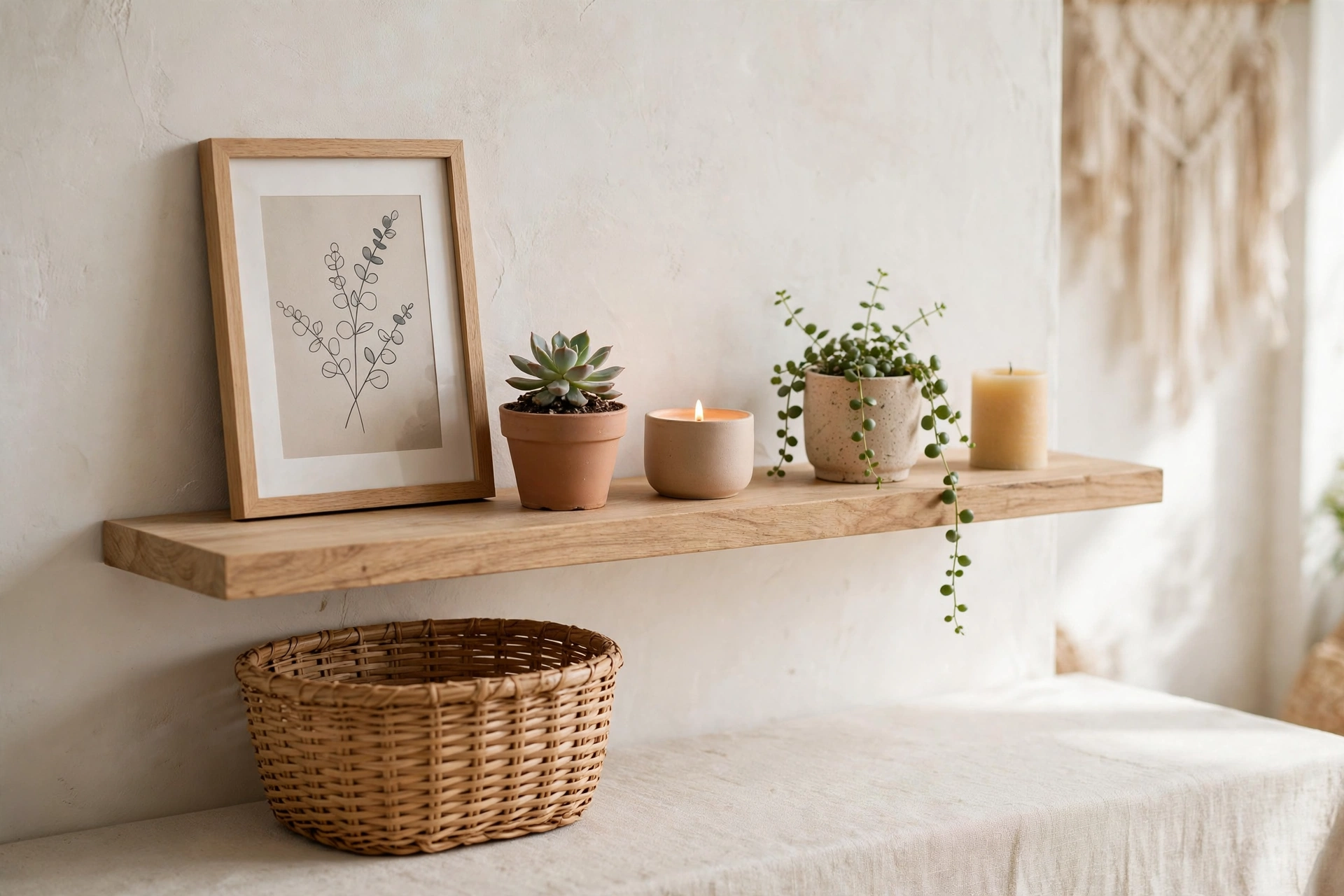
The line between boho and cluttered is editing. In a studio, every surface should earn its styling: keep open shelves to 3–5 objects each, leave breathing room between pieces, and store the overflow out of sight. The “collected” look comes from meaningful pieces, not from every surface being full. Pro tip: do the photo test — snap a picture of each styled shelf. The camera reveals clutter your eyes have learned to ignore, and you’ll instantly see what to remove.
Layered Textiles Everywhere
8. Drape a Kantha Quilt on the Sofa
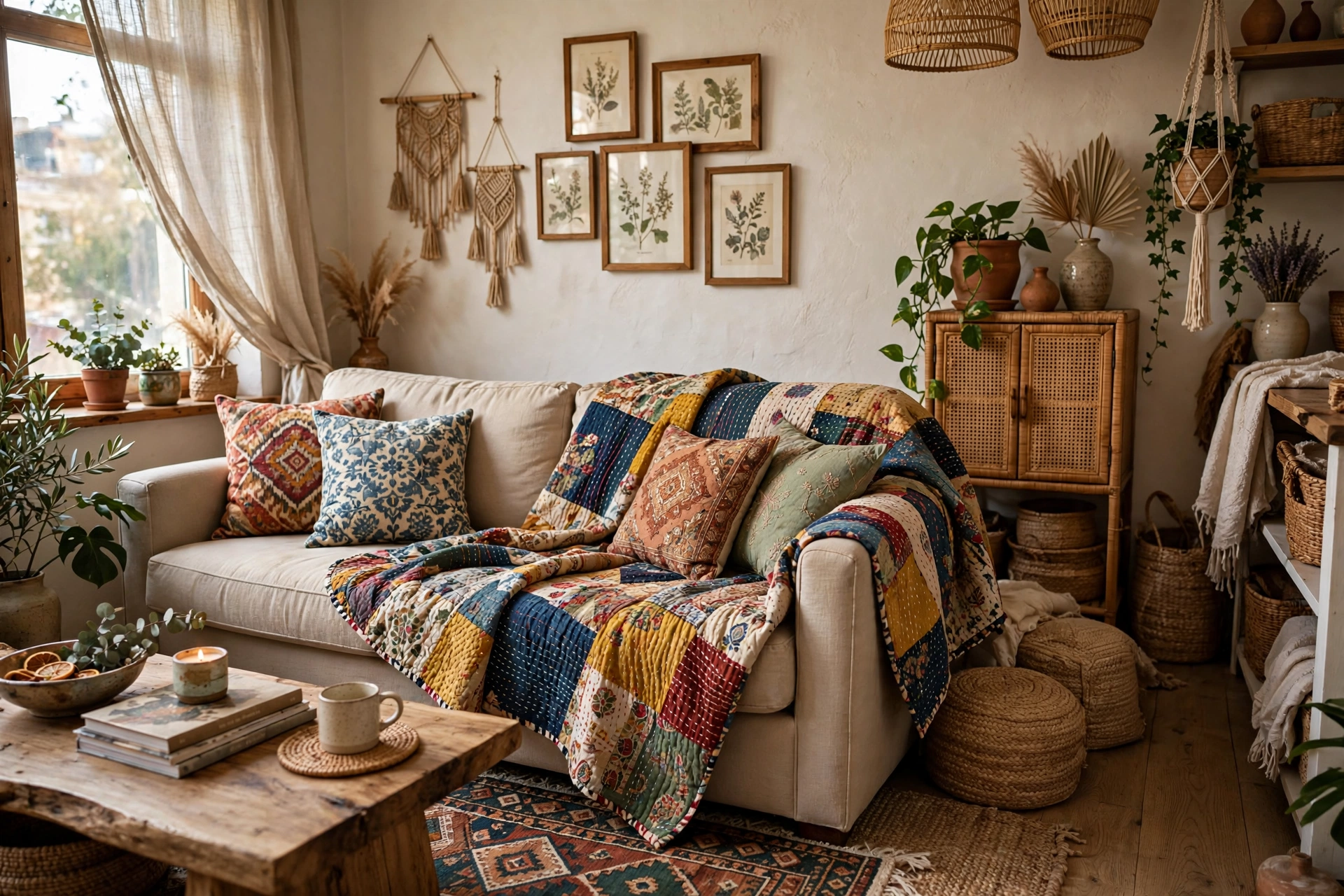
A kantha quilt — hand-stitched from vintage saris ($40–$90 on Etsy or World Market) — is the fastest boho upgrade for a plain sofa. Drape it over the back or arm, and an ordinary couch suddenly has history and color. The lightweight cotton layers beautifully in every season. Pro tip: authentic kanthas are reversible with different patterns on each side — flip it when you want a subtle refresh without buying anything new.
9. Pile Floor Cushions for Low Lounging
Floor cushions ($20–$45 each) are pure boho — they create a low lounge zone for reading, tea, or friends, then stack away when floor space is needed. In a studio, they double as extra seating without the footprint of another chair. Choose washable covers in kilim or mudcloth patterns. Pro tip: store the stack in a large woven basket ($25–$40) — it keeps the pile tidy and the basket itself becomes part of the decor.
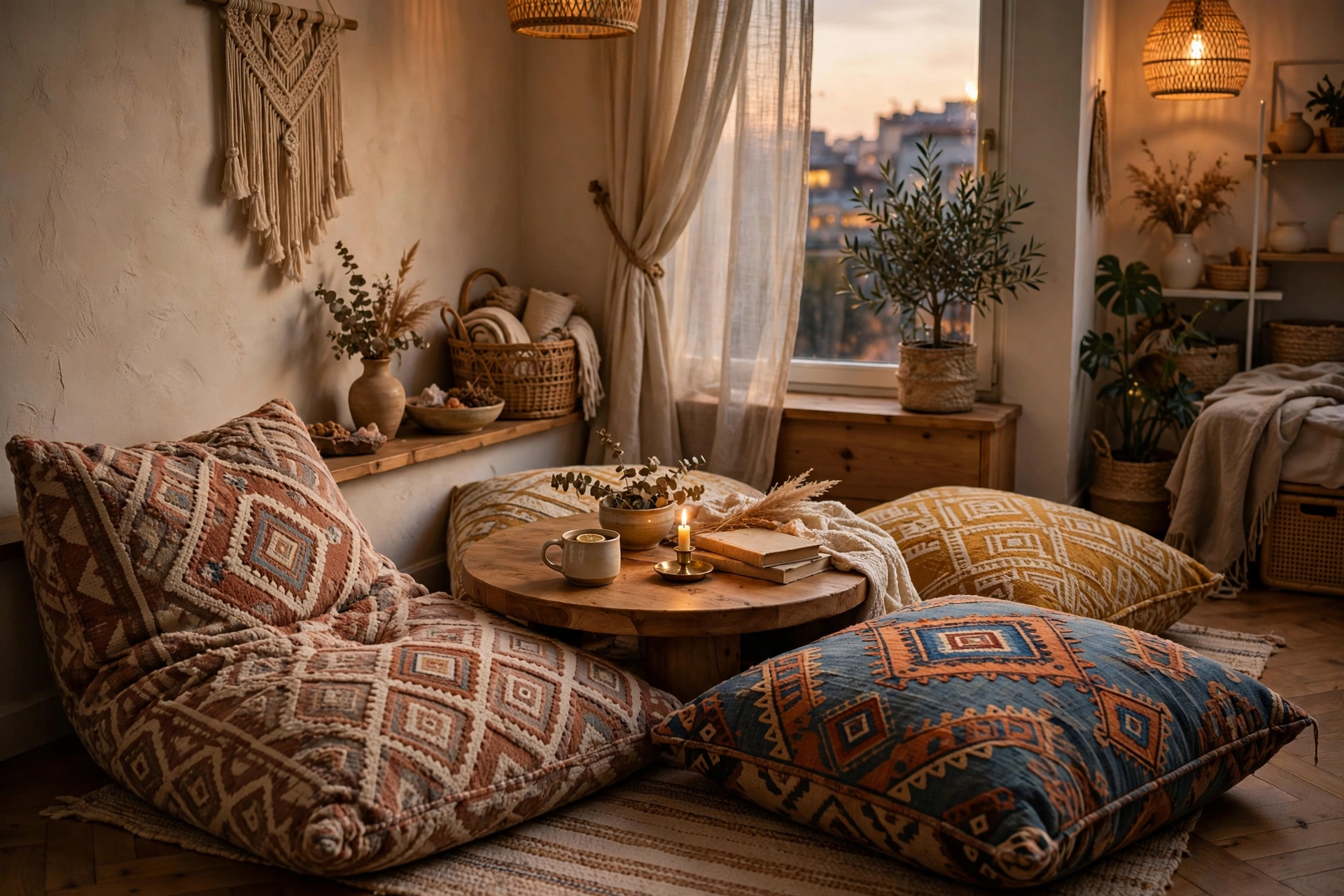
10. Hang a Macramé Wall Hanging
No boho room is complete without macramé. A large handmade wall hanging ($35–$90 on Etsy) softens a blank wall, adds incredible texture, and absorbs sound — a real bonus in a studio with hard floors. Hang it above the sofa or bed as the room’s textile anchor. Pro tip: hang macramé from a natural branch or driftwood instead of a dowel for an extra-organic look — branches are free if you forage responsibly, and no two are alike.
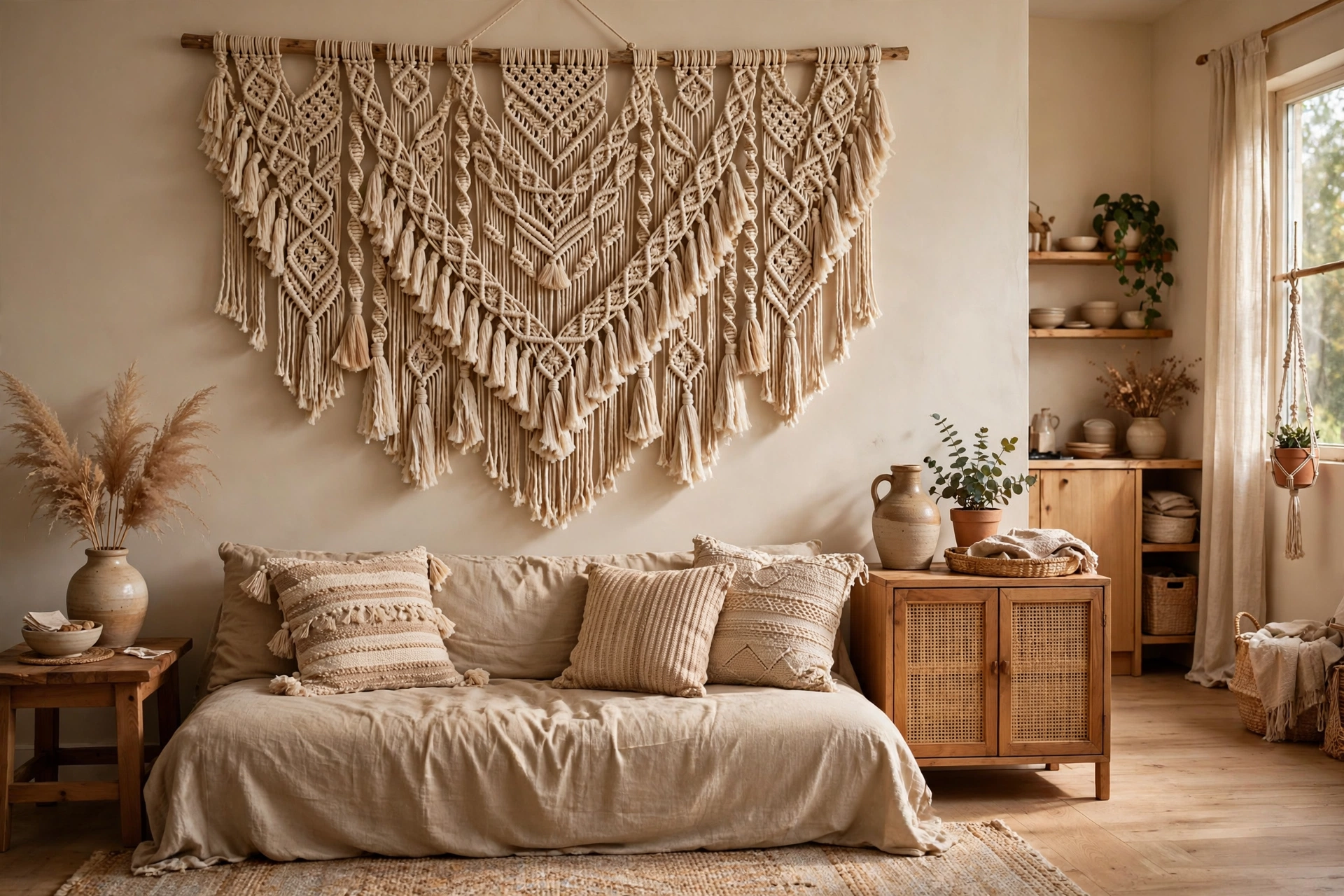
11. Layer Throw Blankets in Mixed Weaves
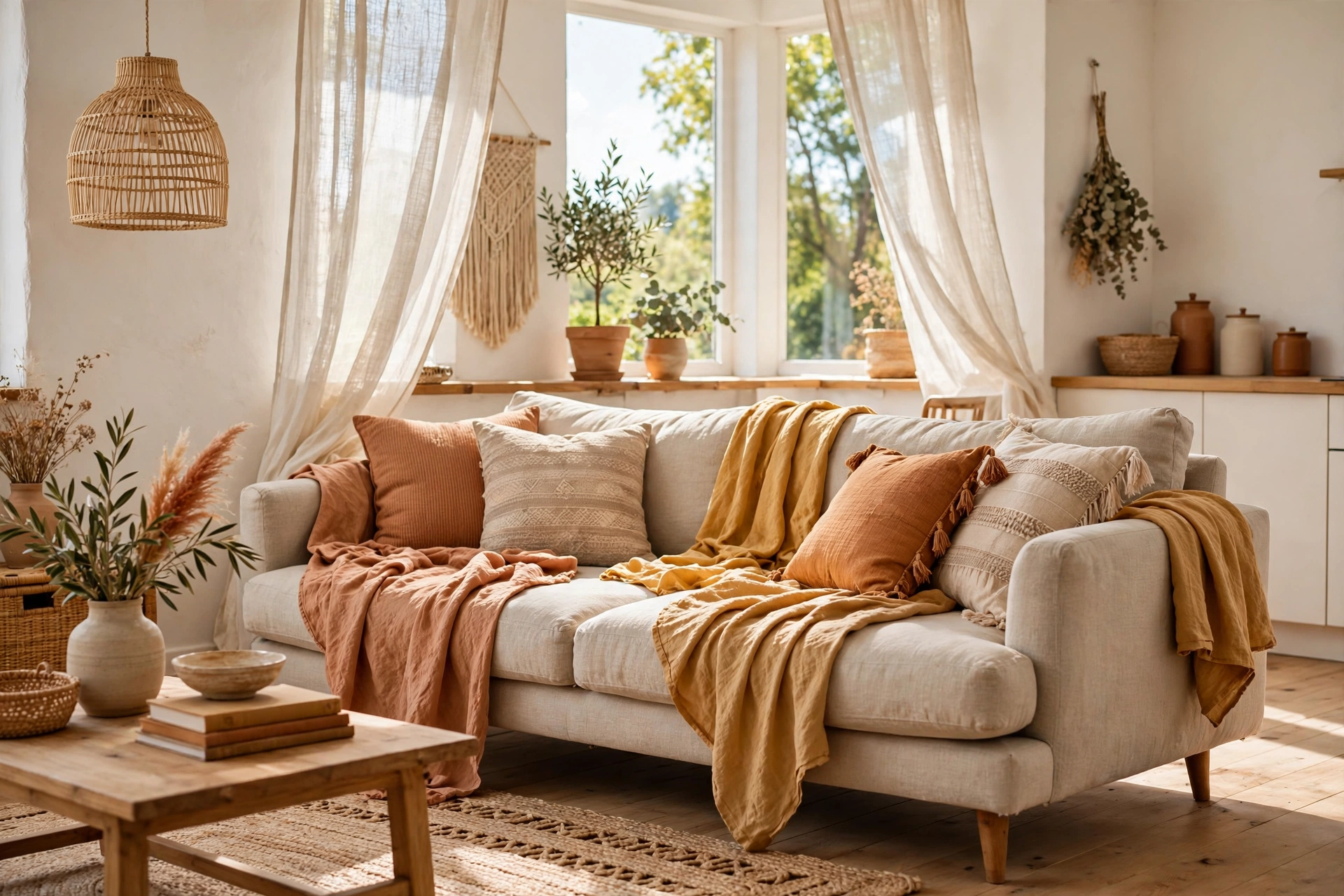
Boho coziness is built from textiles in conversation: a chunky knit, a flat-weave kilim, a fringed cotton throw — all in your palette, all on one sofa. Throws run $20–$50 each; three in mixed weaves beats five in the same fabric every time. Drape them casually rather than folding with military precision. Pro tip: stick to one color family across different weaves (all warm rusts, or all sandy neutrals) — the texture variation provides the interest, so the colors can stay harmonious.
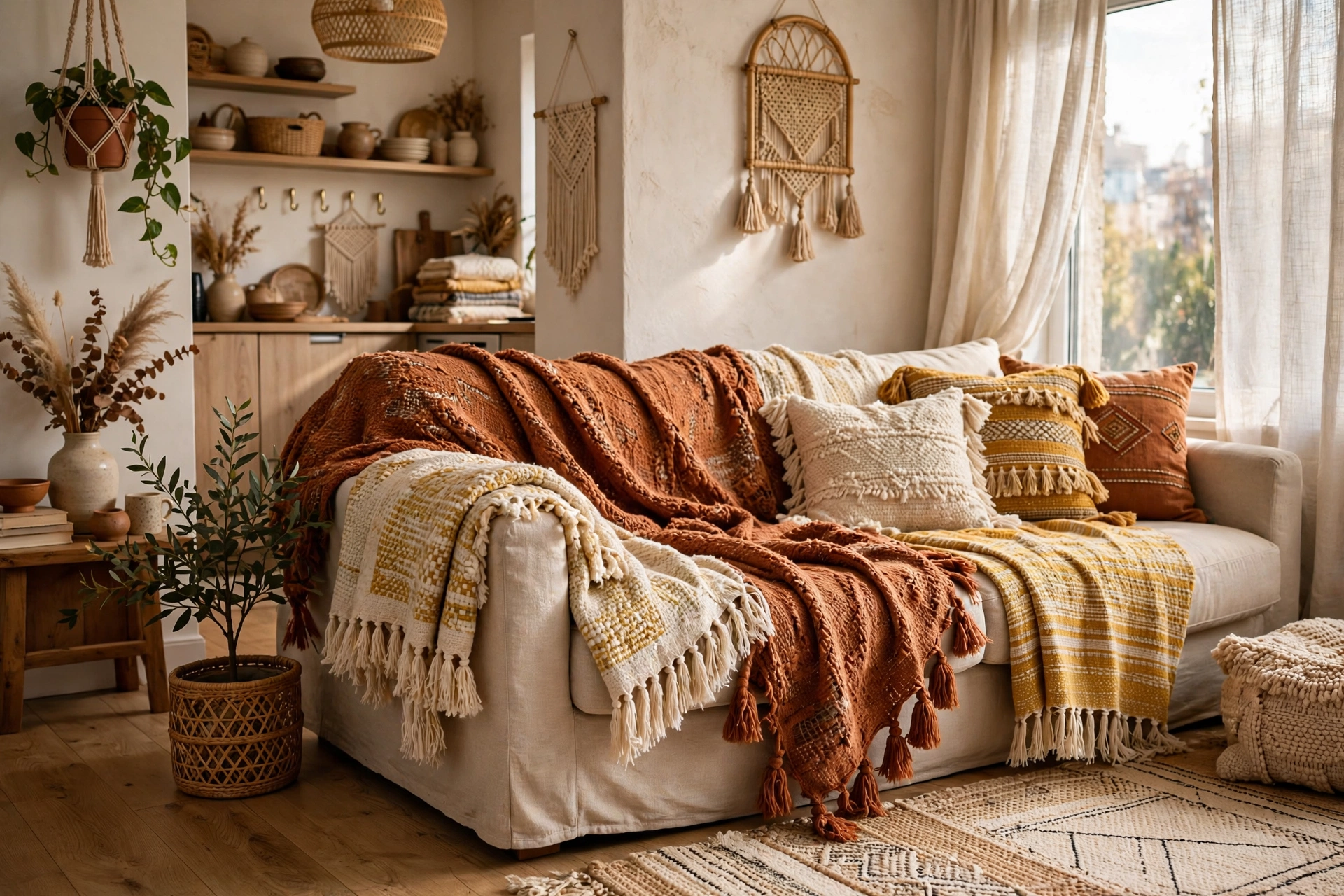
12. Choose Linen Curtains That Breathe
Heavy drapes fight the boho ethos — airy linen or linen-look curtains ($25–$50 per panel) filter sunlight into that golden boho glow while keeping the room feeling open. Hang them high and wide, and let them just kiss the floor. Our studio apartment curtain ideas cover no-drill hanging for renters. Pro tip: choose an unlined weave — lined curtains block the dappled light effect that makes linen curtains magical, and they cost more for a worse result.
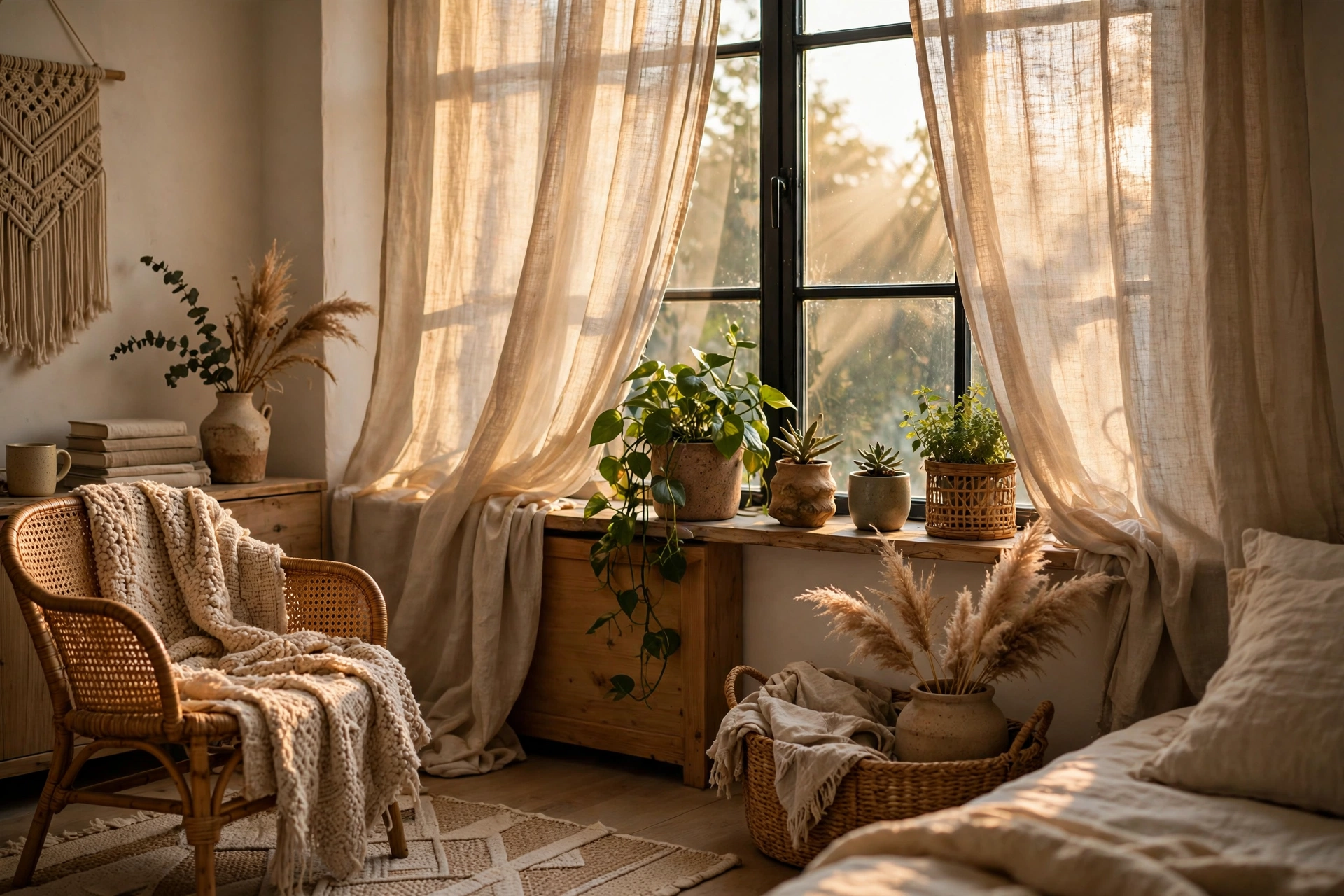
13. Add a Moroccan Wedding Blanket Throw
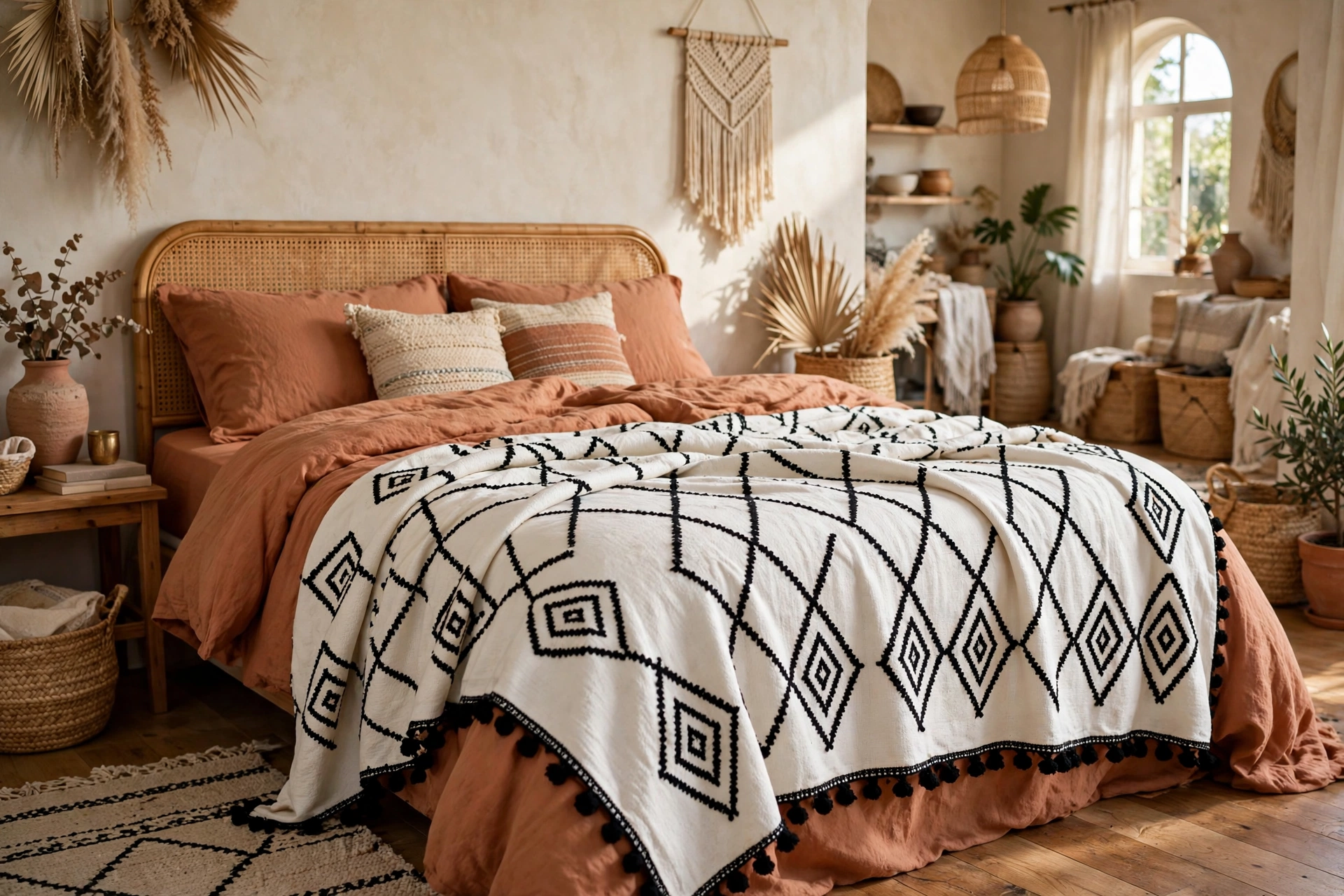
The white Moroccan wedding blanket with its black Berber diamond pattern is a boho icon for a reason — it adds graphic punch without leaving the neutral palette. Authentic handira blankets run $80–$200; good-looking dupes run $35–$60. Drape one over the bed or sofa as the room’s statement textile. Pro tip: the sequined versions shed — shake a new wedding blanket outside before bringing it in, and keep it away from velvet upholstery that sequins love to snag.
14. Mix Patterned Pillows Without Fear
Boho gives you full permission to mix patterns — kilim, mudcloth, Suzani embroidery, block prints — on one sofa. The trick is a shared color story: pick 2–3 colors that repeat across all the pillows, and vary the scale (one large print, one small, one solid texture). Budget $12–$30 per cover and swap seasonally. Pro tip: buy quality inserts once ($15–$25 each for down-alternative) and only swap the covers — the pillows always look plump and expensive regardless of the cover’s price.
Rattan, Wicker & Natural Materials
15. Anchor With a Rattan Accent Chair
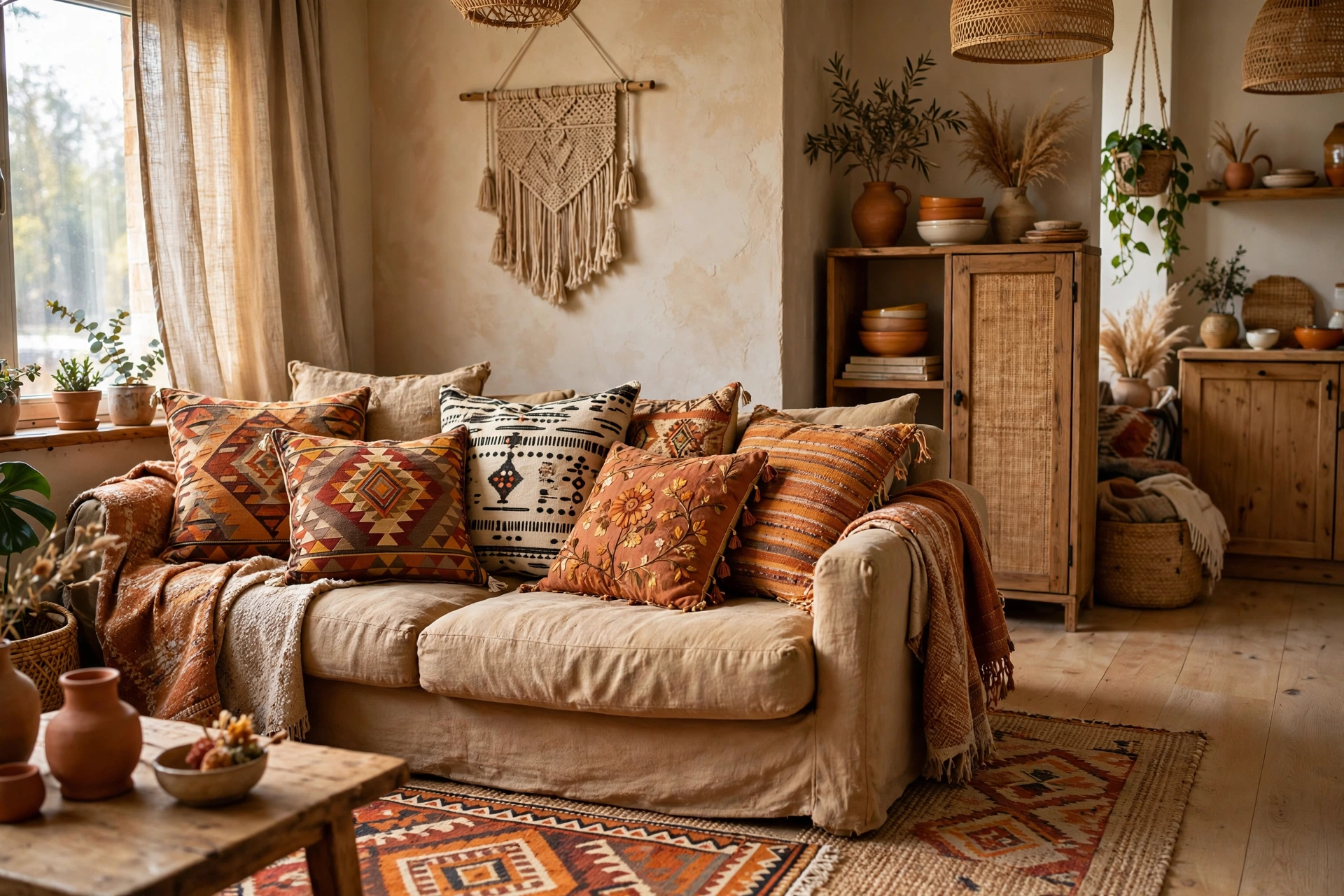
A rattan or cane accent chair ($120–$280) is the boho furniture icon — sculptural, airy, and full of texture. The open weave keeps it visually light, which matters enormously in a small studio. Place it angled toward the sofa to complete a conversation zone, or in a corner as a reading spot. Pro tip: check thrift stores first — vintage rattan is often better made than new, and a $40 thrift find plus a $25 new cushion beats a $200 reproduction.
16. Use a Woven Pendant Light
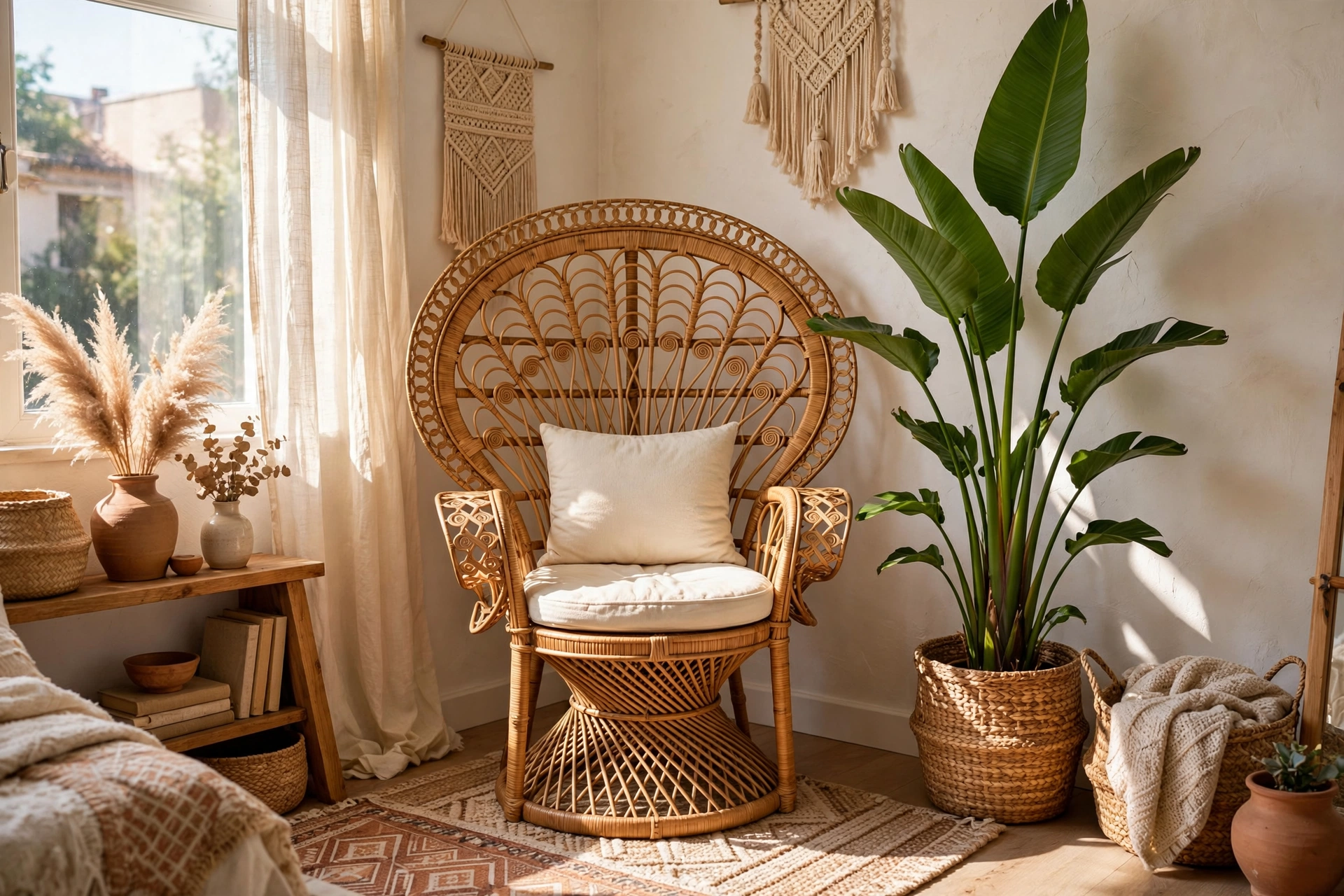
Swap a sad rental flush-mount for a woven rattan or bamboo pendant ($40–$100) and the whole room changes character. The woven shade casts gorgeous patterned shadows in the evening, doubling as light and art. Most plug into the existing ceiling box with no electrician needed — just keep the old fixture to reinstall at move-out. Pro tip: hang the pendant low over a dining nook or reading corner (about 30 inches above the table) — the lower it hangs, the more dramatic the shadow patterns on the walls.
17. Style Open Shelves With Baskets
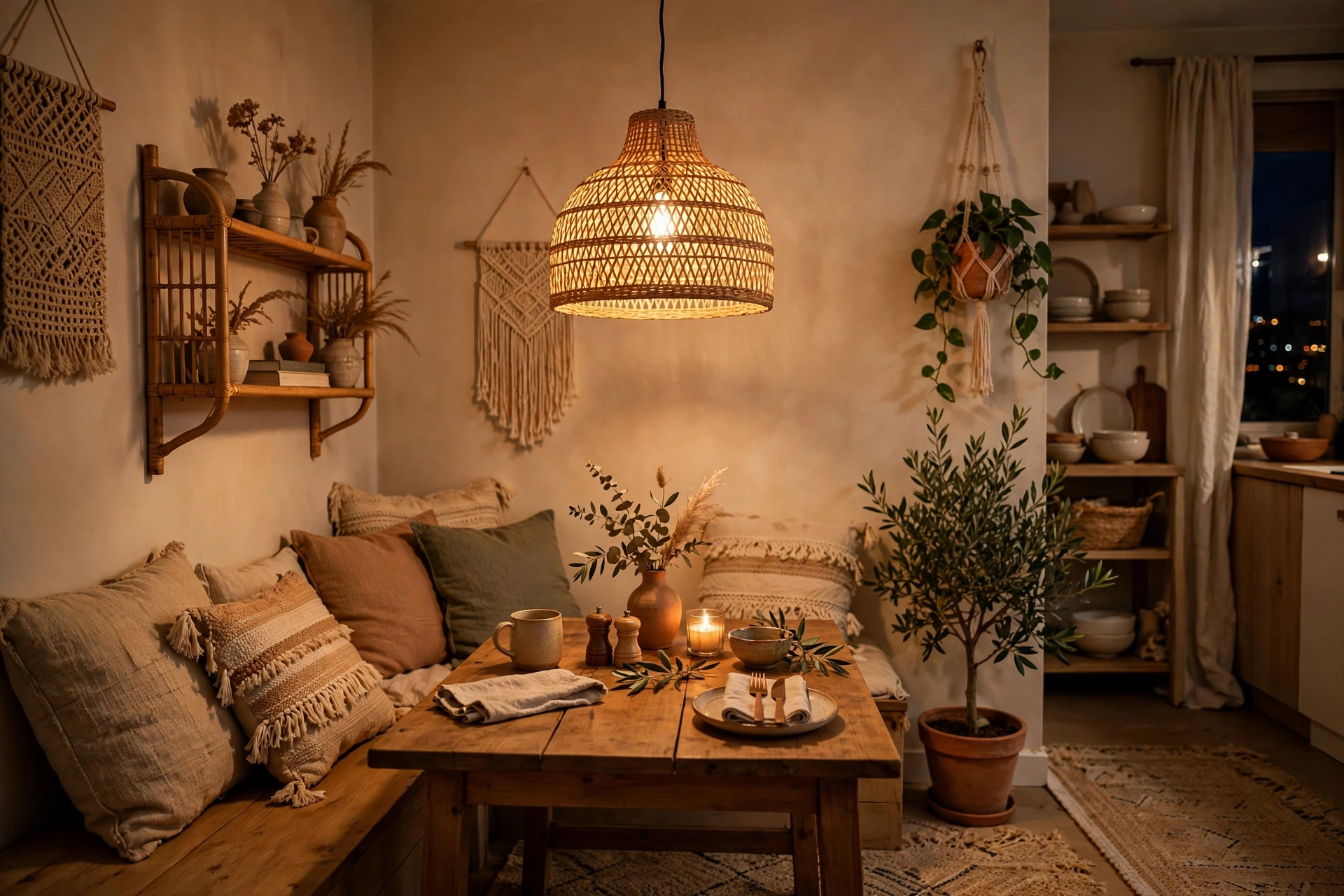
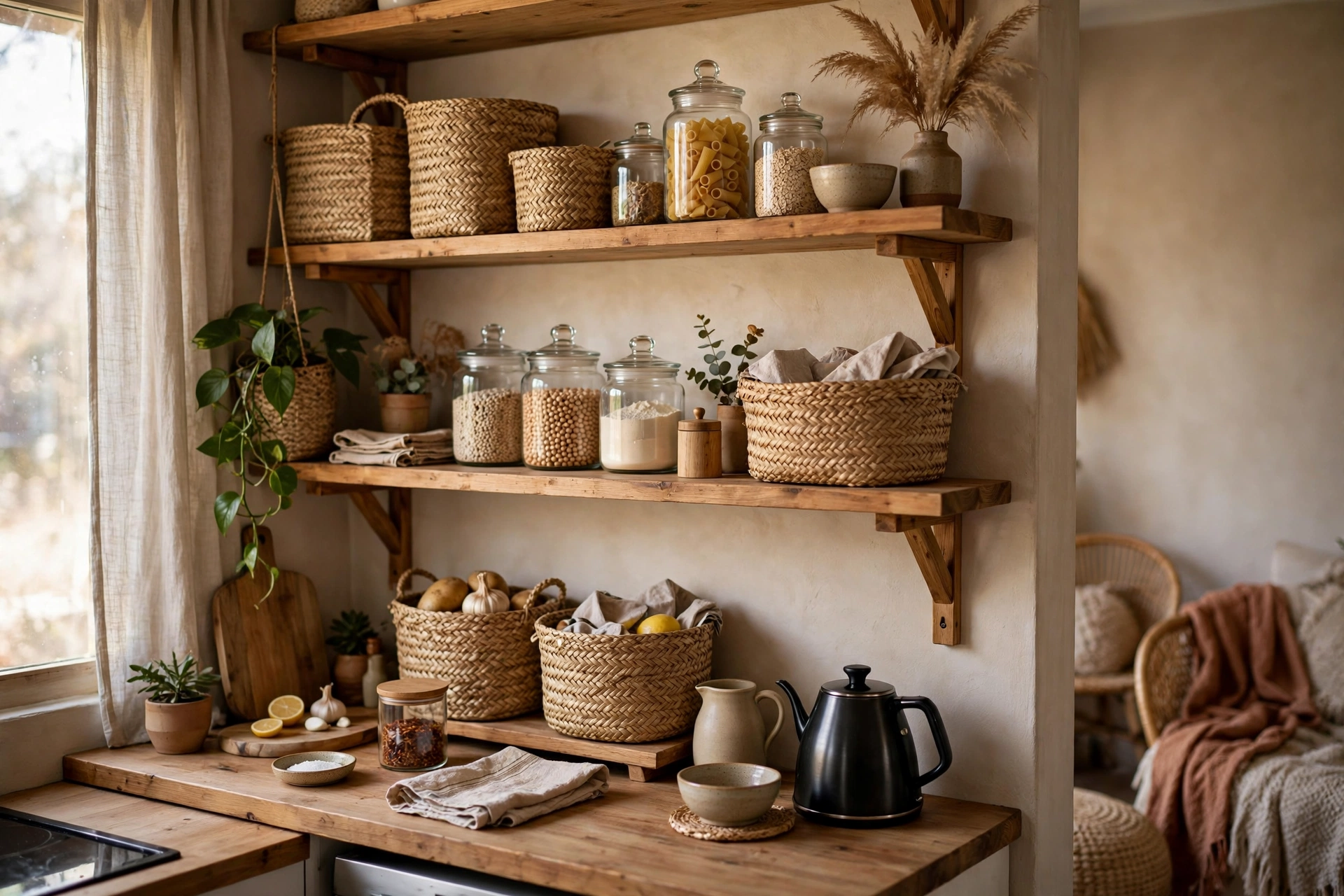
Seagrass and water-hyacinth baskets ($12–$30 each) are the boho answer to studio clutter — they hide chargers, mail, and miscellany inside beautiful natural texture. Line open shelves with lidded baskets in graduated sizes for storage that reads as decor. Pro tip: label the inside bottom of each basket with painter’s tape — you’ll always know what’s where without ruining the natural look from the outside.
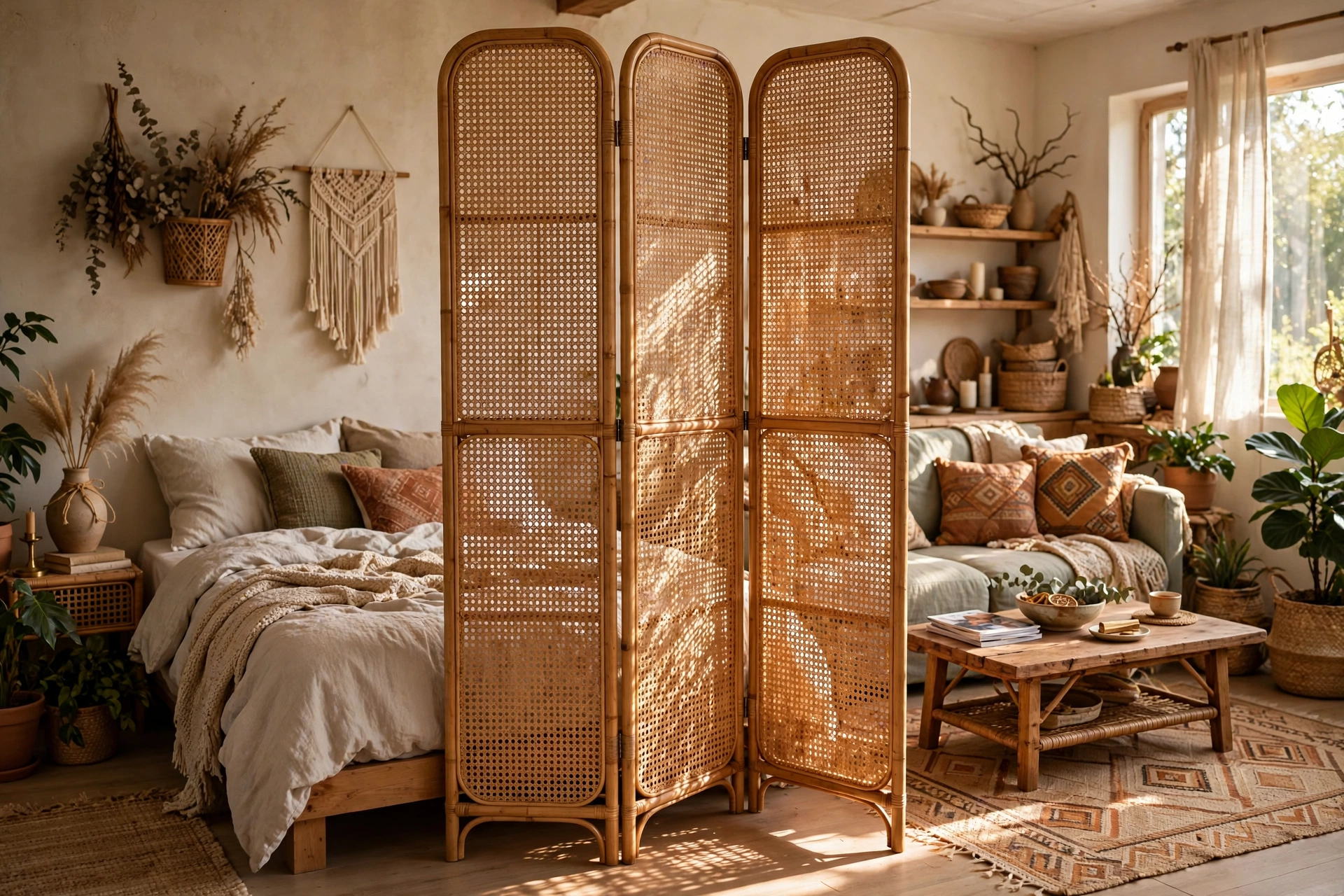
18. Add a Rattan Room Divider Screen
A rattan folding screen ($90–$200) divides a studio’s sleeping zone from living space while staying true to the boho aesthetic — and unlike a curtain, it adds furniture-like presence. The open cane weave lets light through, so the divided space never feels chopped up. Fold it flat when you want the room open. Pro tip: position the screen at a slight angle rather than straight across — angled dividers feel more organic and create a more interesting spatial flow than a hard perpendicular wall.
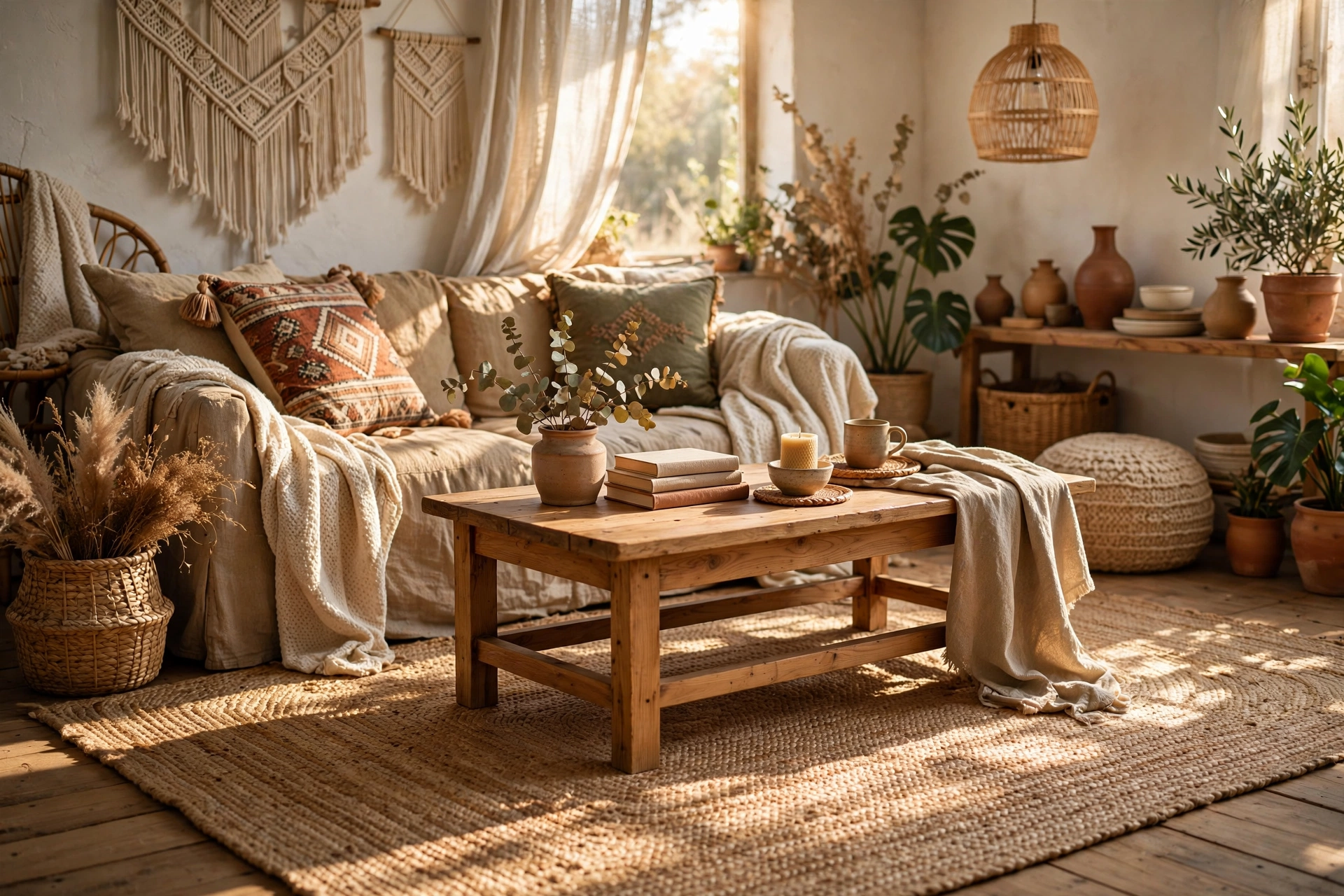
19. Choose a Jute or Sisal Rug Base
Every boho room needs a natural-fiber foundation. A jute or sisal rug ($60–$140 for 5×7) brings organic texture underfoot and a sandy neutral base that makes every pattern layered on top look intentional. It’s also one of the toughest rug materials — ideal for high-traffic studio living. Our studio apartment rug ideas show how to zone with rugs like a designer. Pro tip: jute and bare feet are best friends, but jute plus a rolling office chair is a war — put a chair mat or a flat-weave top layer under any rolling chair.
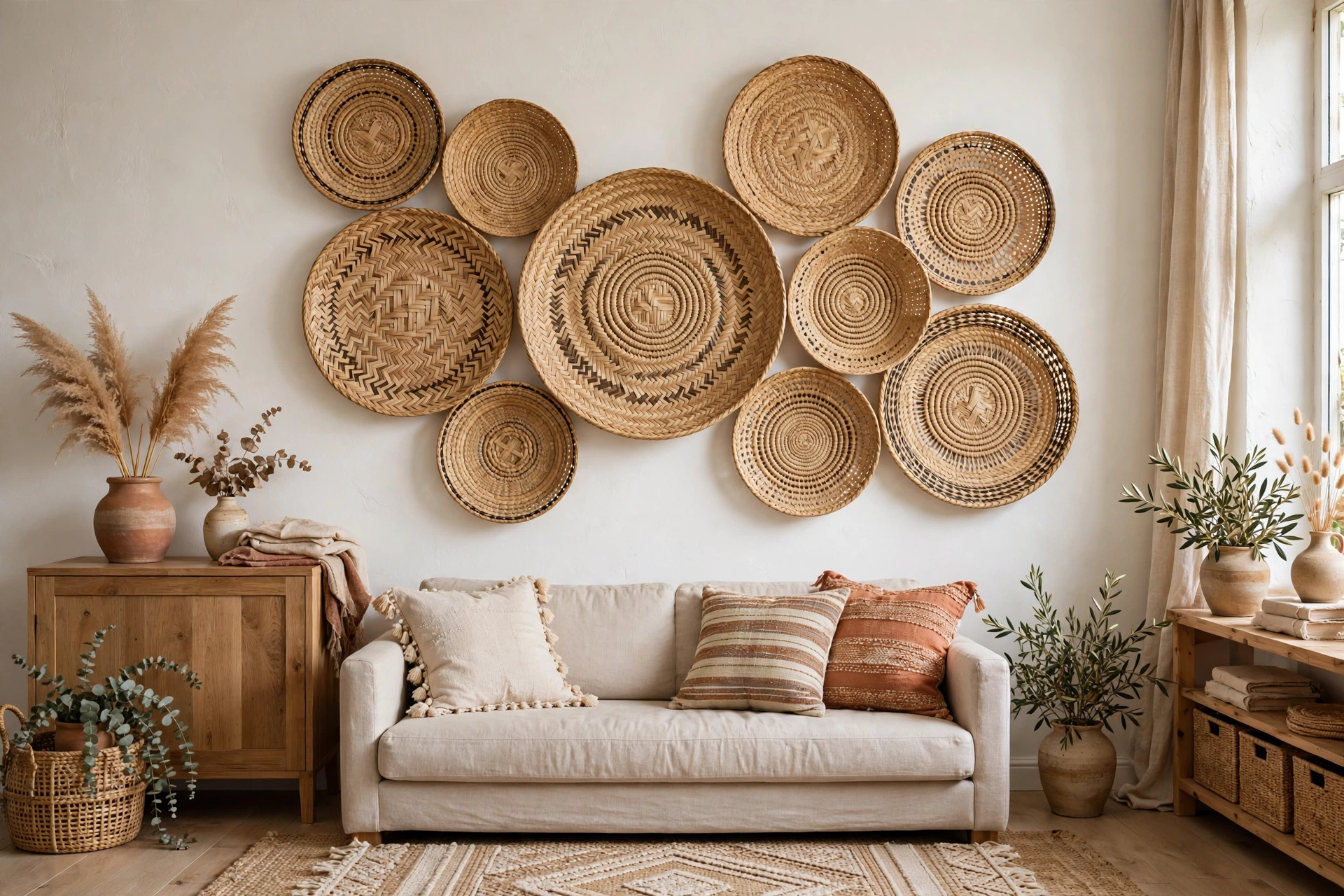
20. Display Woven Wall Baskets as Art
Flat woven seagrass baskets ($8–$20 each) arranged in a cluster make stunning boho wall art — sculptural, textural, and far cheaper than framed prints. Arrange 5–9 baskets in an organic cluster, varying sizes and weave patterns, hung with simple nails or adhesive hooks. Pro tip: trace the arrangement on kraft paper first, tape the paper to the wall, and live with it for a day — moving paper is free, but patching nail holes in a rental is not.
Plants & the Indoor Jungle
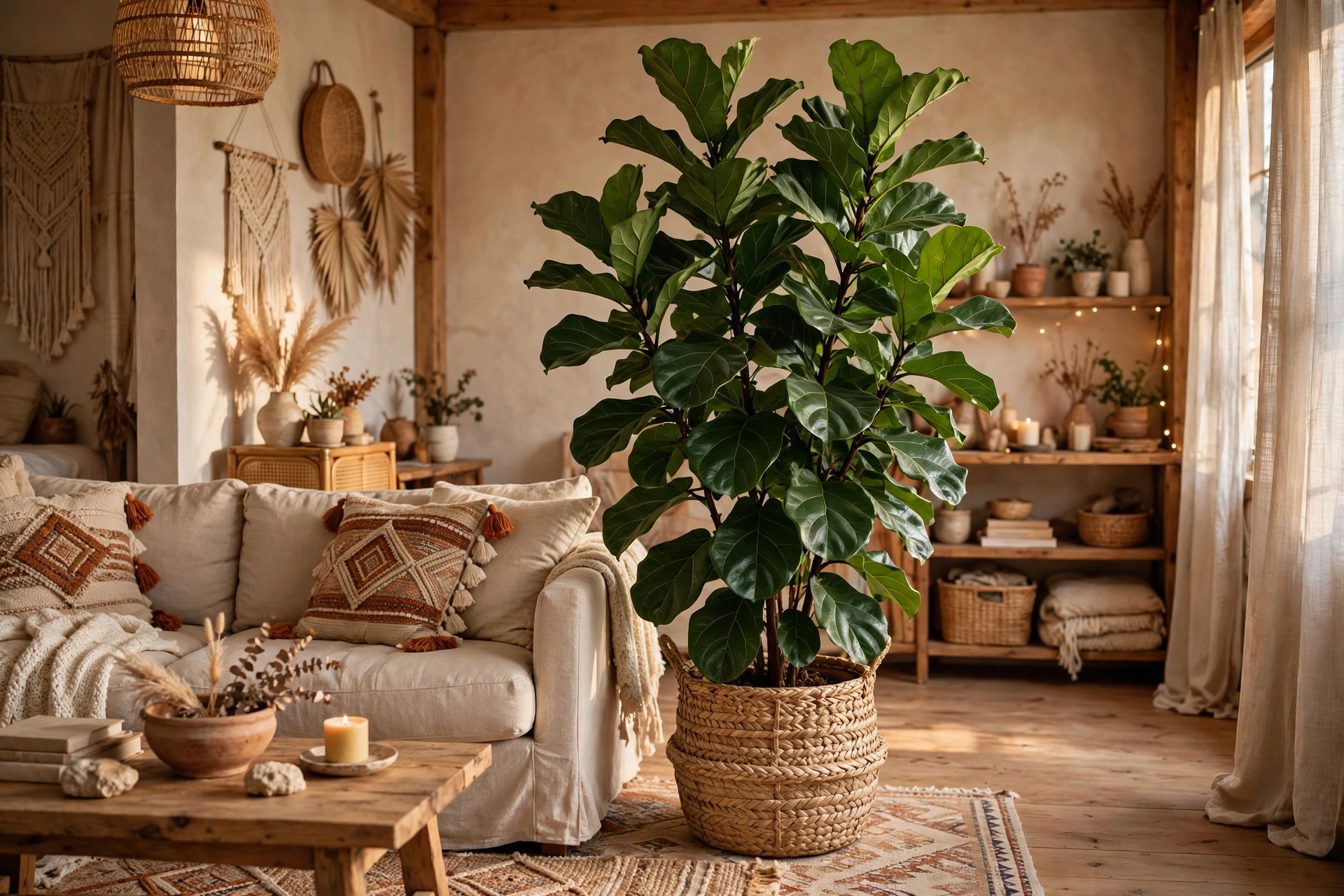
21. Go Big With One Statement Plant
One dramatic plant — a fiddle leaf fig, bird of paradise, or olive tree ($40–$100) — does more for a boho studio than ten tiny succulents scattered around. Set it in a woven basket planter ($20–$35) and give it the best light spot in the room. Big plants anchor corners and add the lushness boho demands. Pro tip: rotate the pot a quarter turn every week so the plant grows evenly instead of leaning desperately toward the window.
22. Hang Trailing Plants From the Ceiling
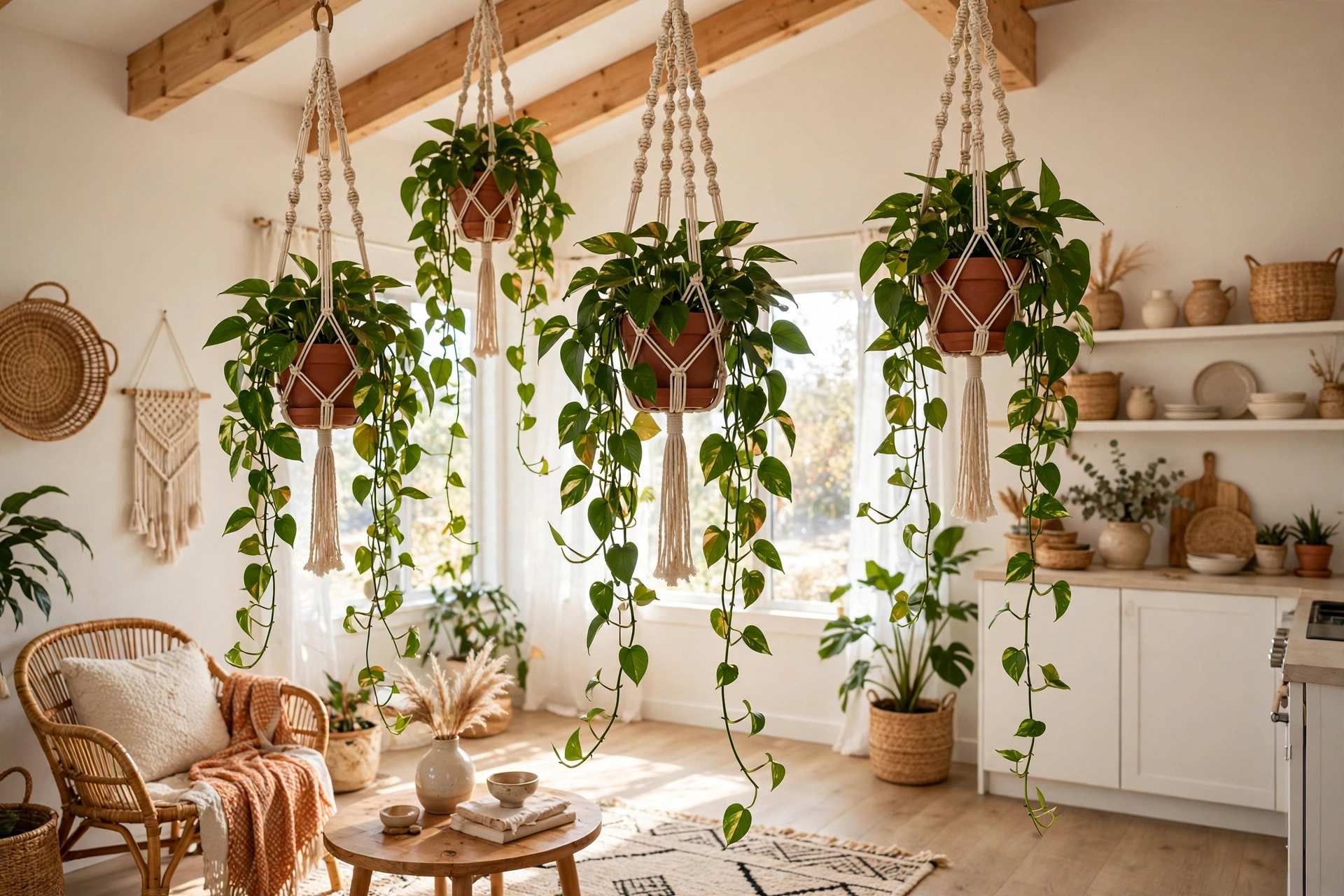
Trailing pothos, philodendron, or string of pearls in macramé hangers ($15–$30 for hanger plus plant) bring greenery to eye level without using a single inch of floor — critical in a studio. Hang them near windows, over shelves, or in a cluster at different heights in a corner. Pro tip: use a ceiling hook rated for the wet weight (soil plus water is heavier than you think) and hang the plant where you can actually reach it to water — the number one killer of hanging plants is out-of-reach neglect.
23. Group Plants in Odd Numbers
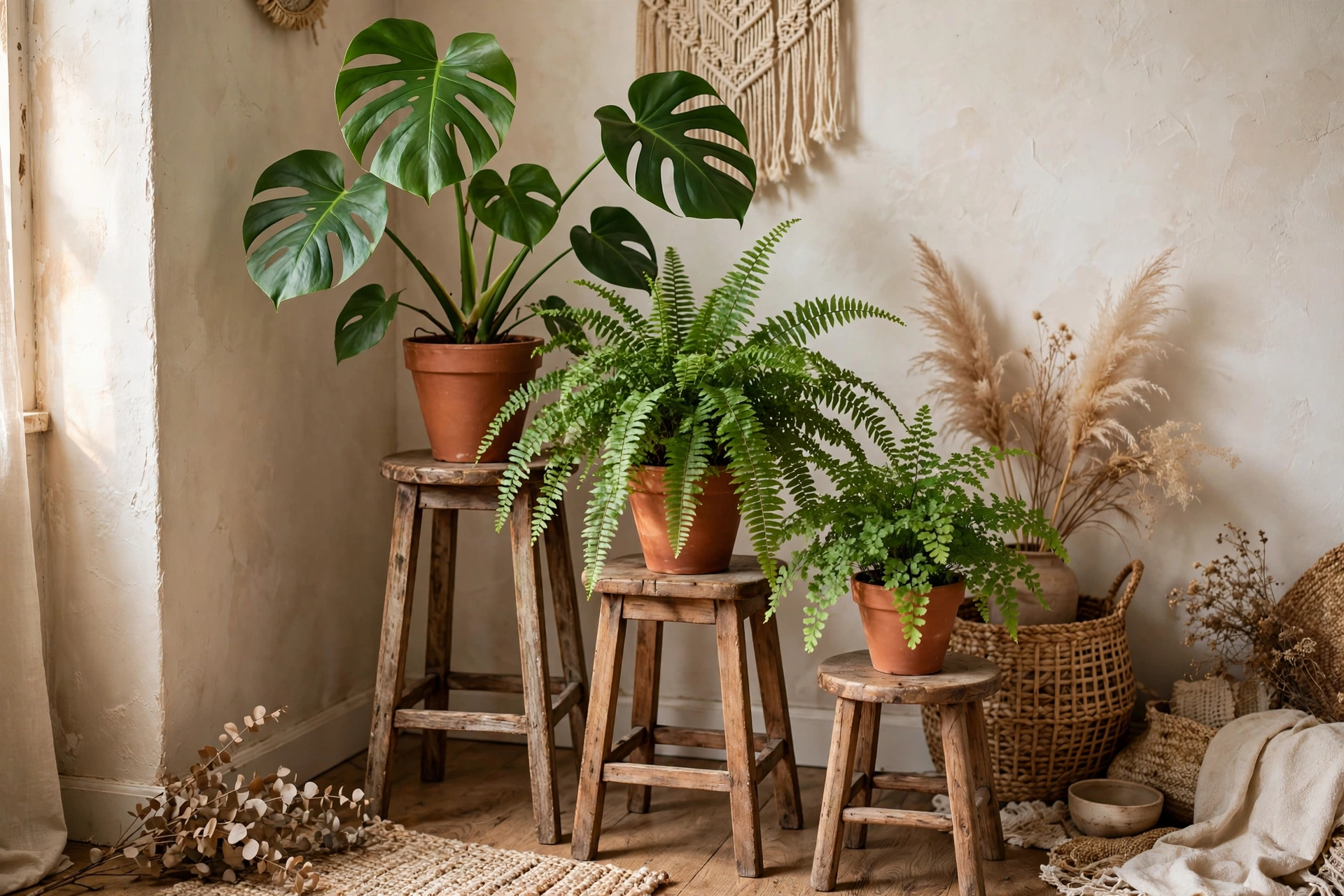
Three or five plants clustered at different heights look designed; two identical plants look like bookends. Mix a tall floor plant, a medium on a stool or stand ($15–$30), and a small one on a shelf for a lush corner vignette. Vary leaf shapes too — broad monstera leaves against feathery ferns against trailing pothos. Pro tip: keep the pots in the same material family (all terracotta, or all woven baskets) — unified pots let wildly different plants look like one intentional collection.
24. Use Terracotta and Clay Pots
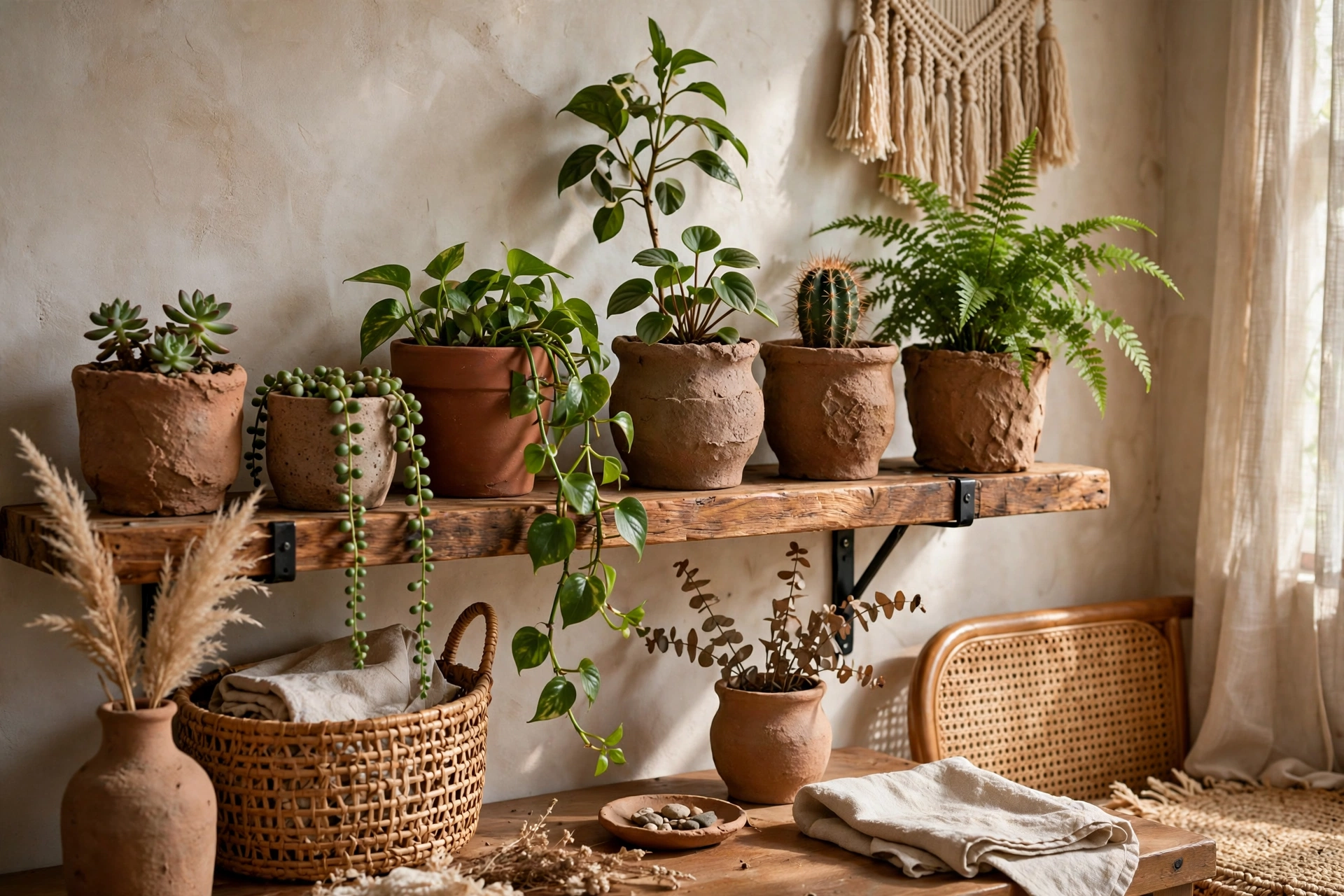
Plastic nursery pots kill the boho vibe — decant plants into terracotta, clay, or handmade ceramic pots ($5–$18 each). Terracotta’s warm orange-brown is practically a boho neutral, and the porous clay is genuinely better for most houseplants’ roots. Buy a few sizes and repot everything at once for instant cohesion. Pro tip: soak new terracotta pots in water for an hour before planting — dry terracotta wicks moisture straight out of the soil, but pre-soaked pots behave themselves.
25. Fill Dead Corners With Tall Plants
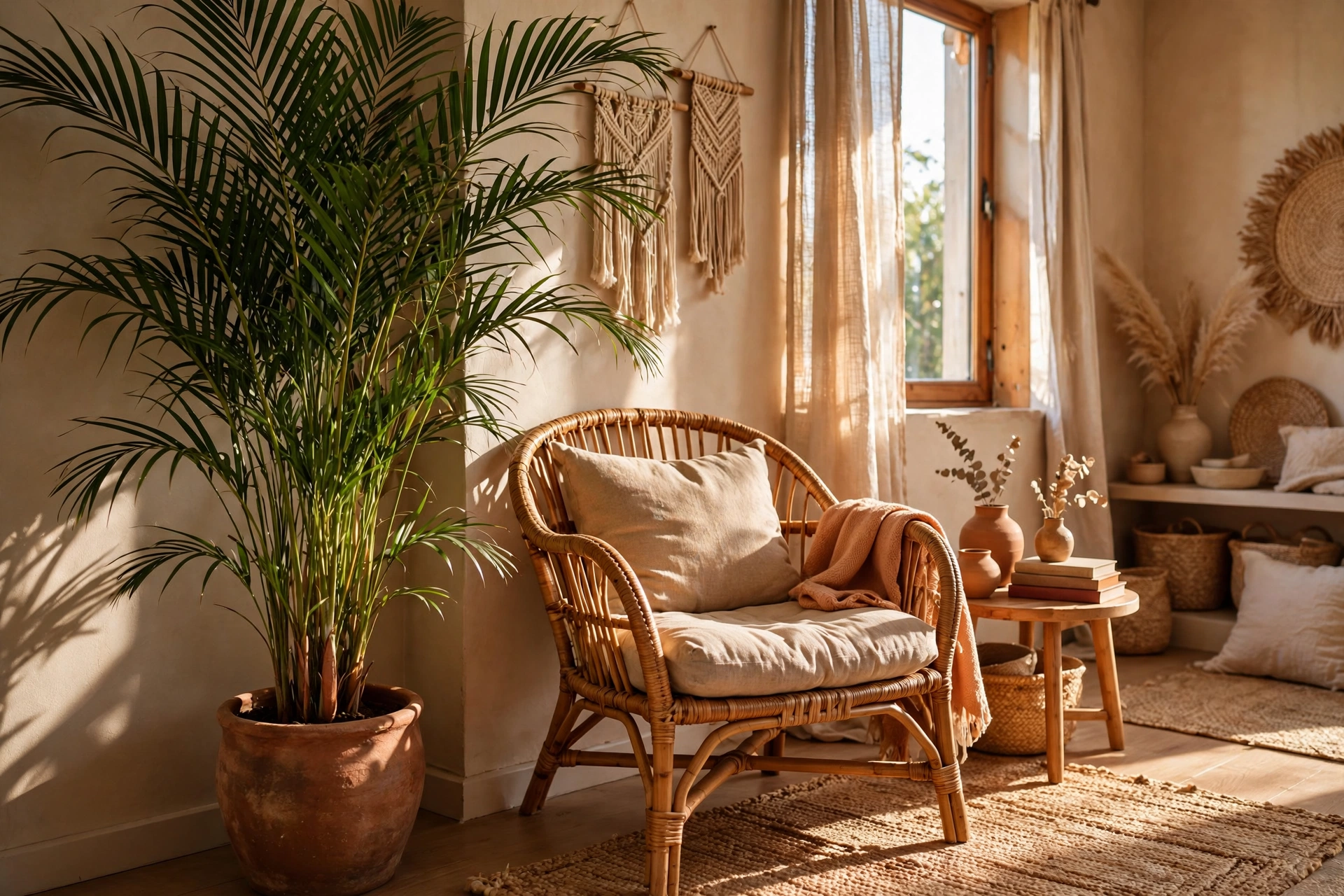
Every studio has that awkward dead corner where nothing fits — a tall plant ($30–$70) turns it into a feature. Palms, dracaena, and rubber plants grow upward rather than outward, claiming vertical space without eating floor area. It’s the easiest “furniture” you’ll ever buy for a corner. Pro tip: put the plant on a rolling plant caddy ($12–$20) — you’ll thank yourself every time you need to clean behind it or chase better light across seasons.
26. Propagate and Swap With Friends
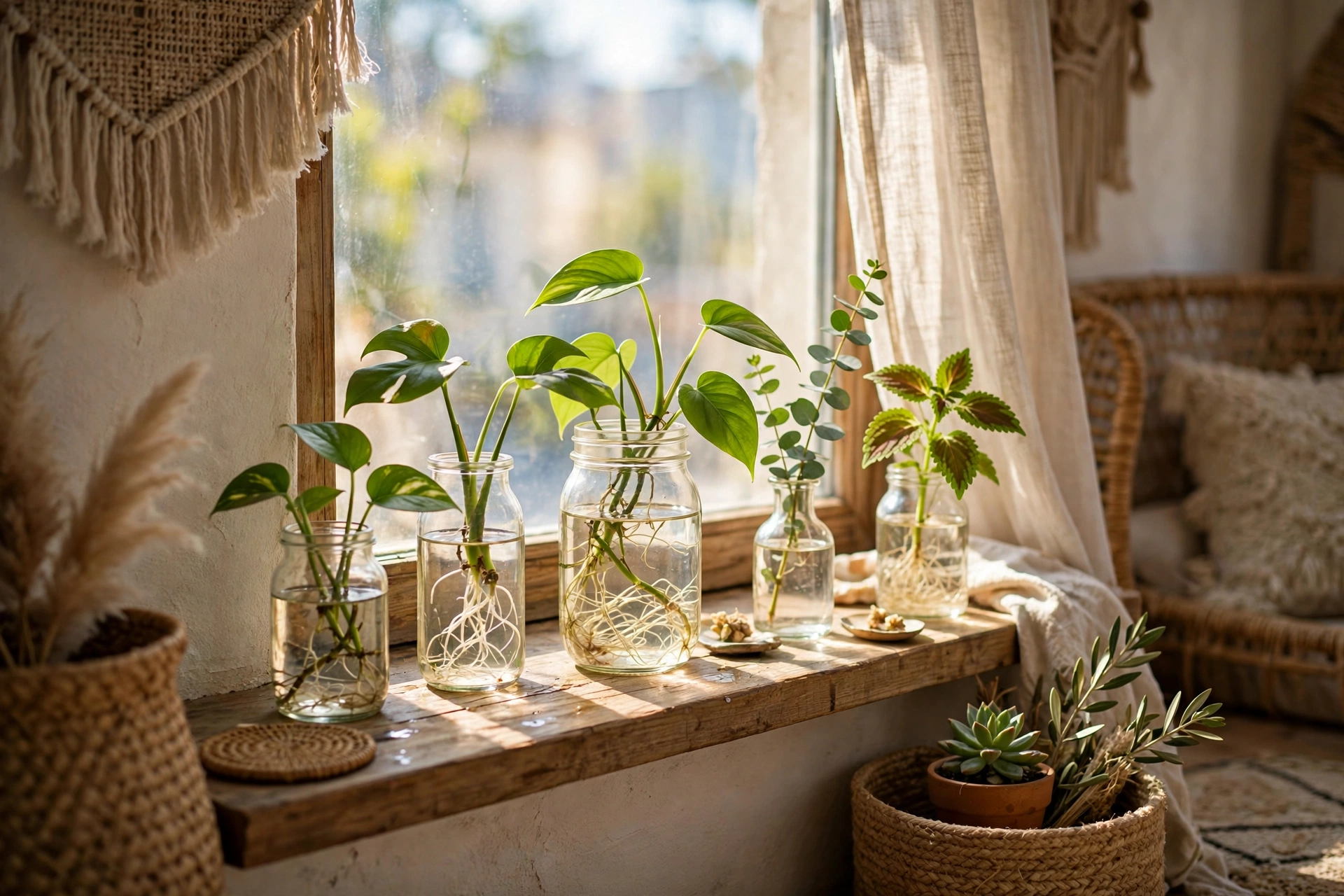
The cheapest way to build an indoor jungle: propagate. Pothos, philodendron, and spider plants root in water in 2–3 weeks — snip, jar, wait, pot. Glass propagation stations ($15–$25) look beautiful on a windowsill while they work, and plant swaps with friends multiply your collection for free. Pro tip: change the propagation water weekly and keep jars out of direct harsh sun — clean water and bright indirect light root cuttings twice as fast as a neglected murky jar.
Global Accents & Handmade Touches
27. Hang a Tapestry as a Headboard
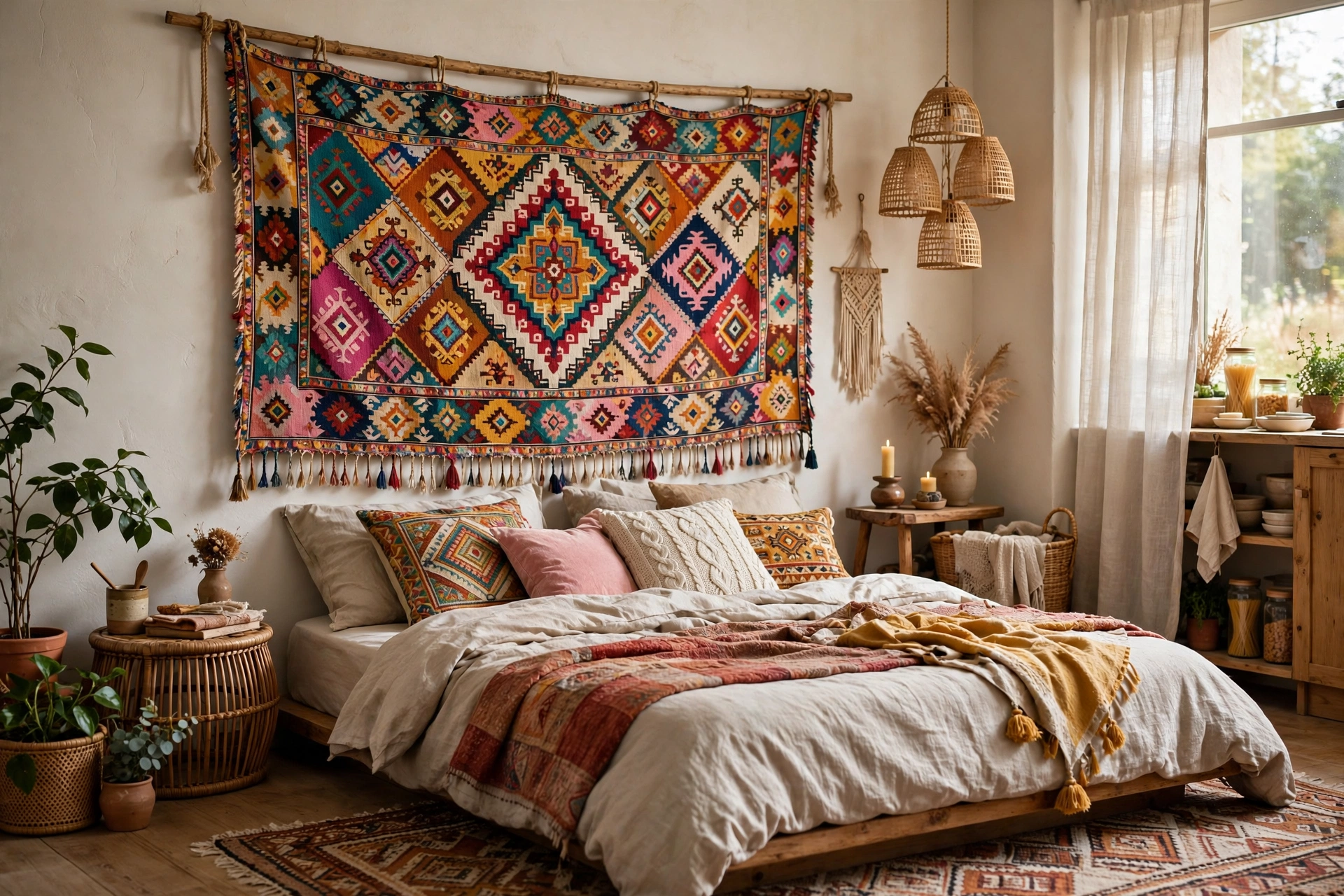
No headboard? No problem — a large tapestry or wall rug ($30–$80) hung behind the bed creates a stunning focal point for a fraction of furniture cost. Choose one wider than the bed for proper scale, and hang it with a curtain rod or wooden dowel so it drapes cleanly. Pro tip: iron or steam the tapestry before hanging — fold creases scream “just unboxed,” but a smooth drape reads as intentional design.
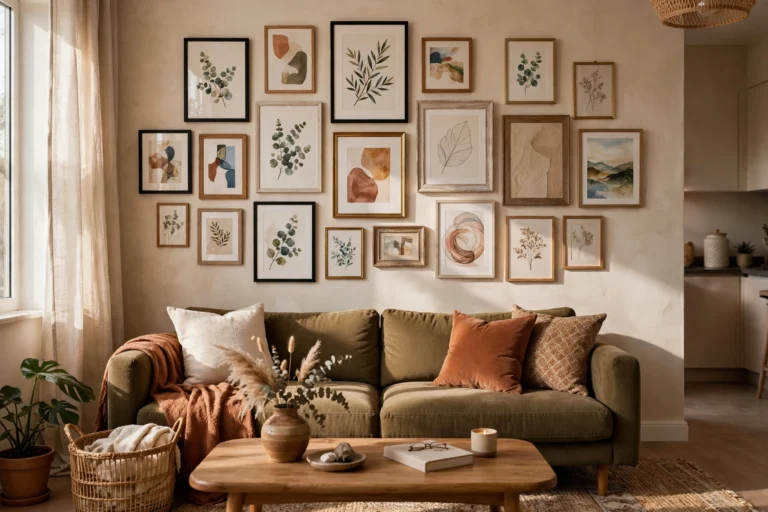
28. Style a Gallery Wall of Global Art
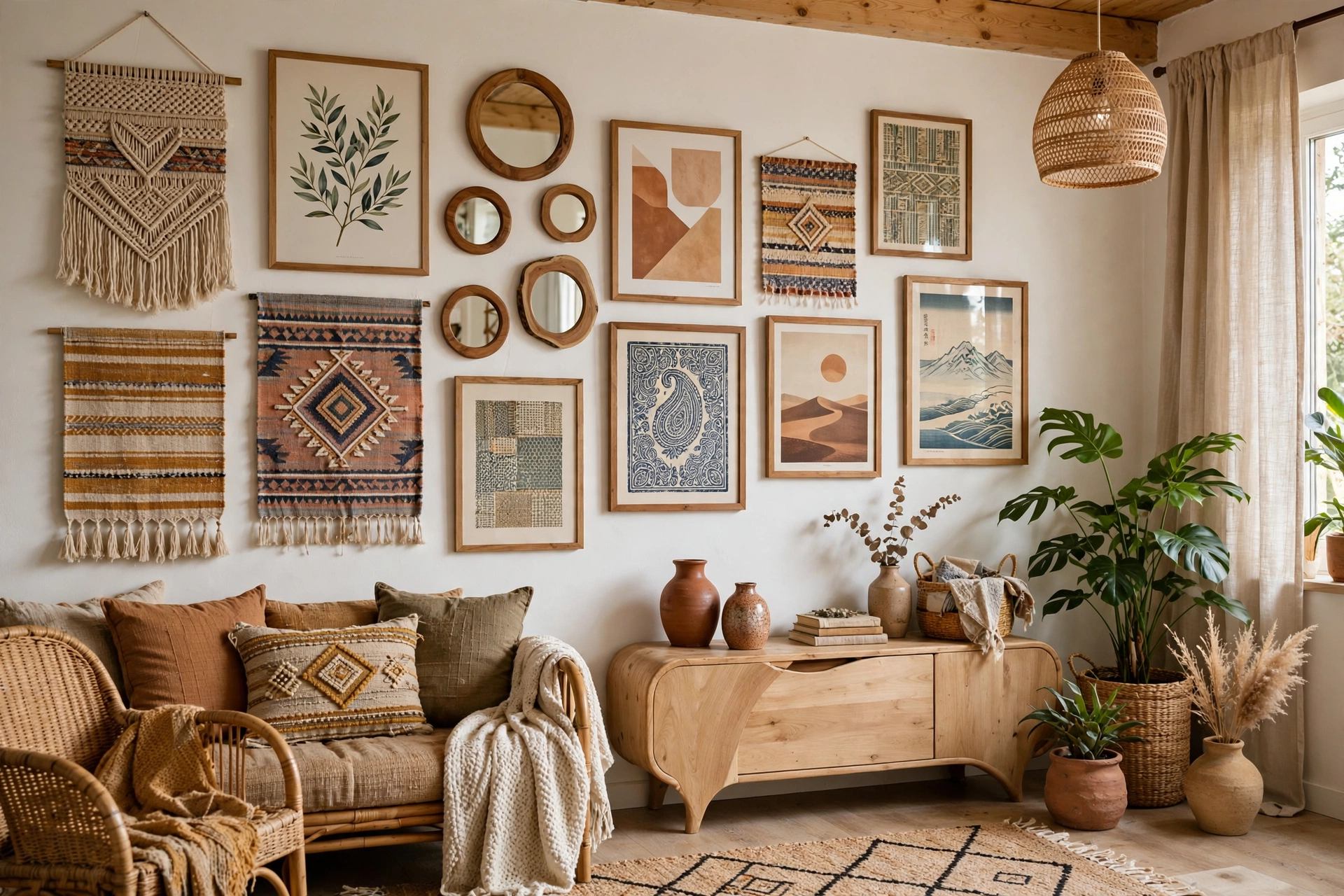
Boho gallery walls mix everything: block prints, travel photos, woven pieces, small mirrors, vintage maps. Unify the chaos with consistent frame colors (all natural wood or all black, $8–$15 per frame) and a planned layout. Our studio apartment wall art ideas have 34 more ways to make small walls sing. Pro tip: include at least one textile or woven piece in the gallery — mixing a soft element among the frames is what makes it boho instead of just eclectic.
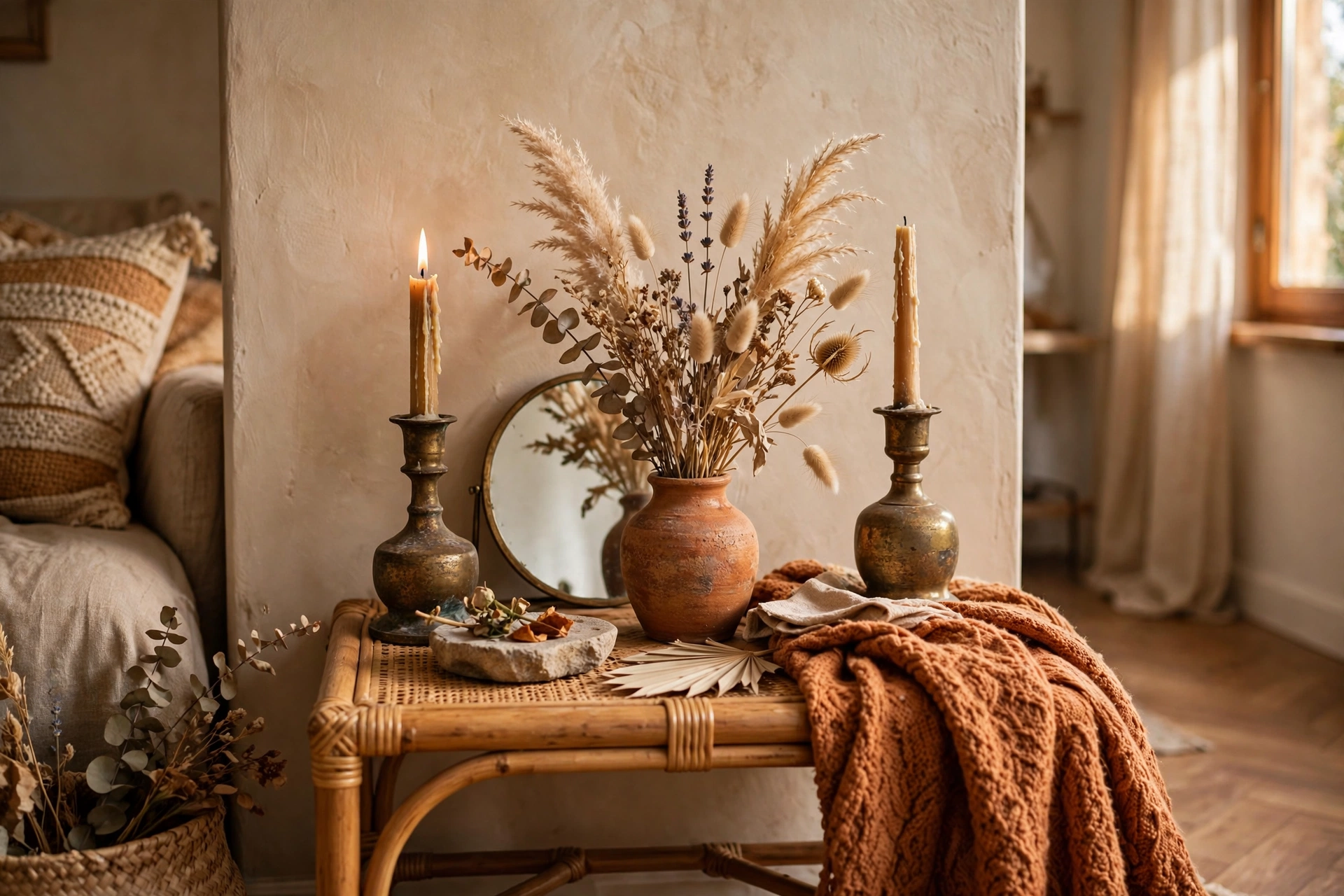
29. Add Brass and Copper Accents
Warm metals are boho jewelry — aged brass candle holders, a copper planter, a hammered tray ($15–$40 each at thrift stores or World Market). They catch light beautifully and add a collected-over-time richness that chrome never will. Keep metals warm-toned and slightly imperfect; polished-to-mirror reads modern, not boho. Pro tip: never polish vintage brass to a shine — the patina is the point, and it’s also what makes a $8 thrift find look like a $80 antique.
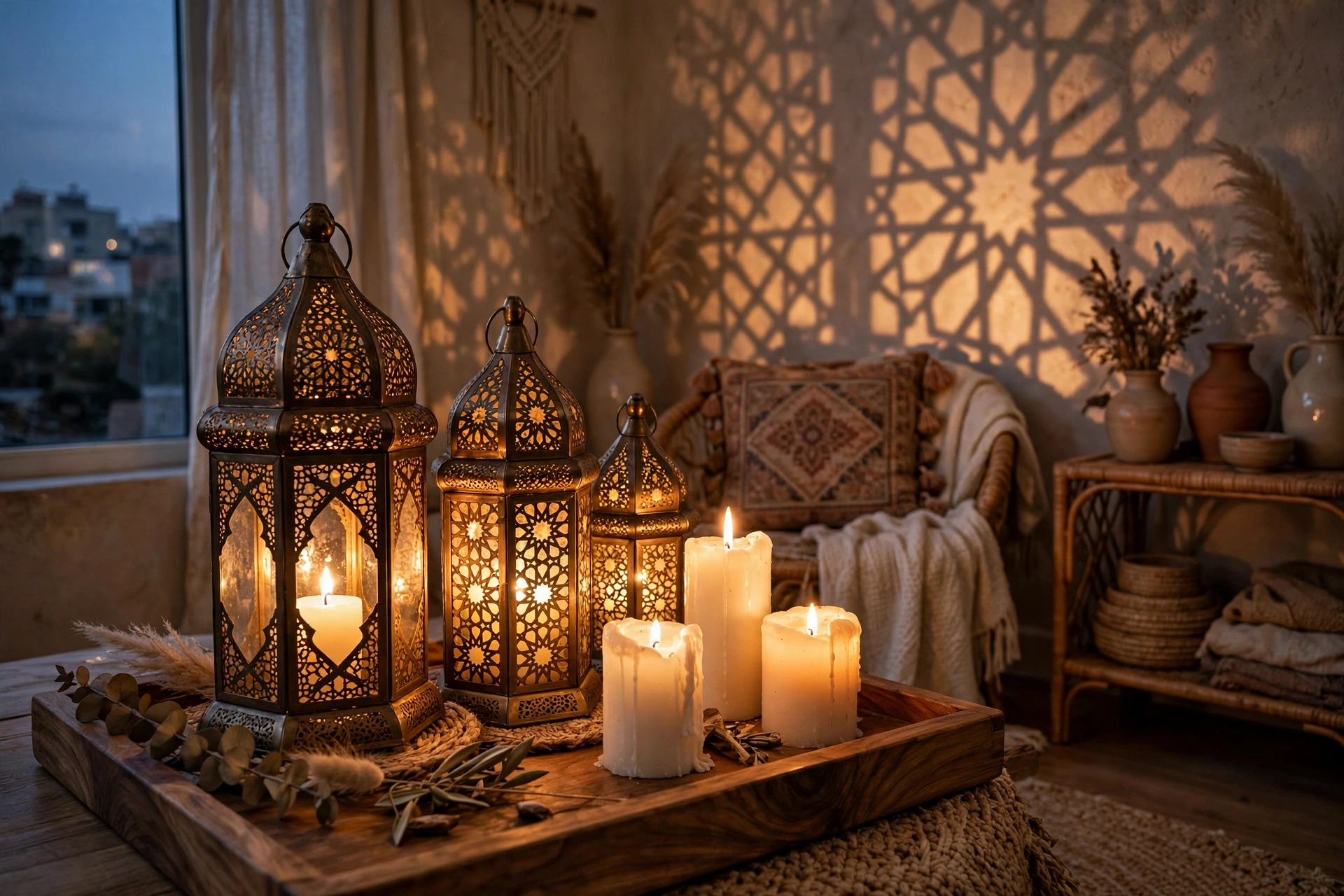
30. Light Clusters of Candles and Lanterns
Boho evenings run on candlelight. Group Moroccan-style metal lanterns ($15–$35 each) and pillar candles in odd numbers on trays — the pierced metal throws incredible patterned light across walls and ceilings. Use LED candles inside lanterns near textiles for safety. Pro tip: stick to unscented candles in clusters and save fragrance for one signature scented candle elsewhere — five competing scents in a studio is a headache, literally.
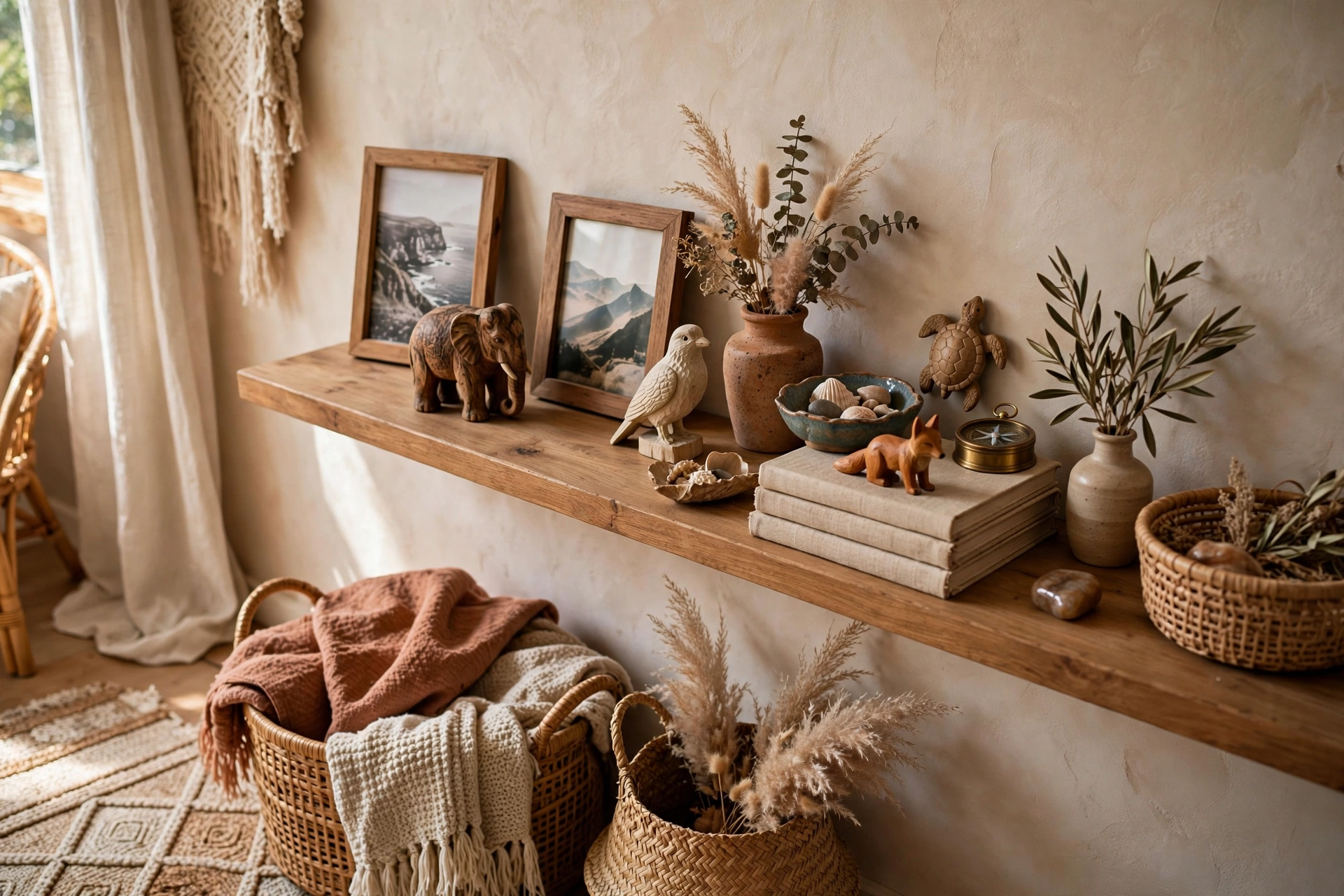
31. Display Collected Travel Souvenirs
Boho is the style of the well-traveled — so display the evidence. Carved boxes, small sculptures, textiles, and framed photos from your travels ($0, already owned) are the most personal decor possible. Give them a dedicated shelf with breathing room rather than scattering them randomly. Pro tip: group souvenirs by place or by story, not by size — a shelf that tells the Morocco trip or the road-trip summer feels like a memoir; a shelf sorted by height feels like a store display.
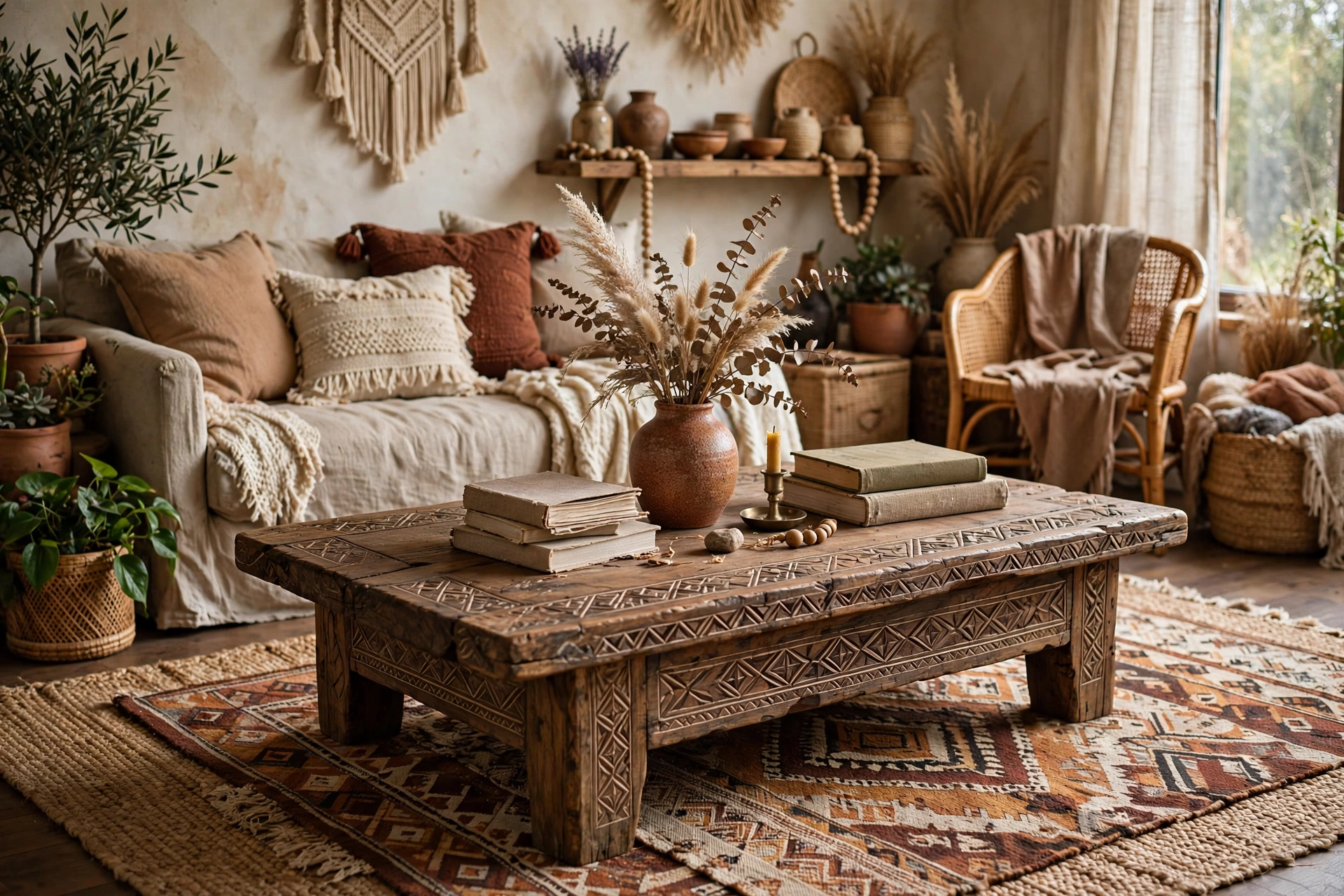
32. Use a Carved Wood Coffee Table
A hand-carved wood coffee table ($80–$220, or $30–$60 thrifted) is boho furniture at its best — each one is unique, the carving adds texture, and solid wood survives years of studio life. In a small space, choose one with a lower shelf for books and baskets to double its storage. Pro tip: feed dry carved wood with furniture oil twice a year — thrifted pieces are often parched, and oiling deepens the color and makes carvings pop like they cost three times more.
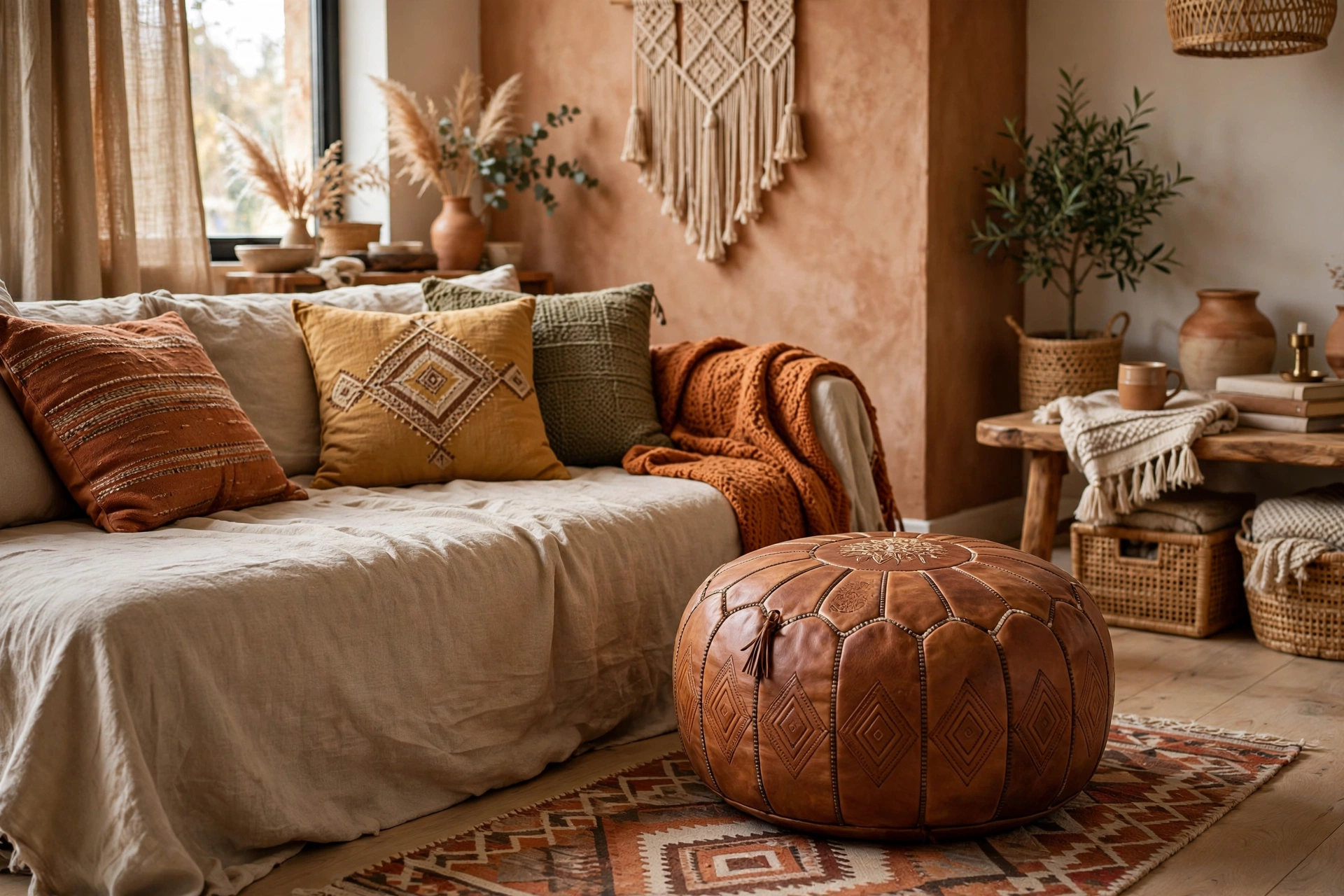
33. Add a Floor Pouf as Extra Seating
Moroccan leather or kilim poufs ($35–$70) are the boho secret weapon — extra seat, footrest, and side table in one, light enough to move anywhere and small enough to tuck beside the sofa. In a studio, seating that doesn’t commit to one spot is worth its weight in gold. Pro tip: stuff a flat pouf firmly — an under-stuffed pouf looks sad and deflates under guests, but a tightly packed one holds its shape and doubles as a stable side table.
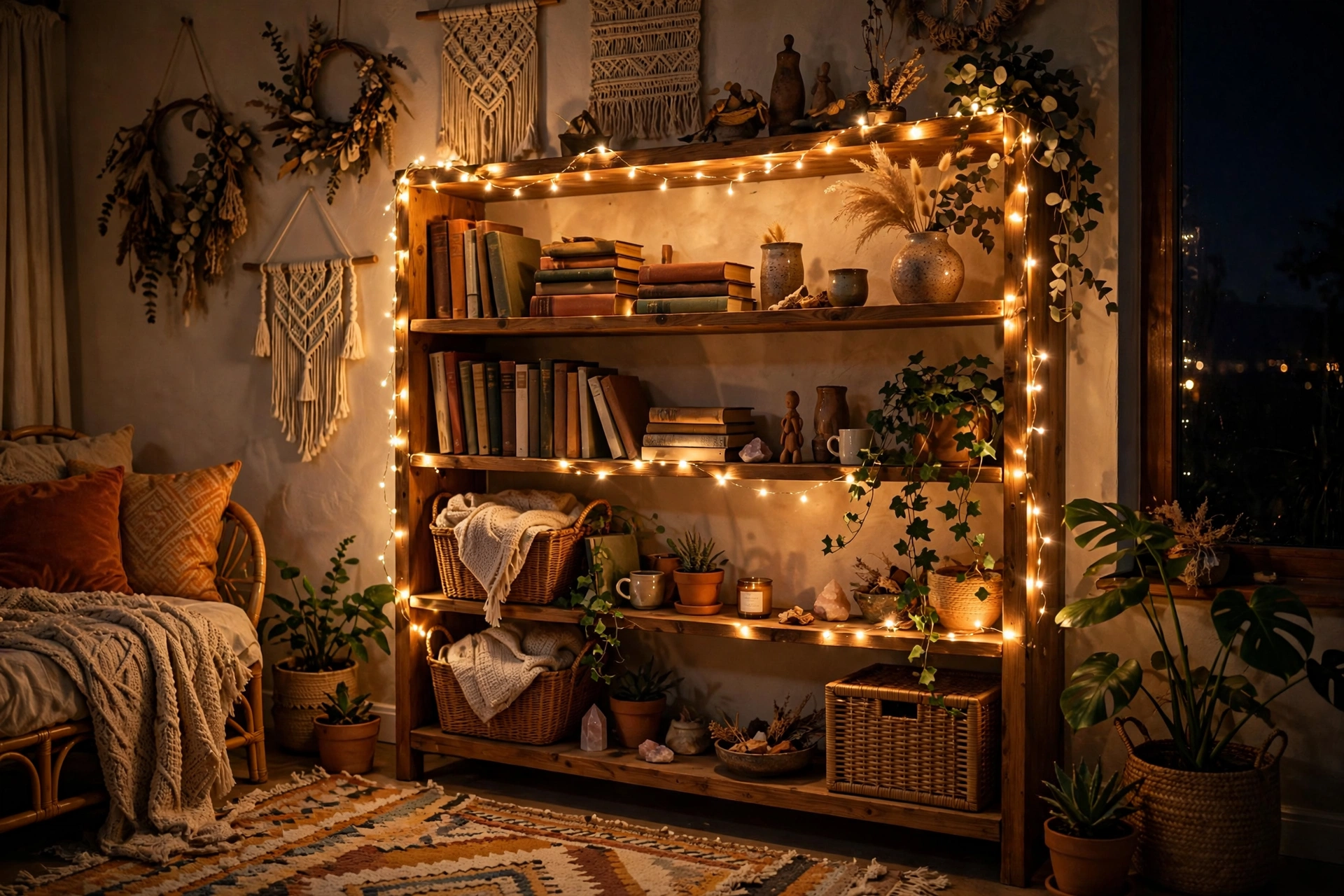
34. Drape Fairy Lights for Evening Glow
Warm-white fairy lights ($8–$15) woven through plants, along shelves, or over the bed turn a boho studio magical after dark — they echo the lantern light and make every textile glow. This layered approach to evening light is the heart of our studio apartment lighting ideas. Pro tip: put fairy lights on a timer plug ($8) set for dusk — coming home to a softly glowing boho cocoon after a long day never gets old.
Small-Space Boho That Actually Works
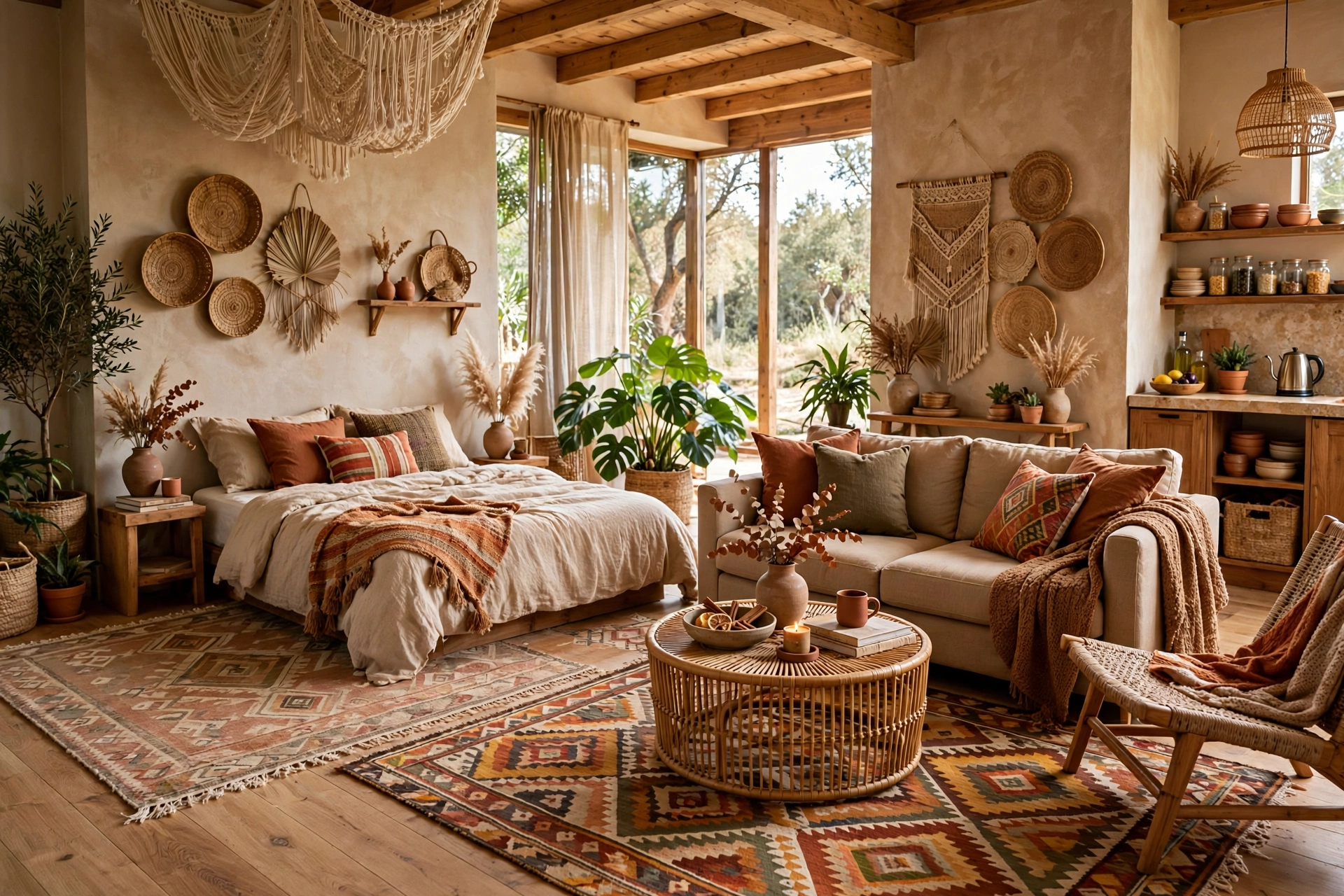
35. Zone With Rugs, Not Walls
In a studio, boho zoning happens underfoot: one rug for the living area, another for the sleeping zone, a runner for the kitchen strip. Different patterns in the same palette keep zones distinct without a single wall or divider. It’s the renter-friendliest layout trick there is — and it costs nothing beyond rugs you’d buy anyway. Pro tip: leave 12–18 inches of bare floor between zone rugs — the breathing room reads as intentional separation, while rugs that touch look like one big accident.
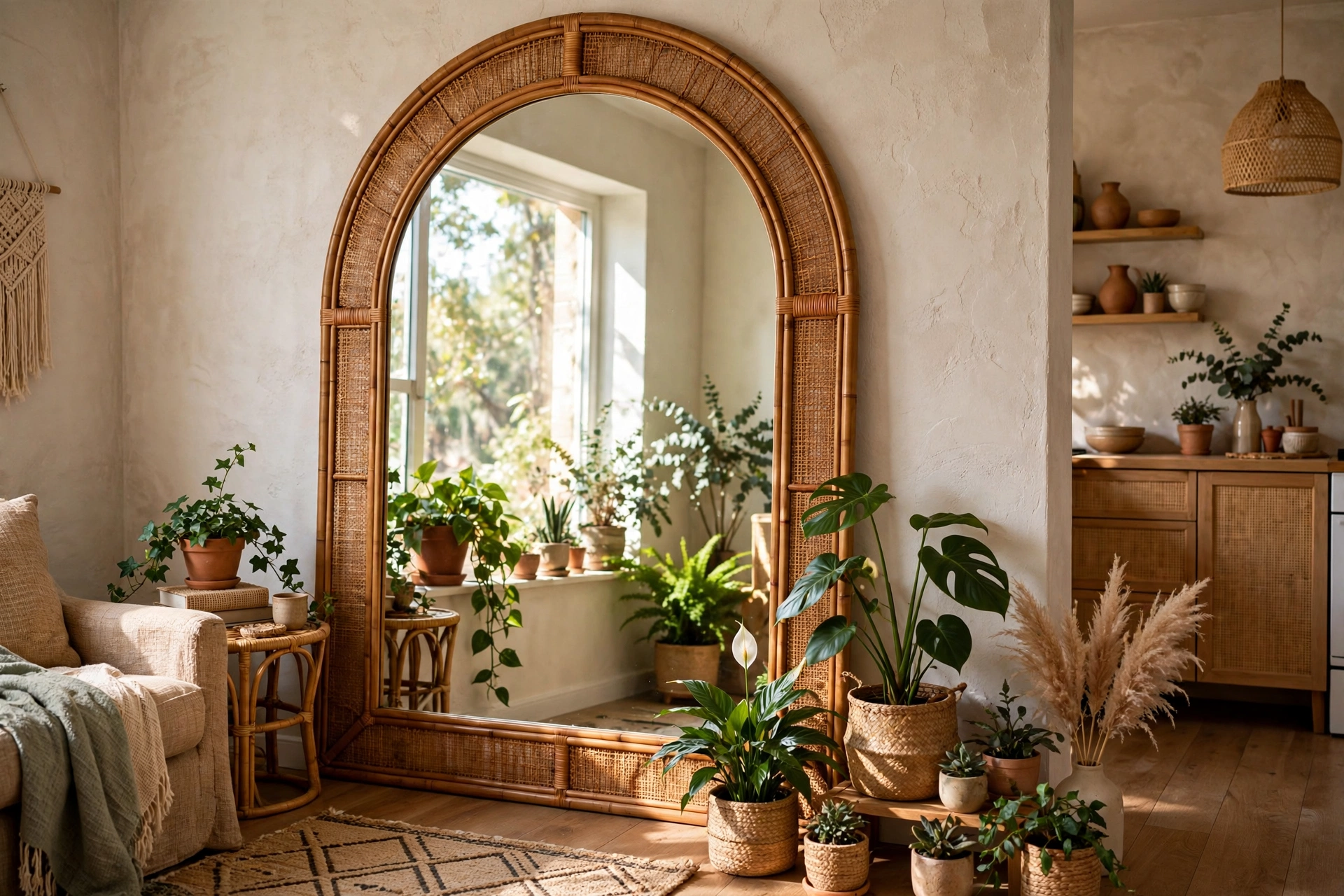
36. Use Mirrors to Double the Light
An arched rattan or bamboo mirror ($60–$140) does triple duty in a boho studio: it bounces light, doubles the visual space, and serves as boho wall decor all at once. Hang it opposite a window for maximum effect, or lean a full-length one against the wall for that effortless look. Pro tip: what the mirror reflects matters as much as the mirror — angle it to reflect plants or the pretty side of the room, never the cluttered desk or the trash corner.
37. Keep Furniture Low and Airy
Low-profile furniture — a low sofa, floor cushions, a low platform bed — keeps sightlines open across a studio, which makes the whole space feel bigger. It also happens to be the classic boho silhouette. When furniture stays below window-sill height, light flows over it instead of getting blocked. Pro tip: if your sofa is unavoidably tall-backed, pull it a few inches off the wall and put a narrow console or plants behind it — the gap creates depth that tricks the eye into reading more space.
38. Choose Vintage Pieces That Store
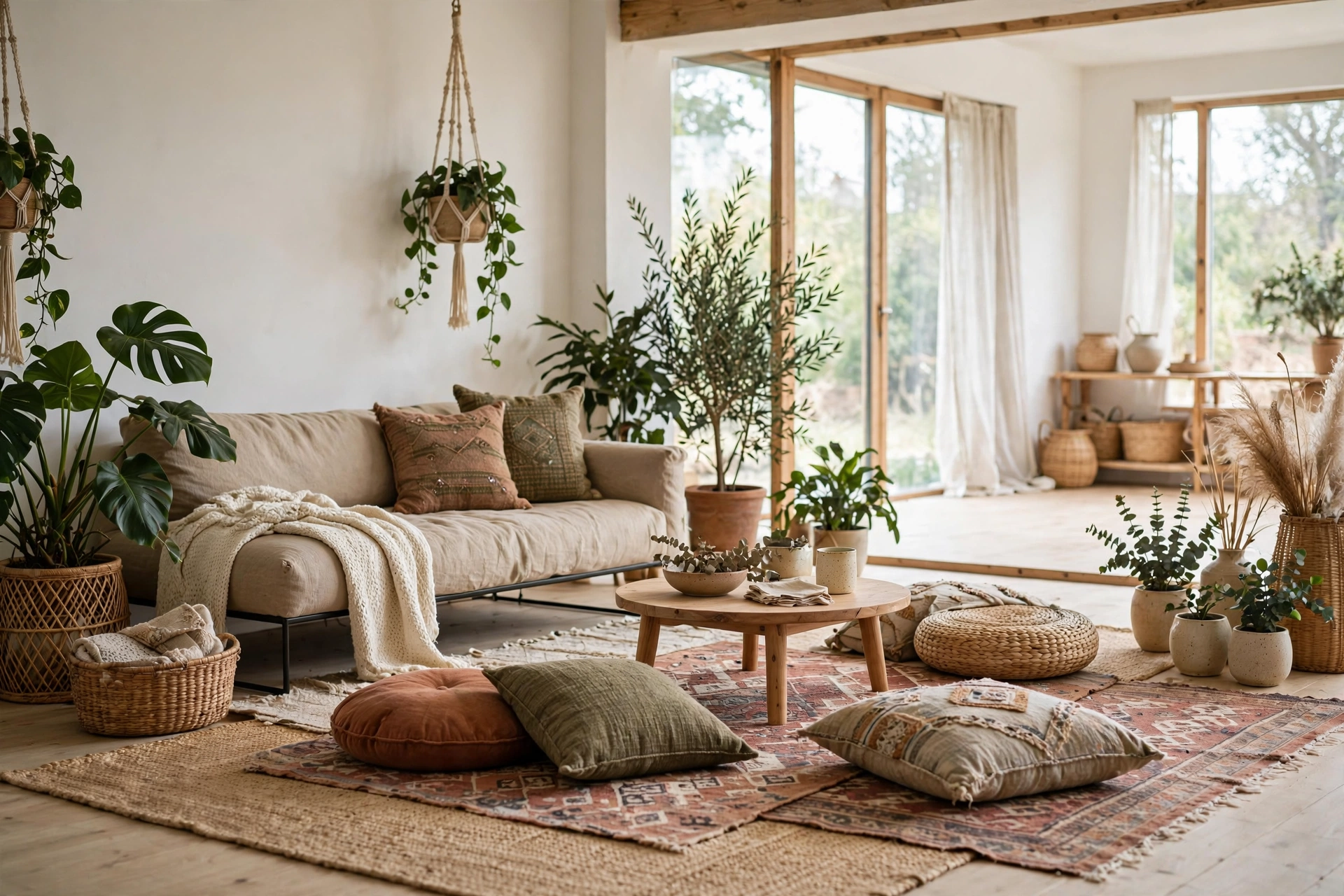
Boho loves vintage — and vintage loves storage. A carved trunk ($40–$90 thrifted) works as a coffee table with a cavernous interior for blankets; an antique cabinet hides the printer and paperwork behind beautiful doors. Every vintage piece should earn its footprint twice in a studio. Pro tip: check the interior before falling for the exterior — a gorgeous trunk that smells like a basement will perfume your whole studio, so sniff first and air it out in the sun before committing.
39. Create a Cozy Reading Corner
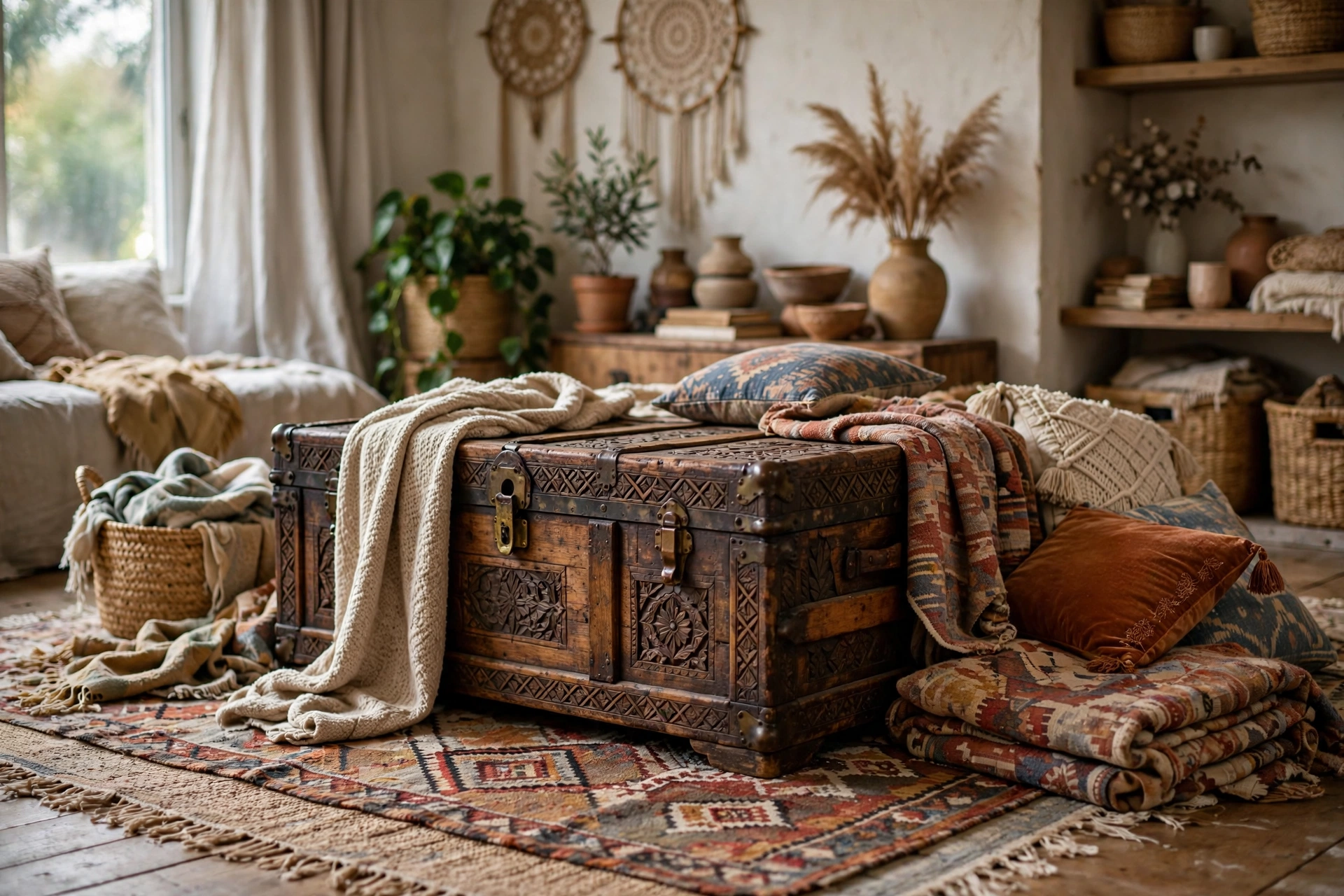
Every boho studio deserves one soulful corner: a rattan chair or pile of floor cushions, a small bookshelf or stack of books, a warm lamp, and a plant. It becomes the room’s emotional center — the spot that makes the whole studio feel like a retreat rather than just an apartment. Pro tip: add a small side table within arm’s reach for tea — a reading corner without a tea spot is just a chair, but with one it becomes a ritual.
40. Let the Entry Set the Tone
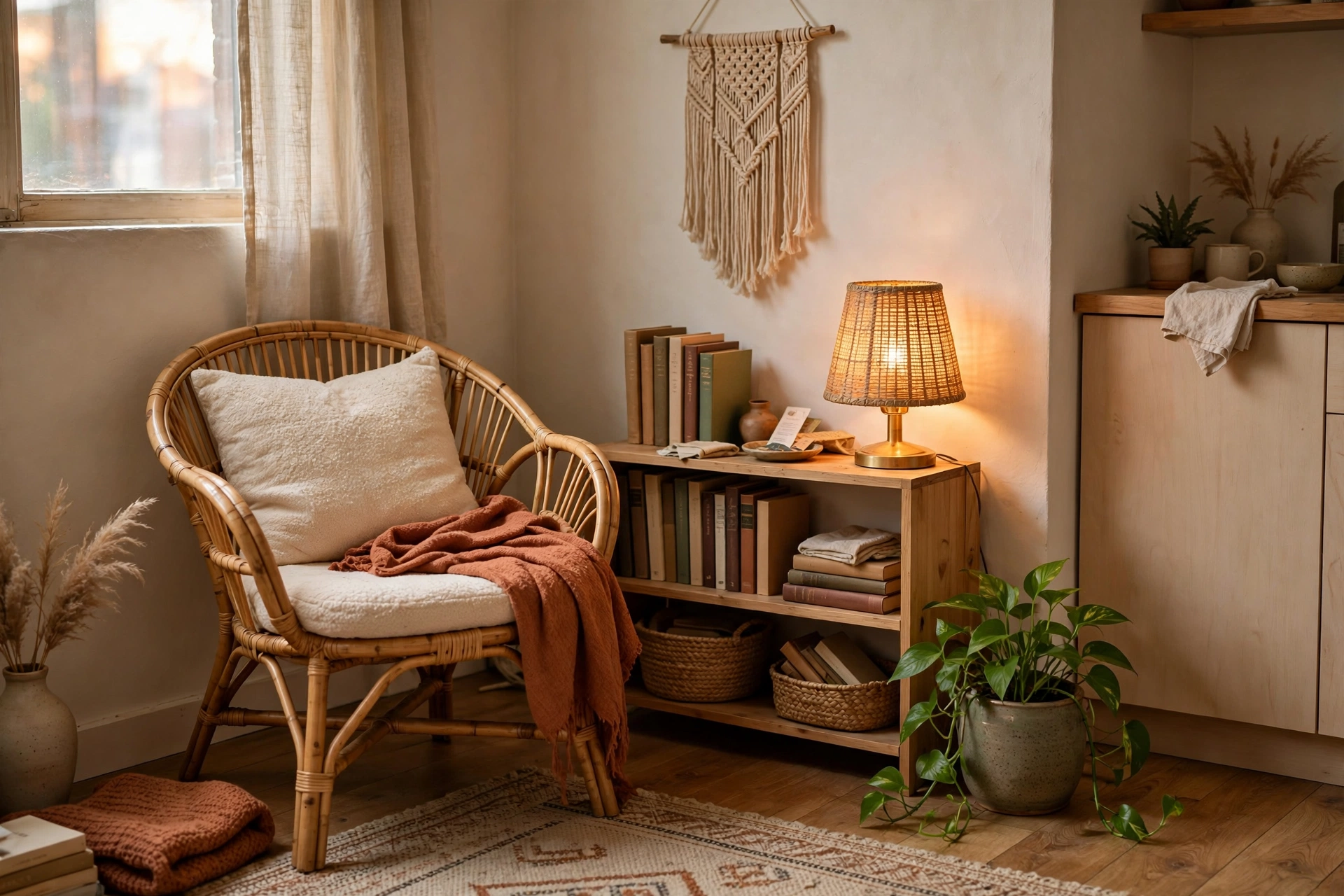
Even a studio has an entry moment — a few feet of wall by the door that sets the tone for everything inside. A small woven bench or stool ($30–$60), wall hooks for bags ($15–$25), a mirror, and one plant tell visitors (and remind you) that this is a considered home, not a crash pad. Pro tip: hang hooks at two heights — high for coats, low for bags and dog leashes — so the entry works for real life instead of just looking pretty in photos.
41. Do a Seasonal Textile Swap
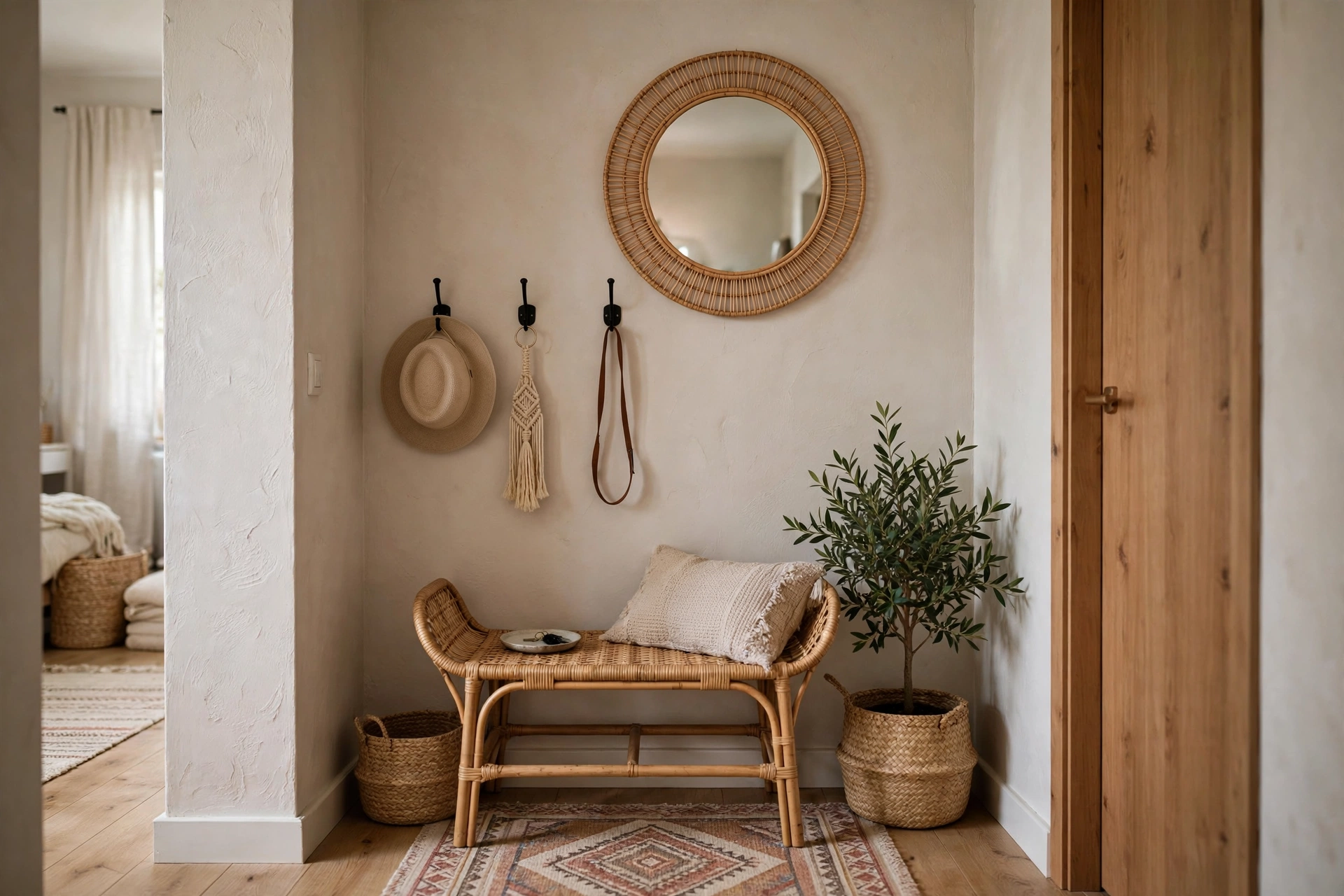
The easiest boho refresh costs nothing: swap textiles with the seasons. Lighter linens and airy cottons for summer, chunky knits and deep rusts for fall — all stored in one basket or trunk between rotations. The room feels brand new twice a year, and your textiles last longer for resting half the time. Pro tip: photograph each seasonal setup before packing it away — next year you’ll recreate the look in minutes instead of reinventing it from memory.
Frequently Asked Questions
What is boho style in a studio apartment?
Boho (bohemian) style mixes global patterns, natural materials, layered textiles, and collected pieces instead of matching sets. In a studio apartment it means earthy colors, rattan and wood furniture, lots of plants, and textiles everywhere — a look that feels personal and soulful rather than showroom-perfect, and one that’s very forgiving of thrifted and handmade pieces.
How do I decorate boho on a budget?
Thrift stores are your best friend: vintage rattan, carved wood, and brass are often $10–$40 secondhand. Layer affordable textiles (kantha quilts, thrifted throws), propagate plants for free greenery, and DIY macramé or wall hangings. Boho rewards the hunt — the style’s “collected over time” look is literally cheaper than buying everything new at once.
How do I keep boho decor from looking cluttered in a small space?
Edit ruthlessly: every surface gets 3–5 objects max, with breathing room between them. Use closed storage (baskets, trunks, cabinets) to hide the overflow, keep furniture low and airy so sightlines stay open, and stick to one warm color family so the variety of patterns reads as harmony rather than chaos. The photo test — snapping a picture of each shelf — reveals clutter your eyes miss.
What colors define boho style?
Warm earth tones: terracotta, ochre, clay, warm white, sage, and sunbaked browns, with jewel-tone accents (emerald, turquoise, deep rust) for punch. The key is warm undertones throughout — cool grays fight the boho glow. Start with warm neutrals on big pieces and layer the richer colors through textiles and art you can change.
Can renters do boho style without losing their deposit?
Absolutely — boho is one of the most renter-friendly styles because its biggest impacts come from freestanding pieces: layered rugs, tapestries hung from rods, plants, textiles, and furniture. Use adhesive hooks for wall baskets and art, tension rods for curtains, and peel-and-stick wallpaper for an accent wall. Nothing here requires a drill or a paintbrush if you don’t want one.
What’s the difference between boho and eclectic style?
They overlap, but boho has a specific soul: natural materials (rattan, jute, wood, clay), global and handmade influences, earthy warmth, and abundant plants and textiles. Eclectic is broader — any confident mix of styles and eras. Think of boho as eclectic with a passport and a plant obsession: every piece should feel touched by nature or by a human hand.
Final Thoughts
A boho studio apartment isn’t decorated — it’s collected. Every textile, plant, thrifted chair, and handmade bowl adds another sentence to the story of who you are and where you’ve been. That’s why the style fits small spaces so beautifully: in one room, every piece is visible, and every piece gets to speak.
Start with the foundations — the earthy palette, the layered rugs, one great plant — then let the rest arrive over time. The hunt is half the joy: the flea-market rattan chair, the ceramic bowl from a craft fair, the cutting a friend pressed into your hand. Before long, your studio won’t just look boho. It will feel like the freest, most personal room you’ve ever lived in — because you built it one beloved thing at a time.