30 Comfortable Studio Apartment Ideas for Seniors
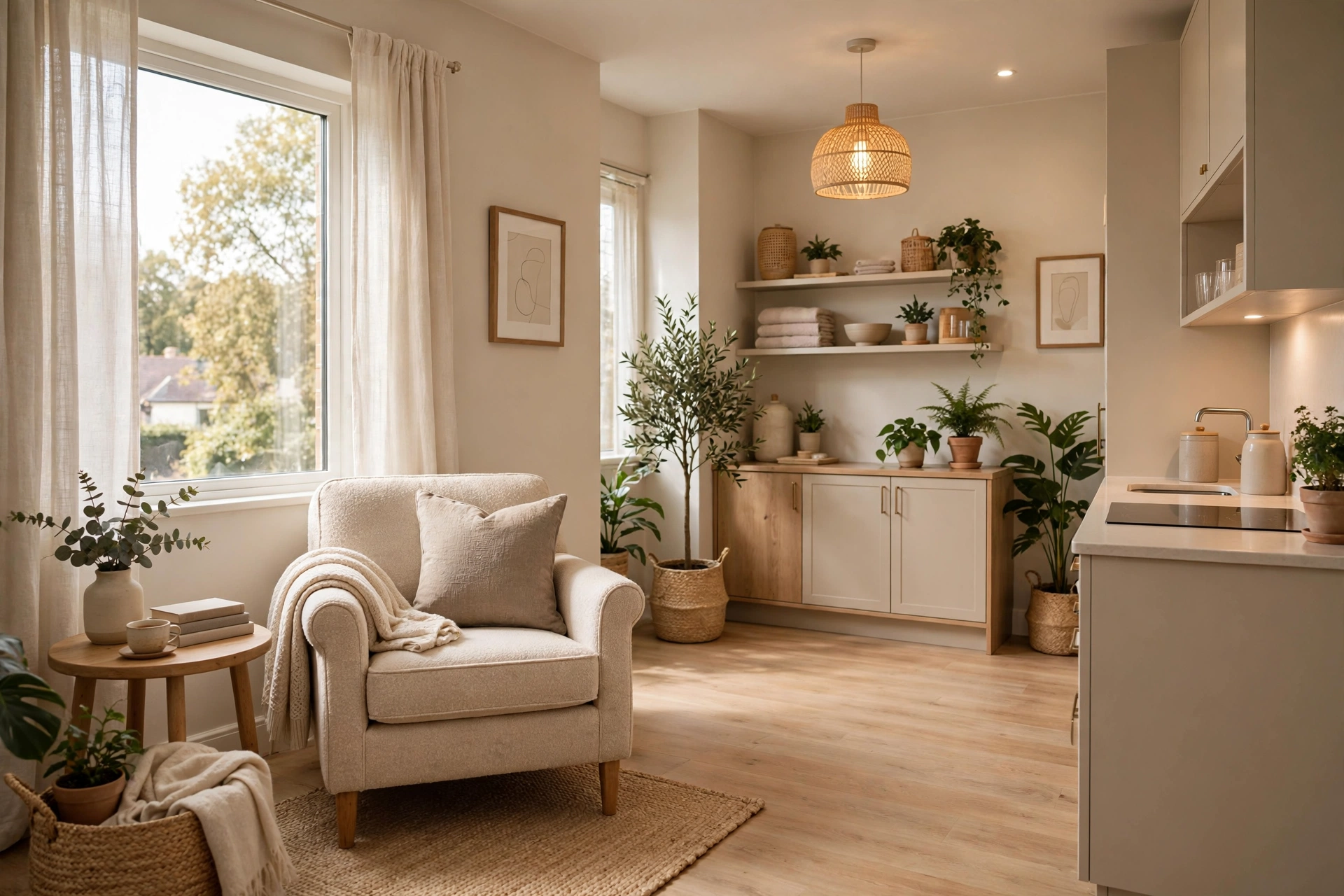
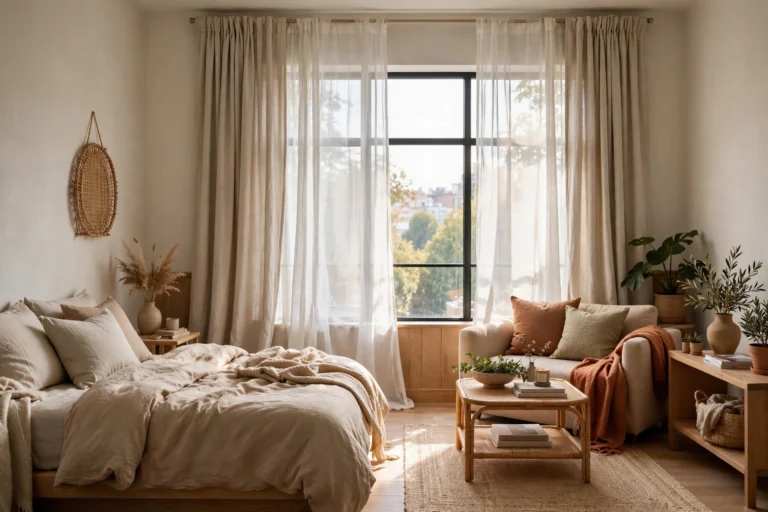
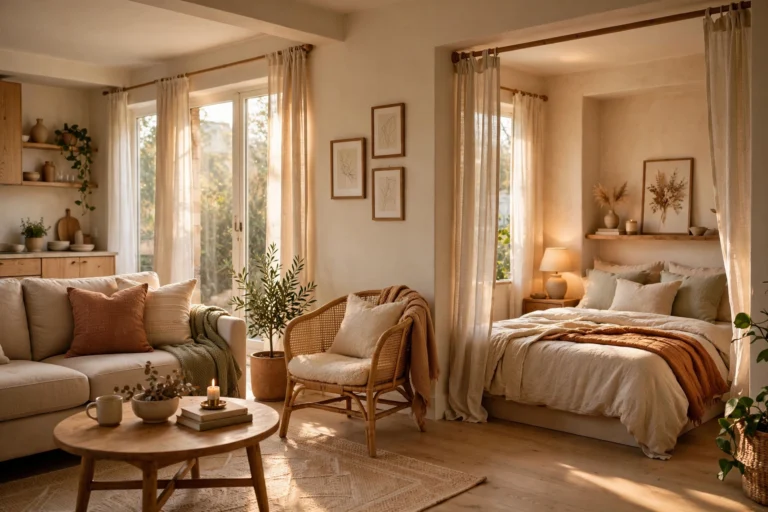
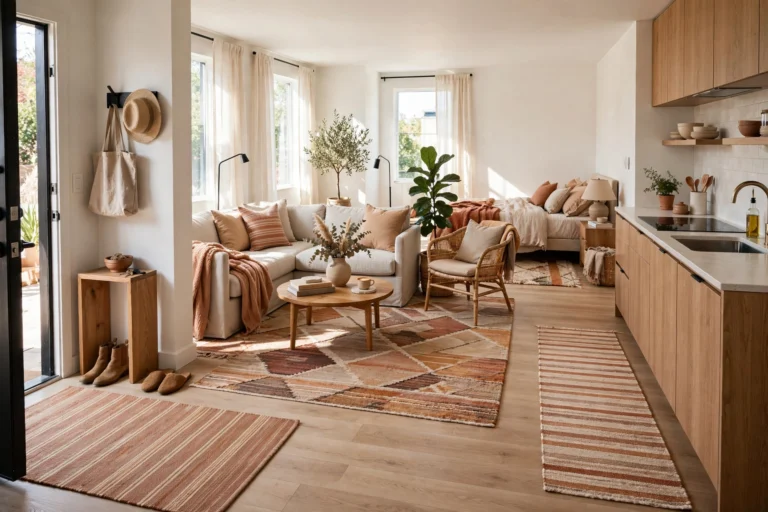
There’s a quiet advantage to a studio apartment that only becomes clear with age: everything you need is within a few steps, on a single level, with no stairs to climb and no sprawling rooms to maintain. For seniors choosing to age in place — or simply choosing a simpler, cozier way of living — a well-designed studio can be the most comfortable home of all. The key is designing with intention: clear pathways, supportive seating, generous lighting, and finishes that forgive.
This guide rounds up 30 comfortable studio apartment ideas for seniors that put safety, comfort, and ease first: accessible layouts with clear walkways, seating that’s easy to get in and out of, lighting that protects aging eyes, low-maintenance materials, personal touches that make it truly home, and smart setups for staying connected and independent. Every idea includes realistic prices and a pro tip, so you can start wherever it matters most.
Safe, Accessible Layouts
1. Keep Pathways Wide and Clear
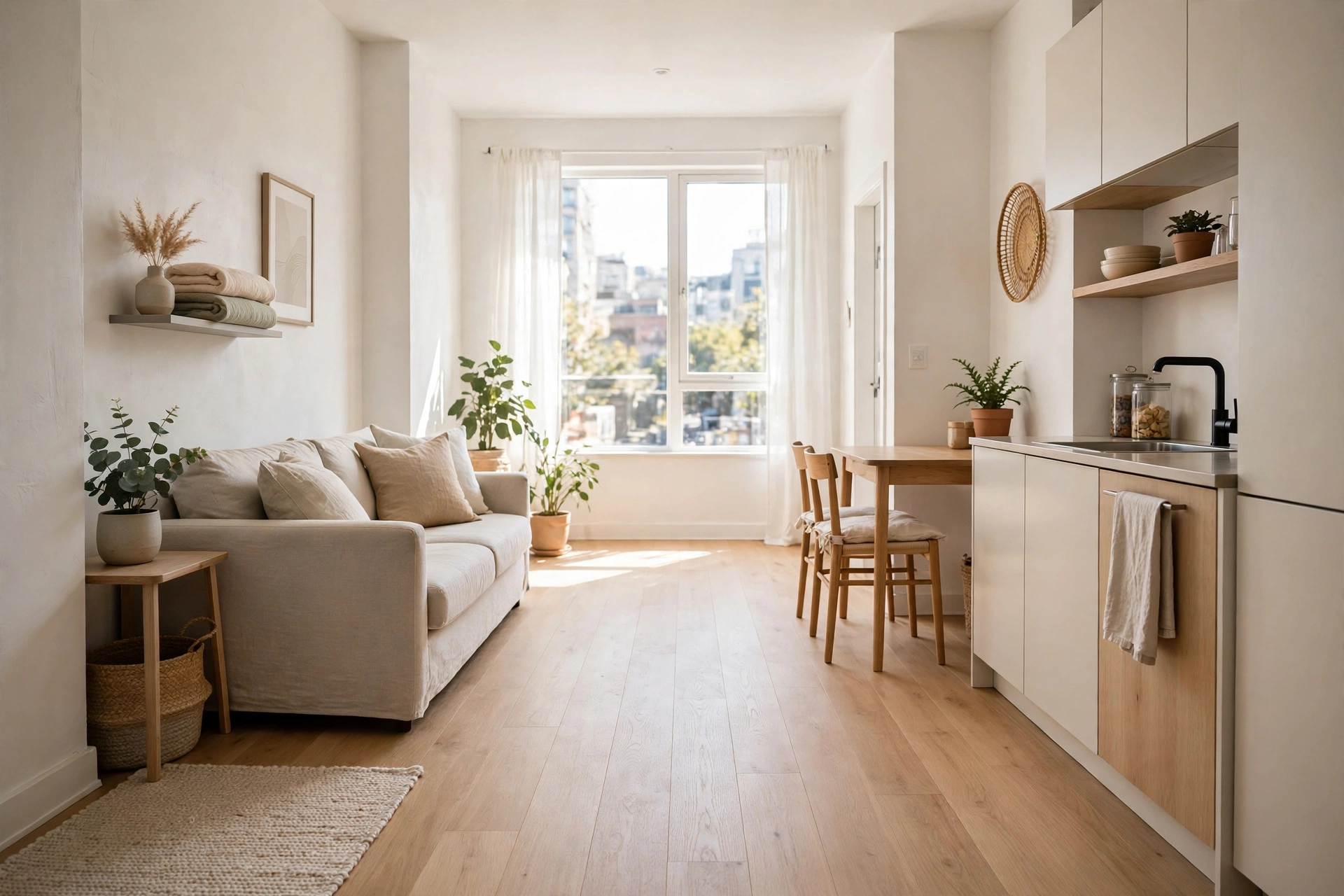
Falls are the number-one safety concern at home, and cluttered walkways are the top culprit. In a studio, keep every main pathway at least 32–36 inches wide — from bed to bathroom, from chair to kitchen — and commit to nothing on the floor that doesn’t belong there: no trailing cords, no low baskets, no curled rug corners. Rearranging furniture for clear sightlines costs nothing and does more for safety than any gadget. This is the same zoning logic behind these studio apartment layout ideas, applied with safety first. Pro tip: walk every pathway at night with the lights low — if you can’t navigate it half-asleep, it needs widening or better lighting.
2. Install Grab Bars in the Bathroom
The bathroom is where most home falls happen, and grab bars are the single most effective prevention. Install sturdy bars beside the toilet and inside the shower or tub — choose models rated for at least 250–300 pounds, mounted into studs (not just drywall). Modern designs in brushed nickel or matte black ($25–$60 each) look like intentional fixtures, not hospital equipment. A handyman can install a set in under an hour. Pro tip: place a vertical bar at the shower entrance for stepping in and a horizontal bar along the back wall for stability while washing — the two-bar setup covers the riskiest movements.
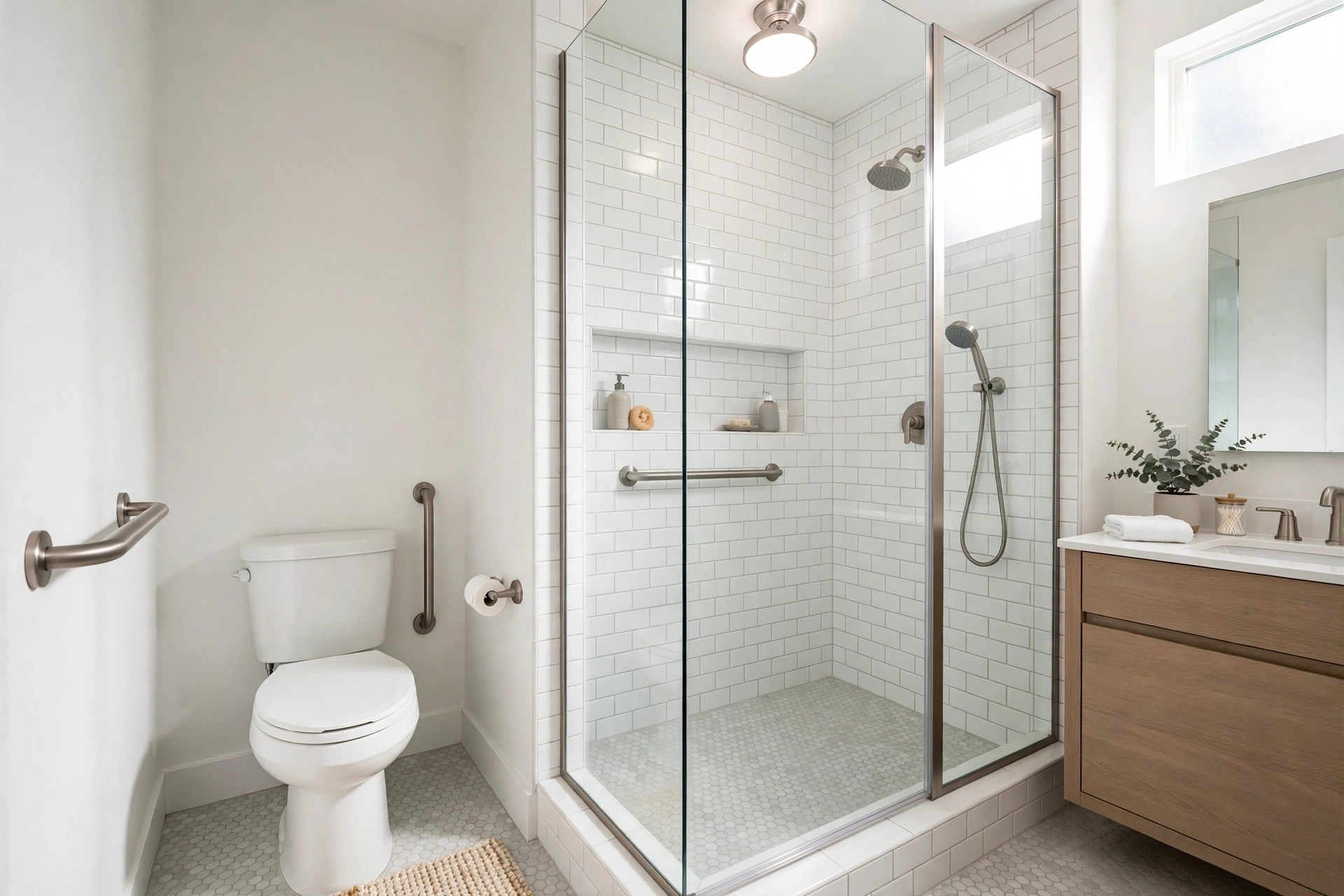
3. Choose Non-Slip Rugs and Mats
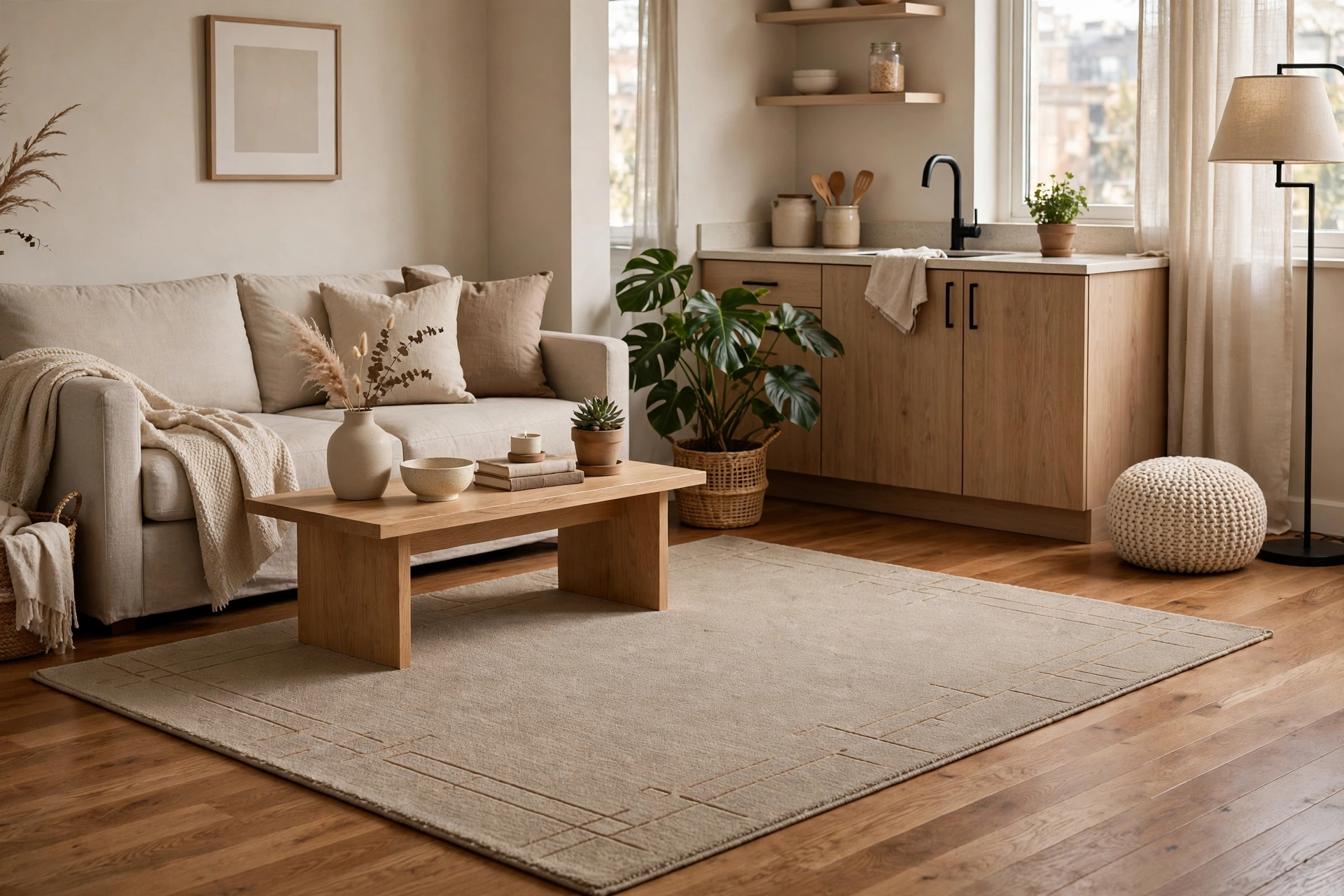
Rugs add warmth and define zones, but a sliding rug is a fall waiting to happen. Choose low-pile rugs with rubber or latex backing — or add a quality non-slip rug pad underneath ($20–$40 for a 5×7) — and make sure every edge lies flat. In the bathroom and kitchen, use washable non-slip mats instead of decorative rugs. Our studio apartment rug ideas show how to zone with rugs safely. Pro tip: if a rug corner curls, it’s done — replace it. Double-sided rug tape ($8–$12 a roll) is a good short-term fix but never a permanent solution for a warped rug.
4. Swap Knobs for Lever Handles
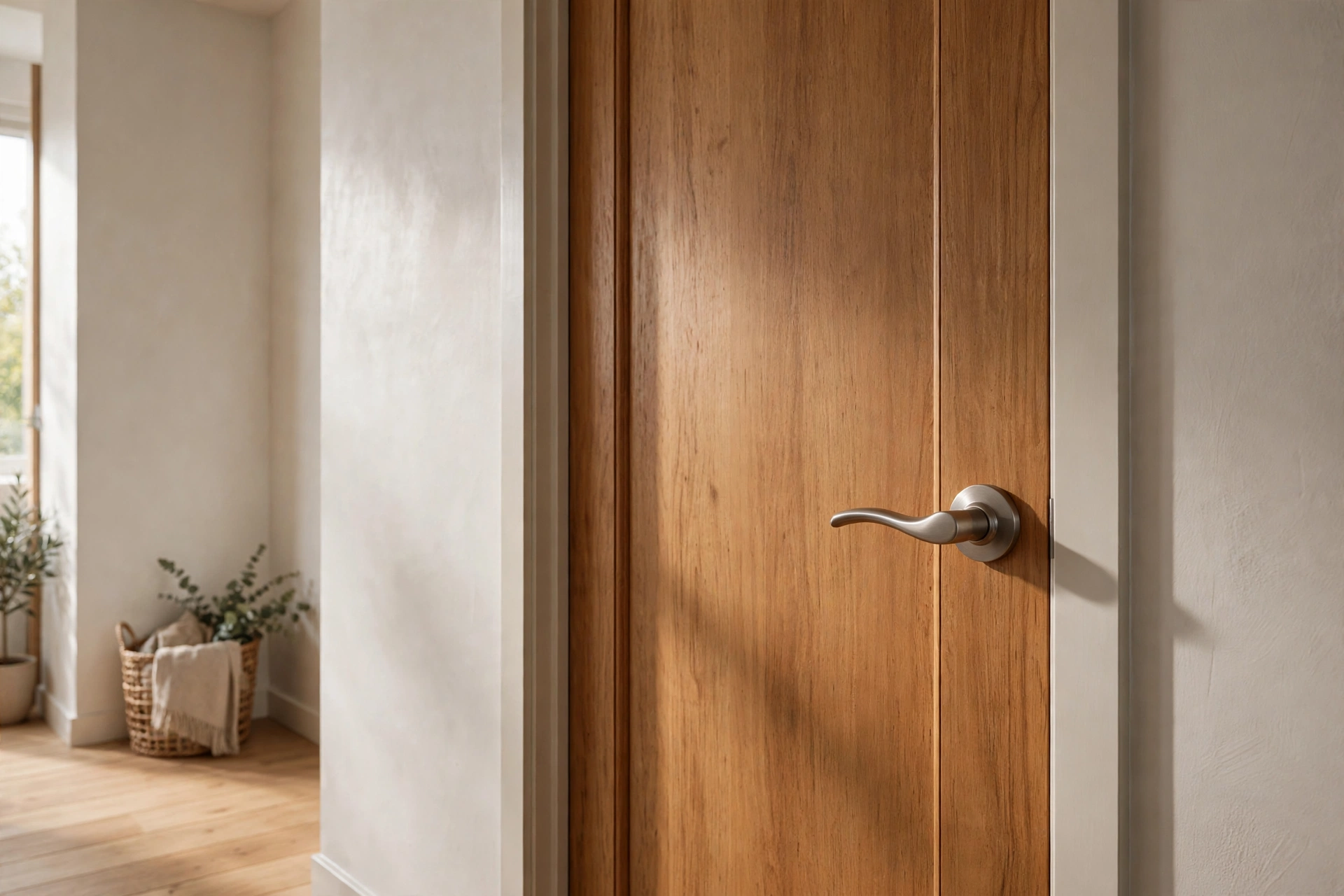
Round doorknobs demand grip strength and wrist twisting that gets harder with arthritis. Lever-style handles ($15–$35 each) open with a push of the hand, elbow, or even a hip — a small change that makes every doorway easier. The same swap works for faucets: single-lever or touchless faucets ($60–$150) beat twist knobs for stiff hands. Most interior lever sets install with just a screwdriver in about 15 minutes. Pro tip: start with the bathroom and bedroom doors — the two rooms where privacy and urgency matter most — then work outward.
5. Embrace True Single-Level Living
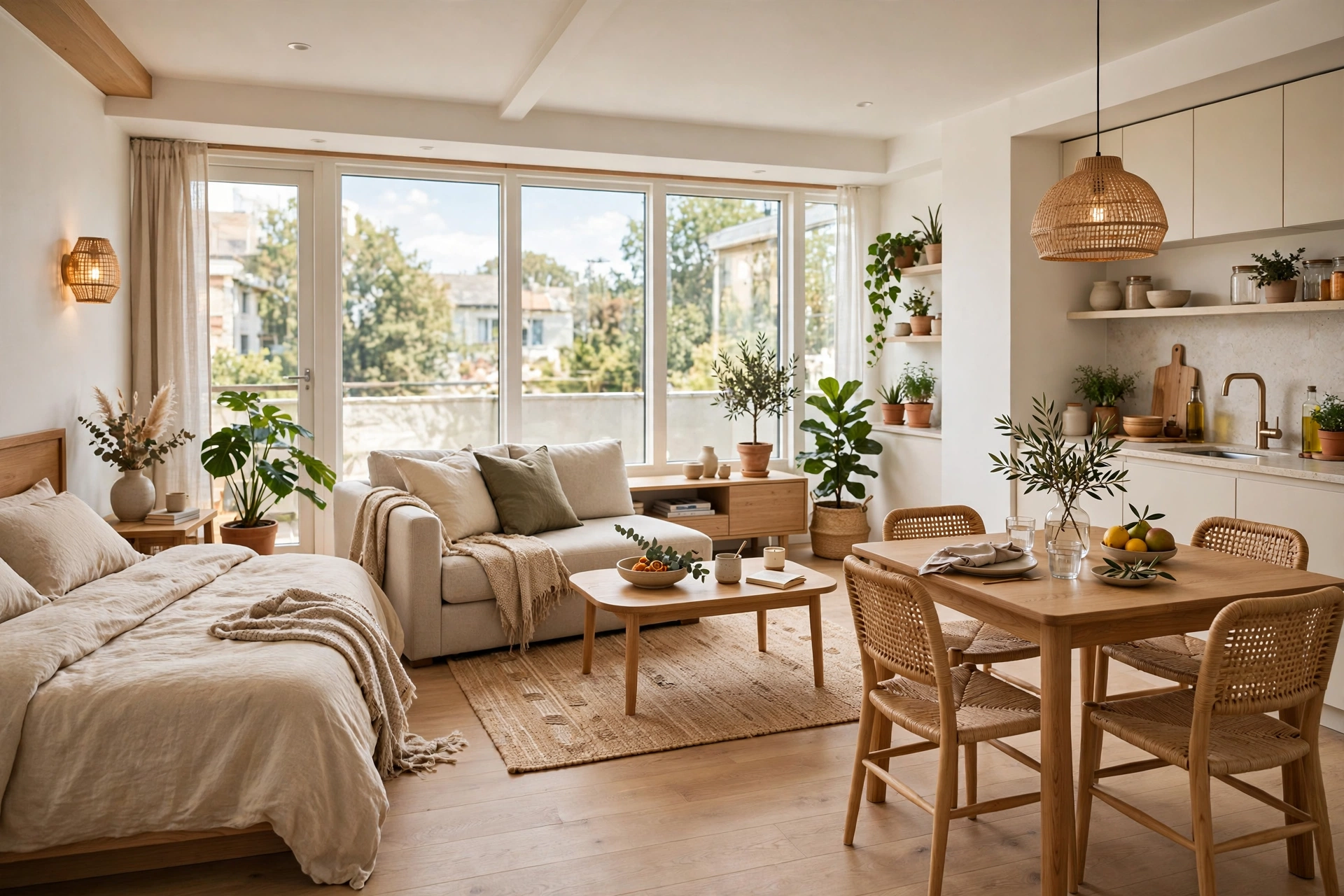
A studio’s greatest gift for seniors is that everything happens on one level — no stairs, ever. Lean into it: arrange the apartment so daily life flows in a loop (bed → bathroom → kitchen → chair) without backtracking or tight turns. Keep the most-used items in each zone so there’s no reason to cross the apartment for basics. If you’re choosing between apartments, a ground-floor or elevator-building studio removes the last barrier. Pro tip: time your morning routine and notice every unnecessary trip across the room — each one is a layout problem asking to be solved.
Comfortable Seating & Rest
6. Choose Chairs at “Easy-Up” Height
The hardest chairs to rise from are low, deep, and soft — exactly what most lounge chairs are. Look for seating with a firm seat height of 18–20 inches (about the height of a dining chair), which lets feet plant flat and knees stay near 90 degrees for an easy stand. Seat-lift cushions ($40–$80) can raise a beloved chair that’s slightly too low without replacing it. Pro tip: test the “no-hands” rule when shopping — if you can’t stand up without pushing hard on the armrests, the chair is too low or too soft for daily use.
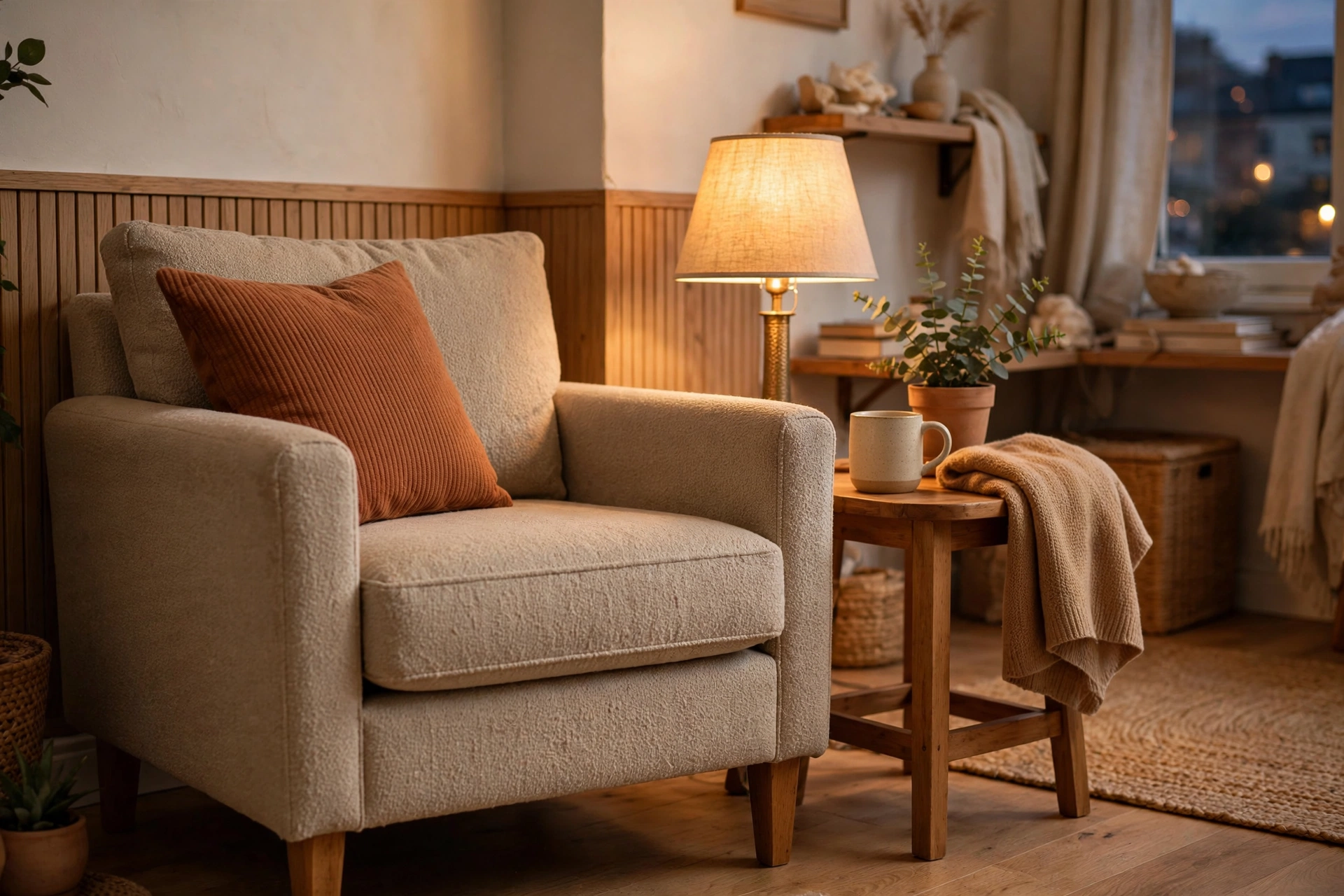
7. Invest in One Truly Supportive Armchair
Every senior’s studio deserves one great chair — the reading chair, the nap chair, the company chair. Choose one with solid armrests (for pushing up), good lumbar support, and firm-but-cushioned seating; wingback and recliner styles in the $250–$600 range from brands like La-Z-Boy or Article last for years. Place it where the light is best and the view is pleasantest. Pro tip: a small lumbar pillow ($20–$35) transforms even a decent chair into a great one — lower-back support is the difference between a chair you sit in and a chair you live in.
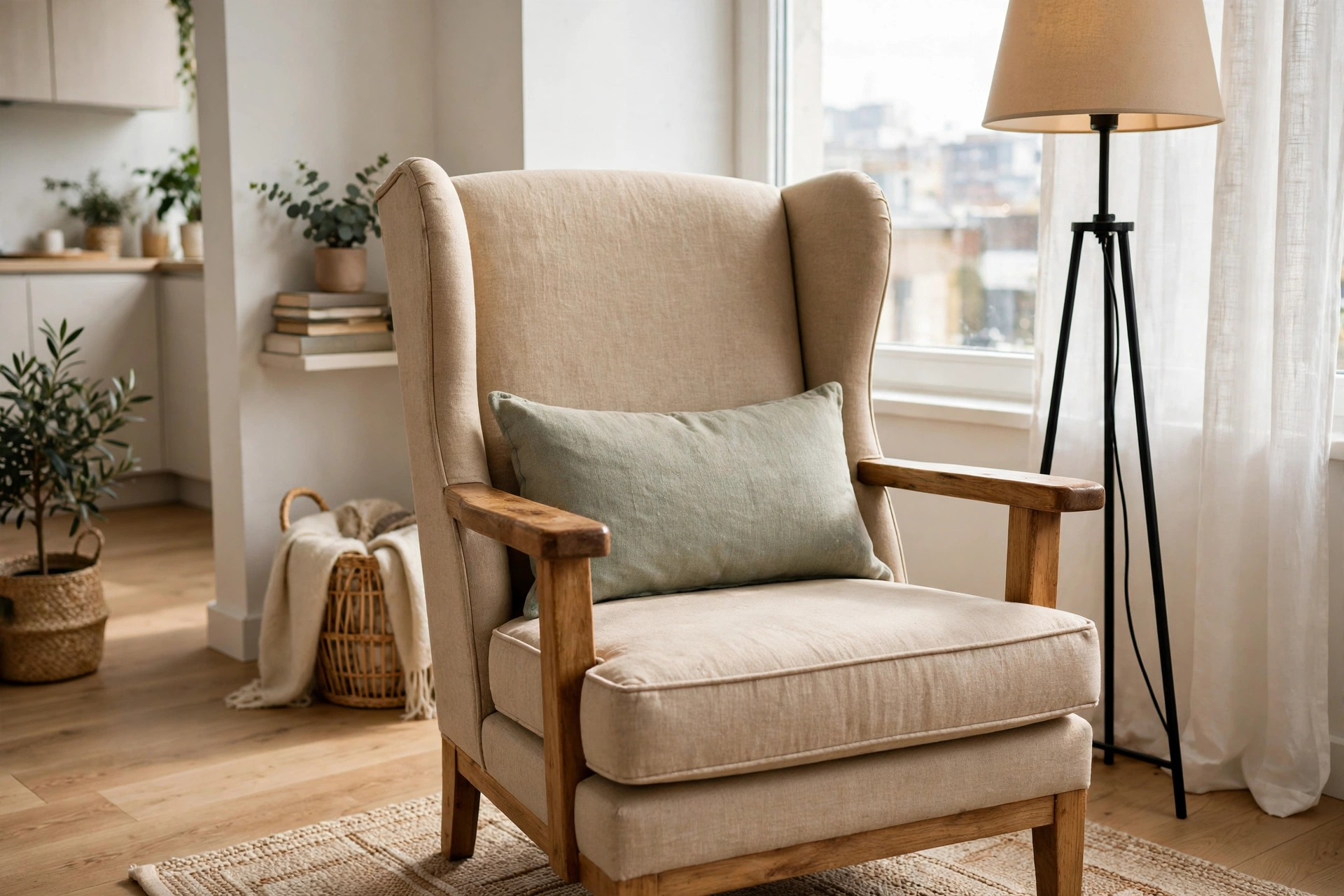
8. Set the Bed at the Right Height
Getting in and out of bed should never be a struggle. The ideal bed height for most seniors is 20–23 inches from floor to top of mattress — roughly knee height — so you can sit on the edge with feet flat on the floor. Adjustable-height bed frames ($150–$350) let you dial this in exactly, and they pair with the layered, comfortable bedding in our small studio bedroom ideas. Pro tip: sit on the edge of the bed: if your knees are above your hips, the bed is too low; if your feet dangle, it’s too high. Adjust until it’s just right.
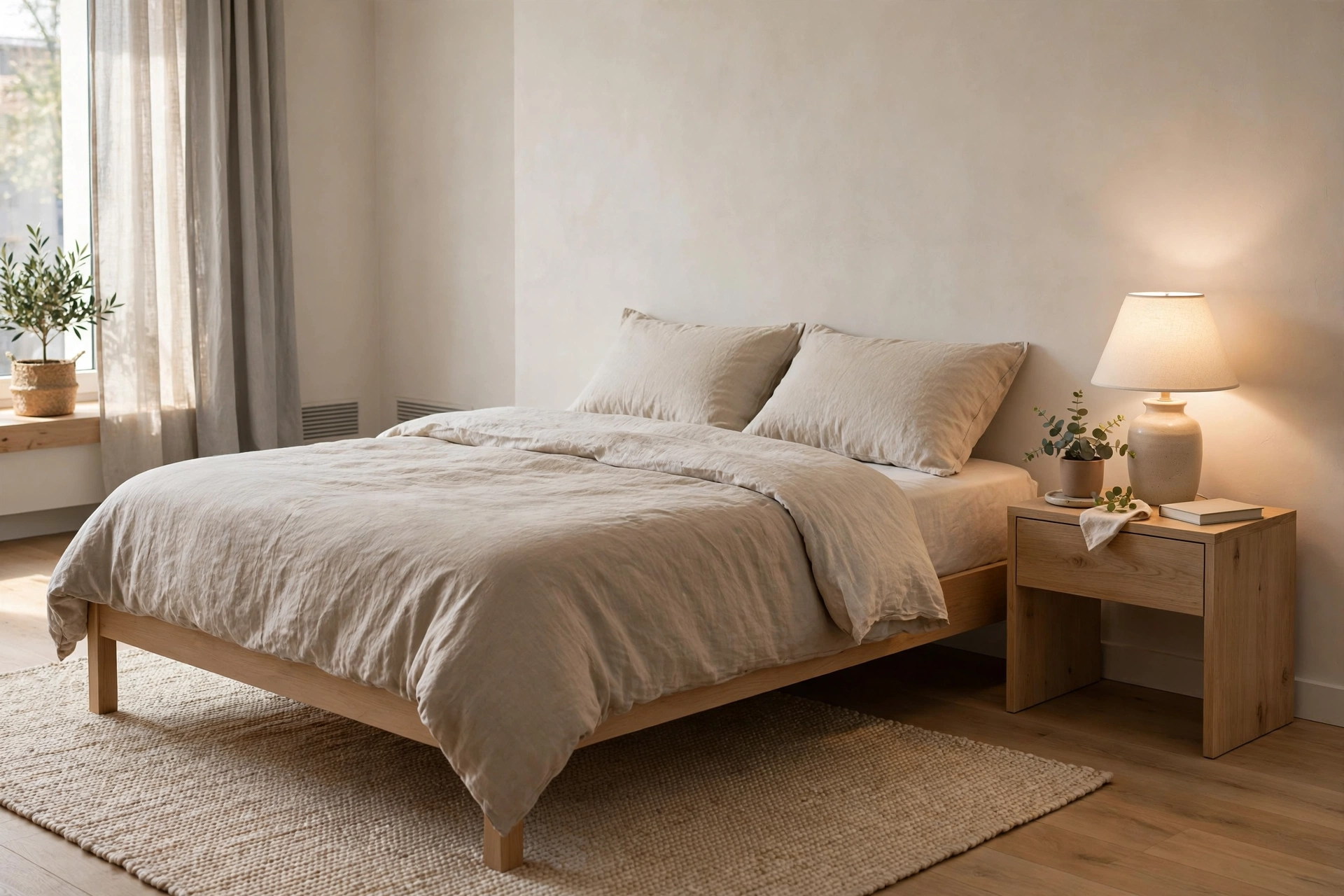
9. Keep Bedside Essentials Within Reach
Nighttime trips across a dark room are risky — so bring the essentials to the bed. A bedside table or caddy ($25–$60) holding a touch lamp, water, reading glasses, phone, and any nighttime medication means everything is within arm’s reach. A bedside organizer that hangs on the bed frame ($15–$25) works when there’s no room for a table. Pro tip: keep a small flashlight in the bedside drawer as backup — power outages happen, and fumbling in the dark is exactly the scenario to avoid.
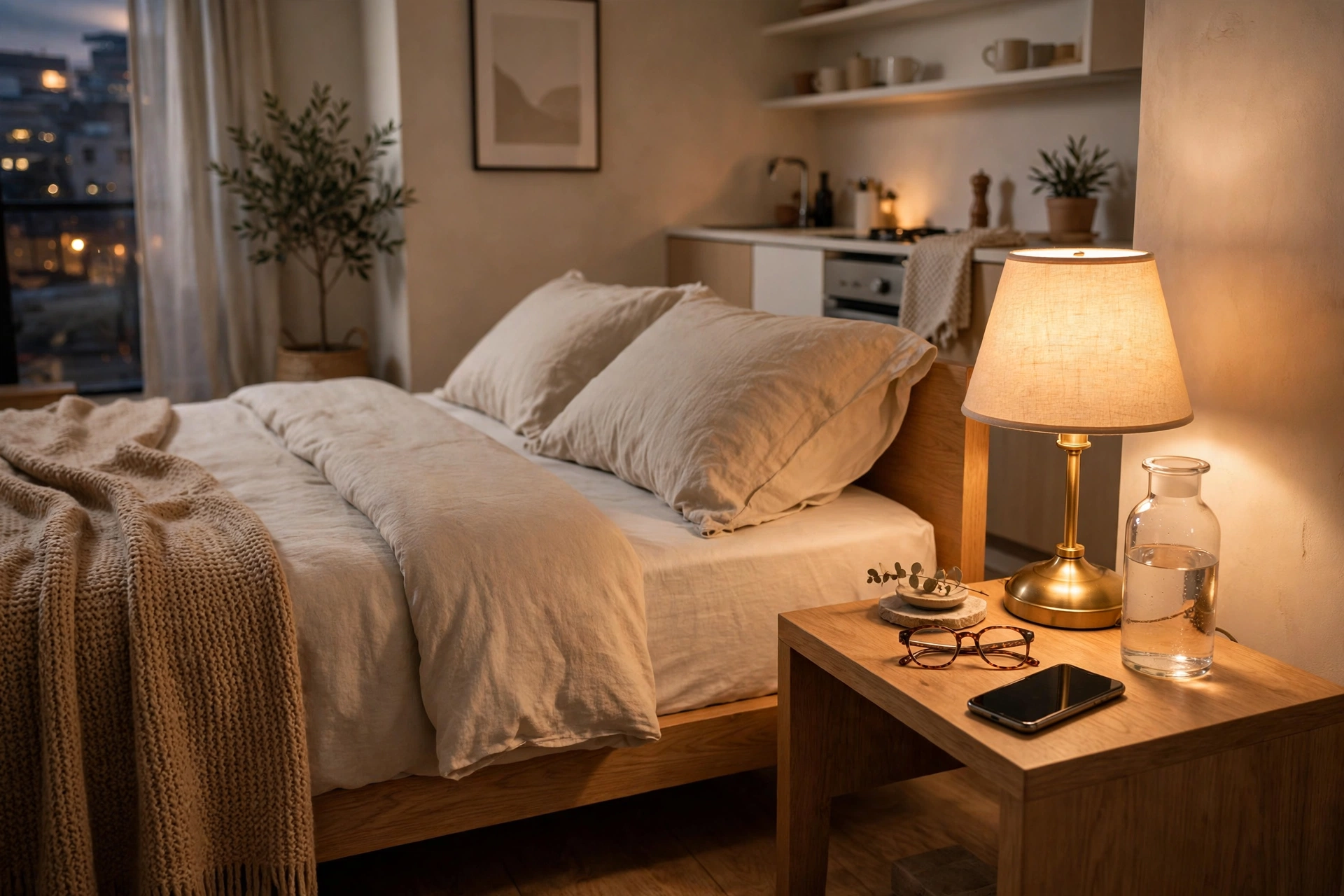
10. Create a Rest Nook by the Window
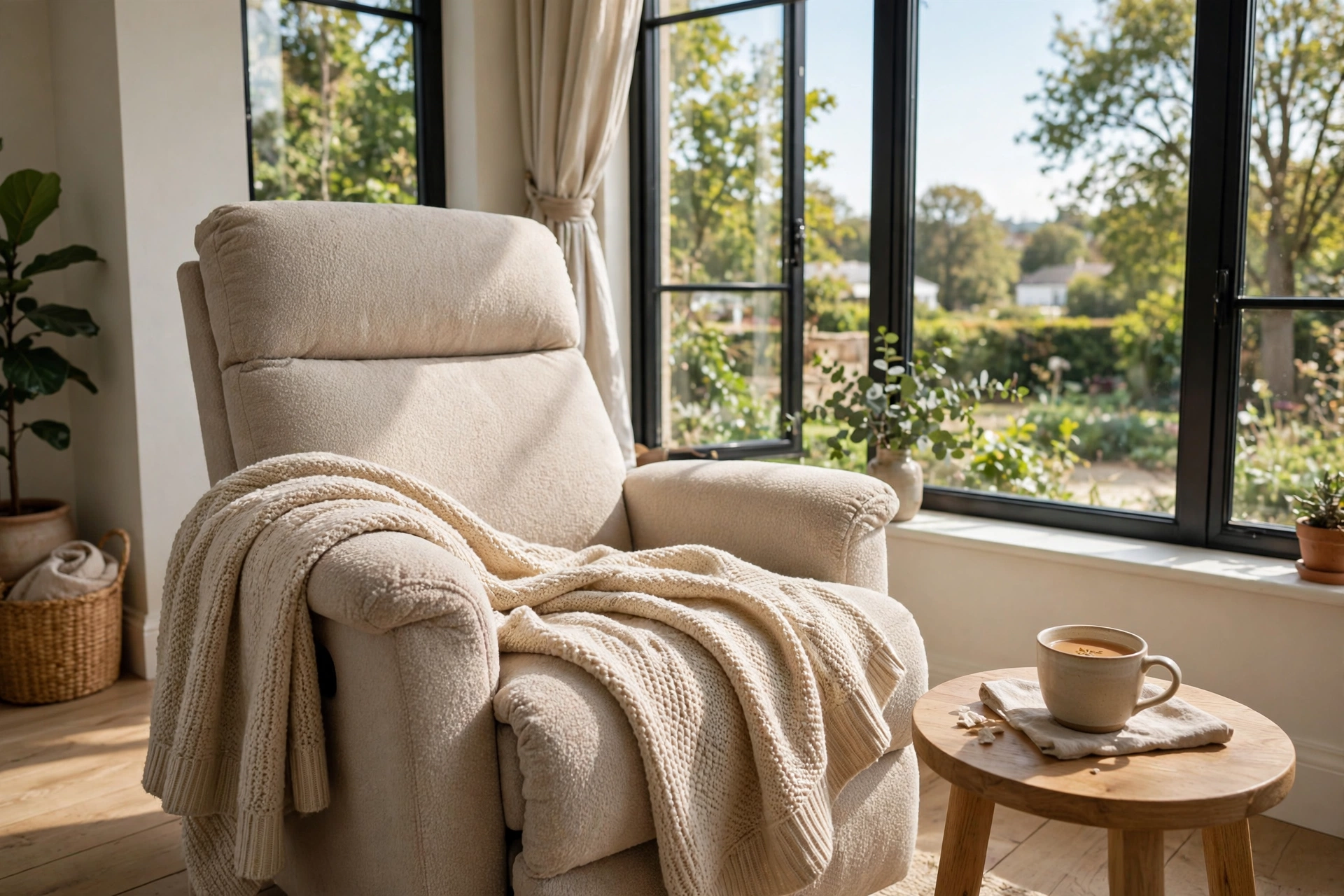
Everyone needs a spot for an afternoon rest with a view — not the bed (which should stay for sleeping), but a real daytime retreat. A comfortable reclining chair or chaise by the largest window, with a small table for tea and a throw for naps, gives the day a pleasant rhythm. Daylight here also supports healthy sleep patterns, which matter more with age. Pro tip: position the chair to face the view, not the TV — a window rest nook is for watching the world go by, and that’s a different, deeper kind of rest.
Lighting That Protects Aging Eyes
11. Brighten Task Areas Generously
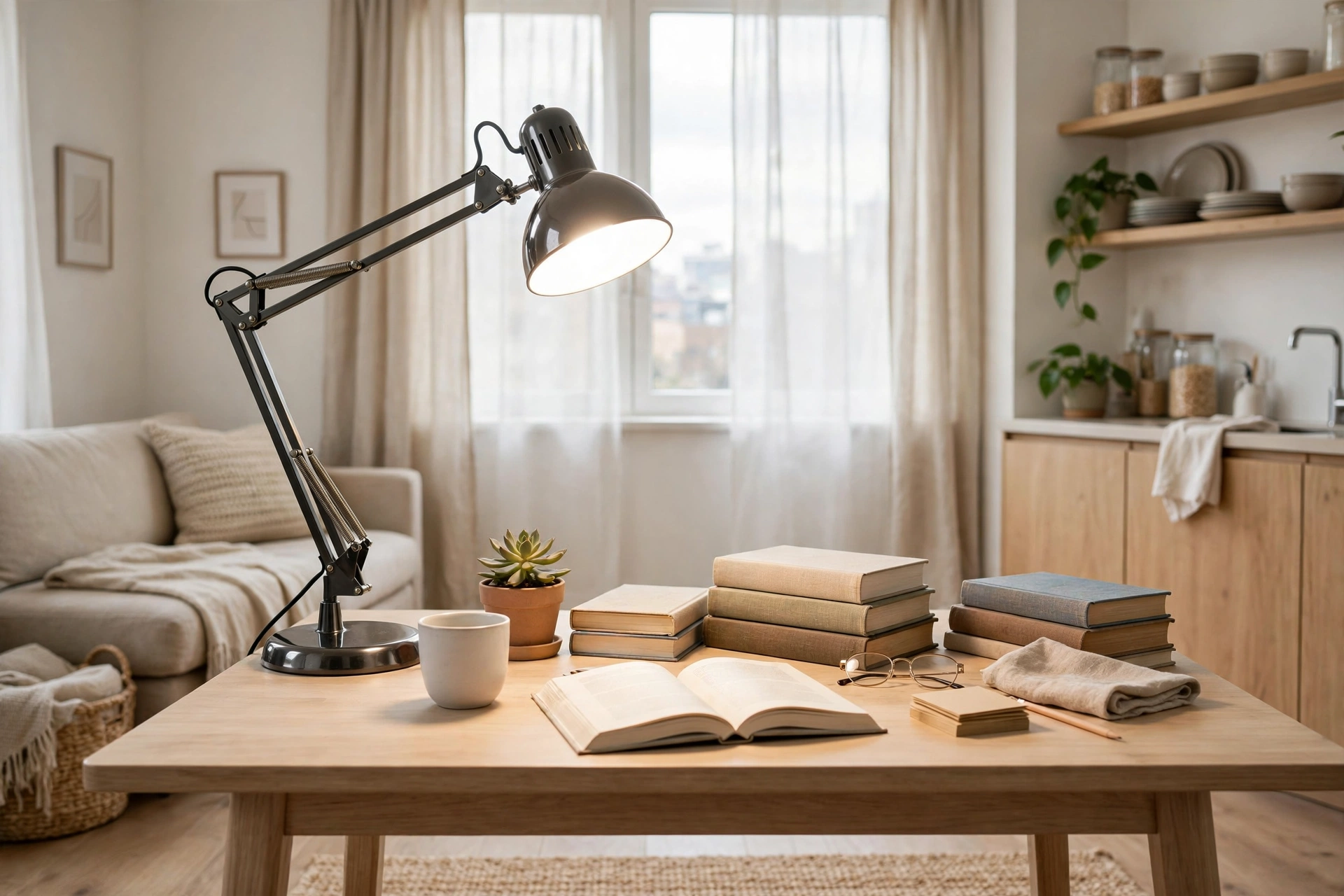
Aging eyes need two to three times more light for the same tasks — reading, cooking, and hobbies all get harder in dim rooms. Add bright, adjustable task lighting everywhere work happens: an architect-style lamp at the reading chair ($35–$70), under-cabinet strips in the kitchen ($15–$30), a good light over the dining table. Aim for even, shadow-free illumination. This layered approach is the heart of our studio apartment lighting ideas. Pro tip: position task lights to the side of your work, not behind you — light from behind casts your own shadow exactly where you’re trying to see.
12. Add Motion-Sensor Lights
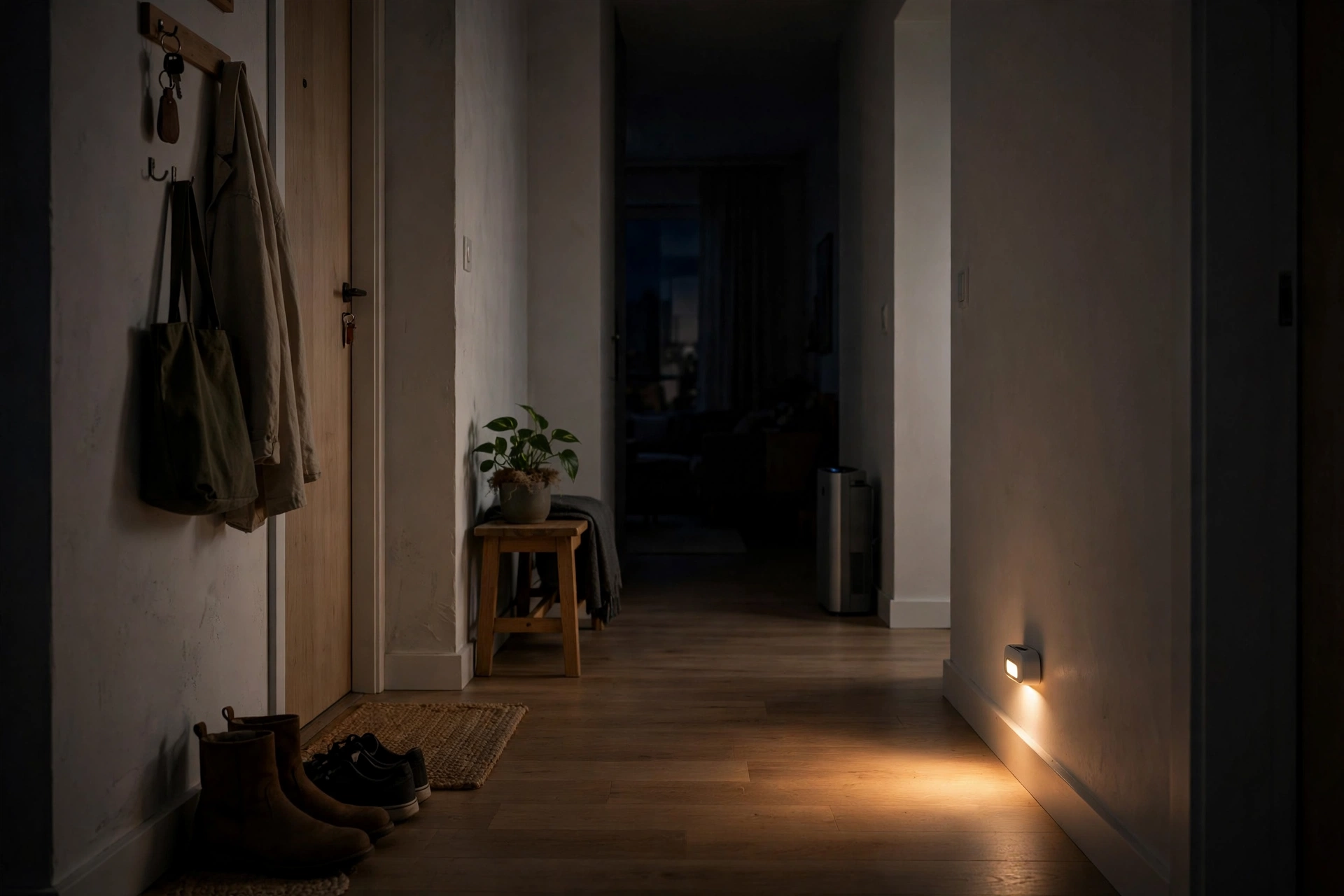
Fumbling for a switch in the dark is a fall risk no one needs. Battery-powered motion-sensor lights ($12–$25 for a multi-pack) stick anywhere — inside closets, along the hallway to the bathroom, under the bed frame — and switch on automatically when you move. No wiring, no switches to find, and batteries last months. Pro tip: put one inside every closet and cabinet you use daily — motion lights turn “where is it?” into “there it is” without a single extra step.
13. Line the Night Path With Nightlights
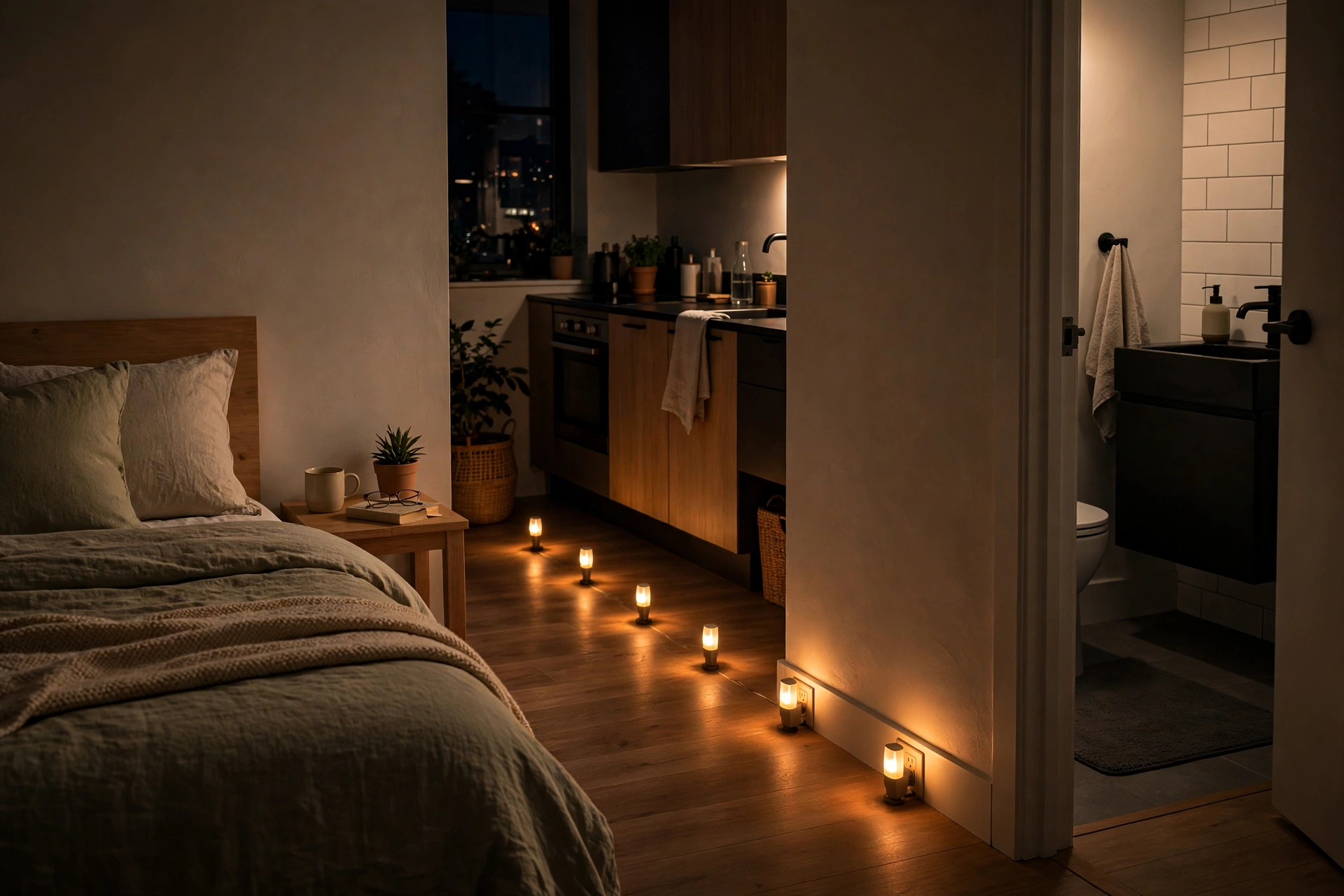
The route from bed to bathroom gets traveled half-asleep every night — light it like a runway. Plug-in LED nightlights ($8–$15 for a 6-pack) with dusk-to-dawn sensors along the path give just enough warm glow to navigate safely without wrecking sleep. Choose warm amber tones, not cool white, which feels harsh at 3 a.m. Pro tip: place nightlights low — in hallway outlets near the floor — so the light pools where your feet are instead of glaring at eye level.
14. Go Glare-Free Everywhere
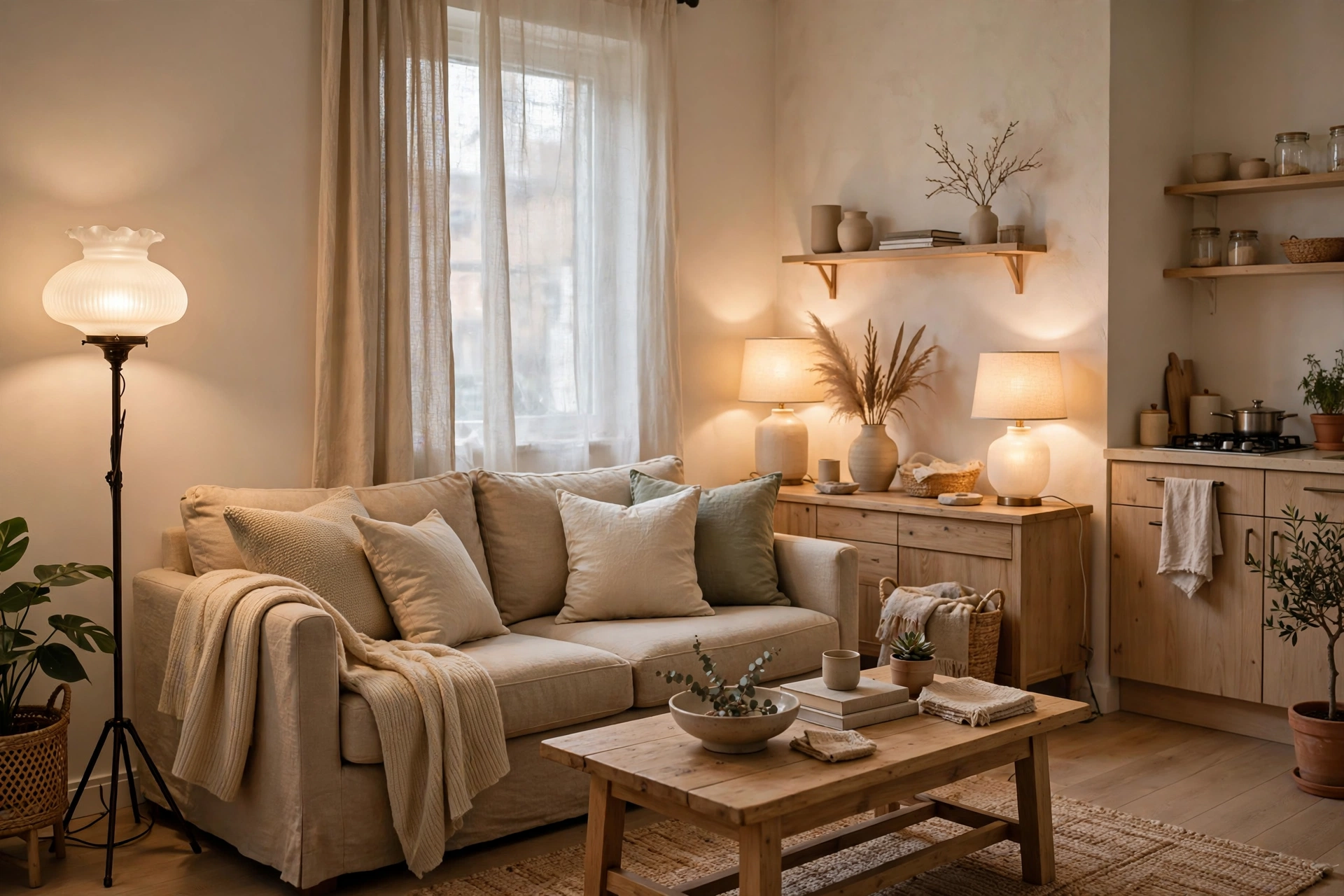
Glare is the enemy of aging eyes — bare bulbs, glossy surfaces, and unshaded windows all create painful bright spots. Swap in frosted bulbs and fabric lamp shades ($10–$25 each), add sheer curtains to soften window light, and choose matte finishes over glossy ones. The goal is bright but diffused light, never a harsh point source. Pro tip: sit in each chair and look toward each light source — if you can see the bare bulb, it needs a shade or a diffuser. Your eyes will thank you immediately.
15. Make Switches Big and Obvious
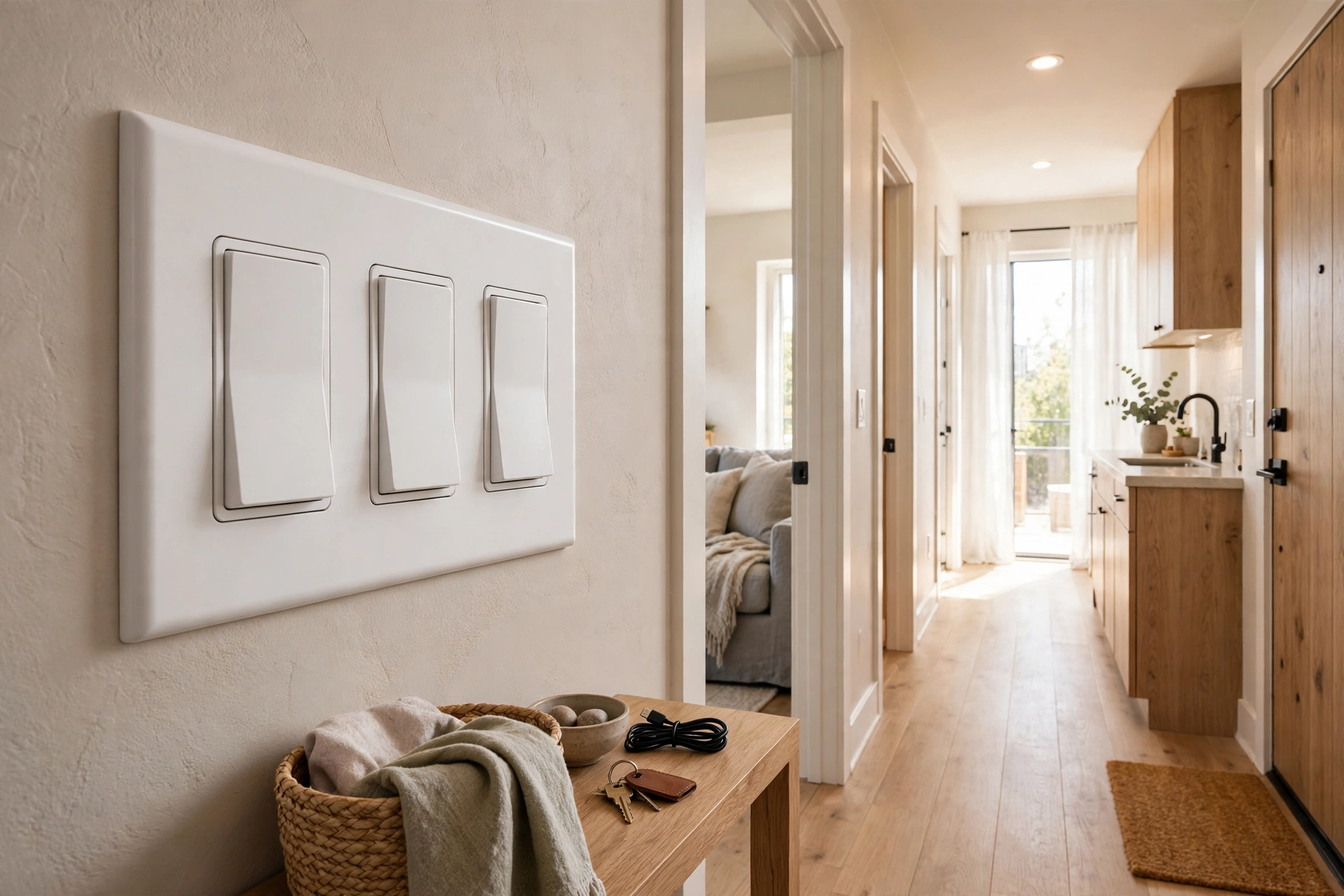
Tiny toggle switches in dark corners are a daily frustration. Replace them with large rocker-style switches ($3–$8 each) — easier to see, easier to press, operable with a palm or elbow. Add glow-in-the-dark switch plates ($5–$10 for a pack) in the bedroom and bathroom so they’re findable at night. Smart switches ($15–$25) add voice control for the tech-comfortable. Pro tip: label switches with a label maker if one room has several — “kitchen,” “hall,” “bath” in large print ends the flip-and-guess game for good.
Easy-Care, Low-Maintenance Choices
16. Use Washable Slipcovers
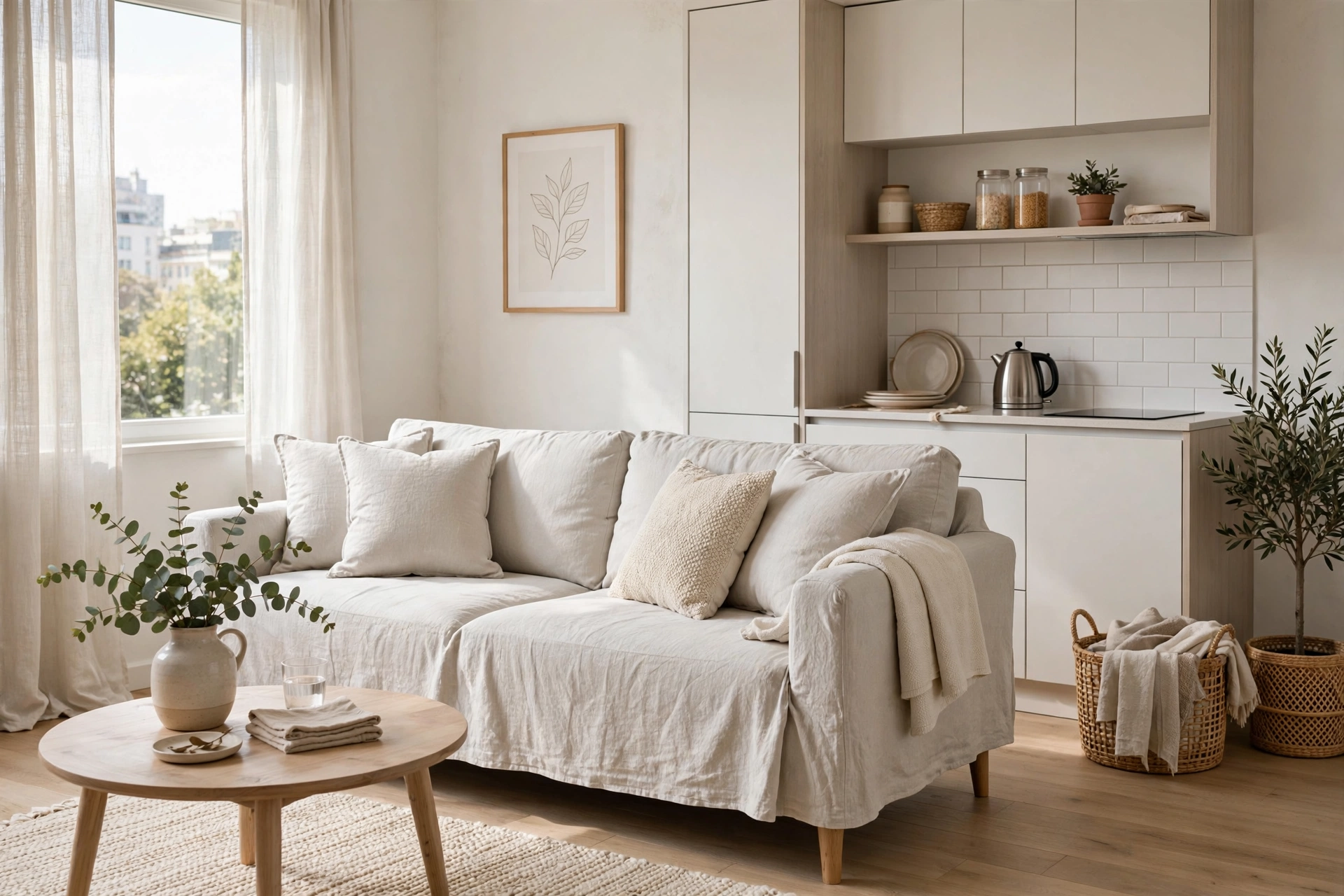
Upholstery shows life — spills, dust, pet hair — and professional cleaning is expensive. Furniture with removable, machine-washable slipcovers ($60–$150 per piece from IKEA or SureFit) lets you refresh the whole living zone in a laundry cycle. Choose performance fabrics in mid-tone neutrals that hide everyday wear between washes. Pro tip: buy a second slipcover set when you buy the first — one on the furniture, one in the wash — so there’s never a “naked sofa” day.
17. Choose Forgiving, Low-Maintenance Floors
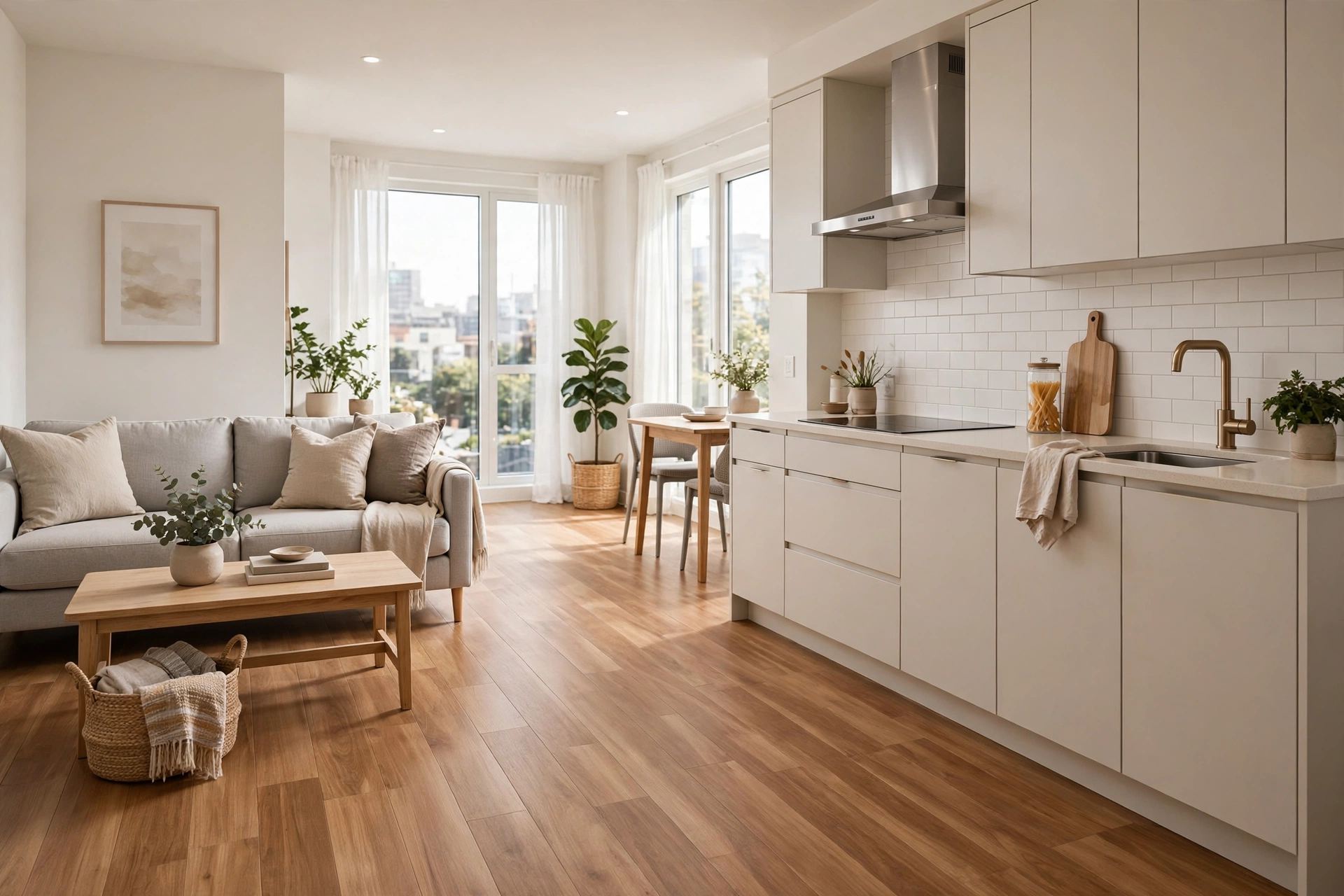
High-maintenance floors are a weekly burden. Luxury vinyl plank or quality laminate ($2–$5 per square foot installed) looks like wood, shrugs off spills, and cleans with a quick damp mop — no waxing, no polishing, no special cleaners. If the rental already has decent hard floors, a lightweight stick vacuum ($100–$180) makes upkeep nearly effortless. Pro tip: avoid high-gloss finishes, which show every speck of dust and can be slippery — a matte or satin finish looks cleaner longer and grips better underfoot.
18. Keep Window Treatments Simple
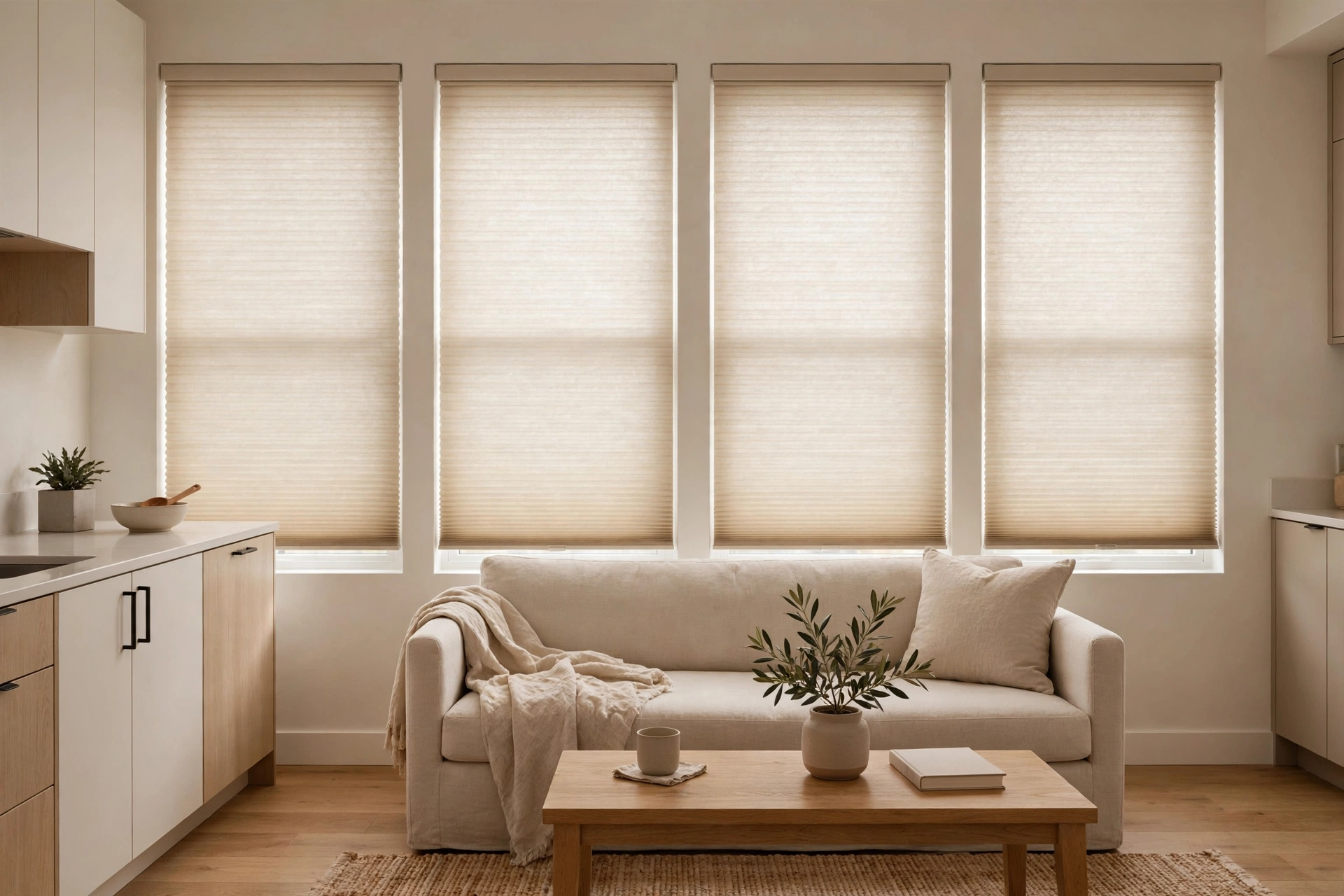
Heavy drapes with cords are dust collectors, hard to clean, and the cords are a safety concern. Cordless cellular shades or simple roller blinds ($30–$80 per window) raise and lower with a gentle push or pull, wipe clean with a damp cloth, and give clean light control. Top-down/bottom-up styles add privacy without losing daylight. Pro tip: if you love the look of curtains, hang simple panels on the cordless shades purely as decoration — you get the softness without ever needing to draw them.
19. Favor Easy-Clean Surfaces
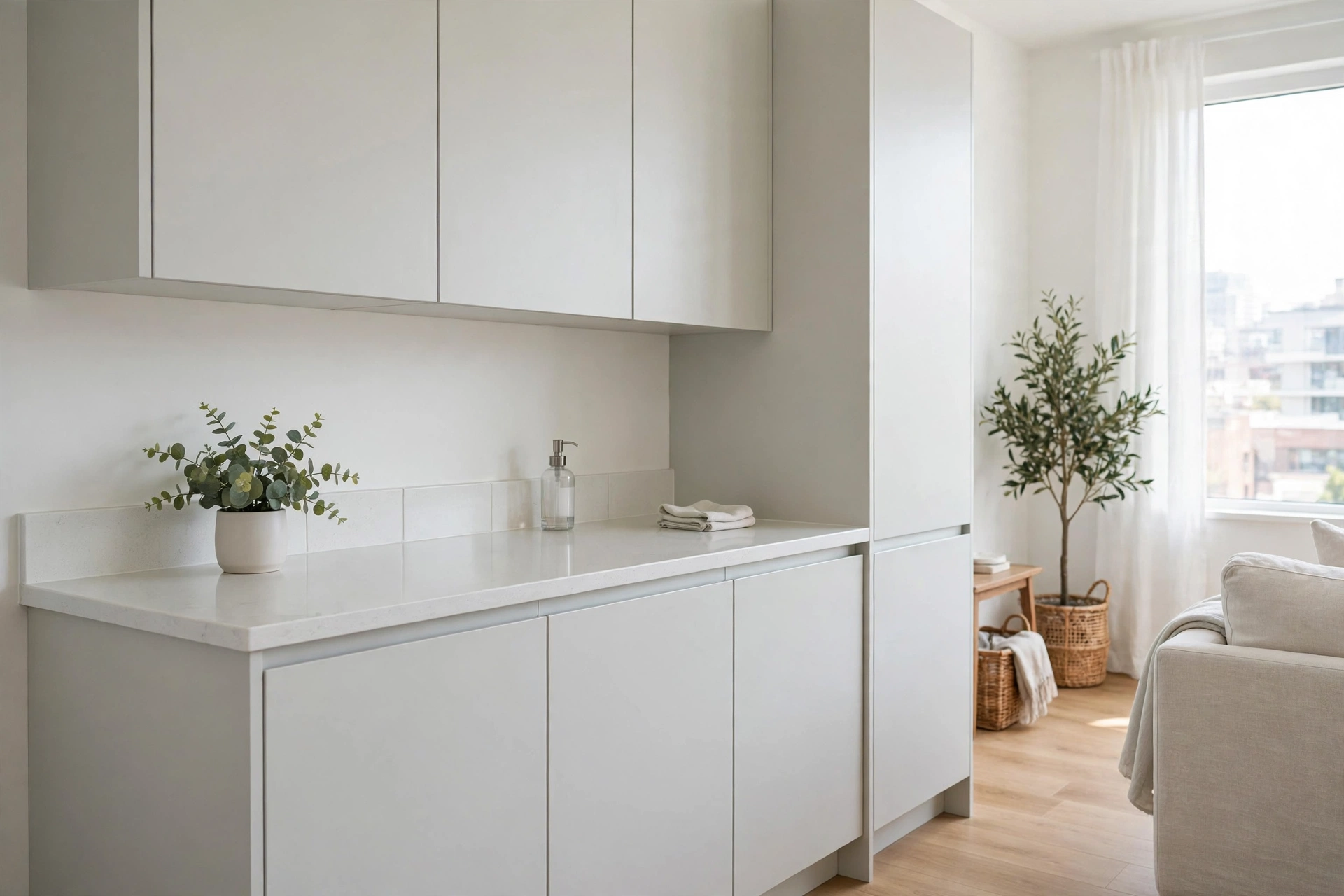
Every surface in a senior’s studio should wipe clean in seconds. In the kitchen, quartz or solid-surface counters ($50–$100 per square foot) resist stains without sealing; in the living zones, smooth cabinet fronts and washable paint (eggshell or satin finish) let you erase scuffs with a damp cloth. Fewer grooves, trims, and textures mean less dusting. Pro tip: keep a microfiber cloth and a spray bottle of all-purpose cleaner in each zone — cleaning happens when supplies are within reach, not when they’re under the sink across the room.
20. Design for Clutter-Free Calm
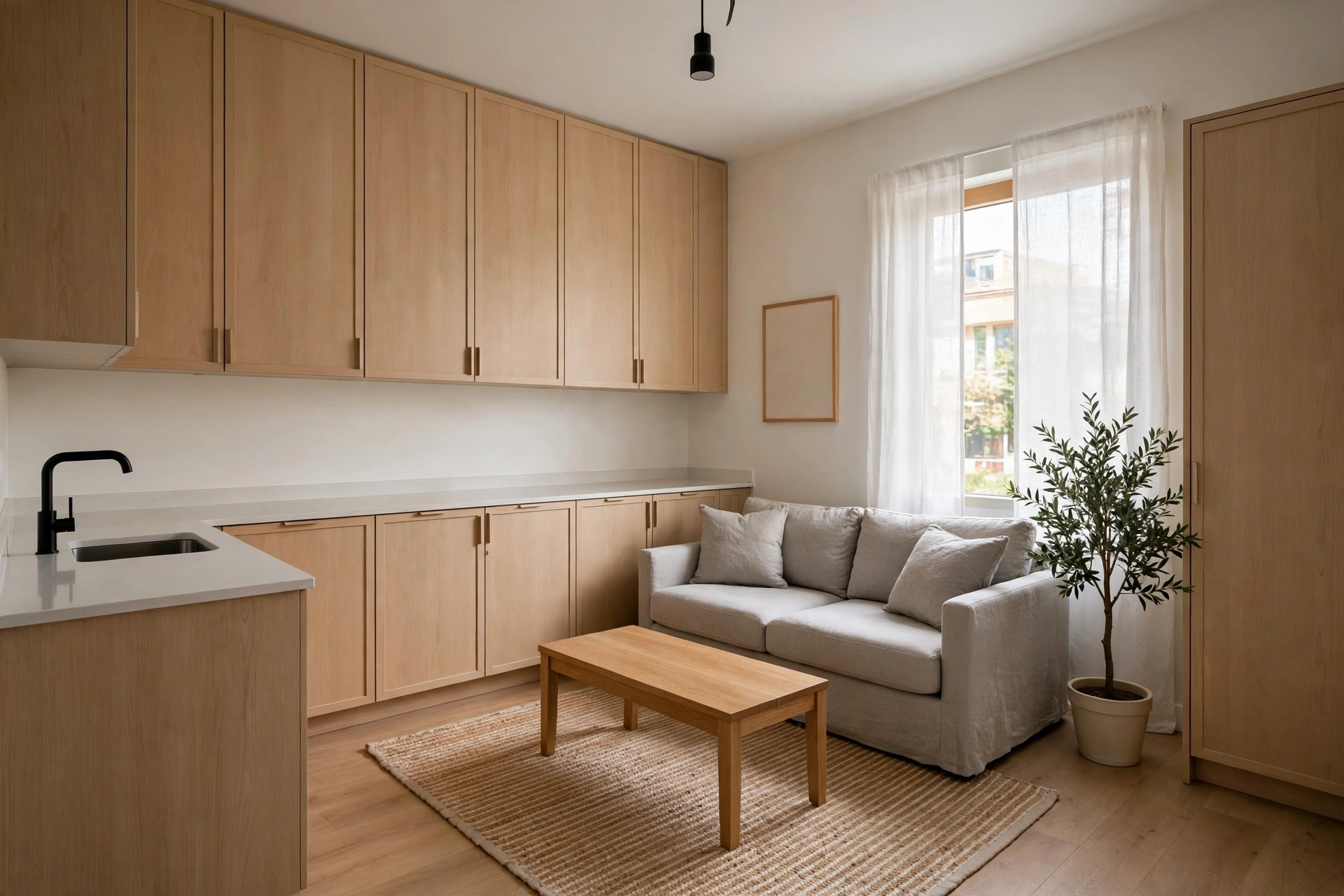
Less stuff means less to clean, less to trip over, and less visual stress — a triple win. Favor closed storage (cabinets, ottomans, lidded baskets) over open shelves so everyday items disappear behind clean lines, and adopt a simple rule: everything has a home, and homes are at reachable height. A seasonal 20-minute declutter keeps it that way without marathon sessions. Pro tip: the “one-touch” rule — put things away the first time you touch them instead of setting them down “for now” — is the entire maintenance system. It takes seconds and prevents 90% of clutter.
Cozy Personal Touches
21. Build a Memory Photo Wall
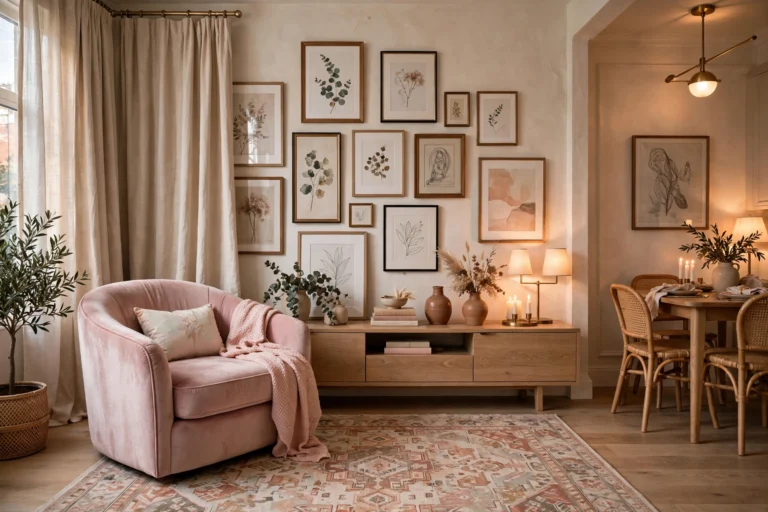
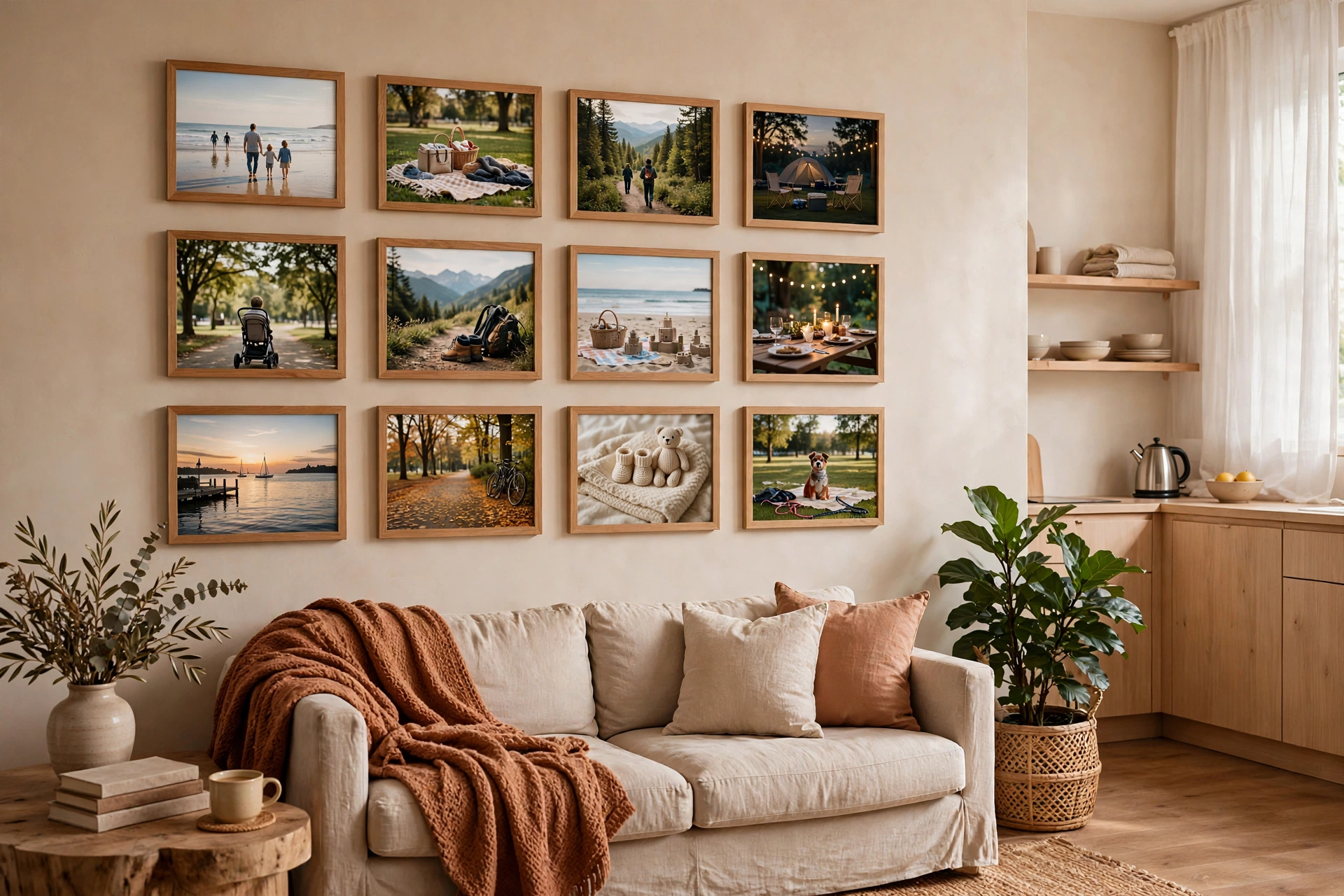
A home should hold your history. Dedicate one wall to framed photos of family, friends, travel, and milestones — printed, not just on a phone — in matching frames ($8–$15 each at IKEA) for a cohesive look. Large print sizes (8×10 and up) are easier to enjoy from across the room than tiny snapshots. Pro tip: use Command-style adhesive strips rated for the frame weight if you rent — no holes, no deposit worries, and you can rearrange whenever a new grandchild photo arrives.
22. Honor the Favorite Chair
Everyone has a chair with history — the one that’s perfectly broken in, the one from the old house. Don’t exile it for not matching; honor it. Give it the best spot in the room, a good lamp, and a fresh cushion or throw that ties its color into the palette. A beloved chair that’s comfortable beats a stylish chair that’s not, every time. Pro tip: if the favorite chair sits too low now, a firm seat cushion ($25–$45) or furniture risers ($15–$25 for a set) can restore its easy-up height without replacing the memories.
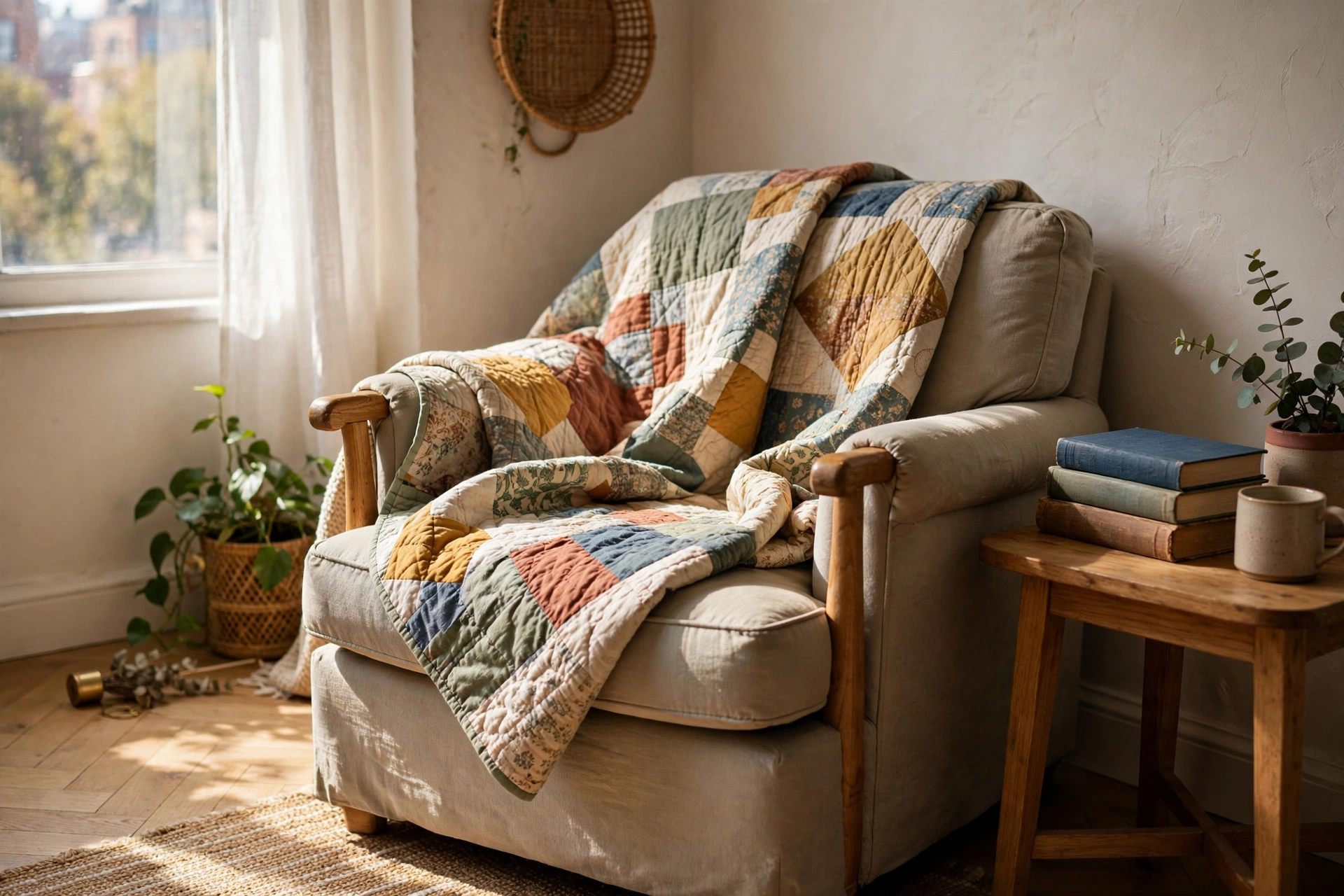
23. Add Low-Care Greenery
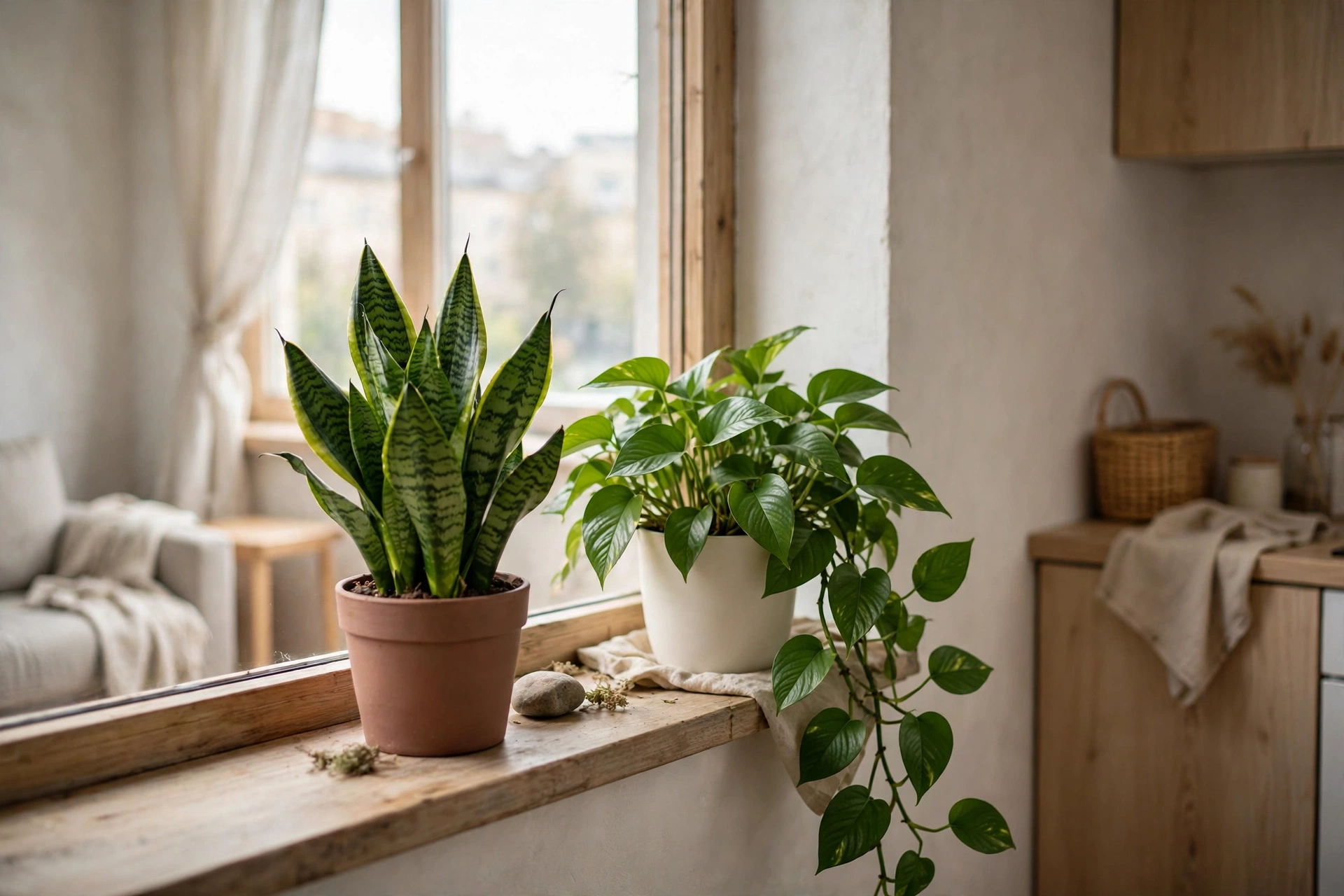
Plants bring life to a room and caring for them brings rhythm to a day — but choose forgiving ones. Snake plants, pothos, and ZZ plants ($15–$35) thrive on neglect, tolerate low light, and need water only every couple of weeks. Self-watering pots ($12–$25) stretch that even further for travel or forgetful weeks. Pro tip: keep plants where you’ll see them daily — the windowsill, the dining table — because a plant you notice is a plant you remember to water, and visible green lifts the whole room.
24. Layer Soft, Cozy Textures
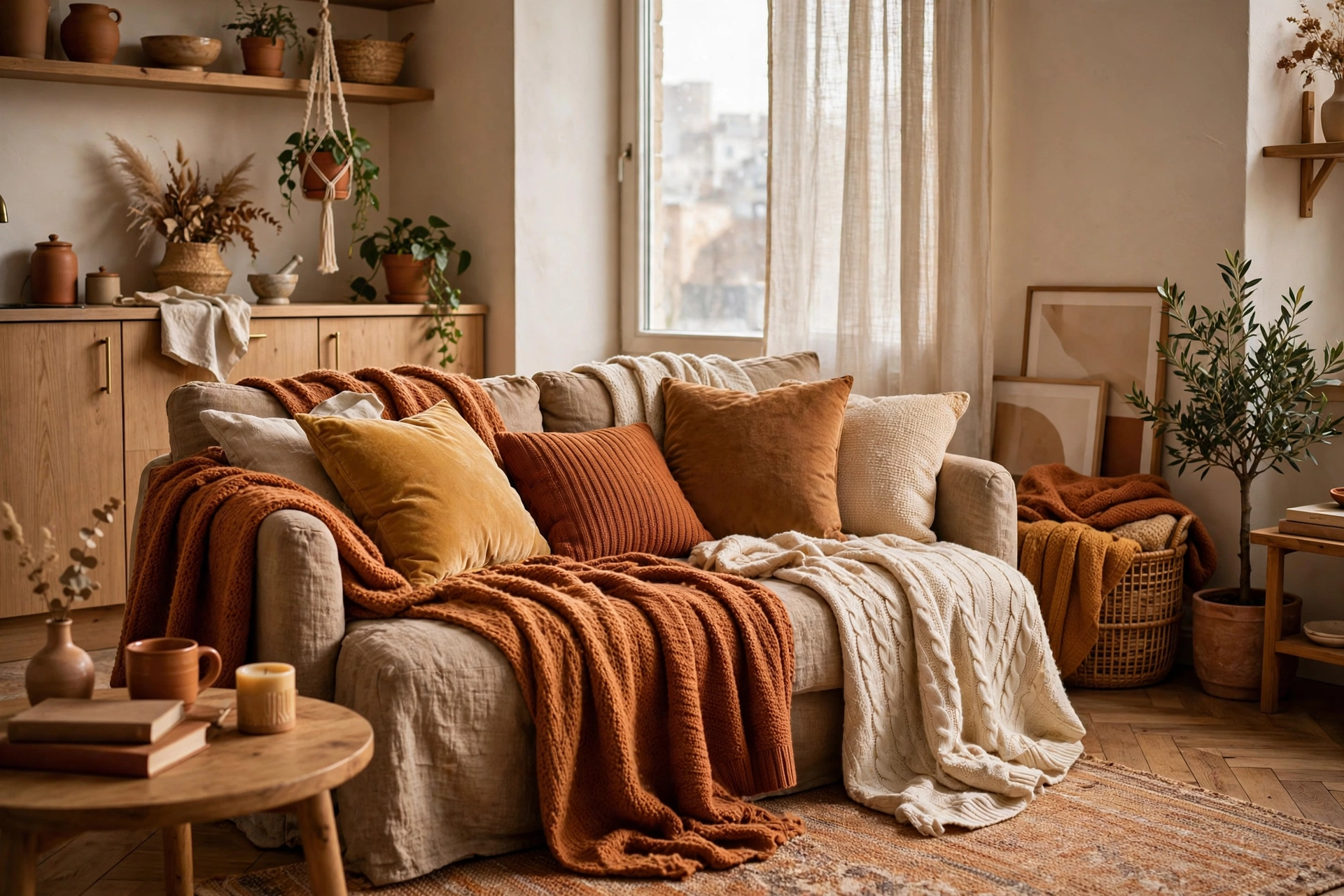
Comfort is tactile — soft throws, plush cushions, a warm rug underfoot make a studio feel like a hug. Layer a chunky knit throw ($25–$50) on the favorite chair, velvet or chenille cushions on the sofa, and keep a lap blanket ($20–$40) where you read. Texture adds richness without visual clutter, and warm materials genuinely feel comforting on aging joints. Pro tip: wash throws monthly and rotate two sets — fresh, clean softness is part of the comfort, and rotation doubles their life.
25. Display a Few Cherished Keepsakes
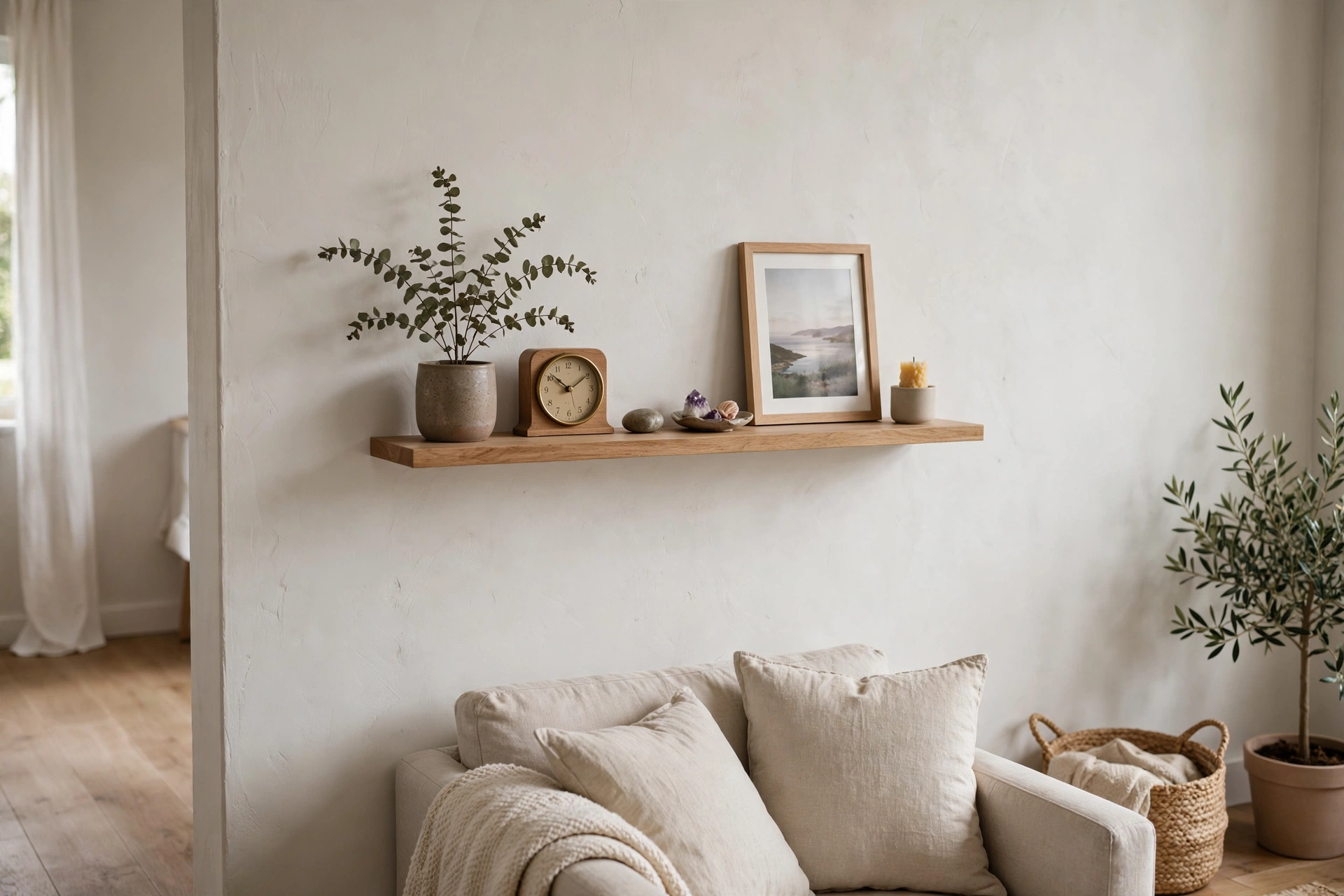
A few meaningful objects — not a museum, just a few — make a studio unmistakably yours: the clock from the old house, a handmade vase, a framed letter. Give them pride of place on one shelf or table with breathing room around each piece, rather than scattered everywhere. Restraint makes each keepsake feel special instead of lost in clutter. Pro tip: rotate keepsakes seasonally from a single storage box — “new” old treasures every few months keep the home feeling fresh without buying anything.
Staying Connected & Independent
26. Set Up an Easy Video-Call Station
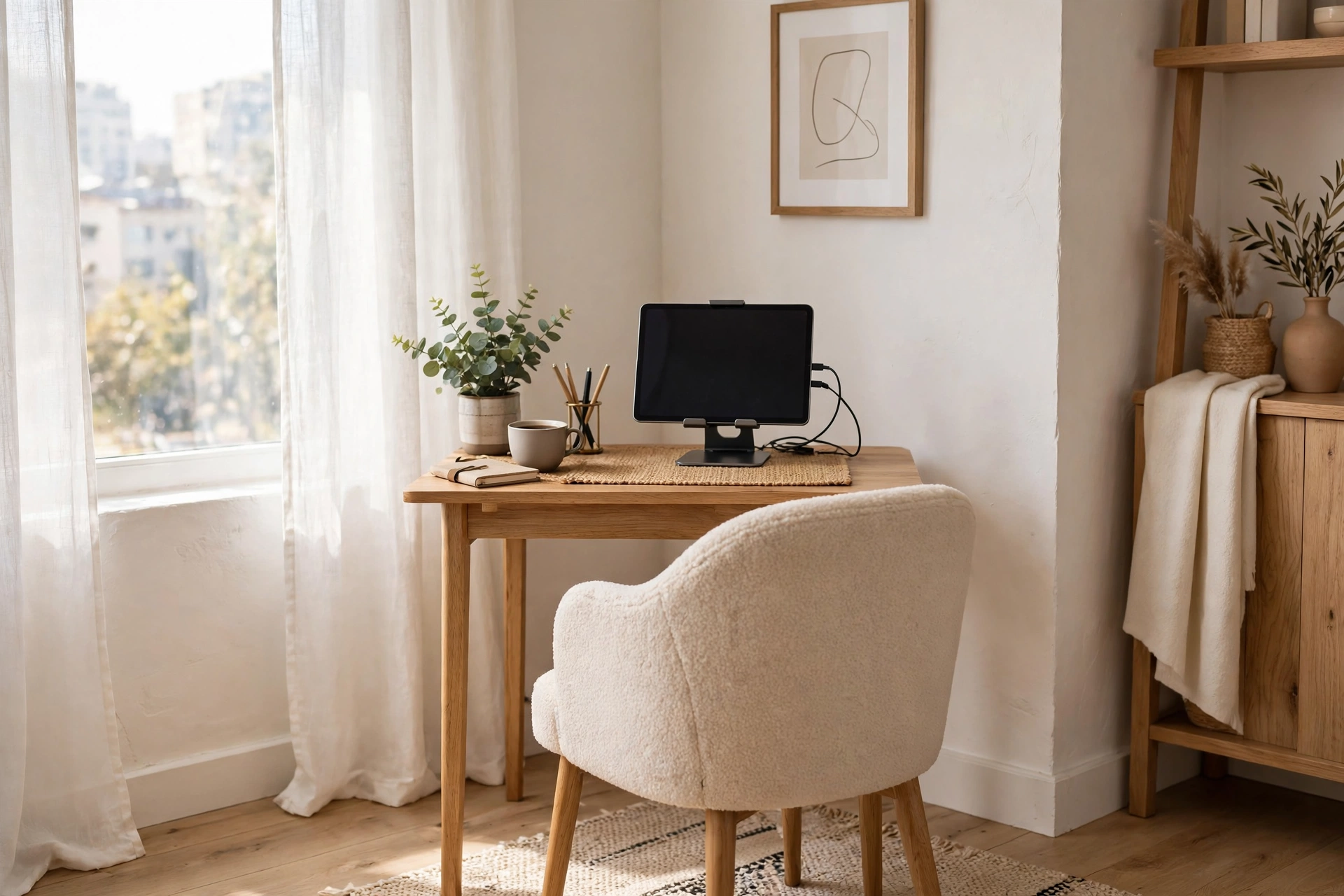
Staying close to family is easier than ever — if the setup is simple. Dedicate one well-lit corner with a comfortable chair, a tablet or laptop on a stand at eye level ($20–$40 for a sturdy stand), and good front lighting so faces are clear on both ends. Save the video-call app to the home screen and bookmark the family group chat. Pro tip: do a test call with a family member to set everything up once — volume, camera angle, lighting — then write the three steps on a card by the station so it’s effortless every time.
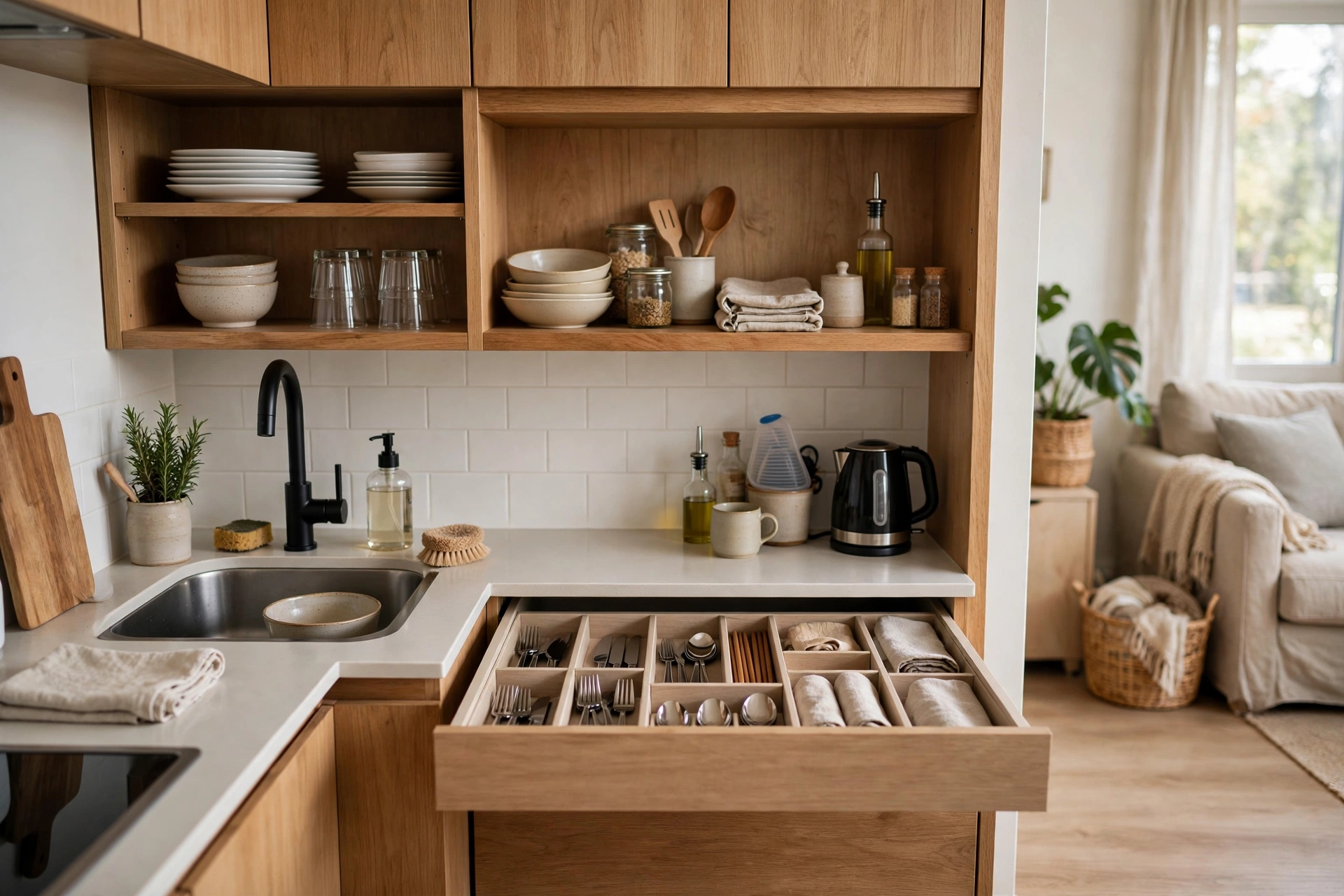
27. Organize the Kitchen for Easy Reach
A senior-friendly kitchen keeps daily items between knee and shoulder height — no step stools, no deep bending. Move everyday dishes, glasses, and pantry staples to easy-reach shelves, use pull-out drawer organizers ($15–$30) for deep cabinets, and keep a lightweight rolling cart ($30–$50) for heavy items like pots. Store rarely-used things up high and the daily essentials where hands naturally fall. Pro tip: decant heavy staples (flour, rice, detergent) into smaller containers — a 2-pound container you can lift beats a 10-pound bag you can’t, every time.
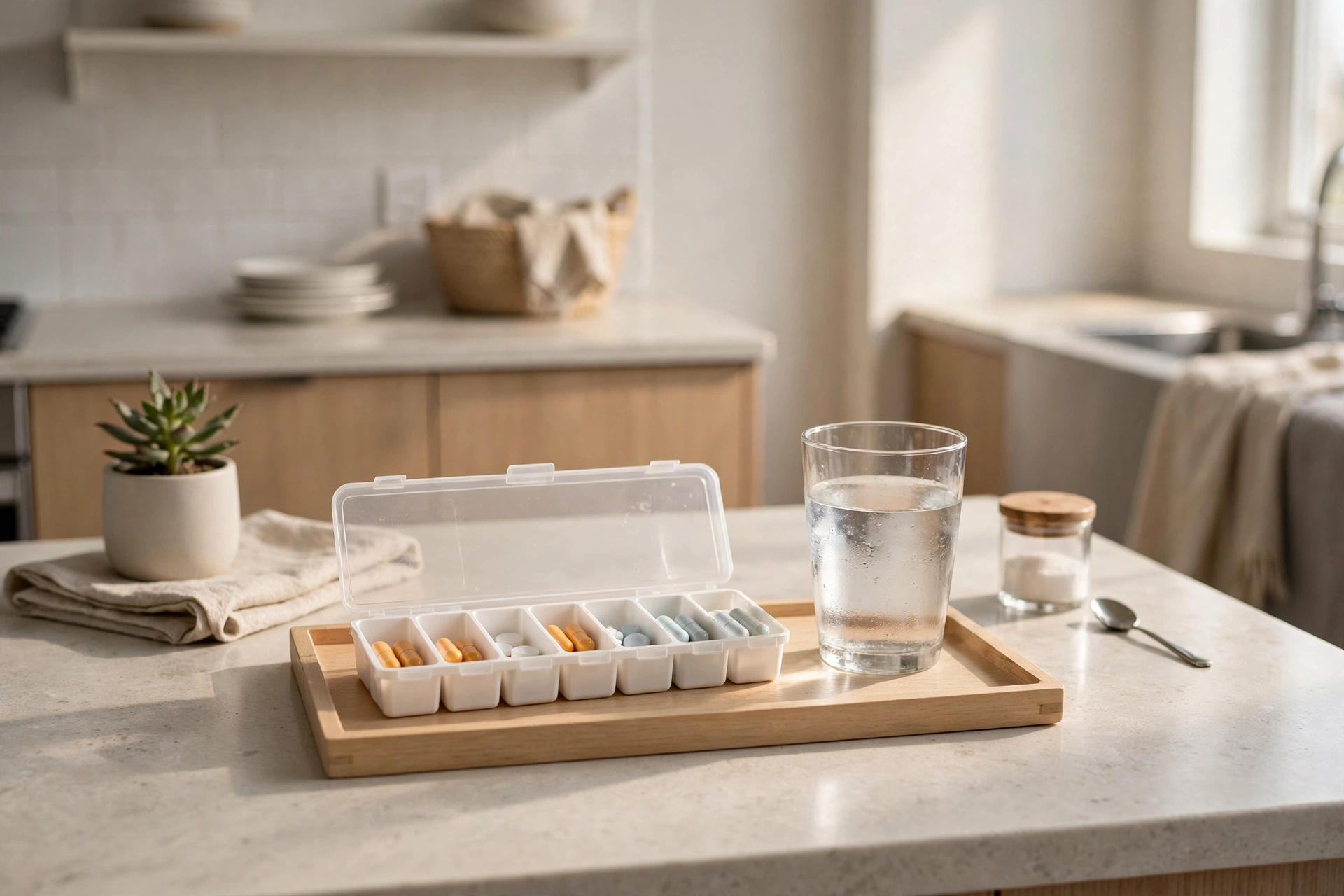
28. Create a Simple Medication Station
Medication routines run smoother with a dedicated station: a weekly pill organizer ($8–$15), a water carafe, and a small tray on the kitchen counter or bedside table — always in the same spot, always visible. Pair it with a phone alarm or a simple timer cap so doses are never a guessing game. Pro tip: refill the organizer every Sunday evening as a ritual — a full week laid out in front of you removes all daily doubt, and an empty Sunday slot confirms the week went right.
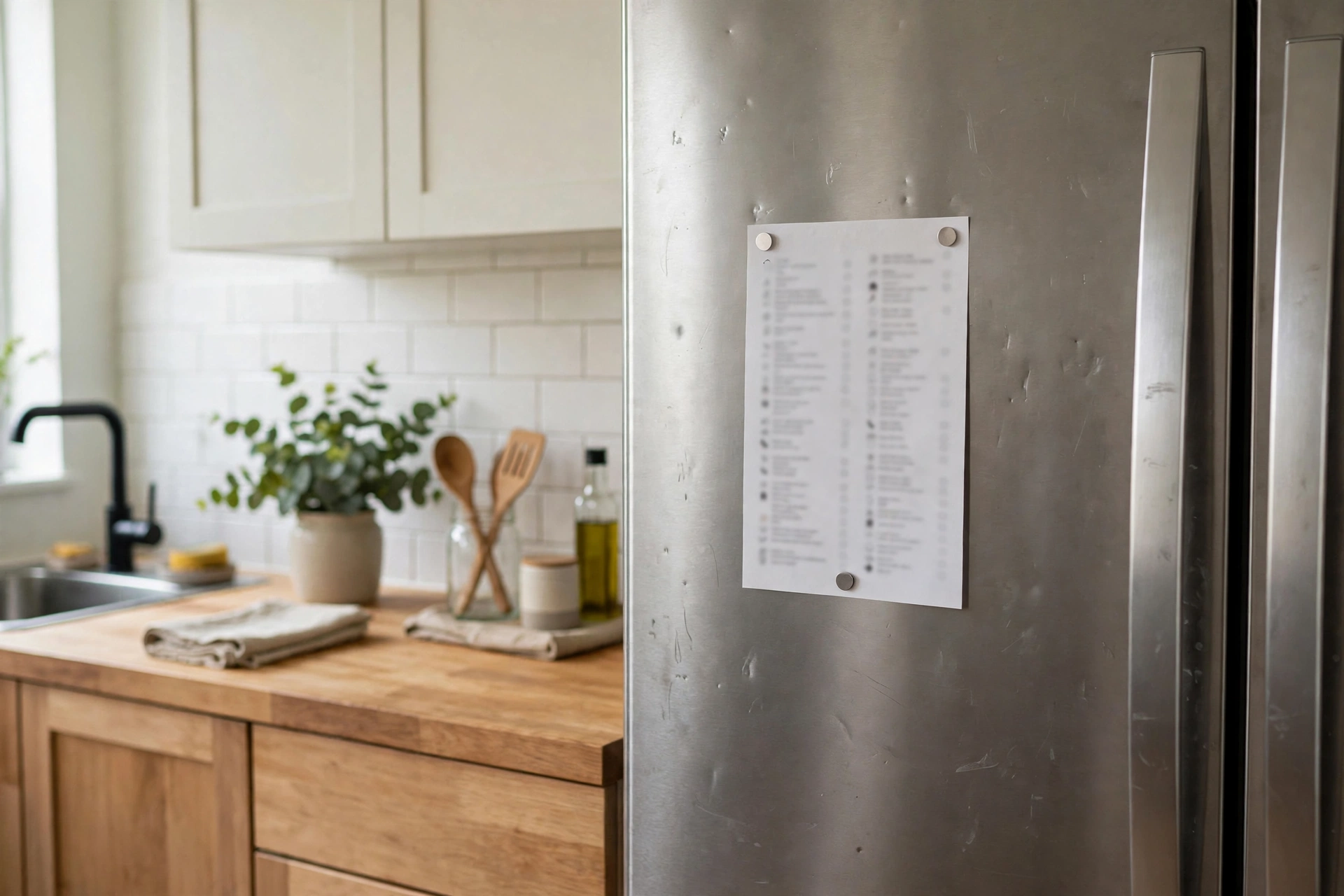
29. Keep Emergency Info Visible
In an emergency, no one should have to search. Keep a clearly printed list of emergency contacts, medications, allergies, and doctor numbers on the refrigerator door ($3–$5 for a magnetic sleeve) and a copy by the bed. Include a trusted neighbor’s number and the building manager. First responders are trained to check the fridge — make it easy for them. Pro tip: update the list twice a year when you change the smoke-detector batteries — tie the two tasks together so neither gets forgotten.
30. Make Coming Home Feel Good
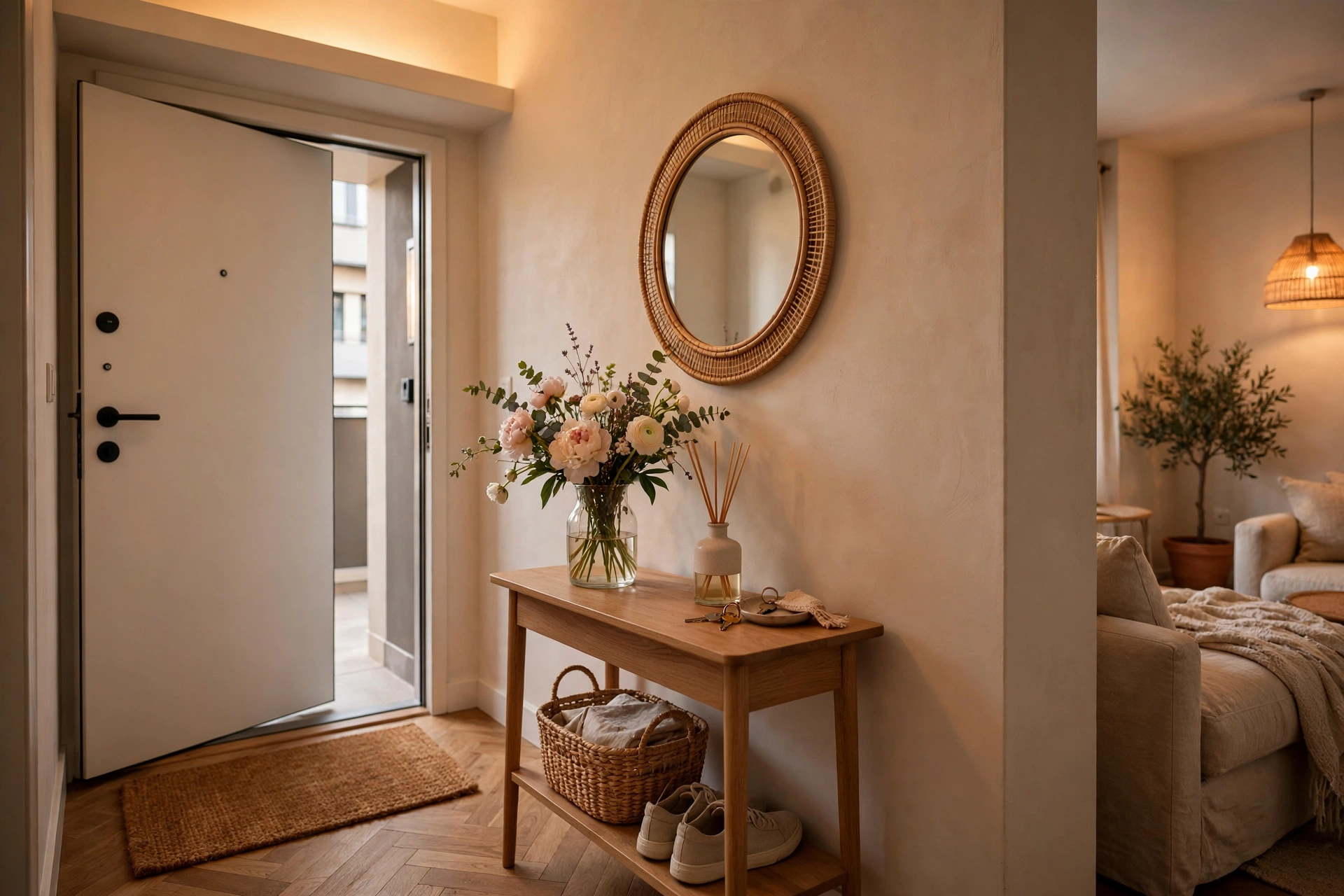
The moment you walk in sets the tone for the whole evening — make it welcoming. A small entry console with a dish for keys and glasses ($25–$50), a warm lamp on a timer so the apartment is never dark when you arrive ($10–$15 for a timer plug), and something lovely to see first: fresh flowers, a favorite photo, a reed diffuser with a gentle scent ($15–$25). Pro tip: the timer lamp is the highest-impact $12 you’ll spend — coming home to a lit, warm apartment instead of a dark one changes how the whole place feels, every single day.
Frequently Asked Questions
Is a studio apartment a good choice for a senior?
Often, yes — a well-designed studio offers single-level living, short distances between everything, lower maintenance, and lower costs than a larger home. The keys are safety (grab bars, good lighting, clear pathways), comfort (supportive seating, right bed height), and staying socially connected. For seniors who value independence without the burden of a big house, a studio can be ideal.
How can I make a studio apartment safer for an elderly parent?
Start with the big three: install grab bars in the bathroom, improve lighting everywhere (especially the bed-to-bathroom night path), and remove all trip hazards — loose rugs, cords, clutter. Then address ease of use: lever door handles, comfortable chair heights, and everyday items within easy reach. Most of these are weekend projects under $200 total.
What’s the best flooring for seniors in a small apartment?
Hard, smooth, non-slip surfaces win: luxury vinyl plank or matte-finish laminate are easy to clean, gentle underfoot, and don’t catch walkers or canes the way thick carpet does. Whatever the floor, keep it level and transition-free between zones, secure every rug with non-slip backing, and avoid highly polished finishes that get slippery when wet.
How do I improve lighting for aging eyes?
Increase overall brightness (aging eyes need 2–3 times more light), eliminate glare with shades and diffusers, and add task lighting at every activity spot — reading, cooking, hobbies. Motion-sensor lights handle closets and hallways automatically, and warm nightlights along the bed-to-bathroom path make nights safe. One consistent warm bulb temperature throughout avoids visual confusion.
What furniture is easiest for seniors to get up from?
Firm seating at 18–20 inches high with solid armrests — the arms give leverage and the height keeps knees near 90 degrees. Avoid low, deep, overly soft chairs and sofas that swallow you. The same rule applies to beds (20–23 inches to the top of the mattress) and toilets (comfort height, 17–19 inches, plus a grab bar).
How can seniors stay independent in a studio apartment?
Design for self-sufficiency: everything daily within easy reach, simple systems (a medication station, a bill tray, a launch pad by the door), and technology that helps rather than frustrates — a video-call station for family, voice-controlled lights or a smart speaker for reminders. And keep community close: a studio near family, friends, or good transit supports independence far more than square footage does.
Final Thoughts
A studio apartment designed for a senior isn’t a compromise — it’s a thoughtful choice. One level, short distances, less to maintain, and every inch arranged around comfort and safety: that’s not settling, that’s smart living. The ideas in this guide share one principle — remove the friction (the dark hallway, the low chair, the hard-to-reach shelf) and what remains is a home that takes care of you as well as you take care of it.
Start with safety, because it matters most: grab bars, lighting, and clear pathways this weekend. Then layer in comfort — the right chair, the right bed height, the cozy textures. Before long, the studio won’t feel small at all. It will feel exactly right: manageable, warm, personal, and fully, independently yours.