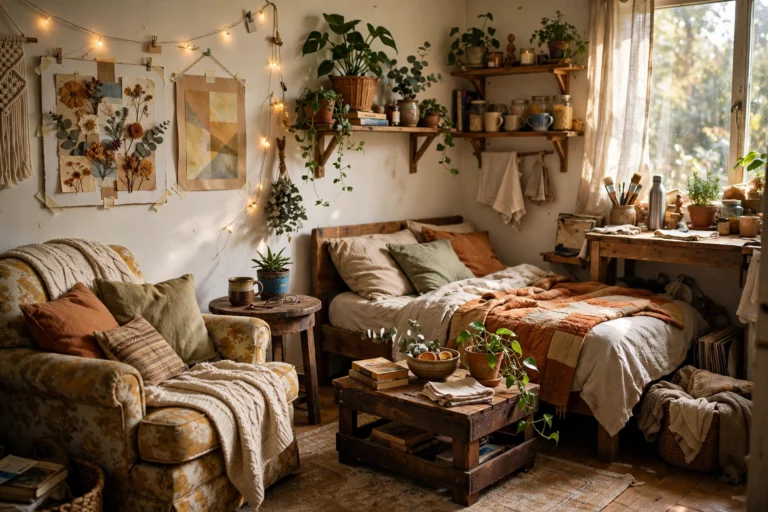
32 Studio Apartment Ideas for Students on a Budget
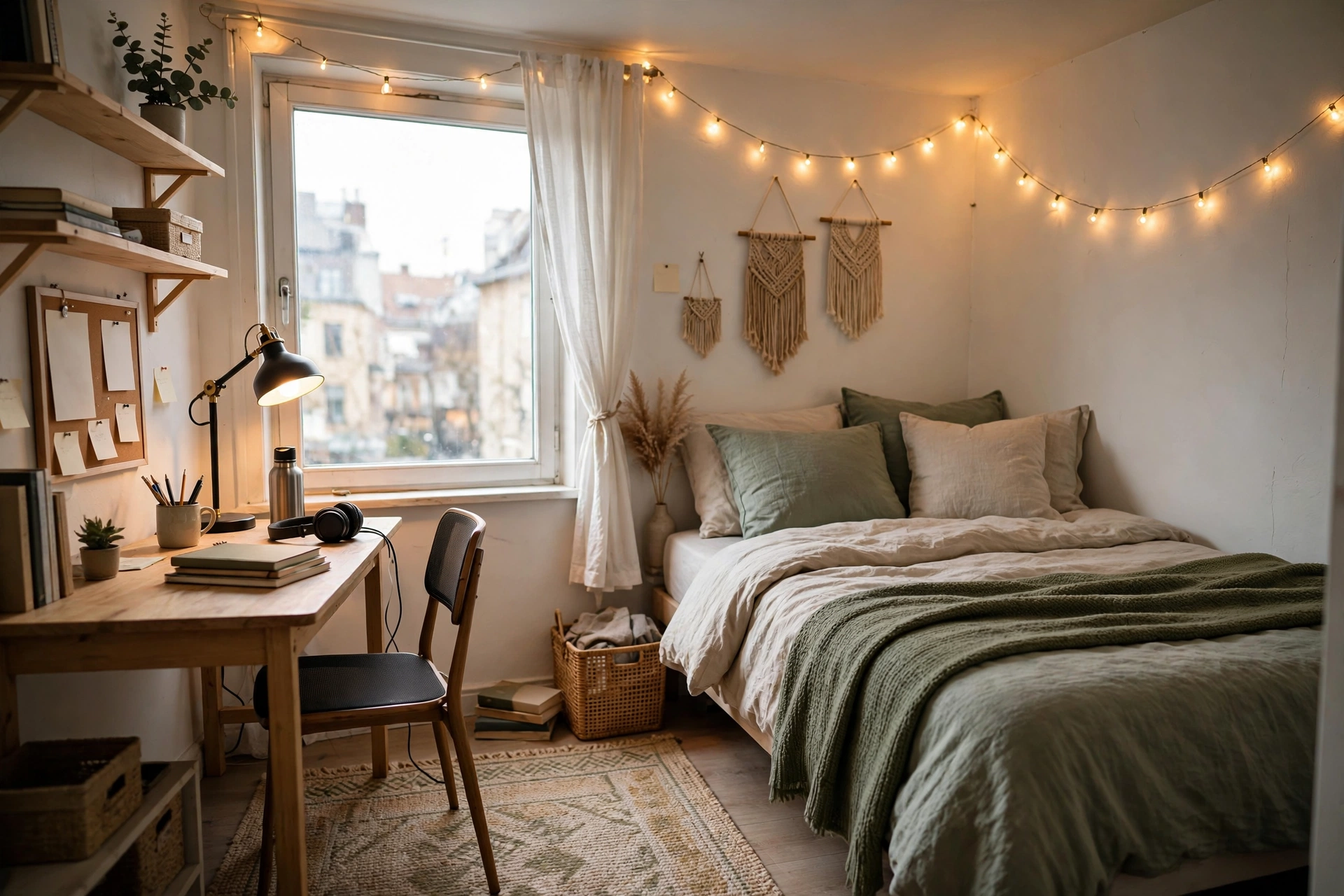
Student life in a studio apartment is a special kind of beautiful chaos — textbooks stacked next to takeout containers, a desk that’s also a dining table, and a budget that makes every dollar feel like ten. But here’s the secret upperclassmen never tell freshmen: small spaces are actually easier to make stylish on a student budget, because every smart choice shows. A $30 thrift-store lamp and a $15 set of fairy lights can transform a beige box into a place that feels like yours.
This guide rounds up 32 studio apartment ideas for students on a budget: study zones that actually help you focus, multifunctional furniture under $150, storage hacks that cost less than a pizza, dorm-to-adult style upgrades, roommate harmony systems, and the small luxuries that keep you sane during finals. Every idea includes realistic prices and a pro tip. Whether it’s your first apartment or your senior-year upgrade, these ideas prove that broke and stylish are not opposites.
Study Zones That Actually Work
1. Put Your Desk by the Window
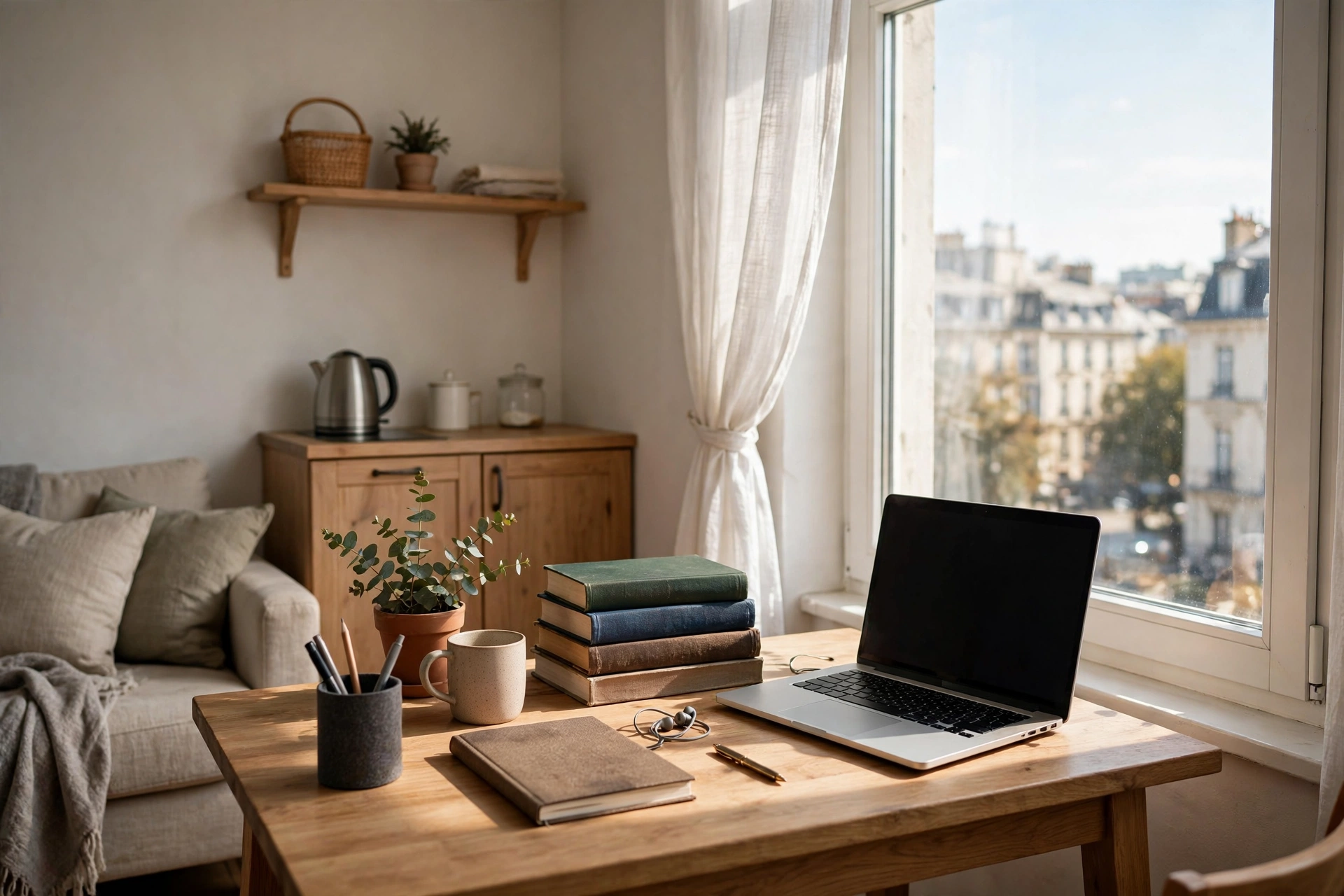
Natural light is free focus fuel — students who study in daylight report better concentration and less eye strain than those under a single ceiling bulb. Push your desk against the window wall so daylight falls over your work, not behind your screen (which causes glare). A basic 40-inch desk from IKEA’s LACK or MICKE line runs $30–$70, and the window placement costs nothing. Pro tip: face sideways to the window rather than directly at it — you get the light without the squint, and your video-call background becomes a bright, flattering wall instead of a backlit silhouette.
2. Mount a Fold-Down Wall Desk
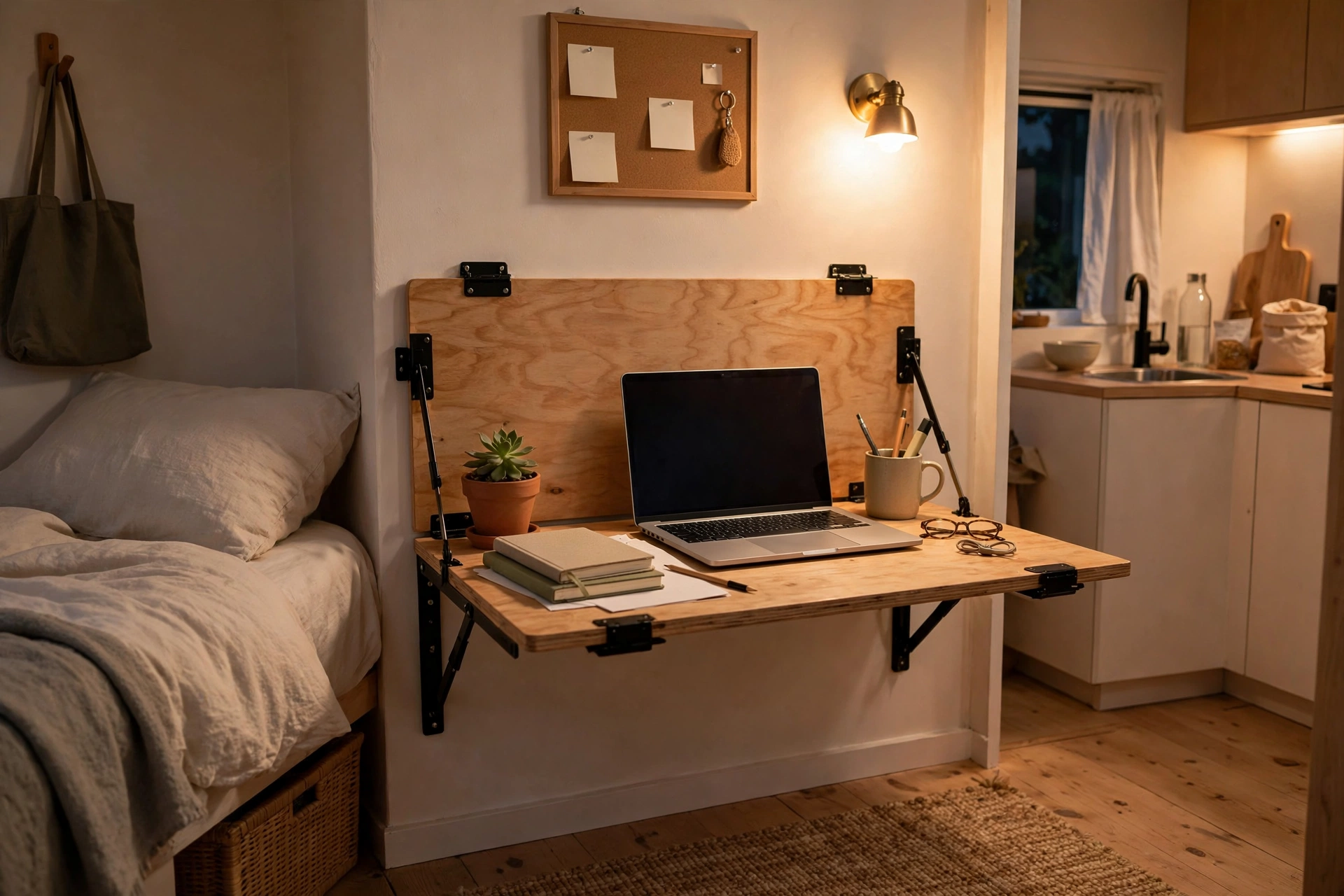
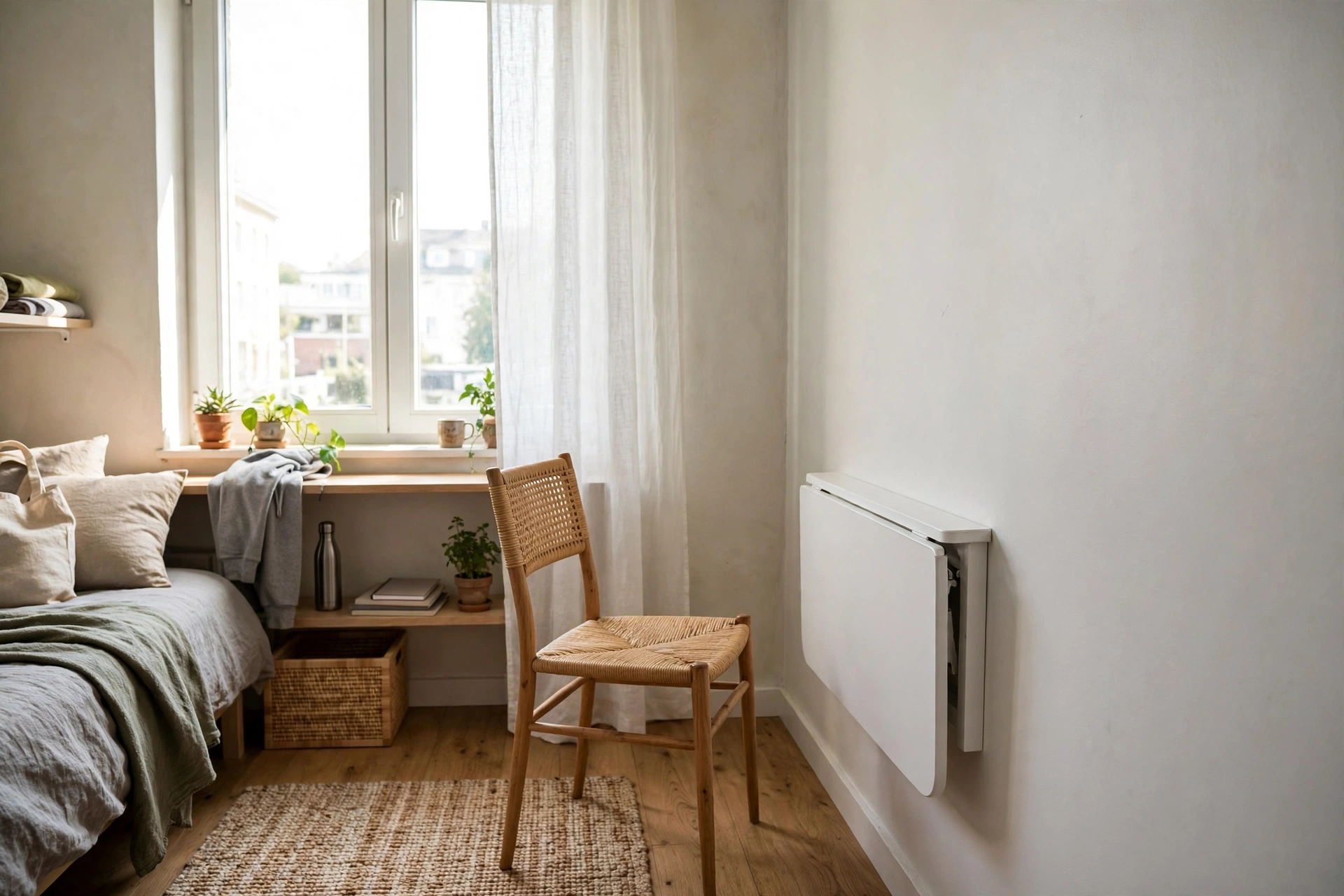
When your studio barely fits a bed, a wall-mounted drop-leaf desk is the answer: fold it down for a full study surface, fold it up when the laptop closes, and your “office” vanishes into the wall. Basic wall-mounted drop-leaf tables run $50–$90 on Amazon or IKEA, mount at standard desk height (29–30 inches), and hold a laptop plus textbooks easily. Pro tip: mount a small shelf or pegboard directly above the folded desk — when the desk is up, the wall still looks styled, and when it’s down you’ve got supplies at arm’s reach. This is the same disappearing-furniture logic behind our studio apartment home office ideas.
3. Get an Adjustable Task Lamp
Dorm-grade overhead lighting is the enemy of late-night study sessions — a dedicated task lamp puts light exactly on your notes without lighting up the whole room (crucial when a roommate sleeps five feet away). Clamp-style architect lamps with adjustable color temperature run $25–$45; use cool white for focus sessions and warm for winding down. Pro tip: position the lamp on the opposite side of your writing hand to kill shadows across the page — left side if you’re right-handed. Layered, focused lighting like this is the core principle in our studio apartment lighting ideas.

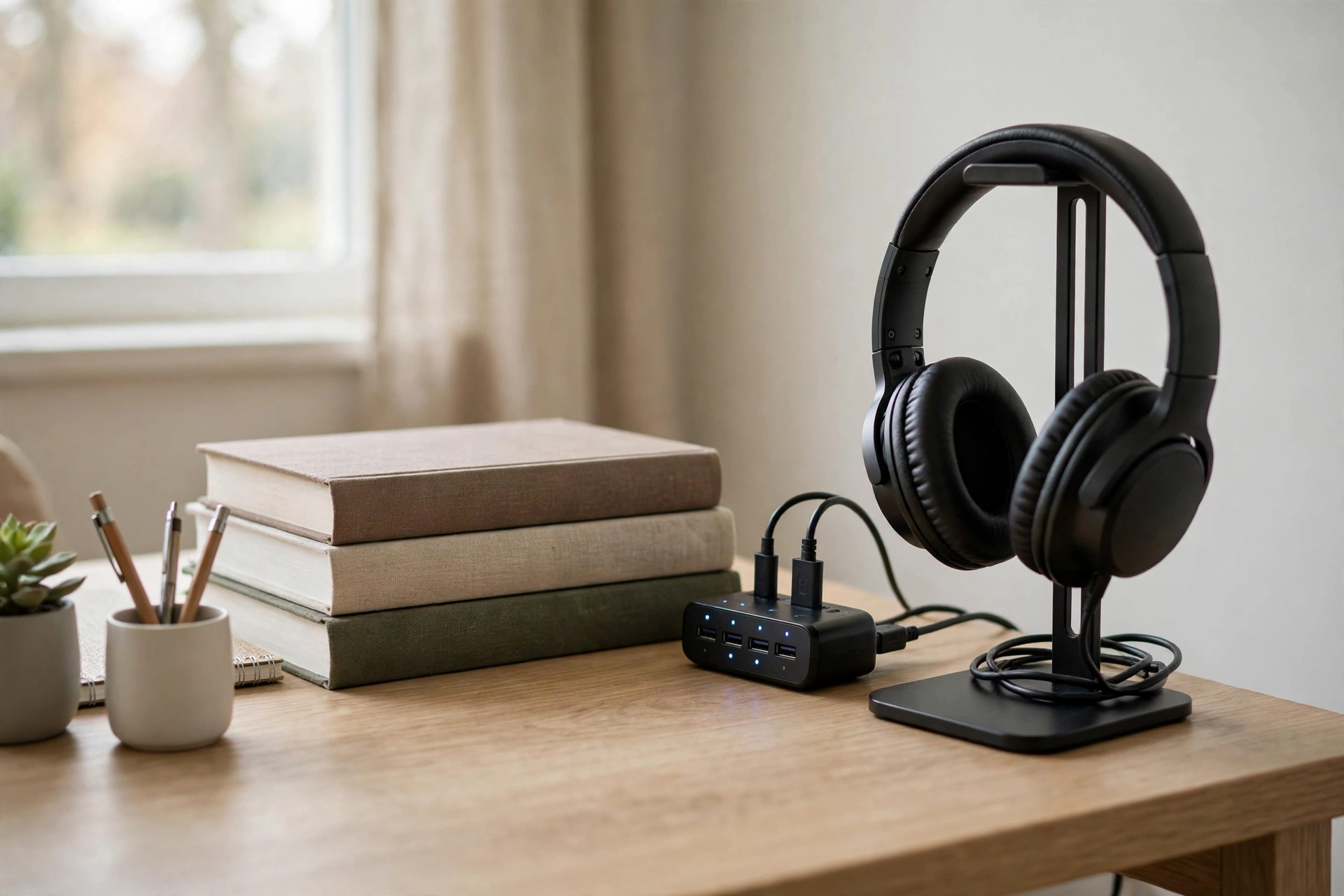
4. Build a Headphone Study Corner
In a studio — especially a shared one — silence is a luxury you have to manufacture. A dedicated headphone setup (a hook by your desk plus a shared charging spot, $12–$20 for a stand with USB charging) normalizes the “I’m studying” signal. Decent noise-cancelling headphones are the single best student investment after the laptop itself; solid budget options run $40–$80. Pro tip: create a “focus playlist” rule with roommates — headphones on means do-not-disturb unless the building is on fire. It’s a tiny social contract that prevents a thousand interruptions.
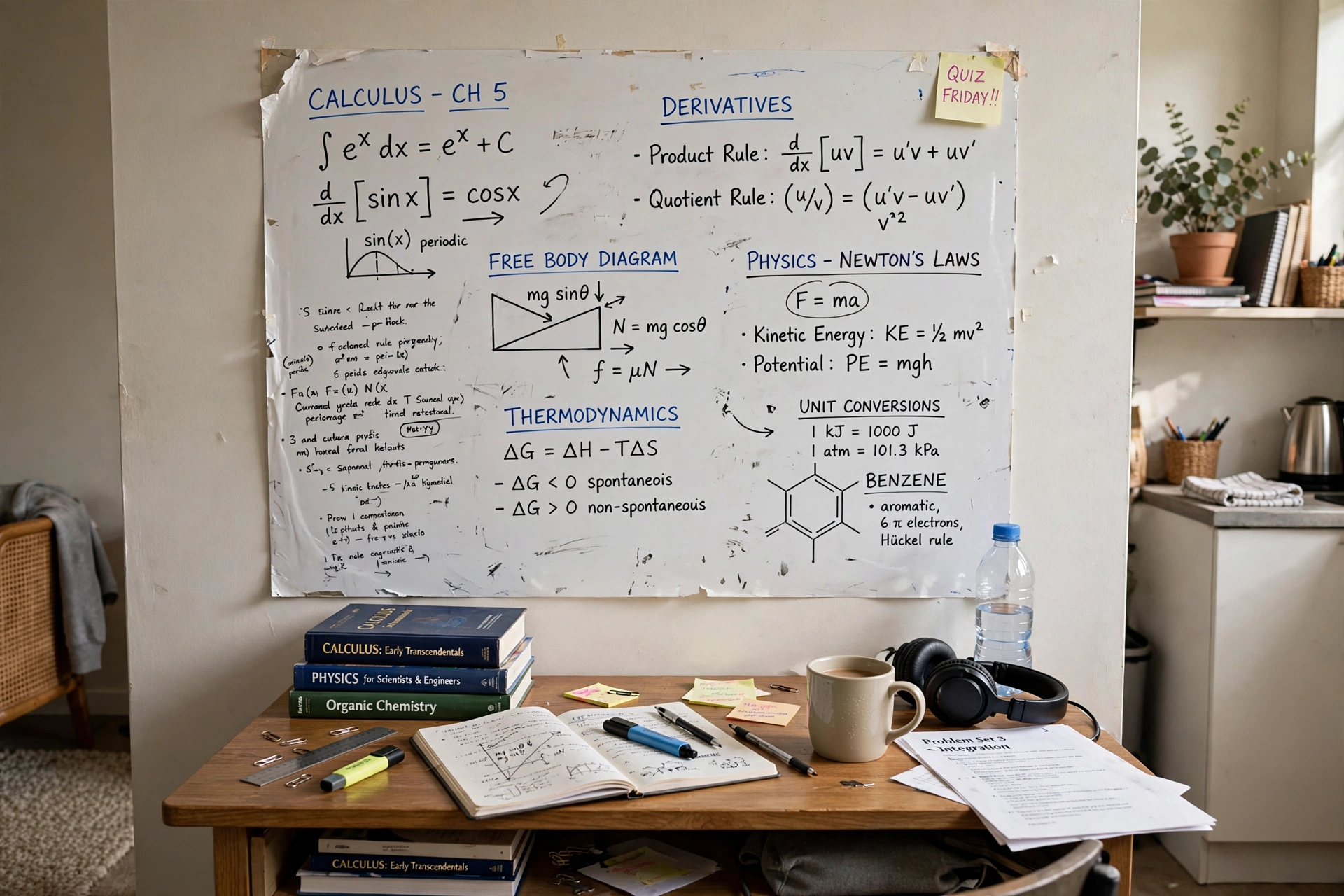
5. Turn One Wall Into a Whiteboard
Peel-and-stick whiteboard sheets ($15–$25 for a 3×4-foot roll) turn any wall into a giant study surface — perfect for working through problem sets, mapping essay outlines, or drilling vocab where you’ll actually see it. They’re renter-friendly (peel off cleanly) and erase with a dry cloth. Pro tip: dedicate zones on the board — this week’s deadlines, formulas to memorize, a running to-do list — so it works as a command center, not just a doodle wall. Photograph it before erasing anything important.
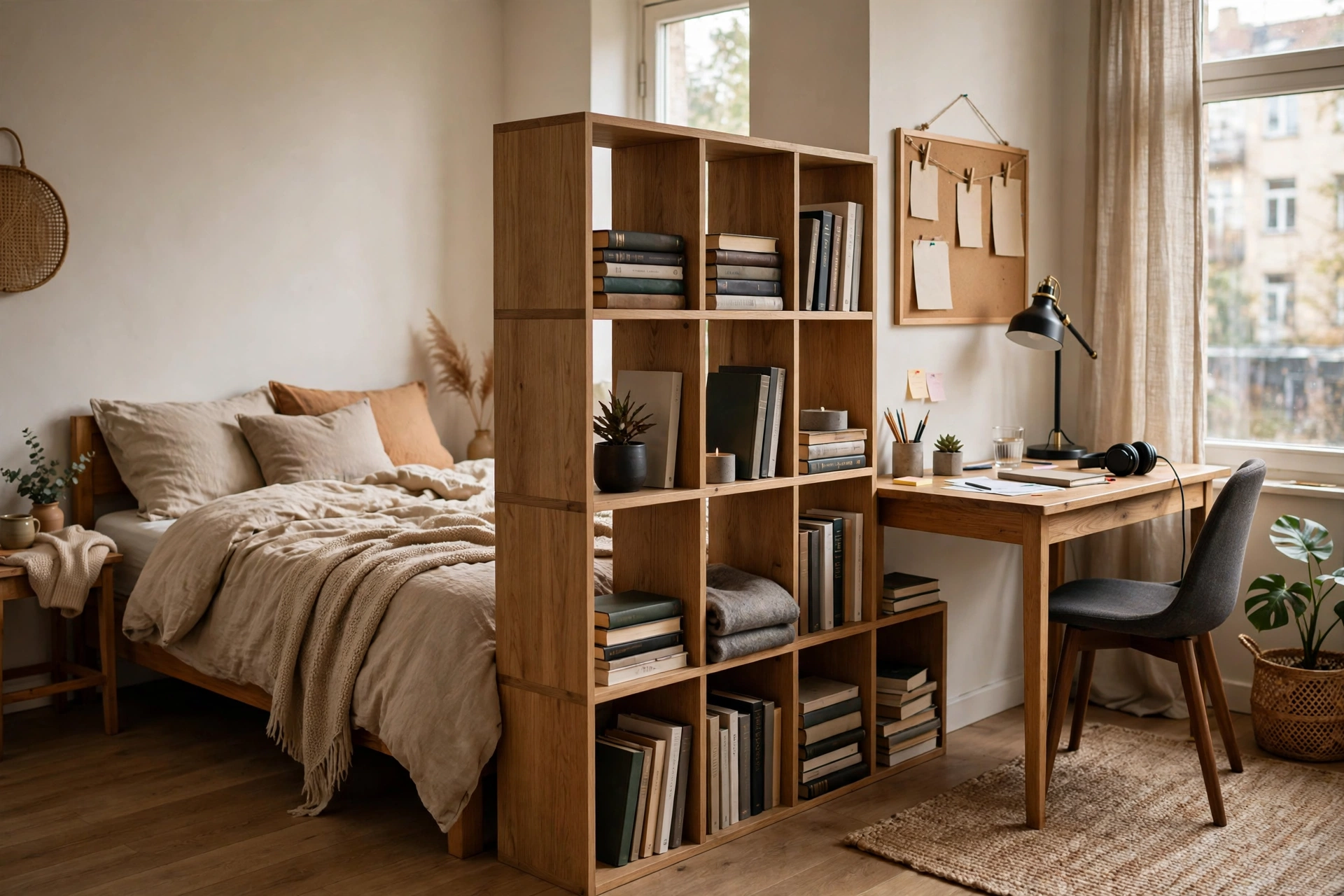
6. Divide a Study Nook With a Bookshelf
A low open bookshelf placed perpendicular to the wall carves out a study nook that feels separate from the sleeping zone — the psychological boundary helps your brain switch into work mode. A 4-cube unit runs $35–$70 at IKEA or Target; fill the study-facing cubes with textbooks and supplies, the living-facing cubes with decor. Pro tip: keep the shelf under 48 inches tall so it zones the space without blocking light — a studio should feel divided, never chopped up. This zoning trick comes straight from our studio apartment layout ideas.
Budget Multifunctional Furniture
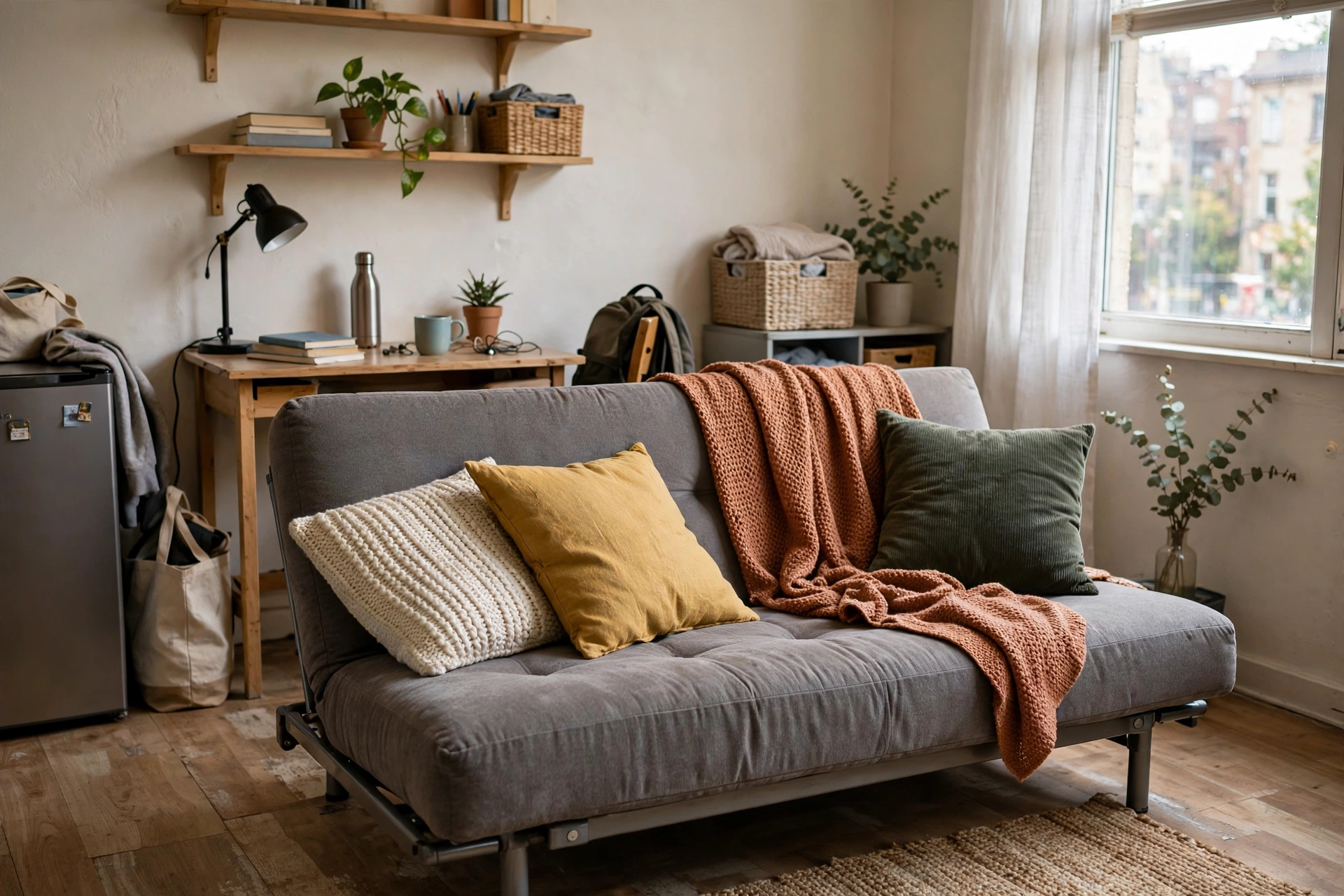
7. Sleep and Sit on a Convertible Futon
The futon is the undisputed king of student furniture: a sofa by day for hanging out, a bed by night for you, and a guest bed when friends crash. A decent click-clack futon with a real mattress (not the paper-thin kind) runs $150–$300 — look for ones with solid wood or metal frames that survive four years of daily conversion. Pro tip: add a 2-inch memory foam topper ($40–$60) and the futon sleeps like a real bed; without it, you’ll feel every slat by midterms.
8. Use a Storage Ottoman as a Coffee Table
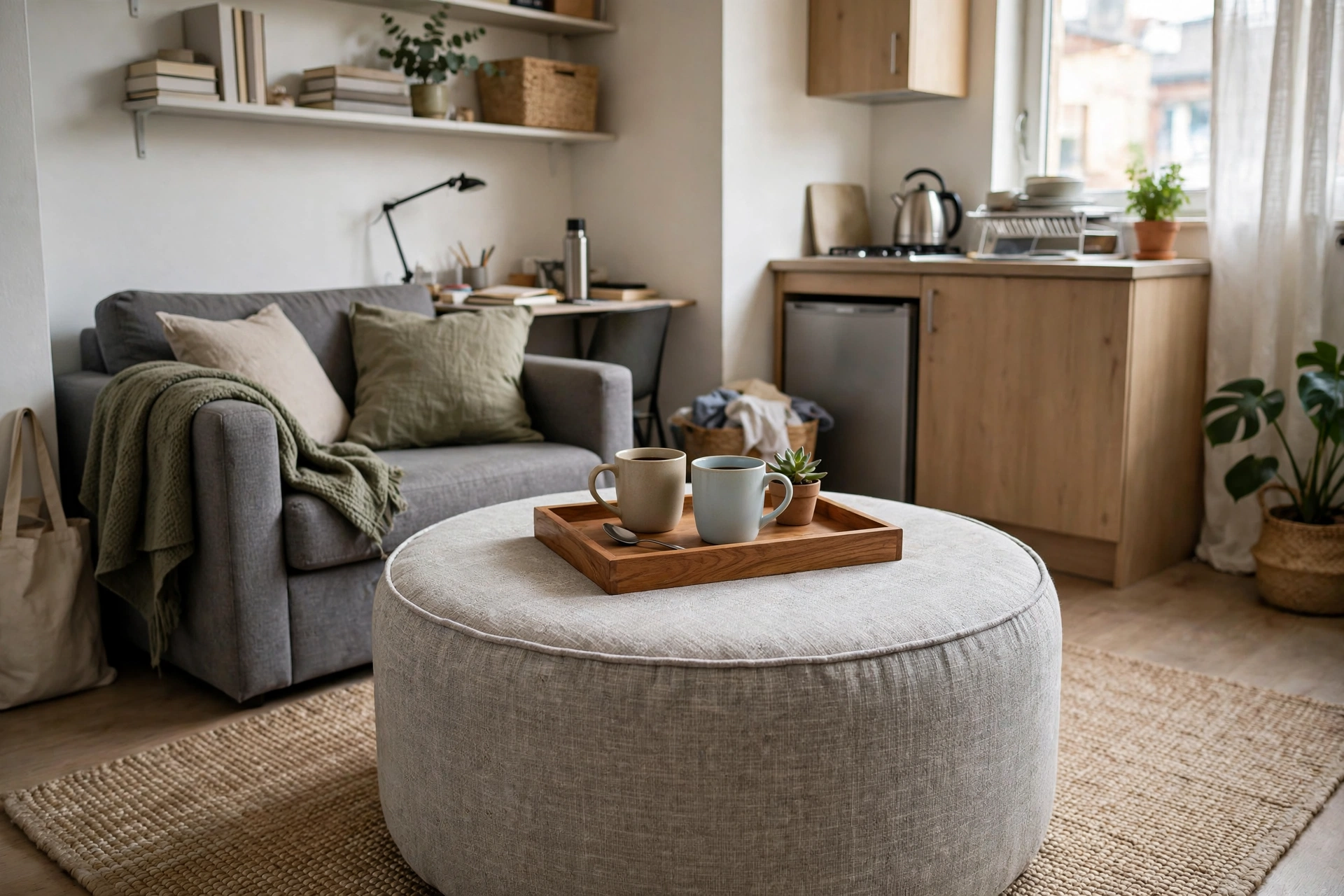
A storage ottoman ($40–$80) is three student essentials in one: coffee table, extra seat when friends come over, and hidden storage for blankets, chargers, and textbooks. Choose one with a firm, flat top so drinks don’t wobble, and the soft edges are kinder to shins in tight spaces than a hard-cornered table. Pro tip: pick one with a reversible tray top — flip it over and you’ve got a stable surface for laptops and mugs without buying a separate tray.
9. Loft the Bed to Reclaim Floor Space
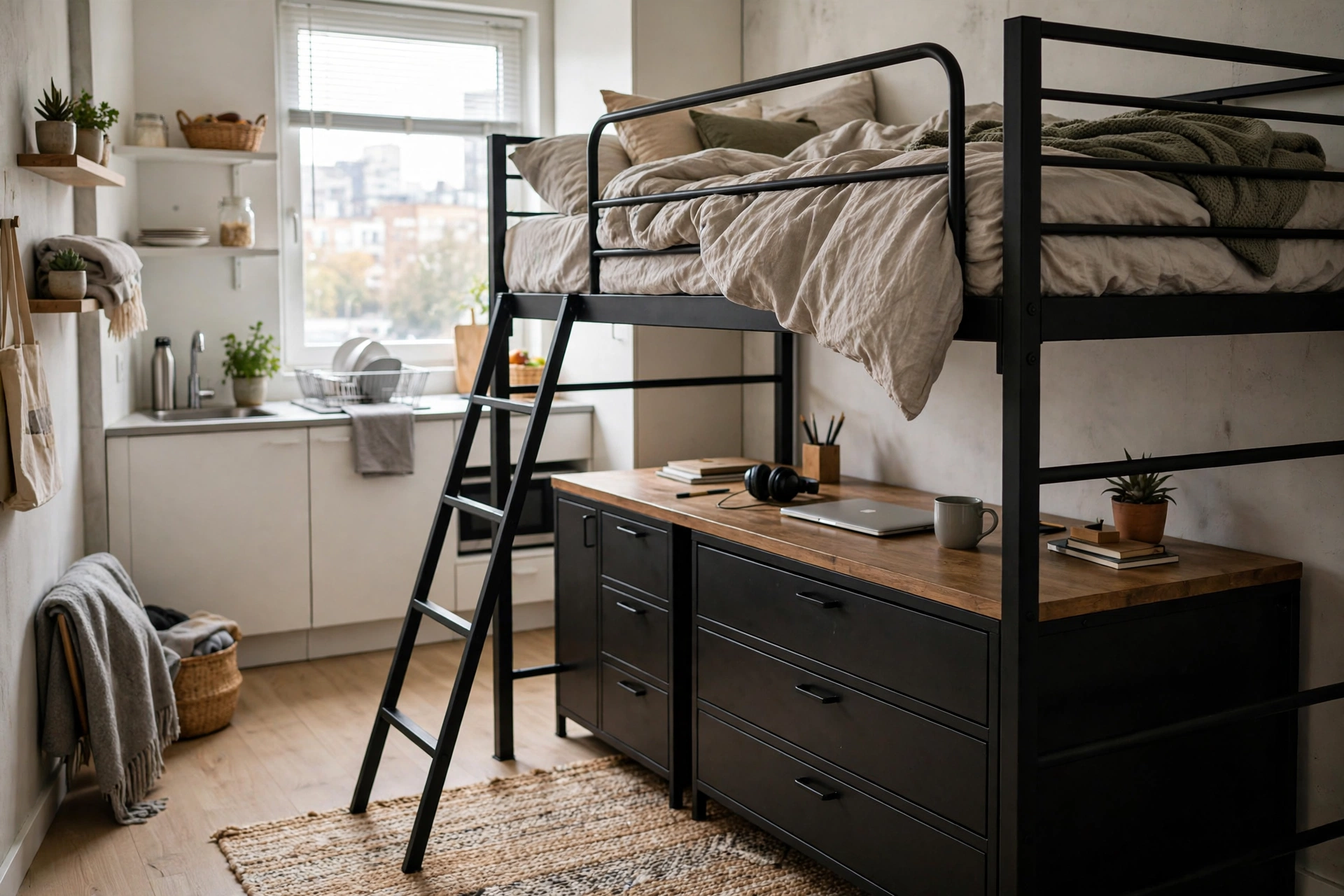
A loft bed is the ultimate student space hack — sleeping up top frees roughly 35 square feet underneath for a desk, a lounge zone, or serious storage. Sturdy metal loft frames run $150–$250 and assemble in an afternoon; just check your lease and ceiling height first (you want at least 33 inches of sitting clearance up top). Pro tip: hang a curtain around the underside and the loft becomes a private study cave — the enclosed feeling actually helps focus, like a library carrel you sleep above.
10. Eat and Study at a Drop-Leaf Table
A drop-leaf table ($80–$150) is a console against the wall on weekdays and a full dining table when friends come over — leaves down it seats one for studying, leaves up it seats four for game night. In a student studio, furniture that shape-shifts is worth its weight in ramen. Pro tip: keep two folding chairs ($15–$25 each) tucked in the closet for the expanded mode, and use your desk chair as the daily seat — no need to buy a full chair set.
11. Roll a Cart Anywhere You Need It
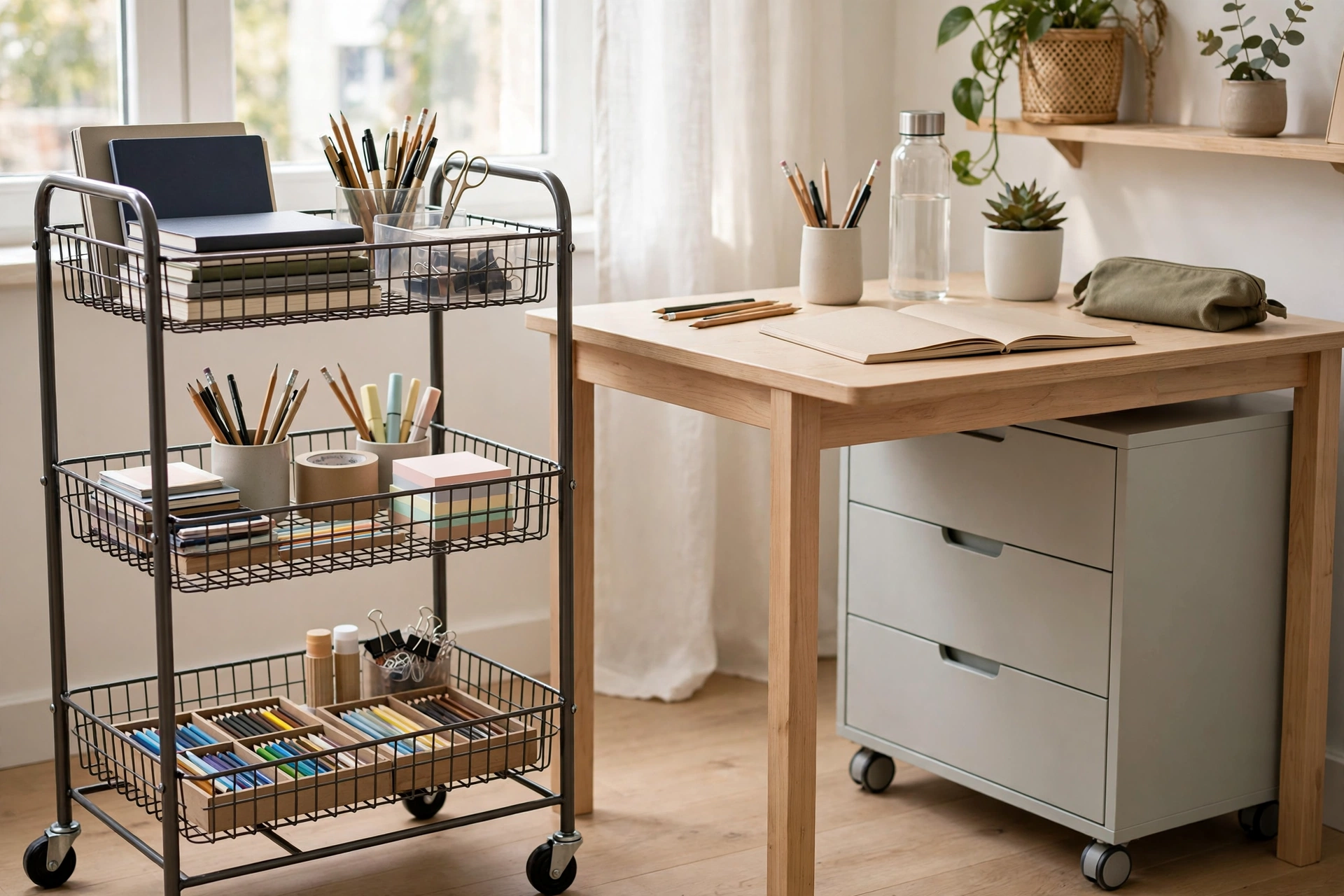
The 3-tier rolling cart (IKEA RÅSKOG is about $30, dupes run $20–$25) is the Swiss Army knife of student furniture: nightstand, kitchen overflow, art-supply station, bathroom organizer — it becomes whatever the week demands, then rolls into a closet when guests arrive. Pro tip: dedicate each tier to one category and add small bins inside ($1–$3 at dollar stores) — carts turn into junk piles fast without internal organization, a storage truth covered in our clever studio apartment storage ideas.
12. Seat Extra Friends on Floor Cushions
Student social life doesn’t fit on one futon — floor cushions ($15–$30 each) stack in a corner when not needed and unfurl into a full lounge setup for movie nights and study groups. Look for ones with removable, washable covers, because student life is messy. Pro tip: store the stack inside a large laundry bag or a cheap garment bag ($5–$10) — it keeps the pile tidy and doubles as guest bedding storage.

Cheap Storage Wins
13. Fill Under-Bed Bins to the Brim
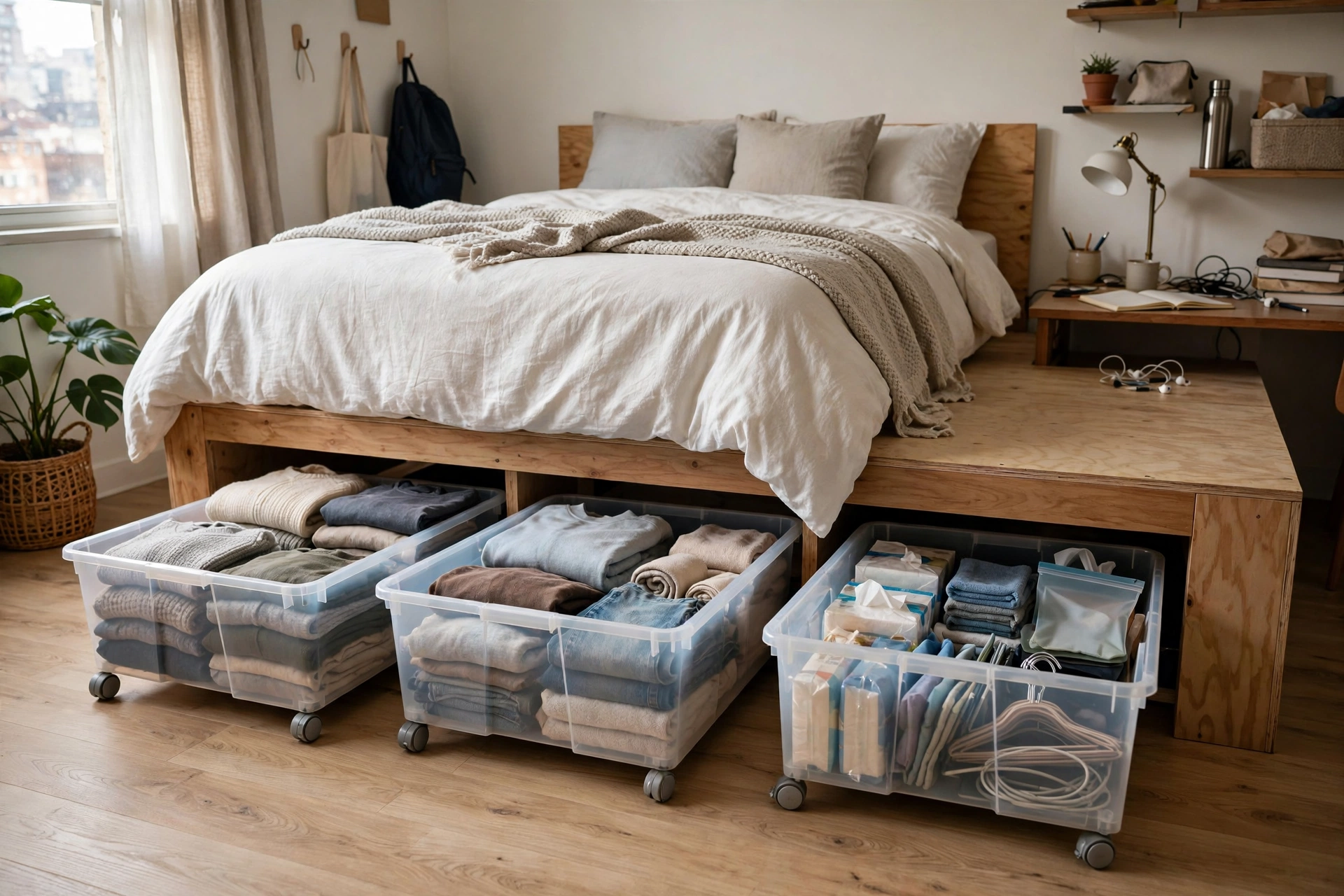
Under-bed space is a full closet hiding in plain sight — slim rolling bins ($12–$20 for a two-pack at Target or IKEA) swallow off-season clothes, extra sheets, and the textbooks you’ll need next semester. In a student studio, the bed is often the biggest furniture piece, so the storage underneath should work just as hard. Pro tip: label each bin with painter’s tape and a marker — “winter clothes,” “extra sheets,” “fall textbooks” — so you never have to drag out all four bins to find one thing at midnight before an exam.
14. Hang Over-Door Organizers Everywhere
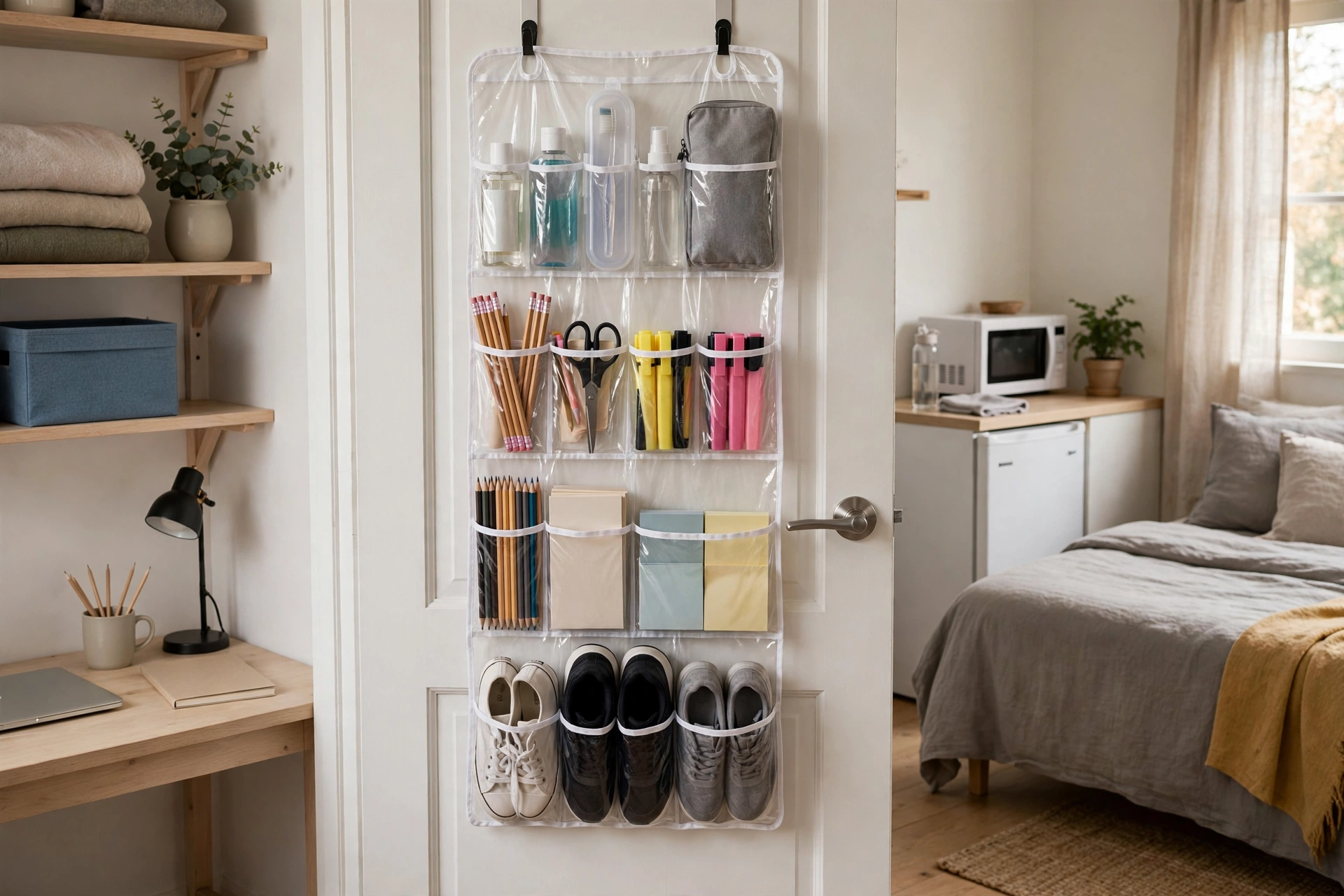
Every door in a student studio is unused storage waiting to happen — over-door organizers ($8–$18) hook on with zero tools and hold shoes, toiletries, snacks, school supplies, and cleaning products. Put one on the closet door, one on the bathroom door, one on the entry door. Pro tip: the clear-pocket kind beats fabric ones for students — you can see everything at a glance, which means you’ll actually use what’s in there instead of forgetting it exists.
15. Tension-Rod the Under-Sink Cabinet
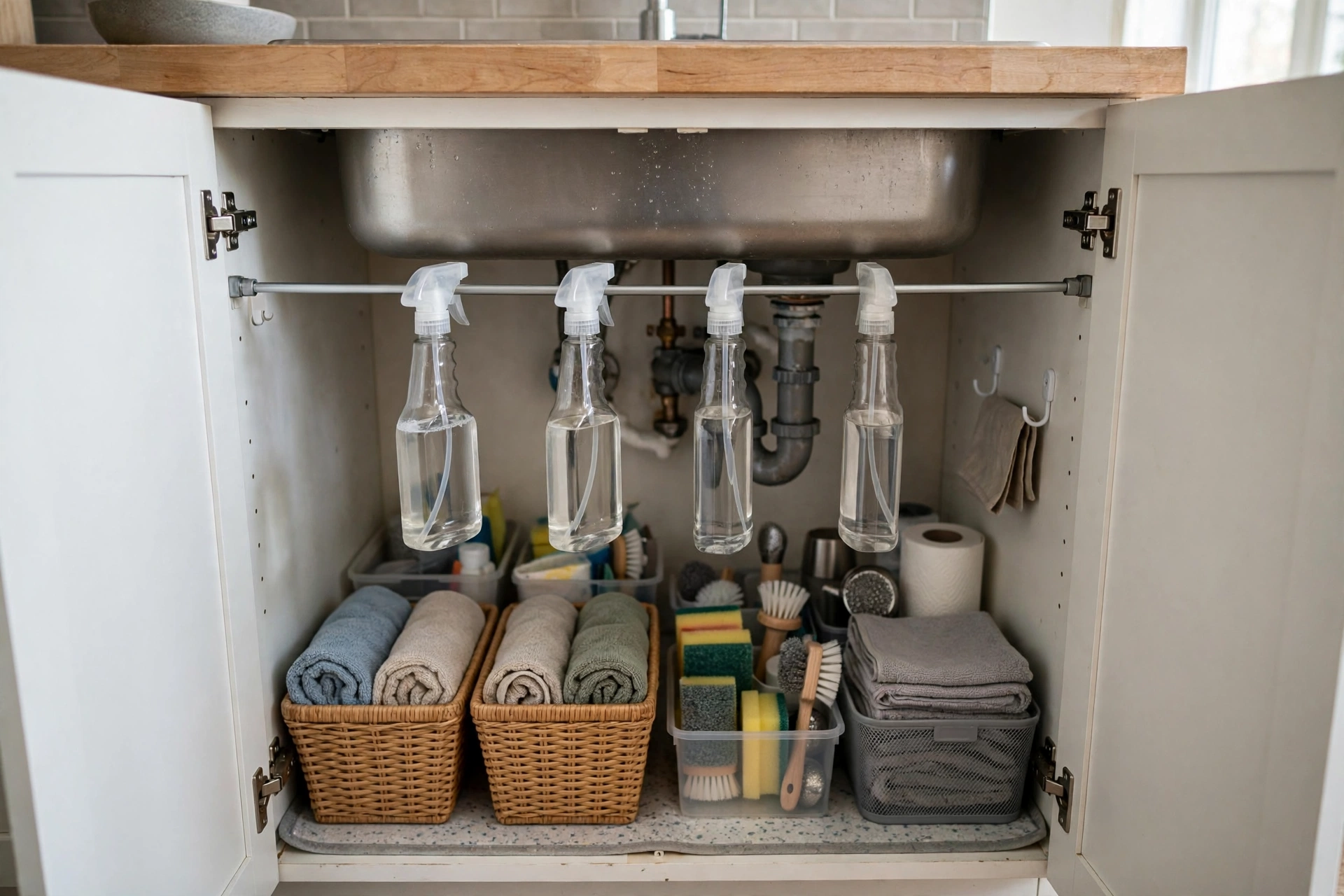
A $8–$12 tension rod wedged across the under-sink cabinet creates a hanging rail for spray bottles, instantly doubling the usable space in the most awkward cabinet in the apartment. No drilling, no damage, five-minute install — and your landlord will never know. Pro tip: pair the rod with a $5 stackable shelf from the dollar store and the cabinet goes from chaos to genuinely organized for under $20 total.
16. Build Shelves From Milk Crates
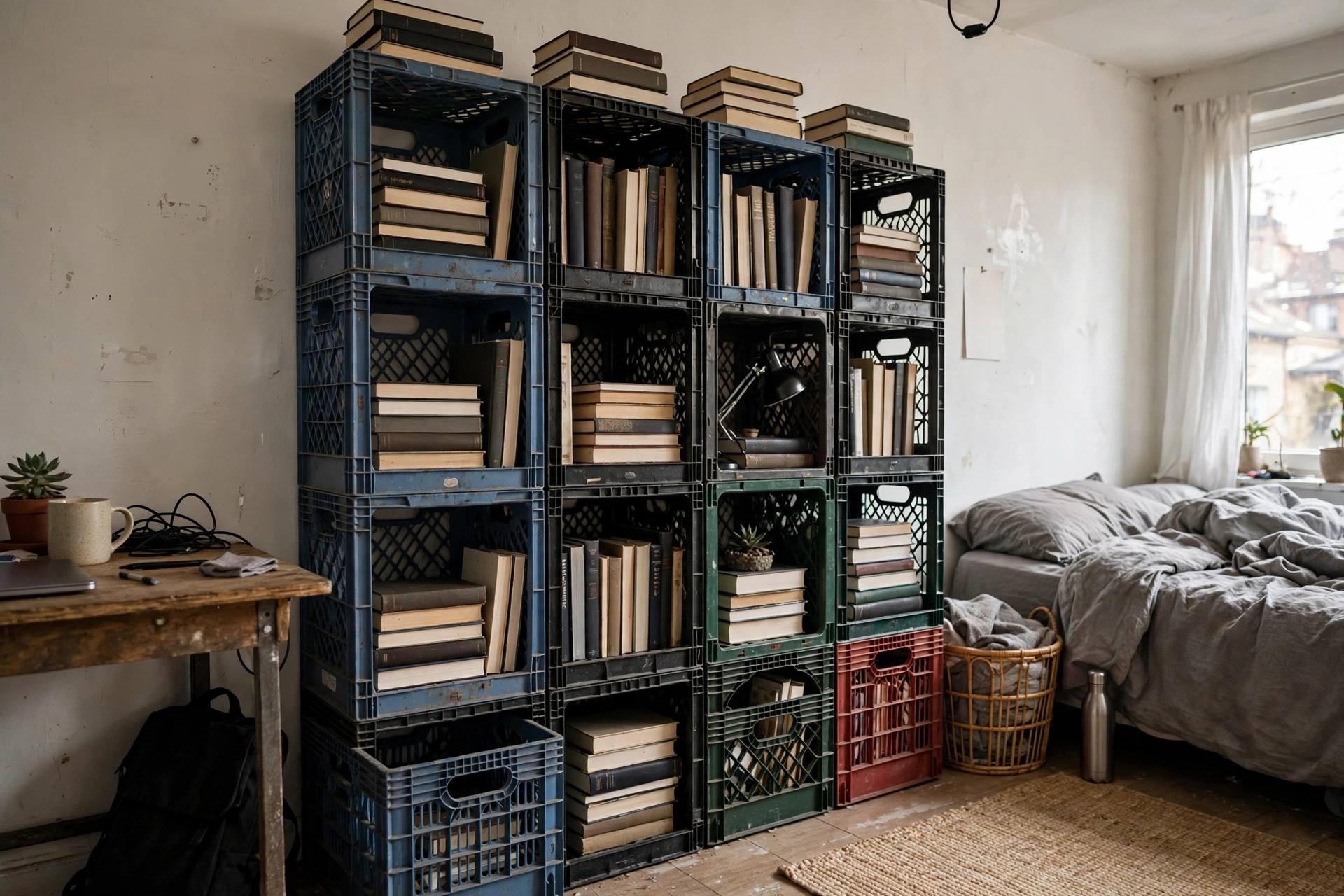
The classic student shelf never dies because it works — milk crates ($5–$10 each, or free if you ask nicely at the right places) stack into sturdy, modular shelving for books, shoes, and pantry goods. Zip-tie them together for stability and you’ve got a bookcase for under $40 that moves with you. Pro tip: flip every other crate on its side so the openings alternate — it looks intentional instead of improvised, and the varied cubby sizes fit more stuff.
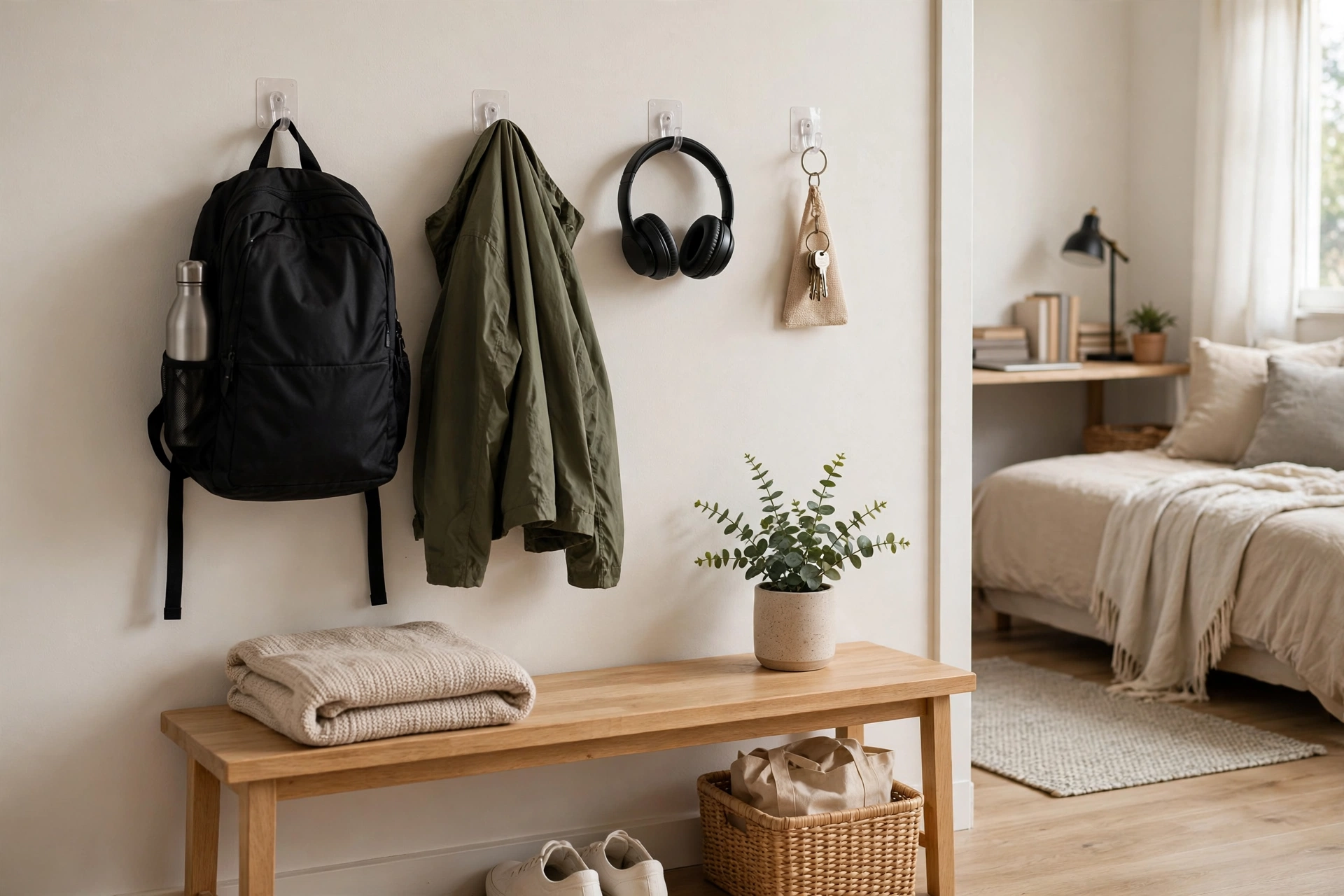
17. Command-Hook Everything to the Walls
Adhesive hooks are a student’s best friend — they hold backpacks, jackets, keys, headphones, and even lightweight shelves with zero holes and zero deposit risk. A variety pack ($10–$15) covers a whole studio. They’re the backbone of renter-friendly decorating, as our renter-friendly studio apartment ideas explain in detail. Pro tip: clean the wall with rubbing alcohol first and wait a full hour before hanging anything — rushed installs are the number one reason hooks fail at 2 a.m. with a crash.
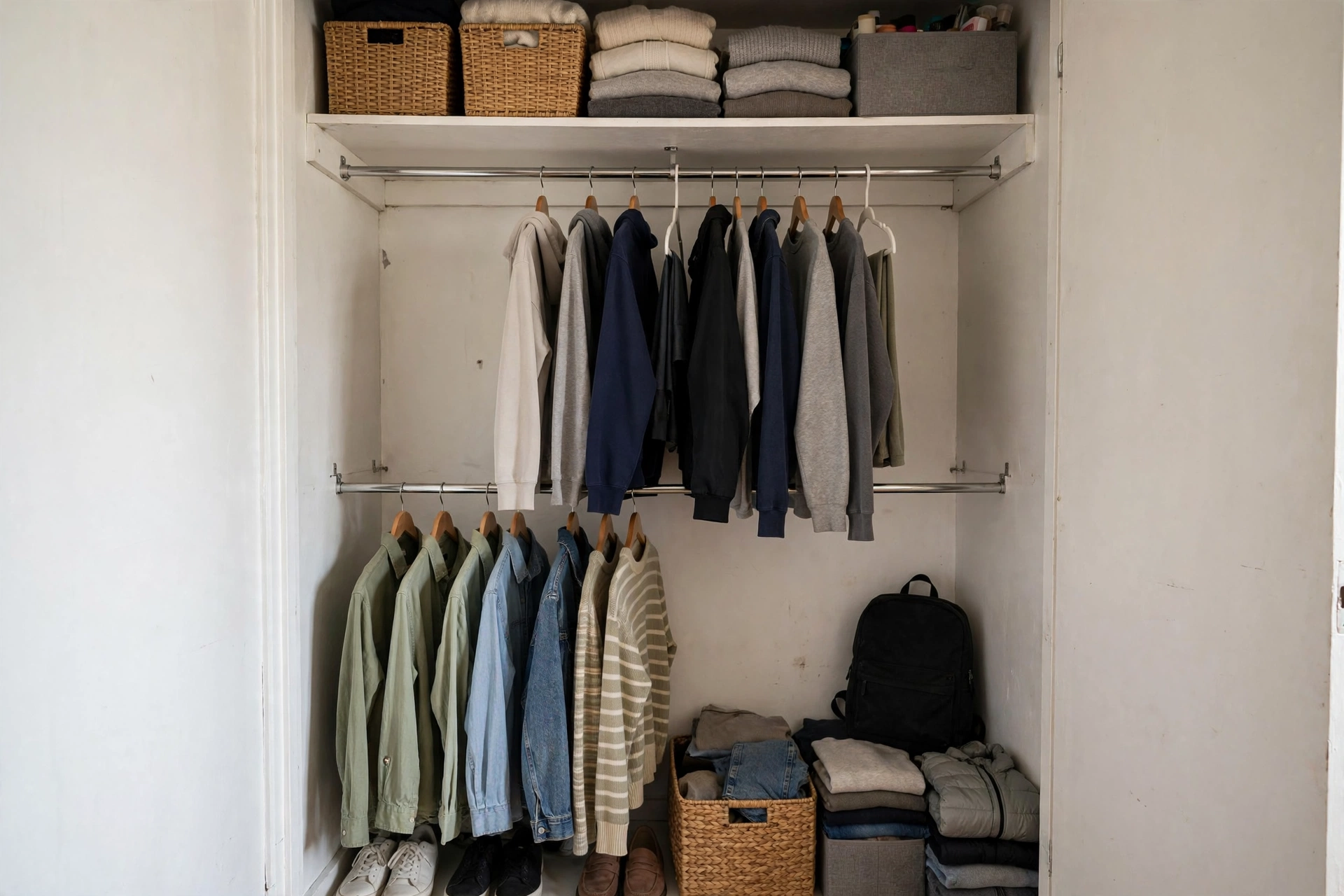
18. Double the Closet With a Second Rod
Student closets are always too small for four seasons of clothes — a tension-style double-hang rod ($15–$25) instantly doubles hanging capacity by adding a lower tier for shirts and pants. No tools, no damage, and it comes down in seconds at move-out. Pro tip: hang current-season clothes on the top rod and off-season on the bottom — when the seasons flip, just swap the rods’ contents instead of reorganizing everything.
Dorm-to-Adult Style Upgrades
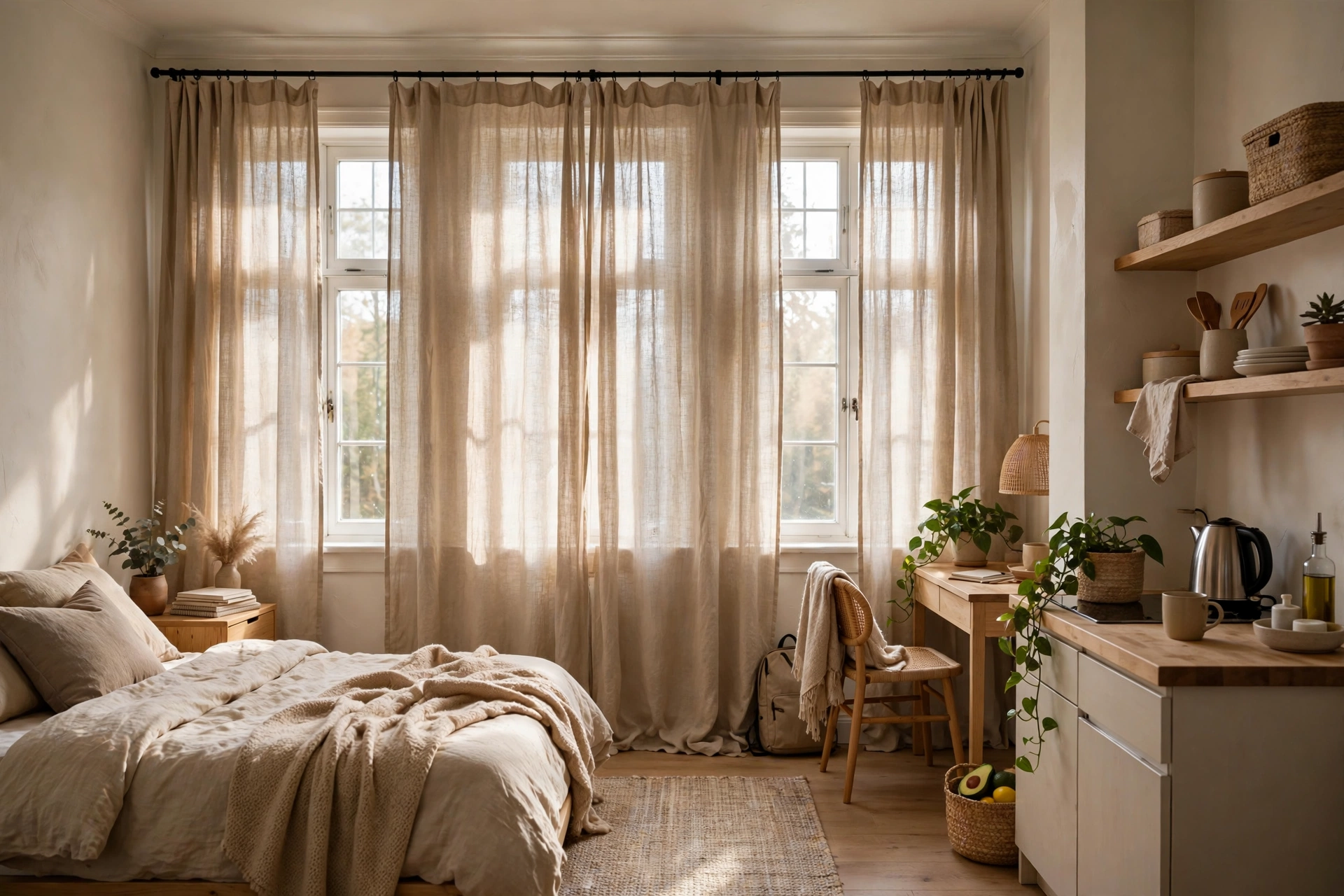
19. Hang Real Curtains Instead of Blinds
Nothing says “I’ve graduated from dorm life” like real curtains — they soften the room, add height when hung high and wide, and make a rental feel like a home instead of a holding cell. Linen-look panels run $20–$40 per pair at IKEA, and tension rods ($10–$15) mean zero drilling. Pro tip: hang the rod 4–6 inches above the window frame and let the curtains just kiss the floor — the high-and-long trick makes ceilings look taller and windows look bigger, the oldest designer illusion in the book.
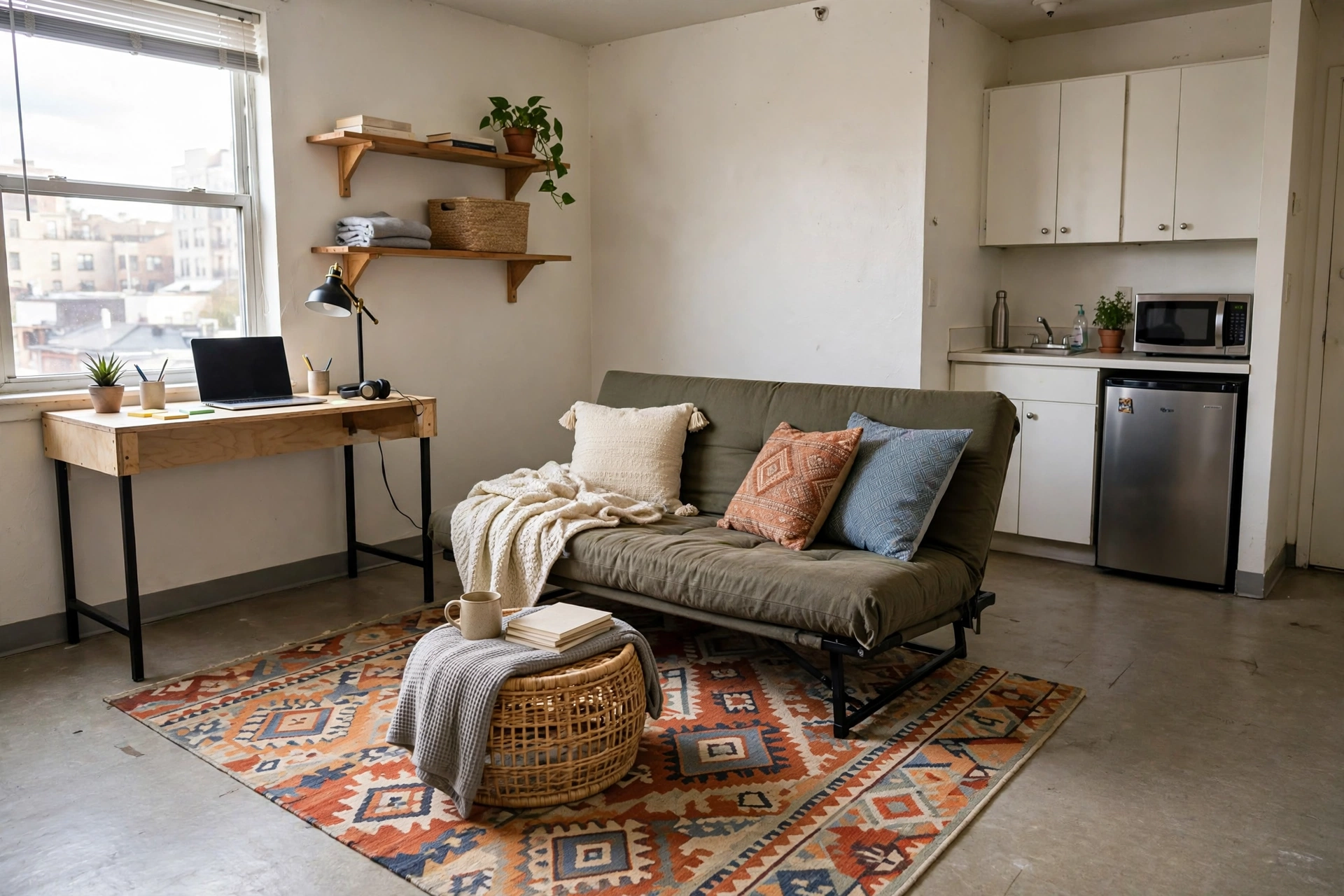
20. Define Zones With One Area Rug
A single area rug ($60–$150 for 5×7 at IKEA, Target, or Rugs USA) does triple duty in a student studio: it defines the living zone, hides ugly rental flooring, and makes the whole space feel intentional. It’s the fastest transformation per dollar in this entire guide. Pro tip: buy the rug before anything else and pull your color scheme from it — one confident rug choice makes every later decision (curtains, bedding, art) easier because you have an anchor.
21. Upgrade to a Matching Bedding Set
Mismatched dorm bedding screams freshman year — a coordinated duvet set ($40–$80 for a full/queen set on Amazon) is the cheapest adult upgrade you can make, and the bed dominates a studio visually so the impact is huge. Choose a solid color or subtle pattern in a palette you can build on. Pro tip: buy the duvet cover one size up from your insert for that plush, hotel-bed look — and wash everything before the first use, because new bedding always looks better after one wash.
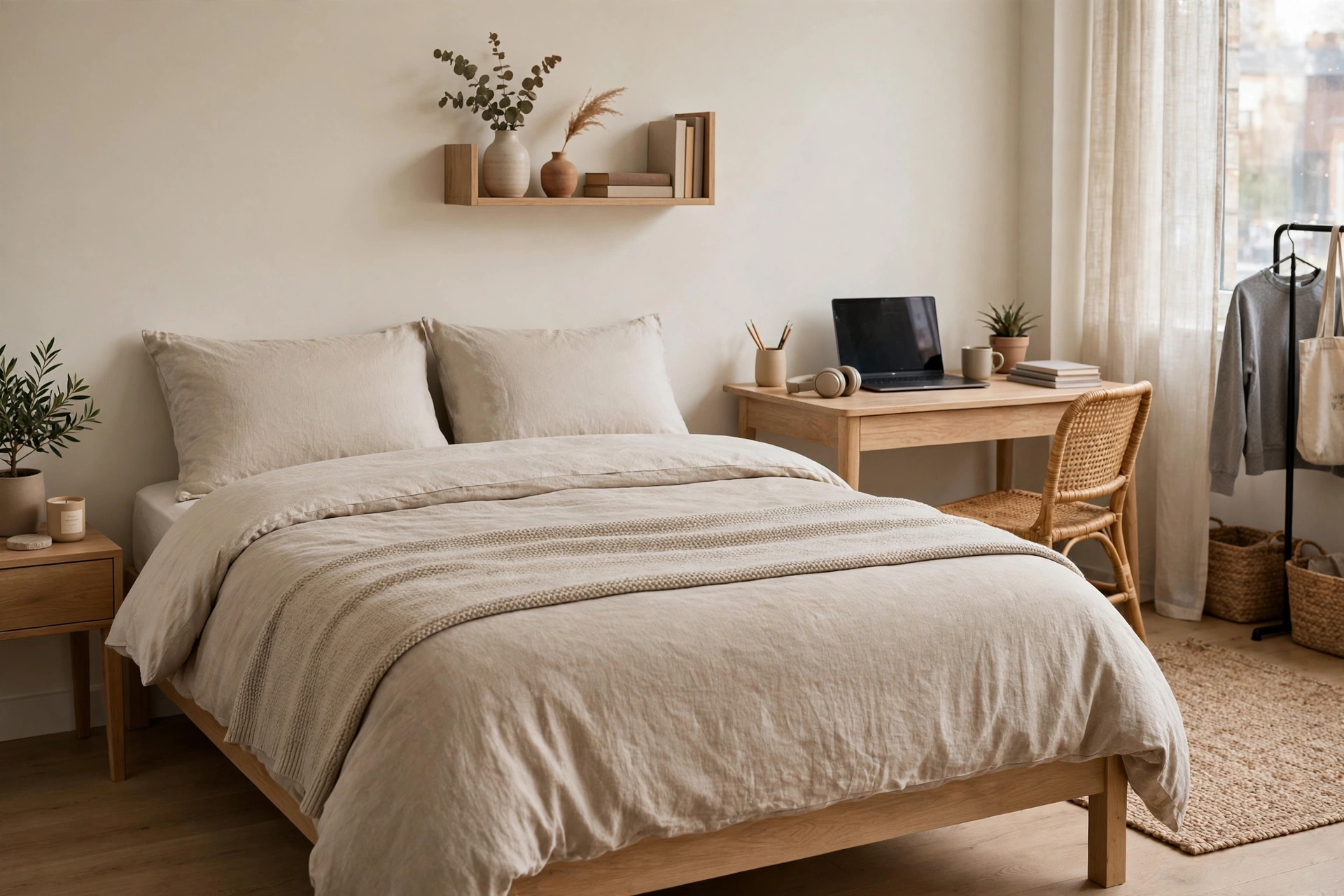
22. Print a Gallery Wall for Under $30
Blank walls are a missed opportunity — print your favorite photos, concert posters, and free art prints at the campus print shop ($1–$3 per large print) and frame them in matching dollar-store frames ($1–$3 each). A 9-frame gallery wall costs under $30 total and makes the studio unmistakably yours. Pro tip: plan the layout on the floor first, photograph it, then hang with adhesive strips — and include one oversized piece as the anchor so the wall looks confident, not timid.
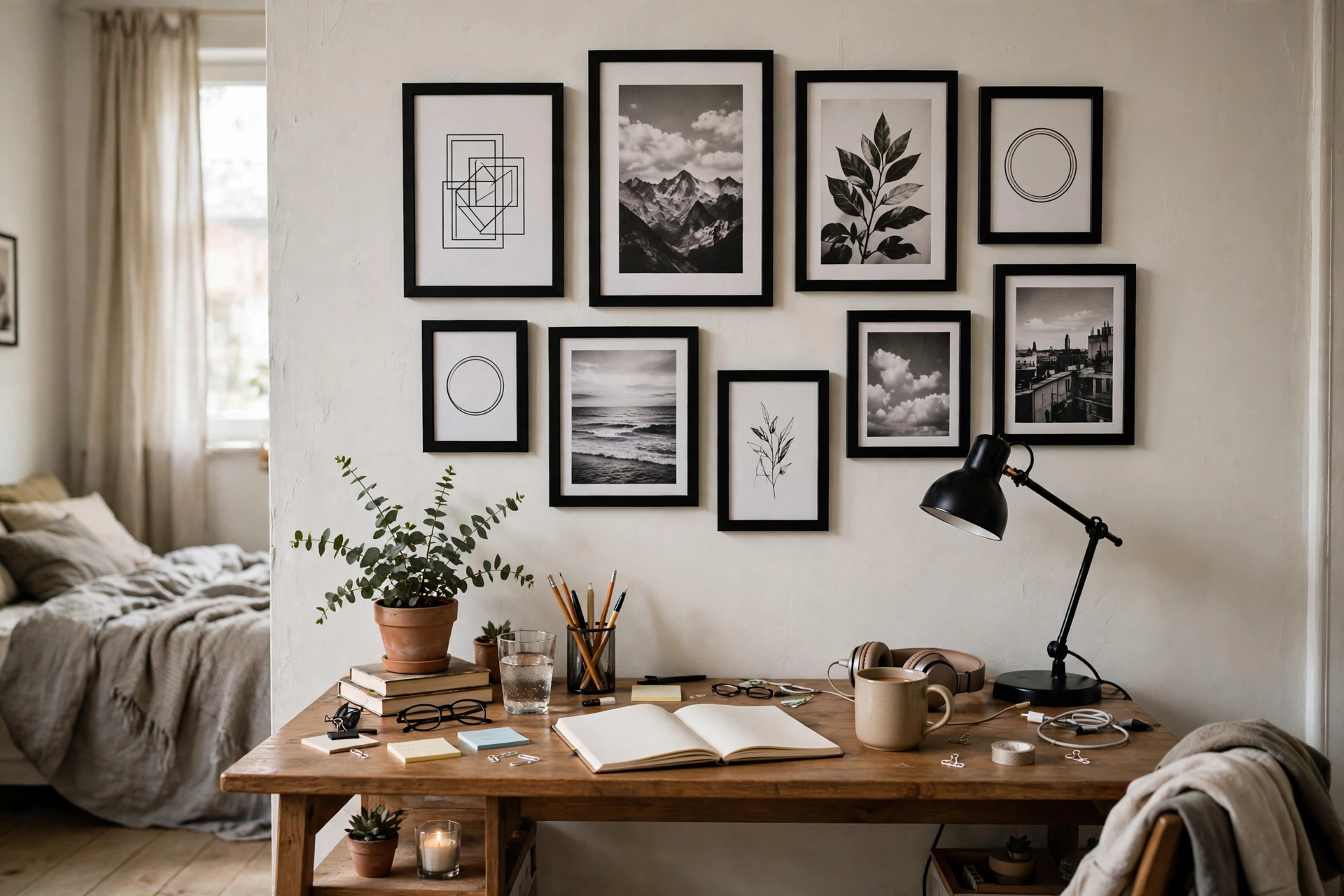
23. Adopt Plants That Survive Neglect
Plants make any space feel alive and cared-for — the trick is choosing ones that survive exam-season neglect. Snake plants, pothos, and ZZ plants ($8–$20 each) thrive on forgetfulness and low light, and they propagate for free, so one plant becomes many by graduation. Pro tip: put a recurring “water plants” reminder on your phone for Sunday evenings — one minute a week keeps them alive, and the ritual is weirdly calming during stressful semesters.
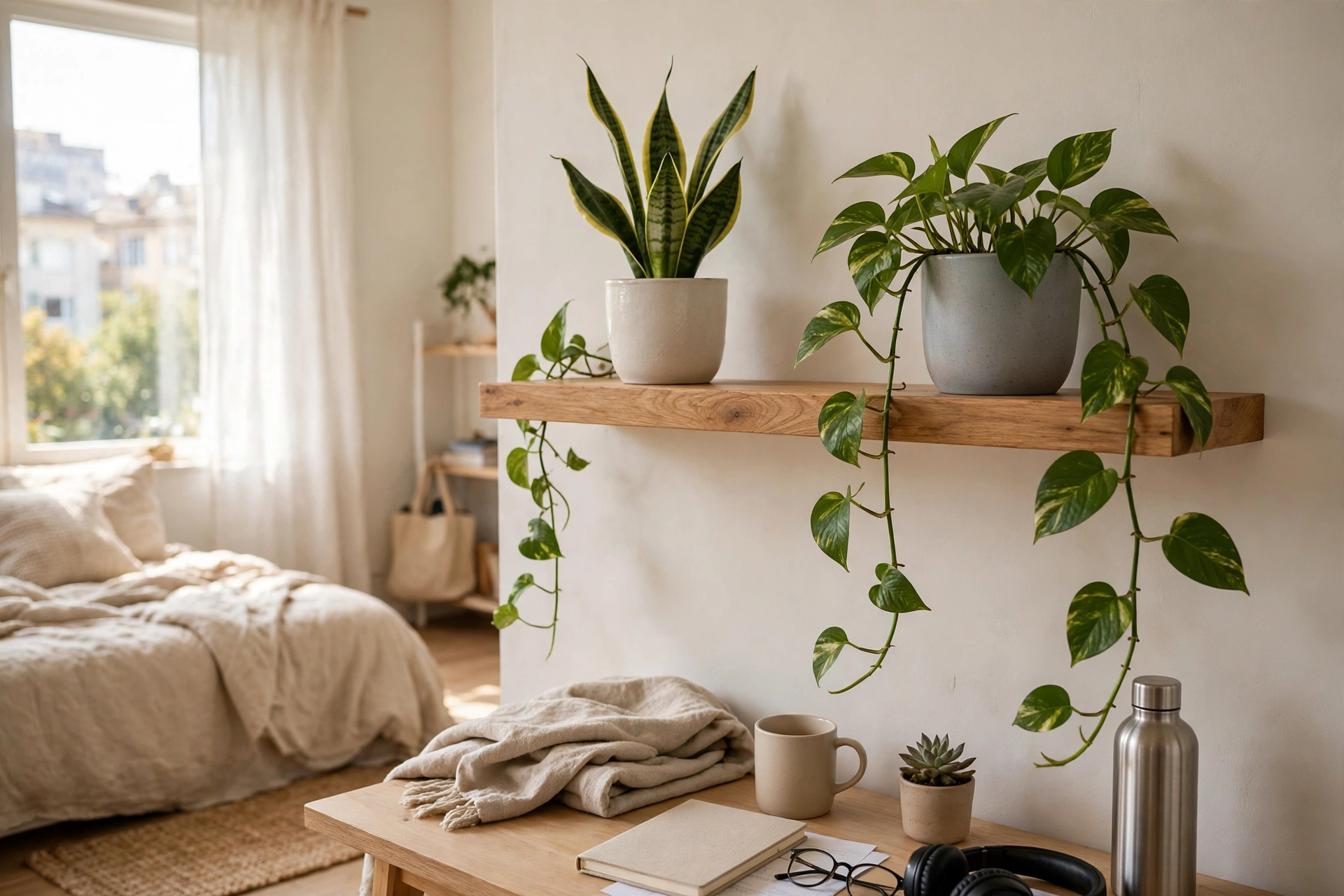
24. Accent One Wall With Peel-and-Stick Wallpaper
Removable wallpaper is the renter-student superpower — one accent wall behind the bed ($35–$60 per roll, 2–3 rolls for a studio wall) adds more personality than any other single change, peels off cleanly at move-out, and photographs beautifully for the ‘gram. Modern patterns go way beyond the florals your mom remembers. Pro tip: start papering from the least visible corner so your learning-curve seams hide behind furniture — by the third strip you’ll be a pro, and nobody will see the first two.
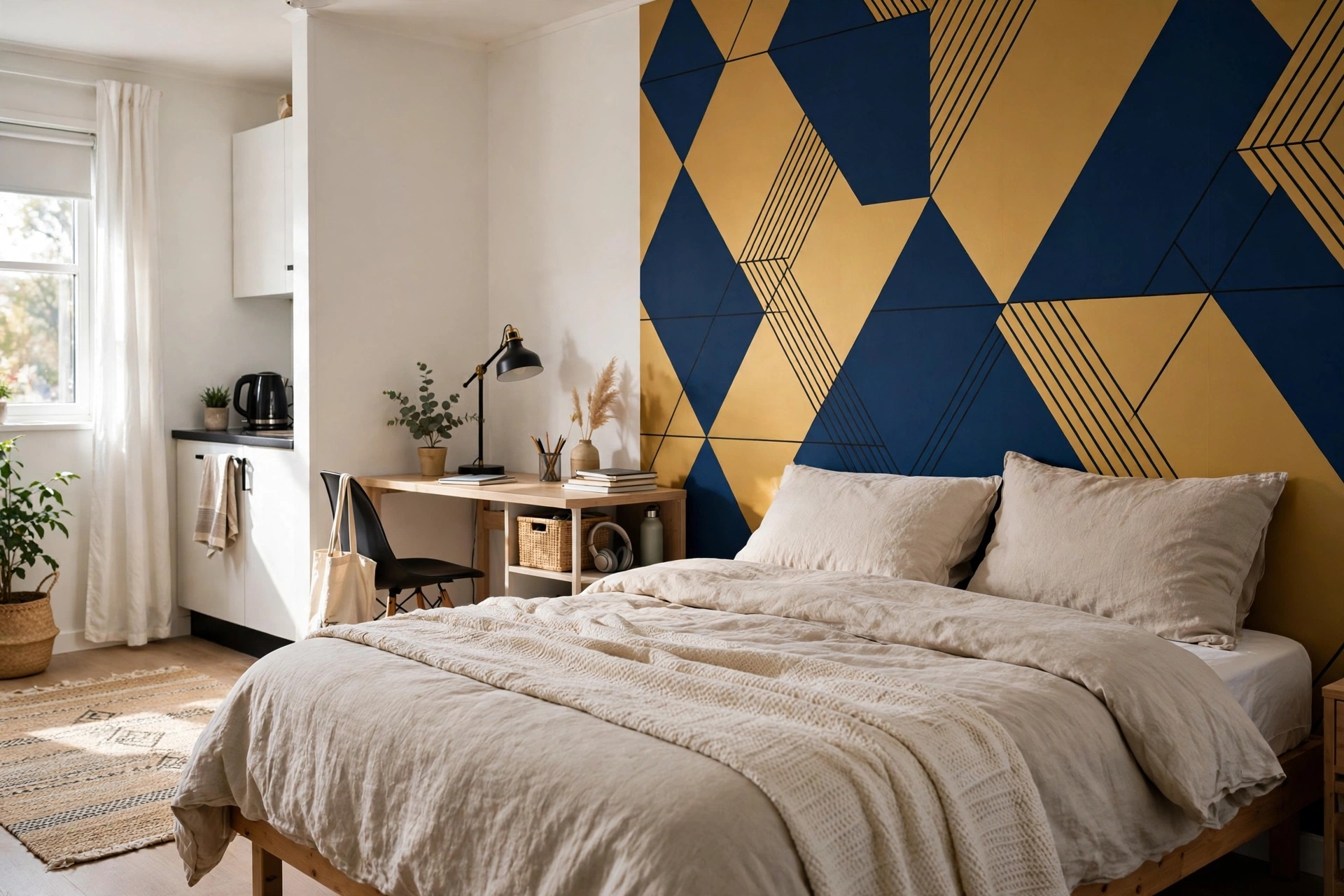
Shared-Space Harmony
25. Make the Headphone Rule Official
Sharing a studio means sharing every sound — the roommate’s 8 a.m. alarm, your midnight essay typing, their reality-TV marathons. The headphone rule (headphones on = do not disturb) is the cheapest peace treaty ever written. Good budget earbuds run $20–$40; the rule itself is free. Pro tip: write the rule down along with quiet hours (say, 10 p.m. to 8 a.m.) and stick it on the fridge — unspoken rules cause fights, written ones prevent them.
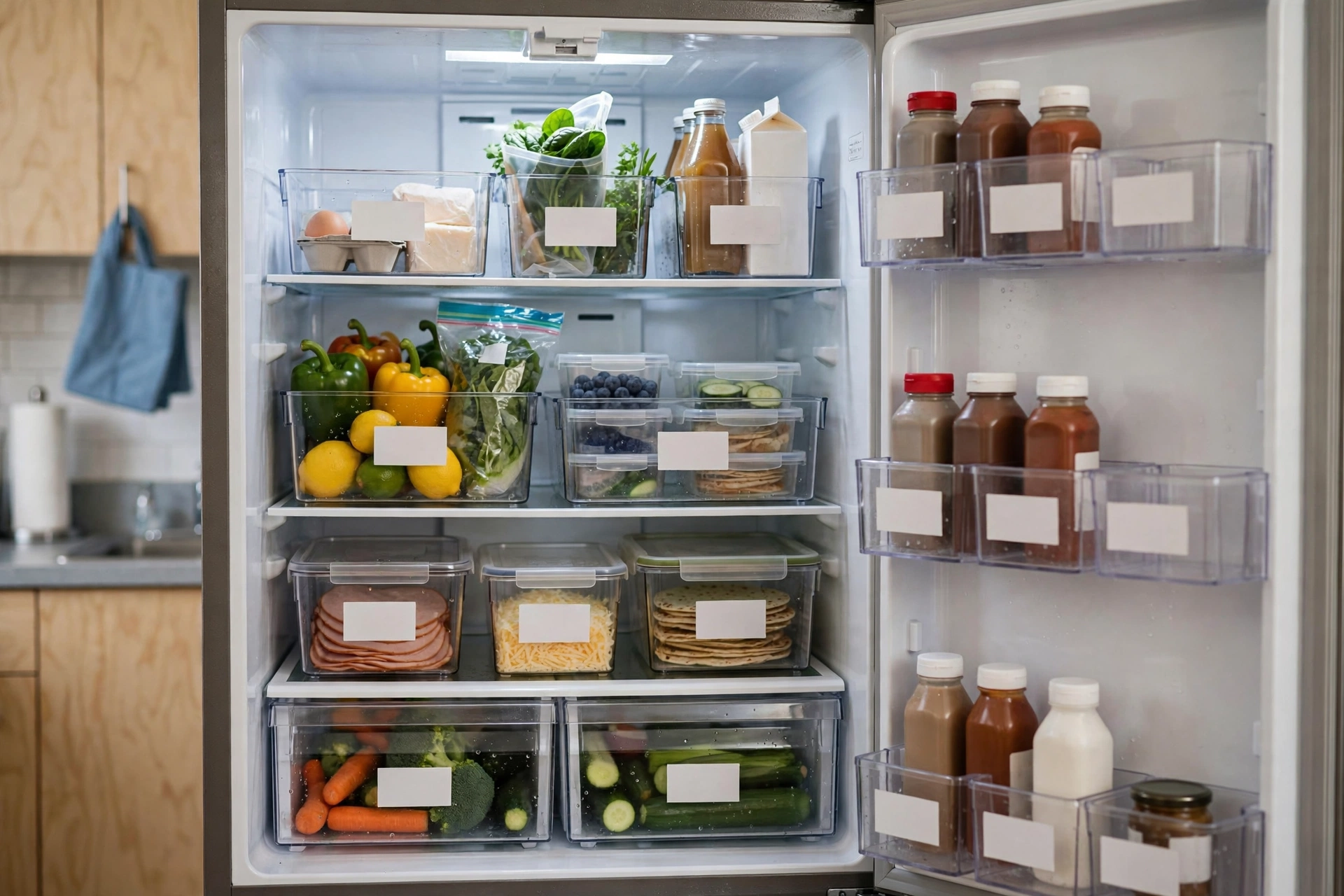
26. Split the Fridge Into Zones
Nothing ends a roommate friendship faster than the Great Yogurt Dispute — split the fridge formally with shelf assignments or labeled bins ($5–$10 for a set of small bins). Each person gets a shelf plus one shared shelf for communal items like milk and condiments. Pro tip: add a tiny whiteboard on the fridge door ($5) for the shared grocery list — it kills the “I thought YOU were buying milk” conversation forever.
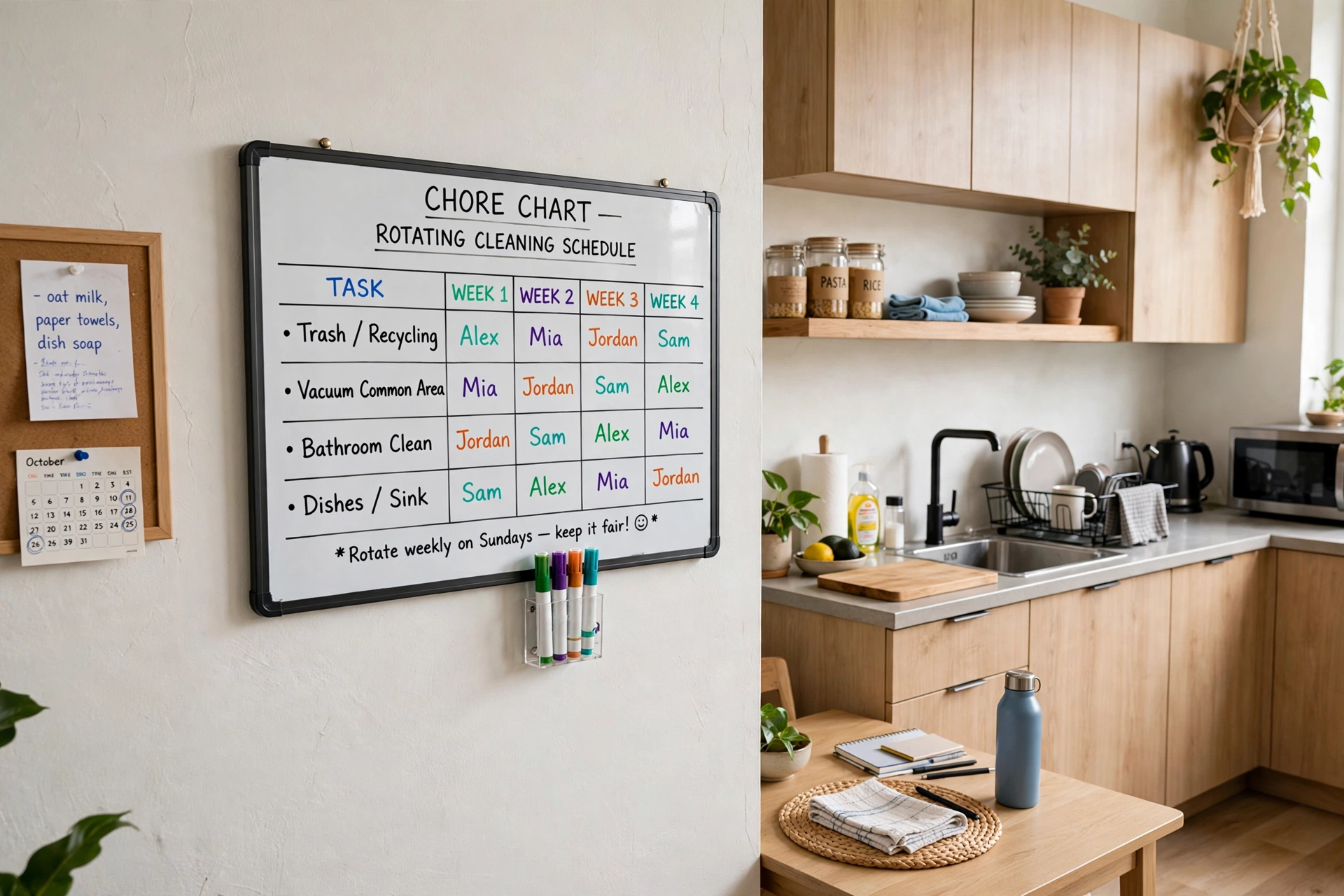
27. Post a Cleaning Schedule Chart
In a studio, mess is always visible and always shared — a rotating chore chart (bathroom, kitchen, trash, floors) posted where both people see it keeps things fair without nagging. A laminated chart or a whiteboard ($8–$12) with dry-erase markers makes it official. Pro tip: rotate chores weekly rather than assigning permanently — nobody should be stuck with the bathroom forever, and rotation kills resentment before it starts.
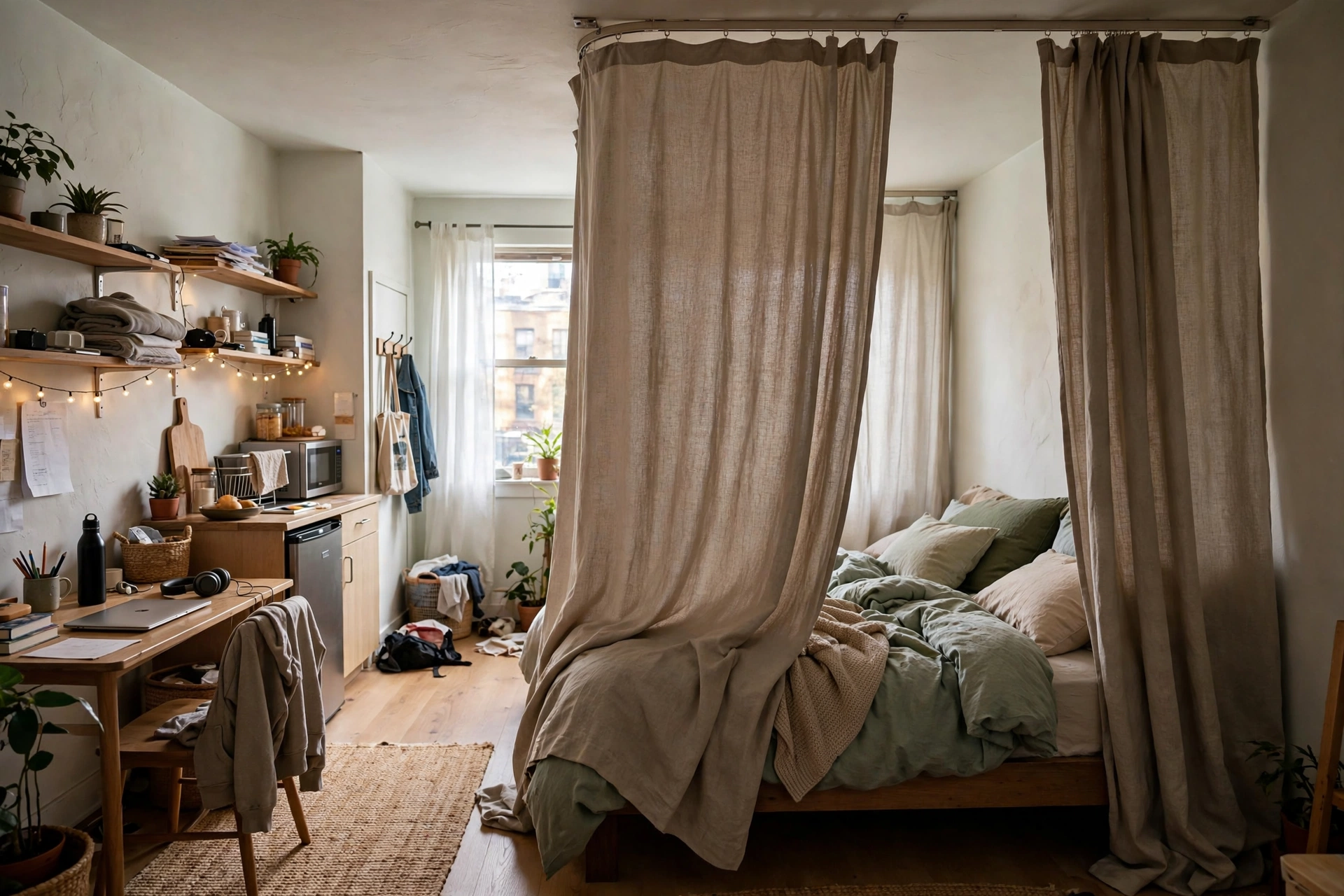
28. Hang a Privacy Curtain Around the Bed
Sometimes you need to disappear — a ceiling-track or tension-rod curtain ($25–$45 for the setup) around the bed creates a private cocoon for sleeping, changing, or decompressing while a roommate studies three feet away. Choose an opaque fabric in a calm color so it reads as design, not a bedsheet barricade. Pro tip: add a small clip-on reading light ($12–$18) inside the curtain zone — your private nook gets its own lighting, and you stop fighting over the main light at bedtime.
Small Luxuries That Matter
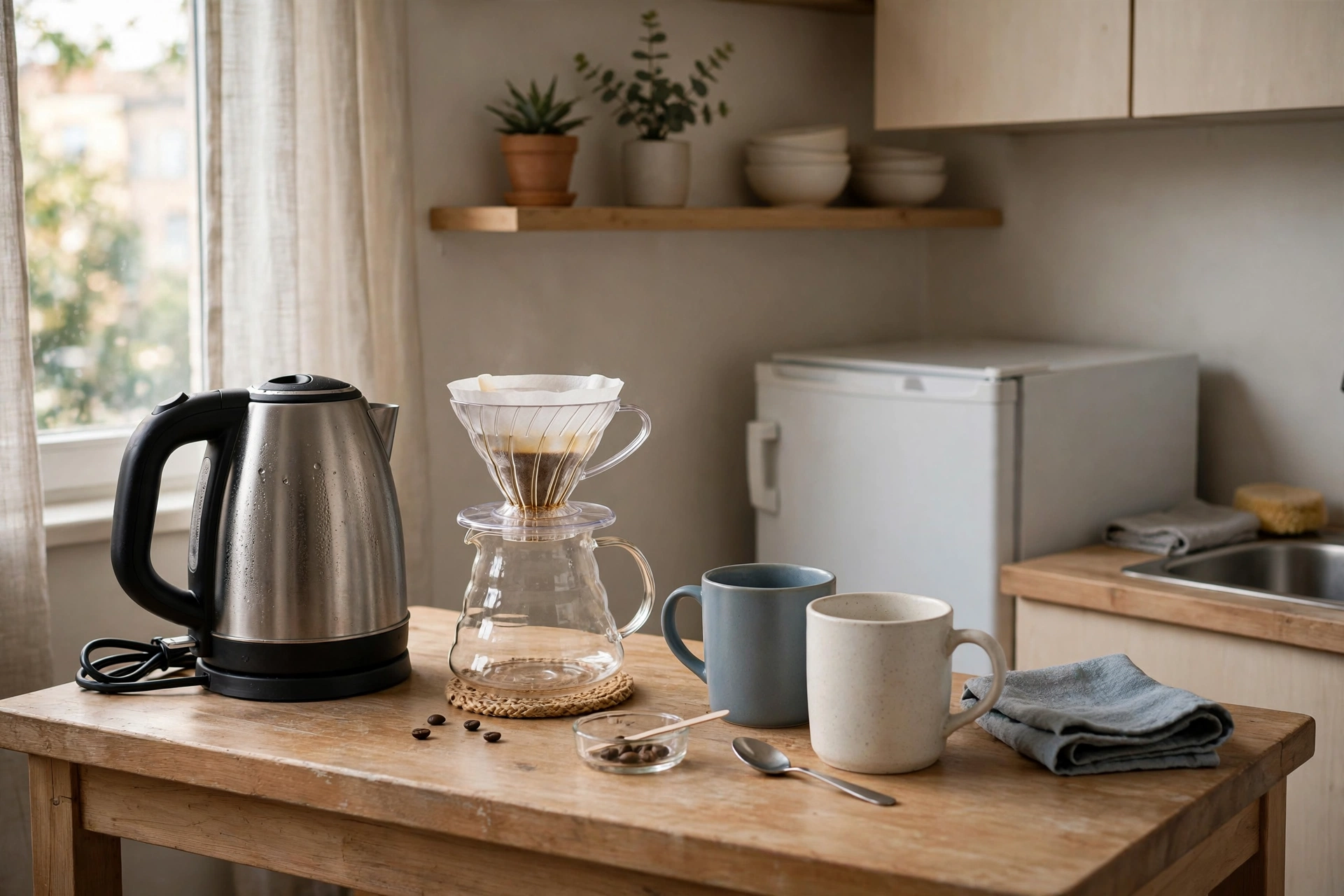
29. Build a Kettle Coffee Station
The daily coffee-shop run is a budget killer — a $25–$40 electric kettle plus a French press or pour-over setup ($15–$30) pays for itself in two weeks and turns bleary mornings into a ritual instead of a transaction. Dedicate one corner of the counter as the station with your mugs and supplies. Pro tip: buy decent coffee beans in bulk and grind small batches — the taste difference over pre-ground is enormous, and the morning ritual of brewing becomes the calmest five minutes of a student day.
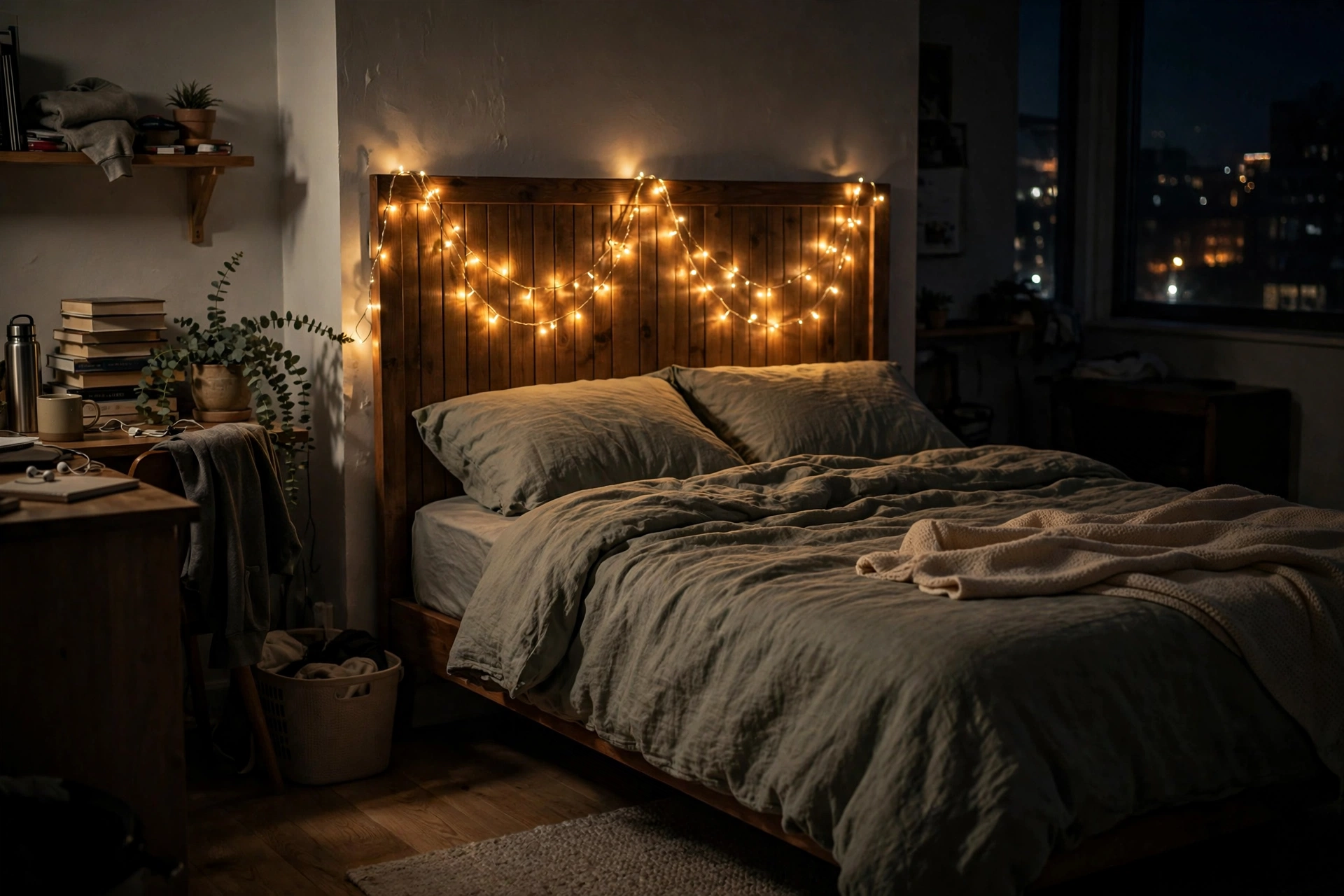
30. Drape Fairy Lights for Instant Cozy
Few things transform a beige rental for under $12 like warm-white fairy lights — draped along a headboard, woven through a bookshelf, or hung in a loose canopy over the bed. Battery or USB-powered copper-wire strands disappear by day and glow like fireflies at night. Pro tip: put them on a $8 timer plug so they switch on at dusk automatically — coming home to a softly glowing room after evening classes genuinely changes how the apartment feels.
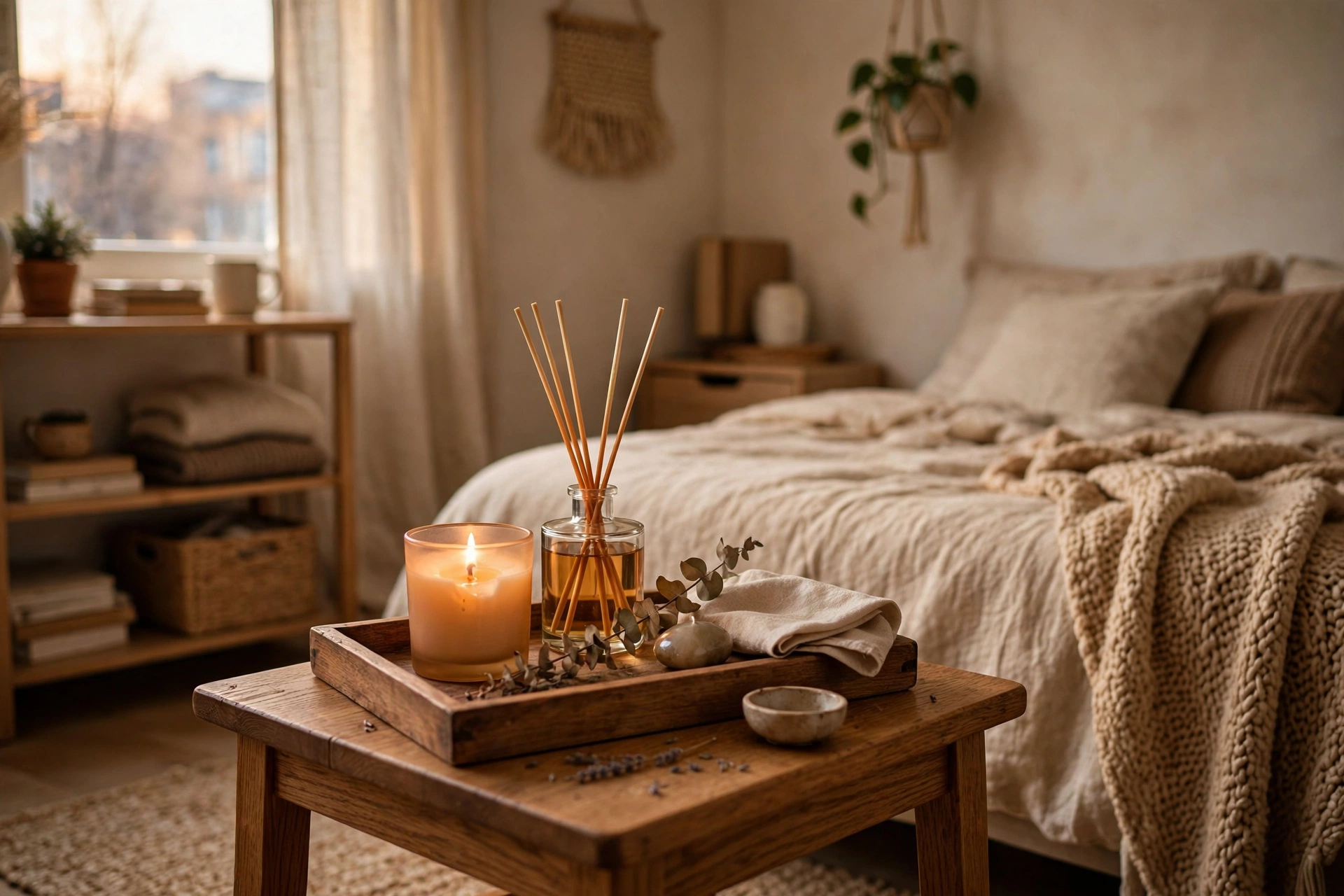
31. Pick a Signature Scent
Scent is the invisible decor layer — one signature candle or reed diffuser ($12–$25) makes a studio feel like home the second you walk in, masking the eternal ramen-and-laundry funk of student life. Stick to one scent so it becomes “your” smell. Pro tip: choose the scent intentionally — citrus and eucalyptus for focus during study hours, vanilla or sandalwood for winding down. Scent psychology is real, and in a one-room home it affects everything.
32. Run a 15-Minute Weekly Reset
The highest-ROI student habit costs nothing: a 15-minute weekly reset — laundry started, dishes done, surfaces wiped, trash out, floors quick-swept. In a studio, clutter multiplies visually because there’s nowhere to hide it; the reset keeps the space feeling manageable instead of overwhelming. Put on a hype playlist and race the clock. Pro tip: do the reset Sunday evening — starting the week in a clean space genuinely lowers Monday anxiety, and it’s the habit that separates the studios that feel like homes from the ones that feel like storage units. Our budget studio apartment decorating ideas pair perfectly with this keep-it-tidy mindset.
Frequently Asked Questions
How can I decorate a studio apartment on a student budget?
Prioritize the high-impact cheap wins: one area rug ($60–$150), real curtains ($20–$40), a coordinated bedding set ($40–$80), and fairy lights (under $12). Thrift stores, Facebook Marketplace, and campus free-and-for-sale groups cover furniture for a fraction of retail. Spend where it shows — the bed, the rug, the lighting — and go cheap on everything hidden.
What’s the best desk setup for studying in a small studio?
Place the desk by the window for free natural light, add an adjustable task lamp ($25–$45) for evenings, and use noise-cancelling headphones to manufacture silence. If floor space is critical, a fold-down wall desk ($50–$90) gives you a full study surface that vanishes when the laptop closes. Keep the desk surface clear of everything except current work — visual clutter kills focus.
How do I share a studio apartment with a roommate peacefully?
Write the rules down: quiet hours, the headphone rule, a rotating chore chart, and split fridge zones. Create at least one privacy boundary — a curtain around the bed works wonders. Have a monthly 10-minute check-in to air small grievances before they become big ones. Most roommate conflicts are communication failures, not personality clashes.
What furniture is worth buying vs. skipping as a student?
Worth it: a real mattress or quality topper (you sleep there every night), a decent desk chair (your back will thank you), and blackout curtains (sleep quality affects grades). Skip: matching furniture sets, anything you can’t move yourself, and single-purpose gadgets. Buy multifunctional pieces — futons, storage ottomans, rolling carts — that earn their footprint twice.
How can I make a rental studio feel like home without losing my deposit?
Stick to fully reversible changes: peel-and-stick wallpaper, removable hooks and strips, tension rods, area rugs, and freestanding furniture. Photograph everything on move-in day for your records. Our renter-friendly studio apartment ideas cover 32 deposit-safe upgrades in detail — every one of them student-budget compatible.
How do I keep a tiny student studio from feeling cluttered?
Three systems: everything gets a home (bins, hooks, organizers), the one-in-one-out rule for new purchases, and a 15-minute weekly reset. In a studio, clutter has nowhere to hide, so prevention beats cleanup — put things away as you go, do dishes nightly, and never let the “chair pile” of clothes survive more than a day.
Final Thoughts
A student studio apartment isn’t a waiting room for real life — it’s real life, right now, and it deserves better than bare walls and a mattress on the floor. The ideas in this guide share one principle: spend where it shows, hack where it doesn’t, and build systems (study zones, chore charts, weekly resets) that make the small space work instead of fighting it.
Start with the big three this weekend: the rug, the curtains, and the bedding. Then layer in the study setup that protects your grades and the storage that protects your sanity. Four years from now you’ll barely remember the lectures — but you’ll remember the little apartment where you figured out how to make a small space, a tight budget, and a big life all fit together.