33 Studio Apartment Rug Ideas That Define Every Zone
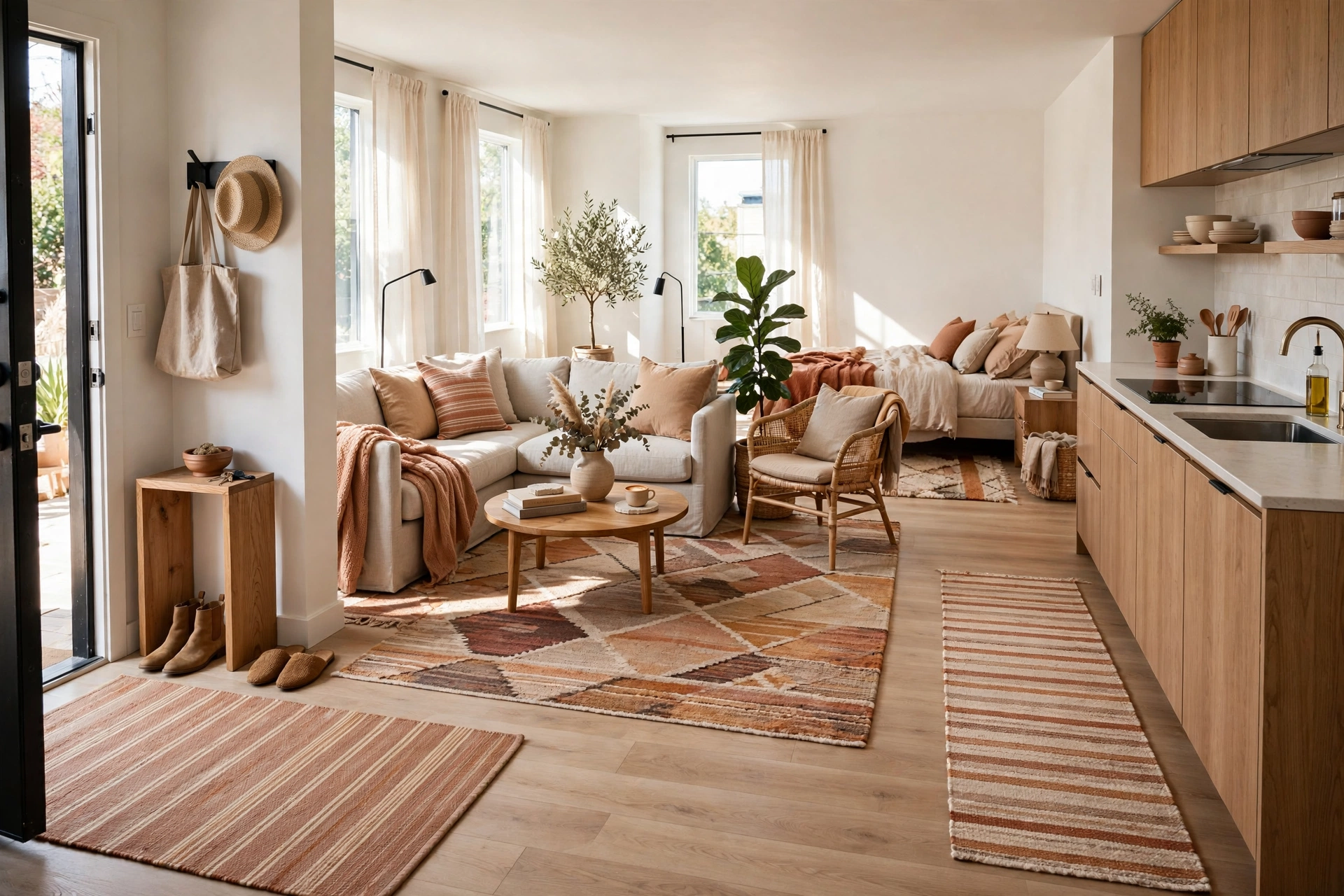
In a studio apartment, there are no walls to tell you where the living room ends and the bedroom begins — so the rug does that job. One well-chosen area rug can turn a single open room into a living zone, a sleeping zone, and a dining nook, all without a single divider. The wrong rug, on the other hand, chops the room into visual clutter and makes 400 square feet feel like 200.
This guide covers all 33 studio apartment rug ideas you need: sizing rules the pros swear by, zone-by-zone picks for the living, sleeping, dining, and entry areas, materials that survive small-space living (hello, washable rugs), and layering tricks that make cheap rugs look expensive. Every idea includes realistic pricing and a pro tip so you can shop with confidence.
Rug Sizing & Placement Rules That Pros Swear By
1. The Front-Legs-On Rule
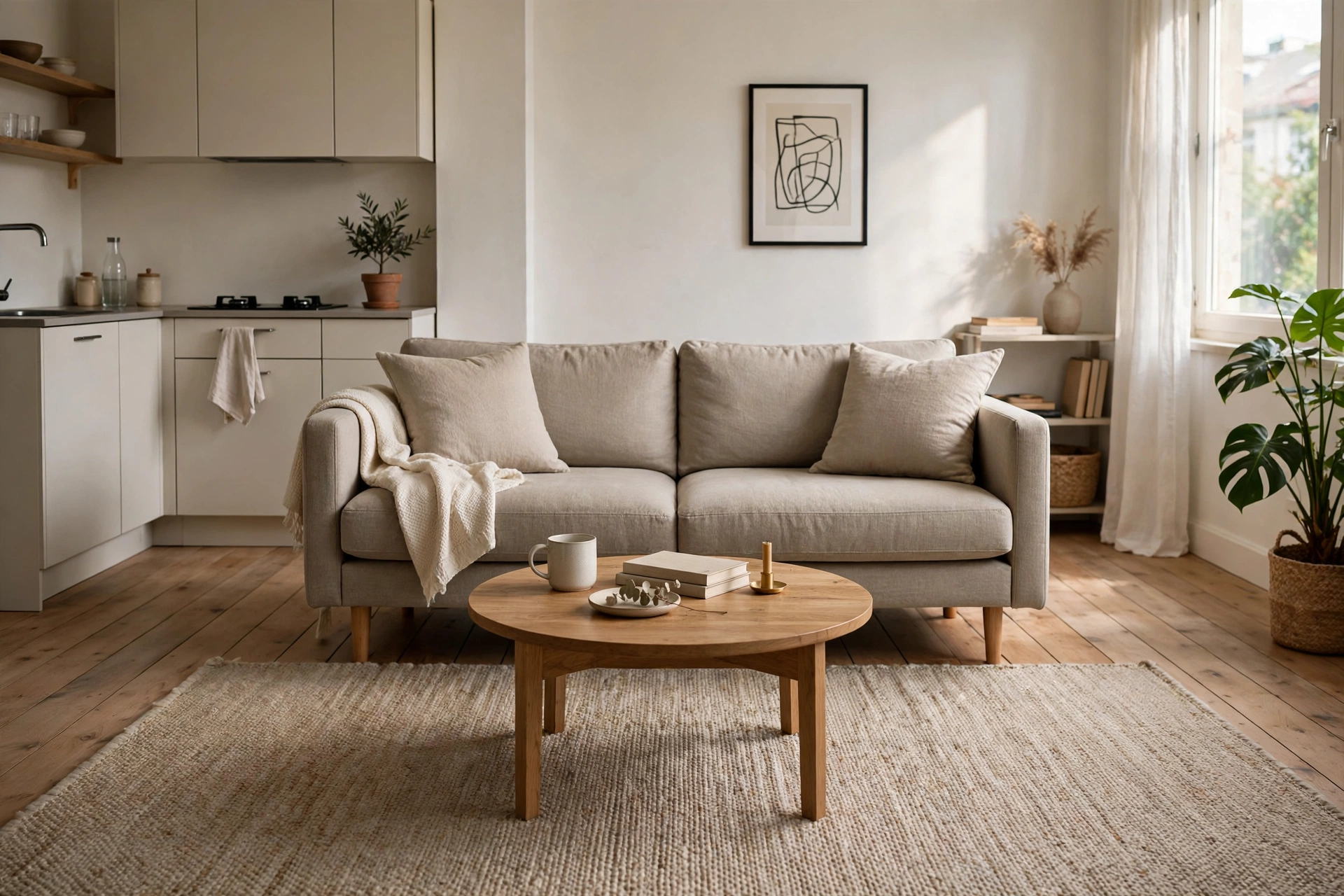
The single most important rug rule in a studio: at least the front legs of your sofa and chairs should sit on the rug, with the coffee table fully on it. When furniture floats completely off the rug, the seating area looks disconnected and the room feels smaller. For a typical studio loveseat setup, a 5×8 rug usually achieves this; a full-size sofa wants 6×9 or 8×10. Budget around $90–$200 for a decent 5×8 low-pile rug from IKEA or Rugs USA. Pro tip: if your sofa is against the wall, you can cheat the rug a few inches under the sofa’s front — nobody sees the back half anyway.
2. 5×8 vs 8×10 — Go Bigger Than You Think
Almost everyone buys a rug that’s too small. In a studio, a rug that’s too small visually shrinks the room; a larger rug that extends under furniture makes the same floor plan feel expansive. For the living zone of a 350–500 sq ft studio, an 8×10 (roughly $150–$400 depending on material) almost always looks better than a 5×8, because it unifies the seating into one generous “room.” A 5×8 works only for a compact loveseat-plus-chair arrangement. Pro tip: measure your seating footprint, then add 24 inches on each side — that’s your minimum rug size.

3. The Painter’s Tape Trick
Before spending a dollar, outline candidate rug sizes on your floor with painter’s tape and live with the outlines for a day. Walk around them, open doors over them, and check sightlines from the bed to the kitchen. This free test prevents the most common studio mistake — a rug that blocks a walkway or crowds the bed. A roll of painter’s tape costs about $6 and saves a $200 return headache. Pro tip: leave 18–24 inches of bare floor between the rug edge and the wall so the room breathes.
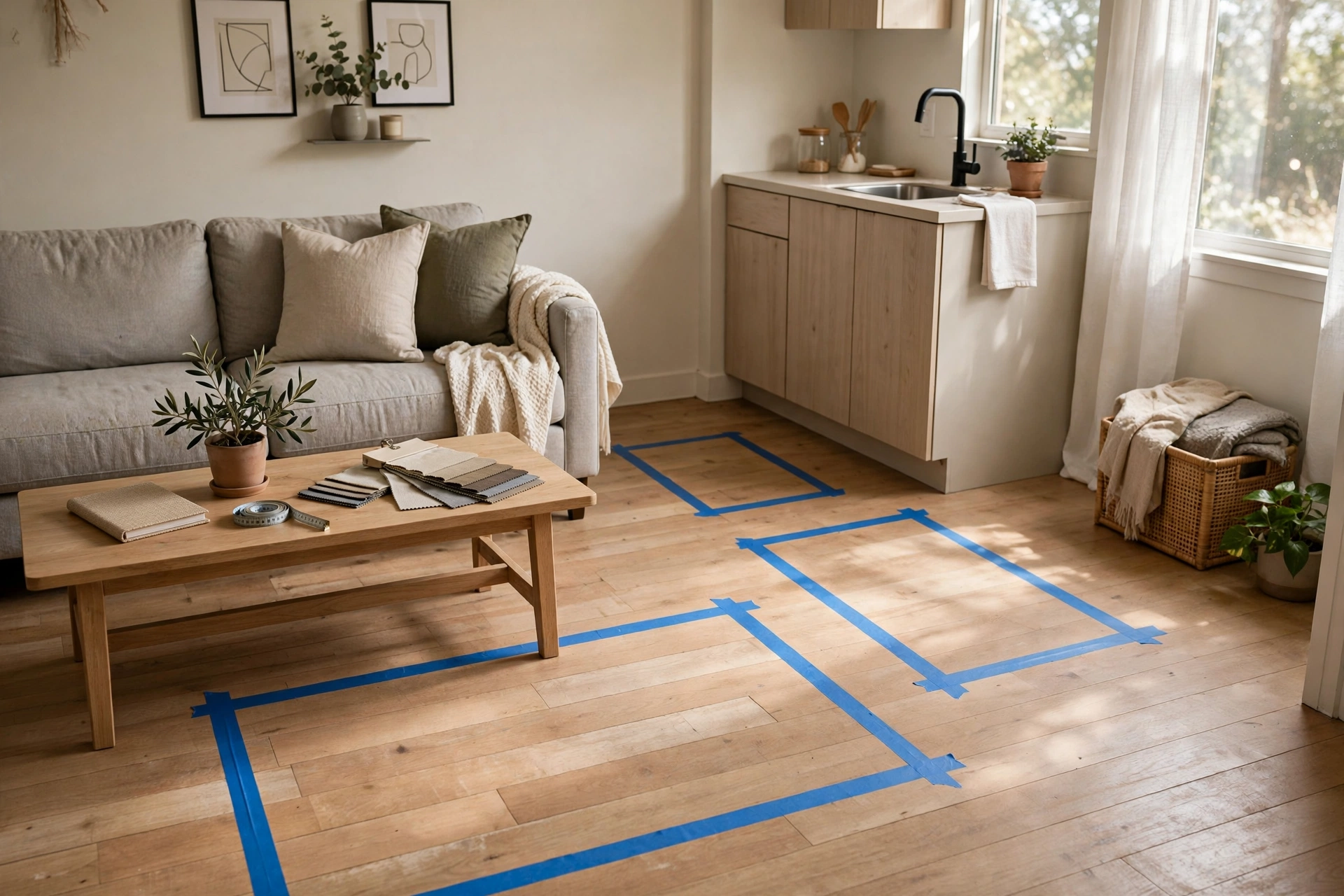
4. Anchor All the Furniture, Not Just the Sofa
A half-on, half-off rug makes a studio look indecisive. The goal is for every piece in a zone — sofa, armchair, side table, coffee table — to at least touch the rug so the zone reads as one intentional room. In a small studio this usually means one large low-pile rug per zone rather than several small ones. A 7×10 flatweave in a neutral tone runs about $120–$250 and handles full furniture weight without buckling. Pro tip: low-pile or flatweave rugs are non-negotiable under heavy furniture — thick pile compresses unevenly and makes chairs wobble.
Living Zone Rugs
5. One Large Rug to Define the Living Zone
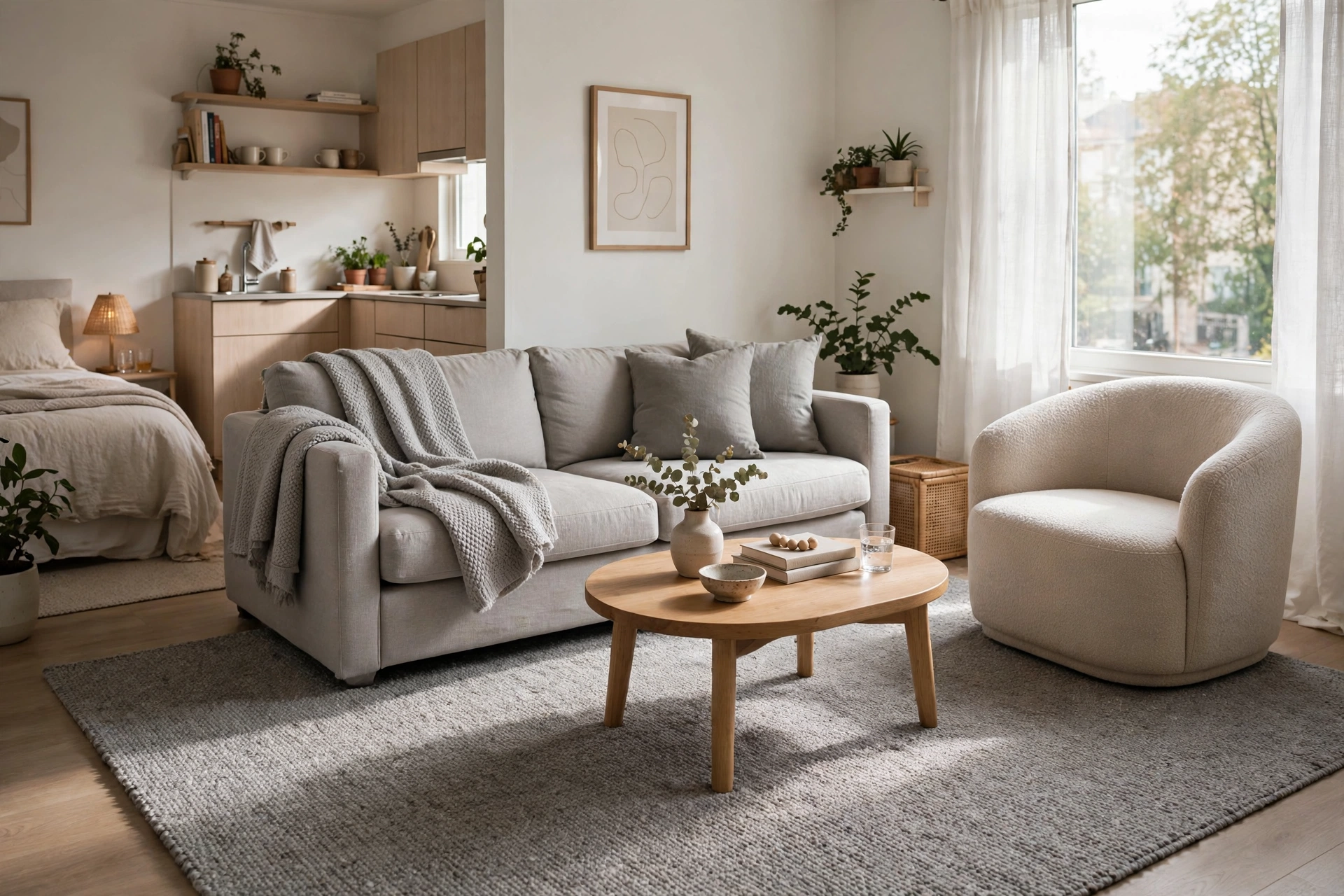
Your living zone needs a visual boundary, and a single large rug is the cheapest room divider you’ll ever buy. Choose one rug big enough to hold the sofa and coffee table, and the eye instantly reads “living room” even though the kitchen is ten feet away. This pairs beautifully with the zoning strategies in these studio apartment layout ideas — rug first, furniture second. Expect $150–$350 for an 8×10 in a durable synthetic. Pro tip: keep the living-zone rug in a different tone than the bedroom-zone rug so each area feels distinct.
6. A Neutral Wool Rug for Everyday Luxury
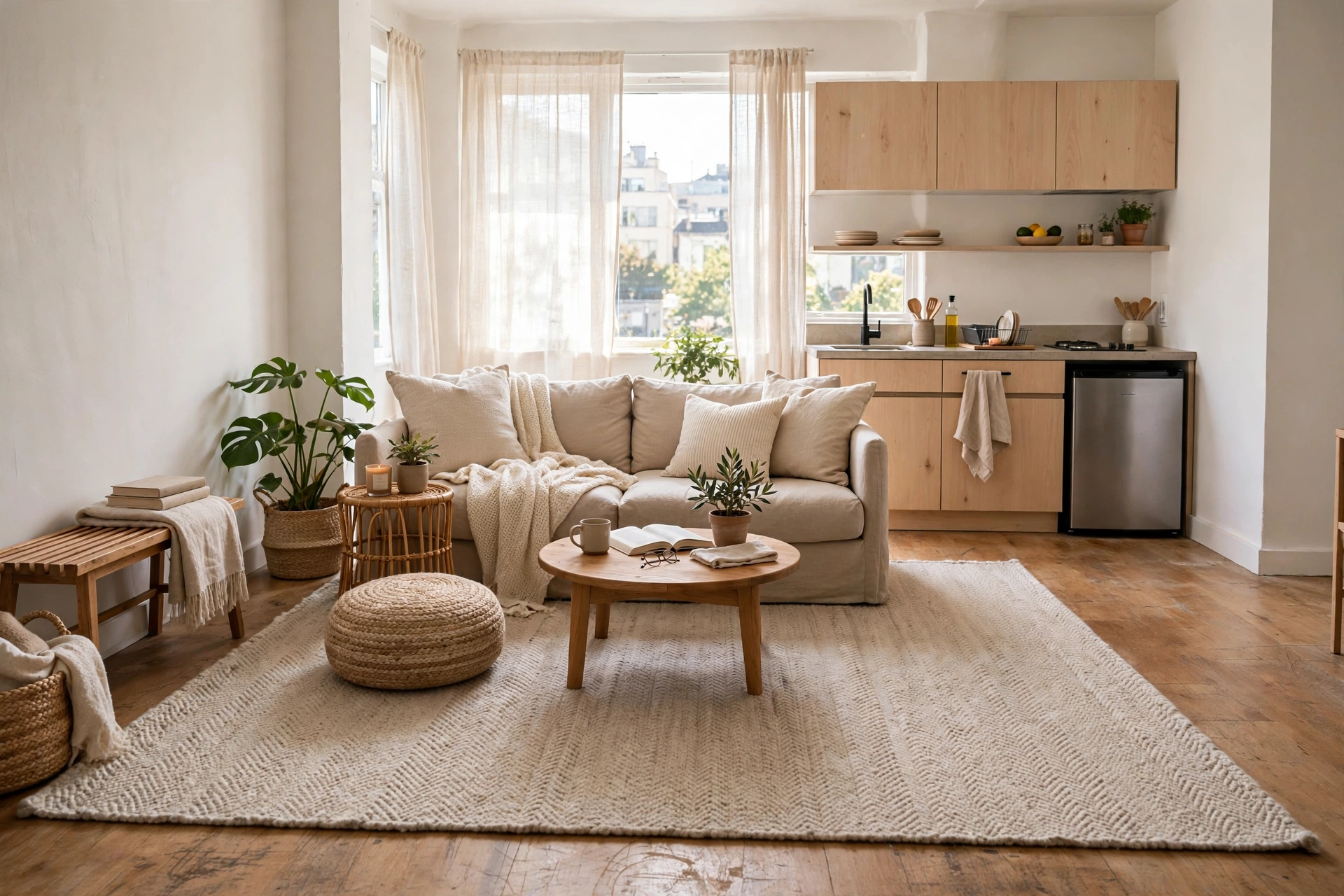
A cream or oatmeal wool rug under a linen sofa is the fastest way to make a rental studio feel like a boutique hotel. Wool is naturally stain-resistant thanks to lanolin, it bounces back from furniture dents, and it lasts a decade — which matters when the rug anchors your main living space. A 5×8 hand-tufted wool rug runs $250–$500; machine-made wool blends start around $150. Pro tip: choose a wool rug with a subtle texture or heathered yarn rather than flat solid cream — it hides lint and footprints between vacuums.
7. A Vintage-Style Rug for Instant Character
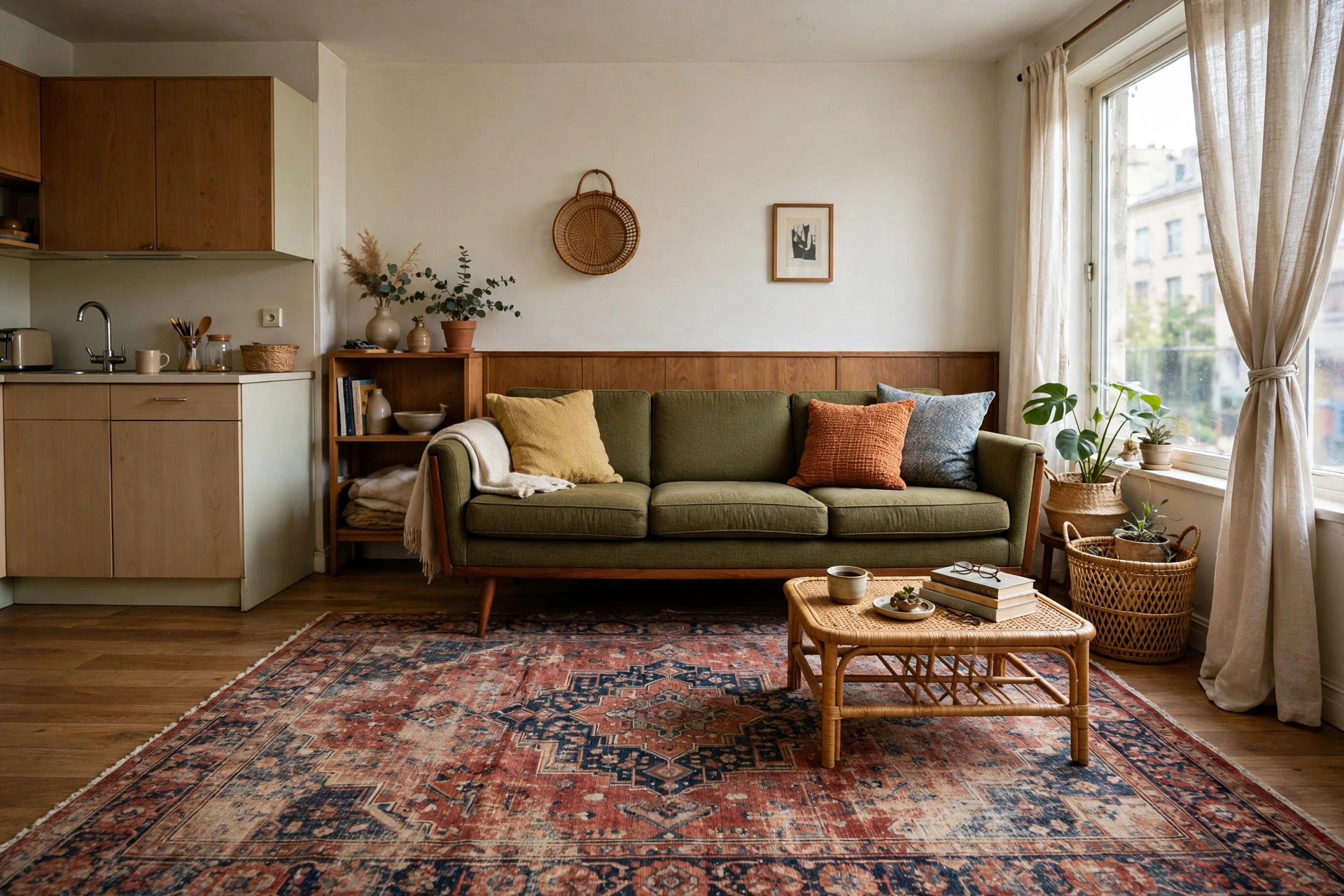
New furniture plus a vintage-look rug is the classic designer formula for a studio with soul. Faded Persian-style or Turkish-style rugs add pattern, age, and warmth that flat-pack furniture lacks — and the distressed look means new wear blends right in. Machine-made vintage-style rugs in 5×8 run $120–$300 from brands like Loloi, nuLOOM, and Safavieh. Pro tip: in a studio, pick a vintage-style rug with a light or neutral field (ivory, soft gray) rather than deep red — it adds character without darkening the room.
8. A Round Rug Under a Round Coffee Table
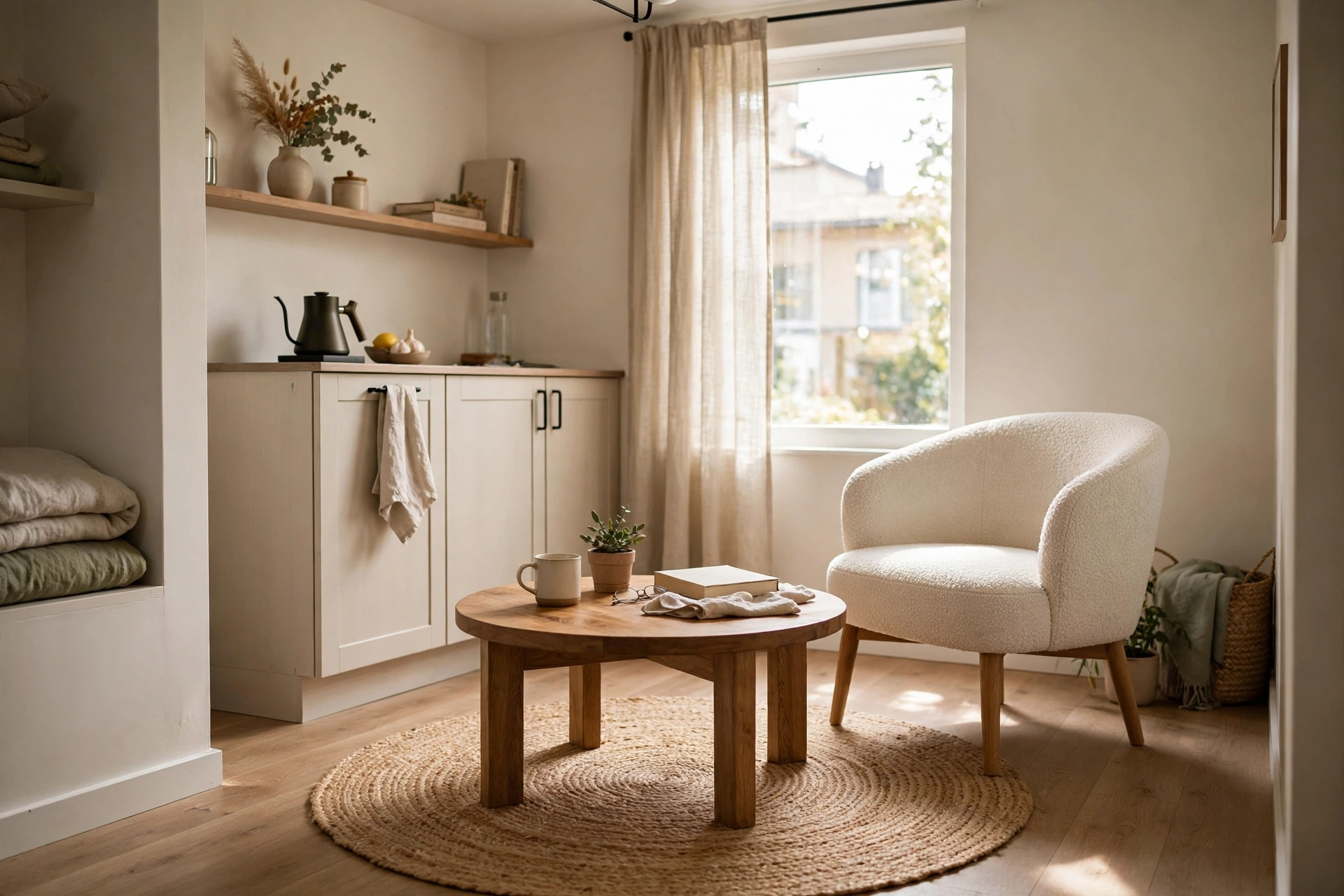
Studios are full of rectangles — the room, the bed, the sofa — so a round rug breaks the boxiness beautifully. Place a 5- or 6-foot round rug under a round coffee table with a single accent chair to carve out a reading nook that feels deliberately designed. Round jute or cotton rugs cost $60–$140 and their lack of corners makes tight walkways easier to navigate. Pro tip: echo the round shape once more in the zone — a round mirror or round side table — and the nook looks professionally styled.
9. A Bold Geometric Rug as the Room’s Statement
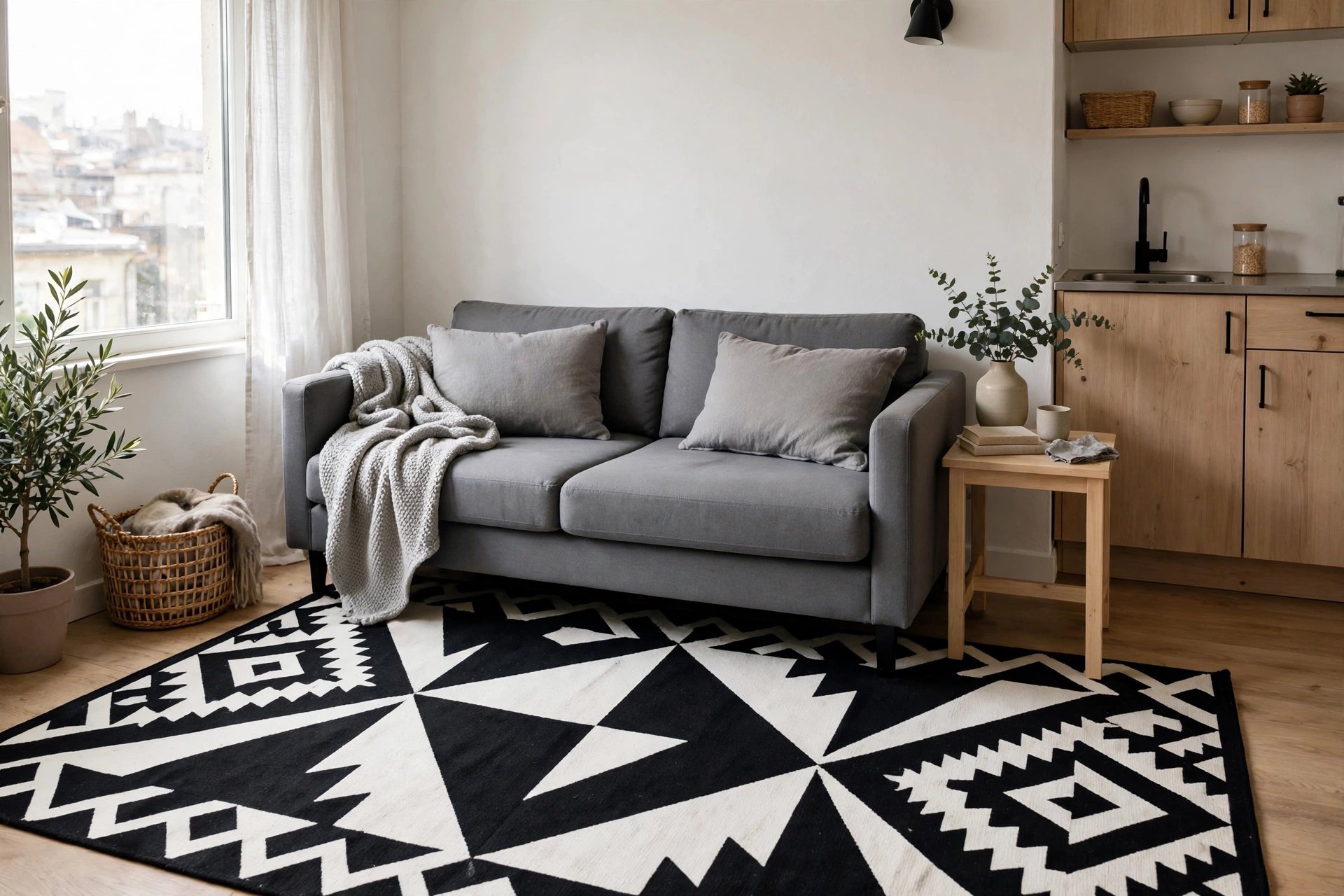
If your studio’s furniture is plain and your walls are rental white, let one bold geometric rug carry the entire design. A high-contrast pattern — black and ivory, terracotta and cream — becomes the artwork the room doesn’t otherwise have, and it defines the living zone from across the apartment. Keep everything else quiet so the rug can shine, a trick that also avoids the visual chaos flagged in these apartment decorating mistakes to avoid. Bold 5×8 synthetics run $100–$220. Pro tip: one bold pattern per studio is the limit — if the living rug is loud, keep the bedroom and kitchen rugs solid.
Bedroom Zone Rugs
10. An 8×10 Rug Under the Bed
Nothing says “bedroom” like a big soft rug under the bed. An 8×10 placed with the bed’s head against the wall lets the rug extend about 2.5 feet on each side and at the foot — so your feet land on softness every morning and the sleeping zone feels like a real room. For a queen bed this is the gold standard; a king in a studio corner can use the same size pulled slightly forward. Budget $150–$400 for an 8×10 in a soft synthetic or wool blend. Pro tip: position the rug so it starts about 18 inches from the headboard wall — you want rug where your feet land, not hidden under pillows.

11. Matching Runners Flanking the Bed
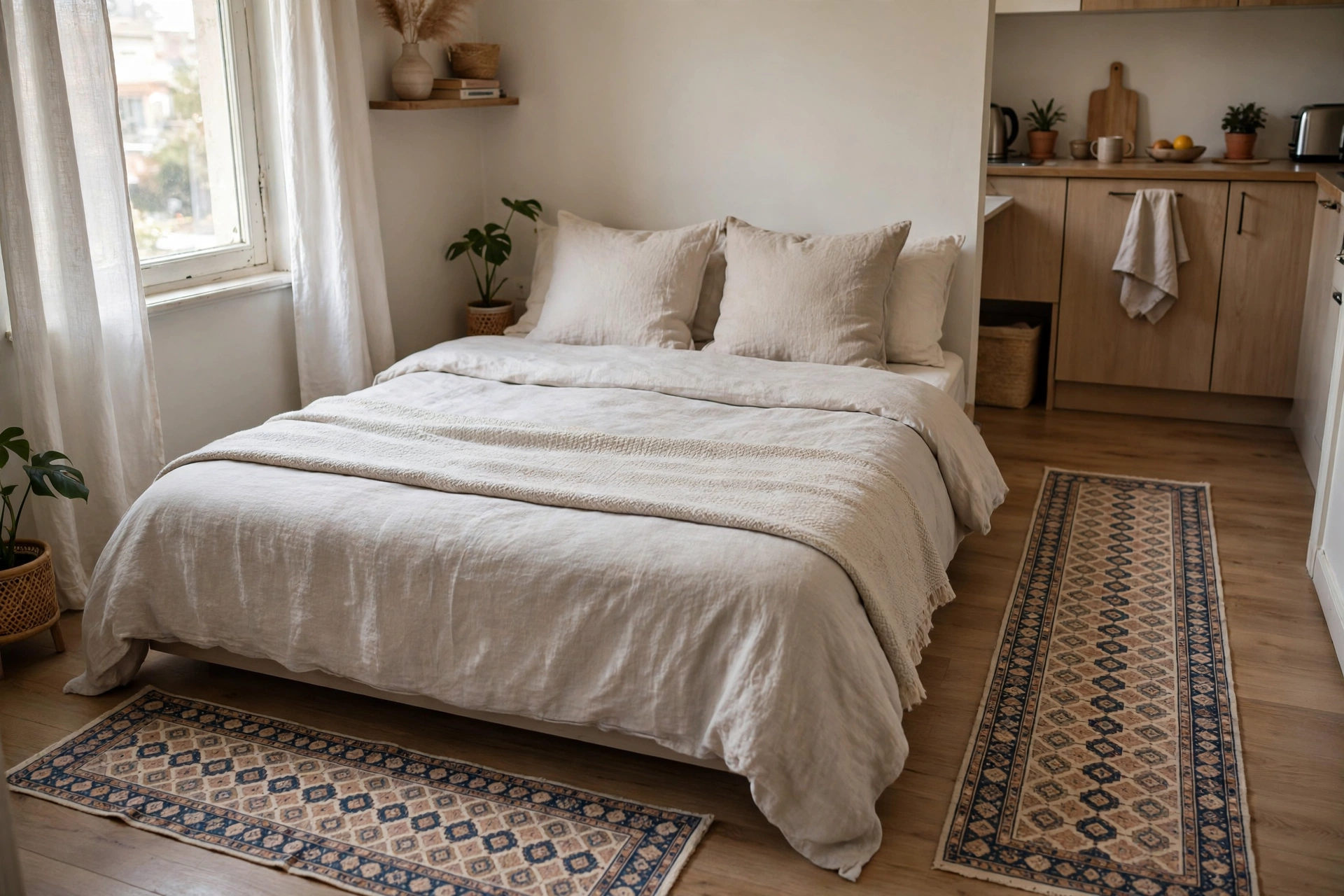
Short on space or budget? Skip the giant under-bed rug and lay two 2.5×7 runners — one on each side of the bed. You still get the warm landing for bare feet, the symmetry makes the sleeping zone look intentional, and two runners cost half of one 8×10 (about $60–$140 for the pair). This works especially well when the bed sits in a corner and only one side is accessible — just use a single runner. Pro tip: match the runners to your bedding’s accent color to tie the whole sleeping zone together.
12. A Faux Fur Throw Rug Beside the Bed
A white or ivory faux fur rug tossed casually beside the bed delivers maximum coziness per dollar — the texture reads expensive and it photographs beautifully for a Pinterest-worthy bedroom corner. Real sheepskins run $80–$150 each; good faux versions cost $40–$80 and are machine washable, which matters next to a bed. Layer one over a flat neutral rug for a designer look. Pro tip: shake faux fur rugs outside weekly and brush with a pet slicker brush — five minutes keeps them cloud-like instead of matted.
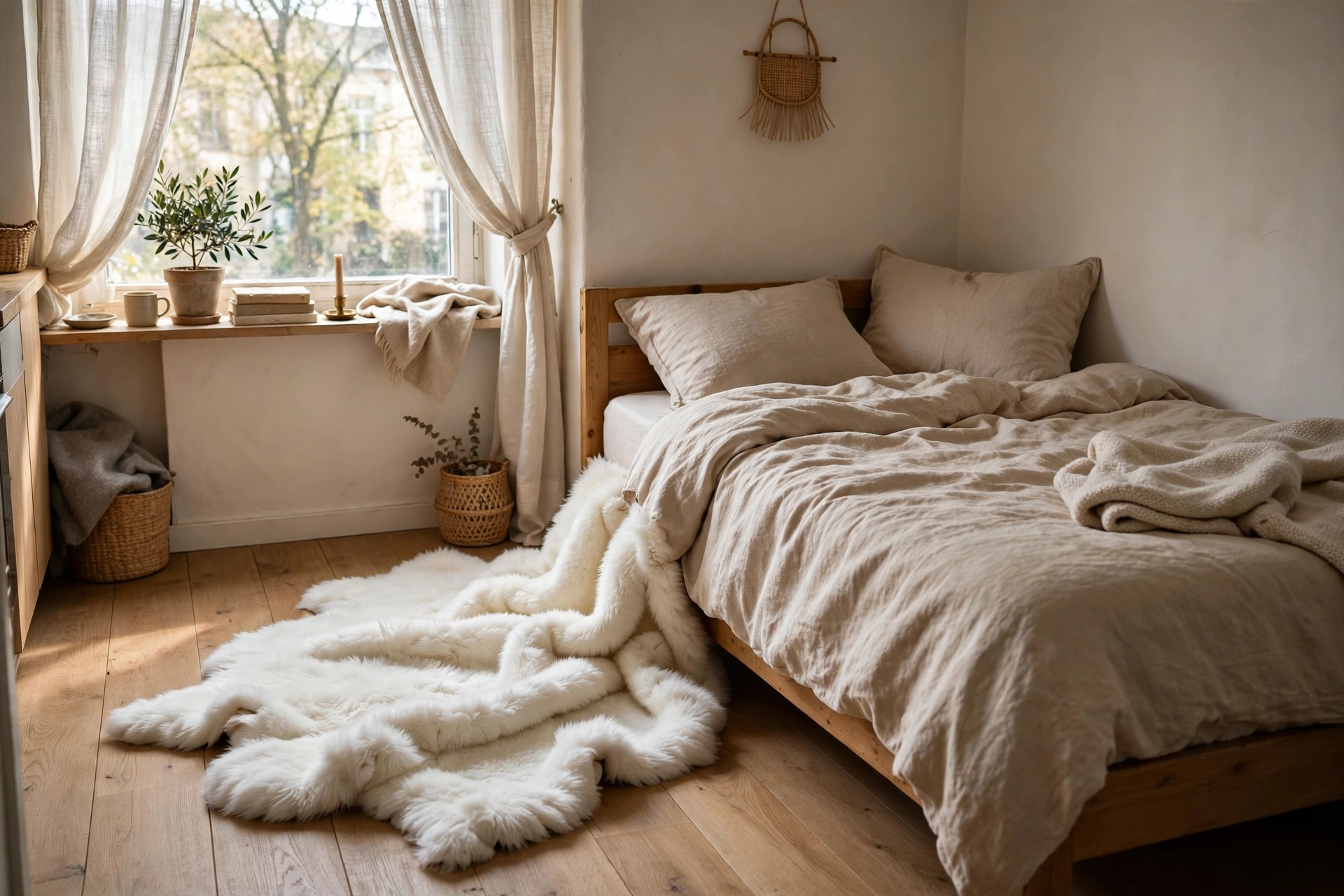
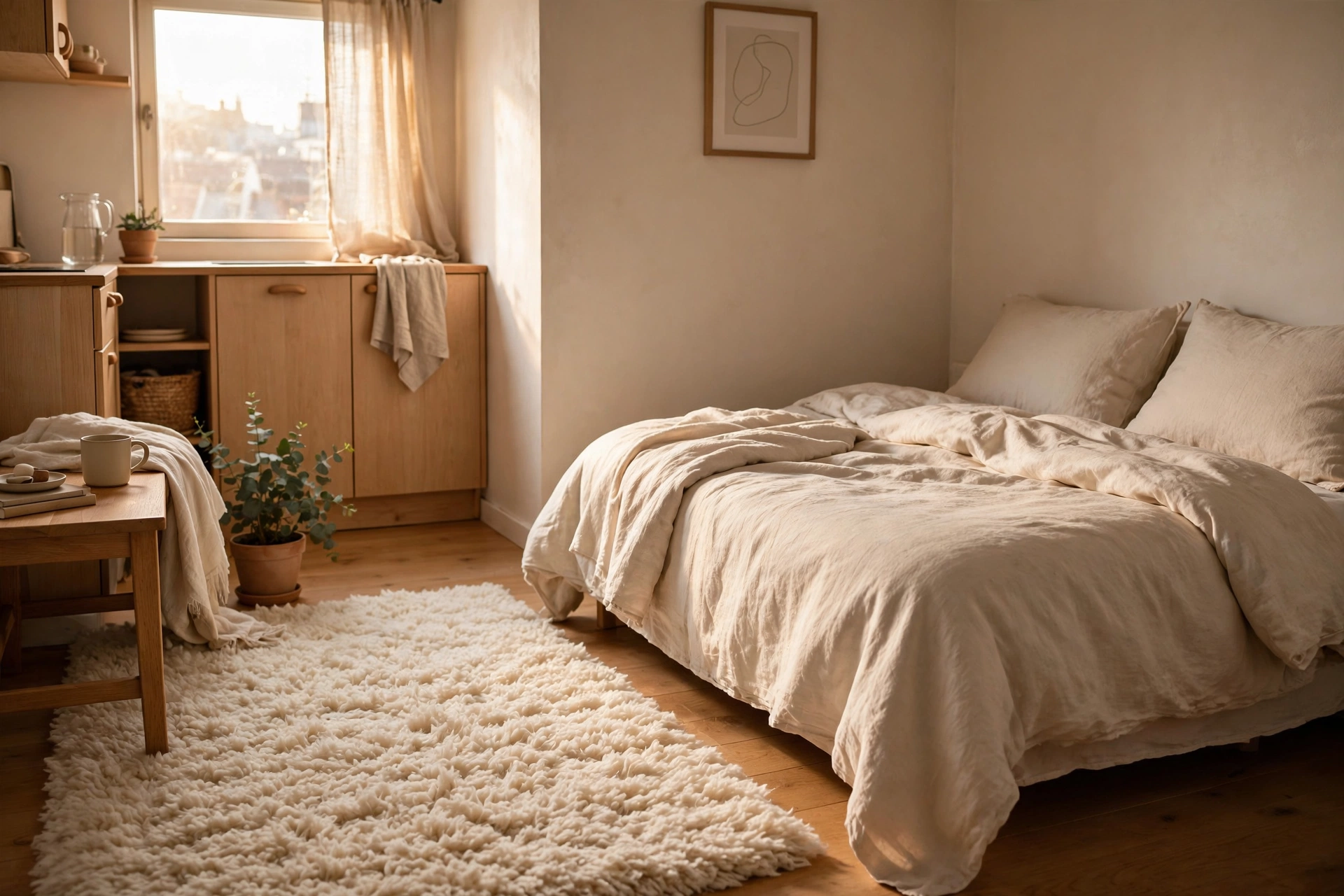
13. A Plush Shag Rug for Bedroom Softness
The bedroom zone is where you can indulge in high pile, since there’s no rolling office chair or dining chair to fight it. A plush shag or cloud rug in cream, blush, or warm gray turns the sleeping corner into a retreat — especially welcome in a studio where the bed is always visible. A 5×7 shag runs $70–$160; look for “memory foam” backed versions that stay springy. Pro tip: confine shag to the bedroom zone only — one shaggy rug per studio is plenty, and it stays cleaner away from the kitchen and entry.
Dining & Kitchen Rugs
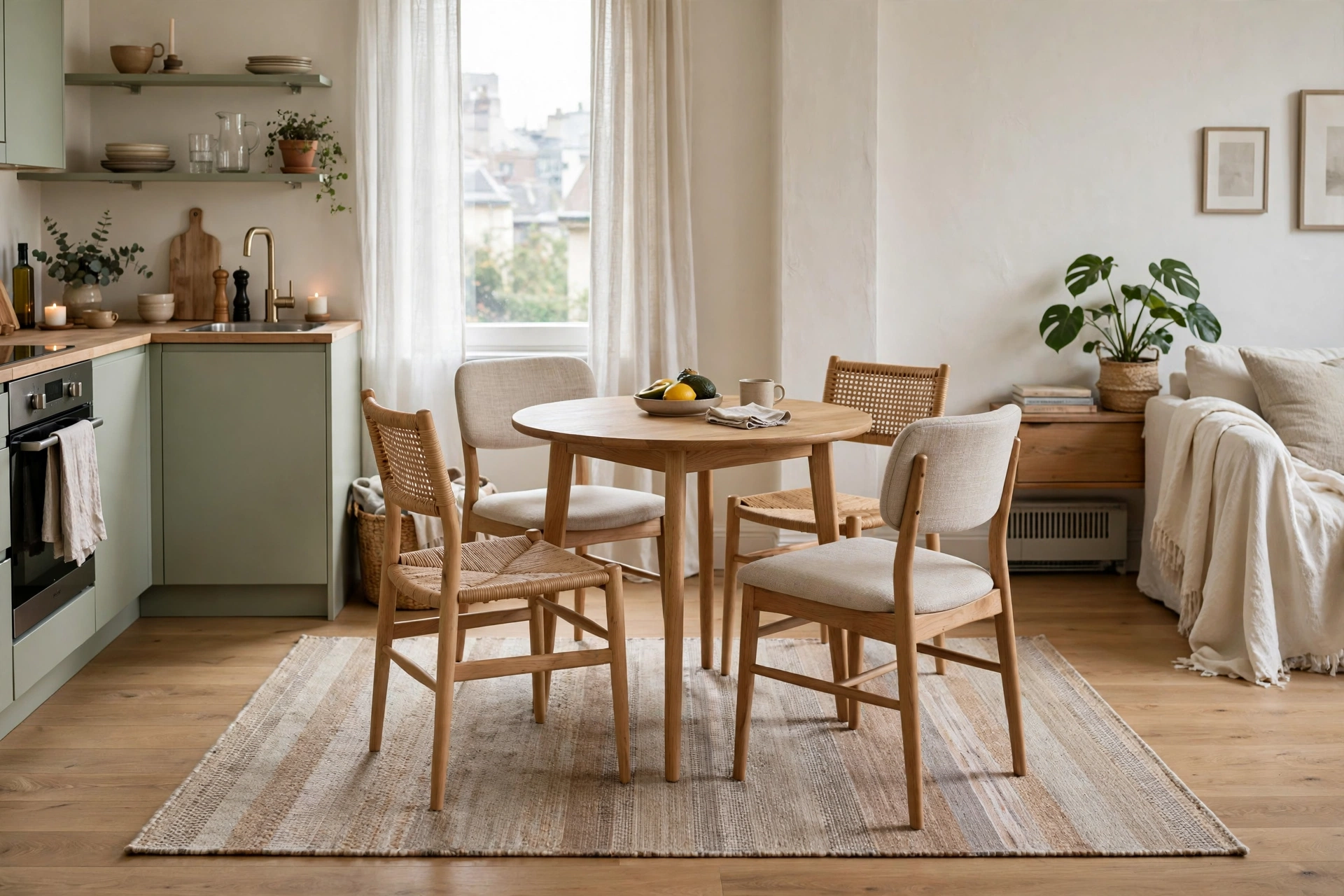
14. A Dining Nook Rug That Fits the Chairs
A rug under the dining table instantly creates a “dining room” — but only if it’s big enough. The rule: the rug must extend at least 24 inches beyond the table on all sides so chairs stay on the rug when pulled out. For a typical 36-inch round studio table with four chairs, that means a 7-foot round or an 8×10 rectangle (about $120–$280). Too small and chair legs catch the rug edge every meal. Pro tip: choose a low-pile, wipeable rug for the dining zone — crumbs vacuum out of flatweave in seconds and chairs glide easily.
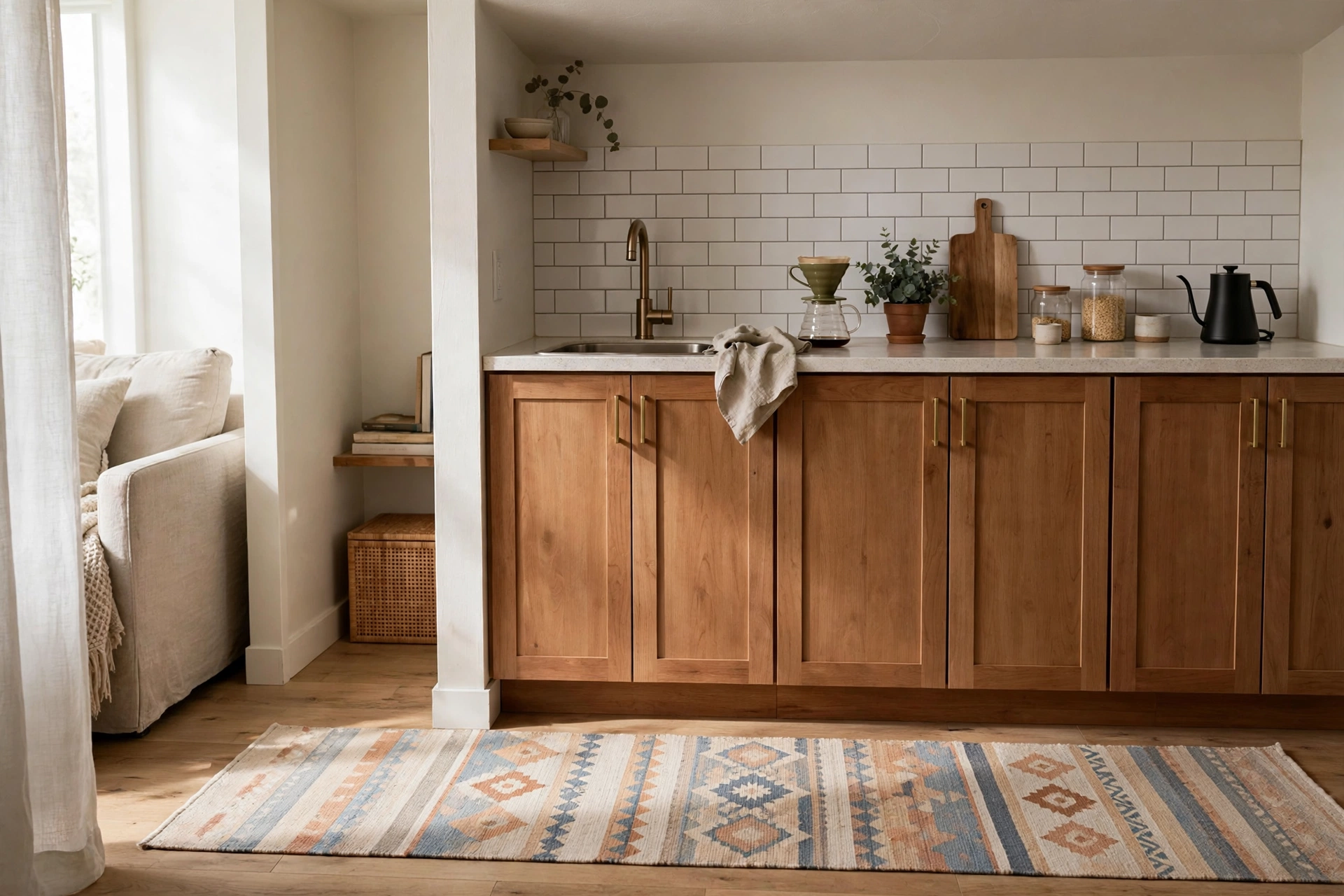
15. A Washable Runner in the Kitchen
The strip of floor in front of the stove and sink takes the worst abuse in any studio — water, oil splatter, dropped food. A washable low-pile runner here is pure practicality: it cushions your feet during cooking and goes straight in the washing machine when it gets grimy. Machine-washable runners (Ruggable-style two-piece or budget washable brands) run $60–$150 for a 2.5×7 size. Pro tip: pick a busy pattern for the kitchen runner — it hides tomato sauce splashes and coffee drips between washes far better than a solid color.
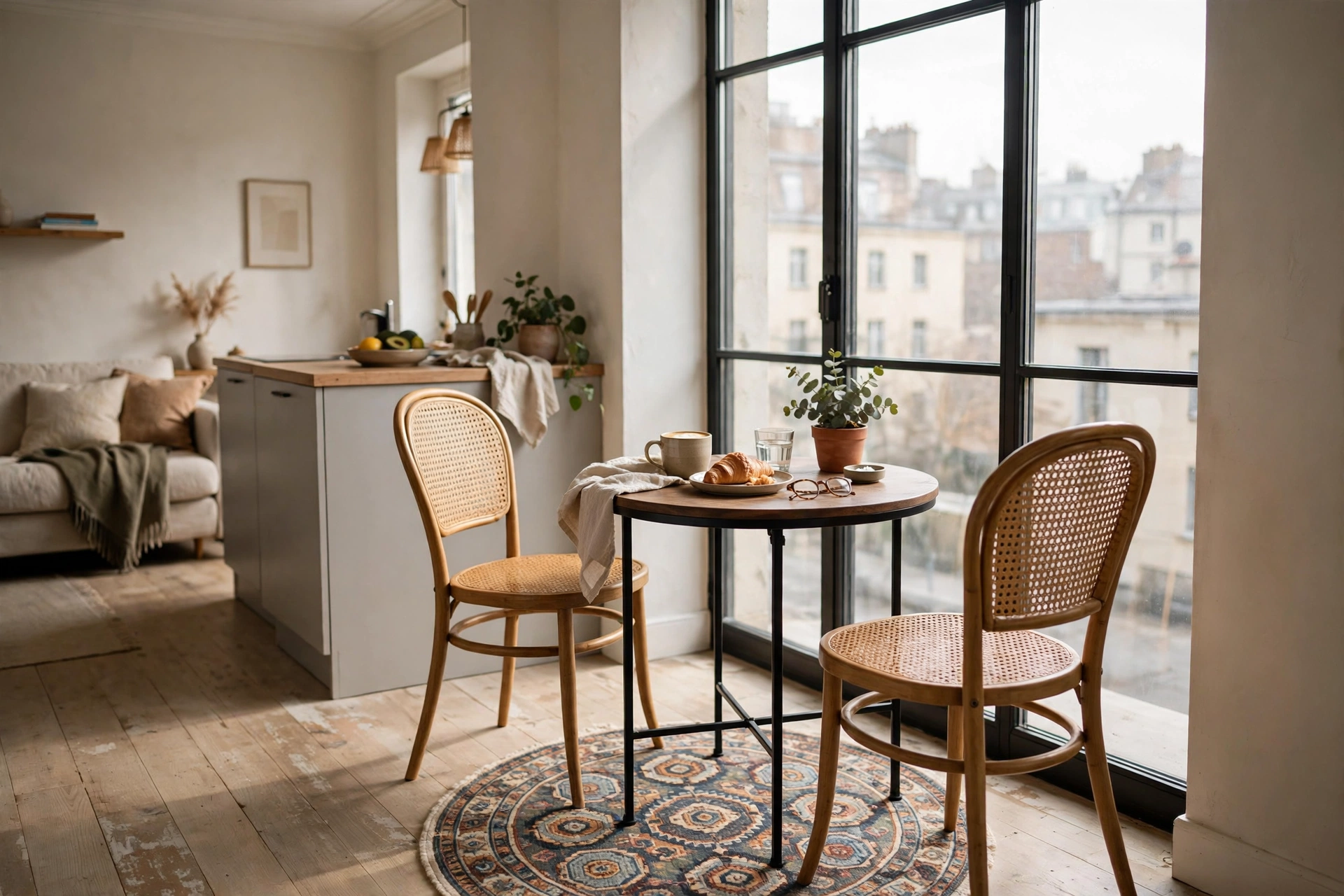
16. A Round Rug Under a Bistro Table
Many studios fit only a small bistro table for two — and a round rug underneath makes that tiny dining setup feel like a Parisian café corner instead of an afterthought. A 4- or 5-foot round rug (about $50–$110) softens the hard corner by the window where these tables usually live. Indoor-outdoor or cotton flatweave works best since bistro spots double as plant-watering zones. Pro tip: center the rug on the window, not the table — the eye reads the window as the zone’s anchor and the composition looks intentional.
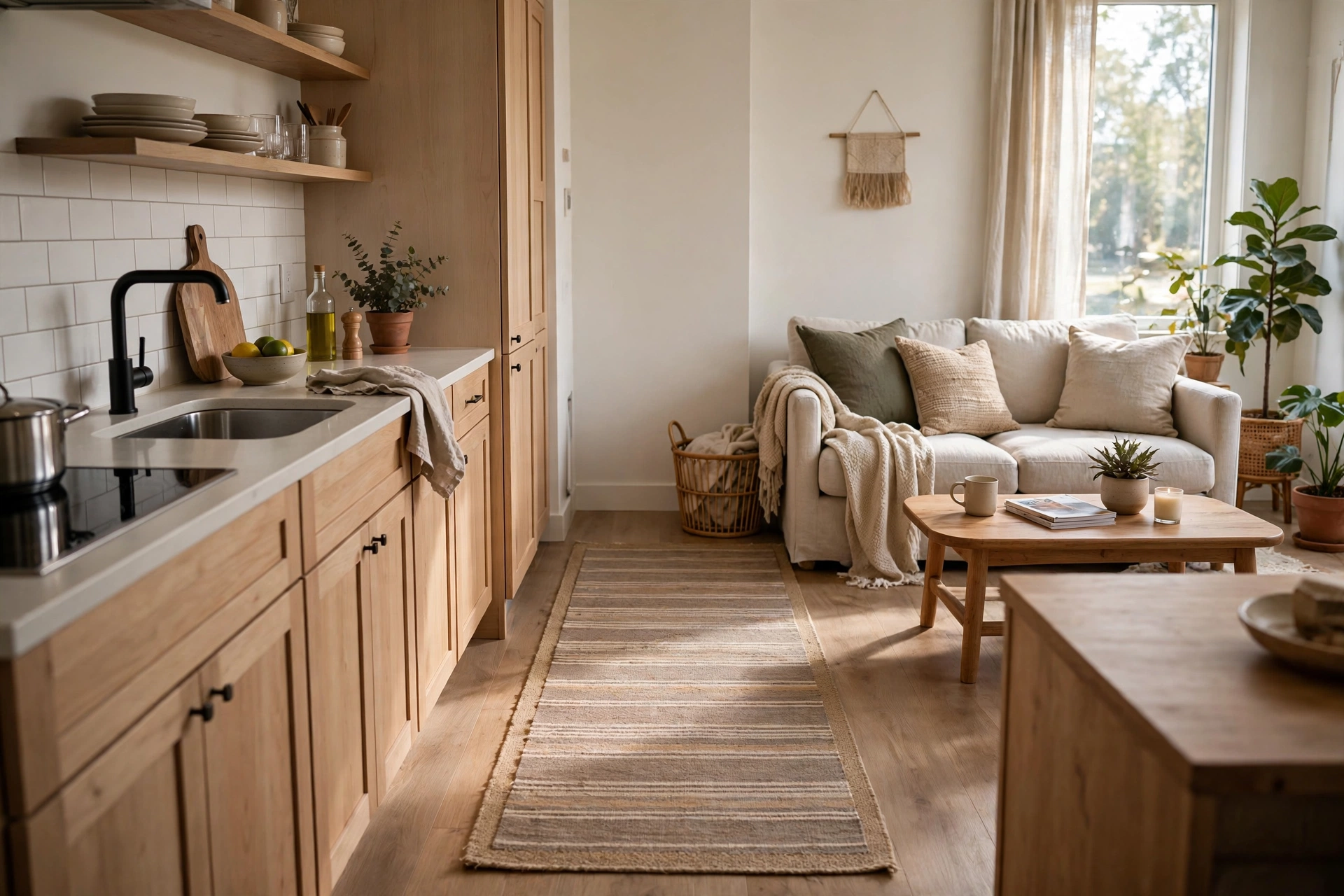
17. A Runner for the Galley Zone Between Kitchen and Living
In railroad-style studios, the walkway between the kitchen counter and the living area is dead space — a runner turns it into a transition zone with purpose. An 8- to 10-foot runner guides foot traffic, protects the floor in the highest-traffic strip of the apartment, and visually connects the kitchen to the living zone. Washable flatweave runners in this length run $70–$160. Pro tip: leave the runner 4–6 inches narrower than the walkway on each side — wall-to-wall runners make narrow passages feel even tighter.
Entryway & Hallway Runners
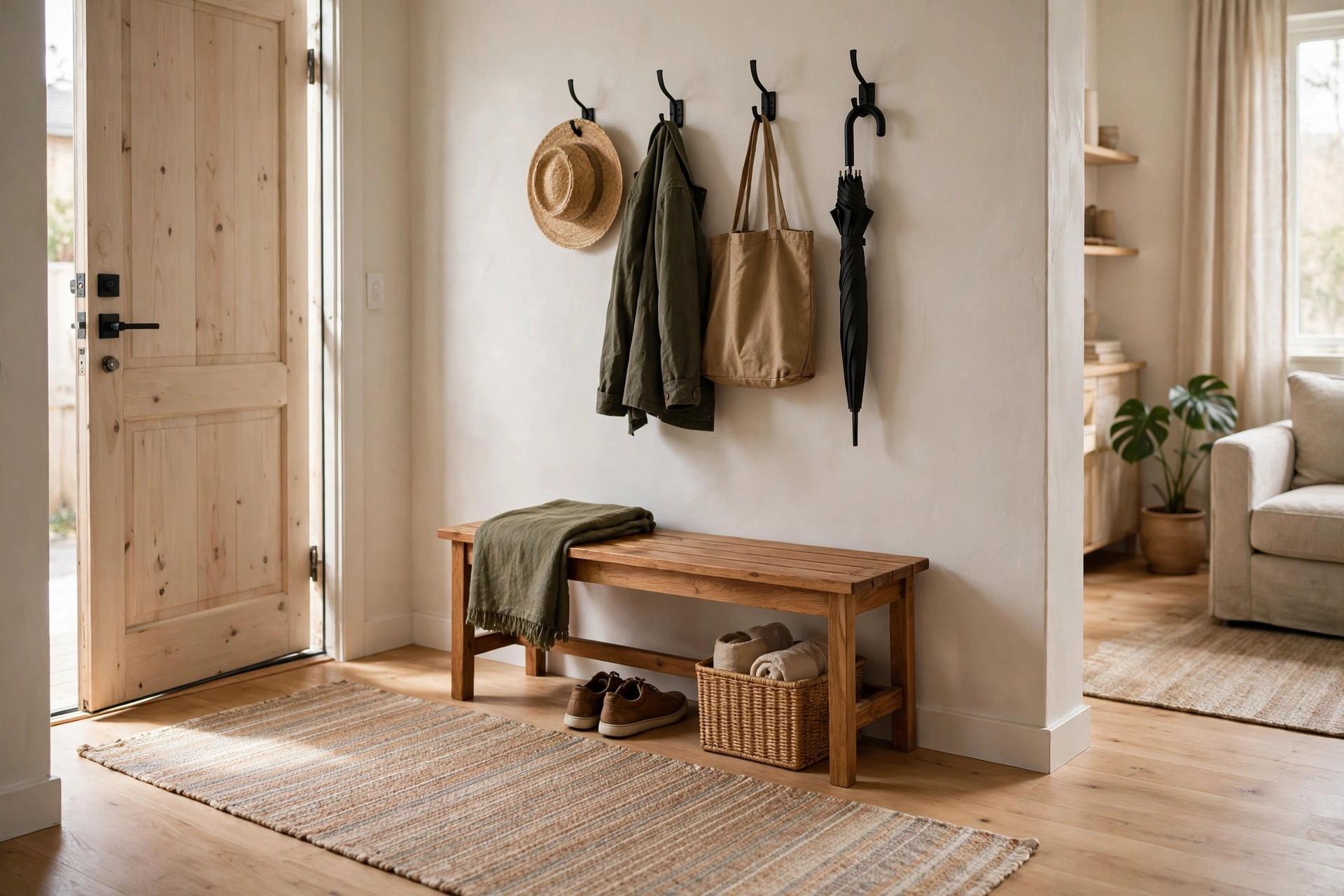
18. An Entryway Runner That Sets the Tone
In a studio, the front door often opens directly into the living space — an entryway runner creates an instant “foyer” that tells guests (and your brain) they’ve arrived. It also traps dirt before it reaches the living-zone rug, which is doing the real decorative work. A 2.5×6 washable runner costs $50–$120 and should coordinate with — not match — the main living rug. Pro tip: place a small tray or basket at the end of the entry runner for shoes; the rug marks the boundary where outdoor shoes stop.
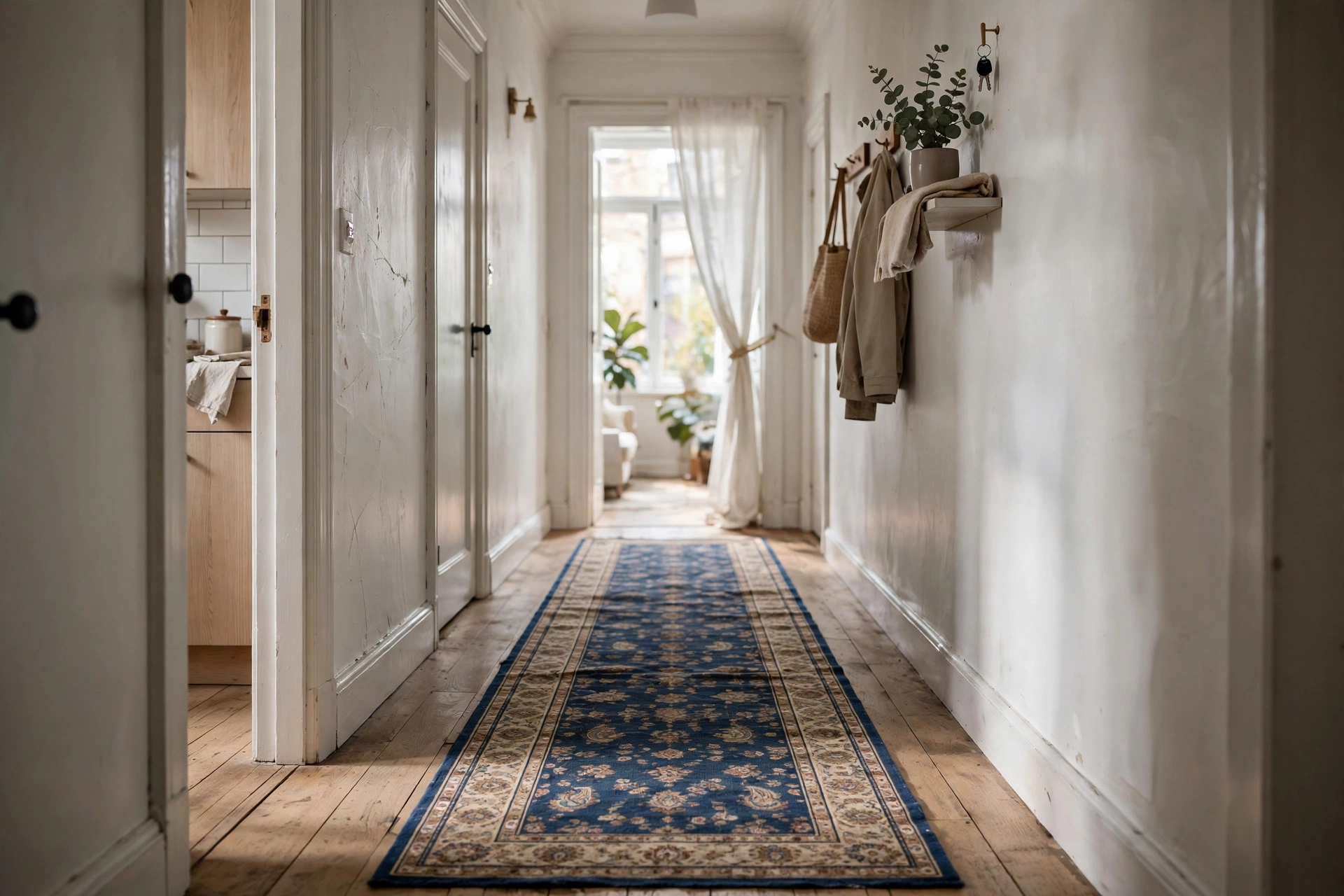
19. A Long Hallway Runner to Add Drama
If your studio has even a short hallway — to the bathroom, the closet, the sleeping alcove — a runner transforms it from wasted space into a design moment. A patterned runner with a border draws the eye forward and makes the corridor feel longer and more intentional. Measure wall to wall and subtract 8–12 inches total for the ideal width; runners run $60–$180 depending on length and material. Pro tip: run the pattern’s direction along the hallway’s length — it elongates the space instead of chopping it.
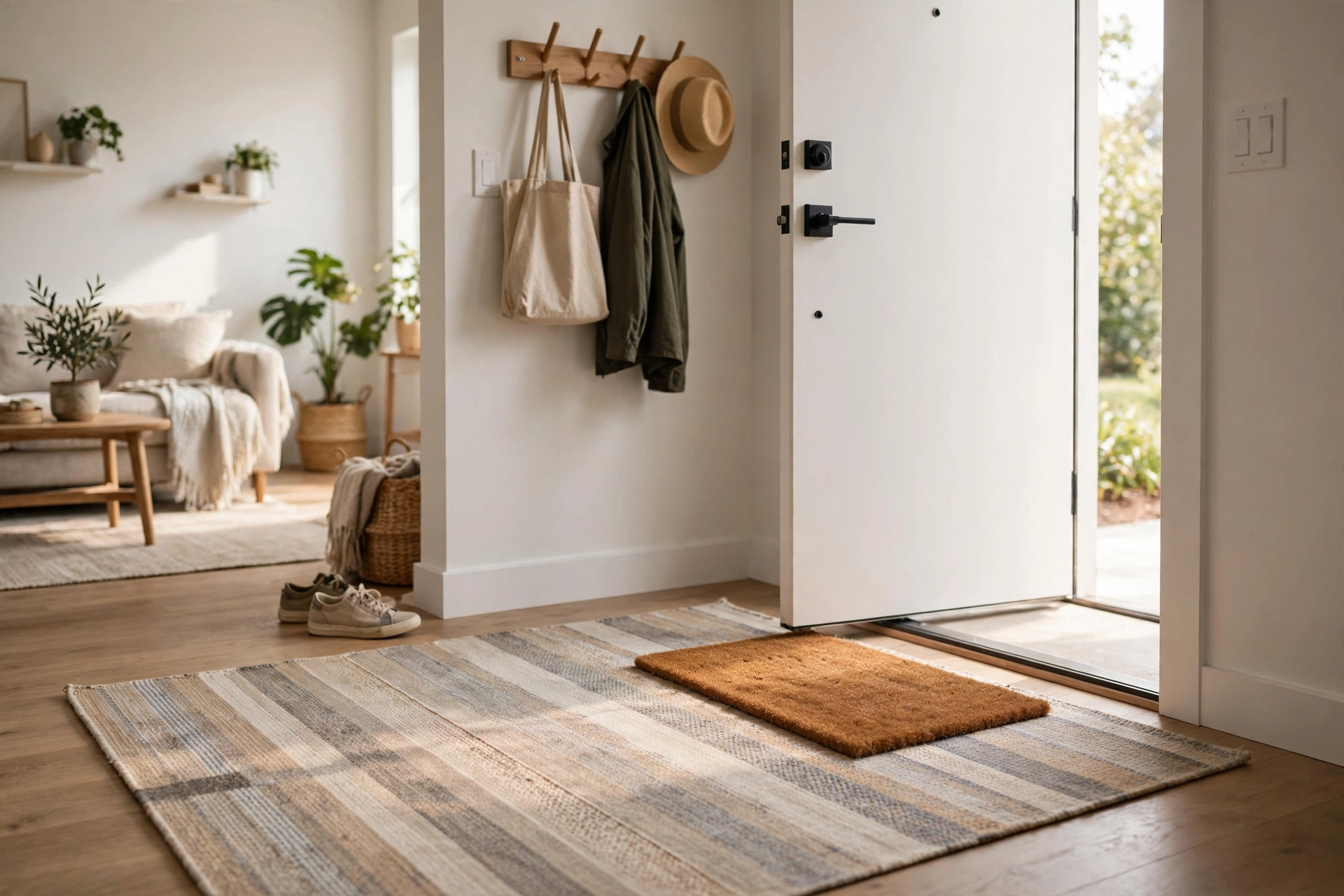
20. Layer a Doormat Over an Entry Rug
One mat isn’t enough at a studio’s front door — layer a coarse coir doormat over a slightly larger flatweave rug. The coir scrapes shoes clean while the larger rug underneath catches what the mat misses and adds a styled, intentional look for about $45–$90 total. This double layer is also renter-friendly: it protects the entry floor (and your security deposit) better than any single mat. Pro tip: choose a coir mat without a rubber backing for layering — it sits flatter and won’t curl at the edges.
Rug Materials That Survive Small-Space Living
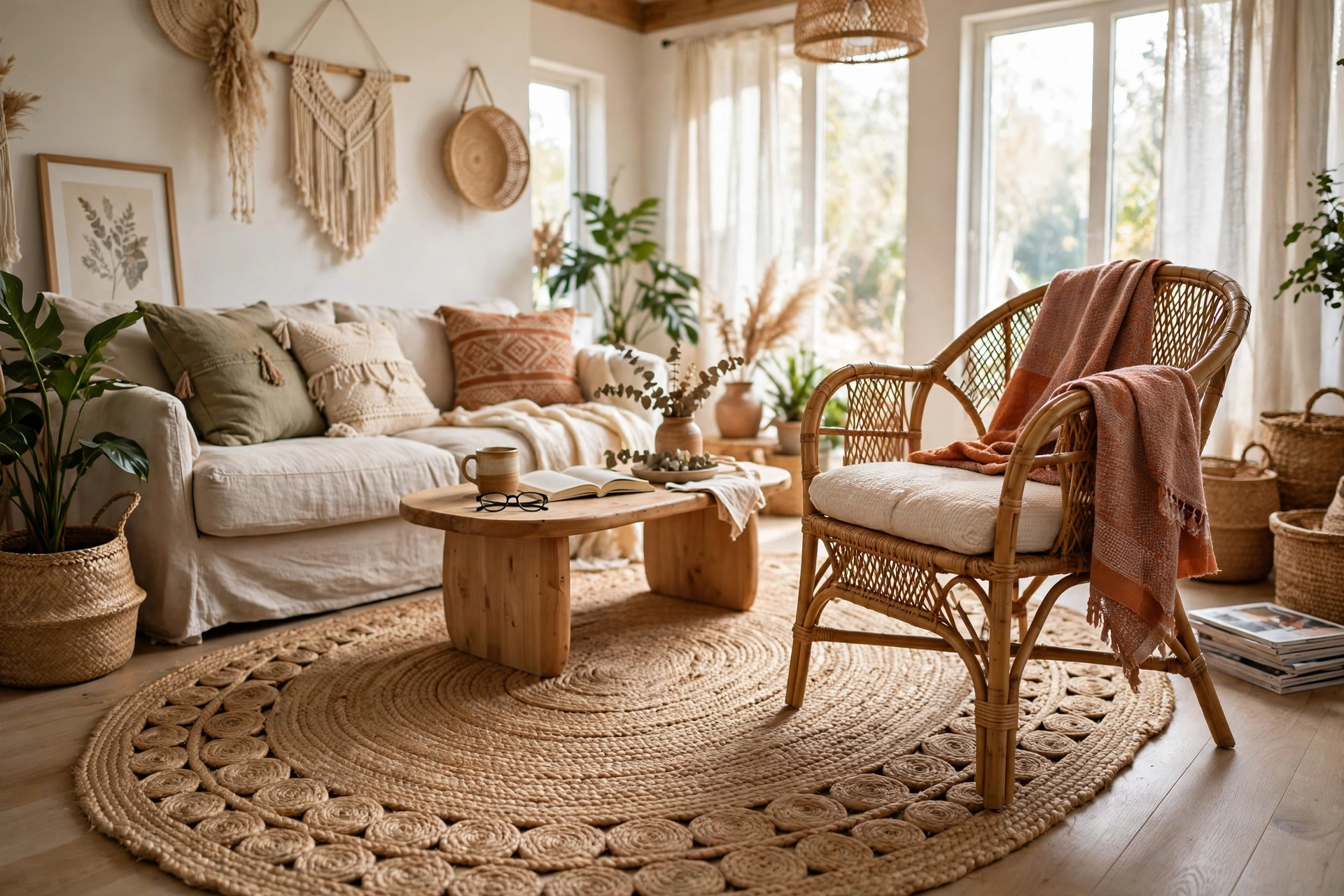
21. Natural Jute for Texture on a Budget
Jute is the studio dweller’s secret weapon: it’s cheap (a 5×8 runs $80–$150), its nubby texture adds warmth to minimalist spaces, and its neutral tone goes with everything. Jute works best as a base layer or in low-traffic zones because it sheds initially and hates moisture — keep it out of the kitchen and entry. Pair it with the earthy palettes in these studio apartment color schemes for an effortless organic look. Pro tip: vacuum jute with suction only (no beater bar) — aggressive brushing breaks the fibers and accelerates shedding.
22. Wool for Durability That Pays Off
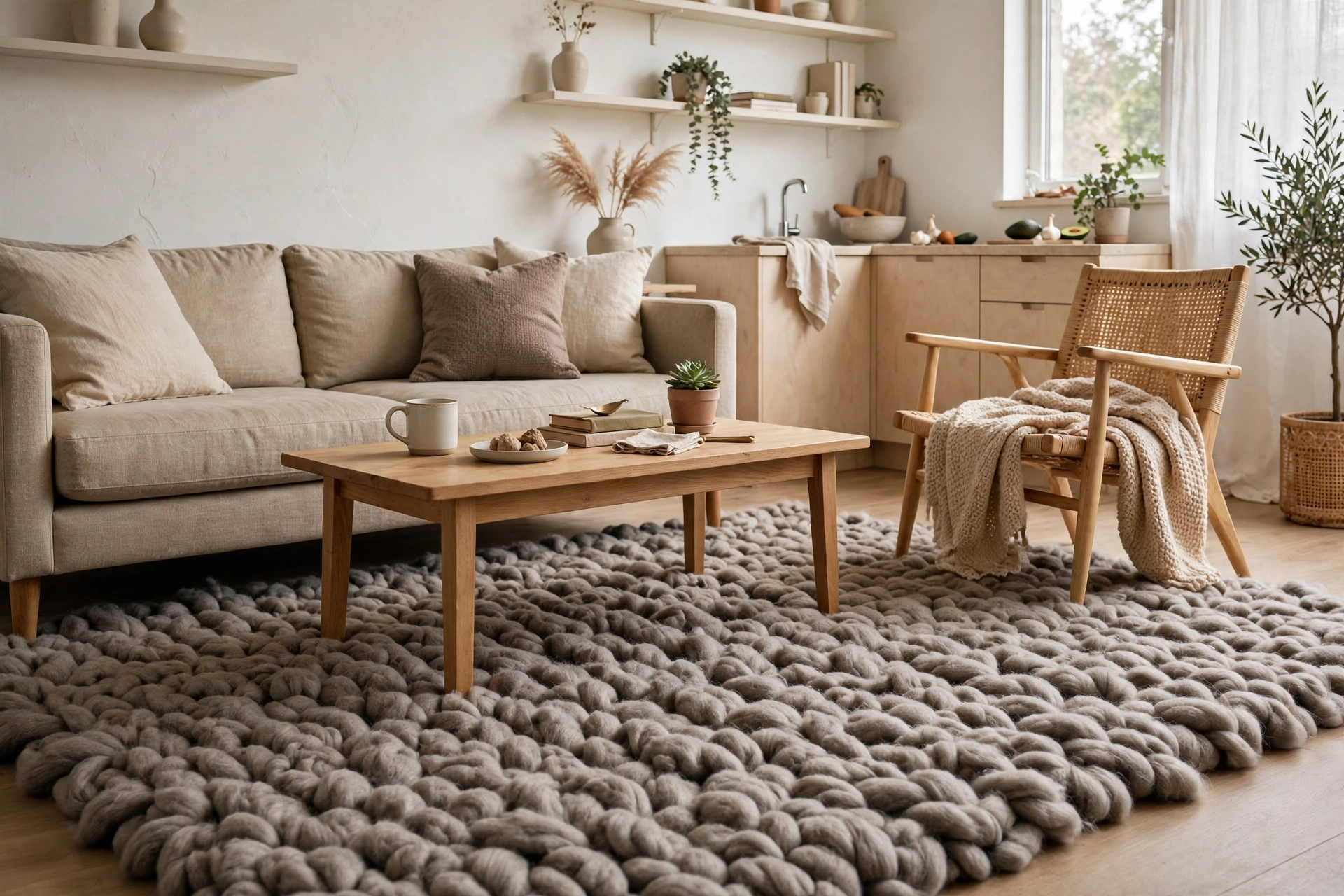
If you buy one investment rug for your studio, make it wool. Wool fibers are naturally elastic (they spring back from furniture dents), inherently flame-resistant, and lanolin-coated so spills bead up instead of soaking in. A quality 8×10 wool rug costs $400–$900 but can genuinely last 15–20 years — cheaper per year than replacing a $150 synthetic every two years. Pro tip: buy wool for the living zone where durability matters most, and use cheaper materials in the bedroom where traffic is light.
23. Washable Rugs for Real Life
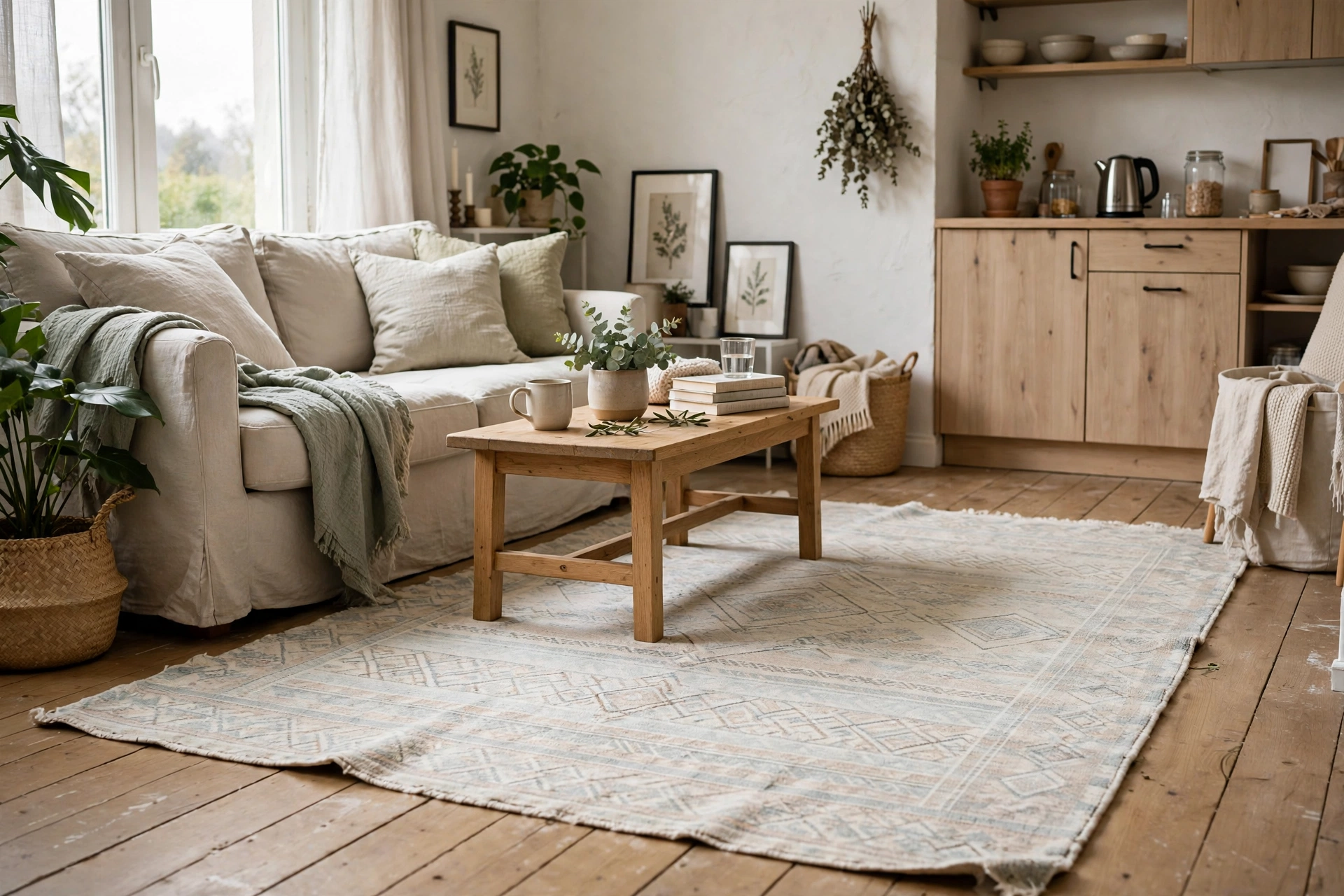
Machine-washable rugs (the Ruggable-style two-piece system or one-piece washable options) were practically invented for studio living, where the “dining room” is also the living room and spills travel fast. When the rug gets dirty, you toss the cover in the washing machine instead of renting a carpet cleaner. A 5×8 washable system runs $199–$349 — more upfront, far less over time. Pro tip: washable rugs are thinnest in the pile world, so always use the brand’s recommended pad underneath — it adds the cushioning the thin cover lacks.
24. Indoor-Outdoor Rugs for Spill Zones
Polypropylene indoor-outdoor rugs have quietly become interior-designer favorites for dining nooks and kitchen-adjacent zones: they hose clean, resist stains and fading, and modern weaves look nothing like plasticky patio rugs. A 5×8 indoor-outdoor rug costs $70–$160 — ideal under a dining table where red wine is a real threat. They also work on studio balconies, visually extending your living space outward. Pro tip: choose indoor-outdoor rugs with a soft, fabric-like weave (look for “soft-touch polypropylene”) — the cheap shiny ones scream patio furniture.
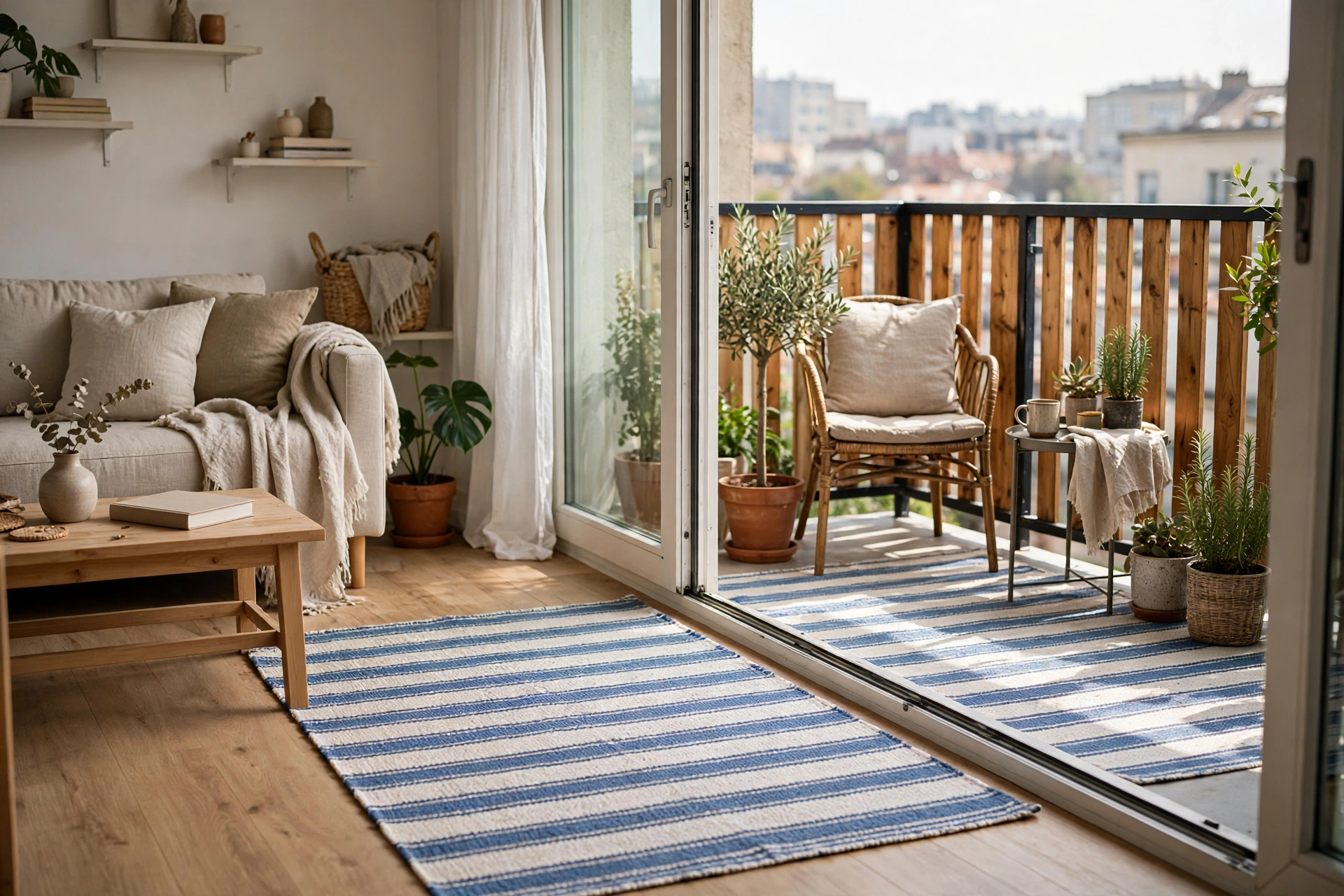
25. Cotton Flatweave for Casual, Lightweight Zones
Cotton flatweave rugs — dhurries, rag rugs, braided cottons — are light, affordable ($60–$130 for 5×8), reversible, and many are machine washable. They’re perfect for the bedroom zone or a reading nook where you want softness without bulk, and their casual texture suits boho, coastal, and Scandinavian studios. The tradeoff: they wrinkle, slide, and show wear faster, so always pair them with a rug pad. Pro tip: because they’re reversible, flip a cotton flatweave every few months — you literally double its lifespan.
Colors & Patterns for Small Spaces
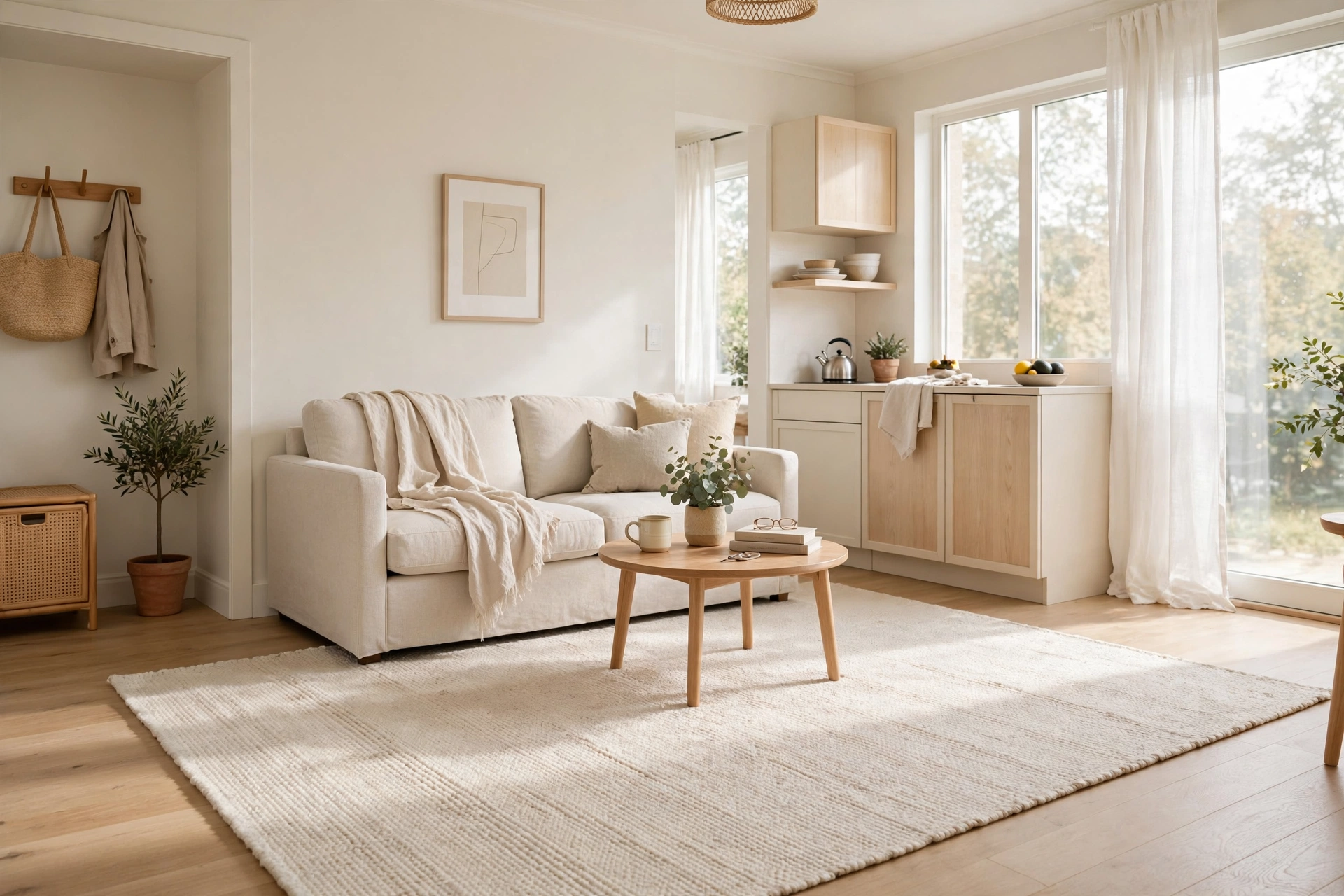
26. Light Rugs to Visually Expand the Room
Light-colored rugs — ivory, pale gray, soft beige — reflect light and make studio floors look continuous with the walls, which is why they make small rooms feel bigger. If your studio gets limited natural light, a light rug in the living zone is one of the highest-impact changes you can make (a principle that also powers these cozy apartment living room ideas). A 5×8 ivory low-pile rug runs $80–$200. Pro tip: “light” doesn’t have to mean solid white — a light rug with a subtle tone-on-tone pattern gives you the airy effect plus camouflage for daily dust.
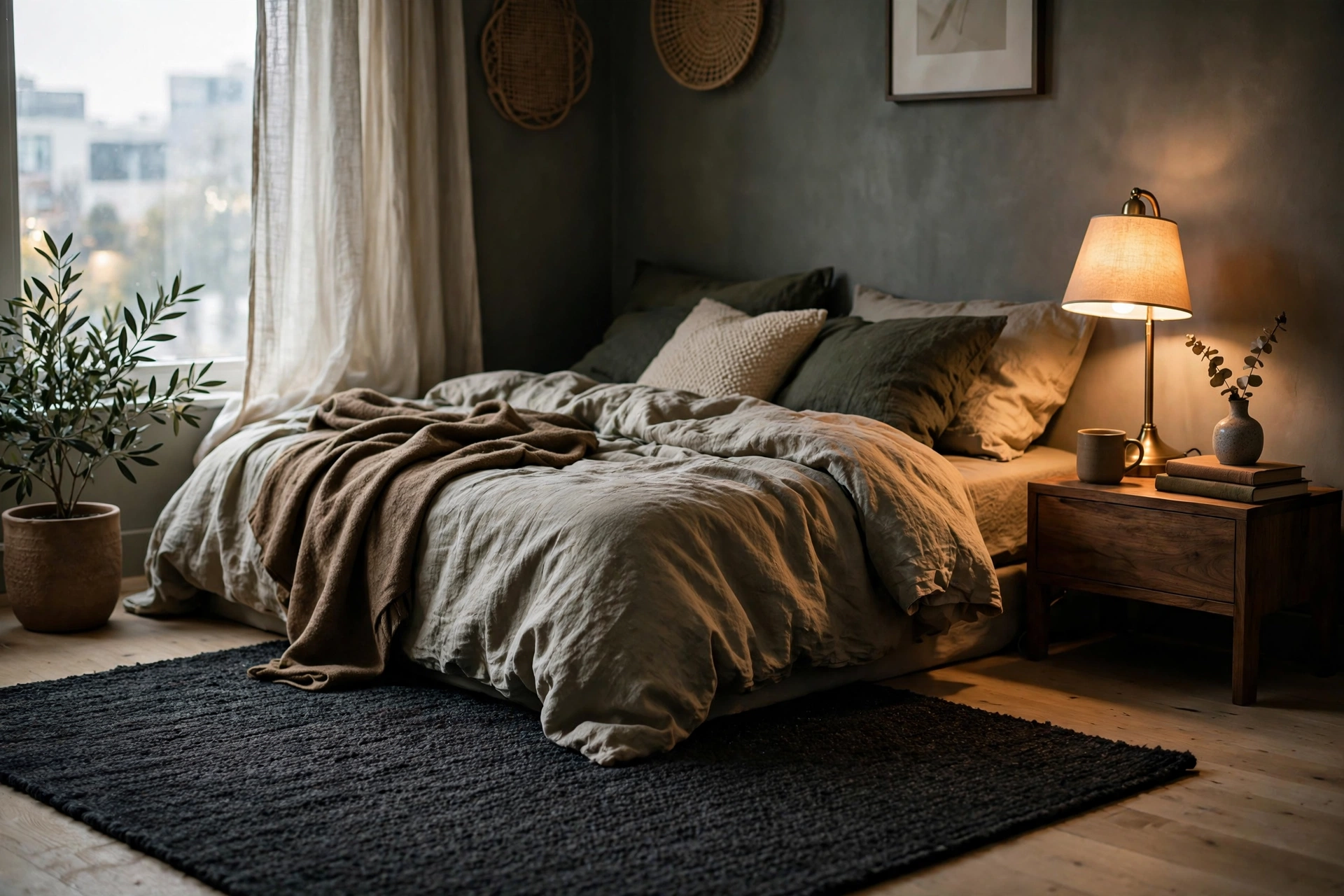
27. Dark Rugs to Ground and Cozy Up a Zone
Conventional wisdom says dark rugs shrink rooms — but used deliberately in one zone, a dark rug adds depth, hides everything, and makes the space feel cocooning rather than cramped. A charcoal or deep-navy rug under the bed turns the sleeping corner into a moody retreat, especially with warm lamplight. Dark 5×8 rugs run $90–$220 and are the most forgiving choice for pet owners. Pro tip: balance a dark rug with light bedding or curtains in the same zone — the contrast keeps the corner from feeling like a cave.
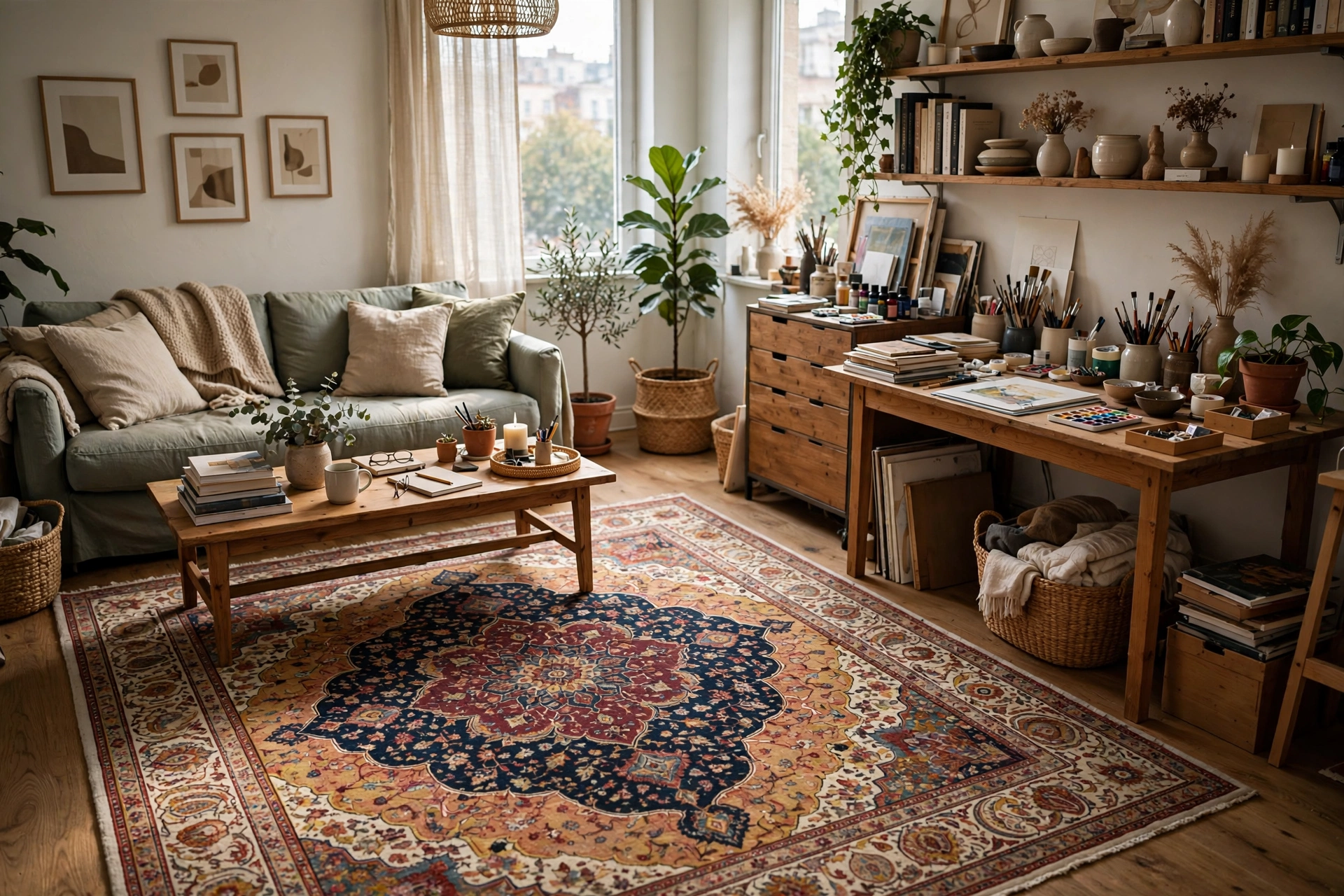
28. Patterned Persian-Style Rugs That Hide Everything
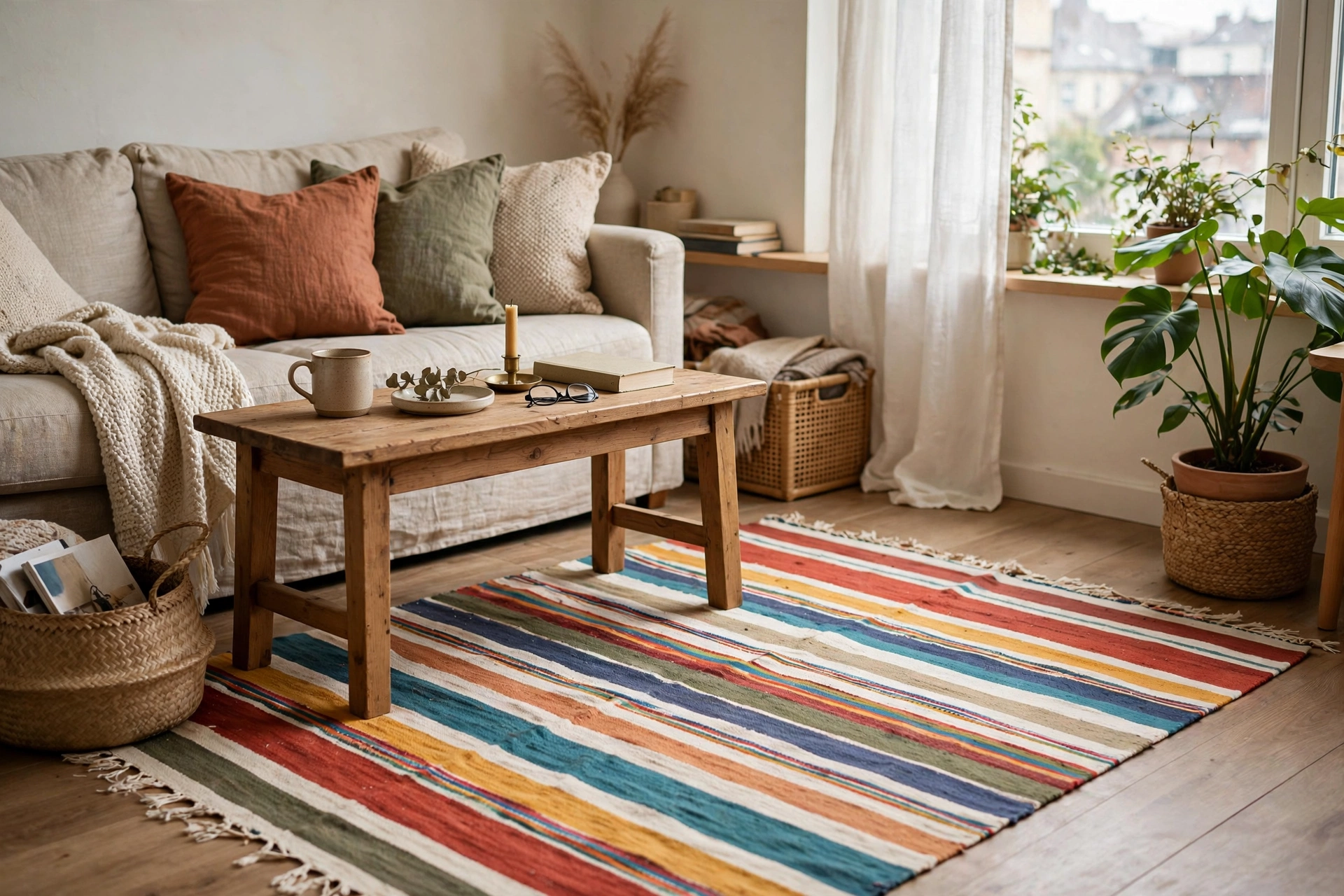
The busier the pattern, the less you see: crumbs, pet hair, footprints, and fading all disappear into a Persian-style medallion or allover pattern. That’s why patterned rugs are the workhorse choice for studio living zones that see constant use. Medium-scale patterns (motifs 6–12 inches) read best in small rooms — oversized motifs overwhelm, tiny ones look busy. A 5×8 patterned synthetic runs $100–$250. Pro tip: pull one color from the rug’s pattern for your throw pillows and one for a throw blanket — instant designer coordination.
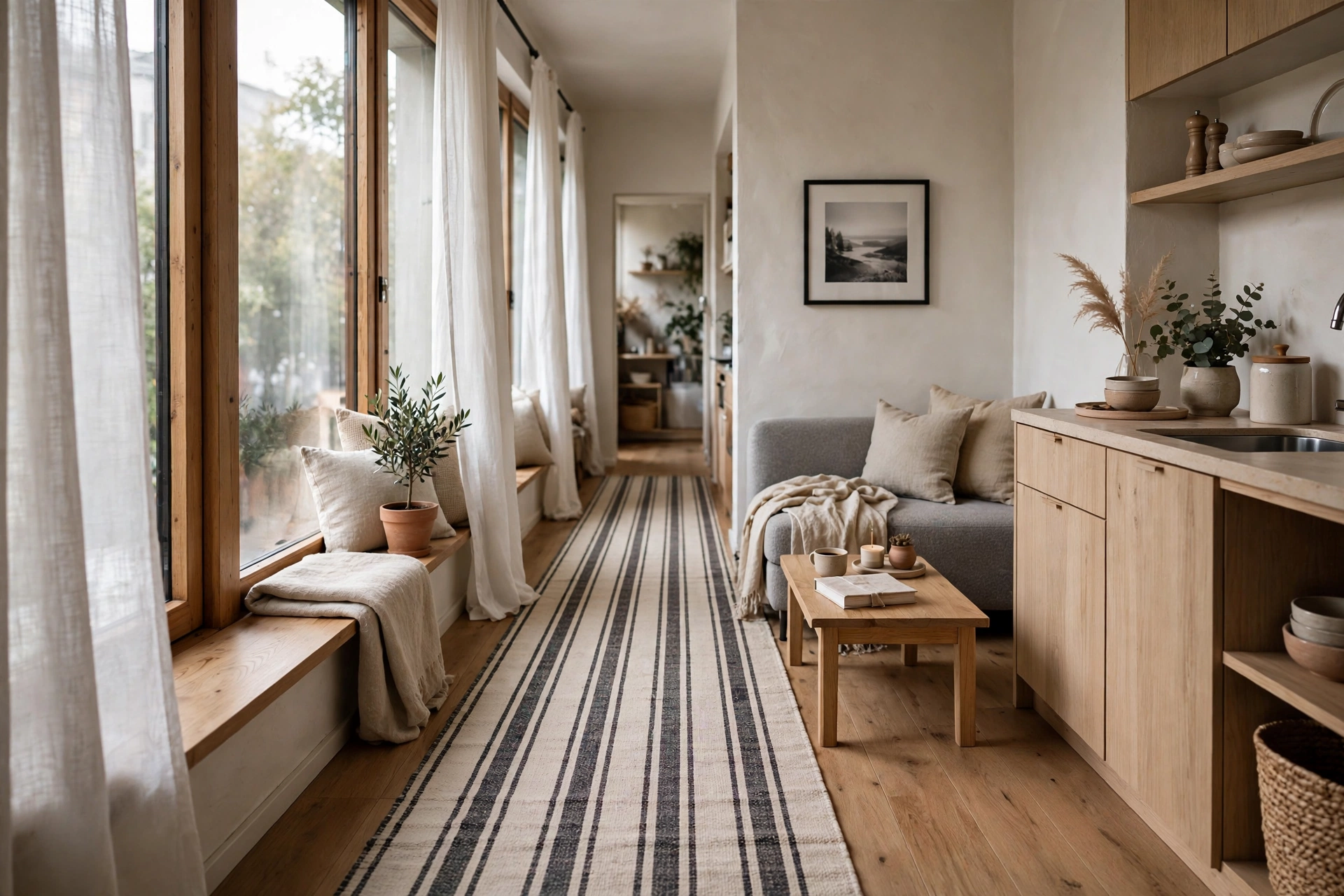
29. Striped Rugs to Elongate Narrow Spaces
Stripes are visual arrows: stripes running lengthwise down a narrow studio make it feel longer, while stripes across a square zone make it feel wider. A striped runner is the classic fix for galley kitchens and hallways, and a wide-striped 5×8 can stretch a boxy living zone. Striped cotton and synthetic rugs run $60–$150. Pro tip: keep stripe contrast medium (tone-on-tone or two close neutrals) in small studios — high-contrast black-and-white stripes energize but can feel jittery in tight quarters.
Layering & Finishing Touches
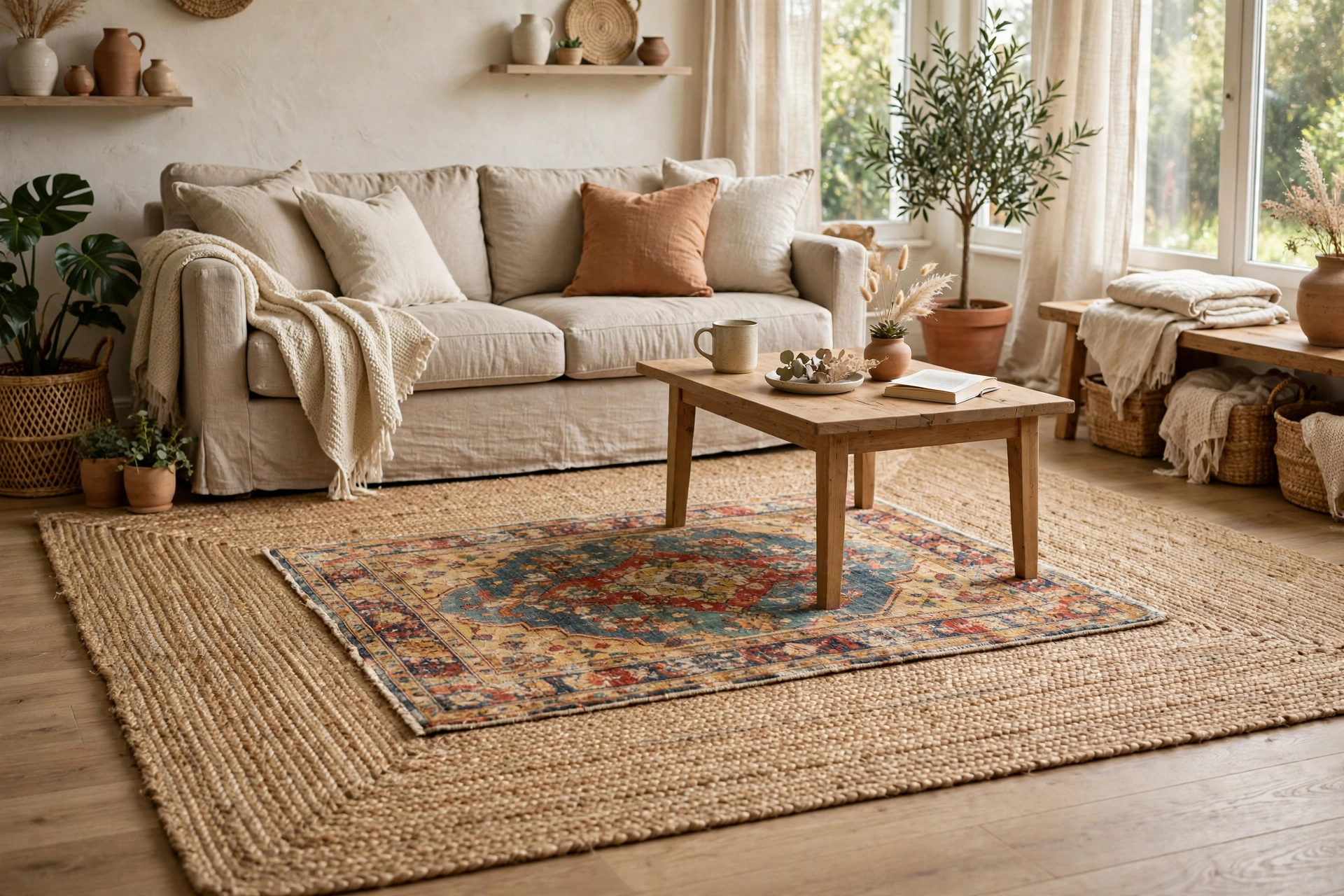
30. Layer a Patterned Rug Over Jute
Layering is how designers make affordable rugs look expensive: start with a large natural jute rug as the base, then layer a smaller patterned rug (4×6 over an 8×10, roughly) on top, centered under the coffee table. You get the texture of jute plus the personality of pattern for the price of one mid-range rug — typically $140–$260 total. The layers also add sound insulation, a real bonus in thin-walled studios. Pro tip: the top rug should cover about two-thirds of the base rug’s width — too small looks like a postage stamp, too big hides the layering effect.
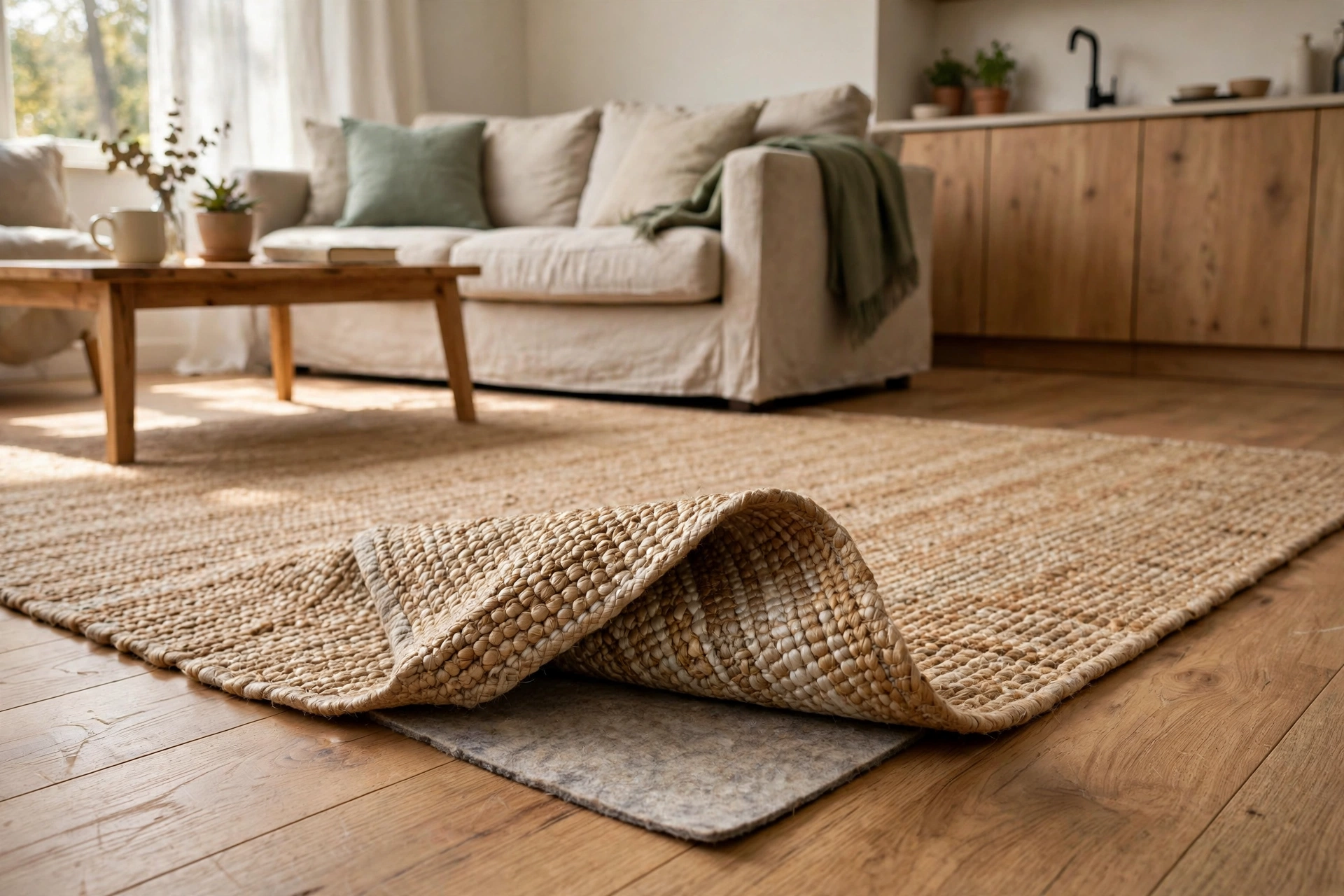
31. Never Skip the Rug Pad
A rug pad is the $30–$70 upgrade that changes everything: it stops rugs from sliding on hard floors (critical in a studio where every rug gets walked on constantly), adds cushioning underfoot, protects the floor finish, and makes thin rugs feel plush. Felt-rubber combo pads grip best on wood floors; memory-foam pads add the most comfort. Size the pad 1–2 inches smaller than the rug on all sides so it stays invisible. Pro tip: a good pad can make a $100 rug feel like a $300 rug — it’s the highest ROI purchase in this entire guide.
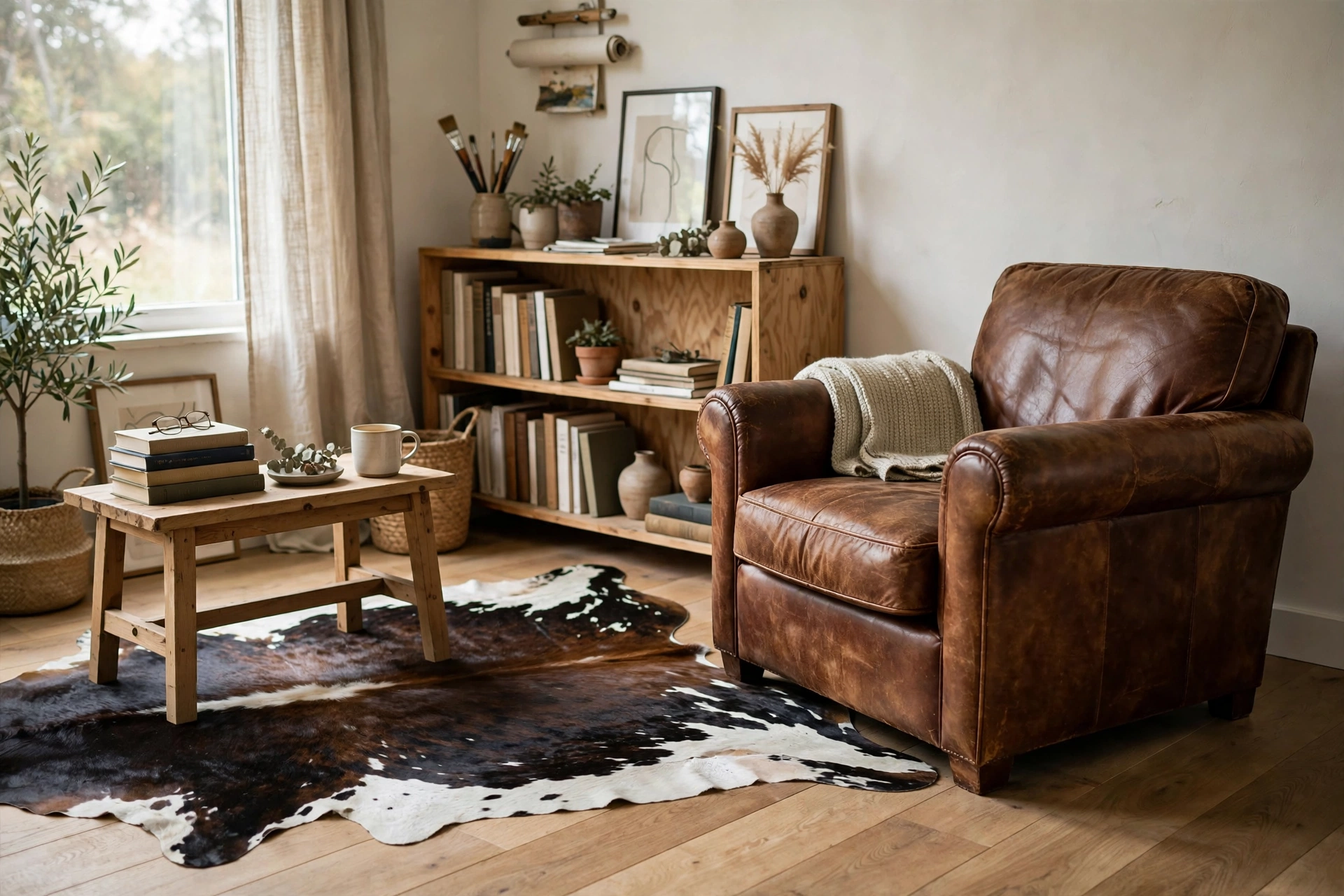
32. A Cowhide Rug as an Organic Accent
A natural cowhide brings an organic, irregular shape that breaks up all the rectangles in a studio — draped beside a reading chair or layered at the foot of the bed. Each hide is one of a kind, the hair-on-hide surface is surprisingly durable and easy to shake clean, and genuine hides run $150–$300 (faux versions $60–$120). Because of the freeform shape, a cowhide works where a rectangular rug would crowd the walkway. Pro tip: choose a hide with coloring that echoes your palette — brindle for warm neutrals, black-and-white for modern monochrome schemes.
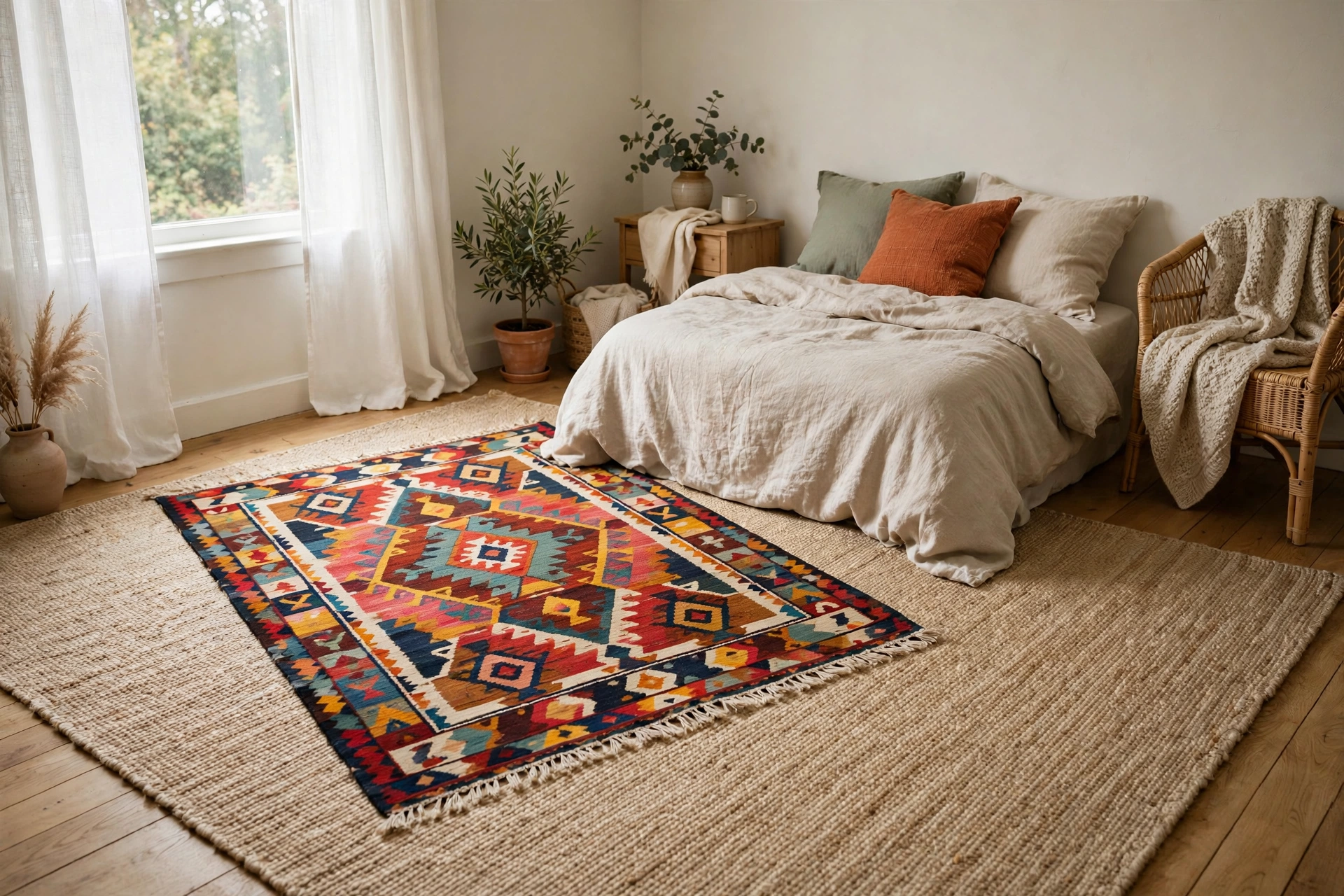
33. Angle-Layer a Small Rug Over a Large Neutral
For the final touch, try layering a small colorful rug at a slight angle over your large neutral base rug — the deliberate asymmetry looks collected-over-time rather than decorated-in-a-day. This is the perfect use for a beloved vintage kilim, a travel souvenir rug, or a bold thrifted find that isn’t big enough to stand alone. Keep the angle slight (10–20 degrees) so it reads intentional, not accidental. Pro tip: this trick lets you test-drive a bold pattern with zero commitment — if you hate it next month, just lift it off.
Frequently Asked Questions
What size rug is best for a studio apartment living area?
For most studio living zones, an 8×10 rug is ideal — it’s large enough to hold the front legs of the sofa and chairs plus the coffee table, which makes the zone feel like a real room. A 5×8 works only for very compact loveseat setups. When in doubt, size up: too-small rugs are the number one rug mistake in small spaces.
Should a studio apartment have multiple rugs or one big rug?
Multiple rugs — one per zone. A studio functions as several rooms in one, and each zone (living, sleeping, dining, entry) deserves its own rug to define it visually. Use one large rug per zone rather than several small rugs inside a single zone, which creates visual clutter. Coordinate the rugs through a shared color palette so they feel related, not random.
Are washable rugs worth it for a studio apartment?
Absolutely — they’re arguably more valuable in a studio than anywhere else, because cooking, dining, and living happen feet apart and spills travel. A washable rug in the kitchen or dining zone pays for itself the first time you toss it in the washing machine instead of hiring a carpet cleaner. Expect to pay $199–$349 for a 5×8 washable system.
What rug material is best for high-traffic small spaces?
Wool is the durability champion — it resists stains, springs back from furniture dents, and lasts 15+ years. For budget-friendly high-traffic zones, low-pile synthetics (polypropylene, nylon) and indoor-outdoor rugs handle heavy use and clean easily. Save delicate materials like jute, silk blends, and high-pile shag for low-traffic zones like beside the bed.
Do dark rugs make a studio apartment look smaller?
Not necessarily — it depends on placement. A dark rug across the entire studio floor can make it feel smaller, but a dark rug confined to one zone (like under the bed) adds depth and coziness without shrinking the room. The key is contrast: balance a dark rug with lighter walls, bedding, or curtains in the same zone so the space still feels airy.
How do I stop rugs from sliding on studio apartment floors?
Use a quality rug pad — a felt-rubber combo pad cut 1–2 inches smaller than the rug grips wood, tile, and laminate floors and won’t damage the finish. For runners in galley kitchens, add rug tape on the corners as backup. Avoid cheap PVC waffle pads on hardwood; they can discolor the finish over time.
Final Thoughts
In a studio apartment, rugs aren’t decoration — they’re architecture. Each one draws an invisible wall around a zone, telling you where to relax, where to sleep, and where to eat. Get the sizing right, choose materials that match each zone’s real life, and coordinate your palette across zones, and a single open room starts functioning like a much larger home.
Start with the living zone rug — it’s the largest visual anchor and the one you’ll see most. Then add the bedroom, kitchen, and entry pieces one at a time, using the painter’s tape trick before every purchase. Before long, your studio won’t feel like one room doing everything; it’ll feel like a home where everything has its place.