
39 Apartment Decorating Mistakes to Avoid (And What to Do Instead)
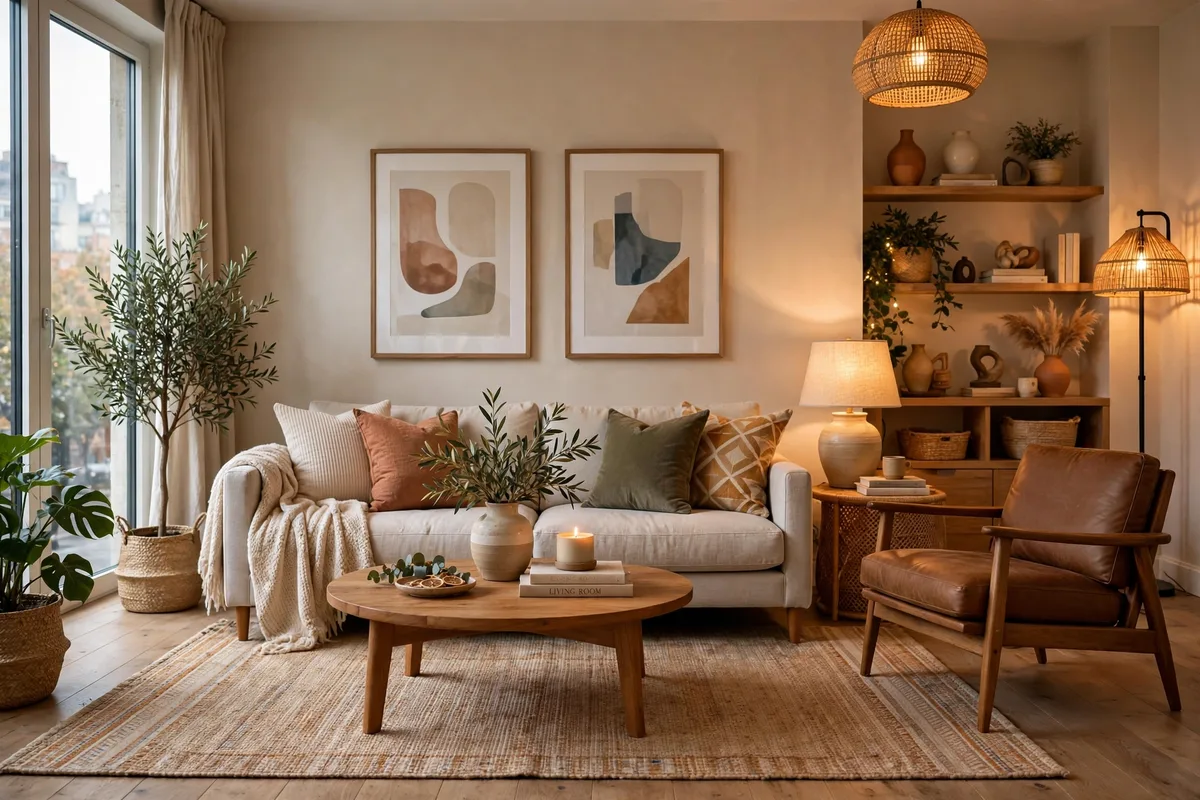
Here’s a secret the design world doesn’t advertise: most beautiful apartments weren’t decorated by people with perfect taste. They were decorated by people who stopped making the same handful of mistakes everyone else makes. The lopsided rug, the too-small art, the sad overhead light doing all the work — these apartment decorating mistakes are so common they practically come with the lease.
The good news? Every single one is fixable, usually for less than $50 and an afternoon. Below are 39 apartment decorating mistakes to avoid — each one with the mistake named, why it ruins the vibe, and exactly what to do instead. Think of this as the shortcut to a home that looks intentional instead of accidental.
Furniture & Scale Mistakes
Furniture is the biggest investment and the biggest source of regret. Get the scale right and everything else falls into place.
1. Pushing All Furniture Against the Walls
The mistake: shoving every piece flat against the walls, leaving a sad empty middle that makes the room feel like a waiting area. What to do instead: float your sofa or key pieces even 6–12 inches off the wall — it creates breathing room and makes zones feel intentional. Pro tip: in a studio, floating the sofa is doubly powerful because the back becomes a natural room divider.
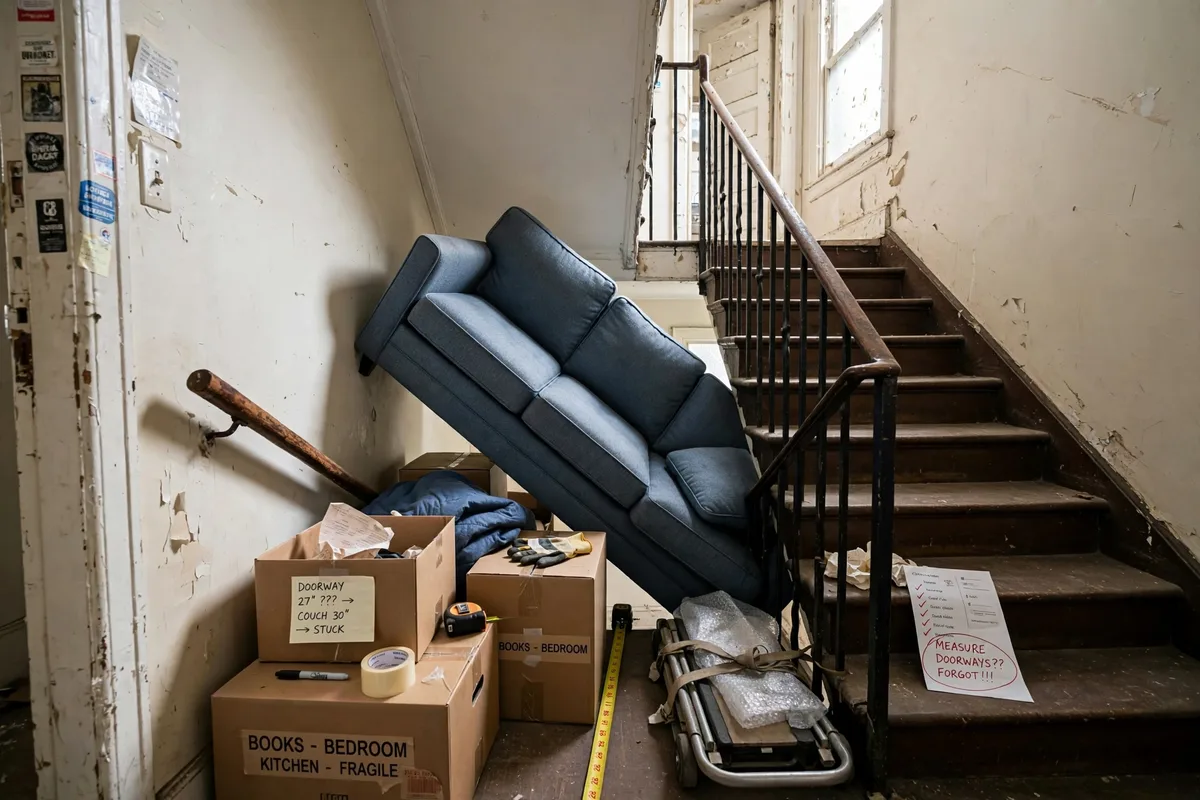
2. Buying Furniture Before Measuring
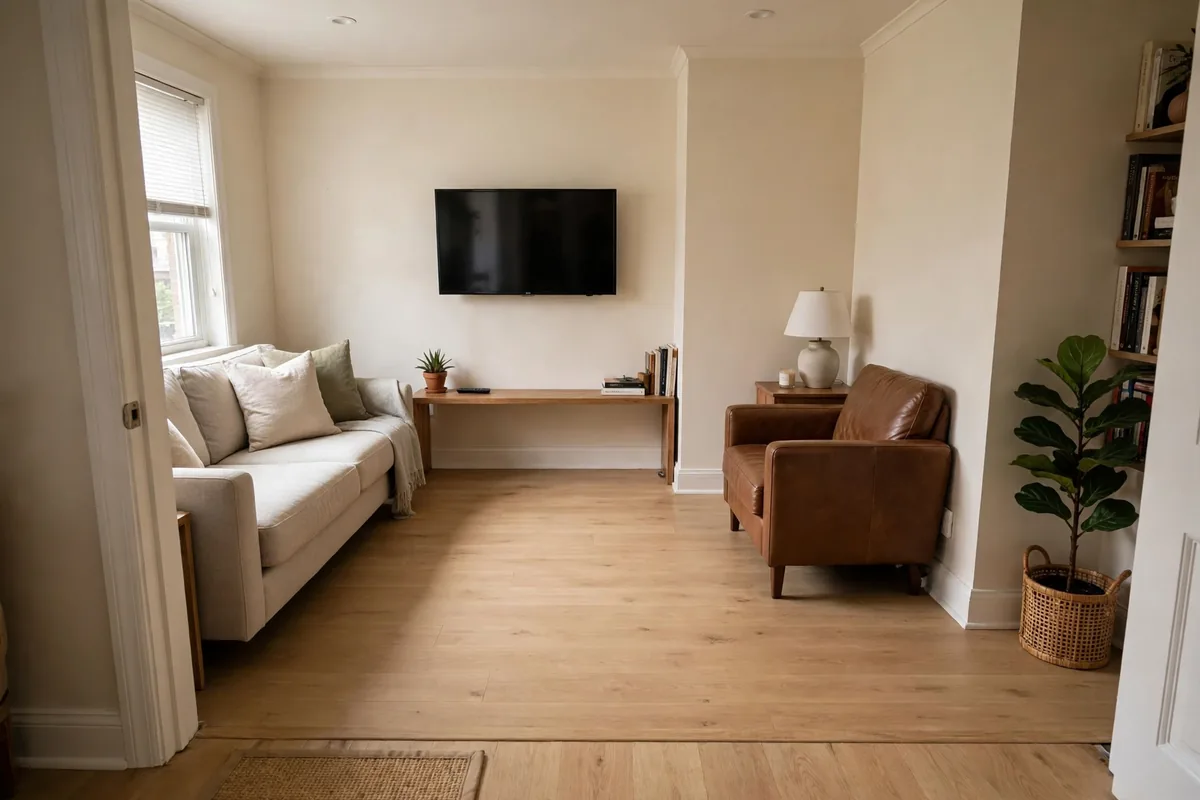
The mistake: falling in love with a sofa at IKEA and discovering it won’t fit through your hallway, let alone your living room. What to do instead: measure your room, your doorways, and your elevator before you shop — then tape the furniture’s footprint on the floor with painter’s tape to see it in real life. Pro tip: keep a note on your phone with your room dimensions and door widths so you’re never guessing in the store.
3. Choosing a Sofa That’s Too Big for the Room
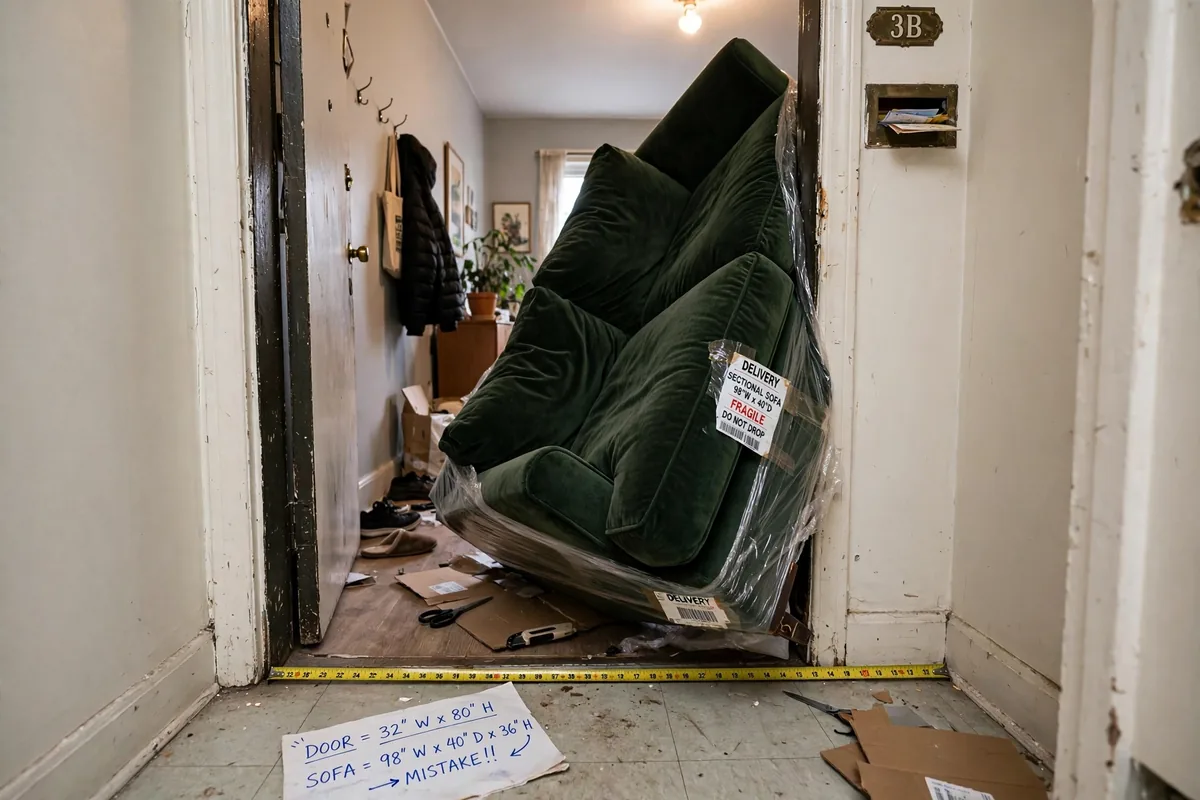
The mistake: a massive sectional swallowing a 10×12 living room, leaving no space to walk around it. What to do instead: your sofa should leave at least 30 inches of walkway on the main traffic side — in small apartments, a loveseat or apartment-size sofa (68–72 inches wide) almost always works better. Pro tip: sit-test in store, then subtract: if it fills the showroom corner, it’ll overwhelm your room.
4. Hanging Art That’s Too Small for the Furniture
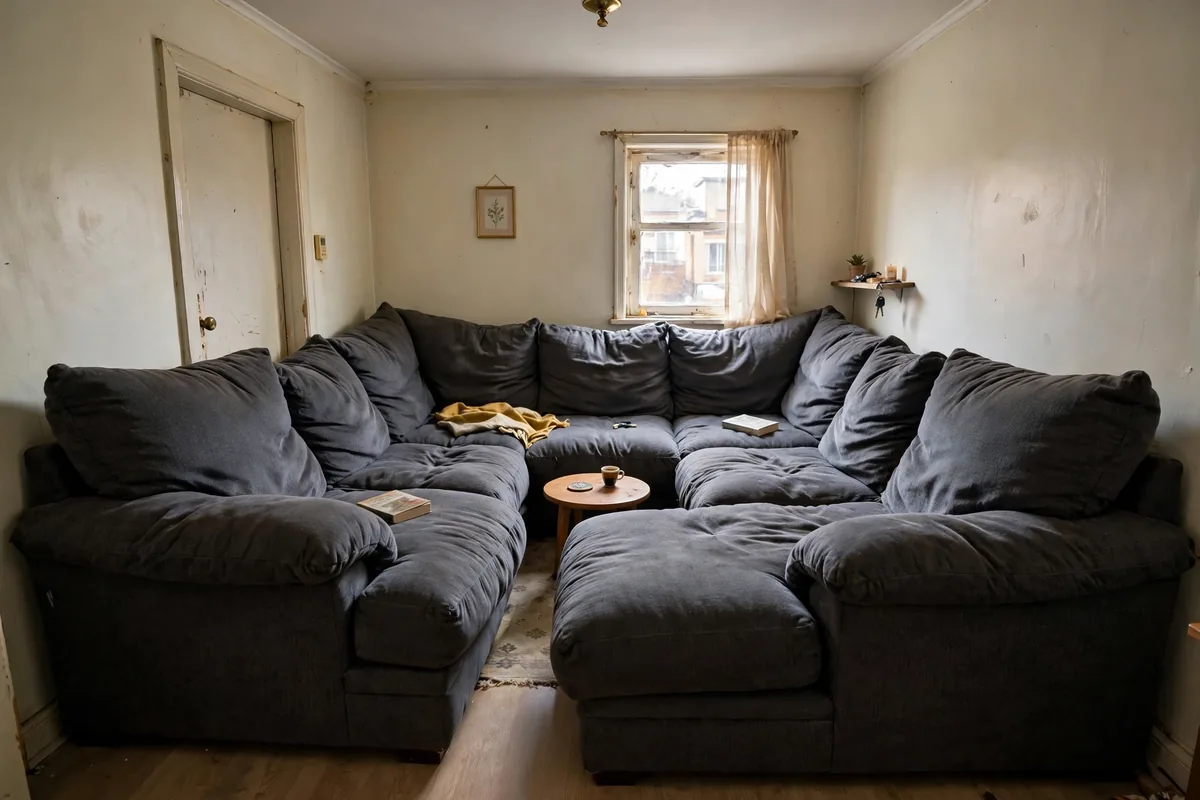
The mistake: a lonely 8×10 frame floating above a 7-foot sofa, looking like a postage stamp on a billboard. What to do instead: follow the two-thirds rule — art above furniture should span roughly two-thirds the furniture’s width. Pro tip: one large piece ($40–$80 canvas print from IKEA or Society6) beats five tiny frames every time.
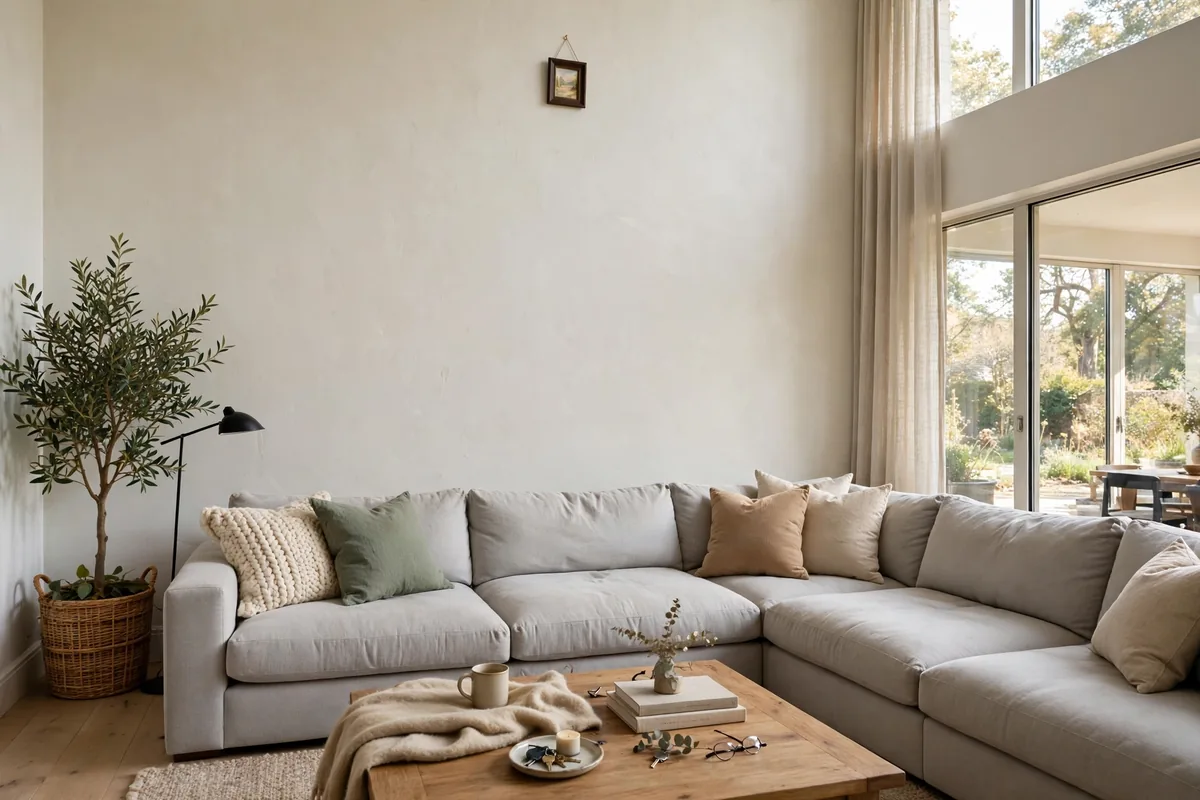
5. Ignoring Scale and Proportion Entirely
The mistake: a chunky oversized coffee table next to spindly side tables, or a massive floor lamp towering over a petite armchair — pieces that fight each other. What to do instead: vary scale intentionally — pair one statement piece with medium and small companions, keeping heights within a comfortable visual range. Pro tip: if something looks “off” but you can’t say why, it’s almost always a scale problem.
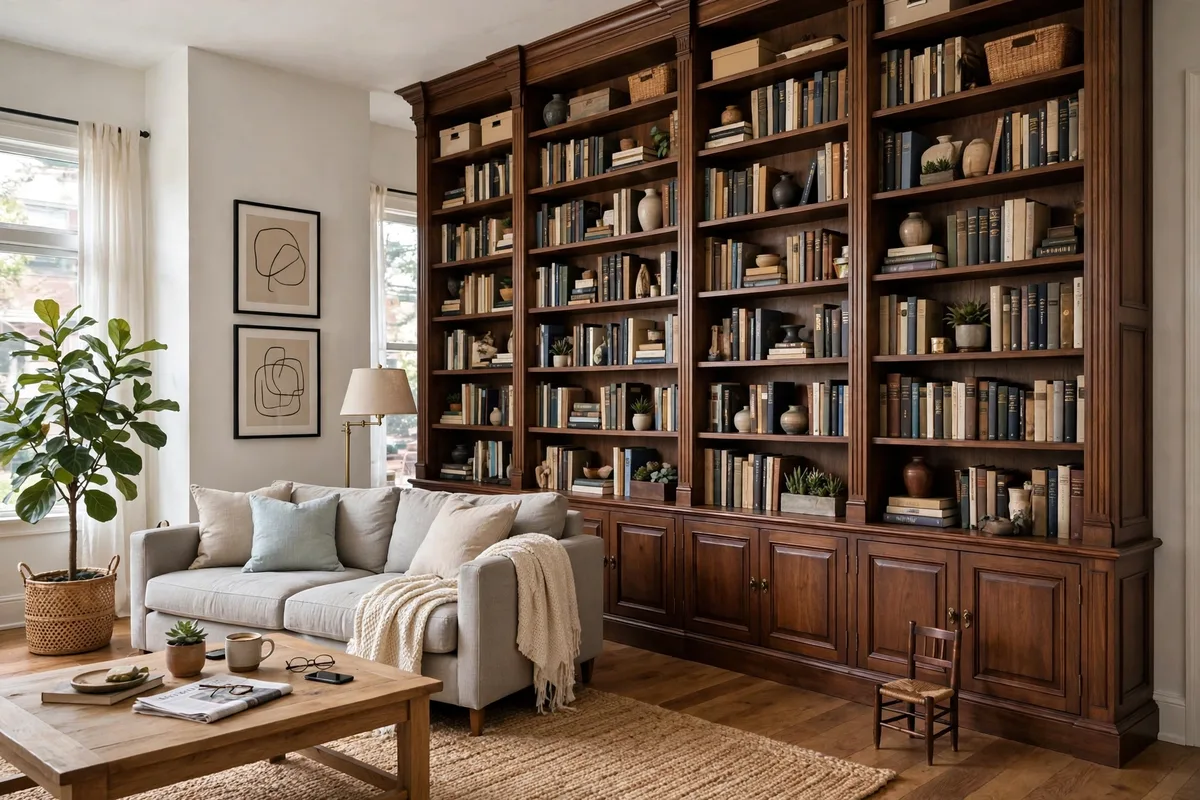
6. Buying the Whole Matching Furniture Set
The mistake: the bedroom set, the living room set — everything matchy-matchy from one collection, making your home look like a furniture showroom floor. What to do instead: mix pieces with a common thread (wood tone, color family, or style era) rather than identical finishes. Pro tip: start with your biggest piece, then add companions that coordinate — Target and IKEA pieces mix beautifully when the palette is consistent.
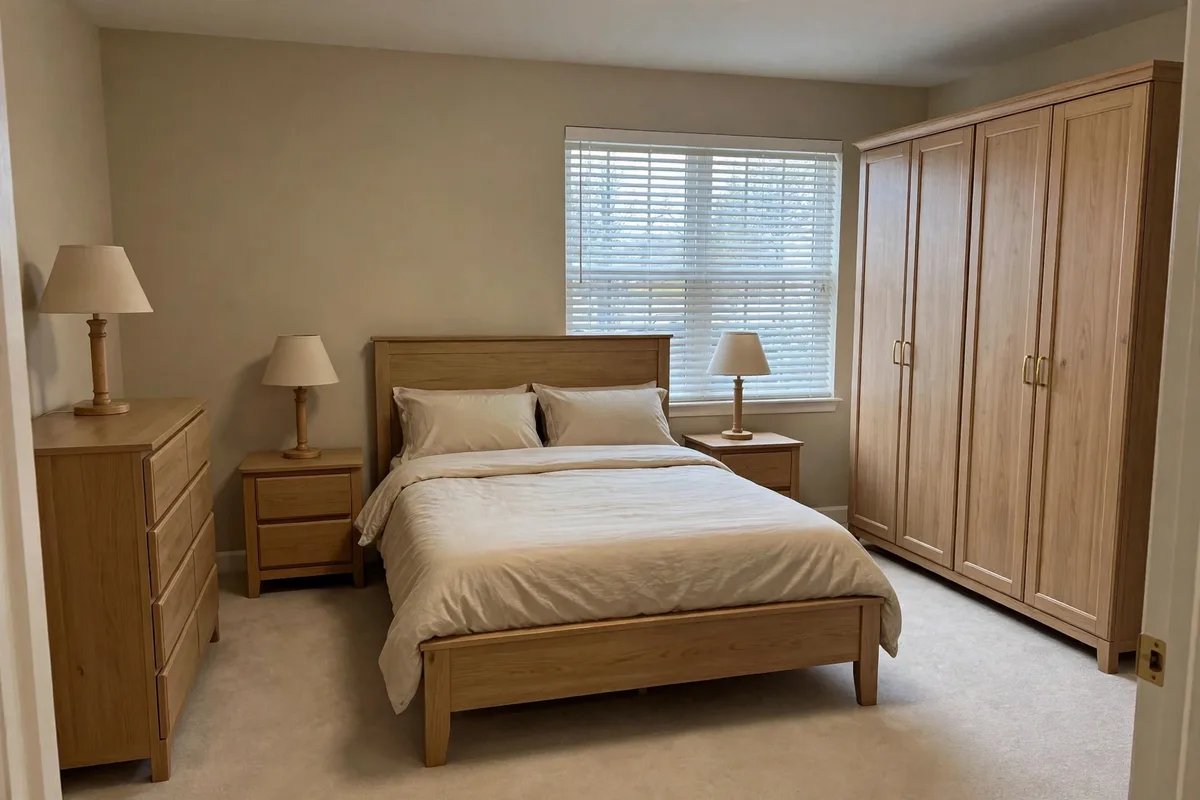
7. Forgetting to Measure Doorways and Stairwells
The mistake: the perfect bookshelf arrives and won’t make the turn in your stairwell — now it’s living in the hallway. What to do instead: measure every doorway, hallway turn, and stairwell angle along the delivery path, and check the product’s packaging dimensions too. Pro tip: many IKEA pieces come flat-packed for exactly this reason — a real advantage in walk-up apartments.
8. Spending Big on Trendy Pieces, Skimping on Classics
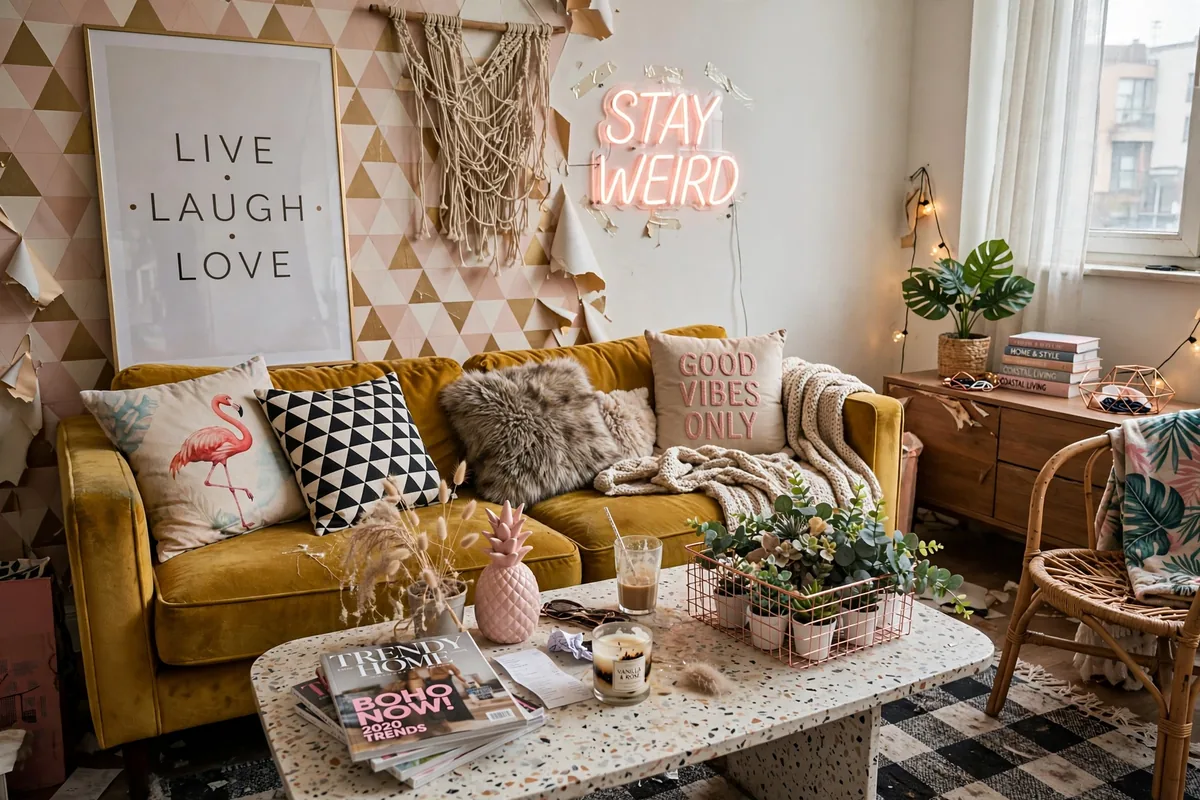
The mistake: $900 on a bouclé accent chair that’s already dating itself, while your daily-use sofa is a sagging hand-me-down. What to do instead: invest in timeless big pieces (a clean-lined sofa, solid wood table) and let trends live in the cheap, swappable stuff — pillows, throws, art. Pro tip: the 80/20 rule: 80% of your budget on pieces you’ll love in 10 years, 20% on what’s fun right now.
Rug & Curtain Mistakes
Rugs and curtains are the fastest way to make a room feel finished — or the fastest way to make it feel off. These are the ones everyone gets wrong.
9. Choosing a Rug That’s Too Small
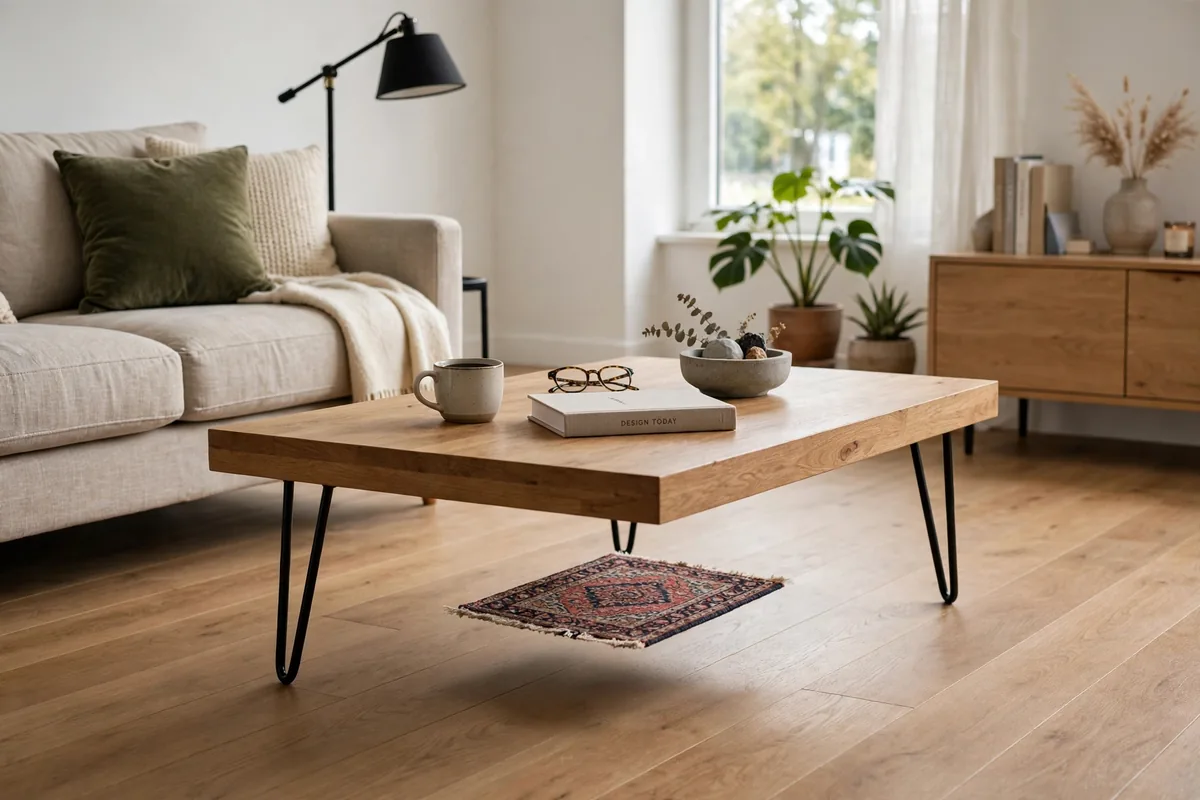
The mistake: a tiny 4×6 rug floating in the middle of the seating area like an island, making the whole room look smaller and disconnected. What to do instead: size up — the front legs of your sofa and chairs should sit on the rug (an 8×10 works for most living rooms, 5×7 minimum for a small one). Pro tip: when between sizes, always go bigger; Rugs USA and IKEA run frequent sales that make the jump affordable.
10. Going Too Big With Wall-to-Wall Rug Coverage
The mistake: a rug so large it nearly touches every wall, erasing the border of flooring that gives a room visual breathing room. What to do instead: leave 12–18 inches of bare floor visible around the rug’s edges — that border is what makes the rug look intentional rather than like wall-to-wall carpet. Pro tip: in a studio, that floor border also helps zones read as separate areas.
11. Hanging Curtains That Are Too Short
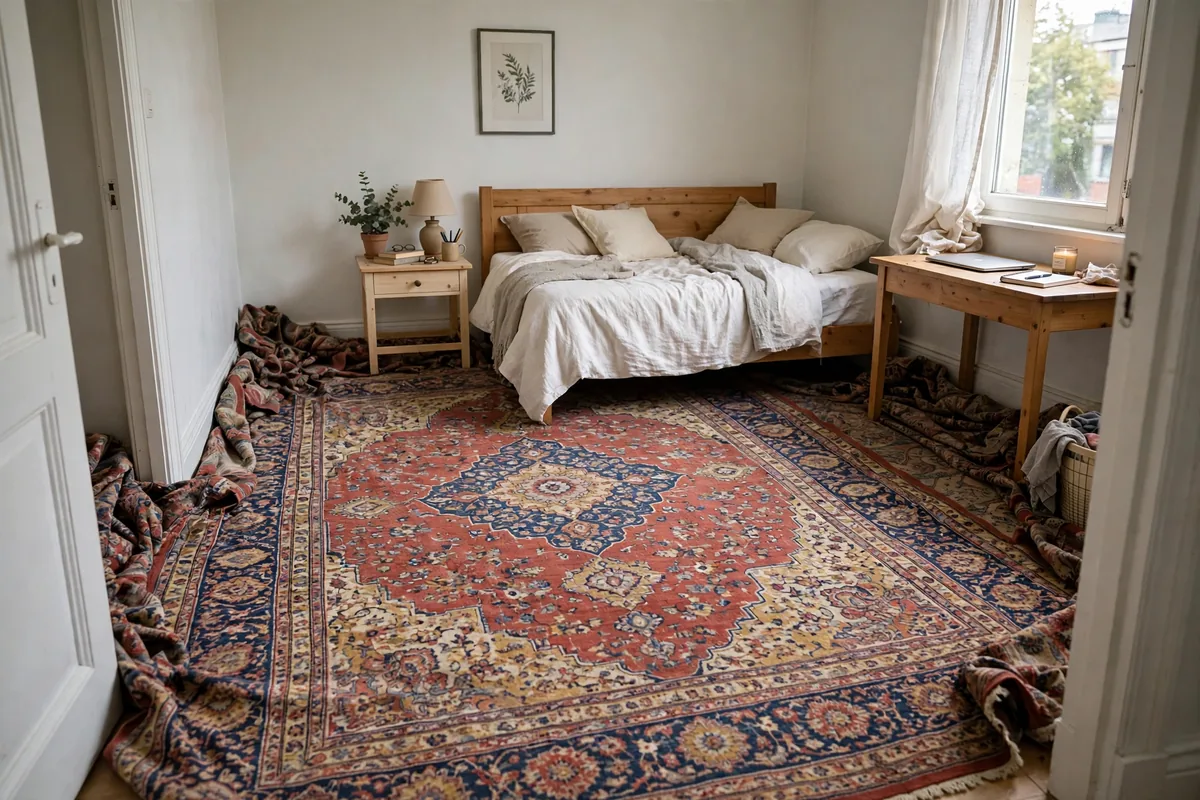
The mistake: curtains that stop at the windowsill or hover awkwardly mid-wall, making ceilings look lower and windows look stubby. What to do instead: go floor-length — panels should just kiss the floor or puddle slightly (84-inch panels for standard 8-foot ceilings, 96-inch if you hang high). Pro tip: IKEA’s RITVA curtains at ~$25 a pair come in long lengths and the linen texture hides wrinkles.
12. Using a Curtain Rod That’s Too Narrow
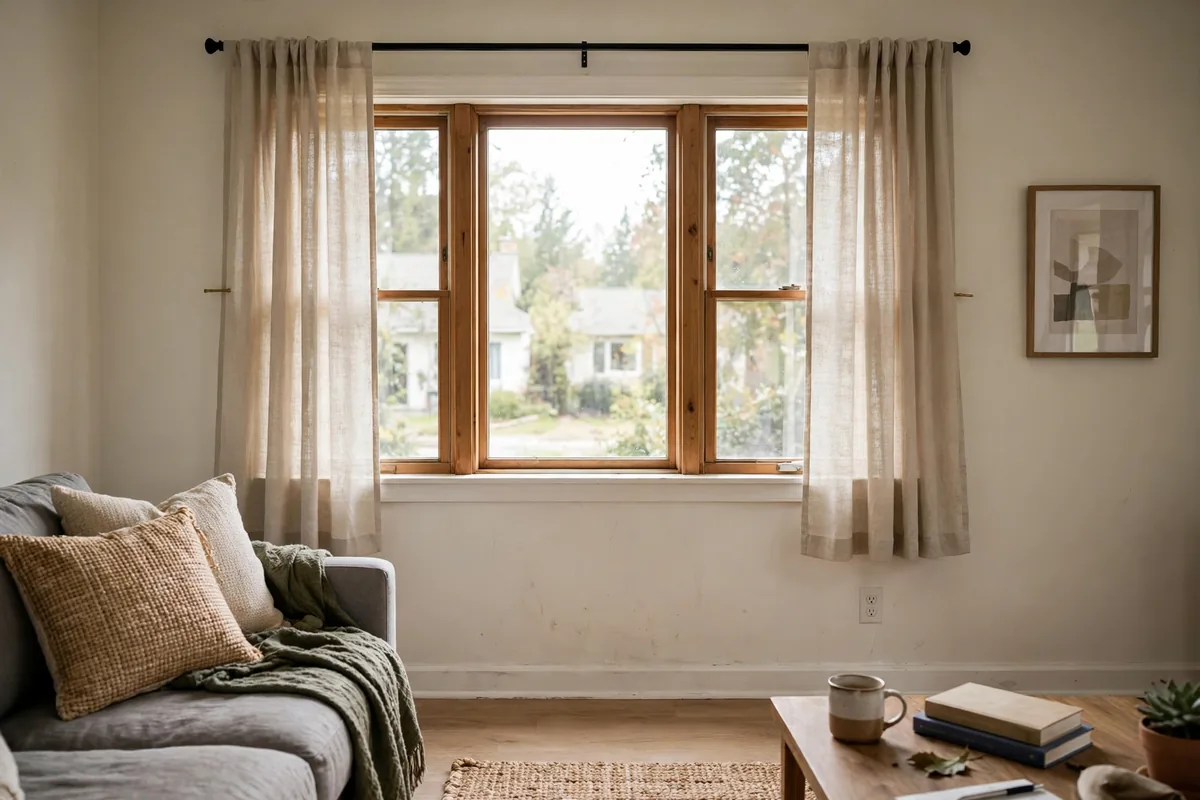
The mistake: a rod that spans exactly the window width, so open curtains cover half the glass and block precious light. What to do instead: extend the rod 8–12 inches beyond the window frame on each side, so curtains stack on the wall and the full window stays exposed. Pro tip: this trick also makes windows look significantly wider — free visual square footage.
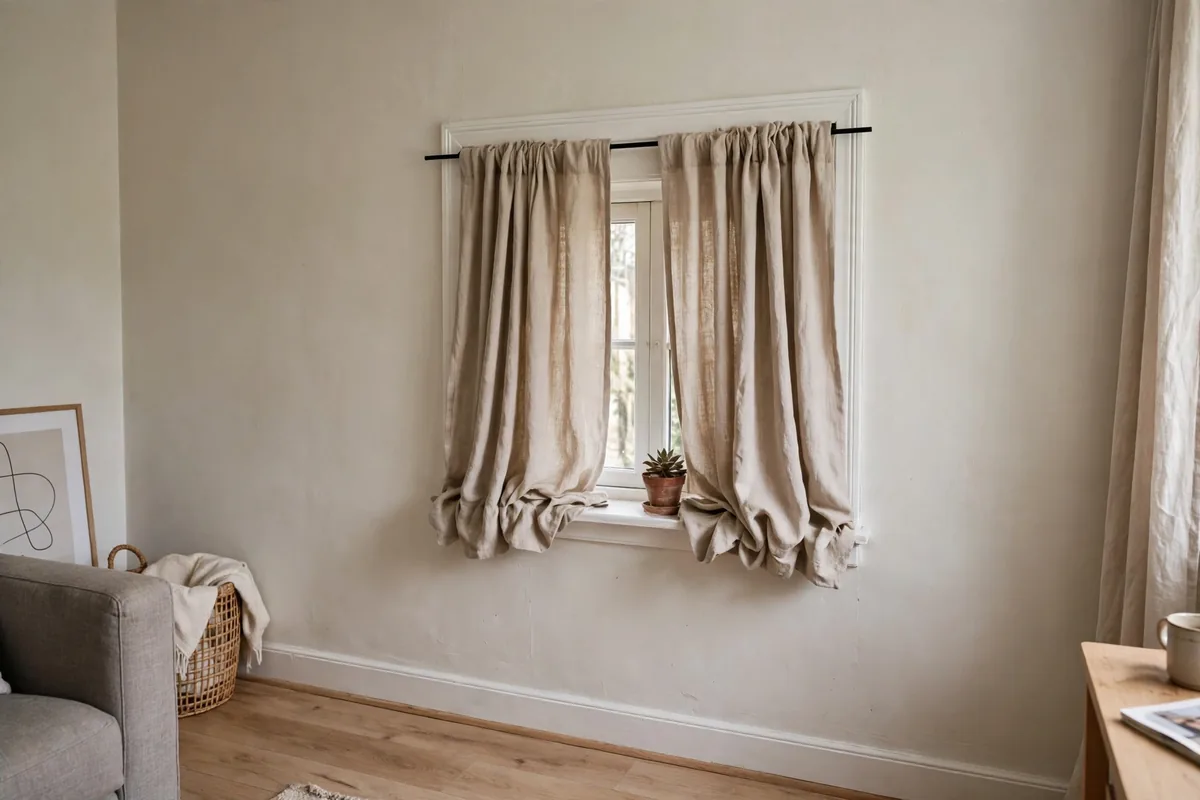
13. Leaving Windows Completely Bare
The mistake: naked windows that make the room feel exposed, echoey, and unfinished — especially at night. What to do instead: even simple floor-length panels in a warm white add softness, absorb sound, and make the room feel dressed. Pro tip: renters who can’t drill: tension rods inside the frame or adhesive hooks above it hold lightweight curtains just fine.
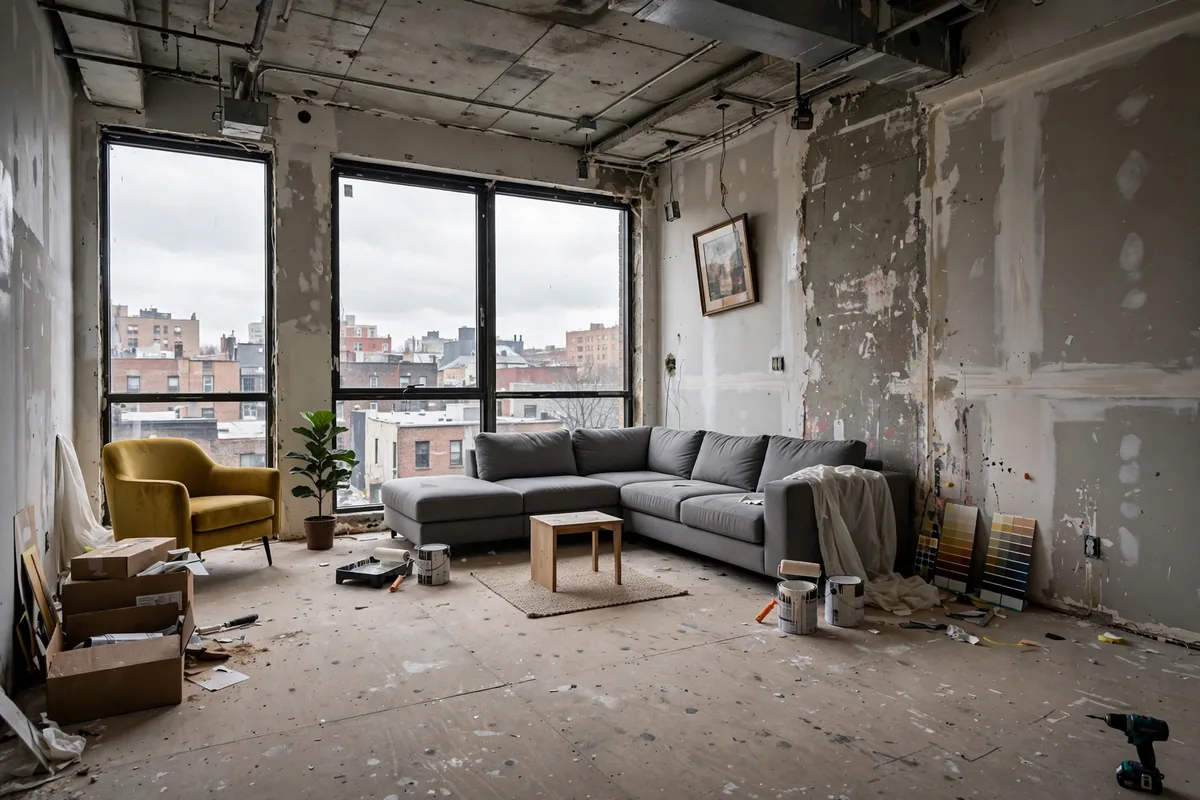
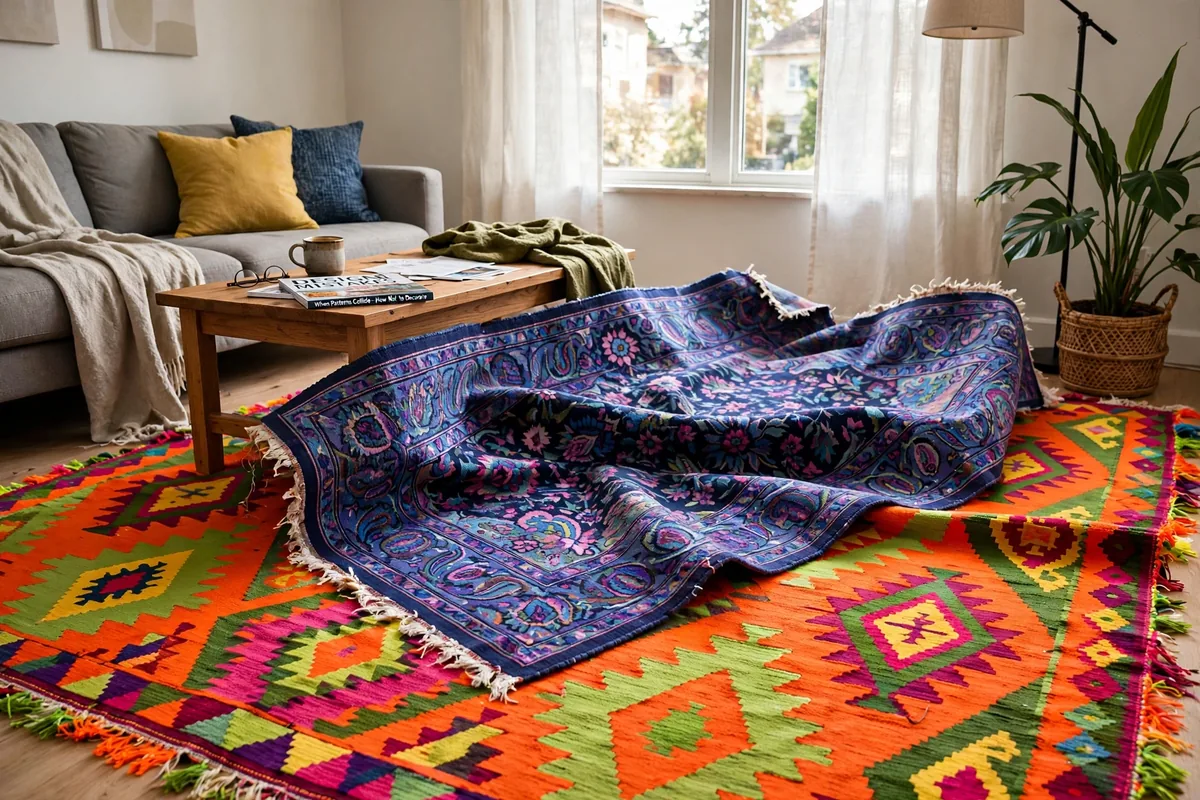
14. Layering Rugs That Clash Instead of Coordinate
The mistake: two bold patterned rugs fighting each other — the eye doesn’t know where to land and the room feels chaotic. What to do instead: pair one pattern with one solid or subtle texture (a flat jute under a patterned rug is the classic combo), keeping both in the same color family. Pro tip: if you love pattern, let the bottom rug be the quiet one — texture without competing print.
Lighting Mistakes
Lighting is the single biggest mood-maker in a home — and the most commonly botched. If your apartment feels “off,” start here.
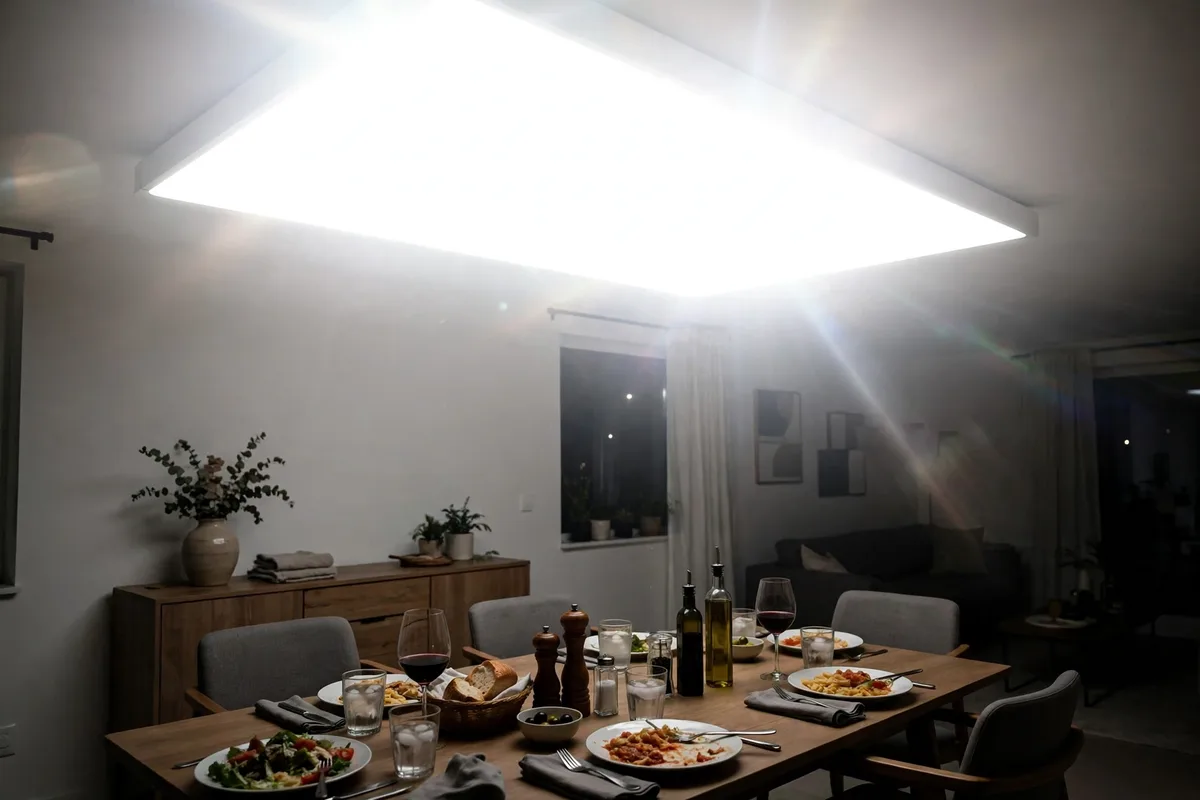
15. Relying on Overhead Lighting Alone
The mistake: one harsh ceiling light doing all the work, flattening the room and making everyone look tired. What to do instead: layer three sources at different heights — a floor lamp, a table lamp, and something low like candles — and use the overhead only when you need full brightness. Pro tip: our guide to cozy apartment living room ideas breaks down the full lighting formula with real product picks.
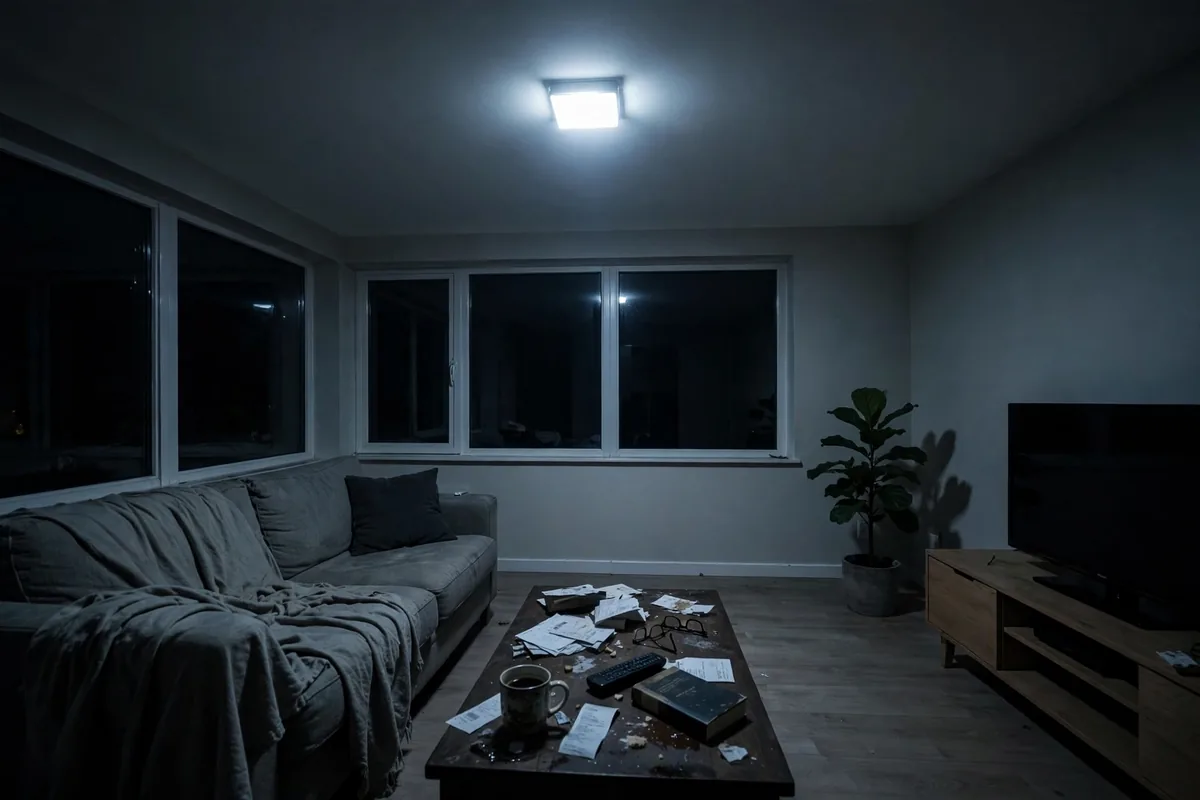
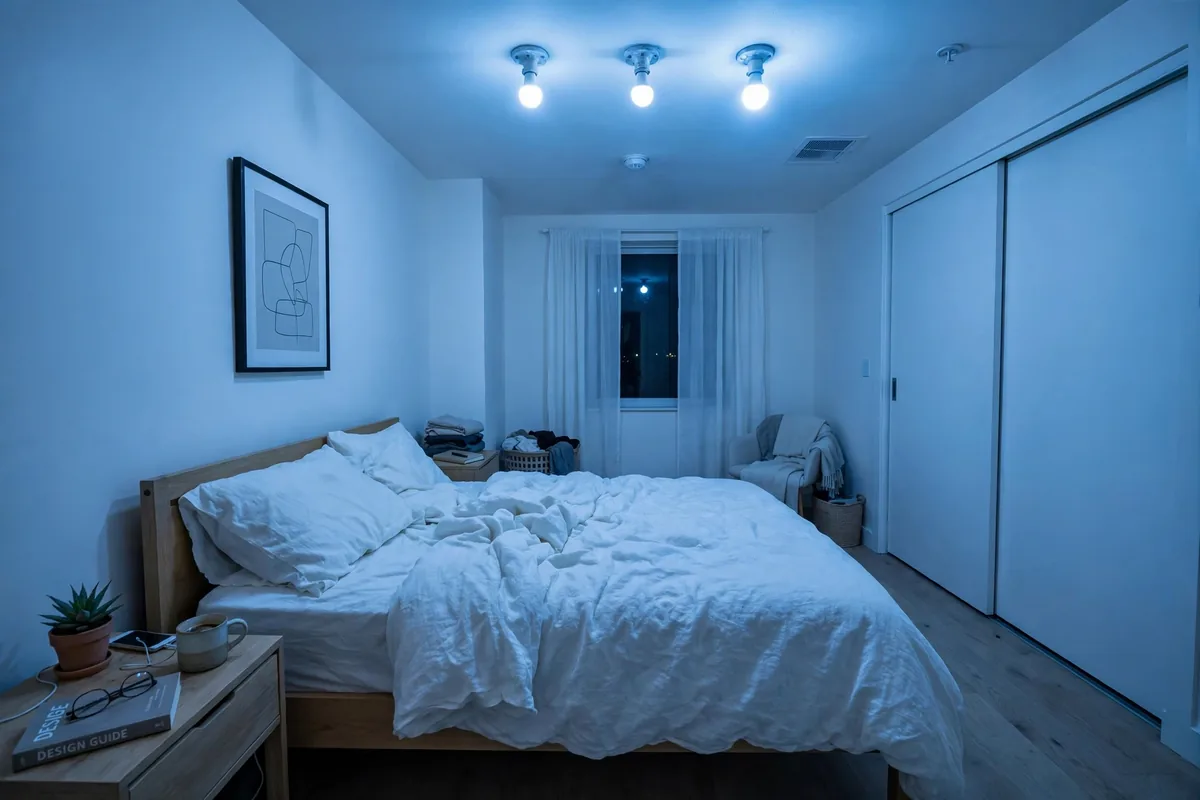
16. Using Cool-White Bulbs Everywhere
The mistake: 4000K+ daylight bulbs that make beige walls look gray, wood look ashy, and skin look washed out. What to do instead: swap every bulb to warm 2700K — a 4-pack of warm LEDs runs about $10 at Home Depot or Amazon and transforms the room tonight. Pro tip: check the bulb box: “soft white” means warm, “daylight” means cold — grab soft white every time.
17. Skipping Task Lighting Where You Actually Need It
The mistake: trying to cook, read, or work under ambient light alone — squinting over the cutting board or the laptop. What to do instead: add focused light where tasks happen — an under-cabinet strip in the kitchen ($15–$25), a proper desk lamp, a reading light by the chair. Pro tip: battery-powered LED strips with adhesive backing need zero wiring and take five minutes to install.

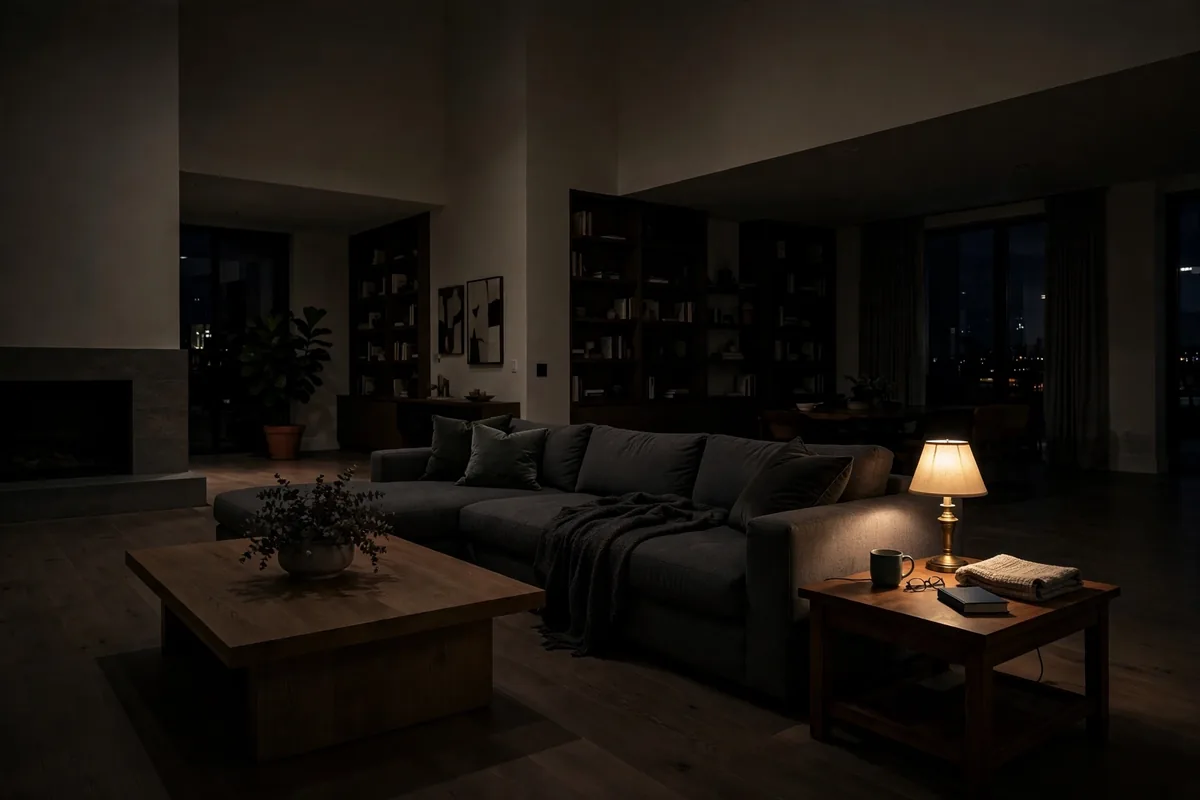
18. One Lamp Trying to Light the Whole Room
The mistake: a single lonely table lamp in the corner while the rest of the room sits in shadow — half the space feels abandoned. What to do instead: distribute light — every seating area and zone deserves its own source, even if it’s just a $15 lamp from Target. Pro tip: walk the room at night; any corner that feels like a cave needs a light.
19. Ignoring Dimmer Switches Completely
The mistake: lights that are either full-blast or off, with no in-between — movie night feels like an interrogation. What to do instead: plug-in dimmer switches ($12–$15) work with most floor and table lamps, no wiring needed, fully renter-friendly. Pro tip: smart bulbs with app dimming are the cordless alternative — same effect, no extra hardware.
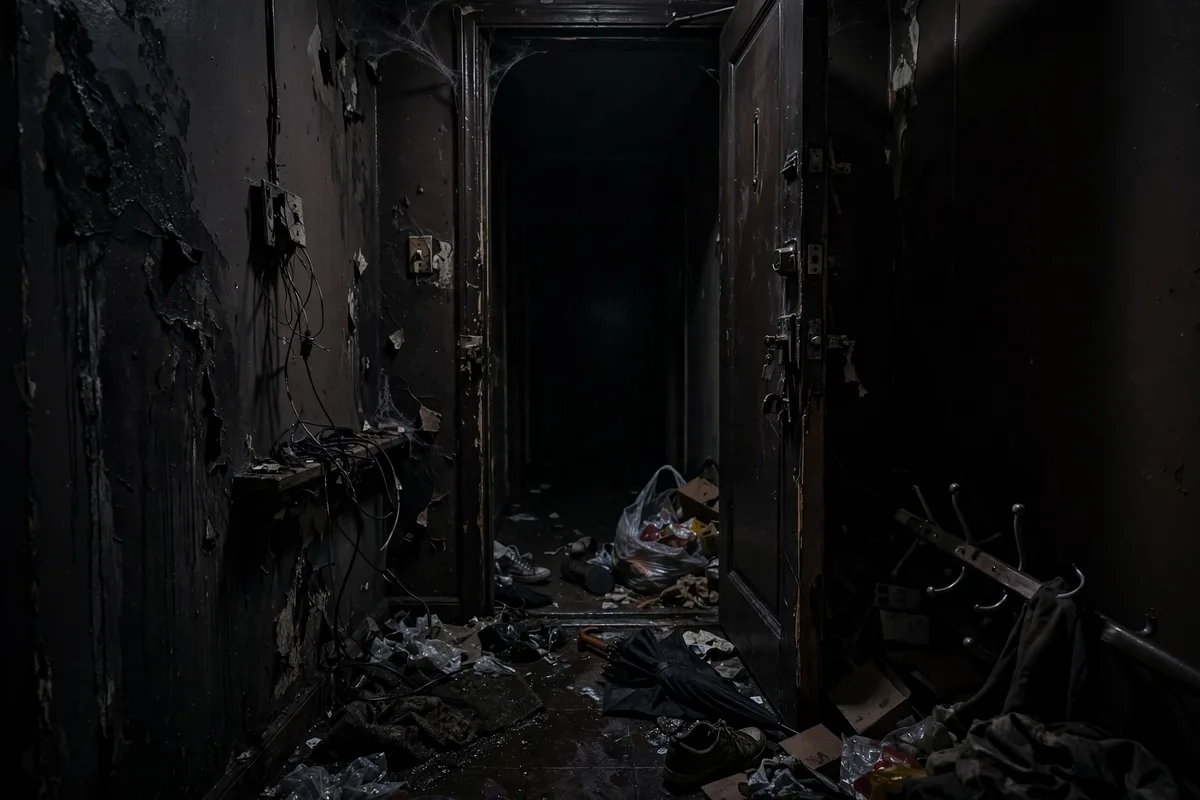
20. Forgetting Entryway Lighting
The mistake: walking into a dark entryway every evening — the first impression of your home is a black hole. What to do instead: a small lamp, a plug-in wall sconce, or even a motion-sensor puck light ($10–$15 for a multi-pack) makes coming home feel welcoming. Pro tip: put it on a timer or smart plug so it’s already glowing when you walk in.
Color & Wall Mistakes
Color is powerful — which means color mistakes are visibly powerful. Here’s how to avoid the most common ones.
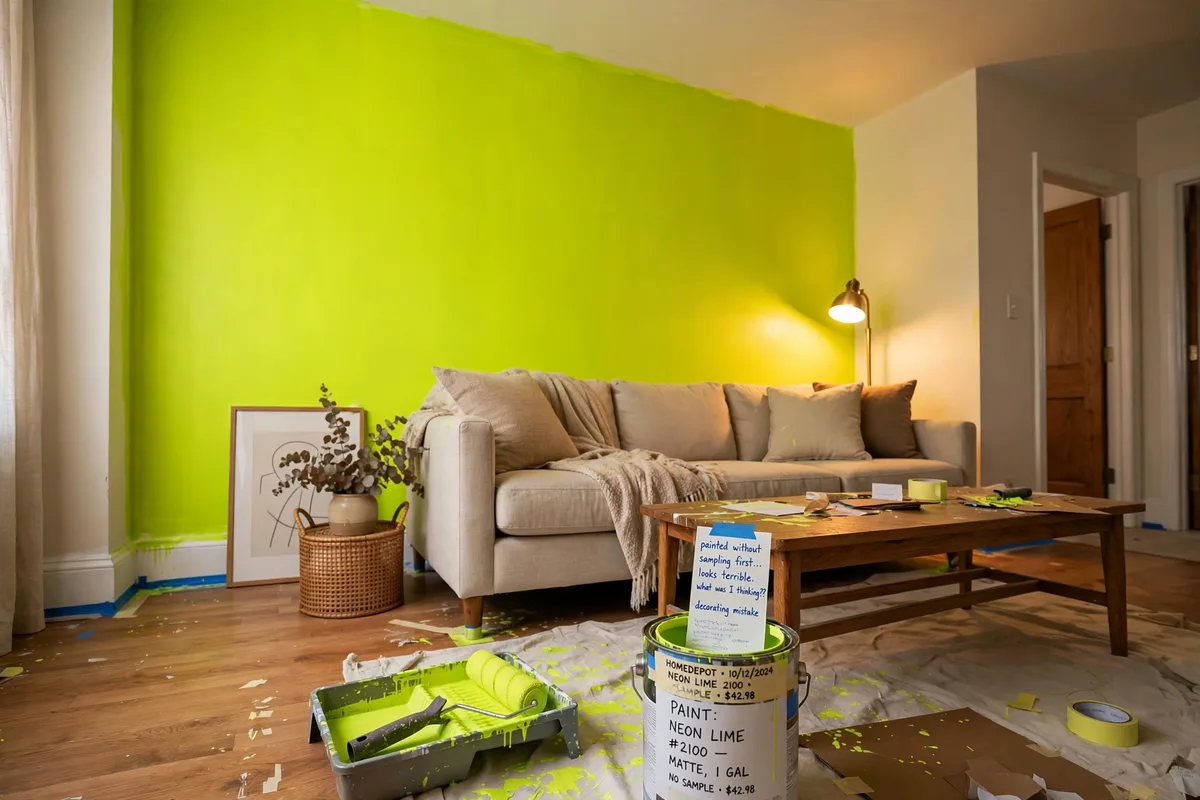
21. Committing to Paint (or Wallpaper) Without Sampling
The mistake: painting the whole wall (or ordering 3 rolls of peel-and-stick) based on a tiny swatch, then discovering it looks completely different in your light. What to do instead: sample large — paint a 2×2-foot test patch or stick up a full wallpaper panel and live with it for 48 hours in all lights. Pro tip: sample boards you can move around the room beat patches on one wall.
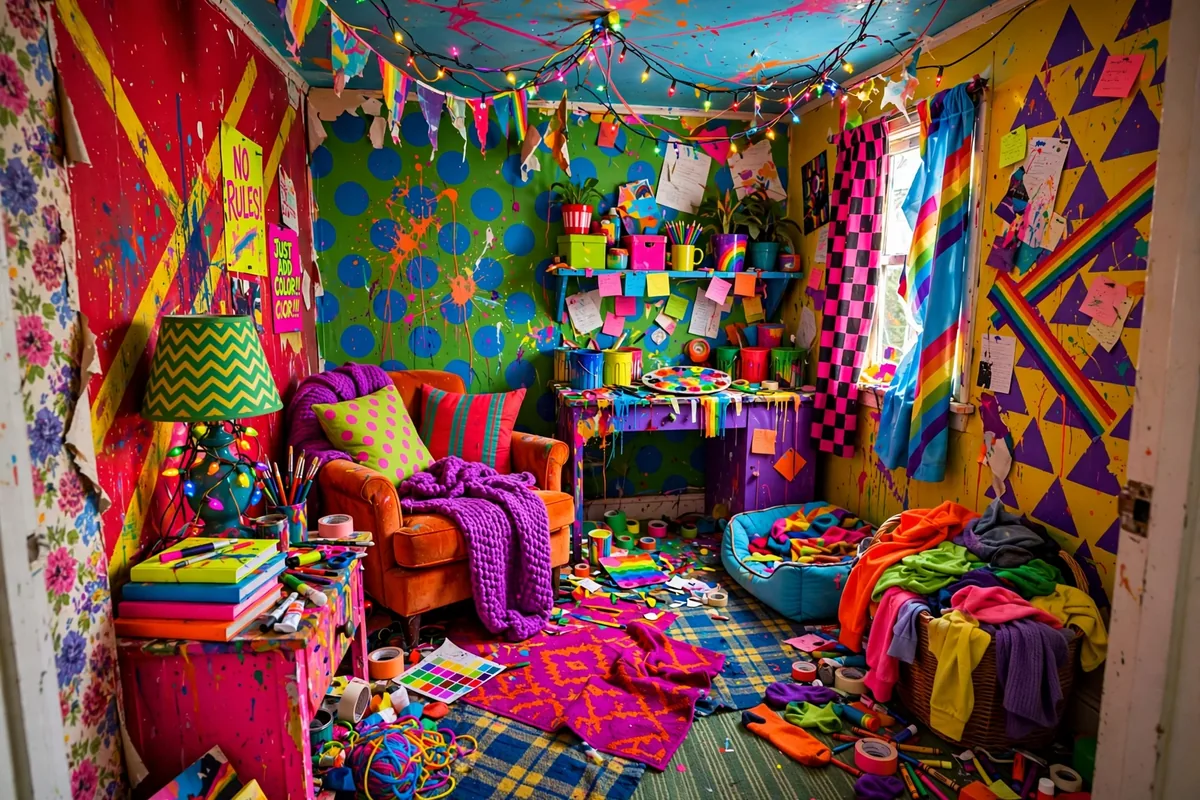
22. Using Too Many Competing Colors at Once
The mistake: red pillows, blue rug, green curtains, yellow art — every color shouting, none of them harmonizing. What to do instead: follow the 60-30-10 rule — 60% dominant neutral, 30% secondary color, 10% accent — and repeat each color at least twice around the room. Pro tip: if you’re lost, steal a proven palette from our 33 studio apartment color schemes guide instead of inventing one.
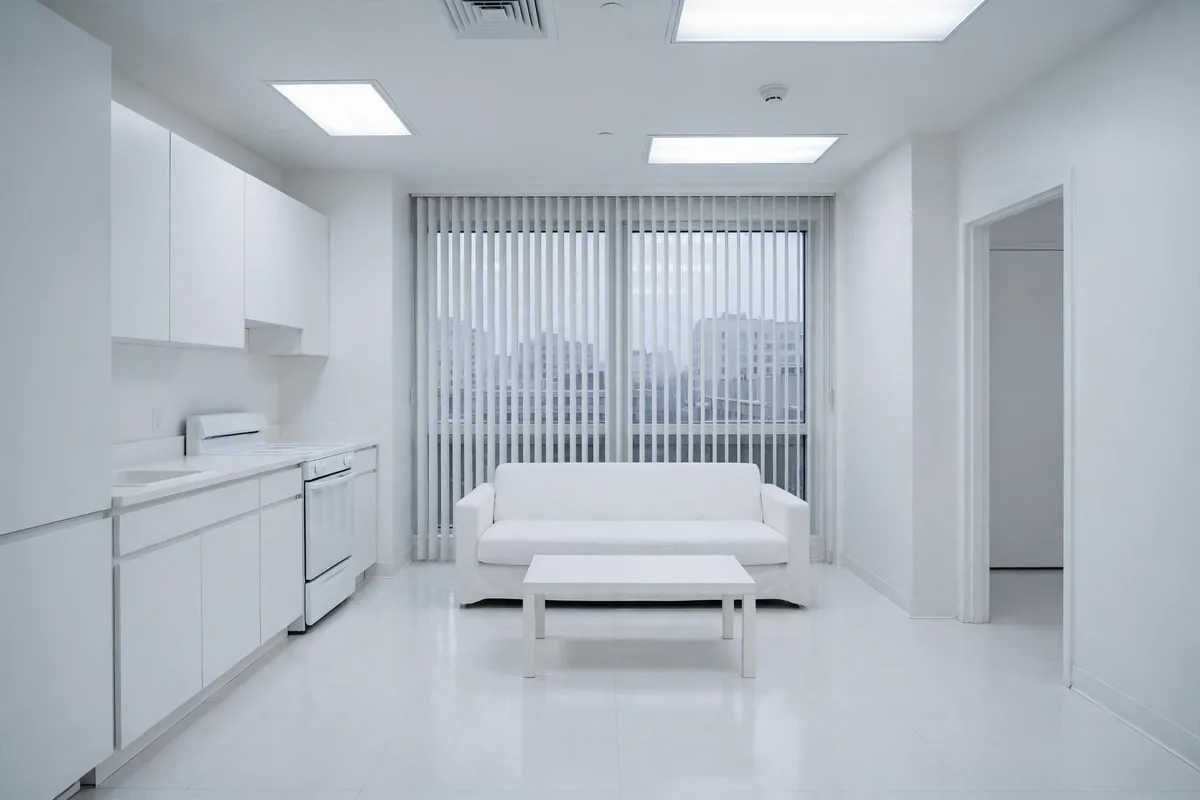
23. Going All-White and Ending Up Sterile
The mistake: white walls, white sofa, white rug, white everything — intended as “clean and airy,” reading as “hospital waiting room.” What to do instead: warm it up with wood tones, textured textiles (linen, jute, wool), and at least one deep accent color — white needs contrast to feel cozy. Pro tip: warm-white bulbs (2700K) alone fix half the sterility — cool light on white walls is the real culprit.
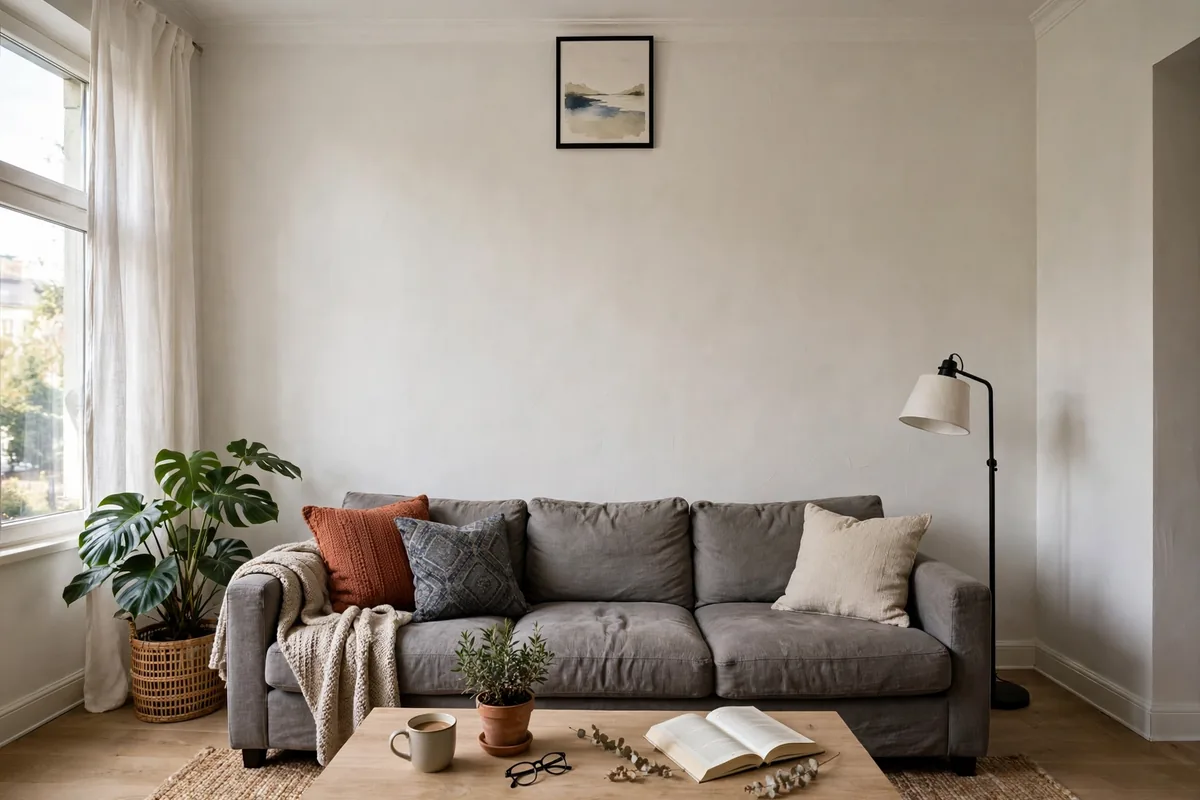
24. Hanging Art and Mirrors Too High
The mistake: frames floating near the ceiling, disconnected from the furniture below — the classic “gallery in a gymnasium” look. What to do instead: hang art at eye level — the center of the piece should sit about 57 inches from the floor, or 6–8 inches above the furniture it hangs over. Pro tip: when in doubt, hang it lower than you think — almost everyone hangs too high, almost nobody hangs too low.
25. Scattering Tiny Frames Instead of Going Bold
The mistake: a dozen small frames dotted around the room like confetti — each one too small to matter, together too scattered to cohere. What to do instead: group small frames into one tight gallery wall (2–3 inches apart, one cohesive arrangement) or replace them with one large statement piece. Pro tip: lay the arrangement on the floor first and photograph it — rearranging on the floor is free, patching wall holes is not.
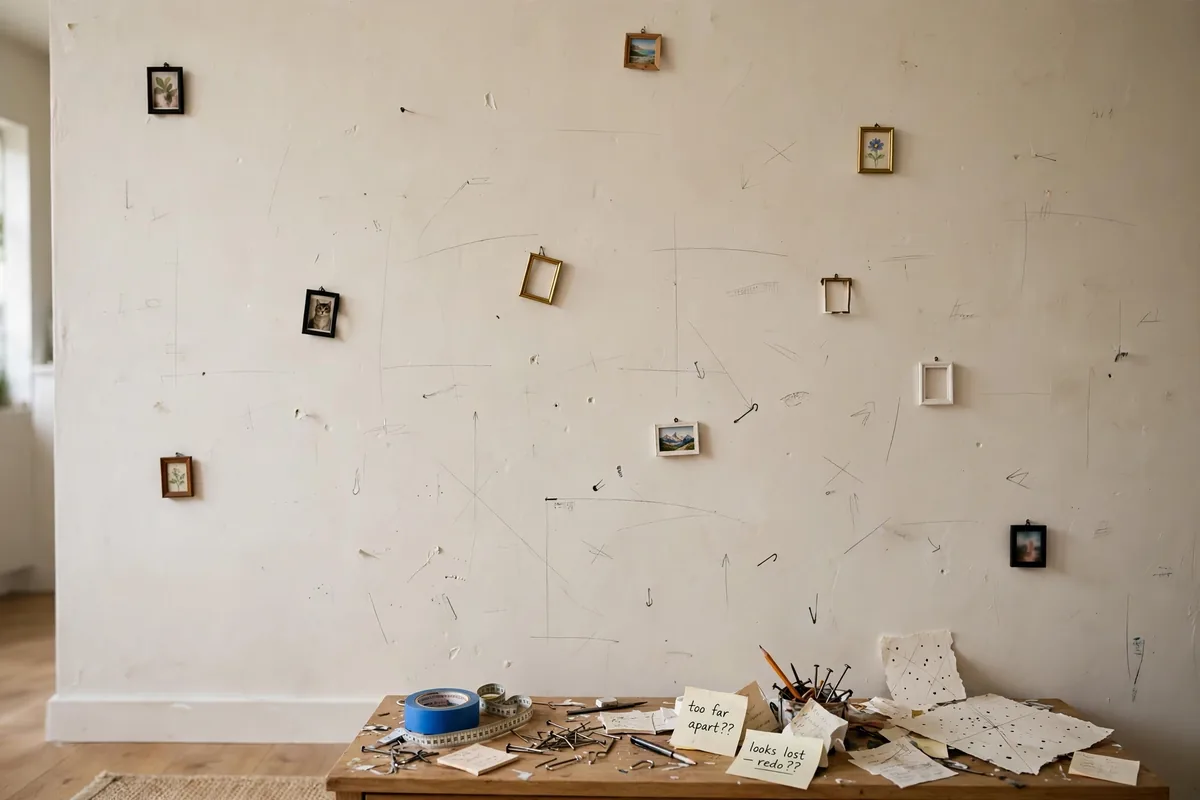
26. Ignoring the Ceiling Completely
The mistake: treating the ceiling as a non-surface — flat white, maybe a sad flush-mount light, while every wall gets attention. What to do instead: even renters can address the fifth wall — a statement pendant on a plug-in swag cord, or peel-and-stick wallpaper on a small entry ceiling, draws the eye up and adds polish. Pro tip: painting the ceiling a soft warm white instead of stark white makes the whole room glow.
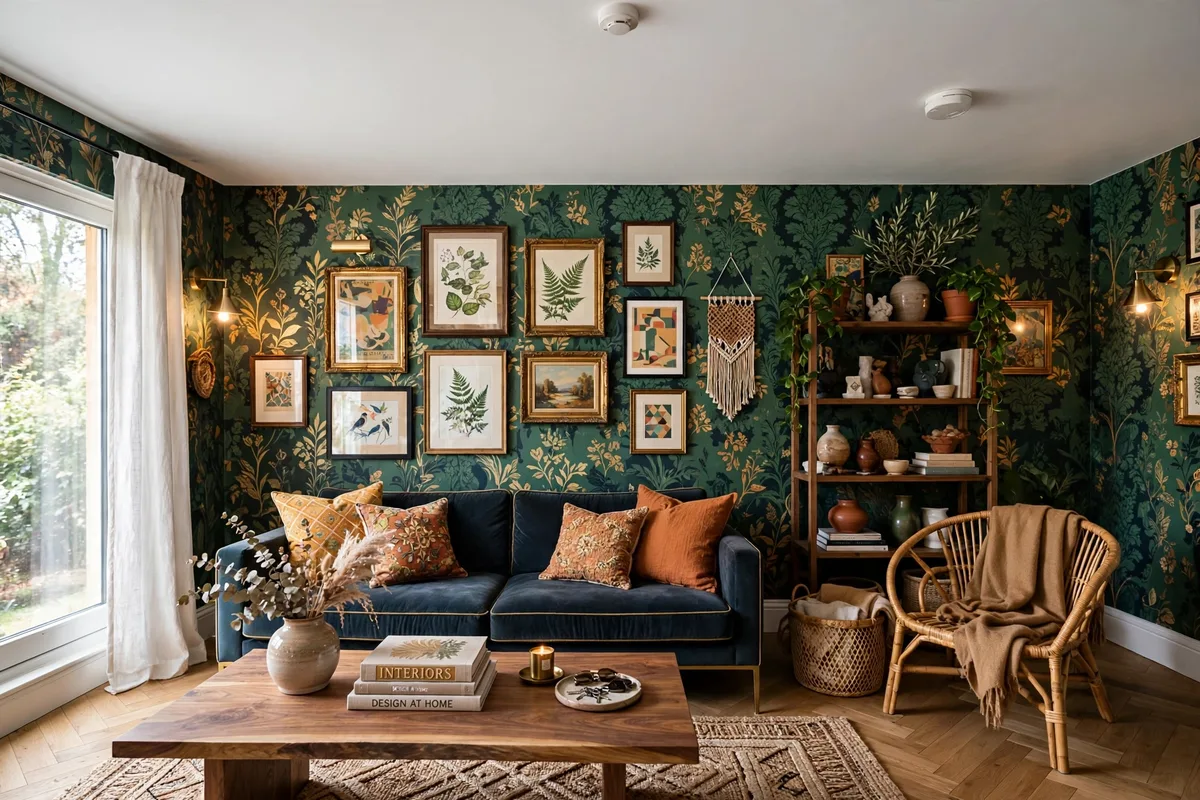
27. Matching Wall Color Exactly to Your Furniture
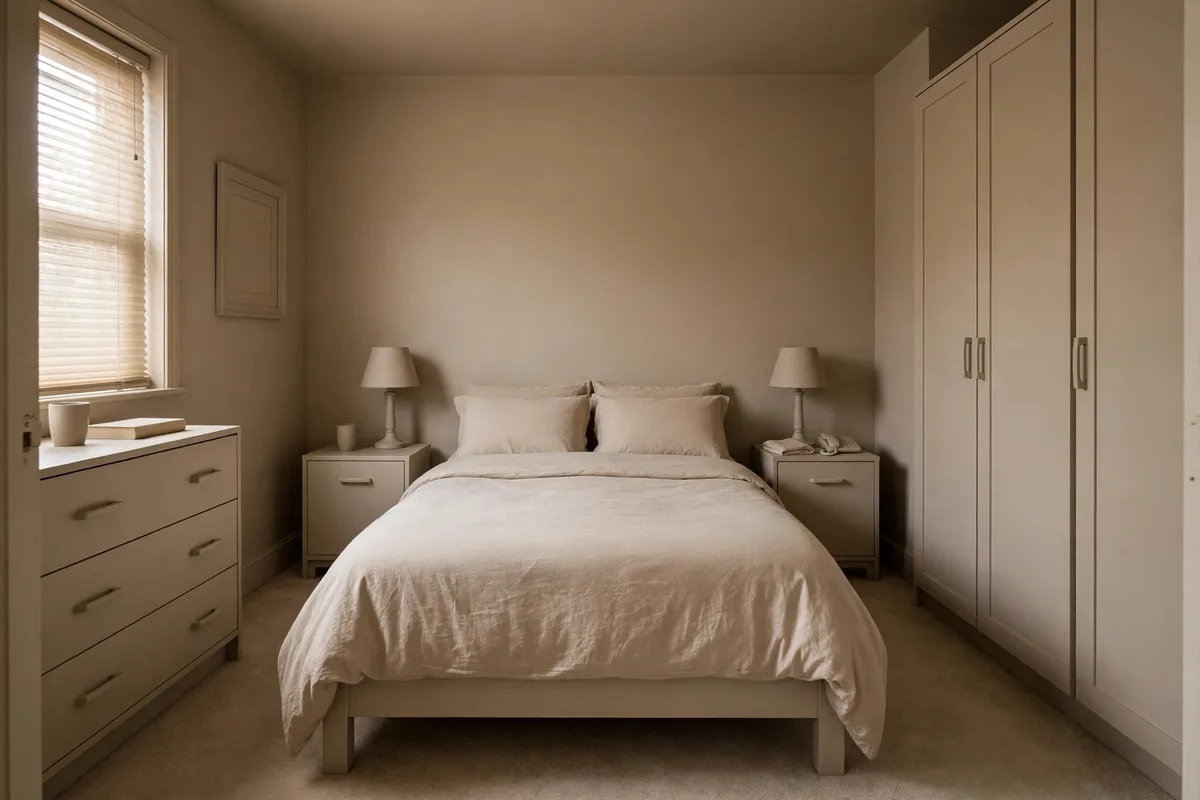
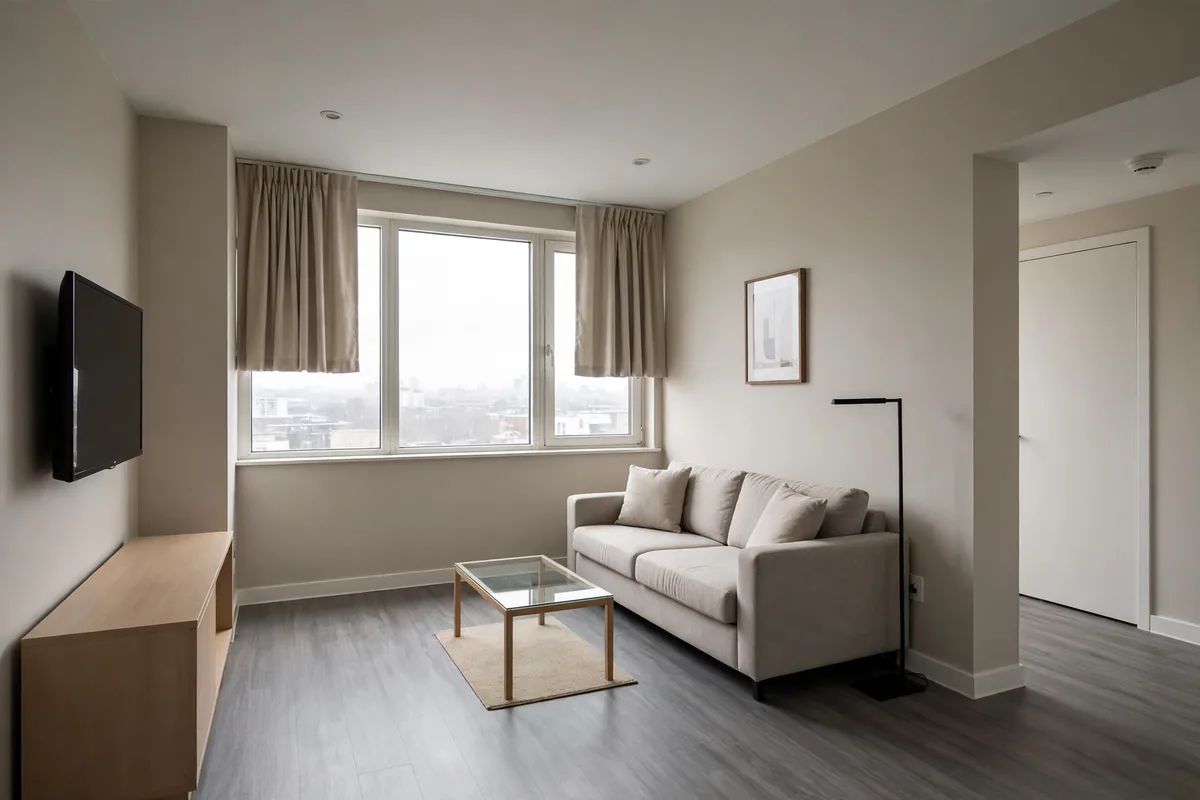
The mistake: beige sofa against beige walls against beige rug — everything blurs into one muddy, undefined mass with zero depth. What to do instead: create contrast — if walls are light, go deeper on upholstery; if walls are dark, keep furniture light. Pro tip: you don’t need much contrast — even two shades of difference gives the eye something to hold onto.
Clutter & Layout Mistakes
A beautiful room buried in clutter still looks cluttered. And a tidy room with bad flow still feels wrong. Fix both.
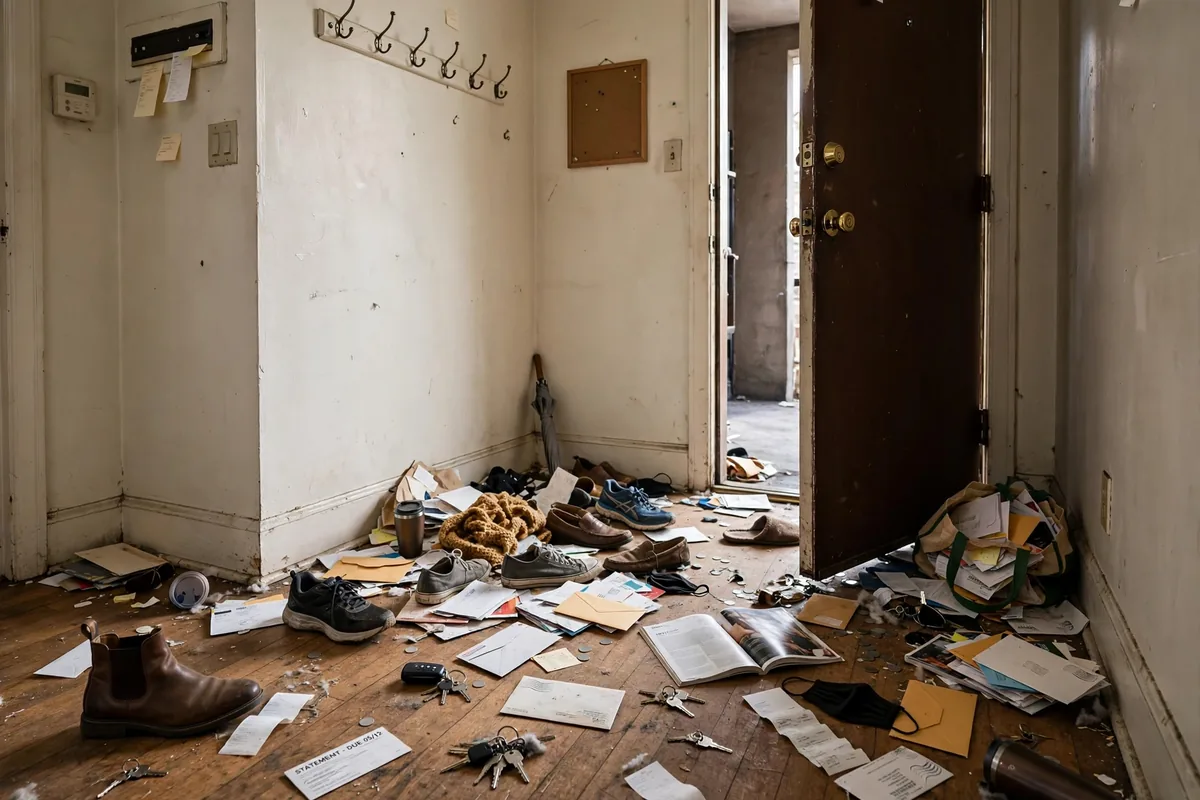
28. Having No Entryway Drop Zone
The mistake: keys, mail, shoes, and bags migrating to every surface because there’s nowhere for them to land when you walk in. What to do instead: carve out even 2 feet of entry — a small bench or wall hooks, a tray for keys, a basket for shoes — and the whole apartment stays tidier. Pro tip: a narrow IKEA TRONES cabinet is only 7 inches deep and fits nearly any entryway.
29. Blocking the Natural Traffic Flow
The mistake: furniture arranged so you have to sidestep the coffee table, squeeze past the dining chair, or detour around the plant to get from door to kitchen. What to do instead: keep one clear 30–36-inch lane from the front door through the main living path — walk it yourself after every rearrange. Pro tip: our studio apartment layout ideas guide covers traffic lanes in detail, including the “sacred lane” rule.
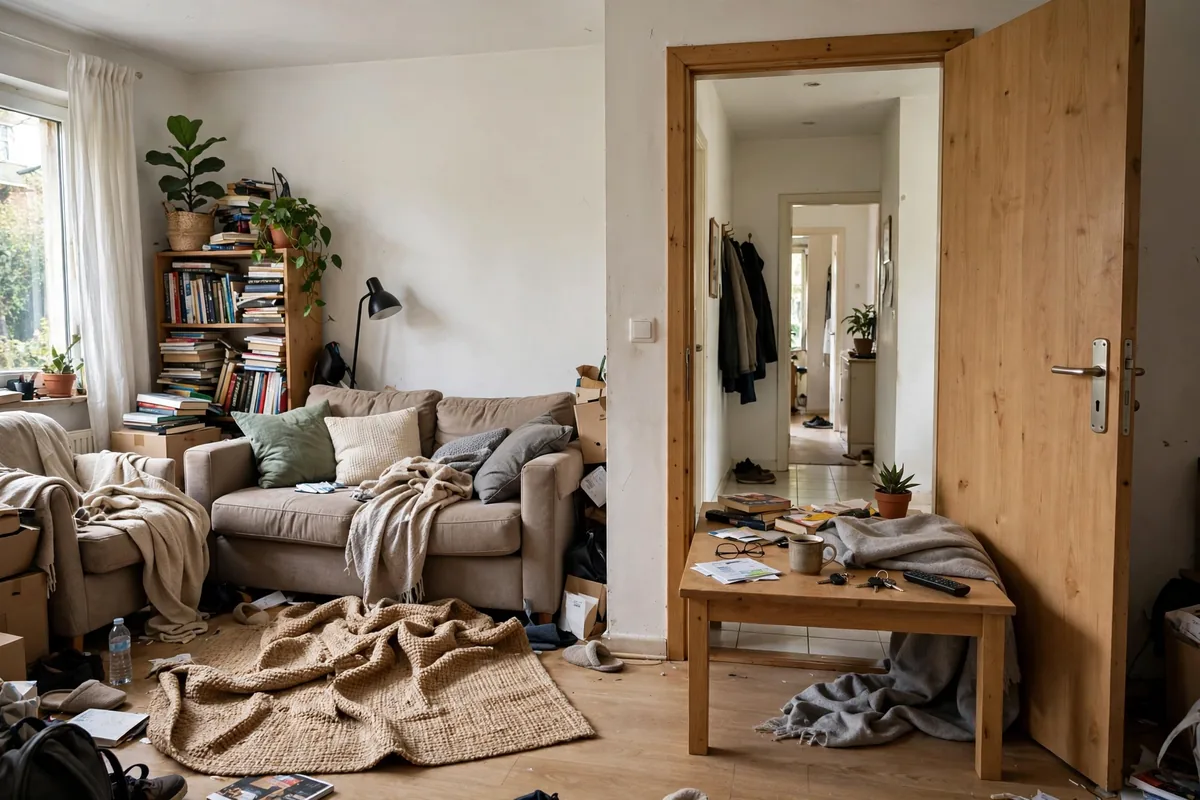
30. Defaulting to Open Storage Everywhere
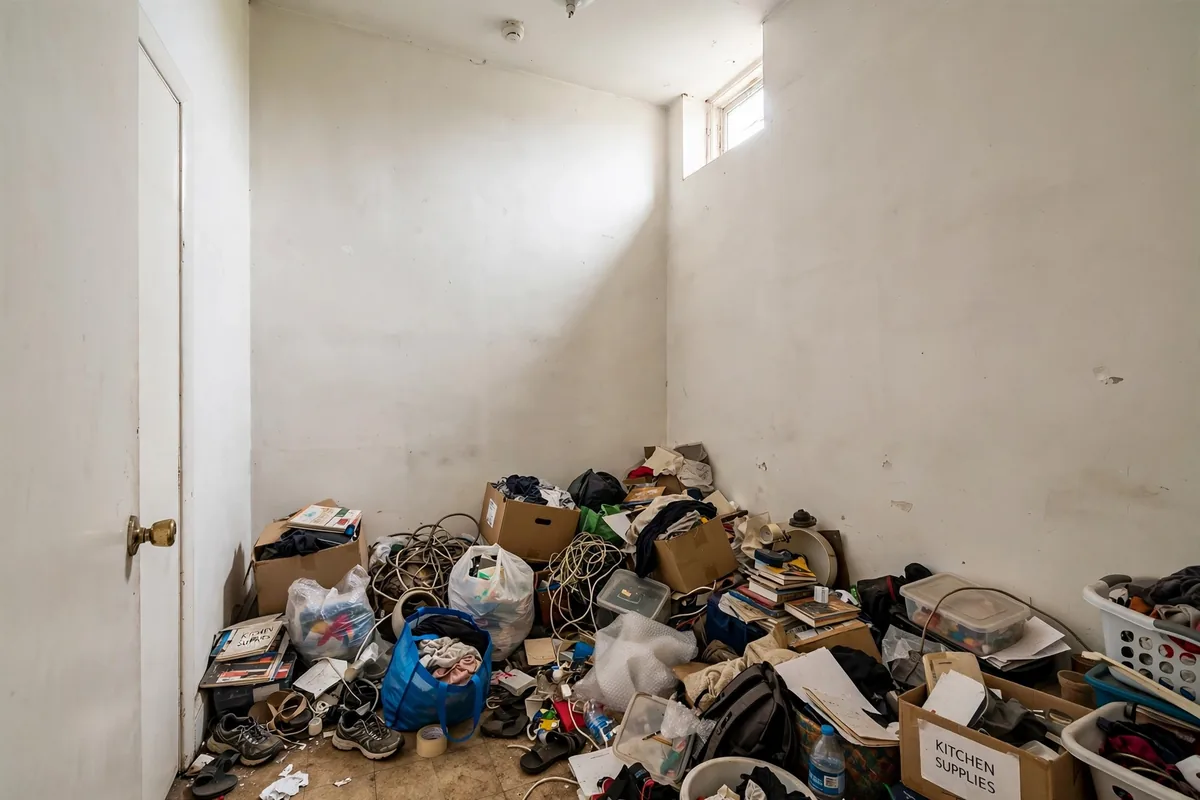
The mistake: all open shelves, all the time — every book, box, and random object on display, creating constant visual noise. What to do instead: follow the 70/30 rule — 70% closed storage (cabinets, baskets, bins) hiding the chaos, 30% open styling showing the pretty stuff. Pro tip: matching baskets or bins on open shelves read as “organized” even when what’s inside isn’t.
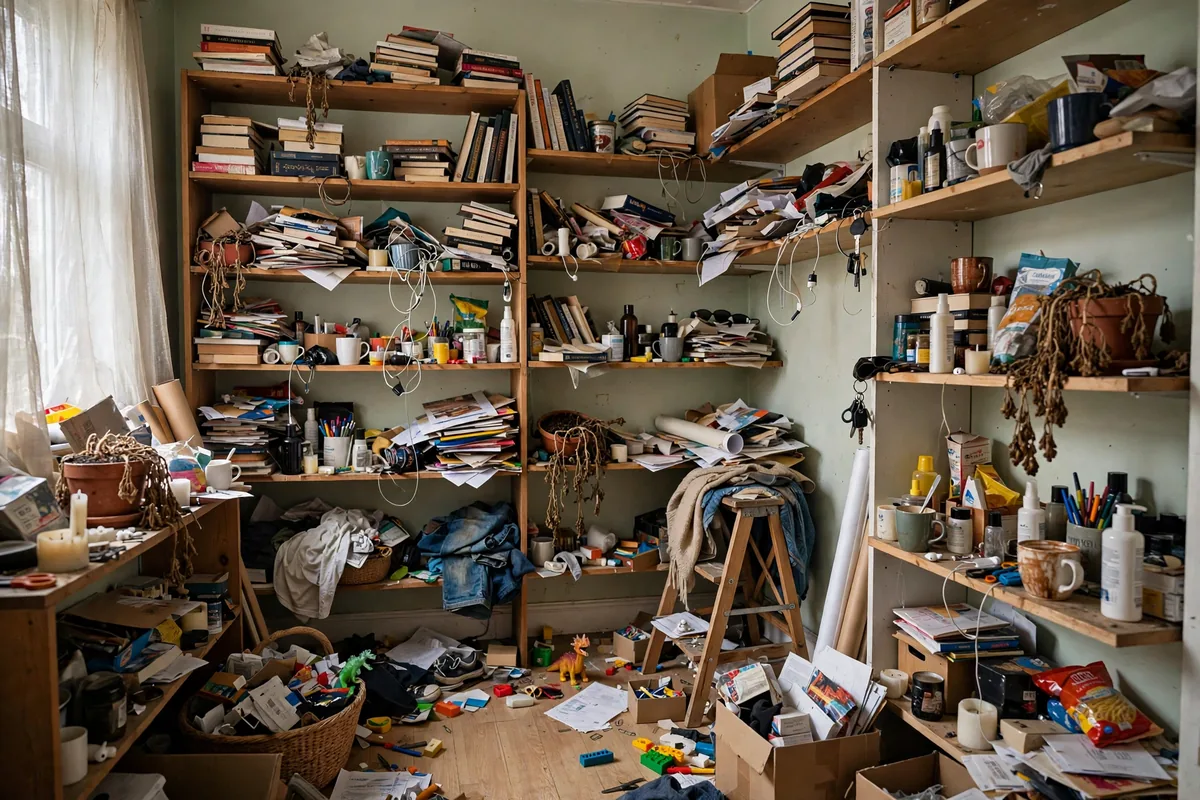
31. Decorating Every Single Surface
The mistake: every table, shelf, and counter covered in objects — no empty space for the eye to rest, so nothing stands out. What to do instead: embrace negative space — clear at least one surface per room completely, and style the rest with the rule of three (three objects at varying heights per grouping). Pro tip: take a photo of the styled surface; if it looks busy in a photo, it looks busy in person.
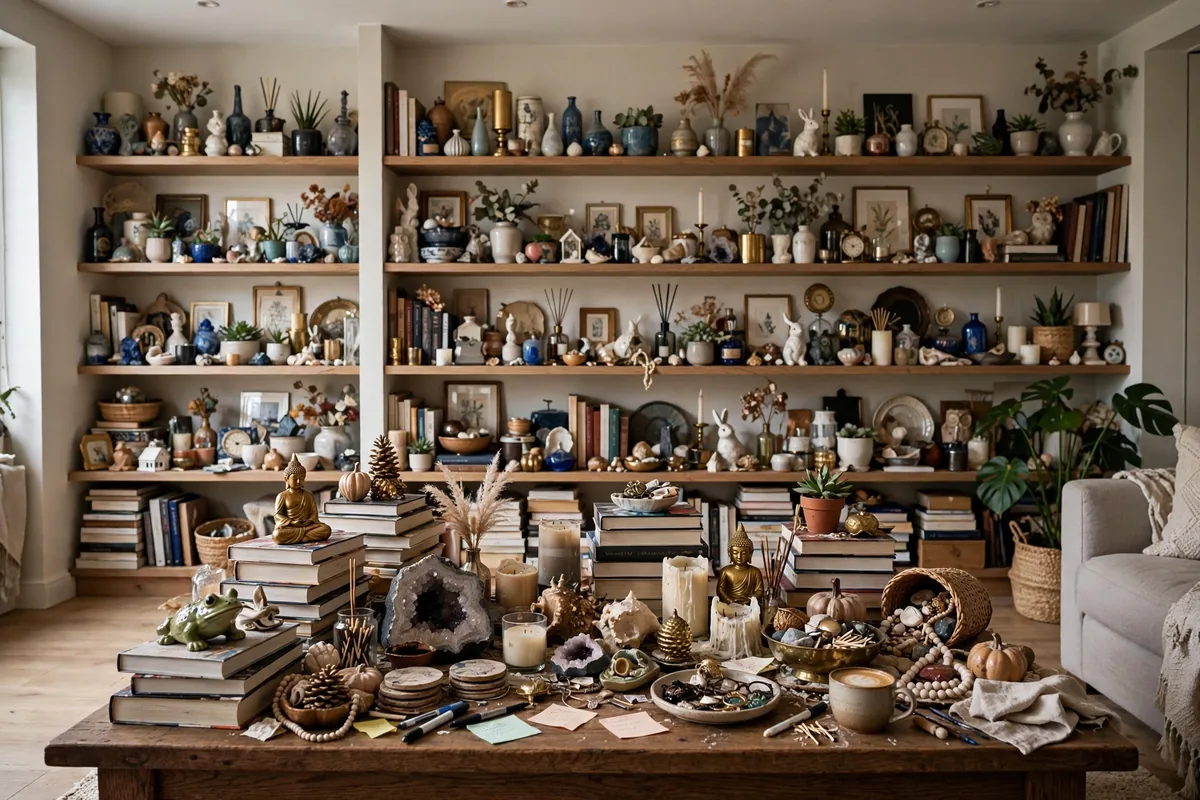
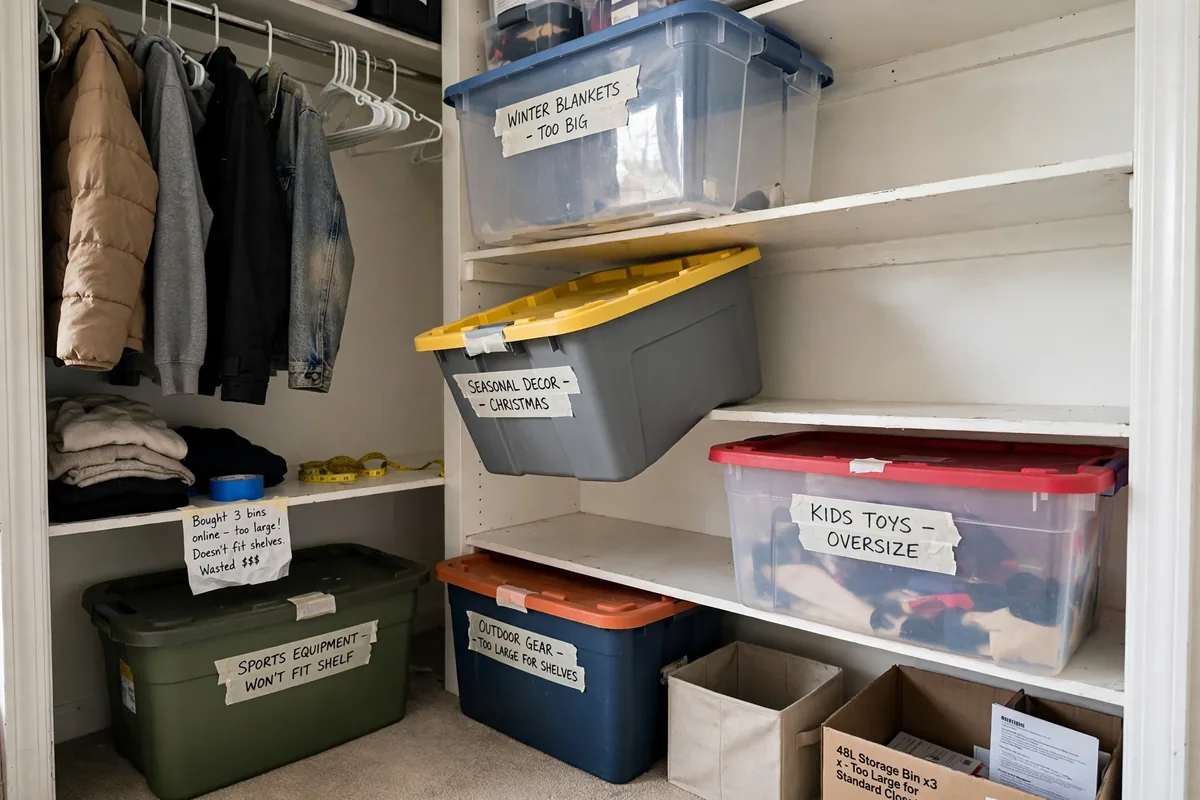
32. Buying Storage That Doesn’t Fit Your Actual Stuff
The mistake: beautiful baskets too small for the blankets, a shoe rack that holds six pairs when you own twenty — pretty storage that doesn’t store. What to do instead: inventory first — measure your actual stuff (tallest book, bulkiest throw, shoe count), then buy storage to fit it, not the other way around. Pro tip: adjustable shelving (IKEA KALLAX inserts, for example) adapts when your stuff changes.
33. Ignoring Vertical Space Entirely
The mistake: everything living between knee and eye height while the walls above sit empty — in a small apartment, that’s leaving 30% of your storage on the table. What to do instead: go up — floating shelves, tall bookcases, over-door organizers, hooks at multiple heights. Pro tip: keep daily items between knee and eye level; high shelves are for the twice-a-year stuff.
34. Keeping Dead or Dying Plants on Display
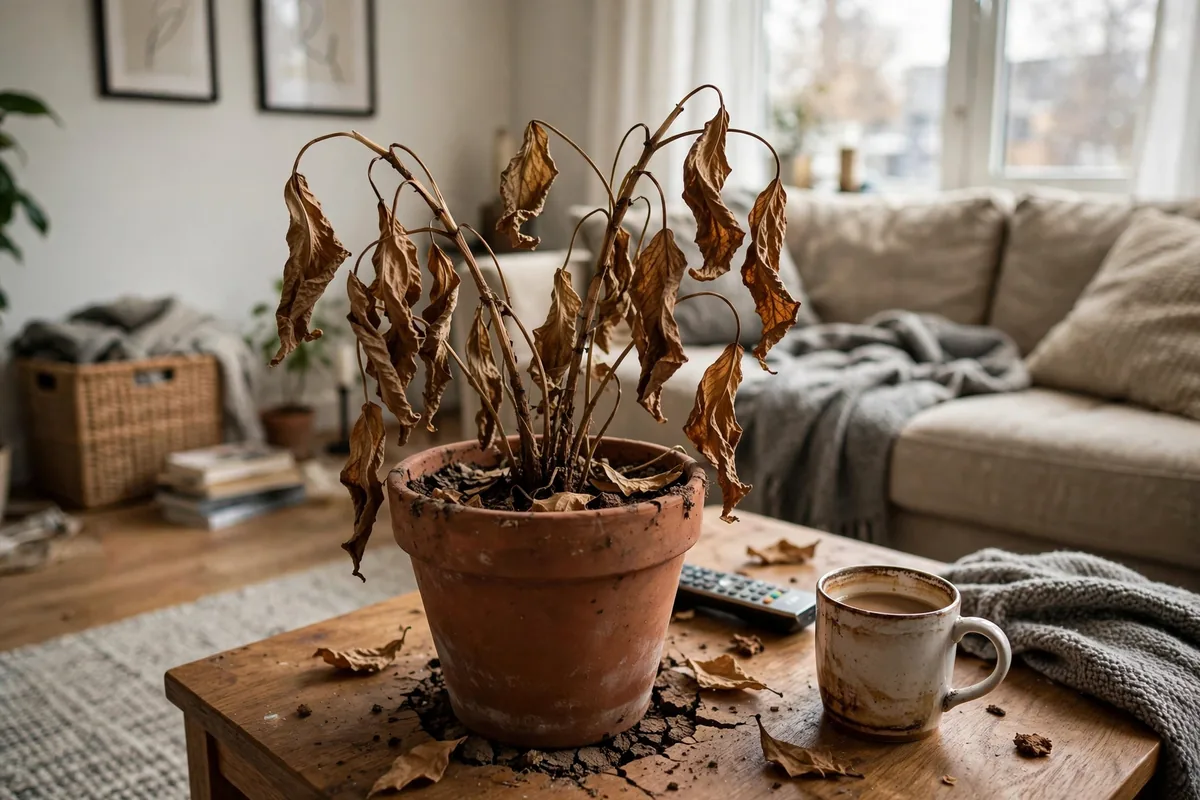
The mistake: a crispy brown fiddle-leaf fig haunting the corner, making the whole room feel neglected — dead plants are worse than no plants. What to do instead: replace it with something unkillable (snake plant, pothos, ZZ plant — $10–$25) or go high-quality faux in the spots where real plants suffer. Pro tip: one thriving $15 pothos beats three dying $40 statement plants every time.
Personal Style Mistakes
The final layer — the difference between a room that looks decorated and a room that feels like yours.
35. Copying a Showroom or Instagram Post Exactly
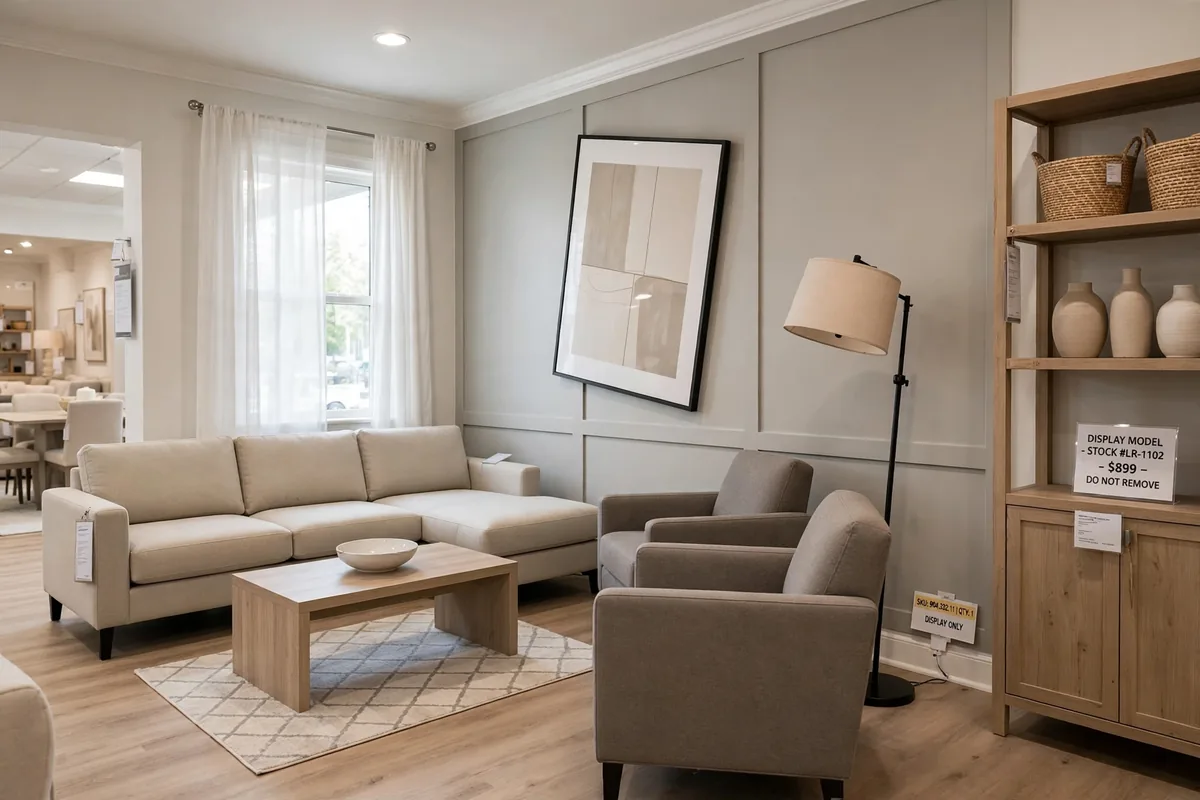
The mistake: recreating a catalog page piece by piece, ending up with a room that looks great in photos but feels like nobody lives there. What to do instead: use inspiration as a starting point, then add three personal things — a travel souvenir, a family photo, a weird object you love — that no showroom would include. Pro tip: the 90/10 rule — 90% inspired-by, 10% unmistakably-you.
36. Displaying Zero Personal Photos or Meaningful Objects
The mistake: a technically “perfect” room with no evidence a human lives there — no photos, no mementos, no story. What to do instead: frame a handful of favorite photos (mixed black frames from Target, $3–$8 each, keep it cohesive) and give one shelf to objects with actual memories attached. Pro tip: personal doesn’t mean cluttered — curate it like a tiny museum of your life.
37. Chasing Every Single Trend
The mistake: redecorating every time the algorithm serves a new aesthetic — the room never settles and the wallet never recovers. What to do instead: build a timeless base (neutral sofa, classic wood, simple lines) and let trends live in the $20-and-under layer — a pillow cover, a candle, a print. Pro tip: if a trend needs more than $50 to try, sleep on it for a month first.
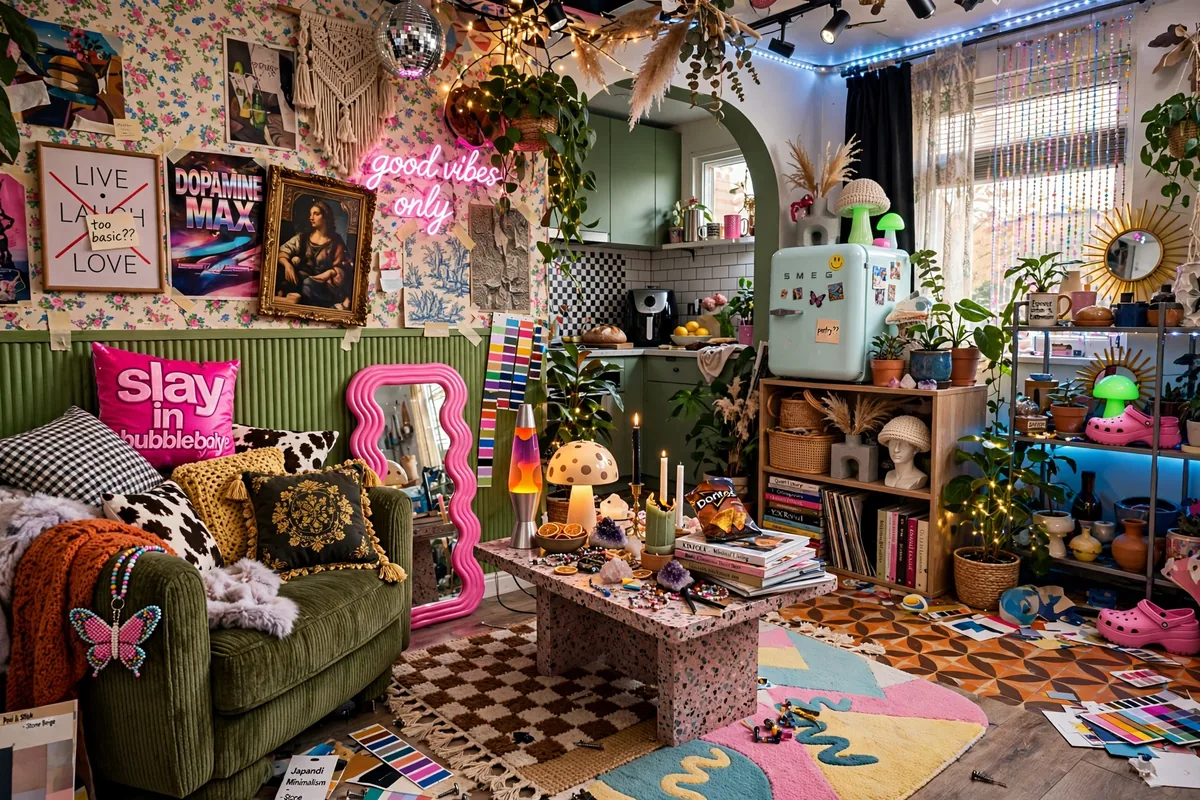
38. Forgetting Texture Entirely
The mistake: a room that’s all smooth surfaces — flat paint, sleek furniture, no textiles — that looks fine in photos but feels cold to actually live in. What to do instead: layer at least three textures per room — something nubby (bouclé, jute), something soft (velvet, knit), something natural (wood, rattan). Pro tip: texture is what makes neutrals interesting — a beige room with five textures beats a colorful room with one.
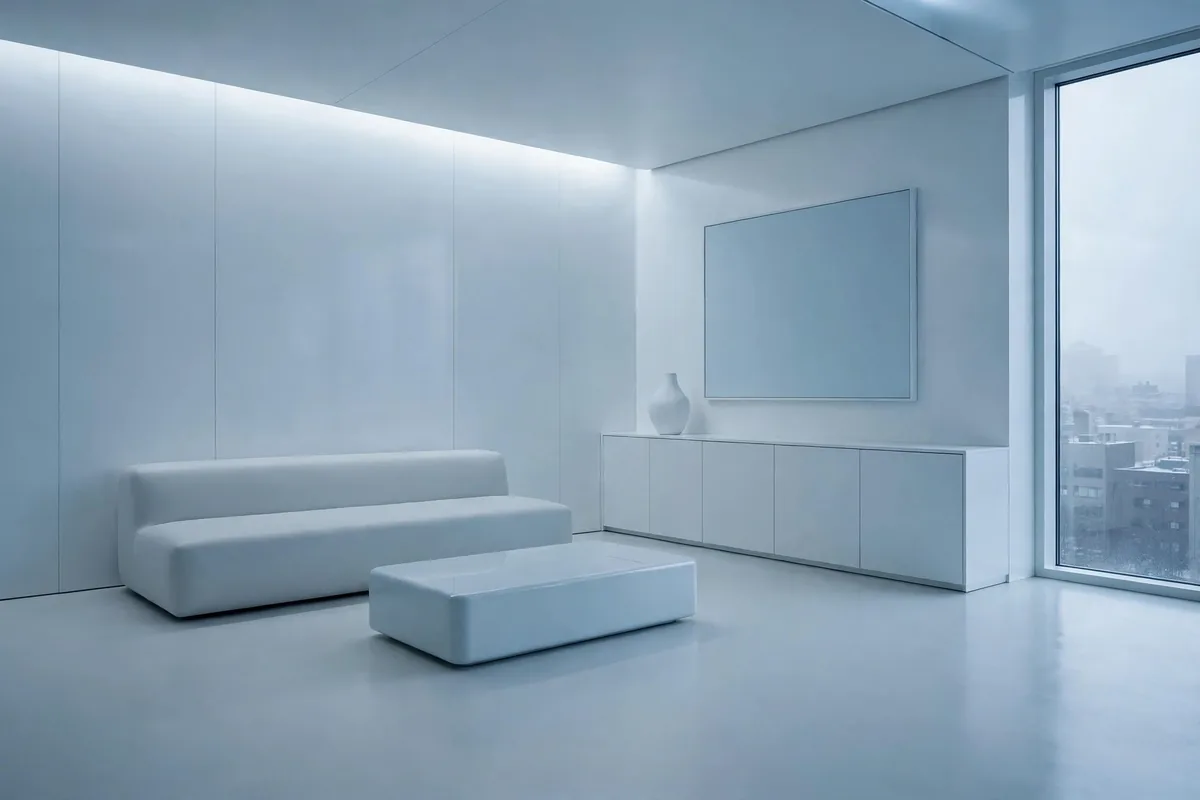
39. Rushing to “Finish” the Room All at Once
The mistake: buying everything in one weekend, then living with three things you regret because you never gave the room time to tell you what it needed. What to do instead: decorate in layers — get the big pieces right, live with them for a month, then add lighting, then textiles, then art. Pro tip: keep a running wishlist on your phone; the items still on it after 30 days are the ones actually worth buying.
Frequently Asked Questions
What is the biggest apartment decorating mistake?
Pushing all furniture against the walls and relying on a single overhead light — together they make any apartment feel flat, cold, and smaller than it is. Fix those two (float key pieces, layer warm lamps) and you’ve solved half of every decorating problem on this list.
How can I avoid decorating mistakes as a renter?
Measure everything before buying, sample colors and wallpaper before committing, and favor removable upgrades — peel-and-stick wallpaper, tension-rod curtains, plug-in lighting — so nothing is permanent. The renter’s golden rule: if you can’t take it with you or remove it cleanly, think twice.
What makes a small apartment look cluttered?
Too much open storage, every surface decorated, and furniture that’s slightly too big for the space. The fixes: 70% closed storage, clear at least one surface per room, and size furniture to leave 30 inches of walkway. Visual clutter shrinks a room faster than actual square footage does.
Why does my apartment look unfinished?
Usually it’s one of three things: bare windows (add floor-length curtains), walls with nothing at the right height (hang art at 57 inches center), or missing layered lighting (add two lamps). Finish those three and most apartments suddenly look “done.”
Should I hire a designer to avoid mistakes?
For most apartments, no — the mistakes on this list are avoidable with measuring tape, patience, and the 60-30-10 color rule. If you’re stuck, a one-hour virtual consult ($75–$150) for a specific problem (like a tricky layout) is money well spent; a full-service designer is overkill for a rental refresh.
How do I fix decorating mistakes without spending a lot?
Rearrange what you own first — floating furniture, regrouping art, and decluttering surfaces cost nothing. Then spend where it counts: warm bulbs ($10), a right-sized rug on sale ($80–$150), and floor-length curtains ($25 a pair at IKEA). Under $200 fixes the vast majority of what’s wrong.
Final Thoughts
Here’s the comforting truth: every beautiful home you admire was once full of these exact mistakes. The difference isn’t talent — it’s willingness to notice what’s not working and fix it. Start with the free fixes (rearrange, declutter, rehang), then spend strategically on light and textiles.
Your apartment doesn’t need to be perfect. It needs to feel like yours — a place where the light is warm, the sofa fits, the art hangs at the right height, and there’s a photo somewhere that makes you smile. Avoid these 39 mistakes and you’re 90% of the way there.

4 Comments