
45 Small Studio Apartment Bedroom Ideas for Maximum Coziness
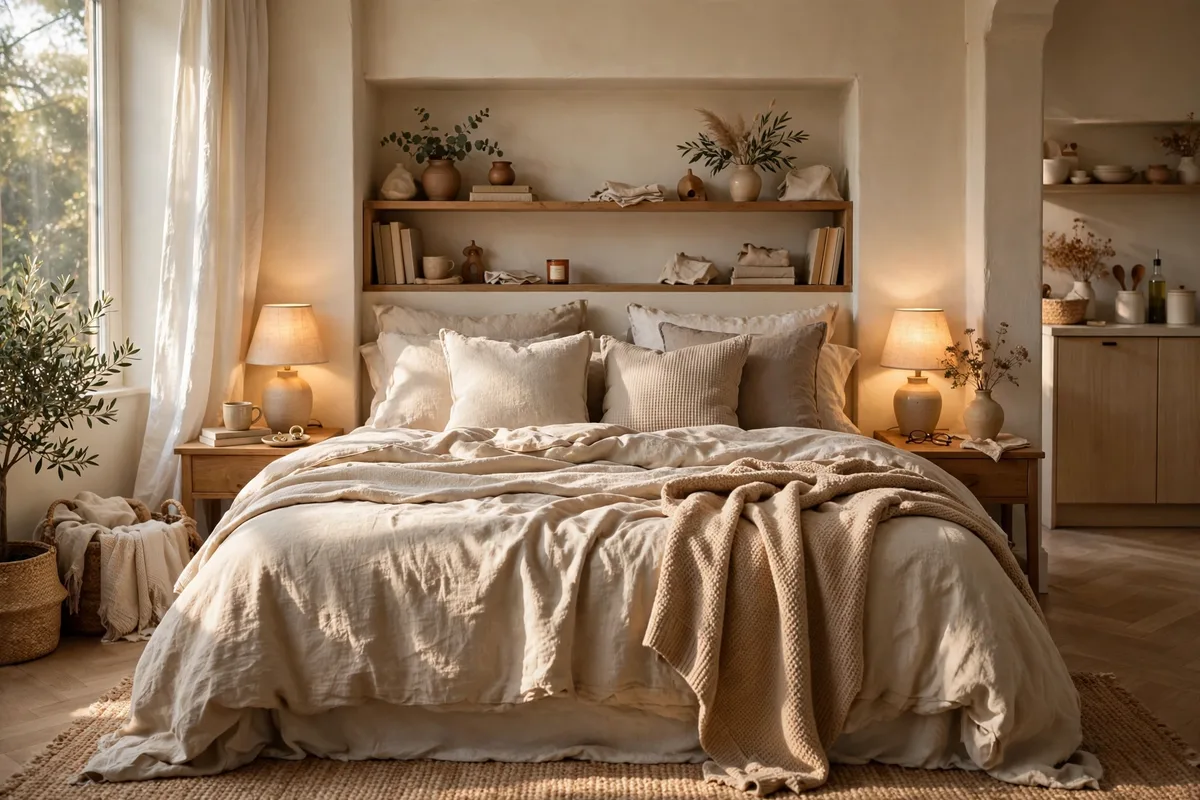
Your studio apartment bedroom isn’t a separate room — it’s a corner, a wall, maybe an alcove if you’re lucky. But here’s the secret: some of the coziest, most restful sleep spaces on the planet are tiny. The trick isn’t square footage. It’s intention — choosing the right bed placement, layering textiles that invite you in, and designing a sleep zone that tells your brain “rest starts here” the moment you cross its invisible boundary.
These 45 small studio apartment bedroom ideas cover everything: where to put the bed, how to dress it like a boutique hotel, storage tricks that hide the clutter, and the lighting and ambiance details that turn a bed-in-a-room into a true bedroom. Whether your “bedroom” is a curtained alcove or just the far wall, you’ll find ideas here that work in real rentals. And if you haven’t yet figured out how to visually separate your sleep zone from the rest of your studio, start with our guide on how to separate your bed in a studio apartment — then come back and make it cozy.
Bed Placement: Where the Magic Starts
In a studio, the bed is the biggest piece of furniture and the hardest to move — so its placement decides everything else. Get this right first, and every other decision gets easier.
1. Tuck the Bed Into the Farthest Corner
The golden rule of studio sleep zones: put the bed in the corner farthest from the front door. Guests see living space first, you get maximum privacy, and two walls do the enclosing work for free. Pro tip: corner placement means you only need one nightstand — a floating shelf on the wall side handles the other.
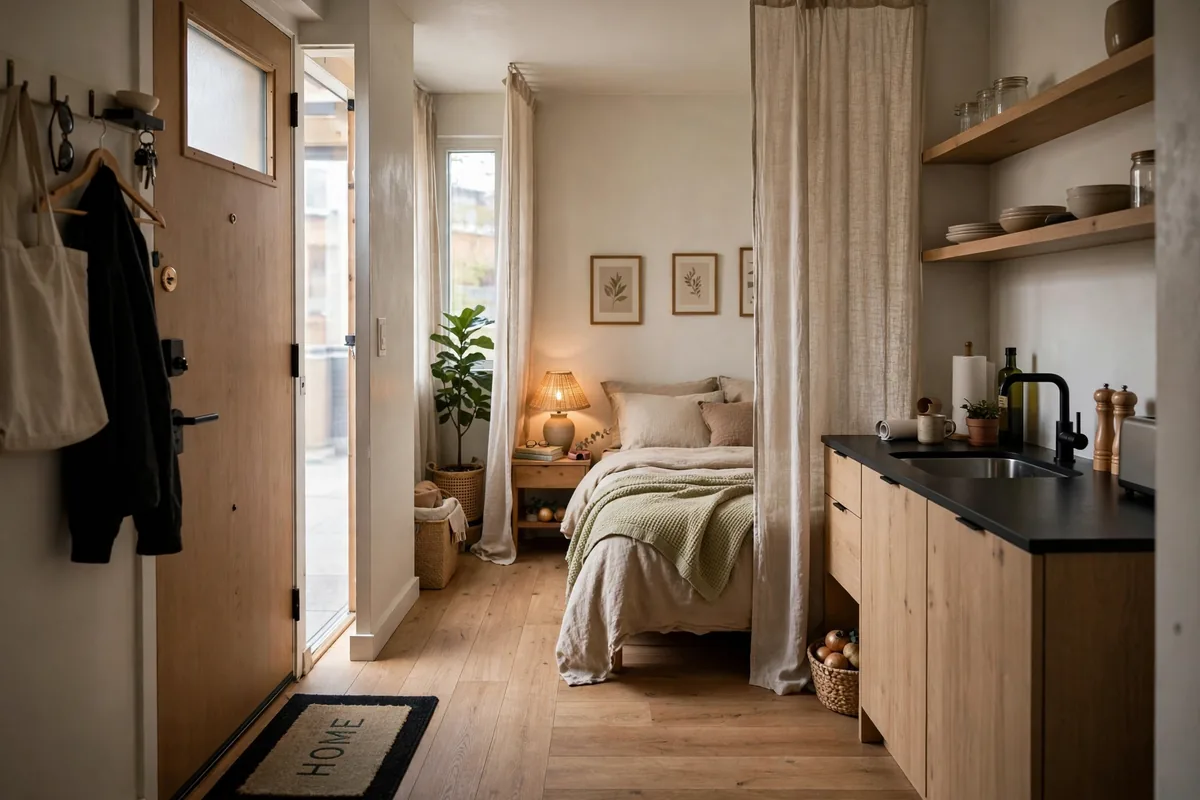
2. Use a Daybed as a Sofa-Bed Hybrid
A daybed with a trundle or deep seating works as your sofa by day and your bed by night — no transforming required. Dress it with throw pillows during the day so it reads as a couch, then strip them off at bedtime. IKEA’s HEMNES daybed runs about $250–$350 and even has three storage drawers built in.
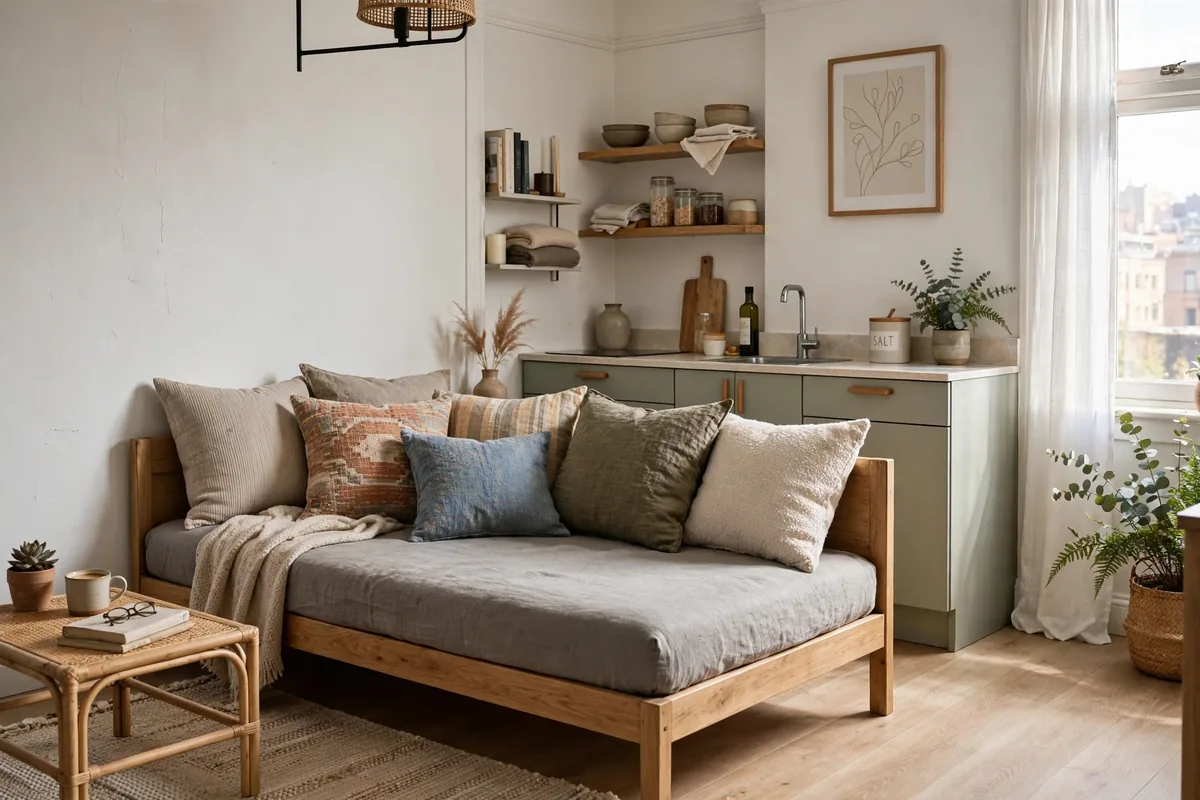
3. Try a Loft Bed for Double-Duty Floor Space
If your ceilings are 9 feet or higher, a loft bed reclaims the entire footprint underneath for a desk, dresser, or reading nook. It’s the single highest-impact move for a tiny studio. Pro tip: check your lease first — some buildings restrict loft beds — and invest in a sturdy frame rated for adult weight, around $300–$500.
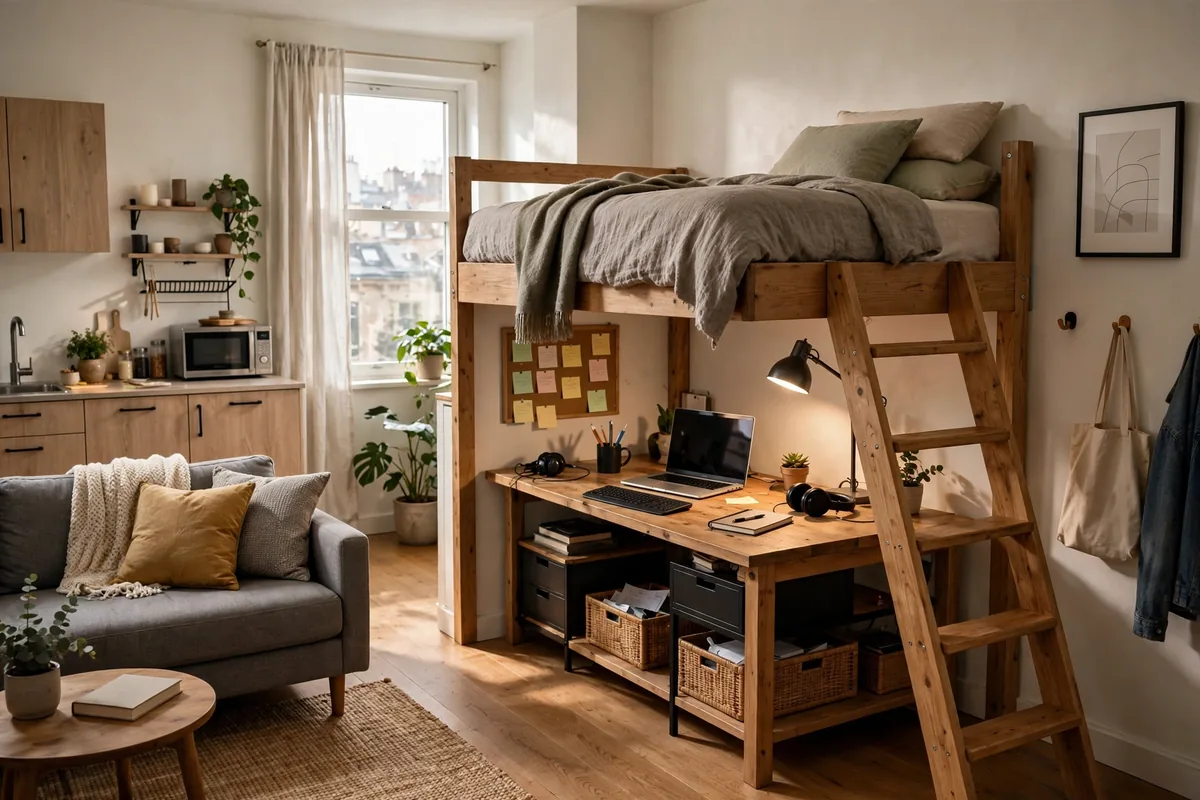
4. Float a Murphy Bed Against the Wall
A wall-mounted Murphy bed folds up by day, giving you back 30+ square feet of living space — the ultimate studio luxury. Modern versions look like sleek cabinets when closed. Pro tip: quality matters here; expect $800–$2,000 for a mechanism that won’t fight you every night, and anchor it properly to studs.
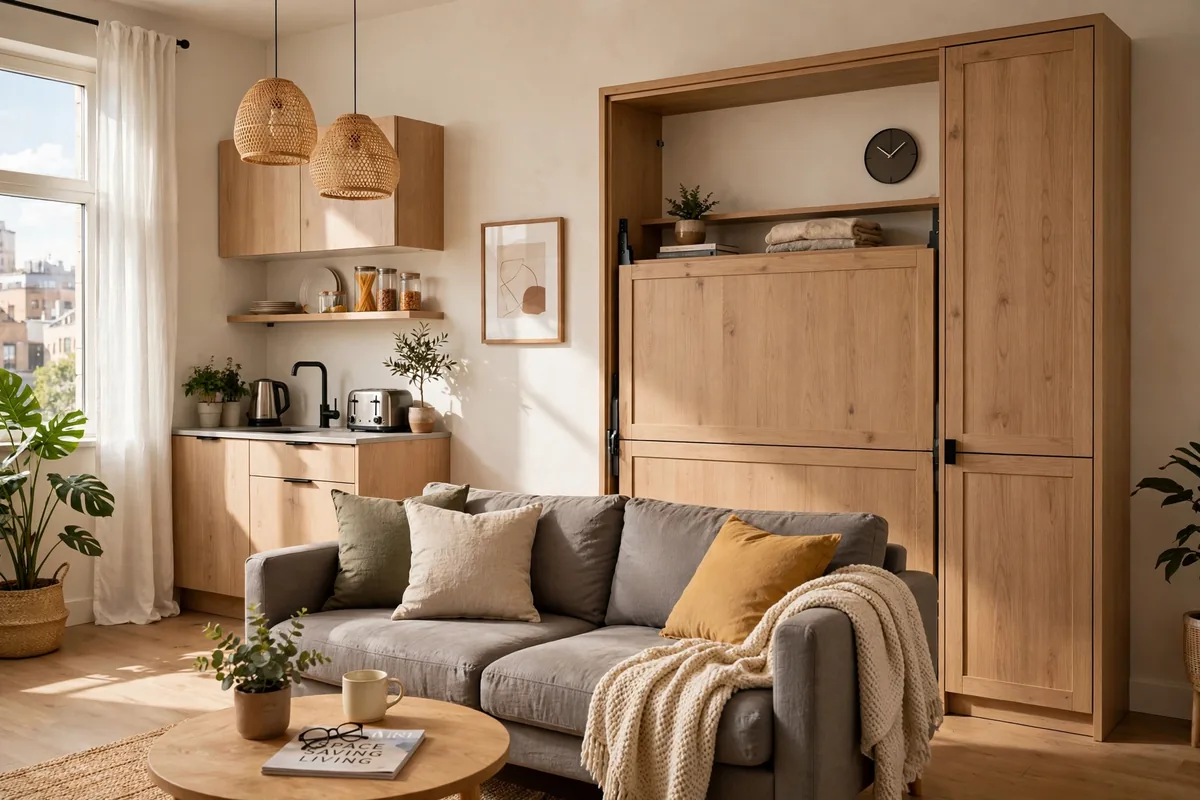
5. Angle the Bed for a Boutique-Hotel Feel
Pull the bed’s headboard corner slightly away from the wall — just a few inches — and the whole sleep zone instantly feels designed rather than shoved aside. The tiny gap behind it is perfect for hiding a power strip for chargers. Pro tip: this works best with an upholstered headboard that looks finished from the side.
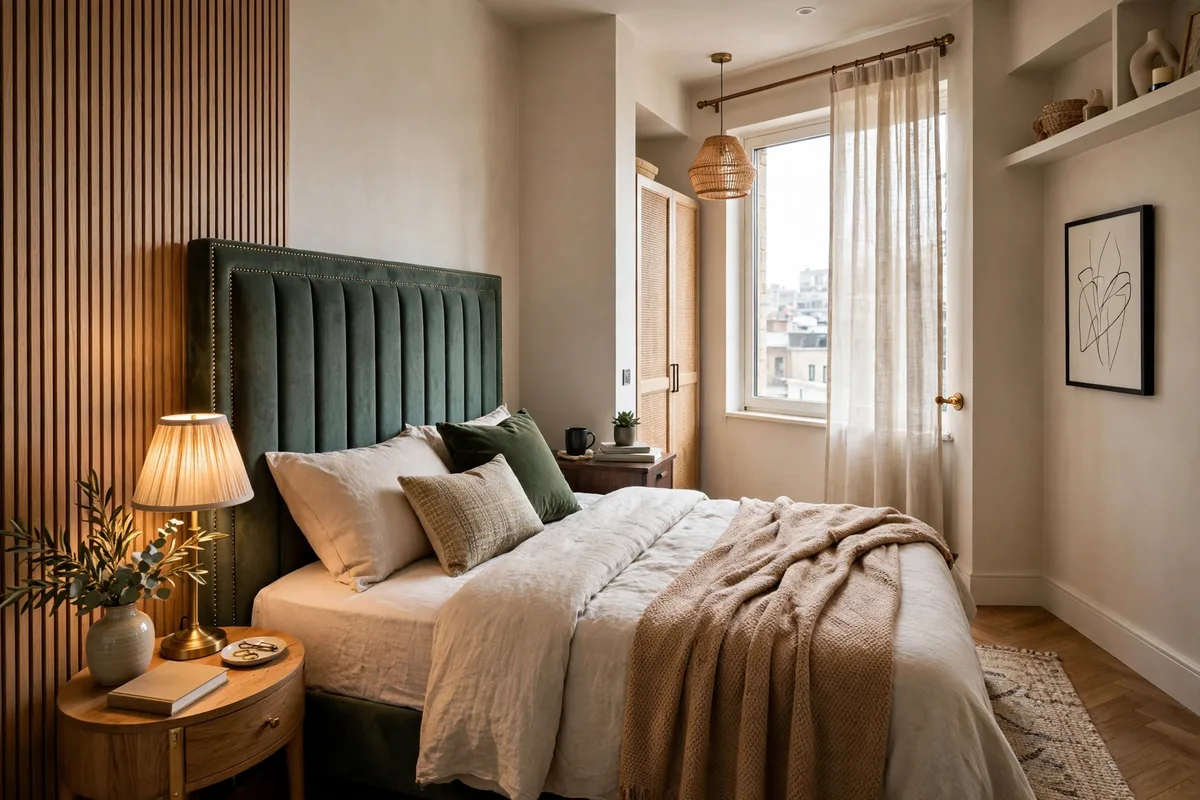
6. Create a Bed Nook with Curtains
Ceiling-mounted curtain tracks (IKEA VIDGA, about $15–$30) let you draw a fabric wall around your bed at night — instant bedroom, zero construction. Choose heavyweight curtains for real enclosure and light-blocking. For more physical divider options, see our studio apartment divider ideas guide.
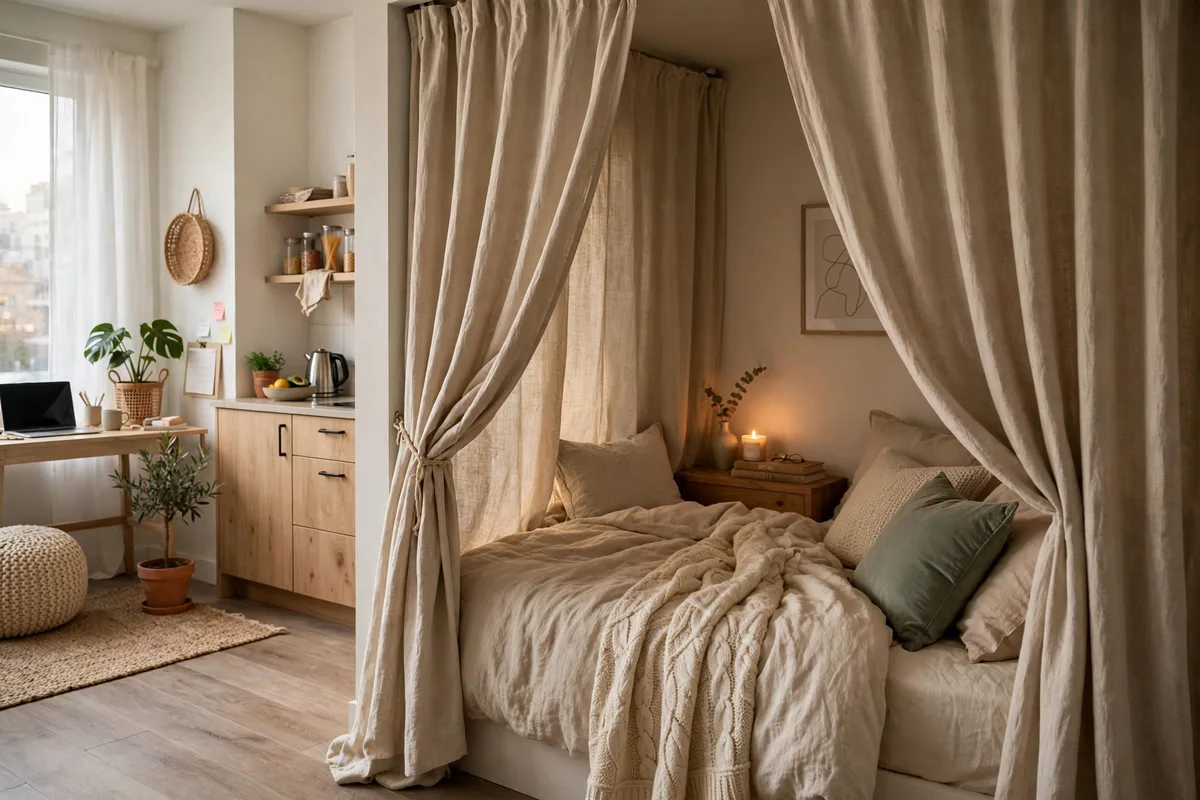
7. Keep the Bed Out of the Kitchen Sightline
Falling asleep staring at dirty dishes kills rest before it starts. Orient the bed so the kitchen is behind the headboard or outside your direct line of sight when lying down. Pro tip: if the layout won’t cooperate, a simple folding screen between bed and kitchenette solves it for under $100.
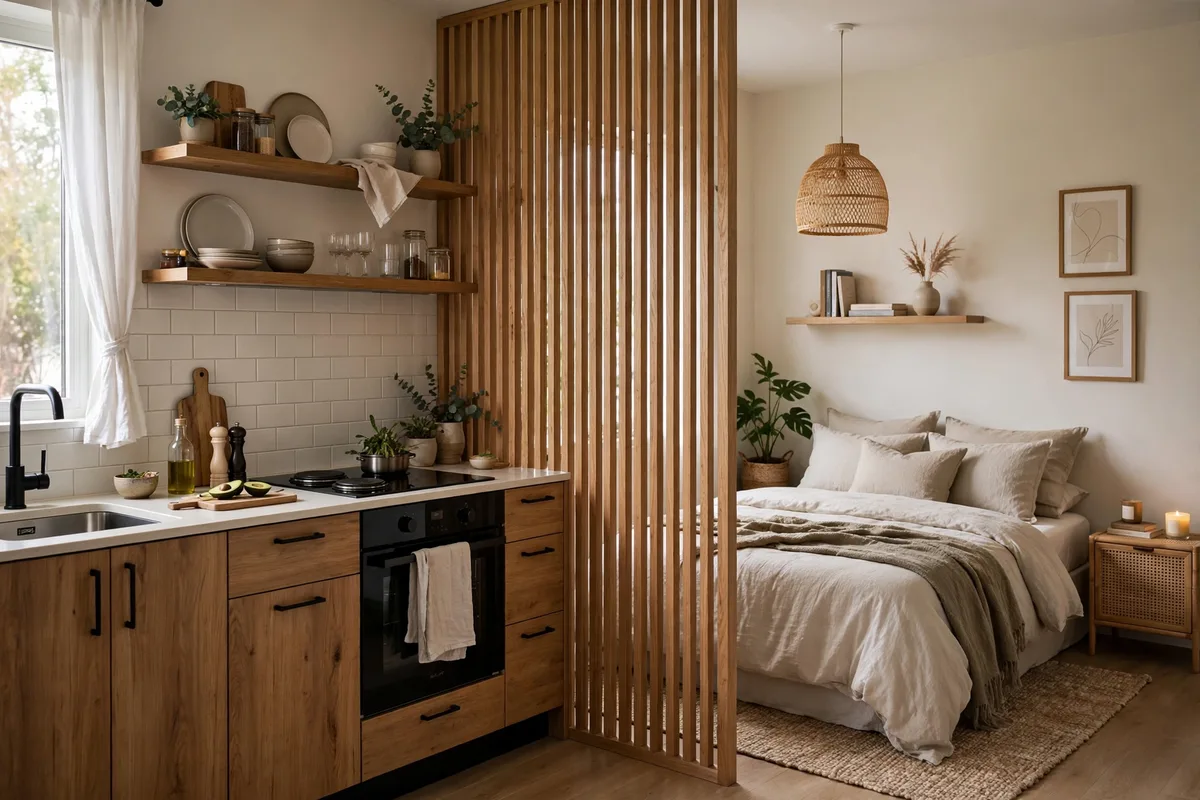
8. Leave 24 Inches on Your Exit Side
The unglamorous rule nobody mentions: leave at least 24 inches of clear floor on the side you get out of bed. Squeezing past a dresser every morning starts the day with irritation. Pro tip: measure this with the bedding on — a fluffy duvet adds 4–6 inches you forget to count.
Bedding & Textiles: The Cozy Layer Cake
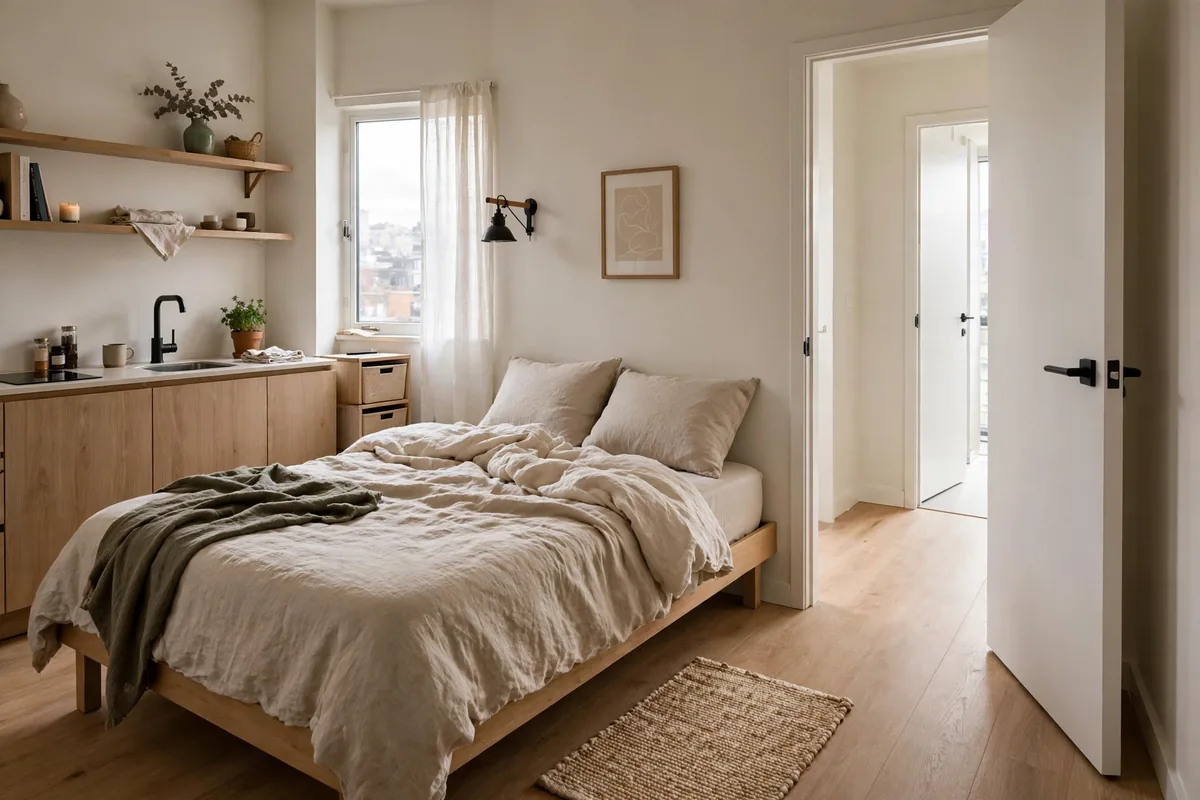
Bedding is where coziness lives. In a studio, your bed is visible all day — so dressing it well does double duty: better sleep at night, better-looking room by day.
9. Invest in Real Linen Bedding
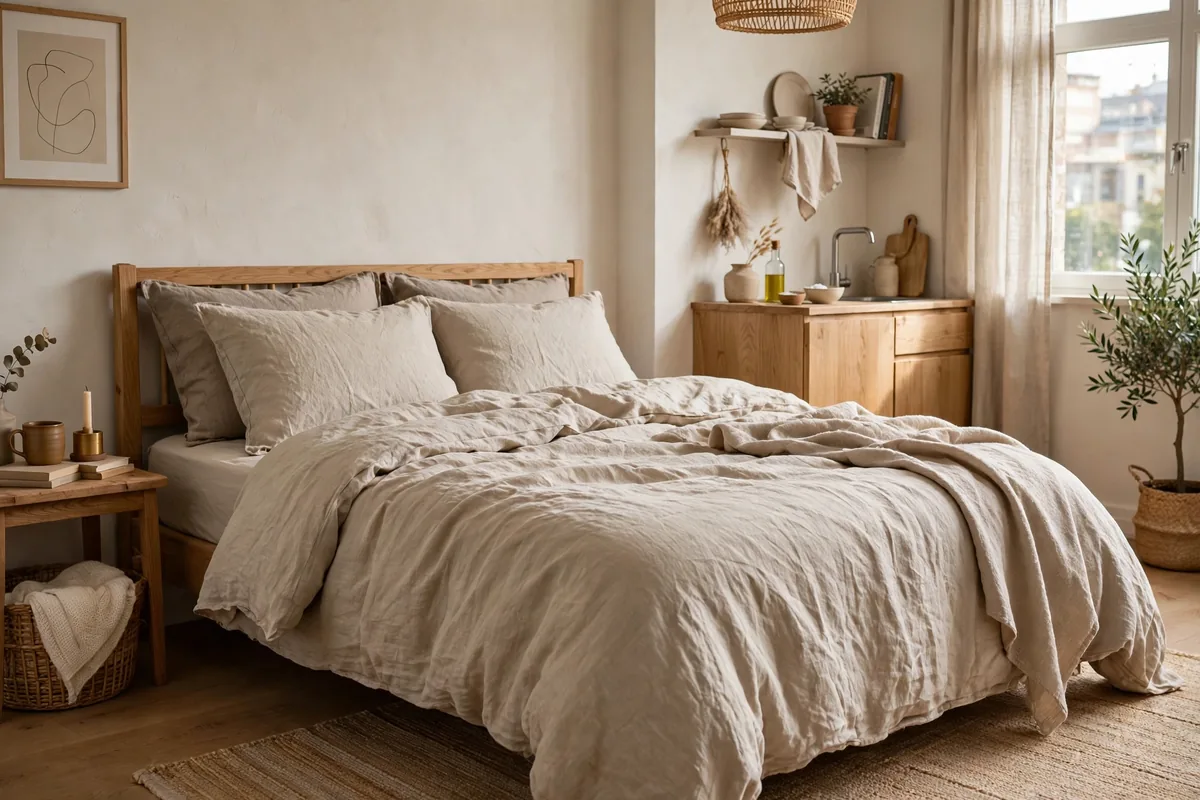
Linen gets softer with every wash, breathes in summer, insulates in winter, and has that perfectly rumpled look that makes a bed feel inviting rather than staged. A linen duvet cover set runs $80–$150 on Amazon or at IKEA. Pro tip: go for washed European flax linen — it skips the scratchy break-in period entirely.
10. Layer Three Textures Minimum
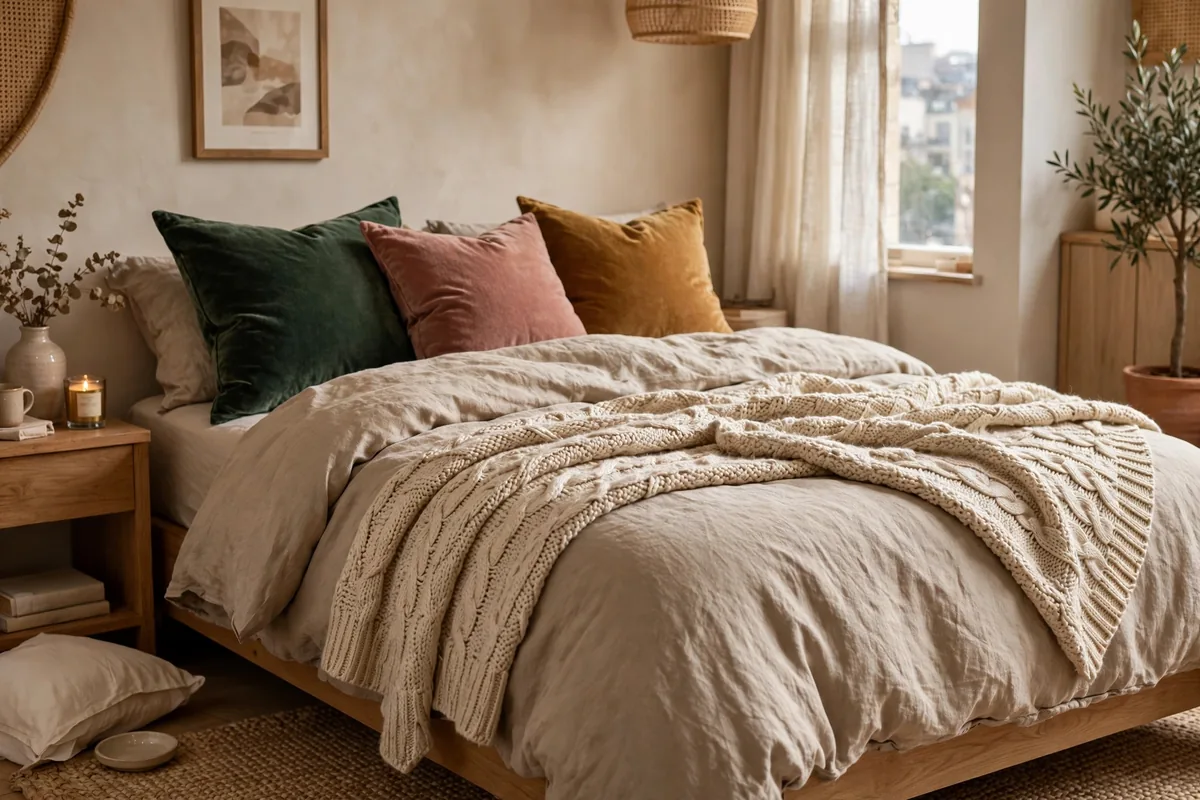
The designer formula for a bed you want to dive into: three textures in one palette — say, linen sheets, a waffle-weave blanket, and a chunky knit throw. The mix reads as luxury even when every piece was under $40. Pro tip: keep all three in the same color family so the texture does the talking, not the pattern.
11. Go Dark on the Duvet for Drama
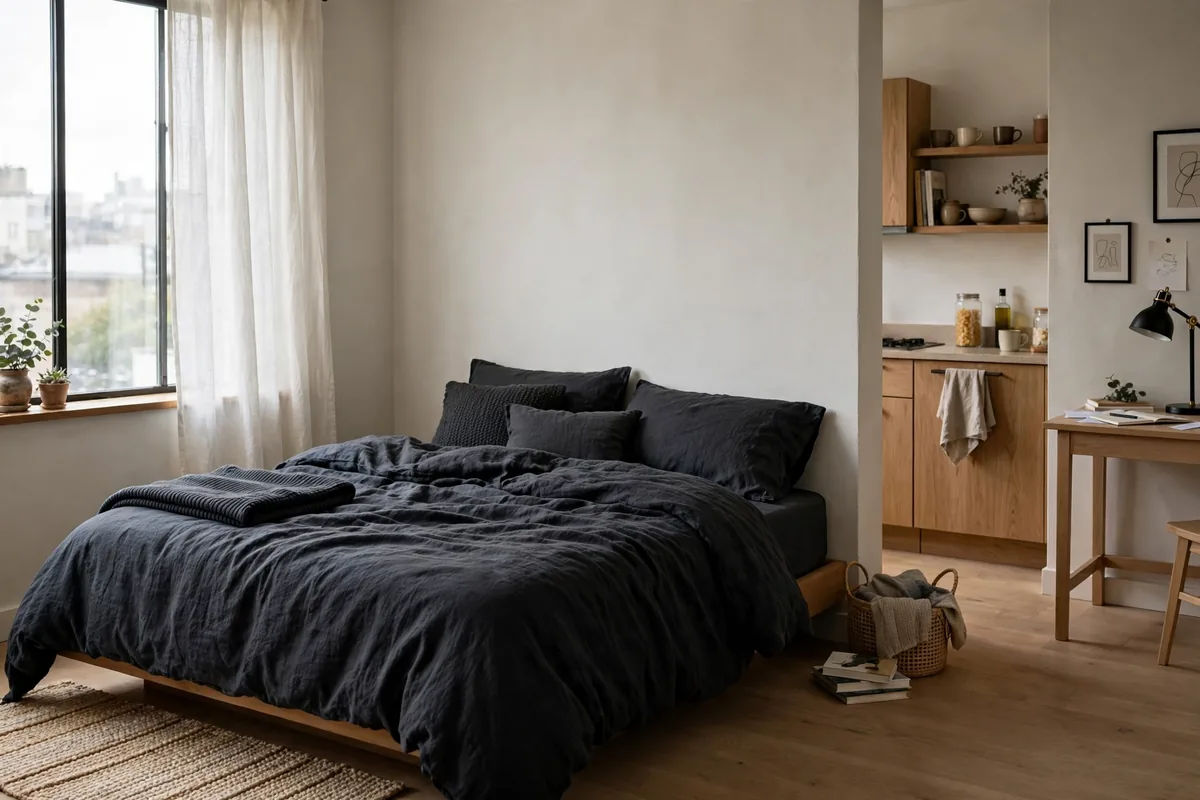
A deep forest green, charcoal, or navy duvet cover makes a studio bed feel like a cocoon — and dark bedding hides the wrinkles that light bedding shows. It also anchors the sleep zone visually, which helps it read as a “room.” Pro tip: pair dark bedding with light pillows so the bed doesn’t disappear into shadow.
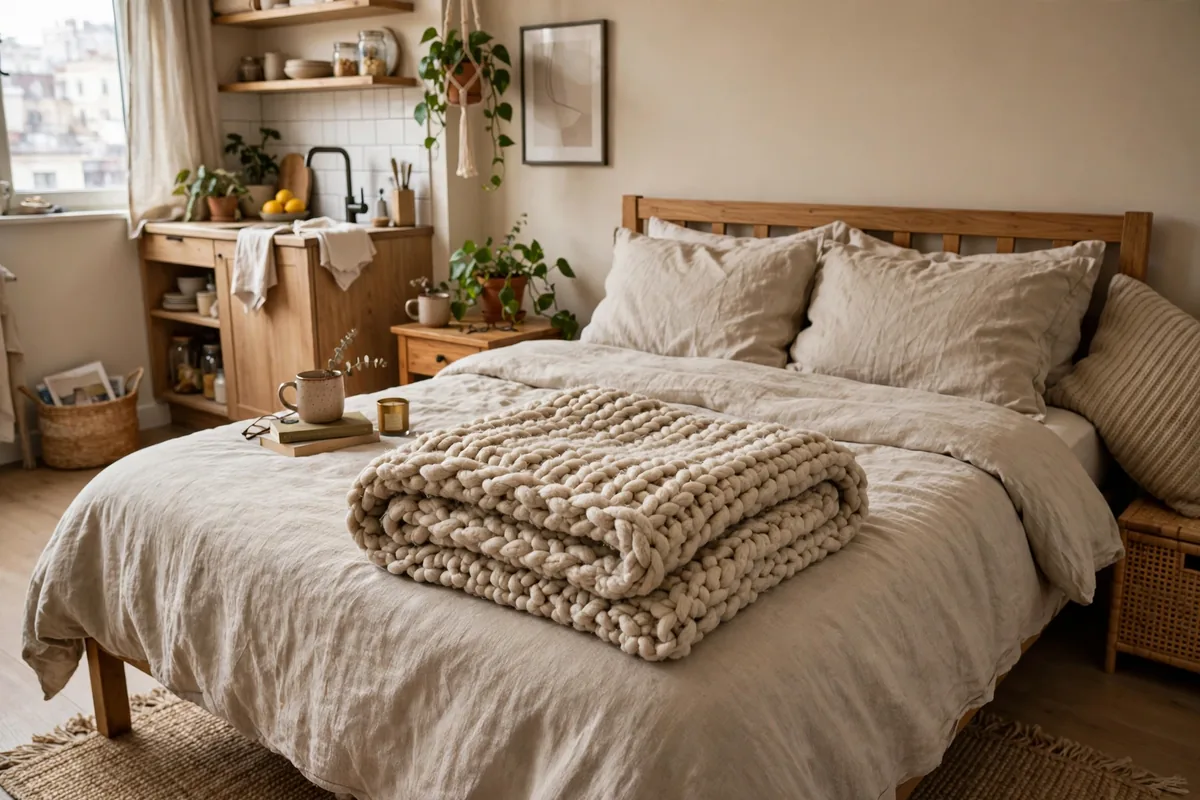
12. Add a Chunky Throw at the Foot
A single chunky knit or faux-fur throw folded across the foot of the bed is the universal signal for “this bed is cozy.” It adds texture, a layer of warmth for cold feet, and costs $25–$50 at Target or IKEA. Pro tip: fold it in thirds lengthwise and drape it slightly off-center — perfectly centered throws look stiff.
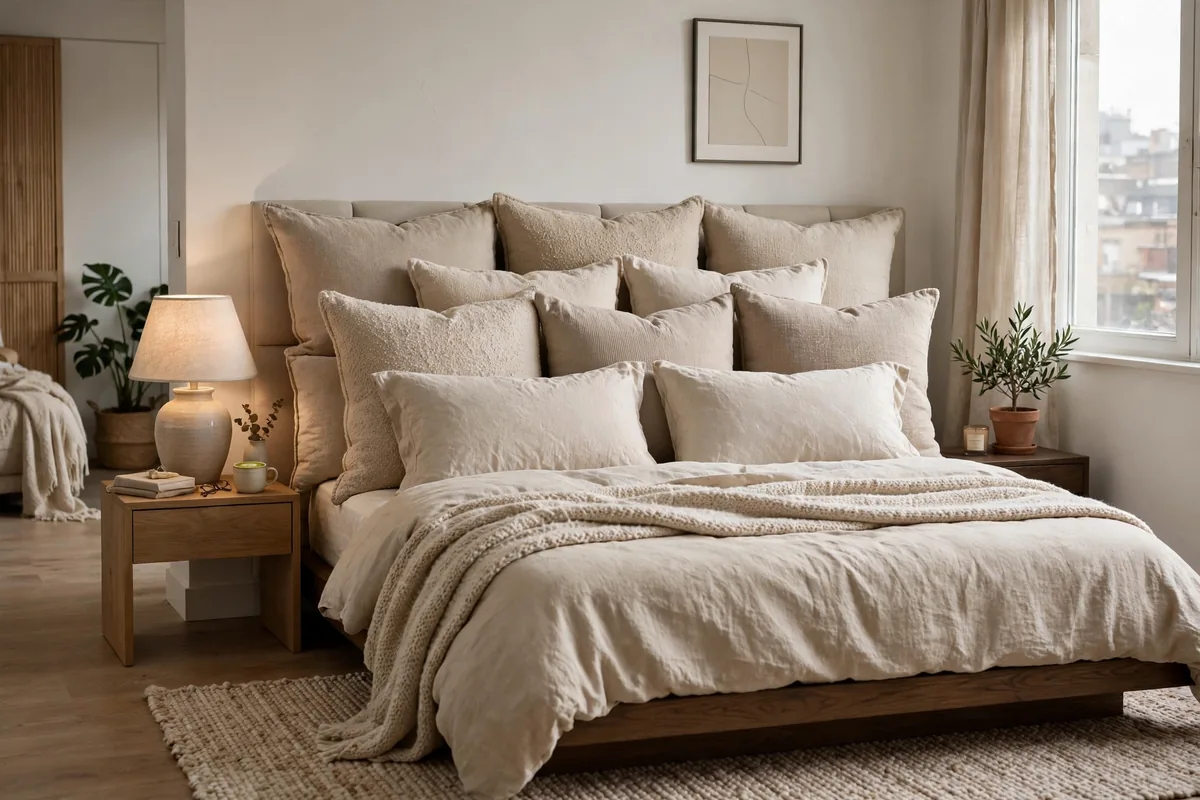
13. Use Euro Pillows for a Plush Backdrop
Two 26×26 Euro pillows propped against the headboard create a deep, lounge-worthy backdrop that makes any bed look expensive — and they’re genuinely comfortable for reading. Euro inserts plus covers run about $40 total at IKEA. Pro tip: karate-chop the top center of each pillow for that styled hotel look.
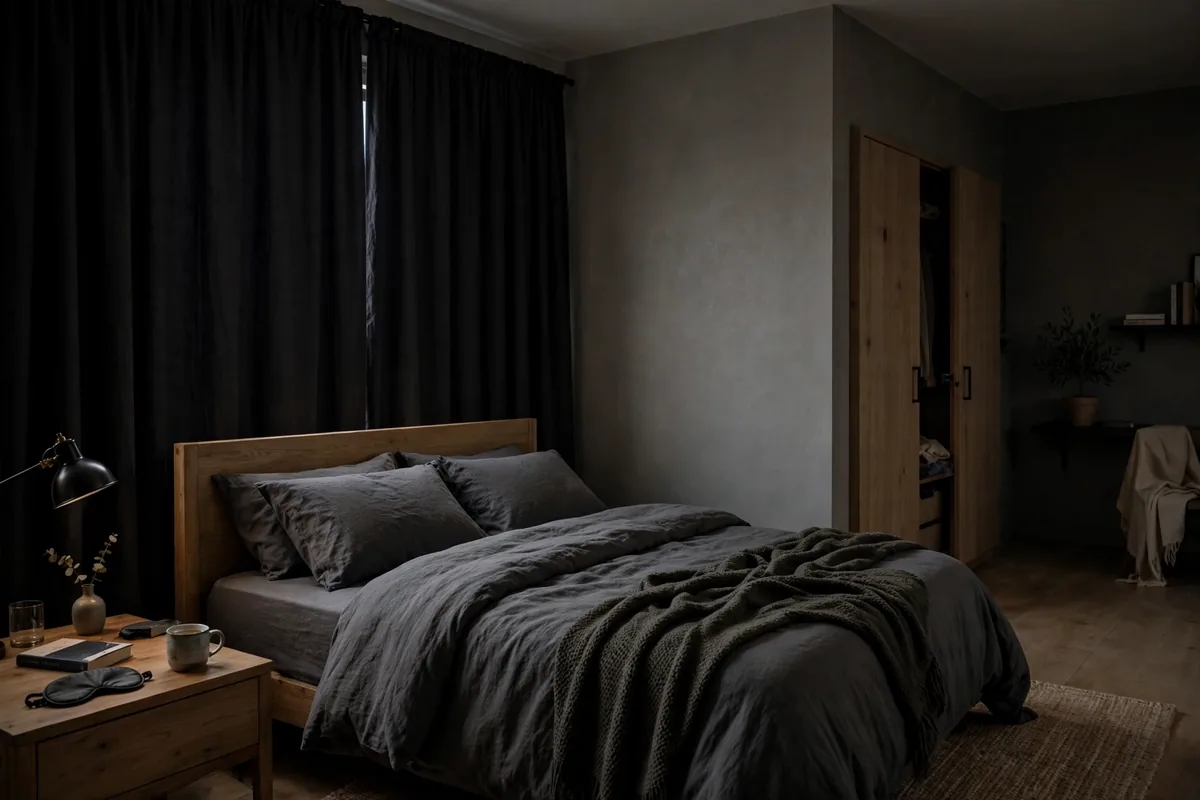
14. Choose Blackout Curtains for True Rest
Streetlights and early sunrises are the enemies of studio sleep — your bed is probably near a window. Real blackout curtains (not just “room darkening”) can drop the light to near-zero. Expect $30–$60 per panel at Target or Amazon. Pro tip: hang them 4–6 inches wider than the window frame on each side to kill the light leaks at the edges.
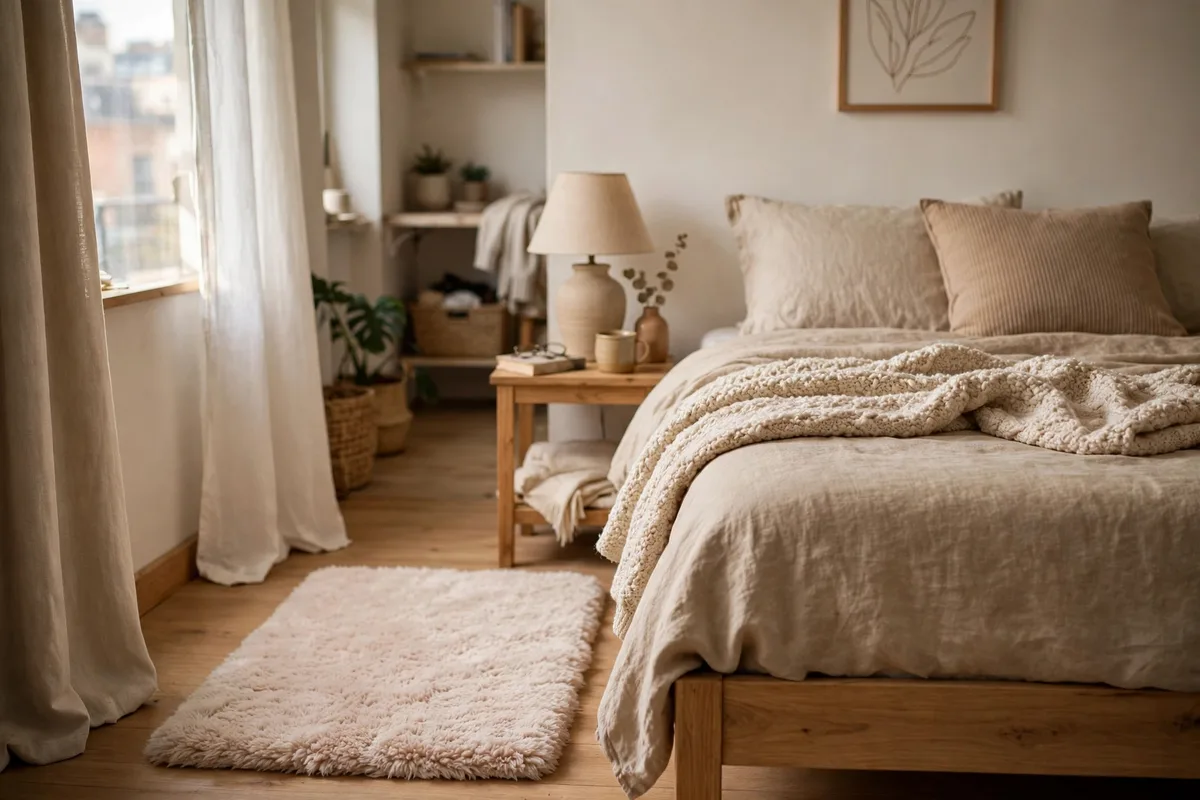
15. Add a Bedside Rug for Soft Landings
A small rug — even a 2×3 runner — beside the bed means your feet hit softness, not cold floor, every morning. It also visually anchors the sleep zone. Pro tip: in a tight space, a sheepskin or faux-fur rug (about $20–$40 at IKEA) adds maximum coziness per square inch.
16. Swap Bedding Seasonally
Lightweight linen and cotton for summer, flannel and velvet for winter — a seasonal bedding swap makes the sleep zone feel fresh twice a year and regulates temperature better than one all-year set. Pro tip: store the off-season set in a vacuum bag under the bed; it takes up almost no space.
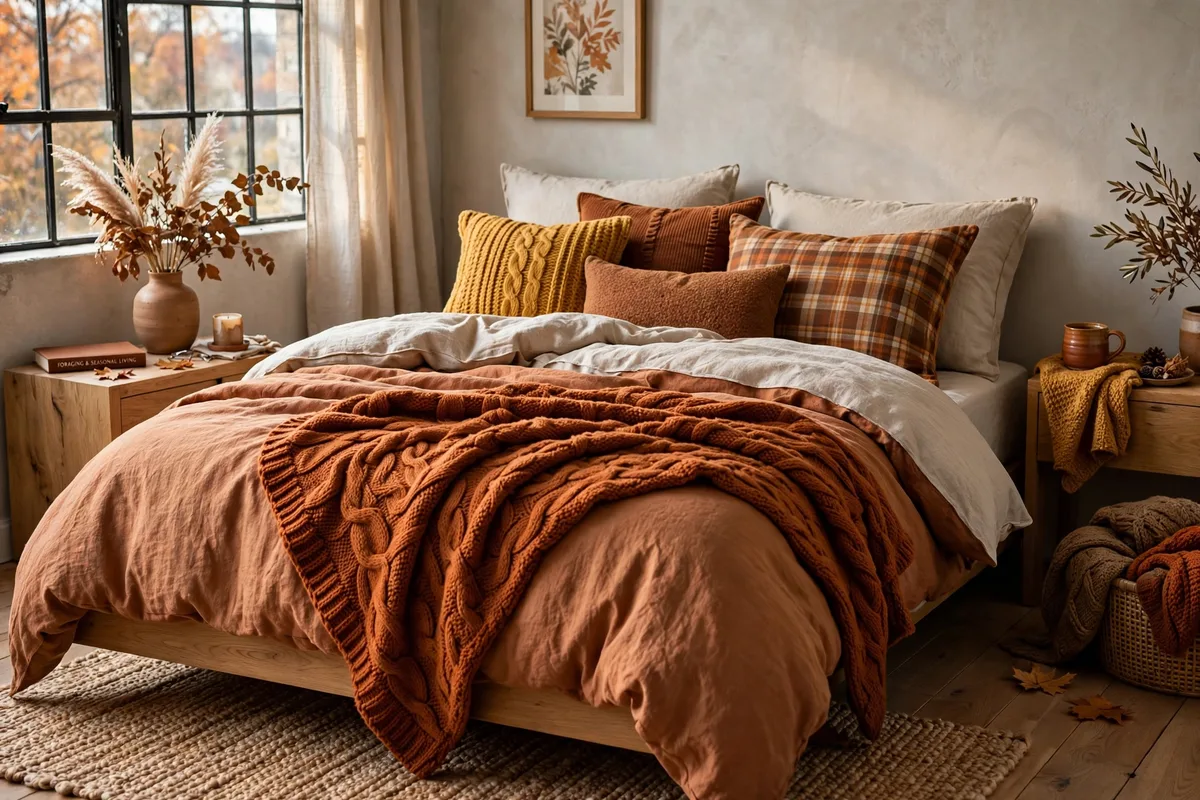
Headboards & Walls: Give the Bed a Backdrop
A bed without a visual anchor looks like it drifted there by accident. A headboard — real, faked, or implied — tells the eye “this is the bedroom,” which is exactly what a studio needs. Steal a palette from our studio apartment color schemes guide to make the backdrop sing.
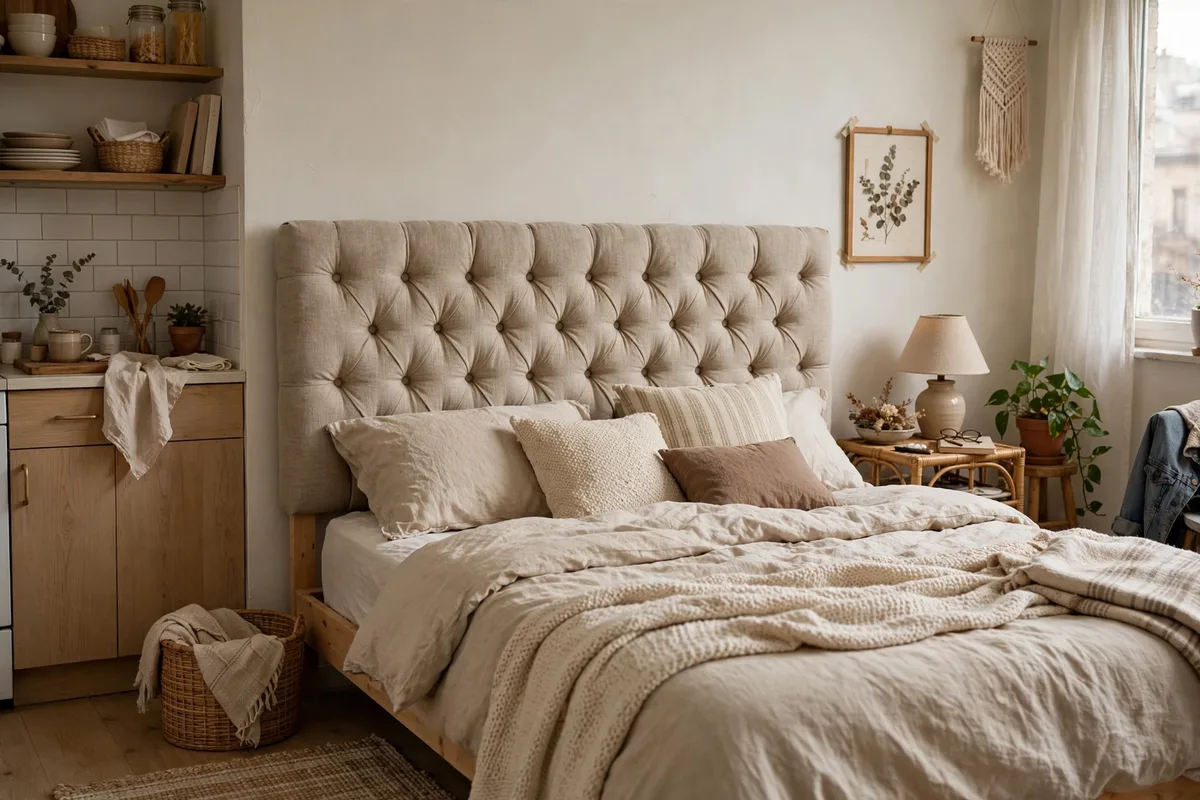
17. DIY an Upholstered Headboard
A plywood board, foam, batting, and fabric from a craft store becomes a custom upholstered headboard for $50–$80 — and you can make it exactly the width of your bed zone. Pro tip: use a staple gun on the back side and choose a performance fabric; it’ll survive years of leaning.
18. Hang a Tapestry as a Headboard Alternative
No headboard? No problem. A large textile — a woven wall hanging, a beautiful throw, even a flatweave rug — hung behind the bed gives you all the softness and visual weight of a headboard for $30–$90 on Etsy. Pro tip: hang it from a wooden dowel with leather straps for a finished look, and it doubles as sound absorption.

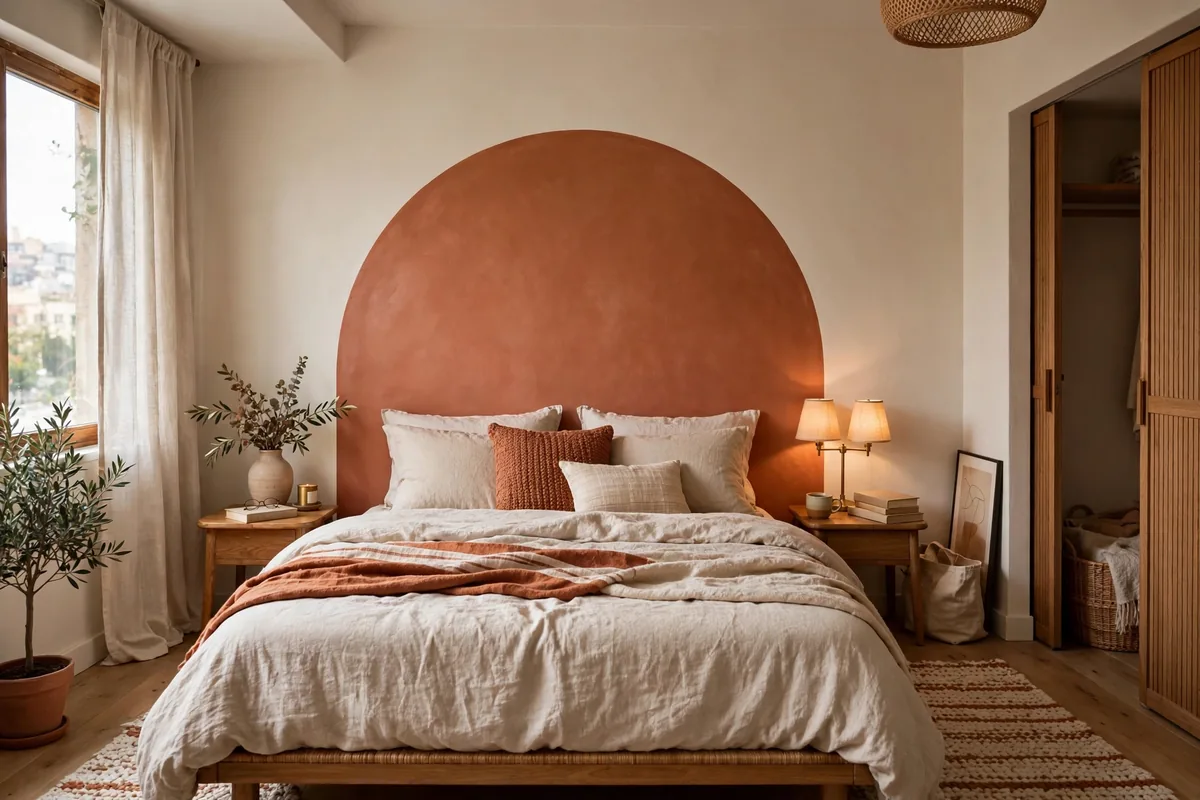
19. Paint or Peel-and-Stick an Arch Behind the Bed
A painted arch (or a $25–$35 peel-and-stick arch decal from Etsy) behind the bed creates architectural interest with zero carpentry — it frames the sleep zone like a proscenium. Pro tip: extend the arch color onto the ceiling a few inches for a cocooning canopy effect.
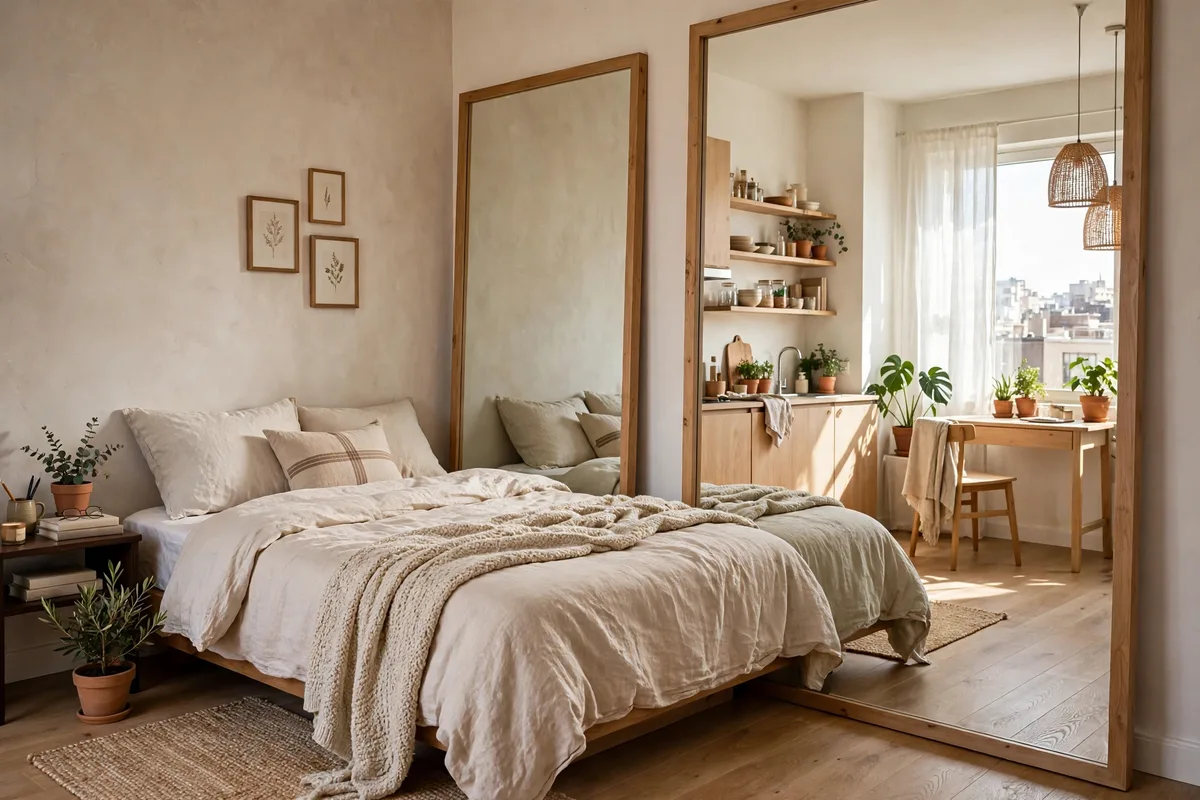
20. Use a Large Mirror to Double the Space
A big mirror on the wall adjacent to the bed (not opposite — nobody wants to watch themselves sleep) bounces light and doubles the perceived size of the sleep zone. Pro tip: a leaning full-length mirror needs zero holes, which your landlord will appreciate, and runs $40–$80 at Target.
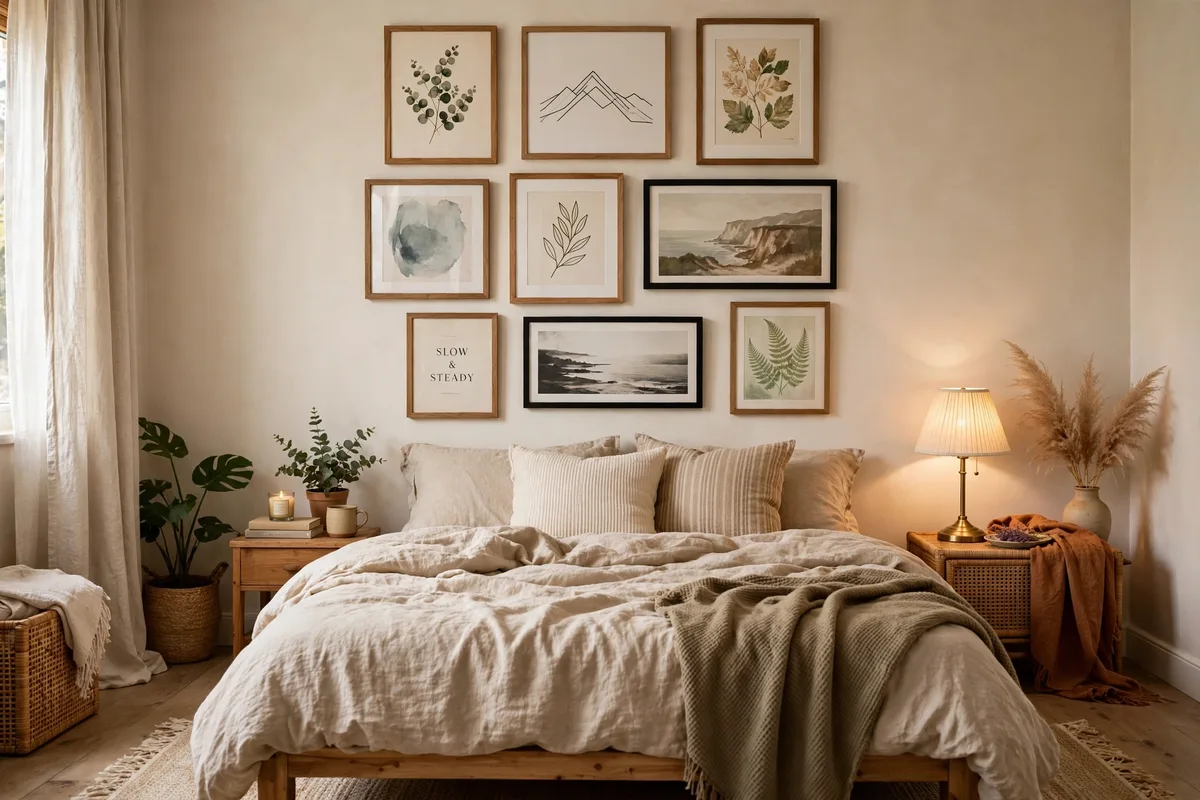
21. Create a Gallery Wall Above the Bed
A tight cluster of 5–9 framed prints above the bed turns a blank wall into the room’s focal point. Keep frames in one finish for cohesion — thrifted frames spray-painted matte black cost $1–$4 each. Pro tip: use paper templates taped to the wall first; it’s much easier to rearrange paper than nail holes.
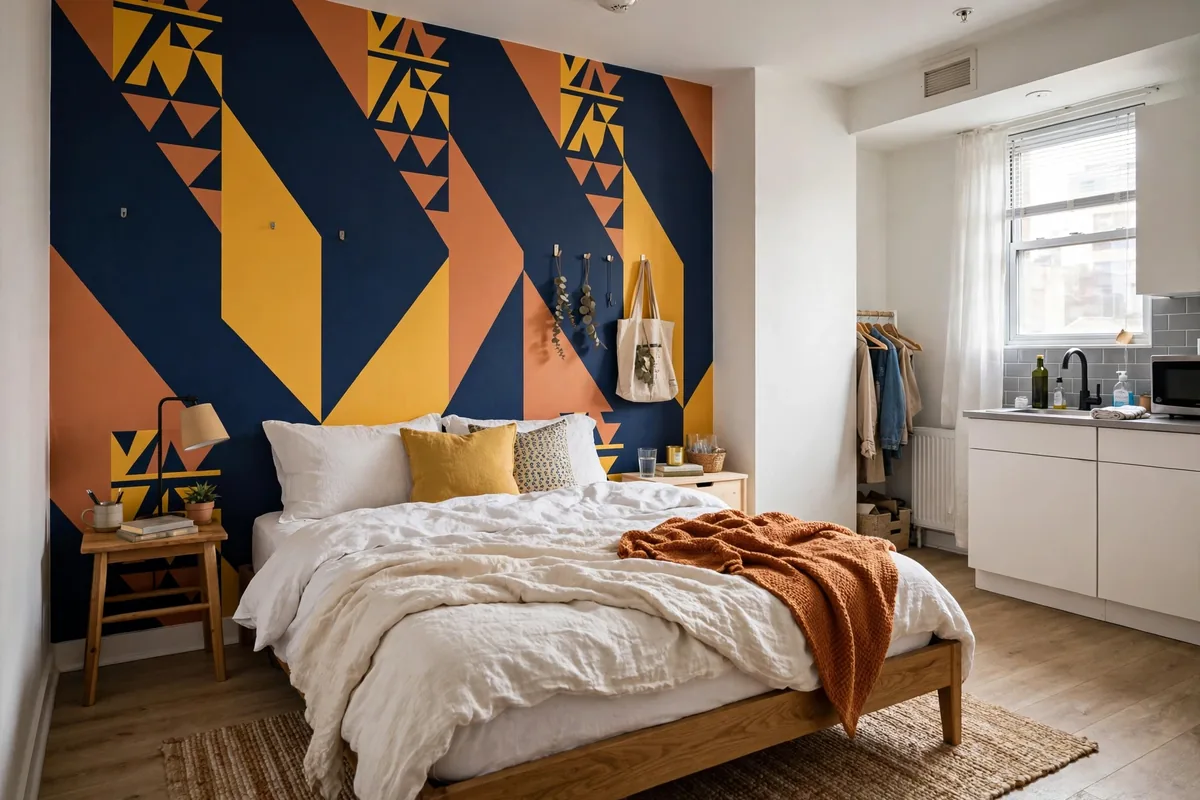
22. Add a Peel-and-Stick Wallpaper Accent Wall
One wall of peel-and-stick wallpaper behind the bed — a subtle grasscloth, a moody botanical, a limewash look — gives the sleep zone its own identity for $50–$120 and removes cleanly at move-out. Pro tip: choose a pattern with your bedding’s accent color in it, and the whole zone will look professionally designed.
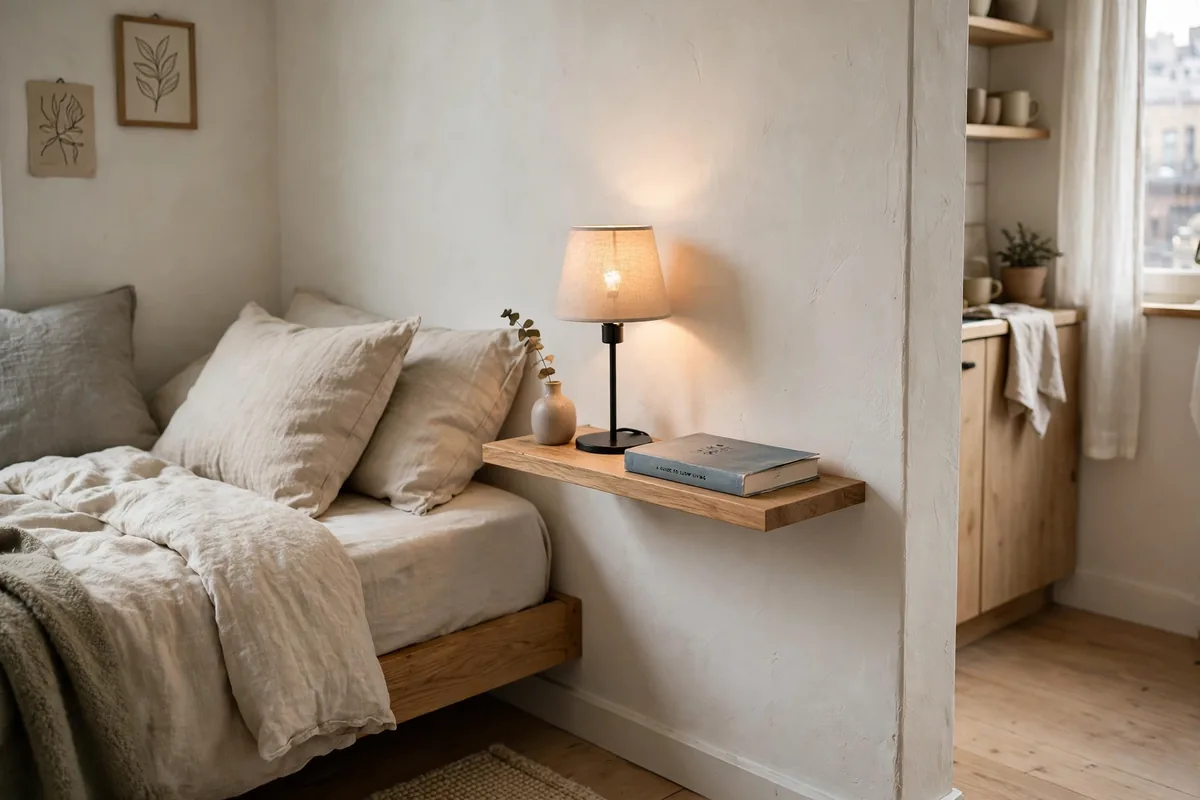
23. Mount Floating Shelves as Nightstand Alternatives
When there’s no floor space for a nightstand, a floating shelf at mattress height holds the lamp, book, and phone just as well. IKEA LACK shelves are about $10–$15 each. Pro tip: mount two staggered shelves — the lower for the lamp, the upper for books and a small plant.
Storage Around the Bed: Hide Everything
Nothing kills bedroom coziness faster than clutter in your sightline when you’re trying to sleep. In a studio, the bed area has to swallow an enormous amount of storage without looking like a warehouse.
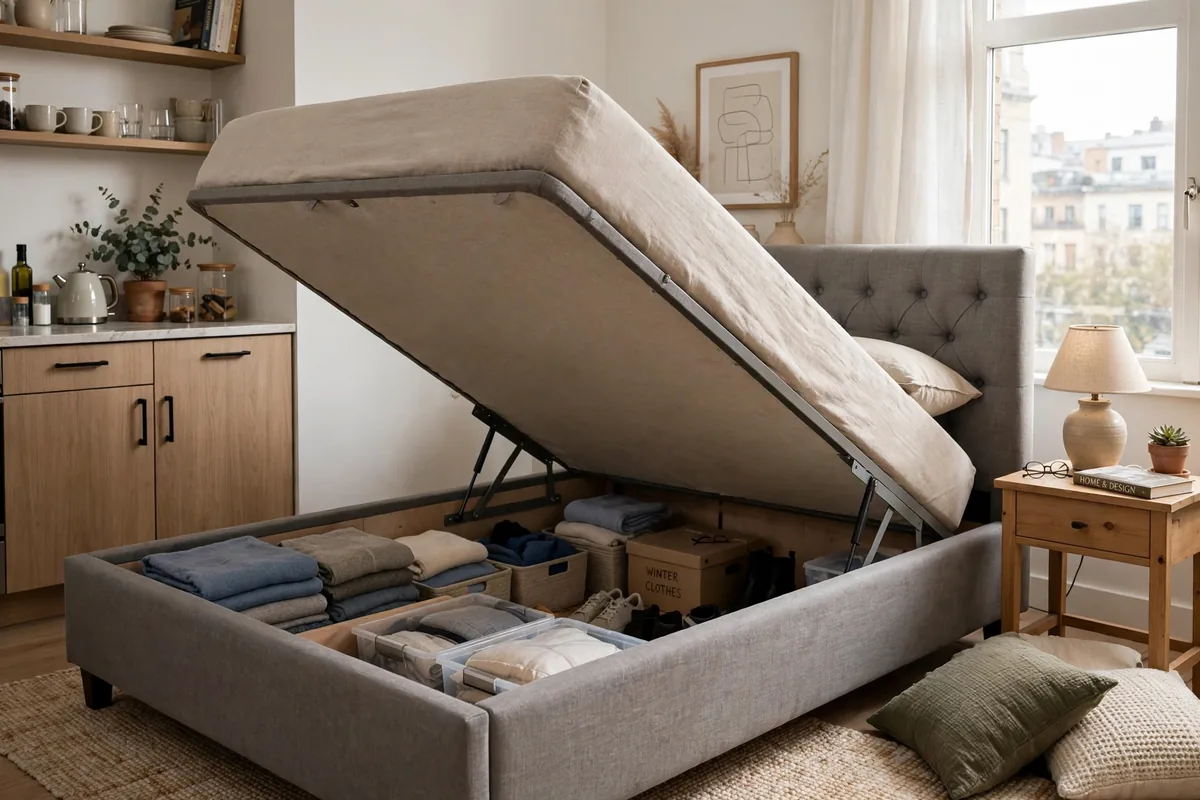
24. Use an Ottoman Bed for Hidden Storage
An ottoman-style lift-up bed (IKEA MALM ottoman version, around $400–$550) reveals a cavernous storage compartment under the entire mattress — it swallows suitcases, off-season clothes, and spare bedding whole. Pro tip: it’s the single biggest storage upgrade a studio sleeper can make; measure your ceiling clearance for the lift mechanism first.
25. Slide Rolling Bins Under the Bed
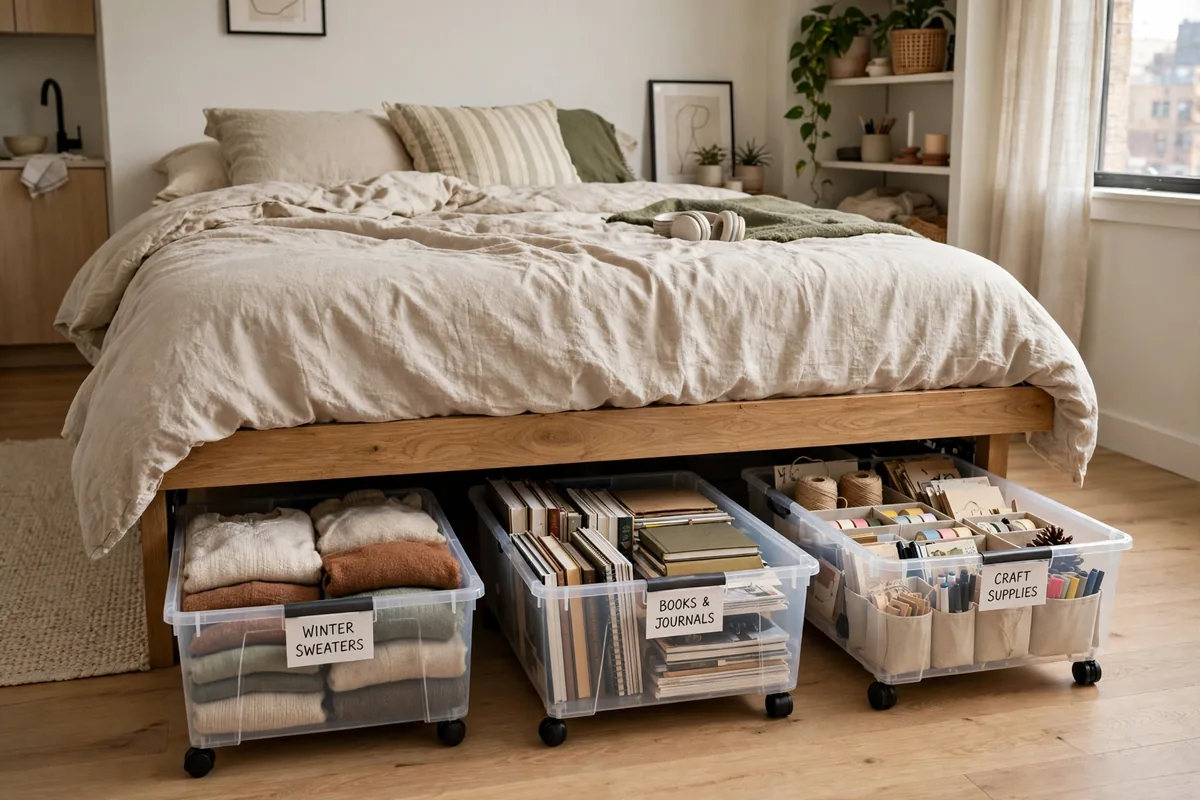
The cheapest under-bed storage: flat rolling bins ($15–$25 each at Target) for shoes, linens, and out-of-season clothes. They disappear completely under a bed skirt or a duvet that reaches the floor. Pro tip: label the ends facing out — you’ll never remember which bin holds the winter sweaters otherwise.
26. Try a Headboard with Built-In Storage
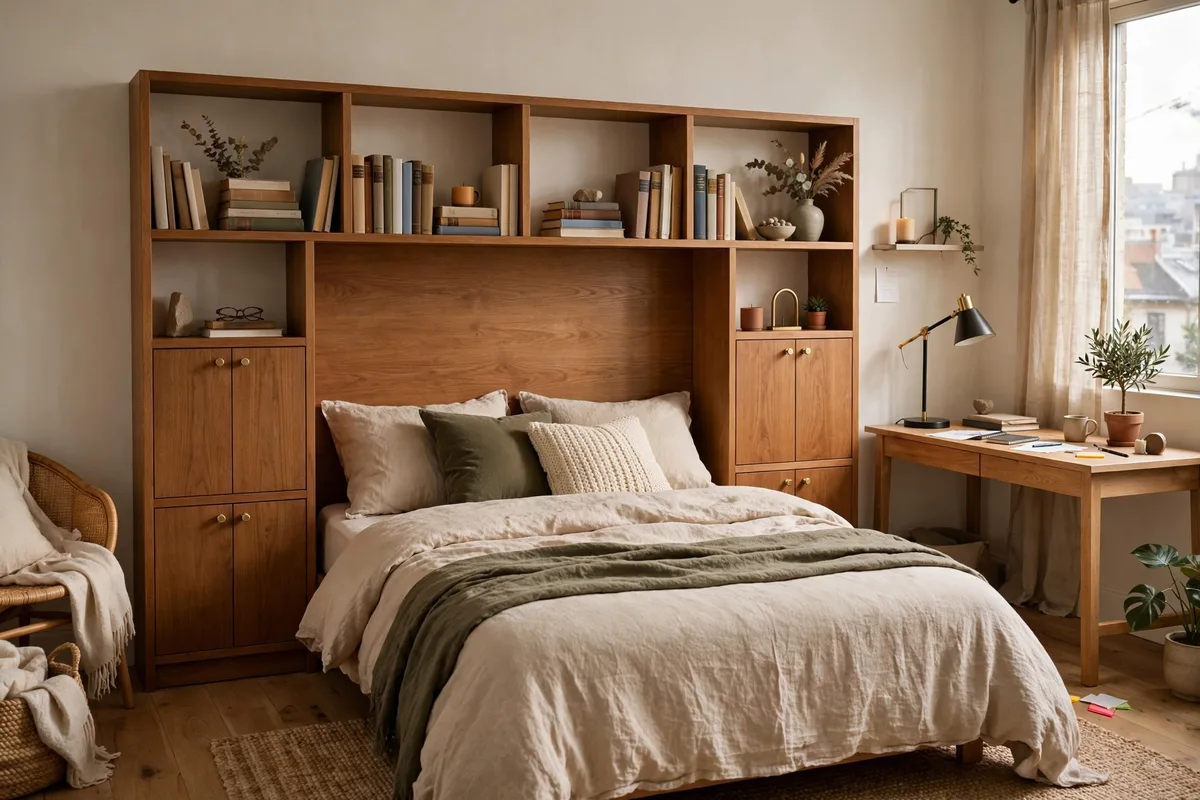
IKEA’s BRIMNES headboard (about $80–$120) has shelving and compartments built right in — books, glasses, chargers, and decor all live in the headboard instead of on a nightstand you don’t have room for. Pro tip: add small LED strip lights under the top shelf for built-in reading light.
27. Hang a Wall-Mounted Nightstand Shelf
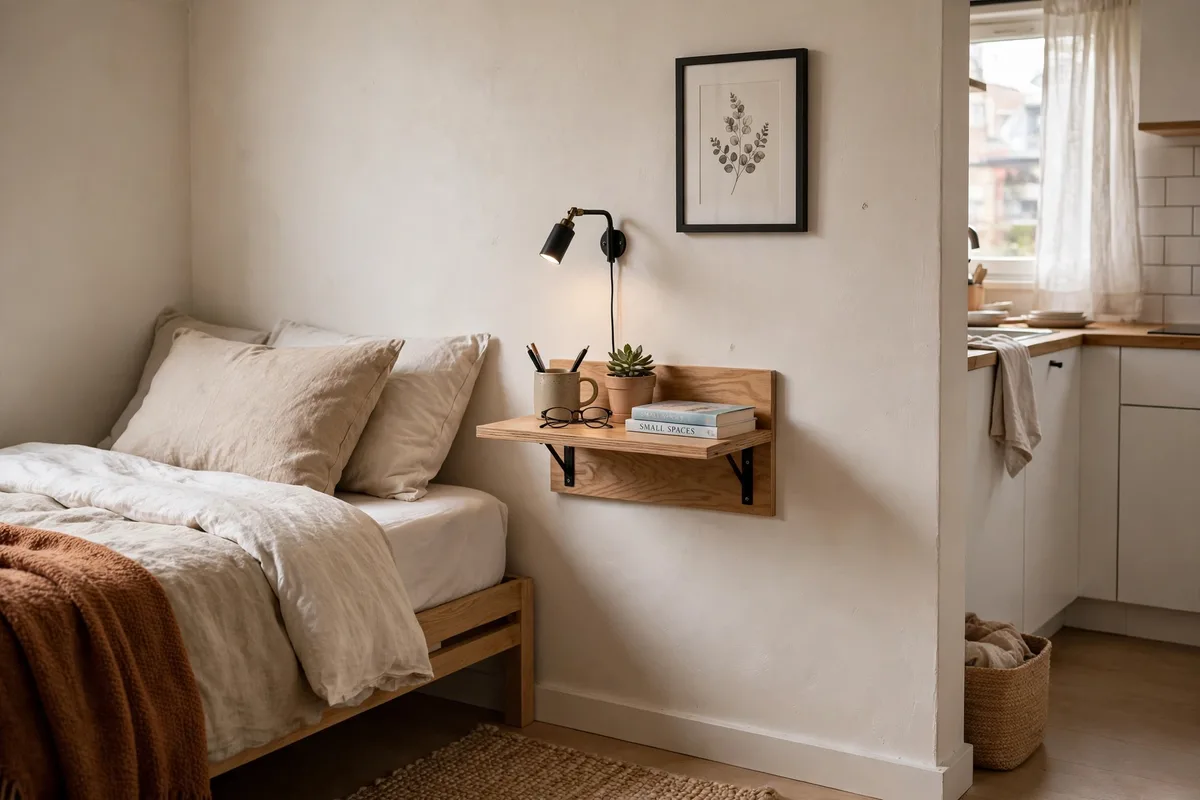
A 12-inch wall-mounted shelf with a small drawer (around $25–$40 on Amazon) gives you nightstand function with zero floor footprint — the floor underneath stays clear, which keeps the zone feeling open. Pro tip: mount it 2–3 inches above mattress height so you can reach your phone without sitting up.
28. Use a Storage Bench at the Foot
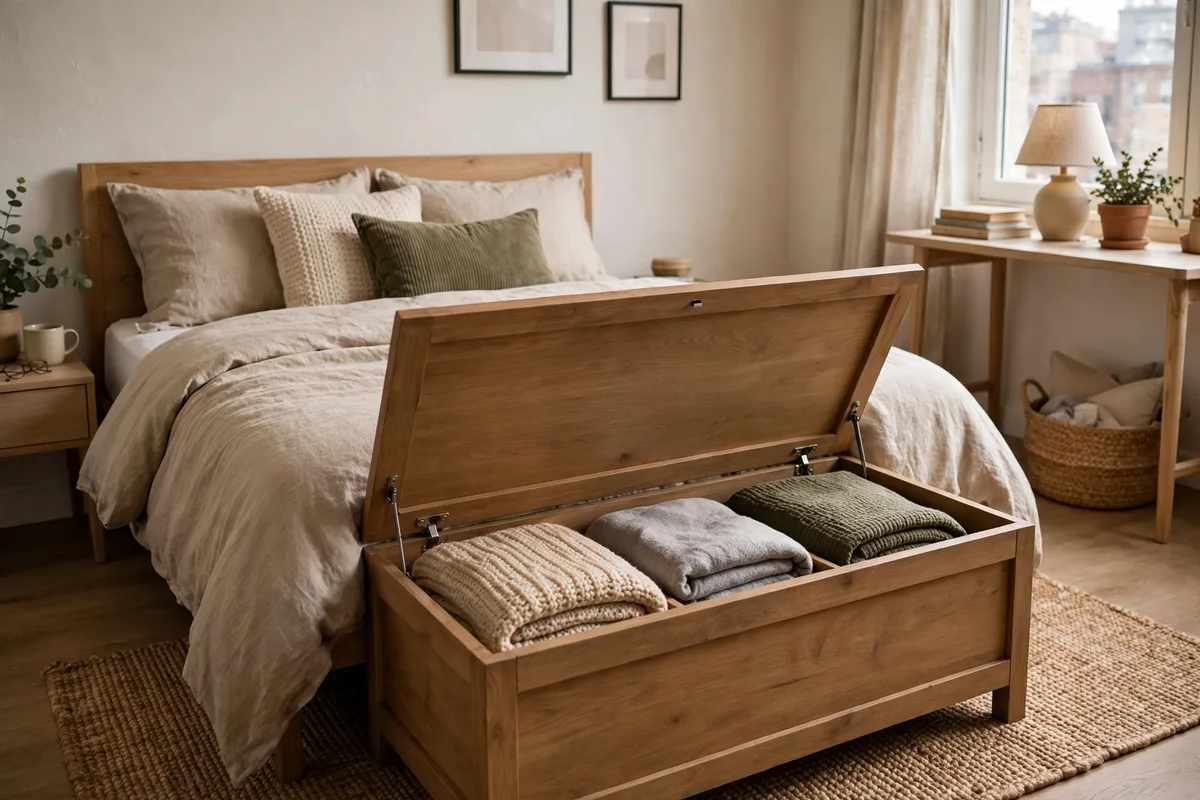
A storage bench at the foot of the bed holds extra blankets and pillows by night and gives you a spot to sit while putting on shoes by morning. Look for one 6 inches narrower than the bed on each side, around $60–$120 at Wayfair. Pro tip: top it with a cushion and it doubles as a window-seat-style perch.
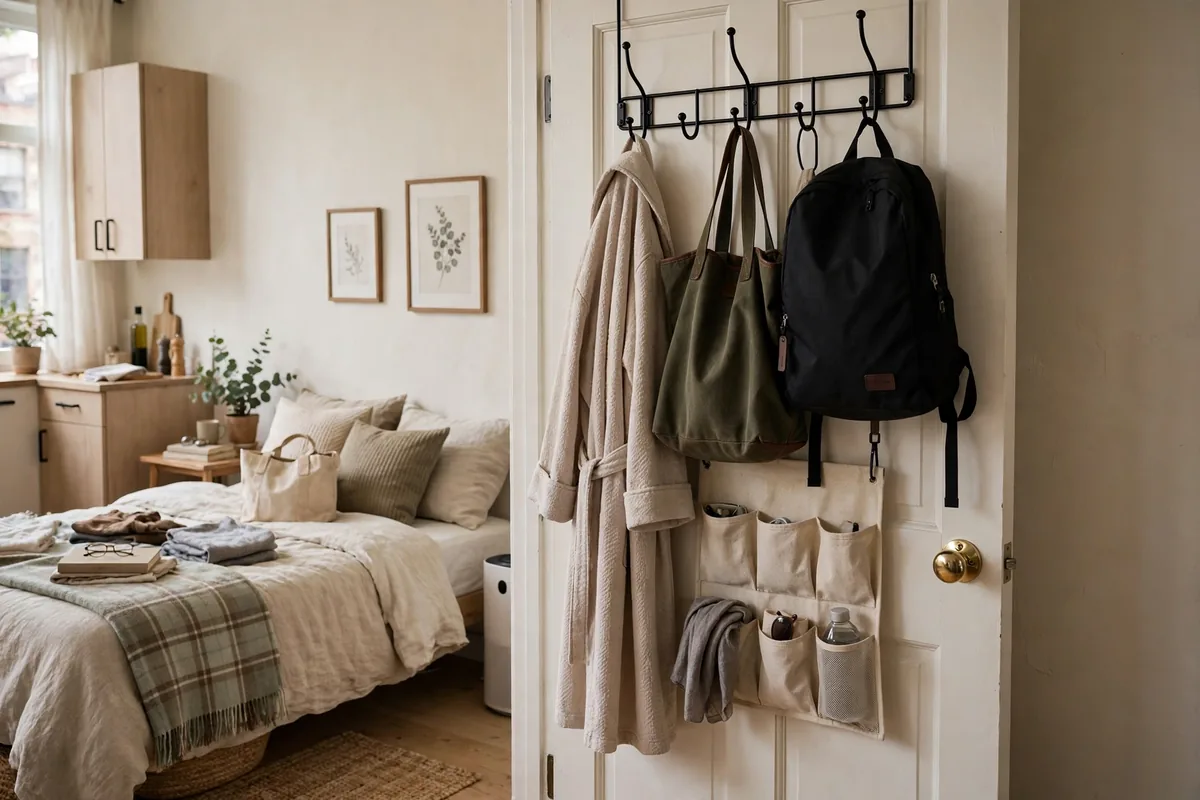
29. Add Over-the-Door Hooks for Robes
The back of any door near the bed is free real estate — a $10–$15 over-the-door hook rack holds your robe, tomorrow’s outfit, and the handbag, keeping them off the bed and floor. Pro tip: choose felt-lined hooks so they don’t scratch the door; your security deposit will thank you.
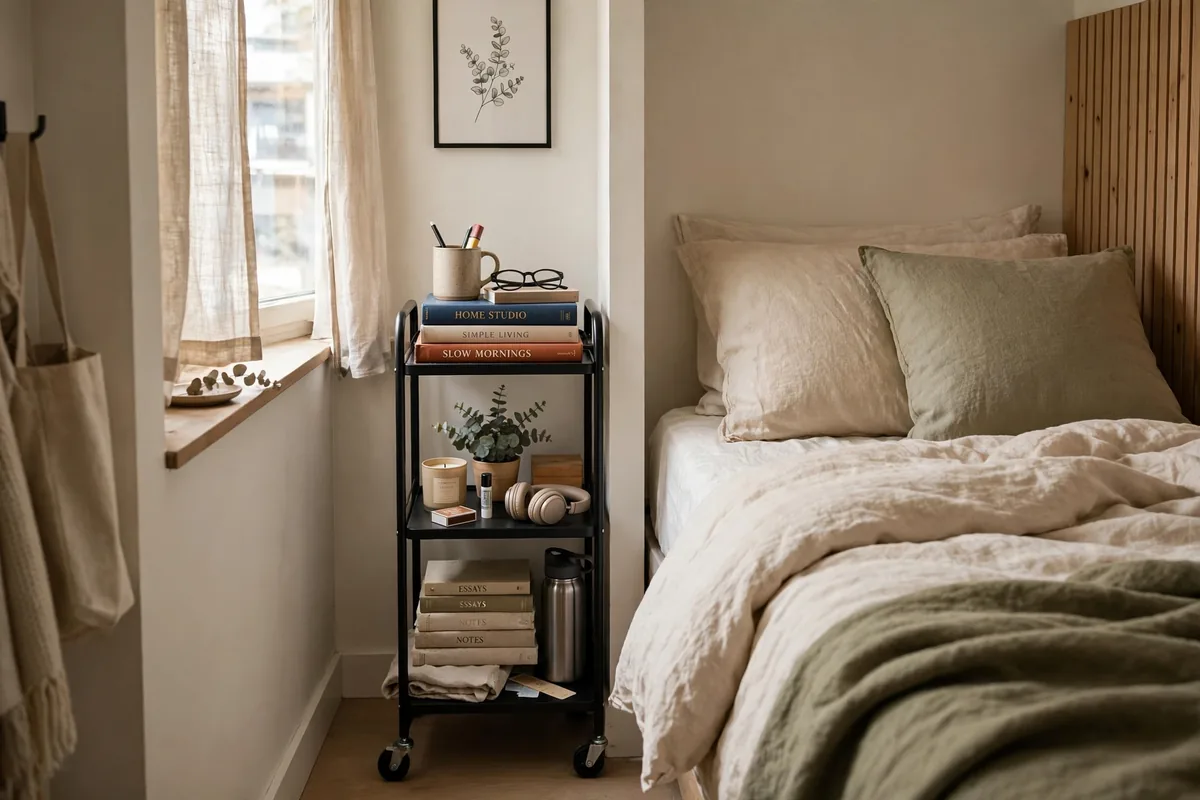
30. Tuck a Slim Rolling Cart Beside the Bed
A 3-tier rolling cart (IKEA RÅSKOG, about $35) slides into a 12-inch gap beside the bed and holds everything a nightstand would — plus snacks, skincare, and chargers — on three levels. Pro tip: the top tier at mattress height becomes your de facto nightstand surface.
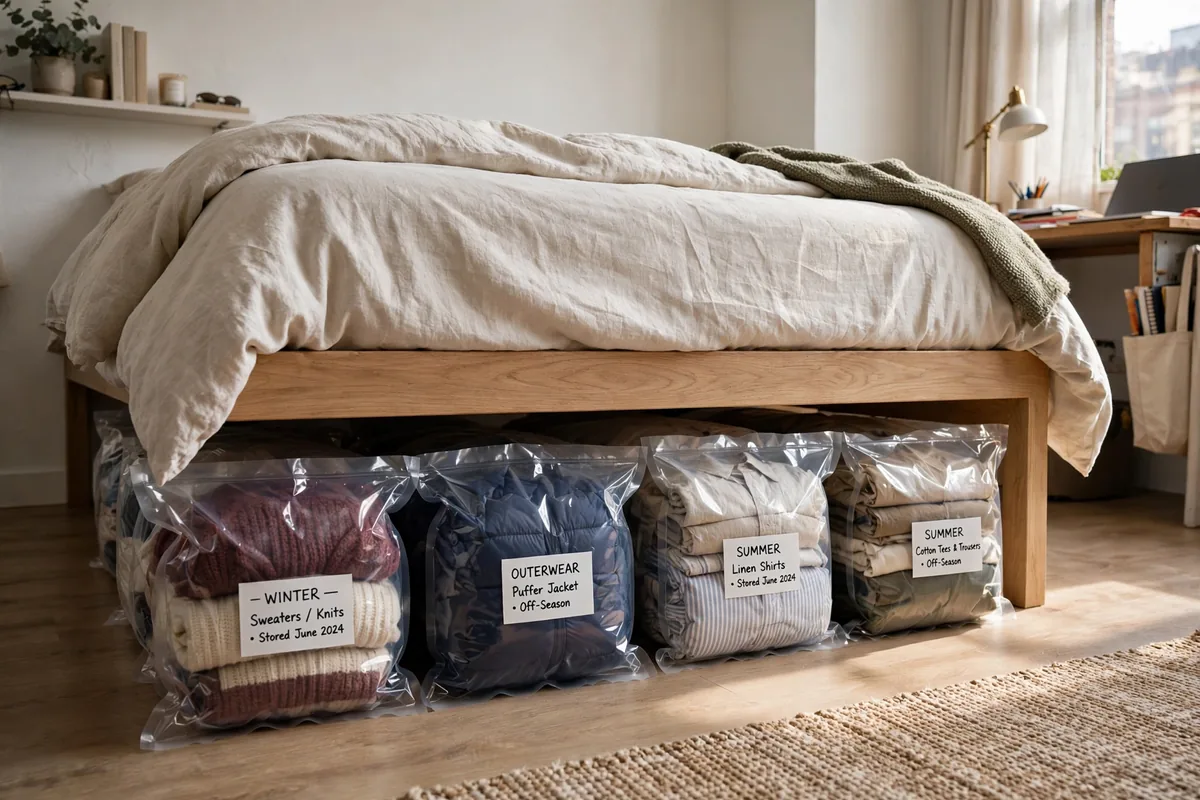
31. Store Off-Season Clothes in Vacuum Bags
Vacuum-seal bags ($15–$20 for a multi-pack) compress bulky winter coats and spare bedding to a third of their size — then slide them under the bed or stack them in the closet. Pro tip: do the swap when the clocks change and you’ll never forget; it’s also the perfect moment for idea #16’s bedding refresh.
Lighting & Ambiance: Engineer Better Sleep
Your sleep zone’s light and atmosphere directly affect how fast you fall asleep. In a studio — where the “bedroom” shares air with the living room — these details matter even more.
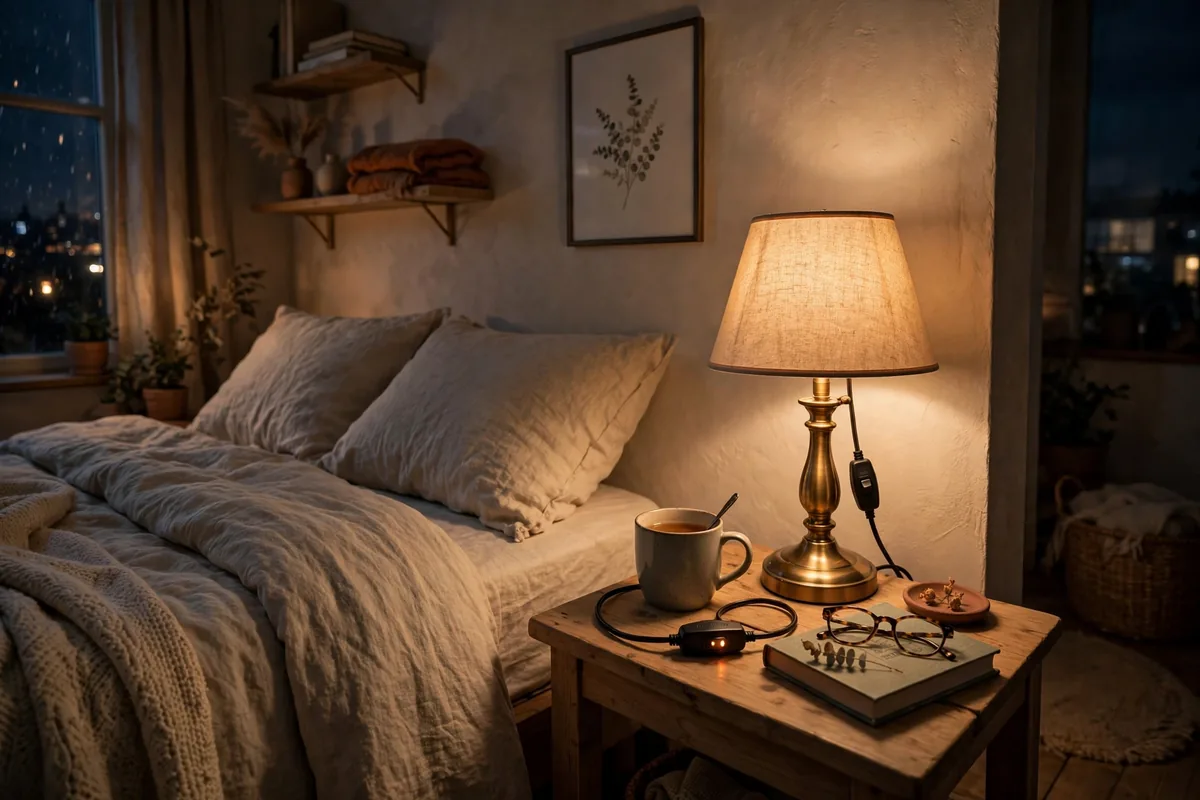
32. Put a Dimmer on Your Bedside Lamp
A $12–$15 plug-in dimmer on your bedside lamp lets you wind down from bright reading light to a faint glow without getting up — no wiring, no electrician, fully renter-friendly. Pro tip: pair it with a warm 2700K bulb; dimmed warm light is the closest thing to candlelight.
33. Add Warm String Lights Along the Headboard
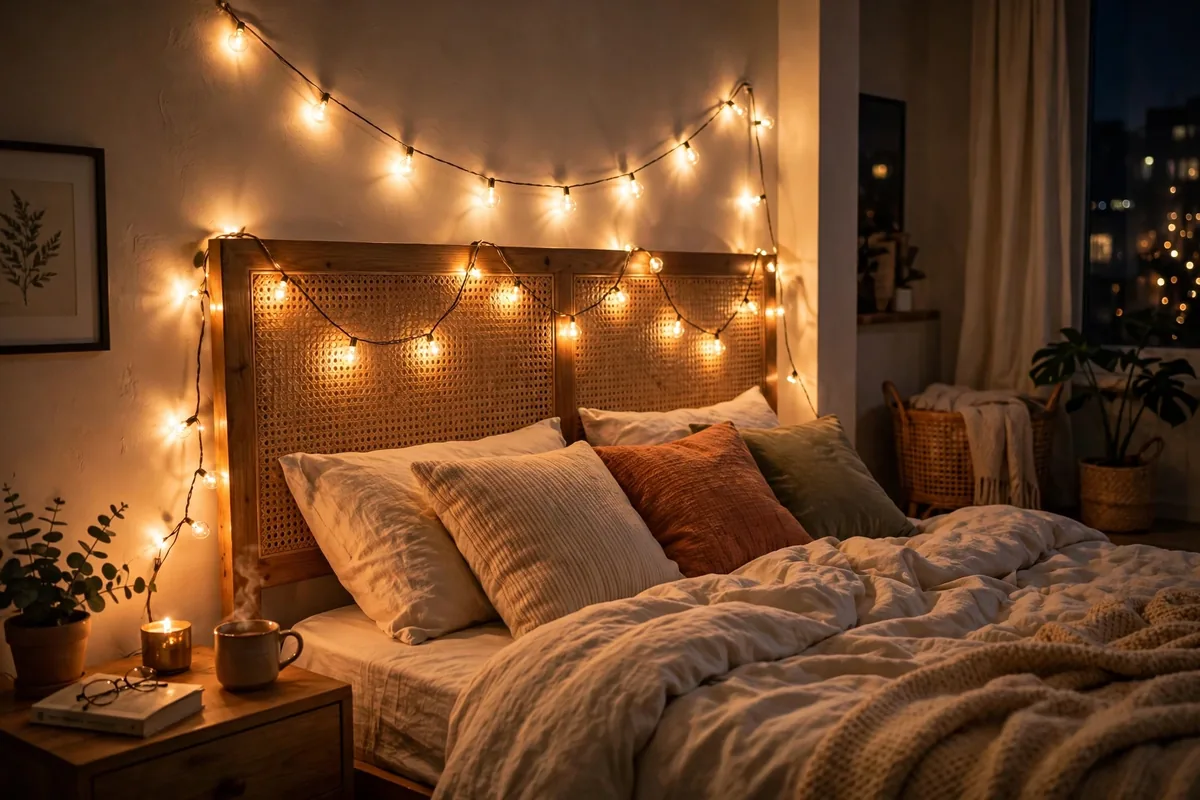
Copper-wire fairy lights ($10–$15 on Amazon) draped along the headboard or headboard wall give the sleep zone its own gentle glow — perfect for the last 30 minutes before sleep. Pro tip: choose battery or USB-powered strands with a timer so they turn themselves off after you drift off.
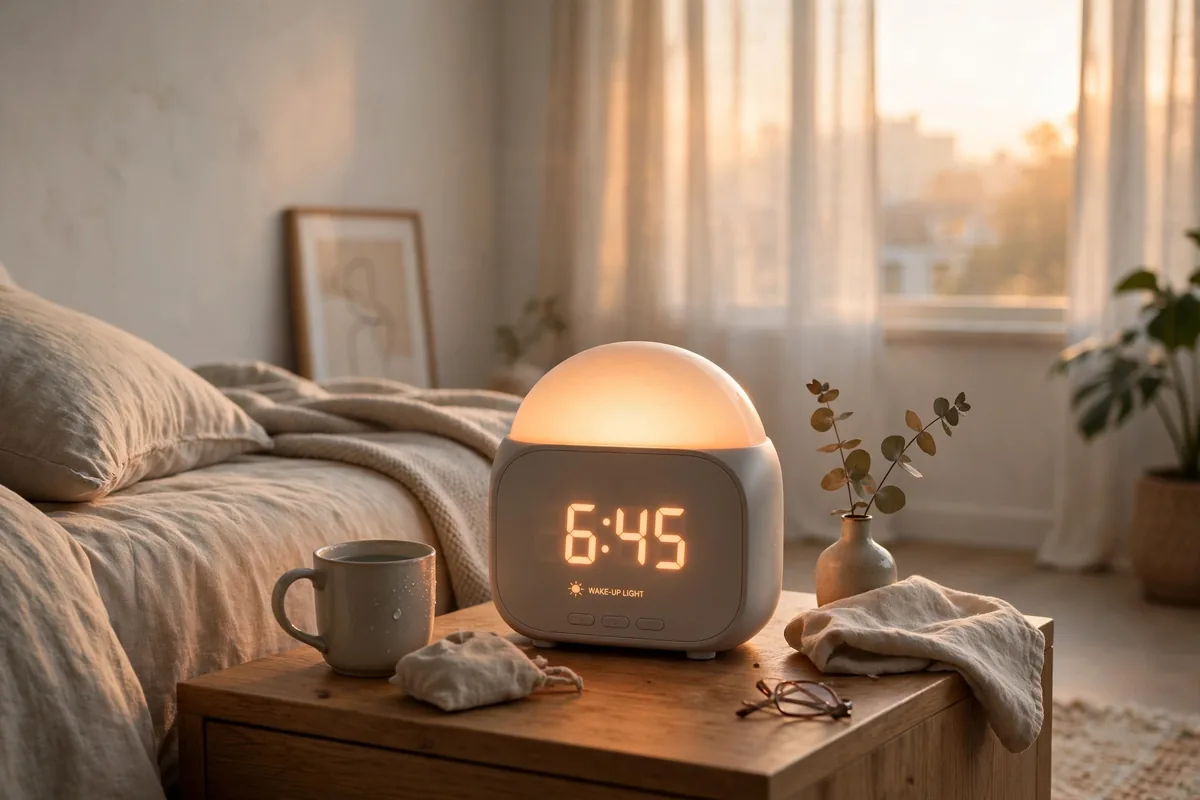
34. Use a Sunrise Alarm Clock
In a studio, your bed might be far from the window — a sunrise alarm clock ($30–$60) simulates dawn with gradually brightening light, waking you gently without a blaring alarm that also wakes the whole “apartment.” Pro tip: place it at eye level when lying down, about an arm’s length away.
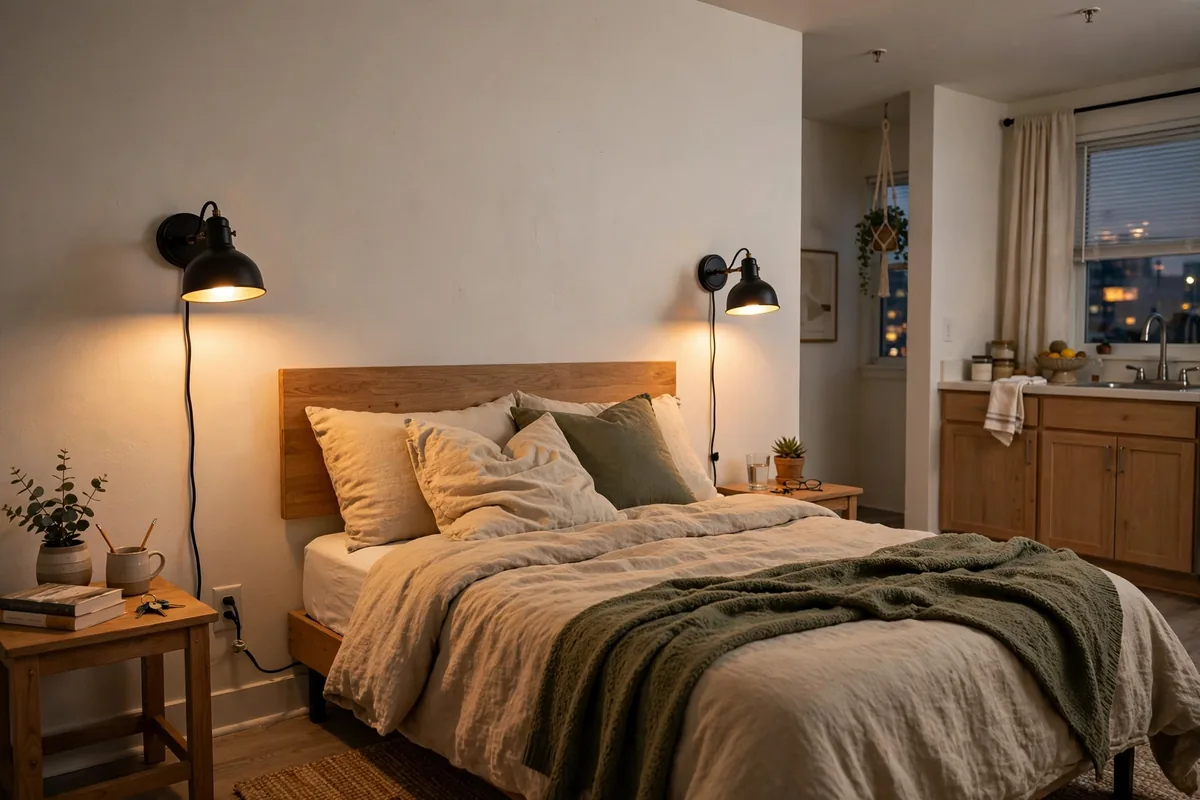
35. Mount Plug-In Wall Sconces
Plug-in wall sconces (around $30–$60 each on Amazon) free up nightstand space entirely — no lamp base eating surface area — and their upward glow makes low ceilings feel taller. Pro tip: mount them 55–60 inches from the floor, about 30 inches apart centered on the bed.
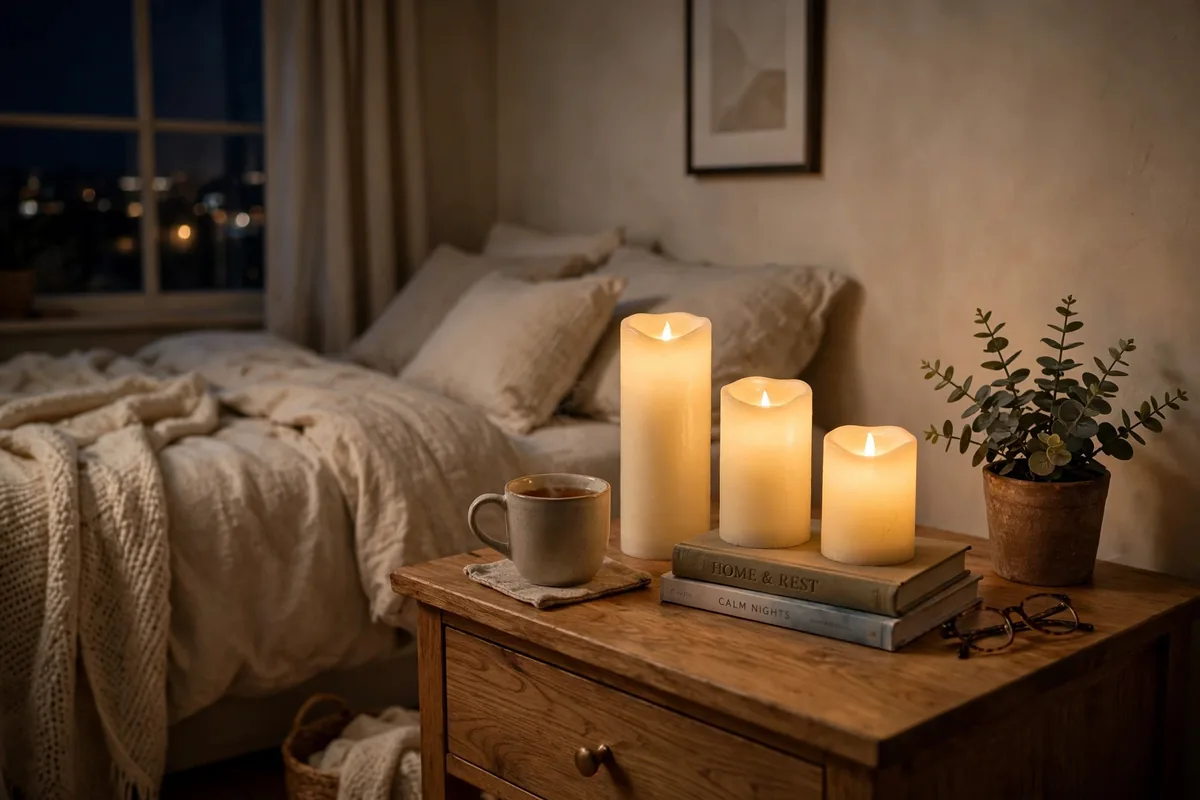
36. Add Flameless Candles for Evening Glow
A cluster of flameless LED pillar candles on the nightstand or windowsill gives you flickering warmth with zero fire risk — and most sets ($15–$25) come with a remote and timer. Pro tip: the timer function is the real feature; set them for your usual wind-down hour and the room starts relaxing before you do.
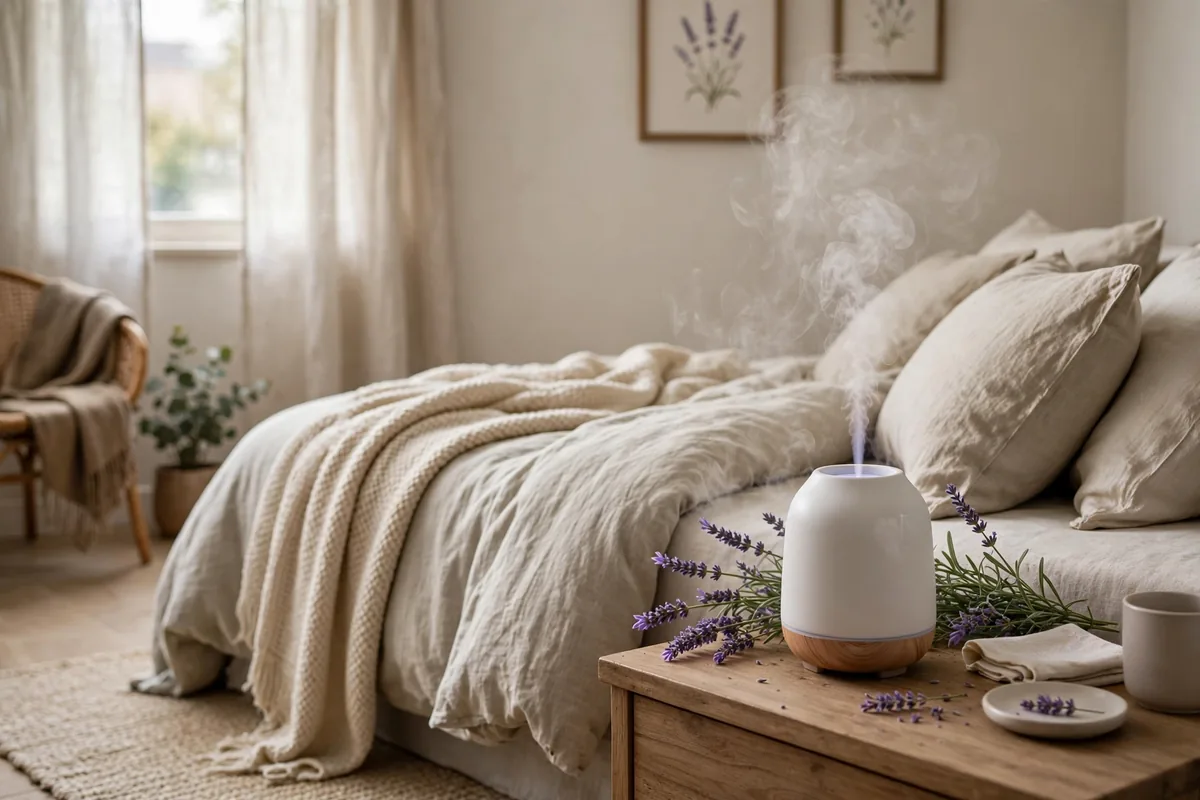
37. Give the Room a Sleep-Friendly Scent
Lavender, cedarwood, or chamomile — a $15–$25 reed diffuser or pillow spray by the bed creates a scent cue that tells your brain it’s bedtime. Pro tip: use the scent only in the sleep zone; the association is what makes it work, so don’t diffuse it by the desk.
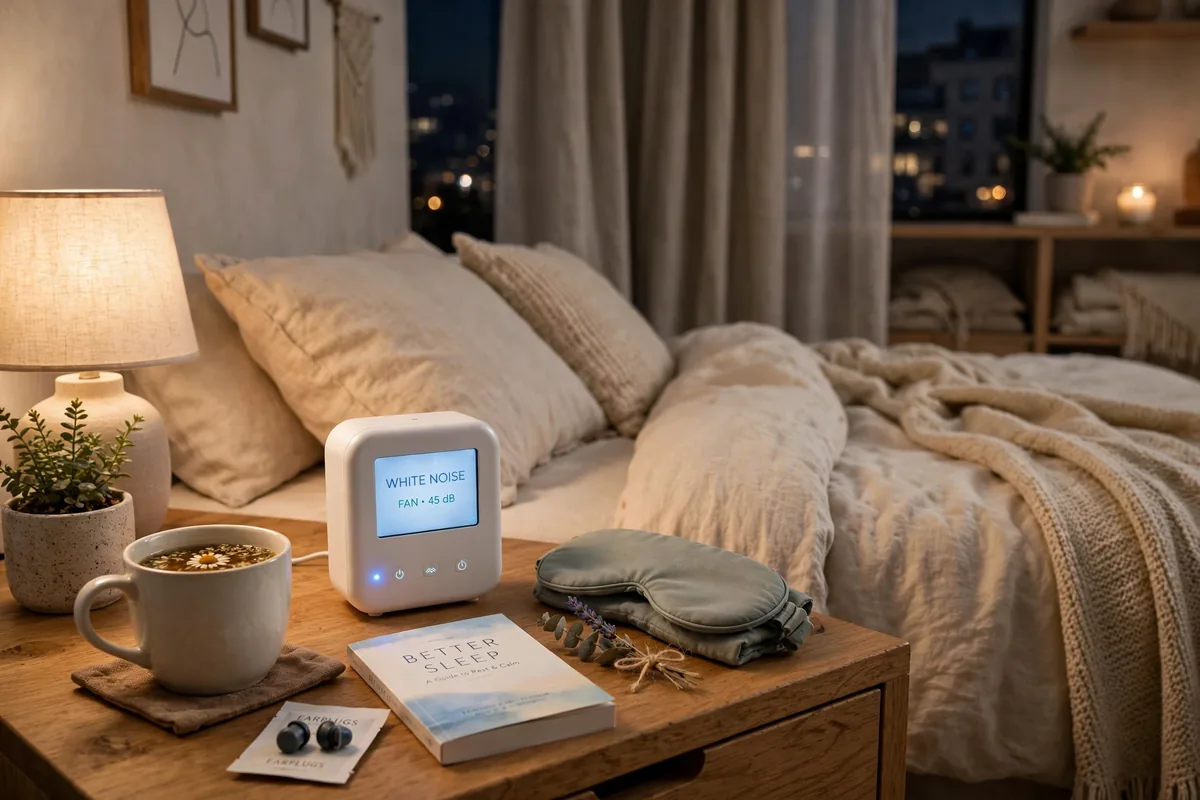
38. Use a White Noise Machine
Studio living means hearing everything — the fridge hum, street noise, your neighbor’s TV. A white noise machine ($25–$50) masks it all with consistent sound. Pro tip: place it between you and the noise source (near the front door or window), not right by your head.
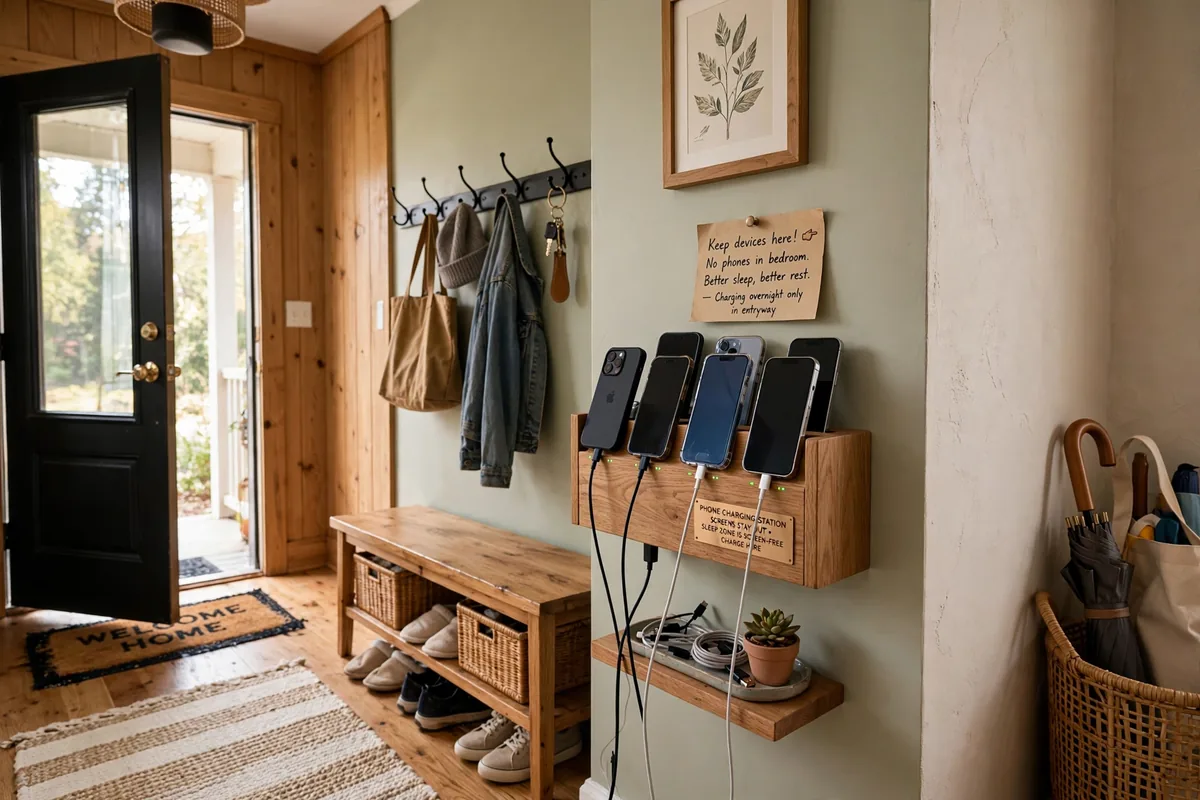
39. Keep Screens Out with a Charging Station Elsewhere
The single best sleep upgrade is free: charge your phone across the room — by the front door, in the kitchen — not on your nightstand. A $20 multi-device charging station by the entry makes it easy. Pro tip: replace the phone with an actual alarm clock (a $15 basic one) so you can’t use “I need my alarm” as an excuse.
Finishing Touches: Make It Yours
The difference between a bed and a bedroom is personality. These final six ideas are the small, human details that make your sleep zone feel like yours.
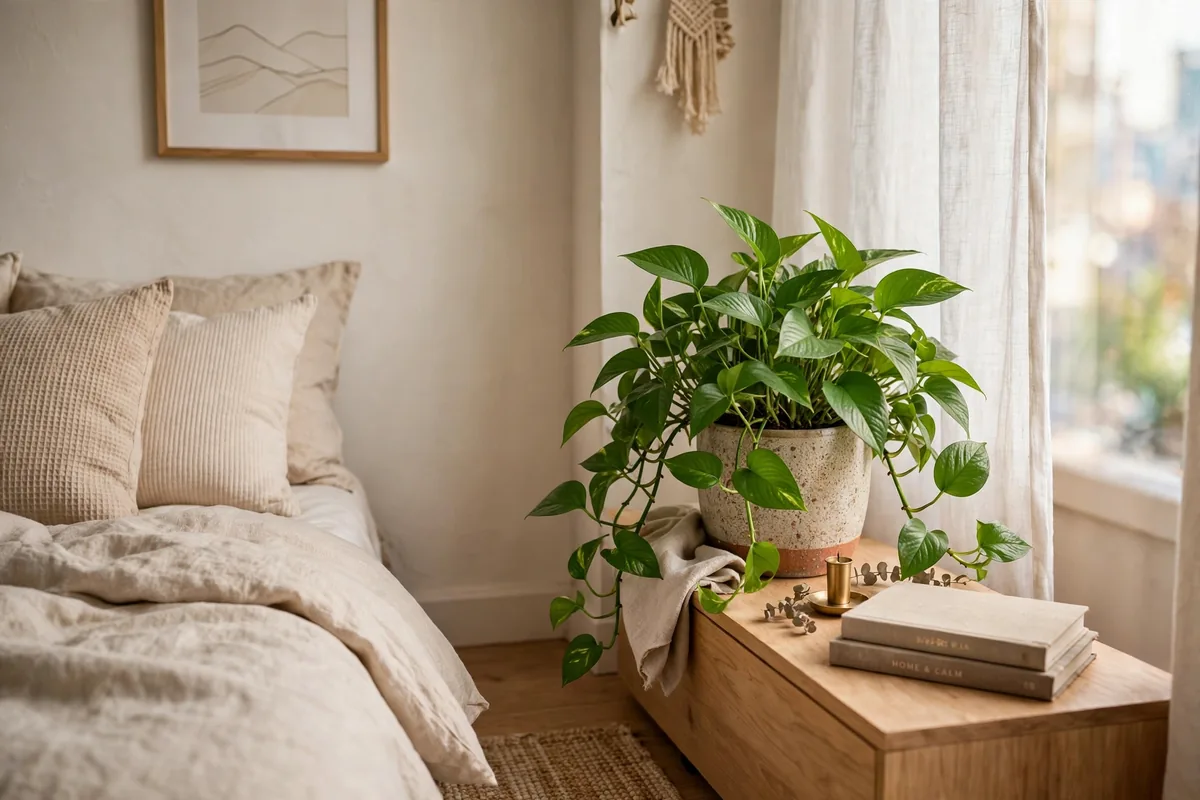
40. Add One Living Plant for Fresh Energy
A single easy plant — a snake plant, pothos, or ZZ plant ($10–$25) — on the nightstand or a nearby shelf makes the sleep zone feel alive. Pro tip: snake plants release oxygen at night, which makes them the rare plant that’s actually suited to bedrooms.
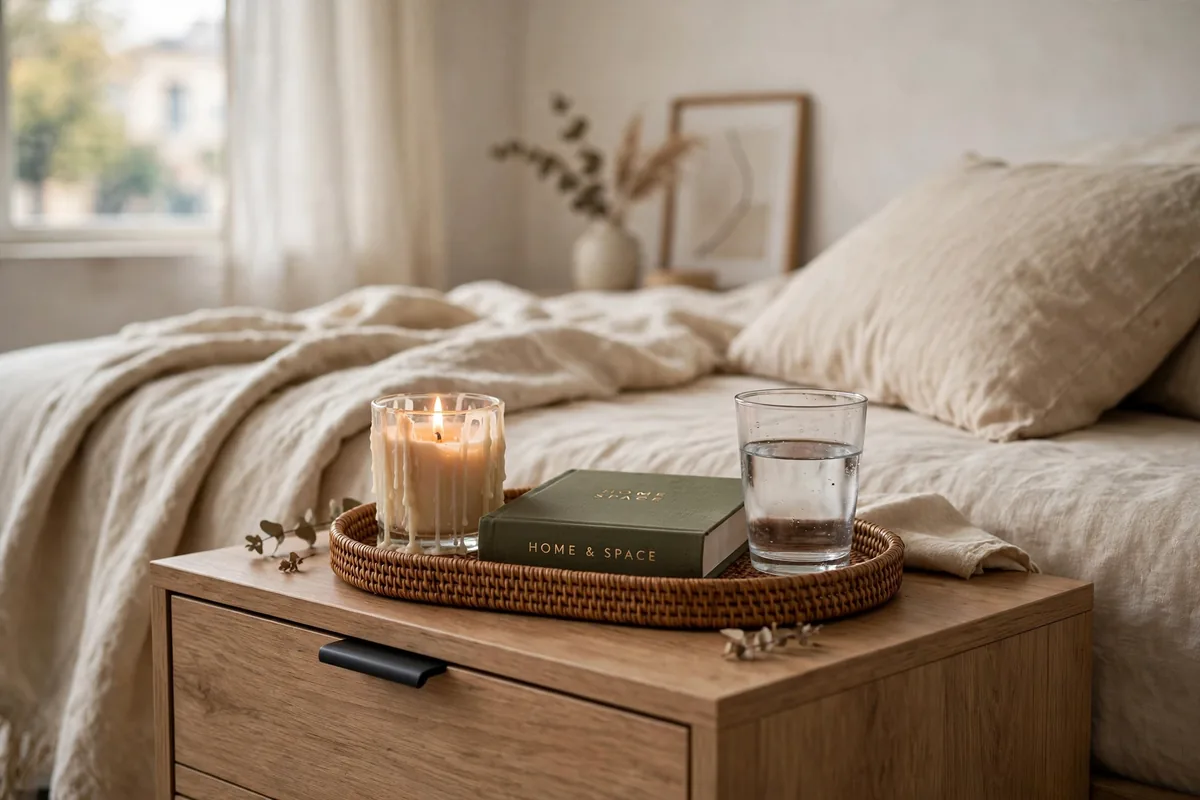
41. Style a Small Bedside Tray
A small tray ($10–$20) on the nightstand corrals the lip balm, water glass, and book into one intentional arrangement — instantly tidier, instantly calmer. Pro tip: round trays soften the hard edges of a square nightstand; wood or rattan adds warmth.
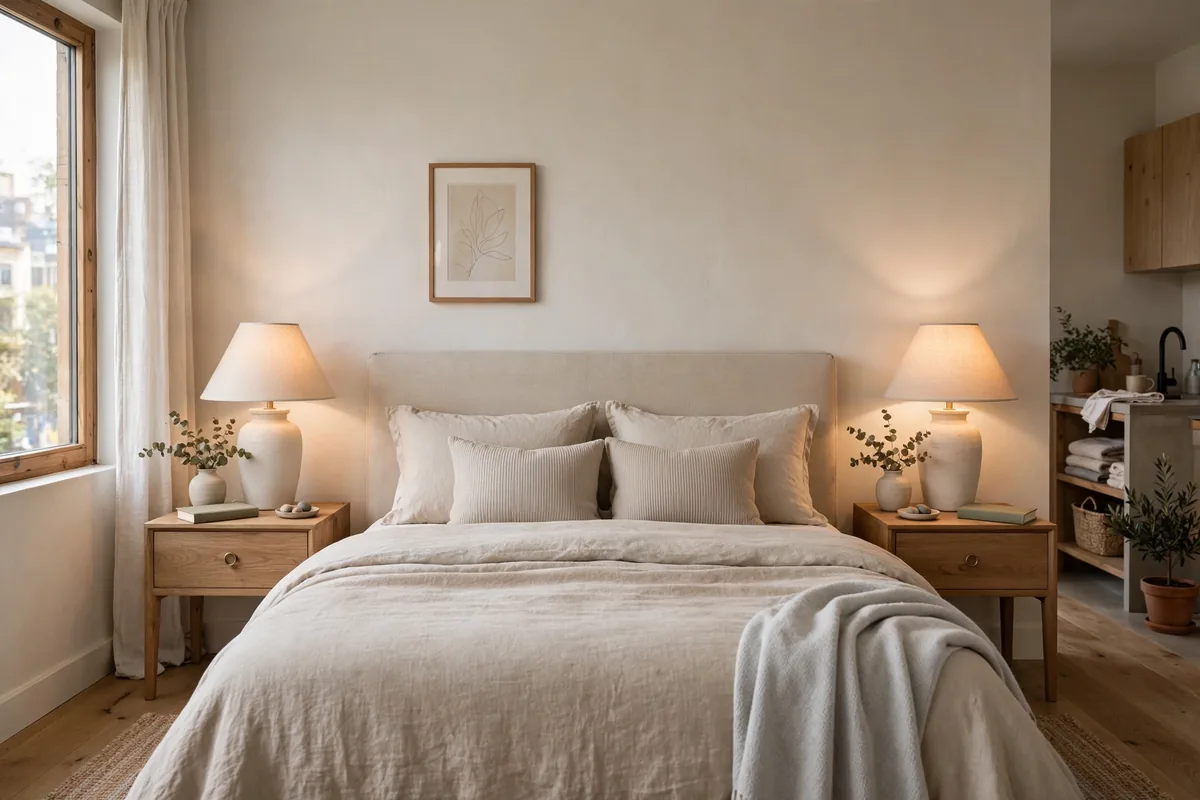
42. Use Matching Nightstands for Calm Symmetry
If you have room for two nightstands, make them match — symmetry around the bed reads as calm and orderly, which is exactly the energy you want where you sleep. Pro tip: they don’t have to be expensive; two matching IKEA LACK tables ($10 each) with the same lamp do the job beautifully.
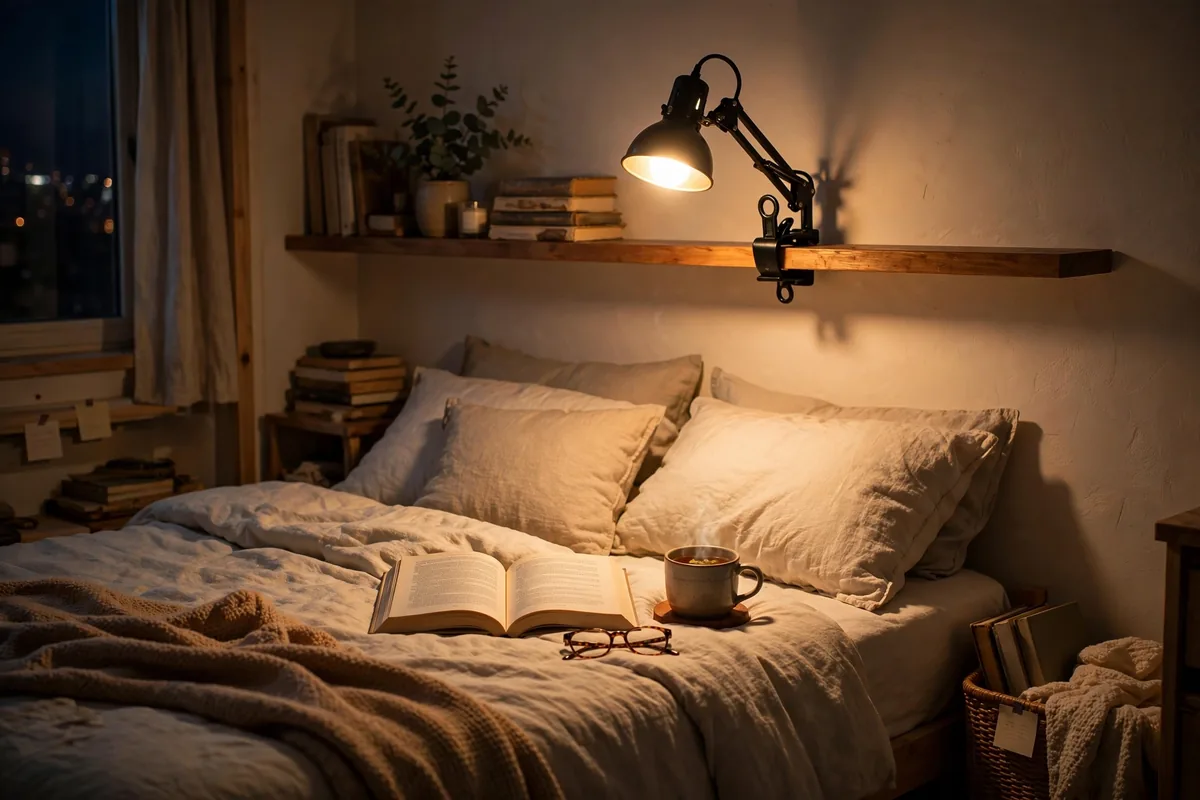
43. Add a Cozy Reading Light for Bedtime Books
A clip-on book light or a small adjustable wall lamp ($15–$30) means you can read without flooding the whole sleep zone with light — or disturbing a partner. Pro tip: choose a warm-white (2700K) reading light; cool white light before bed suppresses melatonin.
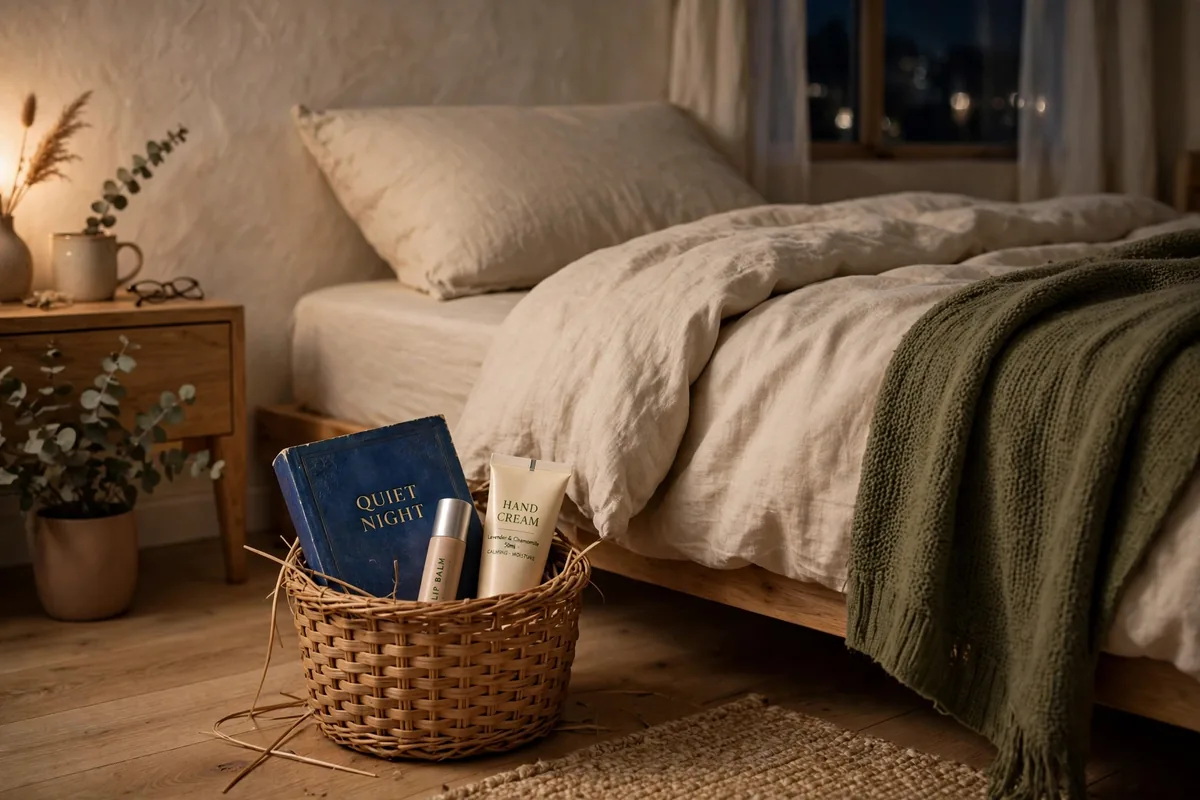
44. Keep a “Sleep Basket” for Nighttime Essentials
A small woven basket ($10–$20) on or under the nightstand holds everything you reach for at night — hand cream, sleep mask, earplugs, the book — in one grab-able spot. Pro tip: an eye mask and earplugs in the basket are the $15 studio-survival kit for thin walls and streetlights.
45. Do a 5-Minute Nightly Reset
The coziest bedroom trick costs nothing: every night, take five minutes to make the bed (pull the duvet straight, fluff the pillows), clear the nightstand, and dim the lights. You fall asleep in order and wake up to calm. Pro tip: pair it with an existing habit — reset the bed zone right after brushing your teeth — and it’ll stick.
Frequently Asked Questions
Where should I put my bed in a studio apartment?
The farthest corner from the front door is the best default — it gives you privacy, keeps the bed out of guests’ sightlines, and lets two walls enclose the space. Run it parallel to the longest wall to preserve sightlines, and keep it out of the kitchen’s direct view if possible.
How do I make my studio bed look like a real bedroom?
Give it the three things every real bedroom has: a visual anchor (headboard, arch, or tapestry), layered bedding in a cohesive palette, and its own light source (bedside lamp or sconces). Add a rug under or beside the bed and a curtain or divider for enclosure, and the brain reads “bedroom” even without walls.
What is the best bed for a small studio apartment?
An ottoman lift-up storage bed (like IKEA’s MALM ottoman) is the best all-rounder — it sleeps like a real bed and swallows a huge amount of storage. Tight on floor space? A daybed doubles as a sofa. High ceilings? A loft bed reclaims the whole footprint. Match the bed to your biggest constraint: storage, space, or both.
How do I block light for sleeping in a studio?
Layer your defenses: real blackout curtains on the windows (hung wider than the frame to kill edge leaks), a curtain track around the bed itself for a second barrier, and a $10–$15 contoured sleep mask for whatever gets through. All three together can make a street-facing studio genuinely dark.
How can I make a studio bedroom cozy on a budget?
Start with the three highest-impact cheap moves: warm 2700K bulbs in your bedside lamp ($10), a chunky throw at the foot of the bed ($25–$40), and a peel-and-stick arch or tapestry behind the bed ($25–$35). Under $85 total, and the sleep zone transforms the same evening.
Should the bed face the door in a studio apartment?
Ideally, position the bed so you can see the door while lying down — it satisfies a deep-seated need for security and helps you relax. But don’t sacrifice the far-corner rule for it; a bed tucked in the far corner angled slightly toward the door gets you both privacy and peace of mind.
Final Thoughts
A studio bedroom isn’t a compromise — it’s an invitation to be deliberate. Every choice matters more in a small sleep zone, which means every good choice pays off more, too. The right bed placement, bedding you actually love, light you can control, and clutter that’s truly hidden: that’s the whole formula.
Start tonight with the free stuff — move the phone charger out of the bedroom, do the five-minute reset, dim the lamp. Then layer in the upgrades one weekend at a time. Your studio may be one room, but your sleep zone can still be a sanctuary.

5 Comments