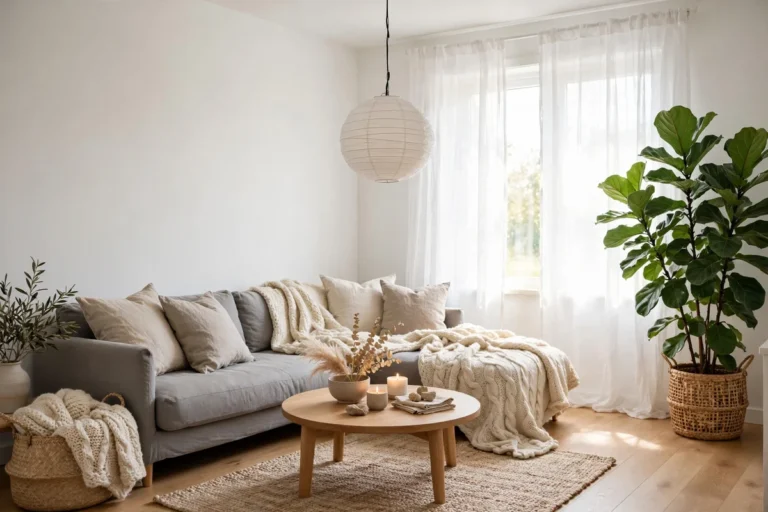
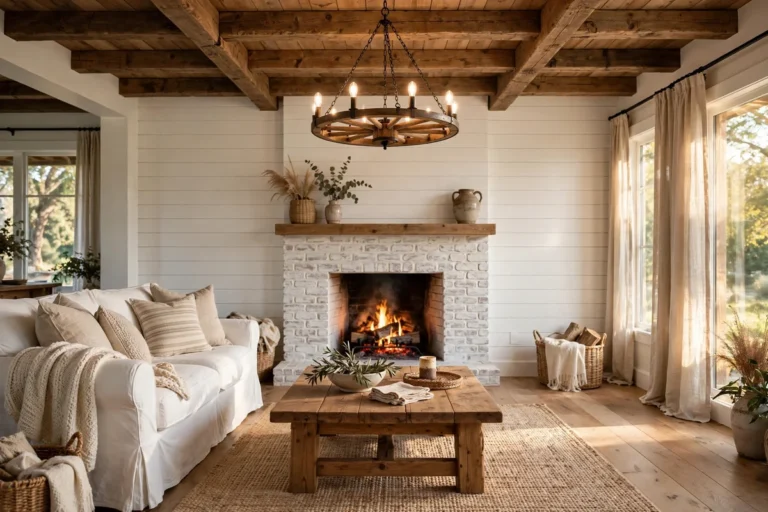
34 Coastal Living Room Ideas for Breezy Relaxed Style
34 Coastal Living Room Ideas for Breezy Relaxed Style
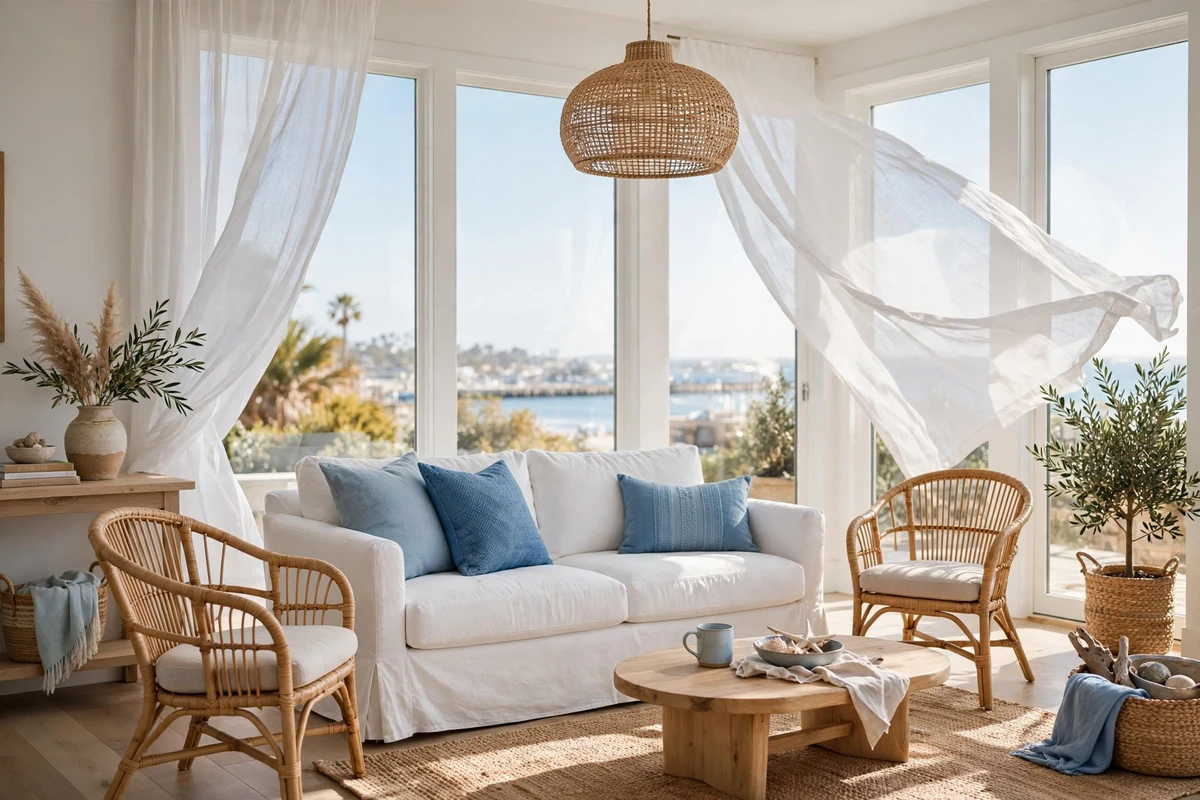
There is a reason coastal living rooms never go out of style. They capture the feeling of a perfect beach day — sunlight streaming through open windows, the soft texture of natural fibers underfoot, a palette borrowed from sand, sea, and sky — and bring it into the room where life actually happens. The modern coastal living room is not about anchors, ship wheels, or kitschy seaside souvenirs. It is quieter and far more sophisticated: sun-bleached woods, breathable natural fabrics, layered whites and sea-inspired blues, and textures that make everyone who walks in exhale.
Whether you live steps from the ocean or hundreds of miles inland, these 34 coastal living room ideas will help you build a space that feels like a deep breath. Every idea includes realistic pricing, a pro tip drawn from real rooms, and guidance on getting the look without tipping into theme-park territory. Keep the palette light, layer natural textures generously, and let the sunlight do most of the decorating.
The Foundation: Walls, Floors & Light
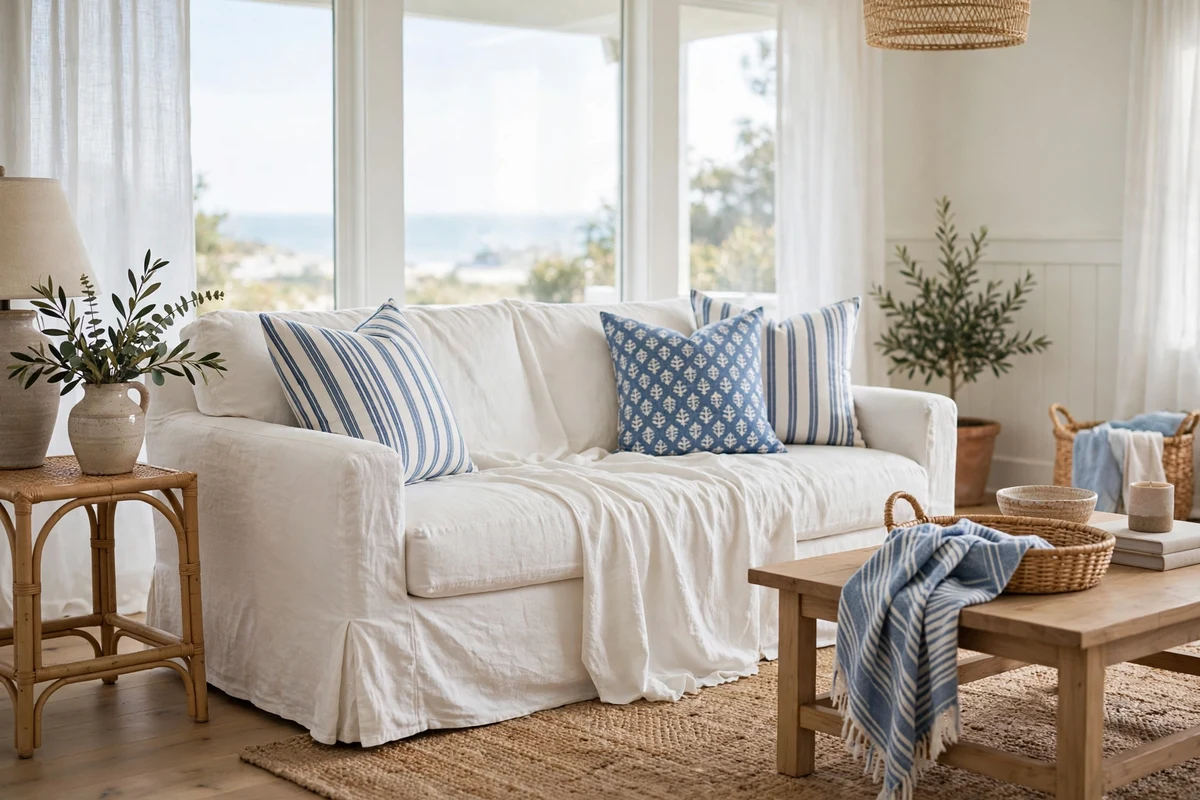
1. Start With a White Slipcovered Sofa
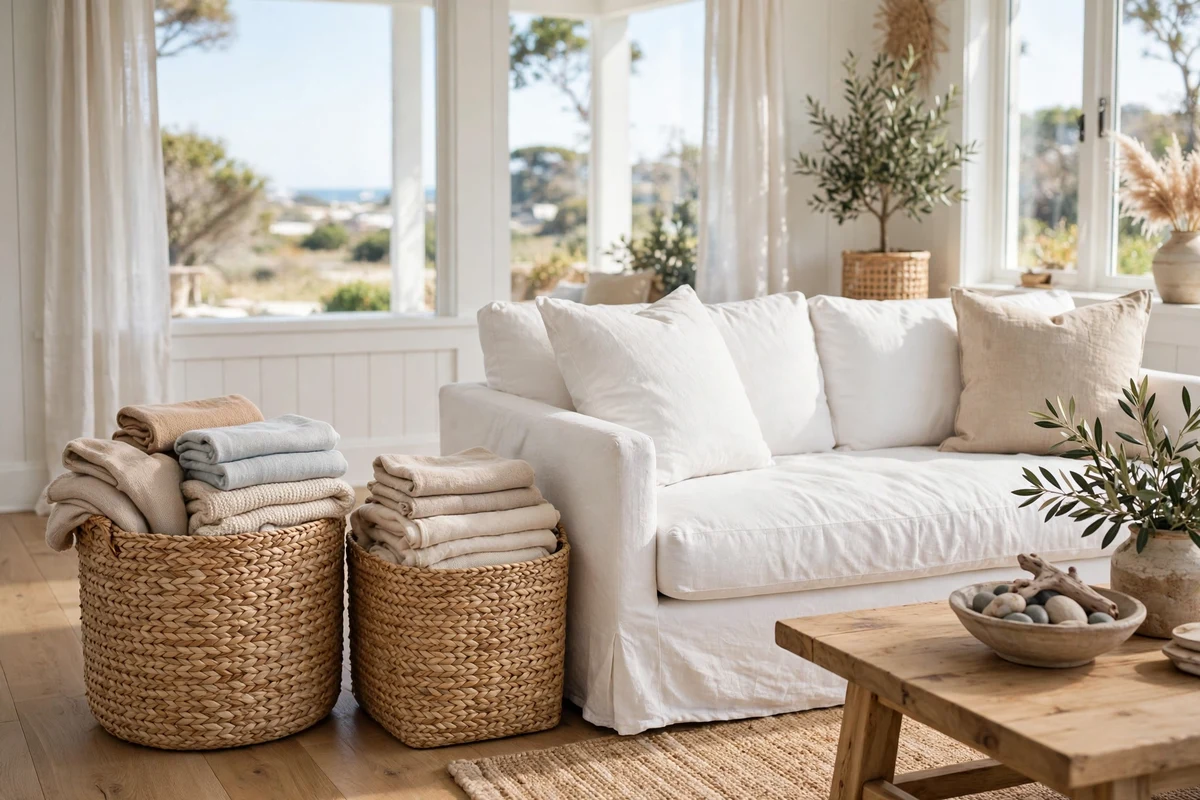
A white slipcovered sofa is the foundation of nearly every great coastal living room. The slipcover reads as relaxed and unfussy, and — crucially — it comes off for washing, which means white is actually practical, not precious. Look for a classic roll-arm or relaxed track-arm silhouette in a heavy cotton or linen blend; performance fabrics resist stains while keeping that soft, lived-in look. Expect to spend $800–$2,000 depending on size and brand, with custom slipcovers for an existing sofa running $300–$700. Pro tip: buy a second slipcover when you order the sofa — rotating them means you always have a fresh one while the other is in the wash, and it doubles the sofa’s lifespan.
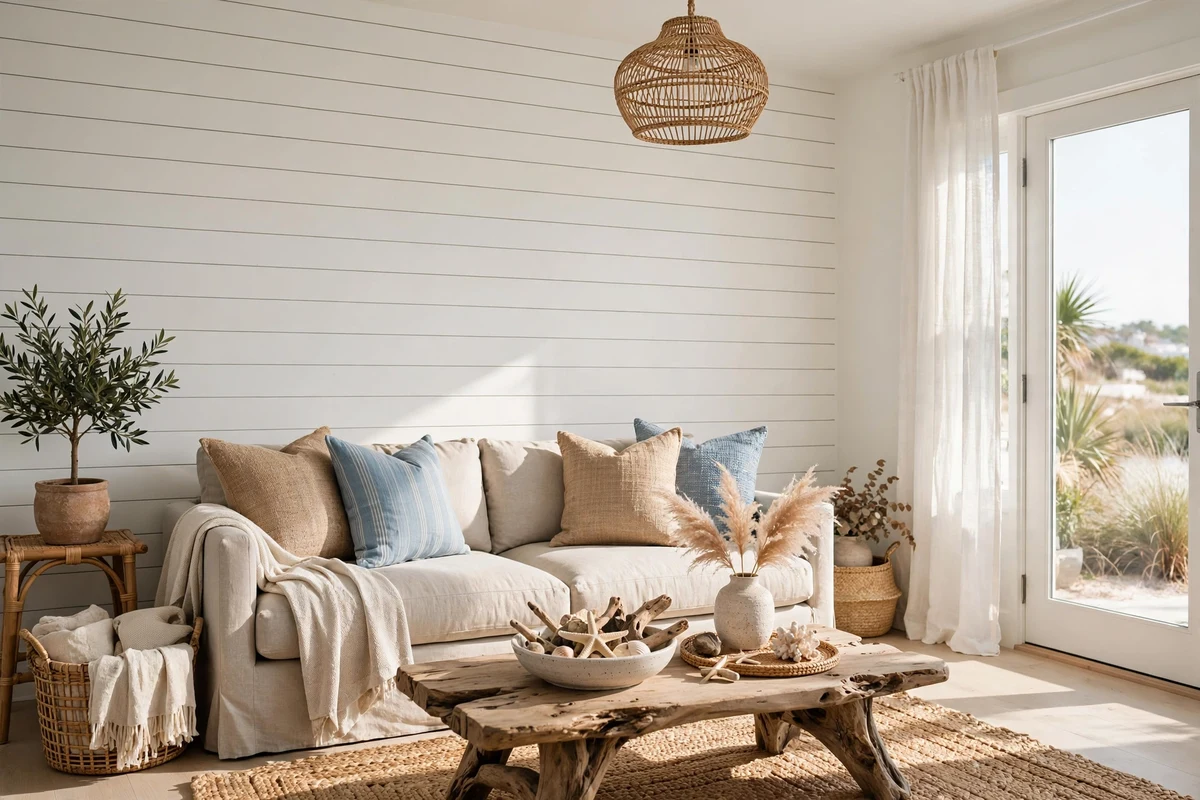
2. Paint a Shiplap Accent Wall
Horizontal shiplap on one wall gives a living room instant coastal architecture, and it photographs beautifully. Painted bright white or a whisper-soft blue, it adds the texture that flat drywall never will. Real wood planks cost $3–$6 per square foot; paintable MDF or PVC shiplap panels run cheaper and handle humidity better in coastal climates. A weekend, a nail gun, and a gallon of satin paint are all it takes for most walls. Pro tip: run the boards horizontally to make the wall — and the room — feel wider, and keep the remaining walls a clean warm white so the texture stays the star.
3. Lay Down a Natural Jute Rug
A natural jute or sisal rug grounds the whole coastal scheme and feels wonderful under bare feet. The golden-brown fiber adds warmth that keeps all-white rooms from feeling sterile. Choose a rug large enough that the front legs of the sofa and chairs sit on it — an 8×10 works for most living rooms, 9×12 for larger ones. Expect $100–$300 for a good flatweave jute rug. Pro tip: layer a smaller, softer patterned rug over the jute in the seating area for extra comfort and a designer look while keeping the coastal texture underneath.
4. Hang Sheer White Curtains
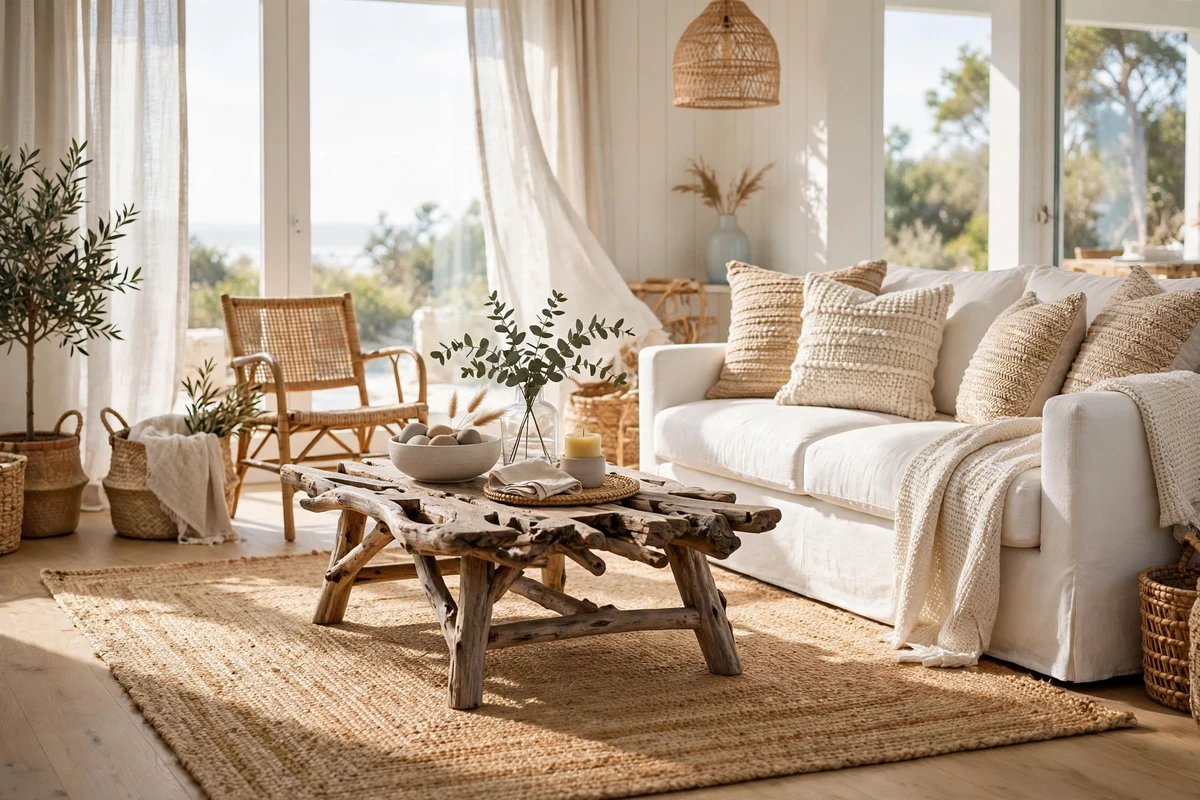
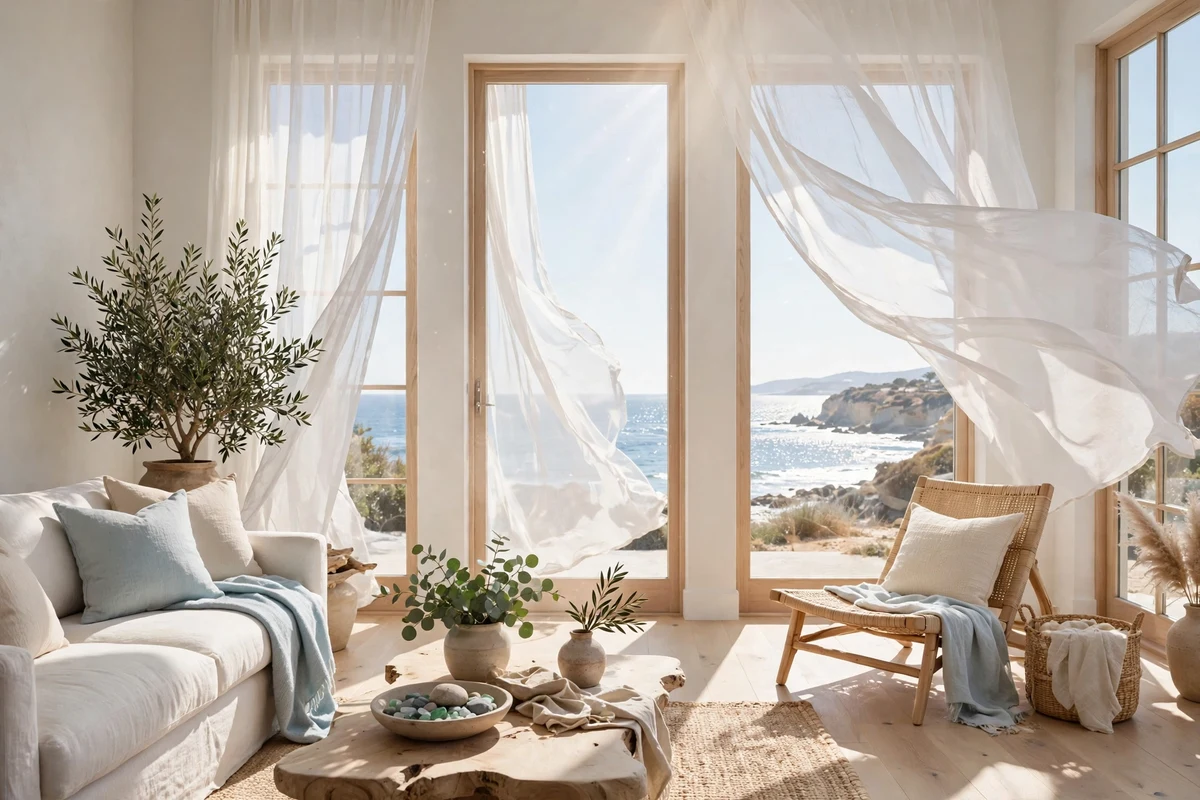
Sheer white curtains are the coastal living room’s secret weapon for light. They diffuse harsh sun into a soft glow, add gentle movement when windows are open, and keep the room feeling airy even with the curtains drawn. Hang them high and wide — at least 4 inches above the frame and 6–10 inches beyond each side — so windows look larger and more dramatic. Sheer panels cost $15–$40 per pair. Pro tip: use two sheer panels per side for a fuller, more luxurious gather that still lets the daylight flood through.
5. Install a Woven Pendant Light
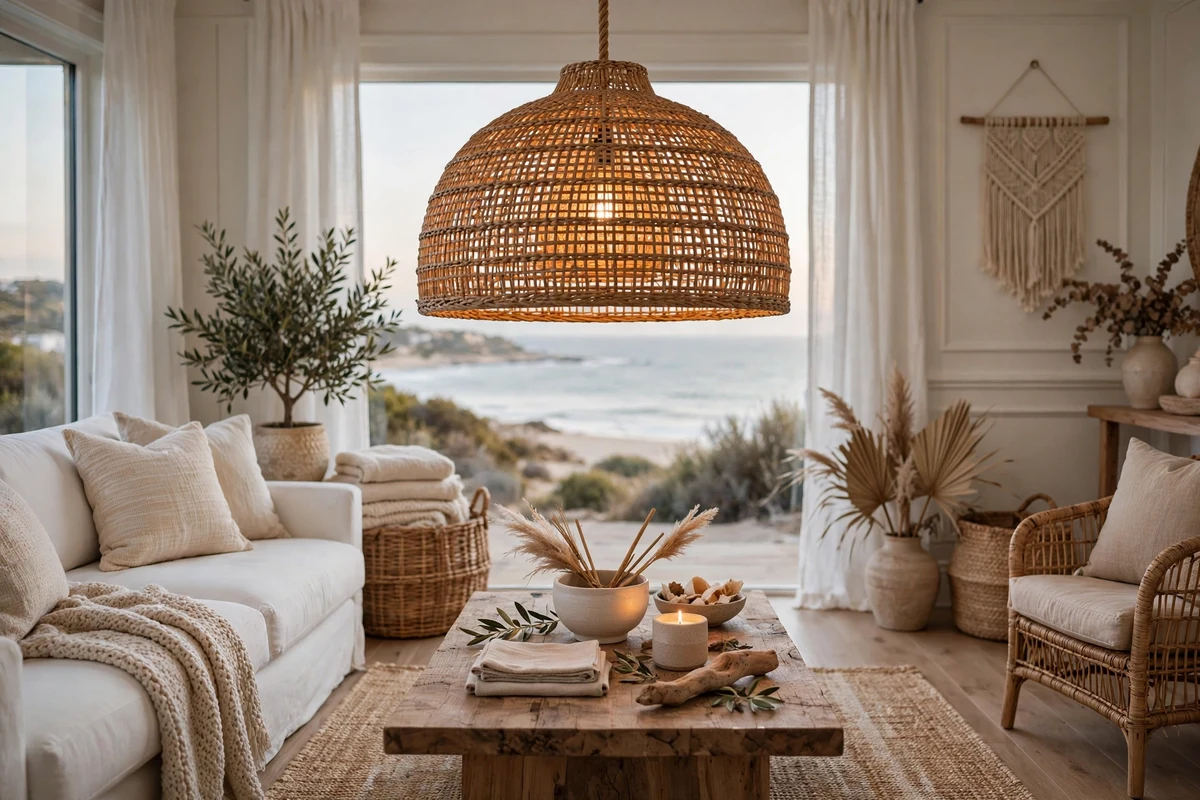
Swap the builder-grade flush mount for a woven rattan or seagrass pendant and watch the whole room change character. The textured shade casts beautiful patterned shadows in the evening and reads as sculpture during the day. Hardwired pendants run $60–$200; plug-in swag versions with a ceiling hook cost half that and need no electrician. Pro tip: hang the pendant 30–36 inches above the coffee table in rooms with 8-foot ceilings, and put it on a dimmer so you can shift from bright daytime to golden evening light.
6. Whitewash the Fireplace
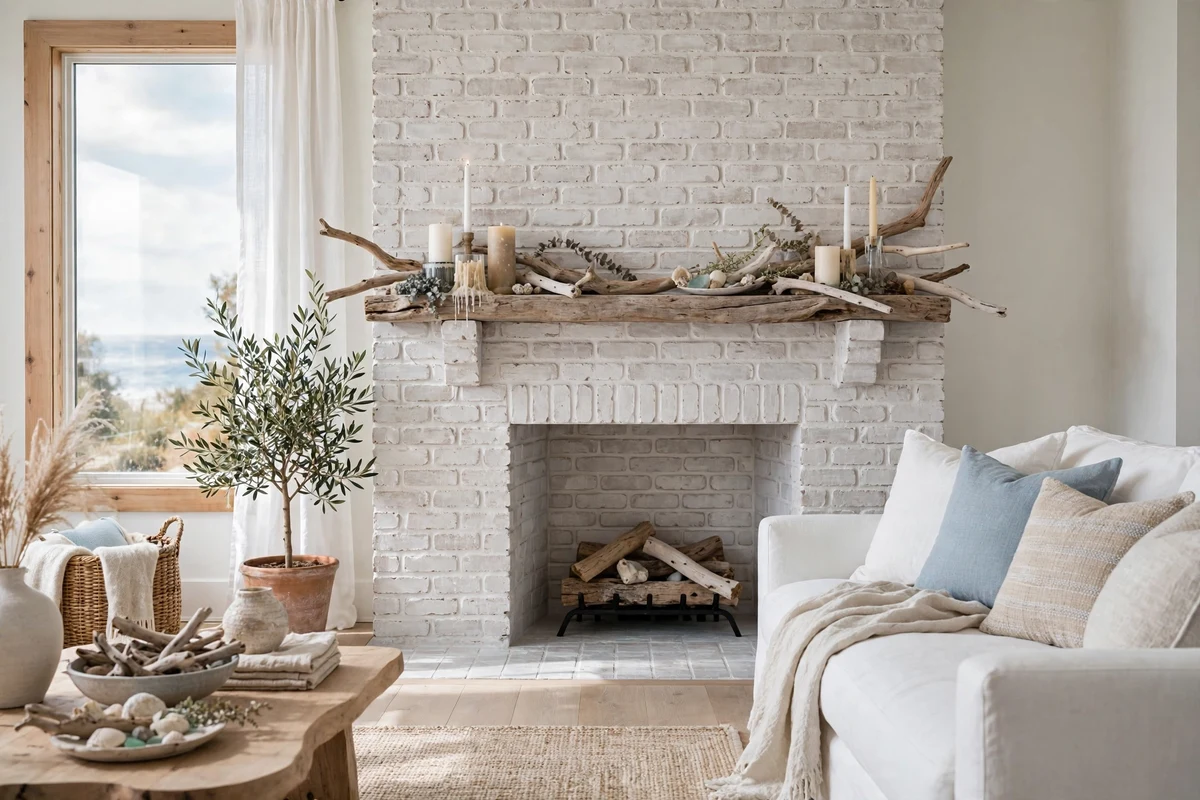
A heavy red-brick fireplace can fight a coastal palette — whitewashing it is the fastest peace treaty. The technique lets brick texture show through a translucent white veil, keeping character while lightening the whole wall. DIY whitewash costs $30–$80 in materials (watered-down latex paint, brushes, rags); hiring it out runs $300–$600. Pro tip: work in small sections and wipe back more paint than you think you should — you can always add a second coat, but you cannot easily take whitewash off.
7. Choose Light Oak or Whitewashed Flooring
Floors set the tone for everything above them, and pale wood is coastal’s best friend. Light oak, whitewashed pine, or blonde luxury vinyl plank bounce light around the room and make the space feel larger. LVP costs $3–$7 per square foot installed and handles sand, moisture, and pets better than real wood. Pro tip: run planks parallel to the longest wall or toward the main window to draw the eye outward — it makes the room feel like it stretches toward the light.
8. Hang a Sunburst or Round Mirror
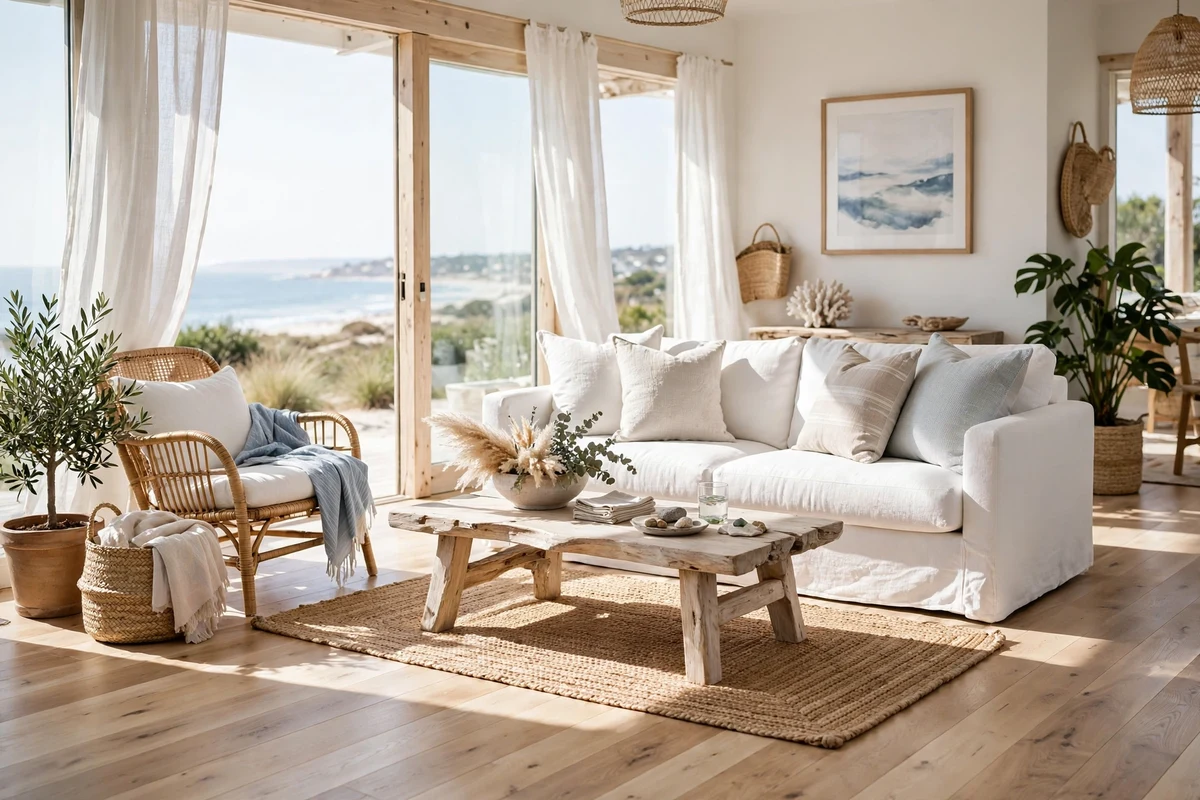
A large round or sunburst mirror does double duty in a coastal living room: it bounces precious daylight into dark corners and adds a sculptural focal point. Hang it opposite or adjacent to the biggest window for maximum light reflection. Natural wood, rattan, or whitewashed frames keep it on-theme; expect $50–$200 for a good-sized piece. Pro tip: check what the mirror reflects before you hang it — aim it at windows, greenery, or art, never at a blank wall or the TV.
Furniture With a Beachy Soul
9. Add a Rattan Accent Chair
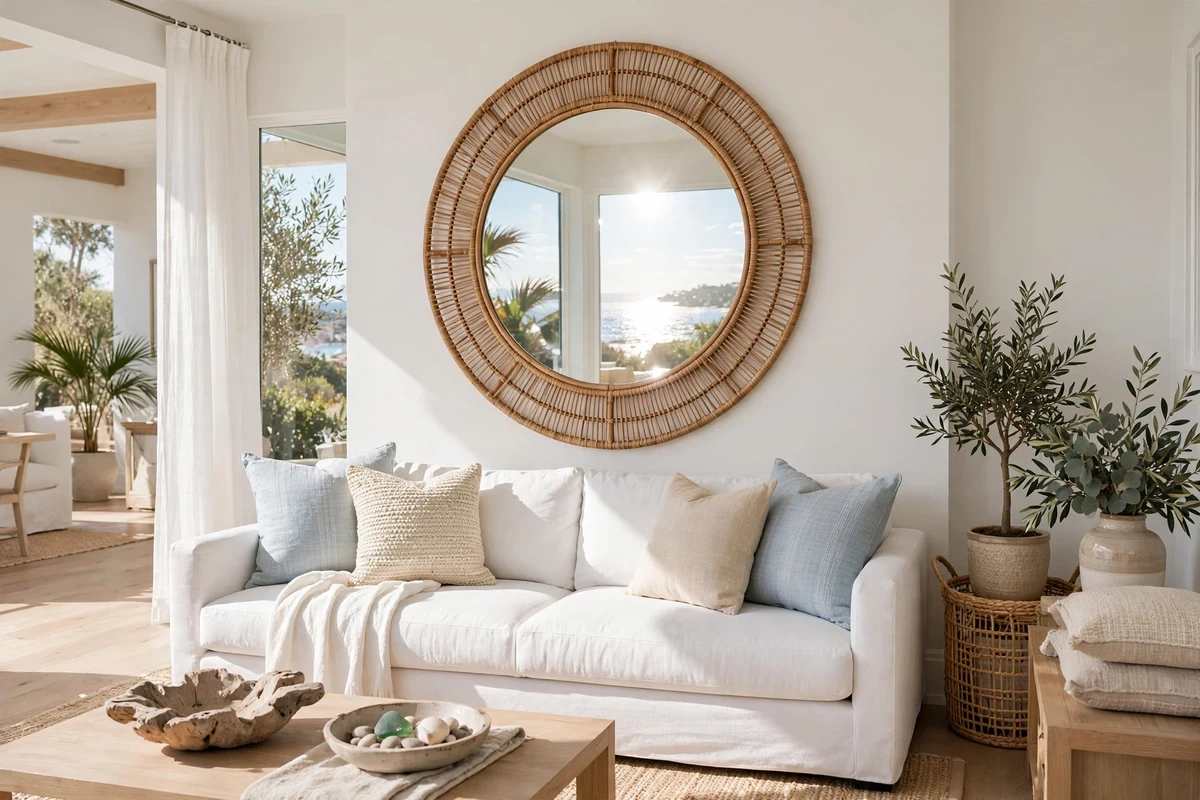
A rattan or cane accent chair brings instant beach-house character without a single nautical cliché. The open weave keeps the visual weight light, which matters in living rooms where bulky furniture can crowd the conversation area. Look for a natural honey or light-oak finish; curved peacock and rounded barrel silhouettes feel especially current. Prices run $150–$400 depending on size and whether it is handmade. Pro tip: pair the rattan chair with a small side table and a floor lamp to create a reading corner that feels intentional, not like an afterthought.
10. Style a Driftwood Coffee Table
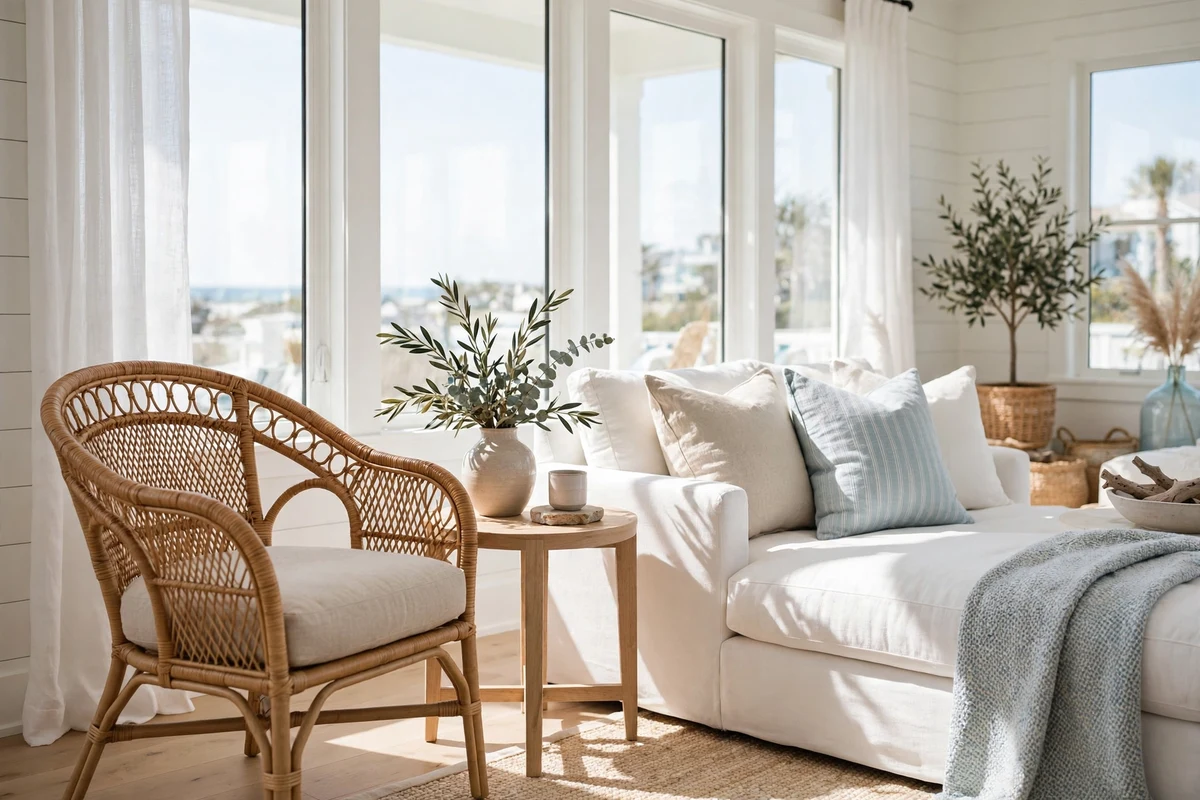
A driftwood or whitewashed wood coffee table is coastal’s answer to the heavy dark-wood table — all the function, none of the visual weight. The weathered finish hides scratches and water rings, making it practical for real life with kids and guests. Expect $200–$600 for a solid piece; DIY versions from reclaimed lumber cost under $100 in materials. Pro tip: keep the tabletop styling simple — a woven tray, one stack of books, and a small plant — so the beautiful wood texture stays visible.
11. Tuck In Woven Storage Baskets
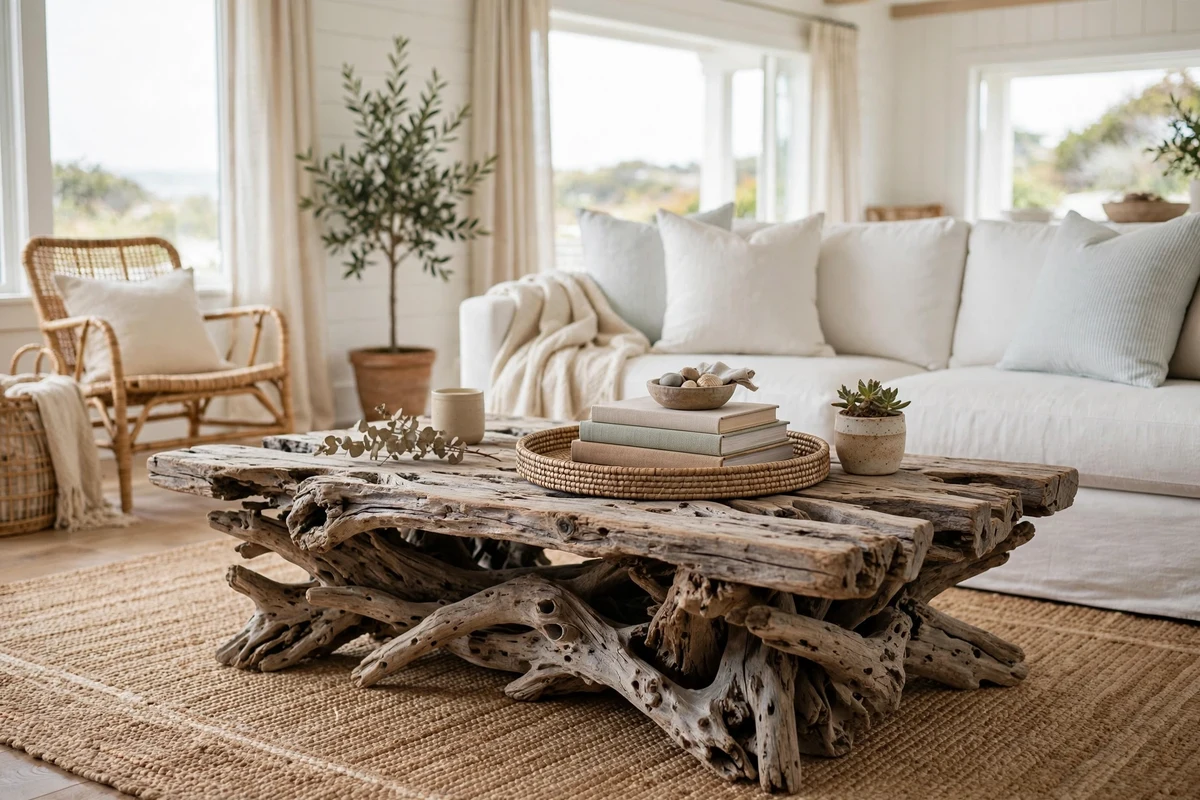
Woven seagrass and water-hyacinth baskets are the hardest-working decor in a coastal living room: they hide throws, toys, remotes, and clutter while adding the natural texture the style depends on. Use a large lidded basket beside the sofa, a medium one under the console, and small ones on shelves. Prices run $20–$60 each depending on size. Pro tip: choose baskets with lids for anything you do not want guests to see — open baskets look best holding only pretty things like folded throws and magazines.
12. Choose a Light-Colored Sectional
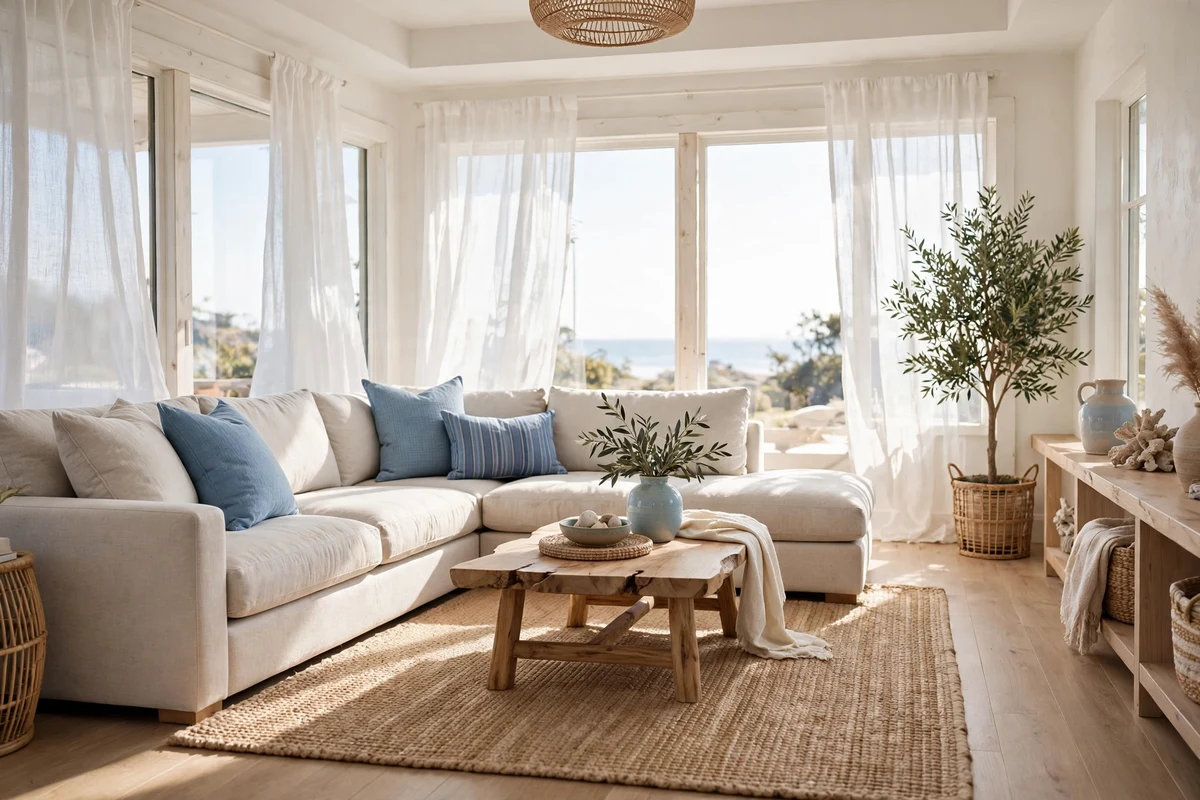
In a larger living room, a light-colored sectional in white, sand, or pale blue anchors the space while keeping it bright. Look for performance fabrics — they resist stains from sunscreen, snacks, and sandy feet while looking like natural linen. Sectionals run $1,200–$3,000; modular designs let you rearrange as needs change. Pro tip: keep the sectional in a solid light tone and add all your color through pillows and throws — it is far cheaper to swap a $30 pillow than reupholster a sofa when you want a refresh.
13. Place a Coastal Console Table
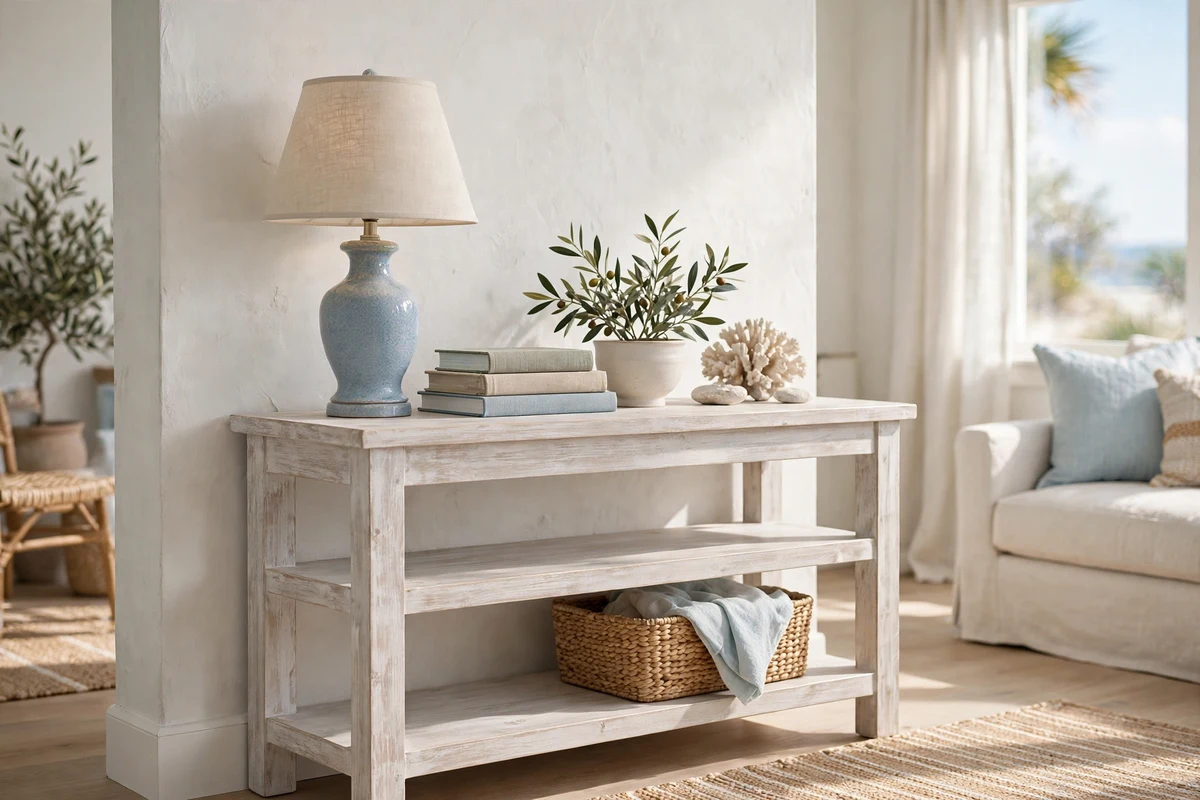
A slim console table behind the sofa or against an empty wall adds surface space without bulk — perfect for lamps, books, and a vase of beach grass. Choose whitewashed wood, light oak, or even a glass top on a driftwood-style base. Consoles run $150–$450. Pro tip: style the console in odd-numbered groupings — a lamp, a stack of two books, and one sculptural object — for a look that feels curated rather than crowded.
14. Add a Rope-Wrapped Floor Lamp
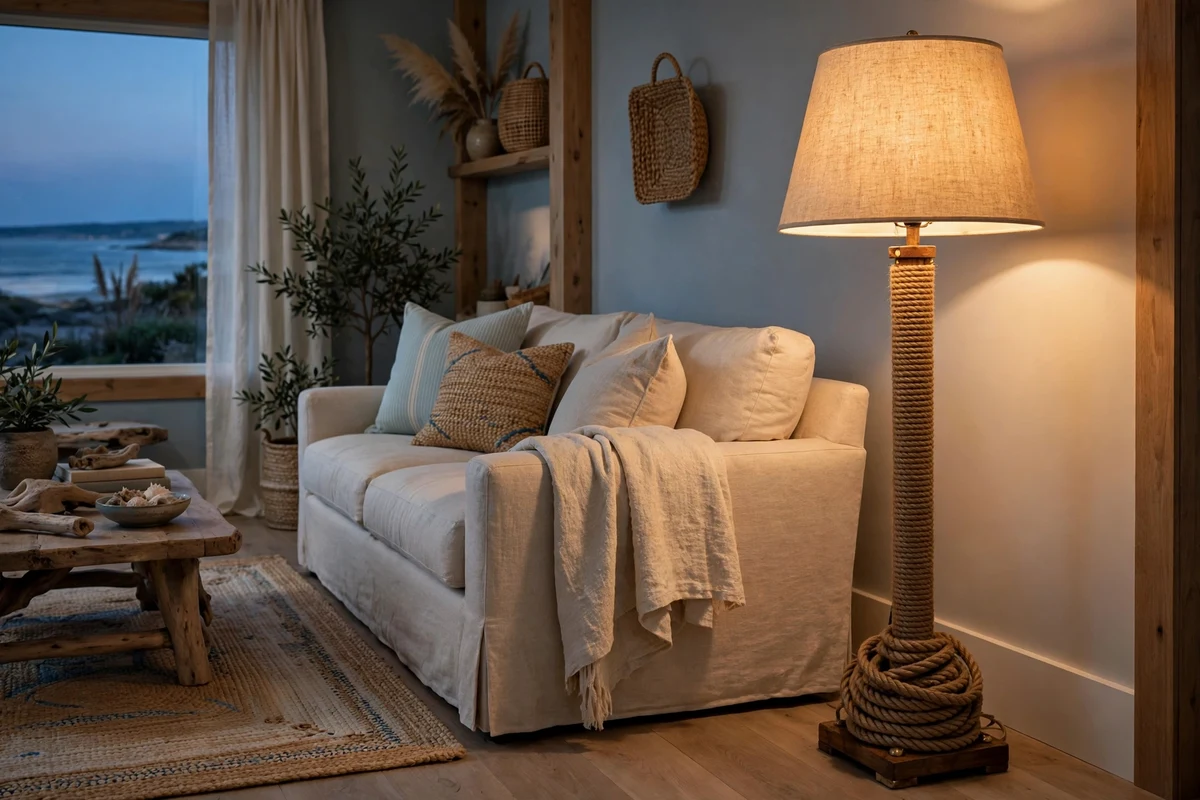
A floor lamp with a rope-wrapped base or a natural linen shade adds coastal texture at eye level, right where the room needs warmth after dark. It is also the easiest way to fix a dark corner without hardwiring anything. Expect $80–$200 for a good one; DIY rope-wrapping an existing lamp base costs under $20 in sisal rope. Pro tip: use a warm-white bulb (2700K) in every coastal lamp — cool daylight bulbs kill the golden beach-house glow instantly.
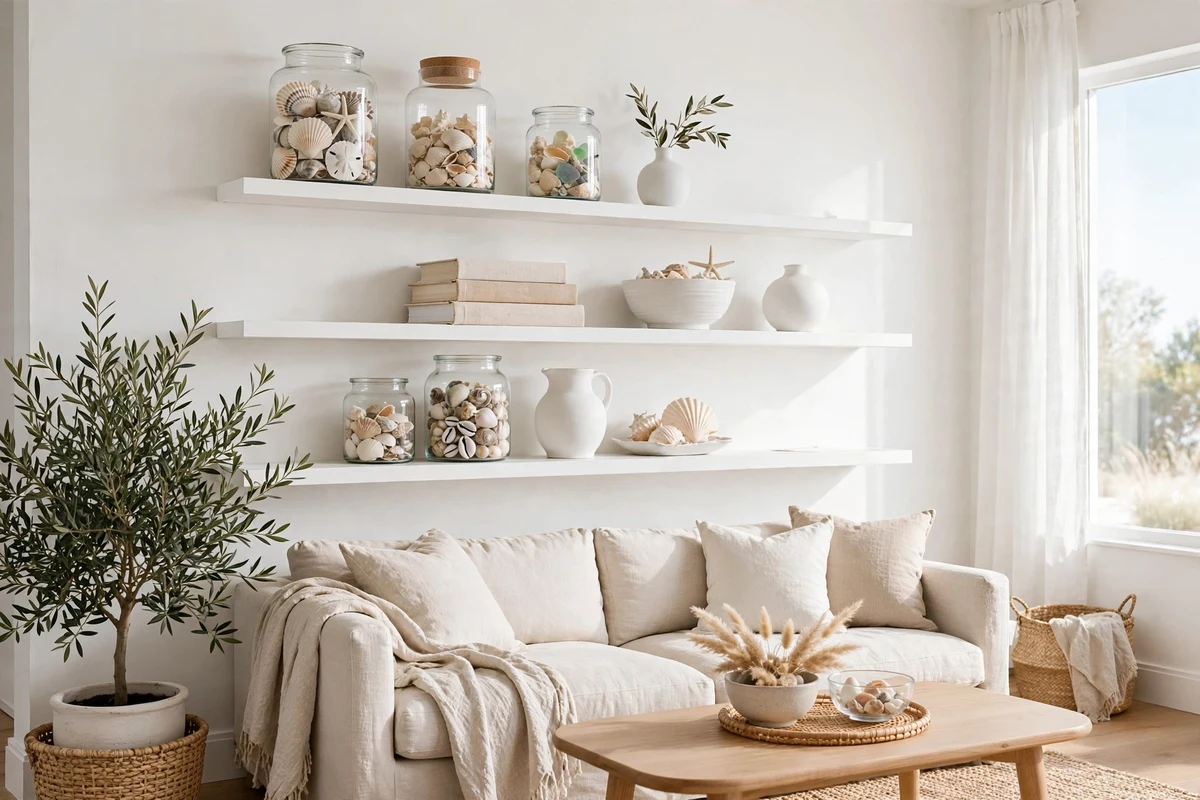
15. Style Open Shelving With Beach Finds
Open shelves are made for coastal styling: a few pieces of coral, collected shells in a glass jar, white ceramics, and stacked linen-bound books. The key is restraint — leave plenty of breathing room between objects so each one reads as intentional. Floating shelves cost $30–$80 each installed; the styling itself can be nearly free. Pro tip: follow the rule of thirds — group objects in threes, vary heights, and keep one-third of every shelf completely empty so the display feels airy, not cluttered.
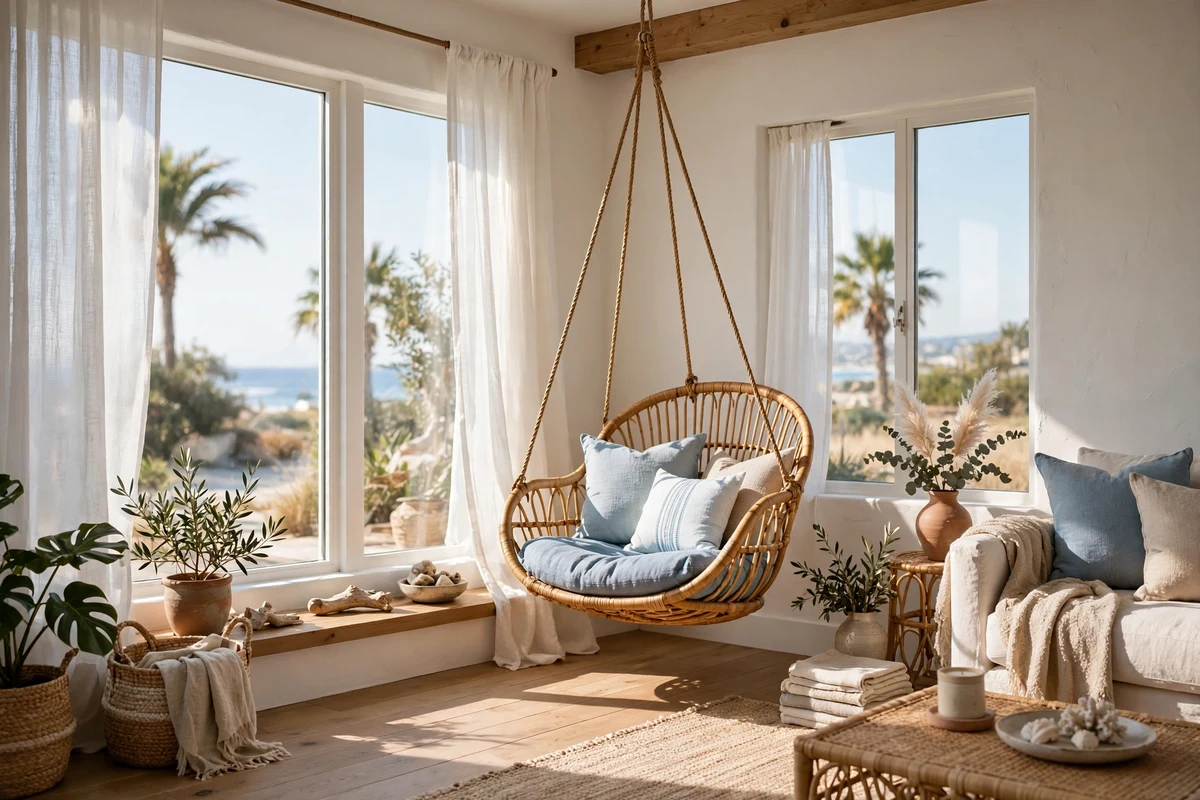
16. Hang a Hammock Chair in the Corner
A hanging rattan hammock or macramé chair turns an unused corner into the most coveted seat in the house. It adds vertical interest, gentle movement, and undeniable vacation energy. Chairs run $60–$150; a ceiling joist mount or a sturdy stand adds $30–$80. Pro tip: always mount into a ceiling joist or use a rated stand — drywall anchors alone will not hold a swinging adult, no matter what the packaging claims.
Color & Textile Layers
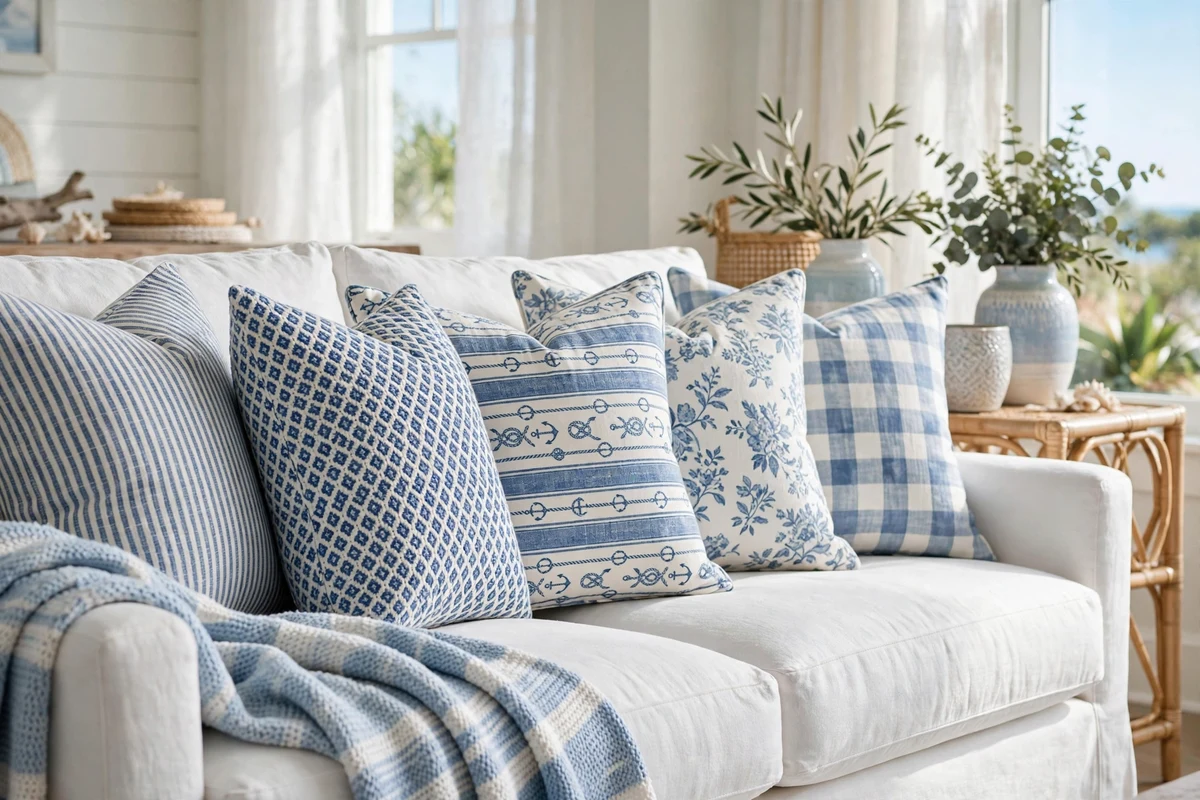
17. Layer Blue and White Throw Pillows
Blue and white pillows are the fastest way to say coastal without saying a word. Mix solid sea blues, classic navy stripes, and textured whites in different sizes — two 20-inch squares, two 18-inch, one lumbar — for a collected look. Indoor-outdoor fabrics resist fading if your sofa sits in direct sun. Budget $25–$60 per pillow, or $12–$20 for covers alone if you reuse inserts. Pro tip: stick to one blue family (all dusty sea blues or all deep navies) rather than mixing every blue you own — cohesion is what separates styled from scattered.
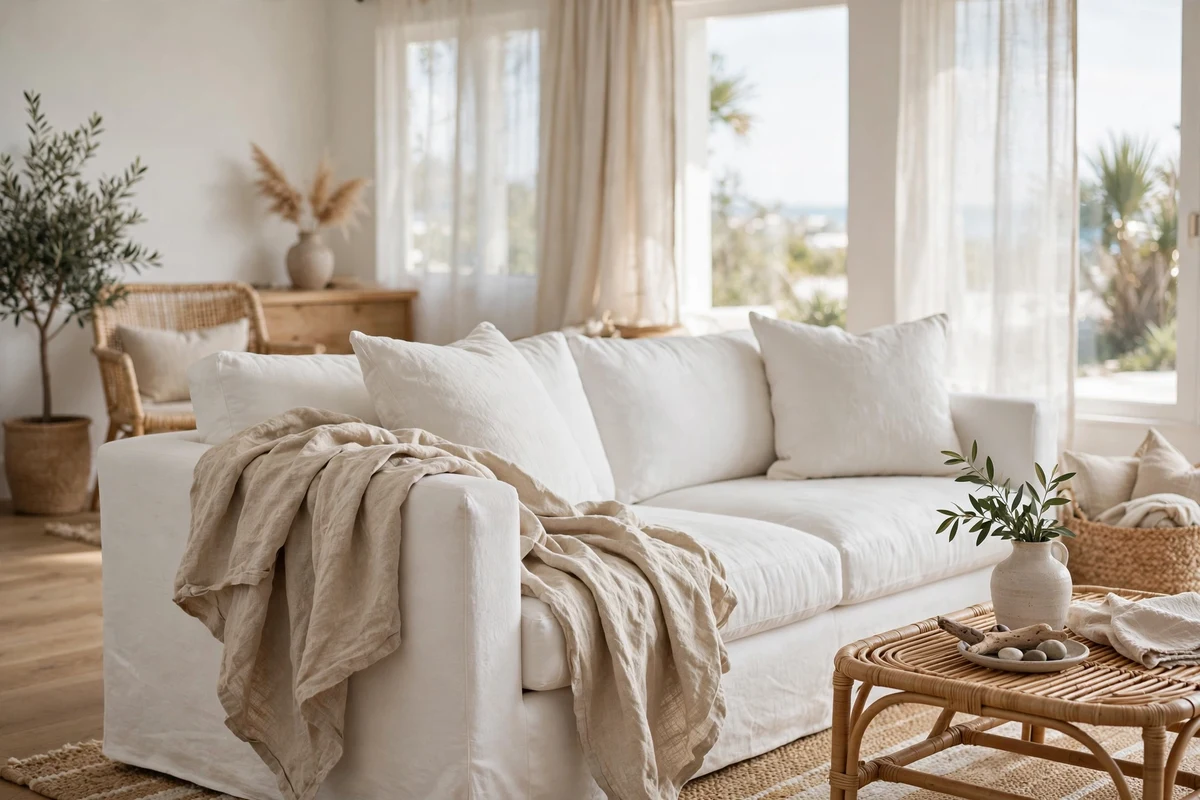
18. Drape a Linen Throw Blanket
A casually draped linen or cotton throw adds the lived-in softness that keeps coastal rooms from feeling like a showroom. Choose washed linen in white, oatmeal, or pale sea blue; the rumpled texture is the whole point. Good throws run $40–$100. Pro tip: drape the throw over one arm or the back corner of the sofa rather than folding it into a perfect rectangle — the effortless look is what makes it feel coastal, not precious.
19. Add Sea-Glass Colored Accents
Sea-glass greens and soft aquas are coastal’s secret accent colors — quieter than navy, more interesting than plain white. Use them in small doses: a pair of glass vases, a ceramic lamp base, or a single accent pillow. Vintage sea-glass pieces run $15–$50; new reproductions are even cheaper. Pro tip: cluster sea-glass tones together in one vignette (a tray, two vases, a candle) rather than scattering them around the room — grouped color reads as intentional design.
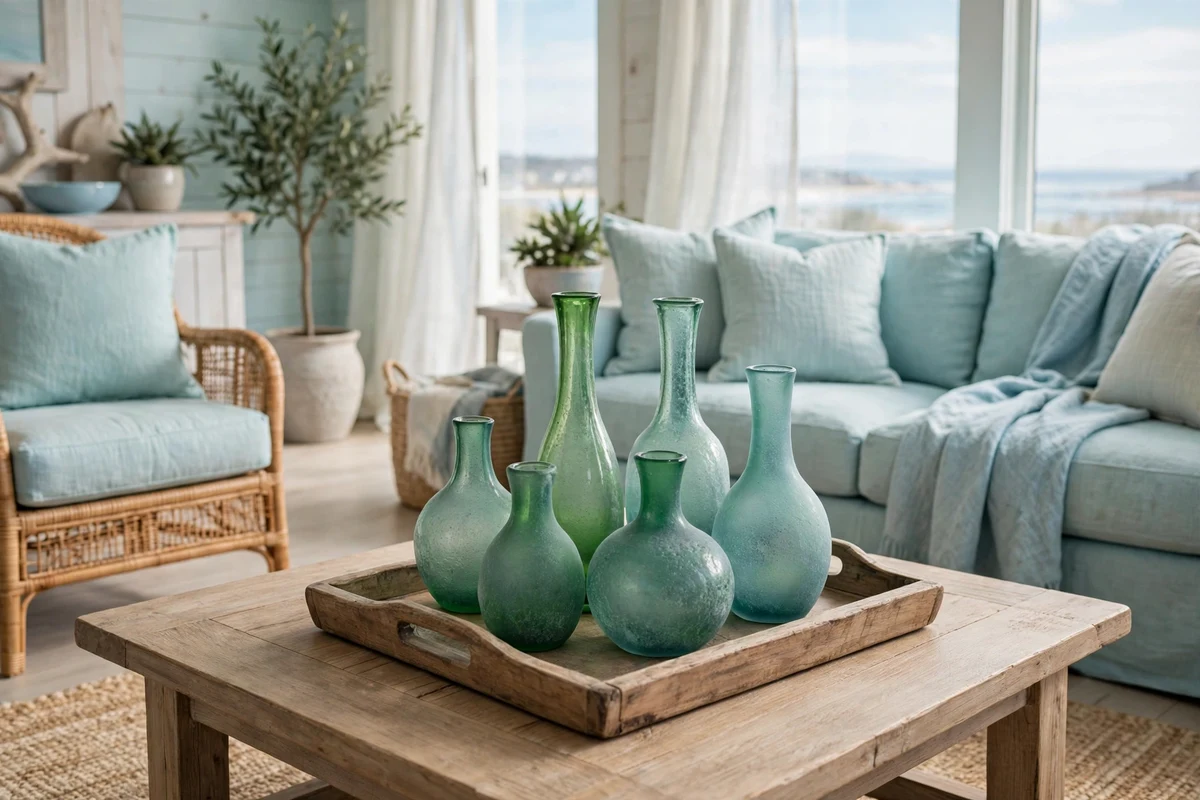
20. Choose Natural Linen Upholstery
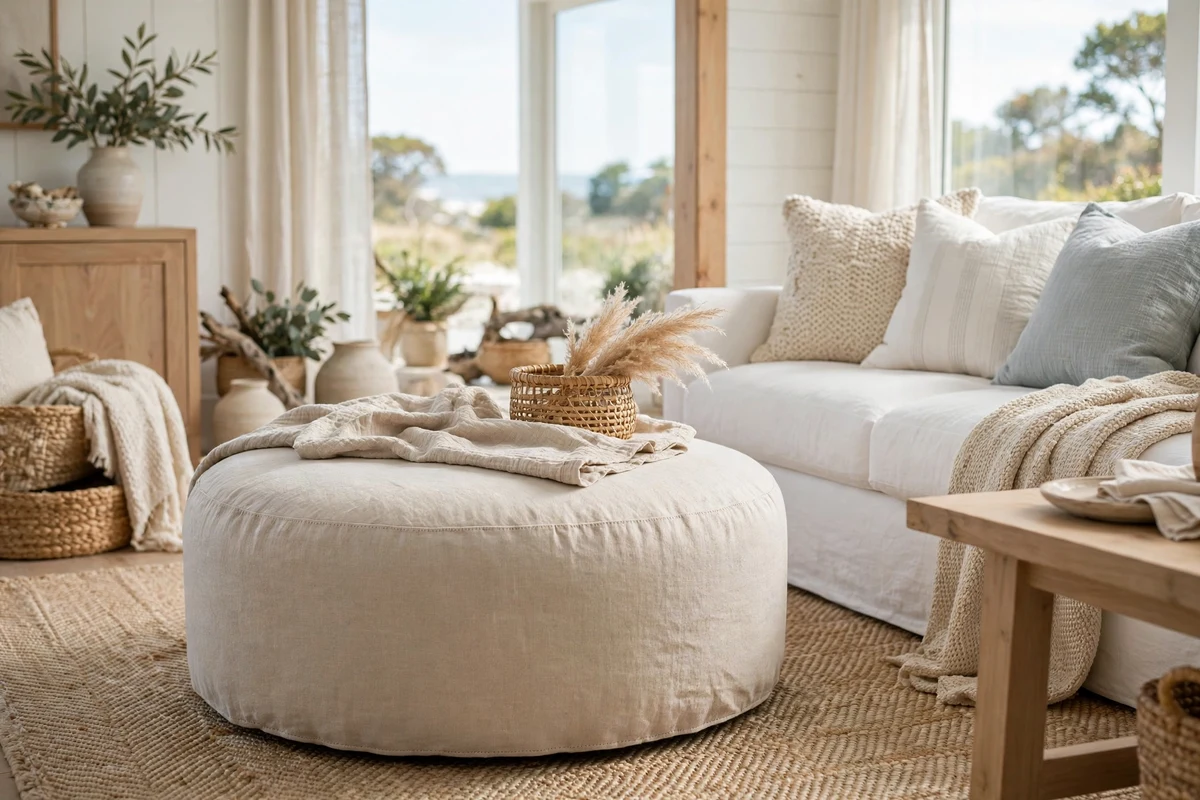
Beyond the sofa, natural linen on ottomans, dining chairs, or a slipcovered armchair keeps the coastal texture story going. Linen’s slubby weave catches light beautifully and gets softer with age. Reupholstering a chair in linen runs $200–$500; ready-made linen ottomans cost $80–$200. Pro tip: for high-traffic pieces, choose a linen-look performance fabric — it gives you the texture with stain resistance that real linen cannot match.
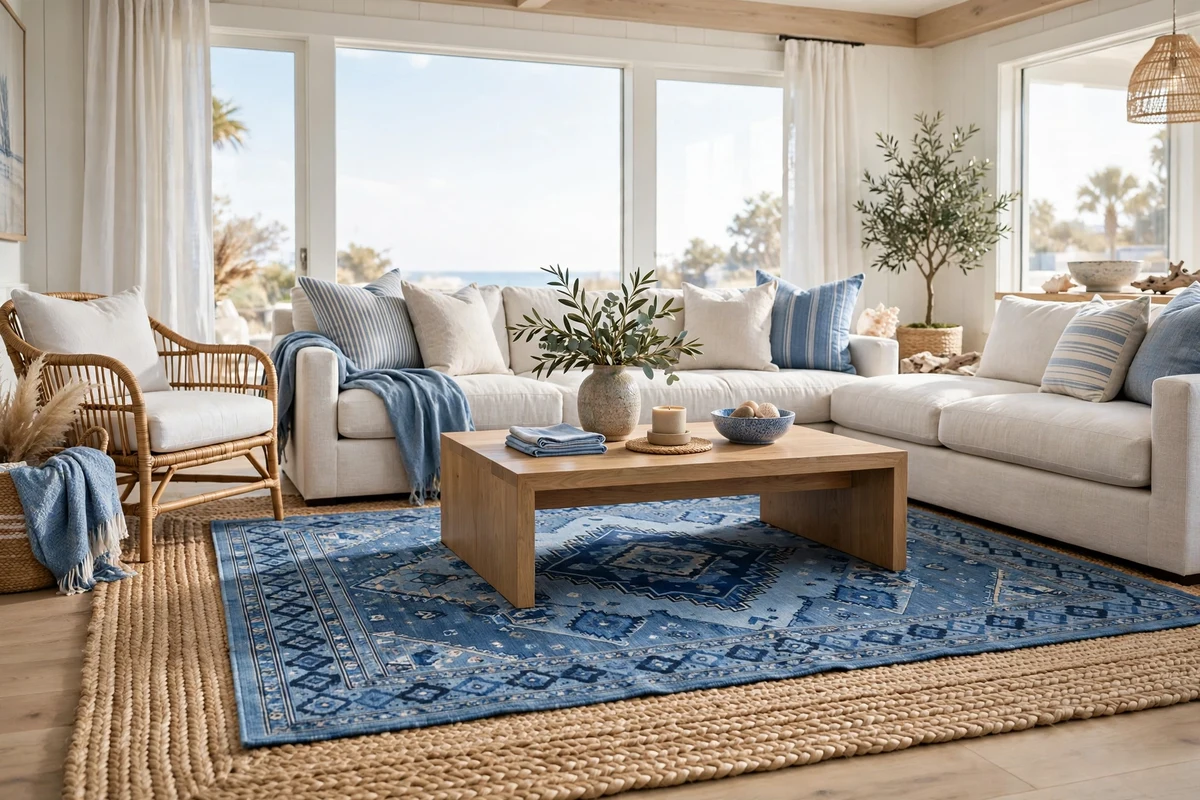
21. Layer a Blue Rug Over Jute
Layering a smaller blue patterned rug over your jute base adds color and softness exactly where feet land. A faded vintage-style blue rug or a simple striped flatweave both work; the jute underneath keeps it grounded in coastal texture. Expect $80–$200 for a 5×7 layering rug. Pro tip: let 12–18 inches of jute show on all sides — the border effect is what makes layering look deliberate instead of accidental.
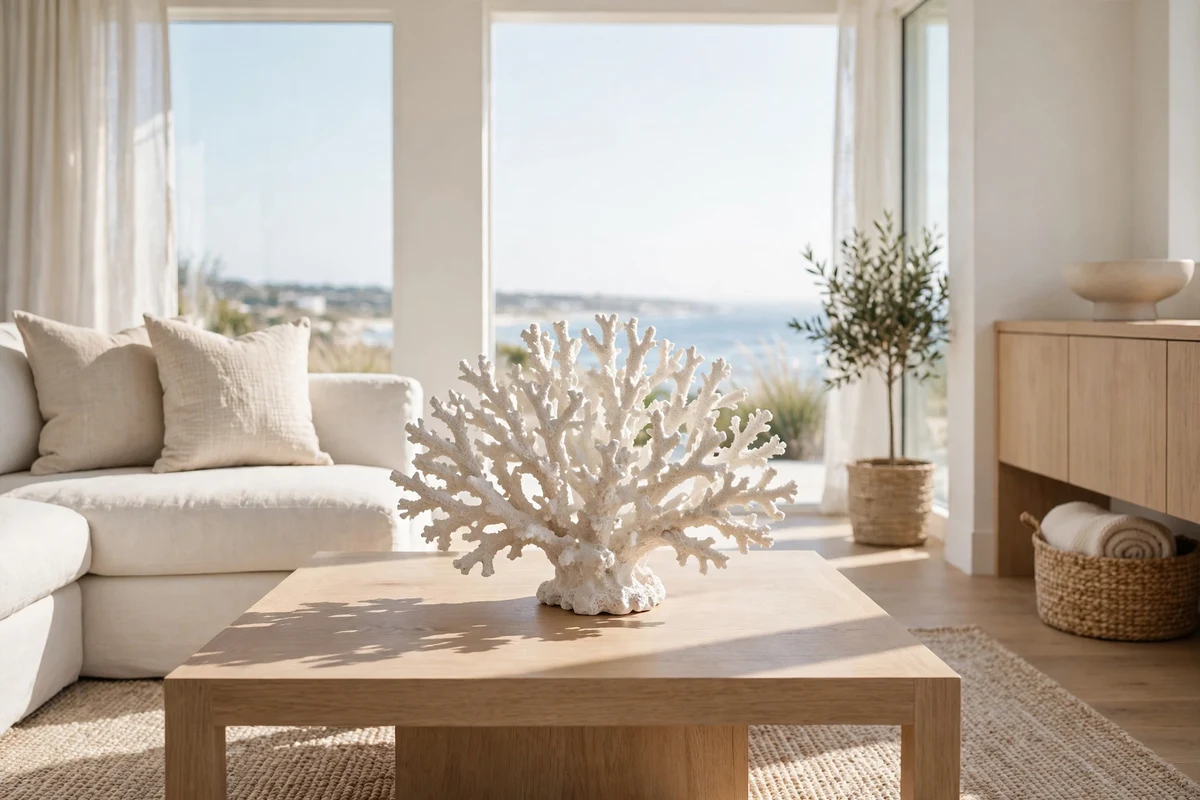
22. Display Coral and Shells — Tastefully
One beautiful piece of coral or a curated bowl of shells adds authentic coastal soul; twenty of them looks like a gift shop. Choose a single sculptural coral branch under a cloche, or one large shell as a bookend, and let it breathe. Real coral pieces run $20–$80; quality faux coral is indistinguishable and more sustainable. Pro tip: give your one statement natural piece pride of place on the coffee table or mantel, and keep every other surface shell-free — restraint is the entire trick.
23. Install Woven Wooden Shades
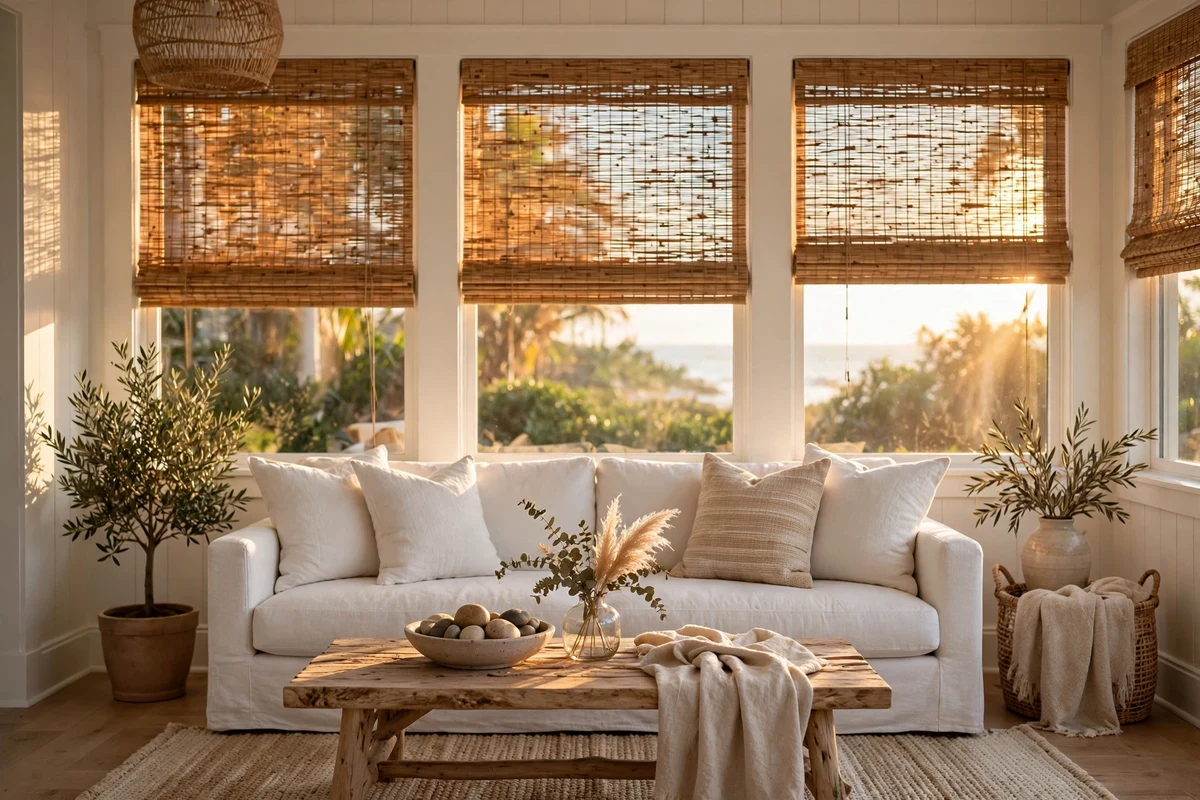
Woven wood or bamboo shades filter sunlight into a warm golden glow that sheer curtains alone cannot achieve. They add natural texture right at the window, framing the view like a photograph. Off-the-shelf shades run $40–$100 per window; custom sizes cost more. Pro tip: layer woven shades under sheer curtains for the ultimate coastal window — texture plus softness, with light control for movie nights.
24. Use a Striped Indoor-Outdoor Rug
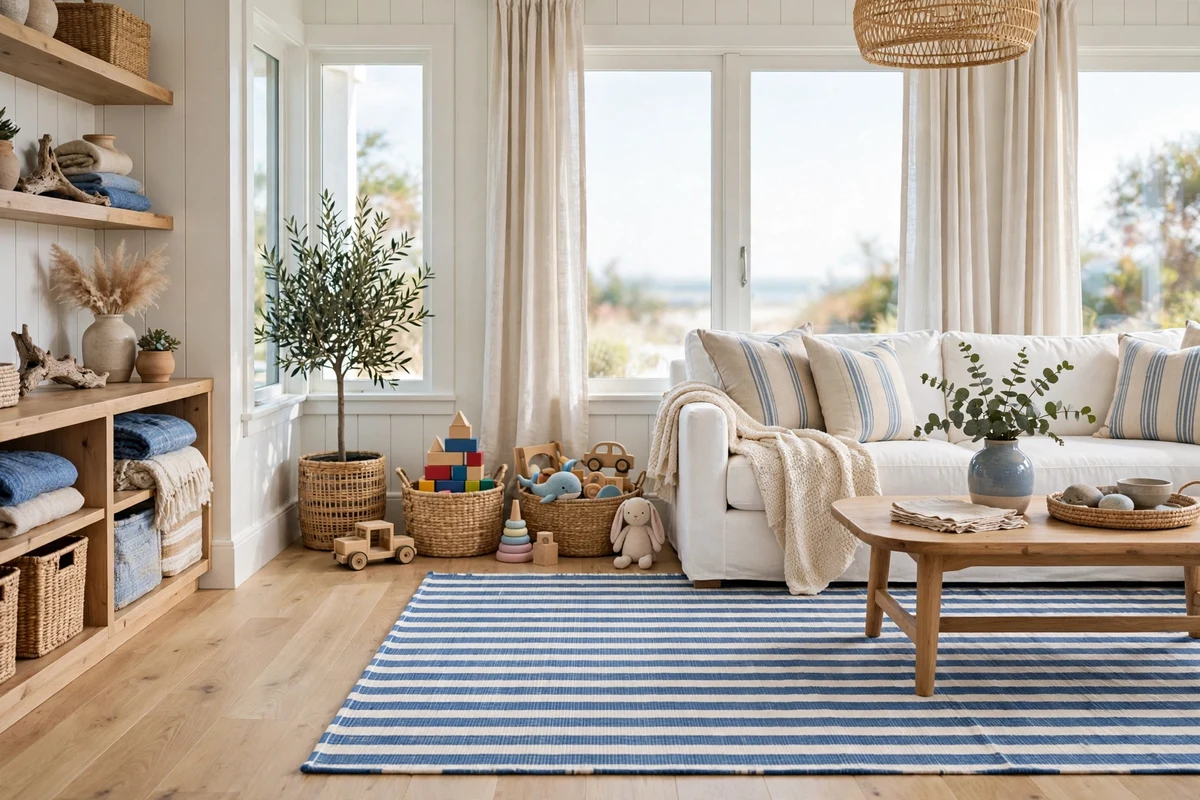
In high-traffic coastal living rooms — especially with kids, dogs, or sandy feet — a striped indoor-outdoor rug is genius. It looks like classic coastal cotton but hoses clean and never fades. A 8×10 runs $60–$180, far less than a wool equivalent. Pro tip: choose a rug with a low, tight weave rather than a chunky one — it looks more refined indoors and is far easier to vacuum.
Finishing Touches That Sell the Coast
25. Hang Coastal Landscape Art
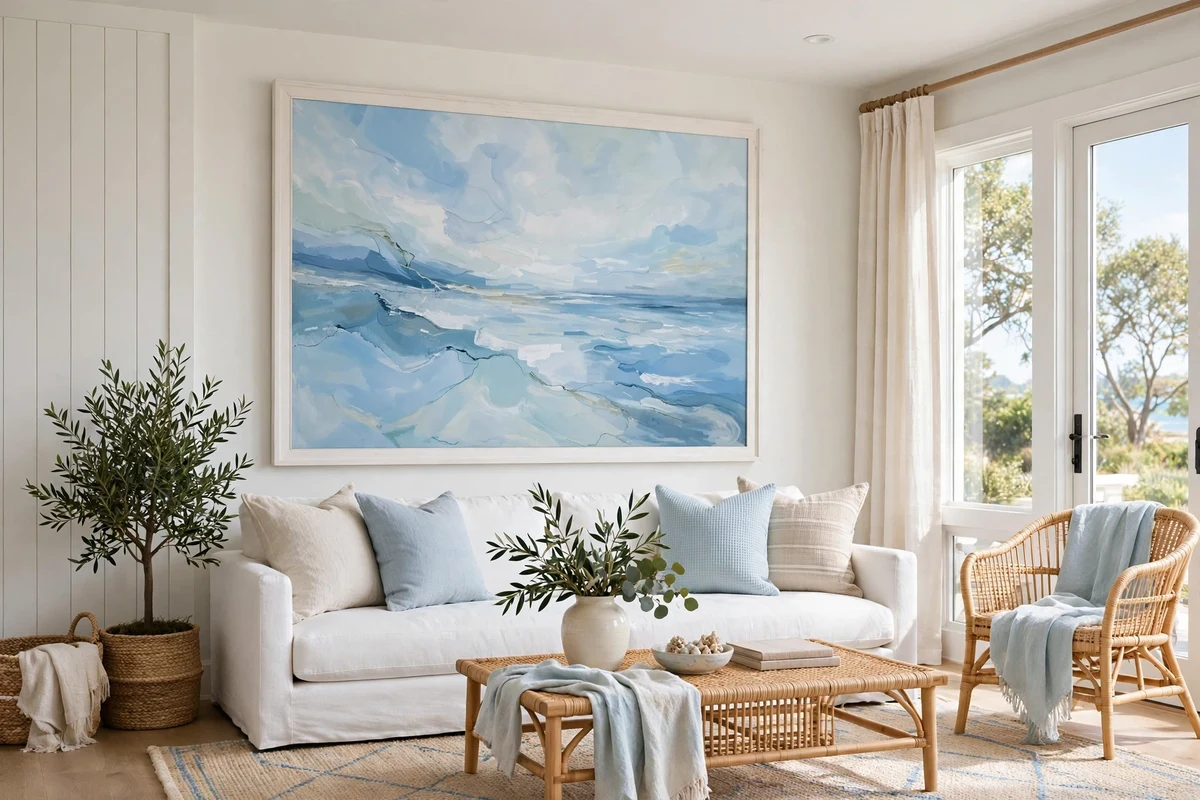
One large piece of coastal art — an abstract seascape, a misty shoreline photograph, or soft watercolor waves — anchors the room’s story better than a dozen small beach prints. Go big: art should be two-thirds the width of the sofa it hangs over. Quality prints in simple white or natural wood frames run $30–$150. Pro tip: choose art with the same blues and sandy tones as your textiles so the whole room feels like one continuous palette, not a collection of separate decisions.
26. Style a Bar Cart With Coastal Vibes
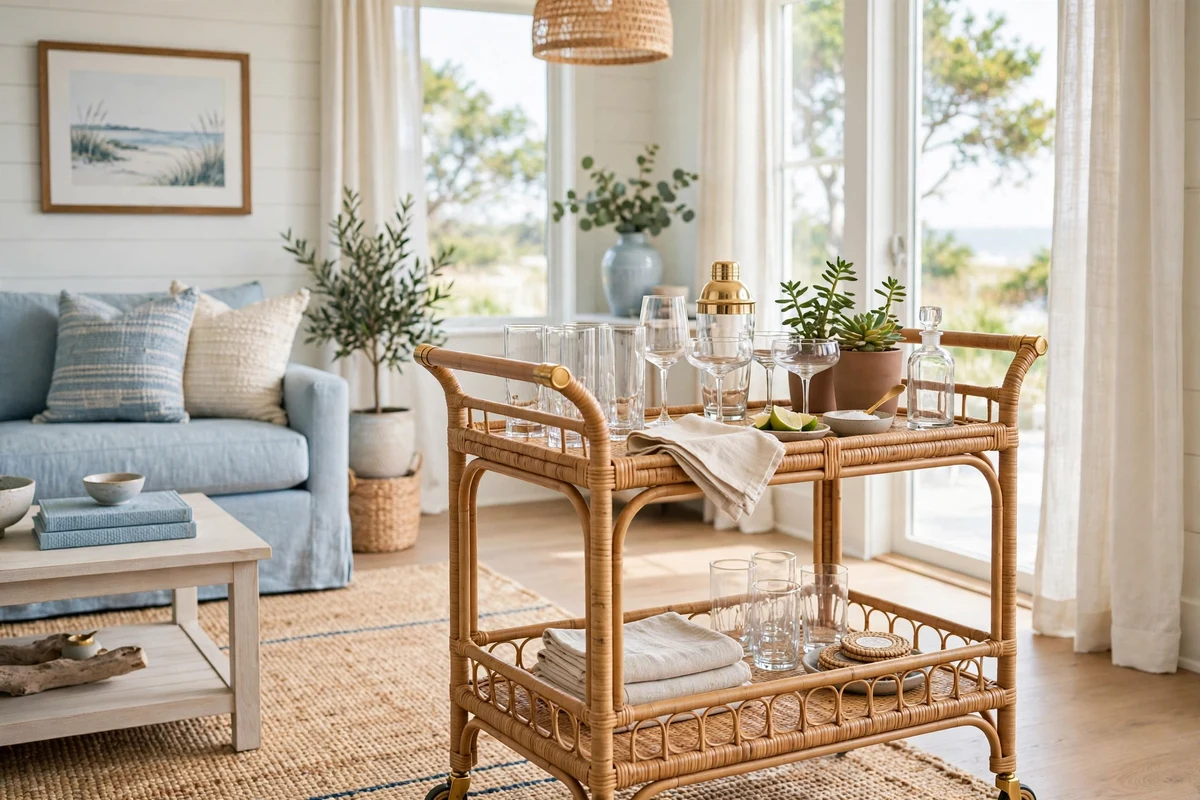
A bar cart in brass, rattan, or whitewashed wood doubles as a serving station and a styling moment. Stock it with clear glassware, a decanter, and a small potted succulent for instant coastal entertaining. Carts run $80–$250. Pro tip: keep the cart’s top styled and its lower shelf functional — pretty on top, practical below — so it earns its footprint in the room.
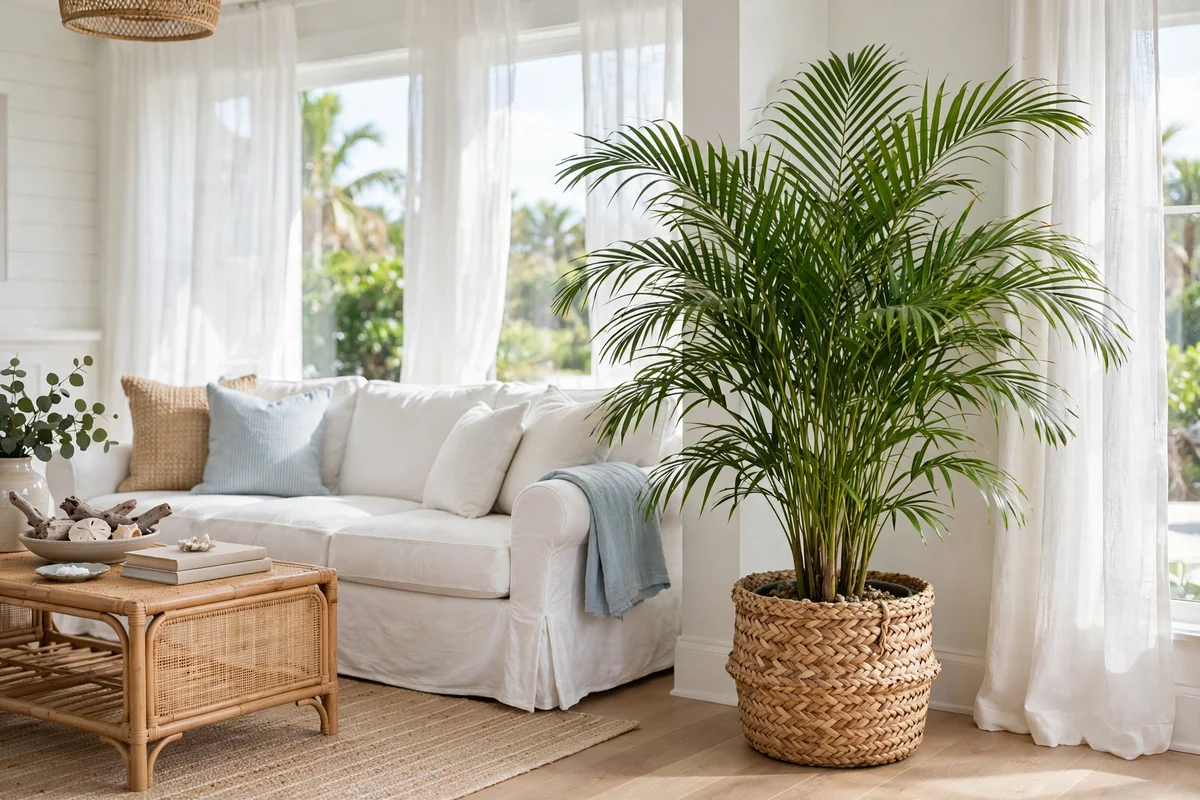
27. Add Potted Palms and Greenery
Nothing says coastal like living greenery — a kentia palm in the corner, a fiddle-leaf fig by the window, or trailing pothos on a shelf. Plants add the organic life that keeps neutral rooms from feeling flat. Expect $20–$80 for a good-sized indoor palm in a woven basket planter. Pro tip: if your thumb is not green, high-quality faux palms have become remarkably convincing — put the real effort into one live plant and let faux fill the harder spots.
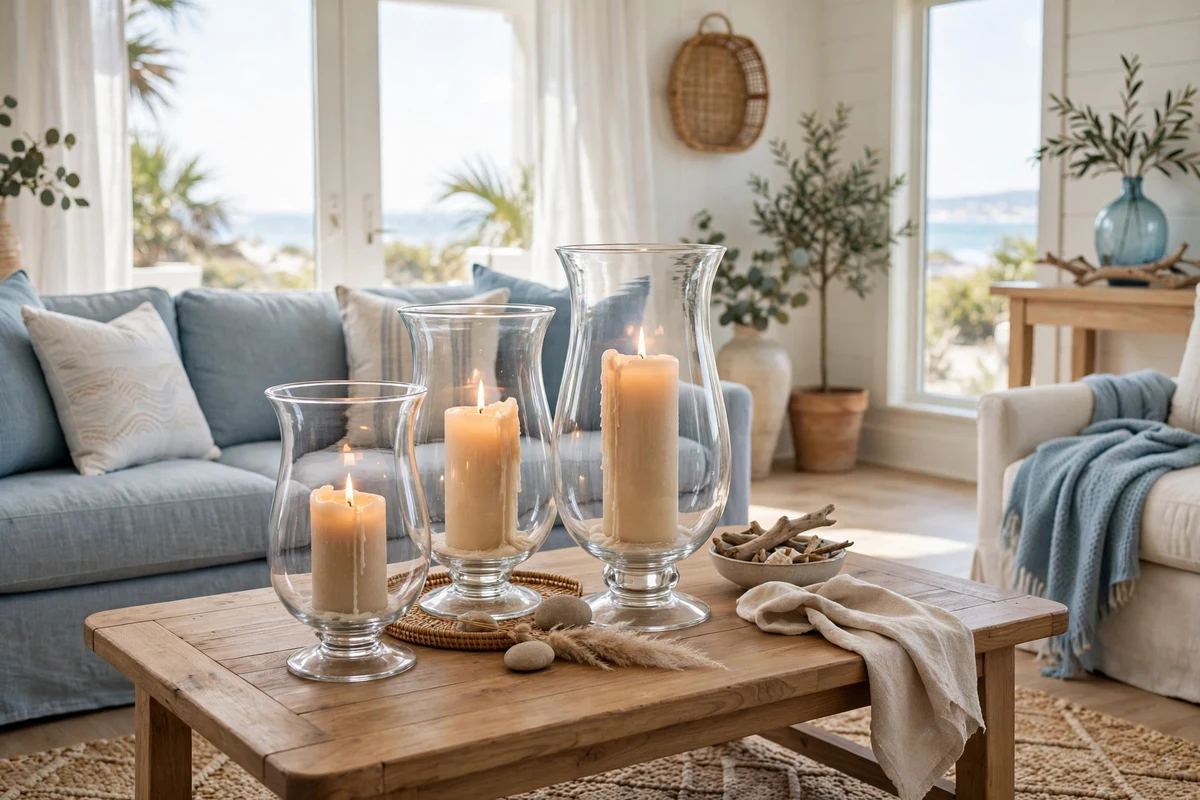
28. Group Glass Hurricanes With Candles
Clusters of clear glass hurricane vases with pillar candles catch daylight beautifully and glow like lanterns at night. Group three in varying heights on the coffee table or mantel. Hurricanes run $15–$40 each; LED pillar candles give the flicker without the worry. Pro tip: fill the bottom of each hurricane with a handful of sand or small shells before adding the candle — it anchors the candle and adds an authentic beach-found detail.
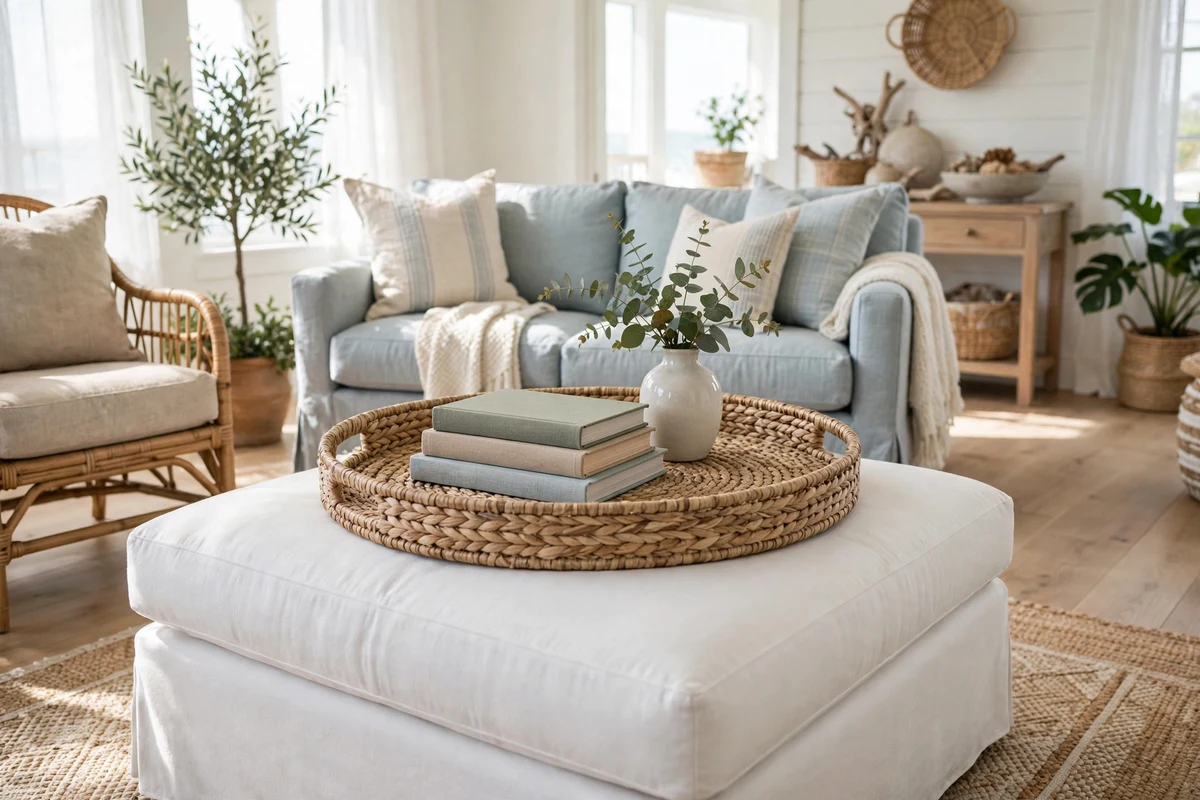
29. Set a Woven Tray on the Ottoman
A large woven tray turns an ottoman into a stable surface for drinks and books while adding another layer of natural texture. Round trays soften all the rectangular furniture lines in the room. Expect $25–$70 for a good-sized rattan or seagrass tray. Pro tip: style the tray with three things — something tall (a small vase), something flat (a book), something organic (a shell or plant) — and the vignette styles itself.
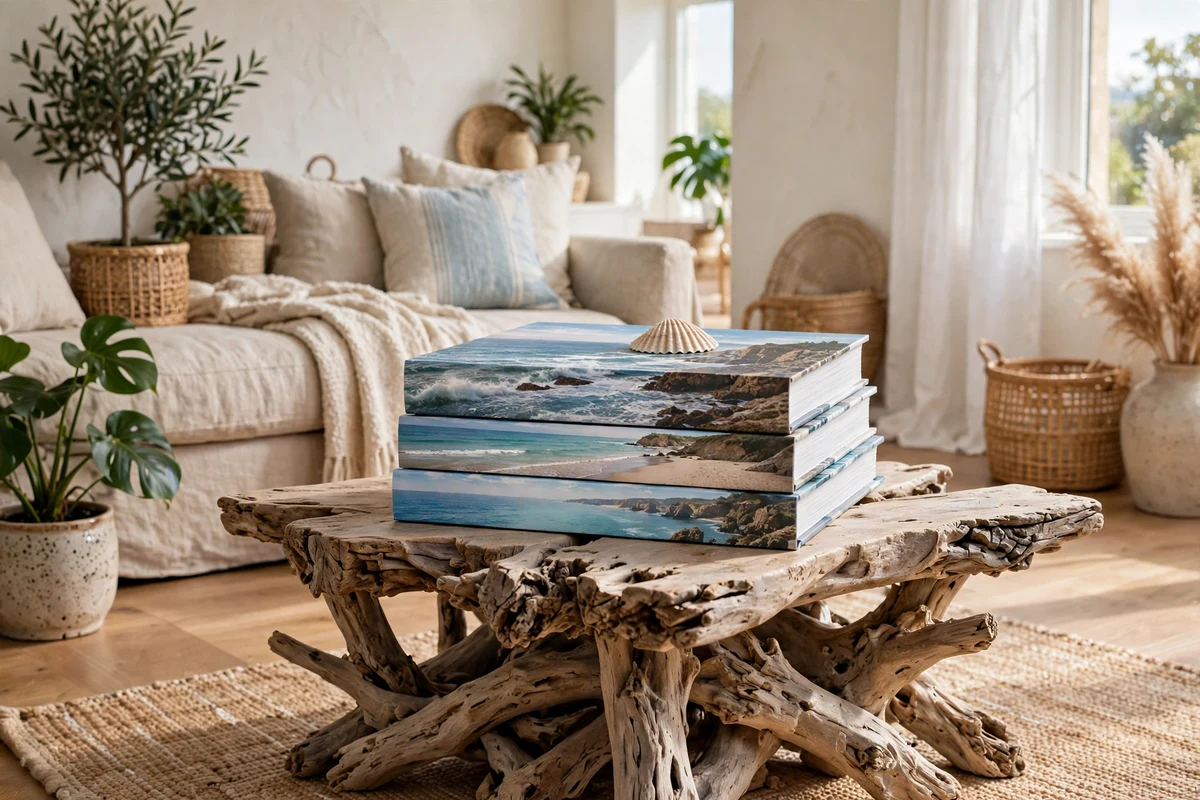
30. Stack Coffee Table Books With Coastal Covers
Coffee table books with ocean photography, coastal architecture, or travel covers do triple duty: decor, conversation, and actual reading. Stack two or three under a small object on the coffee table. New books run $15–$40 each; thrift stores are full of them for under $5. Pro tip: remove dust jackets — the clothbound covers underneath are almost always prettier and more coastal in muted tones.
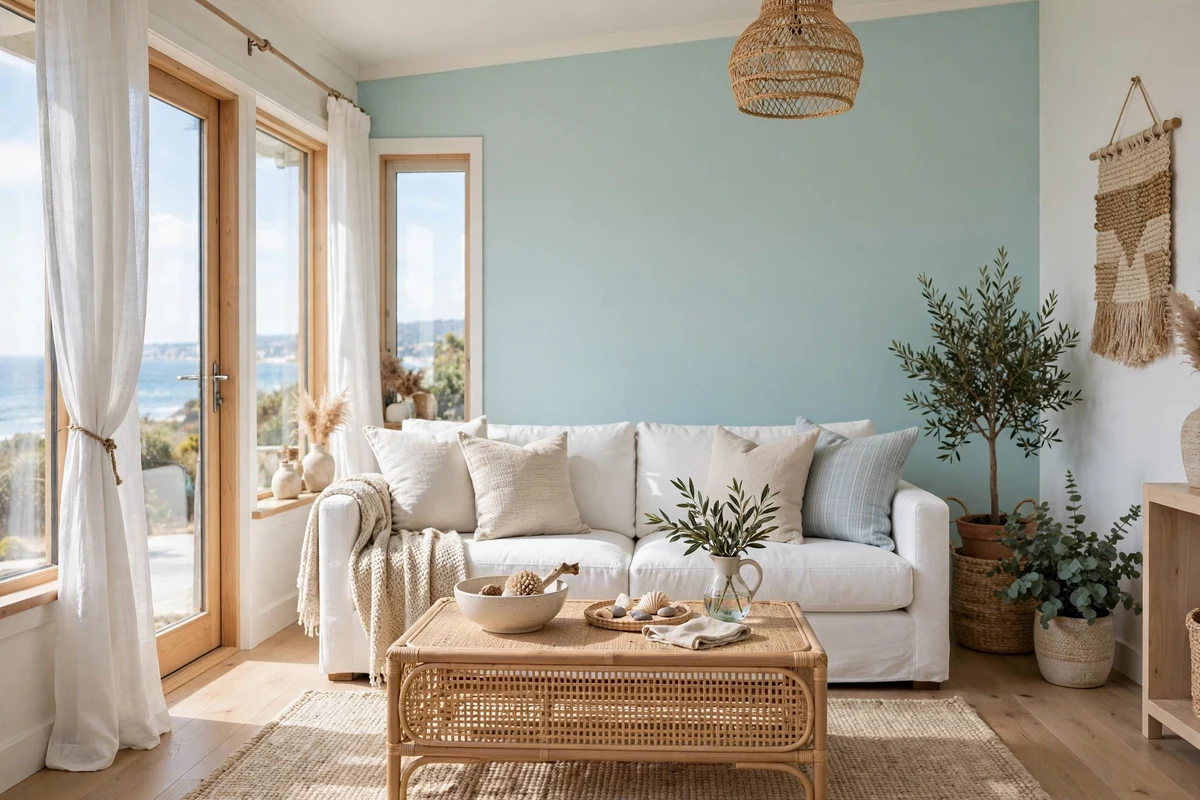
31. Paint a Light Blue Accent Wall
If shiplap feels like too much commitment, a single wall in a soft sea blue — think pale aqua or misty sky — delivers coastal color in a weekend. Keep the other walls warm white so the blue reads as fresh, not cold. A gallon of quality paint costs $30–$60 and covers most accent walls. Pro tip: test three shades on poster boards and move them around the room for two days — coastal blues shift dramatically between morning and evening light.
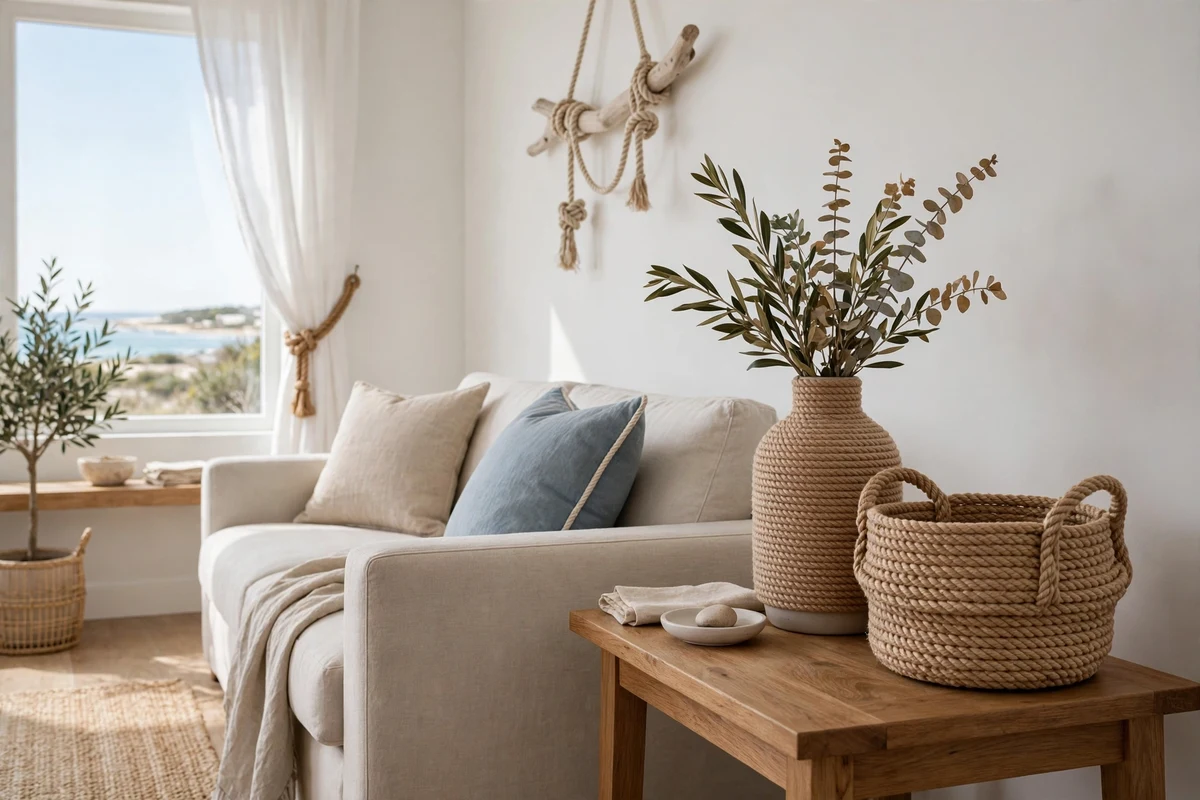
32. Weave In Nautical Rope Details
A few rope details — a coiled rope doorstop, rope-wrapped vase, or a knotted rope curtain tieback — nod to the nautical without shouting it. These small touches work best when they look found rather than bought. Expect $10–$40 per piece; DIY versions cost almost nothing in manila rope. Pro tip: limit rope accents to two or three spots in the room — like the coral rule, one strong nautical note beats a chorus of them.
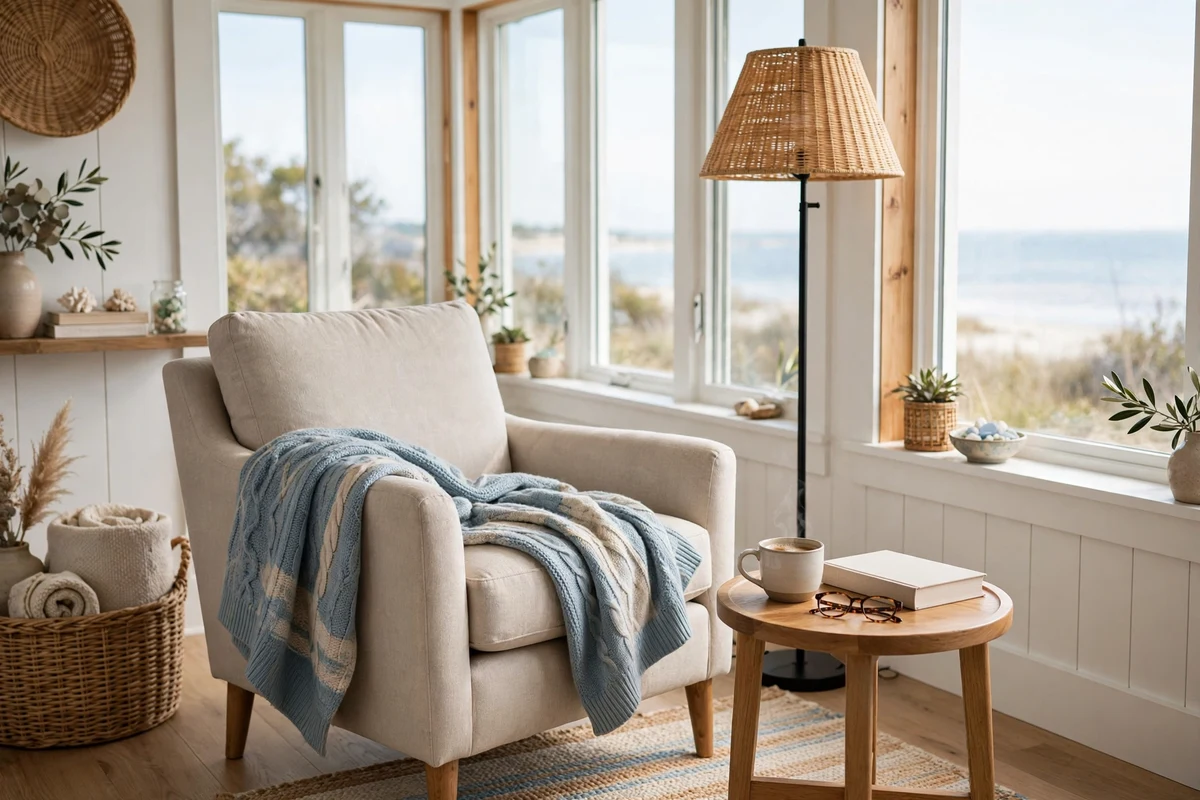
33. Create a Cozy Reading Nook
Every coastal living room deserves one spot made for slow mornings: a comfortable chair, a good reading lamp, a small side table for coffee, and a throw within reach. Tuck it by the brightest window — natural light is the whole point. A nook can come together for $150–$400 if you shop thoughtfully. Pro tip: angle the chair toward the window rather than the TV — a reading nook that faces the screen is just another TV seat, and the light is better for reading anyway.
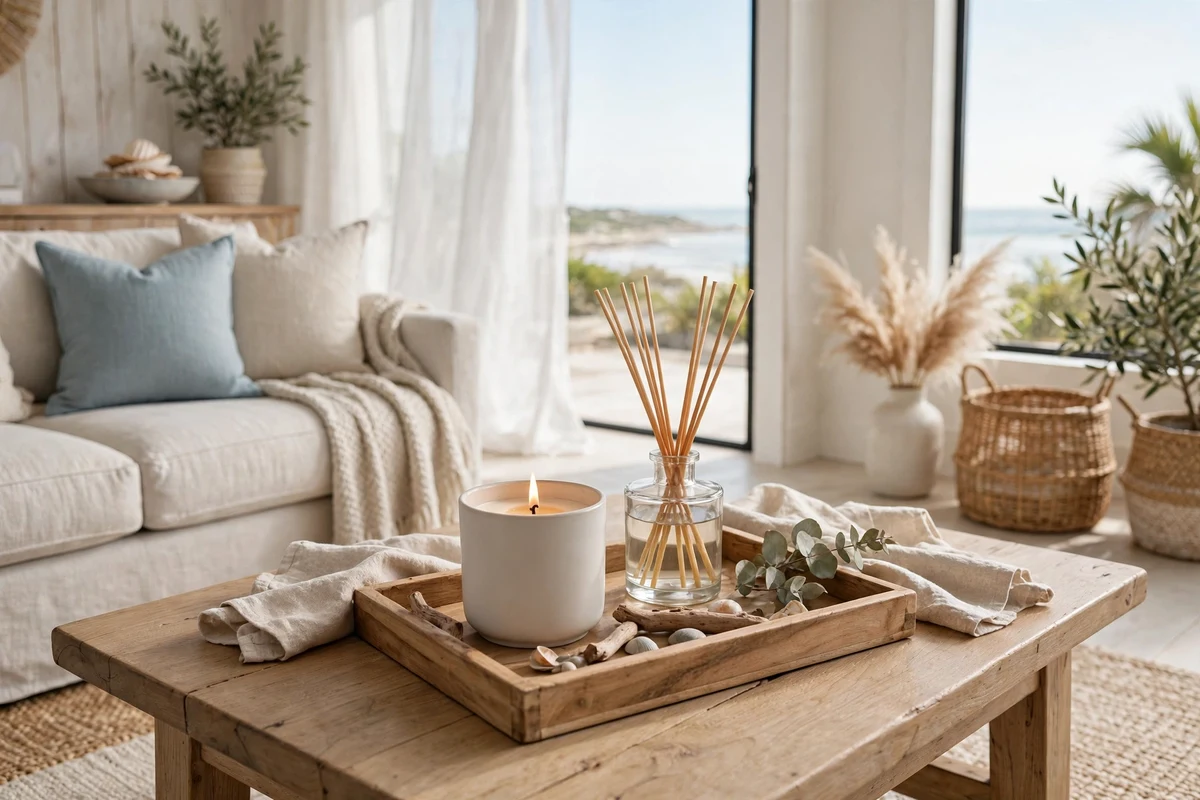
34. Finish With a Signature Coastal Scent
Scent is the invisible finishing layer — a candle or diffuser in sea salt, driftwood, or citrus makes the coastal illusion complete when guests walk in. Choose one signature scent and use it consistently so it becomes your home’s trademark. Quality candles run $15–$35; reed diffusers last months for $20–$40. Pro tip: skip the overpowering “ocean breeze” plug-ins — a single soy candle in a clean linen or sea-salt scent smells like the real coast, not a souvenir shop.
Frequently Asked Questions
How do I make my living room coastal without it looking like a theme restaurant?
Stick to the modern coastal formula: a light neutral base (white, sand, soft beige), natural textures (rattan, jute, linen, light wood), and one restrained sea-inspired color used consistently. Avoid literal nautical motifs — no anchors, ship wheels, or “beach” word art. One beautiful natural object, like a piece of coral or driftwood, gives you more coastal soul than a dozen themed accessories.
What colors work best in a coastal living room?
Start with warm whites and sandy neutrals as your base, then layer in sea blues (from pale aqua to deep navy), sea-glass greens, and soft grays. The most sophisticated coastal rooms use mostly neutrals with blue appearing in just 20–30% of the space — pillows, art, one rug. For more inspiration, see our 34 living room color palettes for every style.
Can I do coastal style in a small living room?
Absolutely — coastal might be the best style for small living rooms because its light palette and airy textures make spaces feel larger. Keep furniture leggy and light-colored, use mirrors to bounce light, choose a jute rug that fits the seating area, and avoid heavy dark pieces. Our small living room decor mistakes guide covers the pitfalls to avoid.
What is the difference between coastal, beachy, and nautical styles?
Modern coastal is the sophisticated evolution: light, textural, and inspired by the shoreline without literal references. “Beachy” is its casual younger sibling — brighter, more playful, more color. Nautical is the traditional theme with navy stripes, anchors, and maritime motifs. This guide focuses on modern coastal, which has the longest staying power and the broadest appeal.
How do I keep a white coastal living room clean with kids or pets?
Choose slipcovered or performance-fabric upholstery, indoor-outdoor rugs, and washable throw pillow covers. Keep a washable throw on the most-used seat, and embrace the lived-in look — coastal style actually improves with a little rumple. For more pet-proof strategies, see our pet-friendly apartment ideas.
What is the cheapest way to get a coastal look?
Paint is the biggest bang for the buck — a gallon of warm white or soft blue transforms walls for $30–$60. Next, swap textiles: sheer curtains, a jute rug, and blue-and-white pillow covers can coastal-ize a room for under $200 total. Thrift stores are goldmines for rattan, baskets, and coastal art. Pair these updates with ideas from our coastal studio apartment ideas for a complete plan.
Final Thoughts
A coastal living room is not really about the beach — it is about the feeling the beach gives you: unhurried, sun-warmed, and easy. You do not need all 34 of these ideas. Start with the foundation — light walls, natural textures, a comfortable light-colored sofa — then add the layers that speak to you. Keep the palette calm, let the natural materials do the talking, and leave enough empty space for the light to move through. For more breezy inspiration, explore our studio apartment balcony ideas. That is the whole secret: a coastal living room is as much about what you leave out as what you put in.