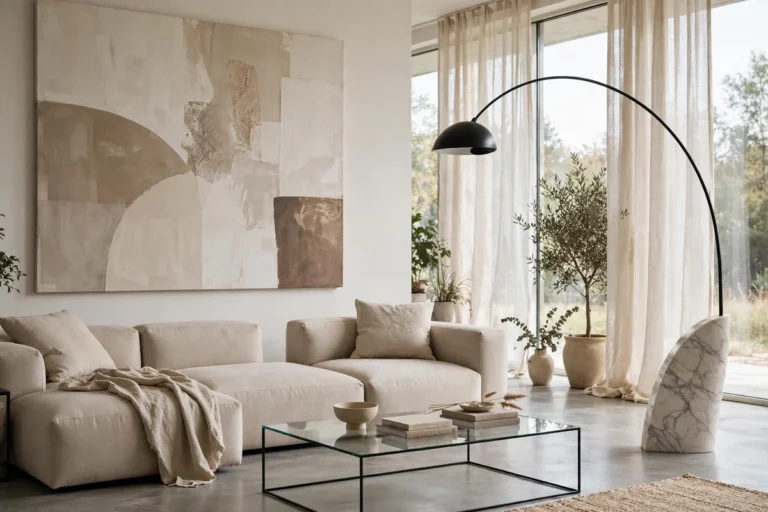
36 Farmhouse Living Room Ideas for Cozy Rustic Style
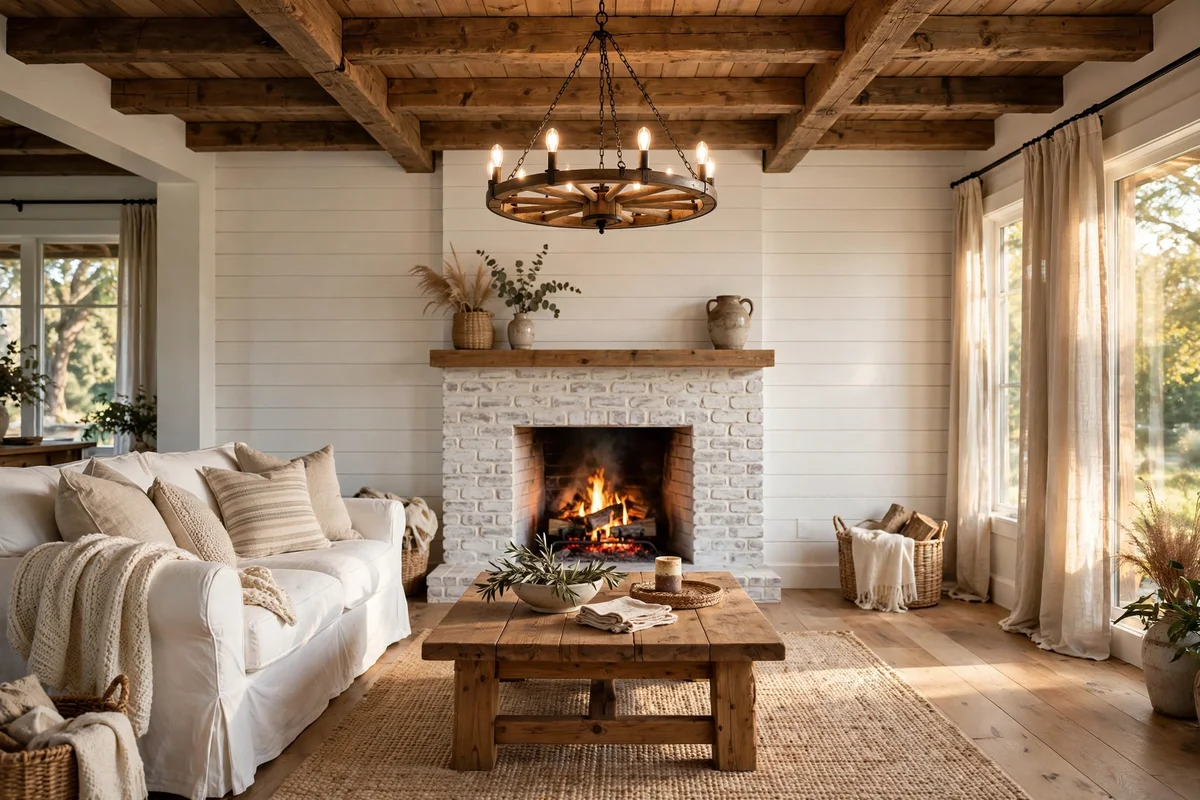
36 Farmhouse Living Room Ideas for Cozy Rustic Style
Farmhouse living rooms have that rare magic of feeling both timeless and completely personal. Warm woods, soft slipcovered linen, weathered finishes, and layers of texture come together to create a space that invites you to sink in and stay a while. Whether you live in an actual farmhouse or a city apartment, this style brings comfort without clutter and charm without kitsch.
This guide walks you through 36 farmhouse living room ideas, organized from structural foundations to furniture, textiles, lighting, and the finishing details that make the style sing. Every idea includes realistic price ranges and a pro tip, so you can plan a refresh that fits your budget, from a $30 thrifted find to a $2,000 heirloom-quality sofa.
Warm Foundations: Walls, Floors and Ceilings
1. Shiplap Accent Wall
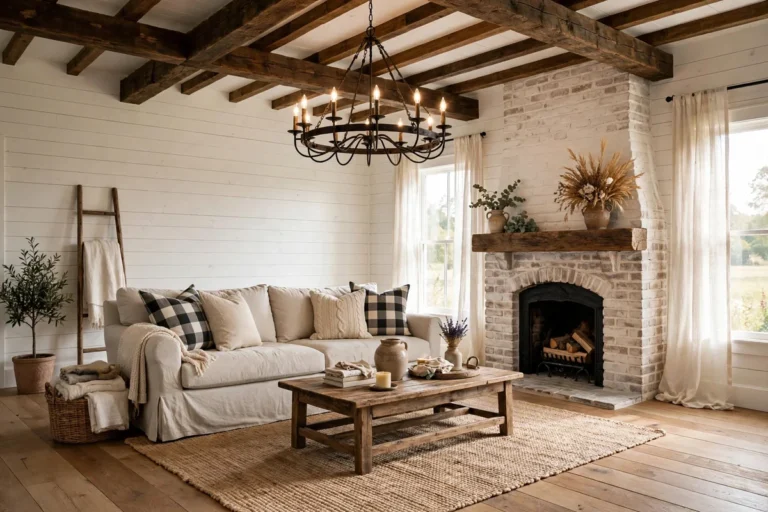
A shiplap accent wall instantly sets the farmhouse tone, especially painted in a soft white like alabaster or Swiss coffee. Run the boards horizontally behind your sofa to widen the room visually, or go vertical on a chimney breast for a fresh twist. Real wood shiplap runs $6 to $12 per square foot installed, while high-quality MDF planks you paint yourself cost about $2 to $4 per square foot. Leave a 1/8 inch reveal between boards for that authentic shadow line. Pair the wall with darker wood beams or a brick fireplace so the white boards do not float. This single project transforms a bland box into a room with instant character.
Pro tip: Paint shiplap the same color as your trim for a seamless, high-end look.
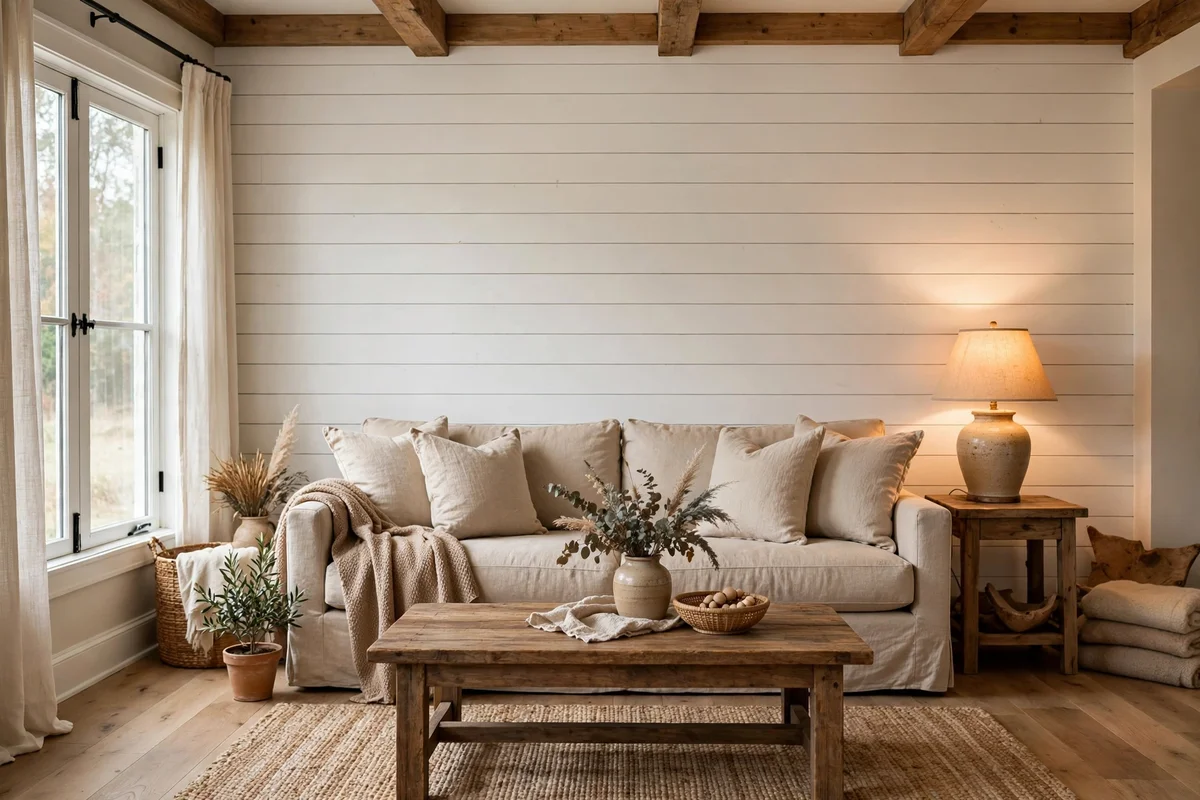
2. Board-and-Batten Wainscoting
Board-and-batten wainscoting gives farmhouse walls architectural depth for very little money. The grid of vertical battens over flat panels looks best painted in a warm white or a soft greige, rising to chair rail height around the room or going full height on one wall. DIY material costs run $1 to $3 per square foot for primed MDF strips, and a weekend project can cover a whole living room. Space battens 12 to 16 inches apart for a classic rhythm. Behind the sofa, wainscoting creates a backdrop that makes artwork and mirrors pop. Finish with semi-gloss paint for wipeable durability in a hardworking family room.
Pro tip: Caulk every seam before painting to get crisp, professional lines.
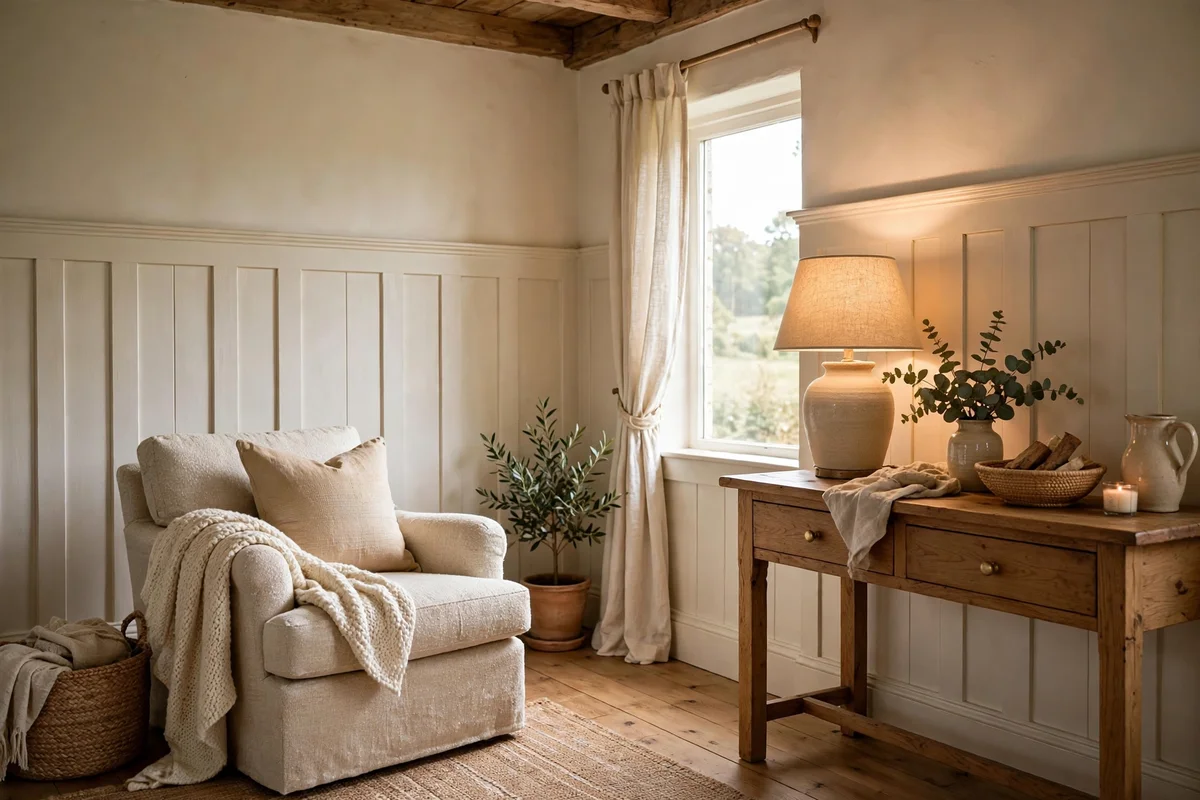
3. Reclaimed Wood Ceiling Beams
Exposed wood beams are the crown jewel of a farmhouse living room, adding age and warmth overhead. Real reclaimed beams cost $15 to $40 per linear foot, but convincing faux beams in lightweight polyurethane run $6 to $12 per linear foot and install with two people in an afternoon. Stain them in a medium oak or walnut tone to contrast white ceilings, or whitewash them to keep the room airy. Space beams 4 to 6 feet apart for authentic timber-frame rhythm. They draw the eye upward, making standard 8-foot ceilings feel grander. Hang a wagon wheel chandelier from the center beam to complete the look.
Pro tip: Vary beam widths slightly for the hand-hewn look of old timber framing.
4. Wide-Plank Pine Floors
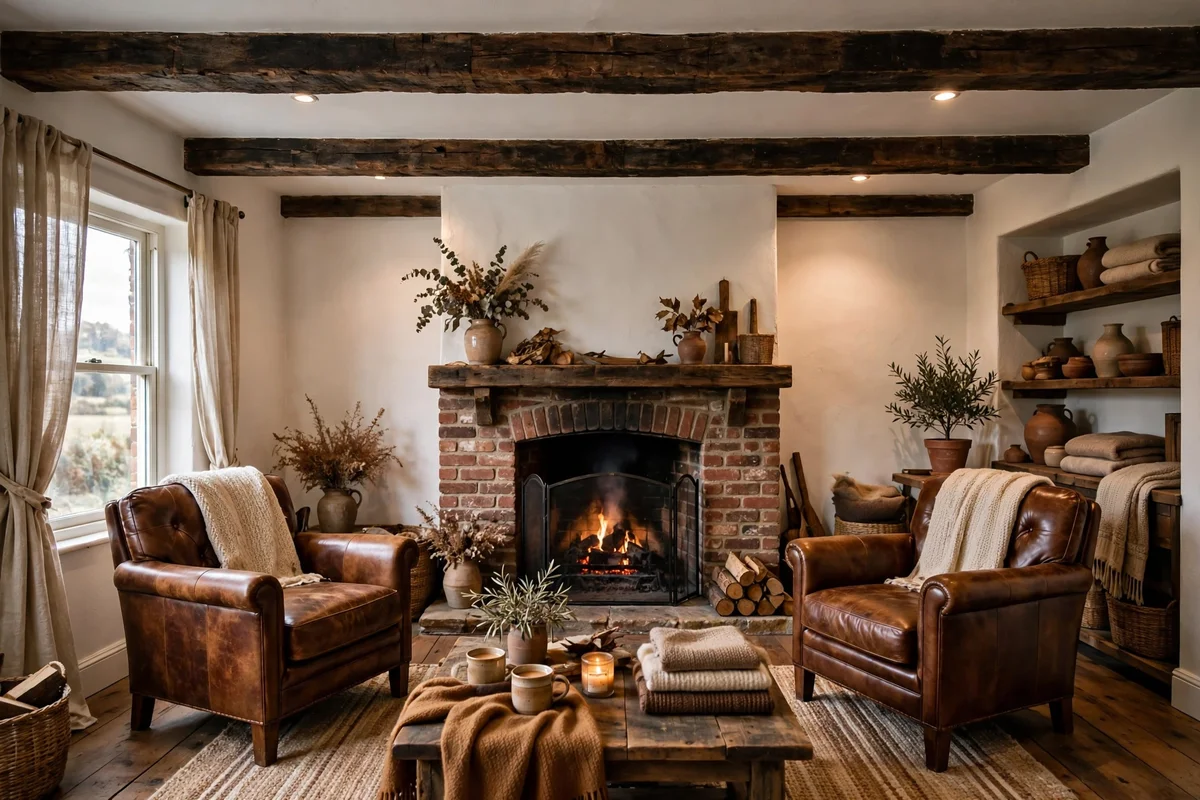
Wide-plank pine floors are the soul of farmhouse style, with knots, grain variation, and a honeyed patina that engineered floors try to imitate. New knotty pine flooring costs $4 to $8 per square foot, while reclaimed wide planks run $8 to $15. If replacing floors is out of budget, a light sanding and matte water-based finish can revive tired boards for about $3 to $5 per square foot professionally. Run planks parallel to the longest wall to stretch the room. Leave small gaps natural rather than filling them, since seasonal movement is part of the charm. Layer a jute rug on top to protect high-traffic zones.
Pro tip: Choose a matte finish, since glossy floors read modern, not farmhouse.
5. Brick Fireplace Surround
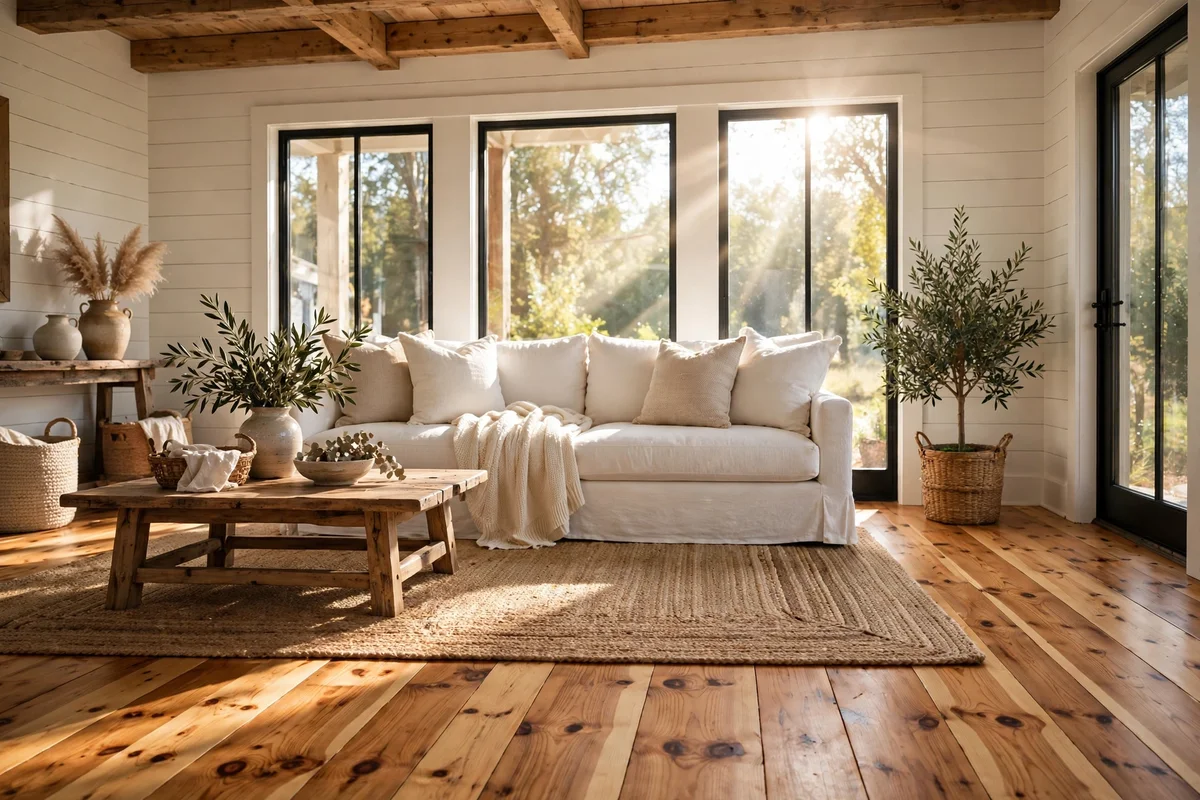
A brick fireplace is the beating heart of a farmhouse living room, and you do not need an actual chimney to get one. Thin brick veneer panels cost $8 to $14 per square foot and install over drywall with mortar or panel adhesive, turning a flat wall into a rustic focal point in a weekend. Whitewashing the brick with diluted latex paint ($20 for a gallon) softens red tones while keeping texture visible. Style the mantel with a wood beam, layered art, and candle clusters. An electric fireplace insert ($200 to $600) adds flickering warmth without venting. Keep the hearth clear of clutter so the brickwork shines.
Pro tip: Seal whitewashed brick with matte sealer so soot wipes off easily.
6. Limewash Plaster Walls
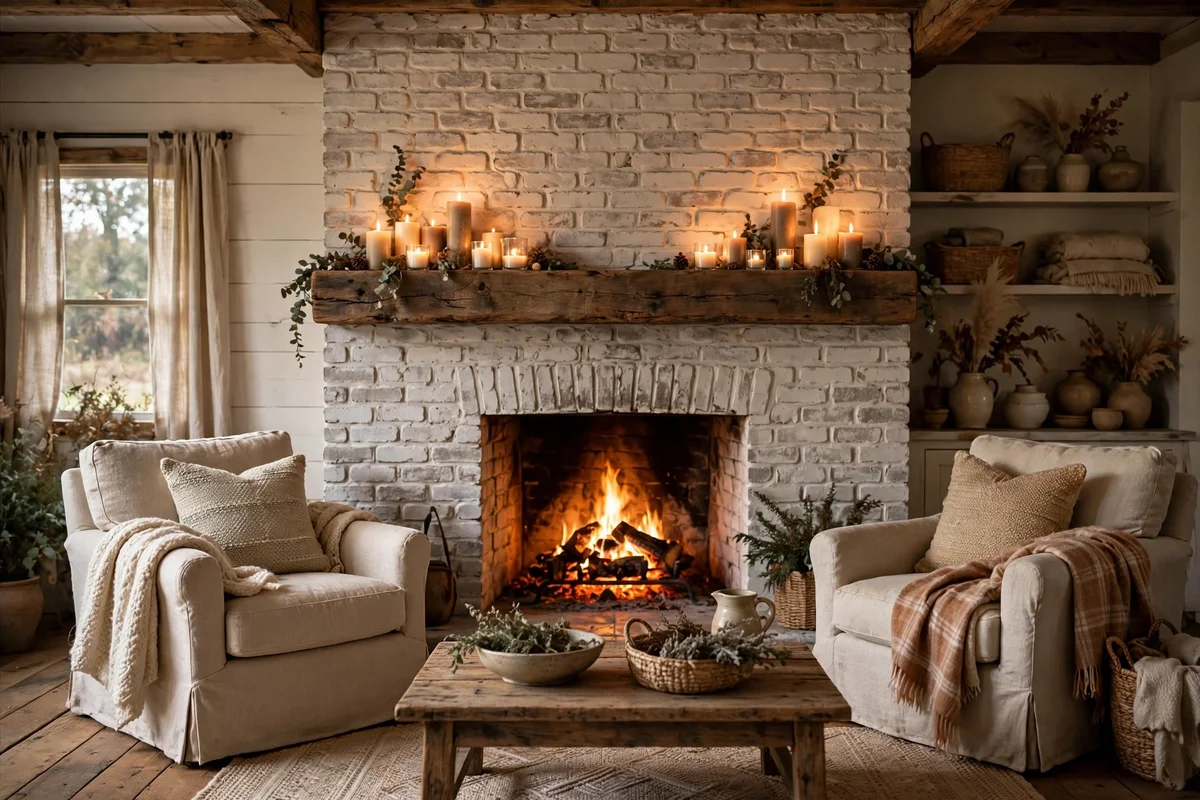
Limewash paint gives walls a soft, cloud-like movement that flat latex can never match, and it feels perfectly at home in a farmhouse living room. True limewash runs $50 to $80 per gallon and covers about 200 square feet, applied in crisscross strokes with a block brush. The result is a chalky, old-world finish in warm whites, creams, or pale sage. It is naturally mold-resistant and VOC-free, a nice bonus for family homes. Pair limewash walls with dark wood furniture so the texture reads clearly. One accent wall is enough if a whole room feels risky. Touch-ups blend invisibly, which renters and busy parents will love.
Pro tip: Apply limewash over a tinted primer in the same tone to avoid patchiness.
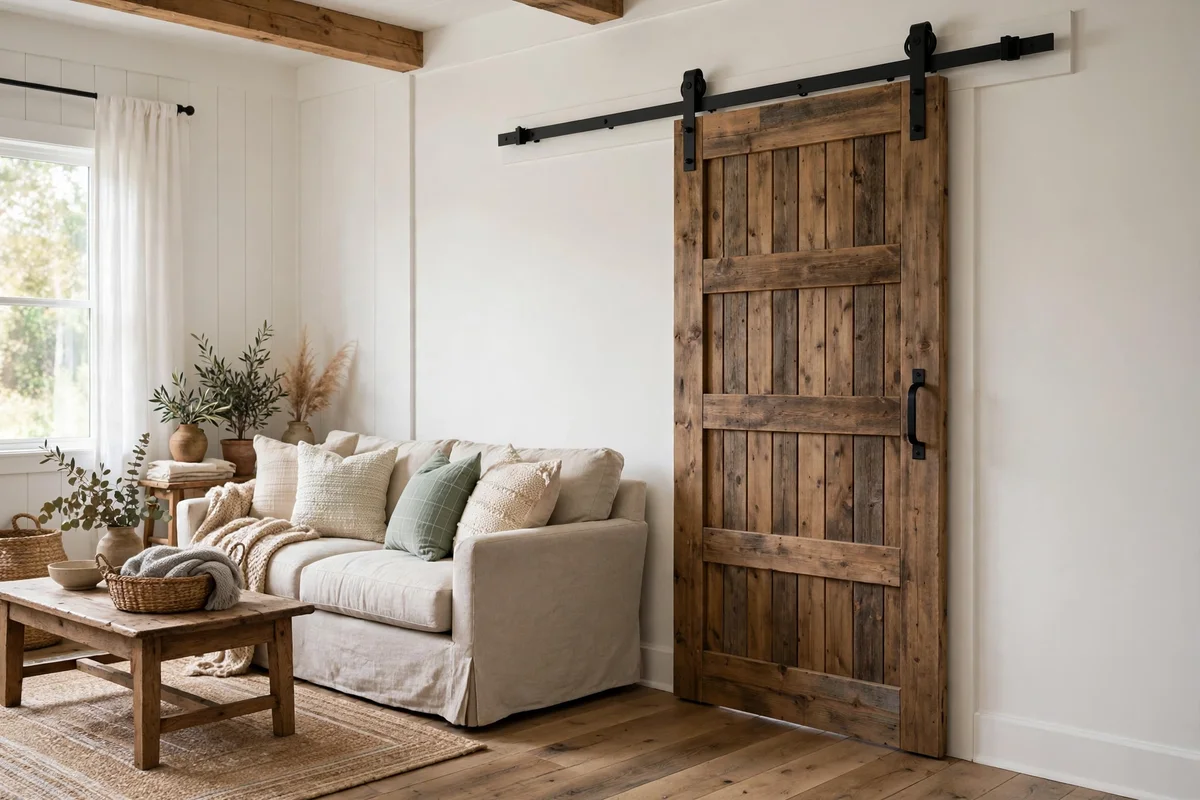
7. Sliding Barn Door
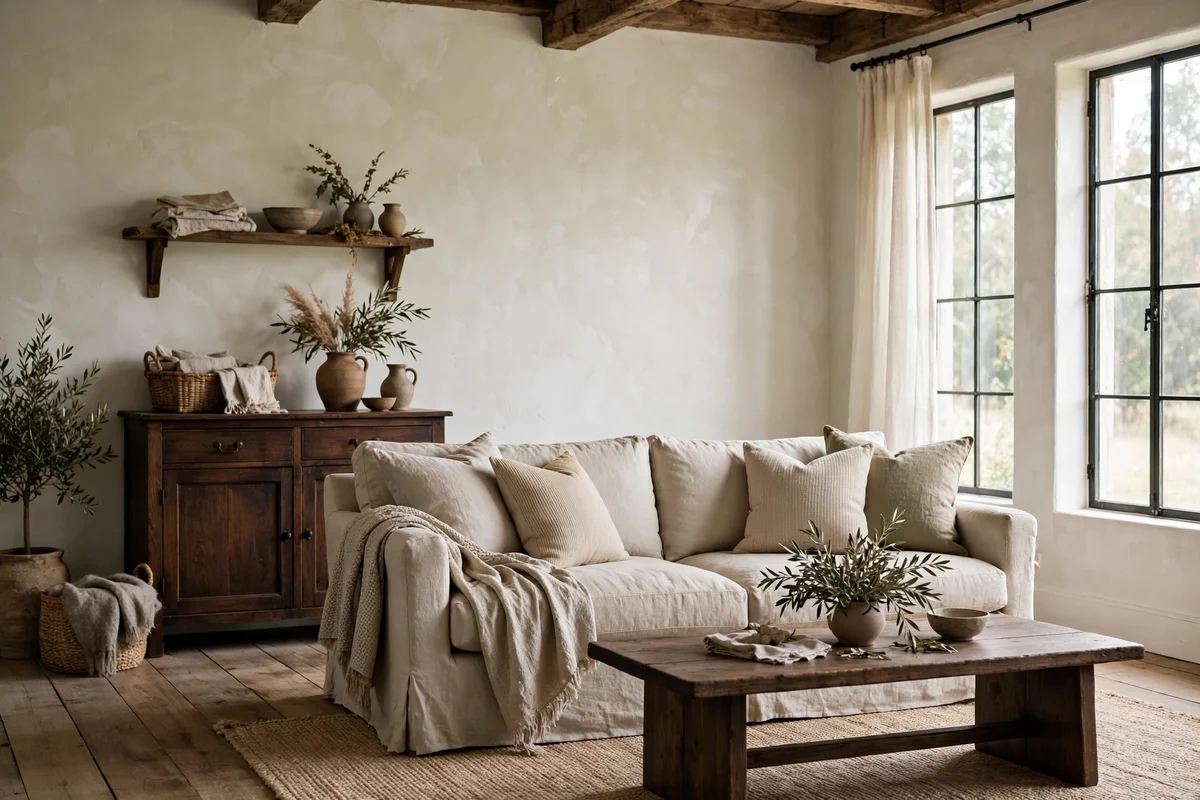
A sliding barn door adds instant farmhouse credibility while saving swing space, perfect for closing off a home office nook or media closet. Ready-made pine barn doors cost $150 to $400, with black steel hardware kits running $40 to $120. Stain the door in weathered gray or paint it charcoal for contrast against white walls. The exposed track becomes a design feature, so choose hardware with a clean matte black finish. Leave at least 6 inches of wall clearance on the sliding side. Add a soft-close mechanism ($25) so the door glides silently. This one feature tells guests exactly what style story your home is telling.
Pro tip: Mount a full-length mirror on the back of the door for hidden function.
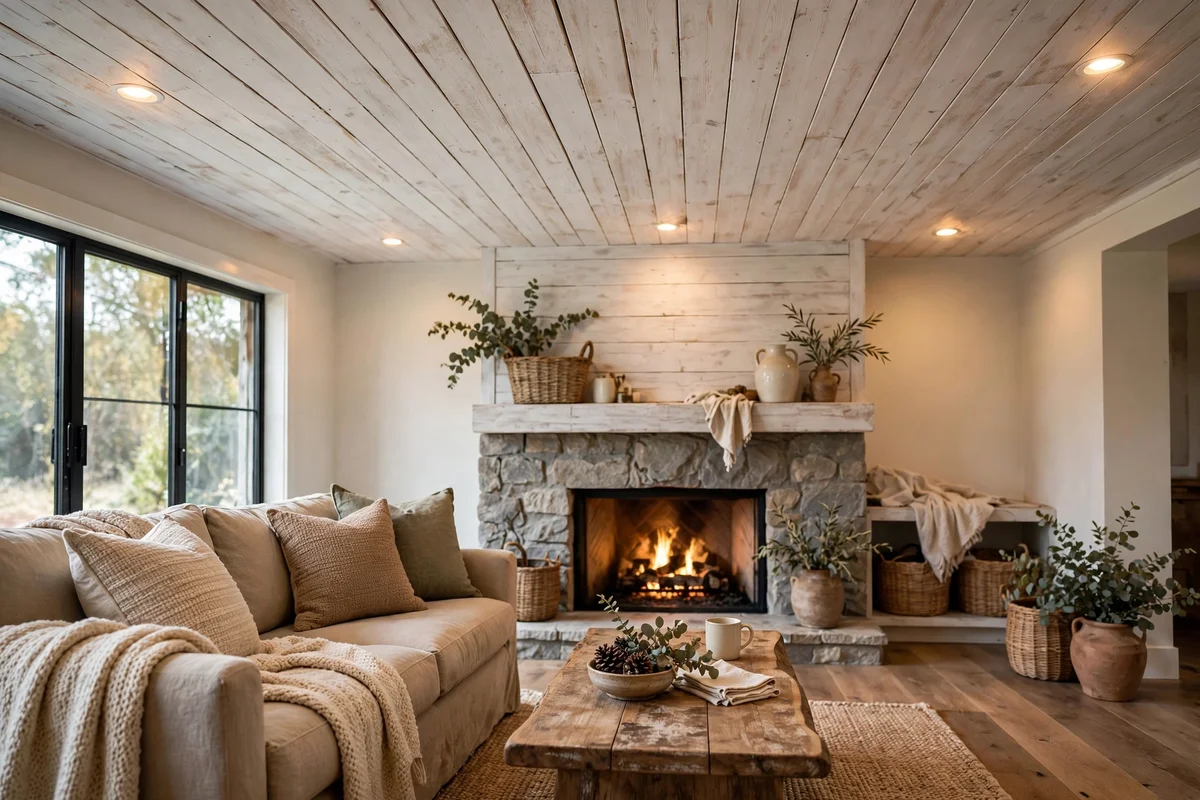
8. Wood Plank Ceiling
A wood plank ceiling wraps the whole room in warmth, making the living room feel like a cozy cabin retreat. Tongue-and-groove pine boards cost $3 to $6 per square foot, and prefinished options install quickly with a brad nailer. Whitewash the planks to keep the ceiling feeling high, or leave them natural for maximum coziness. Run boards across the short dimension of the room to make it feel wider. Pair with recessed lighting so the planks glow softly at night. This treatment works beautifully in rooms with 9-foot ceilings or higher, where the added texture reads as architecture rather than clutter overhead.
Pro tip: Stagger plank joints like brickwork for a more authentic, less grid-like look.
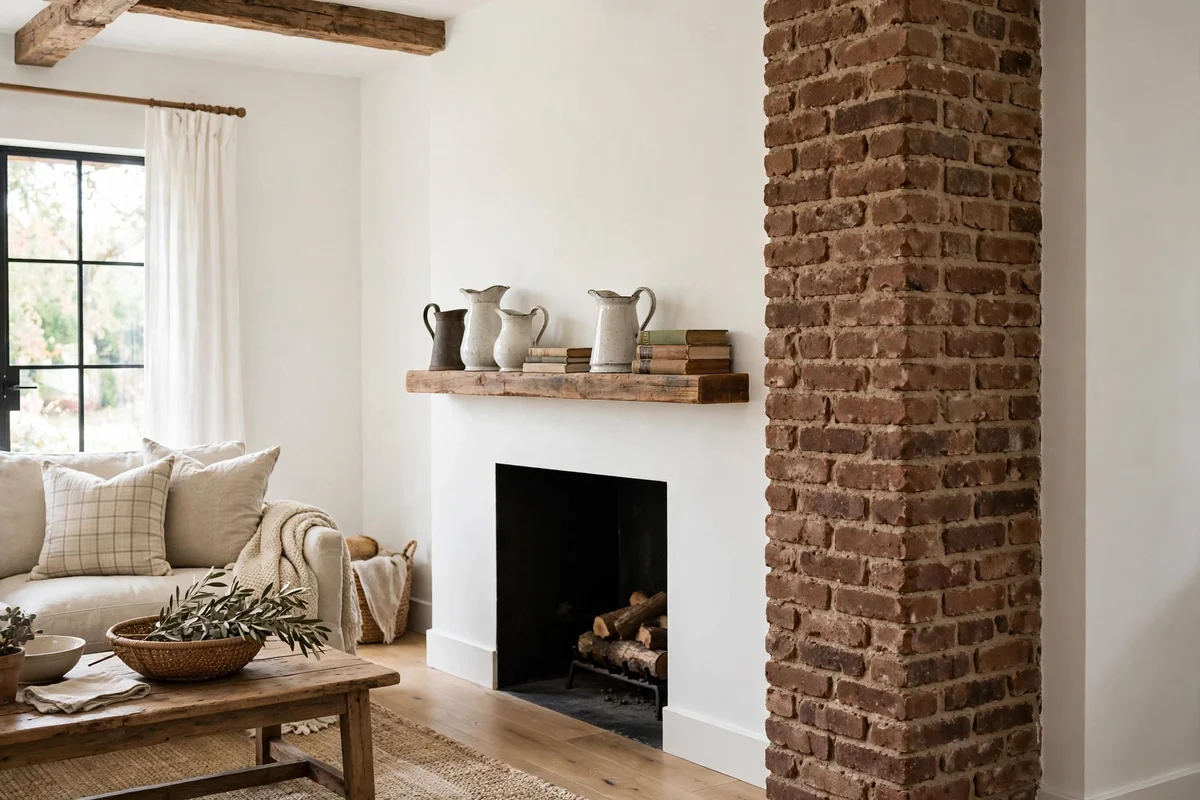
9. Brick Accent Pillar
A brick accent pillar or chimney-style column brings raw, honest texture to a farmhouse living room without committing to a full fireplace wall. Wrap a structural column or build a shallow 12-inch-deep bump-out with thin brick veneer ($8 to $14 per square foot), then cap it with a chunky wood beam mantel shelf. Style the shelf with ironstone pitchers, stacked books, and a trailing plant. In open-plan spaces, a brick pillar visually anchors the seating zone and separates it from the dining area. Whitewash it to blend with pale walls, or leave the brick raw for a bolder, more rustic statement.
Pro tip: Add a picture light above the mantel shelf to spotlight your styling.
Farmhouse Furniture: Pieces with History
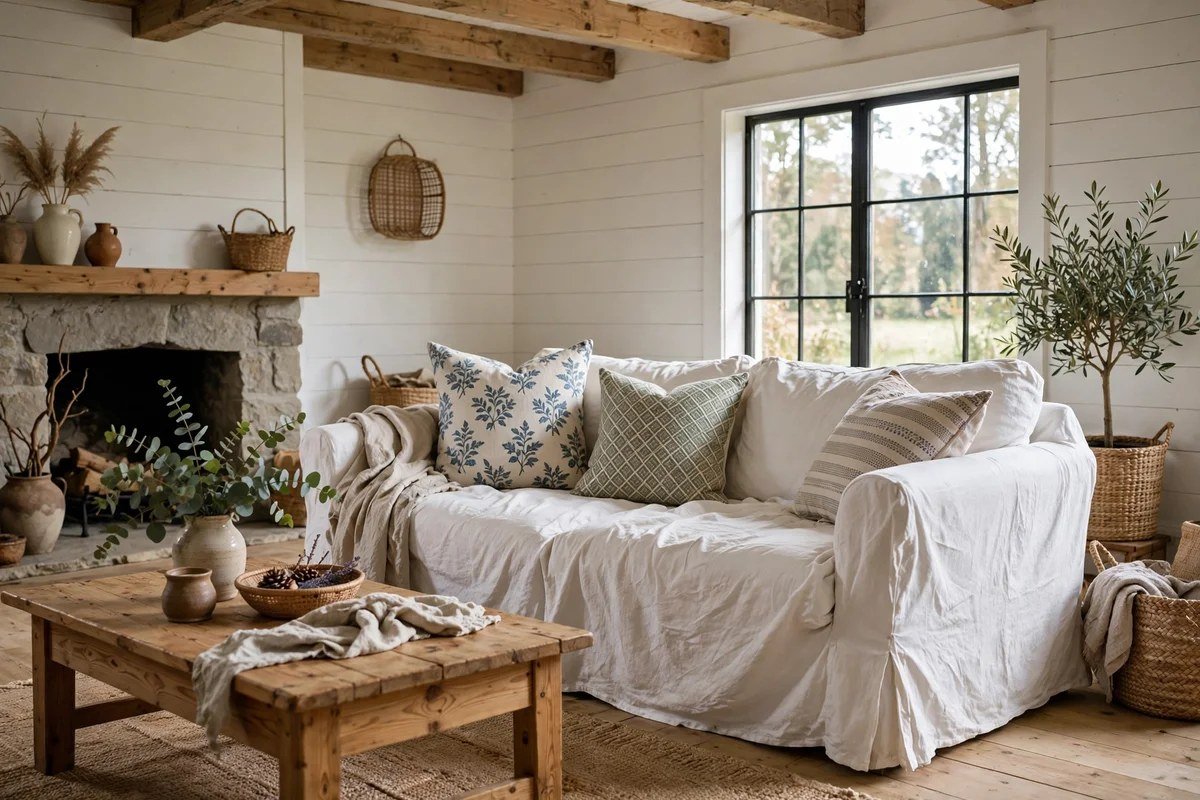
10. Slipcovered White Sofa
A slipcovered white sofa is the undisputed hero of farmhouse living rooms, relaxed enough for muddy paws and red wine because the cover simply comes off and washes. Quality slipcovered sofas run $800 to $2,000, with replacement covers available for $200 to $400 when you want a refresh. Choose a performance linen or cotton duck with a stain-resistant finish. The slightly rumpled, unstructured look is the whole point, so skip anything too tailored. Pair with darker wood tables and patterned pillows so the white feels intentional, not sterile. Wash covers every few months to keep them bright and fresh.
Pro tip: Buy a second slipcover in a darker tone for winter to rotate seasonally.
11. Leather Wingback Chairs
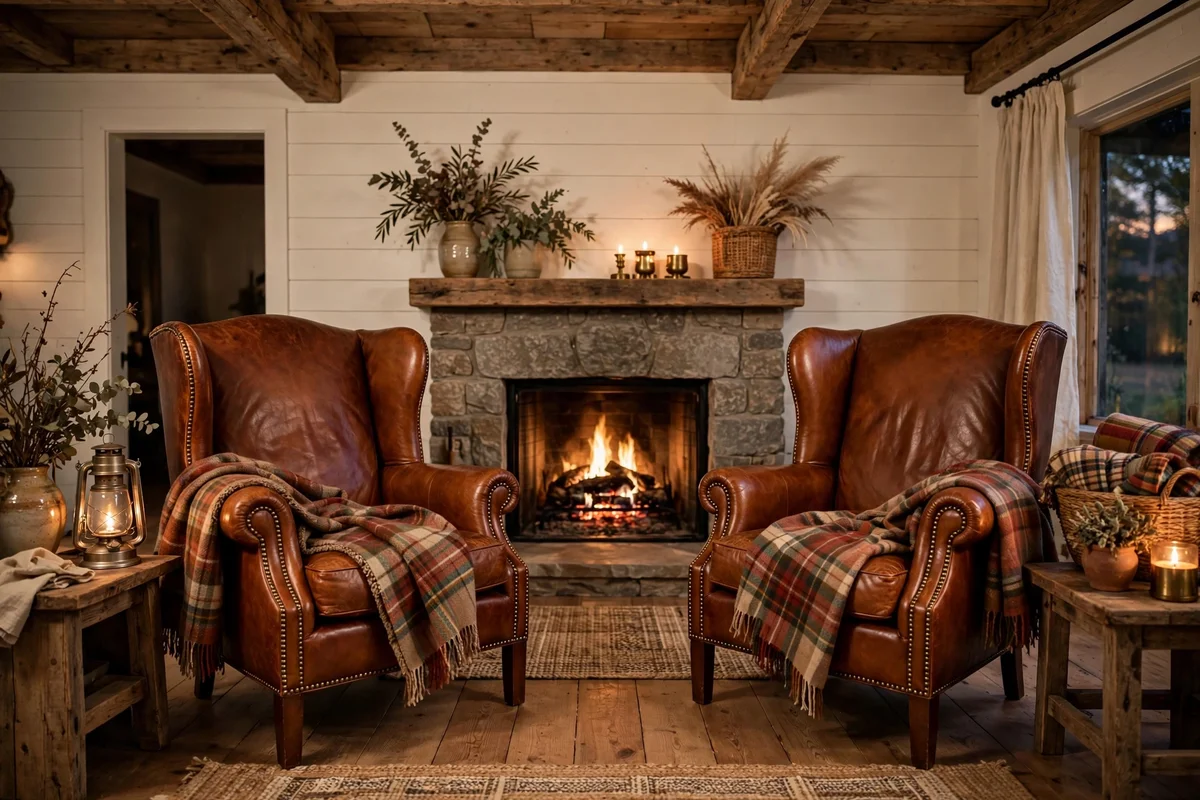
Cognac or chestnut leather wingback chairs bring rich patina to a farmhouse living room, aging beautifully with every year of use. Vintage leather wingbacks from thrift stores and auctions cost $100 to $400, while new ones run $600 to $1,500 per chair. The warm leather tones ground pale slipcovers and white walls, adding masculine balance to the room. Look for solid wood legs and brass nailhead trim for authentic detail. Condition the leather twice a year with a quality balm ($15) to prevent cracking. Flank the fireplace with a matching pair for perfect symmetry, or use a single chair as a reading nook anchor.
Pro tip: Embrace scratches and scuffs, since worn leather only looks better with age.
12. Pine Farmhouse Coffee Table
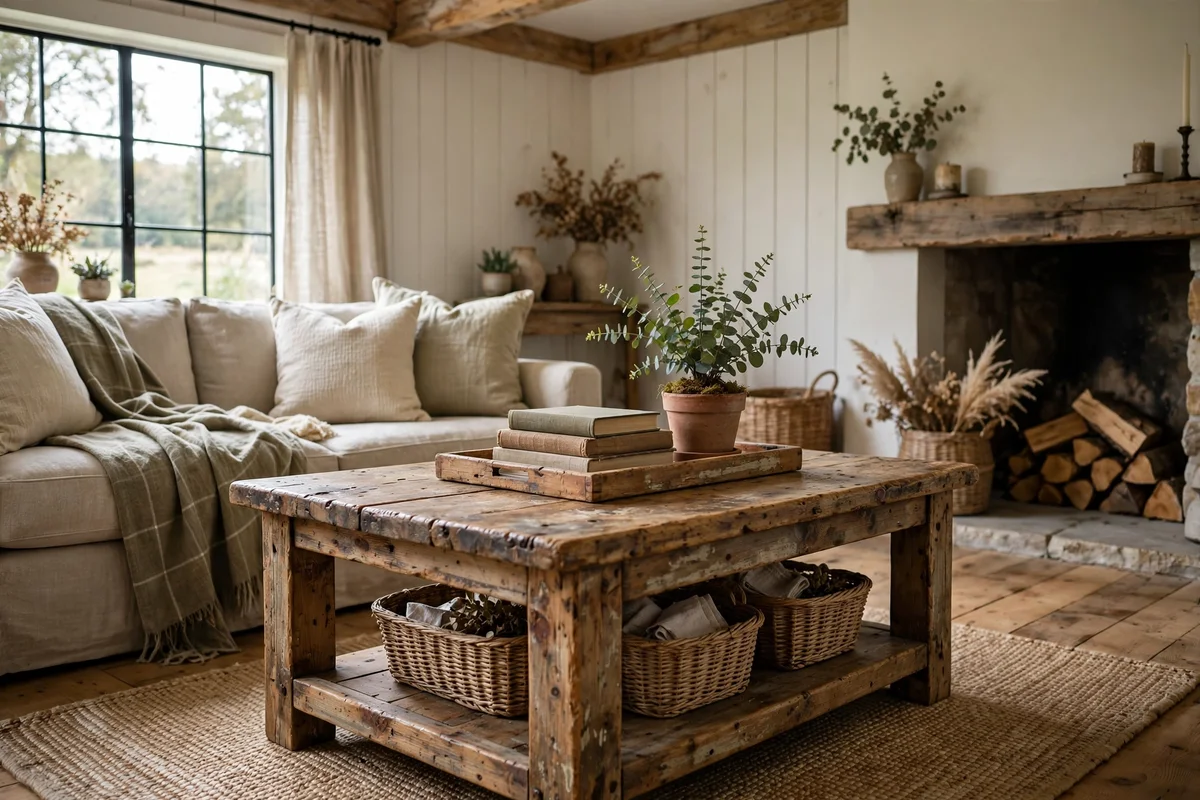
A chunky pine coffee table is the workhorse centerpiece every farmhouse living room needs. Solid pine tables with a distressed finish cost $200 to $600 new, or $50 to $150 as a thrifted piece you refinish yourself. Look for a lower shelf for baskets and books, which keeps the tabletop clear and the room tidy. Distressing with sandpaper, chains, and dark wax ($12) gives new pine an authentically aged look in an afternoon. Size the table at roughly two-thirds the sofa length and 16 to 18 inches high for comfortable reach. Style it with a tray, stacked books, and a small plant.
Pro tip: Rub dark furniture wax into distressed edges to fake decades of wear.
13. Ladder-Back Armchairs
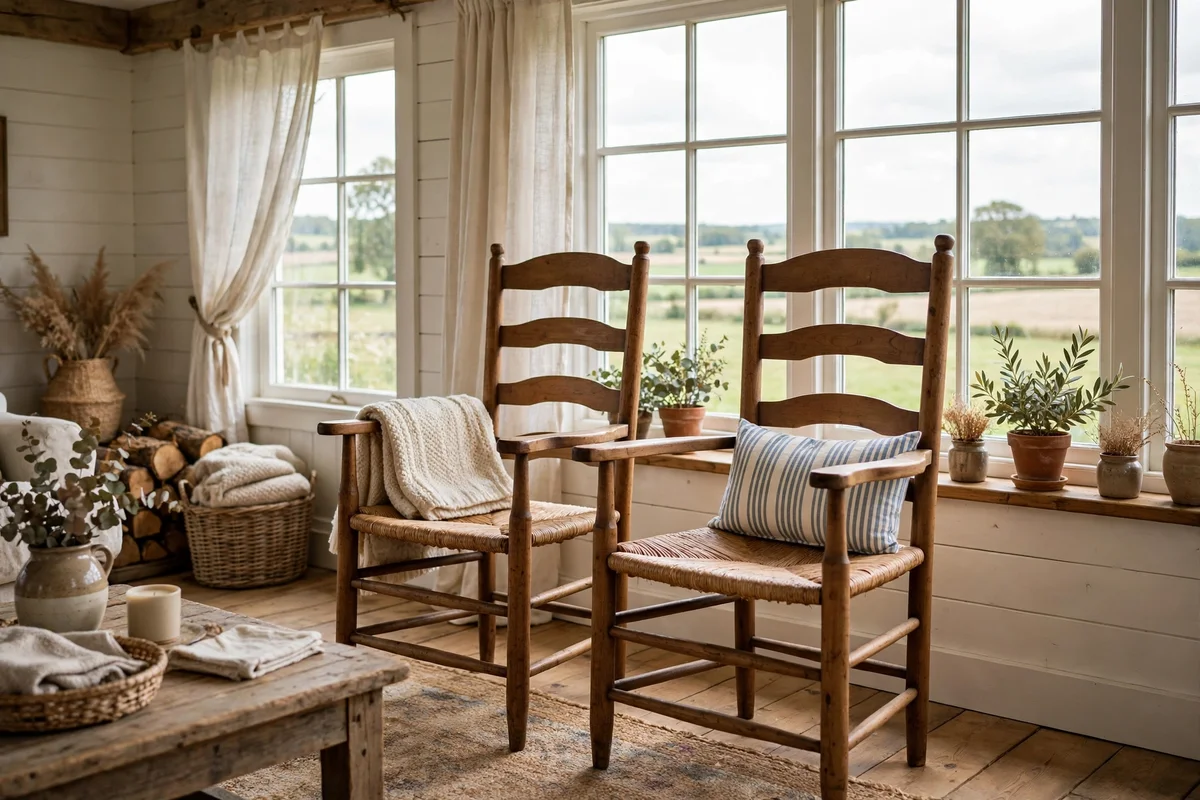
Ladder-back armchairs with rush or woven seats are farmhouse classics that work everywhere from the fireplace to the reading corner. New solid wood versions cost $150 to $350 each, while vintage Shaker-style chairs surface at flea markets for $40 to $120. The open slatted backs keep sight lines clear, so they never visually clutter the room. Add a small lumbar pillow in ticking stripe for comfort and pattern. A pair flanking a window or console creates instant symmetry. Choose a distressed black or natural oak finish depending on whether your palette leans modern farmhouse or traditional rustic.
Pro tip: Mix one ladder-back with an upholstered chair to avoid a matchy furniture-store look.
14. Rustic Console Table
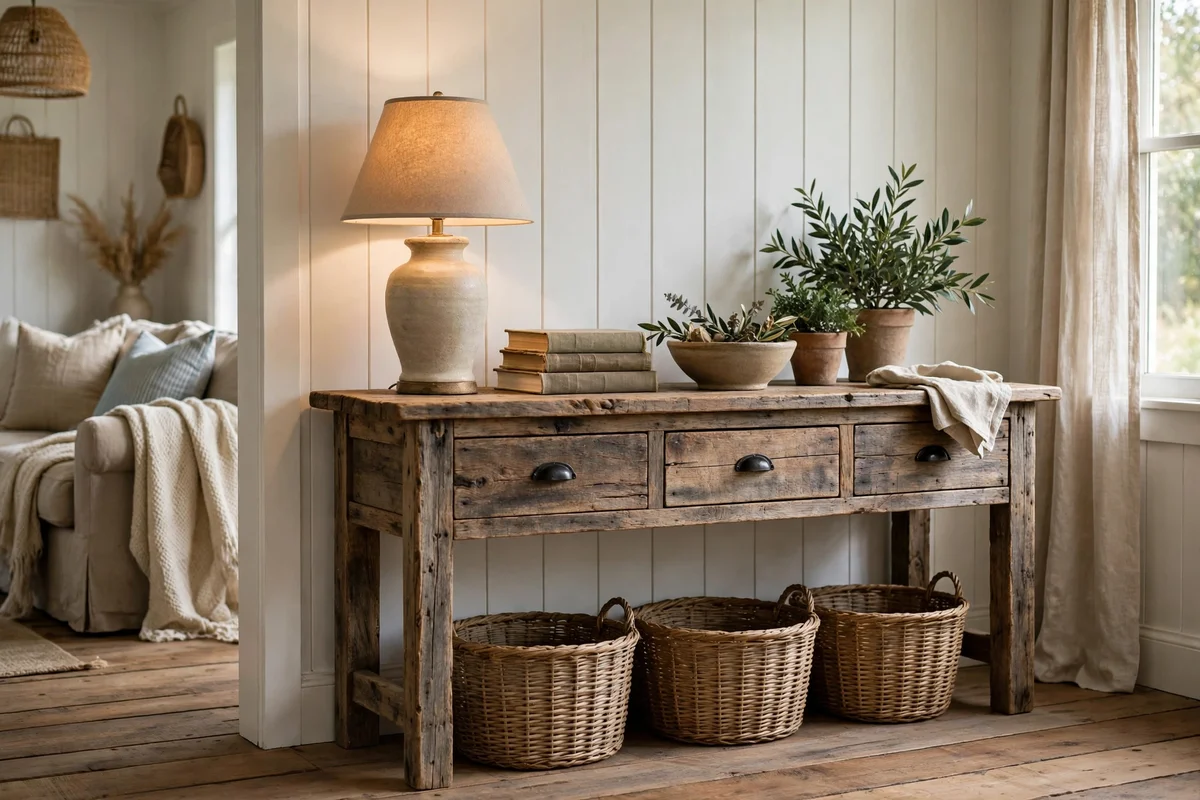
A rustic console table behind the sofa or against an entry wall adds surface space and farmhouse character in one move. Reclaimed wood consoles run $250 to $700, while a DIY build from construction lumber costs under $100 in materials. Style it in layers: a tall lamp or mirror at the back, stacked coffee table books in the middle, and a low bowl or plant at the front. The open lower shelf is perfect for woven baskets that hide remotes and chargers. Keep the finish slightly rough, since a too-perfect console fights the relaxed farmhouse mood. Anchor it with a rug if it floats behind seating.
Pro tip: Use the rule of threes when styling: three objects of varying heights per zone.
15. Wooden Rocking Chair
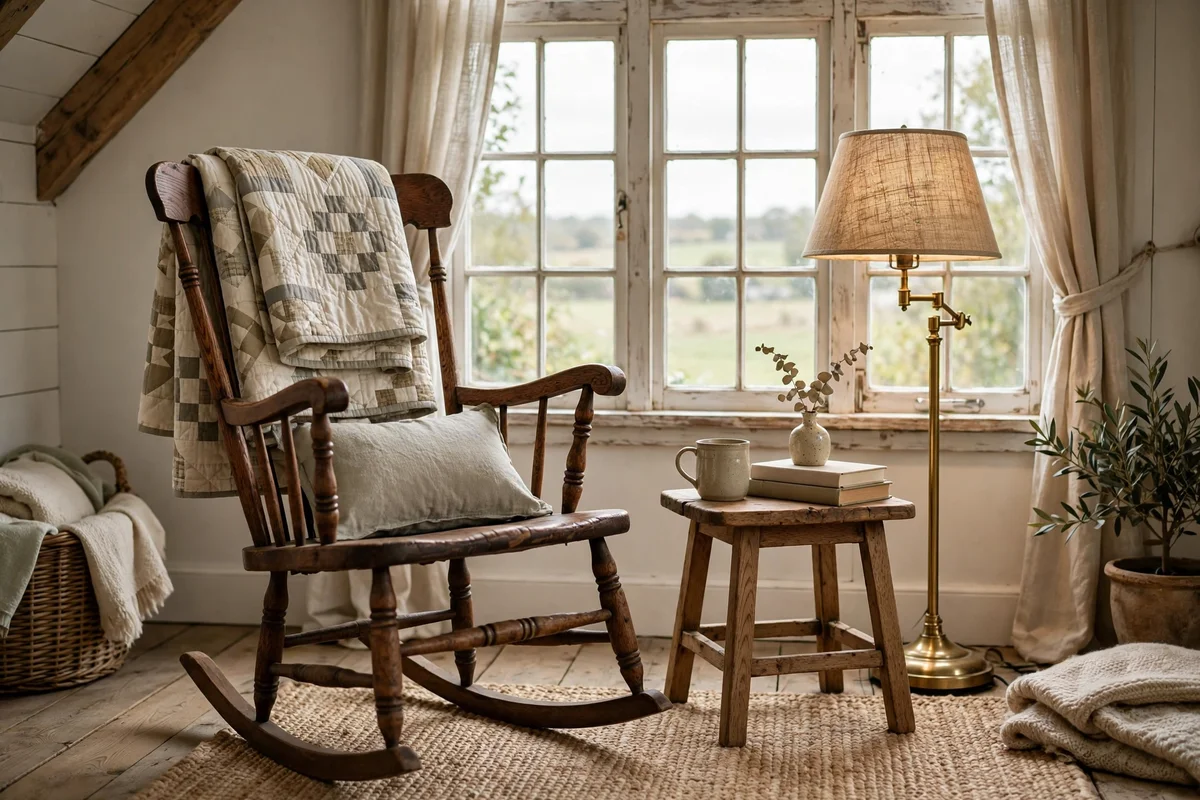
A wooden rocking chair in the corner turns an unused spot into the coziest seat in the house. Vintage oak rockers cost $60 to $200 at antique shops, and a fresh coat of paint or stain plus a new cushion ($30 to $60) makes them sing. Place it near a window with a floor lamp and a small side table for a proper reading nook. The gentle motion adds life to a room full of static furniture. Choose a spindle-back or ladder-back style for authentic farmhouse lines. A folded quilt over the back adds color and signals that this chair is meant to be used, not just admired.
Pro tip: Add felt pads to the rockers to protect wood floors from scratches.
16. Settle Bench Seating
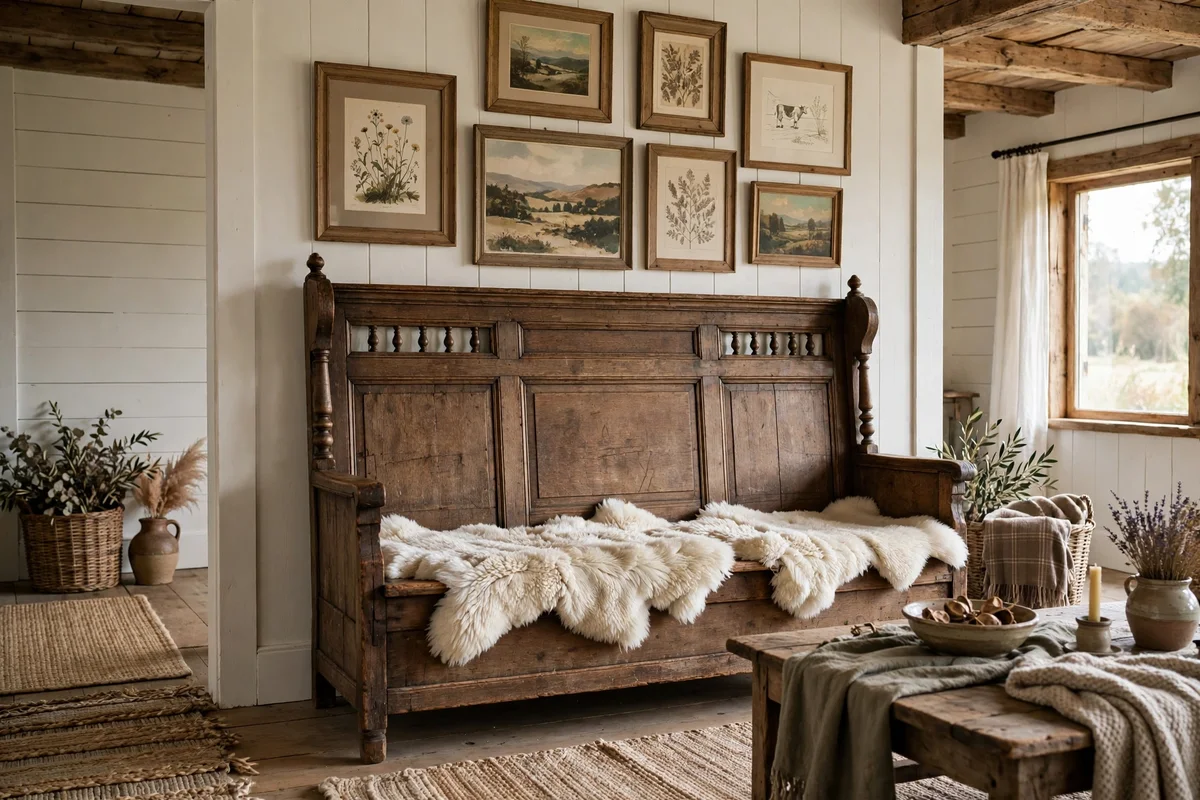
A settle bench, the high-backed wooden bench from old farmhouses, makes a striking and practical addition to a living room. Antique settles run $300 to $800, while reproductions cost $400 to $900. Place one against a wall under a gallery of art, or use it as a room divider behind a floating sofa. The tall back creates architecture where walls are bare, and the seat doubles as extra guest seating. Toss on a couple of sheepskins or a long cushion ($40 to $80) for comfort. Look for one with storage under the seat, a classic feature that hides blankets and board games beautifully.
Pro tip: A settle with a lift-up seat gives you hidden storage for throws and pillows.
17. Vintage Trunk Coffee Table
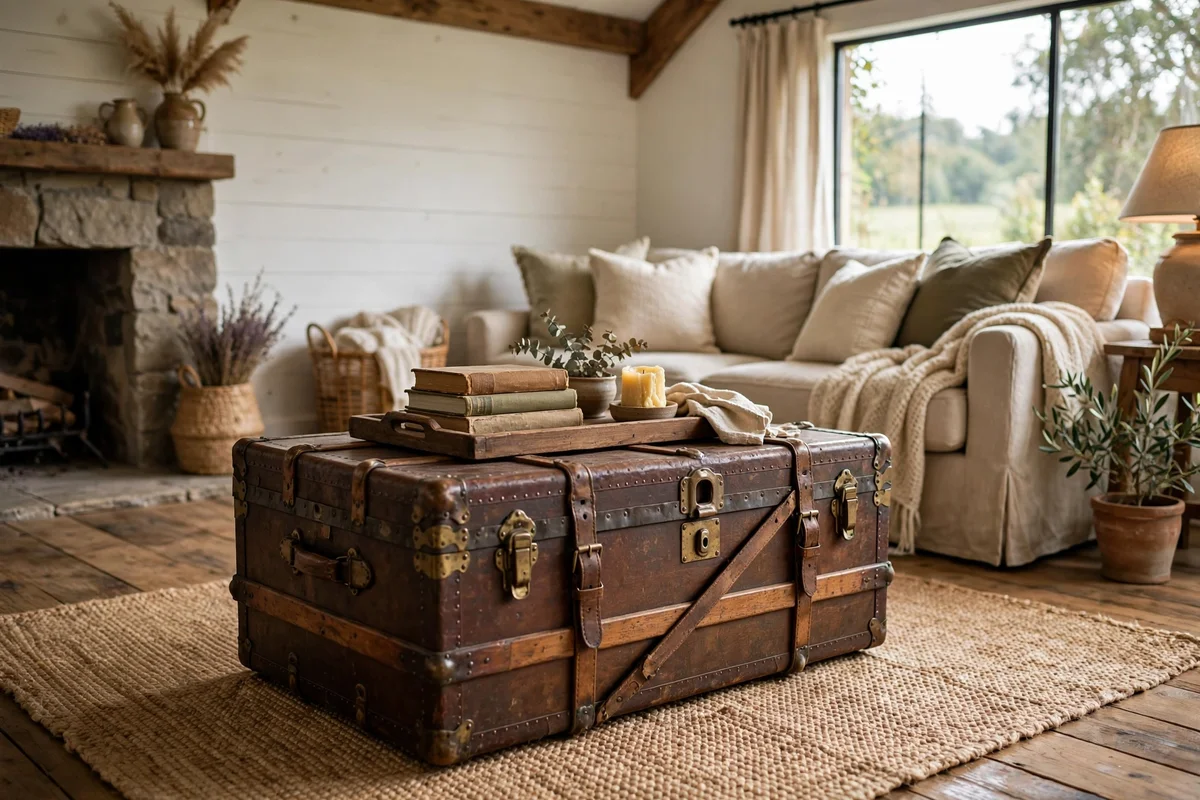
A vintage steamer trunk as a coffee table delivers storage, surface, and story in one piece. Authentic trunks cost $80 to $300 at flea markets and antique malls, far less than a comparable storage ottoman. The flat top holds trays and books perfectly, while the interior swallows blankets, games, and seasonal decor. Look for intact latches and leather straps, and line the inside with cedar panels ($20) to keep contents fresh. Place it on a rug so it does not slide, and keep the height around 16 to 18 inches for comfortable use. A trunk instantly makes a new room feel collected over time.
Pro tip: Leave original travel stickers and labels intact, since they are the whole charm.
18. Distressed Armless Chairs
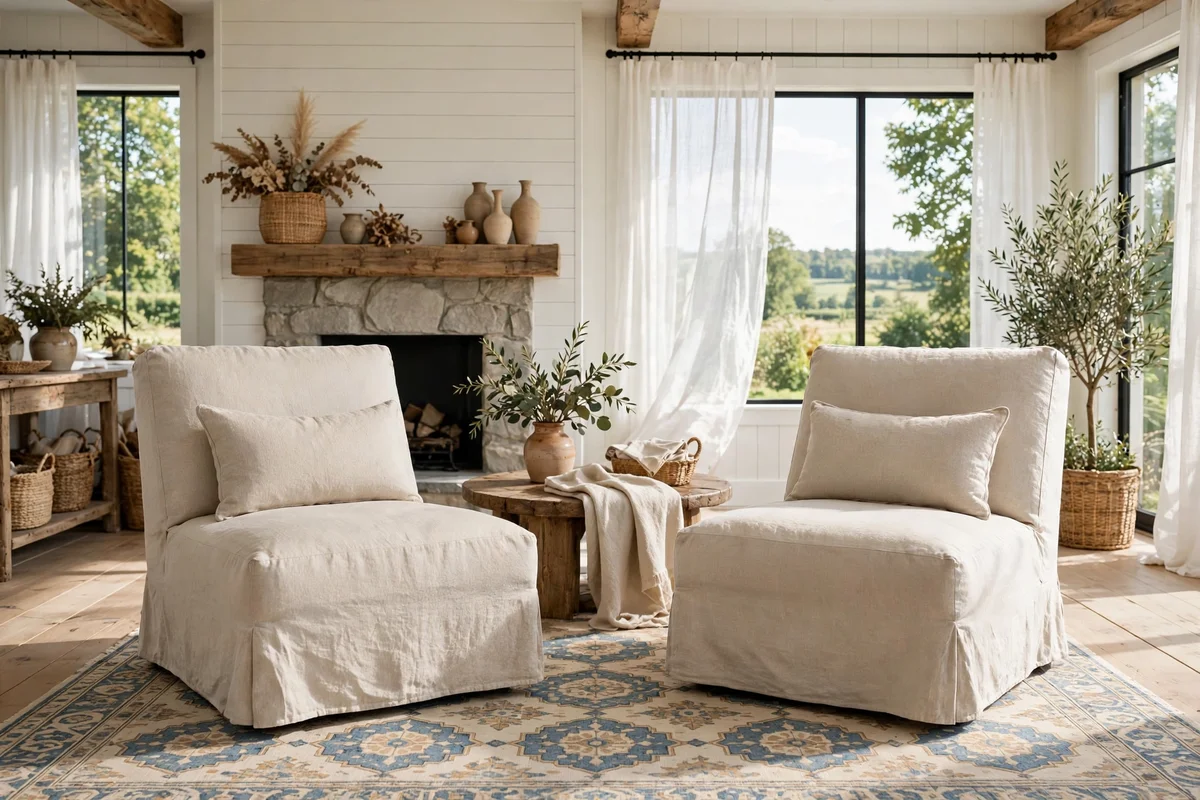
Distressed armless slipper chairs tuck neatly into small farmhouse living rooms where full armchairs would overwhelm. New linen slipper chairs cost $120 to $300 each, and their low profile keeps the room feeling open. Use them as a flexible pair that can face the sofa for conversation or turn toward the fireplace on quiet evenings. The armless design also makes them perfect pulled up to a desk or vanity elsewhere in the house. Choose a natural linen or ticking stripe cover, and add a lumbar pillow for back support. Their simplicity lets bolder pieces, like a patterned rug, take the spotlight.
Pro tip: Pick chairs with removable covers so you can wash away everyday life.
Textiles and Texture: Layers of Comfort
19. Buffalo Check Throw Pillows
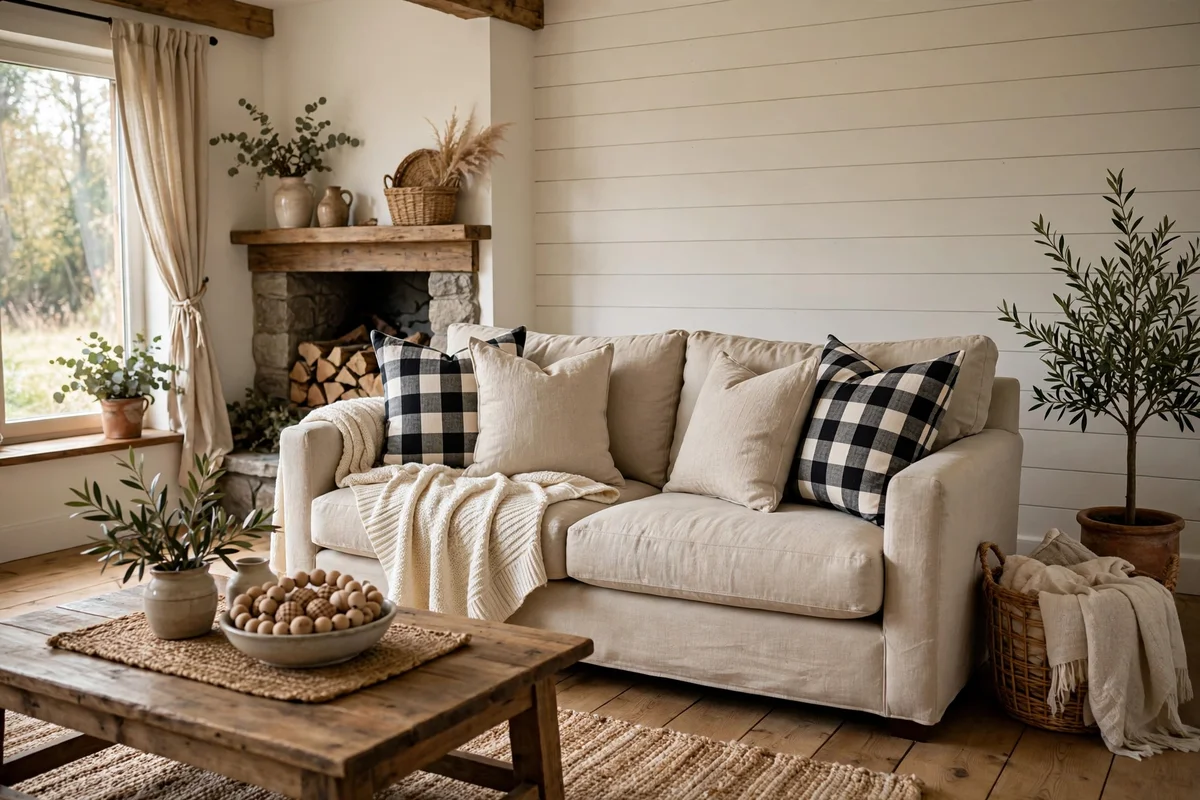
Buffalo check pillows are the fastest way to telegraph farmhouse style, and they work in every season. Classic red and black reads cozy cabin, while black and white or navy and white feels crisp and modern. Quality 20-inch pillow covers cost $12 to $30 each, with down-blend inserts ($15 to $25) giving that coveted karate-chop dent. Mix large-scale buffalo check with smaller patterns like ticking stripe so the checks do not overwhelm. Limit the boldest check to two or three pillows per sofa, then echo it in a throw or curtain tieback. This $60 update can carry a whole room’s theme.
Pro tip: Chop the pillow center with your hand for that designer magazine look.
20. Grain Sack Stripe Textiles
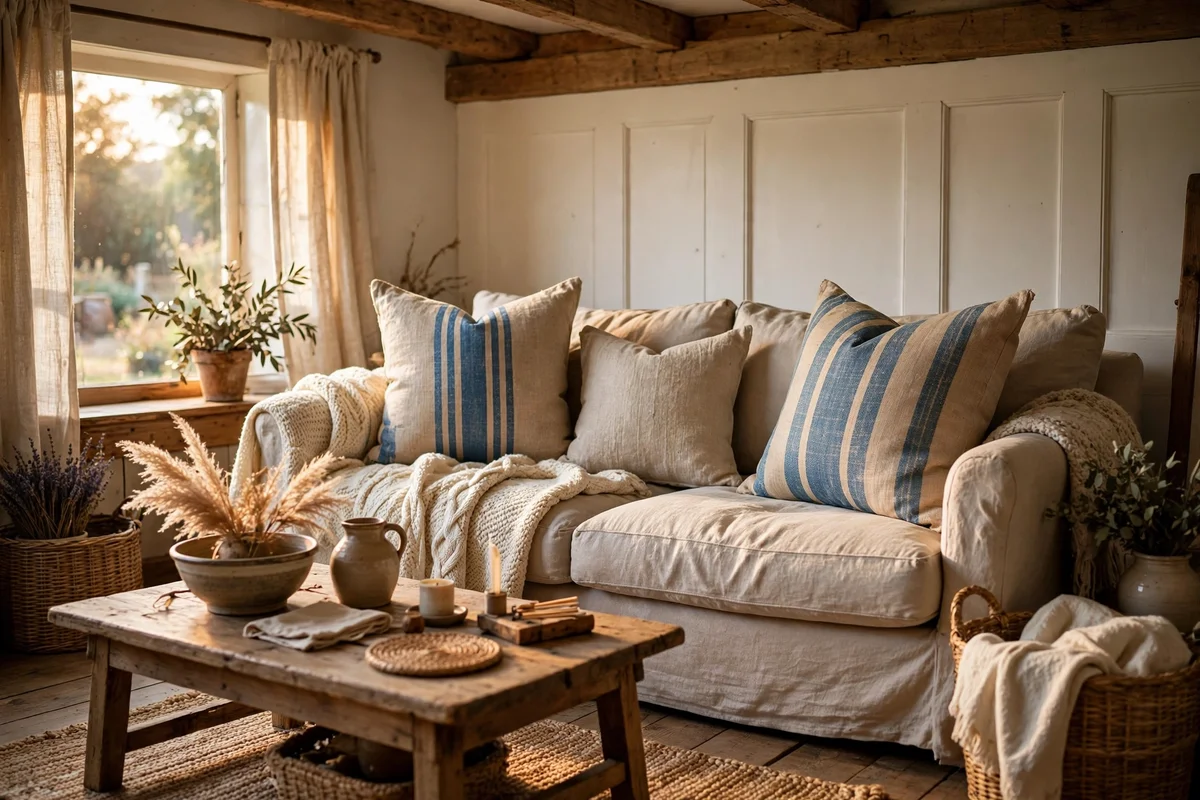
Grain sack stripes, the faded blue or red stripes from antique European grain bags, bring authentic farmhouse history into soft furnishings. Reproduction grain sack pillow covers cost $15 to $35, while genuine antique sacks run $40 to $100 and make stunning lumbar pillows. The thin double stripes look best on natural linen backgrounds in muted indigo, faded red, or classic black. Use them on pillows, table runners, and even reupholstered bench cushions for a cohesive thread through the room. Their worn, imperfect quality is exactly what keeps a farmhouse living room from feeling too precious or new.
Pro tip: Center the stripe perfectly on a pillow front, it is the detail that sells authenticity.
21. Ticking Stripe Upholstery
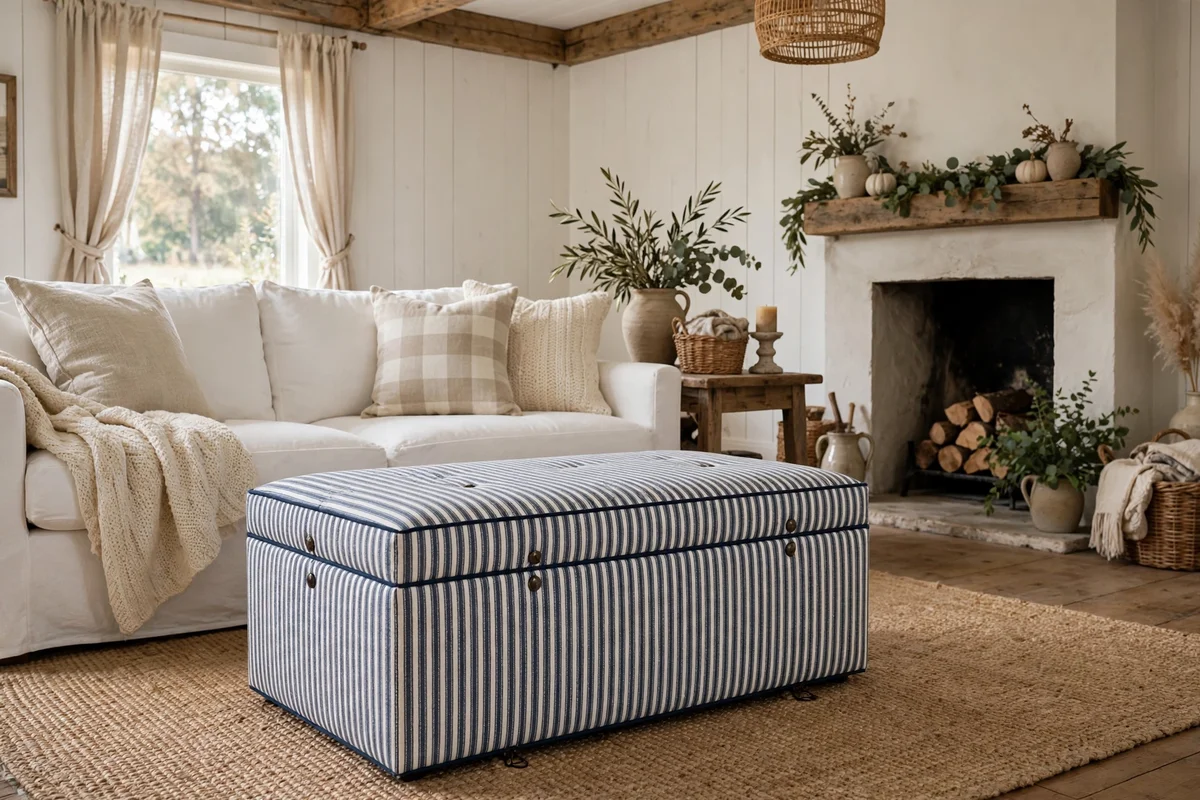
Ticking stripe, the narrow navy or black stripe from old mattress covers, is a farmhouse textile that never dates. A ticking stripe ottoman or bench costs $150 to $400, and the pattern hides everyday wear brilliantly. Use it on a single statement piece, like a storage ottoman or a pair of dining-style chairs pulled into the living room, so the stripe acts as a neutral with personality. The fine scale pairs well with larger buffalo checks and plaids in the same palette. For a DIY win, staple ticking stripe fabric ($12 to $20 per yard) over a plain ottoman frame in an afternoon.
Pro tip: Ticking stripe reads as a solid from across the room, so it layers with anything.
22. Jute and Sisal Rugs
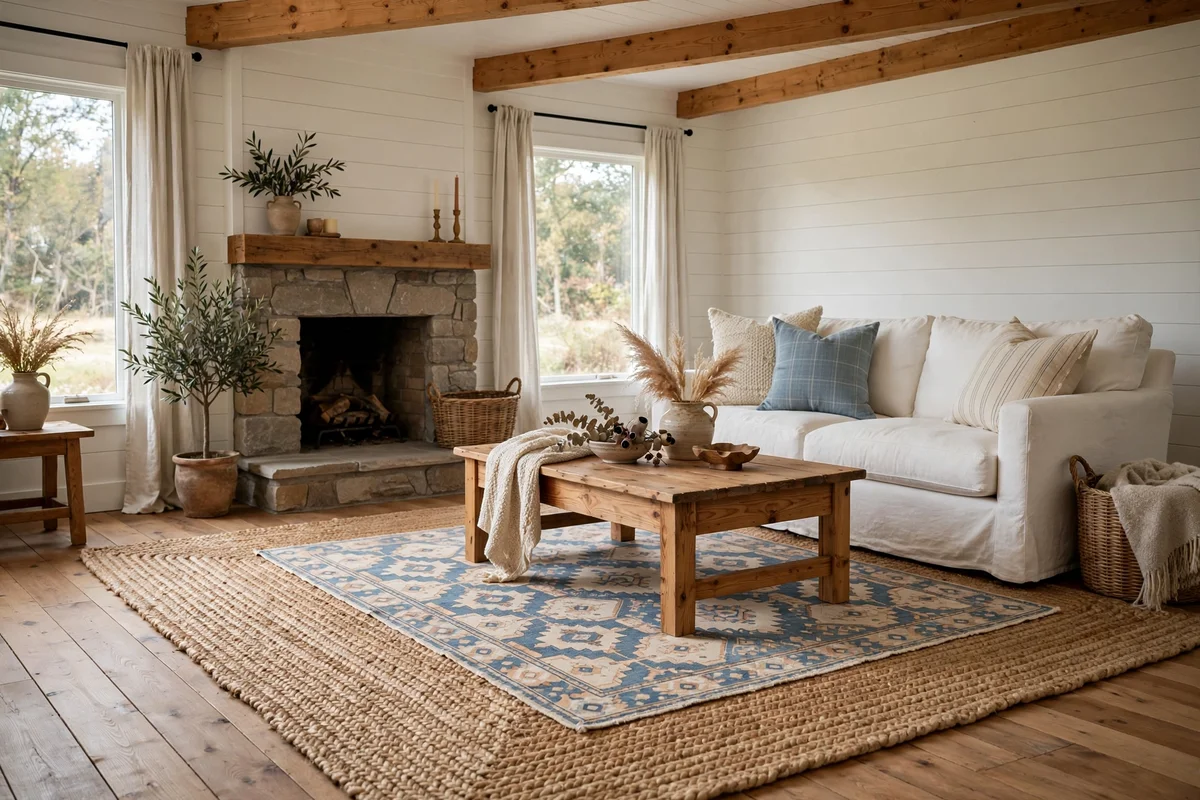
A natural fiber rug grounds a farmhouse living room with earthy texture that synthetic rugs cannot match. Jute rugs cost $80 to $300 for an 8×10 depending on weave density, while sisal runs slightly higher at $150 to $450. Jute is softer underfoot, making it the better pick for living rooms where you sit on the floor. Layer a smaller patterned rug, like a vintage-style Persian, over the jute for depth and color. Choose a rug large enough that front sofa legs sit on it, ideally 8×10 for a standard three-seat sofa. Vacuum without a beater bar to protect the natural fibers.
Pro tip: Flip and rotate jute rugs every few months for even wear and fading.
23. Chunky Knit Throw Blankets
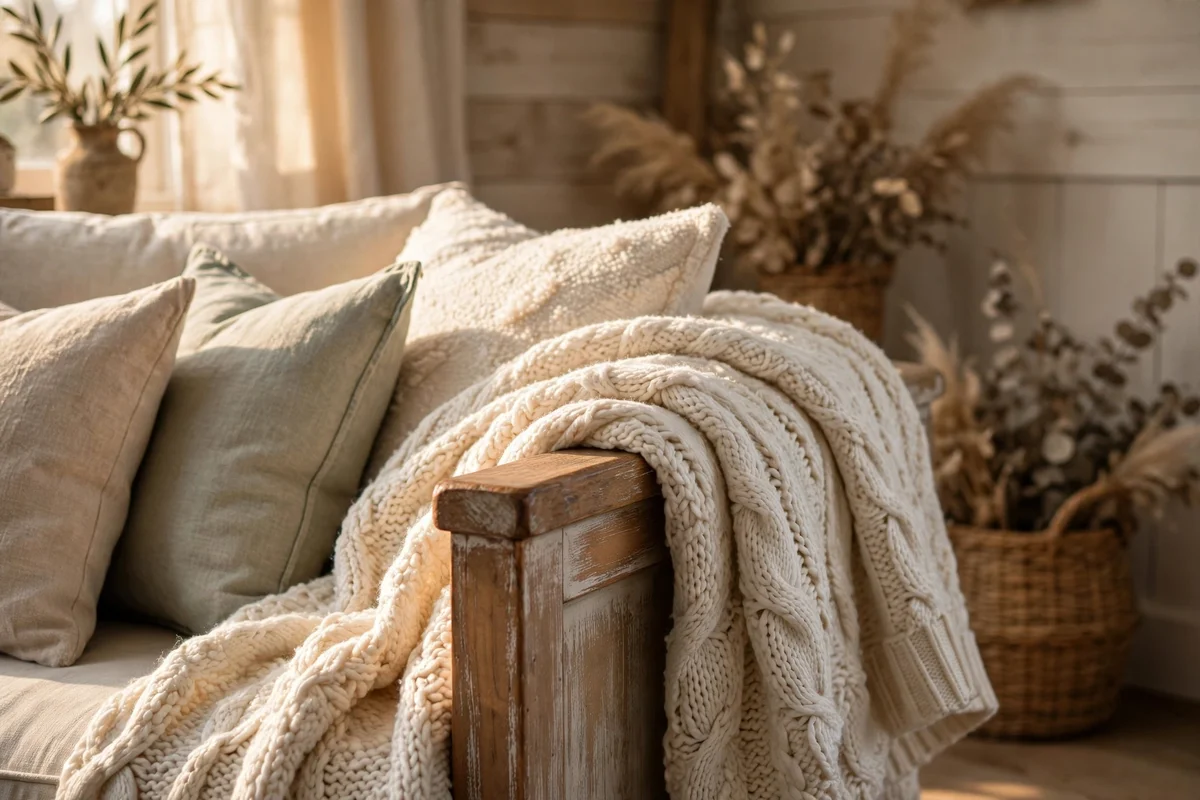
A chunky knit throw draped over the sofa arm is farmhouse comfort made visible. Hand-knit merino throws cost $80 to $250, while quality knit-look options run $30 to $70. Choose cream, oatmeal, or soft gray to keep the palette calm, and let the oversized texture do the talking. Drape it casually rather than folding it into a perfect rectangle, since the relaxed look is the point. Keep one on every seating piece, sofa, chairs, and bench, so the whole room feels equally inviting. In summer, swap to a lightweight waffle weave in the same neutral tones.
Pro tip: Roll rather than fold knit throws in a basket to show off the texture.
24. Woven Basket Storage
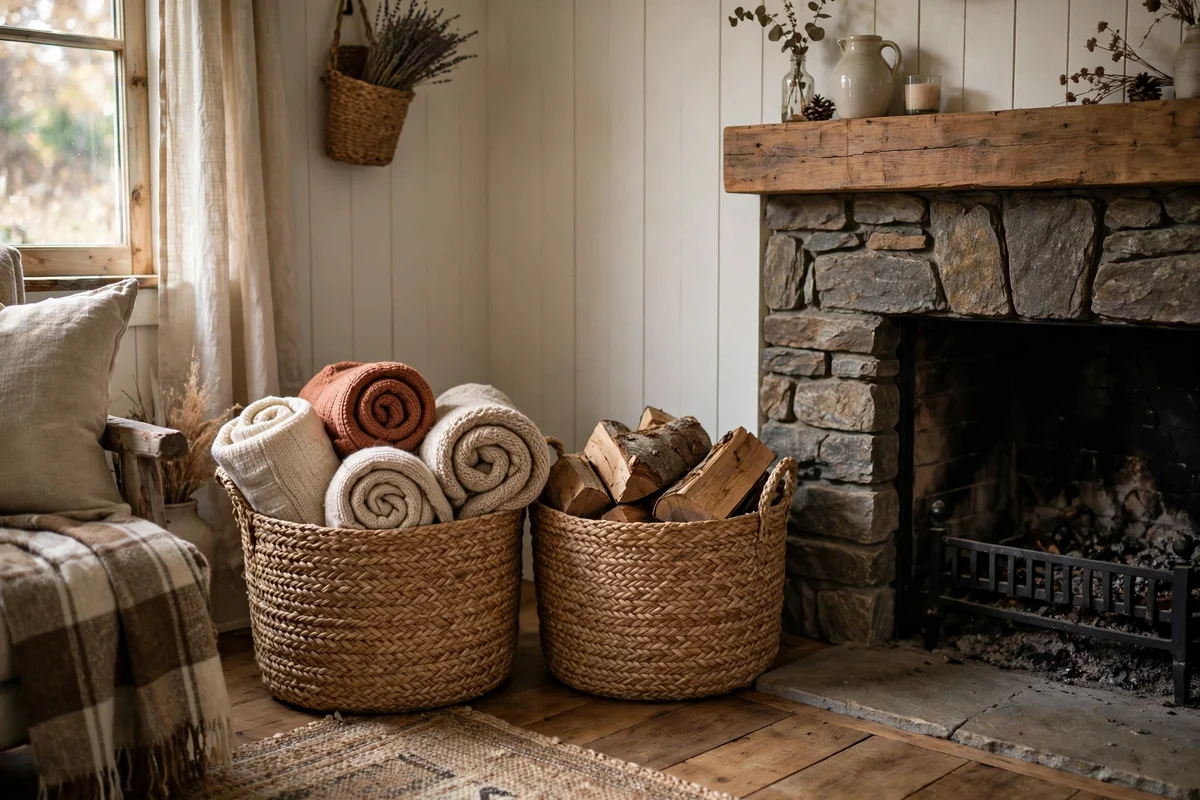
Woven baskets are the farmhouse solution to beautiful clutter control. Large seagrass or willow baskets cost $20 to $60 each and corral throws, toys, firewood, and magazines with rustic charm. Use a tall lidded hamper-style basket beside the fireplace for logs, and low wide baskets under the console table for remotes and chargers. Group baskets in odd numbers for the most natural look, varying heights and weaves. Line them with linen to protect delicate items. Baskets add the organic texture that keeps a farmhouse room from feeling flat, and they are endlessly rearrangeable as your needs change.
Pro tip: Keep one empty basket by the sofa as a permanent lost-and-found for remotes.
25. Linen Curtain Panels
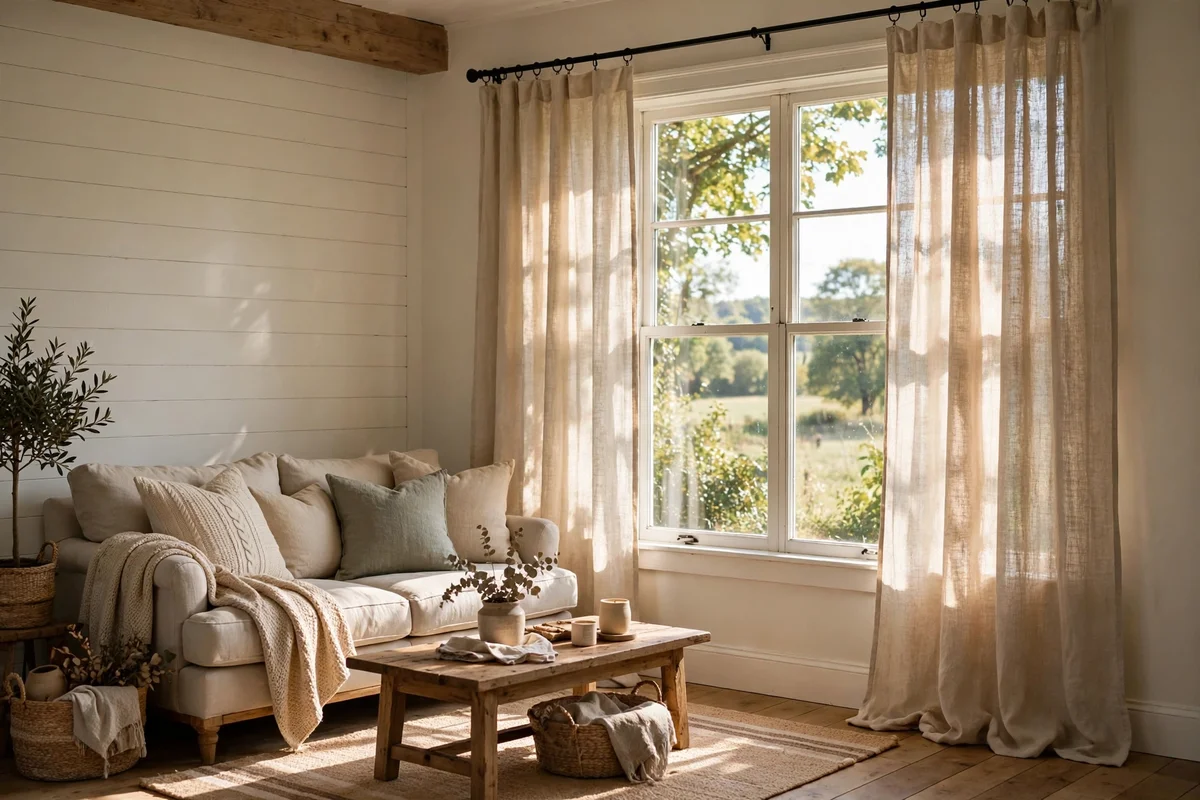
Floor-length linen curtains soften farmhouse windows and add the movement that hard wood and brick need. Ready-made linen-look panels cost $25 to $60 per panel, while true Belgian linen runs $80 to $150. Hang the rod 4 to 6 inches above the window frame and extend it 8 to 12 inches beyond each side so windows look grander. Choose natural, white, or oatmeal tones that filter light beautifully. Skip grommets for clip rings or a rod pocket, which read softer and more traditional. Let panels just kiss the floor for a tailored look, or puddle them an inch for romance.
Pro tip: Iron linen panels while slightly damp for the smoothest hang.
26. Flannel Wool Throws
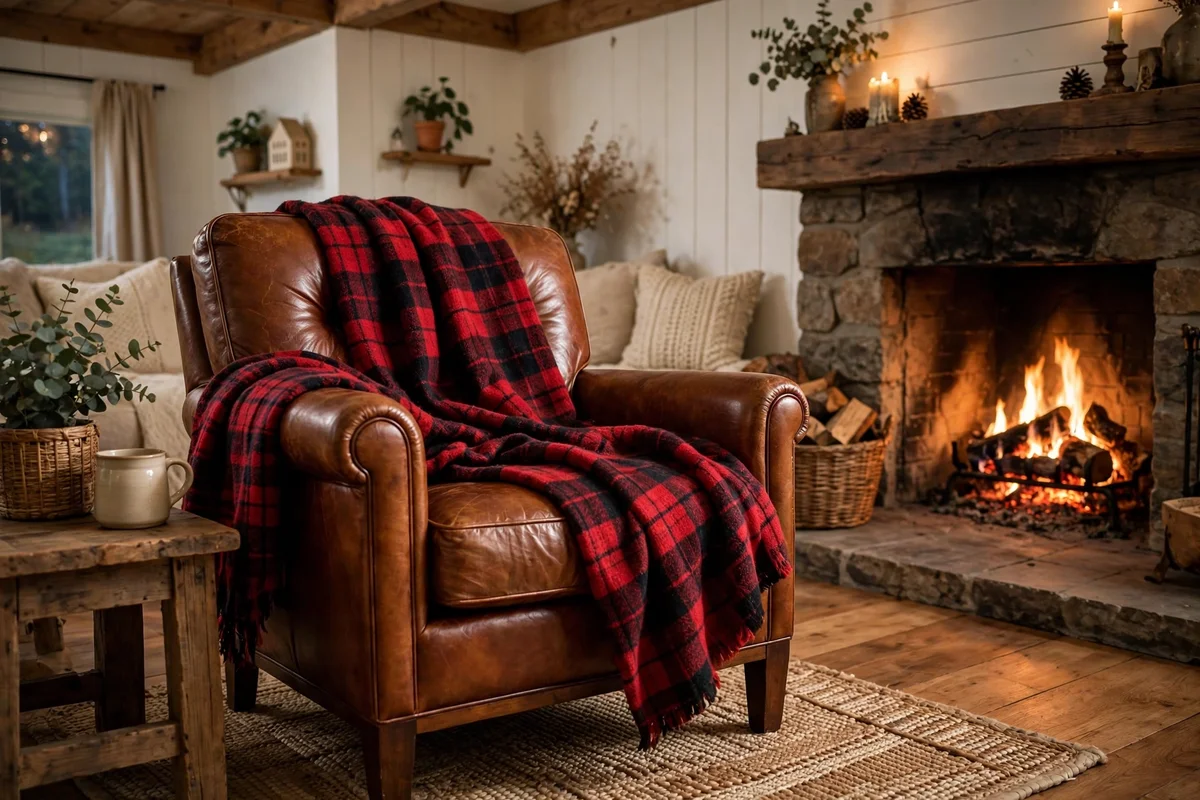
Plaid flannel and wool throws in harvest tones bring autumn warmth to a farmhouse living room year-round. Quality wool-blend plaid throws cost $40 to $120, with vintage camp blankets surfacing at flea markets for $25 to $60. Drape one over the back of a leather chair where the plaid against cognac leather looks made for each other. Choose patterns with red, forest green, mustard, or navy to echo classic farmhouse palettes. Fold a throw into thirds lengthwise for a neat tailored drape, or toss it casually for lived-in charm. Wool naturally resists odors, so these throws stay fresh with minimal washing.
Pro tip: Layer a plaid throw over a solid knit one for rich, lodge-inspired depth.
27. Braided Rag Rug
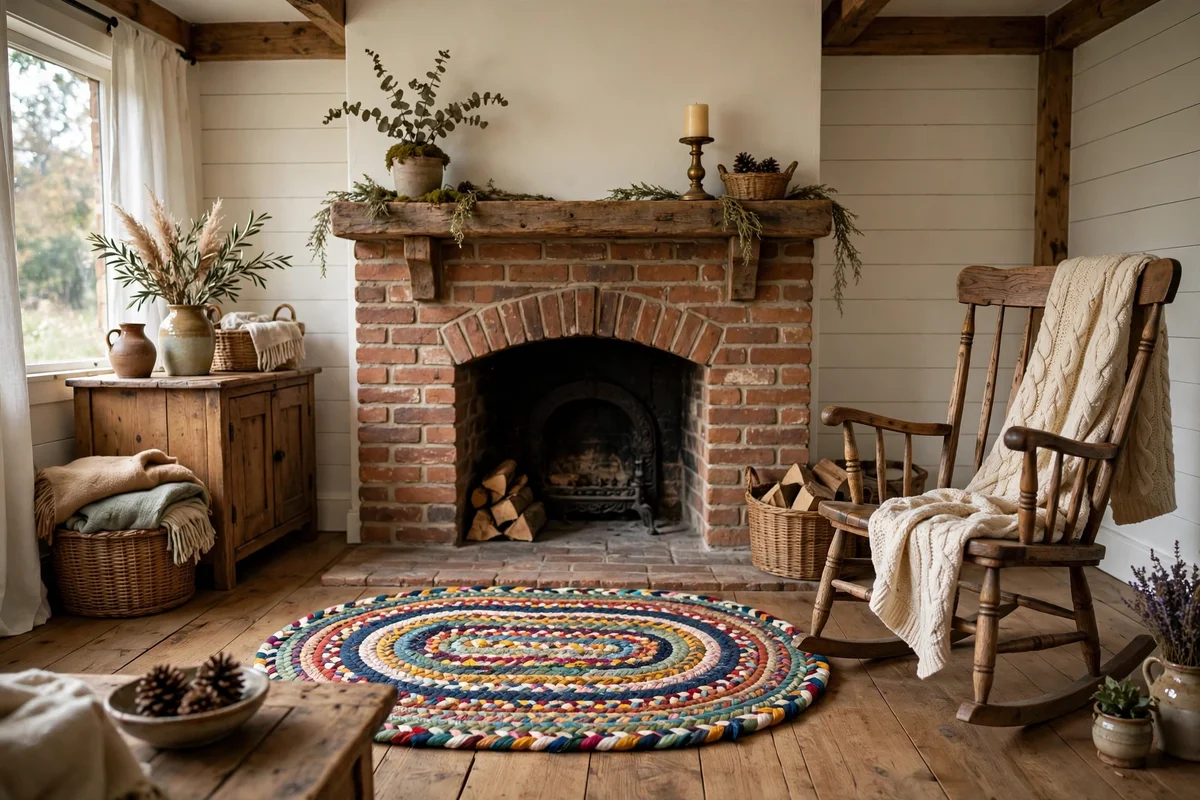
A braided rag rug adds handmade character and a pop of color to farmhouse floors. Hand-braided cotton rag rugs cost $60 to $200 depending on size, and vintage ones carry wonderful faded patinas. The oval shape softens the hard angles of rectangular furniture, making it ideal in front of the fireplace or beside the bed of a reading chair. Choose multicolor braids to tie together a varied palette, or stick to two tones for a calmer look. They are machine washable, which makes them perfect for entryways and pet zones. Layer a small braided rug over a larger jute for extra coziness.
Pro tip: Shake rag rugs outdoors monthly instead of vacuuming to preserve the braids.
Lighting, Decor and Finishing Touches
28. Wagon Wheel Chandelier
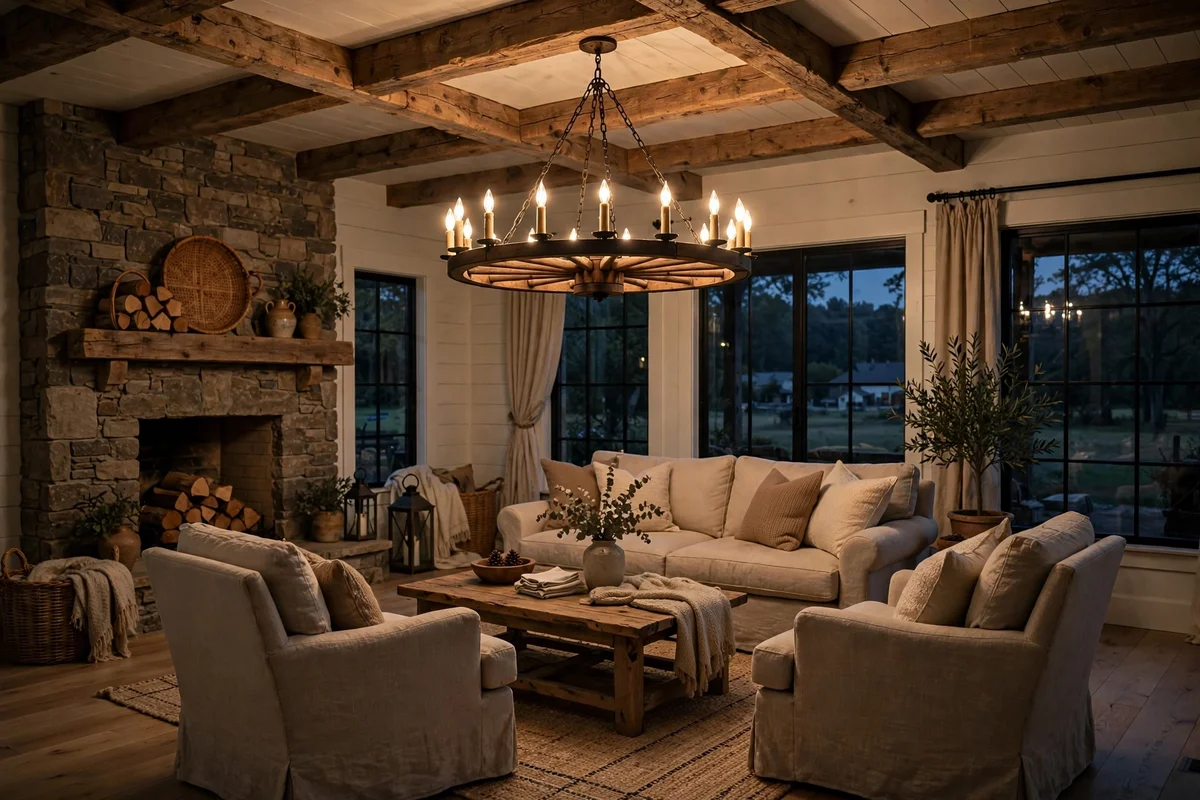
A wagon wheel chandelier is the signature lighting moment of a farmhouse living room, casting warm light through its ring of candle-style bulbs. Authentic wagon wheel fixtures cost $200 to $600, with convincing reproductions starting around $120. Hang it 30 to 34 inches above a coffee table or centered over the seating area, keeping the bottom at least 7 feet from the floor in walkways. Choose a dark bronze or blackened wood finish to contrast white ceilings. Dimmable Edison-style LED bulbs ($8 to $12 each) let you shift from bright task lighting to moody evening glow. It is the one fixture guests always ask about.
Pro tip: Install a dimmer switch, since wagon wheels look best at half brightness.
29. Milk Glass Pendant Lights
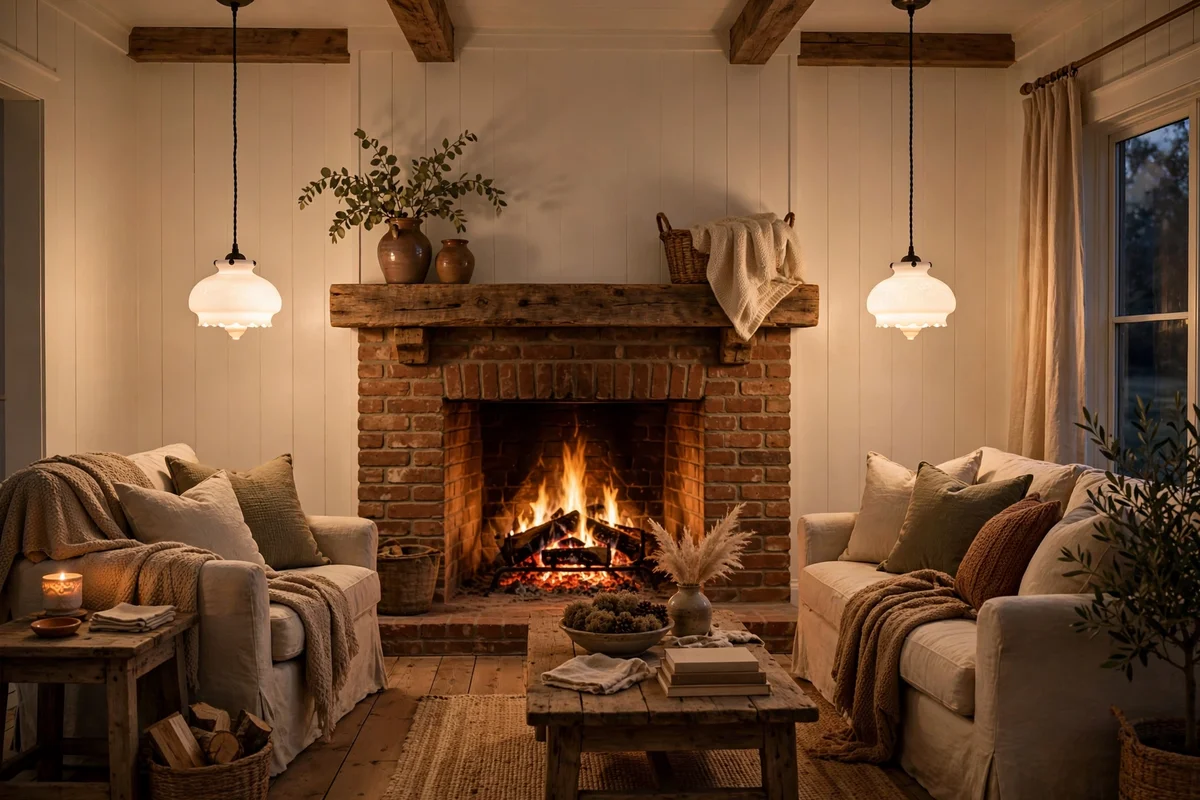
Milk glass pendants bring vintage schoolhouse charm to farmhouse living rooms, glowing softly when lit. Reproduction milk glass pendants cost $60 to $150 each, while genuine vintage shades surface at salvage shops for $30 to $80. Hang a pair flanking the fireplace or a trio over a reading nook at varying heights for a collected look. The opaque glass diffuses light gently, eliminating harsh glare. Pair with black or brass cord and canopy hardware to match your other fixtures. Milk glass works especially well against dark walls or wood paneling, where its glow becomes a luminous focal point.
Pro tip: Use warm 2700K bulbs so milk glass glows amber rather than clinical white.
30. Hurricane Candle Lanterns
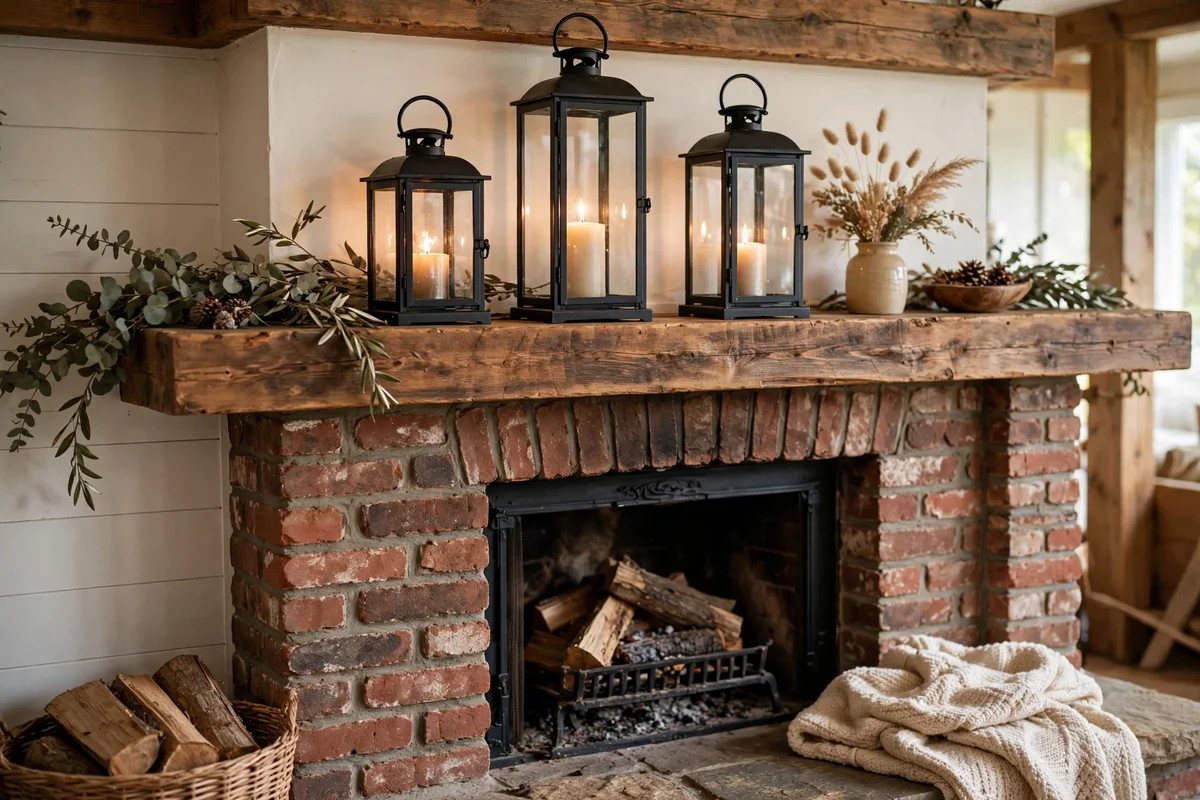
Hurricane lanterns and glass candle holders scattered through a farmhouse living room create the flickering warmth that overhead lighting cannot. Metal and glass hurricanes cost $15 to $50 each depending on size, and grouping three of varying heights on the mantel or coffee table makes an instant centerpiece. Use real pillar candles for special evenings and quality flameless LED candles ($10 to $20 each) for everyday glow without worry. The glass shields protect flames from drafts near windows and doors. Mix black metal, galvanized, and wood-based lanterns for a collected, unfussy look.
Pro tip: Put lanterns on a timer so the room glows welcomingly before you walk in.
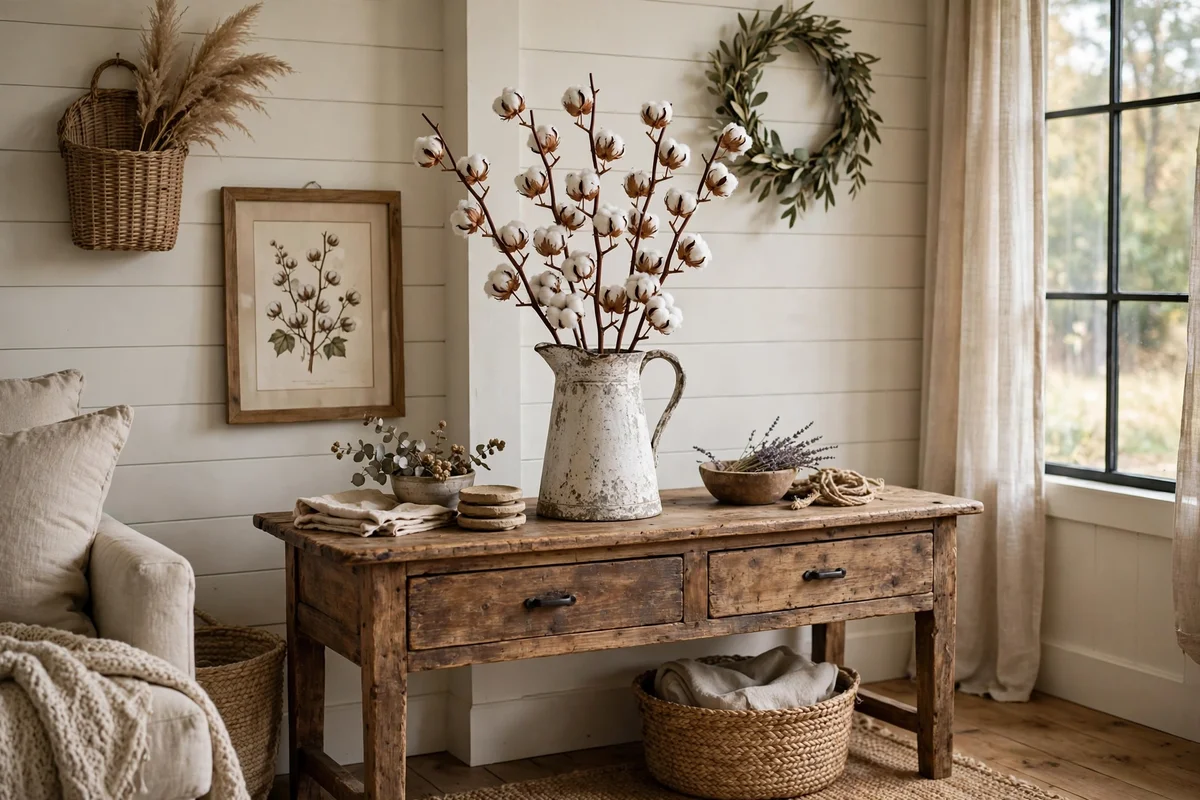
31. Cotton Stem Arrangements
Cotton stems in a weathered pitcher are the quintessential farmhouse floral, lasting forever and costing almost nothing. A bundle of realistic cotton stems costs $10 to $25, and one generous bunch fills a large ironstone pitcher or galvanized bucket. Place the arrangement on the mantel, console, or coffee table where its soft white bolls brighten darker corners. Unlike fresh flowers, cotton never wilts, needs no water, and survives curious pets. For seasonal variety, swap in dried wheat in fall or eucalyptus in winter using the same vessel. Keep stems tall and airy rather than crammed tight.
Pro tip: Bend a few stems at different angles for a natural, just-gathered look.
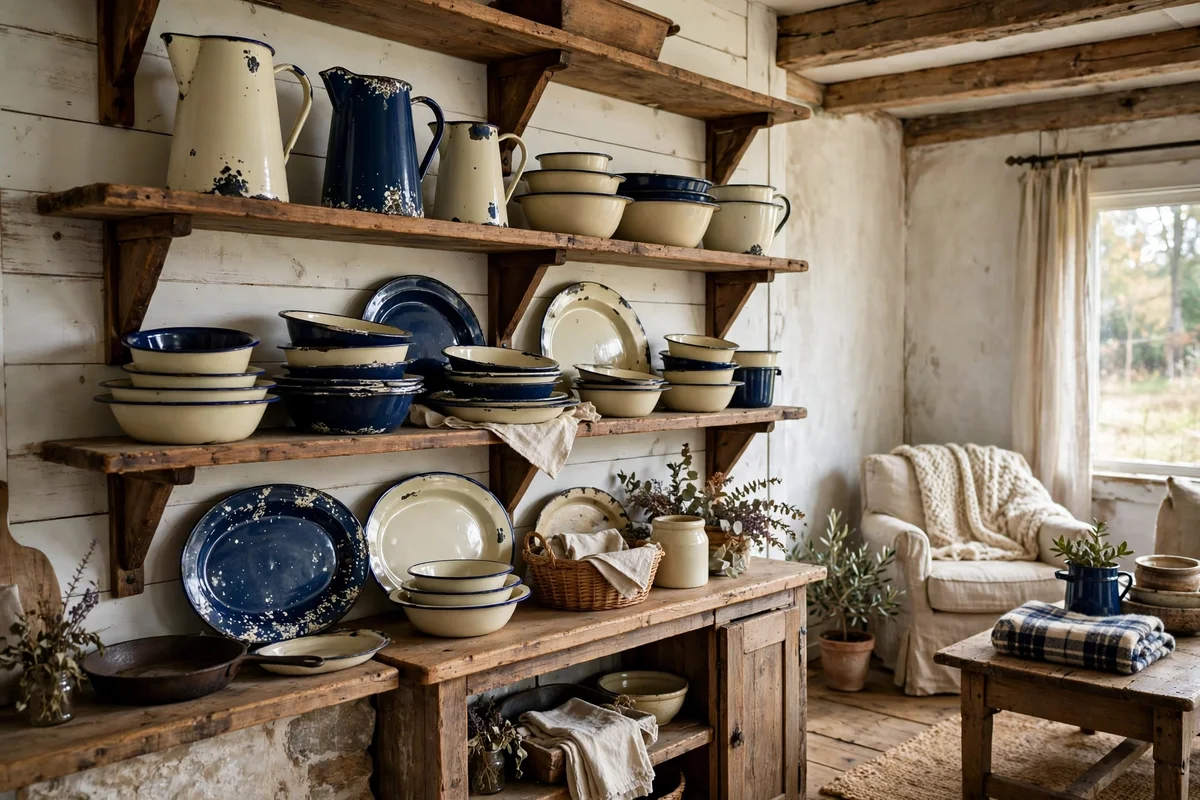
32. Vintage Enamelware Display
Chippy vintage enamelware in cream, navy, or red adds authentic farmhouse patina to shelves and walls. Individual pieces cost $10 to $40 at flea markets, and a collected grouping on open shelves or a plate rail tells a visual story. Hang large platters on the wall in a loose cluster, or stack bowls and pitchers on the mantel. The glossy surface and worn edges contrast beautifully with rough wood and soft linen. Do not worry about matching, since mixed pieces in a tight color palette look intentionally collected. Wash gently by hand to preserve the aged finish.
Pro tip: Stick to two enamel colors maximum so the collection reads curated, not chaotic.
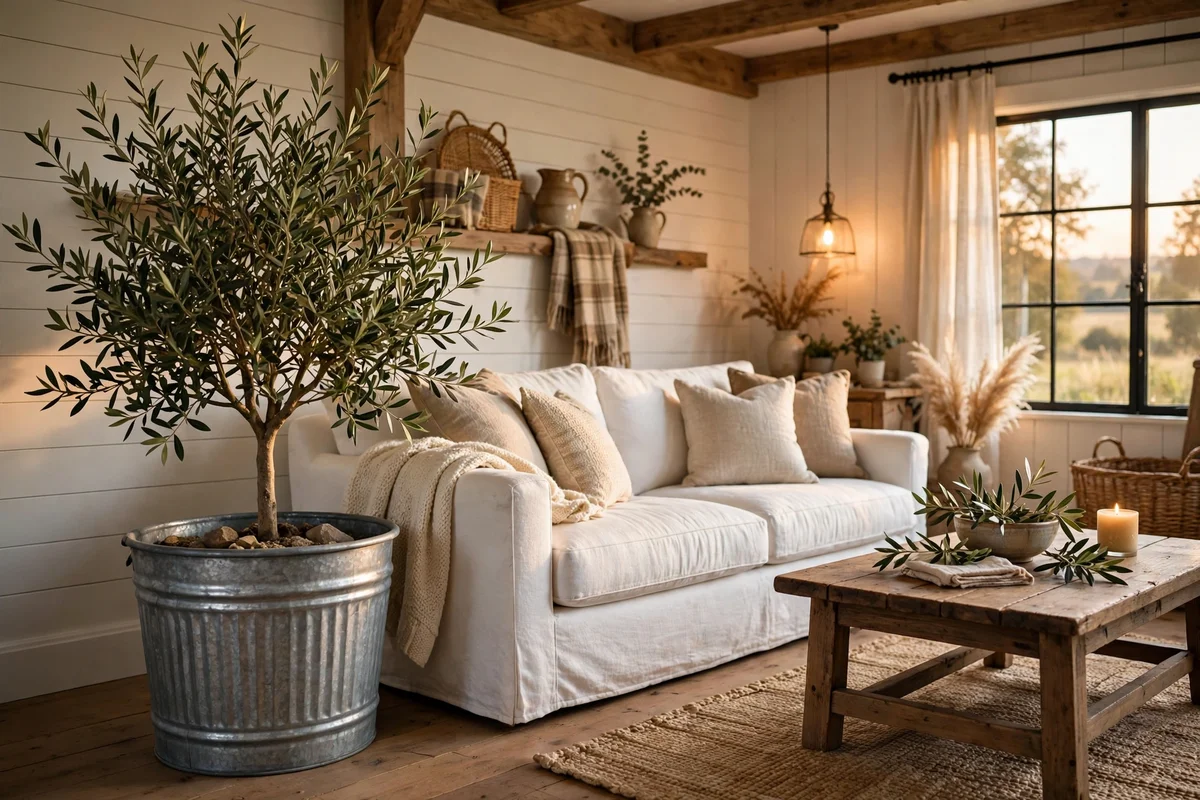
33. Galvanized Metal Accents
Galvanized metal brings industrial-farm character through planters, trays, buckets, and wall bins. A large galvanized planter costs $20 to $50 and makes a perfect home for a fiddle leaf fig or olive tree, while smaller buckets ($8 to $20) corral throws or kindling. The silvery zinc finish bridges warm woods and cool linens, adding a subtle sheen that keeps the room from feeling too matte. Use a galvanized tray on the coffee table to group candles and books, or mount wall bins by the door for mail and keys. A little goes a long way, so edit to three or four pieces per room.
Pro tip: Line planters with plastic pots so water never touches the metal and rusts it.
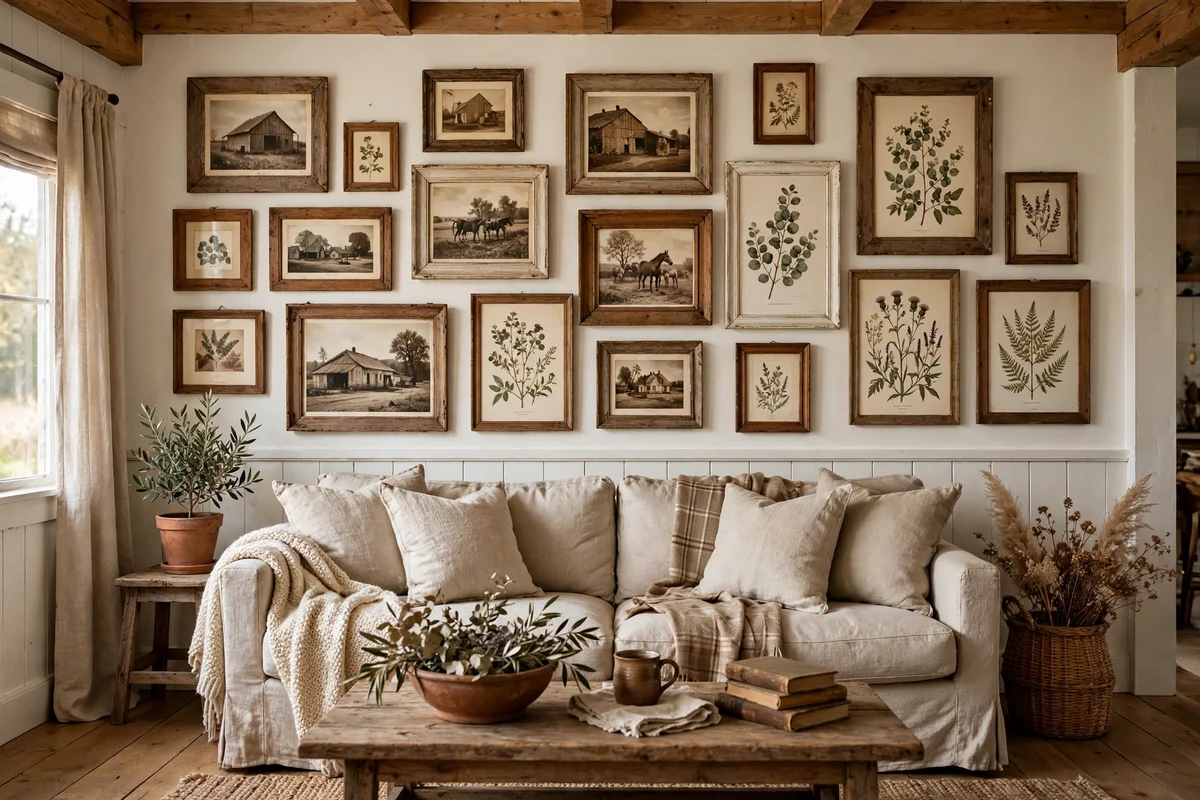
34. Rustic Gallery Wall
A gallery wall of vintage frames, botanical prints, and family photos gives a farmhouse living room its soul. Thrifted wood frames cost $2 to $10 each, and a can of uniform paint ($8) unifies mismatched finds. Mix sepia photos, pressed botanicals, landscape paintings, and one oversized anchor piece for a collected feel. Lay the arrangement on the floor first, then transfer to the wall starting from the center outward. Keep 2 to 3 inches between frames for a relaxed rhythm. A gallery wall over the sofa or along a hallway turns blank drywall into the most personal art in the house.
Pro tip: Trace frames on kraft paper and tape them up first to test the layout.
35. Farmhouse Coffee Bar Corner
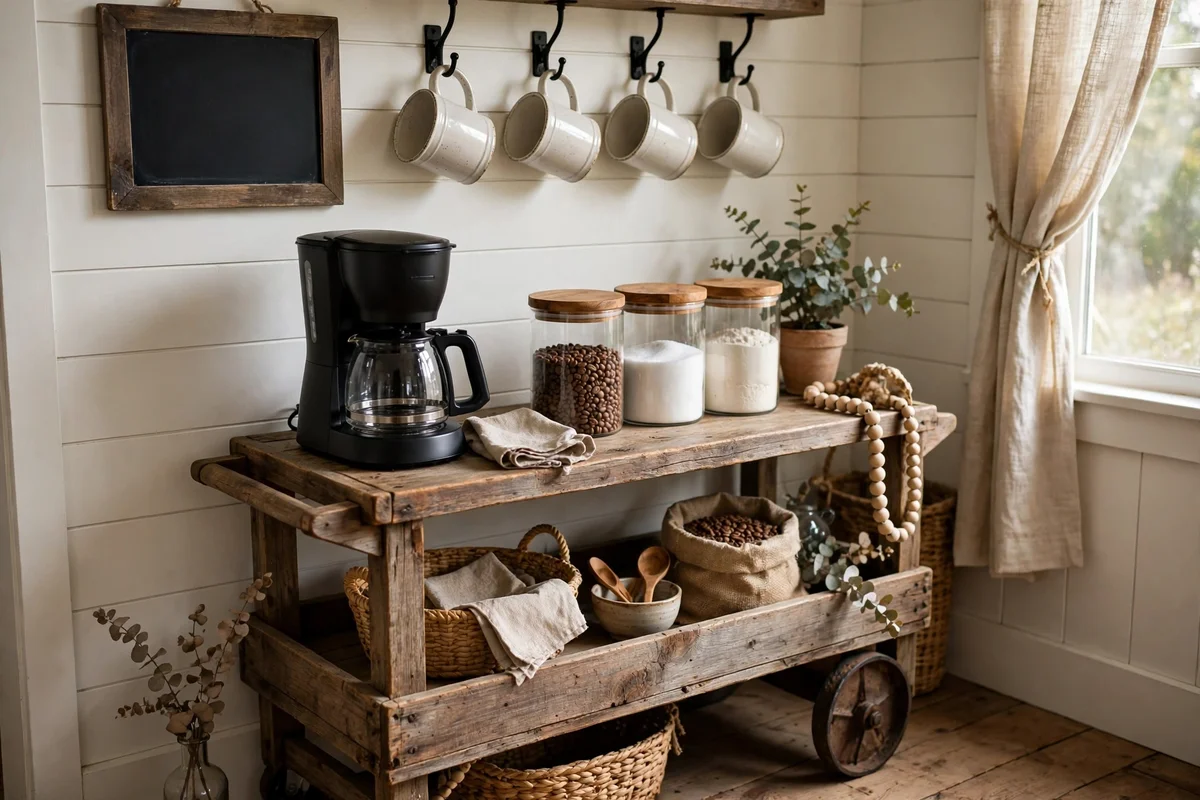
A dedicated coffee bar corner turns an unused nook into the hardest-working spot in a farmhouse living room. A small rustic cart or console ($80 to $250) holds a coffee maker, mugs on hooks, and canisters of beans and sugar. Add a vintage-style sign, a small chalkboard menu, and a tray to catch drips. Open shelving above displays ironstone mugs and glass canisters beautifully. This setup keeps morning clutter out of the kitchen and gives guests a self-serve station during gatherings. Style it seasonally, with hot cocoa fixings in winter and iced coffee syrups in summer.
Pro tip: Hang mugs on S-hooks under the shelf to free up precious counter space.
36. Vintage Window Pane Mirror
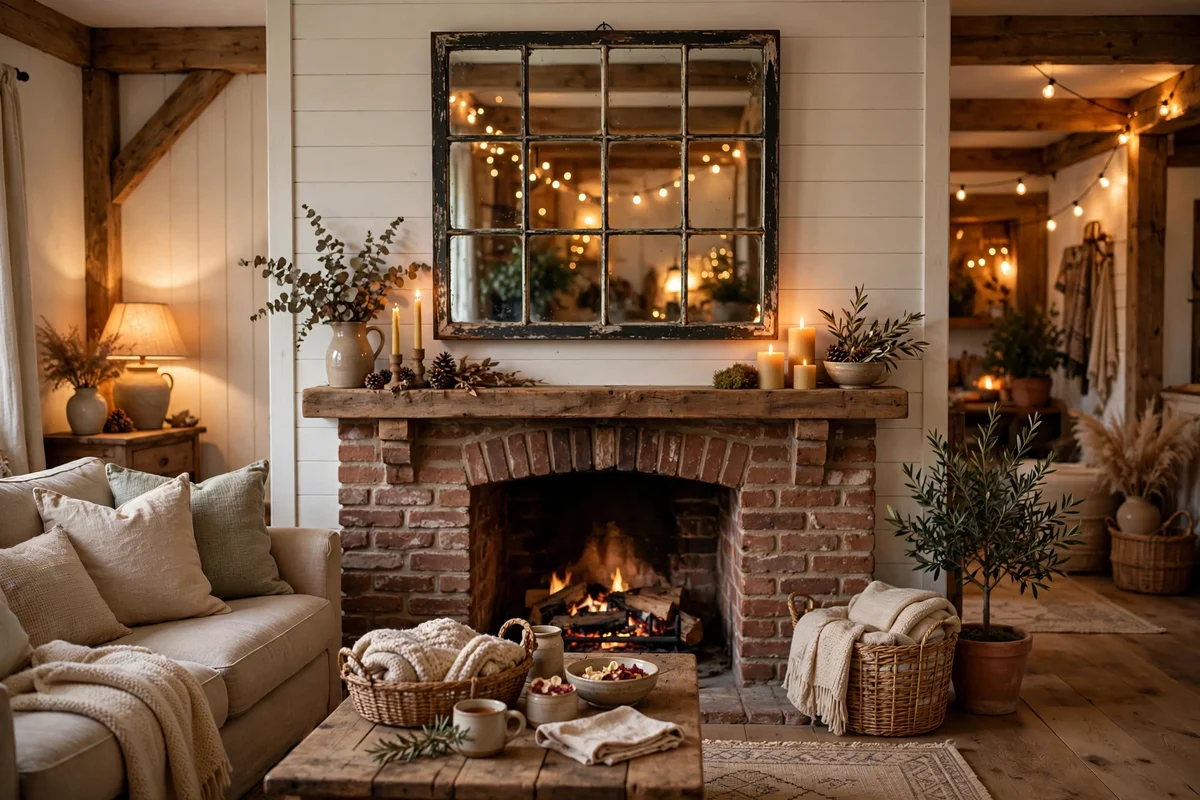
A mirror made from a reclaimed window frame bounces light around a farmhouse living room while adding architectural salvage charm. Ready-made windowpane mirrors cost $60 to $180, or build one by fitting mirror panels ($15 each cut to size) into a salvaged sash. Hang it opposite a window to double the natural light, or above the mantel where art might feel expected. The divided panes create a grid pattern that echoes the room’s other architectural details. Distress the frame lightly and seal with wax for an aged finish. It reads as art, mirror, and history all at once.
Pro tip: Lean a large windowpane mirror on the mantel instead of hanging it for a relaxed look.
Design Notes: Mixing Farmhouse with Other Styles
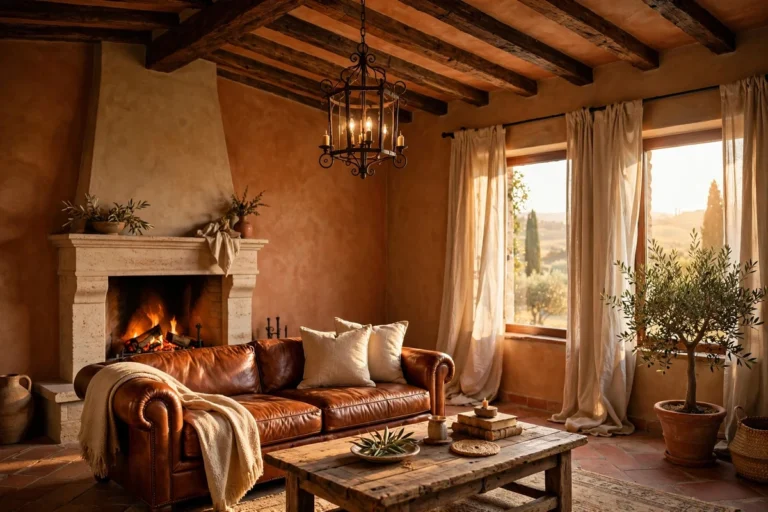
Farmhouse style plays beautifully with its rustic cousins. Pair it with country charm from our country living room ideas for a deeper traditional feel, or lighten it with the layered textures in our boho living room ideas. For a more formal take on rustic elegance, explore our Victorian living room ideas and traditional living room ideas. If you love sun-washed warmth, our Mediterranean living room ideas share the same love of natural materials. The key is balance: keep farmhouse as the foundation and borrow accents, never whole rooms, from other styles.
Frequently Asked Questions
What colors define a farmhouse living room?
Warm whites, creams, soft grays, and greige form the base, with accents of navy, sage green, mustard, barn red, and natural wood tones. Keep walls light and bring color through textiles, which are easy to swap seasonally.
How do I get farmhouse style on a budget?
Start with textiles: buffalo check pillows, a jute rug, and linen curtains transform a room for under $200. Thrift wood furniture and distress it yourself, and paint existing pieces in chalk paint rather than buying new.
Can farmhouse style work in a small living room?
Absolutely. Choose armless chairs, a trunk coffee table with storage, and light slipcovers to keep the room airy. One statement piece, like a wagon wheel chandelier or shiplap wall, delivers the style without crowding the space.
What is the difference between farmhouse and country style?
Farmhouse leans more neutral and minimal with white slipcovers, raw wood, and industrial touches like galvanized metal. Country style uses more pattern, color, and traditional prints. They overlap heavily and mix well together.
How do I keep a white farmhouse sofa clean?
Choose a slipcovered sofa with machine-washable performance fabric. Treat stains immediately, wash covers every few months, and keep a spare slipcover so the sofa is never out of commission during laundry day.
Does farmhouse style work with modern furniture?
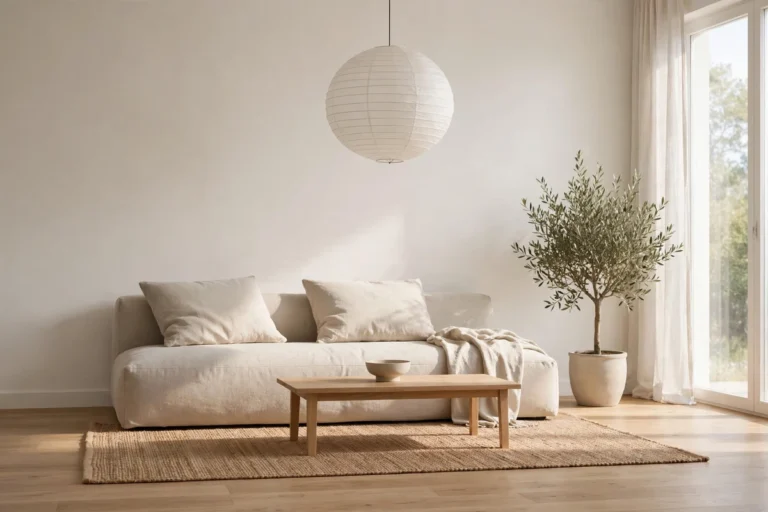
Yes, this is modern farmhouse: pair clean-lined sofas and minimal lighting with rustic wood, vintage finds, and cozy textiles. The contrast keeps the room feeling current rather than like a period set.
Final Thoughts
A farmhouse living room is built layer by layer, not bought in a day. Start with one foundation project, like shiplap or a great rug, then add furniture and textiles that feel collected rather than matched. The most beautiful farmhouse rooms mix old and new, rough and soft, until the space feels like it simply grew that way. Pick your favorite ideas from this list, set a budget that feels comfortable, and enjoy the slow, satisfying process of making your living room the coziest room in the house.