
36 Tuscan Living Room Ideas for Warm Mediterranean Style
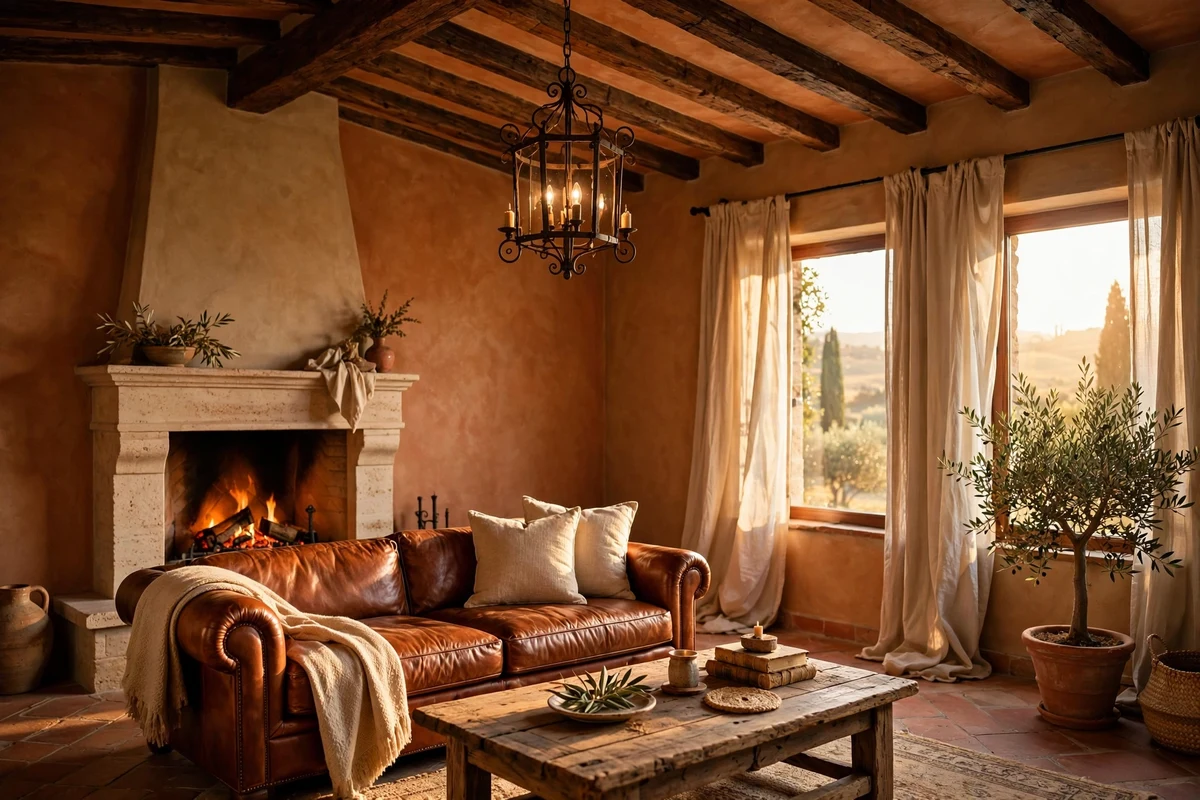
36 Tuscan Living Room Ideas for Warm Mediterranean Style
There is a reason Tuscan living rooms never go out of style. They feel like a slow afternoon in the Italian countryside, all sun-warmed plaster, honey-toned wood, and the kind of comfort that invites you to stay a little longer. This look is built on natural materials and honest craftsmanship: terracotta floors, hand-troweled walls, exposed beams, wrought iron, and leather that only gets better with age. The palette pulls straight from the landscape, with olive greens, sunbaked oranges, golden yellows, and deep wine reds layered over warm neutrals.
In this guide you will find 36 Tuscan living room ideas that bring that warm Mediterranean style home, from architectural moves like limewash walls and stone fireplaces to finishing details like olive trees, candle clusters, and hand-painted ceramics. Every idea includes realistic price ranges and a practical pro tip, plus its own unique photograph, so you can shop and style with confidence.
The Foundation: Walls, Floors and Tuscan Light
1. Warm Terracotta Limewash Walls
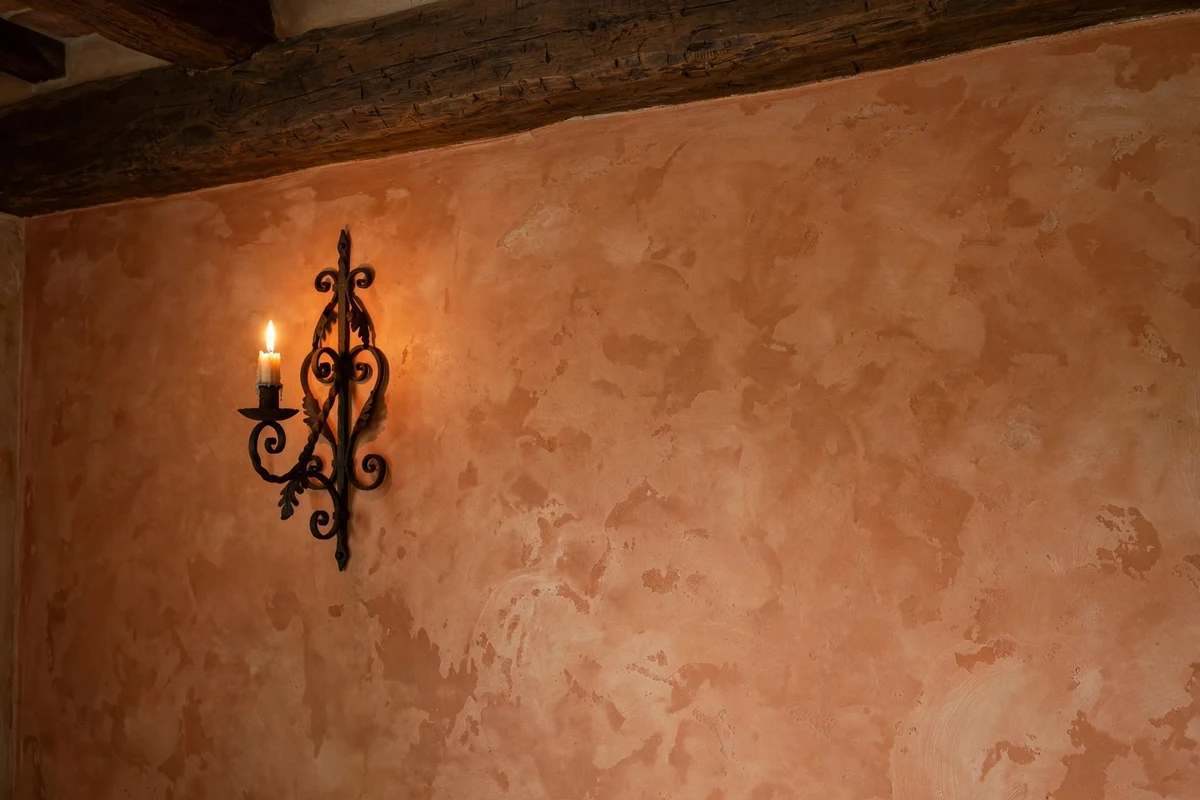
Limewash paint gives walls the soft, cloudlike movement of old Italian plaster, and a terracotta tone instantly warms even a north-facing room. Unlike flat paint, limewash has depth that shifts with the light through the day, so the room feels alive. Apply it over a primed wall in loose, crisscross strokes with a block brush, and let the natural mottling do the work. One feature wall behind the sofa is enough if you are nervous about going all in. Expect to pay $40 to $70 per gallon, with most living rooms needing two gallons for full coverage.
Pro tip: Seal limewash in high-touch areas with a matte mineral sealer so the finish resists scuffs without losing its chalky character.
2. Handmade Terracotta Tile Floors
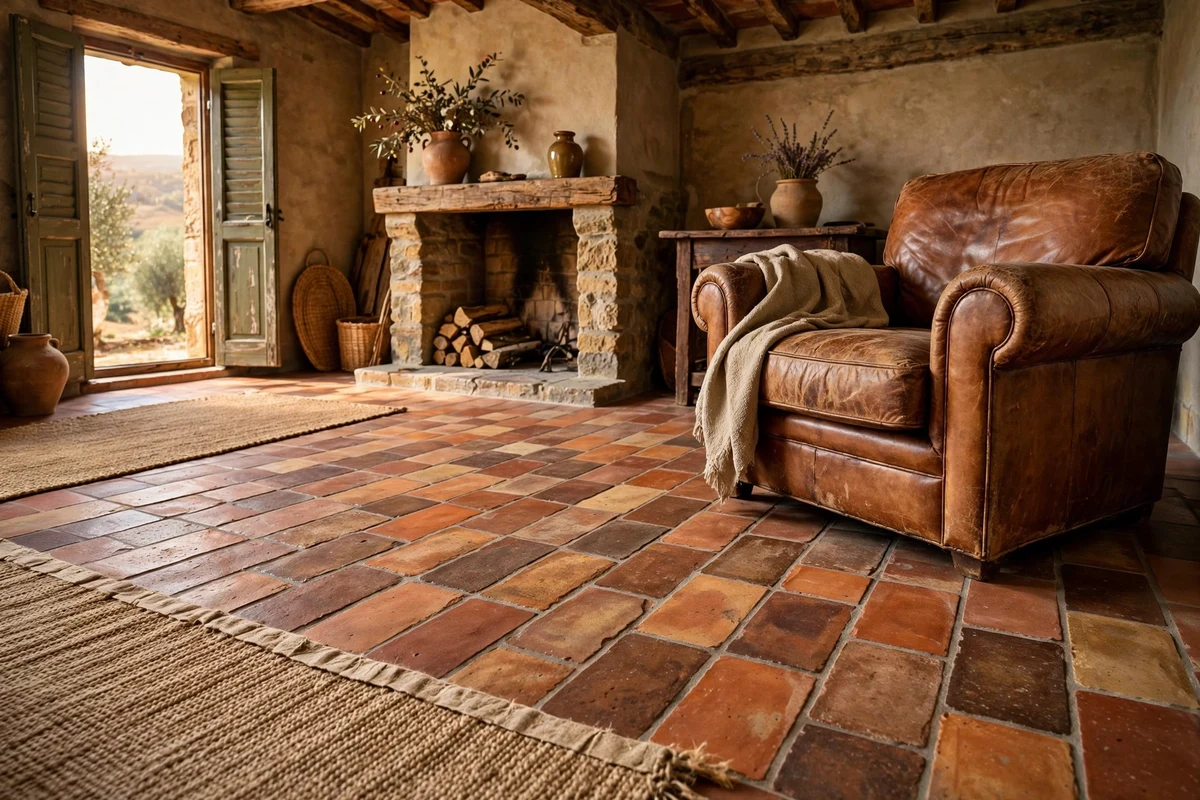
Few surfaces say Tuscany like handmade terracotta tile. Each tile carries slight color variation, from burnt orange to dusty rose, which keeps the floor from ever looking flat or manufactured. Terracotta is naturally cool underfoot in summer and holds warmth beautifully with radiant heat in winter. Sealed tiles run $6 to $14 per square foot installed, while reclaimed antique tiles can reach $18 per square foot. If a full floor is out of reach, use terracotta tiles as a hearth surround or entryway inset for the same effect on a smaller budget.
Pro tip: Choose a penetrating sealer rather than a glossy topcoat to keep that authentic matte, old-world finish.
3. Exposed Chestnut Wood Beams
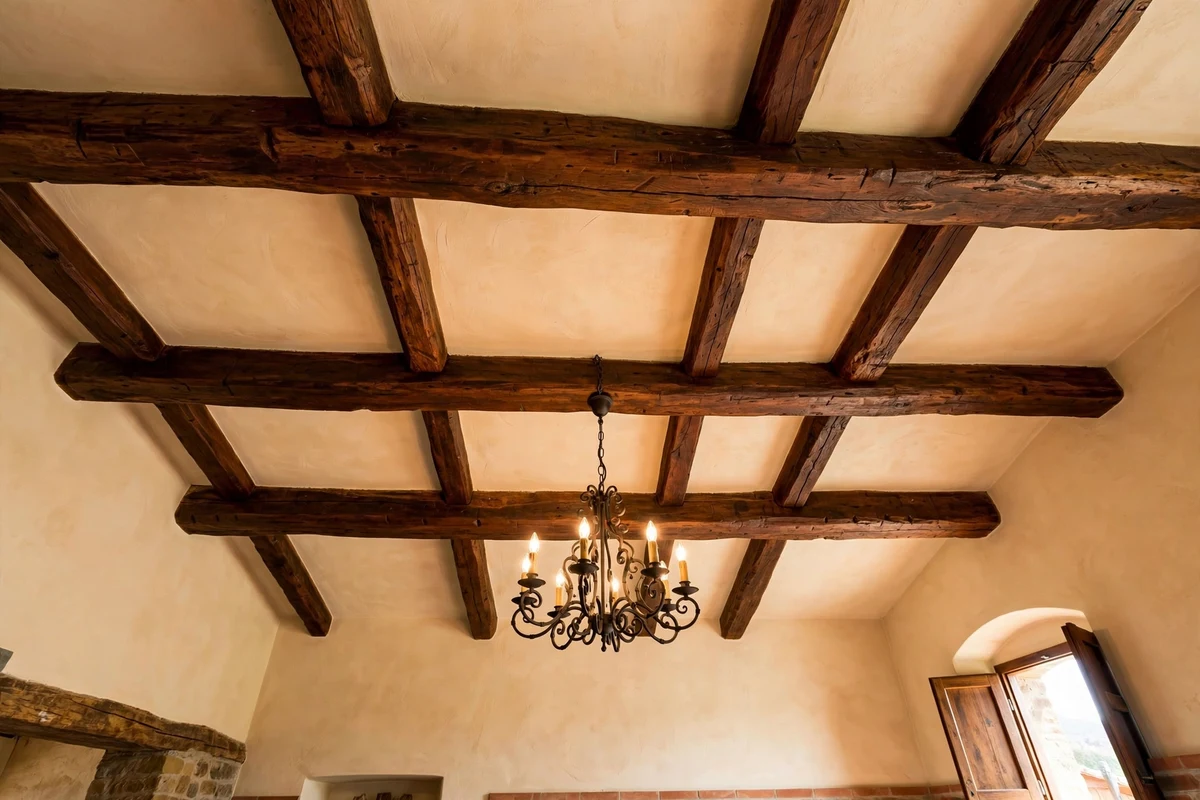
Dark wood beams draw the eye upward and give the room its rustic skeleton, the single fastest way to make a plain ceiling feel Tuscan. Real reclaimed beams are the dream, but high-quality faux beams in polyurethane look convincing from below and weigh almost nothing. Real beams installed run $15 to $30 per linear foot, while faux options cost $8 to $15 per linear foot. Stain them a deep chestnut or walnut so they contrast with warm plaster above. Space them 4 to 6 feet apart for a balanced rhythm.
Pro tip: Run low-voltage LED strip lighting along the top edge of each beam for a soft wash of light that makes the ceiling glow at night.
4. Arched Doorways and Windows
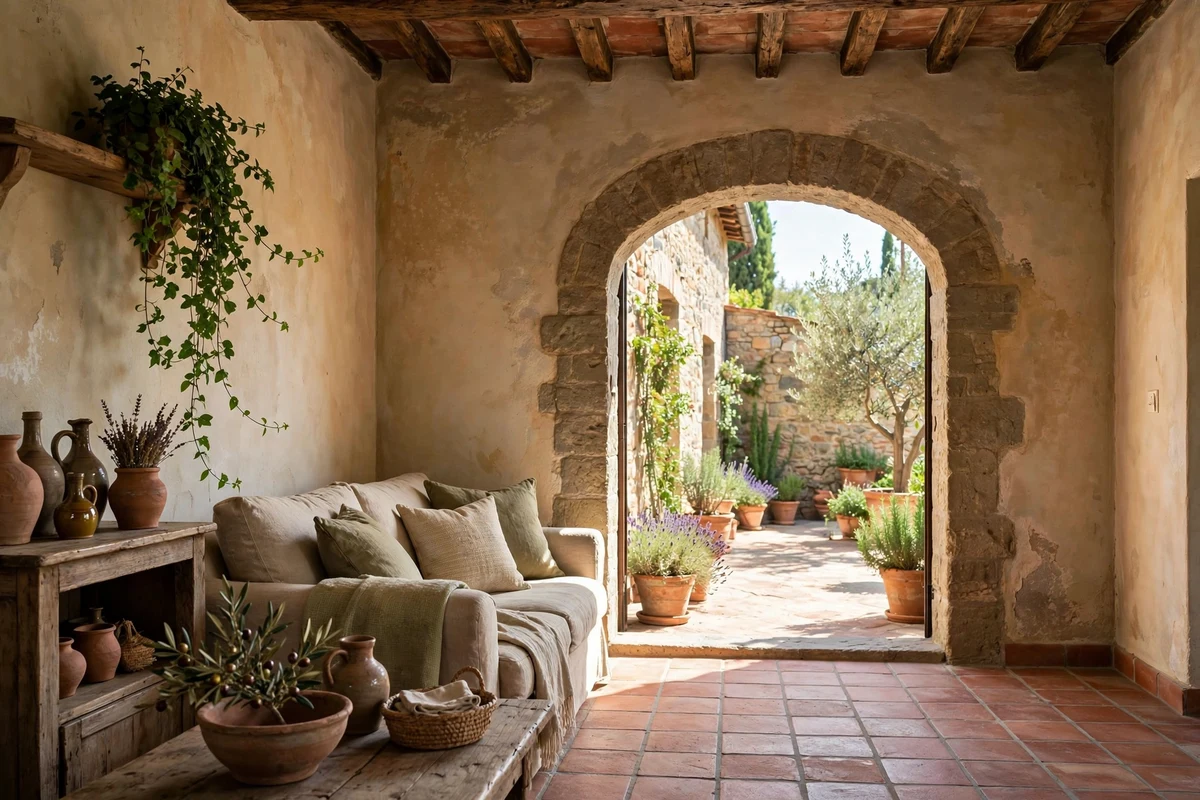
Arches are the signature curve of Mediterranean architecture, softening every transition in the room. If structural changes are off the table, fake the look with an arched mirror, an arched bookcase, or a painted arch motif over a doorway. A contractor-built arch opening typically costs $800 to $2,000 depending on whether the wall is load bearing. For renters, a tall arched floor mirror ($150 to $400) leaning against the wall delivers the same graceful shape with zero commitment.
Pro tip: Echo the arch in at least two other spots, like a mirror and a niche shelf, so the curve feels intentional rather than random.
5. Wrought Iron Ring Chandelier
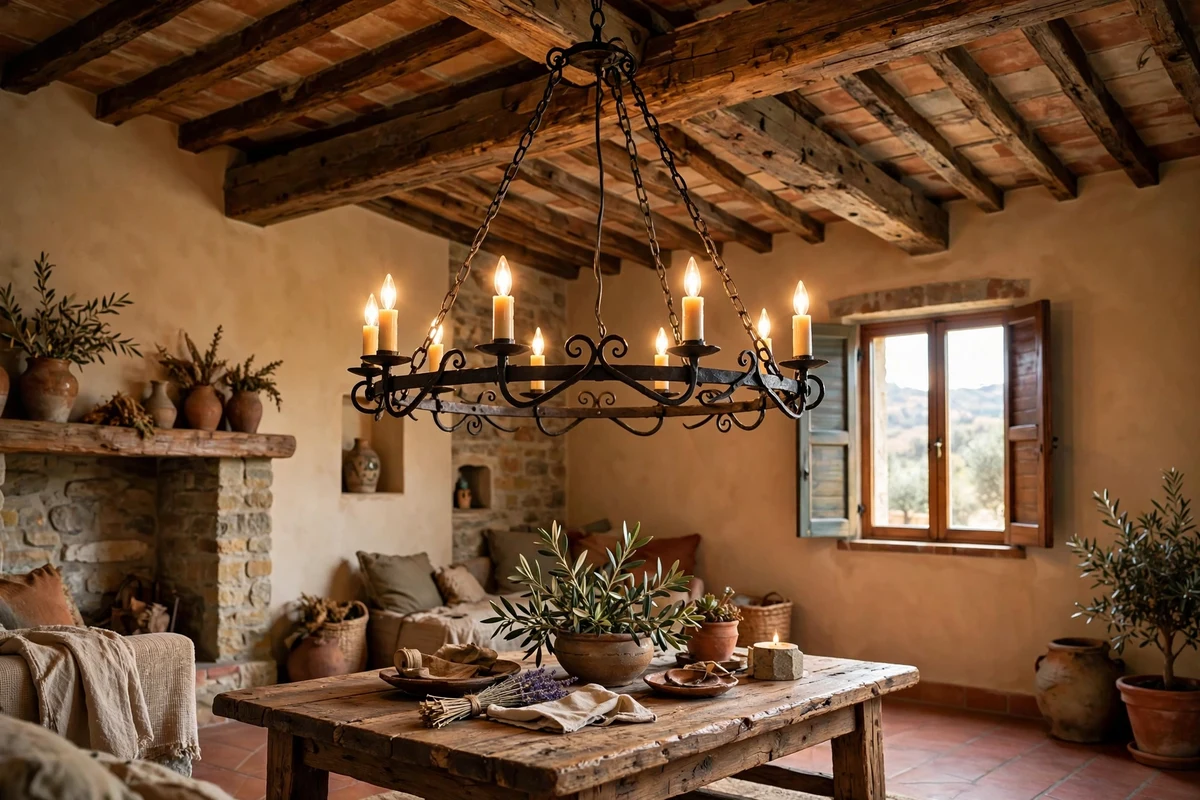
A hand-forged iron chandelier anchors the room the way jewelry anchors an outfit. The ring or wagon-wheel shape keeps sight lines open while still making a statement, and candle-style bulbs give that flickering old-world glow. Hang it so the bottom sits 30 to 36 inches above the coffee table, or at least 7 feet above the floor in a walkway. Quality iron chandeliers run $250 to $800, with artisan-forged pieces climbing past $1,200. Always use warm 2700K bulbs to keep the light golden.
Pro tip: Put the chandelier on a dimmer so you can drop it low for evening gatherings and raise it for reading or games.
6. Travertine Stone Fireplace
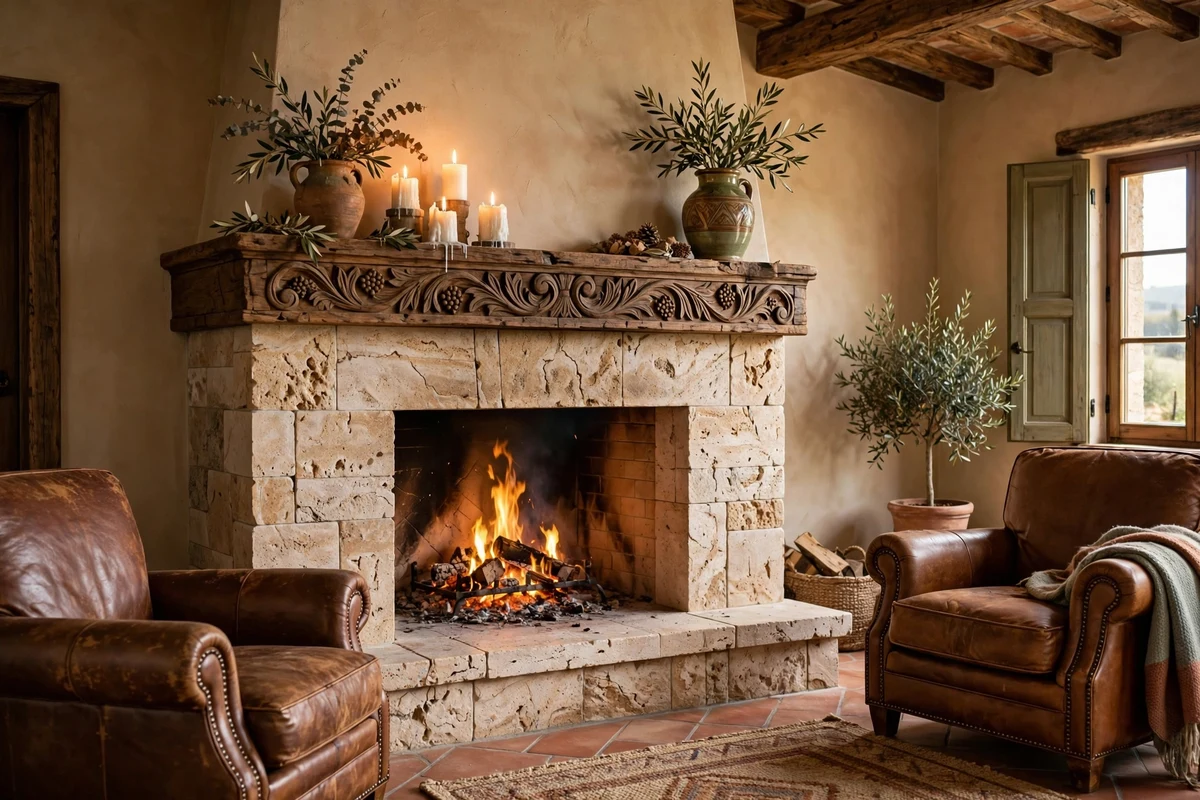
A travertine fireplace brings the quarry to your living room, with pitted, honey-toned stone that looks centuries old on day one. Travertine veneer panels ($12 to $25 per square foot) let you clad an existing fireplace surround without masonry work. Top it with a chunky reclaimed wood mantel and you have the classic Tuscan focal point. If you do not have a working fireplace, an electric insert ($200 to $600) set into the surround gives real flicker and supplemental heat.
Pro tip: Leave the stone unsealed on the surround for authentic texture, but seal the hearth where soot and spills land.
7. Rustic Stone Accent Wall
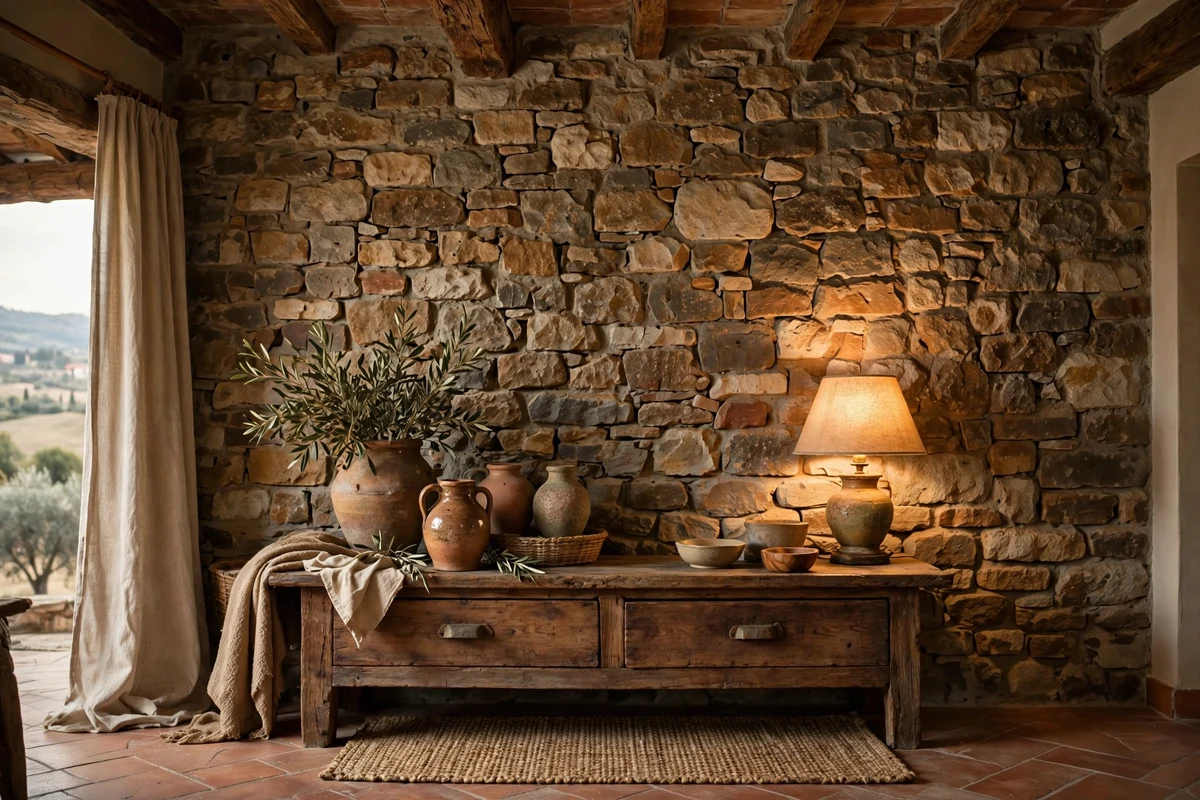
One stone wall gives the whole room the feeling of an old farmhouse that grew up around you. Thin stone veneer panels ($8 to $18 per square foot) install over drywall with mortar or construction adhesive, and corner pieces make the edges look structural. Choose irregular, mixed-tone stone rather than uniform cuts for the most authentic look. A single 12-foot wall typically runs $1,200 to $2,500 in materials. Keep the other walls in warm plaster so the stone stays the star.
Pro tip: Wash the stone with a diluted limewash afterward to knock back any overly orange tones and age it instantly.
8. Wrought Iron Wall Sconces
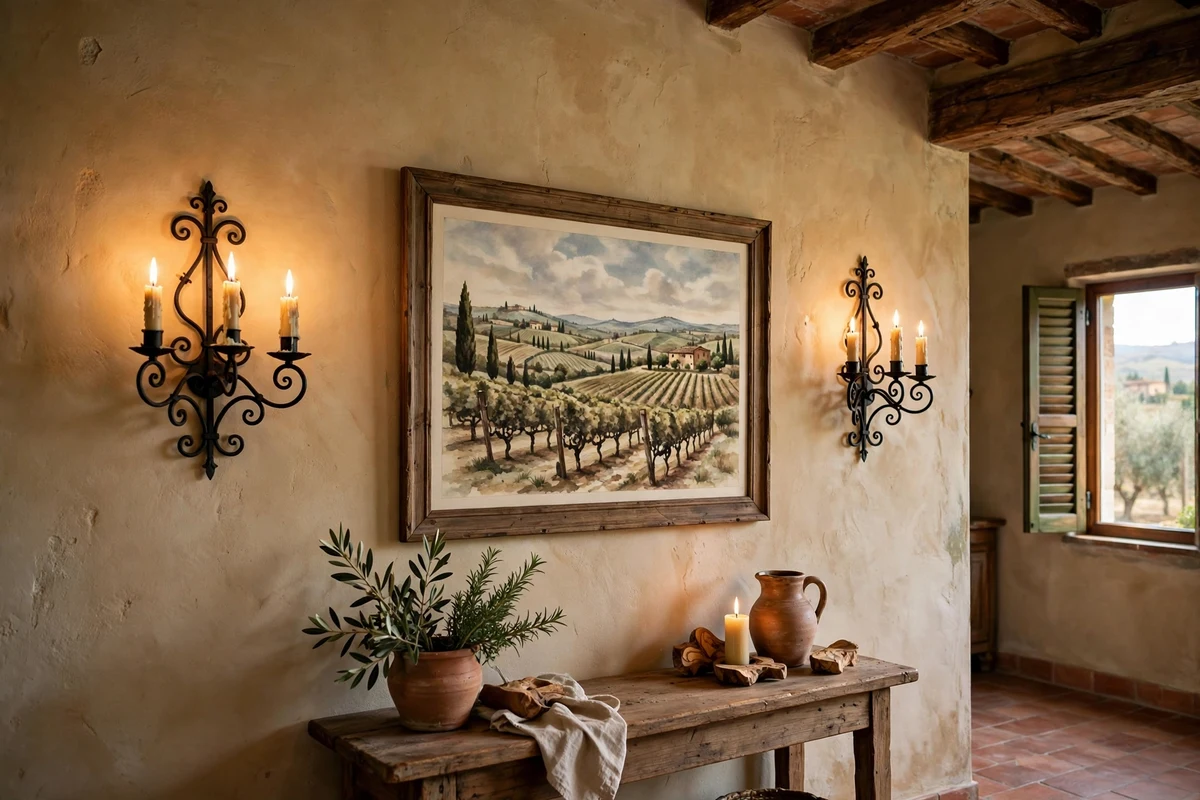
Flanking sconces add symmetry and a layer of warm light at eye level, which is what makes Tuscan rooms feel so inviting after dark. Candle-style sconces with real or LED candles ($40 to $120 per pair) need no wiring, while hardwired versions ($80 to $200 each plus installation) give a cleaner look. Mount them 60 to 66 inches from the floor, about 6 feet apart, flanking art or a fireplace. The dancing shadows they throw on plaster walls are half the charm.
Pro tip: Use flameless LED candles with a timer so the sconces glow every evening without any upkeep.
9. Sun-Washed Linen Curtains
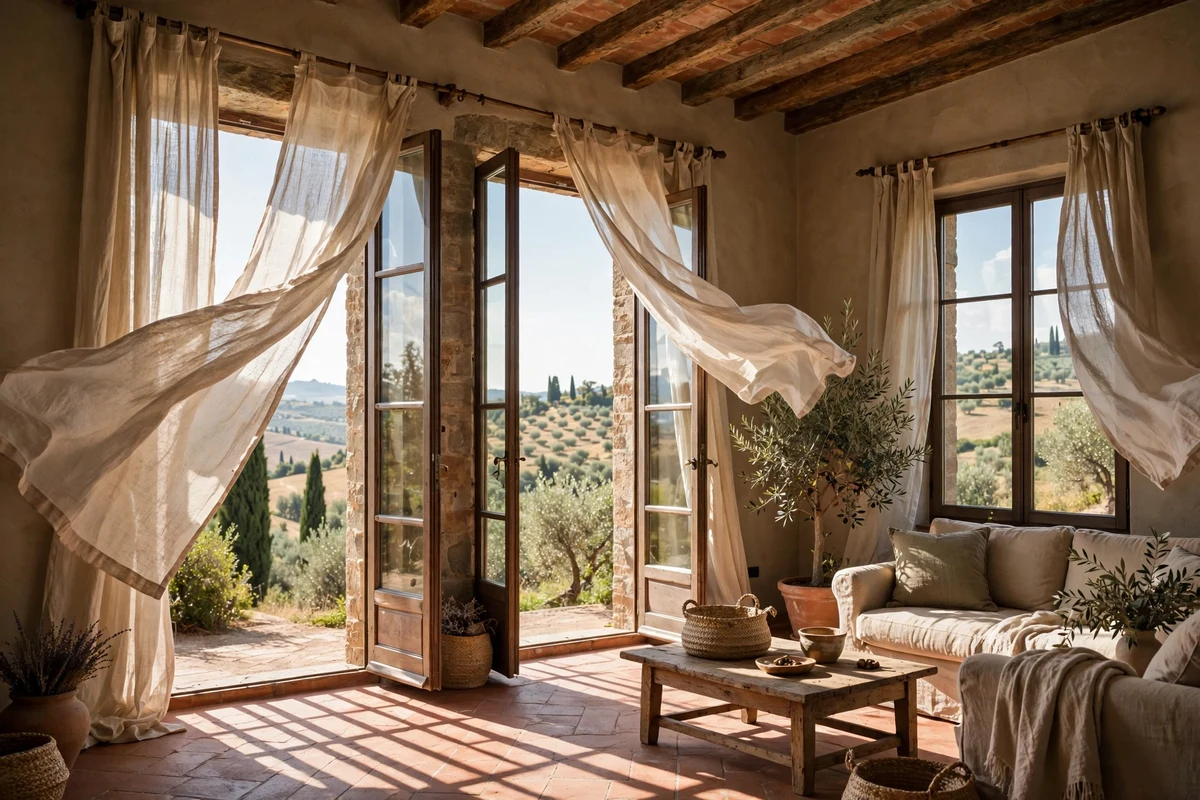
Nothing filters Tuscan sunlight like washed linen. The loose weave softens harsh afternoon sun into a golden haze while still letting the room breathe, and the fabric’s natural slubs add texture even in a neutral color. Hang panels high and wide, with the rod 4 to 6 inches above the frame and extending 8 to 12 inches past each side, so windows look grander. Ready-made linen panels run $40 to $100 per panel, and you will want the fabric to just kiss the floor.
Pro tip: Choose an unlined weave for maximum glow, and add a separate blackout roller behind if you ever need full darkness.
Furniture with Old-World Soul
10. Distressed Cognac Leather Sofa
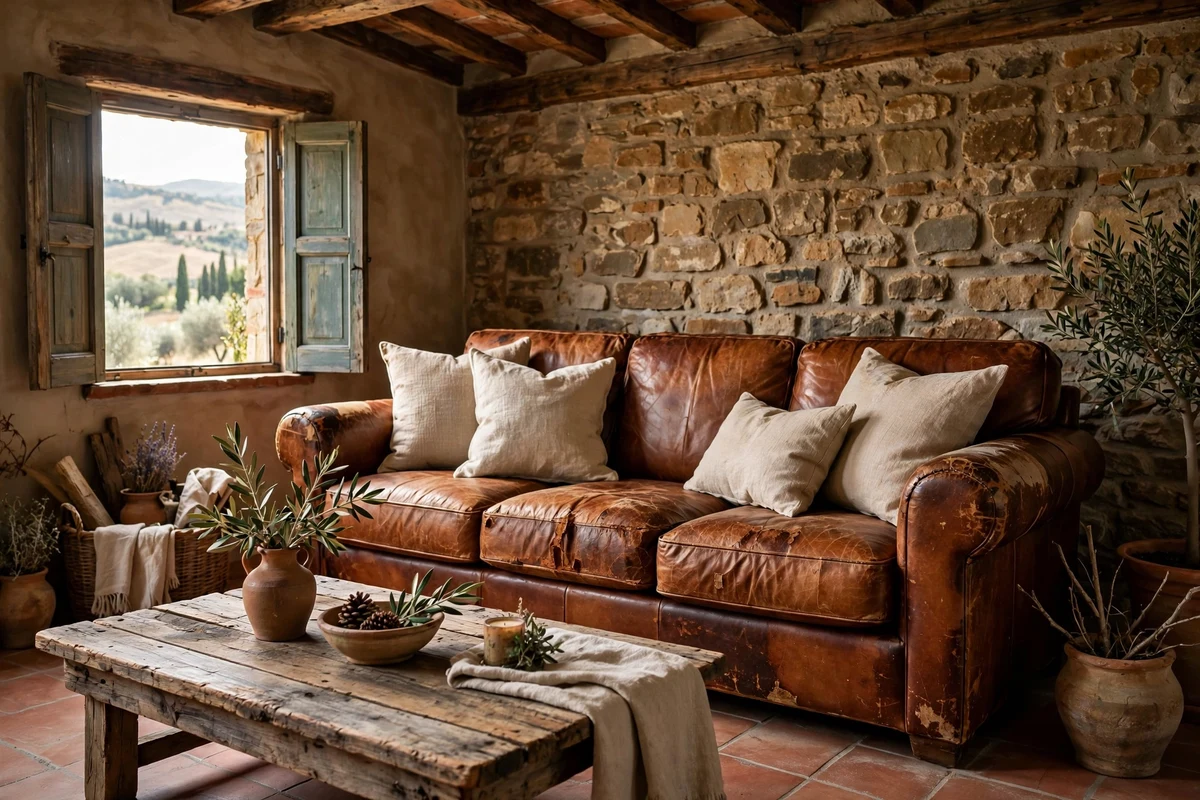
A cognac leather sofa is the workhorse of the Tuscan living room, rich, inviting, and better looking every year as the patina deepens. The warm brown tone bridges wood, stone, and terracotta without competing, and leather wipes clean after spills that would ruin fabric. A quality full-grain leather sofa runs $1,800 to $4,500, while good bonded or top-grain options land between $900 and $1,800. Look for rolled arms and nailhead trim for the most traditional silhouette.
Pro tip: Condition the leather twice a year with a lanolin-based cream to keep it supple and deepen that gorgeous patina.
11. Reclaimed Wood Coffee Table
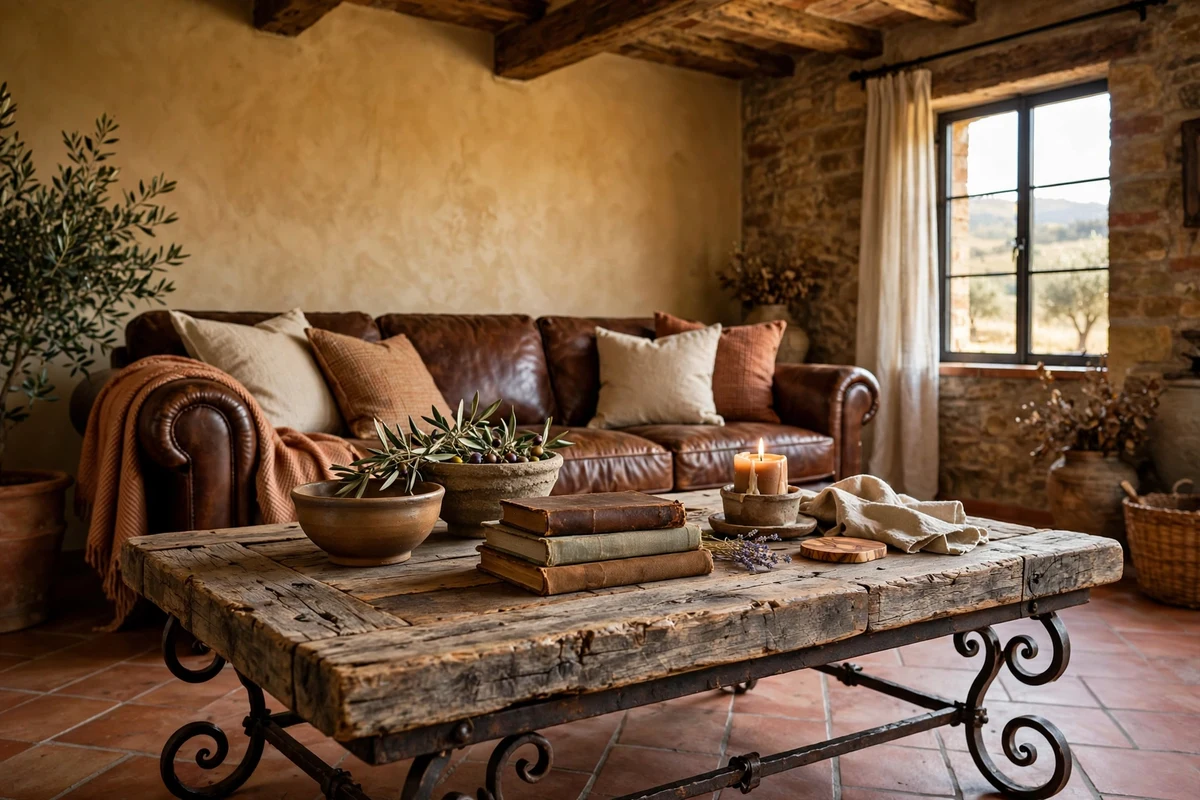
A thick slab of reclaimed wood on iron legs grounds the seating area with real history you can feel. The saw marks, nail holes, and uneven edges are the whole point, so resist the urge to buy something too perfect. Expect $400 to $1,200 for a solid reclaimed piece, depending on size and wood species. Style it simply: a ceramic bowl, a short stack of books, and one candle is plenty, because the table itself is the decoration.
Pro tip: Check that the top is sealed with a matte hardwax oil so drink rings wipe off without ruining the rustic look.
12. Tapestry Upholstered Armchair
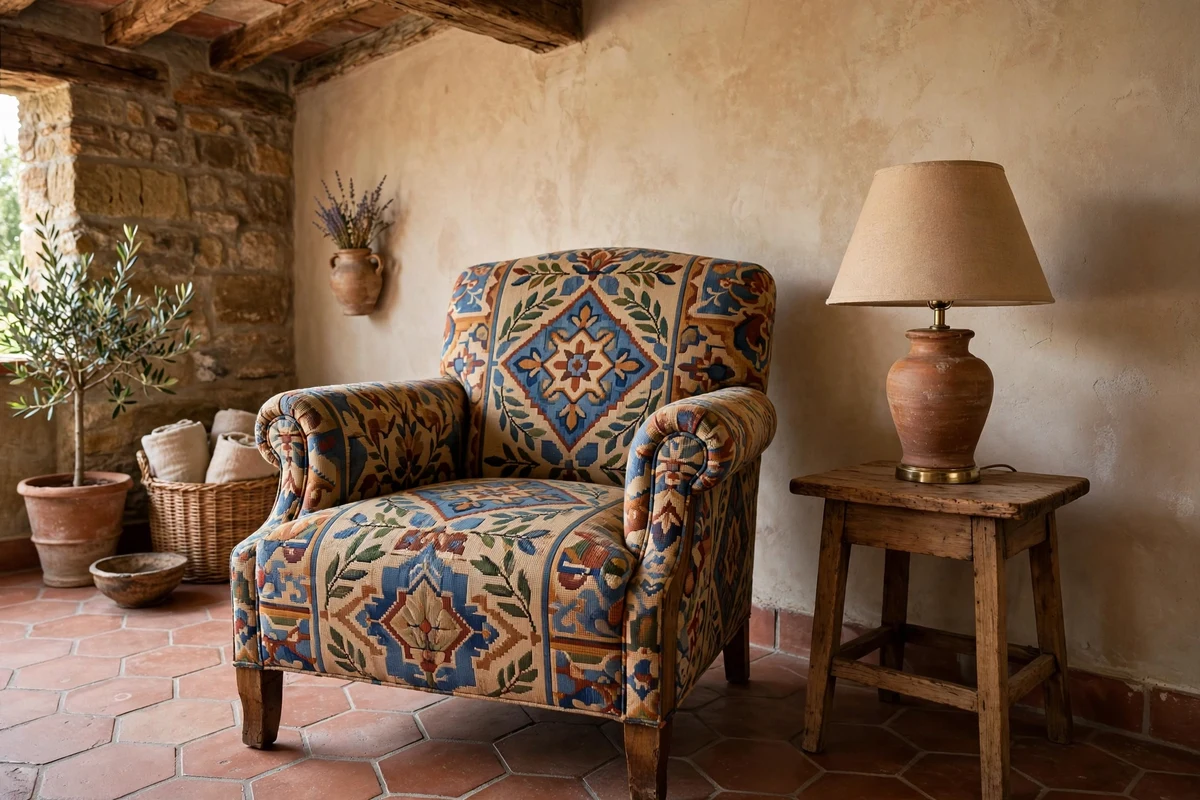
A chair in woven tapestry fabric adds the pattern and storytelling that plain rooms lack, with scenes of vineyards, gardens, or classic motifs woven right in. One tapestry chair ($350 to $900) is enough to set the tone; pair it with simpler seating so it reads as a treasured antique rather than a theme. Place it at a slight angle near a window with a small side table and you have an instant reading corner.
Pro tip: If a full tapestry chair feels like too much, use a tapestry throw pillow on a plain chair to test the look first.
13. Olive Wood Sideboard
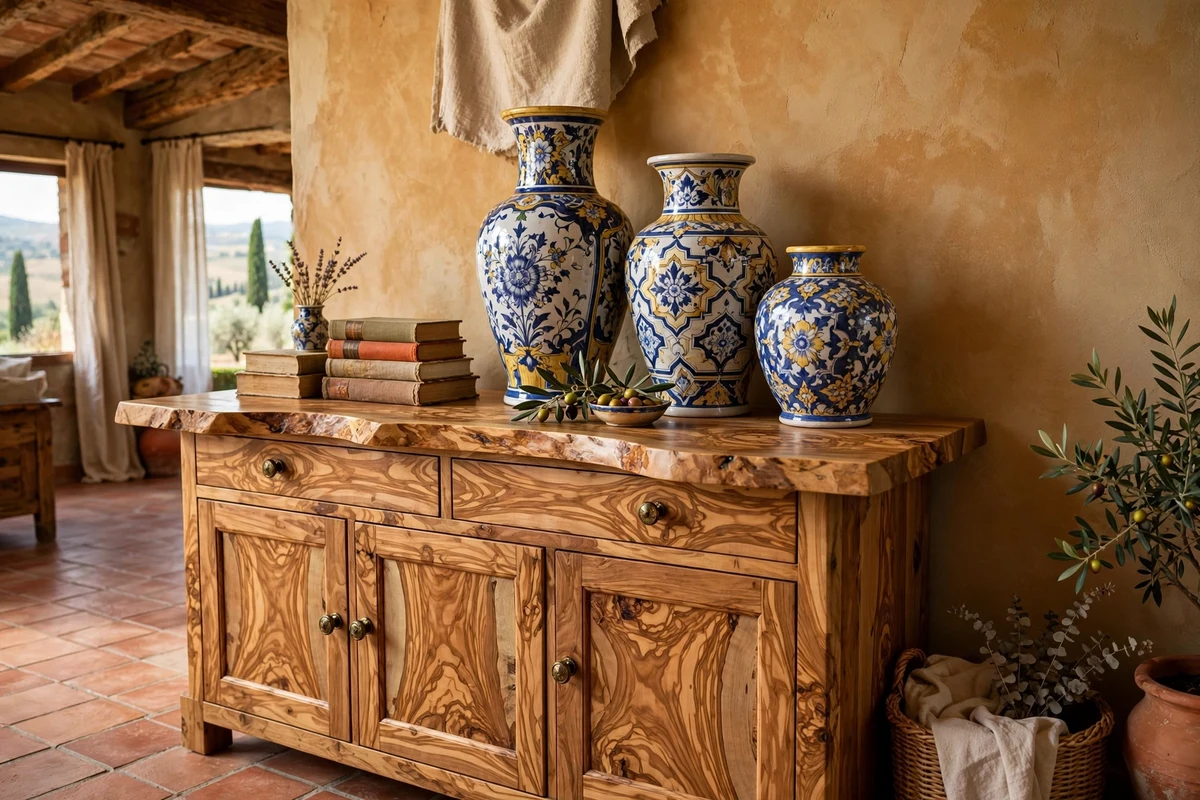
Olive wood’s dramatic grain, with its dark streaks swirling through honey tones, makes even a simple sideboard feel like sculpture. A live-edge top keeps the organic feel, while closed storage below hides the clutter that kills the relaxed Tuscan mood. Sideboards in olive or similar character woods run $600 to $1,800. Style the top with restraint: a pair of majolica vases, a stack of art books, and one trailing plant.
Pro tip: Oil the wood once a year with food-safe mineral oil to keep the grain rich and prevent drying.
14. Iron and Wood Bookcase
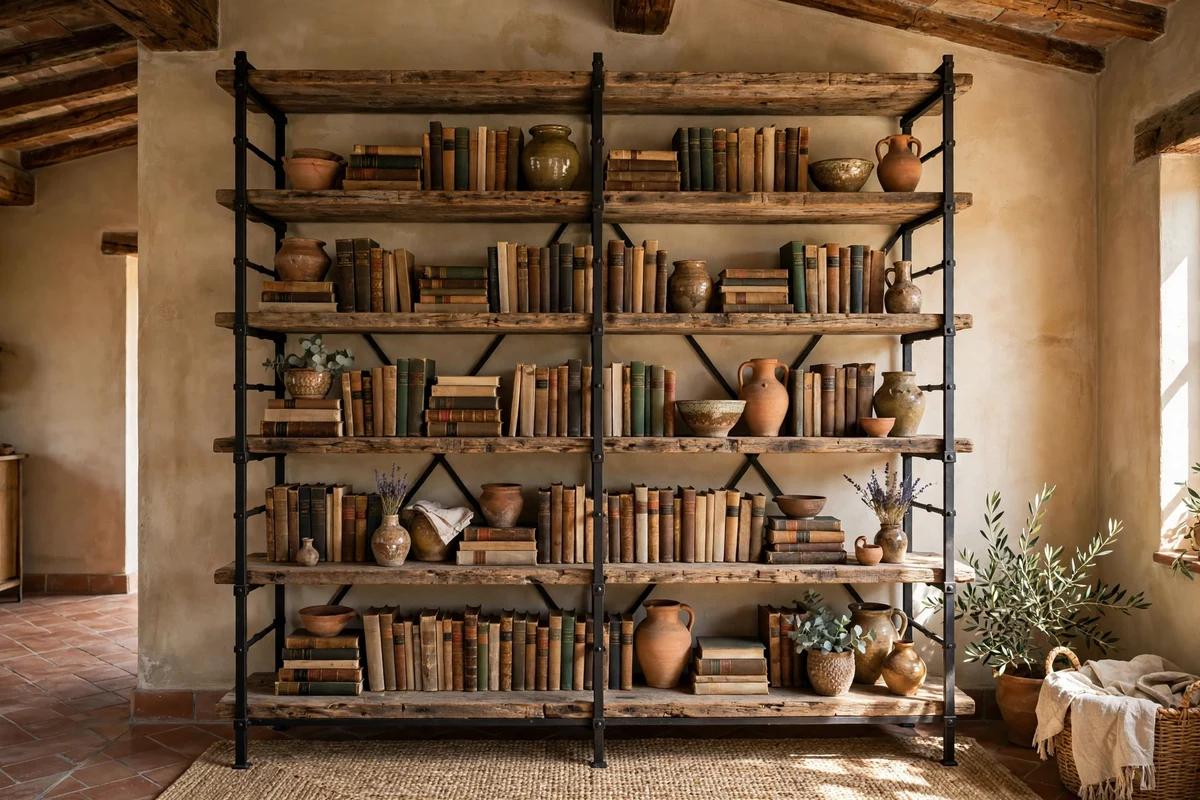
The black iron frame and warm wood shelf combination is Tuscan industrial at its best, sturdy enough to look structural and open enough to keep the room airy. Fill the shelves with a mix of books, pottery, and woven baskets, leaving about a third of each shelf empty so the display breathes. These bookcases run $250 to $700 depending on height and width. Anchor tall units to the wall, especially on tile floors where they can slide.
Pro tip: Group books by warm color tones rather than size for a display that feels curated instead of cluttered.
15. Carved Wood Console Table
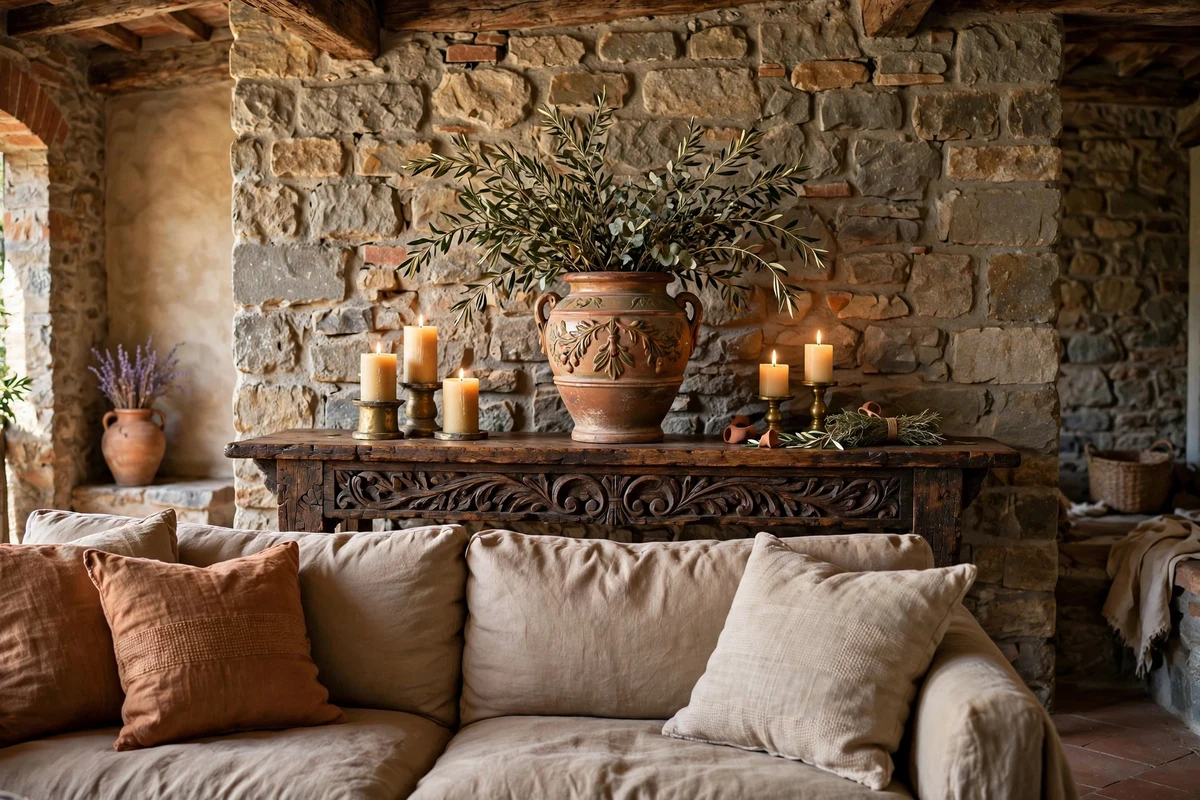
A hand-carved console behind the sofa adds a layer of craftsmanship and a landing spot for lamps, drinks, and decor. Look for acanthus leaf carving, turned legs, or a distressed finish that suggests age. Consoles run $300 to $900, with genuine antique pieces higher. Keep the styling symmetrical: a tall urn in the center flanked by matching candlesticks is the classic arrangement that never fails.
Pro tip: Add felt pads under the console feet to protect terracotta or wood floors from scratches when you slide it for cleaning.
16. Rush Seat Armchairs
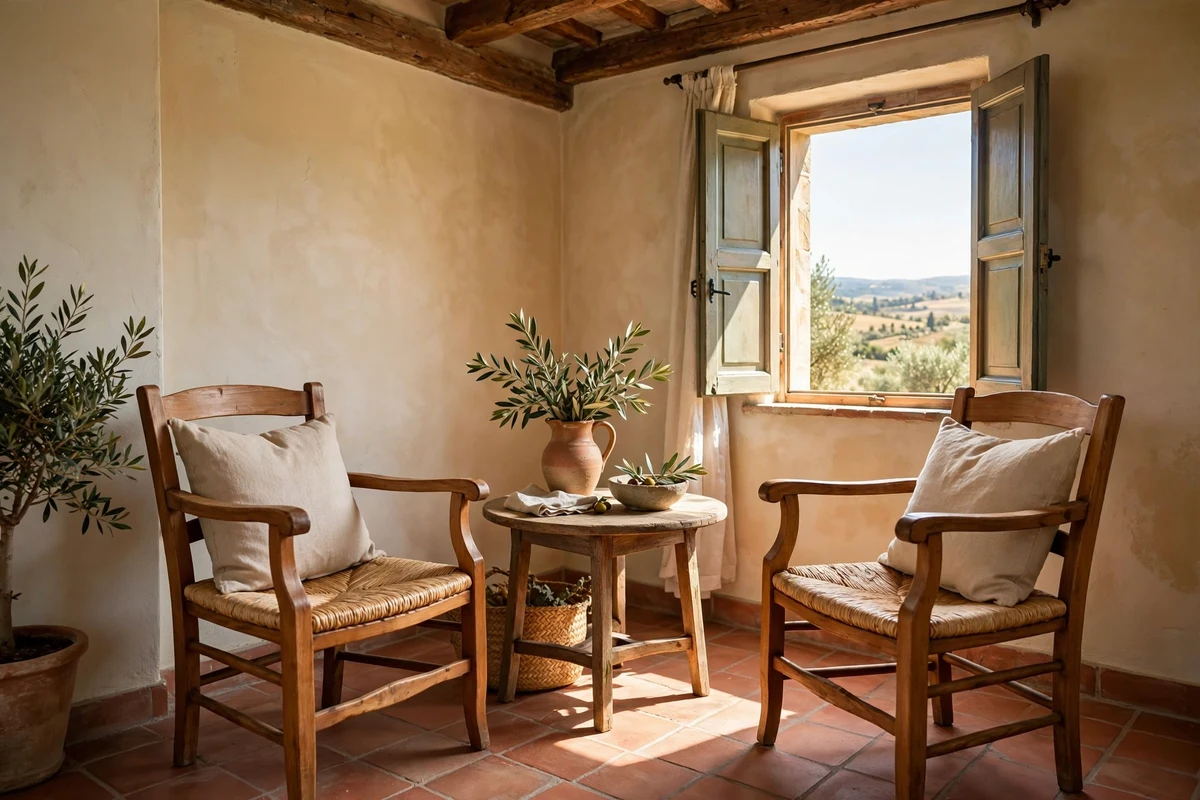
Woven rush seats bring a farmhouse texture that softens all the leather and wood in a Tuscan room. A pair of rush-seat armchairs ($200 to $500 each) tucked into a sunny corner creates a conversation spot that feels collected over time. Add a flat linen cushion for comfort without hiding the weave. The natural fiber darkens gracefully with age, so these chairs look better in five years than they do today.
Pro tip: Mist rush seats lightly with water once a season to keep the fibers from drying out and cracking.
17. Upholstered Ottoman Bench
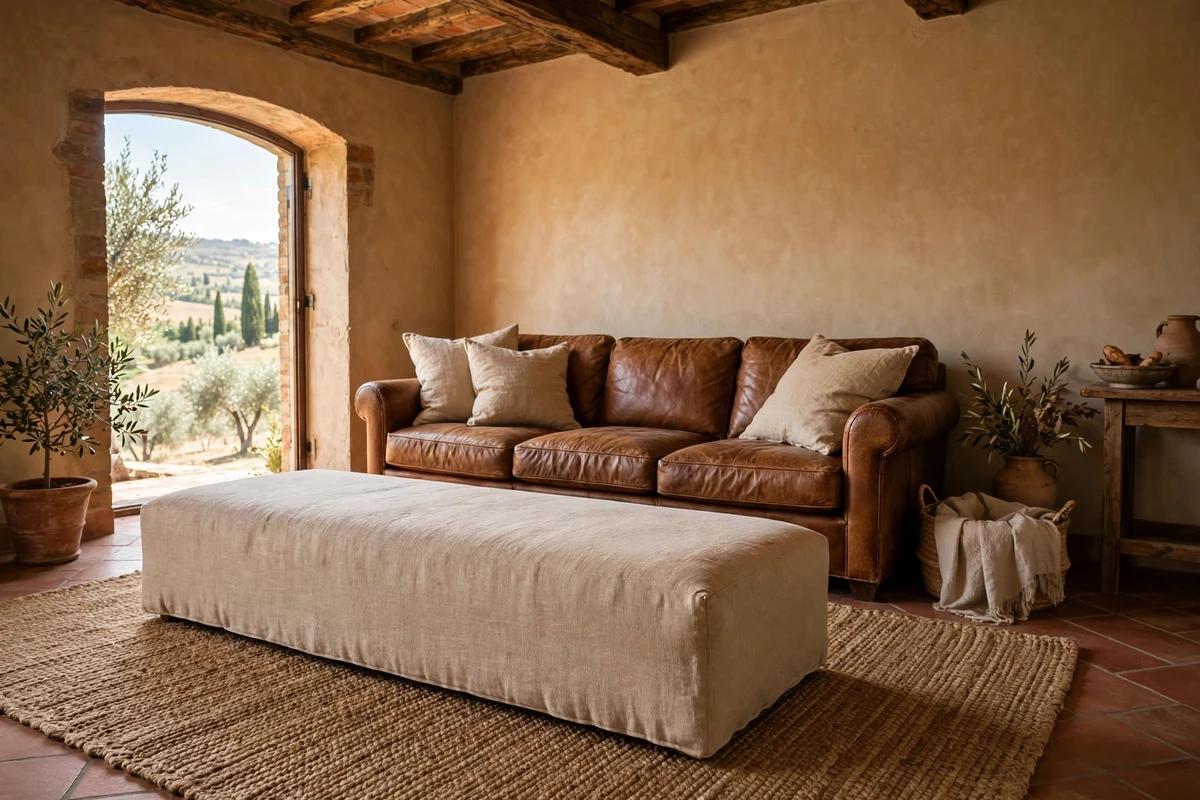
A long ottoman bench in natural linen does triple duty as a footrest, extra seating, and a coffee table base when topped with a tray. Choose one 2 to 4 inches lower than your sofa seat and about two-thirds the sofa’s length for the right proportions. Prices run $250 to $700. In a Tuscan room, skip the tufting and piping and let the simple slipcovered shape keep things relaxed.
Pro tip: Pick a bench with hidden storage inside for throws and remotes, keeping the relaxed look truly clutter-free.
18. Antique Writing Desk Nook
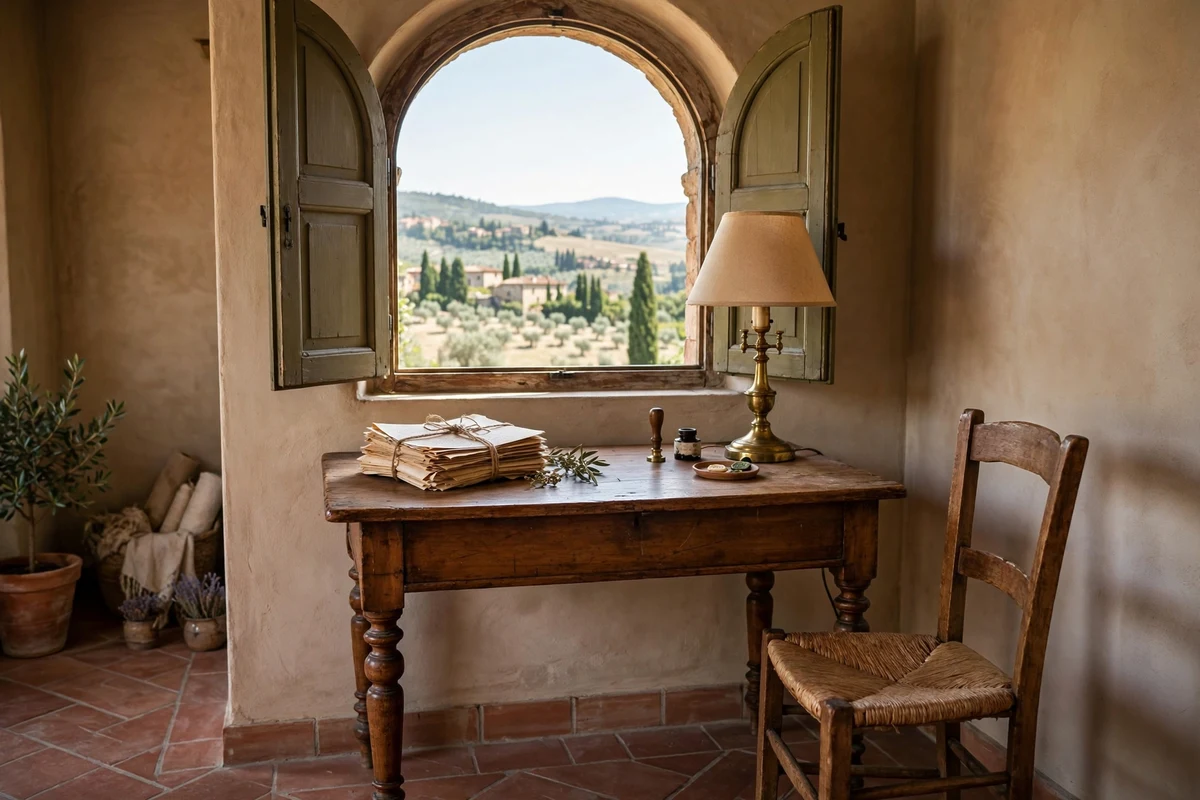
A small antique writing desk tucked by a window gives the living room a sense of lived-in purpose, as if someone might sit down to write a letter at any moment. Look for turned legs, a worn top, and at least one drawer, with prices from $150 to $600 at vintage shops. Style it with a brass lamp, a stack of letters tied with twine, and an inkwell or small vase, then leave the chair slightly pulled out for that inviting, in-use feeling.
Pro tip: A desk nook also works as a laptop station, just corral the cables in a woven basket underneath.
Color, Texture and Mediterranean Pattern
19. Olive Green Velvet Pillows
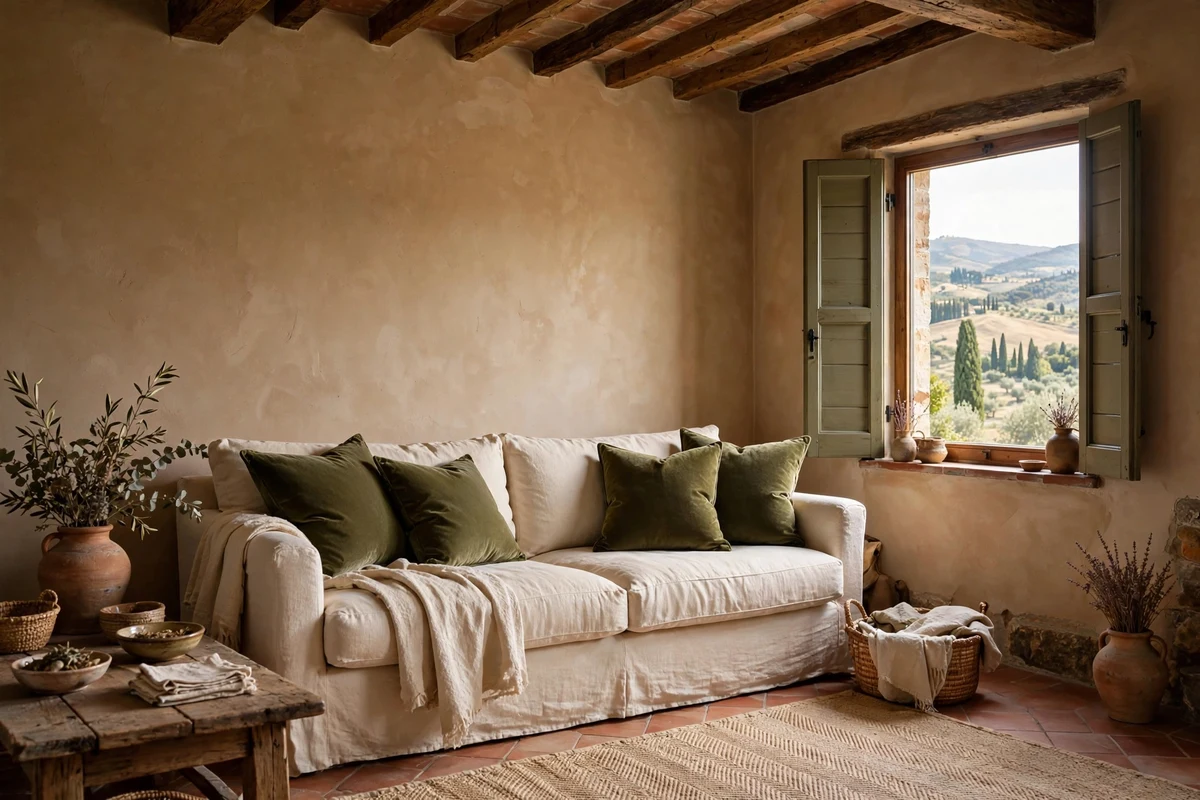
Olive green velvet pillows are the fastest way to pull the Tuscan landscape indoors. The deep, muted green cools down all the warm terracotta and wood while the velvet adds a touch of luxury. Mix two 20-inch squares in olive velvet ($25 to $60 each) with a smaller lumbar pillow in a natural linen stripe. Stick to an odd number of pillows and vary the sizes so the arrangement looks styled, not staged.
Pro tip: Give velvet pillows a firm karate chop at the top center for that designer dent that makes them look professionally styled.
20. Terracotta Wool Area Rug
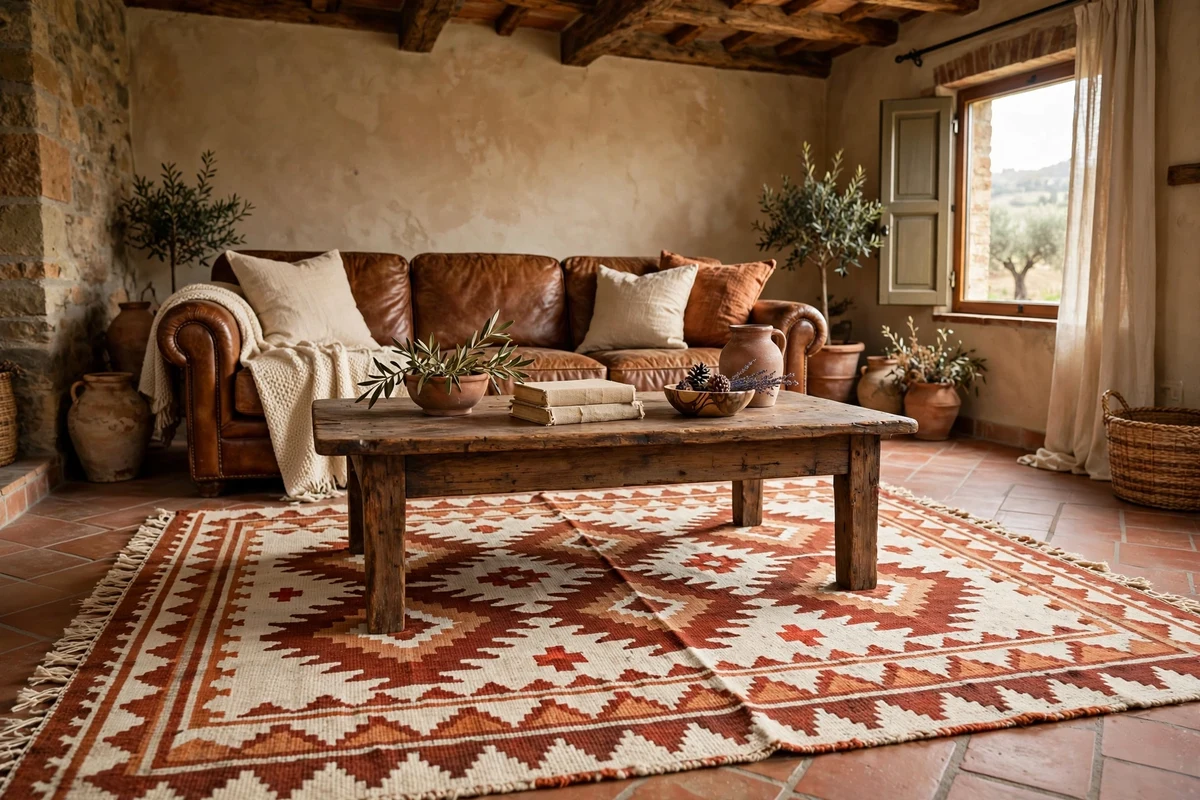
A handwoven wool rug in terracotta, cream, and rust defines the seating area and adds softness over hard tile floors. Choose a rug large enough that the front legs of the sofa and chairs all sit on it, which usually means 8×10 feet for a standard arrangement. Wool rugs in these tones run $300 to $1,200 depending on size and knot count. A flatweave or low pile works best over terracotta tile so doors still swing freely.
Pro tip: Rotate the rug 180 degrees every six months so sunlight fades it evenly and foot traffic wears it uniformly.
21. Wrought Iron Scroll Wall Art
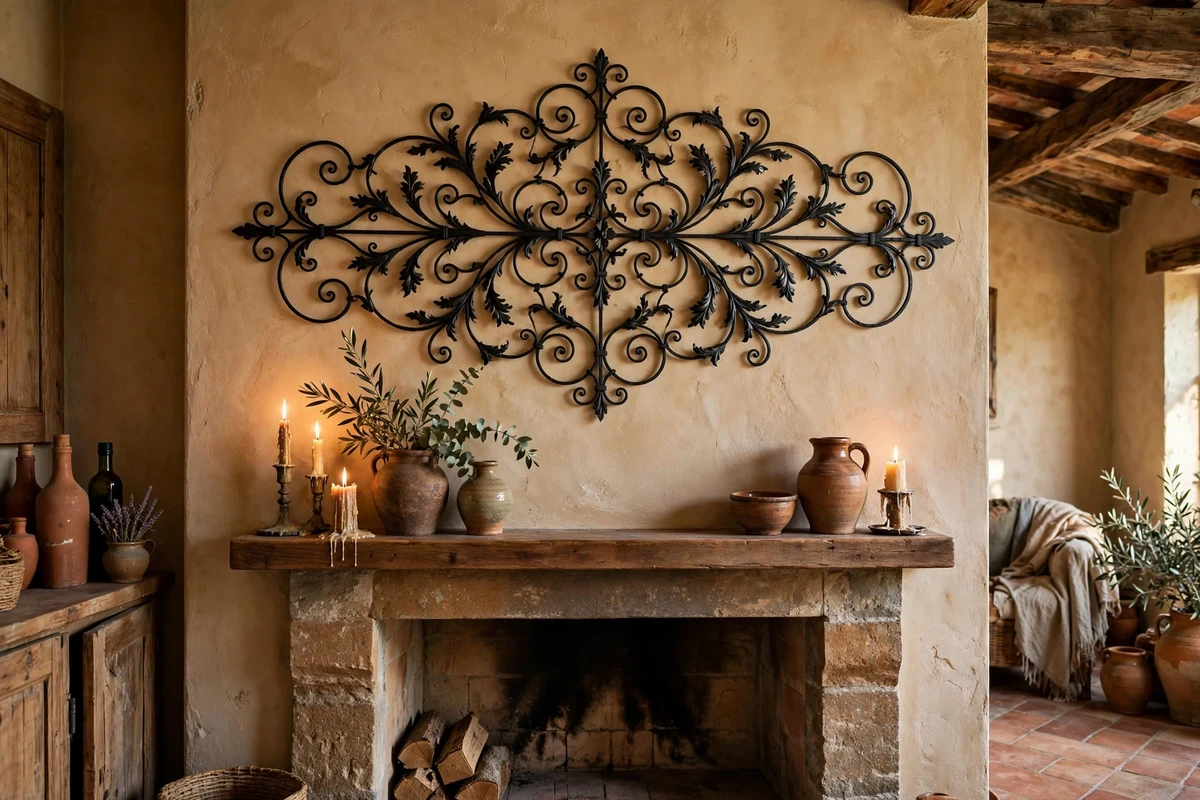
Hand-forged scrollwork brings the blacksmith’s art to your walls and echoes the iron in your chandelier and sconces. A single large scroll piece ($80 to $250) above the mantel or sofa fills vertical space without the fuss of a gallery wall. The open design casts beautiful shadows on plaster walls when the sconces are lit. Look for pieces with a matte black or oil-rubbed finish rather than anything glossy.
Pro tip: Hang iron art with two anchor points into studs, since even decorative pieces can be surprisingly heavy.
22. Majolica Ceramic Accents
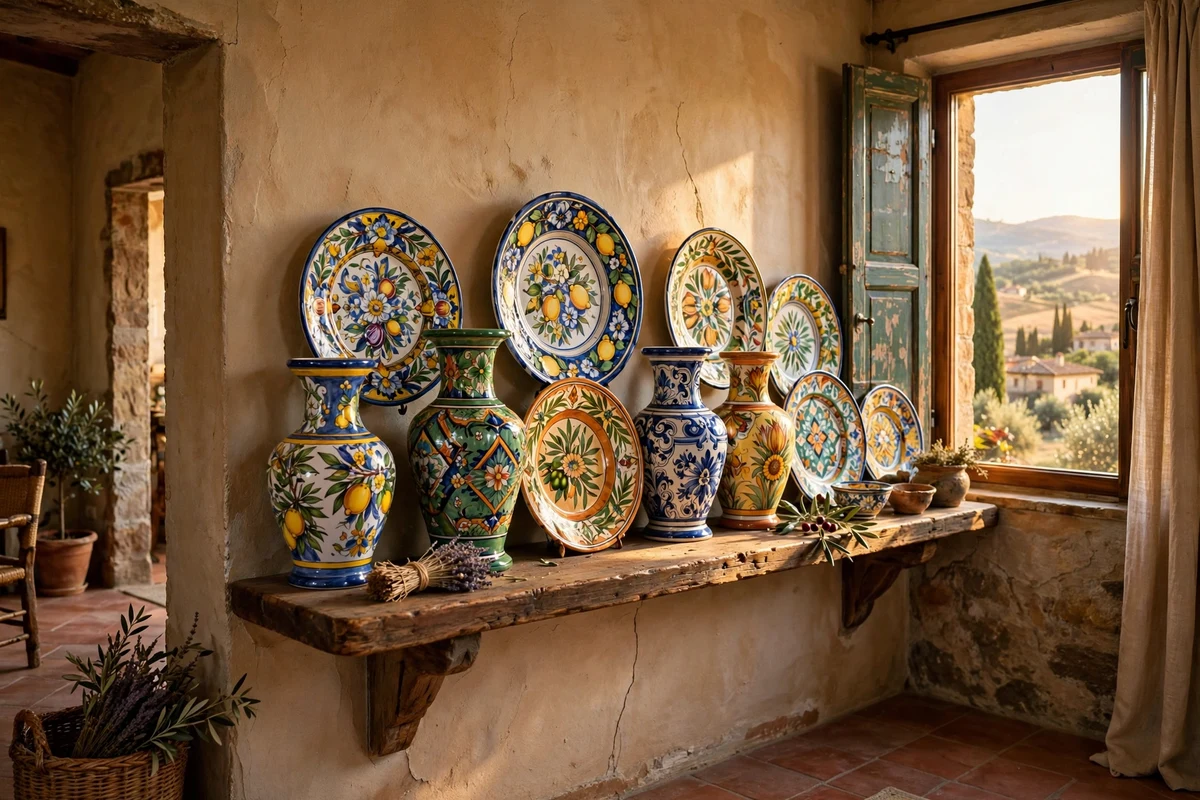
Majolica’s tin-glazed blues, yellows, and greens are the confetti of Tuscan decor, small bursts of color that keep the earthy palette from feeling heavy. A collected shelf of pitchers, plates, and bowls ($15 to $80 per piece) tells a story of markets and travels. Group them in odd numbers with varying heights, mixing patterns freely, since the shared glaze style holds the collection together.
Pro tip: Stand plates on small easels within the shelf display so their painted faces show instead of hiding against the wall.
23. Layered Jute and Wool Textures
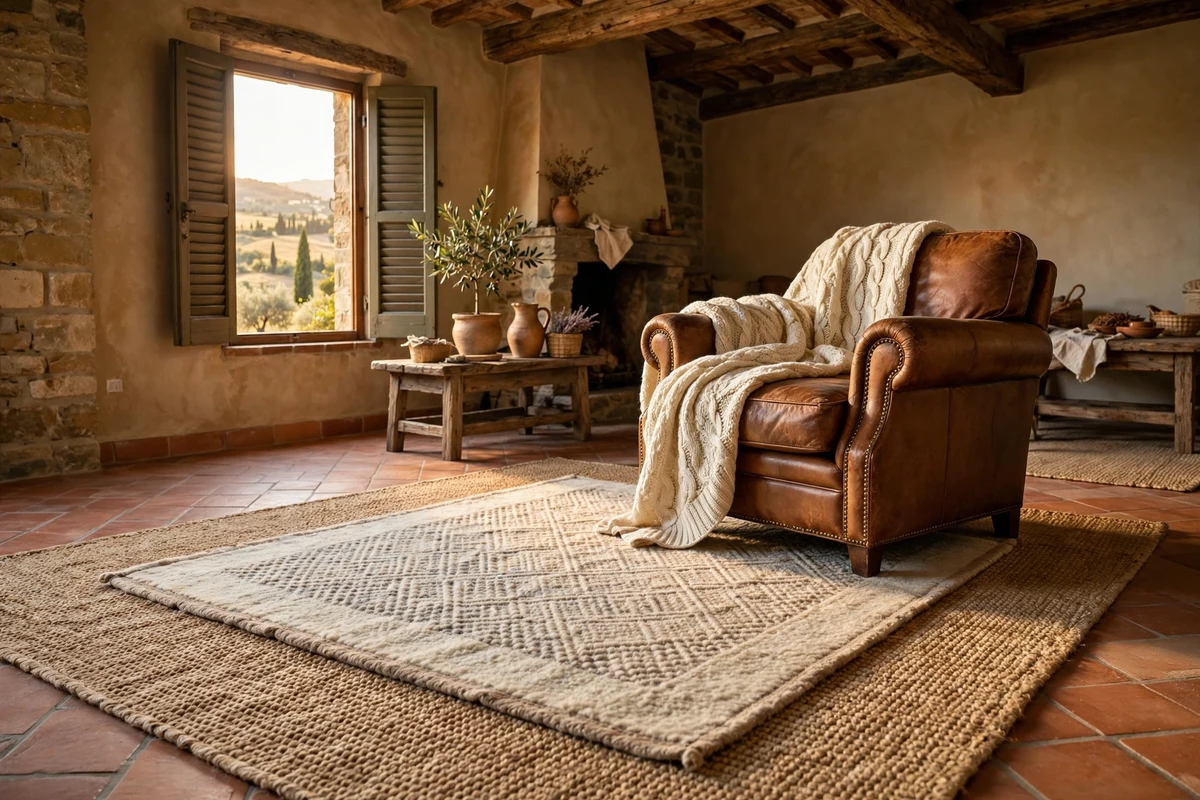
Layering a patterned wool rug over a larger natural jute base adds the kind of relaxed depth you see in real Tuscan homes, where textiles accumulate over generations. The jute layer should extend 12 to 18 inches beyond the top rug on all sides. A 9×12 jute rug runs $150 to $400, making this one of the cheapest ways to make a room feel richer. Add a chunky knit throw over the nearest chair to complete the texture story.
Pro tip: Use a rug pad under the jute to prevent slipping on tile and to add cushioning underfoot.
24. Fresco-Style Wall Mural
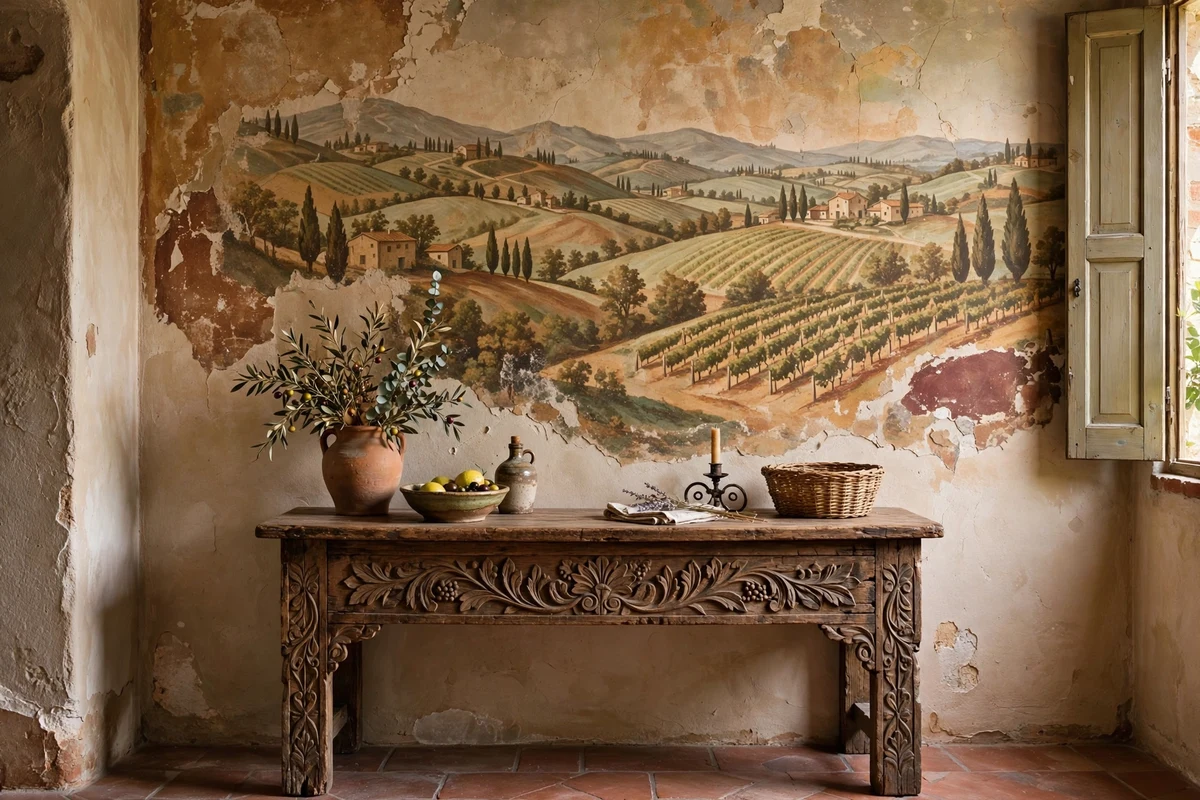
A faded fresco mural of rolling hills or a vineyard turns a plain wall into a window on Tuscany itself. Hand-painted murals by a decorative artist run $1,500 to $5,000, but high-quality mural wallpaper ($200 to $600 per wall) delivers the same dreamy effect for far less. Choose imagery in muted, sun-faded tones rather than bright colors so it reads as aged plaster art. One mural wall per room is the limit, or the effect becomes theme park.
Pro tip: Distress the edges of mural wallpaper with a light glaze wash so the border melts into the surrounding plaster.
25. Mosaic Tile Side Table
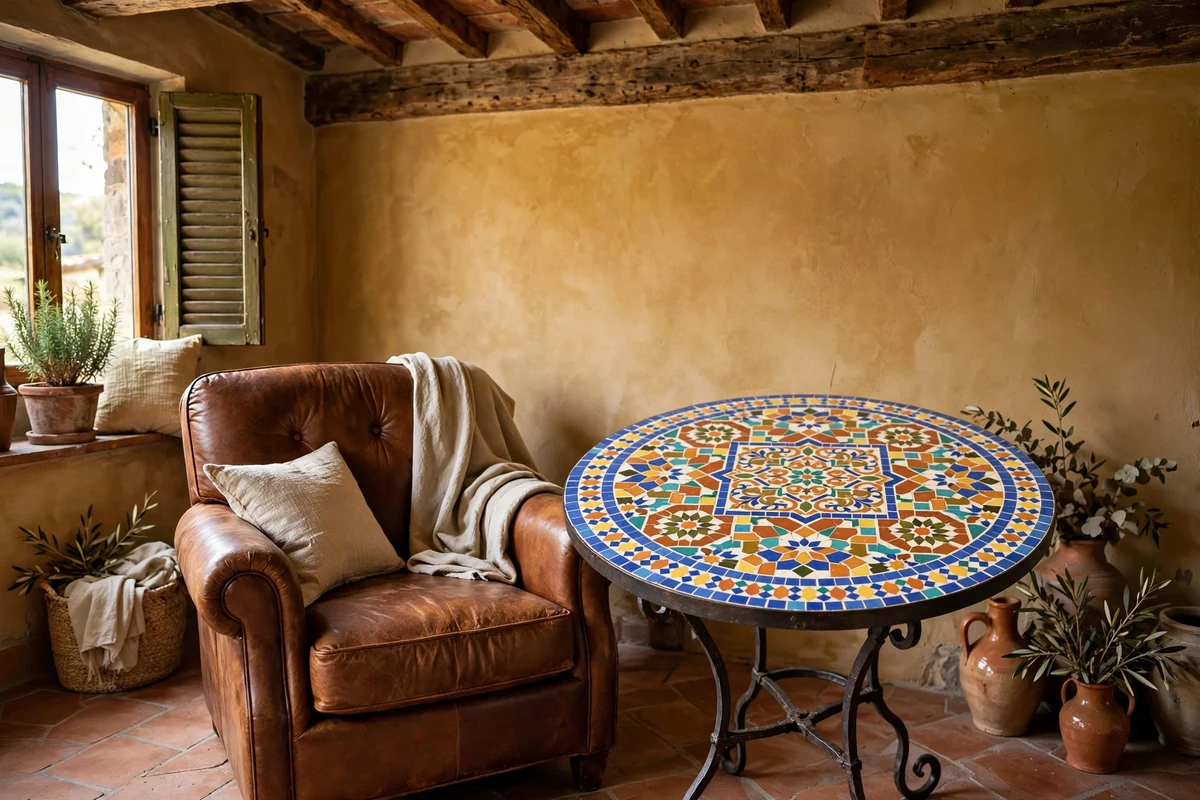
A mosaic tile top in Mediterranean blues, greens, and terracotta turns a humble side table into a jewel box. These tables ($80 to $300) tuck beside any chair and shrug off drink rings, making them as practical as they are pretty. The glossy tile surface also bounces light around the room, which is welcome in rooms with dark beams. Pair it with a simple iron or wood base so the top stays the focus.
Pro tip: Seal the grout lines once a year with a grout sealer pen to keep them from staining.
26. Natural Linen Slipcovers
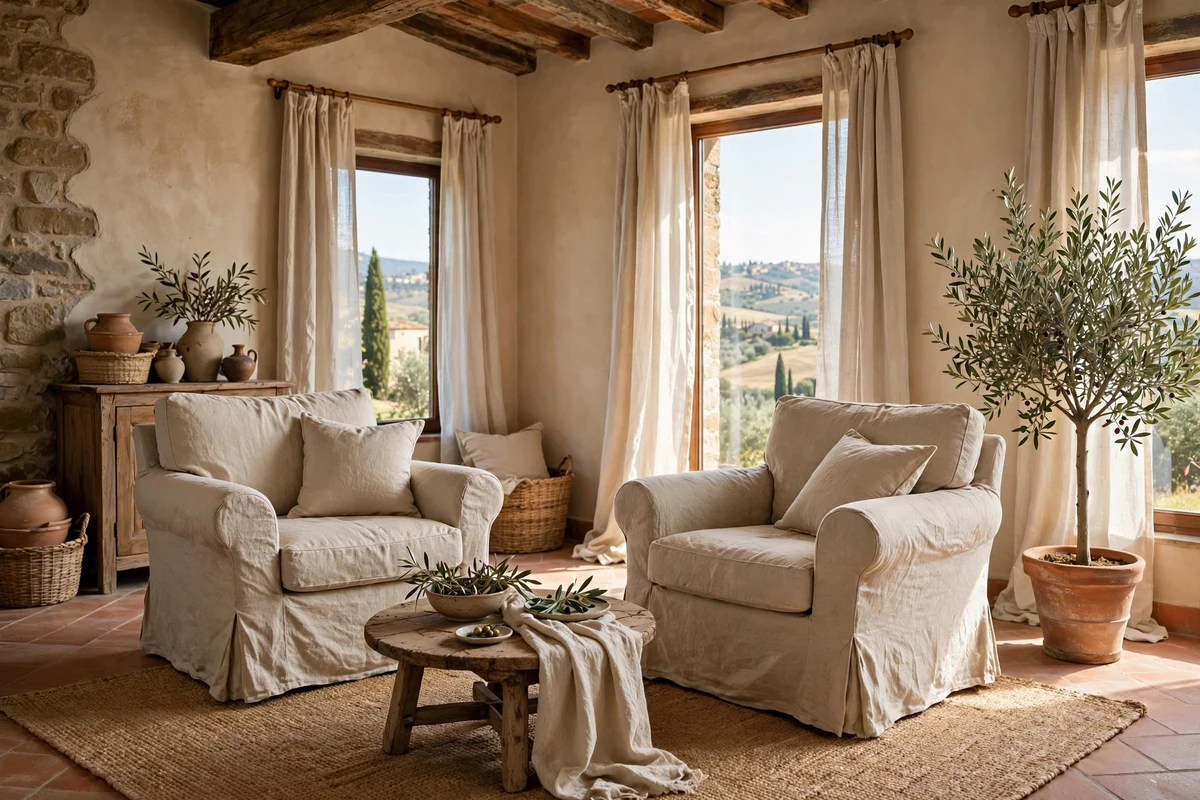
Loose linen slipcovers give seating that effortless, sun-bleached elegance that defines relaxed Tuscan style, and they come off for washing, which is a gift with kids or pets. Custom slipcovers run $200 to $500 per chair, while ready-made options cost $60 to $150. Choose a heavyweight washed linen in natural flax or oatmeal so the fabric drapes rather than clings. A little wrinkling is not a flaw here, it is the entire aesthetic.
Pro tip: Buy two sets of slipcovers so one can be in the wash while the other is on the chair.
27. Wine Barrel Accent Table
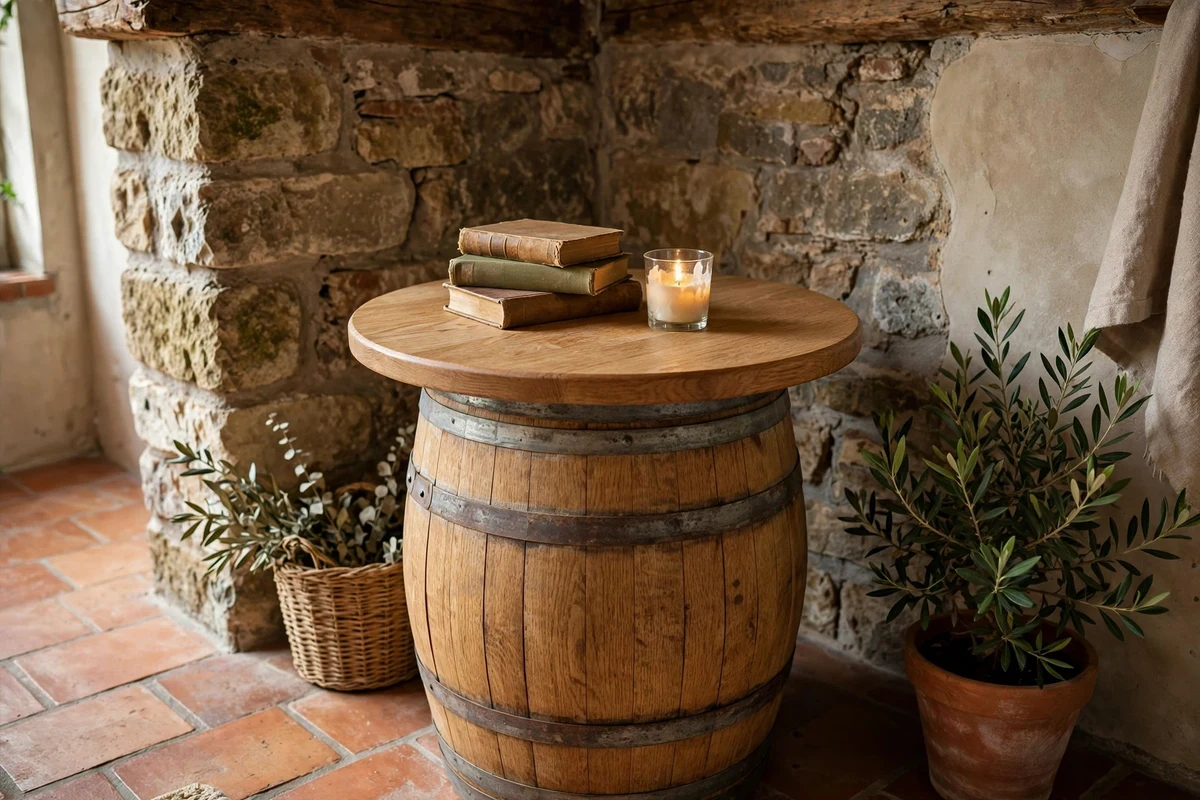
A retired oak wine barrel topped with a round wood disc makes a conversation-piece side table with genuine vineyard provenance. Real barrel tables run $150 to $400, and many still carry the winery’s stencil marks, which only adds character. Use one as a plant stand, a bar table, or a lamp table in a corner that needs weight. The curved shape breaks up all the rectangles in the room beautifully.
Pro tip: Check that the metal hoops are tight and rust-treated before bringing a barrel indoors, and add felt glides underneath.
Finishing Touches: Details That Feel Like Tuscany
28. Potted Olive Tree
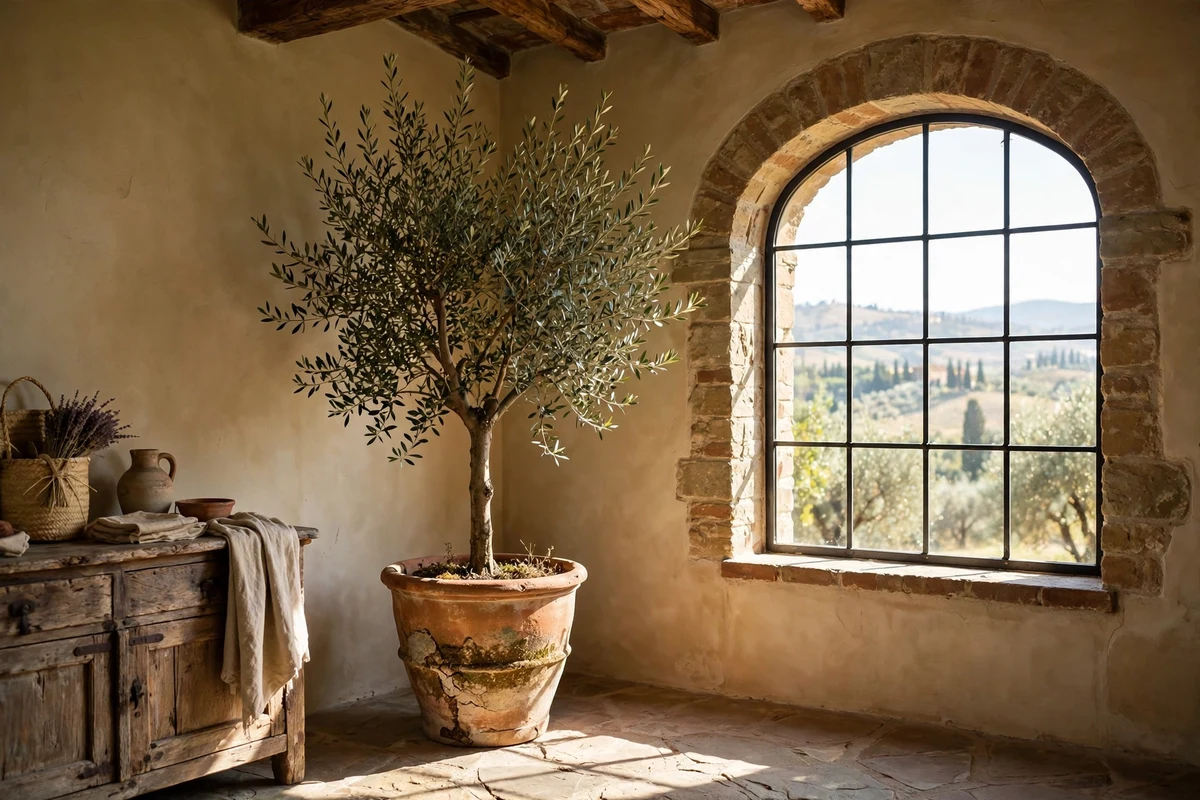
No single plant says Tuscany like an olive tree, with its silvery leaves shimmering in the light. A 4 to 5 foot tree in an aged terracotta pot ($80 to $250 for tree and pot) fills an empty corner with living sculpture. Give it your brightest window, water deeply but infrequently, and rotate it monthly for even growth. If your light is limited, a high-quality faux olive tree ($100 to $200) still delivers the silhouette without the care routine.
Pro tip: Top the soil with small pebbles or moss to hide the nursery pot look and keep moisture even.
29. Iron Candle Clusters
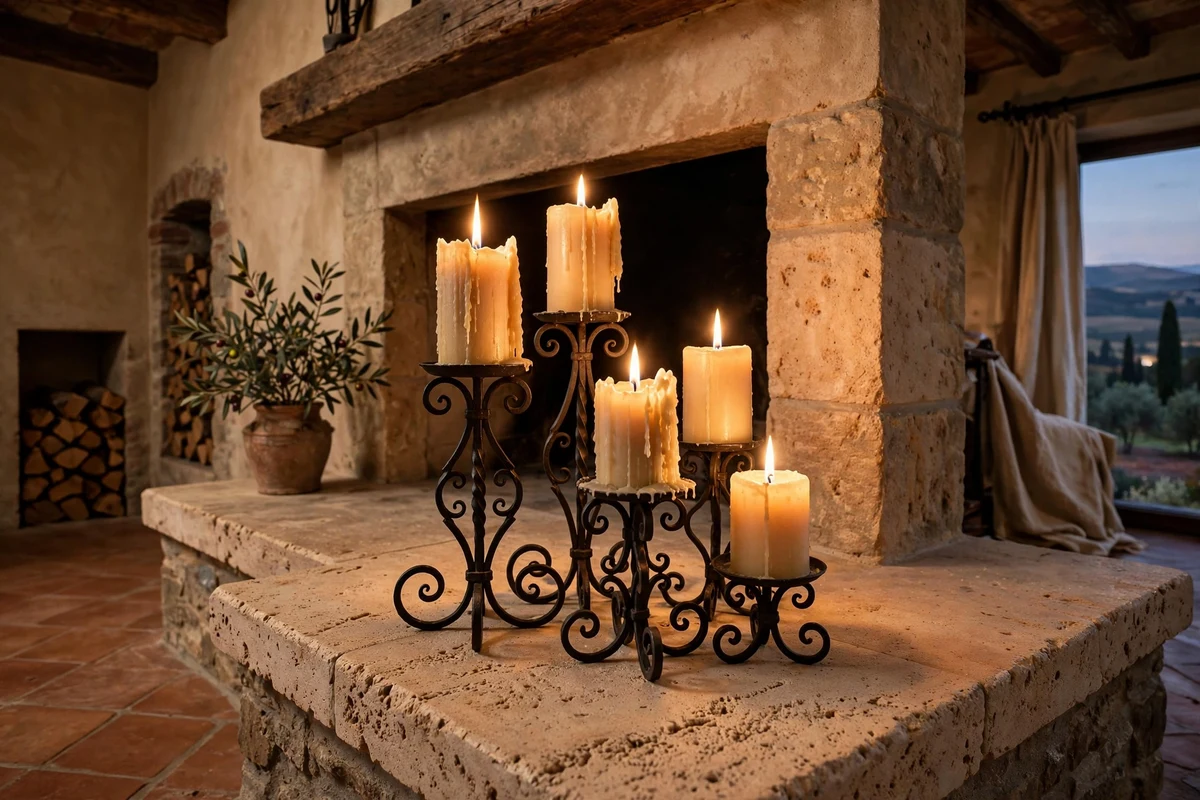
Clusters of pillar candles in wrought iron holders bring firelight to rooms without a working fireplace. Group holders in threes at varying heights ($15 to $45 each) on the hearth, a console, or the coffee table. Ivory or beeswax-toned candles look most authentic against the dark iron. Flameless LED pillars with a warm flicker ($10 to $25 each) give the same glow with zero worry, and many come with remote controls.
Pro tip: Mix real and flameless candles in one cluster, using real ones only where you can supervise them.
30. Dried Grapevine Wreath
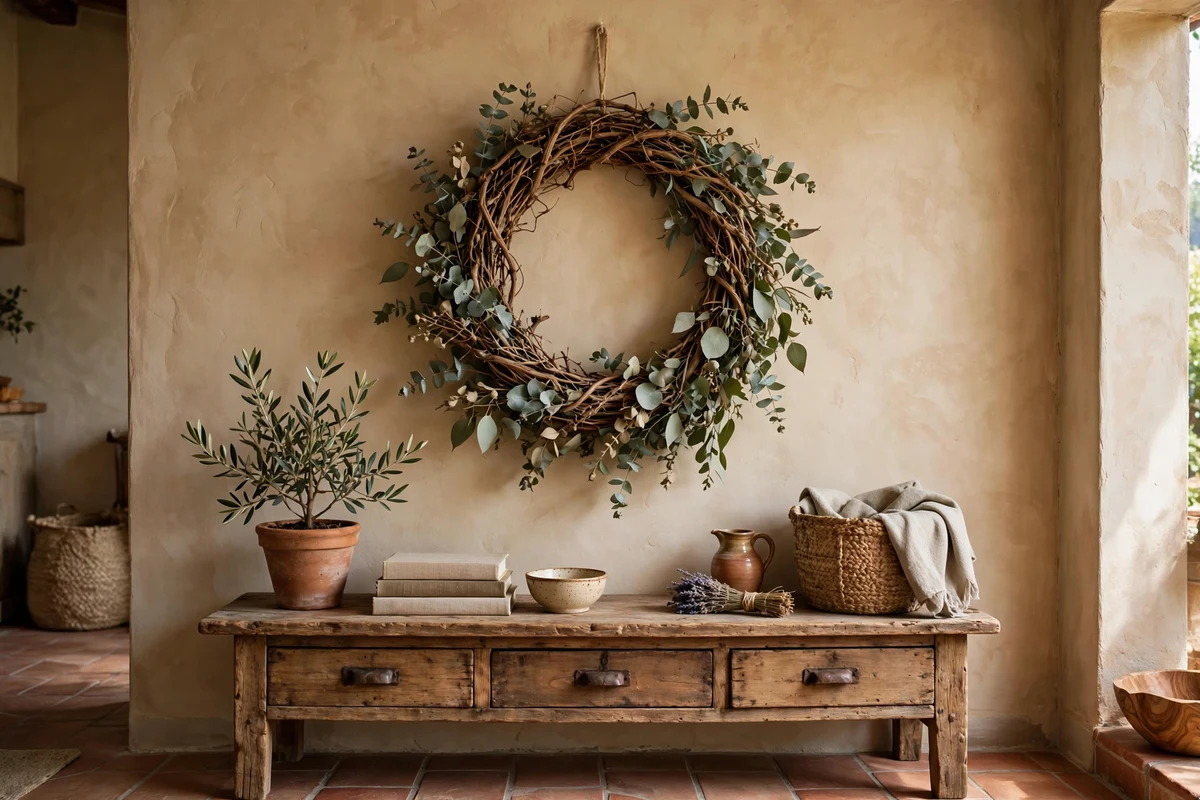
A large grapevine wreath dressed with dried eucalyptus, lavender, or wheat is Tuscan wall decor at its most honest, straight from the vineyard. A 24 to 30 inch wreath runs $30 to $80 ready-made, or under $20 if you build it on a plain vine base yourself. Hang it above a console, on a stone wall, or even on the inside of a door. It lasts for years with just an occasional gentle dusting.
Pro tip: Refresh a tired wreath each season by tucking in fresh sprigs of whatever is growing, rosemary in winter, wheat in fall.
31. Hammered Copper Pot Display
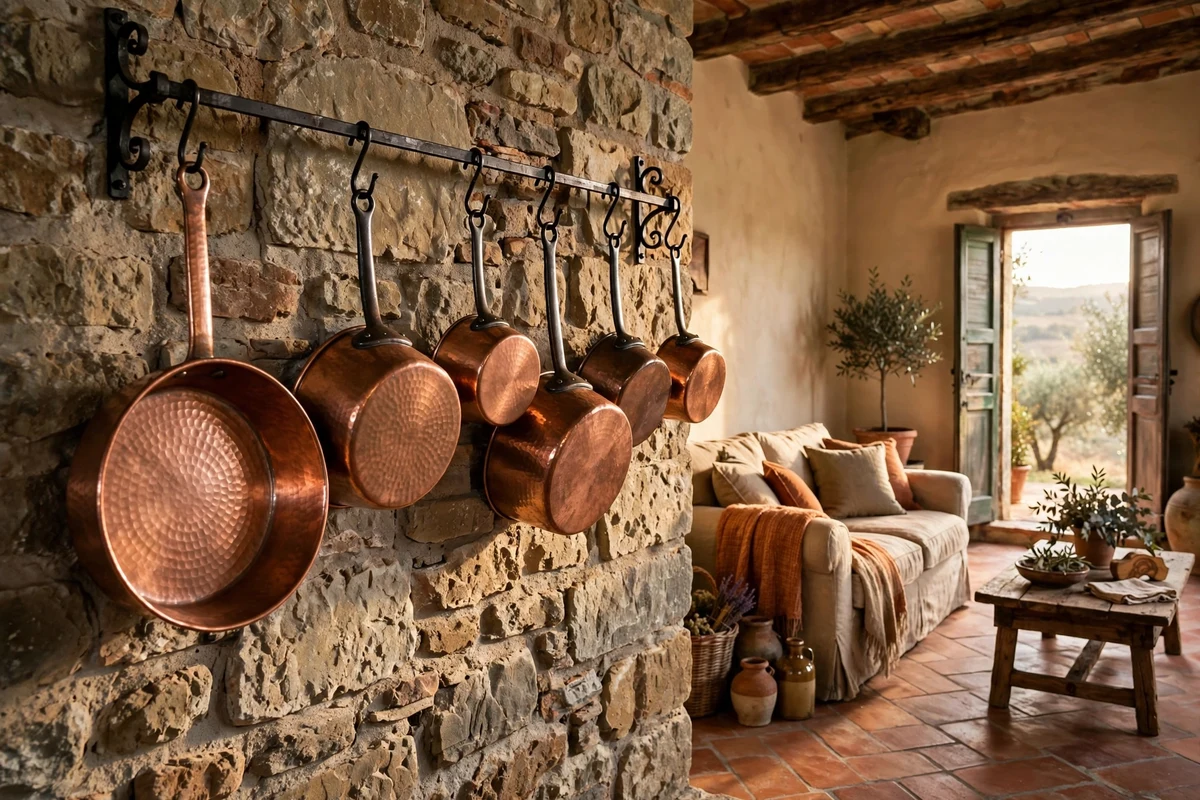
Hammered copper catches light like nothing else in a warm room, glowing against stone and plaster. A wall-mounted iron rack ($60 to $150) holding three to five copper pots ($40 to $120 each) works beautifully on the wall between the living room and kitchen, or as art in its own right. Let the copper develop a natural patina, or polish it twice a year if you prefer the bright shine.
Pro tip: Hang pots at slightly different heights and overlap them a little for a collected, abundant look.
32. Fresh Lavender Bundles
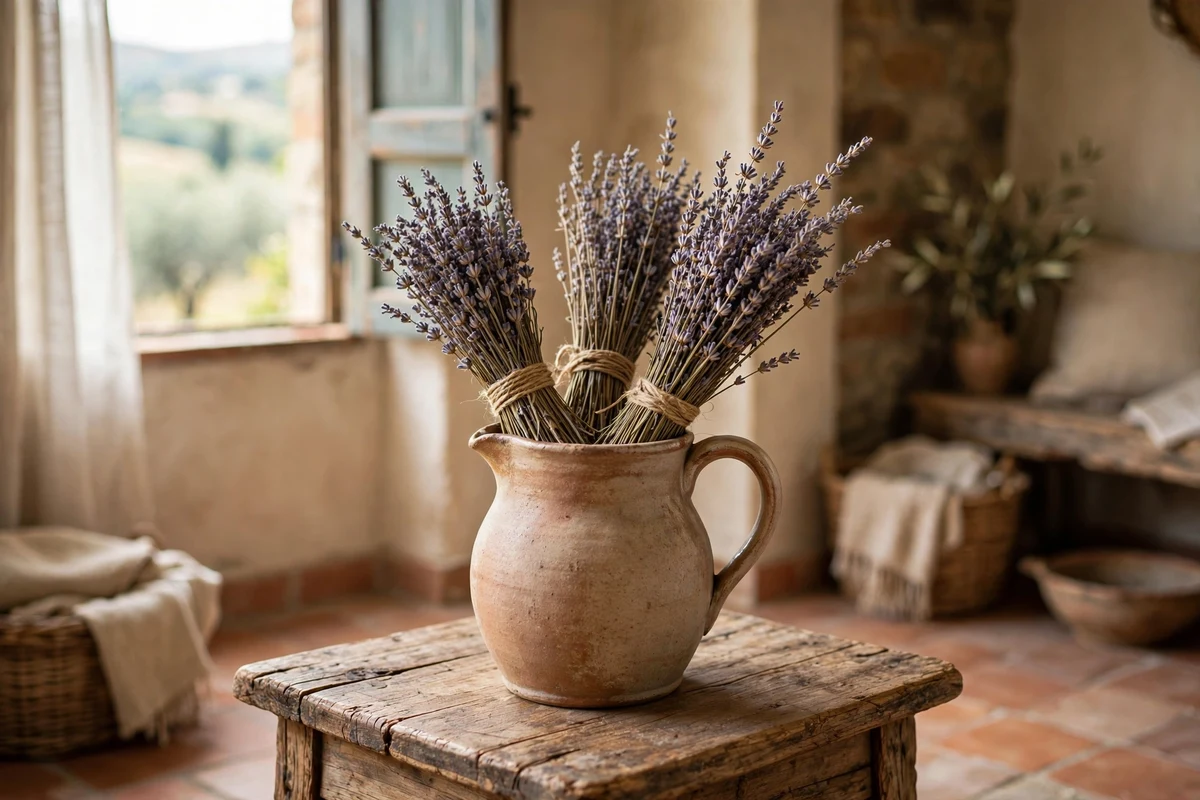
Bundles of dried lavender in a ceramic pitcher add color, texture, and that unmistakable Provençal scent that drifts through the room. A generous bunch costs $10 to $25 at markets or online and lasts a year or more indoors. Tie stems with natural twine and stand them in a pitcher, an old olive oil tin, or a small bucket. When the scent fades, crush a few buds between your fingers to wake it back up.
Pro tip: Keep lavender out of direct harsh sun to preserve its purple color as long as possible.
33. Framed Vineyard Prints
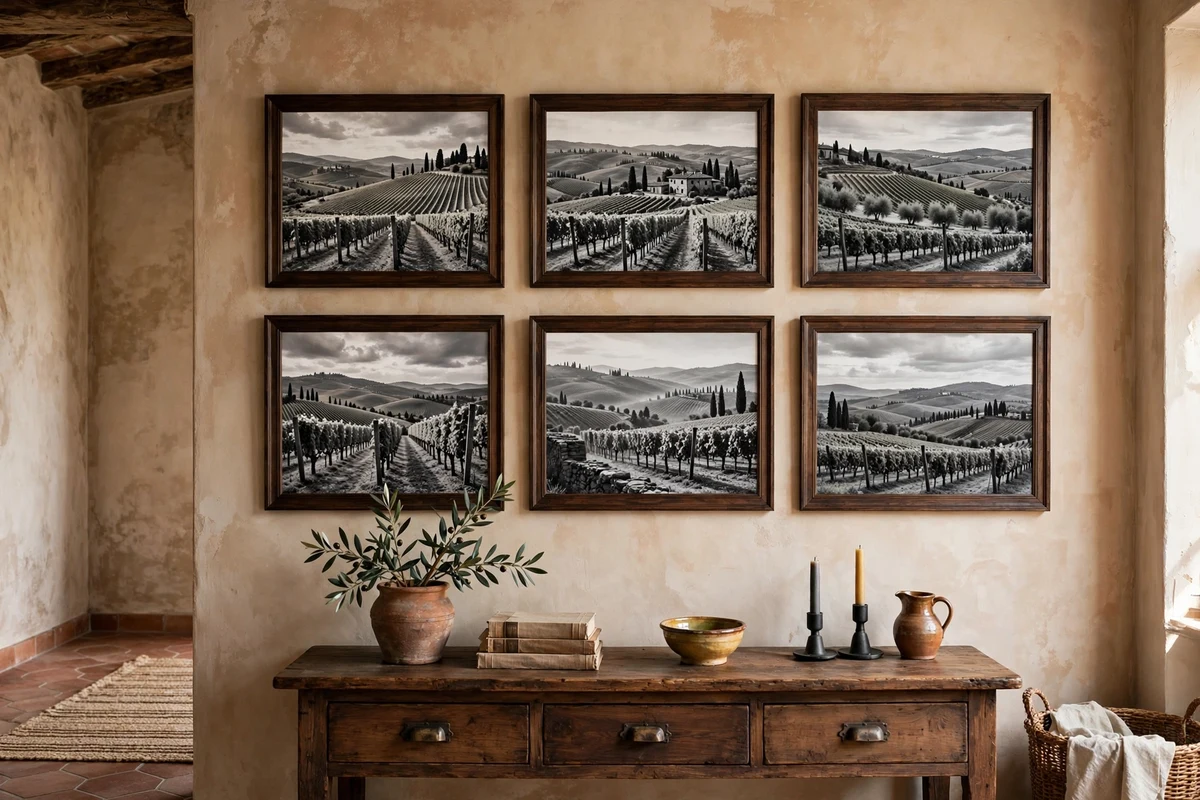
A gallery wall of vineyard landscapes in dark wood frames keeps the Tuscan story on the walls without a single word. Black and white prints feel timeless and let the room’s warm colors do the talking, while sepia tones add vintage warmth. Budget $15 to $50 per framed print, or print your own photos for under $10 each in simple frames. Hang them in a loose grid with 2 to 3 inches between frames for a collected feel.
Pro tip: Lay the arrangement on the floor first and photograph it, so you can replicate the spacing on the wall with confidence.
34. Hand-Painted Olive Oil Cruets
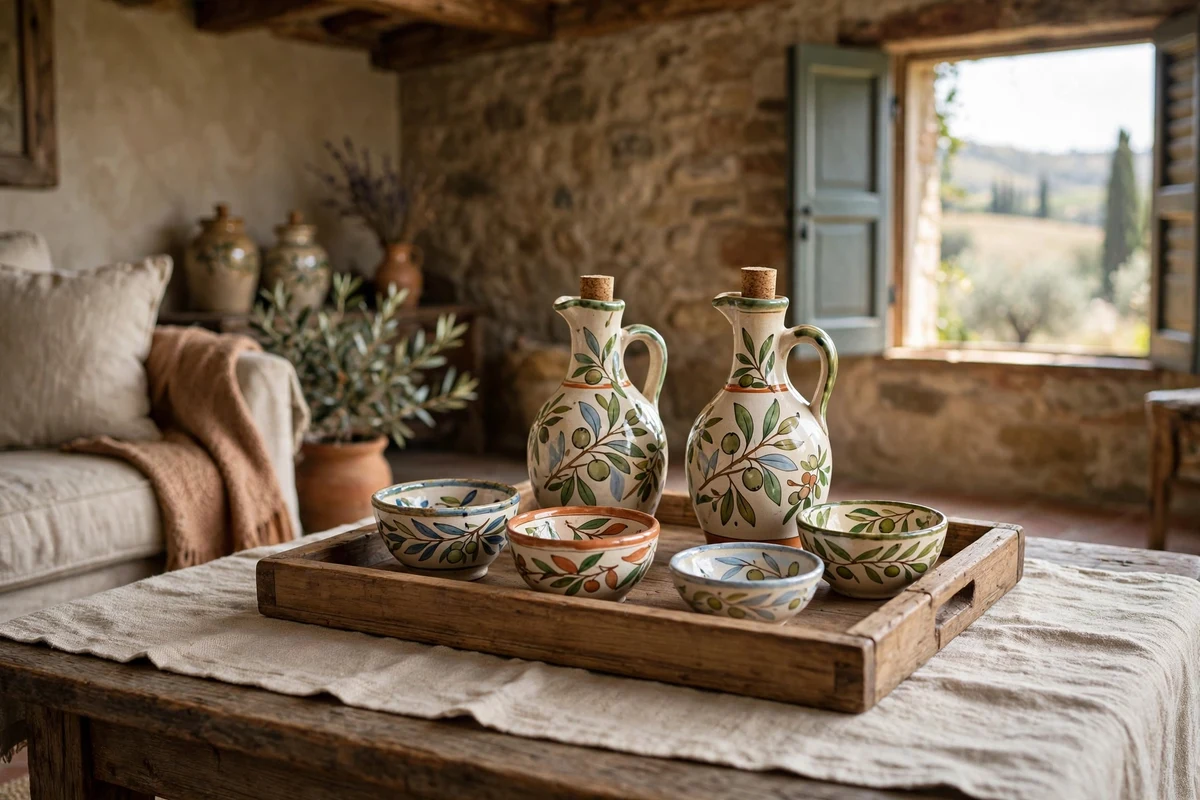
Small hand-painted cruets and bowls, the kind sold in every Tuscan market, make charming tabletop vignettes. A set of three cruets runs $25 to $60, and they look wonderful grouped on a wood tray with a linen runner on the coffee table. Use them for actual olive oil and vinegar at dinner parties, or simply as decor. The hand-painted imperfections are what make each piece feel one of a kind.
Pro tip: If you use cruets for real oil, choose ones with a cork or sealed stopper so the oil stays fresh.
35. Potted Lemon Tree
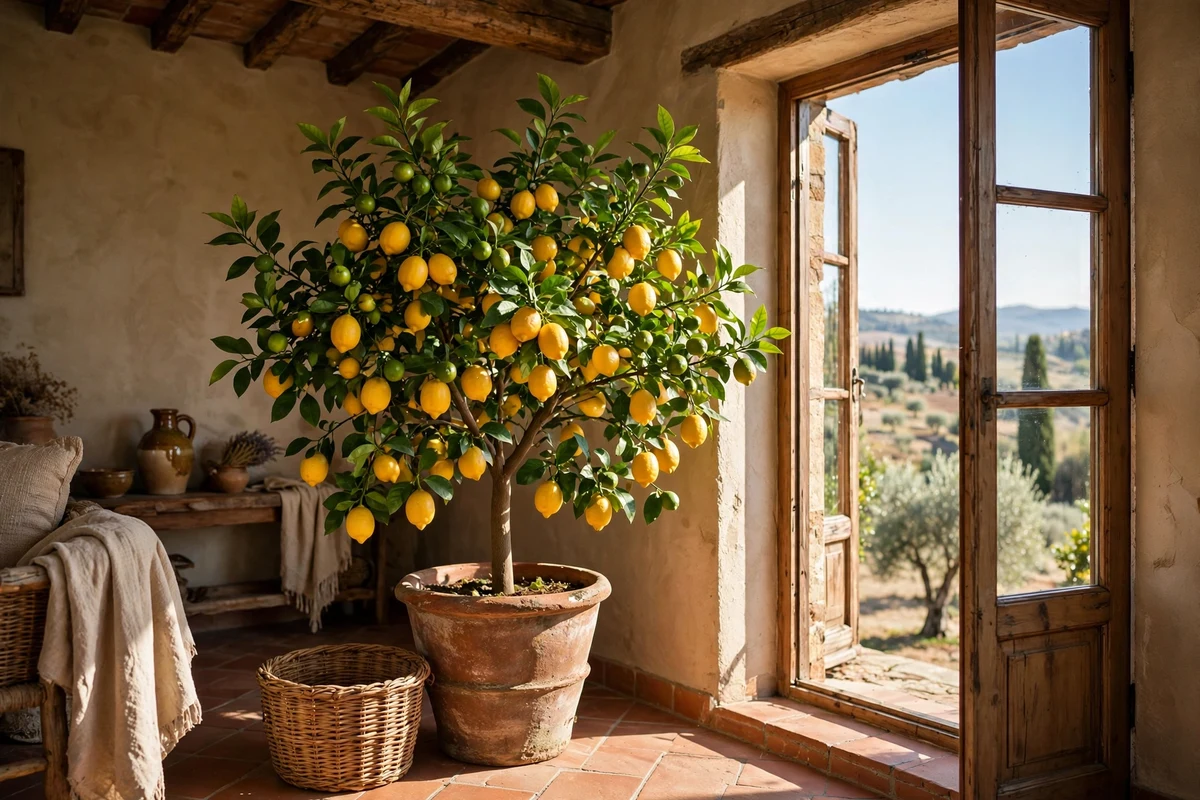
A Meyer lemon tree heavy with fruit is pure Mediterranean joy, glossy leaves, fragrant blossoms, and bright lemons all on one plant. A 3 to 4 foot tree in a terracotta pot costs $60 to $150 and thrives in the sunniest spot you have. Water when the top two inches of soil dry out, and feed monthly in spring and summer. Set the pot in a woven basket to hide the plastic nursery look and add texture.
Pro tip: Give the tree a quarter turn every week so all sides get sun and it grows evenly instead of leaning.
36. Wooden Harvest Tray Styling
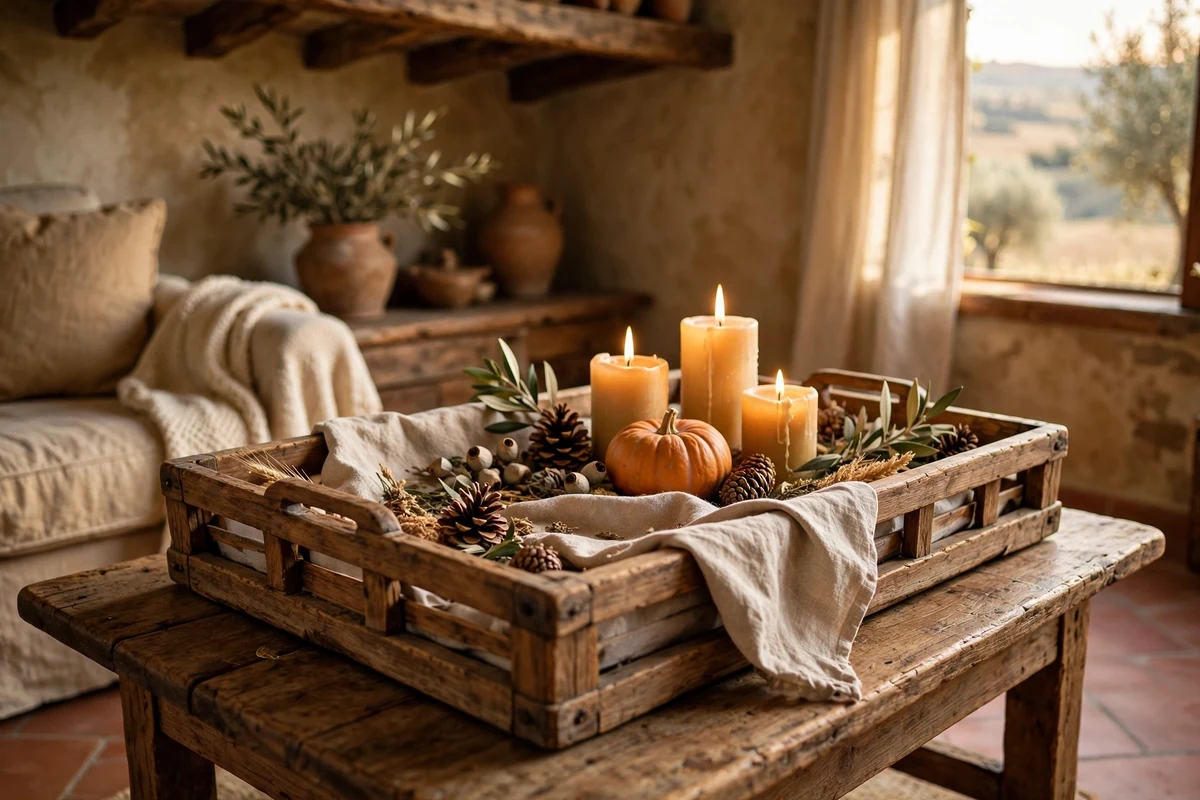
A large wooden tray corralled with candles, a small pumpkin, pinecones, and a folded linen cloth turns the coffee table into an ever-changing seasonal display. The tray ($30 to $80) keeps everything contained and lets you lift the whole arrangement away when you need the table. Swap the contents with the seasons: citrus and greenery in winter, lavender in summer, keeping the Tuscan spirit year-round.
Pro tip: Line the tray with a linen runner cut to fit so the wood stays protected and the display looks finished.
Design Notes: Mixing Tuscan with Other Styles
Tuscan style plays beautifully with its Mediterranean cousins. If you love the warmth here but want a slightly different flavor, explore our 36 Tuscan bedroom ideas for warm Mediterranean style to carry the look into the bedroom, or lean French with our 34 French country living room ideas for timeless charm, which shares the rustic wood and linen palette with a softer, more romantic touch. For a farmhouse take on the same warmth, see our 34 country living room ideas for cozy farmhouse charm. If your taste runs sleeker, borrow Tuscan textures like leather and stone inside our 36 modern living room ideas for sleek style for a warm modern mix, or go dramatic with the dark romance of our 34 Victorian living room ideas for opulent vintage style.
Frequently Asked Questions
What colors define a Tuscan living room?
The classic Tuscan palette pulls from the landscape: warm terracotta, sunbaked gold, olive green, creamy plaster white, and deep wine red as an accent. Keep large surfaces in the warm neutrals and layer the stronger colors through textiles, ceramics, and art so the room feels sun-warmed rather than heavy.
How can I get the Tuscan look on a budget?
Start with paint, since a warm limewash or plaster-toned wall transforms the room for under $150. Add secondhand wood furniture, a jute rug, linen curtains, and a few terracotta pots with greenery. These five moves deliver about 80 percent of the look for a fraction of a full renovation.
Does Tuscan style work in small living rooms?
Absolutely, with restraint. Keep walls light and warm, choose one statement piece like a leather chair or a stone-look accent, and use mirrors to bounce light. Avoid too many dark, heavy pieces in a tight space, and let texture do the work instead of bulk.
What is the difference between Tuscan and Mediterranean style?
Tuscan is the rustic, countryside branch of Mediterranean style, defined by terracotta, rough plaster, dark beams, and farmhouse furniture. Broader Mediterranean style also includes coastal Greek whites and blues and Spanish influences. Think of Tuscan as the cozy, inland, wine-country version.
How do I keep a Tuscan living room from looking dated?
Balance the rustic elements with clean lines: a simple linen sofa, uncluttered surfaces, and good lighting keep the room feeling current. Avoid matching sets of themed decor, and mix in one or two modern pieces, like a sleek floor lamp, so the room reads as timeless rather than stuck in time.
What plants work best in a Tuscan living room?
Olive trees and lemon trees are the signature choices, followed by lavender, rosemary, and trailing pothos in terracotta pots. All of them thrive in bright light and reinforce the Mediterranean story while keeping the air fresh.
Final Thoughts
A Tuscan living room is really about a feeling: unhurried, generous, and warm to the core. You do not need a villa in the countryside to capture it, just honest materials, sun-baked color, and details chosen with love. Start with the walls and the light, add one piece of furniture with real character, and let the finishing touches accumulate naturally, the way they do in the homes that inspired this style. Before long, your living room will feel like the best seat at a long Italian table, and nobody will want to leave.

One Comment