
34 Wabi Sabi Living Room Ideas for Calm Organic Style
34 Wabi Sabi Living Room Ideas for Calm Organic Style
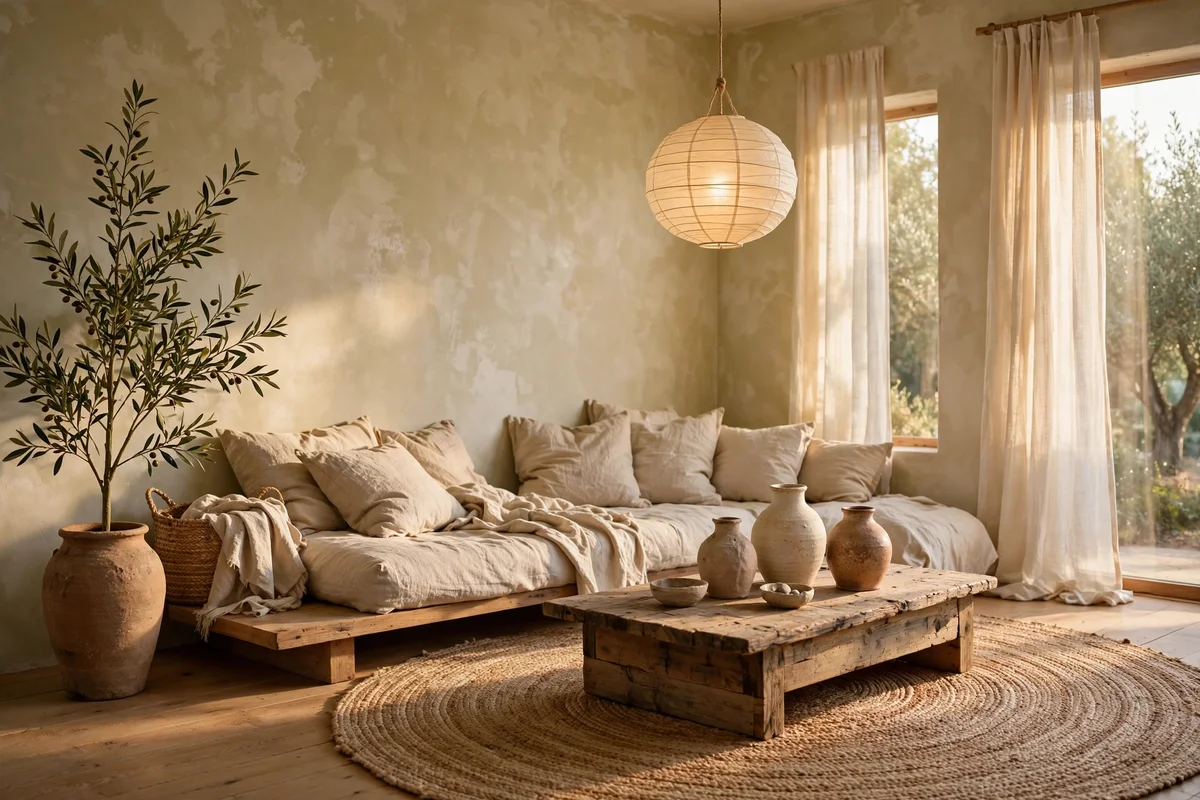
Wabi sabi is the Japanese philosophy of finding beauty in imperfection, impermanence, and the incomplete. In the living room, that translates to limewashed walls with soft movement, handmade ceramics with uneven edges, wood that shows its grain and its age, and textiles that wrinkle beautifully instead of staying pressed. It is the opposite of the showroom look, and honestly, it is a relief. A wabi sabi living room feels calm the moment you walk in because nothing in it is trying too hard. This guide collects 34 ideas for bringing that quiet, organic style home, from plaster walls and paper lanterns to kintsugi bowls and low floor seating. Every idea includes realistic price ranges and a pro tip so you can start this weekend, whether you are refreshing one corner or rethinking the whole room.
The Foundation: Walls, Floors, and Light
1. Limewashed Plaster Walls
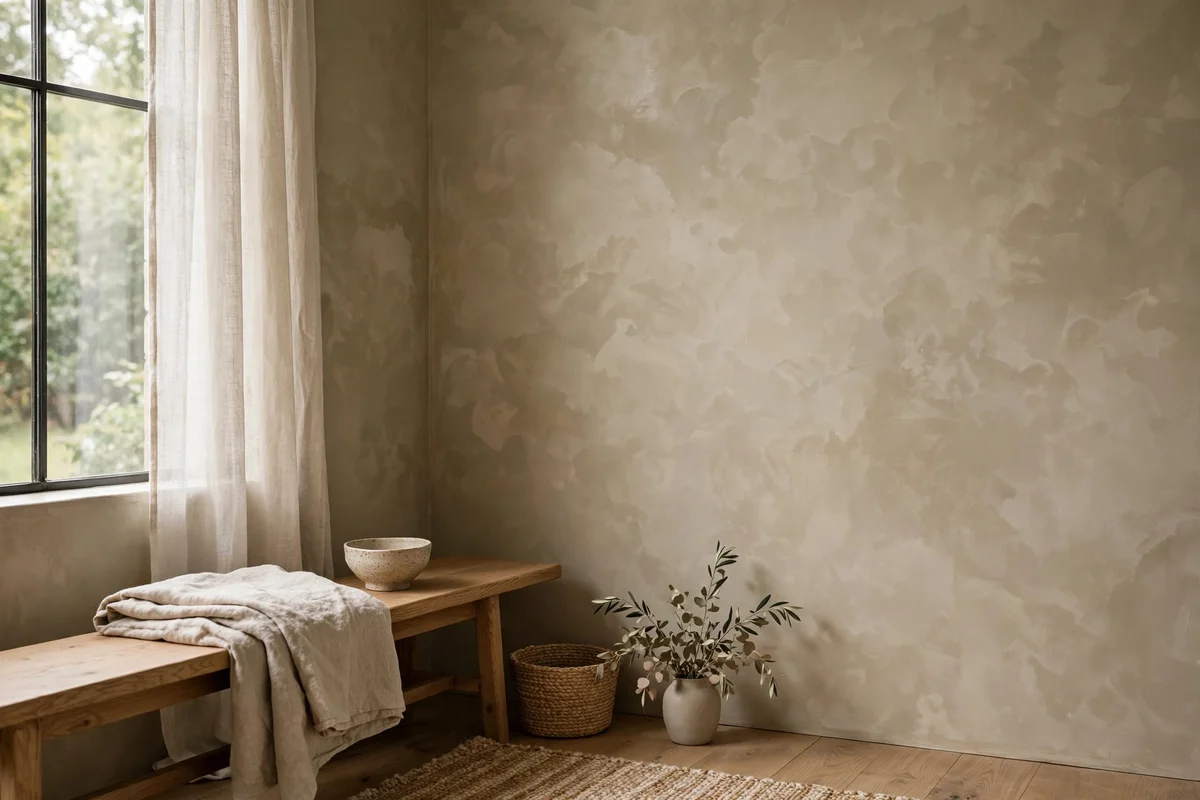
Limewash paint gives walls a soft, cloudy movement that flat paint never can. It is made from crushed limestone, so the finish has subtle tonal shifts that catch light differently through the day. In a living room, warm whites, greige, or pale clay tones work best. A gallon covers about 300 square feet and costs $45 to $70, and most rooms need two coats over a primer. Apply it with a large block brush in loose crisscross strokes for the most natural effect.
Pro tip: Embrace the variation instead of fighting it. The uneven, cloudy finish is the entire point of limewash, so resist the urge to even it out.
2. Tadelakt-Inspired Accent Wall
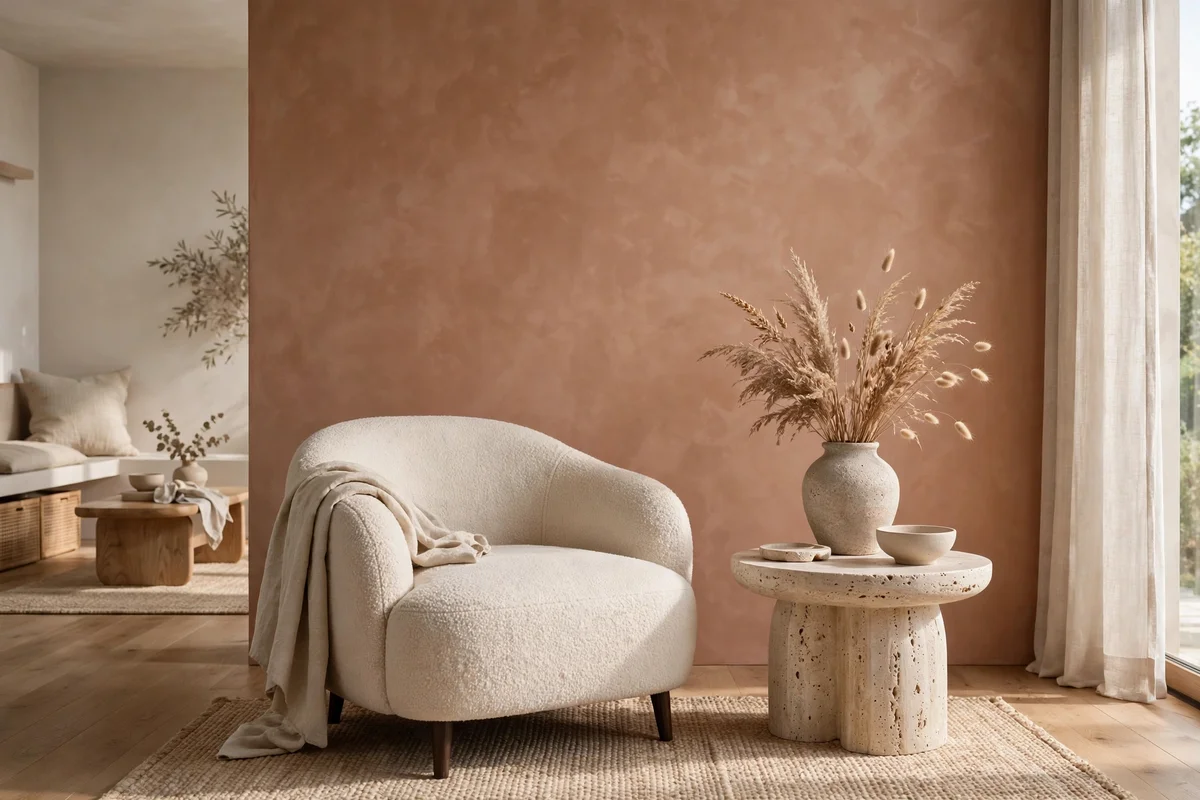
Tadelakt is a Moroccan lime plaster polished with stone until it glows, and a single accent wall brings incredible depth to a wabi sabi living room. Behind a low sofa or reading chair, a warm clay or putty-toned polished plaster wall becomes art by itself. Real tadelakt application runs $15 to $30 per square foot professionally, but lime-based polished plaster kits for DIY cost $80 to $150 and cover a good-sized wall.
Pro tip: Keep the rest of the room matte so the polished wall reads as a quiet focal point, not a shiny statement piece.
3. Raw Concrete Floors with Rugs
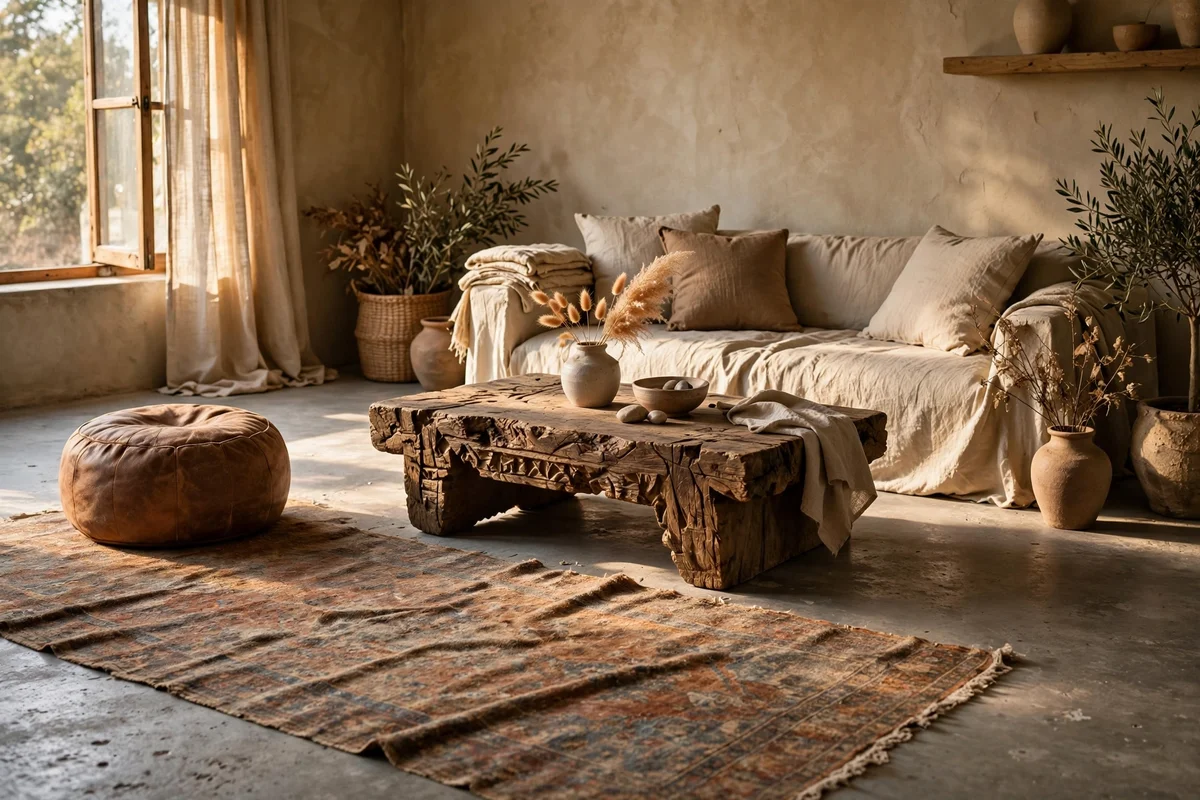
Polished or matte-sealed concrete floors are honest, cool, and perfectly imperfect with their hairline cracks and tonal patches. In a living room they ground the space and pair beautifully with soft textiles. If you already have concrete underneath, polishing costs $3 to $8 per square foot. Soften it with a large faded vintage rug ($200 to $800) and low seating so the room still feels warm and inviting.
Pro tip: Choose a matte sealer rather than high gloss. The softer sheen fits the wabi sabi mood far better and shows fewer footprints.
4. Wide-Plank Oak Floors, Matte Finish
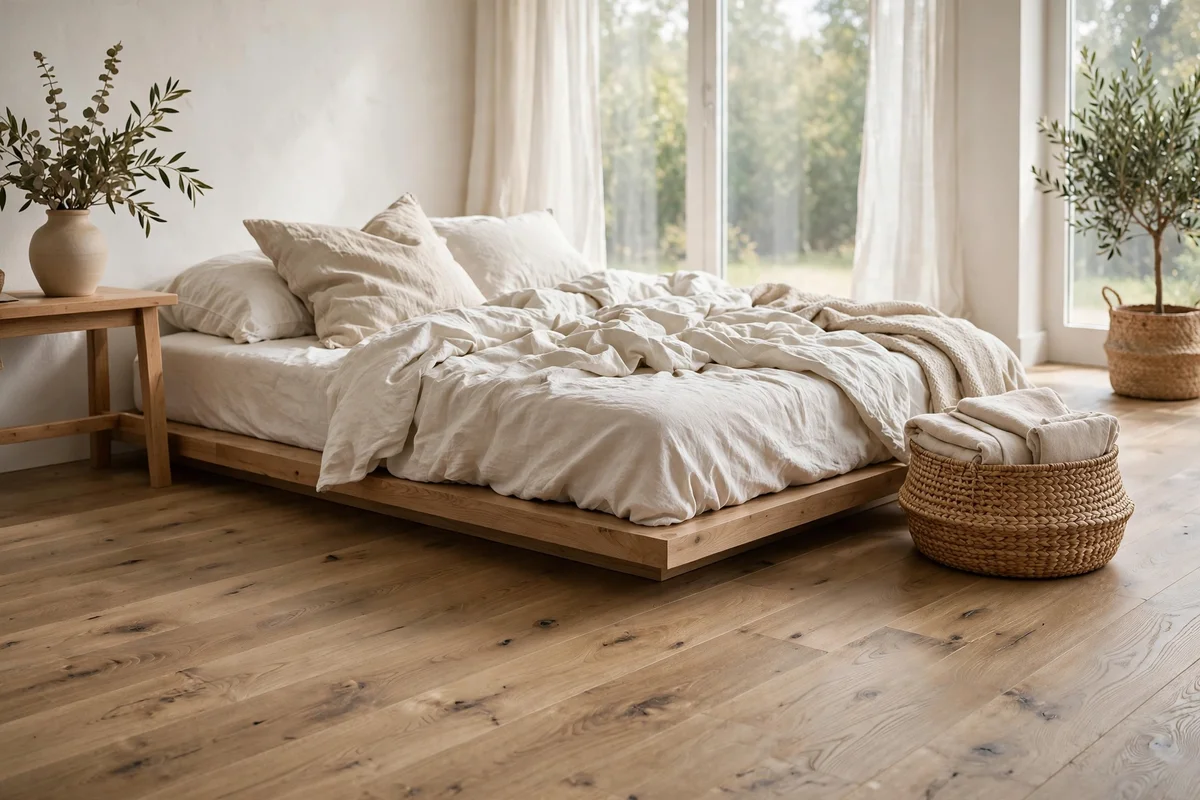
Wide-plank oak with a matte hardwax oil finish shows every grain line and feels warm underfoot. Unlike glossy floors that highlight every scratch, matte oak welcomes patina and ages gracefully over the years. Expect $8 to $15 per square foot installed. Choose planks at least 7 inches wide with visible knots for the most organic, characterful feel.
Pro tip: Skip the rug in at least one zone and let the bare wood be part of the design. Its knots and color shifts are decoration enough.
5. Paper Lantern Pendant Lighting
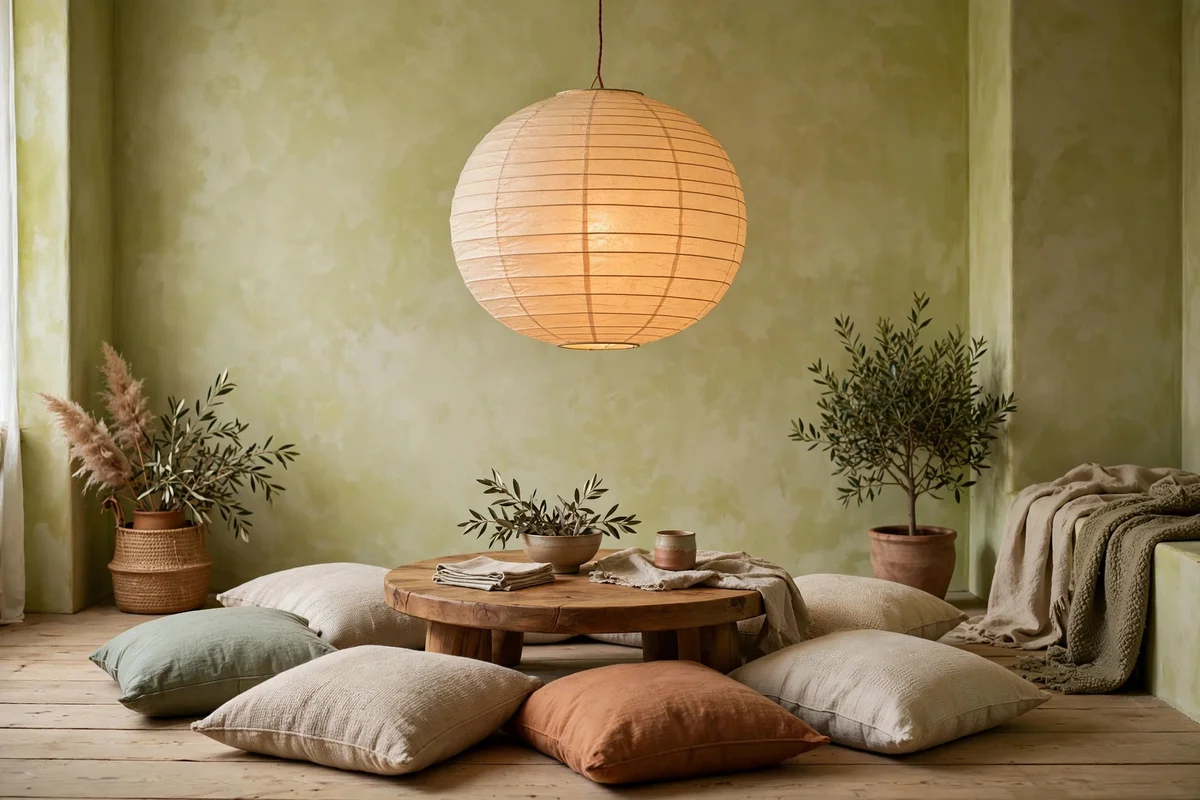
A large washi paper lantern pendant is the fastest way to make a living room feel calm. The paper diffuses light into a soft, shadowless glow that flatters everything in the room. Oversized lanterns (24 to 32 inches) work best over a coffee table or seating area and cost $30 to $120. Hang it low, around 5 to 6 feet off the floor, so the light pools where people gather.
Pro tip: Use a warm 2700K bulb inside. Cool white light kills the cozy paper-lantern effect instantly, so check the bulb temperature before you buy.
6. Clay Wall Sconces
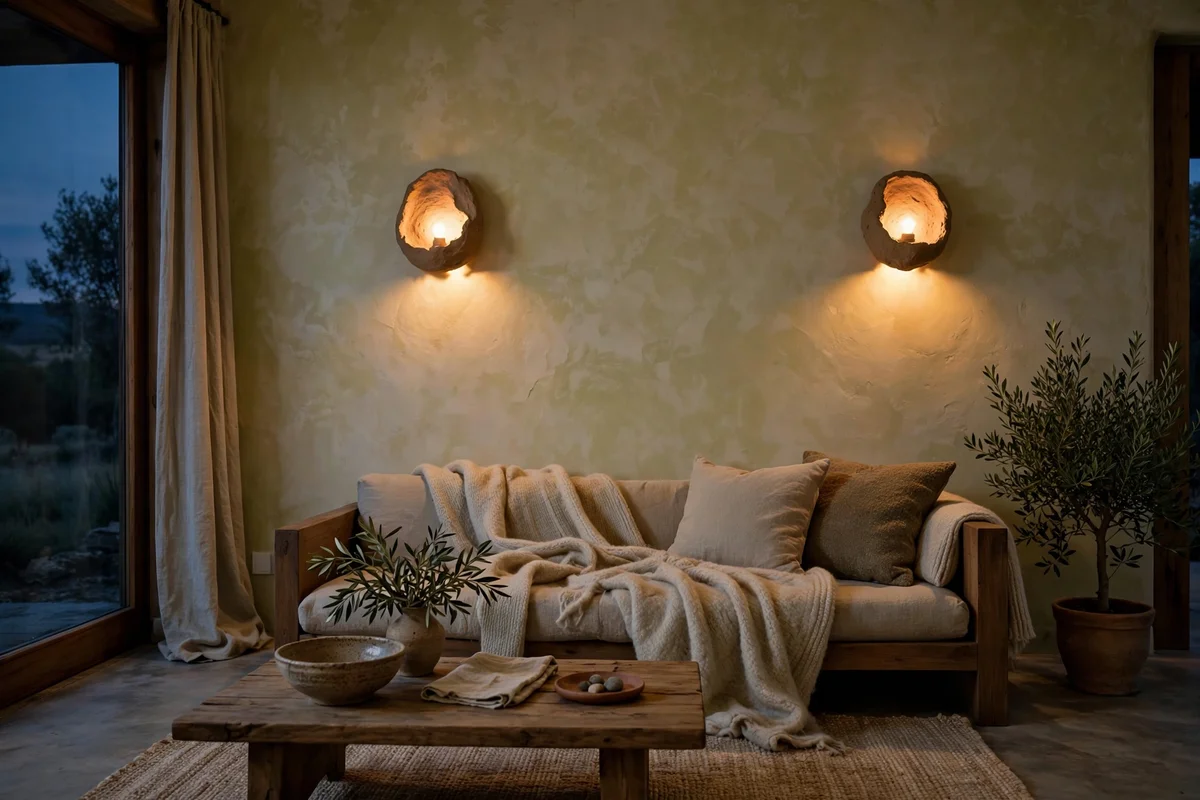
Handmade clay or ceramic wall sconces add sculptural interest even when switched off, and their thick shades throw a gentle upward and downward wash of light. Flank a low console or reading corner with a pair at about 60 inches high. Handmade pairs run $80 to $250. Because each one is slightly irregular, they bring the handmade quality that wabi sabi loves.
Pro tip: Put sconces on a dimmer switch so you can drop the whole room to candlelight levels in the evening with one slide.
7. Floor-Level Low Seating Platform
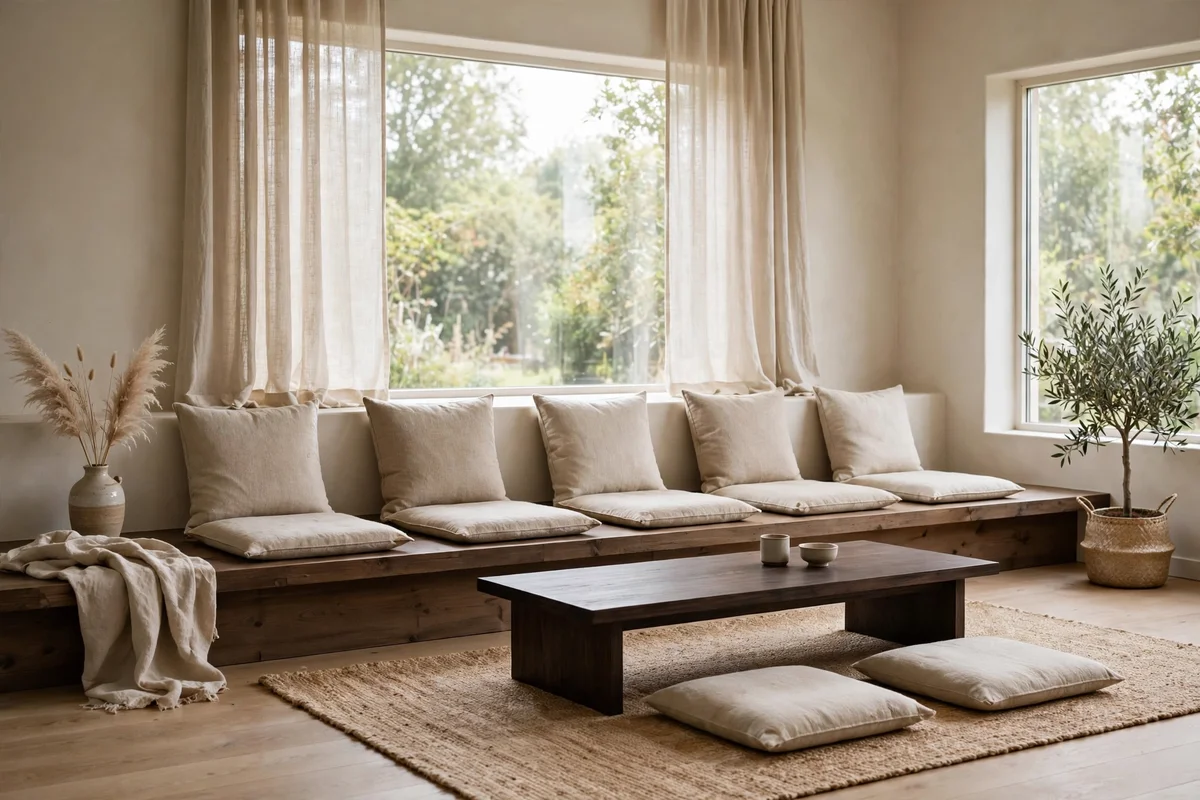
A simple built-in or freestanding wooden platform, 8 to 12 inches high, instantly changes how a living room feels. Top it with zabuton cushions and a low table and you have a lounge zone that invites people to settle in and stay awhile. A DIY platform from pine boards costs $150 to $400, while custom built-ins run $800 to $2,000 depending on size and finish.
Pro tip: Keep the platform edge clean and uncluttered. The negative space around it is what makes the whole arrangement feel serene rather than crowded.
8. Exposed Wooden Beam Ceiling
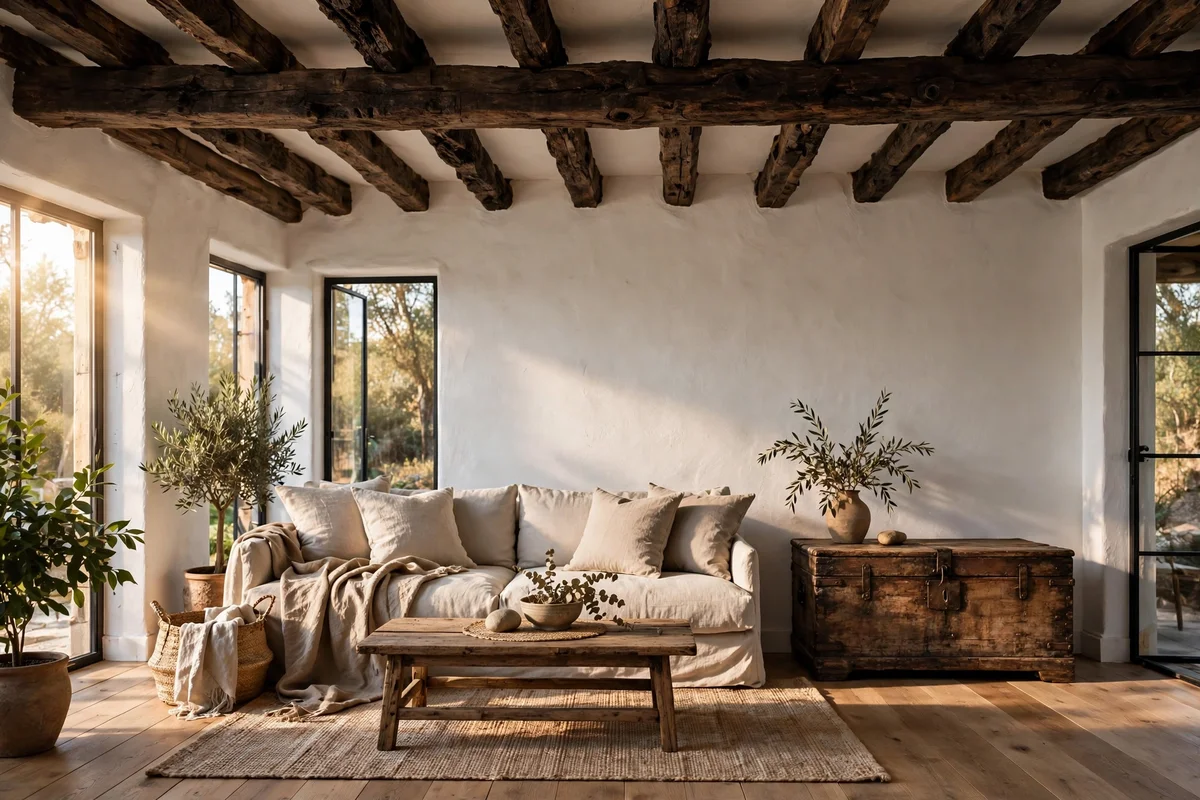
If your ceiling hides beams, exposing them adds instant age and character to the room. Dark, rough-hewn beams against whitewashed walls create the contrast that makes wabi sabi rooms feel grounded and soulful. Exposing existing beams costs $500 to $2,000 depending on cleanup work, while adding faux reclaimed beams runs $15 to $40 per linear foot.
Pro tip: Do not stain beams to match anything else in the room. Let their natural variation, cracks, and old nail holes show proudly.
9. Soft Sheer Linen Curtains
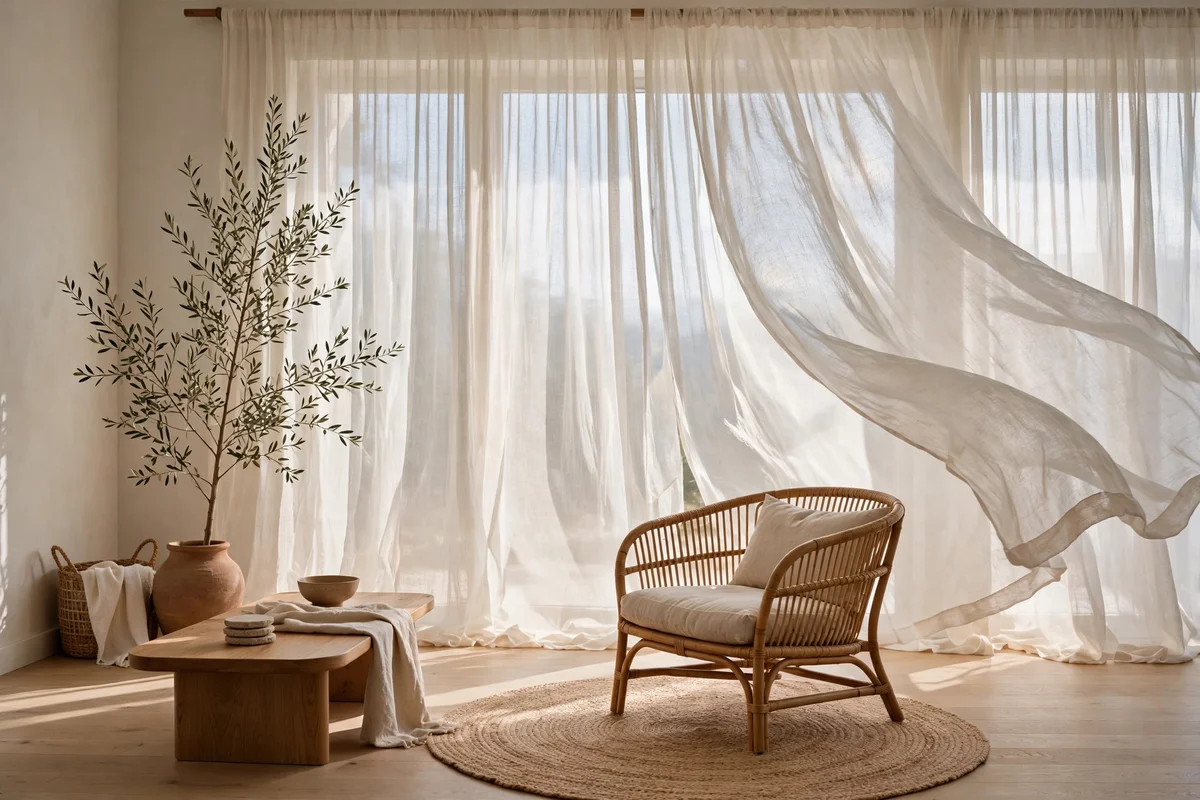
Heavy drapes block light and feel formal, while sheer linen lets daylight filter through like a soft veil. Floor-to-ceiling panels in natural flax or ivory cost $40 to $100 per panel ready-made, or $15 to $30 per yard if you sew them yourself. Hang them high and wide so the window feels larger and the light spreads gently across the room.
Pro tip: Never iron linen curtains. The gentle wrinkles are exactly the relaxed texture that wabi sabi celebrates, so let them hang naturally.
Furniture with Soul
10. Low-Profile Solid Wood Sofa Base
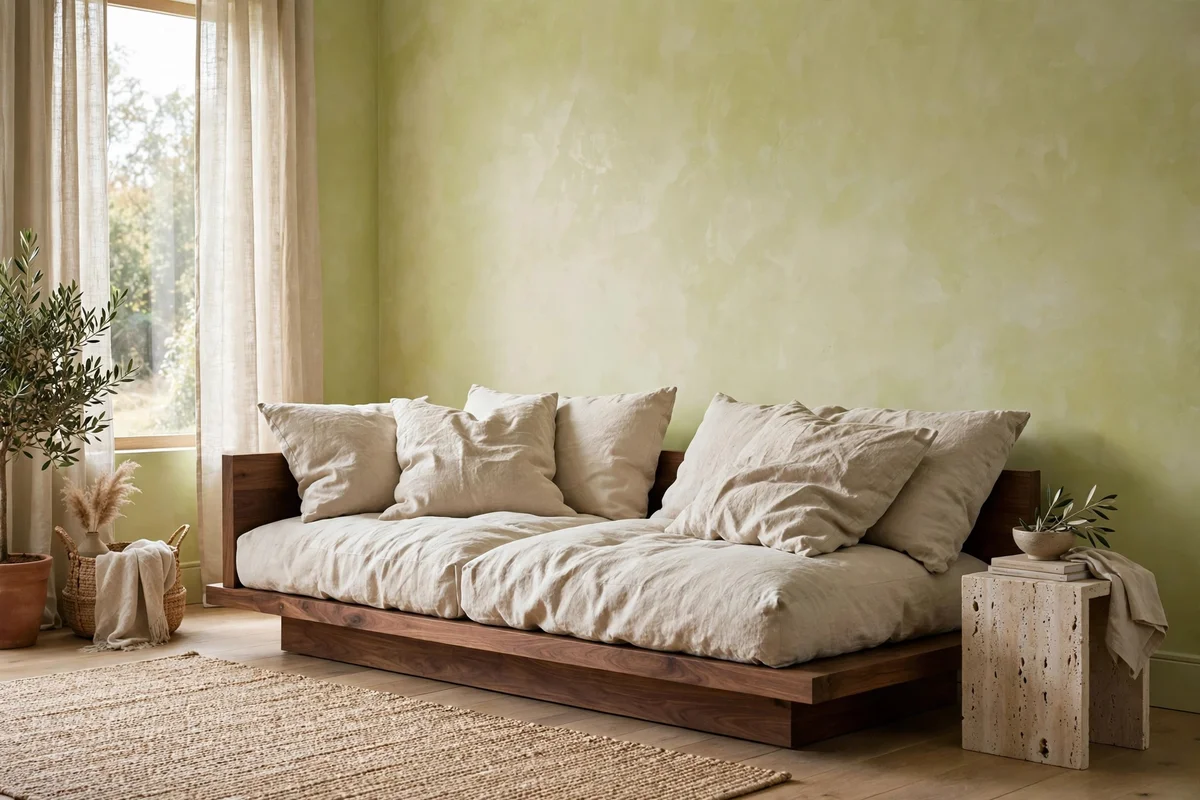
A low sofa base in solid walnut or white oak, sitting just 12 to 14 inches off the floor, anchors a wabi sabi living room beautifully. The low height makes ceilings feel taller and the whole room calmer and more grounded. Look for simple joinery and visible wood grain. Platform sofas with thick linen cushions cost $1,200 to $3,500 depending on size and craftsmanship.
Pro tip: Choose a base with a slightly deeper seat than standard. Low seating feels best when you can truly sprawl instead of perching.
11. Hand-Carved Wooden Coffee Table
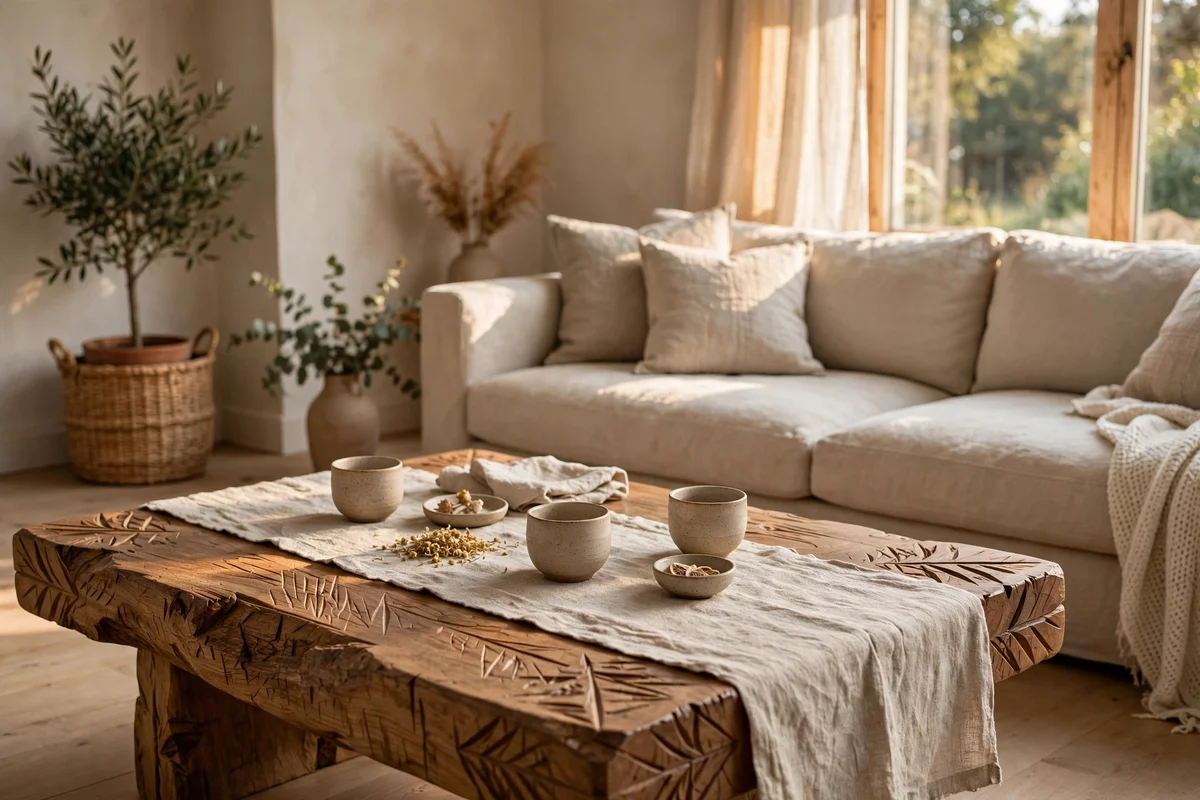
A coffee table with visible chisel marks and an uneven hand-carved top brings craft into the center of the room. These pieces are meant to be touched, and the texture invites it. Hand-carved tables from reclaimed teak or acacia run $300 to $900. Style it sparsely: a small stack of books, one ceramic bowl, nothing more, so the carving stays the star.
Pro tip: Buy from artisans where you can see the tool marks up close. Machine-distressed copies never feel the same under your hands.
12. Vintage Leather Slipper Chairs
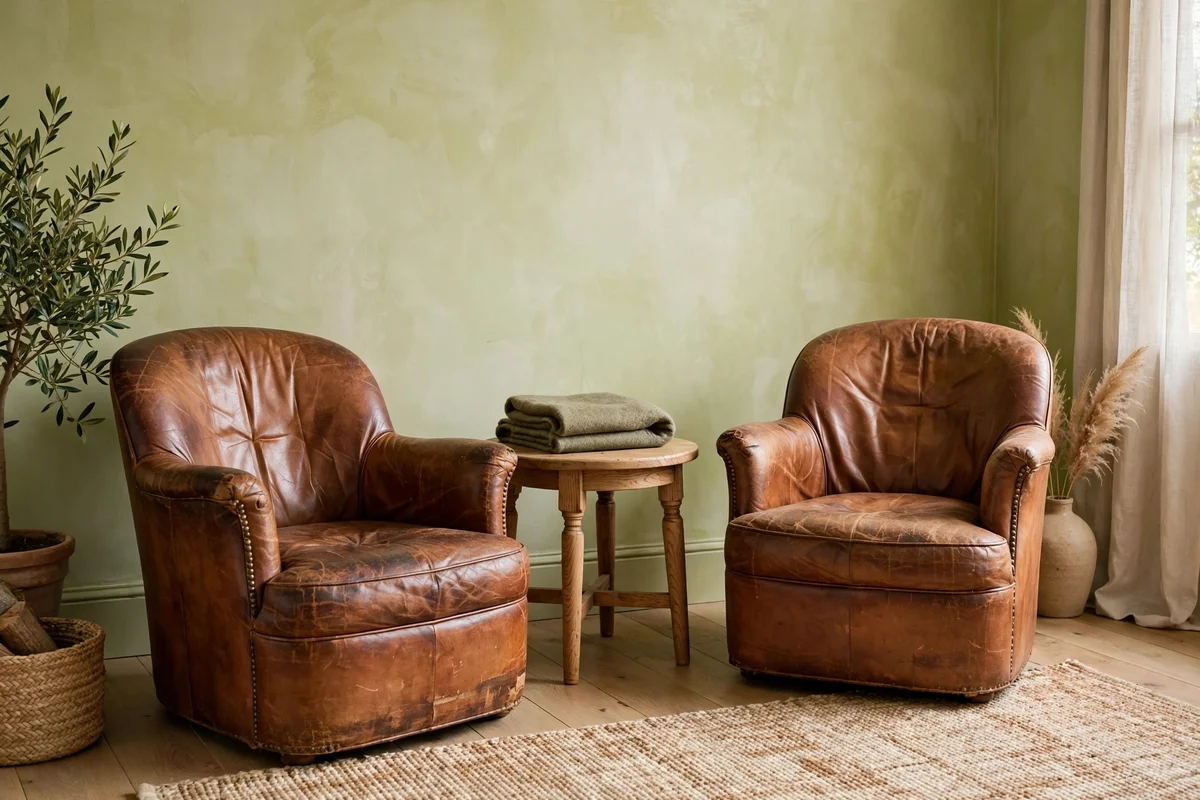
A pair of vintage leather slipper chairs with worn patina adds warmth and history to the room. The creases, scuffs, and darkened armrests tell a story no new chair can tell. Good vintage pairs cost $400 to $1,200 at flea markets and vintage shops. Condition the leather twice a year to keep it supple and prevent cracking.
Pro tip: Do not reupholster or refinish them. The wear is the value in a wabi sabi room, so let every scar show.
13. Woven Rattan Lounge Chair
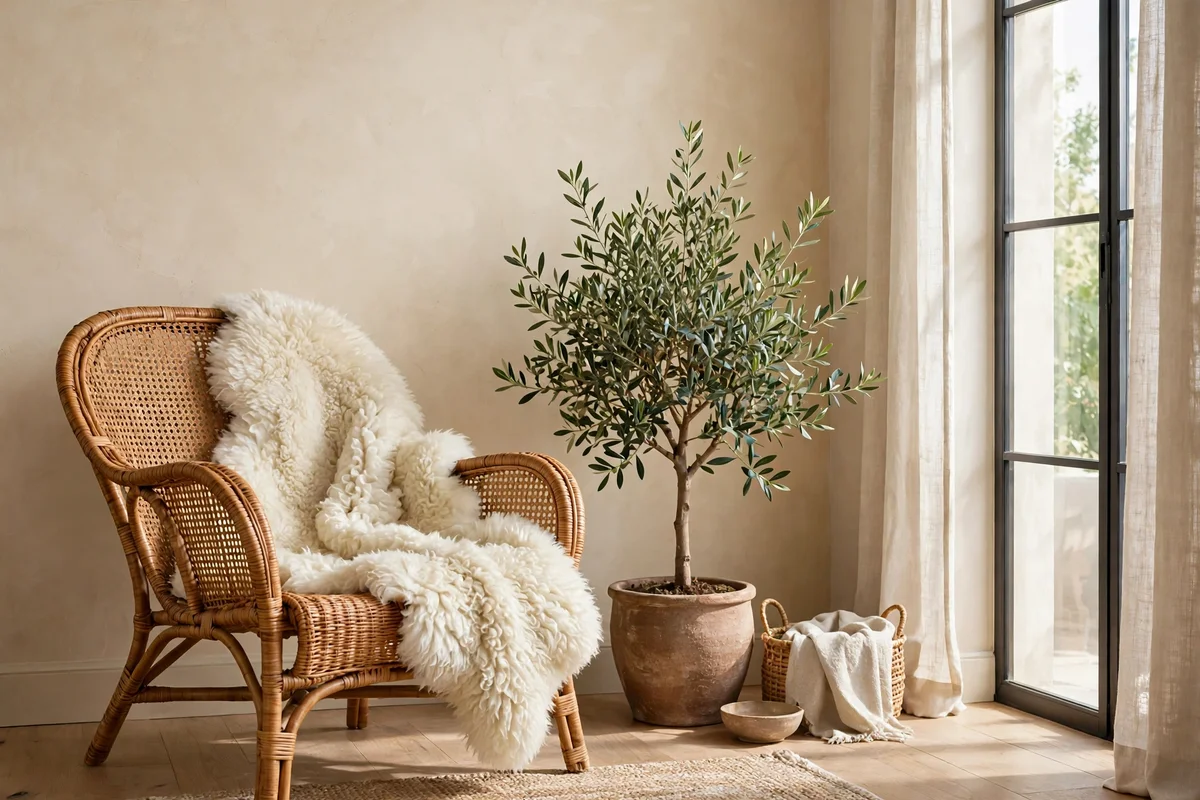
A woven rattan or cane lounge chair brings airy texture and a handmade feel to the seating mix. The open weave keeps it visually light, which balances heavier wood pieces nicely. Quality rattan lounge chairs cost $250 to $700. Drape a sheepskin over the seat for softness in cooler months and extra organic texture.
Pro tip: Keep rattan out of direct harsh sun to prevent drying and cracking. A bright corner with filtered light is the ideal spot.
14. Reclaimed Wood Sideboard
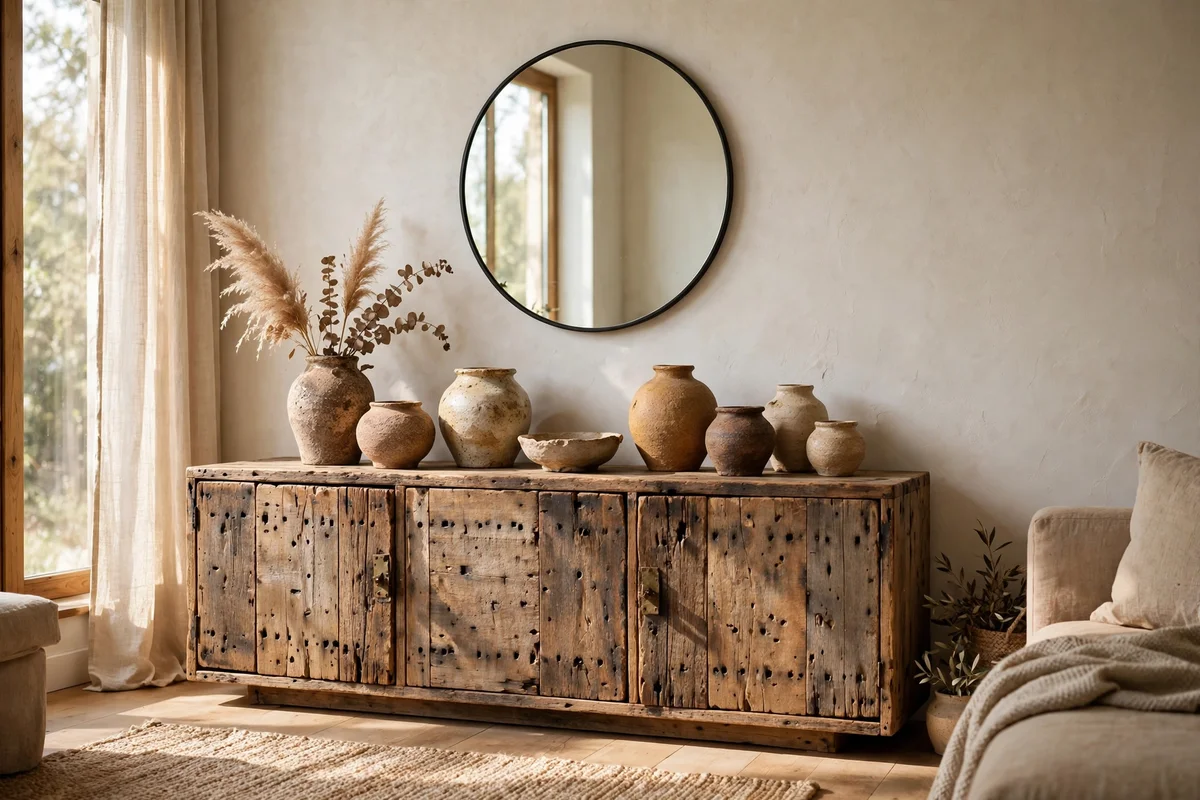
A long, low sideboard made from reclaimed wood carries decades of character in its nail holes, saw marks, and color variation. Use it for media storage or as a display surface for your pottery collection. Reclaimed sideboards run $600 to $1,800. Keep the top styled simply with three to five objects so the wood itself stays visible.
Pro tip: Check that doors and drawers function smoothly before buying. Beautiful wood means little if the piece frustrates you every day.
15. Stone-Topped Side Tables
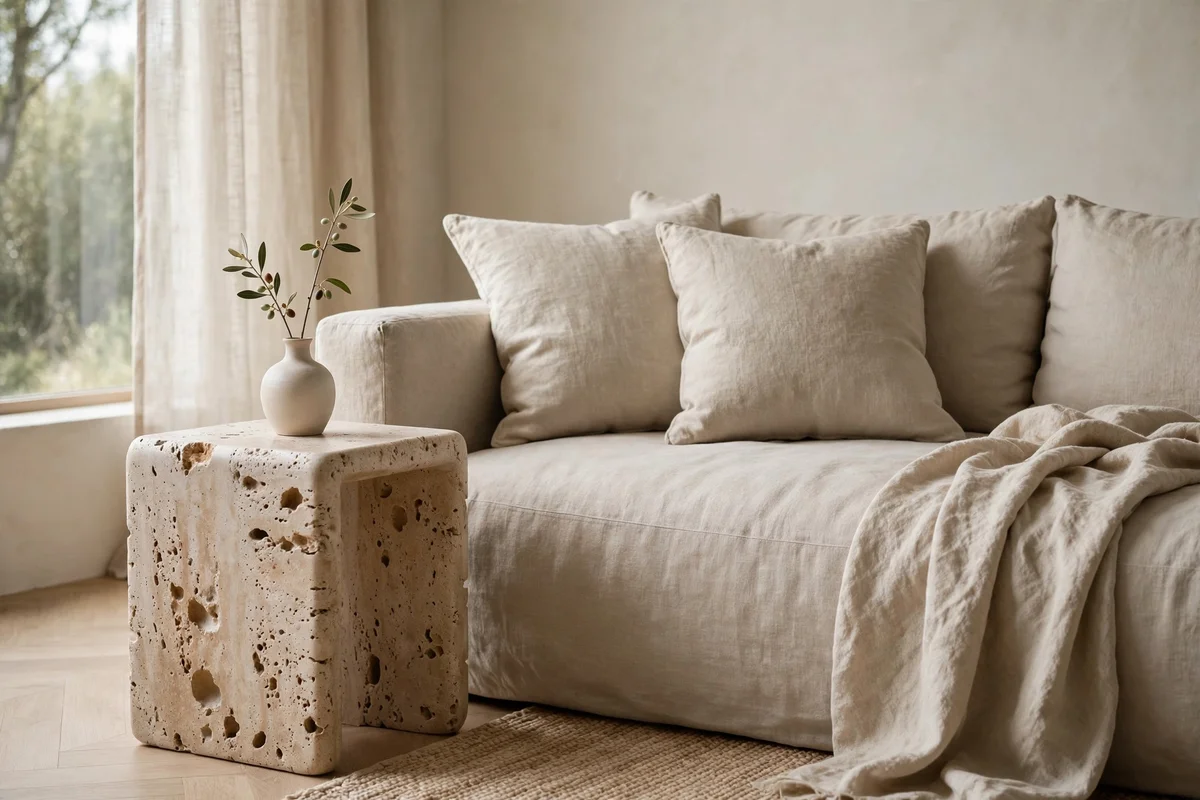
Travertine or honed marble side tables add cool, weighty contrast to warm wood and linen. The natural pitting in travertine is pure wabi sabi, a reminder that stone was once alive with water and time. Small stone side tables cost $150 to $450. Place one beside each main seat with a small vase or candle on top.
Pro tip: Seal stone tops once a year. Water rings and stains can be charming, but you want to choose them, not inherit them from careless guests.
16. Floor Cushions and Zabuton Mats
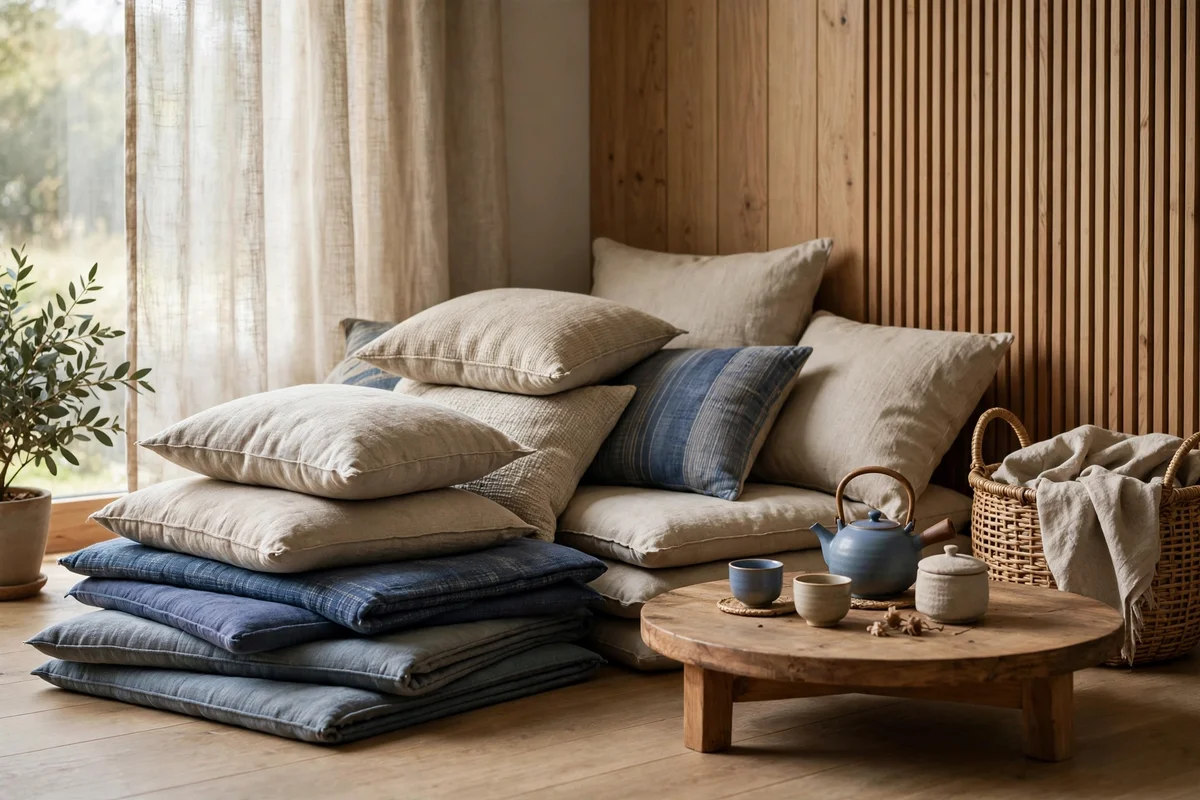
A pile of floor cushions and zabuton mats creates flexible, informal seating that suits the low, grounded wabi sabi lifestyle. Layer them in natural linen, muted indigo, and undyed cotton for a collected look. Individual cushions cost $30 to $80 each. Stack extras in a large basket when not in use so the room stays tidy.
Pro tip: Mix sizes and slight color variations rather than buying matching sets. The casual mix looks collected over time, not decorated in a day.
17. Antique Wooden Bench as Coffee Table
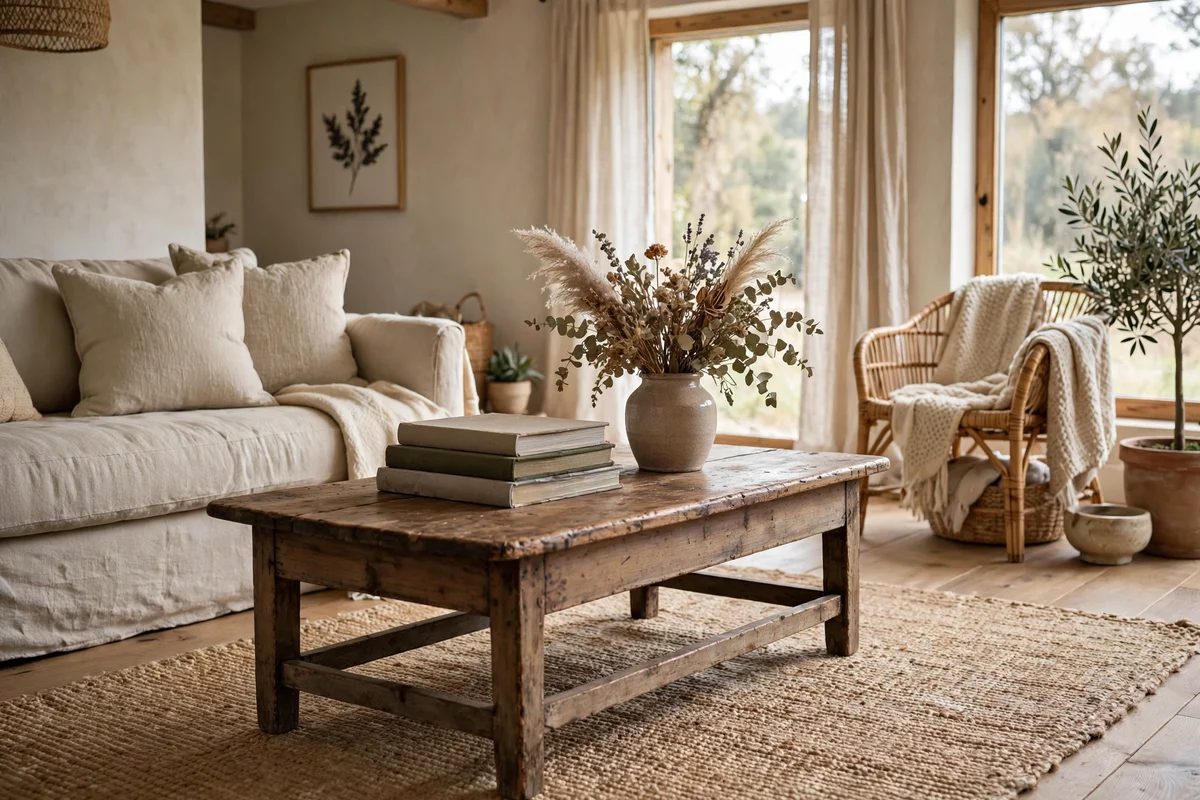
An antique low wooden bench, worn smooth by generations of use, makes a coffee table with unmatched soul. Look for simple farmhouse benches 14 to 18 inches high and at least 4 feet long. They cost $150 to $500 at antique shops and flea markets. The worn top already has the patina you simply cannot fake with new wood.
Pro tip: Place a soft runner or a few coasters on top to protect it from rings while still letting the beautiful worn wood show through.
Texture, Imperfection, and Nature
18. Handmade Ceramic Vase Collection
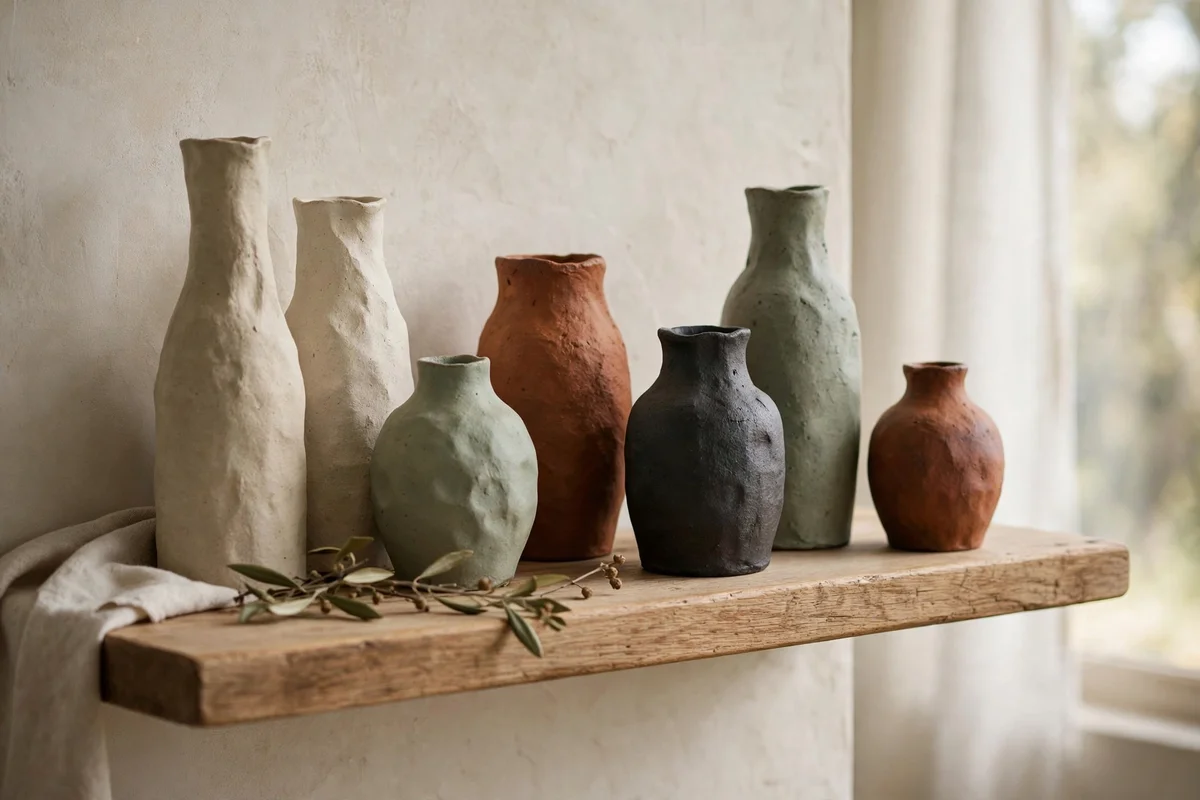
A small collection of handmade ceramic vases, each slightly lopsided or unevenly glazed, is the essence of wabi sabi on a shelf. Group three to seven pieces in earthy tones: oatmeal, rust, charcoal, and sage. Individual studio pieces cost $25 to $120. Vary the heights and let some stand empty, since negative space is part of the composition.
Pro tip: Buy directly from potters at craft markets when you can. Knowing the maker deepens your attachment to each piece.
19. Wabi Sabi Gallery Wall
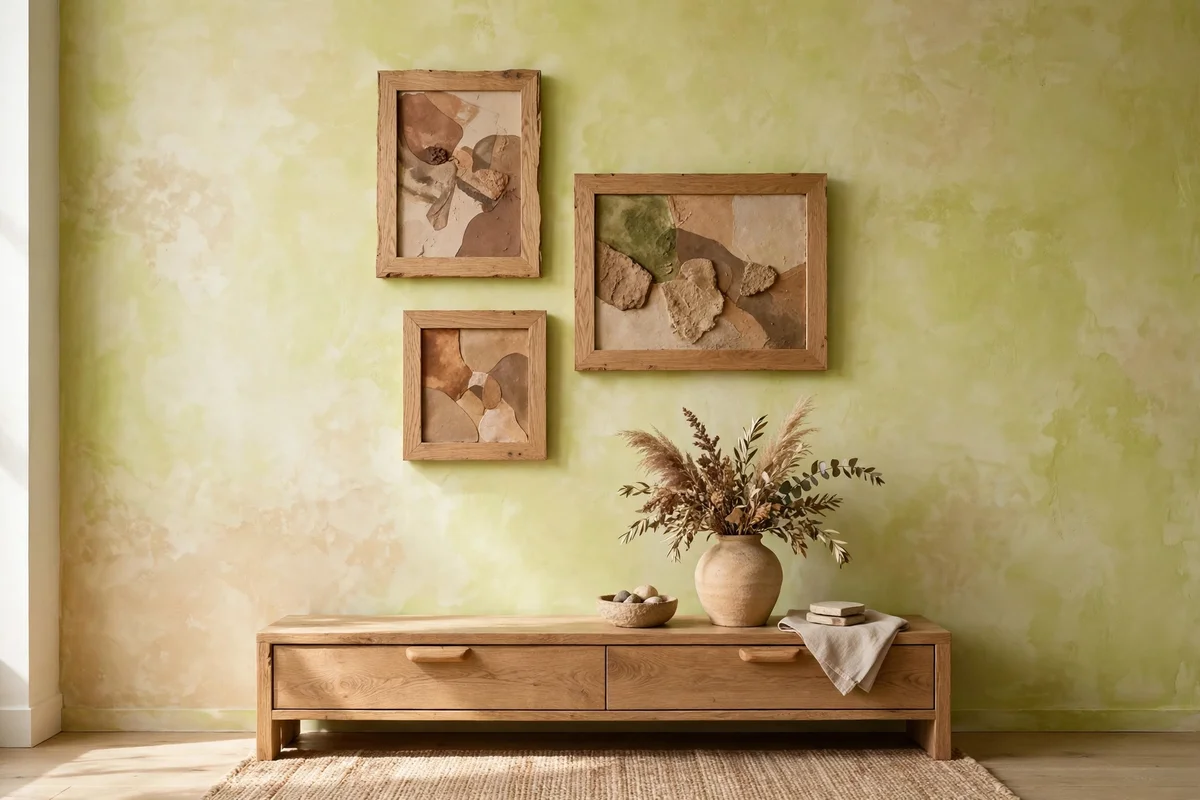
Forget symmetrical grids. A wabi sabi gallery wall is small, asymmetric, and full of breathing room. Choose three to five pieces: an abstract earthy print, a textile fragment, a simple line drawing. Hang them slightly off-center with generous space between each frame. Frames in raw oak or blackened wood cost $20 to $60 each.
Pro tip: Lay the arrangement on the floor first and live with it for a day before hammering any nails into the wall.
20. Visible Mending: Kintsugi Bowl Display
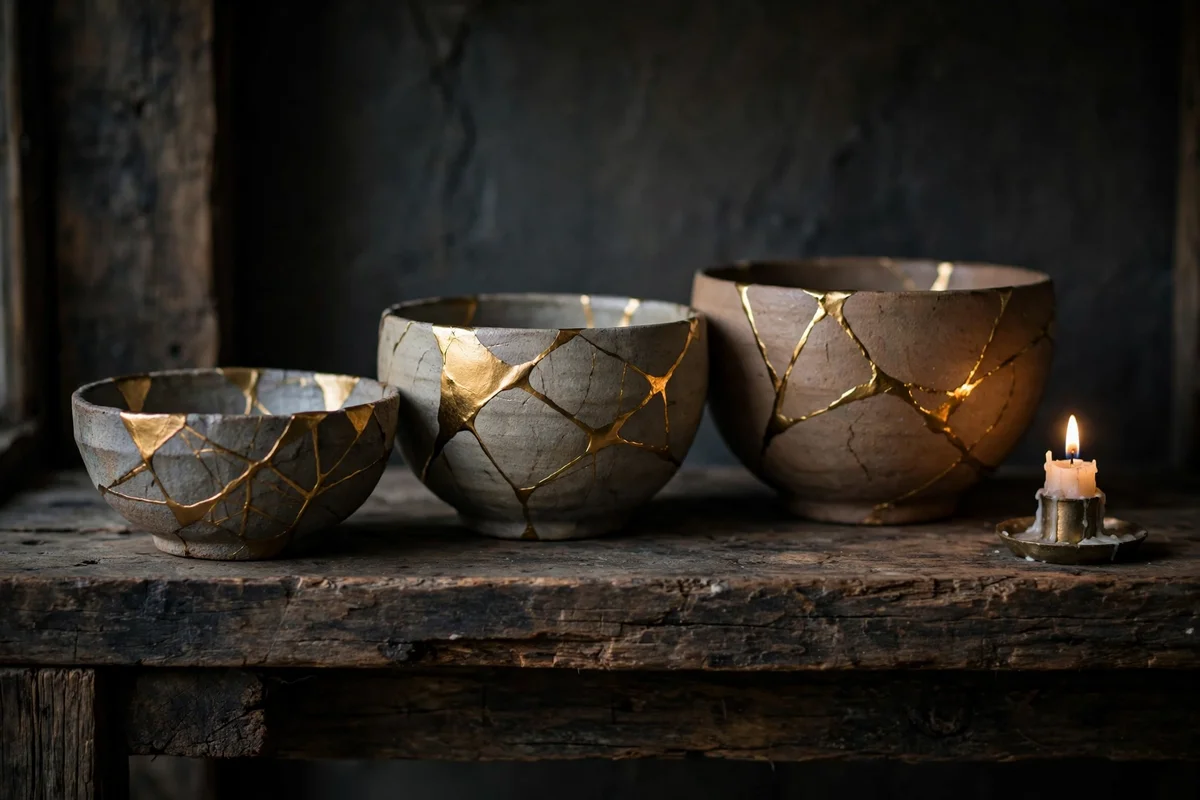
Kintsugi, the Japanese art of repairing broken pottery with gold, turns damage into decoration. Display two or three kintsugi bowls on a dark wood shelf where the gold seams catch the light. Authentic pieces cost $40 to $150, while DIY kintsugi kits run $25 to $50 for repairing your own broken favorites.
Pro tip: When a beloved bowl breaks, repair it with gold instead of replacing it. The story of the repair becomes the most beautiful part.
21. Aged Brass and Patinated Metals
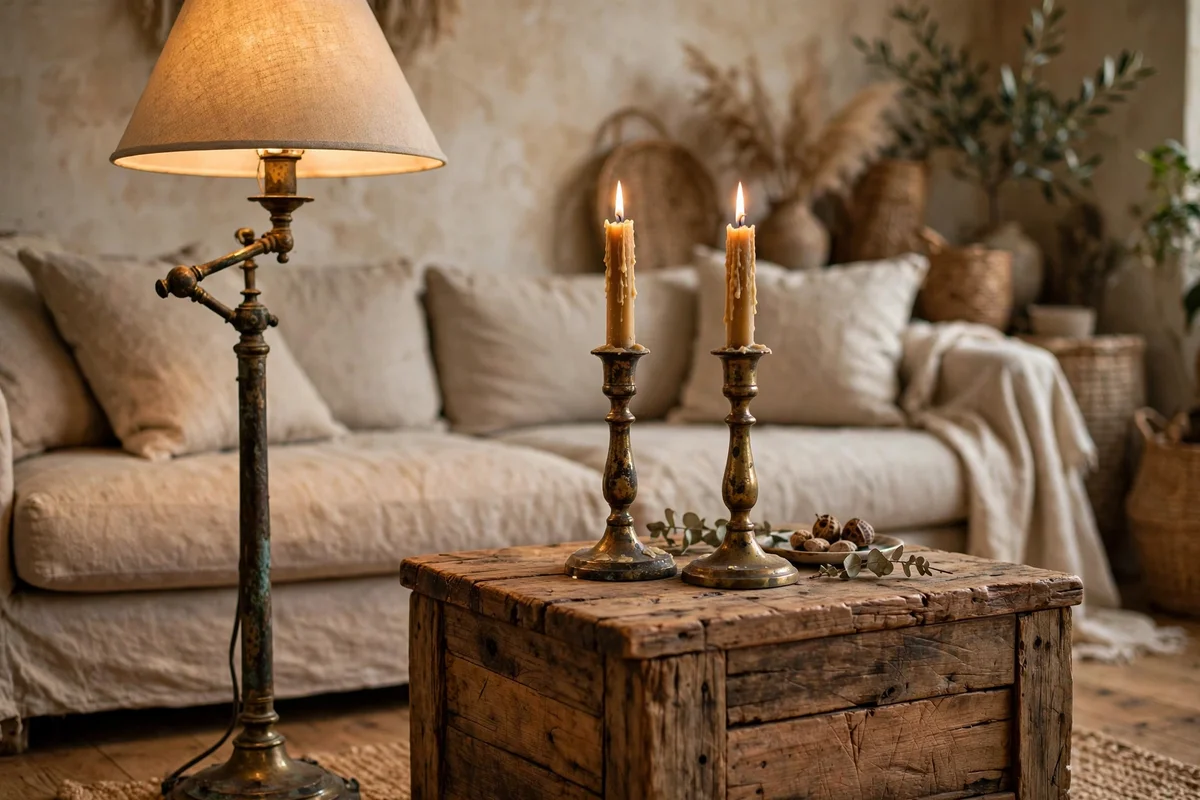
Unlacquered brass that has darkened and spotted with age adds warm metallic depth without any shine or flash. A vintage brass floor lamp, candlesticks, or small bowls bring this quality in for $50 to $400. Let the patina develop naturally over time and never polish it away, since the darkening is the beauty.
Pro tip: Mix aged brass with blackened steel or iron for contrast. The two imperfect metals balance each other beautifully.
22. Natural Jute and Sisal Rugs
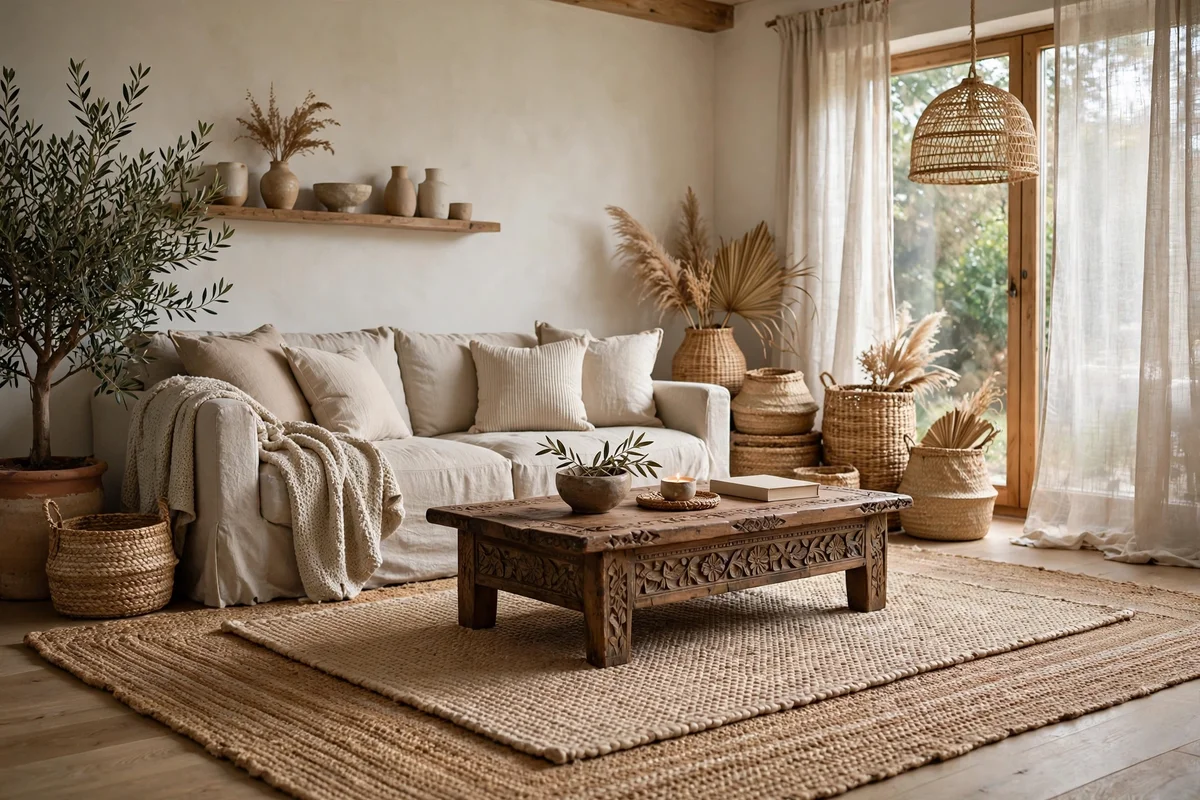
Jute and sisal rugs add nubby, organic texture underfoot, and their neutral tones work with absolutely everything. Layer a large jute rug ($100 to $400) under a smaller faded vintage rug for depth and softness. They are durable and affordable, though slightly rough on bare feet at first.
Pro tip: Add a thick felt rug pad underneath. It softens the texture underfoot and keeps the rug from creeping across the floor.
23. Dried Pampas Grass Arrangement
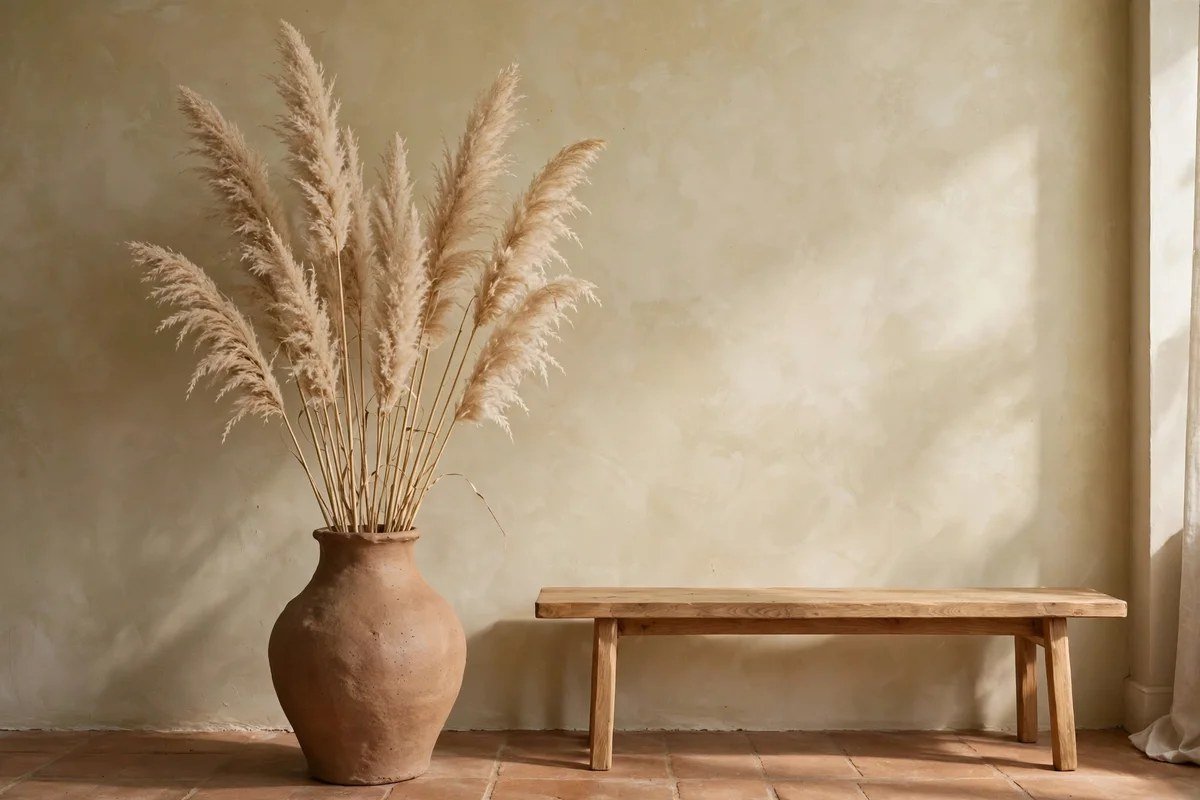
A tall arrangement of dried pampas grass or preserved grasses in a handmade clay floor vase adds softness and height without any maintenance at all. Large stems cost $20 to $60 for a full arrangement, and the vase another $40 to $120. Place it in a corner that needs gentle vertical interest and soft texture.
Pro tip: Keep dried grasses away from high-traffic paths. They shed noticeably when brushed against repeatedly.
24. Bonsai and Sculptural Branches
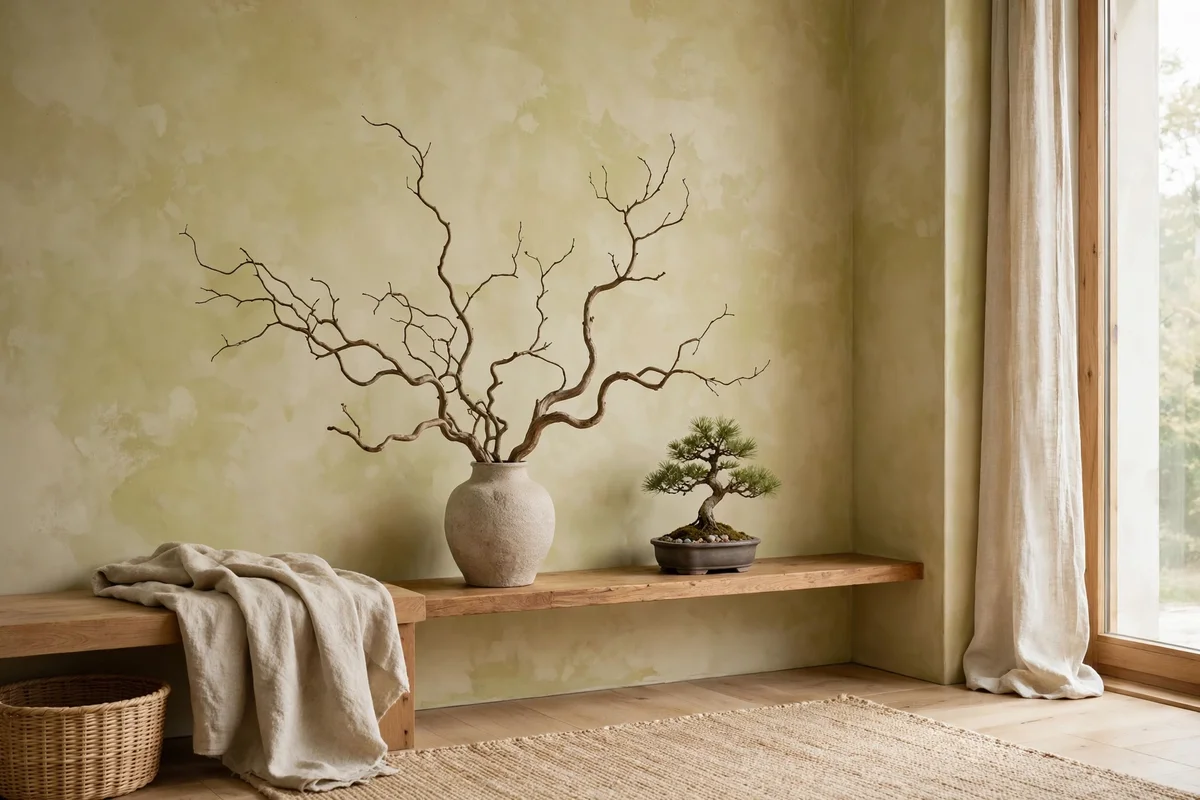
A single sculptural branch in a stoneware vase, or a small bonsai on a low shelf, brings living nature into the room with admirable restraint. One strong branch beats a crowded plant collection in wabi sabi style. A good branch is free from the garden, while a quality bonsai costs $40 to $150.
Pro tip: Change the branch with the seasons. Bare winter branches and spring blossoms keep the room feeling alive and connected to time.
25. Linen Slipcovered Everything
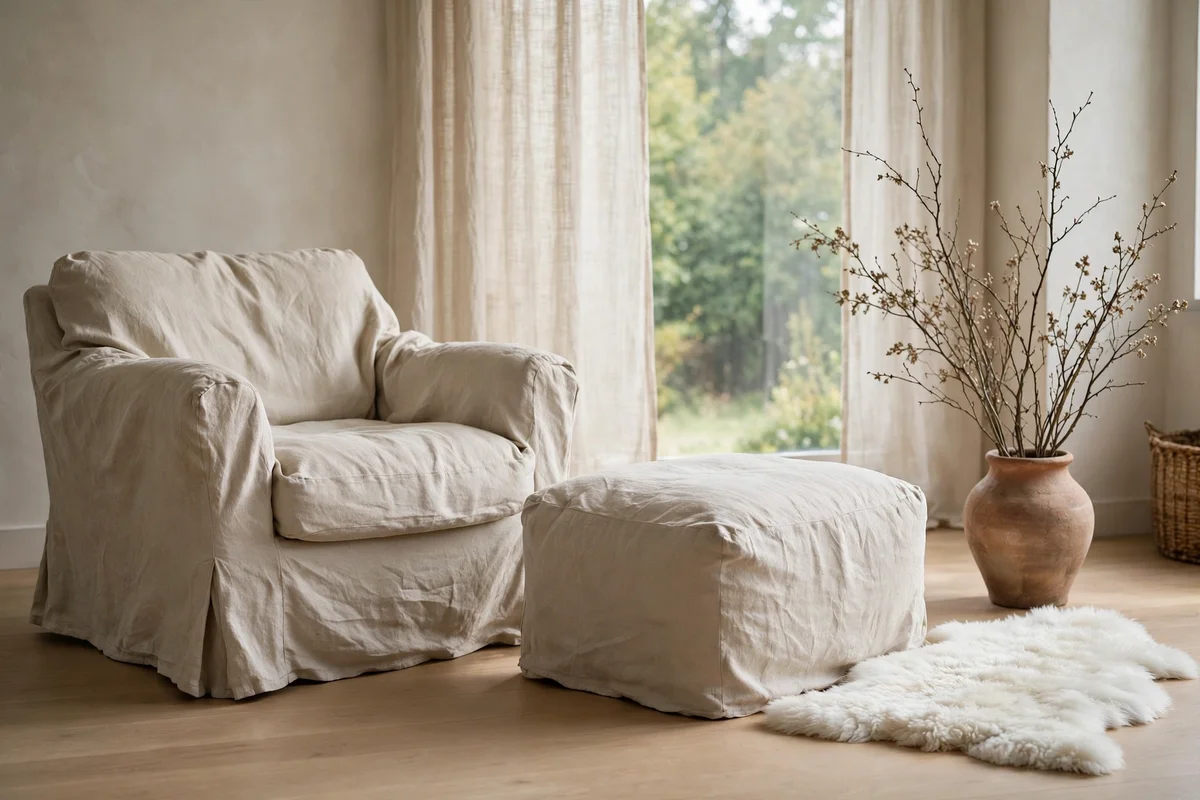
Loose linen slipcovers in oatmeal or natural flax soften any armchair or ottoman, and the wrinkles are part of the charm. Custom slipcovers cost $200 to $600 per piece, while ready-made options run $60 to $150. The fabric relaxes more beautifully with every single wash.
Pro tip: Choose a slightly heavier 8 to 10 ounce linen. It drapes better and reads as relaxed rather than messy.
26. Worn Turkish Kilim Rug
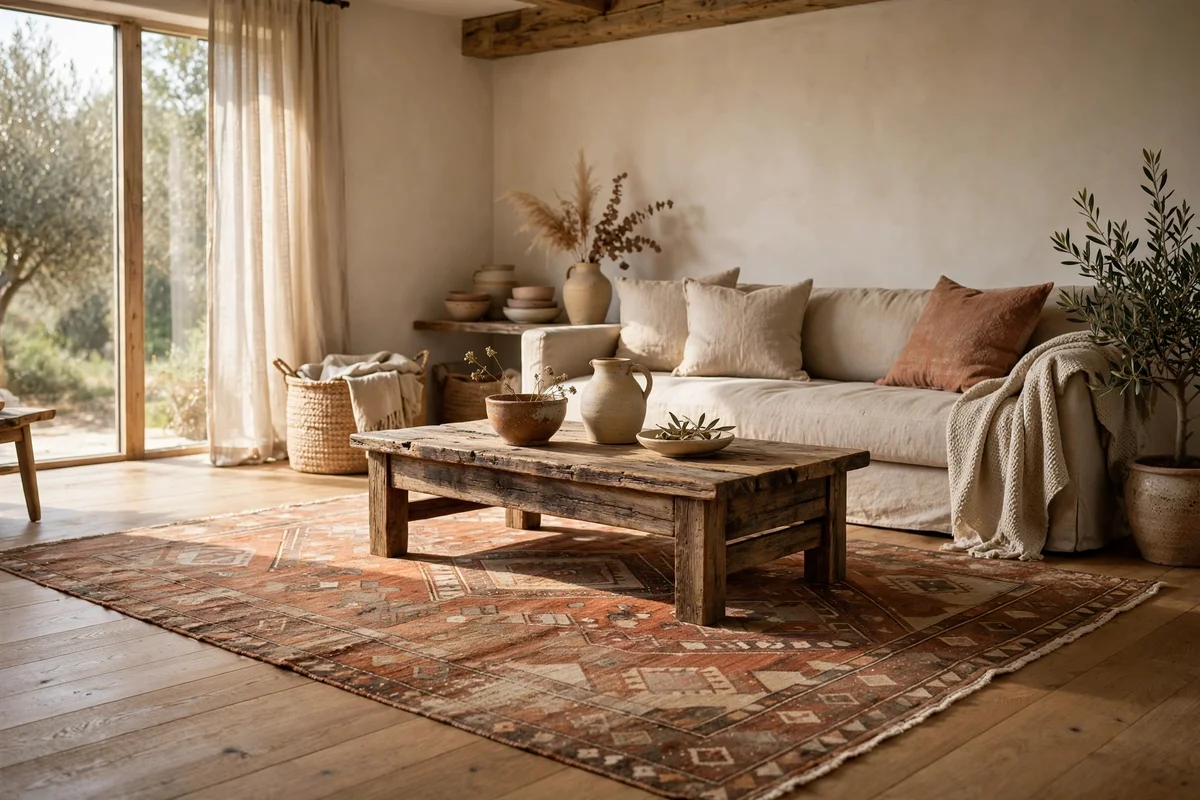
A worn vintage Turkish kilim in muted rust, beige, and charcoal adds pattern without shouting. The faded areas and worn pile are exactly what make it perfect for a wabi sabi room. Authentic vintage kilims cost $200 to $900 depending on size. Layer one over a larger jute rug for a richly collected look.
Pro tip: Buy the size that fits your seating area even if the pattern is not your dream. Correct fit matters more than the perfect motif.
Calm Corners and Quiet Details
27. Tea Corner with Low Table
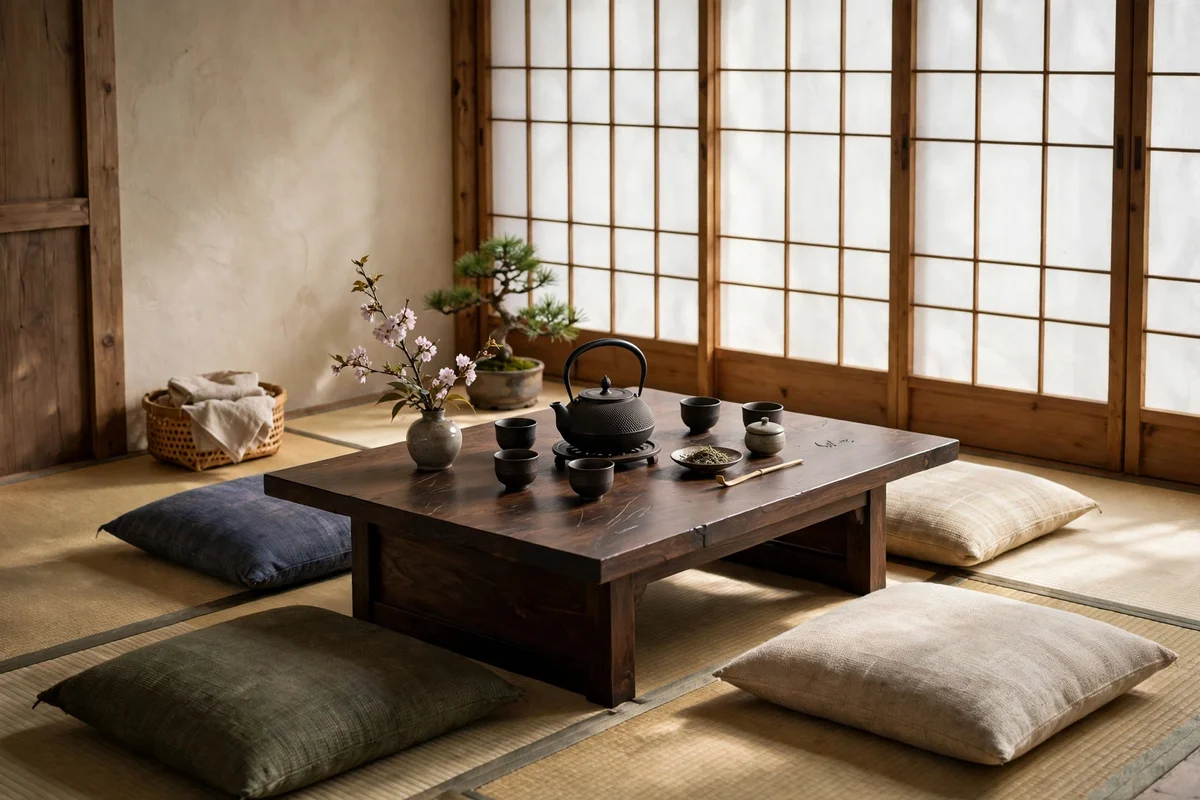
Dedicate one corner to tea: a low chabudai-style table, four zabuton cushions, an iron teapot, and a simple shoji screen or curtain for definition. The ritual of sitting low and pouring tea slows the whole room down. A complete setup costs $150 to $500 depending on how many handmade pieces you choose.
Pro tip: Keep the tea things visible on a small tray. Seeing them every day invites you to actually use the corner instead of admiring it.
28. Reading Nook with Floor Cushions
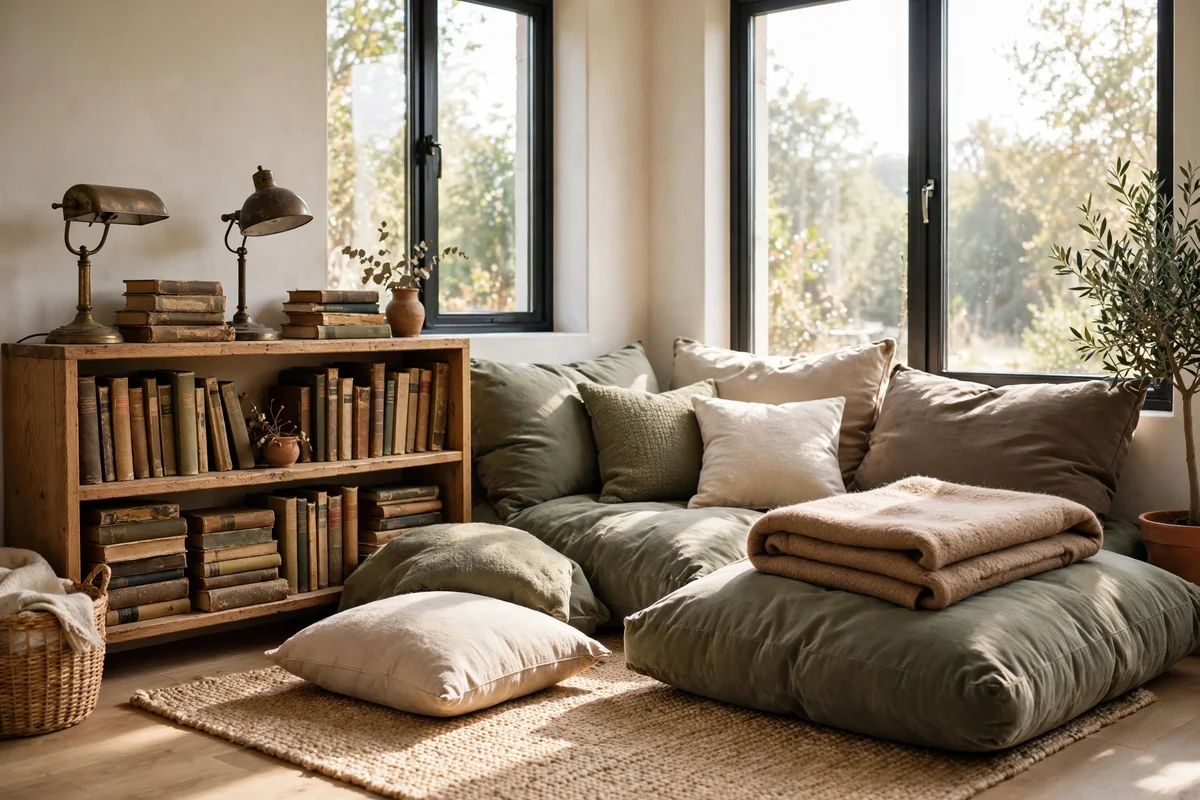
Tuck a reading nook into a bright corner: deep floor cushions, a low oak shelf for a small stack of well-loved books, a brass lamp, and a wool blanket. The whole nook can come together for $200 to $600. Face it toward the window so you read in natural light whenever possible.
Pro tip: Choose books you actually reread, not display books. A nook should feel used, with cracked spines and folded corners.
29. Stone and Wood Altar Shelf
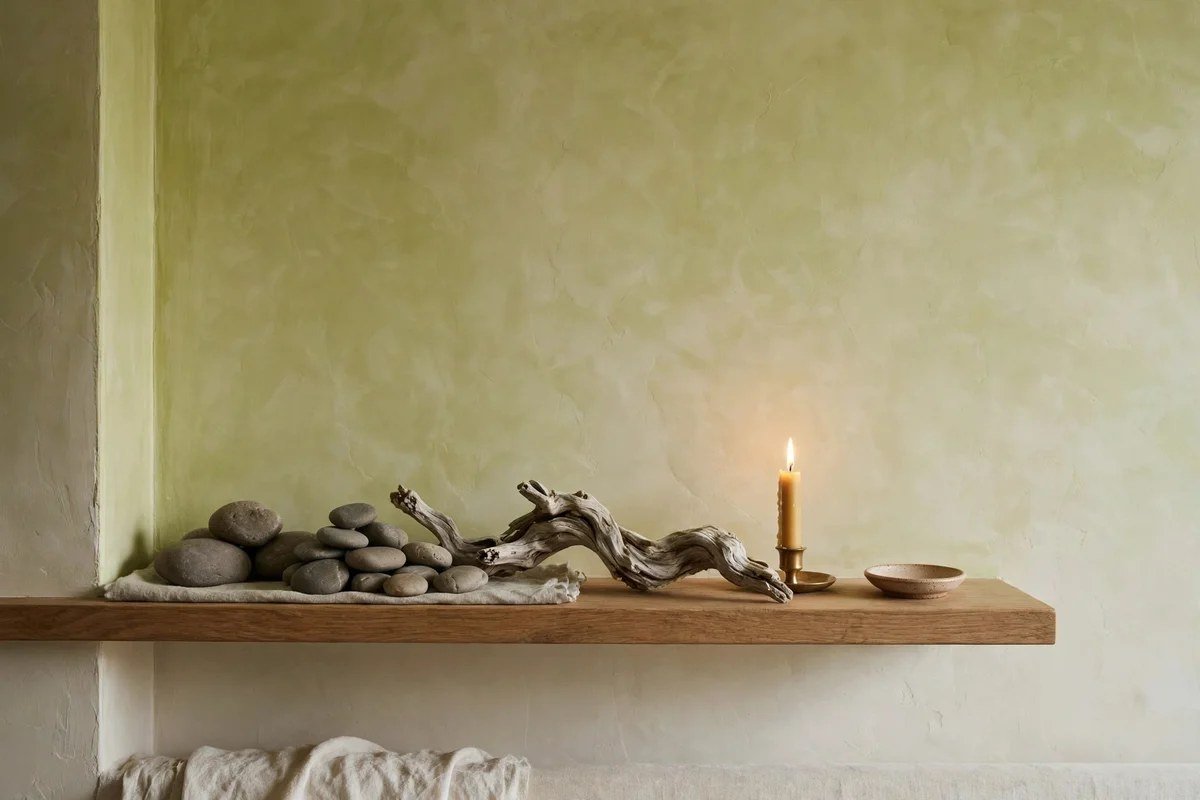
A single low shelf styled like a quiet altar brings intention to the room: a smooth river stone, a piece of driftwood, one candle, a tiny ceramic dish. The objects should mean something to you personally, not just look good. The shelf itself costs $30 to $100, while the objects are often found rather than bought.
Pro tip: Edit ruthlessly. An altar shelf works because of what you leave off it, not because of what you add.
30. Candle Clusters in Ceramic Holders
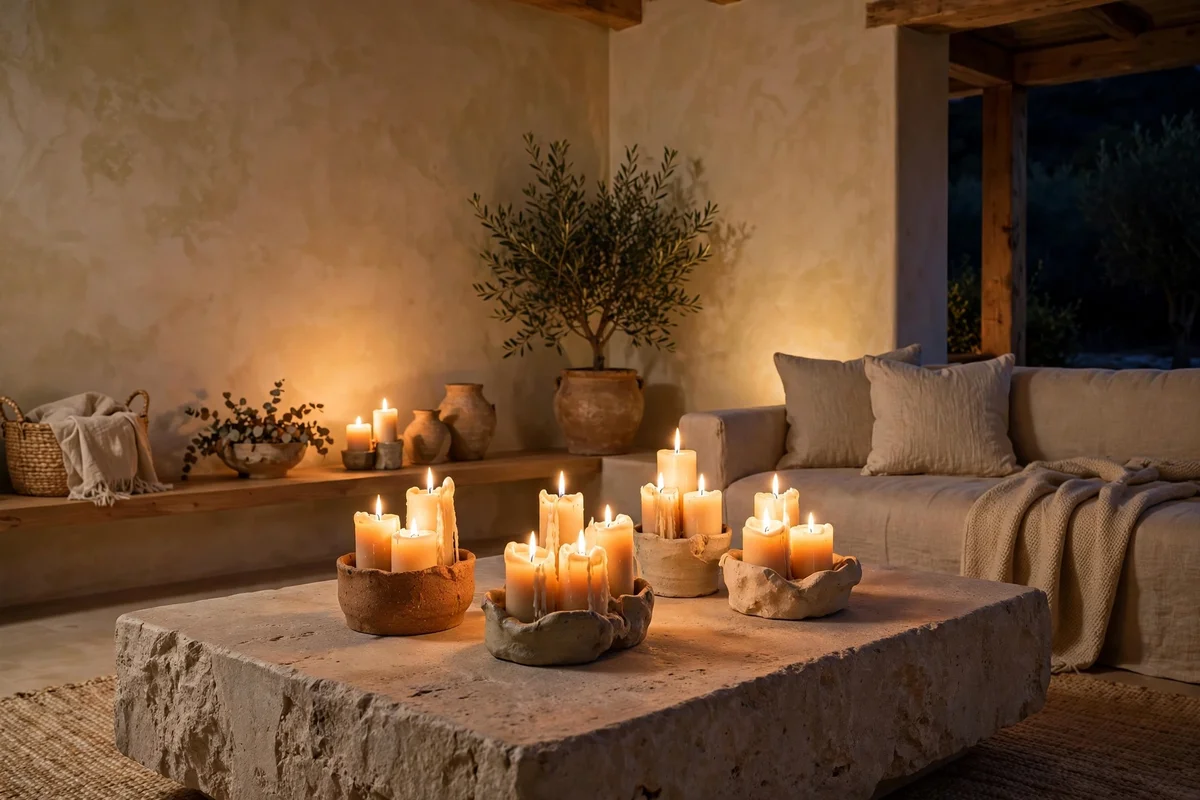
Groups of pillar candles in handmade ceramic holders turn ordinary evenings into small rituals. Cluster five to nine candles of varying heights on a low stone or wood table. Handmade holders cost $15 to $45 each, and beeswax pillars $8 to $20. The flickering light dancing on plaster walls is simply unmatched.
Pro tip: Light them every evening, not just for special occasions. Daily ritual is the beating heart of wabi sabi living.
31. Single Stem Ikebana Display
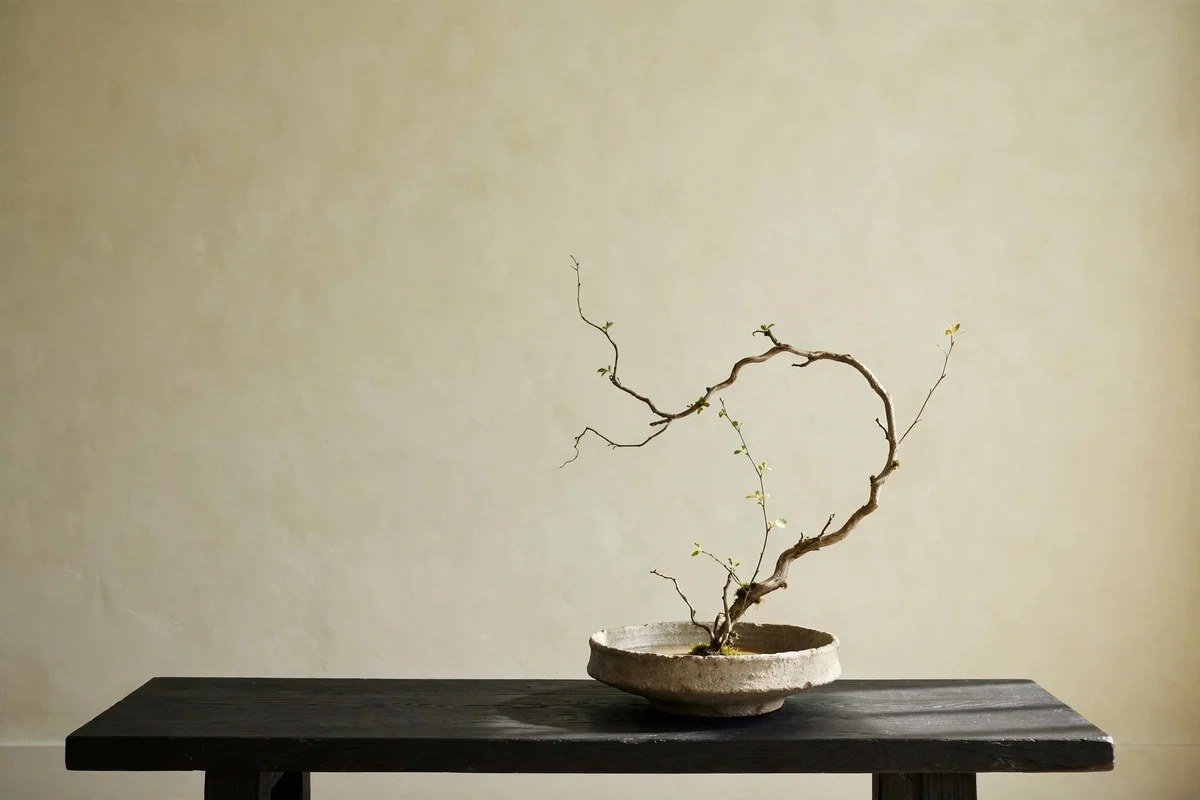
One sculptural stem in a shallow ceramic vessel, arranged with ikebana principles, says more than any full bouquet ever could. A suitable vessel costs $30 to $90, and the stem comes from the garden or market for a few dollars. Place it where you will see it at eye level when seated.
Pro tip: Replace the stem weekly and spend five quiet minutes arranging it. The practice itself is the real decoration.
32. Open Shelving with Curated Objects
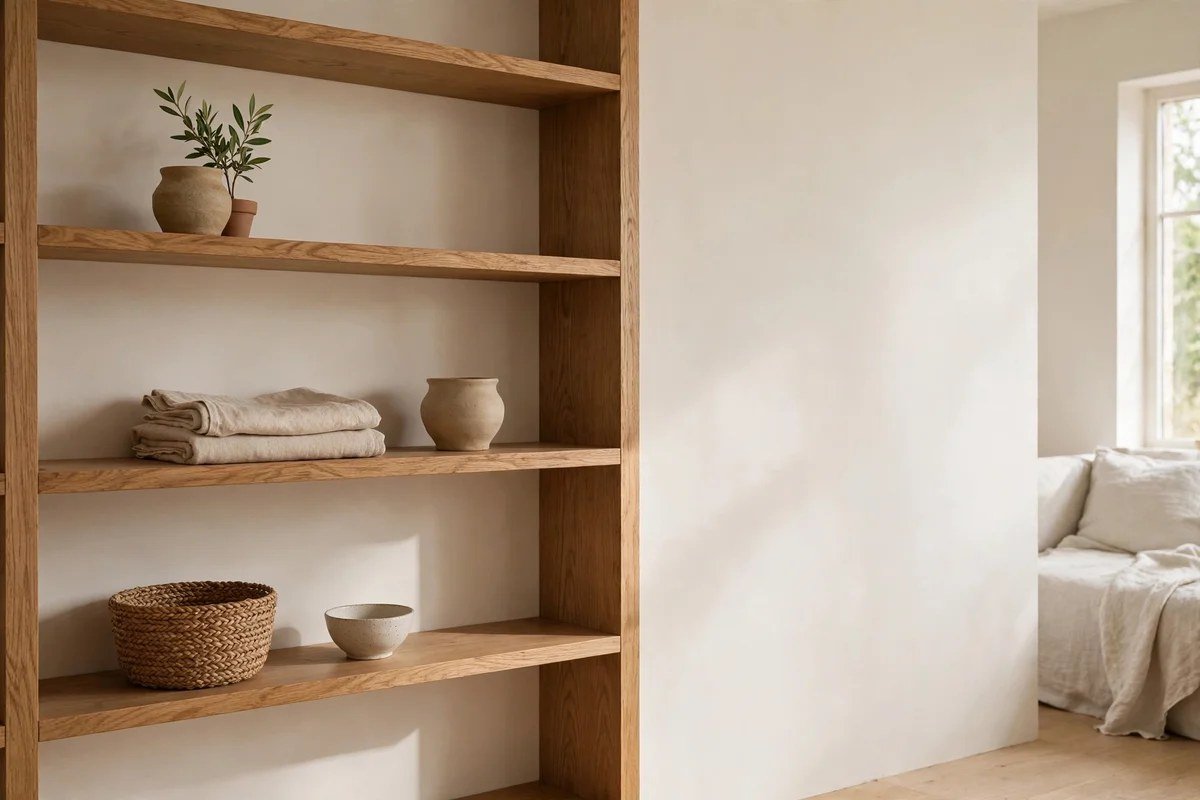
A simple open oak shelf holding a few handmade objects, a woven basket, folded linen, and one small plant keeps everyday things beautiful. The key is restraint: leave at least a third of the shelf completely empty. A solid oak shelf costs $80 to $250 installed, depending on length and brackets.
Pro tip: Style it once, then remove one item. Wabi sabi shelves should feel like they have generous room to breathe.
33. Indoor Olive Tree in Clay Pot
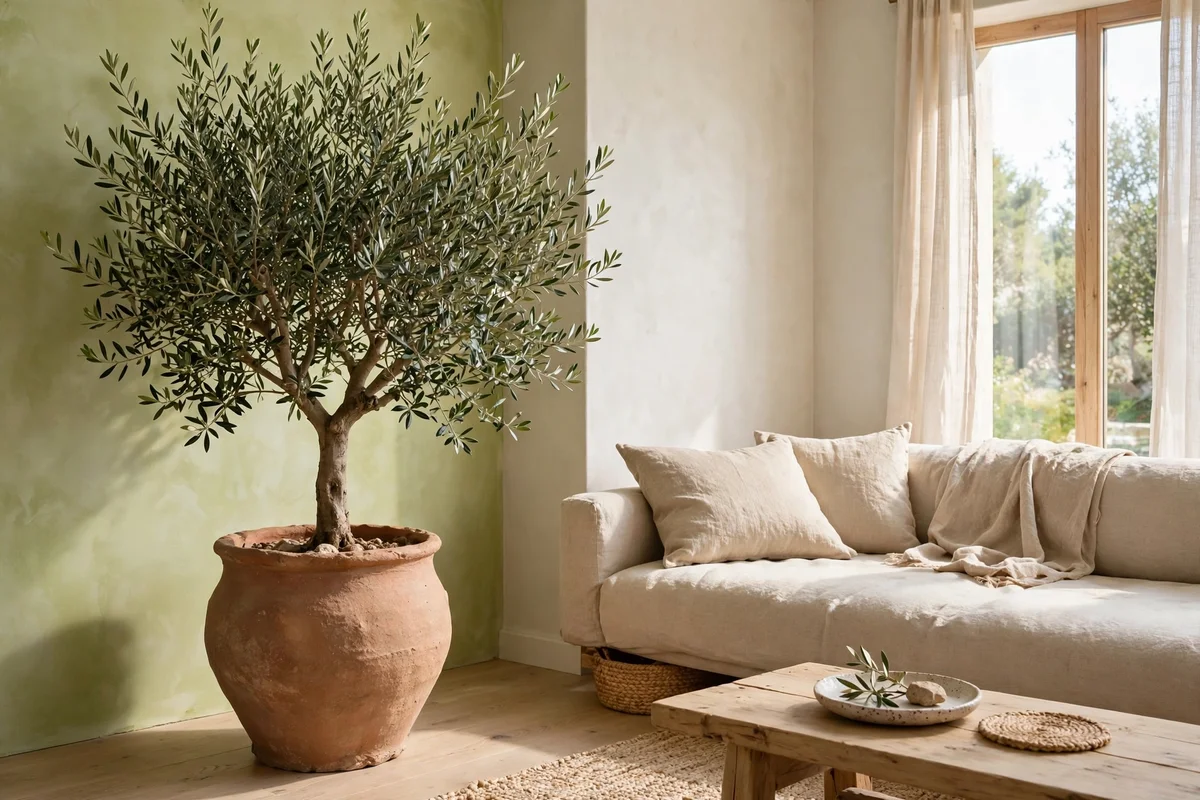
An indoor olive tree in a large handmade terracotta pot brings silvery-green life and Mediterranean calm to the room. Trees in 10 to 14 inch pots cost $60 to $180, and handmade pots $50 to $150. Give it your brightest spot and let the soil dry out between waterings.
Pro tip: Accept some leaf drop in winter without worry. The slightly sparse look suits wabi sabi better than forced perfection ever could.
34. Sunset-Warm Minimal Fireplace
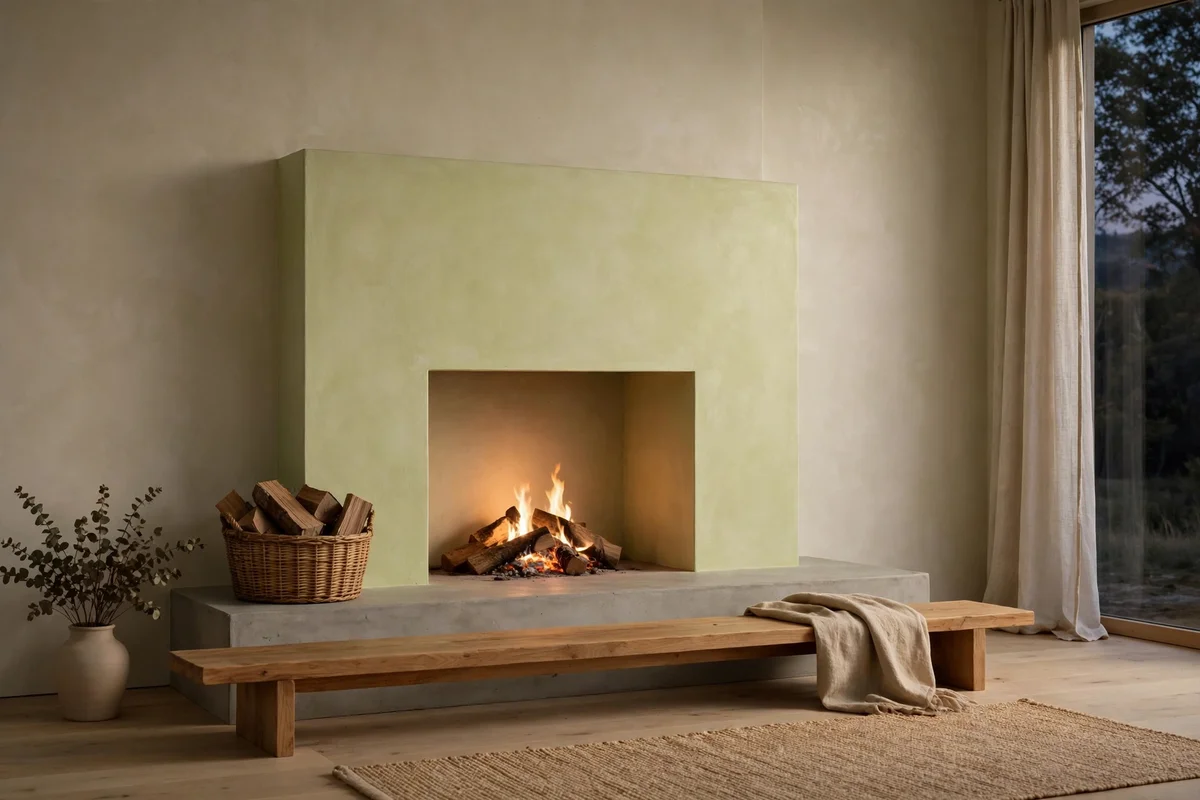
A simple plaster fireplace with a clean concrete hearth and no mantel clutter keeps all focus on the fire itself. The surround can be limewashed plaster for $200 to $600 in materials, and a simple ethanol insert runs $300 to $900 with no chimney needed. Keep the hearth clear except for one log basket.
Pro tip: Burn the fire often in cold months. A lived-in fireplace with a little ash is more wabi sabi than a pristine one nobody touches.
Design Notes: Mixing Wabi Sabi with Other Styles
Wabi sabi plays beautifully with other calm styles. If you love its Japanese roots, explore our 32 Japandi living room ideas for the Scandinavian-Japanese blend that shares wabi sabi’s restraint. For an even quieter palette, our 36 minimalist living room ideas strip things back further. Scandinavian warmth pairs naturally too, as you can see in our 32 Scandinavian living room ideas. If you want the same calm with sleeker lines, browse our 36 modern living room ideas. And for organic handmade texture in a cozier register, our 32 rustic bedroom ideas carry the handcrafted feeling into the bedroom.
Frequently Asked Questions
What is wabi sabi style in interior design?
Wabi sabi is a Japanese aesthetic built on finding beauty in imperfection, impermanence, and simplicity. In interiors it means natural materials, handmade objects with visible irregularities, muted earthy colors, and rooms that feel calm rather than perfect. Think limewashed walls, worn wood, uneven ceramics, and linen that wrinkles gracefully.
What colors work best in a wabi sabi living room?
Stick to a quiet palette drawn from nature: warm whites, greige, oatmeal, clay, stone gray, muted sage, and soft charcoal. These tones let texture and light do the talking. One deeper accent, like rust or indigo in a textile, adds depth without breaking the calm.
Is wabi sabi expensive to achieve?
Not necessarily. Many wabi sabi ideas cost very little: sheer linen curtains, a branch in a vase, candles, floor cushions, and embracing the patina you already own. The bigger investments are usually plaster walls, solid wood furniture, and handmade ceramics, but you can layer those in slowly over time.
How is wabi sabi different from minimalism?
Minimalism prizes emptiness and precision, while wabi sabi values warmth, age, and the human hand. A minimalist room can feel cold and exact; a wabi sabi room feels lived-in and soulful. Both love restraint, but wabi sabi welcomes cracks, wrinkles, and patina that minimalism would edit out.
Can I mix wabi sabi with modern furniture?
Absolutely. Wabi sabi is more philosophy than furniture style. A clean modern sofa works beautifully against limewashed walls with a handmade ceramic vase on the coffee table. The key is balancing sleek pieces with at least a few organic, imperfect, handmade elements so the room keeps its soul.
How do I keep a wabi sabi living room from looking messy?
The line between curated imperfection and clutter is editing. Give every object breathing room, leave surfaces partly empty, and choose fewer, better things. If a corner starts feeling chaotic, remove one item rather than adding organization. Restraint is what keeps wabi sabi serene instead of sloppy.
Final Thoughts
A wabi sabi living room is not a look you buy in one shopping trip. It is a way of seeing your home that grows over time, one handmade bowl, one worn textile, one quiet corner at a time. Start with the ideas that speak to you most, perhaps limewashed walls or a simple tea corner, and let the room evolve. The cracks will come, the linen will wrinkle, the brass will darken, and each change will make the room more beautiful, not less. That is the whole gentle promise of wabi sabi: perfection was never the goal, and peace was here all along.

One Comment