
32 Japandi Bedroom Ideas for Calm Minimal Style
32 Japandi Bedroom Ideas for Calm Minimal Style
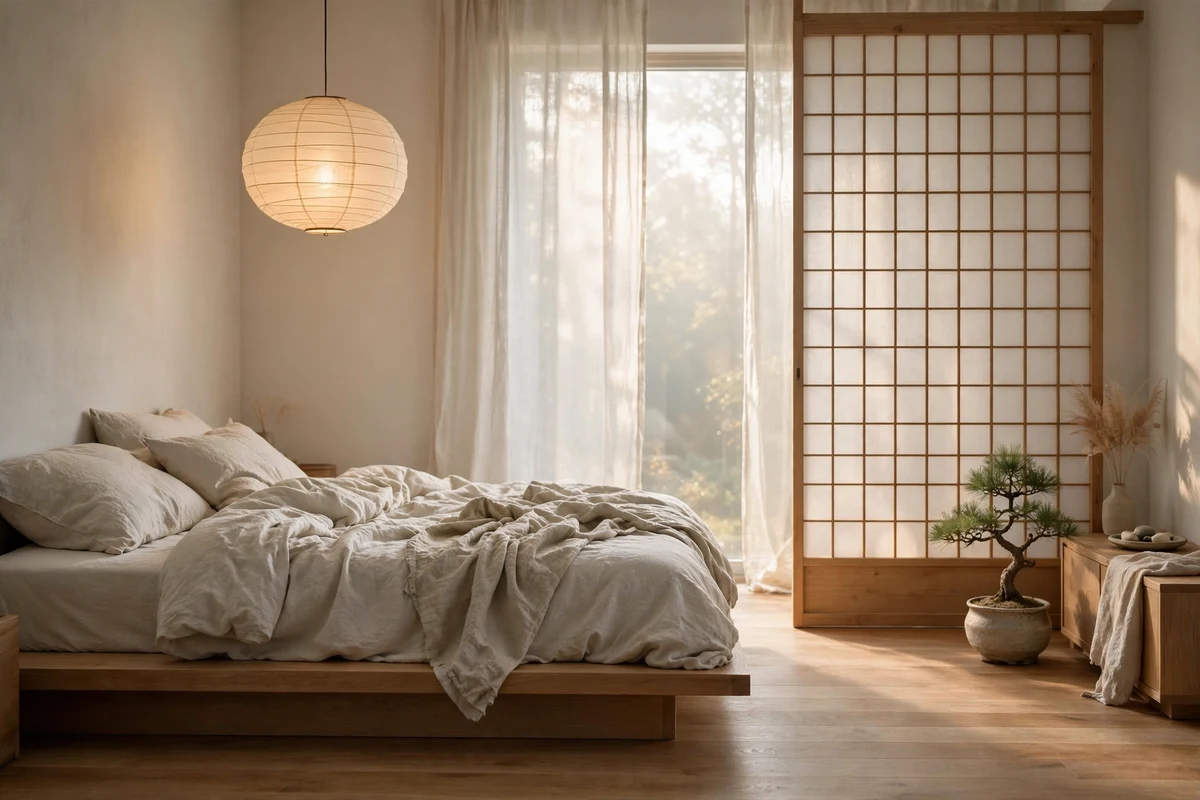
Japandi style brings together the quiet discipline of Japanese design and the warm functionality of Scandinavian interiors, and nowhere does that balance feel more natural than in the bedroom. A Japandi bedroom is calm without being cold, minimal without being empty, and deeply restful without relying on clutter or heavy decor. Think low platform beds, warm oak floors, paper lantern light, linen bedding in oatmeal and stone tones, and a handful of handmade objects chosen with real intention. If you want a bedroom that slows you down the moment you walk in, these 32 Japandi bedroom ideas cover every layer, from foundations like walls and floors to the small finishing details that make the style feel personal and complete.
The Foundation: Beds, Walls, and Light
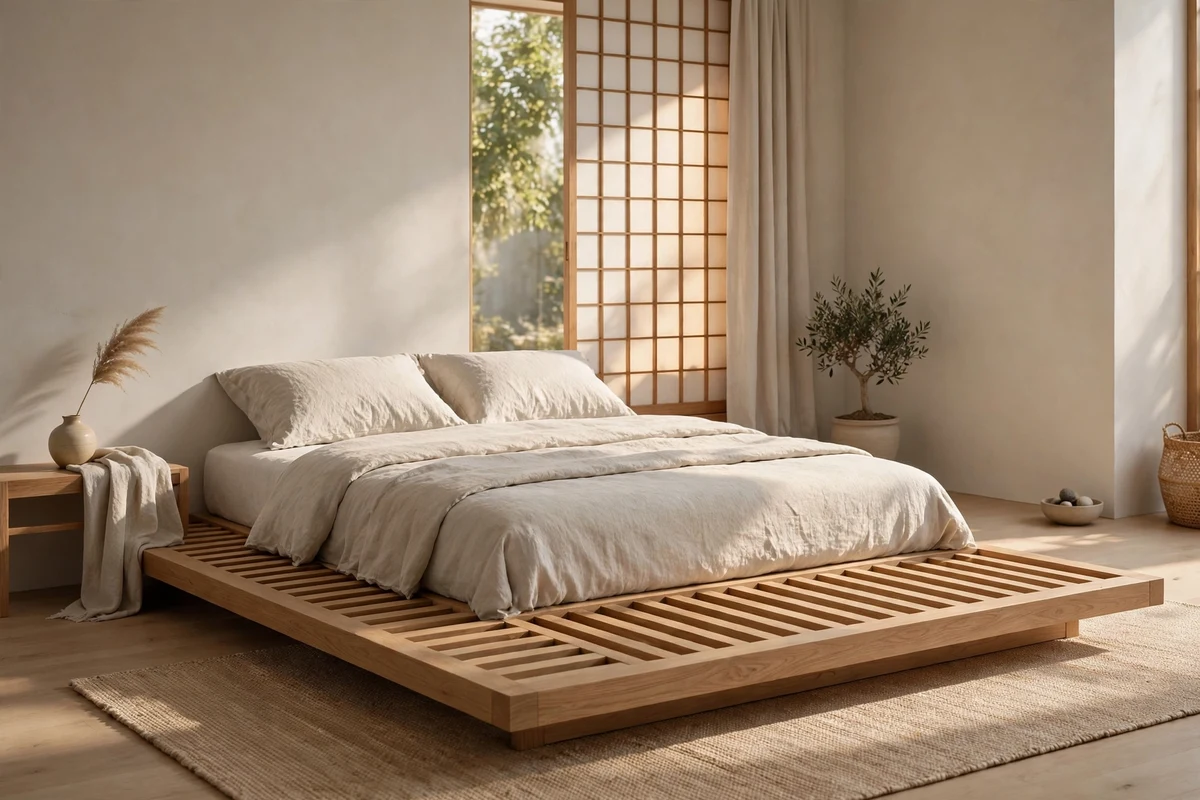
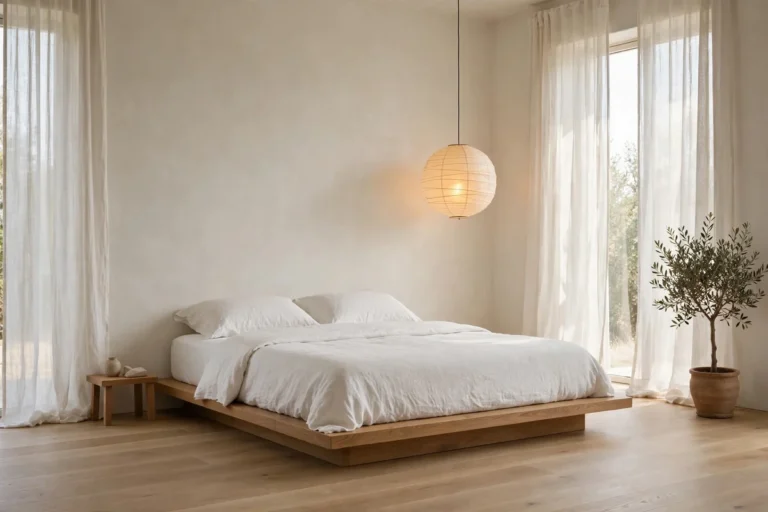
1. Low Platform Bed with a Tatami-Inspired Base
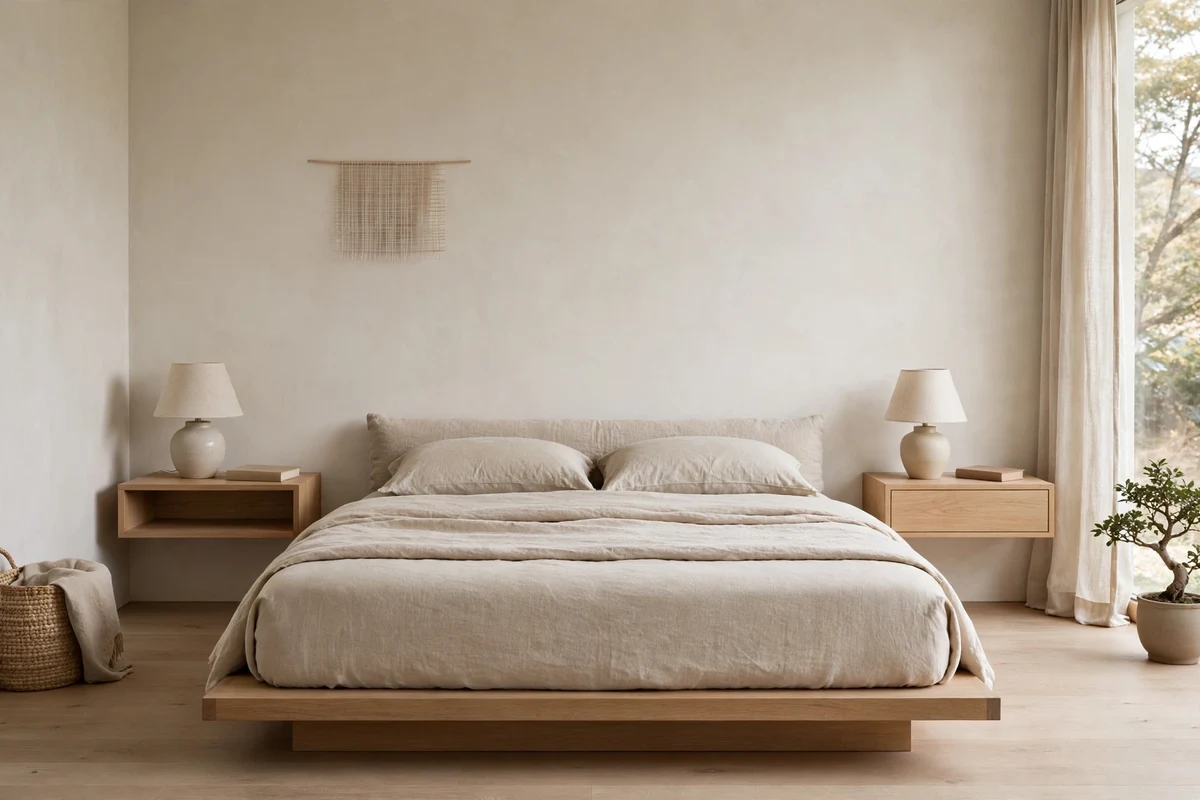
A low platform bed is the single most defining piece in a Japandi bedroom, and it sets the tone for everything else. Keep the frame in light oak or ash with a simple slatted base that echoes tatami proportions, sitting no more than 10 to 14 inches off the floor. The low profile makes ceilings feel taller and gives the whole room a grounded, serene quality that higher beds simply cannot match. Expect to spend $400 to $900 for a solid wood platform frame from retailers like Article or Floyd, with handmade Japanese-inspired joinery pieces running $1,200 and up. Pro tip: Leave at least a few inches of visible floor around the bed so the low silhouette reads as intentional, not cramped.
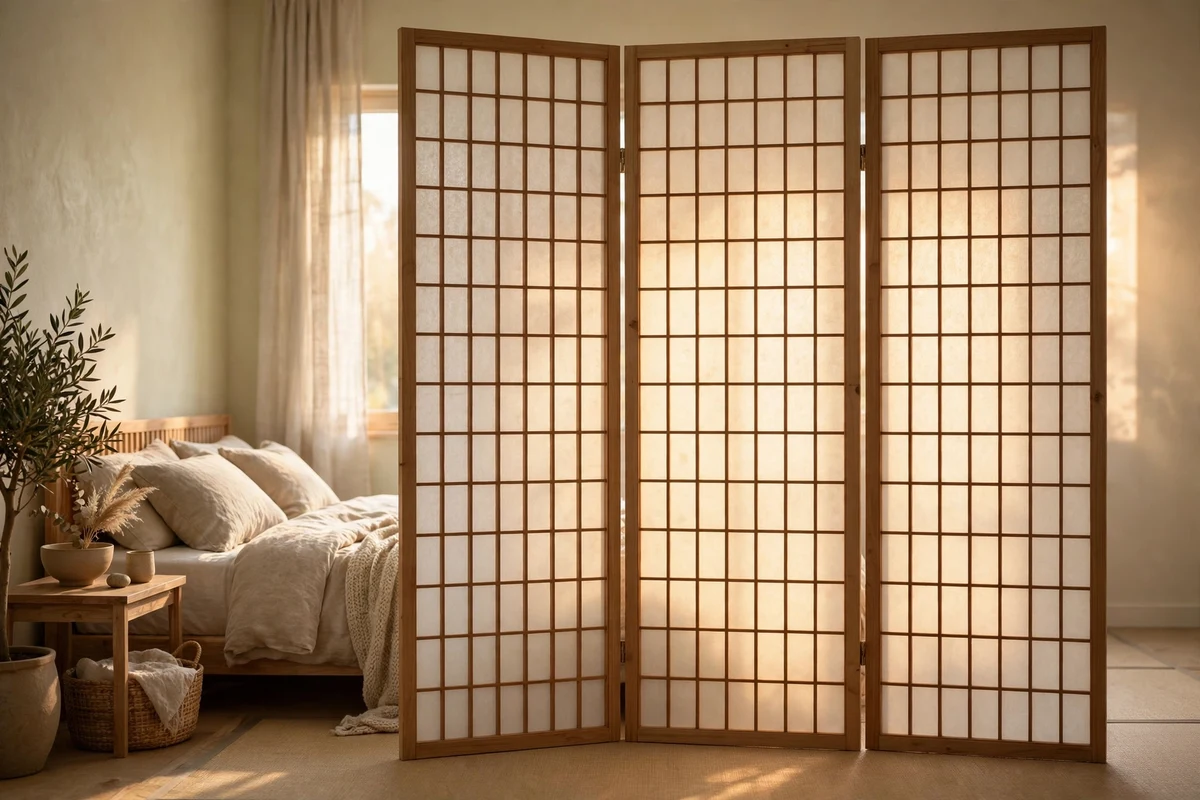
2. Shoji Screen Room Divider
Shoji screens bring soft, filtered light and flexible zoning to a Japandi bedroom in one move. Use a two or three panel screen to separate a reading corner, hide open storage, or simply add that unmistakable grid pattern of wood and rice paper to a plain wall. Real washi paper panels glow beautifully when backlit, and the lightweight frames are easy to move as your needs change. Budget options start around $120 to $250 for a three panel pine screen, while solid hardwood frames with handmade paper can reach $600 to $1,000. Pro tip: Place the screen where morning light passes through it, and the whole room fills with a soft, diffused glow.
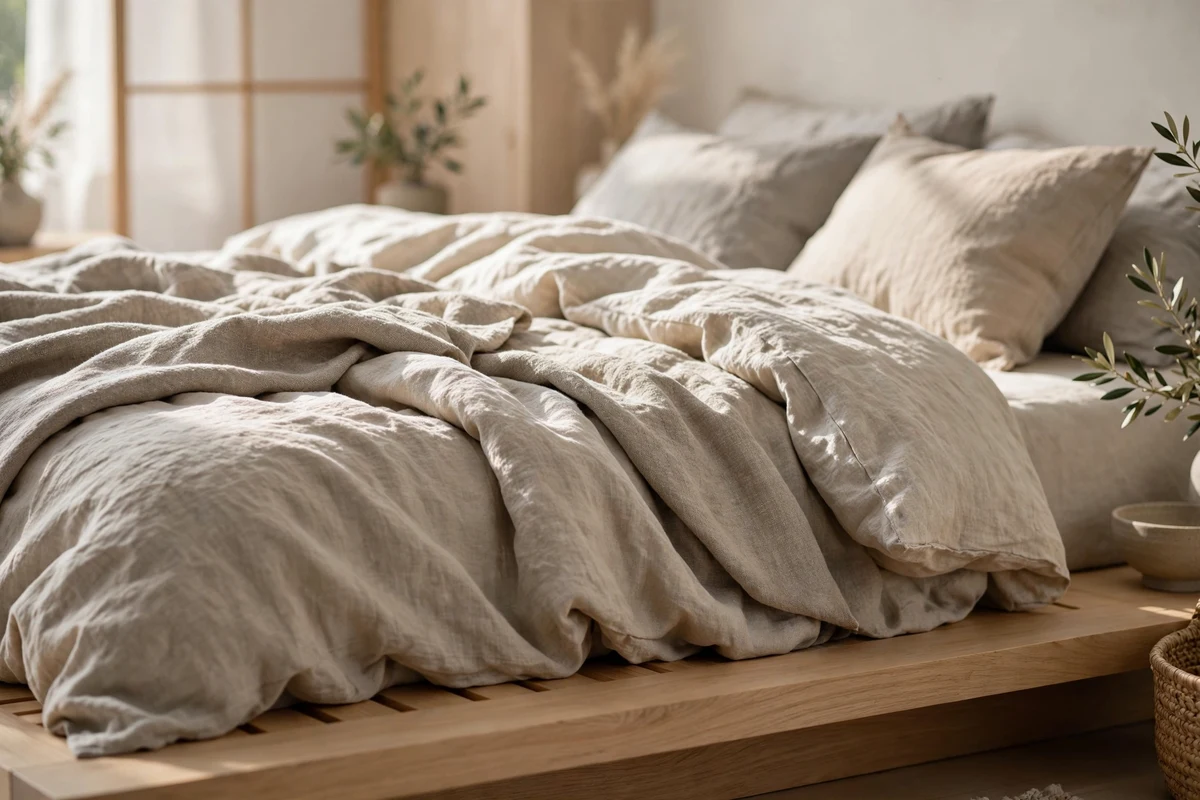
3. Linen Bedding in Warm Neutrals
Nothing says Japandi comfort like rumpled linen in warm, earthy neutrals. Choose duvet covers and sheets in oatmeal, flax, warm white, or soft stone, and layer two or three tones rather than matching everything exactly. Linen gets softer with every wash, breathes well in summer, and its natural wrinkles are part of the charm, which means you can stop chasing a perfectly pressed bed. A quality linen duvet set runs $180 to $350, with European flax options from brands like Parachute or Brooklinen at the higher end. Pro tip: Mix one warm tone (oatmeal) with one cool tone (stone gray) to keep the palette from feeling flat.
4. Floating Oak Nightstands
Floating nightstands keep the floor visible and the room feeling open, which is exactly what Japandi design wants. A simple light oak drawer box mounted to the wall beside the bed holds a book, a carafe of water, and a small lamp without any visual weight. The clean lines echo Scandinavian functionality while the warm wood grain brings the Japanese love of natural materials. Wall mounted nightstands cost $80 to $220 each depending on size and finish, and installation is a straightforward DIY job with proper wall anchors. Pro tip: Mount them 2 to 3 inches below the top of your mattress so reaching for things feels natural.
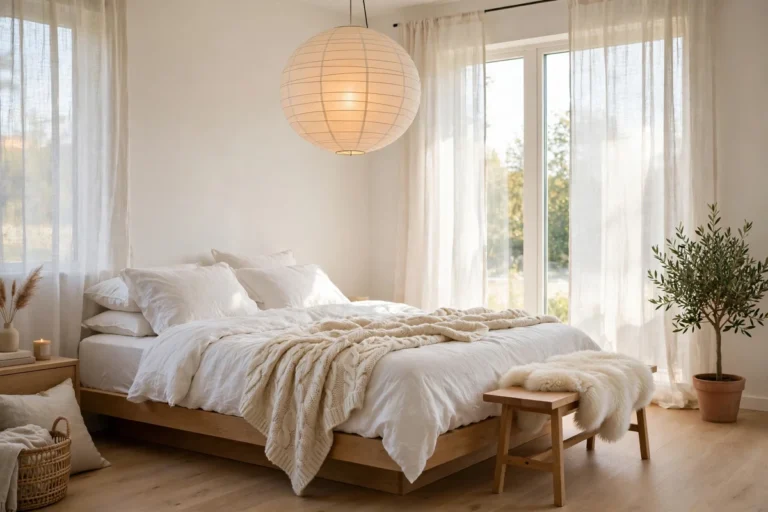
5. Paper Lantern Pendant Light
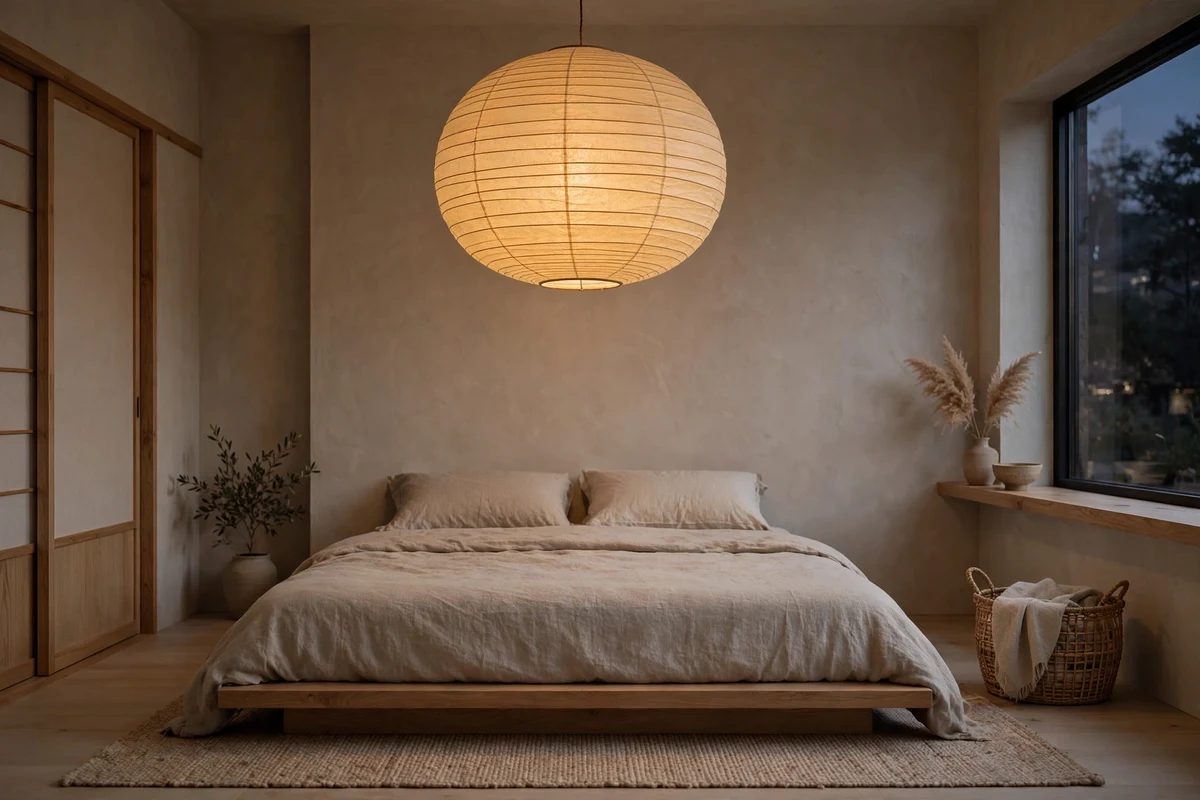
A paper lantern pendant is the fastest way to add Japanese soul to a bedroom ceiling. The soft, spherical glow flatters everything in the room and casts none of the harsh shadows that come from bare bulbs or downlights. Hang one large lantern (24 to 32 inches in diameter) centered over the bed, or a pair of smaller ones over the nightstands for symmetry. Classic rice paper lanterns cost $40 to $120, while sculptural Noguchi-style designs run $200 to $500 and double as art. Pro tip: Put the lantern on a dimmer switch so you can drop the light low in the evening for a truly restful mood.
6. Clay-Toned Accent Wall
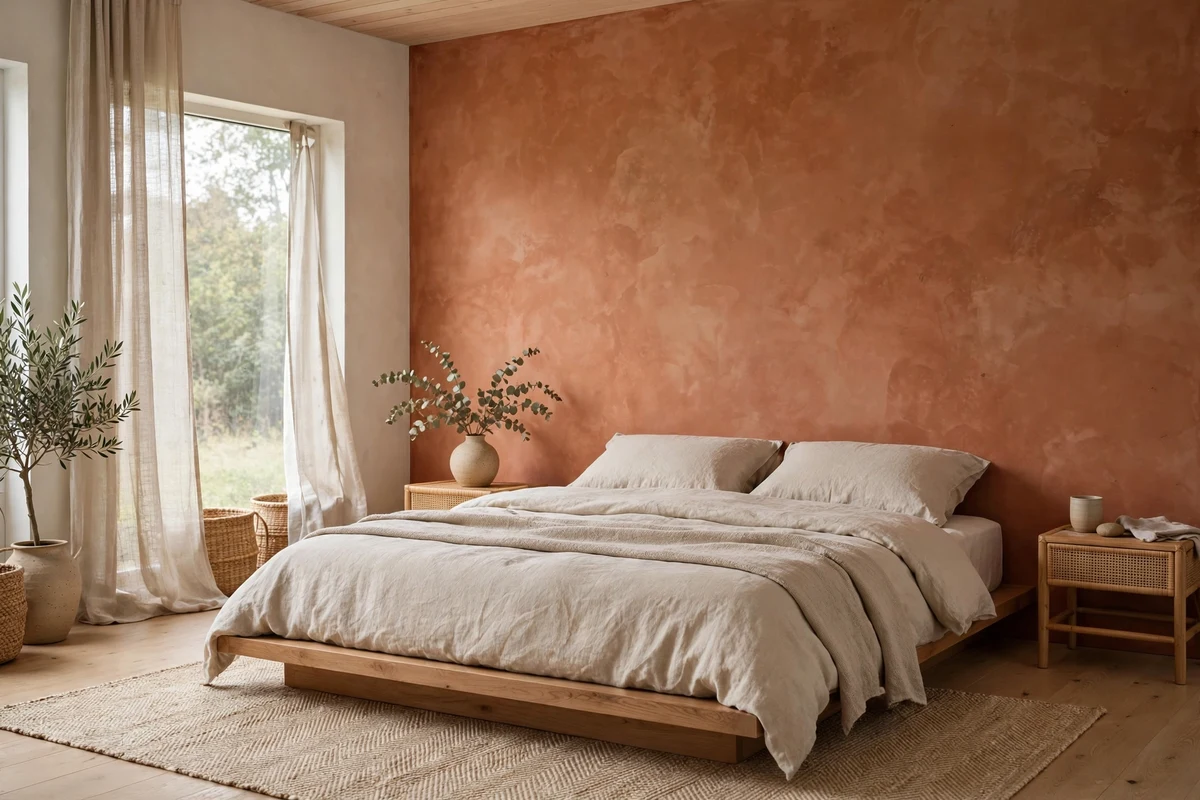
One accent wall in a warm clay, terracotta, or muted plaster tone gives a Japandi bedroom depth without breaking its calm. These earthy pigments reference traditional Japanese clay walls and pair beautifully with light wood and linen. Use limewash or mineral paint for a soft, chalky texture that shifts subtly as light moves across it during the day. A gallon of quality limewash paint costs $60 to $110 and covers a standard accent wall with two coats. Pro tip: Test the color in both morning and evening light, since clay tones can swing warmer or cooler than the swatch suggests.
7. Rattan and Cane Details
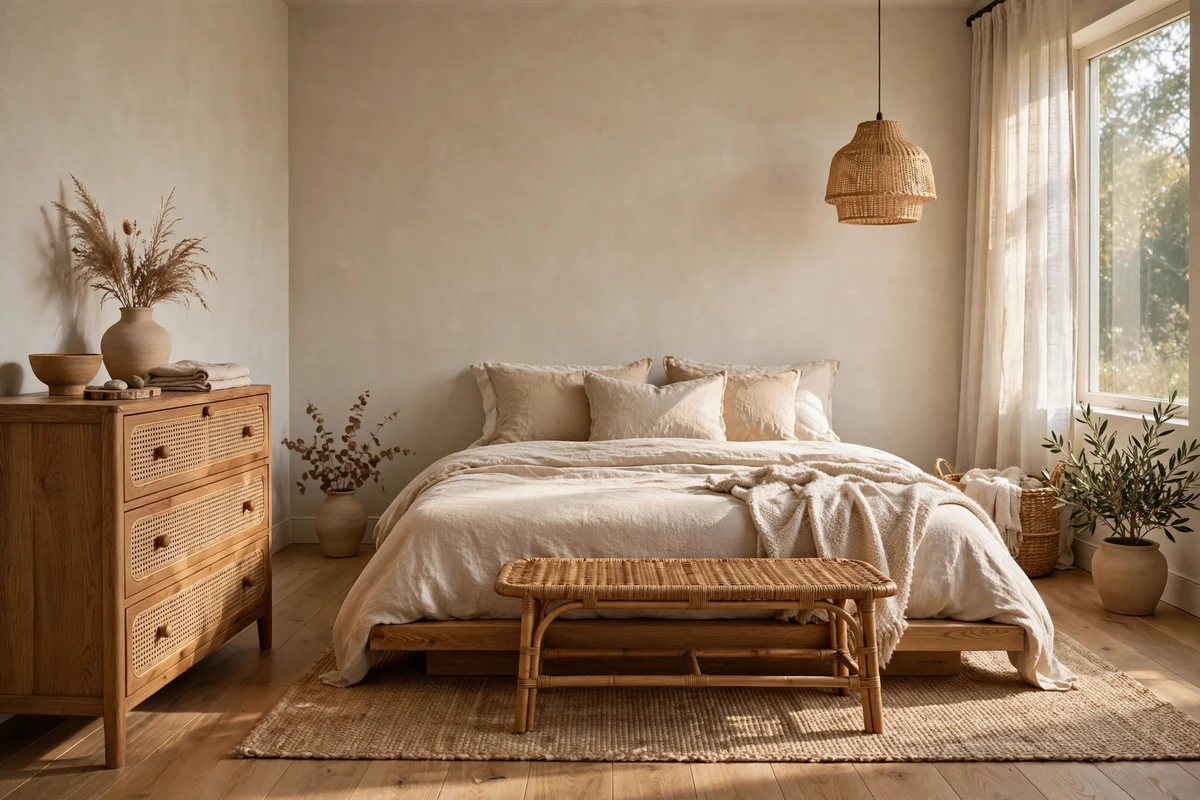
Rattan and cane weave add handcrafted texture that keeps minimal rooms from feeling sterile. A cane-front dresser, a rattan bench at the foot of the bed, or even a simple woven pendant shade introduces an organic, slightly imperfect pattern that Japandi style loves. These materials are lightweight, durable, and warm up cool palettes instantly. Expect $150 to $400 for a cane-front nightstand or small dresser, and $60 to $150 for a quality rattan bench. Pro tip: Limit cane pieces to one or two per room so the texture stays special instead of becoming a theme.
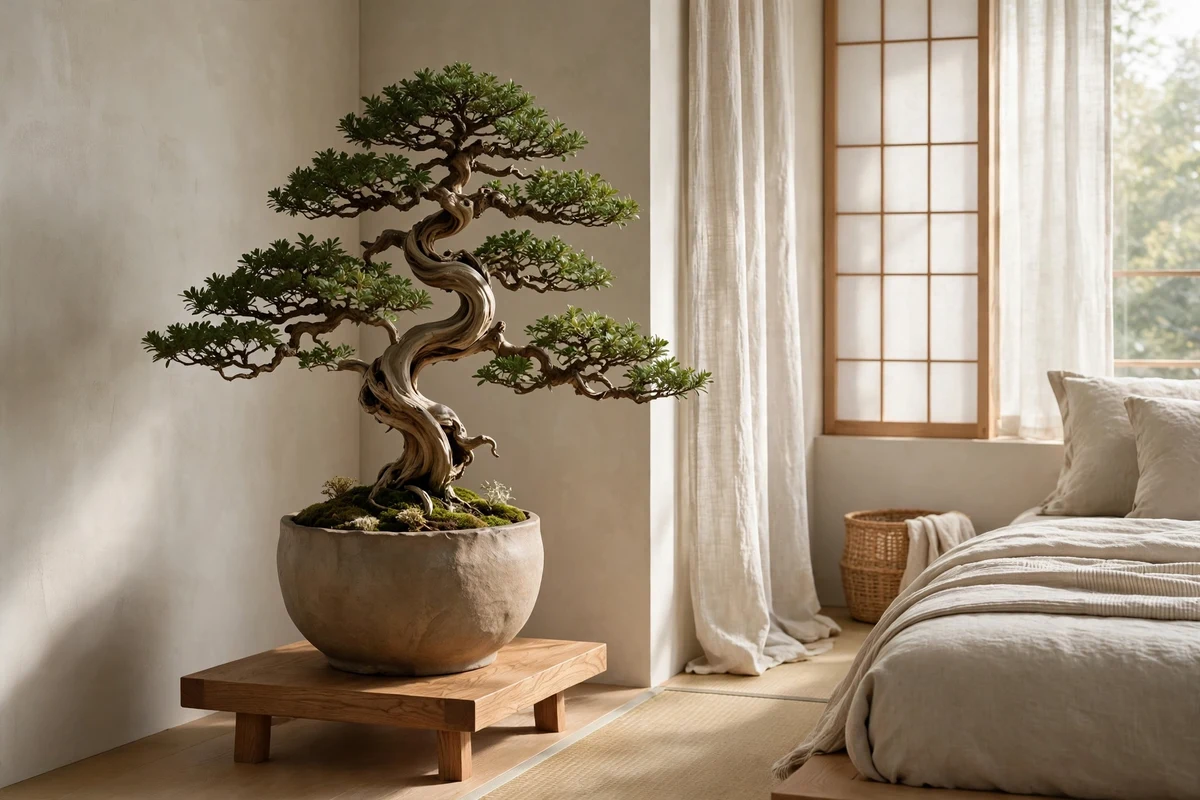
8. Bonsai and Sculptural Greenery
A single sculptural plant does more for a Japandi bedroom than a whole collection of small pots. Choose one statement plant with architectural form, like a bonsai, an olive tree, or a tall snake plant in a handmade ceramic pot, and give it a clear spot where its silhouette can breathe. The living green softens all the straight lines and brings the Japanese garden feeling indoors. A quality bonsai starts around $50 to $150, while a mature olive tree in a ceramic planter runs $120 to $300. Pro tip: Keep the planter simple and matte so the plant itself stays the star of the arrangement.
Furniture and Storage with Quiet Purpose
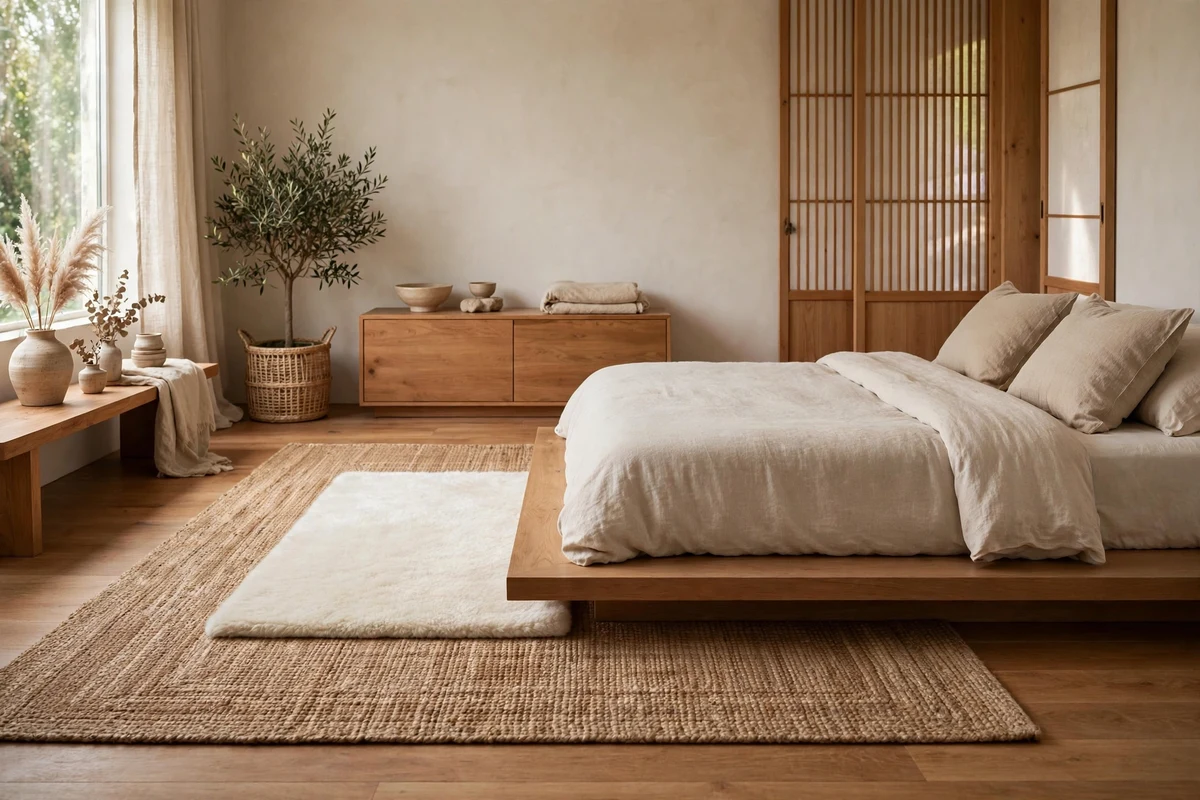
9. Layered Wool and Jute Rugs
Layering a soft wool rug over a flat jute base adds comfort underfoot while keeping the natural, textural look Japandi favors. The jute layer defines the sleeping zone and protects floors, while the smaller wool rug on top gives your feet something warm to land on each morning. Stick to undyed or lightly toned fibers in ivory, oatmeal, or soft gray so the layers read as texture rather than pattern. A 5×7 jute rug costs $100 to $220, with a 3×5 wool layer adding $120 to $300 on top. Pro tip: Let the bottom rug extend at least 18 inches beyond the top layer on all sides for a balanced, intentional look.
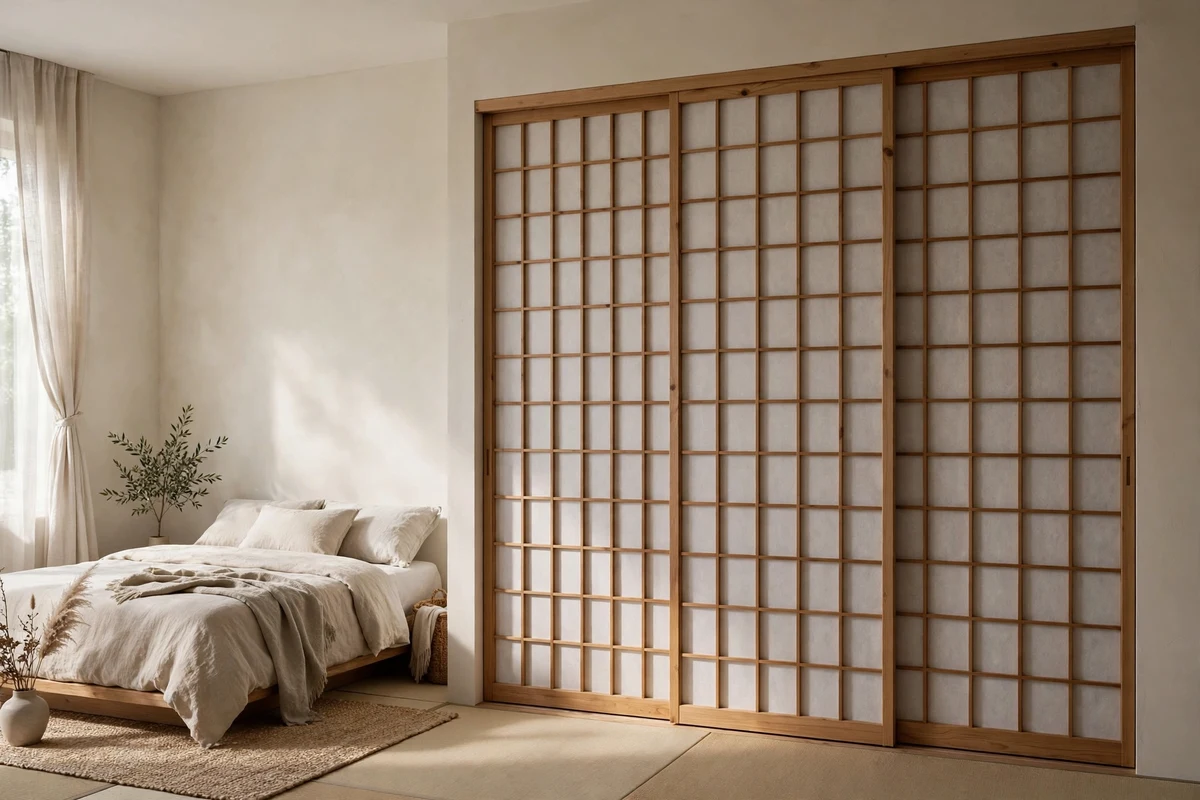
10. Built-In Wardrobe with Shoji-Style Doors
A built-in wardrobe with shoji-style sliding doors hides storage behind one of the most beautiful patterns in Japanese design. The grid of wood frames and translucent panels keeps a large storage wall from feeling heavy, and sliding doors save the swing space that hinged doors waste. Custom built-ins with shoji fronts run $1,500 to $4,000 depending on size, but you can get the look for less with sliding door kits ($300 to $700) fitted over an existing reach-in closet. Pro tip: Use frosted acrylic instead of real paper on closet doors if you want the look with zero maintenance.
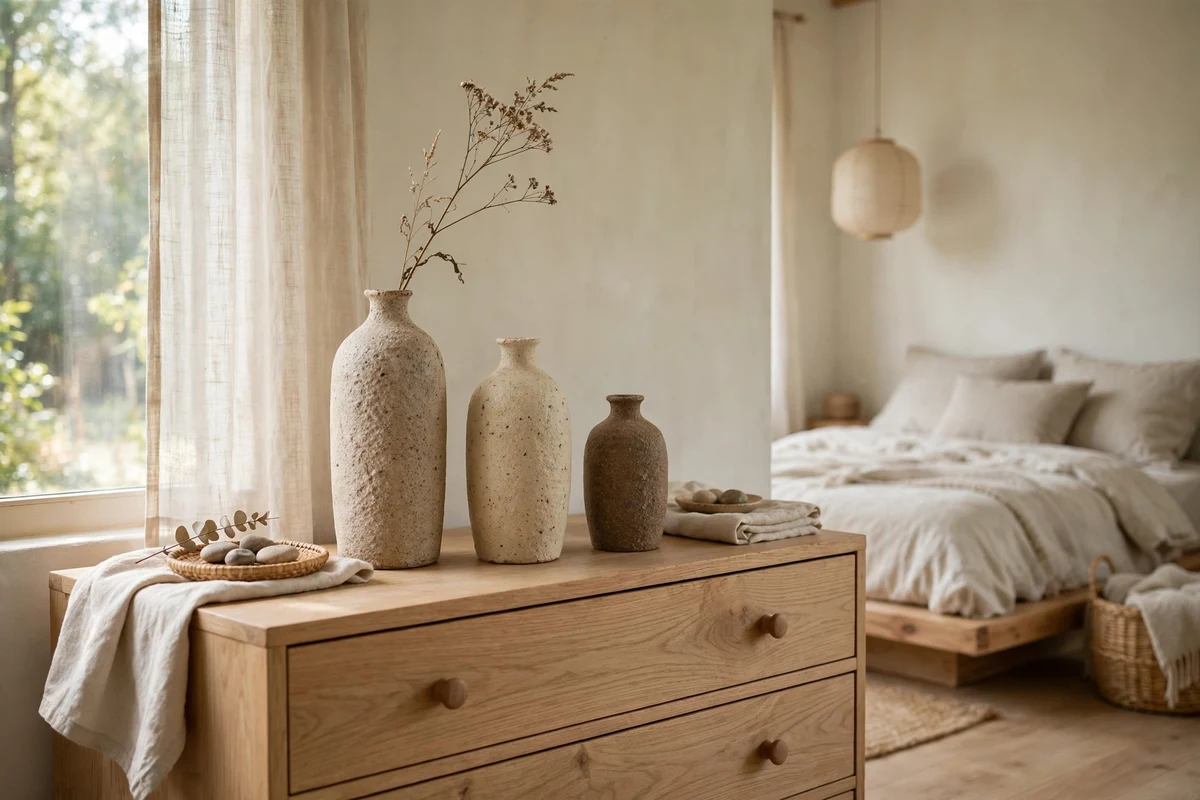
11. Handmade Ceramic Vases and Pottery
Handmade ceramics are the jewelry of a Japandi bedroom, small imperfect objects that reward a second look. Place one or two stoneware vases on the dresser, a nightstand, or an open shelf, and leave most of them empty or with a single stem. The slight asymmetry and visible throwing marks celebrate the Japanese idea of wabi-sabi, finding beauty in imperfection. Studio pottery pieces cost $30 to $120 each, and even simple handmade bud vases transform a bare surface. Pro tip: Group ceramics in odd numbers and vary the heights so the arrangement feels collected, not staged.
12. Low-Profile Boucle Accent Chair
A low boucle chair gives you a comfortable reading spot without breaking the room’s calm horizontal lines. The nubby, cloud-like texture of boucle fabric adds softness that contrasts beautifully with smooth wood and crisp linen, and the rounded form echoes the organic shapes found in Japanese design. Look for chairs with a low seat height (14 to 16 inches) and solid wood legs in a natural finish. Boucle accent chairs range from $250 to $700 depending on size and frame quality. Pro tip: Angle the chair toward a window and add a small side table, and you have an instant morning reading corner.
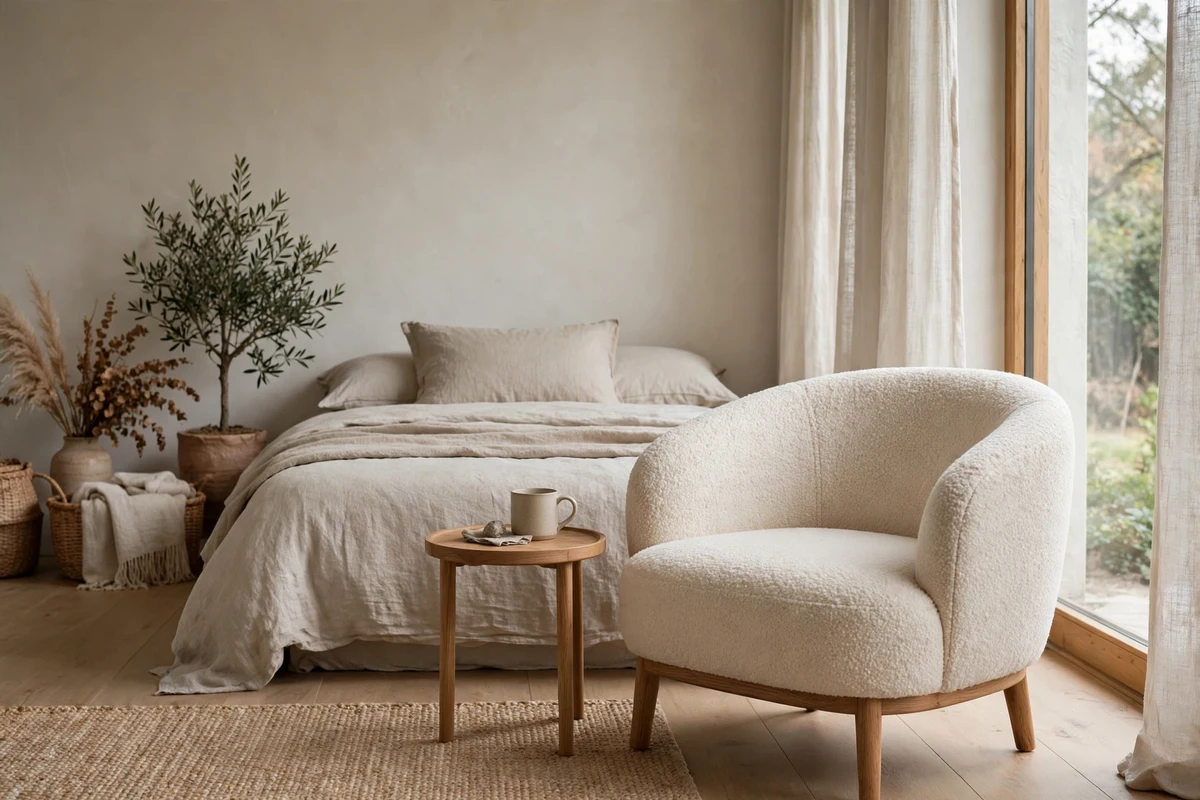
13. Natural Wood Beam Ceiling Accent
Exposed or faux wood beams draw the eye upward and add architectural warmth that flat white ceilings lack. In a Japandi bedroom, one or two simple beams in a natural finish reference traditional Japanese post-and-beam construction without requiring a full renovation. Faux beams made from lightweight polyurethane or hollow wood boxes cost $15 to $40 per linear foot installed, far less than structural timber. Pro tip: Keep beams in the same tone family as your floor or bed frame so the ceiling feels connected to the rest of the room.
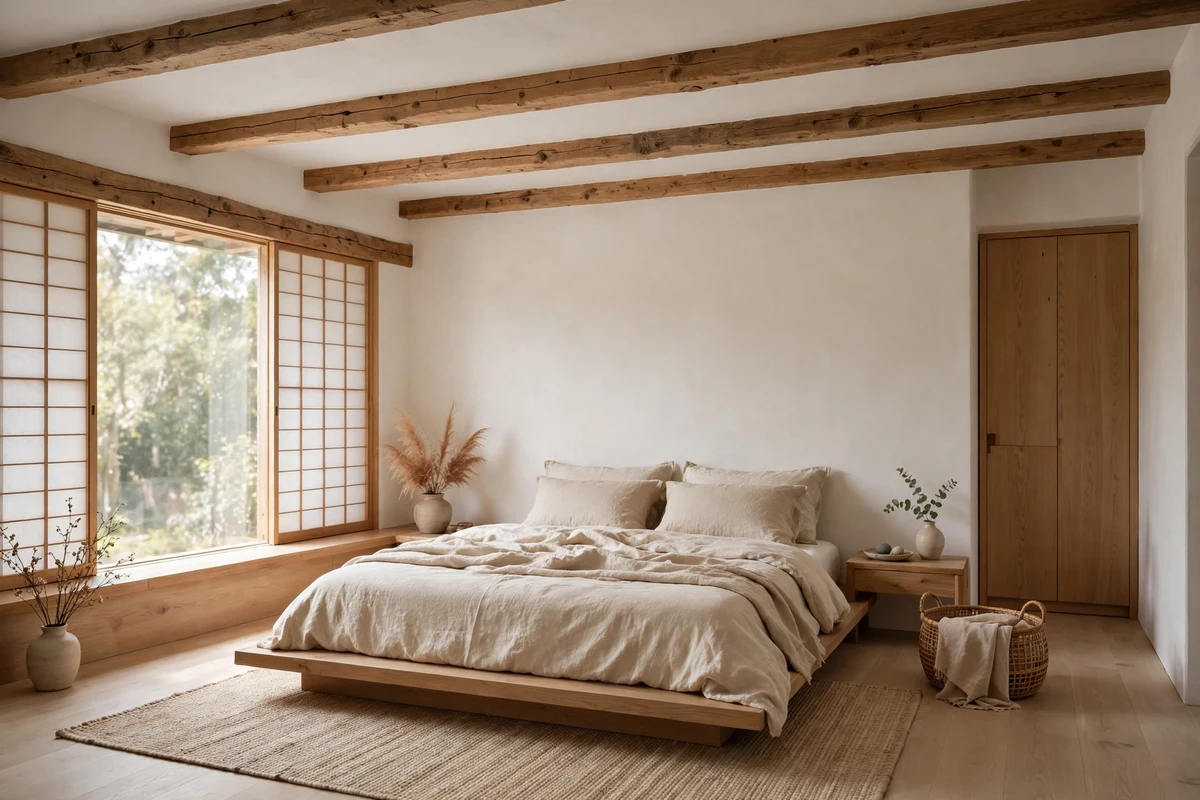
14. Textured Limewash Walls
Limewash walls give a Japandi bedroom the soft, chalky depth that flat paint cannot achieve. The mineral finish creates gentle movement and variation across the surface, catching light differently throughout the day in a way that feels alive but never busy. Warm whites, pale greige, and soft clay tones all work beautifully and pair with both light oak and darker walnut furniture. Professional limewash application runs $4 to $8 per square foot, while DIY mineral paint costs $60 to $110 per gallon. Pro tip: Apply limewash with a large block brush in random crisscross strokes for the most natural, cloud-like finish.
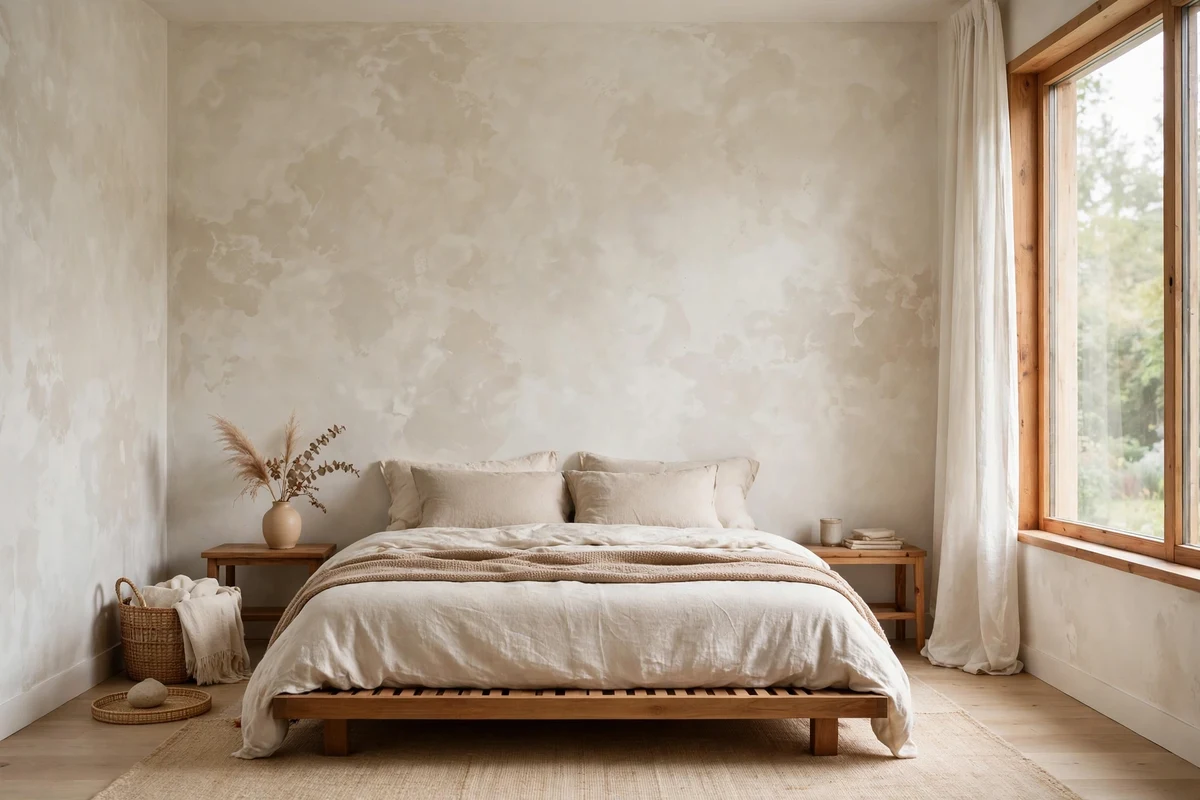
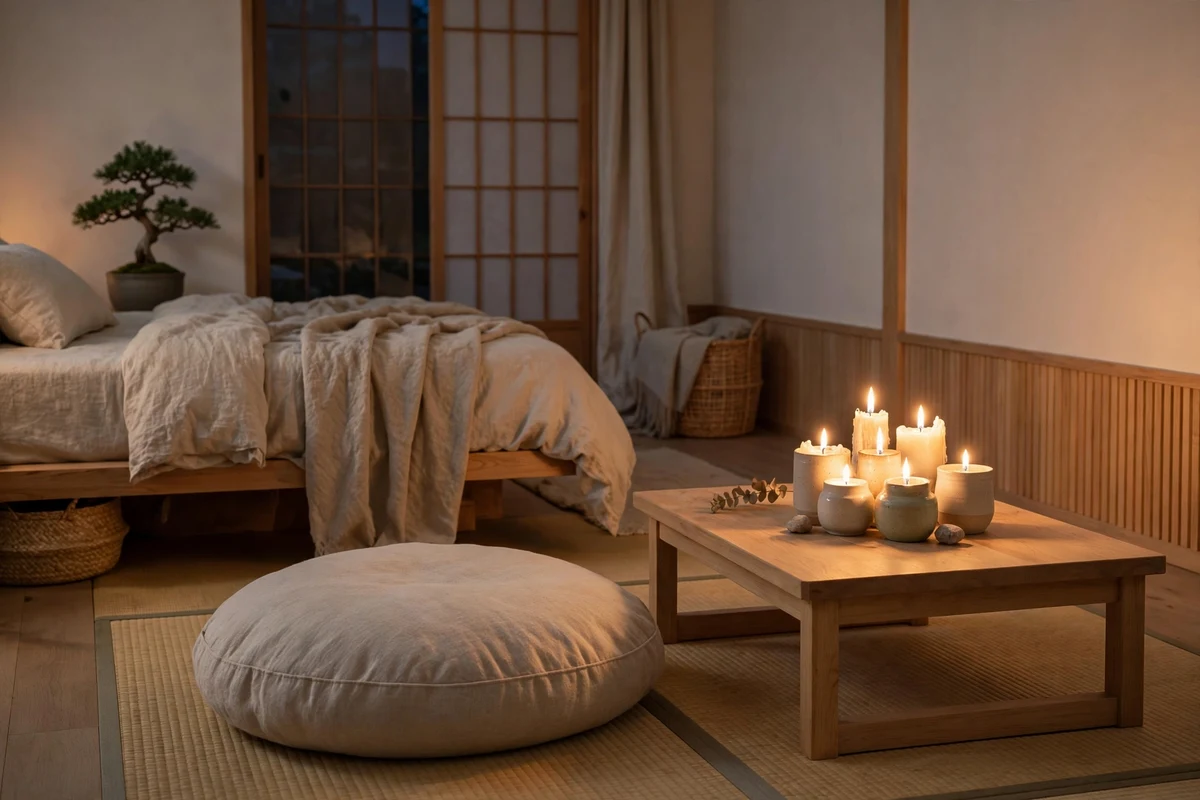
15. Futon-Style Floor Seating Nook
A small floor seating nook with a folded futon mattress, floor cushions, and a low side table creates a flexible corner for reading, meditation, or morning tea. This nod to traditional Japanese living keeps furniture low and the room feeling spacious, and the whole setup can be folded away when you need the floor space. A quality cotton futon in a twin size costs $150 to $350, with zabuton floor cushions adding $30 to $60 each. Pro tip: Place the nook near a window and keep a soft throw nearby, and it becomes the most used spot in the room.
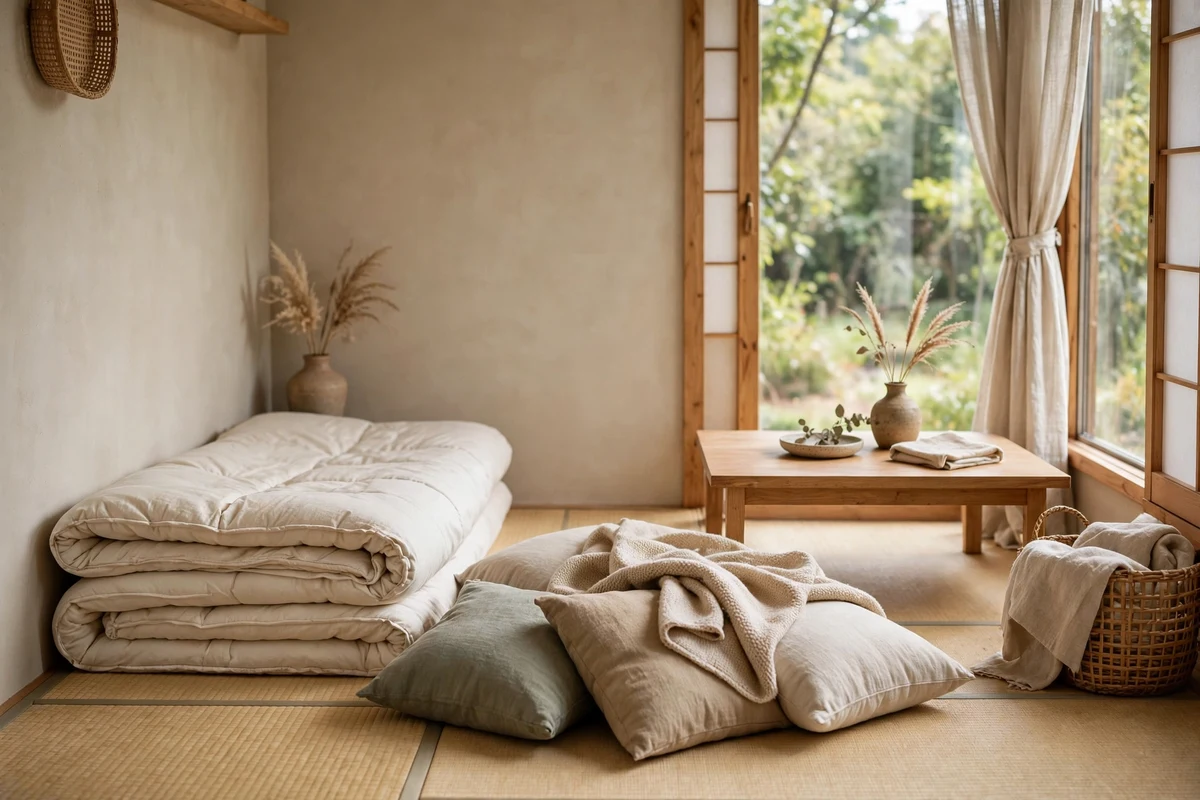
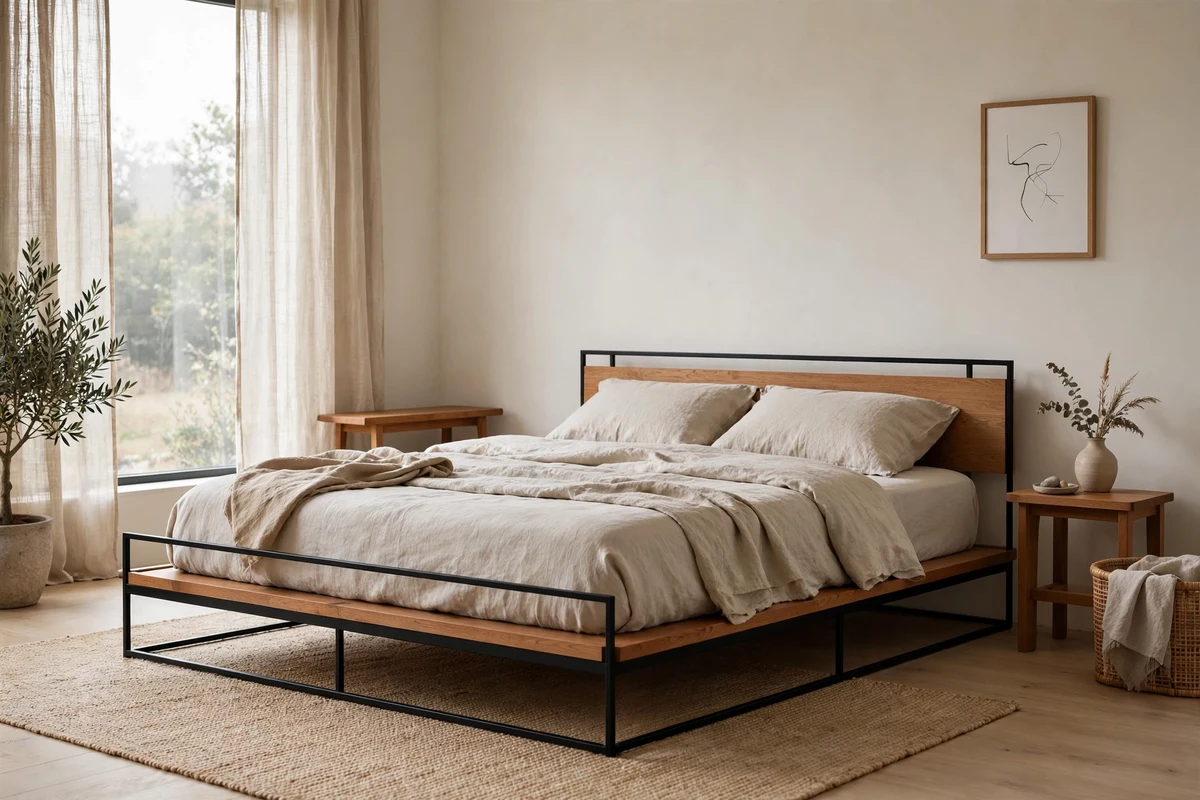
16. Black Metal and Wood Bed Frame
A bed frame that pairs slim black metal with warm wood brings a touch of modern contrast to the Japandi palette. The dark metal lines add definition and structure, preventing all the soft neutrals from blending into one another, while the wood keeps the piece feeling natural and warm. This combination works especially well in bedrooms that lean slightly more Scandinavian or contemporary. Metal and wood platform frames cost $350 to $800 depending on size and craftsmanship. Pro tip: Repeat the black accent once more in the room, in a lamp base or picture frame, so the bed frame does not look like an accident.
Texture, Color, and Natural Details
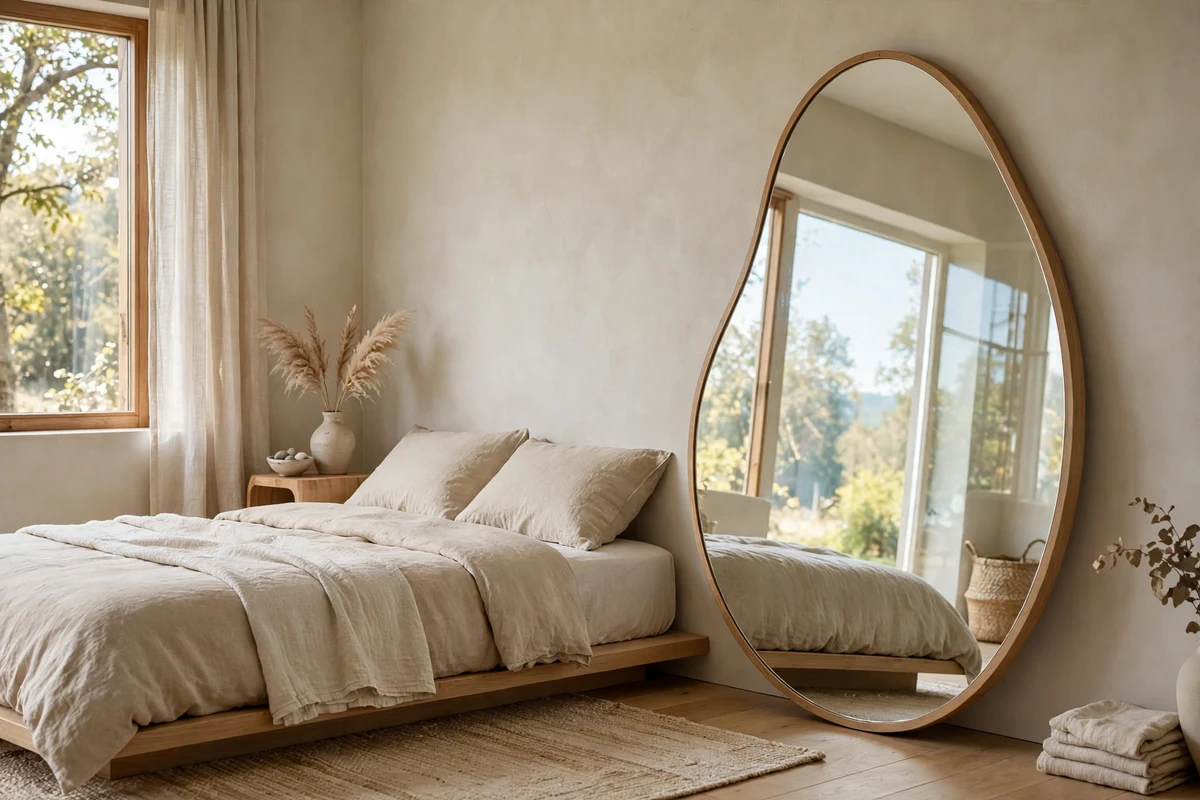
17. Curved Organic Mirror
An organic, irregularly curved mirror softens all the straight lines in a Japandi bedroom and bounces light into darker corners. Choose a frameless design or one with a thin wood or brass edge, and hang it where it reflects a window or a plant rather than the bed. The gentle, pebble-like shape echoes forms found in nature, which is at the heart of both Japanese and Scandinavian aesthetics. Organic shaped mirrors cost $100 to $350 depending on size. Pro tip: Lean a full length organic mirror against the wall instead of hanging it for a relaxed, studio-like feel.
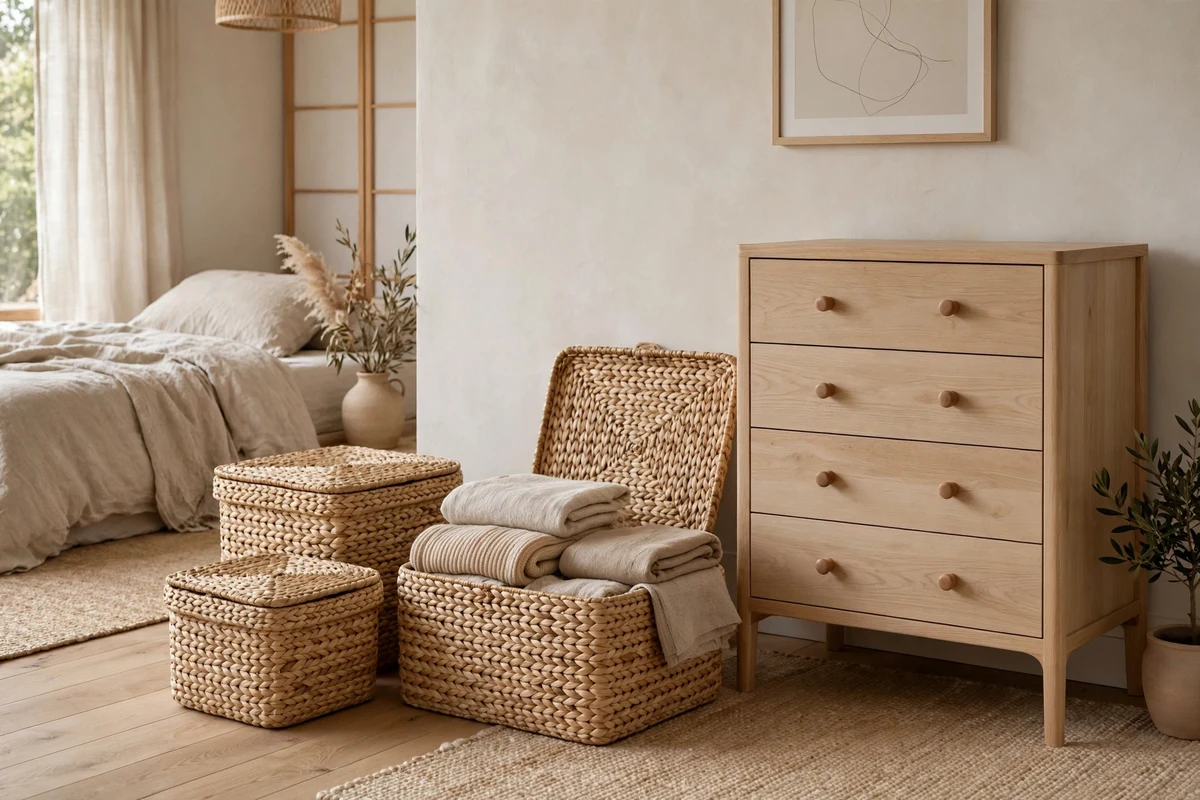
18. Woven Seagrass Storage Baskets
Seagrass baskets hide everyday clutter inside something beautiful, which is the essence of practical Japandi storage. Use them for extra throws, off-season bedding, or the stack of books that never quite makes it to the shelf. The woven texture adds another natural layer to the room, and the baskets are light enough to move wherever they are needed. Large seagrass baskets cost $25 to $70 each. Pro tip: Choose baskets with lids for anything you want fully hidden, and open ones for throws you want to show off.
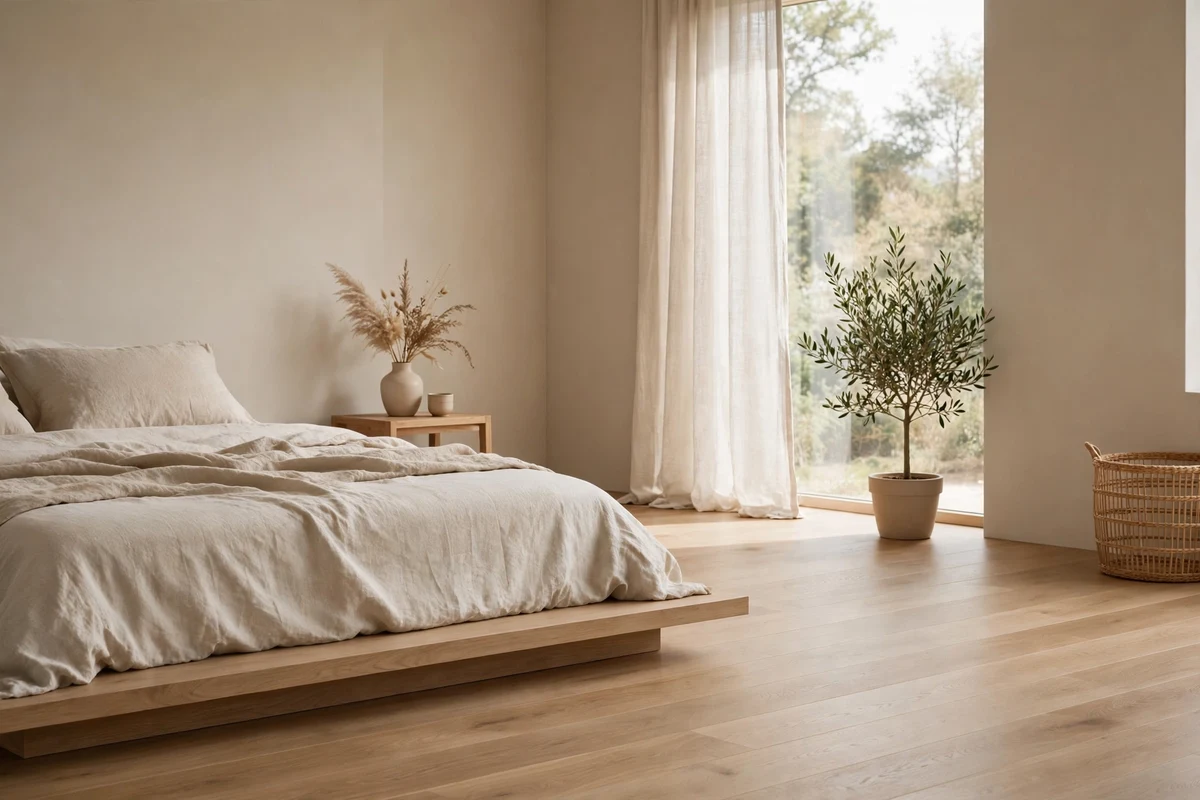
19. Warm Wood Flooring with a Soft Sheen
Warm wood floors are the quiet foundation of every great Japandi bedroom, so give them the attention they deserve. Light oak, ash, or pale walnut with a matte or satin finish keeps the room bright while adding natural grain and warmth underfoot. If replacing floors is out of reach, a large natural fiber rug over existing flooring gets you most of the way there. Refinishing existing hardwood runs $3 to $6 per square foot, while new engineered oak costs $6 to $12 per square foot installed. Pro tip: Keep baseboards and trim in the same pale tone as the walls so the floor becomes the star of the room.
20. Zen Garden View Window Framing
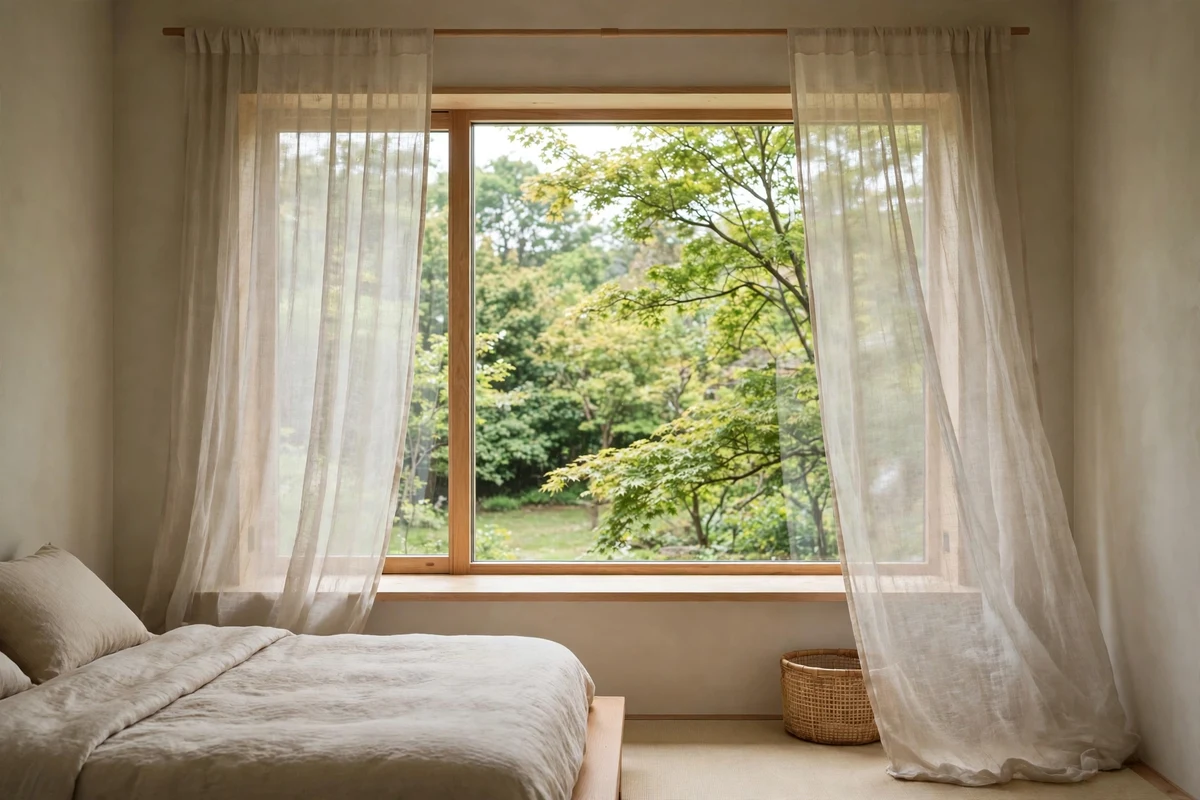
Frame your best window like a living artwork with simple, uncluttered treatment that celebrates the view. Sheer linen curtains or a single wood-slat blind filter light without blocking it, turning whatever sits outside, a tree, a garden, even just sky, into part of the room’s decor. This is the Japanese principle of borrowed scenery applied to the bedroom, and it costs almost nothing. Sheer linen curtain panels run $40 to $100 per pair, and simple roller blinds start around $30 per window. Pro tip: Keep the windowsill completely clear except for one small object, so the view stays the focus.
21. Noren Curtain Doorway
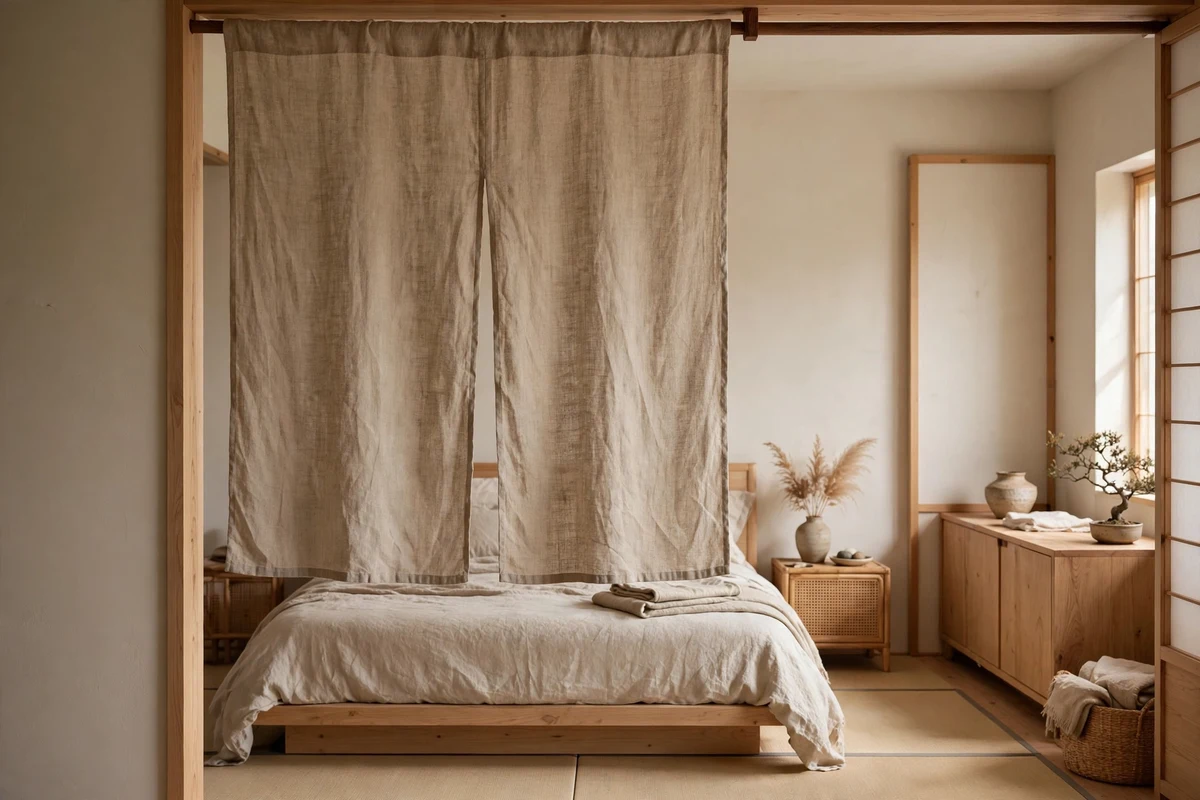
A noren curtain, the short split fabric panel hung in Japanese doorways, adds softness and movement to a bedroom entrance or closet opening. The fabric panels part in the middle as you walk through, creating a gentle ritual of entering the restful space. Choose heavyweight linen or cotton in a solid neutral or a subtle traditional pattern. Ready-made noren curtains cost $25 to $60, and they hang from a simple tension rod with no tools required. Pro tip: Use a noren panel to hide an open closet or ensuite doorway instead of installing a solid door.
22. Travertine or Stone Side Table
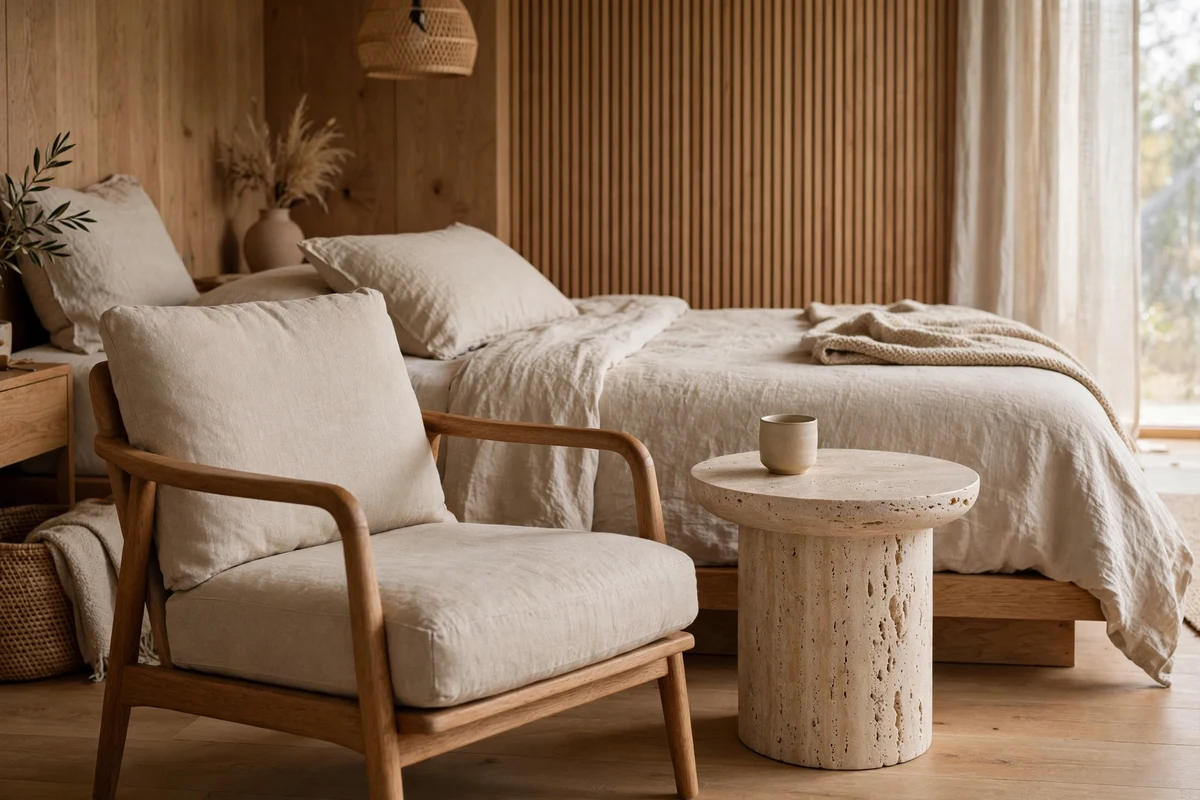
A small side table in travertine, marble, or another natural stone adds cool contrast to all the warm wood in a Japandi bedroom. The honed, matte surface feels ancient and grounded, and the weight of the stone gives even a tiny table real presence. Use it beside the reading chair or as a sculptural nightstand alternative. Small stone side tables cost $150 to $450 depending on the stone and size. Pro tip: Seal travertine once a year to protect it from water rings, and embrace the patina that develops over time.
23. Muted Sage Green Textiles
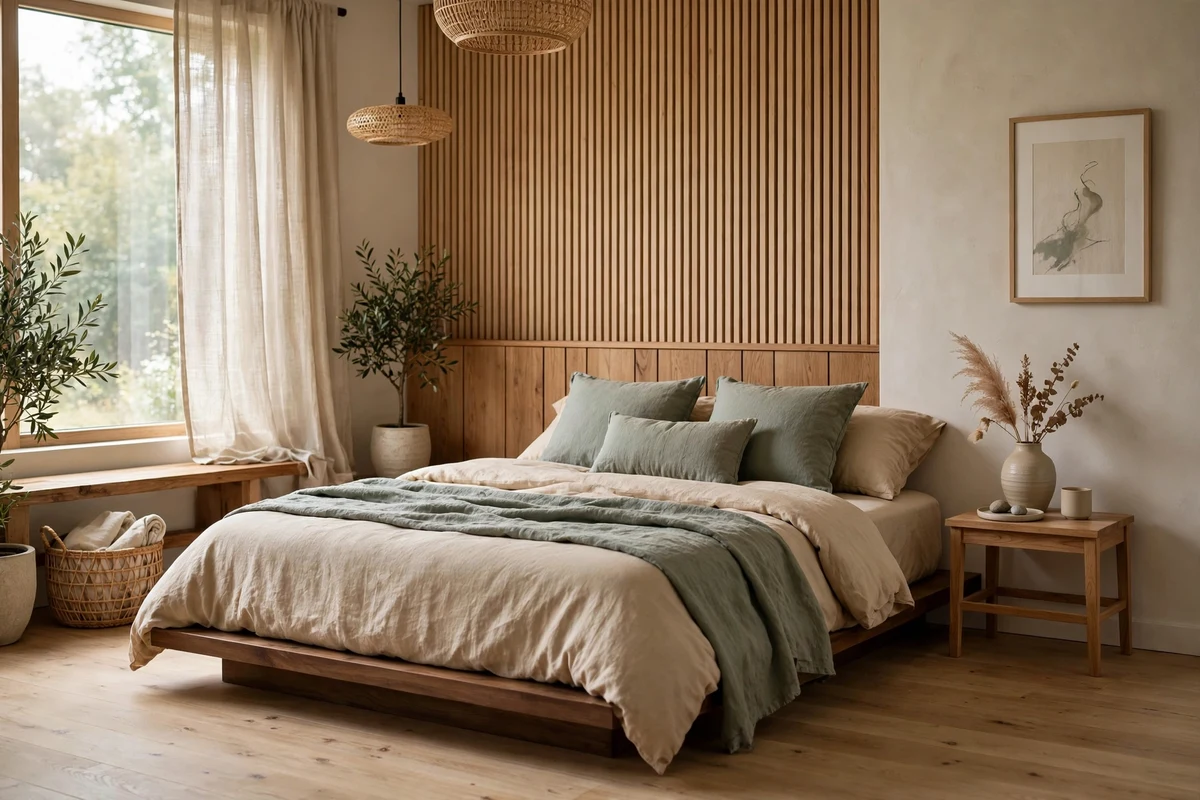
Muted sage green is the perfect quiet accent color for a Japandi bedroom, natural enough to blend with the neutrals but present enough to add life. Introduce it through a throw blanket, two cushion covers, or a single upholstered bench, and keep the rest of the palette warm and pale. Sage connects to the greenery in the room and to the Japanese love of nature without ever shouting. Quality sage linen throw blankets cost $60 to $140. Pro tip: Pair sage with warm beige rather than cool gray to keep the combination feeling earthy instead of cold.
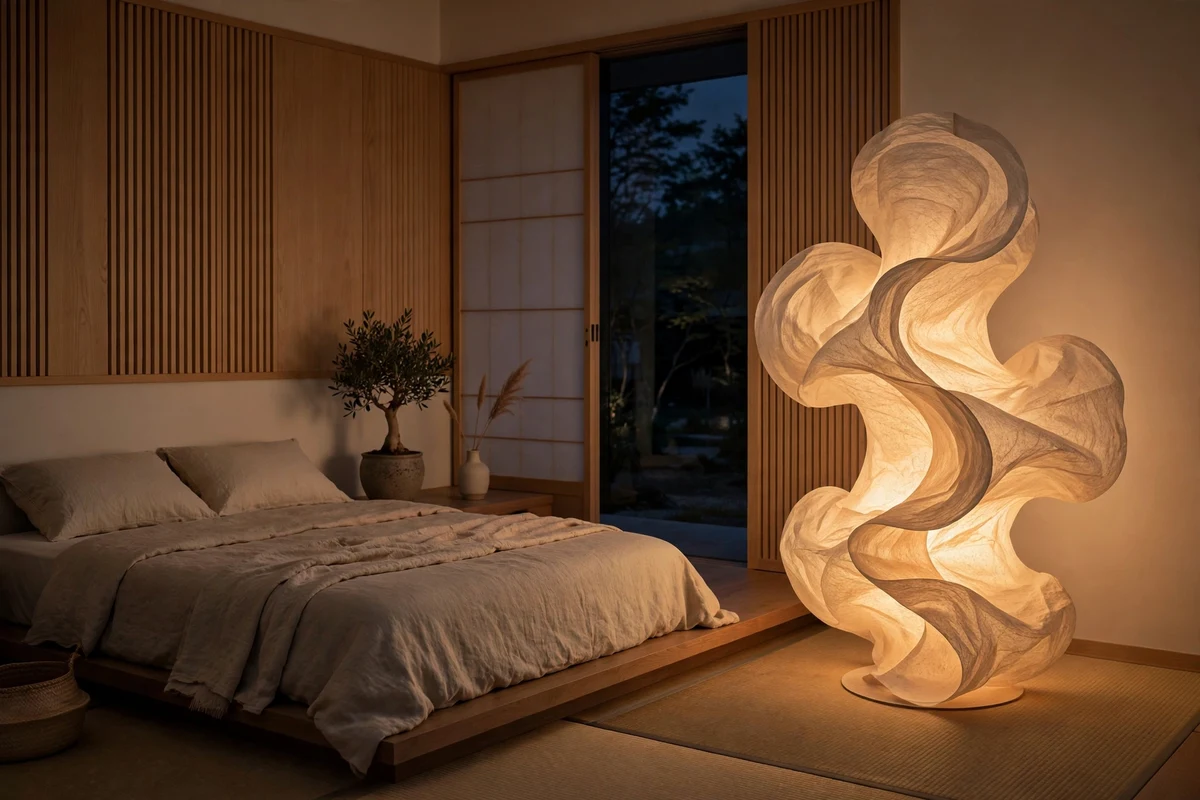
24. Paper Floor Lamp in Noguchi Style
A sculptural paper floor lamp brings gallery-worthy art and the softest possible light to a bedroom corner. The freeform, biomorphic shapes of Noguchi-inspired designs look beautiful whether lit or not, and the warm glow they cast in the evening is unmatched for winding down. Place one beside the reading chair or in an empty corner that needs a focal point. Authentic Noguchi Akari lamps start around $200, with quality inspired versions available for $80 to $150. Pro tip: Give a sculptural lamp at least 18 inches of clear space around it so its shape can be appreciated from every angle.
Finishing Touches for a Restful Retreat
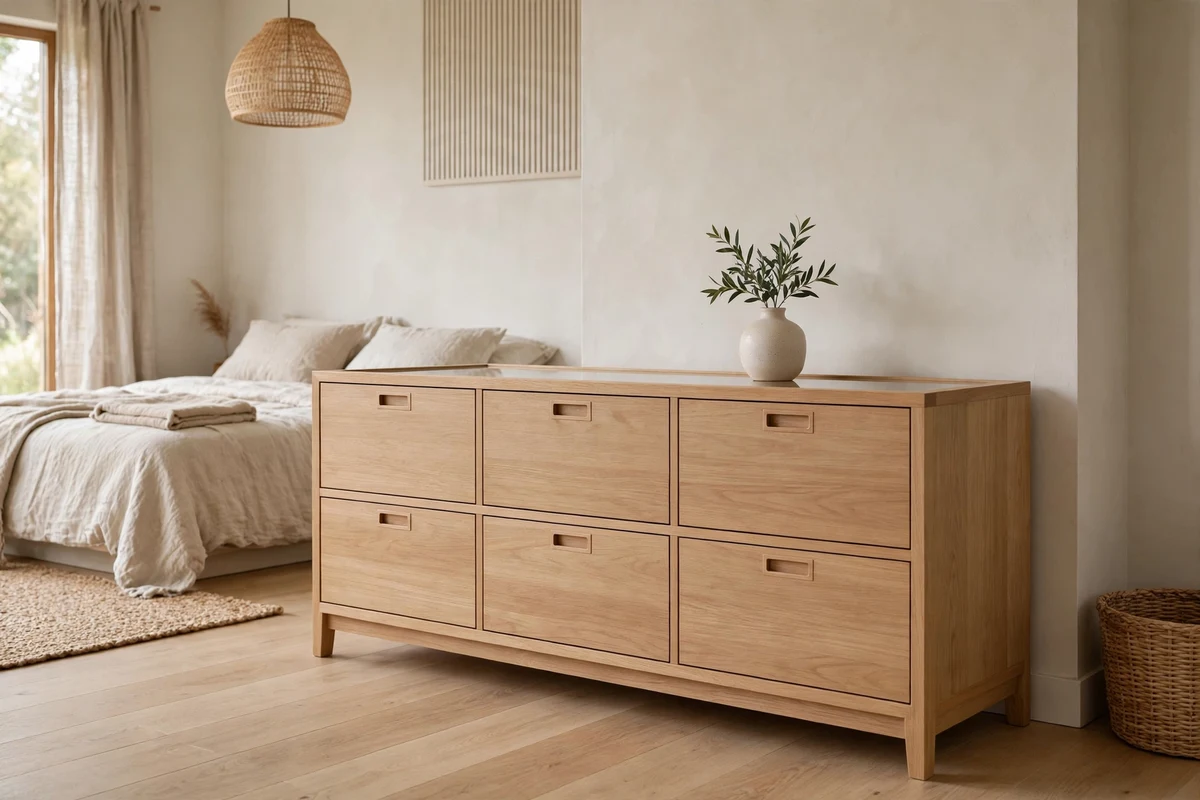
25. Low Dresser with Clean Lines
A low, wide dresser in light wood keeps storage close to the ground and the room’s sightlines clear. The horizontal emphasis mirrors the low platform bed, and the uncluttered top becomes a natural display shelf for ceramics, a small plant, or a single framed print. Look for dovetail drawers and soft-close hardware, since smooth daily function is part of the calm. Six drawer dressers in oak or ash run $400 to $900. Pro tip: Keep the dresser top at least half empty, since crowded surfaces undo the whole calm effect.
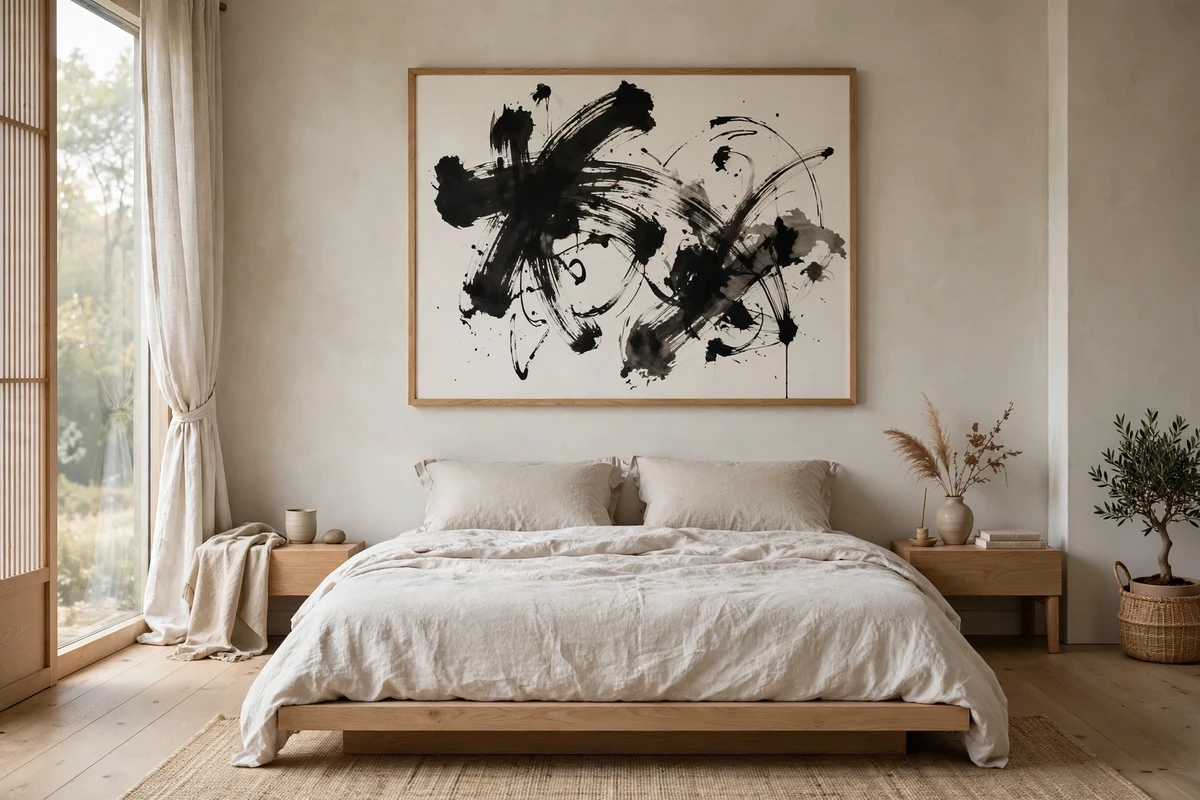
26. Calming Artwork: Abstract Ink Brush Painting
One large abstract ink brush painting gives a Japandi bedroom a soulful focal point without adding visual noise. The bold black strokes on white or cream paper reference Japanese sumi-e painting and add the perfect amount of contrast to a neutral room. Hang it above the bed or the dresser, framed simply in natural wood or left unframed on a canvas. Original ink works from emerging artists cost $100 to $400, with quality prints available for $40 to $120. Pro tip: Choose art with plenty of negative space so it breathes the same way the room does.
27. Sheepskin Throw over a Bench
A sheepskin draped over the end-of-bed bench adds the Scandinavian hygge layer that makes Japandi bedrooms feel so inviting. The soft, deep pile contrasts with smooth wood and crisp linen, and it is genuinely useful on cool mornings. Choose undyed ivory or light gray sheepskins for the most natural look. Real sheepskins cost $60 to $150 depending on size and quality, with good faux options for $30 to $60. Pro tip: Shake sheepskins outside monthly and brush the pile to keep them looking full and fresh.
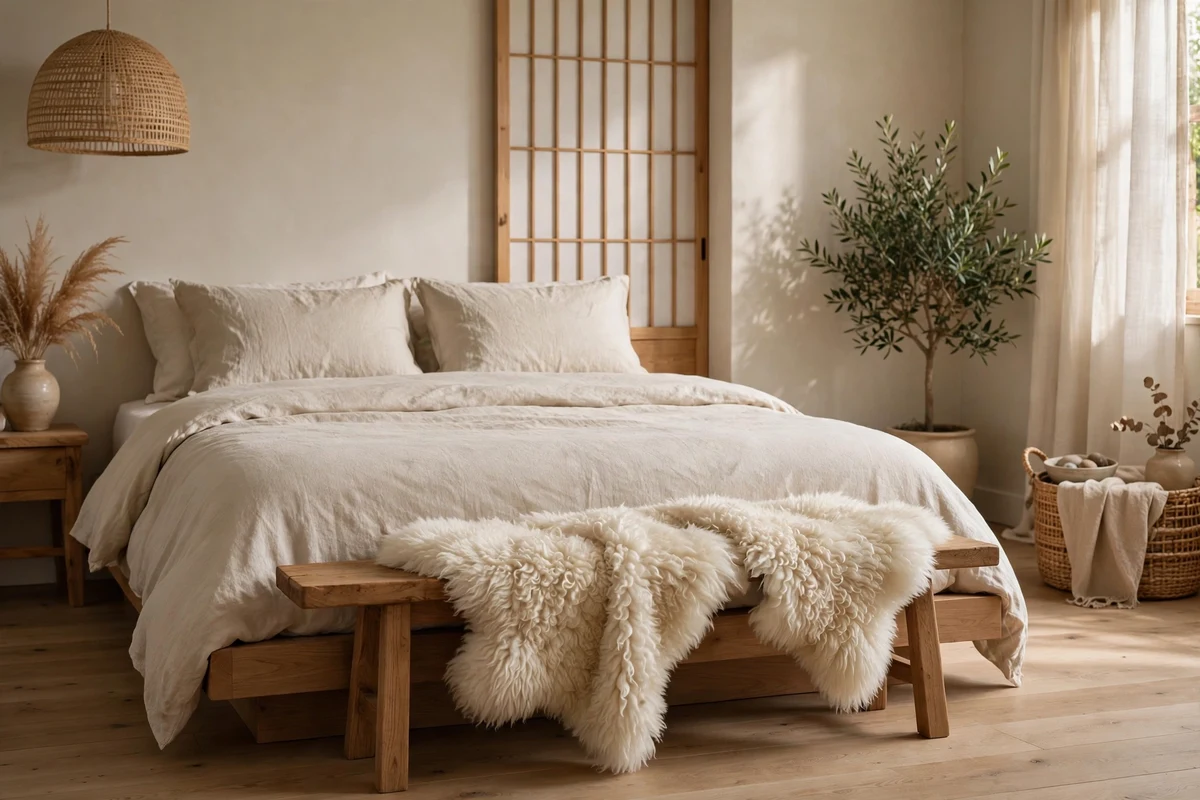
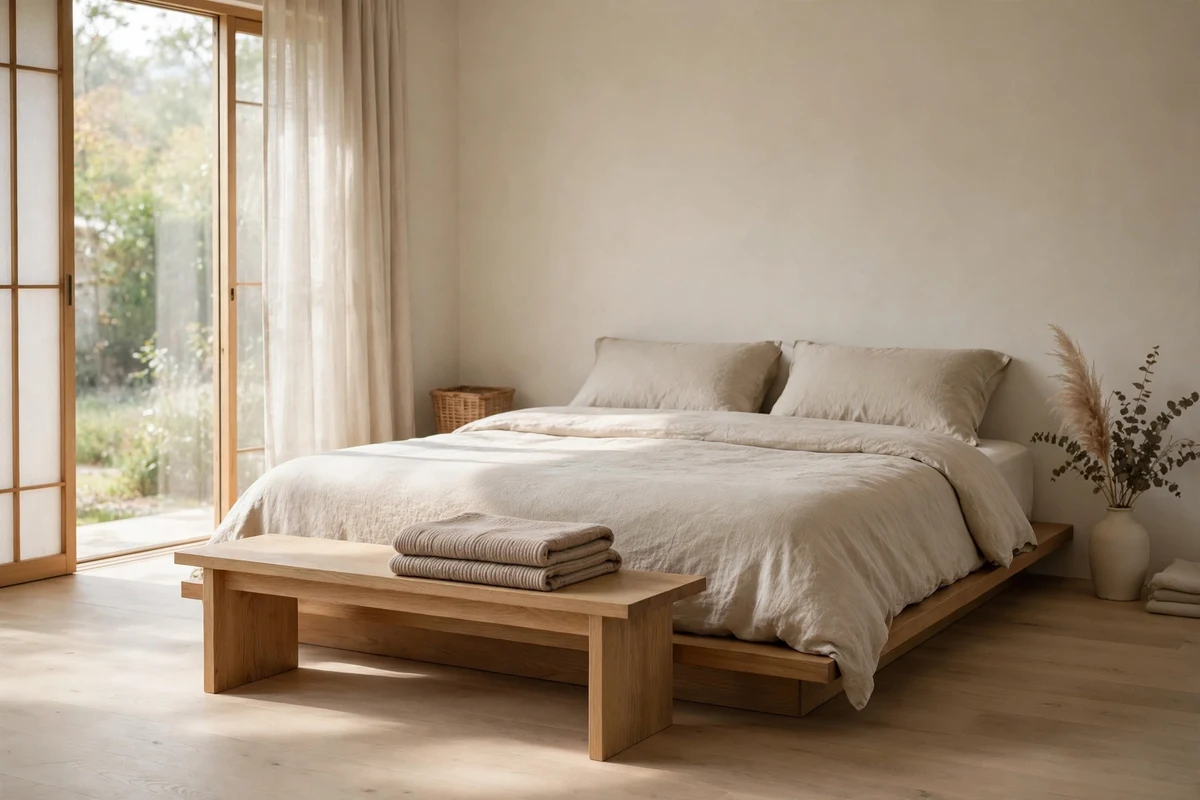
28. End-of-Bed Bench in Light Oak
A simple bench in light oak at the foot of the bed gives you a place to sit, lay out tomorrow’s clothes, or display a folded throw. Keep the design minimal, a clean slab top with straight or slightly tapered legs, so it reads as part of the room’s quiet architecture rather than a separate statement. Benches in solid oak run $120 to $350 depending on length and joinery. Pro tip: Match the bench wood to your bed frame for a cohesive, custom-built feeling.
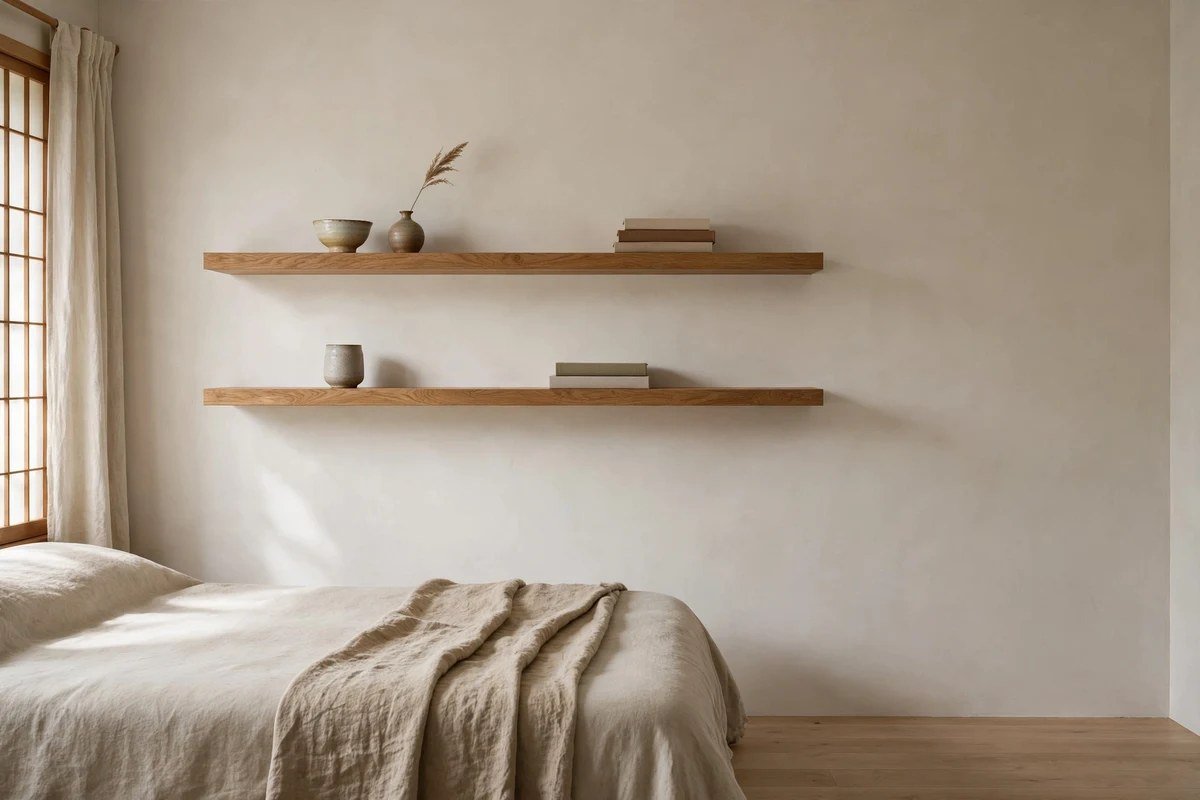
29. Minimal Open Shelving with Ceramics
One or two floating wood shelves styled with a handful of ceramics and books add personality without clutter. The key is restraint: leave generous empty space between objects so each piece can be appreciated, following the Japanese idea that emptiness is part of the design. Solid oak floating shelves cost $40 to $100 each depending on length. Pro tip: Style shelves with the rule of thirds, grouping small objects to one side and leaving the rest open.
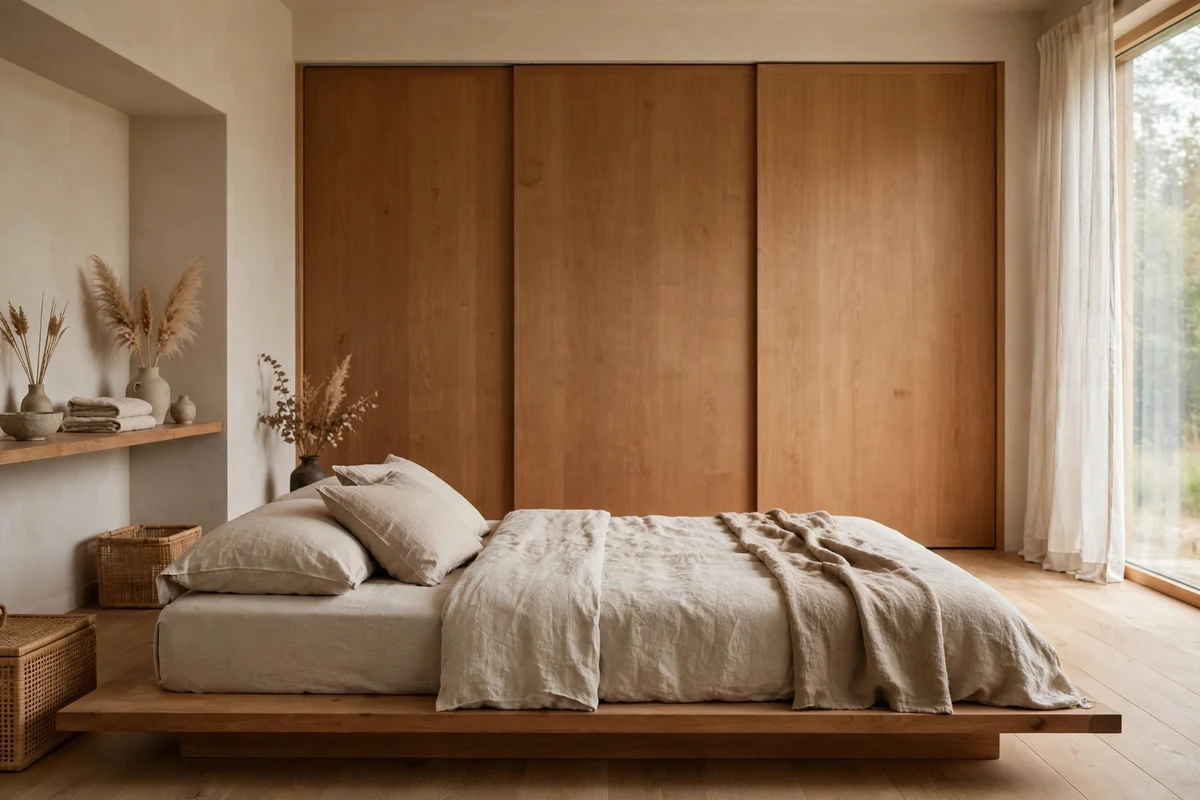
30. Sliding Closet Doors in Warm Wood
Sliding closet doors in warm wood or wood-look panels keep the room’s lines clean and save the floor space that swinging doors consume. The smooth, uninterrupted surface lets the closet wall recede into the background, which is exactly what you want in a calm bedroom. Bypass sliding door kits for standard closets cost $200 to $500, while custom wood sliders run $800 and up. Pro tip: Add soft-close mechanisms to sliding doors so they shut with a whisper instead of a clatter.
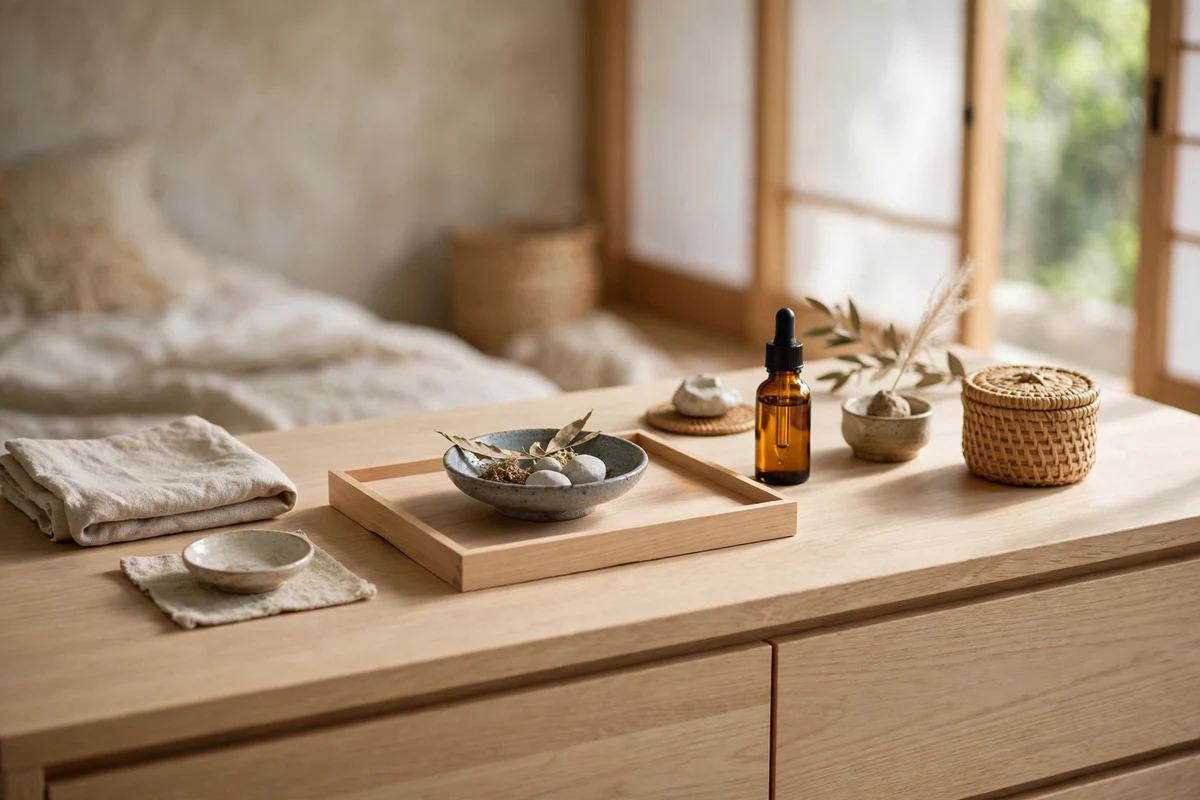
31. Hinoki Wood Accents and Natural Scent
Hinoki, Japanese cypress, brings a gentle citrus-wood scent that instantly signals calm, and small hinoki objects add authentic Japanese craft to the room. A hinoki bath stool repurposed as a plant stand, a small hinoki tray on the dresser, or hinoki essential oil in a diffuser all work beautifully. Small hinoki goods cost $20 to $60, with essential oil around $15 to $30. Pro tip: Lightly sand hinoki wood once a season to refresh its natural fragrance.
32. Candlelit Wind-Down Corner
A small corner dedicated to winding down, with a floor cushion, a low side table, and a cluster of candles or a single lantern, turns your evening routine into a ritual. The flickering warm light is the perfect signal to your body that the day is ending, and the dedicated spot makes the habit stick. A set of quality beeswax or soy candles costs $20 to $50. Pro tip: Keep matches or a lighter in a small ceramic dish on the table so the ritual never has friction.
Design Notes: Mixing Japandi with Other Styles
Japandi plays well with several neighboring styles, so do not be afraid to borrow ideas from related looks. If you love the calm palette but want more texture, explore wabi sabi ideas for imperfect, handmade details that layer beautifully into a Japandi bedroom. For the living spaces that connect to your bedroom, our Japandi living room guide keeps the whole home feeling cohesive. Scandinavian pieces blend seamlessly too, as you can see in our Scandinavian bedroom ideas and the Scandinavian living room collection. And if you want to push the minimalism even further, the minimalist living room ideas show how far restraint can go.
Frequently Asked Questions
What is the difference between Japandi and Scandinavian bedroom style?
Japandi adds Japanese discipline and craft to the Scandinavian base: lower furniture profiles, shoji and paper textures, ink art, and a stronger emphasis on ritual and empty space. Scandinavian bedrooms tend to be a touch cozier and more layered, while Japandi leans more refined and meditative.
What colors work best in a Japandi bedroom?
Stick to warm neutrals as your base: warm white, oatmeal, flax, stone, and light greige. Add muted earth tones like clay, sage, and soft charcoal as accents. The palette should feel like nature, calm and cohesive, with no single color demanding attention.
How do I make a Japandi bedroom feel cozy, not cold?
Layer natural textures: linen bedding, a wool rug, a sheepskin throw, and woven baskets. Warm wood tones are essential, so avoid going all gray or all white. Soft, warm lighting from paper lanterns and candles does more for coziness than any extra decor.
Can I create a Japandi bedroom on a budget?
Absolutely. Start with the highest impact, lowest cost moves: declutter ruthlessly, switch to neutral linen-look bedding ($60 to $120 for a set), add a paper lantern pendant ($40 to $80), and style one shelf with ceramics you already own. A convincing Japandi refresh is very doable for $300 to $500.
What kind of bed works best for Japandi style?
A low platform bed in light wood is the classic choice, sitting 10 to 14 inches off the floor. Keep the headboard simple or skip it entirely. If you prefer upholstery, choose a low linen headboard in a warm neutral rather than anything tall or tufted.
How much should I budget for a full Japandi bedroom makeover?
A thoughtful refresh using your existing layout runs $800 to $2,000 for bedding, lighting, a rug, and accessories. Replacing major furniture like the bed, dresser, and wardrobe pushes the total to $3,000 to $6,000, depending on whether you choose flat-pack or solid wood craftsmanship.
Final Thoughts
A Japandi bedroom is less about buying the right things and more about choosing fewer things with greater care. Start with the foundation, a low bed, calm walls, and soft light, then add natural textures and handmade details one at a time. Leave generous empty space, keep surfaces mostly clear, and let the room breathe. Done well, your bedroom becomes the quietest, most restorative room in the house, a place that genuinely helps you rest. Pin your favorite ideas and begin with the one change that excites you most.




One Comment