36 Maximalist Living Room Ideas for Bold Layered Style
36 Maximalist Living Room Ideas for Bold Layered Style
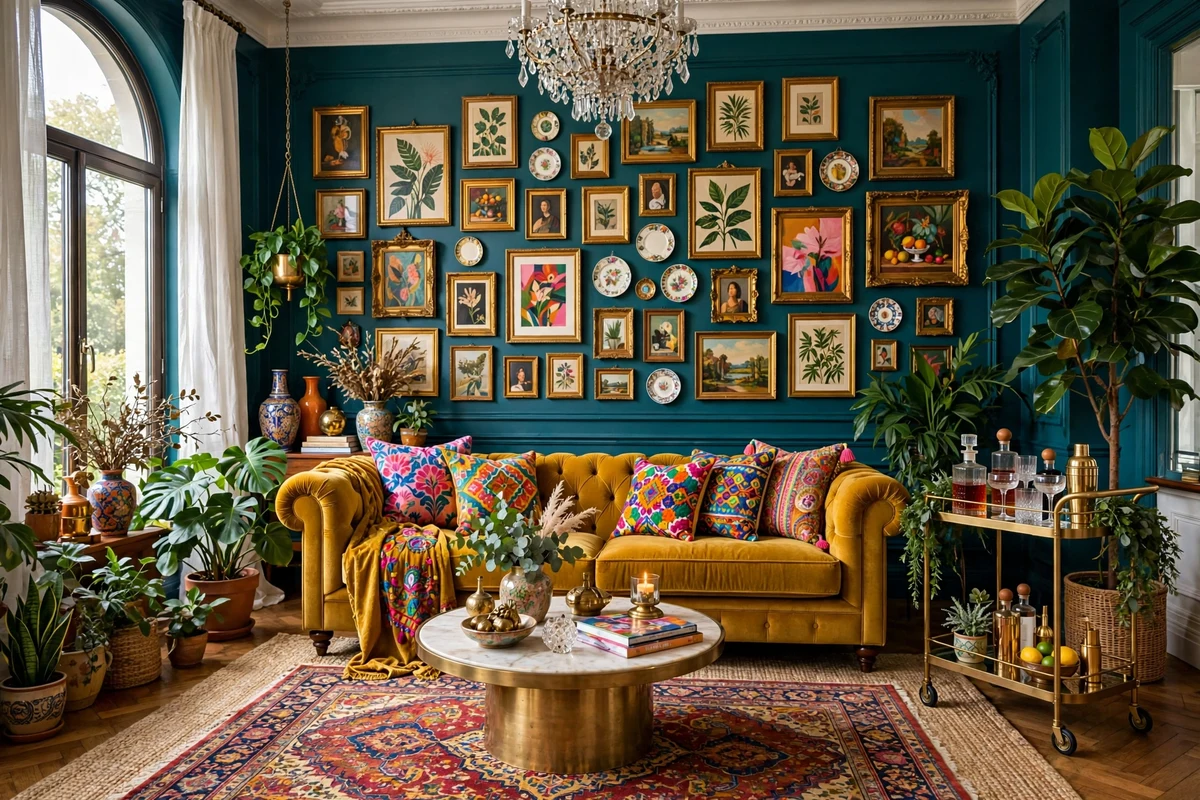
Minimalism had its moment, but your living room does not have to look like an empty gallery to feel stylish. Maximalism is the joyful opposite: more color, more pattern, more texture, and more of the things you love, all layered together with confidence. A maximalist living room is not messy or random, it is curated abundance, where every object earns its place and the mix feels personal rather than decorated. Think deep jewel-tone walls behind a velvet chesterfield, Persian rugs layered over jute, gallery walls climbing to the ceiling, and shelves packed with books, ceramics, and travel finds. The secret is repetition and rhythm: pick two or three colors to anchor everything, then let patterns and textures play. This guide collects 36 maximalist living room ideas, from statement wallpaper and lacquered walls to bar carts and neon signs. Every idea includes realistic price ranges and a pro tip so you can start layering this weekend.
Walls, Color, and Statement Patterns
1. Deep Jewel-Tone Walls
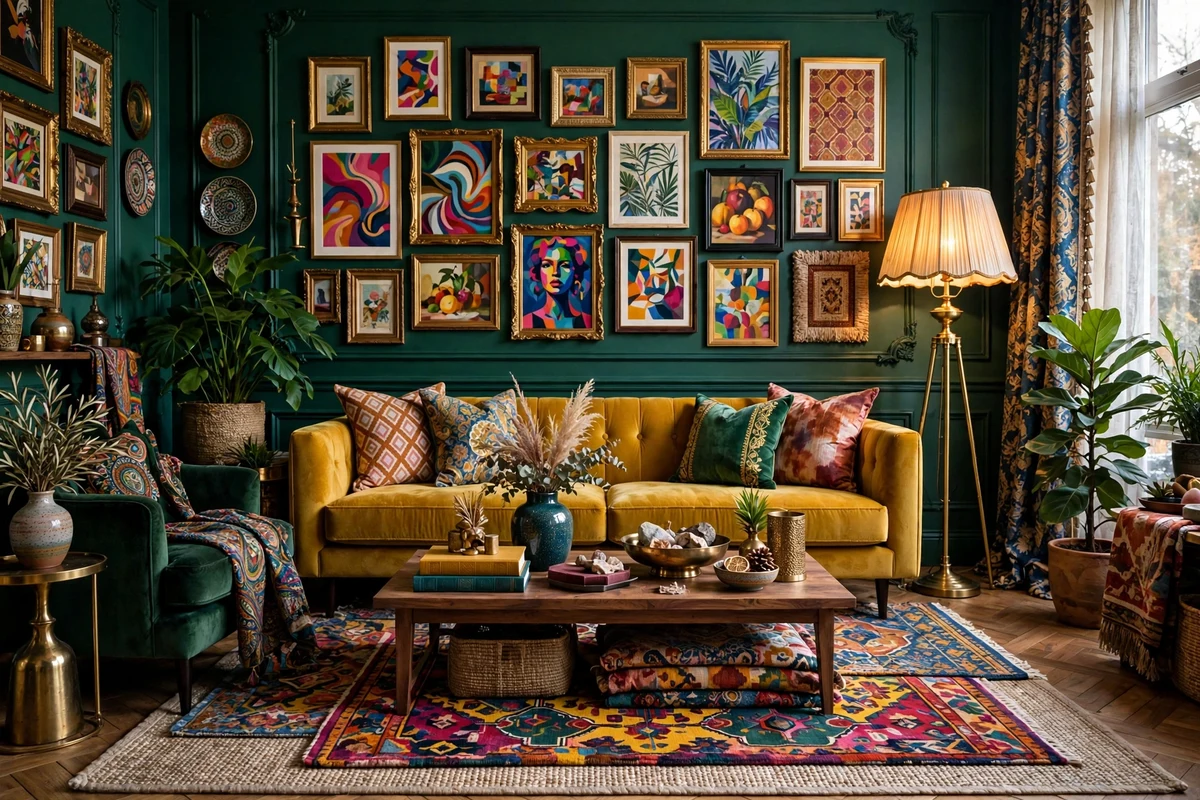
The fastest way to commit to maximalism is a saturated wall color. Emerald, sapphire, ruby, and aubergine all make art pop and furniture look richer, and they hide everyday wear far better than white. A gallon of quality interior paint costs $40 to $70 and covers about 350 square feet, so most living rooms need two to three gallons plus primer for deep tones. Paint the trim the same color for a cocooning, color-drenched effect, or contrast it with crisp white for a more classic look.
Pro tip: Test large swatches on two walls and live with them for three days. Jewel tones shift dramatically between morning and evening light.
2. Floor-to-Ceiling Statement Wallpaper
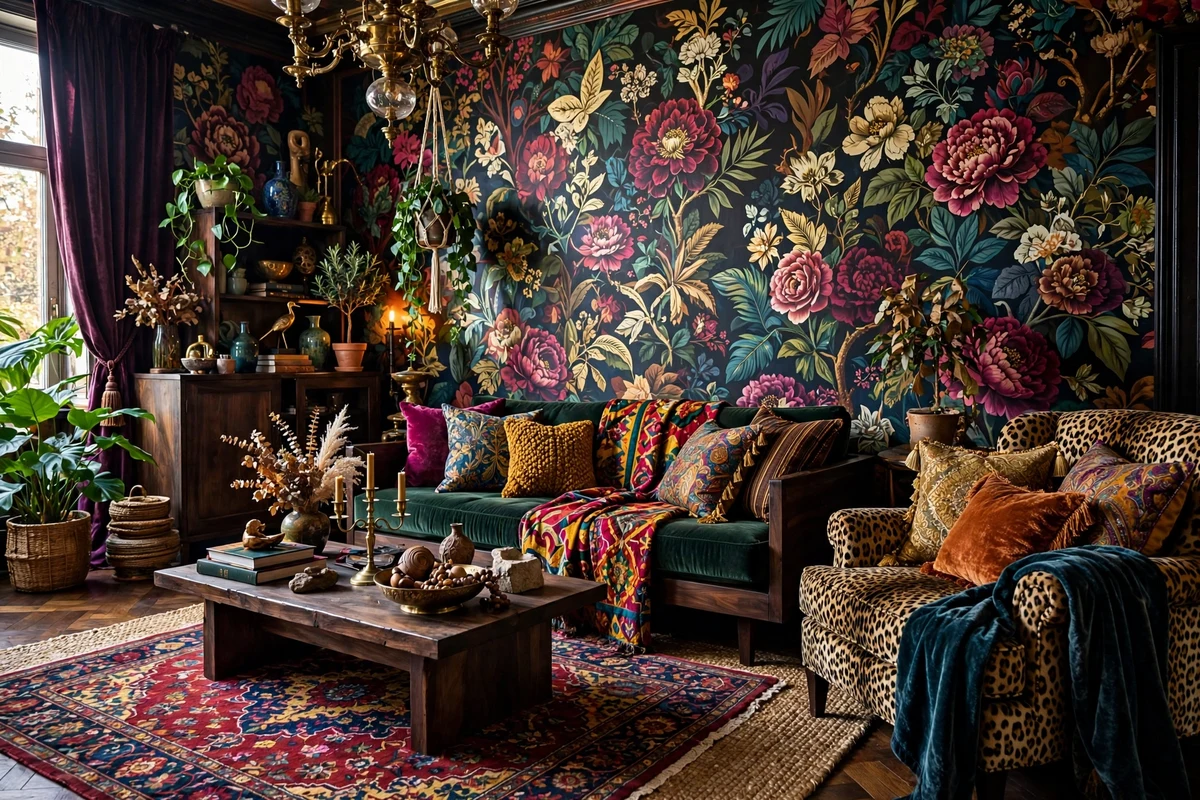
Nothing says maximalism like a wall covered in oversized florals, dramatic chinoiserie, or graphic geometric prints. Peel-and-stick wallpaper costs $3 to $8 per square foot and lets renters go bold without commitment, while traditional paste wallpaper runs $2 to $6 per square foot plus installation. Choose a print with at least three colors so it connects easily to your rug, pillows, and art. One feature wall behind the sofa is plenty in a smaller room.
Pro tip: Pull one obscure color from the wallpaper for a small accessory, like a vase or book spine. That tiny echo makes the whole room feel intentional.
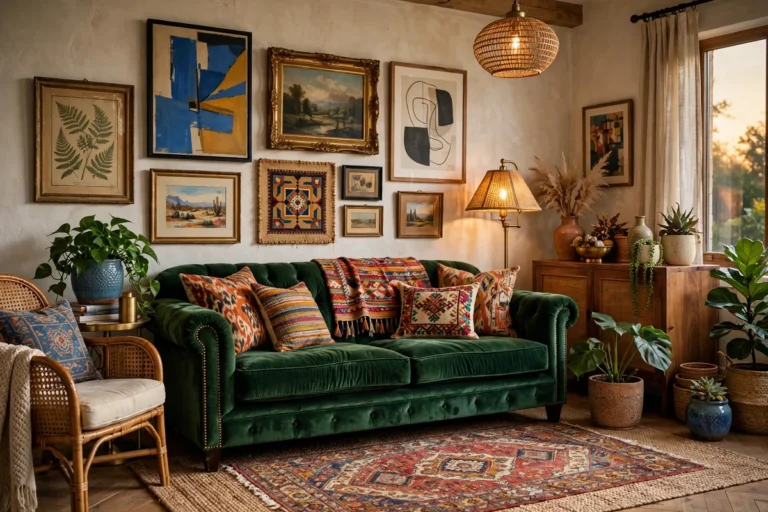
3. Salon-Style Gallery Wall
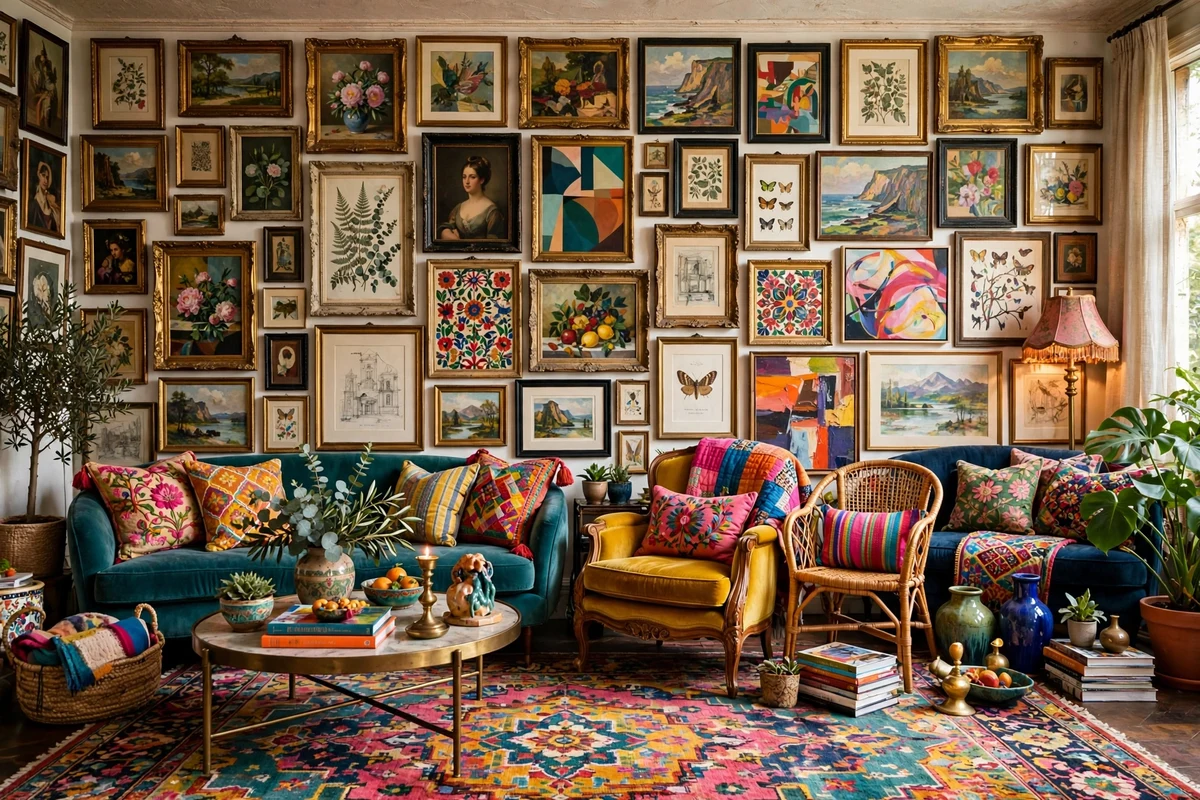
A salon-style gallery wall is maximalism in its purest form: dozens of frames hung edge to edge, floor to ceiling, mixing paintings, prints, mirrors, and even small objects. Thrifted frames cost $5 to $25 each, and spray-painting mismatched frames one metallic color unifies the chaos for about $8 a can. Lay the arrangement on the floor first, photograph it, then transfer it to the wall. Start with the largest piece slightly off-center and build outward.
Pro tip: Keep spacing tight, two to three inches between frames. Wide gaps make a gallery wall look sparse instead of abundant.
4. Bold Painted Ceiling
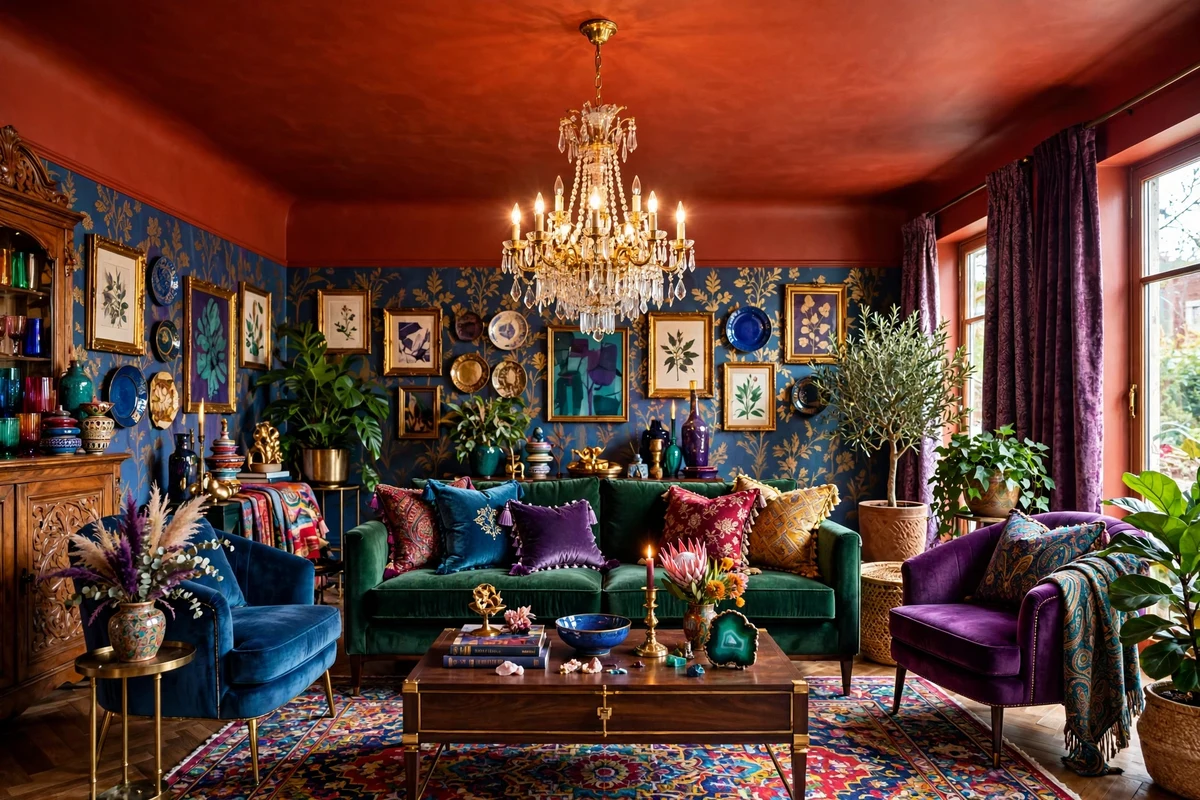
Most people forget the ceiling, which is exactly why painting it makes such an impact. A deep terracotta, navy, or even glossy black ceiling adds drama and makes a chandelier look like jewelry. One gallon of ceiling paint costs $35 to $60 and usually covers the average living room ceiling in two coats. This trick works best in rooms with at least nine-foot ceilings, where the color feels enveloping rather than lowering.
Pro tip: Carry the ceiling color onto the top six inches of wall with a crisp line for a deliberate, designer look.
5. Lacquered Accent Wall
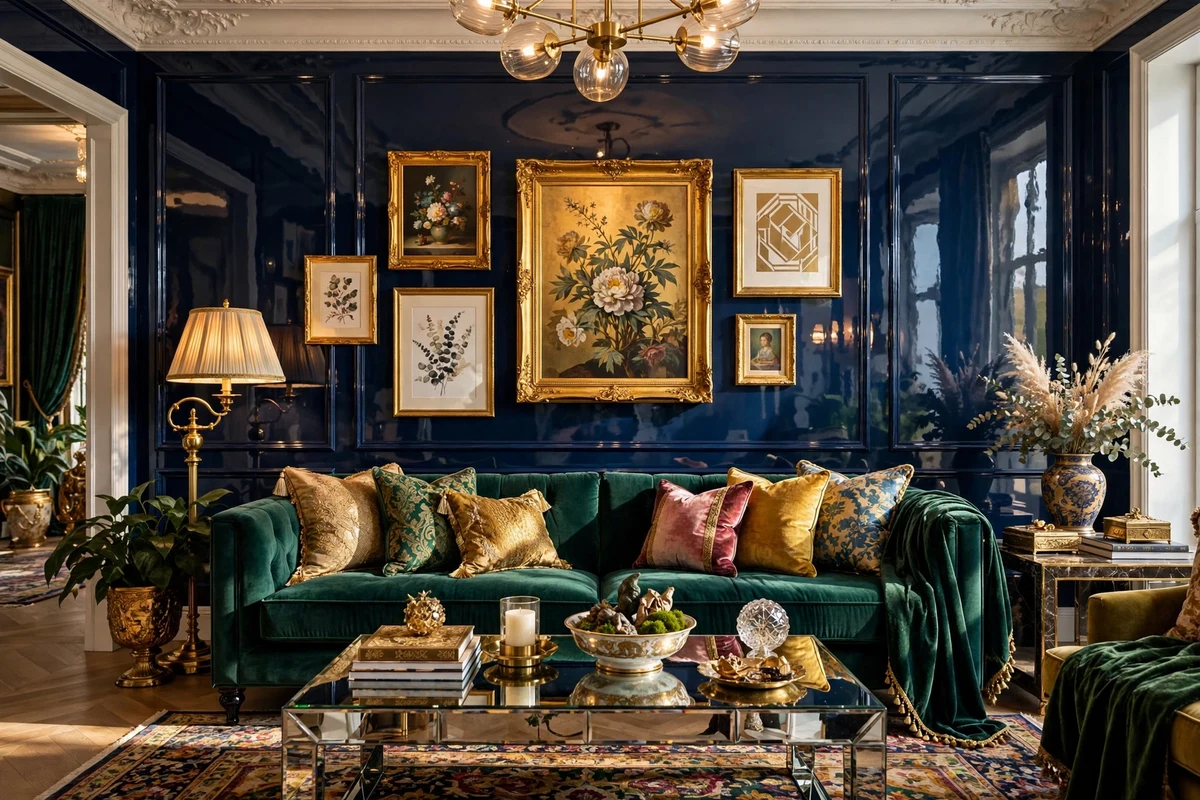
A high-gloss lacquered wall reflects light like a still pond and turns a flat color into something liquid and alive. Real lacquer application is a specialist job costing $1,500 to $4,000 per wall, but high-gloss enamel paint over a perfectly smooth wall gives a convincing effect for $200 to $500 in materials. Navy, emerald, and oxblood look richest in gloss. The wall behind a bar cart or reading nook is the ideal candidate.
Pro tip: Gloss magnifies every bump, so skim-coat and sand the wall smooth before painting. Prep is ninety percent of the result.
6. Oversized Mural Wall
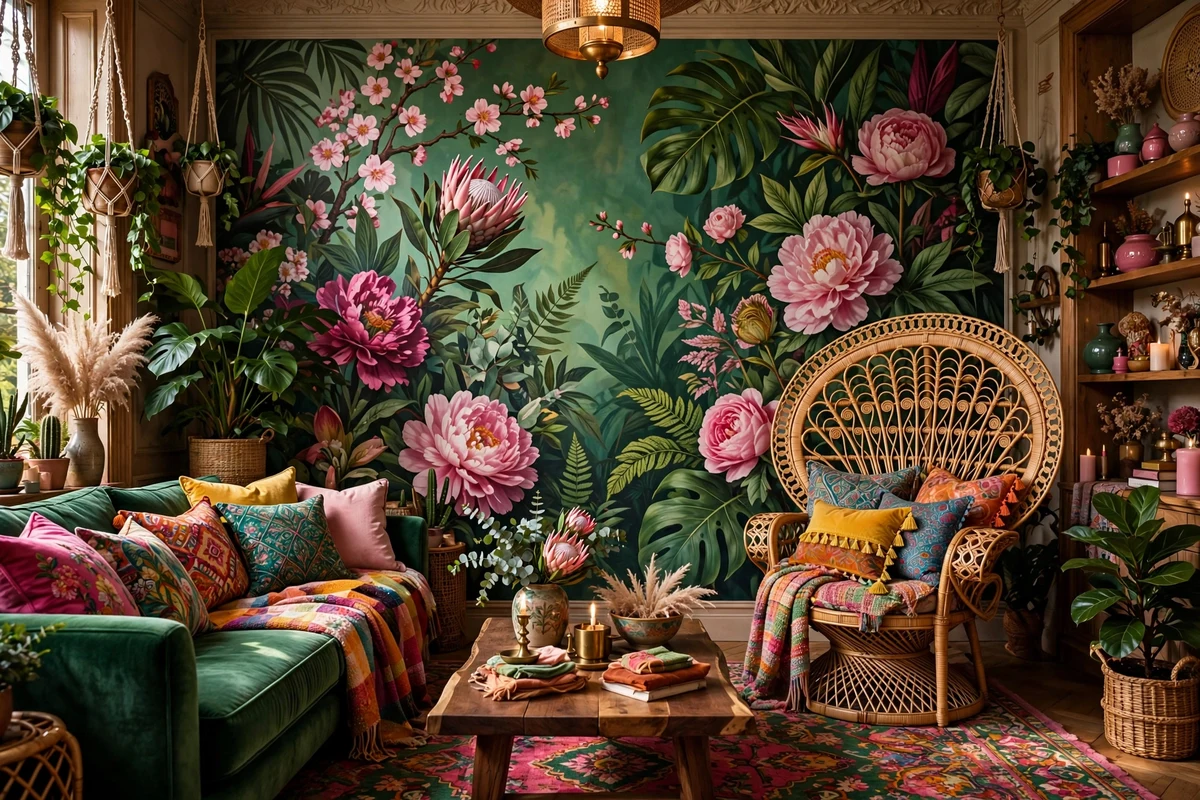
A full-wall mural, whether a lush botanical scene, an abstract color wash, or a vintage map, becomes the room’s artwork and backdrop in one. Printed mural panels cost $150 to $600 depending on wall size, and many come as peel-and-stick for easy installation. Because the mural is so dominant, keep the furniture in front of it simple in silhouette and let the wall do the talking. Botanical murals pair beautifully with rattan and velvet.
Pro tip: Order a sample panel first. Scale and color on screen rarely match how a mural feels at full size on your wall.
7. Color-Drenched Wainscoting
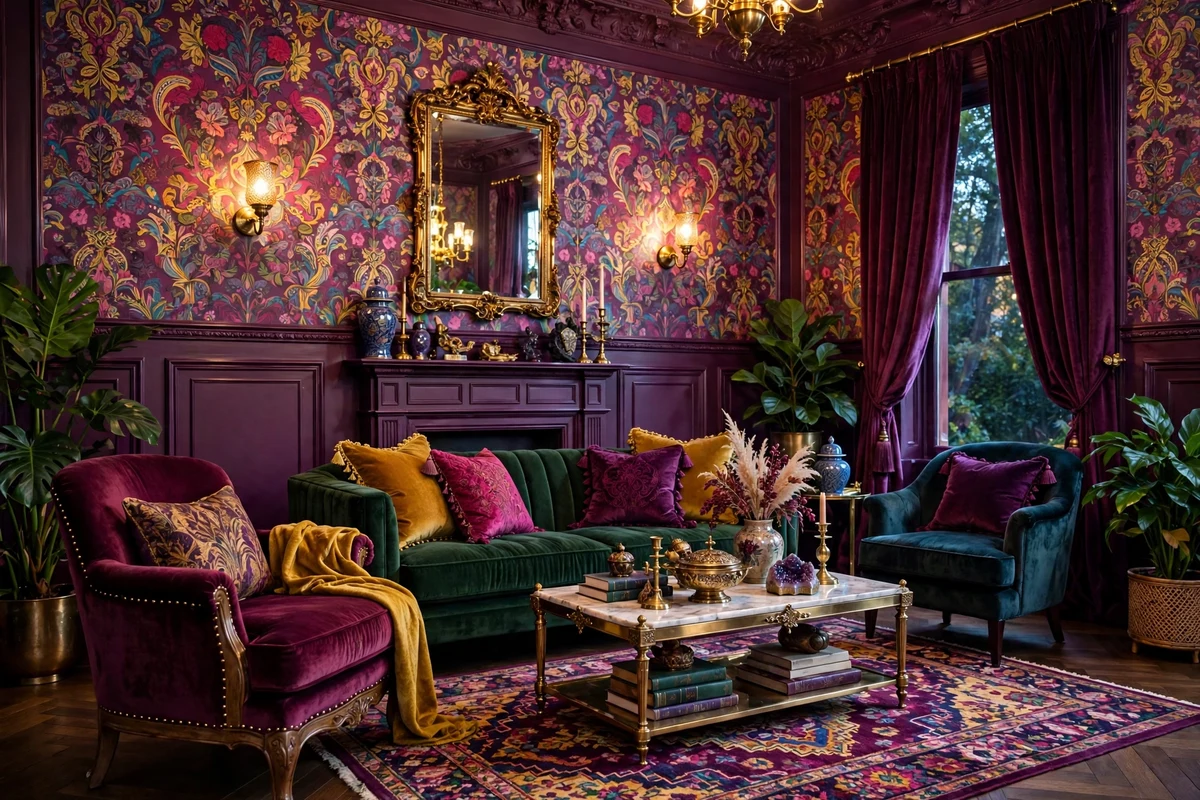
Painting walls, wainscoting, trim, and even the radiator one deep color creates a rich, seamless envelope that makes everything else in the room glow. A plum, forest, or ink-blue drench feels historic and daring at once. Budget $100 to $300 for paint and supplies if you DIY, or $800 to $2,000 for professional work in an average living room. The monochrome backdrop is the perfect stage for mixed patterns and gold accents.
Pro tip: Use the same sheen everywhere, eggshell or satin, so the trim and walls read as one continuous surface.
8. Mixed Wallpaper Panels
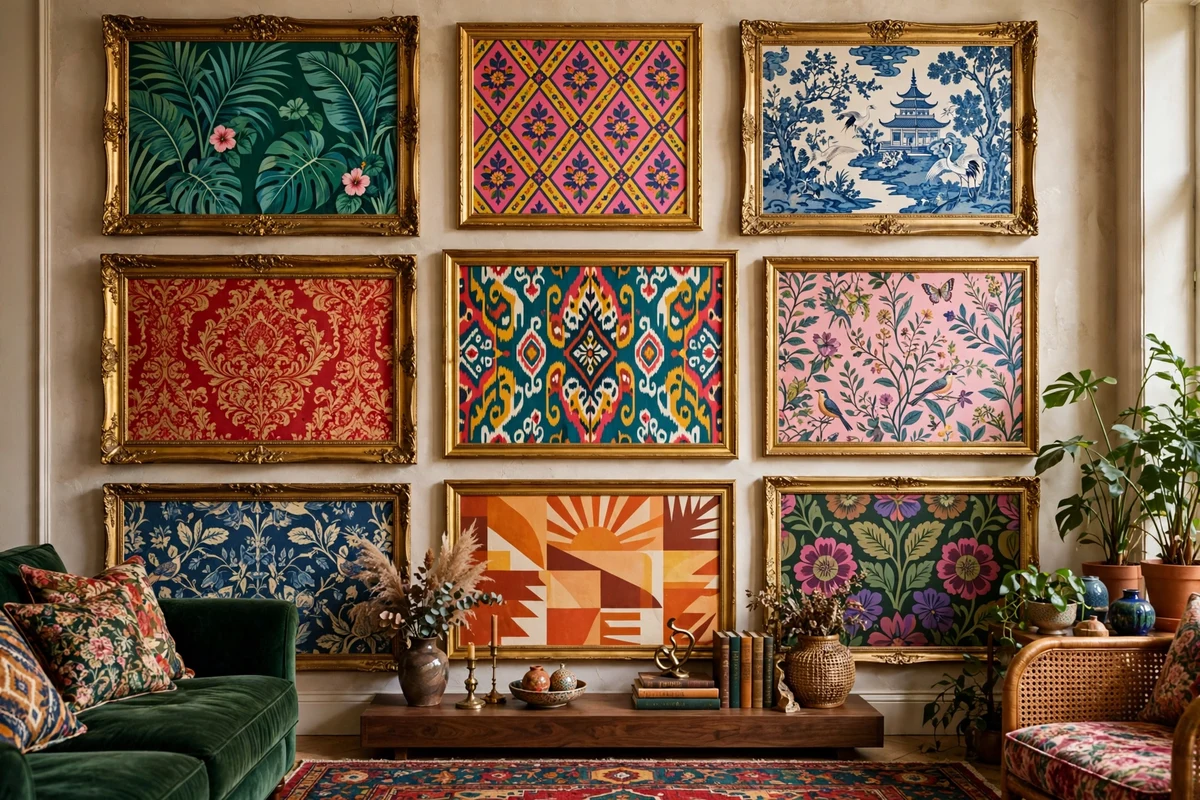
Instead of committing to one wallpaper, frame different bold prints as panels for a collected, ever-evolving wall. Large picture-frame molding kits cost $30 to $80 per panel, and wallpaper remnants or sample rolls fill them for $20 to $50 each. Mix florals with geometrics and stripes, keeping one shared color running through all the prints. It is maximalism you can rearrange whenever the mood strikes.
Pro tip: Use the same frame profile for every panel. Consistent framing is what keeps mixed patterns looking curated instead of chaotic.
9. Dark Moody Library Wall
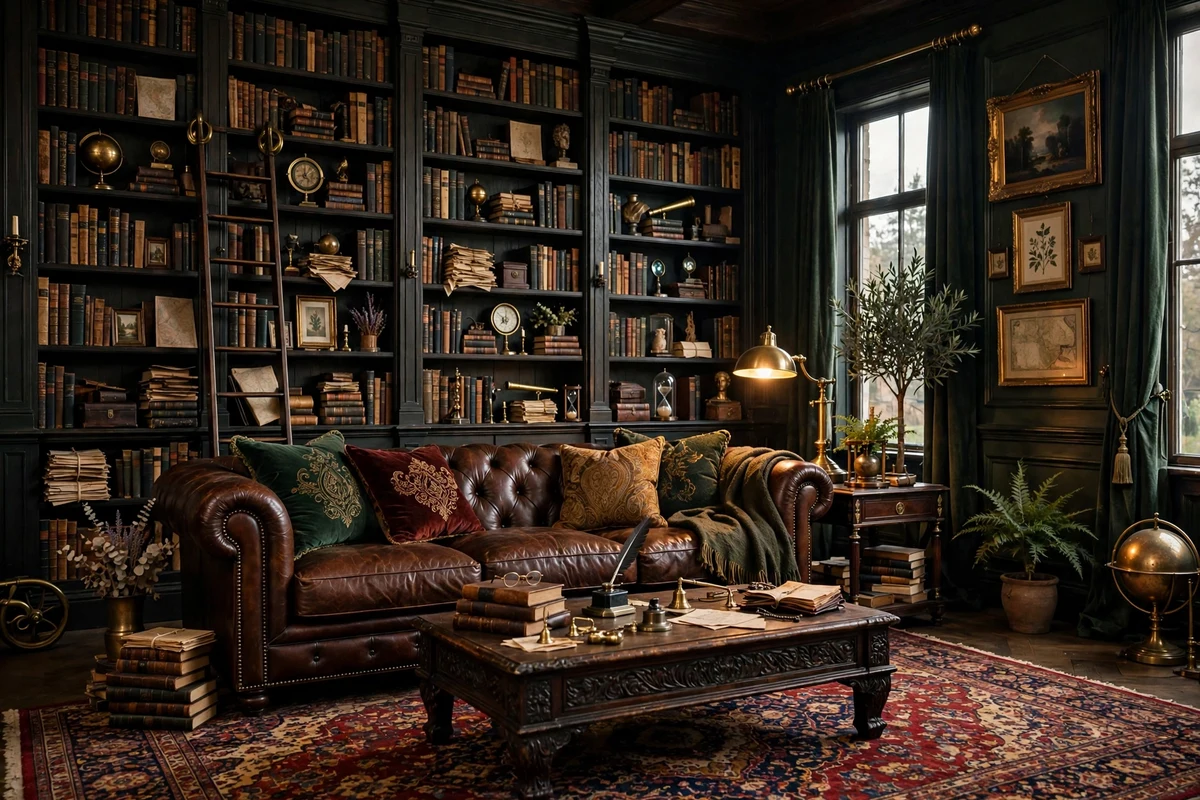
A wall of bookshelves painted near-black and packed with colorful book spines is maximalist texture you can read. Freestanding bookcases cost $100 to $400 each, or build simple floor-to-ceiling shelving for $200 to $800 in lumber and paint. Arrange books by color for visual rhythm, and leave a few shelves for objects, plants, and leaning art. A brass picture light across the top ($60 to $150) makes it glow in the evening.
Pro tip: Double-stack some shelves, books in front and behind. The depth makes the library feel genuinely collected over years.
Furniture with Personality
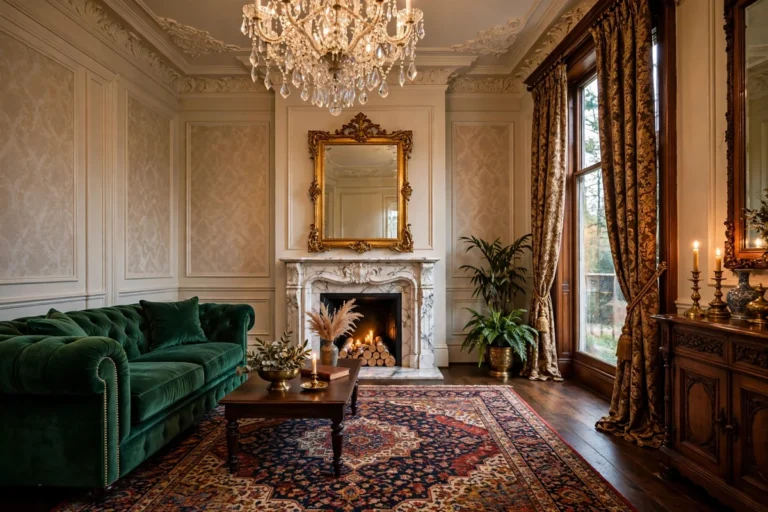
10. Velvet Chesterfield Sofa
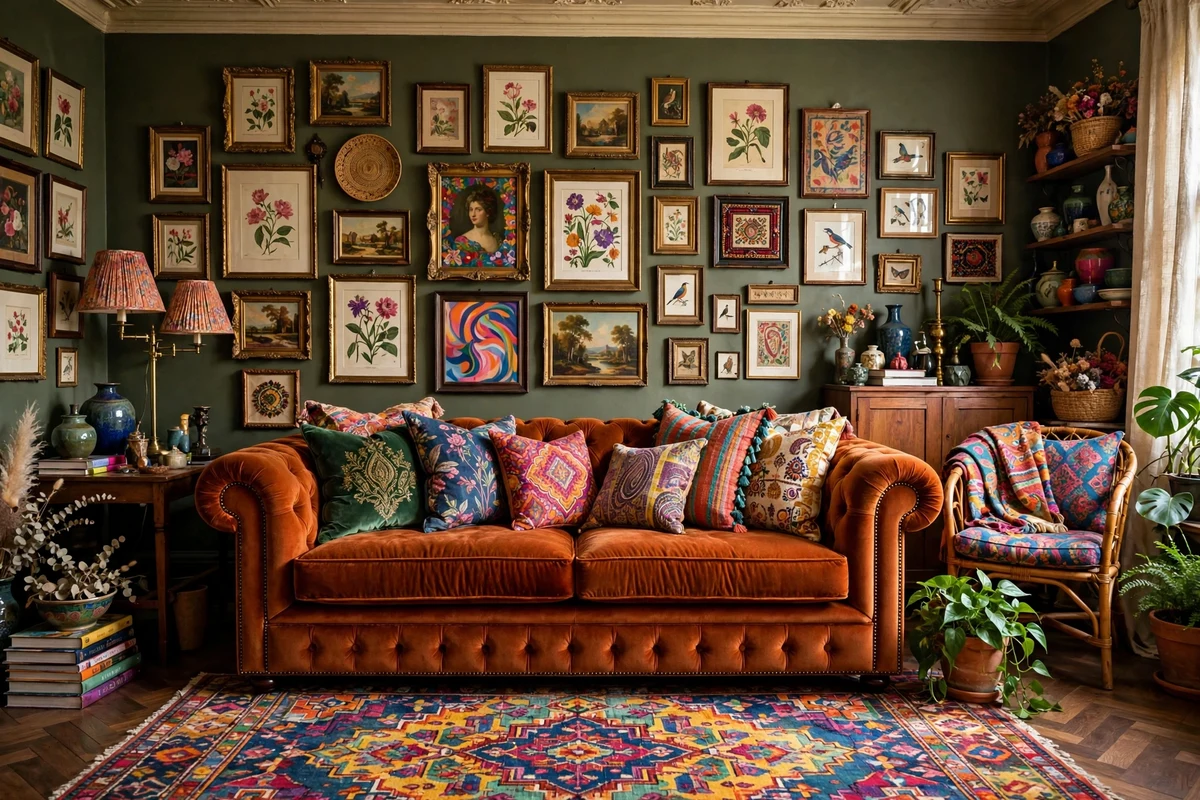
The chesterfield is the maximalist sofa: deep buttoning, rolled arms, and a silhouette that has survived two centuries of trends. In velvet, especially burnt orange, emerald, or sapphire, it becomes the room’s anchor and attitude. New velvet chesterfields cost $1,200 to $3,500, while vintage leather versions in need of love run $400 to $1,000. Dress it with clashing pillows and a throw, and let it hold its own against busy walls.
Pro tip: Vacuum velvet with an upholstery attachment monthly and brush it with the nap. It keeps the pile rich and prevents shiny worn patches.
11. Mismatched Armchairs
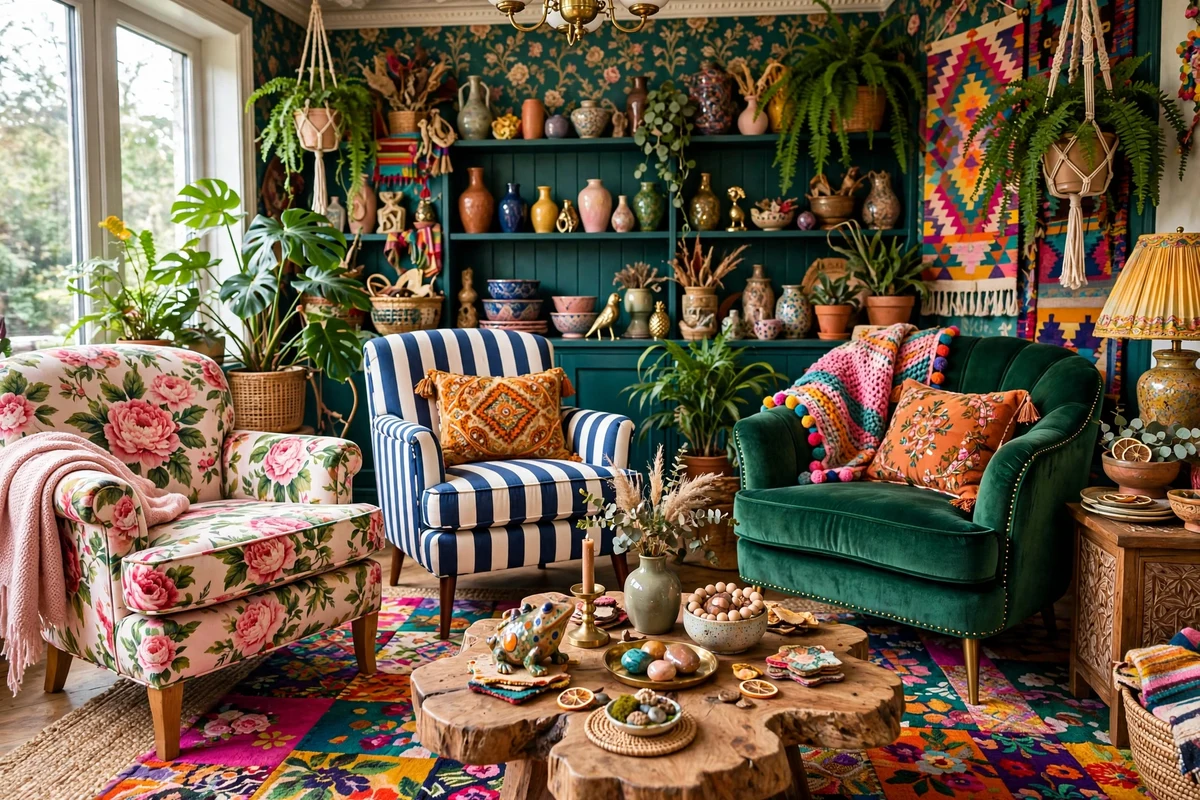
Matching chair sets are for hotels. A maximalist living room gathers armchairs like friends: a floral wingback, a striped club chair, a velvet slipper chair, each different but conversing. Vintage and thrifted chairs cost $150 to $600 each, and reupholstering a great frame runs $400 to $900. Unify them with a shared color, a similar scale, or matching throw pillows so the mix feels deliberate.
Pro tip: Keep seat heights within two inches of each other. Mismatched styles work, but mismatched heights make conversation awkward.
12. Curved Boucle Sofa in Bold Color
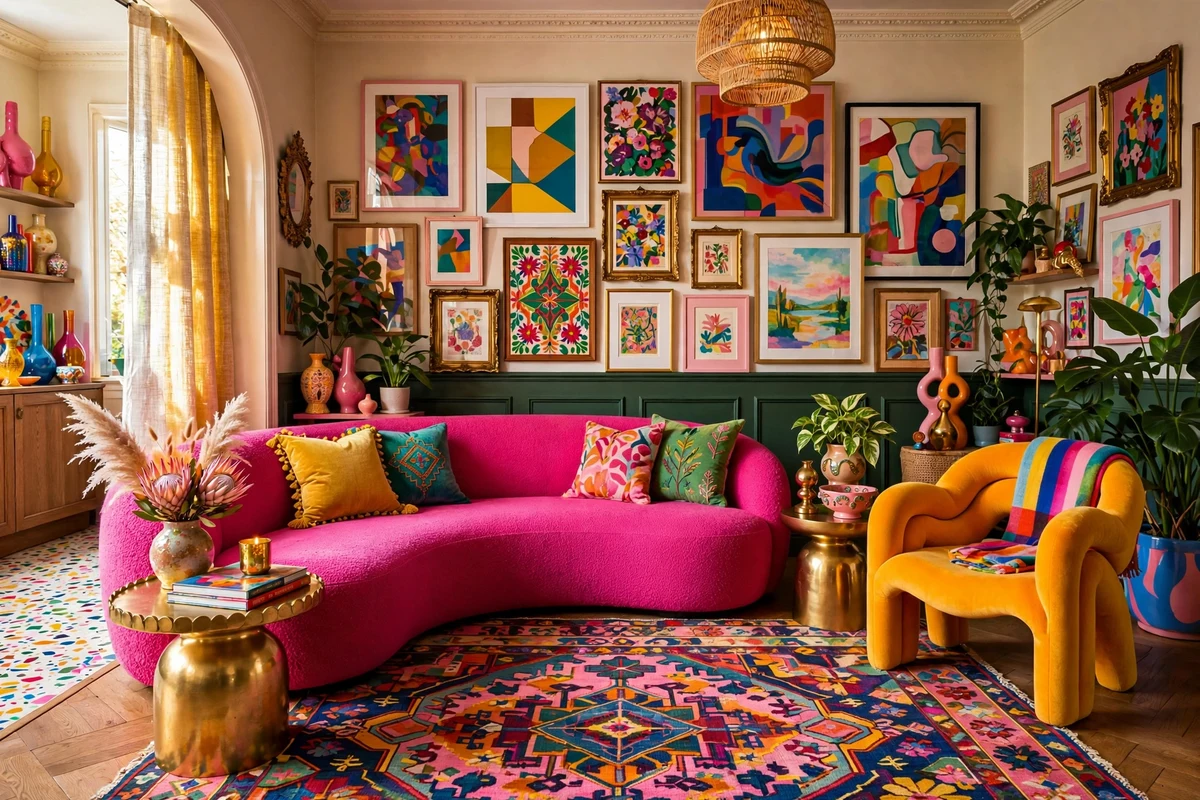
A curved sofa in fuchsia, cobalt, or tangerine boucle is a sculpture you can sit on, and its rounded shape softens all the pattern around it. Curved sofas cost $1,500 to $4,000 depending on size and maker. Float it away from the wall so its silhouette reads from every angle, and pair it with angular side tables for contrast. Boucle’s nubby texture adds yet another layer to the maximalist mix.
Pro tip: Leave breathing room around a curved sofa. Crowding it against walls kills the sculptural effect you paid for.
13. Antique Trunk Coffee Table
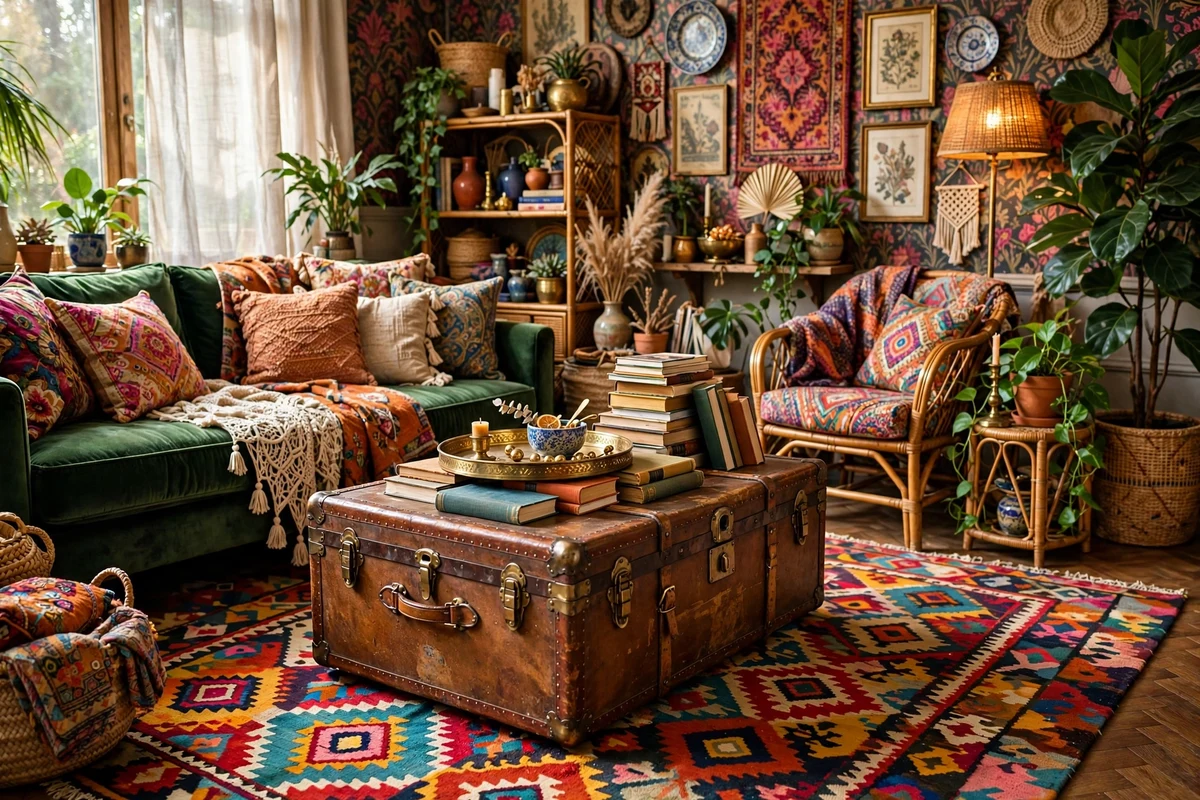
A vintage steamer trunk as a coffee table brings history, storage, and patina in one piece. Leather and canvas trunks cost $150 to $500 at flea markets and antique shops, far less than a designer coffee table with half the character. Top it with a tray to create a stable surface for drinks, then stack books and a small plant beside it. The worn corners and old travel stickers are decoration money cannot buy.
Pro tip: Check that the lid opens fully and latches safely if you plan to store blankets inside. Wobbly hinges are the one dealbreaker.
14. Gilded Console with Mirror
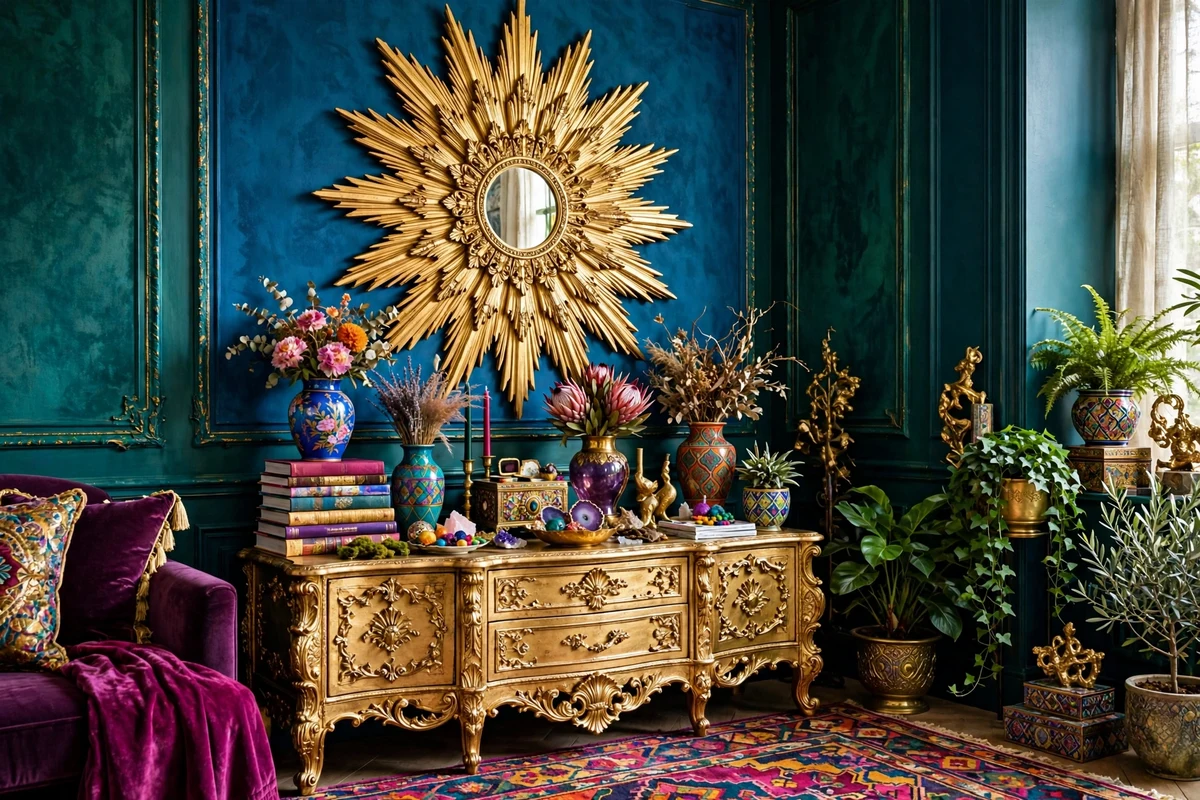
A gilded console under an ornate mirror is the maximalist entry point to glamour: reflective, golden, and unapologetic. Vintage gilt consoles cost $200 to $700, and a sunburst or baroque mirror adds $80 to $300. Style the surface with a tall vase, a stack of art books, and one small sculptural object. The mirror doubles light and visually doubles your collected treasures.
Pro tip: Hang the mirror so it reflects something beautiful, like the chandelier or the garden window, not the television.
15. Packed Statement Bookshelf
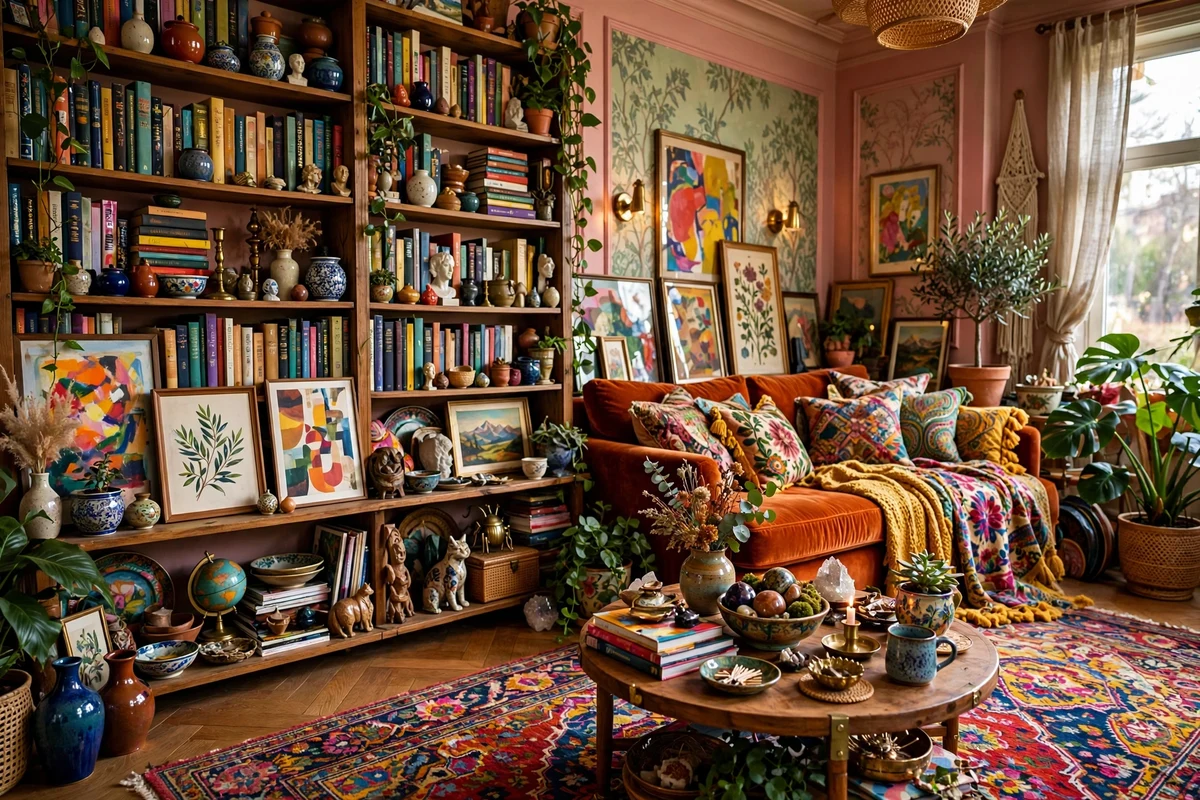
A bookshelf styled to the edges with books, ceramics, framed photos, and plants is a portrait of its owner. Start with a sturdy bookcase ($100 to $400), then fill it slowly: books you actually read, objects from travels, small art leaning against the back. The trick is density with rhythm, group items in odd numbers and vary heights so the eye keeps moving. Leave no shelf more than eighty percent full.
Pro tip: Step back and squint. If any shelf reads as one flat color block, break it up with a contrasting object.
16. Patterned Ottomans and Poufs
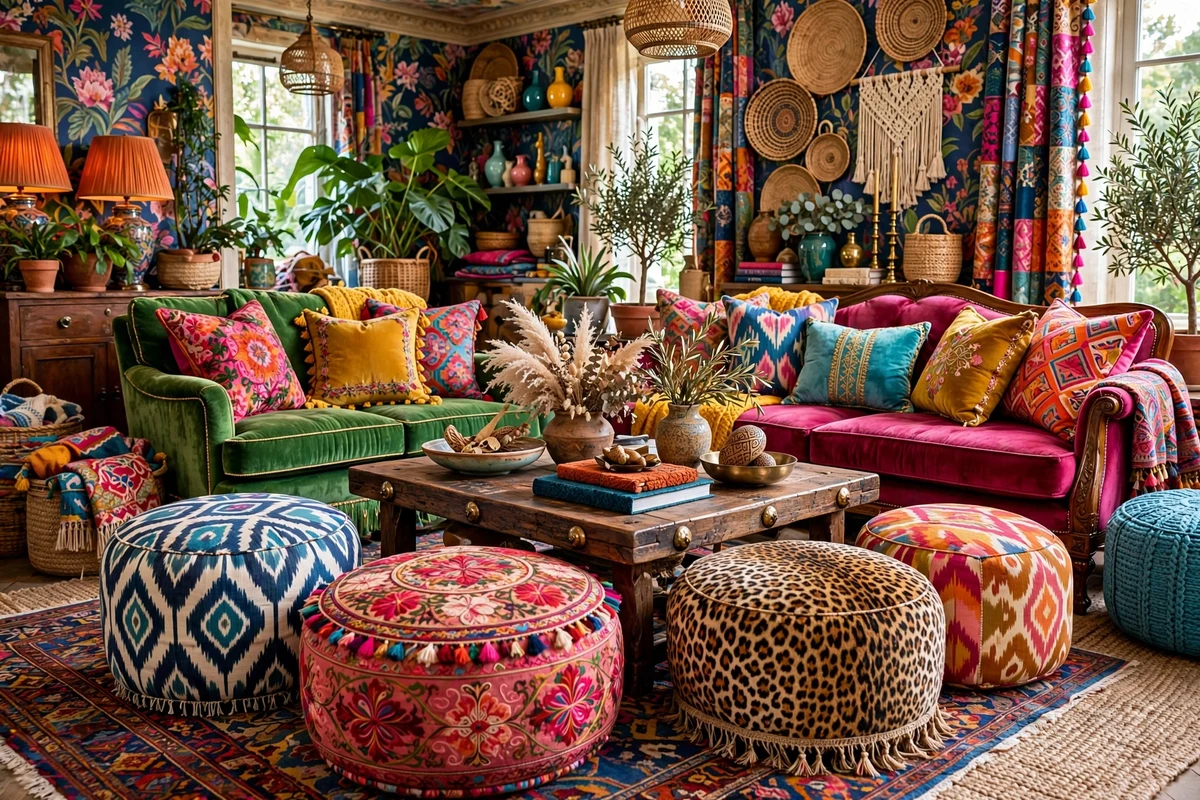
Ottomans and poufs in ikat, suzani, and kilim prints add flexible seating that doubles as pattern delivery. They cost $80 to $250 each, tuck under console tables when not needed, and give kids and guests somewhere to perch. Cluster two or three around the coffee table instead of one large ottoman for a more collected look. Many have hidden storage inside for throws and games.
Pro tip: Choose poufs with removable, washable covers. High-traffic pattern pieces stay fresh years longer when you can launder them.
17. Styled Vintage Bar Cart
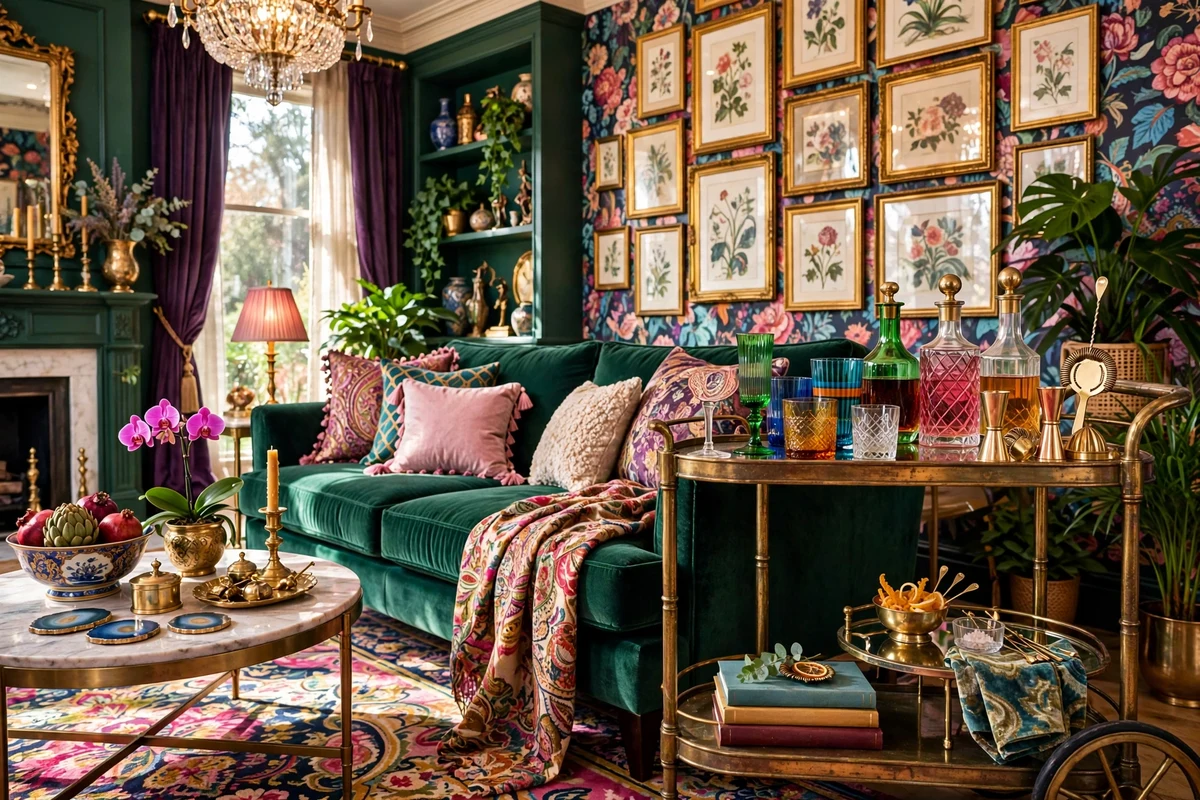
A brass bar cart styled with colored glassware, decanters, and cocktail books is functional decor at its best. Vintage carts cost $100 to $400, and a set of jewel-tone glasses adds $30 to $80. Arrange by height, tallest bottles at the back, and add a small plant or framed print for softness. Even if you rarely mix drinks, the cart reads as celebration and hospitality.
Pro tip: Corral everything on mirrored or lacquered trays. Trays make a busy cart look styled instead of cluttered.
18. Sculptural Side Tables
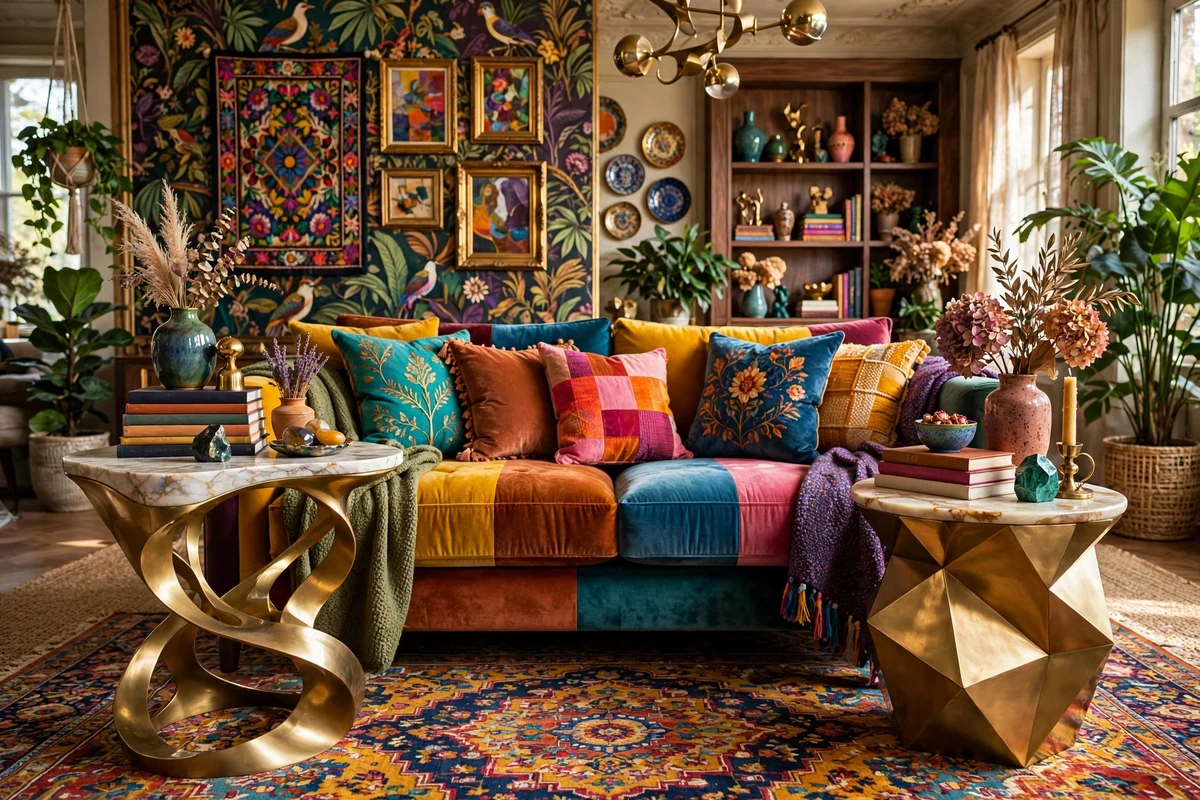
Side tables are small enough to be daring, so choose sculptural ones: a marble drum, a brass tripod, a lacquered cube. They cost $80 to $300 each, and mixing two different designs beside one sofa is peak maximalism. Keep the tabletop styling minimal, one lamp or one stack of books, so the table’s shape stays the star. Different heights create a pleasing rhythm along the sofa.
Pro tip: Match the metal finishes to your other accents. Mixed shapes are fun, but scattered metals look accidental.
Layered Textiles and Decor
19. Layered Area Rugs
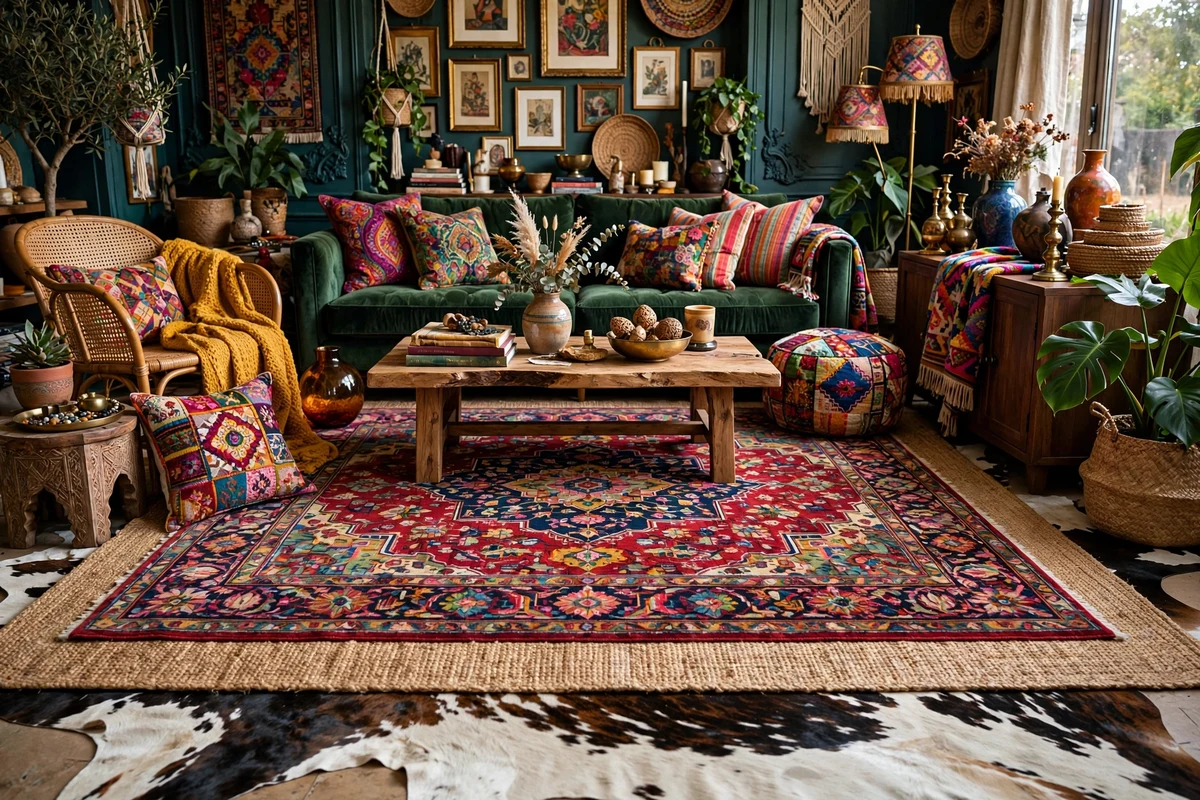
Layering rugs is the textile equivalent of a gallery wall: a large jute or sisal base, a colorful Persian or kilim on top, and maybe a small sheepskin angled over that. Budget $150 to $800 total by mixing a natural-fiber base ($80 to $250) with a vintage-style patterned rug ($70 to $550). Vary the patterns in scale, one large motif with one small, so they layer instead of fighting. All furniture front legs should sit on the top rug.
Pro tip: Use a rug pad between layers. It stops the top rug from creeping and adds the plushness maximalism loves.
20. Pattern-Clashing Throw Pillows
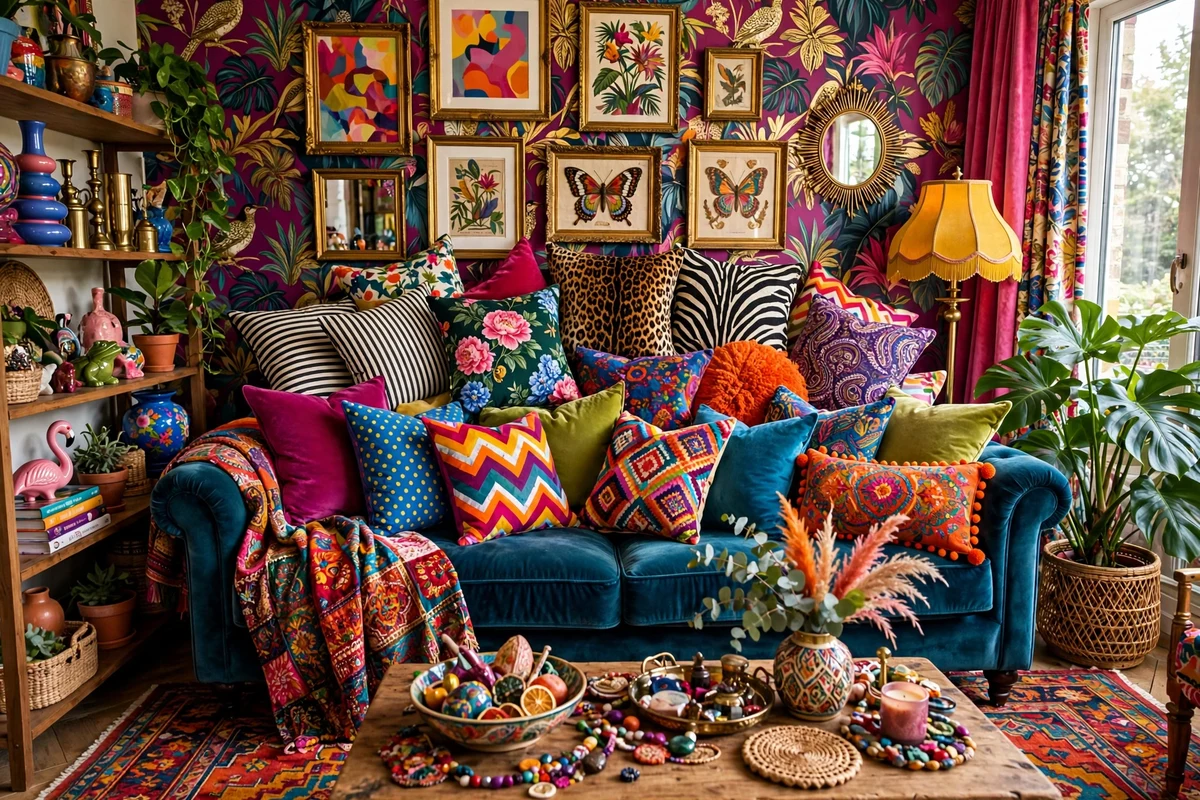
Maximalist pillows follow one rule: mix with intent. Combine a large floral, a stripe, a geometric, and a solid velvet, all sharing two or three colors. Pillow covers cost $15 to $45 each, and quality inserts ($15 to $30) make even budget covers look expensive. Odd numbers look best: five or seven on a standard sofa, arranged largest at the ends and smallest in front. Karate-chop the tops for that plush, styled look.
Pro tip: Repeat your exact pillow formula on every seat in the room. Repetition is what turns clashing into a scheme.
21. Bold Patterned Drapery
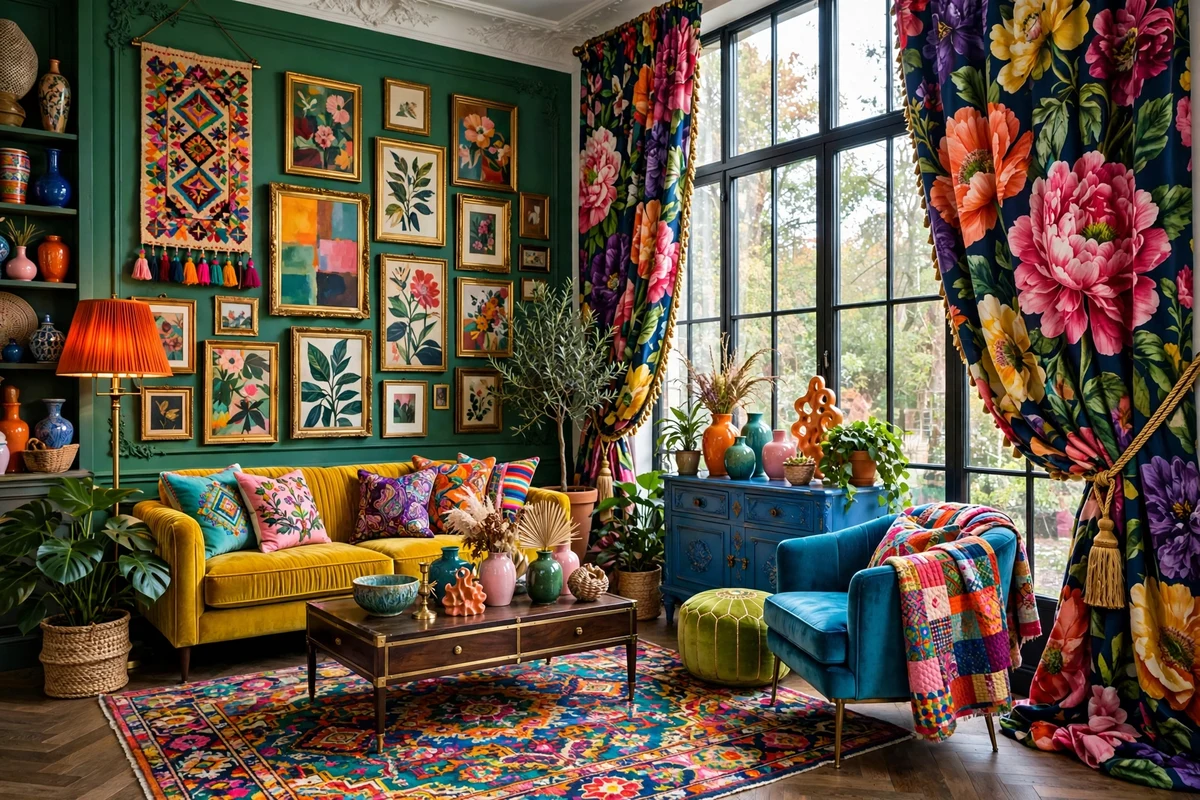
Curtains are the largest textile in the room, so make them count with an oversized floral, dramatic stripe, or rich ikat. Ready-made patterned panels cost $40 to $120 each, and you need two per window for fullness. Hang the rod six inches above the frame and six inches wider on each side so windows look grander. Lined curtains hang better and protect the fabric from sun fading.
Pro tip: If your walls are already busy, choose drapery in one dominant color pulled from the wallpaper. It calms the mix without going plain.
22. Piled Throw Blankets
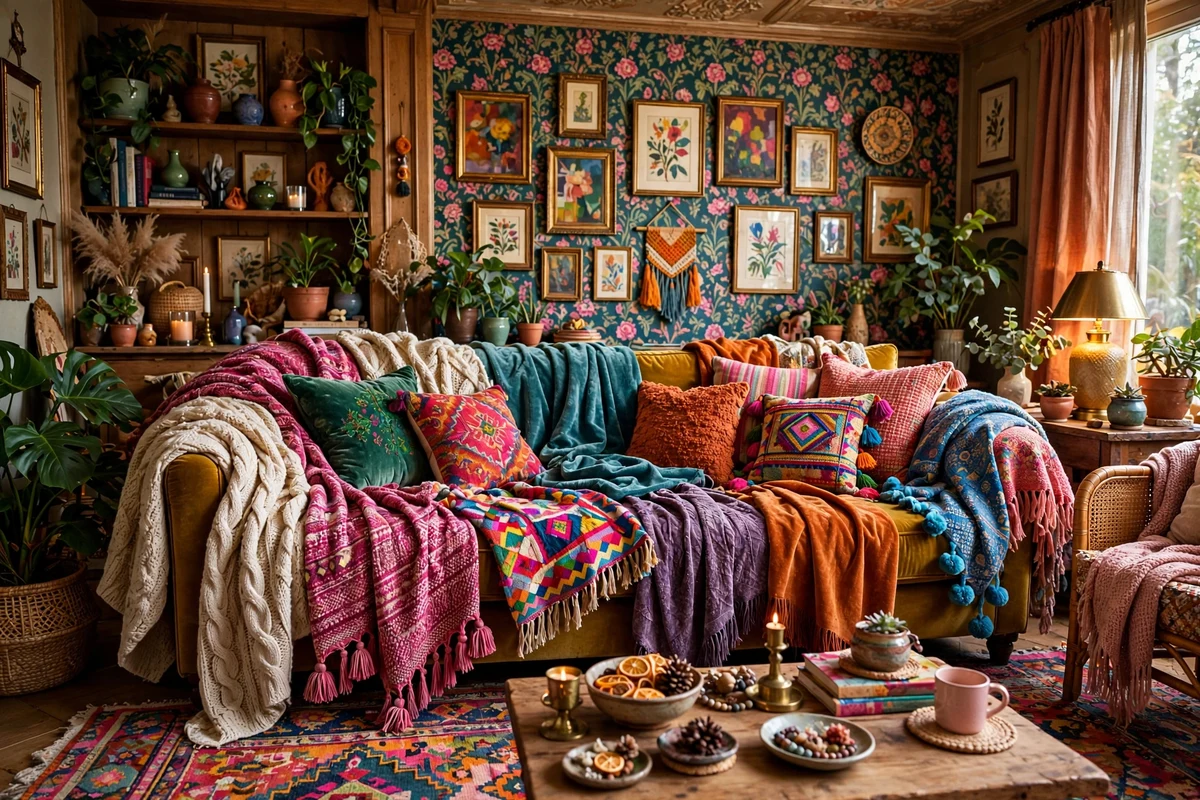
Drape three or four throws over one sofa arm or the back of a chair: a chunky knit, a velvet quilt, a fringed wool, each in a different color or pattern. Throws cost $30 to $90 each, and the pile signals comfort before anyone sits down. Fold them loosely rather than neatly; casual draping is the whole point. Store the overflow in a lidded basket ($40 to $100) beside the sofa for easy rotation.
Pro tip: Stick to one texture family per pile, all knits or all wovens, so the color mixing feels rich instead of random.
23. Large Tapestry Wall Hanging
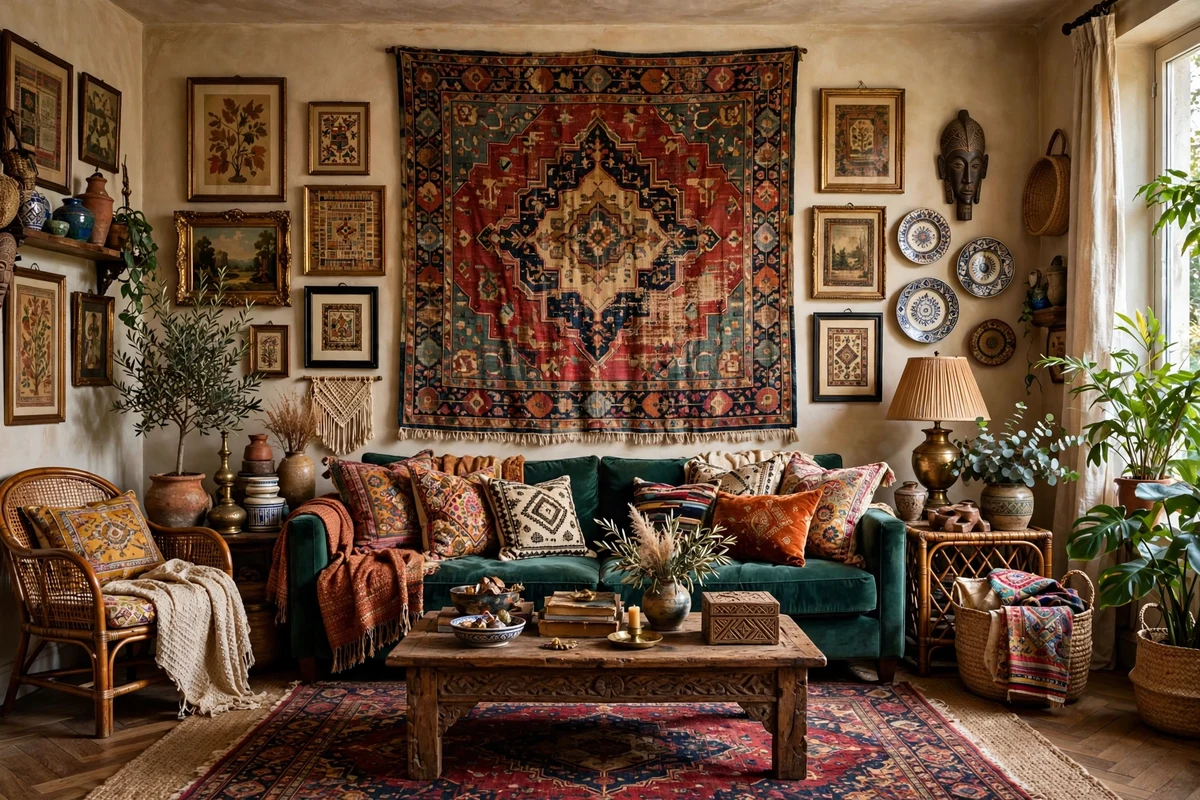
A large woven tapestry softens a wall, absorbs sound, and adds the handmade texture maximalism craves. Vintage tapestries cost $80 to $300 depending on size and age, and new woven wall hangings run $60 to $200. Hang it from a wooden dowel or brass rod with plenty of wall space around it so it reads as art. Layer smaller framed pieces overlapping its edges for a true collector’s wall.
Pro tip: Keep tapestries out of direct sunlight. Natural dyes fade fast, and a faded tapestry loses its richness.
24. Mixed Lampshades
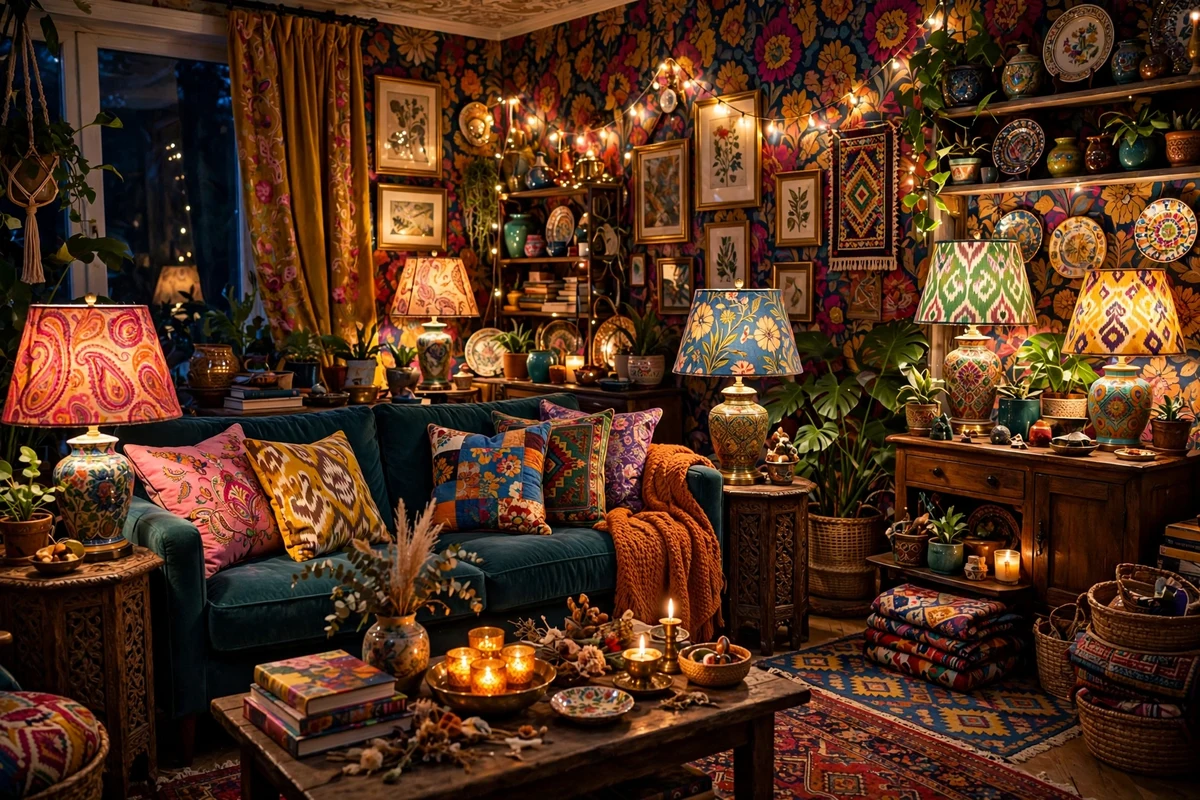
Swapping plain shades for patterned, pleated, or colored ones is a ten-minute maximalist upgrade. Shades cost $25 to $75 each, and mixing a chinoiserie shade with a pleated silk one on matching lamp bases is wonderfully maximalist. Keep the shade scale right: the shade’s bottom diameter should roughly equal the lamp base height. Warm bulbs (2700K) make patterned shades glow like lanterns.
Pro tip: Line dark or patterned shades with gold or cream lining. It bounces warm light into the room instead of swallowing it.
25. Statement Chandelier
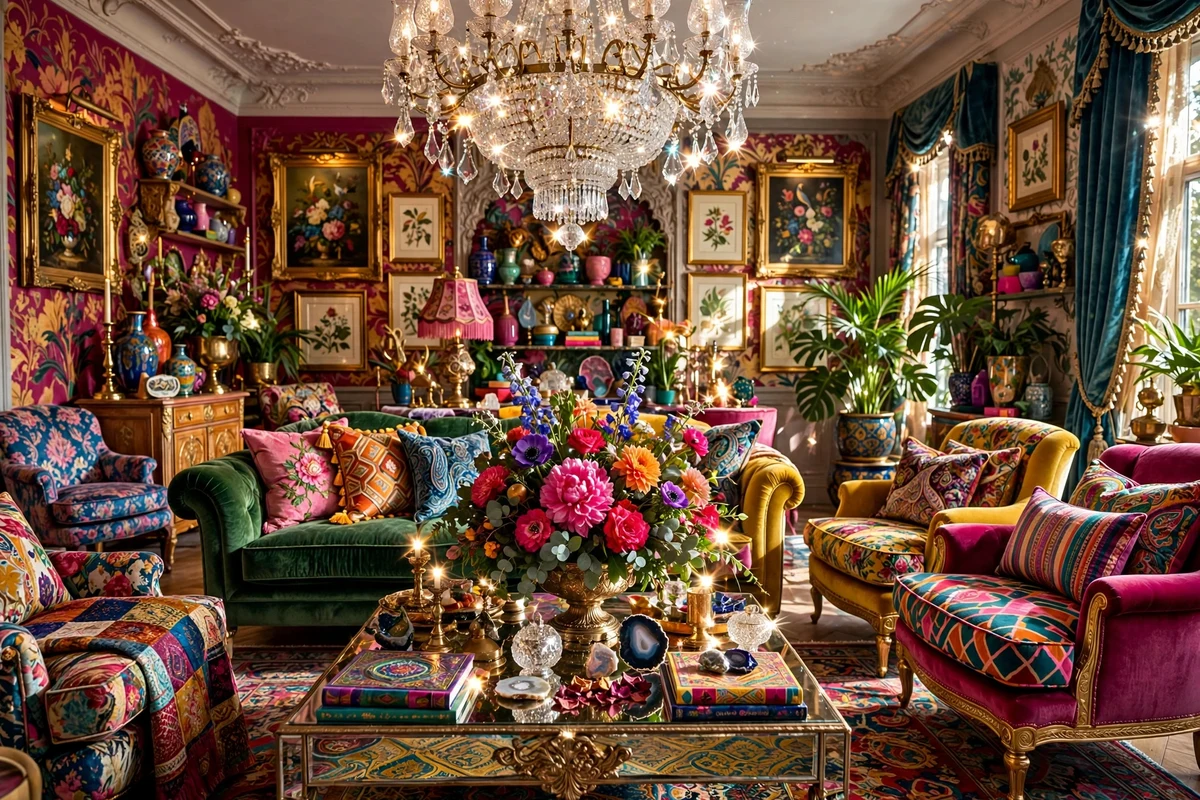
Every maximalist living room deserves one piece of jewelry overhead. A crystal, beaded, or sculptural chandelier costs $150 to $800 and instantly raises the room’s glamour ceiling. Hang it 30 to 34 inches above the coffee table, or seven feet off the floor in a walkway zone. If your ceiling is already painted bold, choose a chandelier in a contrasting metal so it stands out.
Pro tip: Put the chandelier on a dimmer. Full sparkle for parties, low glow for evenings; one fixture, two moods.
26. Indoor Plant Jungle
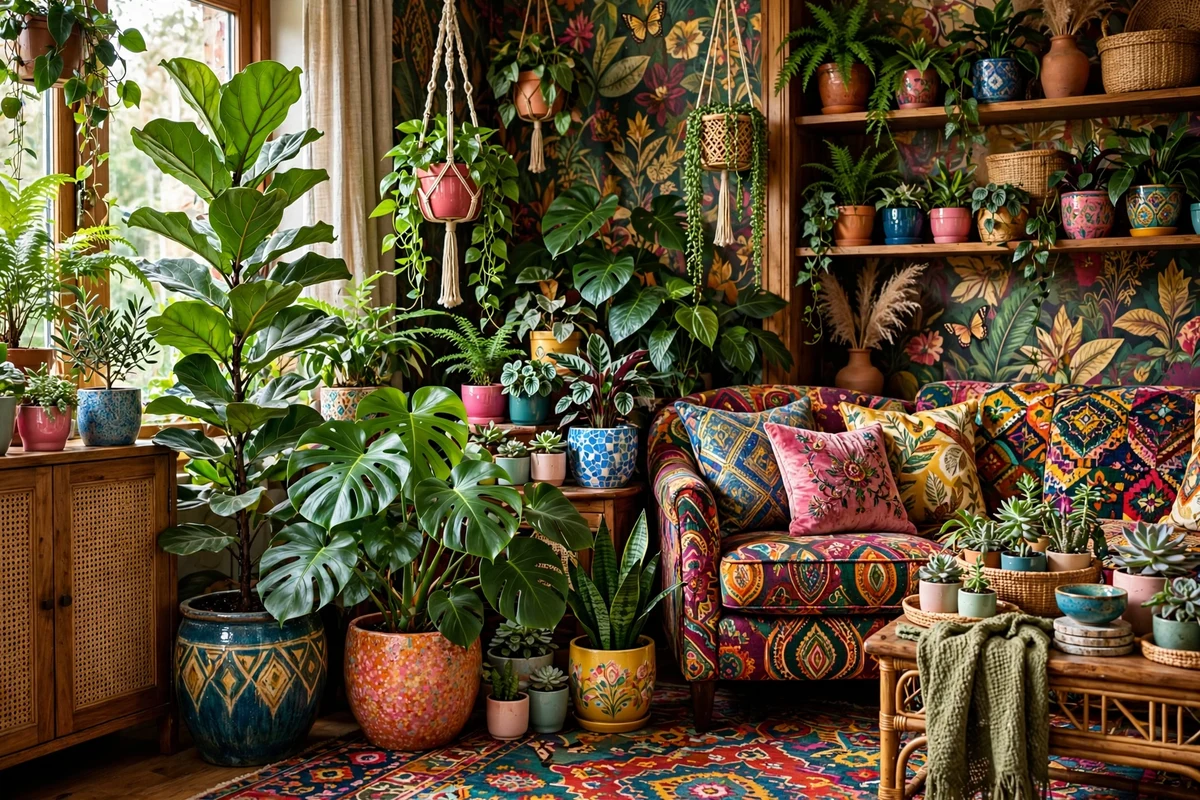
Plants are living pattern, and a dense corner of them adds the organic layer maximalism needs. Start with easy growers like pothos, snake plants, and monsteras at $10 to $60 each, then pot them in colorful ceramic or brass planters ($15 to $50). Group in odd numbers at varying heights, tall floor plants behind, trailing ones on shelves. The green unifies even the wildest color scheme.
Pro tip: Water on a schedule and rotate pots quarterly. A jungle only works when every plant looks thriving, not struggling.
27. Collected Vases and Vessels
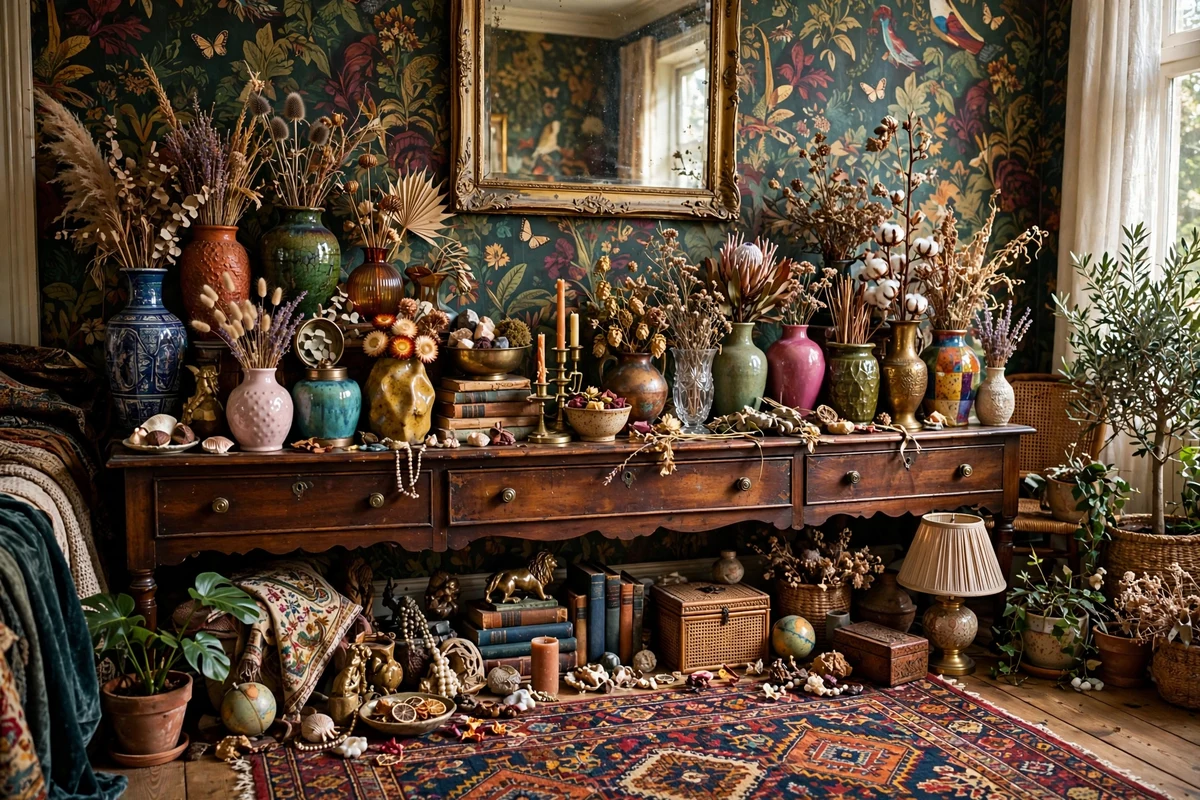
A shelf or console crowded with vases in every color, shape, and material is maximalist still life. Thrifted vases cost $10 to $50 each, and the hunt is half the fun. Group them in clusters of three or five, varying heights by at least four inches between pieces. Some hold dried stems or branches, others stand empty as sculpture. The mix of glossy, matte, and textured finishes keeps it interesting.
Pro tip: Stick to one display zone per room. Vases scattered everywhere read as clutter; one dense collection reads as curation.
Maximalist Details and Finishing Touches
28. Stacked Coffee Table Books
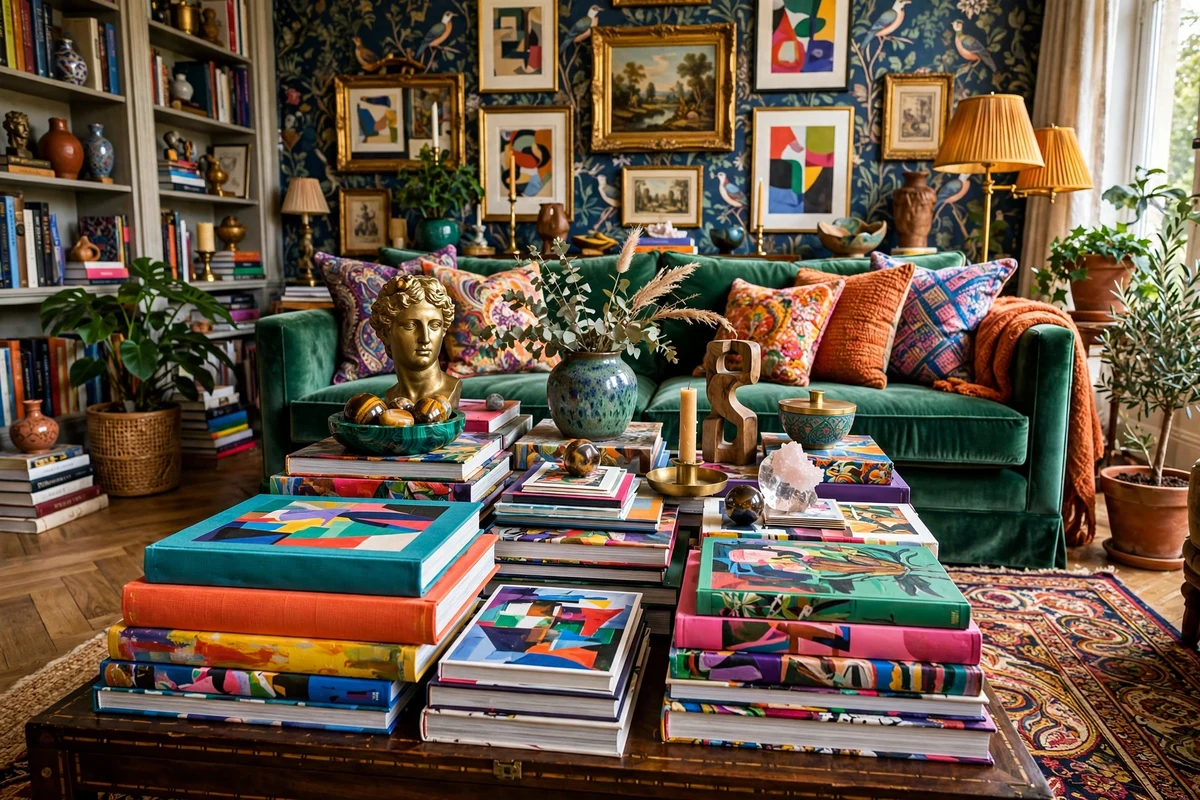
Stacks of oversized art, fashion, and travel books are the maximalist coffee table uniform. New titles cost $20 to $60 each, but thrift stores and library sales yield gorgeous volumes for $3 to $10. Stack them largest to smallest, three to five high, and top each stack with a small object like a candle or magnifying glass. Choose covers with bold colors that echo your room’s palette so the stacks feel designed.
Pro tip: Rotate the top book seasonally. It is the cheapest refresh in decorating and guests always notice.
29. Styled Decorative Trays
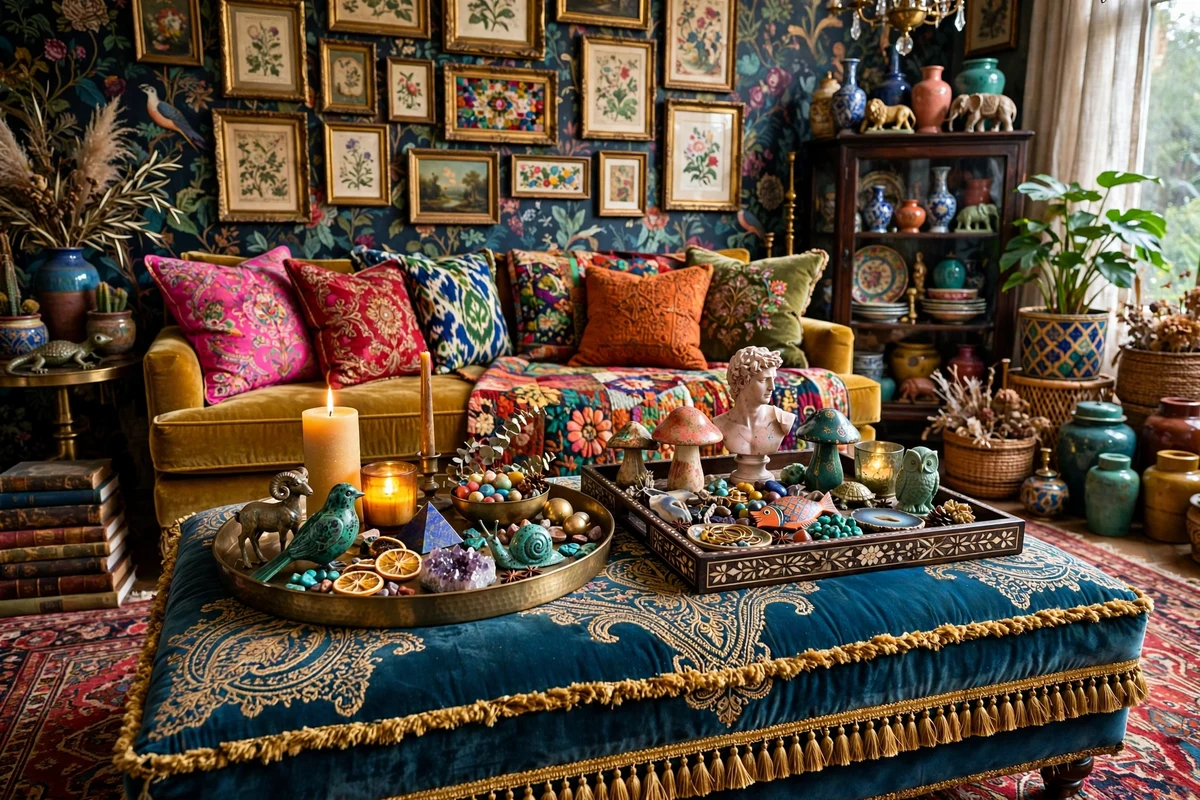
Trays are the secret to making abundance look intentional. A mirrored, lacquered, or rattan tray ($20 to $60) corals candles, small sculptures, and remotes into one tidy vignette on an ottoman or coffee table. Use two trays of different shapes on a large surface, one round and one rectangular, for visual variety. The rule is simple: if it sits on a surface, it sits on a tray.
Pro tip: Leave one third of every tray empty. Negative space inside the tray is what separates styling from piling.
30. Candle and Lantern Clusters
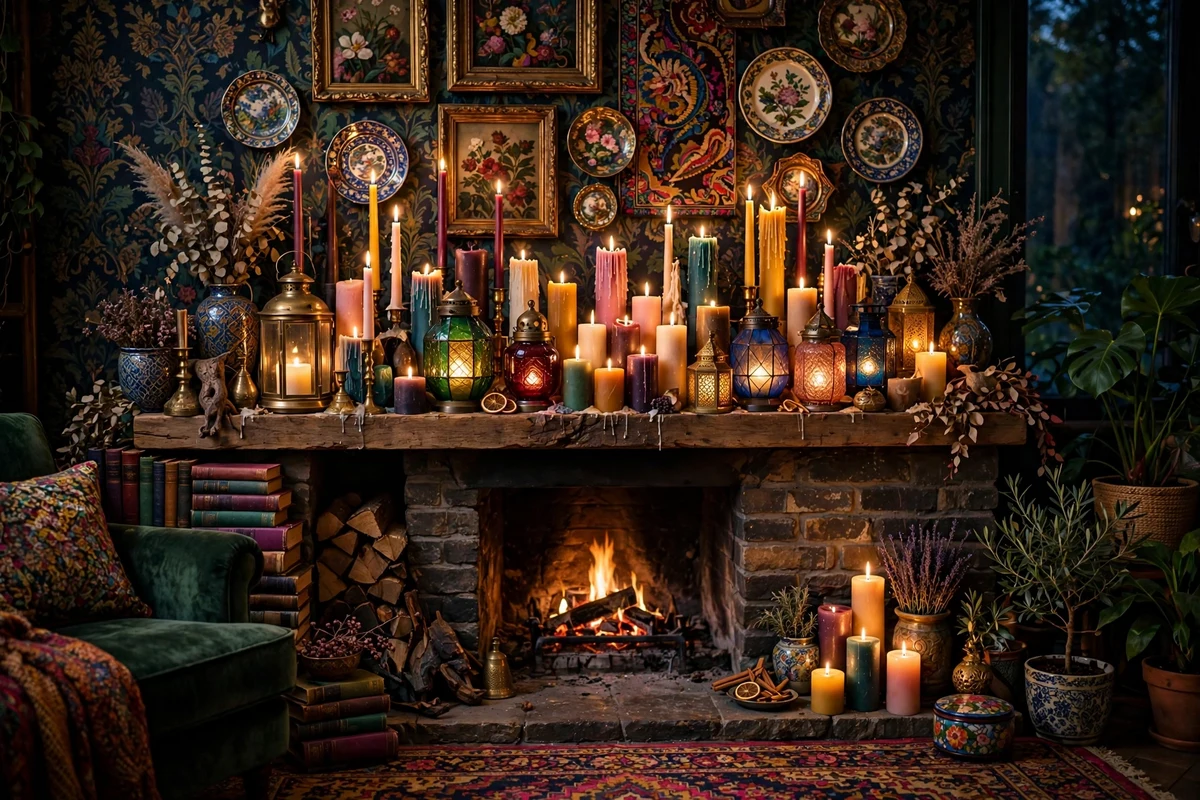
Groups of candles and lanterns in mixed heights, colors, and holders turn any mantel or shelf into an evening event. Pillar candles cost $5 to $15 each, lanterns $15 to $40, and flameless LED versions ($8 to $20) give the glow without the worry. Cluster in odd numbers on a heat-safe tray, mixing heights by at least three inches. In a maximalist room, more is more: twelve candles beat three.
Pro tip: Stick to one scent family or go unscented. Competing fragrances in a dense display become overwhelming fast.
31. Curio Shelves of Objets
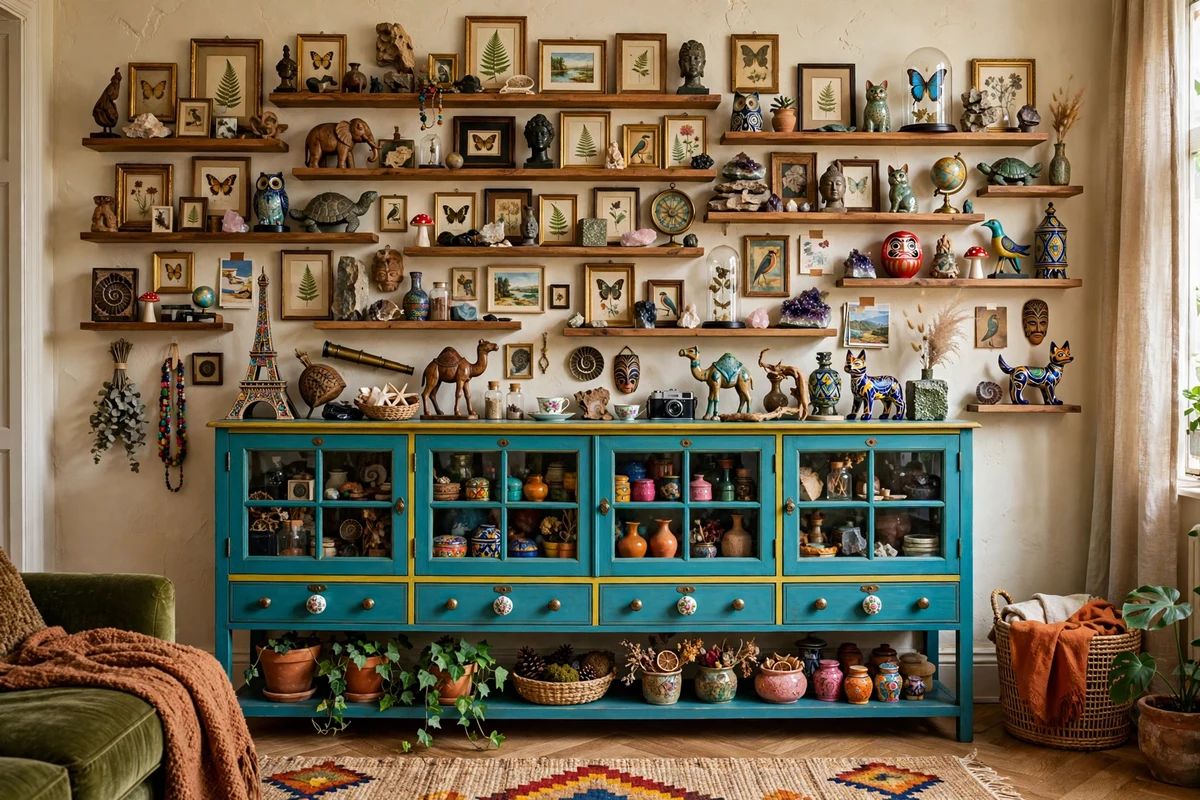
Floating shelves lined with travel souvenirs, small sculptures, and inherited oddities are a personal museum. Shelves cost $30 to $100 each installed, and the objects themselves should be things with stories, not filler from a home store. Arrange by color or theme per shelf, and give each object a little breathing room so the collection reads as precious. Tiny easels ($5 to $12) elevate small pieces beautifully.
Pro tip: Edit ruthlessly twice a year. A curio shelf stays magical only when every object still delights you.
32. Framed Textile Art
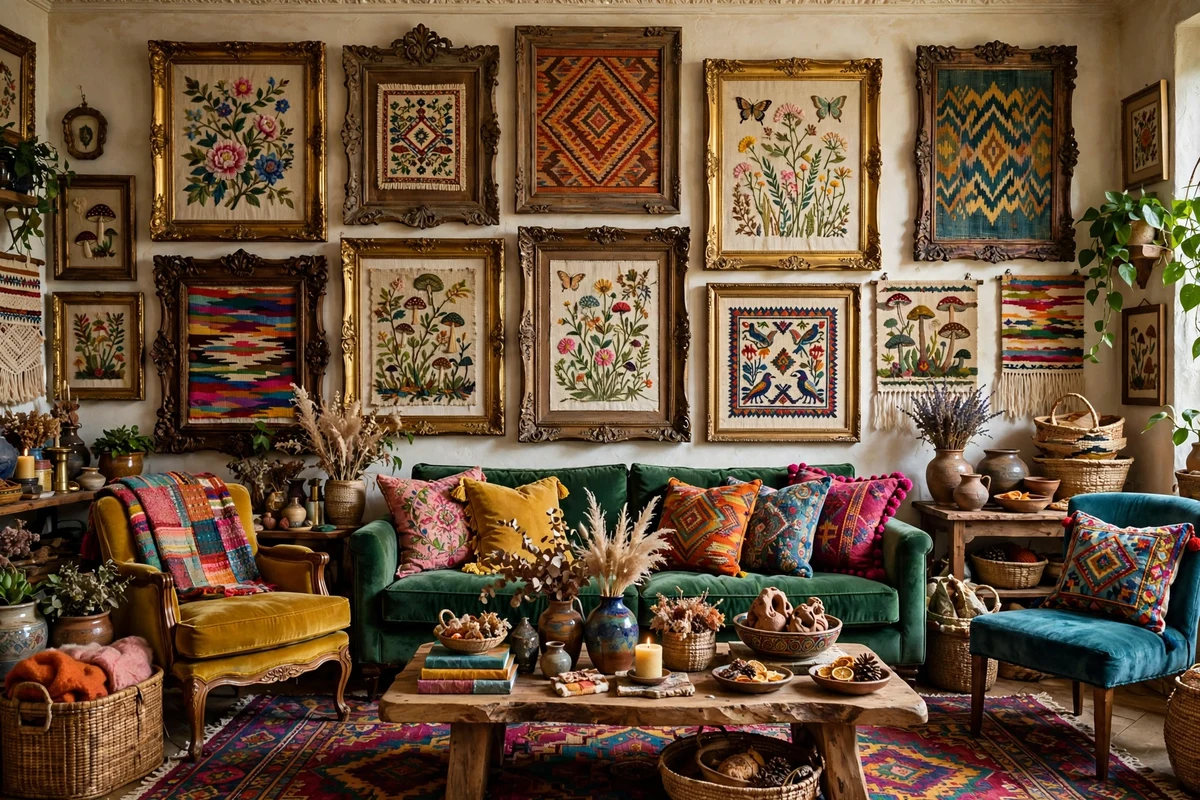
Embroidered samplers, woven fragments, and vintage scarves become art when framed, adding craft and texture no print can match. Thrifted textiles cost $10 to $40, and simple framing runs $40 to $150 depending on size. Float delicate pieces on linen mats inside deep frames for a gallery feel. A wall of three to five textile pieces brings handmade warmth to even the boldest room.
Pro tip: Use UV-protective glass for anything with natural dyes. It costs a little more and saves the colors for decades.
33. Neon Art Sign
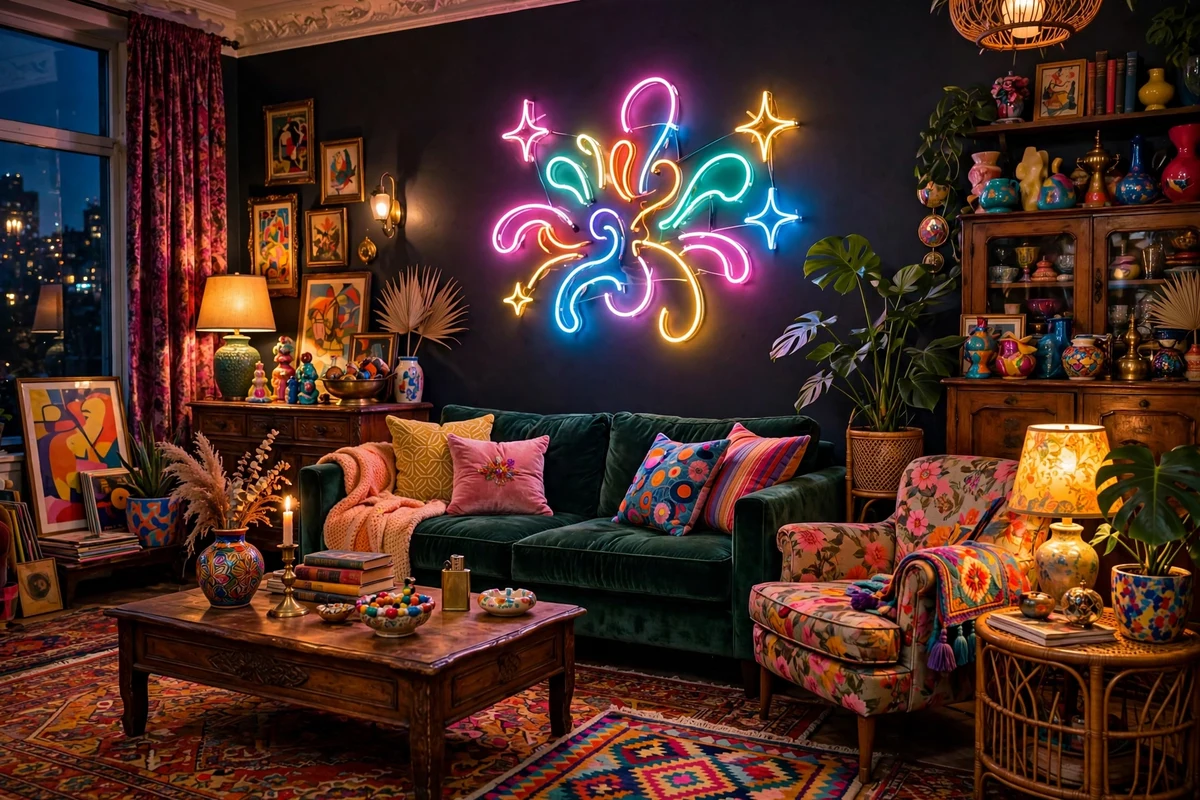
A neon sign is maximalism’s wink: modern, playful, and glowing against all that vintage richness. Custom LED neon signs cost $100 to $300, use minimal electricity, and stay cool to the touch. Choose an abstract shape or single word in a color that already appears in the room. Mount it above the sofa or bar cart where it becomes an evening focal point.
Pro tip: Put the neon on a smart plug. One voice command shifts the whole room from daytime collected to nighttime electric.
34. Patterned Ceiling Medallion
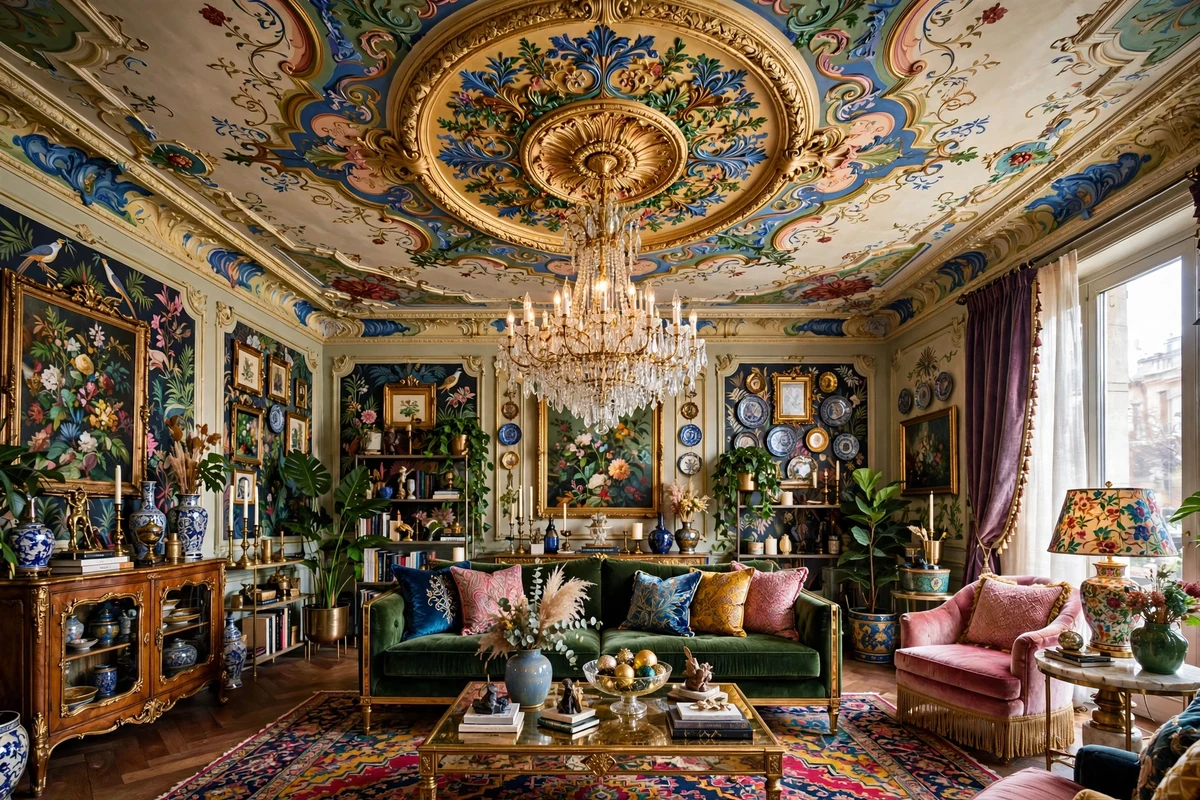
A ceiling medallion frames your chandelier like art and adds architectural richness for very little money. Polyurethane medallions cost $30 to $80, install with adhesive in under an hour, and can be painted gold, a bold color, or the ceiling shade. Choose one at least six inches wider than your chandelier’s canopy on every side for proper proportion.
Pro tip: Paint the medallion before installation. Cutting in around a mounted chandelier is miserable work.
35. Quirky Sculptural Accents
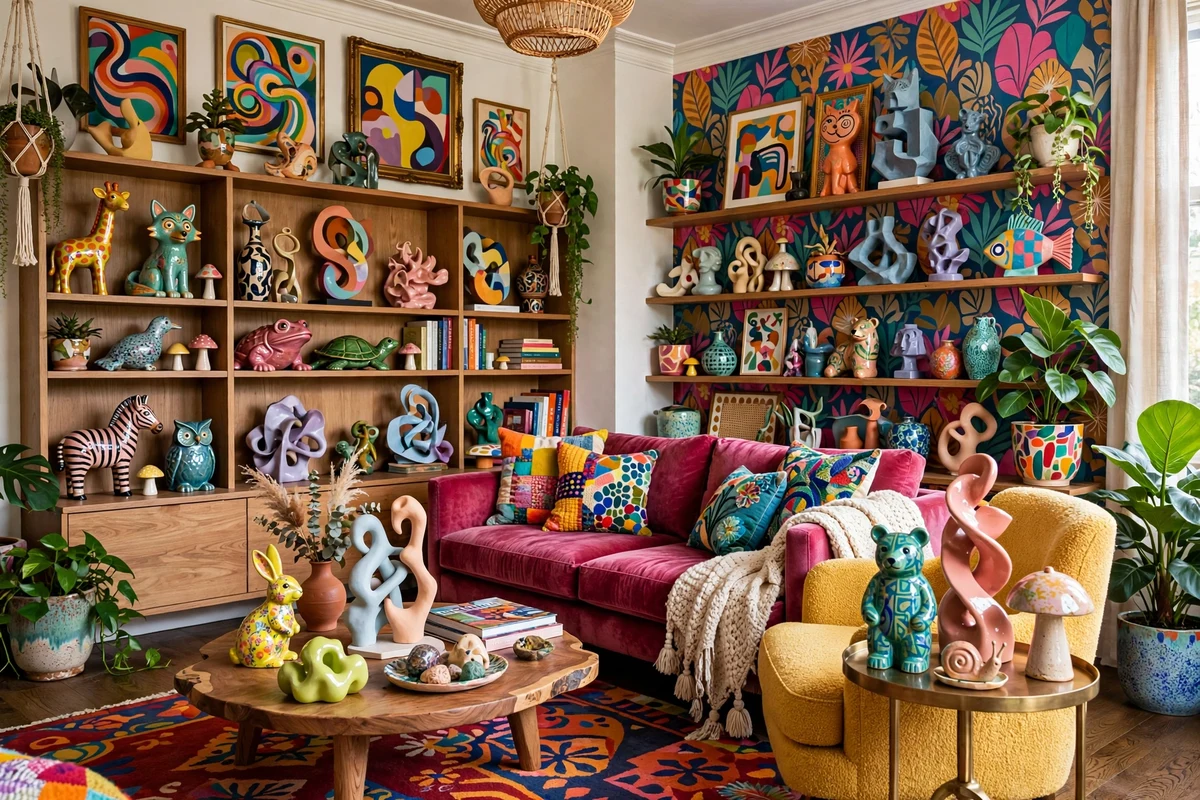
Every maximalist room needs a few conversation pieces: a ceramic leopard, an abstract bust, a brass pineapple. Quirky sculptures cost $25 to $150 each at vintage shops, flea markets, and artisan fairs. Place one where guests naturally look, the coffee table, the mantel, the bookshelf end, and let it be the thing people ask about. One bold piece beats five timid ones.
Pro tip: Give statement objects a clear sightline from the room’s entrance. First impressions are where they earn their keep.
36. Maximalist Reading Nook
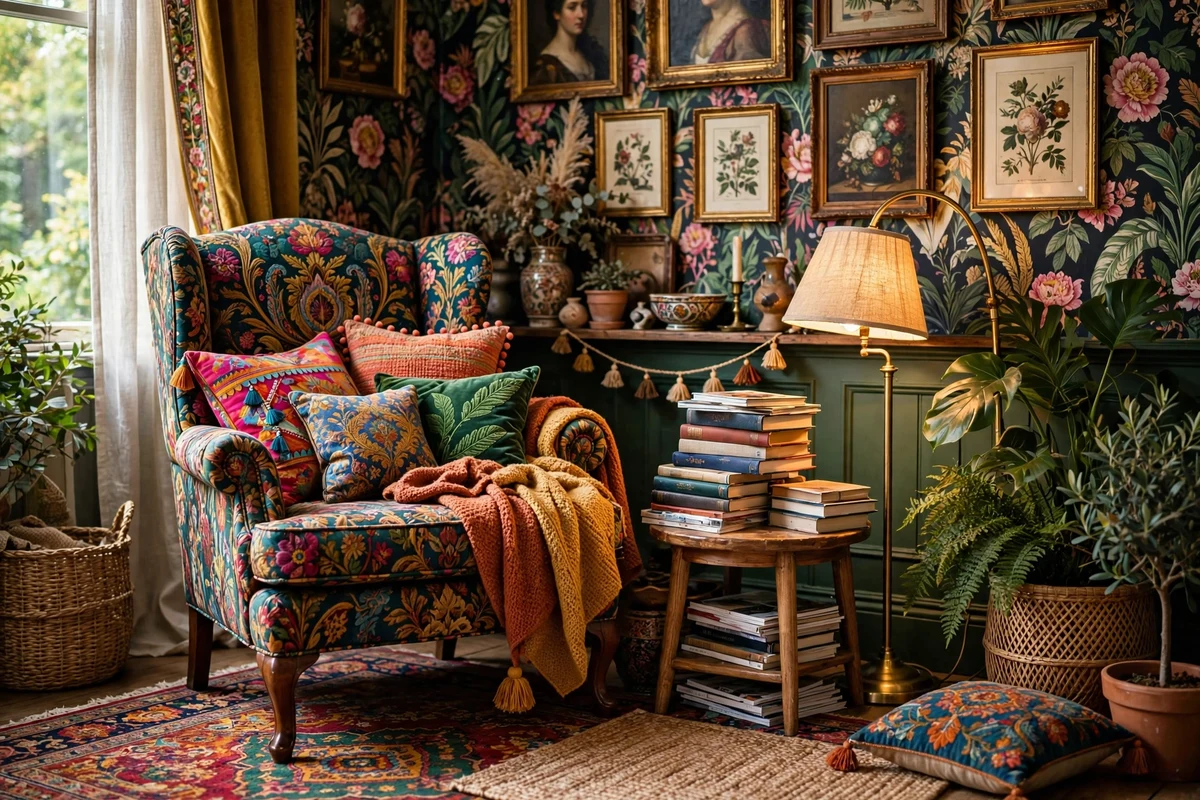
Carve a corner into a reading nook that concentrates maximalism in one spot: a patterned wingback chair ($250 to $700), a brass floor lamp ($80 to $200), a small table stacked with books, and a throw in a clashing print. Add a framed print or two on the adjacent wall and a plant at the chair’s side. Total budget runs $300 to $900, and the nook becomes the room’s most fought-over seat.
Pro tip: Angle the chair toward the room, not the wall. A nook should feel connected to the party, not exiled from it.
Design Notes: Mixing Maximalism with Other Styles
Maximalism plays well with others when you borrow its confidence and keep your anchor colors steady. If you love the layered look but want it a touch more curated, our eclectic living room ideas show how to mix eras without chaos. For the glamorous side of abundance, the art deco living room ideas bring mirrored surfaces and geometric pattern into the mix. Vintage lovers will find kindred spirit in our retro living room ideas, full of lava lamps and sunburst clocks. And if all this layering ever feels like too much, the minimalist living room ideas prove the power of restraint. For bedroom maximalism with old-Hollywood shine, see our Hollywood regency bedroom ideas.
Frequently Asked Questions
What is the difference between maximalism and clutter?
Intent. Maximalism repeats colors, balances scale, and gives every object a deliberate home, while clutter is accumulation without a plan. If you can explain why each piece is where it is, you have maximalism. Trays, color repetition, and odd-number groupings are the tools that keep abundance looking curated.
Can a small living room handle maximalist style?
Absolutely, and small rooms often wear it best. Use a dark or saturated wall color to blur boundaries, keep furniture scaled to the room, and concentrate pattern in textiles rather than bulky pieces. A small room with a gallery wall, layered rugs, and mixed pillows feels jewel-box cozy, not cramped.
How many patterns can I mix in one room?
There is no fixed number, but a reliable formula is three to five patterns sharing two or three colors. Vary the scale, one large, one medium, one small, so patterns layer instead of competing. Stripes and solids count as visual rest between bolder prints.
Is maximalism expensive to achieve?
It can be the cheapest style of all because it celebrates vintage, thrifted, and collected pieces. Paint, thrifted frames, flea-market furniture, and remnant fabrics deliver most of the look. Spend your budget on the few things you touch daily: the sofa, the rug underfoot, and good lighting.
How do I start if my room is currently neutral?
Begin with the walls or the rug, the two largest surfaces, then add pillows, art, and objects over time. Live with each layer for a week before adding the next. Maximalism built slowly looks collected; maximalism bought in one weekend looks like a showroom.
Does maximalism work with kids and pets?
Yes, with smart fabric choices. Performance velvets, washable rug layers, and slipcovered pieces handle real life beautifully. Keep precious or fragile objects on higher shelves and choose poufs and ottomans, which survive climbing far better than delicate side tables.
Final Thoughts
Maximalism is permission to love what you love out loud. Start with the layer that excites you most, whether that is a jewel-tone wall, a gallery of frames, or a velvet chesterfield, and build outward with colors that repeat and patterns that vary in scale. Remember the guardrails: anchor everything in two or three colors, group in odd numbers, and give the eye places to rest with solid textures between the prints. Done well, a maximalist living room never feels finished in the best way, there is always one more treasure to add, one more story to tell. Pour yourself something nice, hang the art floor to ceiling, and let the room be as interesting as you are.