
34 Art Deco Living Room Ideas for Glamorous Style
34 Art Deco Living Room Ideas for Glamorous Style
Art deco never really left. It just waited for the right moment to return, and that moment is now. Born in 1920s Paris and perfected in Jazz Age New York, this style blends geometric precision with unapologetic glamour. Think mirrored surfaces, rich jewel tones, lacquered finishes, and gold details that catch candlelight from across the room. The magic of art deco lies in its balance: bold symmetry keeps the drama controlled, while luxe materials like velvet, marble, and brass do the talking. Whether you want a full Gatsby-era transformation or just a few deco accents layered into a modern living room, these 34 ideas will help you build a space that feels polished, confident, and timeless. From sunburst mirrors to emerald velvet sofas, every idea below comes with real price ranges and a pro tip to get the look right.
The Foundation: Walls, Floors and Light
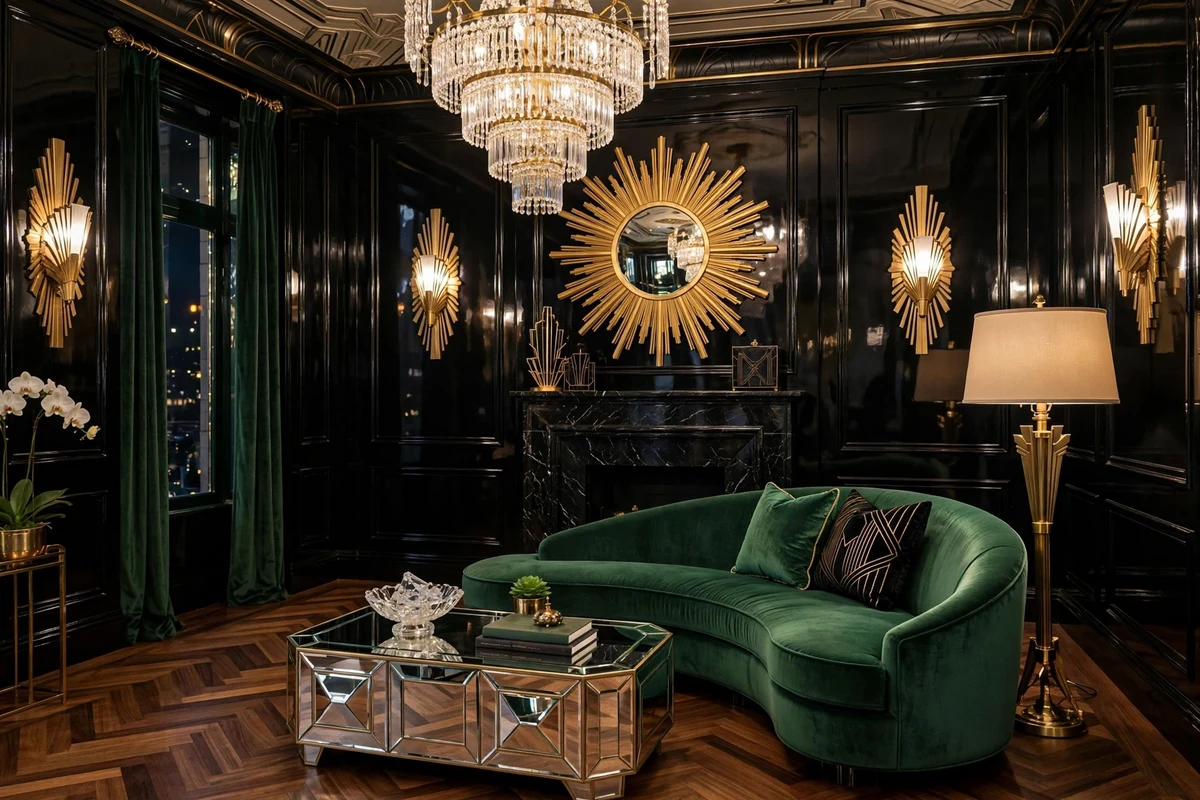
1. Go Dramatic With Black Lacquer Walls
Nothing says art deco like high-gloss black walls. A lacquered finish reflects light around the room, making the space feel deeper and more theatrical, just like a 1920s cocktail lounge. Keep the ceiling white or cream so the room does not close in on you, and let gold picture lights or brass sconces pop against the dark surface. A gallon of high-gloss black paint runs $55 to $90, and most living rooms need three to four gallons plus primer ($25 to $40). Pro tip: Test the gloss level on a poster board first. Full gloss shows every wall imperfection, so skim-coat rough walls before you commit.
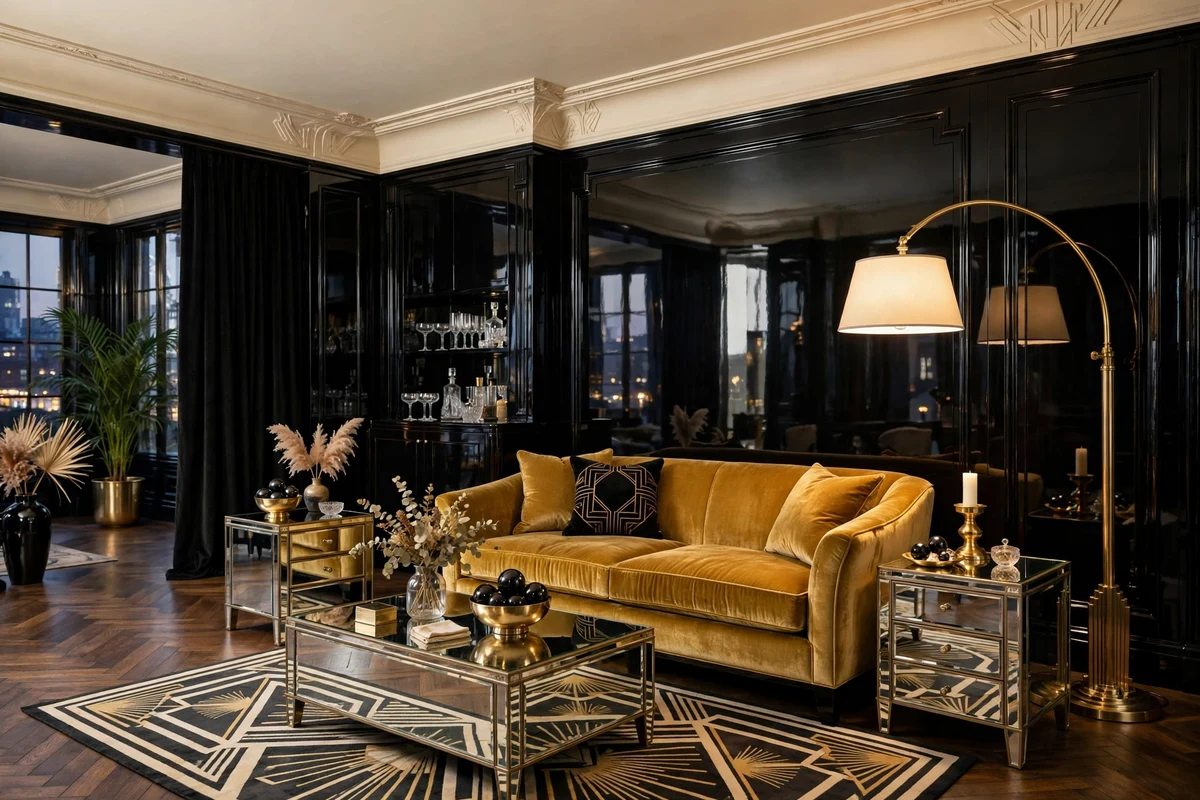
2. Install Geometric Art Deco Wallpaper
Fan motifs, chevrons, and stepped skyscraper patterns are the signature prints of the deco era. A metallic gold-on-charcoal wallpaper behind the sofa creates an instant focal wall with serious vintage pedigree. Peel-and-stick versions cost $40 to $70 per roll, while traditional paste-the-wall paper runs $80 to $150 per roll. Measure carefully: one roll typically covers about 56 square feet. Pro tip: Use deco wallpaper on one wall only. Covering all four walls can overwhelm a small living room and eats your budget fast.
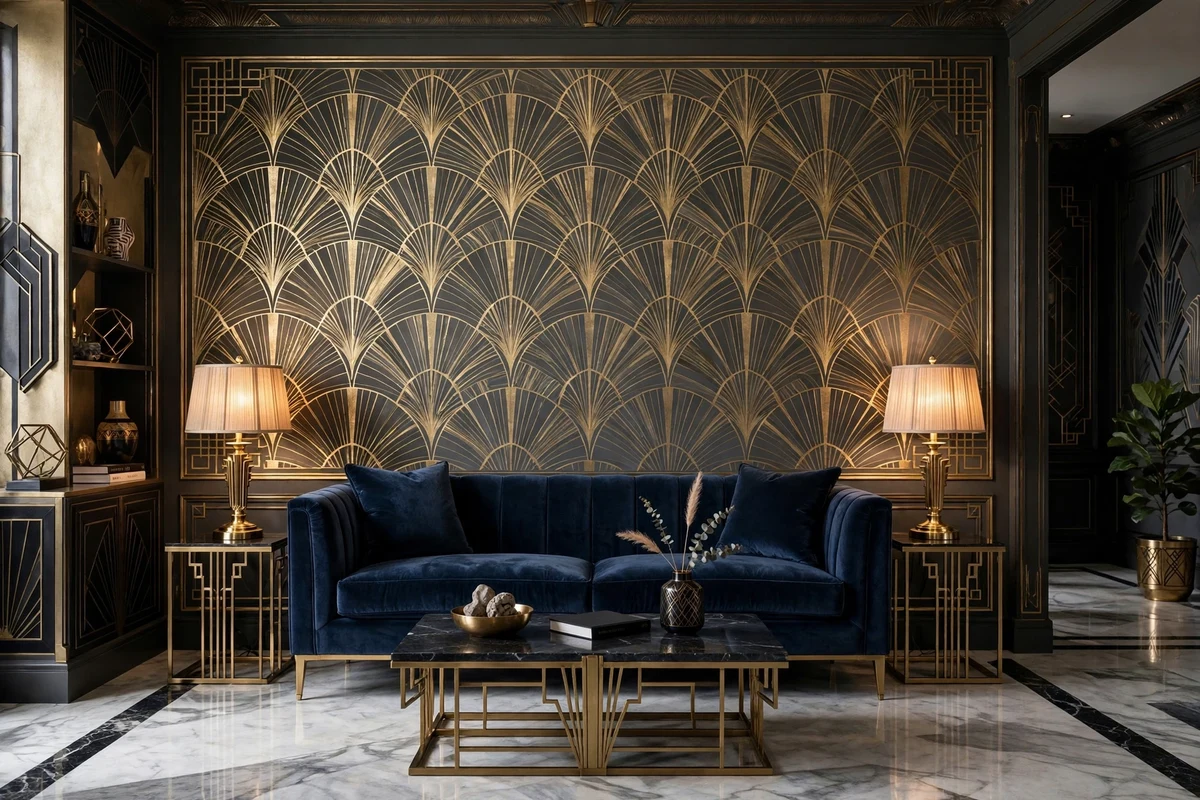
3. Hang a Sunburst Mirror as the Focal Point
The sunburst mirror is the single most recognizable art deco accessory, and it works over a mantel, console, or sofa. Gold and brass finishes feel authentic, while black and chrome versions suit a more modern take. Expect to pay $60 to $180 for a quality 30 to 40 inch sunburst mirror from home decor retailers. Pro tip: Center it at eye level, roughly 57 inches from the floor to the middle of the mirror. Hanging it too high is the most common mistake.
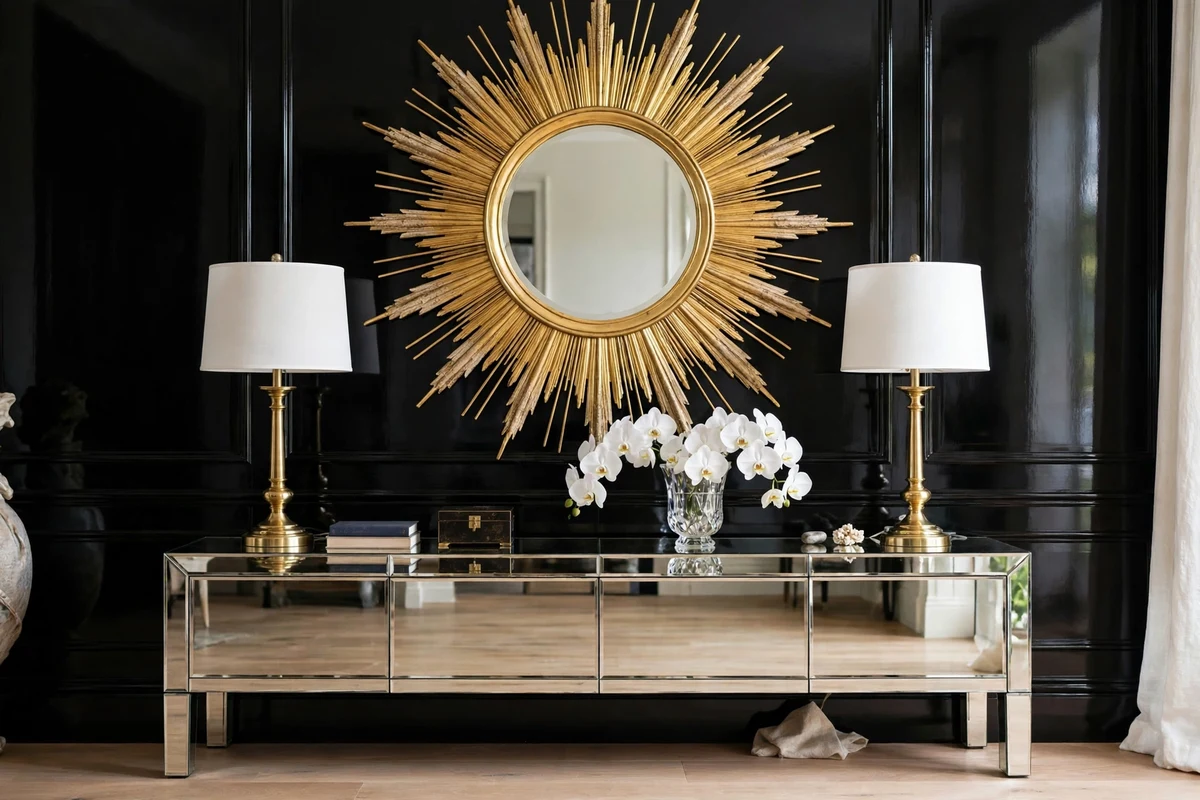
4. Lay Polished Marble or Marble-Look Tile
Deco interiors loved hard, reflective floors. Polished marble, or a convincing marble-look porcelain tile, bounces light around the room and sets a luxurious base for everything above it. Real marble tile costs $12 to $25 per square foot installed, while marble-look porcelain runs $4 to $9 per square foot. For renters, marble-pattern vinyl planks at $2 to $4 per square foot deliver the look without the commitment. Pro tip: Choose large-format tiles (24 inches or bigger) to minimize grout lines and keep the surface looking seamless.
5. Light the Room With a Tiered Chandelier
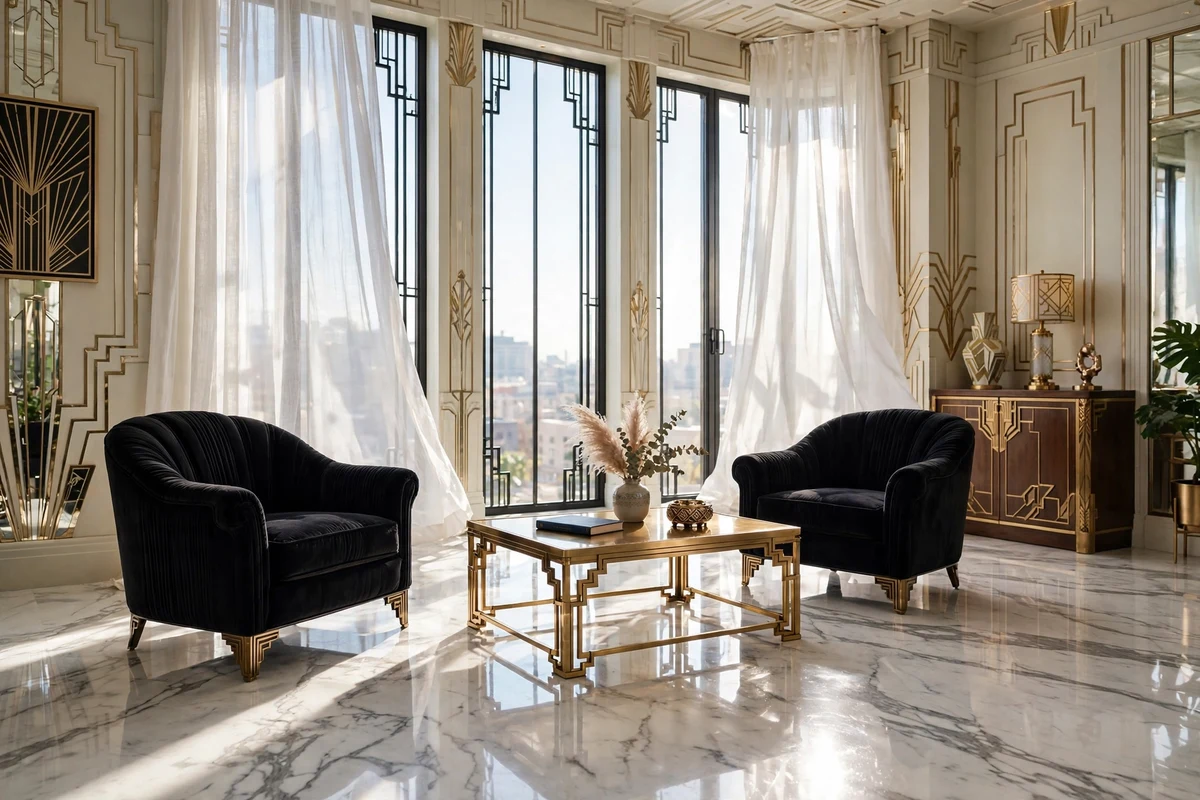
A tiered crystal or frosted-glass chandelier is the crown jewel of any deco living room. Look for stepped, waterfall, or globe-cluster designs that echo 1930s skyscraper silhouettes. Decent reproductions start around $150 to $400, while larger statement pieces run $600 to $1,500. Always check the hanging weight against your ceiling box rating. Pro tip: Hang the chandelier so its lowest point sits 30 to 36 inches above the coffee table, or at least 7 feet above the floor in open areas.
6. Paint the Ceiling a Deep Lacquered Color
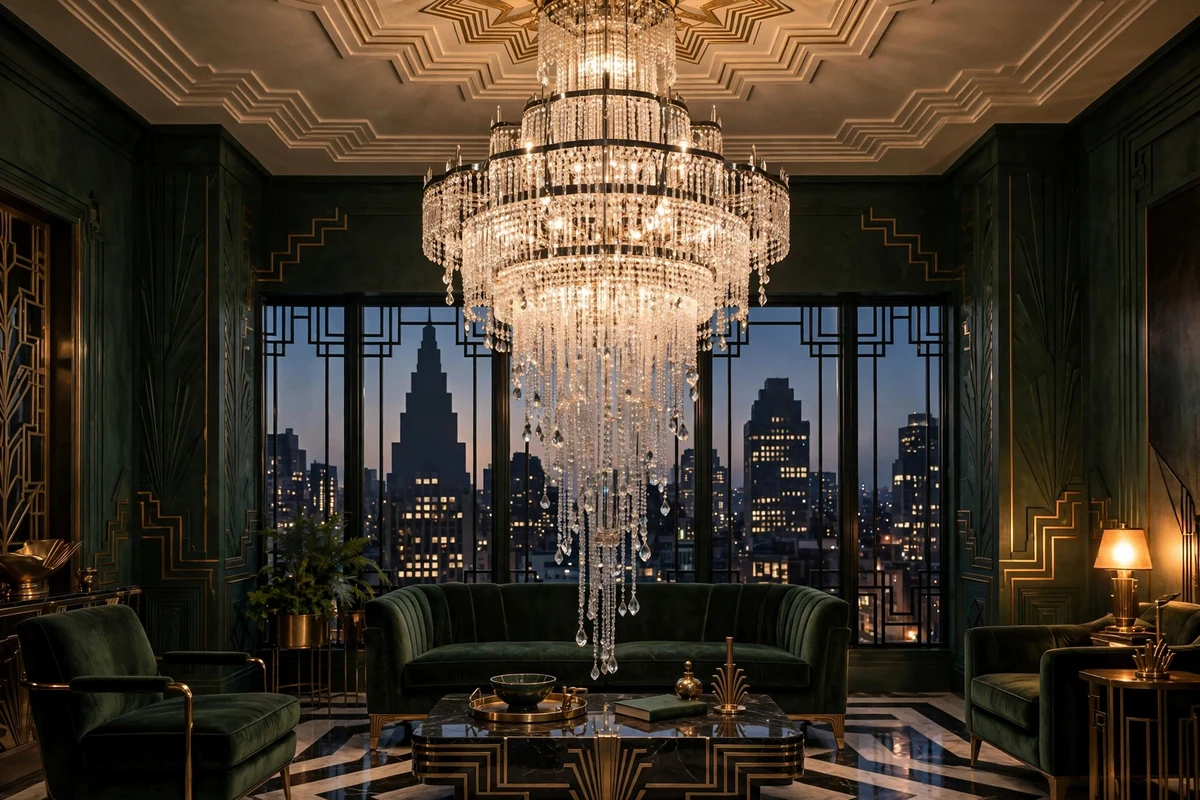
Deco designers treated the ceiling as a fifth wall. A deep emerald, navy, or even black ceiling in satin or semi-gloss finish adds drama and makes crystal lighting glow. This is one of the cheapest high-impact changes you can make: two gallons of quality ceiling paint cost $70 to $120 total. Pro tip: This trick works best in rooms with ceilings 9 feet or higher. In an 8-foot room, keep the ceiling light and put the drama on the walls instead.
7. Add Fluted Wall Panels for Texture
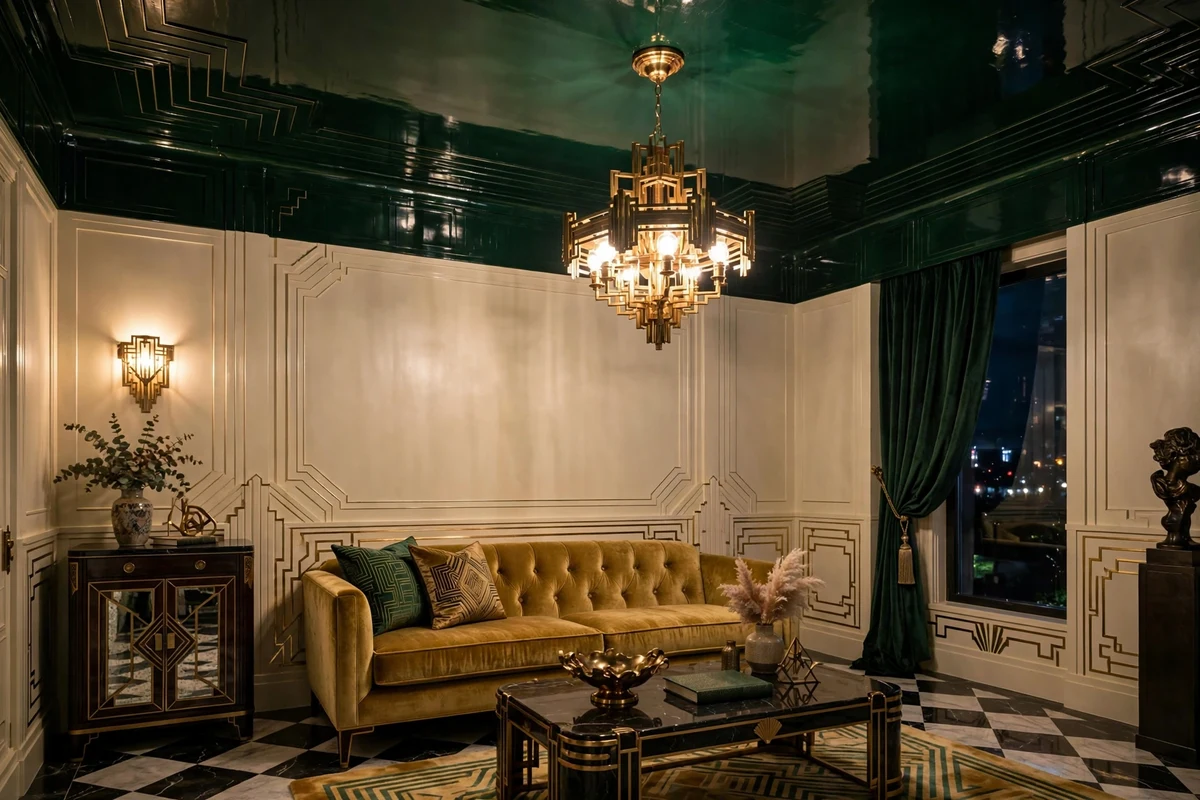
Vertical fluting is pure deco. Fluted wood or MDF panels add rhythm and shadow to flat walls, and they look expensive even in budget materials. Ready-made fluted panels cost $3 to $8 per square foot, and a weekend DIY install needs only construction adhesive and a brad nailer. Pro tip: Paint fluted panels the same color as the wall for a subtle, tailored look, or go high-contrast (black flutes on cream walls) for maximum drama.
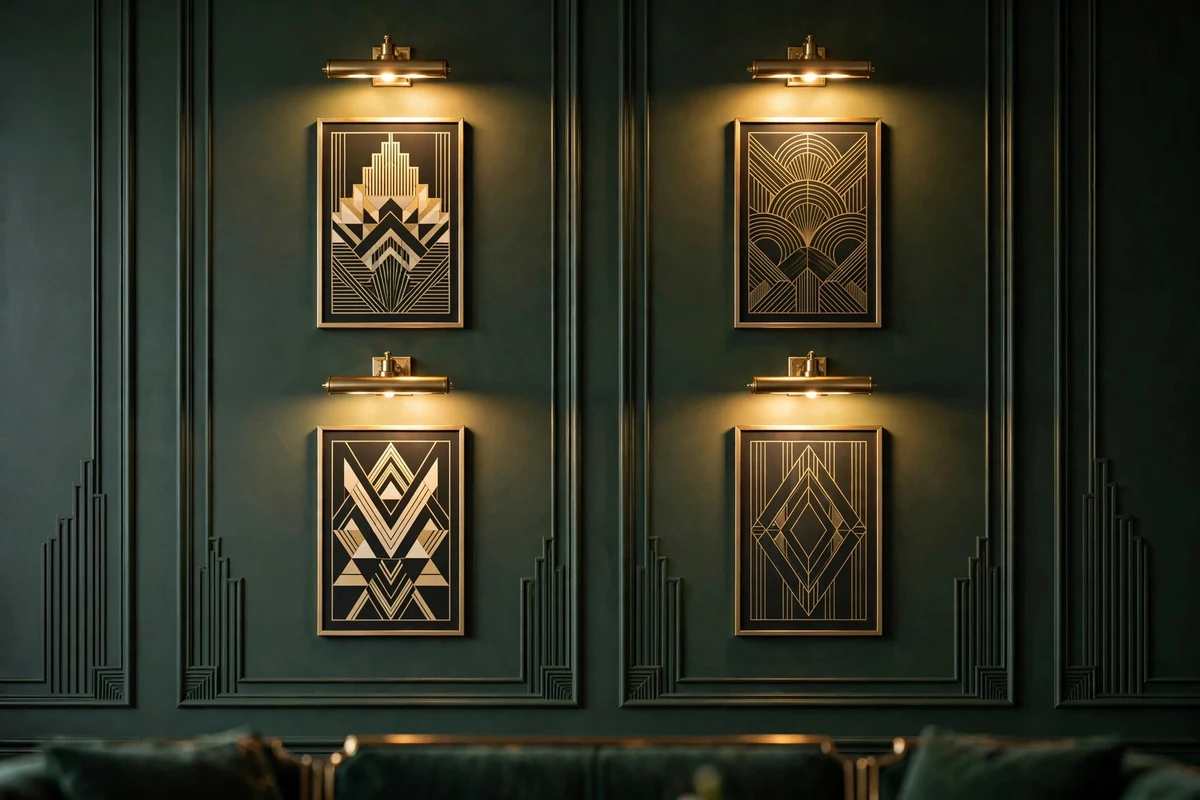
8. Frame Artwork With Brass Picture Lights
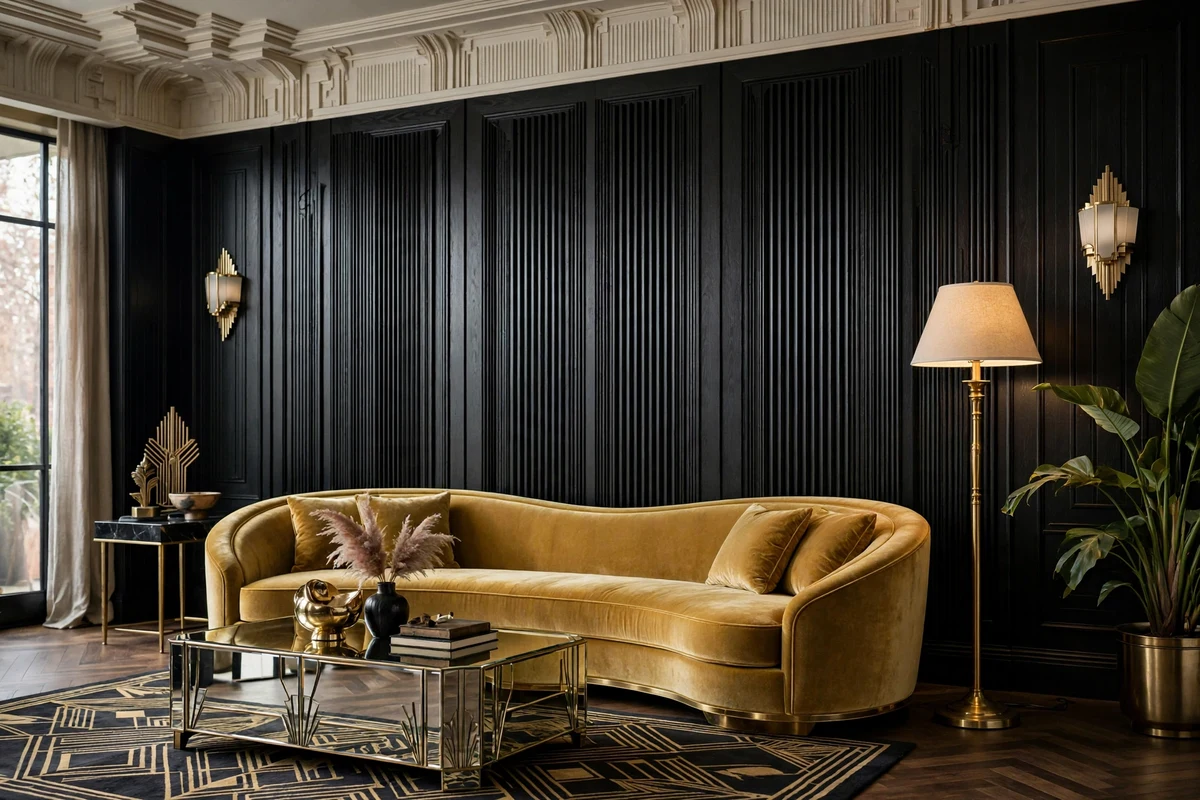
Deco rooms glow in layers, and brass picture lights over framed art are a classic layer. Battery-operated LED versions ($25 to $60 each) install in minutes with no wiring, while hardwired brass fixtures run $80 to $200 plus electrician costs. Pro tip: Use warm 2700K bulbs in every picture light. Cool white light kills the vintage mood instantly.
Furniture With Deco Bones
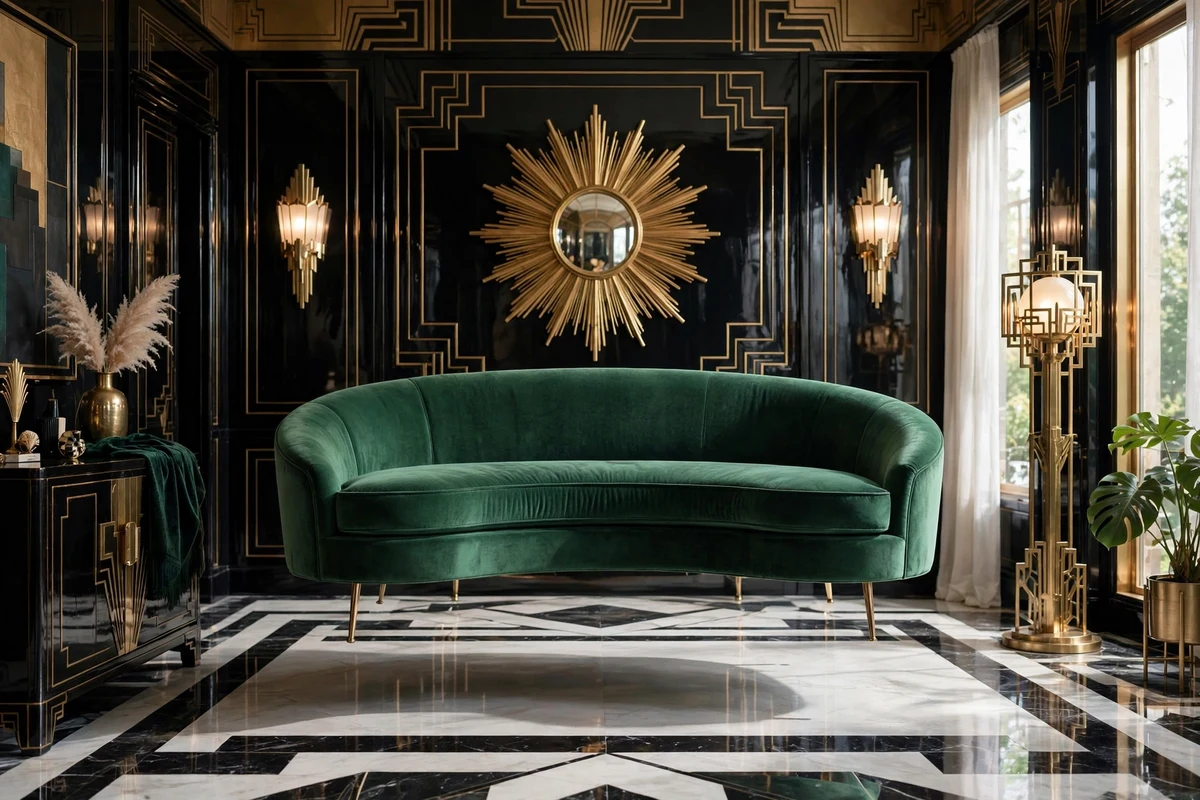
9. Choose a Curved Velvet Sofa
The curved, kidney-shaped sofa is the defining furniture silhouette of art deco. Emerald green, sapphire blue, or blush pink velvet all read authentically deco, and the rounded back softens the room’s hard geometry. Quality velvet curved sofas run $900 to $2,500 depending on size and fabric grade. Pro tip: Float a curved sofa away from the wall, angled toward the room’s center. Pushing it flat against a wall wastes its sculptural shape.
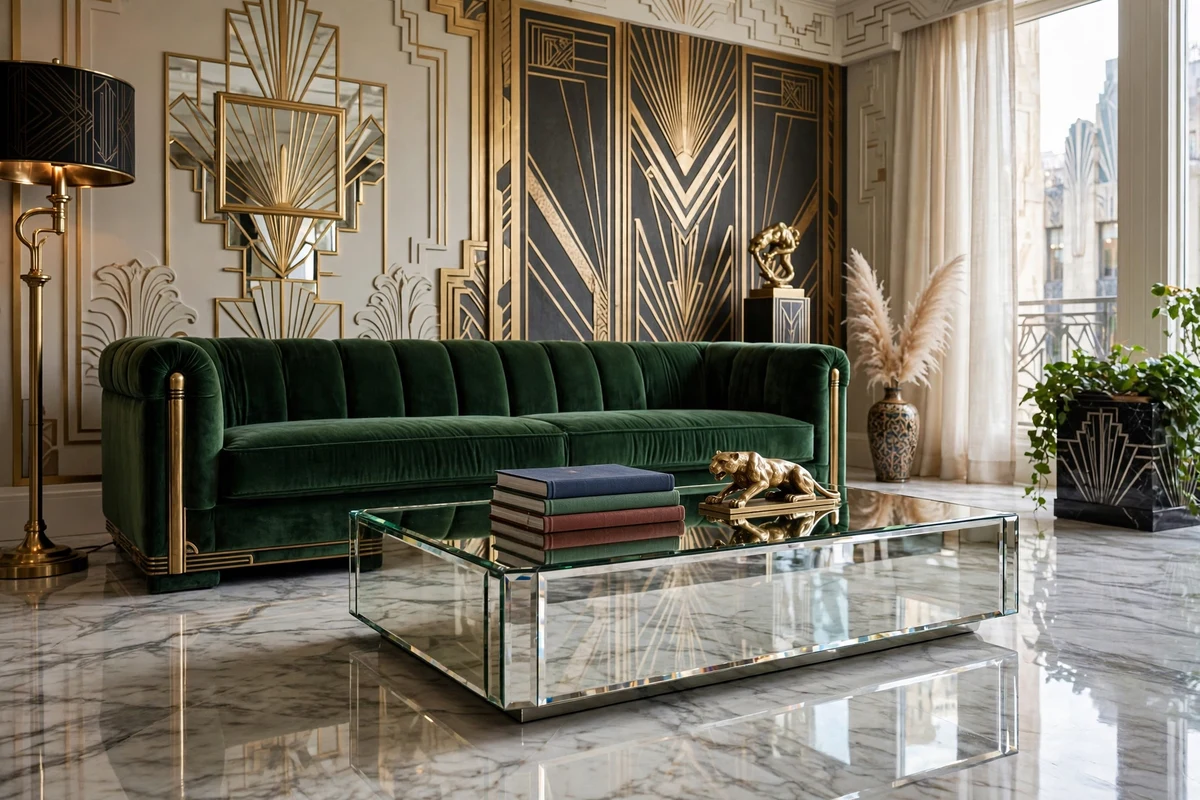
10. Anchor the Room With a Mirrored Coffee Table
Mirrored furniture multiplies light and makes small living rooms feel twice as big. A rectangular mirrored coffee table with beveled edges is the classic deco choice, typically $200 to $600. Smoked mirror finishes hide fingerprints better than clear mirror if you have kids or pets. Pro tip: Keep the tabletop styling minimal: one stack of art books and a small brass object. Clutter ruins the reflective effect.
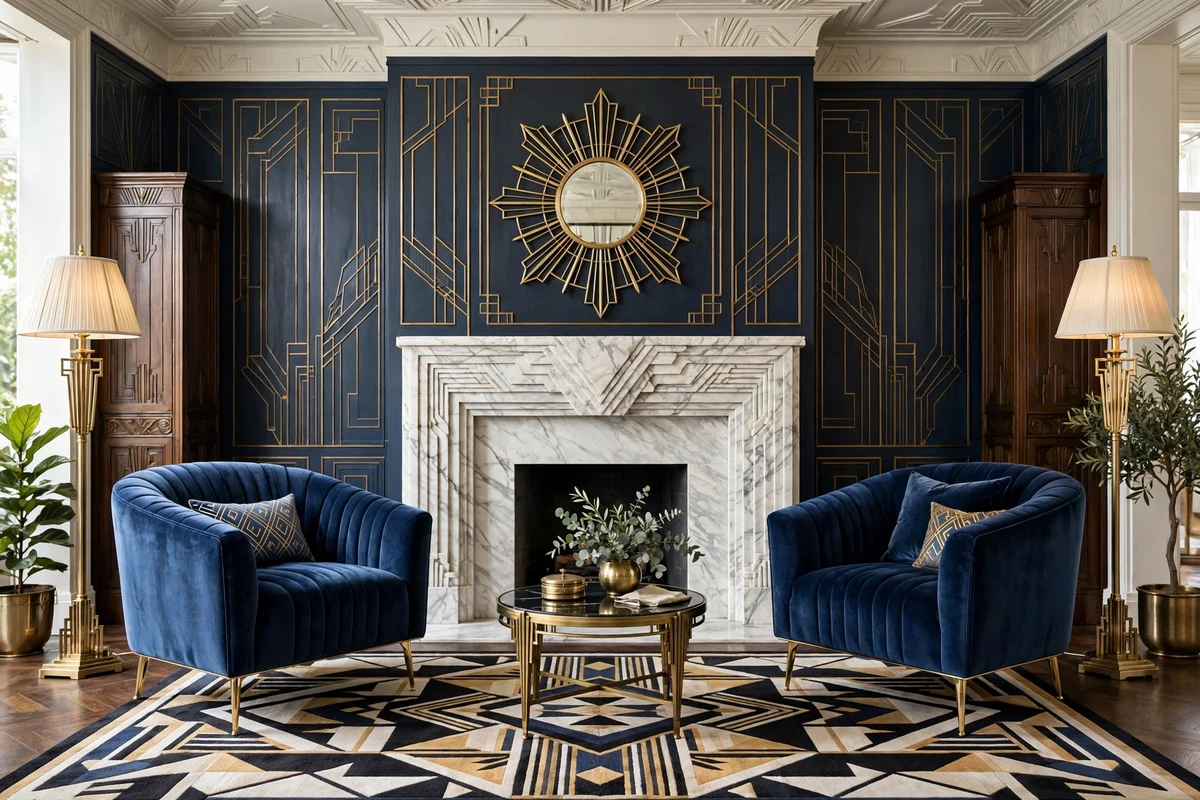
11. Add Channel-Tufted Armchairs
Channel tufting, those long vertical padded rolls, screams 1930s glamour. A pair of channel-tufted armchairs in cream bouclé or navy velvet flanks a fireplace or sofa beautifully. Expect $300 to $800 per chair for well-made versions. Pro tip: Match the chair legs to your other metals. Brass legs with brass lighting keeps the room cohesive; mixed metals need to look intentional, not accidental.
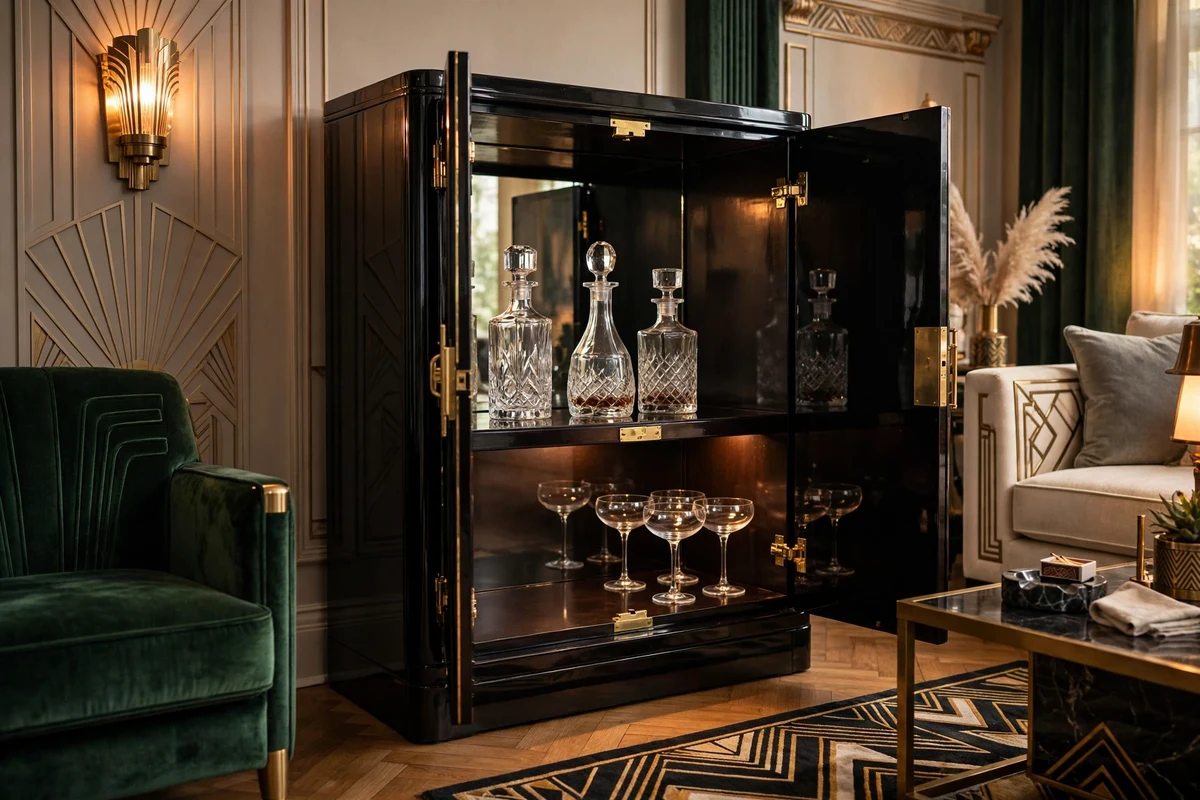
12. Style a Lacquered Bar Cabinet
No deco living room is complete without a proper bar setup. A high-gloss black or deep green bar cabinet with brass hardware stores glassware behind closed doors and opens into a serving station for guests. Vintage-style bar cabinets run $400 to $1,200. Pro tip: Stock it with just the essentials: two spirit bottles, crystal decanters, and a set of coupe glasses. A sparse, edited bar looks more luxurious than a crowded one.
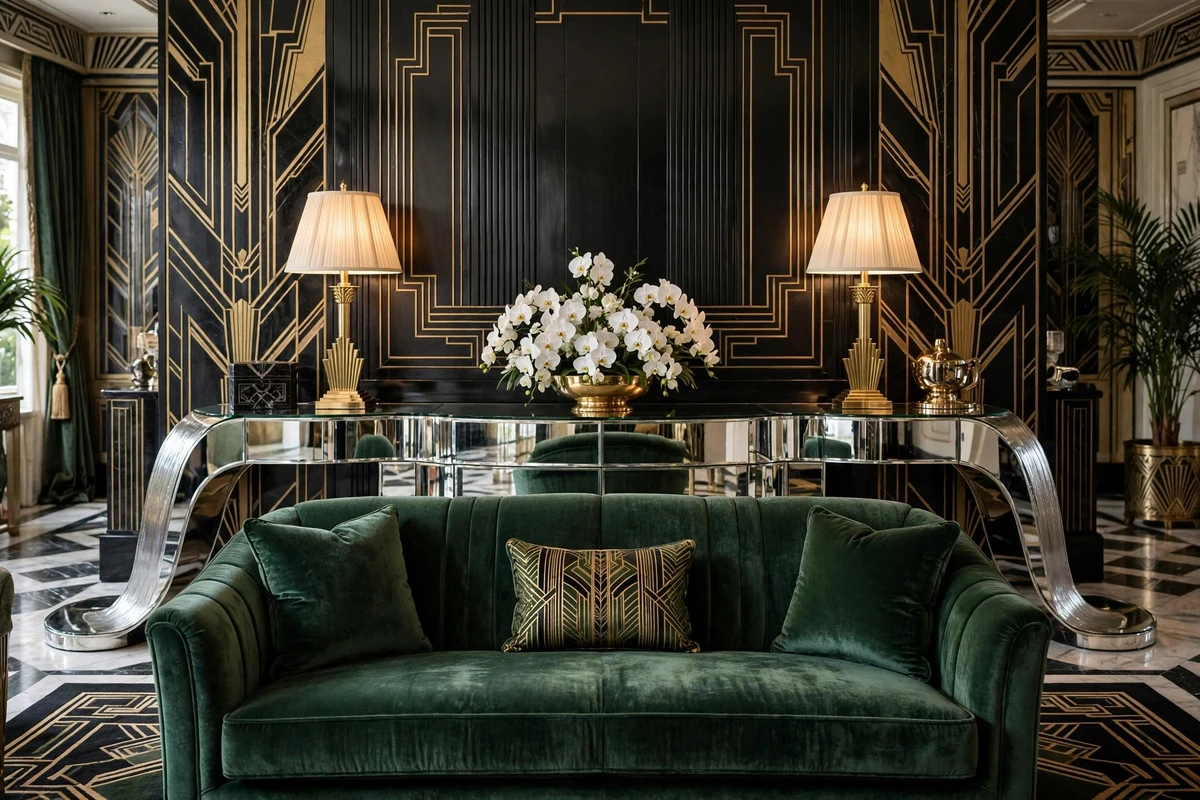
13. Try a Waterfall Console Table
The waterfall console, where the top flows seamlessly down both sides, is a pure deco form. In mirrored glass, lacquer, or burled wood veneer, it works behind a sofa or in an entryway. Prices range from $250 to $900. Pro tip: Style it symmetrically: matching lamps or vases on each end with one low central object. Symmetry is the whole point of deco styling.
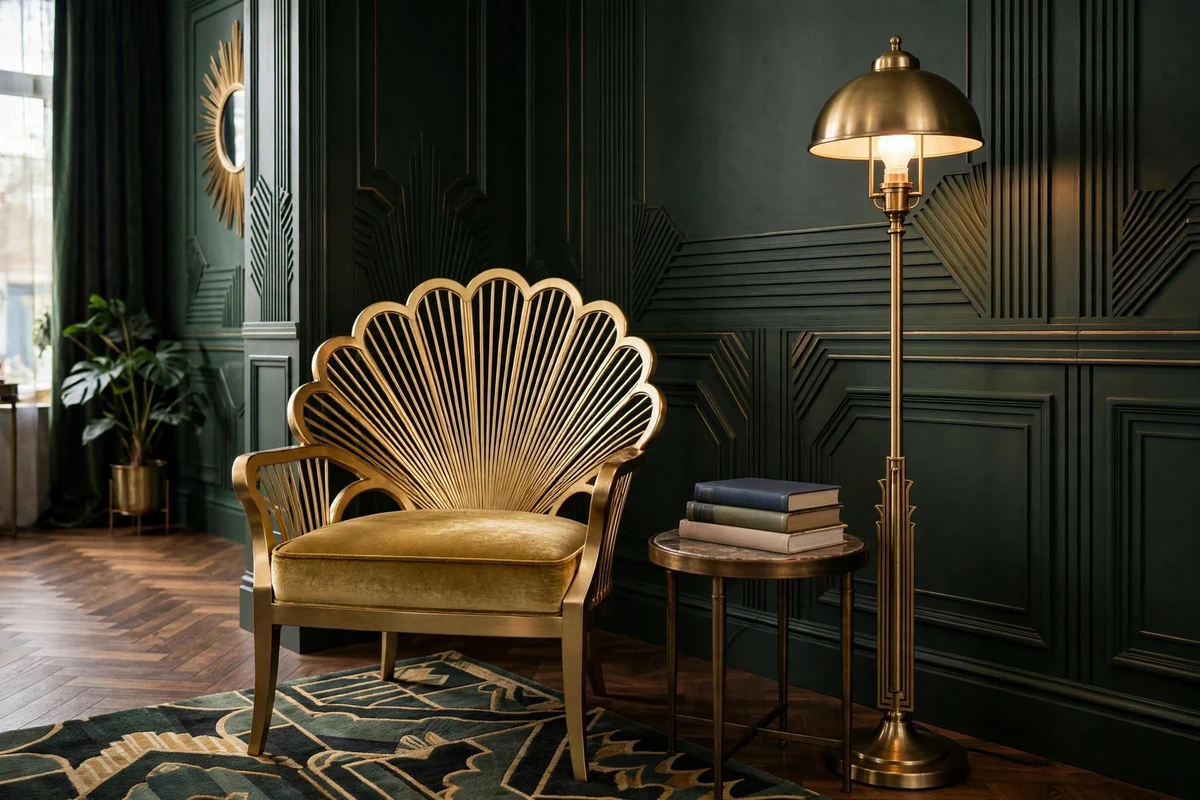
14. Include a Fan-Back Accent Chair
The fan-back chair, with its radiating shell-like backrest, is one of deco’s most distinctive silhouettes. Use one as an accent chair in a reading corner or at a small writing desk. Reproductions cost $250 to $700. Pro tip: One fan-back chair is a statement; two start to look like a set from a hotel lobby. Let it stand alone.
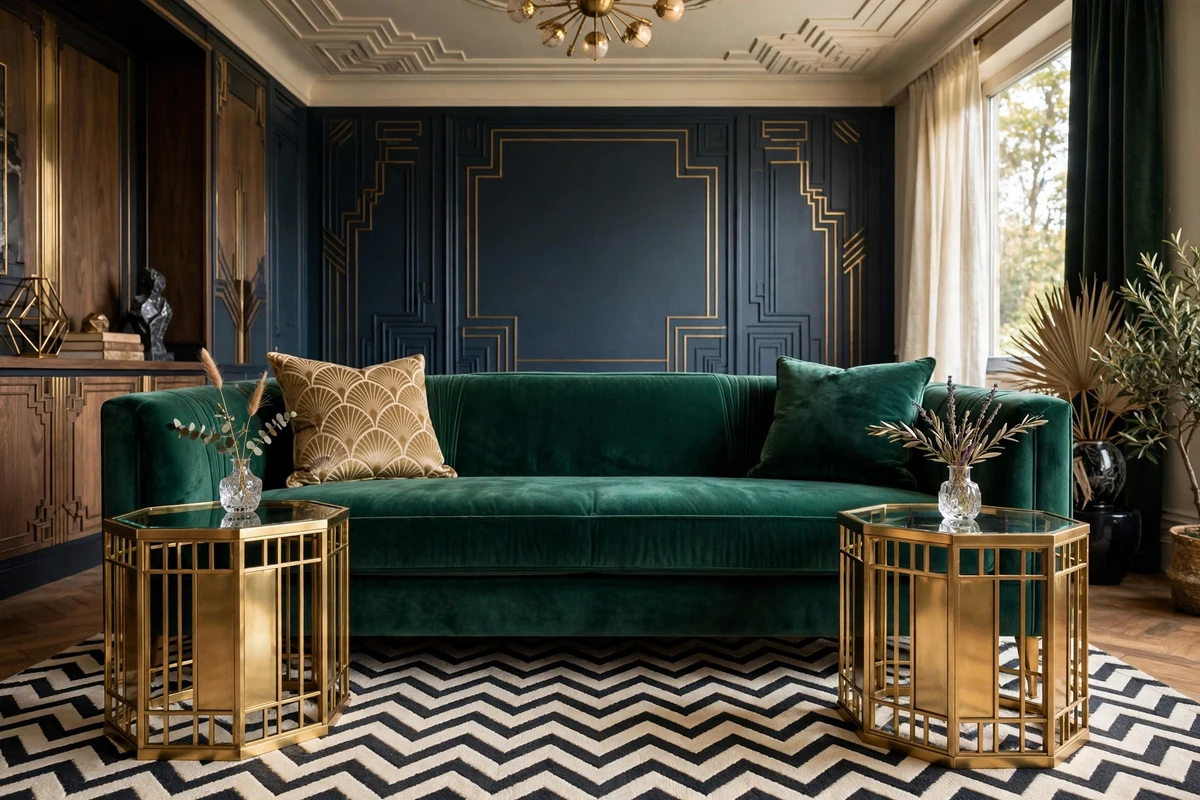
15. Pick Geometric Side Tables
Hexagonal, octagonal, and stepped side tables echo deco’s love of geometry. A pair of brass and glass geometric side tables flanking the sofa costs $80 to $250 each. Nesting sets give you flexible surface space for parties. Pro tip: Keep side tables within 2 inches of your sofa arm height. Too tall or too short looks wrong and makes reaching for drinks awkward.
16. Invest in a High-Gloss Sideboard
A long, low sideboard in high-gloss lacquer or exotic-look veneer grounds the room and hides media equipment, games, and clutter. Look for stepped or sunburst details on the doors for extra deco character. Quality sideboards run $600 to $1,800. Pro tip: Mount the TV above a deco sideboard only if you must. A large framed art print keeps the vintage illusion intact much better.
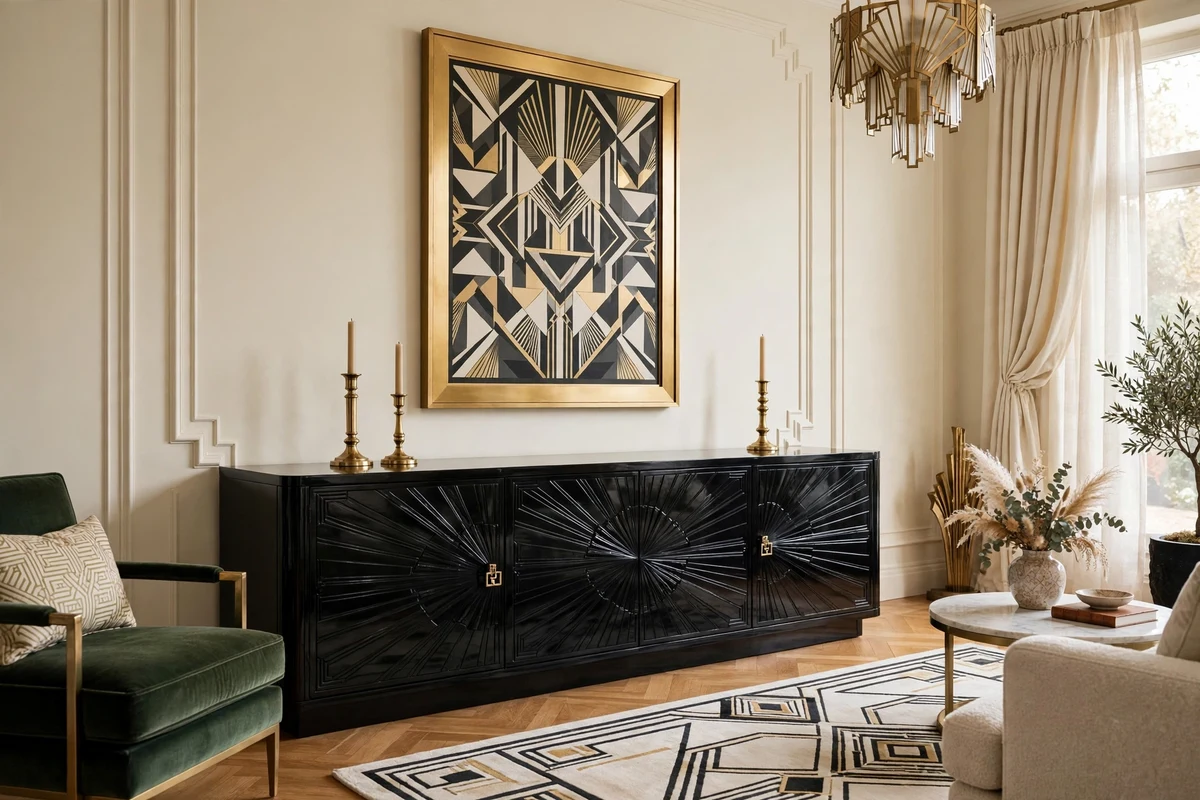
17. Add a Sculptural Arc Floor Lamp
An arc floor lamp in polished brass or chrome adds both light and sculpture. The sweeping curve contrasts beautifully with deco’s straight lines and geometric patterns. Good arc lamps cost $150 to $450. Pro tip: Position the arc so the shade hangs over the coffee table or reading chair, not in the walkway. The base should tuck behind furniture for a clean look.
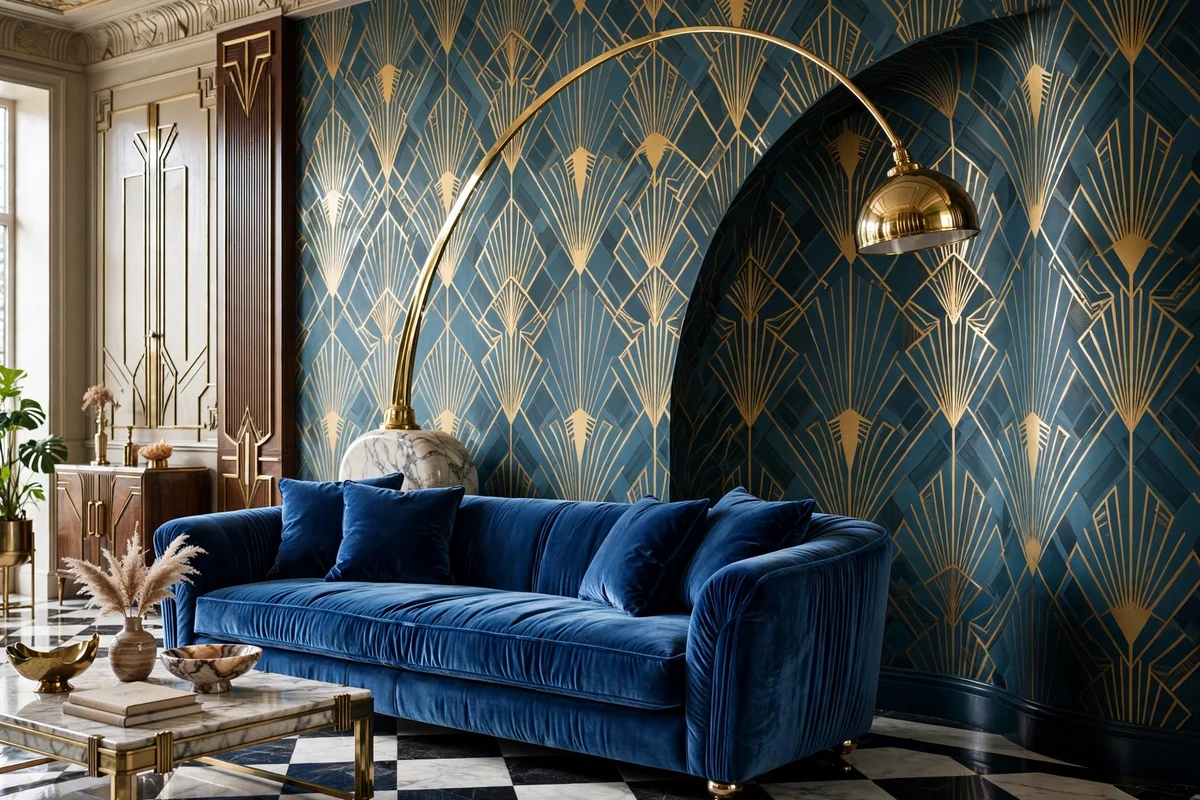
Color, Pattern and Texture
18. Build Around an Emerald and Gold Palette
Emerald green paired with brushed gold is the quintessential deco color story: rich, jewel-like, and endlessly photogenic. Use emerald on the sofa or curtains, gold in lighting and hardware, and warm white on walls to keep it breathable. Velvet yardage in emerald runs $20 to $45 per yard if you are reupholstering. For more palette inspiration, see our French country living room ideas for a softer take on classic color. Pro tip: Add one black element, like a lacquered tray or picture frame, to ground the green and gold so the room does not float.
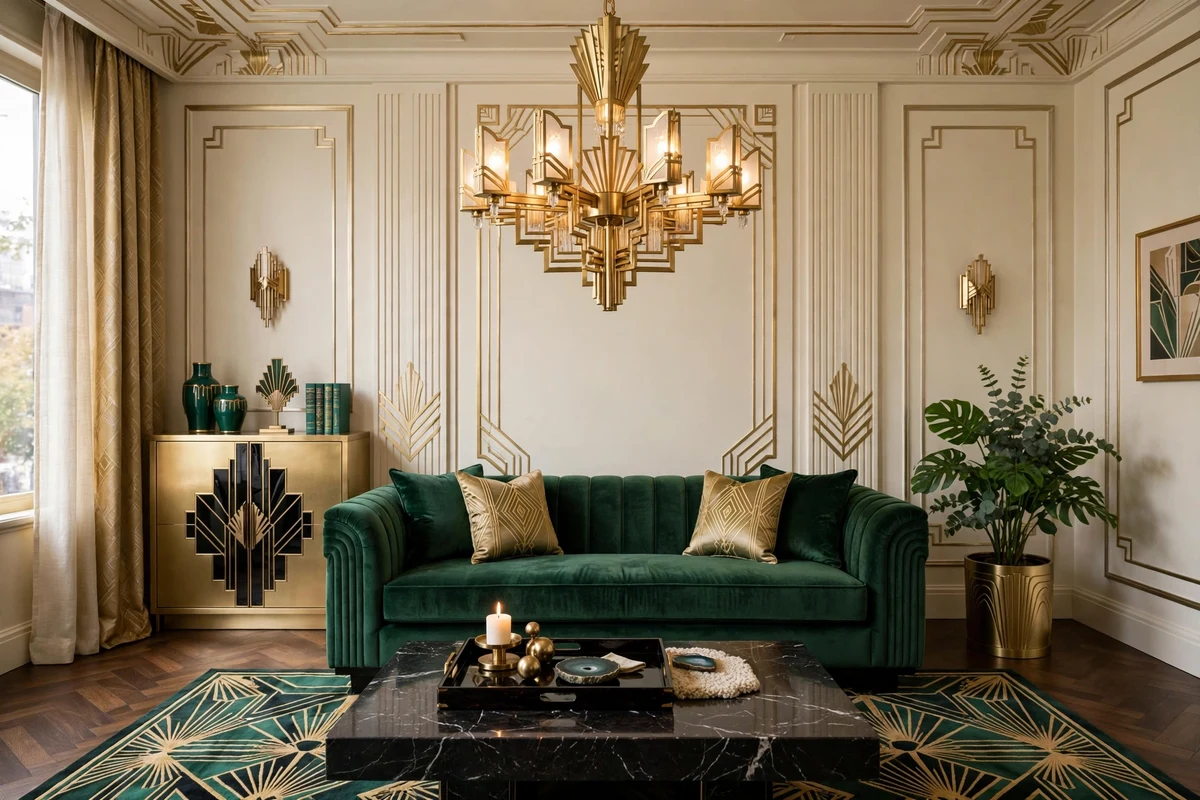
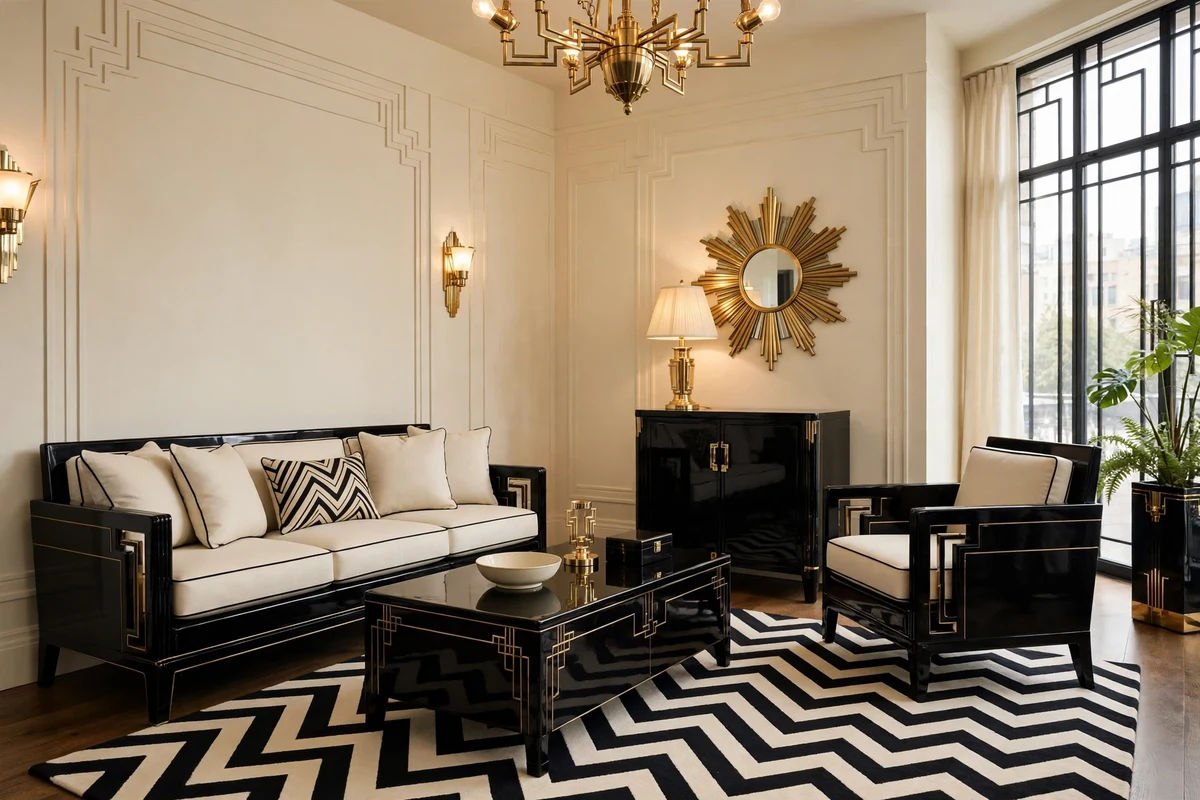
19. Try Bold Black and Cream Contrast
If jewel tones feel like too much, black and cream delivers deco drama with restraint. Cream walls, black lacquered furniture, and brass accents create a graphic, high-contrast room that still feels calm. This palette also makes metallic details work harder, since every gold object pops against the neutrals. Pro tip: Aim for roughly 70 percent cream, 20 percent black, and 10 percent metallic. That ratio keeps the contrast elegant instead of harsh.
20. Layer Fan and Scallop Motifs
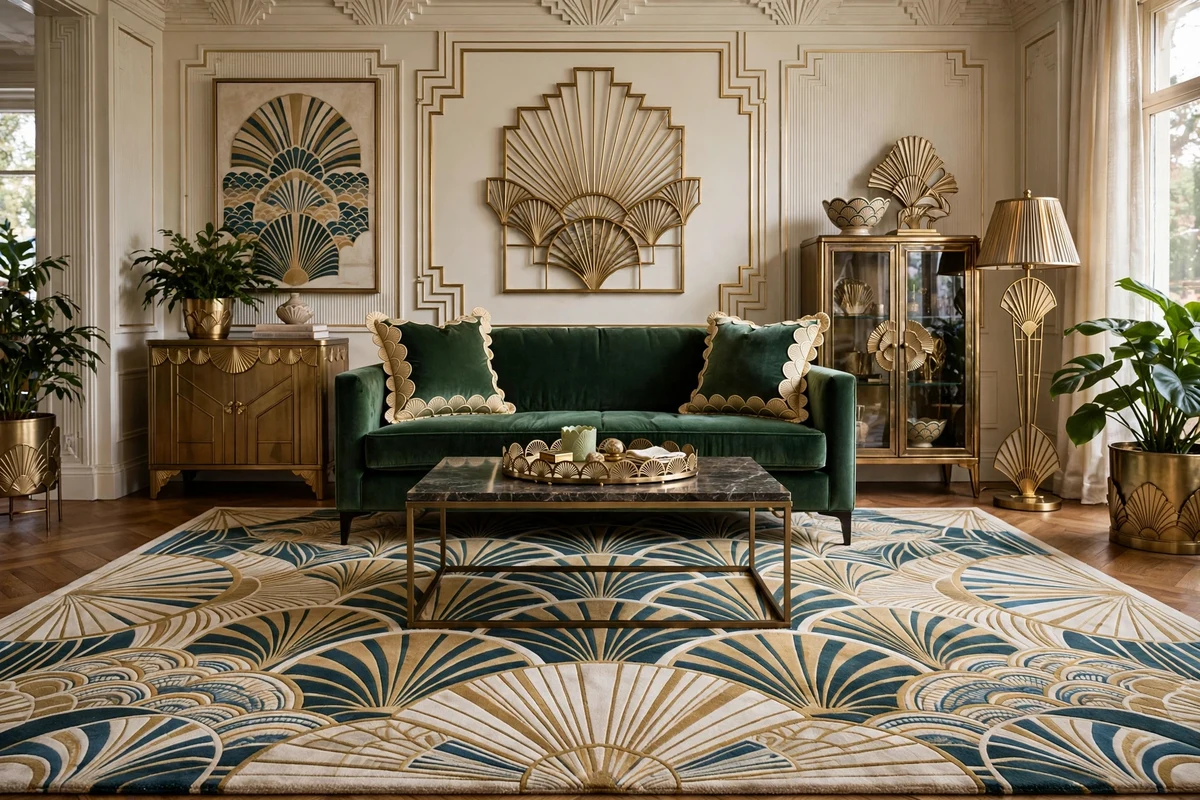
The fan and scallop shapes repeat through every authentic deco interior, from rugs to headboards to tile. Introduce them through a scalloped-edge armchair, fan-pattern throw pillows ($25 to $60 each), or a scallop-trim mirror. Repeating one motif in three places creates a designed, intentional feel. Pro tip: Vary the scale: a large fan motif on the rug, medium scallops on pillows, and a small fan detail on a tray. Same motif, three sizes, zero monotony.
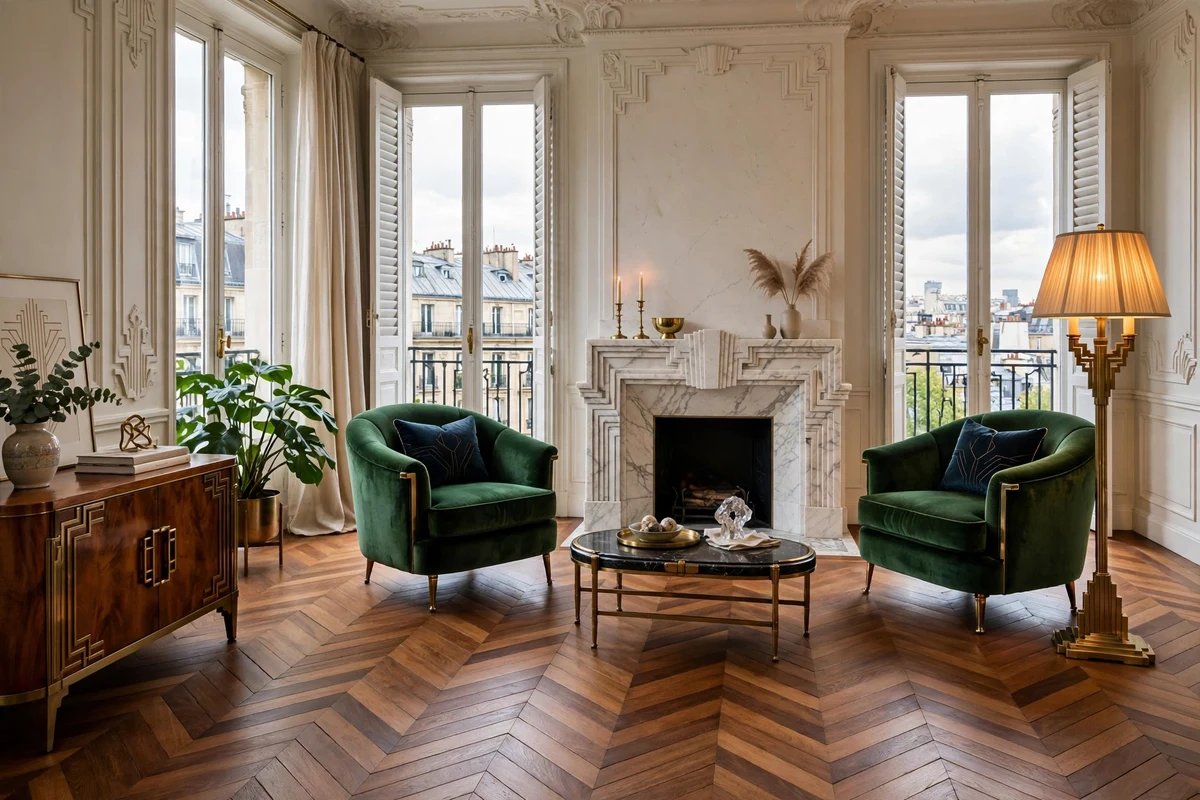
21. Choose Chevron or Herringbone Wood Floors
Chevron-pattern hardwood is a hallmark of Parisian deco apartments. If new floors are out of budget, a chevron-pattern area rug ($120 to $400 for 8×10) delivers the same zigzag energy underfoot. Real chevron hardwood installation runs $10 to $18 per square foot. Pro tip: Run the chevron points toward the room’s focal point, like the fireplace or main window, to draw the eye where you want it.
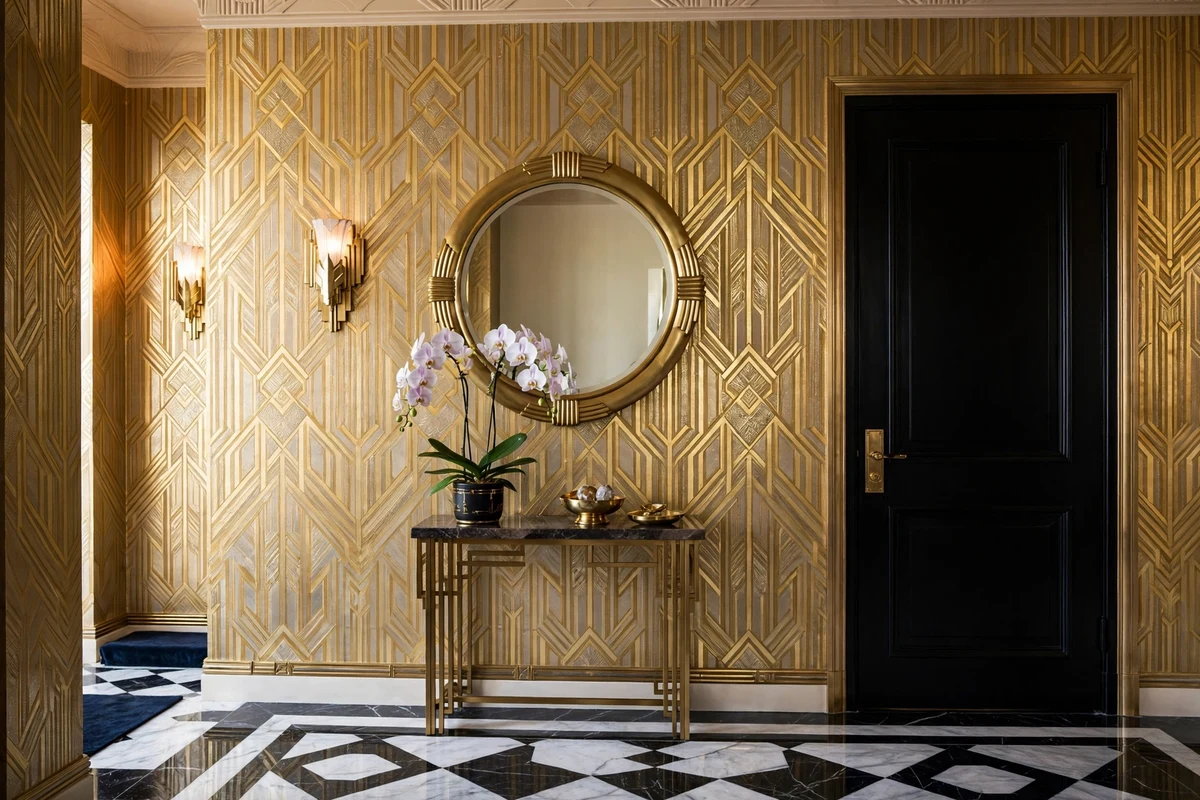
22. Hang Metallic Gold Wallpaper in the Entryway
A little metallic gold goes a long way. Papering just the entryway or the wall behind built-in shelves in gold grasscloth or metallic geometric print ($60 to $120 per roll) gives guests a glamorous first impression without committing the whole living room. Pro tip: Metallic wallpaper shows seams more than flat paper. Hire the hanging out if you have never papered before; a bad seam in metallic finish is very visible.
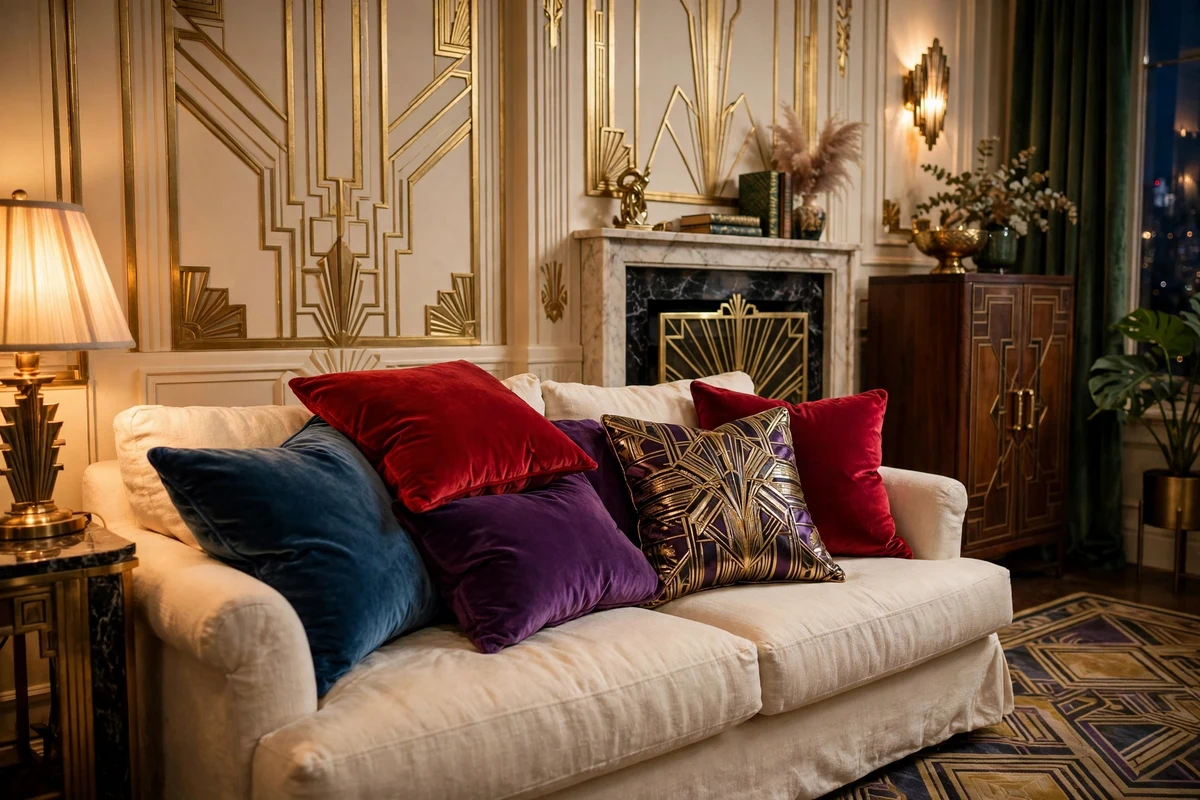
23. Pile On Jewel-Toned Velvet Textiles
Velvet is the deco fabric, full stop. Layer jewel-toned velvet throw pillows in sapphire, ruby, and amethyst over a neutral sofa for instant richness. Quality velvet pillow covers cost $20 to $45 each. Mix in one metallic or embroidered pillow per arrangement so the solids do not look flat. If you love mixing rich textures, our eclectic living room ideas show how to layer bold fabrics with confidence. Pro tip: Steam velvet pillows instead of ironing them. Direct heat crushes the pile and leaves shiny marks.
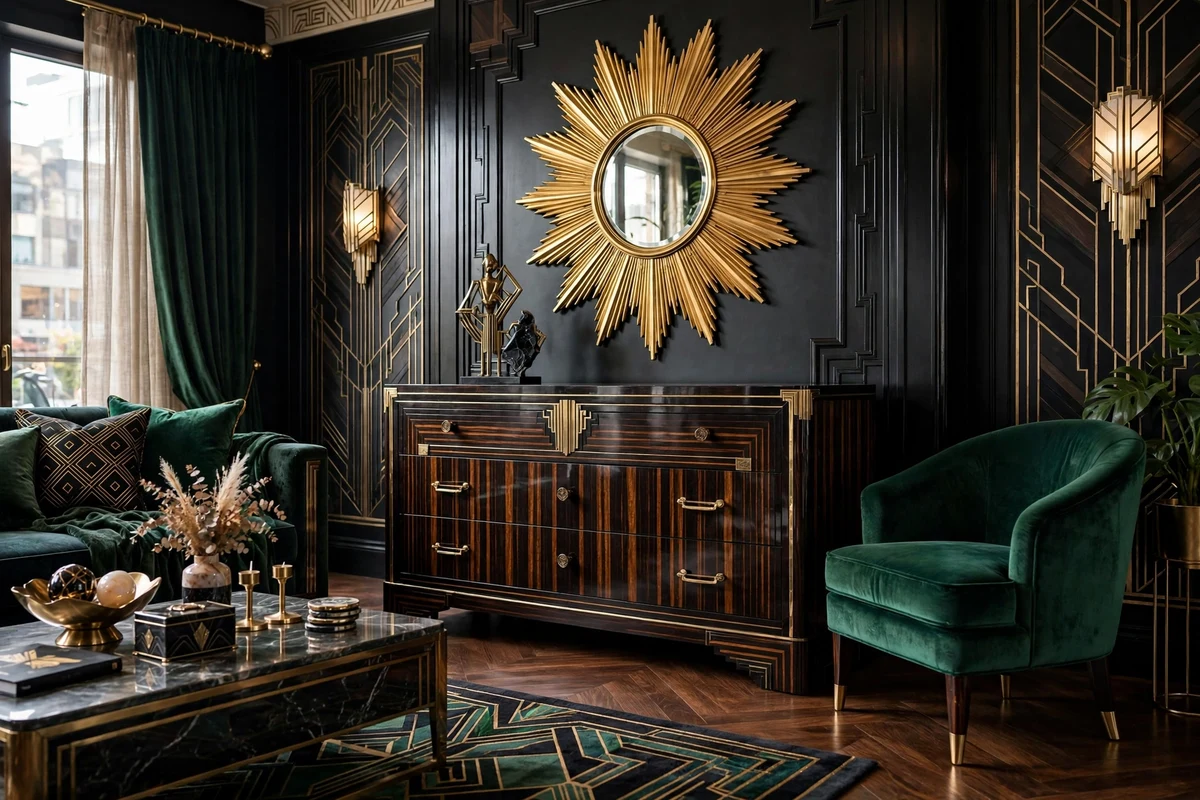
24. Add Macassar Ebony Accents
Macassar ebony, with its dramatic striped grain, was the luxury wood of the deco era. Real ebony veneer furniture is pricey ($1,000 plus), but ebony-look laminate or contact paper on a thrifted dresser ($15 to $30 in materials) captures the striped drama for almost nothing. Pro tip: Use ebony accents sparingly: one dresser or a pair of nightstands. The bold grain fights for attention if it covers too much surface.
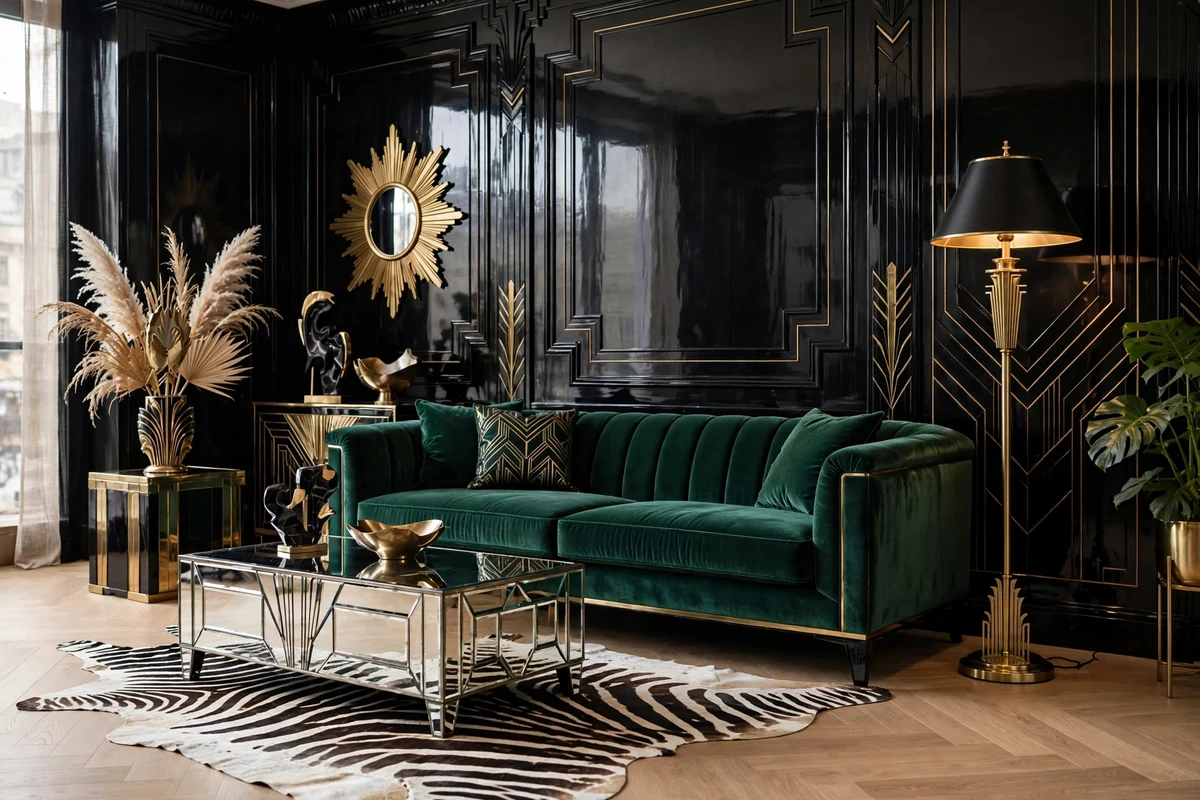
25. Lay an Animal Print Rug
Zebra and leopard prints were deco-era favorites, adding wild contrast to all that geometry. A zebra-print cowhide rug ($200 to $600) or a leopard-pattern wool rug ($150 to $450) under the coffee table brings the look home. Faux versions look convincing and cost half as much. Pro tip: Treat animal print as a neutral. It pairs with almost any color, so do not be afraid to layer it over emerald, navy, or blush.
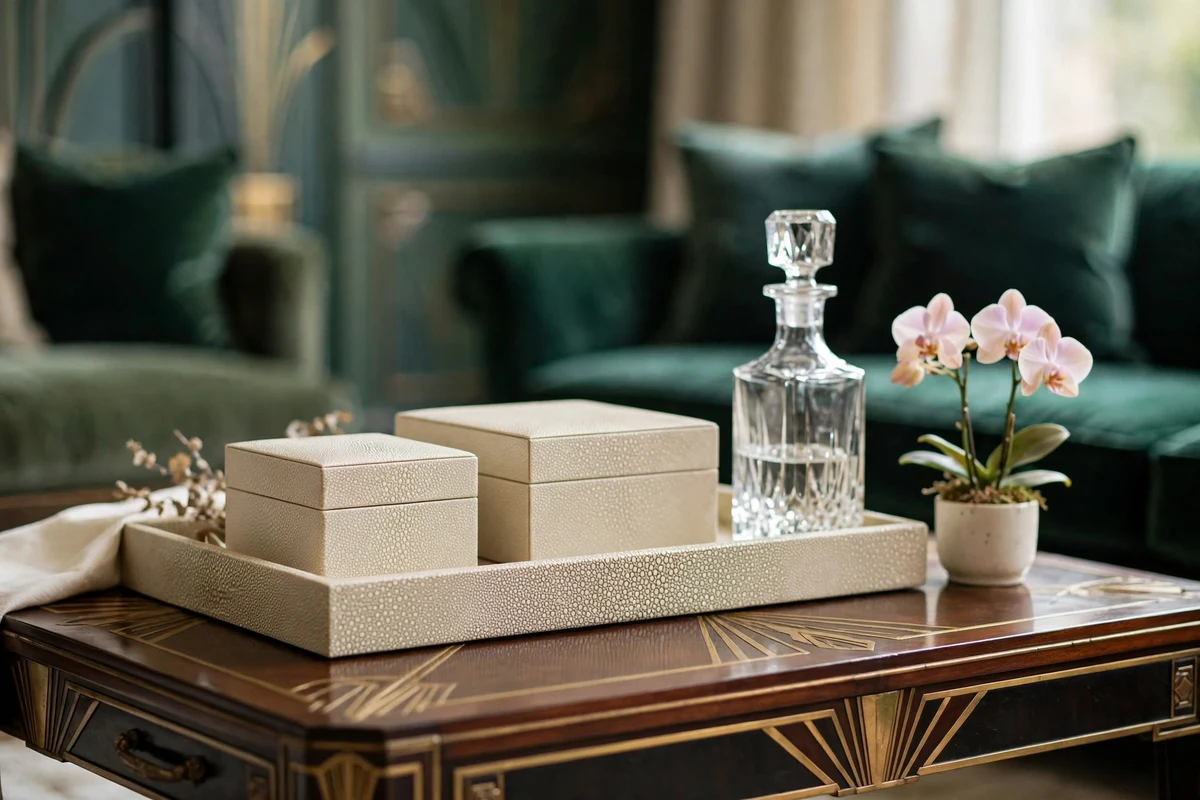
26. Introduce Shagreen Texture Details
Shagreen, the pebbled stingray leather prized by deco designers, now comes in convincing faux versions. Shagreen-look trays, boxes, and side tables ($40 to $150) add an exotic, tactile layer that guests will want to touch. For a calmer take on luxe minimalism, browse our Japandi living room ideas to see how texture carries a quiet room. Pro tip: One shagreen tray on the coffee table is enough. The texture is distinctive, so a little reads as curated while a lot reads as a theme restaurant.
Finishing Touches: Deco Details
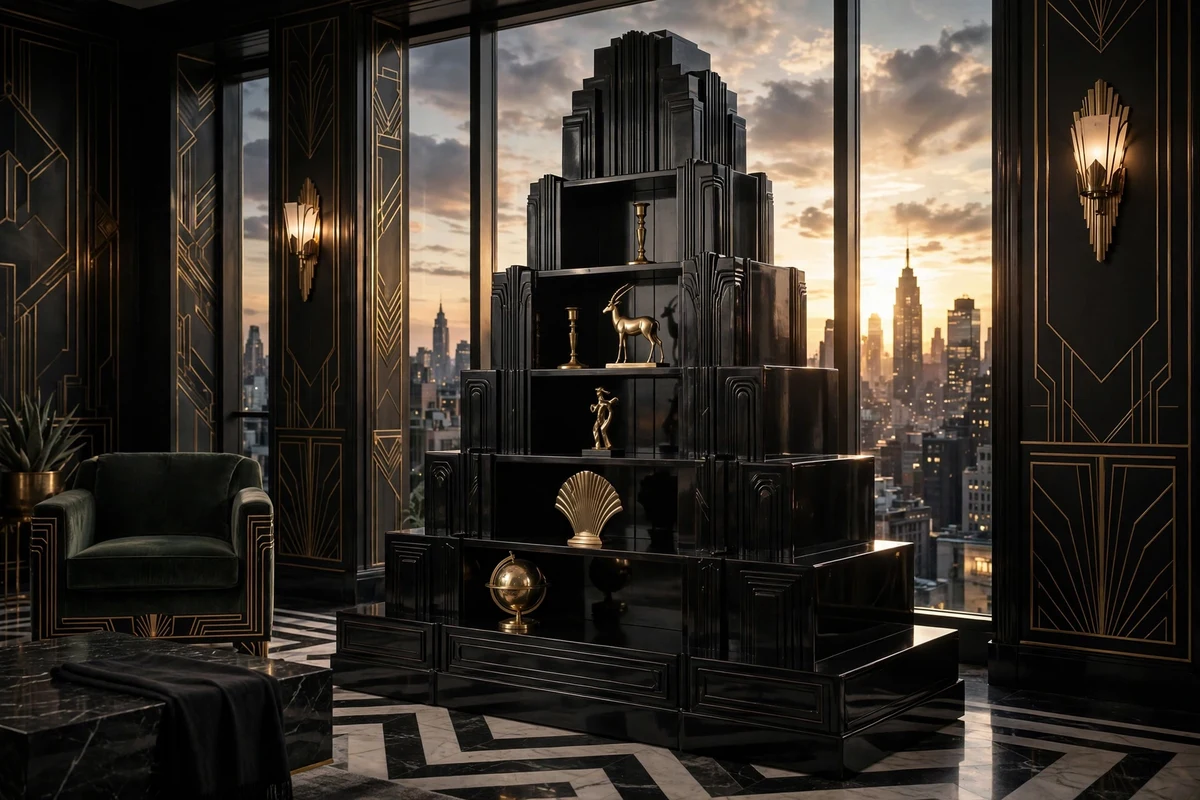
27. Style Stepped Skyscraper Shelving
The stepped ziggurat profile of 1930s skyscrapers translates beautifully to shelving. A stepped bookcase in lacquered black or brass ($300 to $900) displays books and objects in ascending tiers that catch the eye. Style each step with a single object to emphasize the silhouette. Pro tip: Leave the top step mostly empty. Negative space at the peak makes the stepped shape read clearly from across the room.
28. Display Crystal Decanters and Barware
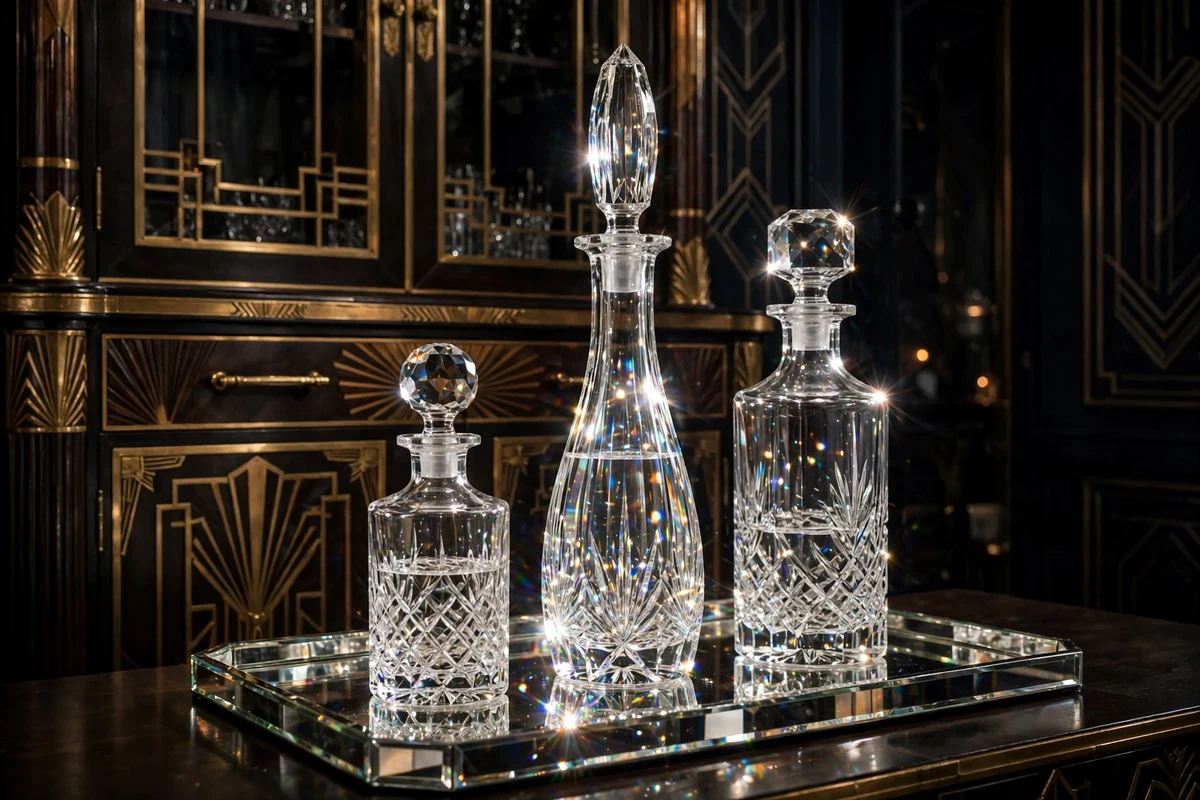
Cut crystal decanters catch light like nothing else. A small collection on a mirrored tray ($30 to $80 for the tray, $25 to $70 per decanter) turns the bar cabinet or sideboard into a glittering display even when you are not entertaining. Pro tip: Group decanters in odd numbers and vary their heights. Three decanters of different sizes look styled; two identical ones look like a store display.
29. Scatter Geometric Throw Pillows
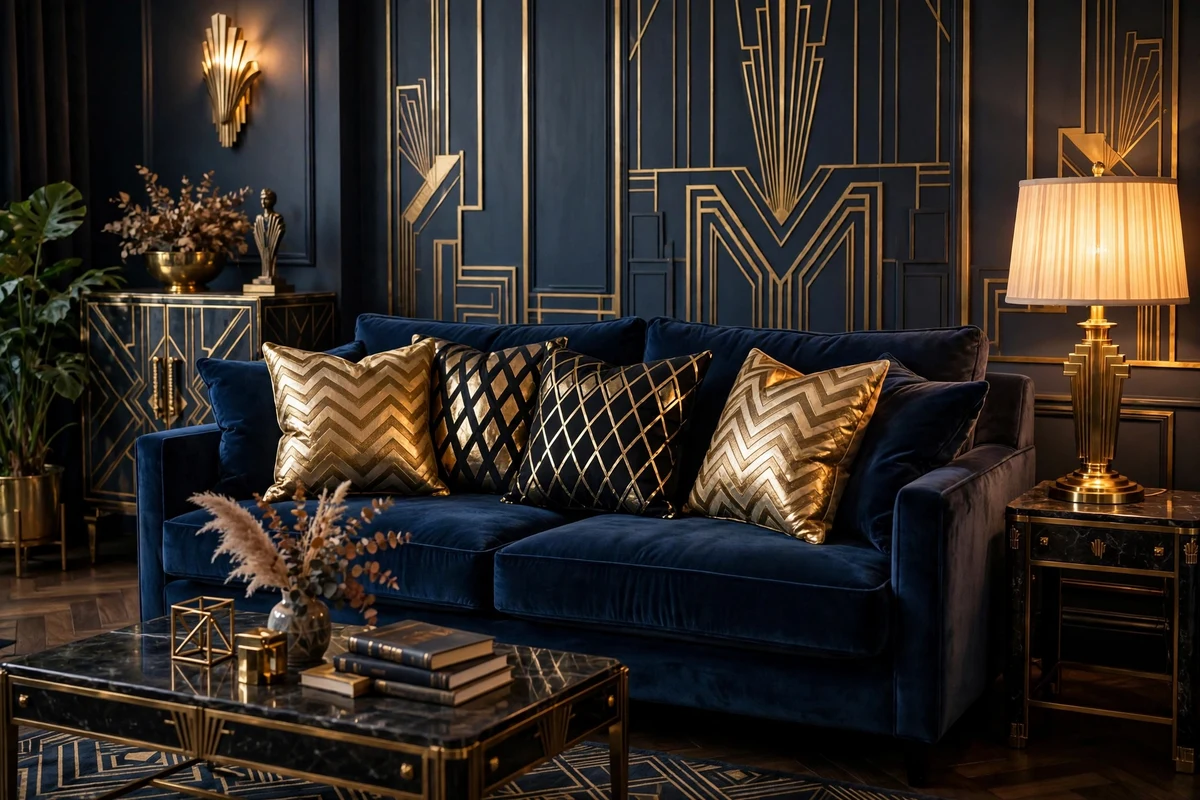
Throw pillows are the cheapest way to inject deco geometry. Look for bold chevron, diamond, and fan prints in metallic thread or high-contrast colorways. Budget $20 to $50 per quality cover. Rotate them seasonally: jewel tones for fall and winter, lighter metallics for spring. Pro tip: Use pillow inserts one size larger than the covers. The extra fill makes even budget covers look plump and expensive.
30. Style a Lacquered Tray on the Ottoman
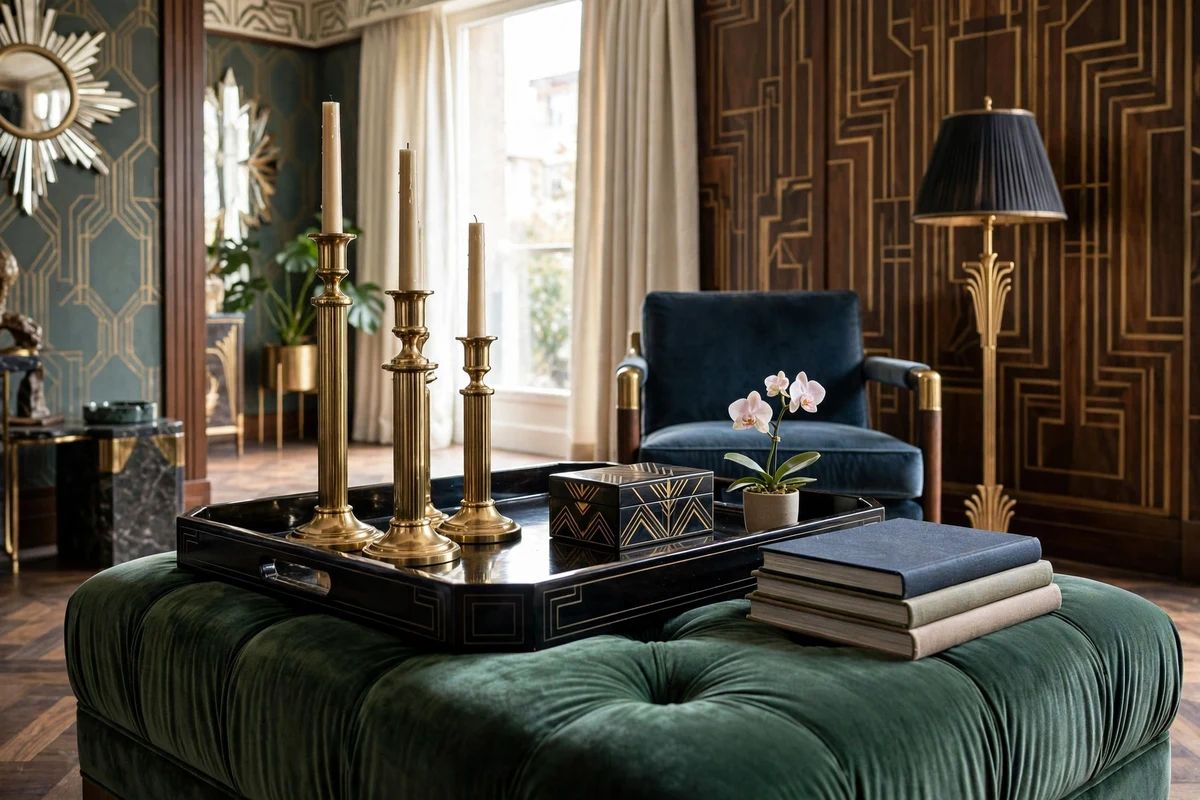
A large lacquered tray corrals remote controls, coasters, and candles into one polished vignette on an ottoman or coffee table. Black or tortoiseshell trays ($35 to $90) suit deco rooms perfectly. If your taste leans softer and more romantic, our Victorian living room ideas offer a different kind of classic elegance. Pro tip: Follow the rule of three: something tall (candlesticks), something low (a small box), and something living (a tiny plant or flowers).
31. Hang Oversized Abstract Art
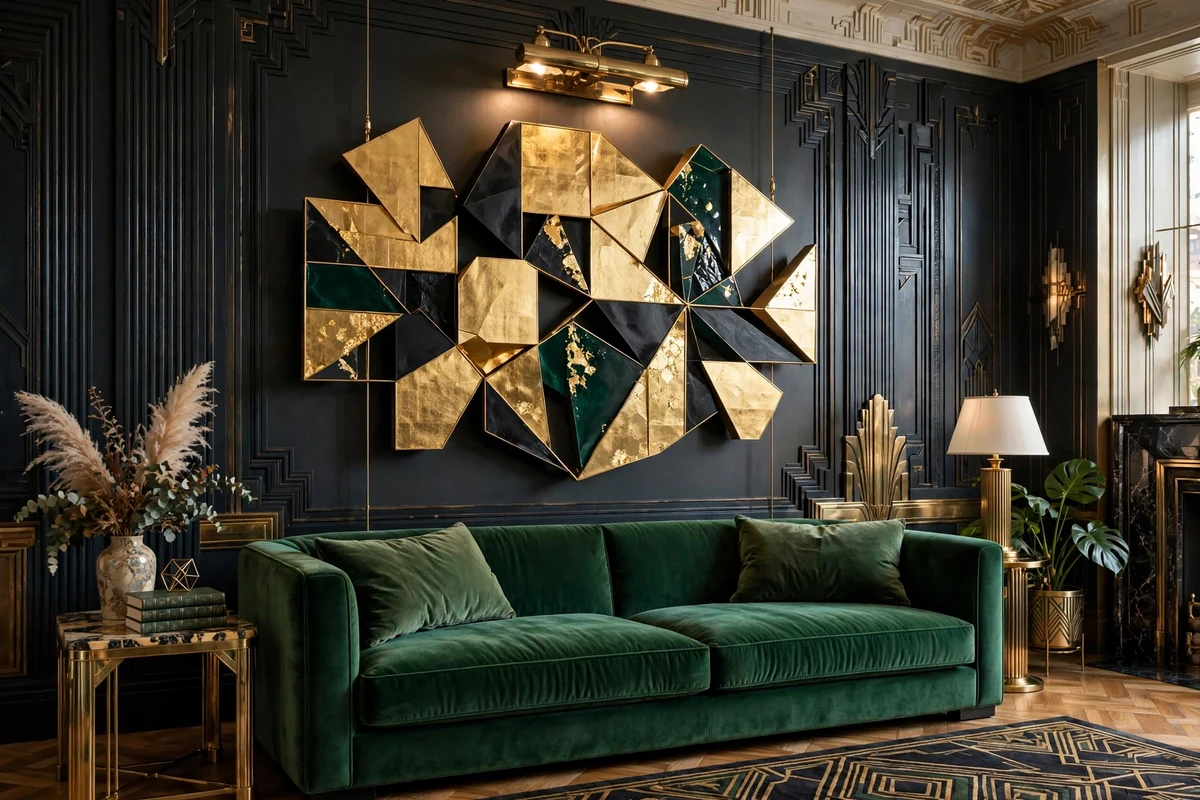
Deco-era abstract art, with its bold geometry and metallic leaf, makes a powerful statement over the sofa. Large canvas prints in deco style cost $80 to $300, while original-style oil reproductions run higher. Choose pieces with gold, black, and one jewel tone to tie into your palette. Pro tip: The art should span roughly two-thirds the width of the sofa below it. Too small looks timid; too large overwhelms.
32. Place Sculptural Objets d’Art
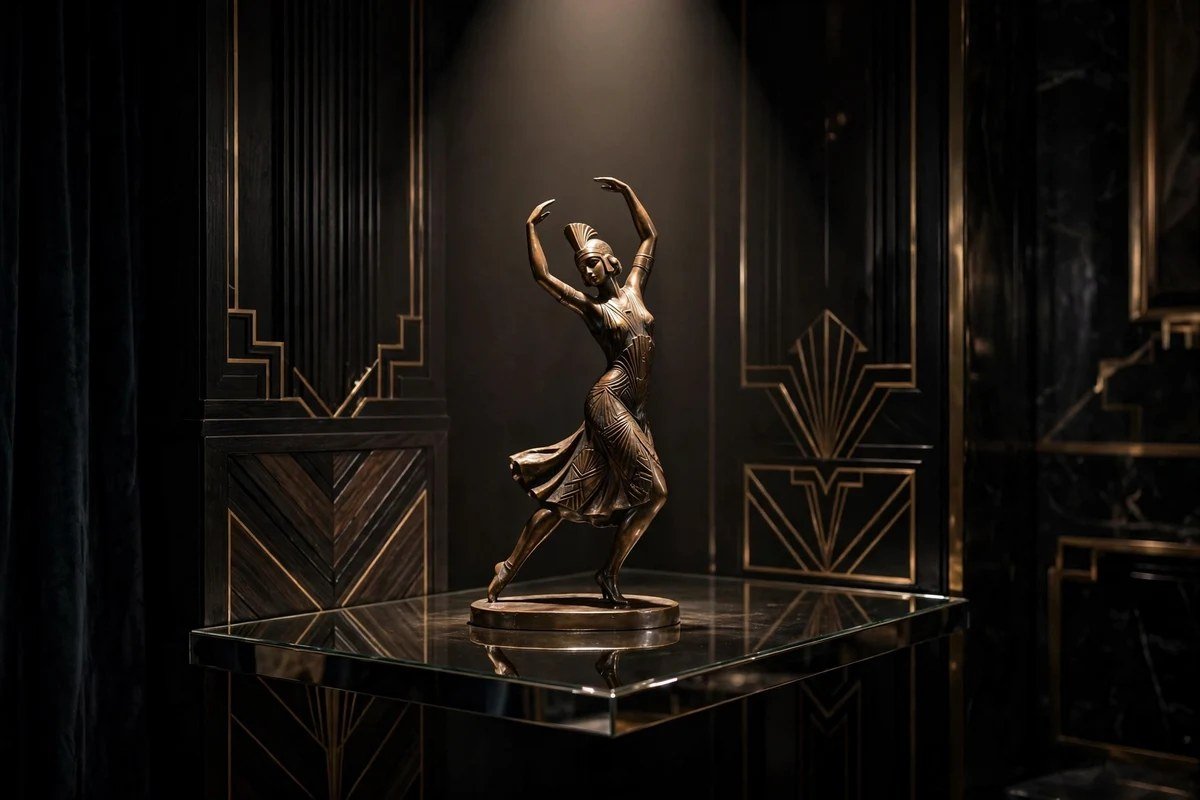
A bronze dancer figurine, a chrome greyhound, or a Lalique-style glass piece gives the room its gallery moment. Vintage markets and estate sales are goldmines for authentic deco objects ($20 to $200), often cheaper than reproductions. Pro tip: Give each object breathing room on the shelf or table. Deco objects are meant to be admired individually, not crowded together.
33. Make an Entrance With a Chevron Mirror
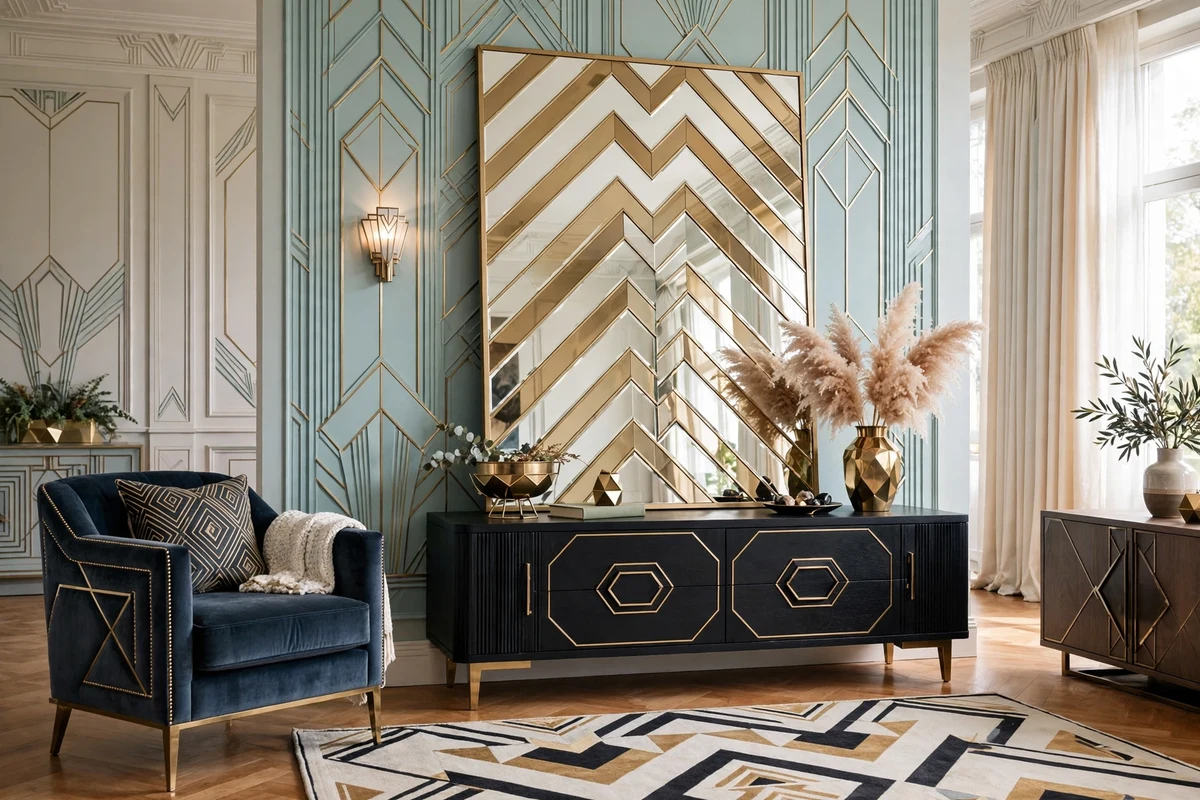
If the sunburst mirror feels expected, a large chevron or stepped-arch mirror makes an equally deco statement with fresher geometry. Lean an oversized one against the wall behind a console for a relaxed, collected look. Expect $150 to $500 for large statement mirrors. For bright, airy contrast to all this glamour, see our Scandinavian living room ideas. Pro tip: Always anchor a leaning mirror to the wall with proper hardware. A falling 6-foot mirror is dangerous and expensive.
34. Finish With Candlelight and Metallic Glow
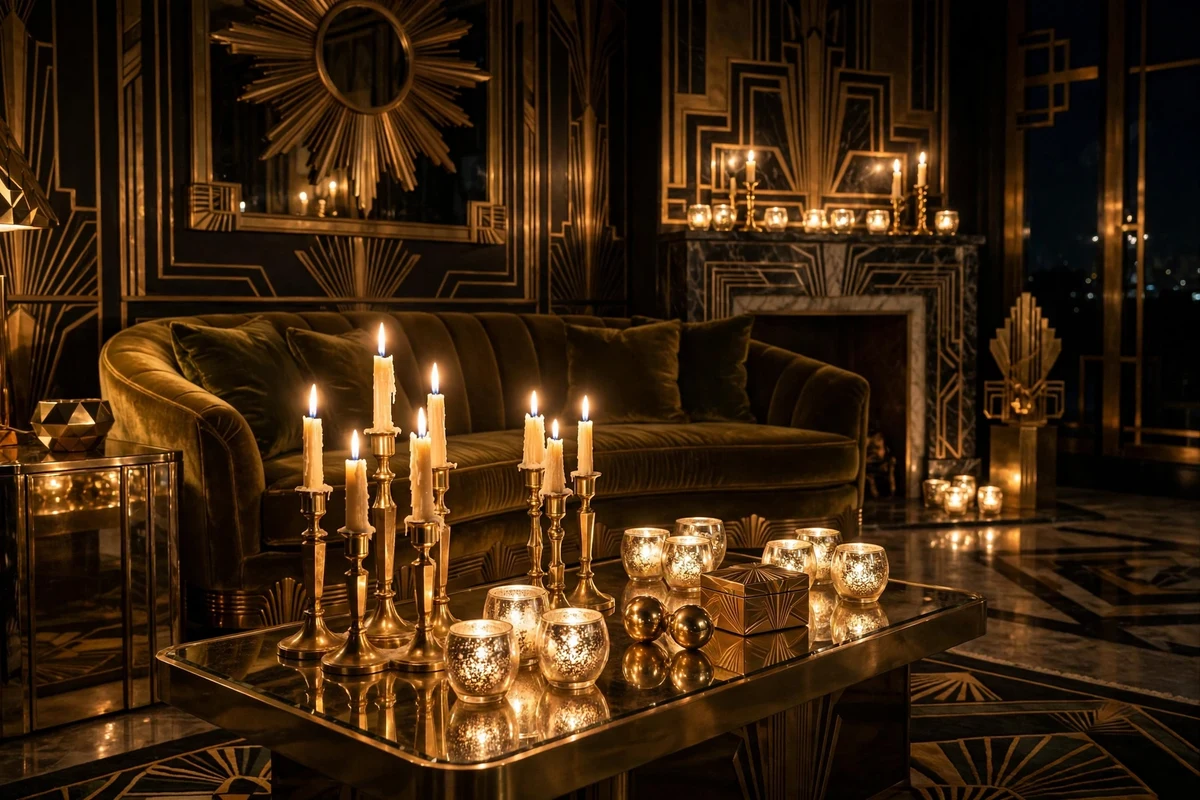
The final layer is light itself. Clusters of brass candlesticks, mercury glass votives ($3 to $12 each), and a few well-placed candles make every metallic surface in the room shimmer after dark. This is the cheapest transformation on the list and arguably the most important. Pro tip: Use unscented ivory candles in living areas. Scented candles compete with cooking smells and can overwhelm a small room.
Frequently Asked Questions
What defines an art deco living room?
Art deco living rooms are defined by geometric patterns (chevrons, fans, sunbursts), luxurious materials (velvet, marble, brass, mirrored glass), bold symmetry, and a glamorous 1920s to 1930s spirit. The palette typically combines jewel tones or black and cream with metallic gold or brass accents.
How do I decorate art deco on a budget?
Start with high-impact, low-cost moves: a sunburst mirror ($60 to $180), geometric throw pillows ($20 to $50 each), metallic spray paint on thrifted frames, and candlelight. Peel-and-stick deco wallpaper and a zebra-print rug deliver the look for a few hundred dollars total.
What colors work best in art deco interiors?
The classic combinations are emerald and gold, black and cream, navy and brass, and blush pink with black. Pick one jewel tone, one neutral base, and one metallic, then repeat that trio throughout the room for a cohesive result.
Can art deco work in a small living room?
Absolutely. Mirrored furniture, a sunburst mirror, and metallic accents reflect light and make small rooms feel larger. Keep large furniture pieces to a minimum, use one bold wallpaper wall instead of four, and let vertical elements like tall lamps draw the eye upward.
What is the difference between art deco and Hollywood Regency?
They overlap heavily, but art deco is the original 1920s to 1930s movement with authentic geometric motifs and historical references, while Hollywood Regency is a 1950s to 1960s interpretation that leans more glamorous, mirrored, and maximalist. Many rooms happily blend both.
Where can I find authentic art deco furniture?
Estate sales, vintage markets, and auction sites are the best sources for genuine 1920s to 1940s pieces. For reproductions, look at retailers specializing in Hollywood Regency and mid-century styles. Always check joinery and veneer condition on vintage pieces before buying.
Final Thoughts
Art deco is more than a style; it is an attitude of confidence and celebration. You do not need a Park Avenue budget to capture it. Start with one dramatic move, like black lacquered walls or a curved velvet sofa, then layer in brass lighting, geometric patterns, and candlelight. Keep the symmetry disciplined and the metallics warm, and your living room will glow with the same glamour that made the Jazz Age unforgettable. Cheers to living beautifully.

One Comment