
32 Japandi Living Room Ideas for Calm Minimalist Style
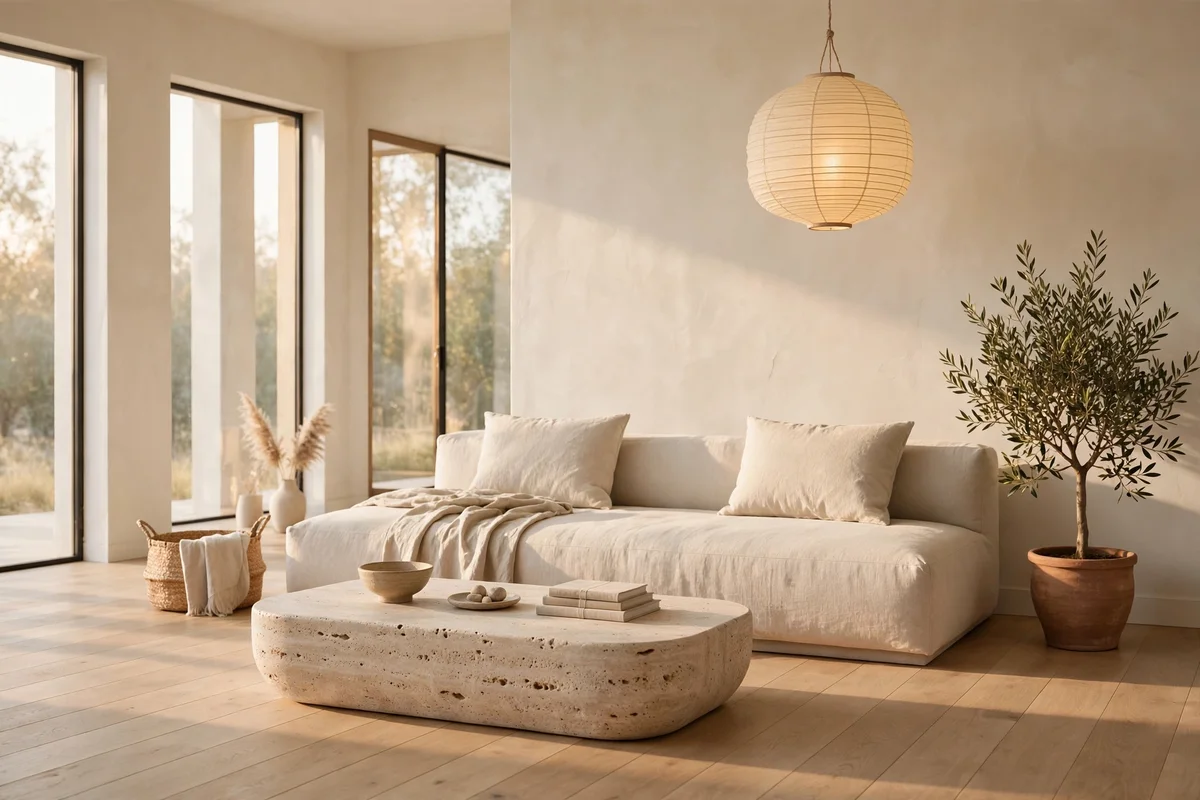
32 Japandi Living Room Ideas for Calm Minimalist Style
There is a quiet revolution happening in living rooms, and it speaks in a whisper, not a shout. Japandi, the meeting point of Japanese wabi-sabi and Scandinavian hygge, strips the living room back to what actually matters: light, honest materials, and room to breathe. It borrows Japan’s reverence for imperfection and craft, then softens it with Scandinavia’s warmth and everyday comfort. The result is a space that feels calm without feeling empty, and minimal without feeling cold.
A Japandi living room is built on restraint. Warm white walls, pale wood floors, and a palette pulled straight from nature: oatmeal, clay, stone, sand, and ink black used sparingly as punctuation. Furniture sits low to the ground, edges are softened, and every object earns its place. Nothing is precious, yet everything feels considered, from a handmade ceramic cup to the grain of an oak bench.
Below are 32 ideas to bring that calm minimalist style home, from foundational choices like flooring and lighting to the small wabi-sabi details that make a room feel alive. Each idea includes realistic price guidance and a pro tip, so you can build the look at your own pace and budget.
The Foundation: Walls, Floors and Light
1. Start With Warm White Plaster Walls
Everything in a Japandi living room begins with the walls, and warm white is the only correct starting point. Look for soft whites with a whisper of beige or greige, never stark blue-white, which reads cold and clinical under daylight. Limewash or Roman clay paint adds subtle movement that flat paint cannot match, catching light differently as the day shifts. A gallon of quality limewash runs $60–$90 and covers about 300 square feet. Pro tip: test three shades directly on the wall and live with them for 48 hours, because warm whites shift dramatically between morning and evening light.
2. Choose Light Oak or Ash Wood Floors
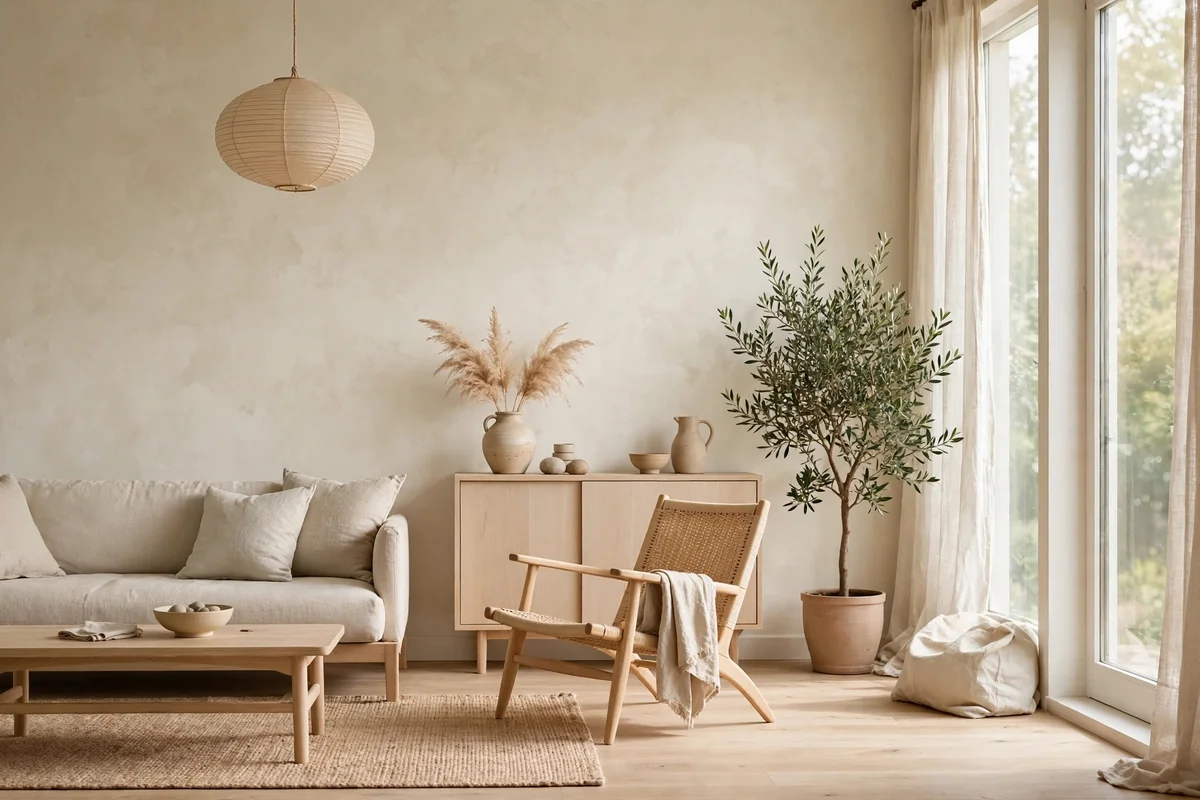
Pale wood flooring is the quiet backbone of Japandi style, grounding the room without shouting for attention. White oak and ash with a matte or natural oil finish keep the look Scandinavian-light while the visible grain nods to Japanese craft. Avoid high-gloss finishes and orange-toned stains, both of which fight the calm palette. Engineered oak planks cost $6–$12 per square foot installed, while solid ash runs $9–$15. Pro tip: choose wider planks (7 inches or more) with minimal bevels, because fewer seams mean a calmer, more continuous floor plane.
3. Anchor the Room With a Low Platform Sofa
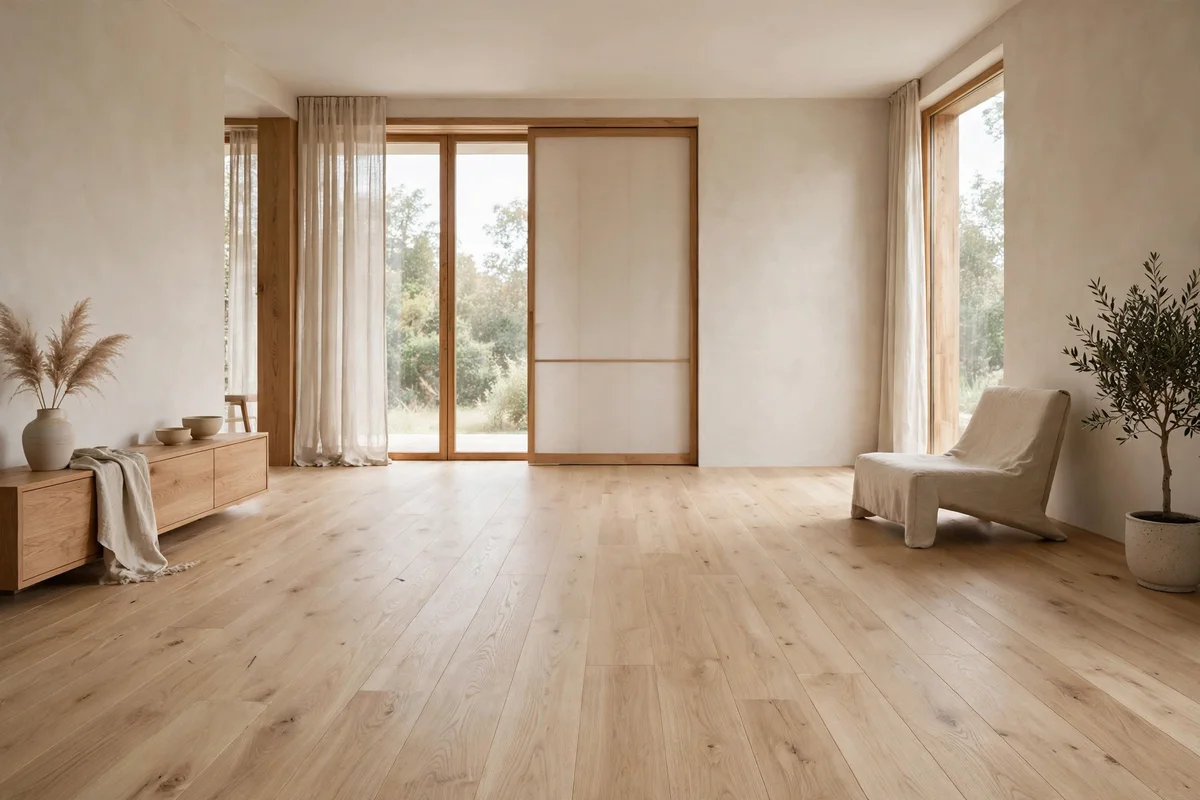
Japandi seating sits close to the earth, a direct nod to Japanese floor culture. A low platform sofa with a seat height around 14 to 16 inches instantly changes how a room feels: more grounded, more relaxed, more intentional. Look for clean lines, solid wood legs, and upholstery in oatmeal, greige, or warm gray linen. A quality two-seater in this style costs $900–$1,800, with solid hardwood frames worth the premium. Pro tip: keep the sofa back low and the arms slim or armless, because bulky profiles destroy the airy proportion that makes Japandi work.
4. Divide Space With a Shoji-Inspired Screen
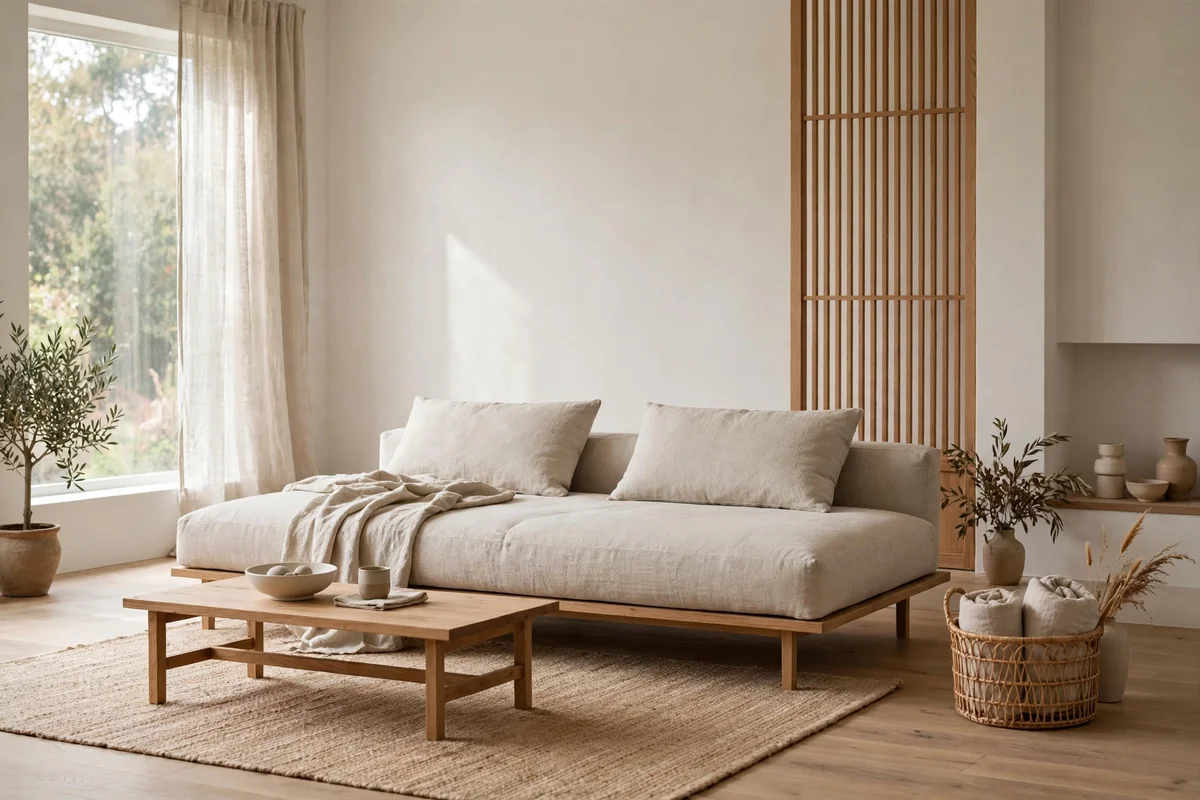
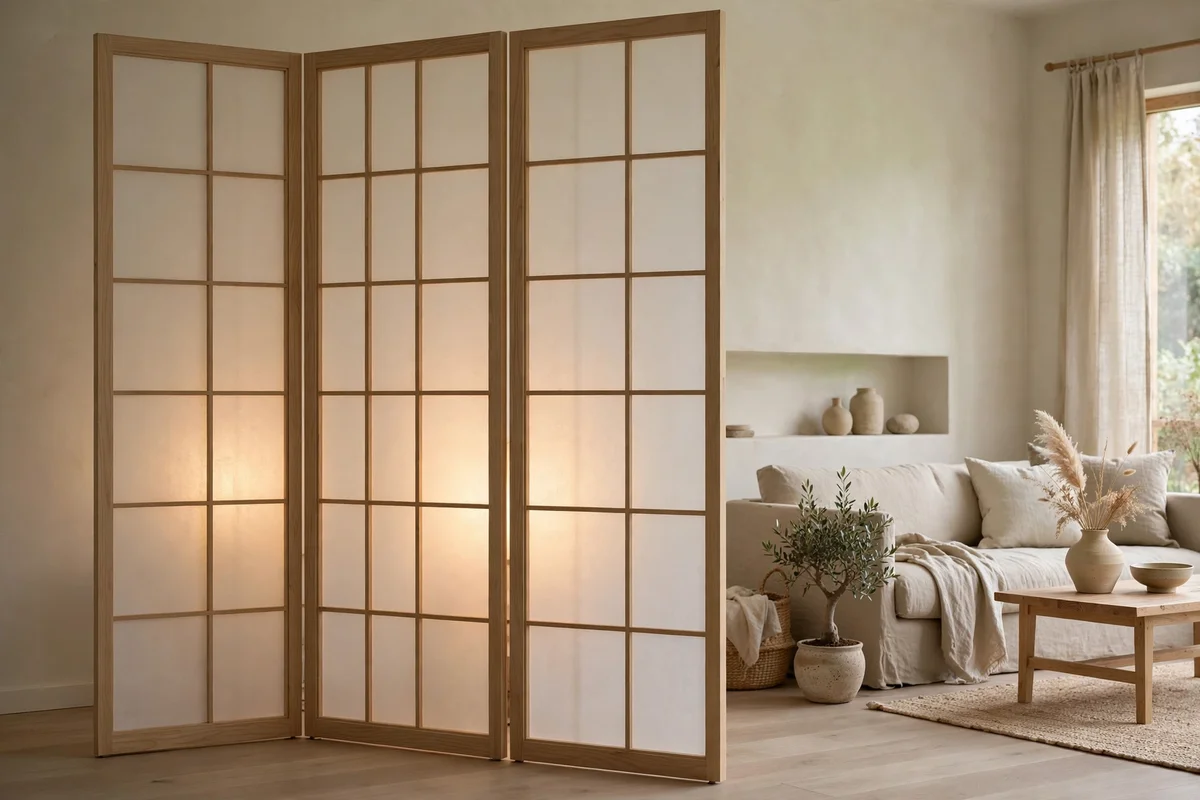
A shoji-inspired screen is the most architectural way to bring Japanese soul into the room. Use it to carve a reading corner from an open plan, hide a workspace, or simply add vertical rhythm to a long wall. Modern versions pair light wood frames with translucent washi-style panels that glow when backlit. Freestanding three-panel screens cost $150–$400 depending on wood quality and size. Pro tip: position the screen where it catches side light, because the translucent panels turn into a soft glowing lantern effect in the late afternoon.
5. Layer a Flatweave Wool Rug in Natural Tones
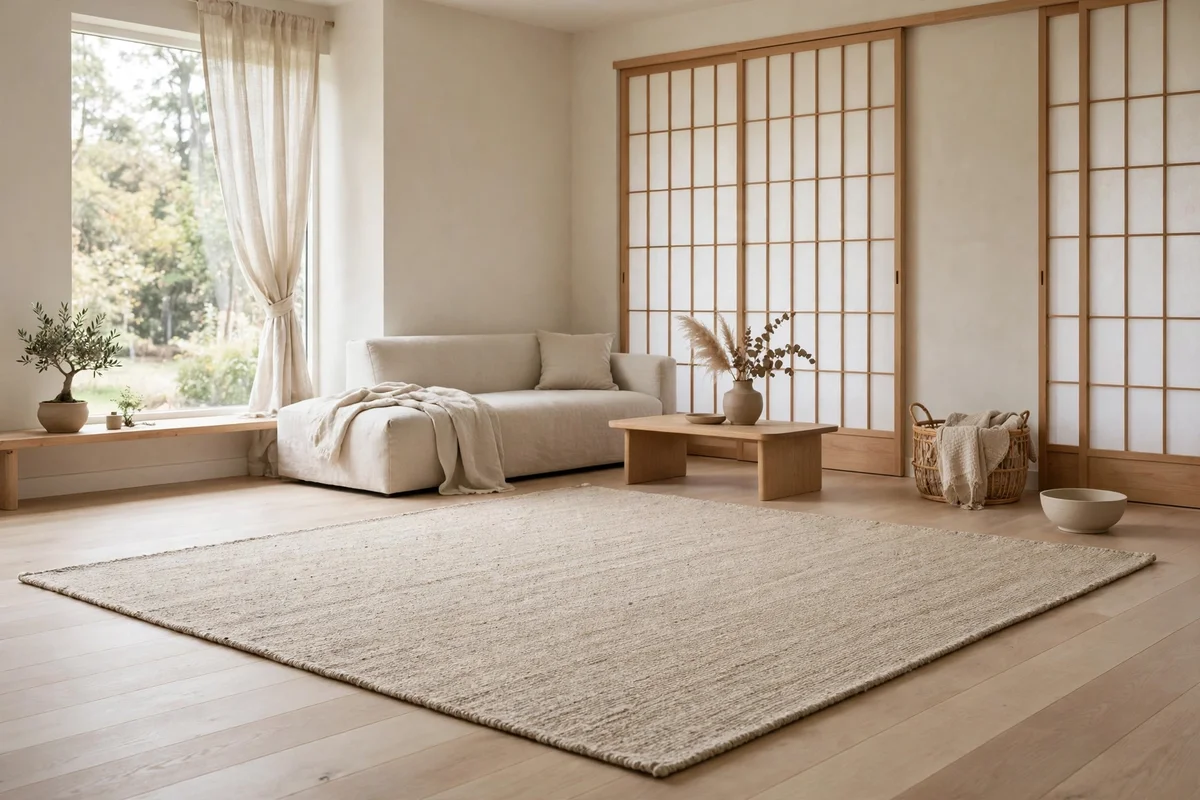
A rug in a Japandi living room should feel like an extension of the floor, not a statement piece. Flatweave wool or cotton rugs in undyed oatmeal, warm gray, or soft charcoal add tactility without visual noise. Keep patterns to subtle texture: a fine stripe, a nubby weave, or a tone-on-tone border at most. A 5 by 8 foot flatweave wool rug costs $250–$600, with hand-loomed options at the higher end. Pro tip: leave at least 18 inches of bare floor visible around the rug, because that breathing room is what keeps the composition calm rather than crowded.
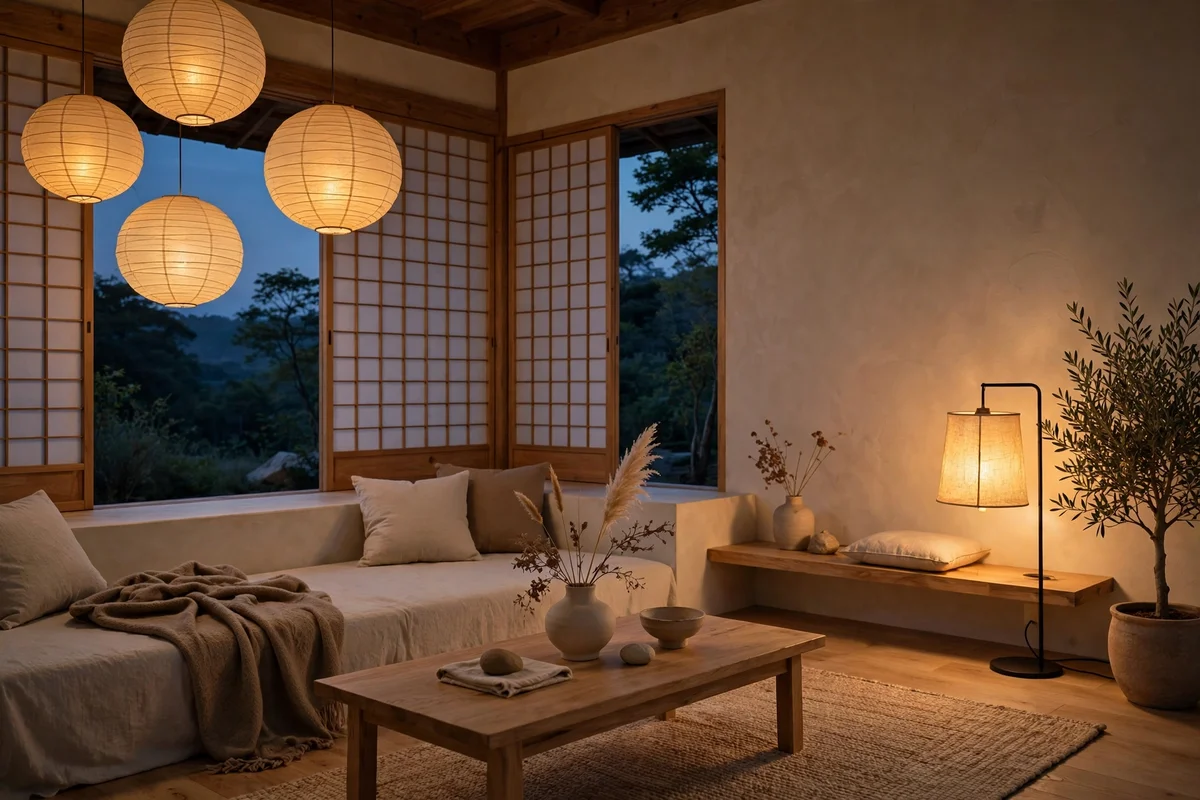
6. Hang a Paper Lantern Pendant Light
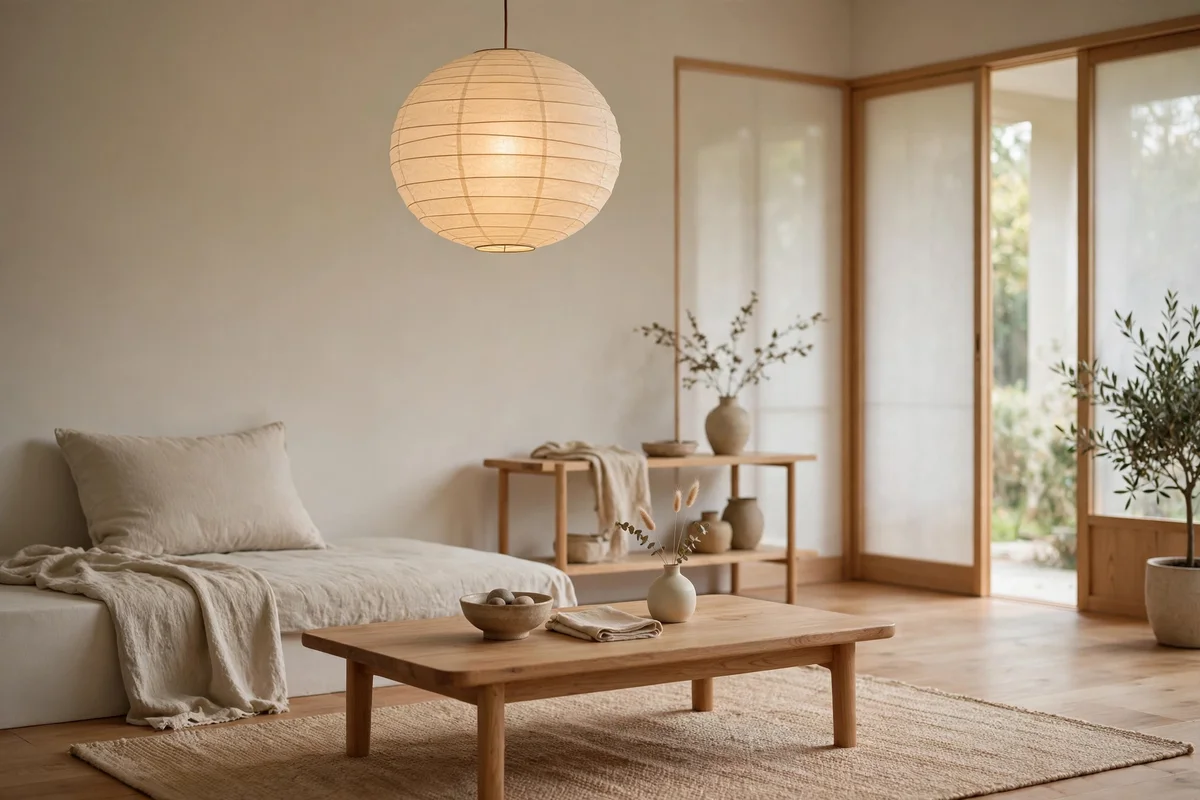
Few objects say Japandi as instantly as a glowing paper lantern. Whether you choose a classic round Noguchi-style form or an elongated rice-paper cylinder, the diffused light flatters everything beneath it and adds sculptural softness overhead. Hang it low over the coffee table or seating area, about 30 inches above the surface, so it becomes part of the conversation zone. Quality paper pendants cost $80–$300. Pro tip: pair the lantern with a warm 2700K dimmable bulb, because cool white light instantly kills the lantern’s cozy glow.
7. Embrace Negative Space on Purpose
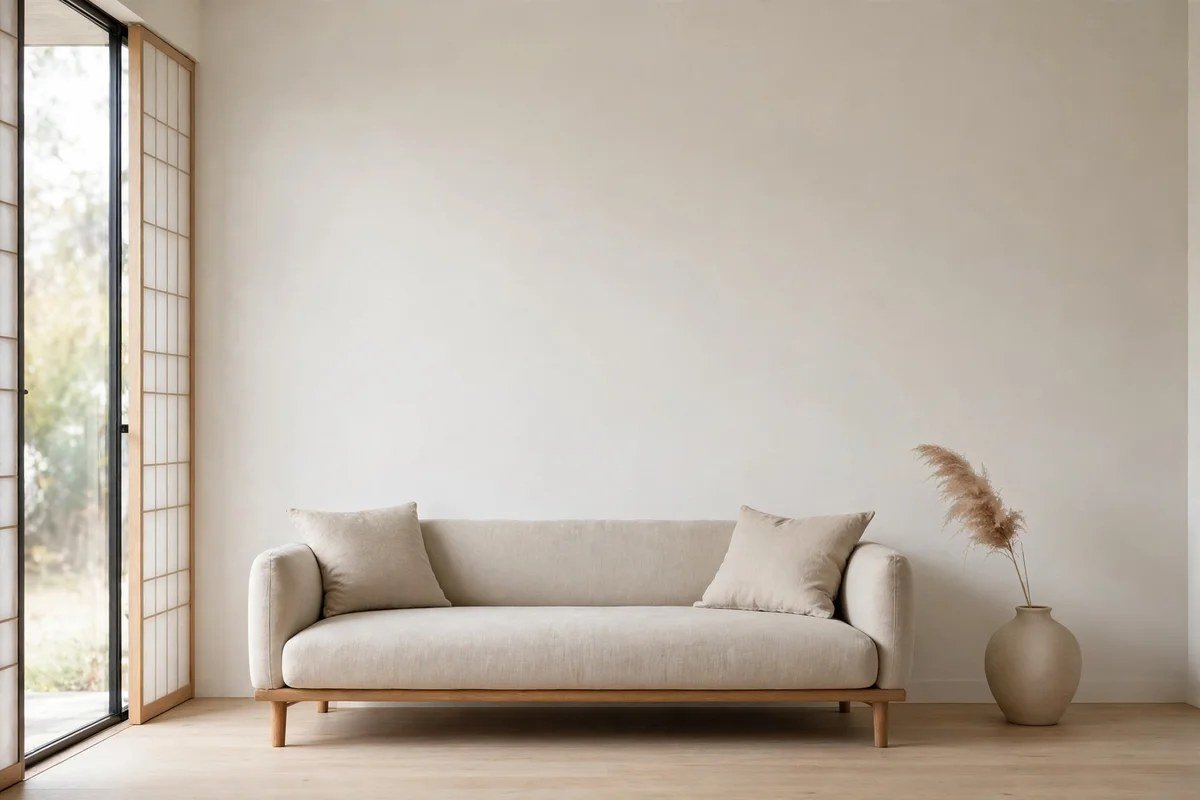
The most powerful Japandi idea costs nothing: leave space empty. Negative space is not wasted space, it is what lets the pieces you keep breathe and hold meaning. Resist filling every corner and every shelf. One clear surface, one bare stretch of wall, and one unstyled corner will do more for calm than any object you could buy. If restraint feels hard, start by removing five things, then live with it a week. Many of the budget decorating mistakes that cost you more come from overbuying, so editing first also protects your wallet. Pro tip: photograph the room and study the photo, because the camera reveals clutter your eyes have learned to ignore.
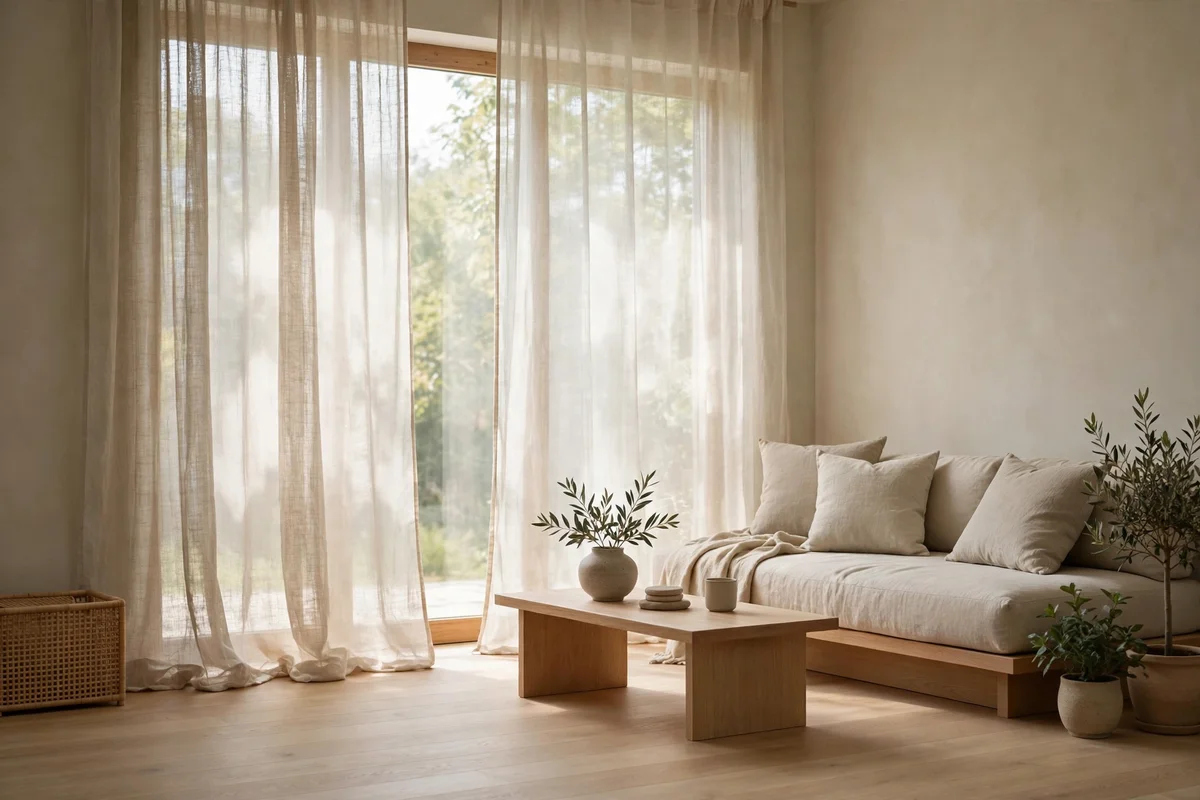
8. Filter Daylight Through Sheer Linen Curtains
Harsh light has no place in a Japandi living room, and sheer linen curtains are the gentlest filter. They soften incoming sun into a diffused glow, add a whisper of textile texture, and move beautifully with air circulation. Hang them high and wide, with panels that just kiss the floor, in white, flax, or pale greige. Quality washed-linen curtain panels cost $40–$90 each. Pro tip: skip blackout linings entirely in the living room, because even on bright days the sheers tame glare while keeping the room connected to the sky.
Low-Slung Furniture and Quiet Comfort
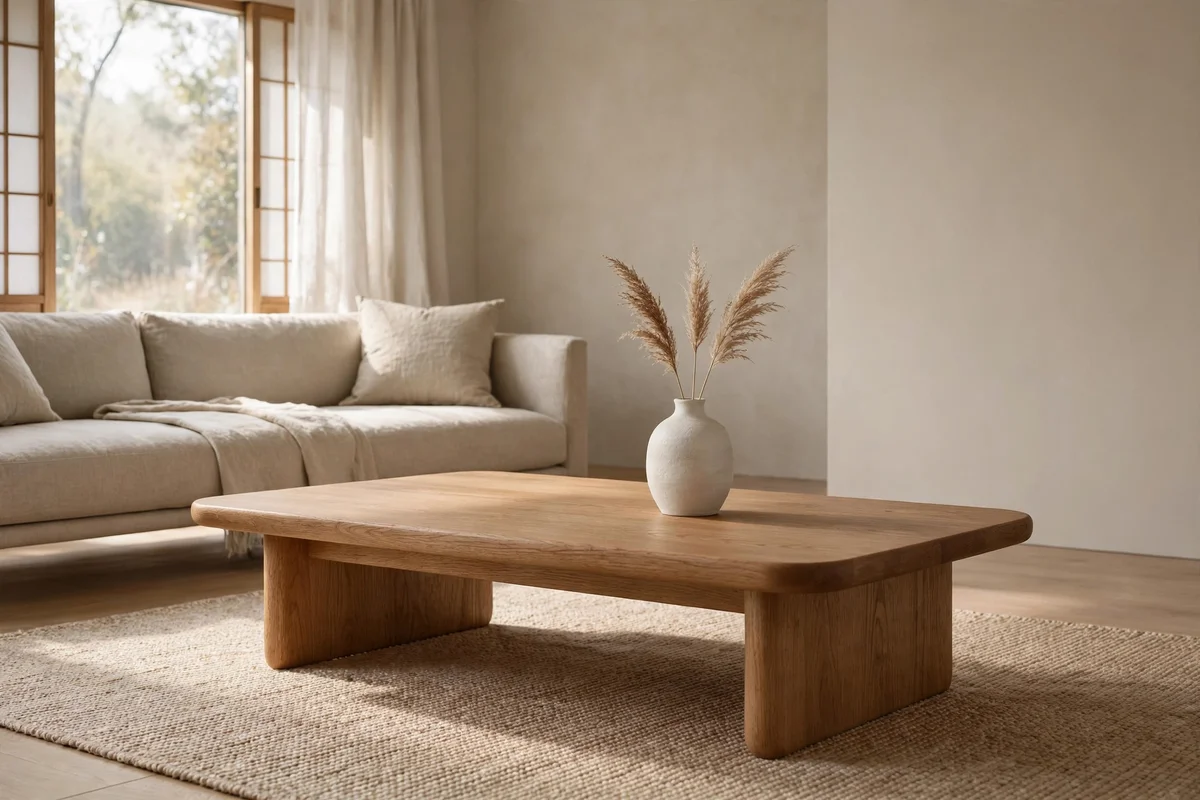
9. Choose a Low Wooden Coffee Table With Soft Edges
The coffee table is the heart of a Japandi living room, so choose one that invites gathering. Low rectangular or softly rounded tables in solid oak, walnut, or ash keep sightlines open and encourage floor-level lounging. Rounded corners matter more than you think: they soften the room’s geometry and feel safer, calmer, almost embrace-like. Expect to spend $250–$700 for a solid wood table from a quality maker. Pro tip: keep the tabletop styled to three objects maximum, because a clear surface is what separates Japandi calm from ordinary clutter.
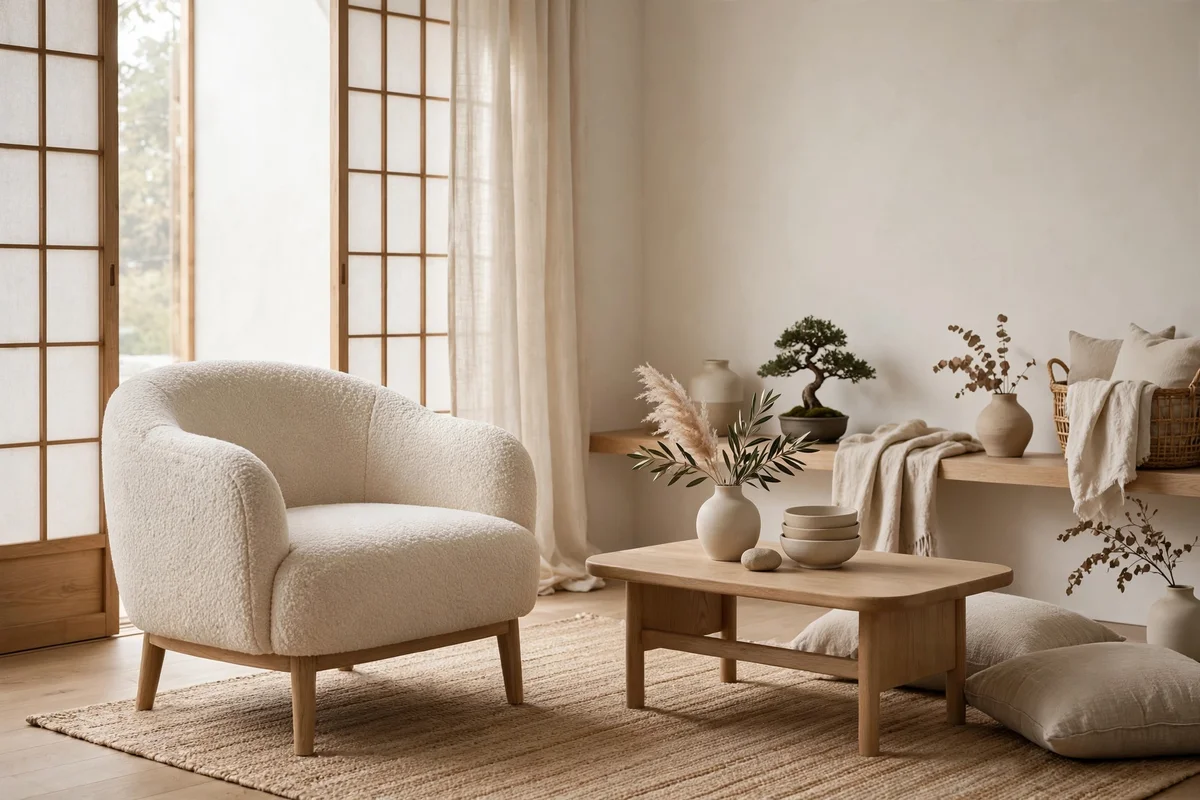
10. Add a Curved Boucle Accent Chair
One curved accent chair adds the softness that keeps minimalism from feeling severe. Boucle in cream or oatmeal is the classic Japandi upholstery: nubby, tactile, and quietly luxurious without any sheen. A barrel or tub silhouette in solid oak legs bridges the Japanese and Scandinavian halves of the style perfectly. Good boucle accent chairs run $400–$900. Pro tip: angle the chair slightly toward the sofa rather than squaring it to the wall, because that small rotation makes the seating arrangement feel conversational instead of staged.
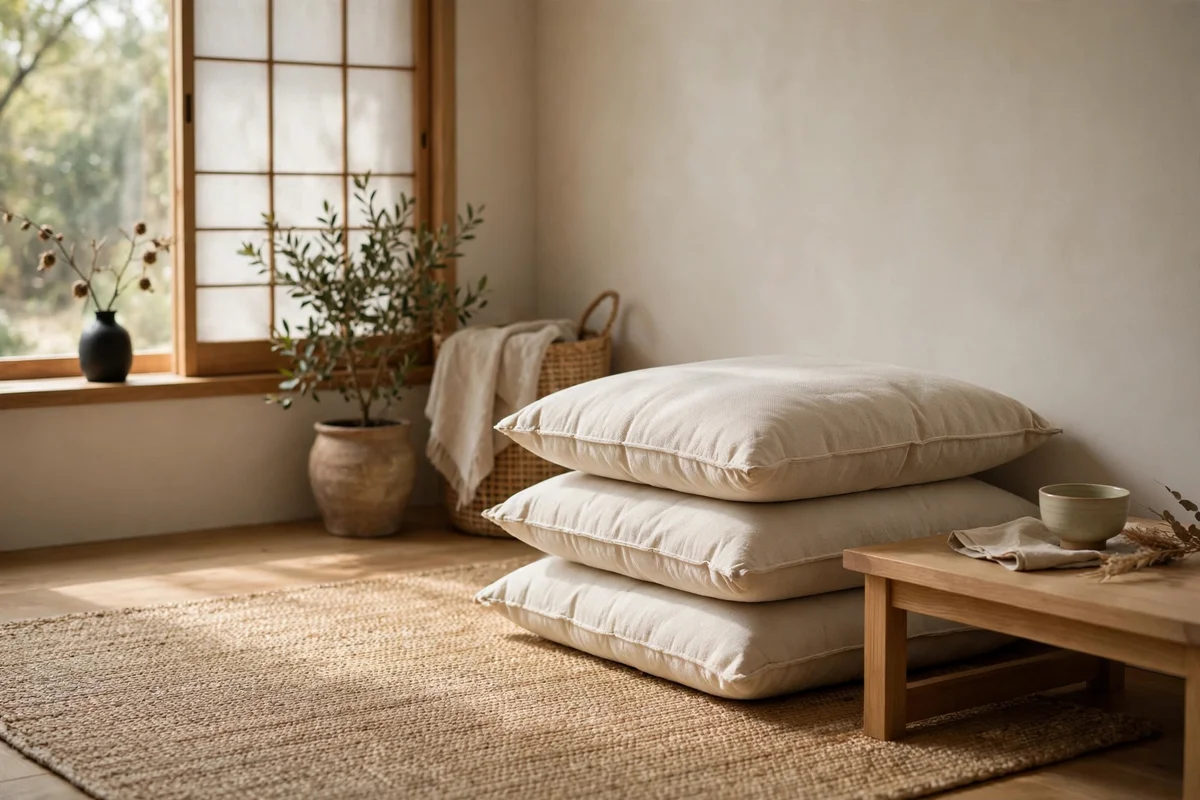
11. Create a Floor Cushion Corner With Zabuton
Zabuton floor cushions bring authentic Japanese floor culture into the living room and create the most inviting corner in the house. Stack two or three thick cotton cushions in natural tones near a low table or window, and you have an instant reading nook, meditation spot, or extra seating for guests. Quality zabuton cushions cost $40–$80 each. Pro tip: choose cushions with removable washable covers, because floor seating collects dust faster than sofa seating and easy washing keeps the corner fresh.
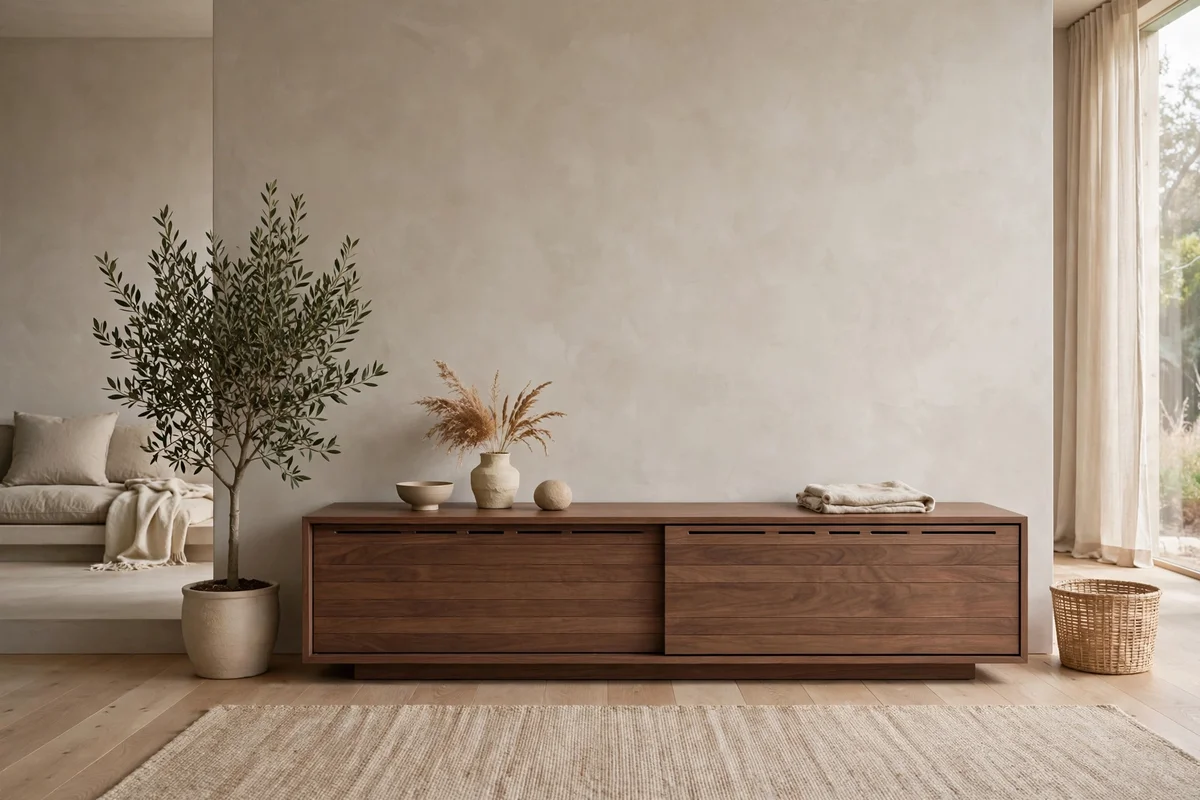
12. Pick a Streamlined Walnut Media Console
Even the TV zone can stay calm with a low, streamlined console in walnut or smoked oak. Look for sliding doors or push-to-open fronts with no visible hardware, long horizontal proportions, and tapered legs that lift it just off the floor. The darker walnut tone adds depth and anchors the lighter palette around it. Well-made consoles in this style cost $500–$1,200. Pro tip: drill a cable port in the back panel and route everything through it, because visible cords are the fastest way to shatter Japandi serenity.
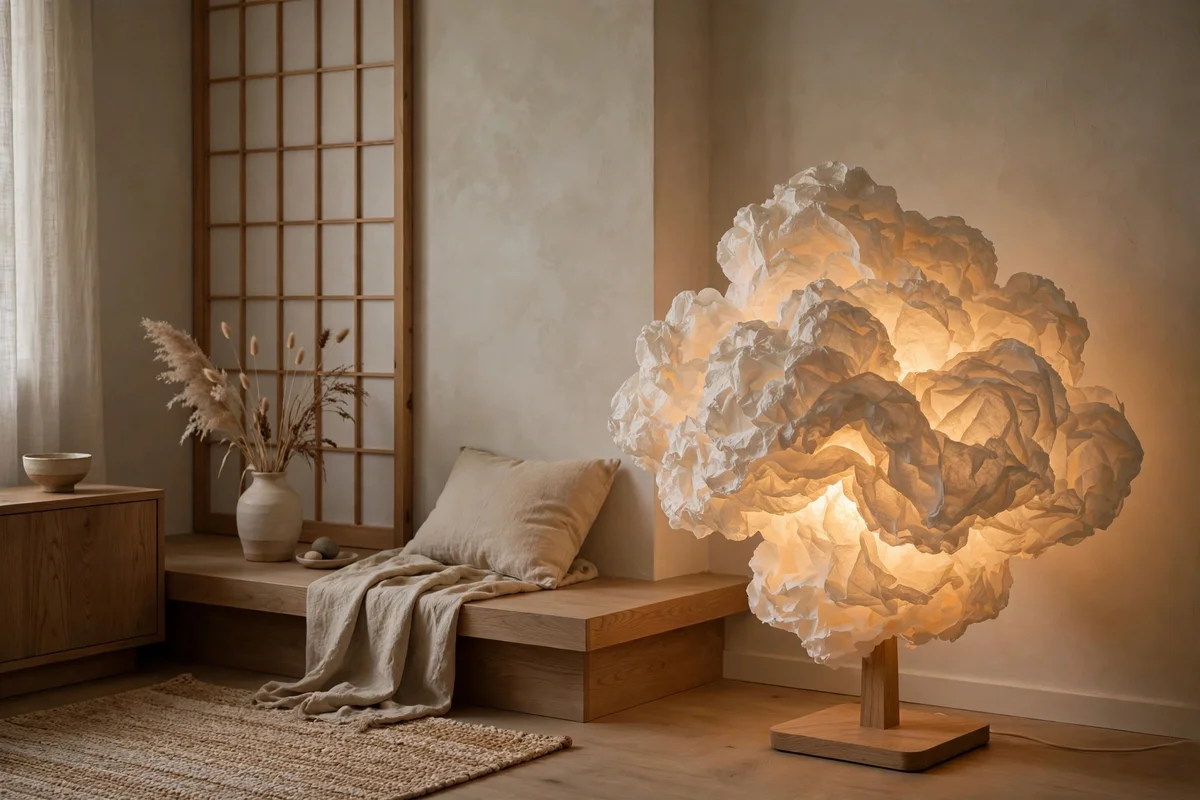
13. Add a Sculptural Floor Lamp in Washi Paper
A washi paper floor lamp is functional sculpture: by day it reads as a soft organic form, by night it becomes a glowing column of warmth. Look for asymmetrical or cloud-like shapes rather than perfect cylinders, because that irregularity is pure wabi-sabi. Place it in a reading corner or beside the sofa where its glow pools at sitting height. Sculptural paper floor lamps cost $120–$350. Pro tip: use a warm dimmable bulb and put the lamp on a dimmer, because paper shades reveal their texture best at low, golden light levels.
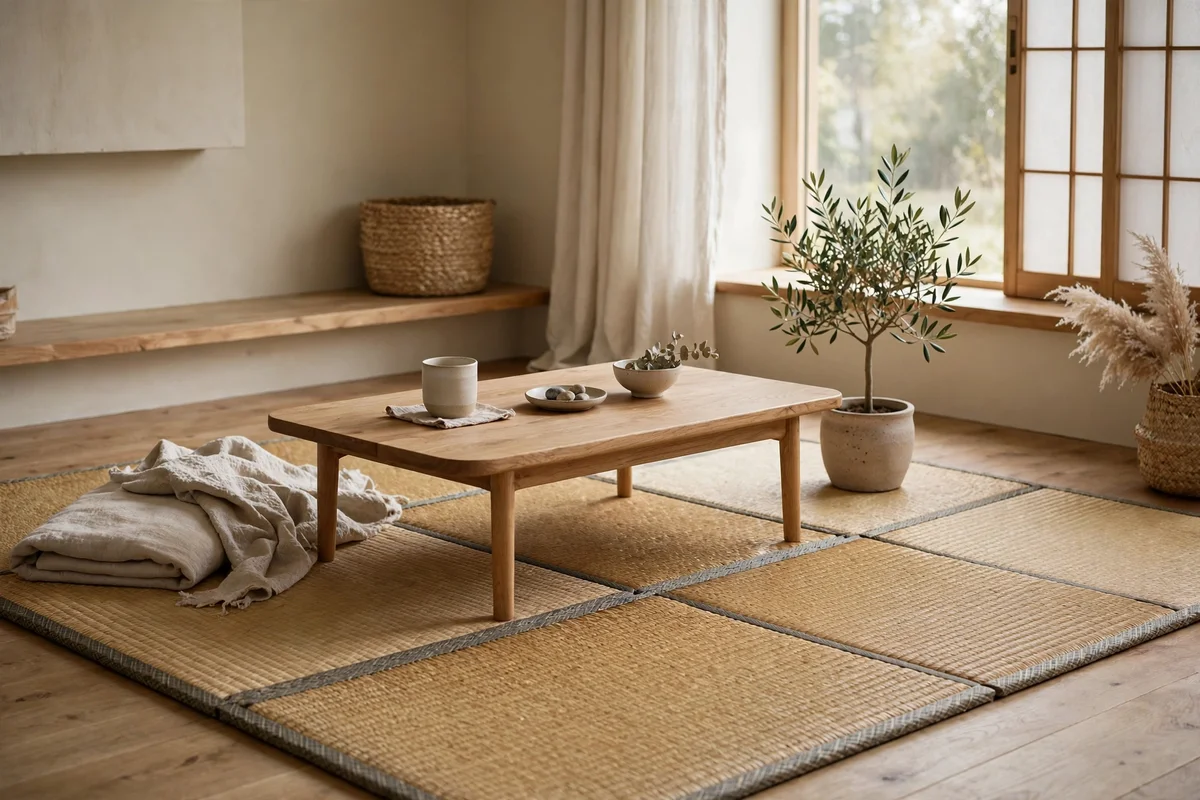
14. Choose a Tatami-Style Area Rug
For the most Japanese-leaning version of the look, swap a conventional rug for tatami-style mats. Their woven rush surface, bound edges, and faint grassy scent bring an unmistakable sense of calm ritual to the floor. Use them as a full area rug under the coffee table or as a runner defining a walkway. Authentic tatami mats cost $80–$150 each for standard sizes. Pro tip: air tatami in sunlight a few times a year and keep them dry, because the natural rush fibers last decades with basic care but mildew quickly in damp rooms.
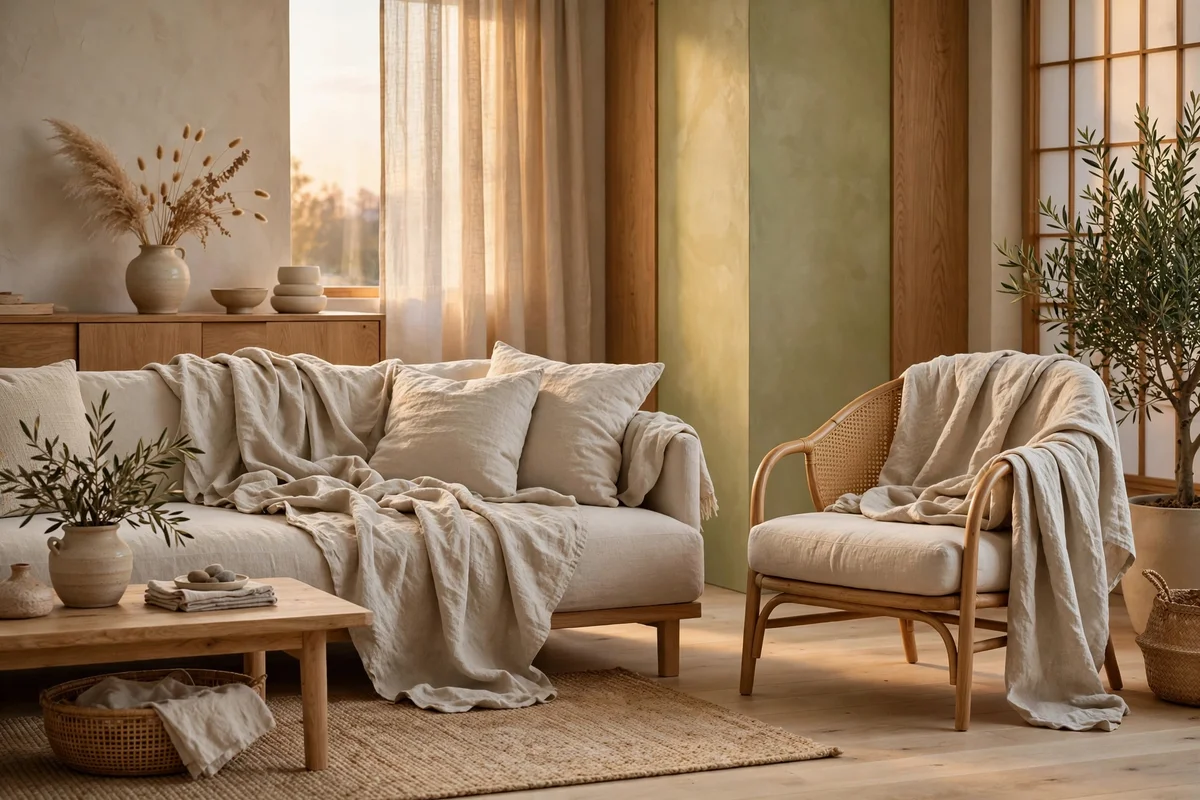
15. Layer Oatmeal Linen Throw Blankets
Textiles are where Scandinavian hygge softens Japanese restraint, and an oatmeal linen throw is the perfect bridge. Drape one over the sofa arm and fold another across the accent chair: the rumpled texture invites touch and makes minimalism feel livable. Stick to undyed or garment-dyed tones, never bright patterns. Quality washed-linen throws cost $50–$120 each. Pro tip: buy throws one size larger than you think you need, because generous drape reads luxurious while skimpy throws look like an afterthought.
16. Use Stone or Ceramic Side Tables
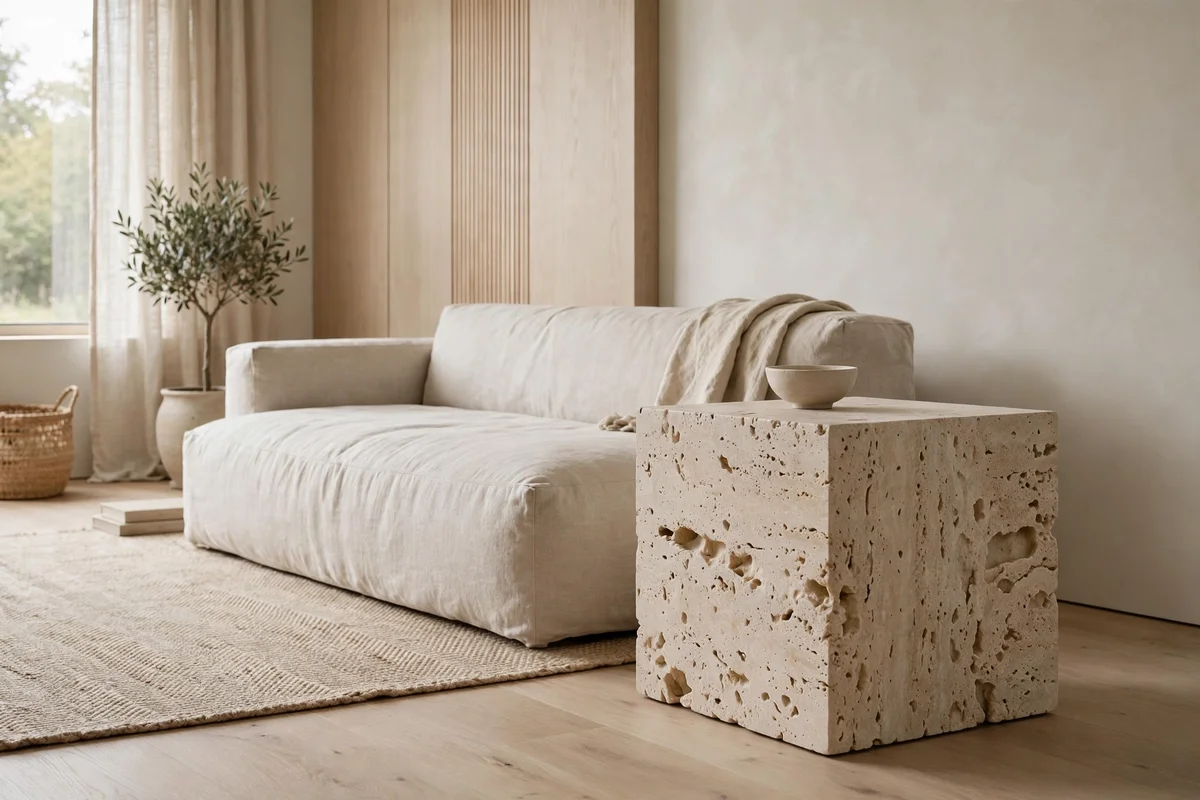
Swap predictable wooden side tables for honed stone or handmade ceramic, and the whole room gains quiet gravitas. A travertine cube, a rough basalt drum, or an oversized ceramic stool adds weight and organic imperfection beside the sofa. These pieces age beautifully, developing patina instead of wear. Stone side tables cost $150–$500, while large ceramic garden stools run $80–$200. Pro tip: choose pieces with visible tool marks or natural pitting, because that honest imperfection is the wabi-sabi detail machine-made furniture can never fake.
Natural Materials and Honest Texture
17. Add a Bonsai or Sculptural Olive Tree
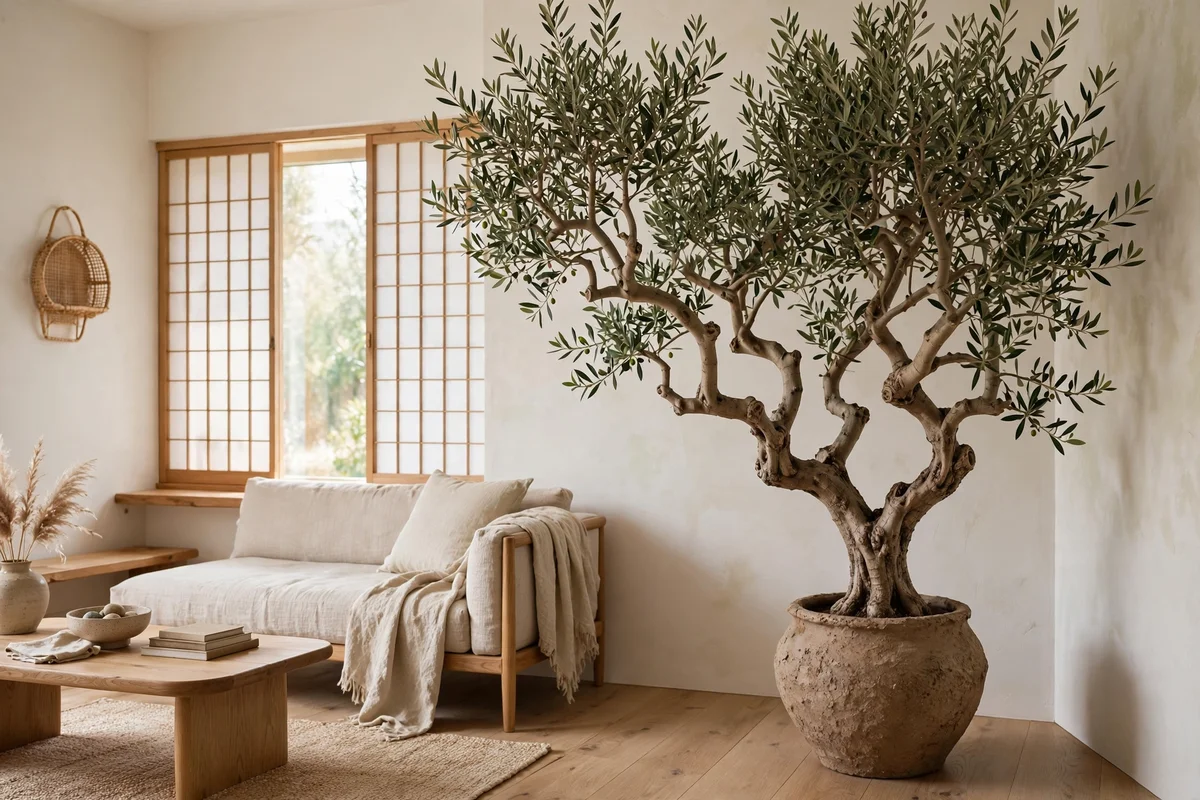
One living plant is worth more than ten decorative objects in a Japandi living room. A sculptural olive tree, a carefully pruned bonsai, or a tall snake plant in a clay pot brings life, height, and organic asymmetry to minimal corners. Choose plants with architectural form rather than bushy fullness. A mature olive tree in a ceramic planter costs $80–$250. If you want more greenery guidance, our studio apartment plant ideas translate beautifully to Japandi spaces. Pro tip: place the plant where it gets the light it needs, not where the composition wants it, because a dying plant destroys calm faster than an empty corner.
18. Display Wabi-Sabi Ceramics
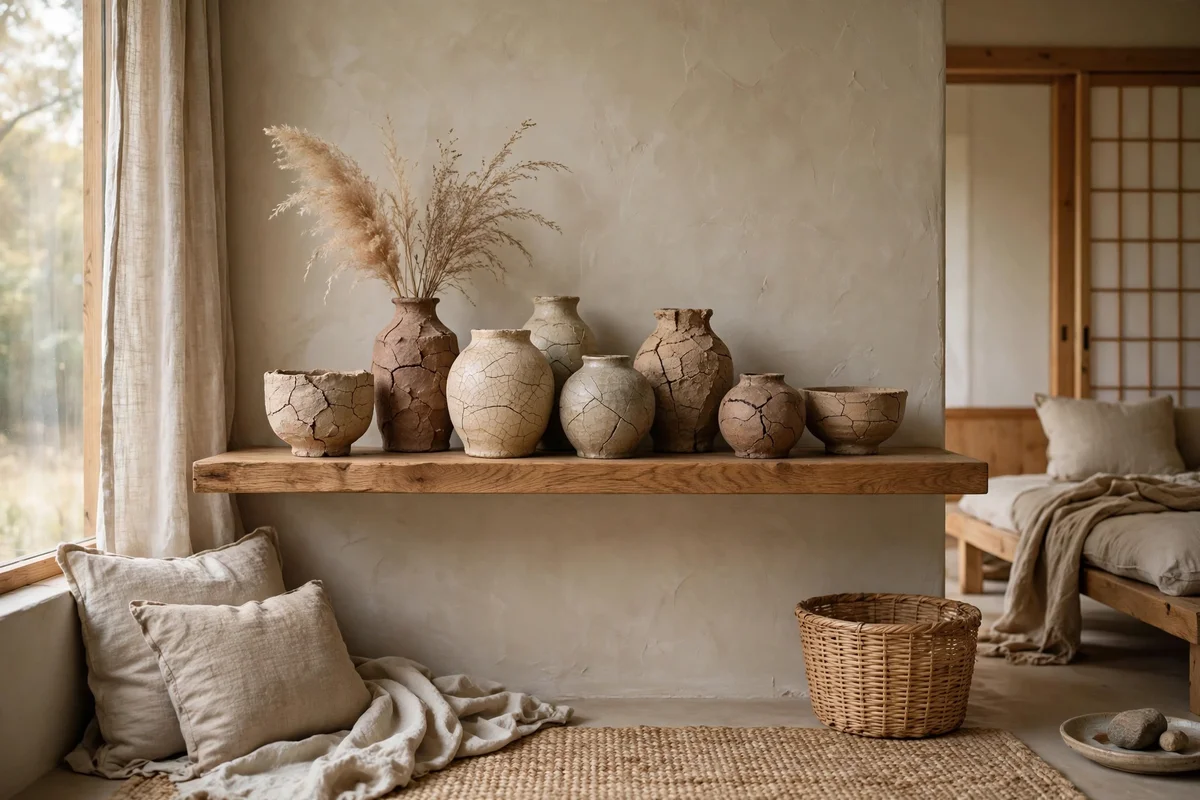
Handmade ceramics with visible fingerprints, uneven rims, and crackled glazes are the soul of wabi-sabi made tangible. Group two or three vessels of different heights on a shelf or coffee table: a tall bottle vase, a low wide bowl, a small cup. Their imperfections catch light and invite touch in a way perfect factory pieces never do. Handmade studio ceramics cost $30–$120 per piece. Pro tip: buy from local potters or craft markets rather than mass retailers, because the story behind a handmade piece is part of what makes it feel meaningful in the room.
19. Use Bamboo or Rattan Storage Baskets
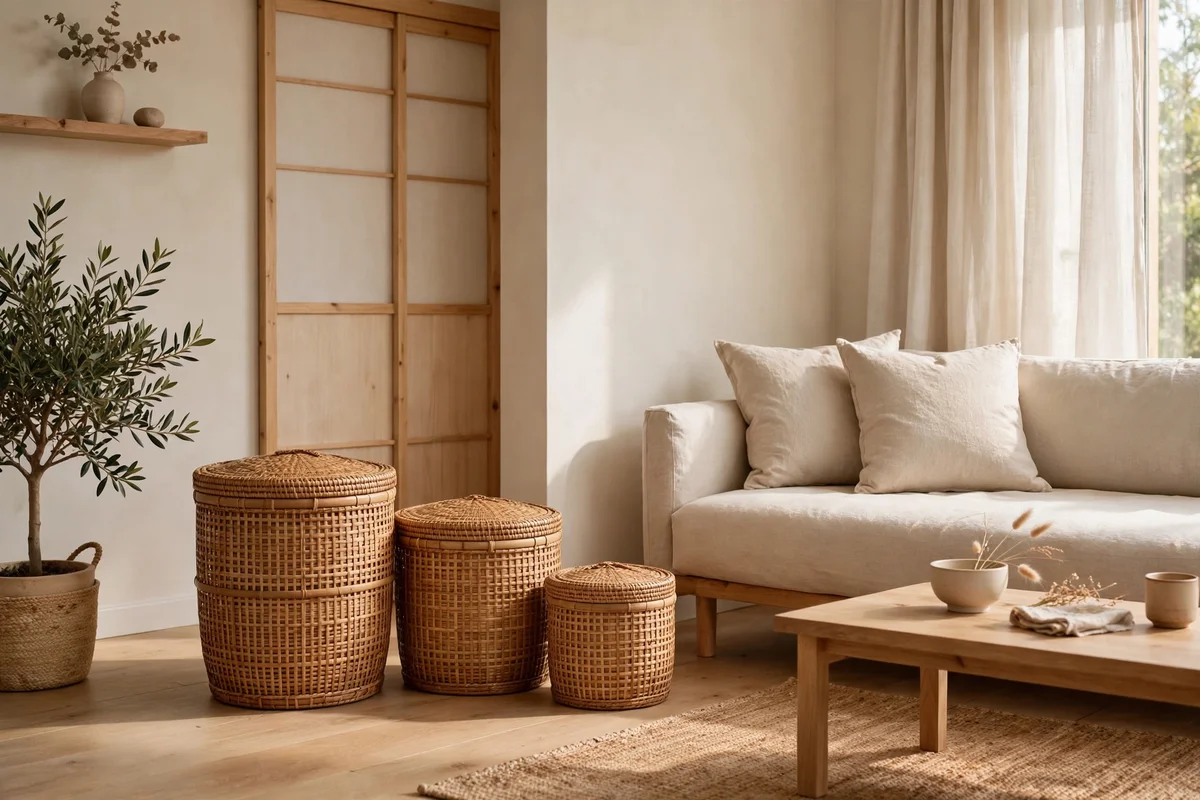
Storage in a Japandi living room should disappear into the texture of the room, and woven baskets do exactly that. Use lidded bamboo or rattan baskets for throws, remotes, and the everyday clutter that minimalism cannot quite eliminate. Their warm woven surfaces add craft without adding visual weight. Good lidded baskets cost $35–$90 each depending on size. Pro tip: choose baskets in the same tonal family as your wood furniture, because matching undertones keeps storage feeling intentional rather than improvised.
20. Add a Single Ikebana Floral Arrangement
Ikebana, the Japanese art of flower arrangement, is the perfect floral language for Japandi: three stems can say more than thirty. Choose branches, grasses, or a single sculptural bloom in a low ceramic vessel, and let asymmetry and empty space do the work. Refresh it weekly with whatever is in season. A good ikebana vessel costs $25–$70, and grocery-store stems run $8–$15. Pro tip: follow the classic three-line structure (heaven, earth, human) loosely, because even a rough sense of its proportions produces arrangements that feel balanced and alive.
21. Use Black Metal Accents Sparingly
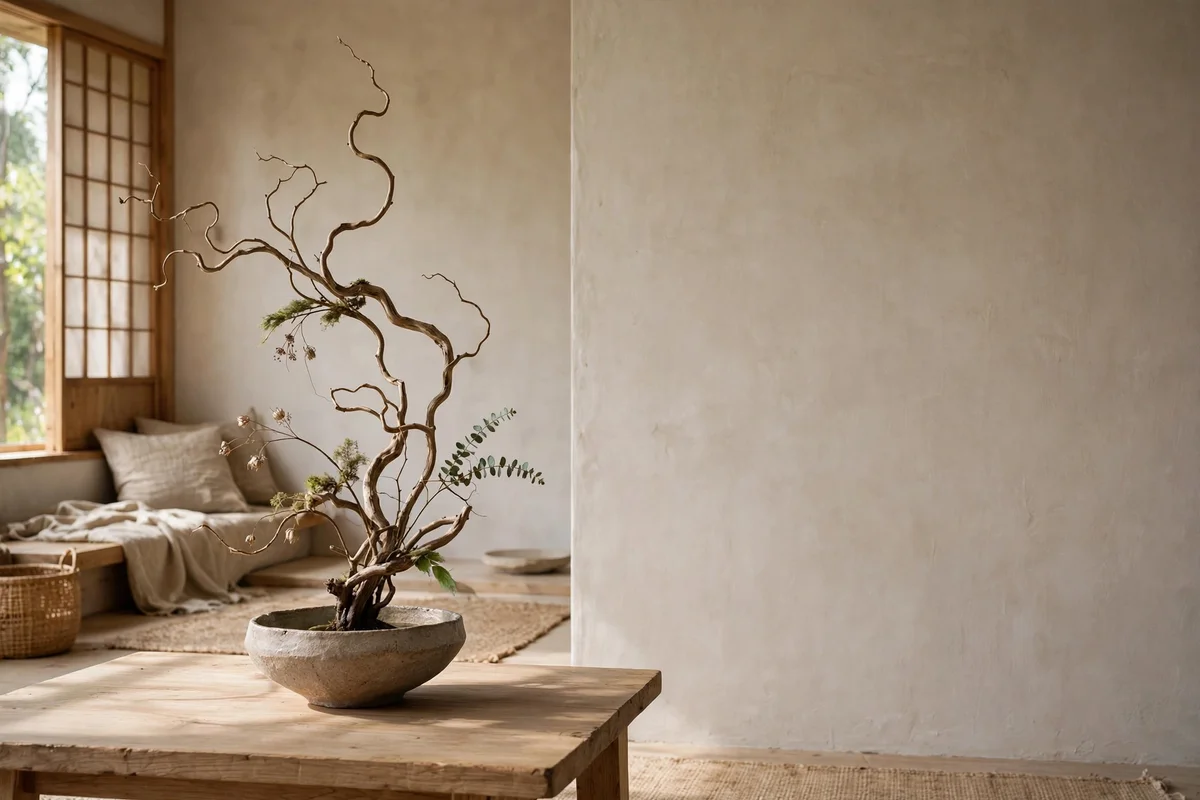
A little ink black is essential in Japandi: it grounds the pale palette and adds the graphic punch of Japanese sumi ink. But restraint is everything. One black floor lamp, black window frames, or black hardware on a walnut console is enough for a whole room. More than that and the calm tips toward contrast-heavy modern. Black metal accent pieces cost $60–$250 each. Pro tip: repeat black exactly three times in the room (the designer’s rule of three), because odd-numbered repetition feels intentional while random black bits feel accidental.
22. Install Rice Paper Window Shades
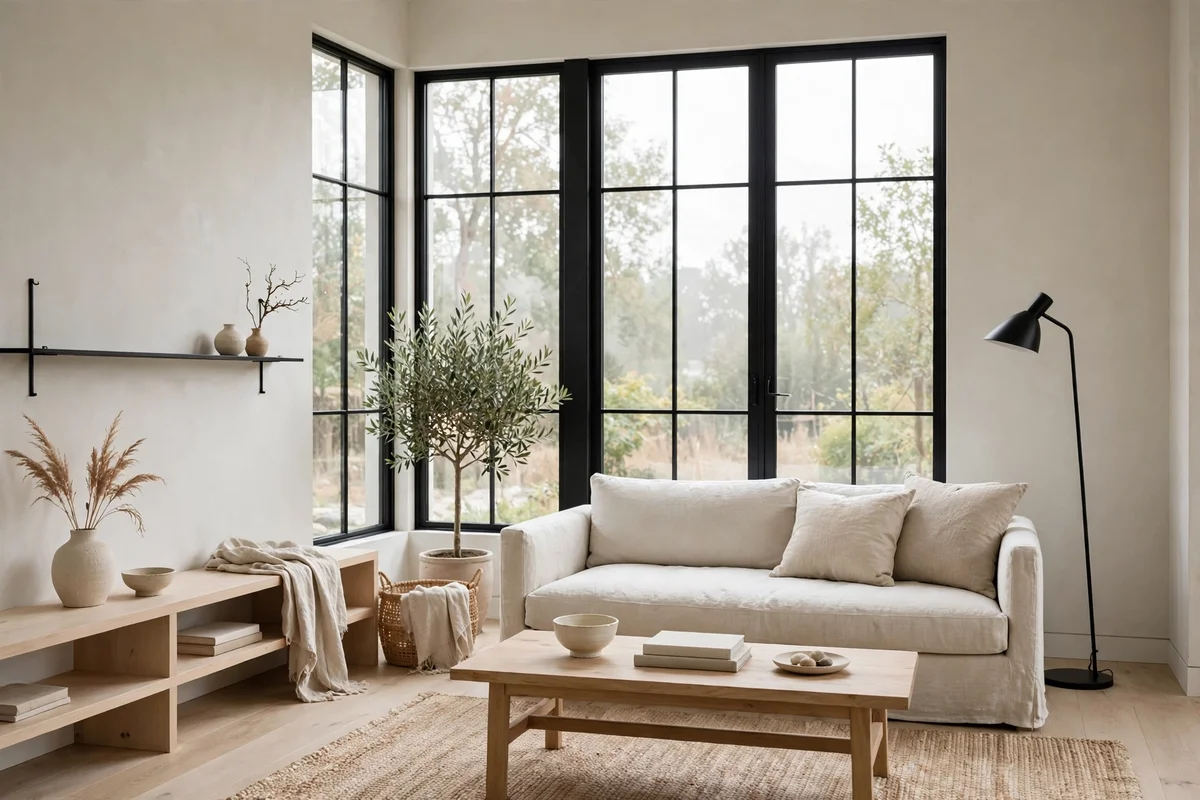
Where curtains feel too soft, rice paper roller shades bring crisp Japanese structure to windows. They filter light beautifully, disappear when rolled up, and add that unmistakable shoji texture even in a contemporary frame. They work especially well on large windows where fabric curtains would feel heavy. Quality natural-fiber roller shades cost $50–$120 per window. Pro tip: mount them inside the frame for a clean architectural look, and layer with sheers only if you need evening privacy.
23. Style a Low Bookshelf With Breathing Room
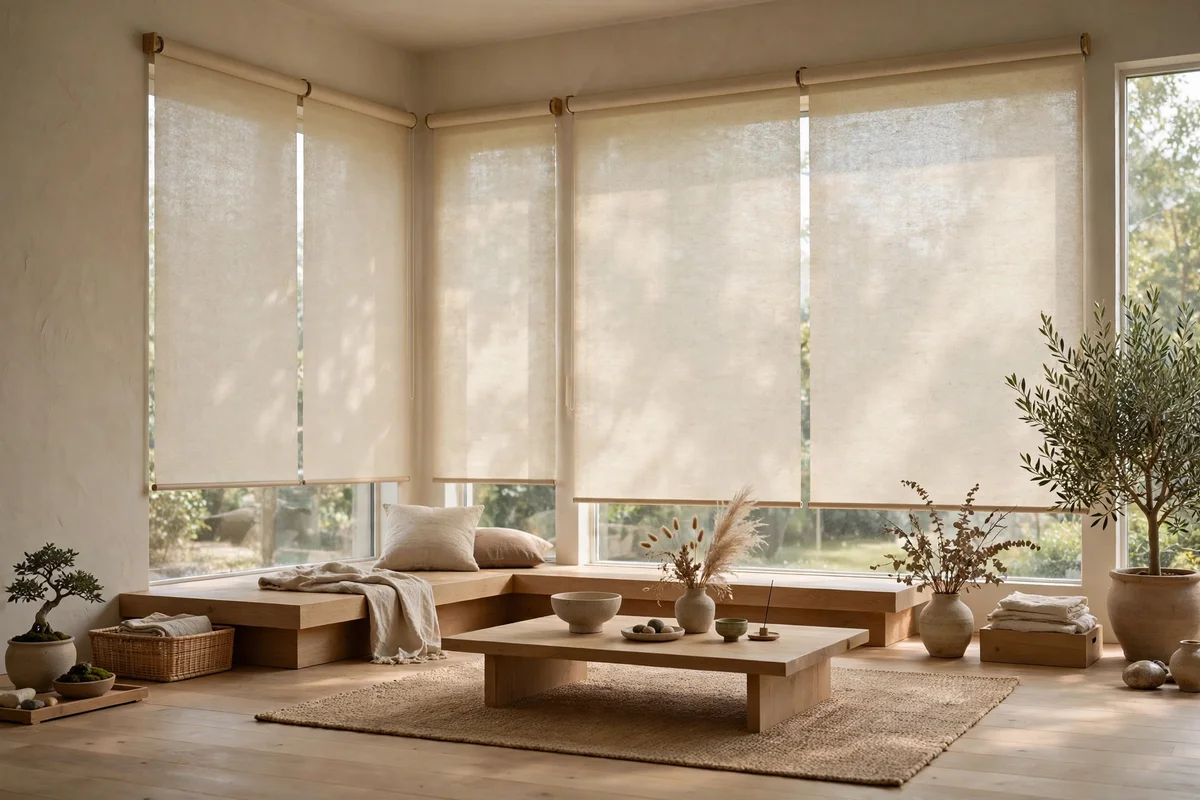
A Japandi bookshelf is curated, not crammed. Choose a low, wide oak or ash unit and give every shelf generous empty space: books grouped in small stacks, one ceramic object per shelf, and at least a third of each shelf left bare. The restraint makes the books you keep feel chosen rather than accumulated. Low solid-wood bookshelves cost $300–$800. Pro tip: turn book spines inward or remove dust jackets for a tonal look, because rainbow spines are visual noise in a calm palette.
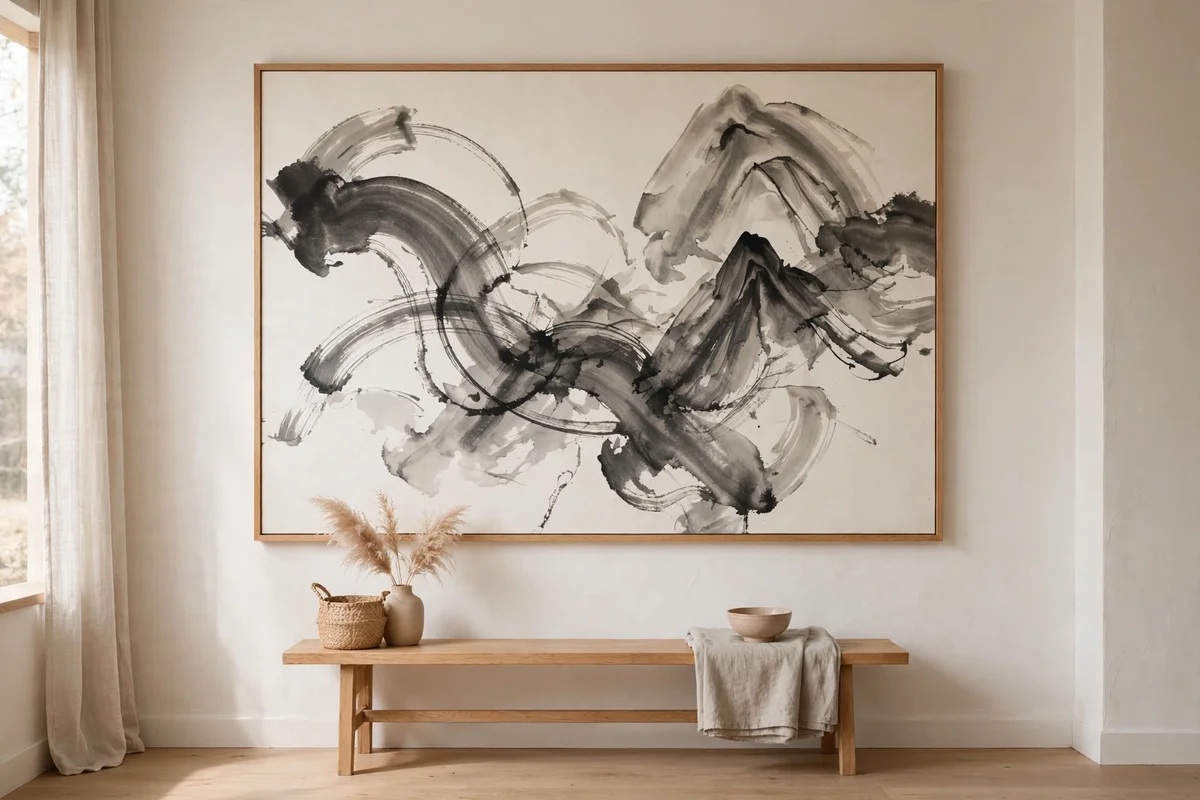
24. Hang One Oversized Ink-Wash Artwork
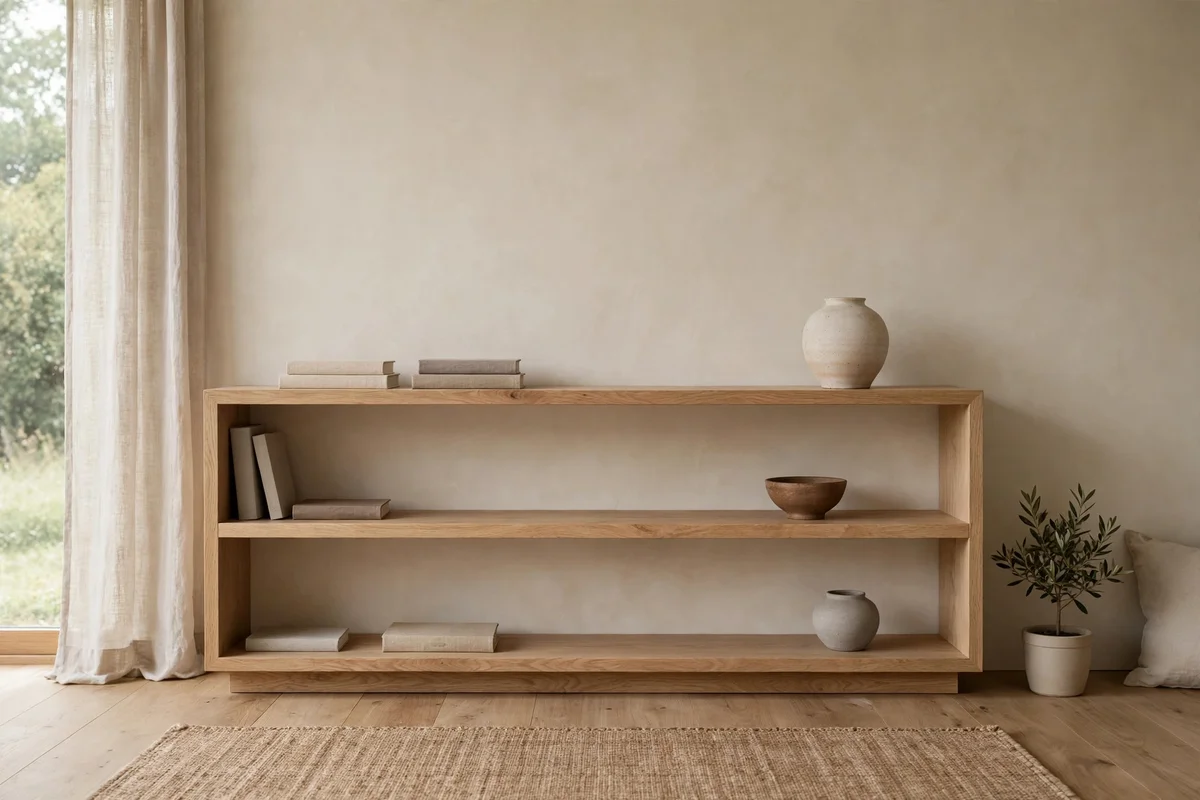
A single large artwork beats a gallery wall in Japandi every time. Look for abstract ink-wash pieces, soft landscapes, or textured neutrals in a thin oak or black frame, hung at eye level as the room’s quiet focal point. The scale matters: oversized art in a minimal room feels confident, while small art feels lost. Large-format prints in simple frames cost $150–$500. For palette confidence, browse our living room color palettes to see how neutrals carry a whole scheme. Pro tip: hang the piece so its center sits 57 inches from the floor, the gallery standard that feels right in almost every room.
Wabi-Sabi Details and Finishing Calm
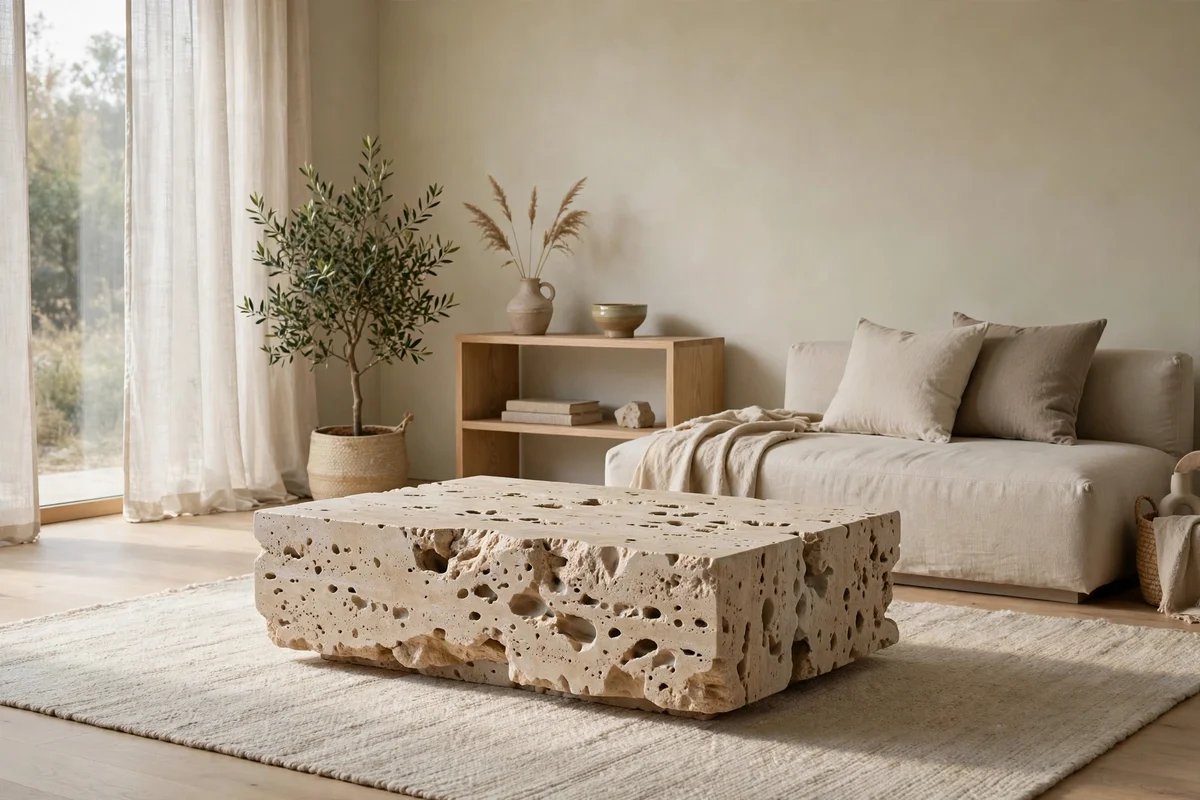
25. Choose a Travertine or Honed Stone Coffee Table
If one piece can carry the wabi-sabi message, it is a stone coffee table. Travertine with its natural pitting, or honed basalt with soft matte depth, brings geological time into the room. No two are alike, and that uniqueness is the point. Pair with a light rug so the stone’s weight feels grounded, not heavy. Stone coffee tables cost $400–$1,200 depending on size and stone type. Pro tip: seal travertine annually with a matte stone sealer, because unsealed stone stains from the first coffee ring while sealed stone shrugs off daily life.
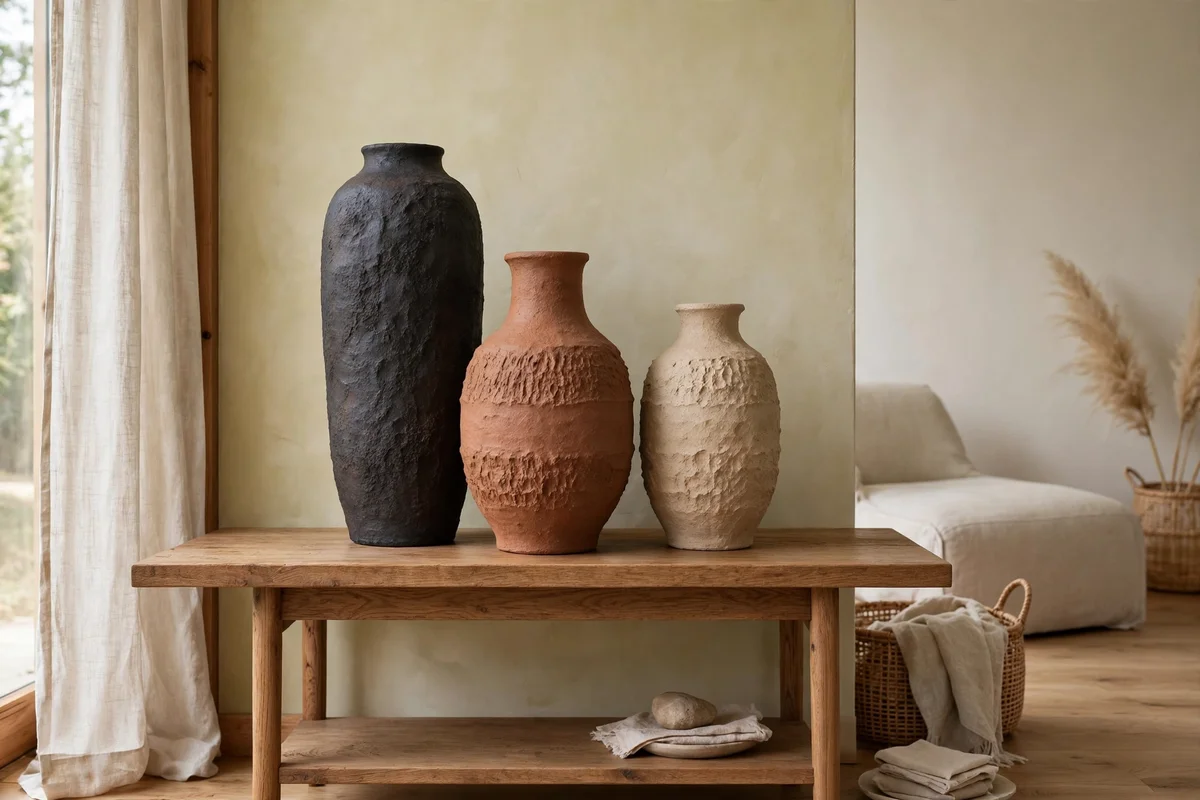
26. Group Textured Clay Vases in Earth Tones
A trio of clay vases in terracotta, sand, and charcoal is the easiest wabi-sabi vignette you can build. Vary heights and girths, keep finishes matte and tactile, and leave two of the three empty: the emptiness is part of the composition. Handmade clay vases cost $25–$80 each. Pro tip: arrange in odd numbers and step them like a staircase (tall, medium, short), because that rhythm pleases the eye far more than matching heights.
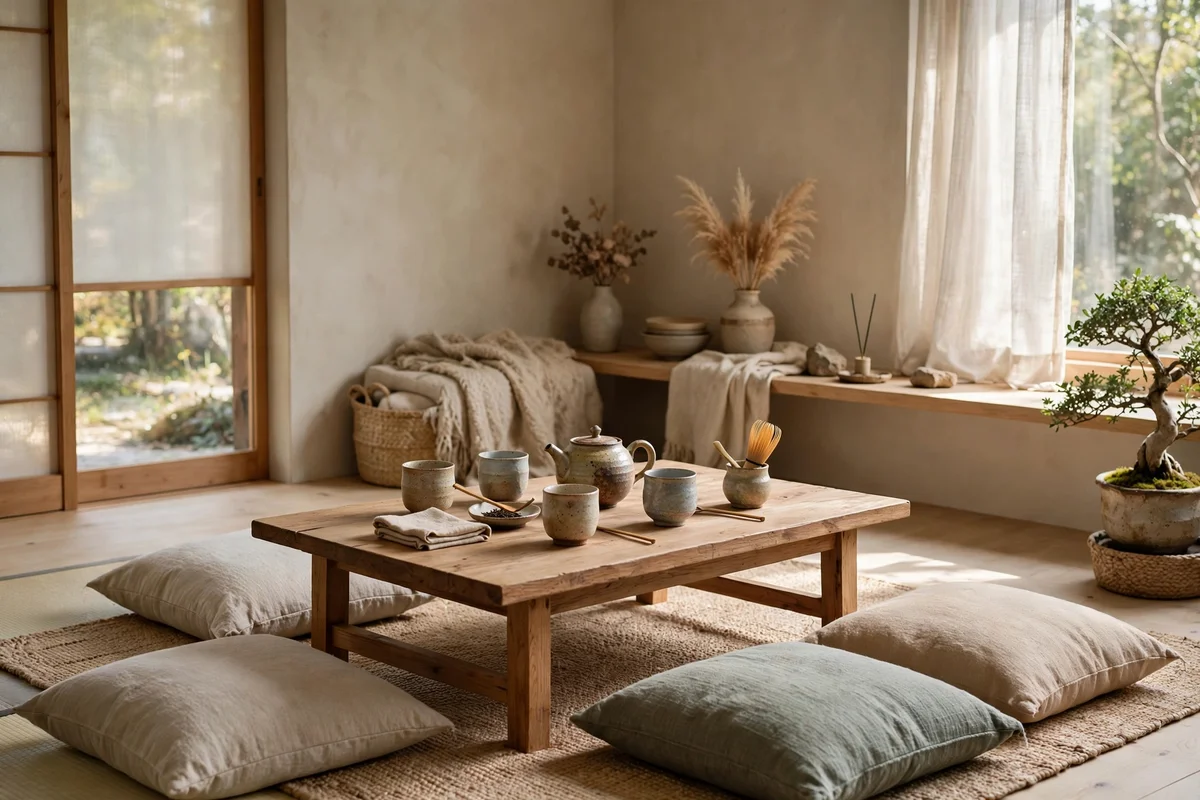
27. Create a Japanese Tea Corner
Dedicate one quiet corner to tea and it becomes the spiritual heart of the living room. All you need is a low table or tray, two handmade cups, a simple teapot, and a cushion or two. The ritual of preparing tea slows the room down and gives the minimalism a purpose beyond looks. A starter tea set with tray costs $60–$150. Pro tip: keep the tea corner permanently set up rather than packing it away, because a ready ritual gets used while a stored one stays theoretical.
28. Commit to Warm 2700K Lighting Only
Light temperature is the invisible ingredient of Japandi calm, and the rule is simple: every bulb in the room at 2700K, no exceptions. Mixed temperatures (a cool kitchen bulb bleeding in, a daylight desk lamp) fracture the warm cocoon. Swap every bulb, put key lamps on dimmers, and let evening light fall to a candle-like glow. Warm LED bulbs cost $8–$15 each. Pro tip: do a nighttime walk-through after the swap, because one forgotten cool bulb in a hallway or adjacent room will undermine the whole effect.
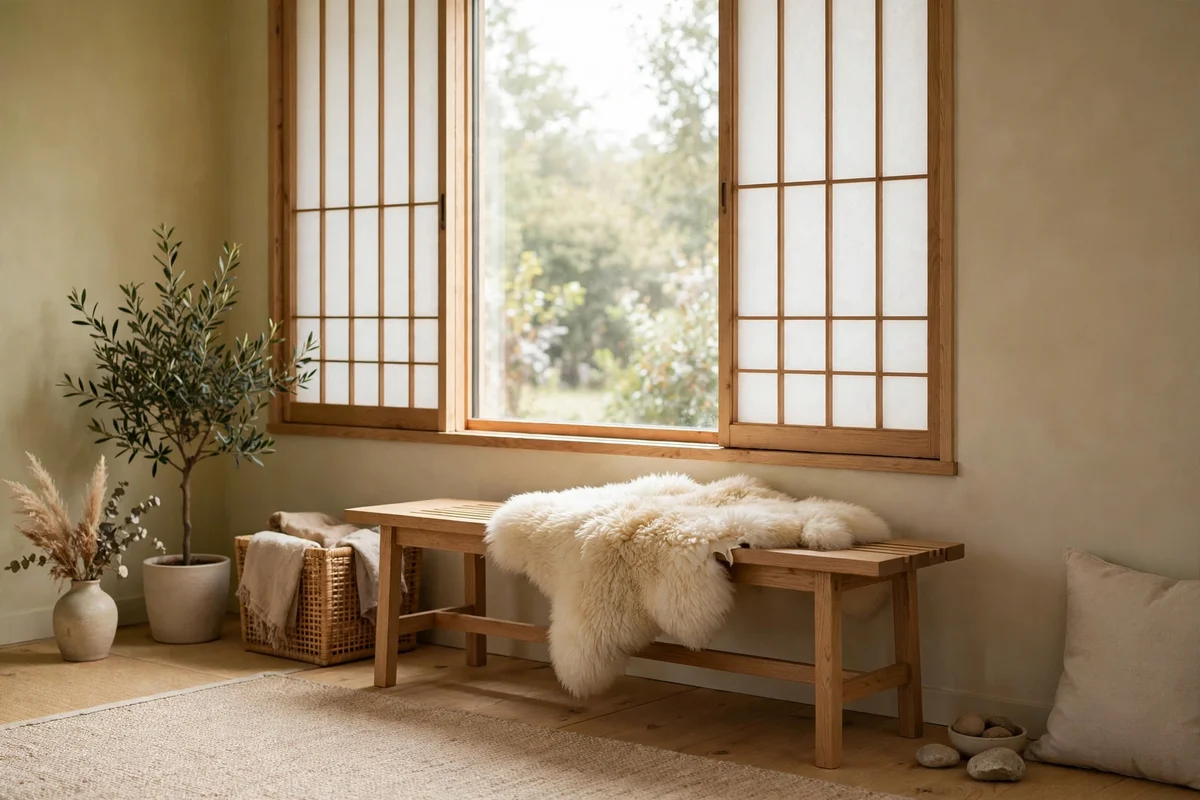
29. Drape a Sheepskin Over a Wooden Bench
A sheepskin thrown over a simple oak bench is Scandinavian hygge in its purest form, and it softens Japandi’s harder edges beautifully. Use it on a bench by the window, draped over a dining chair pulled into the living zone, or folded at the foot of a daybed. Real sheepskins cost $60–$140; good faux versions run $25–$50. Pro tip: choose ivory or undyed grey rather than bright white, because natural tones age gracefully while stark white sheepskins yellow and look tired within a year.
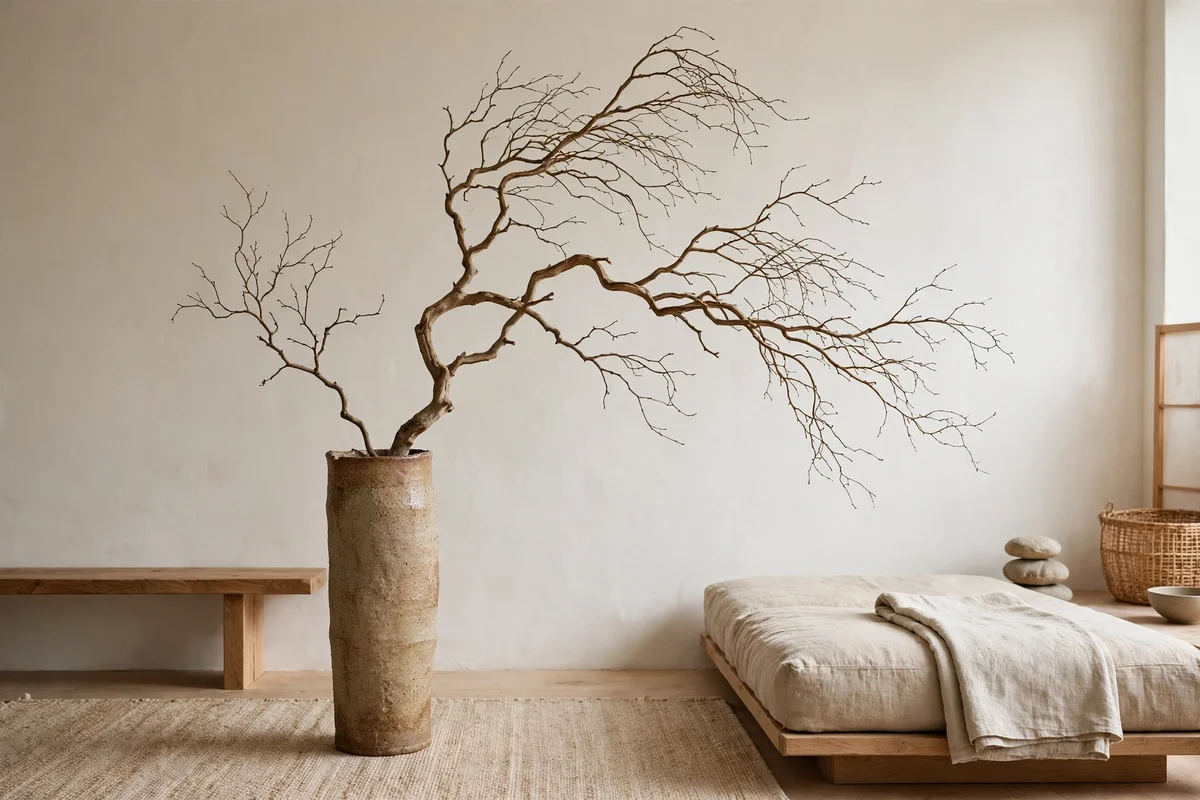
30. Display a Single Branch in a Tall Vase
Nothing captures wabi-sabi like one dramatic branch in a tall vessel: cherry blossom in spring, bare maple in winter, eucalyptus year-round. The asymmetry, the negative space around it, the slow change as buds open or leaves fall, all of it is the philosophy made visible. A tall handmade vase costs $60–$150; branches are often free from the garden. Pro tip: cut the branch at least one and a half times the vase height, because that proportion creates the elegant upward movement ikebana masters aim for.
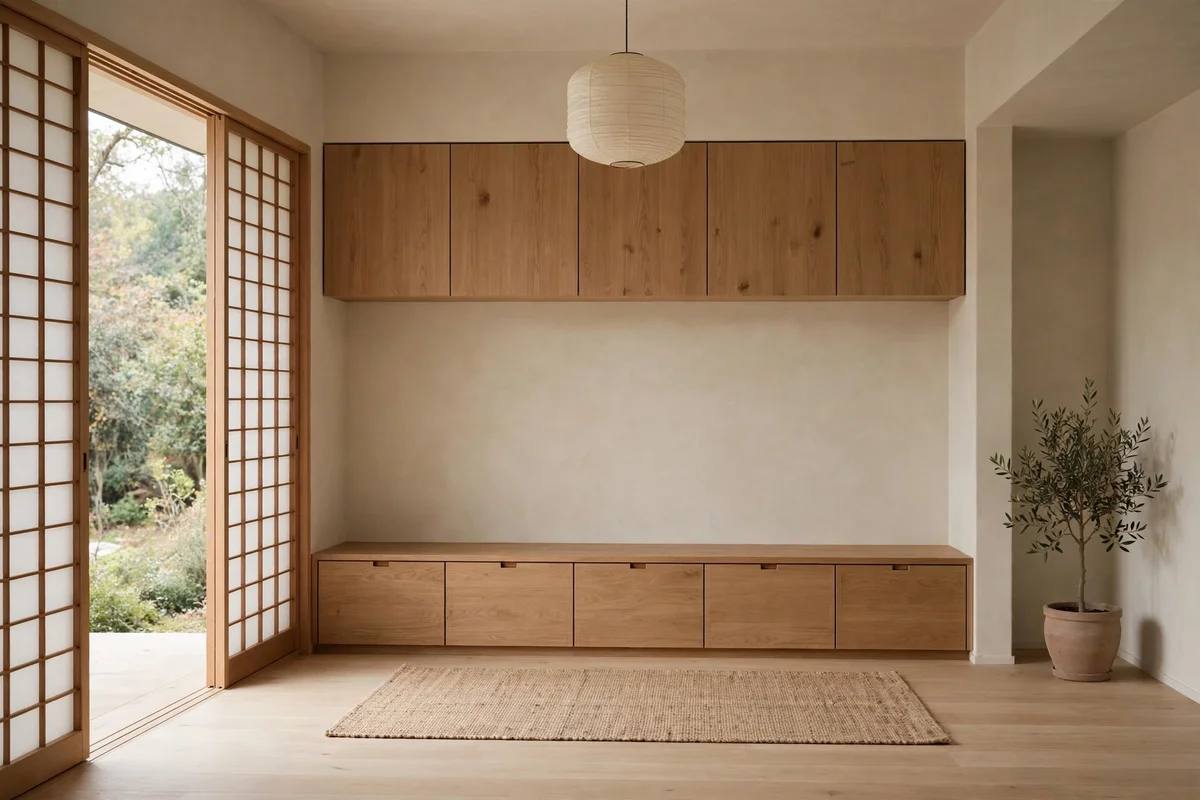
31. Hide Everything With Clever Concealed Storage
Japandi calm depends on clear surfaces, which means storage must be invisible. Choose consoles with push-latch doors, ottomans with hidden compartments, and wall cabinets that read as paneling. Every remote, charger, and paperback gets a home behind a closed front. If you love a calmer take on other styles too, our coastal living room ideas use the same hide-it-all discipline. Pro tip: do a weekly five-minute reset where everything returns to its hidden home, because calm is maintenance, not a one-time purchase.
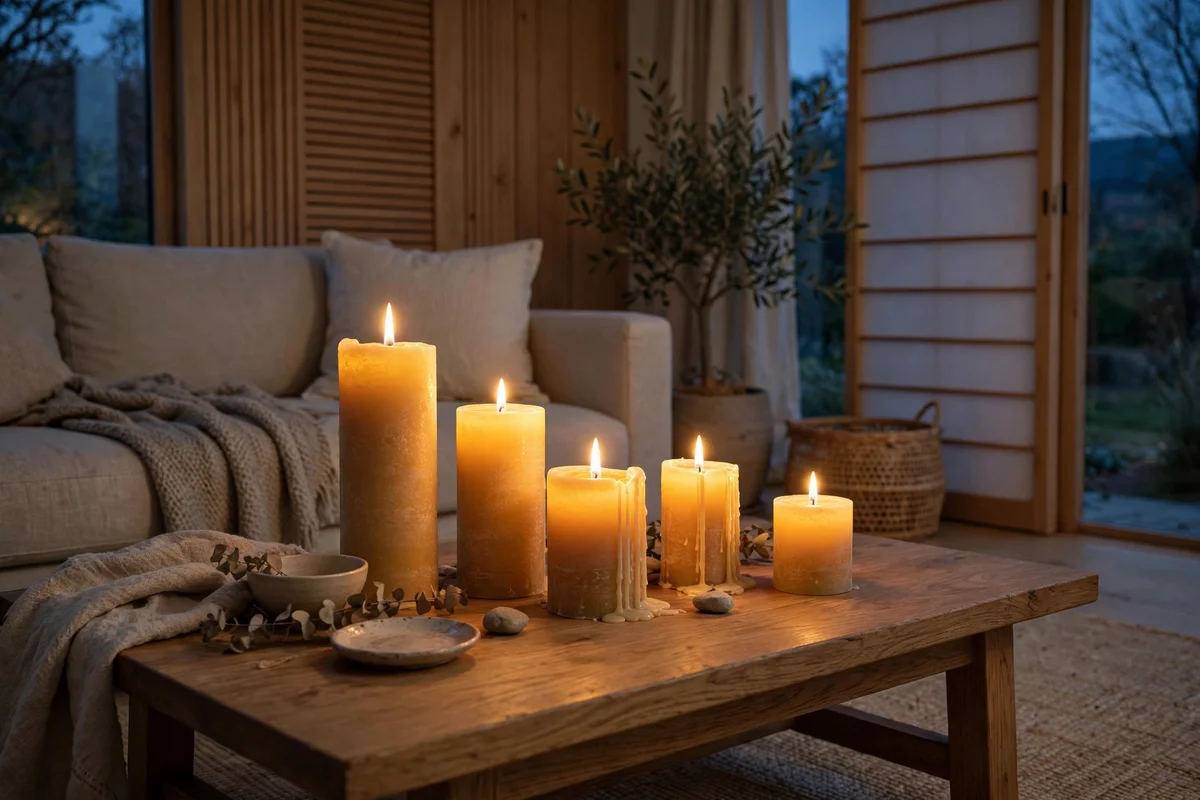
32. Finish With Natural Beeswax Candlelight
The final layer of Japandi calm is living flame. Beeswax candles burn with a warm golden light and a faint honey scent that no LED can replicate, and their slow drip feels artisanal rather than messy. Cluster three pillar candles of different heights on the coffee table or line tapers along the console. Pure beeswax pillars cost $15–$40 each. Pro tip: burn candles for at least an hour at a time so the wax pool reaches the edge, because tunneling wastes expensive beeswax and looks untidy.
Frequently Asked Questions
What exactly is Japandi style?
Japandi fuses Japanese wabi-sabi (beauty in imperfection, natural aging, craft) with Scandinavian hygge (coziness, warmth, everyday comfort). In a living room it means low furniture, natural materials, a nature-derived palette, and intentional negative space. If you are drawn to layered maximalism instead, our boho studio apartment ideas show the exuberant opposite end of the spectrum.
What colors define a Japandi living room?
Warm whites, oatmeal, sand, clay, stone gray, and muted sage form the base, with ink black used sparingly as punctuation. The key is warmth: every neutral should lean warm rather than cool, which keeps minimalism feeling inviting instead of stark.
How is Japandi different from pure Scandinavian style?
Scandinavian design prioritizes brightness, coziness, and functional comfort, sometimes with playful color. Japandi adds Japanese restraint, asymmetry, wabi-sabi imperfection, and a lower, more grounded furniture profile. Think of Japandi as Scandinavian calm deepened with Japanese philosophy.
Can I create a Japandi living room on a budget?
Absolutely, because the style rewards editing more than buying. Start by decluttering (free), repaint in warm white ($60–$90), swap cool bulbs for 2700K ($8–$15 each), and add one natural texture like a linen throw ($50–$120). The biggest impact comes from restraint, not spending.
What materials should I prioritize for Japandi decor?
Light oak and ash, walnut for depth, linen and wool textiles, handmade ceramics, stone, bamboo, rattan, washi paper, and clay. Every material should look and feel natural, with visible grain, weave, or hand marks celebrated rather than hidden.
How do I keep a Japandi living room from feeling cold or empty?
Warmth comes from texture and light, not objects. Layer linen, wool, and sheepskin; keep every bulb at 2700K; add one living plant; and let natural materials age visibly. A room with five honest textures feels warmer than a room with fifty decorations.
Final Thoughts
A Japandi living room is not a look you buy, it is a discipline you practice. Start with the foundation: warm walls, pale floors, honest light. Choose low, quiet furniture and let natural materials do the talking. Then edit, and edit again, until what remains feels inevitable. The 32 ideas above give you a complete roadmap, but remember that restraint is the real luxury here. One perfect ceramic, one branch in a vase, one pool of warm light: that is Japandi, and it is enough.

2 Comments