
34 Coastal Studio Apartment Ideas for Breezy, Sunlit Living
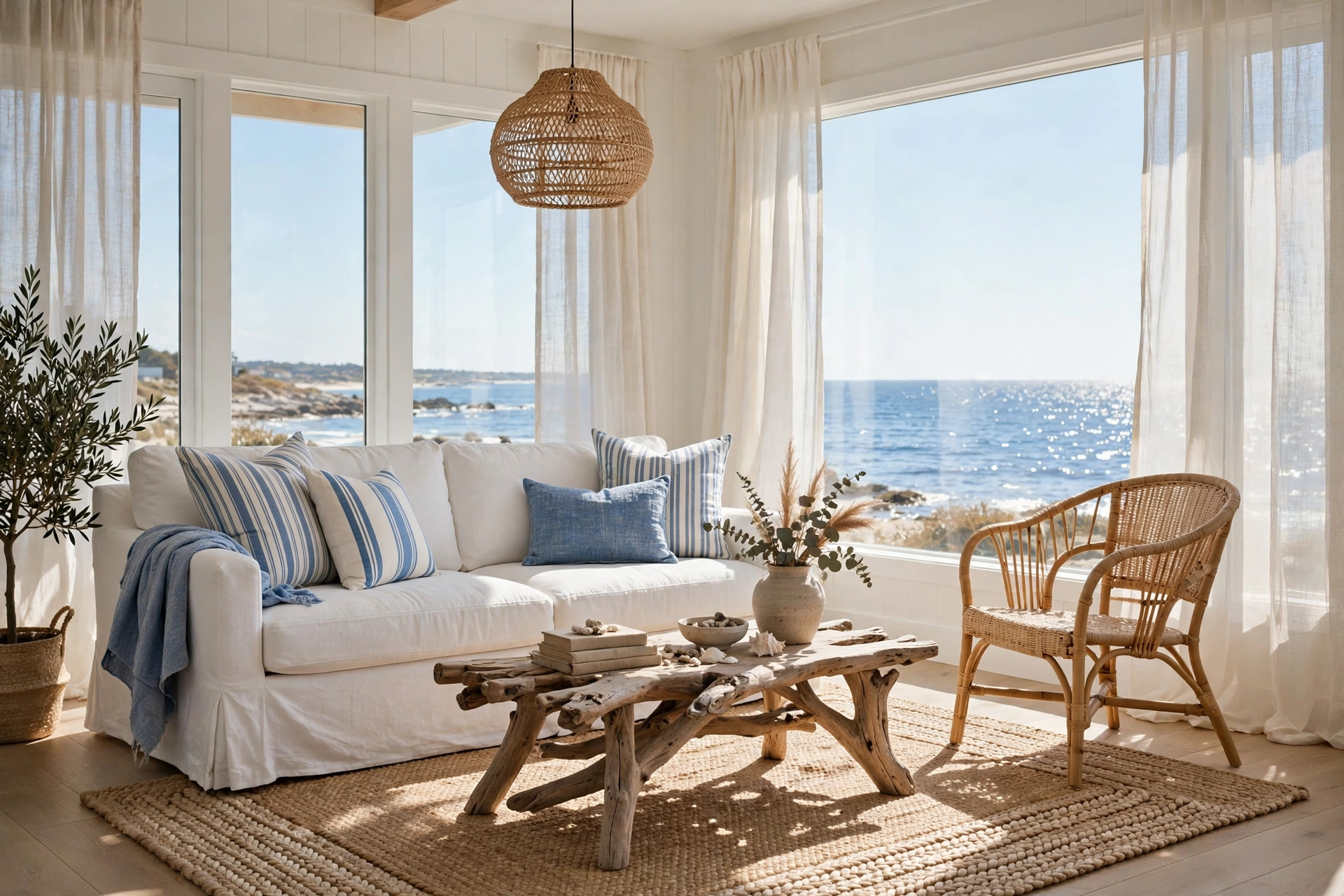
34 Coastal Studio Apartment Ideas for Breezy, Sunlit Living
There is a reason coastal style never goes out of fashion: it is the visual equivalent of a deep breath. Whitewashed woods, sun-bleached textures, sea-glass blues and sandy neutrals — the coastal palette was practically invented for small spaces, because light colors, natural materials and uncluttered surfaces make any studio feel bigger, brighter and calmer. Whether you live three blocks from the beach or three time zones from the nearest ocean, these 34 coastal studio apartment ideas will bring that breezy, barefoot-elegant feeling home. From limewashed walls and rattan lighting to driftwood art and sailcloth upholstery, every idea is renter-friendly where it counts, budget-conscious throughout, and designed to layer beautifully in one open room.
Walls & Color: The Coastal Canvas
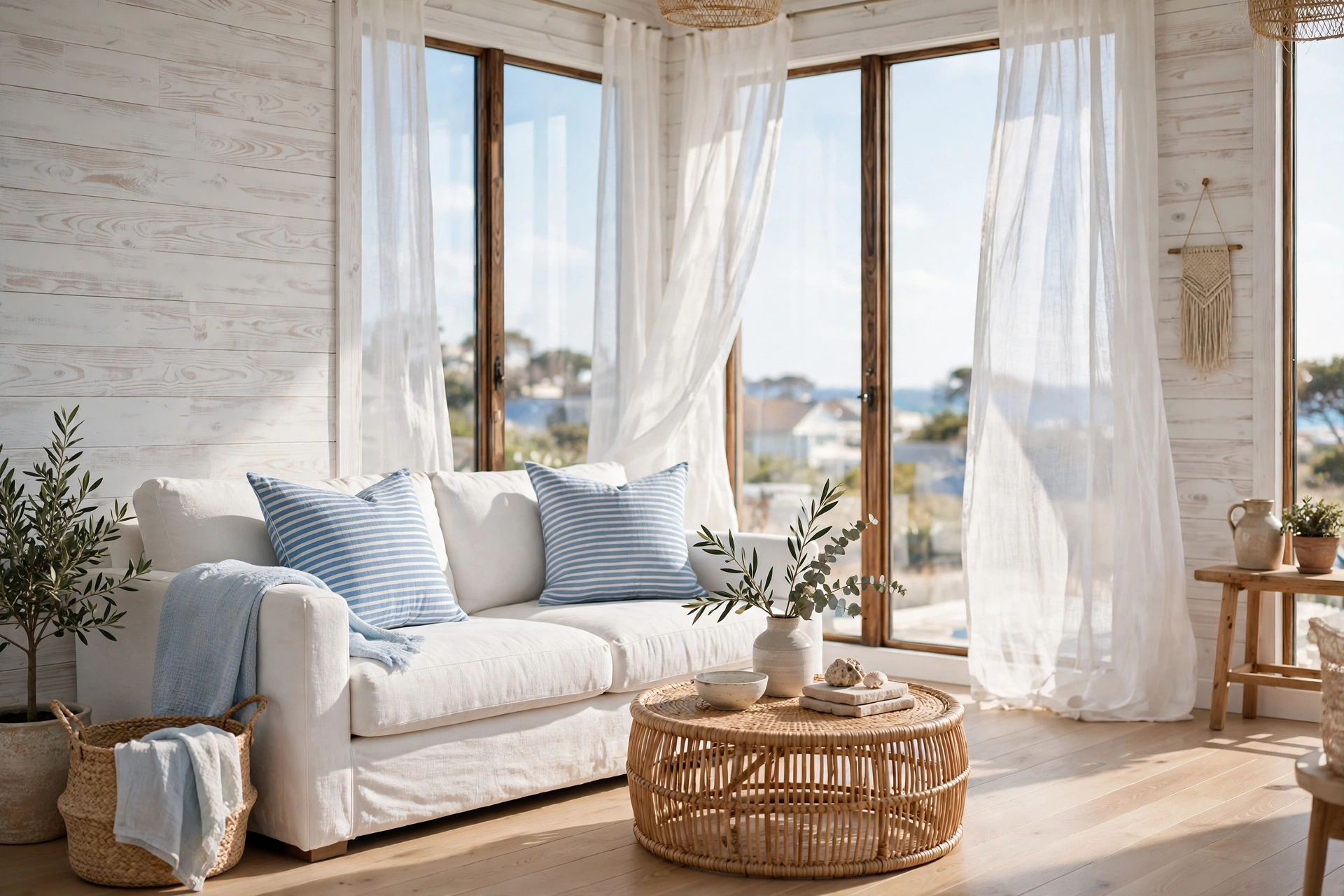
1. Whitewash Walls for Instant Airiness
A whitewash finish — thinned white paint brushed over walls so a whisper of texture shows through — is the fastest way to make a studio feel like a beach cottage. A gallon of white paint ($30–$45) plus water is all it takes, and the soft, imperfect finish hides wall flaws better than flat paint ever could. Keep trim bright white for contrast. Pro tip: test your whitewash ratio on a hidden patch first — a 1:1 paint-to-water mix gives a sheer veil, while 2:1 reads nearly opaque.
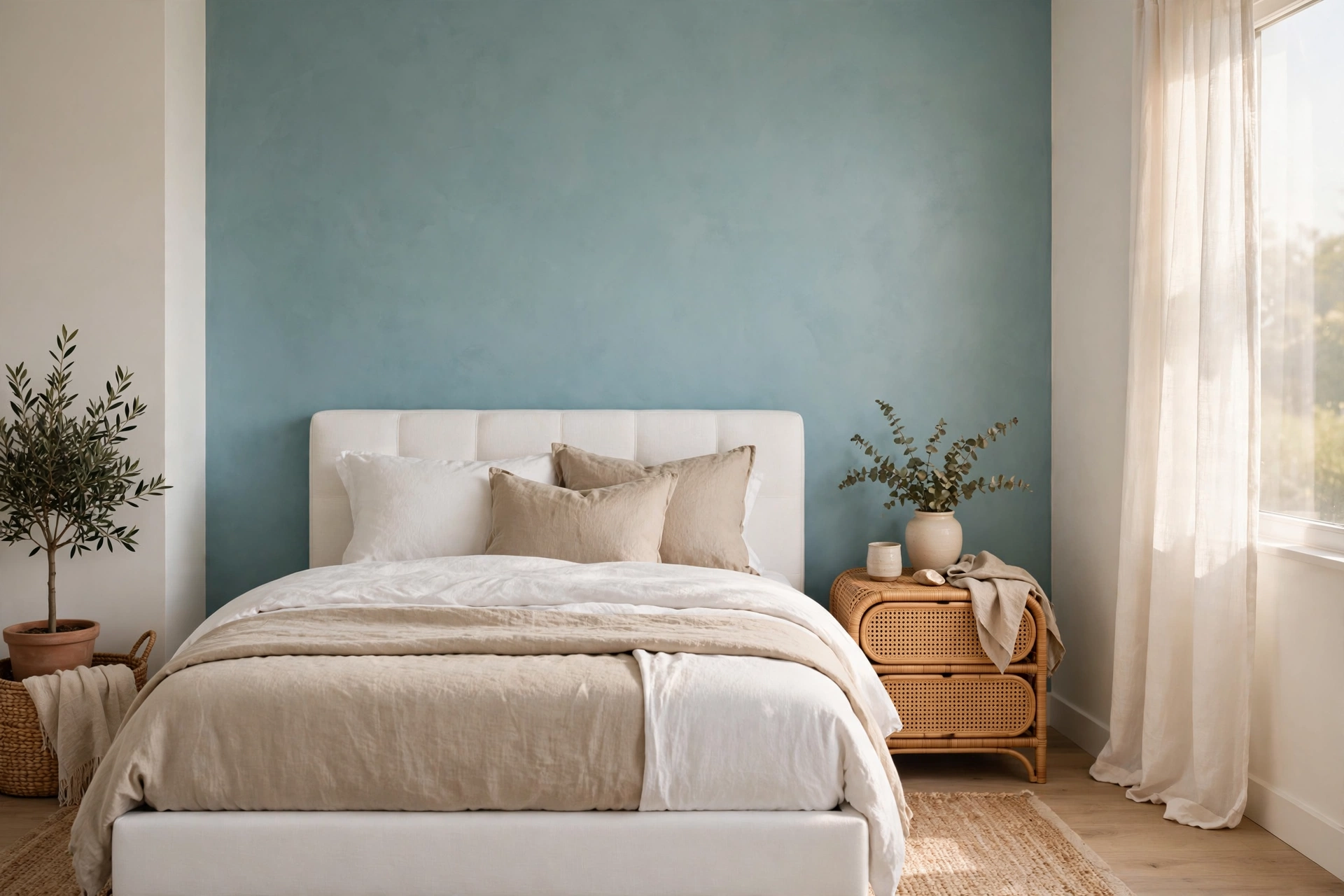
2. Paint One Sea-Glass Accent Wall
Sea-glass green-blue — that pale, frosted aqua of weathered beach glass — makes a dreamy accent wall behind the bed or sofa. One gallon ($35–$50) transforms the room’s mood without overwhelming a small space. Pair it with warm whites and natural wood so the color feels sunlit, not cold. Pro tip: choose a paint with a hint of gray in it — pure aqua can read tropical, while grayed sea-glass reads sophisticated coastal.
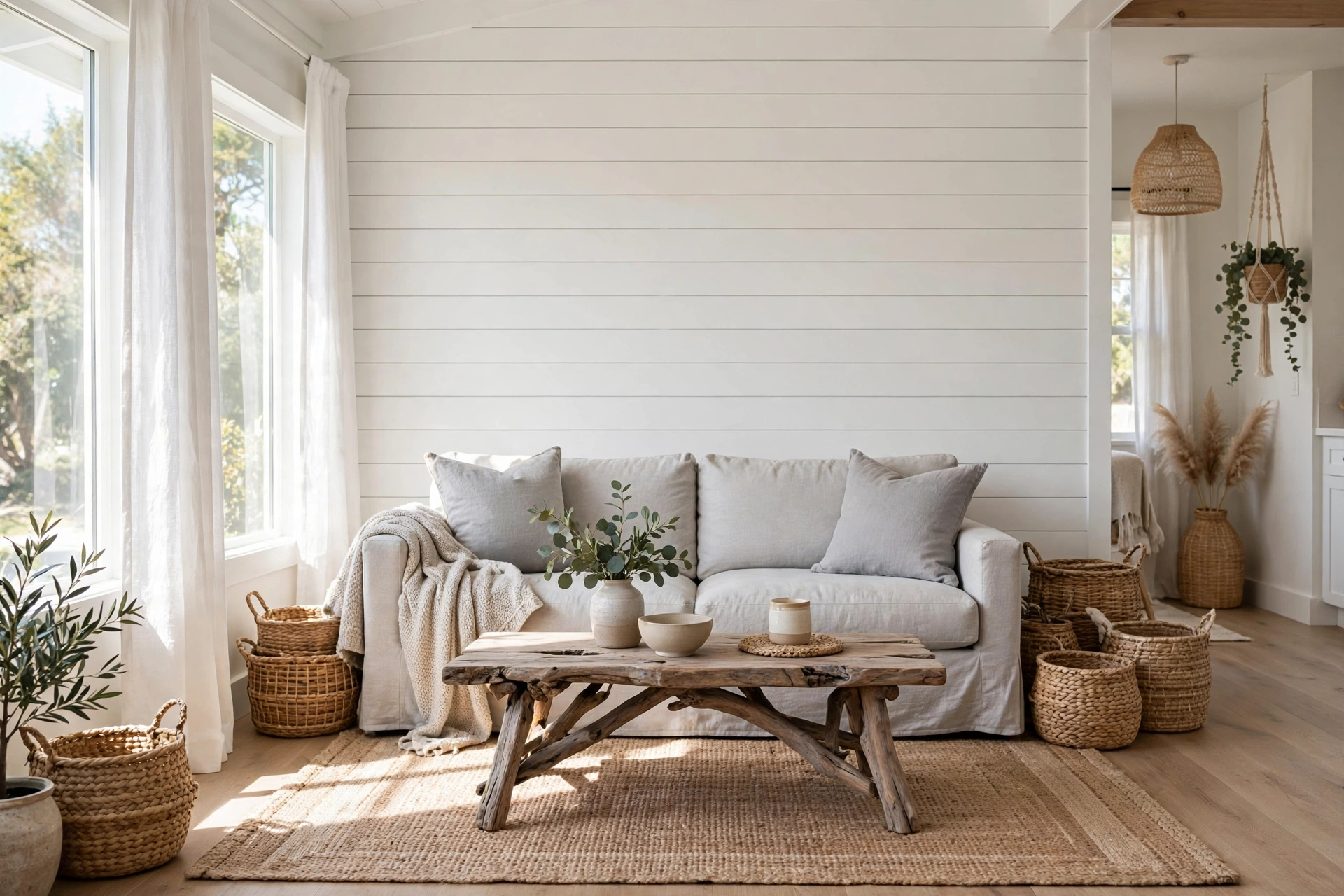
3. Add a White Shiplap Accent Wall
Horizontal shiplap boards ($2–$4 per square foot for peel-and-stick or MDF planks) bring instant cottage character to a flat rental wall. Run the boards horizontally to make the studio feel wider, and paint them the same white as the trim for a seamless, architectural look. One weekend, one wall, total transformation. Pro tip: use construction adhesive plus a few finish nails into studs — adhesive alone can fail in humid bathrooms, and nails alone leave the boards vulnerable to warping.
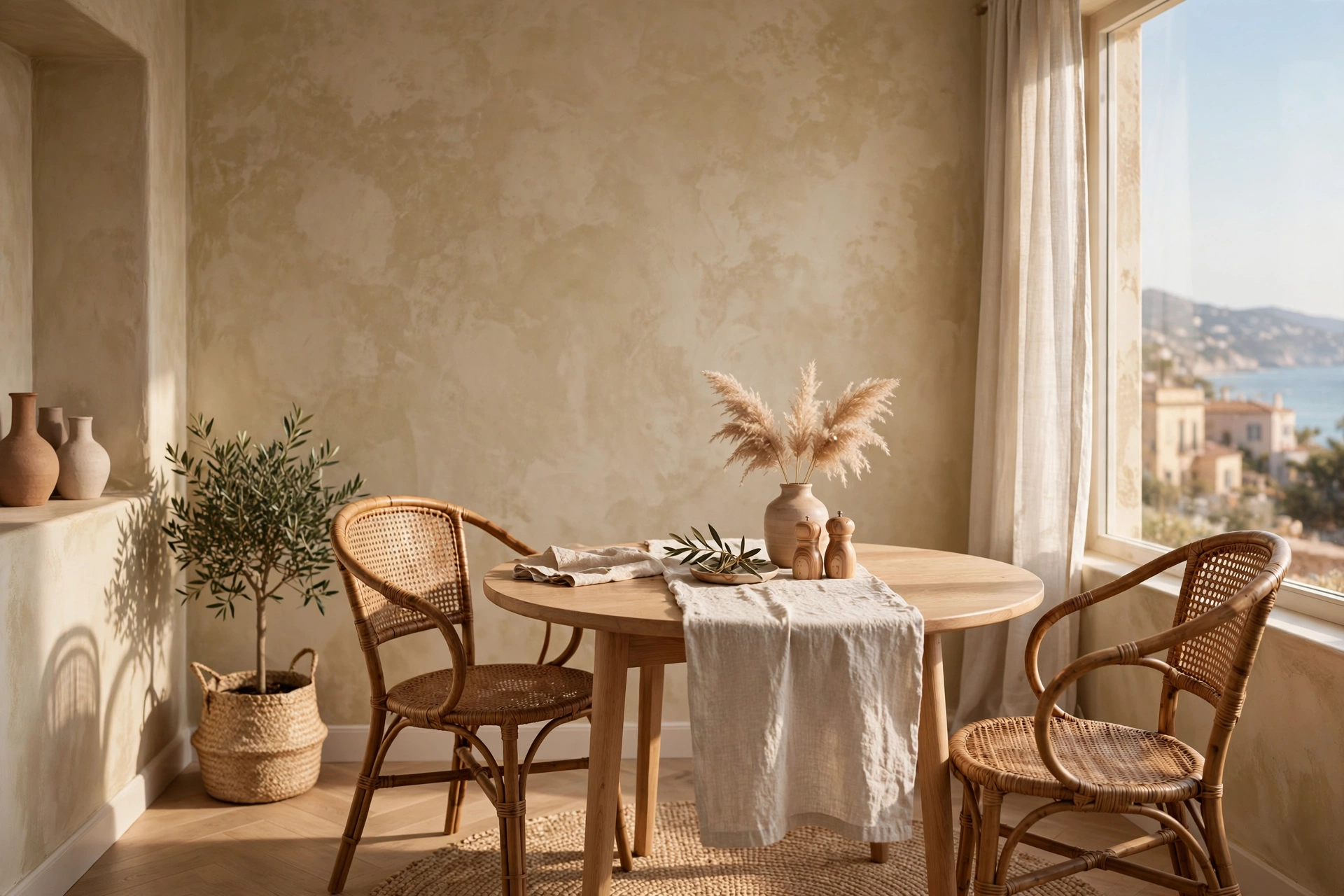
4. Try Sandy Beige Limewash Walls
Limewash paint ($50–$70 per gallon) creates the cloudy, movement-filled finish of Mediterranean plaster — perfect for a warm, sandy coastal look that flat paint cannot replicate. Apply it in crisscross strokes with a large block brush; the mottled effect is the entire point. One feature wall is plenty in a studio. Pro tip: limewash looks dramatically different wet versus dry — always let your test patch dry fully (24 hours) before judging the color.
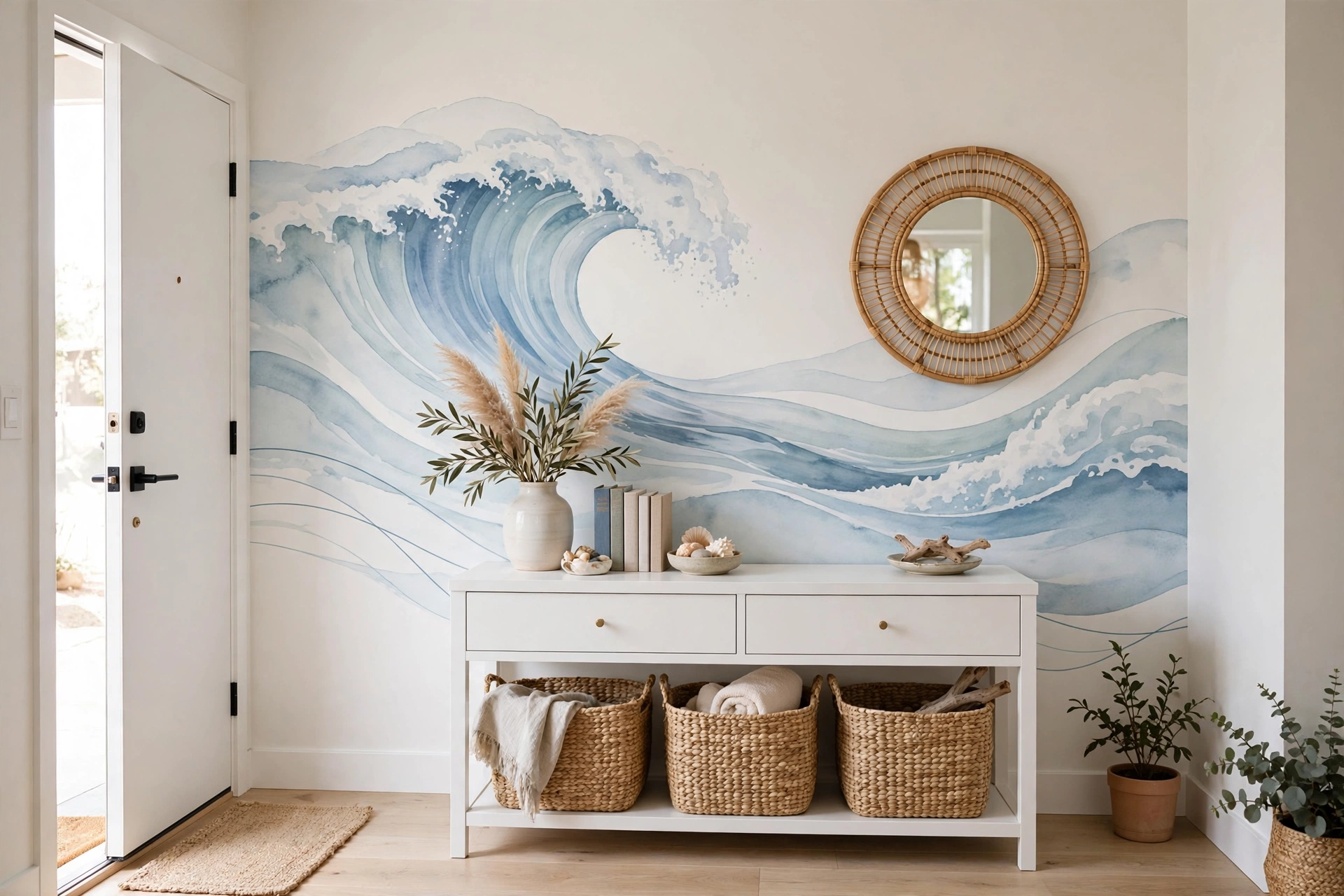
5. Hang an Ocean Mural Wall Decal
Not ready to commit to paint? A large-scale ocean wave wall decal ($40–$120) gives you a floor-to-ceiling seascape that peels off cleanly when you move. Place it on the wall you face from the sofa so it becomes the room’s living artwork. Look for matte, fabric-based decals — they photograph without glare. Pro tip: apply decals on a warm day or warm the wall with a hair dryer first — adhesive bonds better and you will get fewer air bubbles.
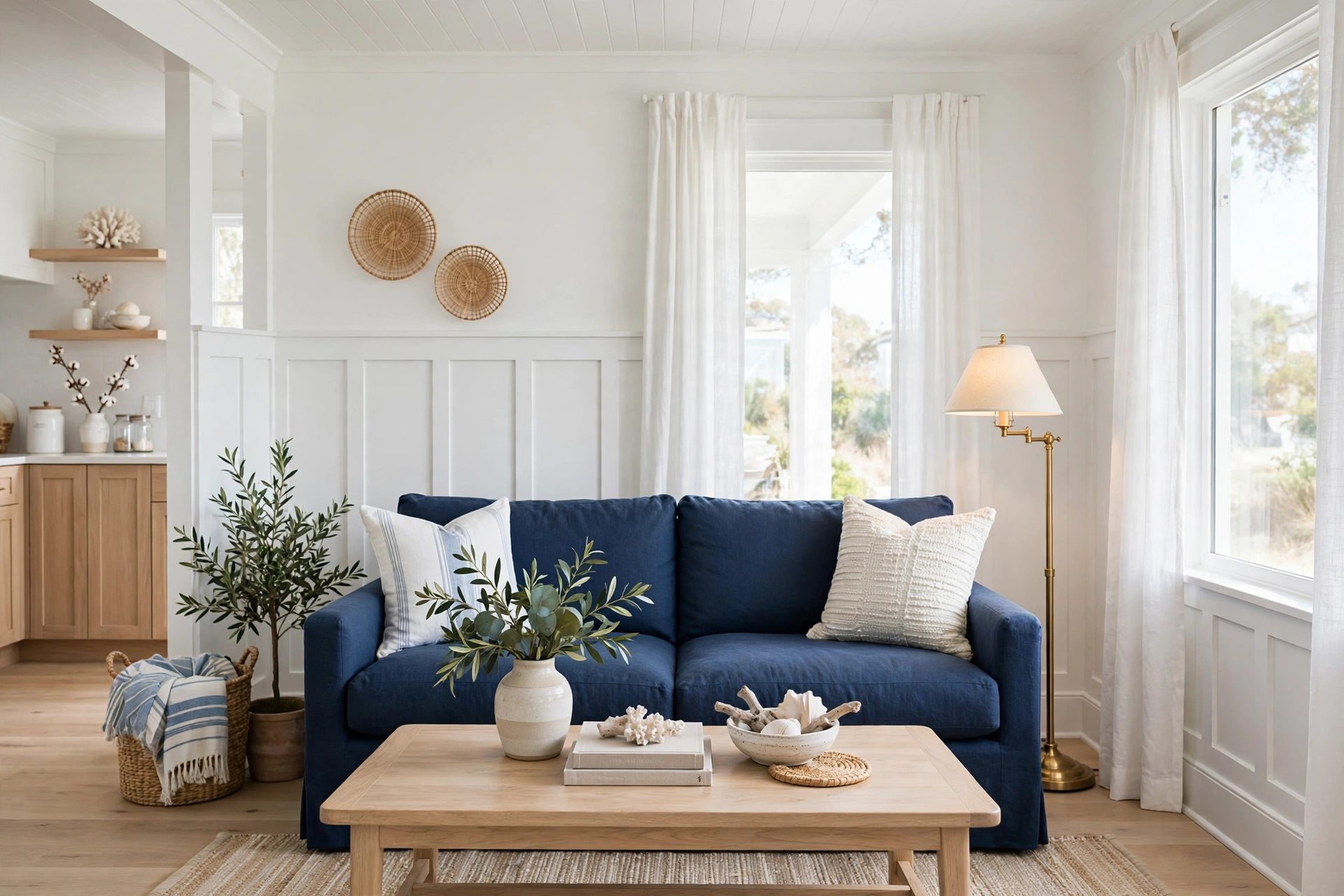
6. Install White Board-and-Batten Wainscoting
Board-and-batten wainscoting on the lower third of the walls ($3–$6 per linear foot in primed MDF) adds the crisp architectural detail of a New England beach house. Paint it bright white and keep upper walls warm white for subtle contrast. In a studio, run it along the longest wall to draw the eye through the space. Pro tip: cap the wainscoting with a simple chair rail — the finished top edge is what separates DIY from done-by-a-pro.
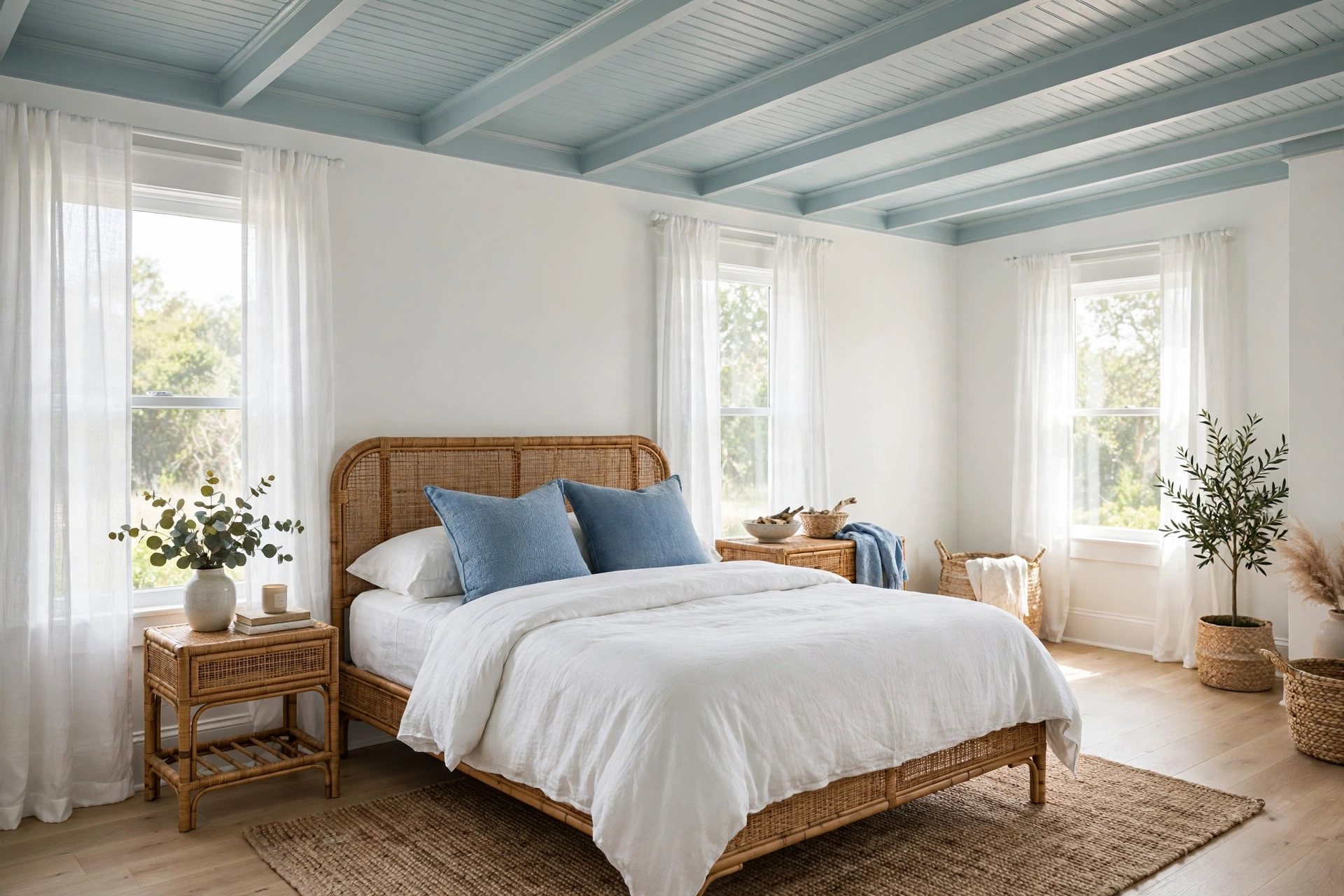
7. Paint the Ceiling Pale Haint Blue
Southern porch tradition holds that a pale blue-green “haint blue” ceiling wards off spirits — and wards off visual heaviness, too. A whisper-blue ceiling ($30–$45 for a quart, since ceilings need less paint) lifts the whole room and adds a secret coastal wink that guests notice without quite knowing why. This pairs beautifully with the light-maximizing tricks in our Scandinavian studio ideas. Pro tip: go at least three shades lighter than your wall accent color — the ceiling should feel like sky, not like a second wall.
Furniture with Beach Soul
8. Sink Into a Rattan Accent Chair
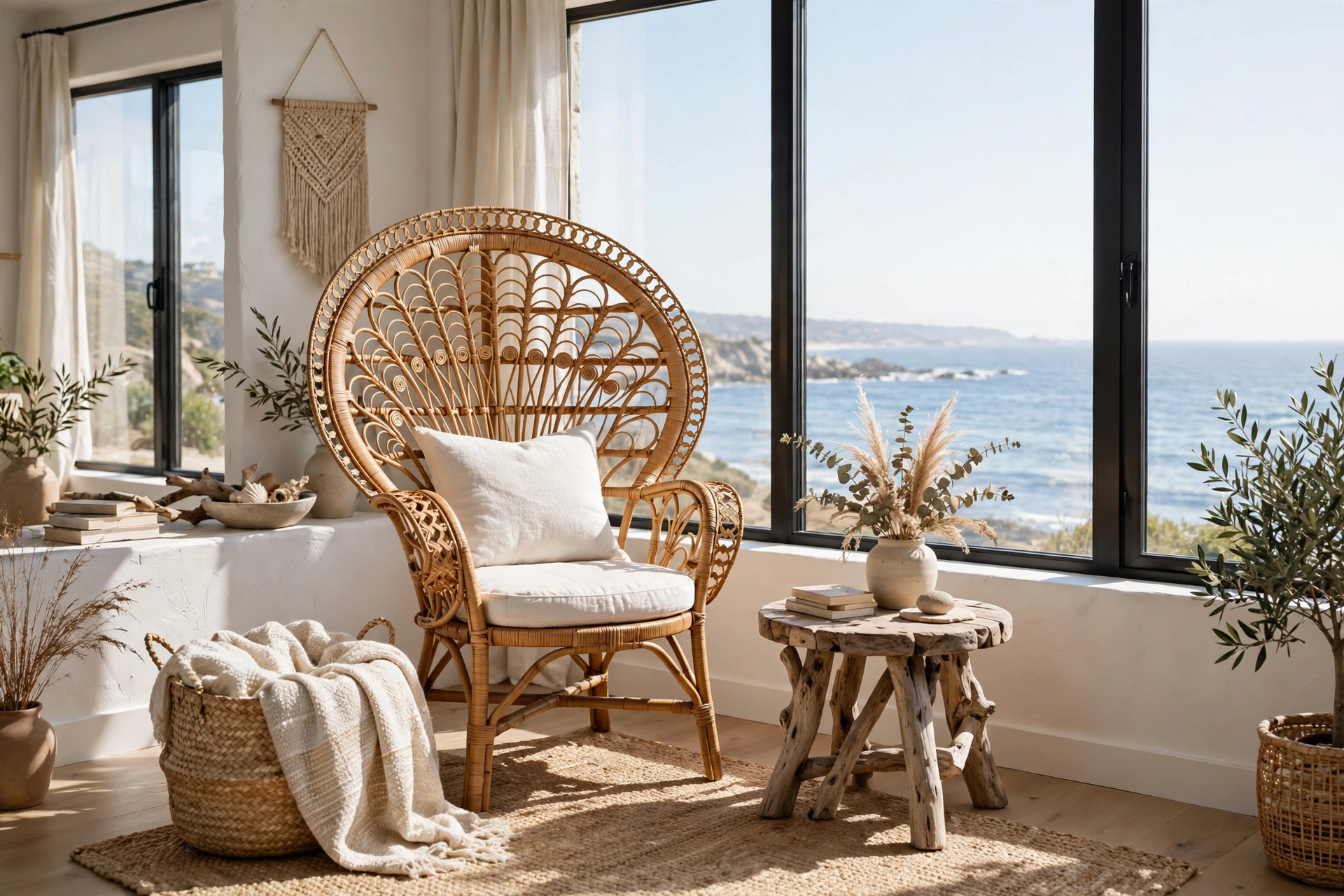
Nothing says coastal like rattan — and a rattan accent chair ($150–$400) brings sculptural, airy seating that visually disappears in a small room. The open weave lets light through, so the chair never feels bulky. Tuck one into a reading corner with a white cushion and a striped throw. Pro tip: keep rattan out of direct daily sun — UV dries and brittles the fibers over time, so position it on a shaded wall or rotate it seasonally.
9. Choose a White Slipcovered Sofa
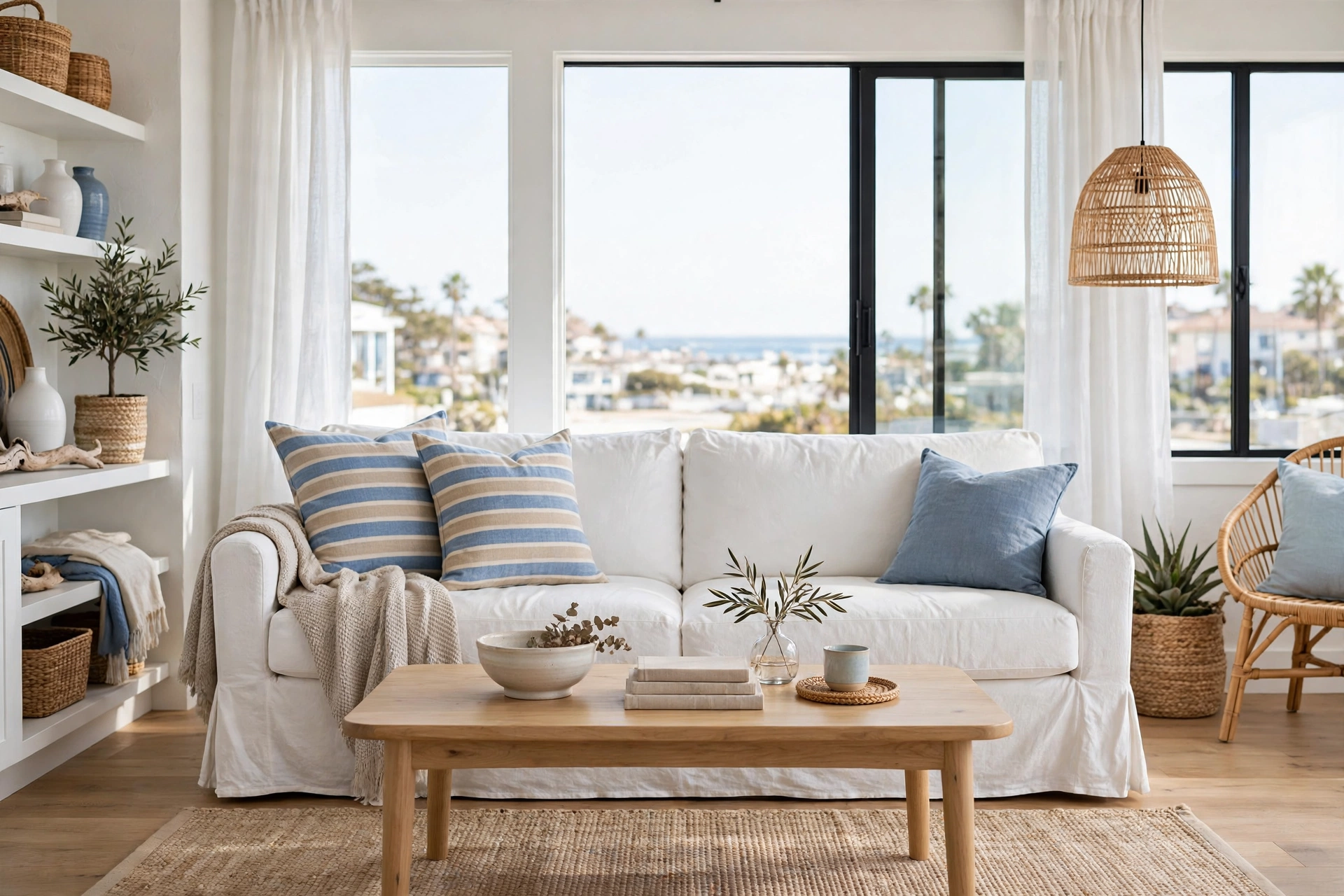
The white slipcovered sofa is the undisputed hero of coastal living rooms — relaxed, washable, and endlessly re-styleable. A quality slipcovered sofa runs $700–$1,500, but washable covers ($80–$150 separately) mean red wine and sandy feet are non-events. In a studio, white upholstery bounces light and makes the whole room feel larger. Pro tip: buy one spare slipcover — while one is in the wash, the sofa never sits naked, and you will actually wash them instead of dreading it.
10. Anchor with a Driftwood Coffee Table
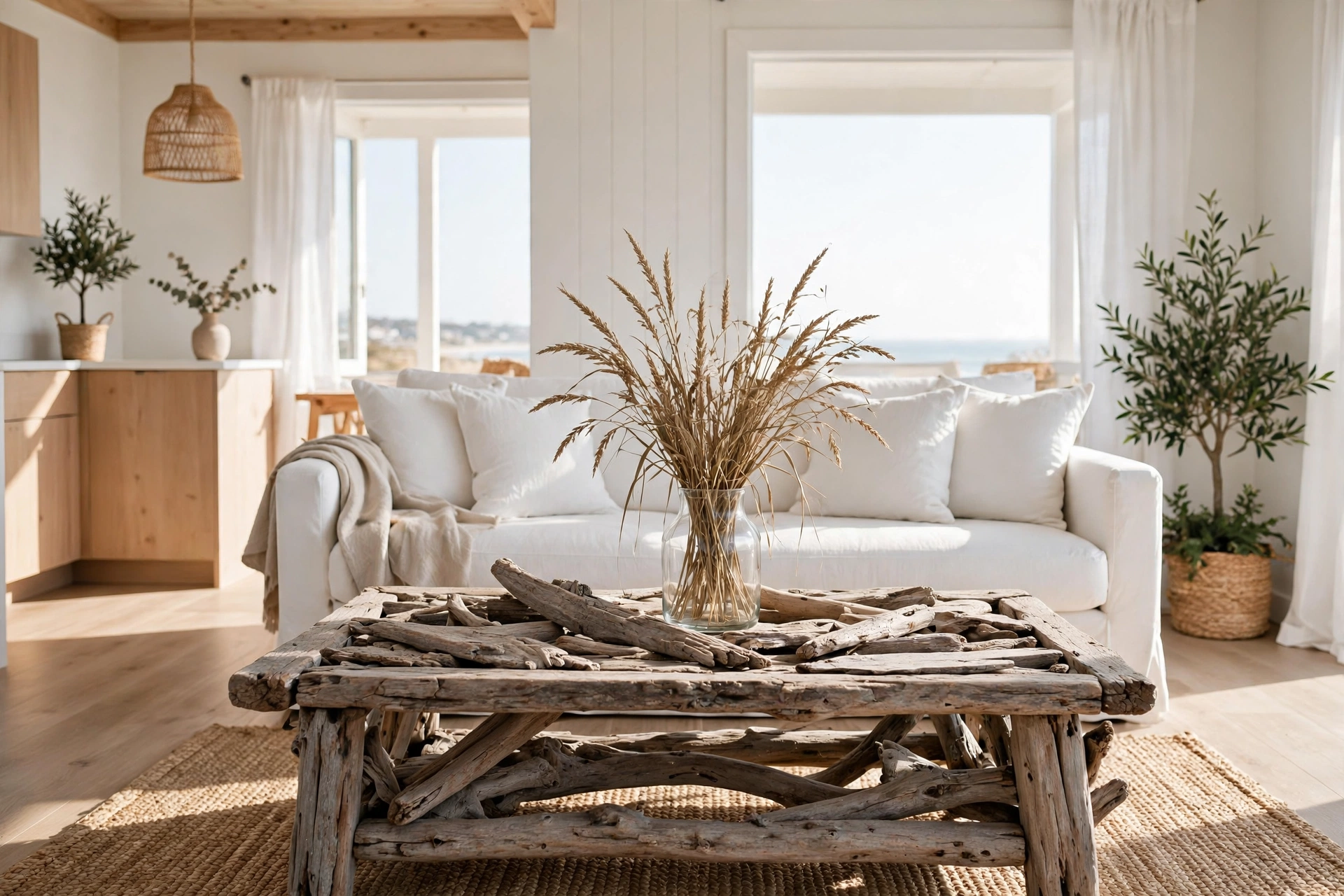
A driftwood coffee table ($200–$500, or a weekend DIY with found wood and hairpin legs) brings the beach indoors in the most literal, beautiful way. The weathered gray-brown tones ground all that white and blue without adding visual weight. Each piece is one of a kind — nature did the styling. Pro tip: seal found driftwood with clear matte polyurethane before bringing it inside — it kills hitchhiking insects and prevents the wood from shedding sand for months.
11. Dine Around a Light Oak Table
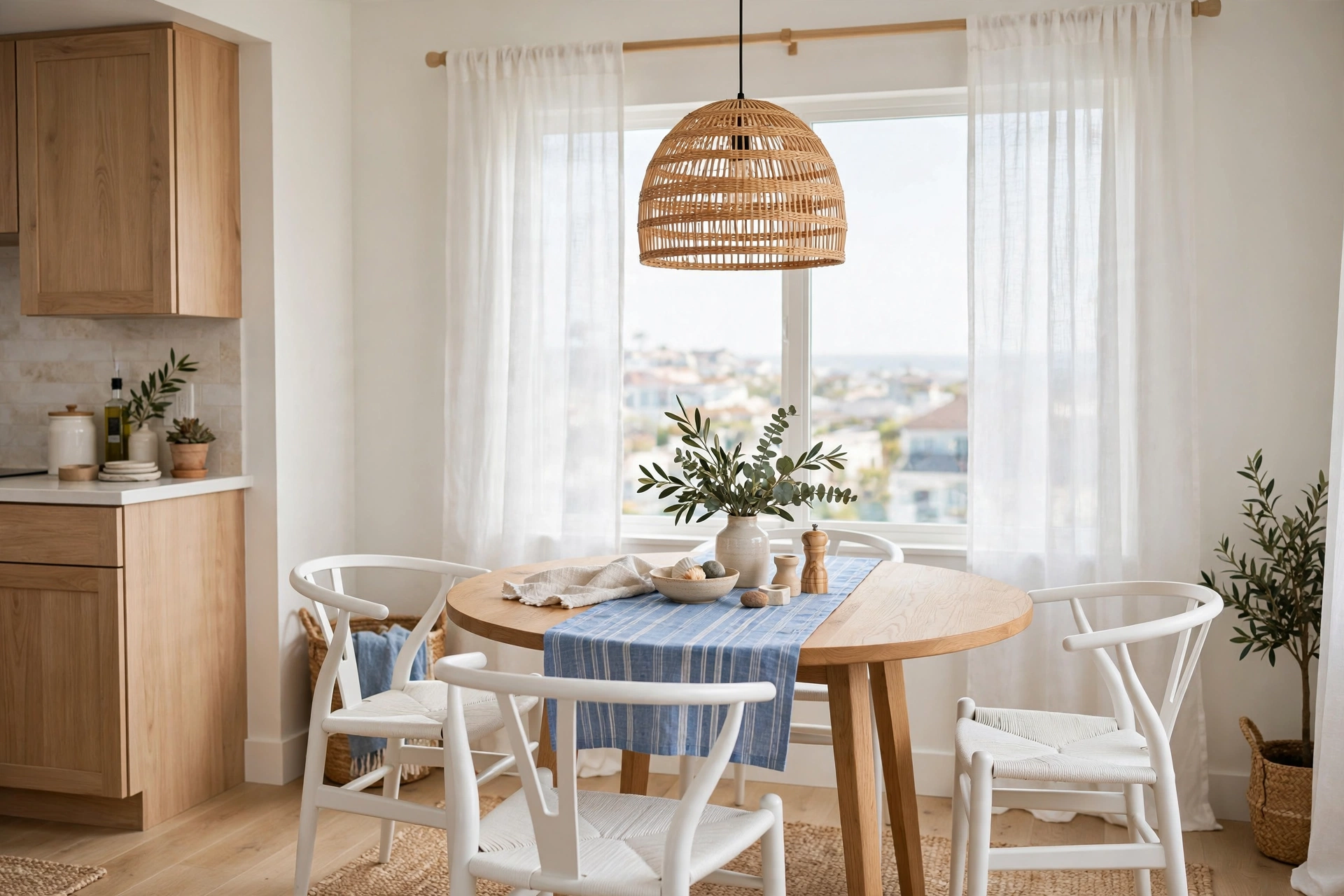
A round light-oak dining table ($250–$600) keeps the eating zone feeling sunny and uncluttered — round shapes are a small-space secret, with no corners to bump and better conversation flow. Pair it with white wishbone-style chairs that tuck fully underneath. The pale wood echoes boardwalk tones without trying too hard. Pro tip: a 36-inch round seats four daily and six with a squeeze — measure your nook before falling for a 48-inch that swallows the room.
12. Perch on a Woven Seagrass Bench
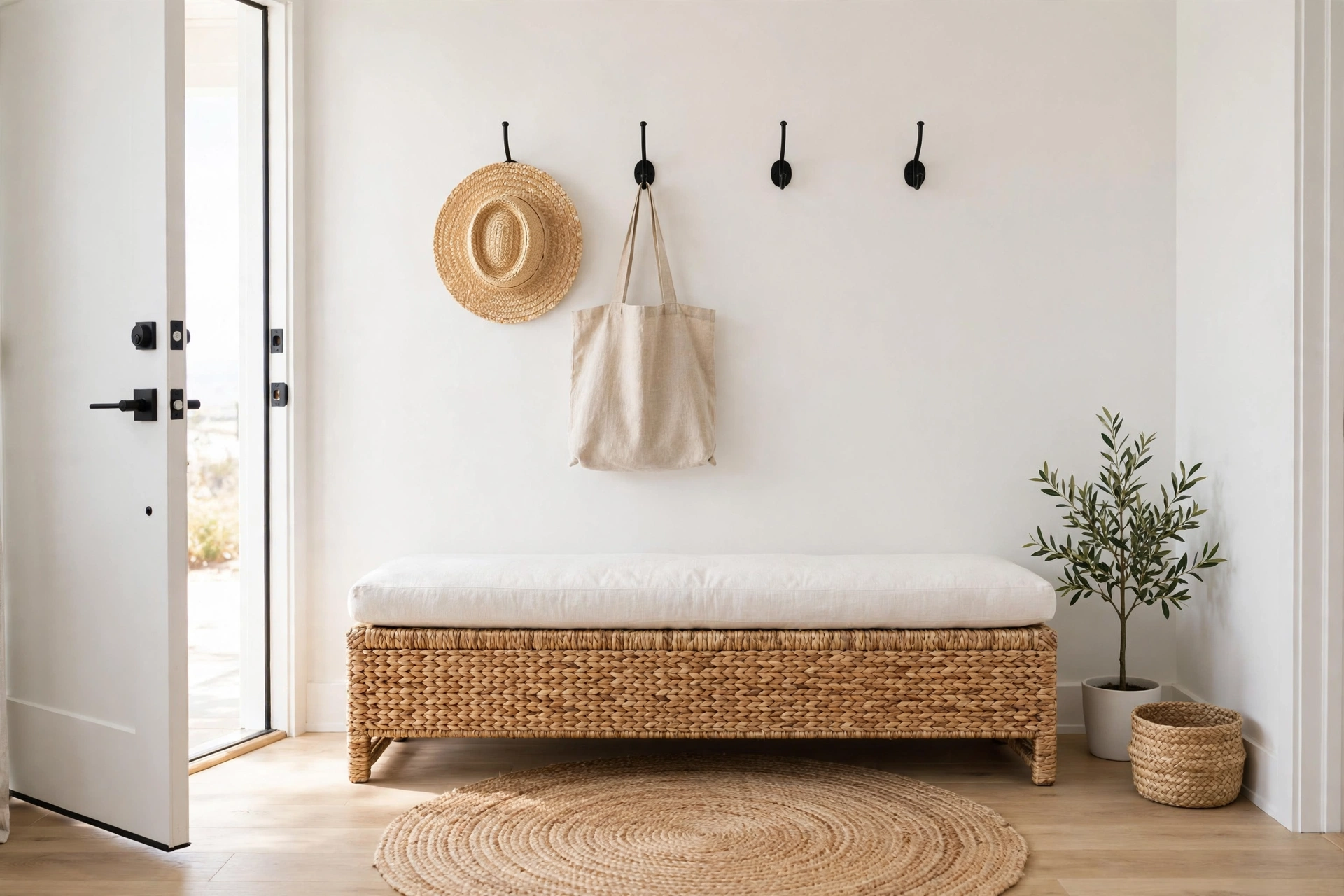
A long woven seagrass bench ($120–$280) at the entry or foot of the bed does triple duty: seating, shoe storage underneath, and a huge dose of coastal texture. The nubby weave hides wear beautifully — ideal for the highest-traffic inches of your studio. Top it with a white cushion for comfort. Pro tip: check the bench’s weight rating before buying — a bench that doubles as a step stool for high shelves needs to hold a person, not just pillows.
13. Whitewash a Wooden Credenza
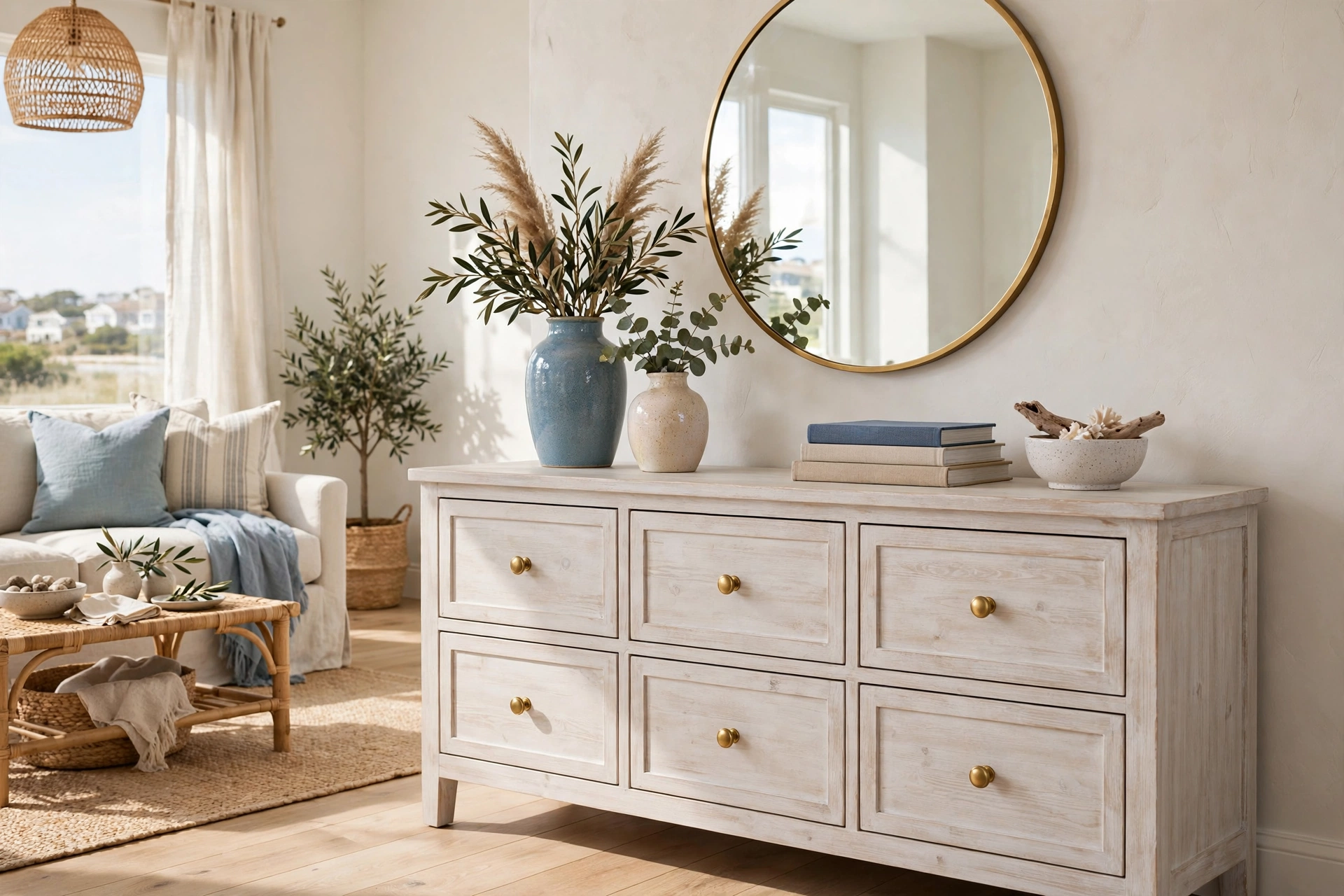
That dated brown credenza? A whitewash treatment ($25 in paint and wax) turns it into a coastal statement piece. The cerused finish lets wood grain peek through, giving you texture without darkness. Style the top with a round mirror, ceramic vases and a stack of design books for the full look. Pro tip: use white wax — not white paint — over stained wood for the most authentic driftwood effect; paint sits on top, wax sinks in.
14. Pull Up Rope-Wrapped Bar Stools
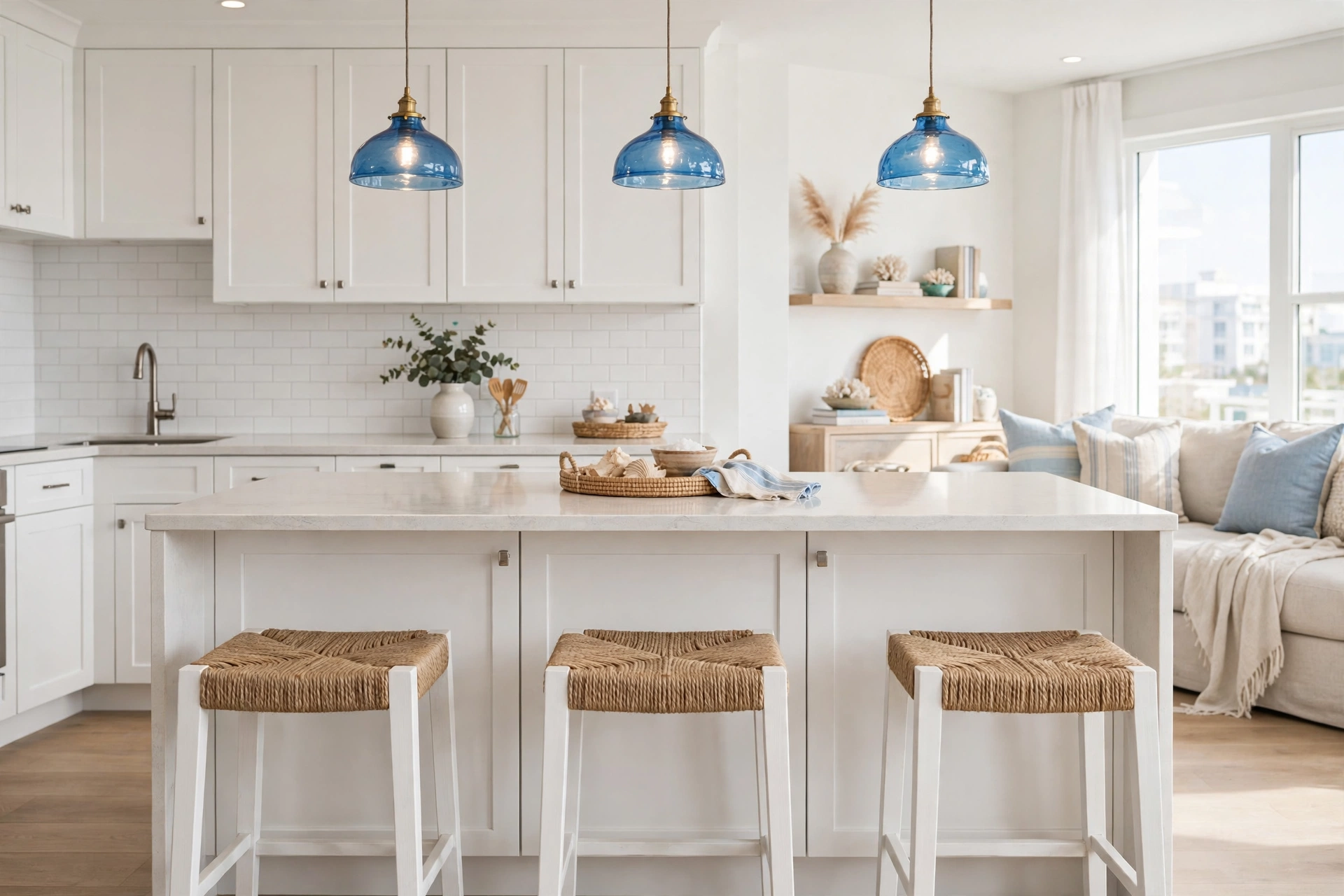
Bar stools with natural rope-wrapped seats ($80–$180 each) bring nautical texture to the kitchen island without the theme-park feel. The rope is surprisingly comfortable and nearly indestructible. Choose white wooden legs to keep them light visually. These work beautifully with the space-saving ideas in our studio layout guide. Pro tip: backless stools slide fully under the counter — in a studio kitchen, every inch of clear floor matters.
15. Sleep on a Linen-Upholstered Daybed
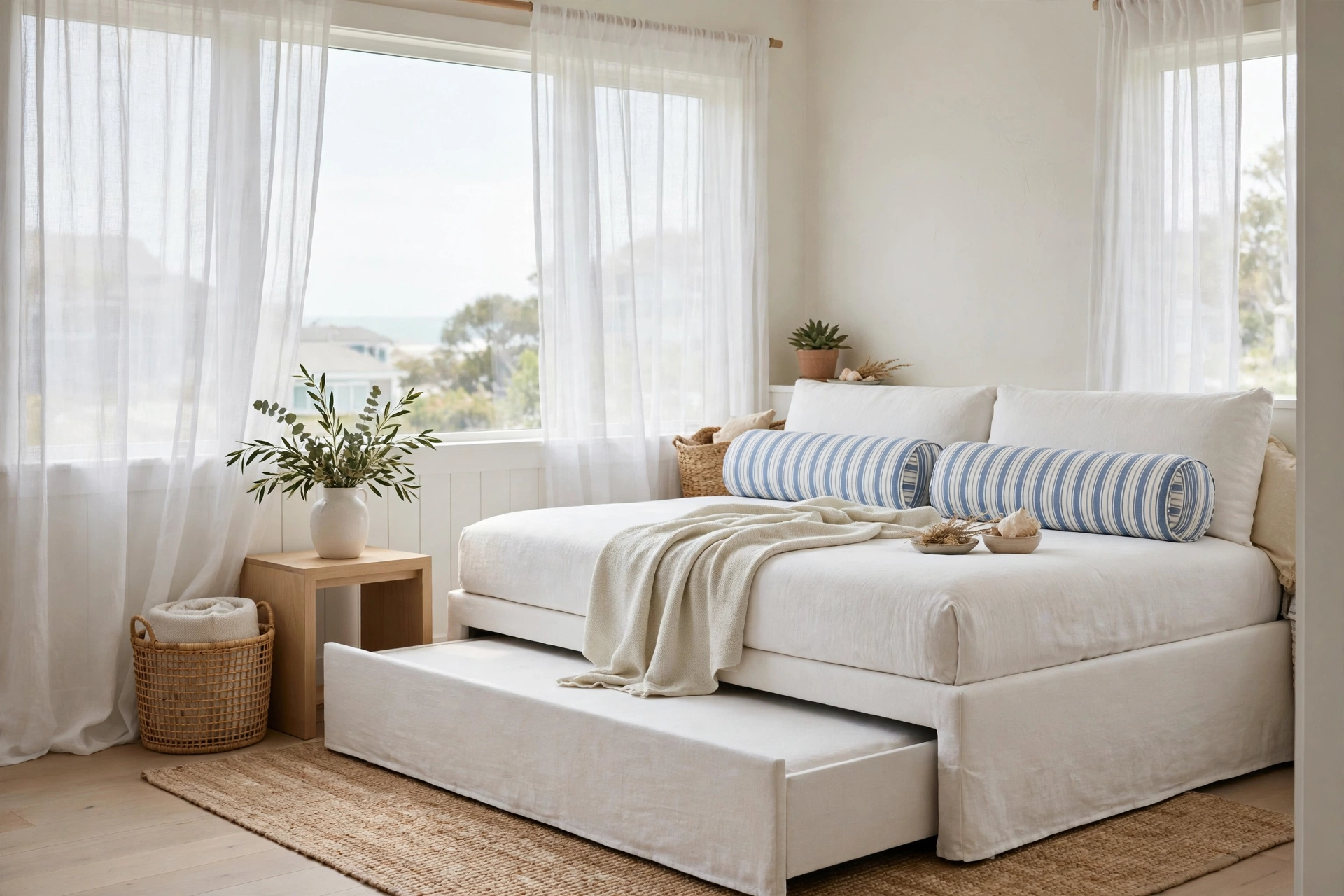
A white linen-upholstered daybed ($400–$900) is the coastal studio’s hardest-working piece — sofa by day, guest bed by night, reading nook always. Dress it with a striped bolster and light throw so it reads as seating, not as an unmade bed. The upholstered sides keep it feeling like furniture, not a mattress. Pro tip: add a trundle ($150–$250) underneath — you gain a second sleep surface without giving up a single square foot of floor.
Textiles & Soft Layers
16. Hang Breezy Linen Curtain Panels
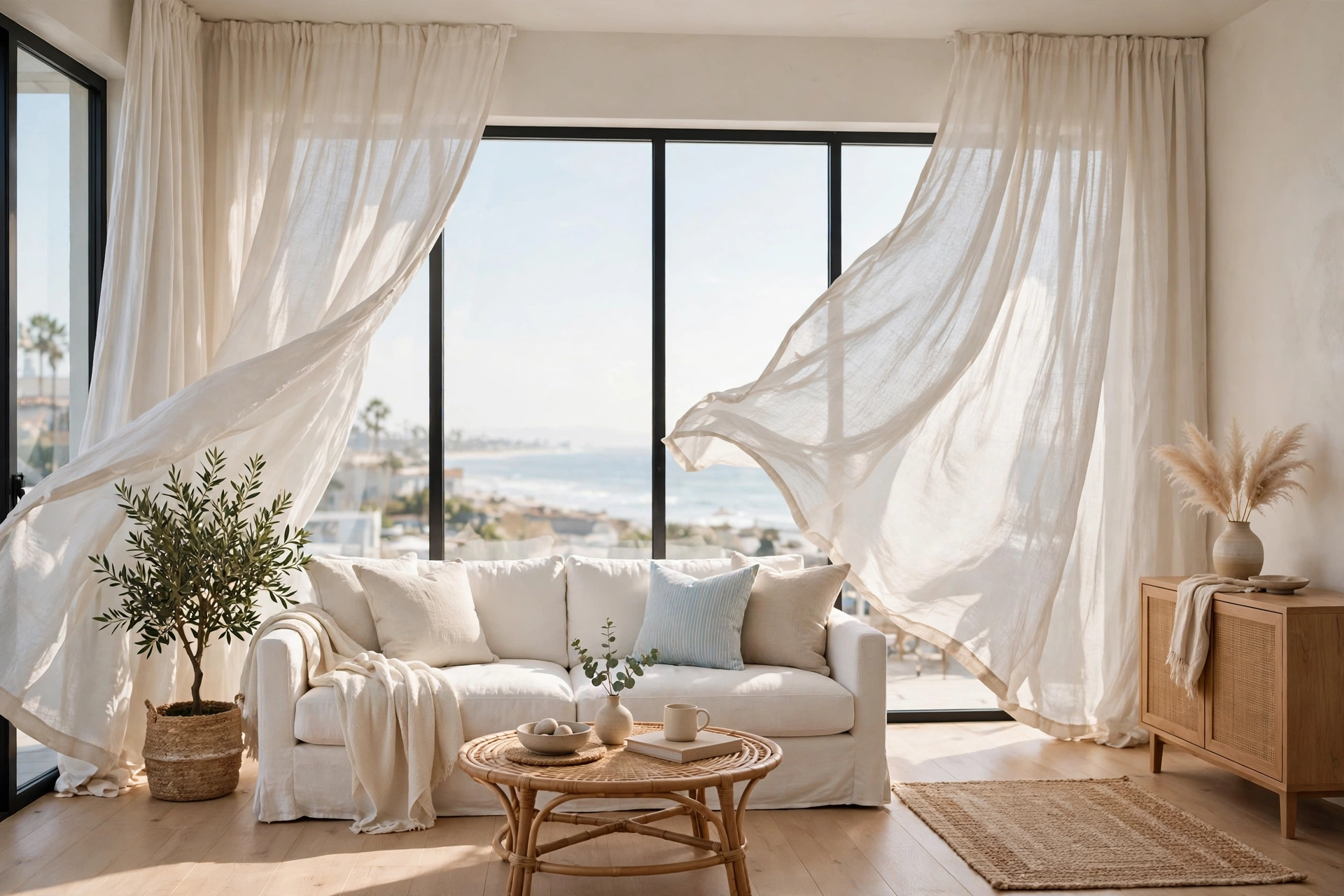
Natural linen curtains ($30–$60 per panel) in warm white filter sunlight into that soft, diffused glow that defines coastal interiors. Hang them high and wide — nearly to the ceiling and well past the window frame — to make windows (and the room) feel grander. Linen’s slubby texture adds depth even in a neutral palette. Pro tip: skip the iron — linen is supposed to look relaxed and rumpled; embrace the wrinkles as part of the coastal charm.
17. Roll Out a Ticking-Stripe Rug
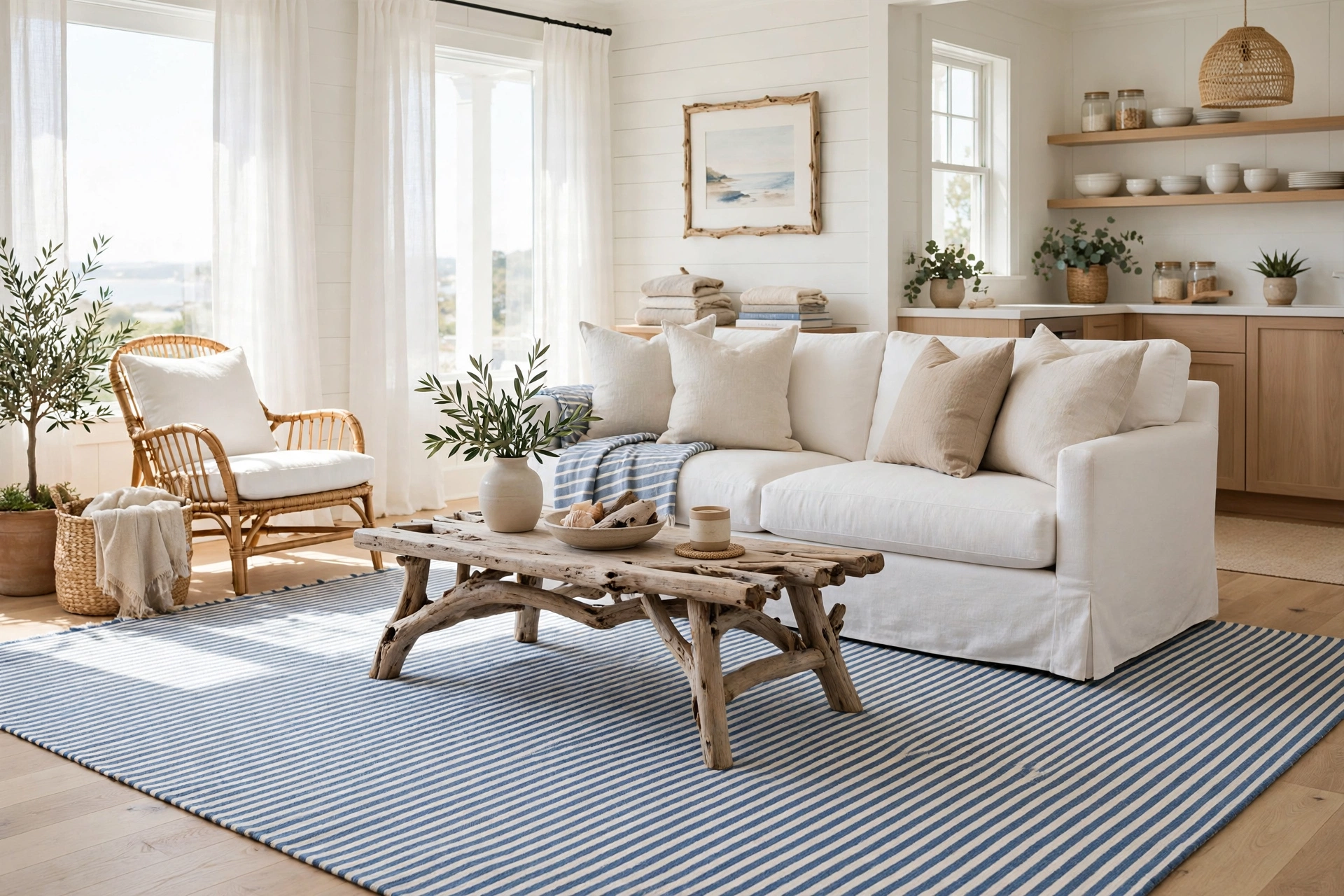
Blue-and-white ticking stripes — the classic French mattress-ticking pattern — are coastal shorthand. A flatweave ticking-stripe rug ($80–$250 depending on size) anchors the living zone with pattern that never shouts. Flatweave keeps the profile low so doors clear it and furniture sits steady. Pro tip: layer the ticking stripe over a larger natural jute rug — the double layer adds designer depth for less than a single high-end rug would cost.
18. Ground Zones with a Jute Area Rug
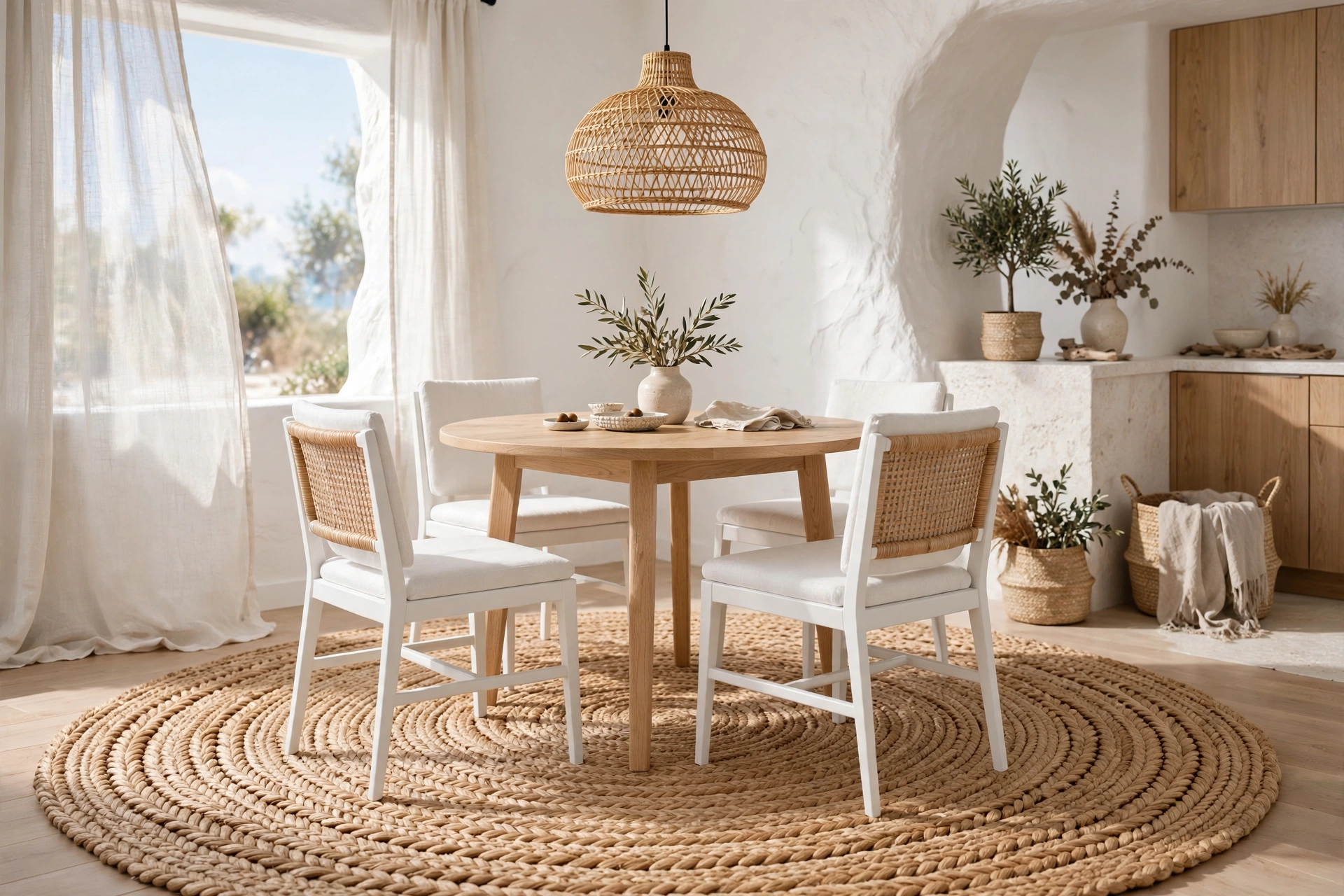
A big round jute rug ($70–$200) under the dining table or in the entry adds organic, sandy texture that literally feels like the beach underfoot. Jute’s chunky braid hides crumbs and wear — a practical hero for small spaces. The round shape softens all the room’s right angles. Pro tip: jute and moisture are enemies — keep jute rugs out of the bathroom and kitchen splash zones, where they mildew fast.
19. Mix Blue-and-White Throw Pillows
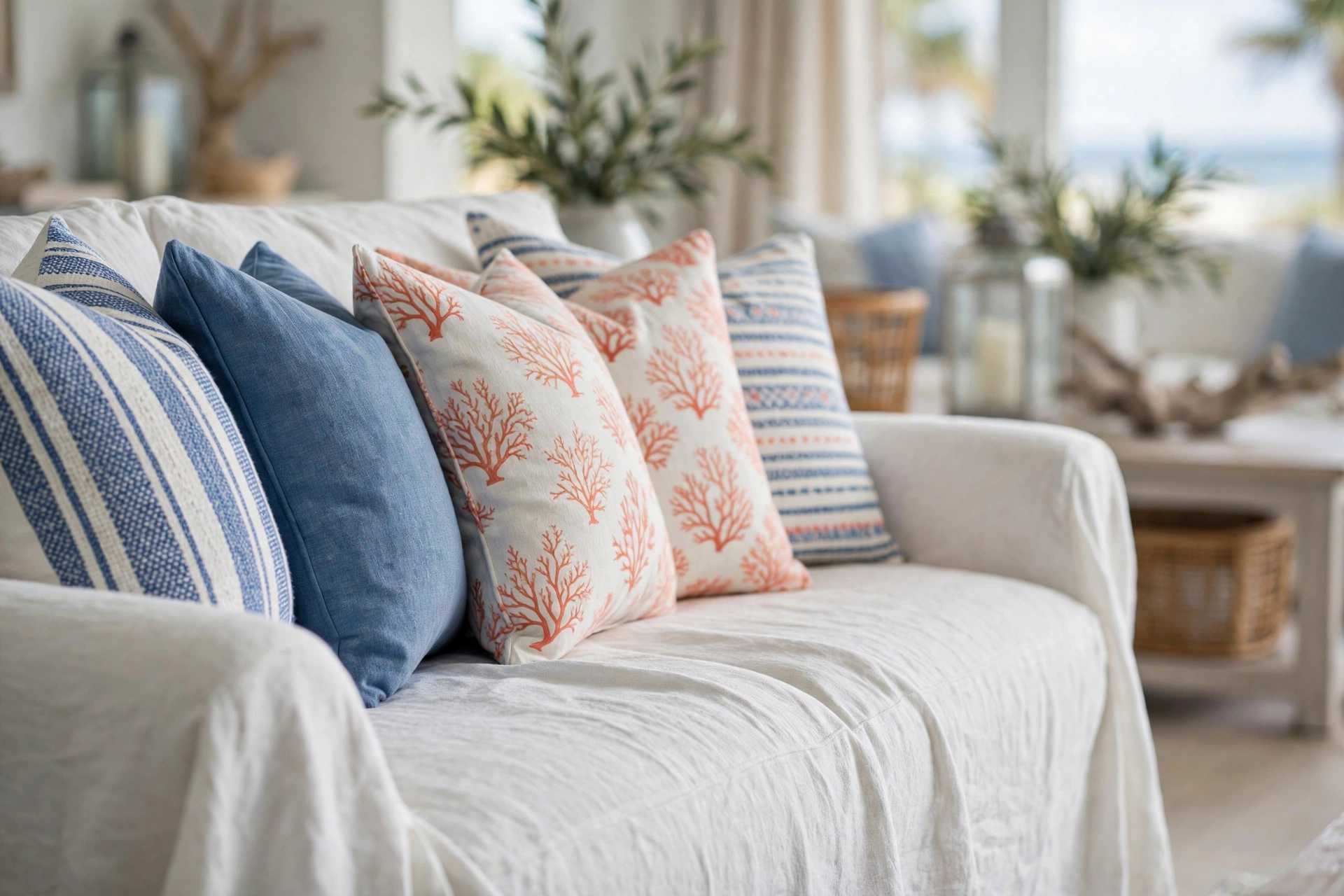
Pillows are the cheapest coastal refresh in existence — a mix of blue-and-white covers in stripes, solids and subtle coral prints ($12–$28 each) instantly re-themes a neutral sofa. Use odd numbers (three or five), vary the scales, and include one textured solid to rest the eye. Swap covers seasonally for a whole new room. Pro tip: invest in good down-alternative inserts ($15–$25) once — plump inserts make even budget covers look expensive, and the karate-chop dent works every time.
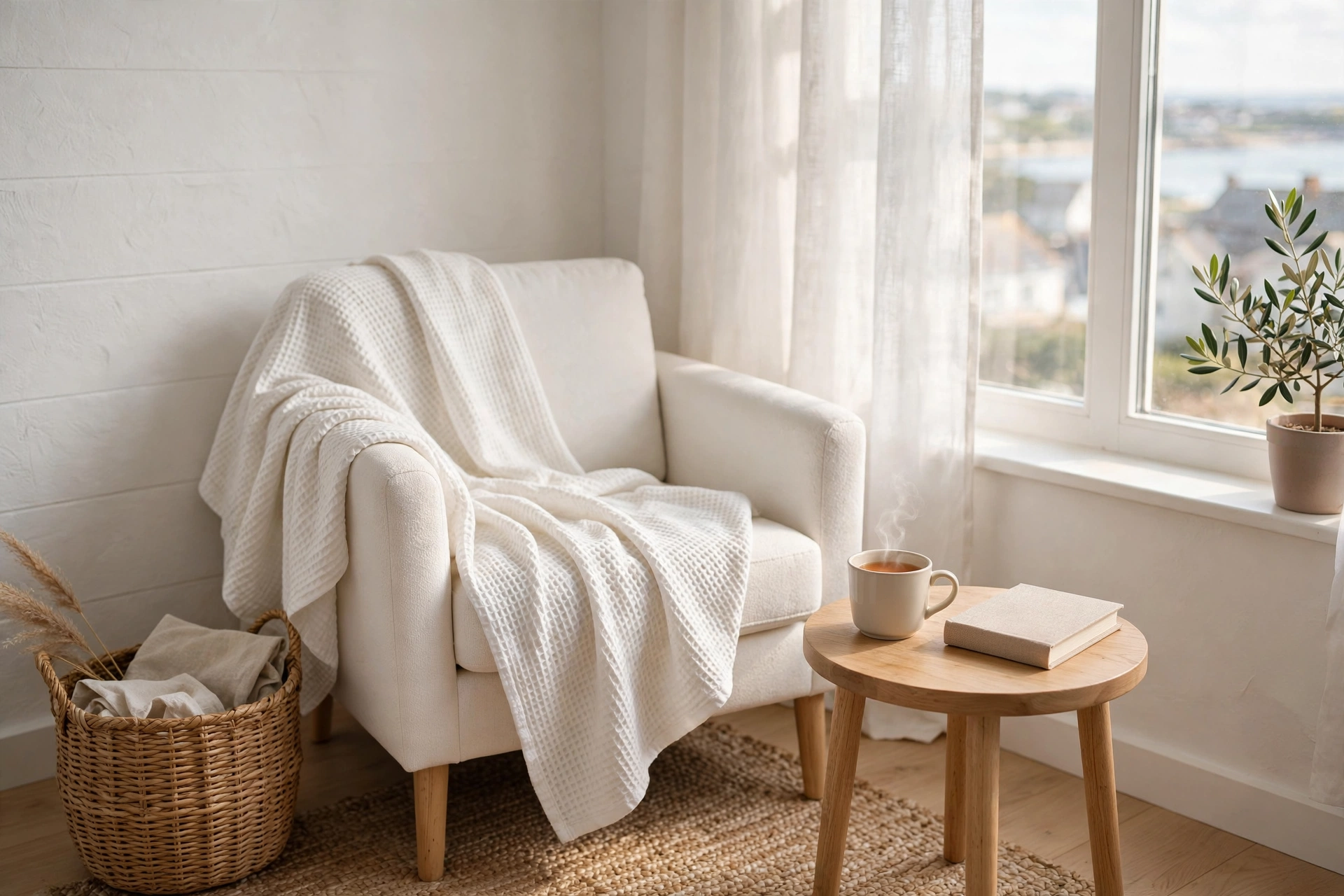
20. Drape a Waffle-Weave Throw Blanket
A white waffle-weave throw ($25–$50) draped over the sofa arm or bed foot adds the nubby, touchable texture coastal rooms crave. The honeycomb weave reads casual-luxe and layers beautifully over smooth linen. Keep one on every seating surface — they get used constantly and still look intentional. Pro tip: waffle weave gets softer with every wash — launder new throws twice before first use to unlock their full cloud-like potential.
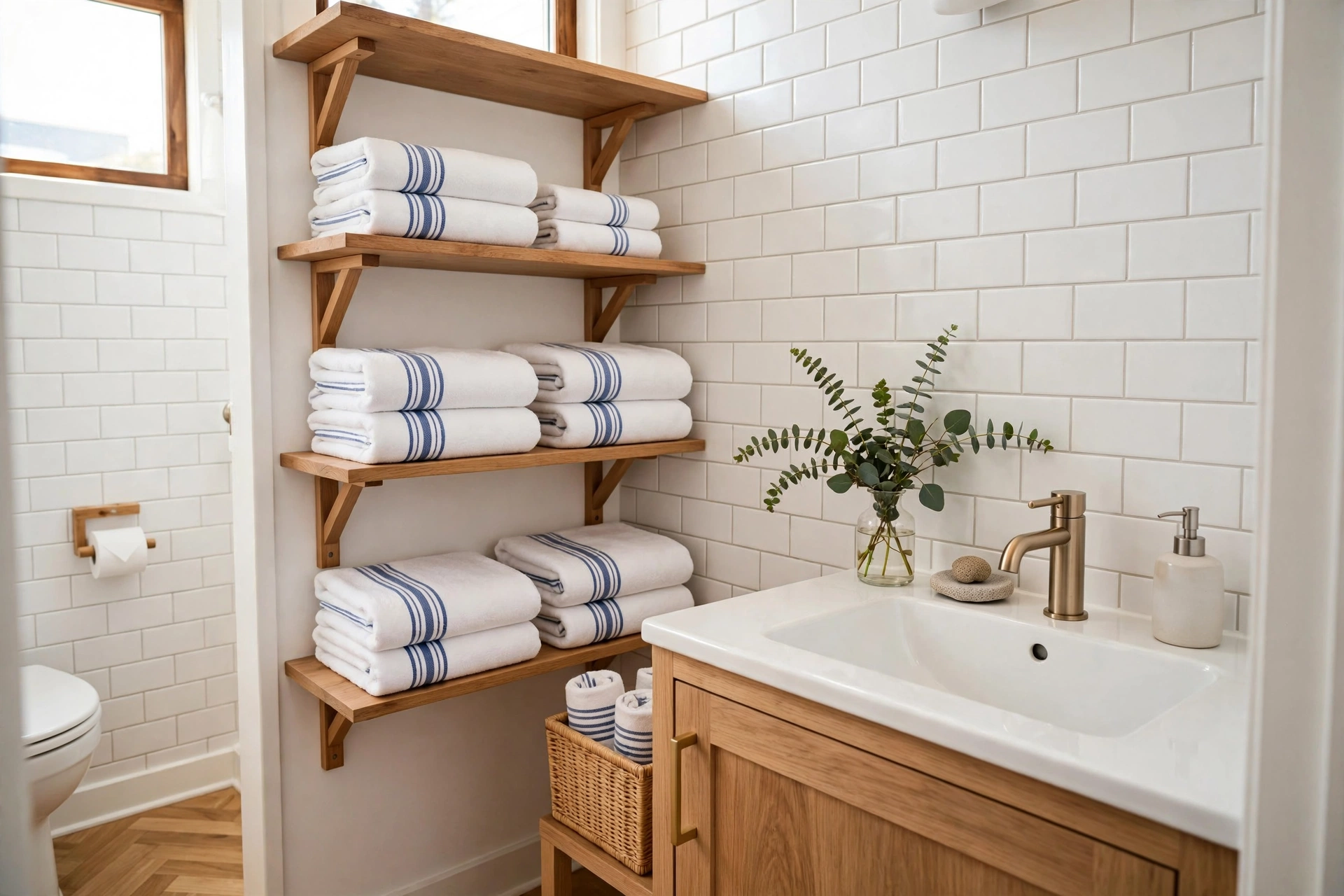
21. Upgrade to Turkish Cotton Towels
Turkish cotton towels with classic blue stripes ($15–$30 each) turn even a tiny rental bathroom into a seaside spa. They dry faster than plush terry, pack flat, and get softer with age. Display them folded on open shelves — they are decor, not just utility. Pro tip: wash new Turkish towels in cold water with a cup of white vinegar first — it sets the fibers and dramatically boosts absorbency.
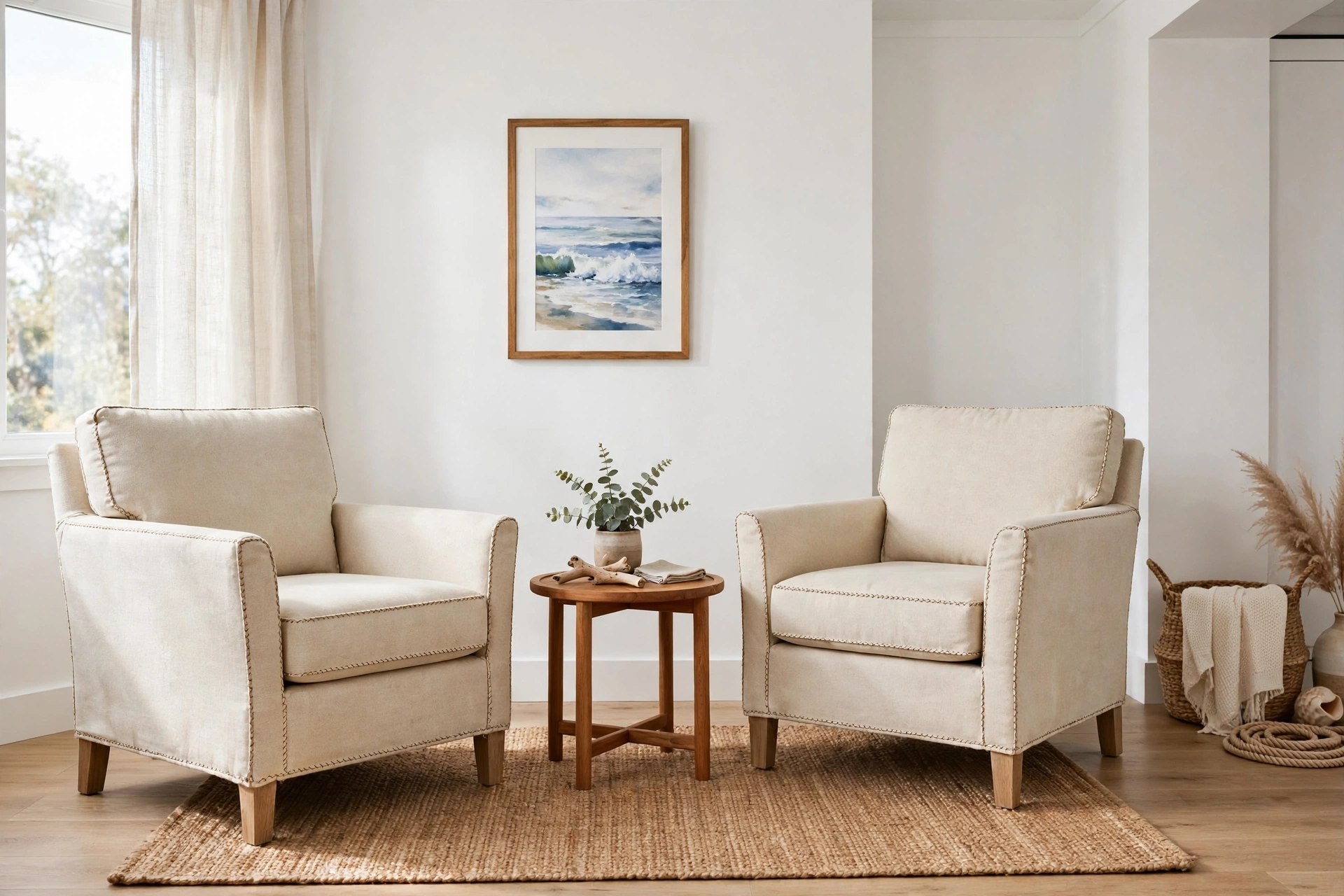
22. Upholster in Canvas Sailcloth
Natural canvas sailcloth — the heavy cotton duck used for actual sails — makes incredibly durable, authentically nautical upholstery. Recover two dining chairs or a bench cushion ($40–$80 in fabric) for texture with a story. The visible stitching and raw edges are part of the charm. Pro tip: pre-shrink sailcloth in hot water before cutting — it can shrink up to 5%, and discovering that after upholstering is heartbreaking.
Decor & Collected Treasures
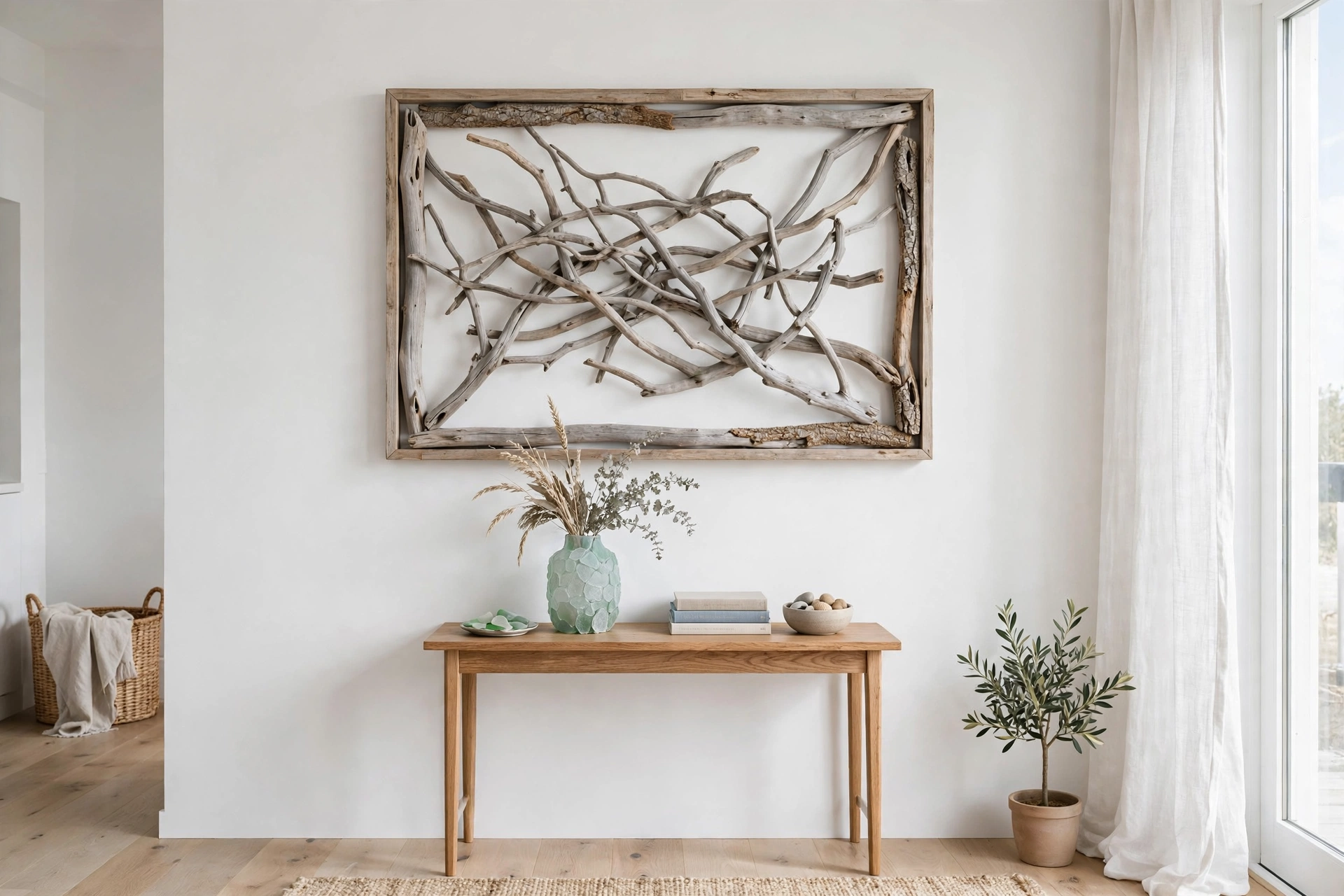
23. Make Driftwood Wall Art
A large piece of bleached driftwood mounted in a simple frame ($30–$60 for frame and hardware, wood free from the beach) is gallery-worthy coastal art with zero pretension. Look for pieces with interesting branching — the more sculptural, the better. One big piece beats five small ones in a studio. Pro tip: soak beach-found driftwood in a bleach-water bath for 24 hours, then dry fully — it kills organisms and evens out the sun-bleached color.
24. Display Shells and Sea Glass
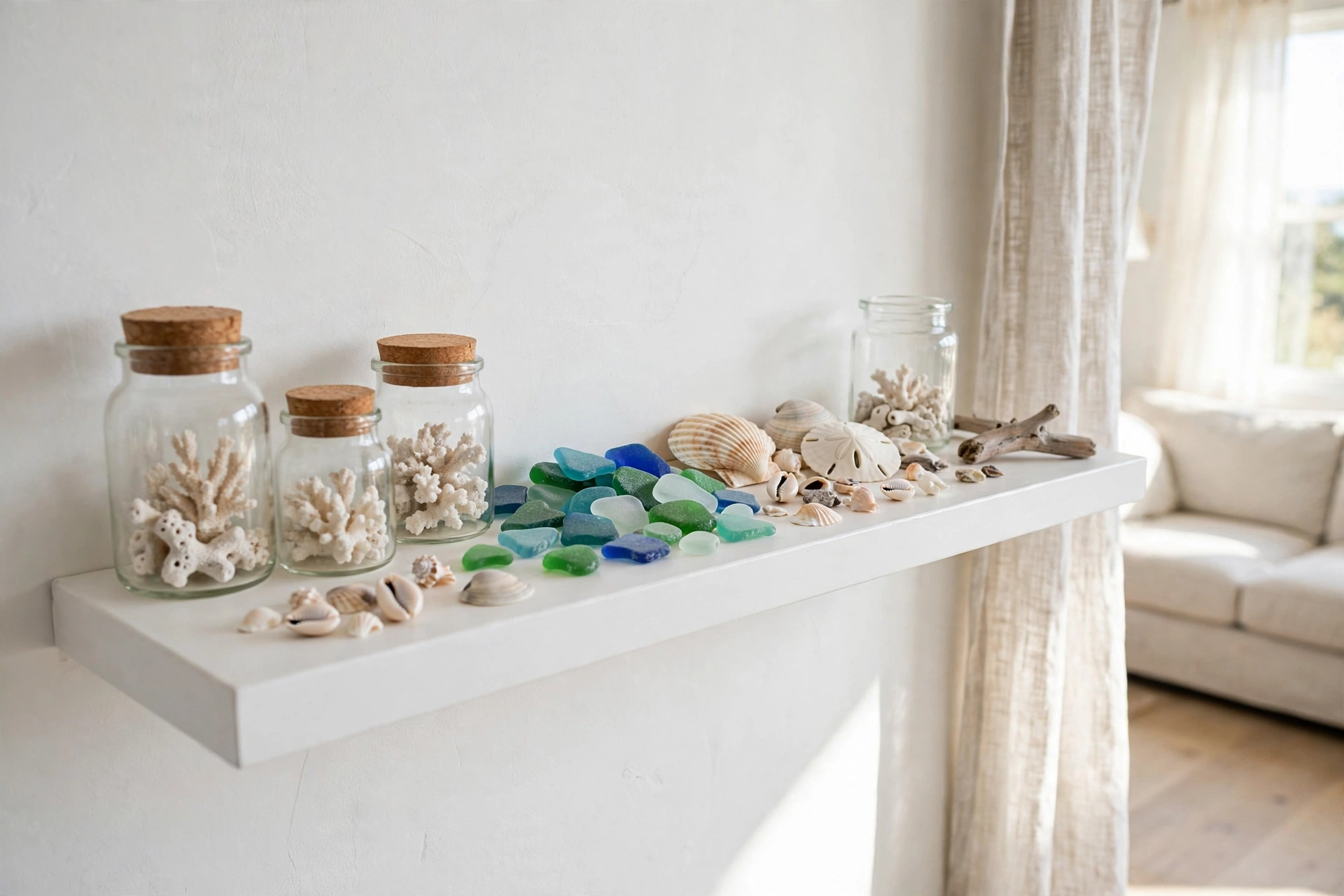
A curated shelf of shells, sea glass and white coral in glass jars ($10–$30 for jars, treasures free) is the most personal coastal decor there is — every piece has a memory attached. Edit ruthlessly: a dozen beautiful pieces in clear vessels beats a hundred dusty shells every time. Group by color for a collected-not-cluttered look. Pro tip: rinse shells in a 50/50 water-bleach soak, then rub with mineral oil — the oil brings out colors and patterns you did not know were there.
25. Hang a Woven Basket Gallery Wall
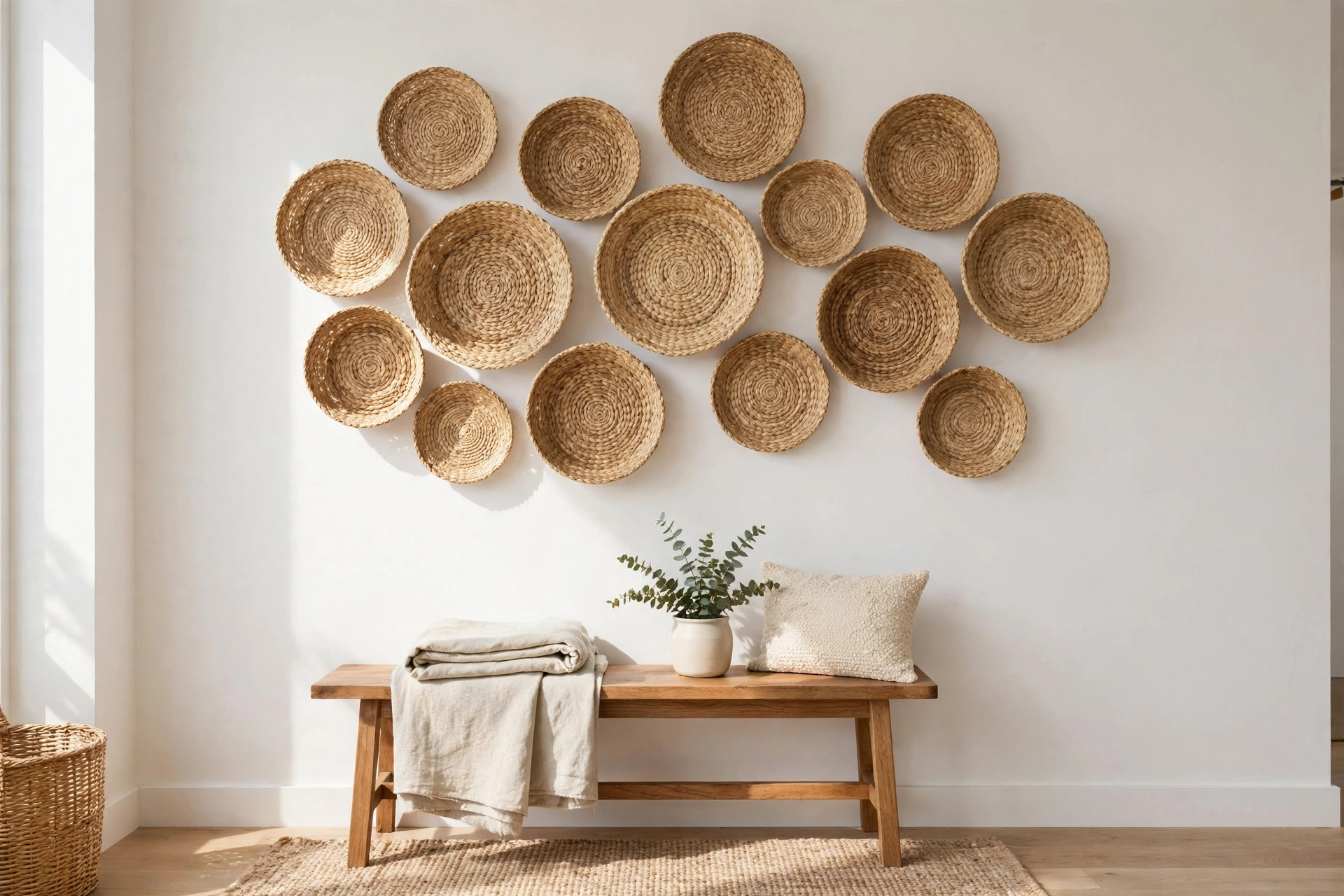
Flat woven baskets in graduated sizes ($8–$25 each at import stores) hung as a gallery wall bring incredible texture for almost no money. The round shapes echo portholes and sand dollars. Arrange on the floor first, photograph the layout, then hang with a single nail each — baskets weigh almost nothing. Pro tip: stick to one material family (all seagrass, or all jute) — mixed weaves can look busy, while a unified set reads intentional and calm.
26. Reflect Light with a Rope Mirror
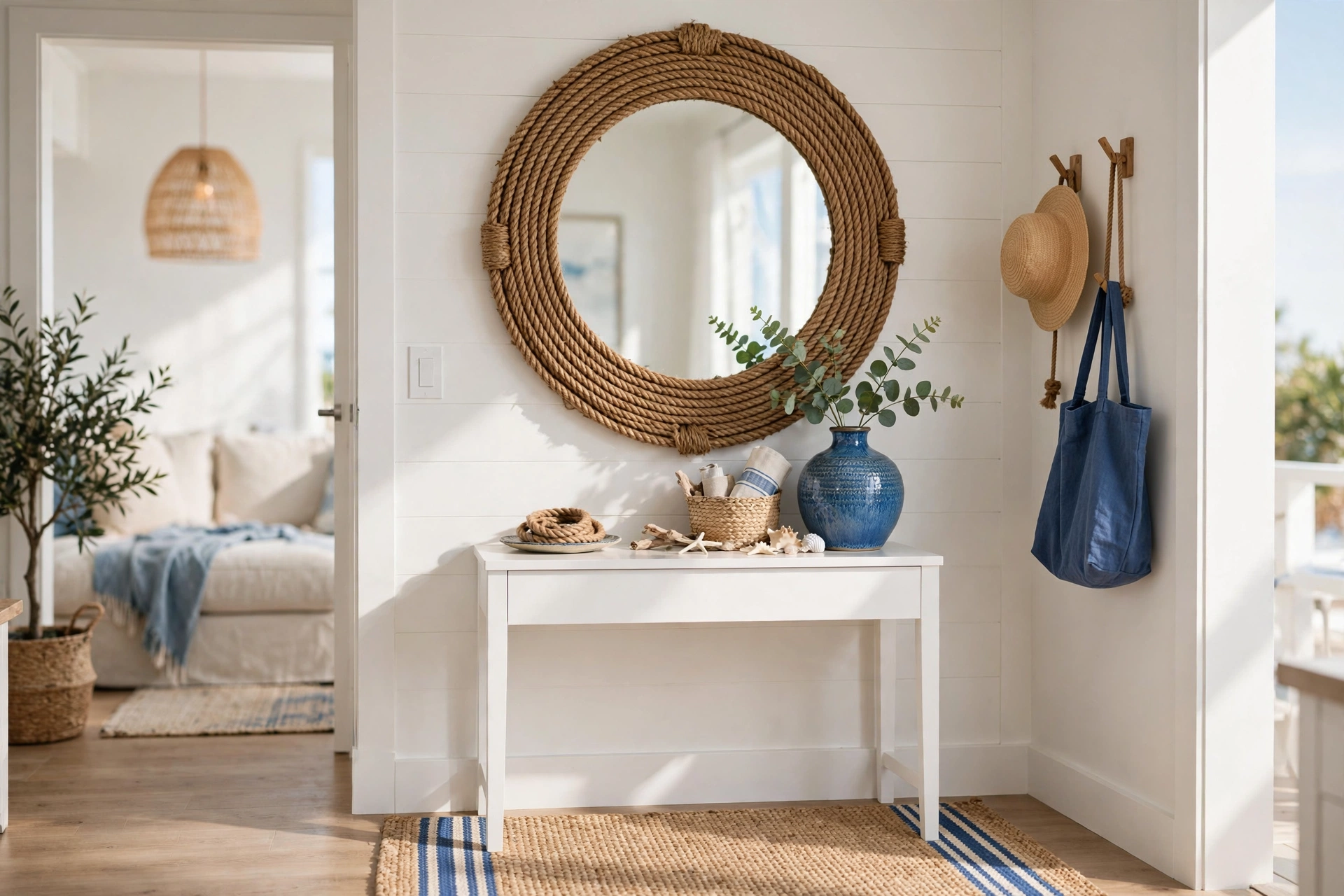
A round mirror wrapped in thick natural rope ($60–$150) doubles light and views while adding nautical texture — mirrors are a small studio’s best friend, and this one earns its keep as decor too. Hang it where it reflects a window, not a blank wall, to literally double your daylight. Pro tip: in a studio, hang the mirror at standing eye level in the entry — it becomes the last-check mirror and makes the whole first impression brighter.
27. Cluster Glass Buoy Pendants
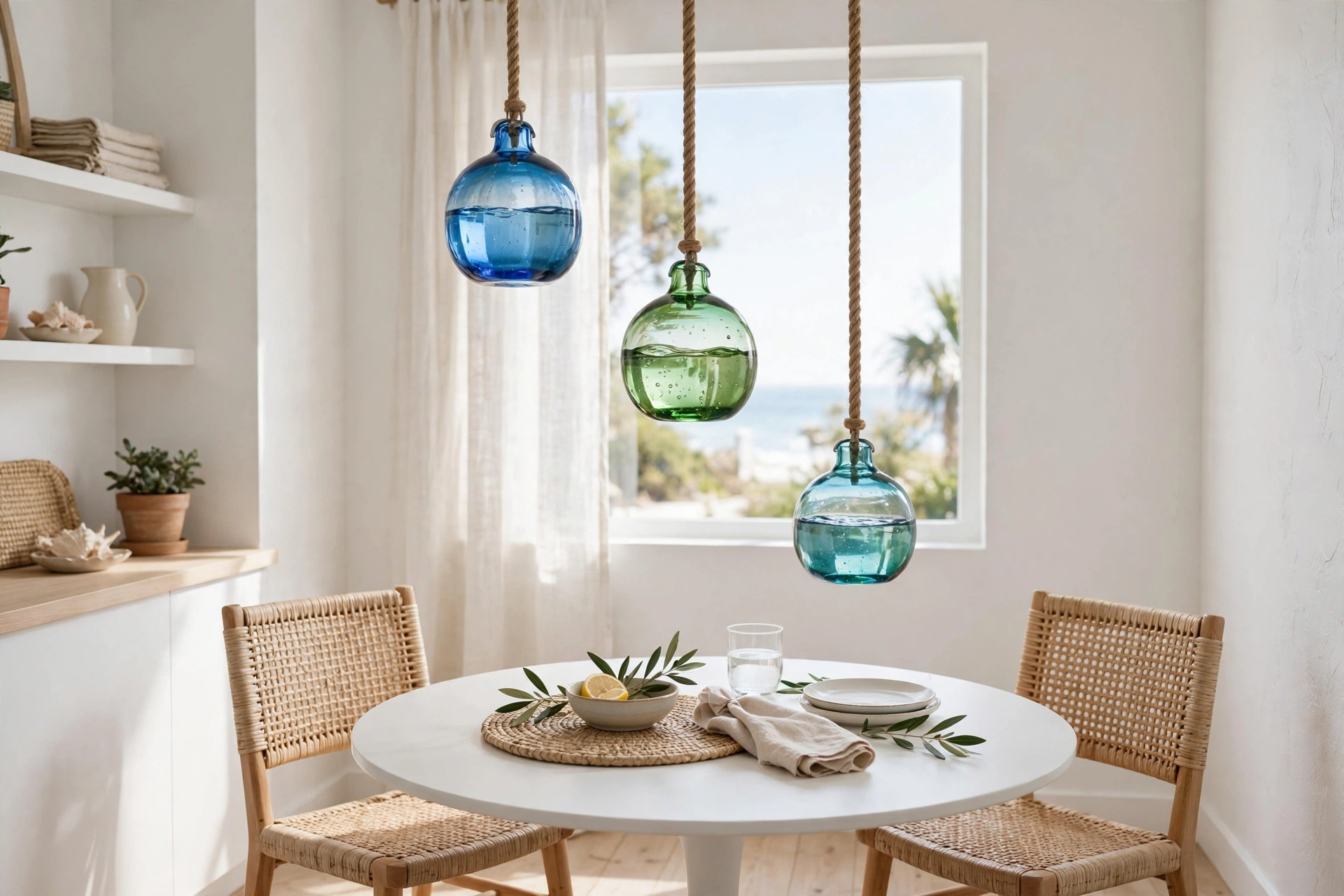
Japanese glass fishing floats — those blue and green glass orbs — hung as pendant lights ($25–$60 each for reproduction buoys with light kits) are pure coastal magic. Cluster three at staggered heights over the dining nook for a custom-chandelier effect. The colored glass throws the prettiest light. Pro tip: use LED Edison-style bulbs inside — they stay cool enough for the glass and the warm filament glow is half the charm. More pendant ideas live in our studio lighting guide.
28. Sculpt with White Coral Accents
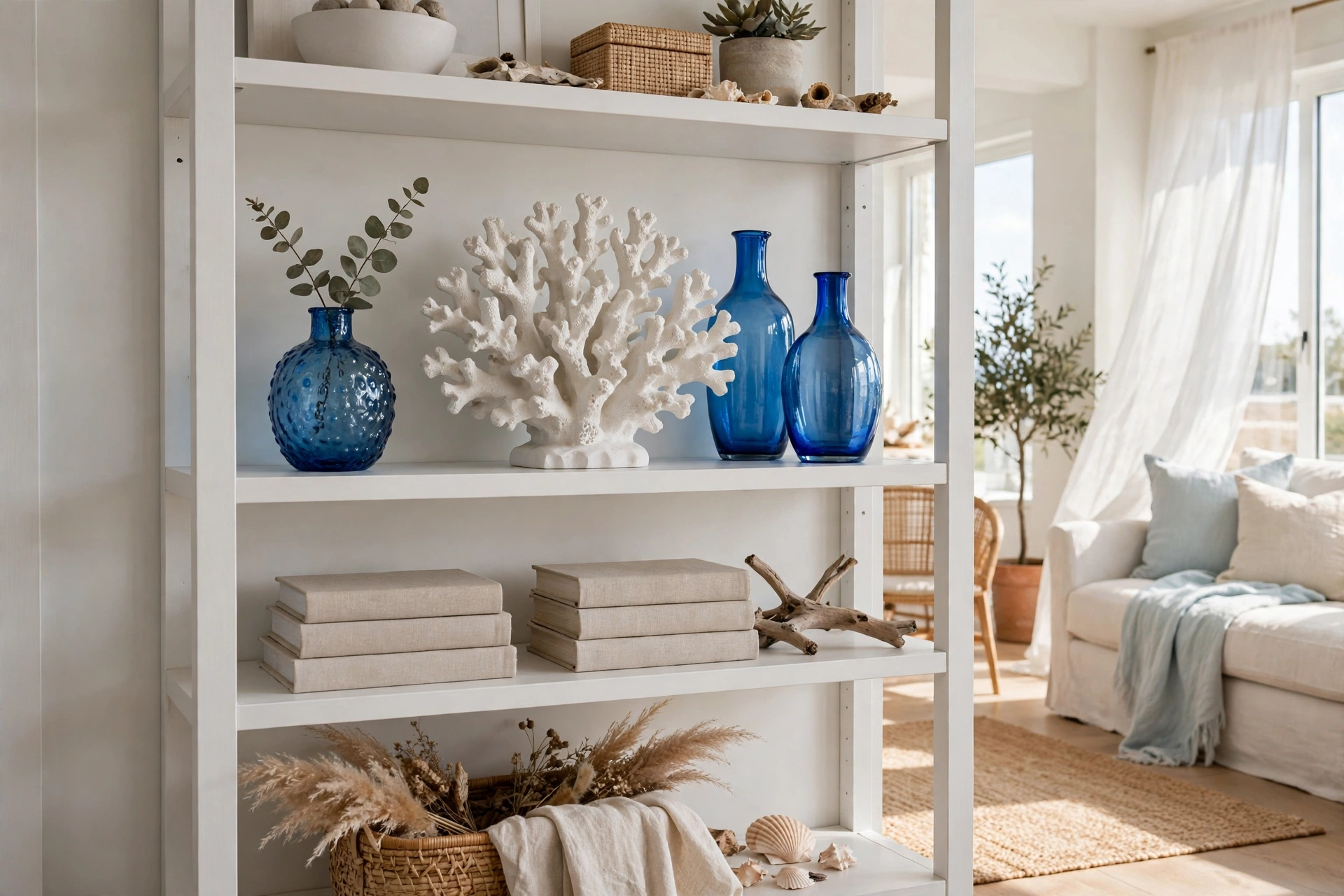
A white coral-inspired sculpture ($20–$60 — always choose faux or sustainably sourced, never real harvested coral) brings organic, reef-like form to shelves and coffee tables. The branching shapes catch light beautifully and add the one sculptural note a soft coastal room needs. One statement piece per surface is the rule. Pro tip: place coral sculptures where side light rakes across them — the shadows in the branching crevices are what make them look alive.
29. Frame Coastal Photography Prints
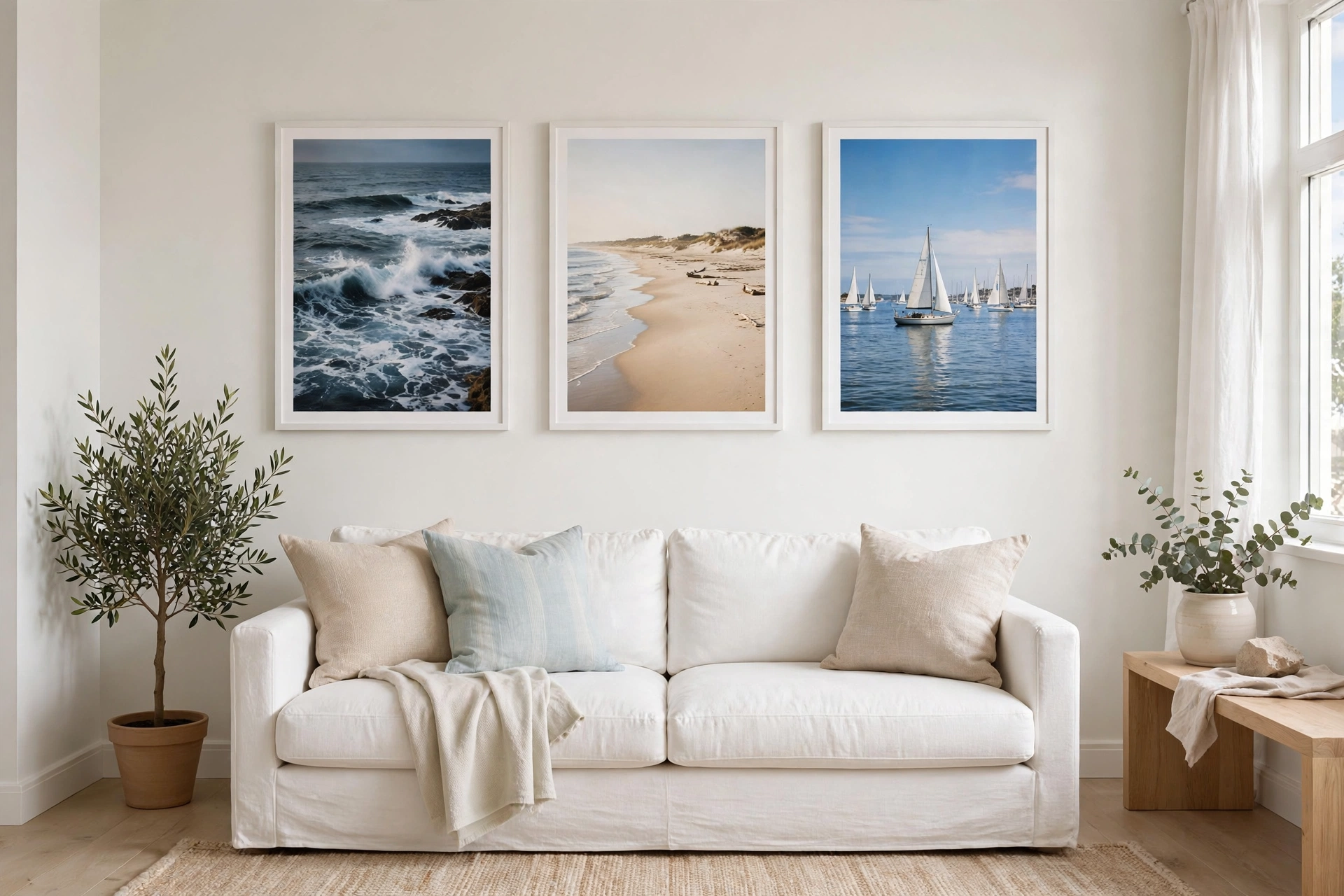
Three framed ocean photographs in thin white frames ($10–$25 per frame, prints $5–$15) hung in a row create a calm, gallery-grade focal point. Choose images with lots of negative space — misty horizons, empty beaches — so the wall feels serene, not busy. Black-and-white seascapes work beautifully in blue rooms. Pro tip: hang the center of the grouping at 57 inches — gallery standard eye level — and keep frames identical for a collected-by-a-designer look.
Lighting & Ambiance
30. Hang a Rattan Dome Pendant
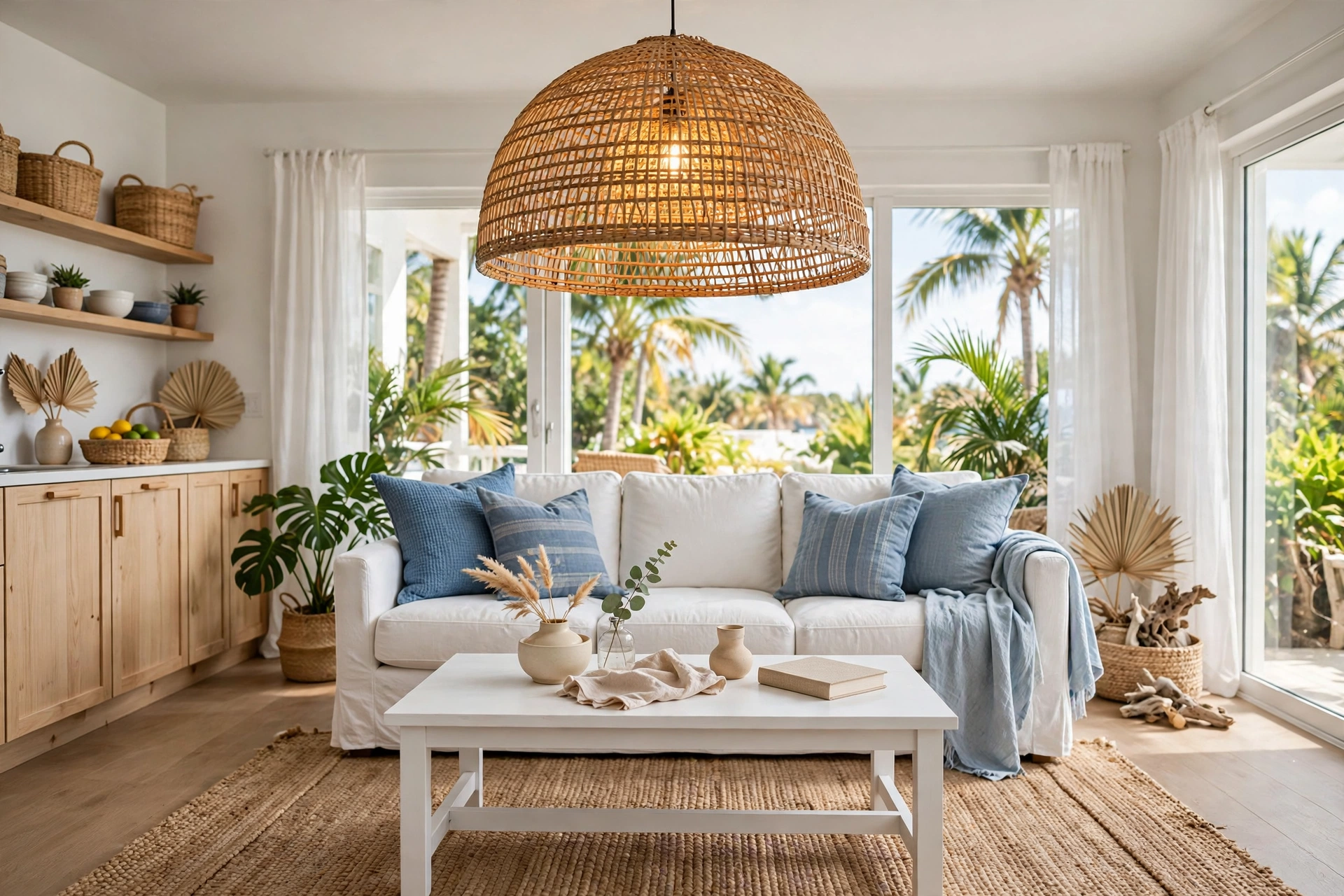
A large rattan dome pendant ($80–$200) over the coffee table or dining nook is the coastal lighting move — the woven shade casts gorgeous patterned shadows and adds a huge dose of texture overhead. Scale up: in a studio, one oversized pendant beats three small ones for drama. The natural material keeps it warm, not stark. Pro tip: hang pendants 30–36 inches above tables and at least 7 feet above floors — too high and the light feels disconnected, too low and tall guests suffer.
31. Glow Under a Capiz Shell Chandelier
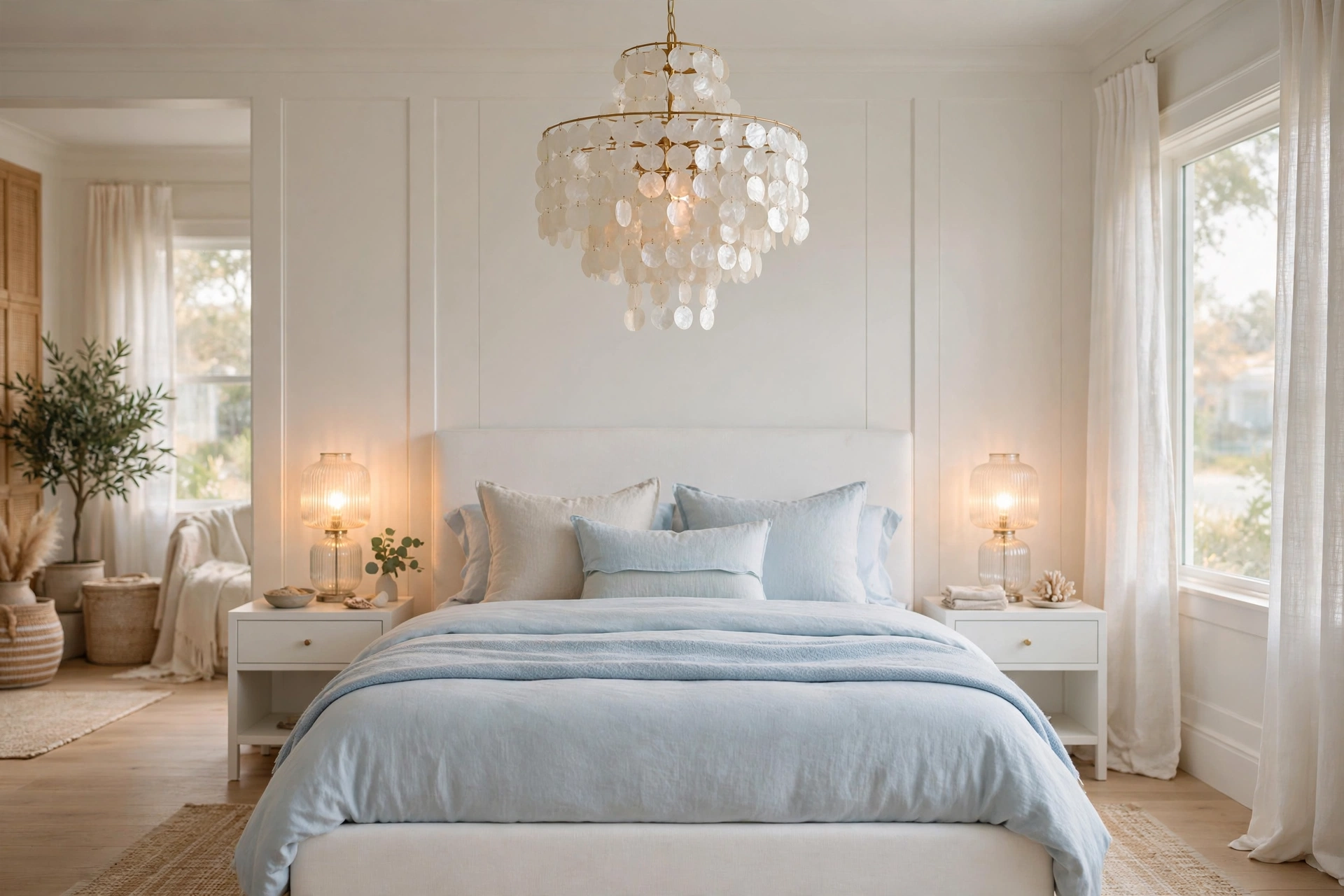
A capiz shell chandelier ($100–$300) — hundreds of translucent shell discs catching the light — is the dreamiest coastal fixture ever made. Over the bed it creates a soft, moonlit glow that makes the whole sleeping zone feel like a resort. The shells diffuse light so gently that you may never need another bedroom lamp. Pro tip: dust capiz monthly with a microfiber cloth — the discs are static magnets, and a dusty chandelier loses its signature shimmer.
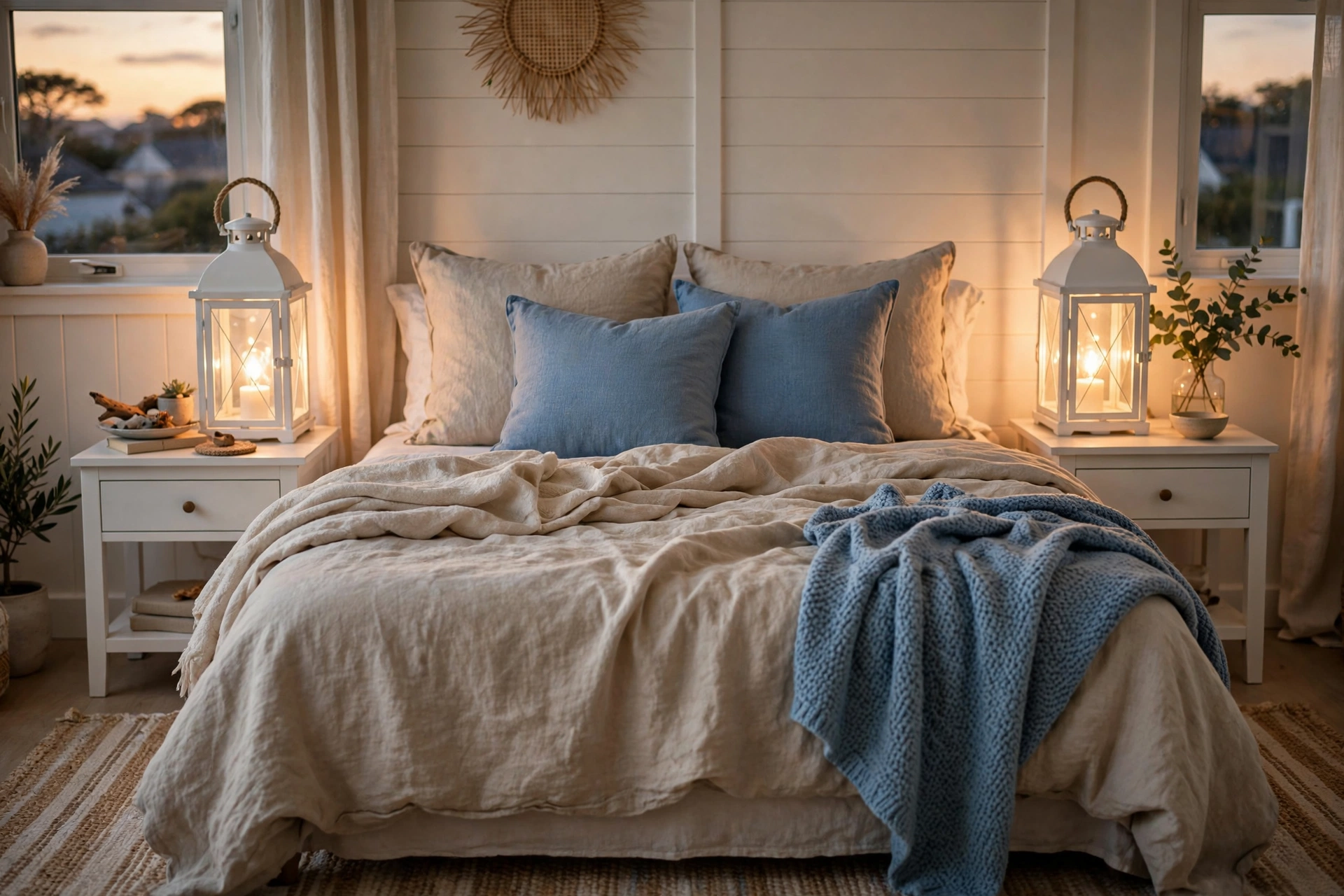
32. Pair Lantern-Style Table Lamps
Glass lantern table lamps with rope handles ($30–$70 each) on matching nightstands bring symmetry and seaside charm to the sleeping zone. The lantern form nods to dock lights without being literal. Use warm 2700K bulbs — the amber glow through glass is the entire point. These small lighting layers are the secret behind the calm in our minimalist studio ideas. Pro tip: put both lamps on a single smart plug ($12) — one tap or voice command controls the whole bedroom’s mood.
Greenery & Finishing Touches
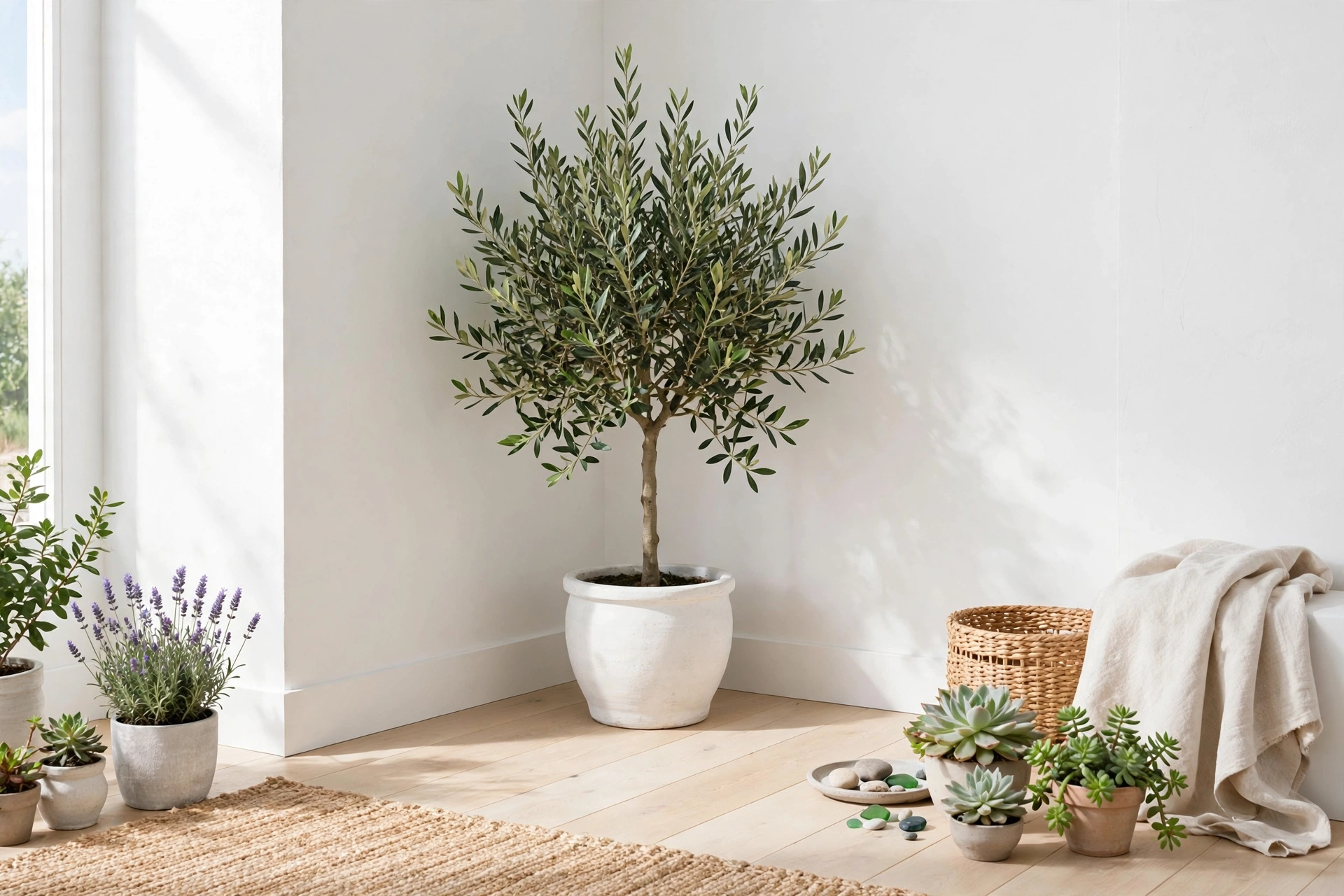
33. Pot an Olive Tree for Mediterranean Air
A potted olive tree ($40–$120) in a white ceramic planter is the coastal plant — silvery-green leaves, sculptural form, Mediterranean soul. It thrives in the bright light coastal rooms already have. One statement tree beats a dozen small plants in a studio; it becomes living architecture. Pro tip: olive trees want the brightest spot you own and soil that dries between waterings — a moisture meter ($10) removes all guesswork and prevents the number-one killer, overwatering.
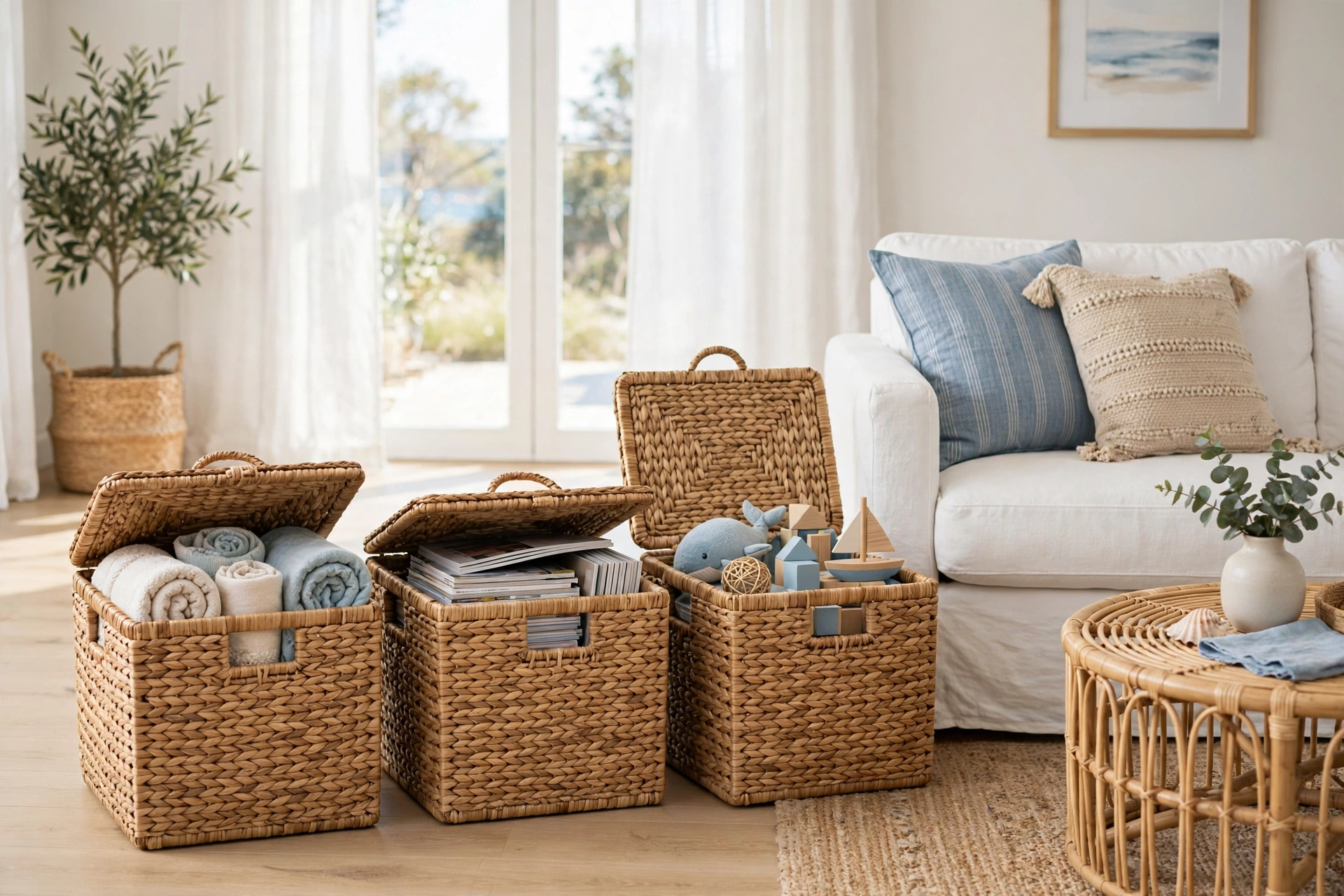
34. Corral Clutter in Woven Storage Baskets
Large lidded seagrass baskets ($25–$60 each) are the coastal studio’s secret weapon — they swallow throws, magazines, toys and chargers while looking like decor. Line three along the sofa or under a console for storage that enhances the style instead of fighting it. The grand finale of any budget coastal refresh. Pro tip: label the inside of each lid with washi tape — you will actually remember what is where, and guests can find the throw blankets without interrogation.
Frequently Asked Questions
What colors define coastal decor?
The classic coastal palette starts with warm whites and sandy beiges, layered with sea-glass blues, soft aqua, navy accents and driftwood grays. Natural textures — rattan, jute, linen, weathered wood — do as much work as color. Keep the overall feel light: roughly 70% white and neutrals, 20% blues, 10% natural wood tones.
How do I make a small studio feel coastal without looking themed?
The secret is restraint: choose the palette and textures of the coast (white, blue, natural fibers) without the literal motifs. Skip the anchor prints and “beach” signs; instead use driftwood textures, linen fabrics, rattan furniture and sea-glass colors. Three subtle nods beat thirty obvious ones every time.
Is coastal decor expensive to achieve?
Not at all — coastal is one of the most budget-friendly styles. White paint, thrifted wood furniture given a whitewash, jute rugs, linen-look curtains and DIY driftwood art can transform a studio for a few hundred dollars. The style celebrates imperfection and natural materials, so secondhand finds fit right in.
Can renters do coastal style?
Absolutely — coastal is wonderfully renter-friendly because its impact comes from freestanding pieces: the slipcovered sofa, rattan chair, jute rugs, linen curtains on tension rods, and removable wall decals. Use peel-and-stick shiplap and over-the-door hooks, and keep the landlord’s walls and fixtures untouched.
What is the difference between coastal and nautical decor?
Coastal is about the feeling of the seaside — light, airy, natural textures and a relaxed palette. Nautical is more literal, using maritime motifs like anchors, ropes, ships and navy stripes as decoration. Coastal is the broader, more timeless look; nautical is its theme-park cousin. Most designers recommend coastal for everyday living.
How do I keep white coastal furniture clean in a small space?
Choose washable slipcovers and performance fabrics rated for stain resistance. Keep a fabric-safe stain remover on hand and treat spots immediately. In a studio where the sofa is also the dining chair and home office, a spare slipcover in rotation means the furniture always looks fresh while one cover is in the wash.
Final Thoughts
A coastal studio apartment is not about living in a beach-themed diorama — it is about borrowing the seaside’s best qualities for small-space life: light that bounces, textures that invite touch, colors that calm, and an uncluttered ease that makes one room feel like a retreat. Start with the big moves — the whitewashed walls, the light floors, the slipcovered sofa — and let the collected treasures accumulate naturally.
The beachcomber’s mindset is the real secret: edit often, choose natural over synthetic, and let every piece earn its place. Before long, your studio will not just look coastal. It will feel like that first barefoot morning of a beach holiday — every single day, no plane ticket required.

One Comment