
30 Small Studio Bathroom Ideas That Feel Twice the Size
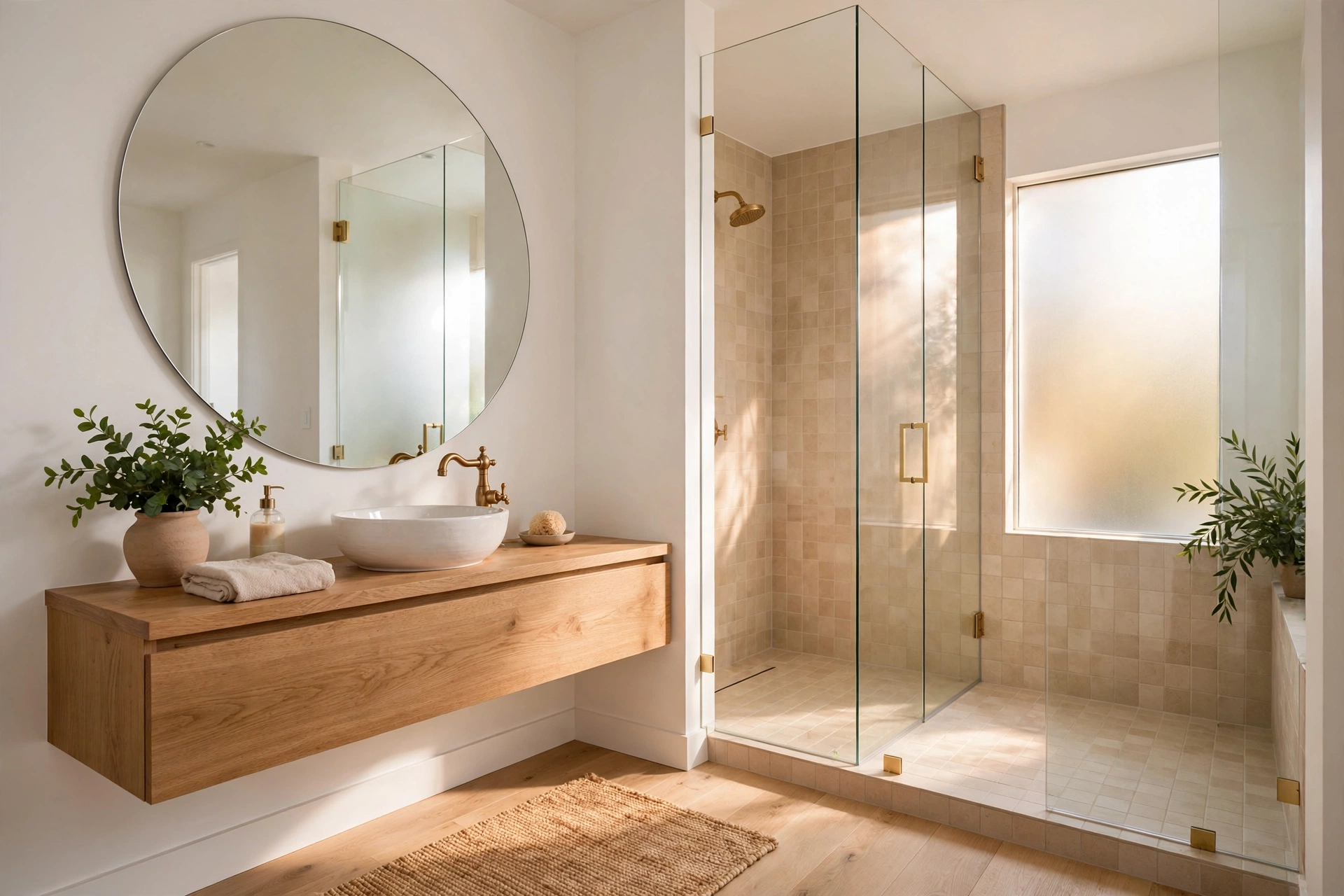
A studio apartment bathroom is usually the smallest room in an already small home — often under 40 square feet, with barely enough elbow room to dry off. But small doesn’t have to mean cramped, dated, or depressing. With the right fixtures, clever storage, and a few visual tricks borrowed from interior designers, a tiny bathroom can feel twice its size and look like a boutique hotel suite. The secret is thinking vertically, choosing fixtures that float, and letting light and mirrors do the heavy lifting.
This guide rounds up 30 small studio bathroom ideas that make every inch count: space-freeing fixtures, mirror and lighting tricks, storage that hides in plain sight, renter-friendly surface upgrades, and finishing touches that add personality. Every idea includes realistic prices and a pro tip, so you can start with a $15 fix today and work toward bigger upgrades over time.
Fixtures That Free Up Floor Space
1. Float the Vanity Off the Floor
A wall-hung floating vanity is the single most transformative upgrade for a tiny bathroom — lifting the cabinet off the floor reveals continuous flooring underneath, which tricks the eye into reading the room as larger. Floating vanities run $120–$400 depending on size and finish, and most come with soft-close drawers that swallow toiletries whole. Choose a light oak or white finish to keep things airy. Pro tip: leave at least 8 inches of clearance beneath the vanity so a robot vacuum or mop glides straight under — visible floor equals visible space.
2. Hang One Oversized Mirror
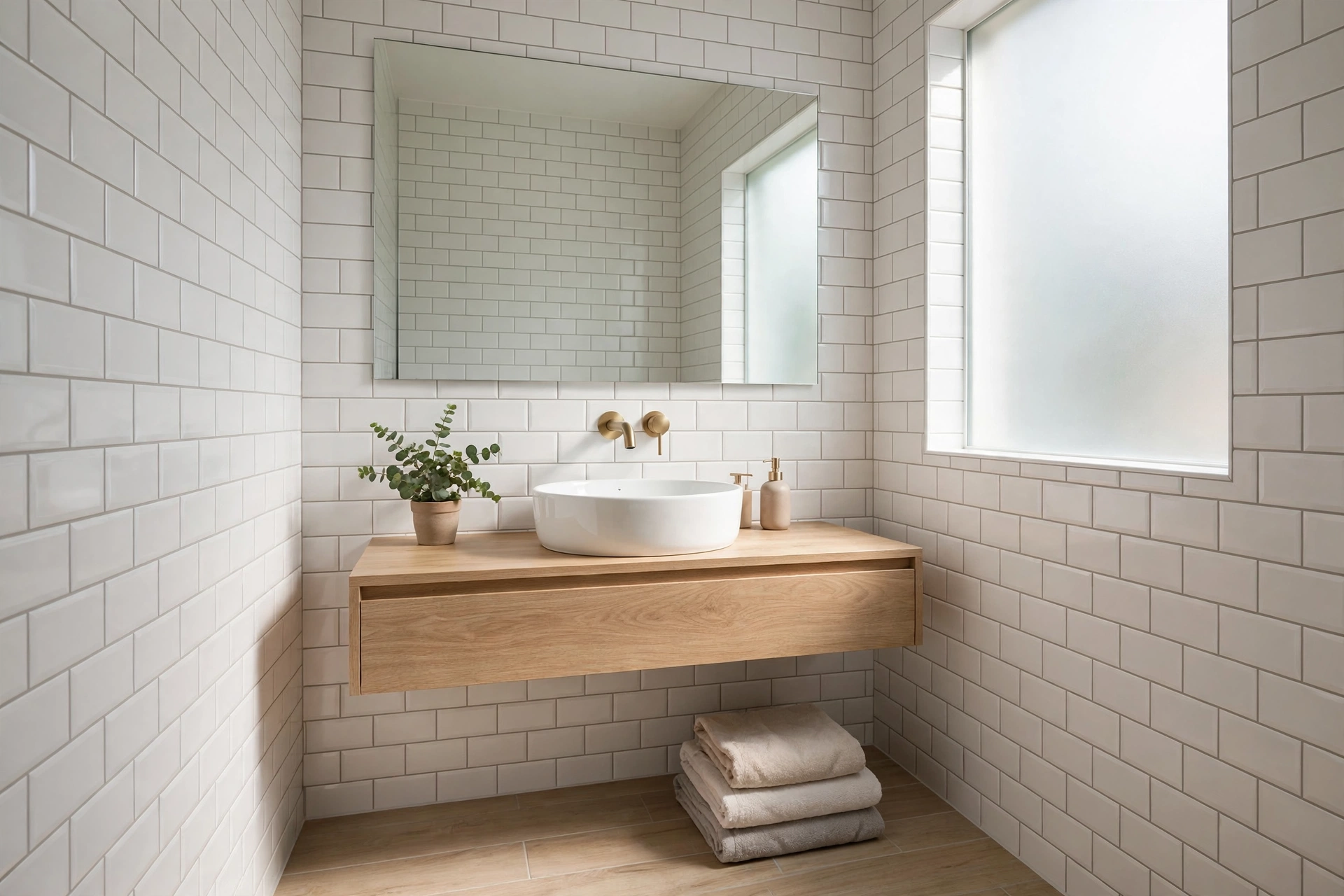
Designers call the big mirror the oldest trick in the book because it works: a mirror that spans nearly the full width of the vanity visually doubles the room by reflecting light and space back at you. A large frameless or thin-framed mirror costs $40–$120, far less than any renovation. Hang it so its center sits at eye level (about 60 inches from the floor). Pro tip: position the mirror to reflect a window or the brightest light source — a mirror reflecting a blank wall just doubles the blankness.
3. Mount the Faucet on the Wall
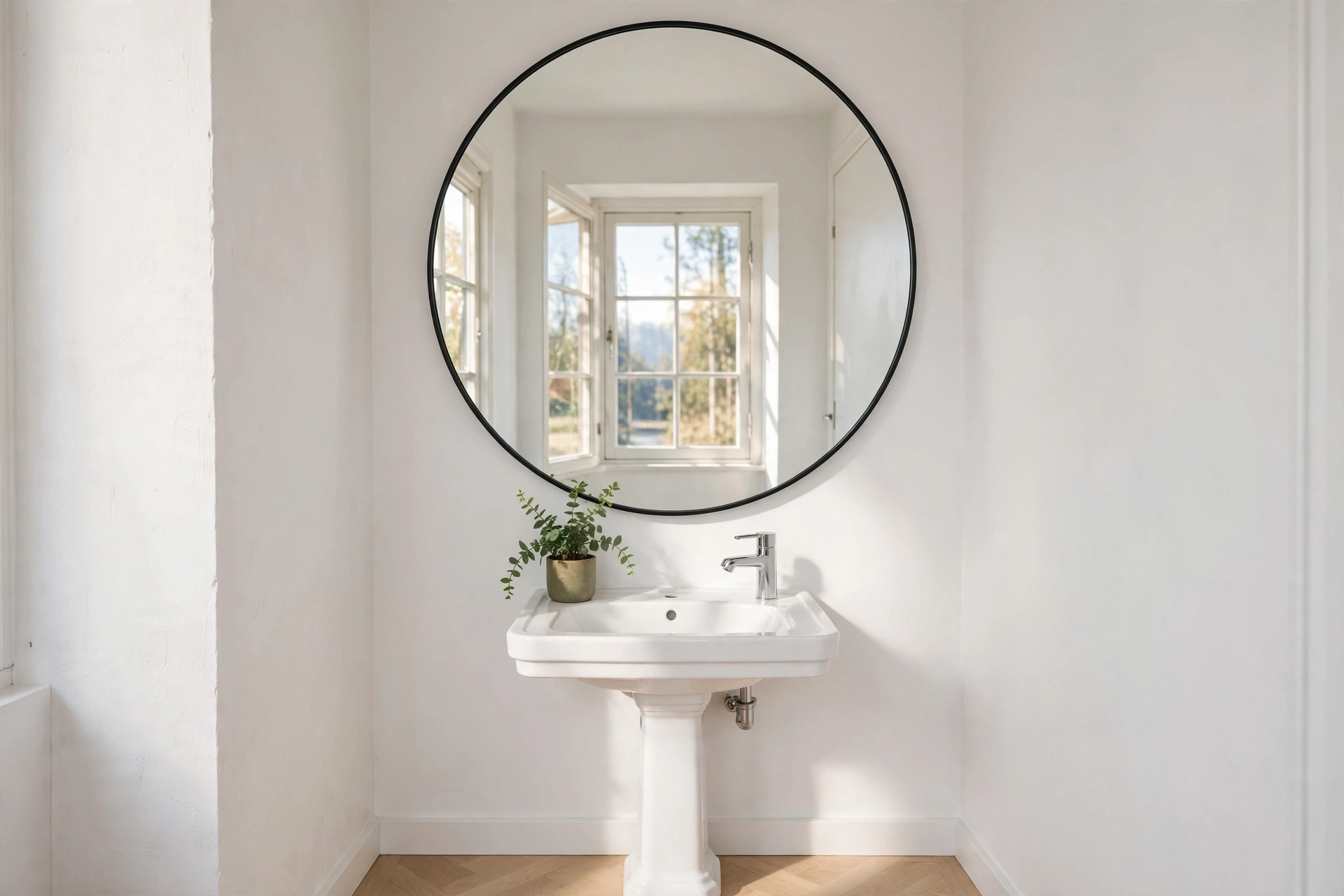
Wall-mounted faucets free up precious counter inches by moving the tap off the sink deck entirely — in a 24-inch vanity, that reclaimed strip is where your soap, toothbrush, and daily essentials actually live. Wall-mount faucets run $60–$180, plus installation. The floating look also reads as high-end and custom, the kind of detail you see in boutique hotels. Pro tip: confirm your wall has the depth for in-wall plumbing before buying — on thin partition walls, a deck-mounted single-hole faucet is the safer retrofit.
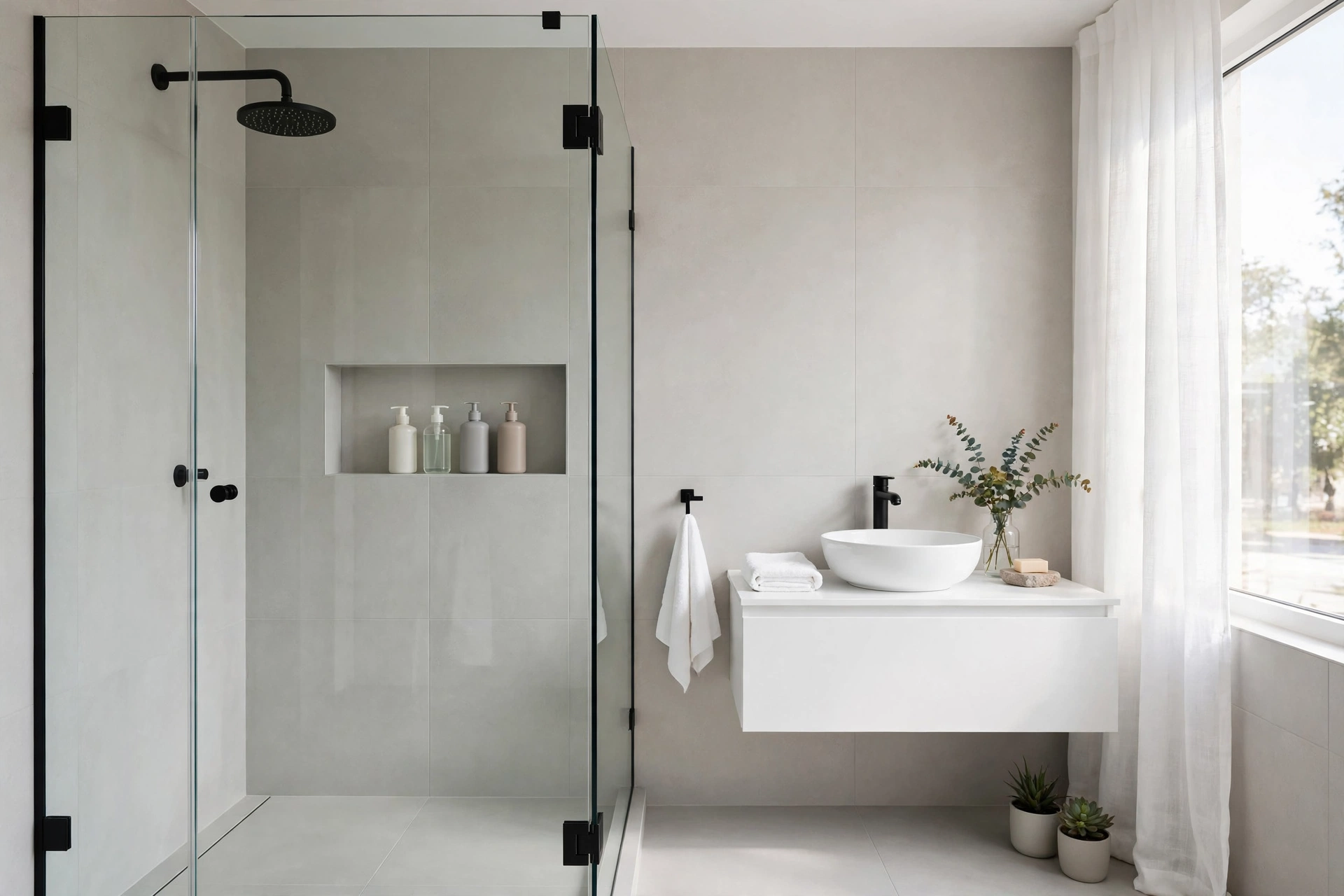
4. Go Frameless on the Shower Glass
A framed shower door chops a small bathroom into visual compartments; a frameless glass panel lets the eye travel straight through to the back wall, making the whole room read as one continuous space. Frameless panels run $200–$600 installed, and a single fixed panel (no door) is the cheapest, cleanest option for tight layouts. Keep the glass spotless and the illusion holds. Pro tip: apply a hydrophobic glass coating ($15 spray) every few months — it makes water sheet off instead of spotting, so the “invisible” panel stays invisible.
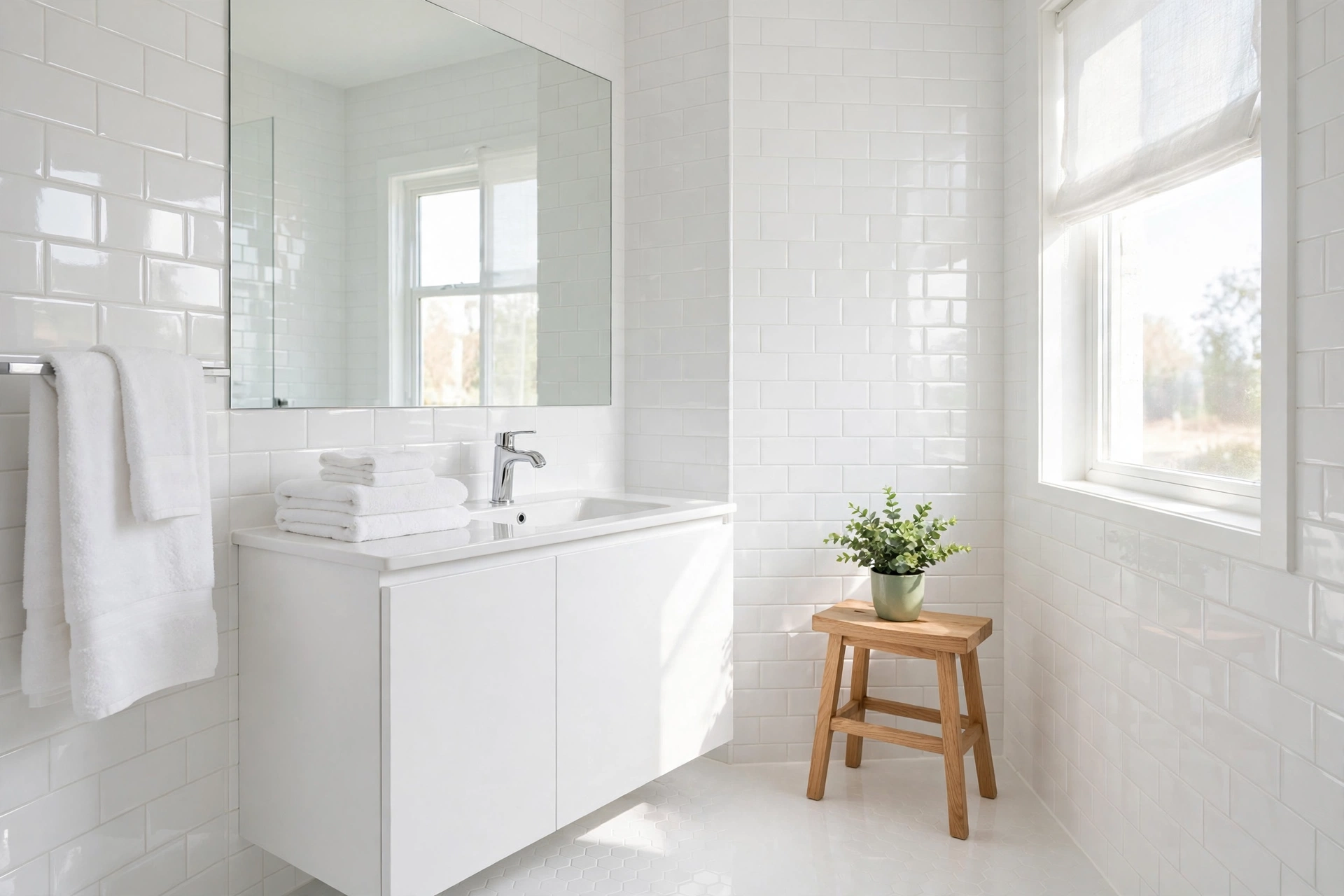
5. Commit to a Bright White Palette
White reflects up to 80% of light while dark colors absorb it — in a windowless 35-square-foot bathroom, that physics lesson is everything. An all-white palette on walls, fixtures, and towels bounces every lumen around the room, and glossy tiles amplify the effect. The trick to avoiding a sterile feel is layering textures: matte walls, glossy tile, fluffy towels, one warm wood accent. Our studio apartment color schemes guide has more light-maximizing palettes if white feels too stark. Pro tip: use a warm white (2700–3000K bulbs) rather than cool daylight bulbs — warm light keeps an all-white bathroom feeling cozy instead of clinical.
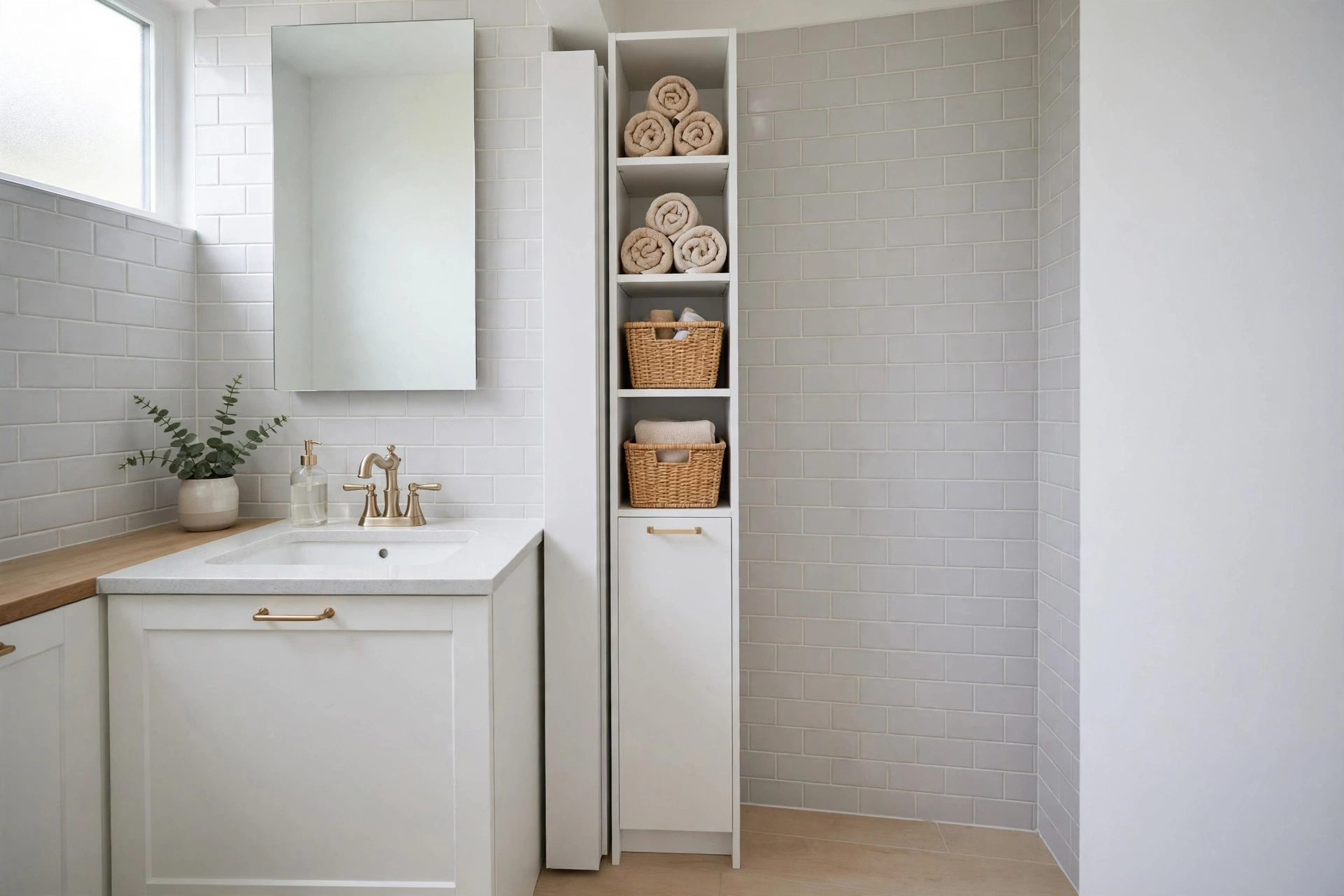
6. Slot a Tall Narrow Tower Into Dead Gaps
Every small bathroom has a dead gap — that 8-to-12-inch sliver between the vanity and the wall that collects dust and nothing else. A tall, narrow storage tower ($50–$150) turns that sliver into five shelves of towels, toilet paper, and toiletries. Measure the gap before shopping; many towers come in 8, 10, and 12-inch widths precisely for this purpose. Pro tip: anchor the tower to the wall with the included anti-tip strap — a fully loaded narrow cabinet is top-heavy, and bathrooms are slippery places.
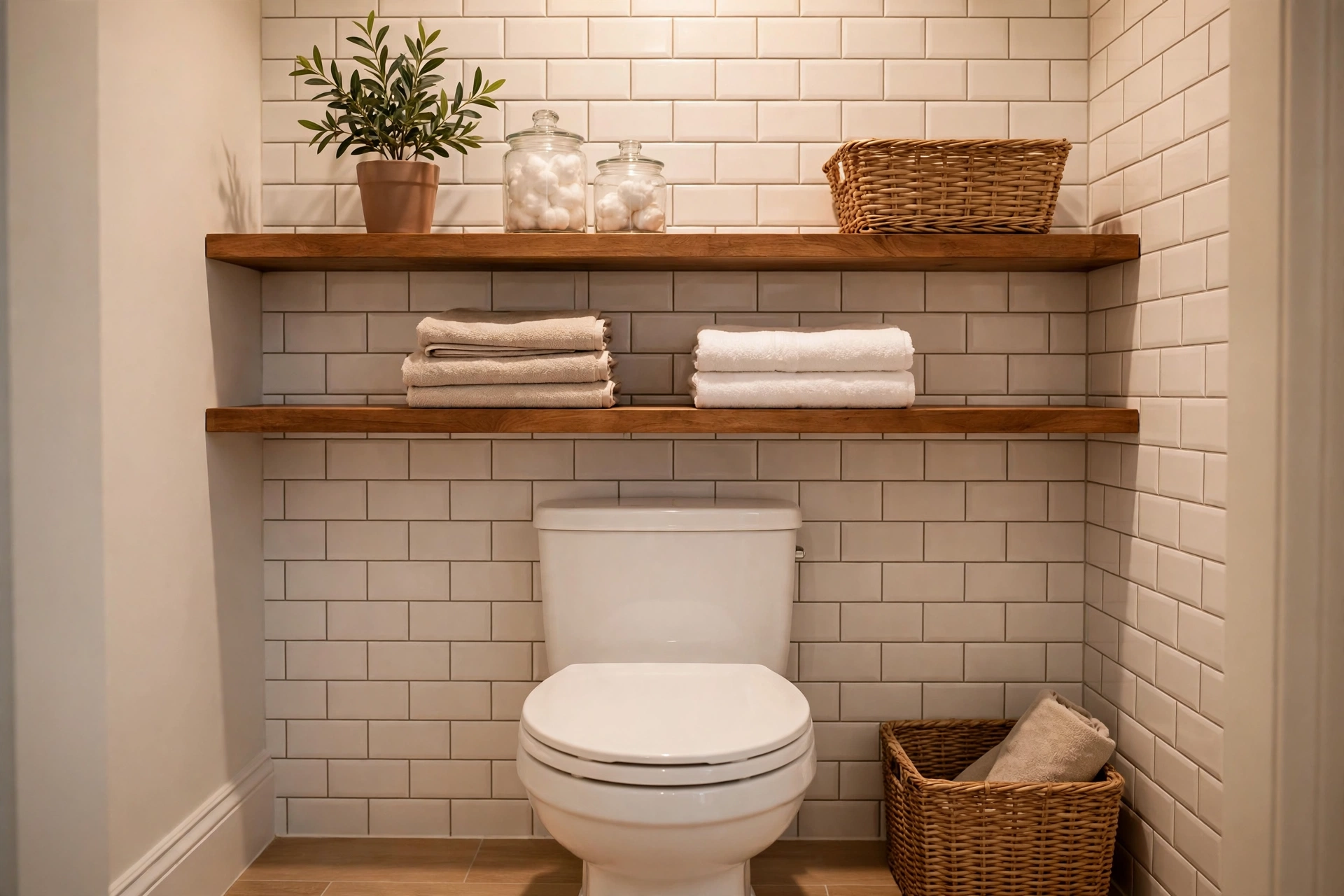
7. Shelf the Wall Above the Toilet
The wall above the toilet is prime real estate that most people waste — two floating shelves ($20–$50) there hold the entire bathroom’s decorative layer: folded towels, a plant, apothecary jars, a candle. Keep the bottom shelf at least 24 inches above the tank lid so nothing gets knocked off. Style it like a mini vignette rather than a storage dump and it reads as decor. Pro tip: put daily-use items on the lower shelf and pretty-but-rarely-touched decor up high — you’ll thank yourself every rushed morning.
8. Build a Recessed Shower Niche
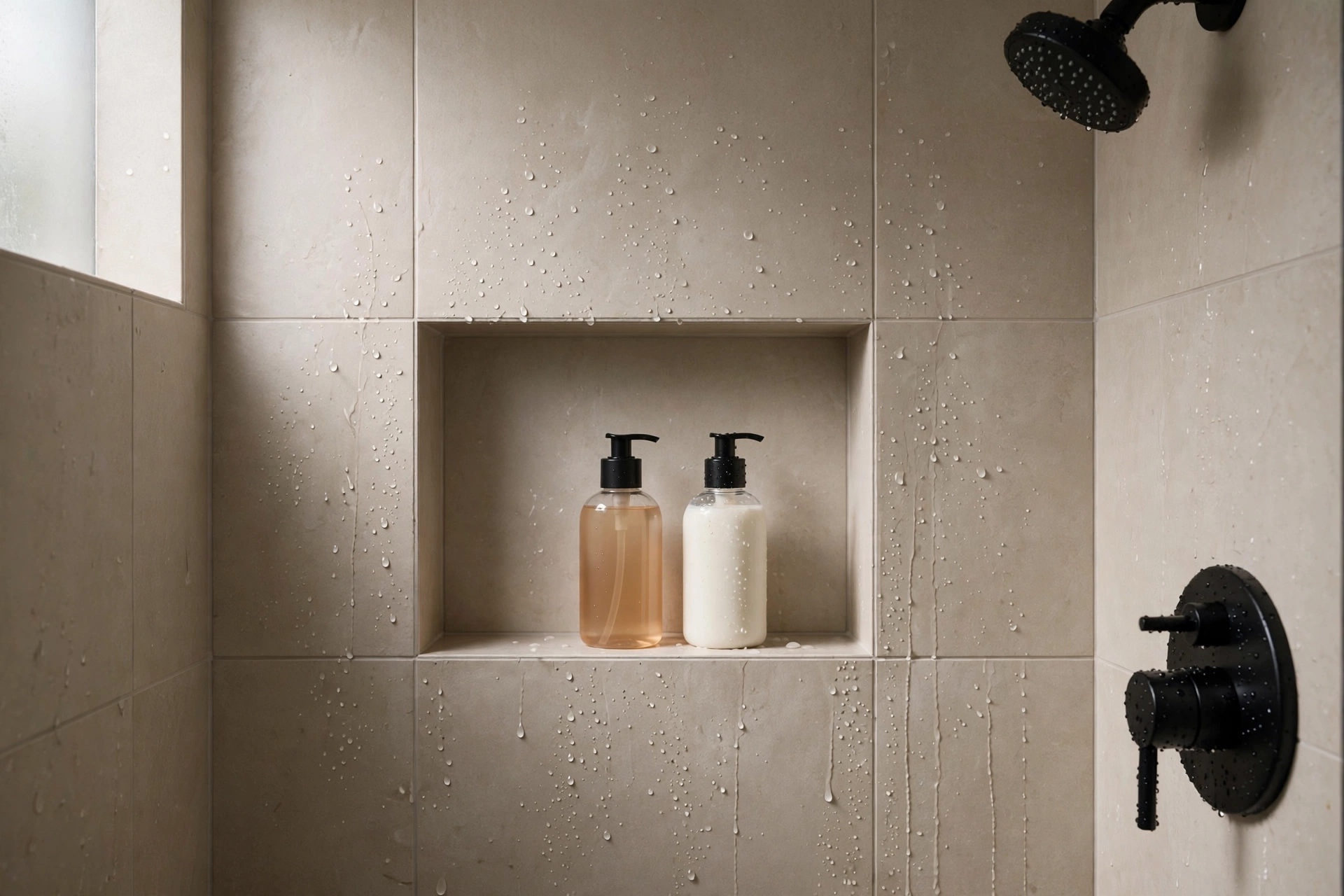
Corner shower caddies rust, wobble, and eat elbow room — a recessed niche carved into the shower wall stores bottles flush with the tile, costing zero inches of shower space. Retrofitting a niche during a re-tile runs $150–$300 in labor; if that’s out of reach, a stainless corner shelf ($15–$30) is the renter-friendly stand-in. Either way, getting bottles off the floor and tub edge instantly declutters. Pro tip: slope the niche’s bottom shelf slightly toward the shower when tiling — standing water in a flat niche grows mildew within weeks.
Smart Layout & Space Tricks
9. Swap the Swing Door for a Pocket Door
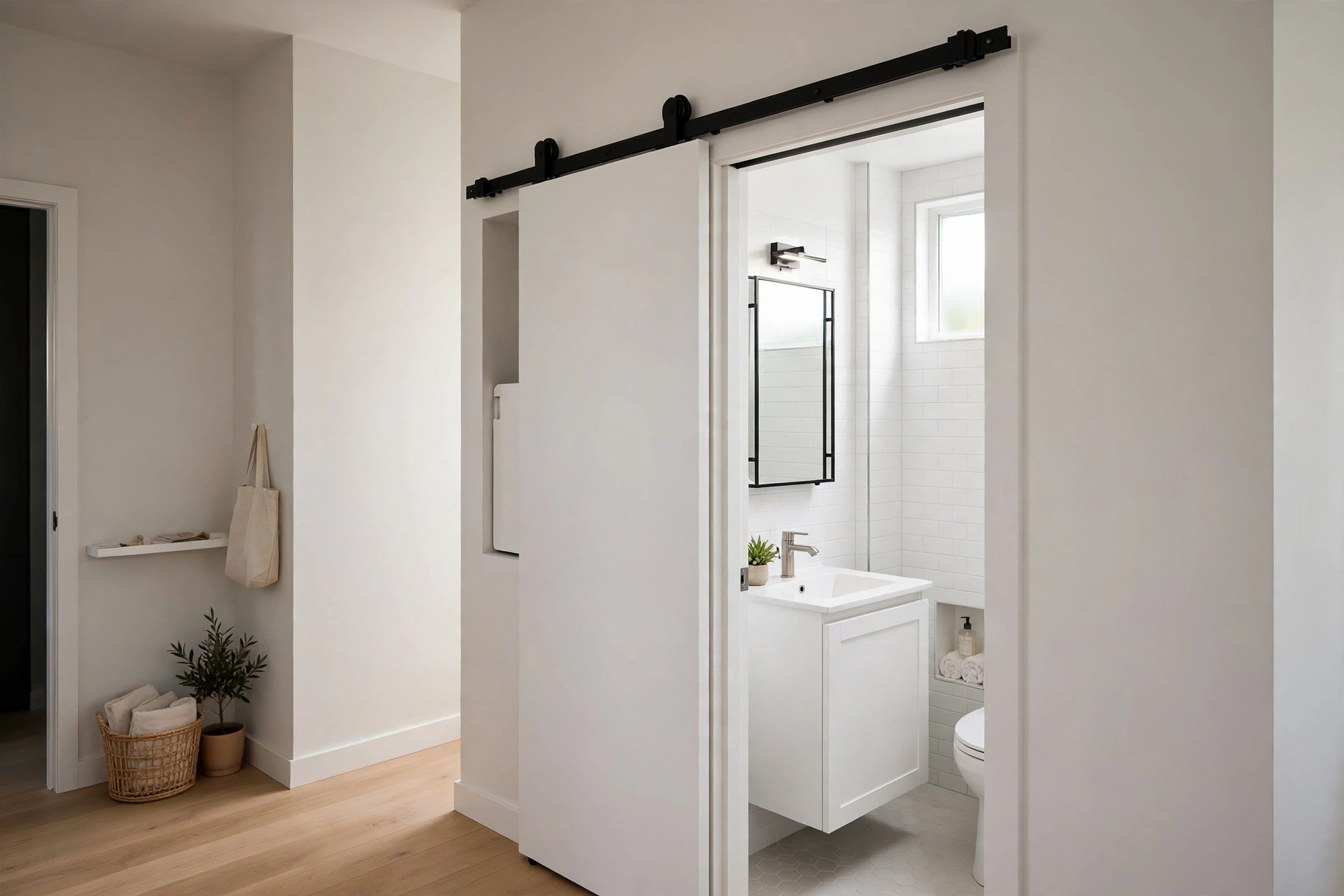
A standard bathroom door needs a 30-inch swing arc — in a tiny bathroom, that’s often a third of the usable floor. A pocket door slides into the wall and reclaims that entire arc for a vanity, storage, or just breathing room. Pocket door kits run $100–$250 plus installation, and barn-style surface sliders ($80–$200) give renters the same benefit without opening walls. Pro tip: choose a door with a recessed pull rather than a protruding handle — in a tight hallway, every half inch of clearance matters.
10. Tuck a Sink Into the Corner
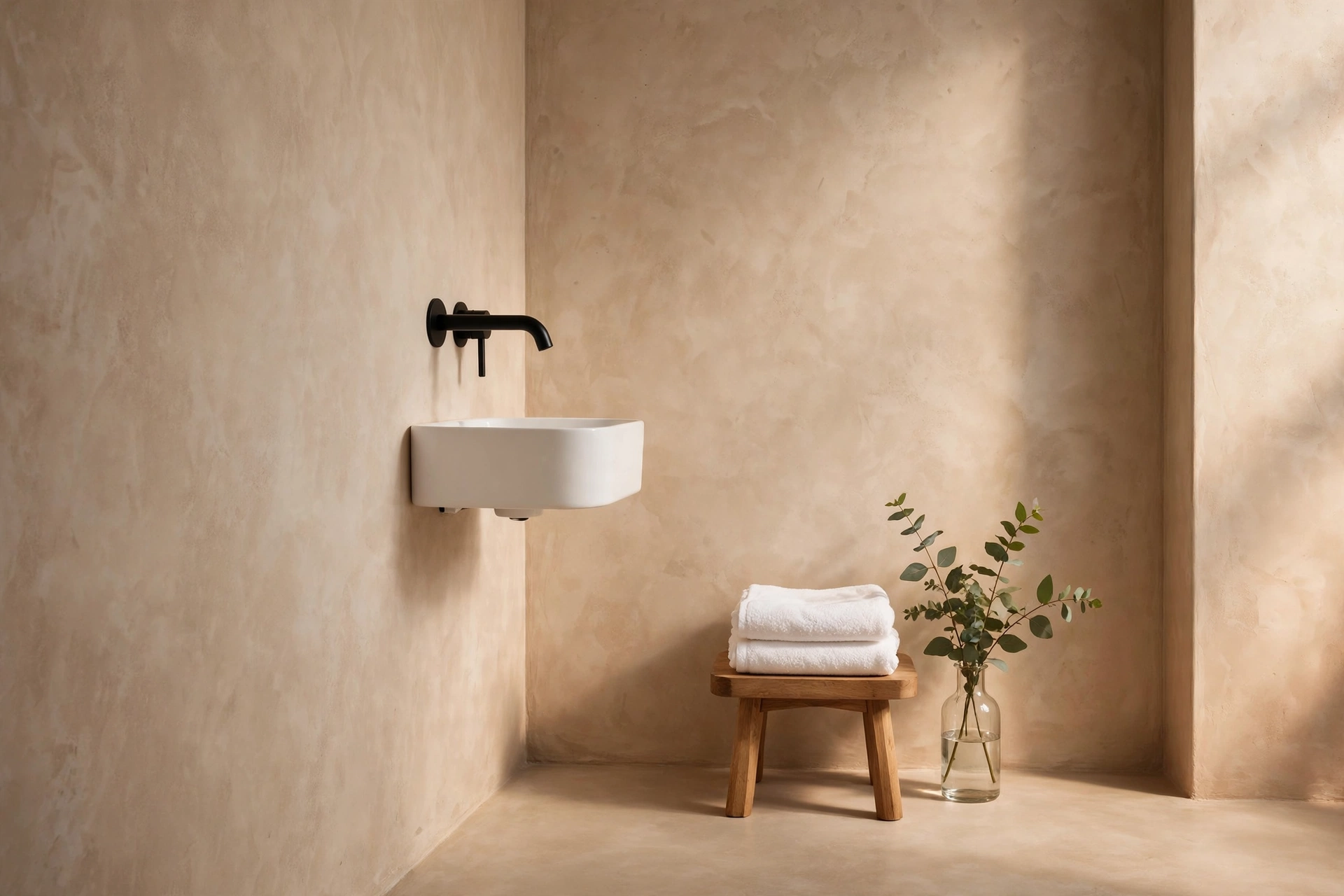
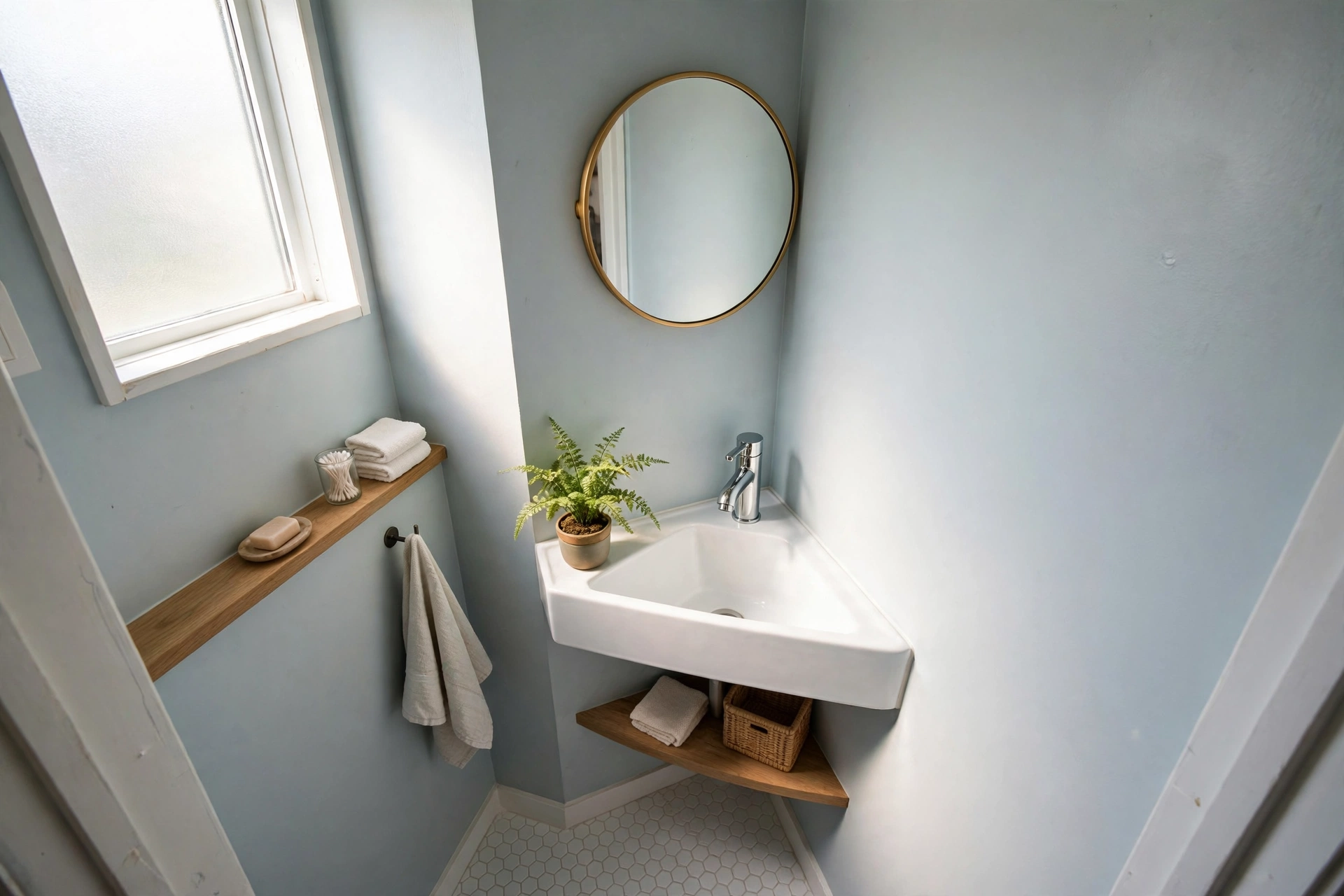
When the bathroom is barely wider than the fixtures, a corner sink rescues the layout — its triangular footprint nests into dead corner space and frees the main wall for the toilet or storage. Corner sinks cost $80–$200, and wall-hung versions free the floor beneath too. They’re genuinely comfortable for handwashing; the only compromise is counter space, which a small wall shelf beside it solves. Pro tip: mount a small round mirror directly above at a slight angle — corner sinks sit lower in your sightline, and the tilt keeps your reflection centered.
11. Double Duty With a Mirrored Medicine Cabinet
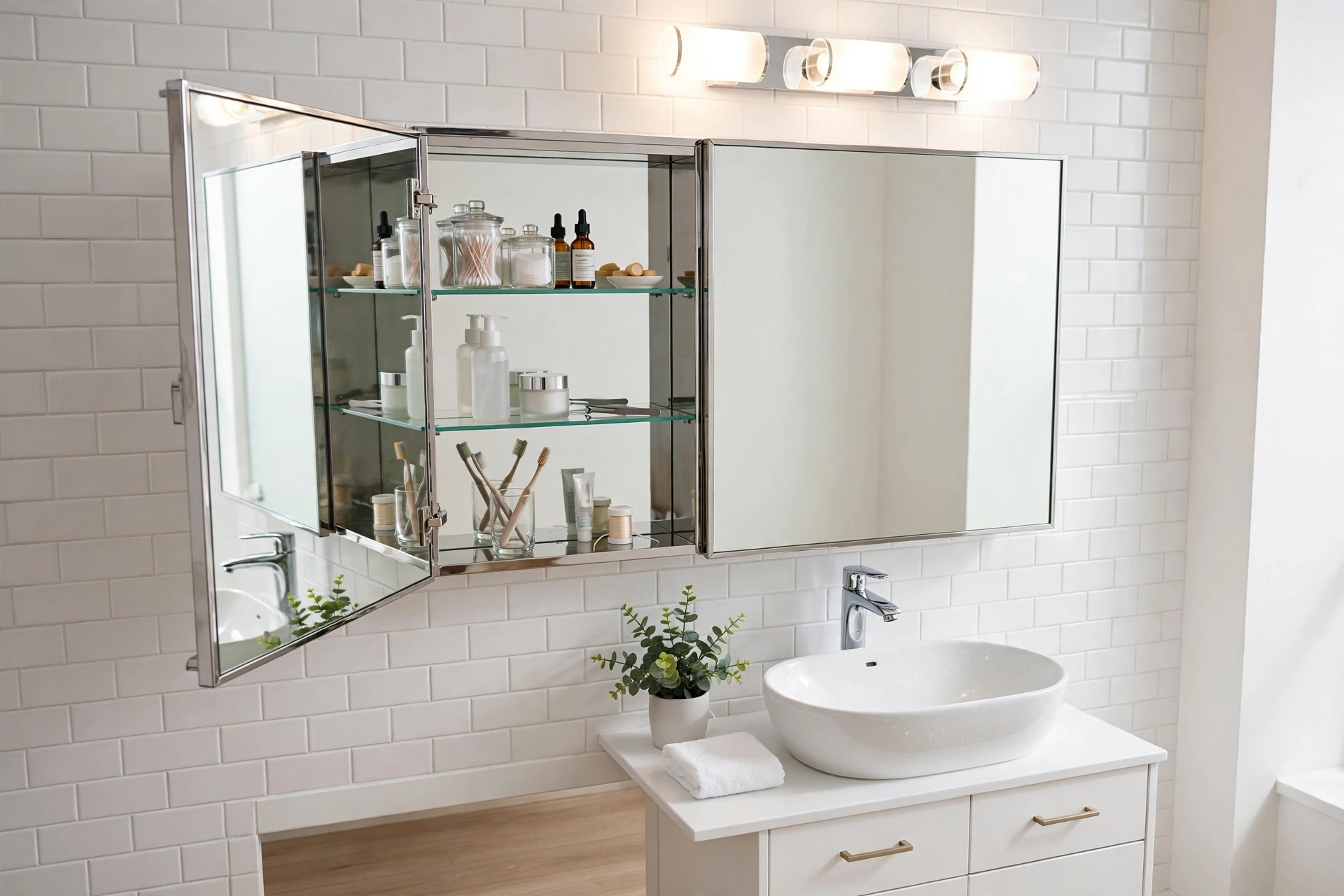
A mirrored medicine cabinet is two fixtures in one’s footprint: full mirror plus hidden storage for the dozen small things that clutter a vanity. Recessed models ($60–$200) sit flush with the wall and hold a shocking amount — medications, contact supplies, skincare — behind a reflection. Surface-mount versions work for renters with zero wall surgery. Pro tip: choose a cabinet with adjustable glass shelves and a magnetic strip inside the door — customizable interiors hold 30% more than fixed-shelf models.
12. Style Open Shelves With Baskets
Open shelves keep a small bathroom feeling airy where a closed cabinet would loom — and woven baskets ($8–$20 each) on those shelves hide the visual chaos of cotton balls, spare razors, and hair ties. Two shelves with three baskets total is the sweet spot: enough storage to matter, few enough objects to stay calm. Stick to one basket material for a collected look. Pro tip: line baskets with small fabric bags for categories like “first aid” and “travel” — you can lift out one bag instead of dumping the whole basket to find tweezers.
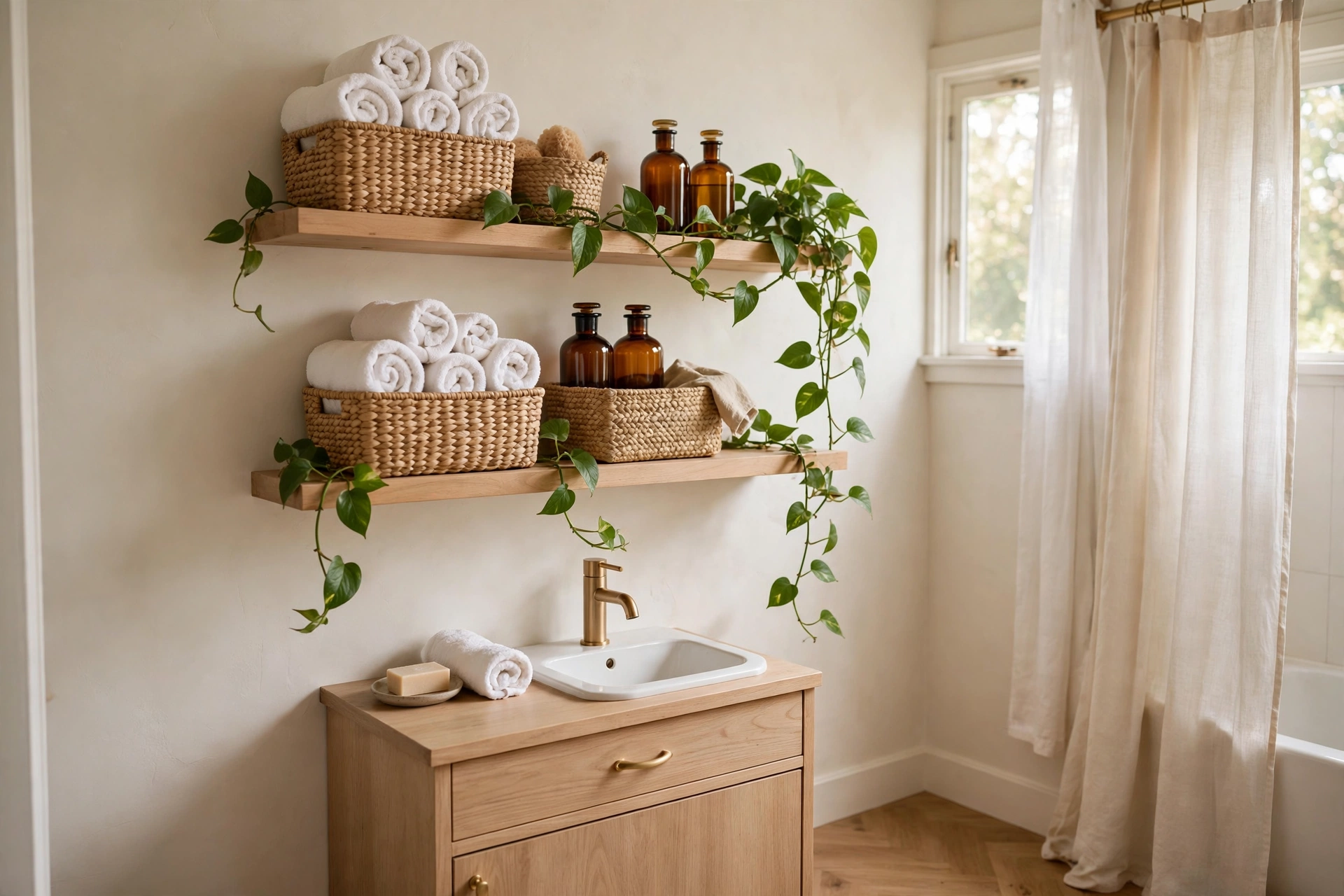
13. Lean a Ladder Shelf for Towels
A leaning ladder shelf needs zero wall anchors, zero floor footprint beyond its base, and holds four or five towels on its rungs plus decor on top — the perfect renter-friendly towel tower for bathrooms with no linen closet. Bamboo or wood ladders run $30–$80 and lean at a stable angle against any wall. Drape towels over alternate rungs so each one airs out properly. Pro tip: put adhesive felt pads on the ladder’s top contact points — it prevents wall scuffs and stops the ladder creeping sideways on tile floors.
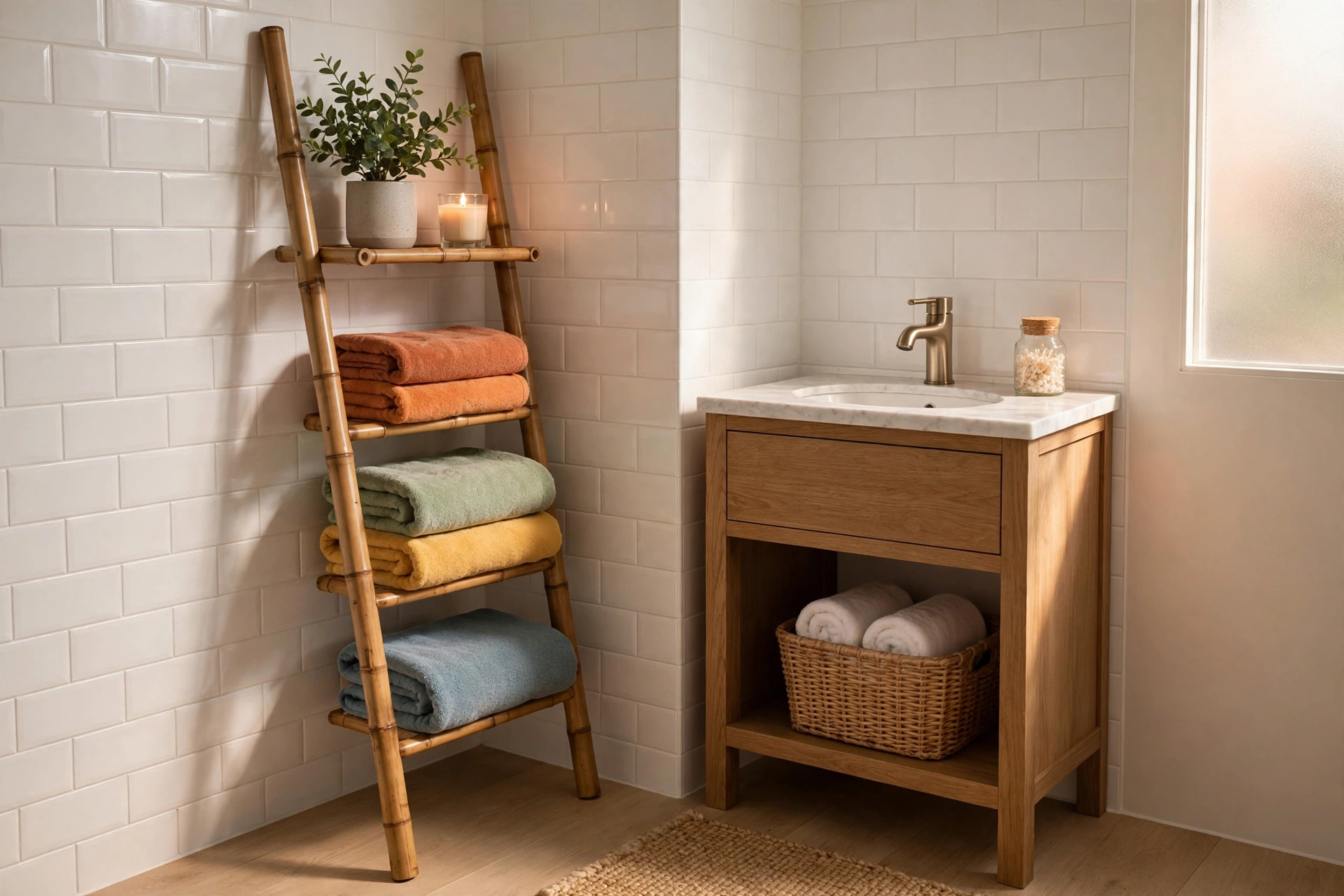
14. Fake a Tile Upgrade With Peel-and-Stick
Peel-and-stick vinyl tiles ($1–$3 per square foot) are the renter’s renovation: they lay directly over ugly existing flooring, come in convincing Moroccan, marble, and terrazzo patterns, and peel off cleanly at move-out. A 35-square-foot bathroom floor costs under $75 and takes an afternoon. They handle bathroom humidity well as long as edges are sealed. Pro tip: run a thin bead of clear silicone caulk around the room’s perimeter after laying the tiles — it stops mop water wicking underneath and doubles the floor’s lifespan.
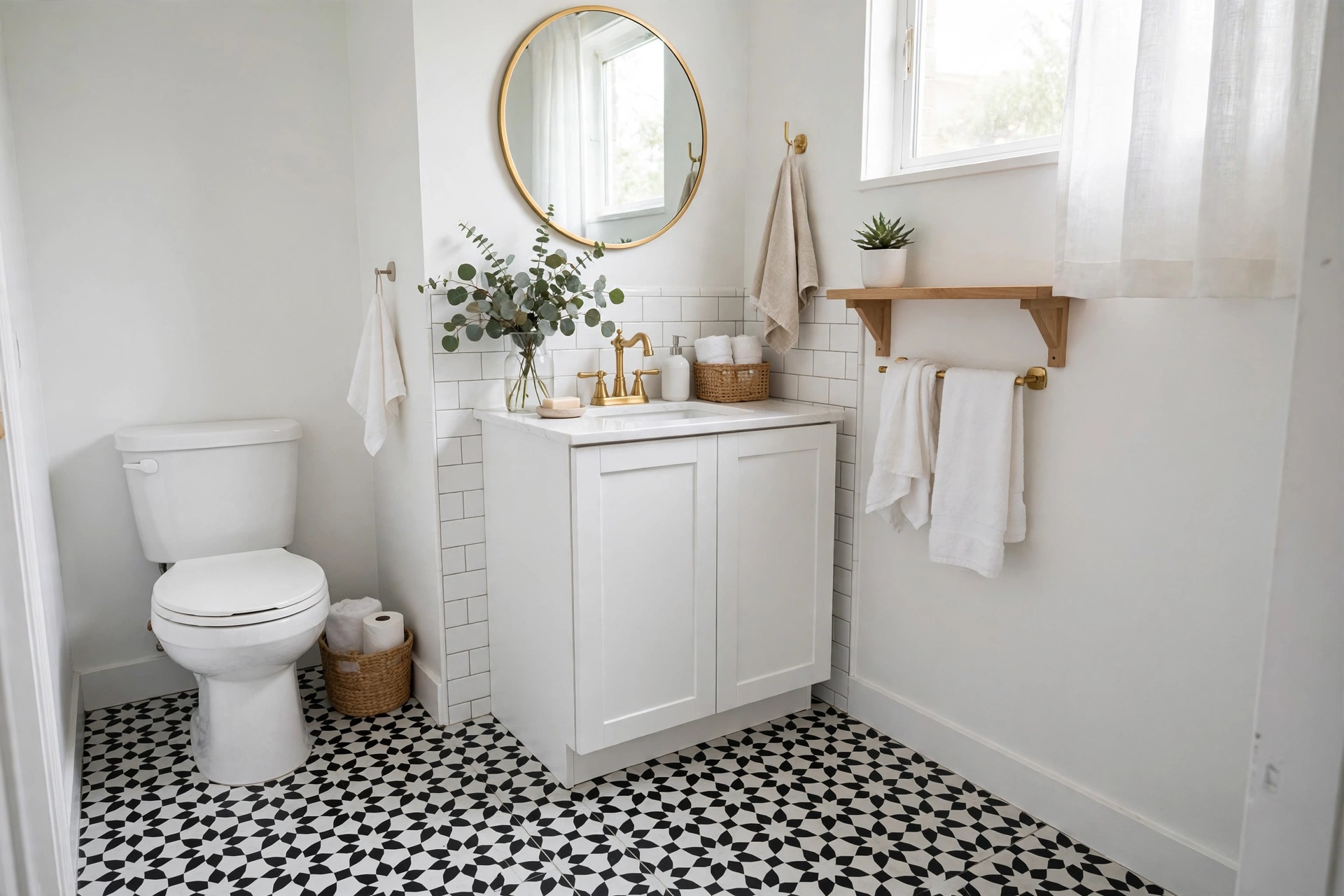
15. Let a Patterned Floor Steal the Show
In a tiny bathroom, the floor is one of the largest visible surfaces — a bold encaustic-look patterned tile ($4–$10 per square foot) turns it into the room’s artwork, so walls and fixtures can stay simple white. The pattern also disguises the dirt and hair that show mercilessly on plain floors. Keep everything else quiet and the floor carries the whole design. Pro tip: choose a pattern with the room’s wall color in it — the visual echo between floor and walls makes the small space feel intentionally designed rather than busy.
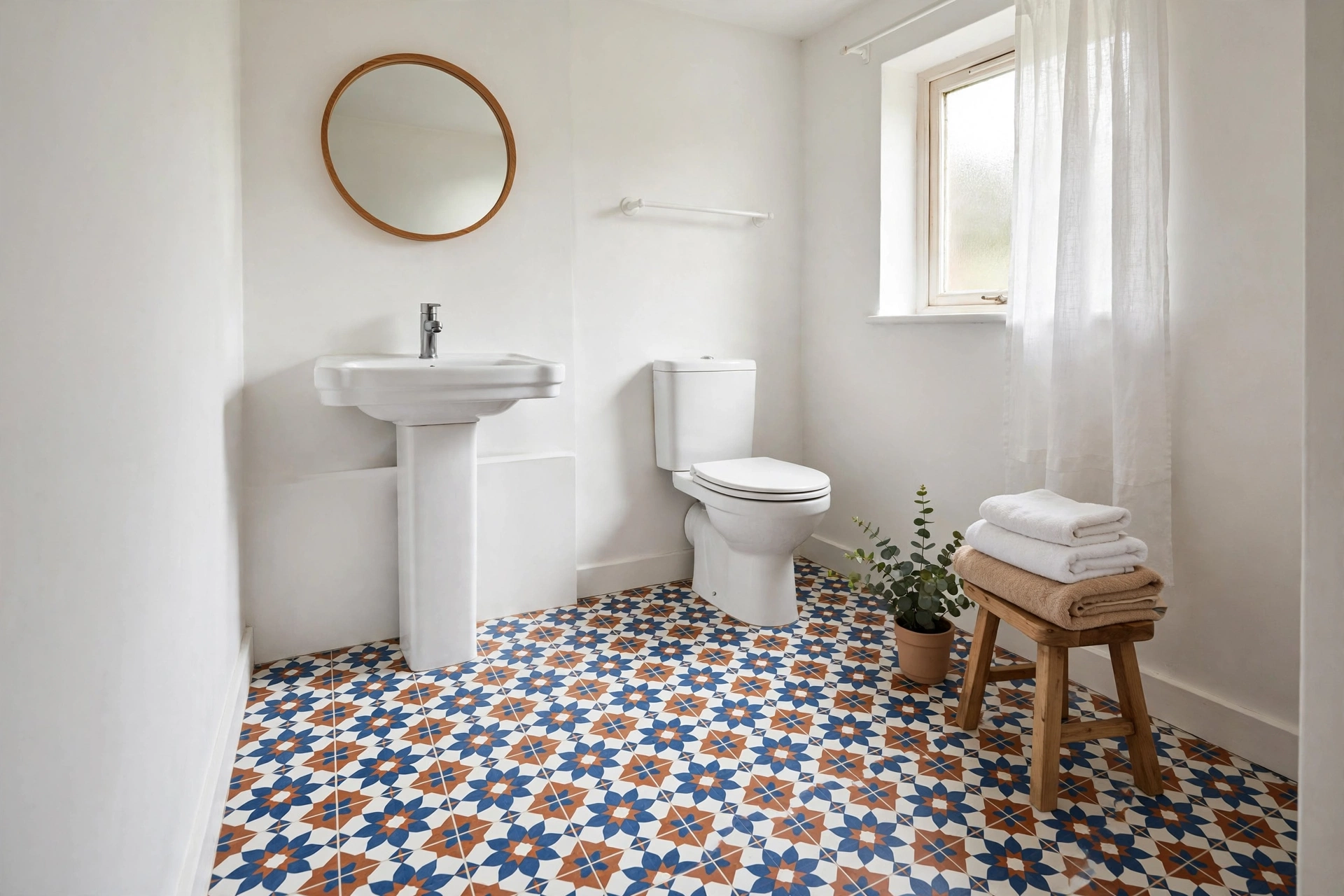
16. Hang the Toilet on the Wall
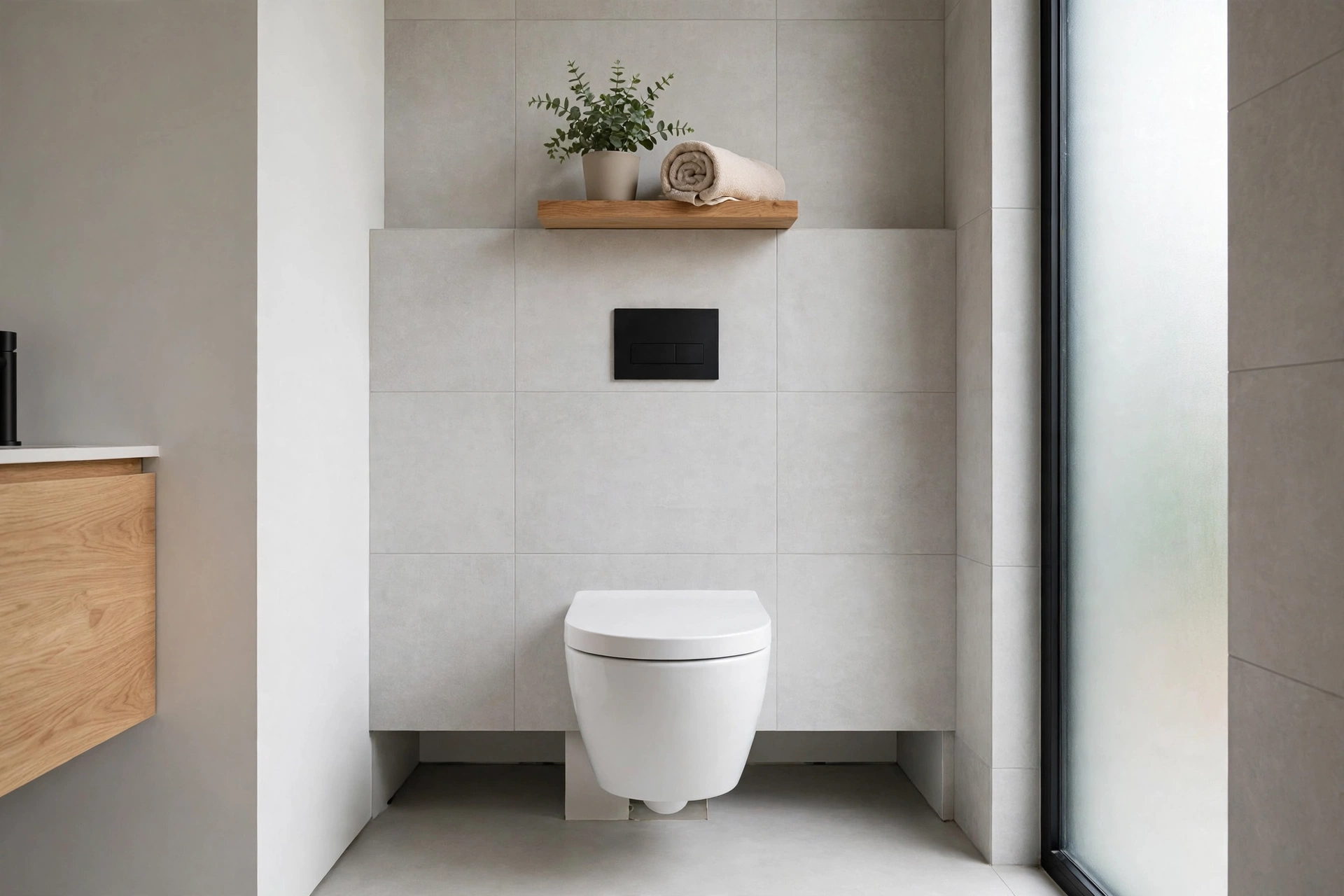
A wall-hung toilet floats above the floor like a floating vanity, exposing continuous flooring beneath and making the room’s footprint read larger — plus mopping underneath takes seconds instead of a contortion act. Wall-hung toilets run $300–$700 plus in-wall carrier installation, so this is a renovation-stage choice, not a weekend swap. The concealed tank also eliminates the dust-collecting tank top. Pro tip: have the installer add a small access panel behind or beside the carrier — if the in-wall valve ever needs service, you’ll bless that $20 panel.
Storage That Hides in Plain Sight
17. Warm Up With a Slim Towel Rail
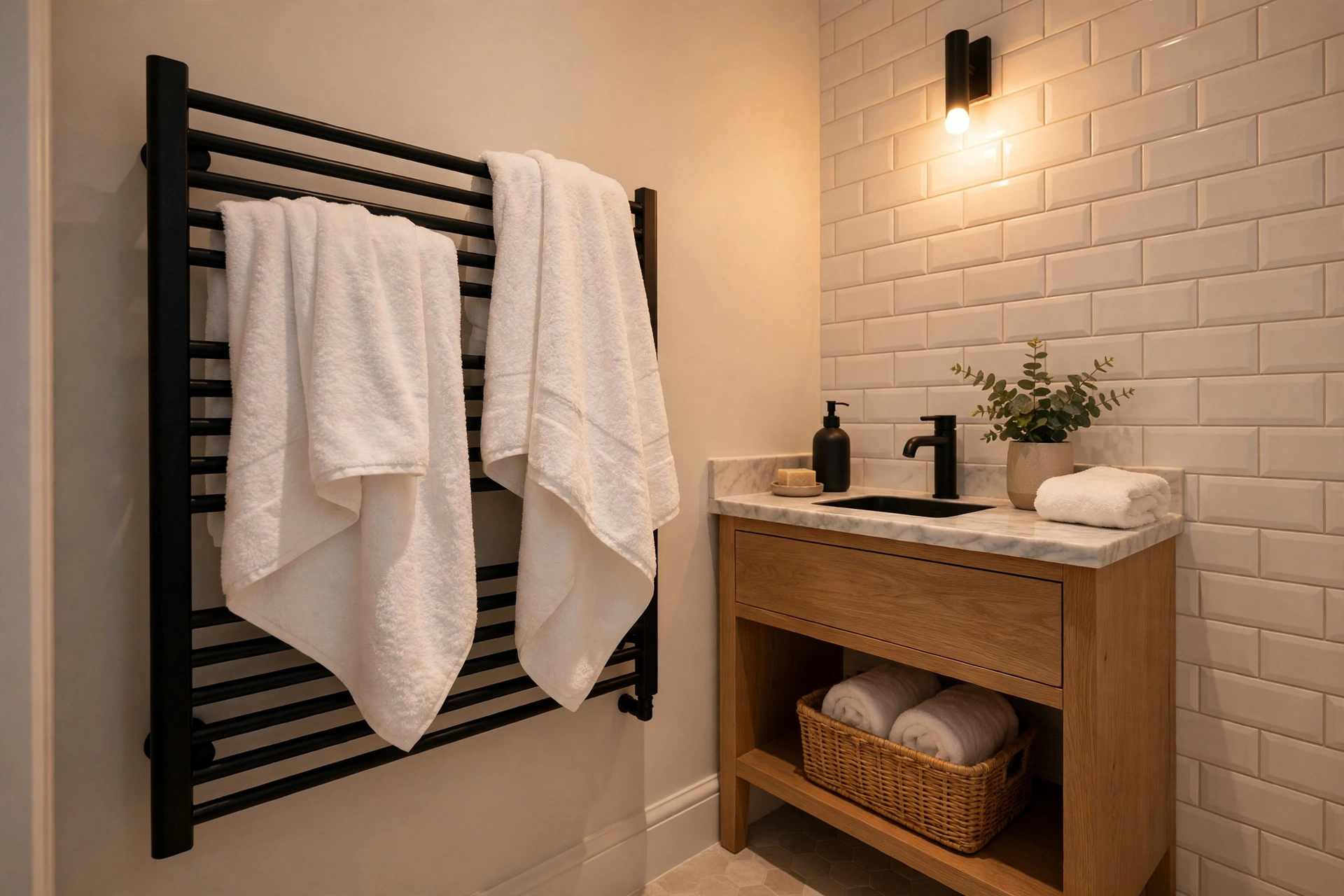
A heated towel rail does triple duty in a studio bathroom: it dries towels fast (no more mildew smell in a windowless room), warms the space like a small radiator, and takes up just 4 inches of wall depth. Electric plug-in models ($80–$200) need no plumbing and mount in under an hour. In a studio where the bathroom doubles as the laundry drying zone, it’s genuinely life-changing. Pro tip: put the rail on a timer plug ($12) set for mornings — warm dry towels on demand without running the heater all day.
18. Corral Clutter in Clear Acrylic
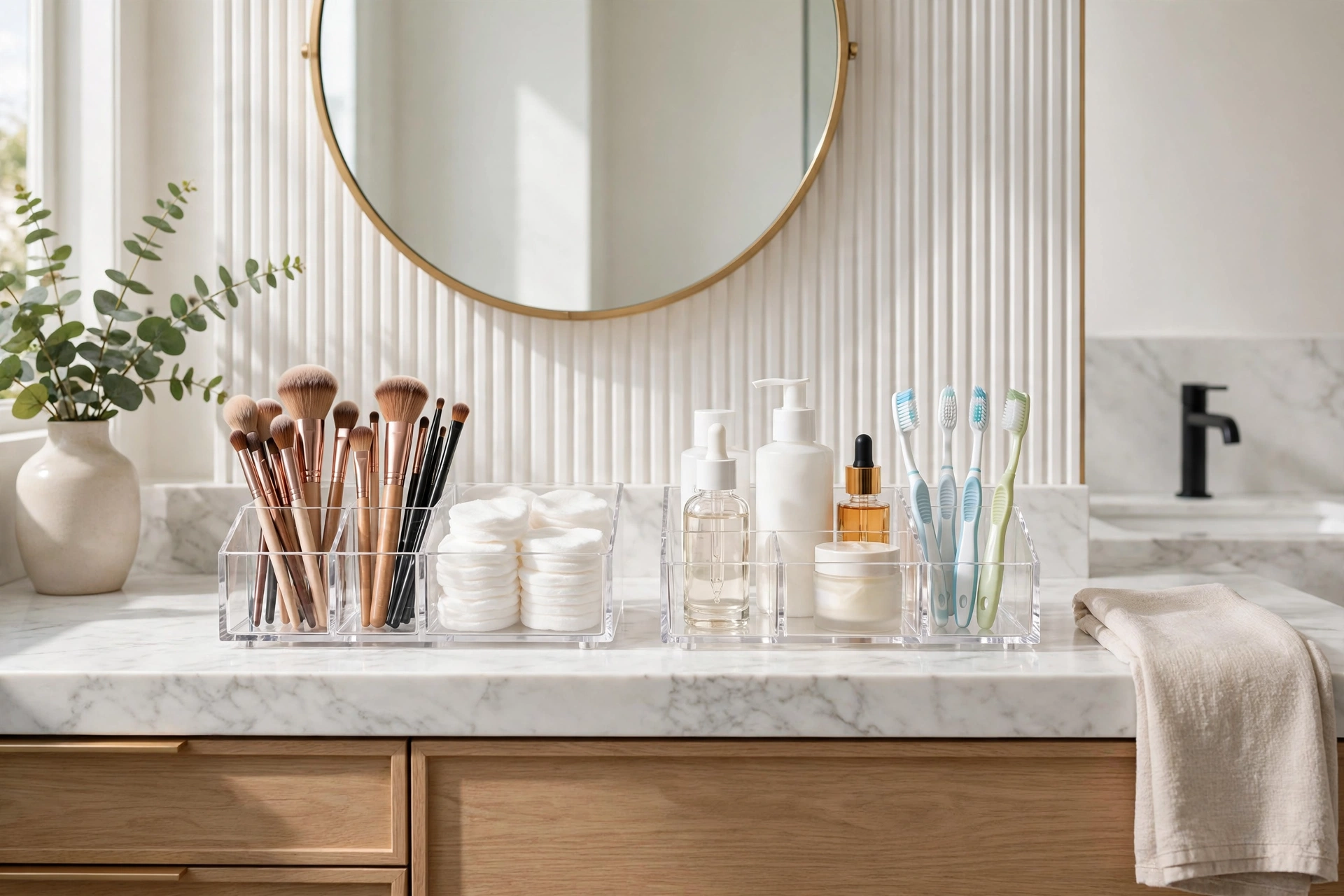
Clear acrylic organizers ($10–$30 for a set) are the small-bathroom secret weapon: because you can see through them, they add zero visual weight to the counter while keeping every cotton pad, brush, and bottle in its compartment. Group them on a small tray so the whole station lifts away for wiping the counter in one motion. The minimalist studio apartment decor approach — everything contained, nothing scattered — matters most in the tiniest room. Pro tip: decant shampoo and lotion into matching pump bottles ($15 for a set) — uniform bottles inside clear organizers look boutique-hotel intentional.
19. Glow Up With a Backlit Mirror
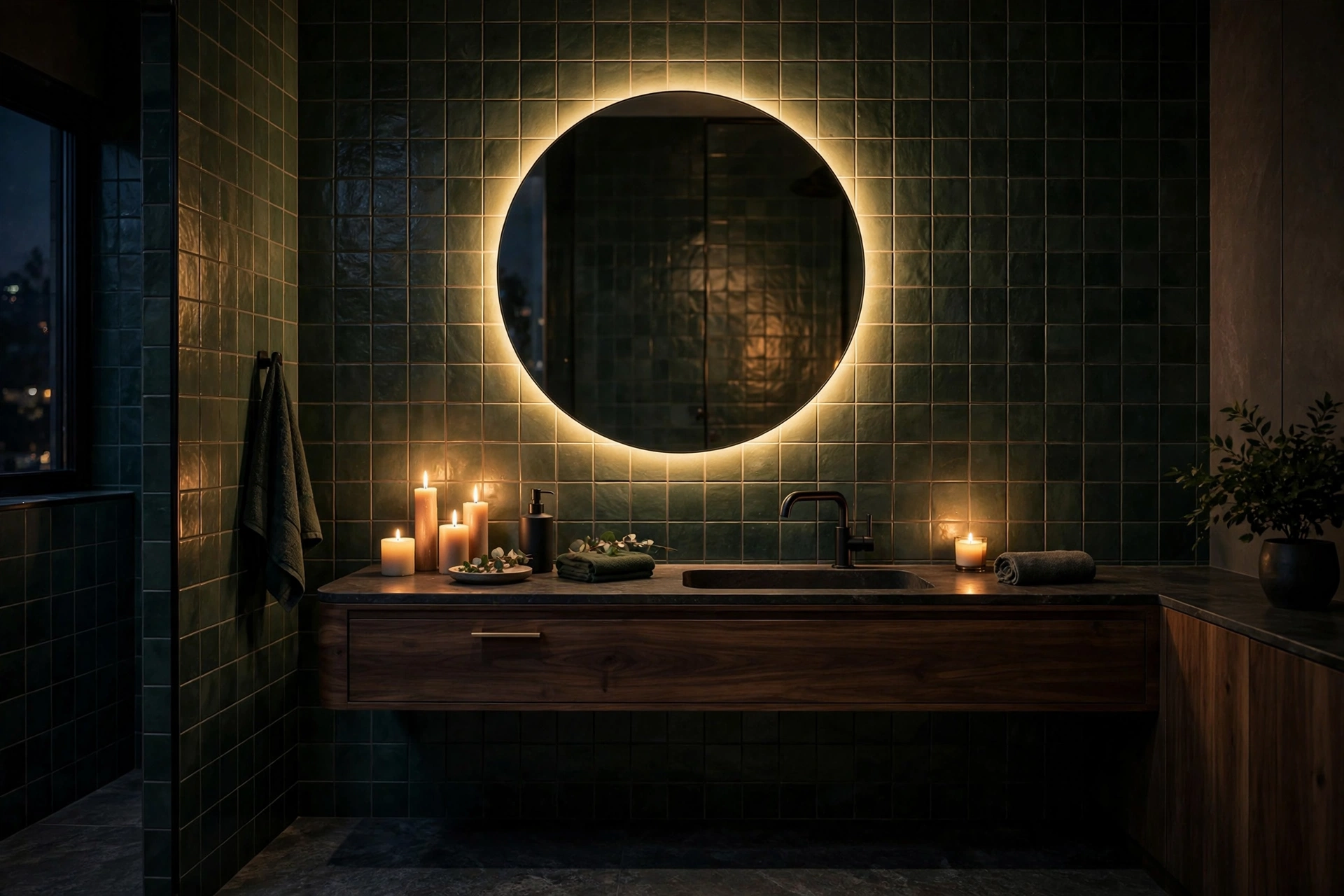
A backlit LED mirror casts soft, shadow-free light on your face — infinitely more flattering than a single overhead bulb — while its halo glow makes the bathroom feel like a high-end spa at night. Backlit mirrors run $80–$250, many with anti-fog and dimming built in. In a studio, that evening glow doubles as a nightlight for the whole sleeping area. Check our studio apartment lighting ideas for more layered-light tricks. Pro tip: choose a 3000K warm-white model — cool-white backlit mirrors are flattering to no one and make the bathroom feel like an interrogation room.
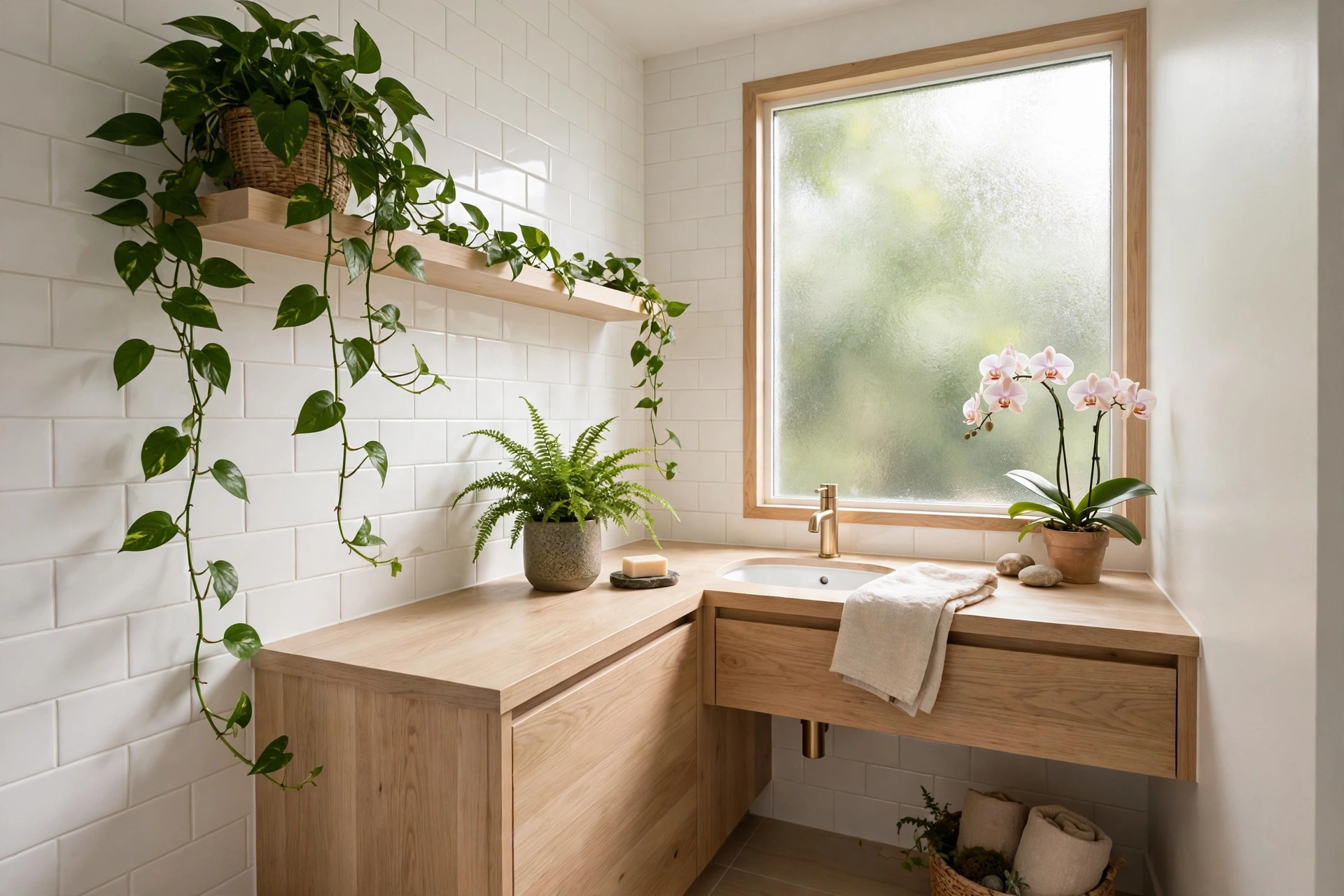
20. Invite In Humidity-Loving Plants
Bathrooms are secretly ideal plant habitats — steamy, warm, and often bright. Pothos, ferns, orchids, and air plants ($5–$25) thrive in humidity that would stress them elsewhere, and living green softens all that hard tile and porcelain. A trailing pothos on a high shelf draws the eye upward, making ceilings feel taller. Just confirm your plants tolerate low light if the bathroom has no window. Pro tip: hang the plant in the shower’s splash zone if it loves water — a fern on the shower wall gets misted daily and you’ll never need to remember watering it.
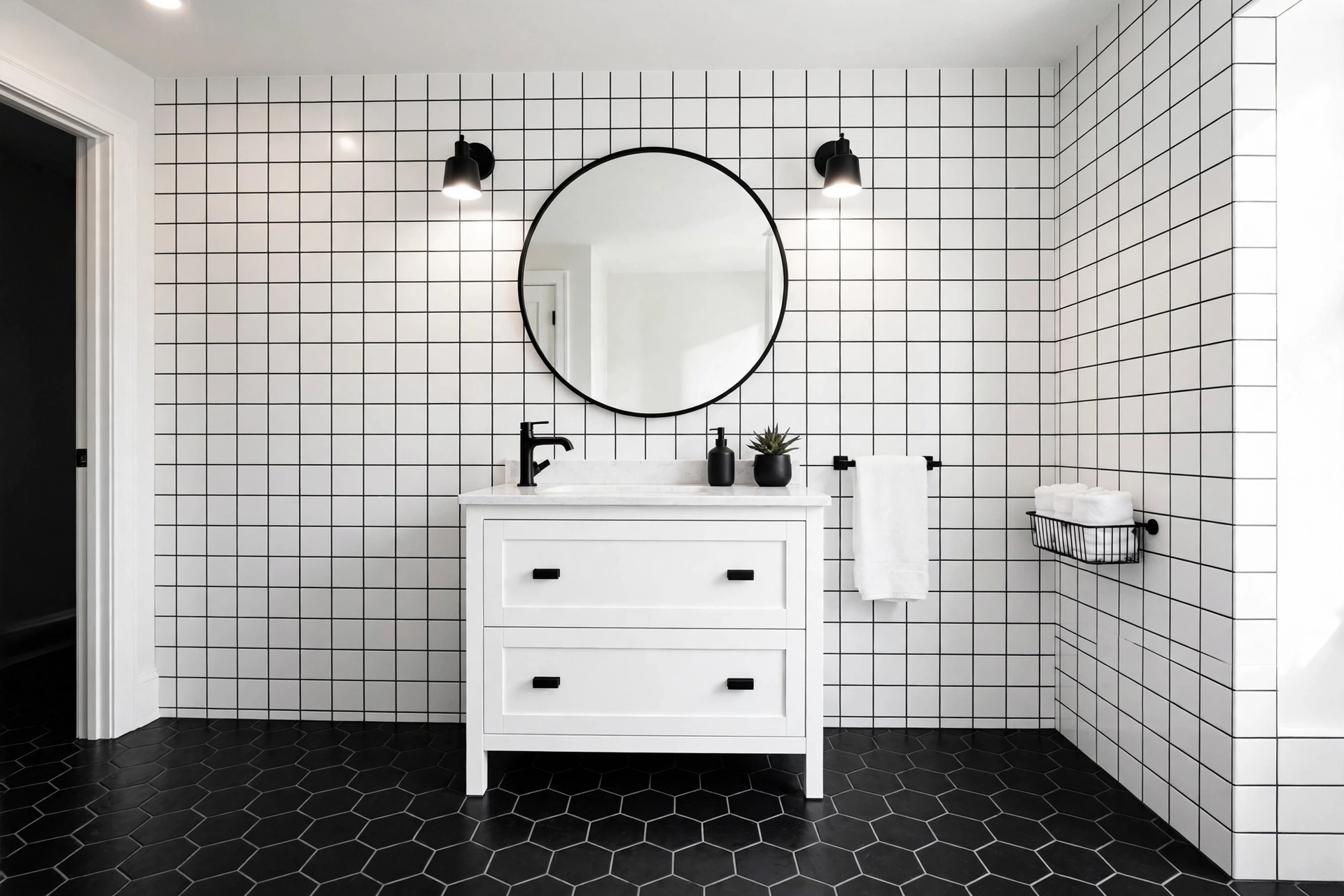
21. Try a Strict Black-and-White Scheme
Counterintuitive but true: a strict black-and-white palette can make a tiny bathroom feel bigger, because the high contrast reads as deliberate and graphic rather than cramped — the eye follows the pattern instead of measuring the walls. Black hex floor tile with white walls and black fixtures is the classic formula ($200–$500 for a small floor). Keep grout lines crisp; this look lives or dies on precision. Pro tip: add exactly one warm element — a wood stool, a brass faucet — so the monochrome feels designed and inviting rather than stark.
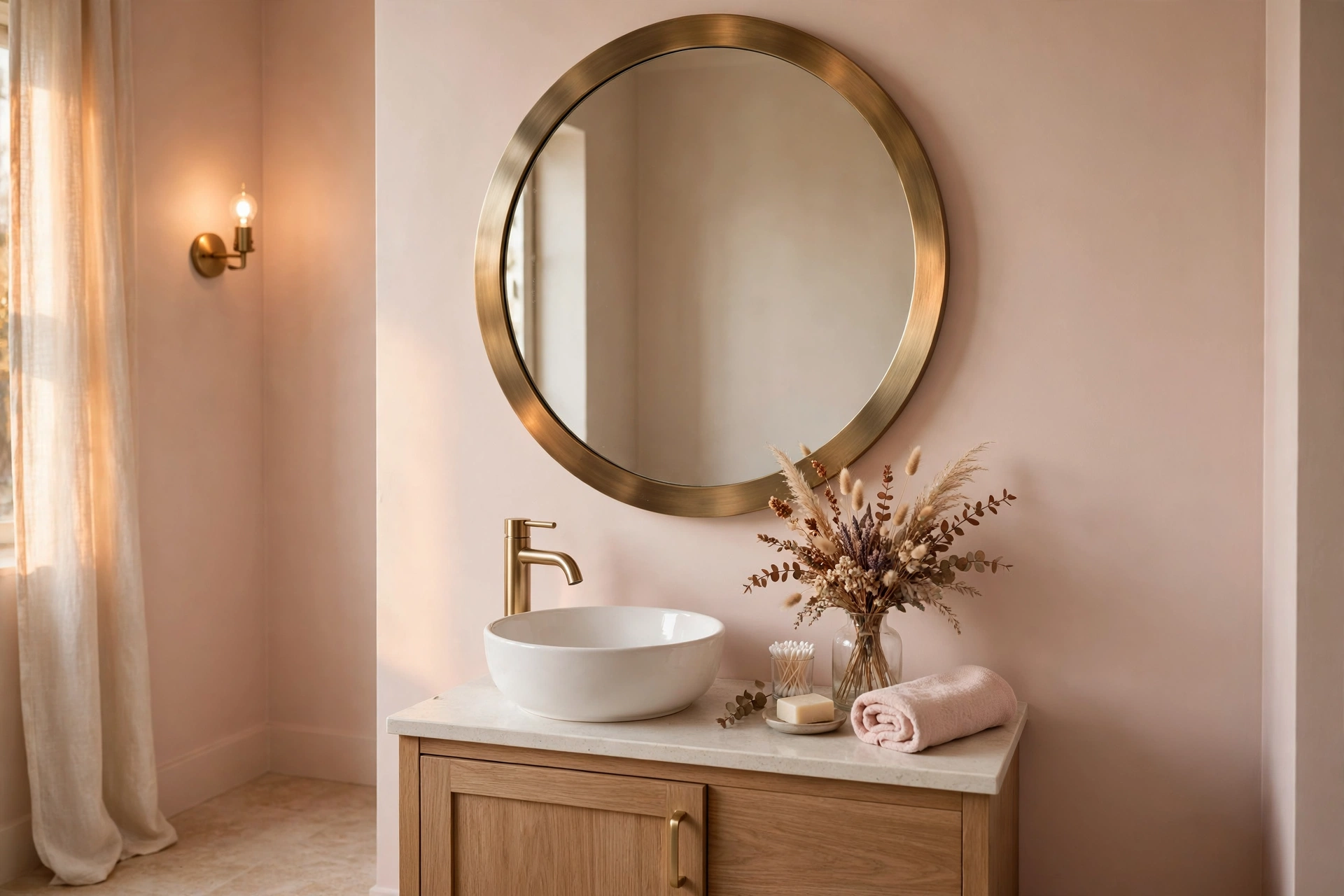
22. Soften Hard Lines With a Round Mirror
Small bathrooms are all hard rectangles — tub, tiles, vanity — and a round mirror ($30–$90) breaks that grid with one soft curve, instantly relaxing the room. Brass or wood frames add warmth; a round mirror also has no corners to visually snag the eye, so the wall feels more continuous. Hang it slightly lower than you think — the bottom third of a round mirror is its most flattering zone. Pro tip: pair the round mirror with one other round object (a circular tray, a globe pendant) — the repeated curve becomes a motif instead of a one-off.
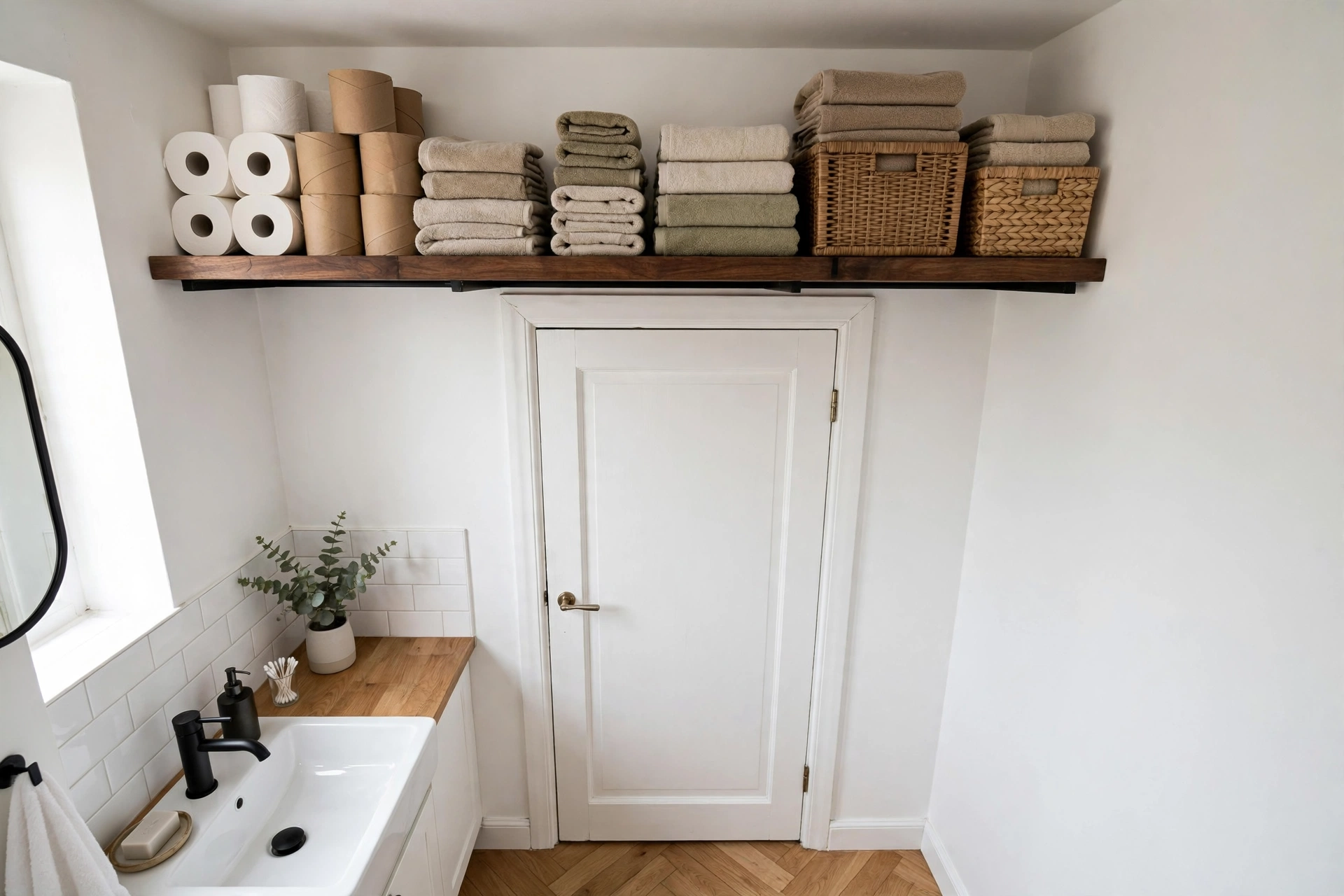
23. Shelf the Space Above the Door
The two feet of wall above the bathroom door is dead space in every small bathroom — a deep shelf there ($15–$35) becomes hidden bulk storage for toilet paper packs, spare towels, and cleaning supplies you need but never want to see. It’s out of the sightline, so it never adds visual clutter. Use closed baskets or labeled boxes so the high shelf looks intentional from below. Pro tip: keep a small folding step stool ($20) tucked behind the door — a high shelf you can’t reach safely is just a dust collector.
24. Bow Out the Shower Rod
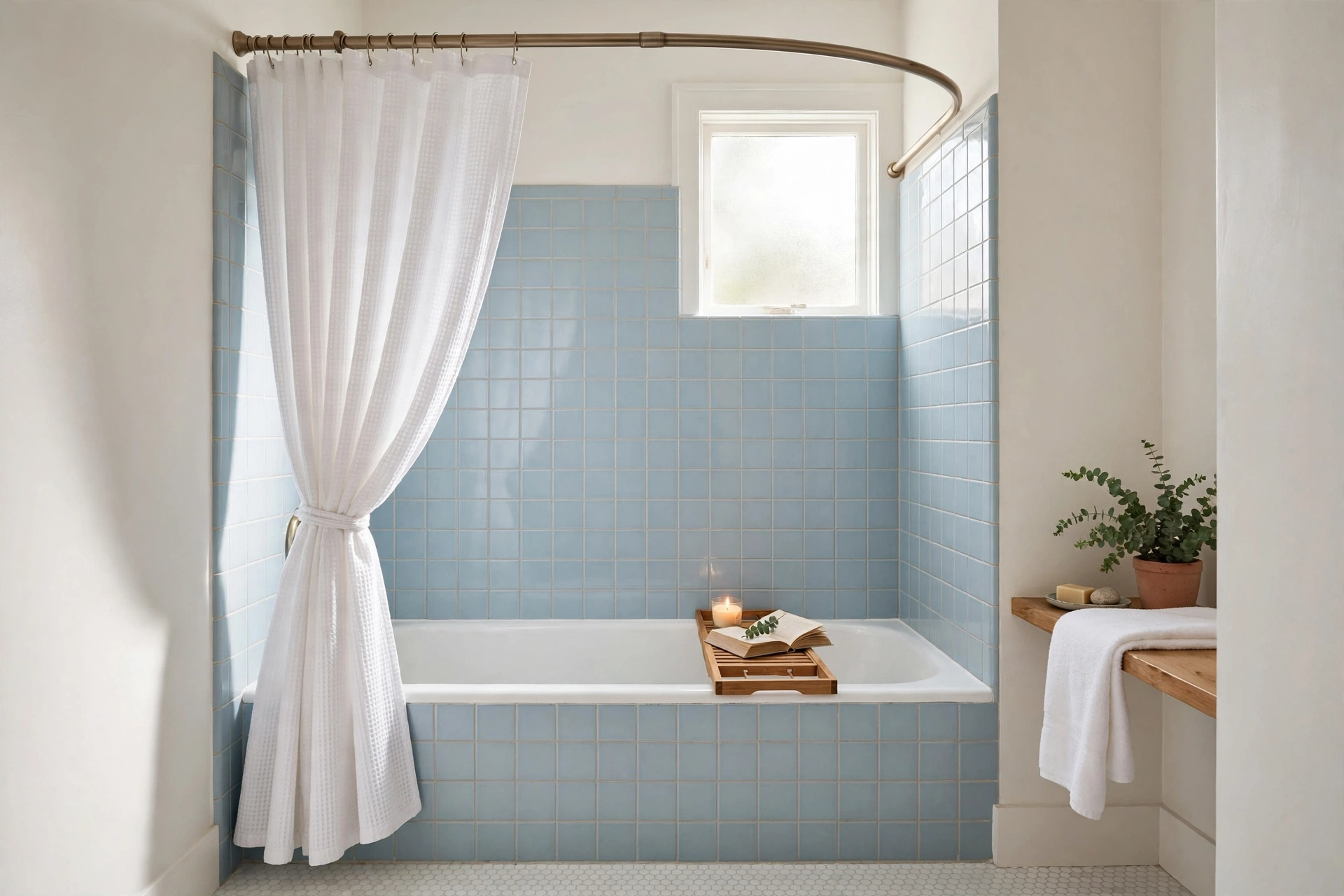
A curved shower rod bows outward by about 6 inches, and those 6 inches are pure gold in a 30-inch tub — elbows stop hitting the curtain, and the shower feels noticeably roomier. Curved rods cost $25–$50 and install in the same brackets as a straight rod, making this the highest comfort-per-dollar upgrade in this entire list. Pair it with a light-colored curtain for maximum airiness. Pro tip: choose a rod with ceiling support brackets if your walls are tile-over-drywall — the outward bow puts extra leverage on the mounts, and tile anchors can loosen over time.
Decor & Finishing Touches
25. Tame the Under-Sink Chaos
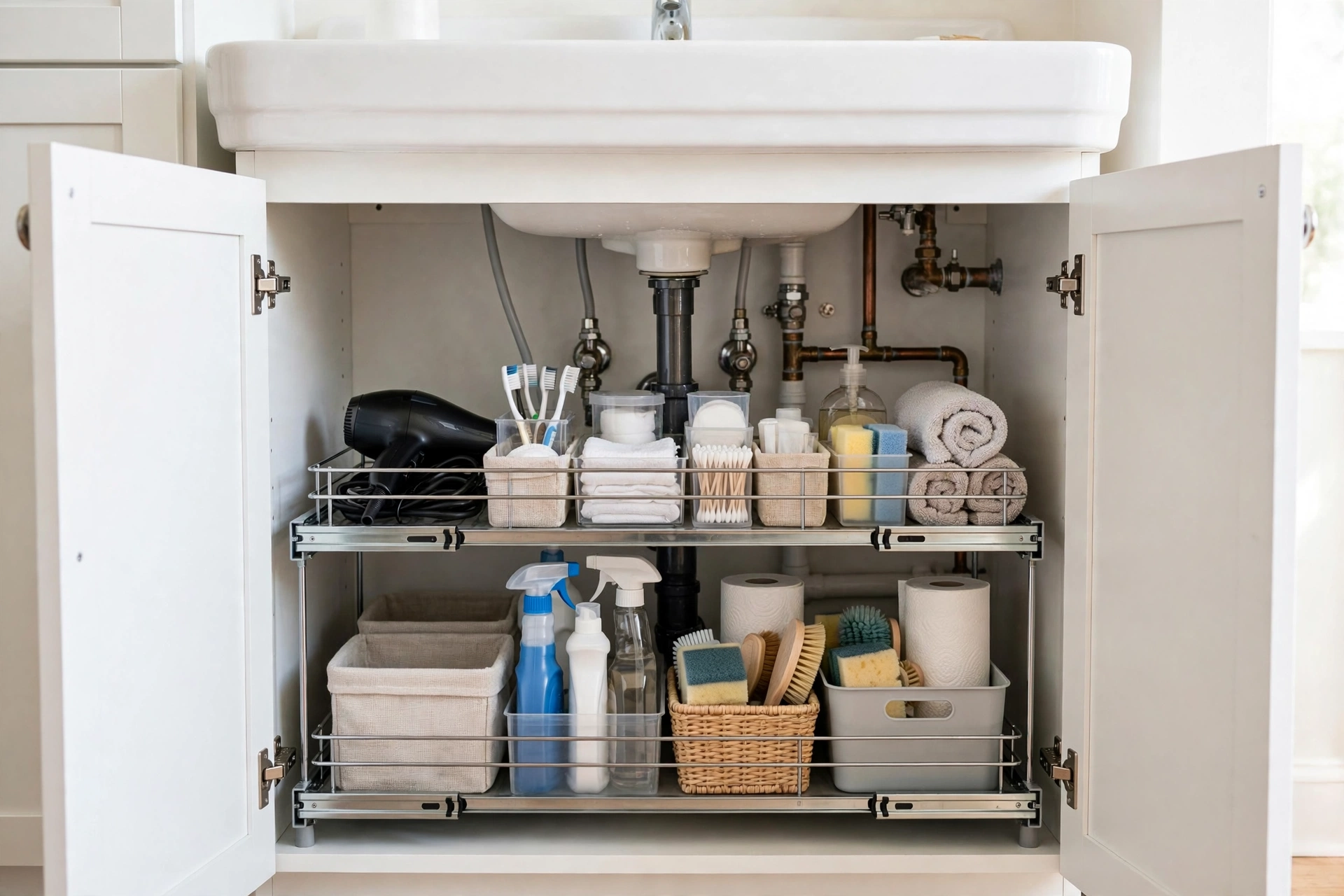
Open any small bathroom’s under-sink cabinet and you’ll find the same archaeological dig: dead batteries, three half-used cleaners, mystery bottles. A two-tier sliding organizer ($20–$40) with bins that pull out around the pipes turns that cave into a system where everything is visible and reachable. Measure around your pipes before buying — U-shaped organizers are made for this exact puzzle. Pro tip: stick a small motion-sensor light ($10) inside the cabinet door — under-sink darkness is why things get lost and repurchased, and light fixes it instantly.
26. Roll a Tiered Cart Into the Gap
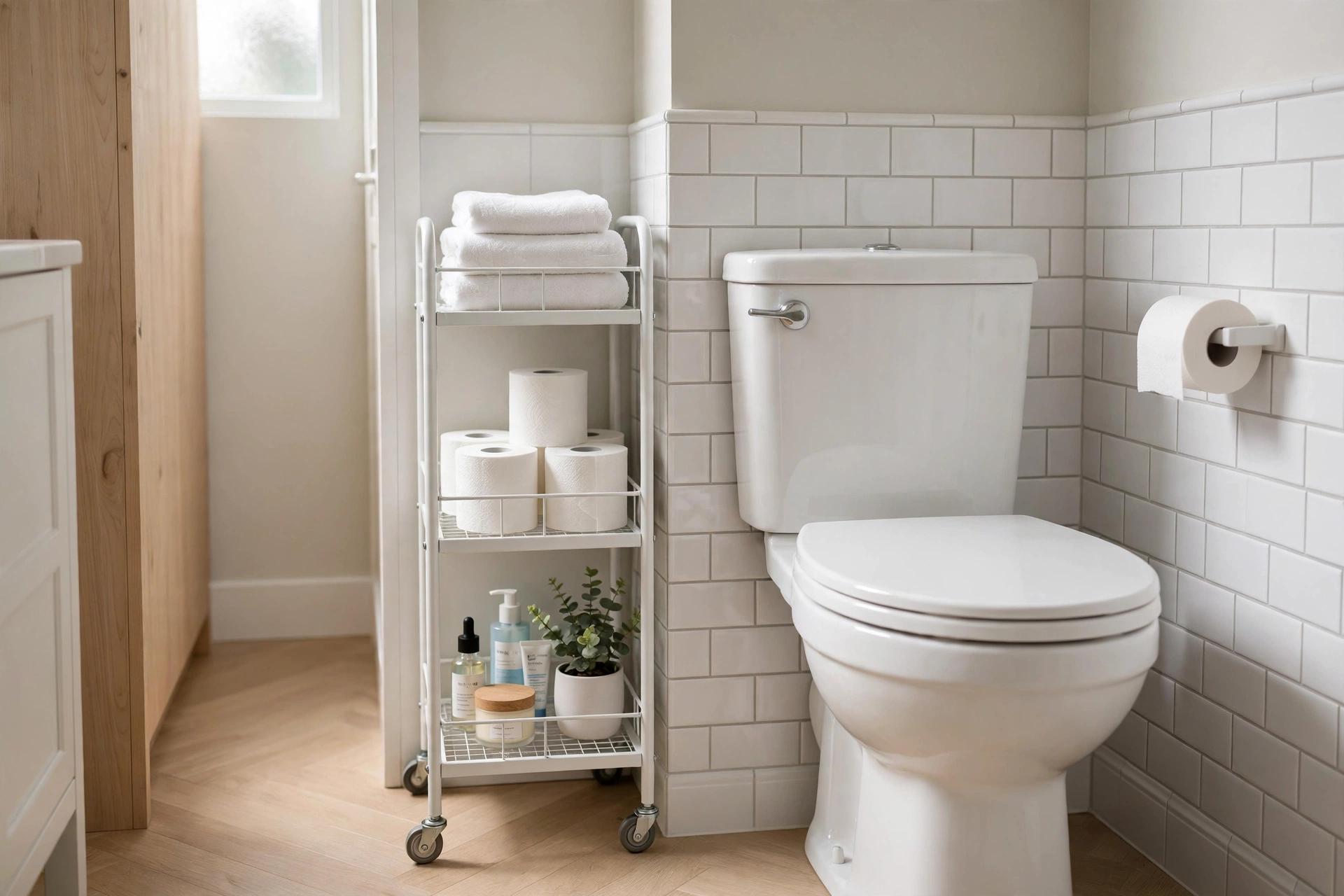
That 6-inch gap between the toilet and the wall isn’t wasted space — it’s a parking spot for a slim three-tier rolling cart ($25–$45). Stock it with toilet paper, cleaning wipes, and skincare, then roll it out for full access and tuck it back invisible. It’s the ultimate renter hack: zero installation, infinite flexibility, and it moves with you. Pro tip: choose a cart with a top tray that has a raised lip — bottles stay put when you roll it across tile, and nothing topples into the toilet.
27. Warm It Up With Teak Accents
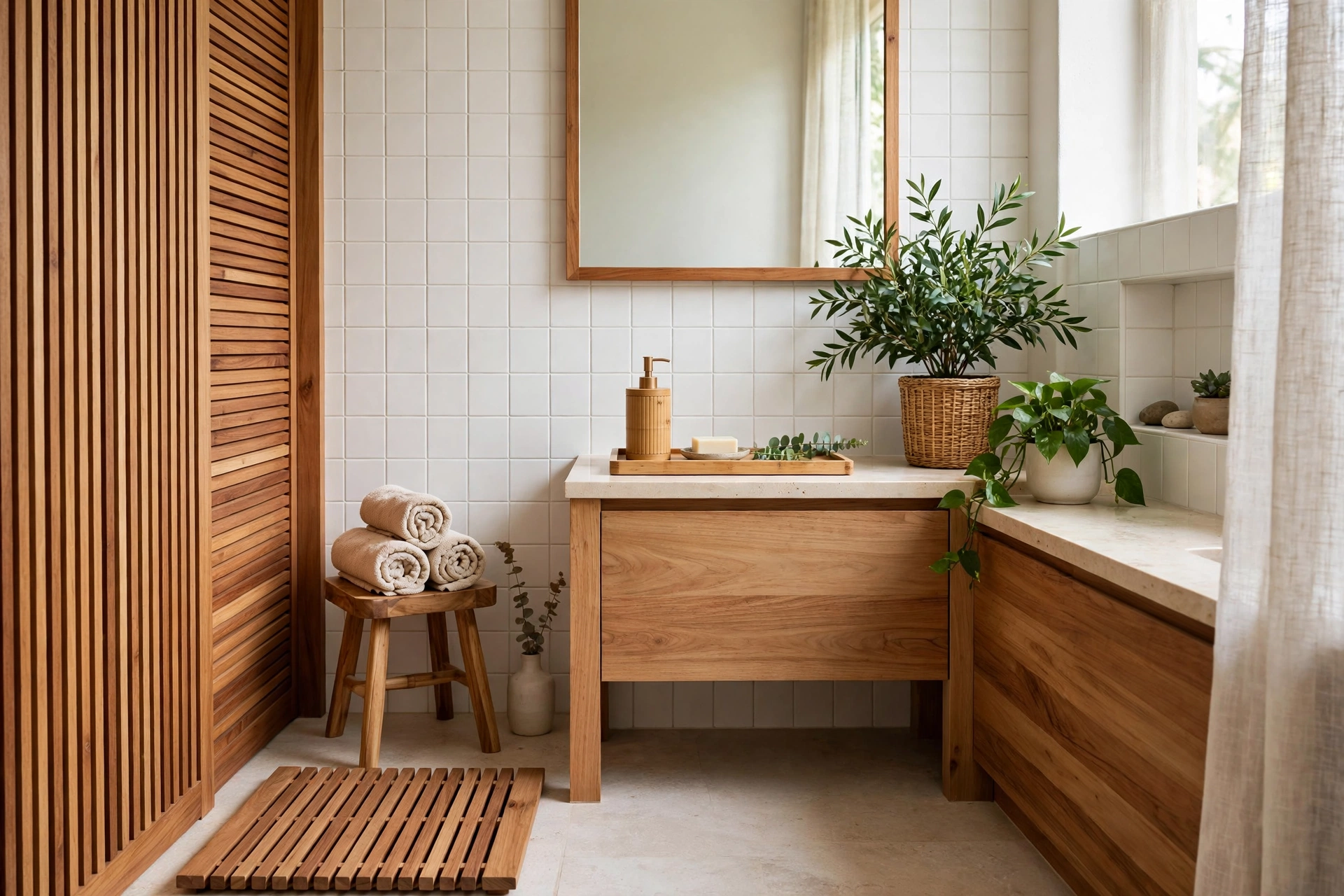
Teak is the bathroom’s best friend — naturally water-resistant, warm to the touch, and it turns all that cold tile and porcelain into a spa. A teak bath mat ($30–$60), a wooden stool, and bamboo dispensers layer organic warmth without a single renovation. Teak also ages beautifully in humidity, developing a silvery patina if you let it. Pro tip: oil teak accessories twice a year with teak oil ($12) — it preserves the honey color and prevents the wood drying out in heated winter bathrooms.
28. Style a Candle-and-Diffuser Tray
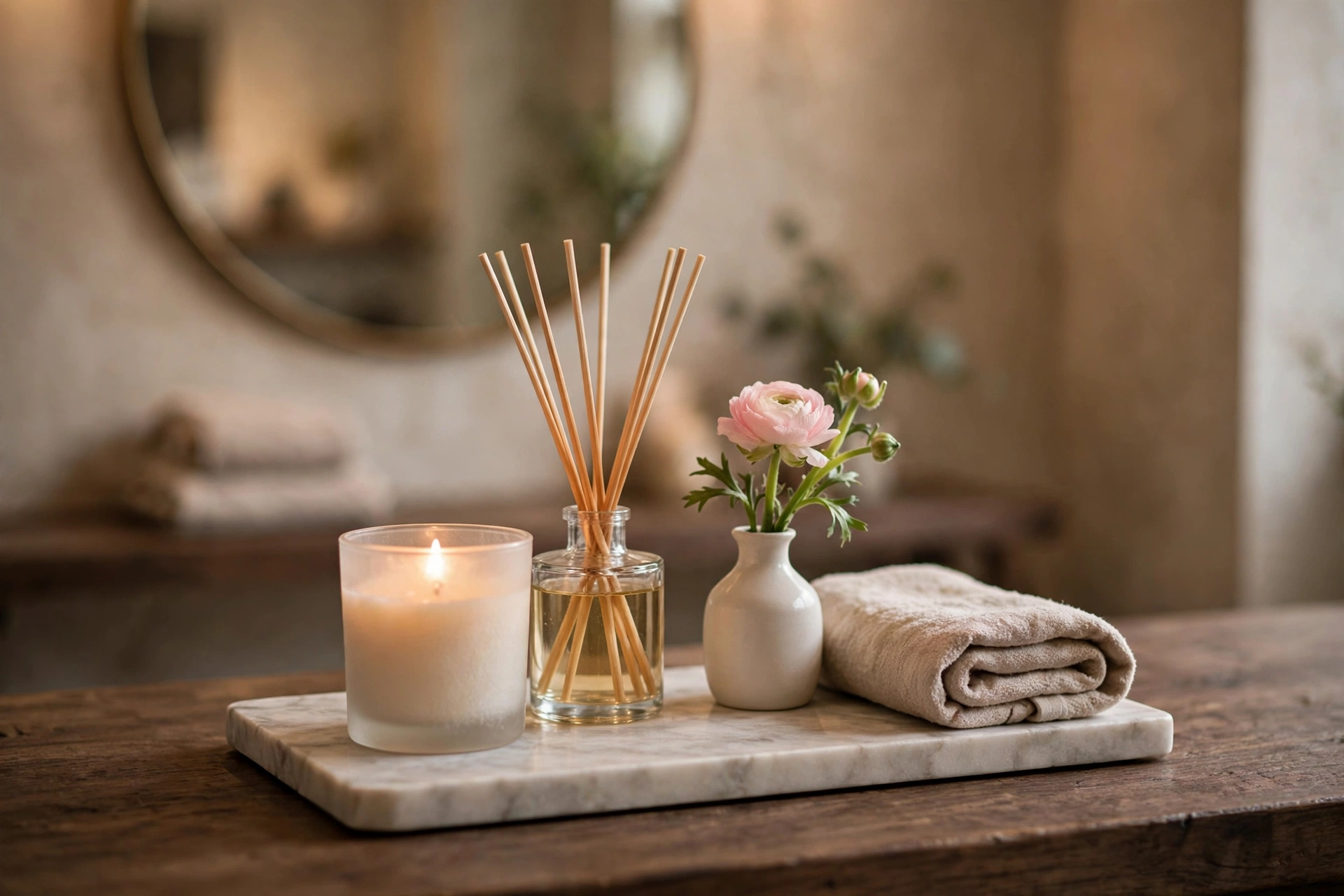
A small tray ($15–$30) with a lit candle, a reed diffuser, and a bud vase turns a bathroom counter from purely functional to genuinely inviting — it’s the five-minute styling trick behind every “how is your bathroom so nice?” compliment. In a studio, scent matters doubly: the bathroom shares air with your living space, so a good diffuser ($20–$40) is practically essential infrastructure. Pro tip: never leave a lit candle unattended near towels or curtains — use a flameless LED candle ($10) for the glow without the fire risk in tight quarters.
29. Hang Real Art in the Bathroom
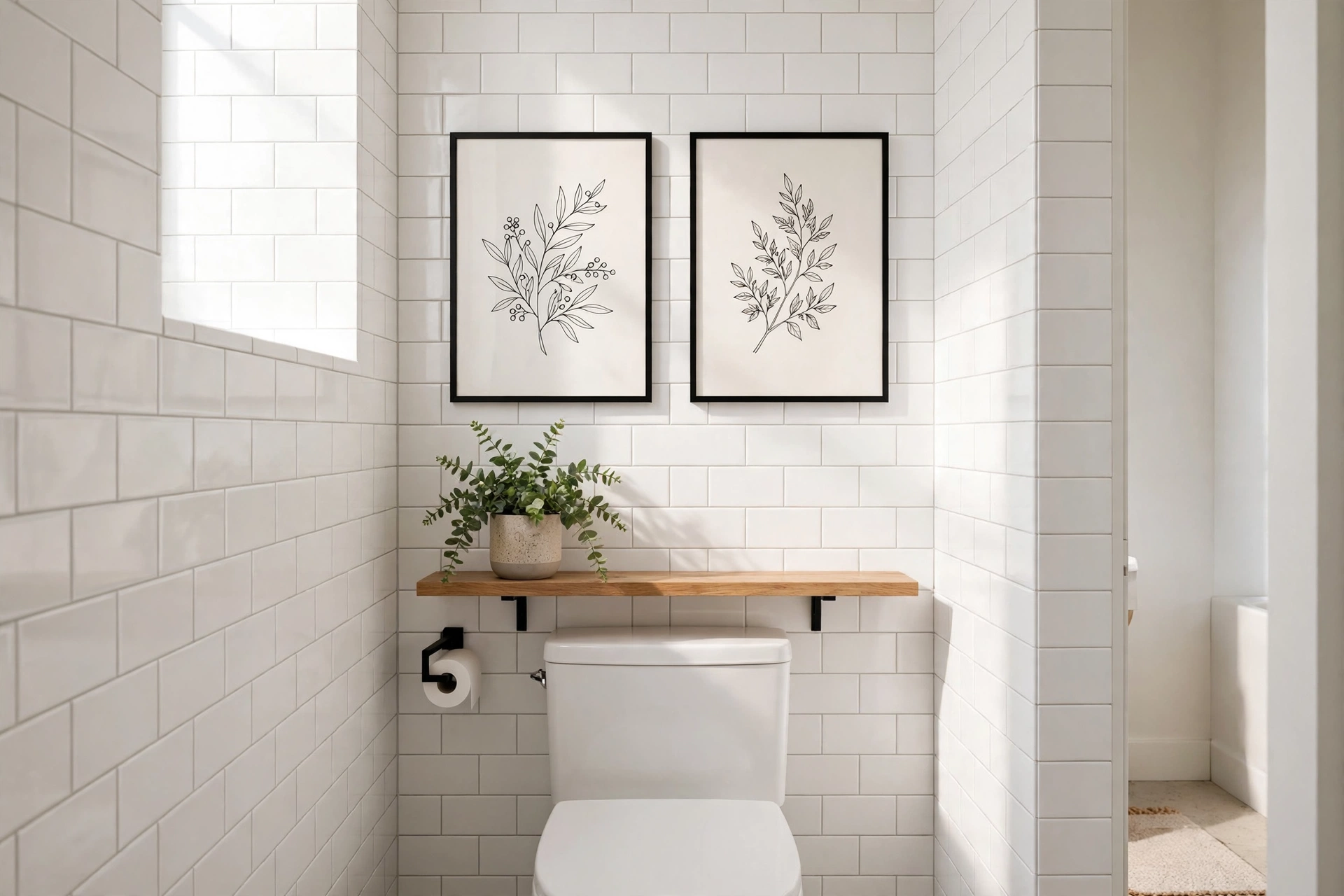
Bathrooms get treated as art-free zones, which is exactly why hanging real framed prints there feels so luxurious — two small botanical or abstract prints ($15–$40 framed) above the toilet make the room feel like part of the home, not a utility closet. Use proper frames with sealed backs or acrylic “glass” to protect against humidity. The studio apartment layout ideas principle applies here too: every zone deserves intention, even 30 square feet of it. Pro tip: avoid works on paper without glazing in steamy bathrooms — unprotected prints cockle and spot within months; canvas or sealed frames last years.
30. Add a Folding Shower Seat
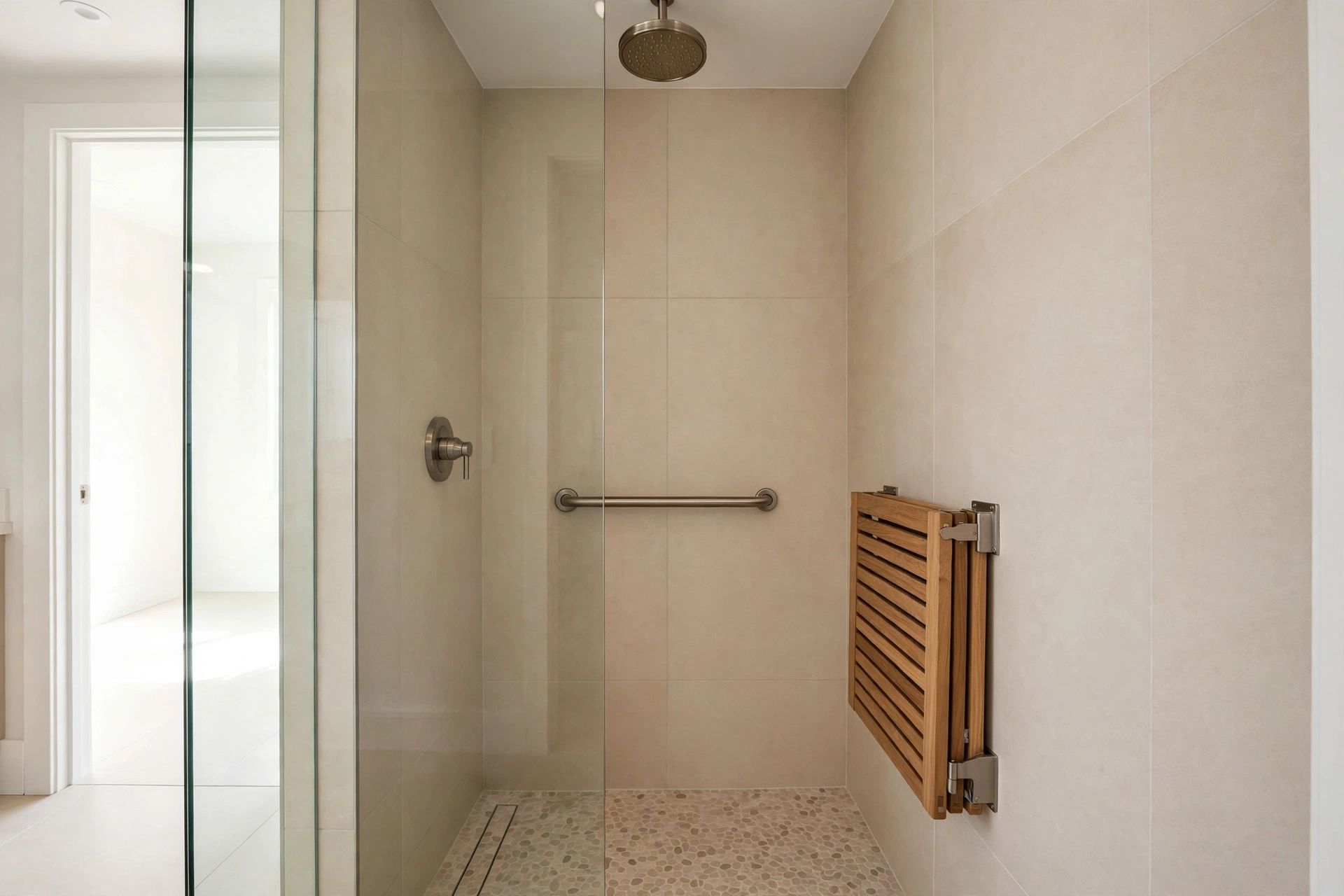
A wall-mounted folding shower seat ($60–$150) is the luxury nobody expects in a small bathroom: a perch for leg-shaving, a spot to sit under hot water on hard days, and it folds flat against the wall when not in use, taking zero shower inches. Teak slats over a stainless frame look spa-grade and handle daily water exposure. It’s also genuinely practical space-saving furniture thinking applied to the wettest room. Pro tip: mount the seat 17–19 inches off the shower floor — standard chair height — and always anchor into studs or solid blocking, never just tile.
Frequently Asked Questions
How can I make a very small bathroom look bigger?
The four highest-impact moves are a large mirror, a floating vanity, a frameless or clear shower enclosure, and a light color palette — together they remove visual barriers and bounce light, which is what makes any small room feel larger. Beyond that, consistent flooring (no threshold strips chopping the room), a pocket door, and decluttered surfaces each add a little more perceived space.
What is the best color for a tiny bathroom?
Bright whites and pale neutrals maximize light reflection and are the safest choice, but a strict black-and-white scheme or a deep moody color can also work — the key is commitment and contrast rather than a muddy middle. Whatever you choose, carry one color from floor to walls to ceiling-adjacent trim so the room reads as one continuous envelope instead of chopped-up bands.
How do I add storage to a bathroom with no linen closet?
Think vertically and in dead zones: over-toilet shelves, a tall narrow tower in the vanity gap, a shelf above the door, a rolling cart beside the toilet, and inside-cabinet organizers. A mirrored medicine cabinet doubles your mirror into storage. Most tiny bathrooms can gain the equivalent of a full linen closet’s storage without a single new piece of floor-standing furniture.
Can renters upgrade a small bathroom without renovating?
Absolutely — peel-and-stick floor tiles, a new shower curtain and curved rod, a large leaning mirror, adhesive hooks and shelves, a rolling cart, new textiles, plants, and art are all fully reversible. Swap the builder-grade mirror for an oversized one (keep the original in a closet for move-out), and change cabinet hardware if the screws match — most landlords never notice tasteful hardware.
Should a small bathroom have a shower curtain or glass door?
Frameless glass makes the room feel largest because sightlines continue through it, but a light-colored curtain on a curved rod is nearly as good, far cheaper, and renter-friendly — plus curtains add softness and pattern. Avoid dark or heavy curtains in tiny bathrooms; they read as a wall and shrink the room. Whichever you choose, keep it clean: dingy shower textiles undo every other upgrade.
How do I keep a tiny bathroom from feeling cluttered?
Give everything a closed home — medicine cabinet, baskets, under-sink organizers — and keep counters to three or fewer daily items corralled on one tray. Decant products into matching bottles, fold towels uniformly, and do a 60-second reset each night. In a 35-square-foot room, five stray objects read as chaos; the same five put away reads as serene.
Final Thoughts
A small studio bathroom will never be a sprawling spa — and it doesn’t need to be. What it can be is the hardest-working, best-organized, most thoughtfully detailed 35 square feet in your home. Floating fixtures, big mirrors, vertical storage, and good light do the structural work; plants, art, scent, and warm wood do the soul work. Together they turn the tiniest room into one you’ll actually enjoy starting and ending your day in.
Start with the wins that cost almost nothing: declutter every surface, hang a bigger mirror, swap in a curved shower rod, roll a cart into the dead gap. Then save the bigger moves — the floating vanity, the pocket door, the re-tile — for when budget and timing align. Small bathrooms reward intention more than square footage, and every idea here proves it.

One Comment