32 Studio Apartment Entryway Ideas for a Welcoming First Impression
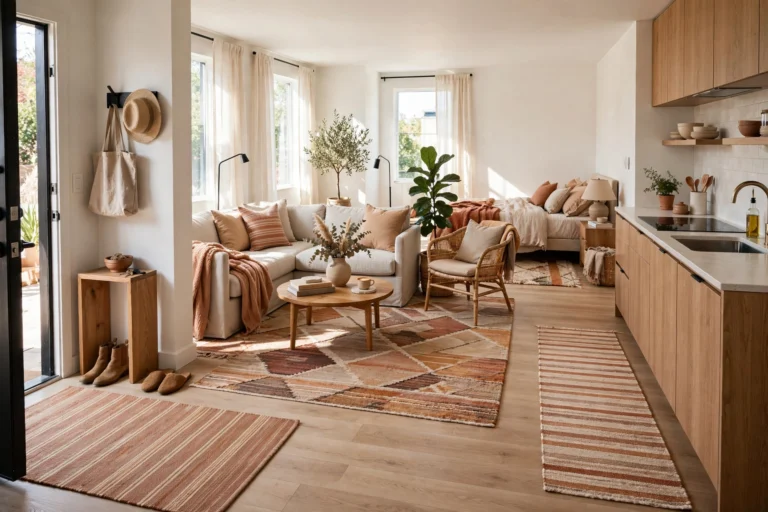
Your entryway is the handshake of your home — the first thing you touch when you walk in tired, and the first impression every guest gets. In a studio apartment, that “foyer” is often just a patch of floor by the front door, maybe three feet wide, with zero architectural definition. But here’s the good news: small entryways are actually easier to style than grand ones. Every inch counts, every piece earns its place, and a few deliberate choices — a slim console, a mirror that bounces light, hooks that end the coat-pile chaos — can make the tiniest threshold feel intentional, welcoming, and completely you. These 32 studio apartment entryway ideas cover consoles, mirrors, lighting, storage, rugs, and renter-friendly zoning tricks, most under $100, all designed for real small spaces.
Anchors: Console Tables & Benches
1. Float a Slim Console Table
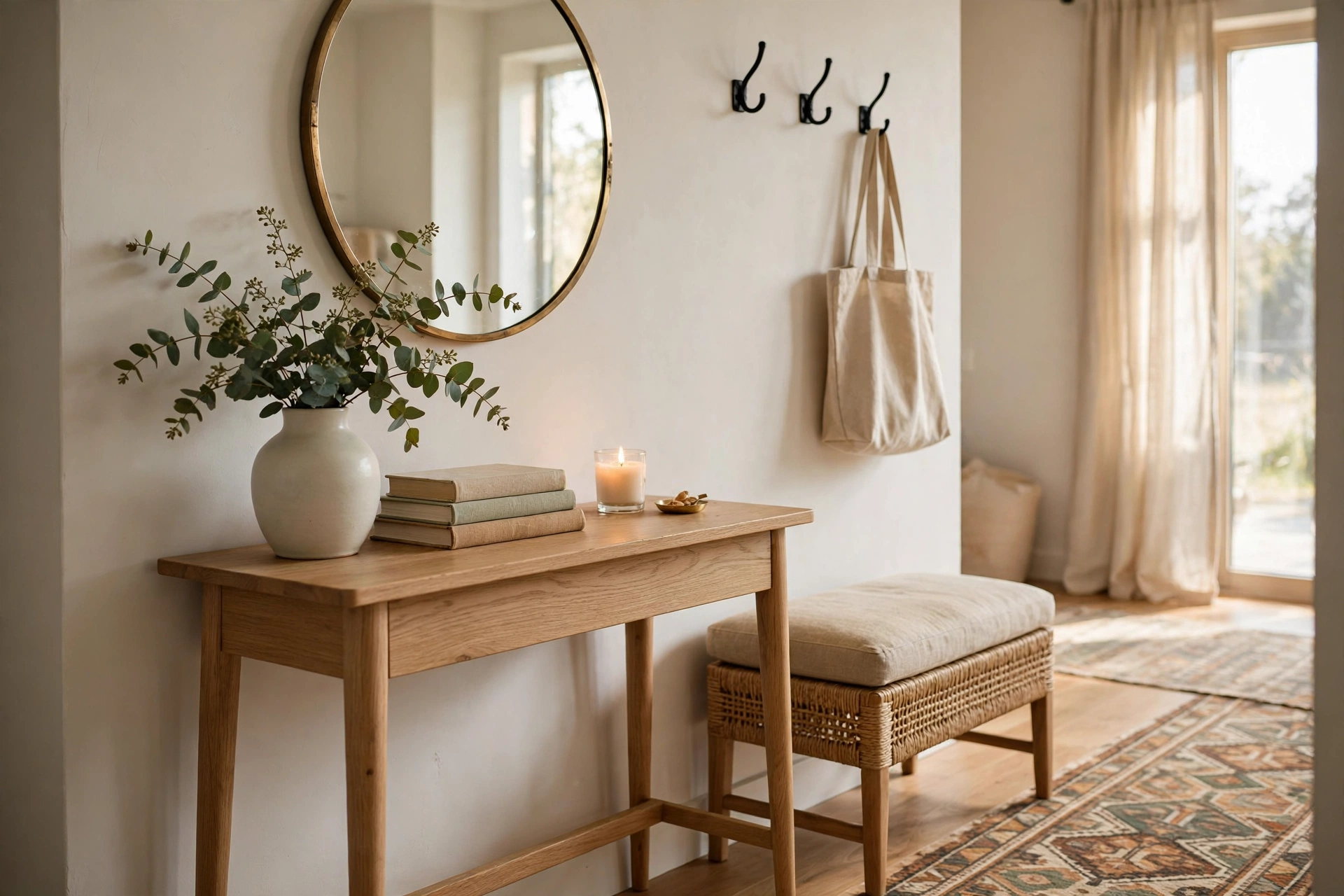
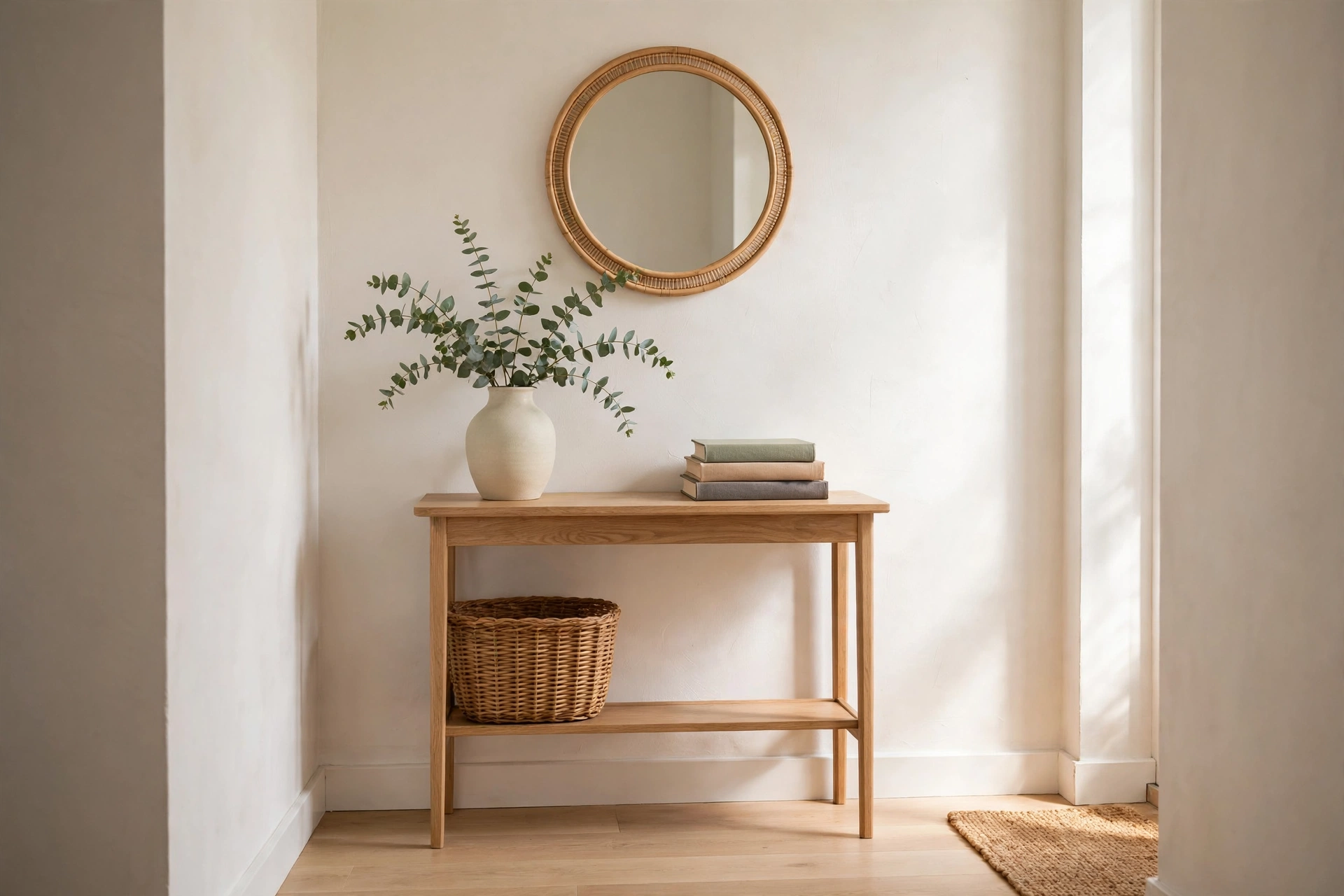
The slim console table is the entryway workhorse — just 8 to 12 inches deep, so it hugs the wall without eating your walkway. Look for one around 30 inches high ($60–$150 at IKEA, Target, or Facebook Marketplace) with a lower shelf for baskets. Style the top with the holy trinity: something tall (vase with stems), something flat (tray for keys), something personal (framed photo). Pro tip: measure your walkway first — you need at least 30 inches of clear passage, so in a 4-foot-wide hall, your console can’t exceed 12 inches deep.
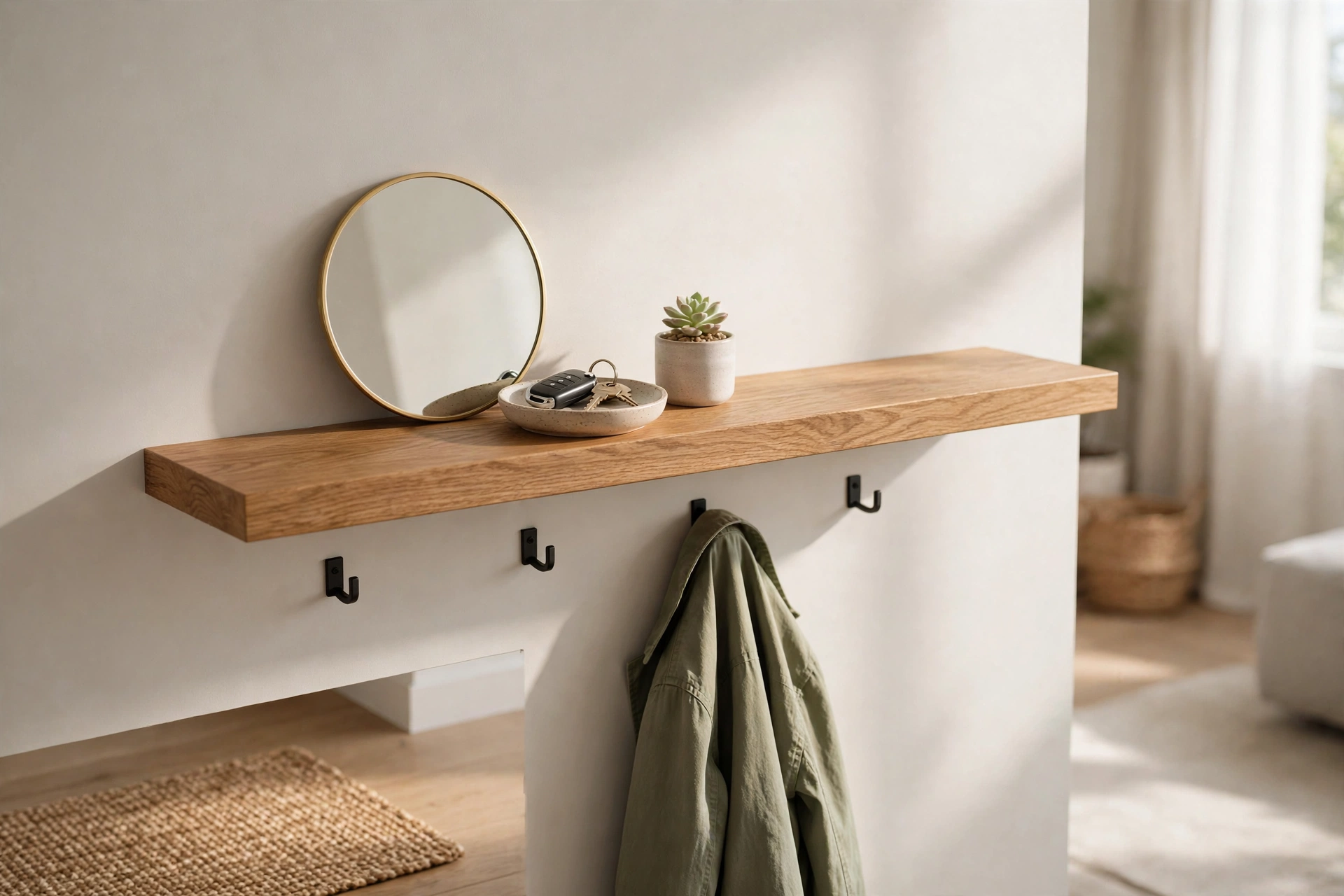
2. Mount a Floating Shelf Ledge
No floor space at all? A floating shelf ($15–$35) at console height gives you a landing strip for keys, sunglasses, and mail without a single leg touching the ground. Mount it 30 to 32 inches high, keep it 24 to 36 inches wide, and lean a small mirror on top for the full entryway effect. The floating look keeps narrow halls feeling open — a trick borrowed from our studio apartment layout ideas. Pro tip: anchor into a stud or use toggle bolts — a shelf holding keys, a mirror, and daily grabs takes more abuse than it looks.
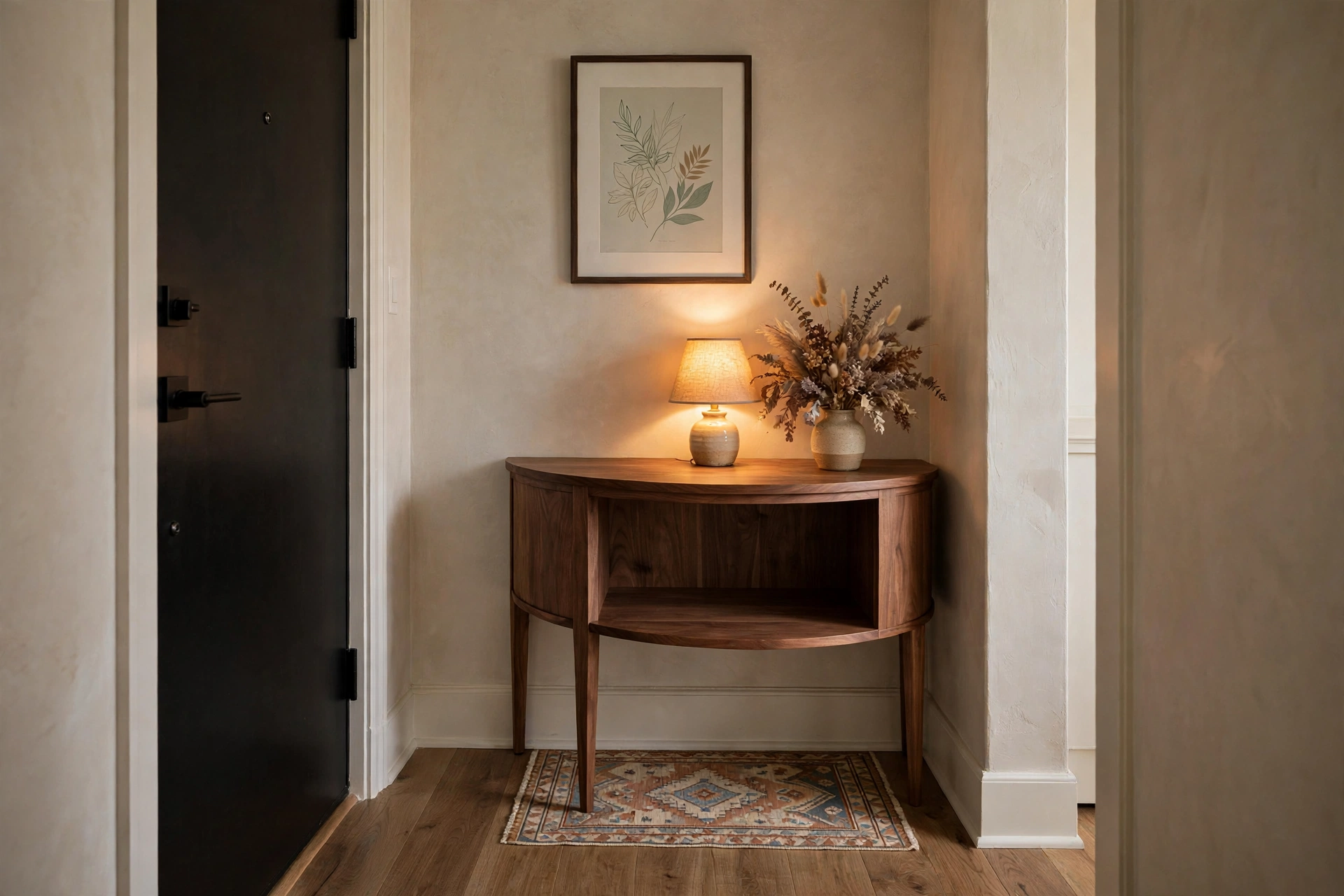
3. Tuck In a Demilune Table
A demilune (half-moon) table is the small-entryway secret weapon: the curved front gives you styling surface while the flat back sits flush against the wall, and there are no sharp corners to bruise hips in tight quarters. Vintage ones run $40–$120 on Marketplace; new reproductions start around $90. The rounded silhouette softens angular hallways beautifully. Pro tip: a demilune with a lower shelf doubles your storage — tuck a lidded basket underneath for the dog leash, reusable bags, and other grab-and-go gear.
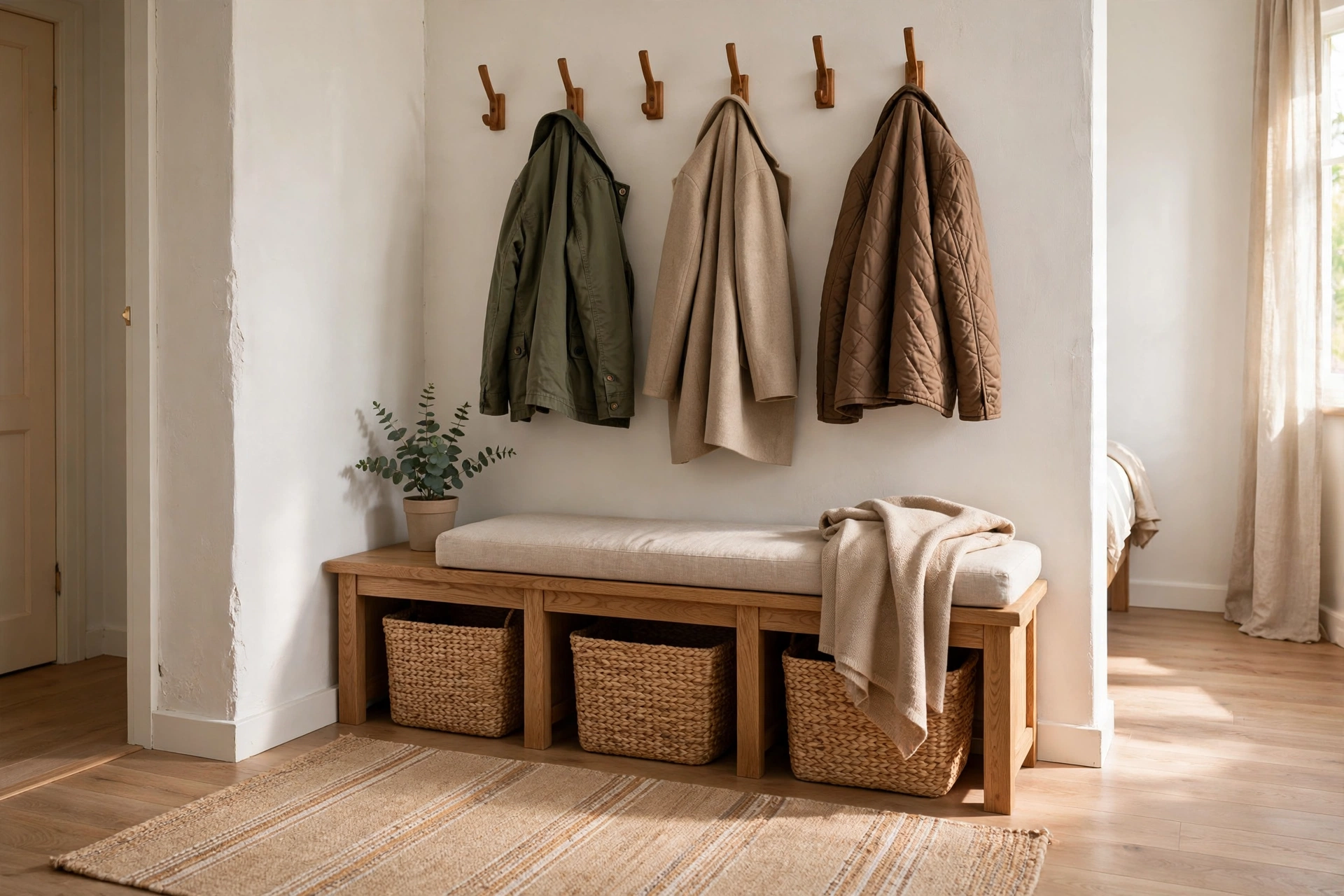
4. Add a Storage Bench With a Cushion
A bench does what no console can: it gives you somewhere to sit while wrestling on boots. Choose one with a lift-up seat or cubbies ($80–$200) and top it with a 2-inch cushion in wipeable fabric. The interior swallows shoes, umbrellas, and winter gear; the top becomes a perch and a styling surface. In studios under 400 square feet, this one piece can replace a console entirely. Pro tip: pick a bench no deeper than 16 inches — any deeper and it becomes a hallway obstacle instead of a helper.
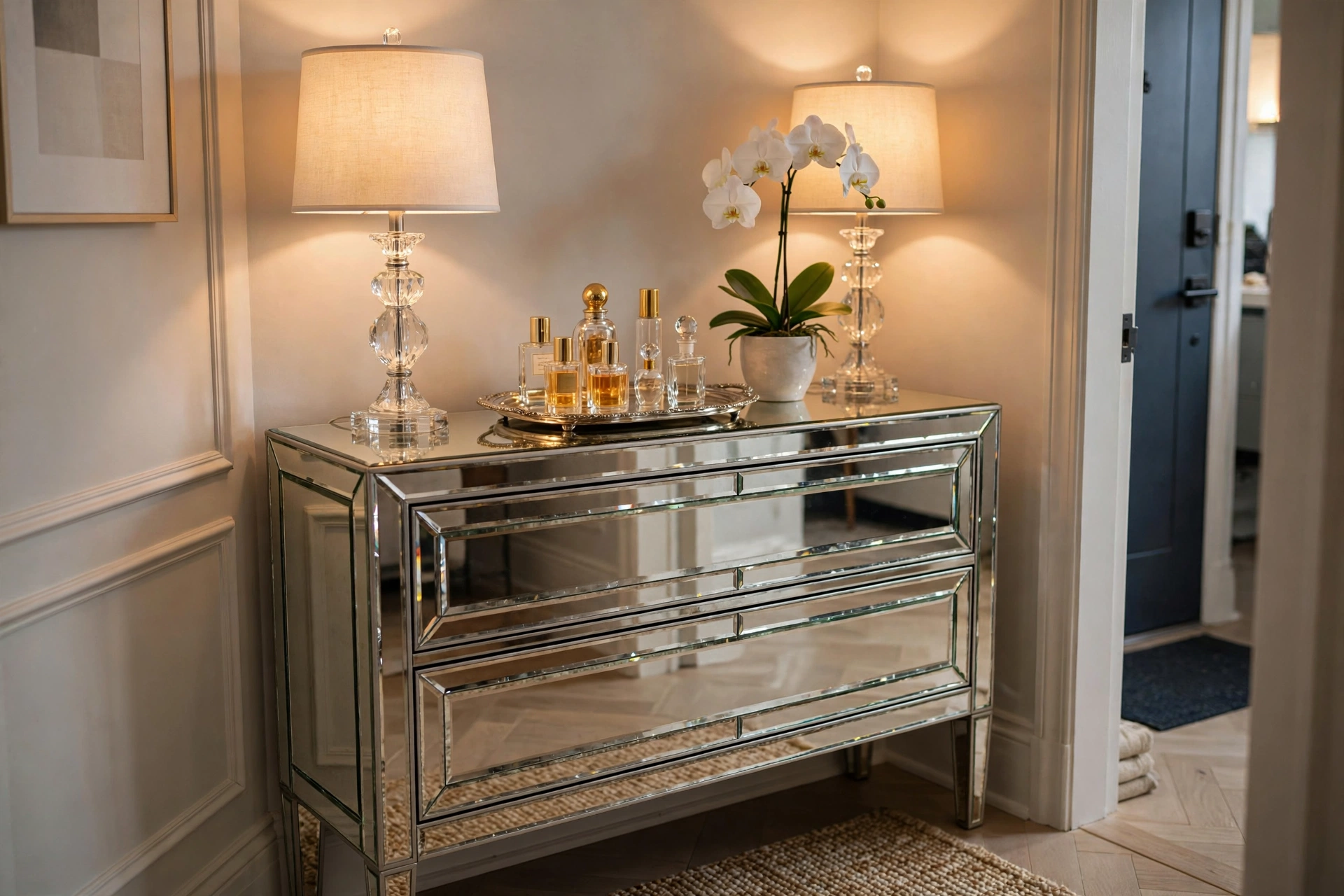
5. Go Glam With a Mirrored Console
A mirrored console ($120–$250) is basically a mirror and a table in one — it reflects light deep into dark hallways and visually disappears, which is gold in a 3-foot-wide entry. Style it sparingly: mirrored surfaces show every fingerprint, so two or three objects max. Pair with a crystal or glass lamp for the full light-bouncing effect. Pro tip: keep glass cleaner and a microfiber cloth in the console drawer — a 20-second wipe keeps the glam alive, and you’ll actually do it if the supplies live right there.
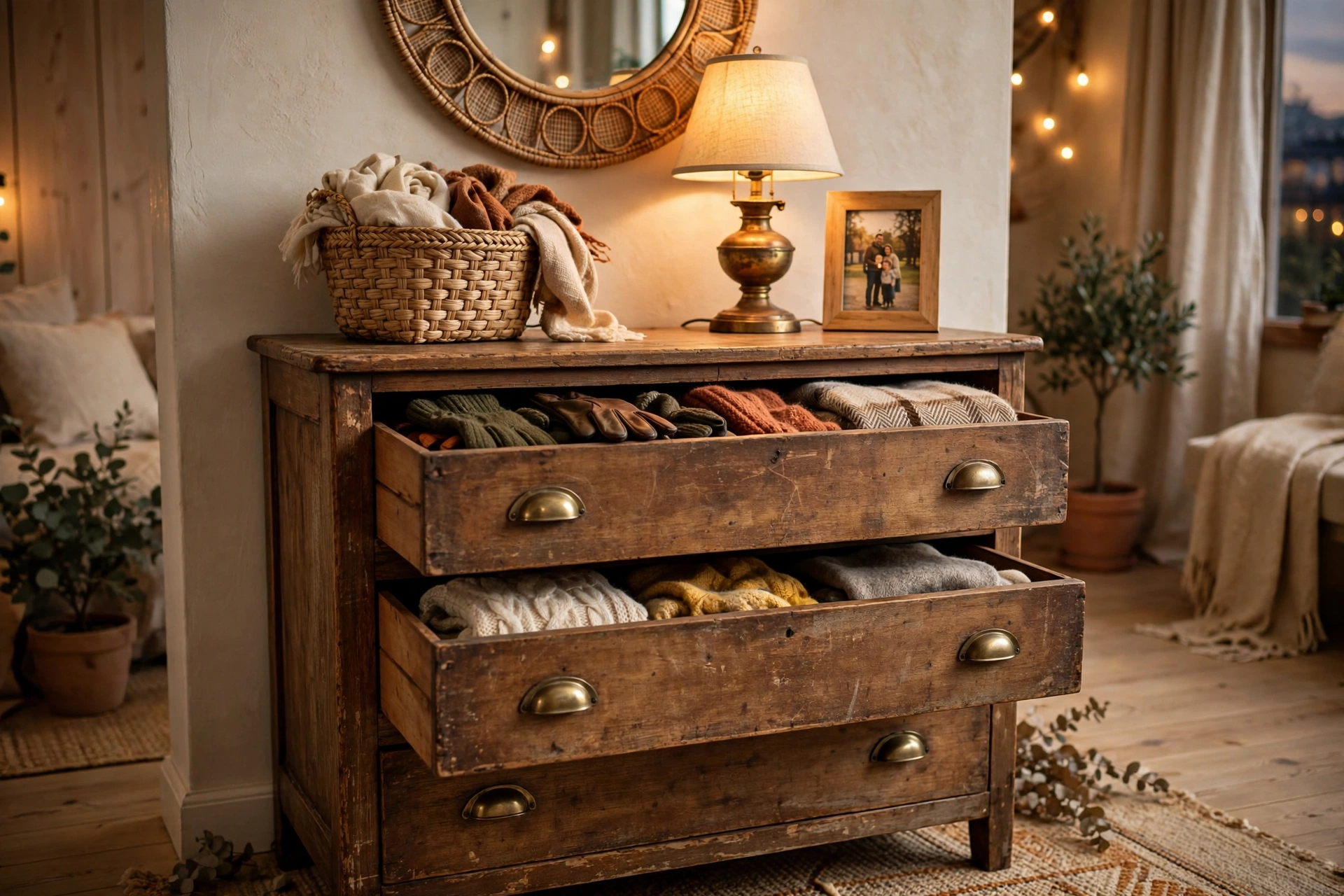
6. Repurpose a Vintage Dresser
That $50 vintage dresser on Marketplace? It’s a perfect entryway station. The drawers organize what consoles can’t — gloves, scarves, chargers, spare masks — while the top works like any console surface. Look for one 30 to 36 inches wide and under 18 inches deep. A coat of paint or new brass pulls ($2 each) makes a thrift find look custom. Pro tip: line the top drawer with a tray insert so keys and coins don’t scratch the wood — and designate one drawer per person if you share the studio.
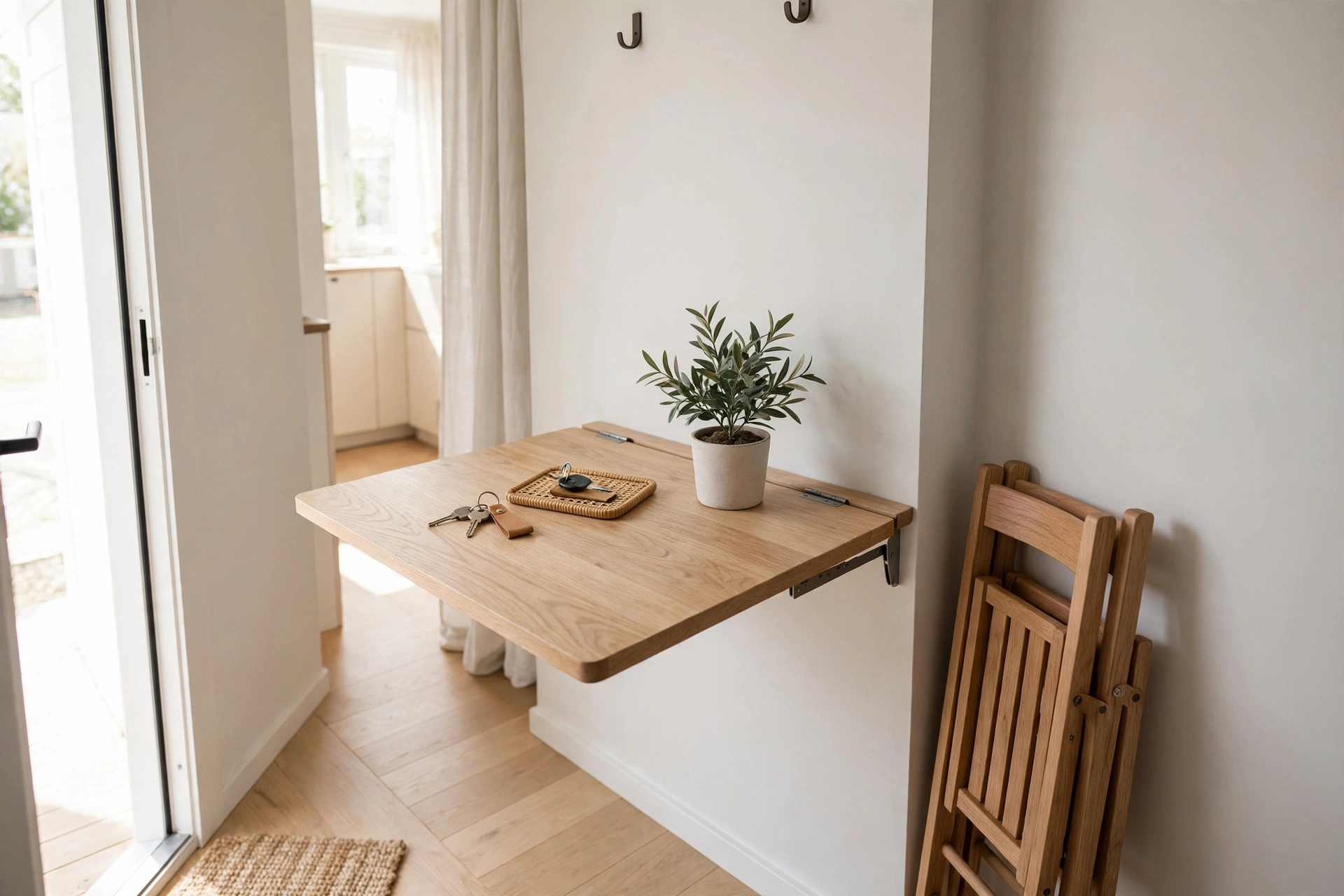
7. Install a Fold-Down Wall Table
For truly microscopic entries, a fold-down wall table ($40–$90) is genius: flip it up when you need a landing surface, fold it flat when you need the walkway. Mount at 30 inches high near the door for keys and mail, or use it as a mini desk that moonlights as an entry console. When folded, it protrudes barely 2 inches. Pro tip: mount a small magnetic strip underneath for keys — even when the table is folded up, your keys have a home.
Mirrors & Light
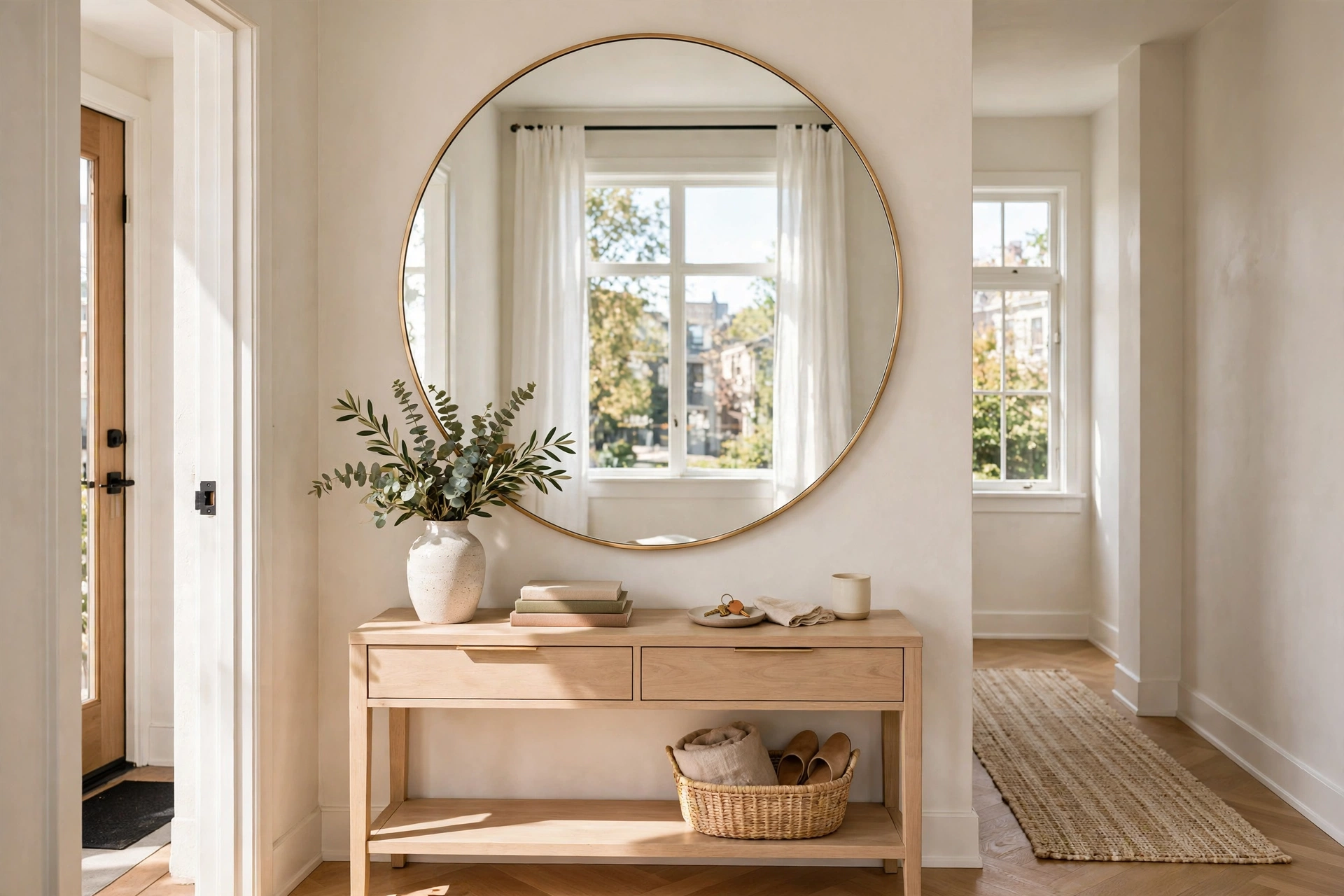
8. Hang an Oversized Round Mirror
One big round mirror (28–36 inches, $40–$120) above your console does triple duty: last-look check before you leave, light amplifier for dark entries, and instant style. Round shapes soften the hard angles of doorways and halls. Hang it so the center sits at eye level — about 57 to 60 inches from the floor — which usually means the bottom edge hovers 6 to 8 inches above the console. Pro tip: a thin brass or black frame reads modern; a chunky wood frame reads farmhouse — the frame sets the whole entry’s tone, so choose it deliberately.
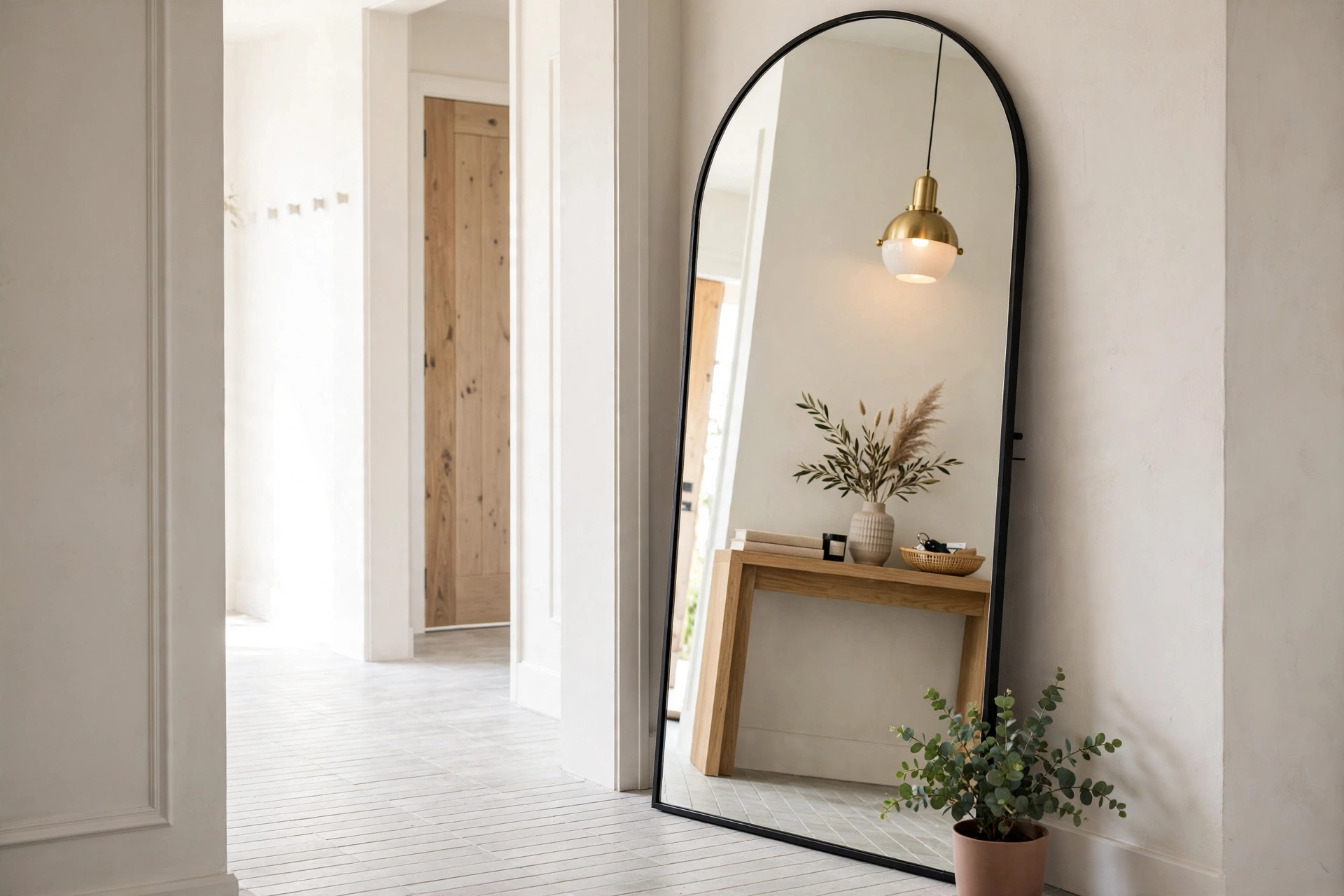
9. Lean an Arched Floor Mirror
An arched full-length mirror ($70–$180) leaning in the entry corner gives you head-to-toe checks and makes low ceilings feel taller — the arch draws the eye up. Leaning (rather than hanging) means no drilling, perfect for renters, and you can angle it to bounce window light exactly where you want it. Secure the top with a discreet adhesive bumper so it can’t slide. Pro tip: place the mirror opposite or adjacent to your main light source — a mirror facing a blank wall just doubles the blankness.
10. Cluster Small Mirrors Gallery-Style
Can’t commit to one big mirror? Cluster five to seven small mirrors ($5–$15 each at thrift stores) in mixed shapes for a gallery wall that sparkles. The scattered reflections create movement and light play that a single mirror can’t match. Lay the arrangement on the floor first, snap a photo, then hang using the photo as your map. Pro tip: keep frames within one metal family (all brass, or all black) — mixed shapes are charming, mixed finishes are chaotic.
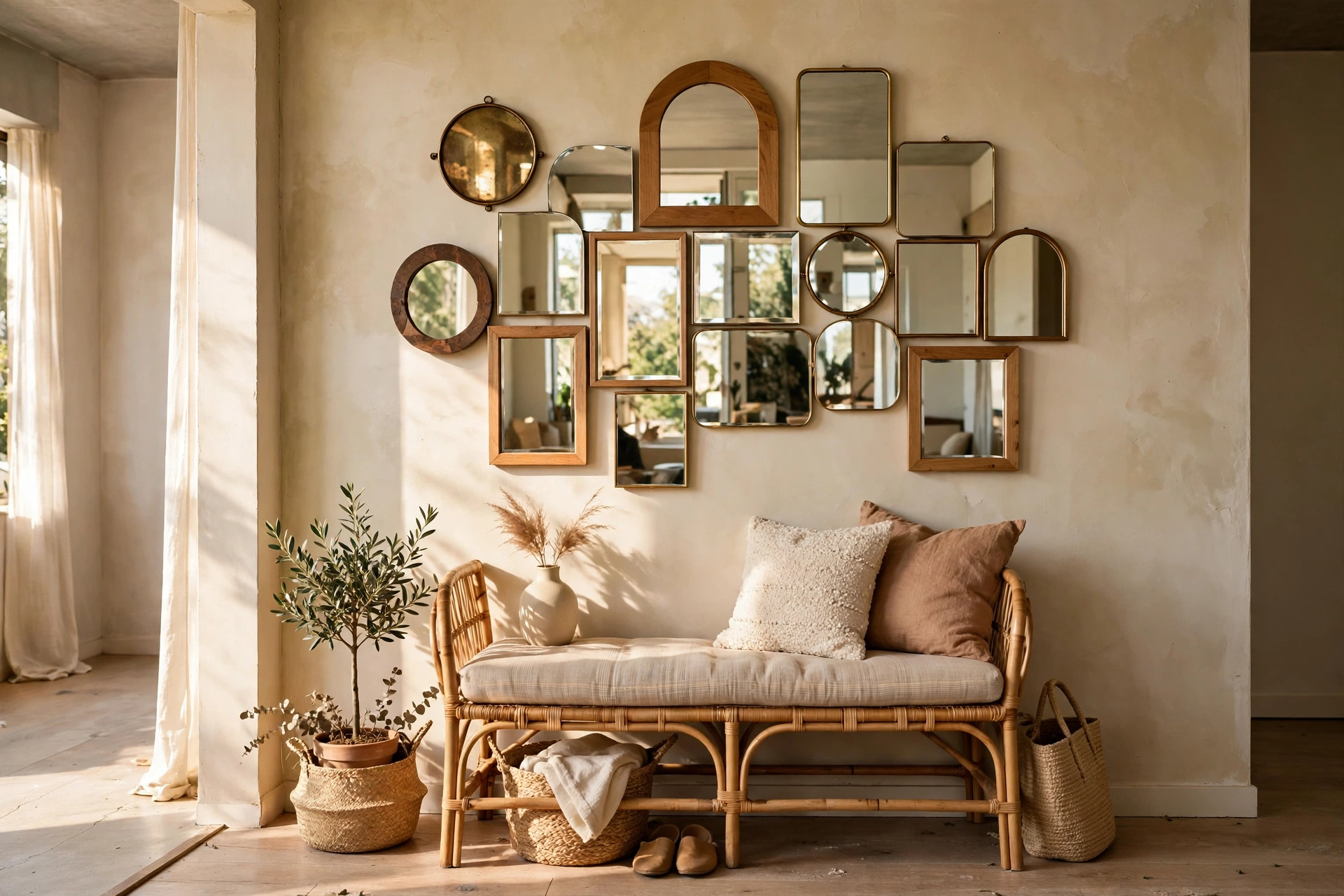
11. Install a Backlit LED Mirror
A backlit LED mirror ($60–$150) is the entryway’s night shift — the halo glow lights your comings and goings without a single lamp, and it doubles as ambient lighting for the whole studio in the evening. Many are plug-in with a touch sensor, so renters can mount with heavy-duty adhesive strips. The soft glow is also incredibly flattering for that last look before heading out. Pro tip: choose 3000K warm white — cool-white LEDs in an entry feel like a gas station bathroom, warm ones feel like a boutique hotel.
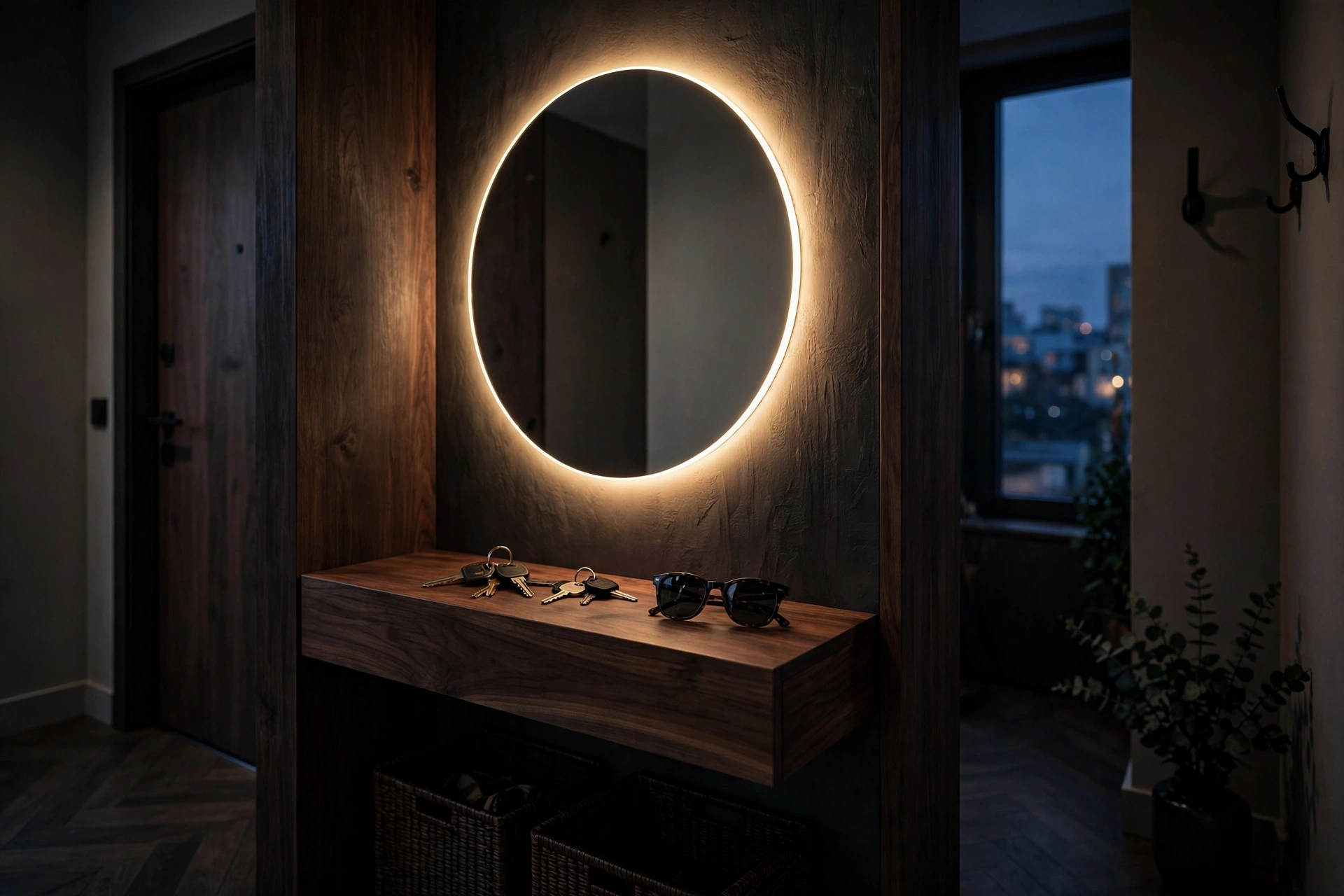
12. Flank With a Sconce Pair
Two matching sconces ($25–$60 each, plug-in versions available) flanking your mirror create the most polished, intentional-looking entry possible — it’s the oldest designer trick in the book. The symmetry reads as “designed” even when everything else is thrifted. Plug-in sconces with cord covers mean zero electrician and zero landlord drama. For more lighting ideas, see our studio apartment lighting ideas. Pro tip: mount sconces 60 to 66 inches high and 6 to 10 inches from the mirror’s edge — too close crowds it, too far breaks the composition.
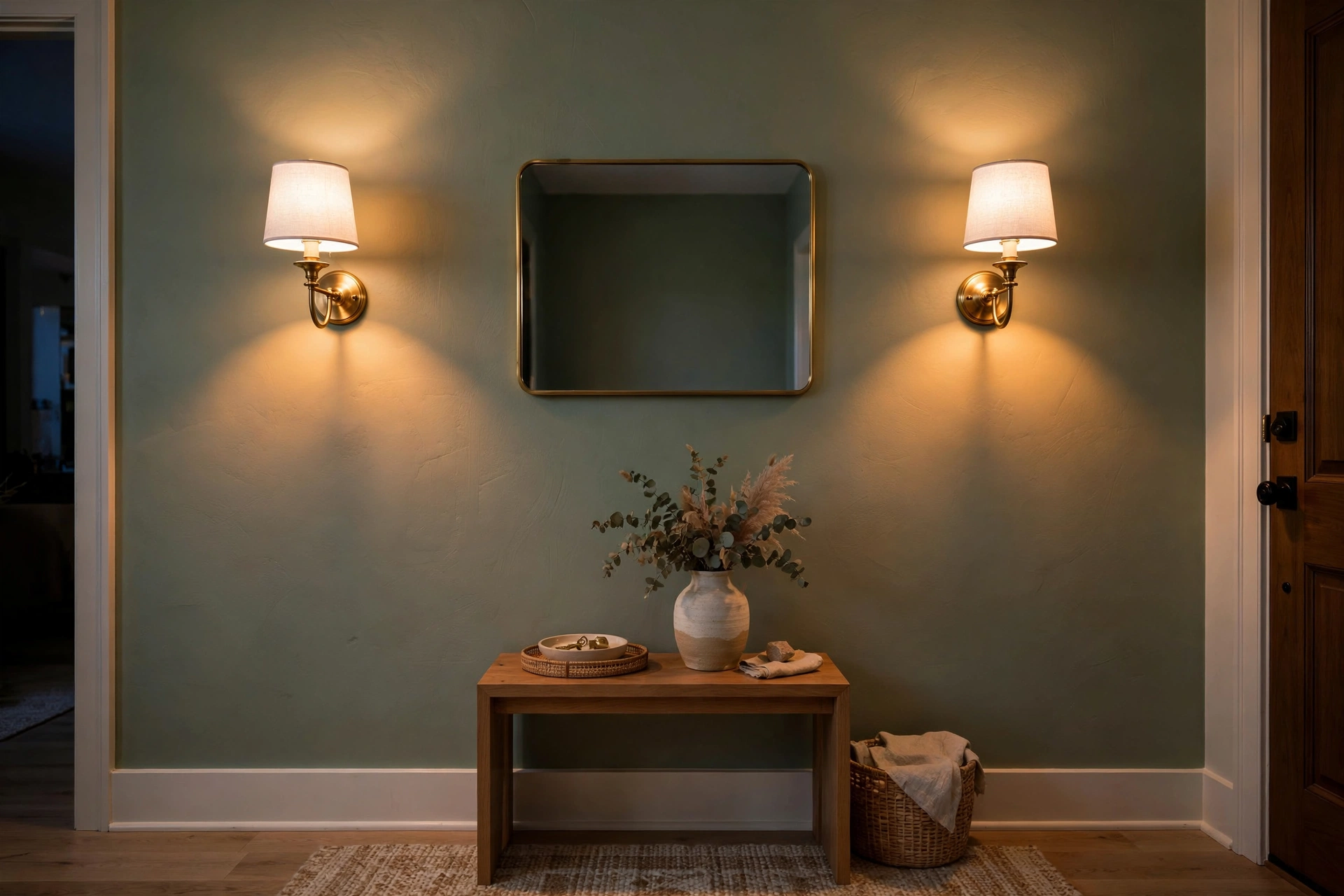
Hooks, Racks & Smart Storage
13. Mount a Wooden Coat Hook Rail
A solid wood rail with 4 to 6 hooks ($20–$45) is the single highest-impact entryway upgrade for the money. It ends the coat-on-chair avalanche and gives bags, hats, and the dog leash a permanent home. Mount at 60 to 65 inches high (lower for kids), and choose hooks that extend at least 3 inches so chunky winter coats actually stay put. Pro tip: assign one hook per category — coat, bag, keys, dog — rather than per person. Categories stay organized; “your hooks” become junk drawers within a week.
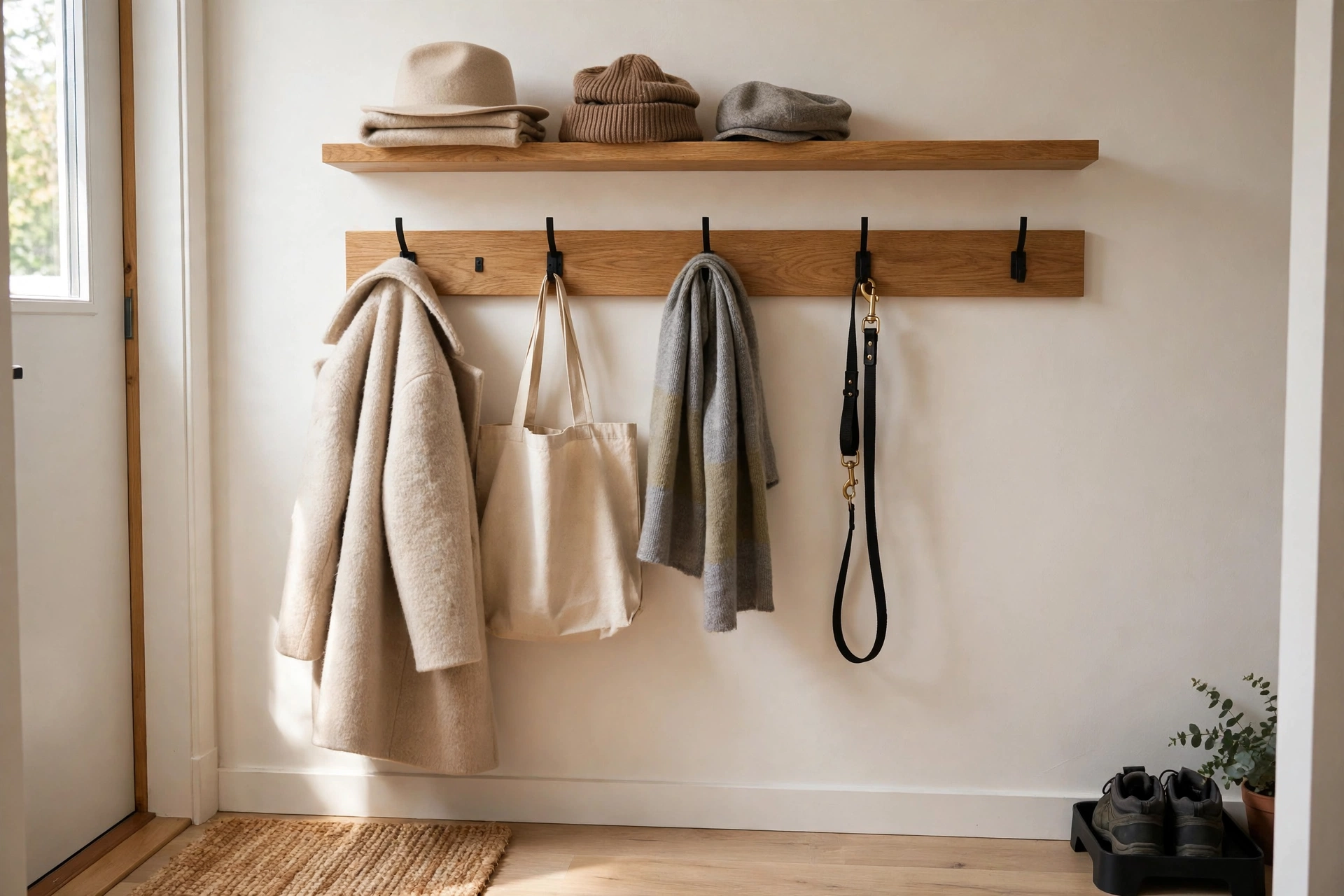
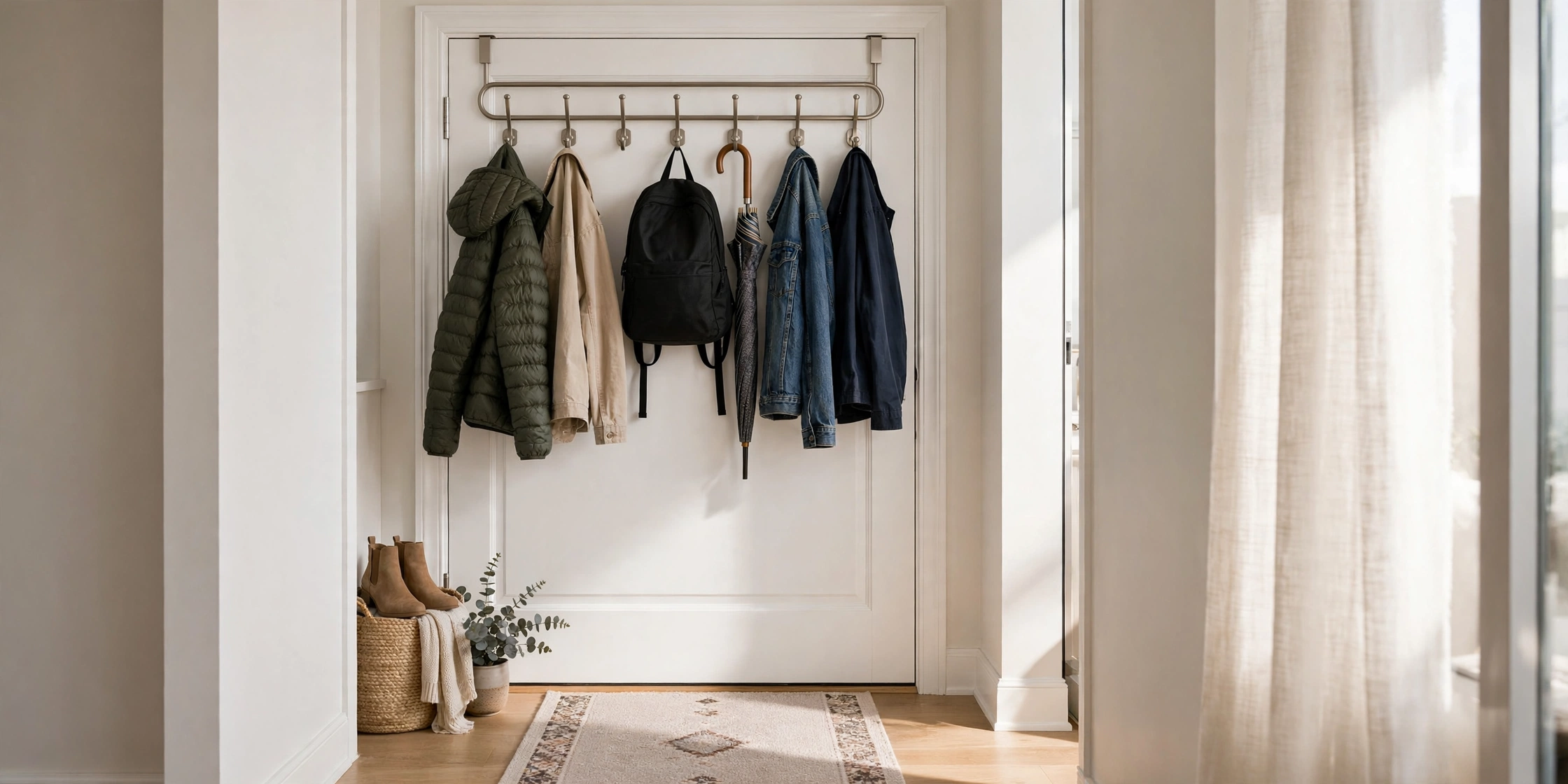
14. Use an Over-Door Hook Rack
Zero wall space? An over-door rack ($12–$25) hooks over the entry door itself — no drilling, no damage, fully renter-proof. Modern versions come in matte black or brass with felt backing so they don’t scratch the door. It’s not the prettiest solution, but for coats and bags in a truly tiny studio, function beats form. Pro tip: put felt pads on the rack’s back plate and check the door still closes cleanly — a rack that prevents latching is a fire-safety issue, not a storage win.
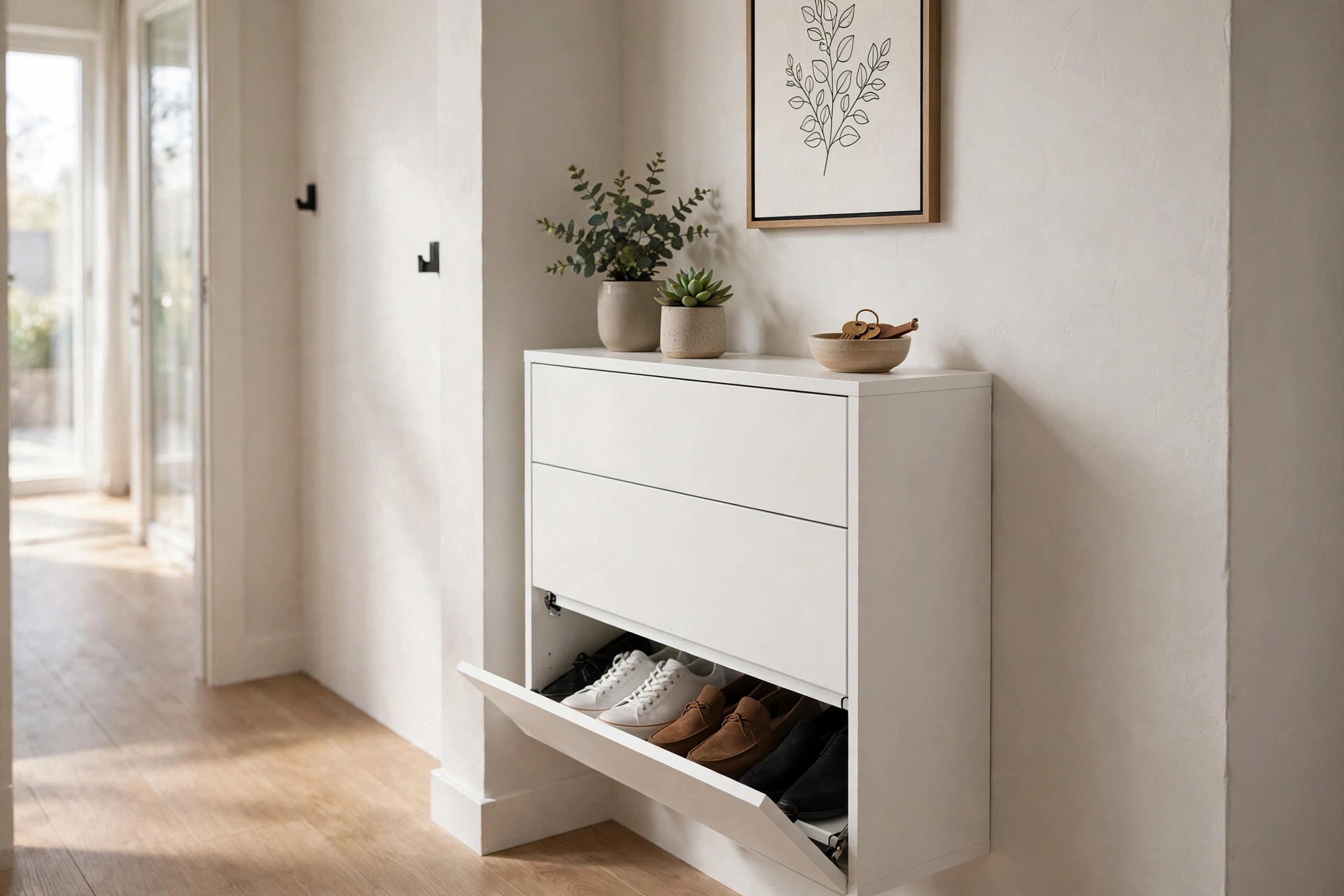
15. Hide Shoes in a Slim Cabinet
Shoe piles are the #1 entryway eyesore, and a slim tilt-out cabinet ($70–$130, about 7 inches deep) makes them vanish. Three compartments hold 9 to 12 pairs; the top becomes a console surface for your key tray and a plant. Ventilation slots prevent the dreaded shoe-cabinet funk. Pro tip: drop a charcoal deodorizer sachet ($8 for a multi-pack) in each compartment when you set it up — future you, opening that cabinet in August, says thanks.
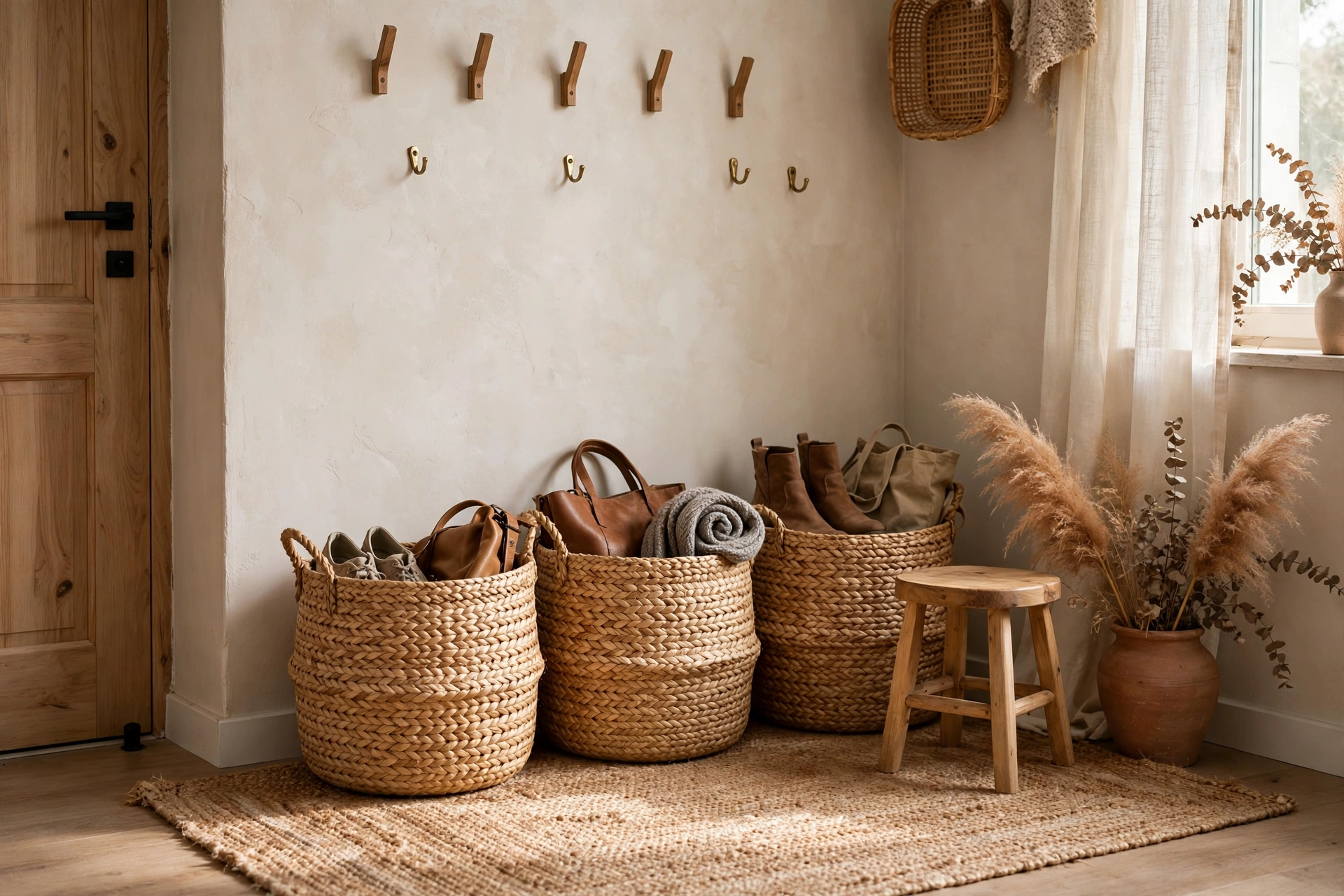
16. Corral Clutter in Woven Baskets
Three large seagrass or water-hyacinth baskets ($15–$30 each) turn a corner into a drop zone: one for shoes, one for bags, one for “deal with later.” The texture adds warmth that plastic bins never will, and lidded versions hide the chaos entirely. Label-free is fine — you’ll memorize the system in two days. Pro tip: choose baskets with handles; you’ll carry the shoe basket to the closet for seasonal swaps, and handles make that a one-trip job.
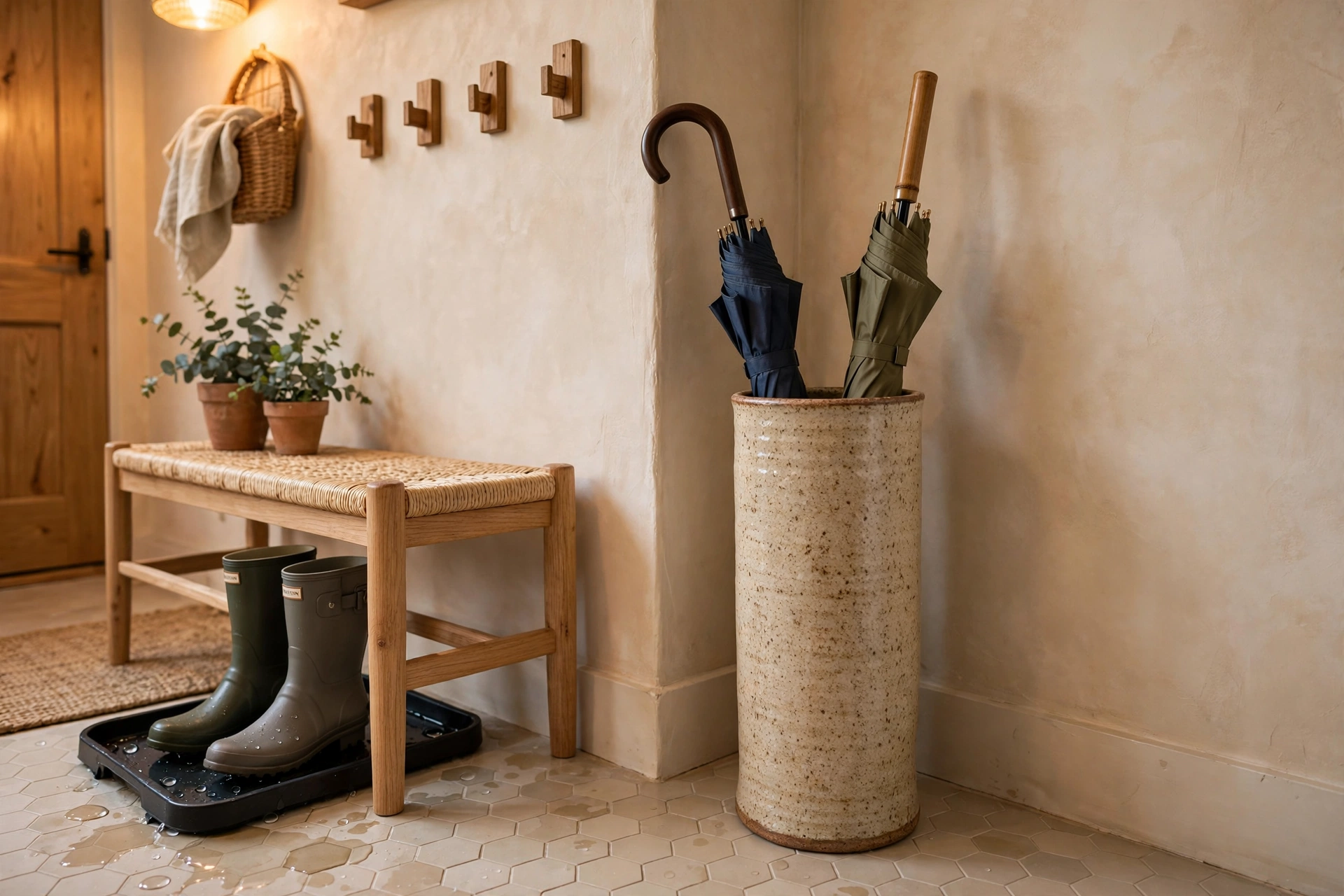
17. Stand Up an Umbrella Holder
Wet umbrellas have exactly two acceptable homes: a stand or the bathtub. A tall ceramic or metal stand ($20–$50) in the entry corner keeps drips off your floors and adds a sculptural moment. Look for one with a weighted base (top-heavy stands tip) and ideally a removable drip tray. Pro tip: in dry climates, use the stand for walking sticks, a tennis racket, or rolled yoga mats — the vertical storage works for anything long and awkward.
18. Stage a Key Tray Catch-All
The catch-all tray ($10–$30) is small but mighty: keys, sunglasses, wallet, and lip balm land here every single day, which means they also leave from here every single morning. Brass, marble, or leather trays look deliberate; a random bowl looks like clutter. Size it to your carry — about 8 inches square handles most daily kits. Pro tip: this is the one styling spot to keep ruthlessly minimal. If the tray holds more than five items, something doesn’t belong — relocate it tonight, not “later.”
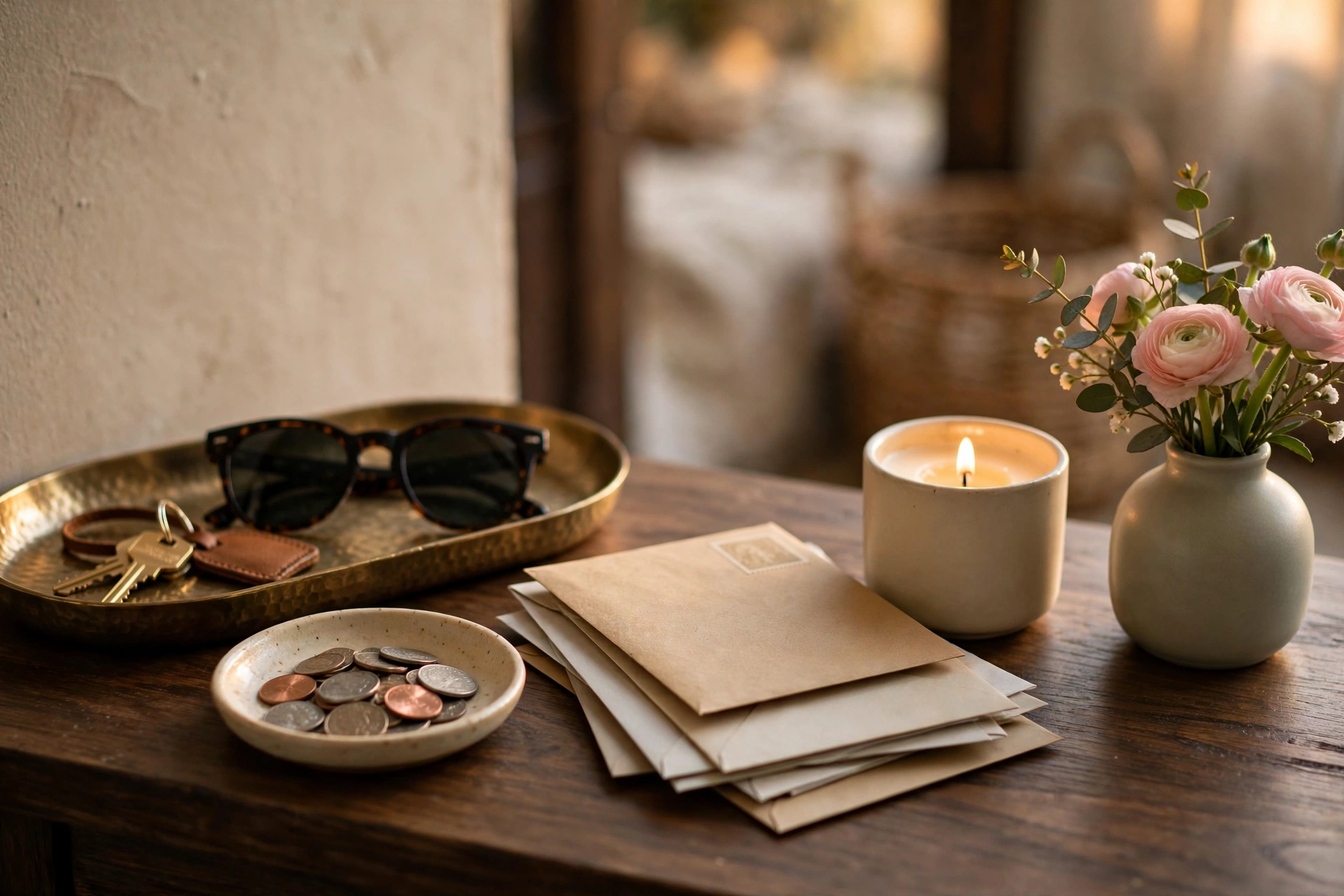
19. Sort Mail on the Wall
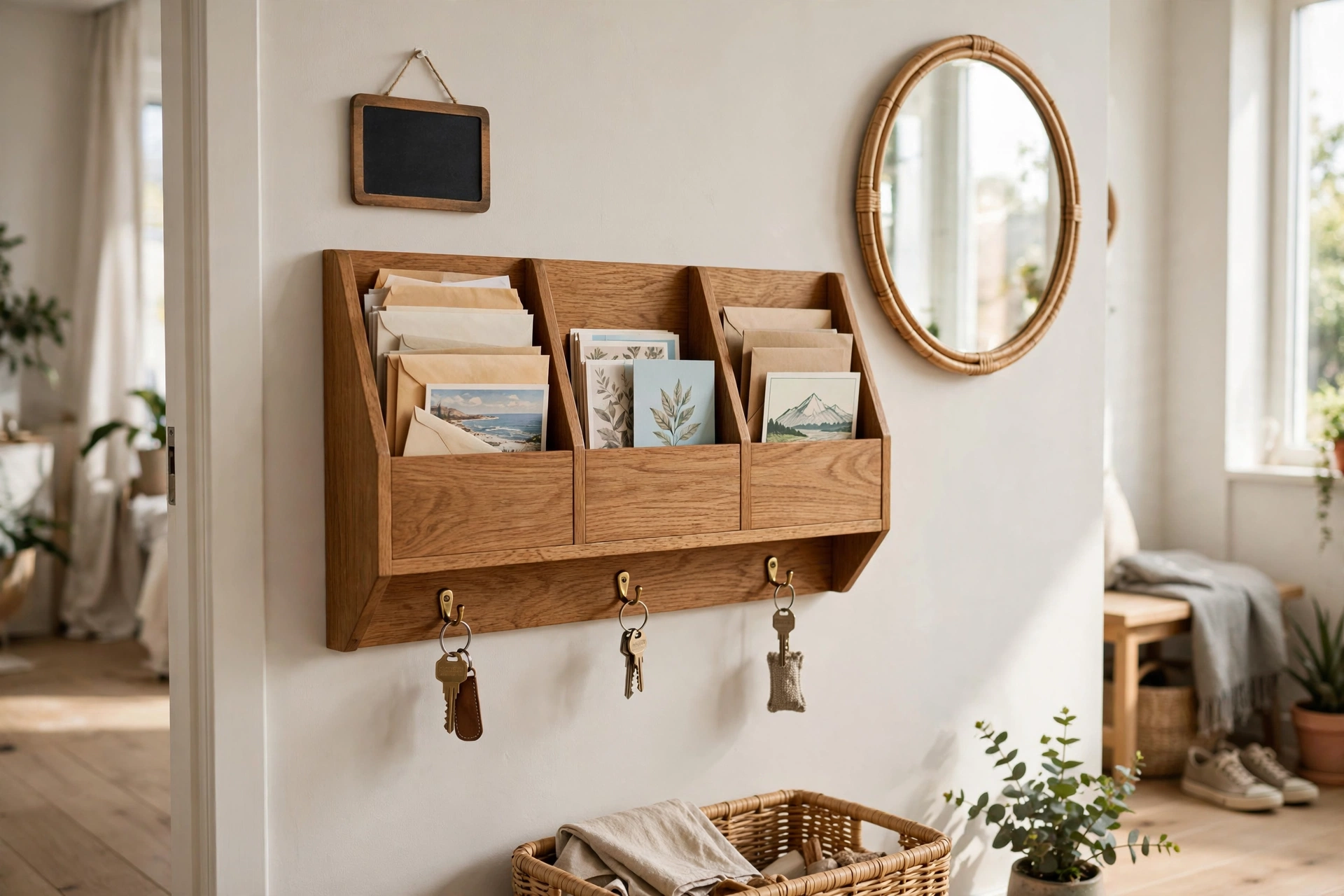
Mail is entryway kudzu — it spreads across every surface within days. A wall-mounted sorter ($18–$40) with slots for “action,” “file,” and “recycle” stops the sprawl at the source. Mount it beside the door at eye level, and add two small hooks underneath for keys. Process the “action” slot weekly or it becomes decorative. Pro tip: put a tiny recycling bin or paper bag directly below the sorter — junk mail goes from slot to bin in one motion, and the pile never starts.
Rugs & Runners
20. Roll Out a Washable Runner
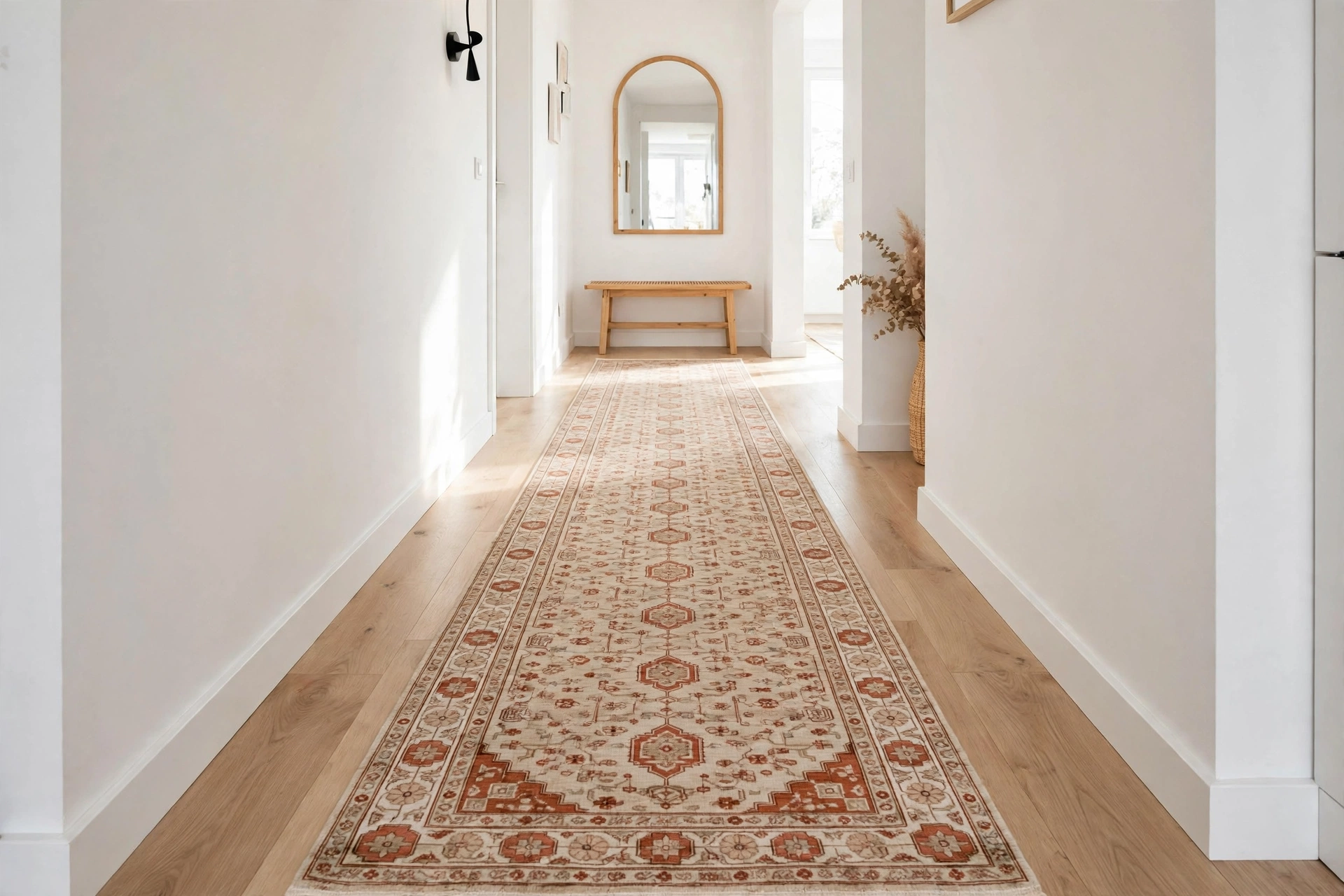
An entryway rug takes the dirtiest job in the house, so make it washable ($30–$80 for a 2.5×8 runner). Modern washable rugs look convincingly like wool or vintage Persian but go straight in the machine when mud season hits. A runner also visually stretches a narrow hall, pulling the eye toward the living space. Our studio apartment rug ideas go deeper on zoning with rugs. Pro tip: buy a rug pad too ($15) — it stops the runner migrating down the hall and adds cushion that makes cheap rugs feel expensive.
21. Layer a Doormat Over a Rug
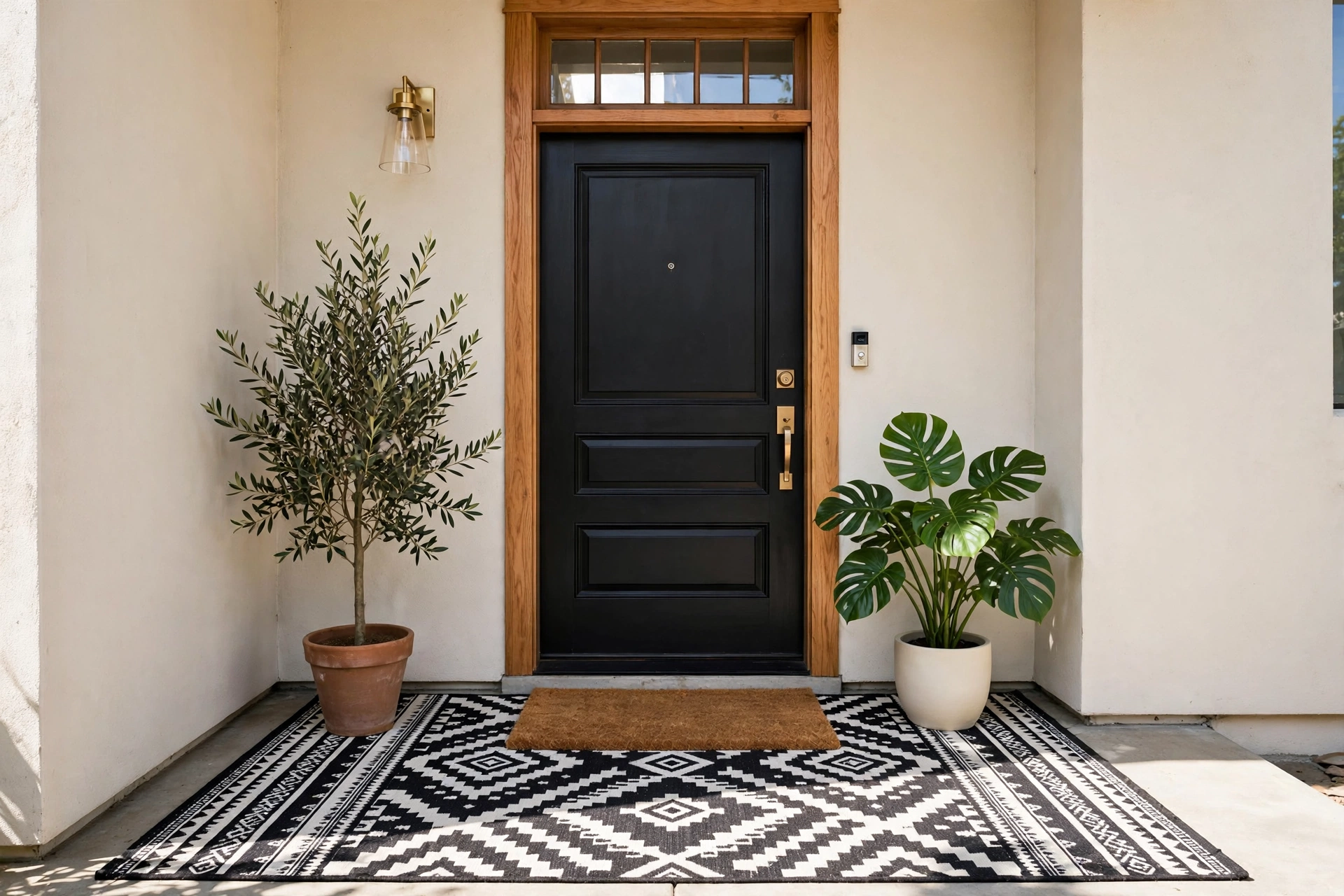
Layering — a coarse coir doormat ($12–$20) on top of a larger patterned flatweave — is the designer move that costs almost nothing. The doormat does the scraping, the rug underneath does the looking good, and the layered edges add dimension that a single mat can’t. Swap the top mat seasonally ($10) for an instant refresh. Pro tip: keep the under-rug low-pile and the door clearance in mind — a thick stack that blocks the door swing will drive you mad by day three.
22. Center a Round Jute Rug
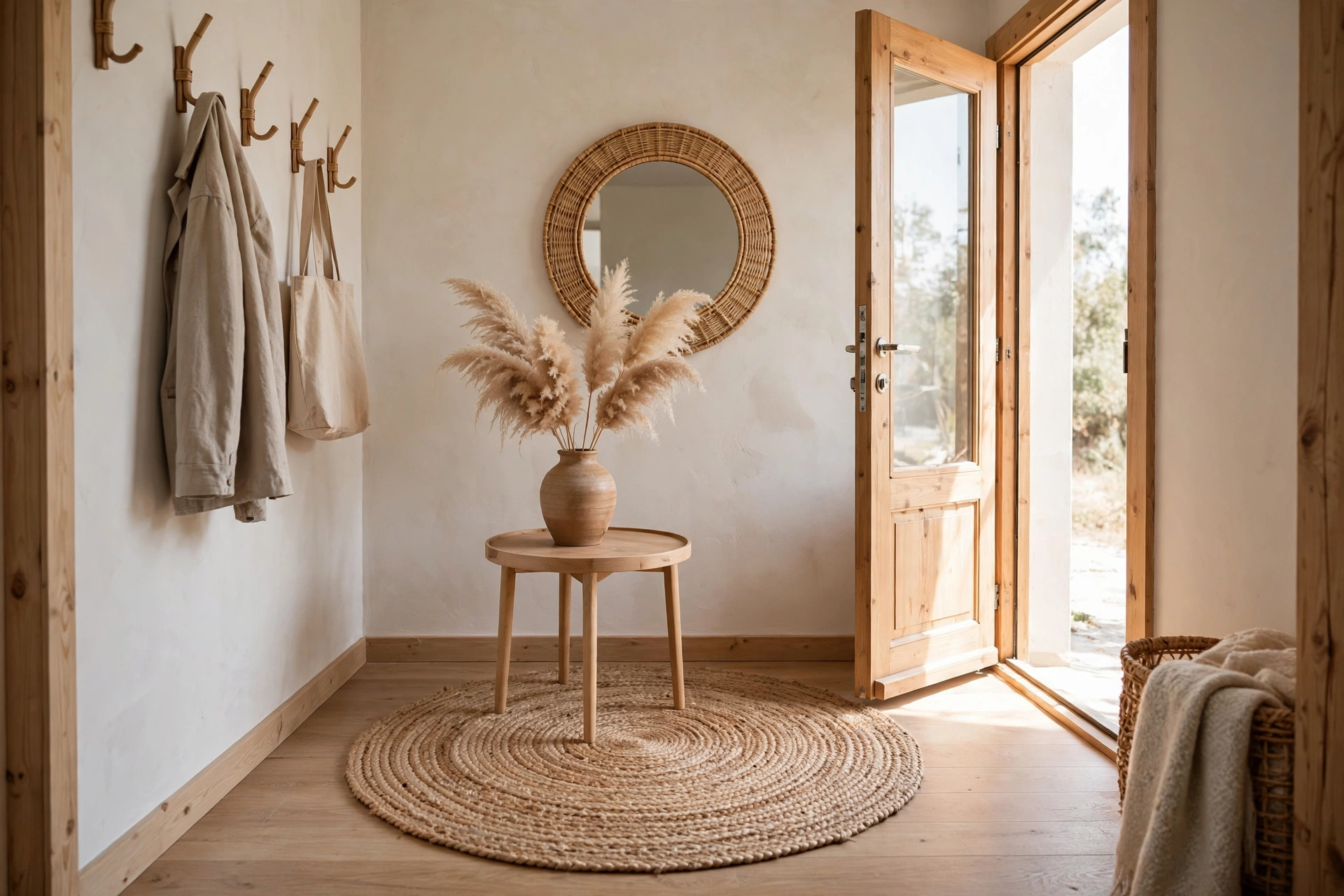
Square foyer? A round jute rug ($25–$60) breaks up all the hard rectangles — door, console, bench — and its natural texture warms up rental-white walls instantly. Jute hides dirt well and suits coastal, boho, and Scandinavian schemes alike. Go 3 to 4 feet in diameter so furniture feet can anchor at least two edges. Pro tip: jute and high heels don’t mix — if stilettos are daily wear, choose a tight-weave cotton round instead to avoid snags.
23. Hunt a Vintage Runner
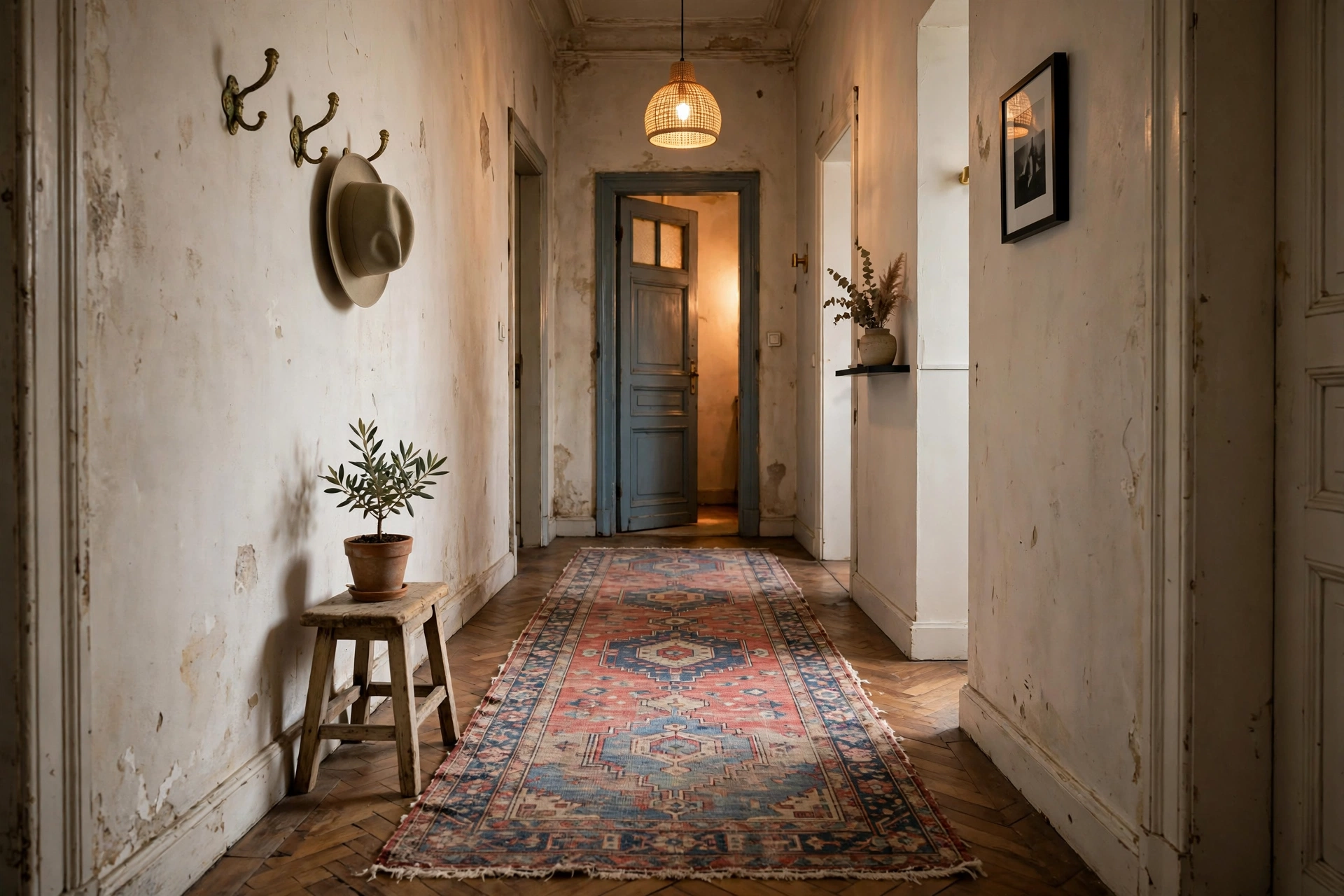
A faded vintage or vintage-style runner ($50–$150 on Etsy, eBay, or estate sales) brings instant soul — the worn patterns hide new dirt, the colors add depth, and no two are alike. In a builder-basic rental hall, one vintage runner does more character work than any accessory. Look for low pile (doors clear it) and sturdy ends. Pro tip: measure twice, including door swing — vintage runners come in odd sizes, and “close enough” in a 30-inch-wide hall is a tripping hazard, not a bargain.
Decor & Personality
24. Hang One Bold Art Piece
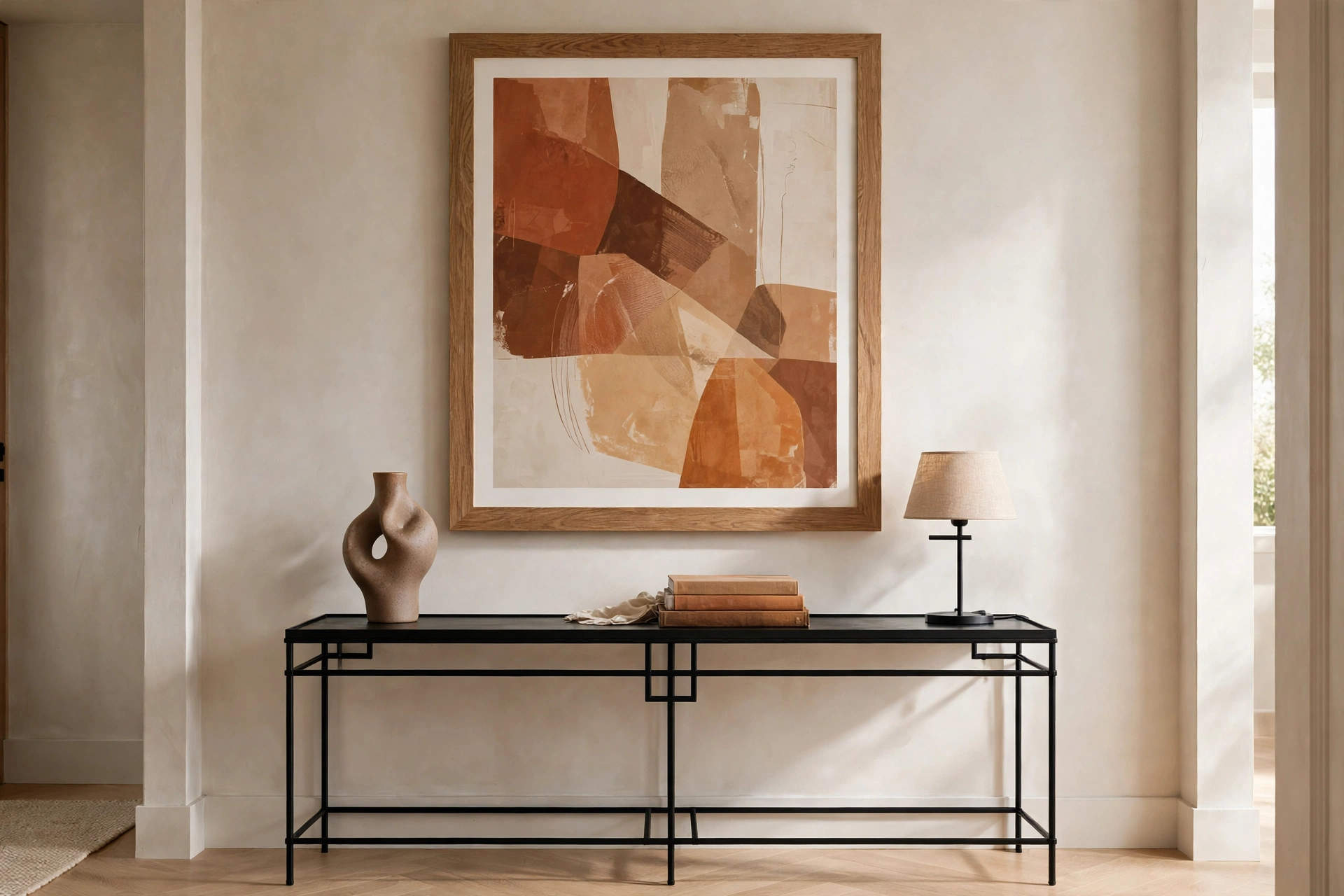
One oversized art print ($15–$40 for the print, $25 for a frame) above the console sets the entire entry’s mood — abstract color for energy, landscape for calm, black-and-white photography for sophistication. Bigger is better here: a single large piece reads intentional, while small frames in an entry read cluttered. For more art guidance, browse our studio apartment wall art ideas. Pro tip: the art should be about two-thirds the width of the console below it — that ratio looks designed; much narrower looks like an afterthought.
25. Pot a Statement Plant
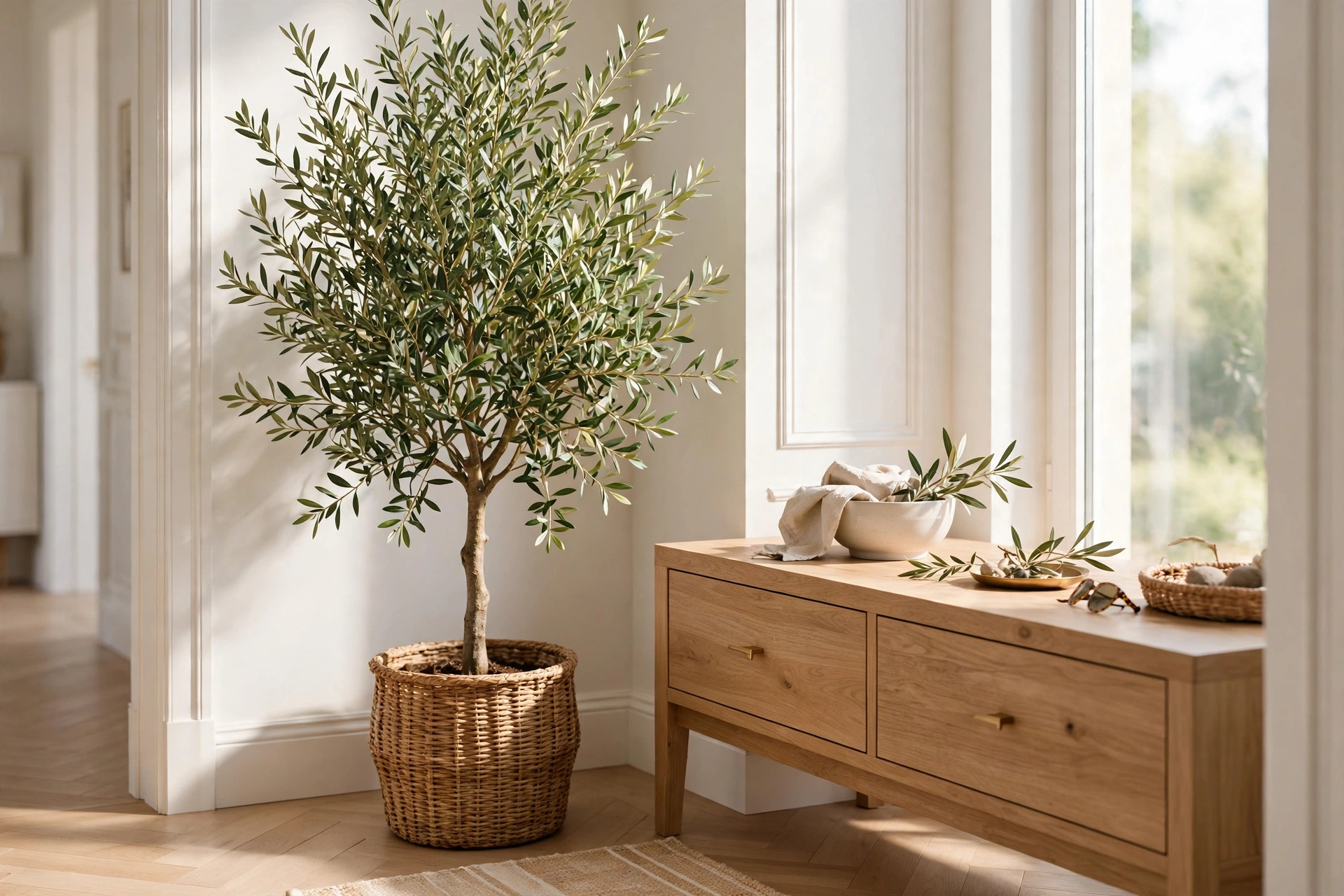
A living plant in the entry ($15–$40 for an olive tree, snake plant, or ZZ) says “someone tends this home” before you’ve said a word. Tall and narrow works best — olive trees, dracaenas, or a snake plant in a woven basket fit corners without blocking passage. If your entry gets zero natural light, a good faux olive ($30) fools everyone. Pro tip: put the pot on a small wheeled plant caddy ($12) — you’ll roll it to the window for light baths and to the sink for watering without the heavy lift.
26. Scent the Welcome
Smell is the forgotten sense in entry styling — a reed diffuser ($15–$30) or a lit candle on the console greets noses before eyes even focus. Choose one signature scent for the whole studio (citrus-wood and fig are crowd-pleasers) so the entry flows into the living space instead of clashing with it. Pro tip: never leave a candle burning when you leave — switch to the diffuser for all-day scent and save the candle for evenings you’re actually home to enjoy it.
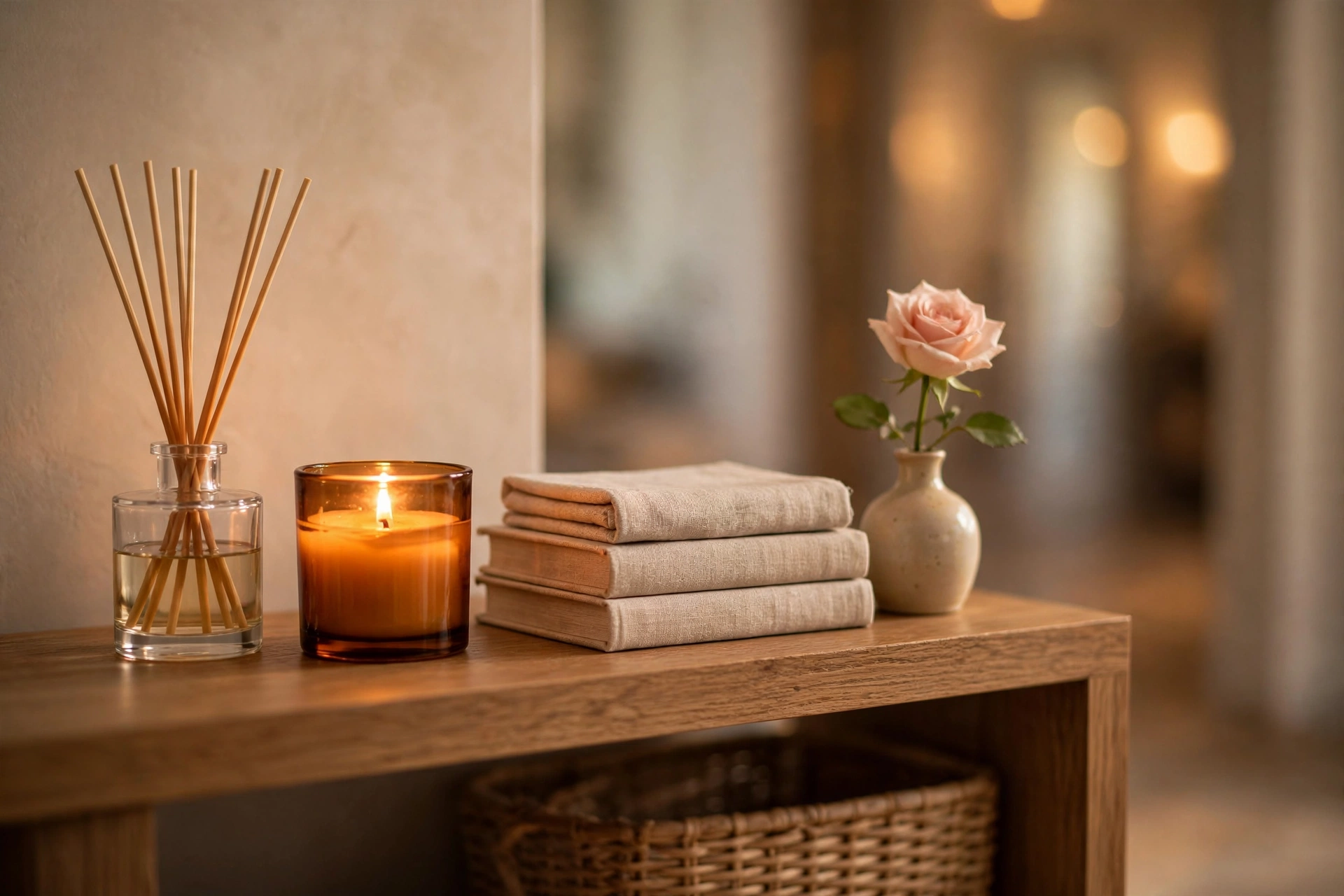
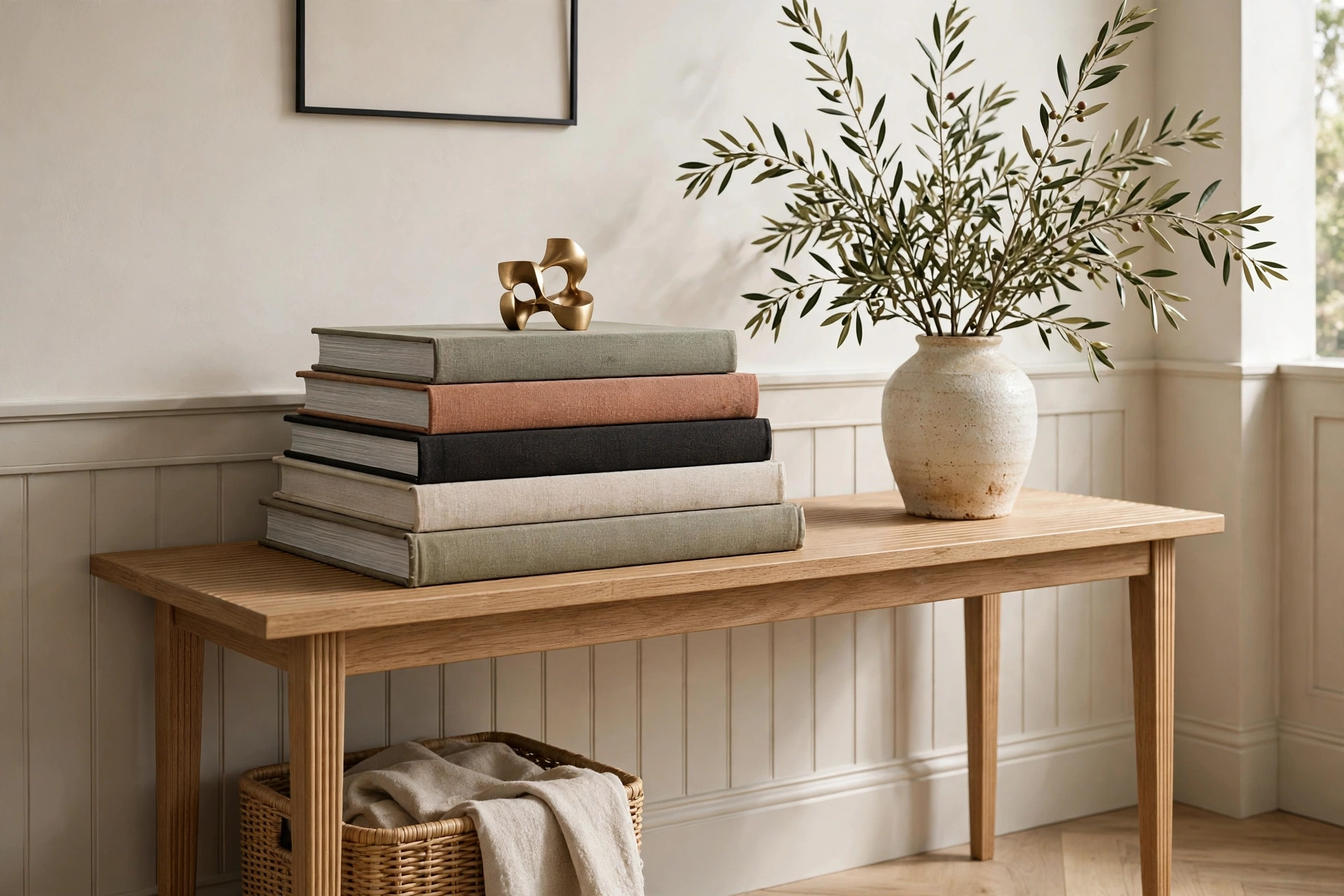
27. Stack Design Books
A stack of two or three beautiful books ($10–$25 each, or thrifted for $3) on the console adds intellect and color in one move — and gives the tray-and-vase formula something to lean against. Choose covers you genuinely like; guests will pick them up, and that’s the point. Top the stack with a small object for the classic styled look. Pro tip: arrange books largest-to-smallest with spines aligned — the 30 seconds of alignment is the difference between “styled” and “piled.”
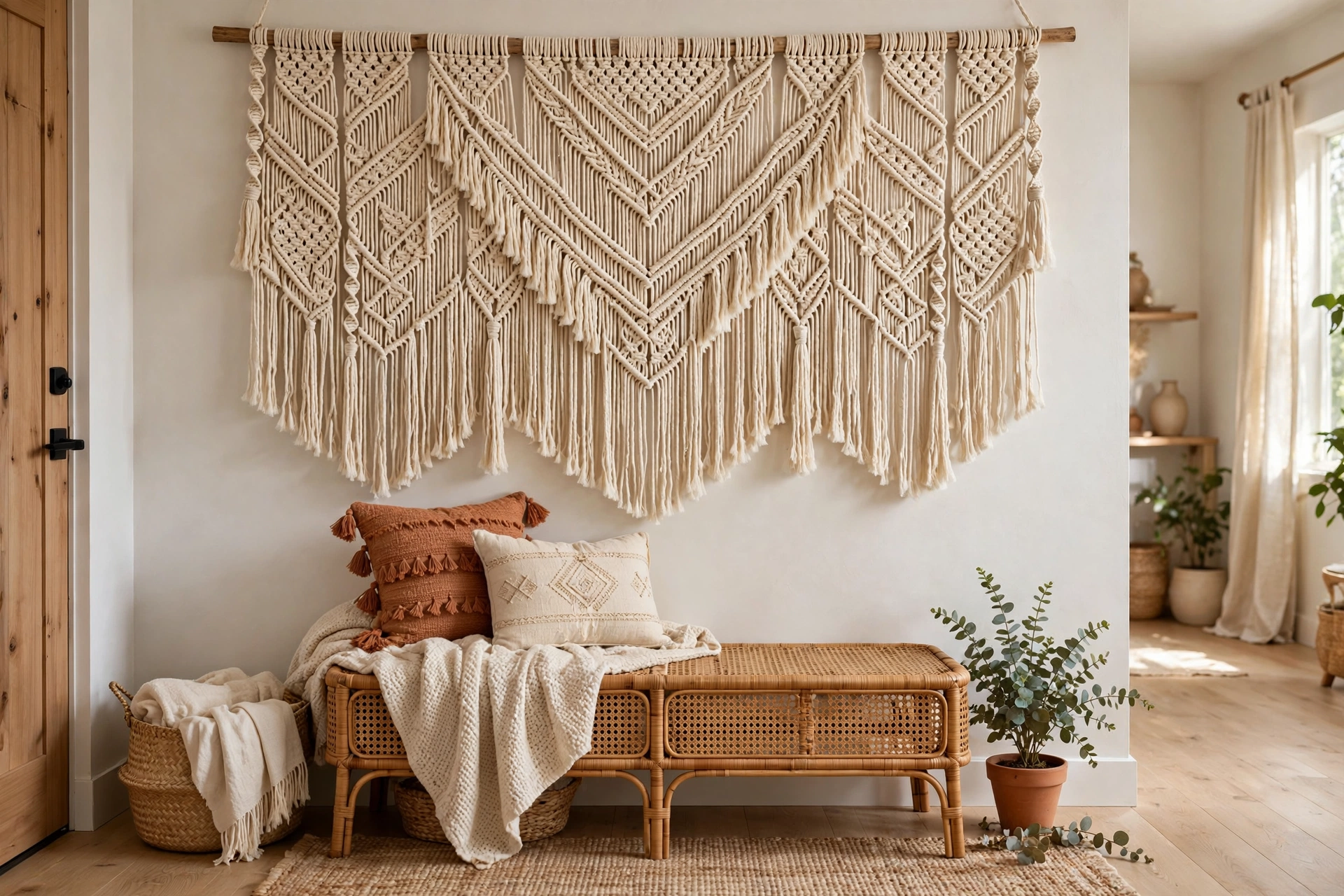
28. Weave In a Wall Hanging
A macrame or woven wall hanging ($25–$70) softens the hard surfaces of an entry — doors, mirrors, consoles — with texture that paint can’t provide. It also absorbs a touch of echo in tiled foyers. Hang it with a single nail or adhesive hook; most weigh under two pounds. Pro tip: hang textiles at least 12 inches above bench backs — fringe and seated heads compete for the same airspace, and fringe loses.
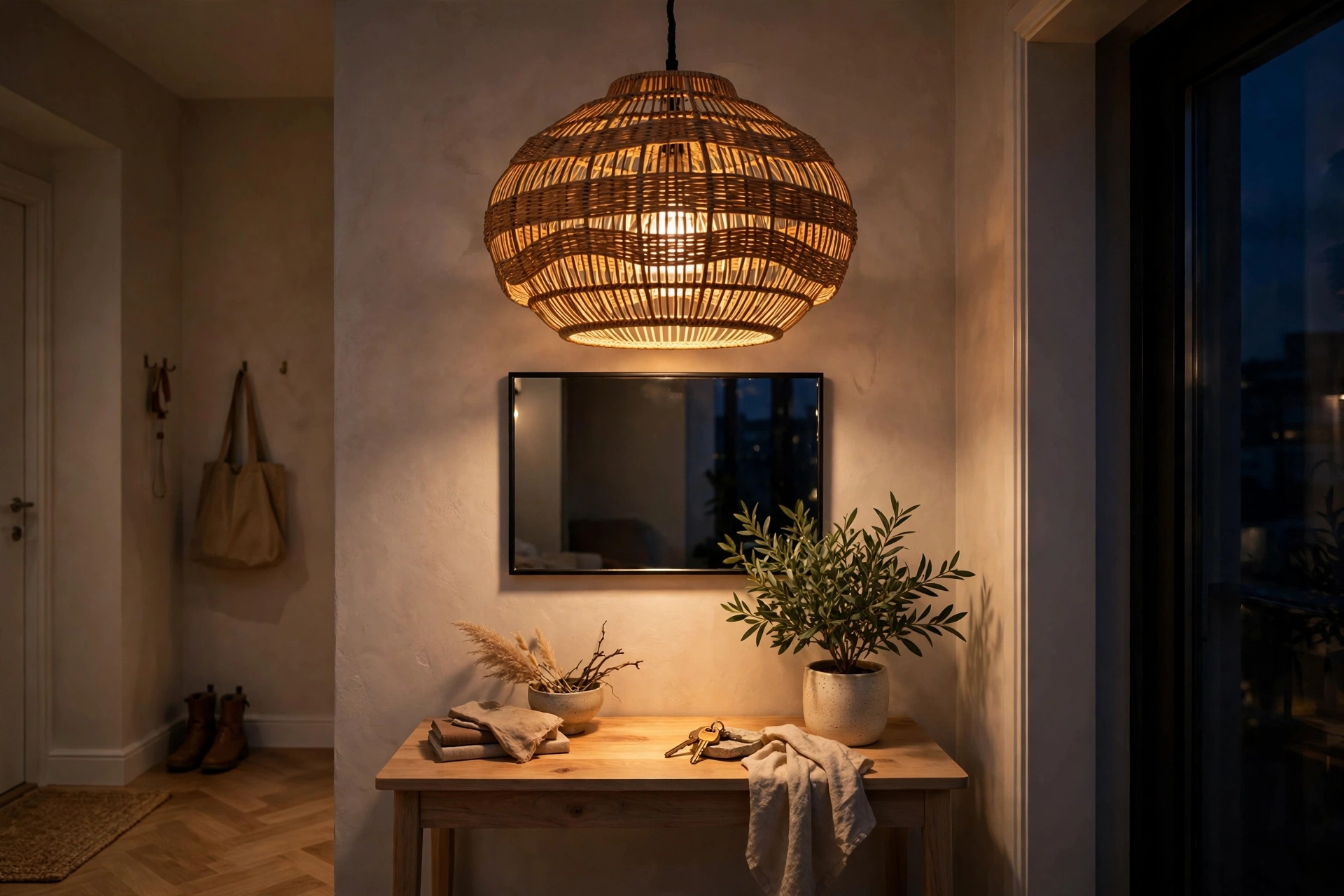
29. Hang a Statement Pendant
If your entry has a ceiling fixture box (many studios do), swapping the boob light for a rattan or paper pendant ($30–$80) is a 20-minute transformation with outsized impact — it’s literally the first light guests see. Plug-in swag pendants ($25–$50) with a ceiling hook achieve the same look with zero wiring for renters. Pro tip: hang the pendant 7 feet off the floor minimum — entry pendants hang lower than room pendants for intimacy, but not so low that tall guests duck.
Renter-Friendly Zoning Tricks
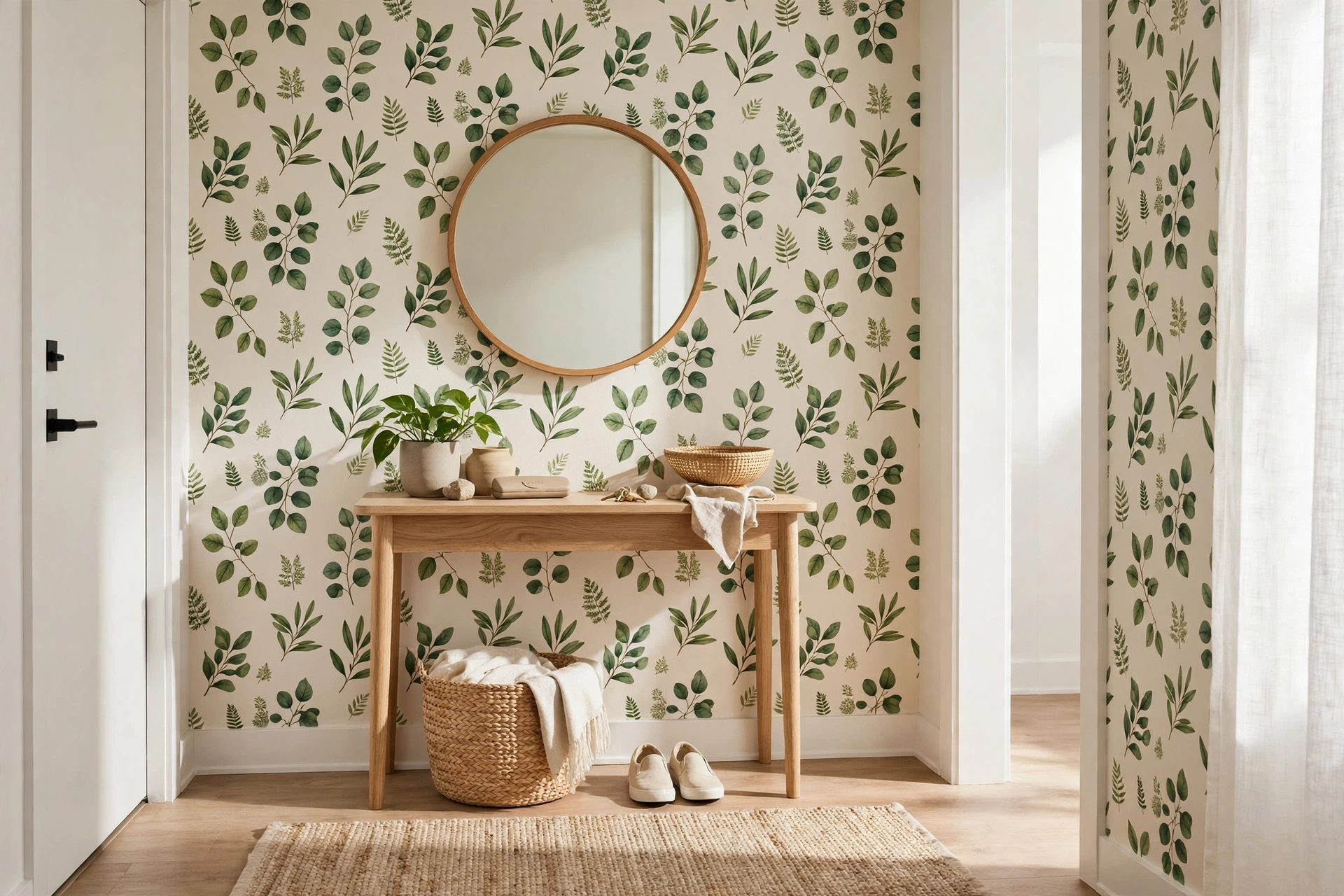
30. Paper the Entry in Peel-and-Stick
One accent wall of peel-and-stick wallpaper ($30–$60 per roll, usually one roll does an entry) creates a “room” where architecture didn’t bother. Botanical prints, subtle stripes, or grasscloth textures all work — the paper defines the zone so furniture doesn’t have to. It removes cleanly, so landlords never know. Pro tip: start papering from the least visible corner — your first few strips are your practice round, and nobody studies the corner behind the door.
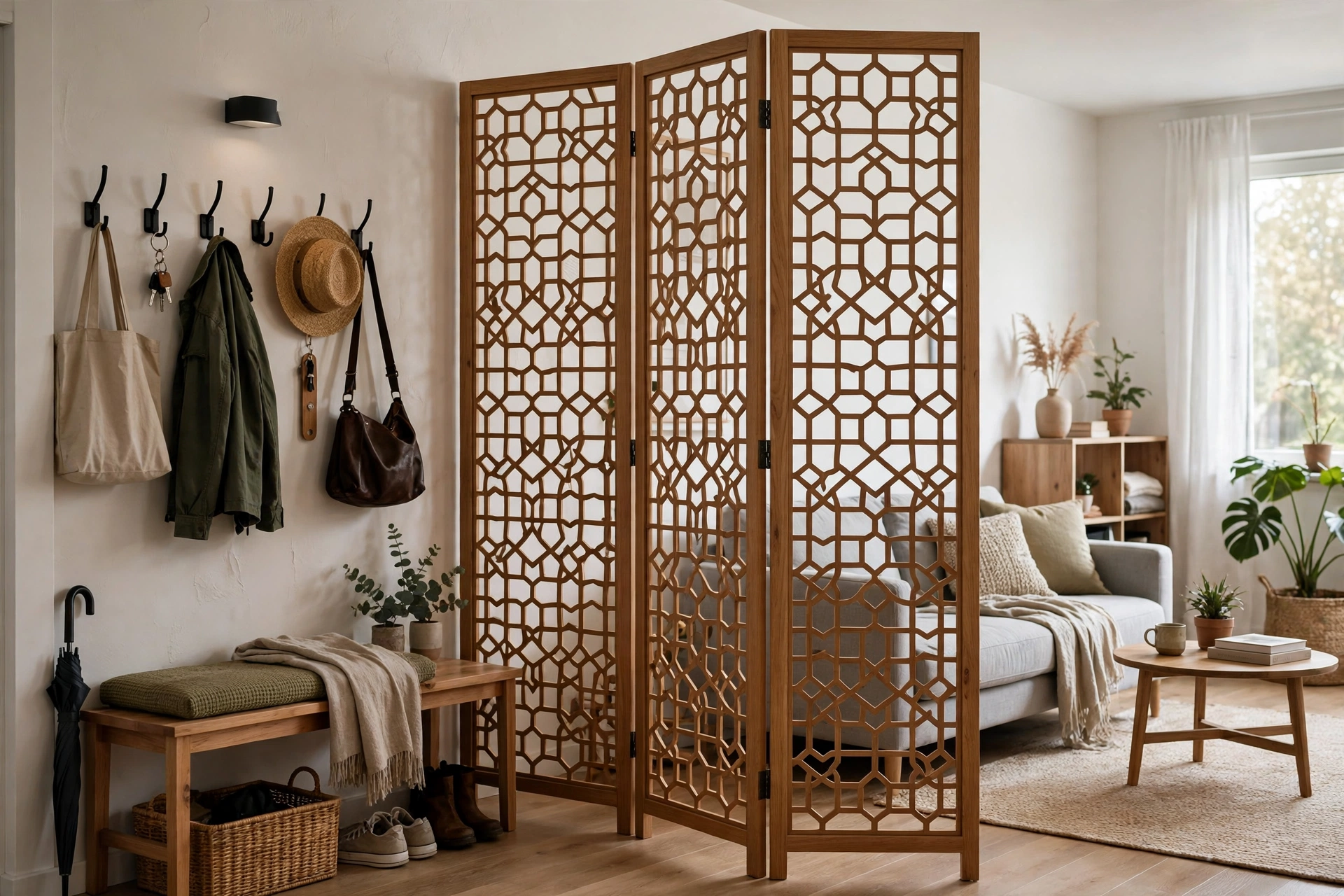
31. Screen It With a Room Divider
A three-panel openwork divider ($60–$150) standing a few feet inside the door carves a genuine foyer out of open studio space — guests get a moment of arrival before seeing your bed. Openwork or cane panels keep light flowing while blocking the direct sightline, the same zoning principle in our budget decorating guide. Pro tip: angle the divider rather than placing it dead straight — a slight angle feels designed and lets you tuck a plant or basket in the resulting pocket.
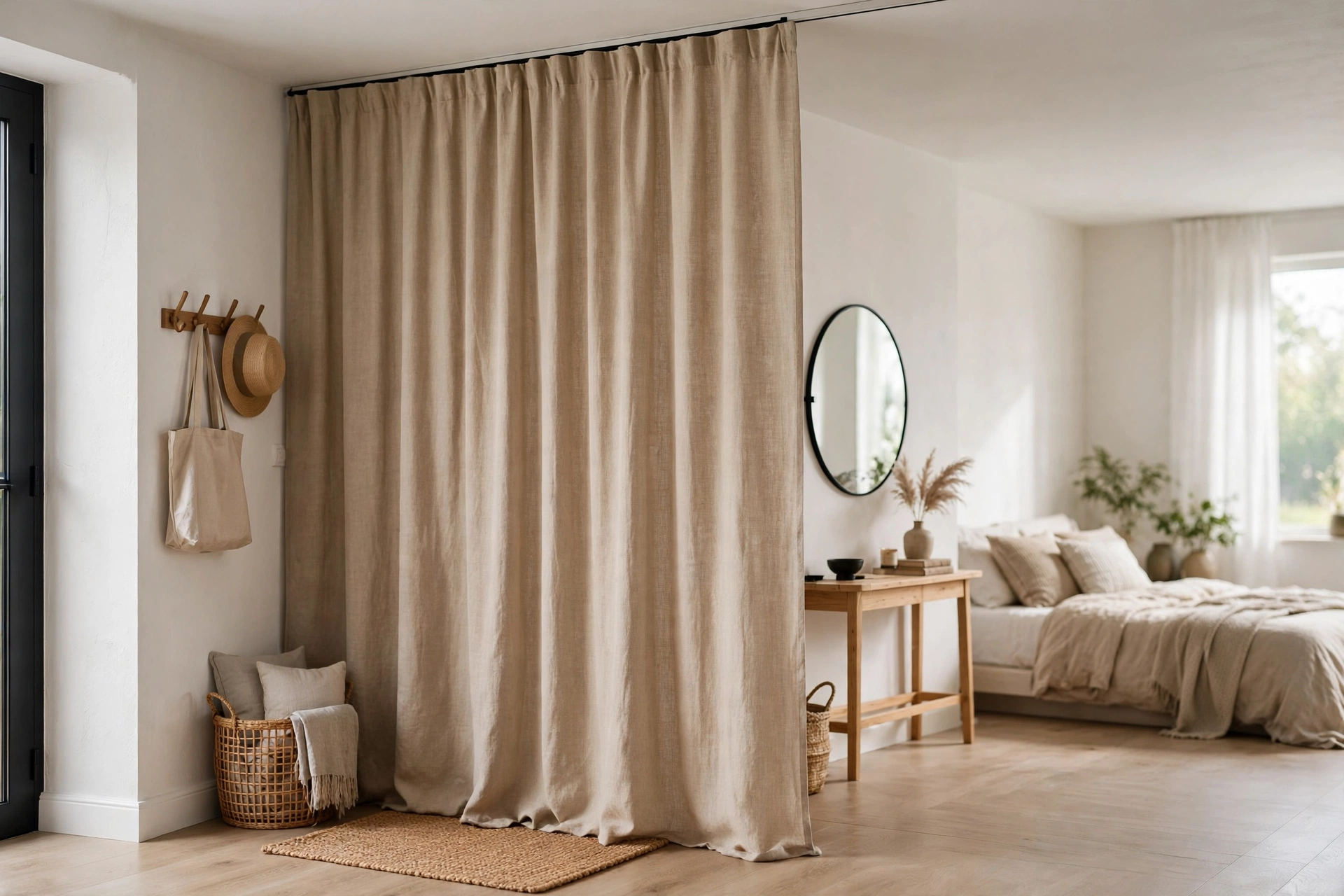
32. Fake a Foyer With a Curtain Panel
A ceiling-mounted curtain track ($20–$35) with a single linen panel creates the softest foyer imaginable — pull it closed when guests arrive, sweep it open daily. It hides the bed, muffles sound, and adds fabric warmth for less than dinner out. Choose a panel 1.5 times the track width for proper gathering. Pro tip: mount the track 2 inches below the ceiling, not at door-frame height — the extra inches make ceilings look taller and the “room” feel real.
Frequently Asked Questions
How do I make an entryway in a studio with no foyer?
Define it with a rug, a console or bench, and a mirror — those three elements signal “entryway” to the brain even with zero walls. For stronger separation, add a room divider screen, a curtain panel on a ceiling track, or a peel-and-stick wallpaper accent wall. The goal isn’t walls; it’s a visual pause between the front door and the living space.
What is the best furniture for a tiny entryway?
A slim console table (8–12 inches deep) or a storage bench (under 16 inches deep) covers 90% of tiny entries. If even those don’t fit, go vertical: a floating shelf, wall hooks, and an over-door rack. Measure your walkway first — you need 30 inches of clear passage, so furniture depth is whatever remains.
How do I keep my entryway organized?
Give everything a home within arm’s reach of the door: hooks for coats and bags, a tray for keys and wallet, a cabinet or baskets for shoes, and a wall sorter for mail. The system fails when categories mix — one hook per category beats one hook per person. Do a 60-second reset each evening and the entry stays guest-ready.
What should every entryway have?
The essentials: a mirror (last-look checks and light), a landing surface for keys (tray, shelf, or console), hooks or storage for coats and bags, shoe storage, and a rug that handles dirt. Lighting matters too — entries are often the darkest spot in a studio, so a lamp, sconces, or a pendant makes it feel welcoming instead of cave-like.
How can renters style an entryway without damage?
Lean don’t hang: floor mirrors, leaning art, and freestanding benches need zero holes. Use adhesive hooks and strips for lightweight mirrors and organizers, over-door racks for coats, peel-and-stick wallpaper for accent walls, and plug-in sconces or swag pendants for lighting. Everything in this list except hardwired fixtures is renter-safe.
How do I make a dark entryway feel brighter?
Mirrors are your best tool — place one opposite or adjacent to the nearest light source to double it. Add a lamp or sconces at face height (overhead light alone creates shadows), choose light-colored furniture and rugs, and keep the palette pale. A backlit LED mirror adds glow without any wiring, and glossy surfaces like a mirrored console bounce light further.
Final Thoughts
A great studio entryway isn’t about square footage — it’s about intention. The homes that feel welcoming the moment the door opens aren’t the biggest ones; they’re the ones where someone decided the threshold mattered. A mirror hung at the right height, a tray that always holds the keys, a rug that takes the beating so your floors don’t — these small decisions compound into the feeling of being truly home.
Start with the three non-negotiables: something to catch your keys, something to hang your coat, and a mirror to check yourself on the way out. Everything else — the art, the plant, the perfect scent — layers on over time. Before long, those three feet by the front door will work harder than any other spot in your studio, greeting you kindly at the end of every single day.