38 Japandi Studio Apartment Ideas for Calm, Balanced Living
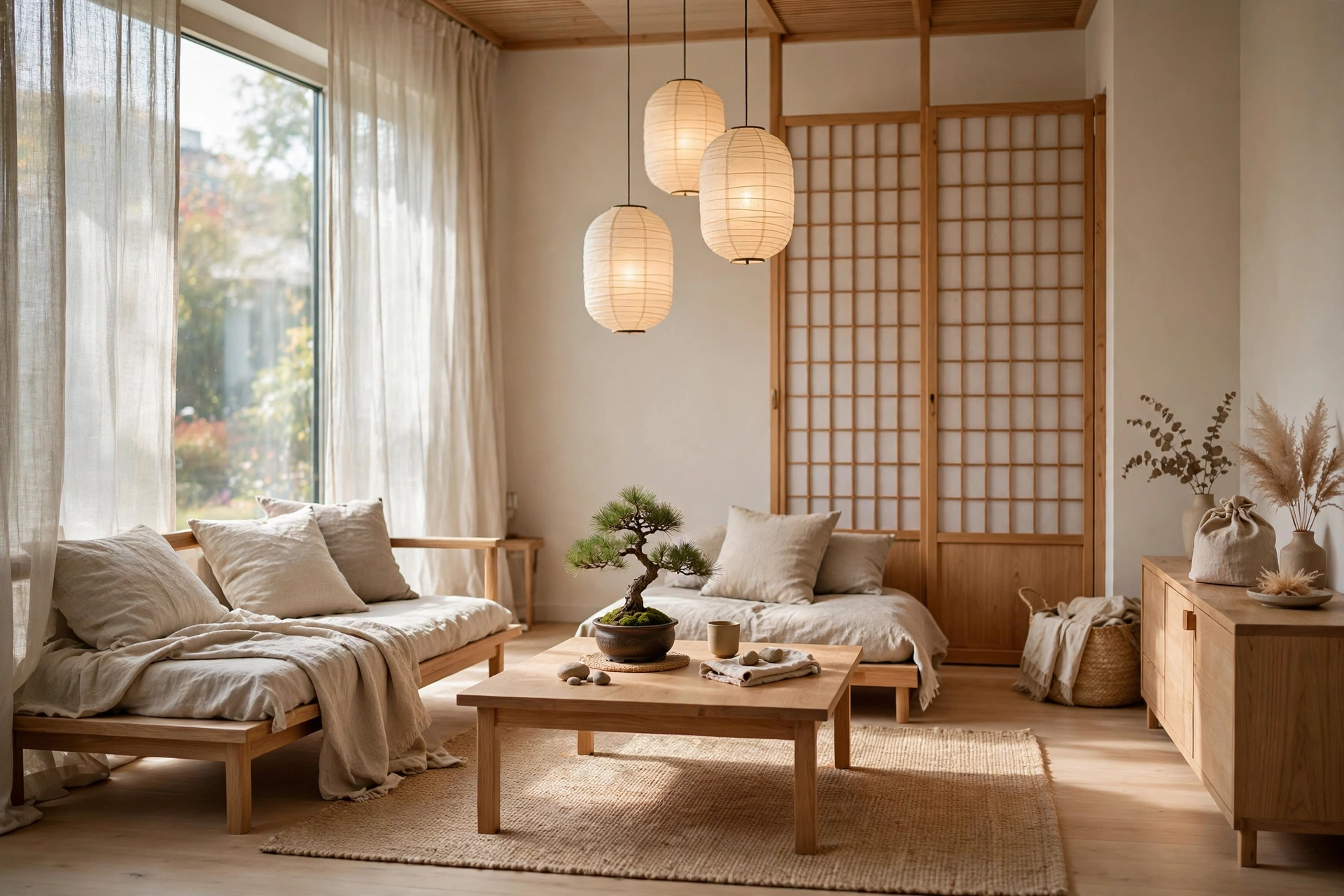
Japandi style is where Japanese wabi-sabi meets Scandinavian hygge, and the result might be the most studio-friendly aesthetic on the planet. Born from two cultures that revere simplicity, natural materials, and craftsmanship, Japandi strips a small space down to what matters: light wood, soft neutrals, low profiles, and breathing room. Nothing shouts. Everything earns its place. For a studio apartment, where every square foot has to work and every visual distraction costs you calm, this philosophy is pure gold. These 38 Japandi studio apartment ideas show you how to layer warm minimalism into one open room, from limewashed walls and shoji-inspired dividers to wabi-sabi ceramics and floor-level living. Whether you rent or own, the look is achievable on a real budget, and it never goes out of style because it was never chasing trends in the first place.
Walls, Floors & Light
1. Warm White Limewash Walls
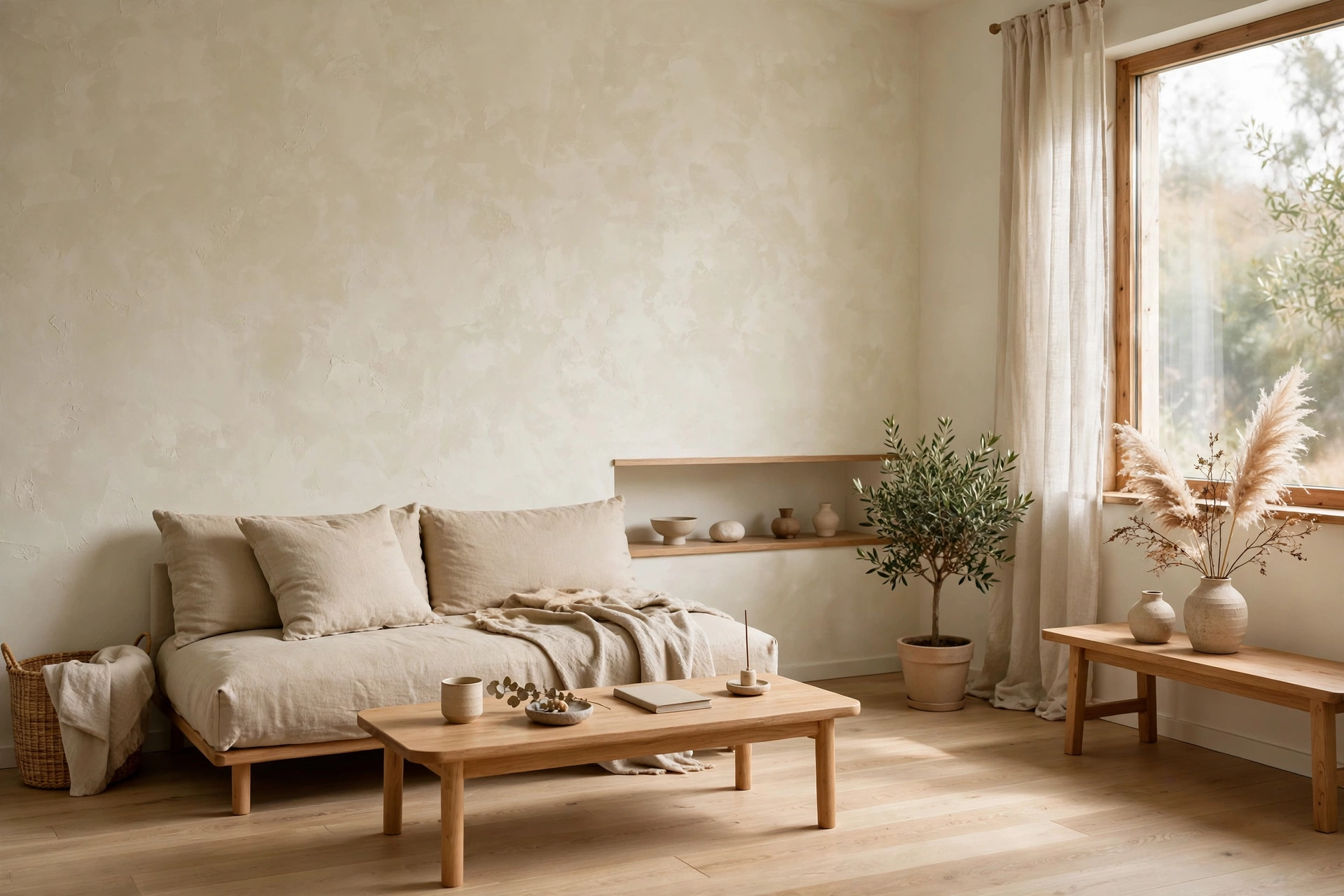
Japandi walls are never stark white. A warm white limewash ($40 to $70 per gallon) gives walls a soft, chalky depth that glows in daylight and feels like exhaling. The subtle movement in the finish hides imperfections, which is a gift in rental apartments with tired drywall. Roll it on over existing paint with no primer drama, and the whole studio instantly reads calmer. Pair it with light wood tones and the room feels sun-warmed even on gray days. Pro tip: test the limewash on a large poster board first and move it around the room for a day, because warm whites shift dramatically between morning and evening light.
2. Light Oak Flooring
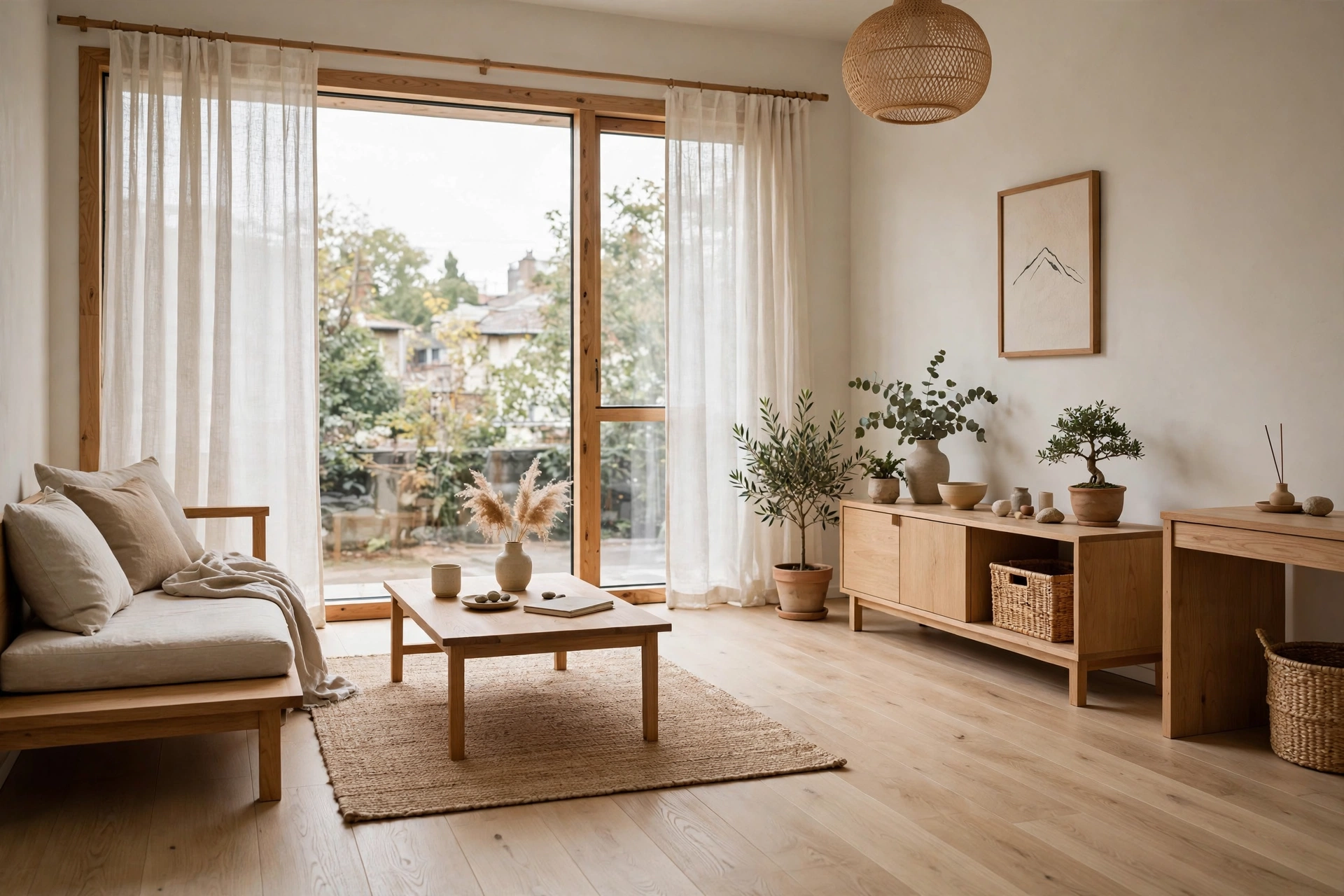
The floor is Japandi’s foundation, and light oak is its signature. Pale wood floors ($3 to $7 per square foot for quality laminate or engineered oak) bounce light around a studio and make the footprint feel twice as generous. If new floors are not in the cards, a large light-toned area rug over existing flooring gets you 80 percent of the effect. Keep the finish matte or satin, never glossy, because Japandi is about quiet texture, not shine. Run planks toward the window to pull the eye outward. Pro tip: renters can lay light oak-look vinyl planks as a floating floor with zero glue, then lift them out at move-out with the deposit intact.
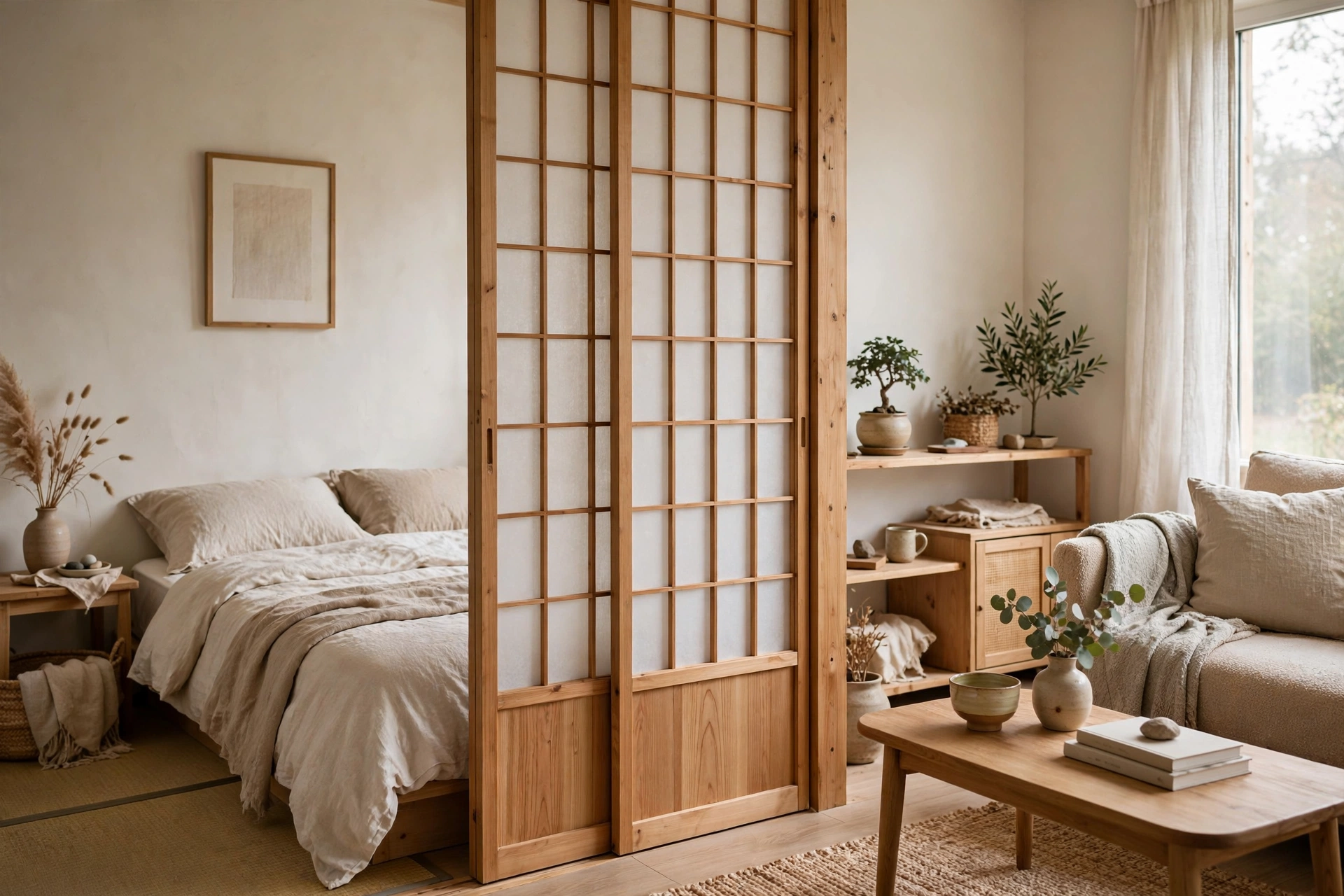
3. Shoji Screen Divider
A shoji screen is the most poetic room divider ever invented: translucent rice paper in a light wood grid that separates zones while sharing light. A three-panel screen ($90 to $250) can carve a sleeping nook out of a studio without a single dark corner, and it folds flat when you want the room open again. It is the Japanese answer to our studio apartment layout ideas, and it looks like art from both sides. Choose paper panels for authenticity or frosted acrylic for durability with kids and pets. Pro tip: backlight the screen with a floor lamp behind it in the evening, and the whole panel glows like a giant lantern.
4. Paper Lantern Pendant
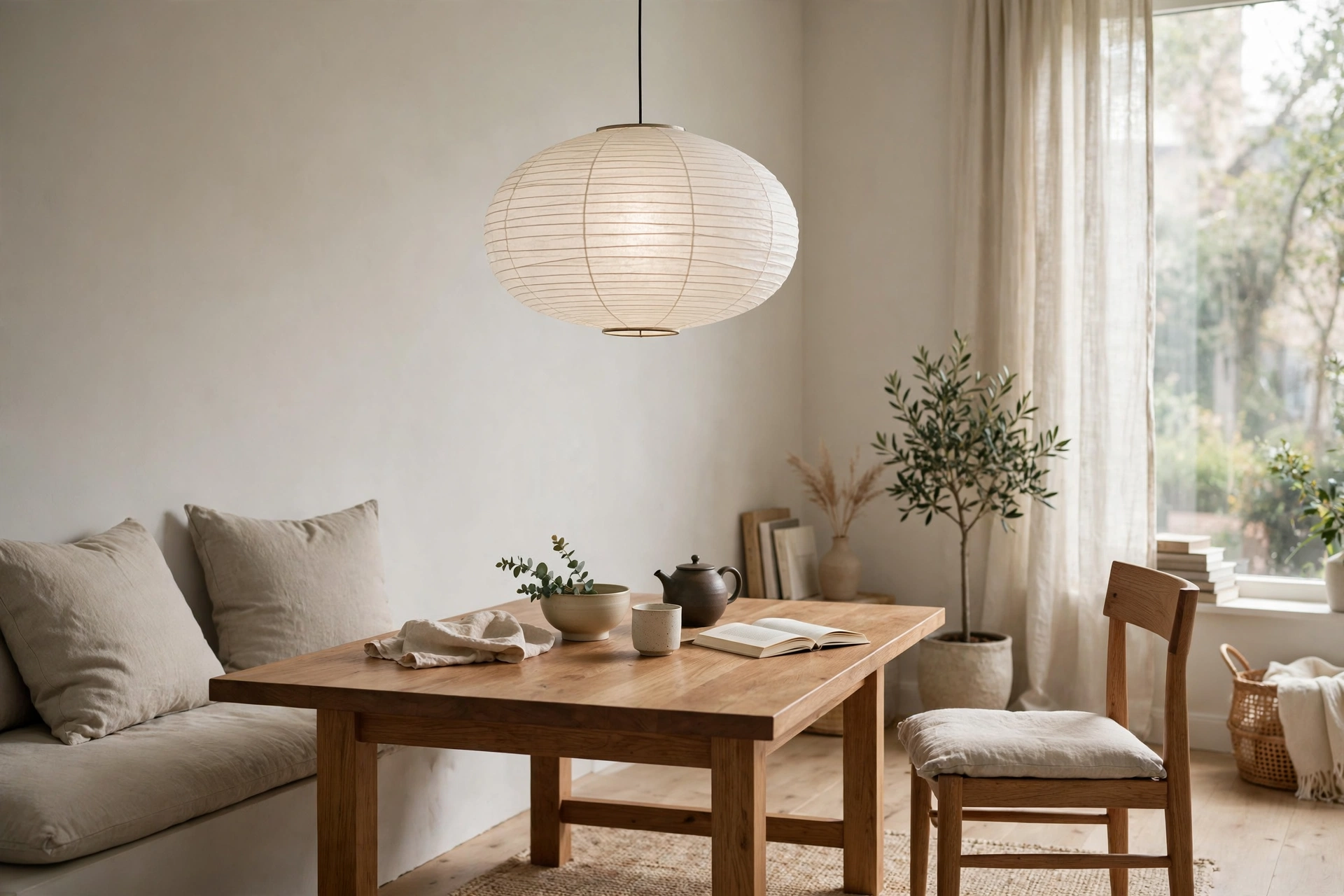
Nothing says Japandi lighting like a paper lantern pendant. A round washi-paper shade ($25 to $80) diffuses light into a soft, shadowless glow that flatters everything and everyone in the room. Hang one low over the dining spot or cluster three at staggered heights over the living zone. The shade practically disappears in daylight, keeping sightlines clean, then becomes the room’s moon at night. It is the gentlest statement light you can buy, and it folds flat for storage. Pro tip: use a warm 2700K LED bulb and a plug-in pendant cord with a dimmer ($20) so renters get the full lantern mood with zero electrician.
5. Low Platform Bed
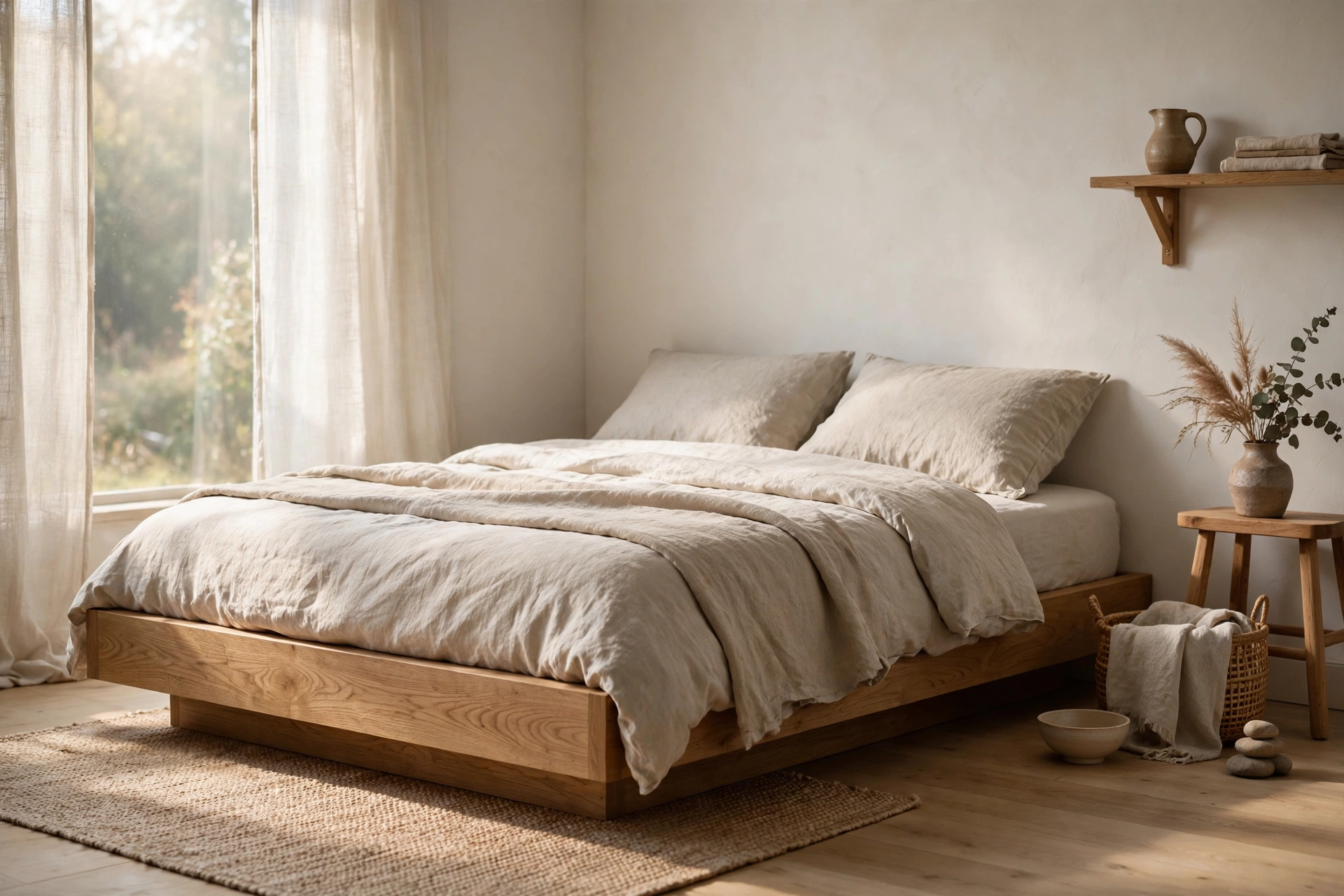
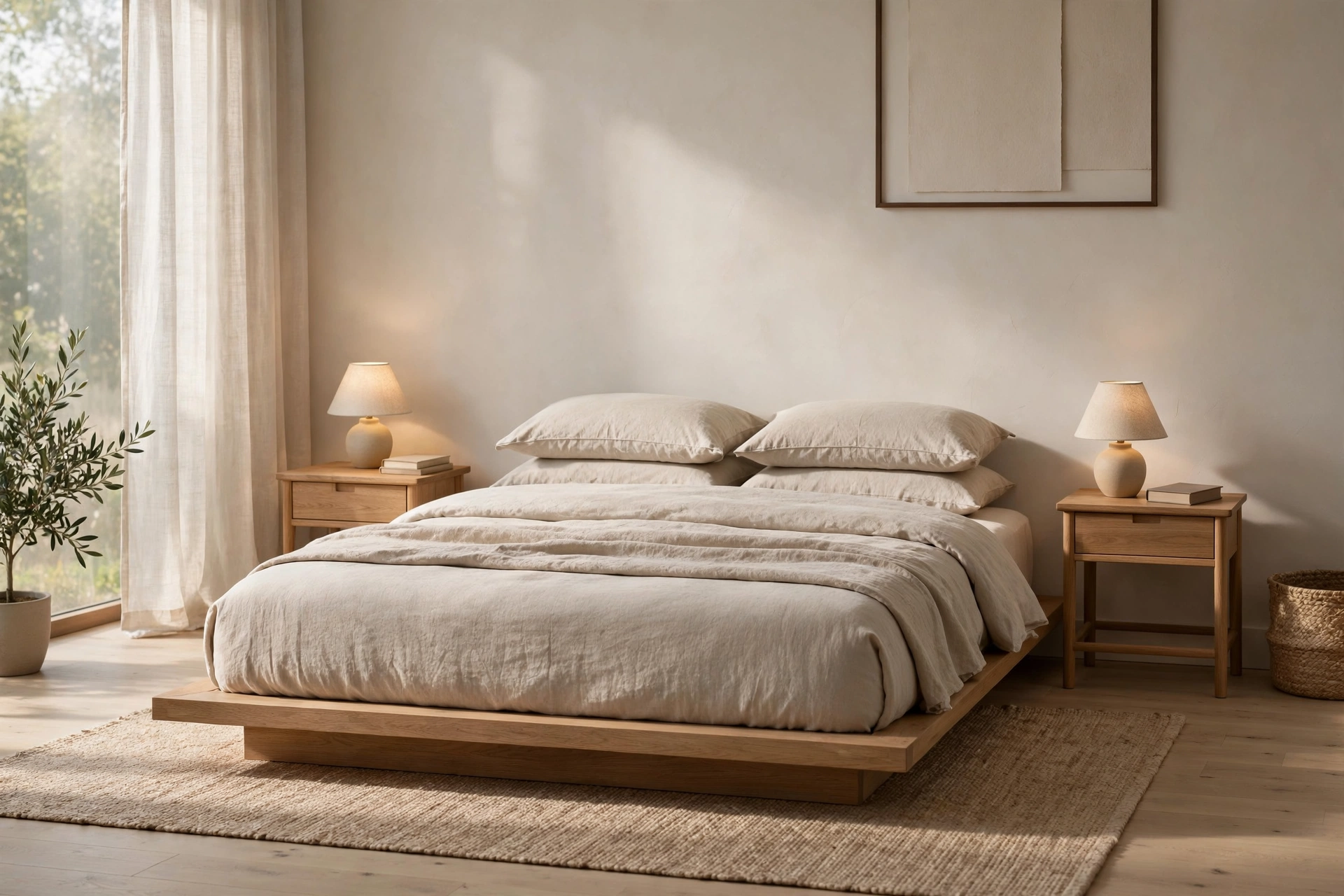
The low platform bed is Japandi’s anchor: a simple oak or pine frame sitting just inches off the floor ($150 to $400), echoing the Japanese futon tradition while working with a standard mattress. Sleeping low changes the whole room’s proportions, making ceilings feel taller and the studio feel more grounded. Skip the bulky headboard and let a limewashed wall or a single ink-brush print do the talking behind it. Add under-bed drawers and the platform doubles as storage. Pro tip: keep at least 4 inches of clearance under the frame for airflow, because mattresses on solid platforms trap moisture without ventilation.
6. Tatami Area Rug
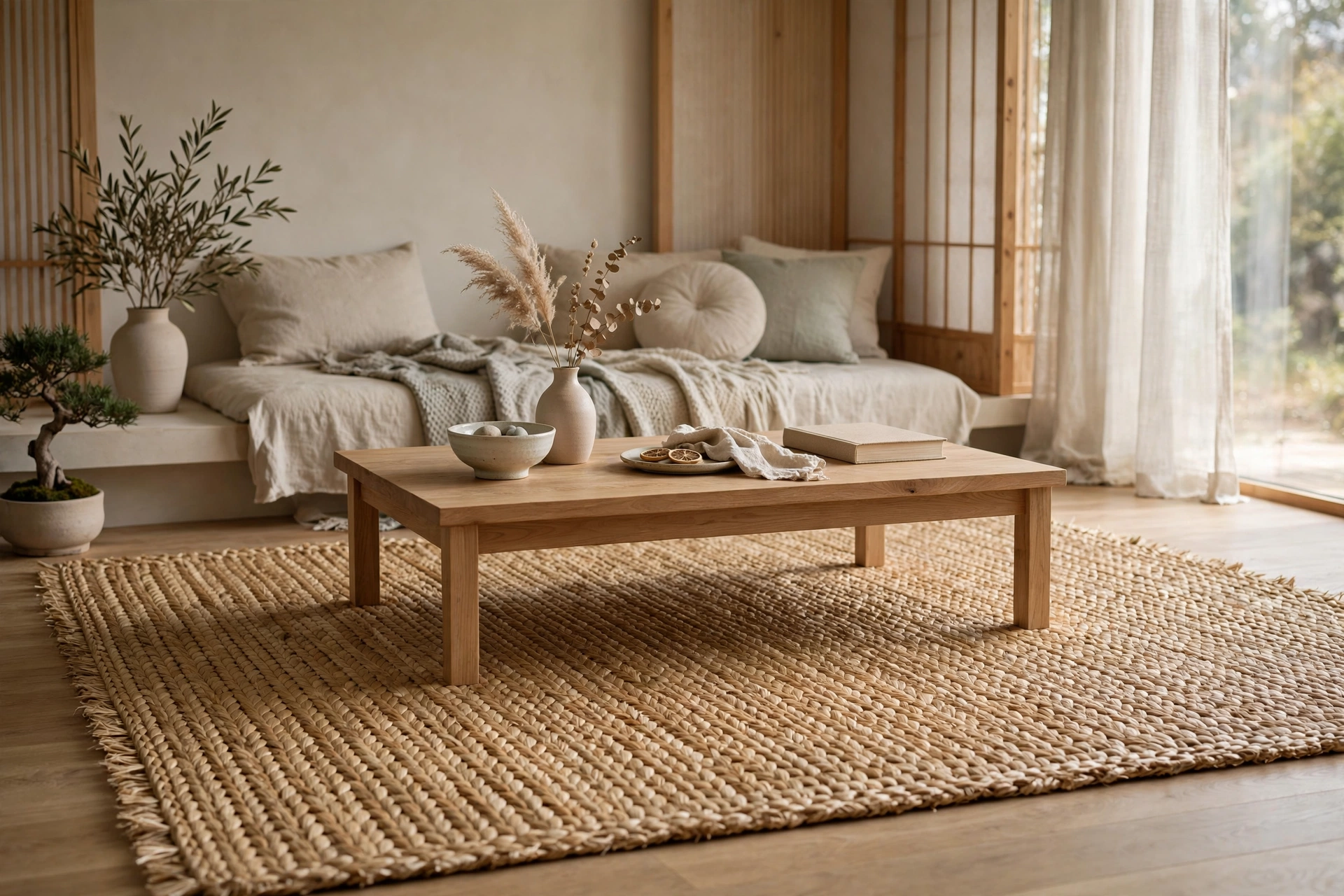
A tatami-style rug brings the Japanese floor tradition into a studio without committing to real tatami mats. Woven rush or grass-textured rugs ($60 to $180 for a 5×7) add that distinctive linear texture underfoot and smell faintly of hay, which is weirdly wonderful. Layer one under the coffee table or beside the platform bed to define the zone. The natural fibers age gracefully, developing a honeyed patina that wabi-sabi lovers prize. Pro tip: rotate a tatami-style rug every few months, since natural rush fades unevenly in strong sun and rotation keeps the tone even.
7. Linen Curtain Panels
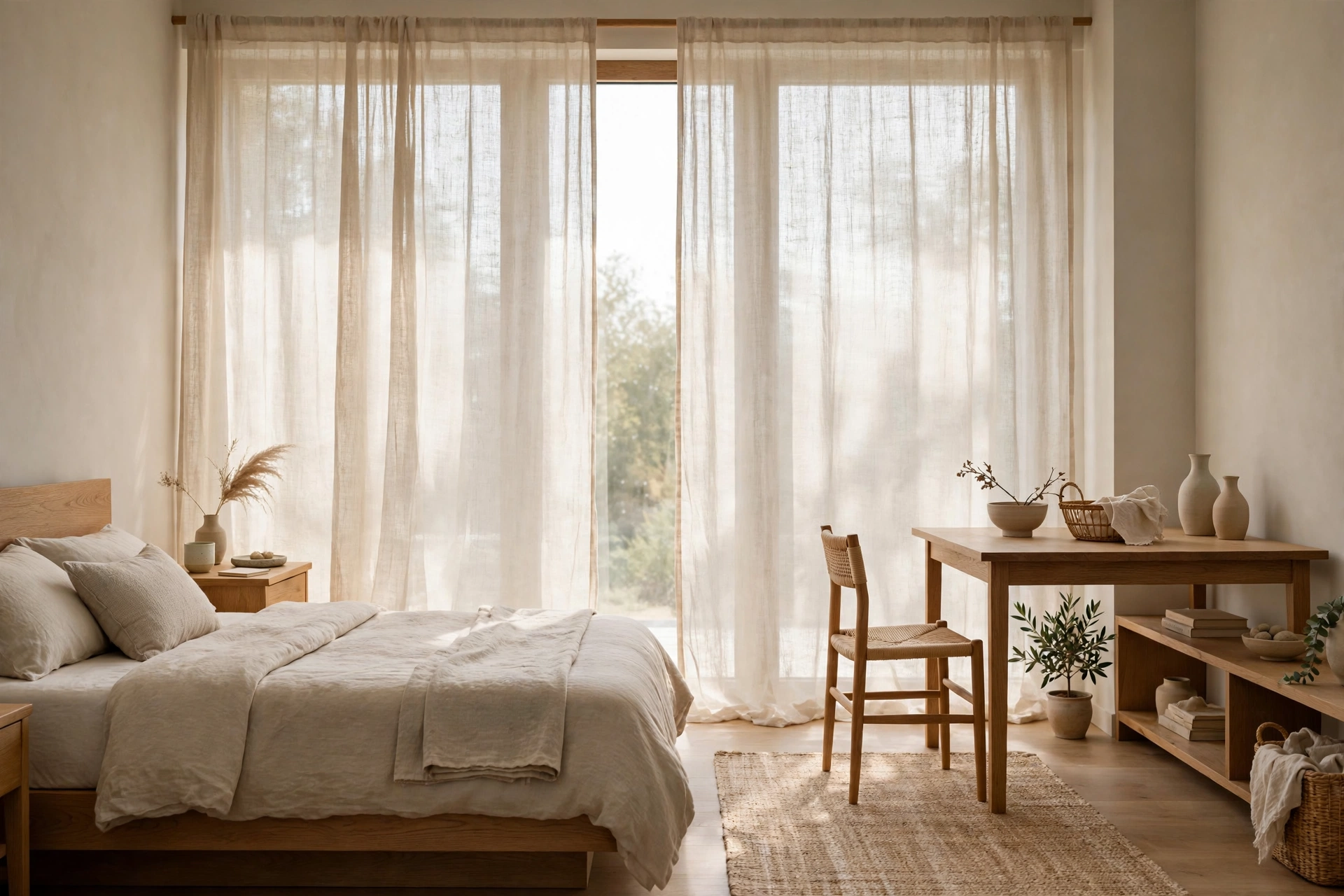
Japandi windows wear linen, and nothing else. Unlined natural linen panels ($30 to $60 per panel) filter daylight into a soft, even wash while keeping the room private, and their gentle wrinkles are the whole point. Hang them on a slim black or wood rod mounted close to the ceiling, and let them puddle just slightly on the floor for that relaxed, unfussy drape. In a studio, where the window wall is often the only view, linen curtains turn glass into a glowing backdrop. Pro tip: buy panels 2 inches wider than you think you need, because linen relaxes and narrows slightly after the first wash.
8. Soft Daylight Layering
Japandi treats daylight as a building material. Layer sheer linen closest to the glass with a heavier oatmeal drape behind it, so you can tune brightness through the day like a dimmer switch made of fabric. This double layer ($70 to $140 total per window) also adds acoustic softness, which matters in a studio where hard surfaces bounce every sound. The result is the diffused, shadow-soft light you see in Kyoto townhouses and Copenhagen flats alike. Pro tip: face your desk or reading chair toward the window rather than away from it, because Japandi is about living with the light, not blocking it.
Low, Honest Furniture
9. Low Oak Sofa
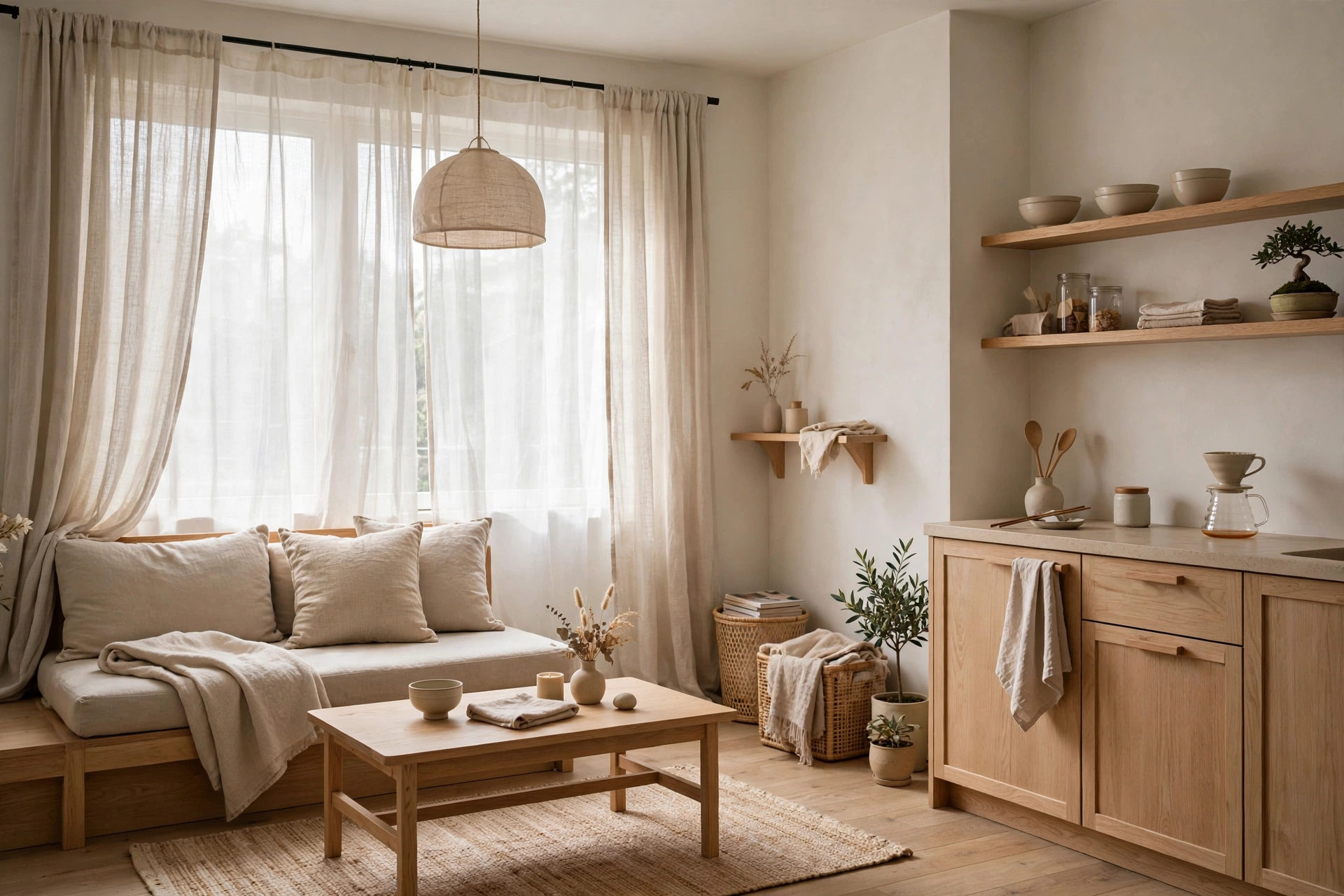
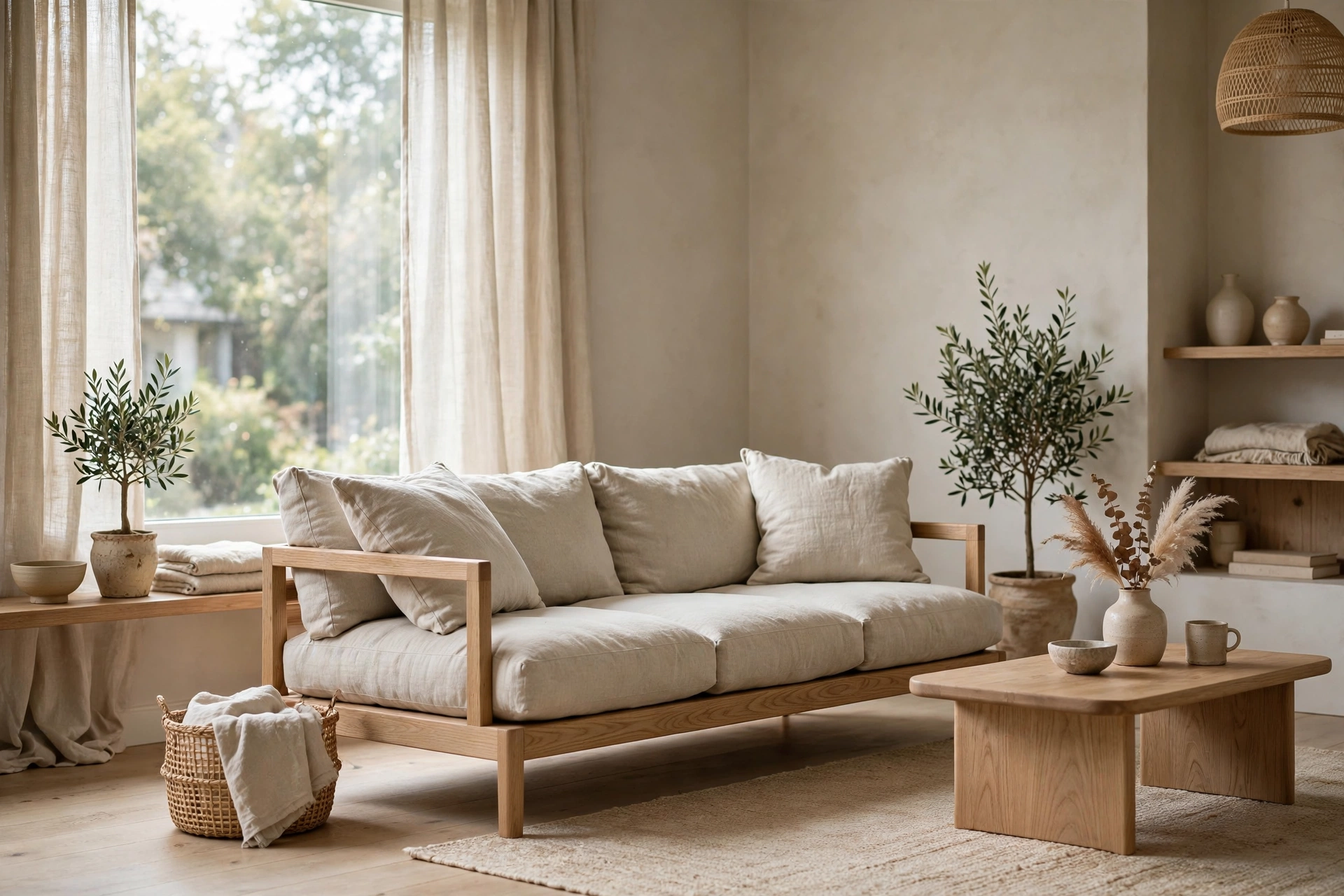
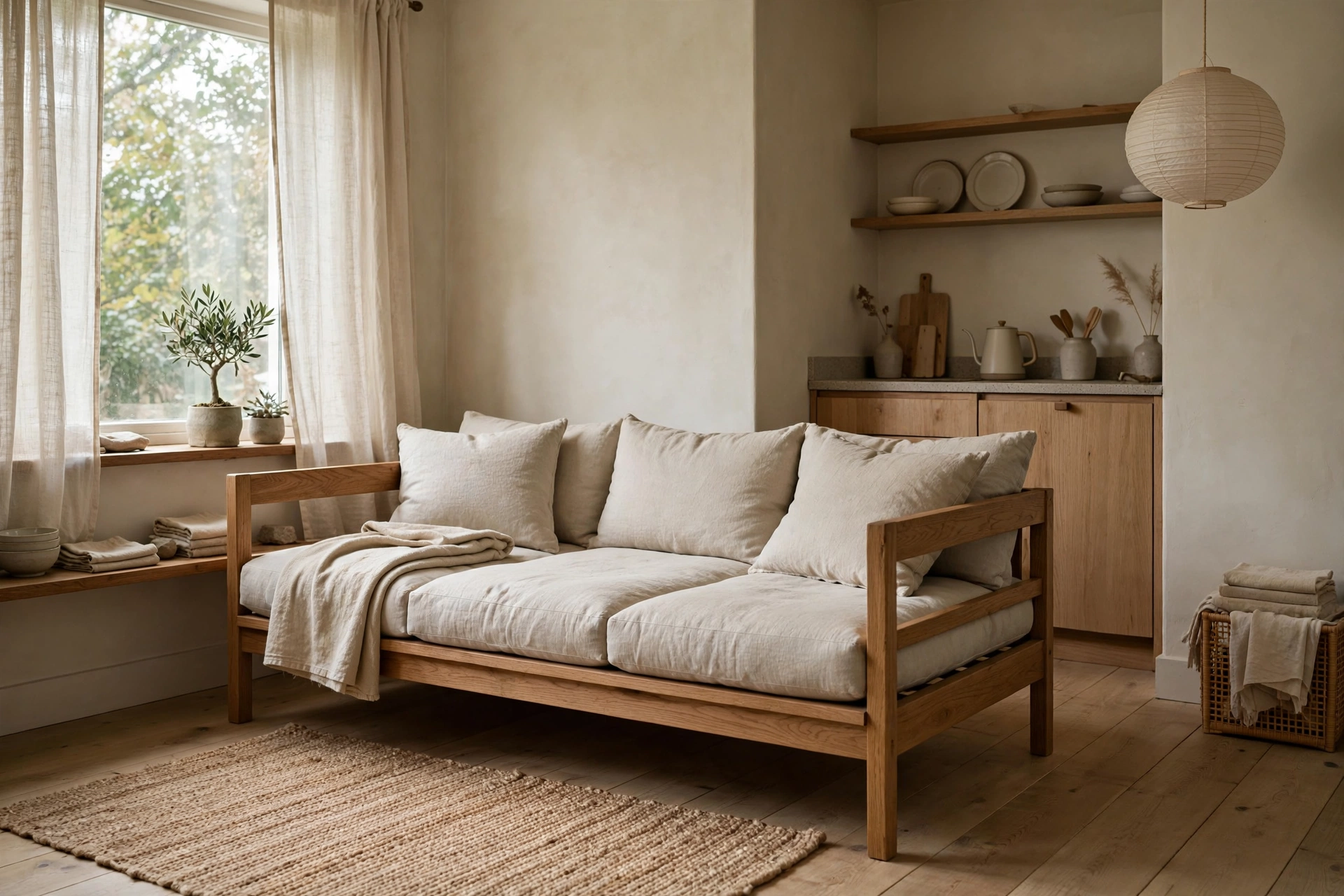
The Japandi sofa sits low, with clean lines, slim wooden legs, and cushions in oatmeal or greige. A compact two-seater ($400 to $900) keeps the sightline across a studio open, which is the single biggest trick for making one room feel spacious. Look for solid oak frames and removable linen-look covers, because washable covers are non-negotiable in real life. The low back doubles as extra seating when friends perch on it. Pro tip: measure your sofa’s back height against your windowsill before buying, because a sofa that sits below the sill keeps the whole wall of light uninterrupted.
10. Solid Wood Coffee Table
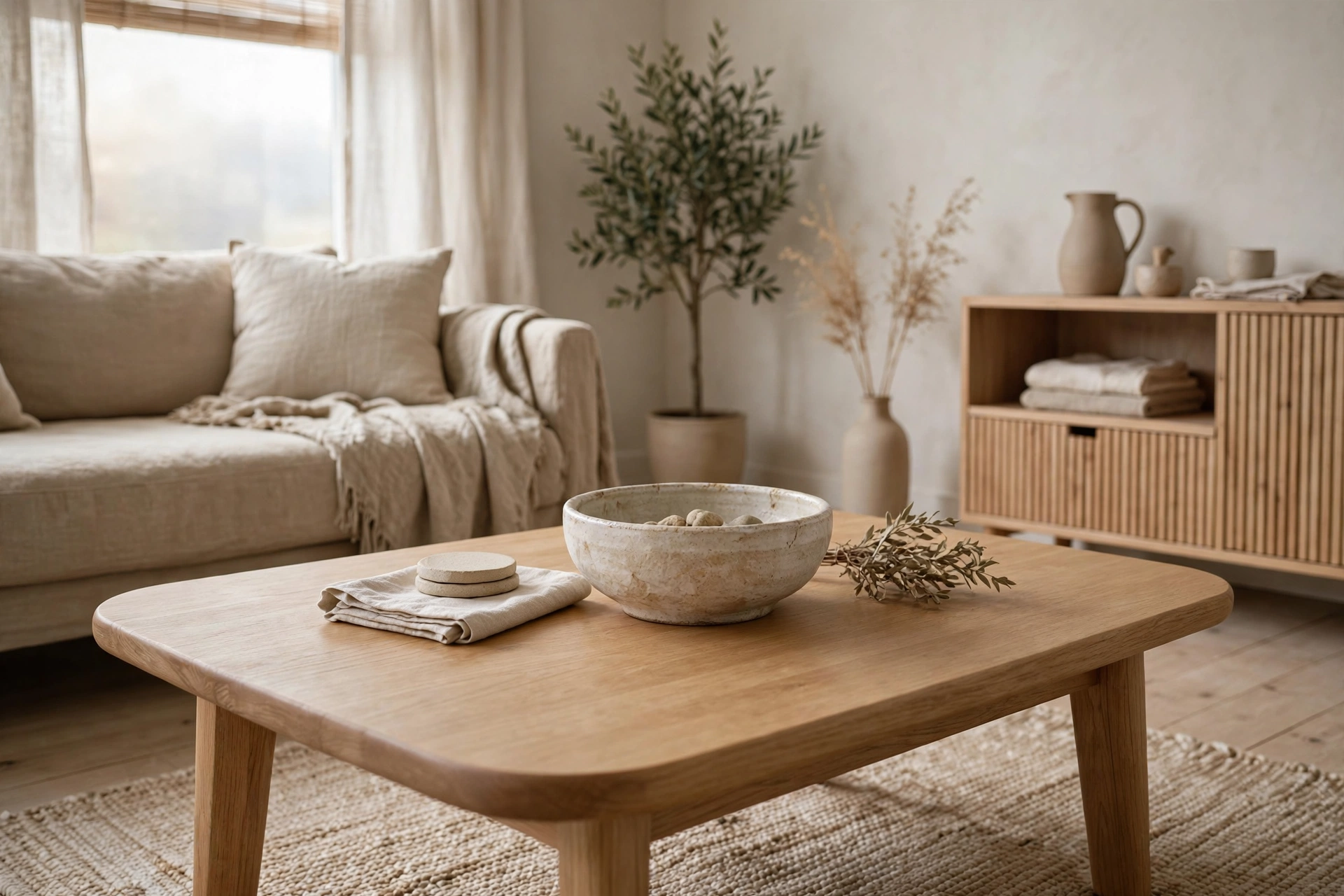
One beautiful slab of wood beats a fussy table every time. A solid oak or ash coffee table with soft rounded edges ($120 to $350) grounds the living zone and shows off grain that no veneer can fake. Keep the styling ruthlessly simple: a ceramic vase, a stack of two design books, and empty space. In Japandi, the empty space on the table is as designed as the objects. Choose a lower height than standard, around 12 to 14 inches, to match low seating. Pro tip: oil a solid wood coffee table twice a year with hardwax oil ($15), and water rings and scratches become a five-minute fix instead of permanent damage.
11. Curved Accent Chair
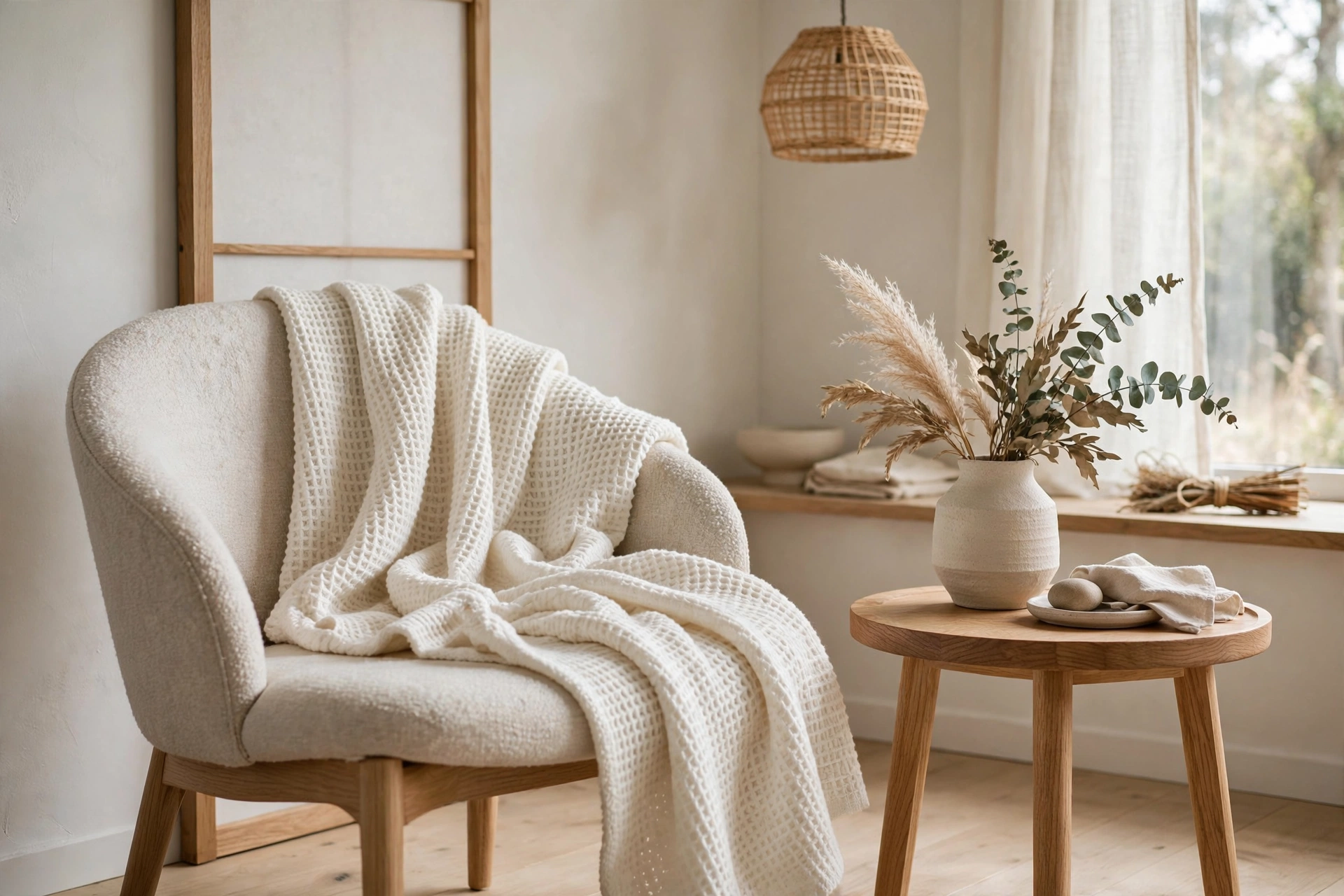
Japandi curves are quiet, never loud: a barrel-back or gently curved accent chair in bouclé or light oak ($180 to $450) softens all the straight lines of low furniture. One is enough in a studio. Tuck it into a reading corner with a paper floor lamp and a small side table, and you have a retreat inside the retreat. The curved silhouette echoes Japanese joinery and Scandinavian organic modernism at once. Pro tip: swivel-base curved chairs earn their footprint twice over, because one chair can face the sofa for conversation or spin toward the window for solo reading.
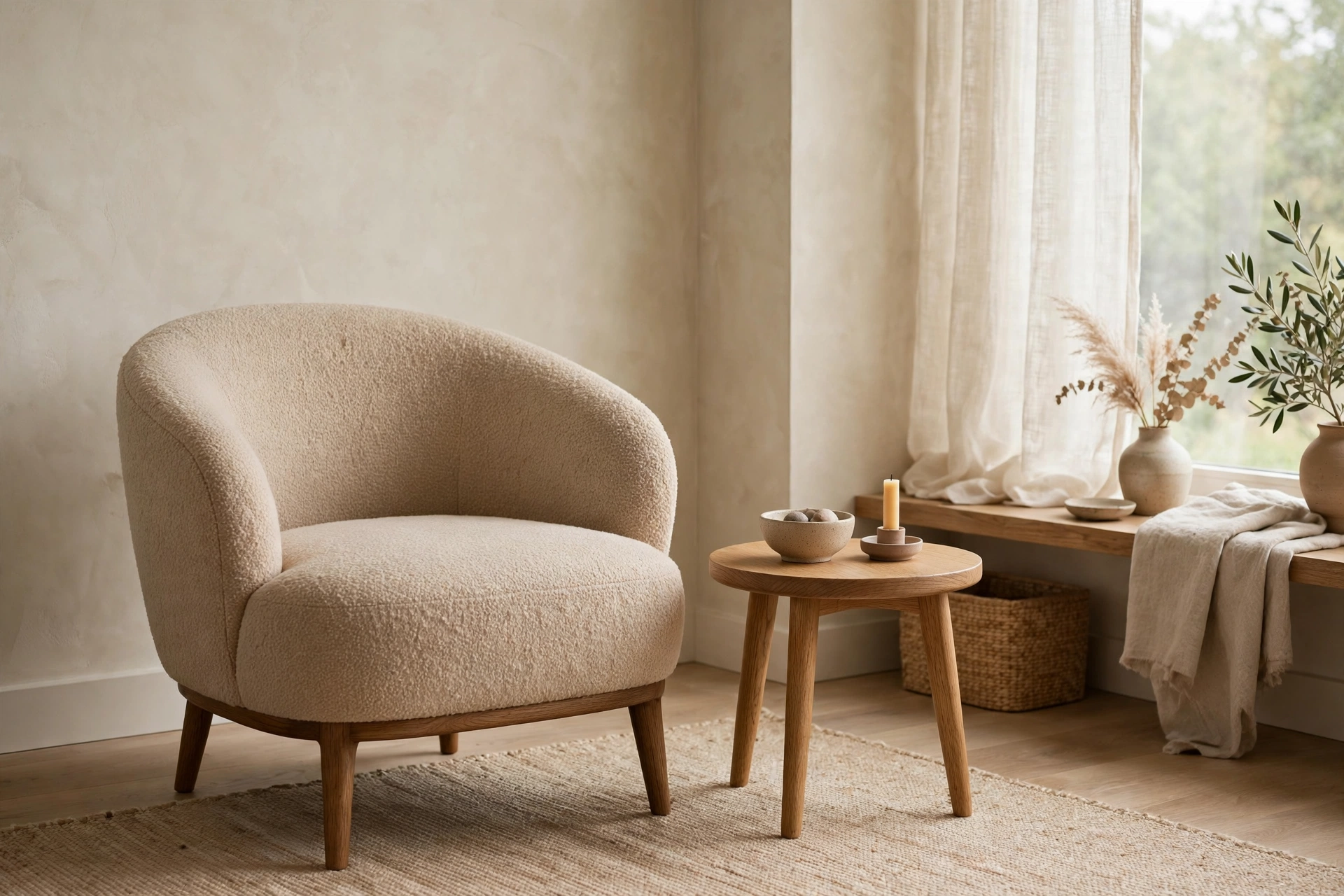
12. Compact Oak Dining Set
Dining in a Japandi studio means a small round or square oak table ($150 to $400) with two simple chairs that tuck completely underneath. Round is kinder in tight quarters, with no corners to bruise hips in the night. The set lives against the brightest wall by day and pulls out for dinner guests by night. Match the wood tone to your other oak pieces within one shade, because Japandi harmony comes from tonal consistency, not exact matching. Pro tip: choose dining chairs under 18 inches wide, since standard 20-inch chairs eat a surprising amount of floor in a 400-square-foot studio.
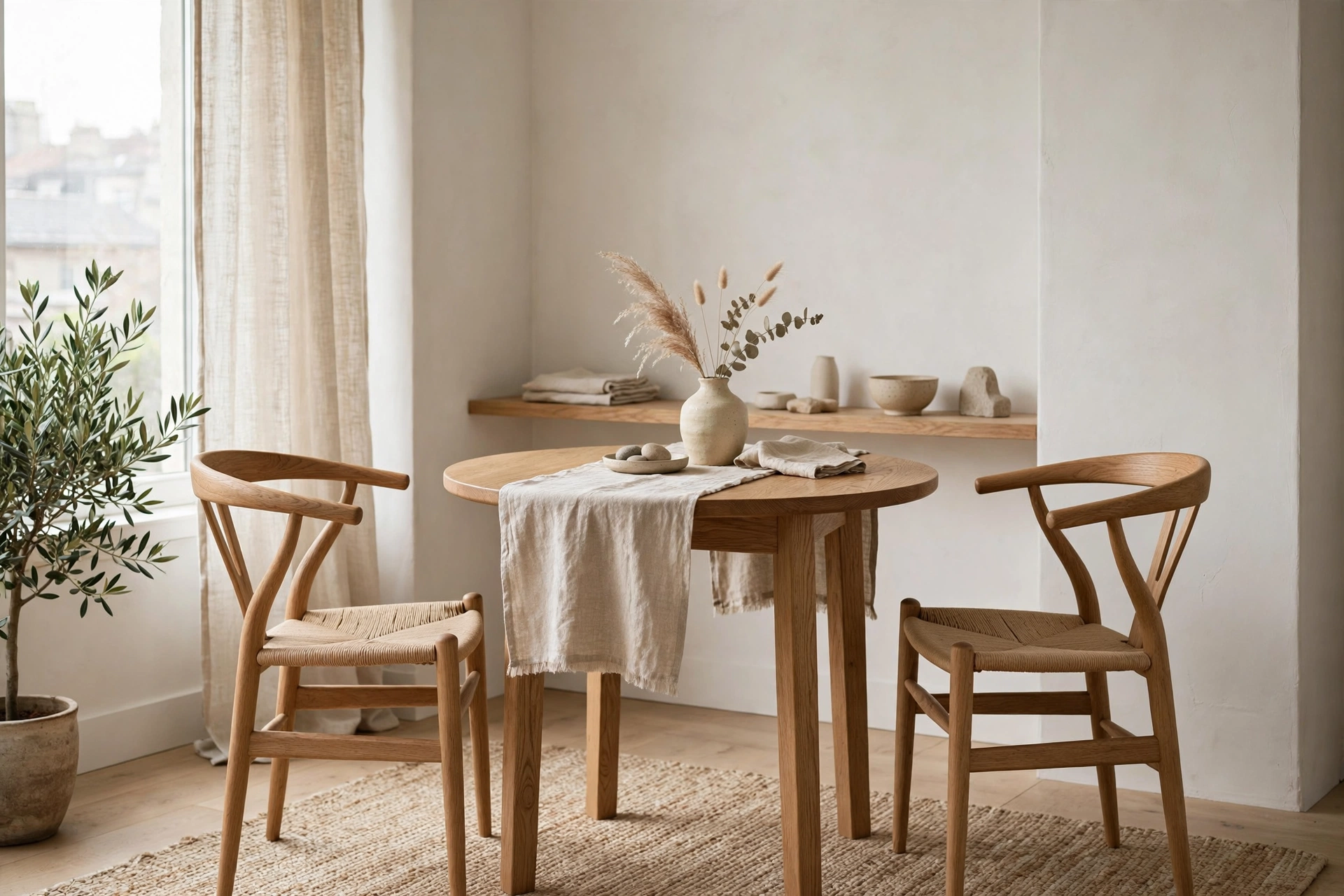
13. Floating Wood Shelves
Floating oak shelves ($25 to $60 each) add storage without touching the floor, which keeps a studio feeling airy. Mount two above the desk or beside the bed for books, a bonsai, and three perfect ceramics, and stop there. Japandi shelving is edited: every object visible, nothing crowded. The floating look suits the style’s love of lightness, and installation is a one-hour job with a level and a stud finder. Pro tip: leave 40 percent of every shelf empty on purpose, because negative space is the luxury in Japandi, and a packed shelf reads as clutter no matter how pretty the objects.
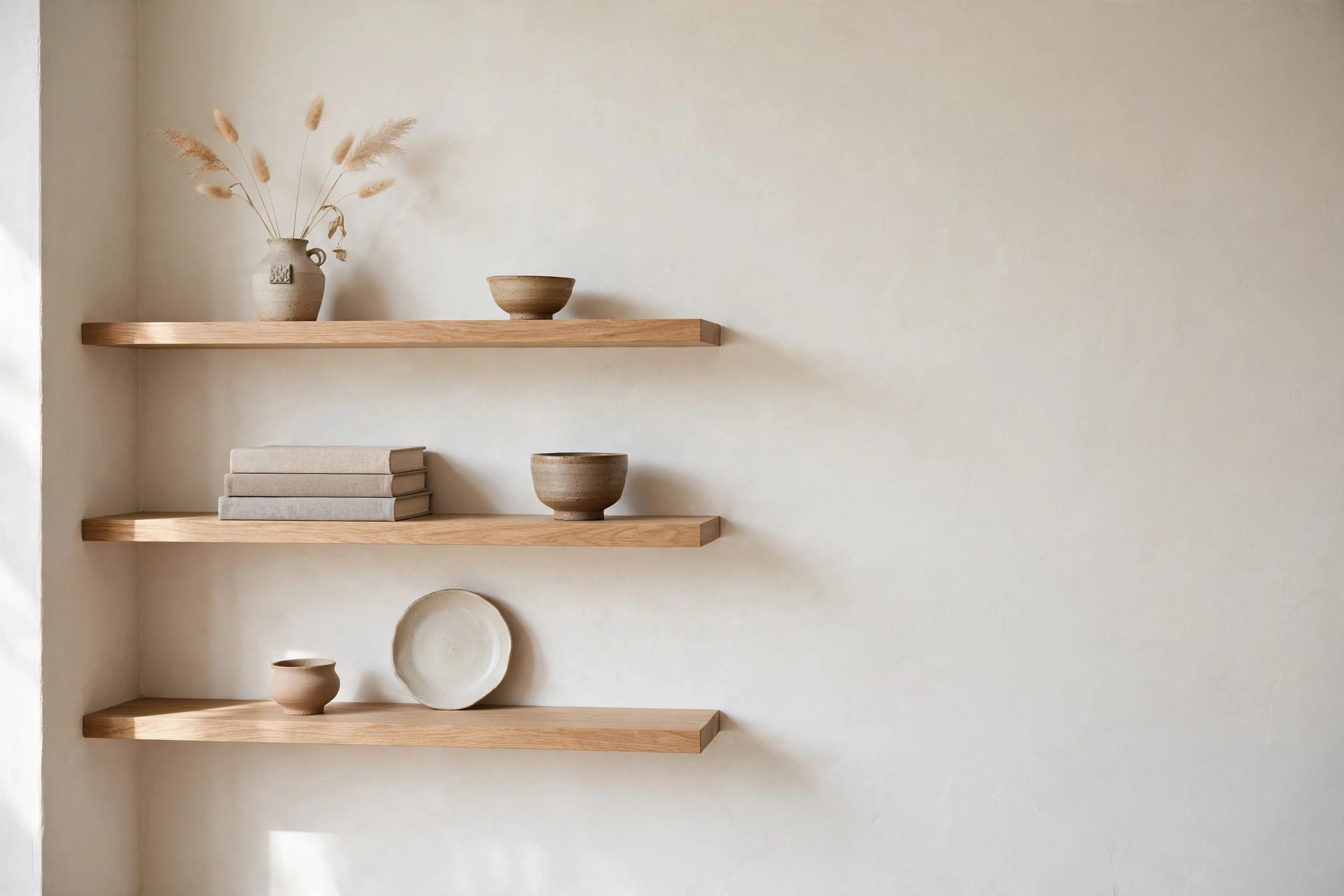
14. Low Teak Sideboard
A low sideboard in teak or oak ($250 to $600) is the hardest-working piece in a Japandi studio: media console, linen storage, and display surface in one long, calm line. Keep the top styled to three things, a lamp, a vase, and one sculptural object, and let the closed storage swallow the chaos of cables, chargers, and paperwork. Sliding doors suit the Japanese influence and never swing into tight walkways. Pro tip: a sideboard placed perpendicular to a wall doubles as a zone divider between living and sleeping areas, a trick borrowed from our Scandinavian studio ideas.
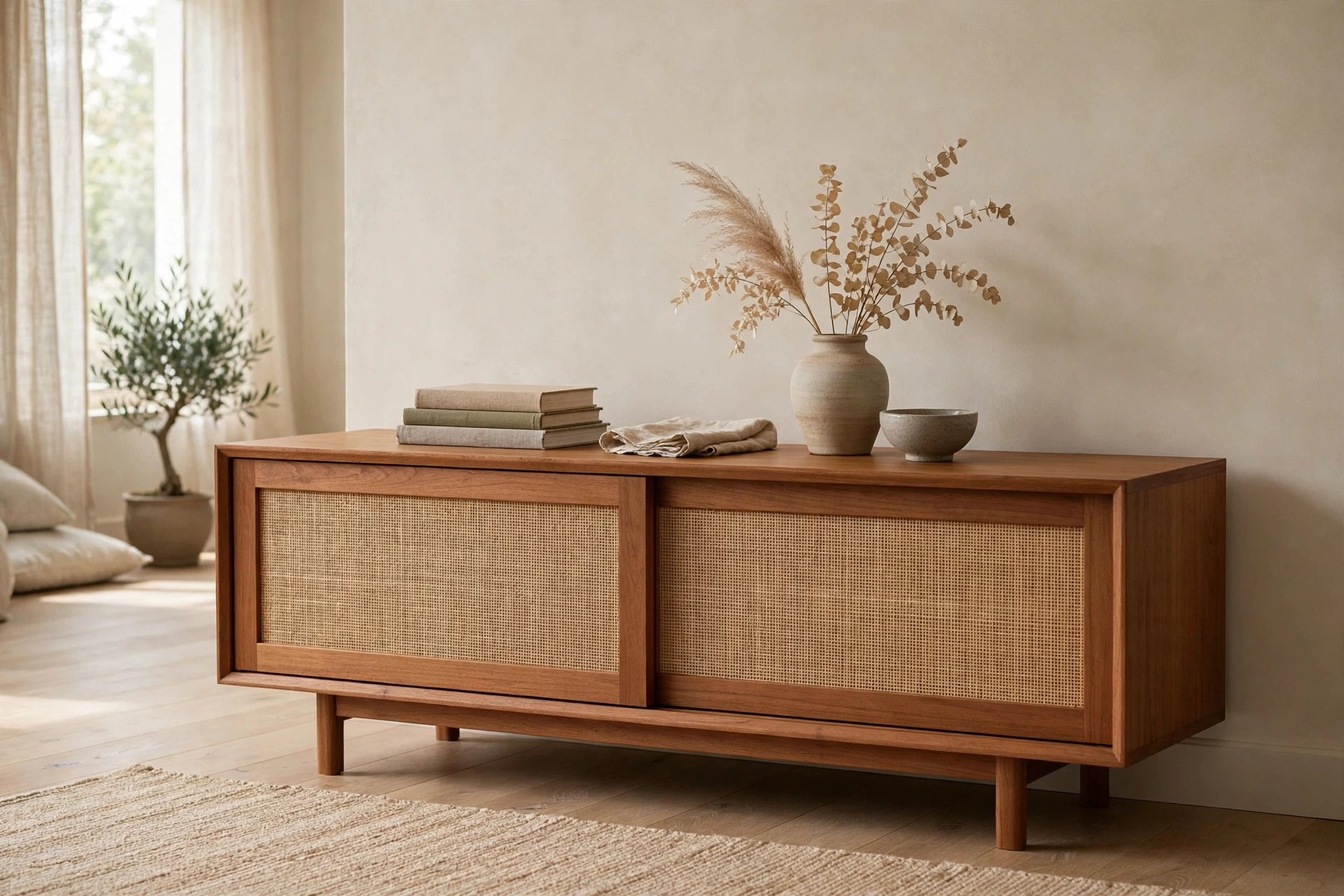
15. Floor Cushion Seating
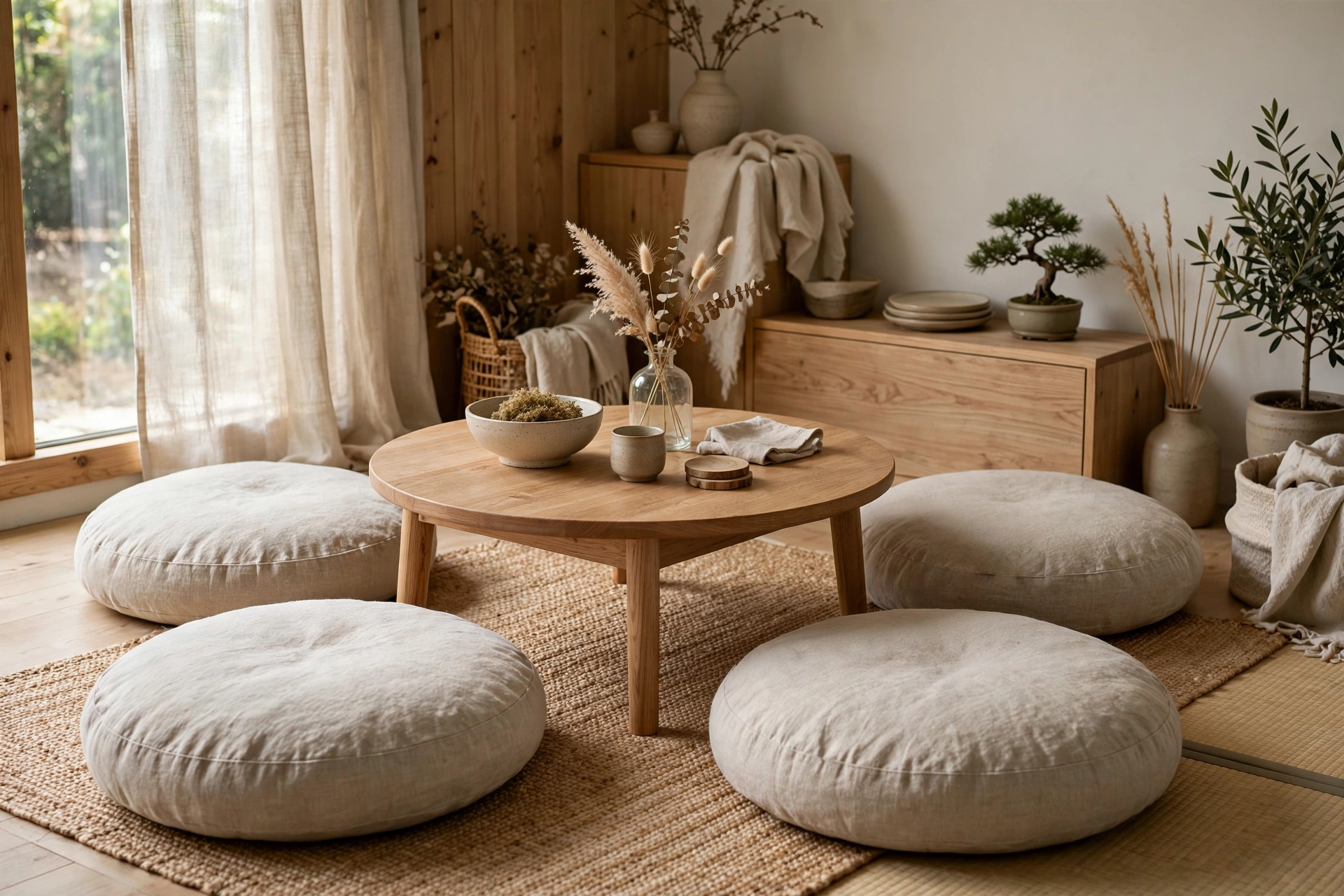
Floor cushions, or zabuton, are Japan’s gift to small-space hosting. Four thick cotton cushions ($20 to $45 each) stack in a corner when not needed and fan out around the coffee table when friends come over, seating six where chairs could never fit. Choose natural cotton canvas in stone or sand tones, and the stack itself looks like decor. They are also the fastest way to make a studio feel welcoming rather than precious. Pro tip: store the cushion stack under a console or inside an open basket so the pile reads as intentional styling, not leftover clutter.
16. Paper Floor Lamp
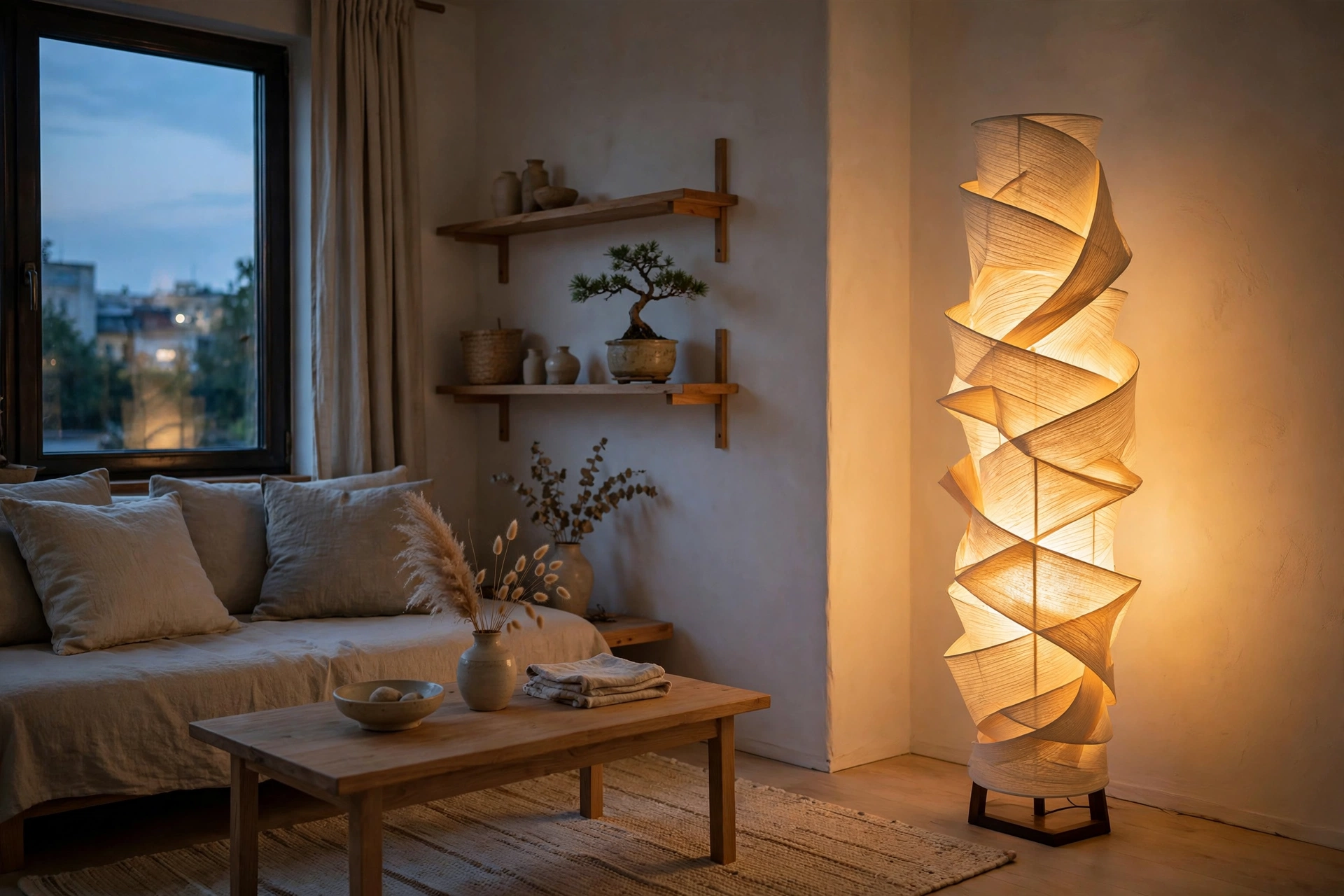
A washi-paper floor lamp ($60 to $150) is sculpture by day and a glowing column by night. Place one in the dark corner every studio has, beside the reading chair or behind the shoji screen, and watch the corner dissolve into warm light. The paper shade softens LED glare into something candle-like, which is exactly the evening mood Japandi wants. It is feather-light, so rearranging for guests takes seconds. For more corner-lighting strategies, see our studio apartment lighting ideas. Pro tip: put the floor lamp on a smart plug ($12) and schedule it to fade on at sunset, so the studio greets you with glow every evening.
Textiles in Nature’s Palette
17. Oak Bedside Tables
Matching is optional in Japandi, but calm is not. Two small oak bedside tables ($60 to $140 each), or one table and one stacked pile of design books, keep the sleeping zone symmetrical and serene. Each surface holds only a lamp and a small dish for glasses, because a nightstand is not a storage unit. The light wood keeps the bed area feeling open even when the table sits close to a wall. Pro tip: if the bed sits against a wall on one side, use a wall-mounted oak shelf instead of a second table, since it frees floor space for your feet in the night.
18. Multifunction Daybed
In a true one-room studio, a daybed ($300 to $700) is the smartest single purchase: sofa by day, guest bed by night, reading nook always. Choose a simple oak frame with a firm twin mattress and dress it like a sofa with a tailored cover and cushions, so it never reads as a bed during the day. Japanese-inspired daybeds sit lower than Western ones, which keeps the room’s sightlines long. Pro tip: a trundle drawer under the daybed swallows guest bedding, turning the whole setup into a self-contained guest room that vanishes by morning.
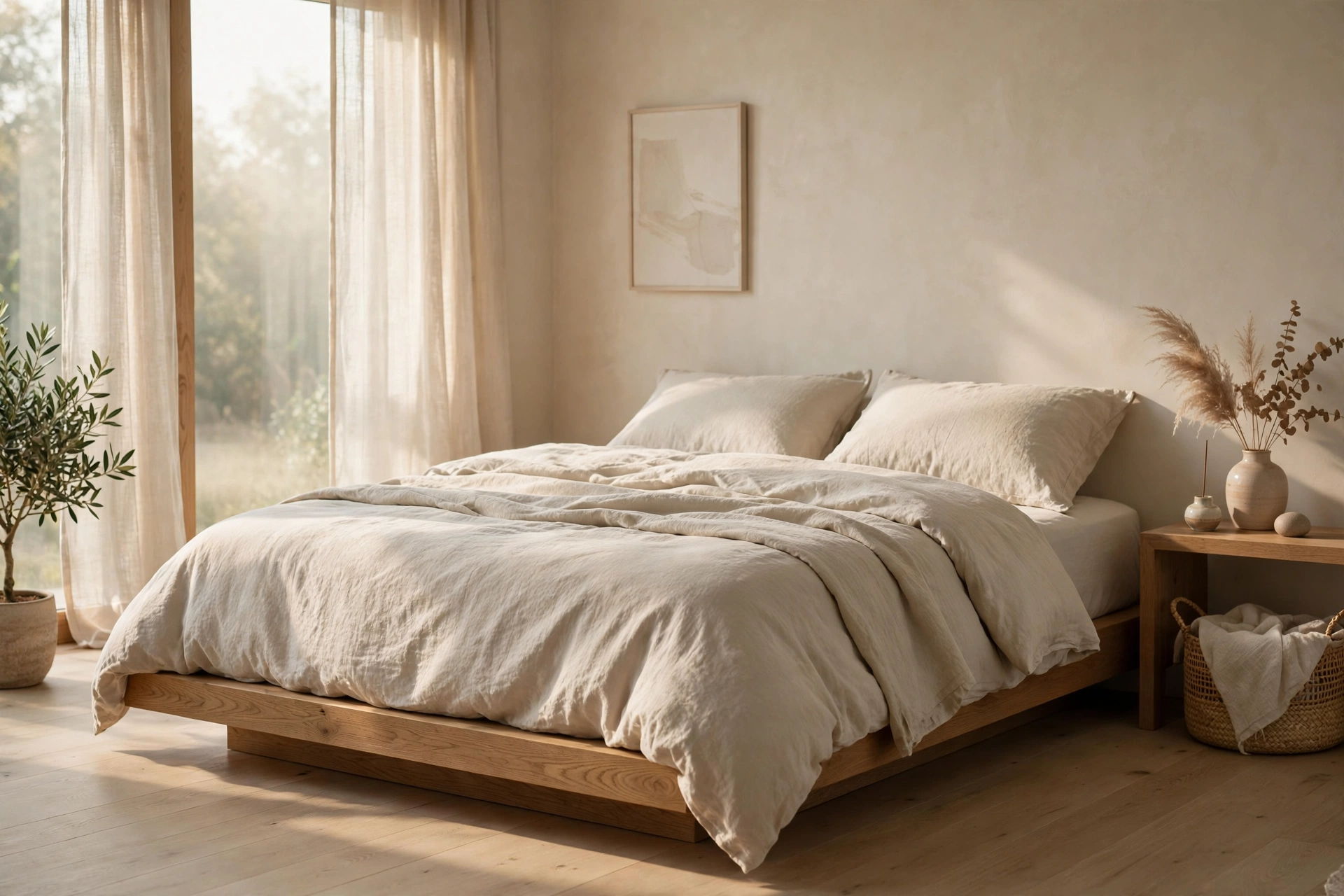
19. Linen Bedding
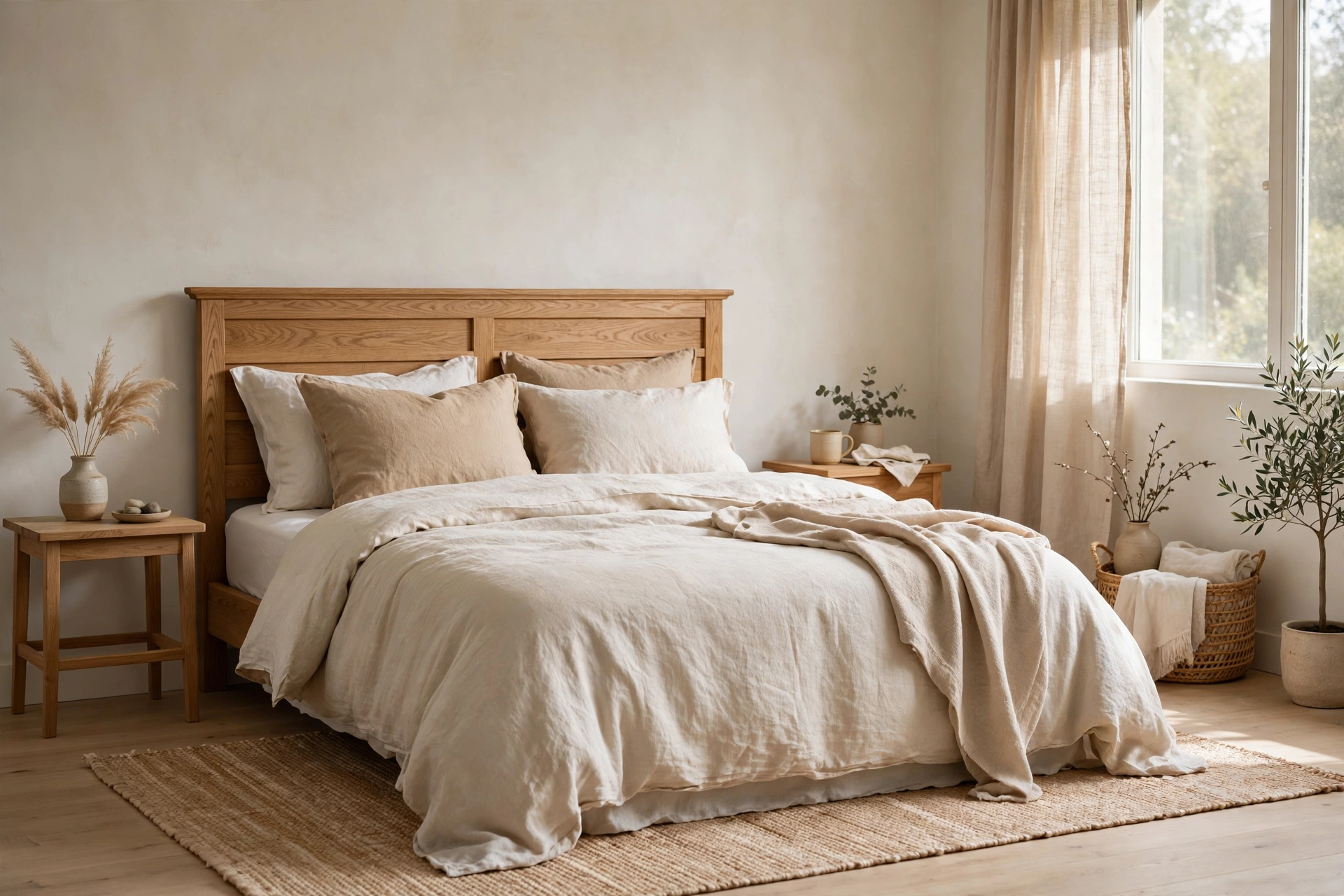
Japandi bedding is stonewashed linen in white, flax, or soft gray ($80 to $200 for a duvet set). It wrinkles beautifully, breathes in summer, insulates in winter, and gets softer every single wash. The relaxed drape suits low platform beds perfectly, pooling just slightly at the floor. Skip the top sheet fuss and the seventeen pillows: a duvet, two sleeping pillows, and one lumbar cushion is the complete Japandi bed. Pro tip: wash new linen bedding twice before first use with a cup of white vinegar, which strips the factory finish and starts the softening process immediately.
20. Wool Throw Blankets
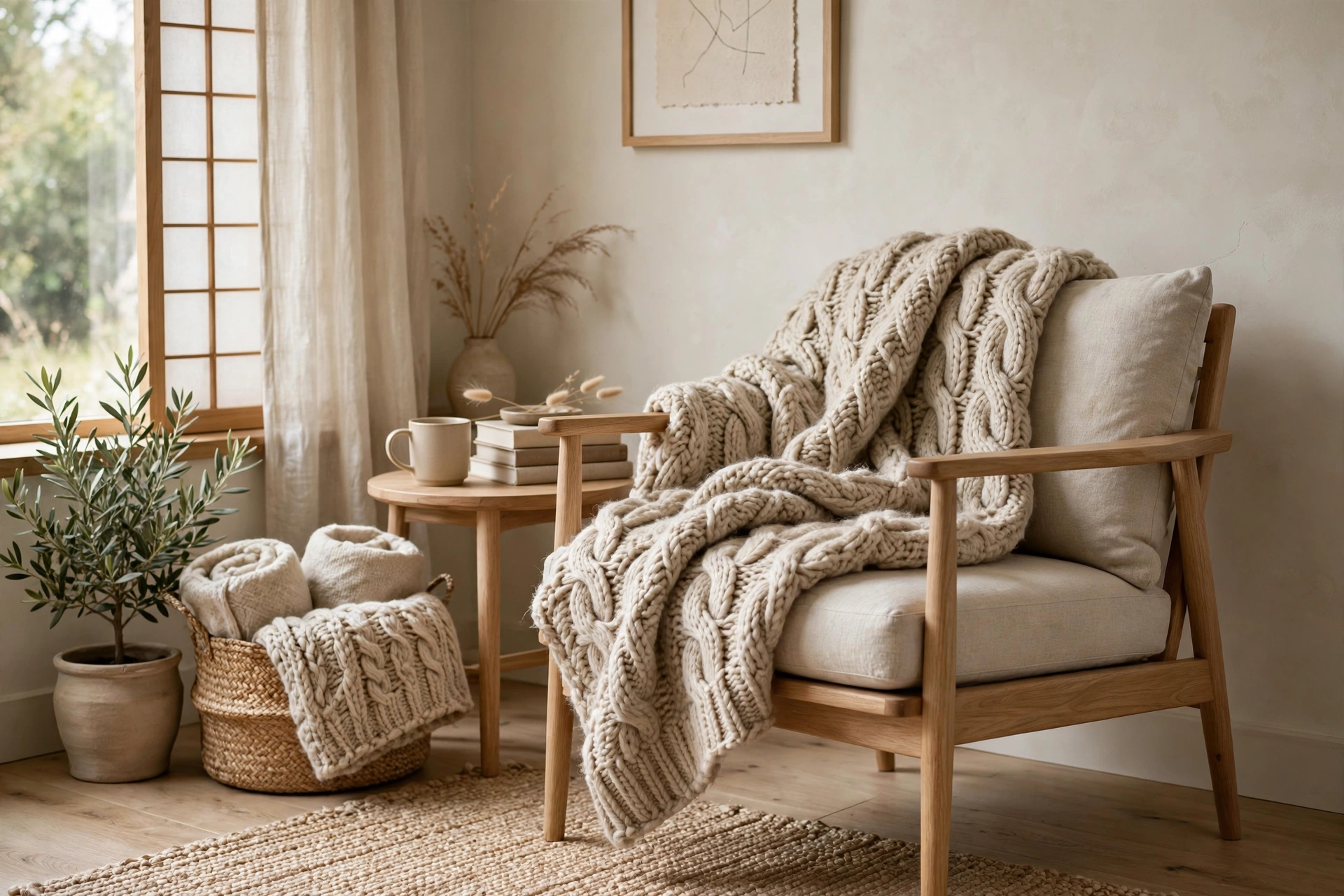
A wool throw in undyed cream or soft charcoal ($40 to $110) is the Scandinavian half of Japandi showing up for cozy season. Drape one over the sofa arm or fold it across the bed’s foot, and the room gains instant hygge without any visual noise. Wool regulates temperature, so it works year-round, and the natural lanolin resists odors. Choose a loose weave that shows texture, because flat, perfect throws read as corporate. Pro tip: air wool throws outside twice a year instead of washing them, since wool self-cleans in fresh air and washing wears the fibers faster.
21. Cotton Cushions
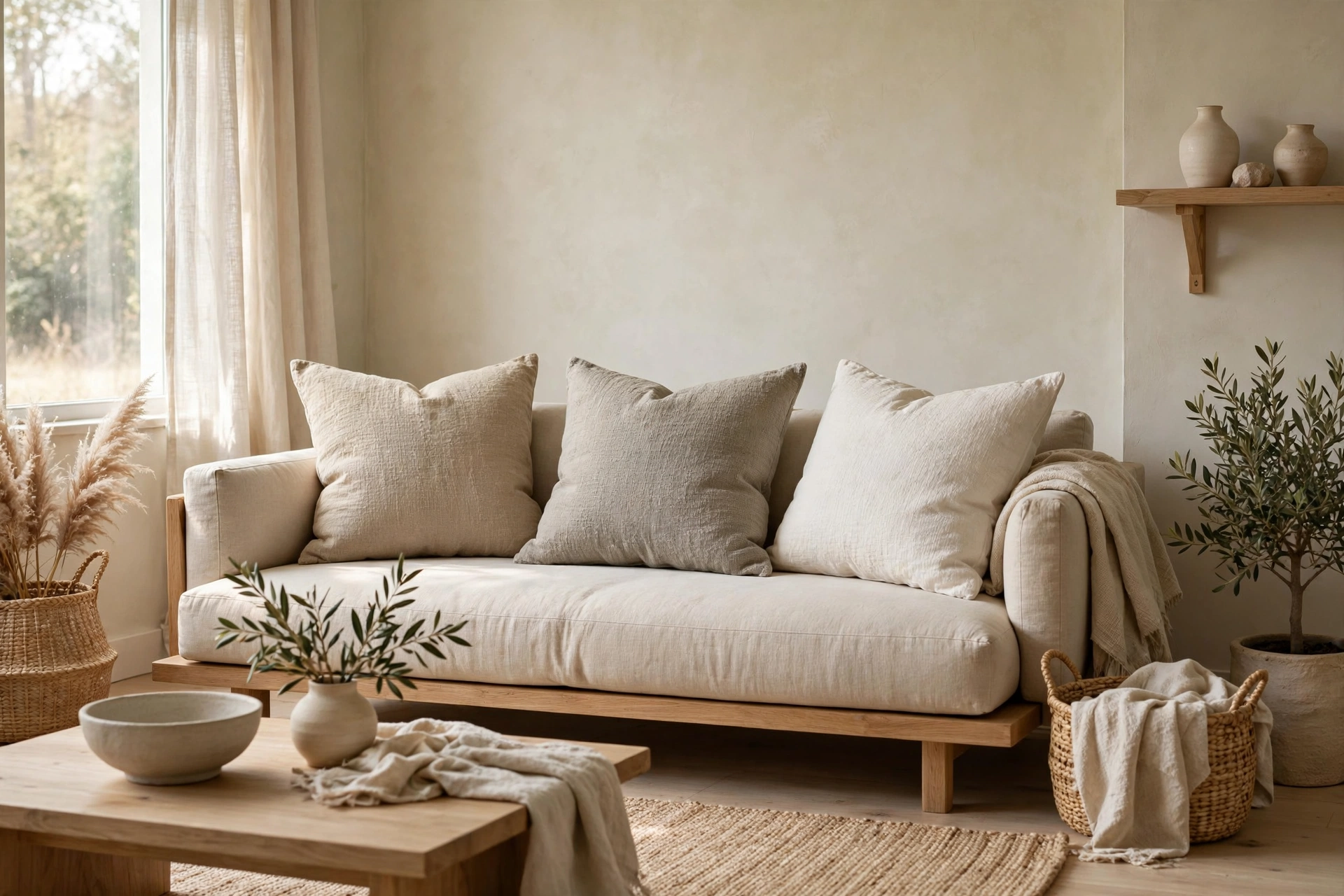
Keep cushions quiet: natural cotton canvas or washed linen covers in sand, stone, and clay tones ($15 to $35 each). Mix two sizes and two textures, a nubby weave with a smooth one, and stop at four or five total across the whole studio. Japandi cushions support rather than decorate, so skip the slogans, the tassels, and the neon. The restraint is what makes the room feel expensive. Pro tip: buy feather-blend inserts one size larger than the cover (a 20-inch insert in an 18-inch cover) for that plump, karate-chopped look designers charge hundreds to achieve.
22. Jute Area Rug
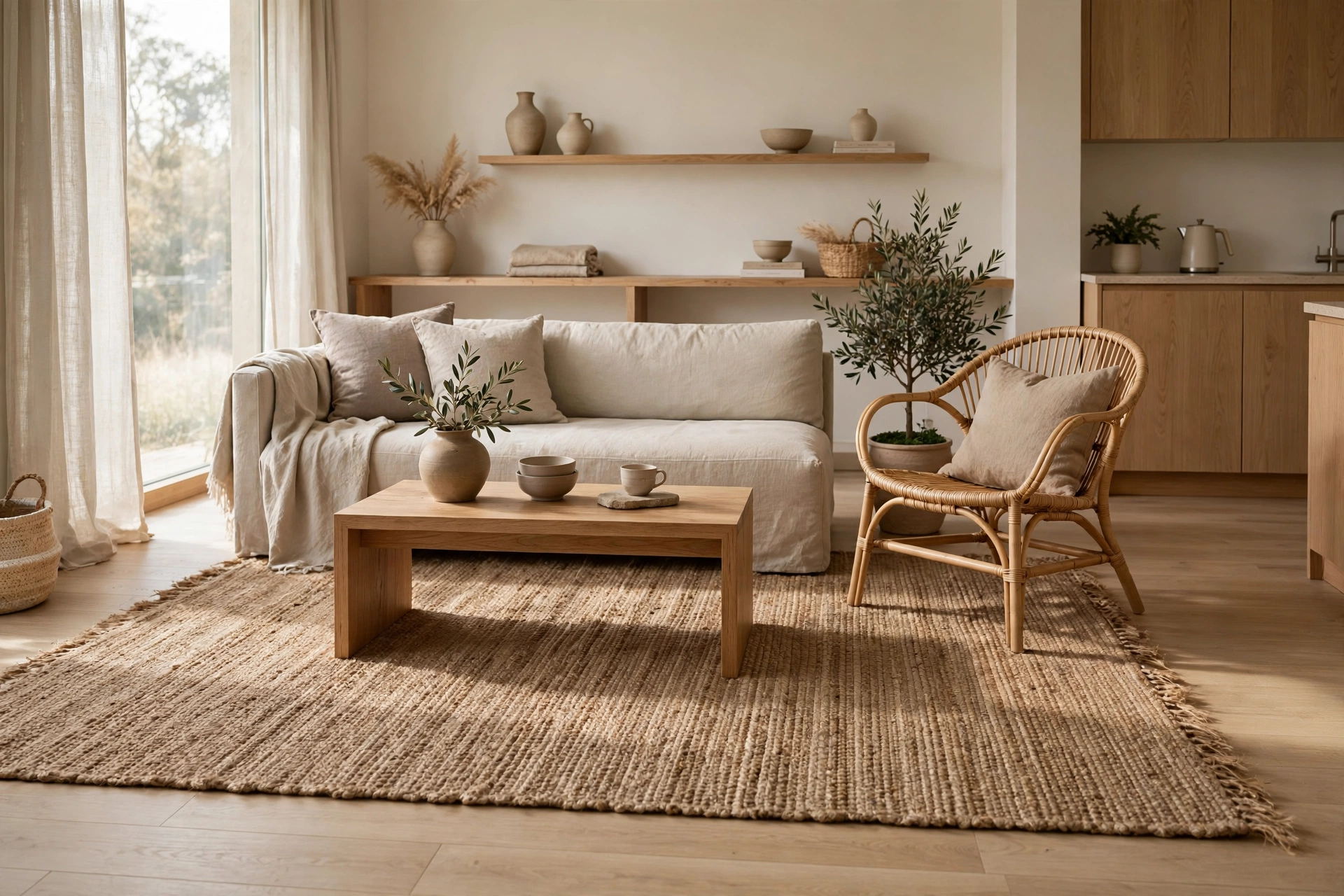
A second rug in jute ($50 to $150 for a 5×7) can zone the entry or the workspace while the tatami-style rug anchors the living area. Jute’s chunky golden weave adds the earthy texture Japandi craves, and it hides dirt heroically between vacuums. Keep both rugs in the same warm family so the zones feel related, not random. Low pile is essential for the authentic look and for doors that need to swing. Pro tip: put a felt rug pad under jute, because jute sheds for the first months and the pad catches the fibers while protecting floors from the rough weave.
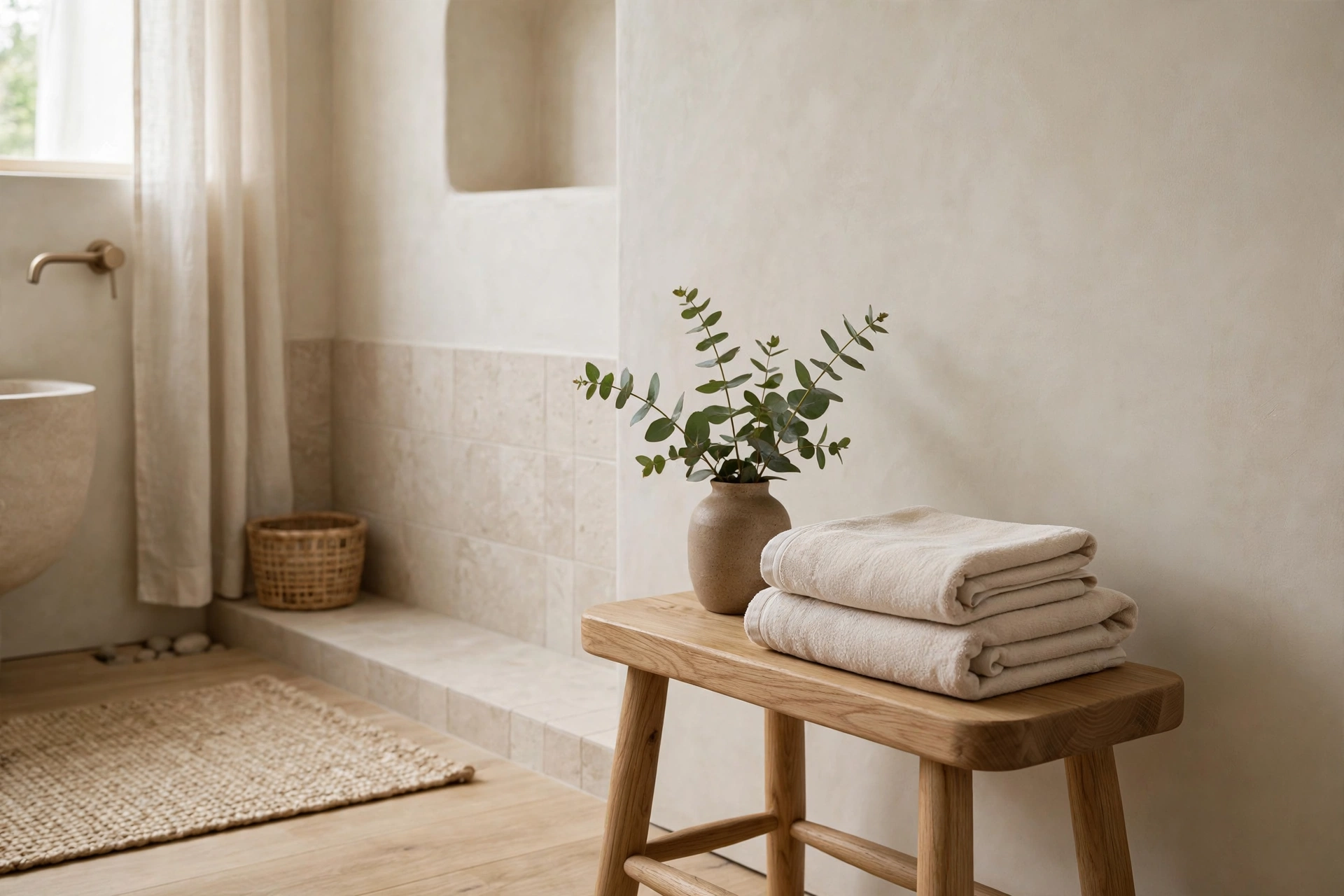
23. Neutral Bath Towels
Japandi extends to the bathroom corner, and towels are the visible part. Swap the mismatched rainbow for a set of thick cotton towels in white, oatmeal, or soft gray ($12 to $30 each). Rolled on an open shelf or hung on a wooden ladder rack, they become part of the decor instead of visual noise. In a studio where the bath area is often visible from the bed, this tiny upgrade pays outsized calm dividends. Pro tip: replace towels all at once rather than piecemeal, because even same-color towels from different dye lots clash, and uniformity is the entire point.
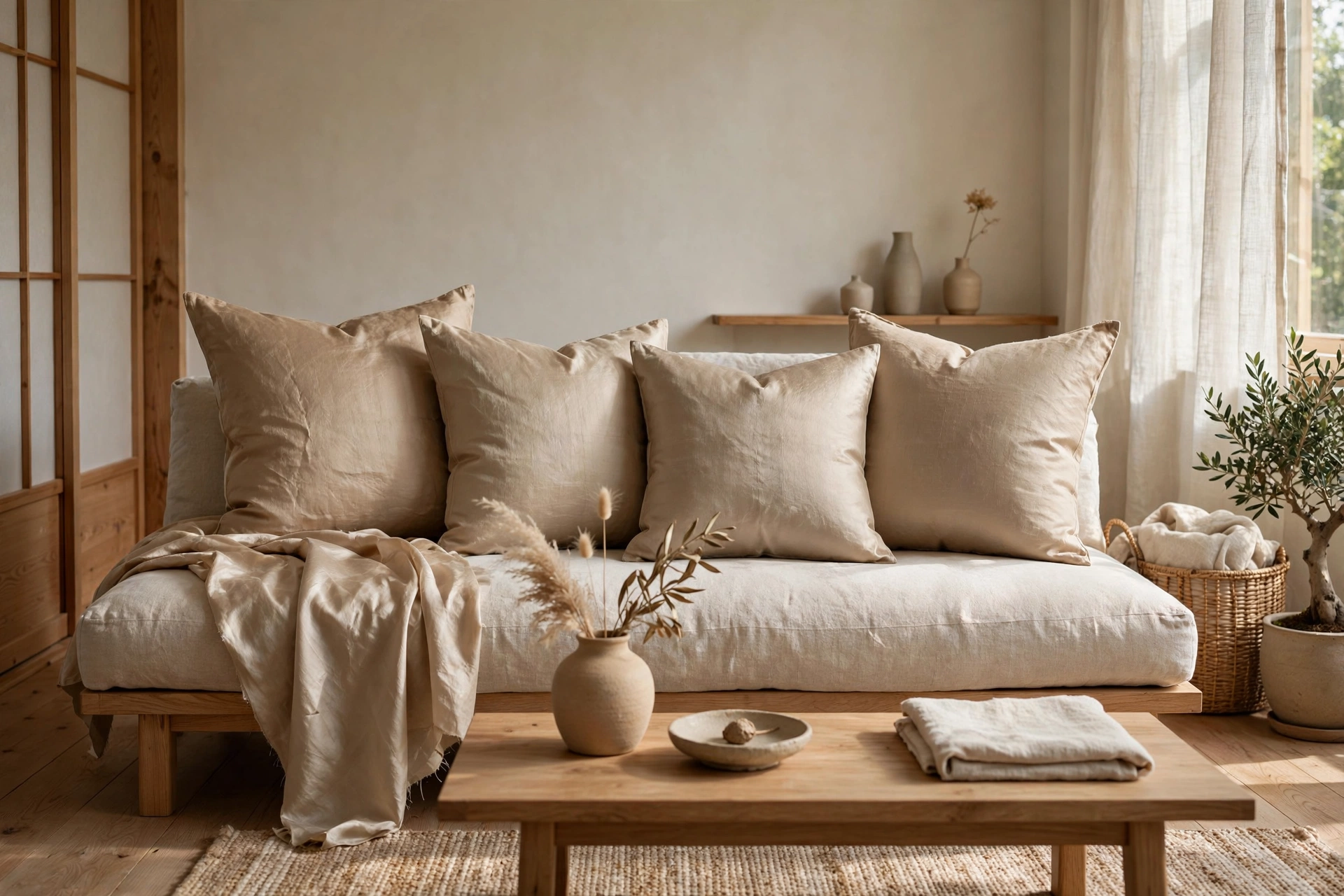
24. Silk Throw Pillows
One or two silk or silk-blend pillows ($25 to $60 each) in muted sage or clay add the whisper of luxury Japandi allows itself. The subtle sheen catches lamplight beautifully against matte linen and cotton, creating depth without pattern. Keep them small, 16 inches square, and relegate them to the bed or the reading chair rather than the main sofa. Restraint keeps silk feeling special instead of flashy. Pro tip: silk shows water spots, so keep silk pillows away from the tea corner and treat them as look-don’t-lean pieces if you are clumsy with cups.
25. Organic Duvet Insert
What is inside the linen matters as much as the cover. An organic cotton or wool duvet insert ($90 to $220) sleeps cooler, lasts longer, and skips the chemical smell of cheap synthetics. Wool-filled duvets are the Japandi gold standard: naturally temperature-regulating and quietly heavy in the way that helps deep sleep. In a studio where the bed is always slightly visible, a duvet that drapes well instead of puffing up keeps the whole room calmer. Pro tip: choose a duvet two inches wider than your cover on each side, because inserts shrink slightly and a too-small insert leaves sad flat corners.
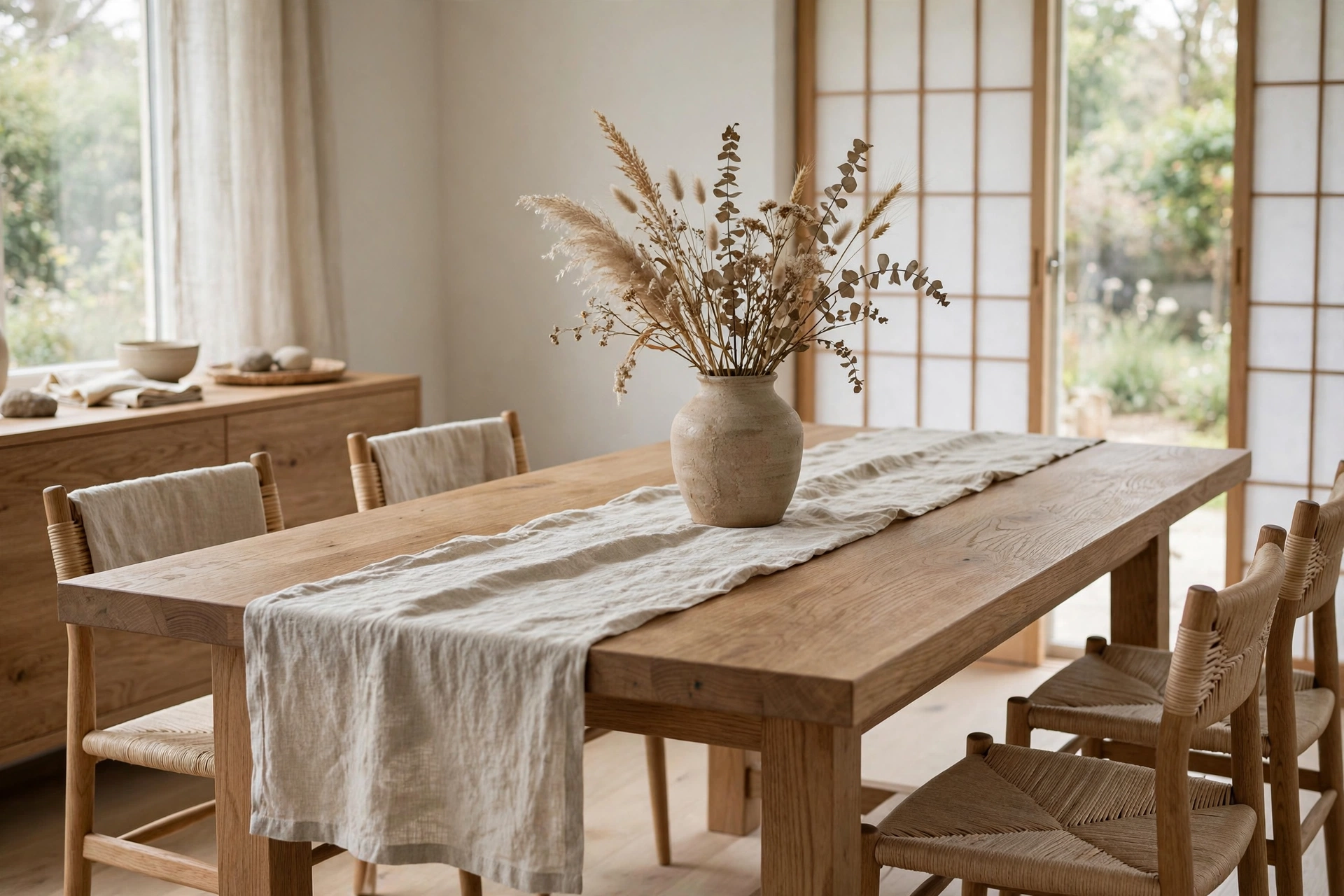
26. Linen Table Runner
The dining table gets the linen treatment too. A simple natural linen runner ($18 to $40) down the center of the oak table softens the wood and gives every meal a styled base, no centerpiece required. It also protects the tabletop from hot dishes and water rings, which matters when the dining table is also the desk. Wash it with the bedding and it just gets better. Pro tip: skip the iron entirely, because pressed linen looks stiff and corporate while rumpled linen looks like a Kyoto guesthouse.
27. Waffle Knit Throws
Waffle-knit cotton throws ($30 to $70) bring the tactile grid texture that Japandi textiles love, echoing shoji screens and tatami weave at a smaller scale. Keep one on the reading chair and one folded at the bed’s foot in matching oatmeal tones. The honeycomb weave traps warmth without weight, perfect for drafty studio windows. Unlike chunky knits, waffle weave stays visually quiet. Pro tip: waffle cotton shrinks up to 10 percent in hot dryers, so wash cold and line-dry to keep the throw at its bought size.
Wabi-Sabi Decor & Craft
28. Handmade Ceramic Vases
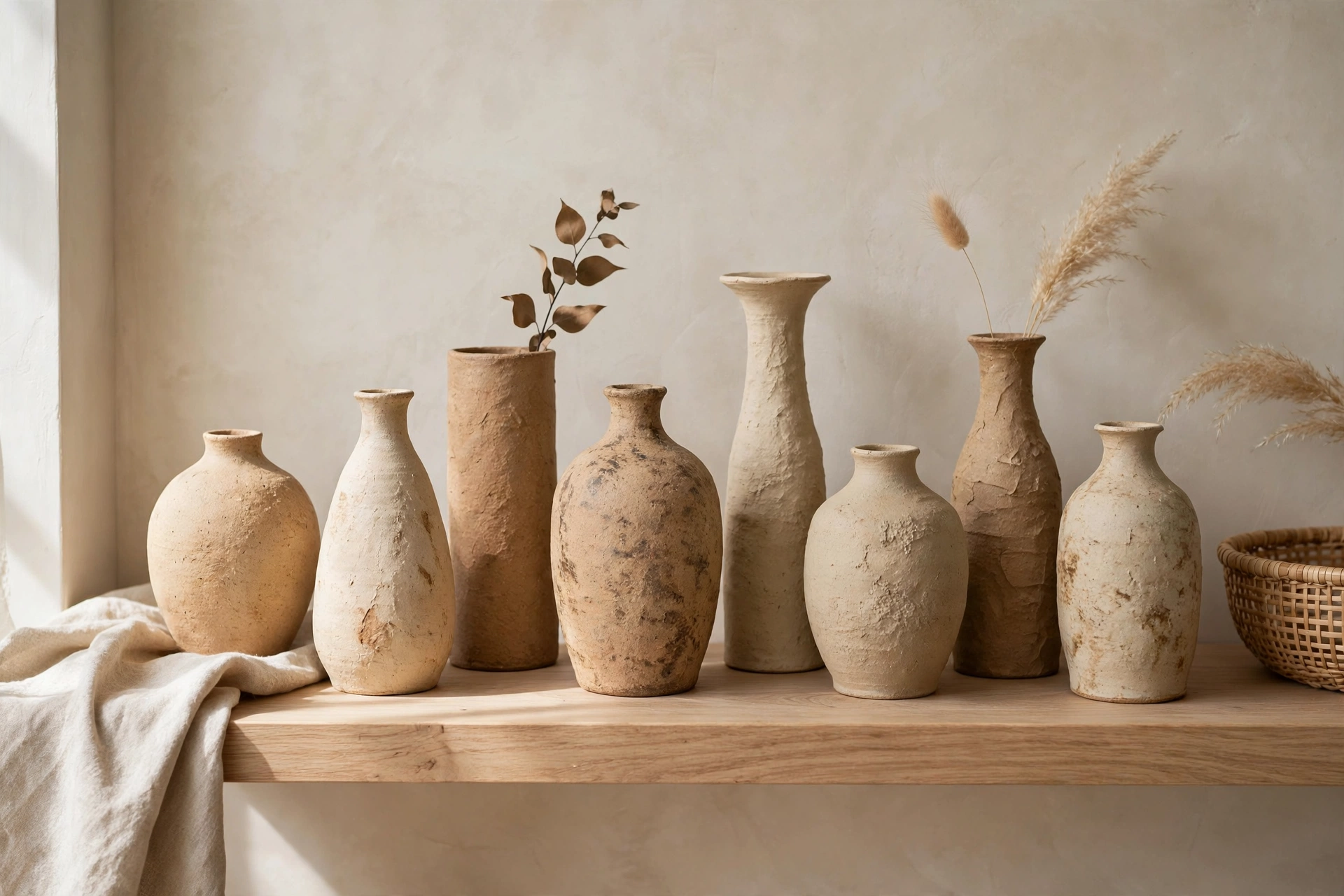
Japandi shelves and tables want handmade ceramics, not factory-perfect ones. Two or three stoneware vases in matte white, sand, or charcoal ($20 to $60 each) with visible throwing rings and slightly uneven rims bring the wabi-sabi soul of imperfection. Group them in odd numbers at different heights and leave most of them empty, because the vessel is the art. Local pottery studios and flea markets beat big-box stores for pieces with real character. Pro tip: hold a vase up and tap it gently, since a clear ring means well-fired and durable while a dull thud can signal cracks that will leak.
29. Wabi-Sabi Pottery Collection
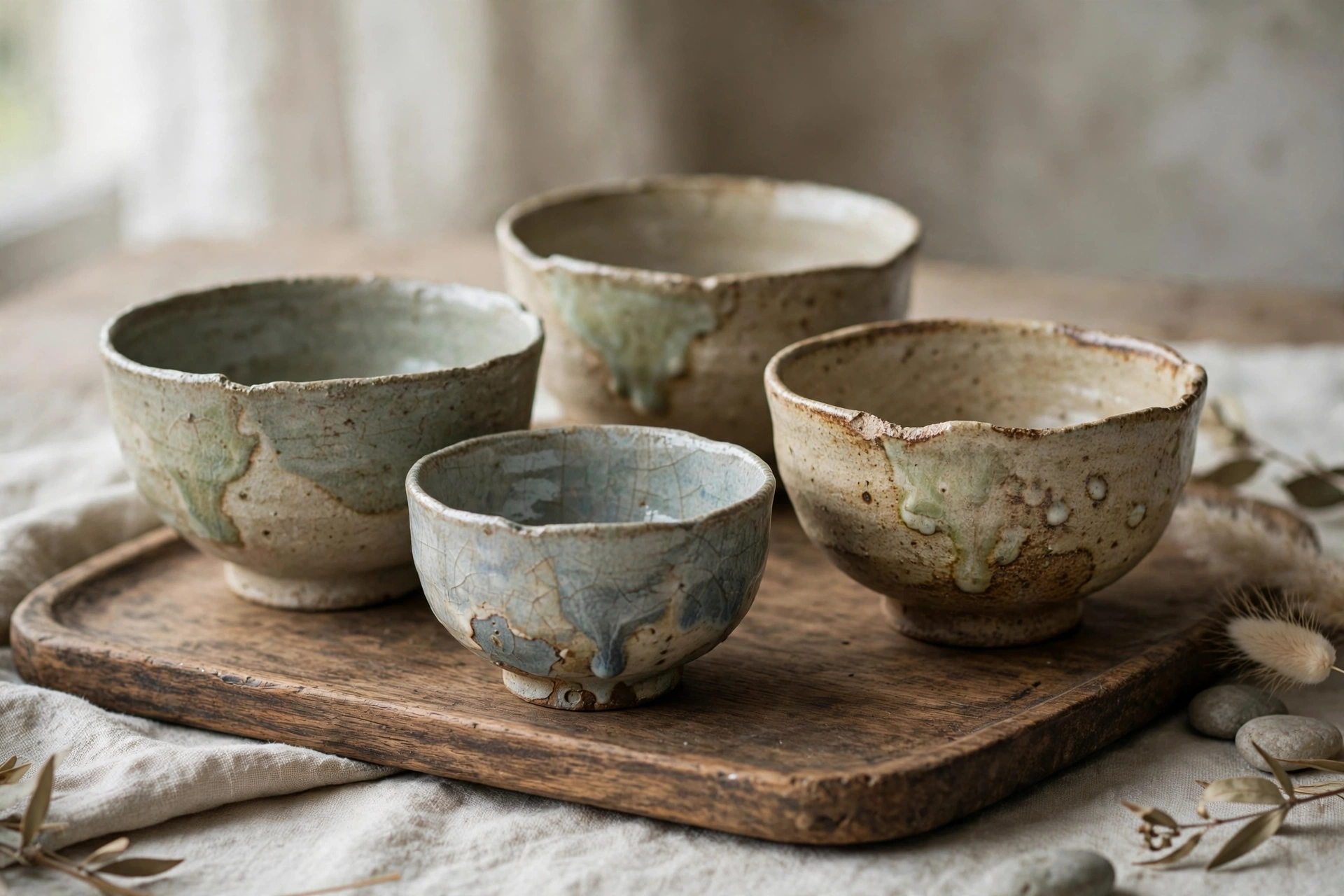
Take the ceramics further with a small collection of wabi-sabi bowls and cups ($15 to $40 each) displayed on open shelving or the dining table. The Japanese aesthetic finds beauty in asymmetry, roughness, and the marks of the maker’s hand, which is the philosophical opposite of matchy-matchy dishware. Use them daily for tea and rice, because Japandi objects are meant to be touched, not just looked at. A chipped favorite is more precious, not less. Pro tip: learn kintsugi-inspired repair with gold food-safe epoxy ($15 kit), and a broken bowl becomes the most meaningful object in the room.
30. Single Ikebana Stems
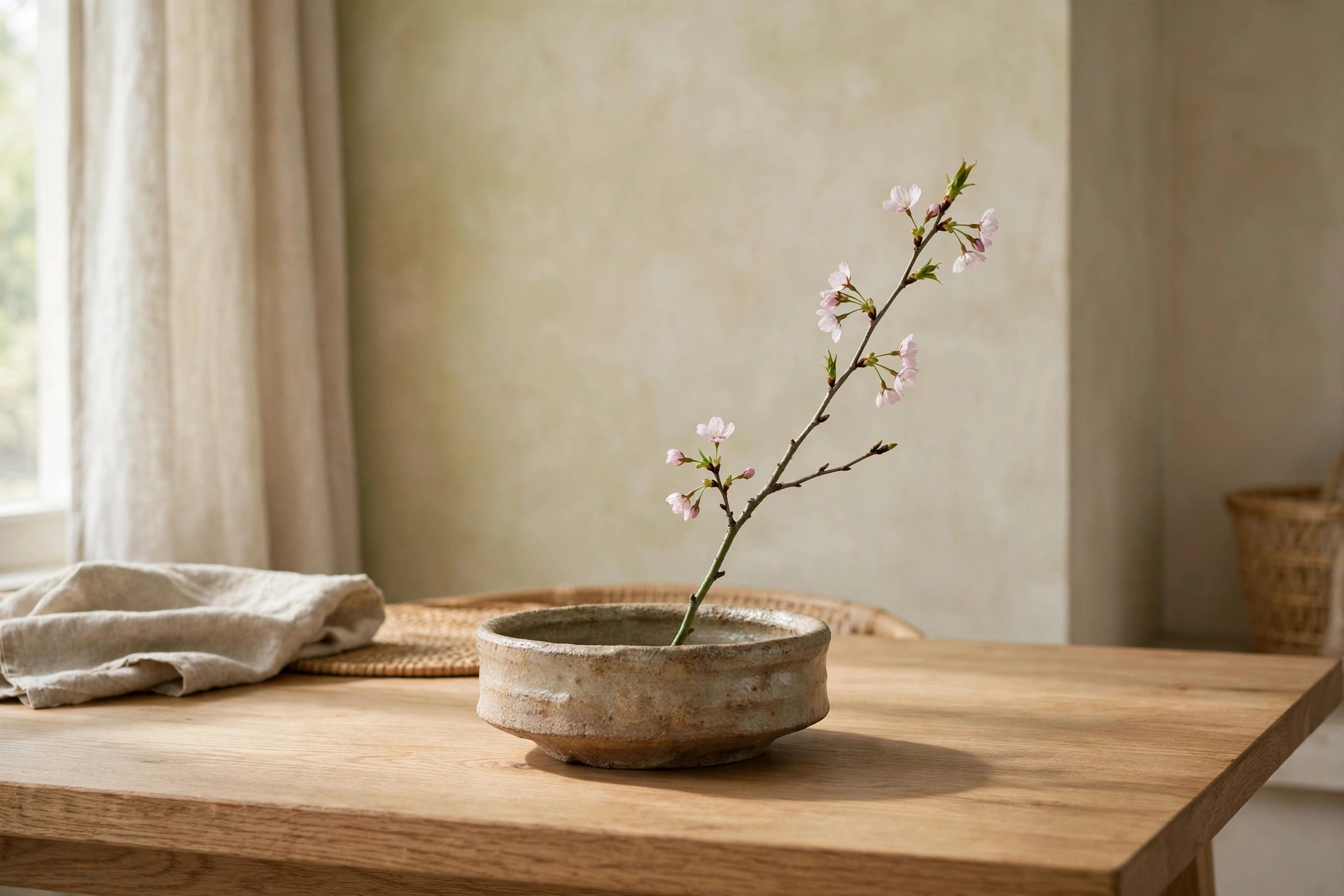
Ikebana, the Japanese art of flower arrangement, teaches that one perfect stem beats a crowded bouquet. A single branch, stem, or grass plume ($5 to $15 from any market) in a handmade vase brings living line and seasonal change to the studio. Replace it weekly and the room gets a tiny ceremony of renewal. In a small space, one stem also means no pollen clouds, no wilting mess, and no visual clutter. Pro tip: cut stems at a sharp angle under running water and change the water every two days, which can double a stem’s life from one week to two.
31. Negative Space Wall Art
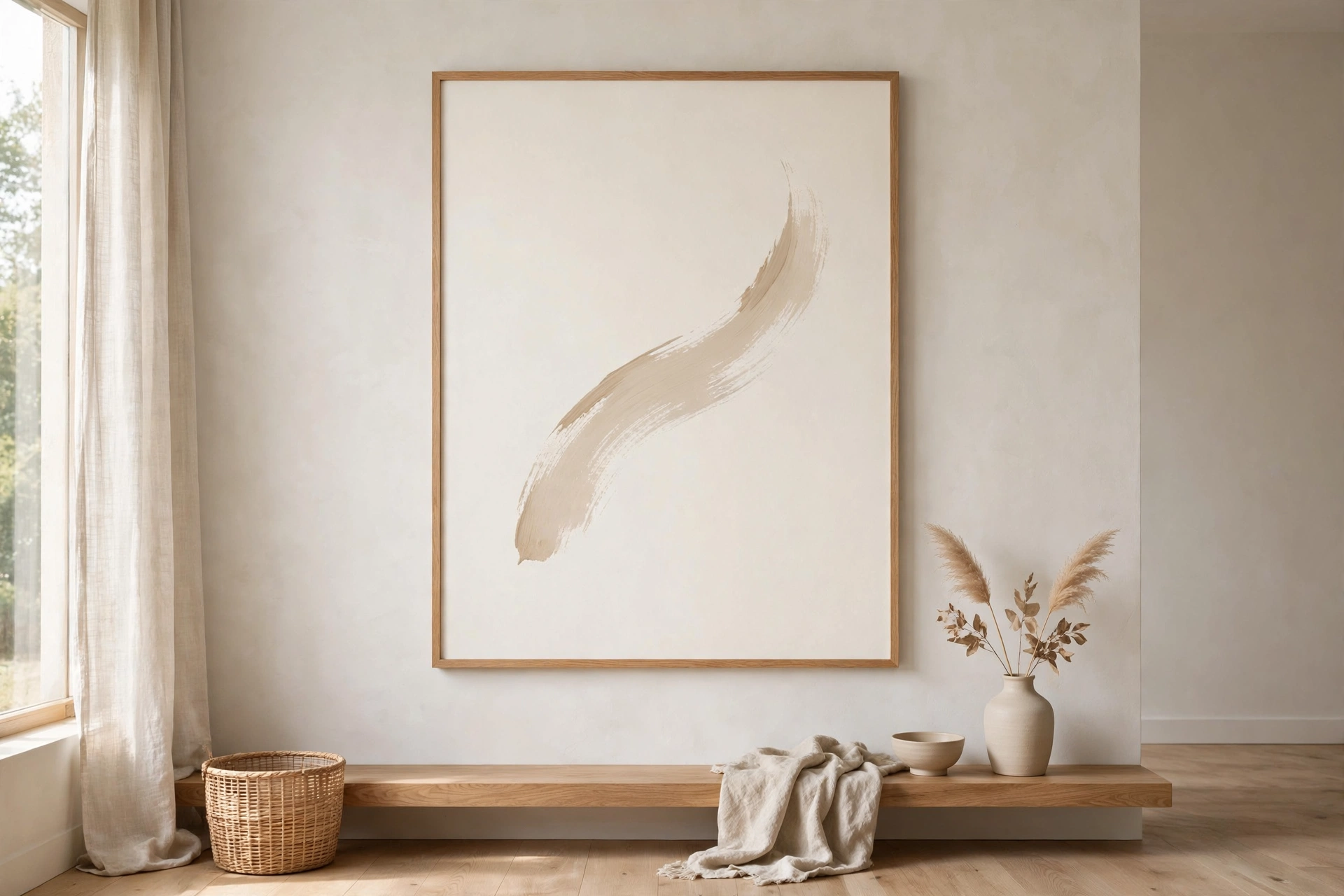
Japandi art is mostly empty space. One large print with generous white margins, a misty mountain, a single brushstroke, an abstract horizon ($20 to $60 framed), hung alone on the biggest wall, has more impact than a gallery wall ever could here. The emptiness around the image is doing the work, giving the eye somewhere to rest. Frame it in thin natural oak and hang it at eye level, centered on the wall’s breathing room. Pro tip: art with 60 percent or more blank space looks intentional, while art with 30 percent looks like you could not afford a bigger print, so go big on the margins.
32. Ink Brush Prints
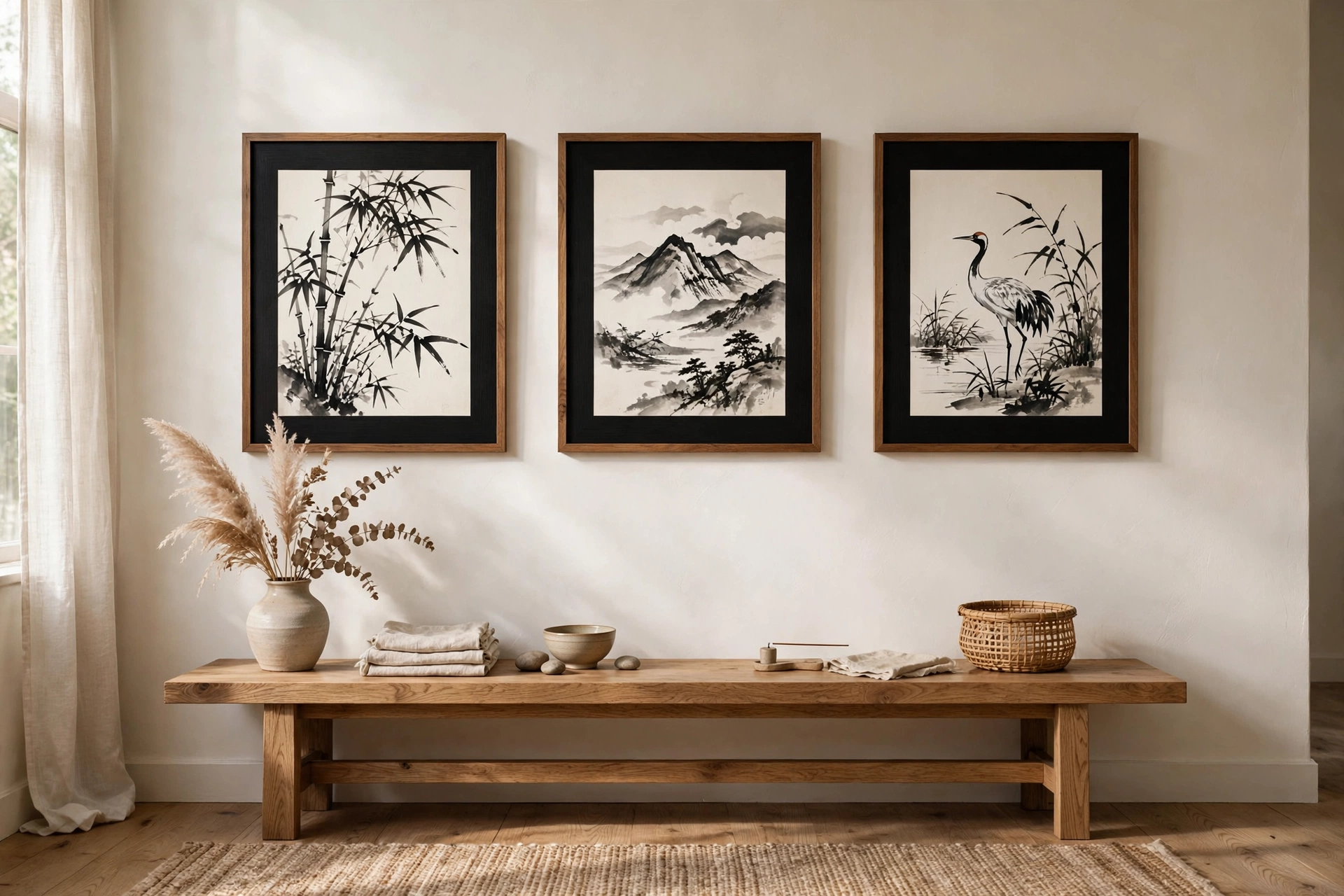
Sumi-e ink brush prints, black ink on white paper in one confident gesture, are Japandi’s graphic accent. A pair of small prints ($15 to $40 each) flanking the bed or above the sideboard adds contrast without color, which keeps the palette disciplined. The raw energy of the brushstroke balances all the softness elsewhere. Choose prints with plenty of paper showing, and frame them simply so the ink is the only event. Pro tip: hang ink prints away from direct sun, because black sumi ink fades to brown-gray with UV exposure, and the stark contrast is the whole point.
33. Wooden Tray Styling
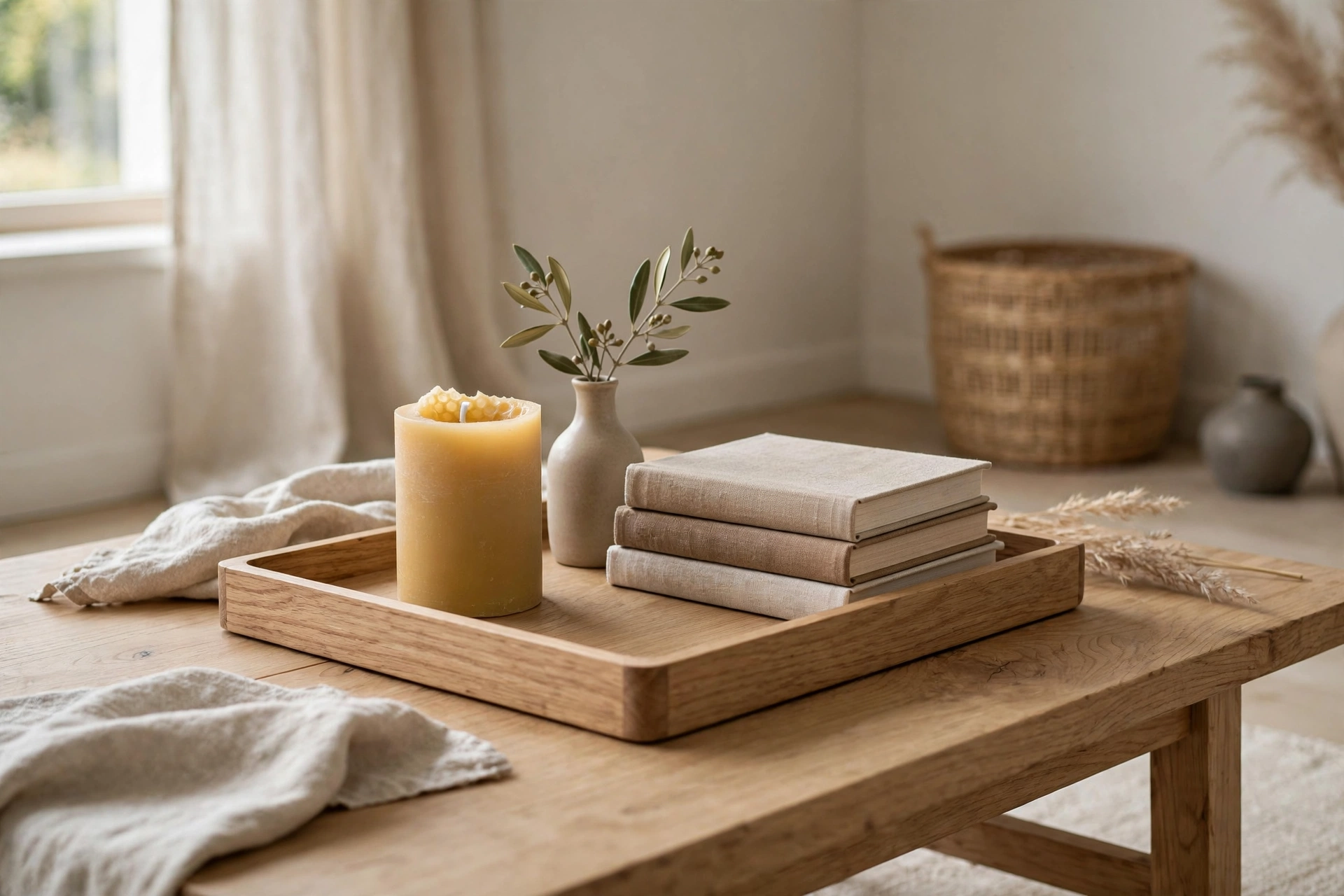
A shallow oak or ash tray ($20 to $45) is Japandi’s answer to the coffee table styling question. Corral the remote, a candle, and the small dish of daily pocket contents into one contained landscape, and the table stays serene while staying functional. The tray’s raised edge creates a visual boundary that tells the eye where the vignette ends and the calm begins. Move the whole tray in one lift when you need the table clear. Pro tip: choose a tray no larger than one-third of the table surface, because an oversized tray just moves the clutter problem into a wooden frame.
34. Stone Bath Accessories
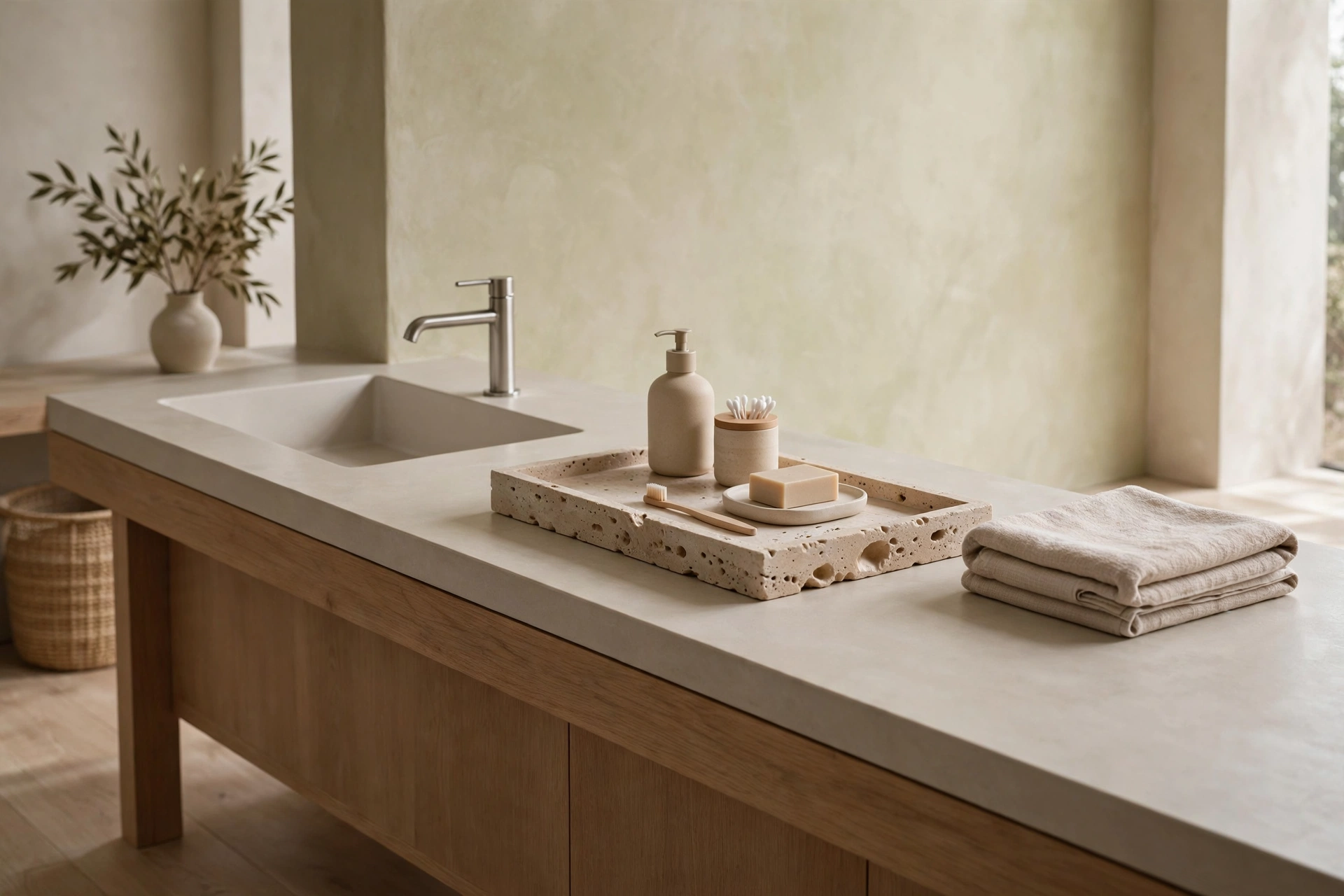
Swap plastic bath accessories for stone. A travertine soap dish, a marble tray for the sink, a stone toothbrush holder ($15 to $40 each) turn the bathroom corner into a Japanese onsen moment. Stone stays cool to the touch, ages with beautiful patina, and never looks cheap. In a studio where the bath is steps from the bed, these small upgrades keep the spa feeling continuous through the whole space. Pro tip: seal travertine and marble accessories once a year with stone sealer ($10), since bath products stain unsealed stone faster than you would believe.
35. Bamboo Storage Baskets
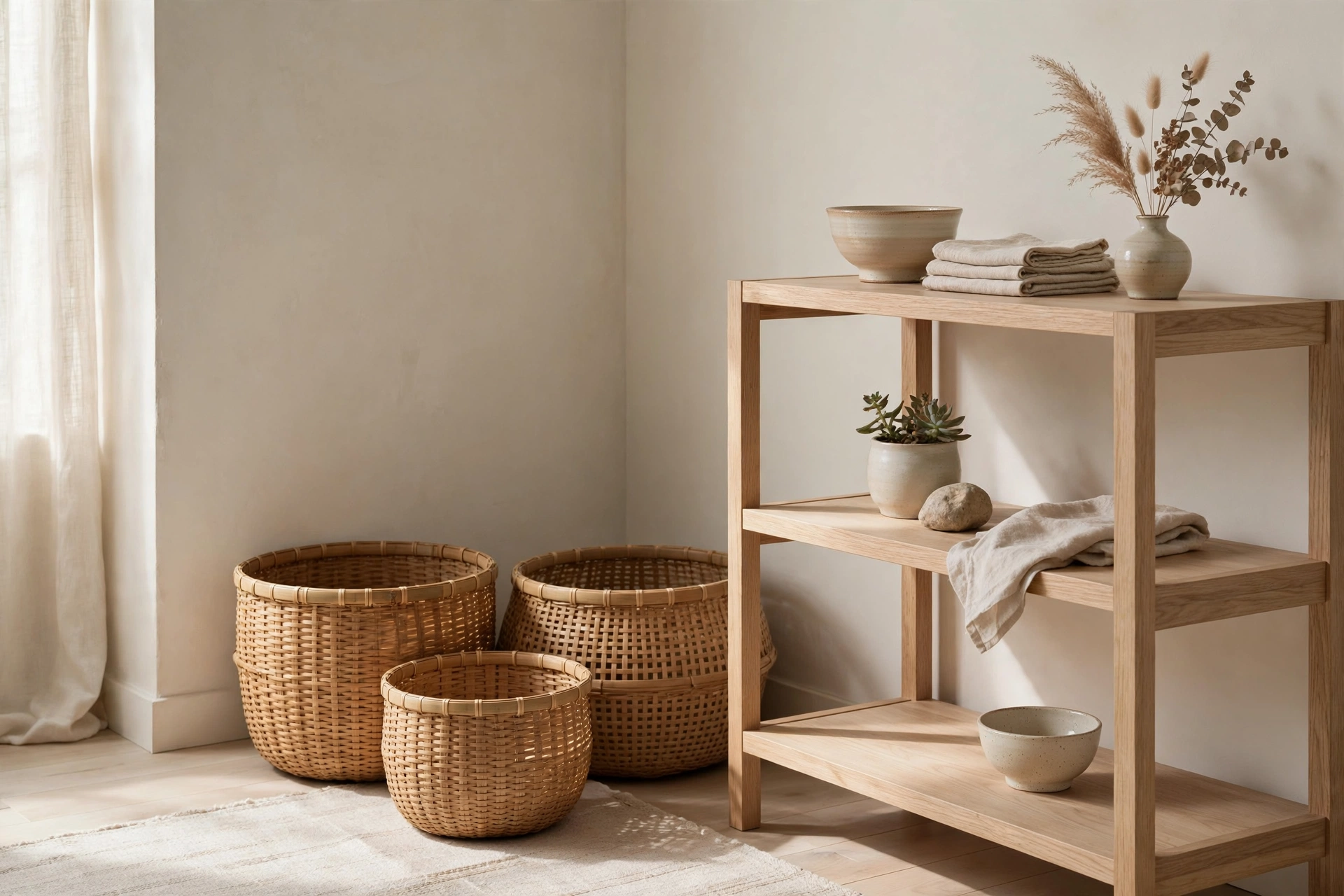
Storage in Japandi should look like decor. Handwoven bamboo and seagrass baskets ($15 to $45 each) swallow throws, magazines, chargers, and the general flotsam of studio life while adding warm woven texture. Use lidded baskets for things you never want to see and open ones for throws and cushions. A trio of graduated sizes beside the sofa or under the console looks styled, not storage-y. This is the beautiful side of decorating a studio on a budget, where the cheapest solutions are also the prettiest. Pro tip: line open baskets with a linen napkin or cloth, which hides the contents’ edges and makes even a basket of cables look deliberate.
36. Curated Open Shelving
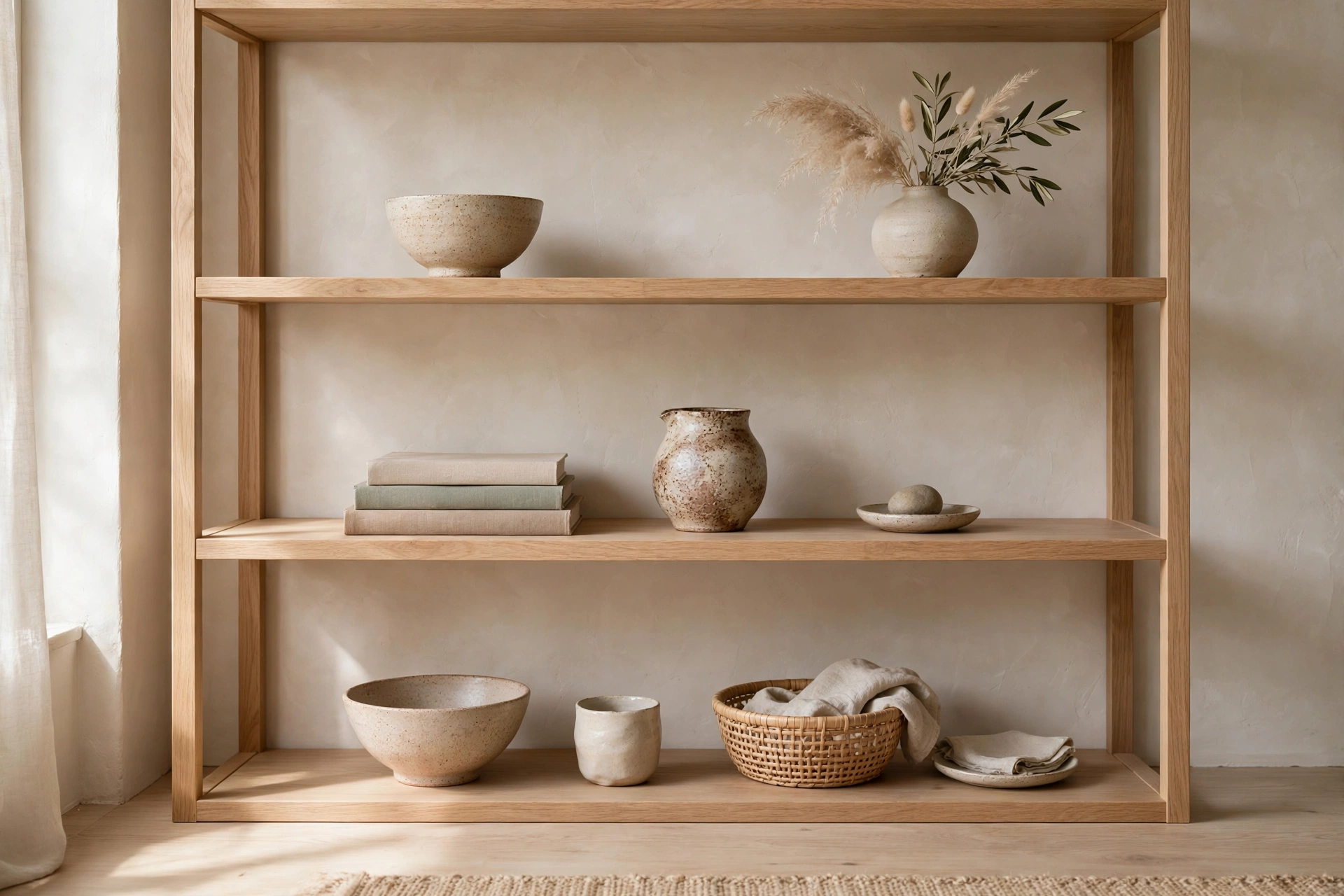
If your studio has a kitchenette with open shelving, curate it the Japandi way: matching handmade bowls, a row of glass jars with dry goods, one small plant, and nothing else. Decant the chaos of packaging into uniform containers ($3 to $8 each) and the shelf becomes art you use daily. This is minimalism with a pulse, the same edited philosophy behind our minimalist studio decor ideas, warmed up with natural materials. Keep daily dishes lowest for easy reach. Pro tip: open kitchen shelves need a weekly five-minute wipe, because cooking grease settles on everything, and dusty ceramics kill the calm instantly.
Living Greenery & Quiet Rituals
37. Bonsai Focal Point
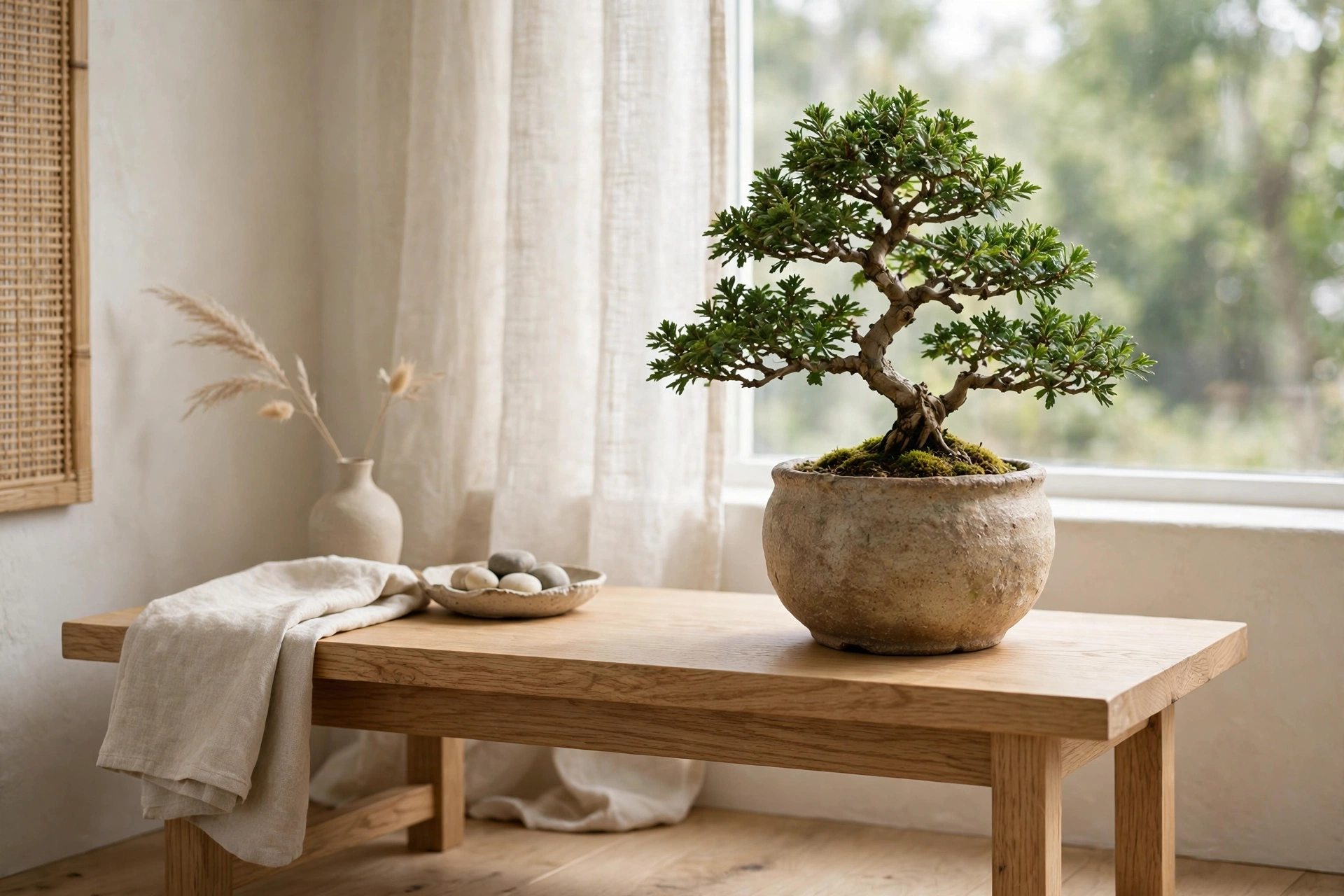
Every Japandi room deserves one living sculpture, and a bonsai ($30 to $120) is the most literal expression of the philosophy: patience, imperfection, and nature shaped by human hands. Place it where you will see it daily, the desk, the dining table, the entry console, because bonsai rewards attention. The daily watering becomes a two-minute mindfulness ritual, which is rather the point. Start with a hardy juniper or ficus, not a fussy pine. Pro tip: bonsai die of love more than neglect, so water only when the top inch of soil is dry, and never on a fixed schedule.
38. Olive Tree Corner
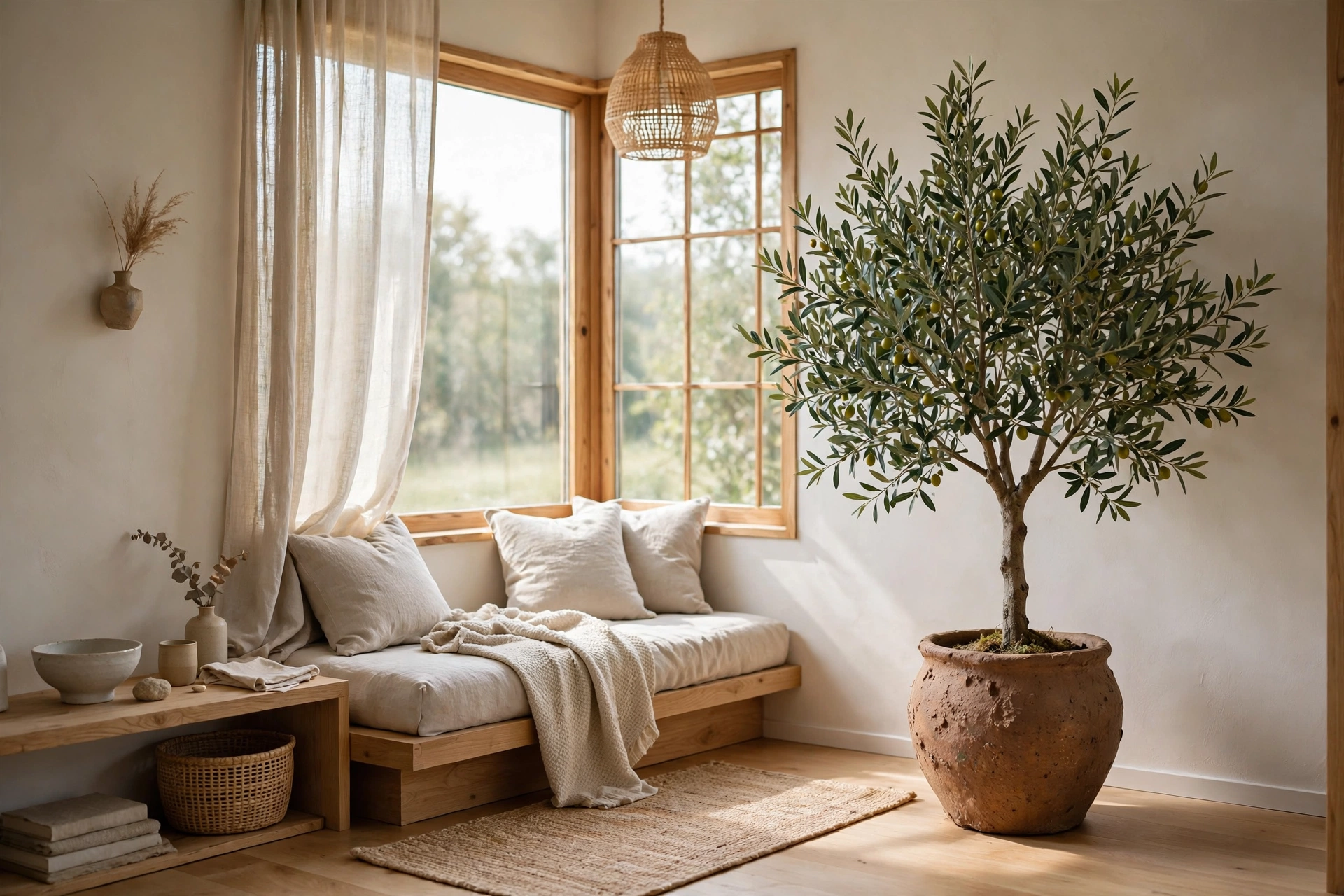
For the one big plant a studio can handle, choose an olive tree ($40 to $100). Its silvery-green leaves and gnarled trunk bring Mediterranean-Japanese calm, it tolerates the dry air of heated apartments, and its airy canopy never blocks light the way a fiddle leaf fig does. Plant it in a handmade ceramic pot on a low wooden stand, and the corner becomes a destination. One great tree beats five struggling small plants in every way that matters. Pro tip: rotate the olive tree a quarter turn every month, because it grows toward the window and rotation keeps the canopy full and even on all sides.
Frequently Asked Questions
What is Japandi style in simple terms?
Japandi is a hybrid of Japanese and Scandinavian design. From Japan it takes wabi-sabi (beauty in imperfection), low profiles, natural materials, and craftsmanship. From Scandinavia it takes hygge (coziness), light woods, functional minimalism, and pale neutrals. The result is warm minimalism: calm, uncluttered rooms that still feel human and inviting rather than cold or stark.
Is Japandi good for a small studio apartment?
It is one of the best styles for studios. Low furniture keeps sightlines open so the room feels larger, the neutral palette bounces light, and the philosophy of owning less means every piece earns its footprint. Multifunctional pieces like daybeds and sideboards fit the Japandi ethos perfectly, and the emphasis on natural light makes even north-facing studios feel brighter.
What colors define Japandi decor?
The Japandi palette is warm neutrals: warm white, oatmeal, sand, stone gray, and soft beige, grounded by light oak and warmed with accents of clay, muted sage, and charcoal. Black appears only in tiny doses, like a lamp cord or a picture frame. The rule is tonal harmony, with everything sitting within a few shades of nature, so the room feels like a single calm breath.
How is Japandi different from plain minimalism?
Minimalism can feel cold and strict; Japandi is minimalism with warmth and soul. Where minimalism might demand a white box with three objects, Japandi adds natural texture, handmade imperfection, and cozy textiles. It keeps minimalism’s discipline about clutter but replaces its chill with the Japanese love of craft and the Scandinavian love of comfort.
Can I do Japandi on a budget?
Absolutely, because Japandi is more philosophy than shopping list. Decluttering costs nothing and is half the look. Thrift light-wood furniture and refinish it, choose linen-look cottons over real linen, buy handmade-look ceramics at flea markets, and let negative space do the decorating. The most expensive thing in a Japandi room should be the restraint, not the furniture.
What should I avoid in Japandi style?
Avoid glossy finishes, bright colors, busy patterns, and anything ornate or fussy. Skip the gallery wall, the statement chandelier, and the ten throw pillows. Avoid plastic and chrome where wood, stone, and ceramic would serve. Most of all, avoid filling every surface, because in Japandi the empty space is not waiting to be decorated, it is the decoration.
Final Thoughts
A Japandi studio apartment is not a style you install in a weekend; it is a way of living you grow into. Start with the big moves, warm white walls, light floors, low honest furniture, and then let the details arrive slowly: a handmade bowl here, a single stem there, a bonsai that teaches you patience. Every object should be useful or beautiful, preferably both, and the room should feel calmer each time you edit something out rather than add something in.
The real secret of Japandi is that it asks less of you, not more. Less shopping, less clutter, less visual noise competing for your attention in the one room where you live your whole life. In return it gives you mornings that feel like a deep breath and evenings that feel like a warm bath. Build it piece by piece, honor the empty spaces, and your studio will become the calmest room you have ever lived in.