46 Industrial Studio Apartment Ideas for Raw Urban Style
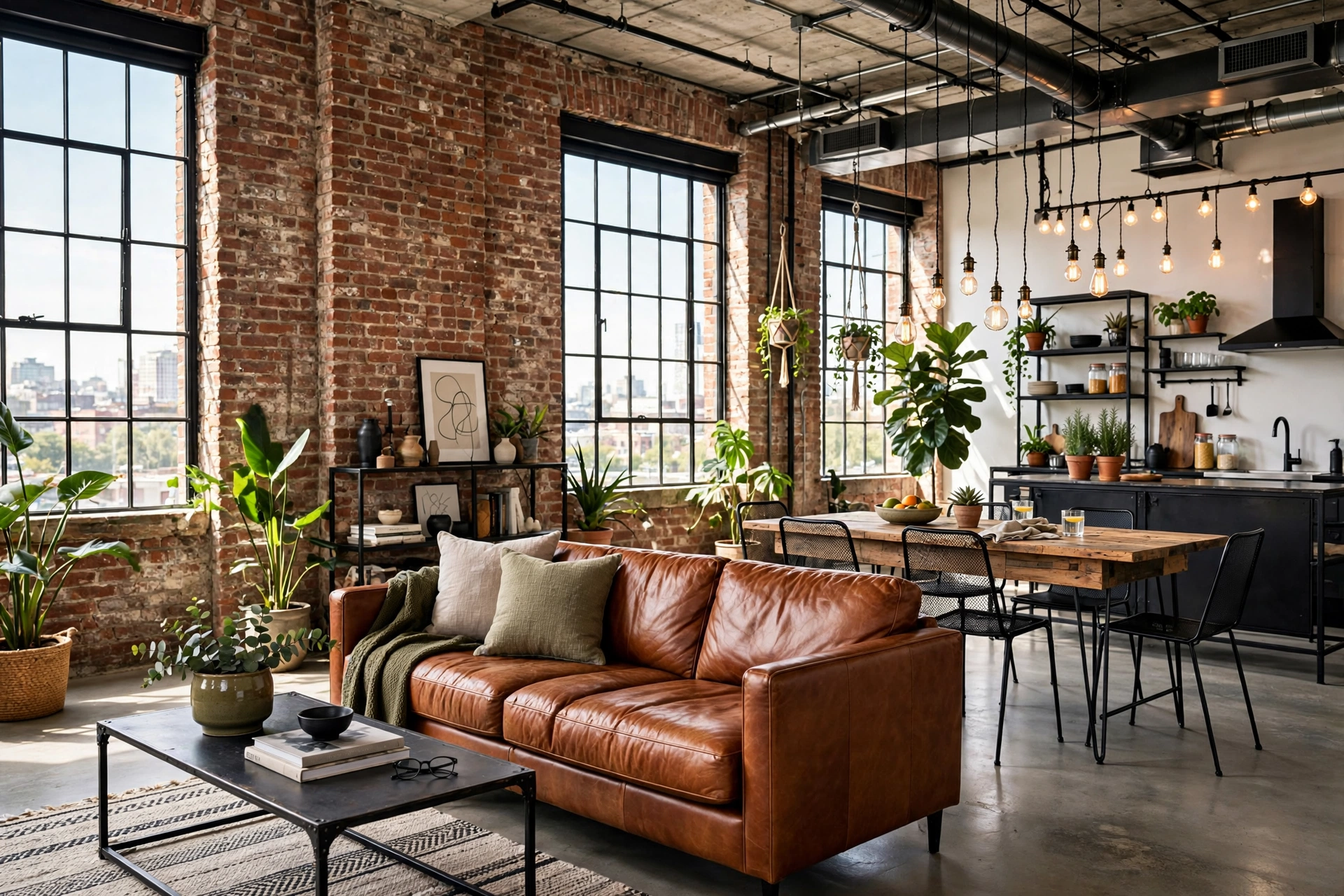
There’s something magnetic about industrial style — the raw honesty of exposed brick, the strength of blackened steel, the warmth of reclaimed wood telling stories of its past life. Born in converted warehouses and artist lofts, industrial decor has evolved into one of the most livable aesthetics for small spaces. And here’s the secret: a studio apartment is the perfect canvas for it. The open floor plan that makes decorating tricky? It’s exactly what industrial style was designed for.
These 46 industrial studio apartment ideas prove you don’t need a converted factory or a massive renovation budget. From faux brick panels that renters can install in an afternoon to vintage-inspired lighting that costs less than dinner out, every idea here works in real rental studios. We’ll cover walls, floors, furniture, lighting, textiles, and those finishing touches that turn raw materials into a home with soul. Whether you go full warehouse or just borrow industrial accents, your studio is about to get a serious edge.
Walls & Structure
1. Create an Exposed Brick Accent Wall
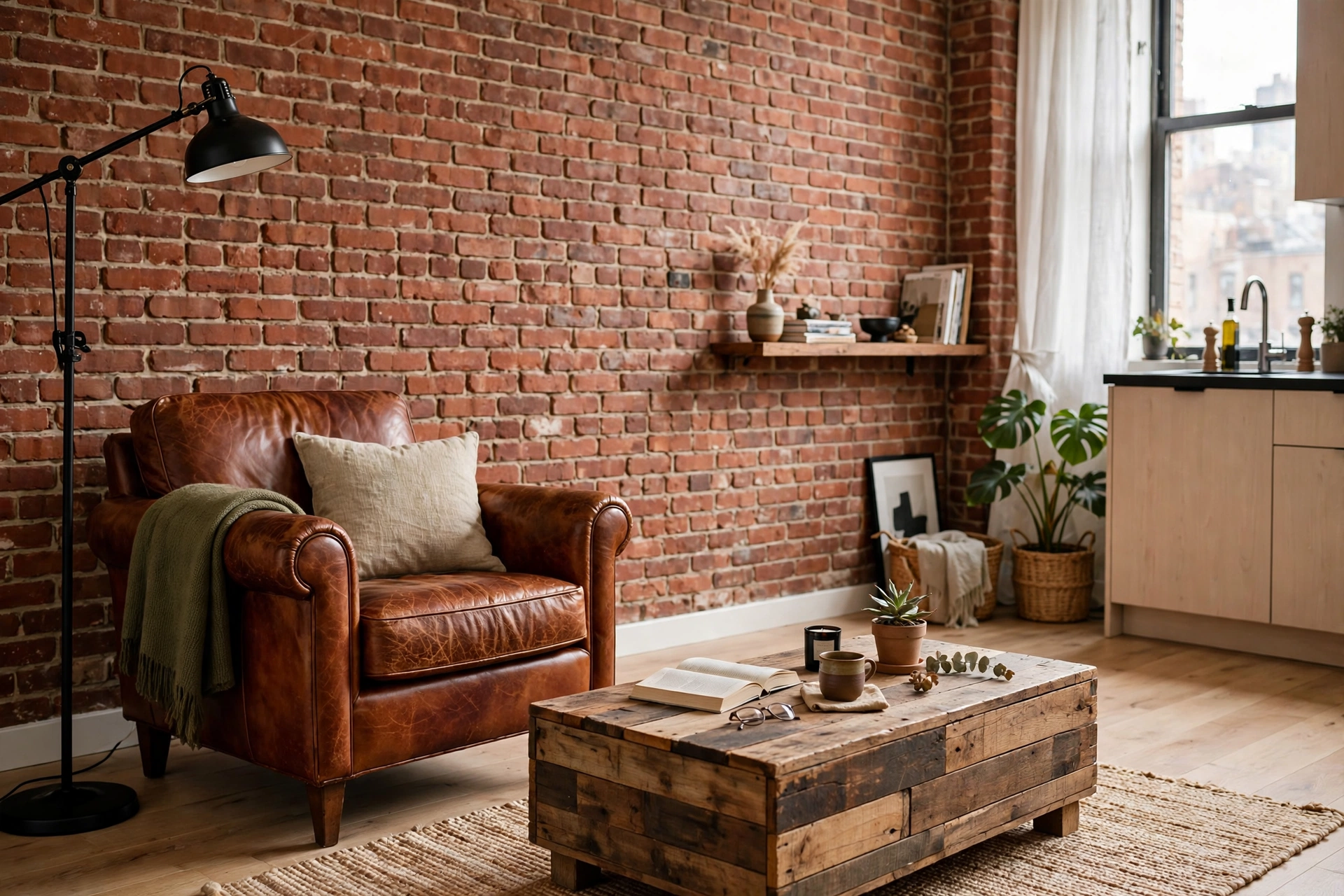
Nothing says industrial like exposed brick — it’s the style’s signature move. If your rental doesn’t have the real thing, high-quality faux brick panels ($30–$60 per panel) install with construction adhesive and look convincingly authentic. Focus on one wall behind the sofa or bed; a full brick room can feel cold and cave-like in a small studio. The texture adds instant history and depth that flat drywall never could. Pro tip: seal faux brick panels with matte polyurethane before hanging — it deepens the color variation and makes them wipeable, which matters in a studio where the kitchen is ten feet away.
2. Polish Up With Concrete-Look Flooring
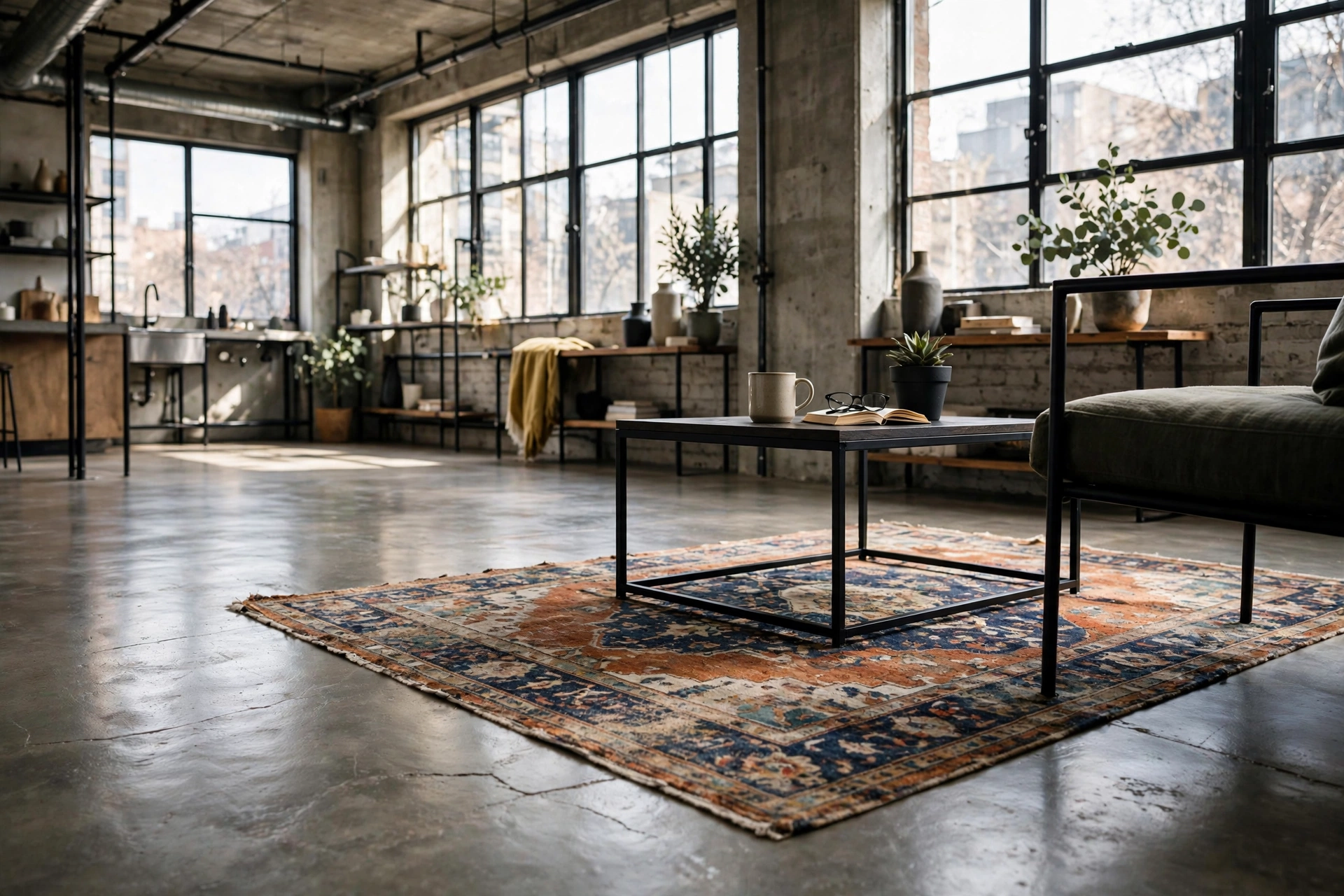
Polished concrete floors are the industrial foundation — cool, durable, and effortlessly stylish. Renters can fake it beautifully with concrete-look luxury vinyl planks ($2–$4 per square foot, peel-and-stick options available). The gray tones ground the room and make brick, wood, and black metal pop. Unlike real concrete, vinyl is warm underfoot and forgiving when you drop things. Pro tip: choose planks with subtle mottling rather than flat gray — the variation reads as real poured concrete, while uniform gray screams “vinyl.”
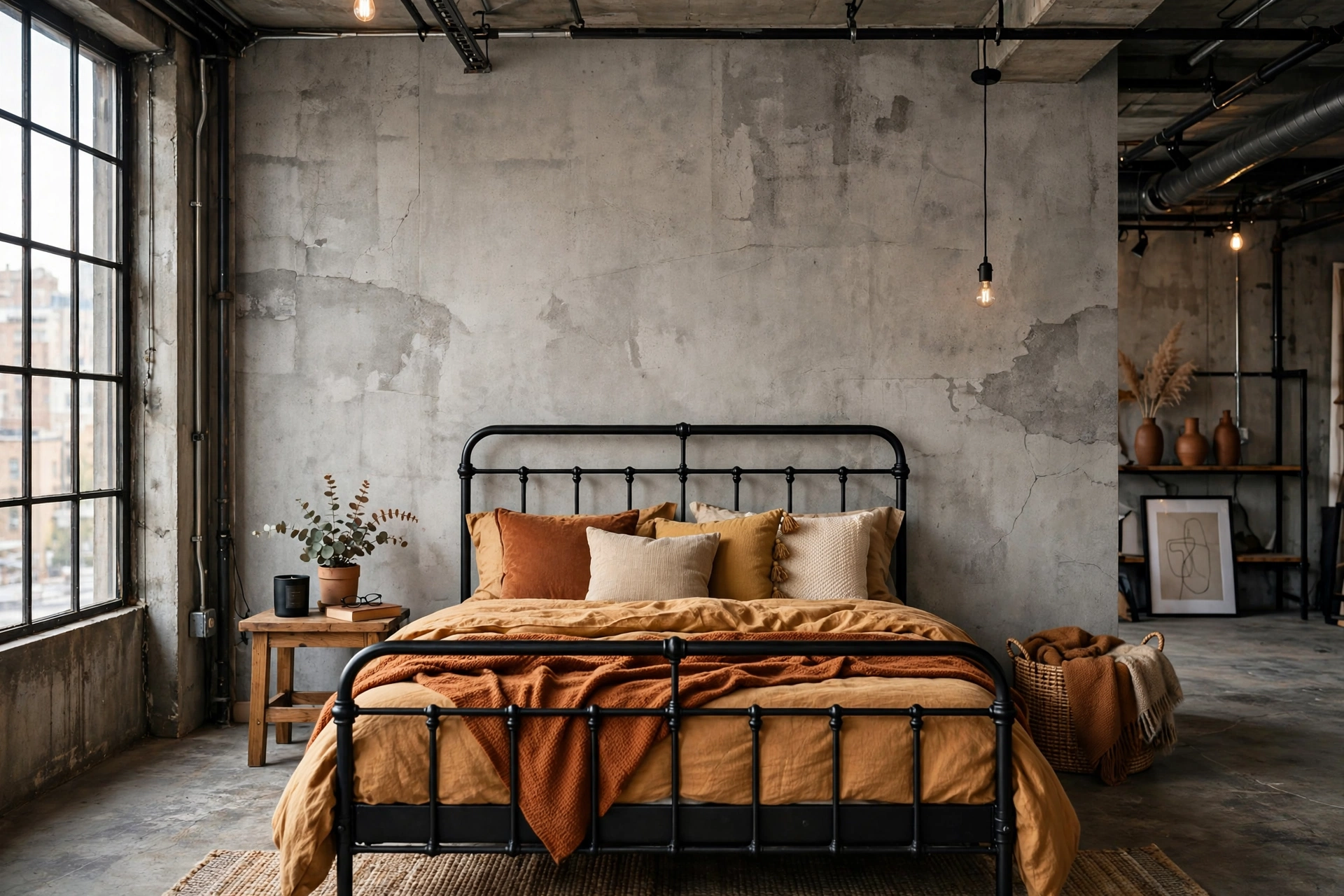
3. Try Concrete-Effect Wallpaper
When you want the concrete look on walls without the commitment, concrete-effect wallpaper ($25–$50 per roll) delivers. Modern prints capture the subtle stains, trowel marks, and tonal shifts of real poured concrete. It’s renter-friendly (many are peel-and-stick now) and transforms a plain sleeping zone into something architectural. Use it behind the bed for a headboard-wall effect. Pro tip: hang concrete wallpaper on the wall opposite your main light source — raking light across the texture makes the faux finish look remarkably real.
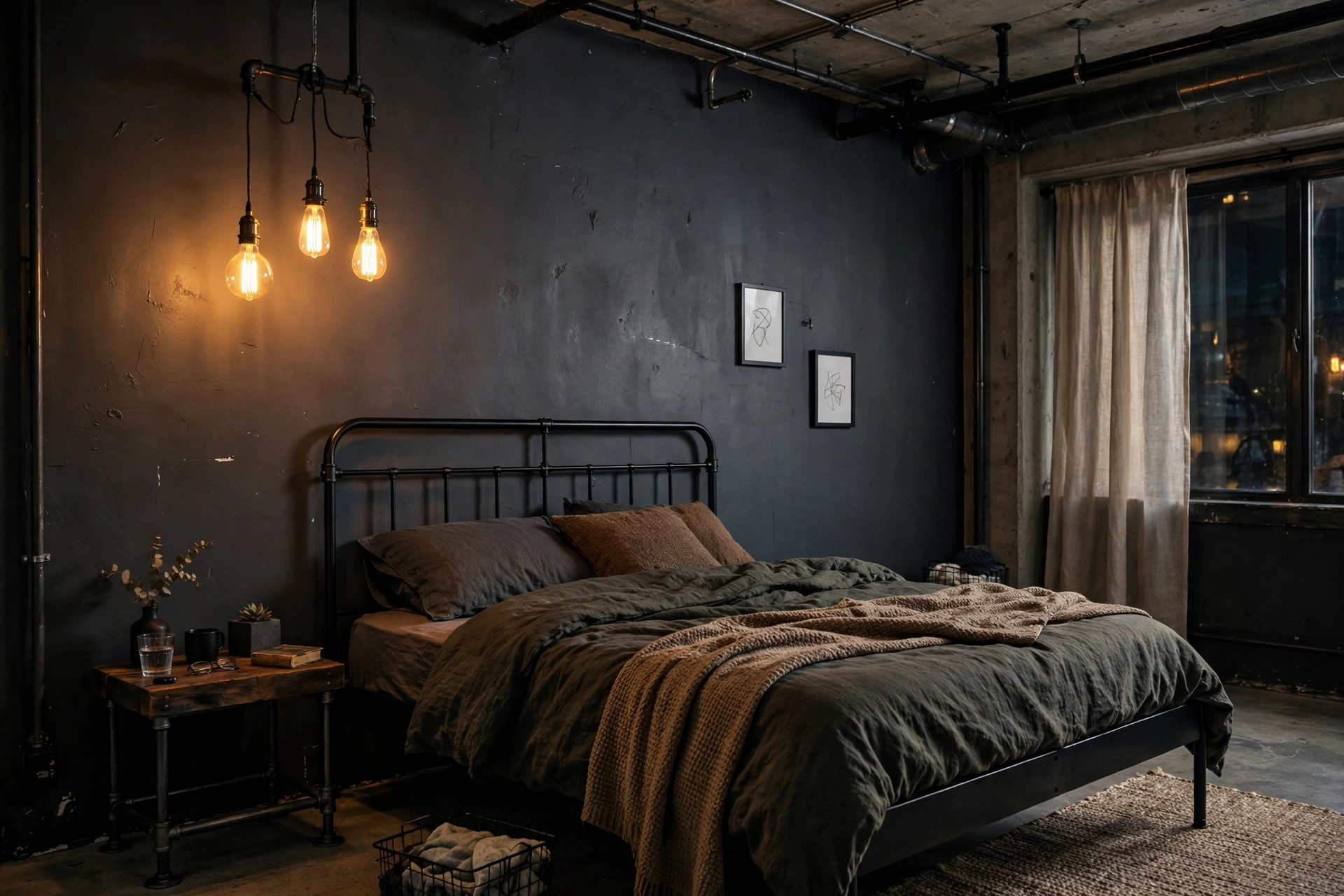
4. Go Moody With Charcoal Paint
Industrial style loves its dark side — a charcoal or near-black accent wall ($30–$50 for paint) creates drama and makes metal and wood furnishings glow by contrast. In a studio, keep it to one wall (behind the bed or sofa) so the space doesn’t shrink visually. Dark walls actually recede, making the room feel deeper, especially with good lighting. Pro tip: use a matte or eggshell finish, never gloss — flat dark paint absorbs light like raw steel, while shiny dark paint looks like a nightclub.
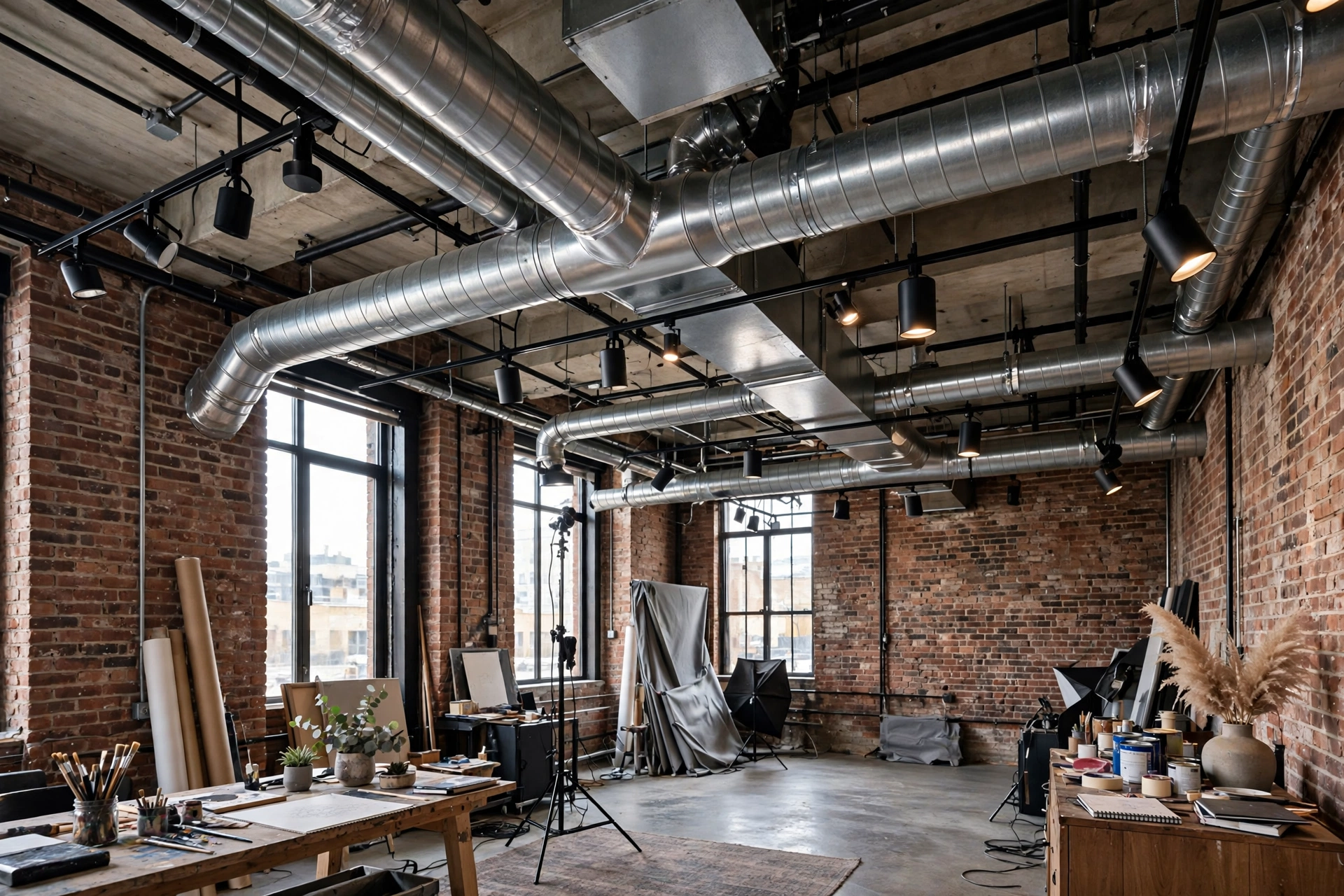
5. Fake Exposed Ductwork
That maze of silver ducts across a loft ceiling is peak industrial — and you can fake the vibe. Exposed-style spiral duct covers ($40–$80) mount to the ceiling and instantly add warehouse character. Even simpler: paint a wide stripe of metallic silver paint across the ceiling to suggest ductwork. In a studio with standard 8-foot ceilings, keep it to one run along the main axis. Pro tip: if your ceiling is low, skip actual duct covers (they eat headroom) and use the painted-stripe trick — it gives the suggestion without stealing inches.
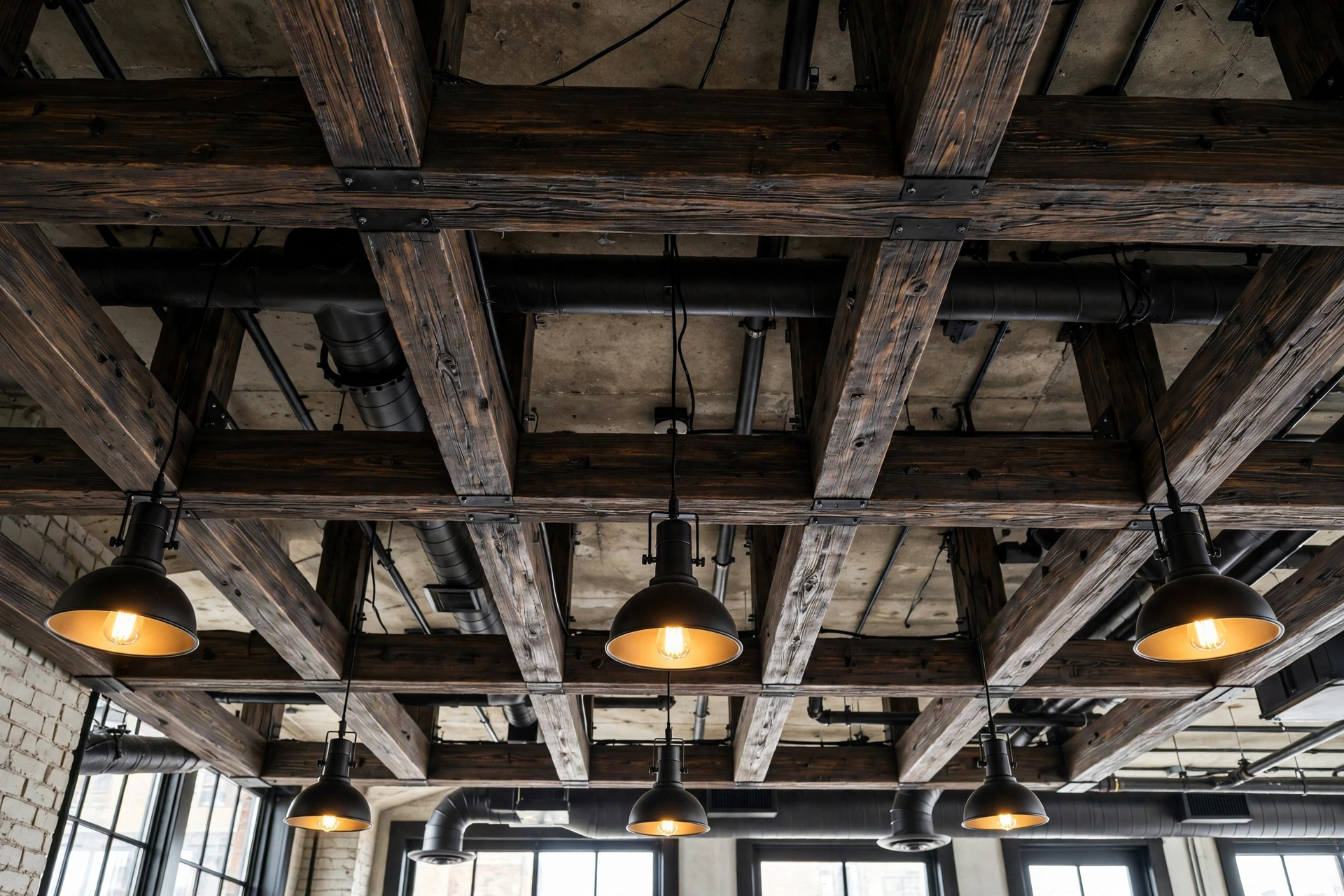
6. Add Faux Ceiling Beams
Dark wood beams against a white or concrete ceiling deliver instant loft character. Faux beams ($50–$120 each) are hollow boxes that mount with brackets — lightweight enough for one person to install. Run two or three across the main living zone to define the space architecturally. They draw the eye up, making even standard ceilings feel intentional. Pro tip: stain faux beams dark walnut or paint them matte black — the contrast against a light ceiling is what sells the industrial look; mid-tone wood just looks like a cabin.
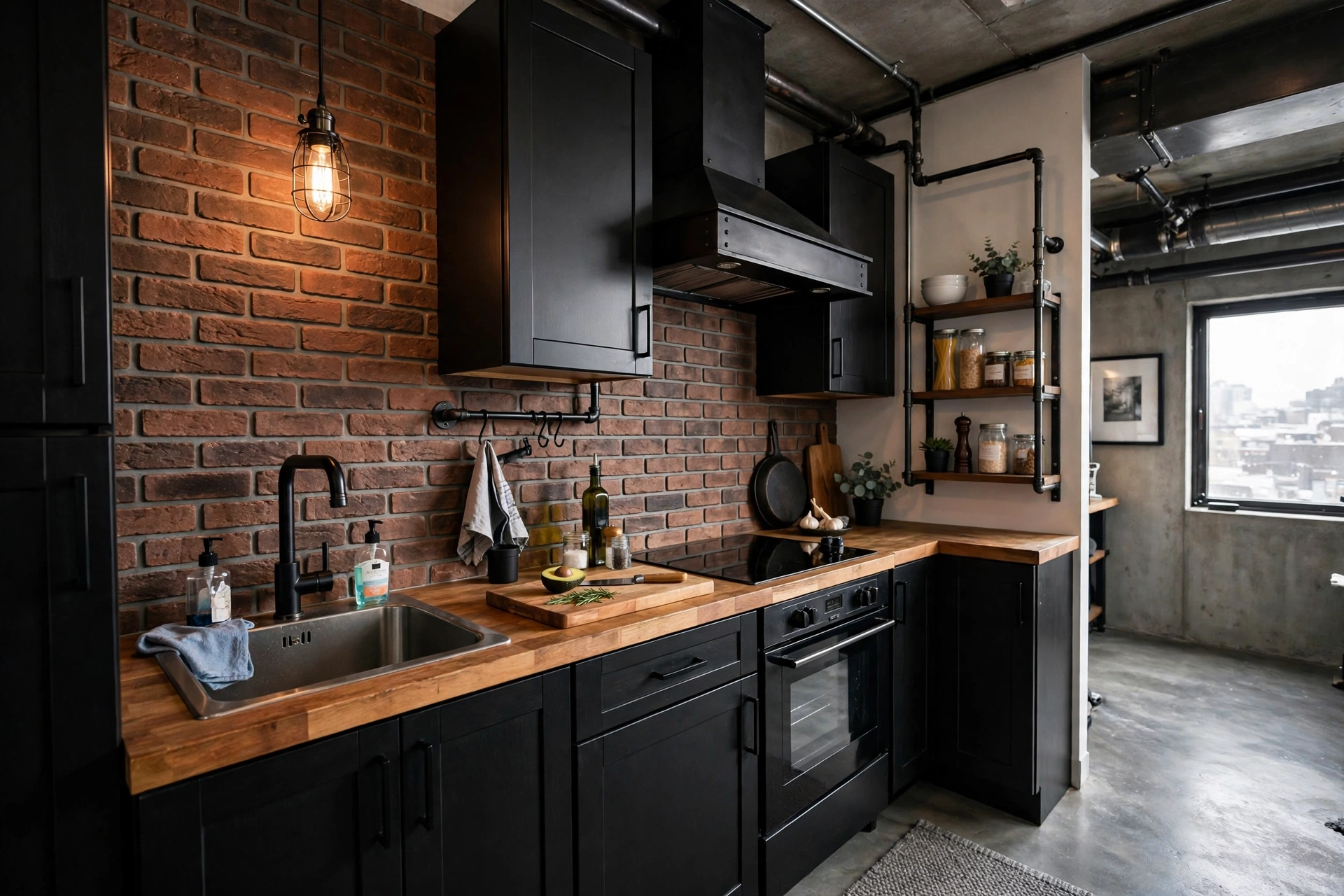
7. Install a Brick-Look Kitchen Backsplash
The studio kitchenette deserves industrial love too. Brick-look peel-and-stick backsplash tiles ($15–$30 for a studio-sized run) transform a bland rental kitchen in an afternoon. They handle heat and splashes, wipe clean, and remove without damage when you move. The texture makes even the tiniest galley kitchen feel like part of the loft story. Pro tip: carry the brick backsplash all the way to the underside of the upper cabinets (or the ceiling if there are none) — stopping at a random line breaks the illusion.
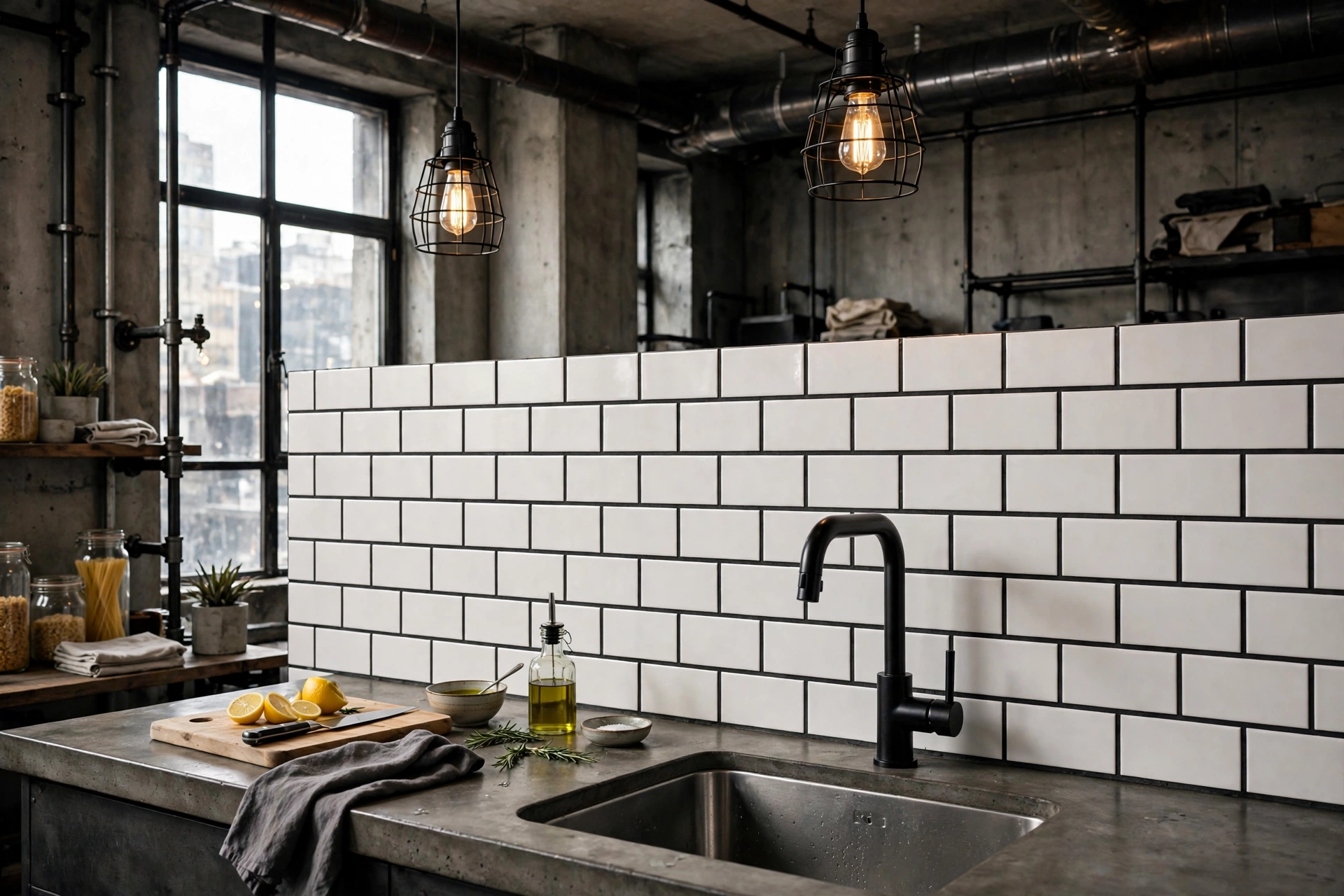
8. Choose Dark Grout for Tile
If you’re tiling anything — backsplash, bathroom, entry — dark charcoal grout with white or light tile is the industrial detail that changes everything. The high-contrast grid lines look graphic and intentional, and dark grout hides the staining that makes white grout look tired in months. A $15 bag of charcoal grout upgrades the whole project. Pro tip: use a grout pen ($8) to darken existing white grout lines — it’s tedious but transforms a rental bathroom for almost nothing.
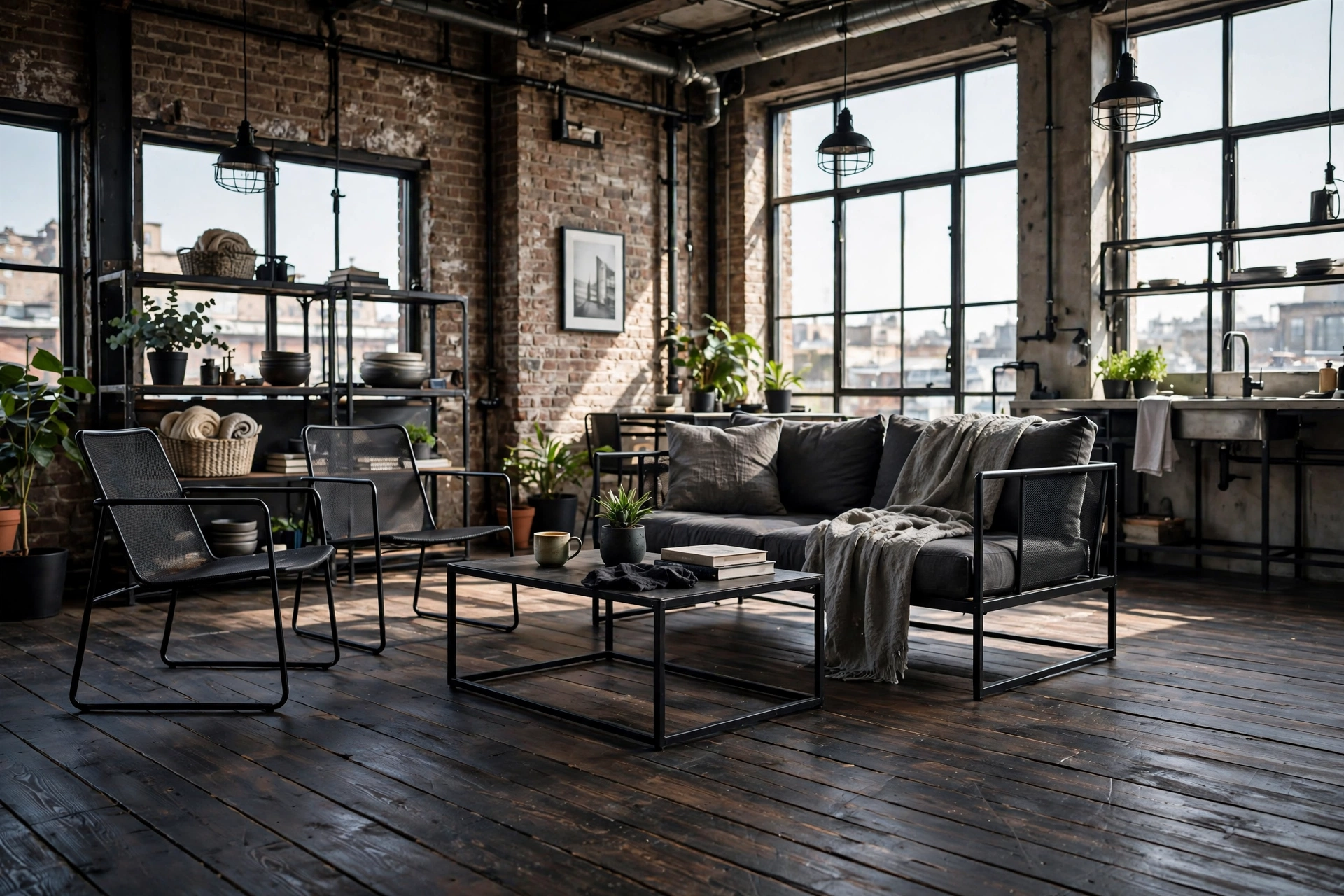
9. Stain Floors Dark
Dark stained wood floors — espresso, jacobean, ebony — are the warm alternative to concrete in industrial spaces. If your rental has wood floors and your landlord allows it (ask!), a dark stain ($40–$80 in materials for a studio) adds instant richness. For renters who can’t stain, dark-toned large rugs achieve a similar grounding effect. Pro tip: dark floors show every dust bunny — keep a microfiber dust mop ($15) by the door and do a 60-second sweep daily; it’s the only way to keep them looking sharp.
Furniture With Factory Roots
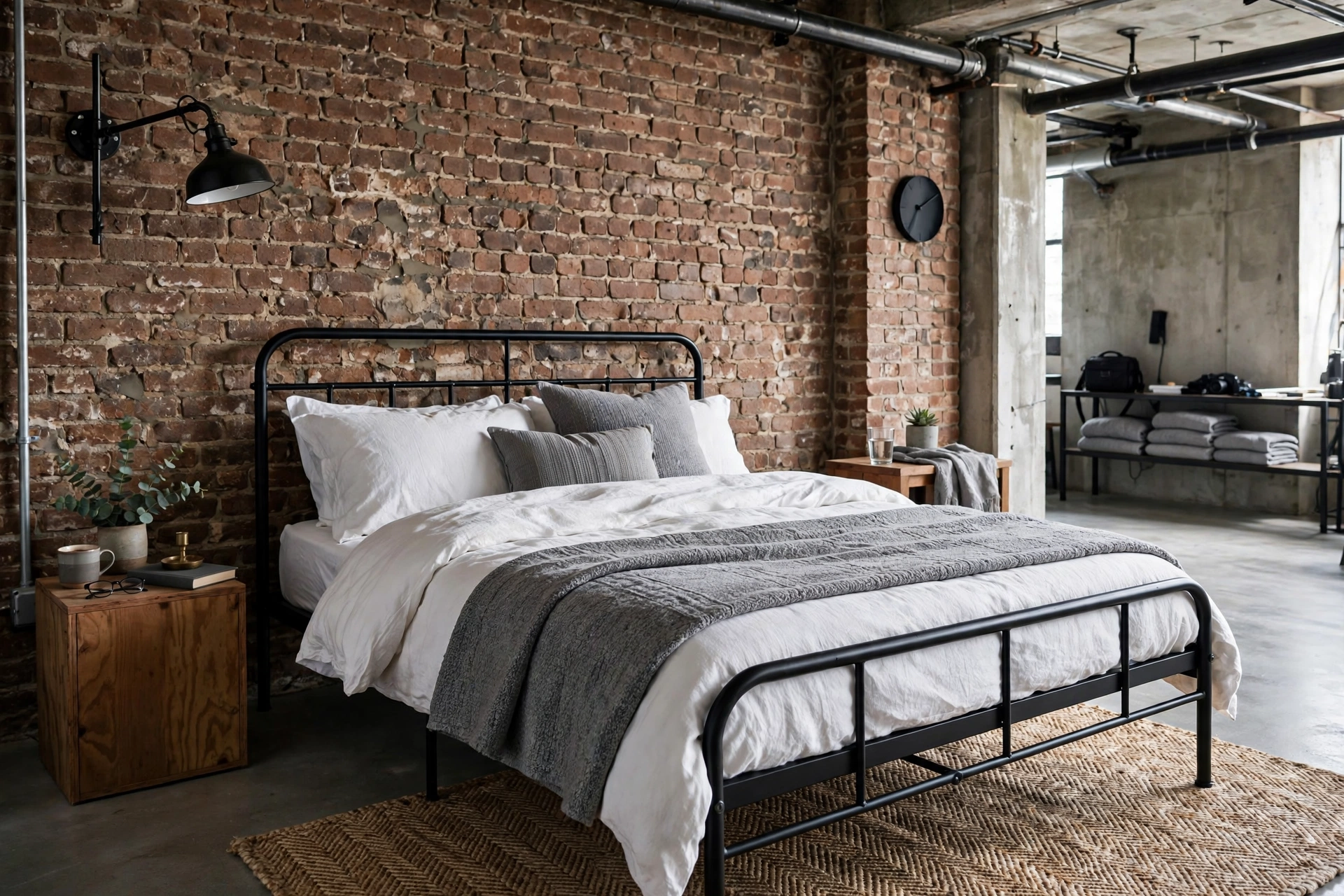
10. Anchor With a Black Metal Bed Frame
The black metal bed frame is industrial’s bedroom anchor — simple lines, sturdy construction, and a silhouette that works with everything from crisp white bedding to layered textures. At $150–$350, it’s one of the most affordable style-defining purchases you can make. The open frame keeps the sleeping zone feeling airy, crucial in a studio. Pro tip: tighten every bolt monthly for the first three months — metal frames loosen with use, and a squeaky bed ruins the whole vibe. A drop of thread-locker ($6) on each bolt ends it permanently.
11. Build a Reclaimed Wood Headboard
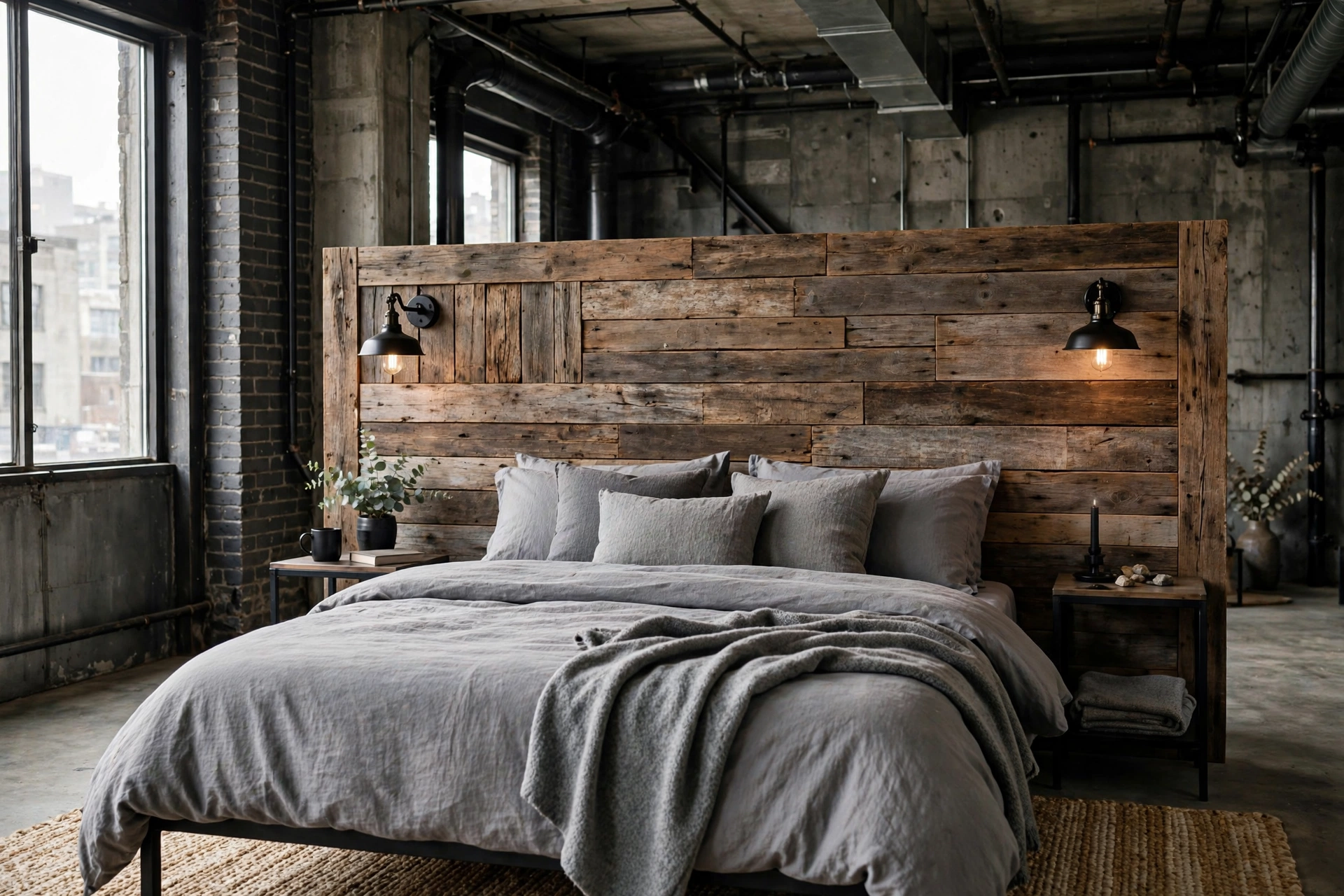
A headboard made from reclaimed barn wood or pallet planks ($40–$120 in lumber, or a weekend salvage hunt) brings warmth and history to the sleeping zone. The rough texture contrasts beautifully with soft bedding — that’s the industrial tension that makes the style work. Mount it directly to the wall for a floating look, or lean a large panel behind the bed. Pro tip: sand reclaimed wood just enough to prevent splinters but keep the saw marks and nail holes — over-sanding erases the character you’re paying for (in effort, if not cash).
12. Choose a Leather Chesterfield Sofa
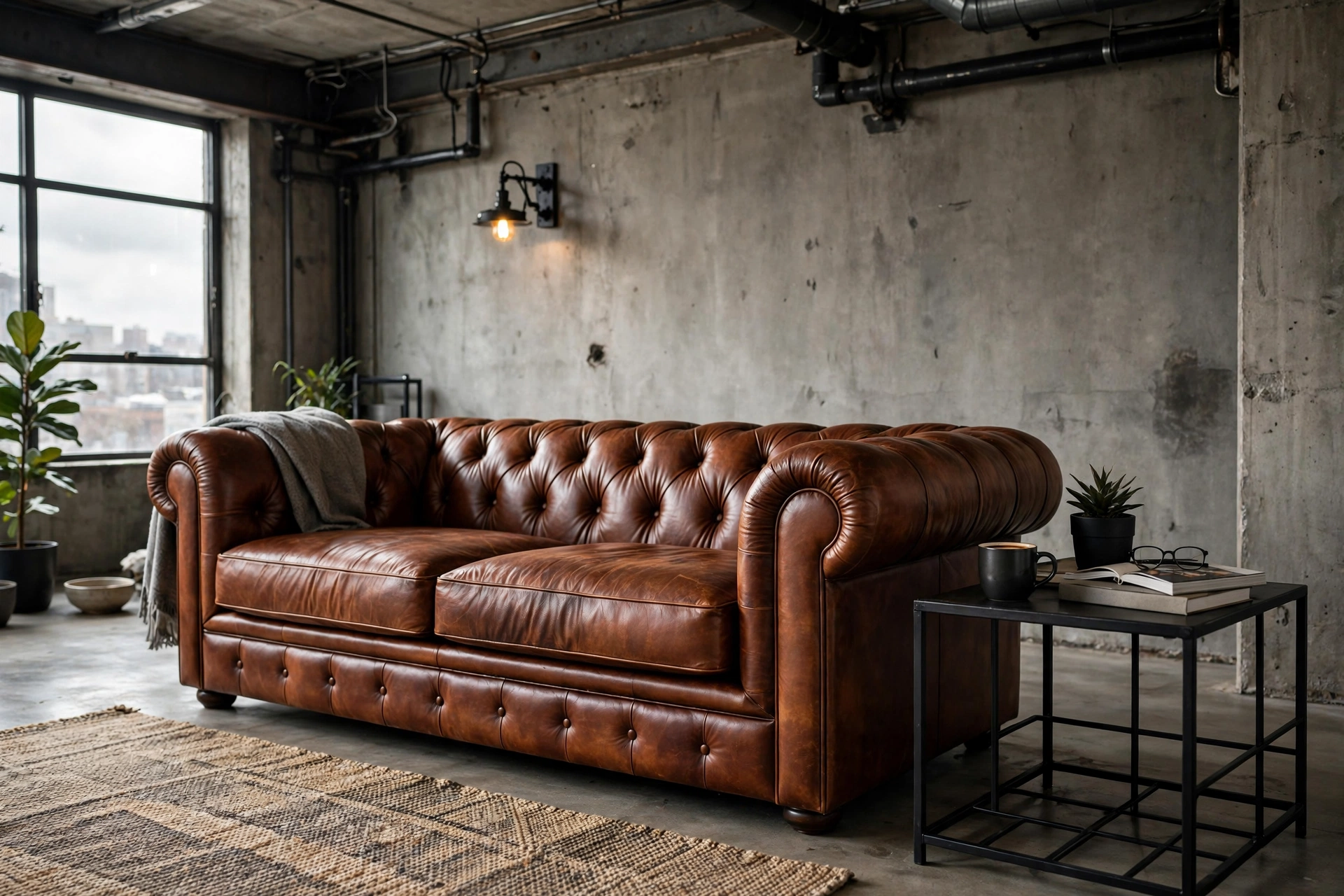
The chesterfield — deep button tufting, rolled arms, rich leather — is the gentleman’s industrial sofa. A quality faux-leather version runs $600–$1,200 and anchors the living zone with serious presence. Cognac or chestnut tones warm up all that black metal and gray concrete. In a studio, a loveseat-size chesterfield ($400–$800) gives the look without eating the room. Pro tip: condition faux leather twice a year with a vinyl conditioner ($10) — studio sunlight fades and cracks it faster than you’d expect, and ten minutes of care doubles its life.
13. Sit in a Leather and Iron Accent Chair
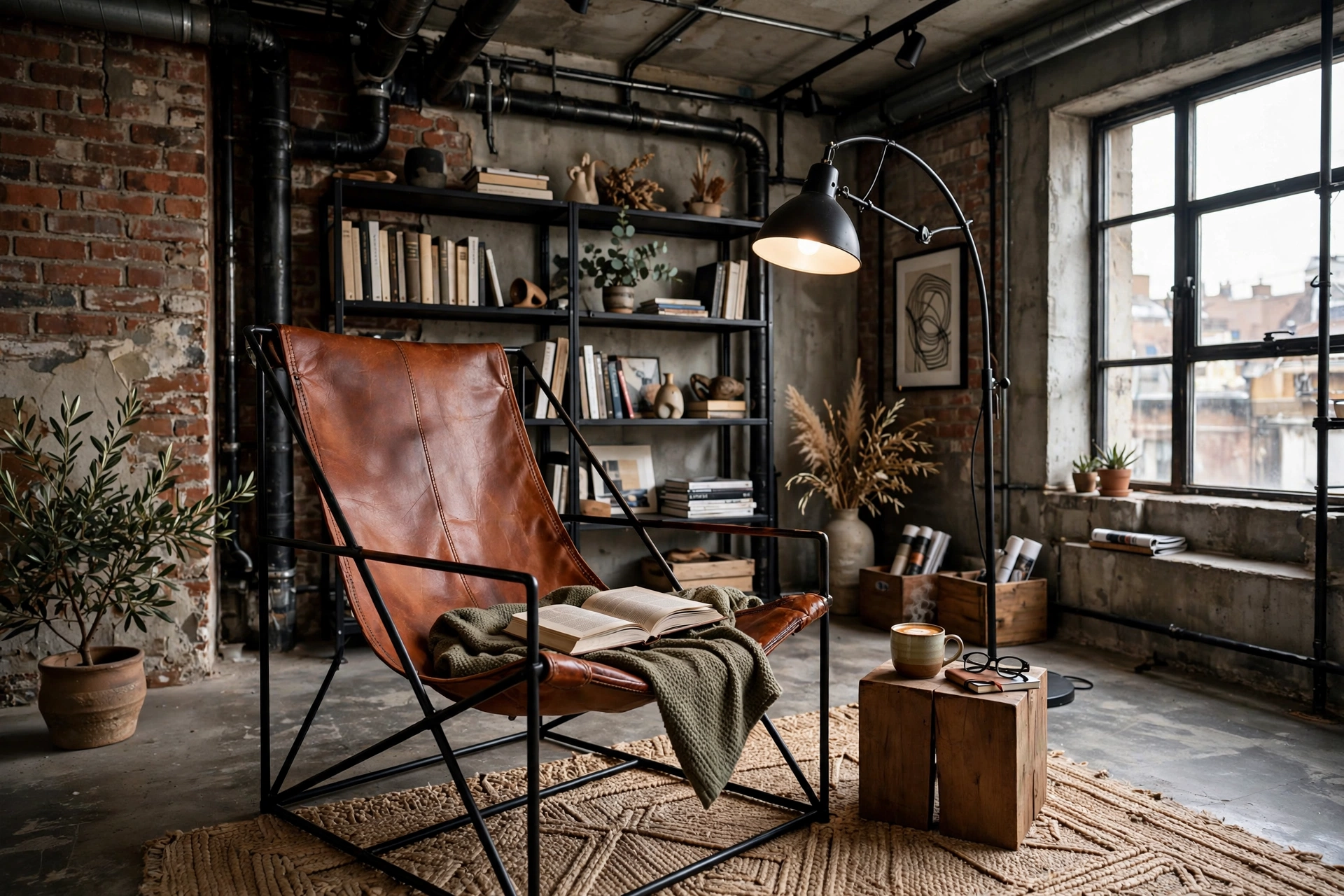
A leather sling chair with a black iron frame ($200–$450) is industrial seating at its most sculptural — it looks like functional art even when no one’s sitting in it. The open frame keeps sightlines clear, making the studio feel larger. Place it in the reading corner with a floor lamp and you’ve got the room’s best seat. Pro tip: the sling leather stretches over time — buy it snug. A chair that starts perfectly broken-in will be saggy within a year.
14. Dine at a Reclaimed Wood Table
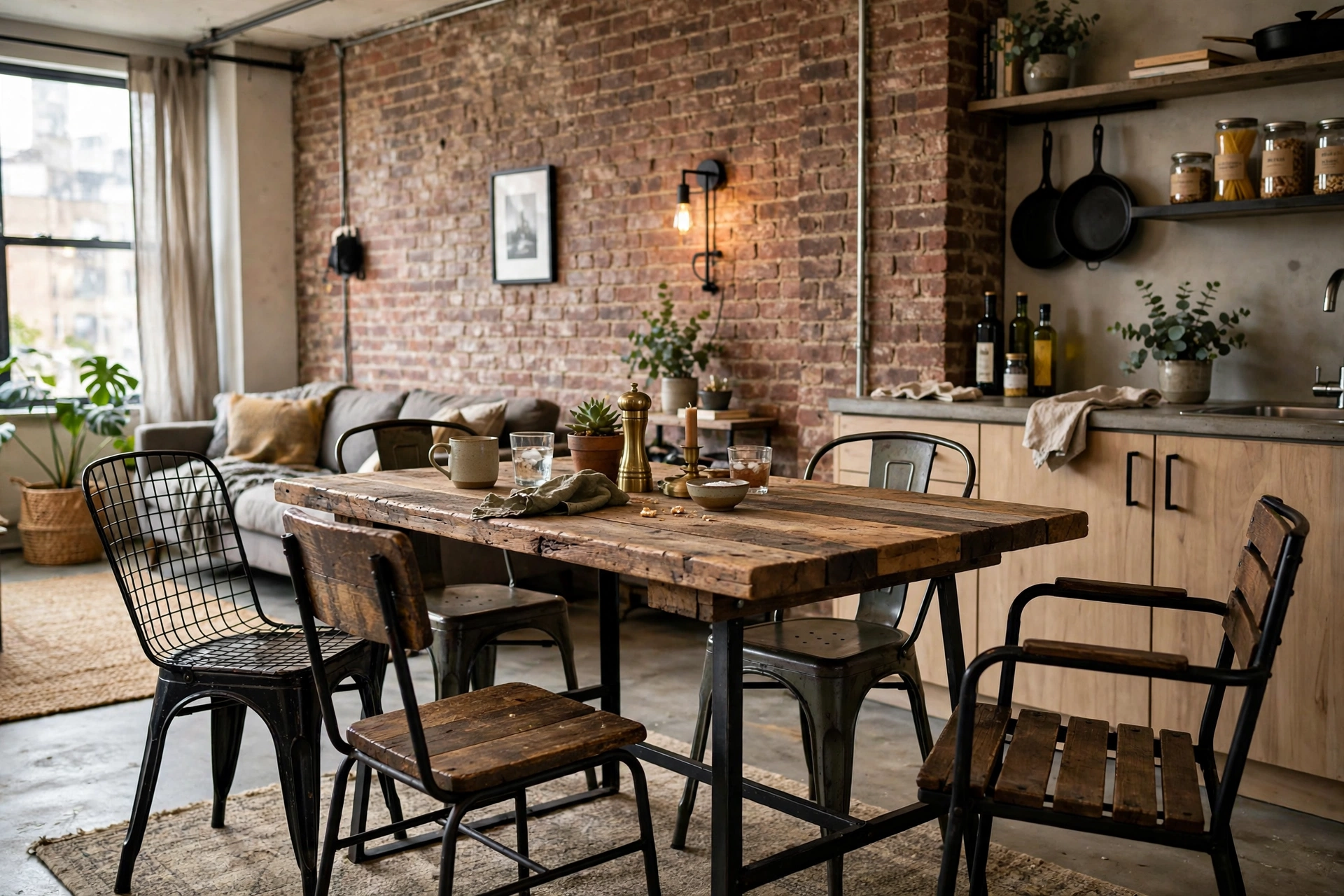
A dining table with a thick reclaimed wood top and black metal legs ($250–$600) is the industrial dining room in one piece. The wood’s imperfections — knots, saw marks, color variation — are the point, so don’t pay extra for “perfect” reclaimed. A 48-inch round or 36×60 rectangle seats four without overwhelming a studio dining nook. Pro tip: seal the top with food-safe matte polyurethane ($20) — reclaimed wood is porous, and unsealed tops stain permanently the first time someone sets down a coffee mug.
15. Perch on Industrial Bar Stools
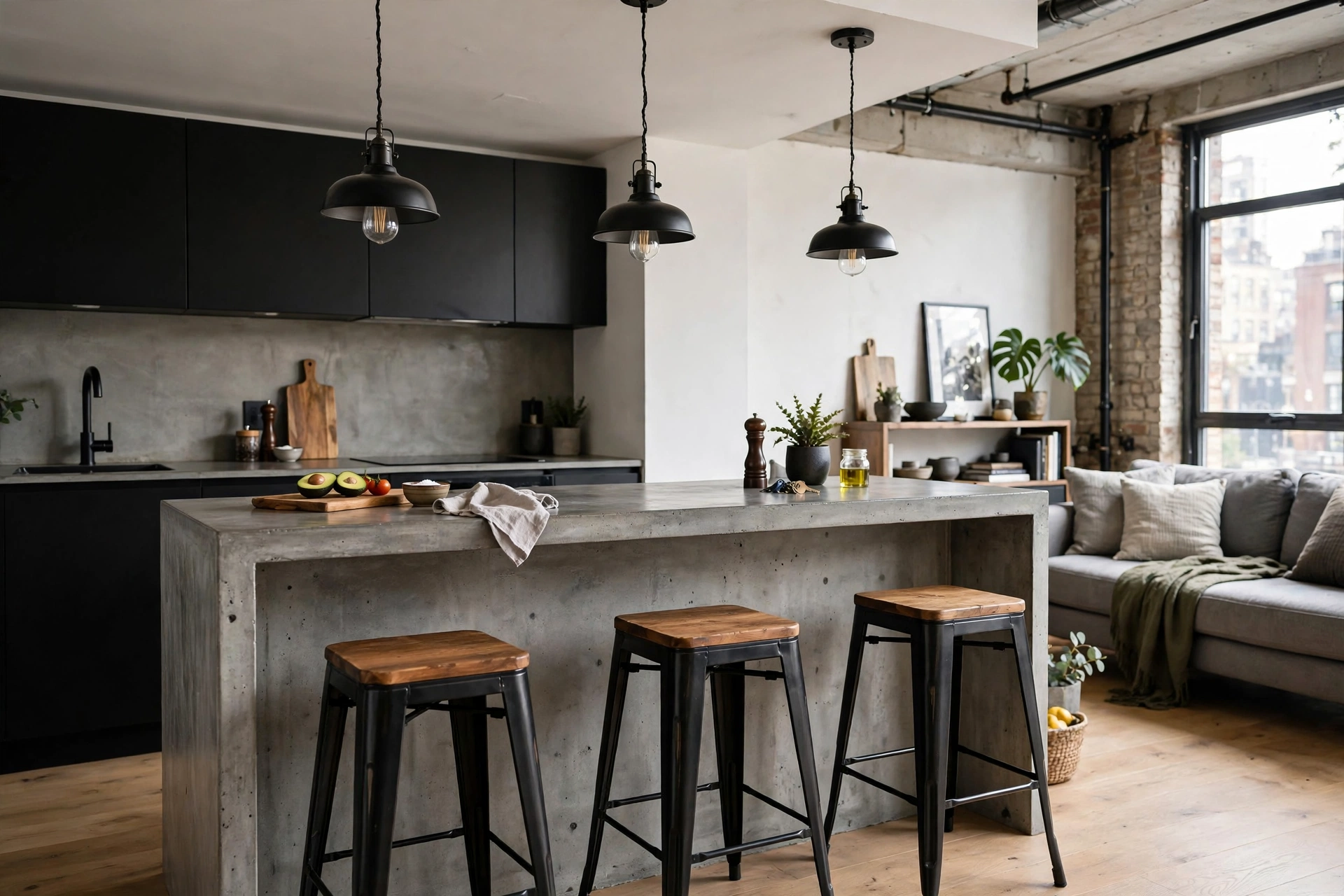
Black metal bar stools with wood seats ($50–$120 each) turn a kitchen counter or peninsula into the studio’s casual dining spot. The classic tractor-seat or Tolix-style silhouette is endlessly versatile — they tuck under counters when not in use, critical in tight quarters. Get backless versions if space is truly tight; they slide completely under. Pro tip: add felt pads to every stool foot immediately — metal legs on hard floors are the loudest furniture in existence, and your downstairs neighbor will thank you.
16. Work at a Raw-Edge Desk
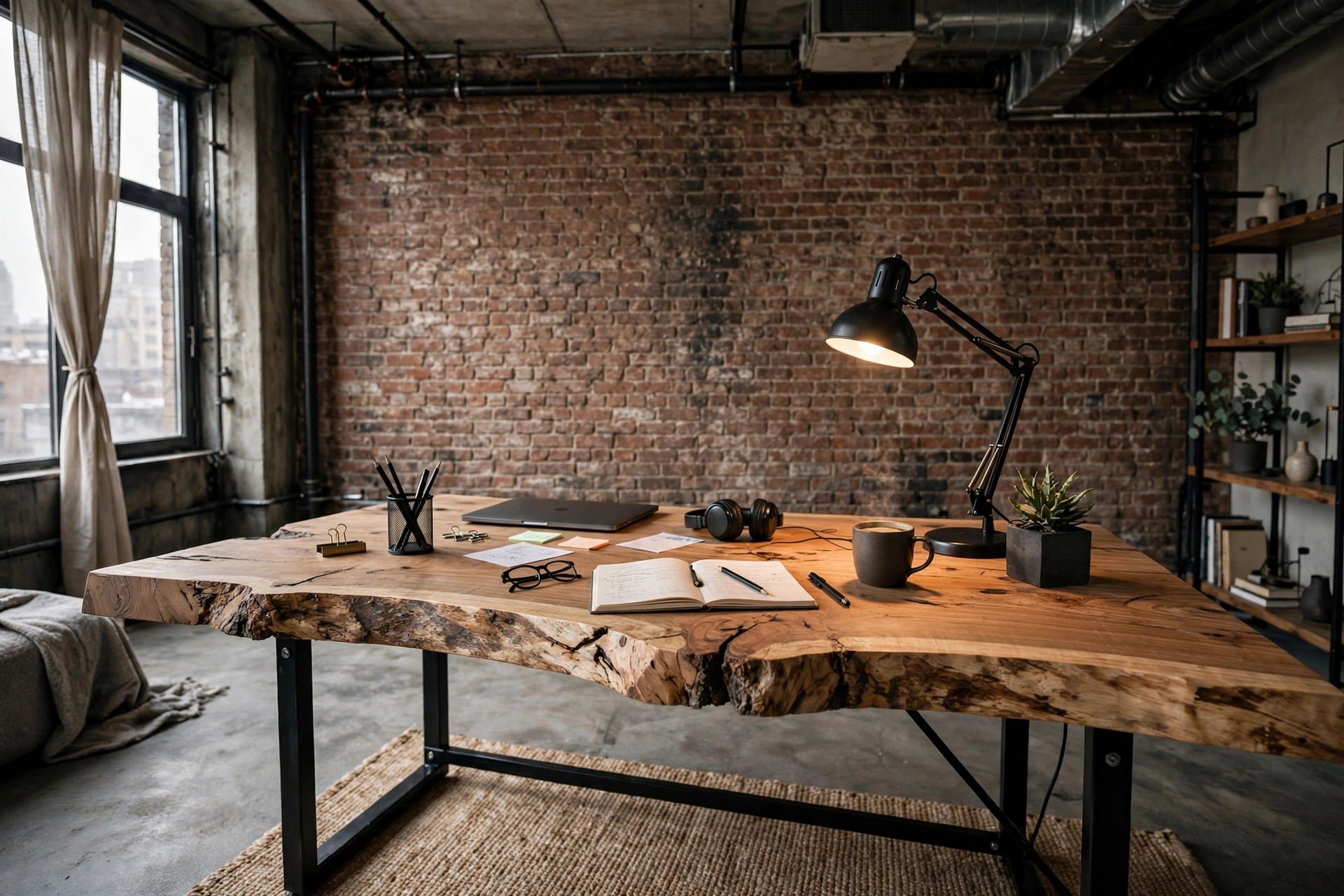
A desk with a live-edge wood slab top and black steel legs ($200–$500) makes the home office zone feel crafted rather than corporate. The organic edge softens all the hard lines elsewhere in the room — it’s the wabi-sabi counterpoint industrial style needs. Even a small 48-inch version gives ample workspace. This kind of characterful workspace is central to our studio home office ideas with personality. Pro tip: the live edge collects dust in its crevices — hit it with a soft brush attachment monthly, or the “natural” look becomes the “neglected” look.
17. Repurpose a Workshop Workbench
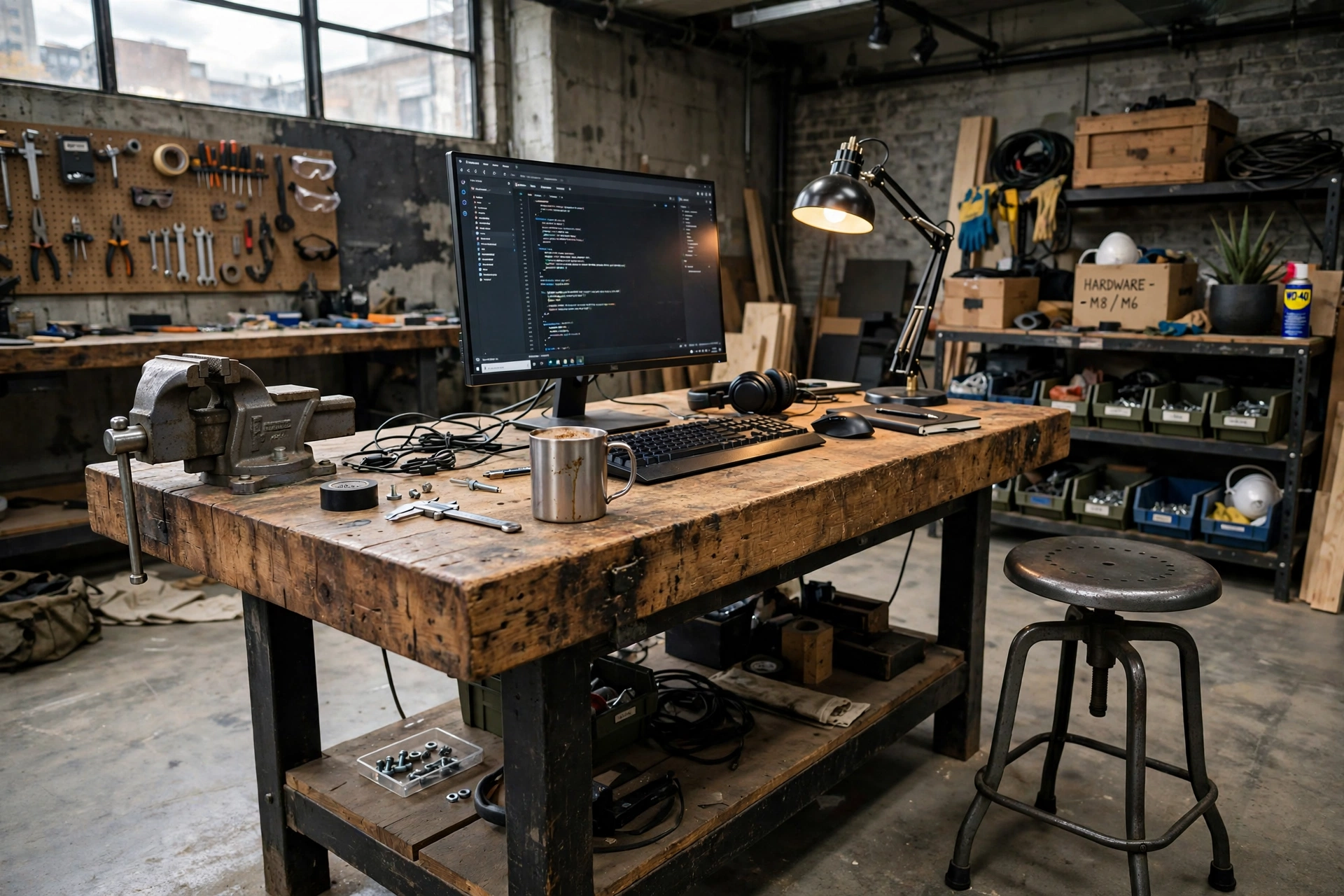
A heavy workshop workbench — thick maple top, steel frame, maybe a lower shelf — makes an unbeatable industrial desk ($150–$400 new, often $50–$100 used). It’s built to take abuse, offers massive surface area, and the utilitarian look is authentically industrial rather than industrial-inspired. The weight means it never wobbles, even with dual monitors. Pro tip: check the height before buying — workbenches run 34–36 inches (standing height) versus 29–30 for desks. You’ll need a drafting chair or a footrest to make it ergonomic.
18. Roll In a Vintage Factory Cart
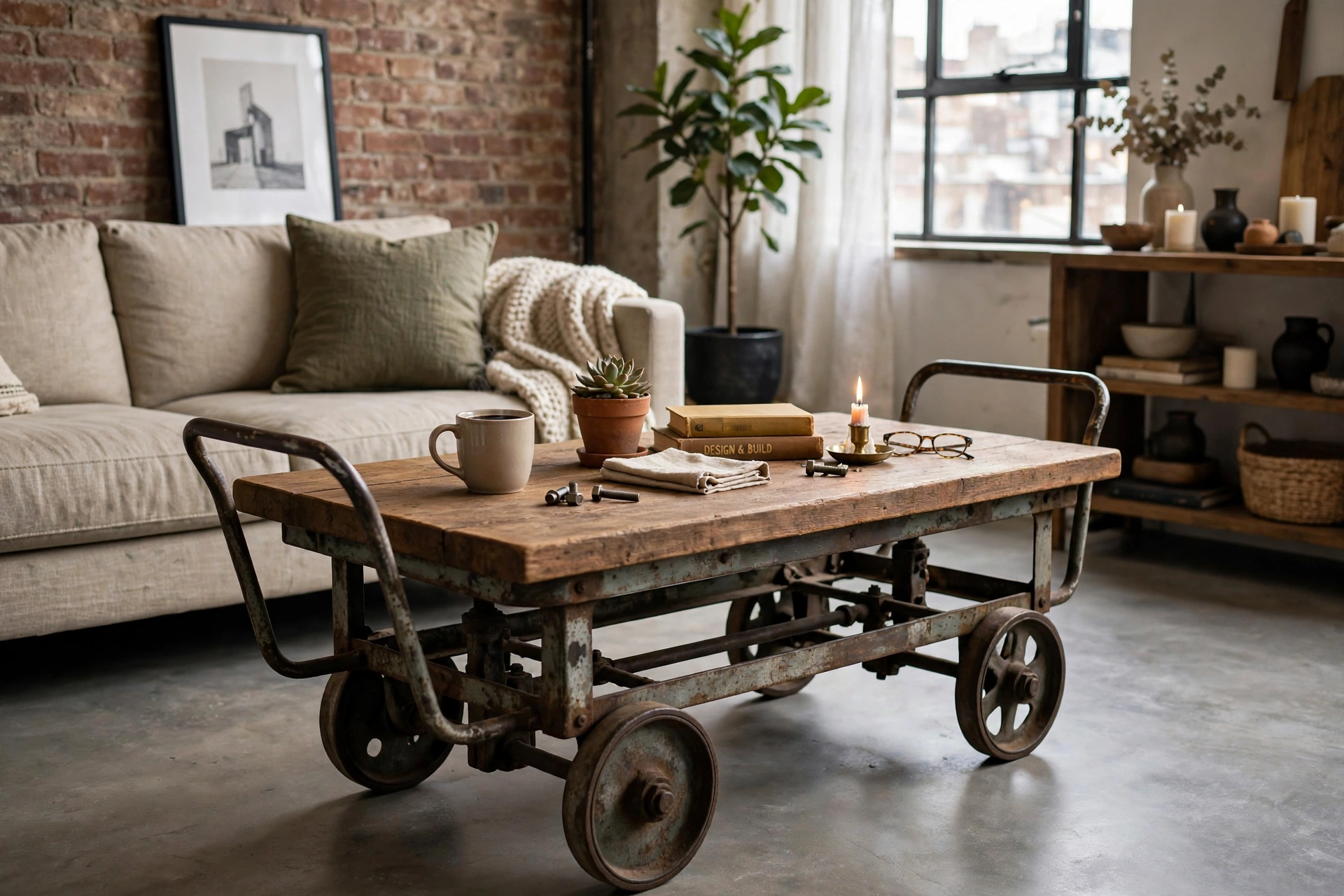
A vintage factory cart — the low wooden platform on cast-iron wheels once used to haul goods — makes a jaw-dropping coffee table ($200–$500). It’s a genuine piece of industrial history, endlessly practical (it rolls!), and an instant conversation starter. Top it with a glass panel if the slats are too gappy for drinks. Pro tip: lock at least two casters — a coffee table that drifts across the studio every time someone bumps it gets old fast, no matter how cool it looks.
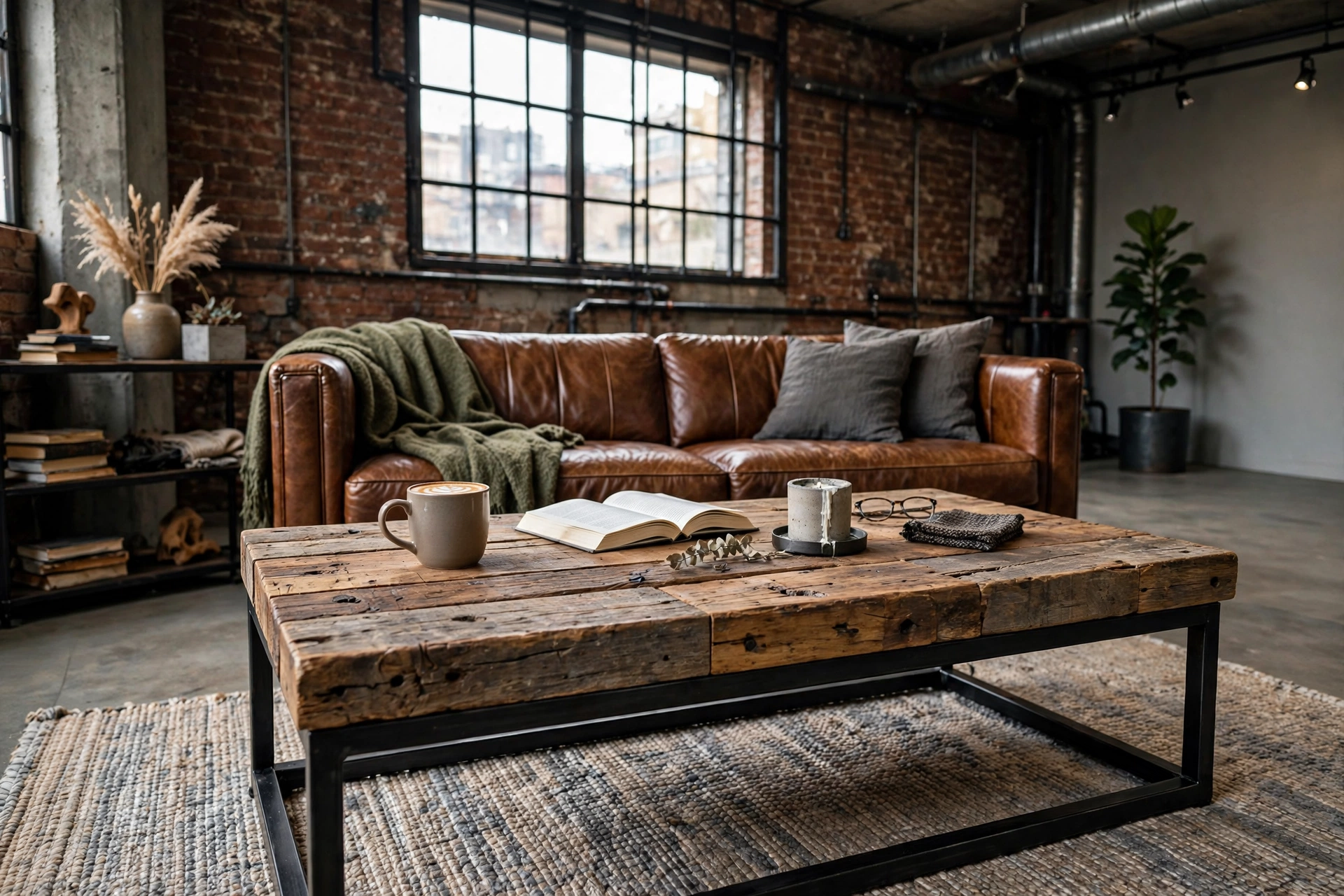
19. Mix a Steel and Wood Coffee Table
If a full factory cart is too much, a coffee table pairing a thick wood top with a black steel base ($150–$400) hits the same notes more quietly. The combination is industrial’s core material language in miniature. Look for visible welds and bolts — the construction details are the decoration. Pro tip: match the steel finish to your other black metal pieces (matte vs. glossy) — mixed black finishes look accidental, while consistent ones look curated.
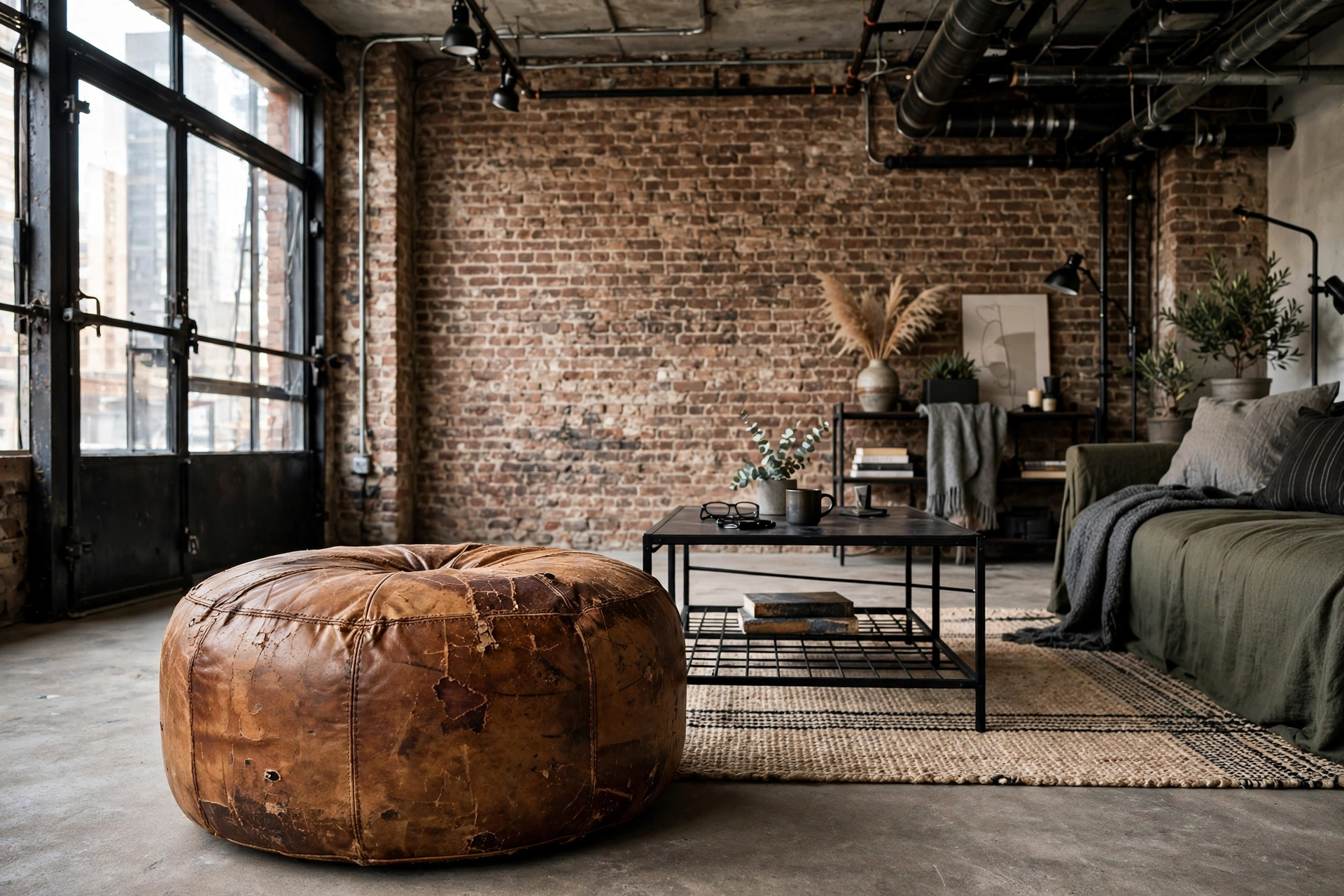
20. Rest on a Distressed Leather Ottoman
A distressed leather ottoman ($100–$250) does triple duty in a studio: footrest, extra seat, and coffee table (with a tray on top). The worn leather patina is pure industrial character — every scuff tells a story. Choose one with storage inside and it quadruples its value in a small space. Pro tip: the more “distressed” it looks new, the better it ages — pristine leather shows the first scratch dramatically, while pre-worn leather just gains character.
Storage & Shelving
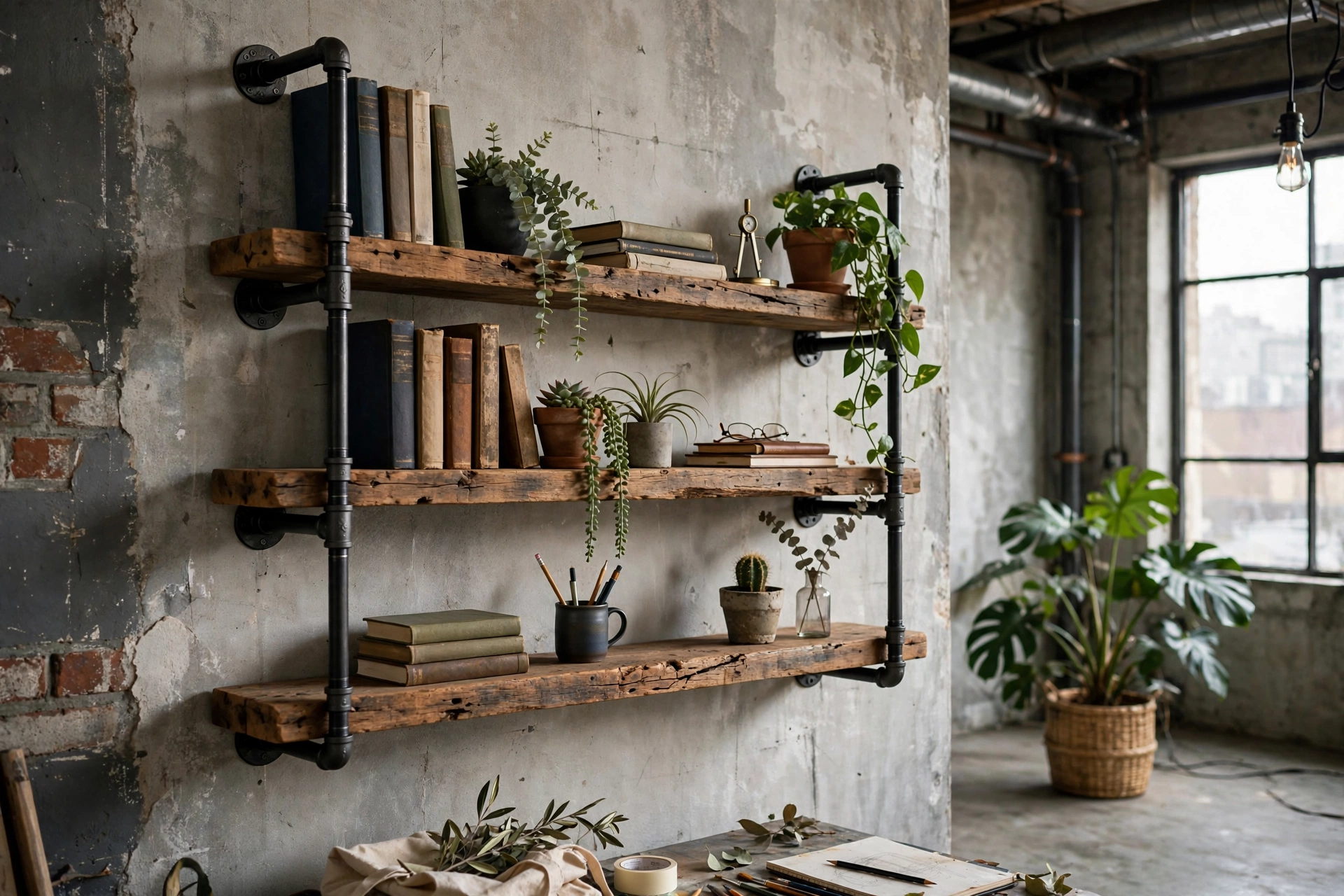
21. Mount Metal Pipe Shelving
Black iron pipe brackets with reclaimed wood planks ($60–$150 for a three-shelf run) are the industrial storage icon — and a genuinely great DIY. The pipes screw into studs, the wood rests on top, and suddenly you have open shelving with factory bones. Use it in the kitchen for dishes, the living zone for books, or the entry for grab-and-go gear. Pro tip: buy pre-cut threaded pipe from the hardware store rather than cutting your own — the threading is the fiddly part, and pre-cut lengths ($5–$12 each) make this a one-afternoon project.
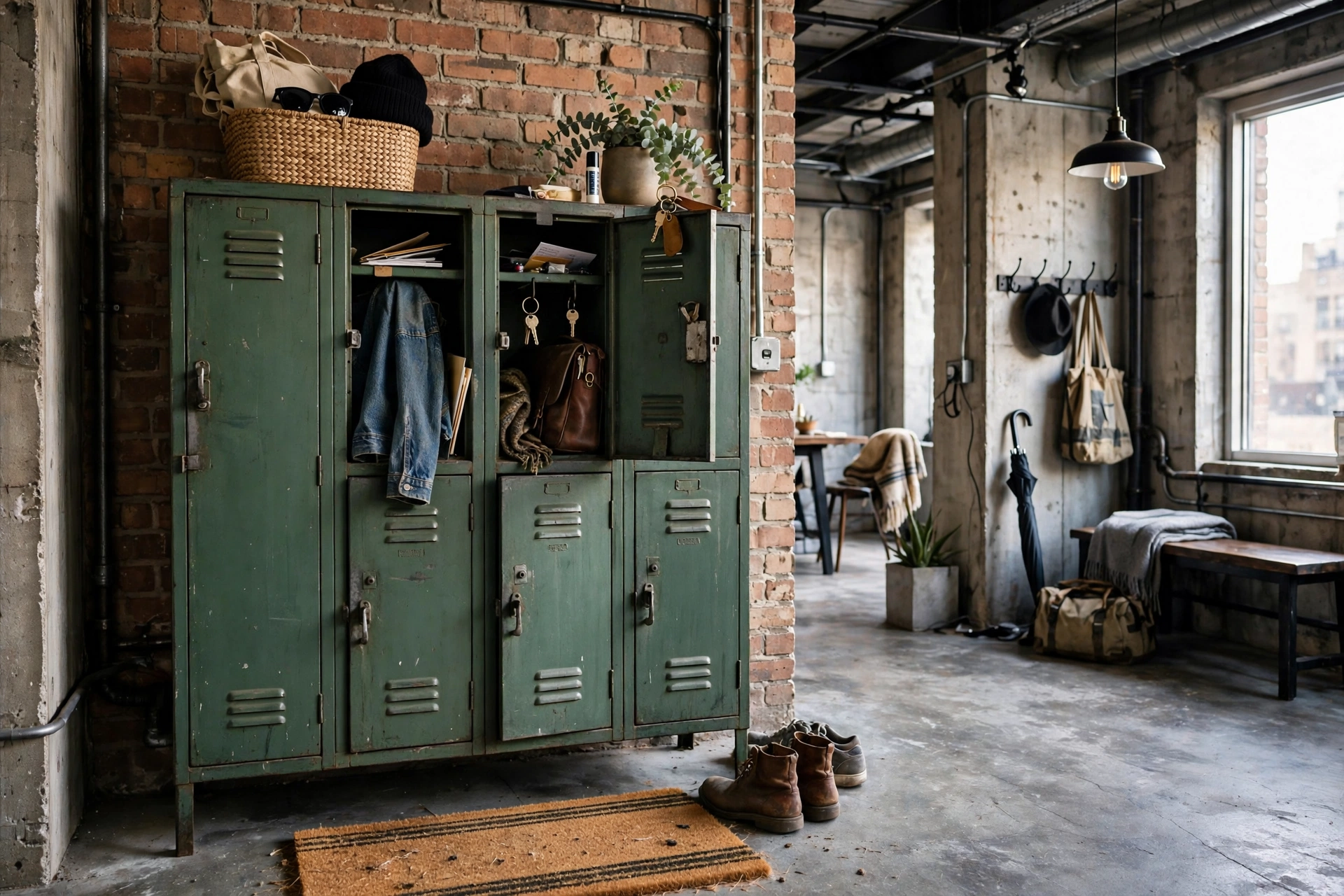
22. Store in a Vintage Locker Cabinet
A vintage metal locker bank — those tall cabinets with vented doors from old schools and factories — is storage with unbeatable character ($150–$400). Use it in the entry for coats and shoes, or as a wardrobe supplement in the sleeping zone. The ventilation slots mean gym gear doesn’t get musty inside. Pro tip: line the locker bottoms with shelf liner ($8) — vintage lockers often have rust spots or sharp edges inside that snag clothes.
23. Nightstand From a Filing Cabinet
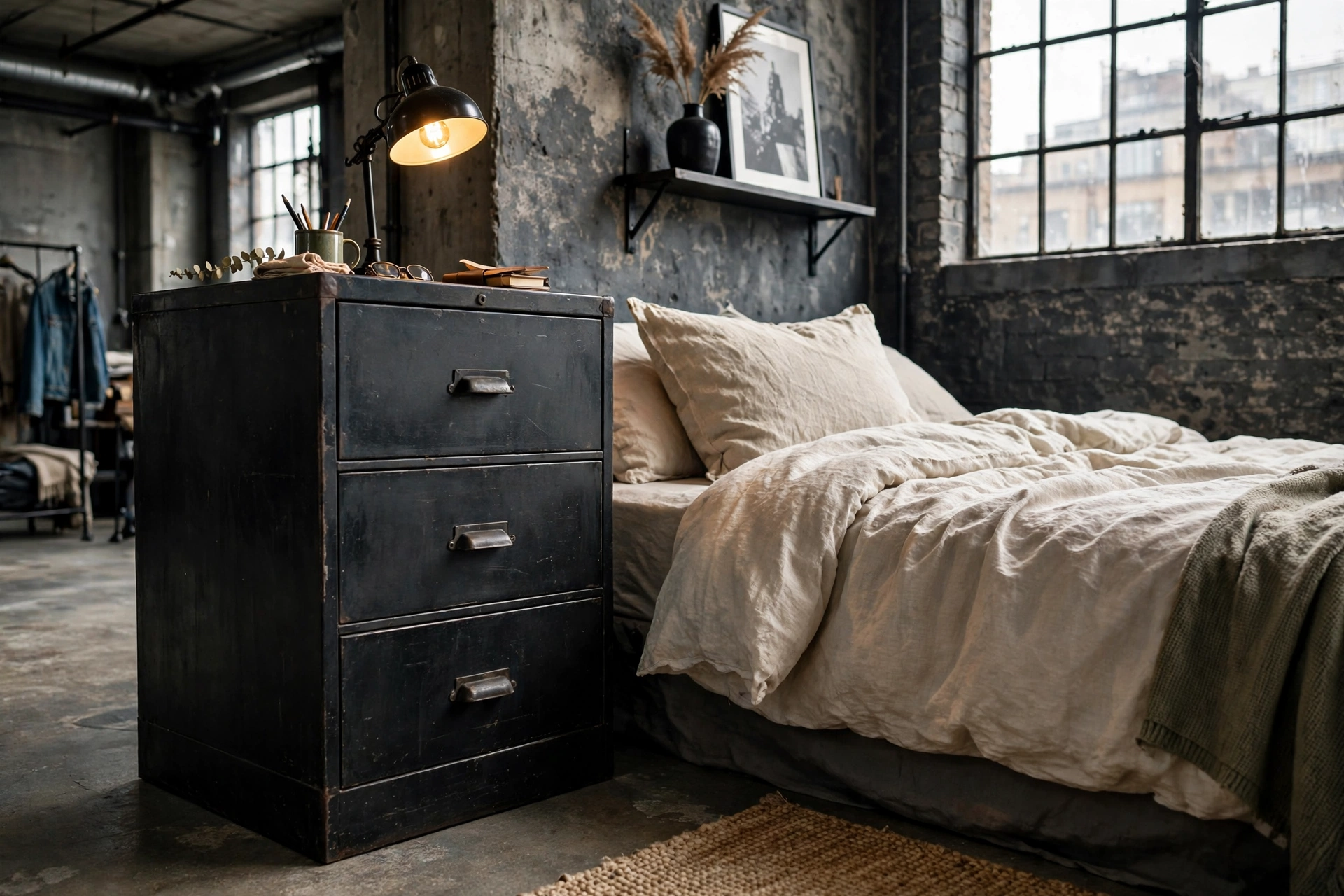
A vintage two-drawer metal filing cabinet ($30–$80 at thrift stores) makes a perfect industrial nightstand — the drawers swallow chargers, books, and bedtime clutter, and the steel body is indestructible. Look for mid-century office pieces in black, olive, or rusty red. Sand and spray-paint if the finish is rough. Pro tip: remove the hanging file rails inside and add a $5 drawer organizer — without it, the deep drawers become junk caverns where things vanish.
24. Choose Wire-Mesh Cabinet Fronts
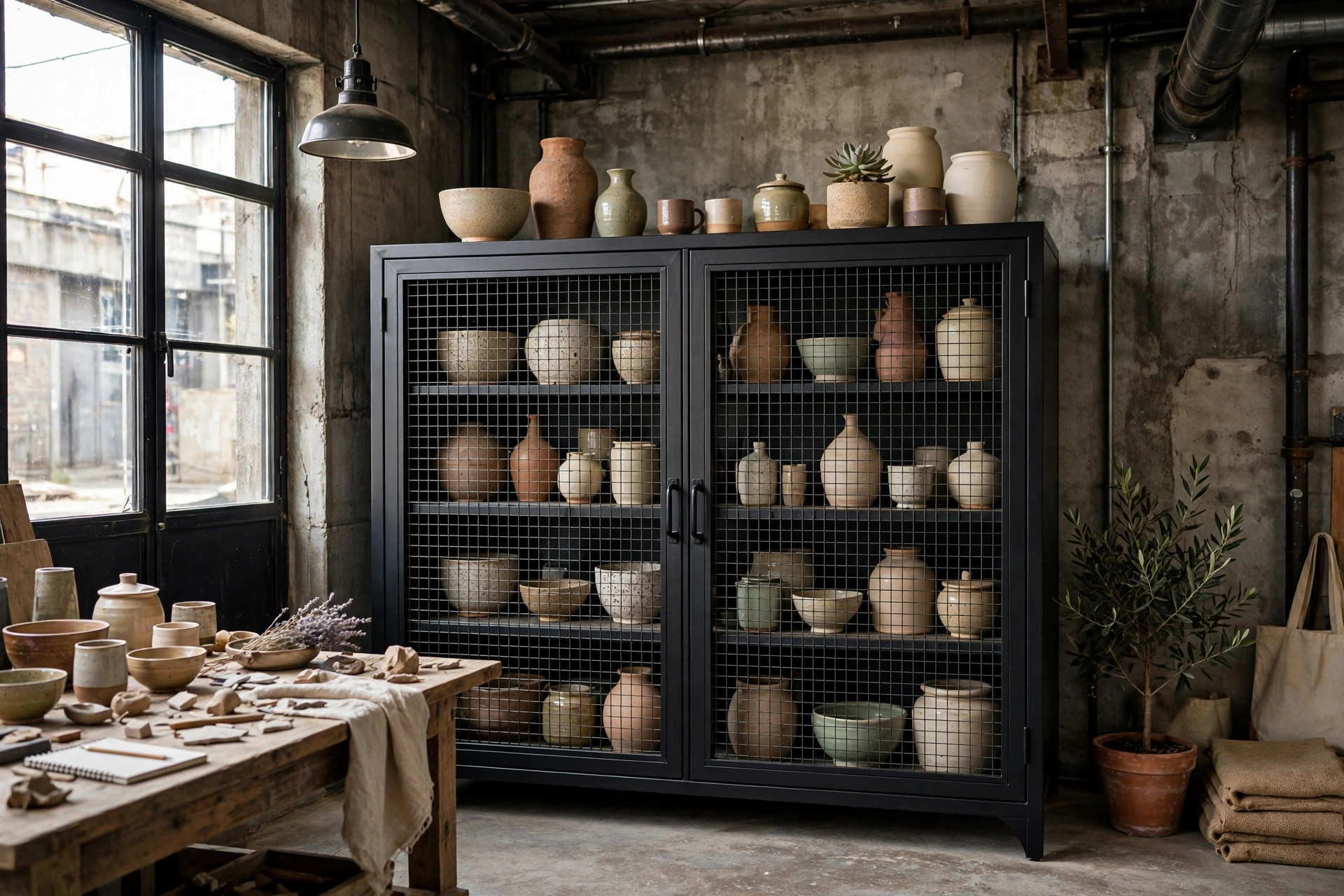
Cabinet doors with wire mesh panels instead of solid fronts ($100–$300 for a cabinet) are industrial storage that breathes — literally. The mesh keeps contents visible but contained, adds texture, and prevents that heavy closed-in feeling solid cabinets create in small studios. Use one as a pantry, linen store, or media cabinet. Pro tip: back the mesh with linen fabric if the contents are messy — you keep the industrial look from outside while hiding the chaos, and the fabric is removable for cleaning.
25. Stand a Raw Steel Bookshelf
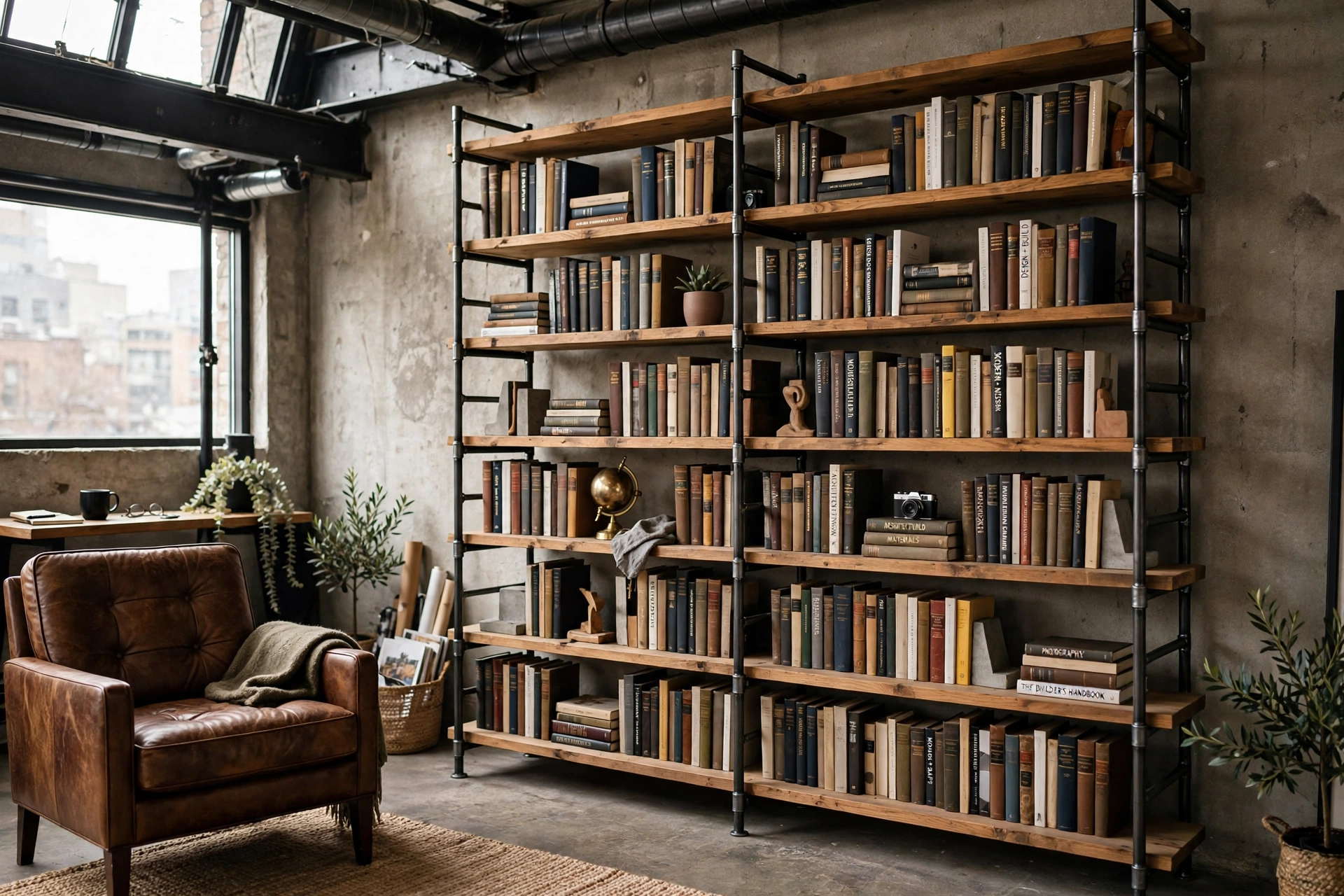
A bookshelf in raw or blackened steel with wood shelves ($200–$500) is the industrial library — open, architectural, and strong enough for serious book collections. The open sides keep it from boxing in the room, important when it doubles as a zone divider. Style it with the 70/30 rule: 70% books, 30% objects and breathing room. Pro tip: anchor tall steel bookshelves to the wall ($8 anti-tip kit) — they’re top-heavy when loaded, and in a studio you brush past furniture constantly.
26. Hang an Iron Pipe Clothing Rack
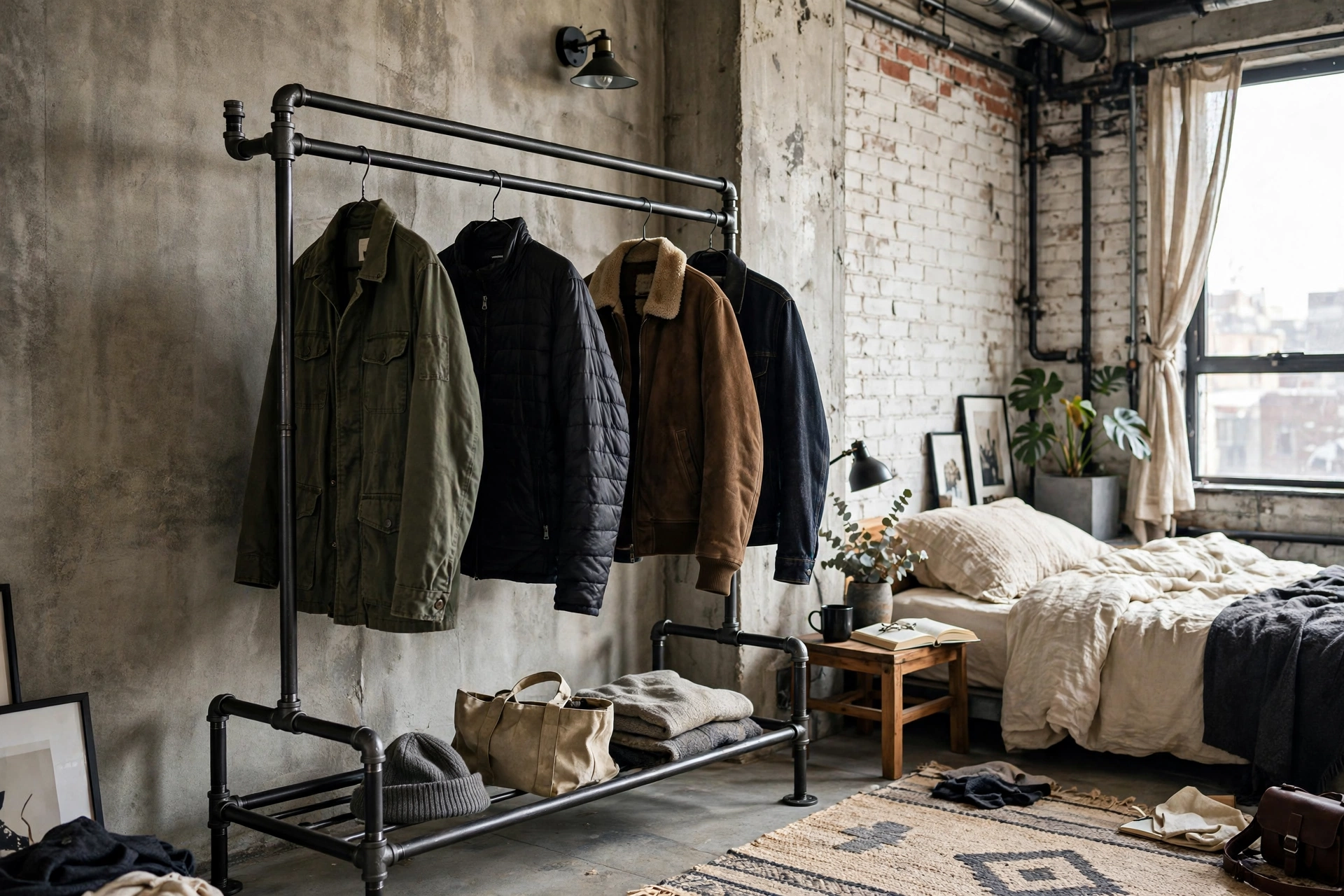
When the closet is a joke (as in most studios), a freestanding clothing rack from black iron pipes ($60–$120) turns your wardrobe into industrial decor. The garments become a textile display — which means this only works if you edit ruthlessly. Keep 15–20 pieces max, color-coordinated, or it reads as clutter rather than curation. Pro tip: use matching hangers (all black velvet, $15 for 30) — mixed hangers are the difference between “curated boutique” and “laundry explosion.”
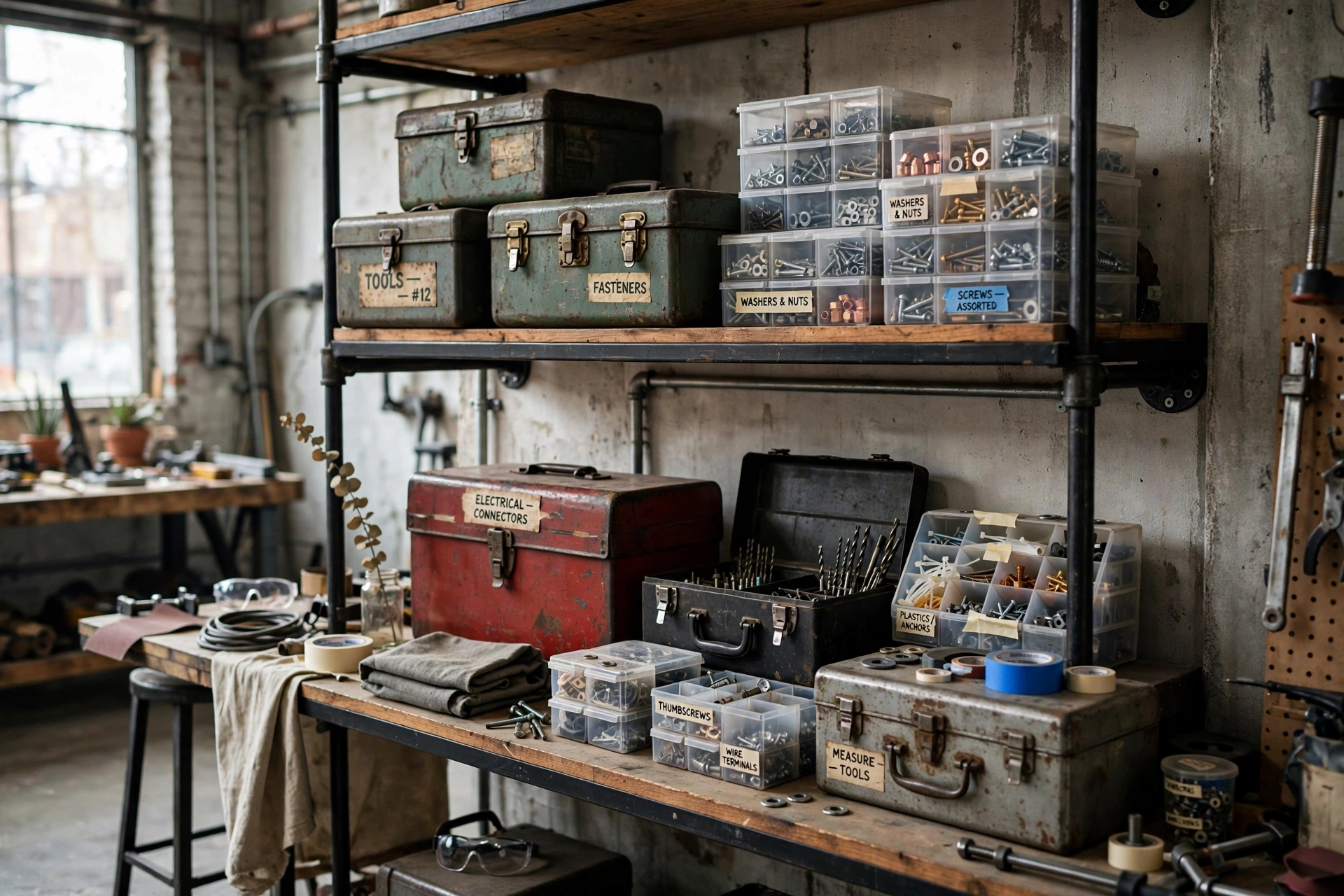
27. Organize With Metal Toolboxes
Vintage metal toolboxes and small-parts organizers ($10–$40 each) are the industrial answer to pretty storage boxes — and far more durable. Use them on open shelves for office supplies, craft materials, or bathroom extras. The patina, labels, and dents are all part of the charm. Stack them, label them, love them. Pro tip: check flea markets and estate sales over big-box stores — authentic vintage toolboxes cost less than reproductions and look ten times better.
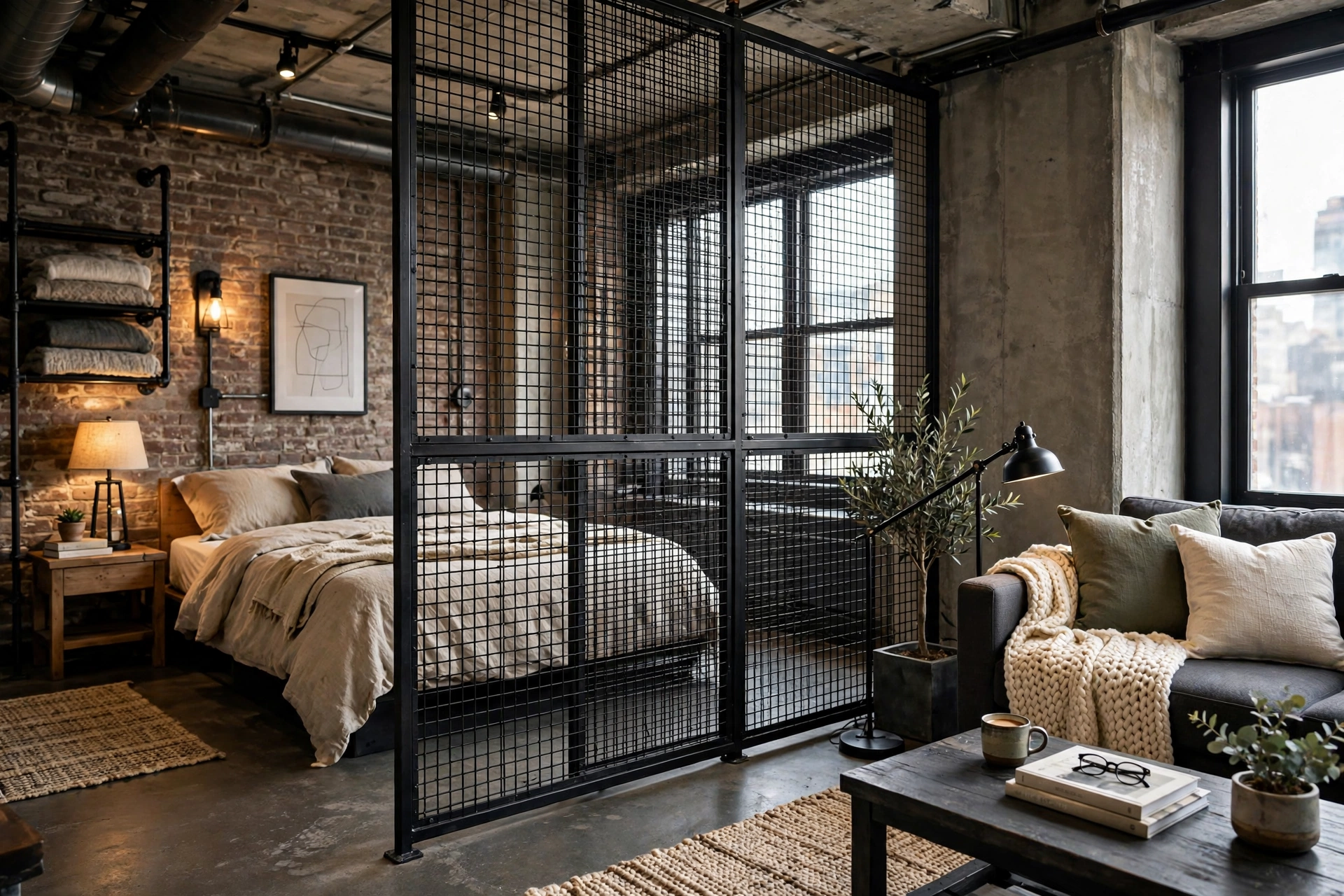
28. Divide Zones With Metal Mesh
A room divider made from black metal mesh panels ($120–$300) separates the sleeping zone without blocking light or air — the same zoning principle behind our studio divider ideas and layout strategies, in industrial dress. The see-through quality keeps the studio feeling open while creating genuine visual separation. Hang plants or art on the mesh for double duty. Pro tip: choose mesh with openings no larger than 2 inches — wider mesh reads as fencing, tighter mesh reads as design.
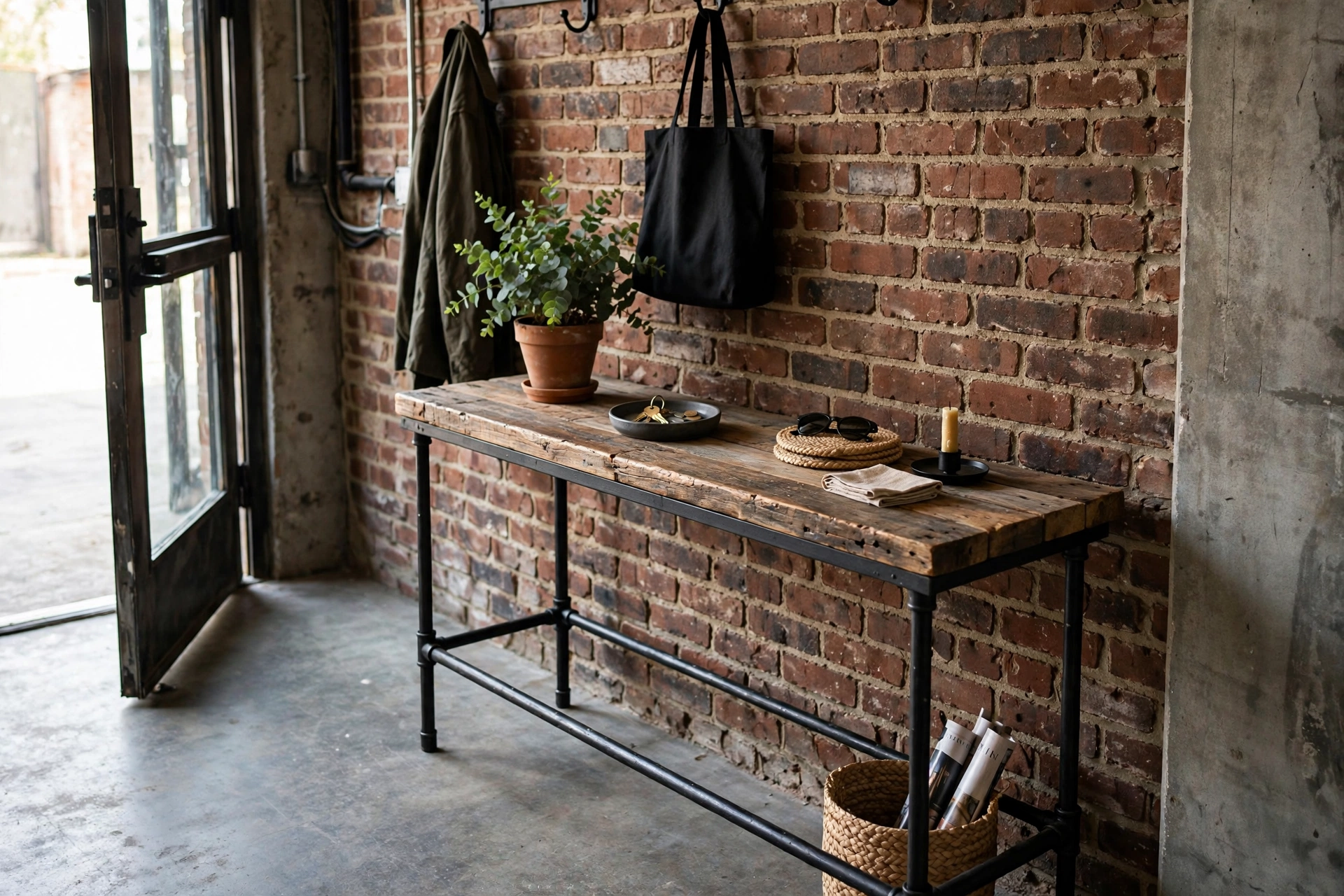
29. Console in Iron and Wood
A narrow console table with a black iron frame and reclaimed wood top ($120–$300) is the hardest-working small piece in industrial decor — entry table, sofa back table, hallway catch-all. At 10–12 inches deep, it fits where nothing else will. Style the top with a lamp, a tray, and one sculptural object. Pro tip: place it behind the sofa facing the entry — it creates a “foyer” moment in a studio that opens directly into the living space, which most do.
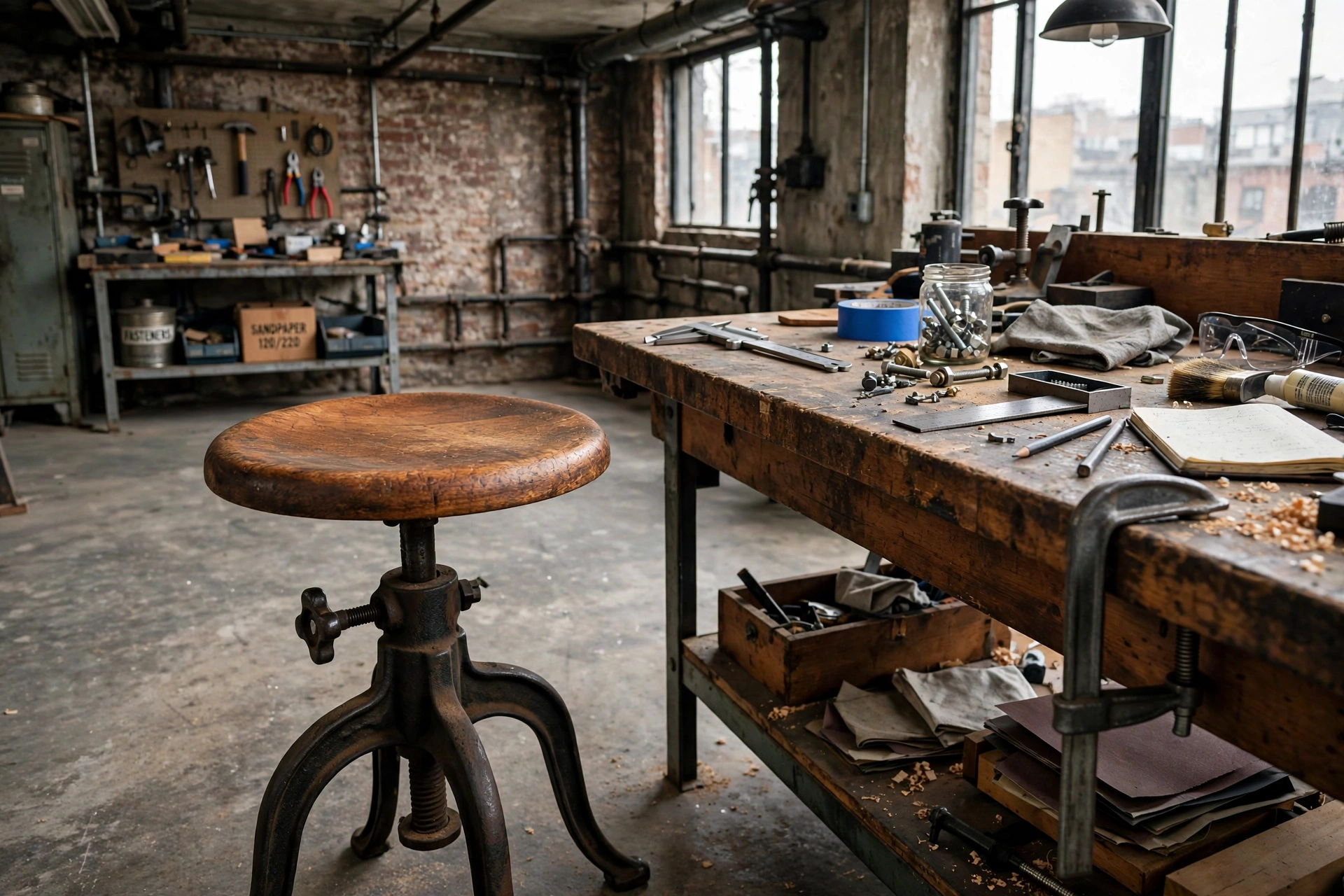
30. Sit a Vintage Factory Stool Anywhere
The adjustable factory stool — cast iron base, wood seat, crank handle — is industrial’s most versatile extra seat ($60–$150 vintage, $40–$80 reproduction). It works as a desk stool, a plant stand, a side table, or emergency seating. The adjustable height means it adapts to whatever job it’s doing today. Pro tip: oil the crank mechanism annually ($5 penetrating oil) — vintage stools seize up from disuse, and a stool that won’t adjust is just a very expensive plant stand.
Lighting With an Edge
31. Hang Edison Bulb Pendants
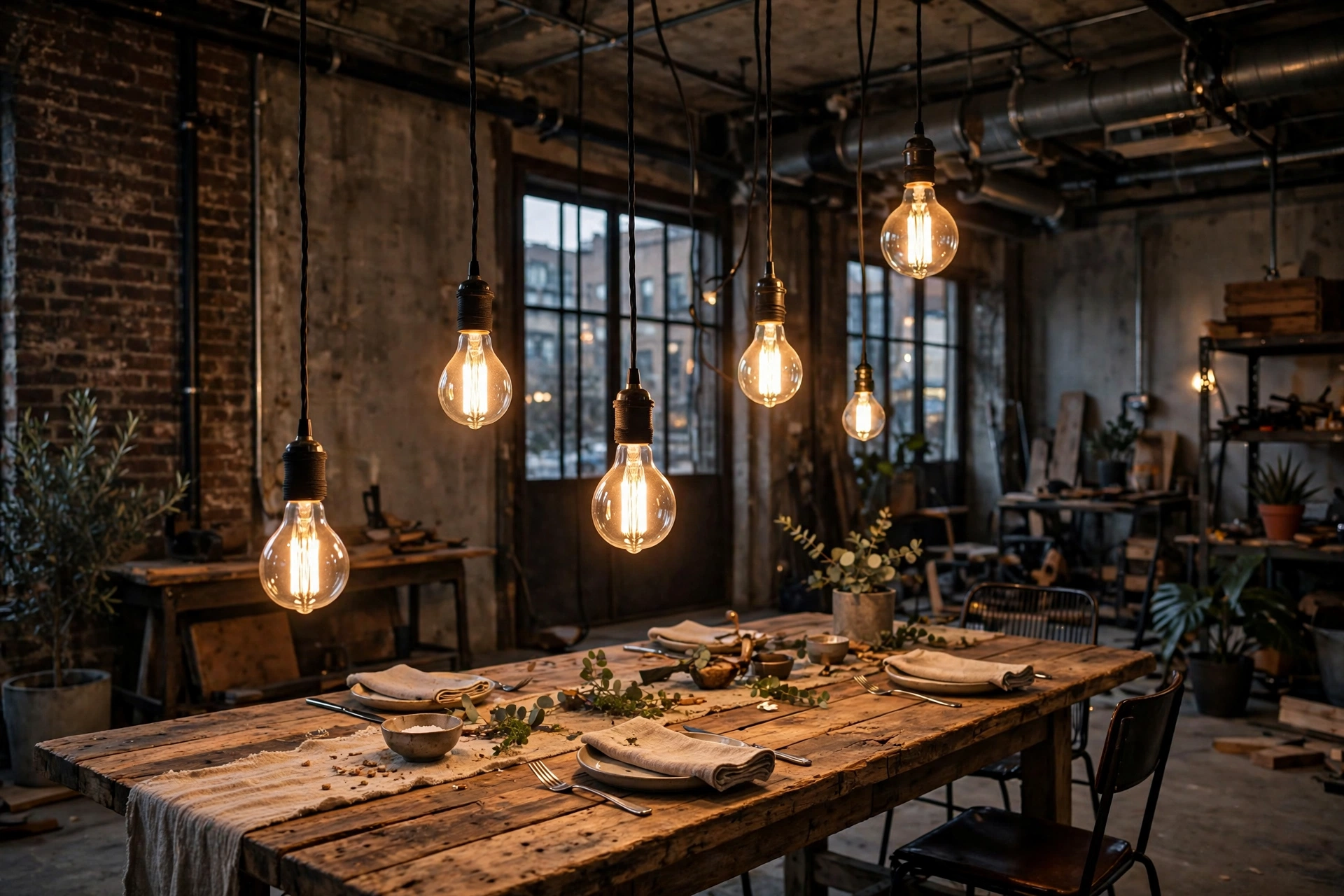
Edison bulbs — those vintage-style filaments glowing amber — are industrial lighting’s soul. A cluster of three pendants with black cords over the dining table ($40–$100 total) creates warmth that overhead fluorescents never will. The visible filament is the decoration; keep shades minimal or skip them entirely. This kind of statement lighting transforms any space, as we explore in our studio lighting ideas and budget decorating guide. Pro tip: buy LED Edison bulbs ($8–$12 each), not incandescent — they give the same amber glow at a fraction of the heat and energy, and they last years instead of months.
32. Cage Your Pendants in Metal
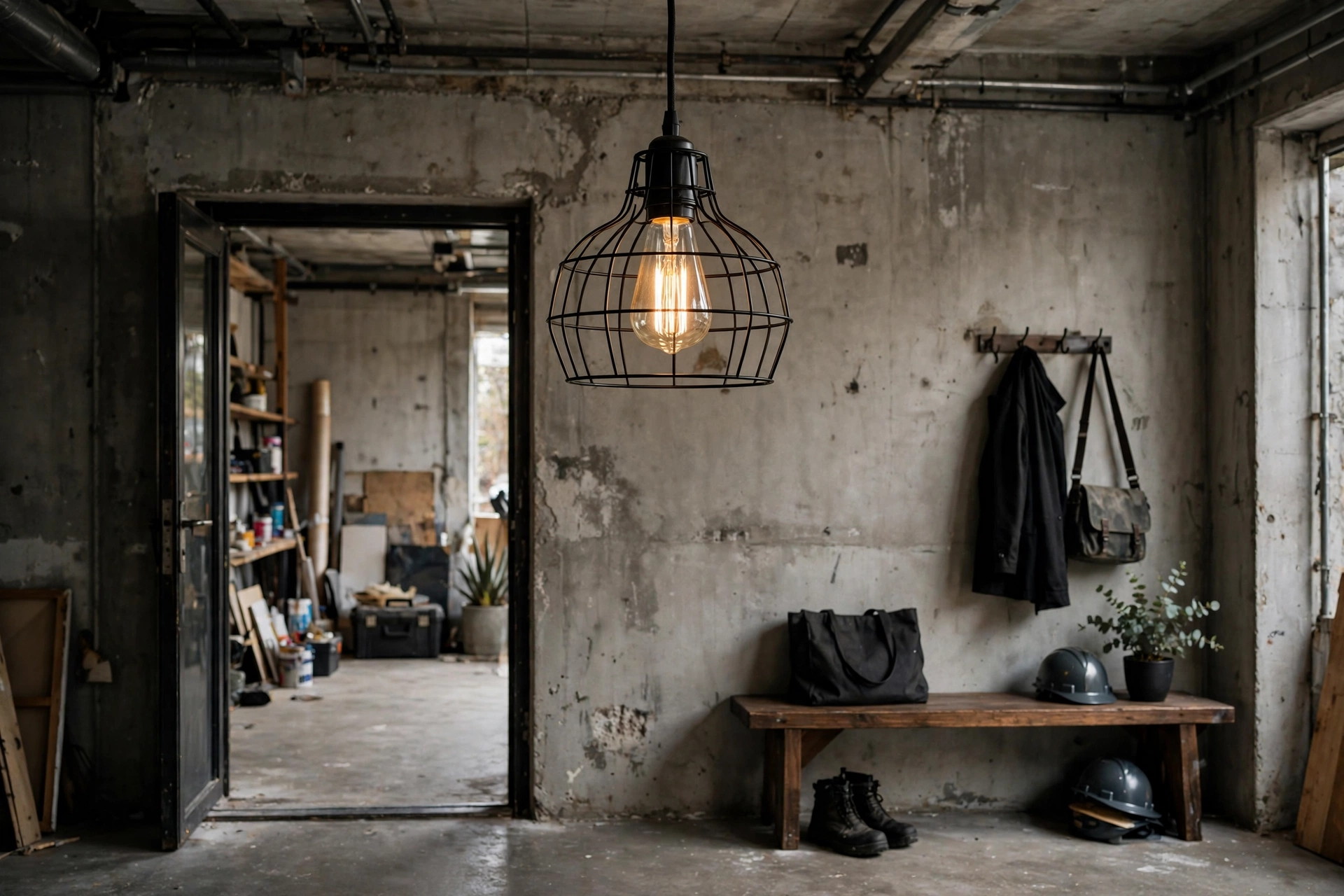
A metal cage around the bulb ($20–$50 per pendant) is the workshop-light look — protective, geometric, and unmistakably industrial. Hang one in the entry, a pair flanking the bed, or a row over the kitchen counter. The cage casts fascinating shadows that become part of the room’s texture after dark. Pro tip: choose cages with a wide enough opening to change bulbs easily — some decorative cages require disassembly for a bulb swap, which you’ll curse at 10 p.m. when one burns out.
33. Install Black Track Lighting
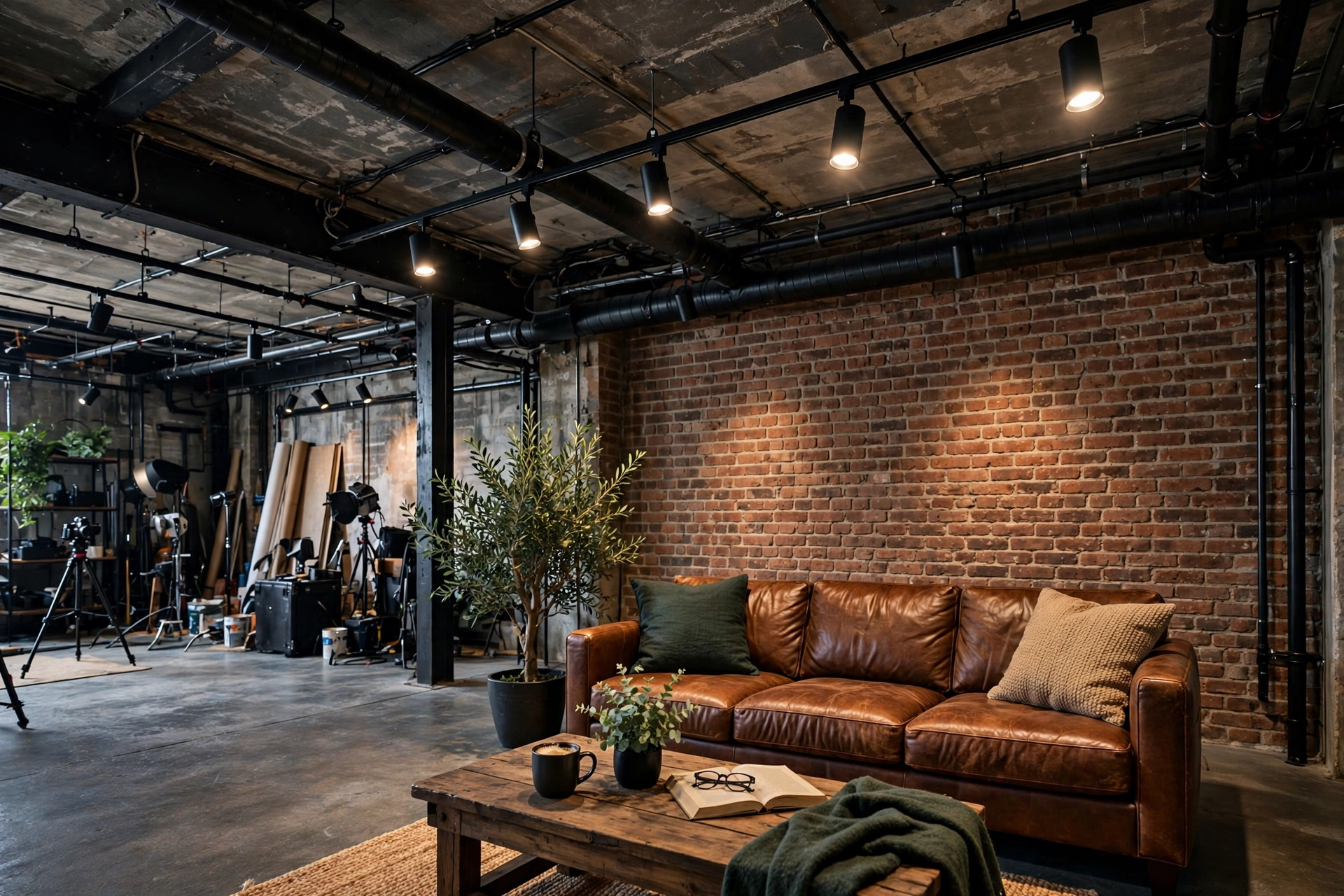
Black track lighting ($60–$150 for a 4-foot track with heads) is the gallery-meets-factory ceiling solution — aim spots at art, the reading chair, the kitchen counter, wherever you need it. In a studio with one ceiling fixture, a track multiplies your light sources without an electrician. The black finish disappears against dark ceilings. Pro tip: put the track on a dimmer ($15 dimmer switch) — track lighting at full blast feels like an interrogation room; dimmed, it’s moody and flattering.
34. Go Big With a Dome Pendant
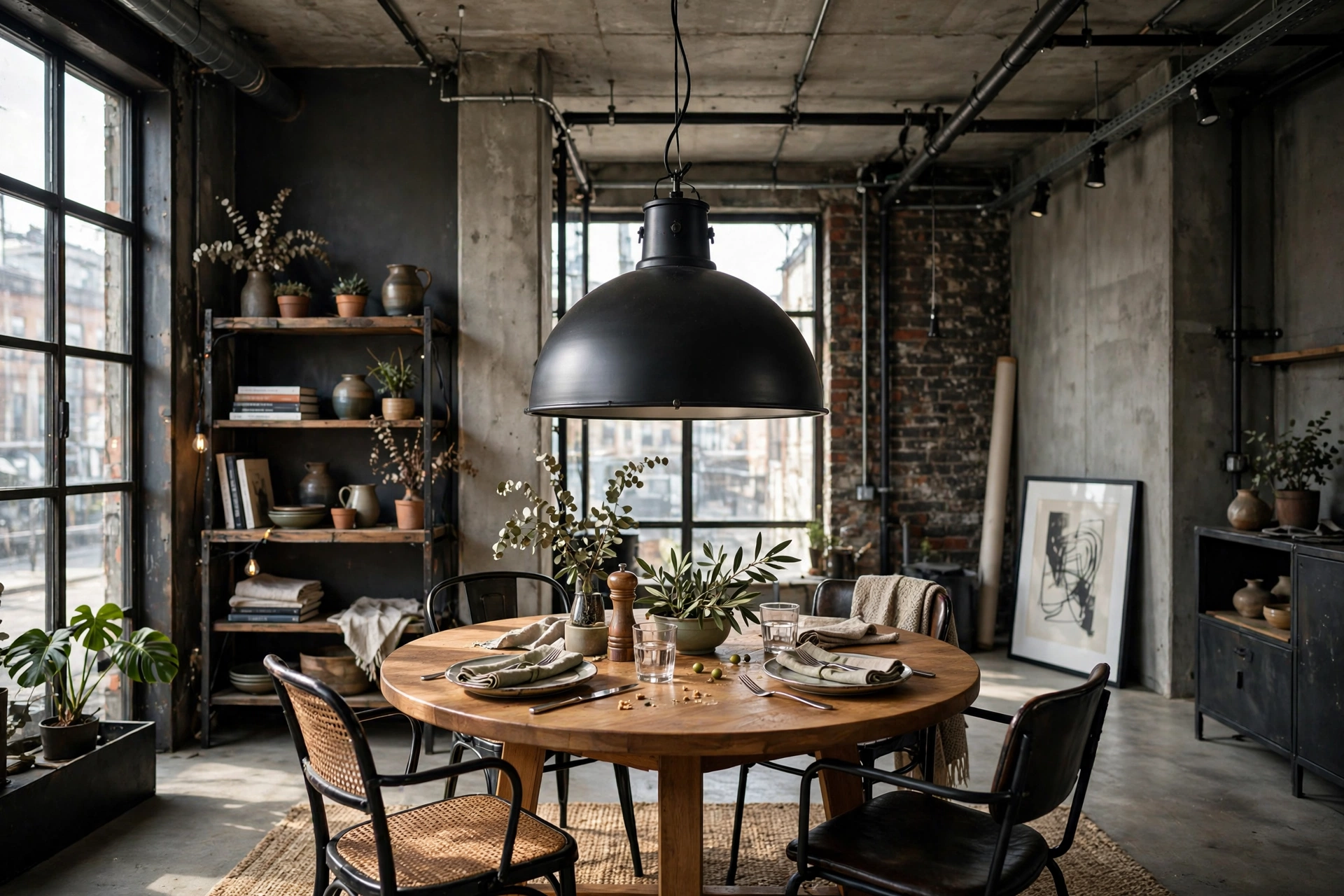
An oversized black metal dome pendant ($60–$150) over the dining table is industrial drama at its best — the bigger the shade, the bolder the statement. A 16–20 inch dome over a 48-inch table hits the sweet spot. The focused downward light makes meals feel intimate even in an open studio. Pro tip: hang it 30–36 inches above the table surface — lower feels like a restaurant booth (good), but any lower and you’ll headbutt it standing up (bad).
35. Light Up a Pulley Fixture
A pendant light on a pulley system with rope and counterweight ($50–$120) is industrial theater — raise it for ambient glow, lower it for task light. The rope-and-metal mechanics are endlessly fascinating and genuinely useful in a studio where one corner serves three purposes. Hang it over the reading chair or desk. Pro tip: make sure the counterweight actually balances the shade — cheap versions slip, and a pendant that slowly descends onto your head all evening is memorable for the wrong reasons.
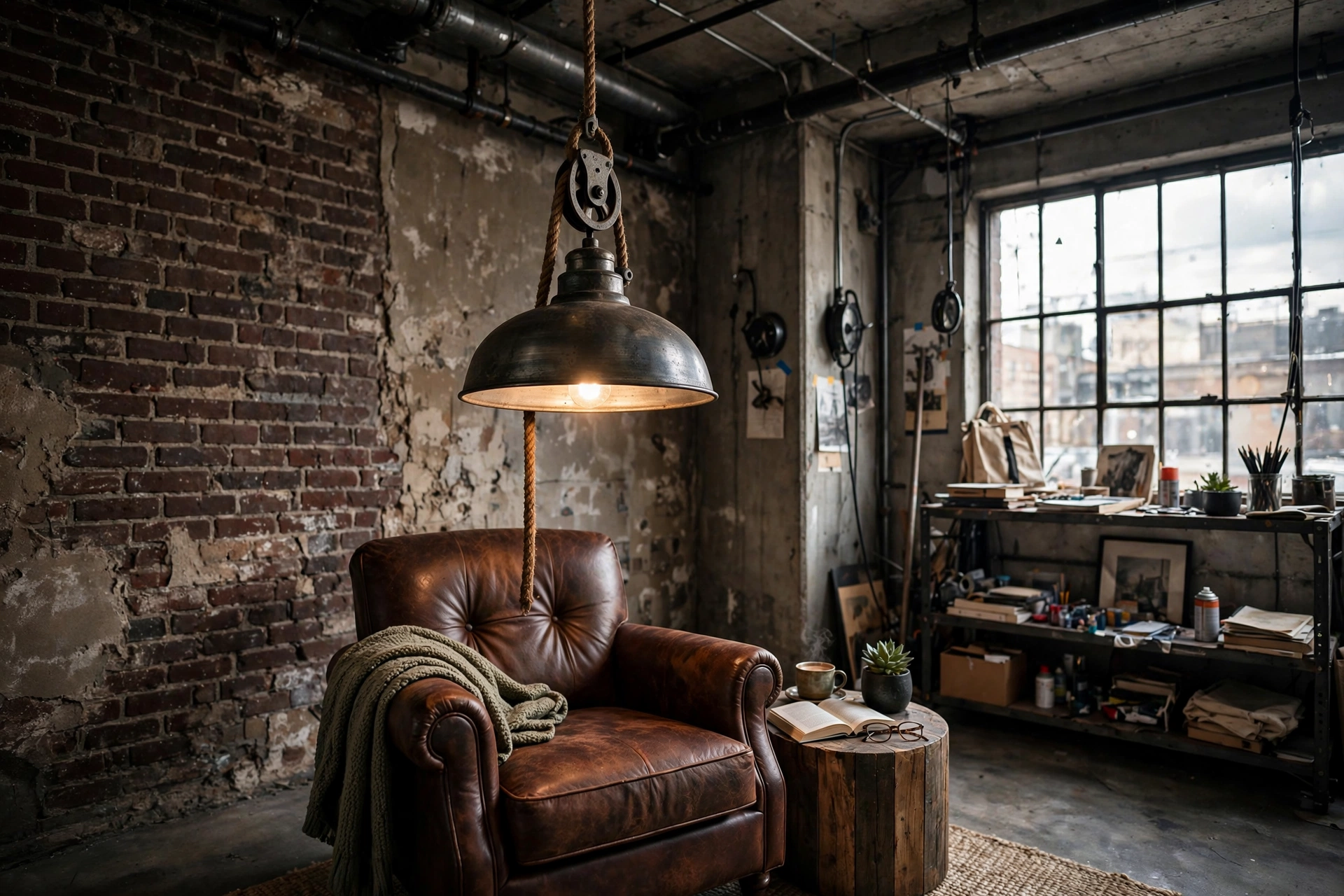
36. Stand an Exposed-Bulb Floor Lamp
A tall floor lamp that’s essentially a black metal pole topped with one glorious oversized Edison bulb ($80–$180) is sculpture that happens to light the room. Place it in a dark corner or beside the reading chair — the single warm point of light creates incredible atmosphere. It’s minimalism and maximalism at once. Pro tip: use the largest bulb the socket allows (G40 globe or bigger) — the oversized scale is what makes this look intentional rather than unfinished.
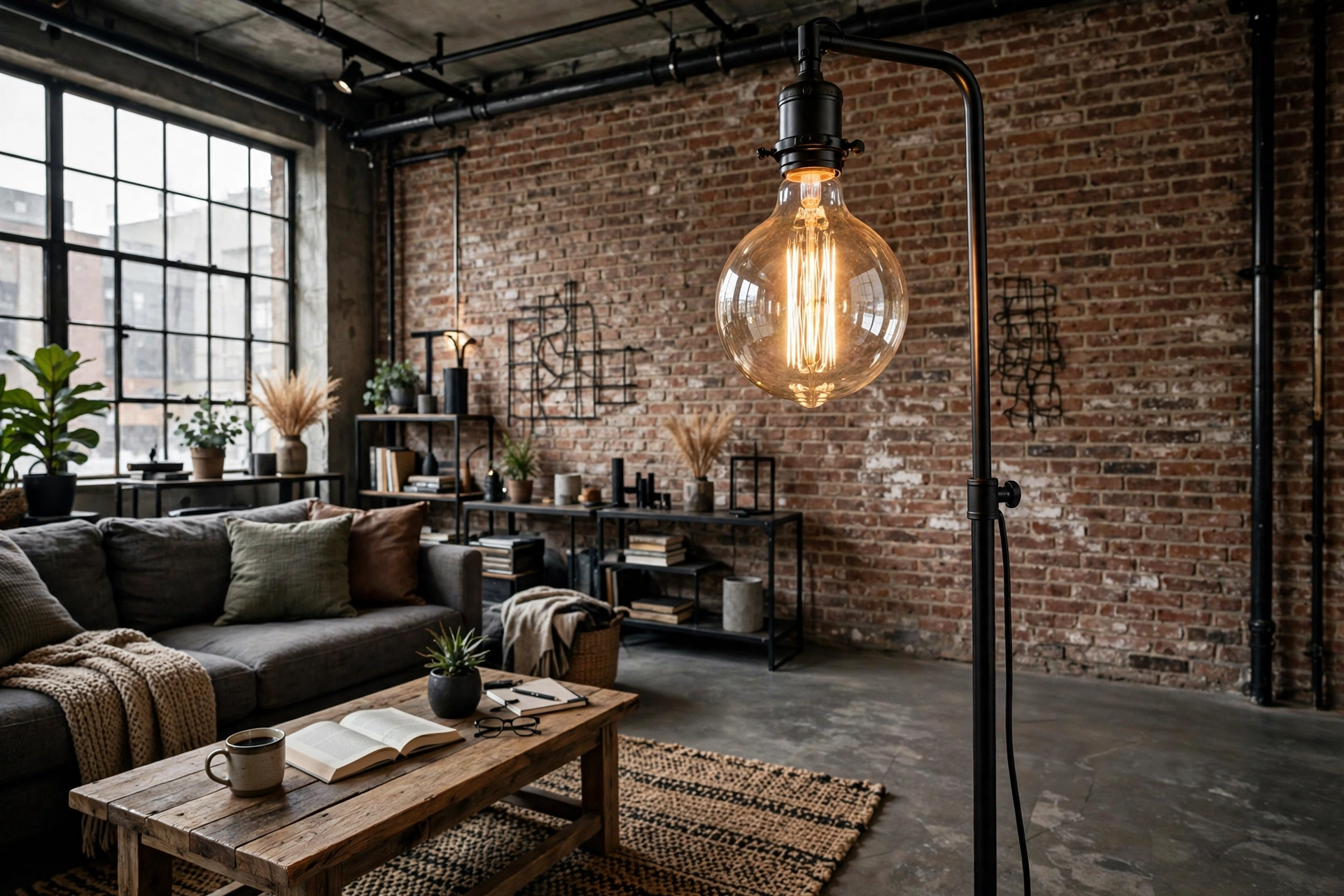
Decor & Finishing Touches
37. Hang a Factory-Style Window Mirror
A mirror divided into panes like a factory window ($100–$300) does double duty: it bounces light around the studio (making it feel twice as big) while reinforcing the industrial narrative. Lean an oversized one against the brick wall or hang it opposite the windows for maximum effect. The grid pattern adds architecture to flat walls. Pro tip: the bigger, the better — a small factory mirror looks like a decor afterthought, while an oversized one becomes the room’s focal point.
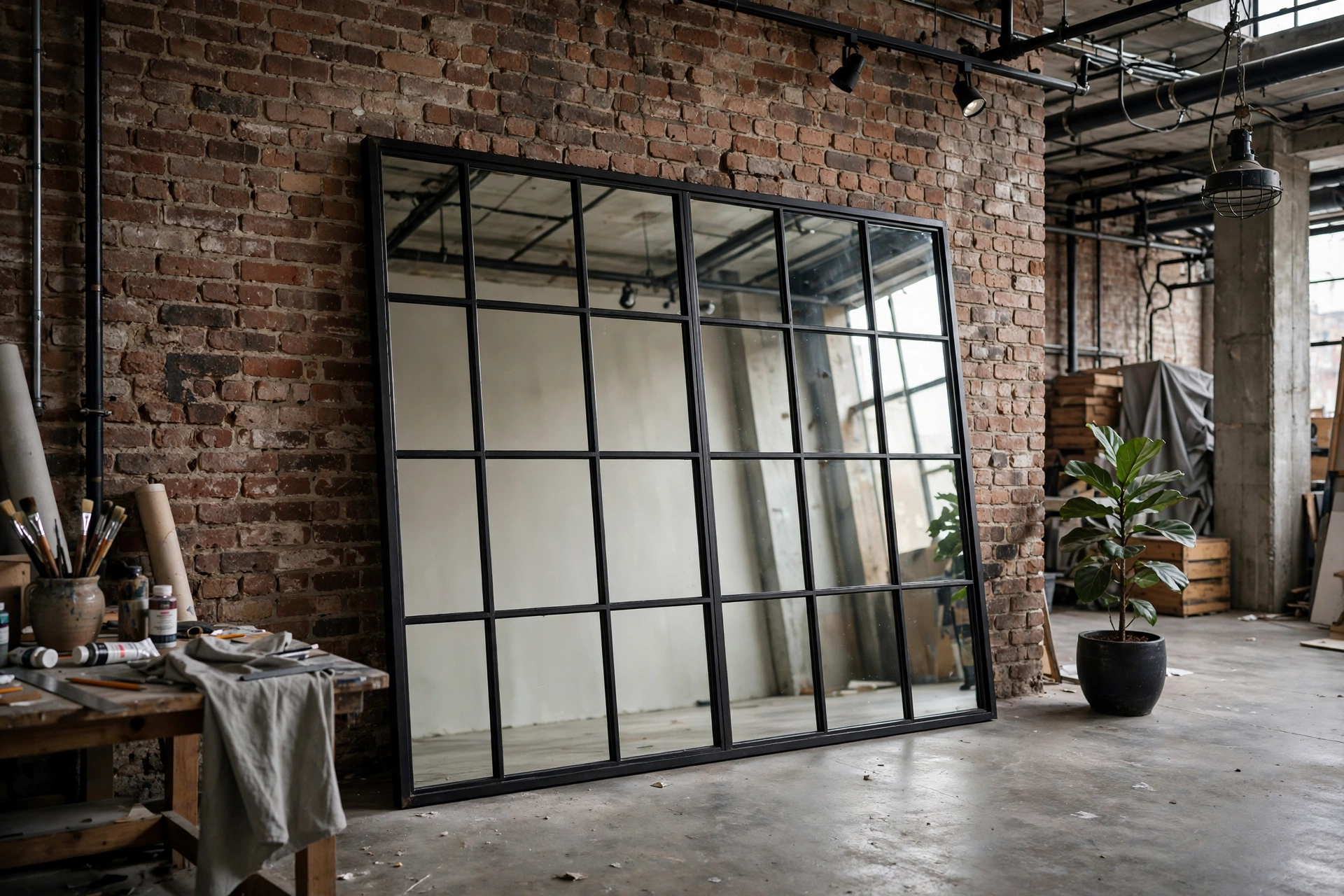
38. Mount an Oversized Factory Clock
A giant wall clock with a black metal frame and vintage station-style face ($40–$100) is the industrial wall decor that actually does something. At 24 inches or larger, it anchors a wall the way art would — but it also tells time, which your phone-obsessed guests will appreciate. Hang it high where it’s visible from everywhere. Pro tip: get a silent-sweep movement (most are now) — a ticking clock in a studio apartment, where you sleep ten feet away, is a special kind of torture.
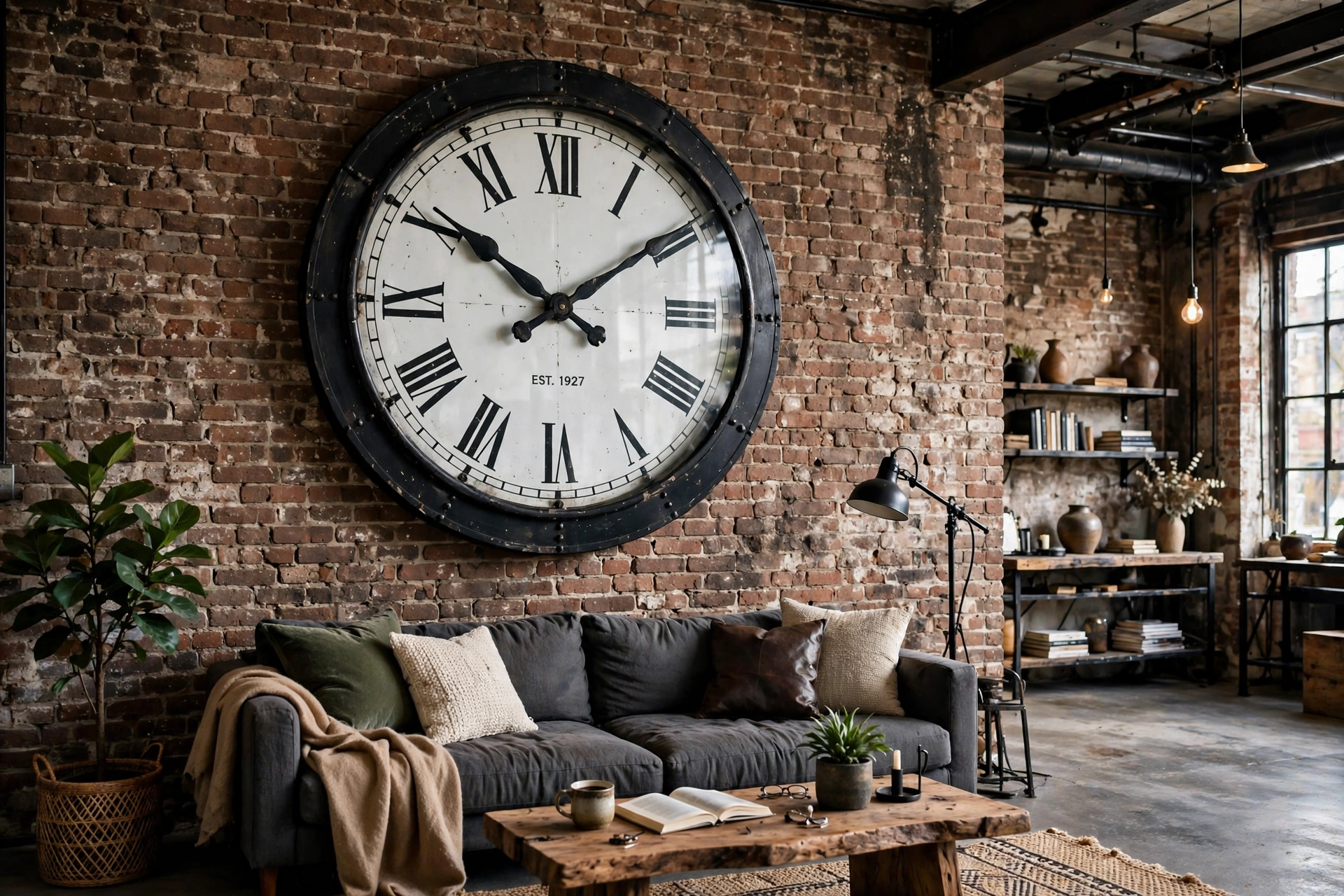
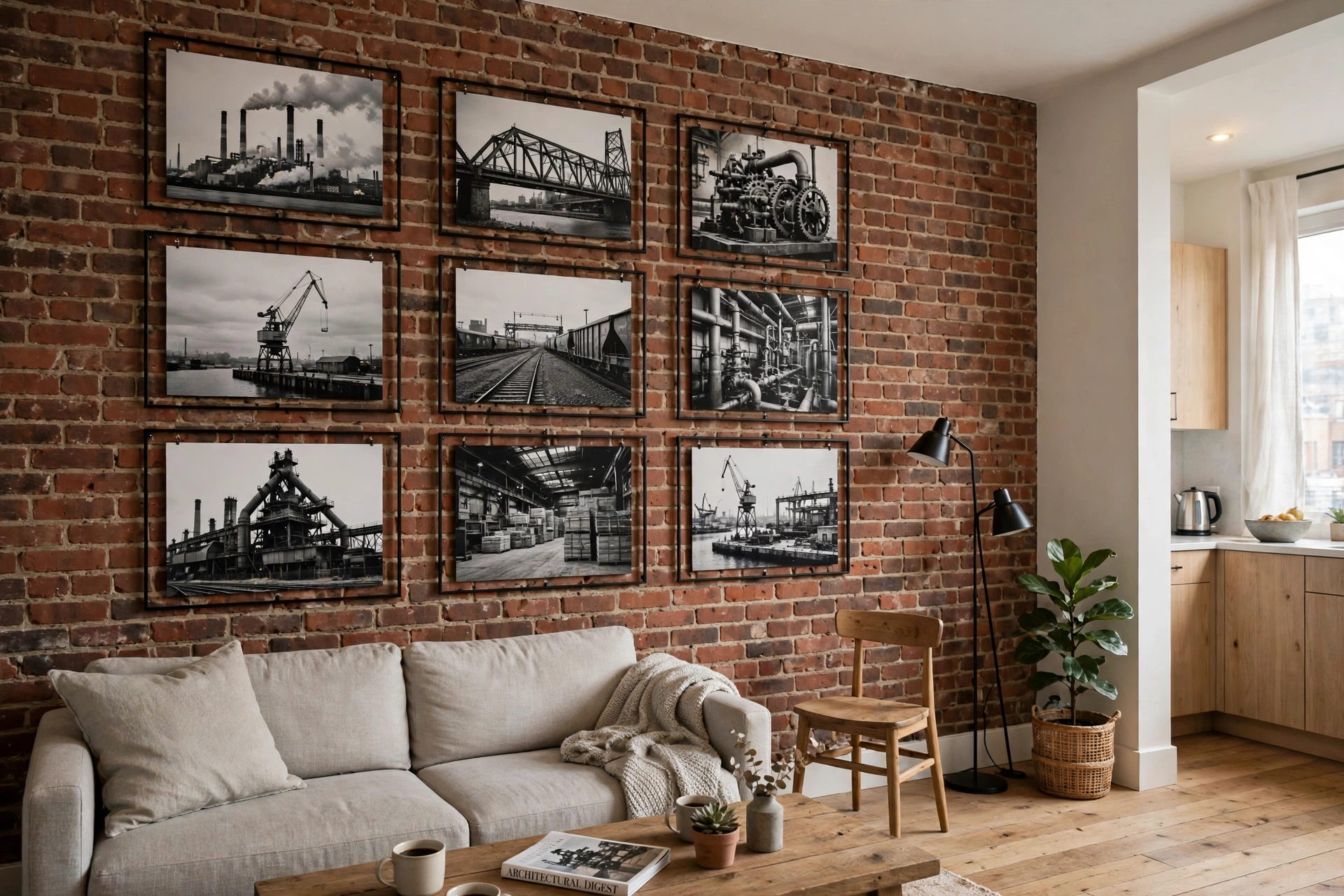
39. Frame Art in Black Metal
Thin black metal frames ($8–$20 each) are the industrial gallery wall — crisp, uniform, and endlessly versatile. Fill them with black-and-white photography, architectural prints, or vintage patent drawings. The consistency of the frames lets the art vary wildly while the wall stays cohesive. Plan the layout on the floor first. Pro tip: include one oversized piece (24×36 or larger) among smaller frames — the scale contrast is what separates a designed gallery wall from a random collection.
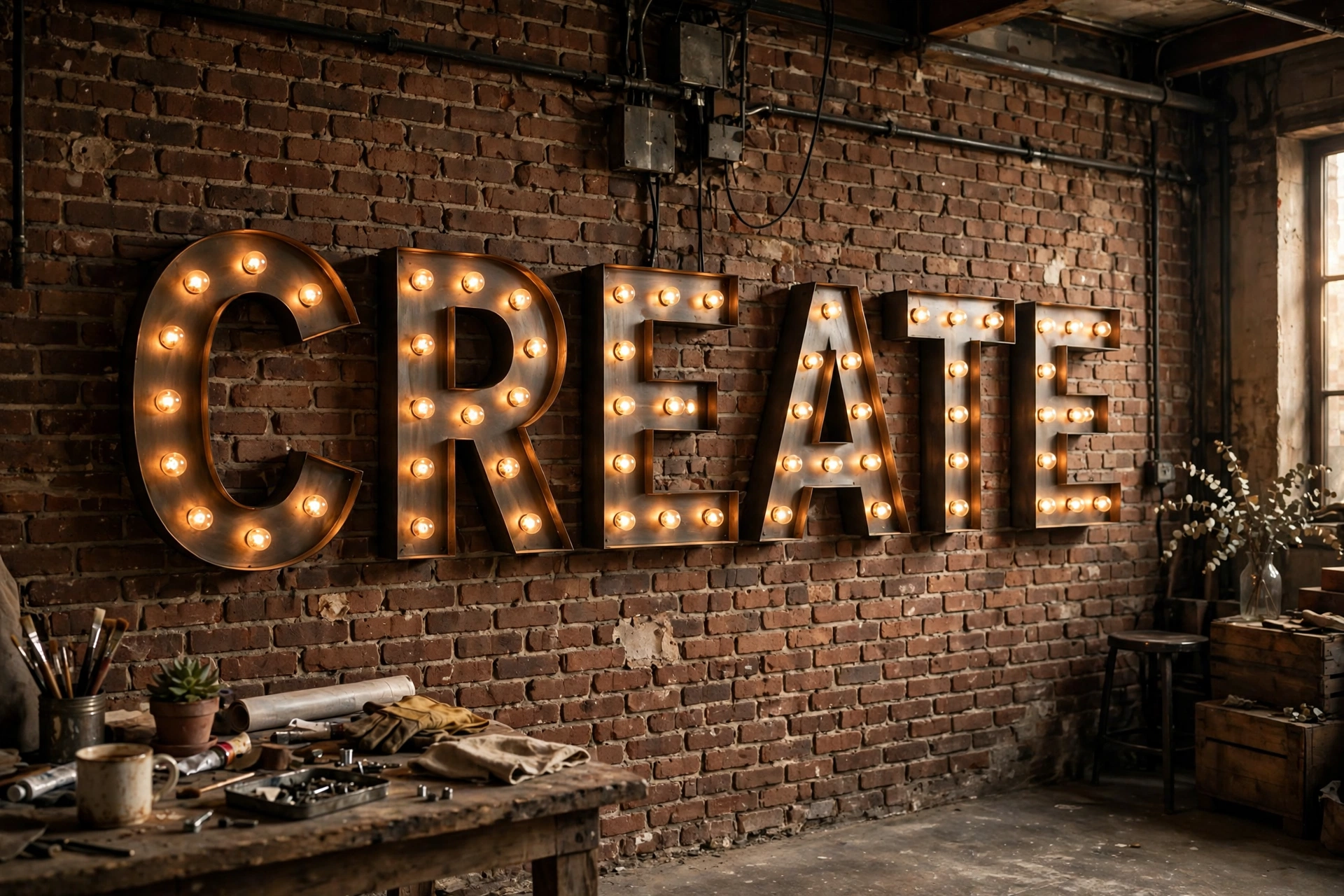
40. Spell It Out in Metal Letters
Vintage-style metal marquee letters ($15–$40 each) on the brick wall — spelling a word that matters to you — is industrial personalization at its most fun. “CREATE,” “HOME,” your initials, whatever resonates. The aged metal finish and dimensional depth catch light beautifully. Keep it to one word; a full sentence becomes signage, not decor. Pro tip: mix letter sizes slightly rather than perfectly uniform — the handmade irregularity reads as authentic vintage rather than craft-store new.
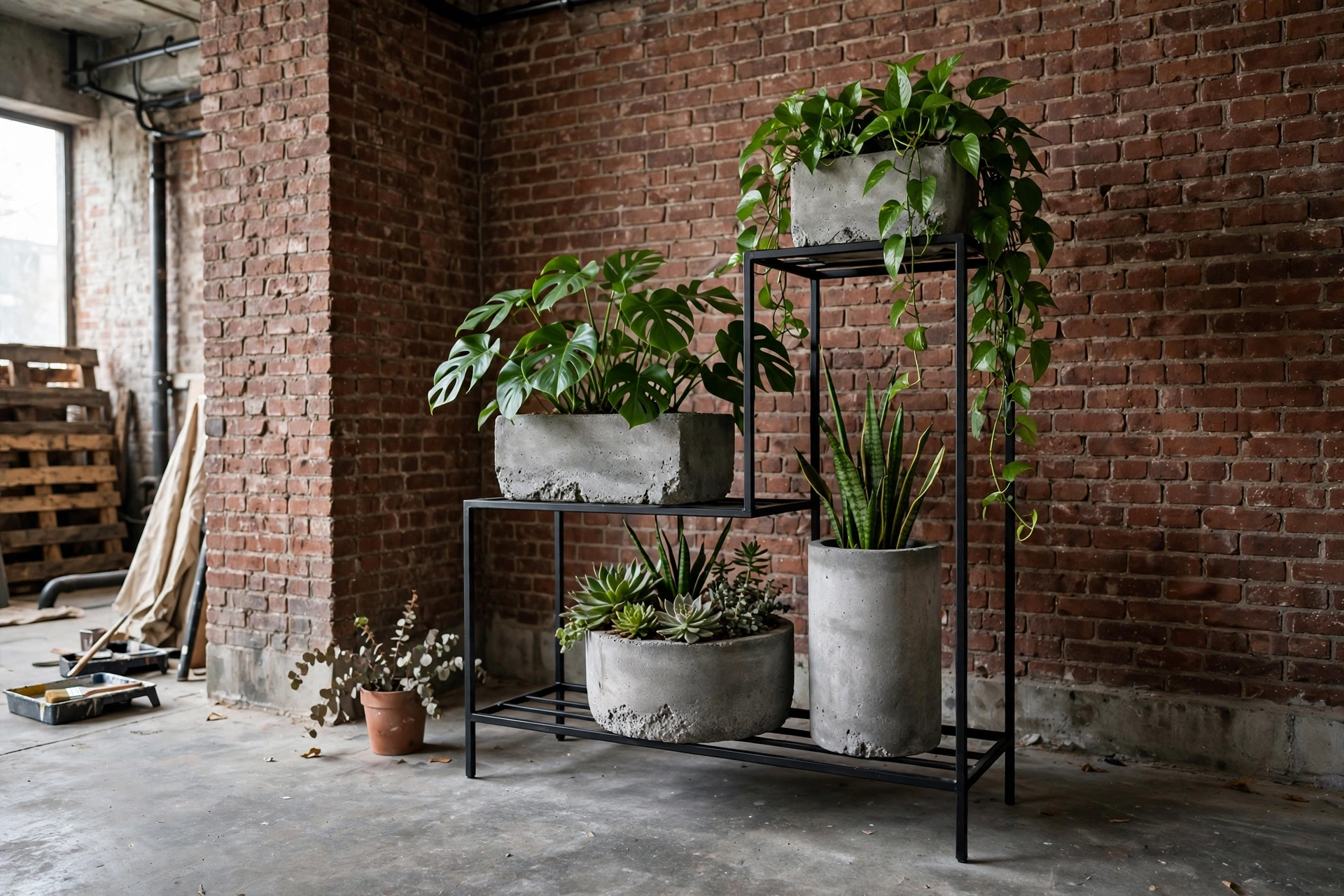
41. Plant in Concrete and Galvanized Metal
Industrial style needs living contrast, and the planters should speak the same language — raw concrete pots ($10–$30) and galvanized metal buckets ($8–$20) for everything green. A fiddle leaf fig in a concrete planter, herbs in galvanized pails on the pipe shelving — the plants soften the hard edges while the containers keep the story consistent. One large plant beats five small ones. Pro tip: drill drainage holes in galvanized buckets before planting ($5 drill bit) — without drainage, roots rot in weeks, and a dead plant is the opposite of the vibe.
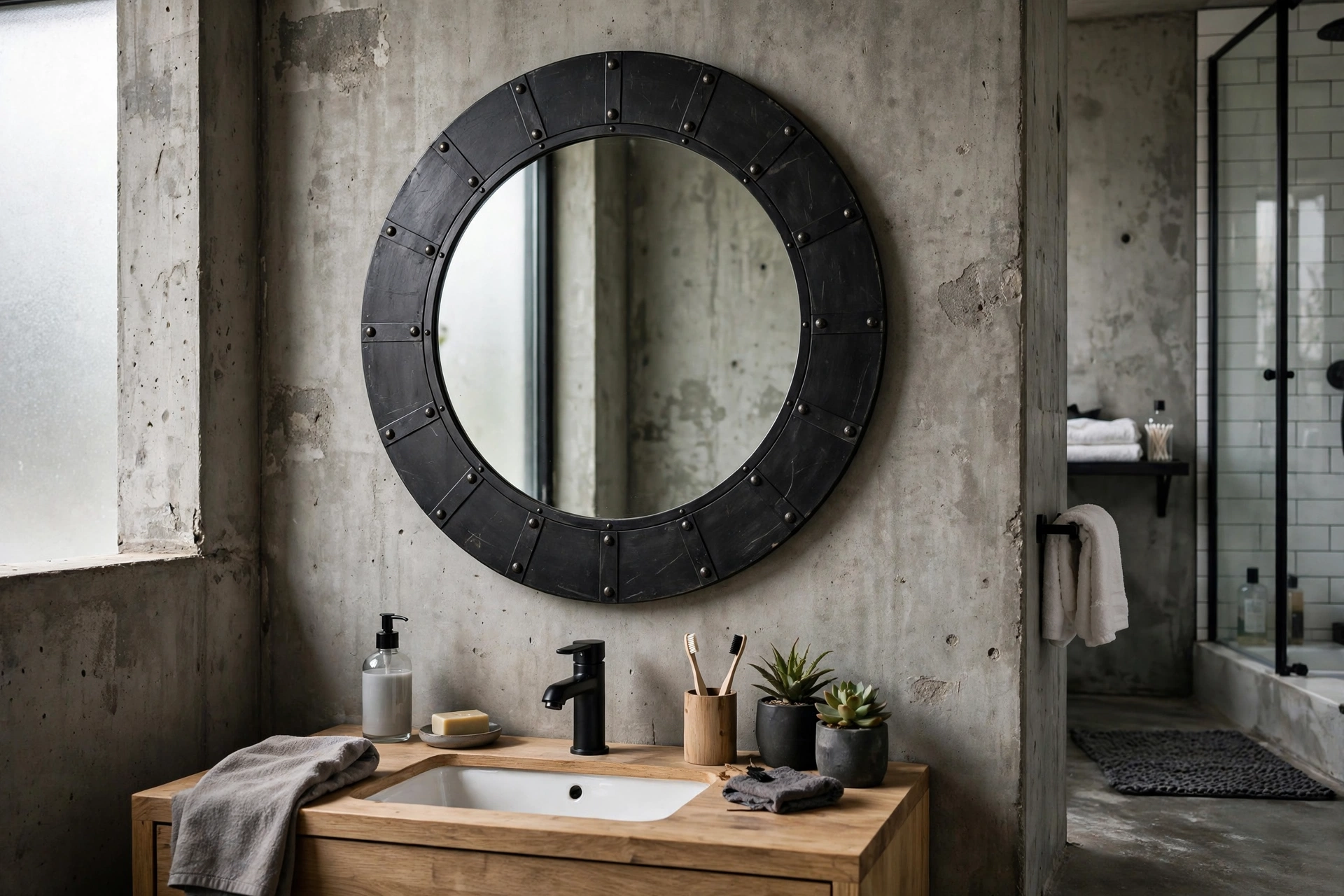
42. Reflect in a Riveted Mirror
A round mirror with a riveted black metal frame ($60–$150) brings industrial detail to the bathroom area, entry, or sleeping zone. The rivets — those small metal bumps — are the kind of authentic construction detail that defines the style. Hang it where it catches window light to double the brightness. Pro tip: in a studio, hang mirrors where they reflect something beautiful (plants, art, the brick wall) — a mirror reflecting a blank wall just doubles the blankness.
43. Create Mesh Wall Art
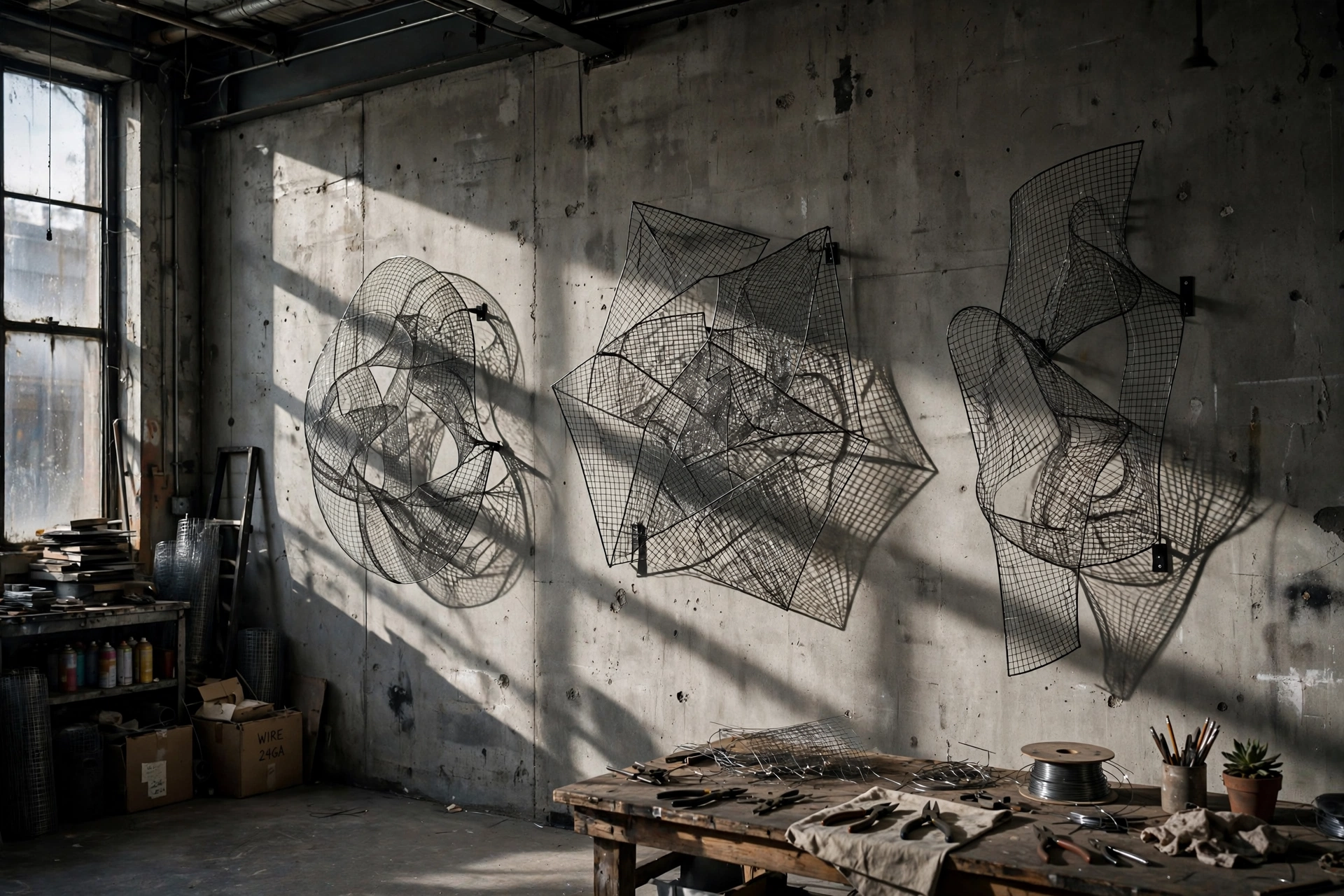
Wire mesh panels mounted as abstract wall art ($30–$80 for materials) turn an industrial material into pure decoration. Layer two or three panels at slight angles for depth, or back one with a warm wood panel for contrast. The shadows they cast become part of the piece, changing through the day. It’s the kind of DIY that looks far more expensive than it is. Pro tip: spray the mesh matte black before mounting, even if it came “black” — factory finishes are often glossy, and matte reads as intentional design while gloss reads as hardware store.
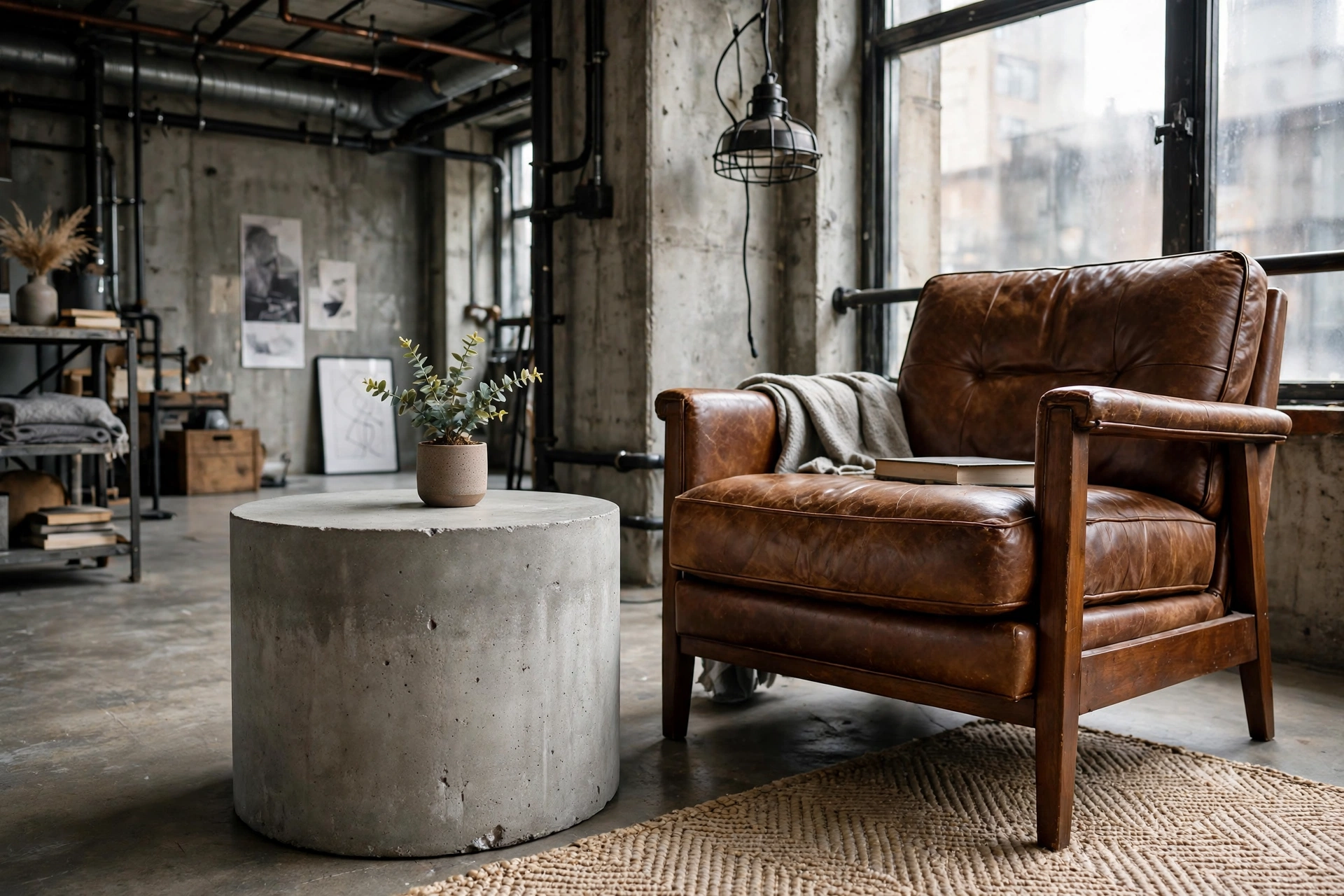
44. Set Down a Concrete Side Table
A small round concrete side table ($60–$150) next to the reading chair or bed is industrial minimalism — one material, one form, zero fuss. The weight means it never wobbles or tips, and the cool surface is perfect for a hot coffee mug. Look for sealed concrete; unsealed stains with the first ring. Pro tip: put felt pads under it immediately — a concrete table dragged across floors (even once, when you’re rearranging at midnight) leaves marks that never come out.
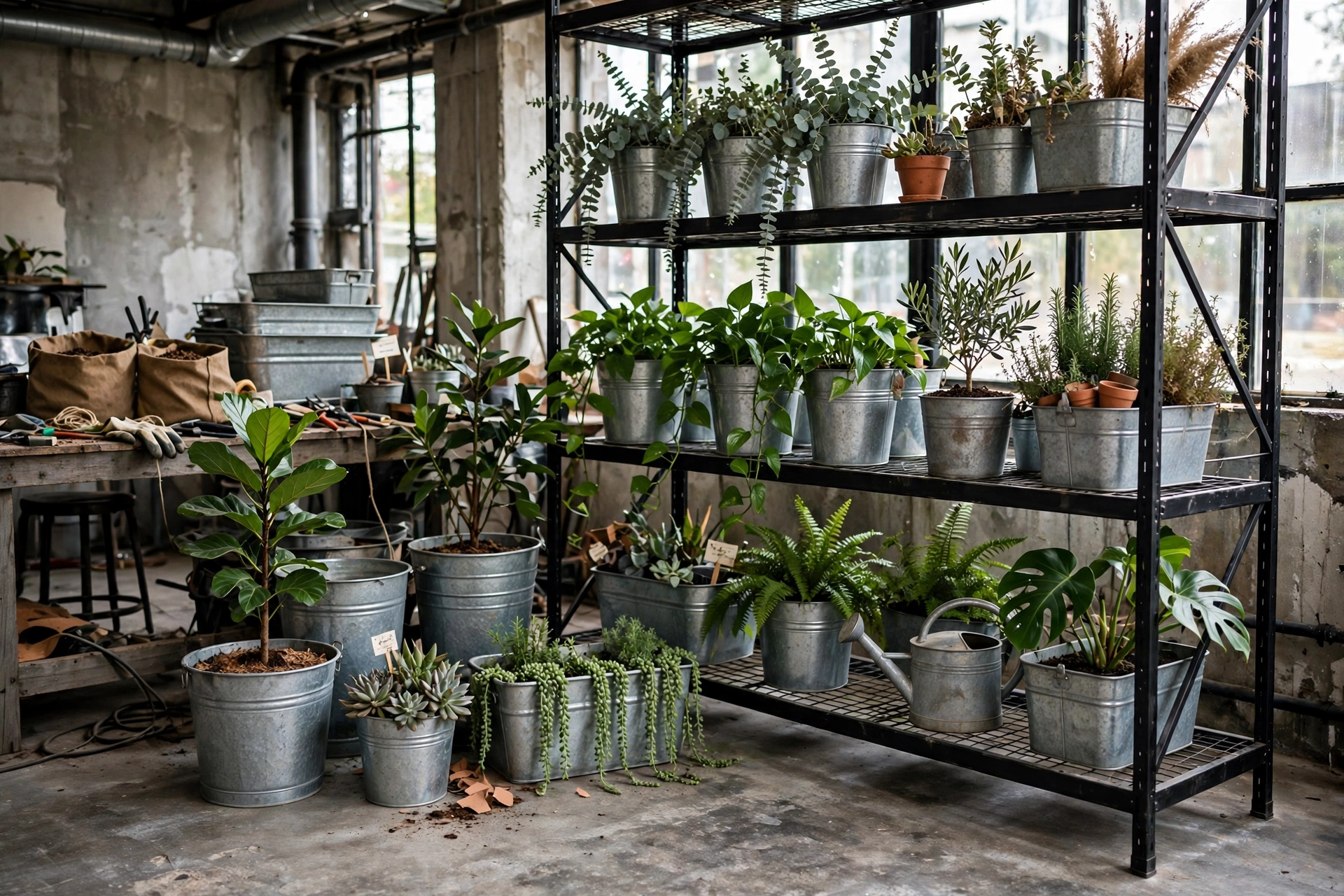
45. Grow Up With Galvanized Planters
Beyond the concrete pots, a collection of galvanized metal planters in varying heights ($8–$25 each) creates an industrial indoor garden. Group them on the floor by the window, on the pipe shelving, or flanking the entry. The silvery zinc finish brightens dark corners and ages into a beautiful matte patina. Herbs in the kitchen, trailing pothos on shelves, one statement plant on the floor. Pro tip: use plastic nursery pots inside the galvanized containers (with the plant) rather than planting directly — it makes watering, repotting, and seasonal swaps infinitely easier.
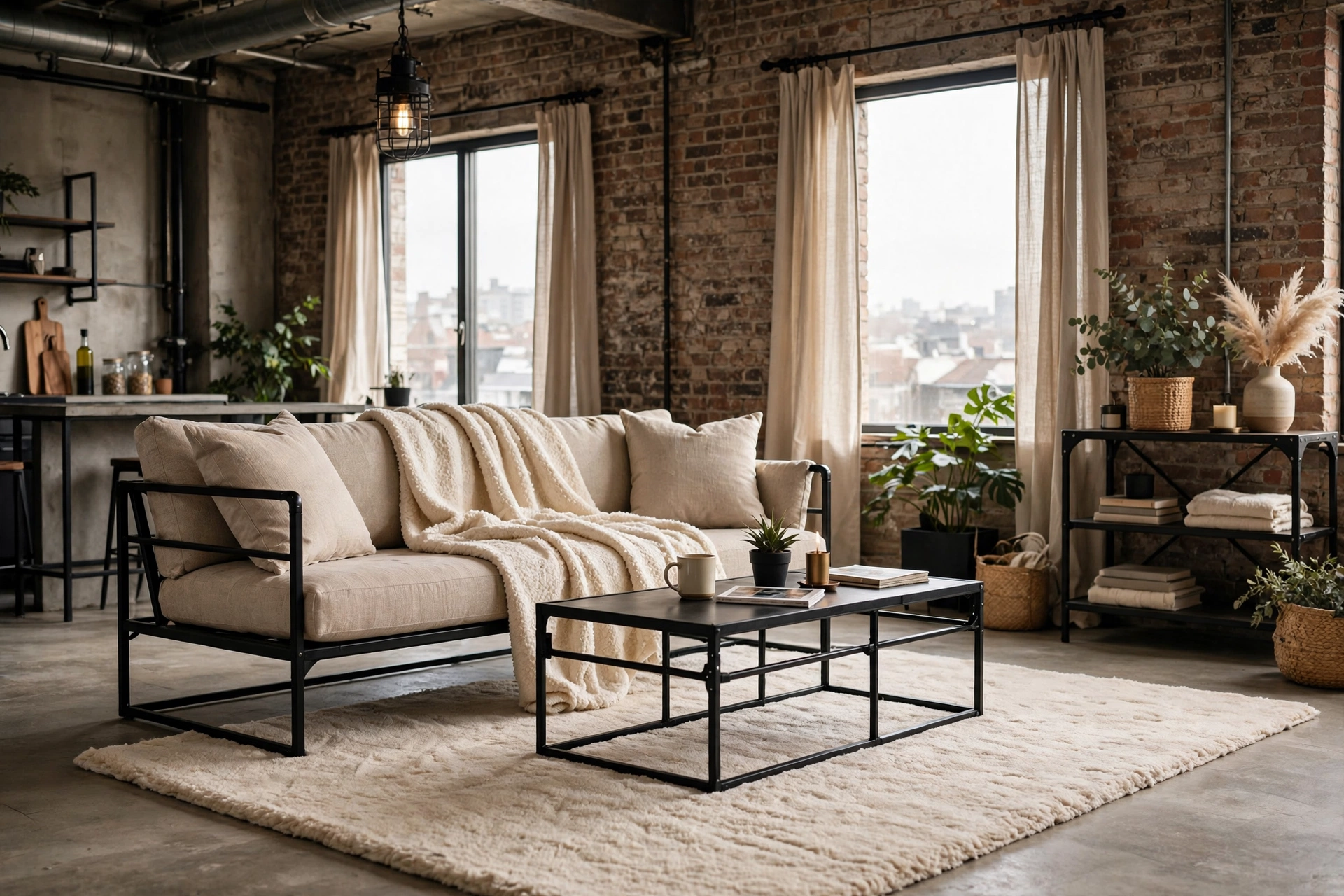
46. Soften It All With Textiles
Here’s the secret that separates great industrial studios from cold ones: soft textiles. A cream boucle throw on the leather sofa, linen curtains softening the black window frames, a plush vintage rug over the concrete floor ($100–$300). The contrast between hard and soft is what makes industrial livable — without it, you’re decorating a warehouse, not a home. Every hard surface earns one soft counterpart. Pro tip: this is the 80/20 rule of industrial comfort — 80% hard materials for the look, 20% soft textiles for the soul. Skip the textiles and guests will admire your studio but never want to stay.
Frequently Asked Questions
What defines industrial interior style?
Industrial style celebrates raw, honest materials — exposed brick, blackened steel, reclaimed wood, concrete, and visible structural elements. Born in converted warehouses and factories, it’s defined by open spaces, high contrast (dark metals against warm woods), utilitarian forms, and a lack of pretense. The palette runs neutral: blacks, grays, browns, with warmth from wood tones and leather rather than color.
Can renters achieve industrial style without renovations?
Absolutely — most industrial impact comes from freestanding pieces: the metal bed frame, pipe shelving (which mounts with screws that patch easily), faux brick panels (adhesive-mounted), Edison bulb lighting (plug-in options abound), and vintage-style furniture. Peel-and-stick backsplashes, concrete-look wallpaper, and dark textiles do the rest. Nothing here requires touching the landlord’s walls structurally.
How do I keep industrial decor from feeling cold?
The 80/20 rule: 80% hard industrial materials, 20% soft textiles. Layer in a plush rug, linen curtains, a boucle or knit throw, and warm wood tones to balance the steel and concrete. Warm lighting (2700K Edison bulbs, never cool white) is non-negotiable — it transforms black metal from harsh to glowing. Plants add living warmth that no material can replicate.
Is industrial style good for small studio apartments?
It’s one of the best styles for studios. Industrial was literally designed for open warehouse spaces — the same open-plan logic applies. Open-frame furniture keeps sightlines clear, the neutral palette unifies zones without walls, and statement pieces (one brick wall, one dramatic light) do the work of entire room designs. The style’s honesty about small spaces — no pretending, just good materials — is refreshing.
Where can I find affordable industrial furniture?
Thrift stores, flea markets, and Facebook Marketplace are goldmines — vintage metal cabinets, factory stools, and workbenches often sell for $30–$100. For new pieces, IKEA’s industrial-adjacent lines, Wayfair, and Target’s Project 62 offer solid options. Don’t overlook the hardware store: black iron pipes, fittings, and wood planks become custom shelving and racks for a fraction of furniture-store prices.
How do I mix industrial with other styles?
Industrial plays well with others because its neutrals are a blank canvas. Add Scandinavian sheepskins and light woods for industrial-Scandi warmth, boho textiles and plants for industrial-boho soul, or mid-century silhouettes in black metal for a Mad Men warehouse vibe. Keep 70% industrial bones (the big furniture, the architectural elements) and let 30% be the guest style in textiles and accessories.
Final Thoughts
An industrial studio apartment isn’t about living in a construction site — it’s about honoring honest materials and letting them do the talking. The brick doesn’t need paint, the steel doesn’t need hiding, the reclaimed wood doesn’t need perfecting. There’s a confidence in that restraint, a kind of design maturity that says: this is enough, and it’s beautiful.
Start with the bones — one brick wall, the black metal bed, warm Edison light — then let the hunt become part of the joy. The flea-market filing cabinet, the vintage factory stool, the pipe shelving you built yourself on a Saturday afternoon. Before long, your studio won’t just look industrial. It will feel like the coolest small warehouse on the block — because you built it one honest piece at a time.