40 Farmhouse Studio Apartment Ideas for Rustic Charm
40 Farmhouse Studio Apartment Ideas for Rustic Charm
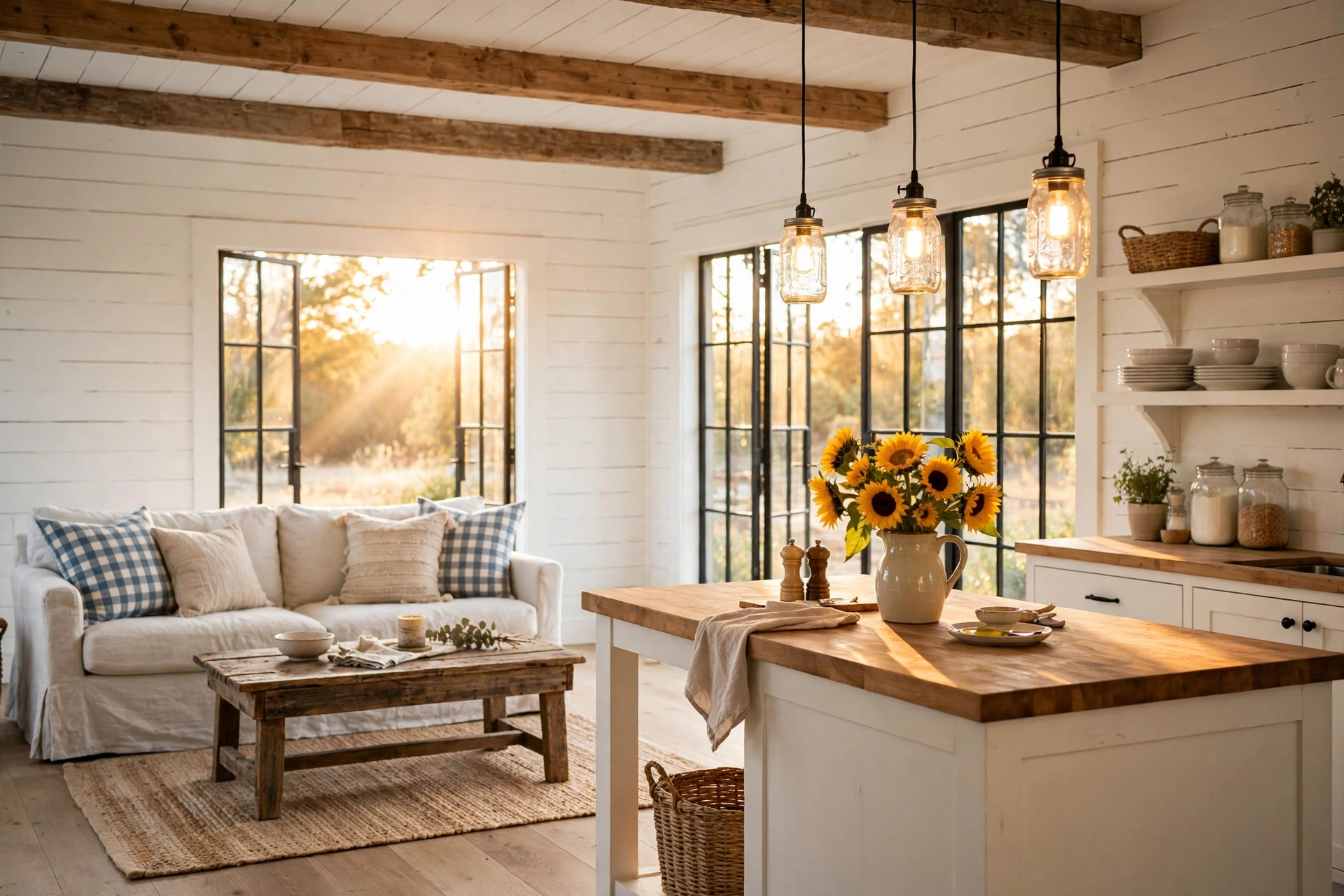
There is something about farmhouse style that makes even the tiniest studio feel like home. Maybe it is the shiplap walls that whisper of simpler times, the reclaimed wood that carries a story in every grain, or the mason jars and galvanized metal that turn everyday objects into decor. Farmhouse design — born from rural American practicality and refined through the modern farmhouse movement — is built on honest materials, comfortable textures, and a “nothing too precious” attitude that suits small-space living perfectly. In a studio apartment, where every square foot must work hard, farmhouse style delivers warmth without clutter and character without chaos. These 40 farmhouse studio apartment ideas cover everything from shiplap accent walls and sliding barn doors to butcher block counters, gingham textiles, and the collected treasures that make a rental feel rooted. Whether your aesthetic leans classic country, modern farmhouse, or somewhere in between, you will find practical, budget-friendly ways to bring rustic charm home.
Walls & Architectural Character
1. Install a Shiplap Accent Wall
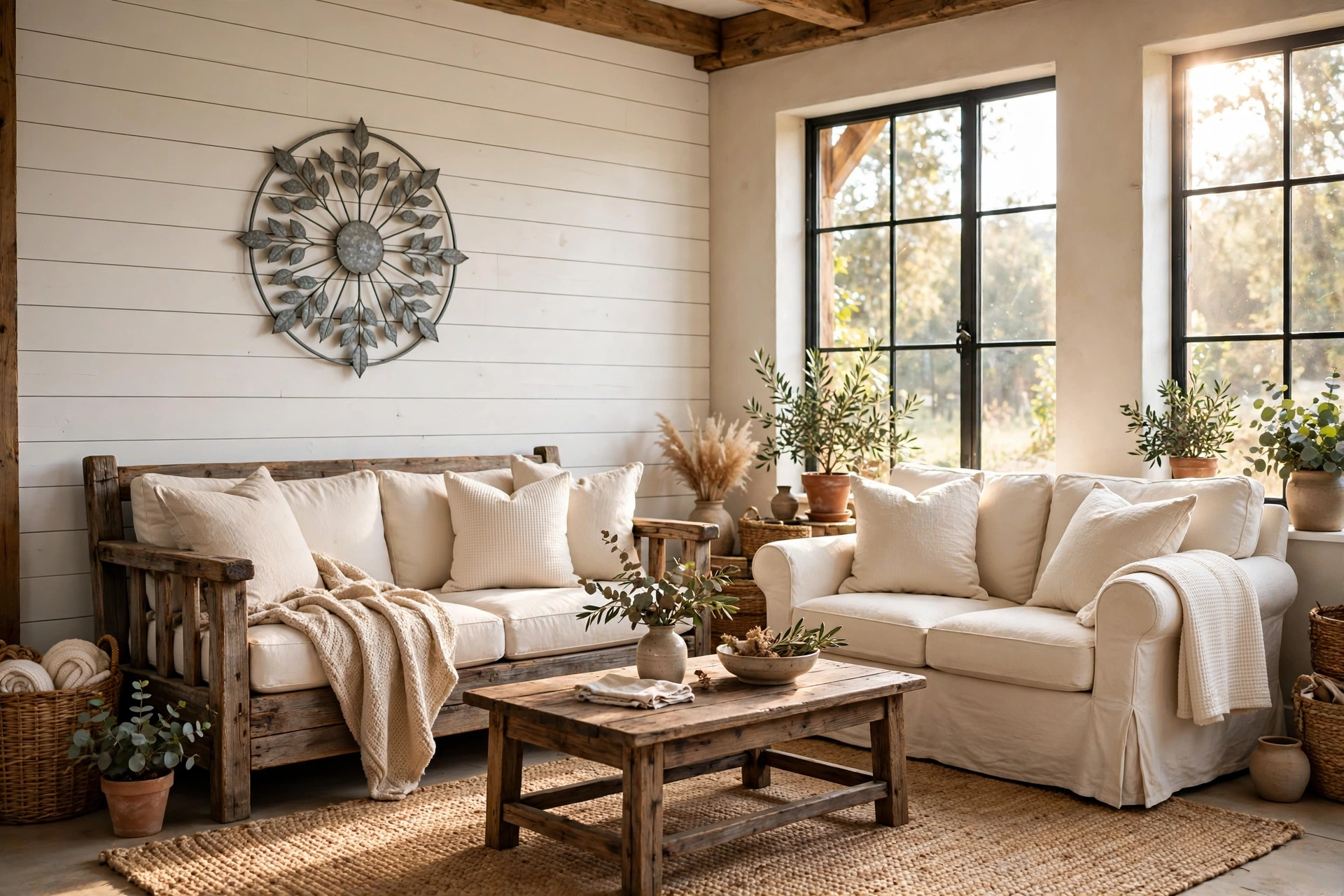
Shiplap is the undisputed signature of farmhouse style, and one accent wall transforms a plain studio instantly. Peel-and-stick shiplap panels ($25–$45 per pack covering about 10 square feet) make this renter-friendly — no nails, no damage, and they remove cleanly. Choose the wall behind your sofa or bed for maximum impact. Paint it classic white for the Joanna Gaines look, or try a soft sage or warm greige for a modern twist. The horizontal lines add subtle texture that photographs beautifully and makes ceilings feel higher. Pro tip: run a laser level line before you start — even slightly crooked shiplap rows are visible from across the room, and ten minutes of measuring saves hours of regret.
2. Divide Zones with a Sliding Barn Door
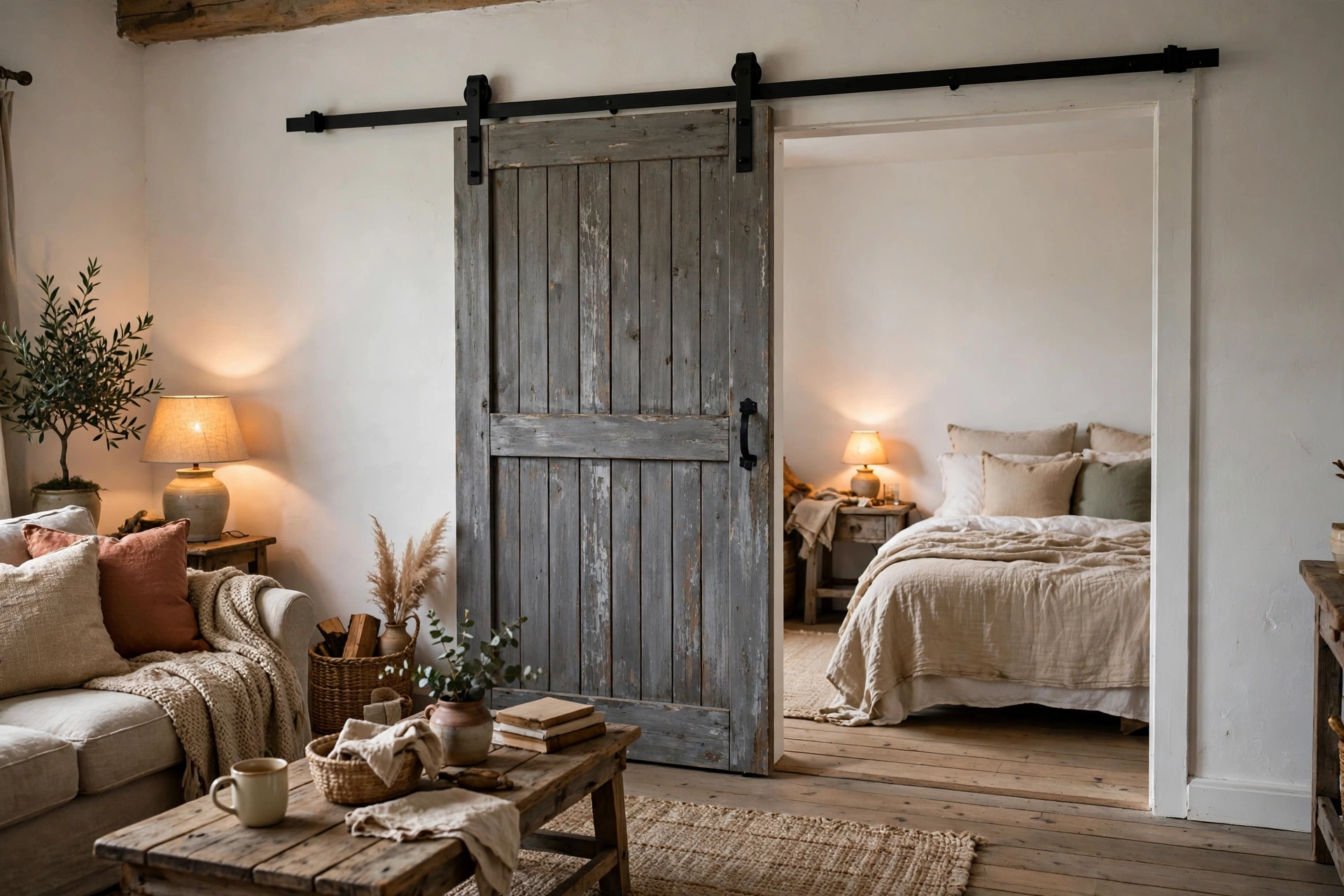
A sliding barn door on black metal hardware ($120–$300 for the kit plus door) is the farmhouse answer to studio zoning — it separates the sleeping area from living space while adding massive rustic character. Unlike a swinging door, it needs zero clearance, perfect for tight layouts. Weathered gray or whitewashed finishes keep it light; a dark walnut stain adds drama. Mount it on a wall-mounted track so it slides to cover a closet, a sleeping nook, or even a home office corner. This is the same space-saving zoning principle behind our studio apartment layout ideas, dressed in full farmhouse regalia. Pro tip: add a soft-close mechanism ($15) to the track — barn doors are heavy, and the gentle close prevents the 2 a.m. slam that wakes the whole studio.
3. Fake Exposed Wood Beams
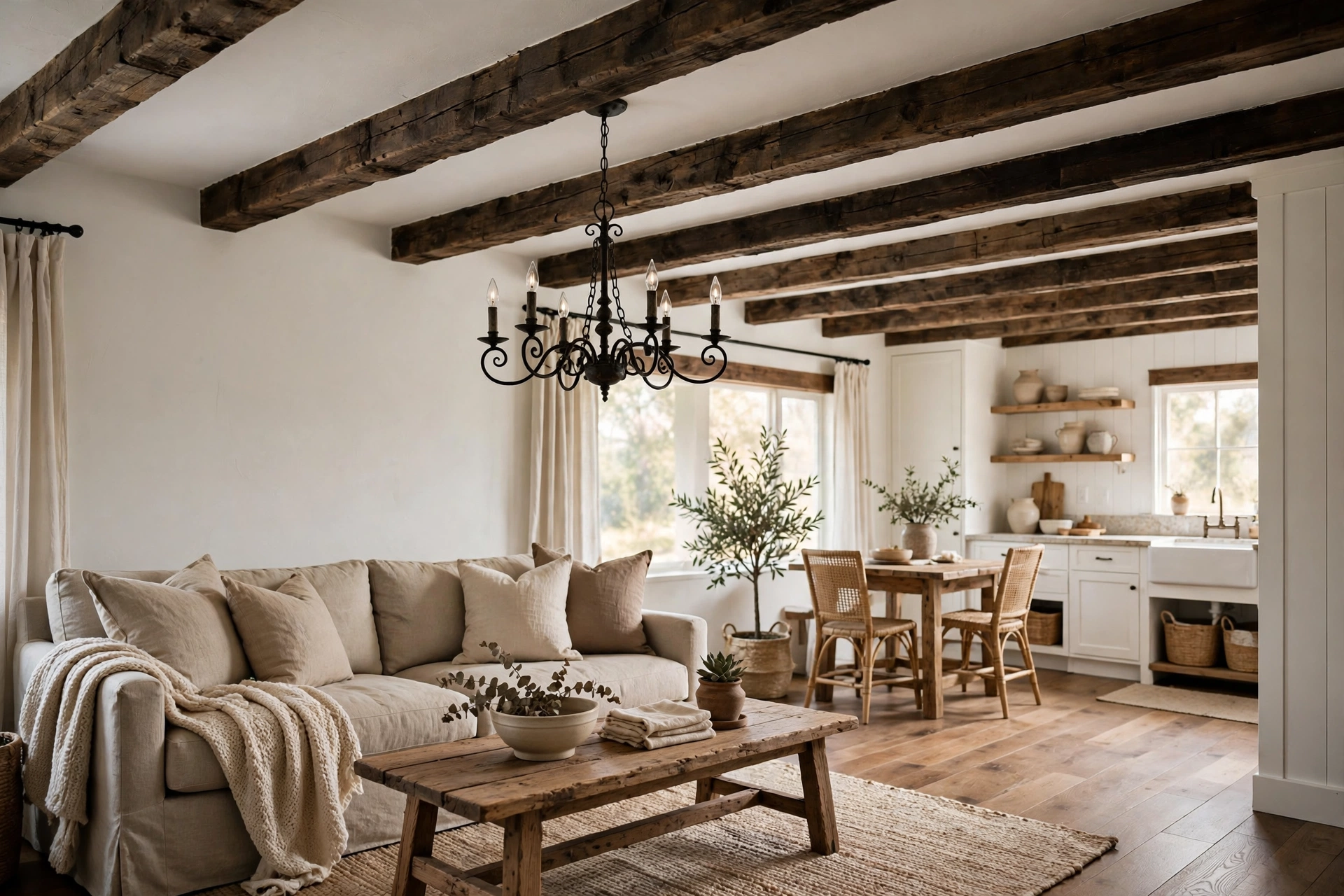
Exposed beams scream farmhouse, but most apartments do not have them — so fake them. Faux wood beam kits ($80–$200 per beam) are hollow polyurethane that looks convincingly like aged timber and weighs almost nothing, mounting with simple brackets. Two or three beams across a living area ceiling add instant architectural soul. Stain them dark walnut against white ceilings for contrast, or whitewash them for a softer coastal-farmhouse blend. In a studio, beams also visually lower a too-tall ceiling, making the space feel cozier. Pro tip: run beams parallel to the longest wall — perpendicular beams can visually chop a small room into segments, while parallel ones stretch it.
4. Distress a White Dresser
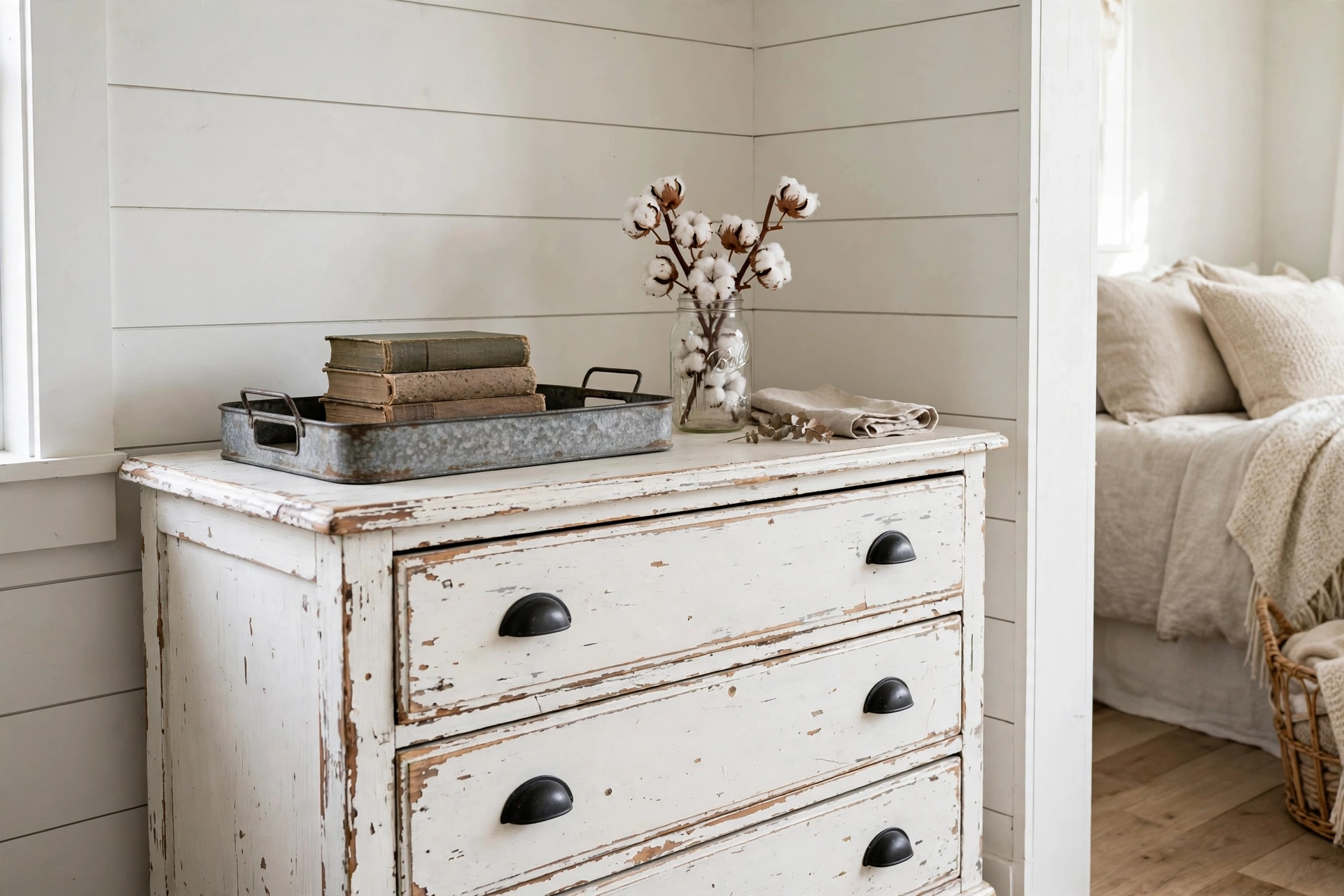
A distressed white dresser ($80–$250 thrifted, or DIY a plain one for $40 in chalk paint) is farmhouse storage that doubles as a styling surface. The worn edges and visible wood beneath whisper history — even if you created that history last weekend with sandpaper. Use it as a media console, a nightstand alternative, or an entryway catch-all. Black cup pulls ($2–$4 each) complete the look. The light finish keeps a small studio feeling bright while the distressing adds the texture farmhouse demands. Pro tip: distress strategically — sand edges, corners, and raised details where real wear would happen. Random sanding all over looks fake; wear-pattern distressing looks authentic.
5. Try Board and Batten Wainscoting
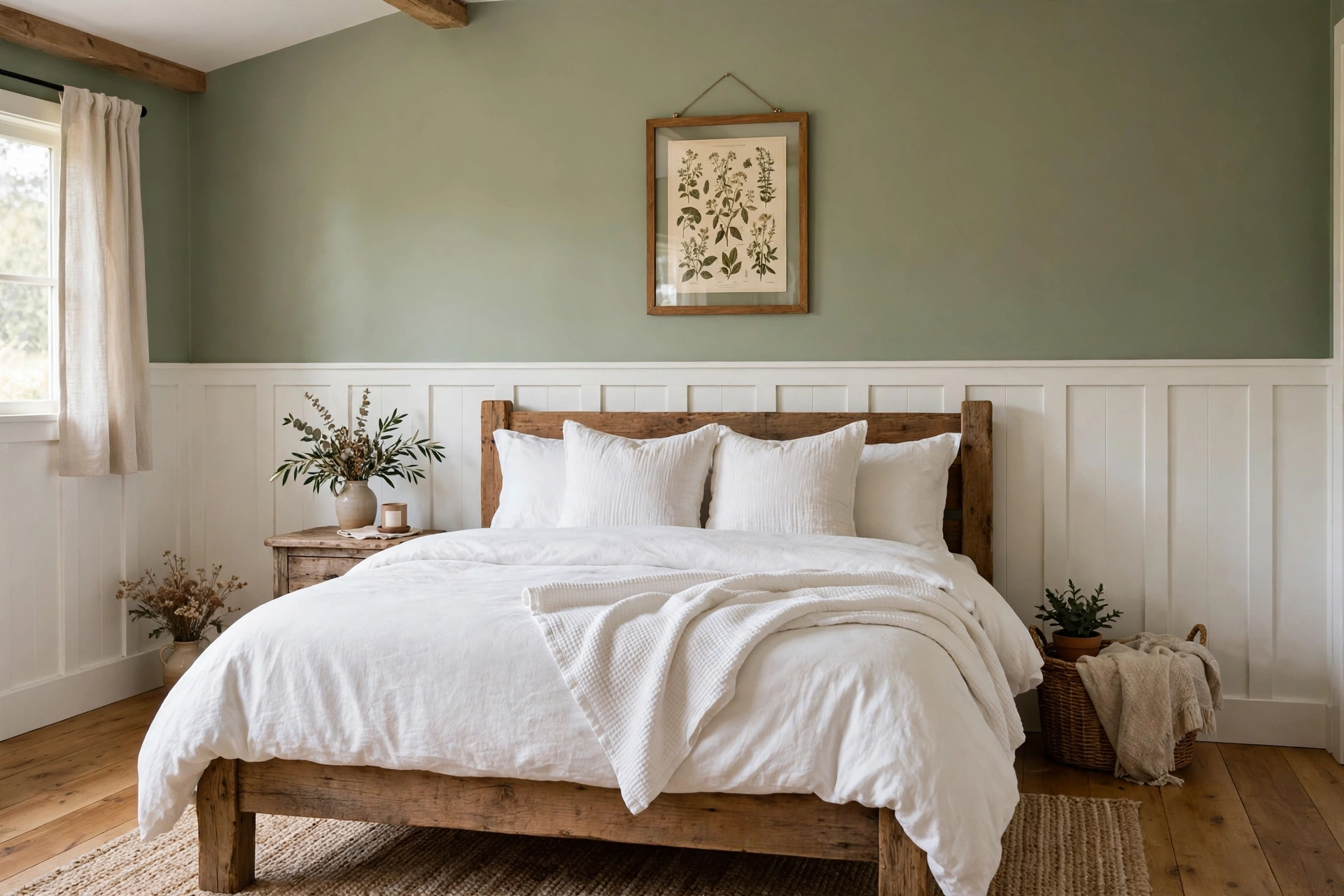
Board and batten — vertical boards with thin battens covering the seams — gives walls tailored farmhouse structure for about $1–$2 per square foot in materials. Paint the lower two-thirds white and the upper wall a soft sage or warm white for the classic two-tone look. In a studio, apply it to the bedroom nook or entryway wall rather than the whole apartment — targeted architecture reads as intentional, while wall-to-wall can overwhelm a small space. Removable batten strips with adhesive are renter-safe. Pro tip: cap the wainscoting with a simple chair rail ledge — the 3-inch shelf it creates is perfect for leaning small art and photos without hanging a single nail.
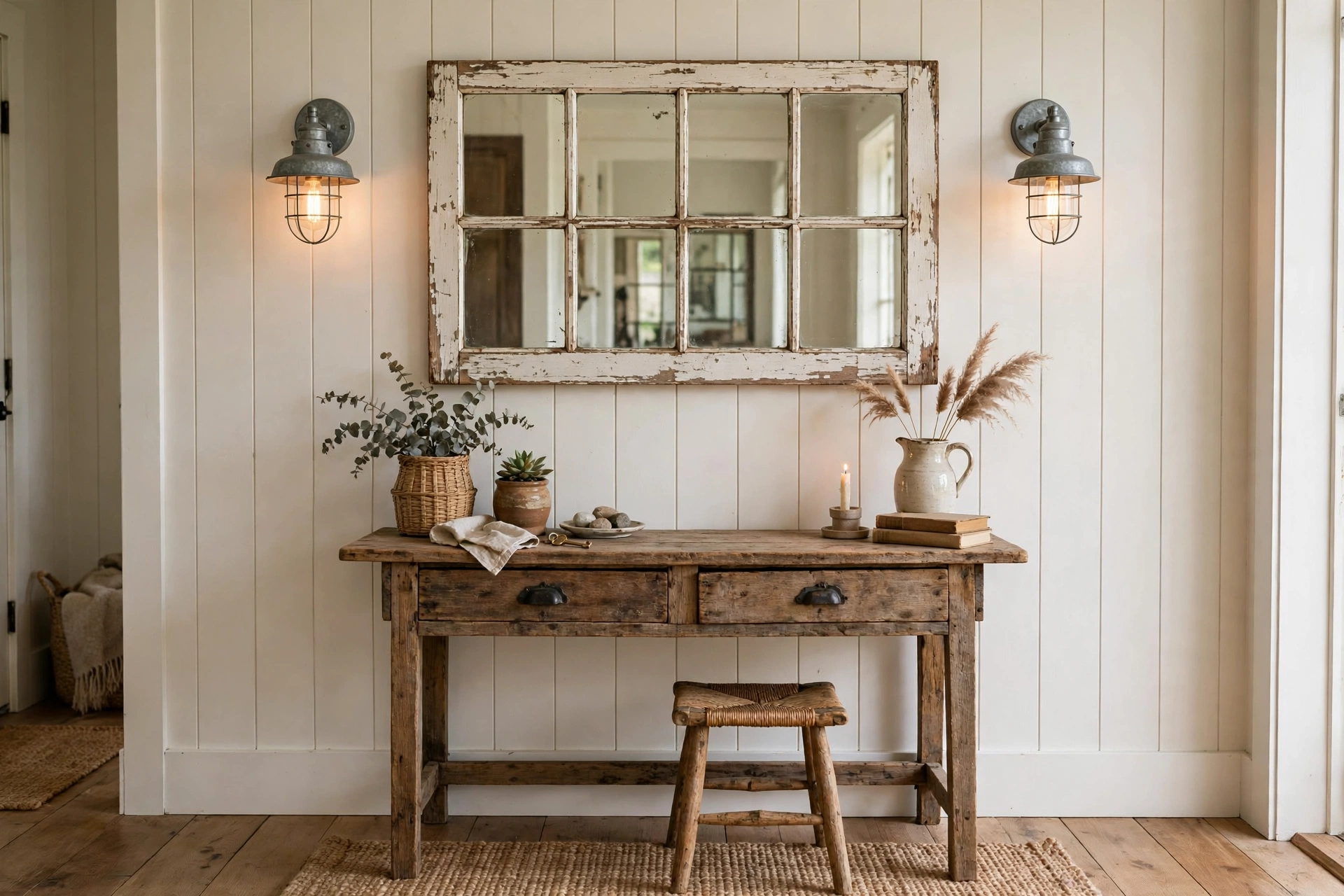
6. Hang an Antique Window Frame Mirror
An old window frame fitted with mirror ($40–$120 at flea markets, or DIY for $25) does double duty: it bounces light around a small studio like any mirror, while the divided panes add vintage farmhouse architecture to a blank wall. Hang it in the entryway or above a console table. The chippy paint originals are the most coveted, but a new frame distressed with chalk paint fools everyone. For more mirror magic in tight quarters, see our studio apartment lighting ideas — mirrors multiply every lamp you own. Pro tip: have the mirror cut to fit the frame at a local glass shop ($15–$30) rather than buying pre-made — custom-cut mirror is cheaper and fits salvaged frames perfectly.
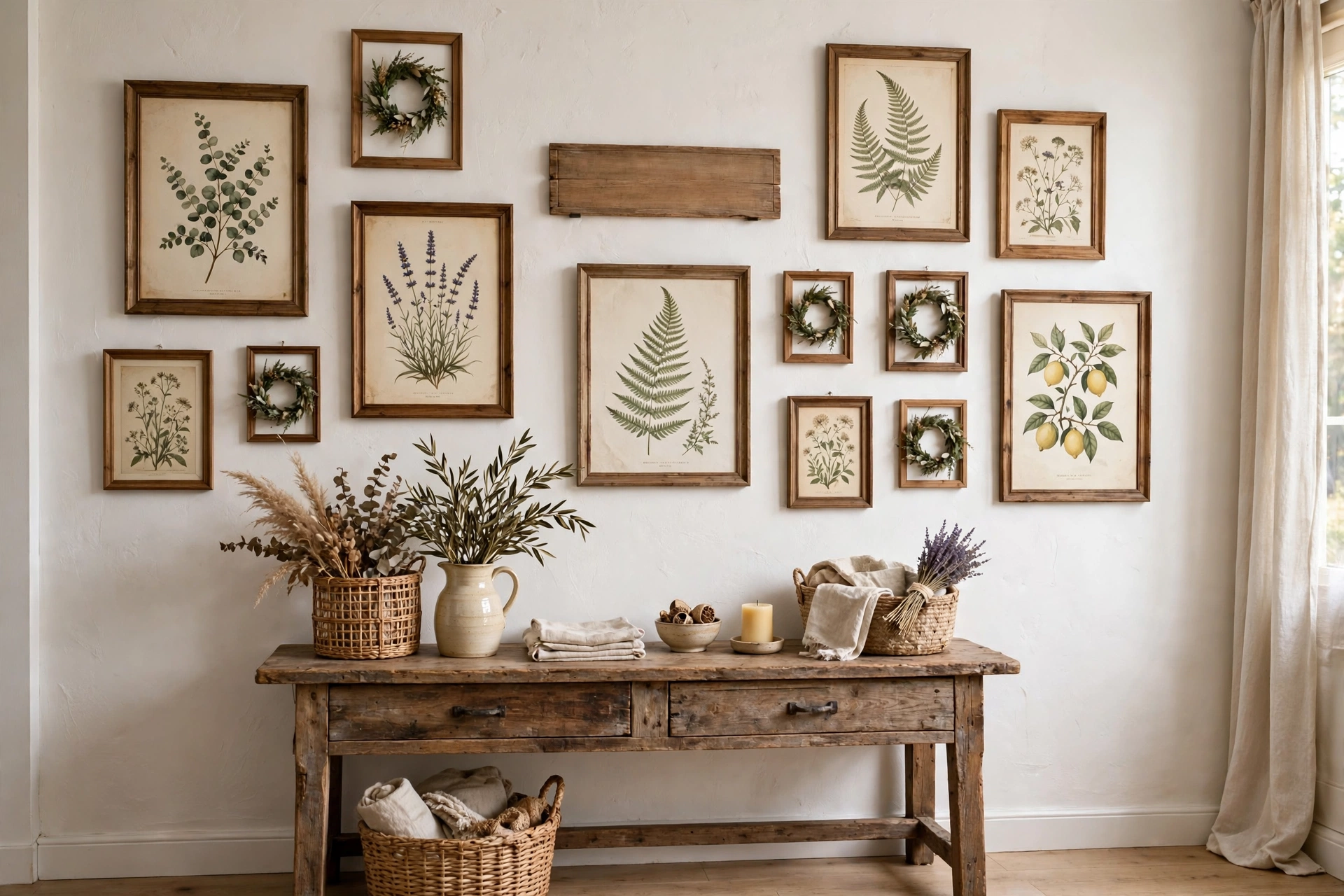
7. Mount a Farmhouse Gallery Wall
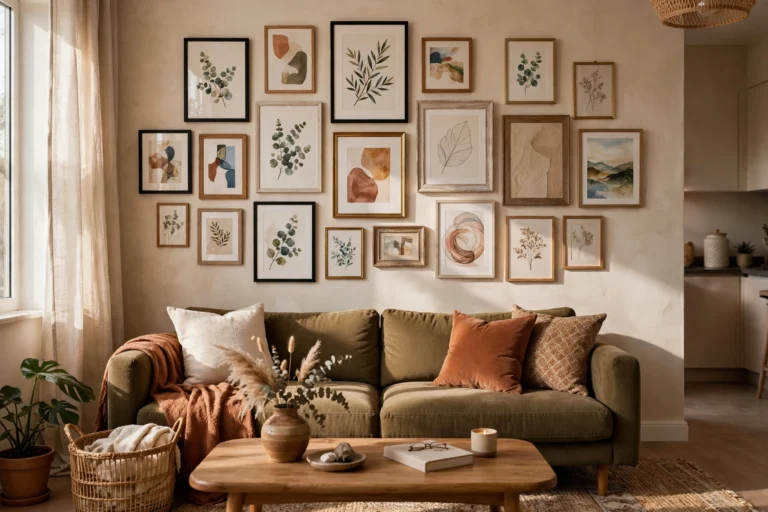
Farmhouse gallery walls mix vintage-inspired botanical prints, simple typography signs, and small wreaths in mismatched wood frames ($5–$15 each thrifted). The secret is a restrained palette — black, white, kraft brown, and greenery — so the variety of frames feels collected rather than chaotic. Start with the largest piece at eye level and build outward. In a studio, one well-composed gallery wall above the sofa or in the dining nook delivers more personality per square foot than scattered small art — see our studio apartment wall art ideas for more gallery formulas. Pro tip: lay the arrangement on the floor first and photograph it — the photo reveals spacing problems your eyes miss, and you only hang once.
Rustic Furniture with History
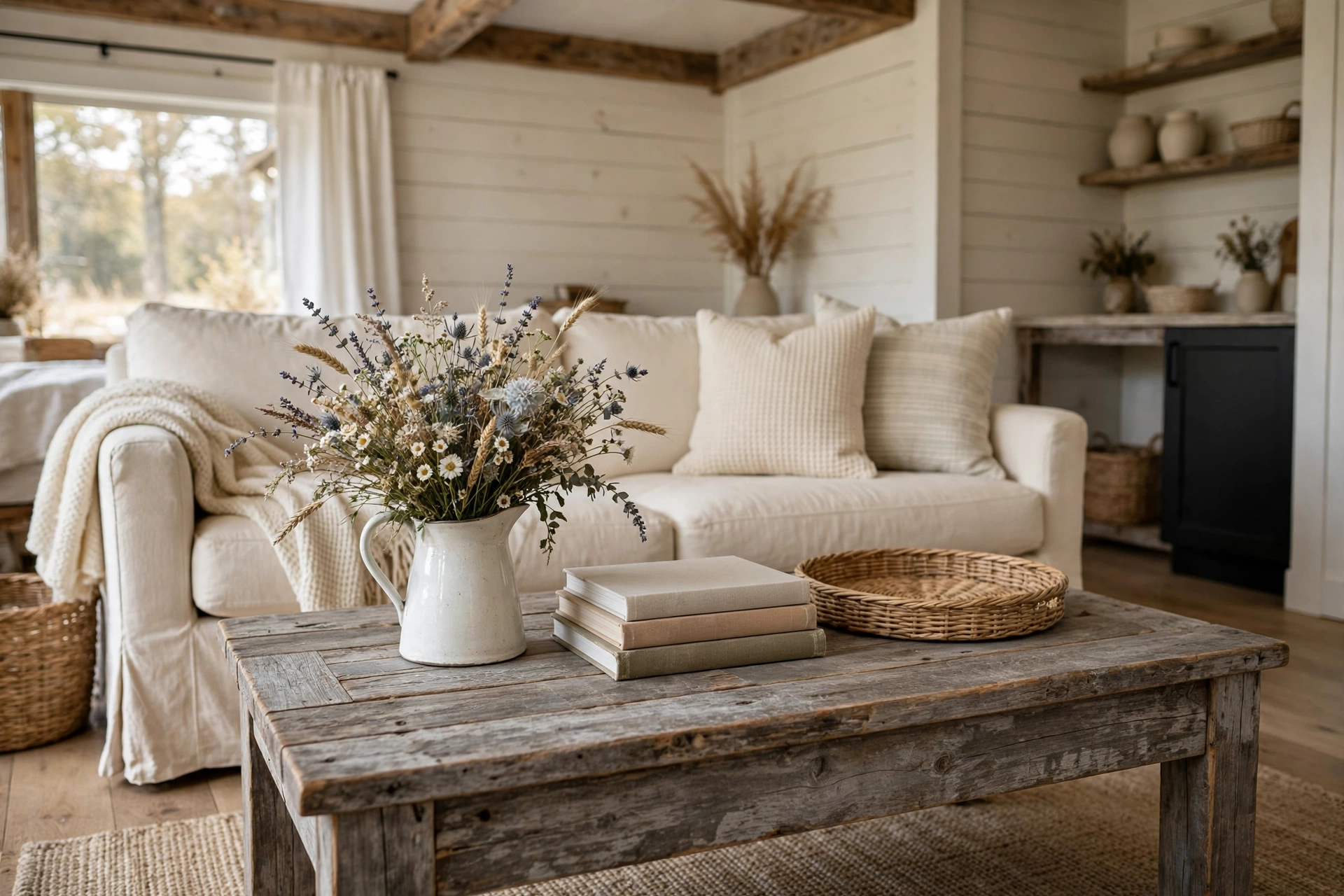
8. Anchor with a Reclaimed Wood Coffee Table
A reclaimed wood coffee table ($150–$400, or $60–$100 DIY from pallet wood) grounds the living zone with texture no new furniture can fake. The knots, nail holes, and weathered gray tones are the whole point — each mark is character. Style it with a white ironstone pitcher of wildflowers, a stack of design books, and a woven tray to corral remotes. In a studio, choose one with a lower shelf for baskets that hide clutter. Pro tip: seal reclaimed wood with matte polycrylic ($12) — it locks in the rustic look while preventing splinters and making spills wipeable.
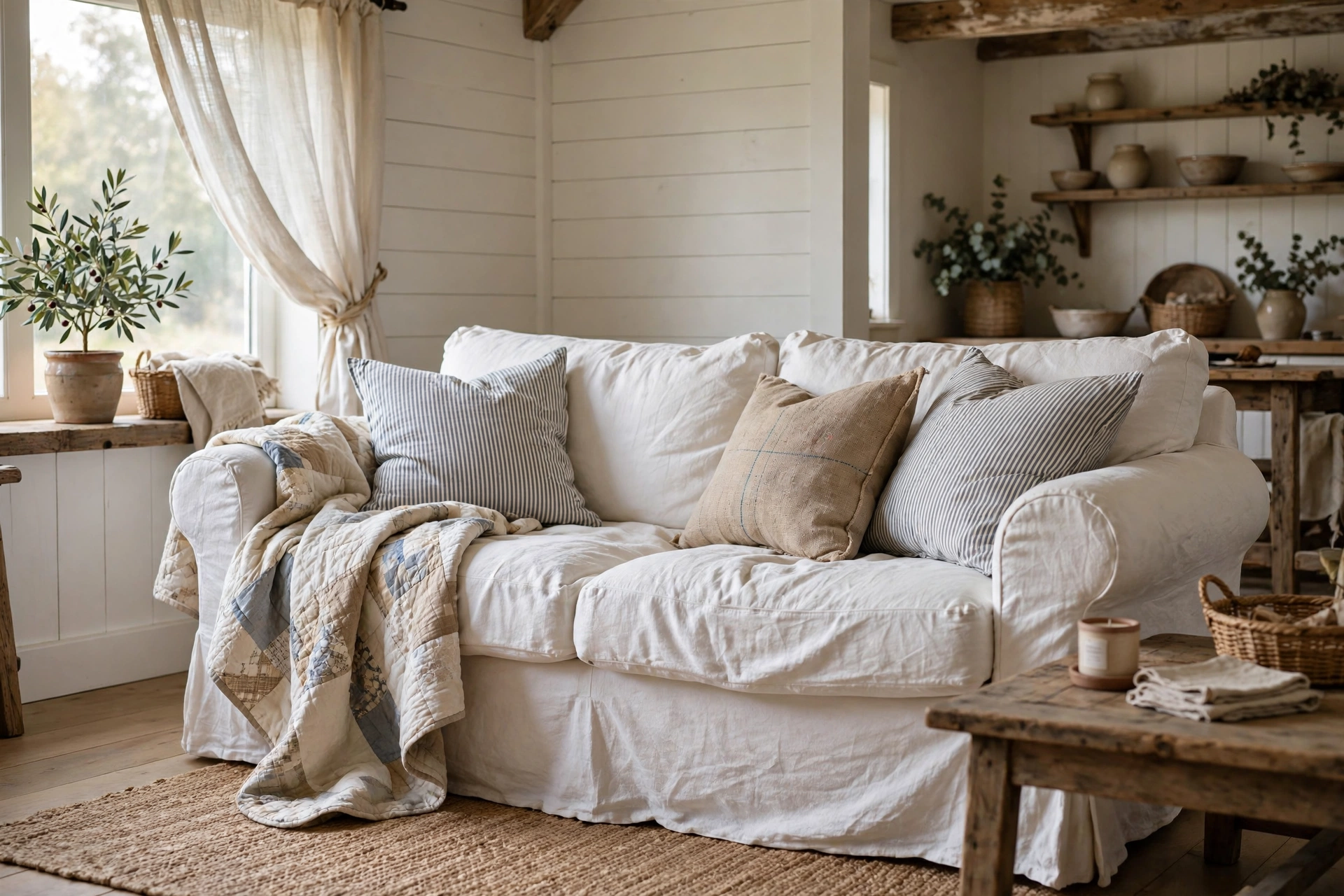
9. Choose a Linen Slipcovered Sofa
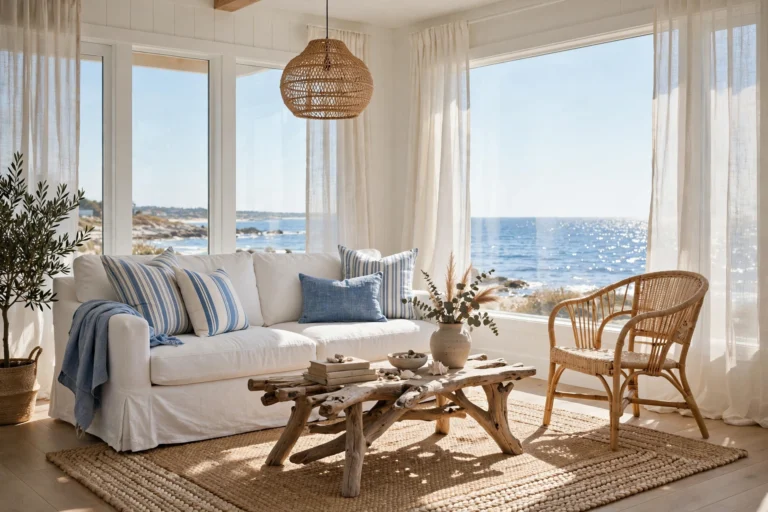
The white linen slipcovered sofa is the farmhouse living room’s hero — relaxed, washable, and endlessly re-styleable. A good slipcovered sofa runs $700–$1,500 new, but thrifted sofas plus custom slipcovers ($200–$400) achieve the same look for less. The slightly rumpled casualness is intentional; perfection would ruin it. Toss on ticking stripe and grain sack pillows, drape a quilt over one arm, and the sofa practically styles itself. The washable cover is also the most practical choice for real life with pets or kids. Pro tip: buy a second slipcover when you buy the sofa — rotating covers means one is always clean, and discontinued fabrics become impossible to match later.
10. Sleep in a Wrought Iron Bed
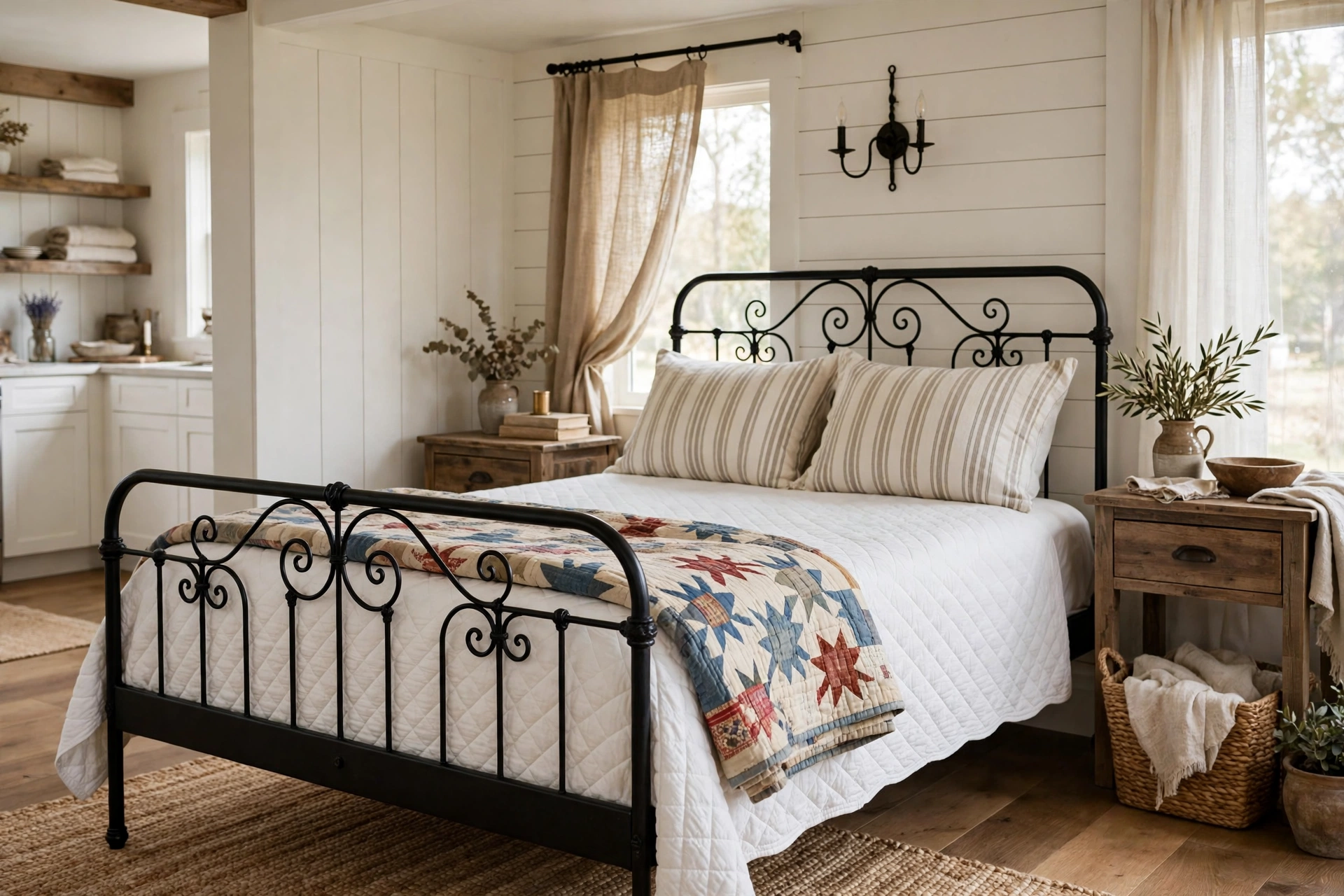
A black wrought iron bed frame ($200–$500) brings Victorian-farmhouse romance to the sleeping zone — the scrollwork is jewelry for the bedroom. The open frame keeps sightlines clear, which matters enormously in a studio where the bed is always visible. Dress it with a white matelasse coverlet, grain sack stripe pillows, and a folded vintage quilt at the foot. The black metal also echoes the barn door hardware and light fixtures, tying the whole studio together. Pro tip: check thrift stores first — solid iron beds from the early 1900s surface regularly for $50–$150, and they are indestructible compared to modern reproductions.
11. Style a Chicken Wire Cabinet
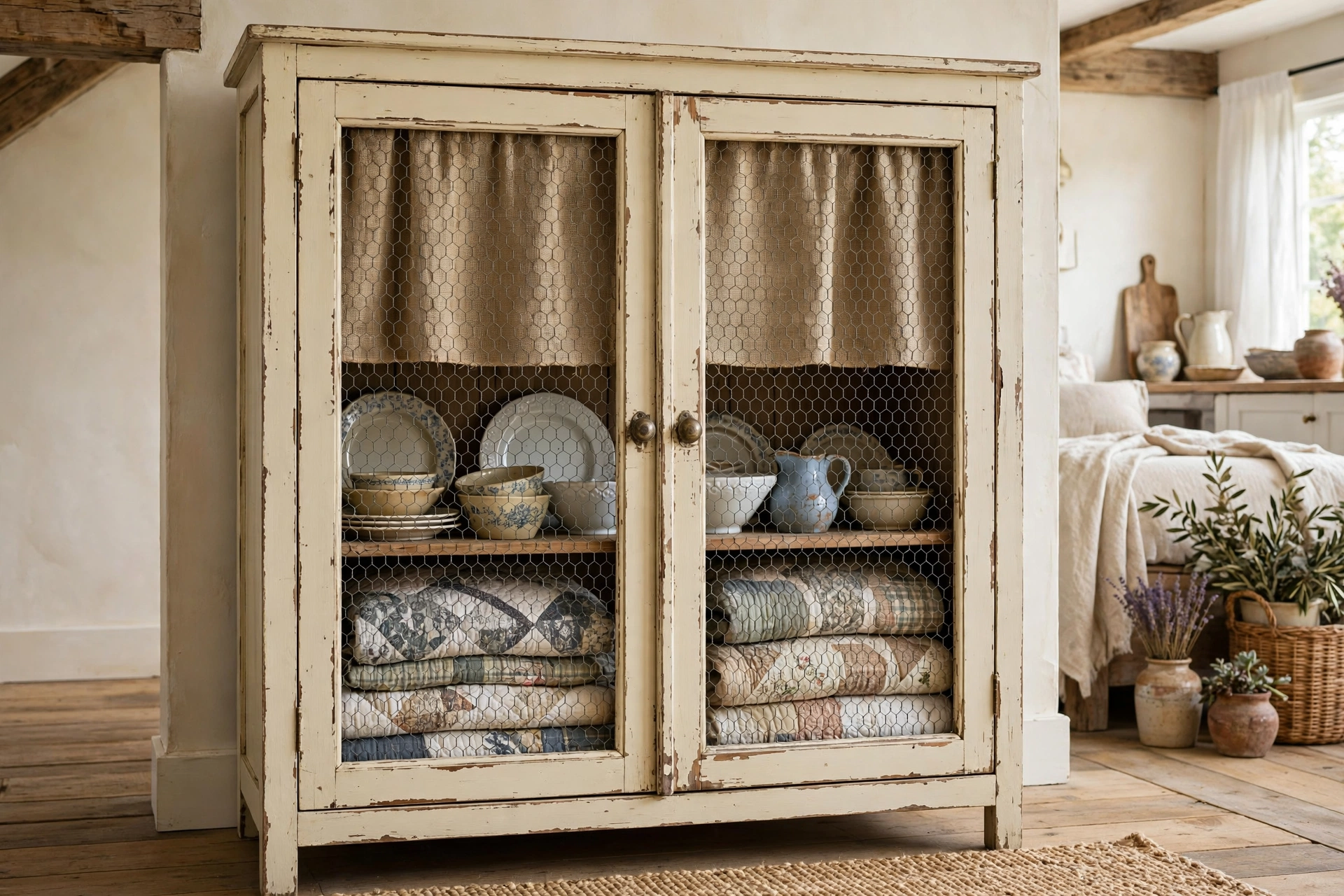
A cabinet with chicken wire door fronts ($100–$300 vintage, or retrofit plain cabinet doors with wire mesh for $30) is pure farmhouse — the wire keeps contents visible but softened, like looking through a screen door. Use it for dish display, quilt storage, or pantry overflow. Line the interior back with burlap for extra texture. The wire also ventilates, making these cabinets ideal for storing linens that need airflow. Pro tip: wear gloves when cutting chicken wire — the cut ends are razor sharp, and a $5 pair of work gloves prevents a trip to urgent care.
12. Sit in Ticking Stripe Upholstery
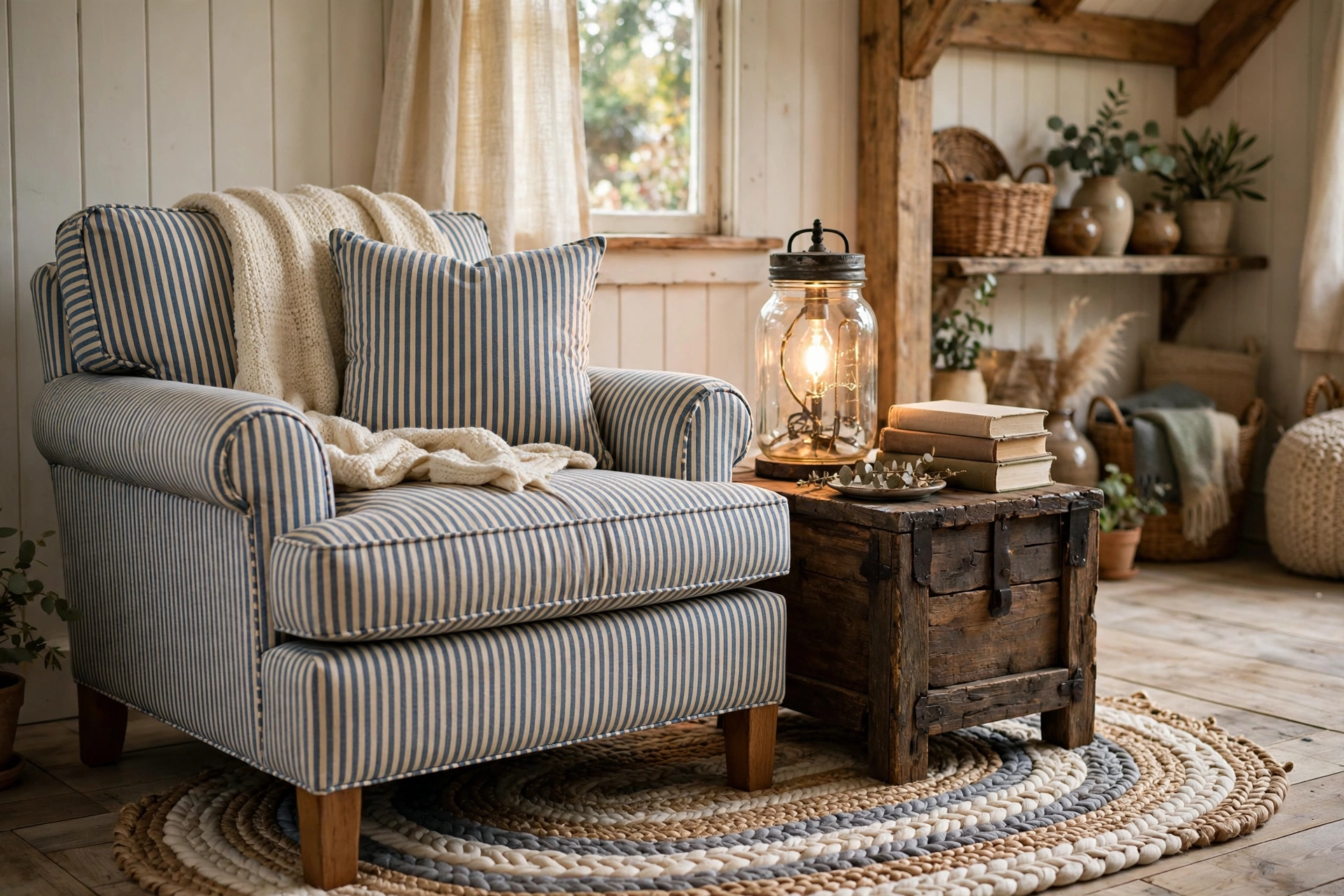
Ticking stripe — the classic blue-and-cream striped mattress fabric — is farmhouse’s hardest-working textile. An armchair in ticking stripe ($150–$400 reupholstered, or $25/yard for DIY) adds pattern without fussiness; the stripes read as neutral from a distance. It pairs with literally everything: gingham, plaid, florals, solids. Recover a thrifted chair for the cheapest entry point — ticking stripe forgives imperfect upholstery because the pattern hides seams. Pro tip: Scotchgard the fabric before the chair enters service ($12 a can) — ticking stripe is usually cotton, and one coffee spill without protection is a permanent souvenir.
13. Stack Wooden Crates for Storage
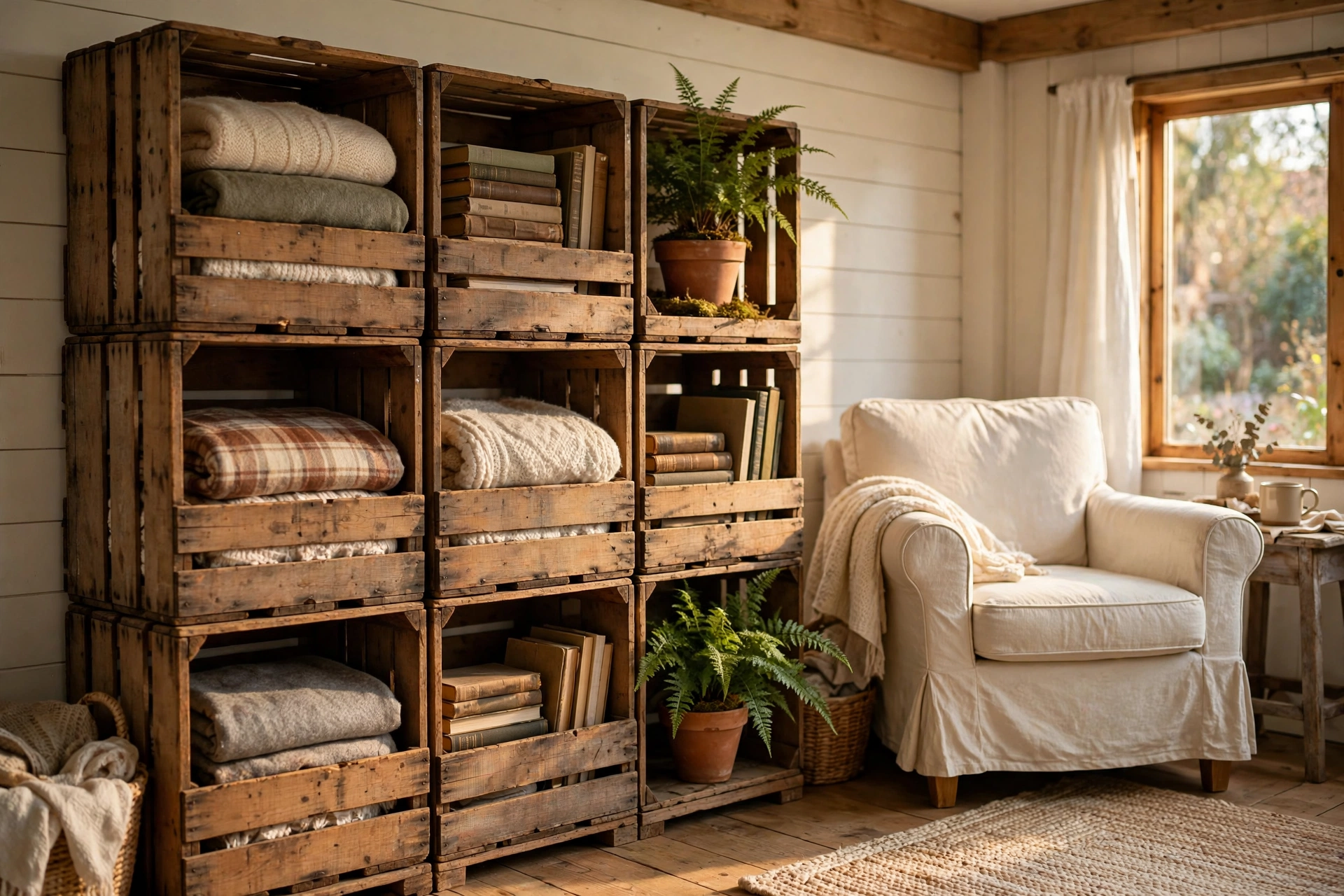
Vintage wooden apple crates ($10–$25 each at flea markets) stack into the most charming open storage in farmhouse design. Fill them with folded blankets, books, or a potted fern; mount them on the wall as shadow-box shelves; or slide them under a console table. The stenciled fruit labels are bonus decor. In a studio, three stacked crates beside an armchair create a side table with triple the storage of a regular one. Pro tip: sand the interiors lightly and line with kraft paper — old crates can harbor splinters and dust, and the liner keeps stored linens clean.
14. Build Wine Crate Bookshelves
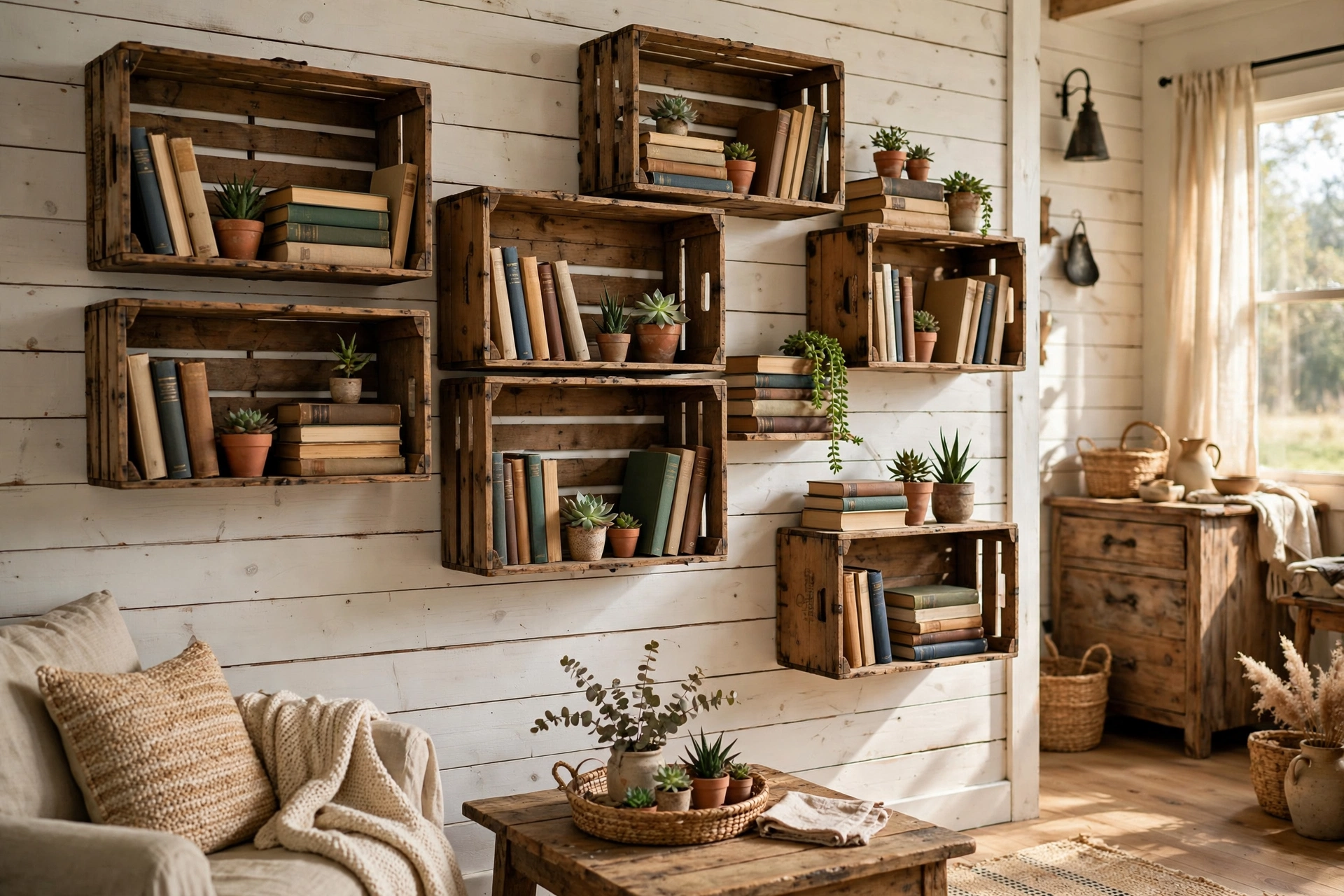
Wooden wine crates ($8–$20 each) mounted on the wall become floating bookshelves with instant rustic credibility. Arrange three or four in an asymmetrical cluster above a desk or in the reading nook. The shallow depth (about 6 inches) is perfect for books and small plants without jutting into the room — critical in a studio. Stain them all the same tone for cohesion, or leave the original winery stamps visible for character. Pro tip: anchor every crate into a stud with 2.5-inch screws — books are deceptively heavy, and a crate of hardcovers pulling out of drywall is a disaster.
15. Place a Primitive Wooden Bench
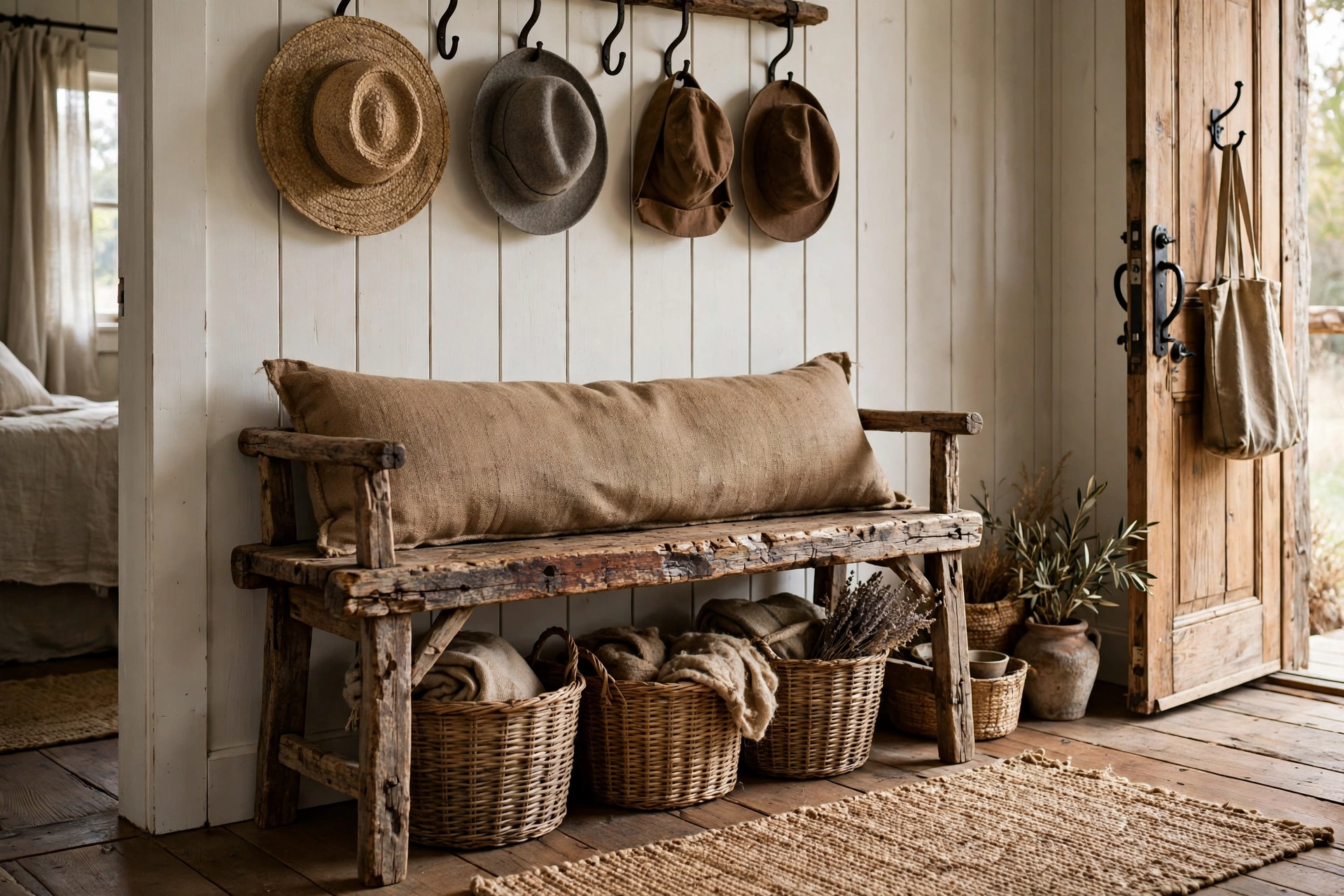
A primitive handmade-look wooden bench ($60–$180) at the entryway or foot of the bed is farmhouse multitasking: seating, surface, and storage in one. Top it with a grain sack cushion for comfort; stash woven baskets underneath for shoes or linens. The timeworn finish — real or reproduced — adds the patina that makes farmhouse feel collected rather than decorated. Choose one with a lower stretcher bar between the legs for extra sturdiness. Pro tip: measure your entryway before buying — a bench deeper than 14 inches blocks traffic flow in a studio foyer, while a slim 10–12 inch bench tucks neatly against the wall.
16. Go Weathered Gray on Key Pieces
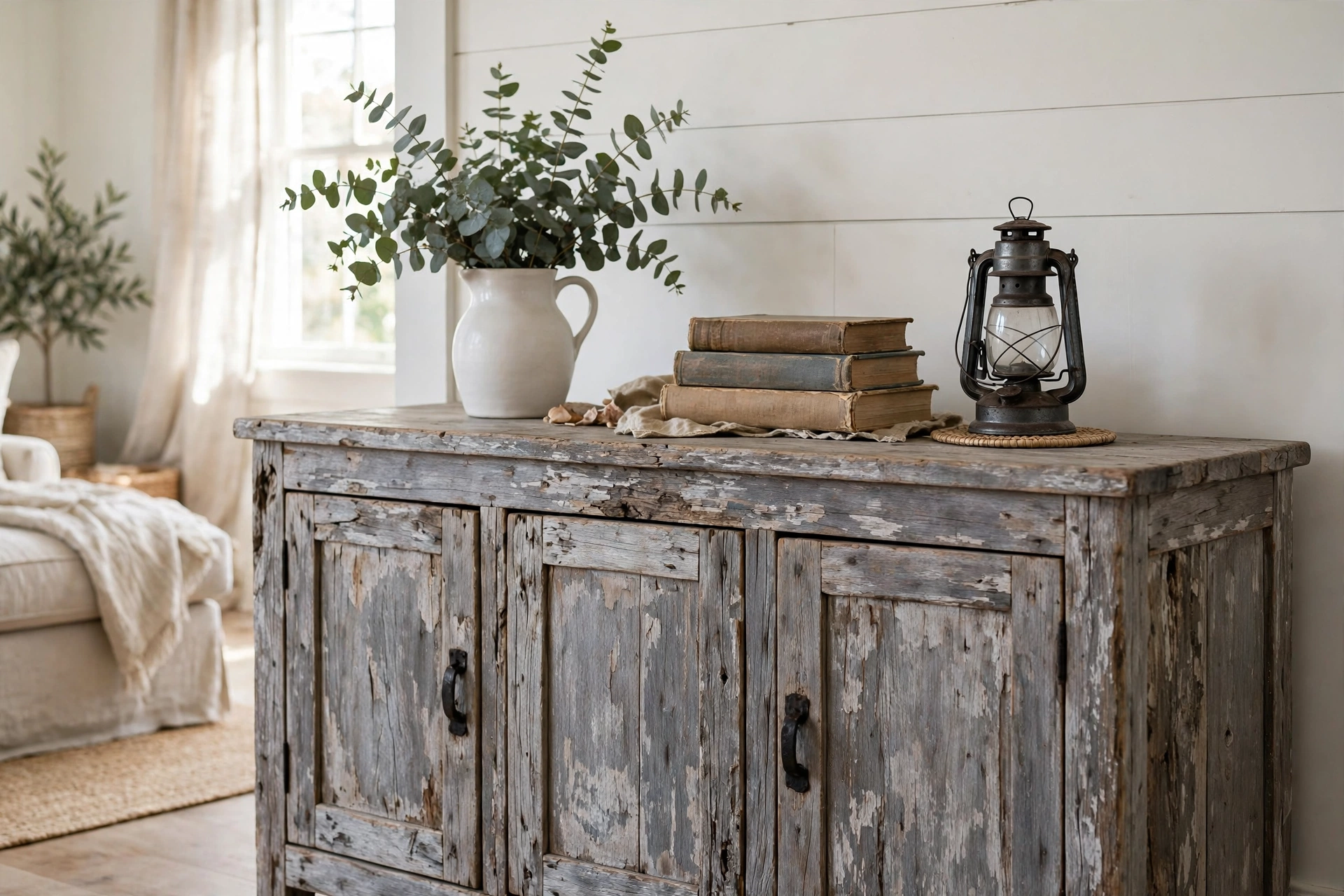
Weathered gray — the driftwood finish between brown and gray — is modern farmhouse’s signature stain. A sideboard or console in weathered gray ($200–$500, or DIY with gray wash stain for $30) bridges rustic and contemporary, working with both warm wood tones and cool whites. It is more forgiving than white (hides dust) and softer than dark brown (keeps rooms light). In a studio, one weathered gray anchor piece prevents the all-white farmhouse look from feeling sterile. Pro tip: test gray stain on a hidden spot first — gray washes go blue or purple depending on the wood species, and pine (the most common cheap wood) skews cool.
Farmhouse Kitchen in Miniature
17. Open Up with Rustic Wood Shelving
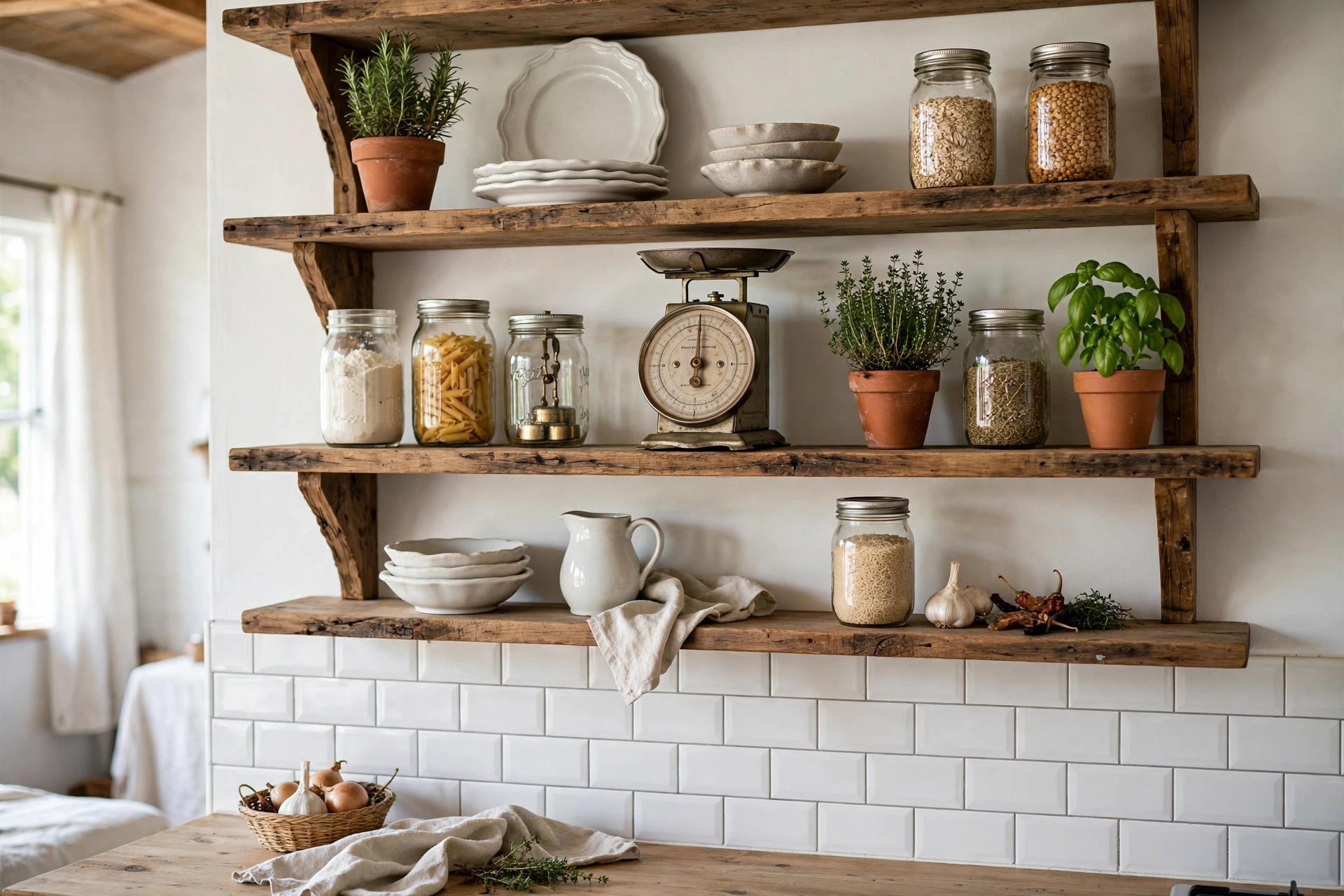
Open rustic wood shelves ($30–$80 per shelf with brackets) replace upper cabinets in the farmhouse kitchen — displaying white ironstone dishes, mason jars of dry goods, and small potted herbs as decor that earns its keep. In a studio kitchen, open shelves make the whole space feel larger by removing visual bulk. Keep displays tight and curated: group by color (all white dishes, all glass jars) so open storage reads as intentional, not cluttered. This display-as-decor approach is central to our minimalist studio ideas too — everything visible must earn its place. Pro tip: put daily-use items on the lowest shelf and pretty-but-rarely-used pieces up high — open shelves only stay tidy when the workflow makes sense.
18. Add a Butcher Block Island
A small butcher block island or cart ($150–$400) gives a studio kitchen the prep space and casual dining spot it desperately needs. The thick wood top is warm underhand in a way stone never is, and it doubles as a serving station when guests come. Choose one with open shelving below for cookbooks and baskets, and tuck two counter stools underneath. Butcher block also ages gracefully — knife marks and stains become patina, not damage. Pro tip: oil the butcher block monthly with food-safe mineral oil ($8) — the five-minute ritual prevents cracking and keeps the wood glowing for decades.
19. Covet the Apron-Front Sink
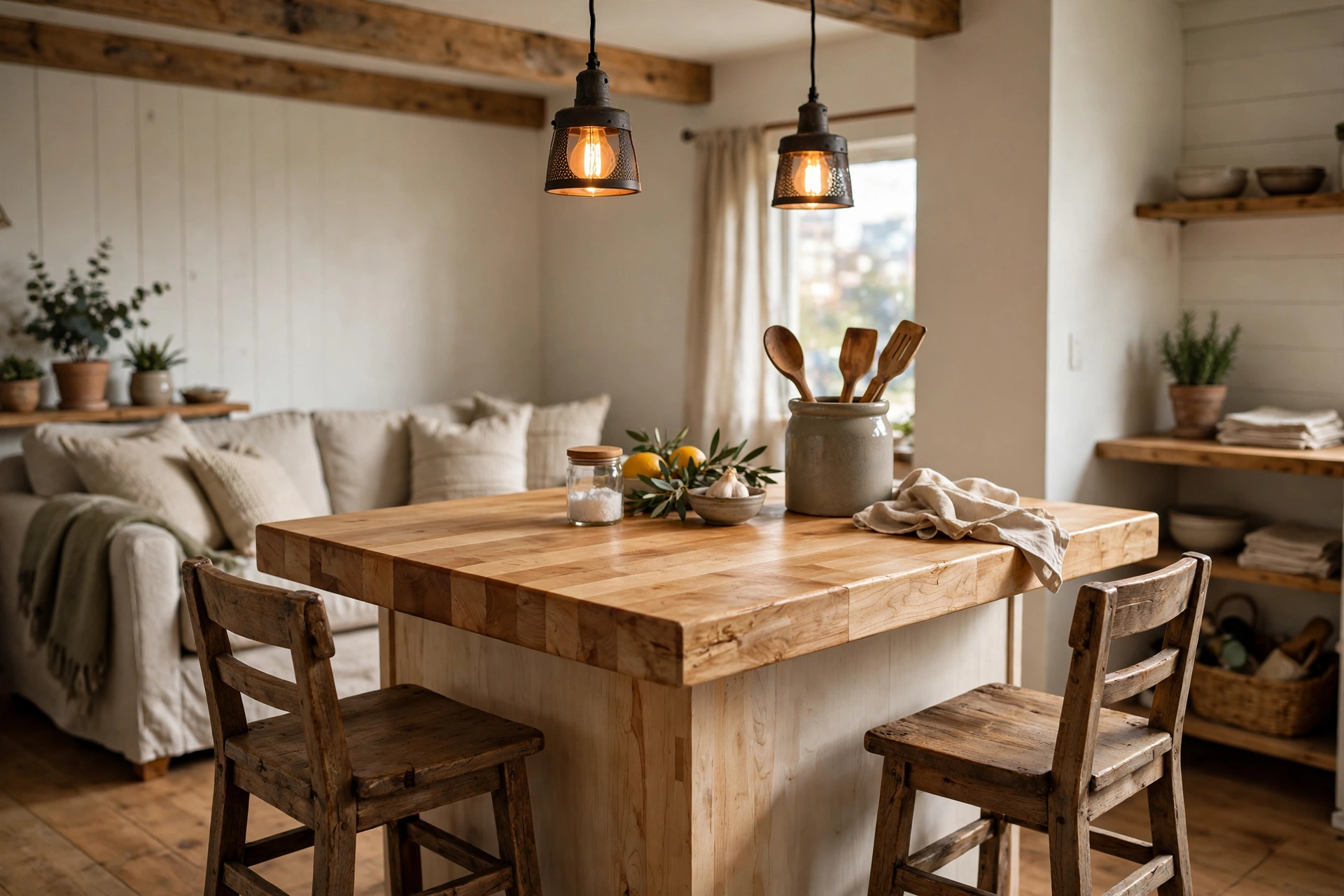
The white apron-front farmhouse sink ($200–$500) is the kitchen’s crown jewel — deep enough to hide a sinkful of dishes, with the exposed front panel that defines the style. Pair it with a bridge-style faucet in oil-rubbed bronze ($80–$200) and drape a grain sack towel over the edge. Even in a tiny studio kitchen, the apron front makes the whole space feel intentional and high-end. If a full replacement is not possible, a faux apron front panel ($30) clipped to a standard sink fakes the look convincingly. Pro tip: choose a fireclay apron sink over cast iron if you can — fireclay resists chipping better, and in a hardworking small kitchen that durability pays off.
20. Display Enamelware with Blue Rims
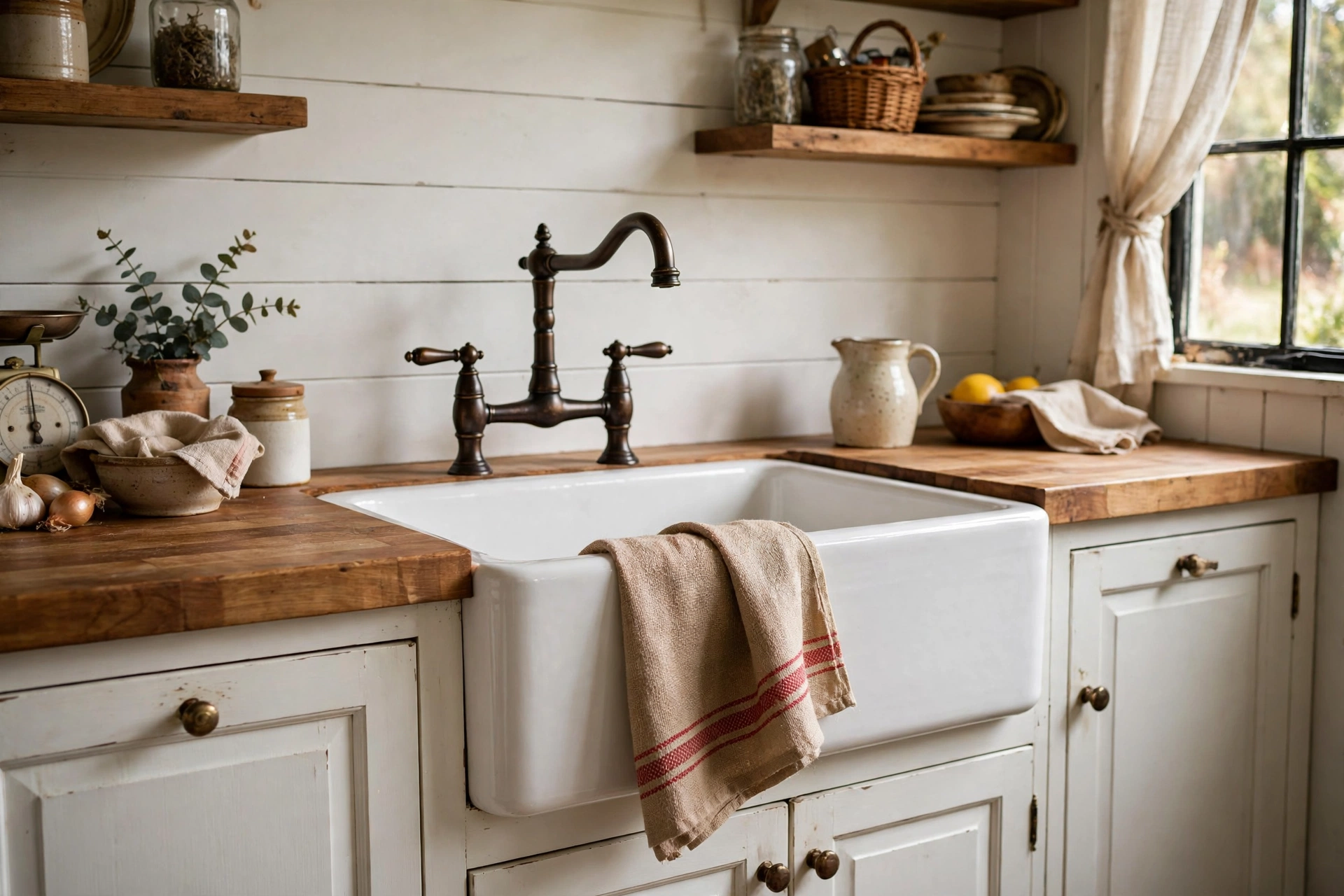
White enamelware with blue rims — pitchers, bowls, colanders ($8–$25 per piece) — is nostalgic farmhouse kitchen decor that actually gets used. Group a large pitcher, stacked bowls, and a colander on the counter as a permanent display; they are pretty enough to leave out and practical enough to grab daily. The blue rim echoes classic farmhouse textiles and adds a crisp graphic edge to all the neutrals. Thrift stores are full of genuine vintage enamelware for a few dollars. Pro tip: check vintage enamelware for chips on the rim before buying — small interior chips are fine, but rim chips expose metal that can rust, and rust near food is a no-go.
21. Corral Utensils in a Stoneware Crock
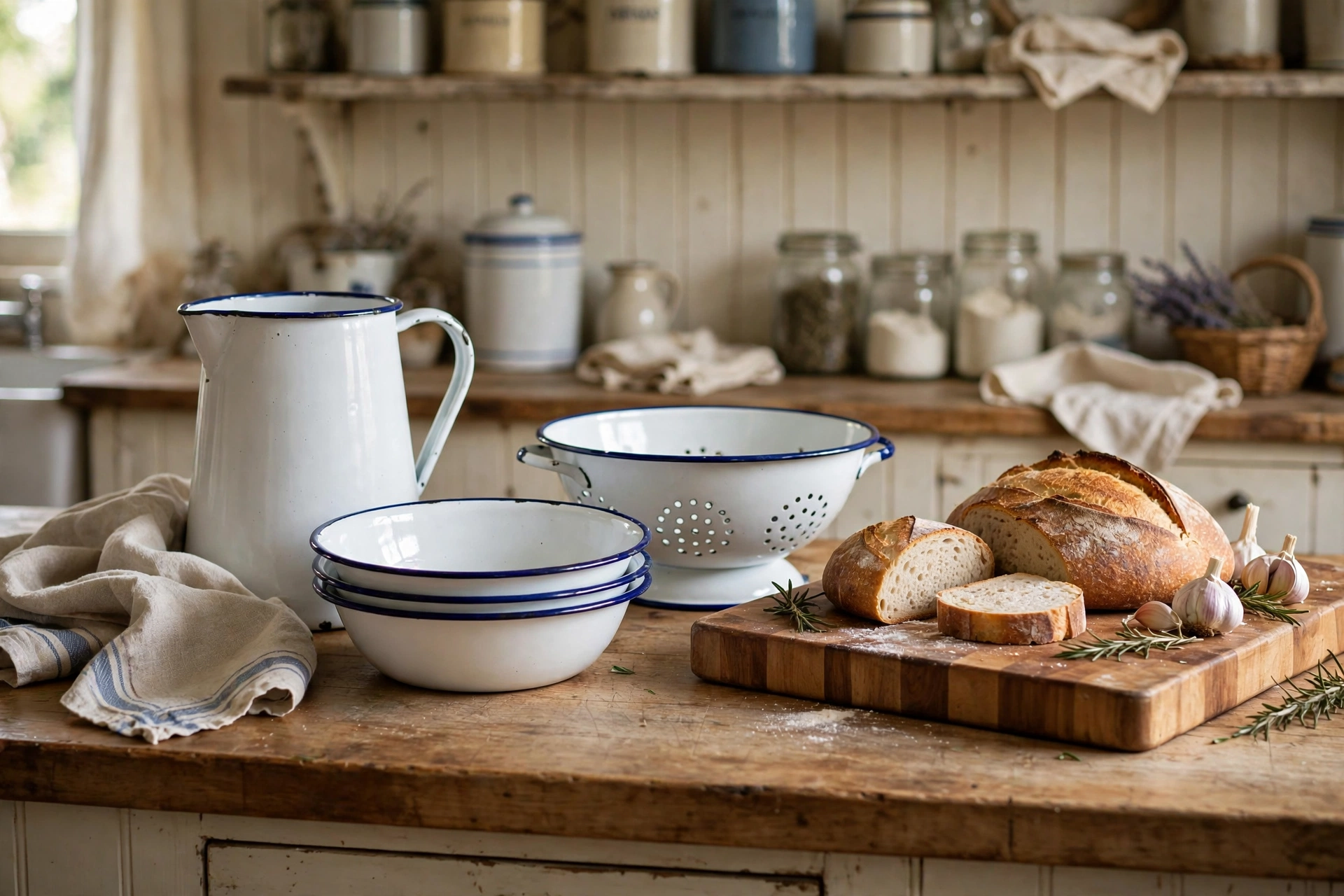
A vintage blue-striped stoneware crock ($15–$40) holding wooden spoons and whisks is the farmhouse utensil holder — infinitely more charming than a plastic canister. The heavy crock will not tip when you grab a spoon one-handed, and the striped pattern is classic country. Place it beside the stove on the butcher block counter with a small potted herb for the complete vignette. The crock’s height also keeps long utensils upright and accessible. Pro tip: line the bottom with a folded paper towel — it absorbs the moisture that drips off washed utensils and prevents the musty smell stoneware can develop.
22. Hang Copper Pots as Art
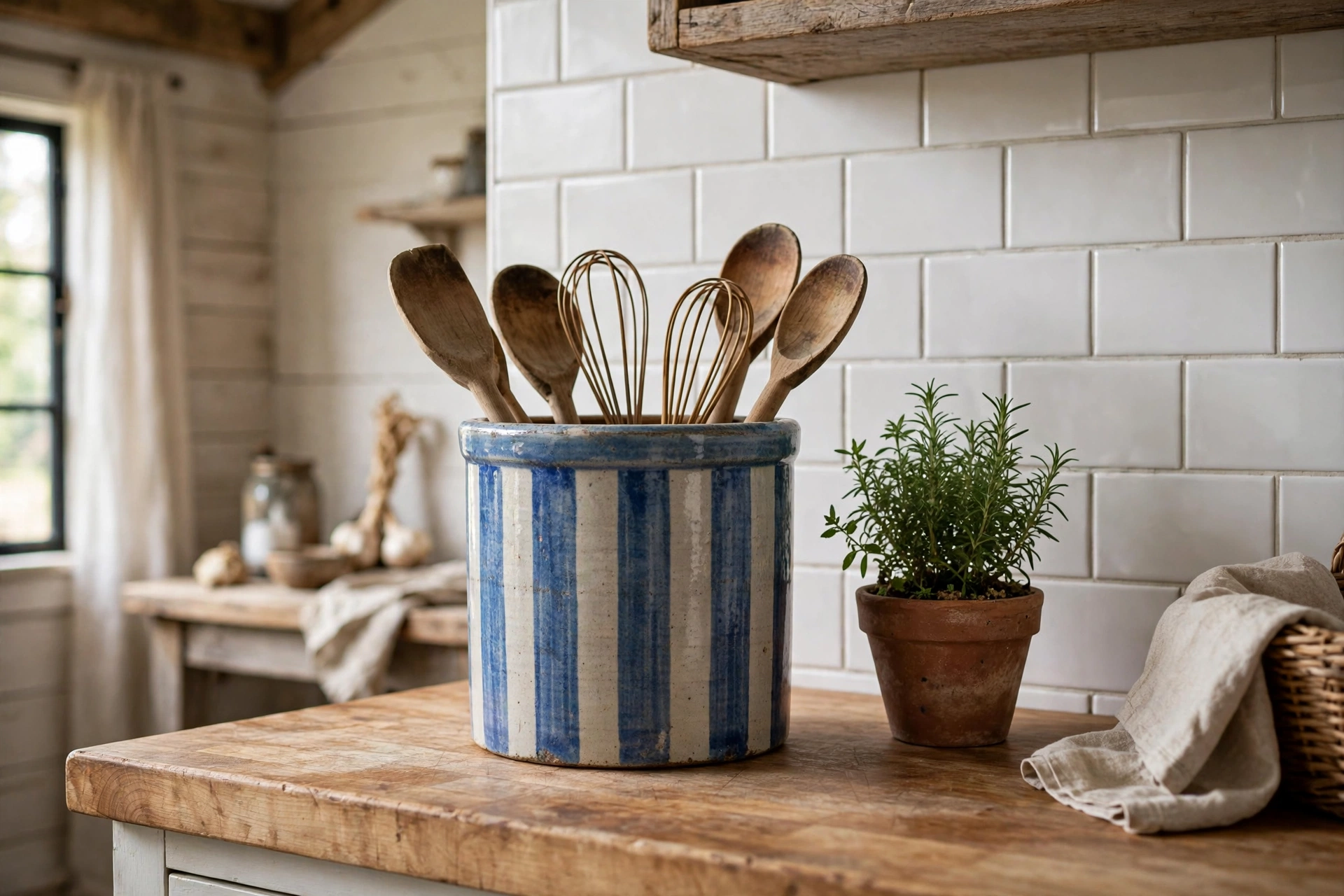
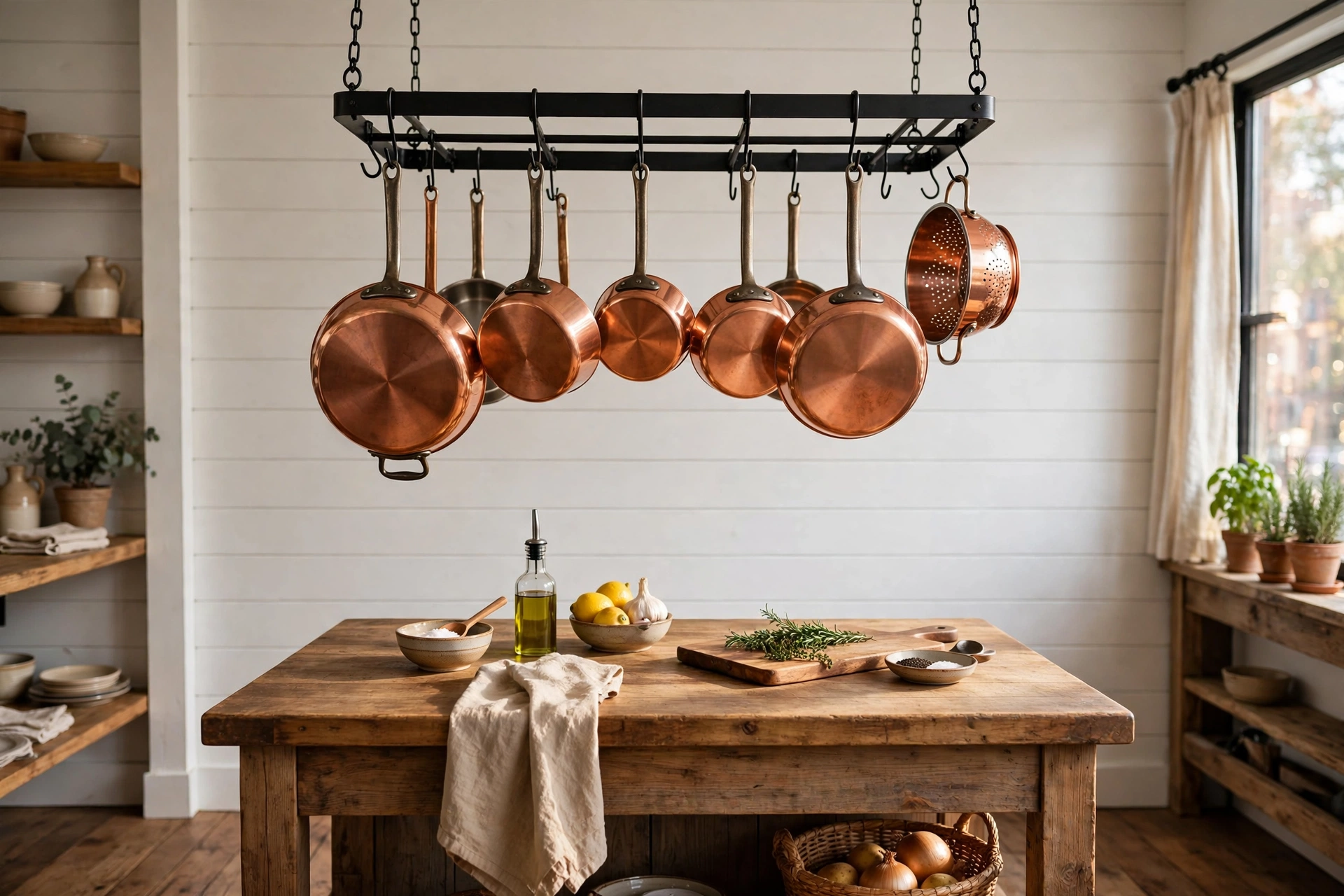
Gleaming copper pots on a black metal pot rack ($40–$100 for the rack) turn cookware into a glowing focal point — the warm metal against white shiplap is pure farmhouse luxury. In a studio kitchen with minimal cabinet space, hanging pots also frees an entire cabinet. Mix copper with a few cast iron pieces for contrast. The pots earn their display by being used daily; polish quarterly to maintain the shine, or let them develop a rich patina for a more rustic look. Pro tip: hang the most-used pot at the front edge of the rack — the daily grab-and-hang motion keeps the display functional, not just decorative.
23. Style a Vintage Kitchen Scale
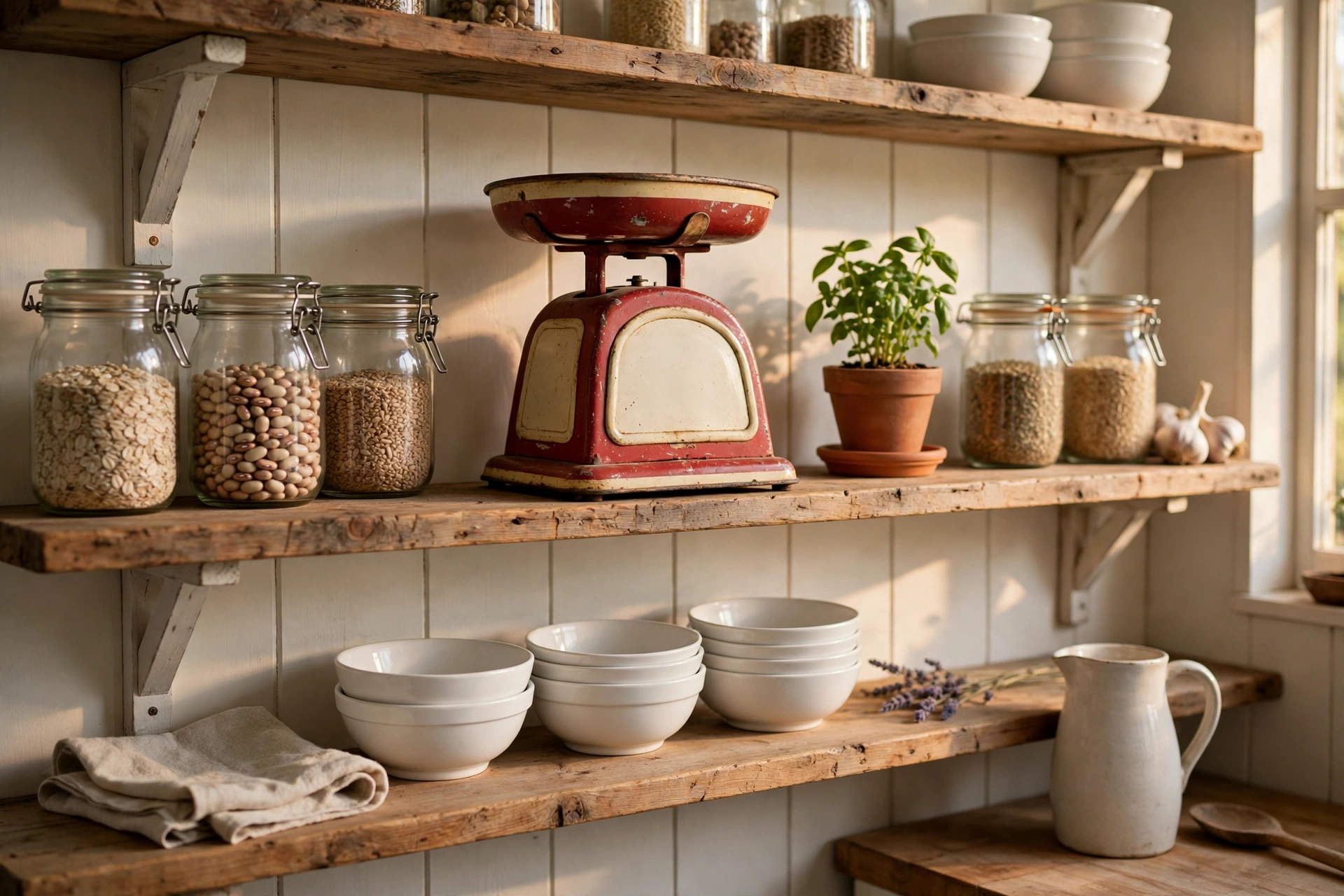
A vintage red-and-cream kitchen scale ($20–$60 at flea markets) on open shelving is the kind of authentic detail that makes guests lean in for a closer look. It does not need to work — it needs to sit there looking perfect beside mason jars and a small herb pot. The pop of vintage red also gives the neutral kitchen a focal point. Scales, grinders, and old tins are the farmhouse equivalent of sculpture: functional objects elevated to art. Pro tip: if the scale’s pan is missing (common), replace it with a small ironstone bowl — the substitution looks intentional and gives the piece new purpose.
24. Hang Dried Lavender Bundles
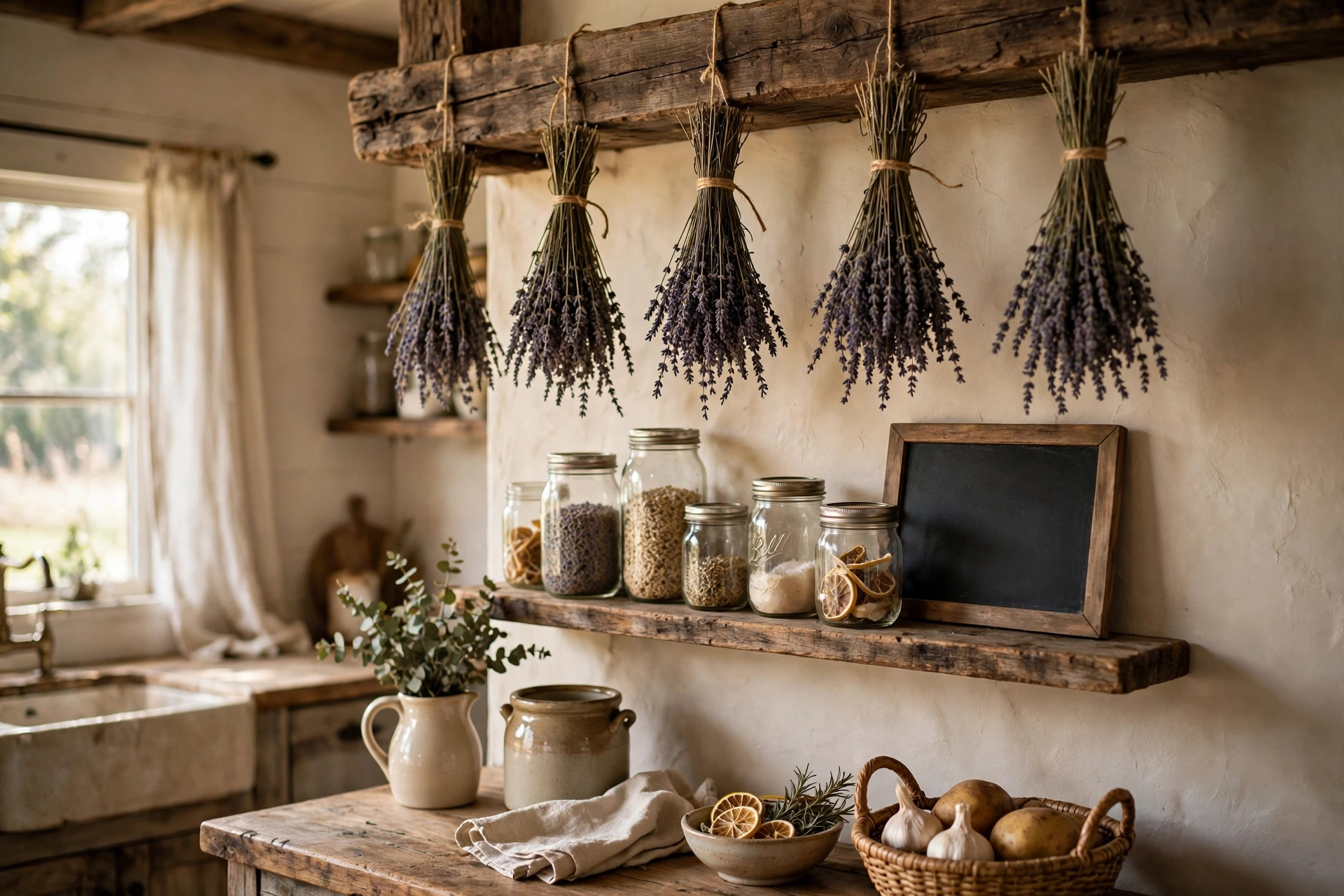
Bundles of dried lavender tied with twine ($5–$12 per bundle) hanging from a beam or shelf add fragrance, color, and texture for almost nothing. The purple-gray buds against rustic wood are quintessentially Provençal-farmhouse, and the scent is naturally calming — a genuine wellness bonus in a small studio. Hang them in the kitchen where the warmth releases the fragrance, or in the sleeping nook for the aromatherapy. Replace every 6–8 months when the scent fades. Pro tip: crush a few buds between your fingers weekly to reactivate the scent — the oils release on demand, extending each bundle’s fragrant life by months.
Textiles & Cozy Layers
25. Mix Gingham and Buffalo Check
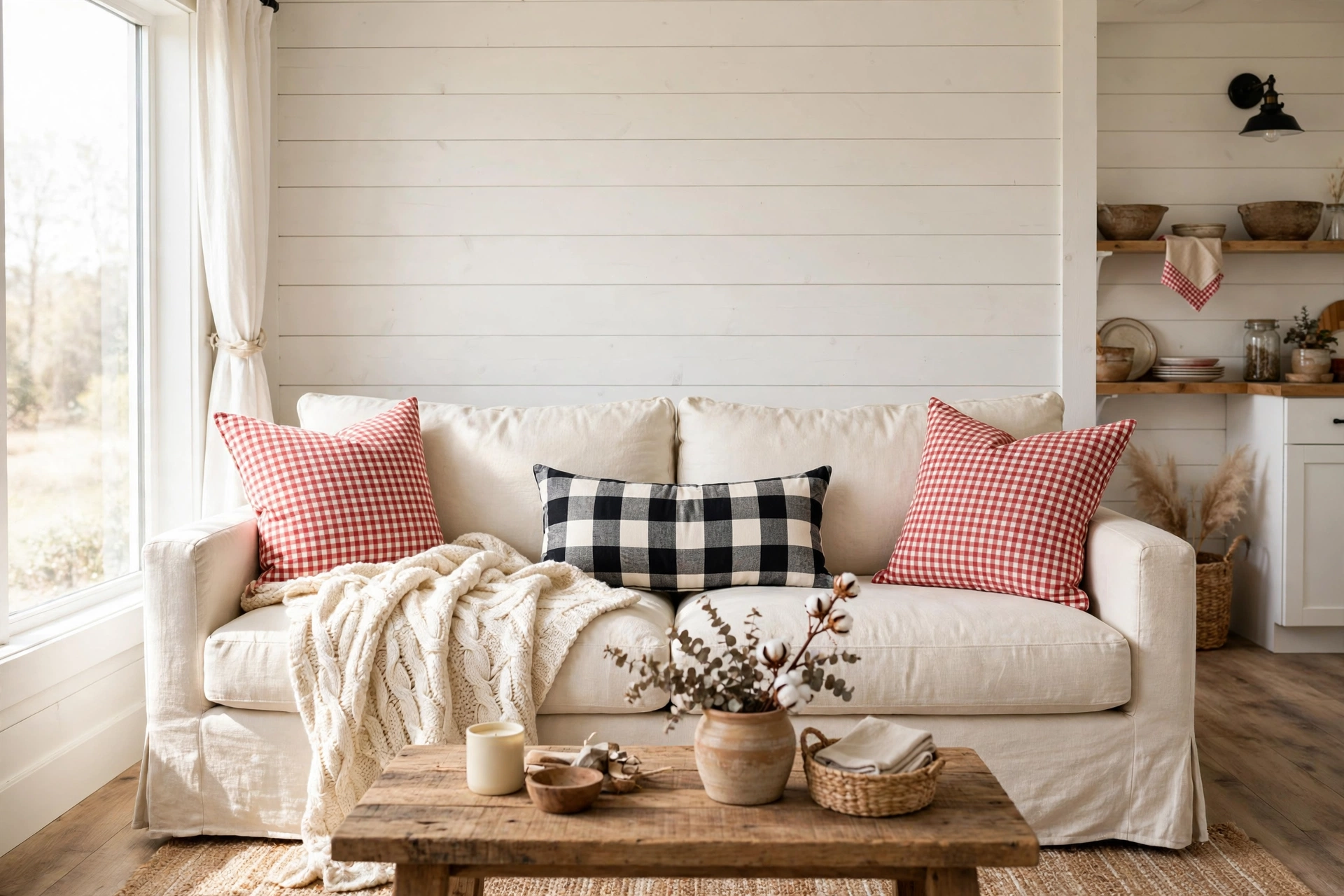
Gingham check and buffalo check are farmhouse’s signature patterns — and they are meant to be mixed. Red-and-white gingham pillows ($15–$30 each) plus a black-and-white buffalo check lumbar ($20–$35) on a cream sofa create the layered pattern play that defines the style. The trick is scale: mix a small check (gingham) with a large check (buffalo) so they do not compete. Both patterns read as neutral in farmhouse design, so do not be shy. For more pattern confidence, our studio color schemes break down mixing rules that work. Pro tip: keep checks to pillows and throws, not large upholstery — small doses of pattern stay fresh for years, while a whole buffalo check sofa can feel dated fast.
26. Layer Plaid Flannel Bedding
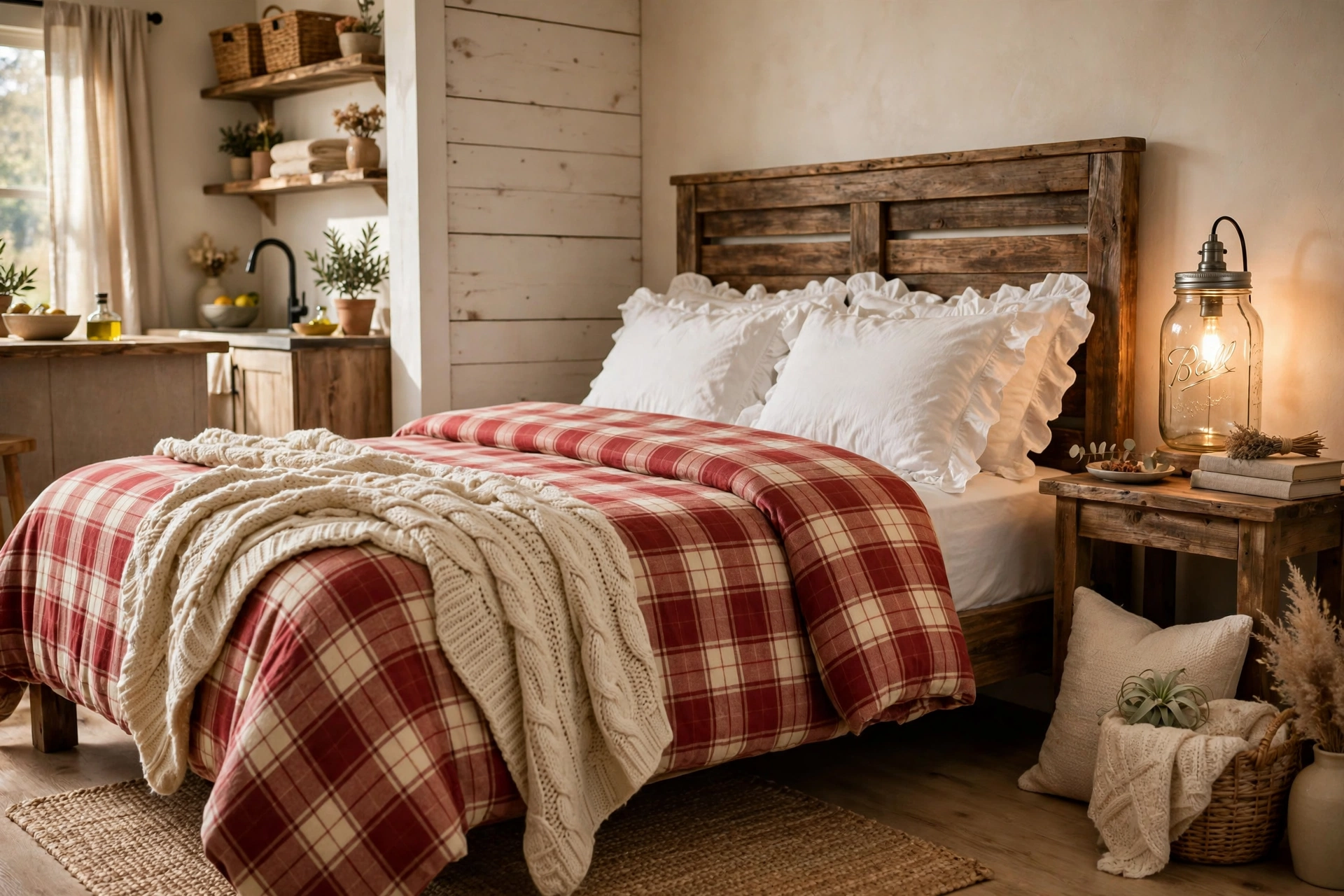
Red-and-cream plaid flannel bedding ($40–$90 for a duvet set) makes the farmhouse bed impossibly inviting — it is the textile equivalent of a warm hug. Layer it over white sheets with a chunky knit throw at the foot and ruffled shams for the full cozy stack. Flannel’s brushed softness is also genuinely warmer than cotton, a practical bonus. In a studio where the bed is always on display, beautiful bedding is non-negotiable decor. Pro tip: wash new flannel in cold water with a cup of white vinegar before first use — it sets the dye (no bleeding onto white sheets) and dramatically reduces pilling.
27. Drape a Handmade-Style Quilt
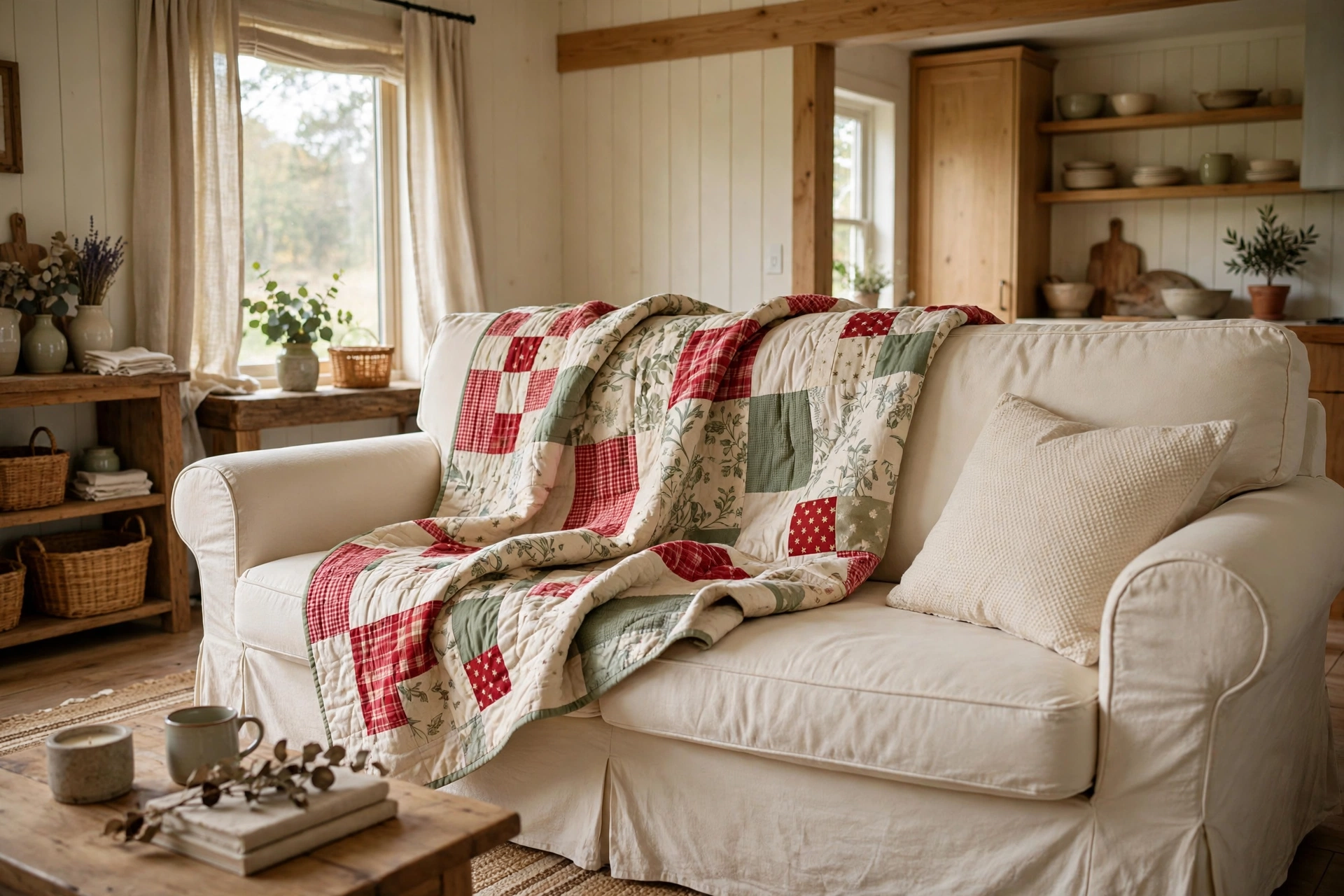
A patchwork quilt in red, cream, and sage ($60–$200, or priceless if Grandma made it) draped over the sofa back or folded at the bed’s foot is farmhouse soul made visible. The imperfect, handmade quality is the entire appeal — machine-perfect quilts lack the charm. If heirloom quilts are not in your family, quilt-style throws from home stores capture the look affordably. Drape, do not fold precisely; the casual toss is what makes it feel lived-in. Pro tip: rotate which quilt is displayed seasonally and store the others in a cedar chest or breathable cotton bag — quilts kept in plastic develop musty odors that are hard to remove.
28. Hang Burlap Curtain Panels
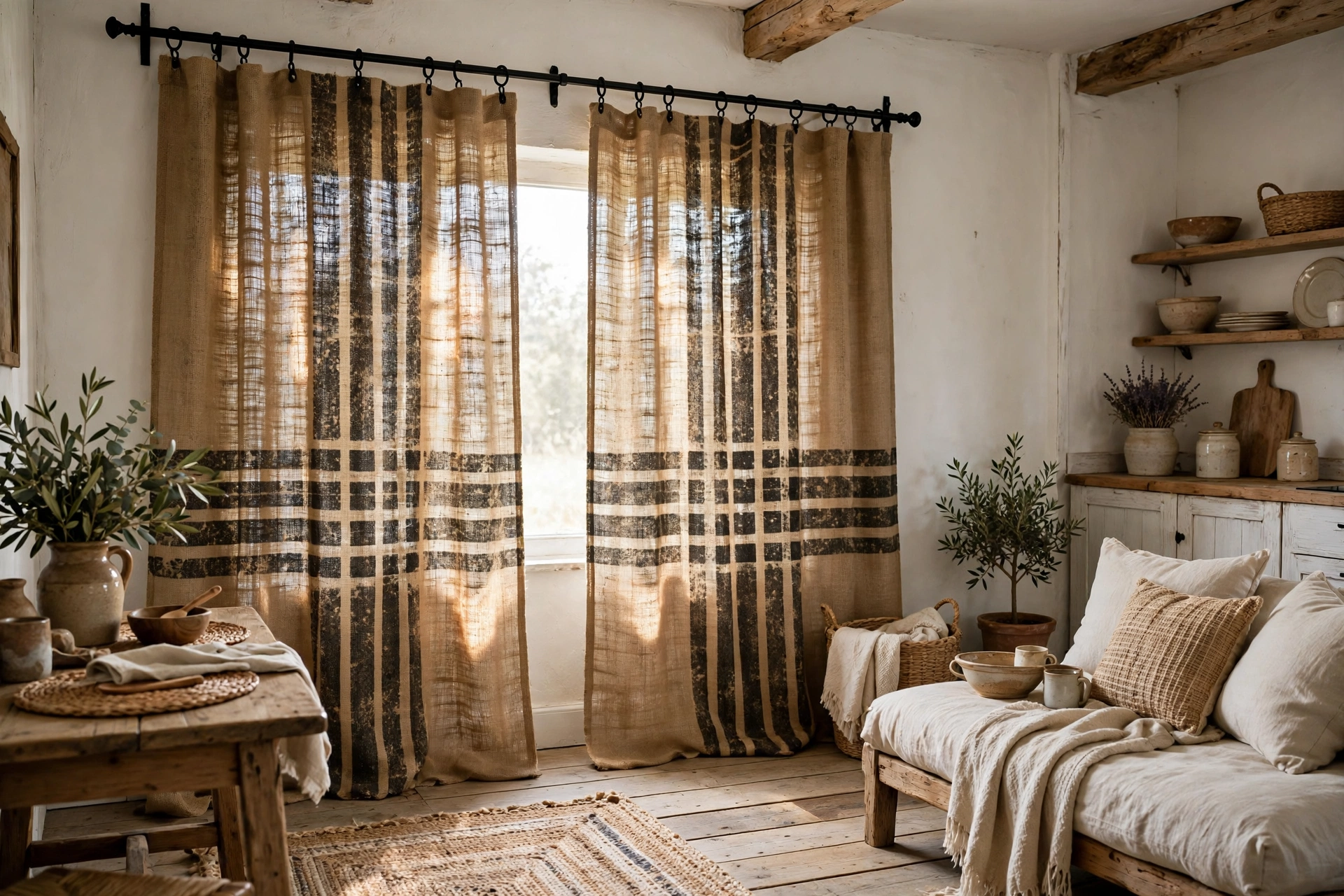
Natural burlap curtains ($20–$40 per panel) with stenciled grain sack stripes filter light into a soft golden glow while adding incredible texture. The loose weave means they are not blackout — perfect for living areas where you want light with privacy. Hang them on black iron rods ($15–$30) for the full rustic effect. Burlap’s roughness softens dramatically after one wash, so do not judge them straight from the package. Pro tip: line burlap panels with inexpensive white cotton ($3/yard) — the liner diffuses light more evenly, protects the burlap from sun rot, and looks finished from outside the window.
29. Ground Zones with a Jute Rug
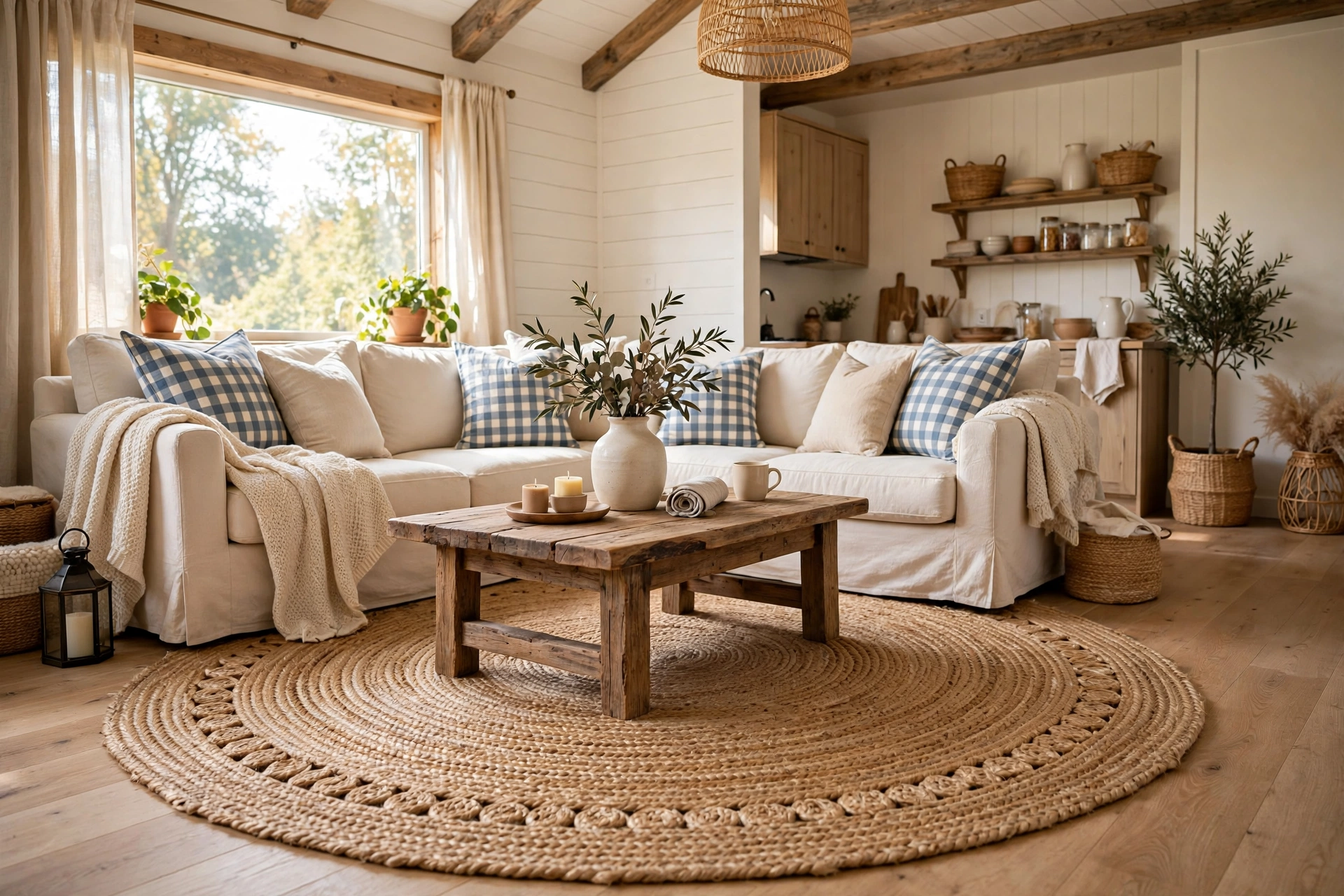
A large round jute rug ($80–$200 for 8-foot) anchors the living zone with natural texture that works under any furniture style. Jute’s nubby weave hides dirt heroically — the most practical rug fiber for high-traffic studios — and its warm tan tone bridges wood floors and upholstery. Layer a smaller vintage-style rug on top for the designer look, or let the jute stand alone for simplicity. Round rugs are especially good in studios: no corners to catch traffic flow. Pro tip: use a thick felt rug pad under jute ($30–$50) — jute is rough on bare feet and can scratch wood floors, and the pad solves both problems while adding cushion.
30. Lean a Blanket Ladder Against the Wall
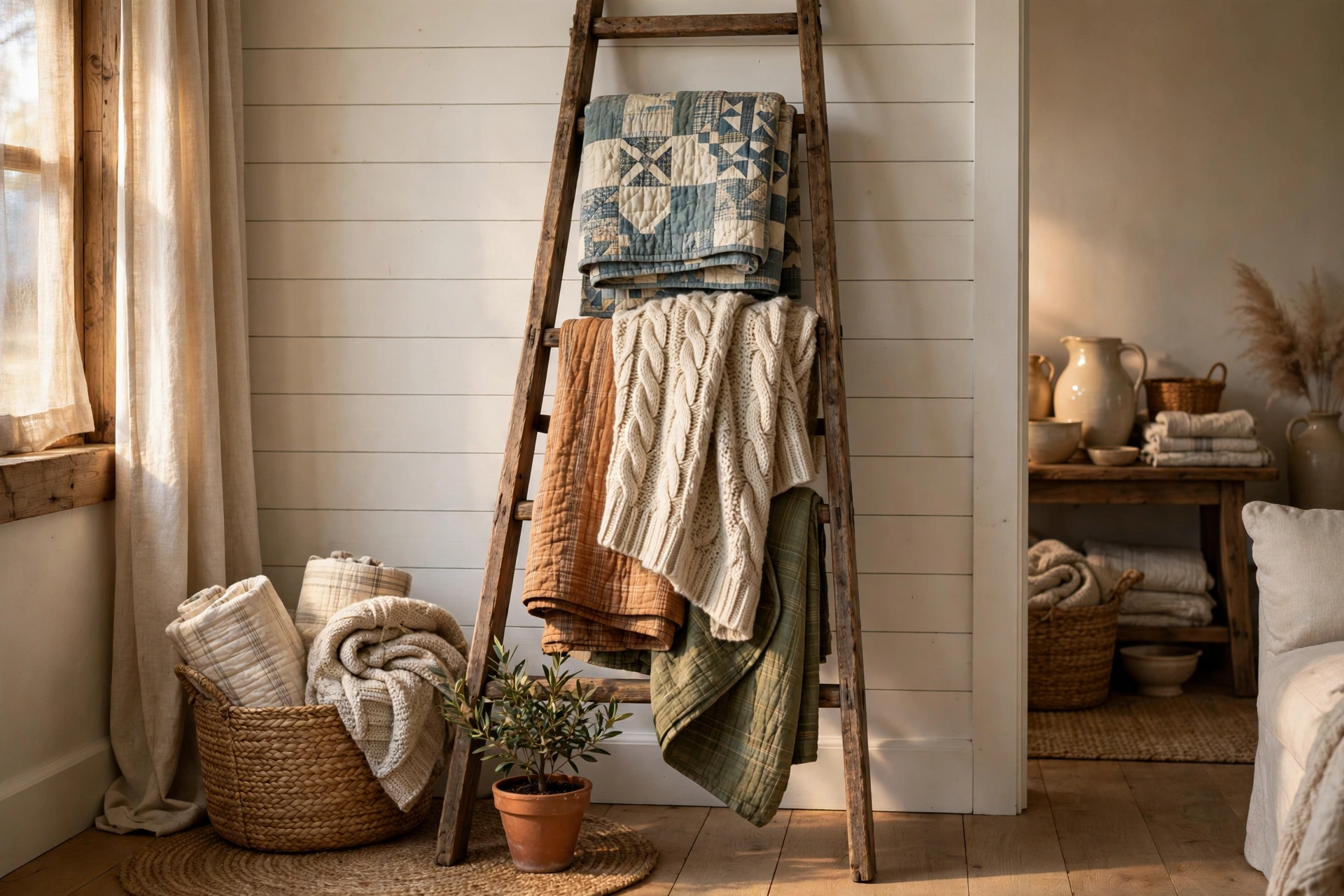
A rustic wooden ladder ($40–$100) leaning against the shiplap wall displays quilts and throws as decor while keeping them within arm’s reach — storage that is also art. Drape two or three folded textiles over the rungs, graduating from light to dark. The vertical display draws the eye up, making studio walls feel taller. Place it beside the sofa or in the bedroom nook; it needs only 18 inches of wall. Pro tip: secure the top of the ladder to the wall with a small L-bracket ($3) — leaning ladders in high-traffic studios get bumped, and a secured ladder never slides.
Decor & Collected Treasures
31. Plant in a Vintage Milk Can
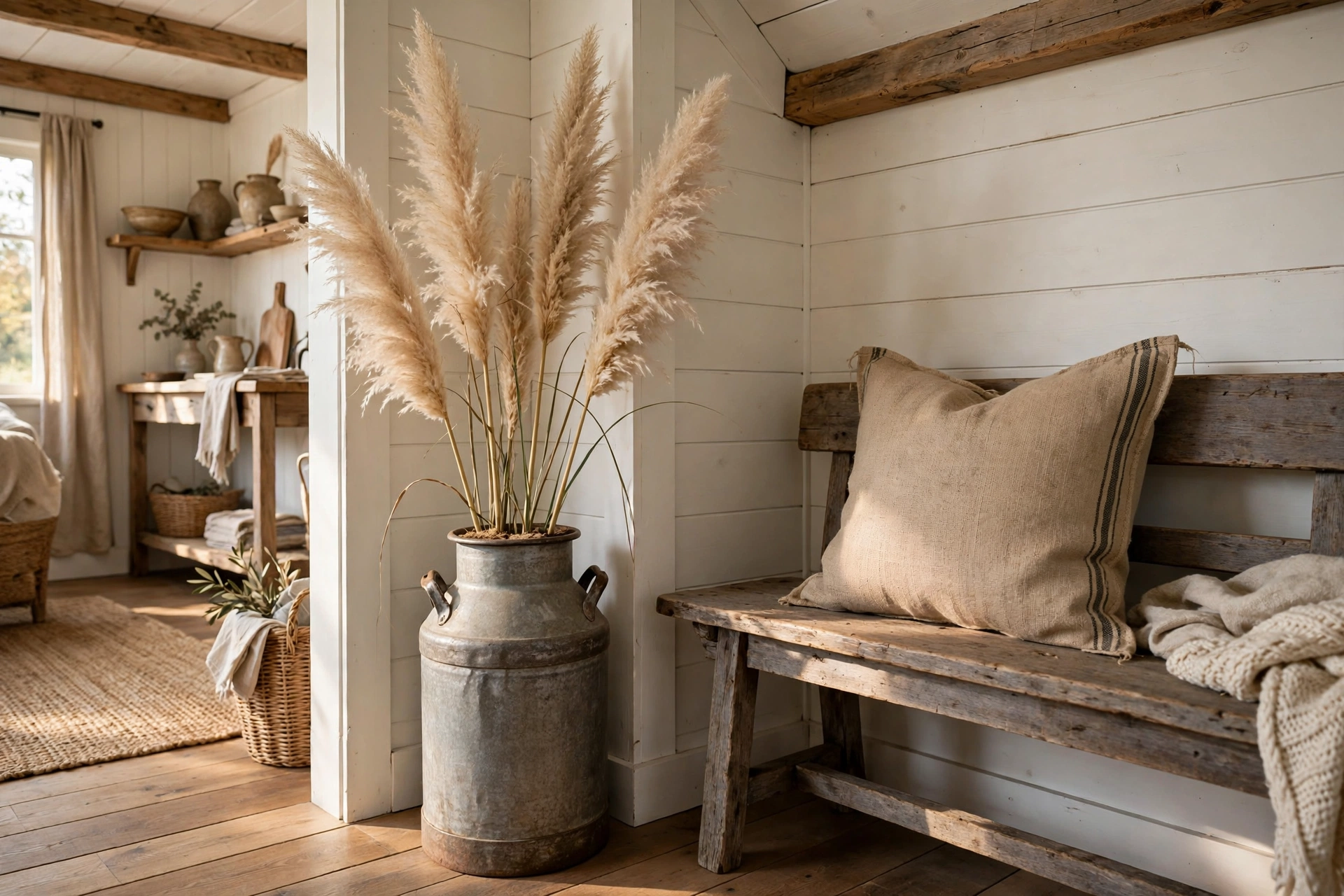
A vintage galvanized milk can ($30–$80) holding tall pampas grass plumes is a sculptural farmhouse statement for an empty corner. The can’s height (usually 2–3 feet) fills vertical space that small decor cannot, and the pampas plumes add softness against all the hard wood and metal. No watering, no maintenance, no dead plants — the lowest-effort greenery in farmhouse design. Tuck one beside the entryway bench or in the dead corner by the window. Pro tip: spray pampas plumes lightly with hairspray ($4) after arranging — it stops the shedding that otherwise dusts your floors for weeks.
32. Welcome with a Cotton Wreath
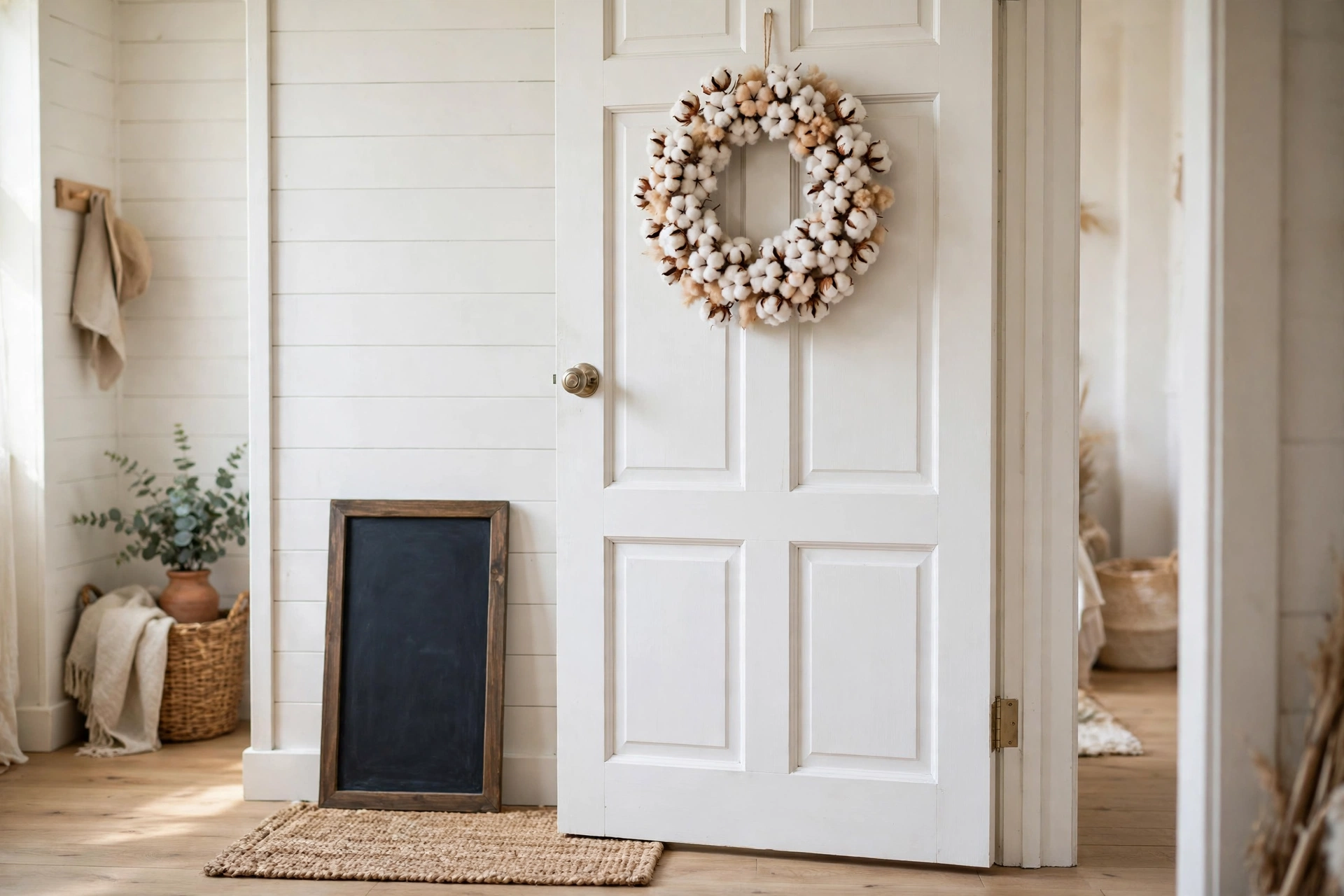
A fluffy cotton boll wreath ($20–$45) on the interior door or above the mantel is farmhouse’s friendliest greeting — soft, textural, and seasonless. Unlike floral wreaths that scream a specific holiday, cotton works year-round. Hang it on the entryway door, the bedroom barn door, or layered over a mirror. The natural cotton also picks up the whites and creams running through the whole studio palette. Pro tip: fluff the cotton bolls outward with your fingers when it arrives — wreaths ship compressed, and five minutes of fluffing doubles the fullness.
33. Accent with Galvanized Metal
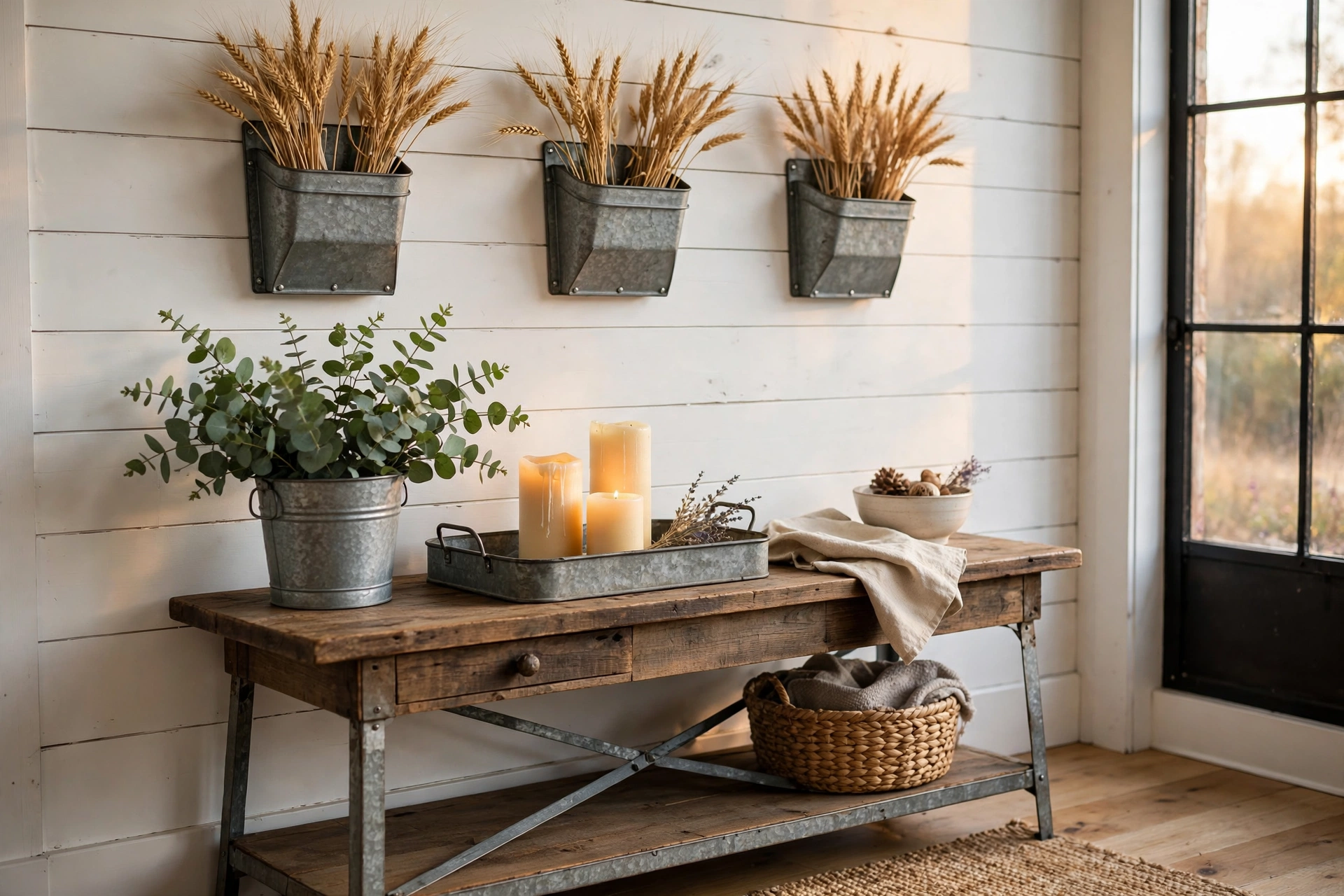
Galvanized metal — buckets, trays, wall pockets ($10–$30 each) — is farmhouse’s industrial edge, the cool zinc gray that keeps all the warm wood and cream from going saccharine. Use a galvanized bucket as a planter, a tray to corral candles on the coffee table, and wall pockets for dried wheat or mail. The matte metallic finish catches light without glare. Three galvanized pieces scattered across zones create rhythm — the repetition is what makes it feel designed. Pro tip: plant directly in galvanized buckets with a plastic liner pot inside — the liner prevents soil from sitting against the metal, which avoids rust and makes repotting clean.
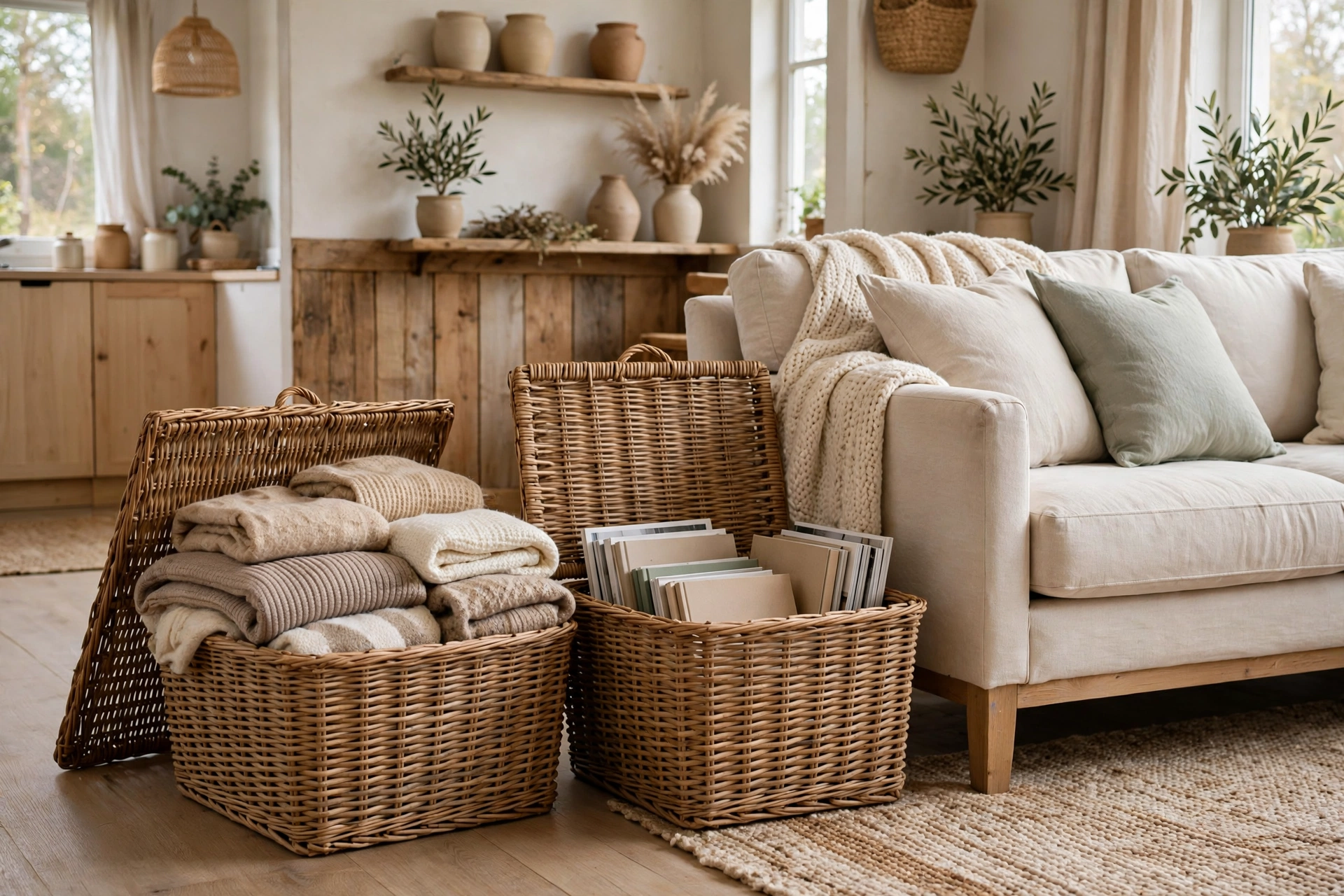
34. Hide Clutter in Wicker Baskets
Large lidded wicker baskets ($25–$60 each) are the farmhouse answer to studio clutter — beautiful enough to leave out, capacious enough to swallow the mess. Use them for throw blankets, magazines, kids’ toys, or the eternal “where does this go” pile. The natural weave adds texture while the lids keep visual chaos contained. Two matching baskets flanking a console table create symmetry; one oversized basket beside the sofa is a sculptural catch-all. Pro tip: label the inside of each lid with painter’s tape — the household knows where things belong, but guests see only beautiful baskets.
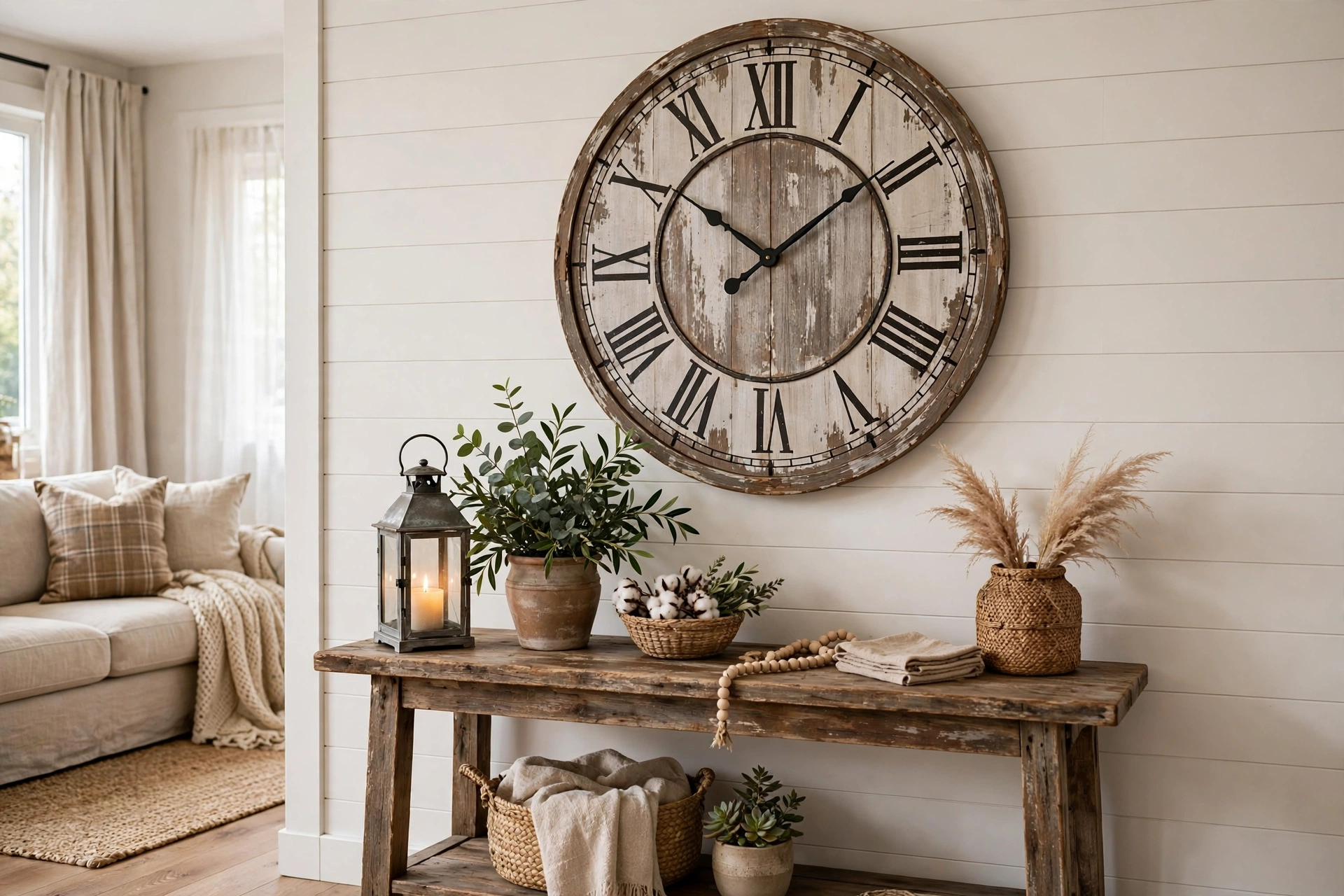
35. Make a Statement with a Farmhouse Clock
An oversized round farmhouse clock ($50–$120) with a distressed wood frame and Roman numerals fills a big blank wall with one confident gesture — no gallery arrangement required. Hang it above the console table or in the dining nook where its scale balances the furniture below. The clock is also genuinely useful in a studio, where you check the time from every zone. Choose one at least 24 inches across; smaller clocks disappear on the wall. Pro tip: hang the clock at eye level with its center about 60 inches from the floor — gallery rules apply even to single statement pieces.
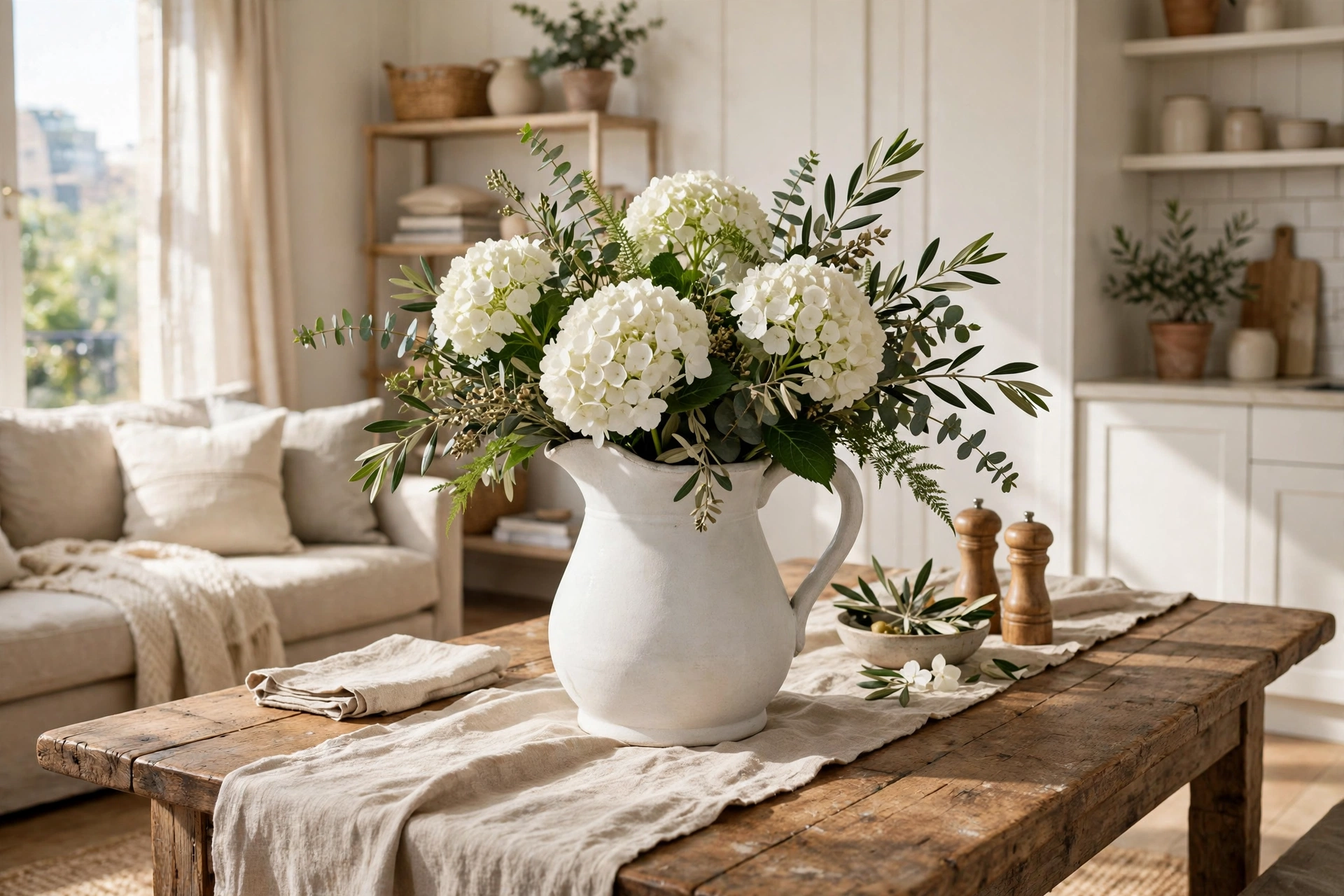
36. Center with an Ironstone Pitcher
A large white ironstone pitcher ($15–$40 vintage) filled with fresh hydrangeas, eucalyptus, or seasonal branches is the farmhouse centerpiece that never fails. Ironstone’s creamy white glaze and substantial weight feel heirloom-quality, and the pitcher shape is endlessly versatile — flowers today, utensils tomorrow, nothing at all the day after, still beautiful. Keep one on the dining table and a smaller one on the kitchen counter for continuity. Pro tip: add a drop of bleach to the pitcher’s water ($0) — it keeps stems fresh twice as long and prevents the cloudy slime that clouds vintage vessels.
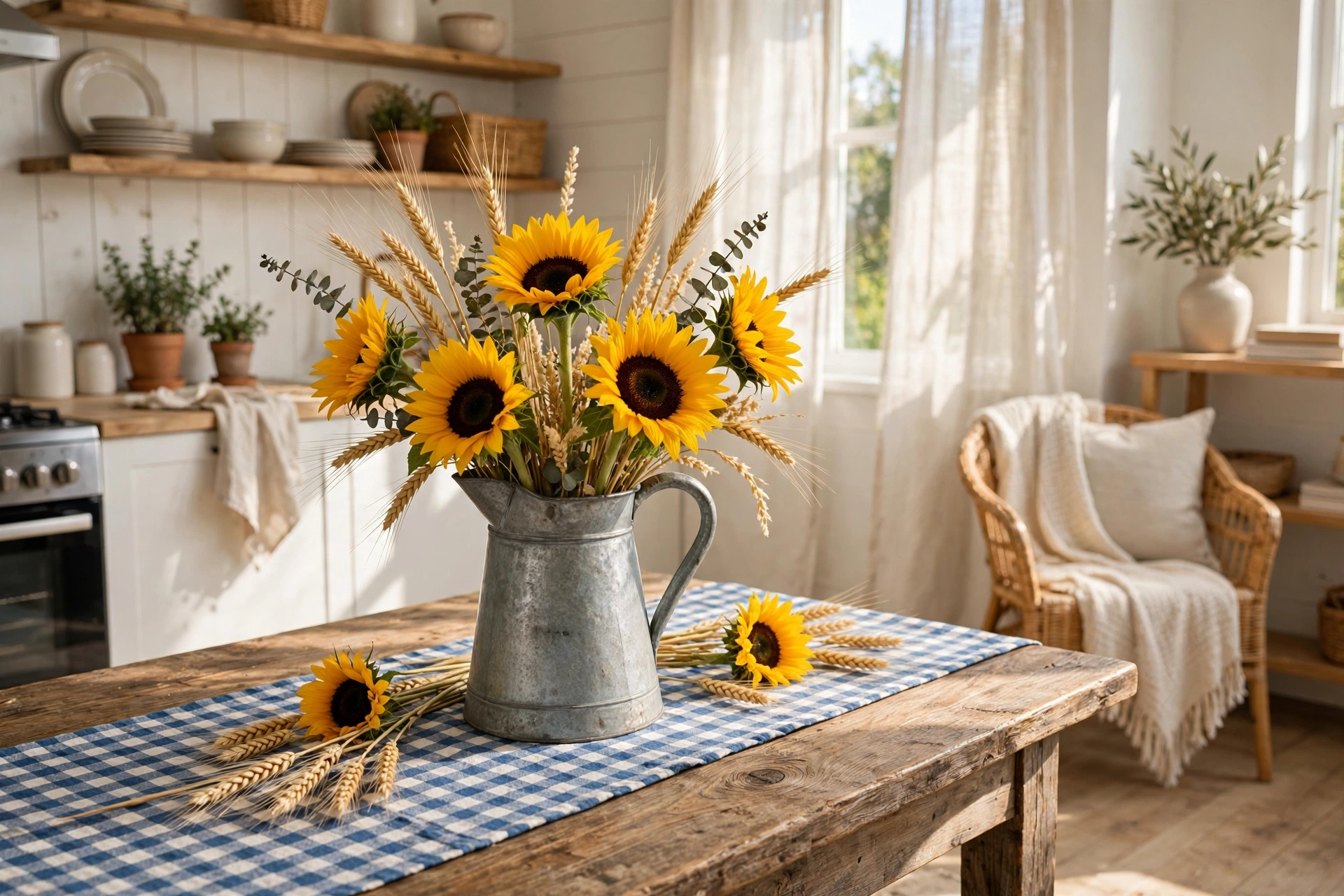
37. Brighten with a Sunflower Centerpiece
Sunflowers in a galvanized pitcher ($12 for a grocery store bunch) are pure farmhouse joy — the golden blooms against rustic metal brighten the whole studio for a week. Style them on the dining table over a gingham runner, or split the bunch between two smaller jars for the kitchen and living area. Sunflowers are also among the longest-lasting cut flowers, often going 7–10 days. When they fade, the dried heads are sculptural in their own right. Pro tip: recut sunflower stems underwater at an angle every two days — the angled cut prevents air bubbles from blocking water uptake, the main reason sunflowers droop early.
Lighting & Finishing Touches
38. Glow with Mason Jar Pendants
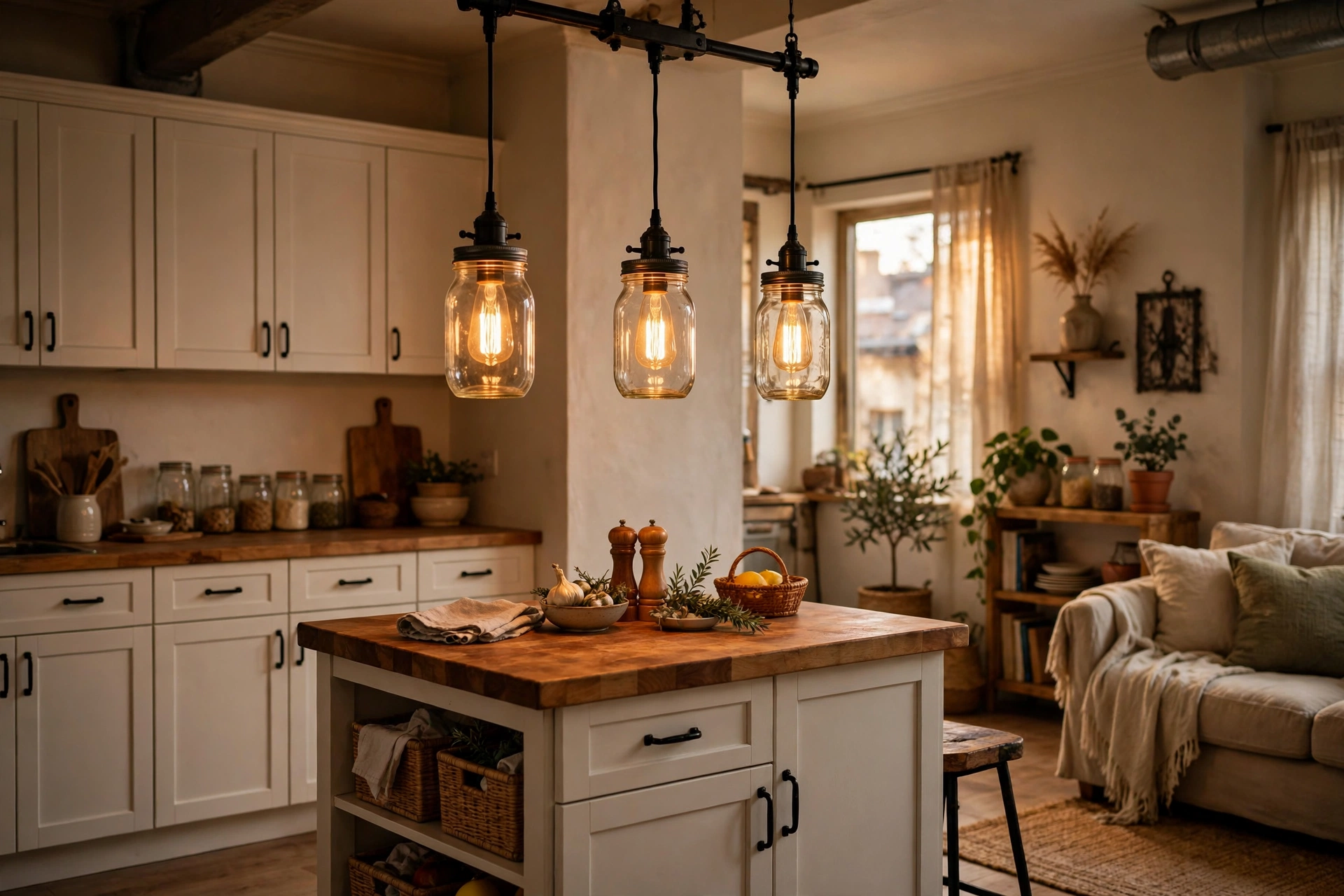
Mason jar pendant lights ($25–$60 each, or DIY kits for $15) with Edison bulbs cast the warm, honeyed glow that makes farmhouse kitchens feel like evening on the porch. Hang three over the island or dining nook at staggered heights. The glass jars diffuse the bulb’s light softly while showing off the vintage filament — form and function in one. Plug-in versions ($30–$50) with fabric cords are fully renter-friendly, swagging from a ceiling hook with no wiring. Pro tip: use dimmable Edison bulbs ($8–$12 each) on a plug-in dimmer ($15) — full brightness for cooking, low glow for dinner, one fixture doing both jobs.
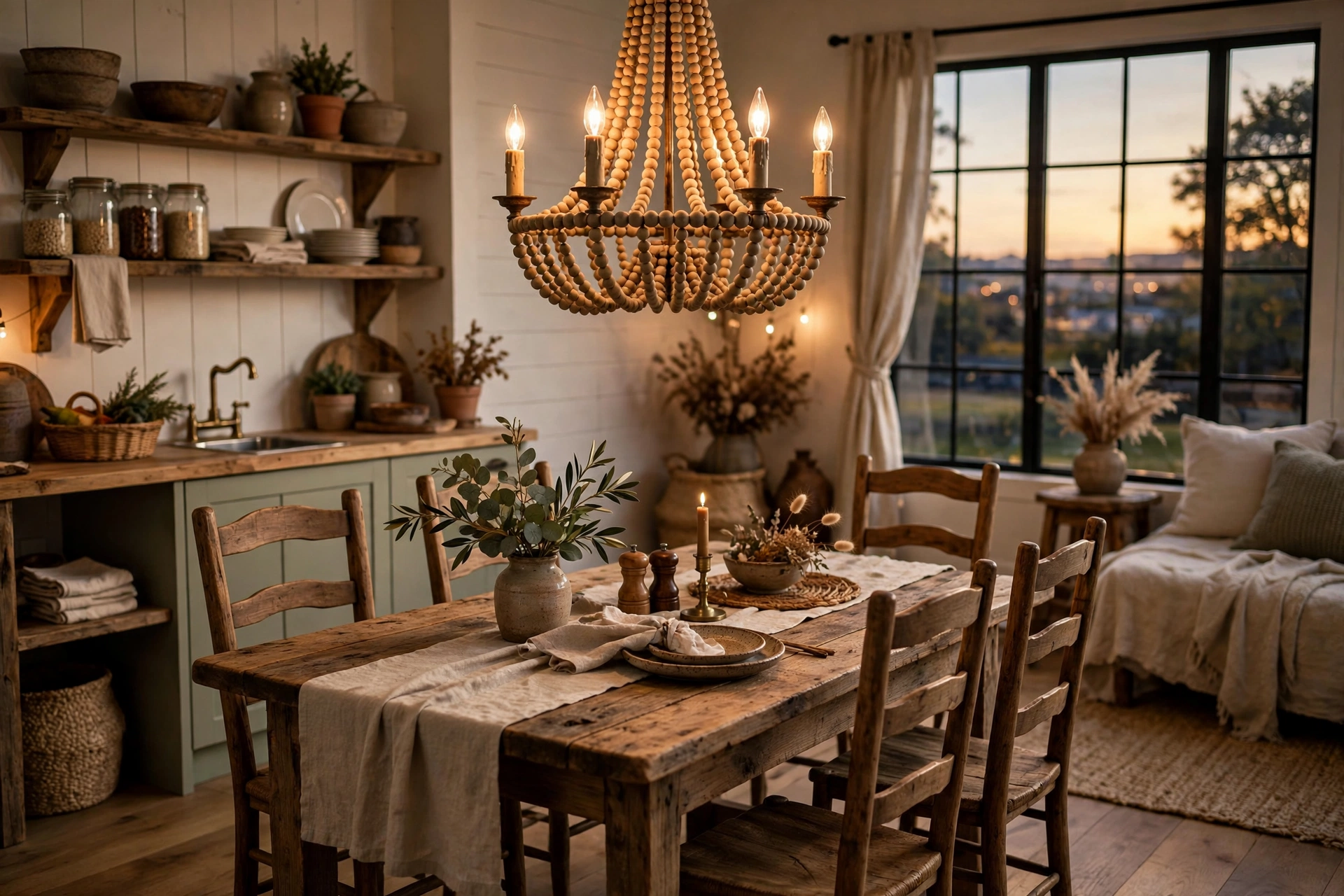
39. Dine Under a Rustic Bead Chandelier
A wood bead chandelier ($80–$200) brings organic texture to the dining nook — the natural beads soften the light and add the handcrafted feel farmhouse loves. Hang it low over the table (30–34 inches above the surface) so it defines the dining zone within the open studio. The neutral wood tone works with every palette, from classic red-and-cream to modern black-and-white farmhouse. It is the single fixture that says “dining room” in a space without walls. Pro tip: check the chandelier’s weight before buying — bead chandeliers are lighter than they look, but anything over 15 pounds needs a ceiling brace, not just a standard electrical box.
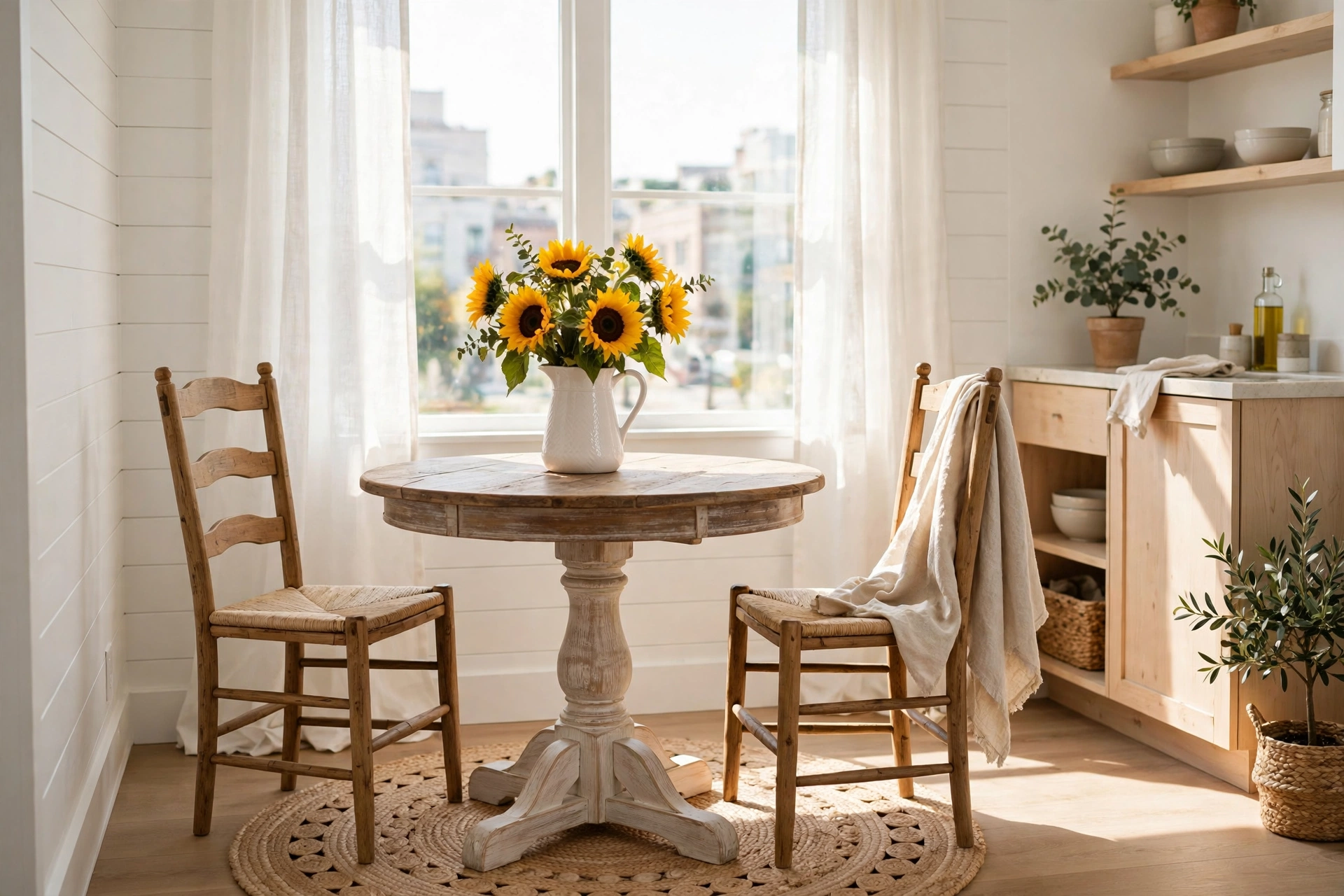
40. Create a Sunlit Dining Nook
The farmhouse dining nook — a small round pedestal table ($120–$300) with two ladder-back chairs tucked into the brightest corner — proves you do not need a dining room to dine well. A round table seats four in the footprint where a rectangle seats two, and the pedestal base means no legs to bump. Style it with a linen runner, a sunflower pitcher, and a braided rug beneath. Position it by the window: morning light makes even instant coffee feel like a country breakfast. This bright-corner strategy echoes our studio layout ideas — the best seat in the house should face the best light. Pro tip: choose chairs that tuck completely under the table — in a studio nook, every inch of clearance matters when you are squeezing past with a laundry basket.
Frequently Asked Questions
What is modern farmhouse style?
Modern farmhouse blends classic rural American elements — shiplap, barn doors, reclaimed wood, apron sinks — with contemporary clean lines and a restrained neutral palette. Unlike traditional country style, which can feel fussy, modern farmhouse keeps surfaces uncluttered, mixes old and new freely, and leans on texture (linen, jute, wood grain) rather than pattern for interest. The result is warm but current, cozy but not cluttered.
Can farmhouse style work in a small studio apartment?
Absolutely — farmhouse is one of the most forgiving styles for small spaces. Its light neutral palette (whites, creams, soft grays) keeps studios feeling open, while the rustic textures add the warmth that all-white minimalism sometimes lacks. Key adaptations: choose one statement piece per zone rather than filling every surface, use vertical storage like ladders and wall crates, and let multifunctional furniture (storage benches, crate side tables) do double duty.
How do I get the farmhouse look on a budget?
Thrift stores and flea markets are farmhouse goldmines — genuine vintage pieces cost a fraction of reproductions and have the authentic patina money cannot buy. DIY the big-impact items: chalk-paint a dresser ($40), install peel-and-stick shiplap ($25/pack), sew simple burlap curtains ($20). Prioritize the three highest-impact changes: an accent wall, updated lighting (mason jar pendants), and textiles (gingham pillows, a quilt) — these three transform a room for under $200 total.
What colors define farmhouse decor?
The farmhouse palette starts with warm whites and creams, layered with natural wood tones, soft grays, and sage green. Classic accents include barn red, navy, and black (for hardware and contrast), while modern farmhouse often goes fully neutral with texture doing the talking. Keep the base 80% neutrals and bring color through textiles and fresh flowers — the palette stays timeless and easy to refresh seasonally.
How is farmhouse different from rustic or country style?
Rustic emphasizes raw, rugged natural materials (think log cabin); country leans kitschy with roosters and gingham overload; farmhouse sits between — refined rusticity with clean lines. Modern farmhouse specifically strips away the clutter of 1990s country, keeping the warmth (wood, linen, vintage finds) while embracing negative space and contemporary comfort. If it looks like a magazine and feels like a hug, it is probably modern farmhouse.
Is farmhouse style still popular in 2026?
Farmhouse has evolved rather than faded. The stark all-white modern farmhouse of 2018 has softened into warmer, more collected versions — think European farmhouse with aged woods, or cottage-farmhouse with floral touches. The core appeal (comfort, authenticity, natural materials) is timeless. To keep it current in 2026, mix in one unexpected element — a sculptural light, abstract art, or a bold textile — so the look feels personal rather than formulaic.
Final Thoughts
A farmhouse studio apartment is proof that rustic charm does not require acreage — just intention. The shiplap wall behind your sofa, the barn door that hides your sleeping nook, the quilt draped over the chair: each piece layers comfort onto the next until the whole small space feels like it has been loved for generations, even if you just signed the lease.
Start with the bones — one accent wall, warm lighting, honest textures — then let the collecting become the joy. The flea-market pitcher, the thrifted quilt, the milk can that was absolutely meant for your corner. Before long, your studio will not just look farmhouse. It will feel like home in the deepest, simplest sense of the word — because you built it one meaningful piece at a time.