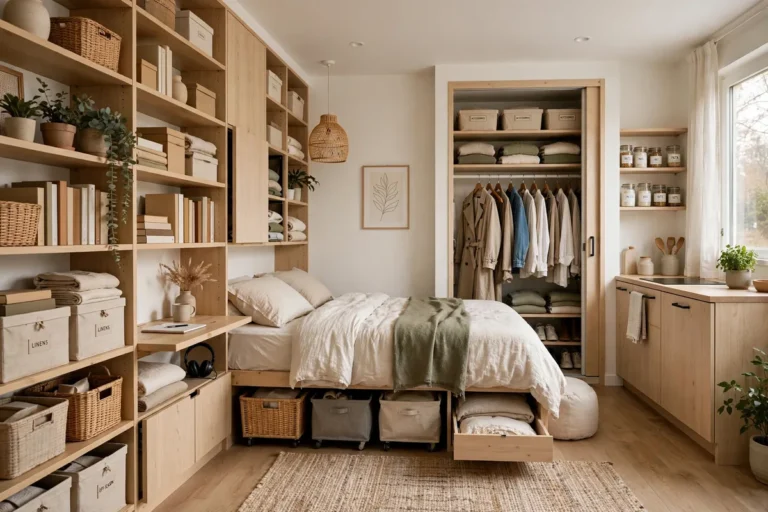
37 Space-Saving Studio Apartment Furniture Ideas That Actually Fit
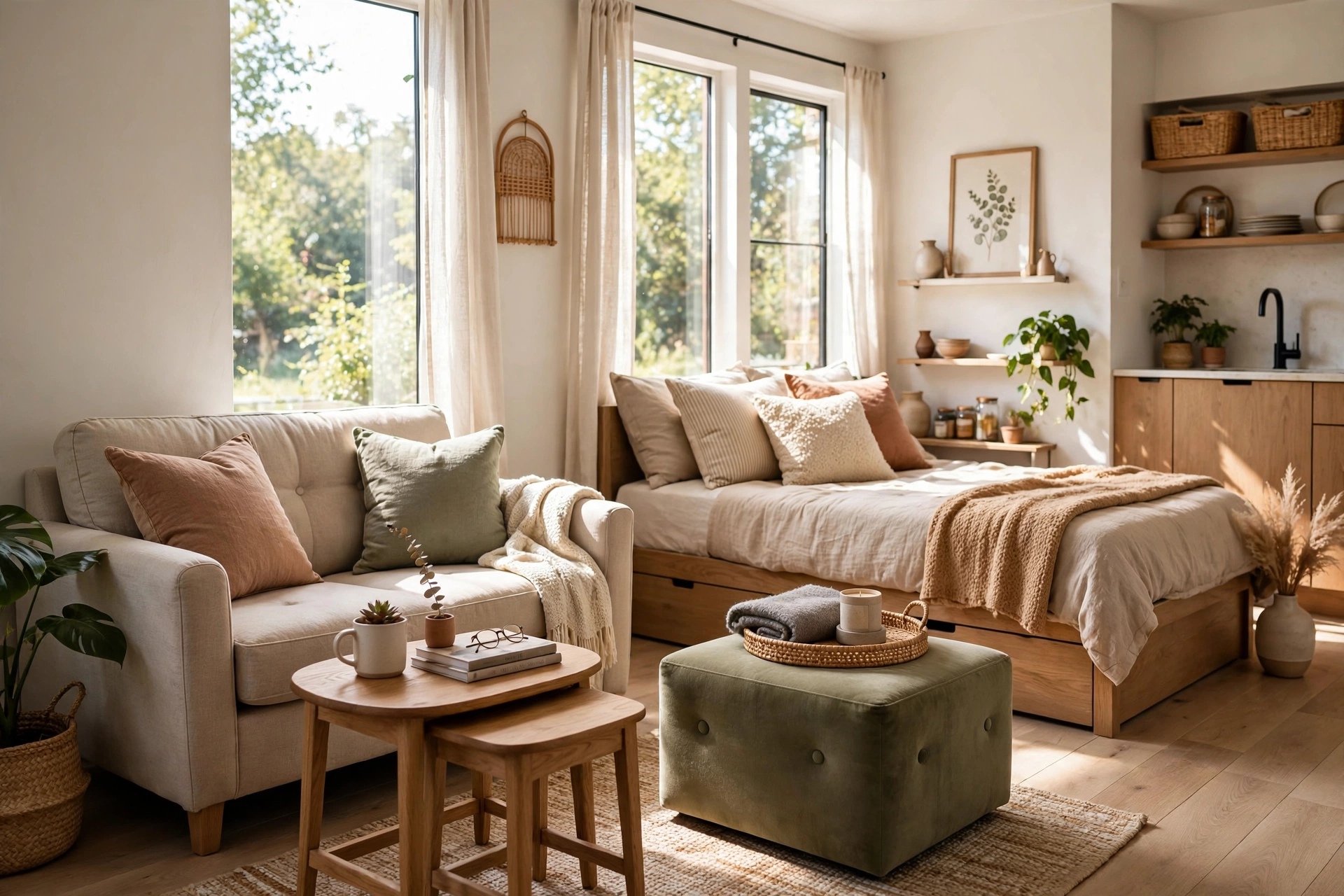
Furnishing a studio apartment is a high-stakes puzzle: every piece has to earn its square footage, and one oversized sofa can swallow the whole room. The good news? The furniture industry has finally caught up with small-space living. Today’s best space-saving studio apartment furniture doesn’t look like a compromise — it looks like clever design. These 37 ideas cover multifunctional pieces, fold-away wonders, small-scale seating, and bedroom-zone solutions that fit real studios without making them feel cramped.
Nothing here requires custom carpentry or a contractor. Most pieces ship flat-packed, cost less than you’d expect, and pull double (or triple) duty from day one. Let’s find furniture that fits your studio — and your life.
Multifunctional Furniture: One Piece, Three Jobs
In a studio, the best furniture is the kind with a secret identity. If a piece only does one thing, it has to justify the floor space — these pieces do two or three things without breaking a sweat.
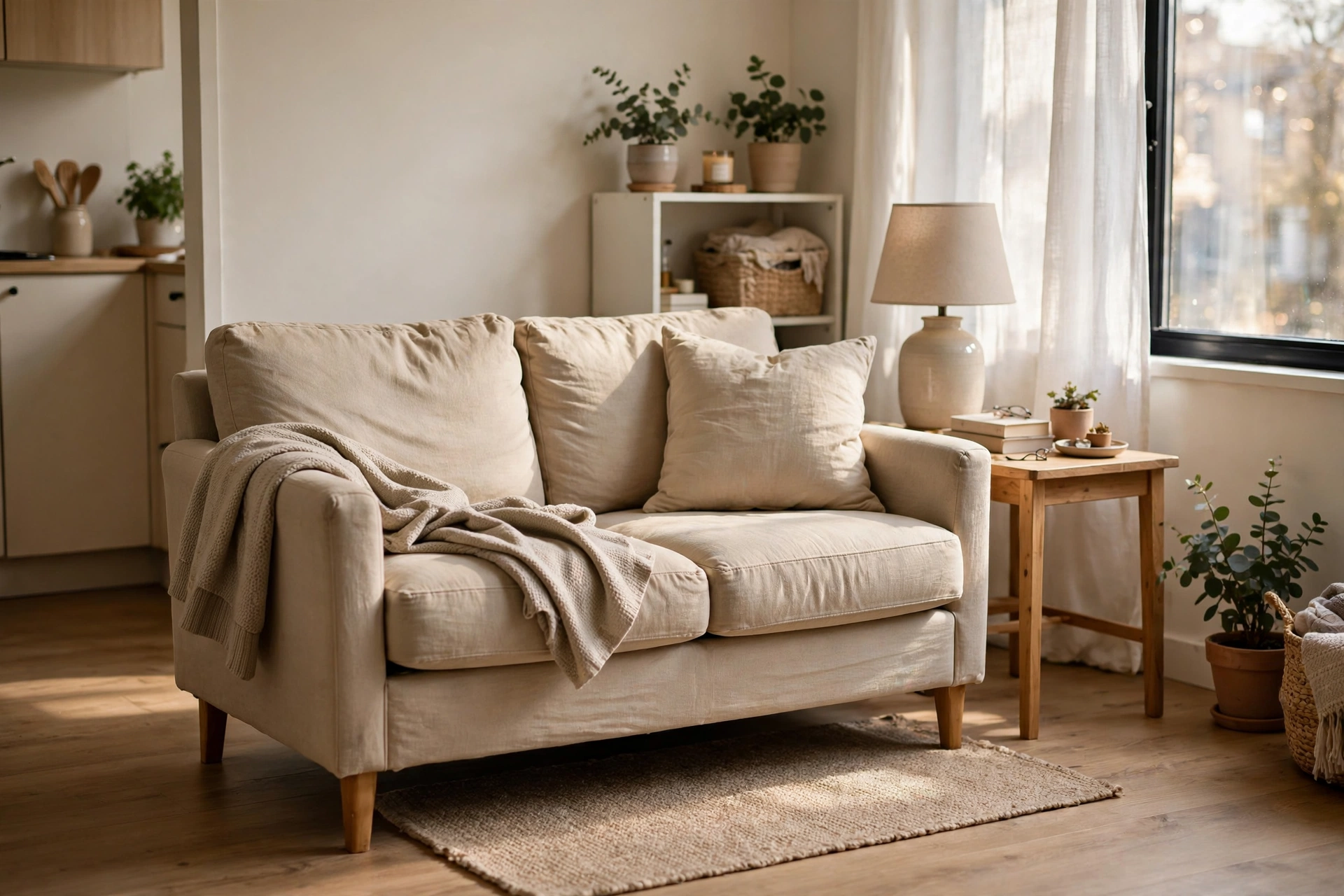
1. Swap the Full Sofa for a Loveseat
A standard 84-inch sofa eats a studio living zone alive; a 58–68-inch loveseat seats two comfortably and frees up nearly two feet of floor. Look for apartment-scale loveseats at IKEA (SÖDERHAMN loveseat section, around $450) or Article (around $700–$900). Pro tip: choose one with visible legs — the floor showing underneath tricks the eye into reading the piece as smaller than it is.
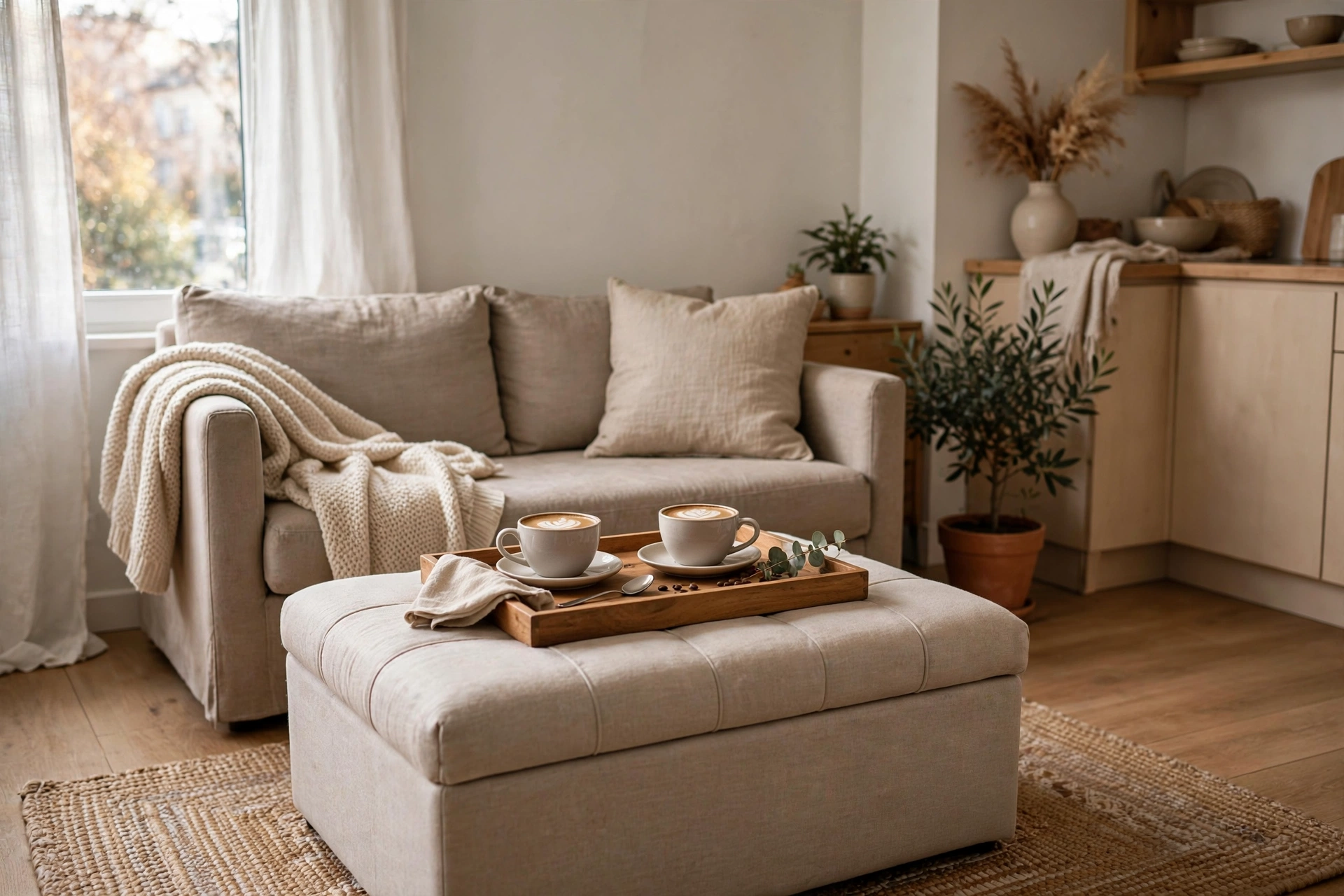
2. Choose a Storage Ottoman as Your Coffee Table
A storage ottoman replaces the coffee table, hides blankets and board games inside, and doubles as extra seating when friends visit — three jobs, one footprint. Firm-top versions (around $60–$120 at Target or Wayfair) hold a tray steady for drinks. Pro tip: pair it with our studio apartment storage ideas for even more hidden-storage wins around the room.
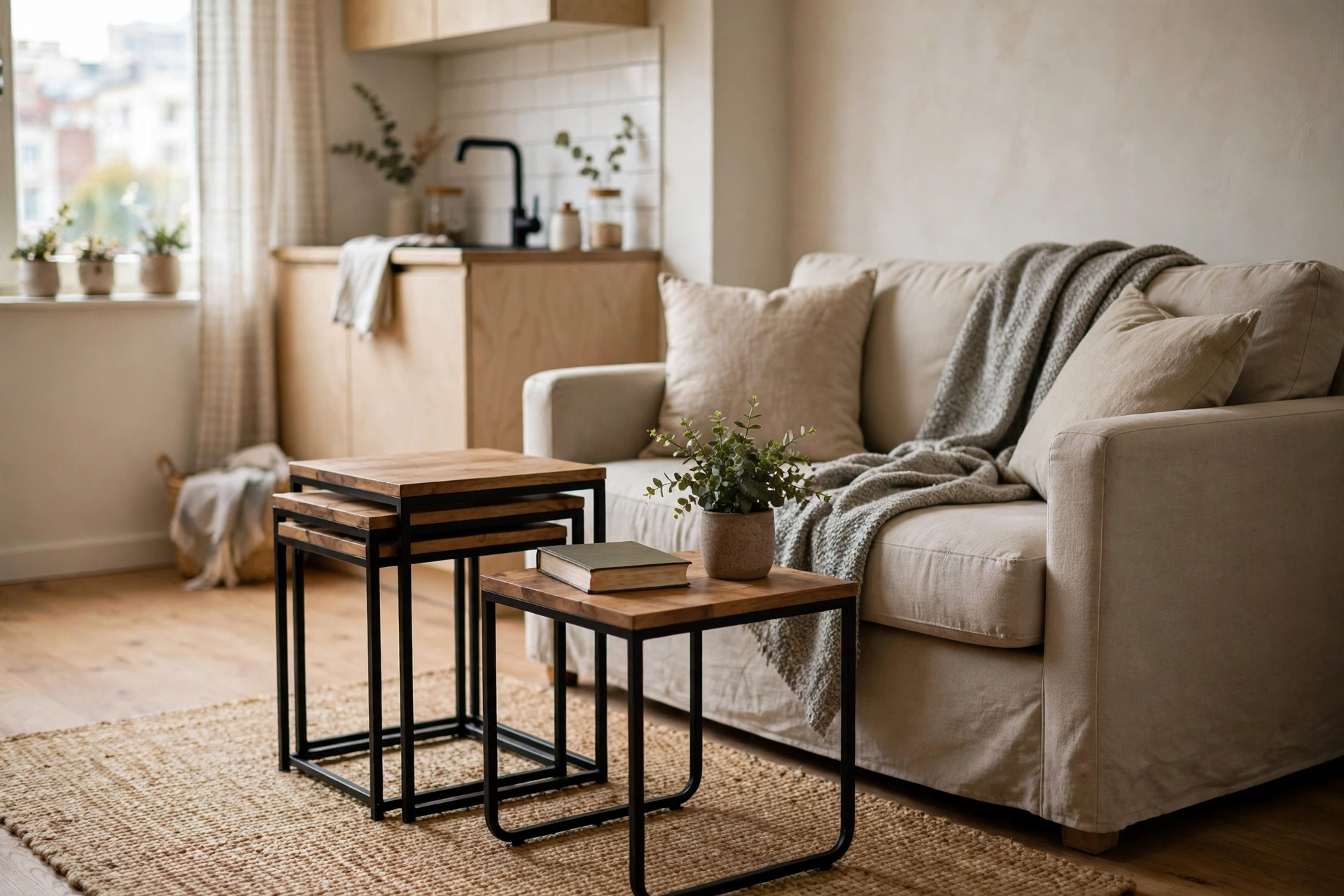
3. Use Nesting Side Tables That Tuck Away
Nesting tables give you two or three surfaces that collapse into the footprint of one — pull one out when you need a drink spot, tuck it back when you don’t. IKEA’s VITTSJÖ nest (about $50) or a wood set from Amazon ($40–$70) does the job beautifully. Pro tip: stagger the heights slightly so the tucked arrangement looks intentional, not like you’re hiding furniture.
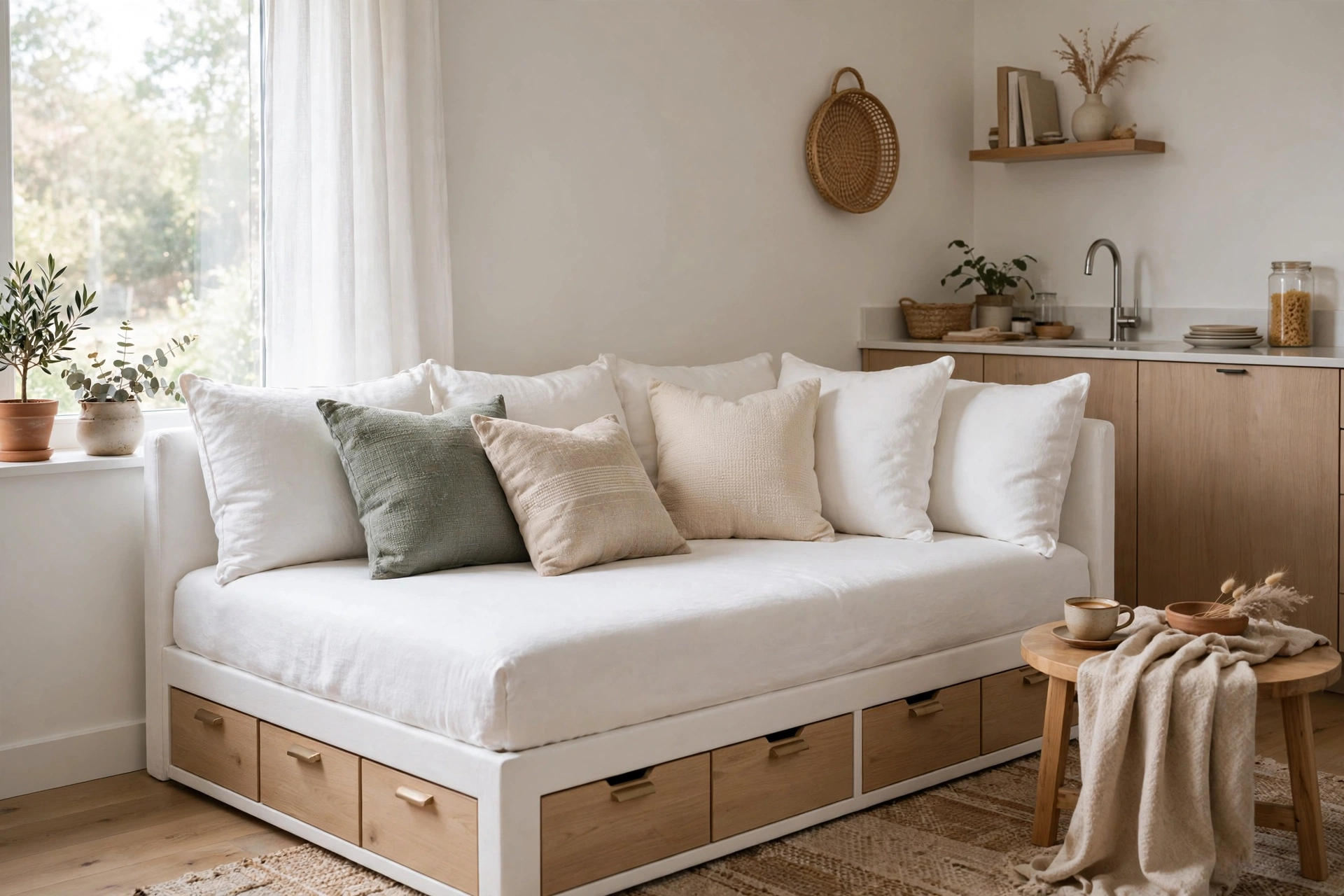
4. Pick a Daybed That Works Day and Night
A daybed is the studio’s hardest-working piece: sofa by day, bed by night, with trundle drawers underneath for a dresser’s worth of storage. IKEA’s HEMNES daybed (around $280–$350) includes three deep drawers. Pro tip: style it with back cushions and throw pillows during the day so guests read “couch,” not “bed.”
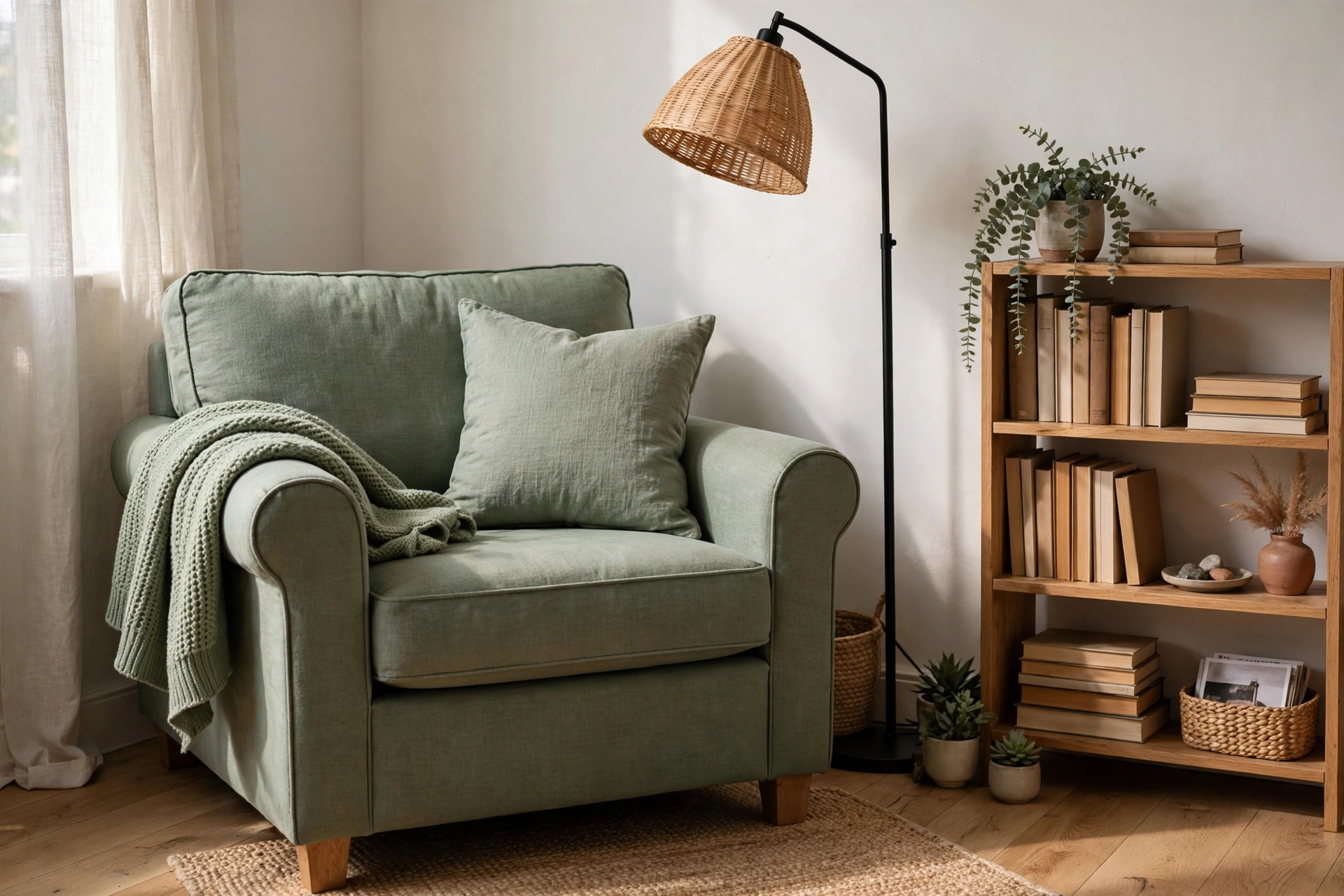
5. Add a Sleeper Chair for Overnight Guests
A sleeper chair (twin-size fold-out, $300–$600 at Wayfair or Amazon) gives guests a real bed without dedicating floor to a guest room you’ll use six nights a year. By day it’s a perfectly normal armchair. Pro tip: top it with a 2-inch mattress topper when guests come — it transforms a decent fold-out into a genuinely comfortable sleep.
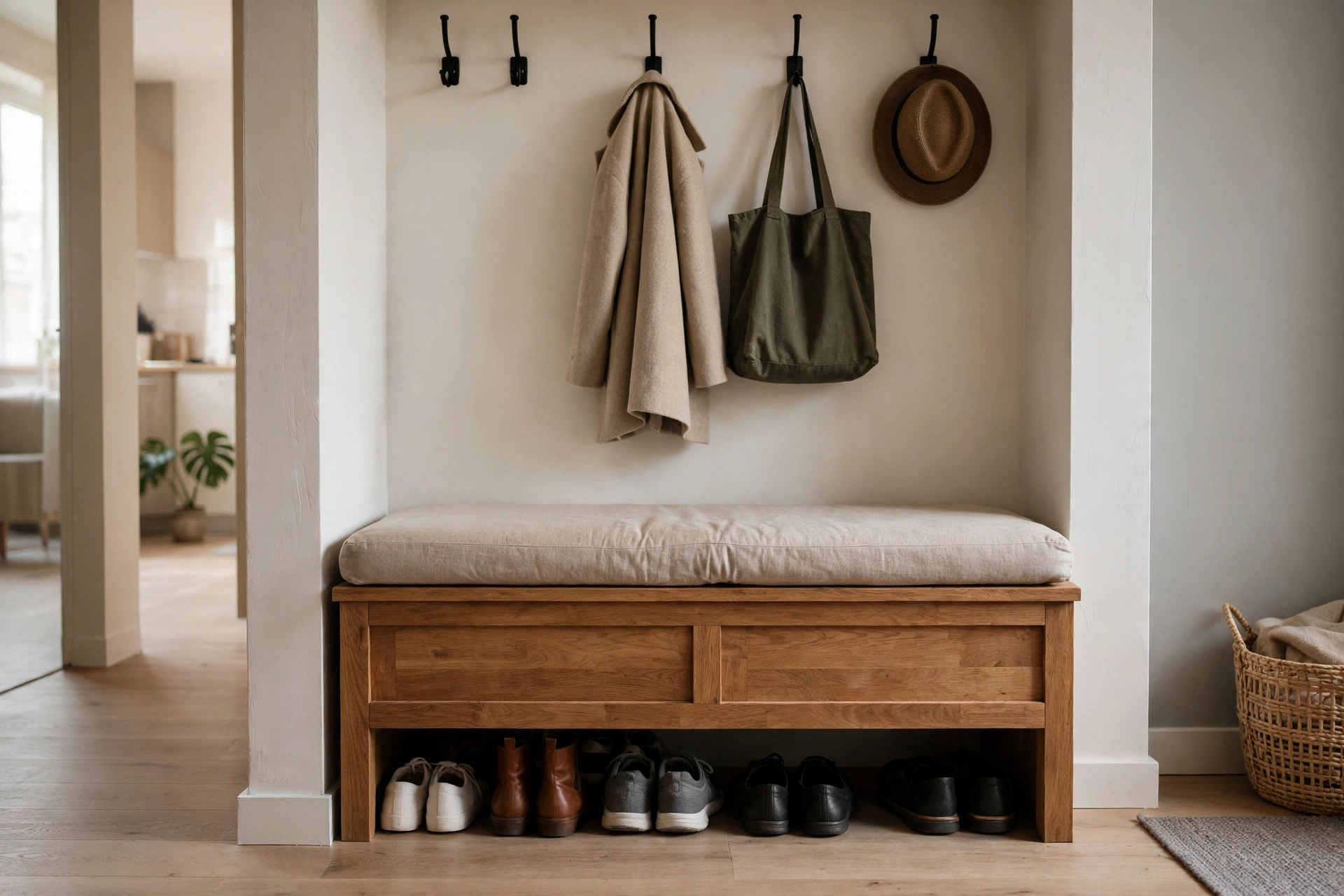
6. Place a Storage Bench in the Entryway
A flip-top storage bench by the door holds shoes, bags, and umbrellas inside while giving you a perch for lacing up — and in a studio it doubles as a visual divider between entry and living zone. Look for 36–48-inch benches ($60–$130 at IKEA or Target). Pro tip: choose one with a cushioned top and it becomes bonus seating during parties.
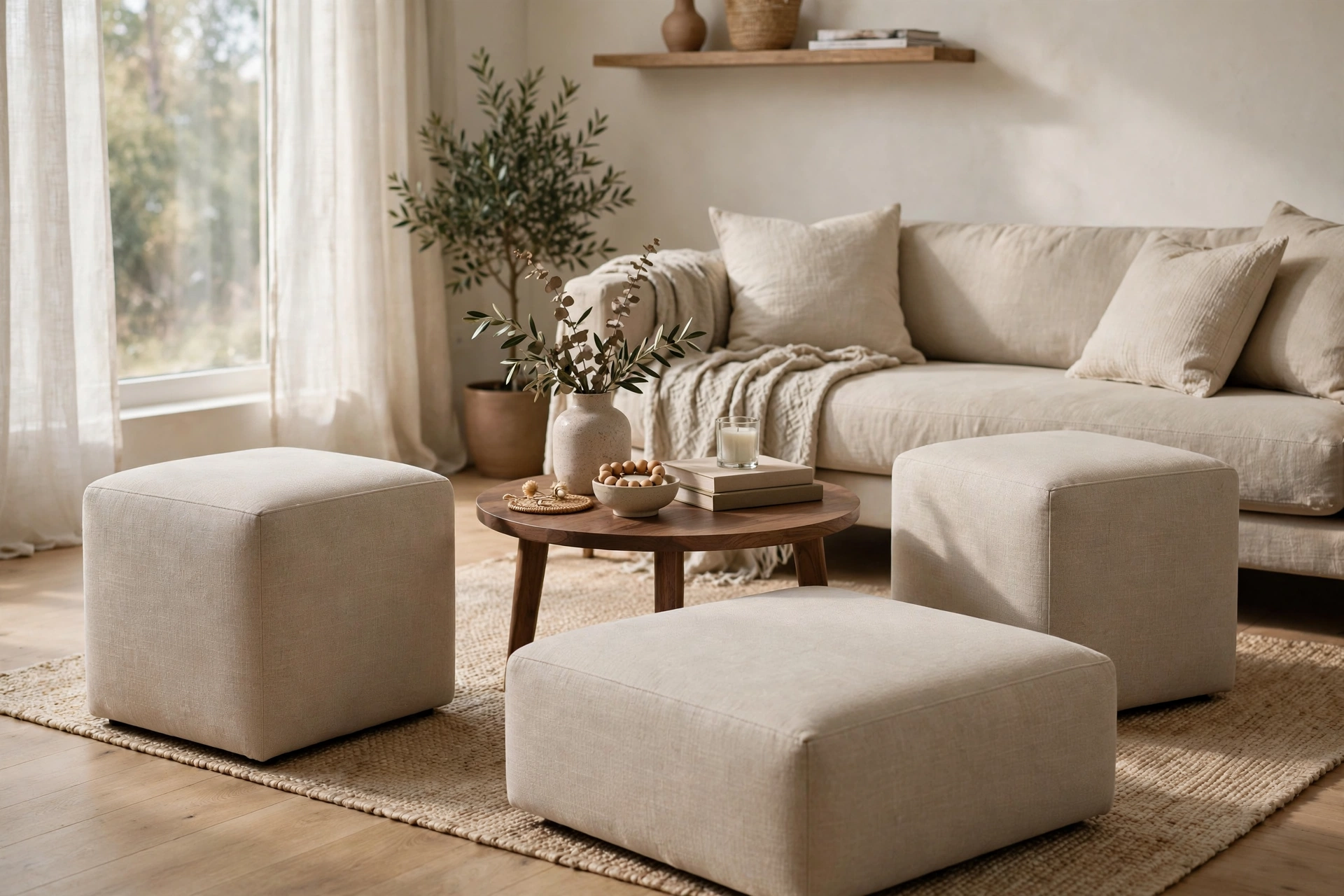
7. Try a Trio of Cube Ottomans
Three 15-inch cube ottomans ($25–$40 each) scatter as footrests, stack into a side table, line up as a bench, or tuck under a console when not needed — the most rearrangeable seating per dollar in existence. Pro tip: buy them in a performance fabric that matches your rug; mismatched cubes read as clutter, matching ones read as design.
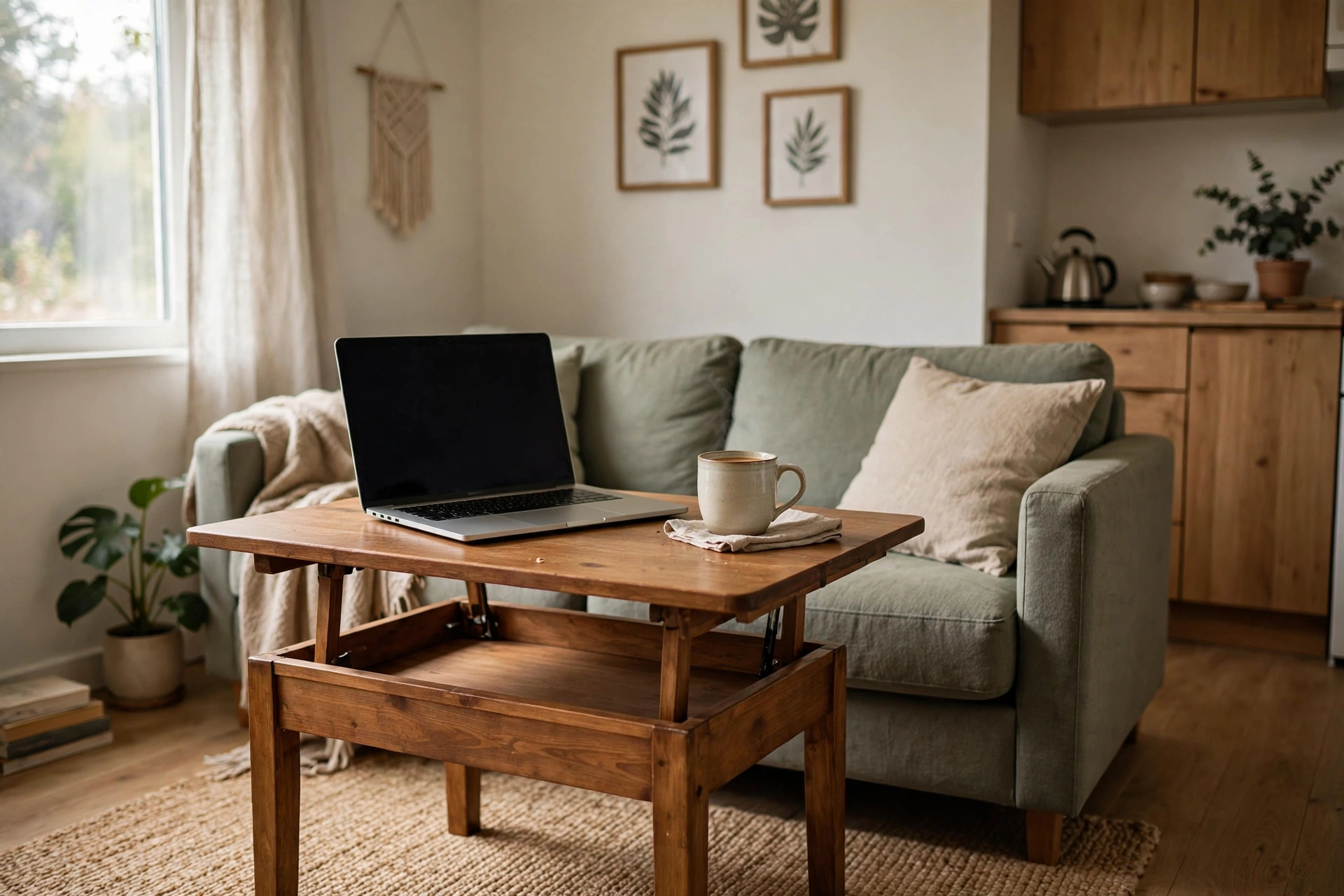
8. Get a Lift-Top Coffee Table
A lift-top coffee table ($90–$180 at Wayfair) rises to dining height for laptop work or dinner, with hidden storage underneath for remotes and chargers — it’s a desk, dining table, and coffee table in one 40-inch footprint. Pro tip: check the lift mechanism’s weight rating before buying; cheaper versions wobble under a full dinner spread.
Fold-Away & Convertible Pieces
Sometimes the best furniture is the kind that disappears. These pieces fold, collapse, or convert — giving you a full-size function only when you need it.
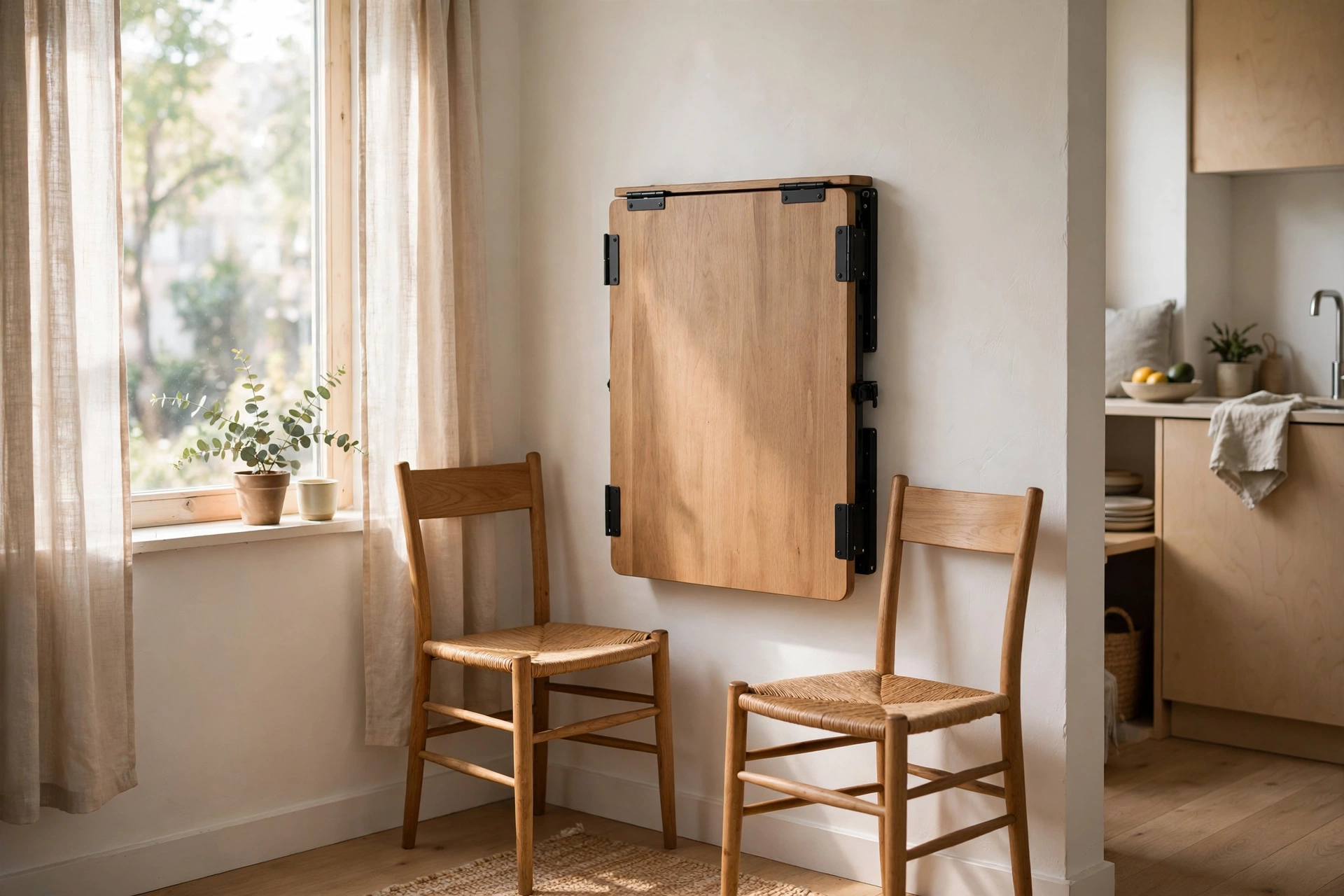
9. Mount a Drop-Leaf Table on the Wall
A wall-mounted drop-leaf table (IKEA NORBERG, about $40) folds flat against the wall when you’re done — dining table, desk, or craft station that claims zero floor space between uses. Pro tip: mount it at 29–30 inches high (standard dining height) near an outlet so it doubles as a charging station.
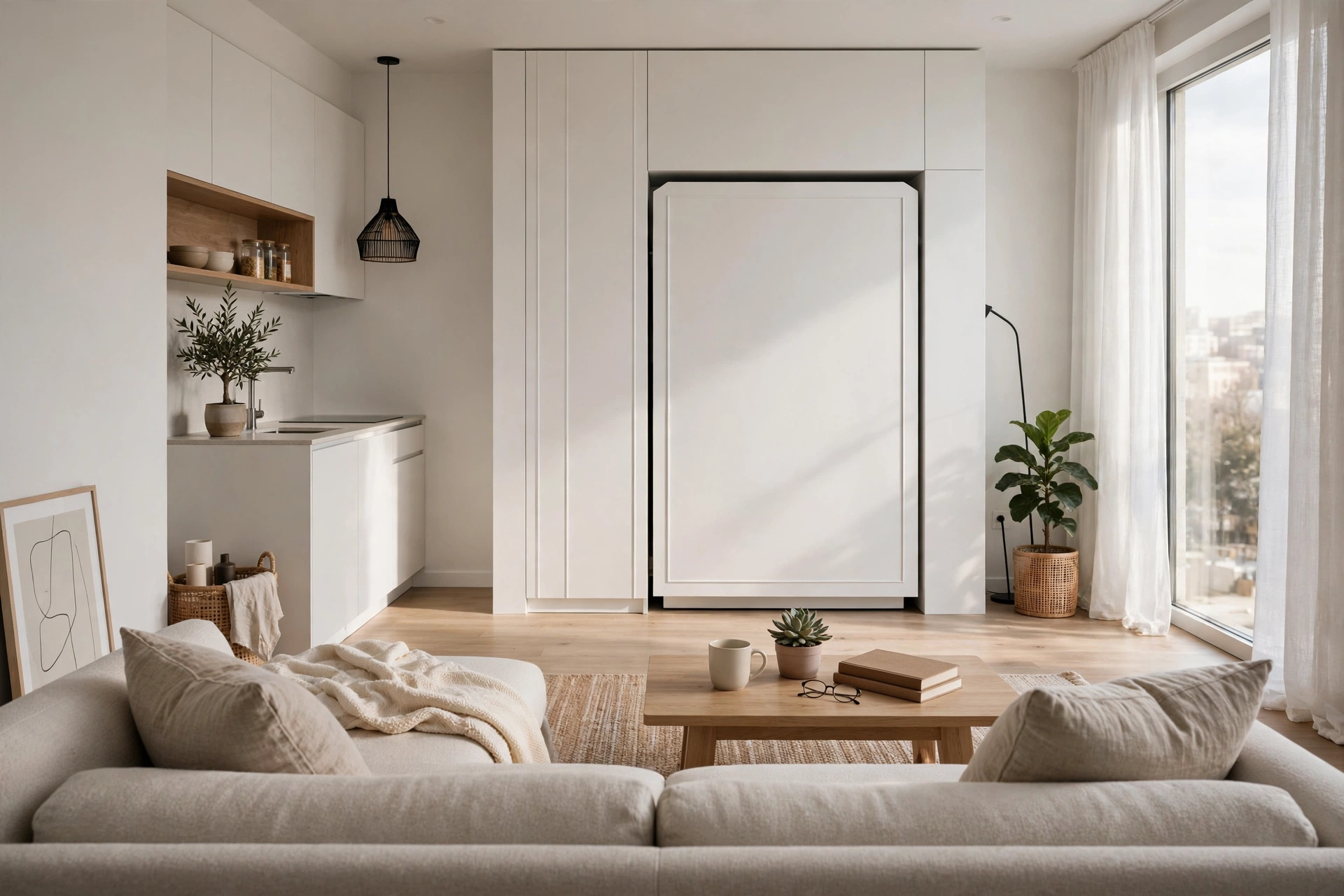
10. Invest in a Murphy Bed
The ultimate studio power move: a Murphy bed folds vertically into a cabinet by day, returning 30+ square feet of living space. Modern wall beds ($900–$2,200) look like sleek storage when closed, many with fold-down side tables. Pro tip: this pairs beautifully with smart zoning — see our studio apartment layout ideas for arranging the freed-up floor.
11. Go Vertical with a Loft Bed
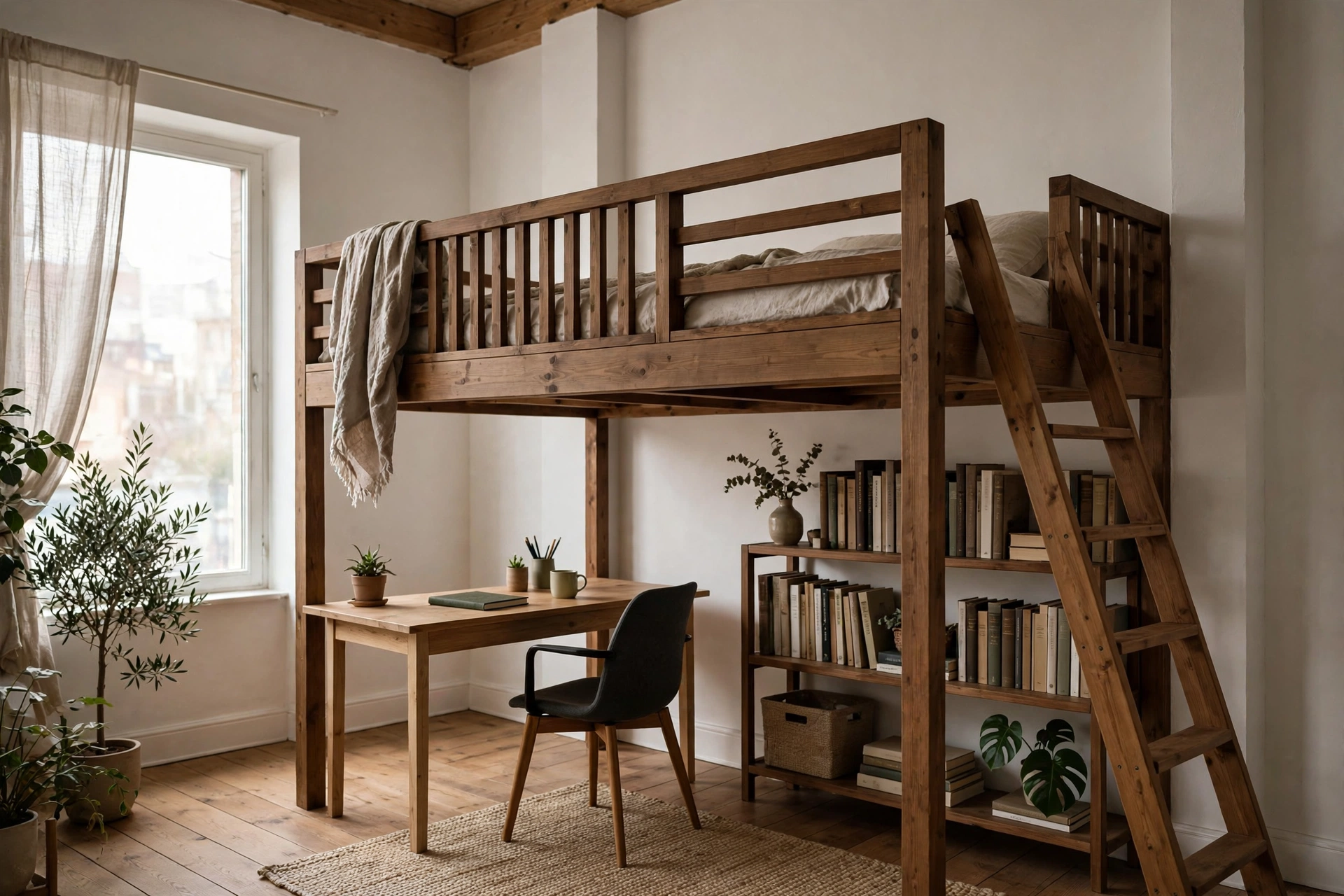
If your ceilings are 9 feet or higher, a loft bed reclaims the entire footprint underneath for a desk, dresser, or reading nook — the single highest-impact furniture move in a tiny studio. Sturdy adult-rated frames run $300–$550 on Amazon and Wayfair. Pro tip: check your lease first (some buildings restrict lofts) and add a clip-on reading light to the frame so the top bunk isn’t a dark cave.
12. Keep Folding Dining Chairs on Hand
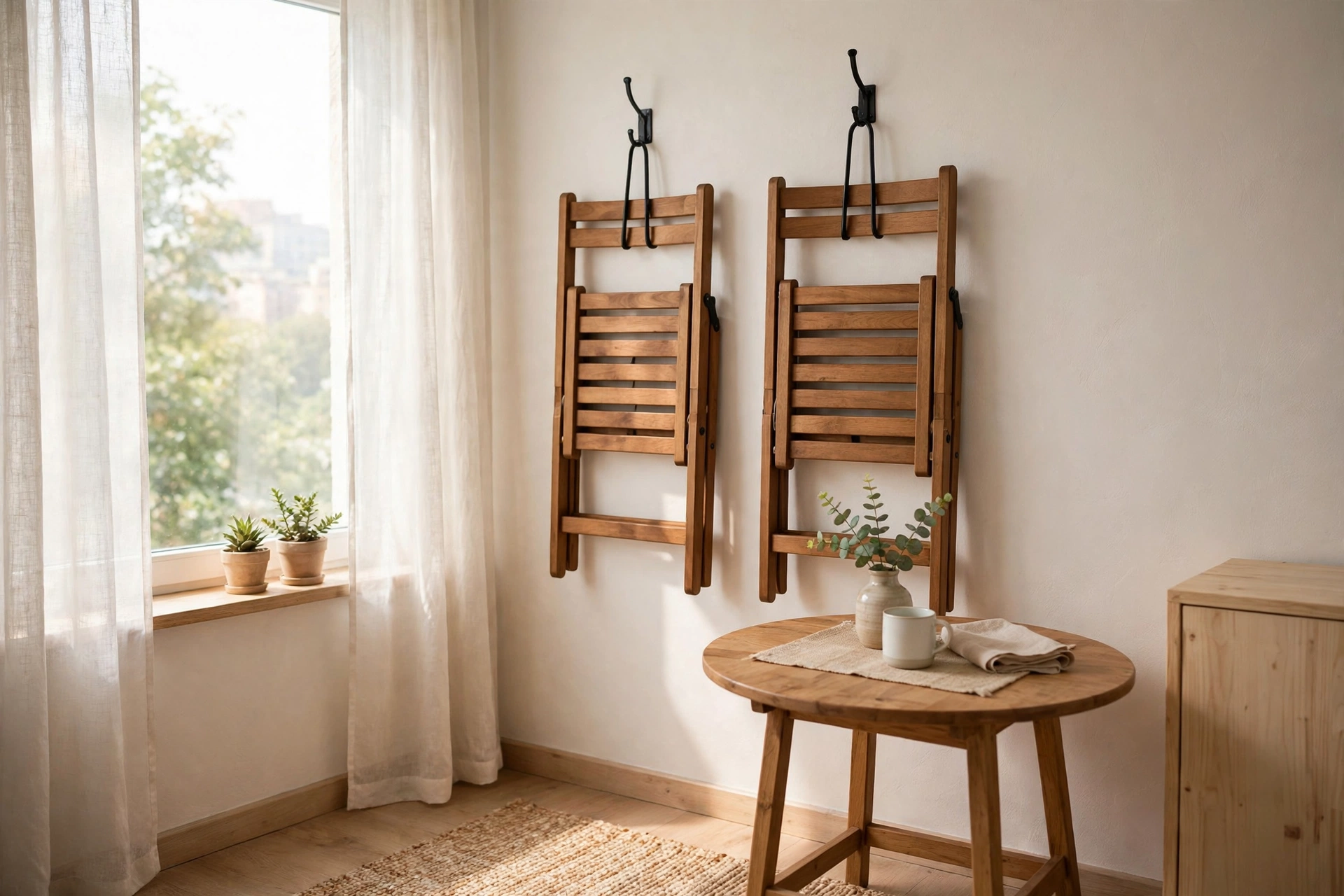
Two folding chairs ($30–$60 each at IKEA or Amazon) hang on wall hooks or slide behind the sofa until dinner guests arrive — seating for four without four chairs permanently eating floor. Pro tip: choose wood or upholstered folding chairs over metal; they look like intentional design, not emergency seating.
13. Install a Fold-Away Wall Desk
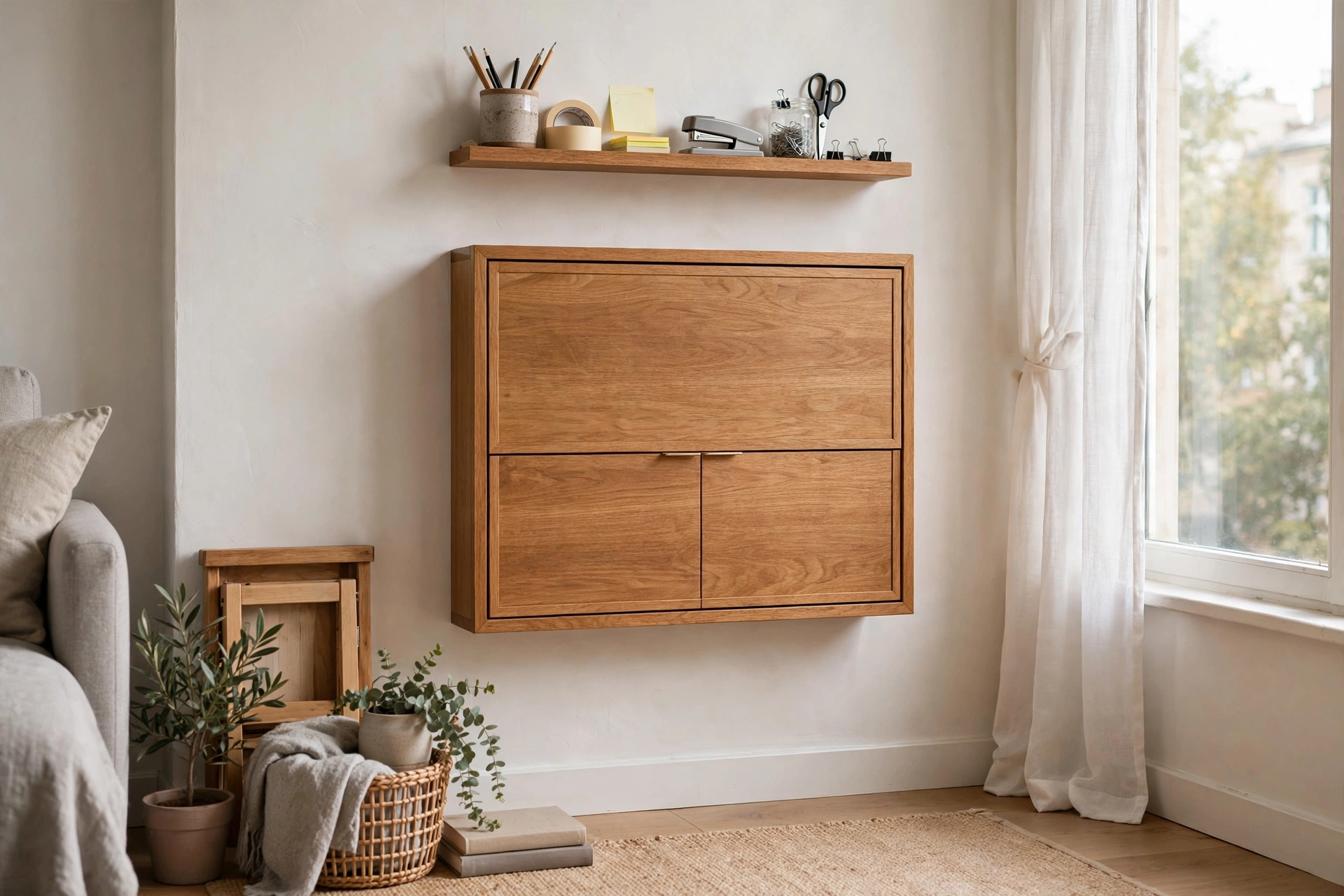
A wall-mounted fold-down desk ($80–$150) gives you a full 40-inch workspace that vanishes into a slim cabinet when the workday ends — your studio stops feeling like an office at 6pm. Pro tip: mount a small shelf above it for office supplies so nothing has to live on the desk surface itself.
14. Choose a True Convertible Sleeper Sofa
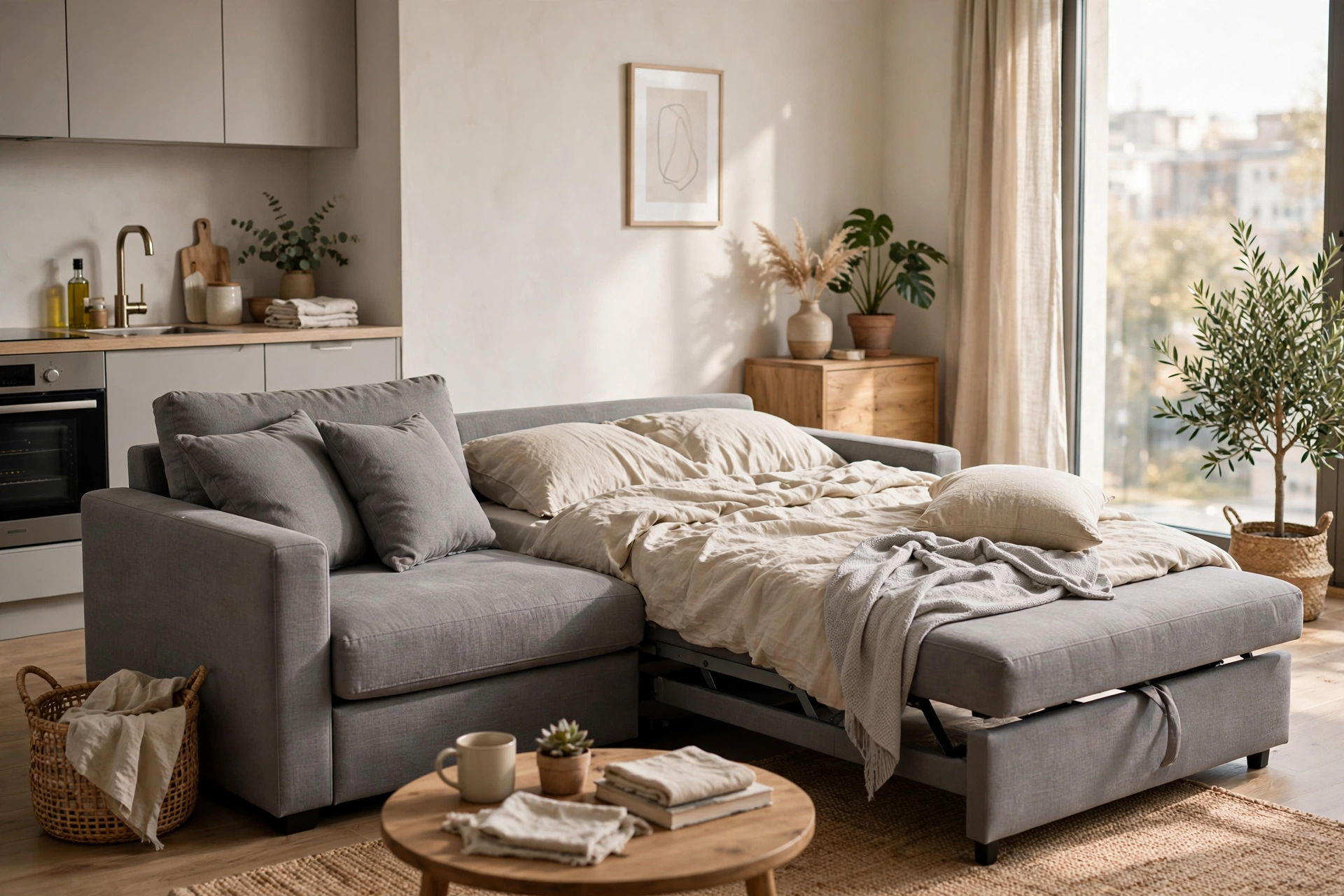
Modern sleeper sofas (IKEA FRIHETEN, around $600–$800) unfold into a real bed in seconds — no bar-in-the-back torture devices — and the chaise section hides storage for bedding. Pro tip: test the unfold mechanism in store; if it takes more than 30 seconds or needs two people, keep shopping.
Small-Scale Seating That Doesn’t Crowd
Seating is where studios go wrong fastest — one bulky recliner and the room is gone. These small-footprint seats keep everyone comfortable without the visual weight.
15. Pick Armless Accent Chairs
Armless chairs (around $120–$250 each) seat just as comfortably as armed ones but look dramatically lighter — two can flank a loveseat where one bulky armchair would overwhelm. Pro tip: armless designs also slide fully under tables when not in use, reclaiming walkway space.
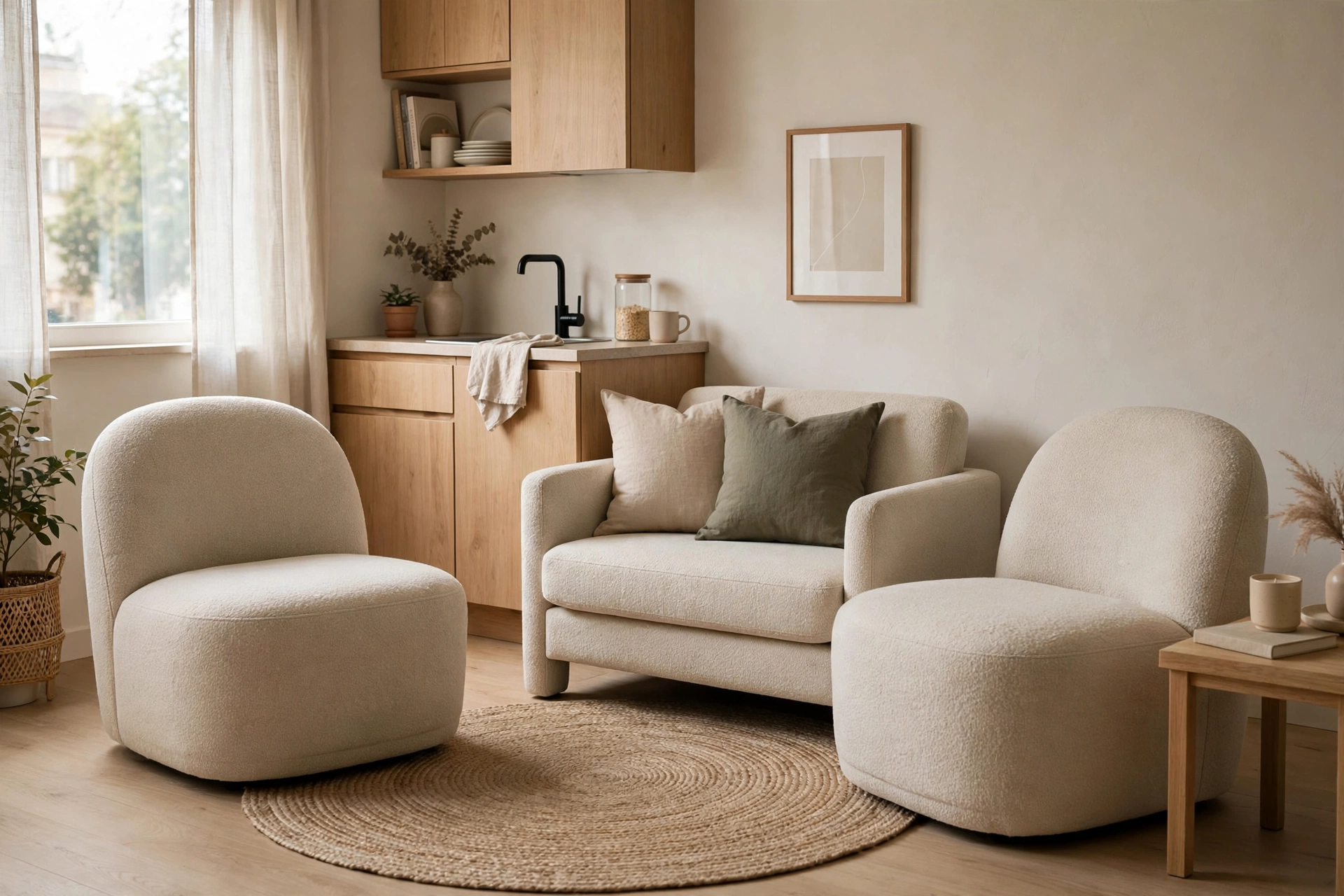
16. Try a Compact Barrel Chair
A barrel chair’s curved back hugs you like a big armchair but sits in a 28-inch footprint — cozy without the bulk. Target and Wayfair carry stylish options for $150–$300. Pro tip: swivel barrel chairs are gold in studios: one chair can face the TV, the conversation, or the window as needed.
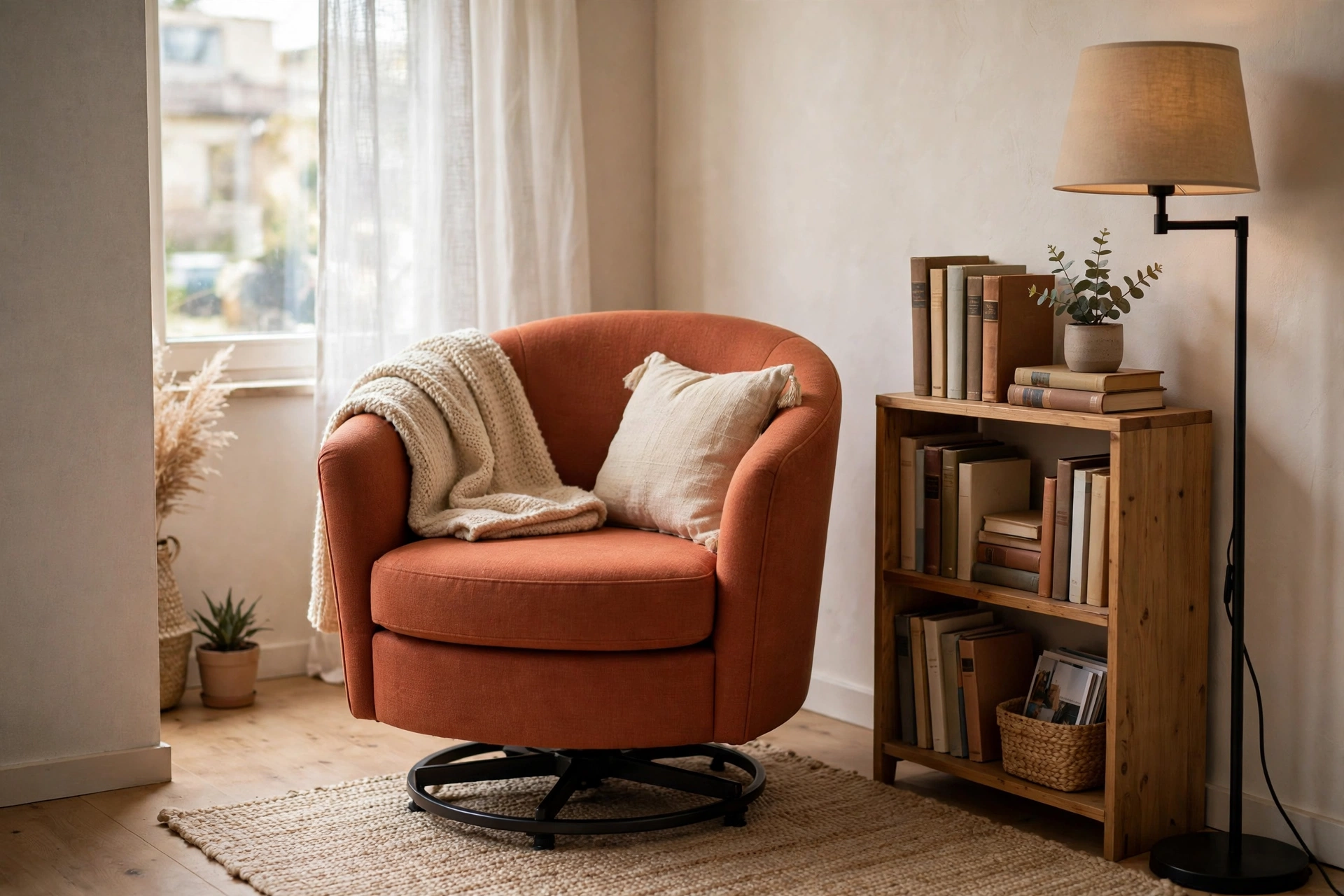
17. Stack Stools Instead of Chairs
A set of four stackable stools ($80–$140 for the set) nests into a single column in the corner — instant seating for dinner parties, invisible the rest of the week. Pro tip: choose stools with a slight backrest or curved seat; backless bar stools get uncomfortable after 20 minutes.
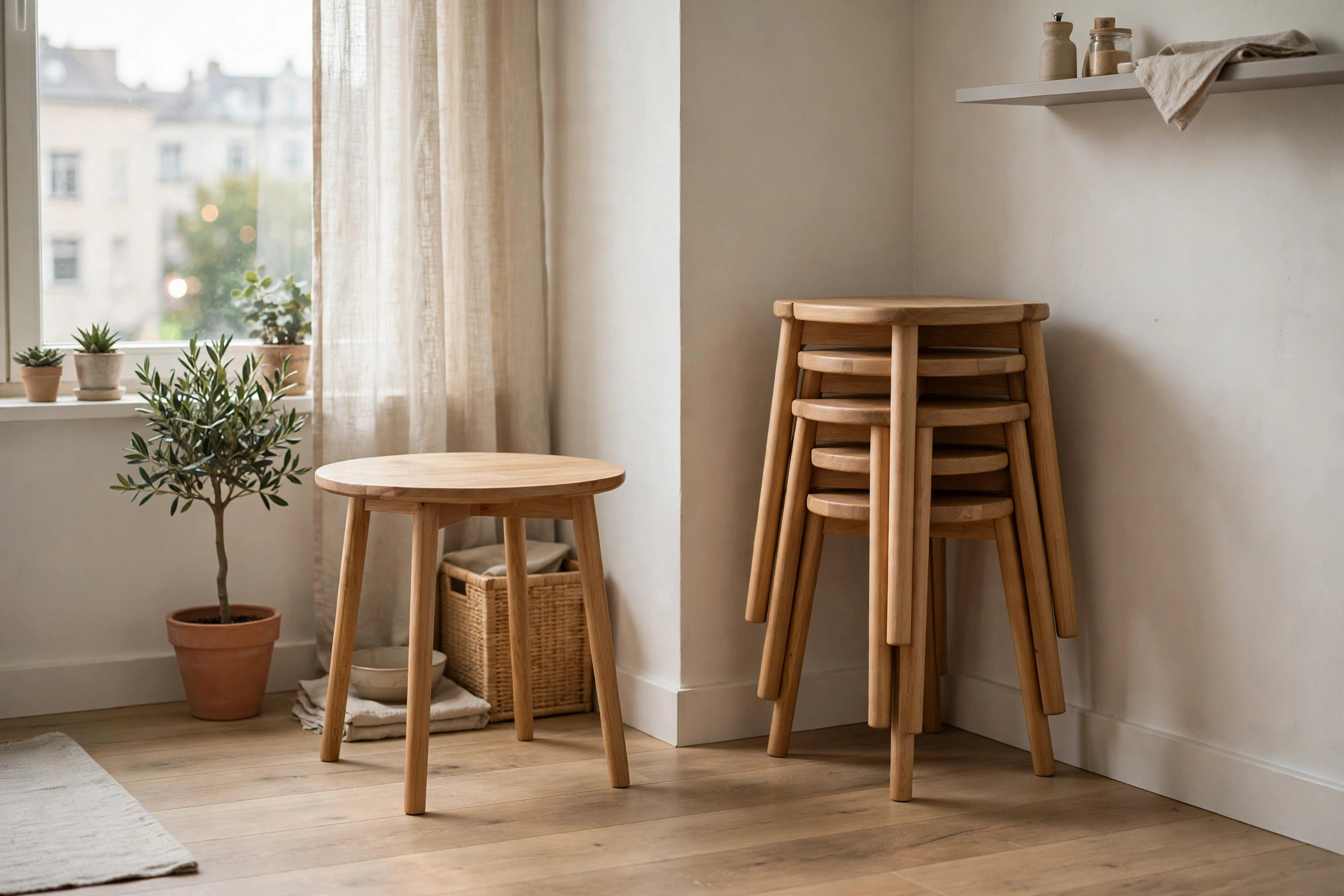
18. Slide a C-Shaped Table Over the Sofa Arm
A C-shaped side table ($25–$45) slides its base under the sofa so the top hovers right where you need it — laptop, coffee, book — with zero floor footprint beyond the sofa itself. Pro tip: get the height right: the top should sit 1–2 inches above the sofa arm for comfortable use.
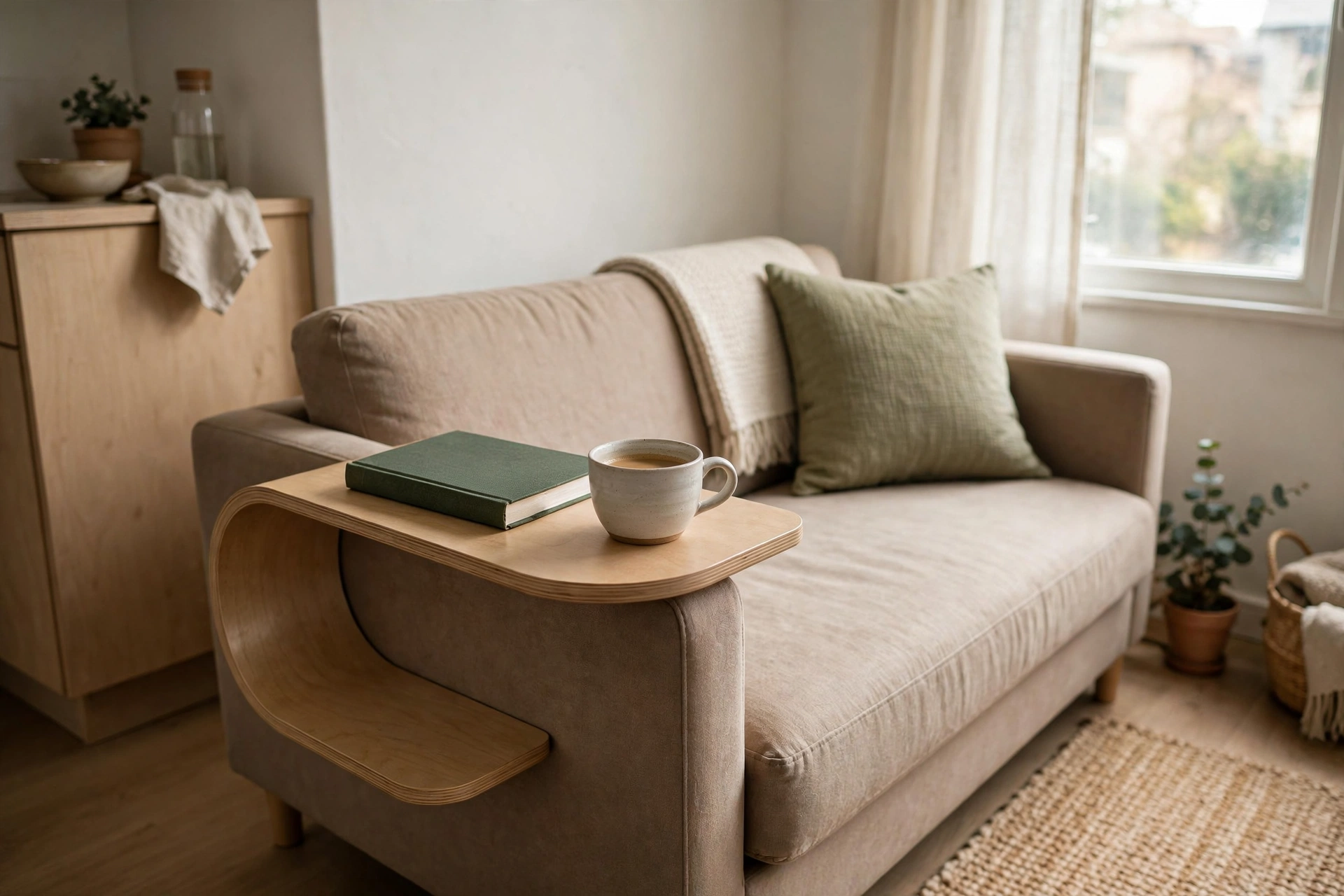
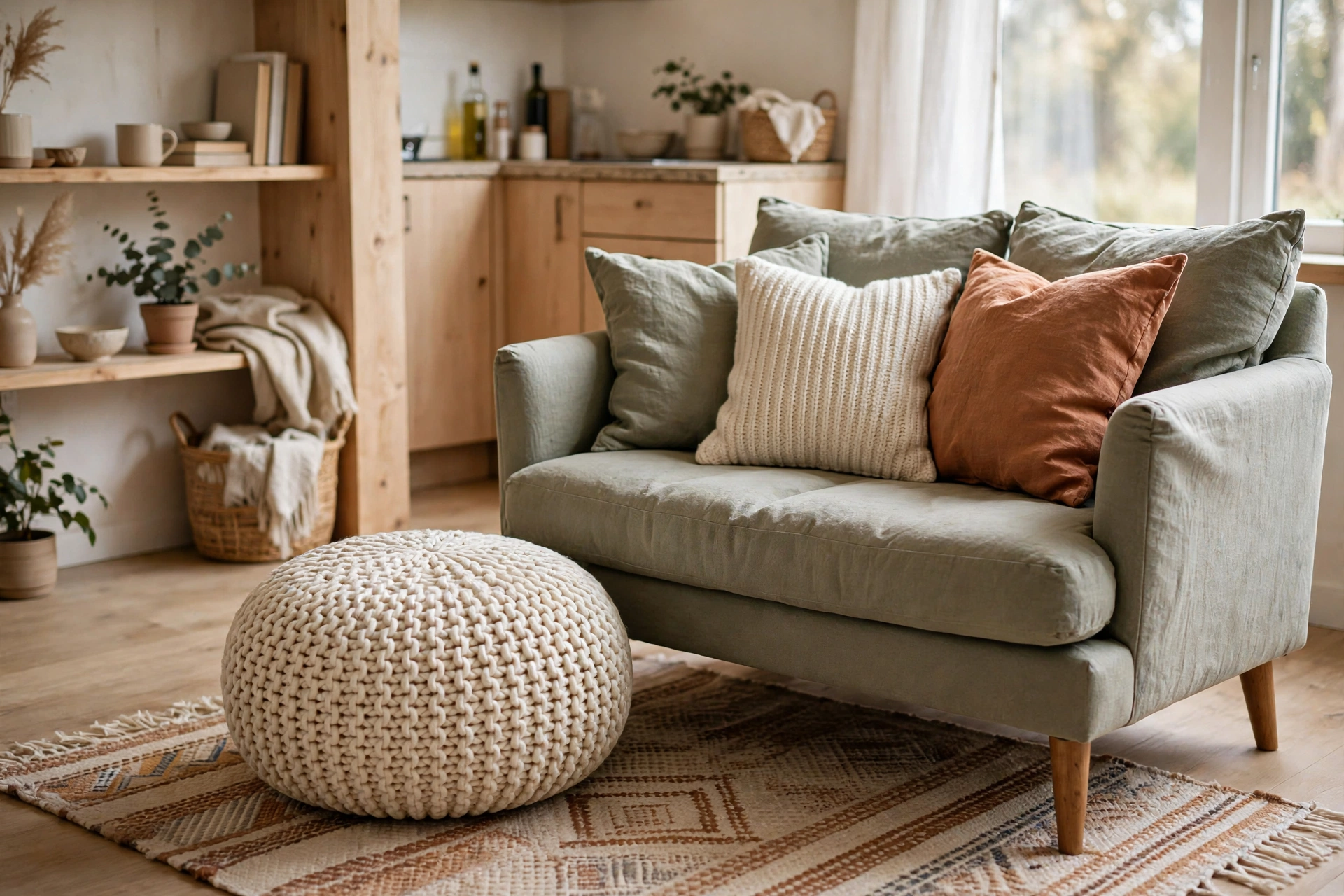
19. Use a Pouf Instead of an Extra Chair
A large floor pouf ($40–$80) is a footrest, extra seat, and side table (with a tray on top) that weighs almost nothing — toss it in the closet when you need the floor. Pro tip: poufs in the same fabric family as your sofa look deliberate; a random pouf looks like clutter.
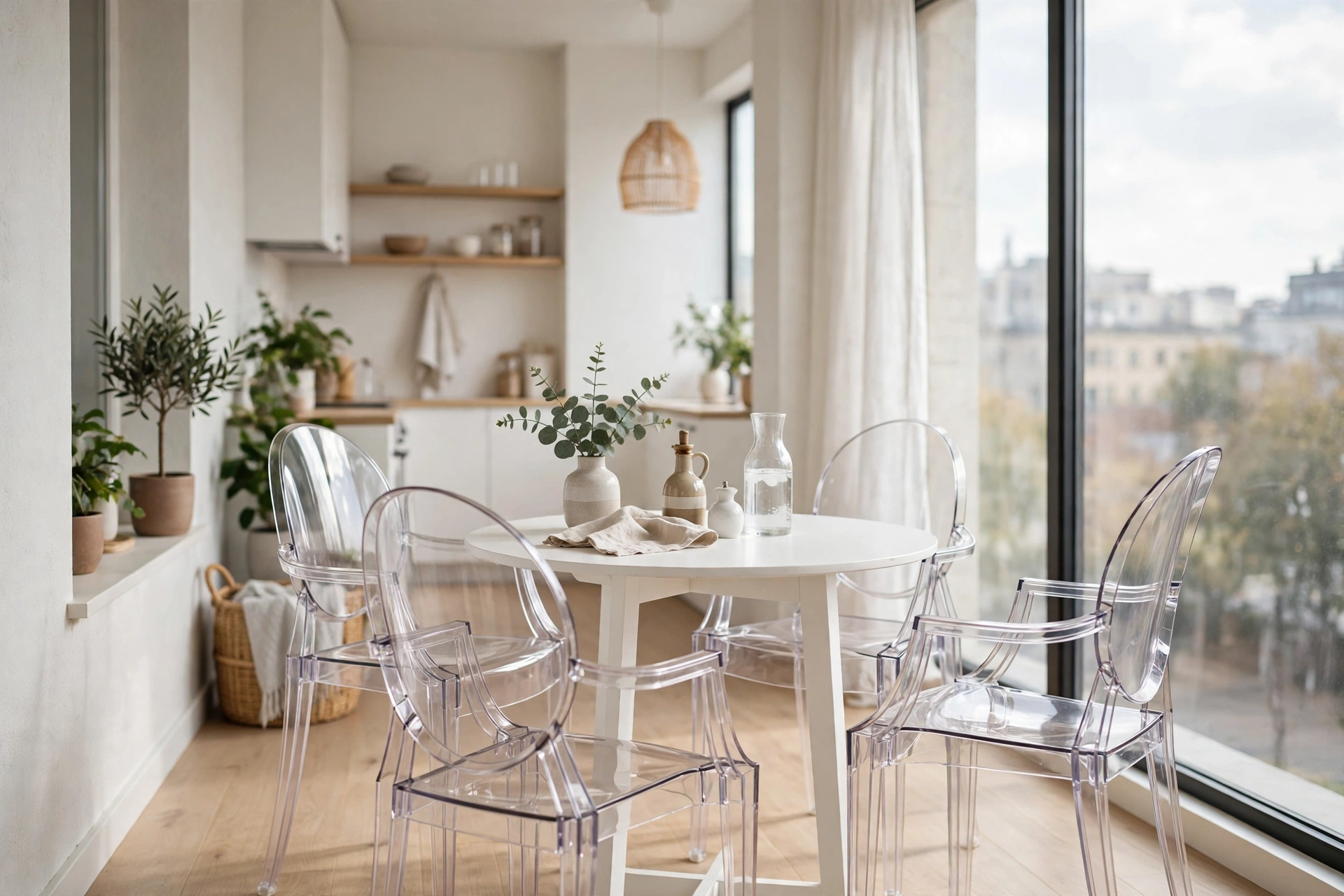
20. Go Visual-Light with Acrylic Chairs
Clear acrylic “ghost” chairs ($60–$120 each) provide real seating while being nearly invisible — the eye passes right through them, so a dining nook feels twice as big. Pro tip: they show every fingerprint, so keep a microfiber cloth nearby; the visual payoff is worth the wipe-down.
Bedroom-Zone Furniture
The sleep zone needs furniture that works as hard as you rest. These pieces maximize the bedroom corner without letting it sprawl into the living area. For the full coziness playbook once the furniture is placed, see our small studio apartment bedroom ideas.
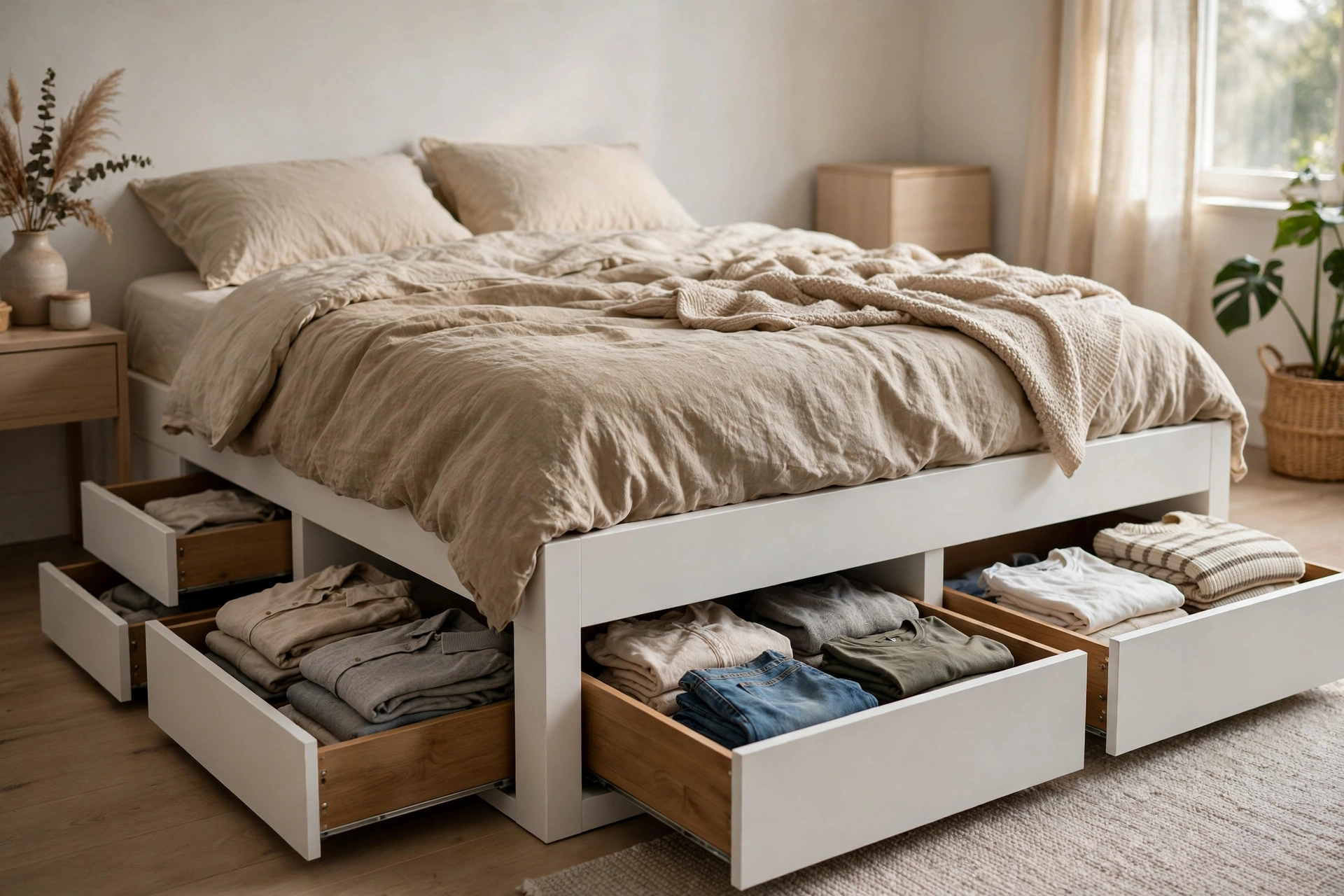
21. Choose a Platform Bed with Built-In Drawers
A platform bed with drawers (IKEA MALM or BRIMNES, $250–$450) replaces an entire dresser — six deep drawers hold a full wardrobe while the bed keeps its normal footprint. Pro tip: use one side for daily clothes and the other for linens and off-season items so you’re not digging every morning.
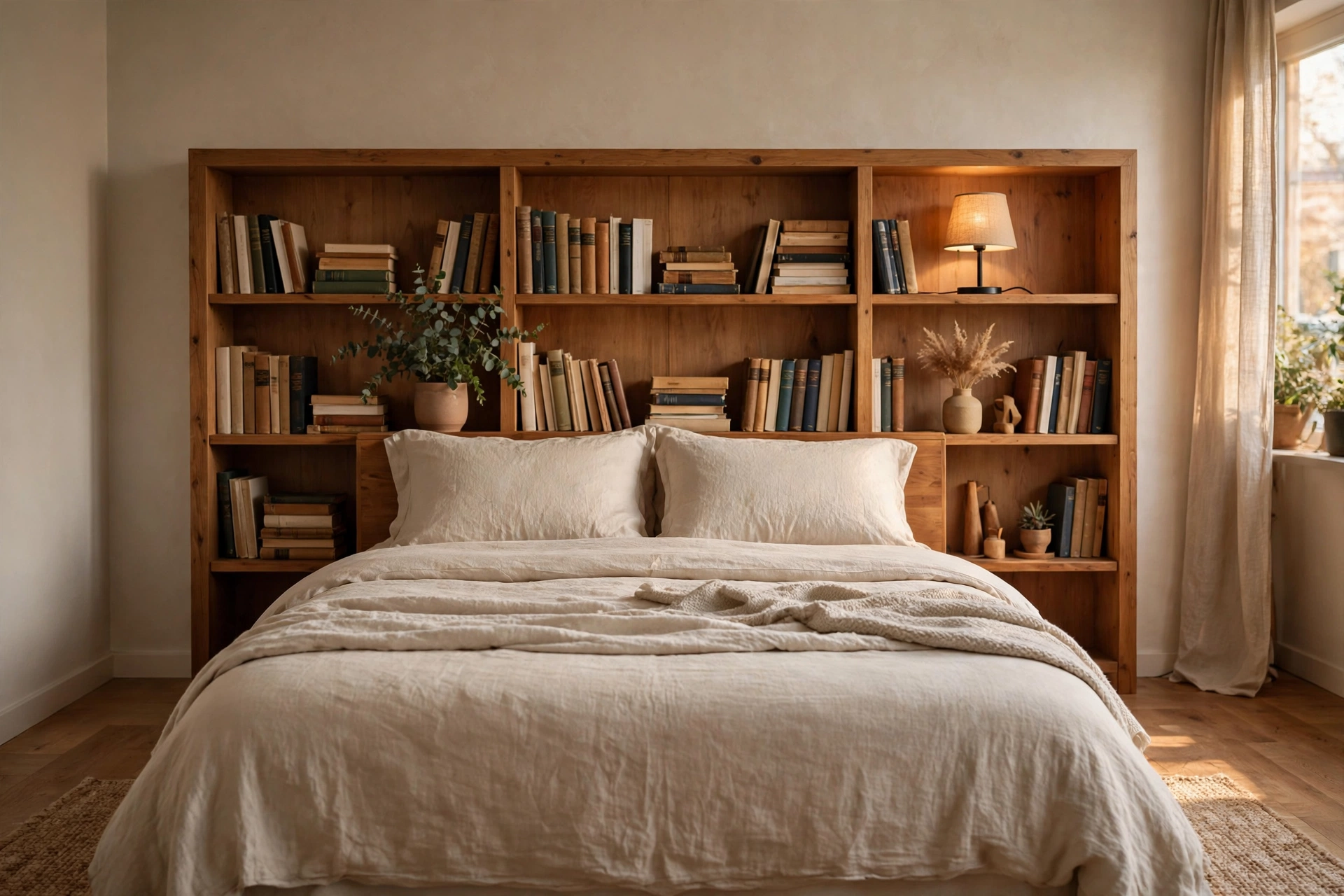
22. Get a Bookcase Headboard
A bookcase headboard ($80–$150 at IKEA or Target) replaces both nightstands — books, lamp, phone, and water glass all live in the headboard while the floor on both sides stays completely clear. Pro tip: add adhesive LED strip lights inside the cubbies for built-in reading light that costs under $15.
23. Mount a Slim Floating Nightstand
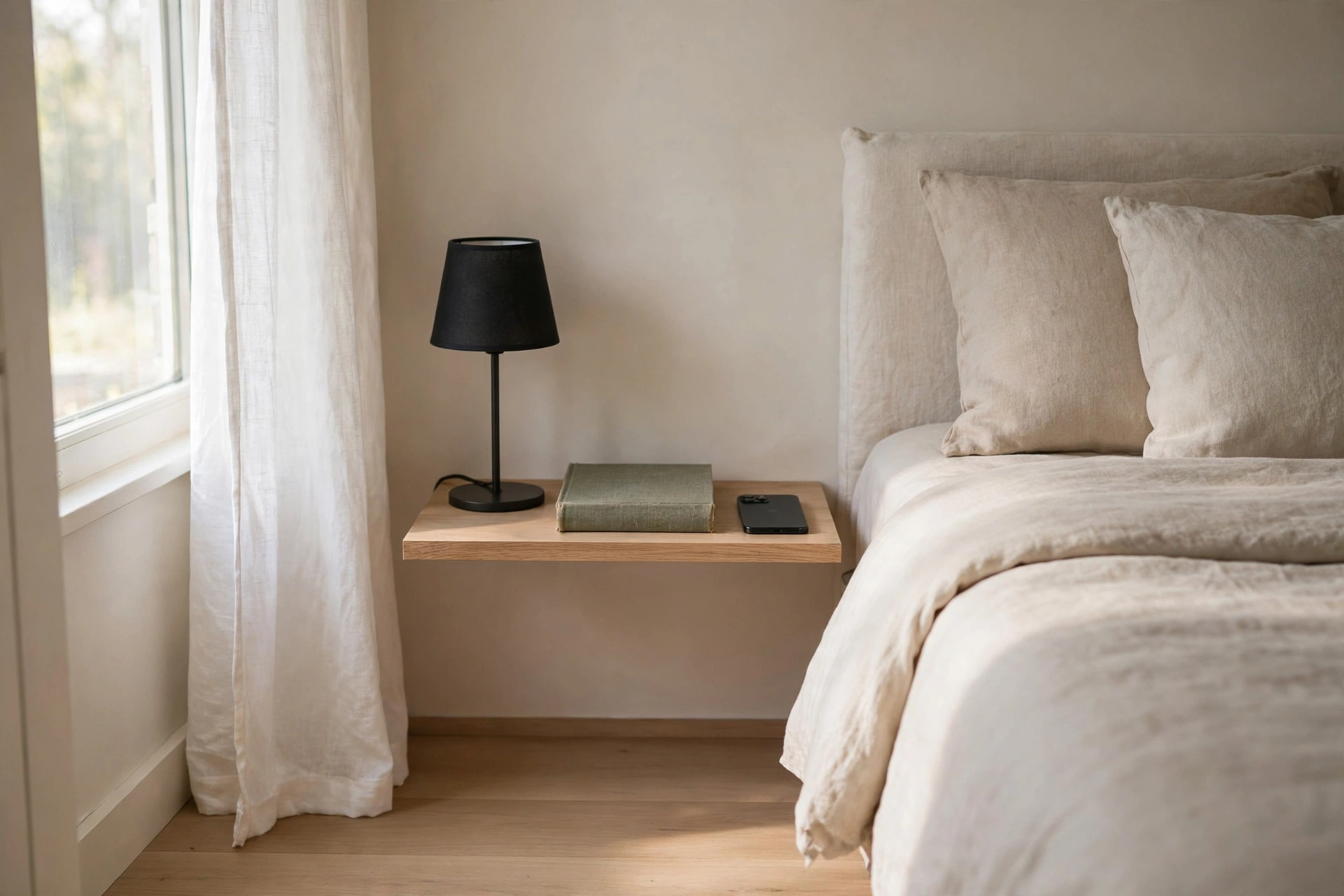
A 12-inch floating nightstand shelf ($25–$40 on Amazon) holds the lamp, book, and phone with zero floor footprint — the floor underneath stays clear, which keeps a tight sleep zone feeling open. Pro tip: mount it 2–3 inches above mattress height so you can grab your phone without sitting up.
24. Use a Wardrobe Armoire Instead of a Built-In Closet
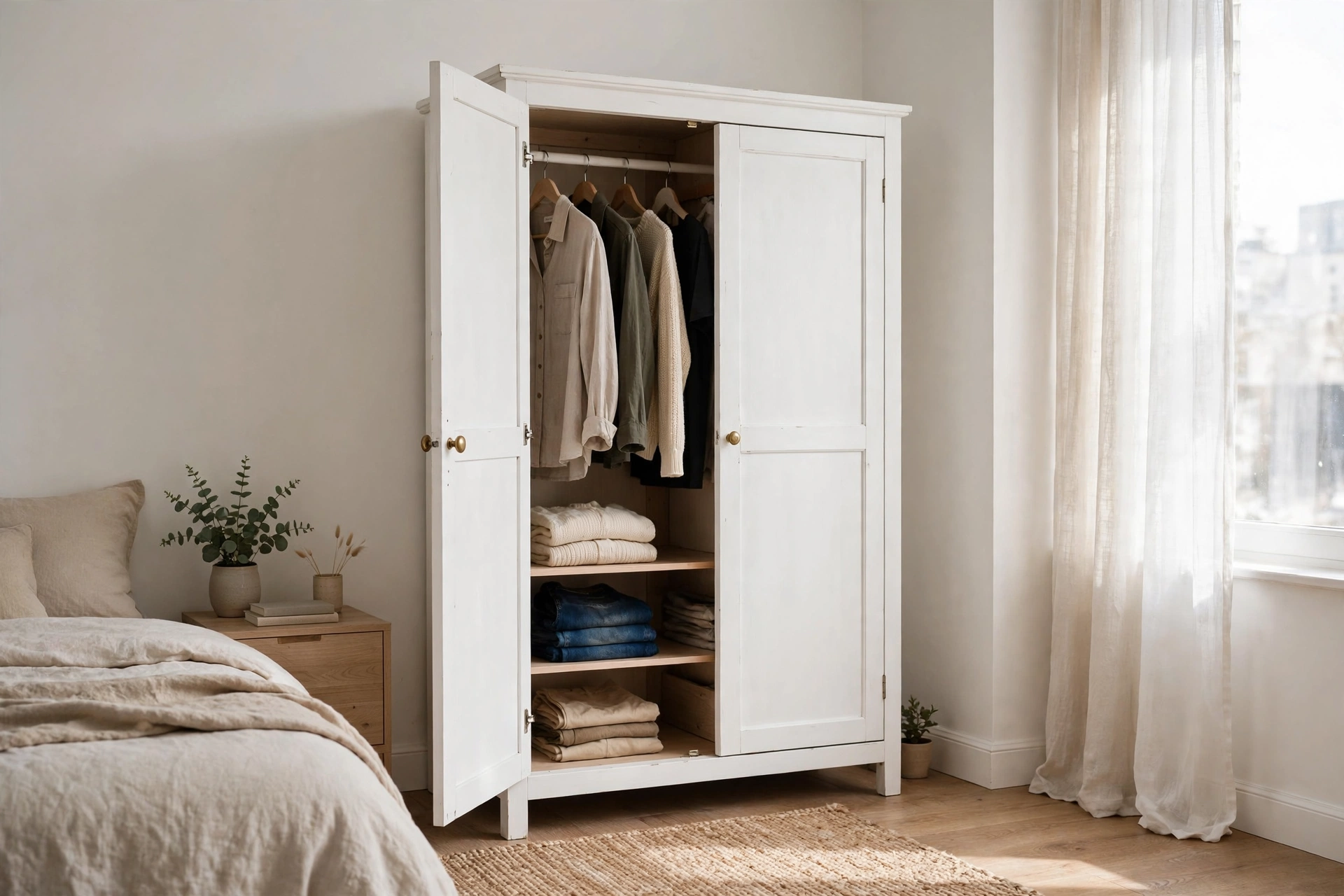
No closet — or a closet the size of a shoebox? A freestanding armoire ($200–$400 at IKEA) adds hanging space, shelves, and drawers in a 40-inch-wide footprint, and it moves with you. Pro tip: the PAX system lets you customize the interior exactly — double-hang on one side, shelves on the other.
25. Slide a Trundle Under the Bed for Guests
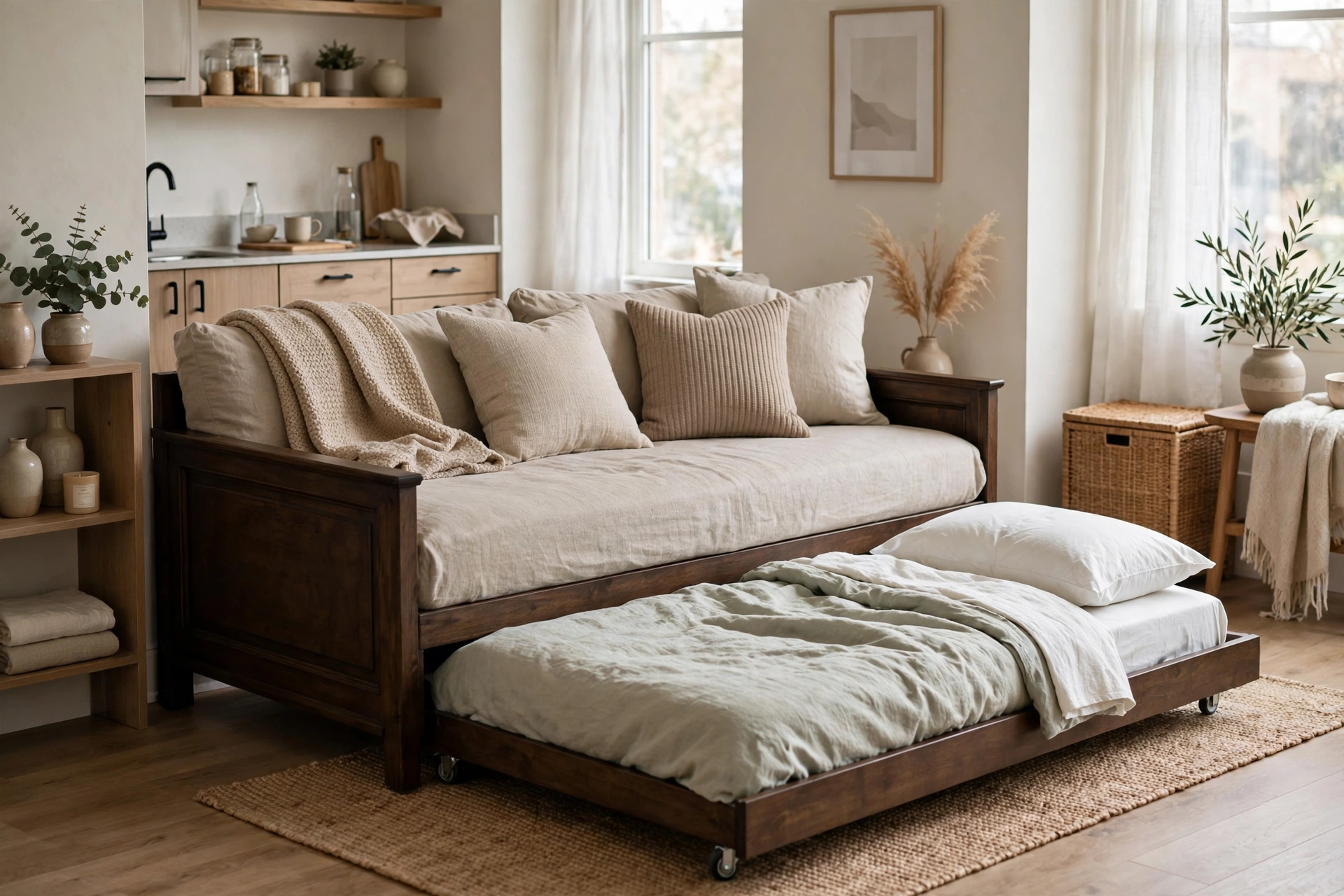
A pull-out trundle ($150–$300) hides completely under a daybed or platform bed until guests arrive — then it rolls out into a real twin bed in seconds. Pro tip: store the trundle bedding inside the trundle itself so guest setup takes literally one pull.
Dining & Work Solutions
Eating and working in a studio shouldn’t require a dedicated room — just furniture that adapts to the moment and disappears after.
26. Pick a Round Pedestal Dining Table
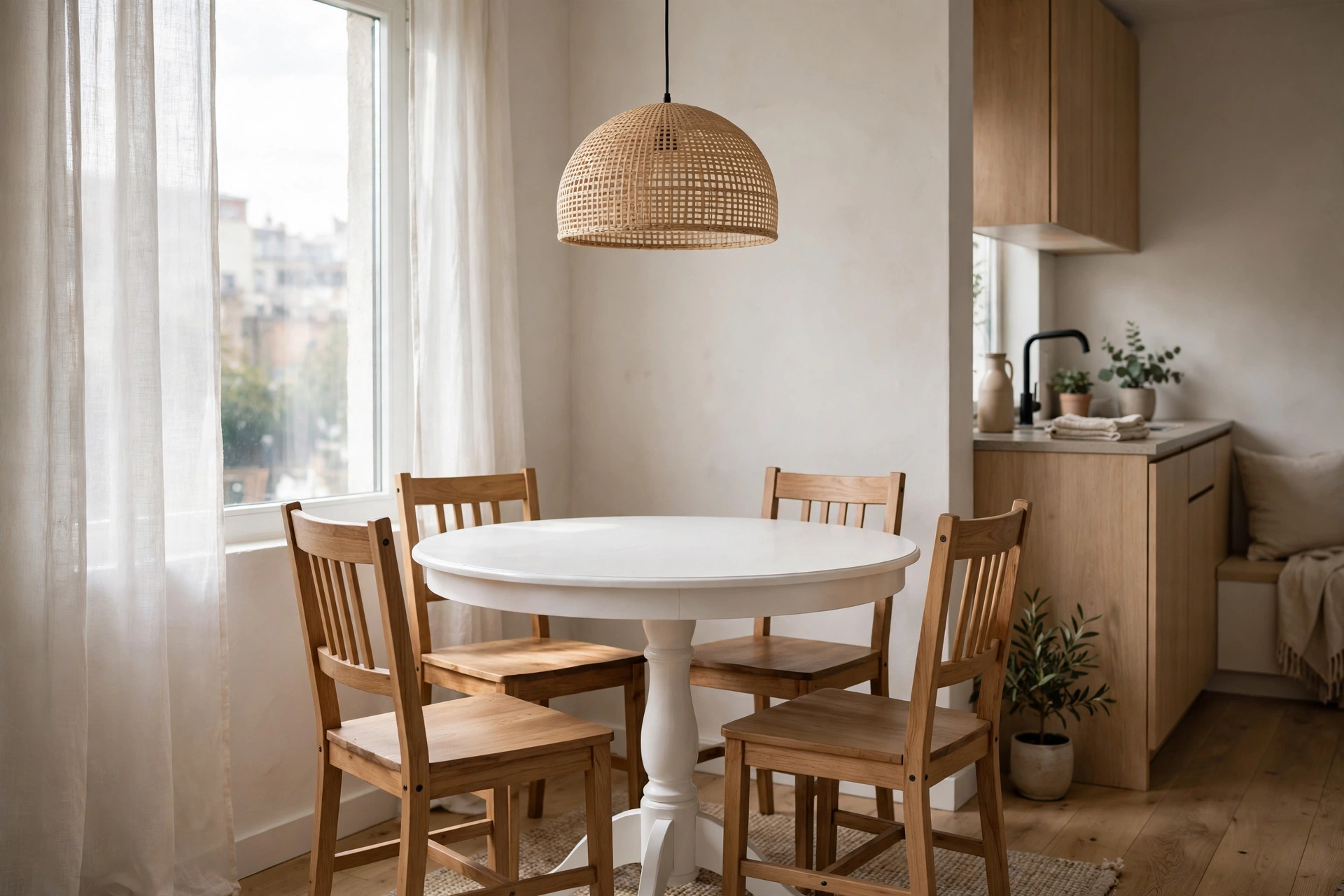
A 36-inch round pedestal table ($120–$250) seats four with no corner legs to bang knees on, and the single center base means chairs tuck fully underneath. Pro tip: round tables improve traffic flow in tight dining nooks — no sharp corners jutting into the walkway.
27. Roll a Bar Cart into Service as a Side Table
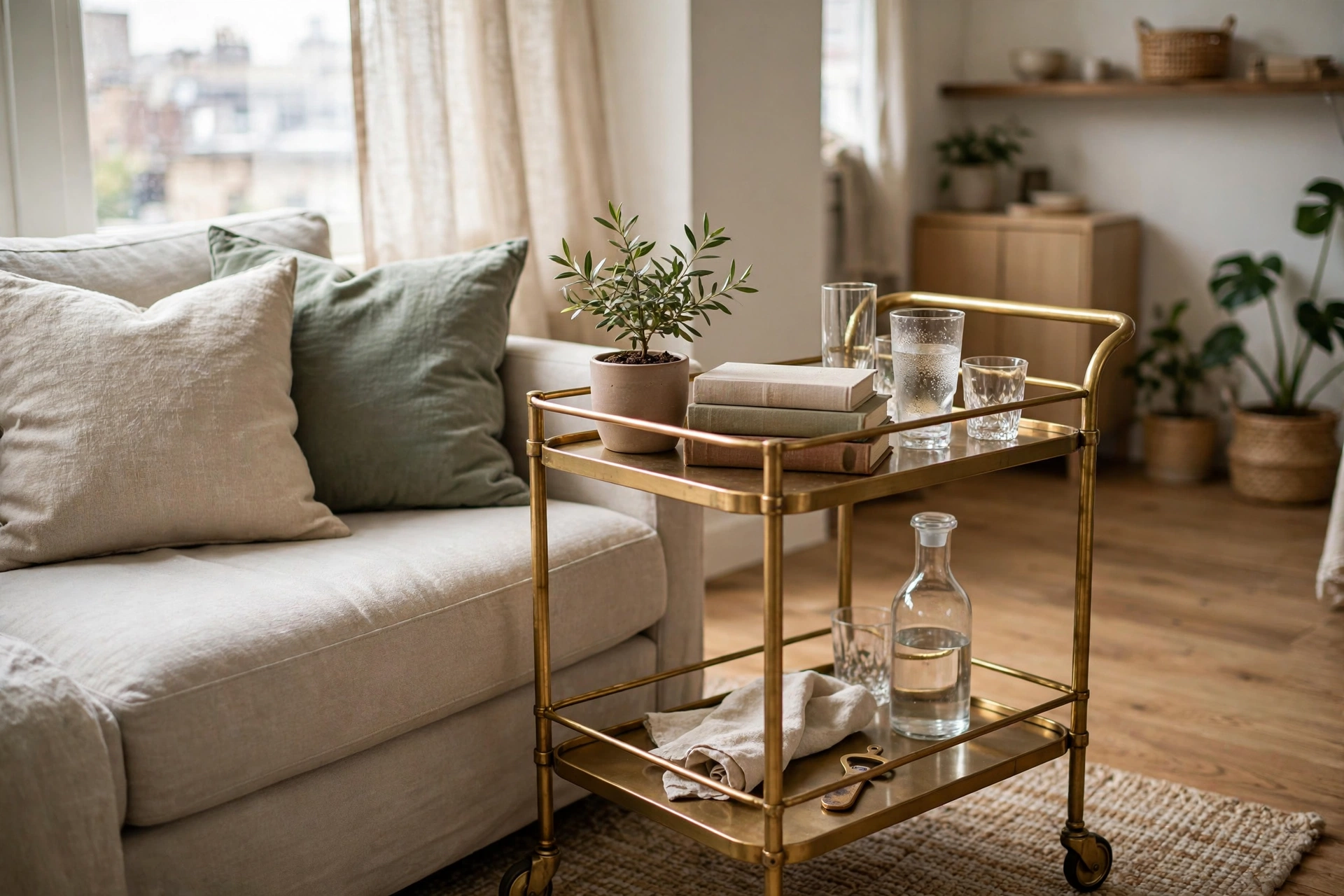
A bar cart ($40–$80 at IKEA or Target) holds drinks and glassware for parties, then parks beside the sofa as a side table daily — and it rolls to the kitchen when you need the floor. Pro tip: style the top with a small plant and books so it reads as decor, not just a drinks station.
28. Float a Desk Against the Wall
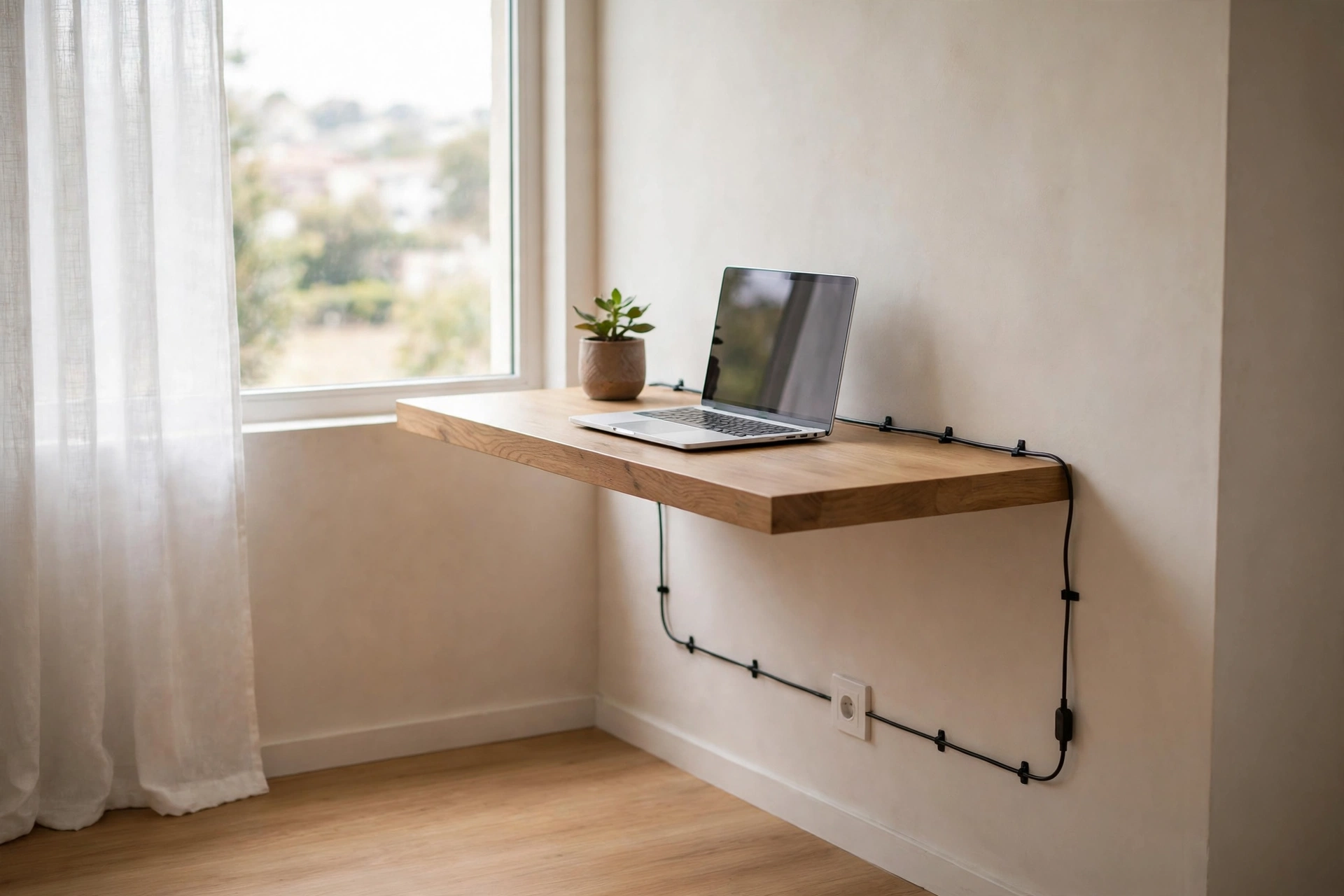
A wall-mounted floating desk ($60–$120) gives you a full workspace with completely clear floor beneath — the room reads as bigger because the eye travels under the furniture. Pro tip: run cables through a stick-on cord channel painted to match the wall; floating desks look terrible with dangling wires.
29. Tuck a Ladder Desk into the Corner
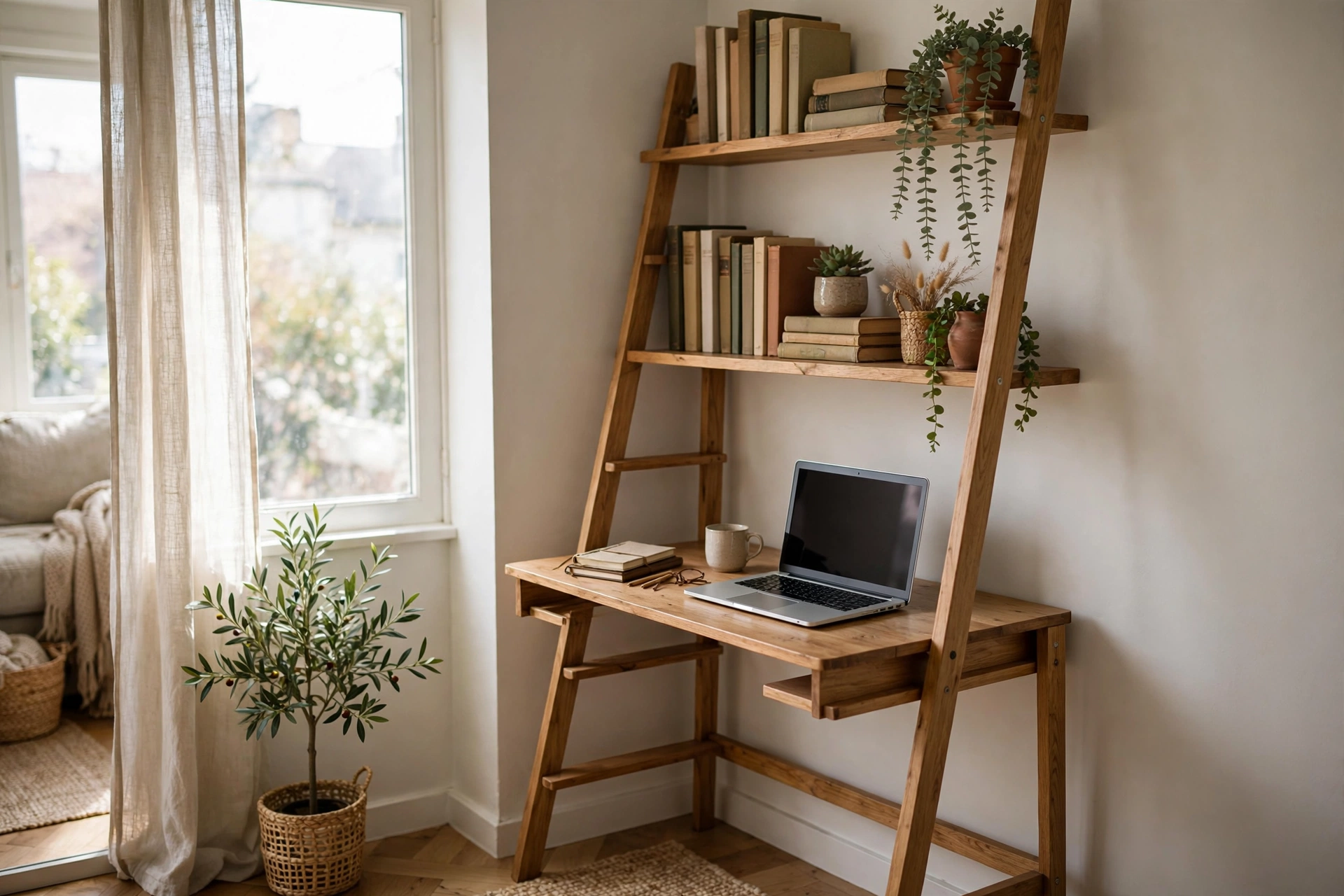
A ladder desk ($70–$130) leans against the wall with a tiny footprint — desktop at the bottom, shelves rising above — turning a dead corner into a complete workstation. Pro tip: the leaning design needs no wall anchors on carpet, but anchor it on hard floors; a bumped ladder desk walks.
30. Run a Narrow Console Behind the Sofa
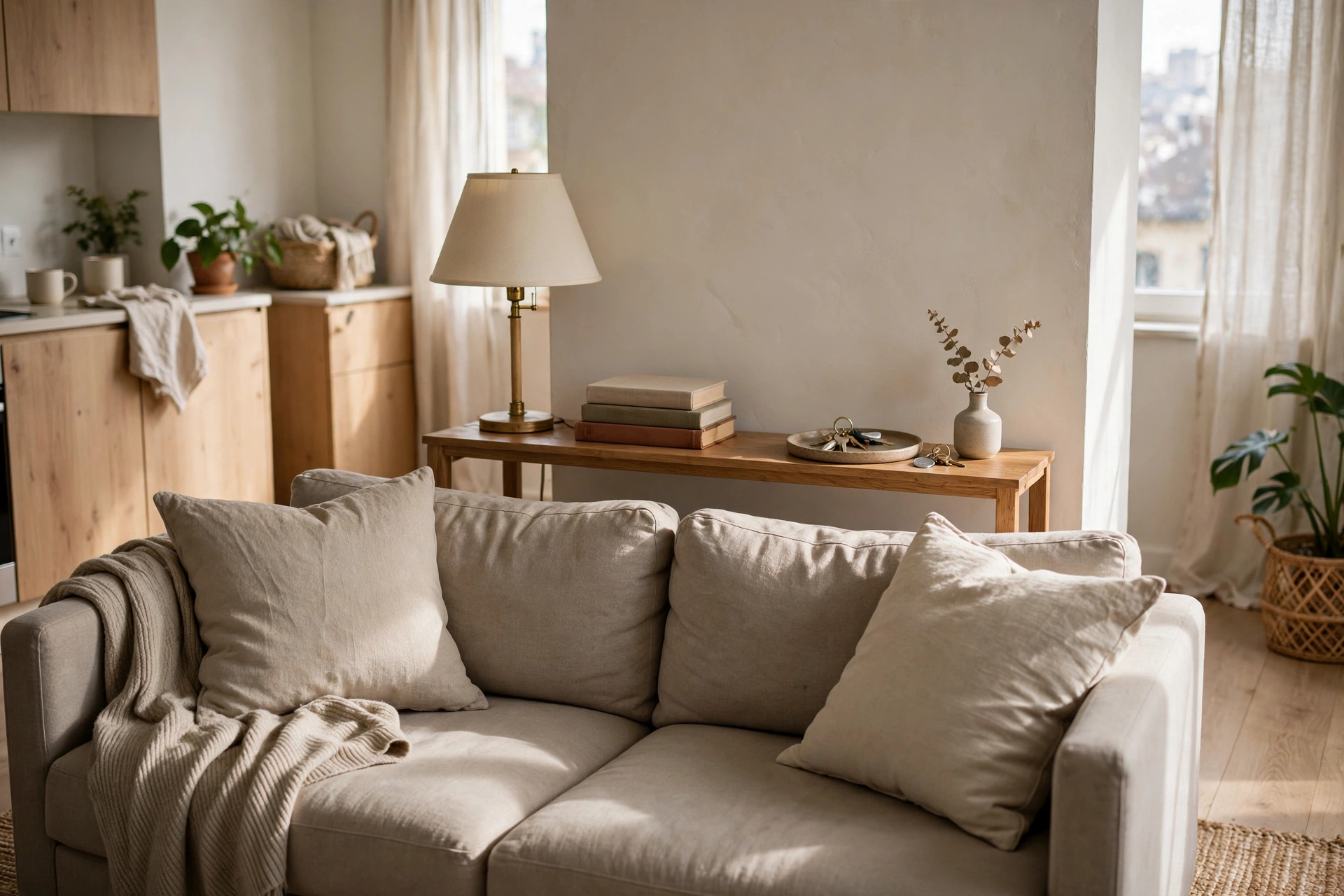
A 10–12-inch-deep console table ($60–$120) behind the sofa adds a landing strip for keys, lamps, and decor while physically defining the living zone — the sofa back becomes a room divider. Pro tip: add two stools underneath and the console doubles as a dining counter for two.
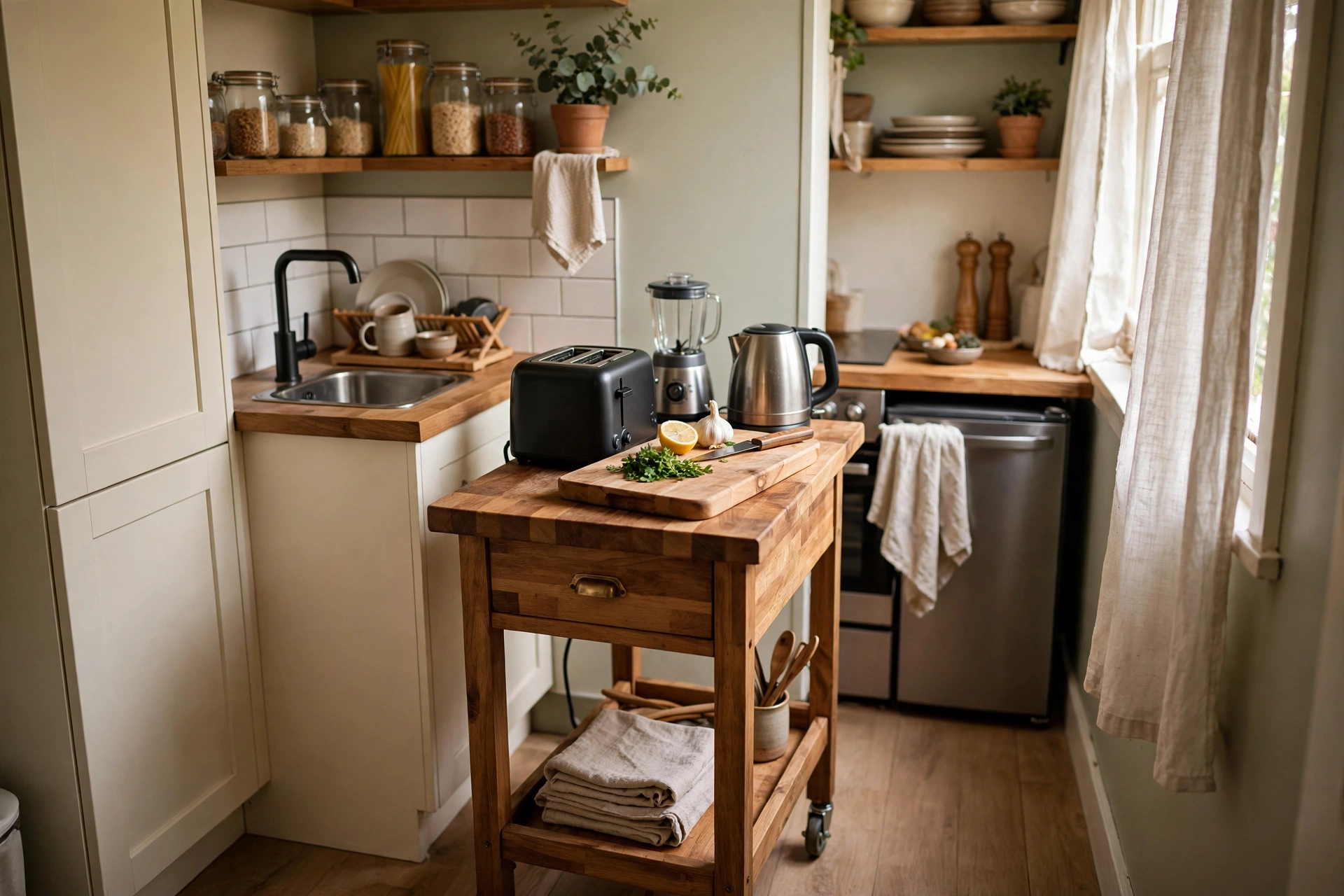
31. Add a Rolling Kitchen Island Cart
No counter space? A narrow rolling cart ($60–$120 with a butcher-block top) adds prep space, holds small appliances, and rolls against the wall when dinner’s done — an island without the commitment. Pro tip: lock the casters when chopping; a rolling cutting surface is a recipe for disaster.
Entryway & Clever Extras
The last stretch — small pieces that solve the annoying problems: shoes with no home, coats on the bed, dead corners doing nothing.
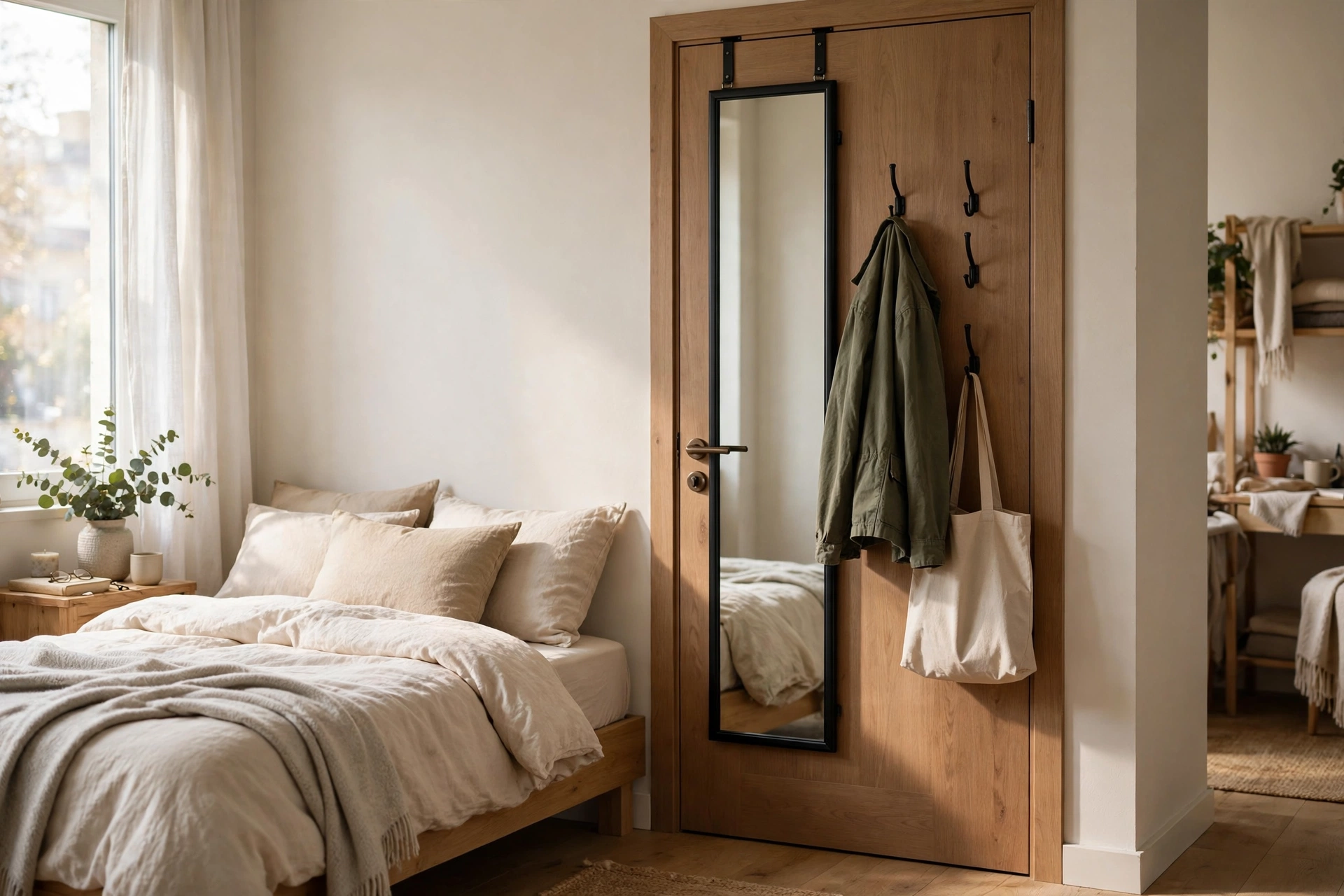
32. Hang an Over-the-Door Mirror with Hooks
An over-the-door mirror with built-in hooks ($30–$55) gives you a full-length check before leaving plus hooks for tomorrow’s outfit — two functions, zero wall holes, zero floor space. Pro tip: hang it on the bedroom-zone side of the door so the mirror serves your morning routine directly.
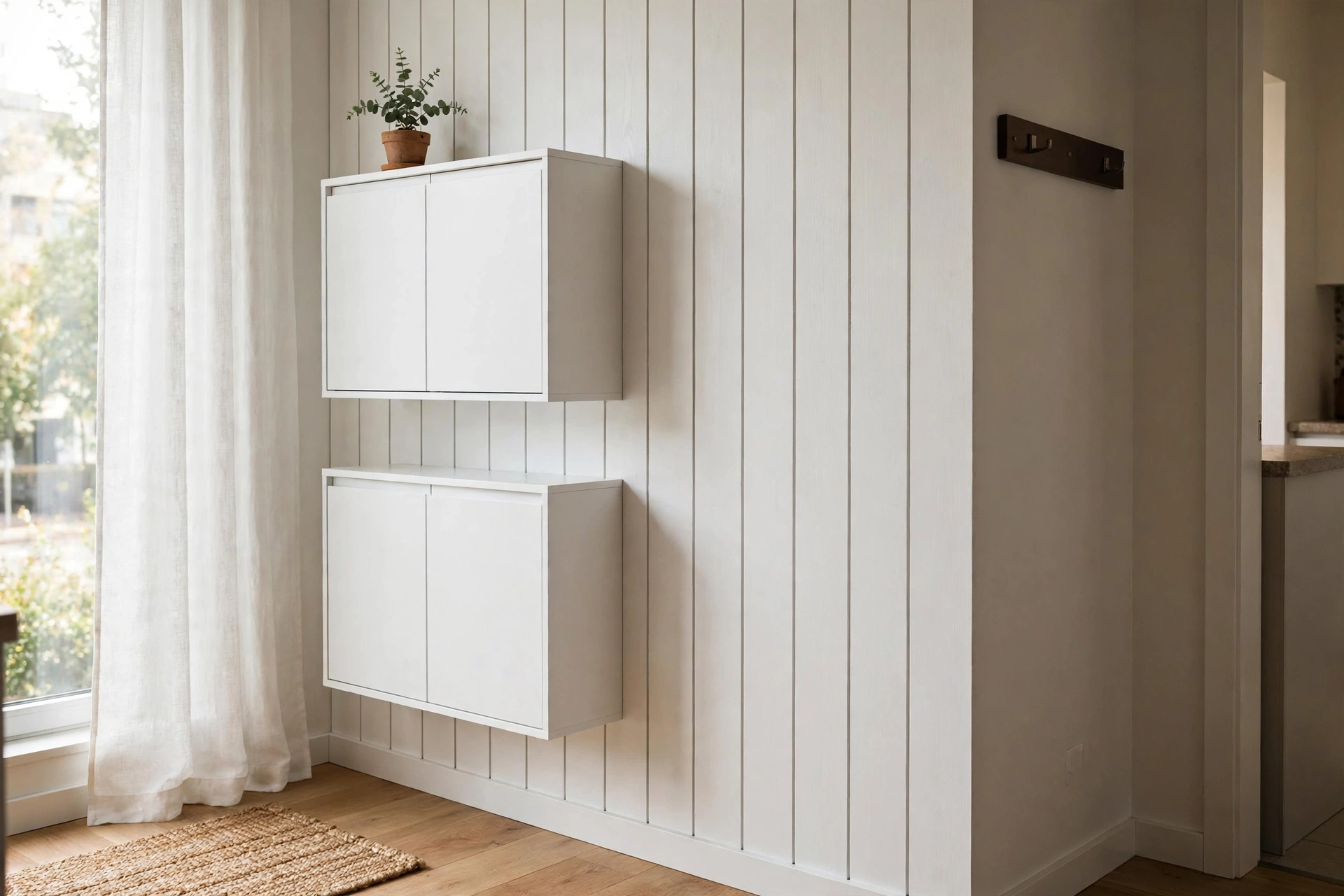
33. Slim Down with a Narrow Shoe Cabinet
A 7-inch-deep shoe cabinet (IKEA TRONES, about $40 for a 2-pack) holds 12+ pairs flat against the wall — shoes vanish into what looks like wall paneling. Pro tip: mount two stacked in the entryway; they read as modern architectural detail, not shoe storage.
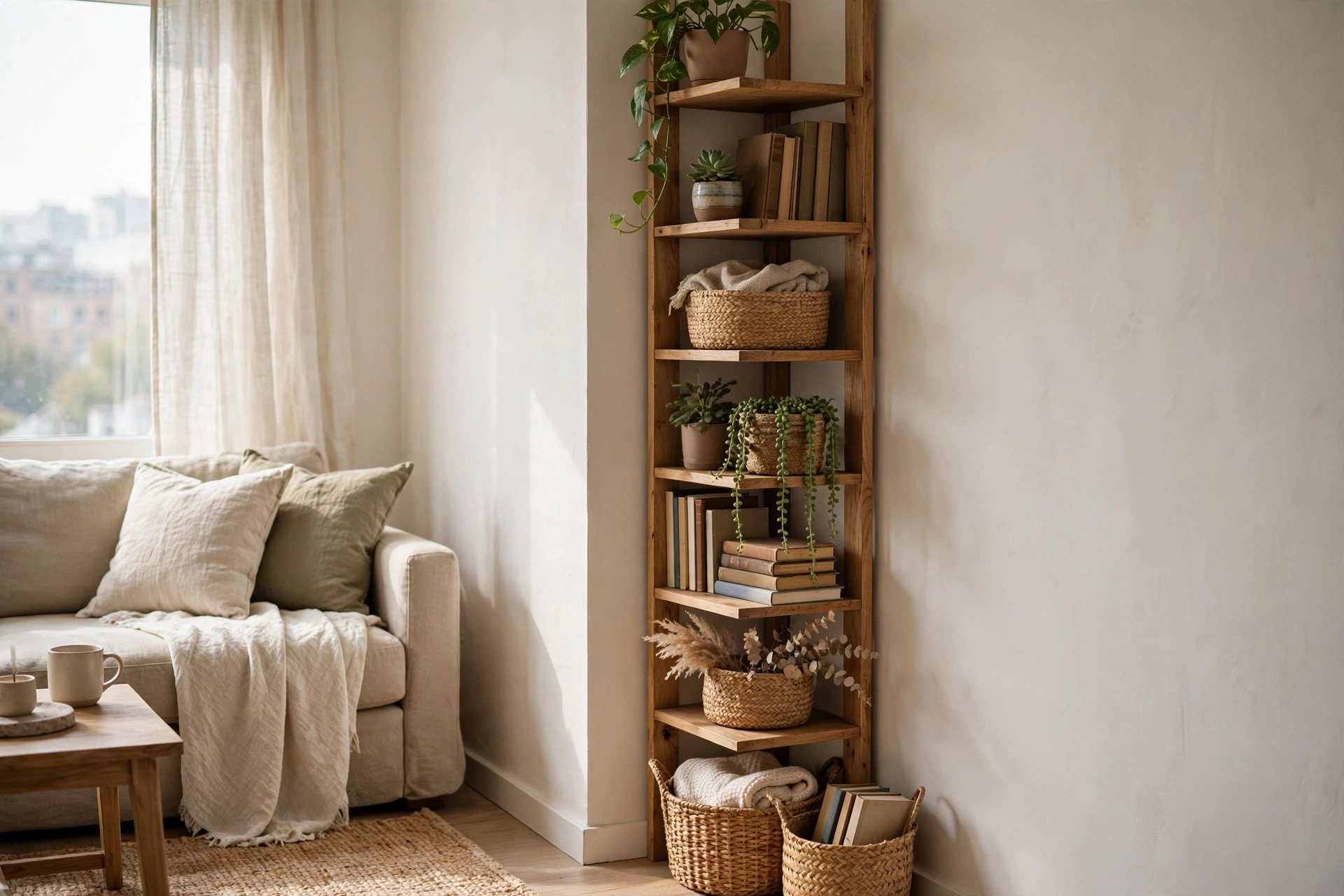
34. Claim the Corner with a Shelf Tower
A tall, narrow corner shelf unit ($50–$100) turns the most wasted spot in any room into display and storage — plants up top, baskets below, books in the middle. Pro tip: true corner units (triangular footprint) use space regular shelves can’t touch; measure your corner angle before buying.
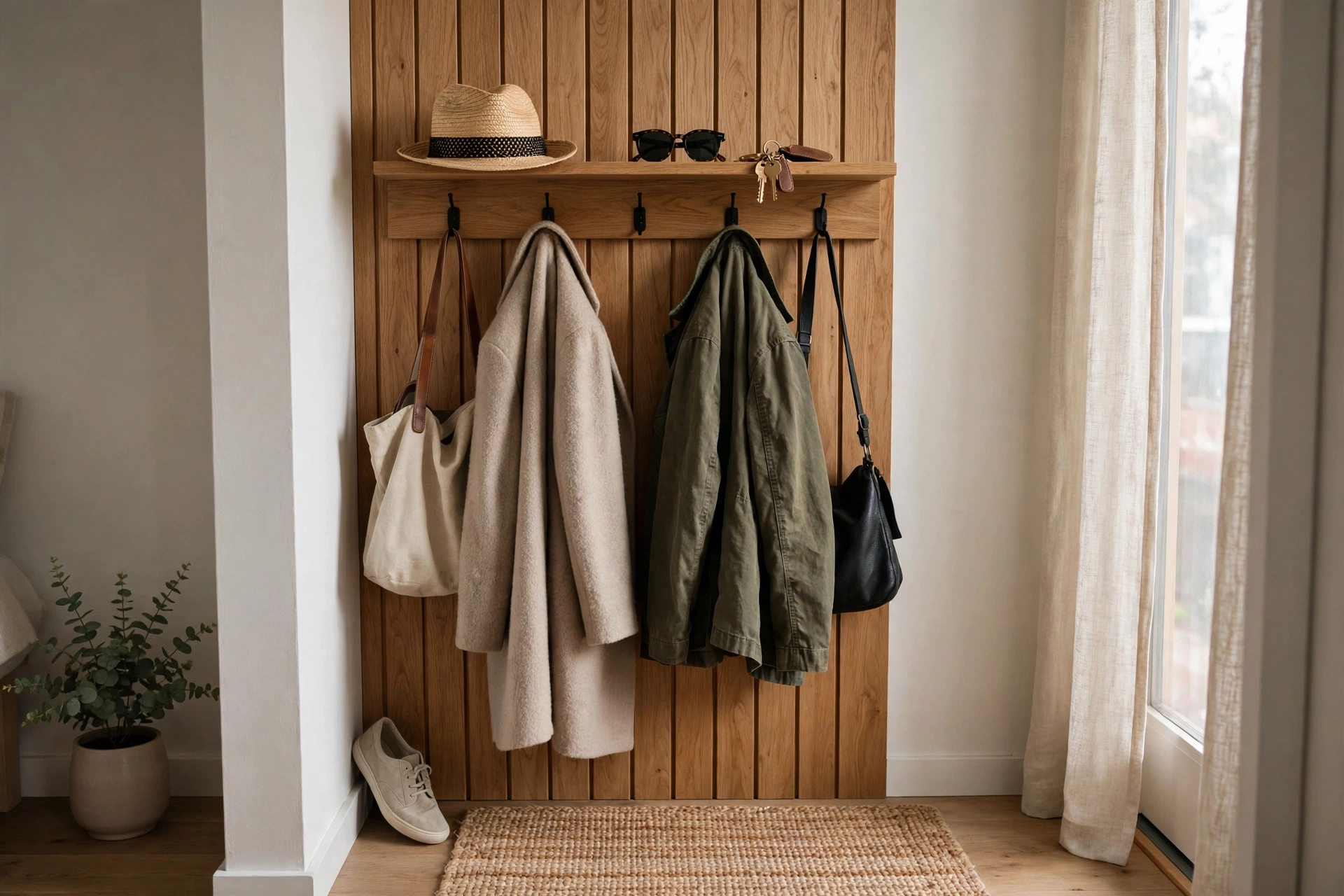
35. Mount a Wall-Mounted Coat Rack
A wall-mounted coat rack with a shelf on top ($25–$50) holds coats, bags, and hats on the wall while the shelf catches keys and sunglasses — an entire entryway closet in 24 inches of wall. Pro tip: mount it at 65 inches so long coats clear the floor; too low and they puddle, too high and short jackets dangle.
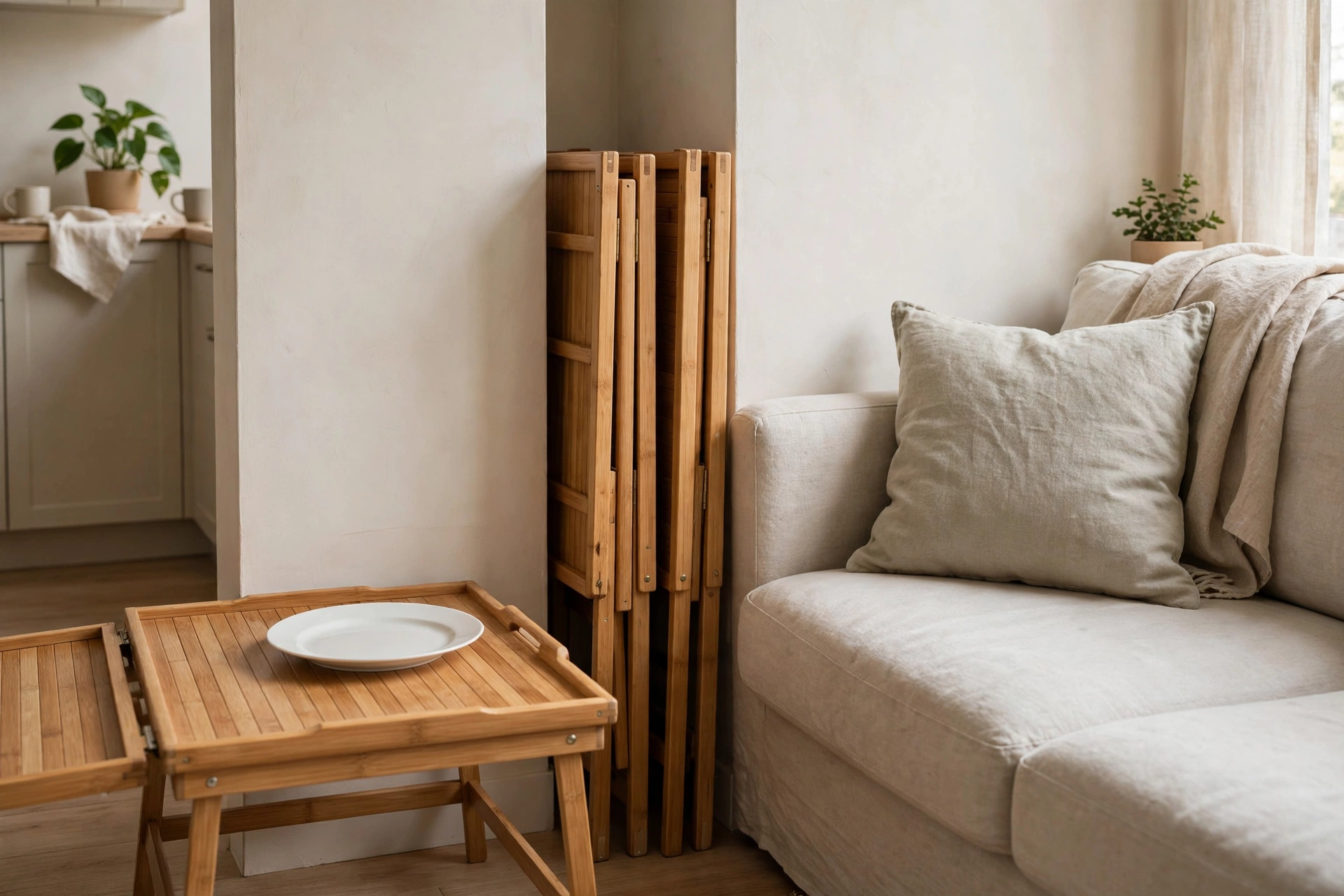
36. Stash Folding Tray Tables
A set of folding tray tables ($30–$60 for four) leans in a 6-inch gap beside the fridge or sofa — pull one out for dinner in front of the TV, a laptop desk, or a bedside table in a pinch. Pro tip: the classic TV-tray gets a bad rap; bamboo or wood versions look genuinely good and cost the same.
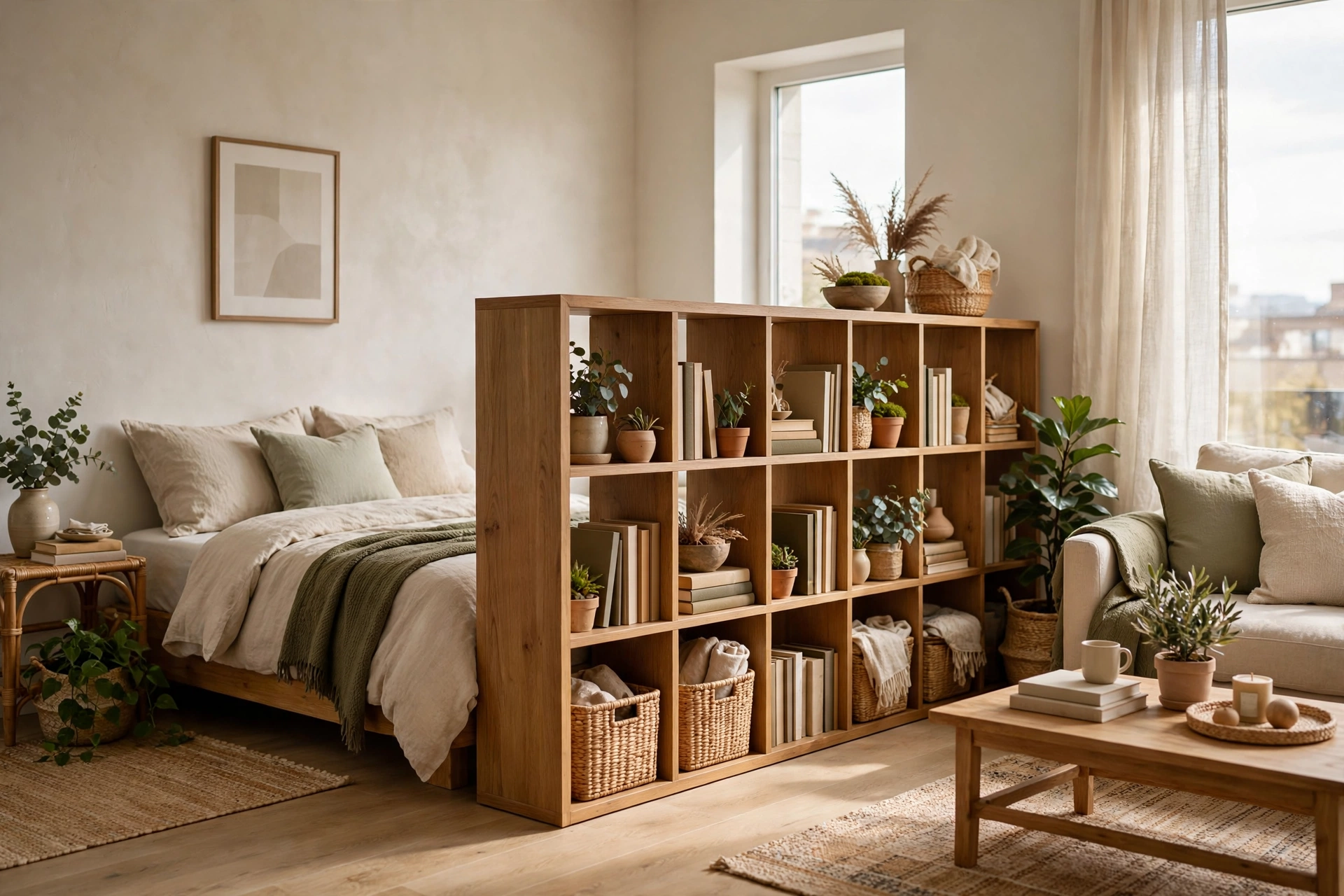
37. Divide and Store with a Bookshelf Room Divider
A low, wide bookshelf ($80–$150, like IKEA KALLAX) placed perpendicular to the wall divides the sleep zone from the living zone while storing books, baskets, and decor on both sides — the hardest-working divider in existence. Pro tip: keep it under 48 inches tall so light and sightlines flow over the top; tall dividers chop studios into caves. If budget is tight, check our budget decorating guide for thrifted furniture finds that work just as hard.
Frequently Asked Questions
What furniture should I buy first for a studio apartment?
Start with the bed (the non-negotiable), then a loveseat-scale sofa, then one storage hero — under-bed bins or a storage ottoman. Those three cover sleep, sit, and stash. Add the dining/work surface next, then layer in the nice-to-haves like accent chairs and entryway pieces once you know how you actually live in the space.
How do I fit a dining table in a tiny studio?
Go small and flexible: a 36-inch round pedestal table seats four without corner legs, a drop-leaf wall table vanishes when not in use, or a lift-top coffee table does dinner duty at sofa height. Folding chairs stored on wall hooks complete the setup without permanent floor commitment.
What is the best bed for a small studio apartment?
It depends on your priority: a Murphy bed reclaims the most floor space, a loft bed doubles your usable square footage vertically, a daybed works as a sofa by day, and a platform bed with drawers replaces a whole dresser. Match the bed to your biggest constraint — floor space, storage, or seating.
How can I add seating without crowding my studio?
Choose visually light pieces: armless chairs, cube ottomans, poufs, and clear acrylic chairs all seat people without visual bulk. Pieces with visible legs also help — the floor showing underneath makes every seat read smaller. And remember that seating can stack, fold, or nest when guests leave.
Should I buy a full-size sofa for a studio apartment?
Almost never — an 84-inch sofa dominates a studio living zone and kills traffic flow. A 58–68-inch loveseat seats two comfortably and leaves room to breathe; add a sleeper chair or cube ottomans for overflow seating. Your studio will feel twice as big with the smaller anchor piece.
Where can I find affordable small-space furniture?
IKEA is the undisputed champion (flat-packed for tight stairwells, designed for small European apartments), followed by Target, Wayfair, and Amazon for budget finds. Thrift stores and Facebook Marketplace are goldmines for solid-wood small-scale pieces — older furniture was often built smaller than today’s oversized versions.
Final Thoughts
Here’s the truth about furnishing a studio: constraints make you a better decorator. When every piece has to justify its footprint, you end up with a home where everything works hard and nothing is filler — which is more than most big apartments can say.
Start with the big three — bed, loveseat, storage hero — and live with them for a few weeks before adding more. You’ll quickly feel which corners need what. Your studio isn’t too small for good furniture. It just needs the right furniture.