
34 Studio Apartment Home Office Ideas Without Sacrificing Living Space
Working from home in a studio apartment sounds like a dream until your “office” is also your dining table, your couch, and — on bad days — your bed. Without walls to separate work from life, the laptop creeps into every corner, and the apartment never quite feels off-duty. The good news: you don’t need a spare room to have a real workspace. You need about four square feet, a smart desk, and a few tricks that tell your brain “work happens here, and only here.”
This guide covers 34 studio apartment home office ideas that fit real small spaces: fold-away desks that vanish after hours, seating that doesn’t wreck your back, lighting that flatters you on video calls, storage that swallows the clutter, and boundary rituals that protect your evenings. Every idea includes realistic pricing and a pro tip so you can build a workspace that works as hard as you do — without sacrificing a single square foot of living space.
Desk Solutions for Tiny Spaces
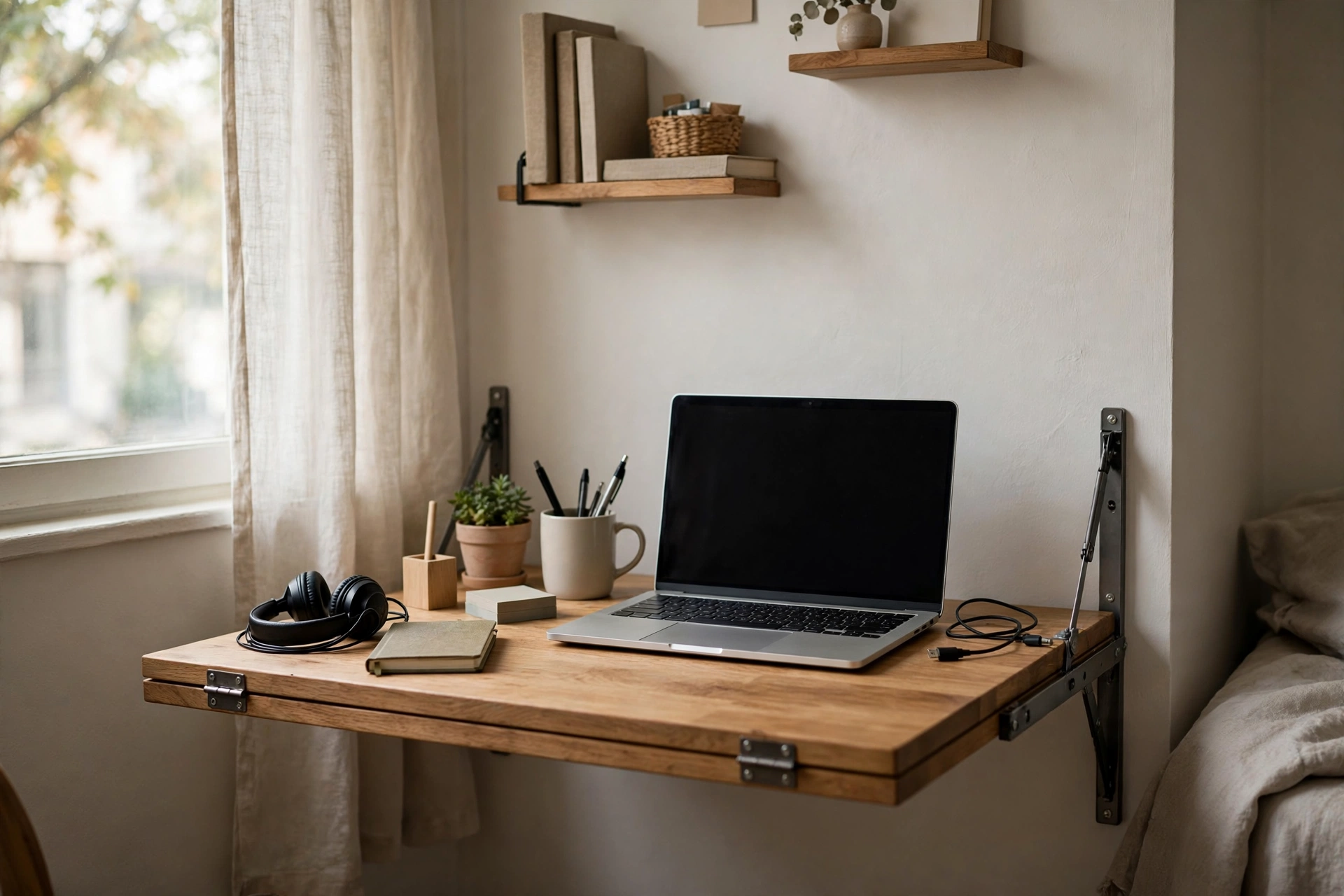
1. A Fold-Down Wall Desk That Vanishes After Hours
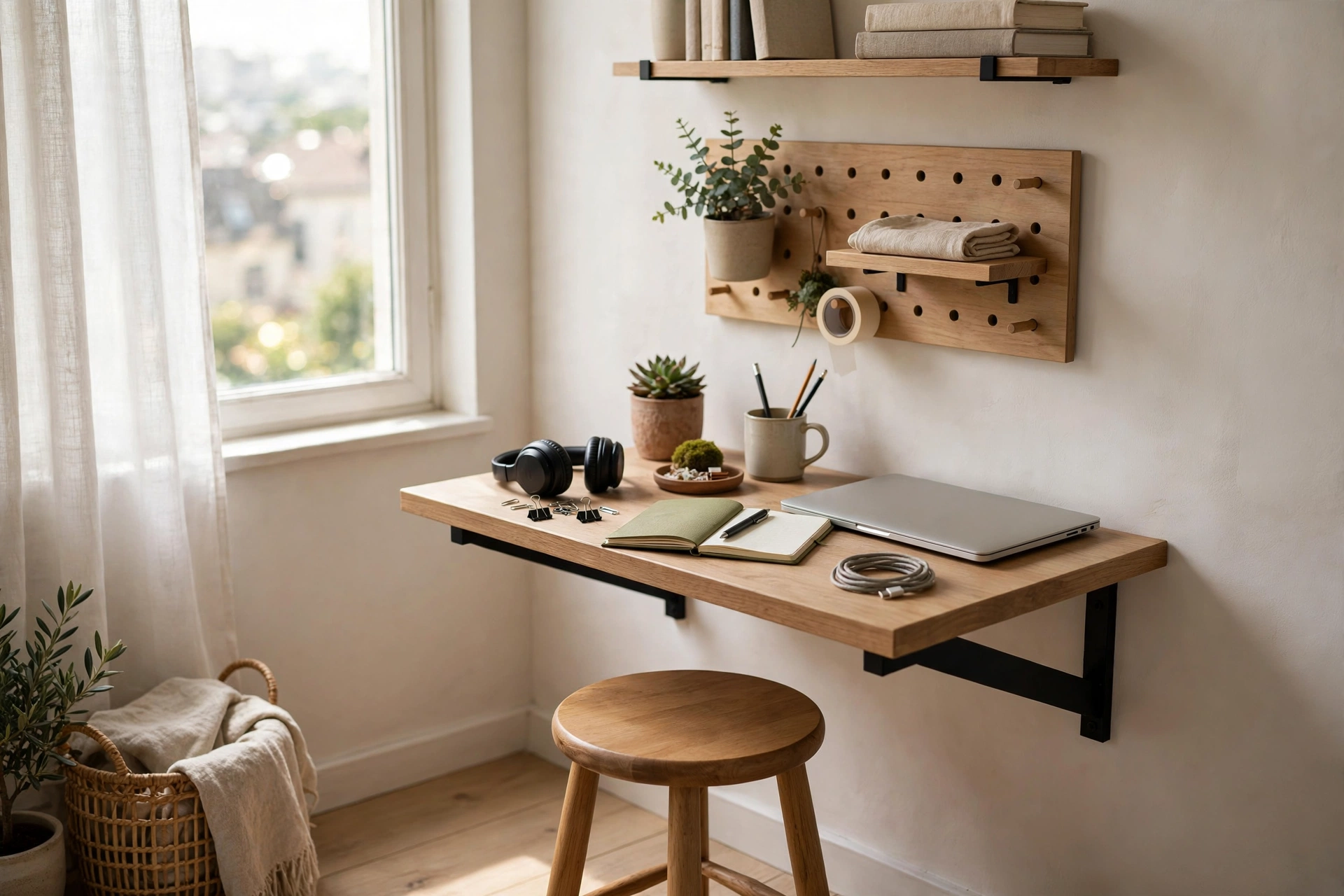
A wall-mounted drop-leaf desk is the ultimate studio office hack: fold it down for a full-size work surface, fold it up when you’re done, and your “office” disappears into the wall. IKEA’s BJURSTA wall-mounted drop-leaf table (about $79) gives you a 35-inch-wide desk that folds to just a few inches deep. Mount it at standard desk height (29–30 inches) near an outlet. Pro tip: mount a small shelf or pegboard directly above the folded desk — when the desk is up, the wall still looks like intentional decor, not an empty bracket.
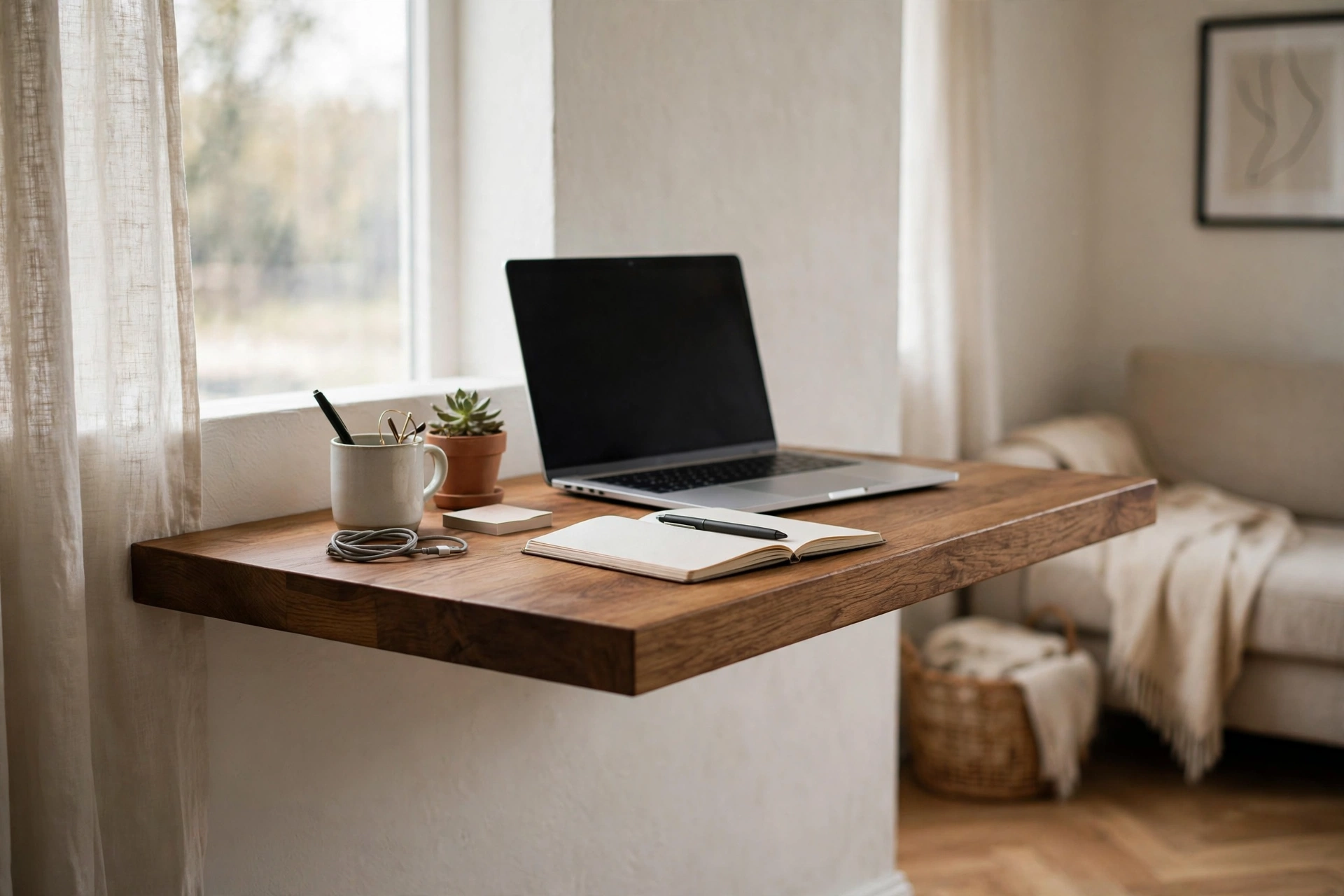
2. A Floating Desk Shelf for the Narrowest Walls
When even a fold-down desk feels like too much, a deep floating shelf becomes your desk. A 24×12-inch solid wood shelf mounted on heavy-duty brackets ($25–$45 total) holds a laptop, a notebook, and a coffee — everything a minimalist setup needs. Because there are no legs, the floor underneath stays clear, which keeps the visual footprint near zero. Pro tip: pair the shelf with a stool that tucks completely underneath (see idea 10) — the whole workstation collapses into about two square feet of wall.
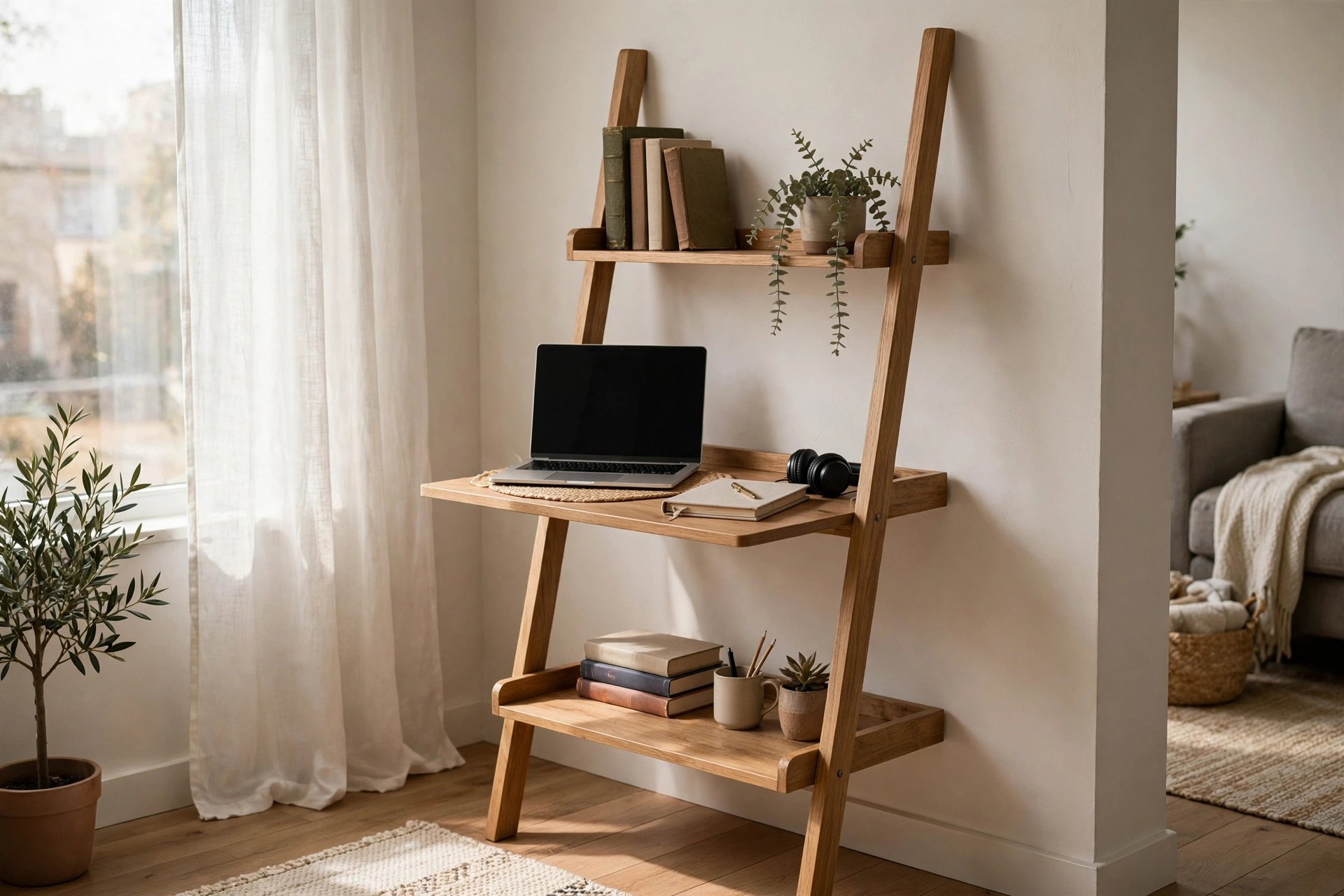
3. A Ladder Desk That Leans, Not sprawls
Ladder desks lean against the wall at a slight angle, so their footprint is barely deeper than the desktop itself — typically 18–20 inches. The tiered shelves above hold books, a printer, and office supplies, giving you vertical storage that a flat desk can’t. Options like the Ameriwood Home Lawrence ladder desk run about $70–$110 and assemble in under an hour. Pro tip: anchor the top to the wall with the included anti-tip hardware — a leaning desk with a monitor on it is not something you want wobbling.
4. A C-Table That Slides Over Your Chair
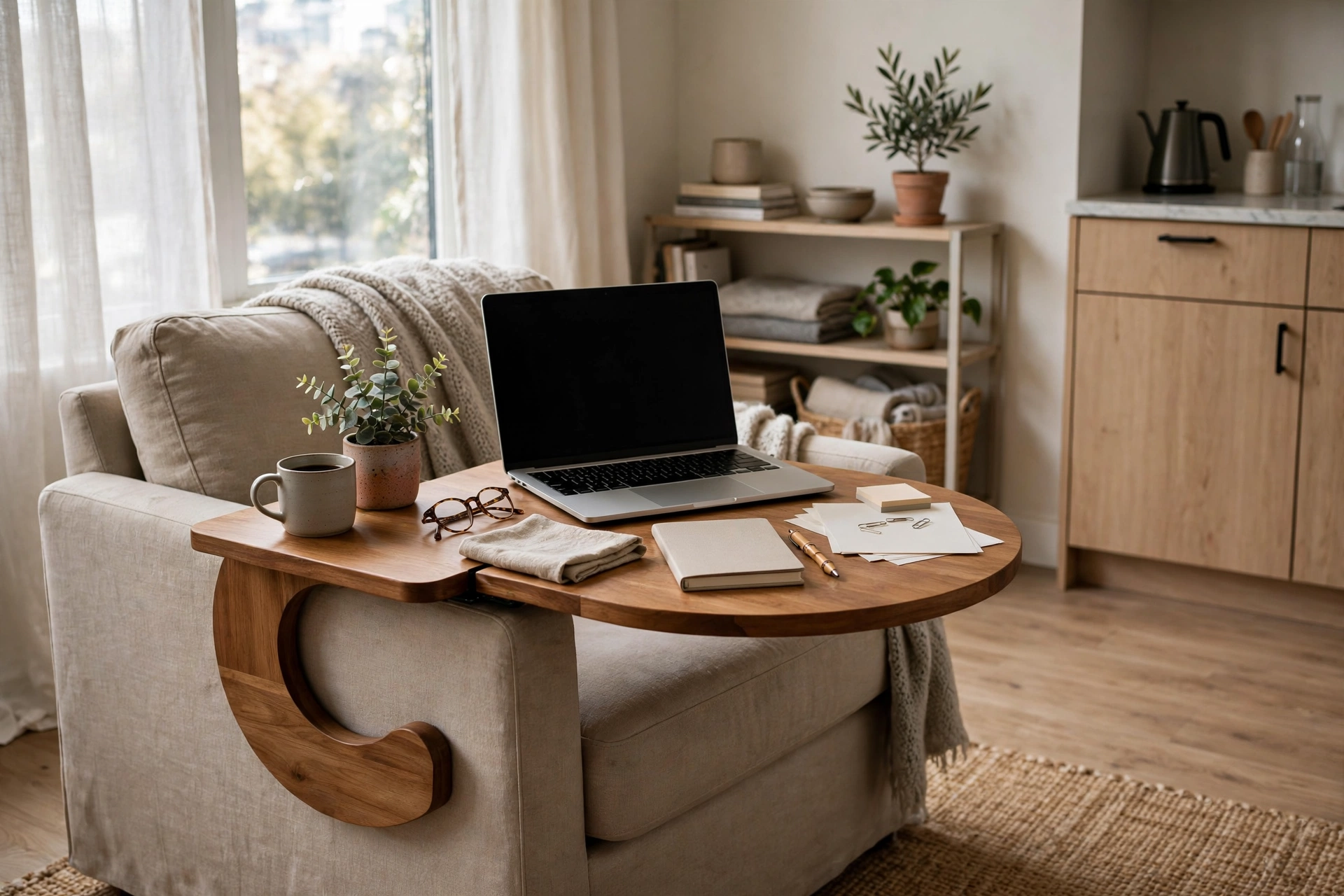
A C-shaped side table slides its base under your armchair or sofa, putting a work surface right at your lap — instant desk, zero dedicated floor space. Use it for laptop sessions from your favorite reading chair, then slide it away when work ends. Bamboo or wood C-tables cost $40–$80 and double as side tables for the living zone. Pro tip: this is a supplement, not a full-time desk — great for email triage and light work, but pair it with a real desk setup (ideas 1–3) for full workdays to protect your posture.
5. A Secretary Desk With Doors That Close
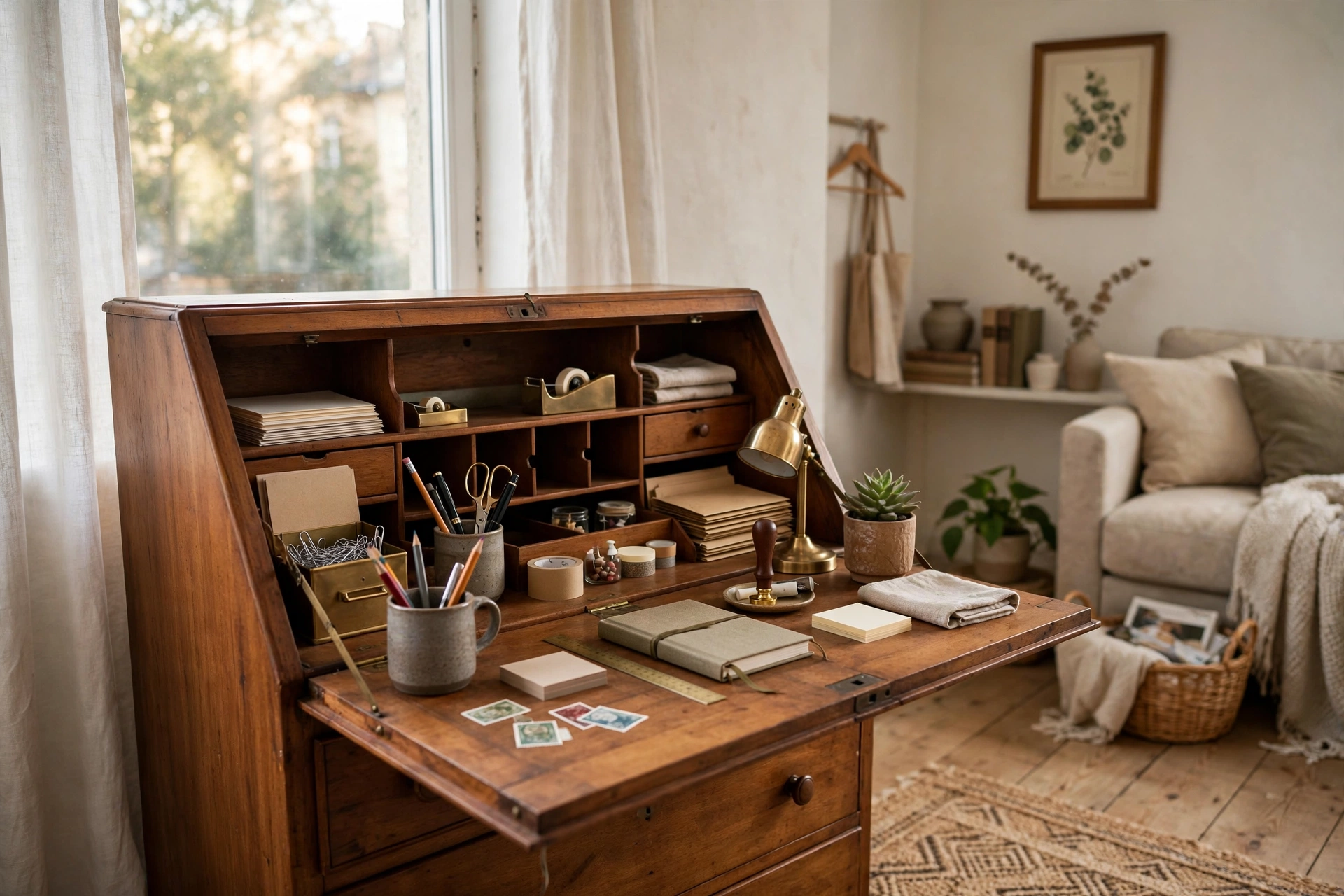
The secretary desk is the original work-from-home boundary: open the drop front to work, close it to make the mess vanish. Modern versions ($120–$250) pack a surprising amount of organization — cubbies, drawers, and a full desktop — into a 30-inch-wide footprint. When clients video-call, they see a handsome cabinet, not your chaos. Pro tip: this pairs beautifully with the space-saving philosophy in these space-saving studio apartment furniture ideas — furniture that does two jobs is the whole game in small spaces.
6. A Console Table That Moonlights as a Desk
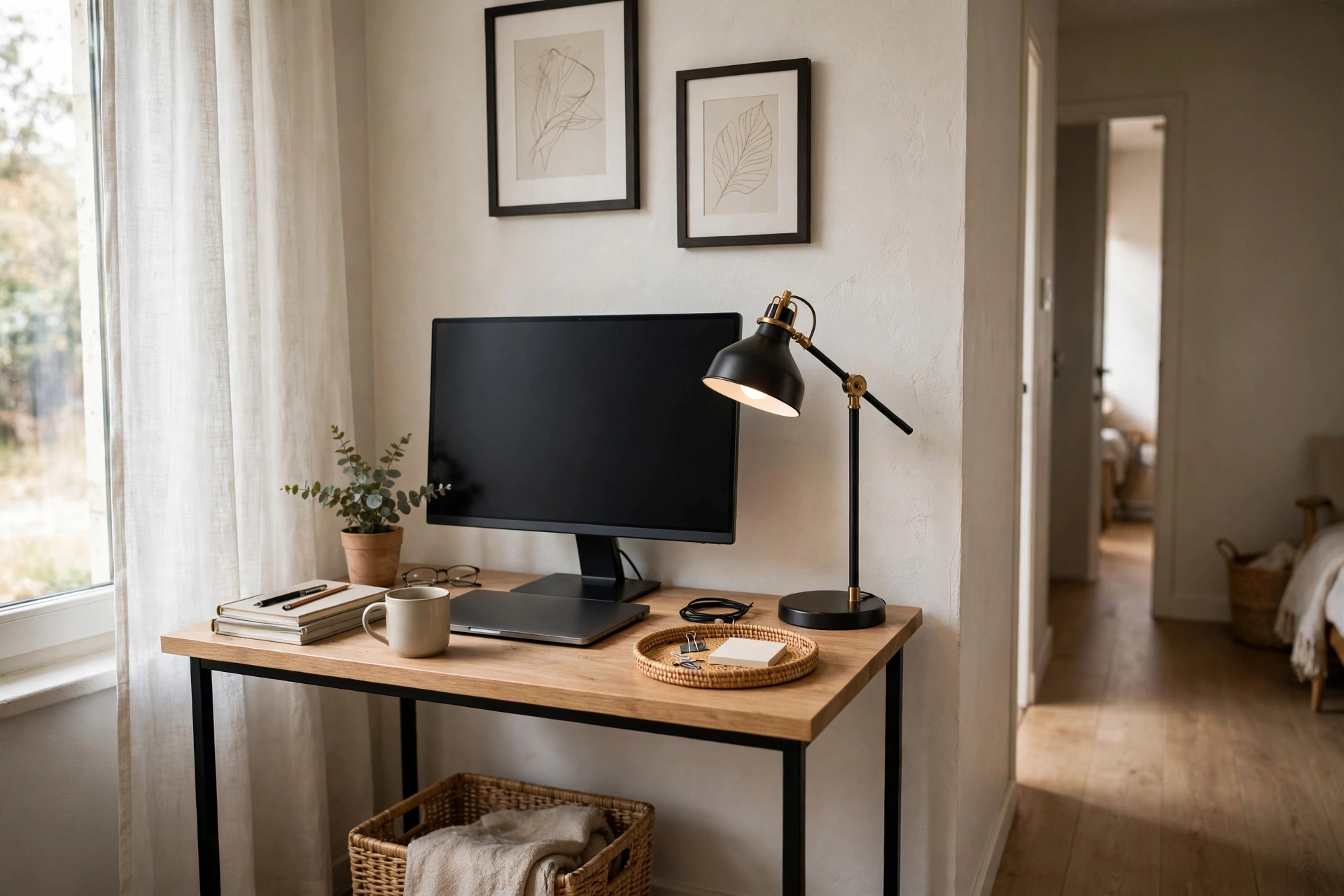
A slim console table (12–14 inches deep) against any wall is a desk in disguise. At 48 inches wide it fits a laptop, a monitor, and a lamp — and the rest of the day it’s an entryway table or sofa-back console. Look for one with a lower shelf for a printer or storage baskets; decent options run $80–$150. Pro tip: choose a console at true desk height (29–30 inches), not a taller sofa-table height — your wrists and shoulders will thank you after the first full week.
7. A Window-Sill Desk With a View
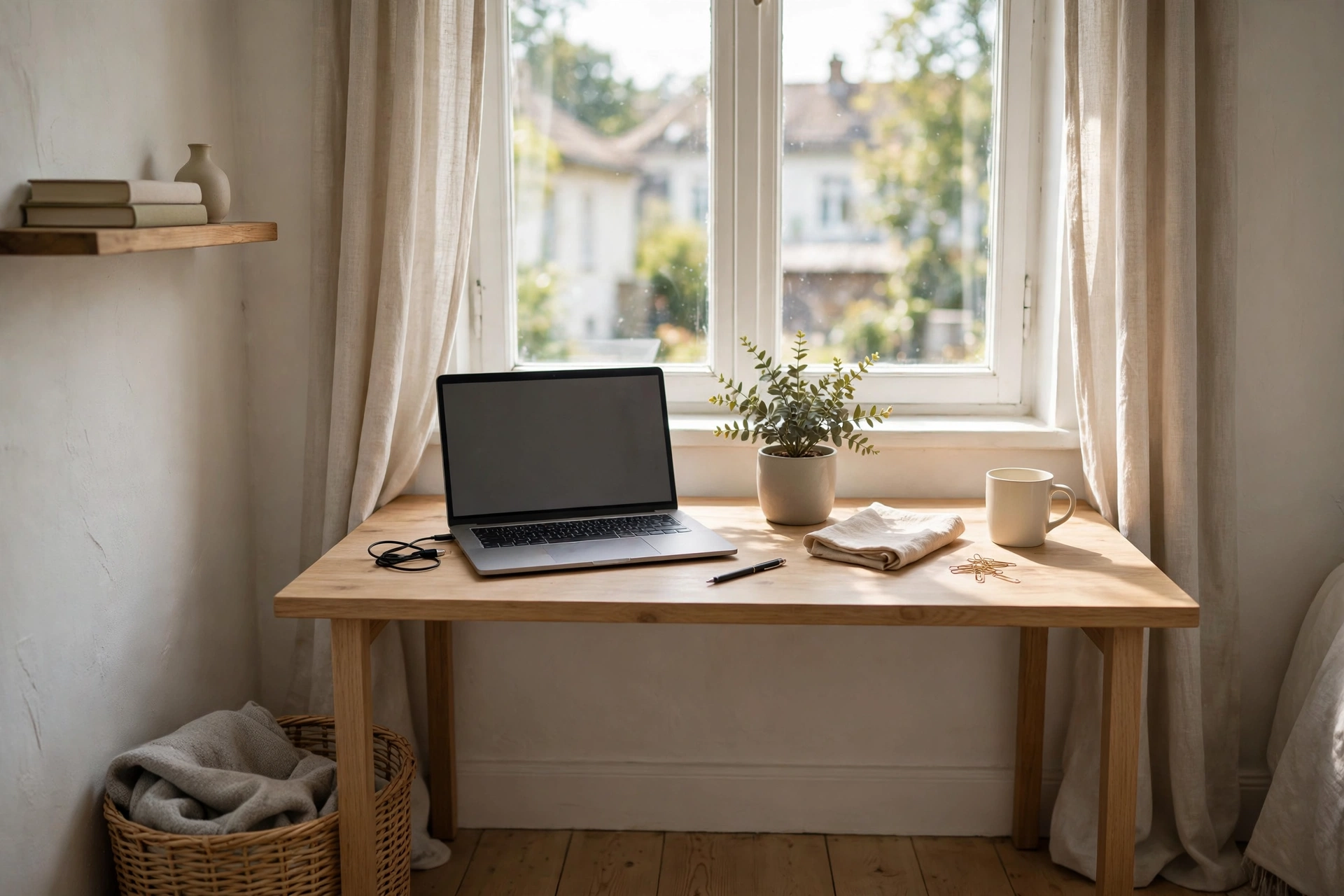
The wall under your window is dead space in most studios — a narrow desk there turns it into the best seat in the house. A 10–12-inch-deep shelf or a purpose-built window desk ($60–$100) gives you natural light on your work and a view for thinking breaks. Facing the window also means video calls get gorgeous natural front-light (see idea 21). Pro tip: add a sheer curtain or light-filtering blind behind the monitor — direct sun on the screen creates glare that no brightness setting can fix.
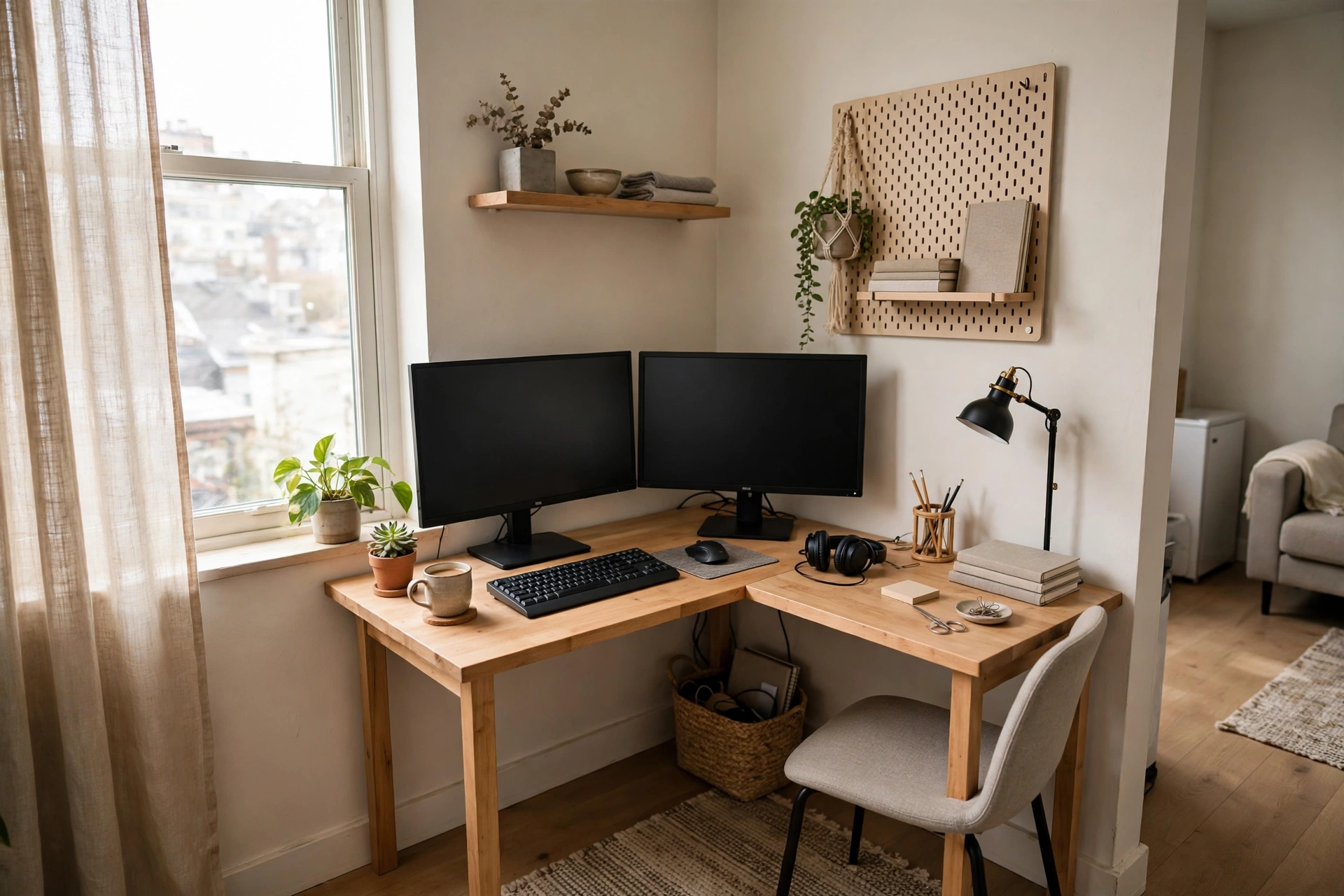
8. A Corner Desk That Uses Dead Space
Corners are the most wasted square footage in a studio — an L-shaped or triangular corner desk converts one into a surprisingly generous workstation. A compact corner desk ($90–$160) gives you room for a monitor plus laptop side by side, which a straight narrow desk can’t. The corner position also naturally faces you into the room, which feels less cramped than facing a wall. Pro tip: float a small plant or a framed print in the corner above the desk — it softens the “wedged in” feeling and gives your eyes somewhere pleasant to rest.
Seating & Ergonomics That Fit
9. A Compact Ergonomic Chair (Worth Every Penny)
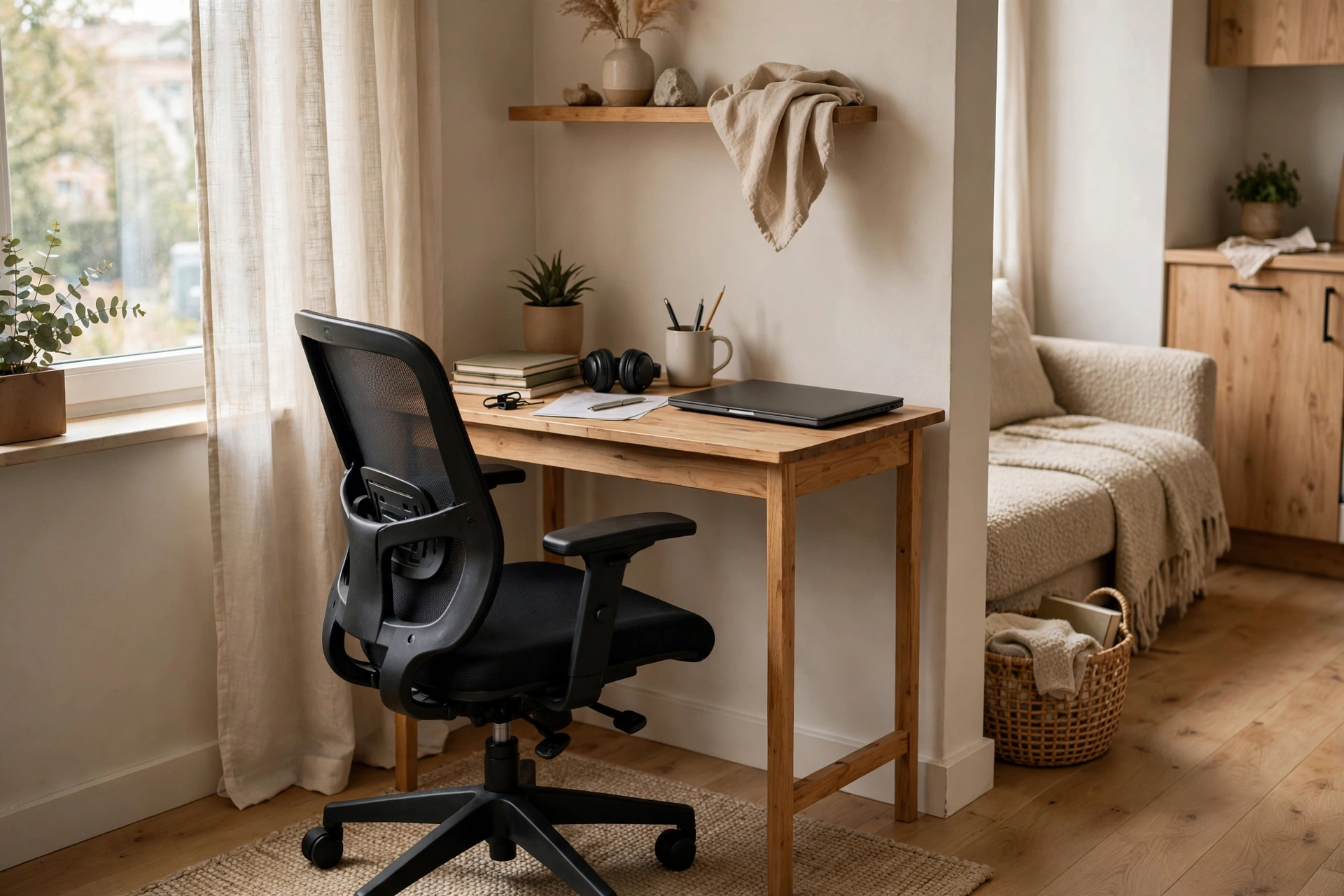
Your chair is the one office purchase to never cheap out on — back pain doesn’t care about your square footage. Compact ergonomic chairs like the HON ValuTask ($150–$200) or a used Herman Miller Sayl offer real lumbar support in a small footprint. Measure the chair’s width against your desk nook before buying; armless or flip-up-arm models tuck fully under the desk. Pro tip: if the budget is tight, buy the chair used from an office liquidator and the desk new — a $100 used ergonomic chair beats a $100 new “gaming” chair every time.
10. A Stool That Disappears Under the Desk
For part-time desk setups (the floating shelf, the C-table), a backless stool or a low-profile drafting stool is the right call — it slides completely under the desk when you’re done, leaving zero visual clutter. Wooden counter stools ($40–$70) look like decor; adjustable drafting stools ($60–$100) work for taller setups. Pro tip: add a footrest — a $20 under-desk footrest or even a sturdy box — because dangling feet are the hidden cause of most stool discomfort.
11. A Kneeling Chair for Small-Space Posture
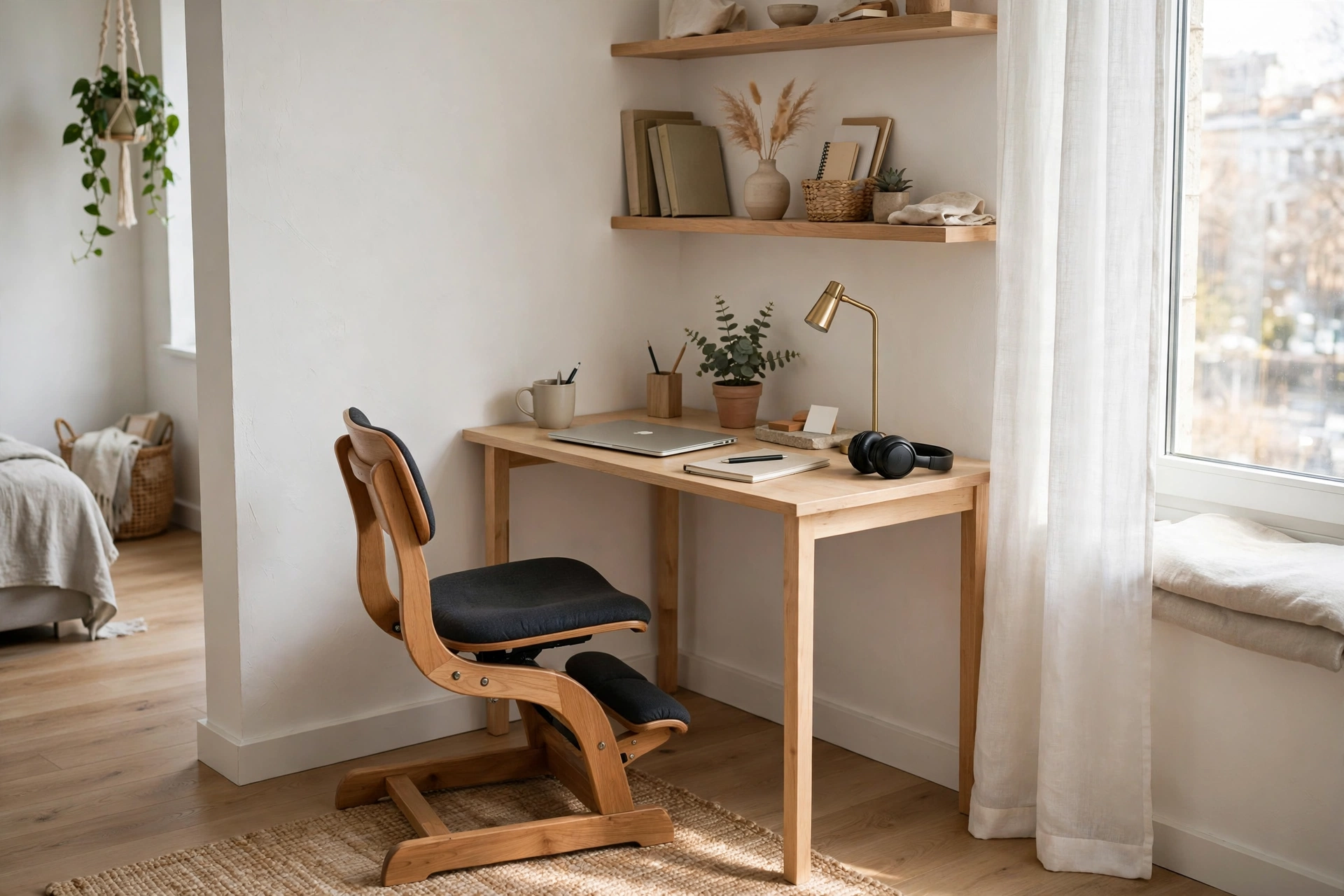
Kneeling chairs tilt your pelvis forward into a more natural sitting angle, and their footprint is noticeably smaller than a traditional office chair — no big five-star base sprawling across your floor. A solid wood kneeling chair runs $80–$140 and doubles as a conversation piece. They’re best for people under 6 feet and for sessions under 4–5 hours. Pro tip: alternate between the kneeling chair and standing (a counter-height surface works) through the day — the variety is what saves your back, not any single perfect chair.
12. Upgrade Your Dining Chair for Double Duty
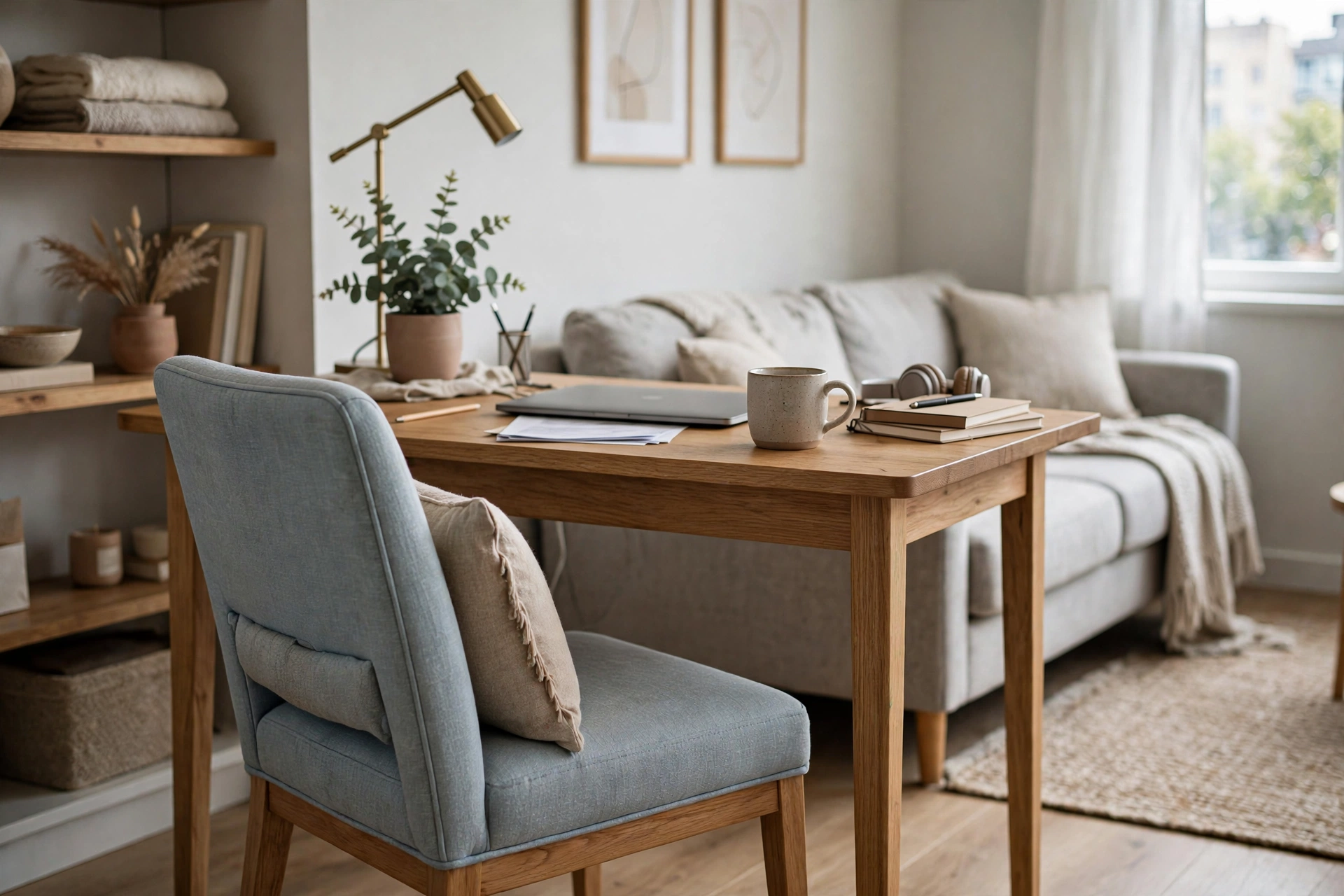
If your “desk” is also your dining table, don’t buy a separate office chair — upgrade the dining chair instead. A well-designed dining chair with a curved back and a seat cushion ($80–$150 each) works for both meals and workdays, and it looks a hundred times better than an office chair parked at your table. Add a lumbar pillow for long sessions. Pro tip: this is the move when your desk is the dining table — one good chair beats two mediocre ones, and your studio keeps a single clean look.
Defining the Work Zone
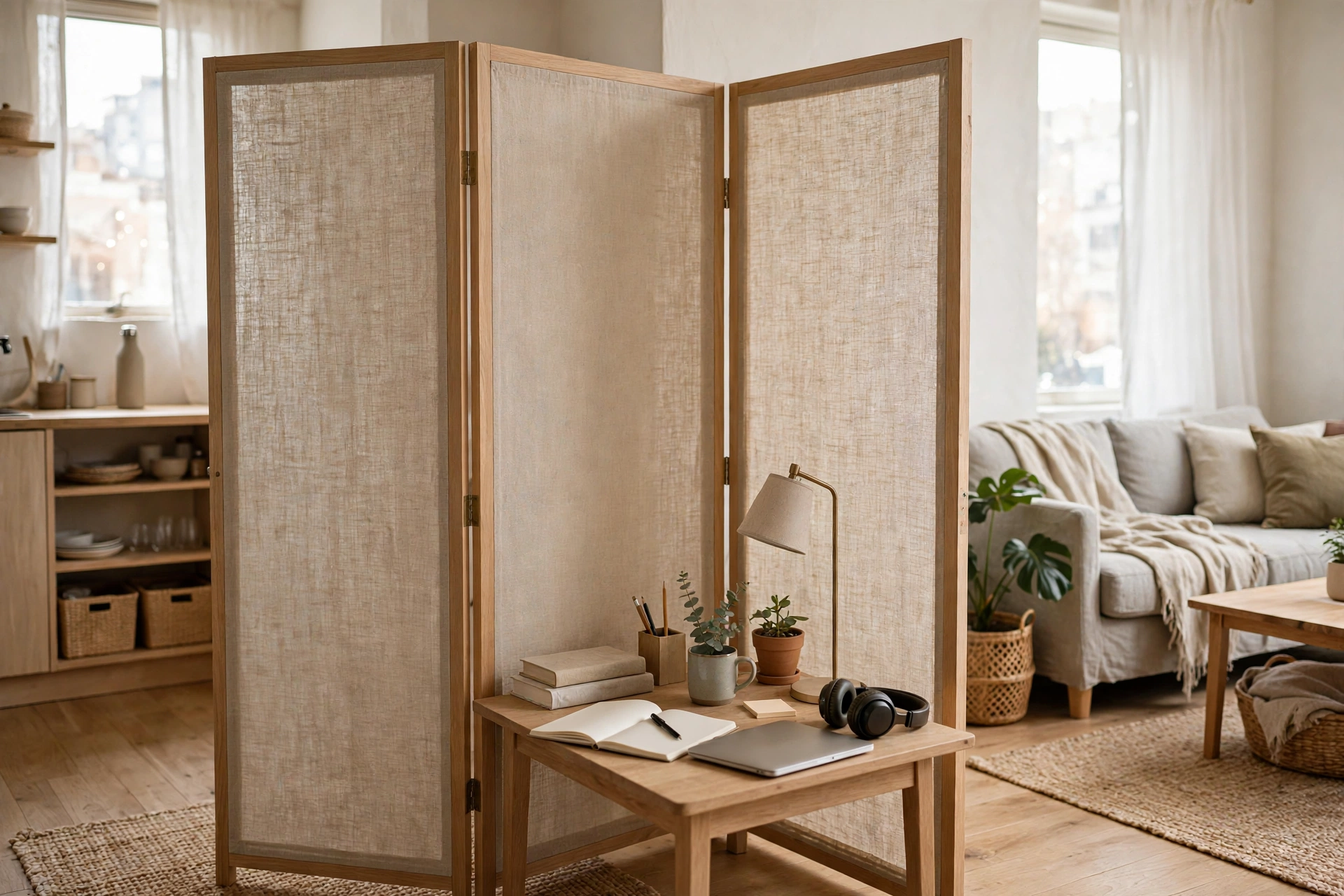
13. A Room Divider as Your Office Backdrop
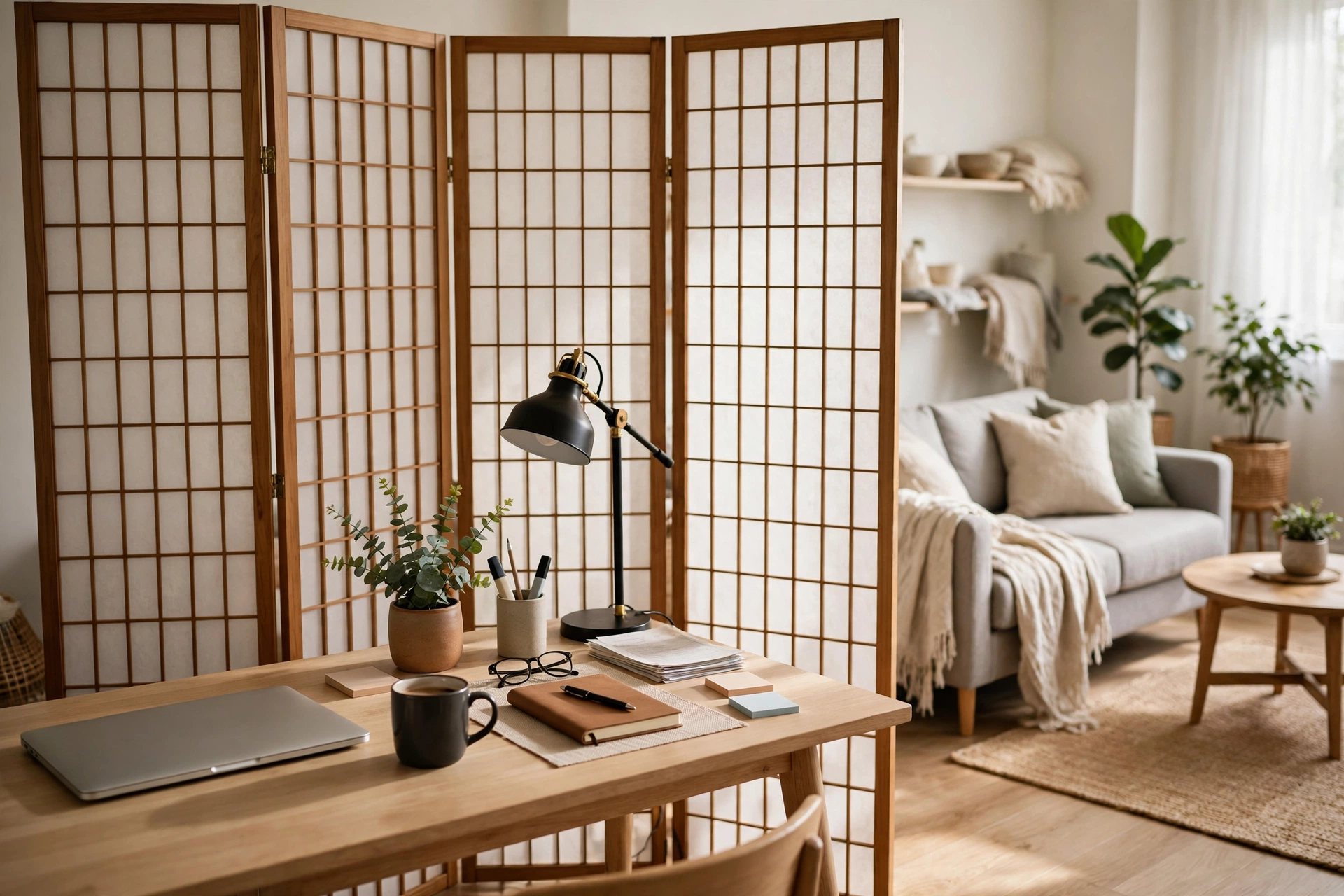
Position a folding screen, open bookshelf, or curtain panel behind your desk and you instantly get two things: a professional video-call background and a psychological wall between “office” and “home.” A three-panel shoji-style screen ($60–$120) folds flat when you want openness. This is zoning 101 — the same principle behind these studio apartment layout ideas, applied to your workday. Pro tip: place the divider 2–3 feet behind your chair, not right against your back — the depth makes video calls look natural instead of cramped.
14. A Zone Rug Under the Desk
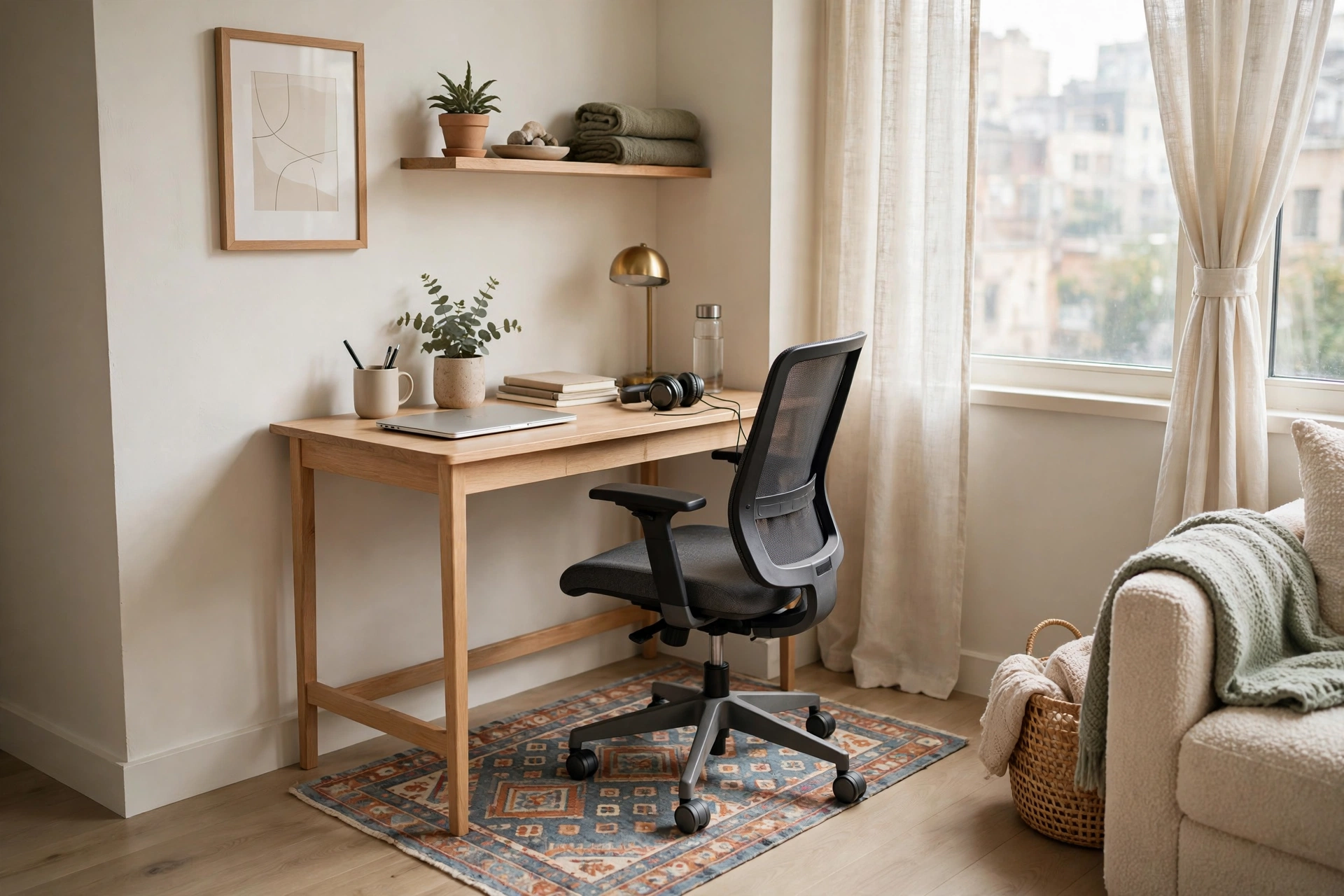
A small rug under your desk and chair does quiet psychological work: step onto it and you’re “at work,” step off and you’re home. A 3×5 or 4×6 low-pile rug ($40–$90) also protects the floor from chair wheels and dampens keyboard clatter. Choose a flatweave so the chair rolls easily. Pro tip: pick a rug in a different tone from your living-zone rug — the contrast reinforces the mental boundary between work and rest.
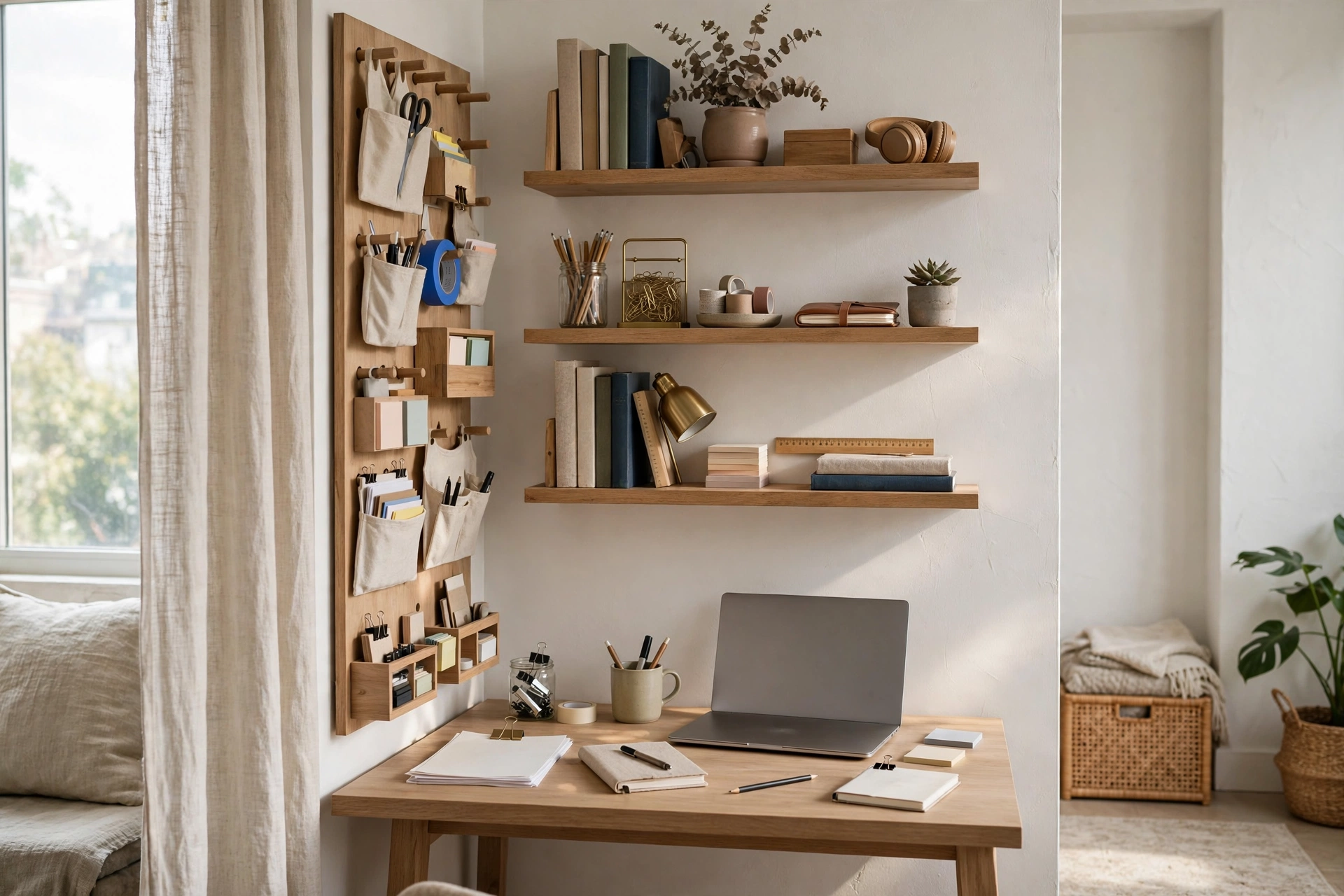
15. A Pegboard Wall for Vertical Organization
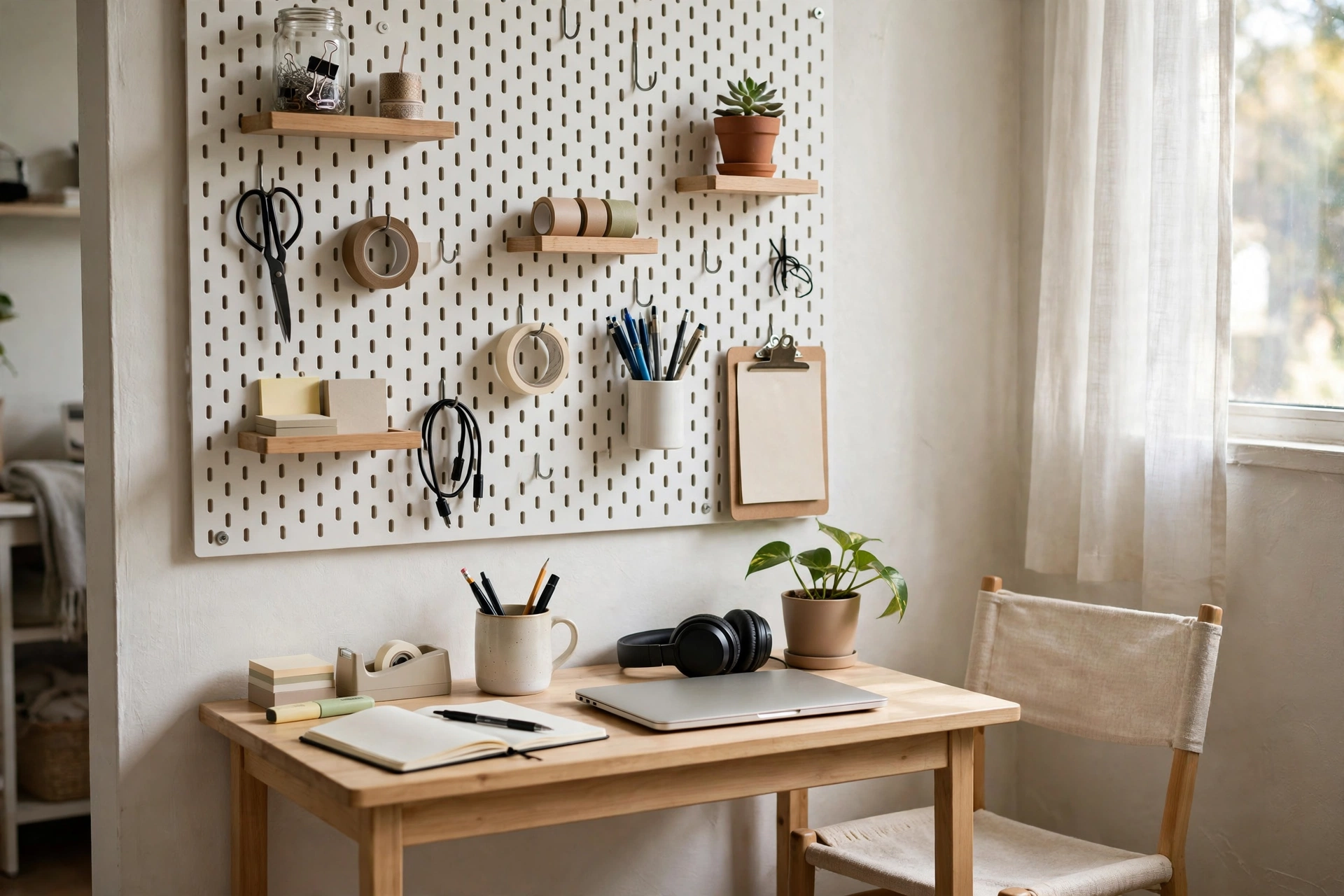
A pegboard above the desk turns dead wall space into endlessly reconfigurable storage: hooks for headphones, small shelves for supplies, clips for notes and inspiration. A 2×4-foot pegboard panel costs $20–$35 plus $15–$25 for a hook-and-shelf accessory kit. Paint it to match your wall for a built-in look. Pro tip: keep the bottom third of the pegboard for daily-grab items (headphones, charger, notebook) and the top for display — function low, inspiration high.
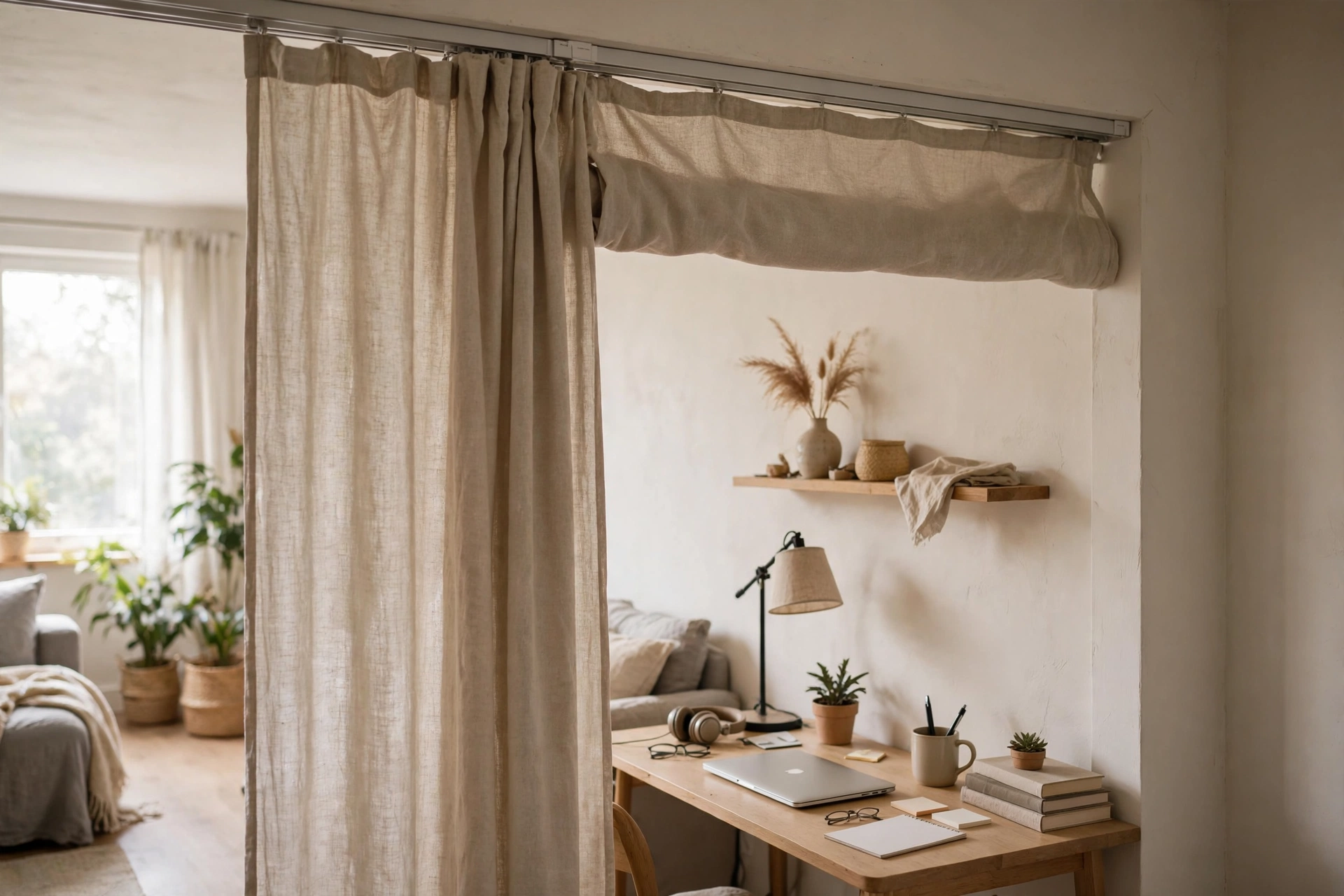
16. A Curtain That Closes Off the Work Zone
A ceiling-mounted curtain on a track (IKEA VIDGA, about $15–$30 for the setup) lets you literally close the office at 6 PM. Pull it shut and the work zone vanishes; open it in the morning and you’re “at the office.” Use an opaque but soft fabric so it reads as intentional decor. Pro tip: this is the single most effective work-life boundary in a studio — the physical act of drawing the curtain becomes your commute home.
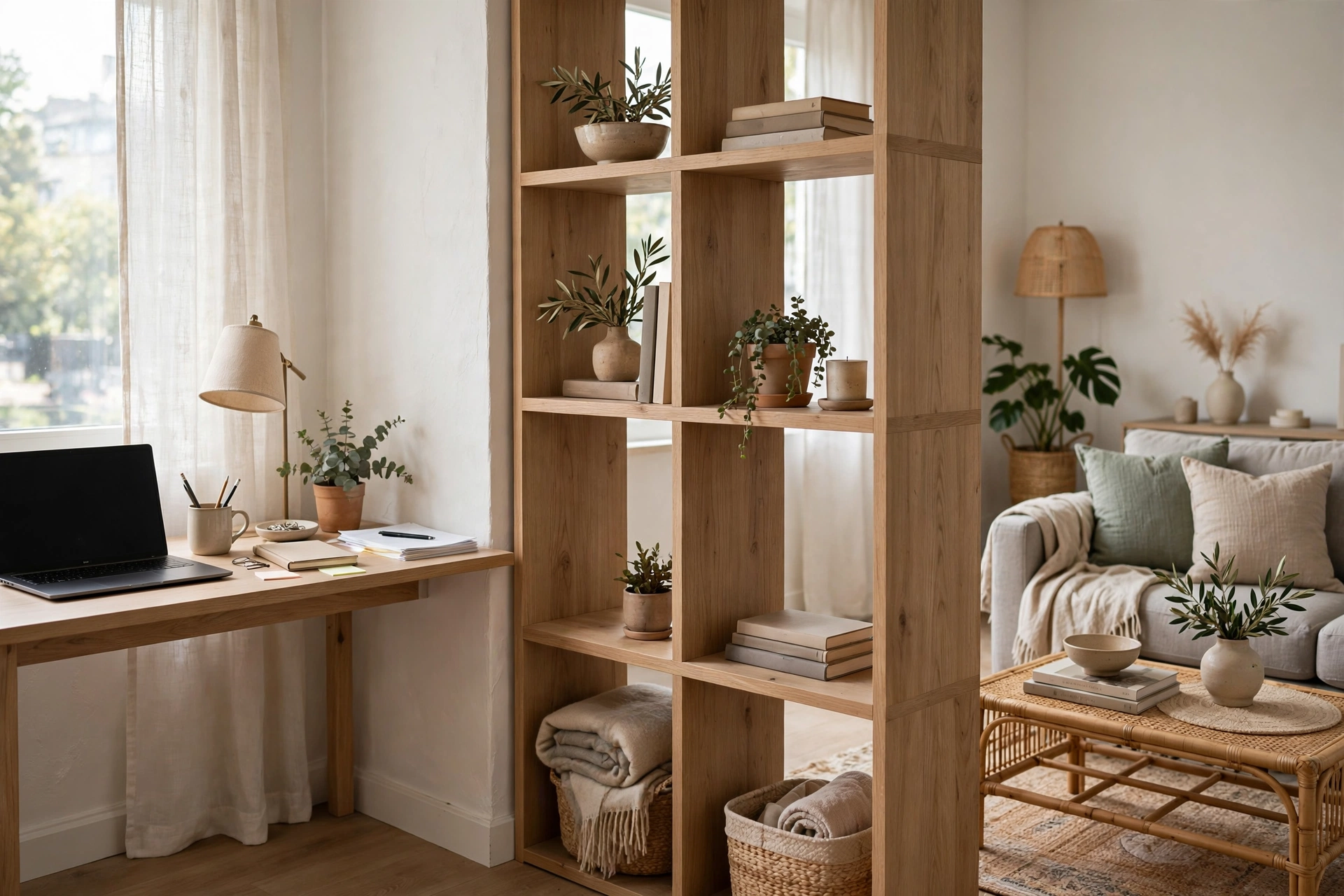
17. An Open Bookshelf as a See-Through Divider
A low open bookshelf (like IKEA’s KALLAX, $70–$120) placed perpendicular to the wall creates a work nook that still lets light through. Fill the cubes facing the office with supplies and the cubes facing the living zone with books and decor — one piece of furniture, two jobs. Pro tip: keep the shelf under 48 inches tall so it defines the zone without blocking sightlines — a studio should feel zoned, never chopped up.
Lighting for Focus & Video Calls
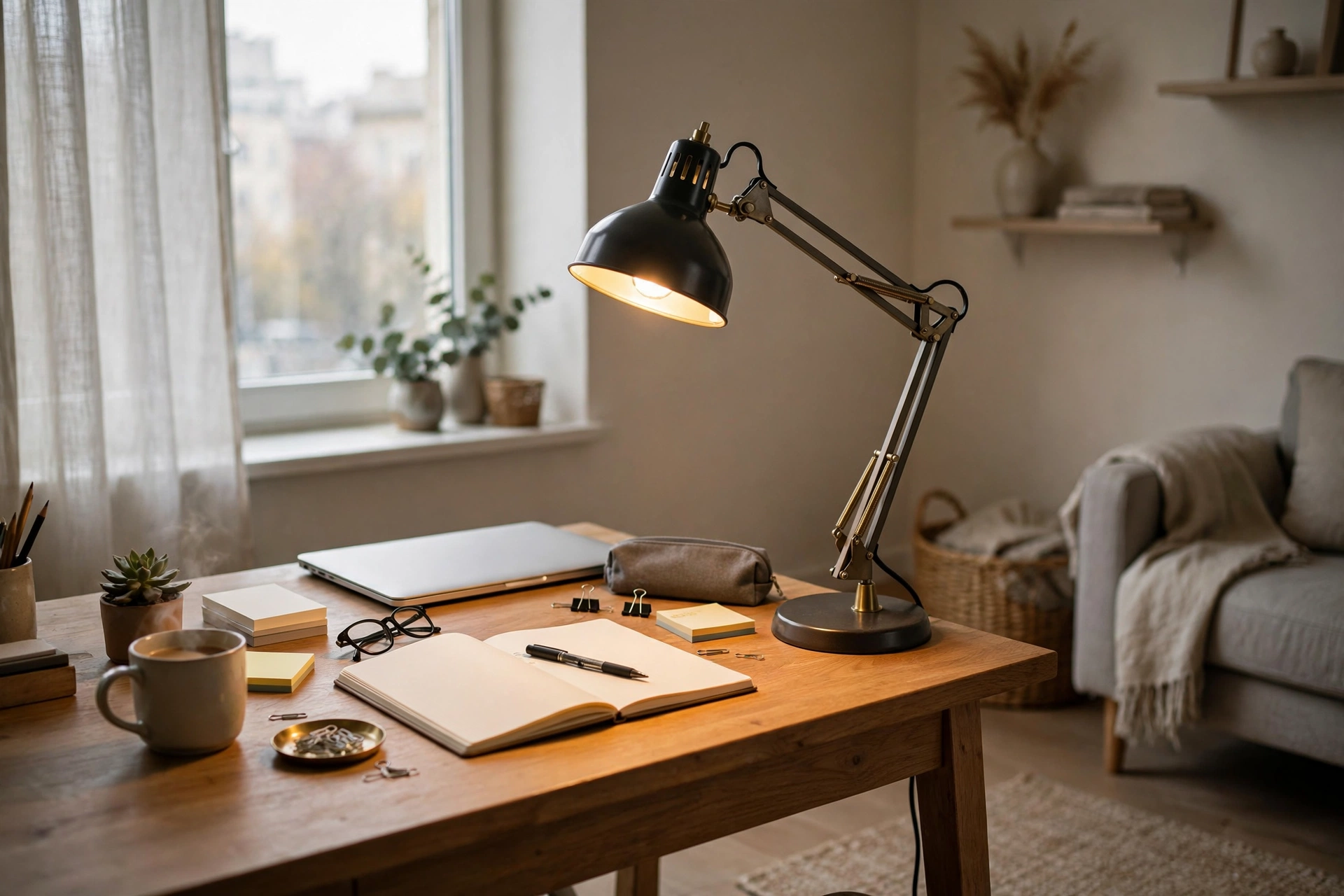
18. A Task Lamp With Warm-to-Cool Control
Overhead lighting is the enemy of focus — a dedicated task lamp puts light exactly where your eyes need it. Look for one with adjustable color temperature ($35–$70): cool white (5000K) for deep-focus mornings, warm (2700K) for late-afternoon wind-down. A clamp-style lamp saves precious desk surface. Pro tip: position the lamp on the opposite side of your writing hand to avoid casting shadows across your work — left side if you’re right-handed.
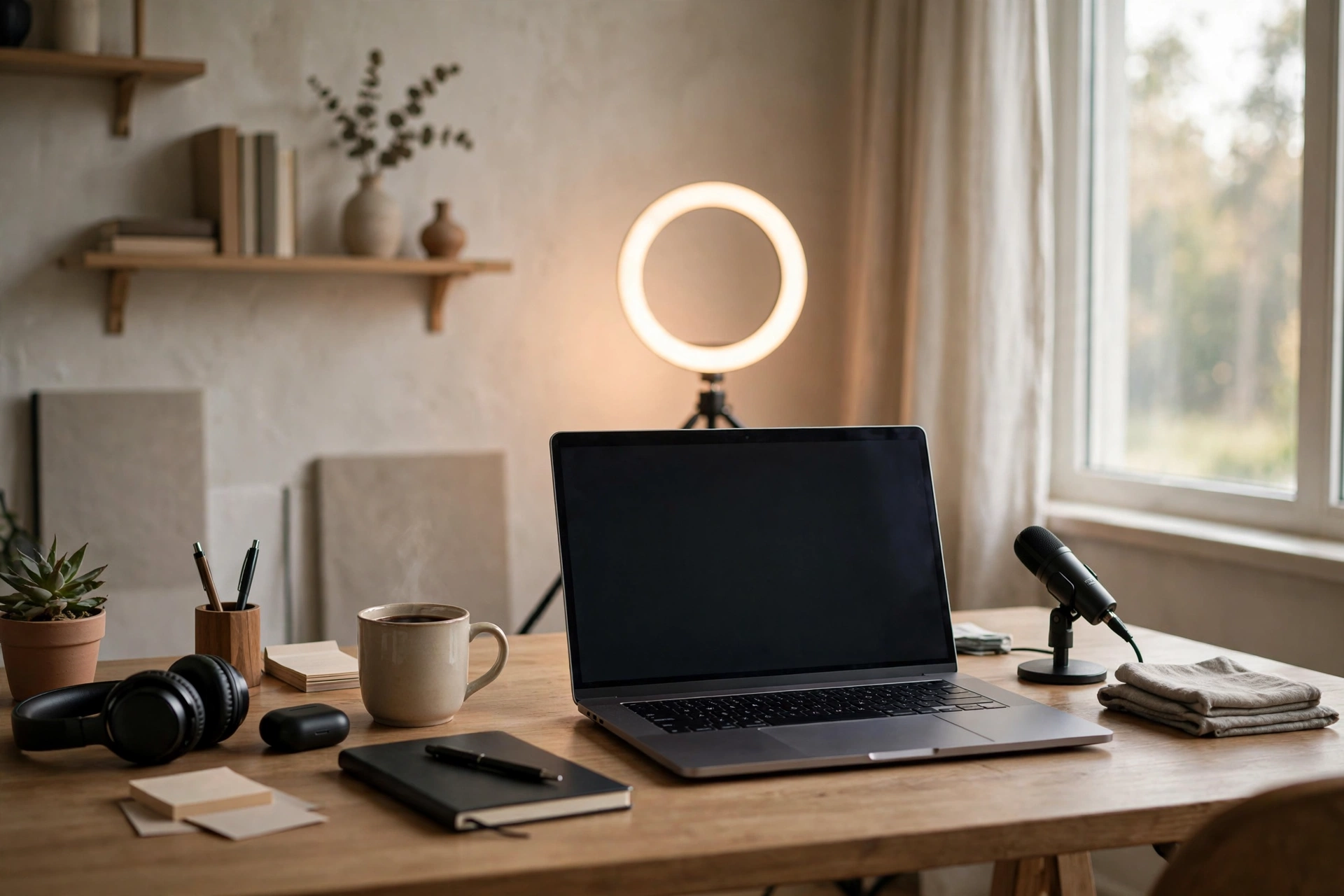
19. A Ring Light for Flattering Video Calls
In a studio, your video background is your home — a ring light ($25–$45) ensures you look professional regardless of the room behind you. The soft, even front-light erases under-eye shadows and means you don’t need perfect room lighting. A 10-inch dimmable ring light with a tripod or desk clamp is plenty. Pro tip: place the ring light directly behind your webcam at eye level — light from the camera’s position is the most flattering angle that exists. These picks pair well with the layered approach in our studio apartment lighting ideas.
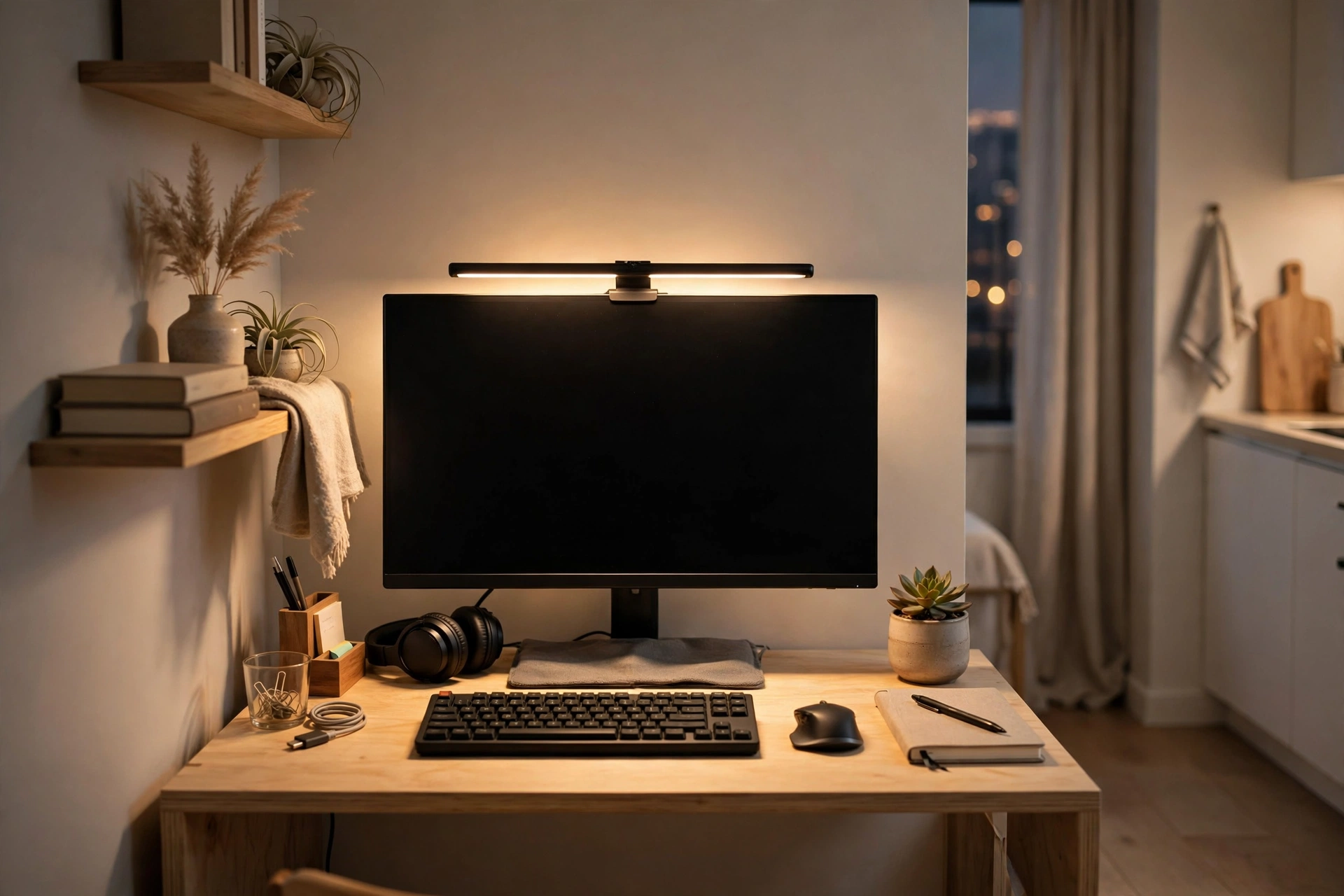
20. A Monitor Light Bar (No Desk Space Needed)
A monitor light bar (like the Xiaomi Mi or BenQ ScreenBar, $40–$100) clamps onto the top of your display and washes the desk in glare-free light — zero desk footprint, zero screen reflection. It’s the cleanest lighting upgrade a small desk can get, and the asymmetric optics mean no light hits the screen itself. Pro tip: this is the best $50 a studio worker can spend if the desk already feels crowded — it replaces both a desk lamp and its footprint.
21. Face the Window for Free Studio Lighting
The best video-call light is free: face your desk toward the window and let daylight do the work. Natural front-light is more flattering than any lamp, and daytime work by a window genuinely improves mood and focus. If the sun is too direct, a sheer curtain diffuses it perfectly. Pro tip: for calls after dark, keep that ring light (idea 19) ready — window light is unbeatable by day but useless at 8 PM.

Storage & Cable Control
22. Vertical Wall Shelving Above the Desk
The wall above your desk is prime real estate — two or three floating shelves ($30–$60 total) hold everything a desk drawer would, without stealing a single inch of floor. Keep daily supplies on the lowest shelf and reference materials higher. This is the same vertical thinking behind these clever studio apartment storage ideas. Pro tip: leave one shelf partly empty for breathing room — wall-to-wall stuffed shelves above a small desk feel oppressive, not organized.
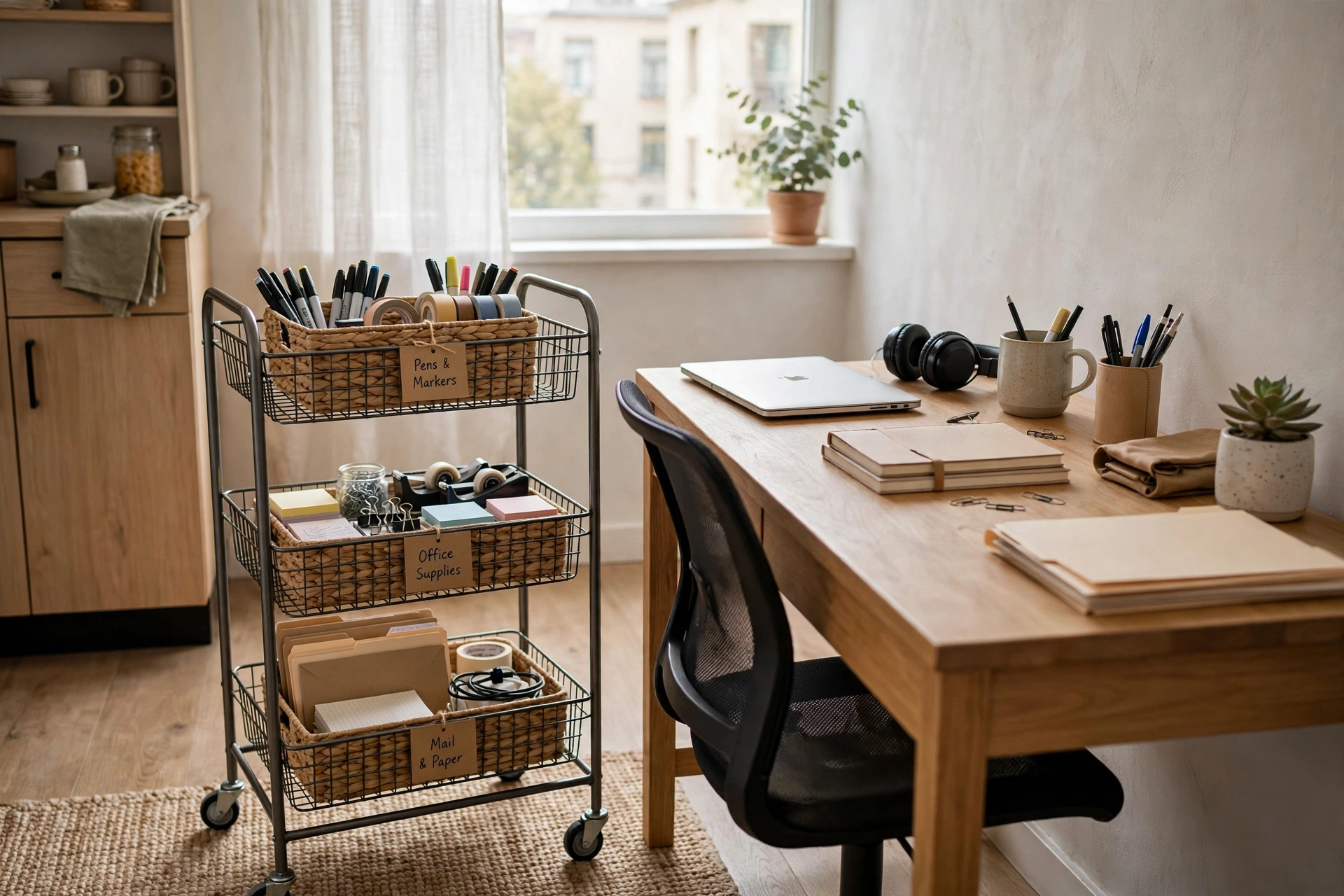
23. A Rolling Cart as a Mobile File Cabinet
A three-tier rolling cart (IKEA RÅSKOG, about $35) is the studio office’s filing cabinet, supply closet, and printer stand in one — and it rolls into a closet when guests come over. Dedicate tiers to active projects, supplies, and tech accessories. Pro tip: label each tier with a small tag — “active,” “supplies,” “tech” — so the cart stays a system instead of becoming a junk drawer on wheels.
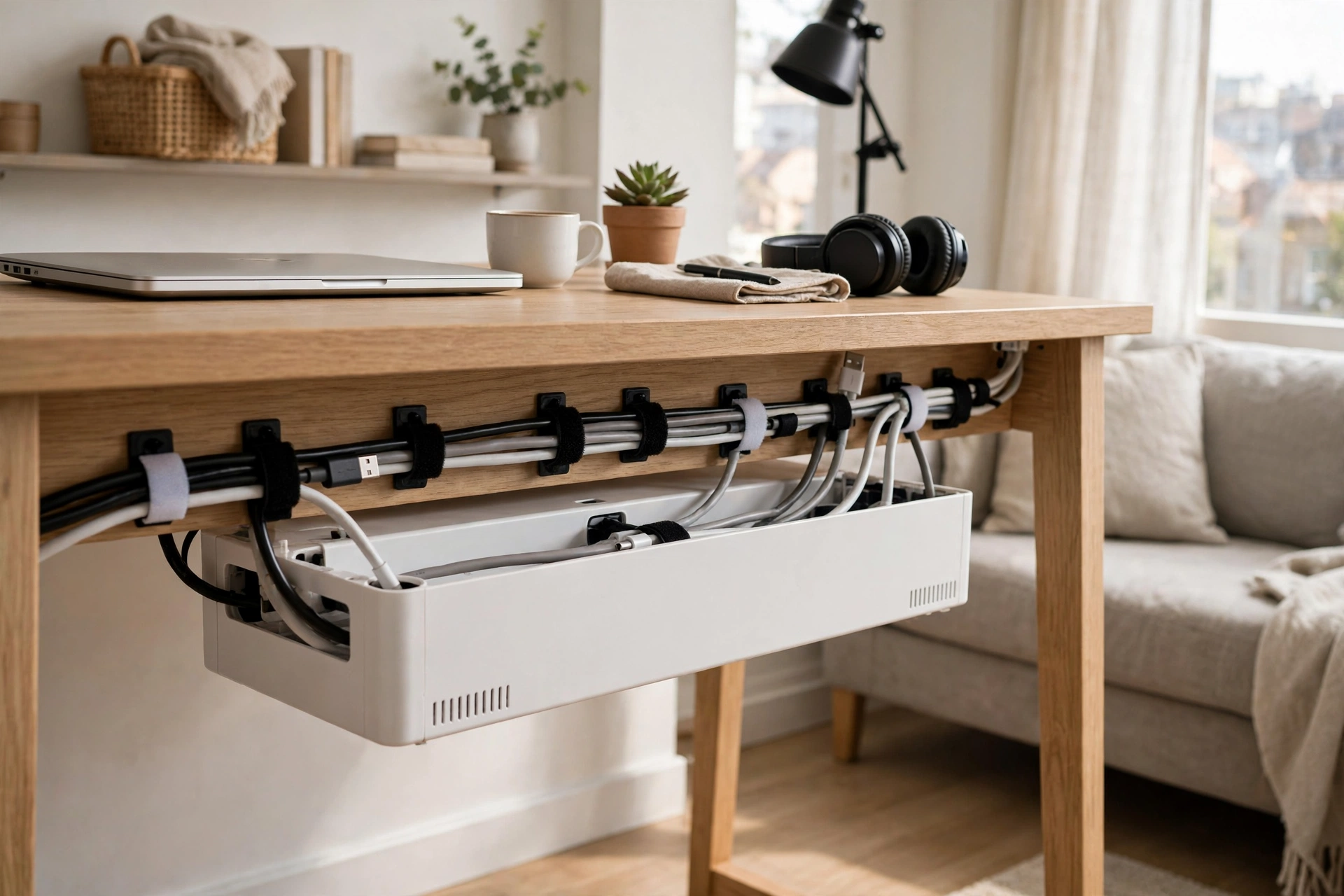
24. A Cable Management Box to Kill the Spaghetti
Nothing ruins a tidy desk zone faster than a Medusa-head of chargers and cables. A cable management box ($20–$35) swallows the power strip and excess cord length, leaving one clean line to the wall. Pair it with adhesive cable clips ($8) that route cords along the desk’s back edge. Pro tip: label both ends of every cable with a wrap of masking tape — future-you will be grateful the next time something needs unplugging in a hurry.
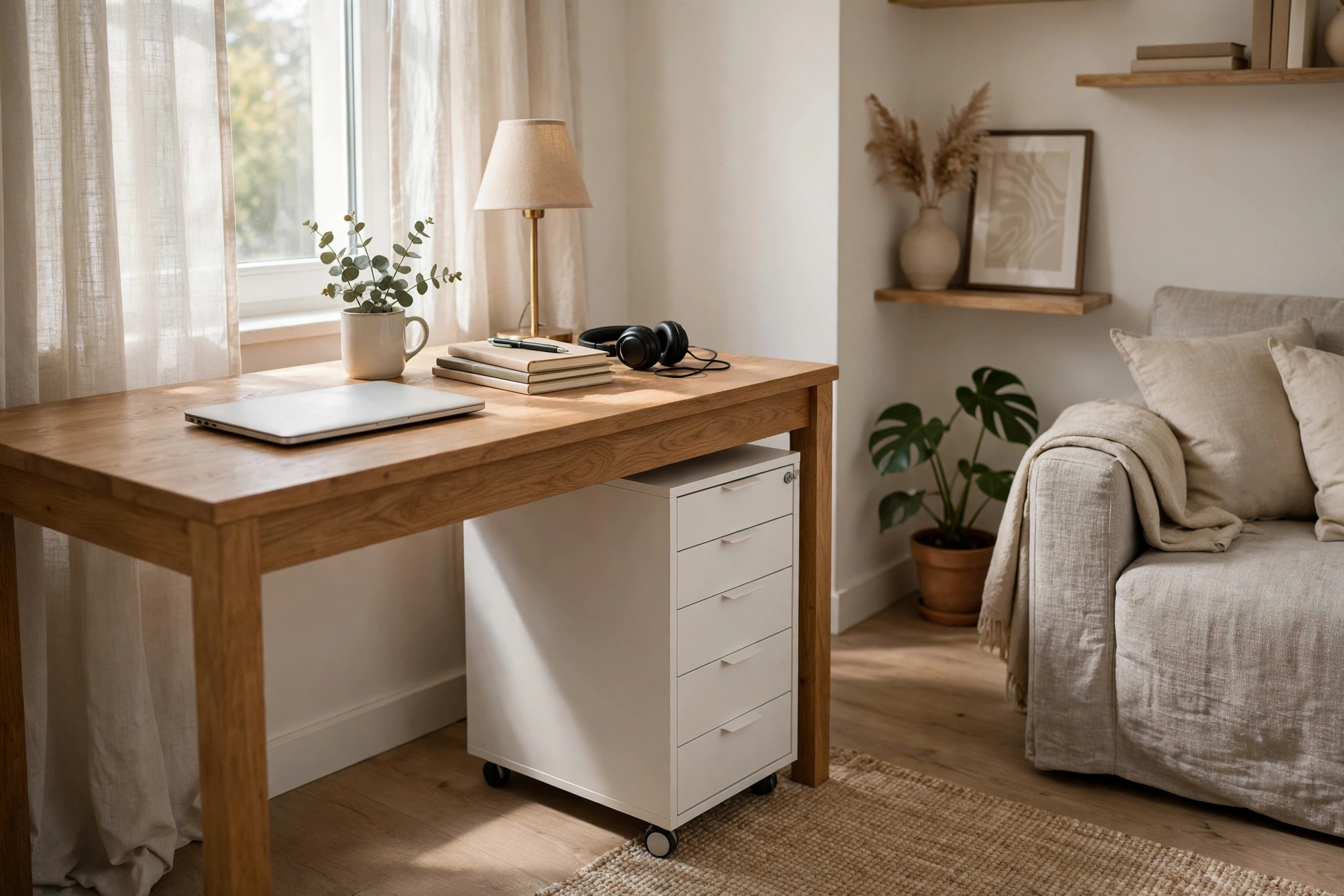
25. An Under-Desk Drawer Unit
A slim rolling drawer unit (IKEA ALEX, about $90) slides under most desks and holds pens, notebooks, documents, and tech in nine organized drawers. Because it lives in the desk’s dead space, it adds storage with zero footprint change. Pro tip: dedicate the top drawer to “end of day” — everything currently on the desk gets swept into it at 6 PM, and the desk is instantly clean.
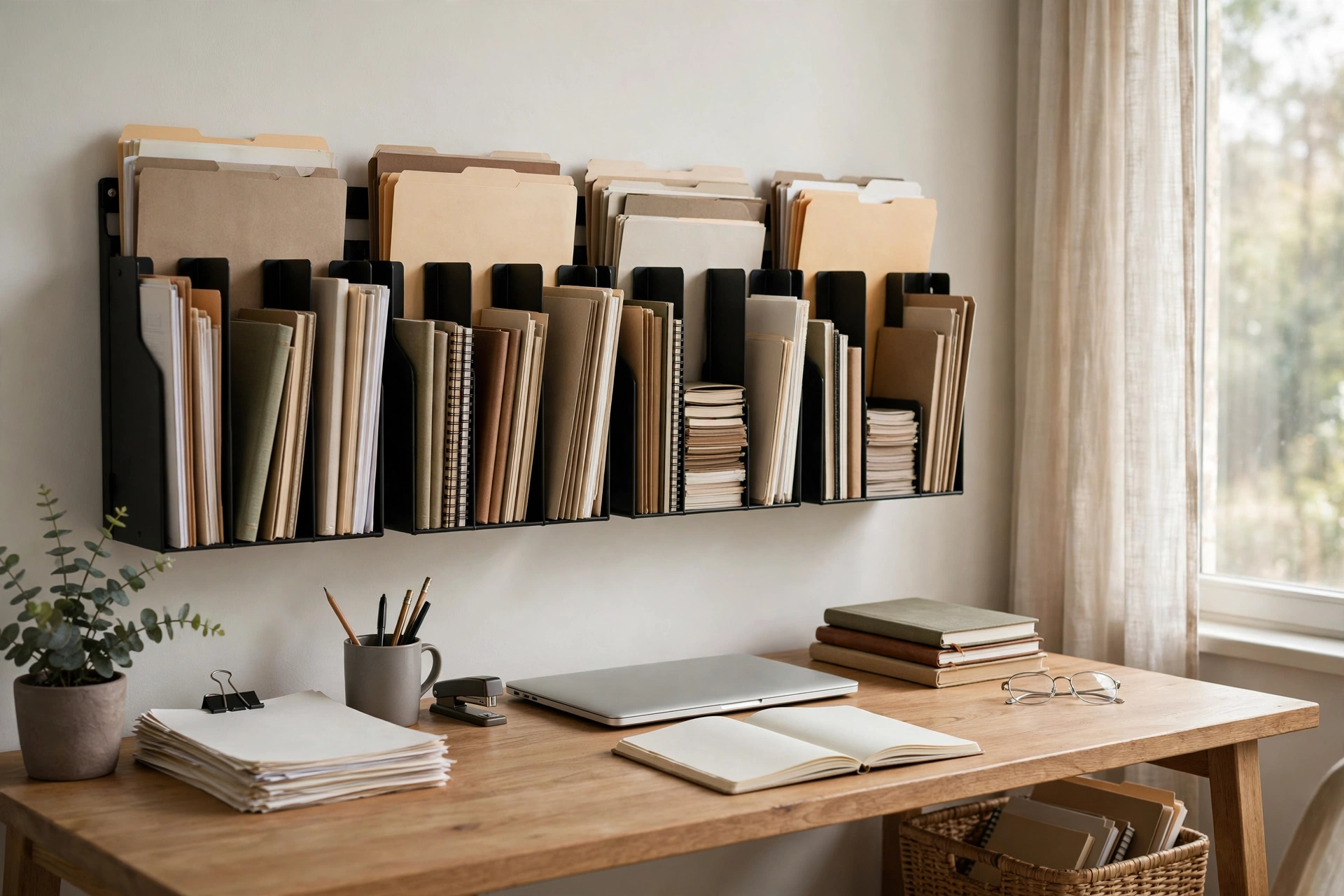
26. A Wall-Mounted Organizer for Paper
Paper is the silent killer of small desks. A wall-mounted file organizer or magazine rack ($25–$50) gets bills, notebooks, and incoming mail off the work surface and onto the wall, sorted and visible. Mount it beside the desk at arm’s reach. Pro tip: give it three slots max — “in,” “action,” “file” — and empty “in” weekly. More slots just create more places for paper to hide.
Decor That Doubles as a Backdrop
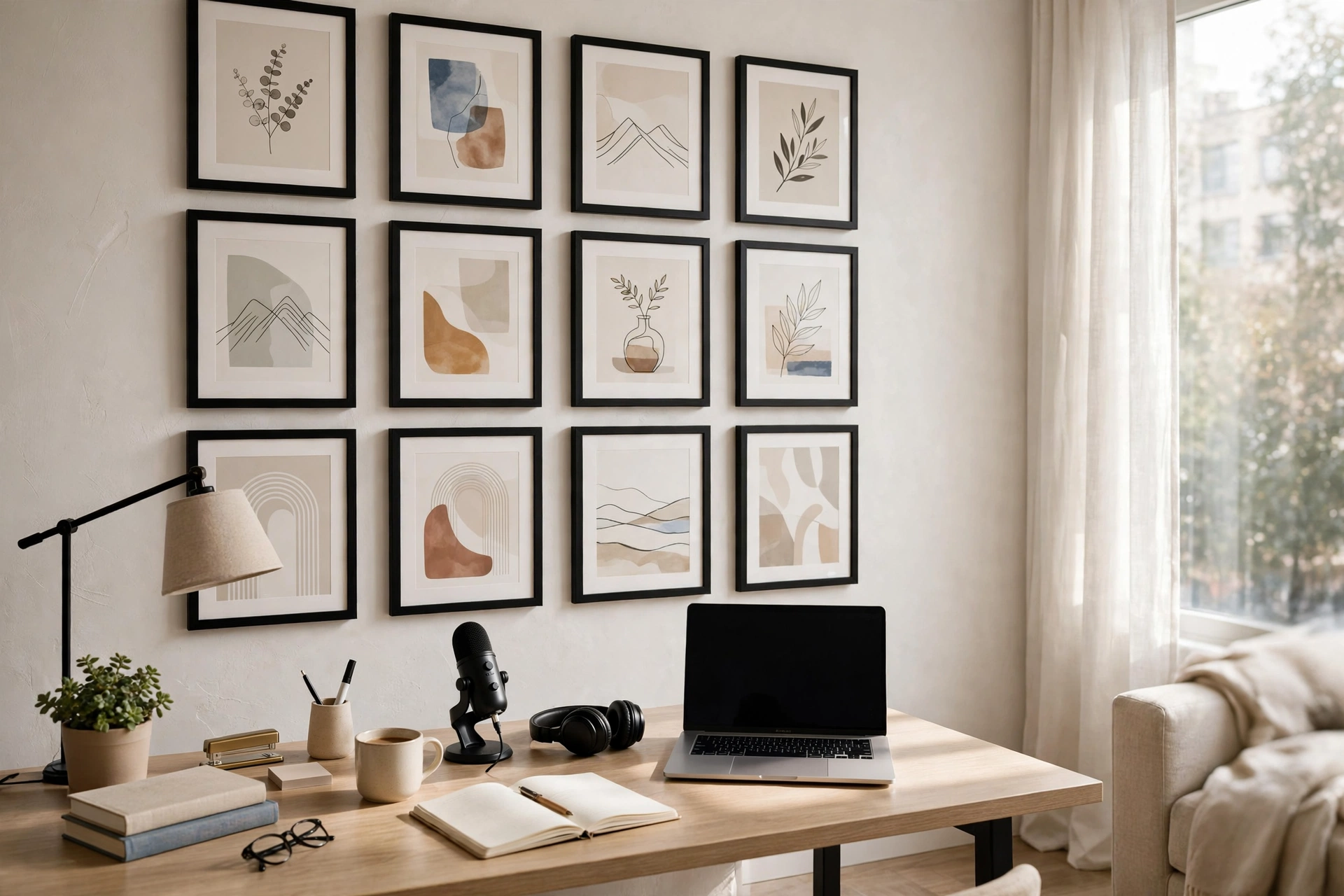
27. A Gallery Wall Behind the Desk
The wall behind your desk is on camera every call — make it a curated gallery wall. A tight grid of 6–9 framed prints ($40–$80 total with budget frames) looks intentional and professional, and it gives colleagues something pleasant to look at. Keep the palette cohesive: black frames with white mats never fail. Pro tip: lay the arrangement on the floor first and photograph it — what looks balanced on the floor translates directly to the wall.
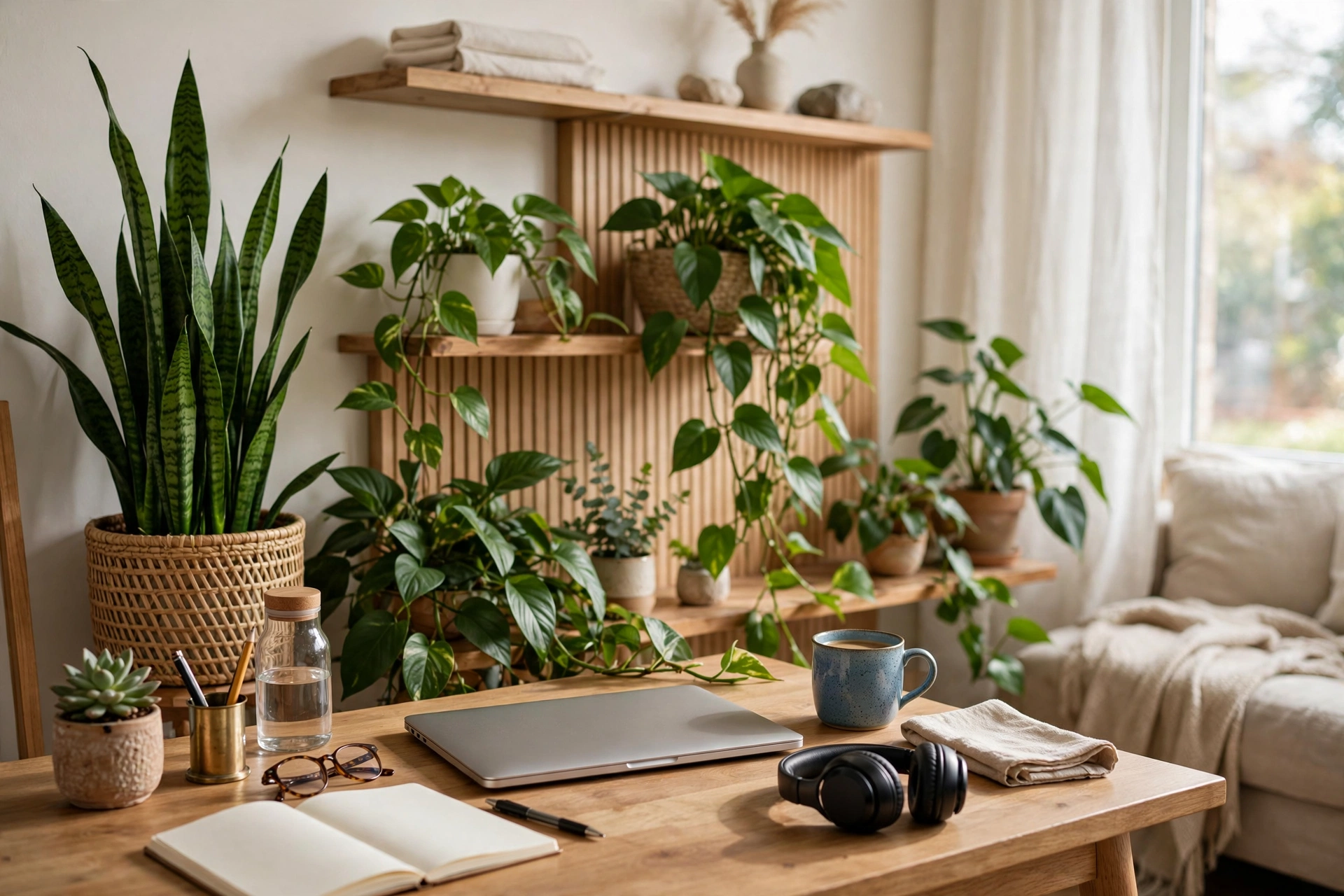
28. Plants as a Living Video Background
A couple of healthy plants behind your desk do triple duty: they look great on camera, they clean the air, and studies link them to lower stress. A tall snake plant ($25–$45) in a corner plus a trailing pothos ($15–$25) on a shelf frames you in green. Both survive low light and neglect. Pro tip: keep plants slightly out of focus range — 3–4 feet behind you — so they read as lush backdrop, not as leaves blocking your face.
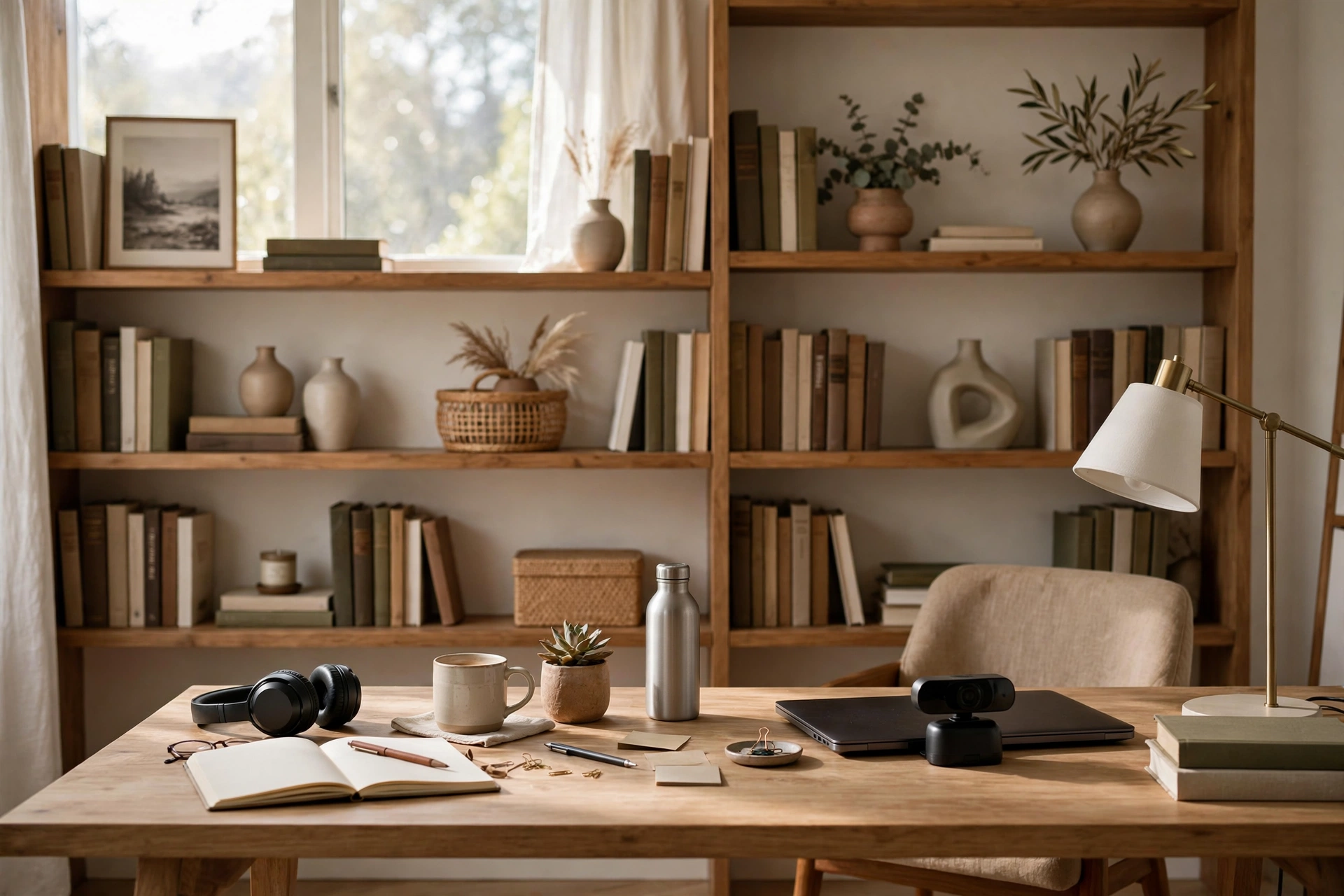
29. A Styled Bookshelf (Camera-Ready, Always)
The classic video-call background for a reason: a bookshelf says “competent adult” in every culture. Style it with the 60-30-10 rule — 60% books, 30% decor objects, 10% empty space — and keep the shelf behind your desk tidy even when the rest of the studio isn’t. A small 2×4 bookcase ($60–$100) is plenty. Pro tip: put your most impressive-looking books at camera height and the messy reality (binders, cables) on the bottom shelves, below the frame.
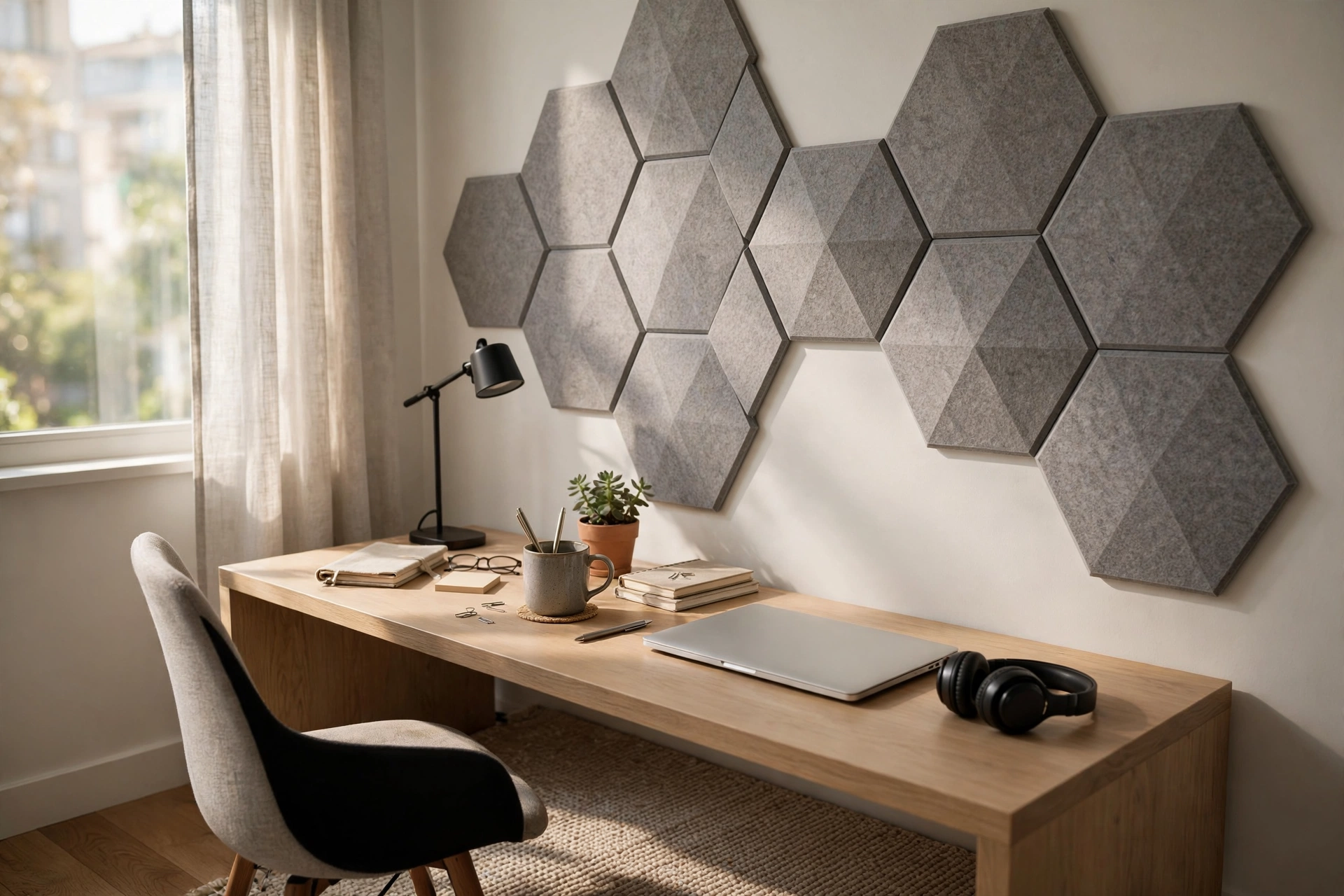
30. Acoustic Panels That Look Like Art
Studios echo — hard floors, bare walls, and video calls are a bad combination. Felt acoustic panels ($40–$80 for a 12-pack) in a geometric arrangement cut echo dramatically and look like intentional wall art. Hexagon or wave-pattern panels in a muted tone blend into any decor. Pro tip: place panels on the wall you’re facing (behind your monitor), not behind you — that’s where your voice reflects, and treating it helps both your mic and your ears.
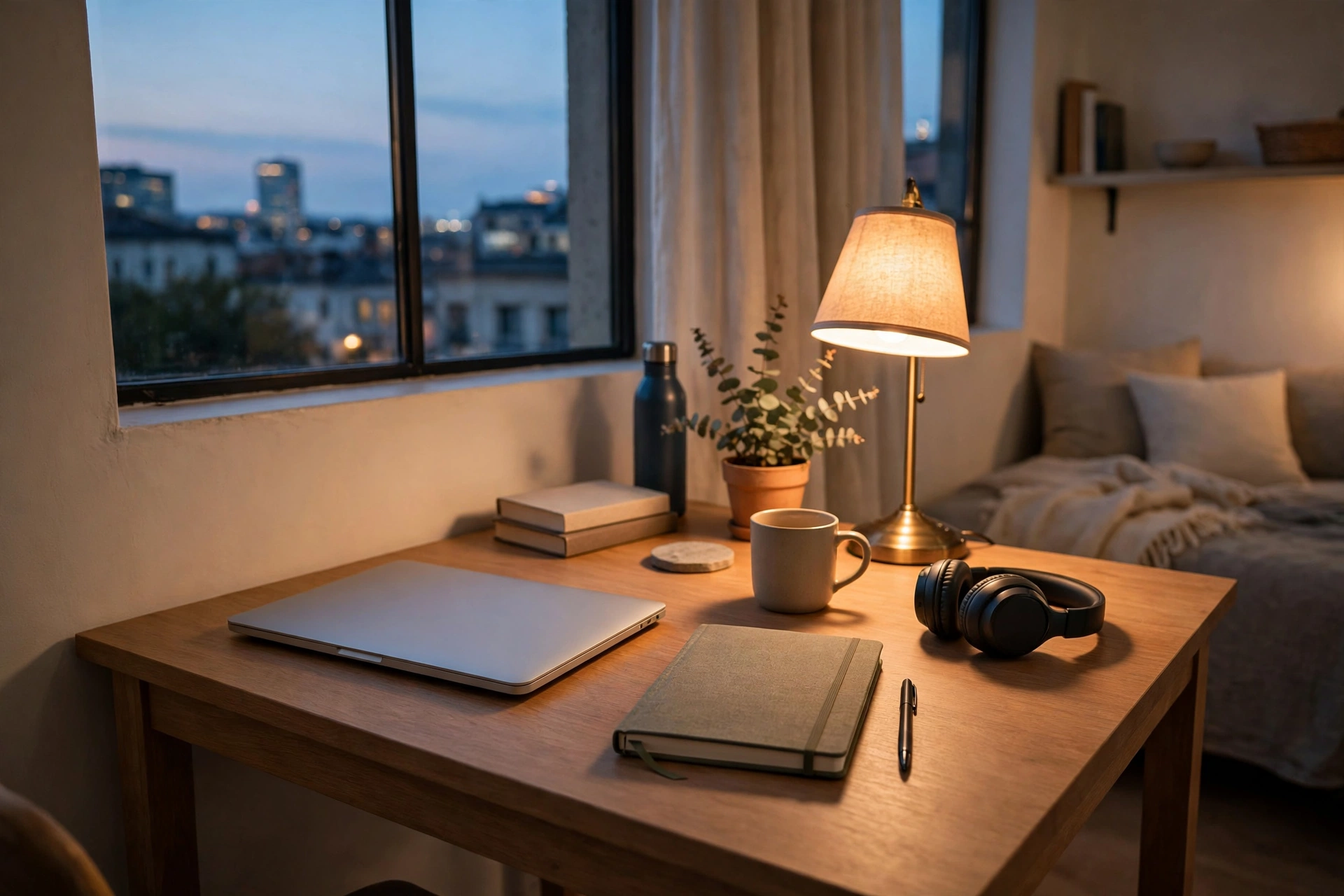
Work-Life Boundaries That Actually Work
31. A Shutdown Ritual (The 10-Minute Commute)
Without a commute, work bleeds into evening — unless you build a shutdown ritual. Spend the last 10 minutes of each workday clearing the desk, writing tomorrow’s top three tasks, and closing the laptop. The ritual signals your brain that work is over, and a clear desk means you start fresh tomorrow. It costs nothing and it’s the highest-ROI habit in this guide. Pro tip: end the ritual with a physical action — closing the curtain (idea 16), folding the desk (idea 1), or draping the cover (idea 32) — so the boundary is something you do, not just something you think.
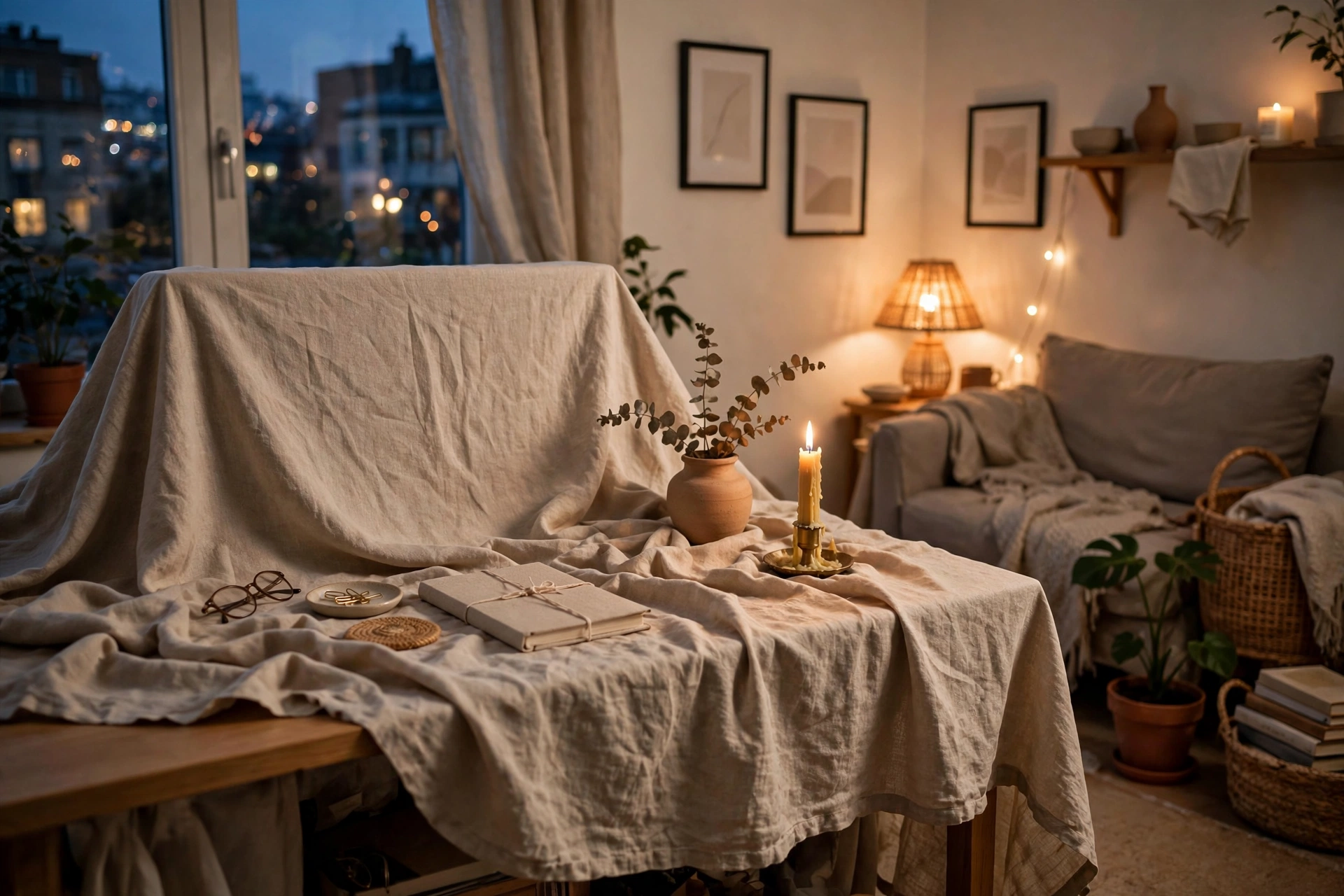
32. A Desk Cover That Hides Work
A simple linen runner or tailored desk cover ($20–$40) draped over your work setup at day’s end hides the monitor, keyboard, and papers — out of sight, out of mind. It also protects the desk surface and adds a soft textile to the room. Choose one that complements your decor so it looks like styling, not hiding. Pro tip: this is the budget version of the secretary desk (idea 5) — same psychological effect (work disappears) for a tenth of the price.
33. A Folding Screen for Instant Privacy
Beyond its backdrop role (idea 13), a folding screen is your “do not disturb” sign. Unfold it during focus hours or calls, fold it flat when you’re done — the physical barrier tells housemates, partners, and your own brain that this zone is occupied. A lightweight three-panel screen ($50–$100) moves in seconds. Pro tip: agree on the signal with anyone you live with — screen open means “knock first,” screen closed means “I’m here.” It prevents 90% of mid-call interruptions.
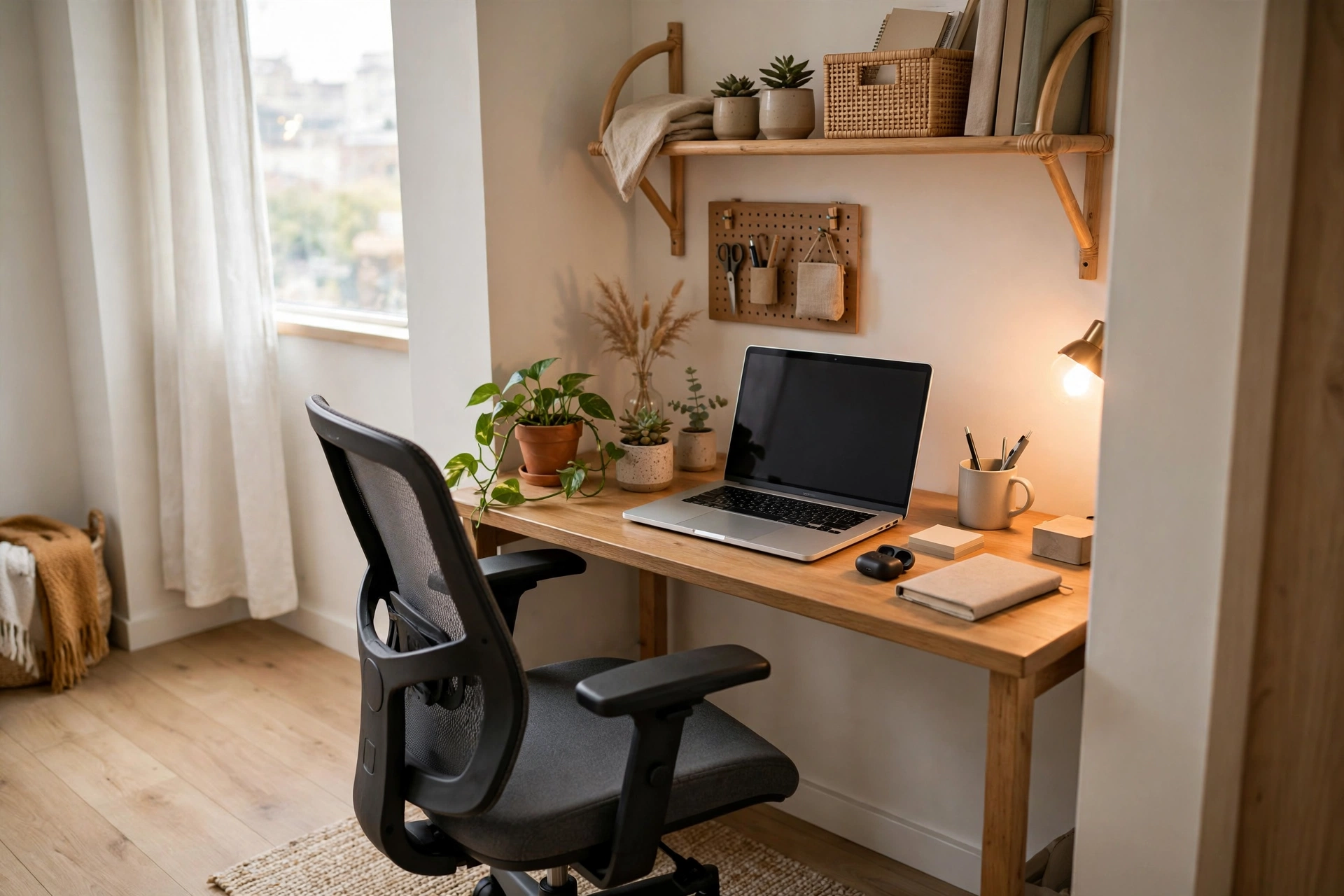
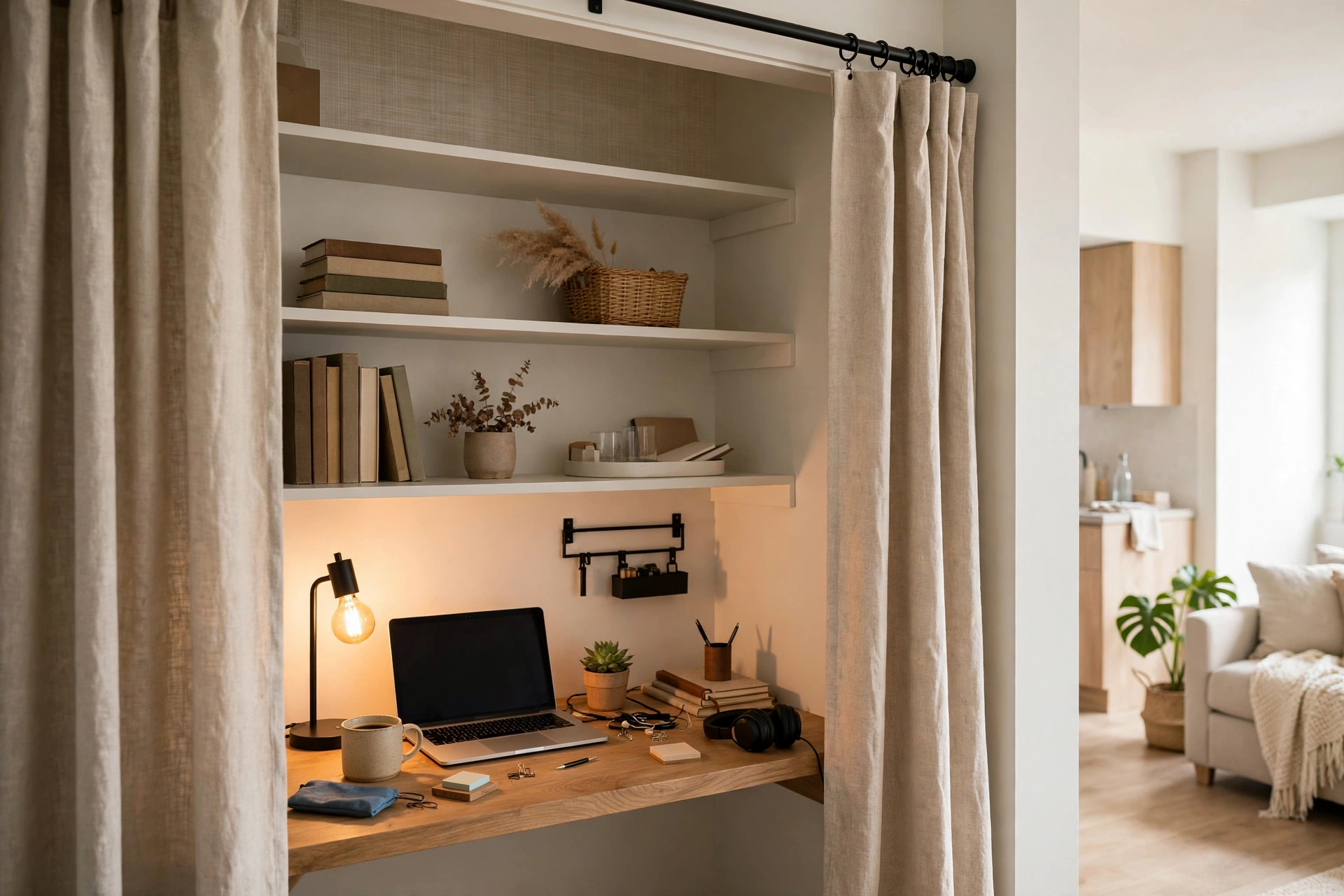
34. The Closet Office Nook (The Ultimate Hideaway)
Got a reach-in closet you barely use? Remove the doors, add a desk-height shelf, a light, and a stool — and you have a genuine office that closes (with a curtain) when the workday ends. The “cloffice” is beloved because it gives work a real room with a real door-equivalent, inside a studio. Budget $100–$200 for the shelf, lighting, and curtain. Pro tip: run a power strip into the closet before you build — crawling behind a finished nook to plug in a monitor is miserable. Measure twice, electrify once.
Frequently Asked Questions
Where should I put a desk in a studio apartment?
The best spots are the ones you’d otherwise waste: under a window (free natural light), in a corner (dead space becomes a workstation), inside a closet (a real room-within-a-room), or along a hallway wall. Avoid placing the desk where you relax — keep it out of sight from the bed and sofa if possible, so work doesn’t visually follow you into rest.
How can I work from home in a studio without it taking over?
Use furniture that disappears: fold-down desks, secretary desks with closing doors, rolling carts that park in a closet. Then add a boundary ritual — draw a curtain, drape a cover, clear the desk — that marks the end of the workday. The combination of vanishing furniture and a consistent shutdown habit keeps work from colonizing your home.
What is the smallest viable home office setup?
A laptop, a 24-inch-deep surface at proper height, a chair that supports your back, and decent light — that’s it. A floating shelf ($30), a used ergonomic chair ($100), and a window cover the essentials for under $150. Everything else in this guide is optimization, not requirement.
How do I look professional on video calls from a studio?
Face a window for natural front-light (or use a $30 ring light after dark), and curate what’s behind you: a bookshelf, a gallery wall, plants, or a folding screen all read as professional. Keep the camera at eye level — stack the laptop on books if needed — and do a test call to check the frame before anything important.
Can I fit a home office in a studio with a partner also working from home?
Yes, but you need two distinct zones with a real divider between them — a bookshelf, curtain, or folding screen — plus staggered call schedules if possible. Give each person a defined nook (opposite ends of the studio work best), invest in good headphones with mics, and agree on quiet hours. Two small setups beat one shared desk every time.
How do I stop working when my office is five feet from my bed?
Build a shutdown ritual and make it physical: clear the desk, close the laptop, draw the curtain or fold the desk away. Change your clothes, take a short walk — even around the block — to simulate a commute. And keep work notifications off your phone after hours; the boundary has to be digital too, not just physical.
Final Thoughts
A studio apartment home office isn’t about square footage — it’s about intention. Four square feet of well-designed workspace with a real chair, good light, and a clear boundary will outperform a sprawling desk in a spare room that nobody bothered to set up properly. The ideas in this guide all share one principle: work should have a place, and when the workday ends, that place should be able to disappear.
Start with the desk that fits your space and the chair that saves your back — those two decisions carry 80% of the result. Then layer in lighting, storage, and one good boundary ritual. Within a weekend and a modest budget, your studio can hold a workday and a life, each in its own well-defined place.

One Comment