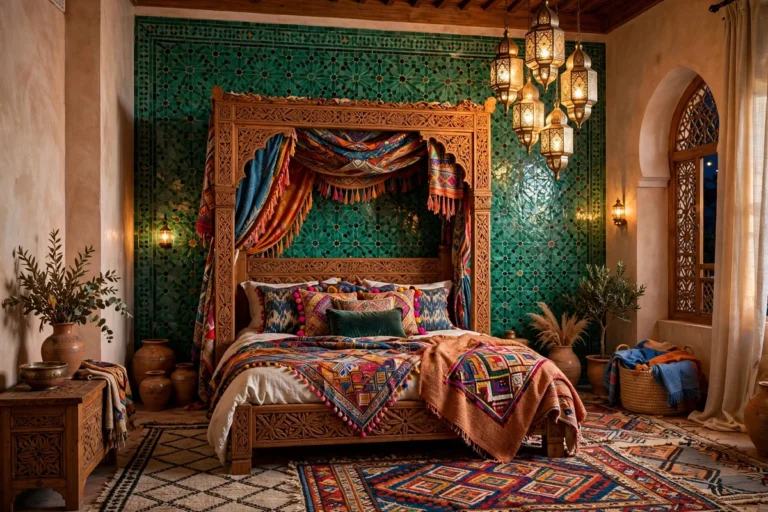
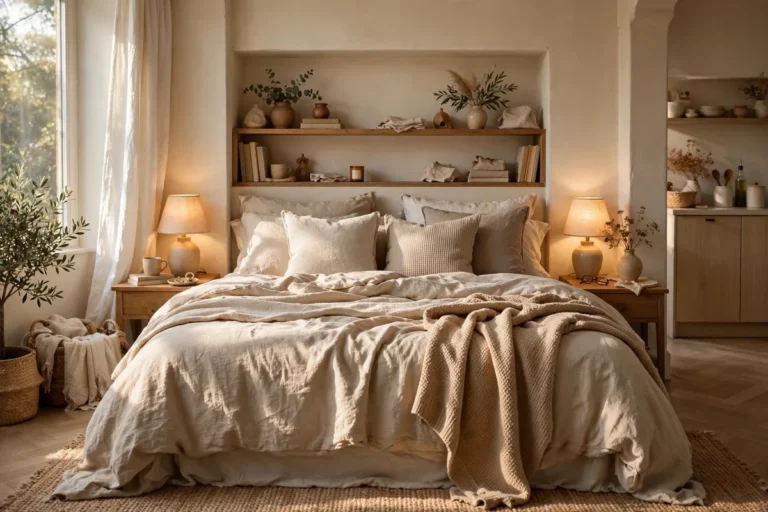
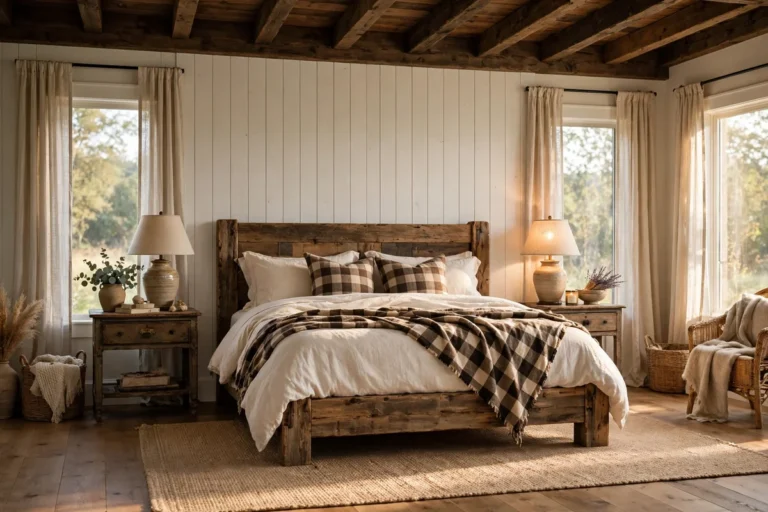
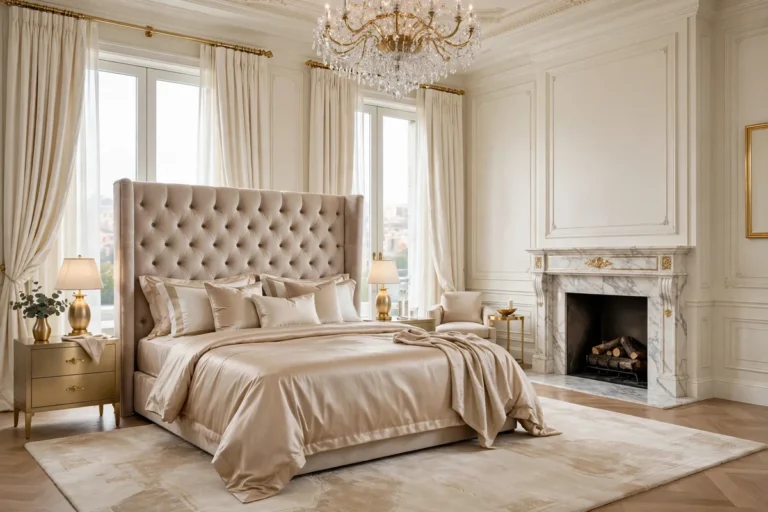
34 Transitional Bedroom Ideas for Timeless Modern Style
34 Transitional Bedroom Ideas for Timeless Modern Style
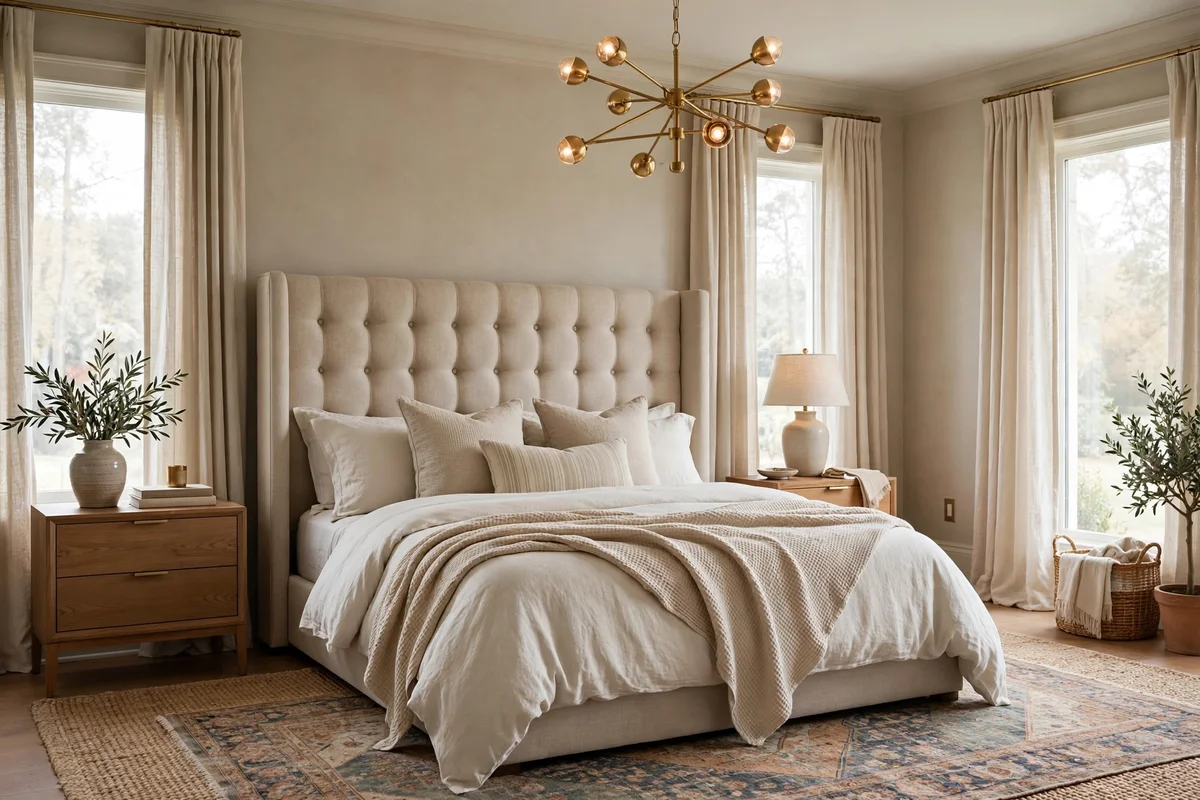
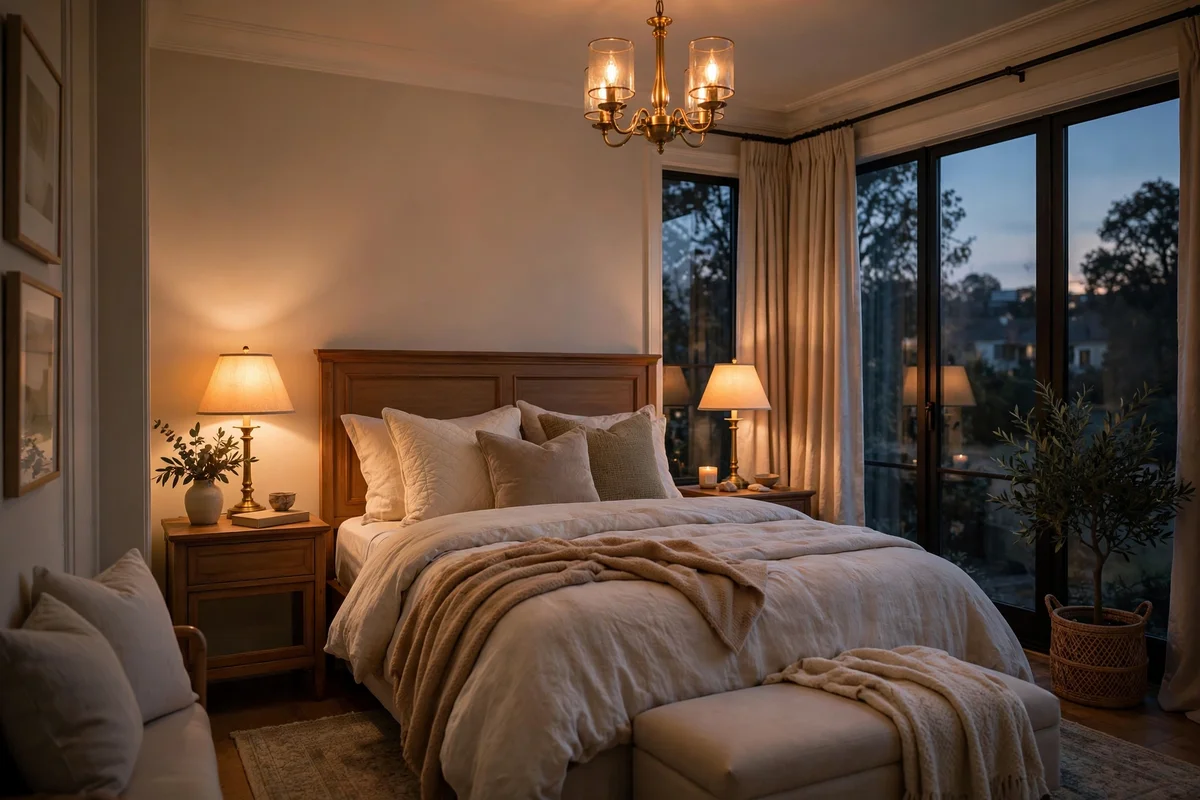
Transitional style is the design world’s best-kept secret for people who cannot choose between classic and contemporary. It takes the warmth, symmetry, and craftsmanship of traditional design and relaxes it with the clean lines, neutral palettes, and uncluttered feel of modern style. The result is a bedroom that feels tailored but never stuffy, current but never cold. Think upholstered linen headboards, warm greige walls, mixed metals, and furniture that nods to tradition without the fuss.
These 34 transitional bedroom ideas show you how to strike that perfect balance. You will find guidance on the foundation (beds, walls, lighting), furniture that bridges both eras, textiles and pattern mixing, and the polished details that make the room feel finished. Each idea includes realistic price ranges and a pro tip, so you can build a timeless bedroom that will still look right ten years from now.
The Foundation: Bed, Walls and Light (1–9)
1. Upholstered Linen Headboard
An upholstered headboard in natural linen is the quintessential transitional anchor. It has the softness and comfort of traditional design with the clean, unfussy silhouette of modern style. Choose a tall rectangular or gently arched shape in oatmeal, flax, or warm white, and let it rise at least 48 inches above the mattress for presence. Quality linen headboards run $400–$1,200 depending on size and whether you choose nailhead trim. Pro tip: Performance linen resists stains and wrinkles, making it the smartest fabric choice for a headboard you will lean against daily.
2. Warm Greige Walls
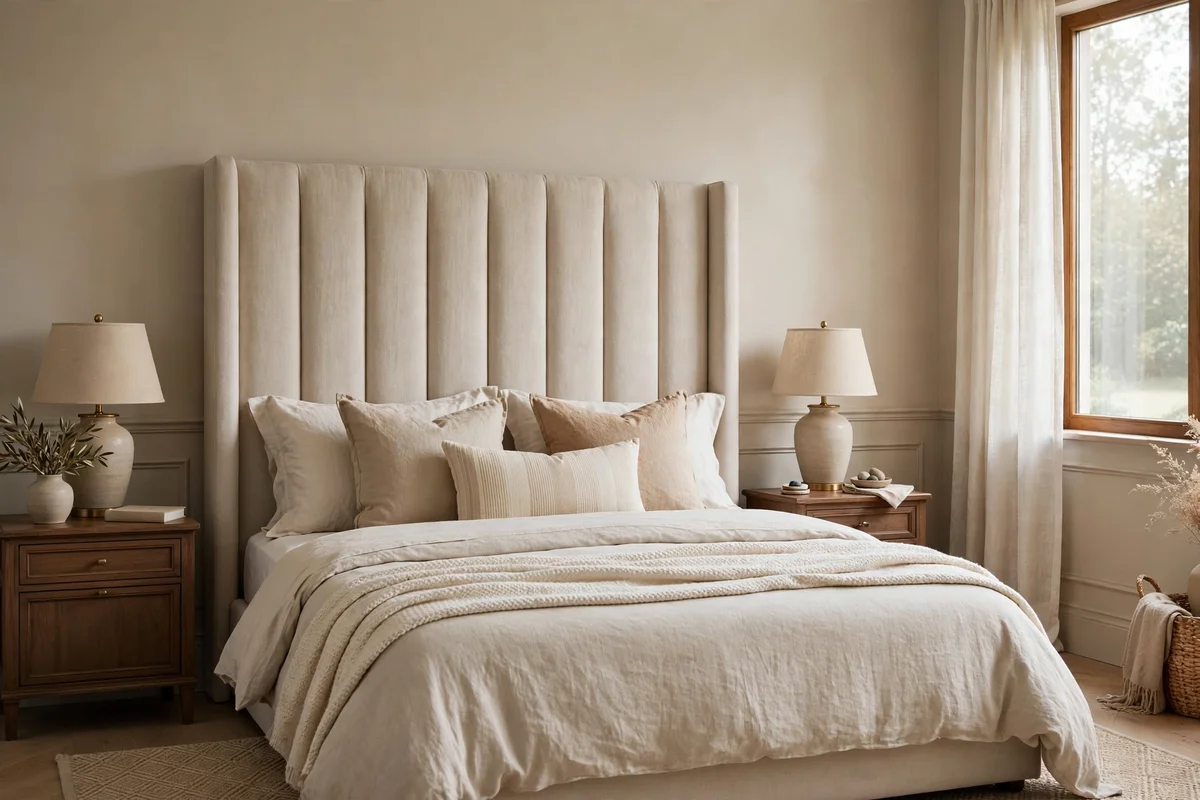
Greige, the perfect blend of gray and beige, is the transitional palette’s signature wall color. It reads warm and inviting like a traditional neutral but stays crisp and contemporary. Paints like Accessible Beige, Revere Pewter, or Edgecomb Gray shift beautifully through the day, looking creamy in morning light and sophisticated at night. A gallon of quality paint costs $45–$70, and most bedrooms need two gallons plus primer. Pro tip: Test three greige samples on different walls and live with them for 48 hours before committing, since undertones change dramatically in your specific light.
3. Mixed-Era Nightstands
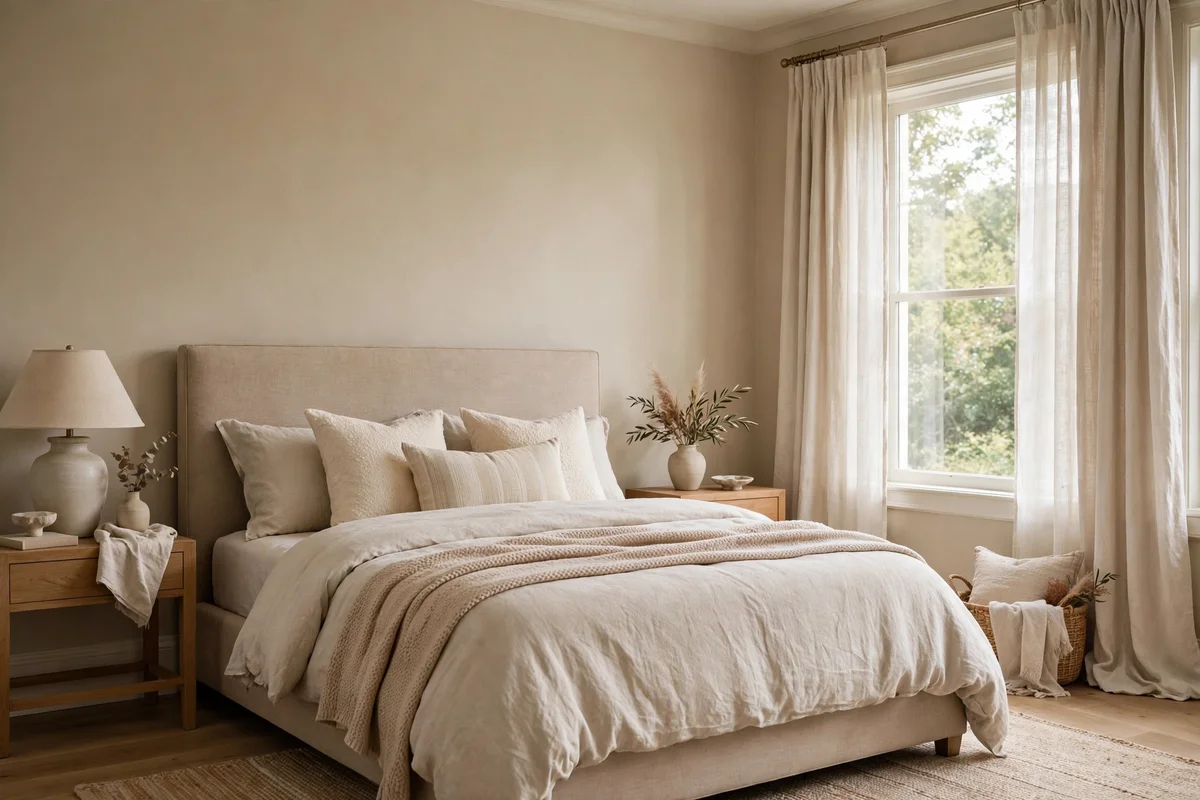
Transitional style loves a nightstand with one foot in each era. Look for traditional silhouettes like a small chest of drawers updated with modern hardware, or a clean-lined modern table in a classic wood finish. Mismatched nightstands in coordinating finishes feel collected rather than showroom perfect, which is exactly the transitional sweet spot. Expect to pay $150–$500 per nightstand for solid wood pieces. Pro tip: Keep the heights within two inches of each other and match the lamp styles to unify mismatched nightstands visually.
4. Layered Neutral Bedding
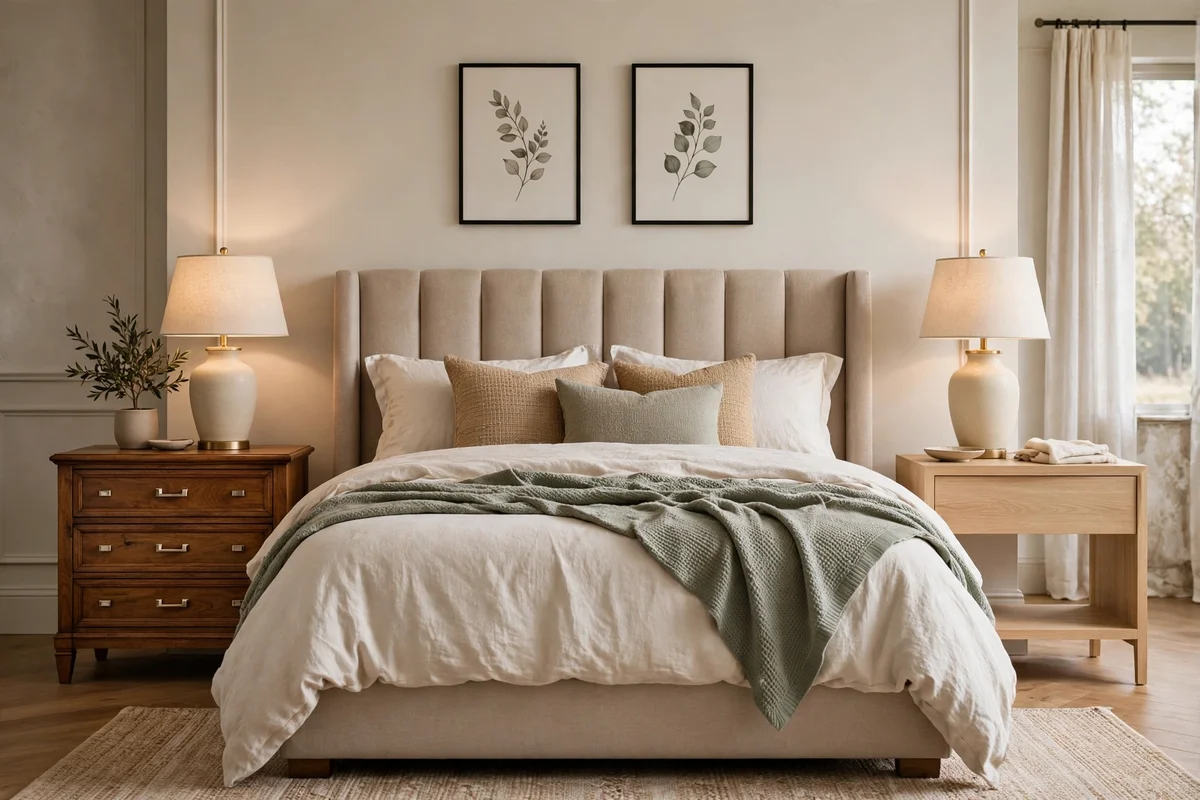
Transitional bedding is all about layers in a restrained neutral palette. Start with crisp white or ivory sheets, add a light quilt or coverlet, then top with a textured throw and a curated mix of sleeping and Euro pillows. The magic is in mixing textures (linen, cotton, a touch of velvet) while keeping colors within one warm family. A full quality bedding set runs $250–$700. Pro tip: The 3-2-1 pillow formula works every time: three Euro squares, two sleeping pillows, one lumbar or accent pillow.
5. Classic-Shape Modern Chandelier
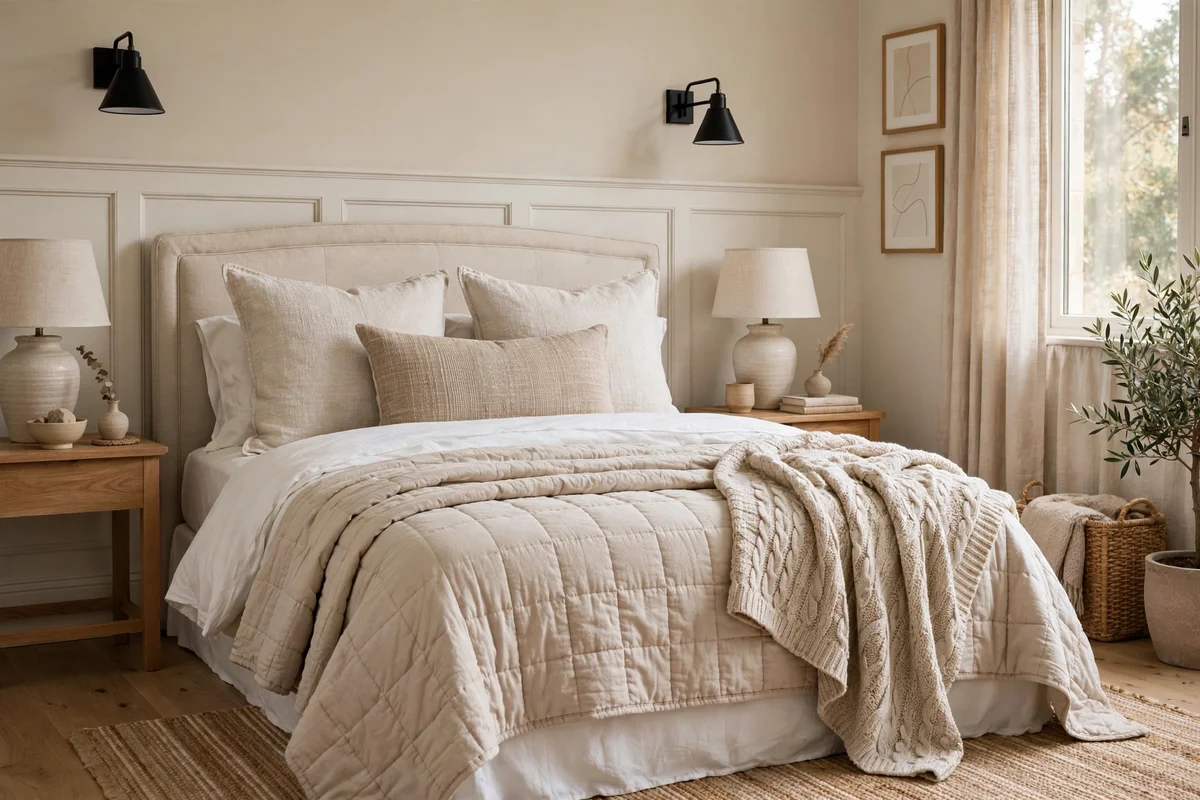
A chandelier with a traditional silhouette rendered in modern materials is transitional lighting at its best. Think a classic candelabra shape in brushed brass or matte black, or a ring chandelier with clean lines. Hang it centered over the bed, about 30–36 inches above the mattress for a standard 8-foot ceiling. Fixtures run $200–$900. Pro tip: Put the chandelier on a dimmer switch so it can shift from bright task lighting to a soft evening glow.
6. Tailored Bench at the Foot
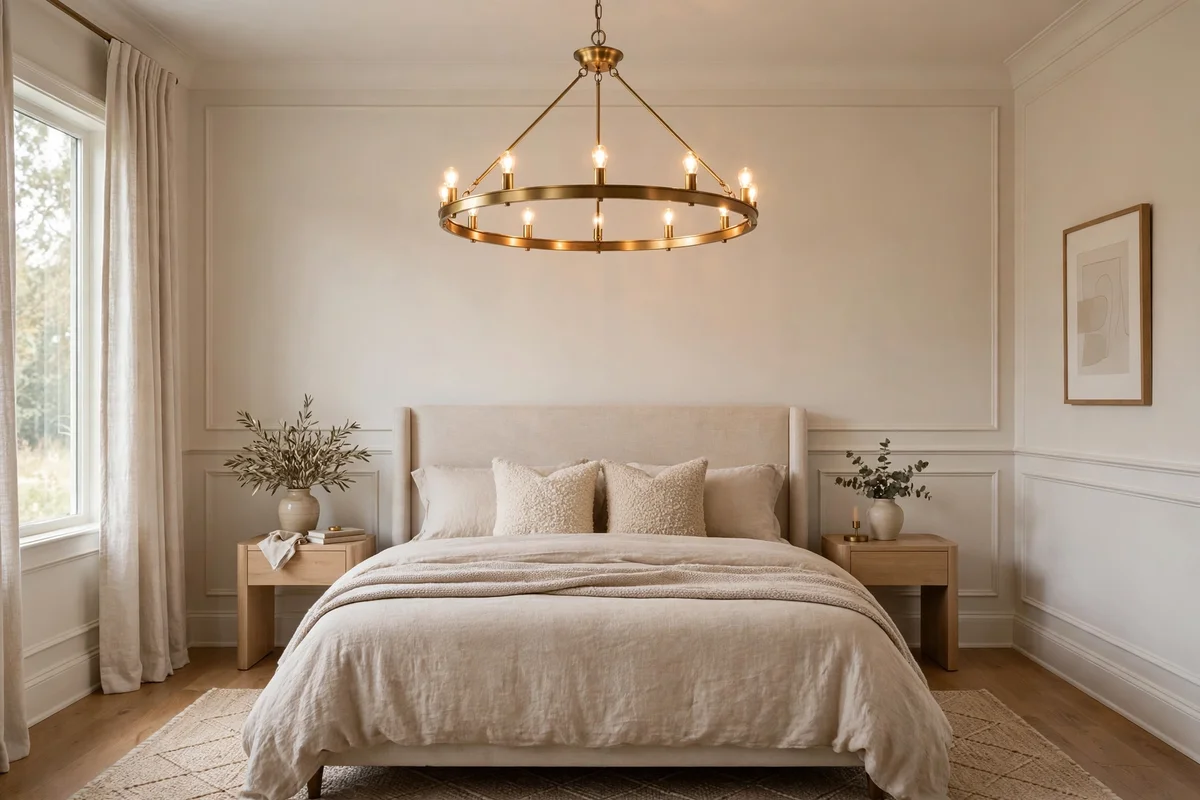
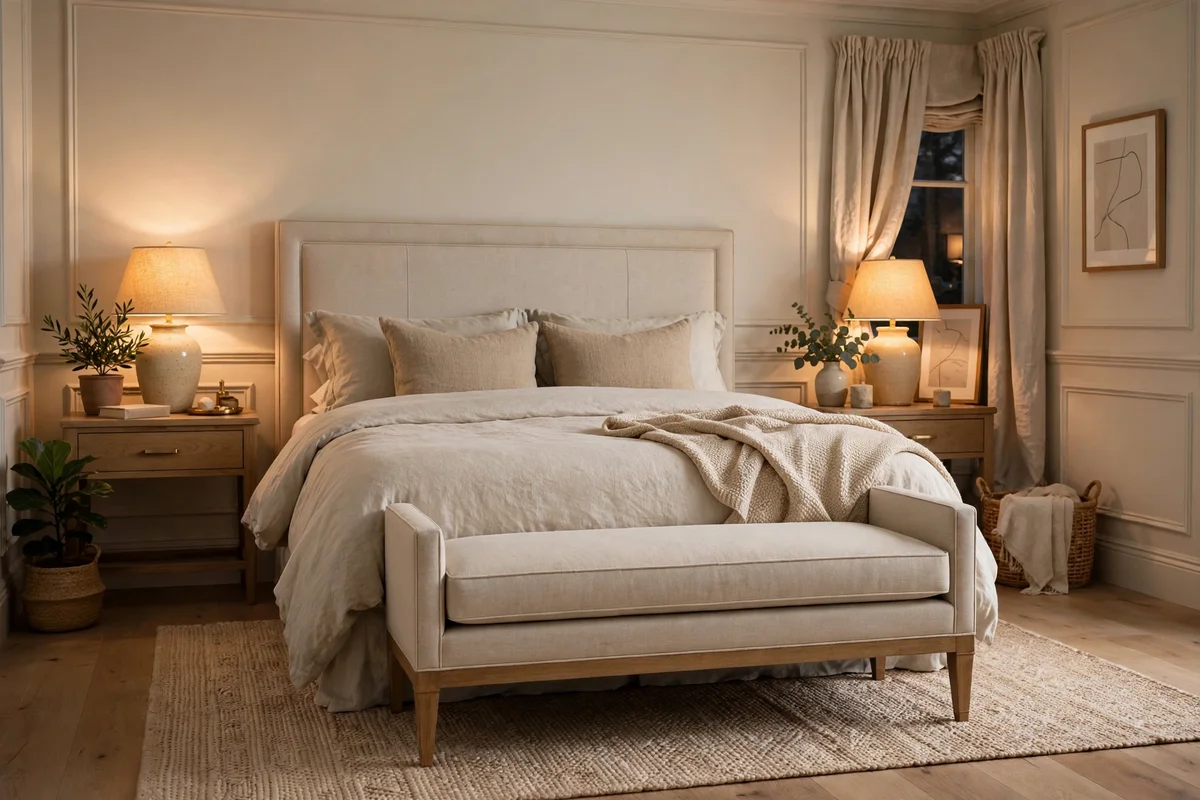
A tailored bench at the foot of the bed adds function and polish in equal measure. Choose an upholstered bench with clean lines and turned or tapered legs, a subtle nod to both eras. It gives you a spot to sit while dressing and a place to lay out tomorrow’s clothes. Benches run $180–$600. Pro tip: Pick a bench no wider than the bed itself and leave at least 18 inches of walking space around it.
7. Layered Area Rugs
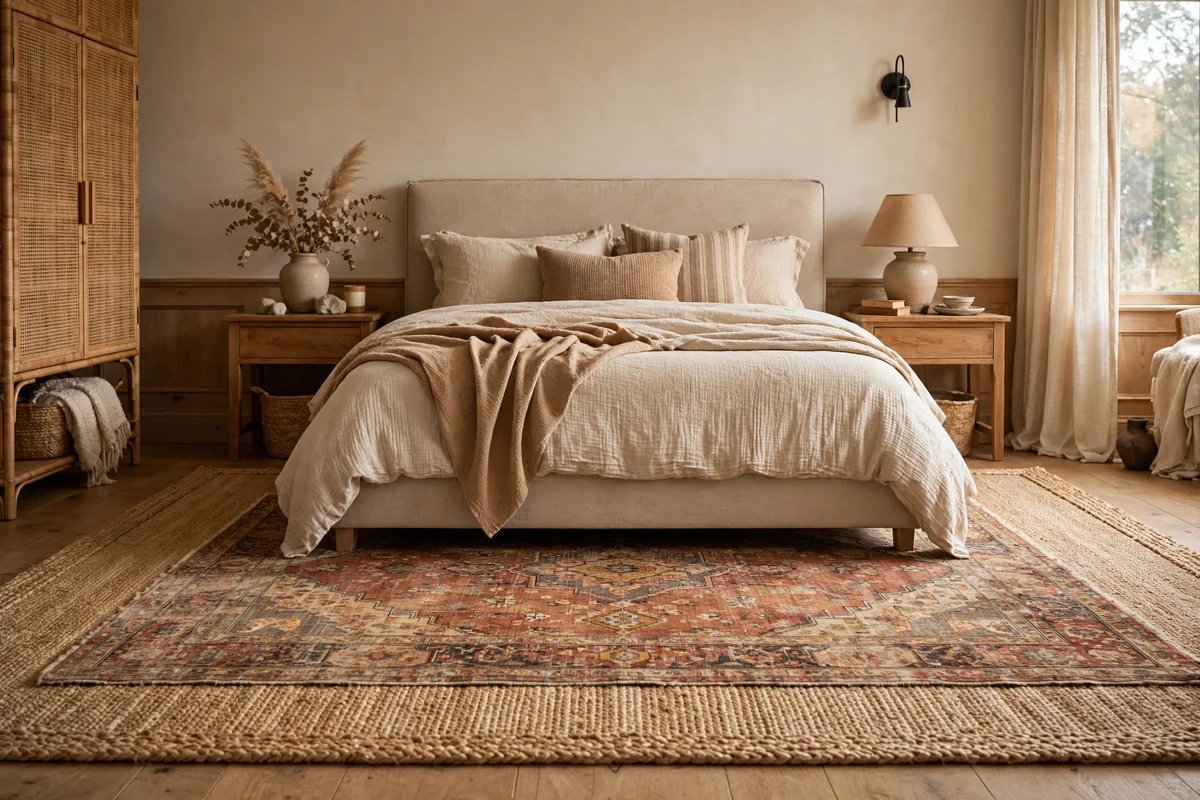
Layering a smaller patterned rug over a large neutral base rug is a designer trick that adds depth without clutter. In transitional bedrooms, try a vintage-style Persian or Oushak rug layered over a natural jute or sisal base. The base should extend at least 24 inches beyond the bed on three sides. Budget $200–$800 for the pair. Pro tip: Use a rug pad under both layers to prevent slipping and add cushioning.
8. Floor-to-Ceiling Linen Drapes
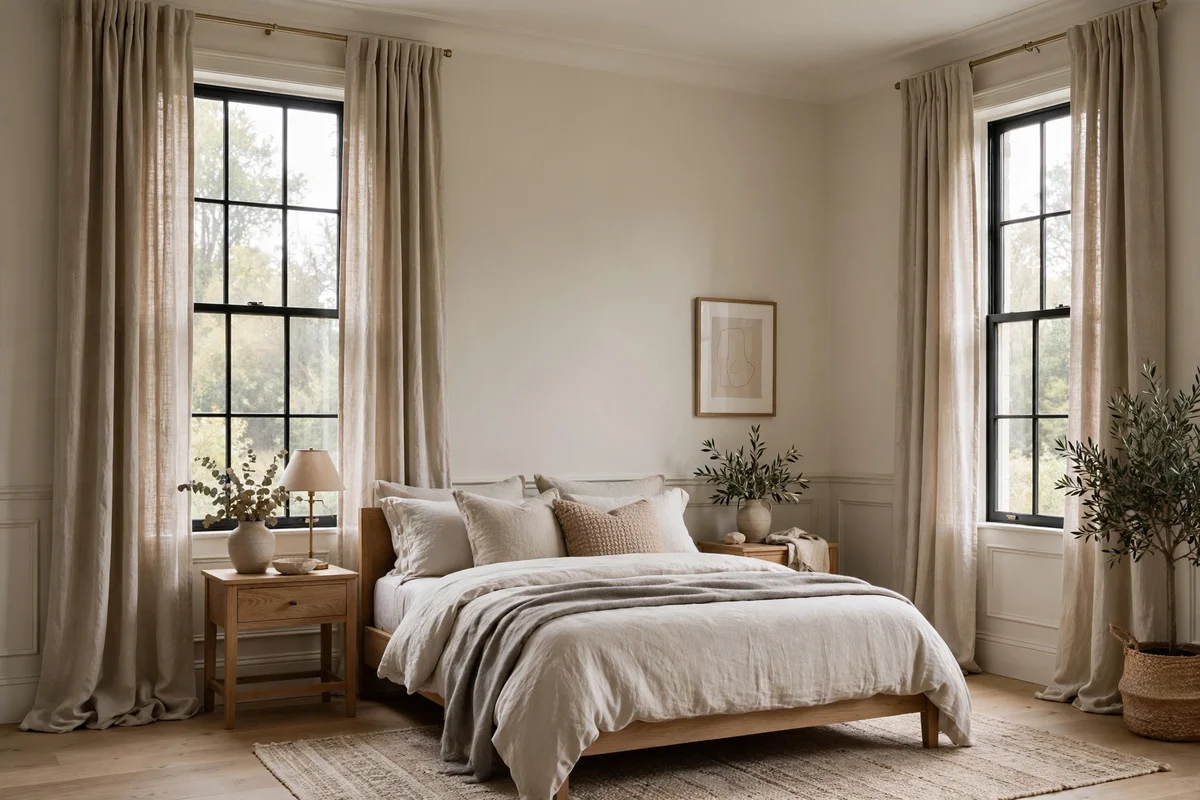
Floor-to-ceiling drapes in natural linen soften a bedroom like nothing else, and they bridge traditional fullness with modern simplicity. Hang the rod 4–6 inches above the window frame and extend it 8–12 inches beyond each side so the panels stack off the glass. Linen panels run $60–$200 per panel. Pro tip: Choose panels 1.5 to 2 times the window width for proper fullness, and let them just kiss the floor.
9. Oversized Statement Mirror
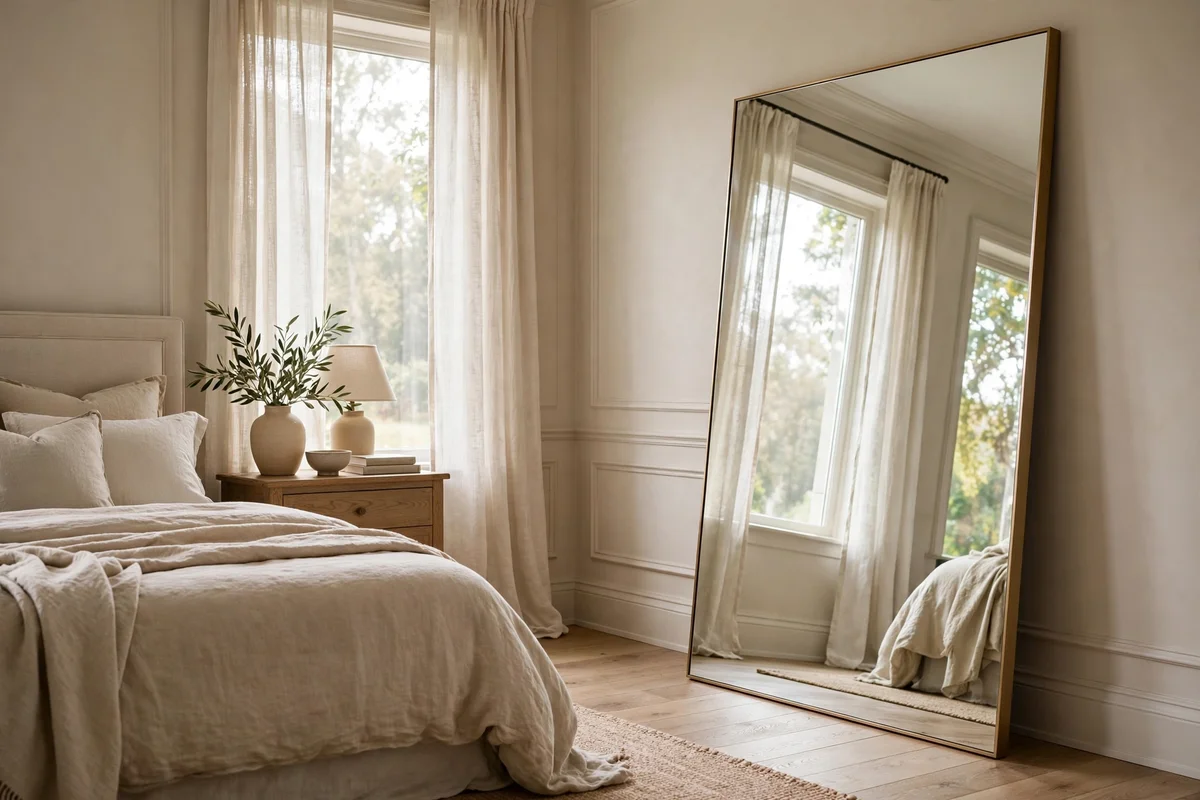
An oversized mirror with a simple frame is a transitional workhorse. It bounces light around the room, makes the space feel larger, and adds a reflective layer that works with any style. Lean a large floor mirror against the wall opposite the window for maximum light effect, or hang one above the dresser. Mirrors run $150–$600. Pro tip: A thin brass or black metal frame keeps the look current, while a classic wood frame leans traditional.
Furniture With One Foot in Each Era (10–17)
10. Mixed Metal Finishes
Transitional rooms confidently mix metals: brushed brass lamps on a chrome-based side table, or black iron curtain rods with nickel drawer pulls. The rule is to repeat each finish at least twice so the mix looks intentional. Two dominant metals plus one accent is the sweet spot. Pro tip: Stick to the same temperature family. Warm metals (brass, bronze, copper) mix well together, as do cool ones (chrome, nickel, stainless).
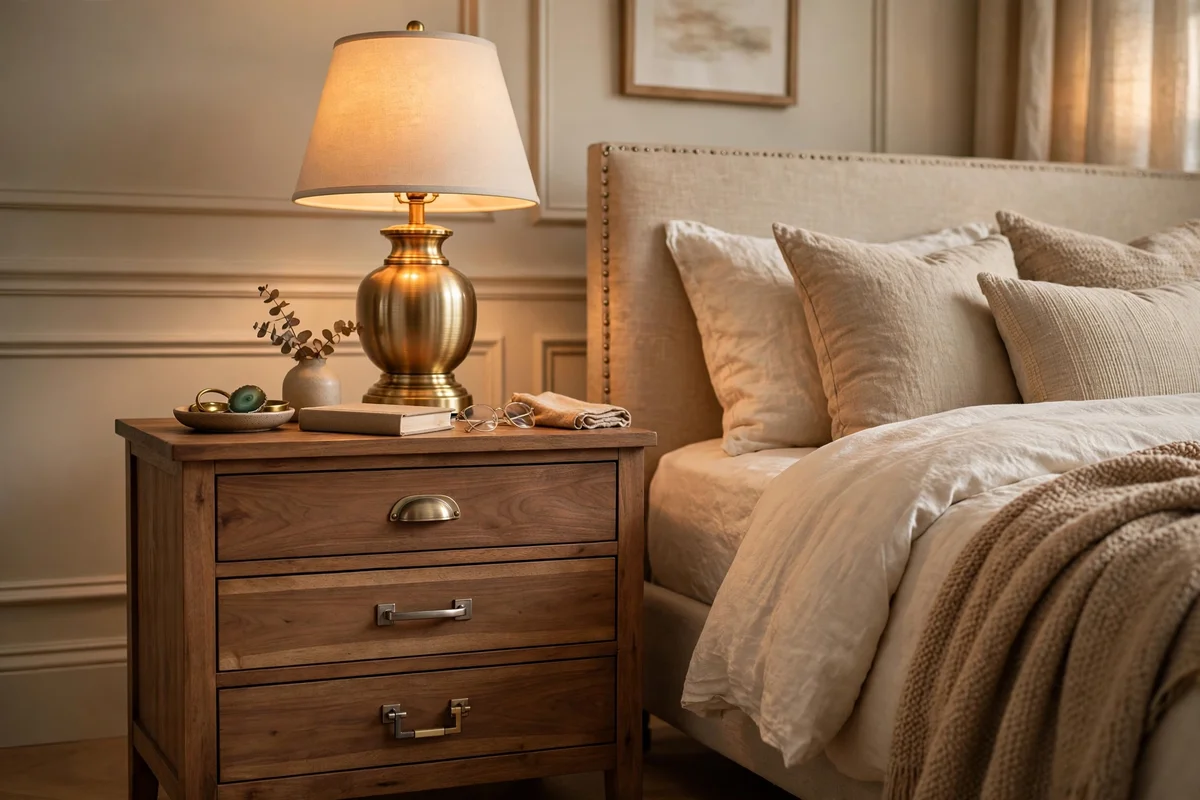
11. Cozy Reading Corner
Every transitional bedroom deserves a quiet reading corner. A comfortable upholstered armchair with classic lines, a small side table, and a good floor lamp create a retreat within the room. A tailored wingback or slipper chair in a neutral fabric bridges both styles beautifully. Budget $400–$1,000 for the chair, table, and lamp together. Pro tip: Place the chair near the window to take advantage of natural light for daytime reading.
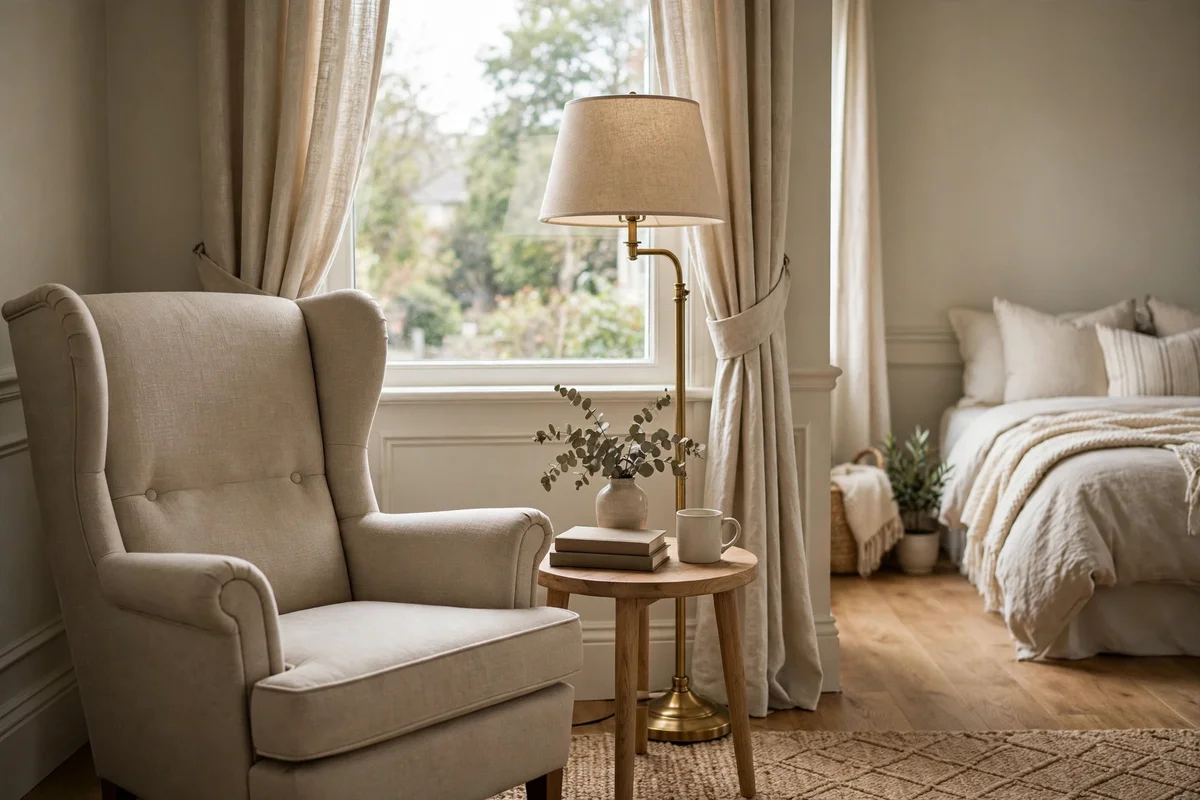
12. Streamlined Four-Poster Bed
The four-poster gets a transitional update with slim, unadorned posts and no heavy carving. This streamlined silhouette keeps the drama and presence of a traditional poster bed while feeling light and current. Choose warm wood or upholstered posts depending on your palette. Frames run $800–$2,500. Pro tip: Skip the canopy fabric for a cleaner look, or drape sheer linen on just the back posts for softness without heaviness.
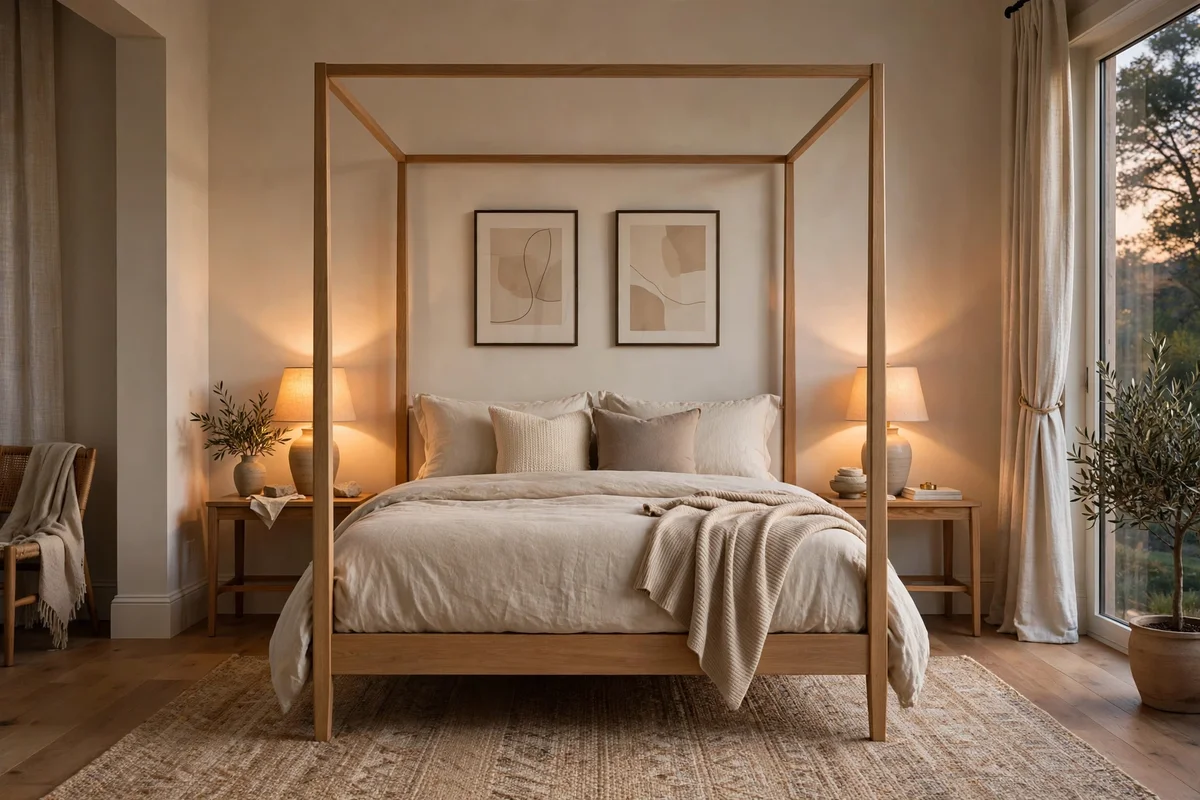
13. Woven Natural Accents
Woven textures like rattan, cane, and seagrass add organic warmth that keeps transitional rooms from feeling too polished. A cane-front dresser, woven storage baskets, or a rattan pendant light introduces craft and texture. These pieces typically cost $80–$400 each. Pro tip: Limit woven pieces to two or three per room so they read as accents, not a theme.
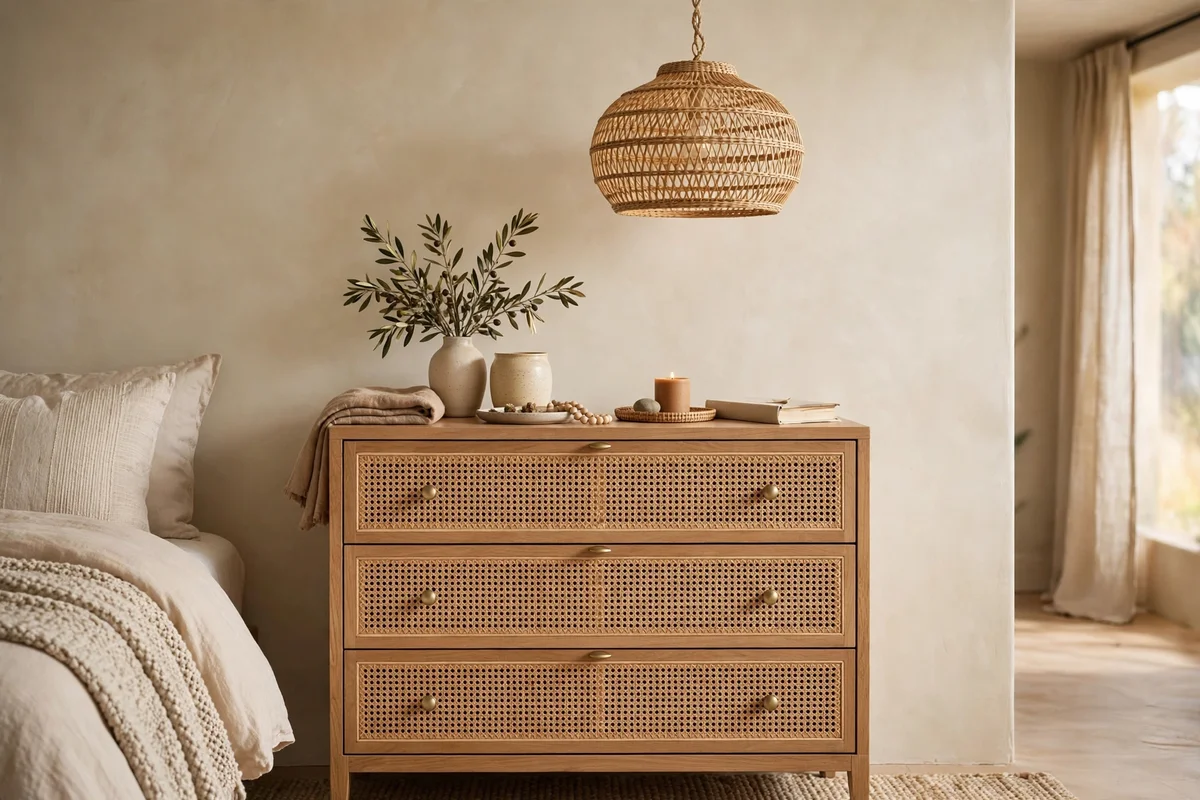
14. Layered Lighting Scheme
Transitional bedrooms glow with at least three light sources: overhead (chandelier or flush mount), task (bedside lamps or sconces), and ambient (floor lamp or picture lights). Mixing traditional lamp shapes with modern finishes ties the scheme together. Budget $300–$900 for a complete layered setup. Pro tip: Use warm 2700K bulbs throughout for a cohesive, flattering glow.
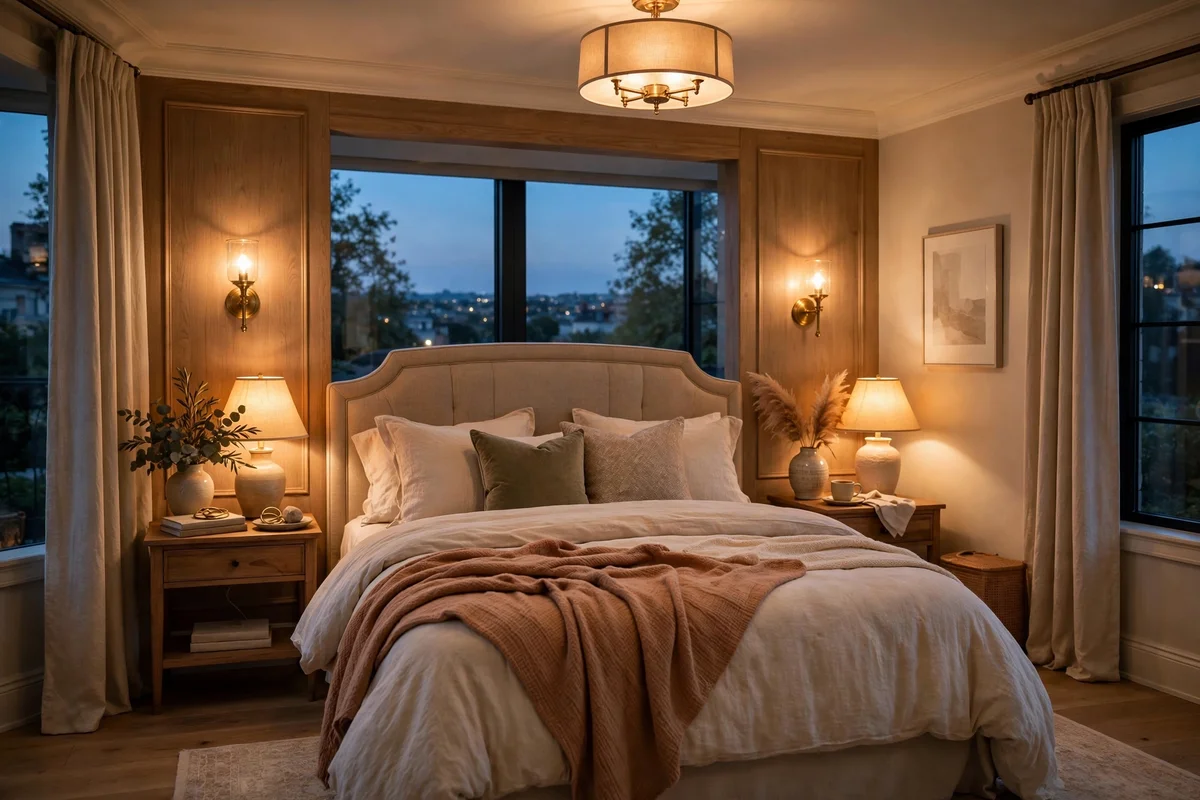
15. Marble-Topped Dresser
A dresser with a marble or stone top brings traditional luxury into a clean-lined modern form. The natural veining adds organic pattern while the simple case keeps things current. This is a classic transitional move: one luxurious material on an unfussy shape. Dressers run $600–$1,800. Pro tip: Style the top with a mirror or art, one lamp, and a small tray to keep the stone visible.
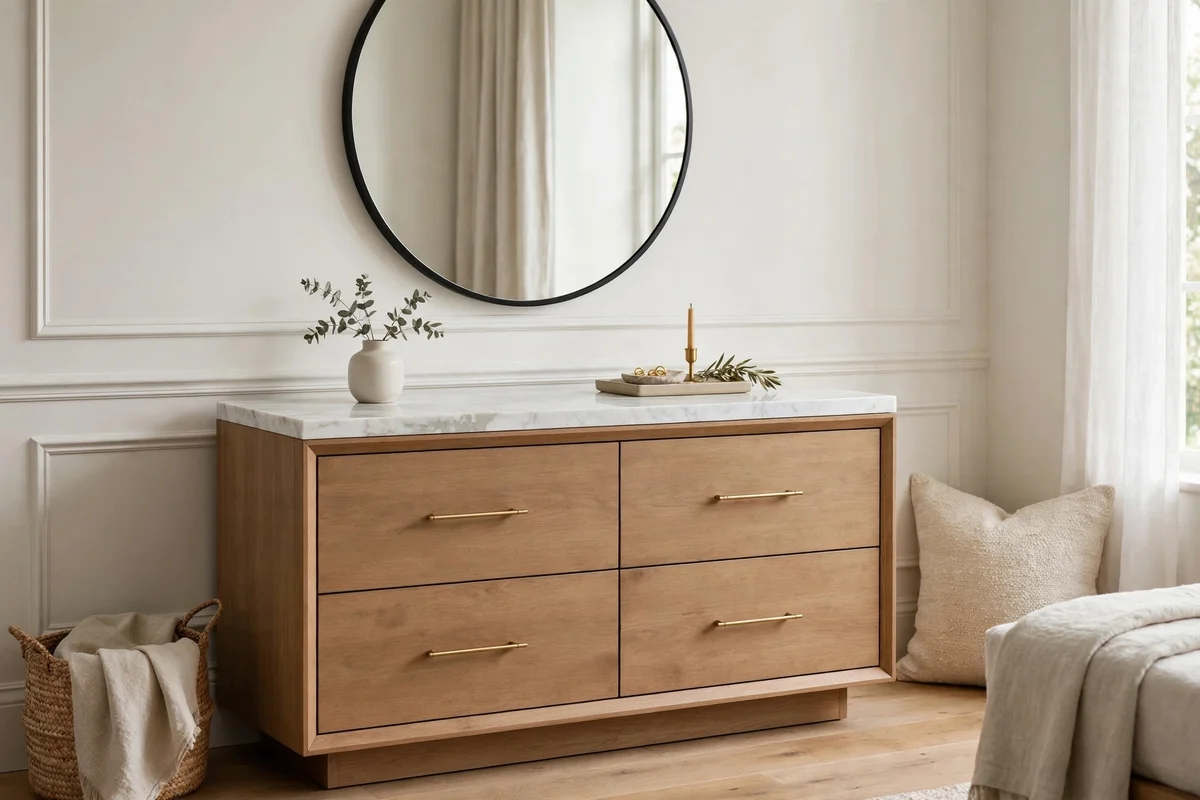
16. One Bold Accent Color
A single confident accent color keeps a neutral transitional room from feeling flat. Deep navy, forest green, or warm terracotta on pillows, a throw, and one piece of art creates a focal thread. The key is restraint: repeat the color three to five times and let neutrals do the rest. Pro tip: Introduce the accent first in small, inexpensive items like pillows so you can change it seasonally.
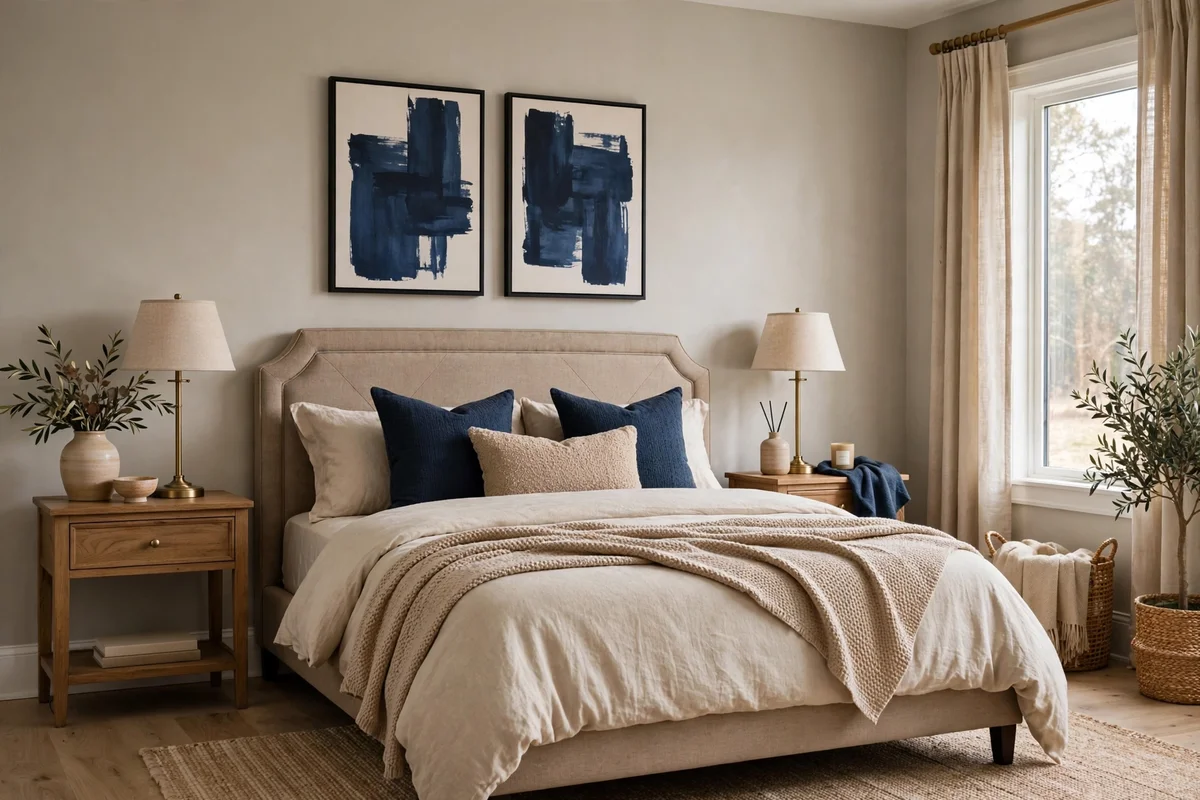
17. Built-In Window Seat
A built-in window seat with tailored cushions is pure traditional charm executed with modern restraint. It adds seating, storage, and architectural interest in one move. Custom built-ins run $1,500–$4,000, while a freestanding storage bench styled as a window seat costs $200–$500. Pro tip: Upholster the cushion in a performance fabric since window seats get daily sun and use.
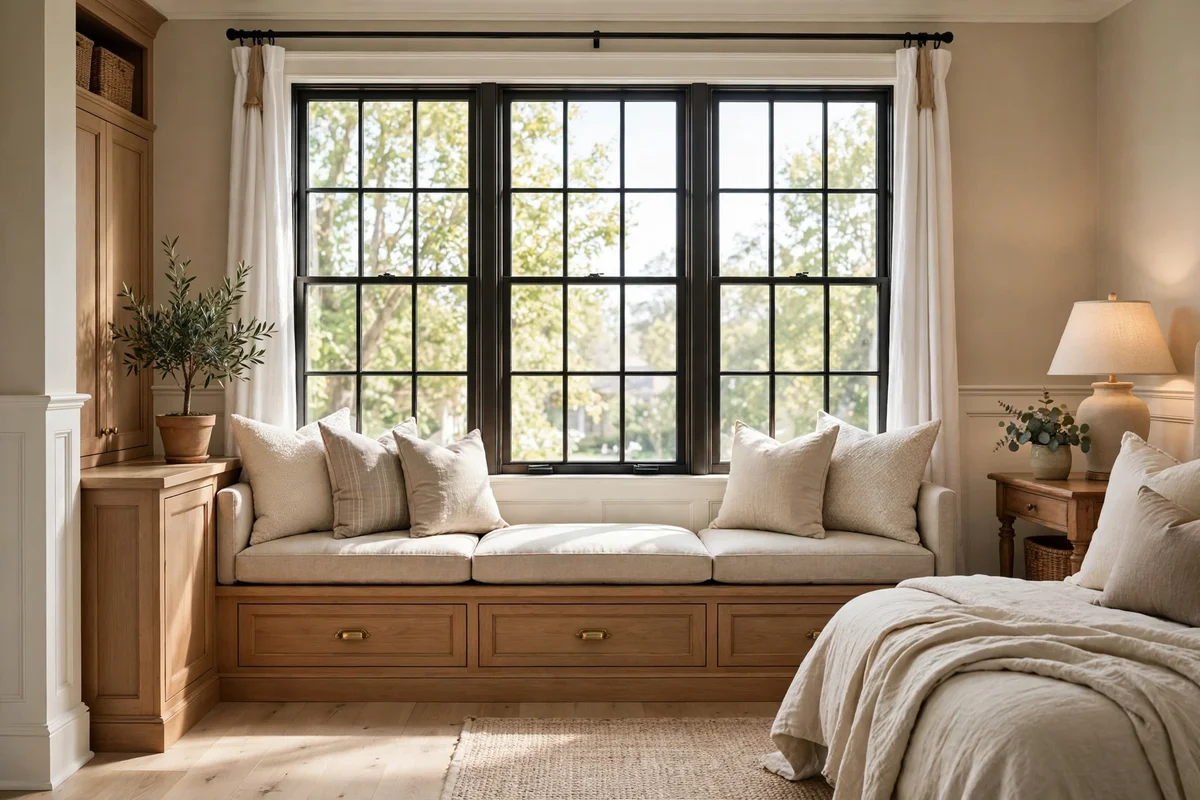
Textiles, Color and Pattern (18–26)
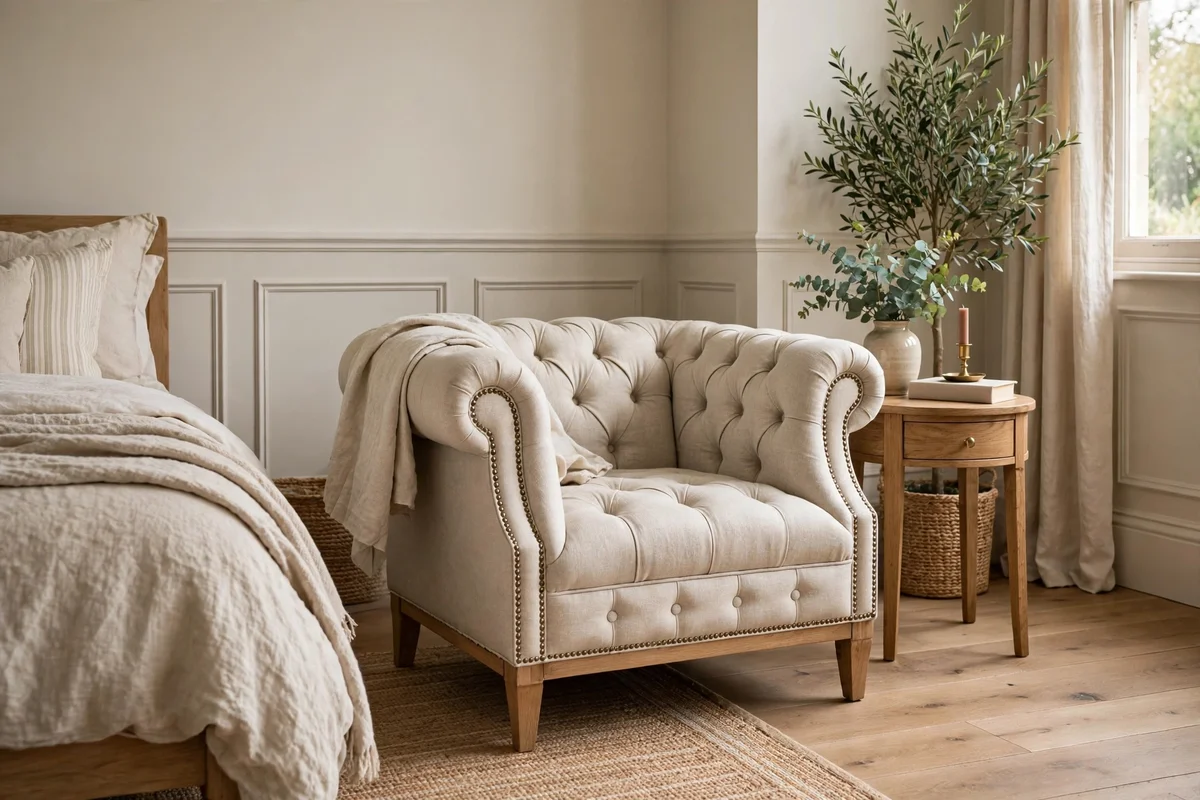
18. Modern Chesterfield Chair
A Chesterfield chair reimagined in a modern fabric like performance linen or light velvet is transitional seating at its finest. The deep buttoning nods to tradition while the fresh upholstery keeps it current. Use it in the reading corner or as a bedroom accent chair. Chairs run $500–$1,200. Pro tip: A light-colored Chesterfield in a small bedroom doubles as a sculptural statement piece.
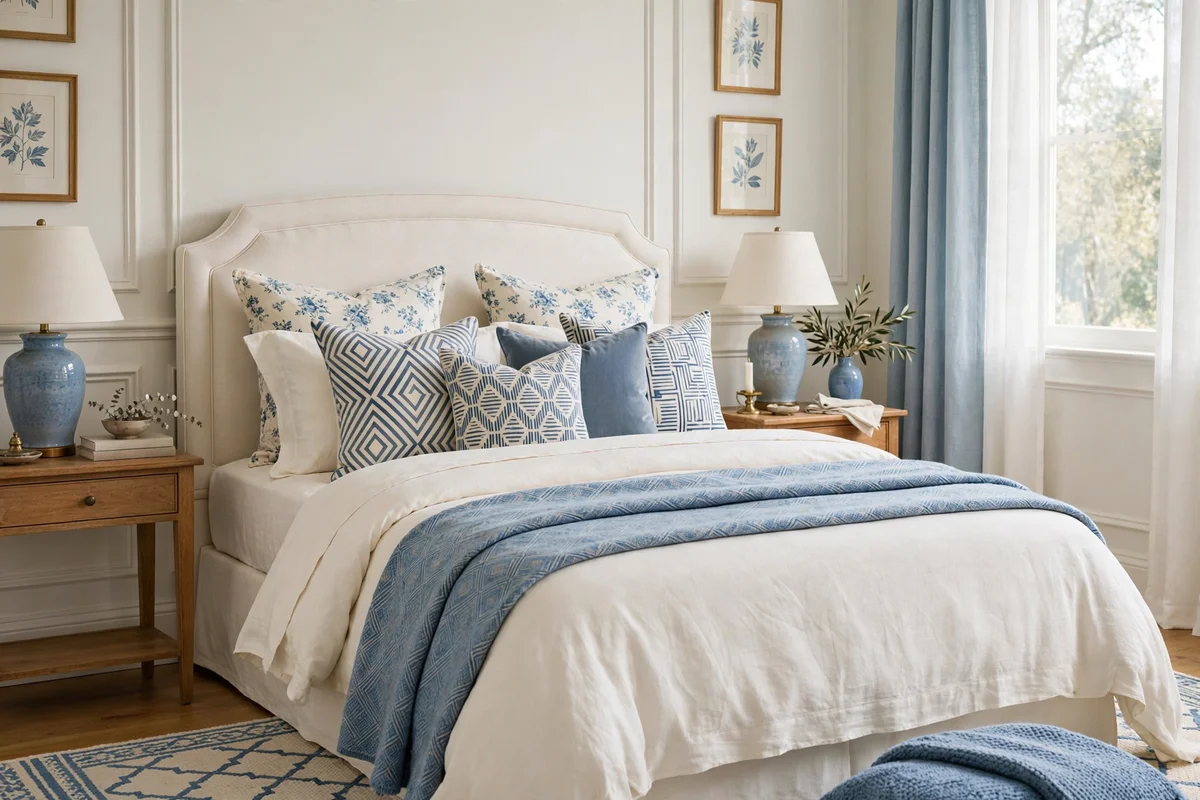
19. Pattern Mixing Done Right
Transitional pattern mixing pairs a traditional print (like a small floral or damask) with a modern geometric, united by a shared color palette. The classic formula: one large-scale pattern, one medium, one small, all in the same two or three colors. Pillows and throws are the easiest place to practice. Pro tip: Keep the background color consistent across all patterns (all on ivory, for example) and the mix will always work.
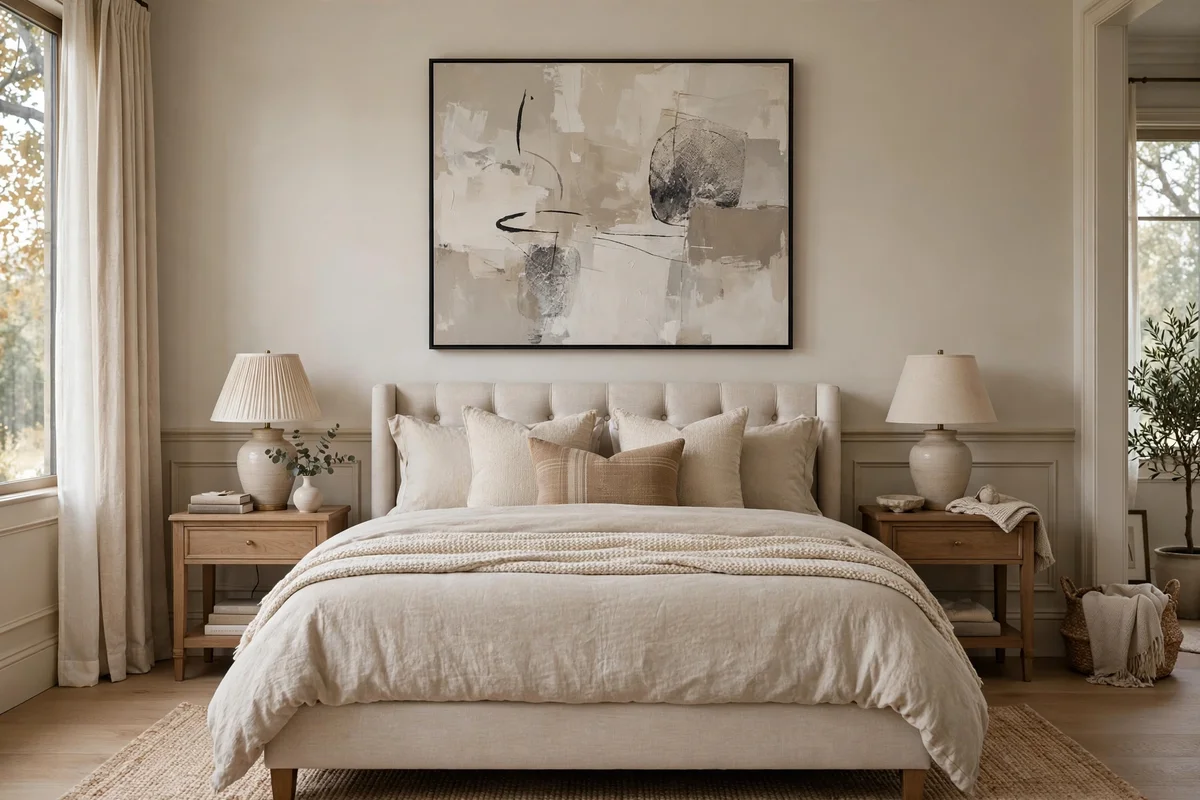
20. Oversized Art Above the Bed
One oversized piece of art above the bed is a modern move that grounds a transitional room. Choose abstract or landscape art in colors pulled from the room, sized to span roughly two-thirds of the bed’s width. Large-scale prints run $150–$600 framed. Pro tip: Hang the center of the art about 57 inches from the floor, and leave 6–8 inches between the headboard top and the frame bottom.
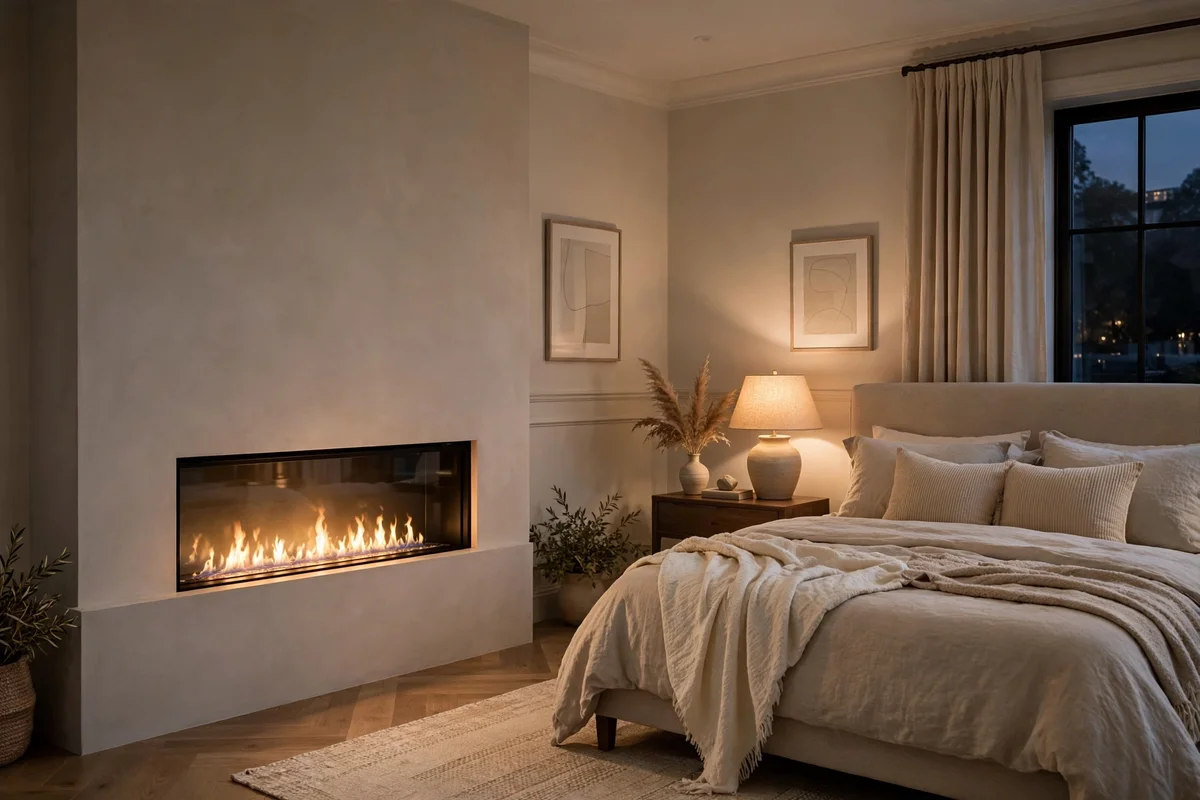
21. Sleek Modern Fireplace
A sleek linear fireplace with a simple stone or plaster surround adds traditional coziness in a thoroughly modern package. Electric models give the ambiance without venting or gas lines, and many include realistic flame effects with heat optional. Units run $400–$2,000 plus installation. Pro tip: Center the bed or a seating arrangement on the fireplace to make it a true focal point.
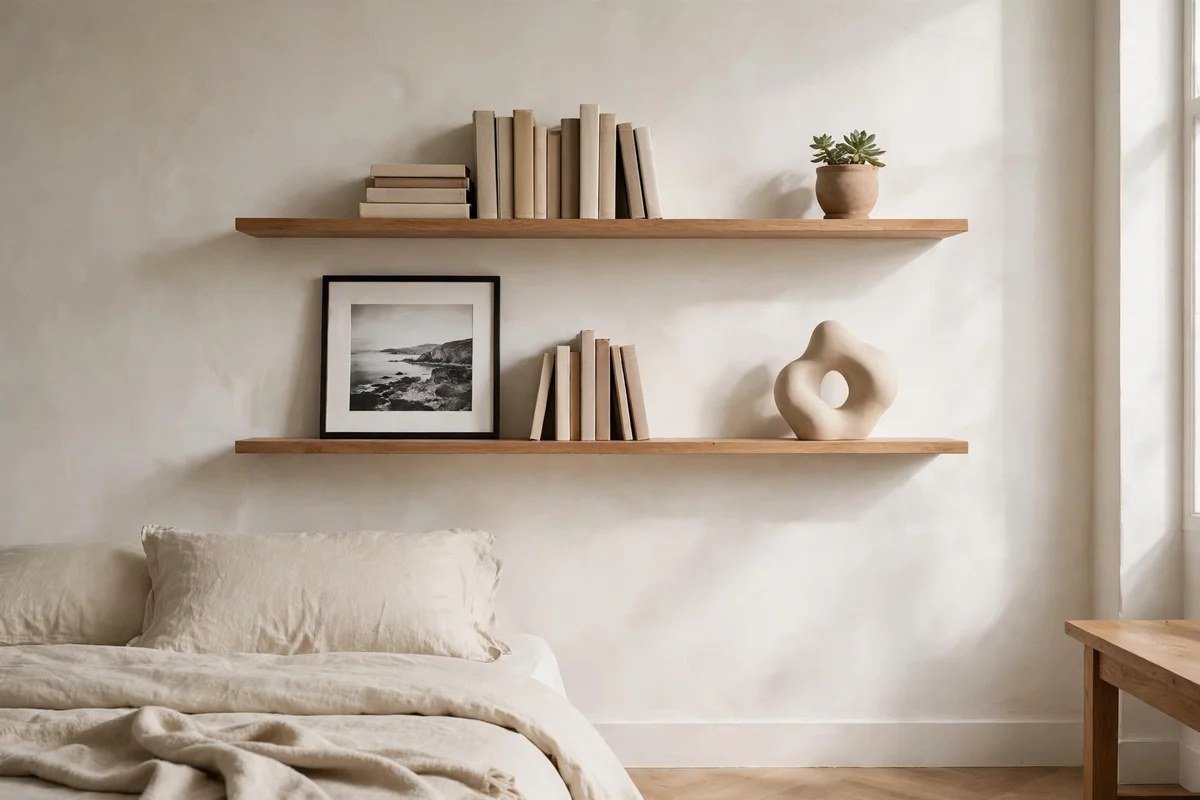
22. Styled Open Shelving
A few well-styled open shelves or a simple bookcase keep a transitional bedroom personal without clutter. Mix books, a small plant, framed photos, and one sculptural object, leaving plenty of breathing room. The modern styling approach (fewer, larger items) applied to traditional shelf forms is the trick. Pro tip: Follow the rule of thirds: fill roughly two-thirds of each shelf and leave one-third empty.
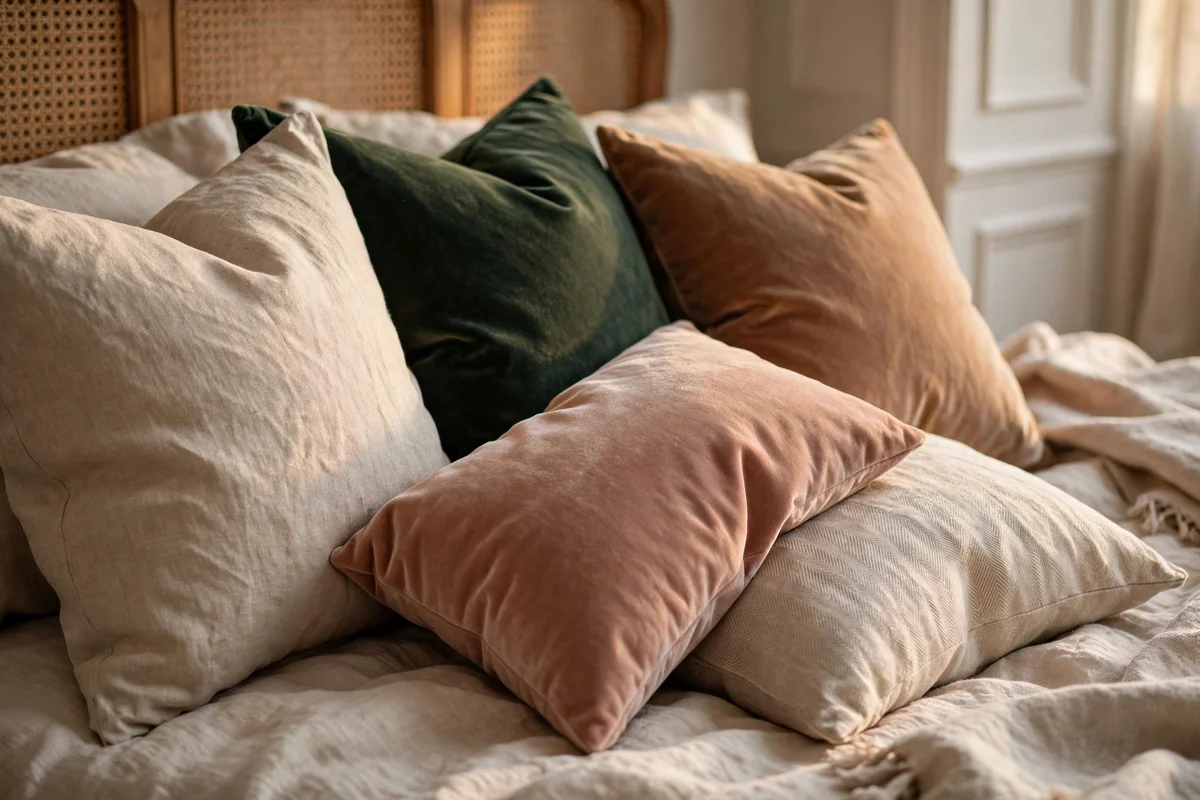
23. Linen and Velvet Pillows
Pairing casual linen pillows with plush velvet ones is a textile contrast that defines transitional style. The matte, relaxed linen keeps the look approachable while velvet adds a touch of traditional luxury. Mix both in your accent color for cohesion. Quality pillow covers run $25–$60 each. Pro tip: Use down or down-alternative inserts one size larger than the cover for a full, plump look.
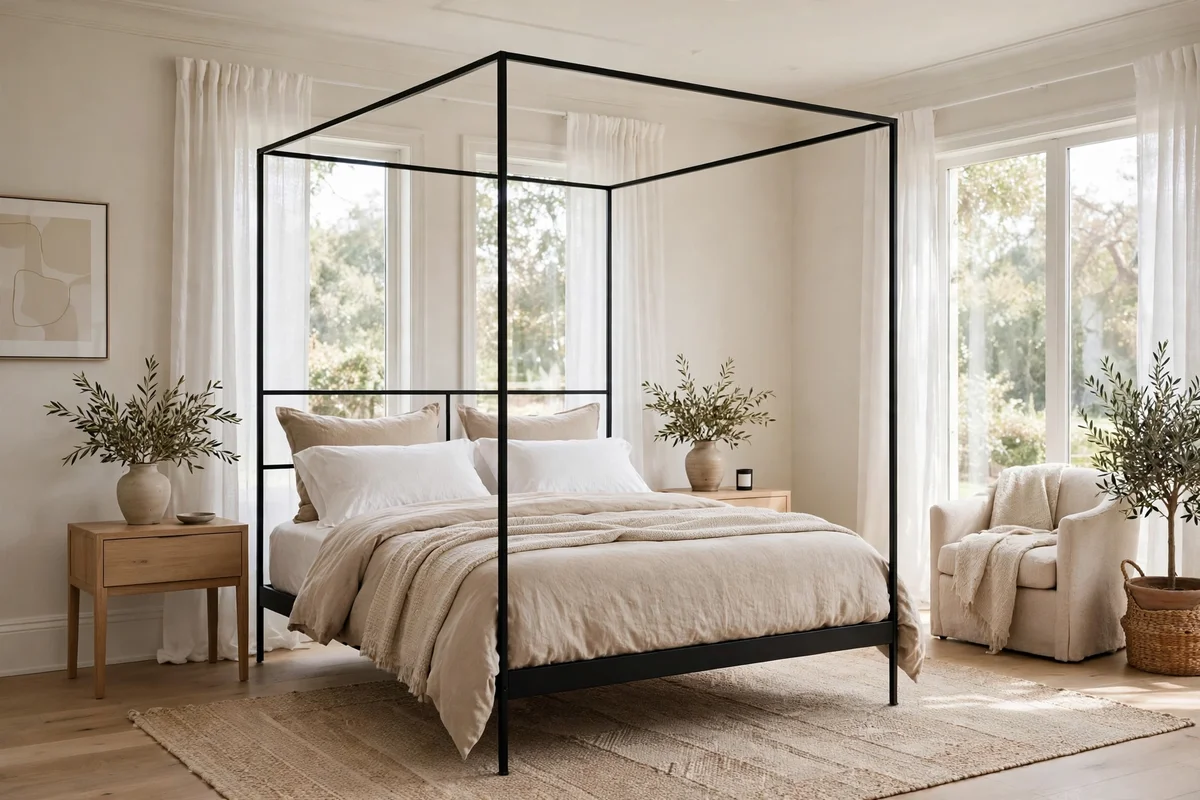
24. Minimal Canopy Frame
A minimal canopy frame in black metal or light wood gives architectural presence without traditional heaviness. The clean geometry reads modern while the four-poster form honors tradition. Leave it bare or wrap the top rails in sheer fabric. Frames run $500–$1,500. Pro tip: In rooms with ceilings under 9 feet, choose a low-profile canopy to avoid a cramped feeling.
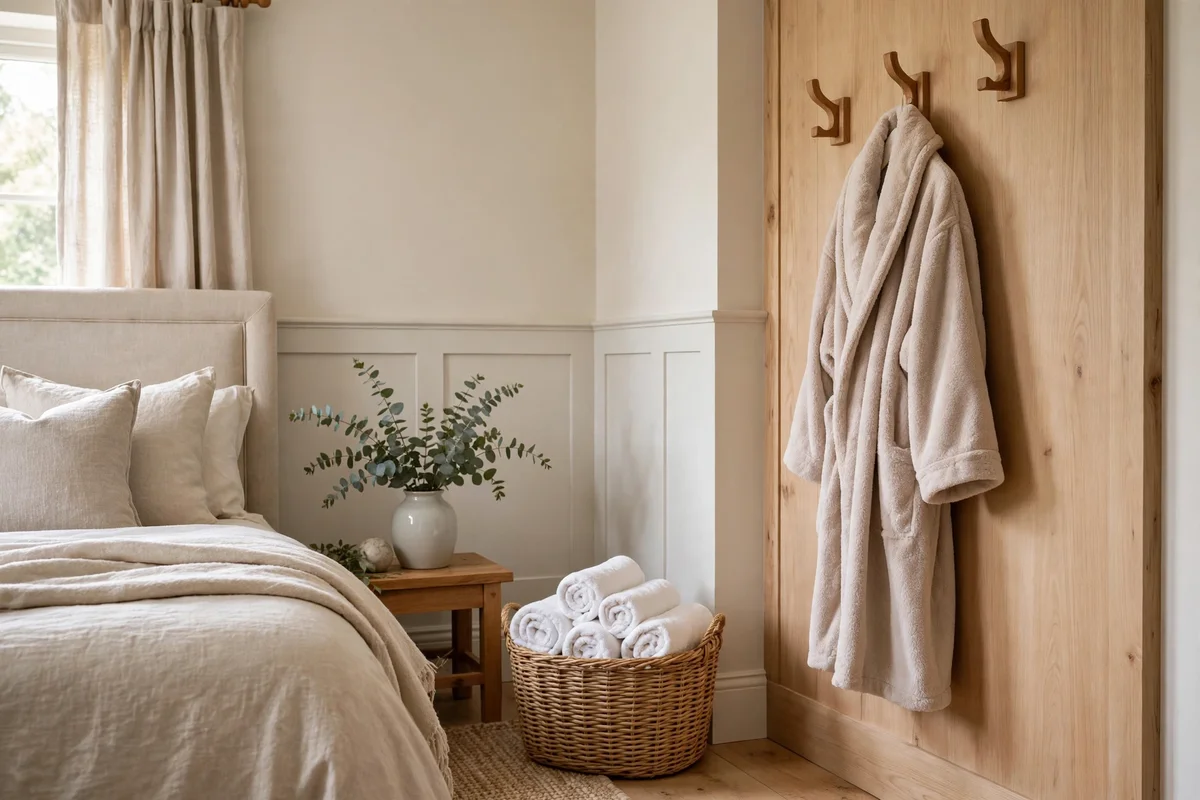
25. Spa-Inspired Ensuite Touches
Bring hotel-spa calm into the bedroom with ensuite-inspired details: a plush robe on a hook, rolled towels in a basket, and eucalyptus in a vase. These small hospitality touches make the bedroom feel like a retreat. Budget $50–$150 for the full effect. Pro tip: A simple wooden ladder or wall hooks display robes and throws beautifully while keeping them accessible.
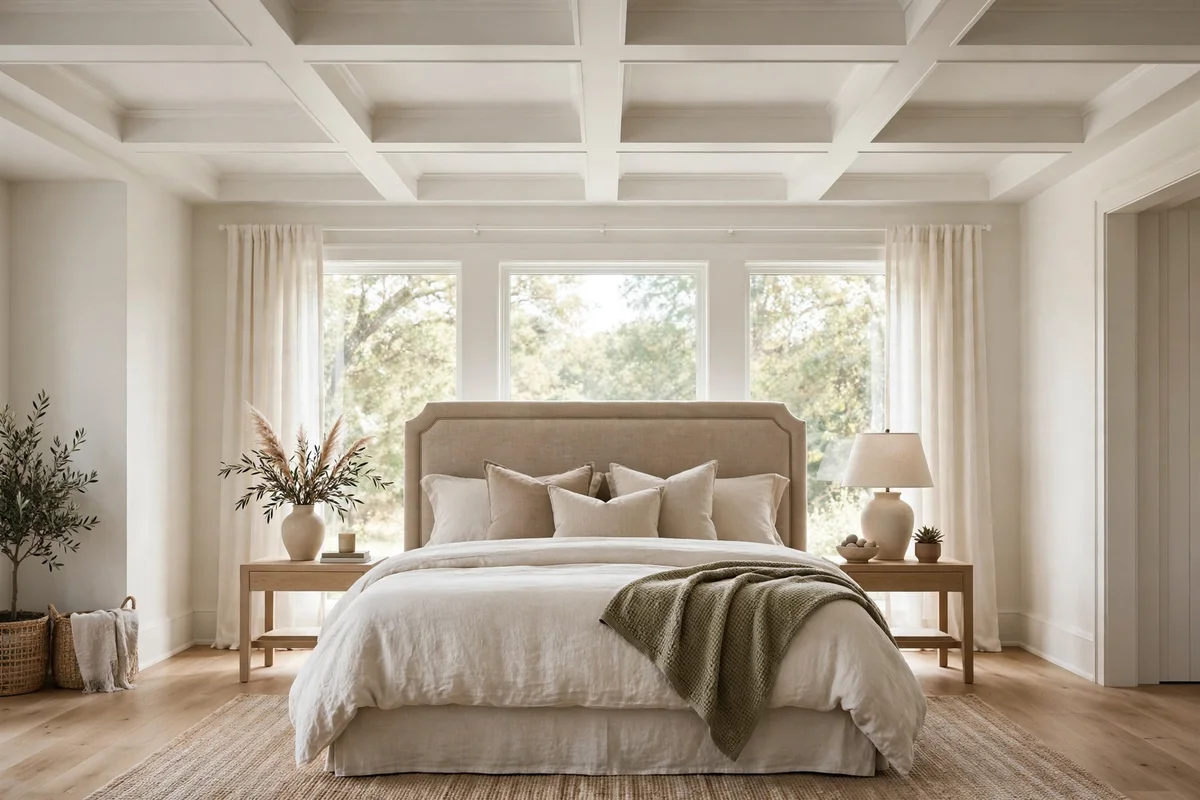
26. Modern Coffered Ceiling
Coffered ceilings get a modern update with simple, unadorned beams in the same paint color as the ceiling. This adds architectural interest and a sense of craft without traditional ornament. It works especially well in bedrooms with 9-foot or higher ceilings. Professional installation runs $1,500–$4,000. Pro tip: Paint the coffers and ceiling one soft white for a subtle effect, or add contrast with a pale greige inside the panels.
Finishing Touches: Polished Details (27–34)
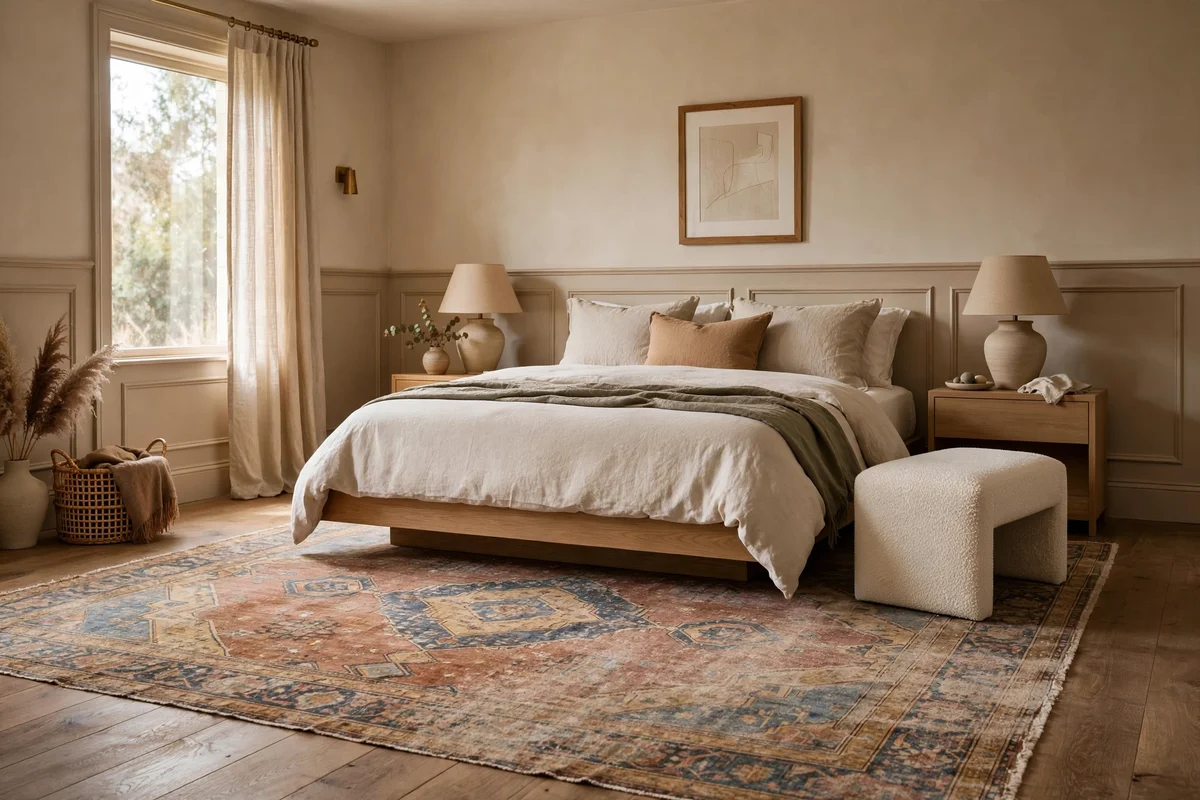
27. Vintage Rug, Modern Furniture
Pairing a genuine vintage or vintage-style rug with clean modern furniture is a hallmark transitional move. The rug’s patina and traditional pattern warm up contemporary silhouettes instantly. Look for Oushak, Persian, or Turkish styles in faded, muted tones. Authentic vintage rugs run $500–$2,000; quality reproductions cost $200–$600. Pro tip: Faded, low-contrast rugs are more forgiving with modern furniture than bold, saturated ones.
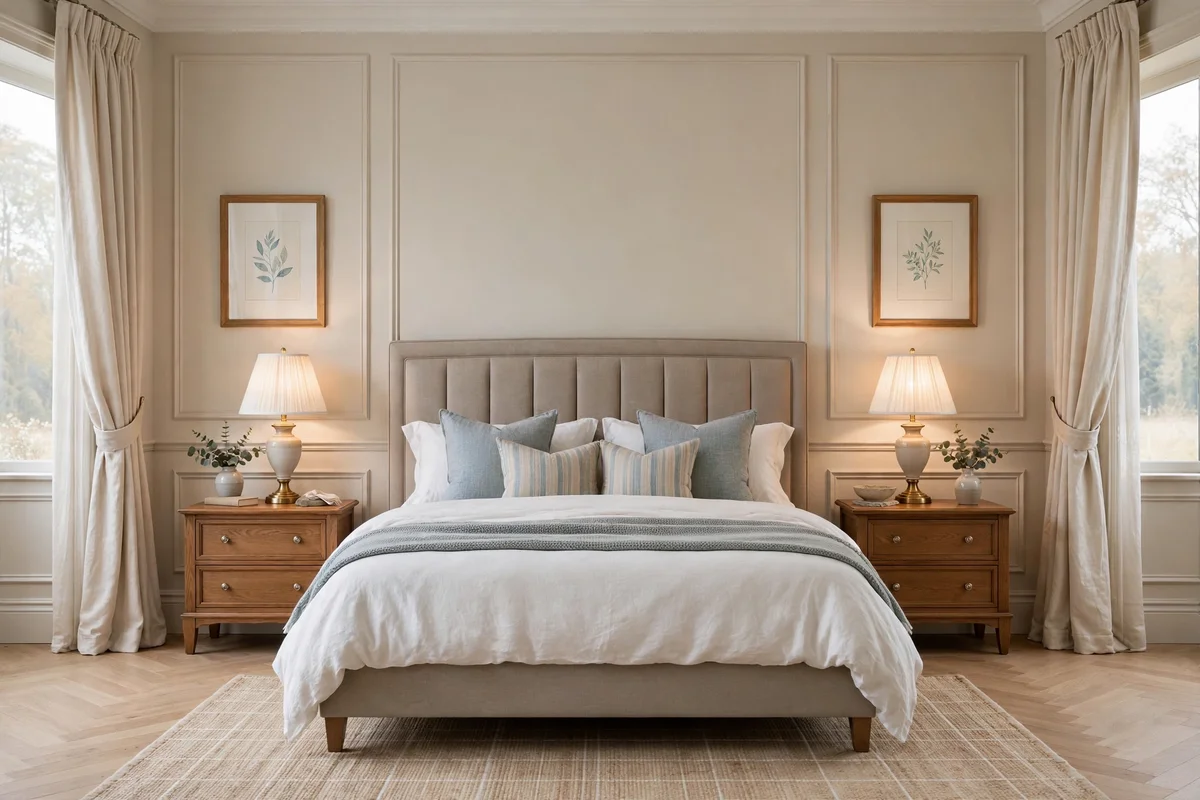
28. Symmetrical Styling
Symmetry is the traditional design principle that gives transitional rooms their calm, tailored feel. Matching nightstands, lamps, and art on either side of the bed create instant order. You can break symmetry in small ways (different books, one plant) once the big pieces match. Pro tip: If perfect symmetry feels stiff, keep the large elements matched and vary only the smallest accessories.
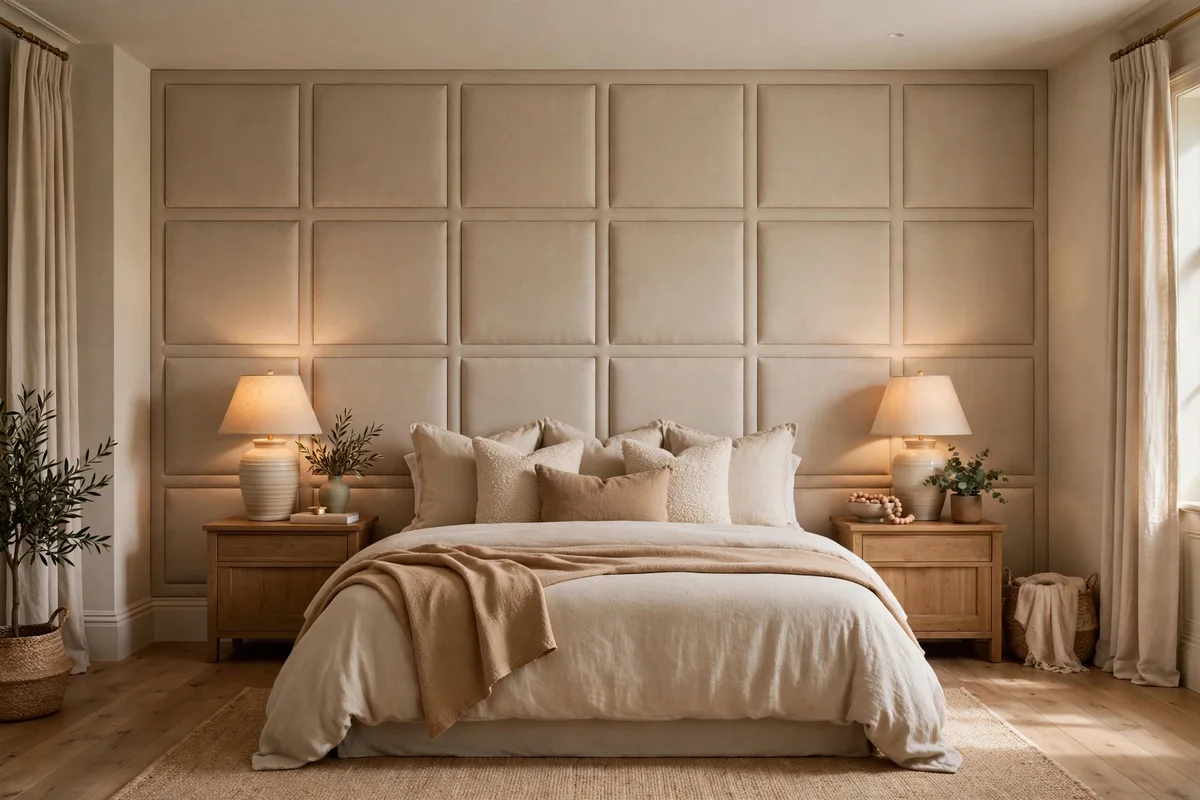
29. Upholstered Wall Panels
Upholstered wall panels behind the bed add softness, sound absorption, and a tailored backdrop. Choose a simple grid or vertical channel pattern in linen or performance fabric for a modern take on traditional padded walls. DIY panel kits run $200–$500; custom installation costs $800–$2,000. Pro tip: Extend the panels slightly wider than the bed for a built-in, architectural look.
30. Edit Your Nightstands
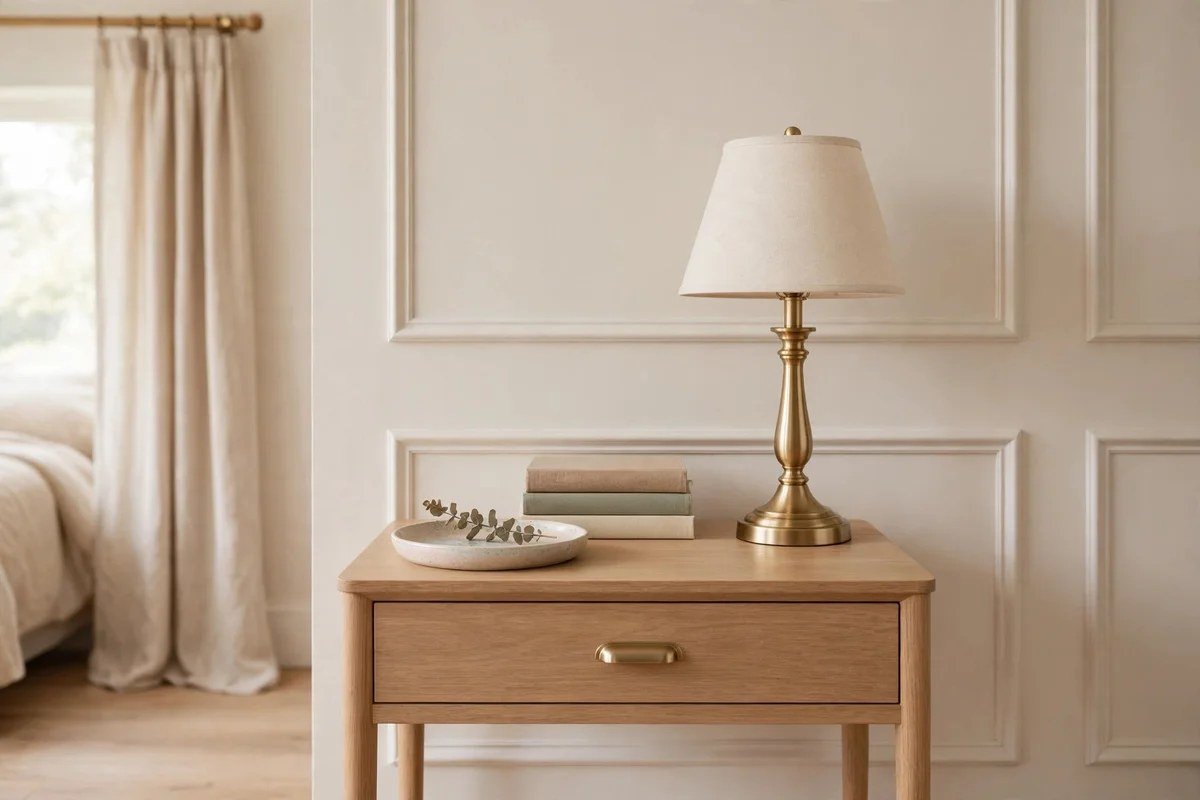
Transitional nightstands follow the modern less-is-more rule: one lamp, one small stack of books or a single decorative object, and nothing else. Corral small essentials (glasses, lip balm) on a pretty tray so surfaces stay serene. This edited approach lets the traditional lamp or classic table shape shine. Pro tip: Hide chargers and cables in a drawer or behind the nightstand with a cord cover for a truly clean surface.
31. Warm Wood Floors
Warm medium-tone wood floors ground a transitional bedroom with natural richness. Oak, walnut, or hickory in a matte finish feel timeless and work with both traditional rugs and modern furniture. If replacing floors is not in the budget, a large area rug over existing floors achieves a similar warmth. Refinishing runs $3–$8 per square foot. Pro tip: Matte or satin finishes look more current than glossy ones and hide dust better.
32. Hotel Turndown Details
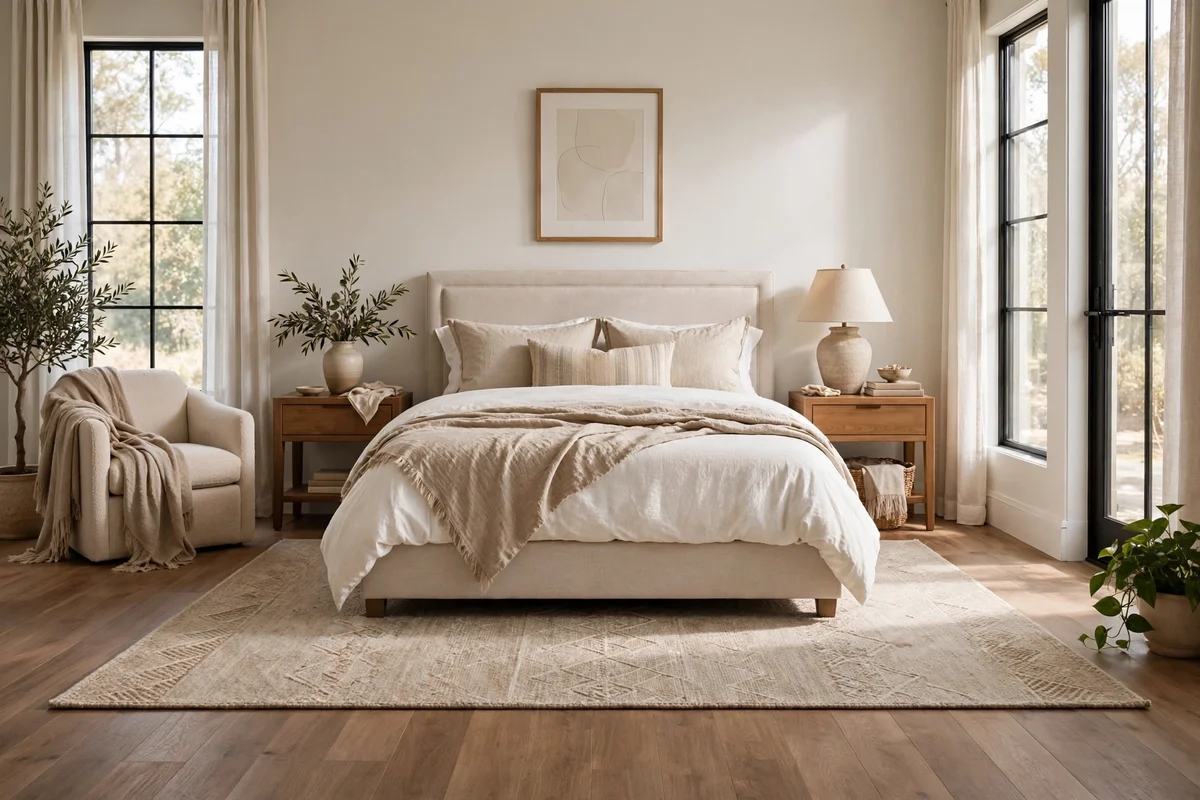
Borrow the finishing details of a luxury hotel: a folded throw across the foot of the bed, crisp hospital corners, and a small carafe of water on the nightstand. These ritual touches make an ordinary bedroom feel considered and calm. The cost is essentially zero, just intention. Pro tip: Fold the top sheet and duvet down together about 12 inches and place pillows upright against the headboard for the classic hotel look.
33. Sculptural Ottoman Pair
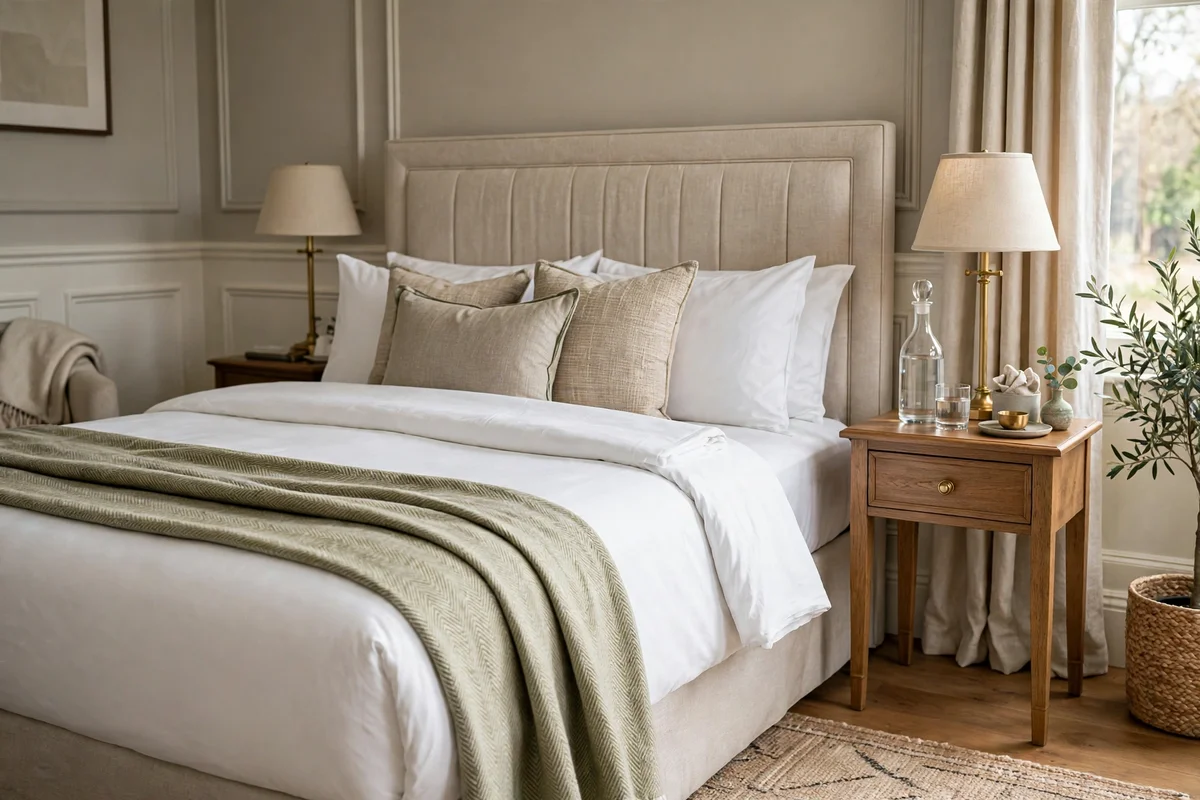
A pair of small sculptural ottomans adds flexible seating and artistic shape. Choose rounded, organic forms in bouclé or velvet to contrast with the room’s tailored lines. They tuck under a console or float near the reading corner. Pairs run $250–$700. Pro tip: Ottomans with hidden storage inside pull double duty in smaller bedrooms.
34. Dimmers on Everything
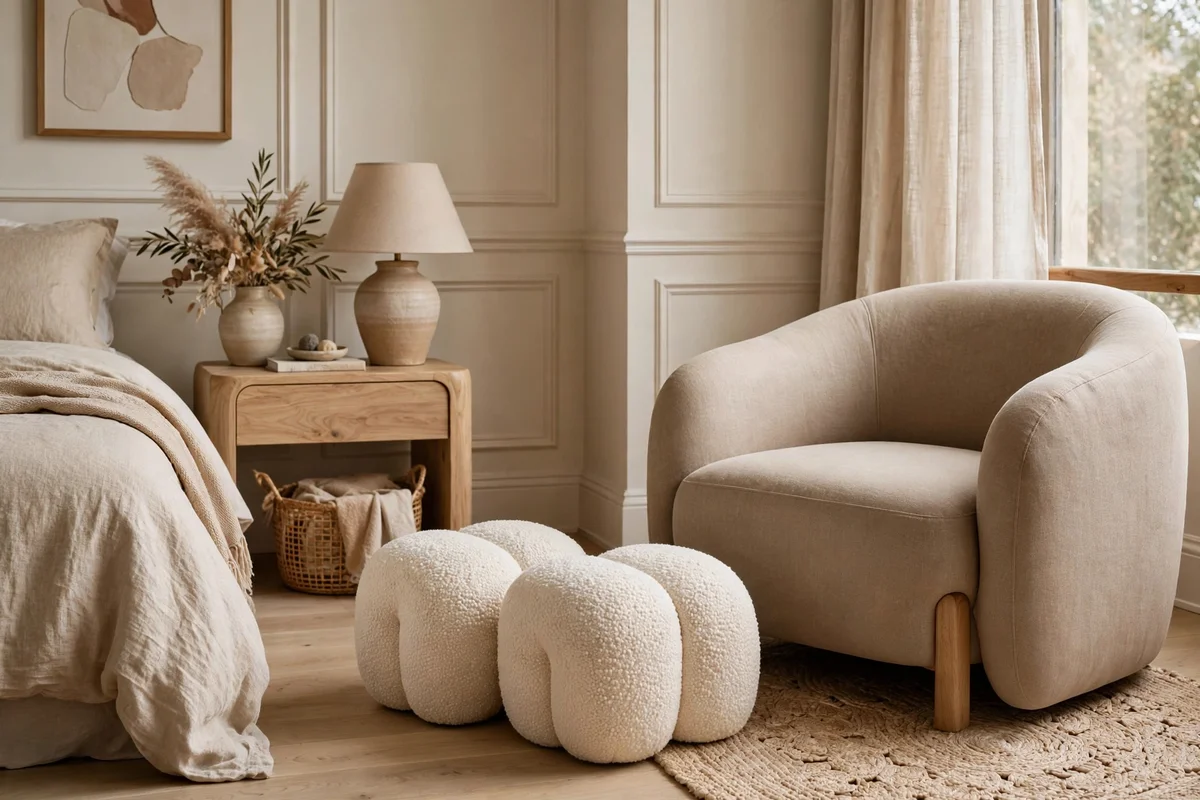
Dimmer switches on every light source are the invisible luxury of a transitional bedroom. They let one room shift from bright morning dressing to soft evening wind-down with a slide. Dimmer switches cost $20–$50 each plus installation, and smart dimmers add app and voice control. Pro tip: Make sure your bulbs are dimmable (not all LEDs are) or you will get flicker instead of ambiance.
Frequently Asked Questions
What is transitional bedroom style?
Transitional style blends traditional and contemporary design. It keeps the warmth, symmetry, and classic proportions of traditional rooms while adopting the clean lines, neutral palettes, and uncluttered feel of modern design. In a bedroom this means upholstered headboards, warm neutrals, mixed metals, and furniture with simple, timeless silhouettes.
What colors work best in a transitional bedroom?
Warm neutrals are the foundation: greige, warm white, oatmeal, taupe, and soft beige. Add depth with wood tones and one confident accent color like navy, forest green, or terracotta. The palette should feel calm and cohesive, with color used as an accent rather than the main event.
How is transitional different from modern farmhouse?
Transitional is more tailored and less rustic than modern farmhouse. It skips the shiplap, barn doors, and distressed finishes in favor of refined upholstery, classic symmetry, and polished details. If you love the cozy side too, our rustic bedroom ideas explore that warmer, cabin-inspired direction.
Can I mix traditional furniture into a transitional bedroom?
Absolutely, and you should. A traditional dresser or classic armchair gains new life in a transitional room when paired with modern lighting, contemporary art, and a neutral palette. The mix is the whole point. For more classic inspiration, see our luxury bedroom ideas and mid-century modern bedroom ideas.
What is the biggest mistake in transitional bedrooms?
Going too beige and flat. Transitional rooms need texture and contrast to avoid looking bland: mix linen with velvet, matte with a little shine, and always include one darker element (like a wood tone or accent color) to ground the neutrals. Our boho bedroom ideas show the opposite approach with fearless color and pattern if you want contrast inspiration.
Is transitional style expensive to achieve?
It does not have to be. The style is more about restraint and cohesion than costly pieces. Paint, edited styling, layered bedding, and one good rug deliver most of the look. Invest in the headboard and bedding you touch daily, and save on decor. For budget-friendly structure, our industrial bedroom ideas include clever low-cost furniture strategies that adapt well here.
Final Thoughts
A transitional bedroom is the rare style that truly gets better with time. Because it avoids extremes, it never looks dated the way ultra-trendy rooms do, and because it balances comfort with polish, it feels right every single day. Start with your neutral foundation, add one classic piece and one modern piece you love, then layer texture until the room feels finished. That balance of old and new, tailored and relaxed, is the whole secret. Pick the ideas that speak to you and build a bedroom that will still feel perfect a decade from now.