34 Minimalist Studio Apartment Decor Ideas
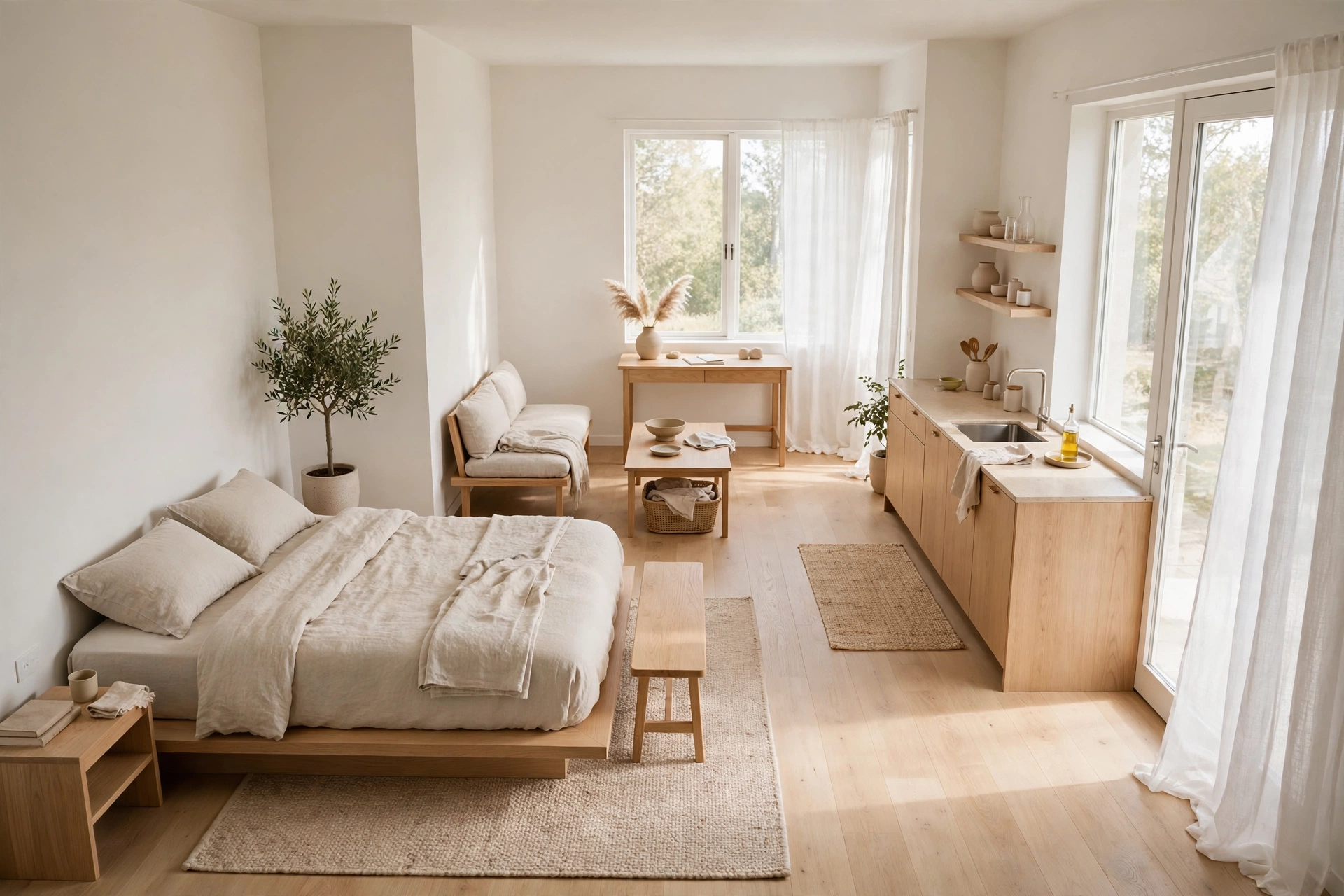
A studio apartment and minimalism were made for each other. With every square foot visible from everywhere else, clutter has nowhere to hide — and that’s actually a gift. Minimalist studio apartment decor isn’t about empty white boxes or owning three things; it’s about intentional choices that make a small space feel calm, spacious, and effortlessly put together.
This guide covers 34 minimalist studio apartment decor ideas that actually work in real small spaces: decluttering systems that stick, neutral palettes with warmth and texture, hidden storage that keeps surfaces clear, multifunctional furniture with clean lines, and the mindful details that separate serene from sterile. Every idea includes realistic prices and a pro tip. Whether you’re drawn to Japandi calm, Scandinavian simplicity, or just want less visual noise, you’ll find a calmer studio here.
Decluttering Foundations
1. Adopt the One-In-One-Out Rule
Minimalism in a studio starts with a gate, not a purge. The one-in-one-out rule means every new item that enters must replace something that leaves — a new sweater means an old one gets donated, a new book means one goes to the little free library. It takes thirty seconds to enforce and prevents the slow creep that turns calm studios chaotic. Pro tip: keep a small donation bag in the closet at all times; when it’s full, drop it off — the rule only works if the “out” actually leaves the apartment.
2. Clear Every Surface Every Night
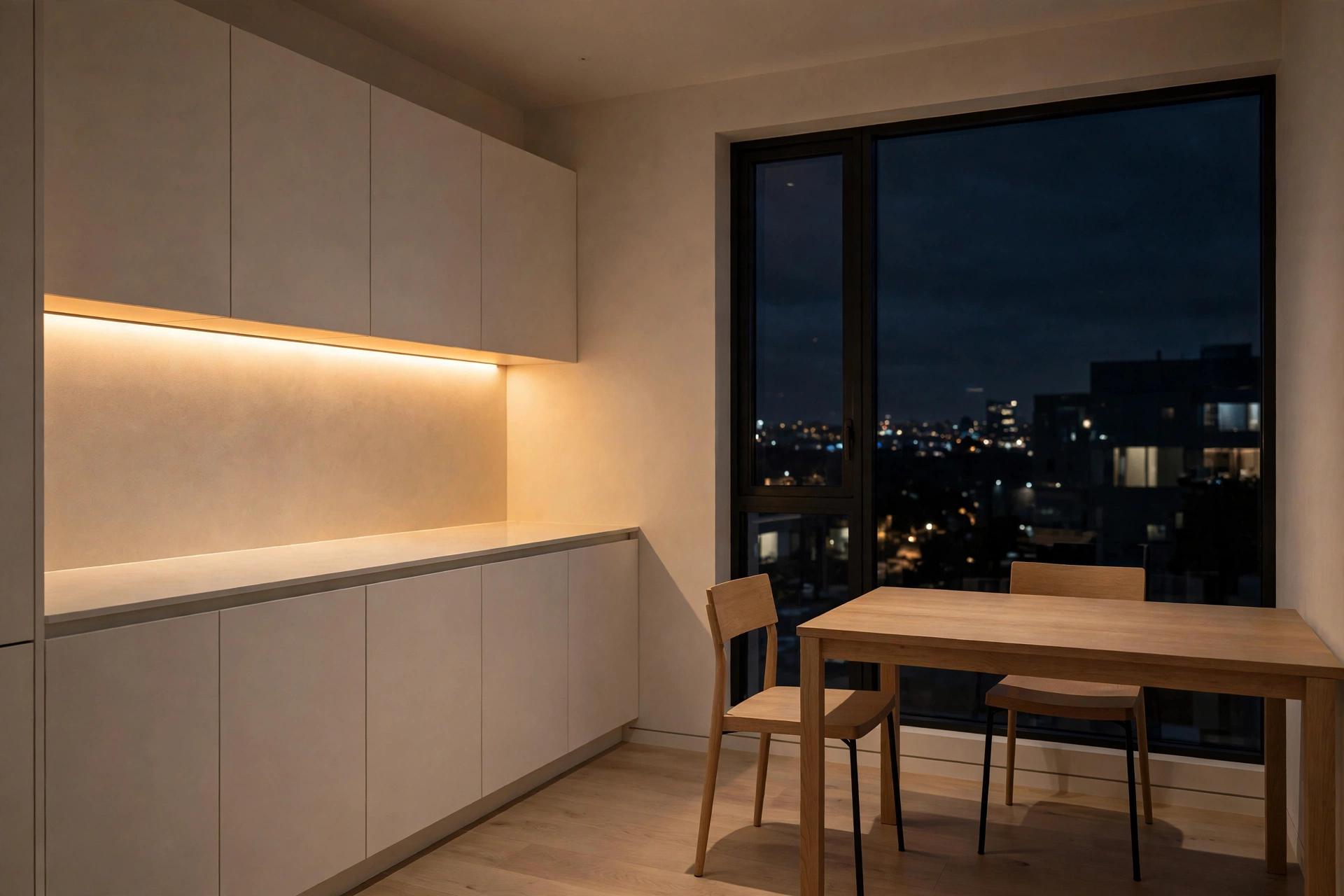
Minimalist rooms aren’t born — they’re reset. A five-minute nightly sweep (counters cleared, table wiped, sofa cushions straightened, stray items returned to their homes) is what makes a studio photograph like a minimalist dream every morning. In a one-room home, a single cluttered surface visually pollutes the entire space. Pro tip: give every frequently-used item a specific home within arm’s reach of where you use it — clutter accumulates where homes don’t exist, a principle that also powers the zoning logic in these studio apartment layout ideas.
3. Digitize the Paper Piles
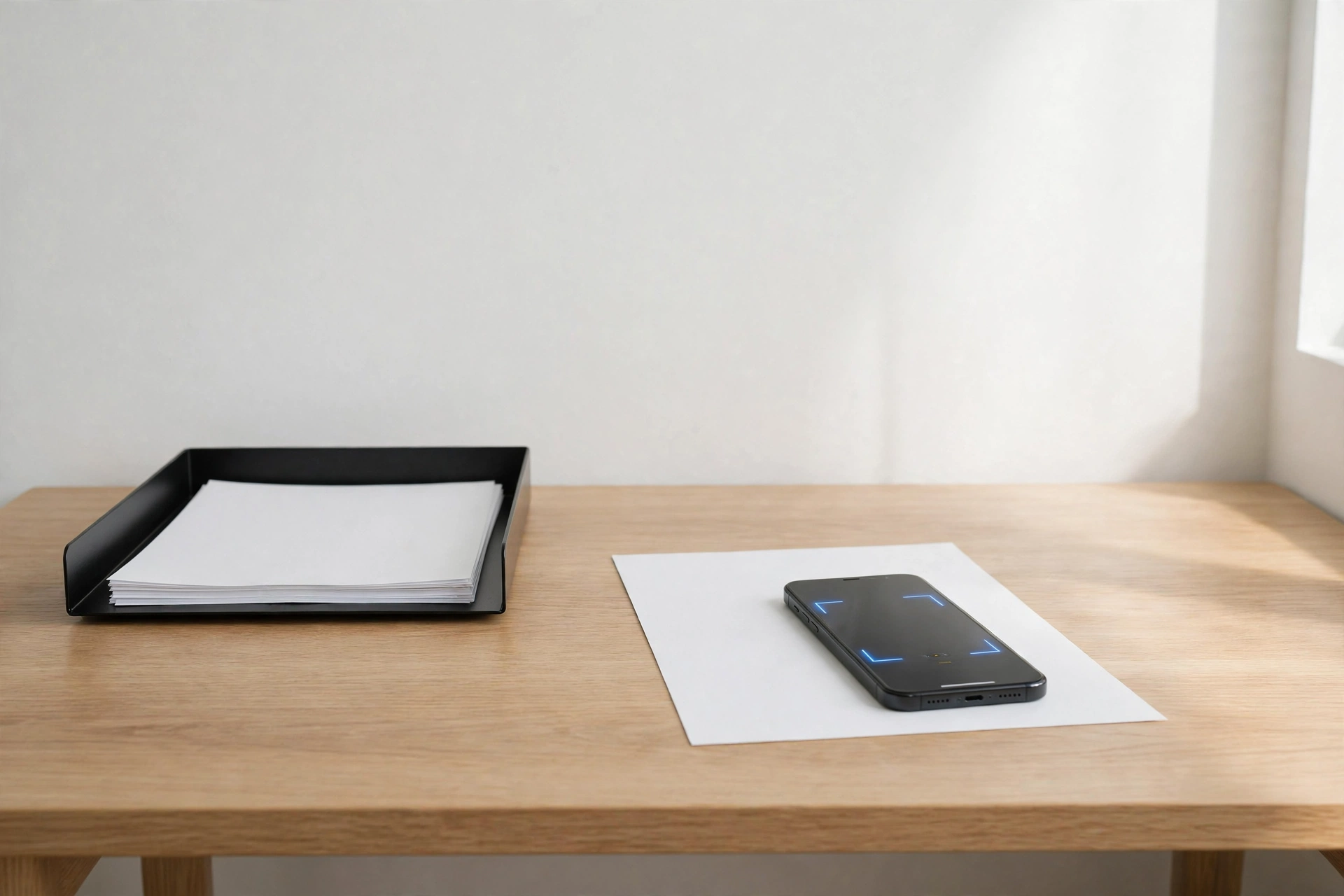
Paper is minimalism’s silent enemy — mail, receipts, manuals, and notebooks colonize desks and counters. A $100–$150 document scanner (or just your phone camera plus a scanning app) lets you digitize everything, then recycle the physical copies. Keep one slim tray for active paperwork and shred the rest weekly. Pro tip: photograph or scan manuals and warranties the day a product arrives — manufacturers host most PDFs online anyway, and the paper version adds nothing but bulk.
4. Build a Capsule Wardrobe
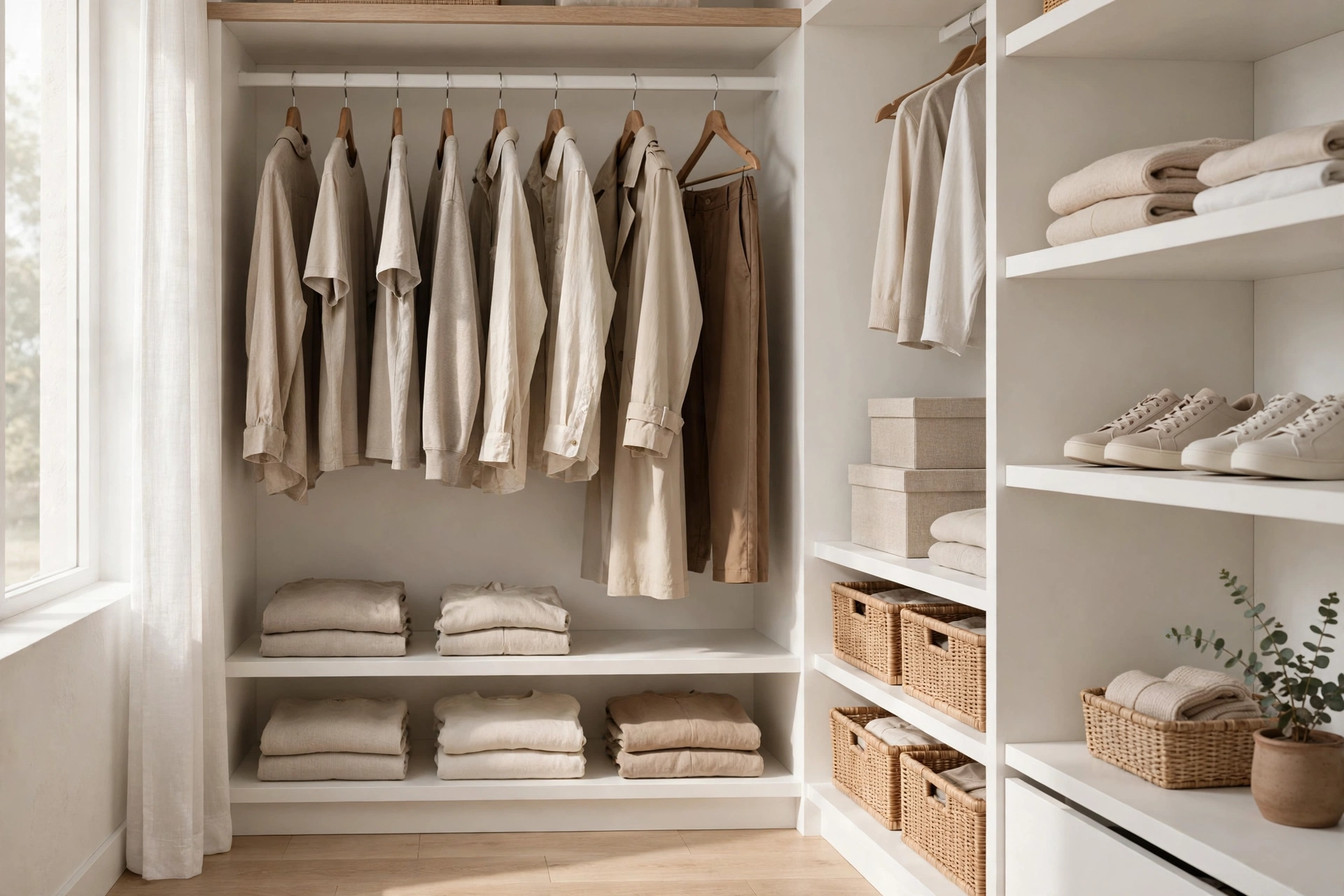
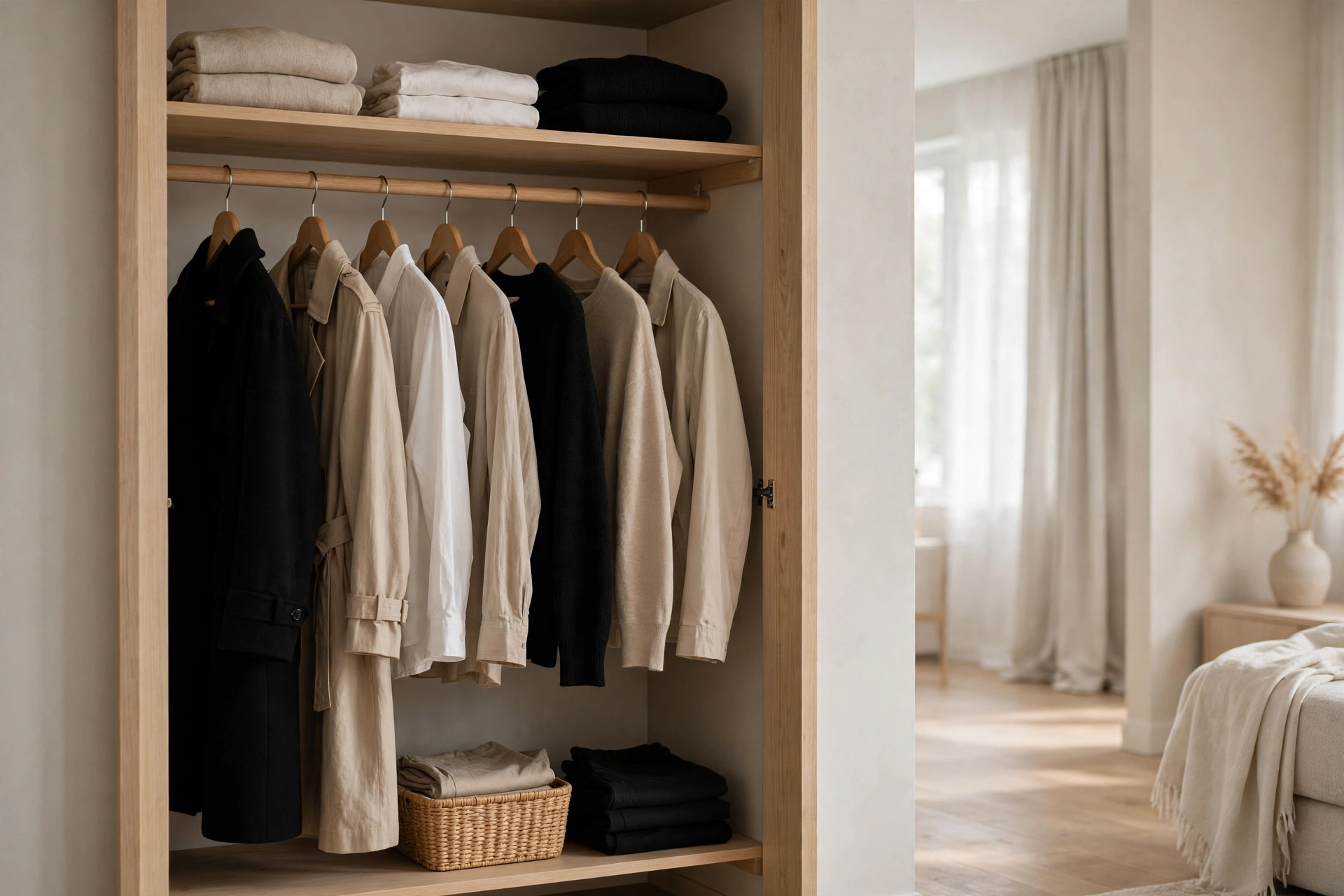
A studio closet can’t hold a department store, so don’t ask it to. A capsule wardrobe — 25–40 versatile pieces in a tight color palette — fits a small closet, ends decision fatigue, and looks intentional rather than sparse. Start by pulling everything out, keeping only what you actually wore last season, and donating the rest. Pro tip: choose a three-neutral base (black, white, beige or navy, gray, white) plus one accent color — every piece mixes with every other piece, which is the whole point.
5. Audit Every Drawer Twice a Year
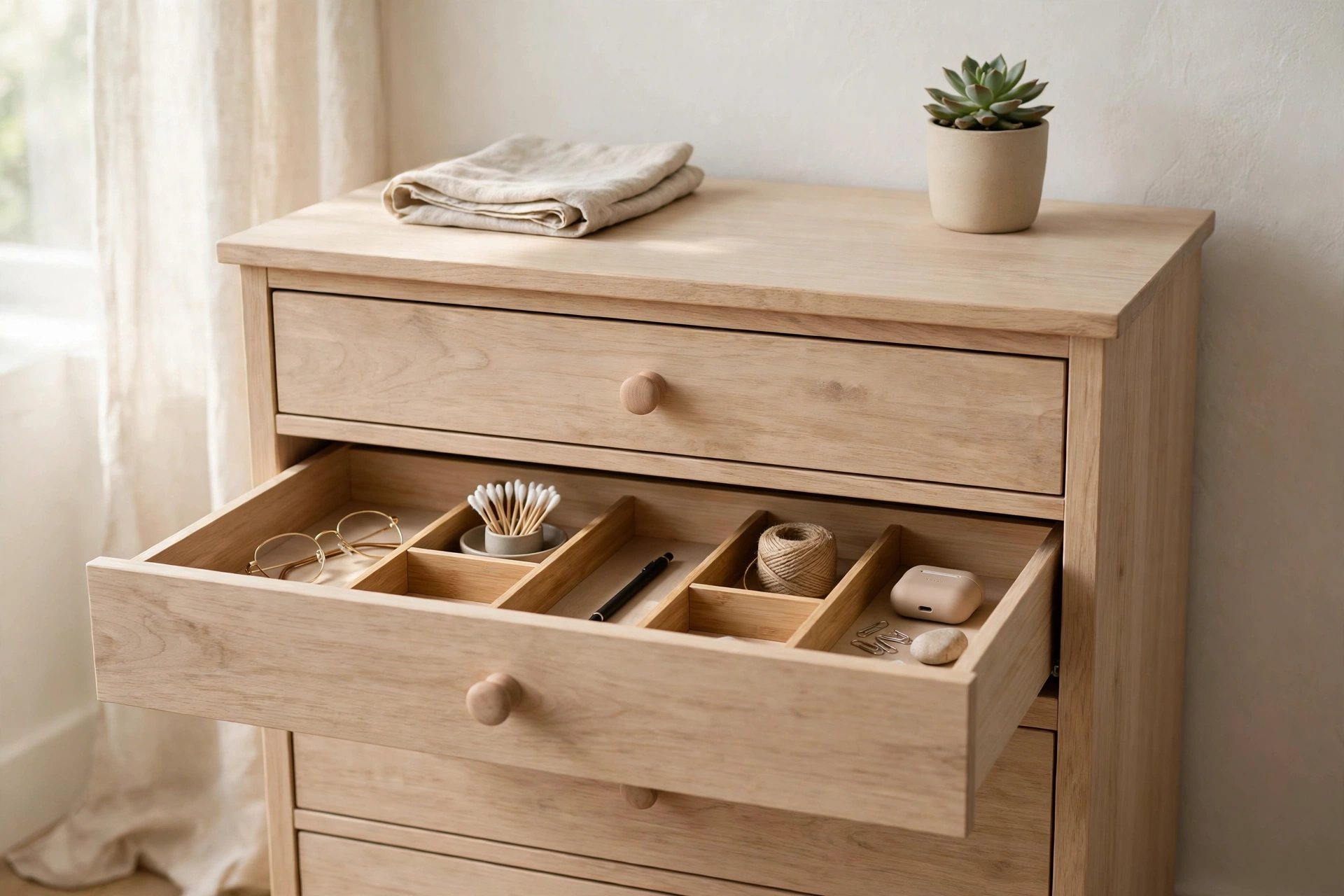
Drawers are where minimalism goes to die — junk drawers multiply in the dark. Twice a year, empty every drawer completely, wipe it out, and only return what you used in the last six months. The “maybe someday” items get donated. A $10–$15 set of bamboo drawer dividers keeps the survivors organized and makes the next audit take minutes. Pro tip: if a drawer needs dividers to look tidy, it probably holds too much — dividers organize, but only the audit reduces.
6. Keep a Donation Box by the Door
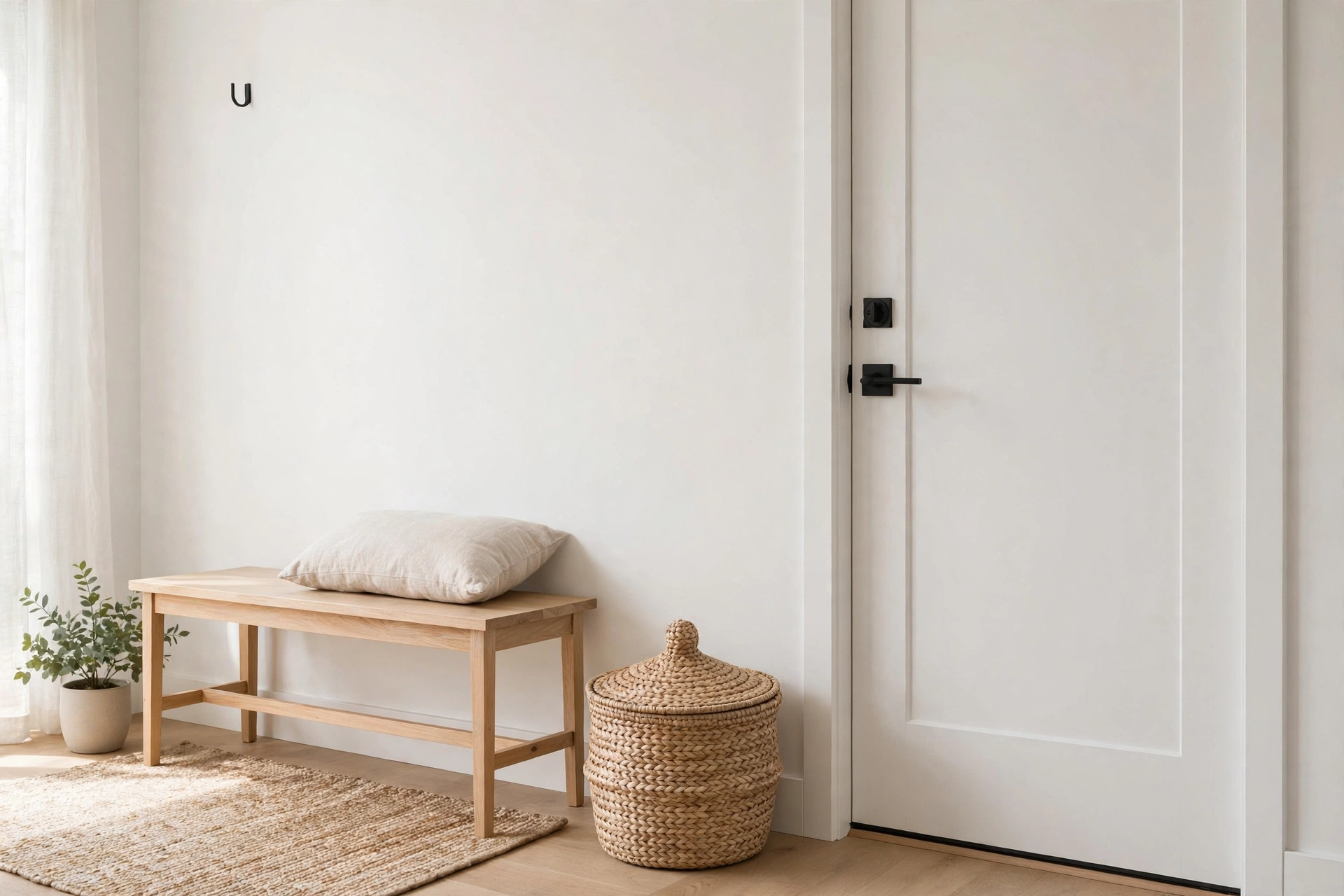
The best decluttering system is the one with zero friction. A handsome lidded basket or box ($20–$35) by the entry catches items the moment you decide they don’t belong — the chipped mug, the book you’ll never reread, the gadget that disappointed you. When it’s full, it goes to donation; no “decluttering weekend” required. Pro tip: choose a box that looks like decor (woven seagrass or a clean-lined fabric bin) so it enhances the entry instead of screaming “junk in transit.”
Neutral Palettes & Textures
7. Paint It Warm White (Not Stark White)
Minimalism’s signature wall color is white — but the wrong white feels like a laboratory. Warm whites with a hint of cream or greige (think Benjamin Moore White Dove or Swiss Coffee) bounce light beautifully while feeling human and calm. A gallon of quality paint costs $45–$65 and covers a studio accent wall; a full studio repaint runs $150–$250 in paint. Pro tip: test three warm-white swatches on the wall and observe them morning, noon, and night — undertones shift dramatically with light, and the right one glows while the wrong one goes yellow.
8. Layer Neutrals Instead of Adding Color
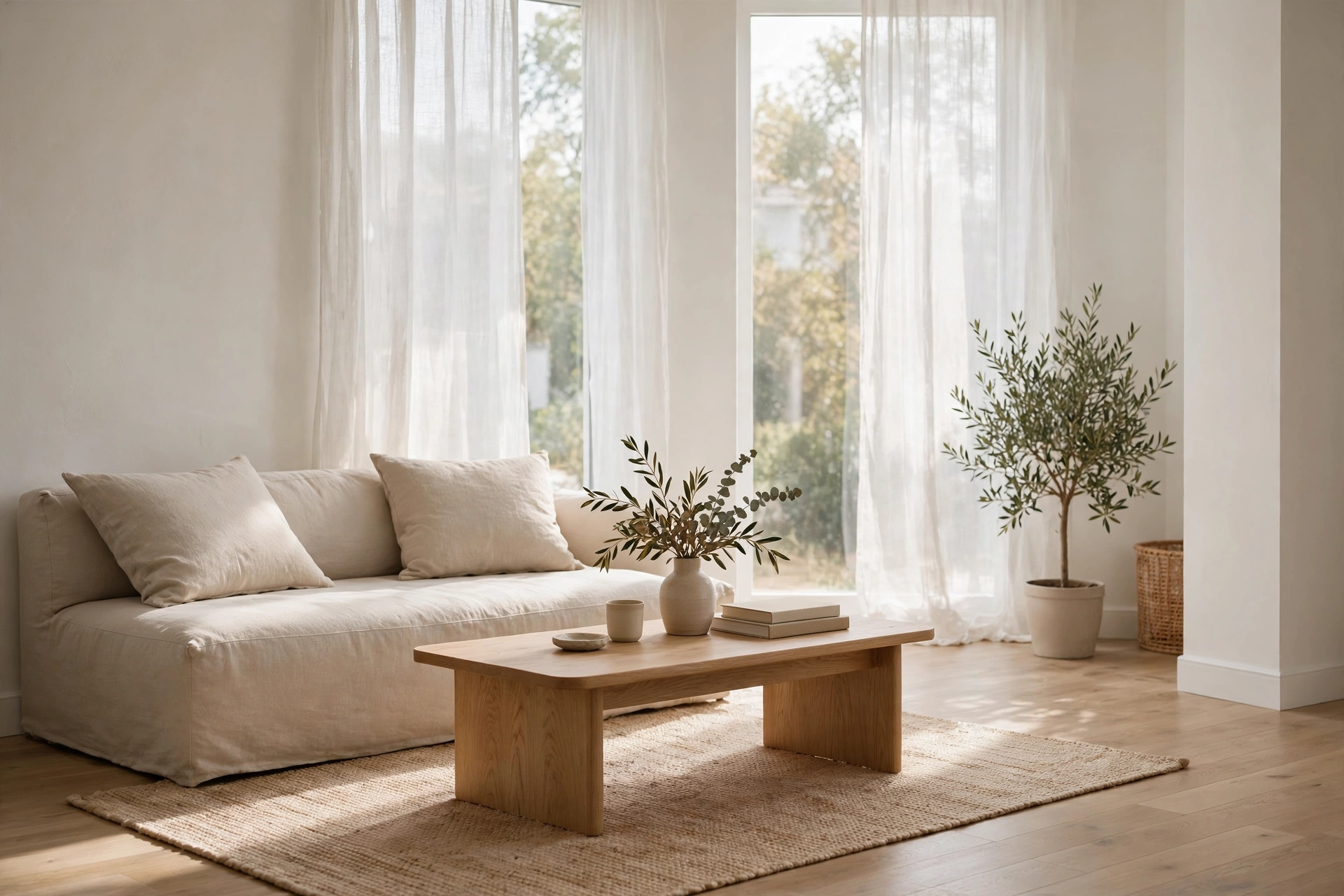
Minimalist depth comes from layering shades of the same neutral family — ivory, oatmeal, stone, taupe, charcoal — rather than introducing new colors. A sofa in warm gray, cushions in oatmeal linen, a throw in soft taupe: the palette stays quiet while the tonal variation keeps it from feeling flat. This is the same color discipline behind these beautiful studio apartment color schemes, stripped to its calmest form. Pro tip: hold fabric swatches together in daylight before buying — neutrals clash more often than people expect, and “close enough” reads as messy in a minimal room.
9. Allow Exactly One Accent Color
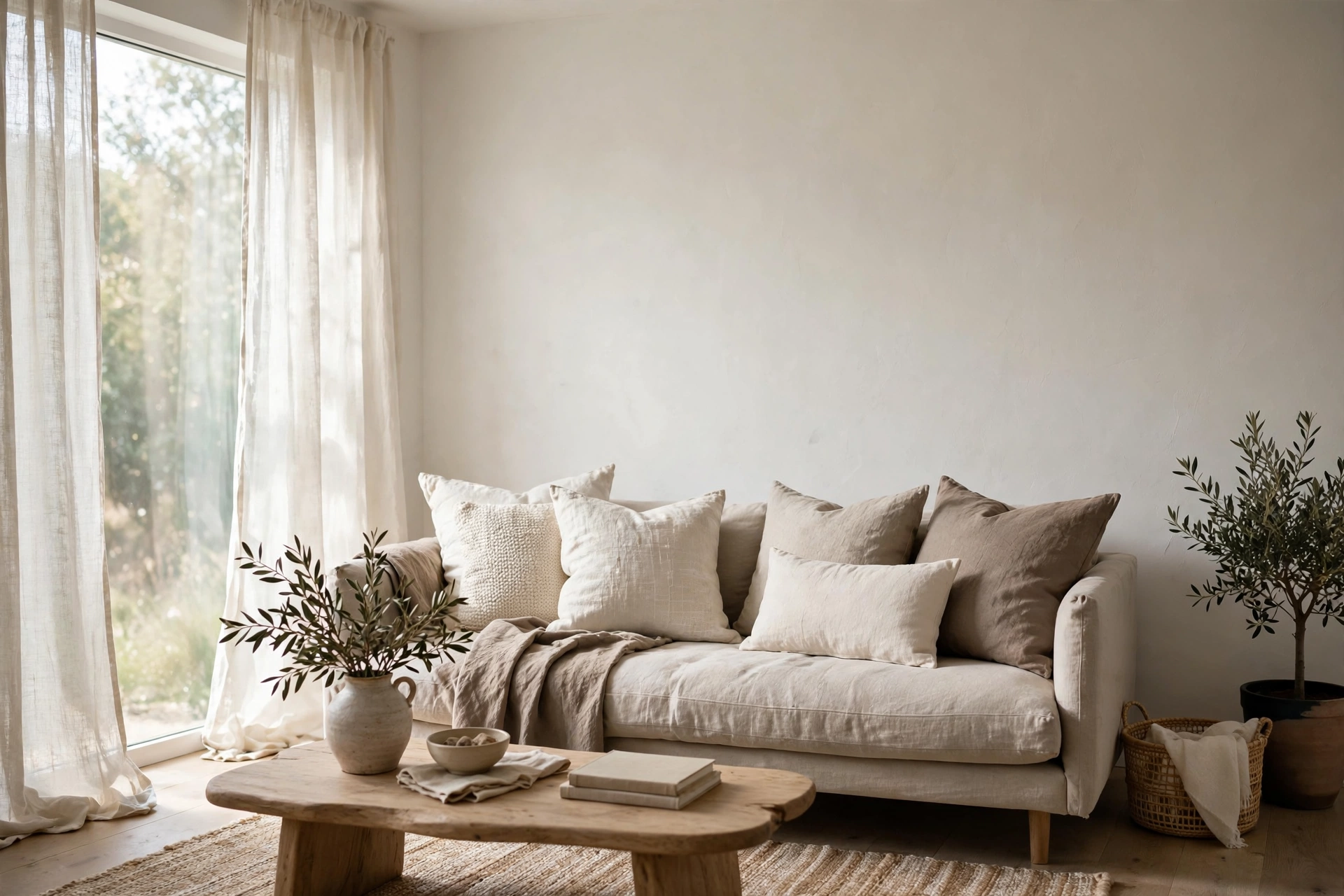
Minimalism doesn’t ban color — it rations it. Choose one accent (sage green, terracotta, muted ochre) and let it appear in three to five small doses: a cushion, a piece of art, a plant pot, a throw. The restraint is what makes the accent feel special instead of scattered. Pro tip: pick your accent from nature — clay, moss, stone, sea — because earth tones sit quietly beside neutrals while brights (red, royal blue) shout over them.
10. Mix Natural Textures for Warmth
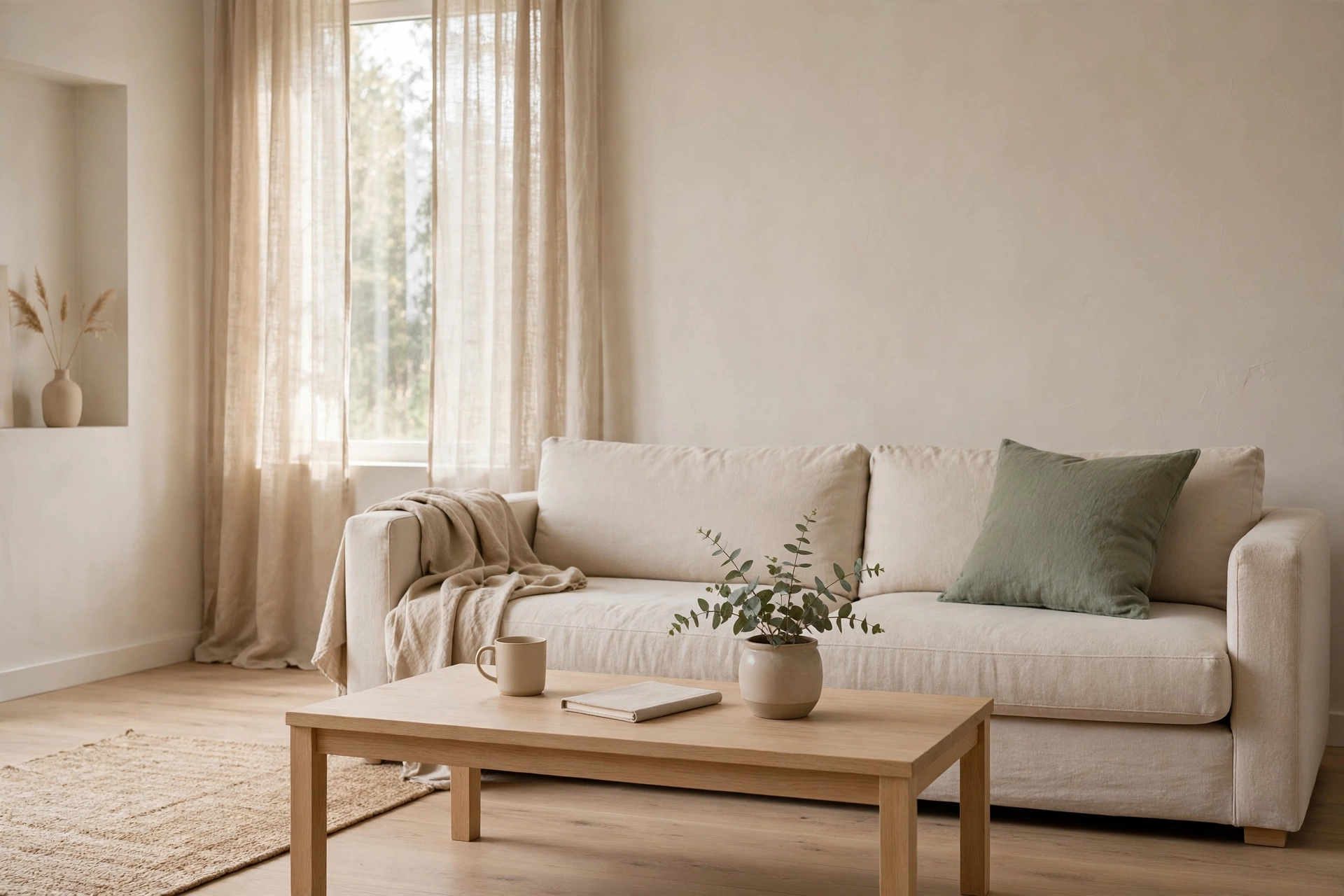
A neutral palette without texture feels cold — linen, wool, rattan, light oak, and stone add the tactile richness that makes minimalism inviting. A washed-linen duvet cover ($60–$100), a jute rug ($80–$150 for 5×7), and an oak tray ($25–$40) introduce three textures without adding a single color. Pro tip: follow the rule of three textures per zone — linen plus wood plus one more (wool, stone, rattan) — which reads as curated rather than random.
11. Keep Bedding Tone-on-Tone
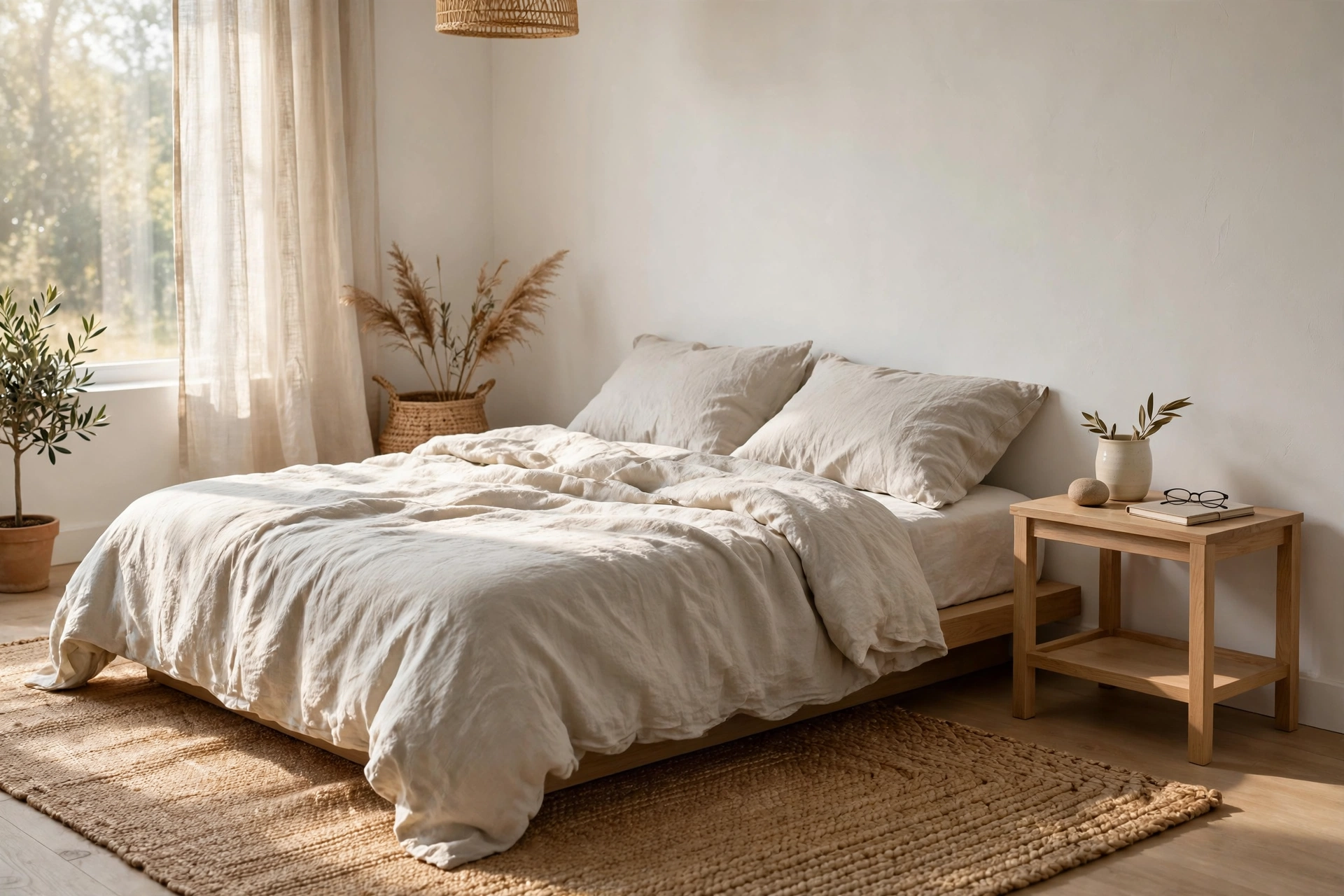
The bed dominates a studio visually, so minimalist bedding is the highest-impact choice you can make. Stick to one neutral family — all-white, all-oatmeal, all-soft-gray — with texture (waffle weave, stonewashed linen) providing the interest instead of pattern. A quality linen duvet set costs $80–$150 and instantly calms the entire room. Pro tip: skip the top sheet pile-up and decorative shams you never use — a fitted sheet, duvet, and two sleeping pillows, neatly arranged, is the complete minimalist bed.
12. Choose Matte Finishes Over Glossy
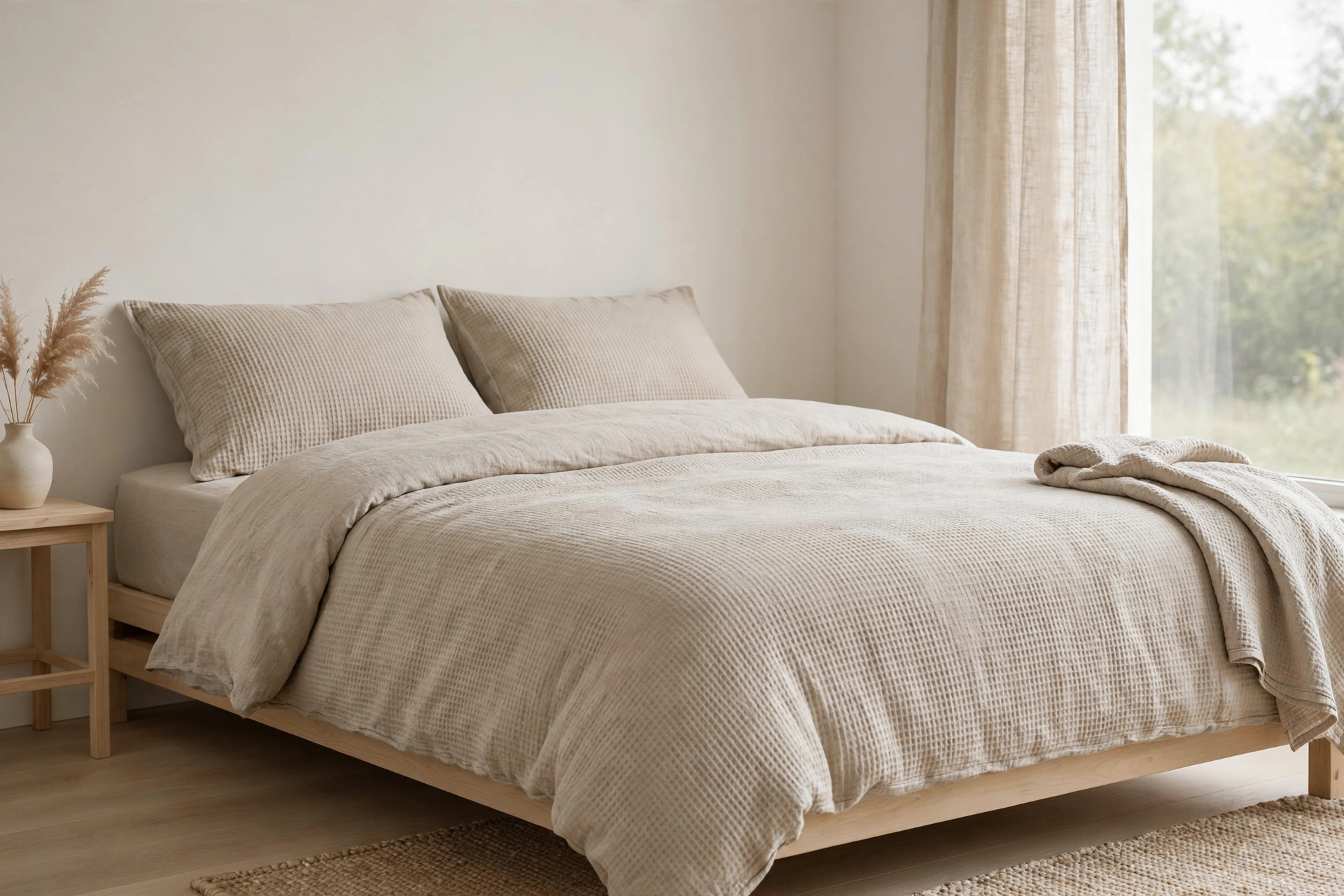
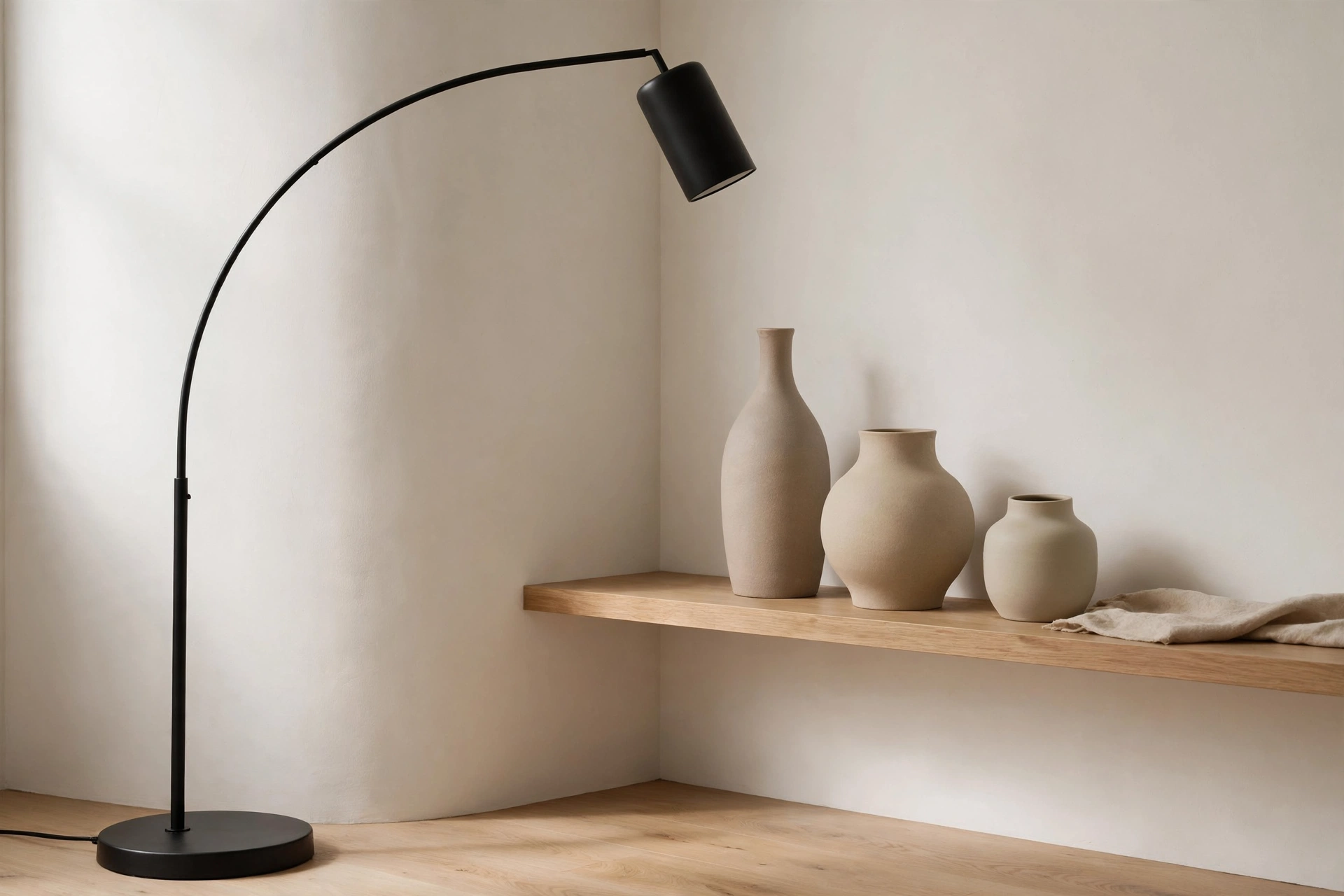
Gloss reflects, shouts, and shows every fingerprint — matte absorbs light and whispers. In a minimalist studio, matte finishes on furniture, frames, planters, and even walls keep the visual volume low. When shopping, filter for “matte” or “satin” rather than “high-gloss” or “lacquered.” Pro tip: matte black is minimalism’s hardest-working accent — a matte black floor lamp, frame, or faucet adds definition to an all-neutral room without adding color.
Hidden Storage Solutions
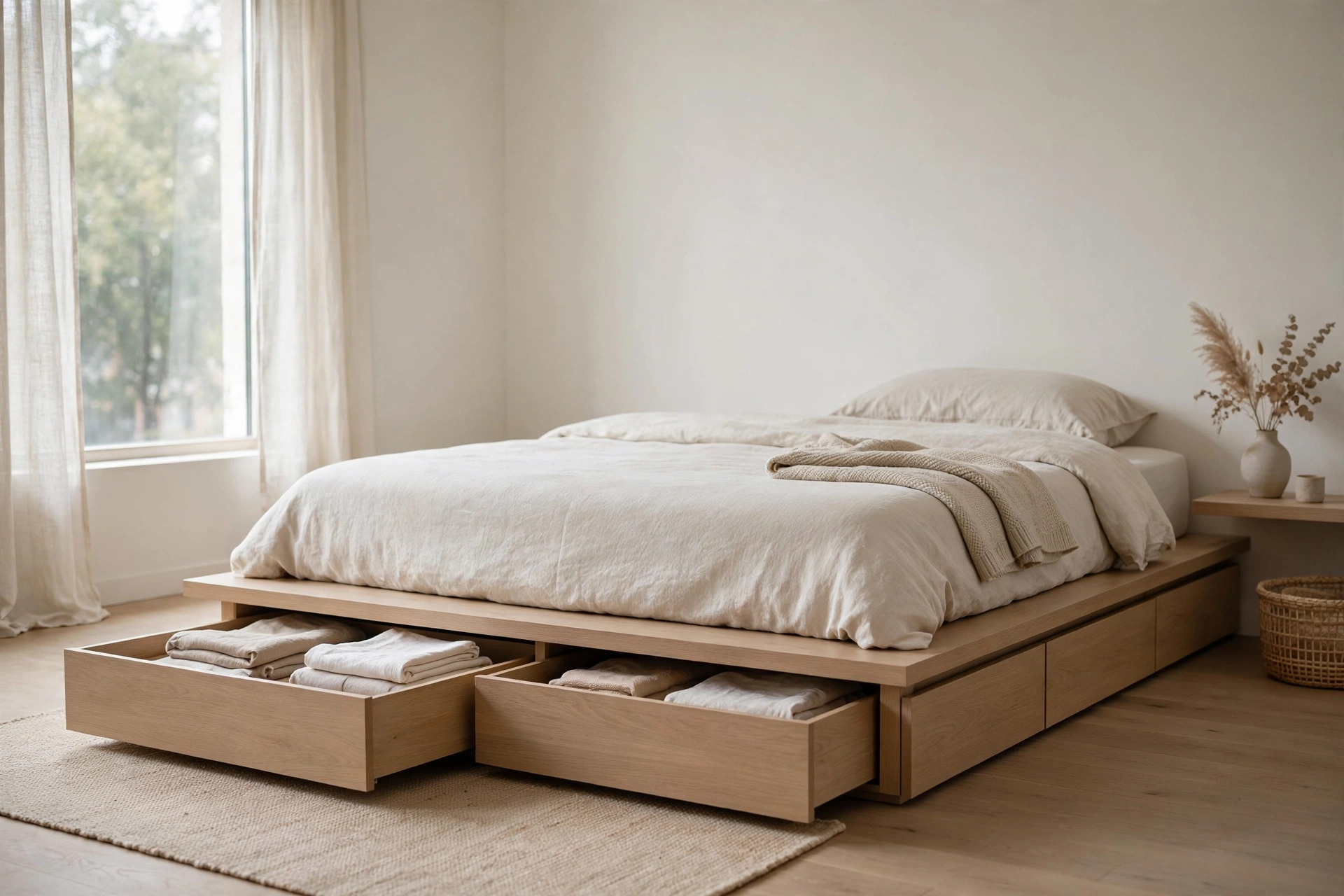
13. Use Under-Bed Storage Drawers
The space under the bed is a full closet hiding in plain sight. Low-profile rolling drawers ($40–$80 for a set of two) or a platform bed with built-in drawers swallow off-season clothes, linens, and keepsakes while keeping the bedroom zone visually empty. Choose drawers in the same finish as the bed frame so they read as one piece. Pro tip: store by category, not by person — “winter clothes,” “guest bedding,” “keepsakes” — so anyone can find anything without unpacking everything.
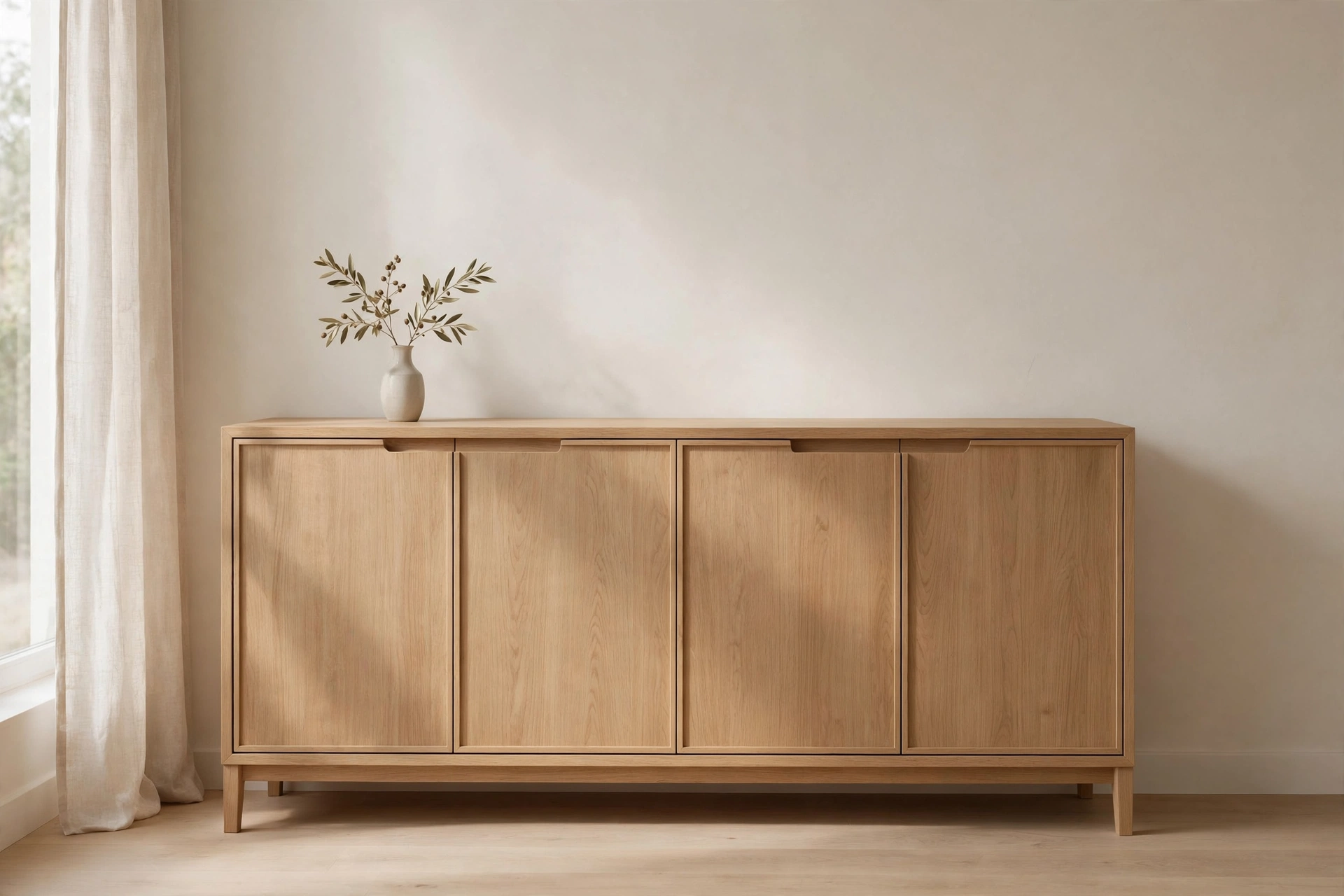
14. Favor Closed Cabinets Over Open Shelves
Open shelving demands constant curation; closed cabinets forgive everything. In a minimalist studio, choose pieces with doors — a sideboard, a wardrobe, a media console with solid fronts — so everyday clutter vanishes behind clean lines. A simple oak sideboard runs $200–$400 and anchors a living zone while hiding a shocking amount of stuff. Pro tip: reserve open shelving for a single styled vignette (idea 22) and close everything else — the contrast makes the one open moment feel intentional.
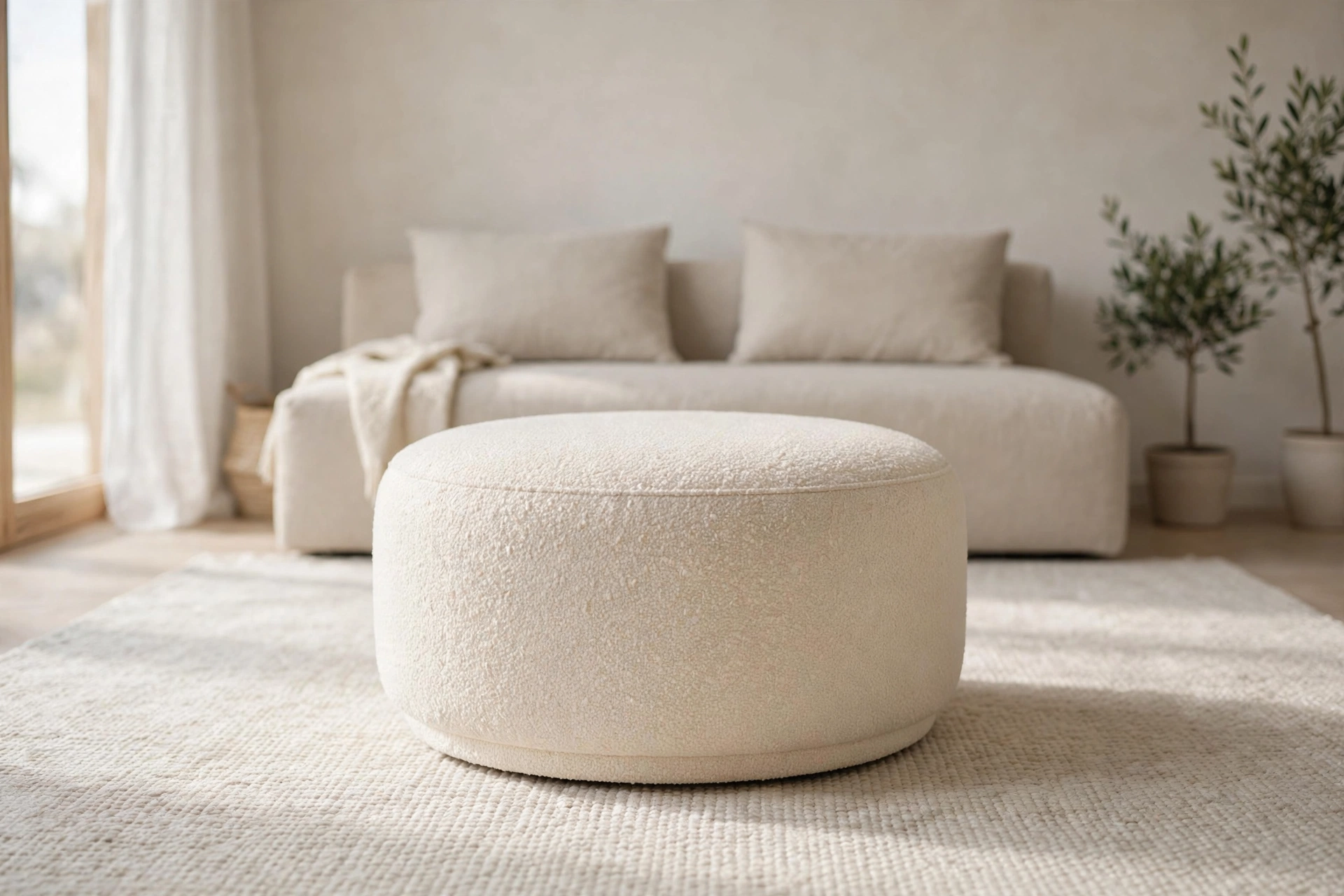
15. Choose a Storage Ottoman
The storage ottoman is minimalism’s triple agent: footrest, extra seat, and hidden storage in one quiet cube. A linen or bouclé ottoman ($80–$150) holds throws, remotes, and chargers while looking like pure decor. Place it where a coffee table would go — it softens the room’s edges compared to hard-cornered tables. Pro tip: pick one with a reversible lid that doubles as a tray top — it becomes a stable surface for coffee without sacrificing the soft look.
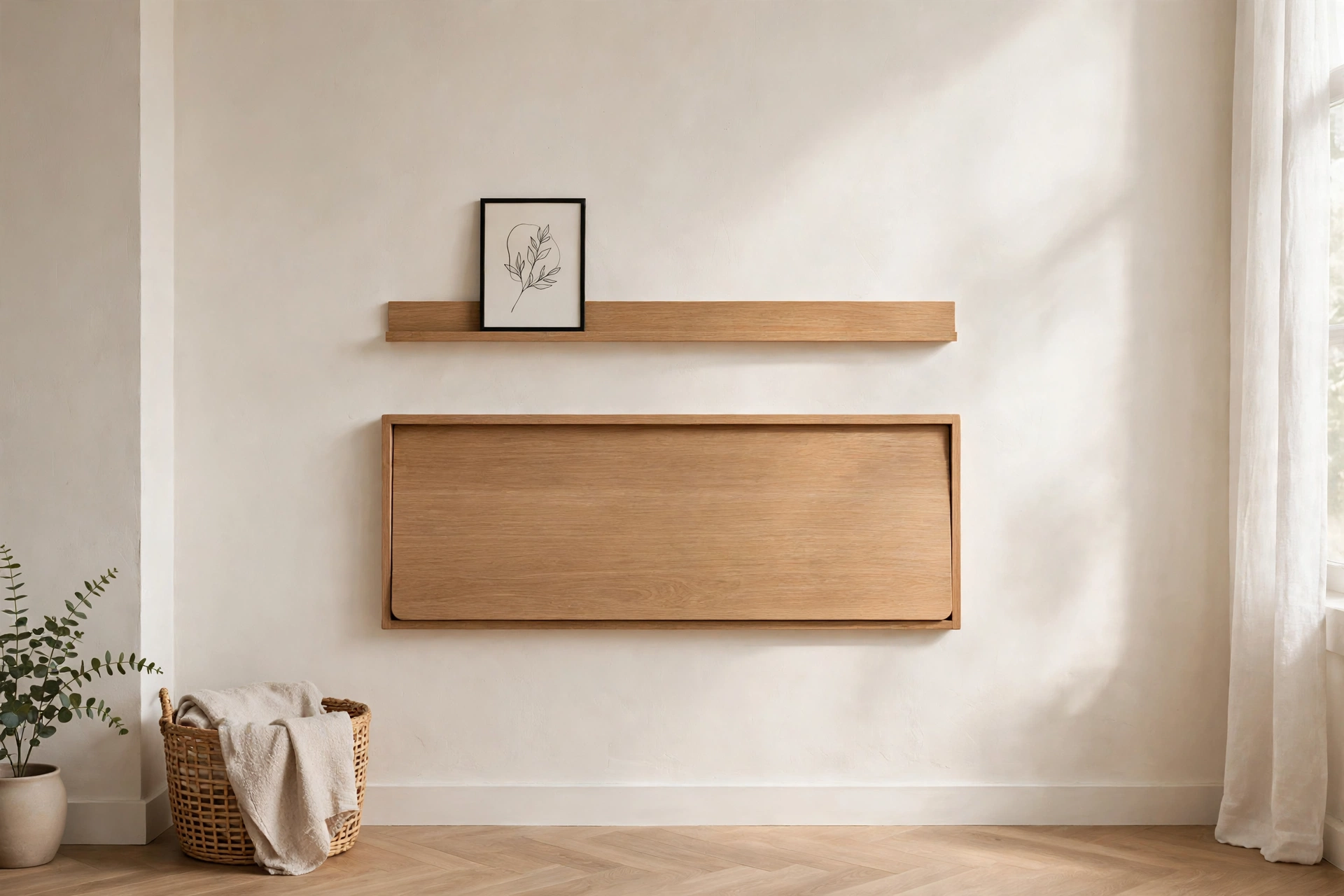
16. Mount a Fold-Down Desk
A wall-mounted drop-leaf desk ($70–$120) gives you a full workspace that folds to a slim panel when the workday ends — the office literally disappears. Mount it at 29–30 inches near an outlet, and pair it with a chair that tucks away completely. Pro tip: mount a single piece of art or a small shelf above the folded desk so the wall looks styled in both modes, not like a bracket waiting for furniture.
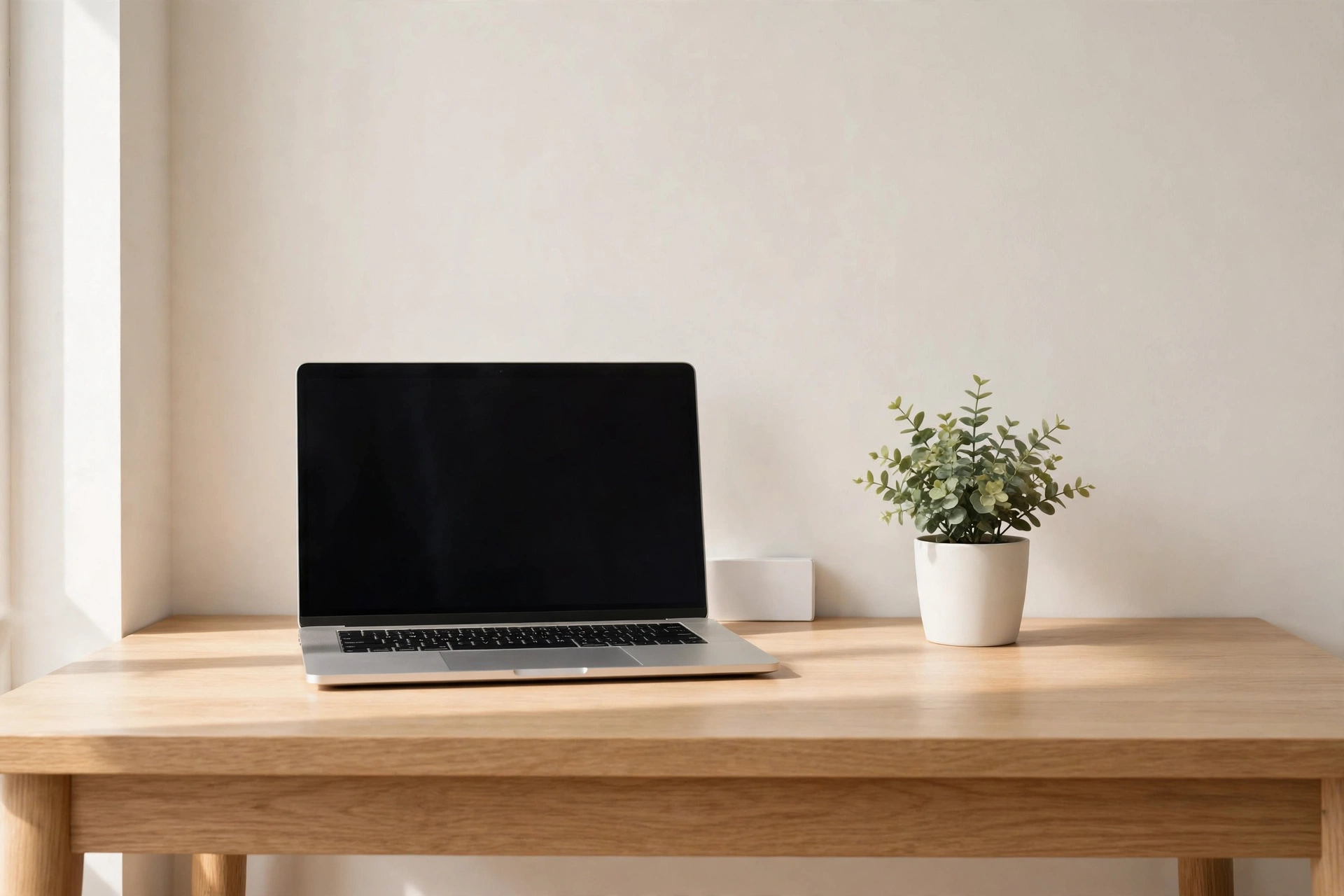
17. Hide Every Cable
Nothing breaks minimalist calm faster than cable spaghetti. A cable management box ($20–$35) swallows power strips, adhesive clips ($8–$12) route cords along furniture edges, and a single fabric cord cover ($15–$25) tames the run from desk to wall. The goal: no visible cables from any seated position. Pro tip: go wireless where it counts — a wireless charger pad and Bluetooth peripherals eliminate half the cables before you even start hiding them, a tidy-tech approach that pairs with the systems in these clever studio apartment storage ideas.
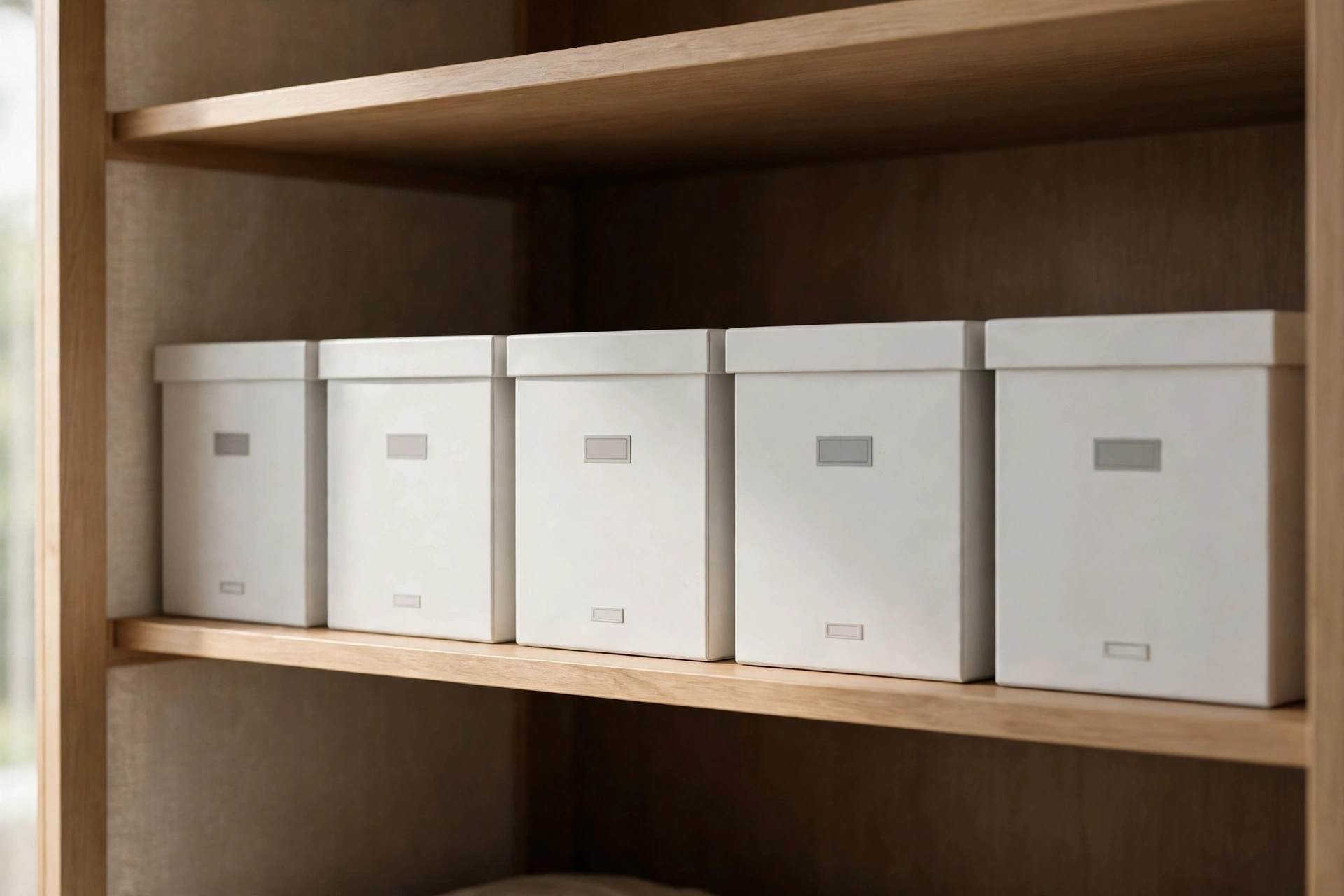
18. Standardize on Uniform Storage Boxes
Ten mismatched boxes look like clutter even when they’re organized; ten identical boxes look like design. Standardize on one box style — matte white, natural seagrass, or light gray fabric ($8–$15 each) — for every closet, shelf, and under-bed zone. The uniformity quiets the whole apartment visually. Pro tip: label the short end facing out with a label maker — uniform boxes plus tiny labels are the entire organizational system, and it never needs upgrading.
Multifunctional Minimal Furniture
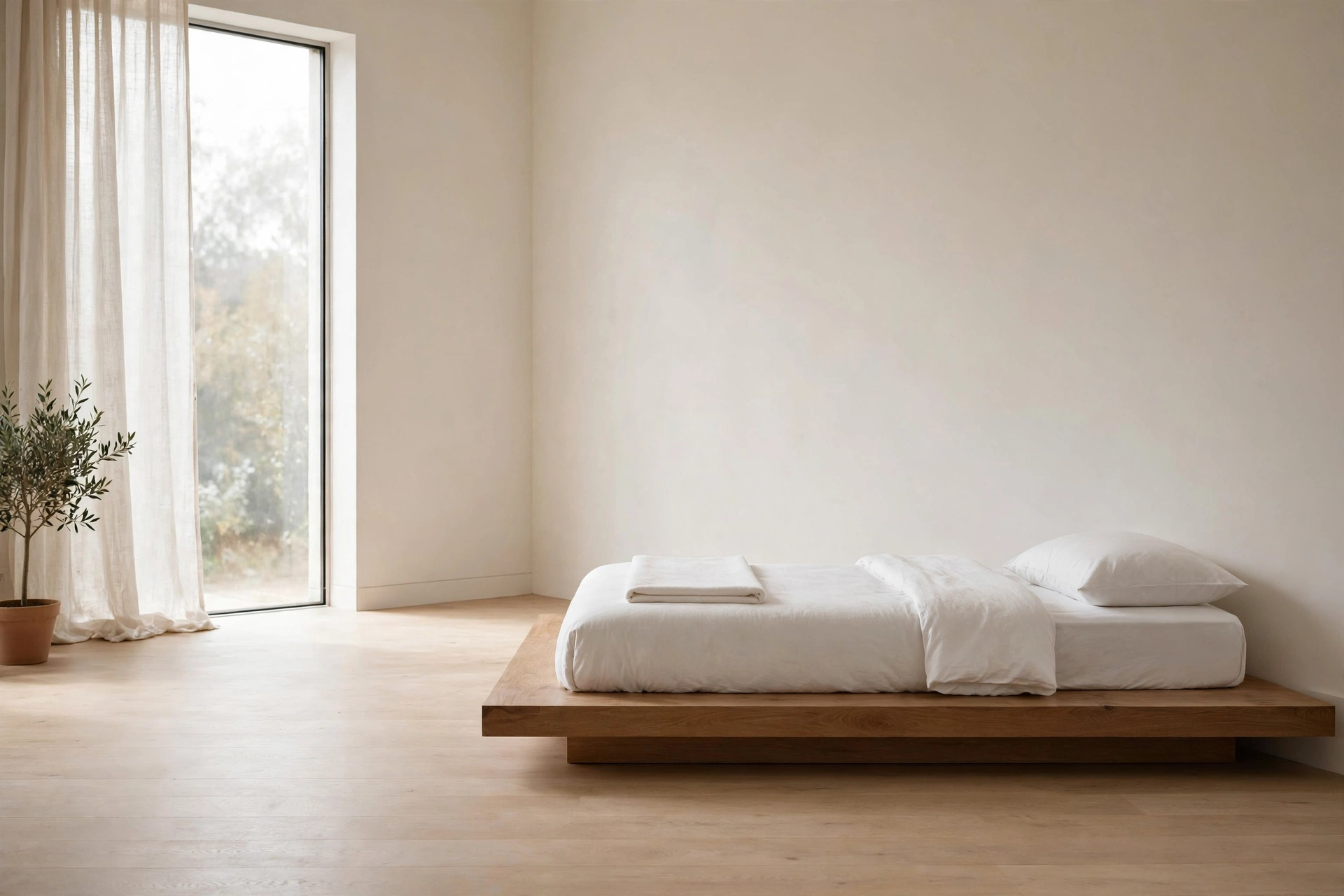
19. Sleep on a Low-Profile Platform Bed
A low platform bed (no box spring, no tall headboard) lowers the room’s visual center of gravity, making ceilings feel higher and the studio feel larger. Simple solid-wood platforms run $200–$450 for a queen and suit minimalism’s honest-materials ethos perfectly. Skip the headboard or choose a low, simple one — tall upholstered headboards dominate small rooms. Pro tip: a platform under 12 inches high plus a 10-inch mattress keeps the bed’s total height minimal, which preserves sightlines across the studio.
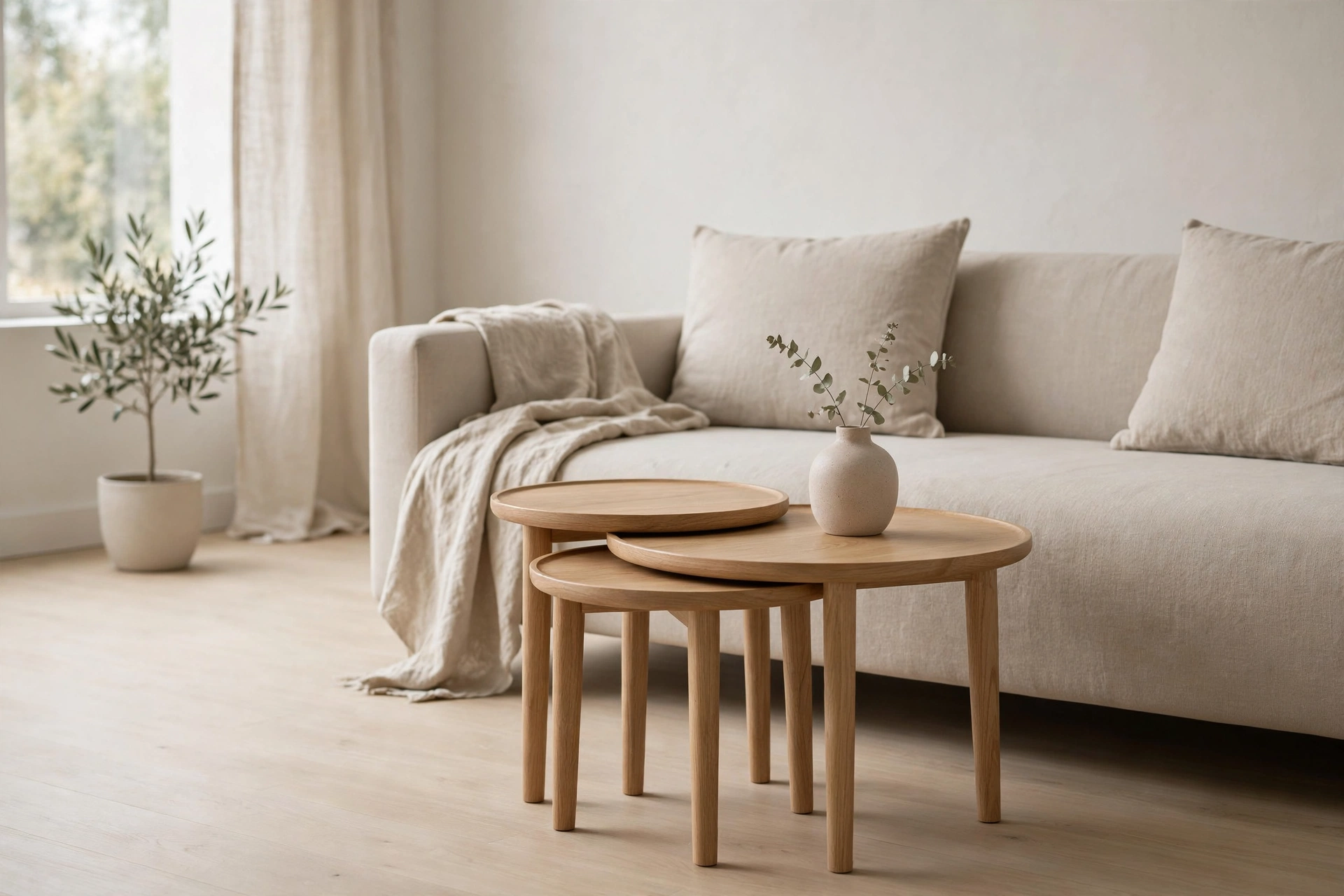
20. Use Nesting Tables Instead of a Coffee Table
A bulky coffee table anchors a room visually — sometimes too much. Nesting tables ($60–$120 for a set of two or three) tuck completely together when you want openness and pull apart when guests arrive. Choose simple round or rectangular tops in oak or white. Pro tip: style only the largest table with a single object (a small vase, a stack of two books) and leave the smaller ones empty — nested and bare, they read as sculpture.
21. Pick a Sleeper Sofa With Clean Lines
If your sofa doubles as a guest bed, choose one that doesn’t look like it does. Modern sleeper sofas with track arms and tight upholstery ($700–$1,200) read as pure minimalist seating by day and convert in minutes at night. Avoid overstuffed or reclining styles — their bulk fights the calm aesthetic. Pro tip: this is the same dual-purpose logic behind these space-saving studio apartment furniture ideas — in a minimal studio, every large piece should earn its footprint twice.
22. Style One Floating Shelf, Beautifully
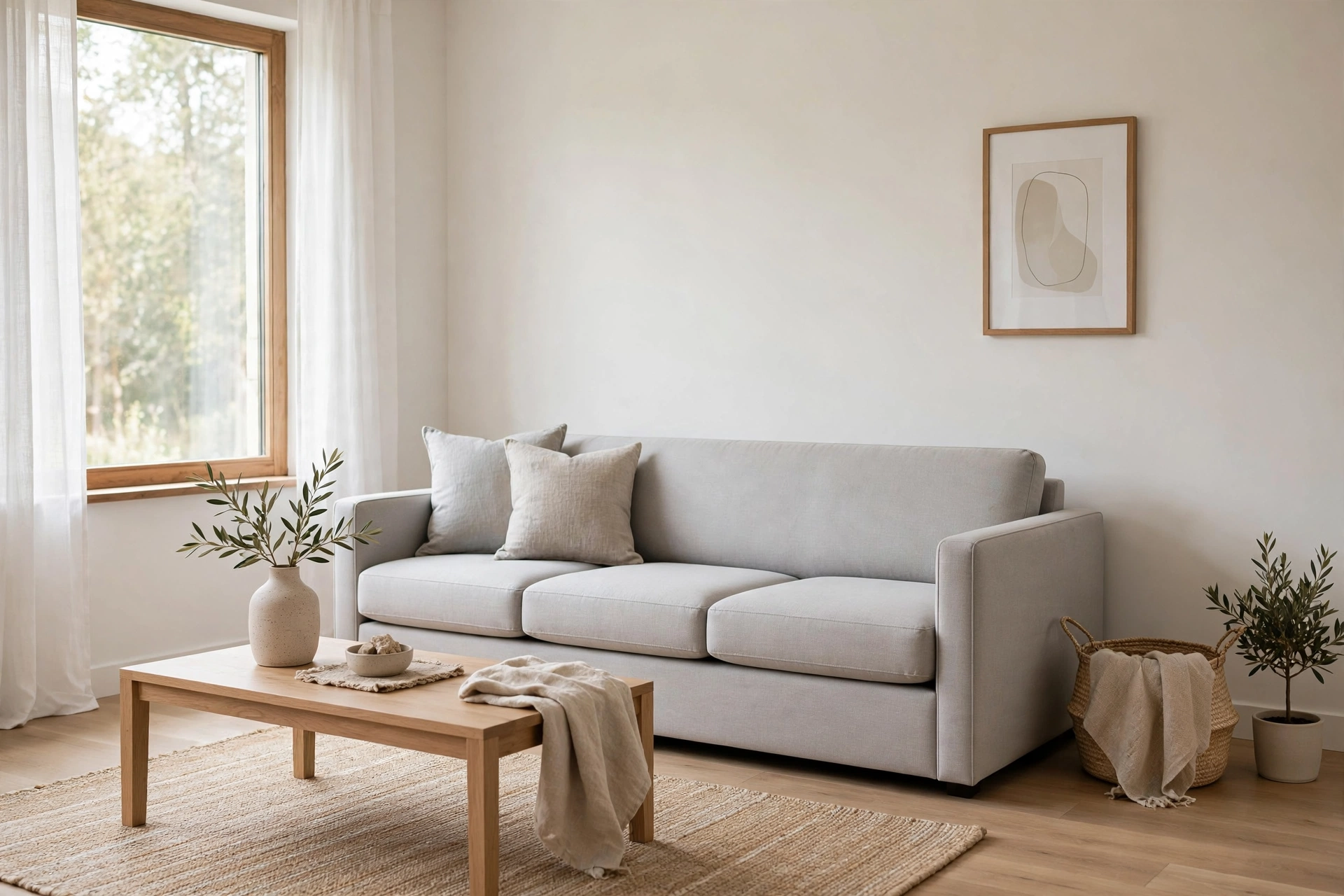
Minimalism allows display — just edit it ruthlessly. One floating shelf ($25–$45) styled with three to five objects (a small plant, a ceramic vase, two art books, one framed print) becomes a gallery moment instead of storage creep. The key is negative space: objects should occupy less than half the shelf’s length. Pro tip: use the “triangle” composition — one tall object, one medium, one low — which looks intentional from every angle in an open studio.
23. Choose an Armless Accent Chair
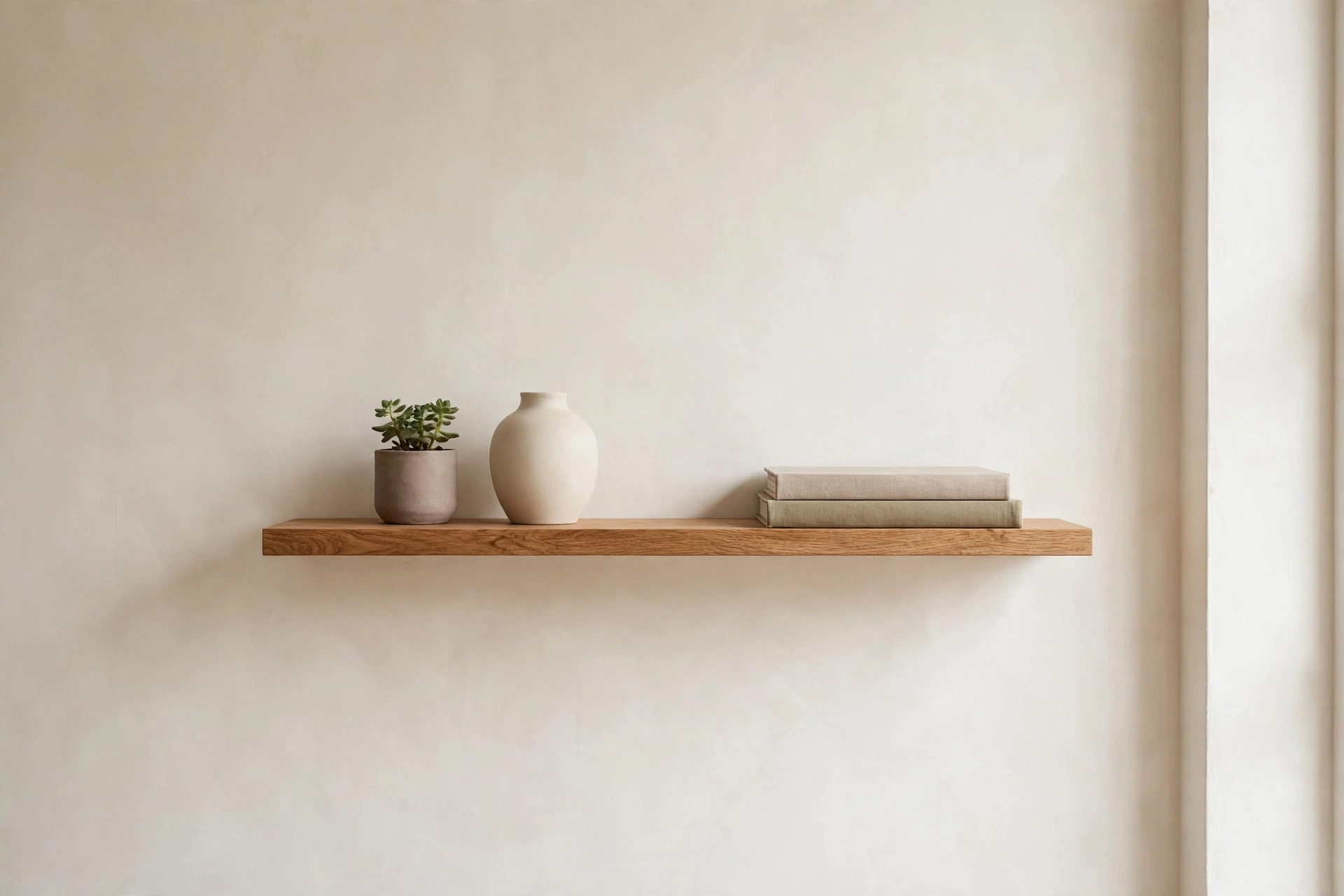
Arms add visual bulk; armless chairs add seating without the weight. A simple armless slipper chair or molded plywood lounge chair ($150–$350) tucks into corners, pulls up to tables, and keeps sightlines open across the studio. Look for clean silhouettes in bouclé, linen, or bent wood. Pro tip: armless chairs slide fully under tables and desks when not in use — in a studio, furniture that disappears on demand is worth a premium.
24. Dine at a Drop-Leaf Table
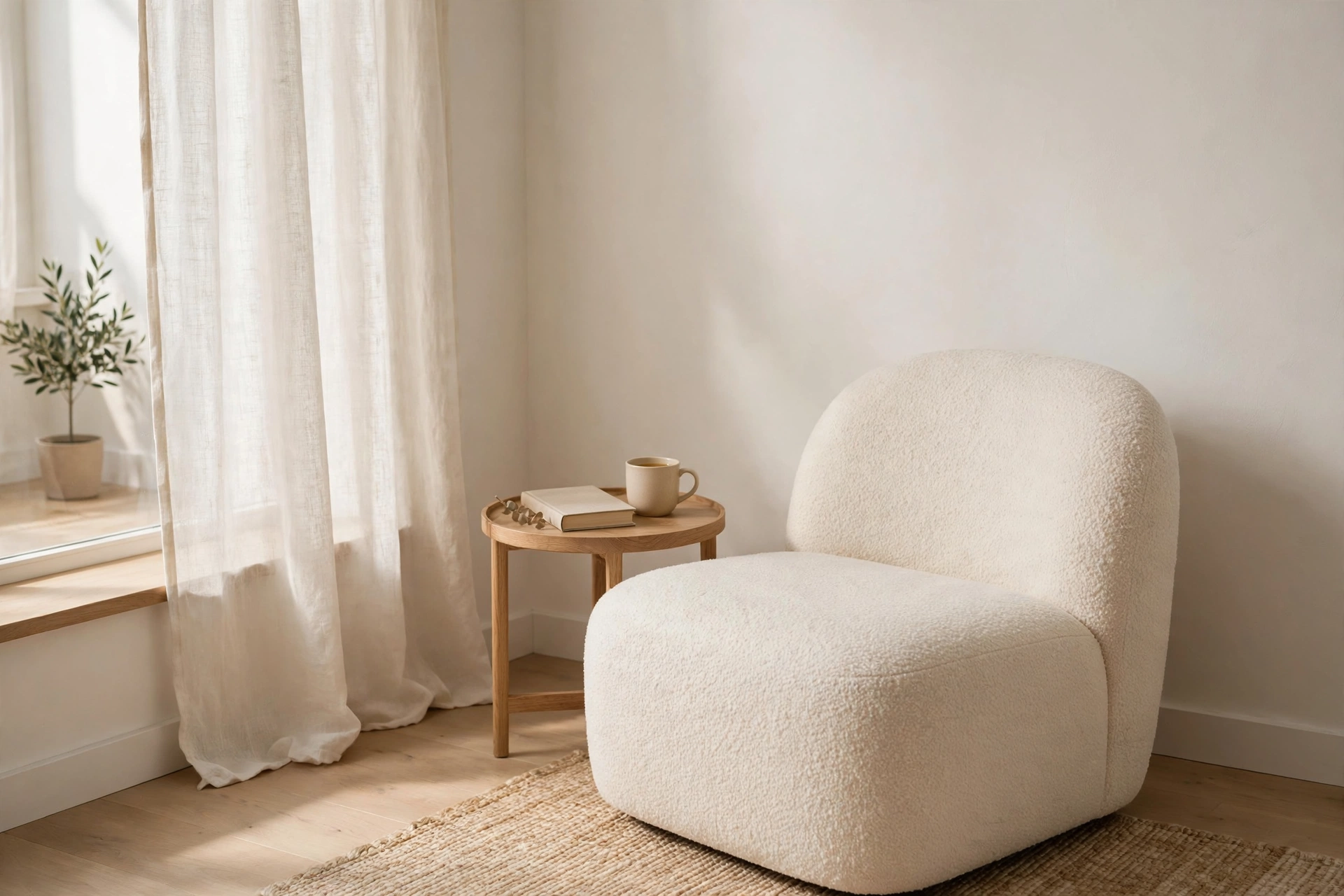
A drop-leaf table ($120–$250) seats two daily with leaves down — a slim console against the wall — and expands to seat four or six when friends come over. In a minimalist studio, it’s the dining solution that respects negative space 90% of the time. Choose a simple pedestal or trestle base to keep the footprint light. Pro tip: store two folding chairs in the closet for the expanded mode, and keep the daily setup to just two chairs — the table’s slim profile is the point.
Light & Air
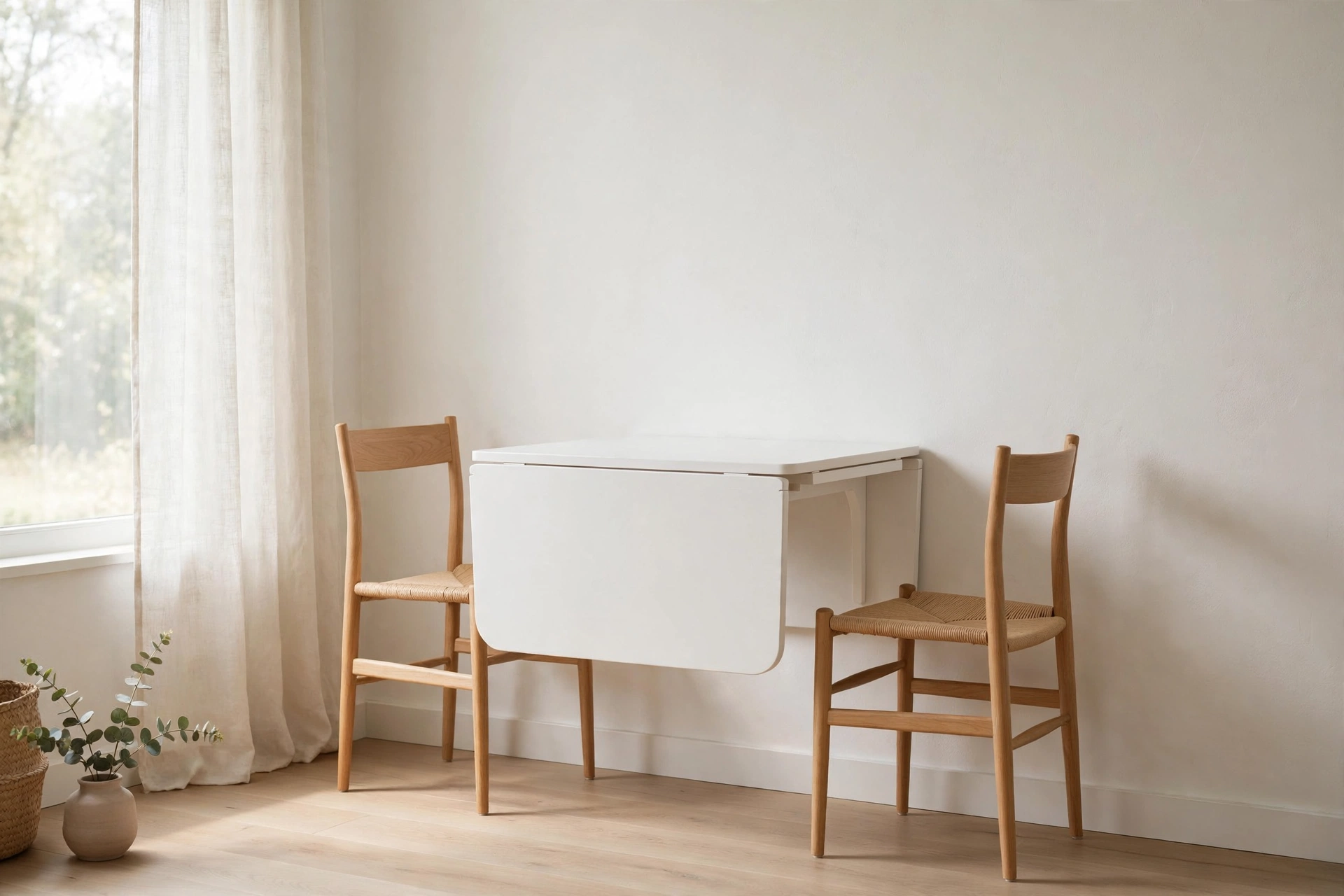
25. Hang Sheer Curtains for Soft Daylight
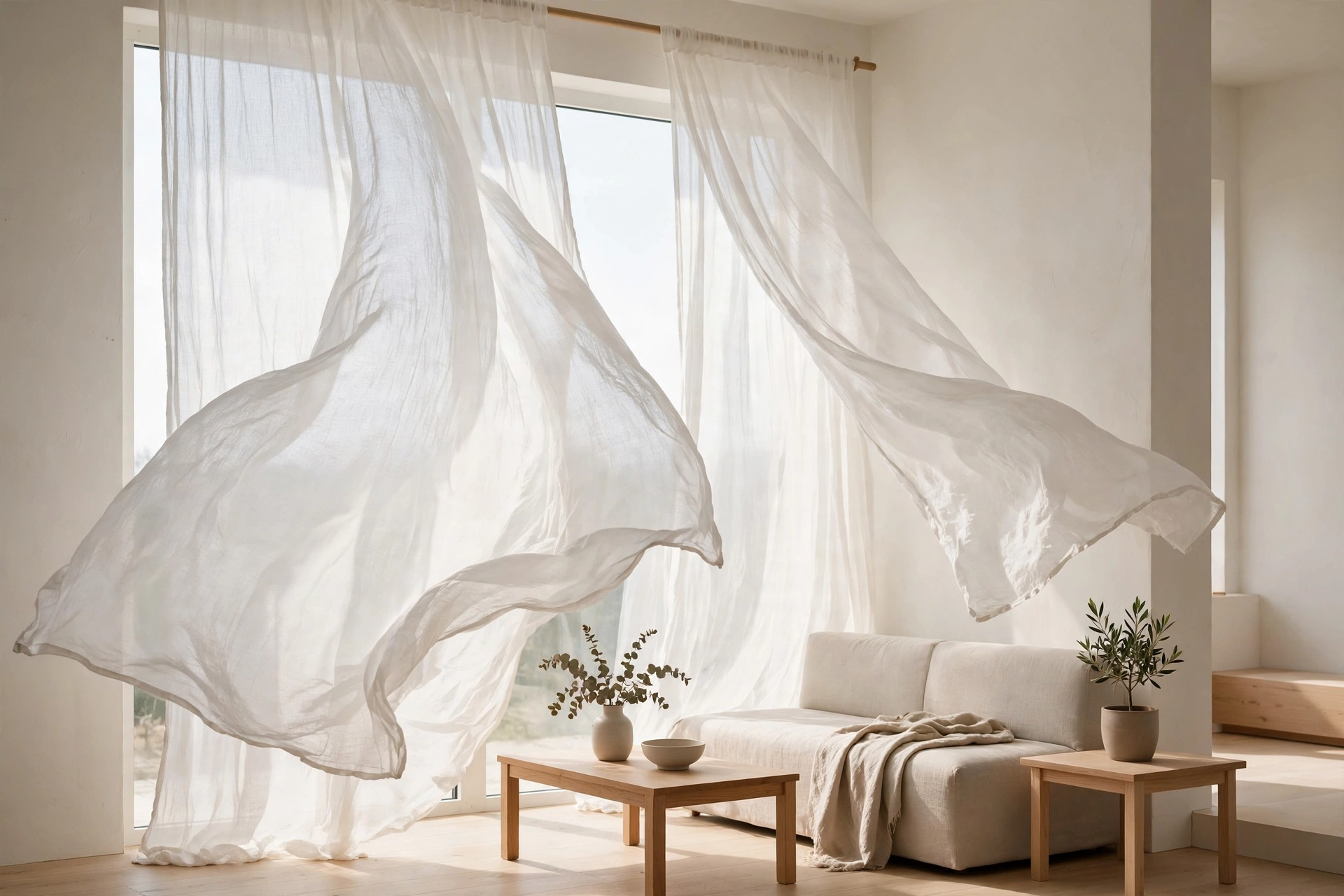
Heavy drapes eat light and visual space; sheer linen curtains ($30–$60 per panel) diffuse daylight into a soft glow while preserving privacy. In a minimalist studio, window treatments should be felt more than seen — light, airy, and barely there. Mount the rod close to the ceiling to stretch the room’s height. Pro tip: choose sheers in the same warm white as your walls so the windows dissolve into the architecture instead of framing themselves as decor.
26. Choose One Statement Pendant
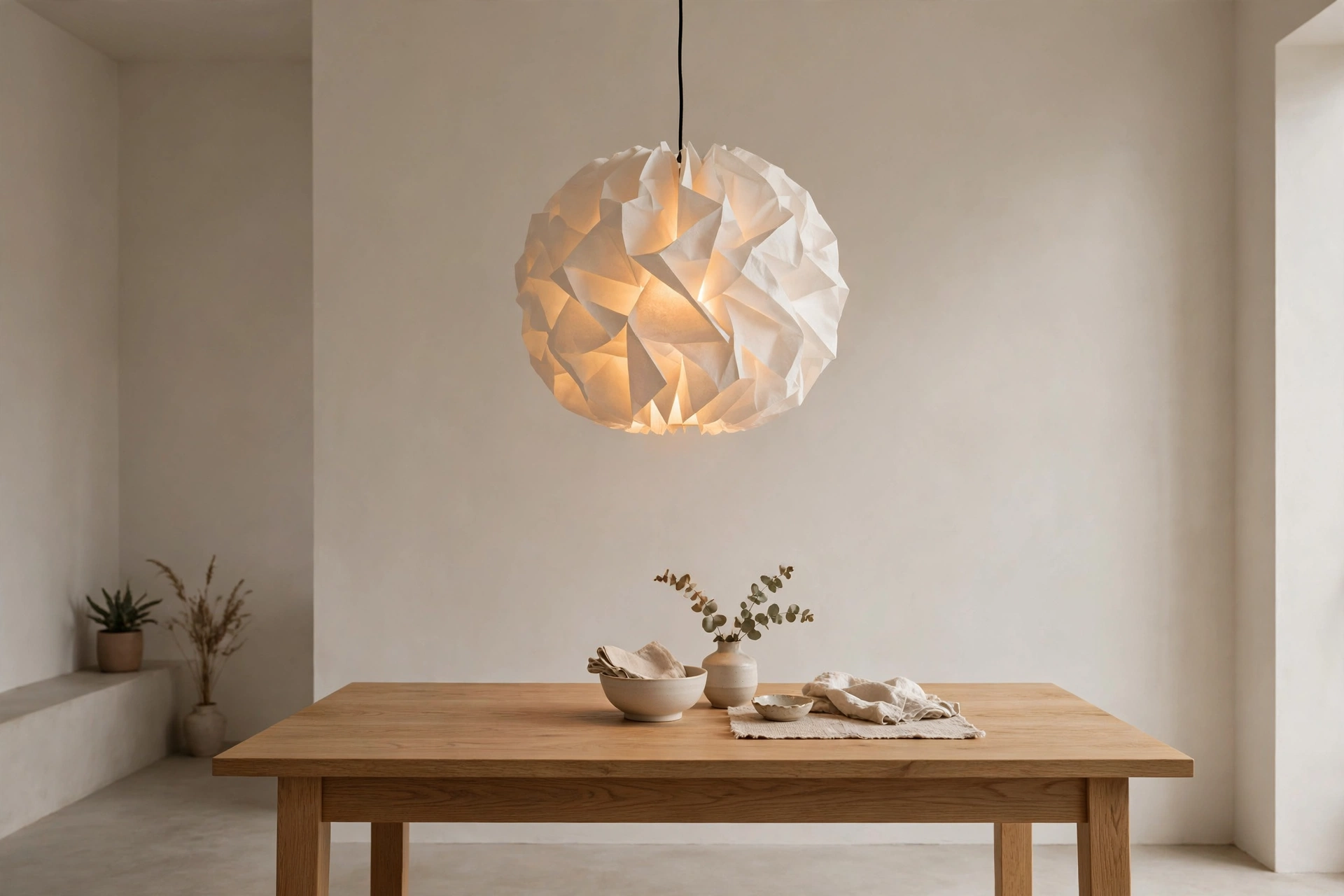
Minimalist lighting doesn’t mean boring lighting — it means one confident choice instead of many small ones. A single sculptural pendant ($80–$200) over the dining zone or reading corner becomes the room’s jewelry: a paper globe, a woven rattan shade, or a simple matte-black dome. Let it be the only decorative light fixture in the room. Pro tip: hang it low enough to feel intentional (30–34 inches above a table) but high enough to preserve sightlines — pendants that float too high read as afterthoughts.
27. Place Mirrors to Double the Light
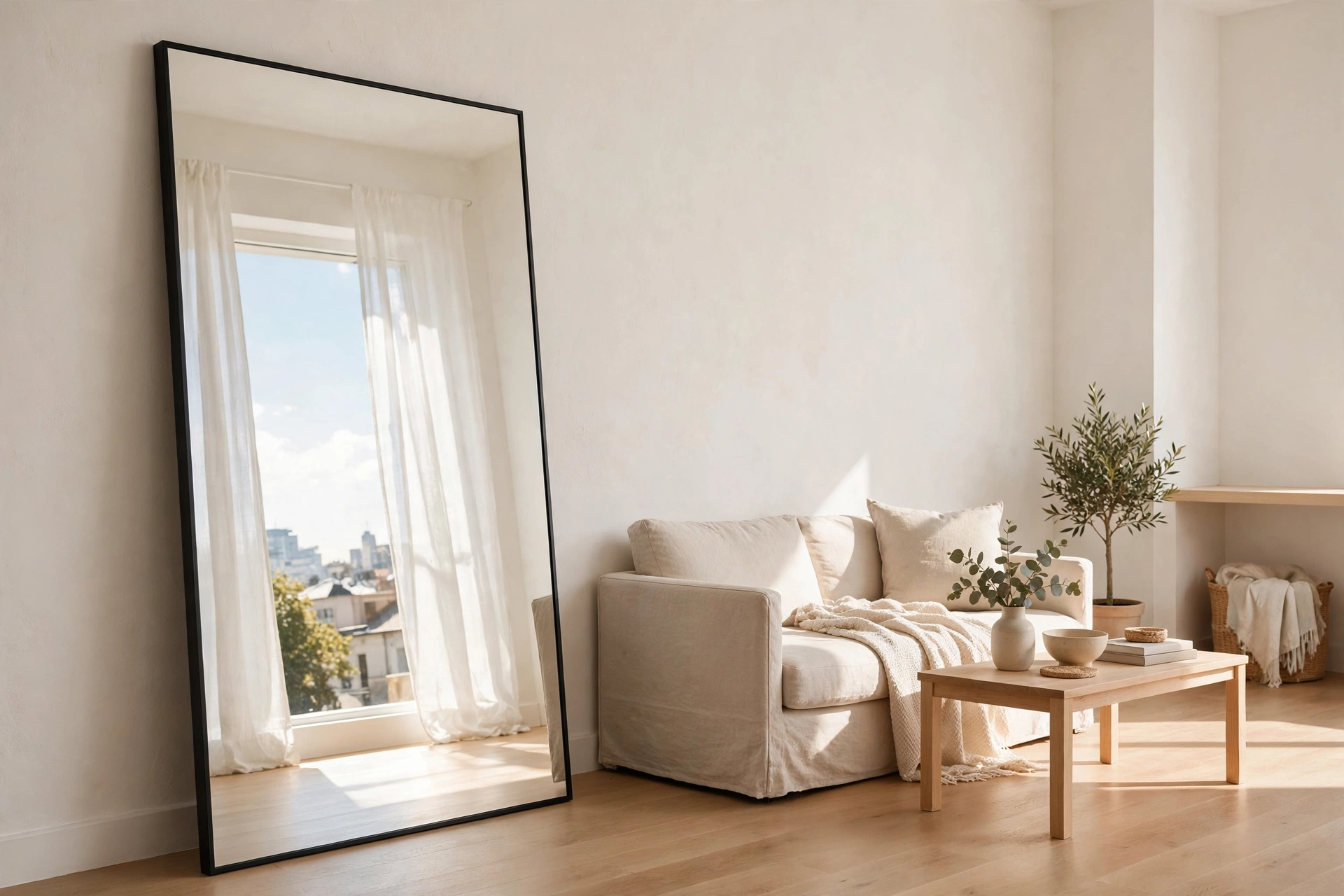
A well-placed mirror is minimalism’s cheapest square footage. One large mirror ($80–$180) opposite or adjacent to the main window bounces daylight deep into the studio and visually doubles the room. Choose a simple thin frame — or frameless — so the mirror itself disappears and only the light remains. Pro tip: a floor-length mirror leaned against the wall (secured at the top) adds height and light with zero installation — and it moves with you.
28. Protect Your Negative Space
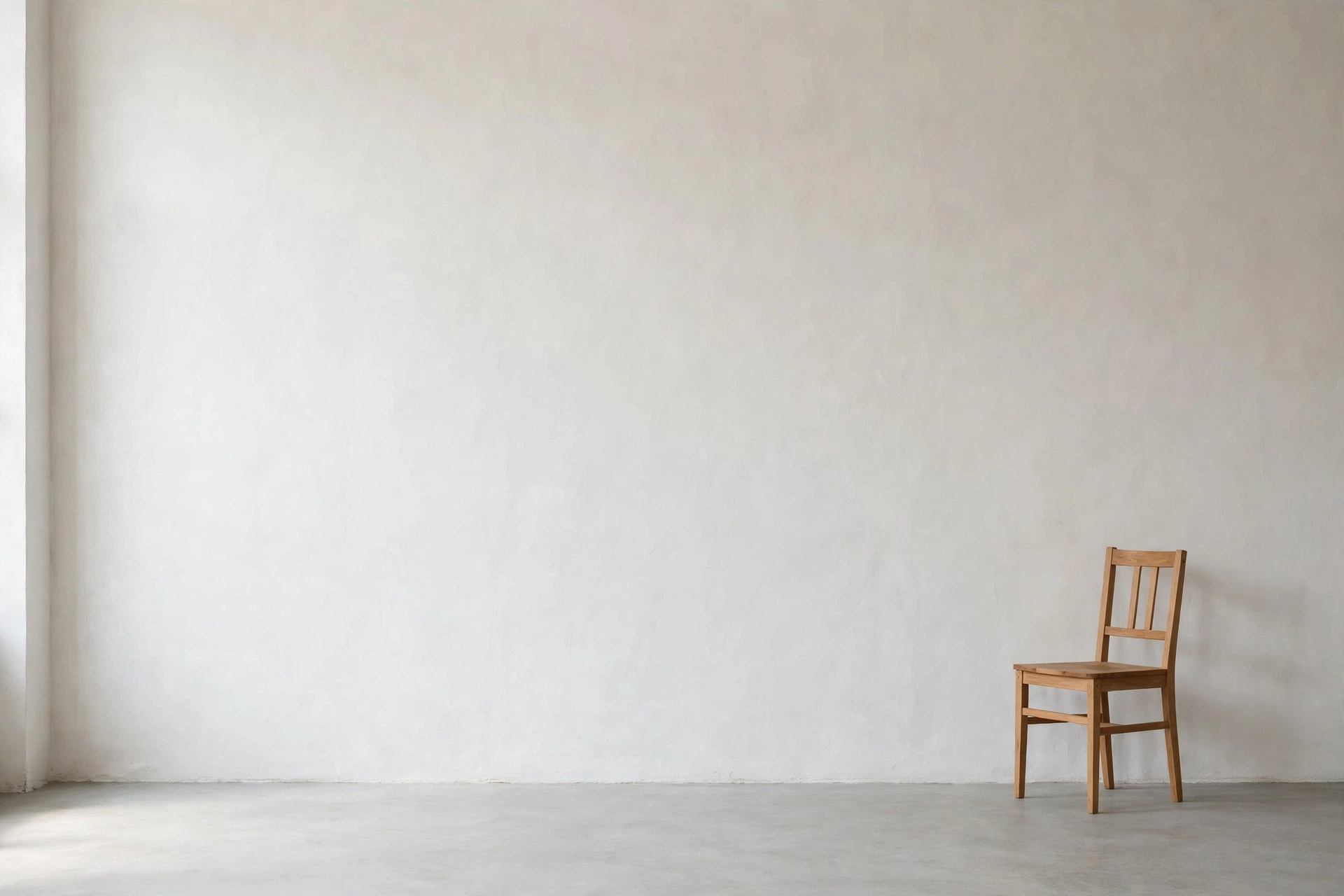
The most minimalist design element is the one you don’t add. Protect empty wall expanses, clear floor areas, and unstyled surfaces fiercely — they’re what make the styled moments feel special. When you feel the urge to fill a blank corner, wait a week; most urges pass, and the emptiness starts to feel luxurious. Pro tip: photograph the room when it feels “done” — the photo reveals whether a space is truly calm or just familiar, and it’s the most honest editor you’ll ever hire.
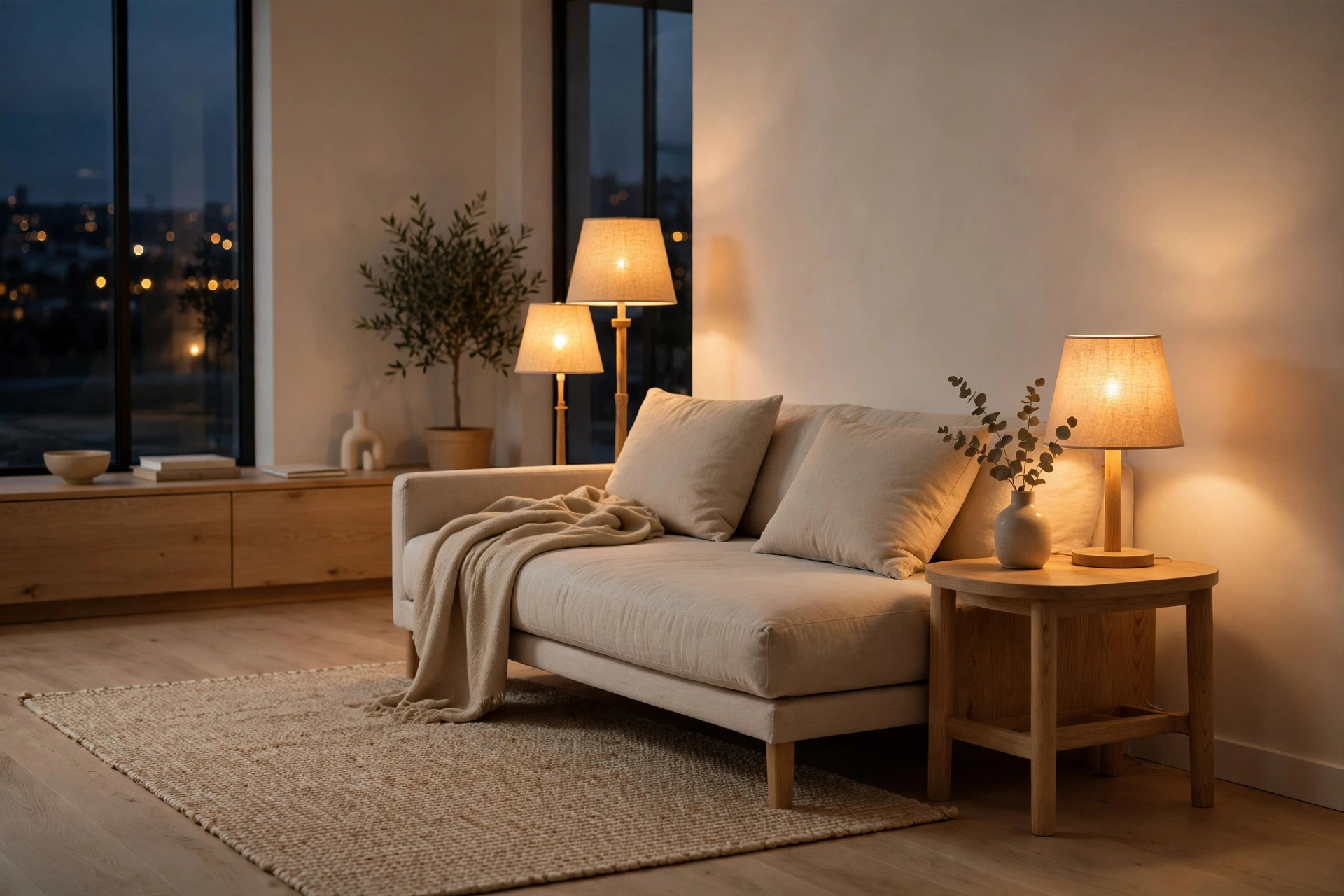
29. Keep One Consistent Light Temperature
Mixed lighting temperatures (cool kitchen LEDs, warm bedroom lamps) create subconscious visual noise. Standardize every bulb in the studio to one temperature — 2700K warm white for cozy minimalism, 3000K for a slightly crisper feel. A full set of matching LED bulbs costs $20–$35 and unifies the entire apartment instantly. Pro tip: put the main living-zone lights on dimmers ($15–$25 per switch, or smart bulbs at $10–$15 each) — minimalist rooms live or die by their evening glow.
Mindful Details
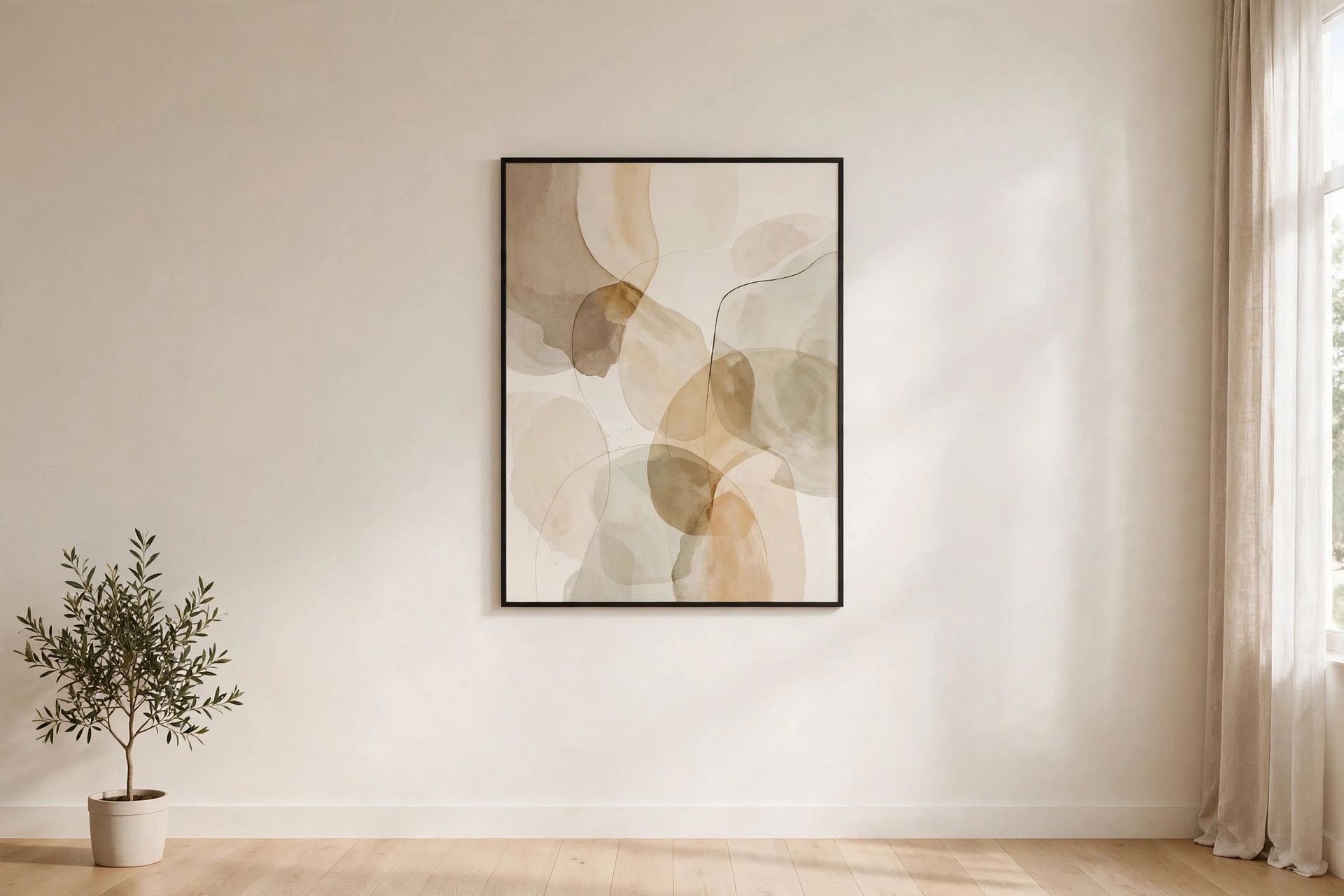
30. Hang One Piece of Art Per Wall
A gallery wall is maximalism in disguise — true minimalism gives each artwork room to breathe. One considered piece per wall ($40–$150 for a quality print in a simple frame), hung at eye level with generous margins, turns art into a moment instead of wallpaper. Large-scale single pieces work especially well in studios because they hold their own across the room. Pro tip: hang art so its center sits at 57 inches — gallery standard — and give it at least 12 inches of empty wall on every side.
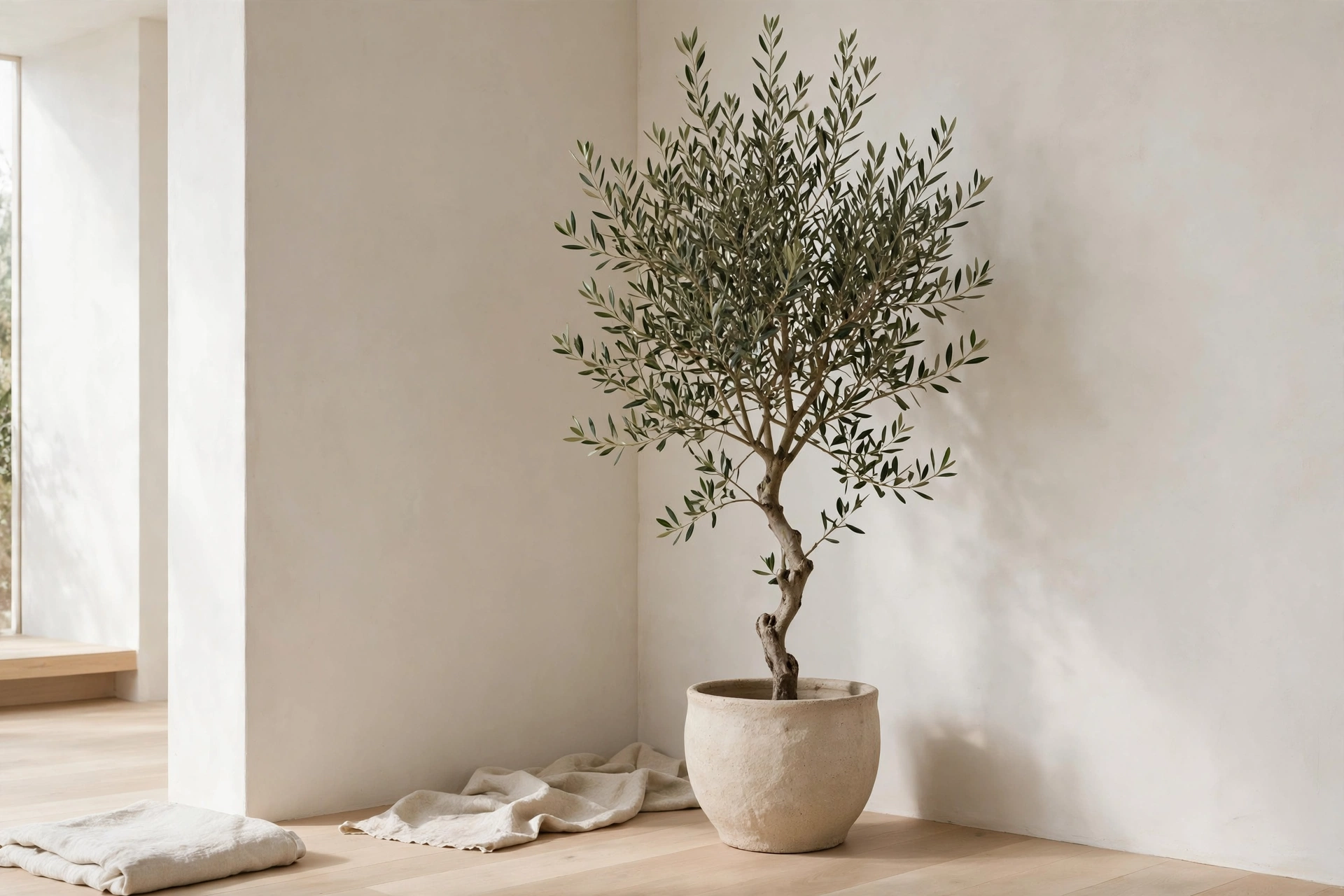
31. Make One Plant Your Statement
Twenty small plants are a collection; one dramatic plant is design. A single architectural specimen — an olive tree, a bird of paradise, a tall snake plant ($40–$90) — in a simple ceramic pot becomes living sculpture and the room’s focal point. It adds life and softness without adding visual clutter. Pro tip: choose the pot as carefully as the plant — a handmade-look ceramic planter in a neutral tone ($25–$50) elevates even a humble snake plant into a design object.
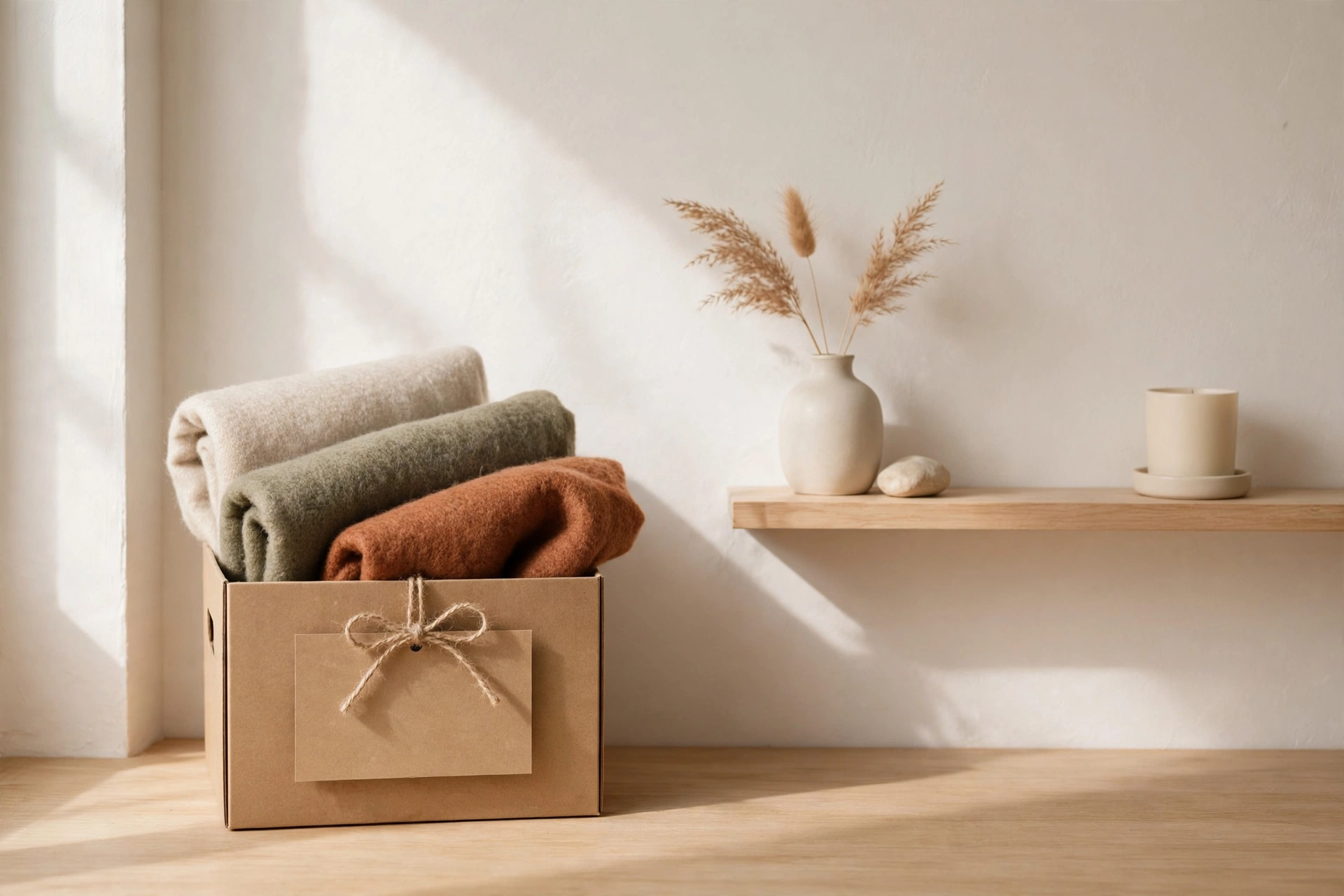
32. Edit Your Decor Every Season
Minimalism isn’t a one-time purge — it’s a practice. Each season, walk the studio with fresh eyes and remove three things that no longer earn their place: the vase you stopped noticing, the throw that doesn’t match anymore, the gadget gathering dust. Store seasonal swaps (a heavier throw, a different art print) in one labeled box. Pro tip: the seasonal edit is also the moment to rotate your single accent color (idea 9) — sage in spring, terracotta in fall — which keeps the studio feeling fresh without buying anything new.
33. Buy Fewer, Better Things
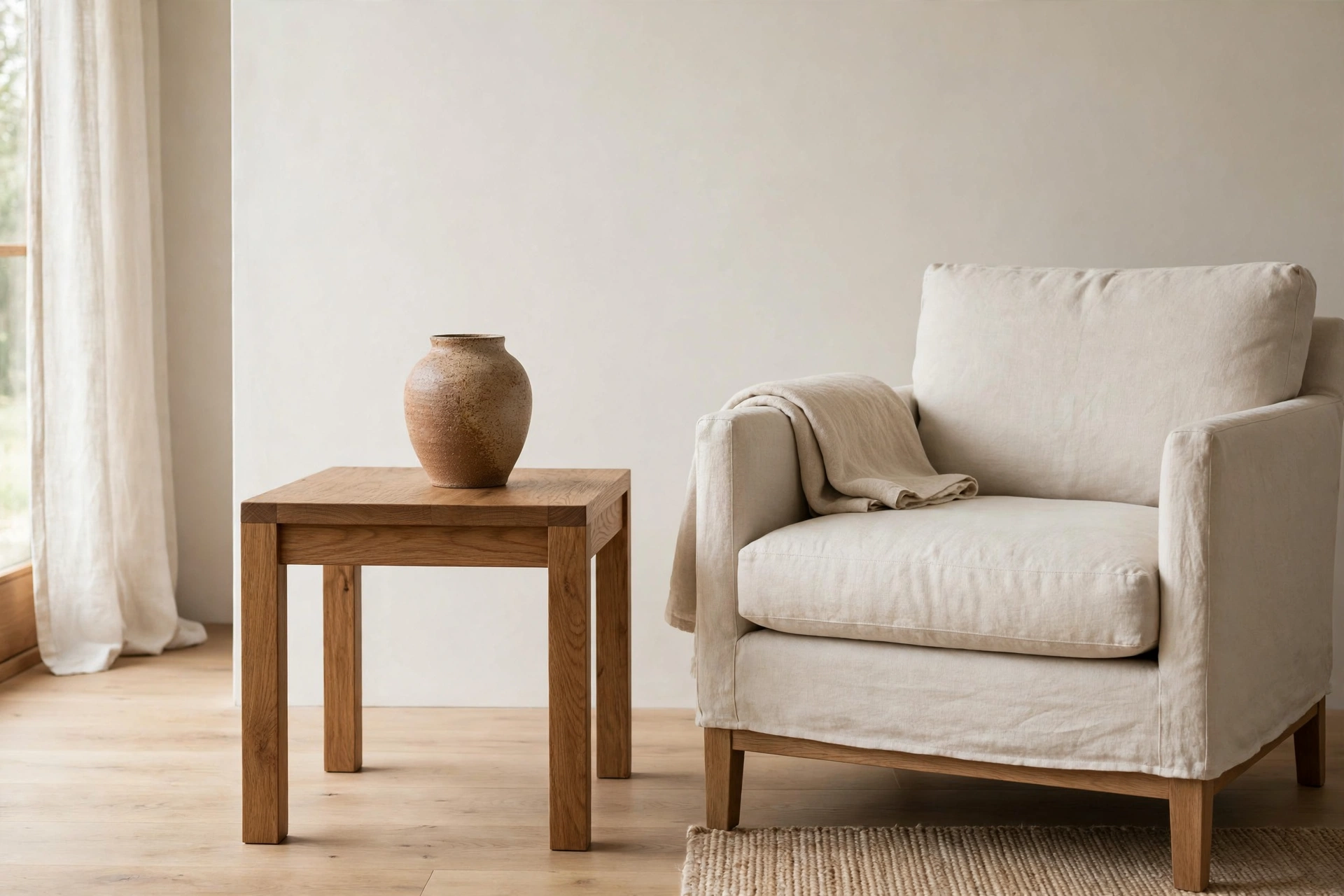
The minimalist math: one $300 solid-oak side table you love for a decade beats three $100 particleboard pieces you replace twice. Fewer, better things mean less shopping, less assembling, less replacing — and a studio filled with objects that have presence instead of just occupying space. Save for the good version of each essential rather than buying the fast version now. Pro tip: apply the “would I move with this?” test before every purchase — if you wouldn’t pay to move it to your next apartment, don’t buy it for this one.
34. End Each Day With a Breathing-Room Ritual
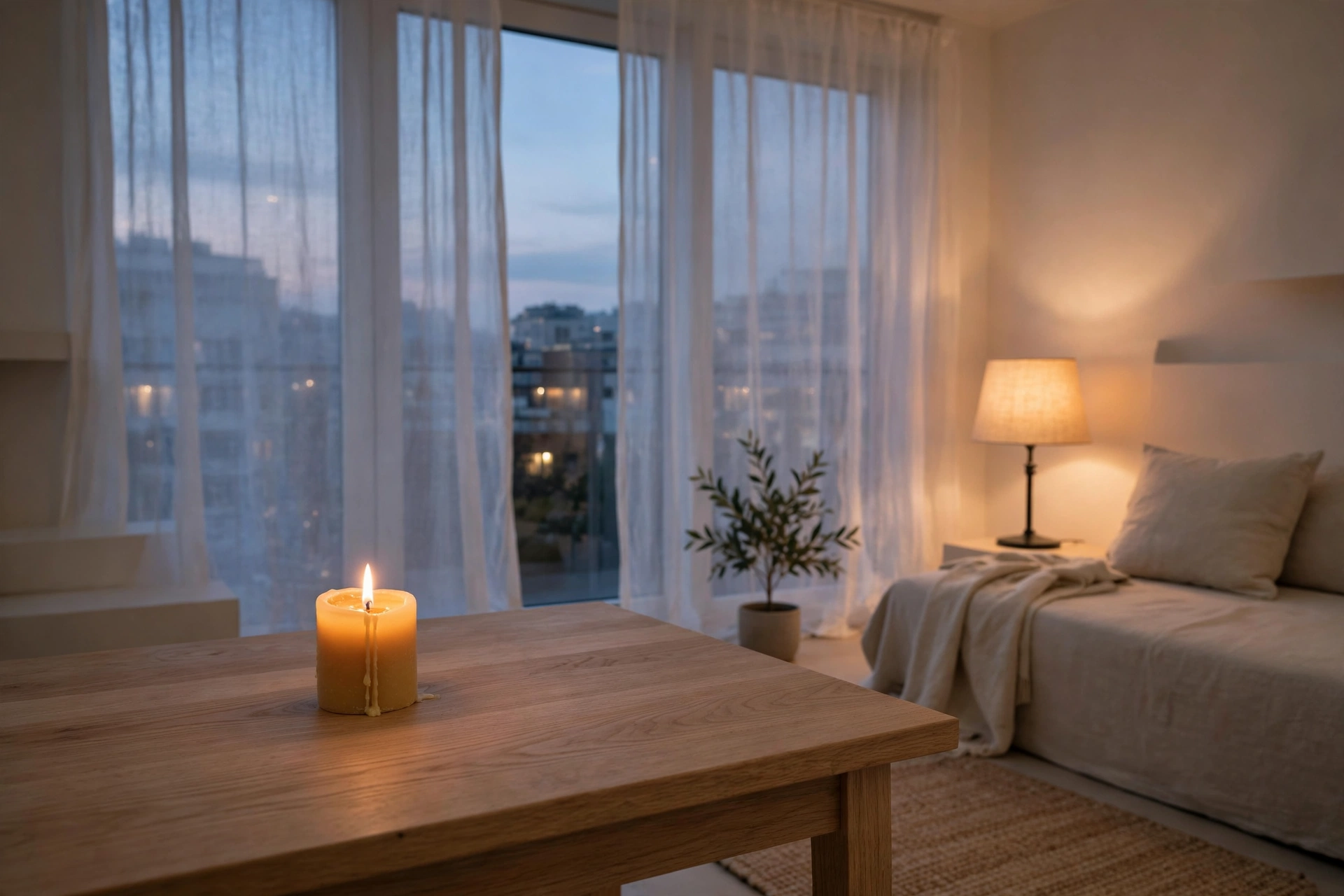
The final minimalist idea isn’t an object — it’s a habit. Each evening, spend two minutes standing in the middle of your studio and noticing the calm: the clear surfaces, the soft light, the space to breathe. This tiny ritual is what the previous 33 ideas are for — not a magazine photo, but the daily felt sense that your home is holding you, not crowding you. Pro tip: pair the ritual with something sensory — lighting a single beeswax candle ($8–$12), opening the window for fresh air — so calm becomes something you practice, not just something you see.
Frequently Asked Questions
Can a studio apartment really look minimalist on a budget?
Absolutely — minimalism is one of the cheapest styles to achieve because it’s mostly about removing rather than buying. Decluttering costs nothing, a warm-white repaint runs $150–$250 in paint, and uniform storage boxes are $8–$15 each. The expensive part is discipline, not decor: the nightly reset, the one-in-one-out rule, and resisting impulse buys do more than any purchase.
How do I keep a minimalist studio from feeling cold or empty?
Warmth comes from texture and light, not stuff. Layer natural materials (linen, wool, oak, rattan), keep walls warm white rather than stark white, use 2700K lighting, and add one living thing — a plant, fresh flowers, or even a bowl of fruit. A minimalist room should feel like a deep breath, not a waiting room.
What’s the difference between minimalist and just empty?
Intention. An empty room is unfinished; a minimalist room is edited — every remaining object was chosen, and the negative space is deliberate. The test: does the room feel calm or barren? Calm comes from quality materials, good light, and a few meaningful objects; barren comes from removing things without deciding what the room is for.
How much storage does a minimalist studio need?
Less than you think, but it must be closed storage. The minimalist formula: enough hidden storage (under-bed drawers, a sideboard, uniform boxes) that every surface can be cleared in five minutes. If you can’t clear a surface quickly, you need more hidden storage — or fewer belongings. Open storage is display, not storage, in a minimalist home.
Can minimalism work with kids or pets in a studio?
Yes, with systems. Kids need a defined (and closable) toy zone — one cabinet or a set of uniform bins, not toys across the floor. Pets need their supplies corralled to one station. The principles don’t change: everything has a home, surfaces reset nightly, and you own less but better. Many parents find minimalism easier with kids, because there’s simply less to manage.
Is minimalist decor bad for resale or rental appeal?
The opposite — minimalist staging is what sells homes. Clean, neutral, uncluttered spaces photograph better, feel larger, and let buyers or renters imagine their own life there. If you’re renting, the neutral palette and damage-free choices in this guide also protect your deposit while looking high-end.
Final Thoughts
A minimalist studio apartment isn’t about having less for the sake of less — it’s about making room for more of what matters: calm mornings, clear thinking, space to breathe. Every idea in this guide follows the same quiet logic — remove the visual noise, choose fewer and better things, and let light, texture, and negative space do the decorating.
Start where the impact is highest: clear one surface completely tonight, standardize your storage boxes this weekend, and repaint one wall warm white when you can. Minimalism compounds — each small edit makes the next one easier, until one evening you stand in the middle of your studio, take that breath, and realize the calm you’ve been building was the point all along.