
34 Dark Academia Living Room Ideas for Moody Scholarly Style
34 Dark Academia Living Room Ideas for Moody Scholarly Style
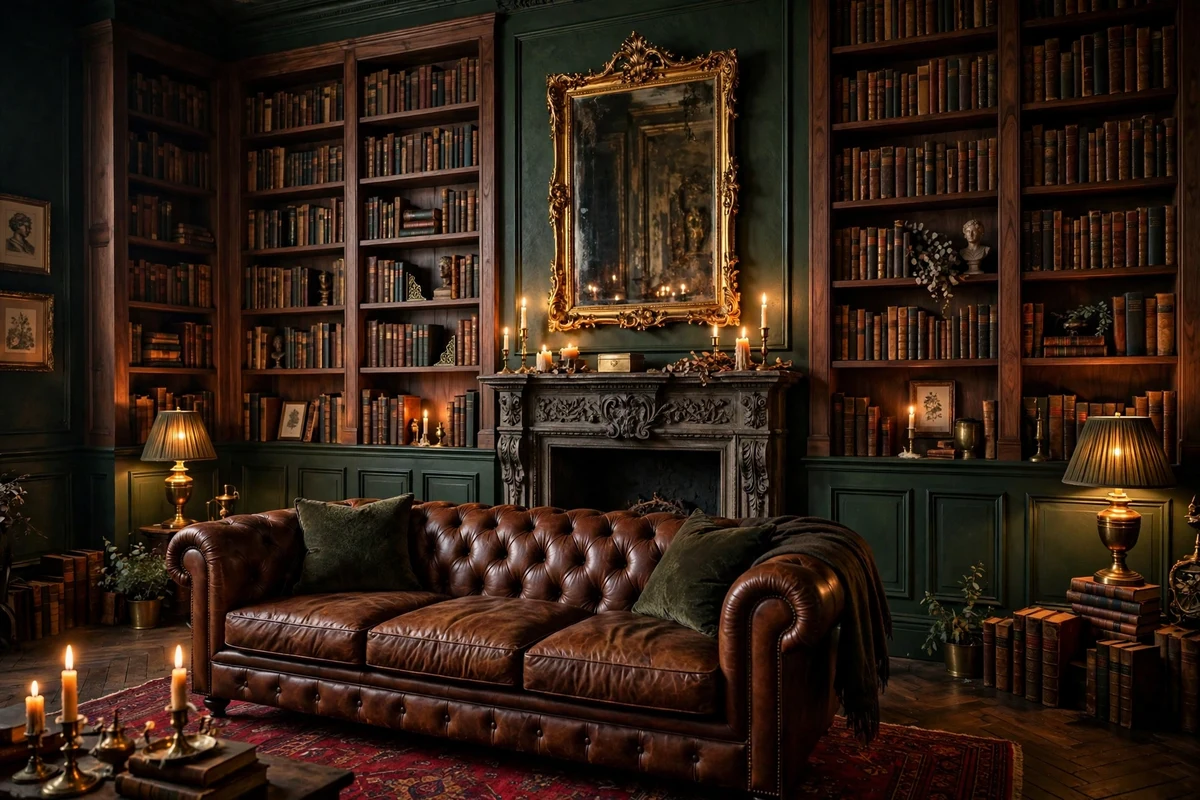
Dark academia wraps your living room in the romance of old libraries, candlelit studies, and centuries of collected knowledge. Think floor-to-ceiling bookshelves, worn leather, oil paintings in gilded frames, and the warm glow of brass lamps against forest green or oxblood walls. It is a style that rewards layering: every object should feel found, every corner should invite a long read. Whether you live in a Victorian flat or a modern apartment, these 34 ideas show you how to build that moody, scholarly atmosphere with real furniture, real prices, and practical styling moves. No costume drama required, just depth, texture, and quiet drama.
Walls, Shelves, and Scholarly Bones
1. Floor-to-Ceiling Bookshelves
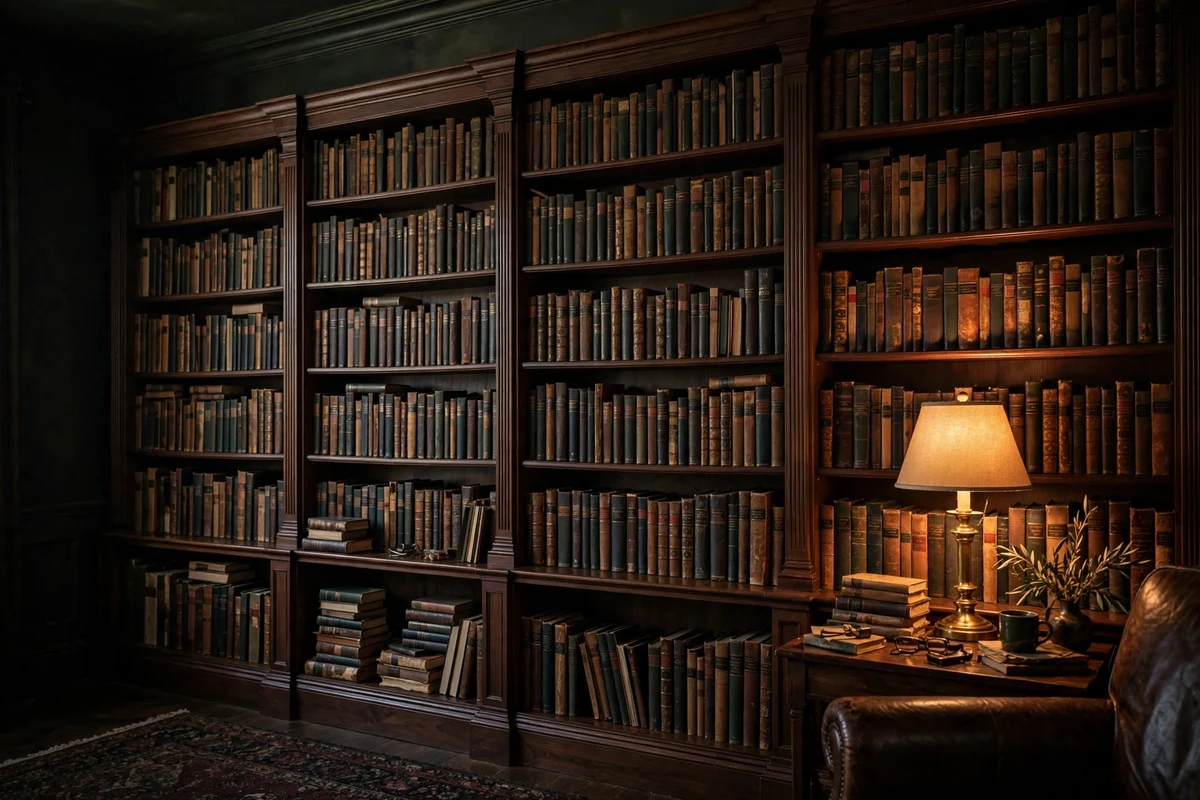
Nothing says dark academia like walls of books. A full-height shelving wall in stained oak or walnut (expect $800 to $2,500 for a modular unit, or $200 to $400 for tall IKEA Billy bookcases you stain yourself) instantly gives the room its scholarly spine. Style shelves loosely rather than perfectly: mix vertical rows with horizontal stacks, leave breathing room for framed prints, brass bookends, and small curios. Vary book heights and let a few spines lean for that lived-in library feel. If your collection is small, fill gaps with vintage boxes and pottery until the shelves grow. Pro tip: organize by color in muted tones (burgundy, forest, tan, charcoal) so the wall reads as texture, not clutter.
2. Moody Forest Green Walls
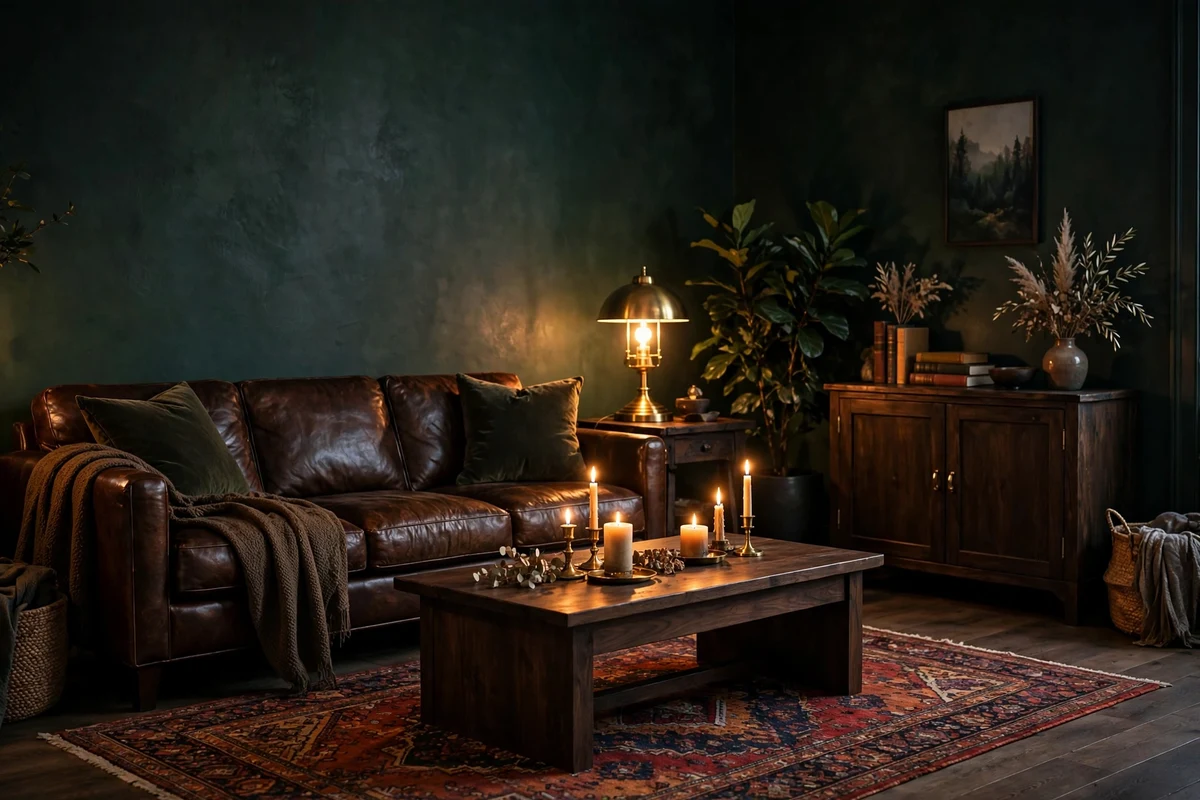
Deep green walls are the signature backdrop of dark academia, evoking old studies and billiard rooms. A gallon of quality matte paint in a shade like hunter or forest green costs $45 to $70, and one accent wall can transform a rental-friendly room for under $100. Dark walls make wood tones richer, brass glow warmer, and book spines pop. If full commitment feels scary, paint the wall behind your bookshelves or fireplace, or use peel-and-stick paneling for a reversible version. Balance the darkness with warm lighting and light-colored textiles so the room feels enveloping, not cave-like. Pro tip: use matte or eggshell finish, never gloss; flat paint absorbs light the way old plaster does.
3. Antique-Style Wood Paneling
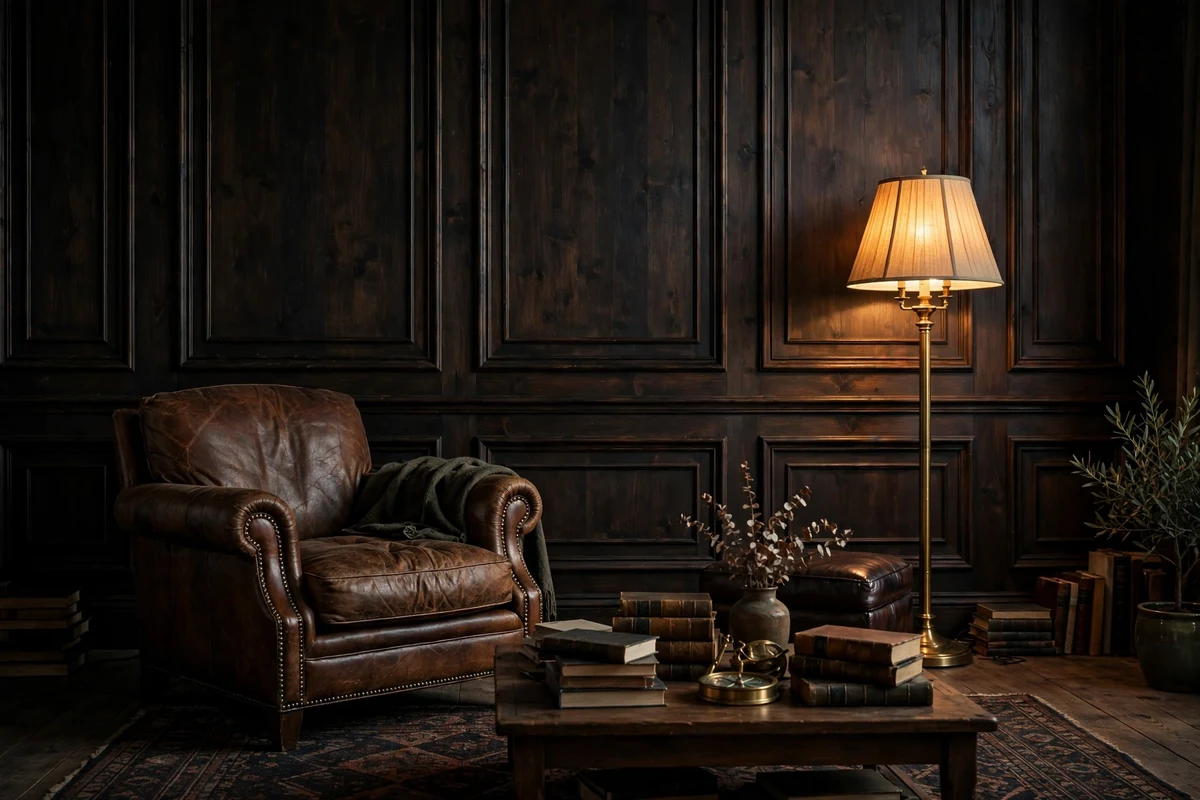
Wood paneling or wainscoting gives instant old-world gravity, the look of a gentleman’s club or university hall. Real tongue-and-groove installation runs $8 to $15 per square foot installed, but DIY board-and-batten with primed MDF costs $2 to $4 per square foot in materials. Paint it the same deep tone as the walls for a seamless library look, or stain it dark walnut for contrast against lighter walls. Even one paneled wall behind the sofa anchors the whole room. Add picture-frame molding above a chair rail for a formal, collected feel that costs little more than trim and paint. Pro tip: keep panel heights at one-third or two-thirds of the wall; full-height paneling can overwhelm small rooms.
4. Rolling Library Ladder
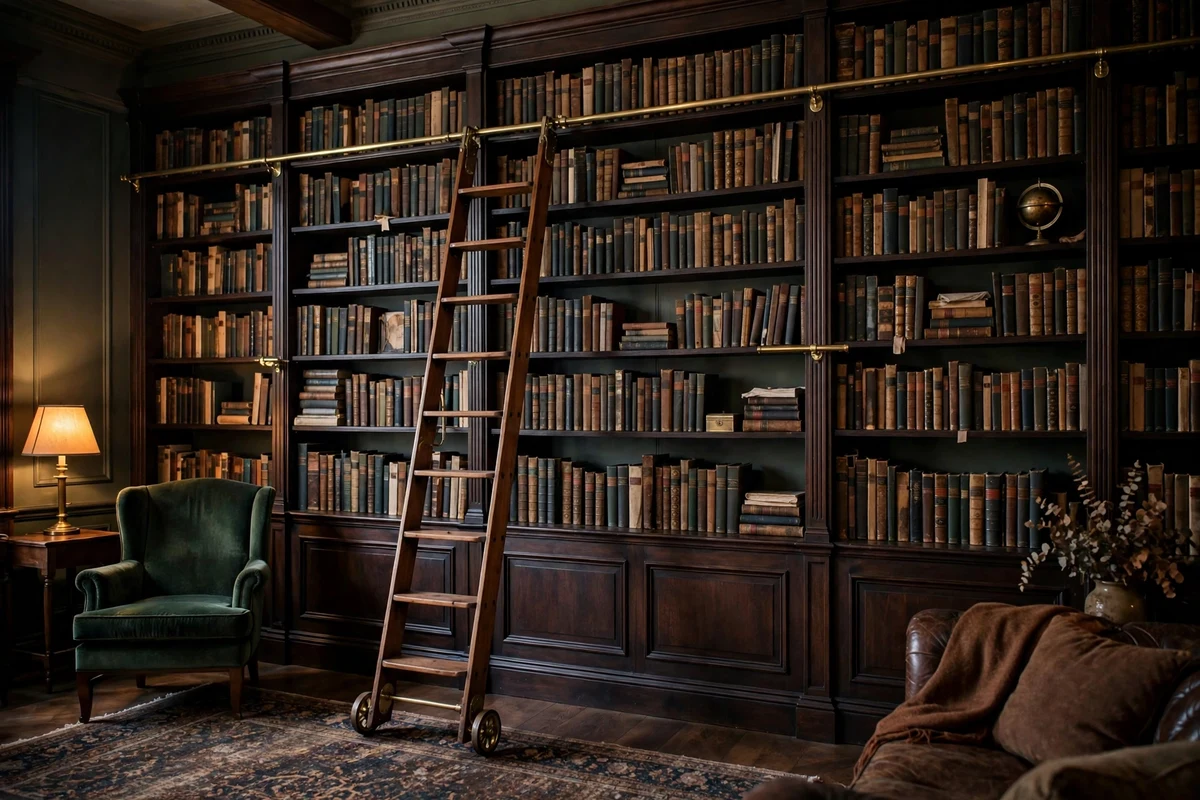
A rolling library ladder is the ultimate dark academia flex, equal parts functional and theatrical. Real rolling ladder hardware kits cost $150 to $400, plus the cost of a sturdy wooden ladder ($100 to $300). Mount the rail on tall bookshelves and you get both a conversation piece and genuine access to high shelves. For a budget nod to the look, lean a vintage wooden ladder decoratively against a bookcase ($40 to $120 at flea markets). It signals that your shelves are for reading, not decorating. Pro tip: make sure the rail is anchored into studs; a loaded ladder pulling free is no joke.
5. Gallery Wall of Oil Paintings
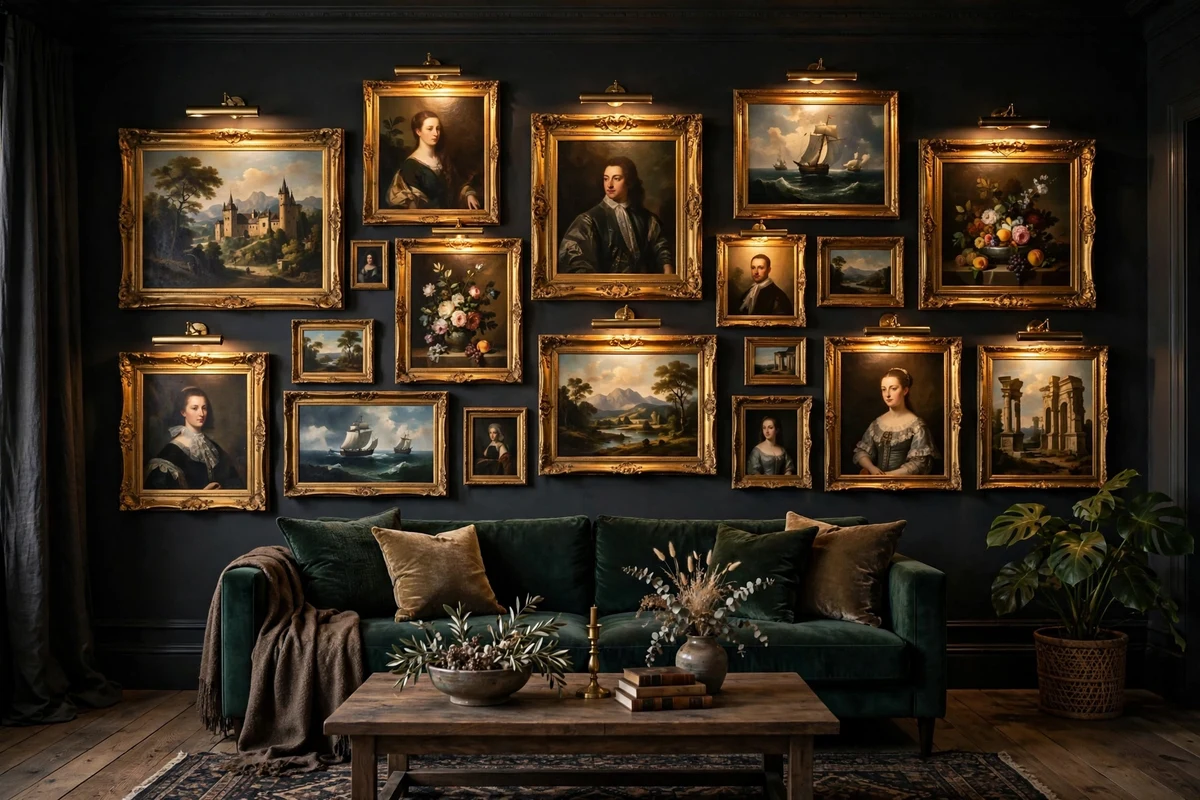
Dark academia walls should feel curated over decades. A salon-style gallery of oil paintings, portraits, and moody landscapes in mismatched gold frames ($15 to $60 each at thrift stores, plus $20 to $80 for prints of public-domain classics) delivers instant atmosphere. Mix large anchor pieces with small studies, and let frames touch or overlap slightly for that collector’s density. Landscapes, botanical studies, and classical portraits all work; avoid anything too bright or modern. Pro tip: lay the arrangement on the floor first and photograph it, so you hang once instead of filling nail holes.
6. Framed Antique Maps
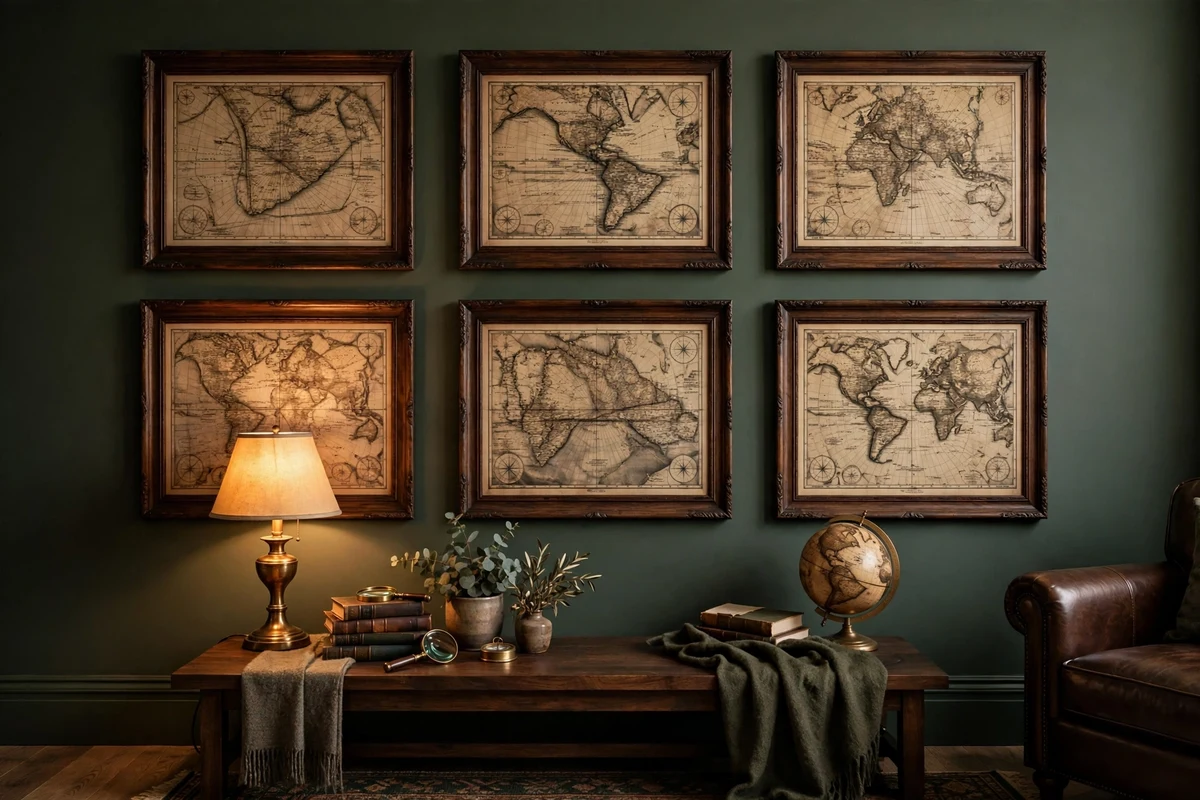
Old maps carry the spirit of exploration that dark academia loves. Large-format reproductions of vintage cartography cost $25 to $90 framed, or frame genuine vintage atlas pages ($10 to $40 each) for authenticity. Hang a big world or city map as a statement above the sofa, or cluster smaller maps in a hallway-style grid. Sepia and ink tones blend perfectly with leather and dark wood. They double as intellectual decor and genuine conversation starters. Pro tip: look for maps with decorative cartouches and sea monsters; the flourishes are what make them feel historic.
7. Deep Burgundy Accent Wall
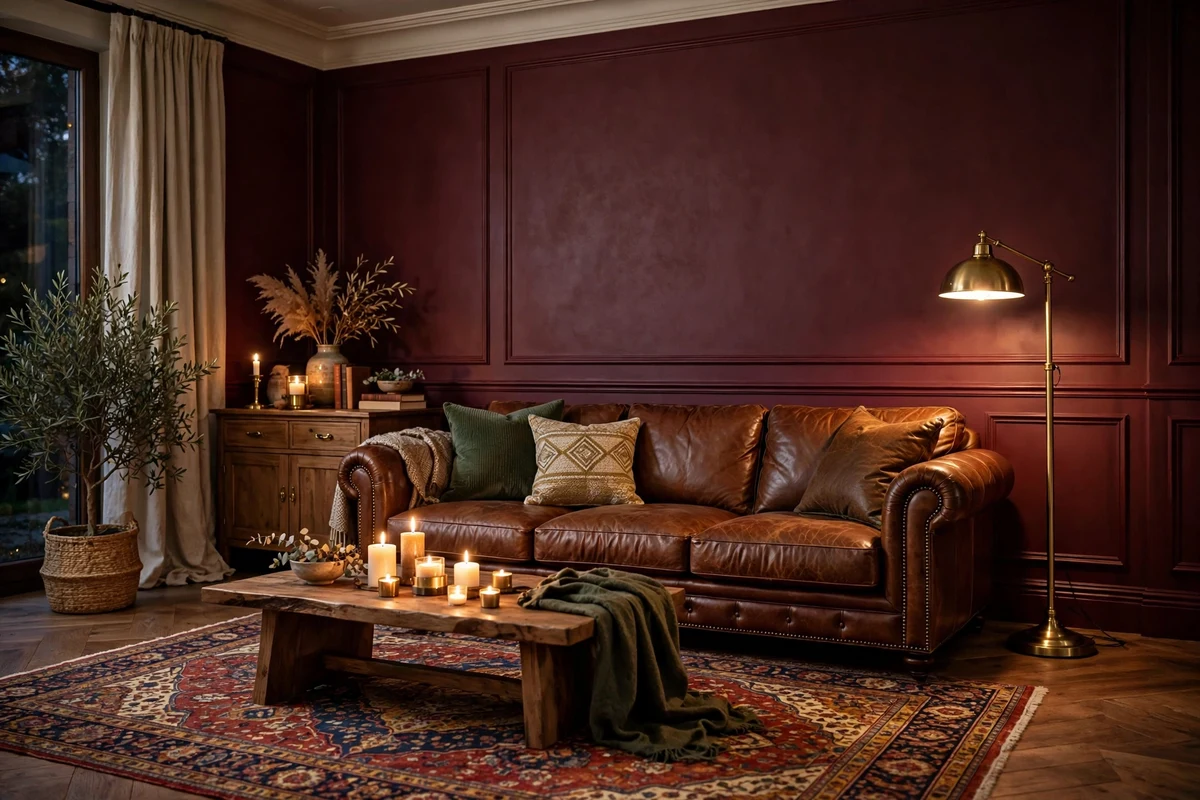
If green feels expected, deep burgundy or oxblood walls offer the same moody richness with a wine-dark romance. A feature wall in merlot or claret ($45 to $70 per gallon) pairs beautifully with brass, dark wood, and cream textiles. Burgundy flatters candlelight especially well, glowing rather than absorbing warmth. Try it behind a reading nook or fireplace to create a natural focal point. In small rooms, keep the other walls warm white so the burgundy reads as an accent, not a cave. Pro tip: test a large swatch at different times of day; burgundy can swing brown or purple depending on light.
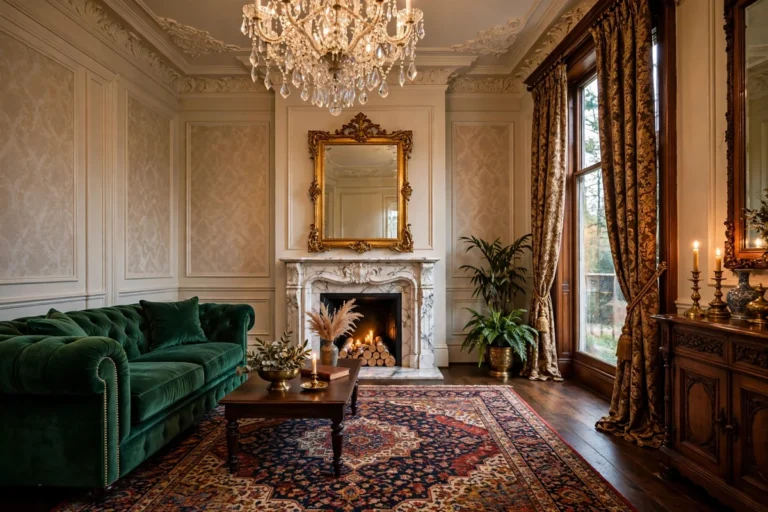
8. Carved Fireplace Mantel
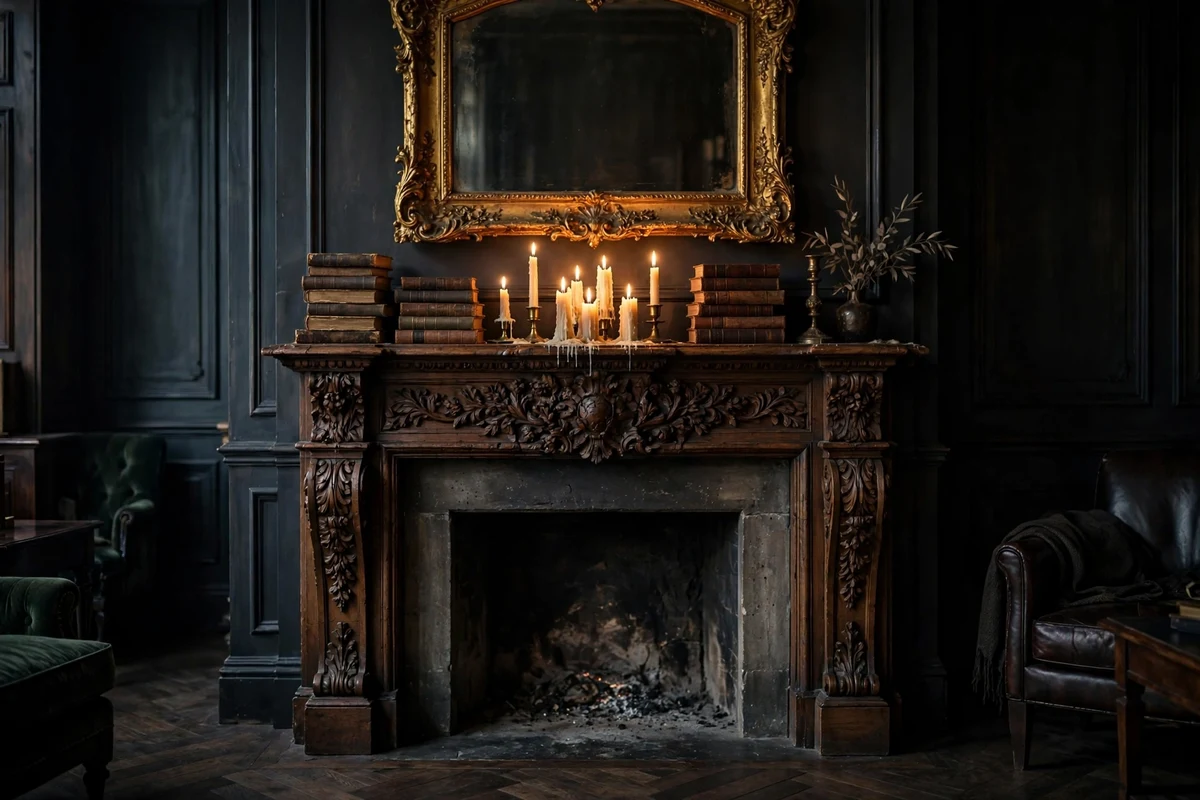
A fireplace is the hearth of dark academia, real or faux. If you have one, dress a carved wood or marble mantel with candlesticks, stacked books, and a gilded mirror above ($150 to $600 for a good vintage mantel mirror). No fireplace? Electric inserts with realistic flames cost $200 to $600, or build a faux mantel surround from reclaimed wood for $150 to $400. Style the mantel asymmetrically: tall candlesticks on one side, a low stack of books on the other, greenery trailing between. Pro tip: even an unlit fireplace styled with pillar candles and logs reads as the room’s soul.
9. Antique Mirror with Gold Frame
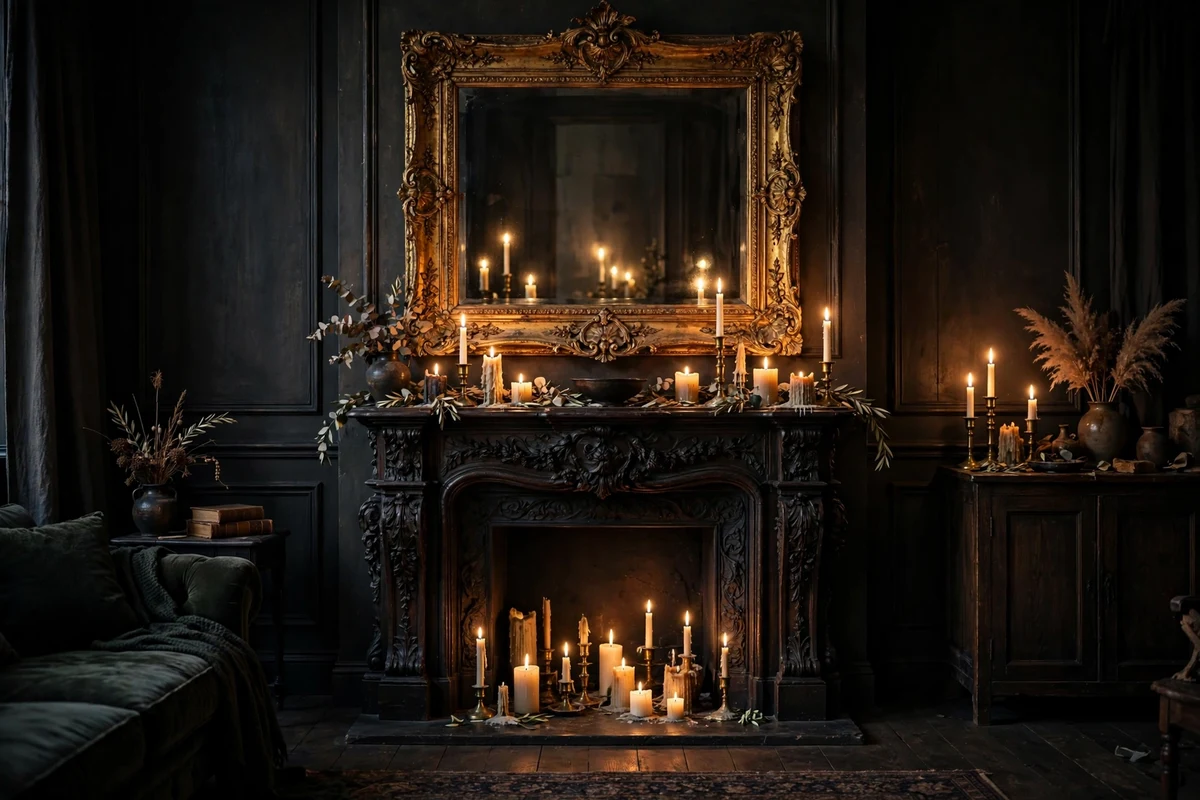
An oversized antique-style mirror in an ornate gold or brass frame bounces candlelight around the room and adds baroque drama. Genuine vintage pieces run $200 to $800, while good reproductions cost $120 to $350. Hang one above the mantel or lean a floor-length version against a bookshelf wall. Slightly foxed or antiqued glass suits the aesthetic better than perfect mirror; the imperfections catch light beautifully. Pro tip: place it opposite a window or lamp so it doubles your light sources in a dark room.
Seating and Statement Furniture
10. Leather Chesterfield Sofa
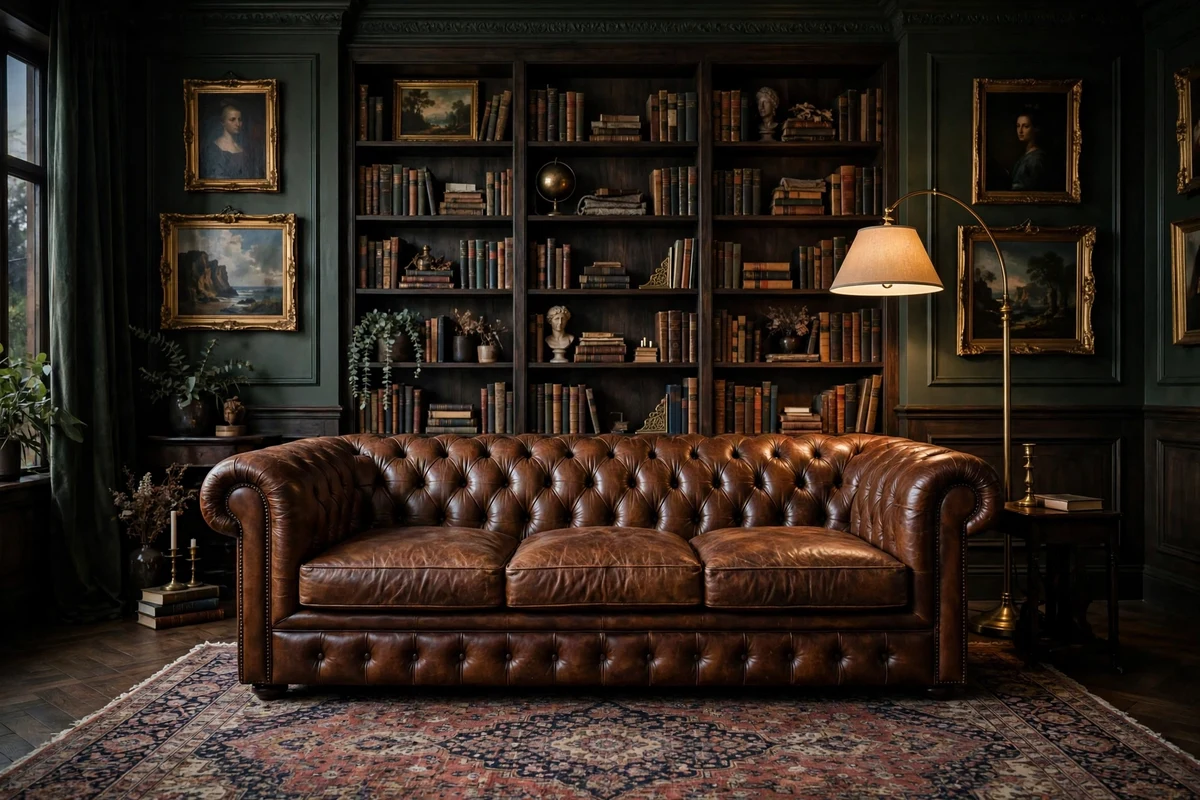
The chesterfield is dark academia seating royalty: deep button tufting, rolled arms, and leather that only gets better with age. A quality leather chesterfield costs $1,200 to $3,500 new, but vintage ones surface at estate sales and thrift stores for $300 to $900 if you hunt patiently. Choose oxblood, tobacco, or dark brown; the patina of worn leather is the whole point, so do not fear scratches. Pair it with a Persian rug and a brass floor lamp for the classic scholar’s lounge. Pro tip: condition the leather twice a year with a quality balm; neglected leather cracks, loved leather glows.
11. Oxblood Leather Armchair
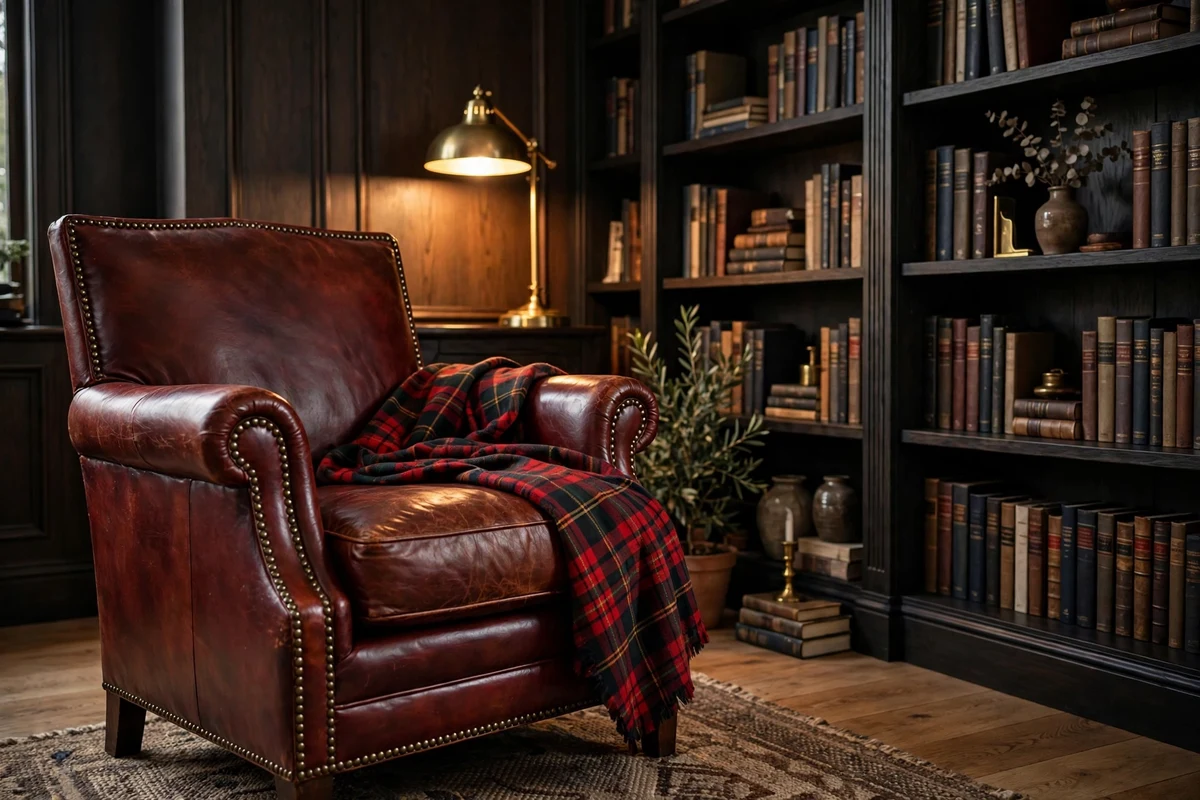
Every dark academia living room needs a chair made for long chapters. An oxblood or cognac leather armchair ($400 to $1,200 new, $100 to $400 vintage) tucked beside the bookshelves creates an instant reading throne. Look for rolled arms, nailhead trim, or a wingback silhouette. Add a small side table for tea and a brass lamp behind it, and you have the room’s most fought-over seat. Pro tip: swivel or rocker bases are practical, but a fixed club chair looks more authentically vintage.
12. Reading Nook with Wingback Chair
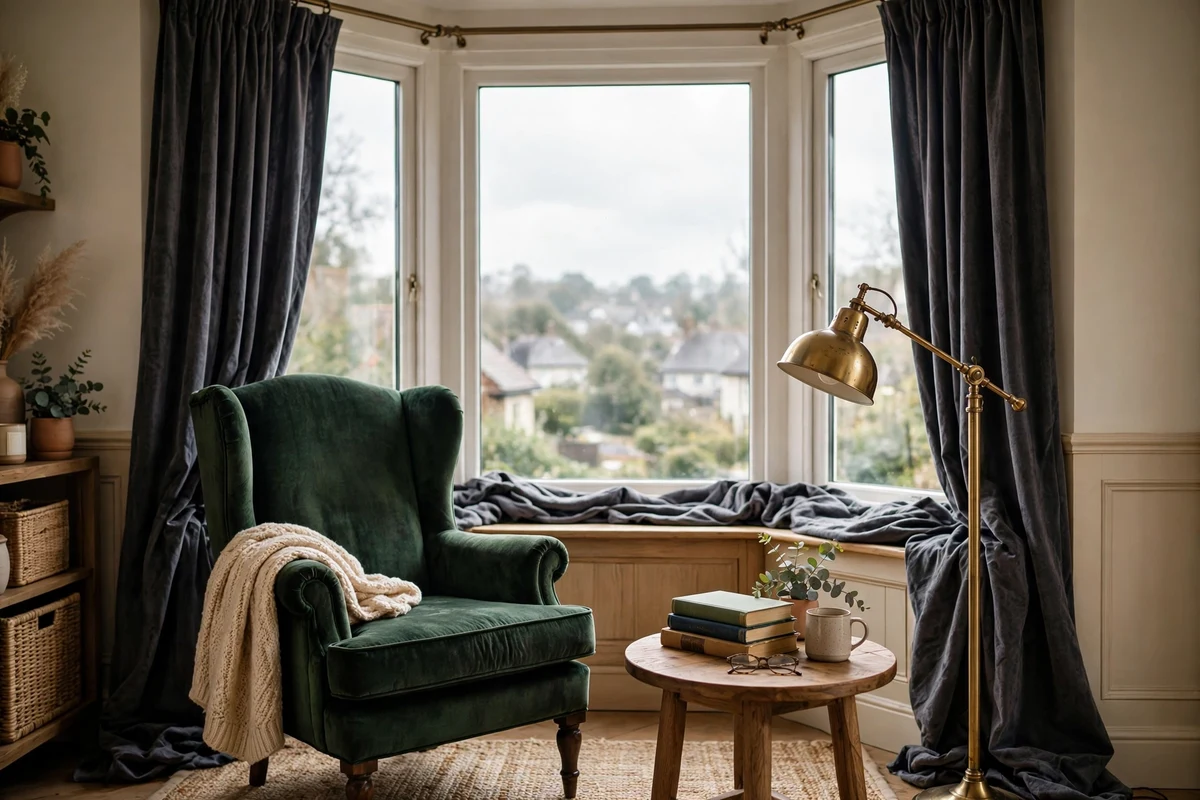
Carve a dedicated reading corner from an unused corner or bay window. A wingback chair in dark velvet or tweed ($350 to $1,000), a small round side table ($60 to $200), and an arc or pharmacy floor lamp ($80 to $300) are all you need. Add a tartan throw and a stack of current reads, and the nook becomes the room’s quiet heart. Position it near natural light for daytime reading and layer a warm lamp for evening. Pro tip: a small rug under the chair defines the nook as its own zone within the larger room.
13. Antique Writing Desk
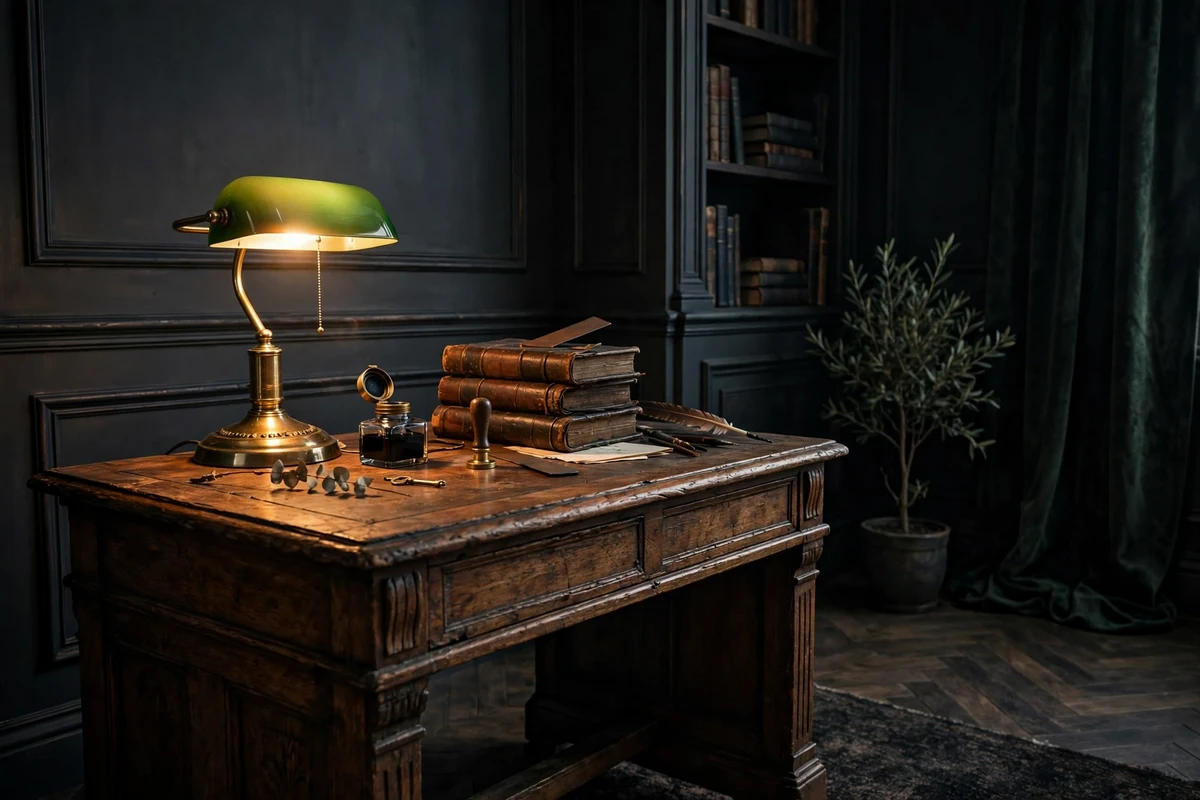
A small antique writing desk brings the scholar’s study into the living room. Vintage secretary desks and partners’ desks run $200 to $800 at antique shops, while reproduction campaign-style desks cost $250 to $600. Use it as a laptop station, letter-writing spot, or display surface for an inkwell, brass lamp, and stacked journals. A desk with drawers also hides modern clutter, keeping the room’s vintage illusion intact. Pro tip: style the desktop sparsely; a clear desk with three beautiful objects reads more scholarly than a crowded one.
14. Tweed and Velvet Upholstery
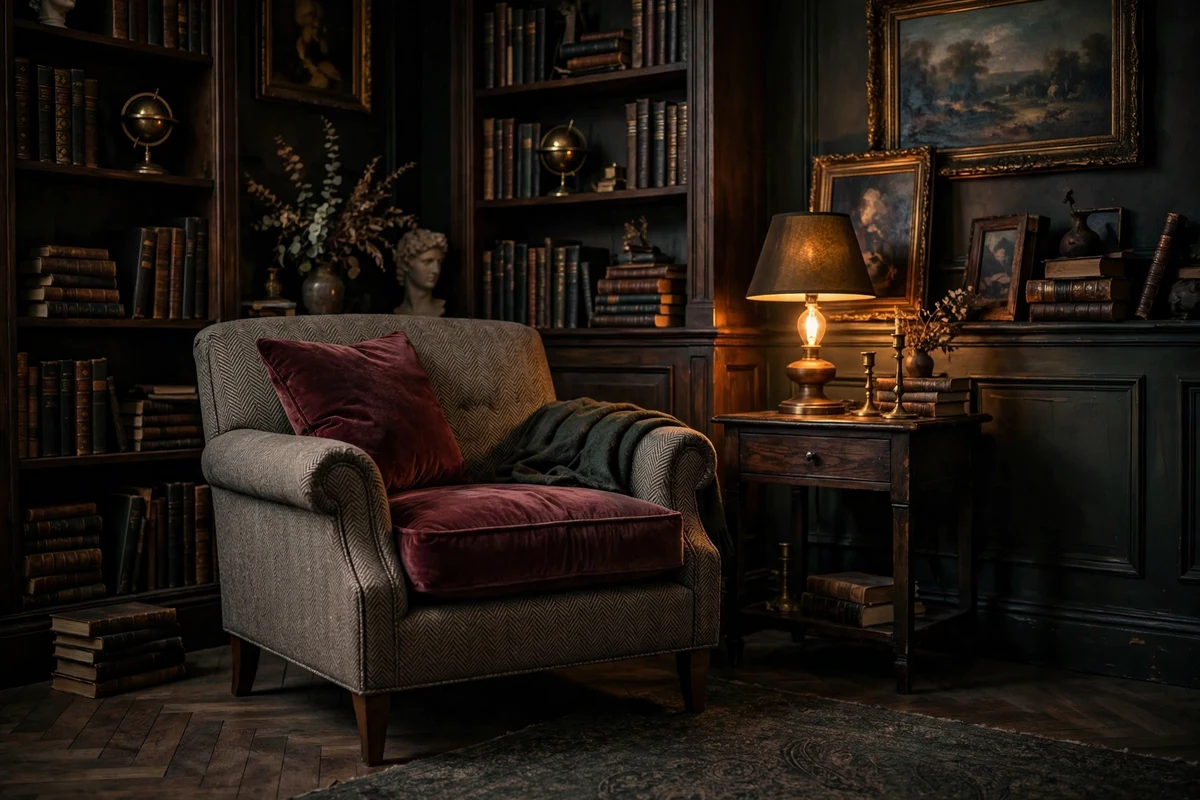
Dark academia lives in its textiles: tweed, velvet, corduroy, and wool. Reupholstering a thrifted armchair in herringbone tweed costs $400 to $900, while velvet slipcovers or new cushions run $80 to $250. Mix textures deliberately: a tweed chair, velvet pillows, a wool throw. Stick to a muted palette of forest, burgundy, charcoal, mustard, and cream so the textures, not the colors, do the talking. Pro tip: velvet in deep jewel tones photographs beautifully and hides wear better than flat weaves.
15. Leather Trunk Coffee Table
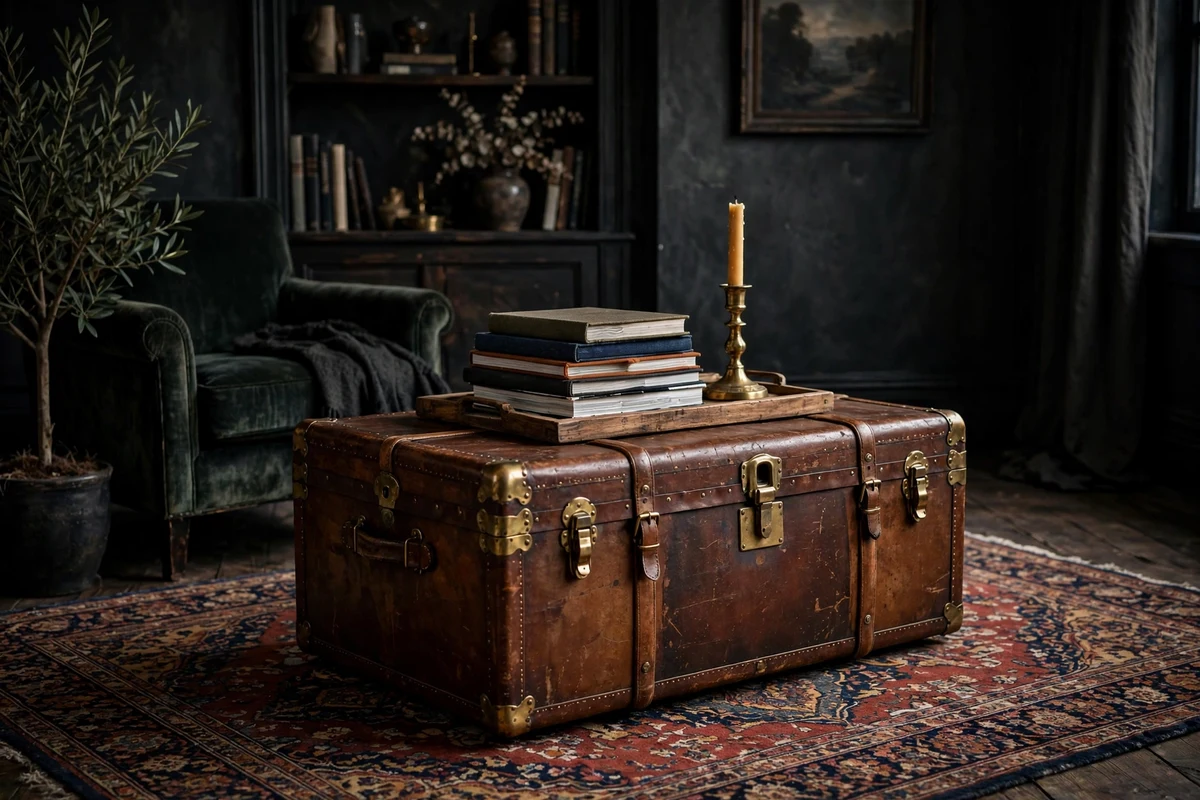
A vintage steamer trunk or campaign chest as a coffee table adds travel-worn romance and hidden storage. Authentic trunks cost $150 to $500 at flea markets; reproductions run $180 to $400. Top it with a tray, stacked art books, and a brass candlestick. Inside, stash throws, board games, or vinyl. The worn leather, brass corners, and old travel labels tell stories your guests will ask about. Pro tip: check that the lid stays open safely and add felt pads underneath to protect floors.
16. Tartan Throw Blankets
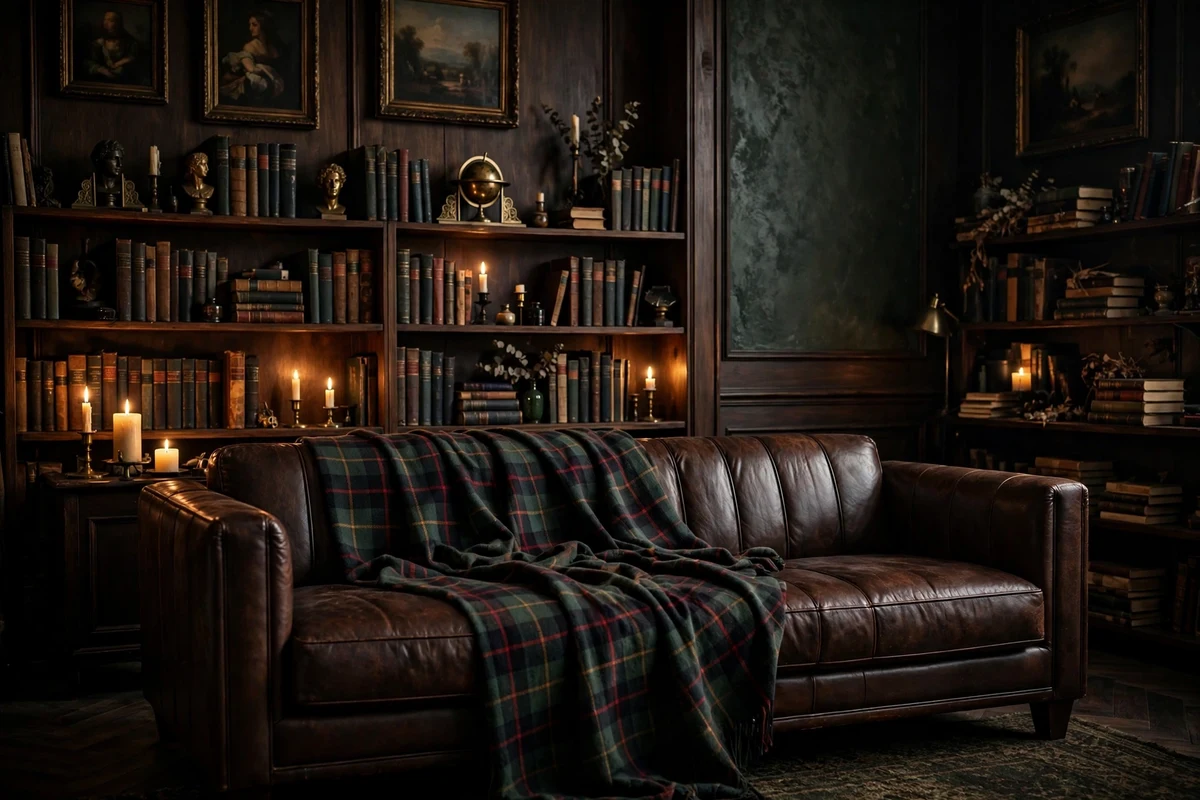
Few textiles read as instantly scholarly as tartan. A wool or wool-blend tartan throw ($40 to $120) draped over a leather sofa or reading chair adds pattern, warmth, and heritage in one move. Classic Black Watch, hunting greens, and deep reds suit the palette best. Layer two different tartans for a collected, club-room feel, or pair one tartan with solid velvet cushions. Pro tip: real wool throws last decades; acrylic ones pill within a season, so spend the extra $20.
17. Dark Wood Coffee Table with Books
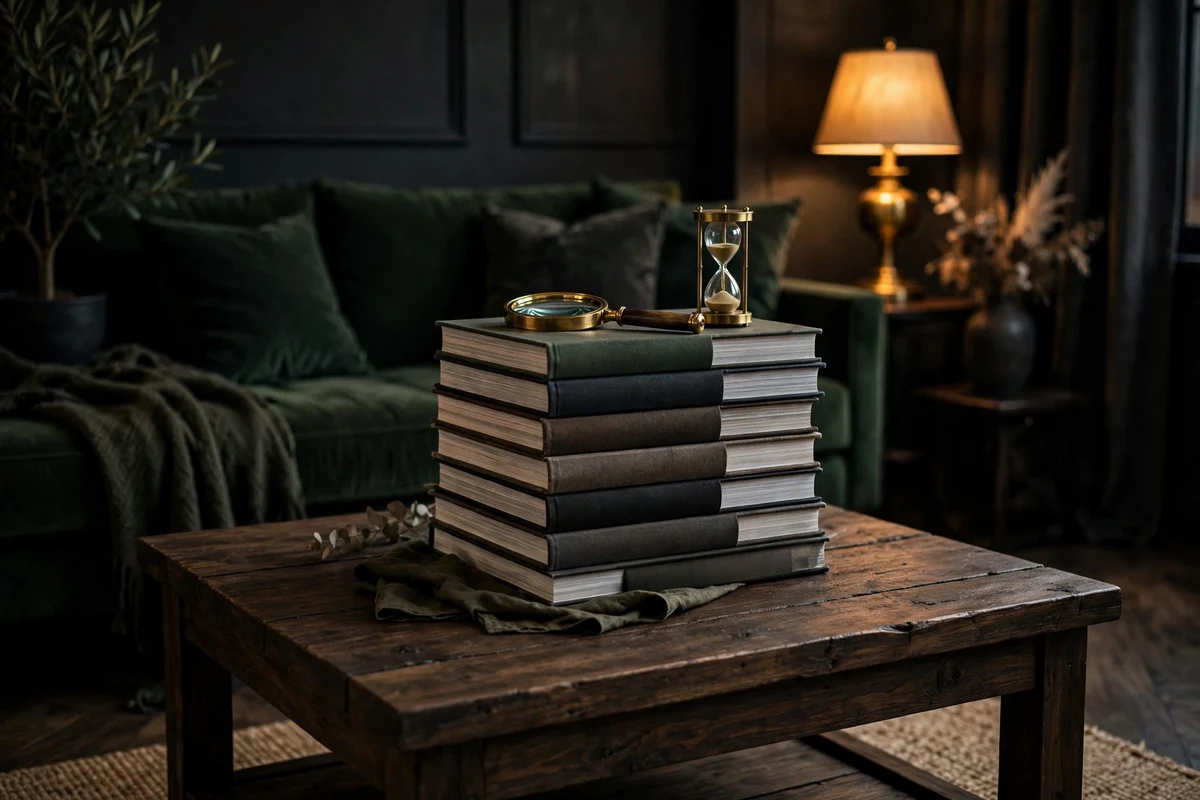
The coffee table is your room’s display case. A dark wood table ($200 to $700) styled with a tall stack of art and history books, a brass magnifying glass ($15 to $40), and a small sculpture or hourglass turns a surface into a still life. Keep styling low so sightlines stay open, and leave one clear corner for actual cups of tea. Rotate the top book seasonally to keep the table feeling alive. Pro tip: use books you have actually read or plan to; guests will pick them up, and the conversation is half the fun.
Texture, Pattern, and Moody Details
18. Layered Persian Rugs
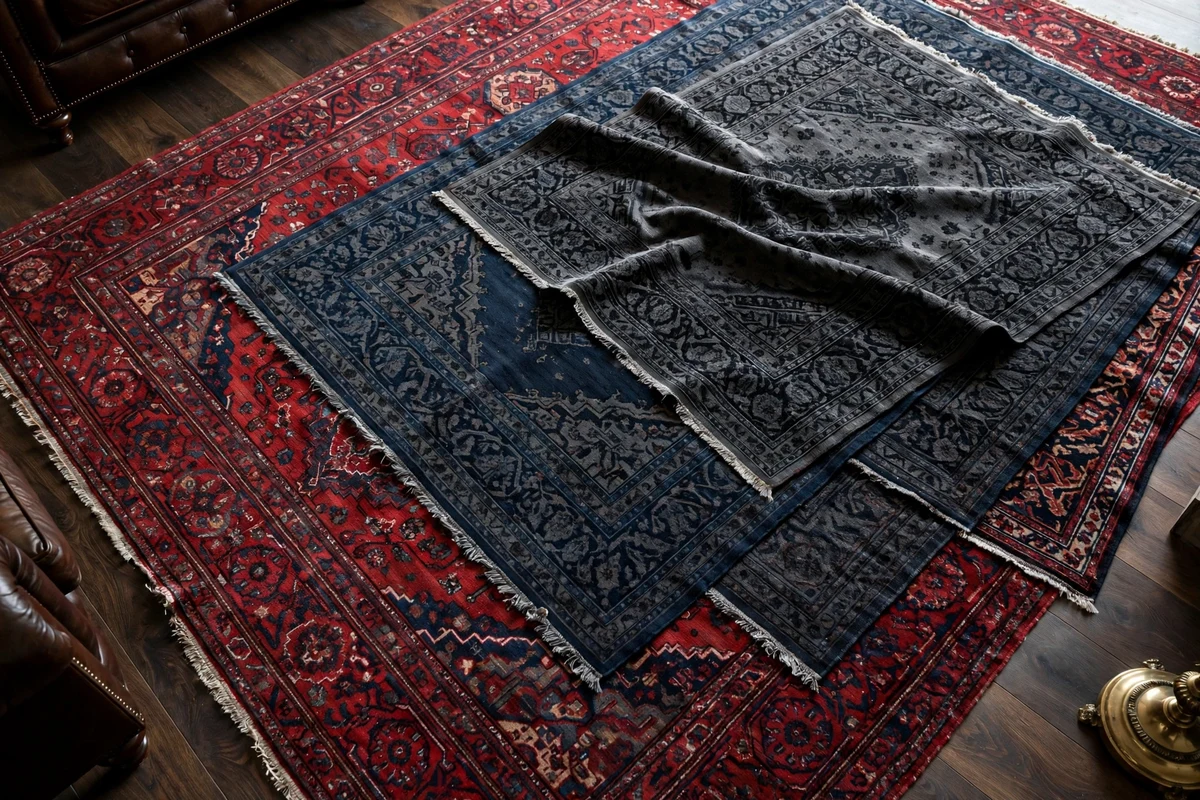
Persian and Oriental rugs are non-negotiable in dark academia. A large vintage-style rug ($300 to $1,200, or $120 to $350 for a good reproduction) grounds the seating area in pattern and history. Layer a smaller rug over a larger jute or sisal base for depth, or overlap two medium rugs at angles for a collected feel. Deep reds, navy, and charcoal patterns hide wear and complement dark walls. Pro tip: buy the biggest rug the room can hold; a too-small rug makes even grand furniture look adrift.
19. Heavy Velvet Curtains
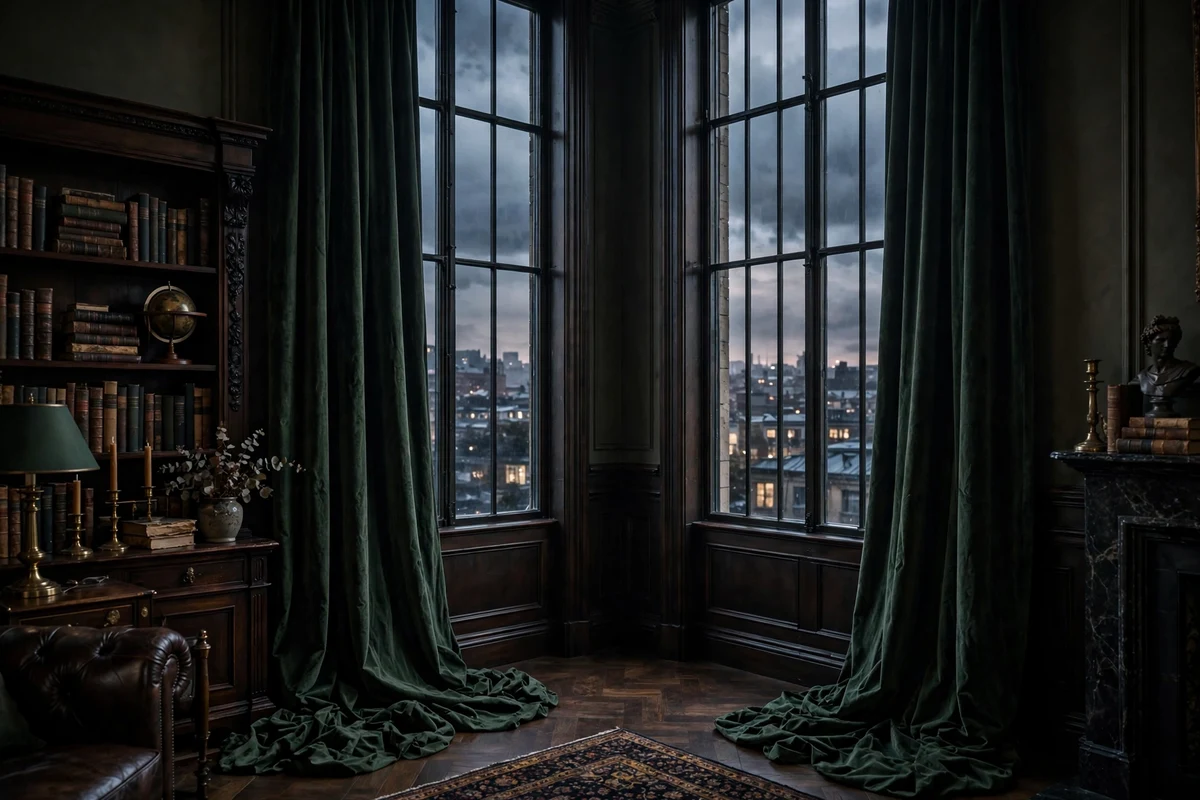
Floor-pooling velvet curtains in forest, burgundy, or charcoal ($80 to $250 per panel) add theater and insulation in one. Hang the rod high and wide so windows look grander, and let the fabric kiss the floor. Velvet absorbs sound too, making the room feel hushed and intimate, exactly the dark academia mood. Line them for extra weight and light control. Pro tip: in rentals, tension rods inside the window frame with clip rings give a similar drama without drilling.
20. Bust Sculpture on the Mantel
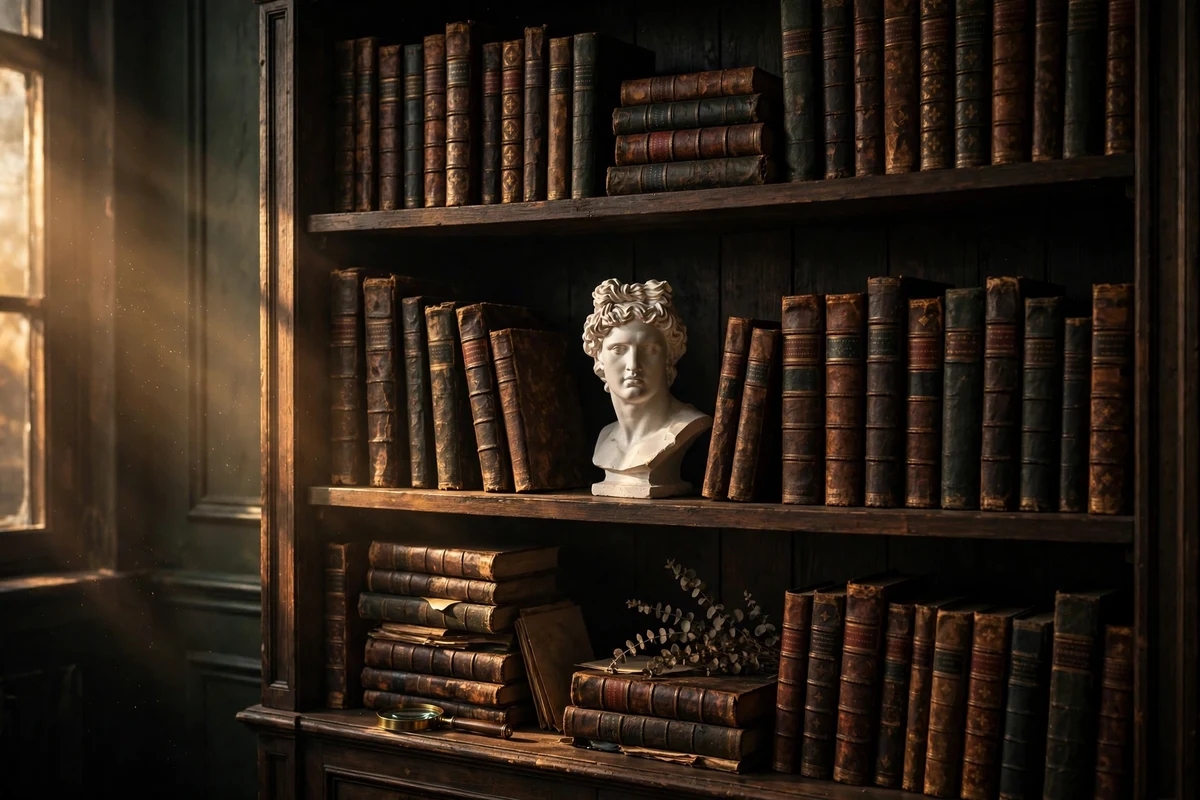
A plaster or resin bust of a poet, philosopher, or composer ($40 to $150) is the quintessential dark academia objet. Place one on the mantel, atop a bookshelf, or on a stack of books on the coffee table. White plaster pops against dark walls; aged bronze blends in more quietly. It is a wink to classical education that never fails to charm. Pro tip: pair the bust with a small stack of books by that author for a witty, layered vignette.
21. Antique Brass Bar Cart
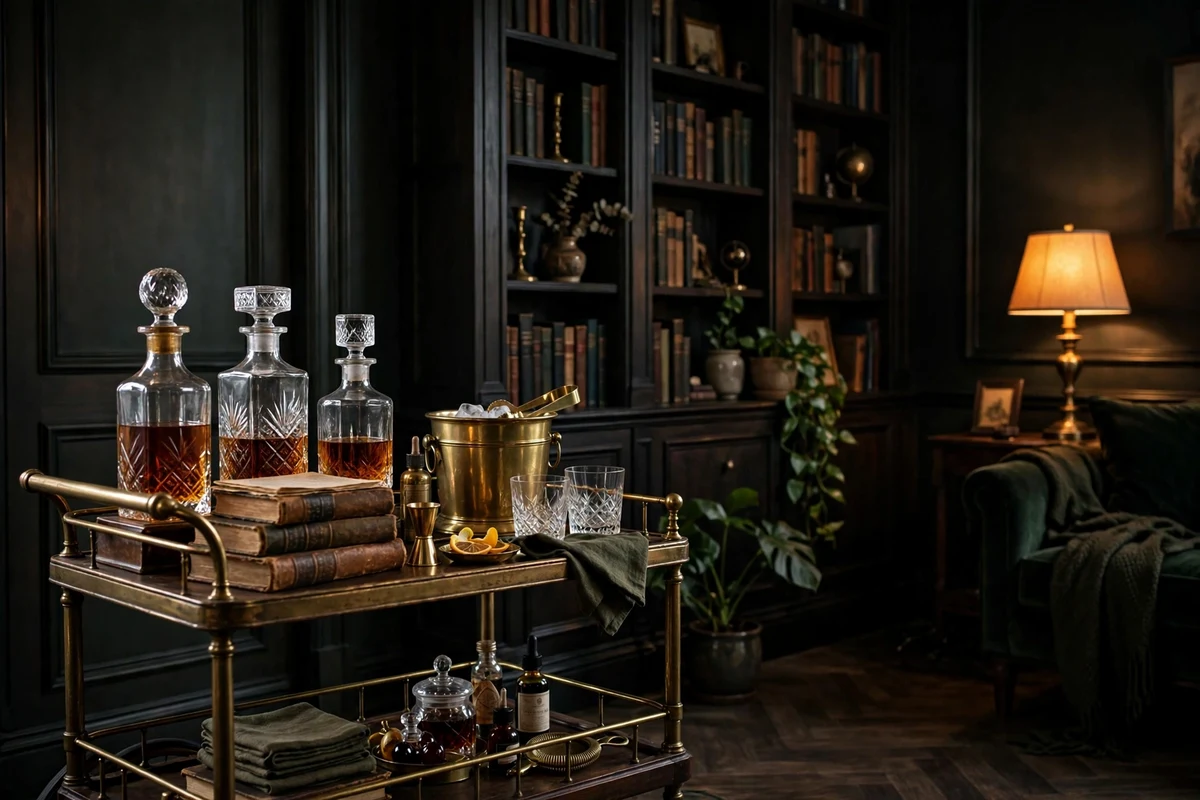
A brass bar cart ($150 to $500 vintage, $120 to $350 new) styled with crystal decanters, old cocktail books, and a brass ice bucket brings speakeasy glamour to the scholarly mix. Park it beside the chesterfield or against the bookshelves. Even if you rarely mix drinks, the cart reads as a still life of cut glass catching lamplight. Pro tip: add one quirky vintage item, like an old shaker or framed cocktail print, so it feels collected rather than staged.
22. Vintage Typewriter Display
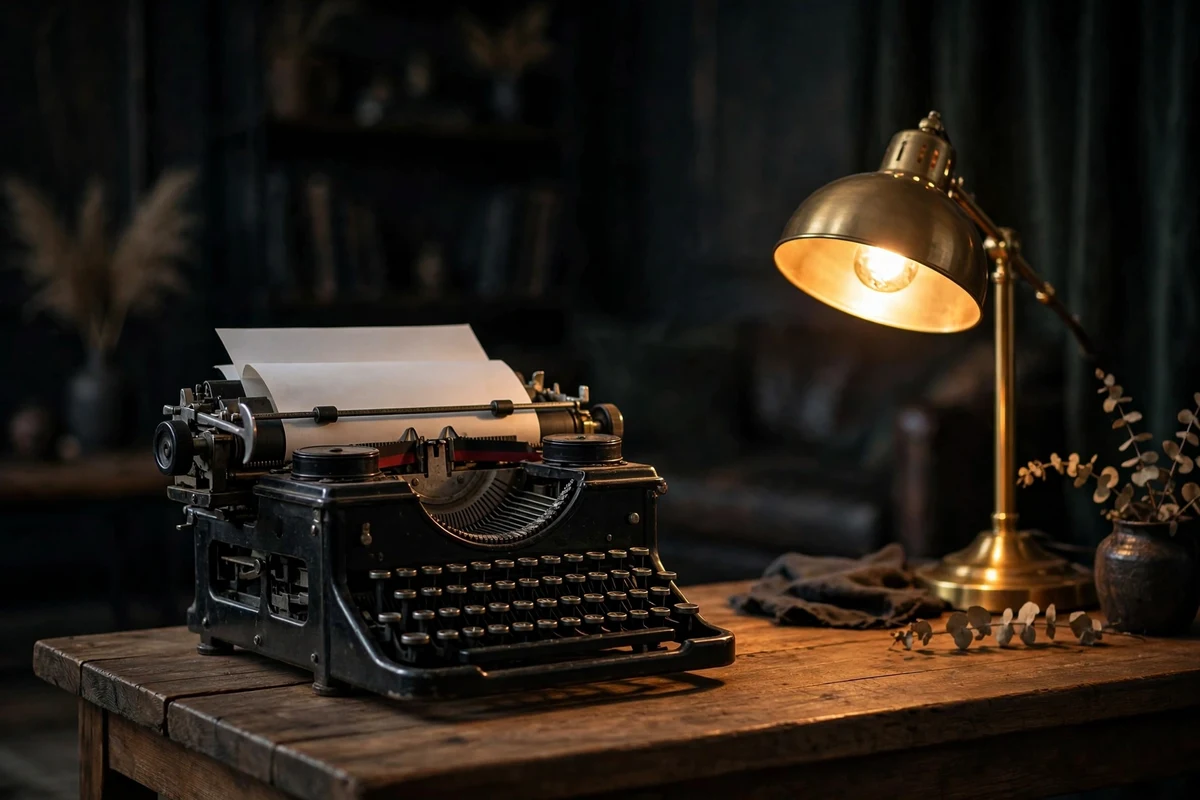
A vintage typewriter ($60 to $250 working, $30 to $80 decorative) on a side table or desk is pure dark academia theater. Roll in a half-typed page for narrative charm. It is also a great prompt for guests to peck out a line. Place it where lamplight hits the keys; the black enamel and round keytops photograph beautifully. Pro tip: check thrift stores weekly; typewriters appear often and good ones sell within hours.
23. Hourglass and Curio Shelves
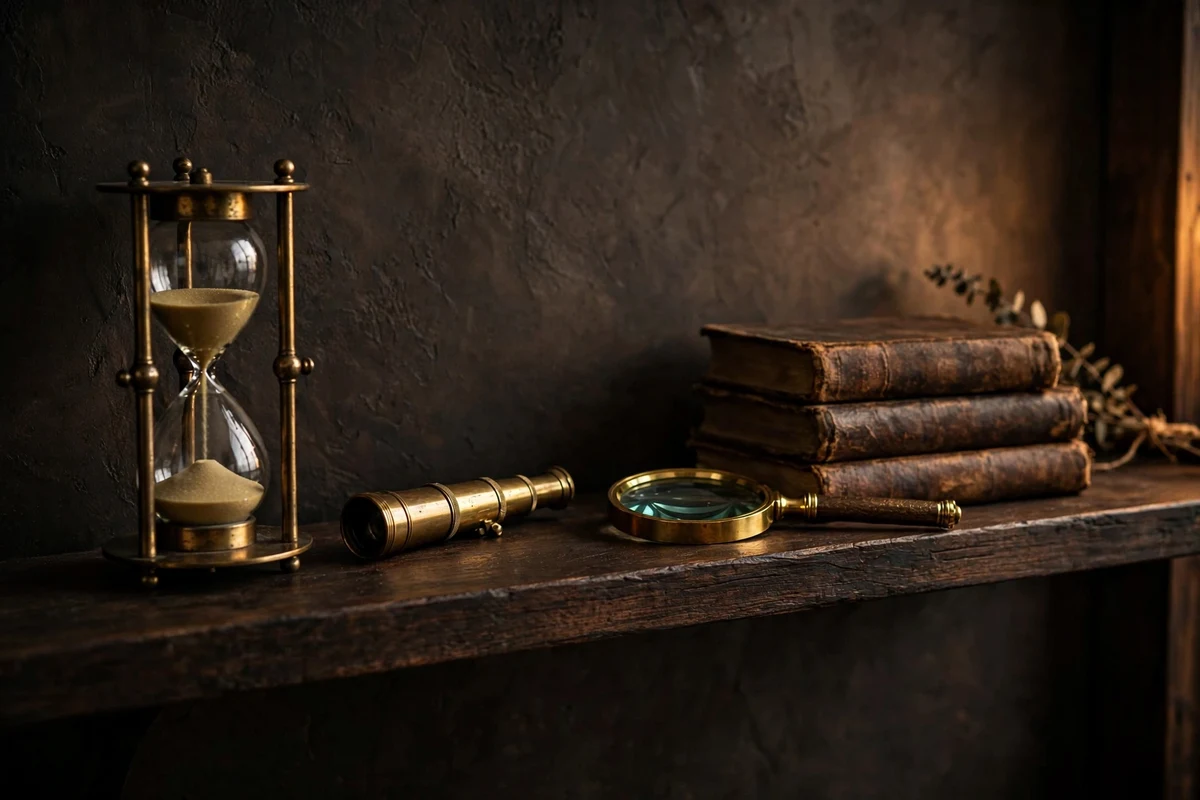
Dedicate one shelf to curiosities: an hourglass ($20 to $60), a brass telescope ($40 to $120), magnifying glass, old keys, and small framed specimens. These objects of inquiry are the soul of dark academia, suggesting a mind that collects knowledge in all forms. Arrange them in odd-numbered groups with breathing room between, like a museum case. Pro tip: flea markets and estate sales beat decor stores for authentic-feeling curios at a third of the price.
24. Chess Set on a Side Table
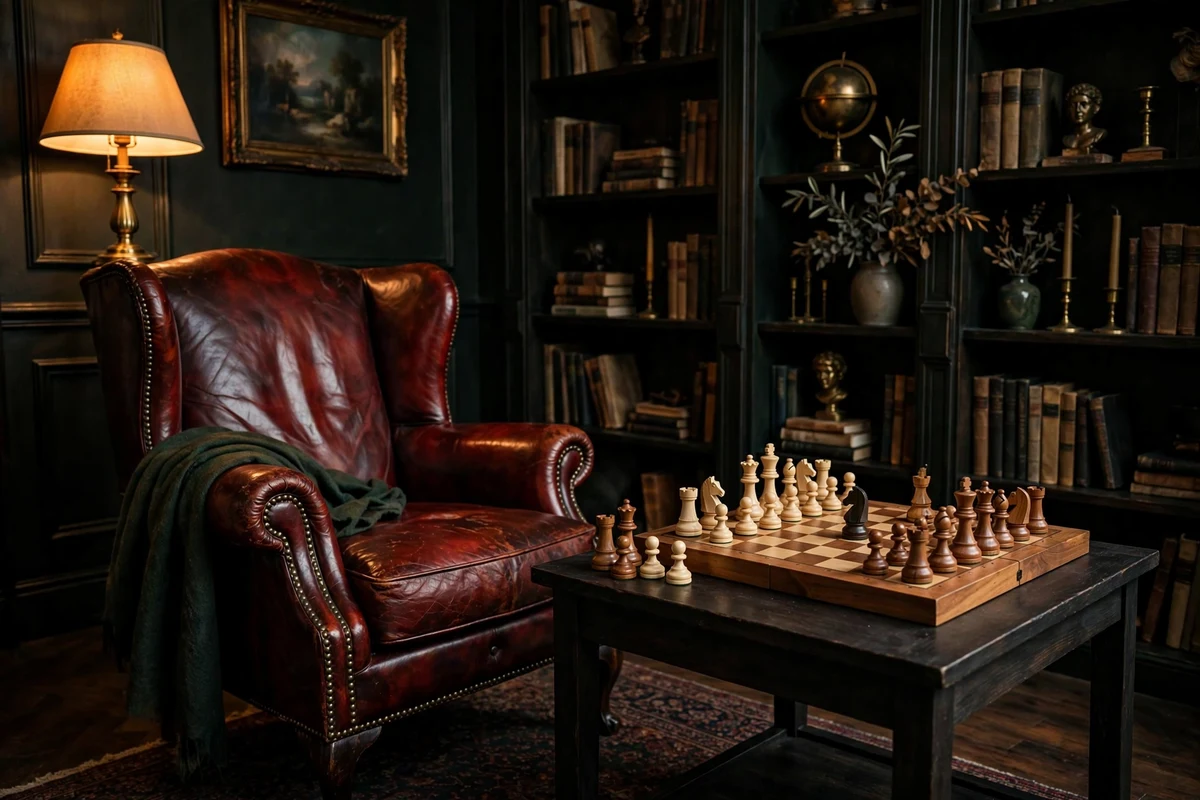
A chessboard left mid-game on a side table ($40 to $150 for a handsome wooden set) suggests intellect at leisure. Place it beside the reading chair with two seats nearby, inviting someone to sit and play. Staunton-style pieces in boxwood and ebony suit the aesthetic best. It is decor that doubles as an activity, which is the dark academia ideal. Pro tip: set up a famous historical game position; chess lovers will recognize it and start talking.
25. Dried Botanicals in Dark Vases
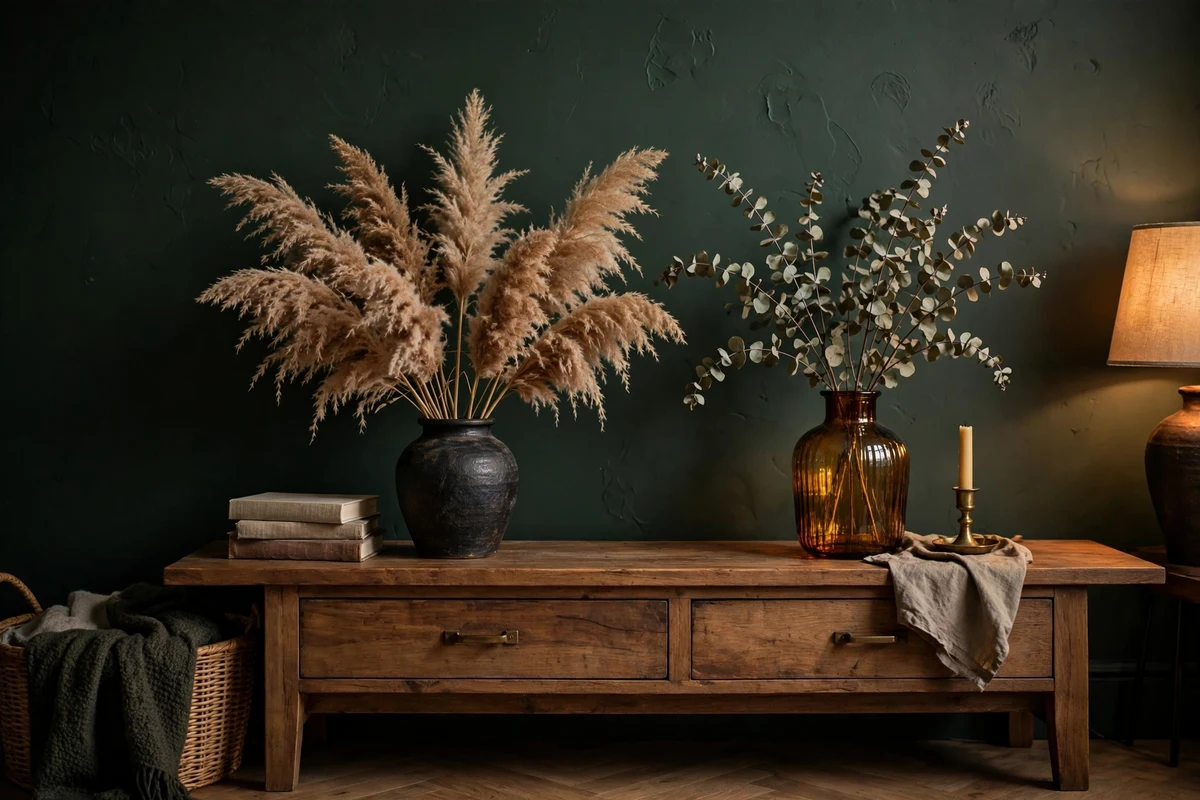
Dried botanicals, pampas grass, eucalyptus, and preserved ferns ($15 to $50 per arrangement) bring an herbarium feel that suits the scholarly mood far better than bright fresh flowers. Display them in dark ceramic, amber glass, or brass vases. They last for months, need no water, and their muted tones blend into dark walls while adding soft texture. Pro tip: a light mist of hairspray keeps dried stems from shedding all over your books.
26. Ink Wash and Charcoal Wall Art
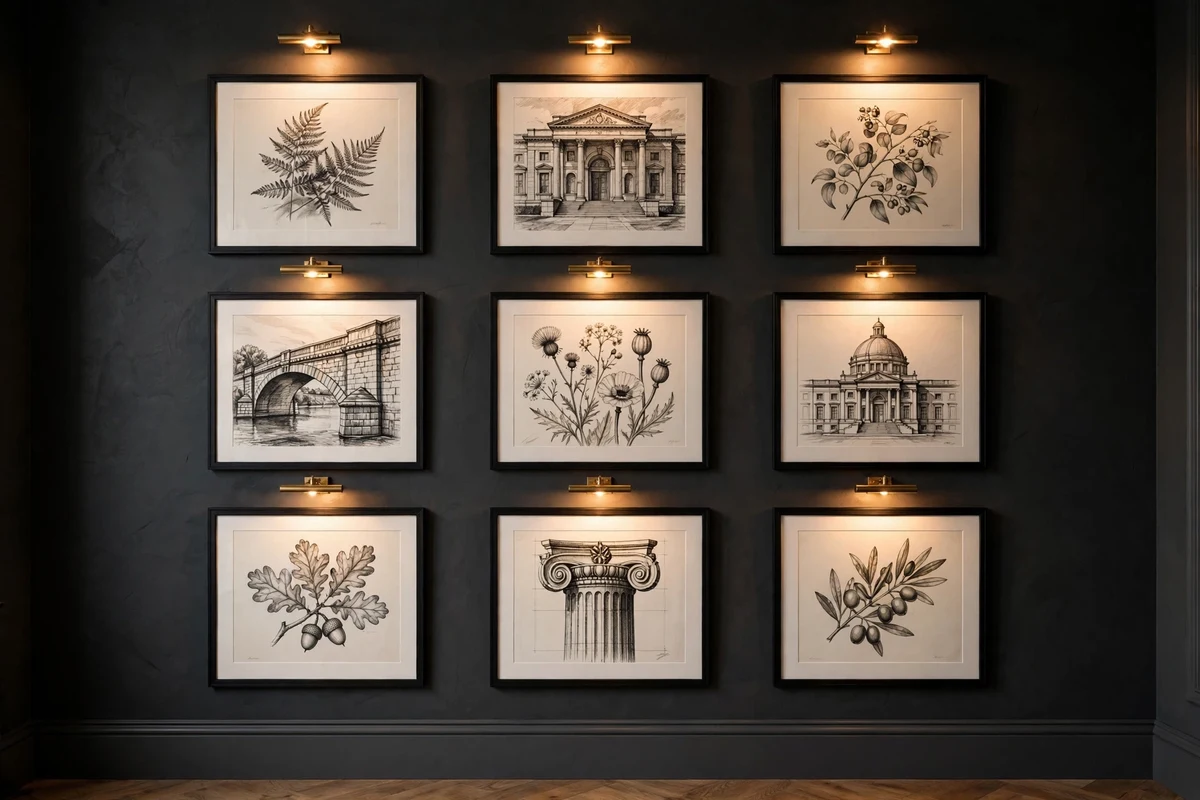
Between the oil paintings, tuck in ink sketches, charcoal studies, and etchings for textural variety. Unframed artist studies cost $20 to $80 at art fairs and flea markets; simple black frames unify them. Architectural sketches, figure studies, and botanical etchings all feel plucked from a scholar’s portfolio. Their monochrome palette keeps the gallery wall cohesive. Pro tip: float-mount etchings on dark mats so the paper edges show; it reads as archival and intentional.
Finishing Touches: Light and Curios
27. Antique Brass Floor Lamp
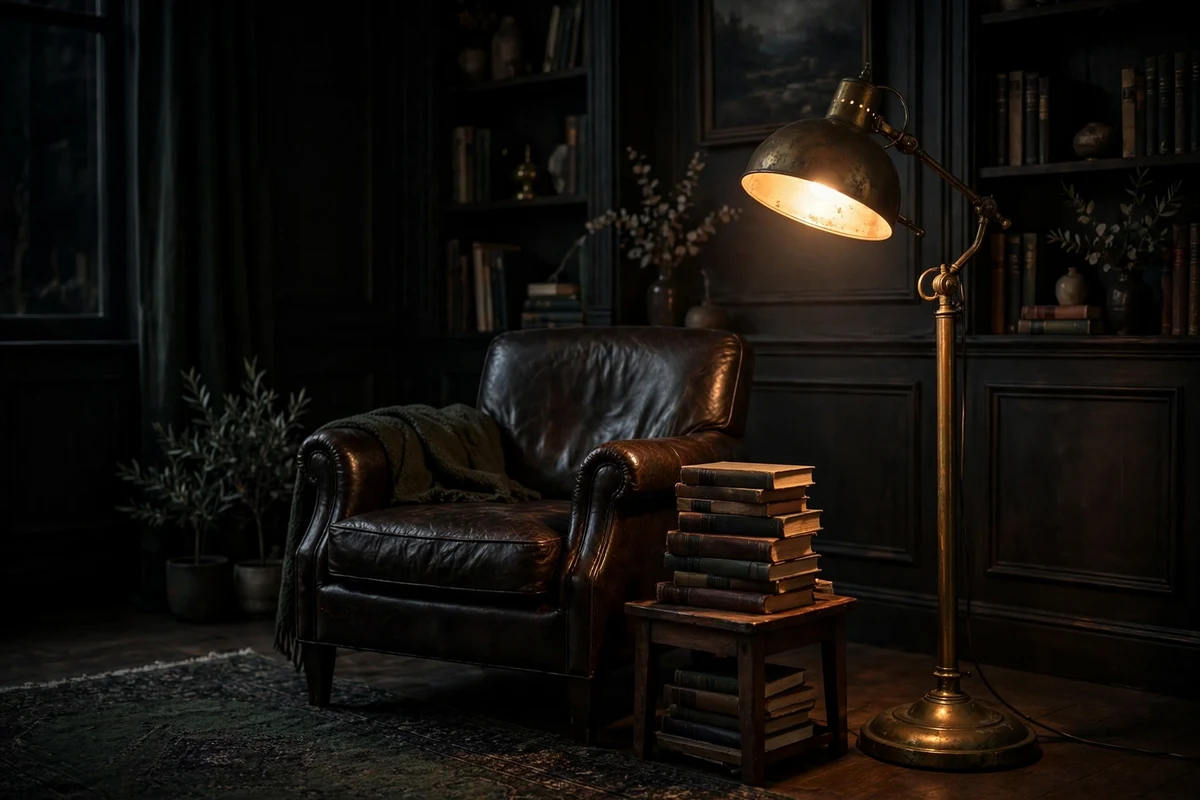
Lighting makes or breaks dark academia; overhead lights kill the mood. A brass pharmacy or banker’s floor lamp ($80 to $300) arcing over the reading chair gives warm, directed light exactly where pages need it. Brass patinas beautifully and echoes the room’s other metals. Use warm 2700K bulbs everywhere; cool white light will shatter the illusion instantly. Pro tip: put every lamp on a dimmer or smart bulb so you can drop the room to candlelight levels at night.
28. Gothic Candelabra Clusters
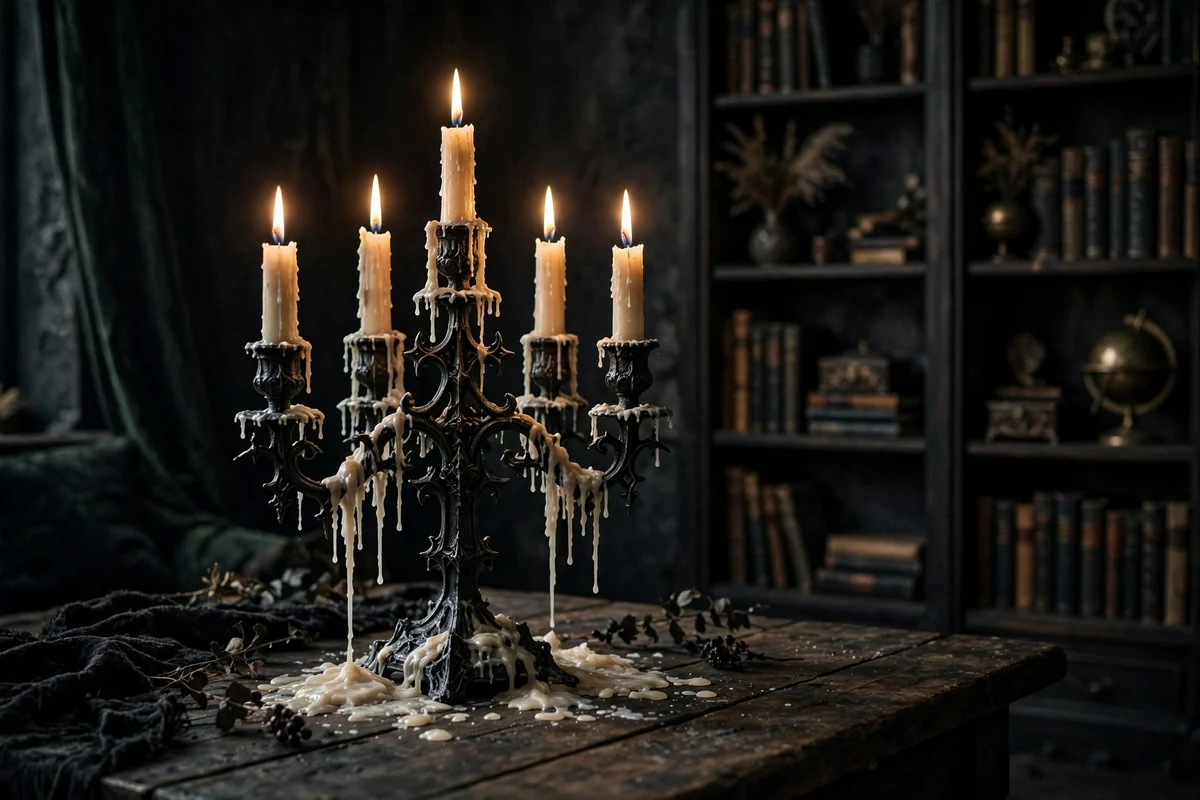
Candles are the lifeblood of the aesthetic. Cluster black or brass candelabras ($25 to $90 each) on the mantel, coffee table, and bookshelves. Mix tapers of different heights in ivory, oxblood, and forest for a collected look. LED flameless tapers ($15 to $40 for sets) give the glow without the fire risk near books. Real or not, candlelight is what makes dark walls feel romantic instead of gloomy. Pro tip: drip a little wax down the candlesticks intentionally; the imperfection is the aesthetic.
29. Candle Clusters on the Mantel
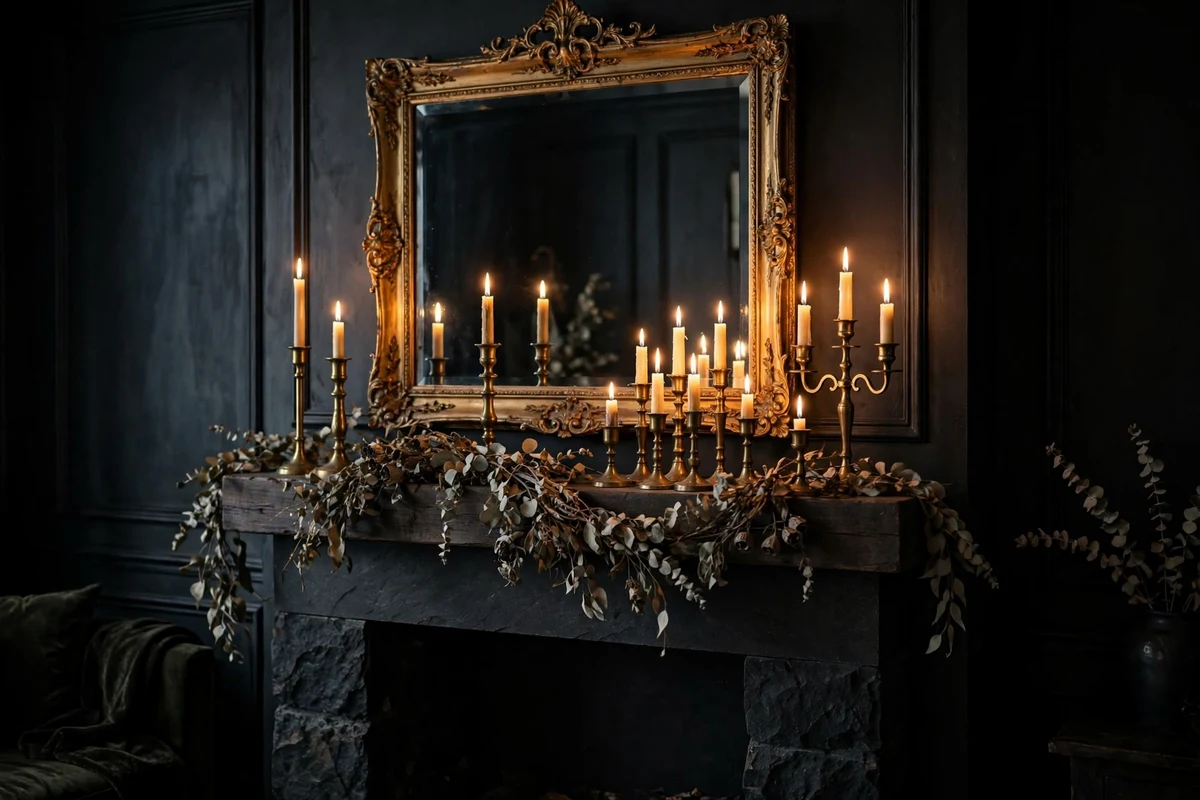
Take the mantel further with a full constellation of pillar candles, brass holders, and a trailing garland of dried eucalyptus. Vary heights from tea lights to tall pillars ($30 to $80 for a full arrangement) so the light flickers at every level. A mirror behind the candles doubles the glow. This is the single cheapest high-impact move in the whole list. Pro tip: unscented ivory pillars look most authentic; strong scents fight the old-library fantasy.
30. Antique-Style Chandelier
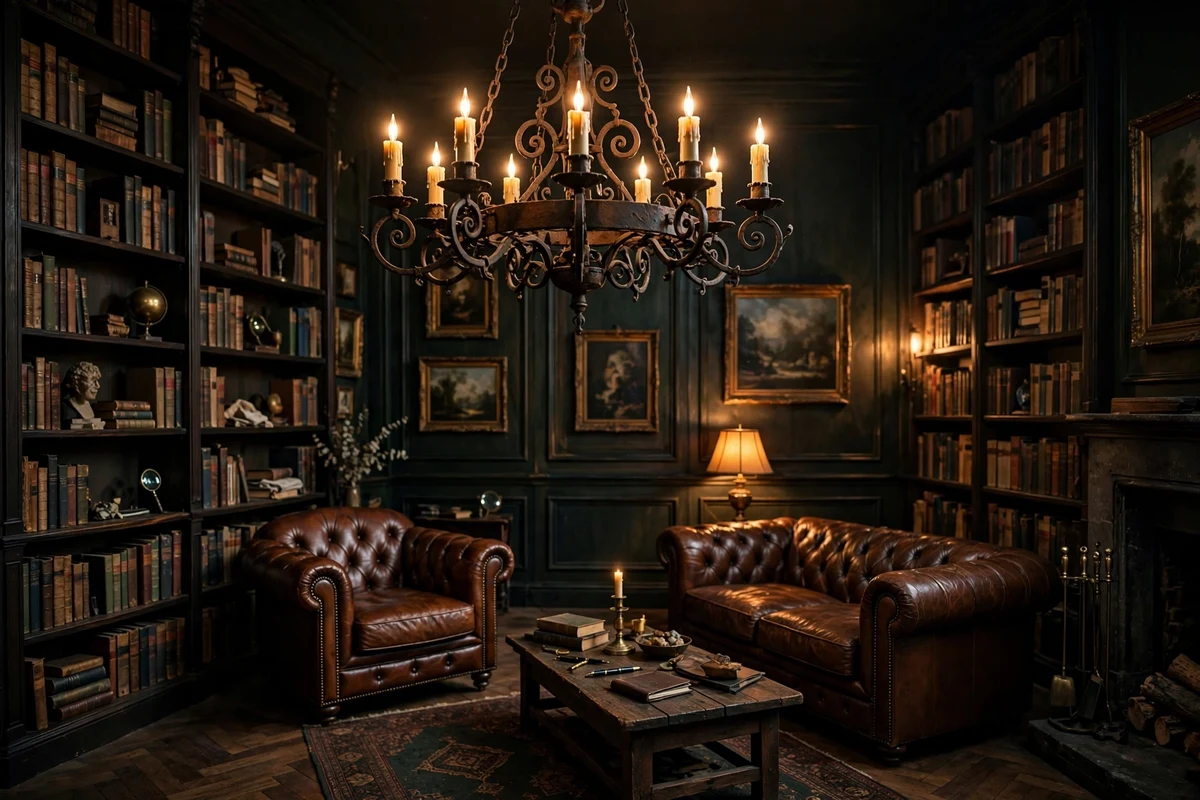
If your ceiling allows it, a candle-style chandelier ($200 to $800) is the crown jewel of dark academia lighting. Wrought iron or aged brass with faux candle sleeves casts the room’s most flattering light, warm pools with soft shadows. Keep it on a dimmer and pair it with table lamps so no single source does all the work. Pro tip: hang it lower than you think, 30 to 34 inches above a dining table or 7 feet off the floor in a sitting area, for maximum intimacy.
31. Amber Glass Table Lamps
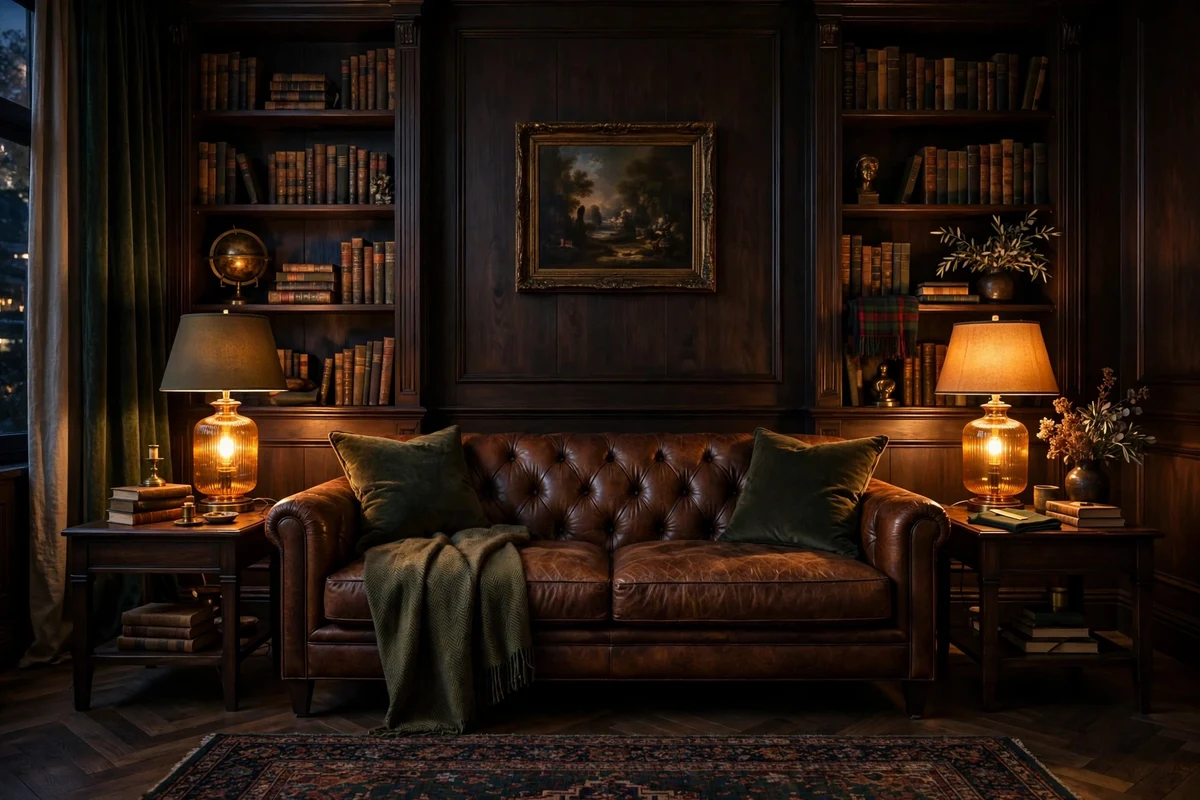
Small amber glass or oil-lamp-style table lamps ($40 to $120 each) on side tables and shelves scatter warm pools of light at every level. Amber glass tints the light honey-gold, the exact tone of old libraries. They are affordable, portable, and perfect for renters who cannot rewire. Group two or three at different heights on the bookshelves for a glowing, layered effect. Pro tip: vintage hurricane lamps from thrift stores ($10 to $30) take LED candles beautifully.
32. Candlesticks Along the Bookshelves
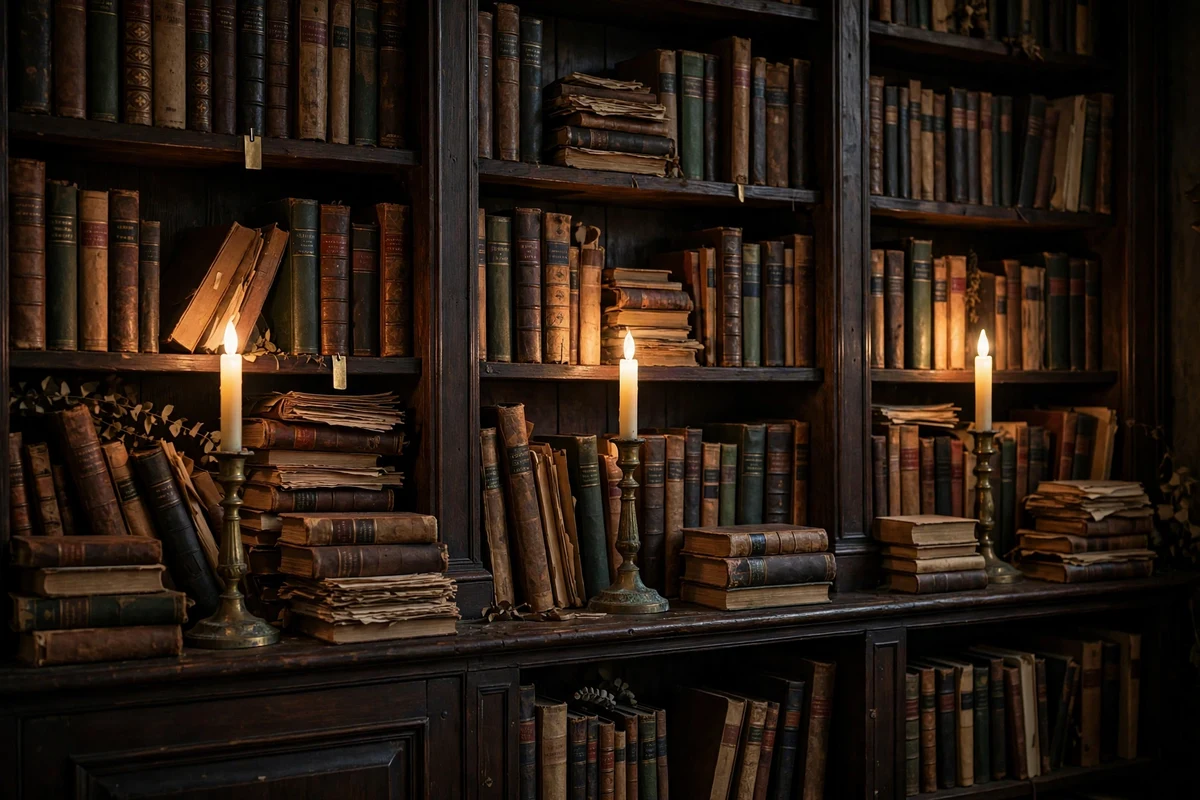
Tuck brass candlesticks directly onto the bookshelves between book groupings. This is a stylist’s trick that makes shelves feel alive: the vertical candles break up the horizontal book lines and catch lamplight. Use flameless tapers ($12 to $30 for sets with remotes) for safety among paper. Vary the brass finishes, polished, aged, blackened, for a collected-over-time feel. Pro tip: one candlestick per shelf section is plenty; more reads as clutter.
33. Grandfather-Style Antique Clock
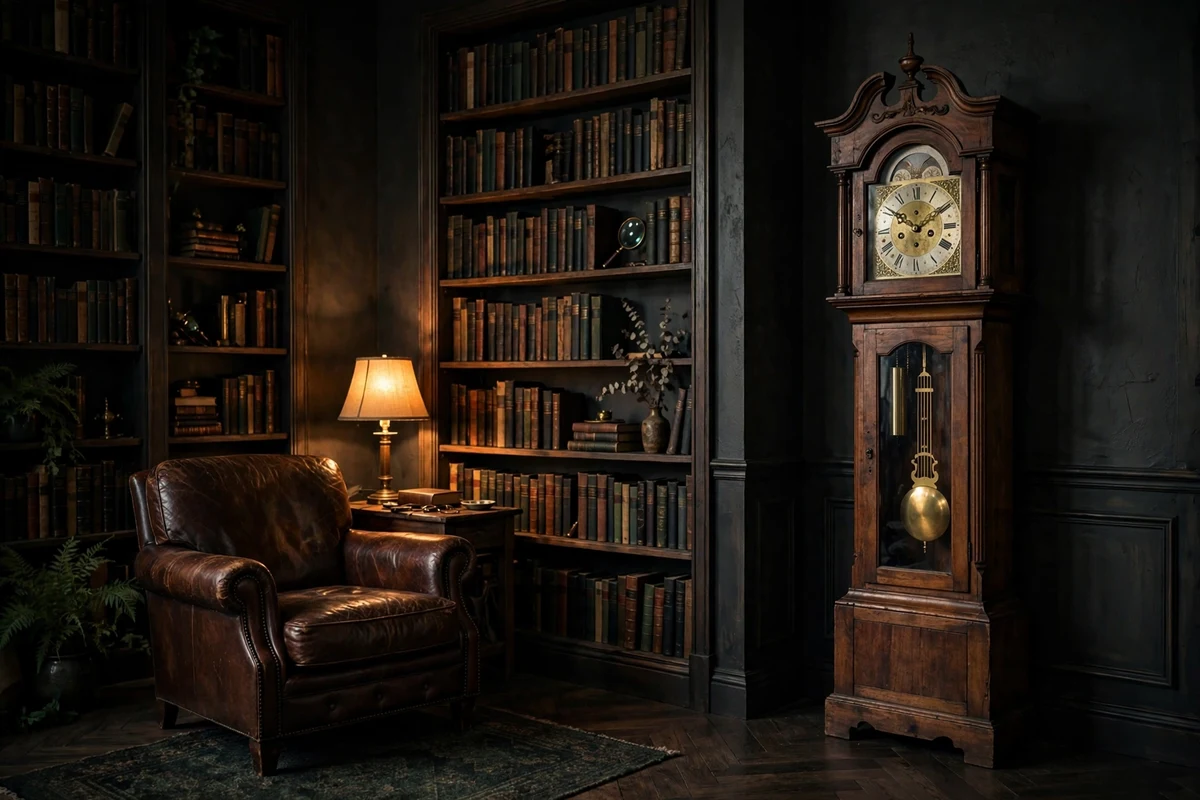
A ticking clock gives the room a heartbeat. A full grandfather clock ($300 to $1,500 vintage) is the dream, but a handsome mantel or wall regulator clock ($80 to $300) delivers the same gravitas in less space. The slow tick and hourly chime are pure atmosphere. Even a non-working antique clock, bought for looks, adds architectural weight to a corner. Pro tip: if the chime drives you mad at night, most movements have a shut-off lever; silence is also scholarly.
34. Stack of Vintage Books as a Side Table
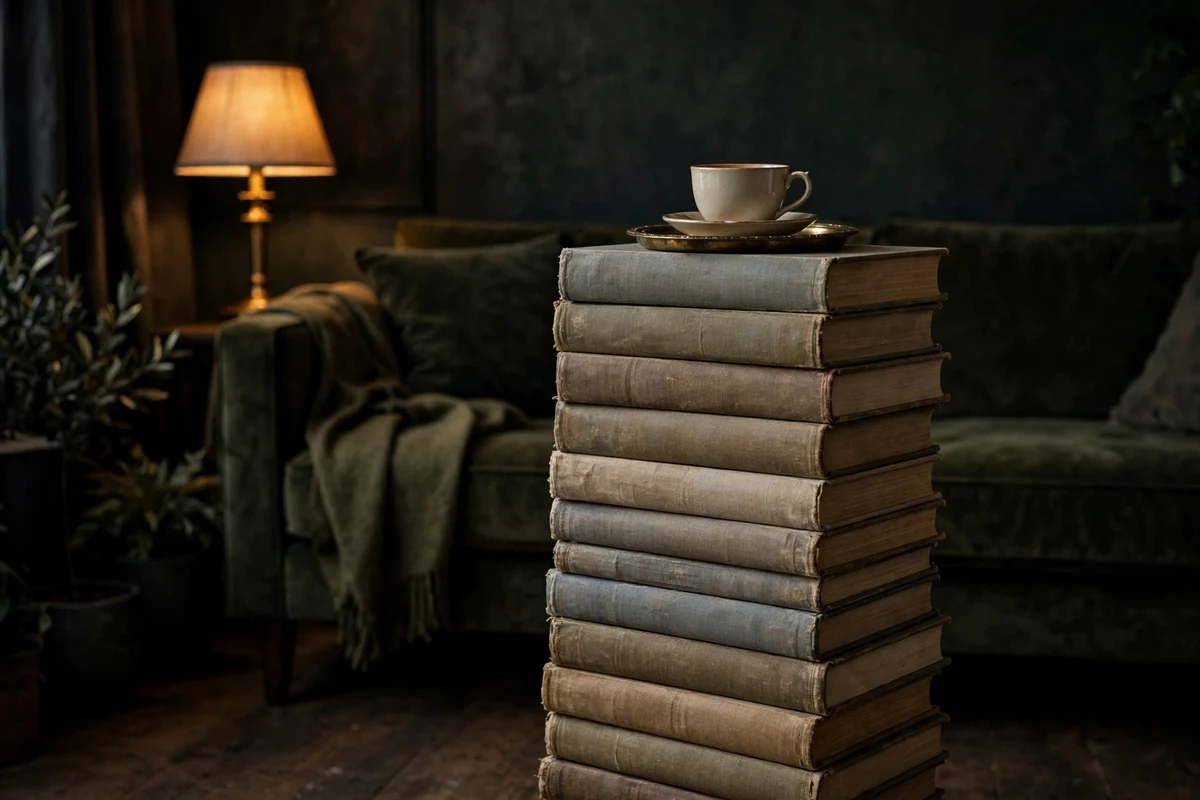
End with the simplest idea: a tall, stable stack of large vintage hardcovers as a side table ($20 to $60 of thrifted books). Top it with a small tray to hold a lamp or teacup safely. Choose clothbound books in muted tones with gilt spines facing out. It is cheap, charming, and unmistakably dark academia. Pro tip: run a hidden dowel or strap through the stack if it wobbles; toppling books are less romantic in practice.
Design Notes: Mixing Dark Academia with Other Styles
Dark academia plays beautifully with kindred moods. Borrow the collected maximalism of our eclectic living room ideas if your shelves crave more pattern, or lean into jewel-tone drama with our maximalist living room ideas. For gilded, mirrored glamour that shares dark academia’s love of old-world luxury, see our art deco living room ideas. If you want the same historic depth with a lighter, nostalgic hand, our retro living room ideas bridge the gap. And for classic furniture shapes that anchor any moody room, browse our traditional bedroom ideas for silhouettes that translate beautifully to living spaces.
Frequently Asked Questions
What is dark academia decor?
Dark academia is an interior style inspired by classic literature, old universities, and European scholarly life. It favors deep, moody colors (forest green, burgundy, charcoal, brown), natural materials (wood, leather, brass, wool), and objects that suggest learning: books, maps, art, and curiosities. The mood is romantic, intellectual, and slightly gothic.
What colors work best in a dark academia living room?
Start with deep, saturated bases: forest or hunter green, oxblood or merlot, espresso brown, and charcoal. Layer in warm neutrals like cream, camel, and tan through textiles and wood tones. Metallics should be aged brass, bronze, or blackened iron rather than chrome. Keep the palette muted; nothing neon or pastel belongs here.
How can I get the dark academia look on a budget?
Paint is your cheapest weapon: one gallon of deep green transforms a wall for under $70. Thrift stores are goldmines for the rest, including books by the box, brass candlesticks, oil-style art, and leather chairs. Buy books for their spines, frame public-domain art prints, and use flameless candles for safe, cheap atmosphere. Most of this look is styling, not spending.
Can dark academia work in a small living room?
Absolutely, and it may work better: small rooms feel naturally cozy, which suits the mood. Use the dark color on one accent wall or the bookshelves rather than all four walls, keep furniture scaled to the room, and rely on mirrors and layered lamps to keep light moving. A small room full of books feels like a private study, which is the whole fantasy.
What kind of lighting suits dark academia?
Warm, low, and layered. Avoid overhead lights; instead use brass floor lamps, table lamps with fabric or amber shades, candelabras, and candles. Every bulb should be 2700K or warmer. Dimmers or smart bulbs let you drop the room to candlelight levels in the evening, which is when dark academia truly comes alive.
How do I mix dark academia with modern furniture?
Let the modern pieces be quiet and the vintage pieces be loud. A clean-lined modern sofa in dark velvet can sit happily beside antique bookshelves if the palette stays moody and the textiles stay rich. Add vintage lighting, art, and curios to bridge the eras. The rule is simple: modern shapes are fine, modern finishes like chrome and high-gloss are not.
Final Thoughts
Dark academia is less a shopping list than a point of view: choose depth over brightness, stories over shine, and objects with a past over things fresh from a warehouse. Start with the walls and the shelves, add one great chair and warm light, then let the curios accumulate naturally. Thrift slowly, read widely, and light a candle. Your moody, scholarly living room is waiting.

2 Comments