
32 Scandinavian Living Room Ideas for a Calm Light-Filled Home
32 Scandinavian Living Room Ideas for a Calm Light-Filled Home
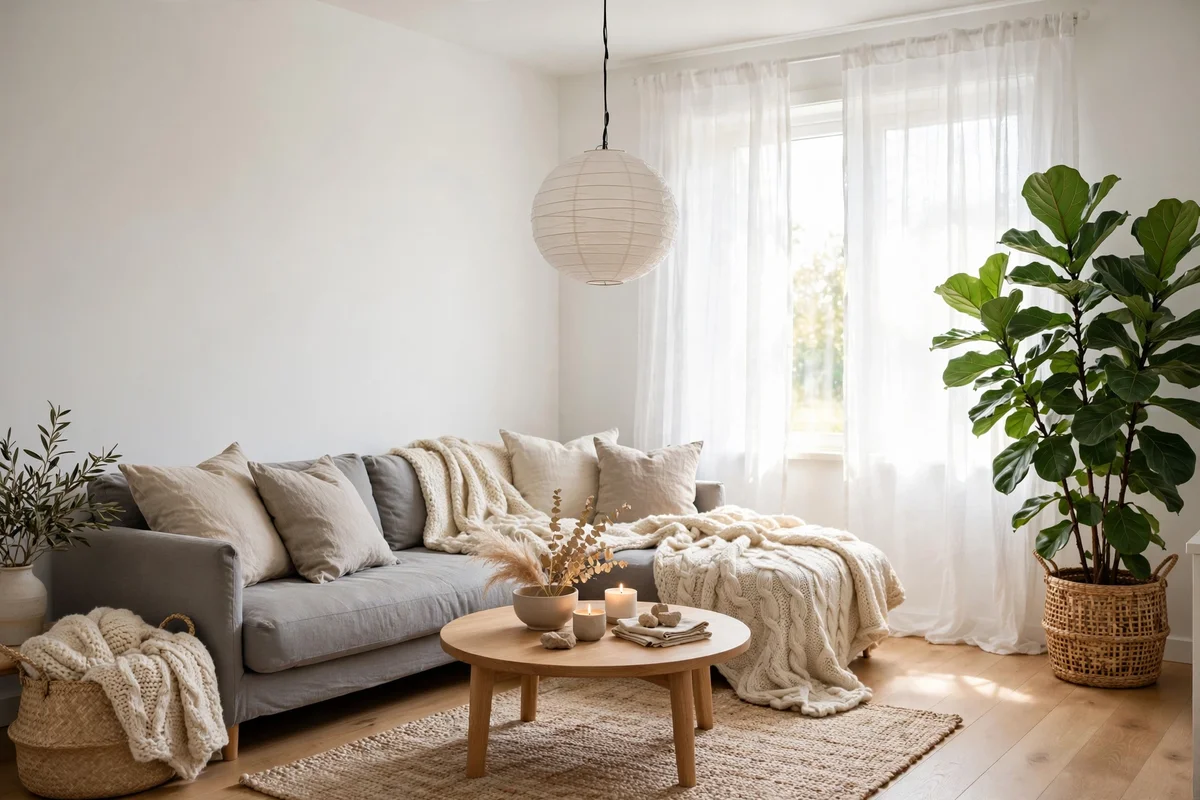
There is a reason Scandinavian living rooms photograph so well and feel even better in person. They master the art of doing more with less, pale woods, honest materials, and daylight treated like a design element rather than an afterthought. A Nordic living room is not cold or empty, despite what minimalism’s critics claim. At its best, it is warm, tactile, and deeply livable, built around the Danish idea of hygge: that specific coziness of candles lit at dusk, wool against skin, and a room that asks nothing of you. Whether you are working with a sun-drenched space or a north-facing room that needs all the help it can get, these 32 Scandinavian living room ideas show you how to layer light woods, soft textiles, and quiet color into a calm, light-filled home that still feels personal.
The Foundation, Walls, Floors & Light
1. Start With Crisp White Walls
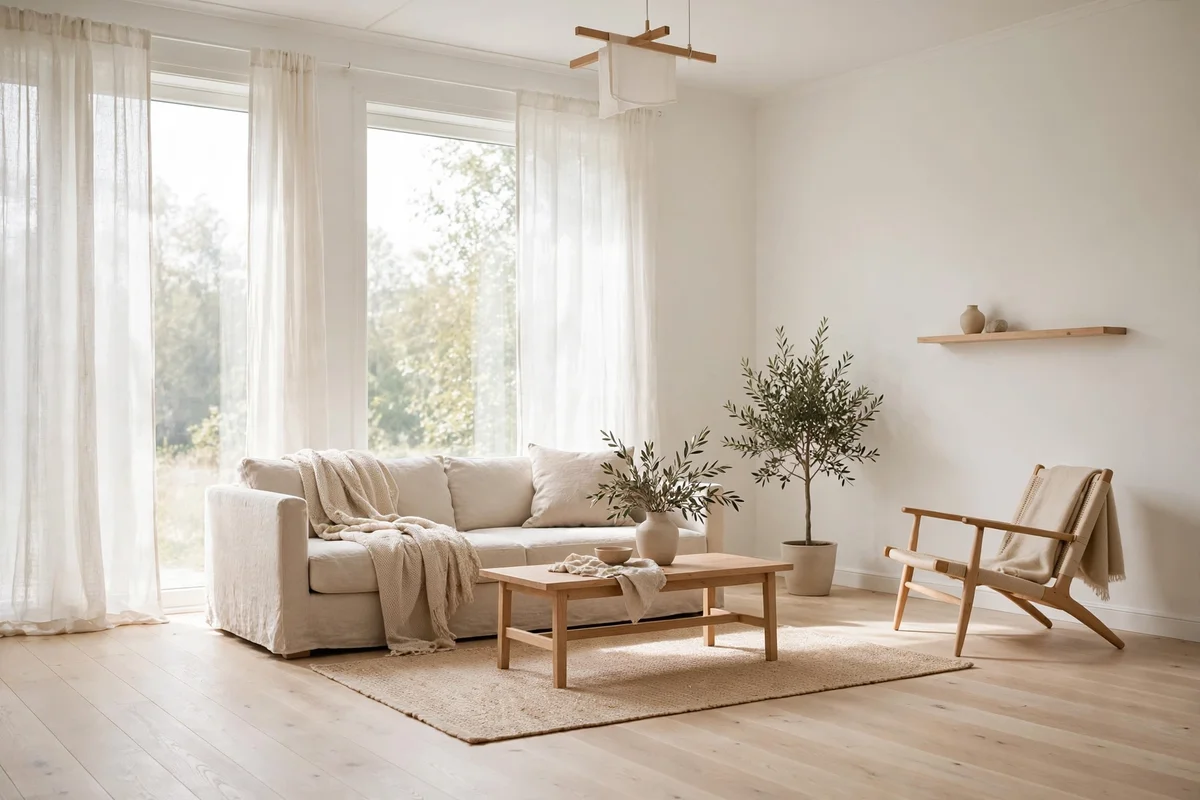
White walls are the non-negotiable starting point of Scandinavian design, and they earn their place by bouncing every available ray of daylight around the room. In Nordic countries where winter daylight is scarce, this is survival strategy disguised as style. Choose a warm white rather than a blue-white, shades like Benjamin Moore’s White Dove or Simply White keep the room from feeling clinical. A gallon of quality matte paint runs $45–$65 and covers roughly 400 square feet. Pro tip: paint the ceiling the same white as the walls to erase the visual boundary and make low ceilings feel taller.
2. Lay Light Oak or Ash Wood Floors
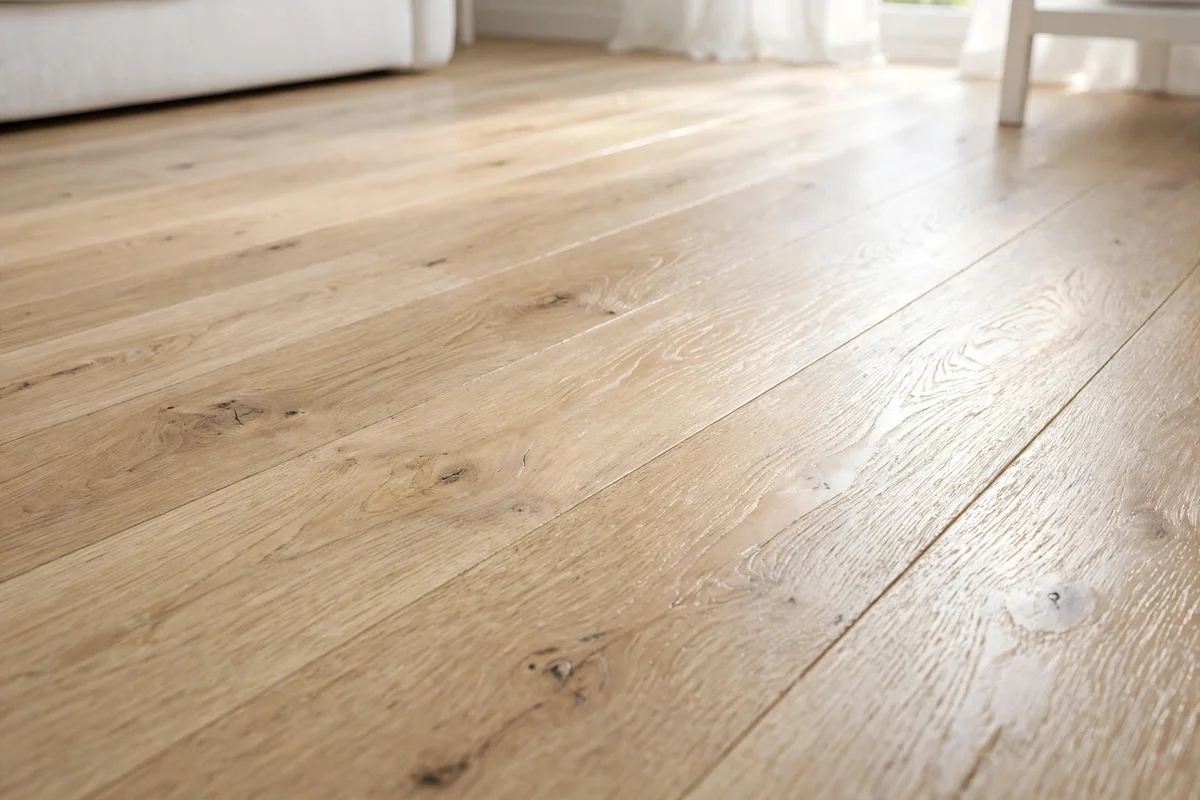
Pale wood floors are the literal foundation of the Scandinavian look, oak, ash, or birch in natural or whitewashed finishes. They reflect light upward, visually expand the room, and pair with everything. If replacing floors is not in the budget, a matte whitewash over existing wood costs $30–$50 in supplies per room and mimics the effect convincingly. Wide planks read more modern; narrower boards feel traditional. Pro tip: run the planks parallel to the longest wall or toward the main window to pull the eye outward and stretch the space.
3. Hang Sheer White Curtains
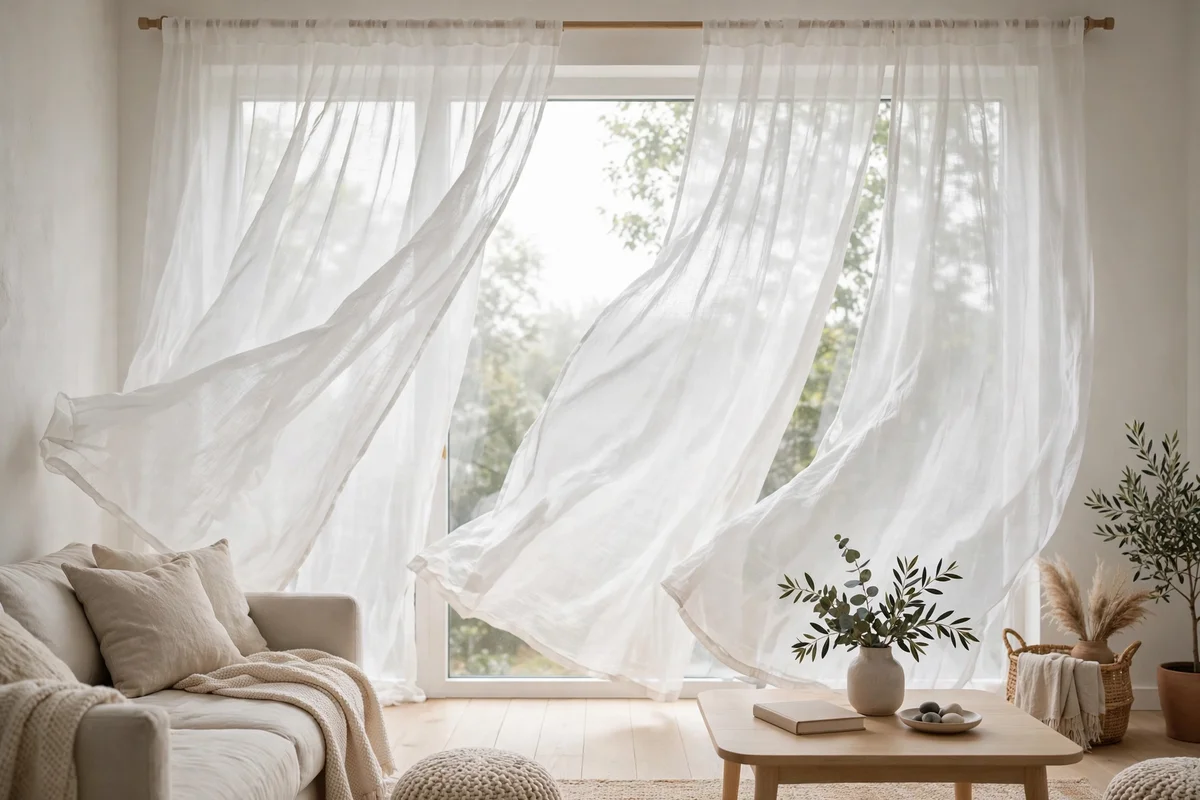
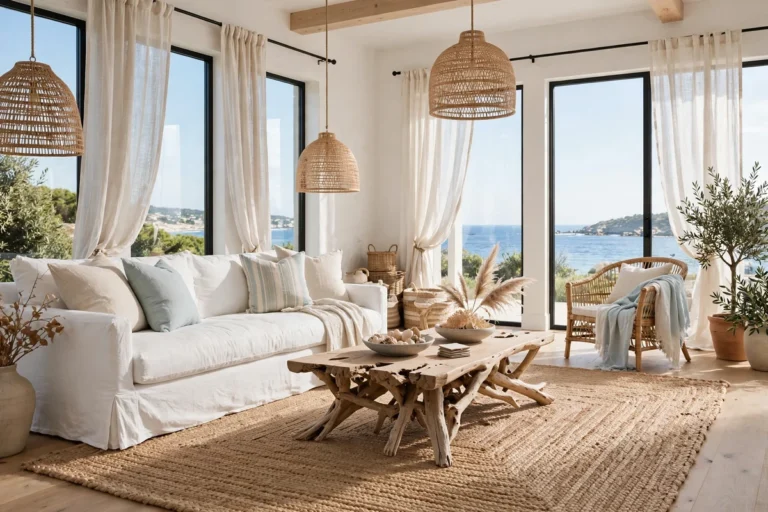
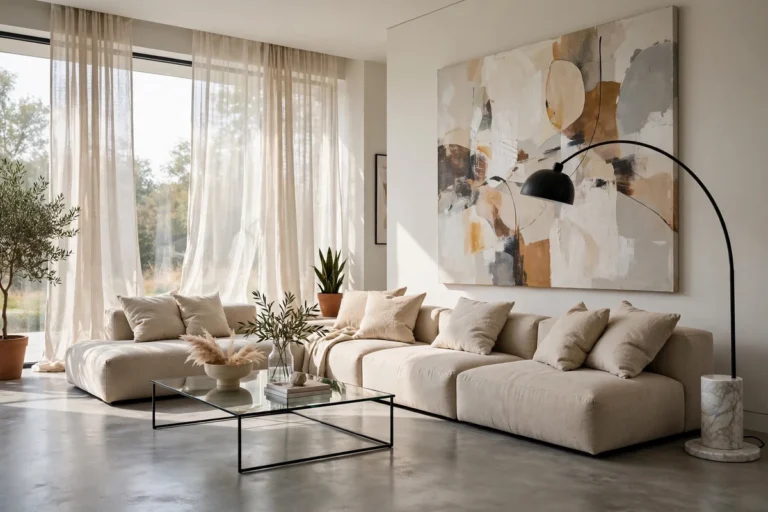
Heavy drapes are the enemy of Nordic light. Sheer white linen or voile curtains filter harsh sun into a soft glow while keeping the room bright all day. Hang them high and wide, the rod should extend 6–10 inches beyond the window frame on each side so the panels never block glass when open. Budget linen-look sheers cost $25–$45 per panel. Pro tip: use a double rod with a heavier oatmeal linen panel behind the sheer for winter nights when you want privacy without losing the airy daytime look.
4. Choose Paper Globe Pendant Lights
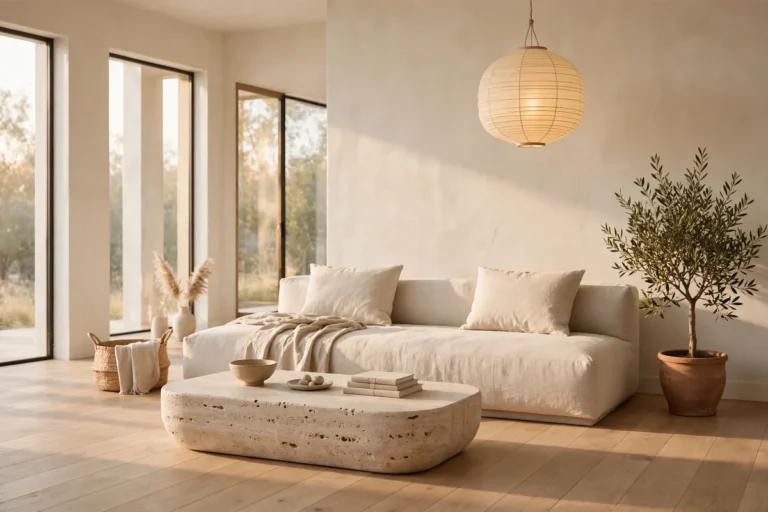
The paper lantern pendant, Noguchi’s Akari being the icon, is practically the official light fixture of Scandinavia. Its warm, diffused glow flatters everything and everyone, and the sculptural shape adds interest without visual weight. Authentic Akari shades start around $150, but excellent paper globe pendants run $35–$70. Hang one low over the coffee table or cluster three at staggered heights in a corner. Pro tip: pair paper pendants with warm 2700K bulbs only, cool daylight bulbs make paper shades look grey and lifeless.
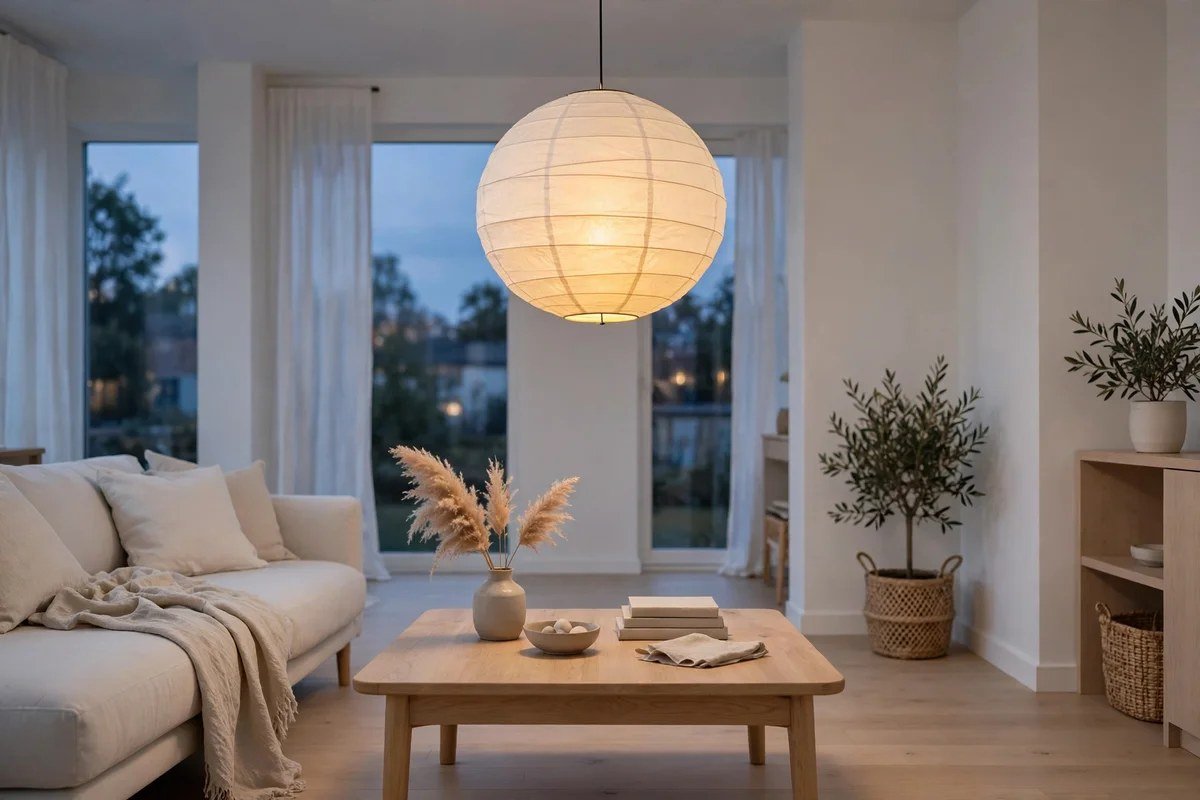
5. Layer Floor and Table Lighting
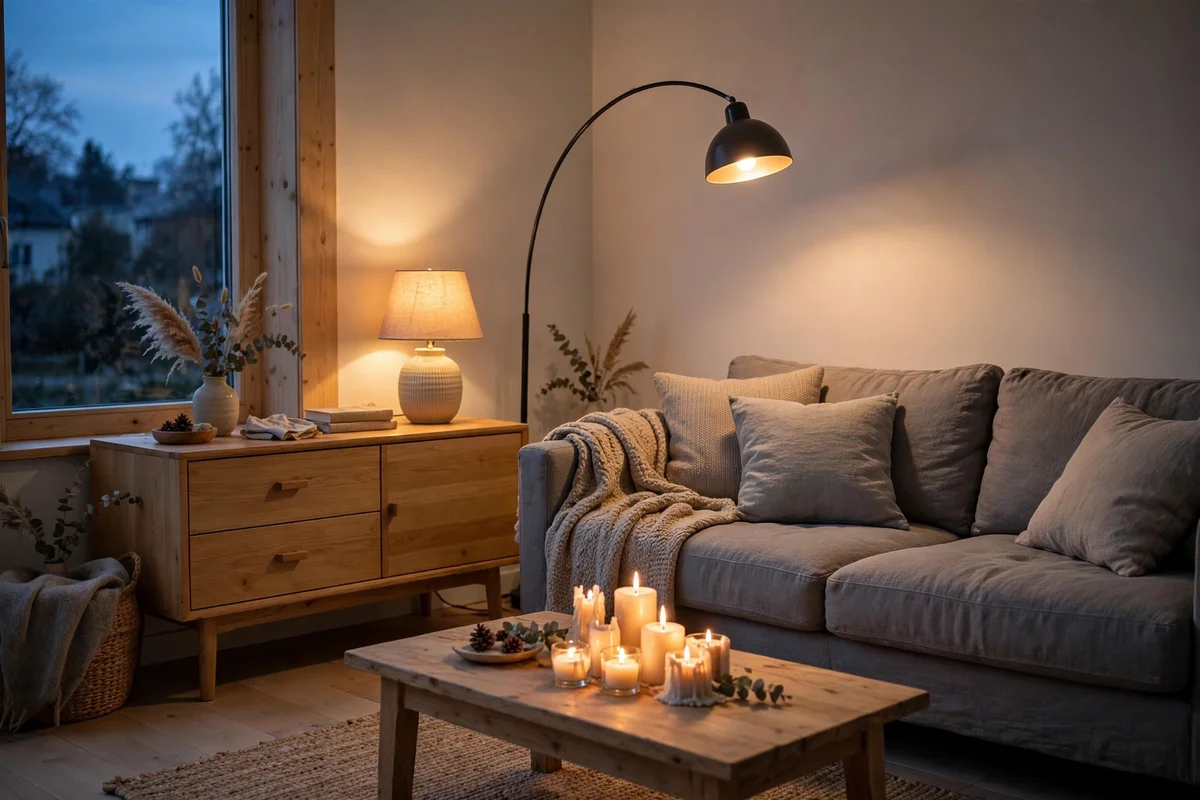
Scandinavians rarely rely on a single overhead light. Instead, they build pools of warm light at different heights, an arc floor lamp over the sofa, a small table lamp on the sideboard, a candle cluster on the coffee table. This layered approach is the technical secret behind hygge. A slim arc lamp costs $80–$160; ceramic table lamps run $40–$90. Pro tip: put every lamp on a dimmer or smart plug so you can drop the whole room to candlelight levels with one tap in the evening.
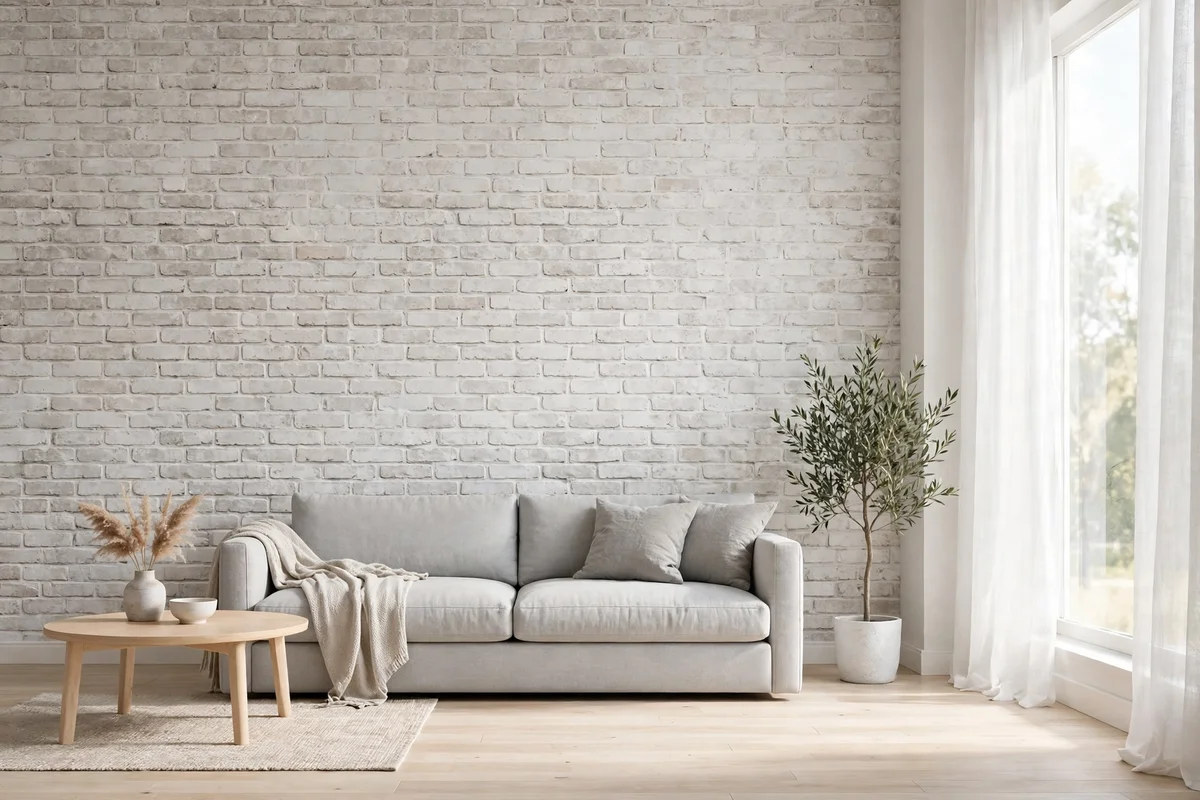
6. Try a Whitewashed Brick Accent Wall
If flat white walls feel too plain, a whitewashed brick accent wall adds texture while keeping the palette light. The German schmear technique, smearing mortar over brick, then wiping most of it away, costs $25–$40 in materials for one wall and is forgiving for beginners. It works beautifully behind a sofa or media console. Pro tip: whitewash only one wall. Two or more pushes the room toward farmhouse territory and dilutes the clean Scandinavian calm, for more on keeping palettes disciplined, see our living room color palettes.
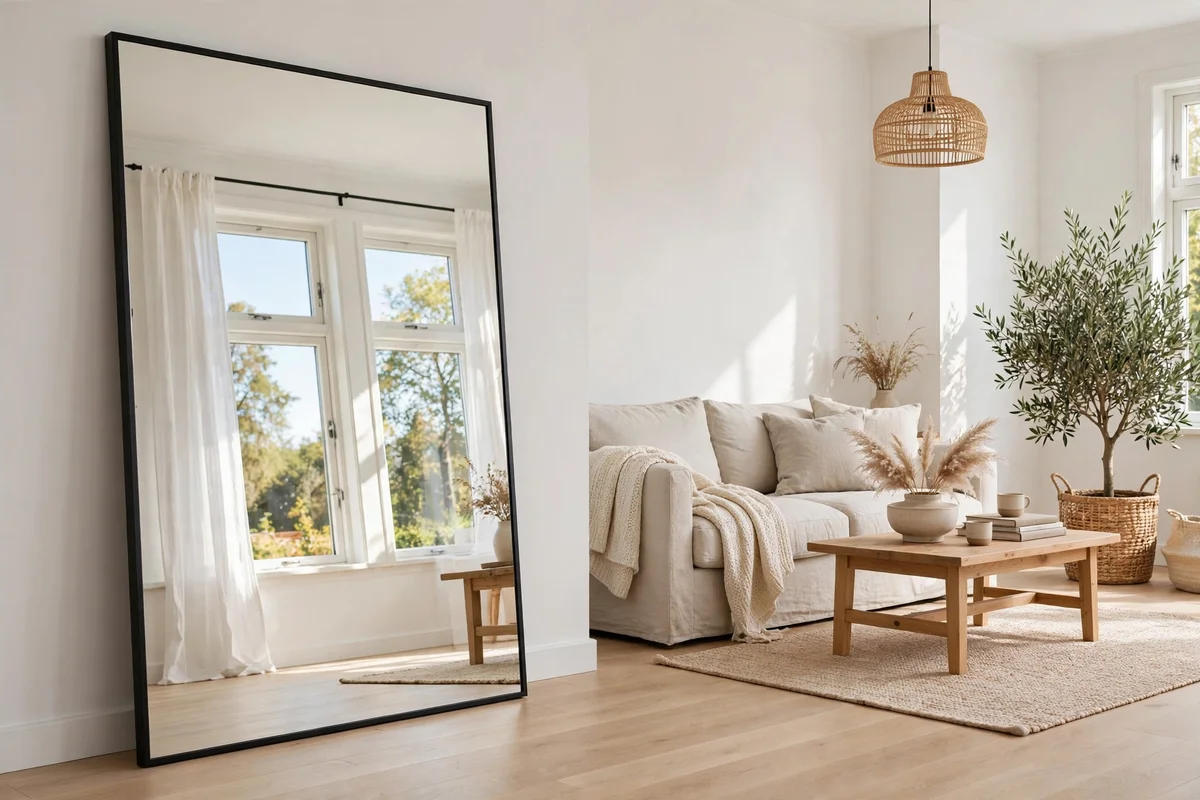
7. Add a Large Mirror to Bounce Light
A generously sized mirror opposite or adjacent to the main window effectively doubles your daylight, the oldest Scandinavian trick in the book. Choose a thin black or natural wood frame to keep it graphic rather than fussy. A 36×48 inch leaning floor mirror costs $90–$180. Pro tip: angle the mirror slightly so it reflects the brightest part of the room rather than a dark corner, stand where you sit most and check what you would see.
8. Keep Overhead Lighting Minimal and Warm
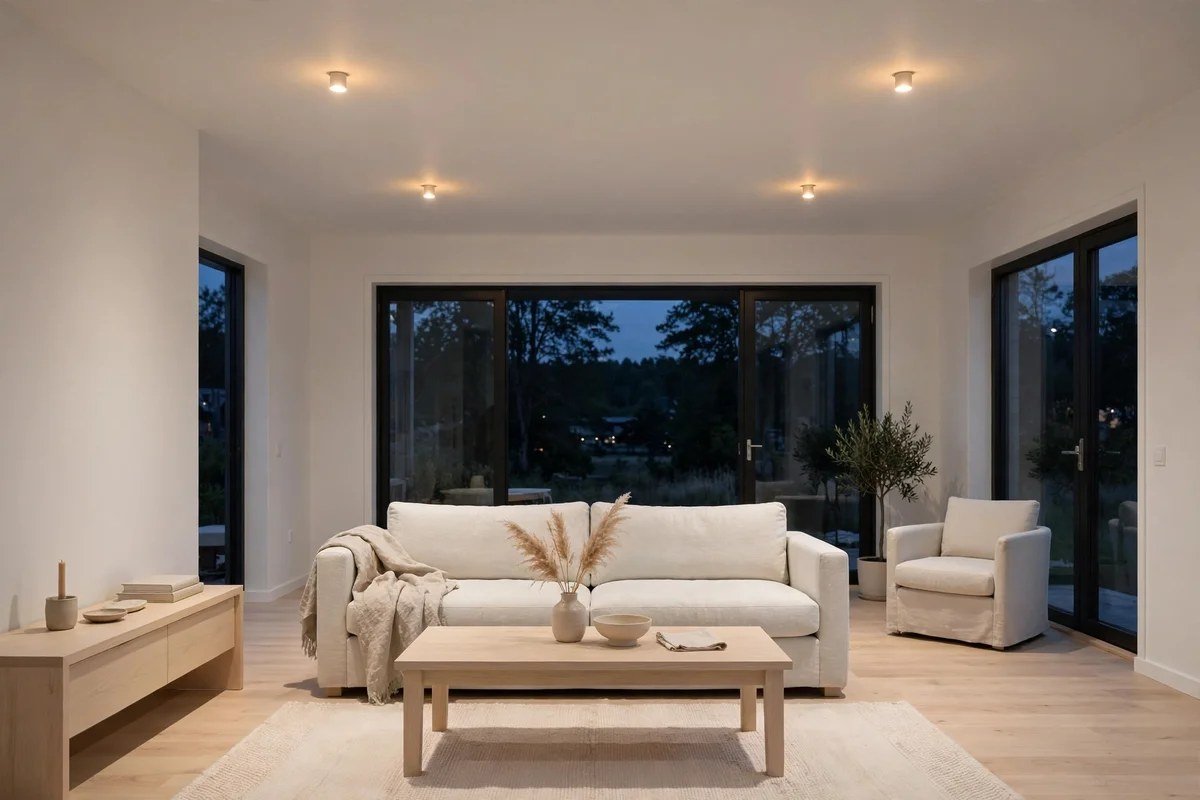
When you do need ceiling light, keep it minimal, a single flush-mount or a slim track in white or matte black, always on a dimmer, always warm-toned. Recessed cans in a 2700K temperature disappear into a white ceiling by day and wash the walls gently at night. Budget $15–$30 per recessed retrofit kit if your ceiling is already wired. Pro tip: avoid visible cool-white downlights at all costs; one blue-toned ceiling light can undo an entire room of warm Scandinavian layering.
Furniture With a Nordic Soul
9. Choose a Low-Profile Sofa in Soft Grey
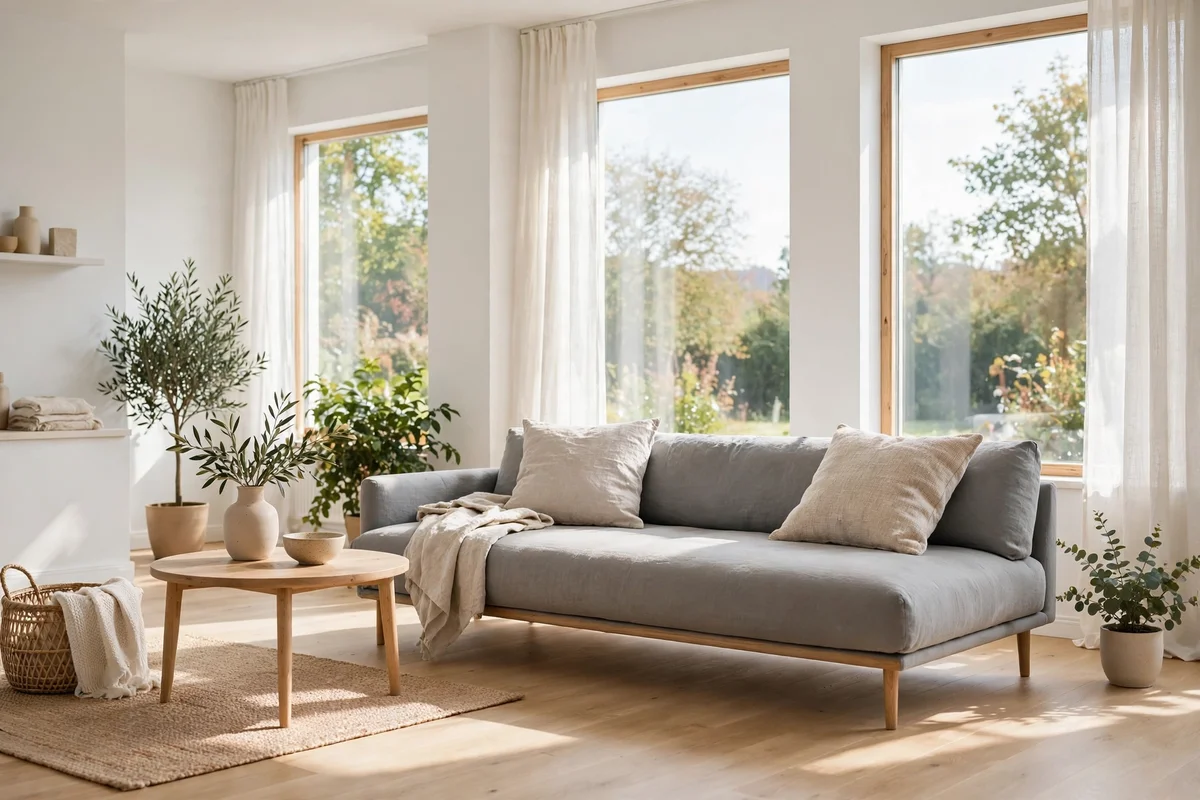
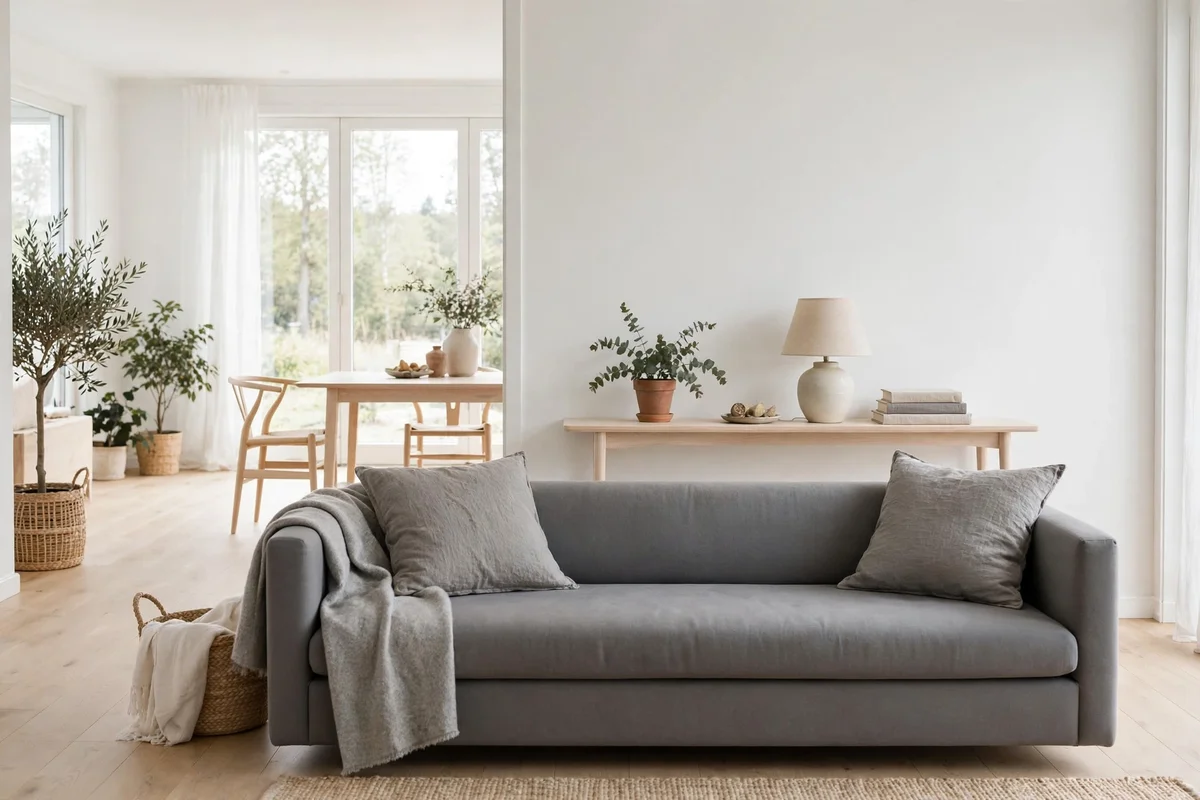
The Scandinavian sofa sits low, with clean lines, slim arms, and legs that show floor beneath, all of which keep the room feeling open. Soft grey is the workhorse color: warmer than white, calmer than beige, and forgiving with real life. Look for performance fabrics if you have kids or pets; a quality 3-seater runs $900–$1,800. Pro tip: keep the sofa’s back below window-sill height wherever possible so daylight flows over it instead of hitting a fabric wall.
10. Add Iconic Wishbone-Style Accent Chairs
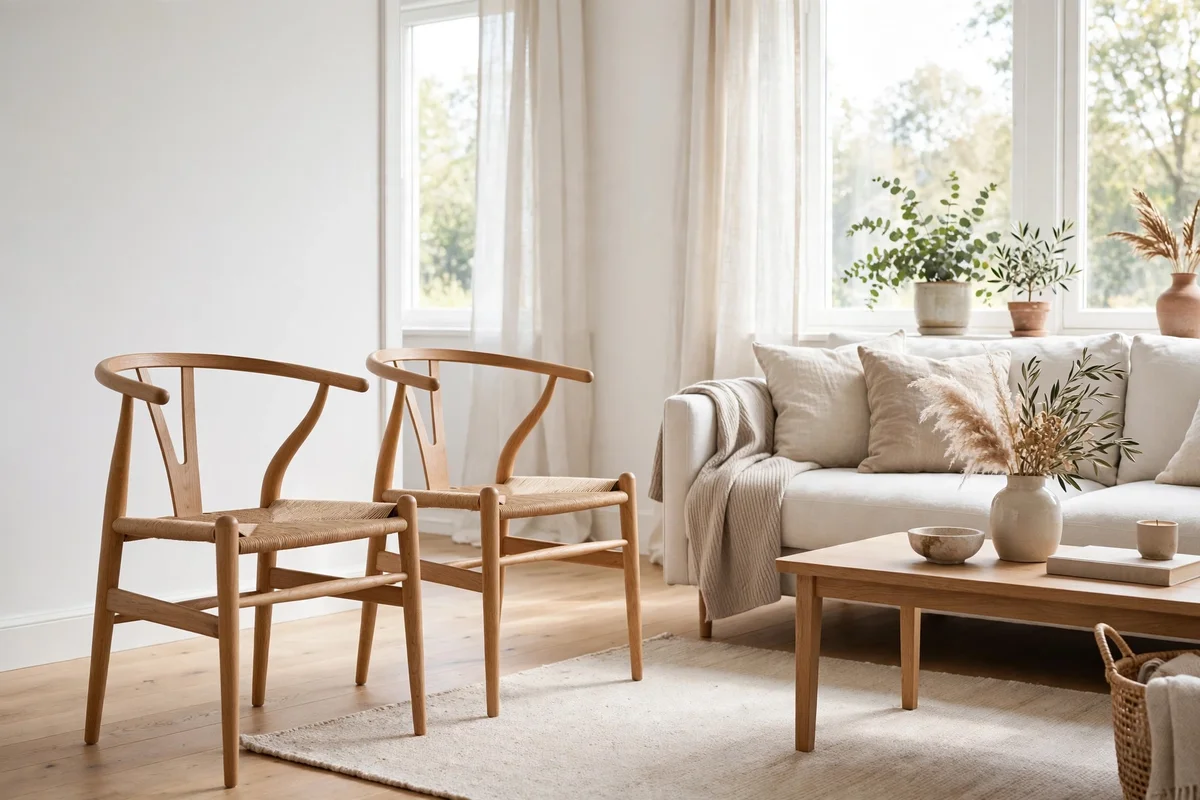
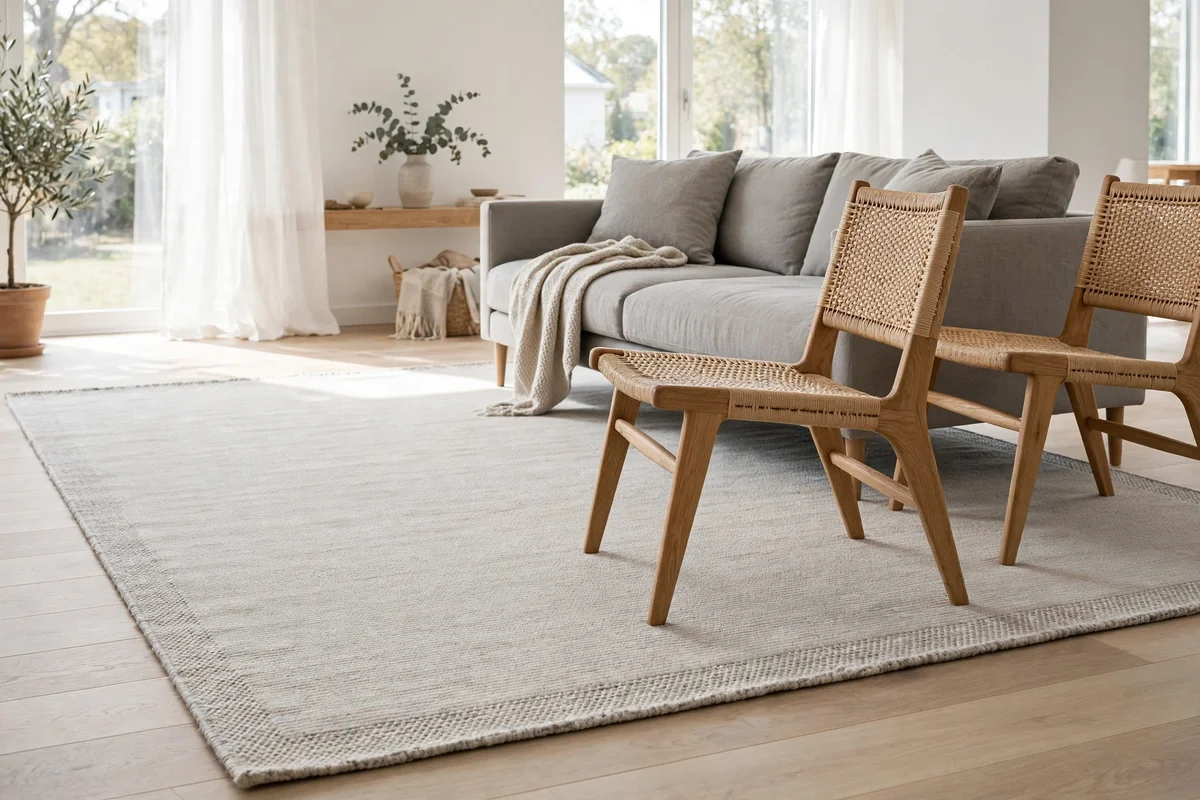
A pair of wishbone or Wegner-style chairs brings instant design credibility, their steam-bent backs and woven seats are sculpture you can sit on. Authentic pieces are investment furniture, but excellent reproductions in oak with paper-cord seats run $180–$350 each. Use them as accent chairs flanking the sofa or pulled up to a small dining table in an open plan. Pro tip: the Y-weave of paper cord softens and darkens beautifully with age; condition it once a year with a dry cloth, never oil, which stains the fibers.
11. Ground the Room With a Light Wood Coffee Table
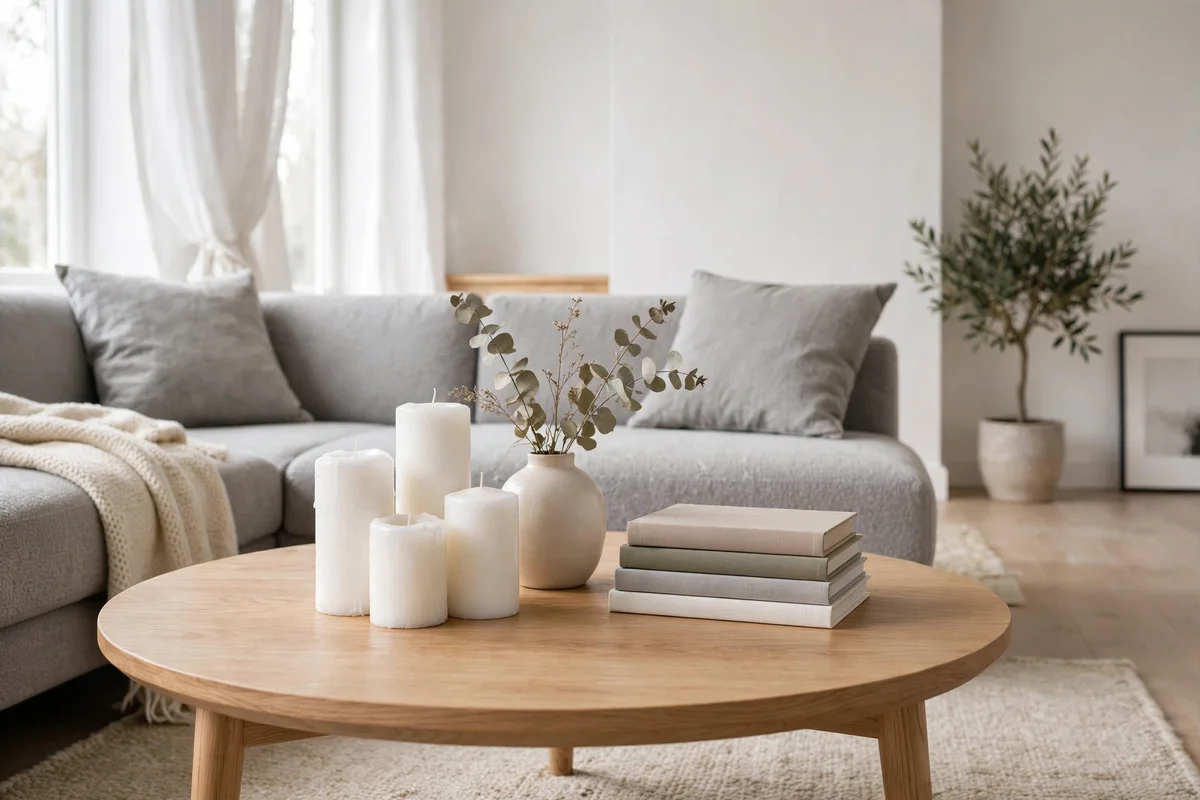
A coffee table in pale oak or ash anchors the seating group without adding visual weight. Round or soft-oval tops are the Scandinavian preference, no sharp corners in a calm room, and better flow in tight spaces. A solid oak round table (36-inch) costs $200–$450. Pro tip: leave two-thirds of the tabletop clear. The Nordic rule is styled restraint: a candle cluster, one ceramic object, and one stack of books is plenty, anything more reads as clutter. For contrast, our modern farmhouse living room ideas show a busier, warmer take on the same anchor piece.
12. Drape Sheepskin Over a Lounge Chair
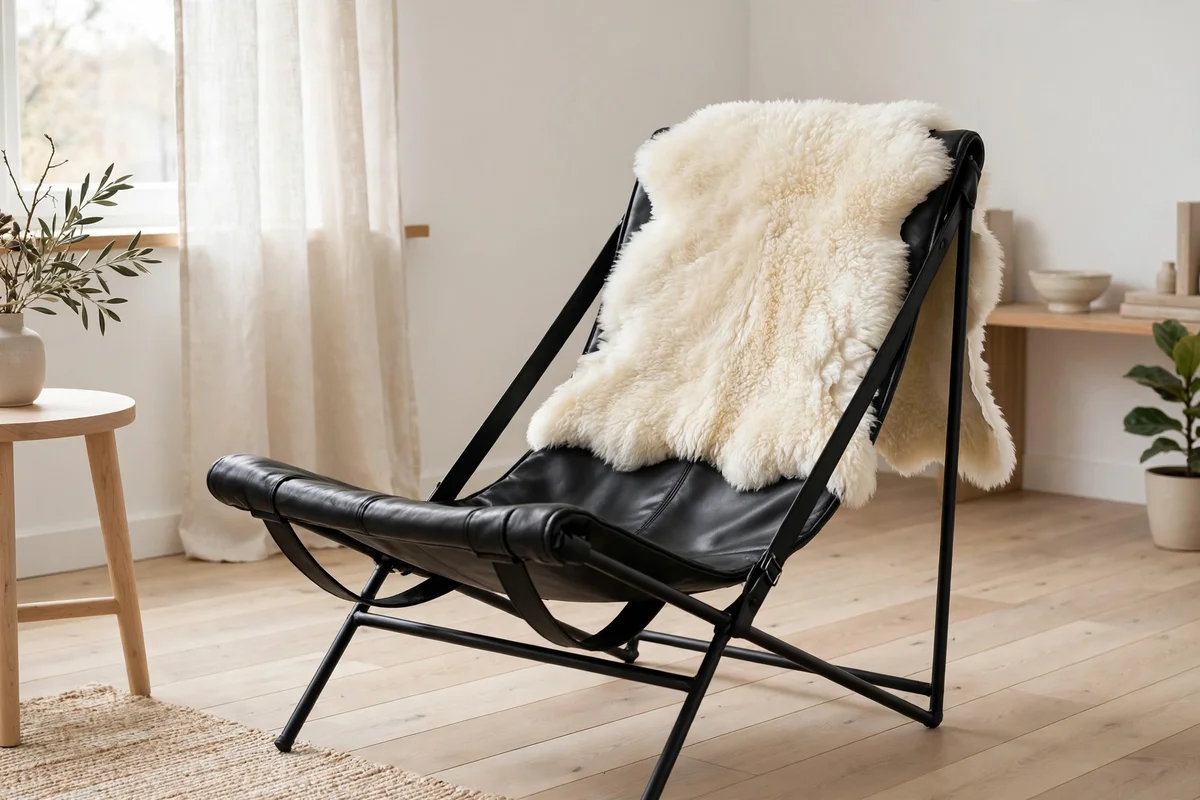
Few things say Scandinavia faster than a genuine sheepskin thrown over a chair back. It adds instant texture, warmth, and that lived-in hygge feeling for $40–$90 per hide. Drape one over a leather sling chair, a dining chair, or even a bench, the contrast of soft hide against hard furniture is the whole point. Pro tip: buy undyed natural hides in ivory or grey; the bleached-white ones look cheap and the dyed-black ones shed dye onto light upholstery.
13. Install Modular Birch Shelving
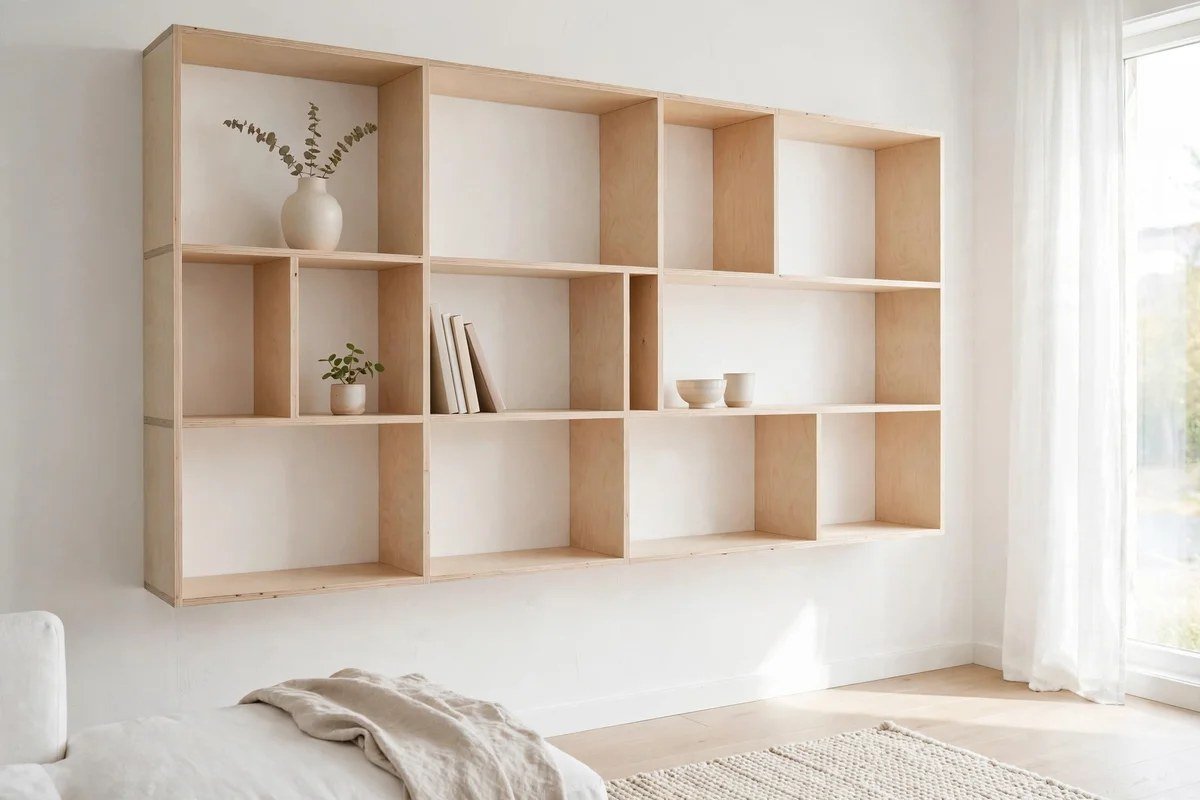
Wall-mounted modular shelving in birch, the String system being the classic, gives you display and storage that floats off the floor, keeping the room airy. A two-panel starter set runs $250–$500 depending on configuration. Style shelves with breathing room: ceramics, a few books, one plant, and plenty of empty space. Pro tip: follow the two-thirds rule, fill no more than two-thirds of any shelf and leave the rest empty. Negative space is a design material in Scandinavian rooms.
14. Use a Slim Console Behind the Sofa
In open-plan spaces, a slim console table behind a floating sofa defines the living zone without blocking light or sightlines. Choose one in pale wood or white, no deeper than 12 inches, and top it with a lamp and a low stack of books. Budget $120–$280. Pro tip: this is also the perfect spot for a power strip tucked underneath, it keeps phone chargers off the coffee table and preserves the calm surface.
15. Bring In a Rattan Accent Chair
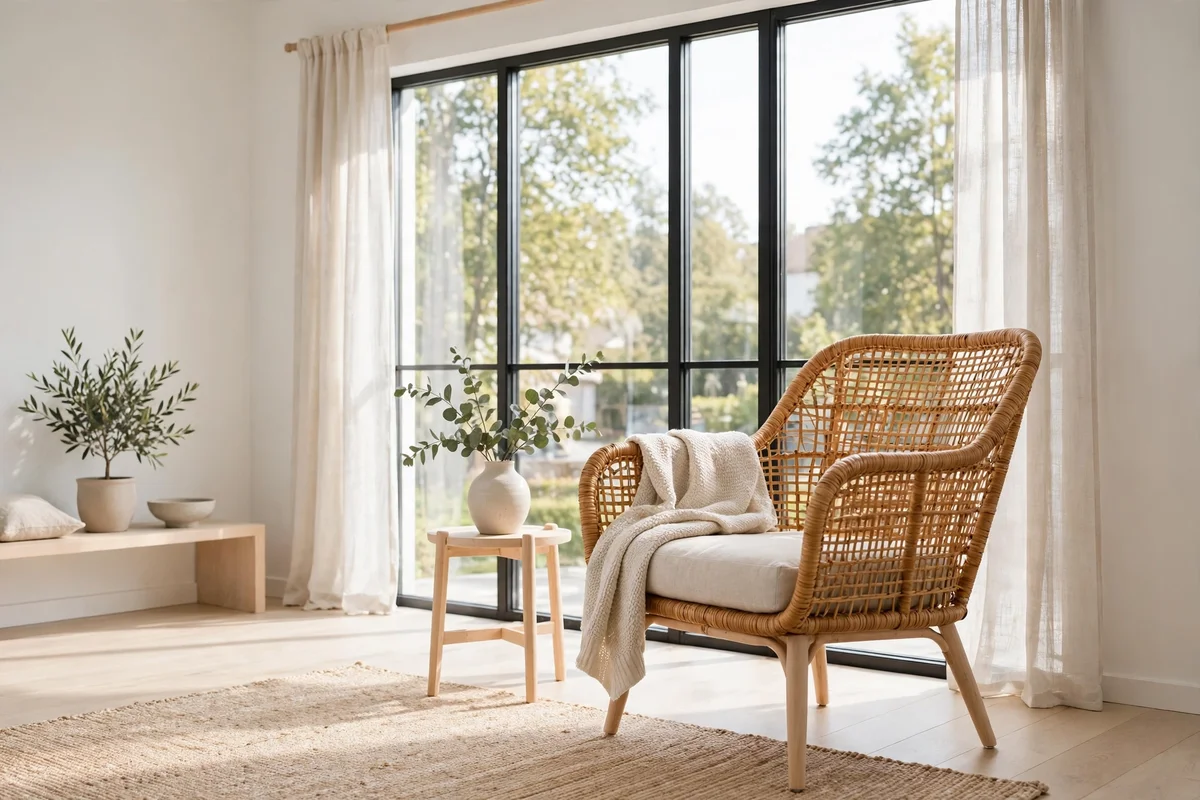
Rattan’s warm honey tones keep an all-neutral room from feeling sterile, and its open weave preserves the light, airy quality Scandinavians prize. A peacock-style or simple hoop rattan chair runs $150–$400. Place it near the window where the texture catches daylight. Pro tip: keep rattan to one or two pieces maximum, it is an accent, not a theme, and too much tips the room toward tropical rather than Nordic.
16. Add a Storage Bench or Ottoman
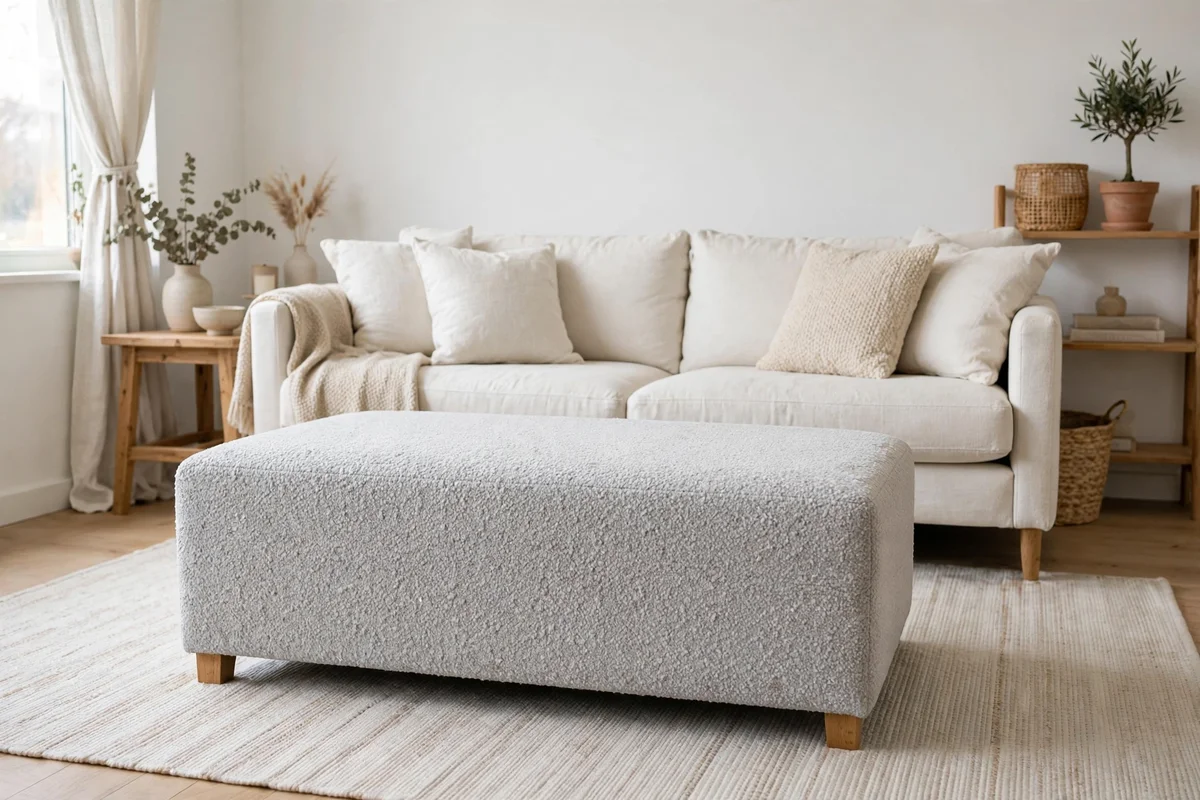
Scandinavian calm depends on hidden storage, every throw, remote, and charger needs a home. A lidded bench or large ottoman in boucle or light grey fabric swallows clutter while doubling as extra seating or a footrest. Expect $180–$400 for a well-made piece. Pro tip: choose an ottoman on small legs rather than a skirted one; visible floor beneath keeps the visual lightness that defines the style.
Textiles & Color Layers
17. Layer Chunky Knit Throws
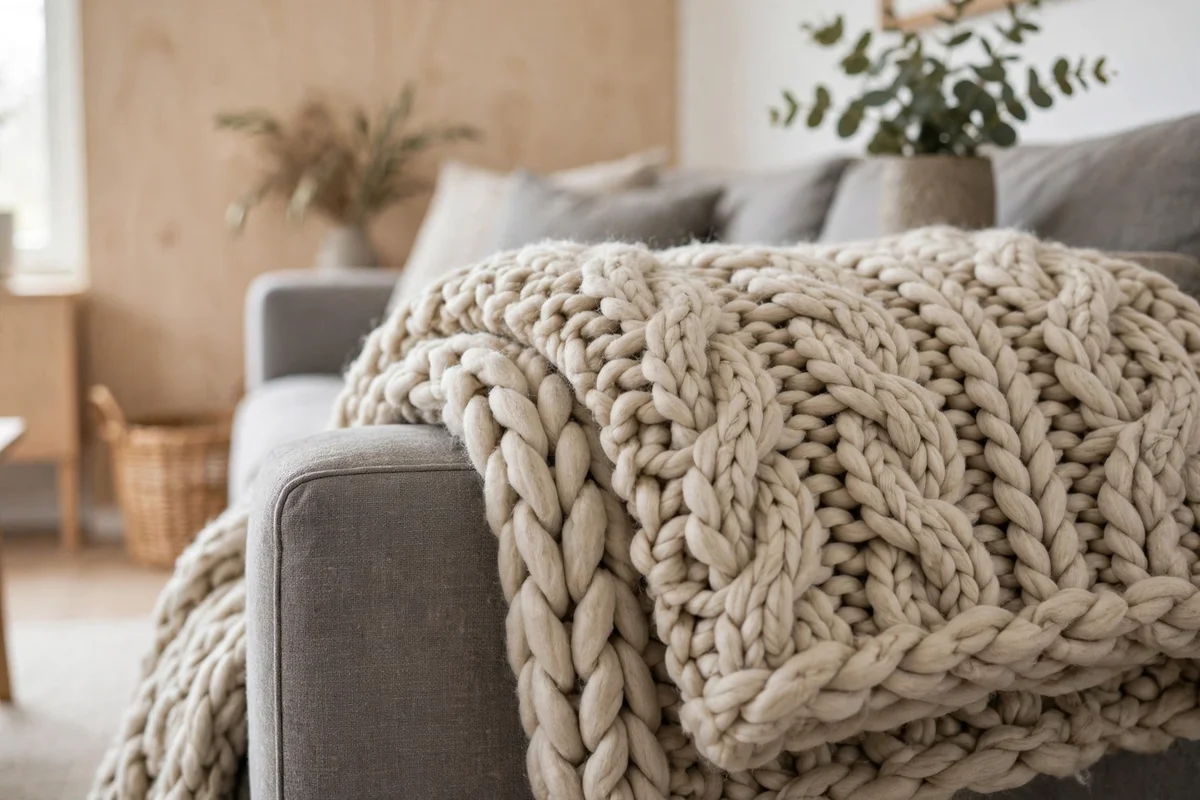
A single oversized knit throw transforms a sofa from furniture into an invitation. Look for merino or wool-blend knits in oatmeal, fog grey, or undyed cream, the chunkier the stitch, the more texture it adds to a smooth-lined room. Quality throws run $60–$140. Pro tip: fold the throw in thirds lengthwise and drape it over one arm or the sofa back rather than spreading it flat; the casual fold looks intentional while a flat spread looks like you are hiding something.
18. Soften Hard Surfaces With Sheepskin Rugs
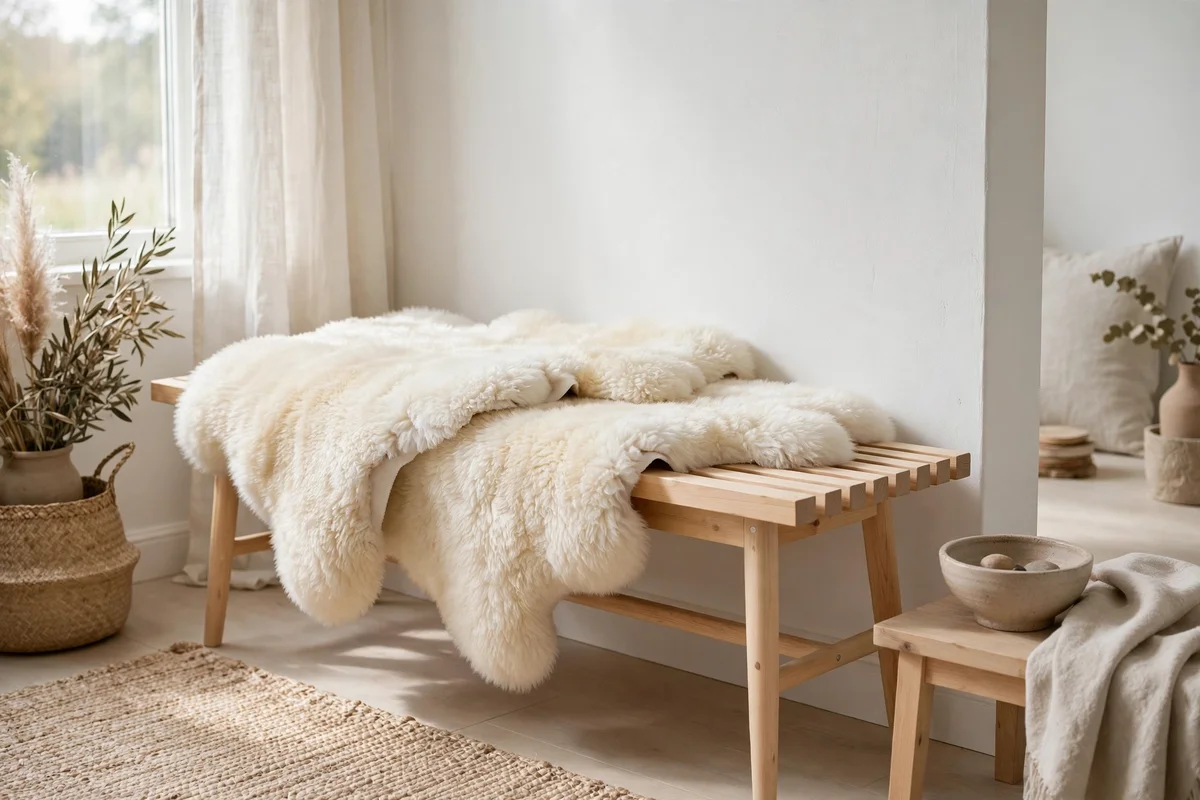
Small sheepskin rugs, draped over a bench, layered on a chair seat, or beside the bed-side of the sofa, add warmth exactly where bodies meet furniture. They cost $35–$75 each and are endlessly repositionable. Layer two overlapping hides for a luxe, collected feel. Pro tip: shake sheepskins outside monthly and brush with a pet slicker brush to keep the fibers lofty; never machine wash, which mats the wool permanently.
19. Mix Linen Cushions in Muted Tones
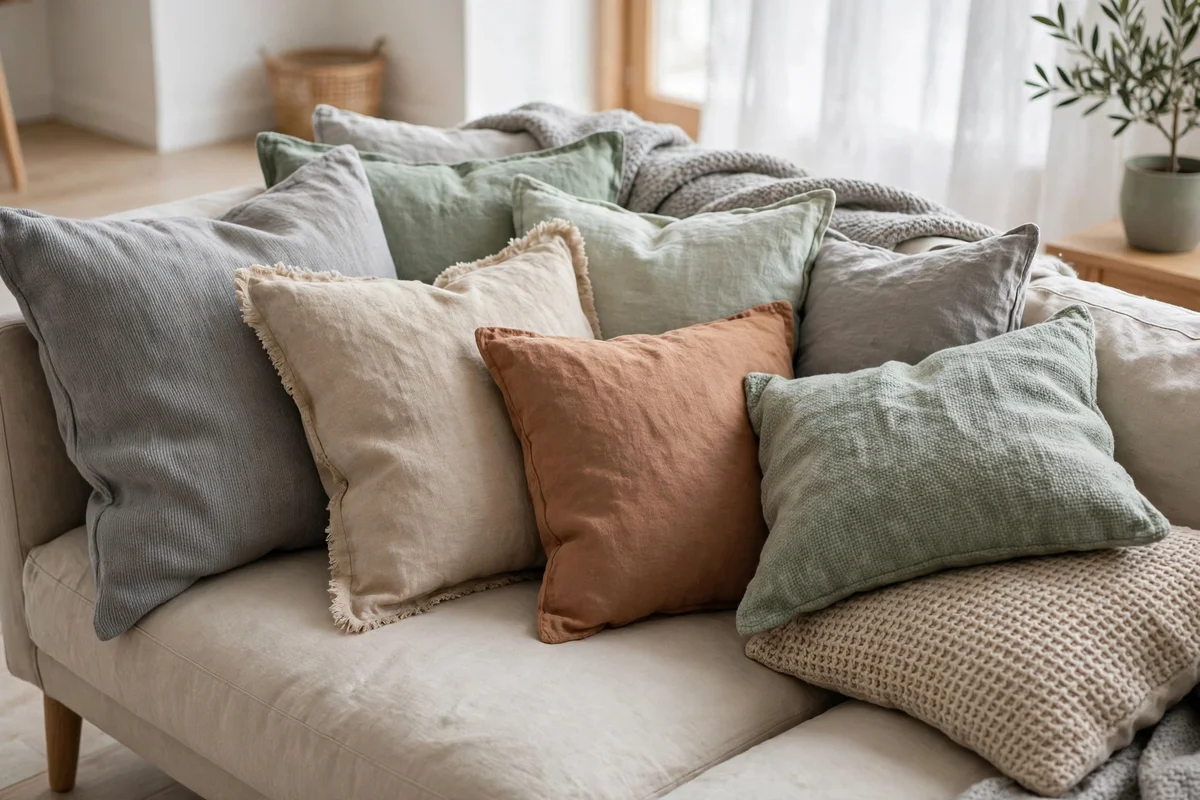
Linen cushion covers in fog, clay, sage, and natural flax build the tonal, low-contrast palette Scandinavians favor. Mix sizes, 20-inch squares behind 16-inch ones, and vary the weave for depth. Covers run $18–$40 each; buy the covers and reuse inserts you own. Pro tip: the karate-chop crease down the middle of a cushion is a styling trick, not a requirement, in a truly relaxed Nordic room, plump and slightly rumpled beats razor-sharp.
20. Anchor With a Flat-Weave Wool Rug
A large flat-weave wool rug in soft grey or ivory defines the seating area and adds warmth underfoot without the visual heaviness of a deep pile. Wool is naturally stain-resistant and lasts decades, a good 8×10 runs $400–$900, but it is the single textile worth splurging on. Pro tip: size the rug so the front legs of the sofa and all accent chairs sit on it; a too-small rug floating in the middle of the floor shrinks the whole room visually.
21. Introduce Muted Pastel Accents
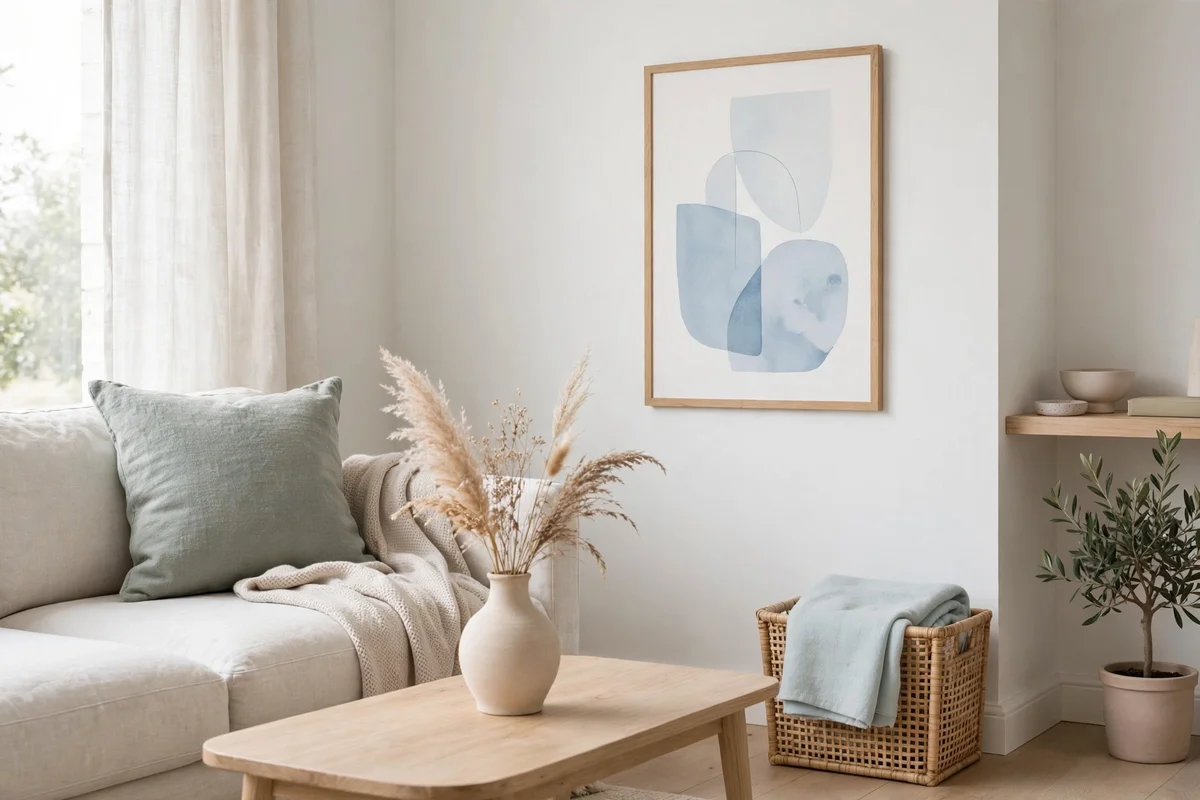
Scandinavian color is quiet, not absent. Dusty sage, pale clay, muted mustard, and powder blue appear as small, deliberate notes, a cushion here, a ceramic vase there, a single art print. This restraint is what separates Nordic pastel from shabby chic. Pro tip: limit yourself to one pastel family per room and repeat it at least three times at different scales (textile, object, art) so it feels intentional rather than accidental. Our bedroom color palettes show how the same discipline works in sleep spaces.
22. Add Graphic Black-and-White Textiles
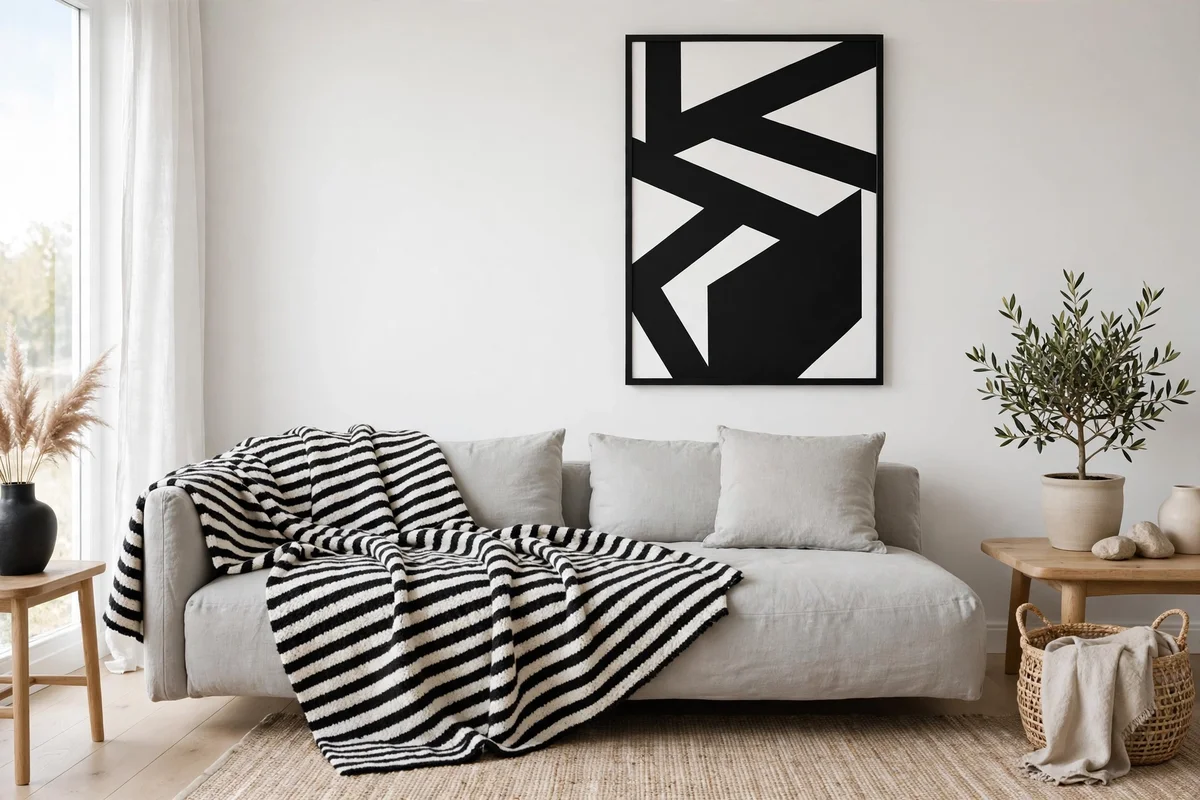
A single bold graphic, a black-and-white striped throw, a geometric kilim pillow, Marimekko’s Unikko in monochrome, gives a calm room the backbone it needs. Without one high-contrast moment, all-neutral rooms can drift into blandness. One statement textile costs $30–$80. Pro tip: keep it to exactly one graphic pattern per room and let everything else stay solid; two competing graphics start a visual argument.
23. Drape a Throw Like Bedding on the Sofa
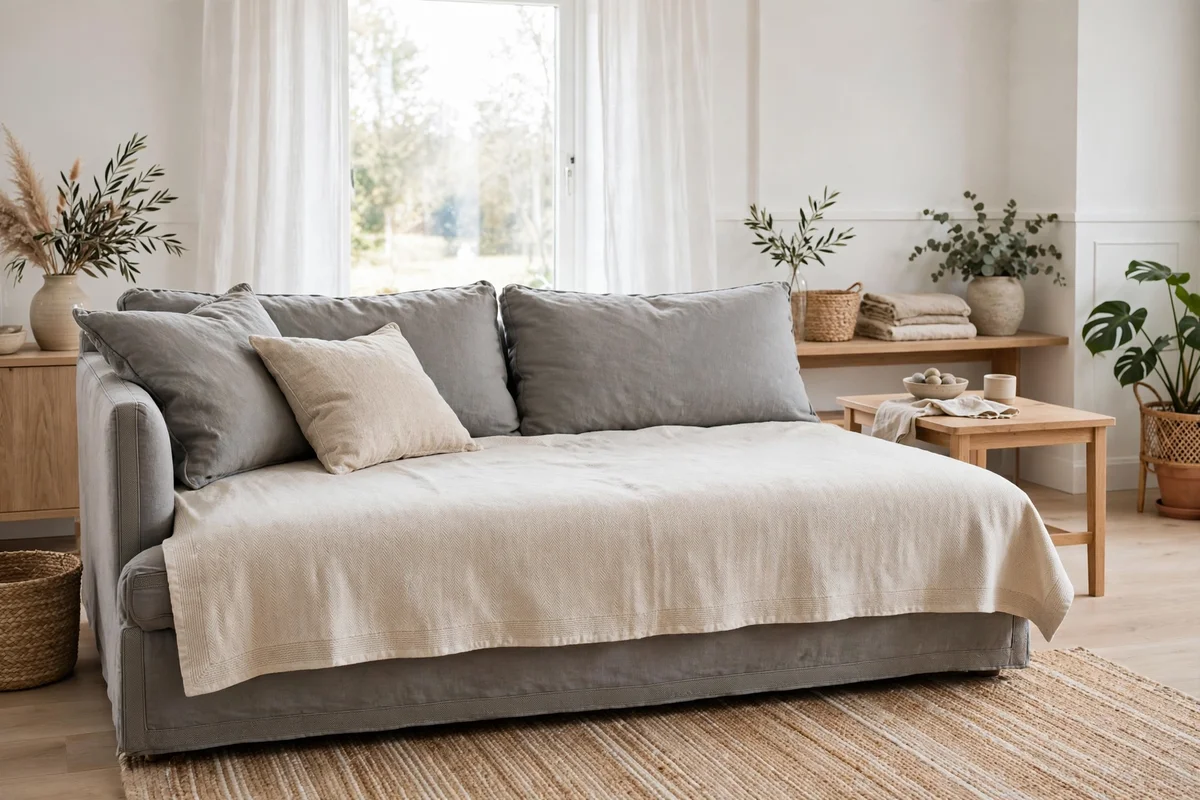
For the ultimate relaxed look, dress the sofa the way Scandinavians dress beds: a flat-woven throw laid across the full seat like a coverlet, with sleeping-style pillows in front. It reads as intentional, protects upholstery, and is easy to wash. A large cotton throw costs $40–$90. Pro tip: choose a throw slightly narrower than the sofa seat so a band of upholstery shows on each side, full coverage looks like a slipcover, partial coverage looks styled.
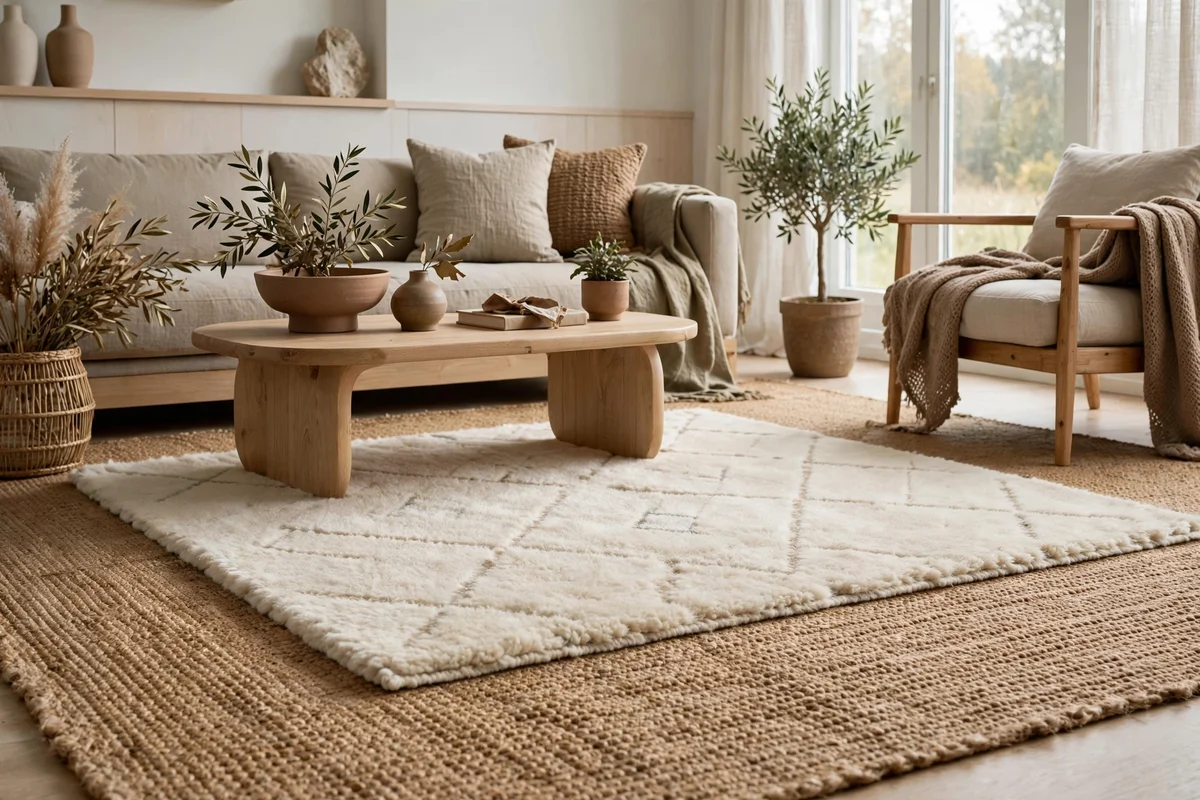
24. Layer a Natural Jute Rug Under Everything
Jute brings an earthy, organic texture that keeps pale rooms grounded, literally. Layer a large jute rug under the wool rug for a designer trick that adds depth for little money; a 9×12 jute rug costs $150–$300. The tonal variation in the fibers hides wear beautifully. Pro tip: jute and wool layered together can slide, so put a rug pad between them, not just underneath, the sandwich stays put and feels plusher underfoot.
Finishing Touches, Hygge Details
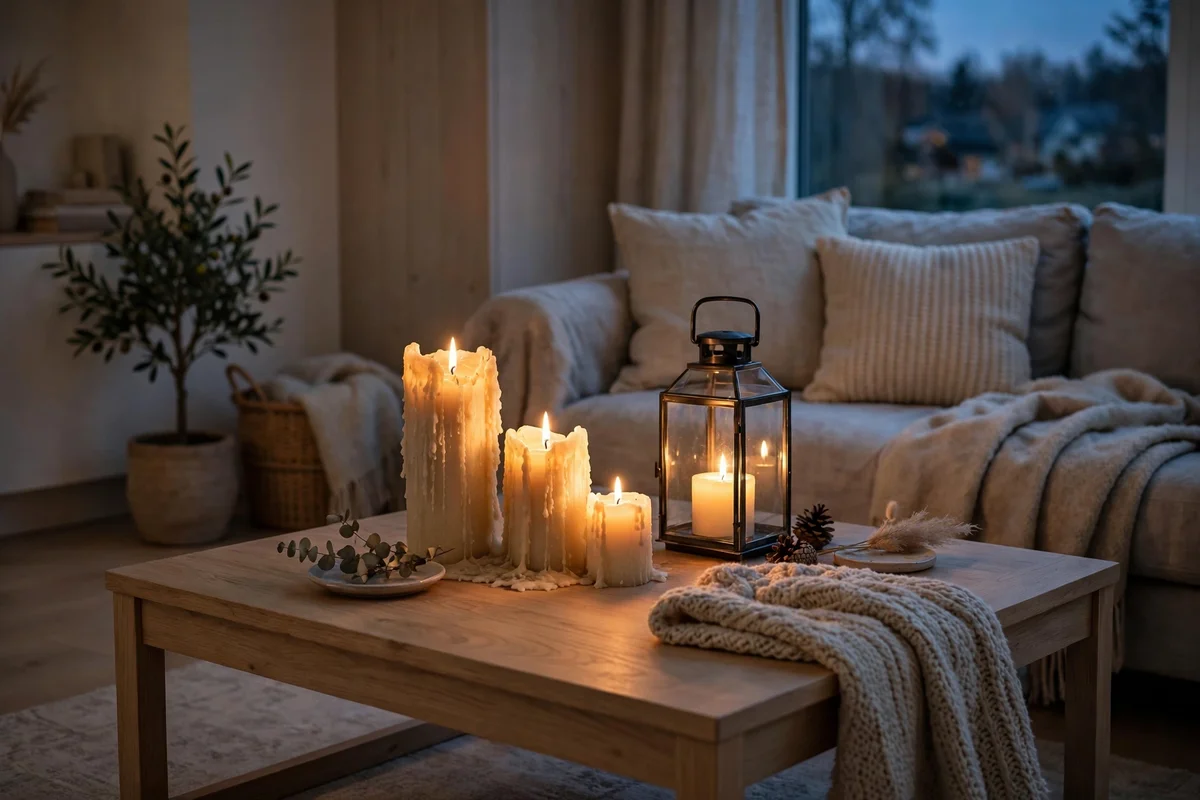
25. Cluster Candles and Lanterns Everywhere
Candlelight is not decoration in Scandinavia, it is infrastructure. Danes burn more candles per capita than any nation on earth, and the warm flicker is the fastest route to hygge. Group pillar candles of varying heights on the coffee table, line the windowsill with tealights, and hang a lantern in the reading corner. LED flameless candles ($15–$30 for a set) give the glow without the worry. Pro tip: odd numbers only, three, five, or seven candles in a cluster look organic while even numbers look staged.
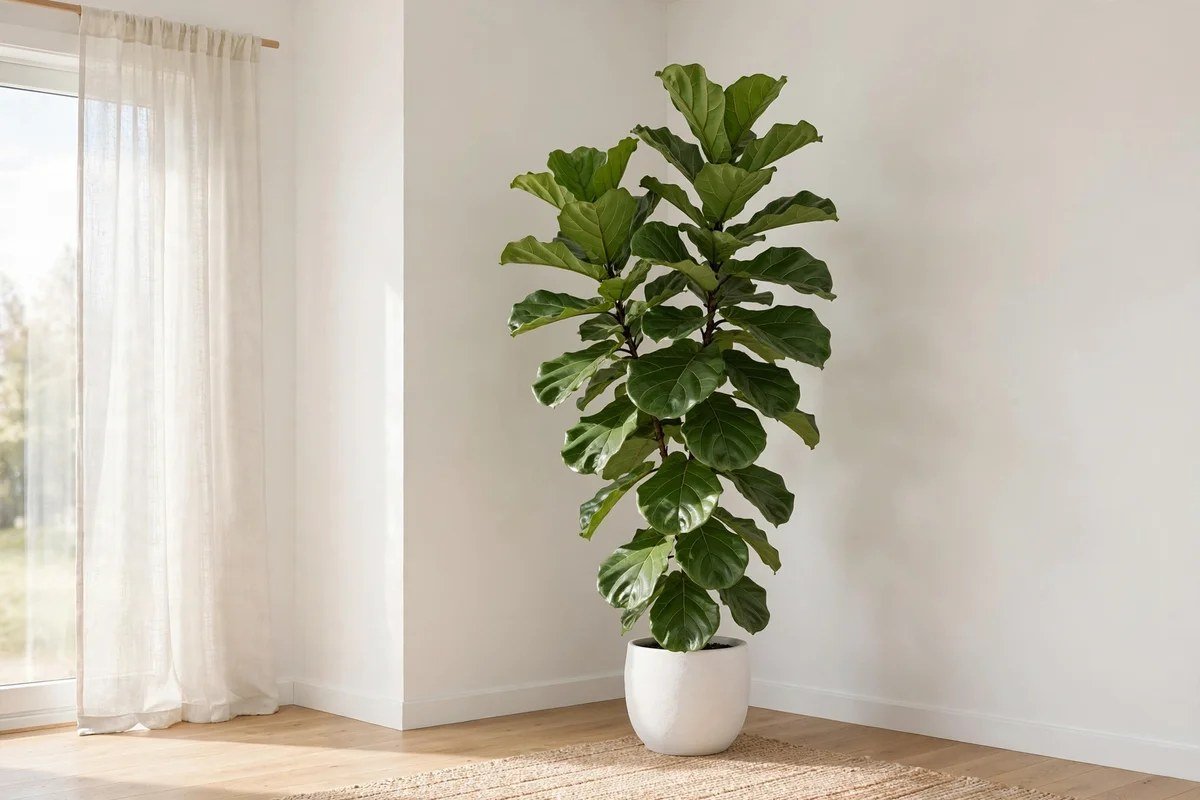
26. Add One Sculptural Plant
A single large plant, fiddle leaf fig, olive tree, or bird of paradise, brings life and softens all the straight lines. Scandinavians prefer one statement plant over a jungle of small pots; it reads as curated rather than cluttered. A 4-foot fiddle leaf fig costs $60–$120. Pro tip: plant it in a matte ceramic or woven seagrass pot, never glossy plastic, the container is half the look. For more green ideas that suit calm palettes, browse our plant ideas for every room.
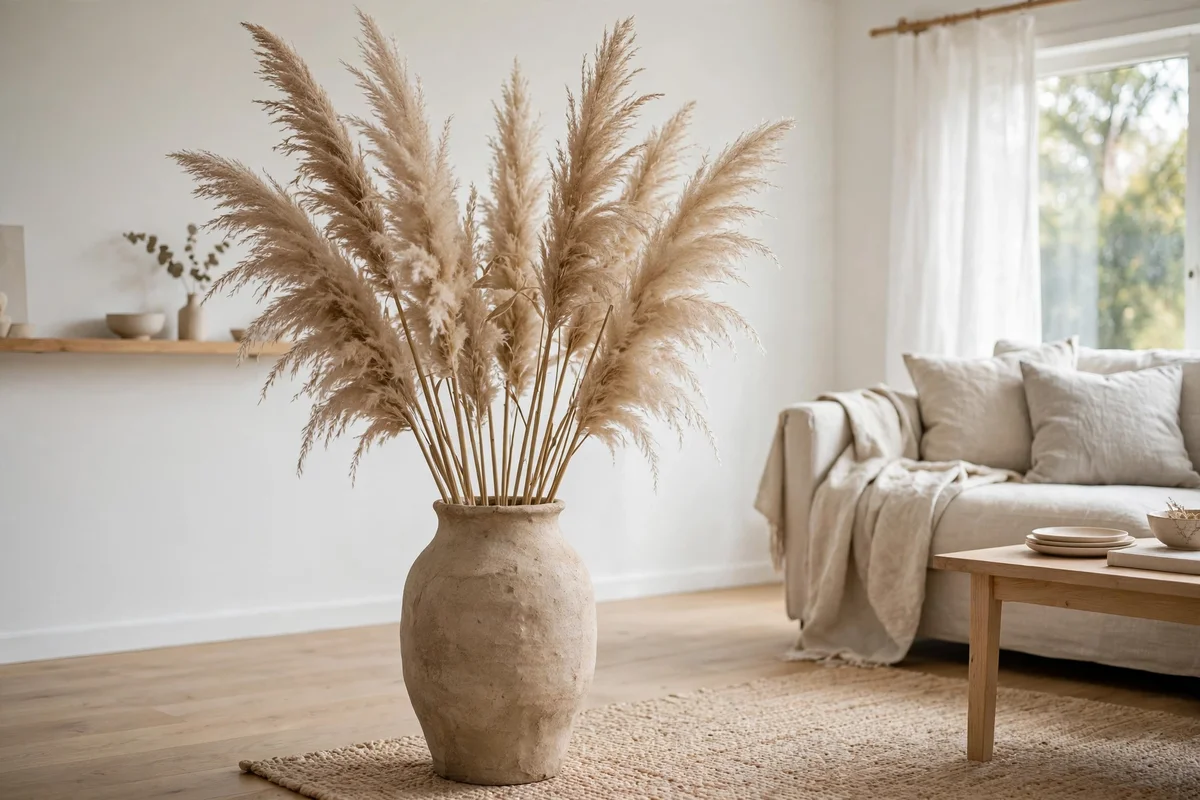
27. Style Dried Pampas Grass in a Ceramic Vase
Dried pampas grass or preserved lunaria in a tall handmade-look vase adds height and movement with zero maintenance, perfect for the Scandinavian love of natural, imperfect materials. A bundle of pampas costs $20–$40 and lasts years. Pro tip: keep dried stems away from direct sun, which bleaches them unevenly, and give pampas a light mist of hairspray to stop shedding on your pale sofa.
28. Hang Minimalist Line Art
Scandinavian walls favor simple line drawings, abstract prints in muted tones, or black-and-white photography in thin frames, hung low and often leaning rather than nailed. A large-format print in an oak frame costs $60–$150. Pro tip: lean a large frame on the floor against the wall behind a console instead of hanging it; the casual placement is very Nordic and saves you from drilling into plaster.
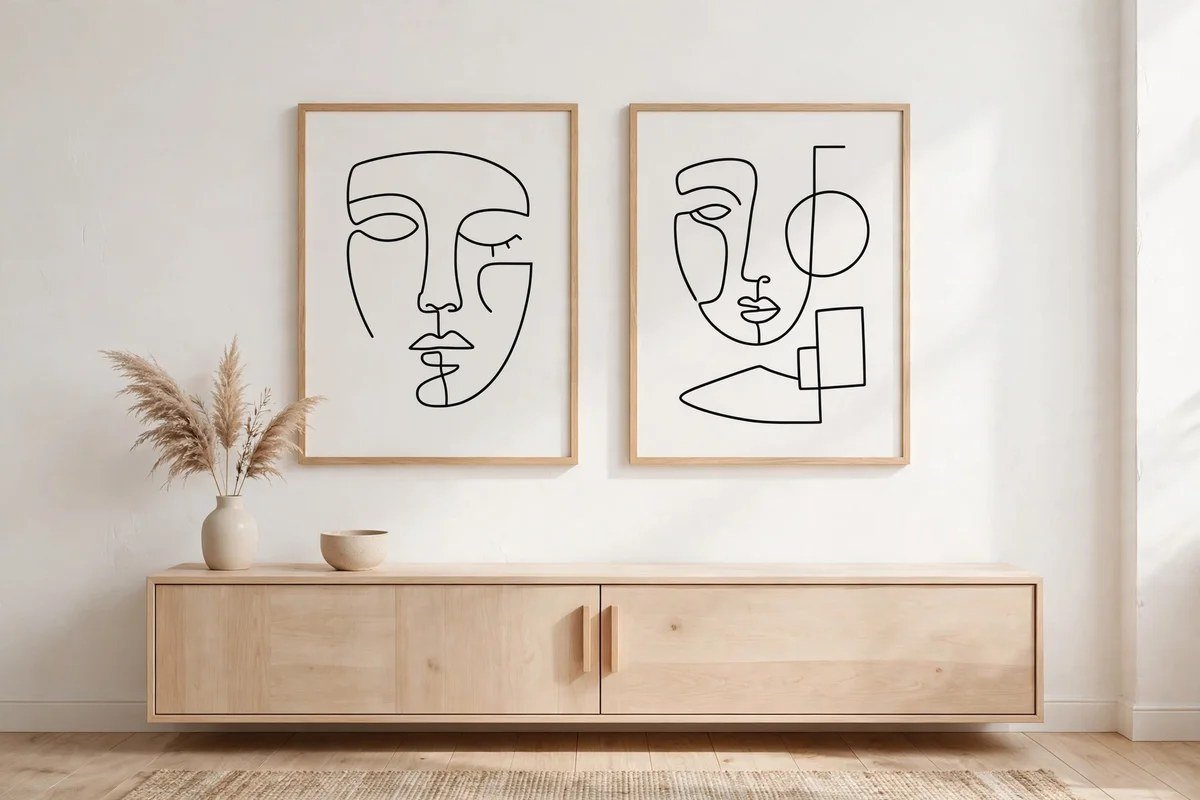
29. Display Matte Ceramic Vases
A small collection of handmade-look ceramic vases in white, sand, and stone grey is the quintessential Scandinavian shelf styling. The matte finish absorbs light softly, unlike glossy ceramics that create hot spots. Small studio vases run $25–$60 each. Pro tip: group vases in threes with varied heights but a unified color family, the repetition of material with variation in form is the Nordic formula for “collected, not cluttered.”
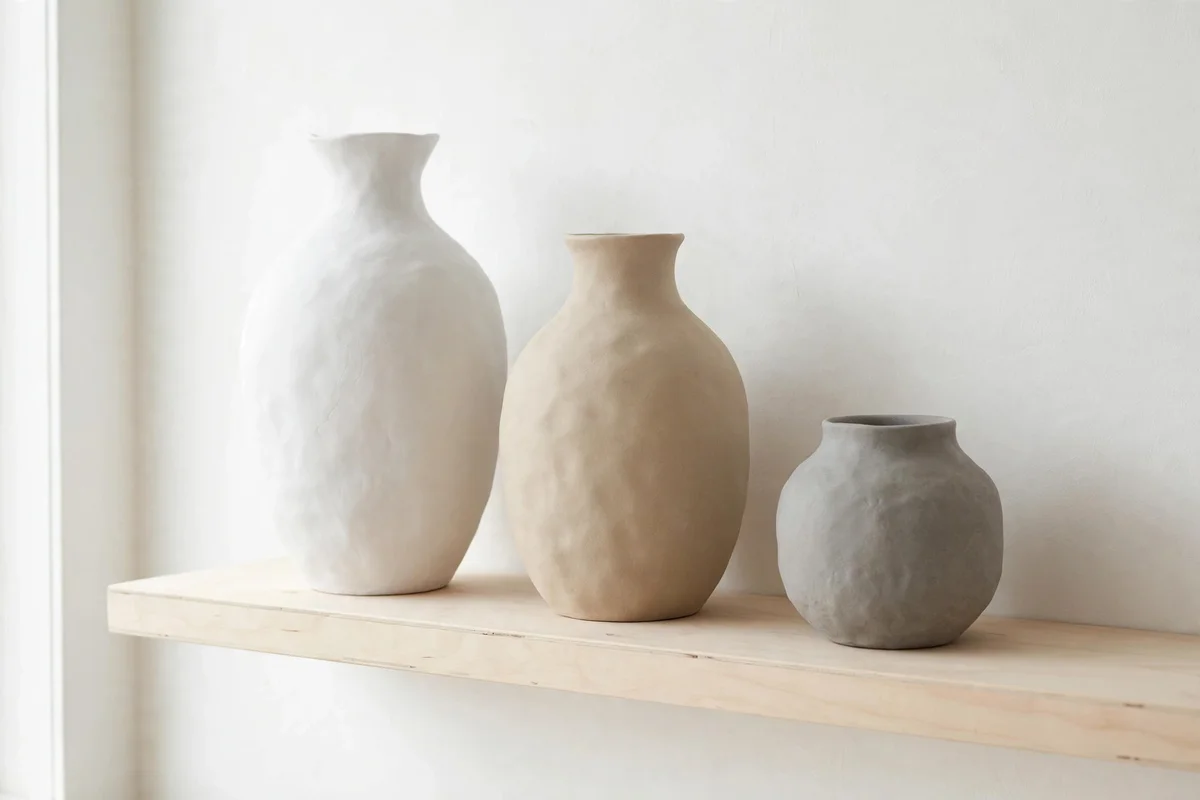
30. Stack Design Books as Decor
Two or three beautiful books, on architecture, photography, or Nordic design itself, stacked on the coffee table or ottoman add personality and a place to rest a cup. Buy them for covers you love; content is secondary. New art books run $30–$60, thrifted ones $5–$15. Pro tip: stack largest to smallest, spine out, and top with one small object, a candle, a stone, a tiny vase. The object signals “styled” while the books signal “lived-in.”
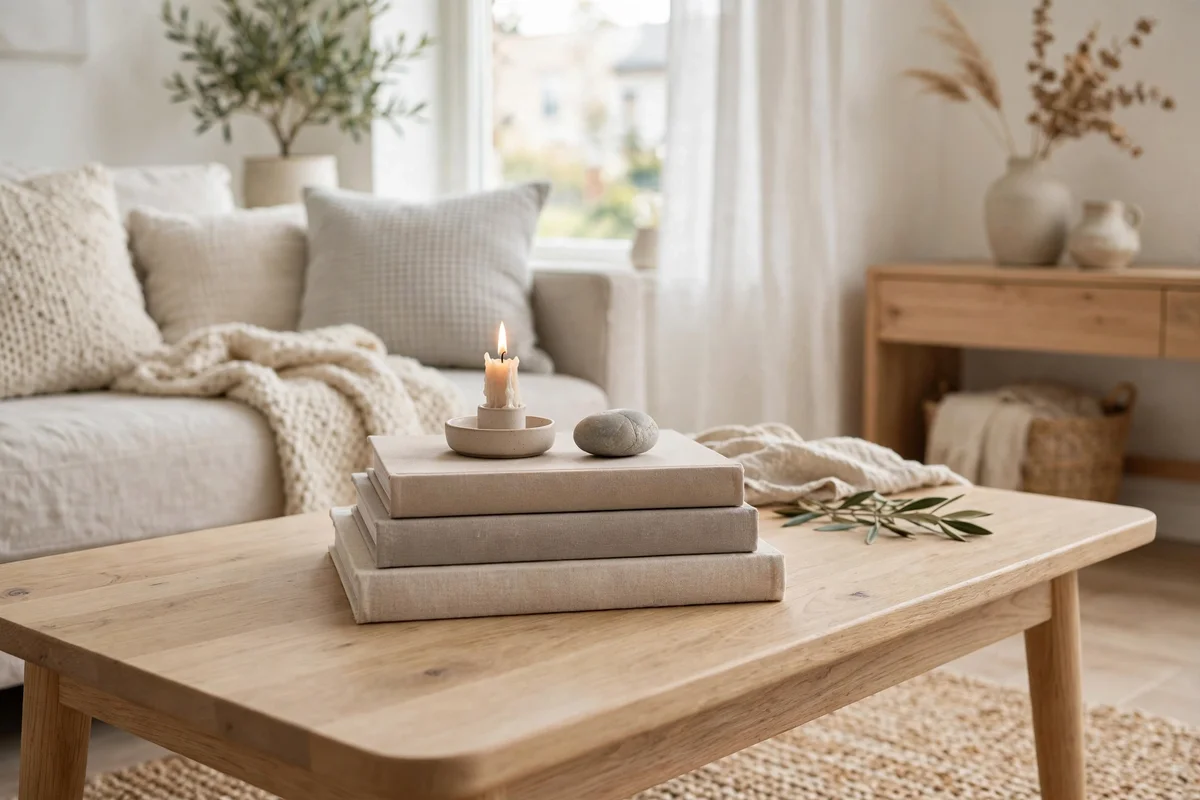
31. Corral Clutter in Woven Baskets
Seagrass and willow baskets are the Scandinavian answer to everyday mess, throws, toys, magazines, and remotes all disappear into beautiful containers. Large lidded baskets cost $30–$70. Place one beside the sofa, one under the console, one in the reading corner. Pro tip: choose baskets with lids for anything you do not want to see; open baskets are for throws and items pretty enough to display, lids are what actually create calm.
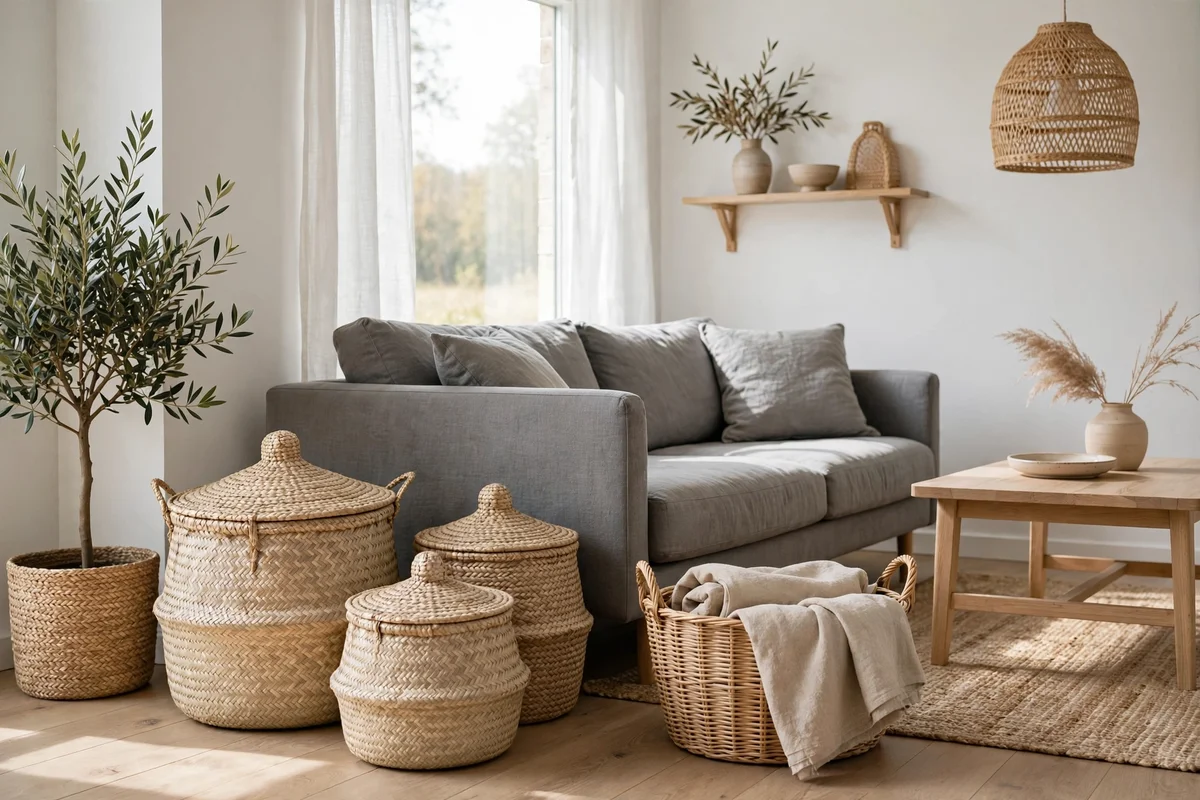
32. Create a Dedicated Hygge Corner
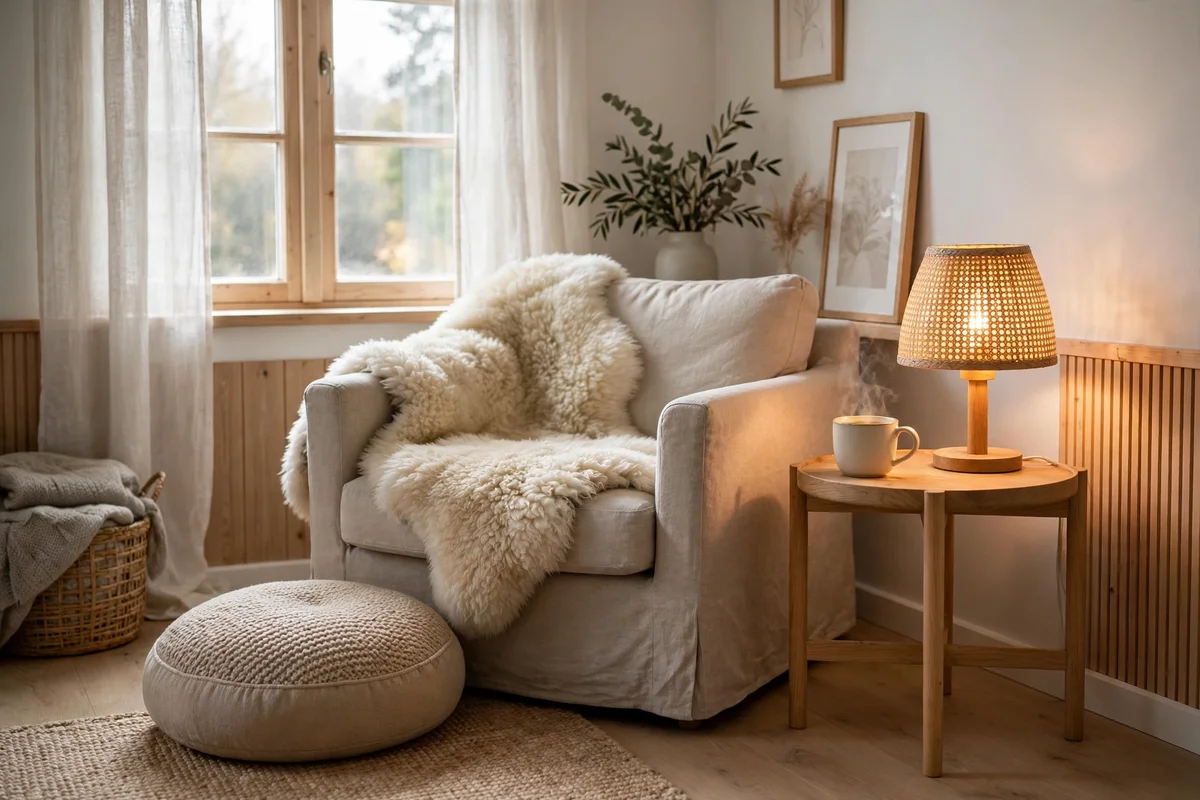
Every Scandinavian home has one spot designed purely for comfort, a reading chair with a floor cushion, a sheepskin, a small side table for tea, and a lamp with the warmest bulb in the house. It does not need much space; a 4×4 foot corner is enough. A floor cushion costs $40–$80, a small side table $60–$120. Pro tip: this corner should face inward toward the room or a window, never toward a television, hygge is about presence, and the Danes are serious about it. For the full philosophy applied room by room, see our Scandinavian studio ideas.
Frequently Asked Questions
What are the key colors in a Scandinavian living room?
White, soft grey, and pale wood tones form the base, with black used sparingly for contrast and muted pastels, sage, clay, dusty blue, as small accents. The palette stays low-contrast and tonal; nothing shouts. If you want one bold moment, make it a single graphic textile or art print rather than a wall of color.
How do I make a Scandinavian living room feel cozy, not cold?
Cozy comes from layering: multiple light sources at different heights, wool and sheepskin textiles, candles, and one living plant. The most common mistake is stopping at white walls and pale furniture, that is the canvas, not the painting. Add at least three textures (knit, hide, linen) and three warm light sources before judging the result.
Can a Scandinavian living room work with kids and pets?
Absolutely, with smart material choices. Performance fabrics on the sofa, washable wool-blend rugs, and lidded baskets for toy storage keep the calm intact. Sheepskins and light upholstery do show wear, so keep throws washable and choose a mid-tone grey sofa over white if real life is messy.
What is the difference between Scandinavian and minimalist style?
Minimalism is about reduction; Scandinavian design is about warmth through natural materials. A minimalist room might have a concrete floor and one chair, while a Scandinavian room has pale wood, wool textiles, candles, and a plant. Nordic style borrows minimalism’s clean lines but insists on tactile comfort, hygge is the difference.
How much does it cost to decorate a Scandinavian living room?
A full refresh using the ideas here typically runs $2,000–$5,000 depending on furniture needs, with the sofa and rug as the biggest investments. But you can capture the look for under $800 by focusing on paint, textiles, lighting, and plants while keeping existing furniture, light and layers do most of the work.
What lighting is best for a Scandinavian living room?
Layered and warm: a paper or fabric pendant for ambient glow, a floor lamp for reading, small table lamps for pools of light, and plenty of candles. Keep everything at 2700K or warmer, put it all on dimmers, and avoid a single bright overhead, the goal is many small warm sources, never one harsh one.
Final Thoughts
A Scandinavian living room is not a showroom, it is a daylight trap lined with wool, wood, and candlelight, designed to carry you through dark winters and bright summers with equal grace. Start with the light: white walls, sheer curtains, and mirrors. Build comfort in layers: textiles you want to touch, lighting at three heights, and storage that hides the chaos. Then add the soul: one plant, one graphic moment, and a corner that exists purely for sitting with tea doing nothing. Thirty-two ideas is a lot, but you do not need all of them, pick the five that speak to your space, and let the calm accumulate. That quiet, light-filled ease is the whole point of Nordic design, and it is absolutely achievable in any home.

2 Comments