34 Mid-Century Modern Living Room Ideas for Timeless Style
34 Mid-Century Modern Living Room Ideas for Timeless Style
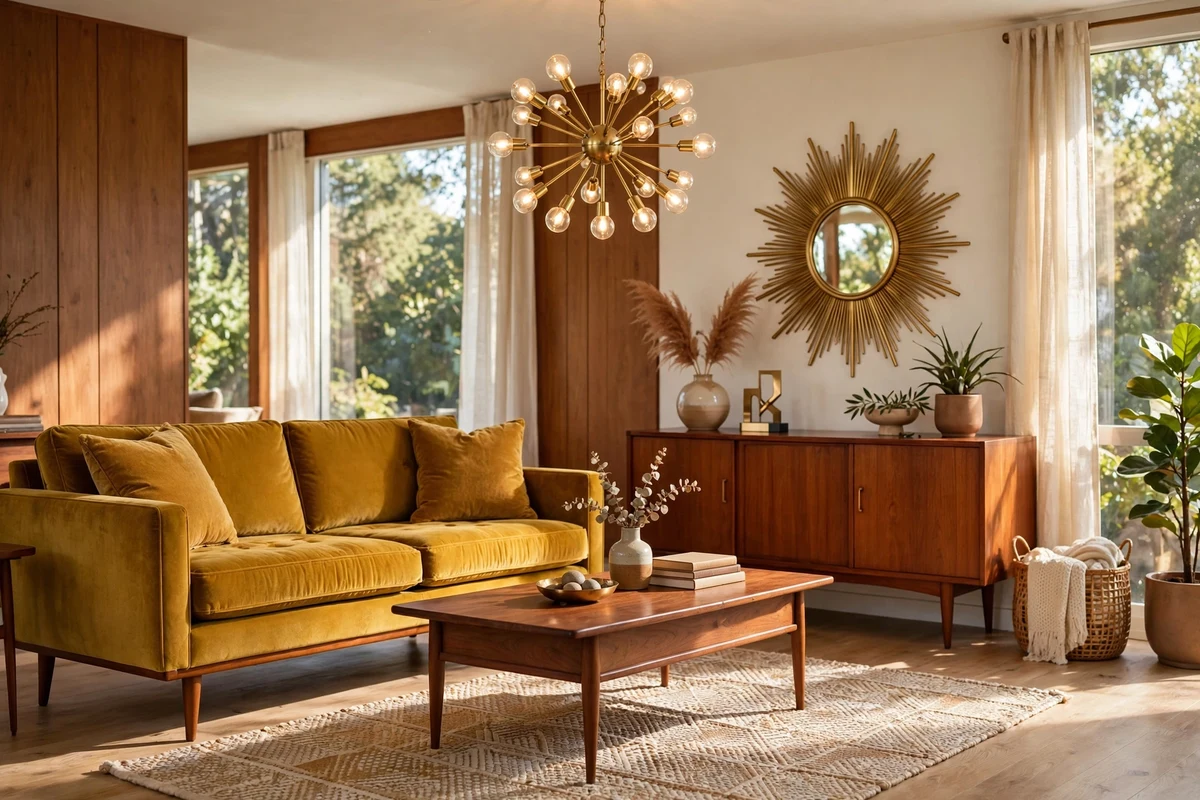
Mid-century modern living rooms never go out of style, and there is a good reason for that. Born in the postwar optimism of the 1950s and 1960s, this design movement pairs clean lines with organic curves, warm wood tones with bold pops of color, and smart function with effortless style. The result is a living room that feels both retro and completely current. Whether you love the sculptural silhouette of an Eames lounge chair, the warm glow of a sputnik chandelier, or the rich grain of a teak credenza, these 34 ideas will help you build the space layer by layer. Each one comes with realistic pricing, a practical pro tip, and a clear visual reference, so you can mix high and low pieces with confidence. From walnut floors to geometric rugs to the perfect reading corner, this guide covers every element you need for a living room that is timeless, livable, and full of character.
The Foundation: Floors, Walls and Light
1. Walnut Hardwood Floors Warm the Base
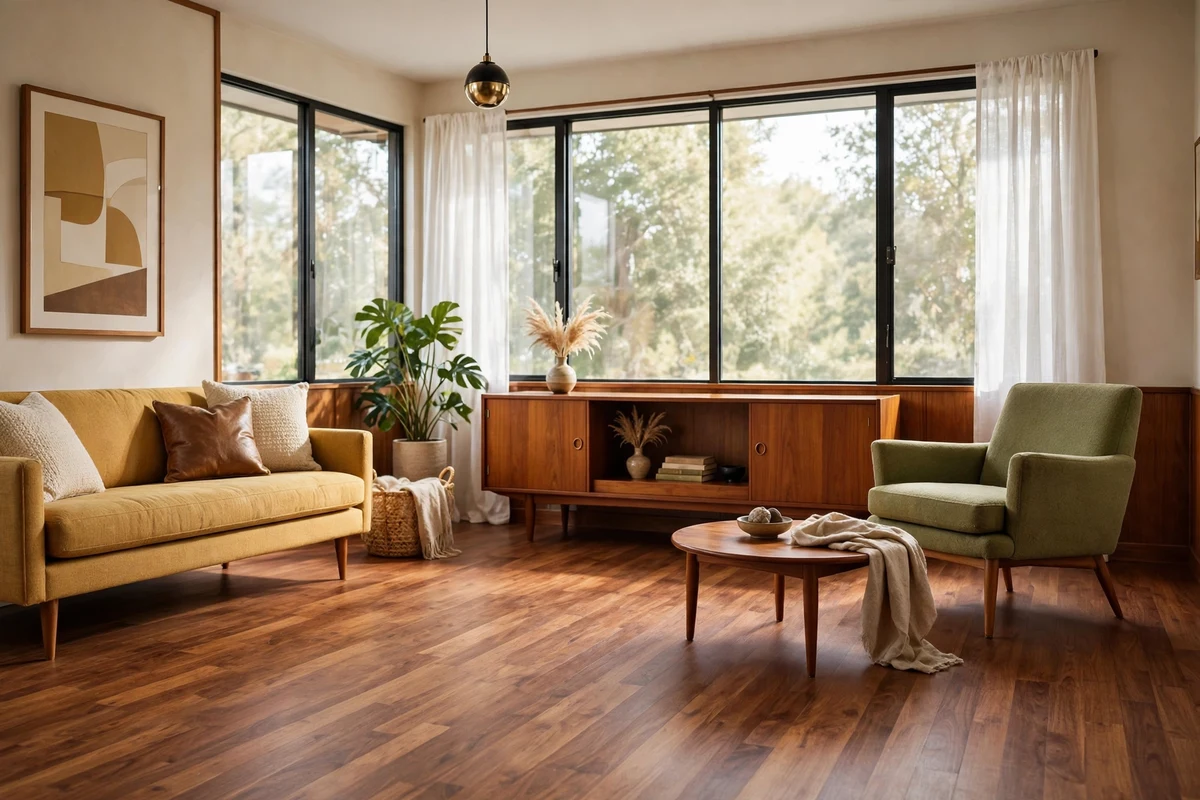
Warm walnut-stained hardwood floors set the perfect stage for mid-century modern style. The rich brown tones add instant depth and work beautifully with the teak, walnut, and rosewood furniture that defines the era. Refinishing existing hardwood floors costs $3 to $8 per square foot, while new walnut-stained engineered hardwood runs $6 to $12 per square foot installed. Choose a satin or matte finish rather than high gloss, since the mid-century look favors soft sheen over shine. Wide planks feel more authentic to the period than narrow strips. Pro tip: If refinishing is out of budget, a walnut-toned luxury vinyl plank at $2 to $5 per square foot gives you the same warm base with easy maintenance.
2. Warm White Walls Keep Things Bright
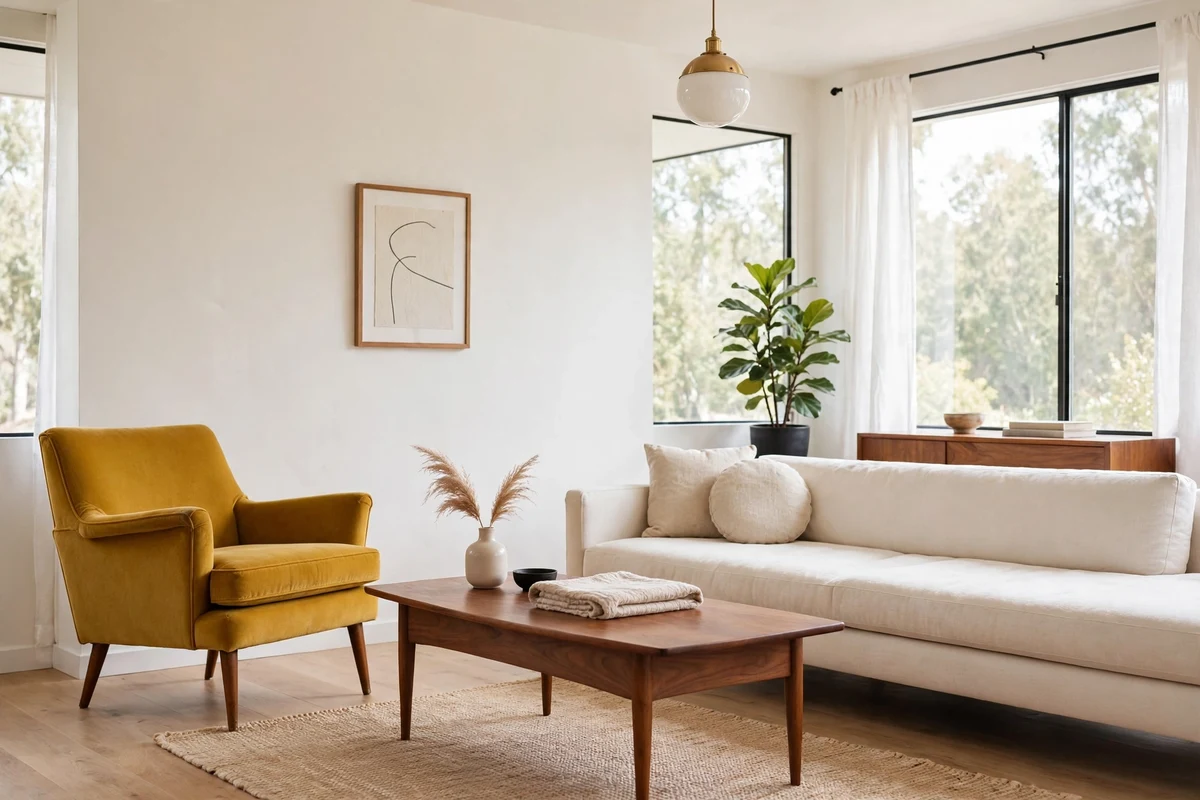
Warm white walls are the classic mid-century modern backdrop because they let the furniture take center stage. Shades with a hint of cream or beige, like Benjamin Moore White Dove or Sherwin Williams Alabaster, keep the room from feeling cold while bouncing light around. A gallon of quality interior paint costs $40 to $70 and covers about 350 square feet, so most living rooms need just two gallons for a fresh coat. Flat or eggshell finishes look best, since they soften the light instead of reflecting it harshly. Keep trim in the same color for a seamless, architectural feel. Pro tip: Test paint swatches on the wall for 48 hours before committing, since warm whites shift noticeably between morning and evening light.
3. Teal Geometric Accent Wall
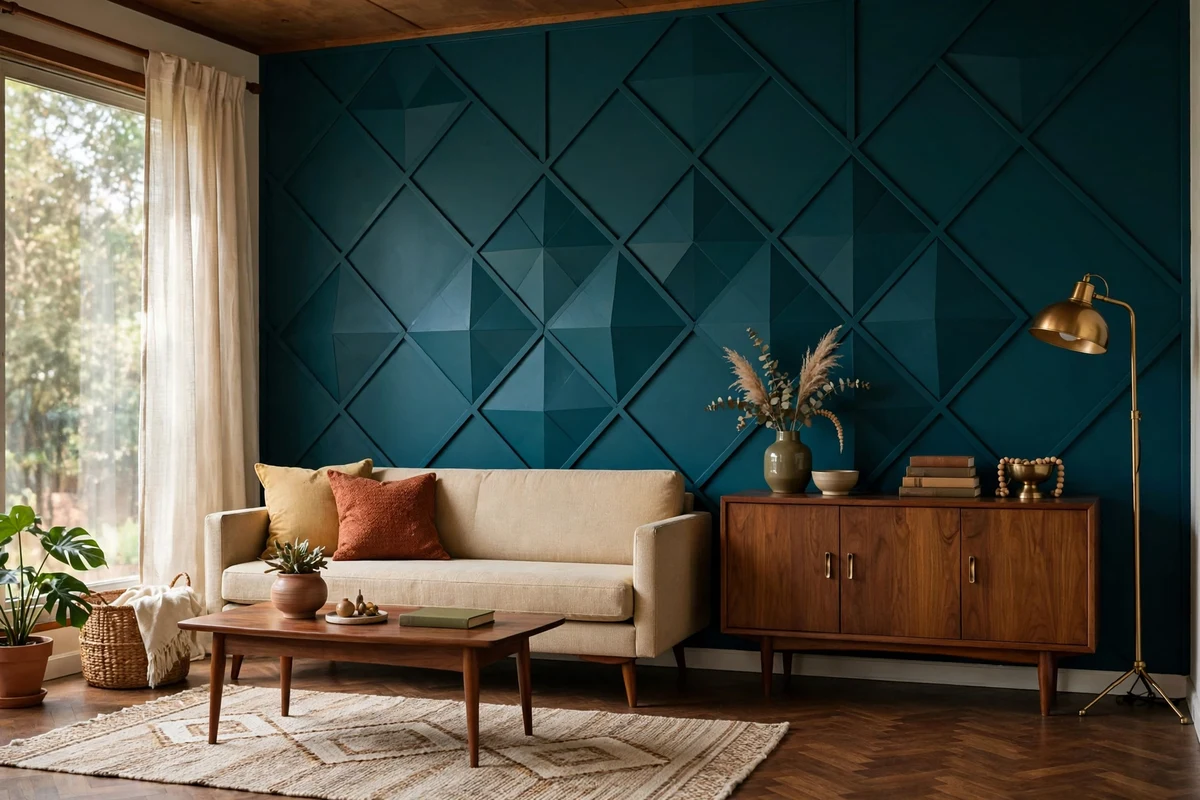
A single accent wall in deep teal with a subtle geometric pattern brings instant 1960s energy to your living room. Teal was a signature mid-century color, and it pairs perfectly with walnut wood, brass, and mustard textiles. Paint the wall a solid teal for $40 to $70 in paint, or add geometric interest with painter’s tape and two complementary shades for a retro atomic pattern. Removable geometric wallpaper in a teal colorway costs $50 to $150 per roll and works well for renters. Keep the other walls neutral so the accent wall stays the star. Pro tip: Place your sofa or credenza against the accent wall so the furniture anchors the color instead of competing with it.
4. Brick Fireplace as the Retro Centerpiece
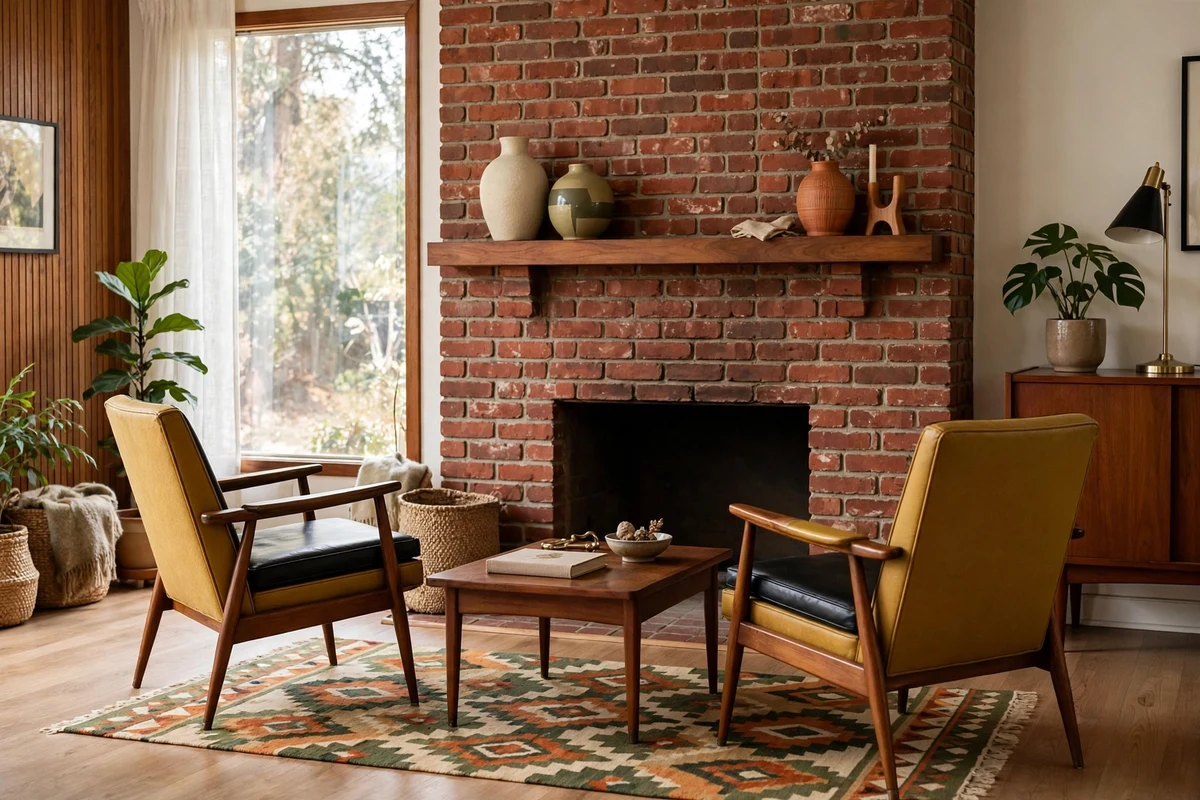
A brick fireplace was the heart of countless mid-century living rooms, and it still anchors a space like nothing else. The rough texture of brick contrasts beautifully with the smooth lines of period furniture. If you have an existing fireplace, cleaning and repointing the brick costs $500 to $2,500. No fireplace? A brick veneer accent wall around a freestanding electric stove gives the same look for $300 to $900. Style the mantel with a sunburst mirror, a pair of ceramic vases, and a low stack of art books. Keep mantel styling minimal, since mid-century design favors breathing room over clutter. Pro tip: Whitewashing brick ($100 to $300 in materials) softens the look for smaller rooms while keeping the texture.
5. Large Windows with Minimal Trim
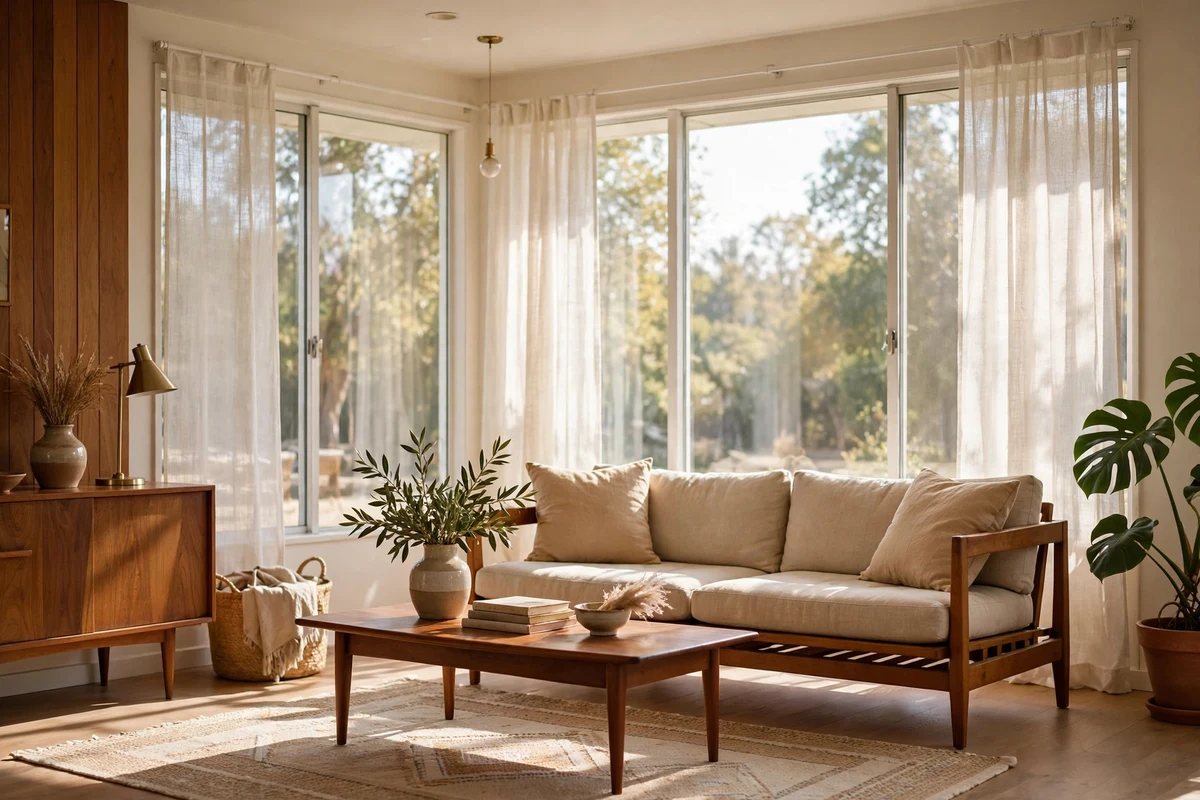
Mid-century modern design celebrates the connection between indoors and outdoors, so large windows with slim, minimal trim are essential. Floor-to-ceiling glass or wide picture windows flood the room with natural light and make the space feel twice as large. If replacing windows is not in the budget, which can run $500 to $1,200 per window, simply removing heavy curtains and painting trim in a slim white profile creates a similar airy effect. Keep window treatments simple with linen roller shades ($40 to $120 each) or sheer panels that filter light softly. Pro tip: Arrange seating to face the windows so the view becomes part of the room’s decor, just as mid-century architects intended.
6. Abstract Art Gallery Wall
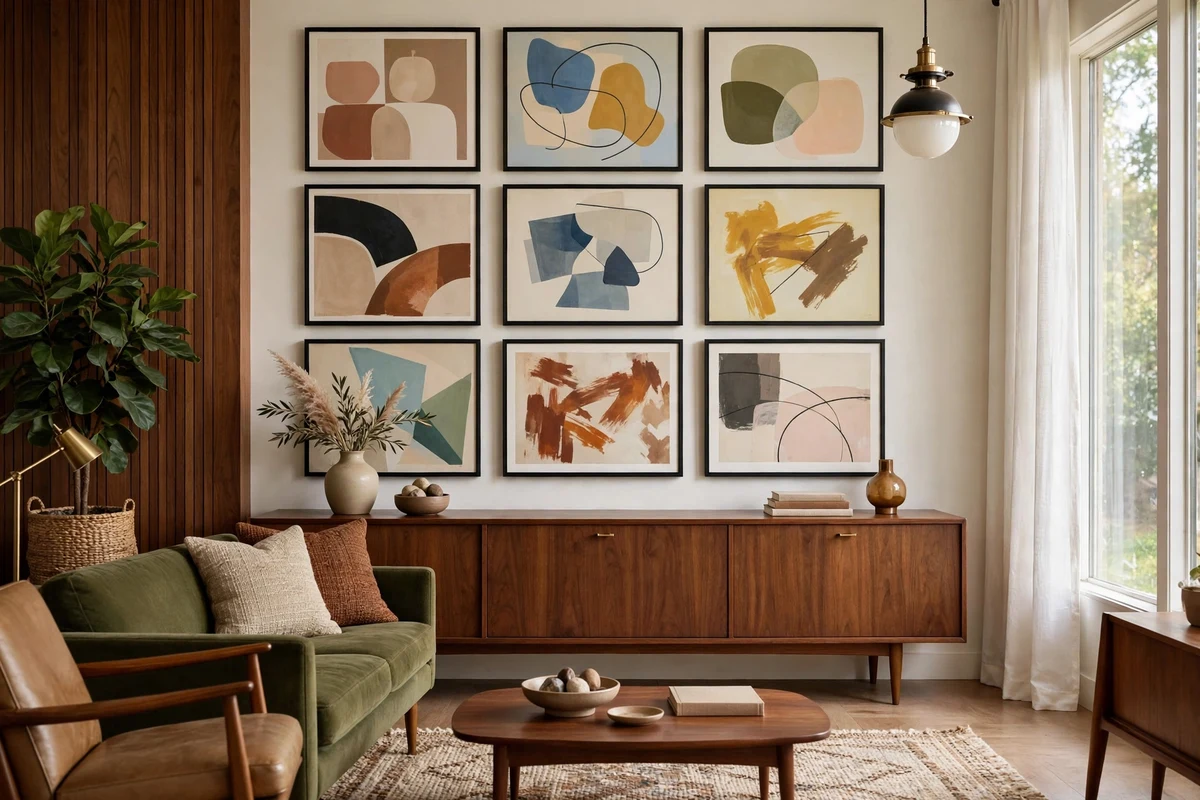
Bold abstract art in thin black or natural wood frames is the finishing touch every mid-century living room needs. Look for prints with organic shapes, geometric forms, or the classic boomerang motifs of the era. Vintage-style art prints cost $20 to $80 each, and simple gallery frames run $15 to $40, so a full gallery wall of six pieces can cost under $400. Hang the arrangement with the center at eye level, about 57 inches from the floor, and keep spacing between frames consistent at 2 to 3 inches. Mixing one large statement piece with smaller prints creates a curated, collected feel. Pro tip: Lay the arrangement on the floor first and photograph it, then use the photo as your hanging guide.
7. Sunburst Mirror Over the Sofa
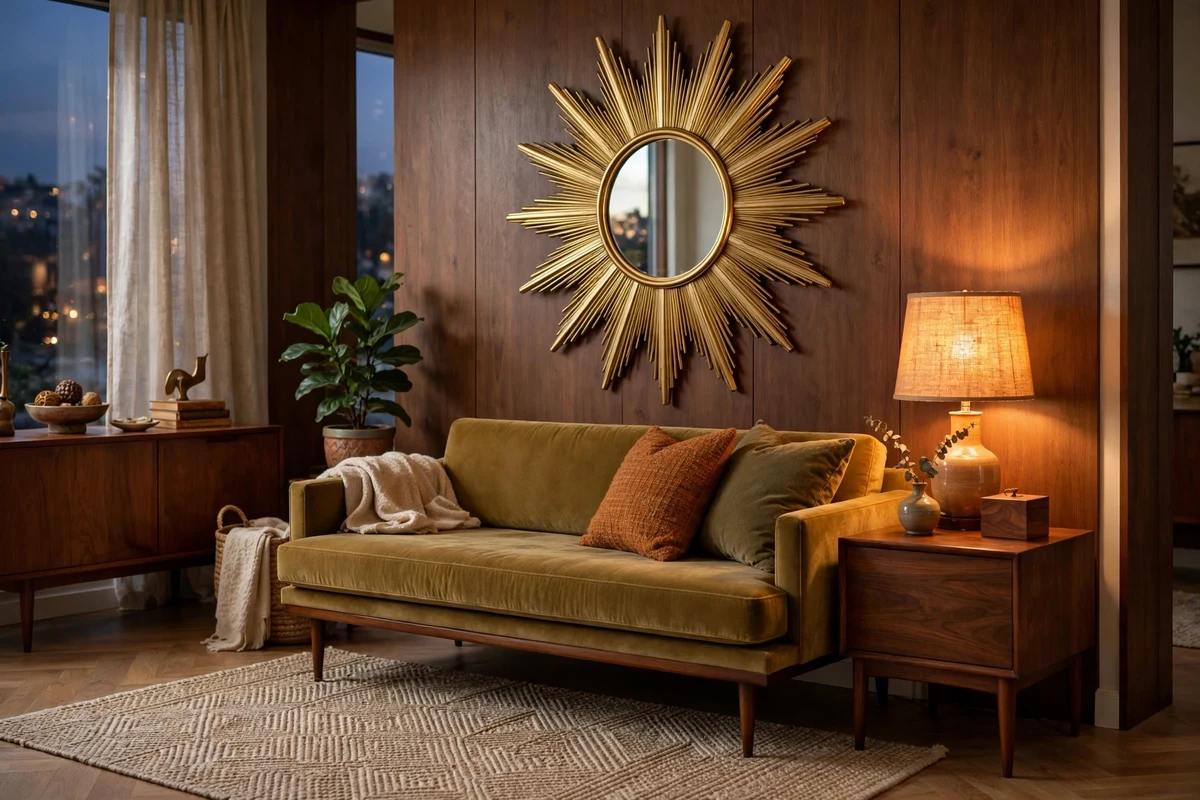
Few decor pieces scream mid-century modern like a sunburst mirror. The radiating rays in brass or gold-toned metal add sculptural interest and bounce light around the room. Authentic vintage sunburst mirrors cost $80 to $300 at flea markets and antique shops, while quality reproductions run $60 to $180. Hang it centered over the sofa, about 6 to 8 inches above the top of the backrest, for a balanced look. In smaller rooms, the mirror doubles as a light amplifier that makes the space feel larger. Choose a diameter between 24 and 36 inches for standard sofas. Pro tip: Pair the sunburst mirror with simple wall art on the opposite wall so the two focal points balance each other.
8. Starburst Wall Clock
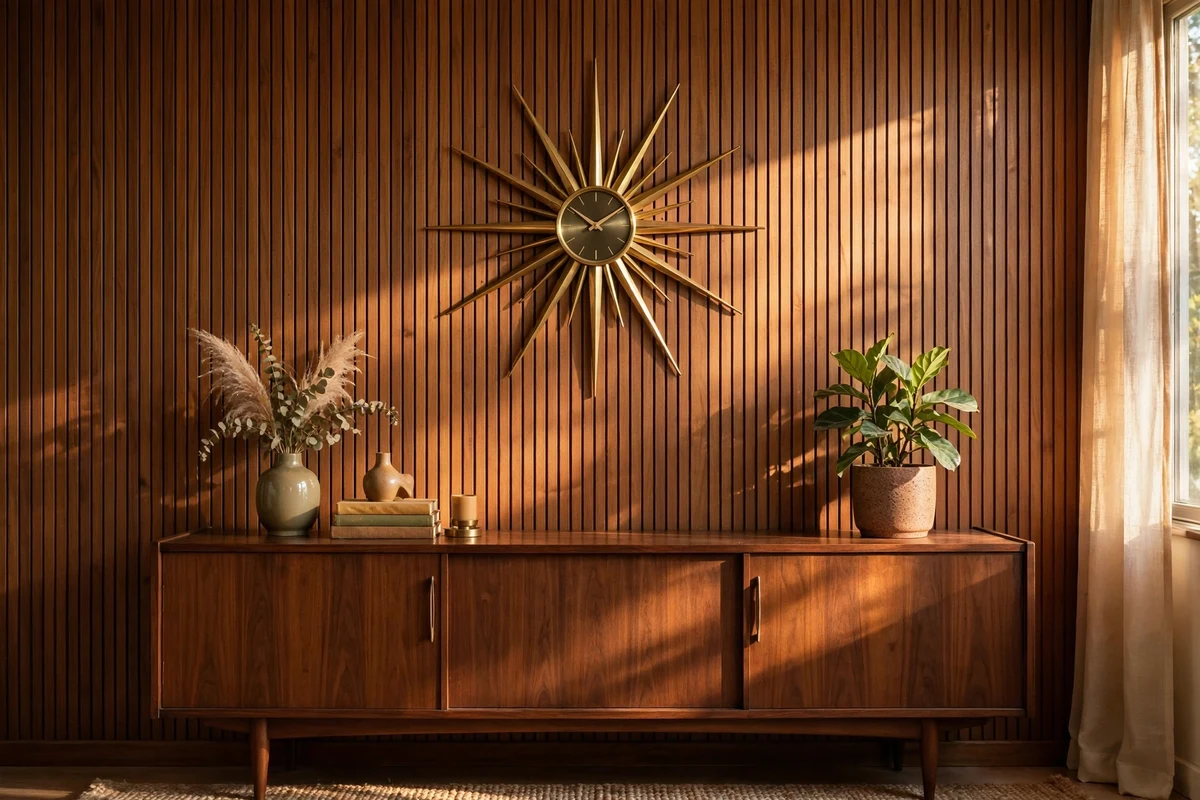
The starburst clock is the most iconic timepiece of the mid-century era, with its radiating metal spokes and atomic-age face. George Nelson’s original designs sell for $300 to $800, but faithful reproductions cost $50 to $150 and look just as striking on the wall. Hang it on a blank wall section where it can be appreciated as sculpture, ideally at eye level in a hallway-facing spot or above a low credenza. The brass or walnut finishes match the warm materials used throughout mid-century rooms. Battery-operated quartz movements keep time accurately with zero maintenance. Pro tip: A starburst clock works beautifully as the only wall decor on a narrow wall, where a gallery arrangement would feel crowded.
9. Woven Jute Rug Grounds the Seating Area
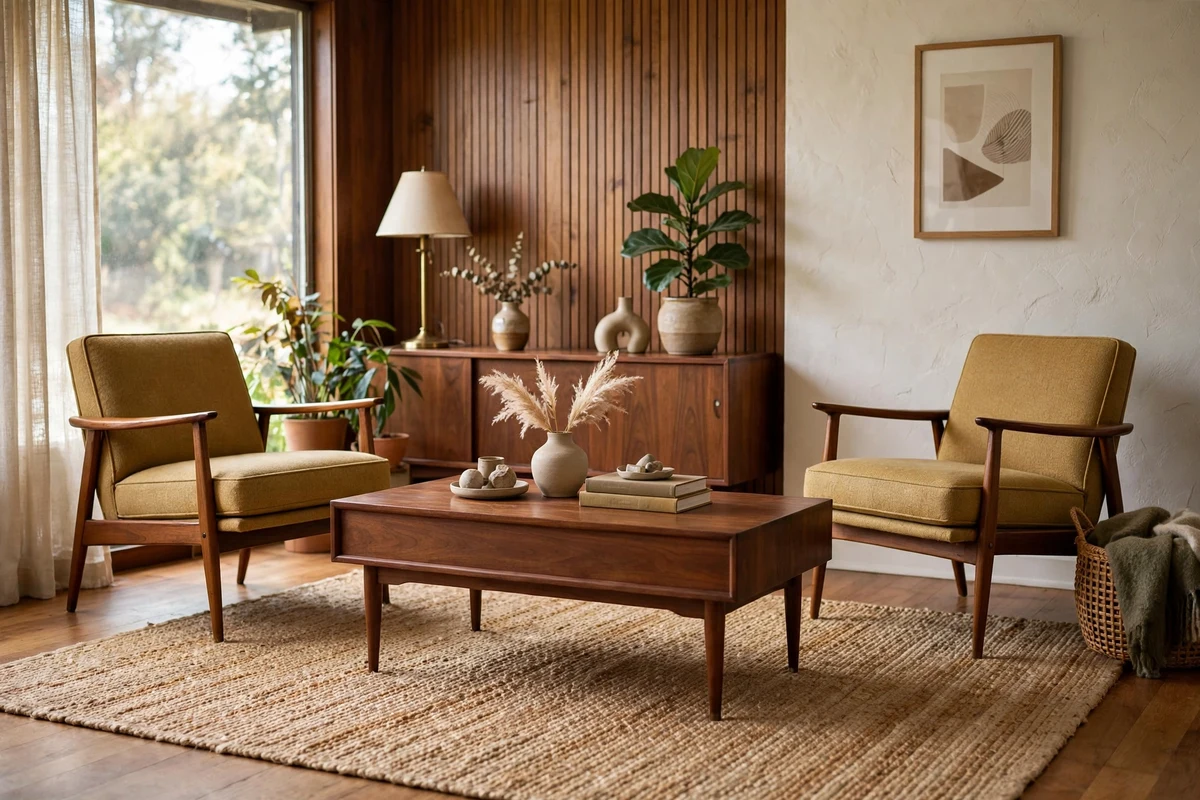
A natural woven jute rug adds the organic texture that keeps mid-century rooms from feeling too polished. The neutral tan color works with every palette, from mustard and teal to olive and rust. An 8×10 jute rug costs $150 to $400, while a 5×8 runs $80 to $200, making it one of the most budget-friendly foundation pieces. Choose a rug large enough that the front legs of your sofa and chairs sit on it, which usually means 8×10 for a standard seating arrangement. Layer a smaller patterned rug on top for extra mid-century flair if you like. Pro tip: Add a felt rug pad underneath ($40 to $80) to prevent slipping and give the flat weave a plusher feel underfoot.
Iconic Seating and Statement Furniture
10. Teak Credenza as the Media Hub
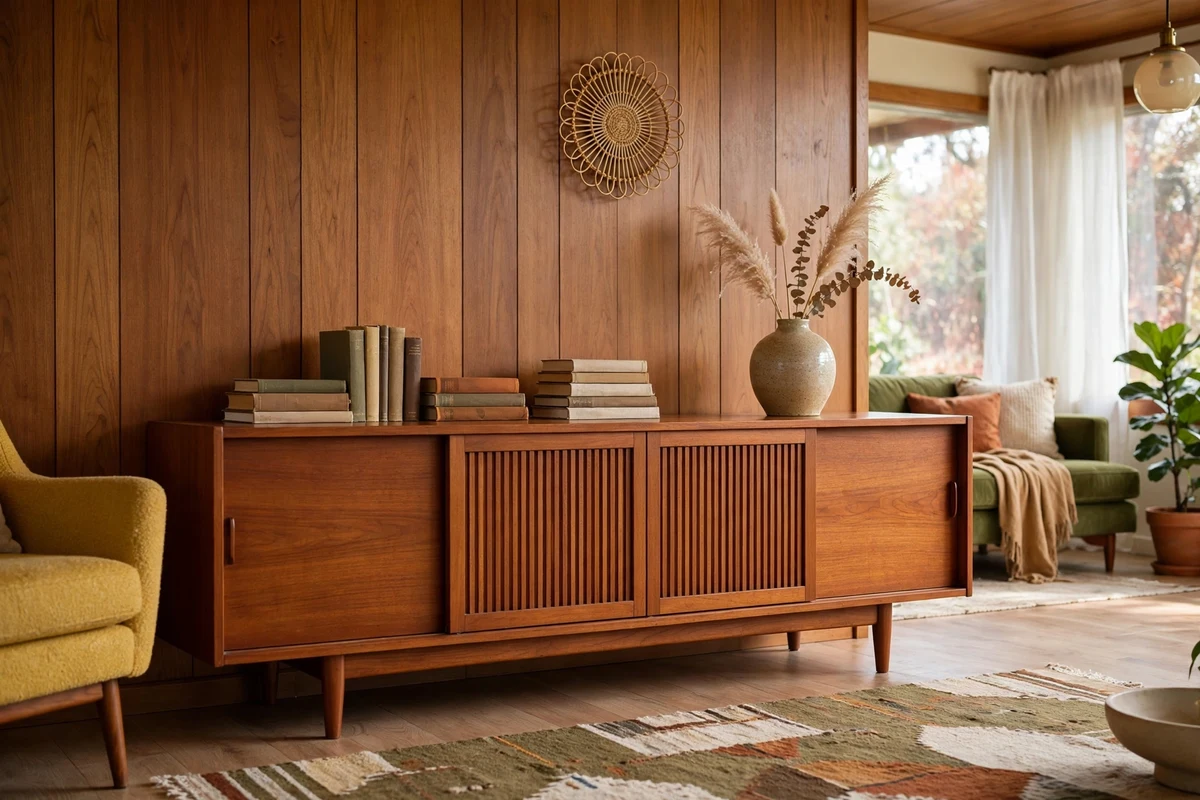
The long, low teak credenza is the workhorse of mid-century modern living rooms, hiding media equipment, games, and clutter behind sliding doors. Authentic vintage Danish teak credenzas cost $800 to $2,500, while quality reproductions run $400 to $900. Look for dovetailed drawers, solid teak construction, and the classic tapered legs that keep the piece feeling light. Style the top with a small stack of books, a ceramic vase, and one sculptural object, leaving plenty of empty space. Pro tip: Drill a discreet cord hole in the back panel before loading it with electronics so cables stay hidden and the clean lines stay intact.
11. Eames-Style Lounge Chair and Ottoman
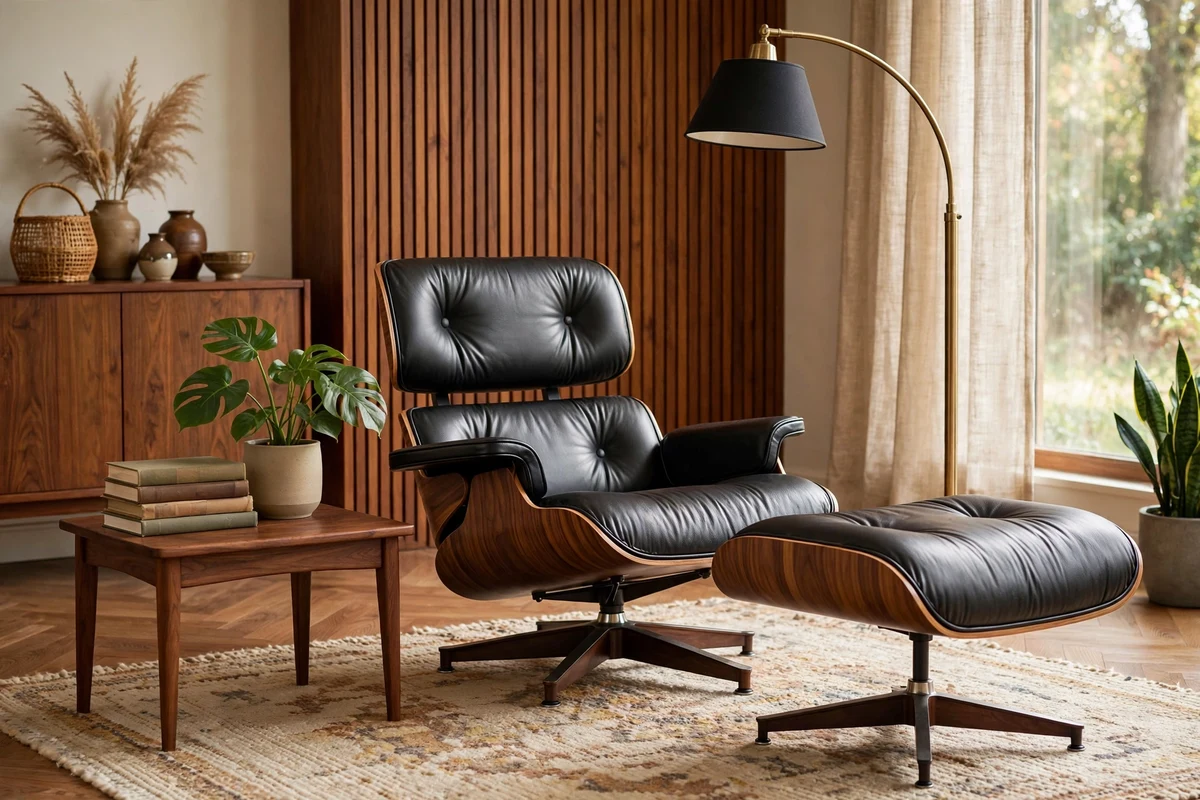
No piece says mid-century modern quite like the Eames lounge chair and ottoman, with its molded plywood shells and plush leather cushions. Originals cost $6,000 to $8,000, but high-quality reproductions run $600 to $1,500 and deliver the same sculptural presence. Place it in a reading corner with a floor lamp and a small side table to create the ultimate relaxation spot. Black leather with walnut veneer is the classic combination, though white or tan leather works in lighter rooms. Pro tip: Check reproduction reviews carefully for plywood quality and cushion density, since cheap versions sag within a year.
12. Tapered-Leg Sofa in Mustard Velvet
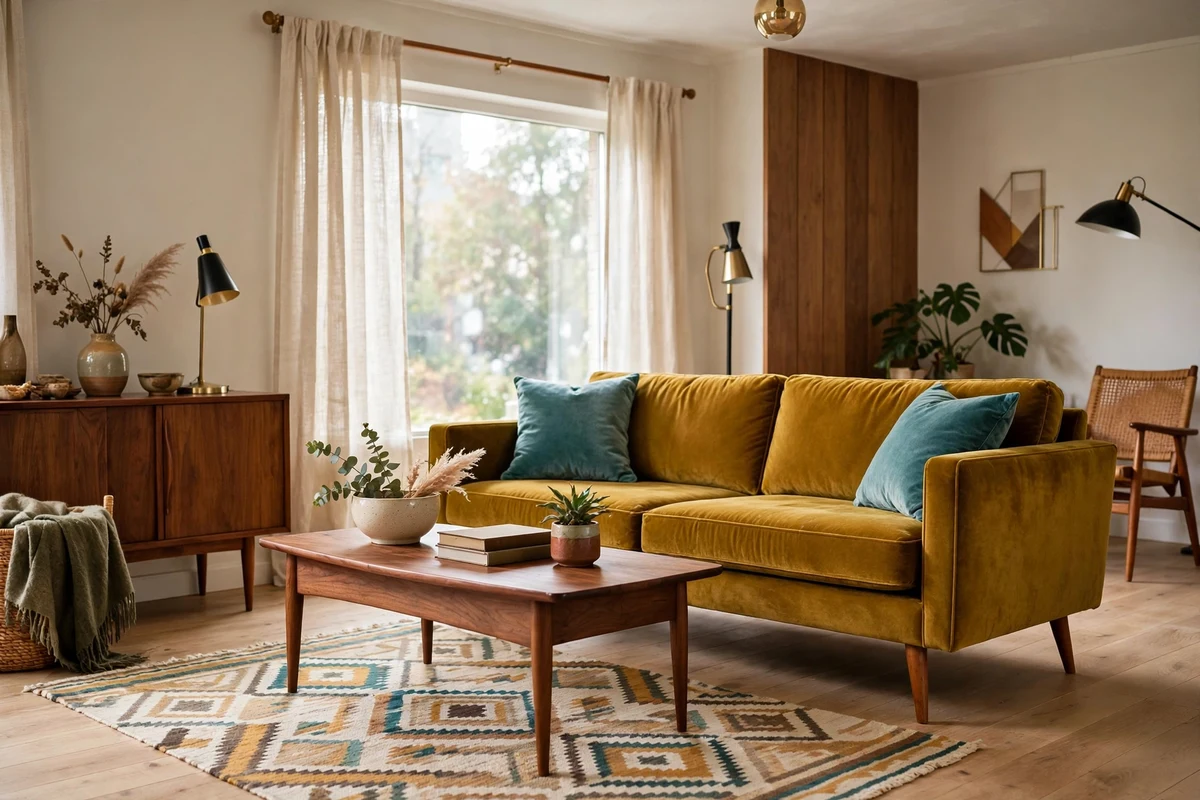
A low-profile sofa with tapered wooden legs in mustard velvet is the centerpiece of a true mid-century living room. The clean lines keep the silhouette light while the rich velvet adds warmth and texture. Quality mid-century style sofas cost $900 to $2,500, with velvet upholstery at the higher end. Look for kiln-dried hardwood frames and high-density foam cushions that hold their shape. Mustard pairs beautifully with teal, walnut, and cream, the classic mid-century palette. Pro tip: Choose a sofa with removable cushion covers if you have kids or pets, since velvet shows wear and is easier to maintain when covers can be cleaned.
13. Noguchi-Style Glass Coffee Table
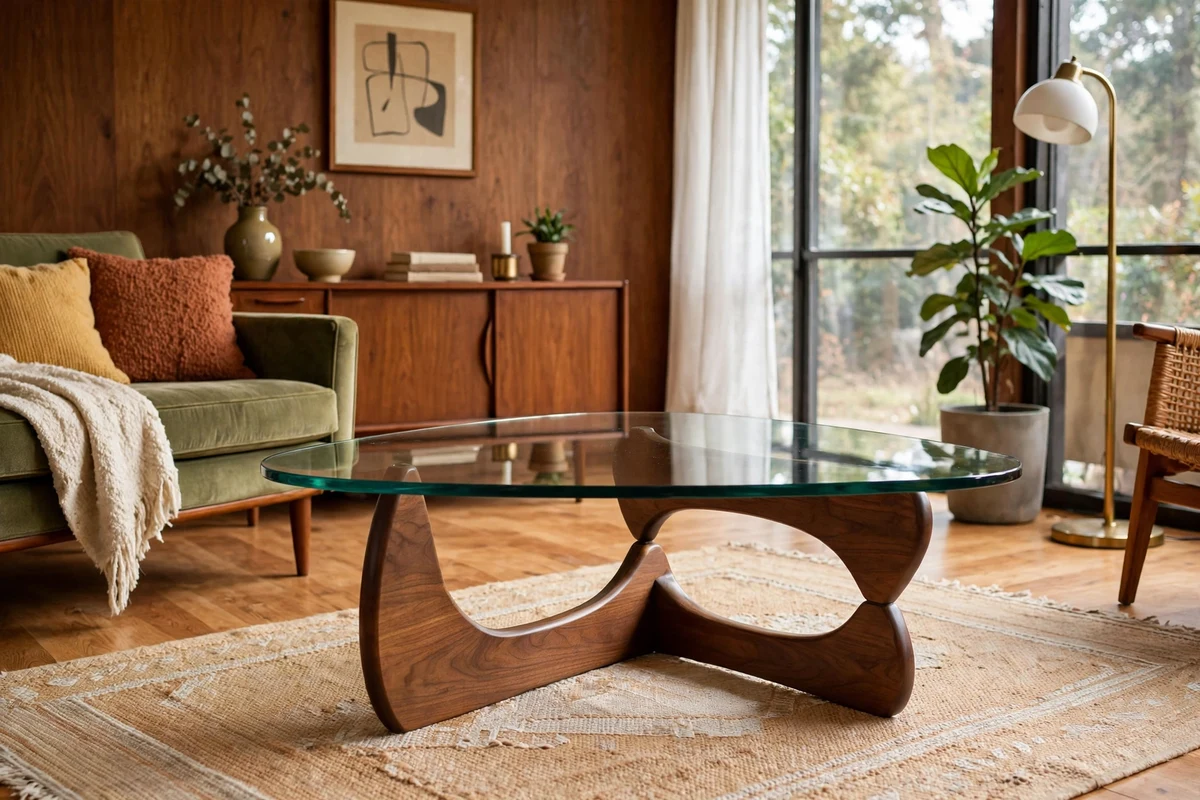
The Noguchi coffee table, with its freeform glass top balanced on a sculptural wooden base, is functional art for the living room. Originals cost $2,000 to $2,500, while well-made reproductions run $200 to $600. The transparent top keeps small rooms feeling open since it does not block sightlines. Style it with a single coffee table book, a small ceramic bowl, and nothing else, since the base itself is the decoration. The interlocking wood base comes in walnut, oak, or ebonized finishes. Pro tip: Use felt pads under the glass top and coasters religiously, since glass shows every ring and scratch.
14. Molded Armchairs with Dowel Legs
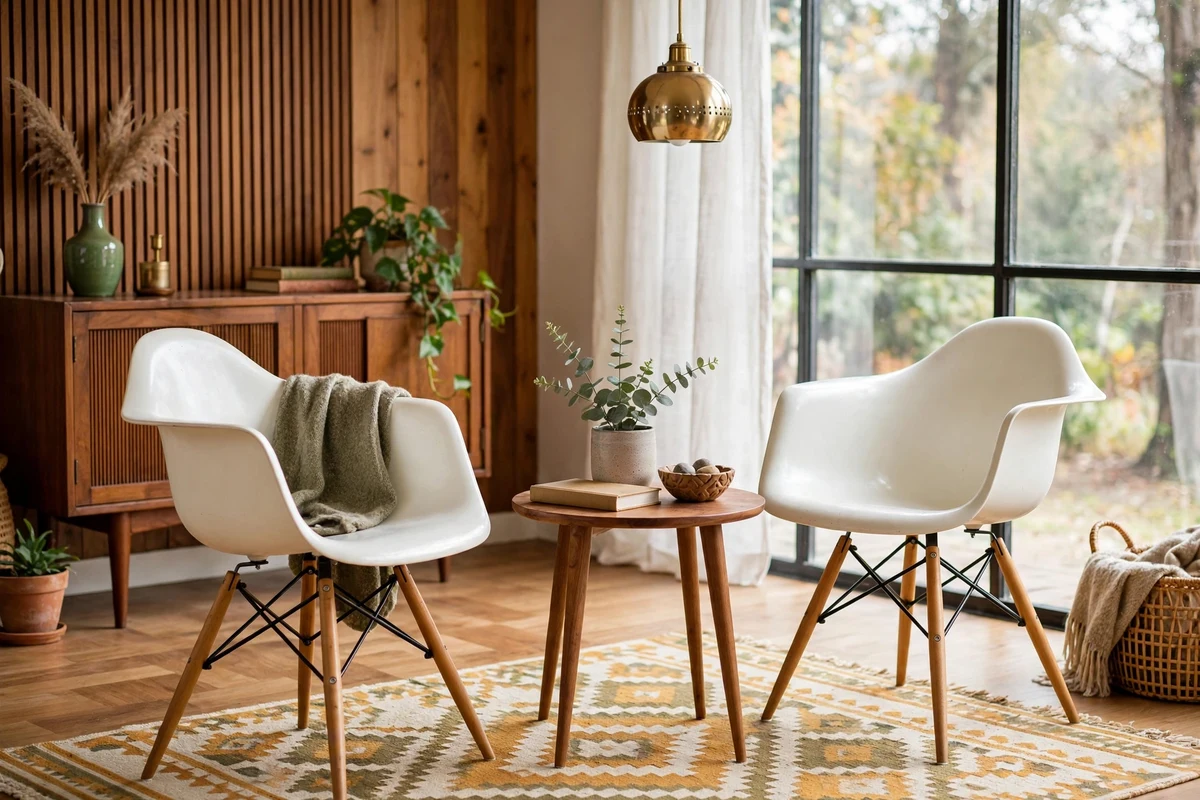
Molded plastic armchairs with wooden dowel legs bring playful mid-century charm at a friendly price. Inspired by the Eames shell chair, these lightweight seats work as dining chairs, desk chairs, or extra living room seating. A pair costs $120 to $400 depending on quality, with solid wood dowel legs worth the upgrade over metal. White, black, and muted pastels are the most authentic colors. Tuck a pair into a reading nook or flank them around a small side table for flexible seating. Pro tip: Add thin seat pads in a contrasting color for comfort and an extra layer of mid-century pattern.
15. Leather Daybed for Lounging
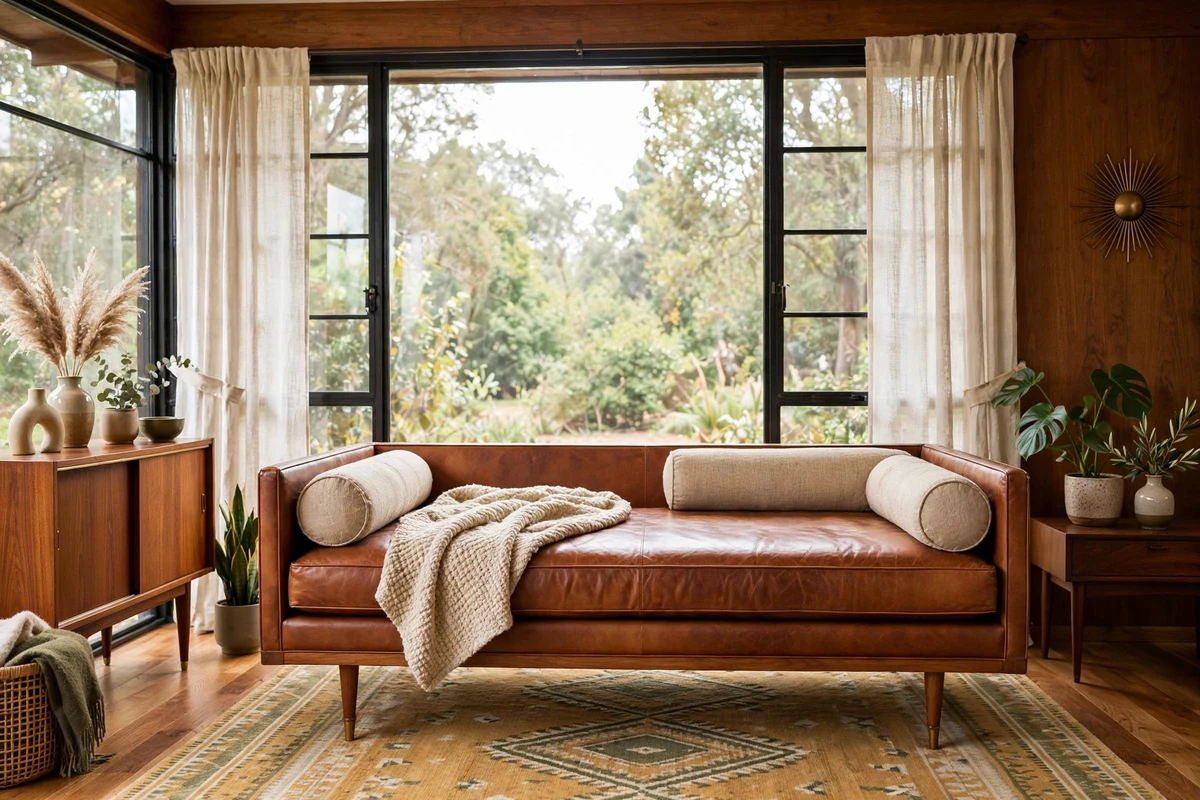
A leather daybed styled with bolster pillows doubles as a lounge spot by day and a guest bed by night. Mid-century daybeds feature simple platform frames in teak or walnut with clean-lined cushions. Quality daybeds cost $700 to $2,000, with genuine leather upholstery at the top of the range. Dress it with a throw blanket and two cylindrical bolsters rather than a pile of pillows for the authentic streamlined look. Place it under a window to create a sunlit reading spot. Pro tip: Choose a daybed with a trundle or storage drawers underneath to make it work harder in small living rooms.
16. Floating Walnut Shelves
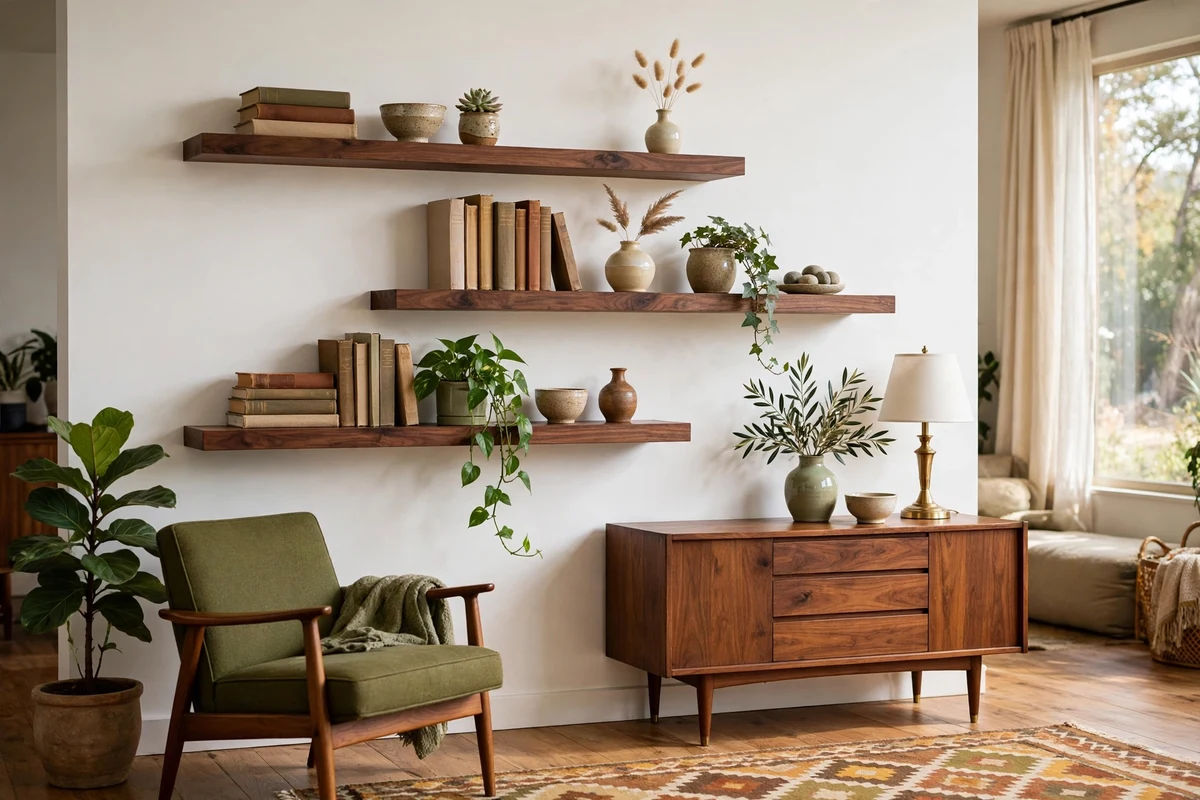
Floating walnut shelves display books, ceramics, and plants without the visual weight of a full bookcase. Solid walnut floating shelves cost $60 to $150 each for a 36-inch length, and a set of three creates a strong horizontal line that suits mid-century proportions. Style them with a mix of vertical books, small potted plants, and one or two sculptural objects, leaving negative space between groupings. Mount them with hidden brackets rated for at least 25 pounds per shelf. Pro tip: Keep shelf styling to odd-numbered groupings of three or five objects, which looks more natural than even arrangements.
17. Teak Room Divider Screen
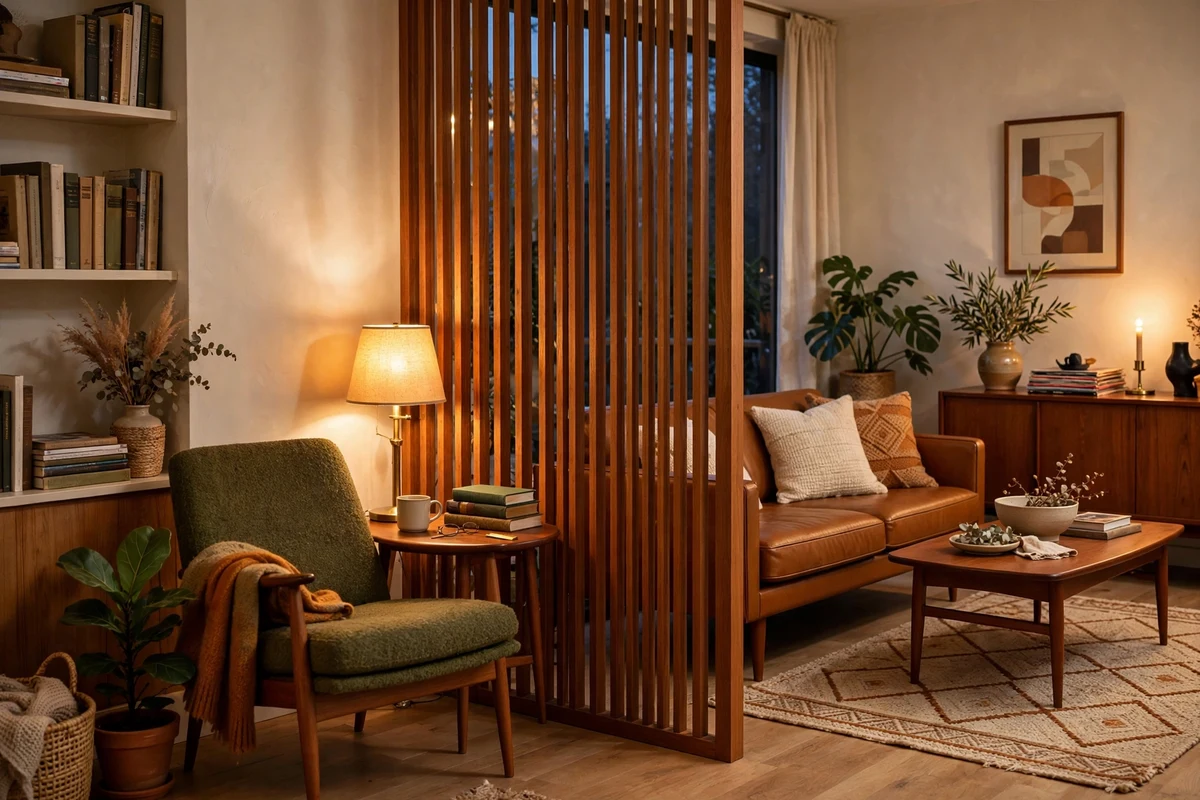
A teak slatted room divider adds architectural interest while defining zones in an open-plan living room. The vertical slats filter light and sightlines without closing off the space, a trick straight from mid-century open floor plans. Vintage teak dividers cost $400 to $1,200, while new slatted panels run $200 to $600. Use one to separate a reading nook from the main seating area or to hide a home office corner. The warm wood tone ties in with other teak pieces in the room. Pro tip: Freestanding dividers on feet are more flexible than ceiling-mounted panels, so you can rearrange as your needs change.
18. Low Walnut Bookcase
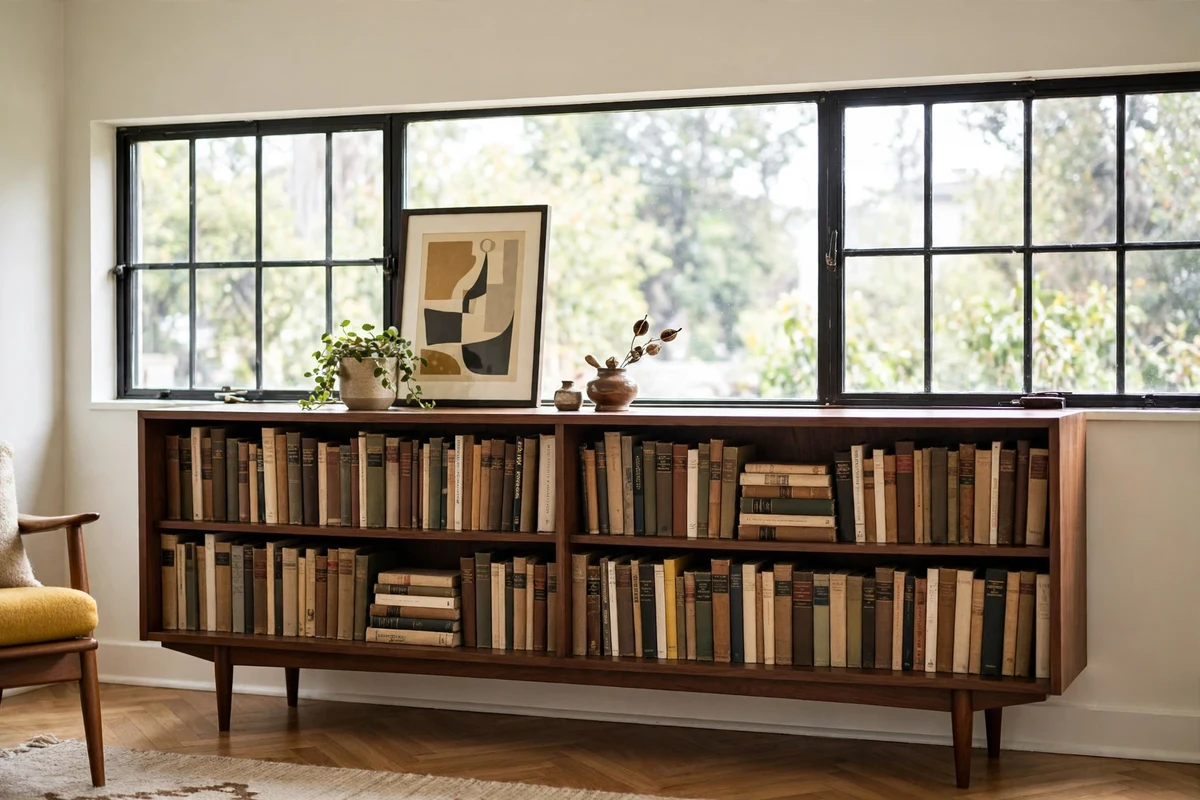
A low, horizontal walnut bookcase fits the long, low profile that defines mid-century furniture. At 30 to 36 inches tall, it slides perfectly under windows and doubles as a display ledge for art and plants on top. Vintage walnut bookcases cost $300 to $900, while solid wood reproductions run $250 to $700. Arrange books both vertically and in horizontal stacks to create rhythm, and leave some shelves partly empty for breathing room. The low height keeps sightlines open across the room. Pro tip: Anchor the bookcase to the wall with anti-tip hardware, especially in homes with children, since low bookcases invite climbing.
Color, Pattern and Texture
19. Mustard, Olive and Burnt Orange Palette
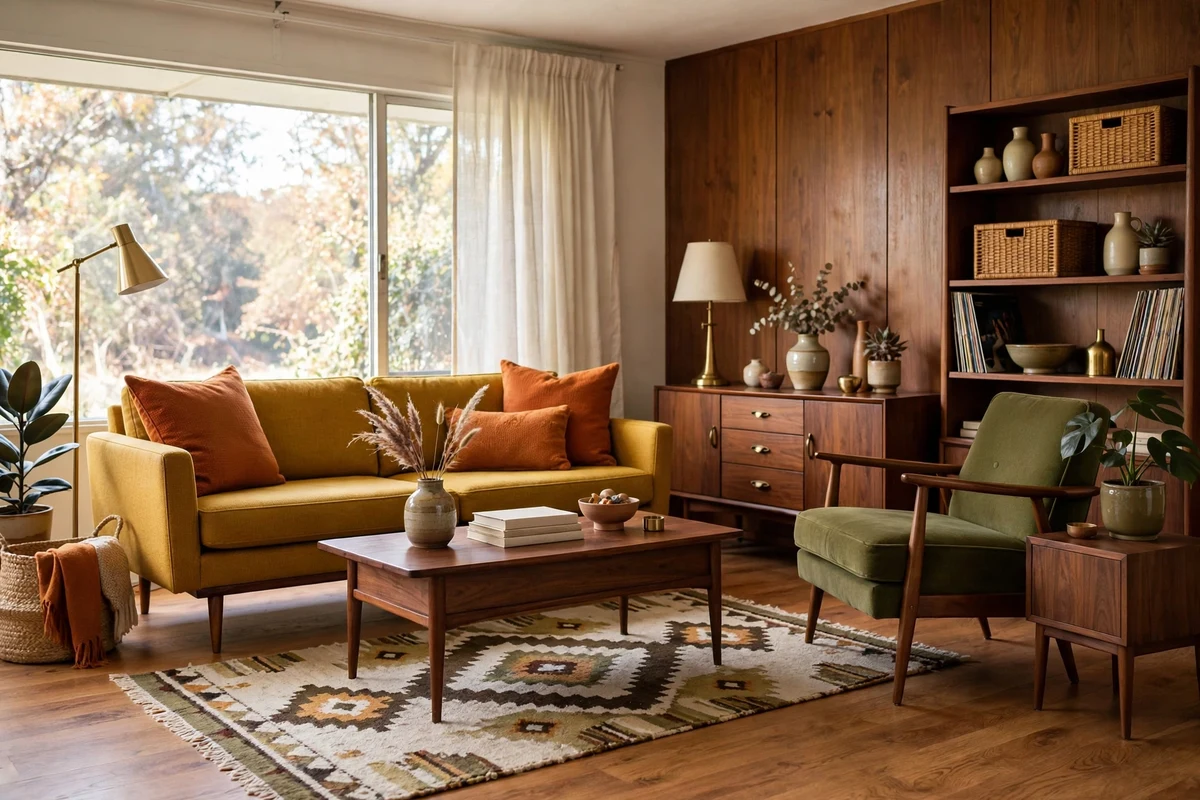
The signature mid-century palette of mustard, olive, and burnt orange brings warmth and retro confidence to any living room. These earthy tones echo the 1960s love of nature-inspired color and pair perfectly with walnut wood. Build the palette through upholstery, throw pillows, and art rather than paint, so you can adjust the balance over time. A mustard sofa ($900 to $2,500), olive armchair ($400 to $1,200), and burnt orange throws ($30 to $80 each) create the classic trio. Keep the background neutral so the colors pop. Pro tip: Follow the 60-30-10 rule with 60 percent neutral, 30 percent mustard or olive, and 10 percent burnt orange accent.
20. Atomic-Age Geometric Rug
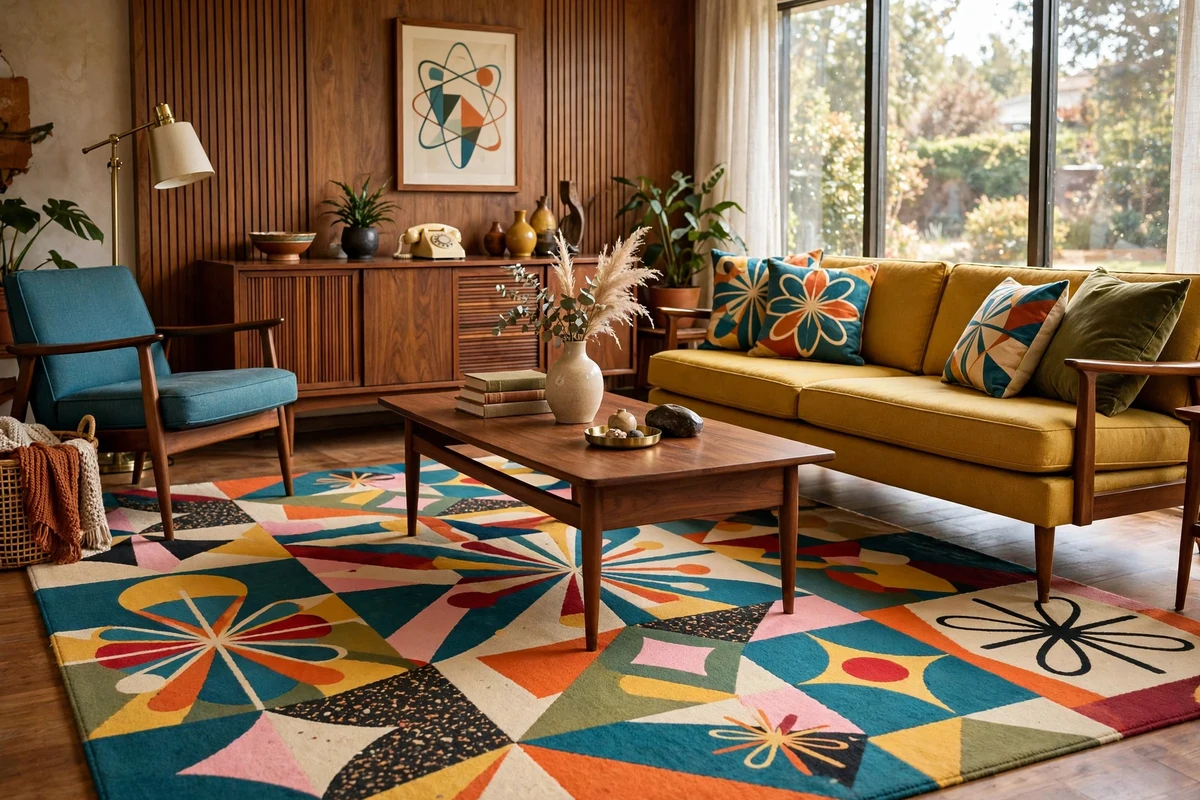
An atomic-age geometric rug with starbursts, boomerangs, or abstract shapes is pure mid-century joy underfoot. These bold patterns were designed to be seen, so choose one large enough to anchor the whole seating area, typically 8×10 feet for $200 to $600. Wool rugs cost more but last decades, while polypropylene versions run $150 to $350 and resist stains. Let the rug’s colors guide your throw pillows and art for a pulled-together look. Keep furniture legs on the rug’s edges to lock the arrangement in place. Pro tip: If the pattern feels busy, balance it with solid-color upholstery so the eye has somewhere to rest.
21. Orange and Teal Throw Pillows
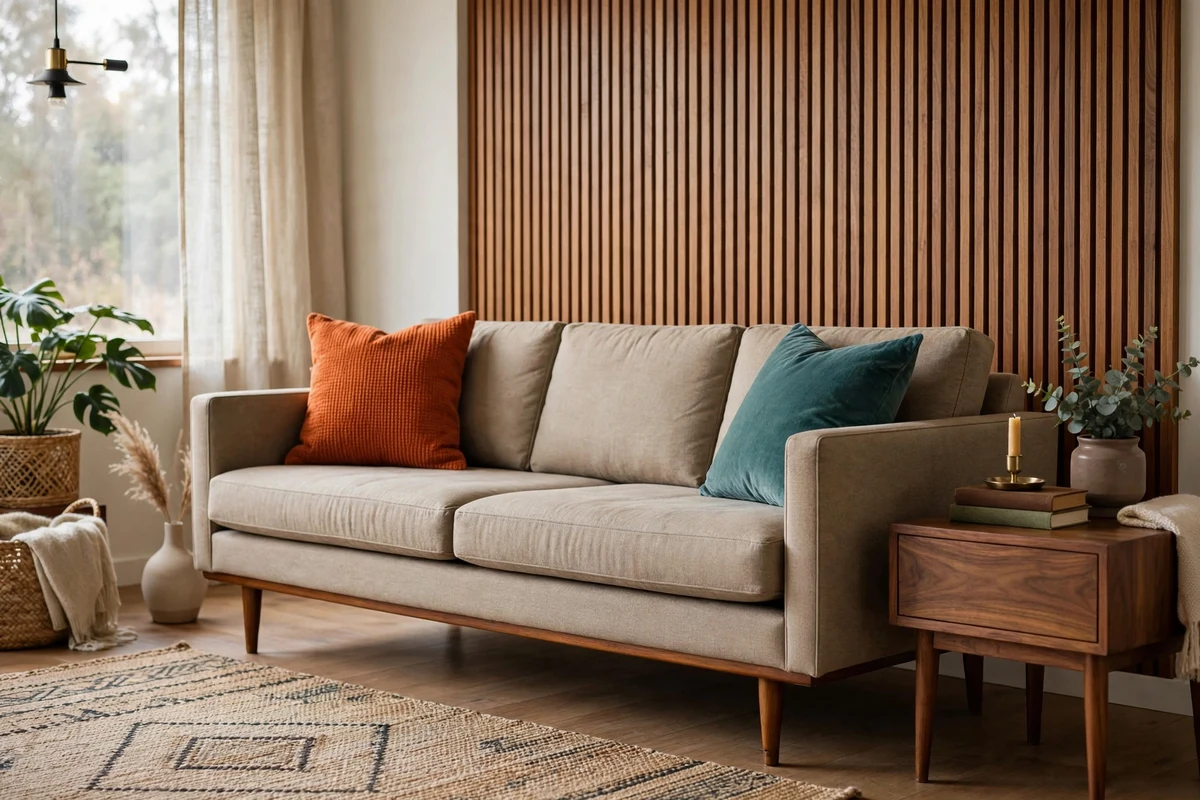
Burnt orange and teal throw pillows are the fastest way to add mid-century color to a neutral sofa. This complementary pairing was everywhere in 1960s interiors and still feels fresh today. Quality throw pillows with feather inserts cost $25 to $60 each, and five pillows transform a plain sofa for under $250. Mix solids with one or two geometric patterns in the same color family for depth. Choose 20-inch squares for standard sofas, with one 12×20 lumbar pillow in front. Pro tip: Buy pillow covers rather than full pillows when refreshing seasonally, since covers cost half as much and store flat.
22. Woven Rattan Accent Chair
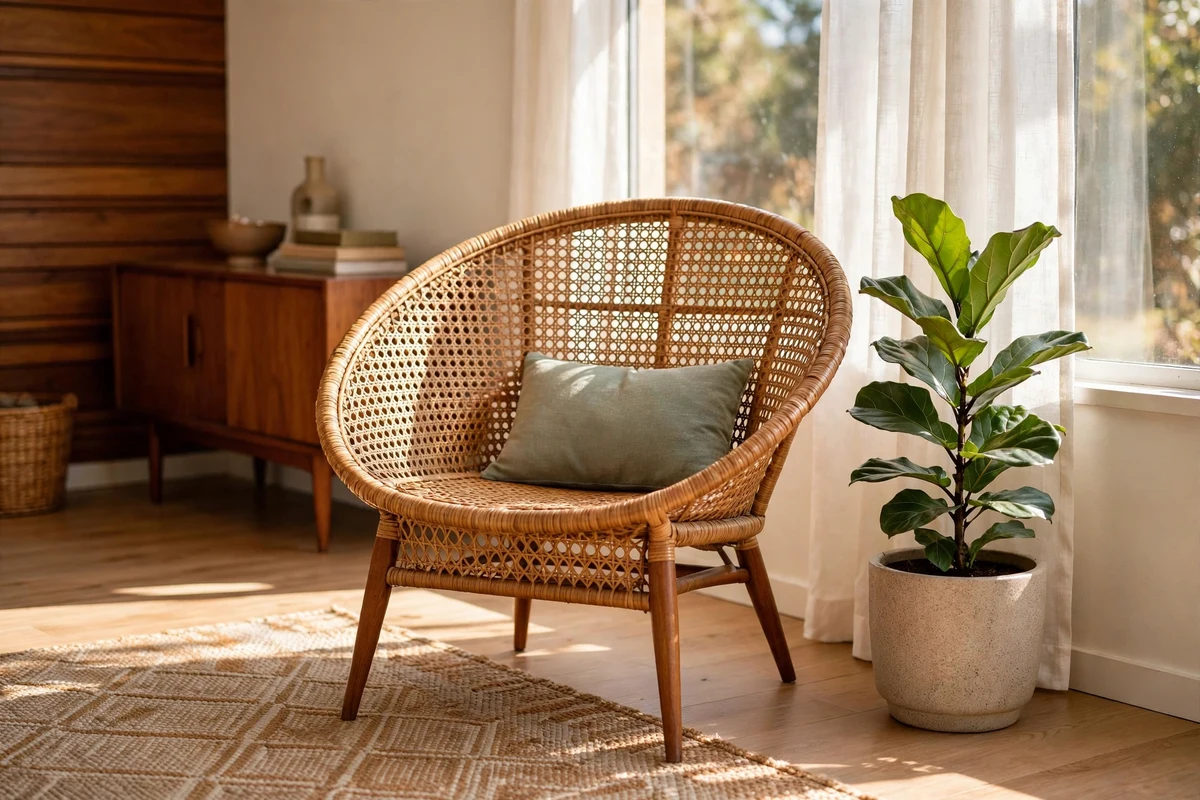
A woven rattan accent chair adds organic texture and a touch of 1970s warmth to mid-century rooms. The open weave keeps the chair visually light, making it perfect for small spaces or sunny corners. Rattan accent chairs cost $150 to $500, with vintage peacock styles at the higher end. Style it with a small sheepskin throw or a single patterned cushion for comfort. The natural honey tone of rattan complements walnut and teak beautifully. Pro tip: Keep rattan out of direct daily sun or rotate the chair monthly, since prolonged UV exposure dries and brittles the fibers.
23. Fluted Walnut Wall Paneling
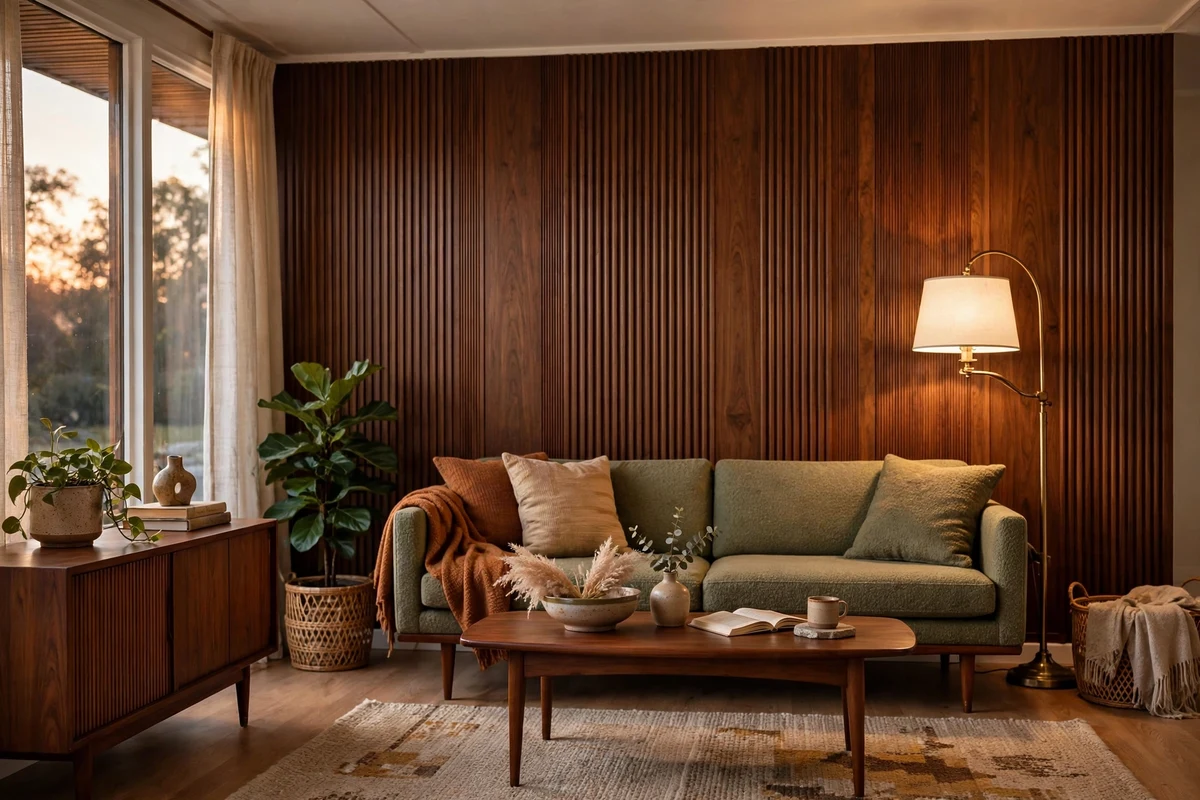
Fluted walnut wall paneling adds the architectural richness that makes mid-century rooms feel custom and considered. The vertical grooves catch light and shadow, creating movement on an otherwise flat wall. Real walnut slat panels cost $8 to $20 per square foot, so a 10-foot accent wall runs $800 to $2,000 installed. Apply it behind the sofa or TV wall for maximum impact. For a budget version, paintable fluted MDF panels cost $3 to $8 per square foot and take walnut-toned stain well. Pro tip: Run the paneling floor to ceiling rather than stopping at chair rail height, since full-height reads more authentically mid-century.
24. Cream Round Shag Rug
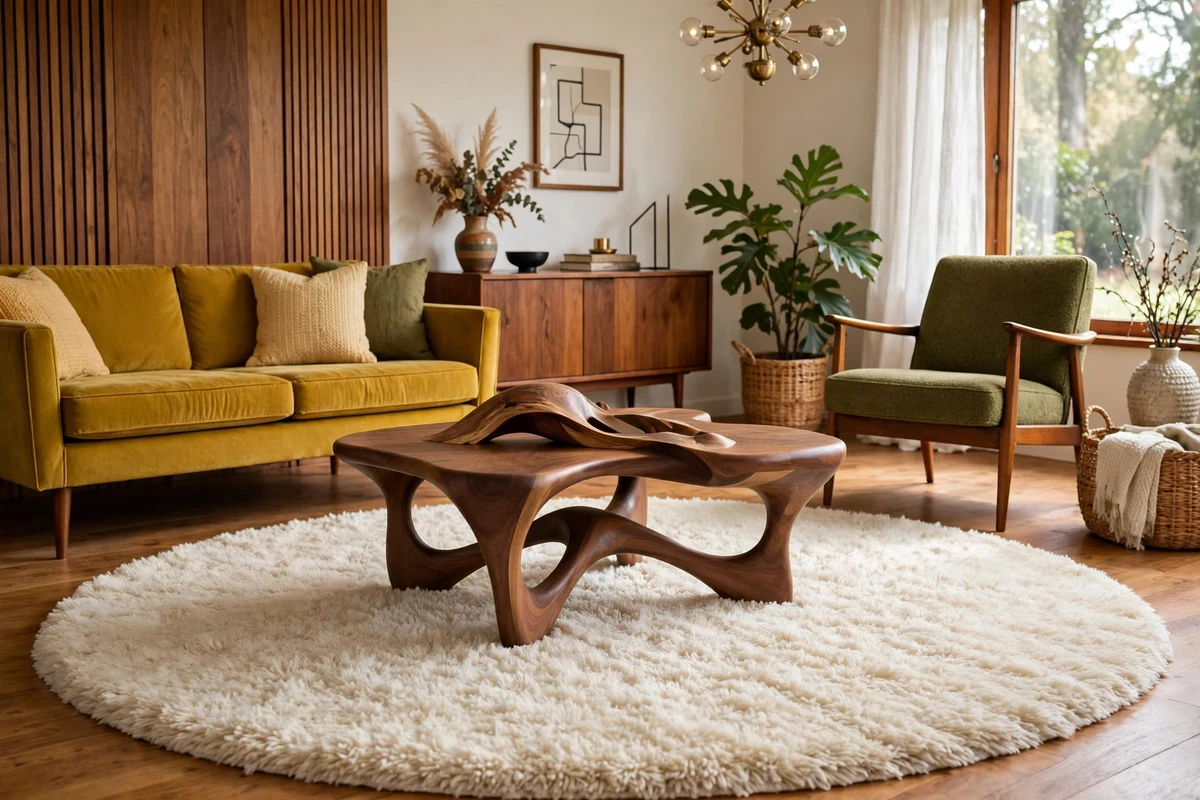
A cream round shag rug softens the hard lines of mid-century furniture with cloud-like texture. The circular shape breaks up the rectangular geometry of sofas and credenzas, adding a playful retro note. A 6-foot round shag rug costs $120 to $350, making it an affordable layering piece. Place it under a Noguchi or surfboard coffee table where the round shape echoes the table’s curves. Low-traffic placement keeps the shag looking fresh longer. Pro tip: Shake the rug outside monthly and vacuum with the beater bar off to keep the pile fluffy without pulling fibers.
25. Terrazzo Side Table
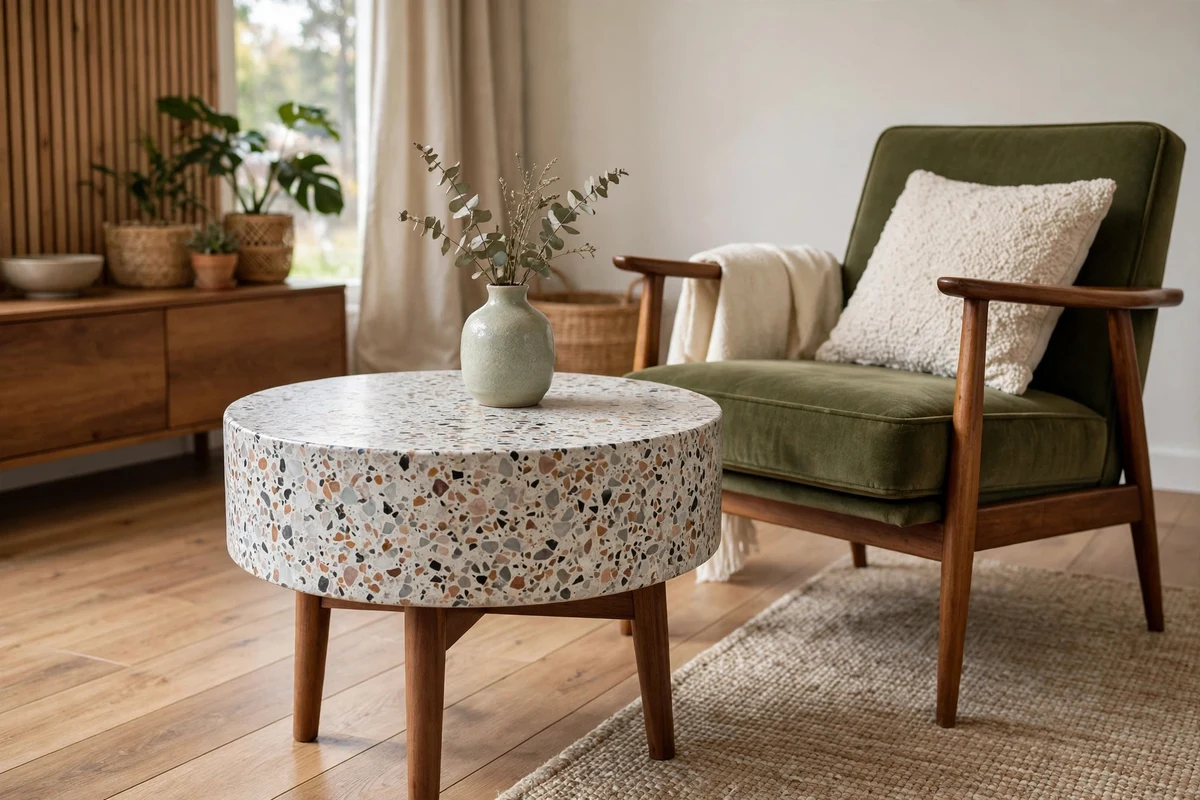
A terrazzo side table with its speckled stone top brings authentic mid-century materiality to your seating area. Terrazzo was a favorite of period architects for its durability and playful chip pattern. Small terrazzo side tables cost $80 to $300, with genuine stone at the higher end and terrazzo-look ceramic lower. The neutral gray or cream base with colorful chips works with any palette. Use it beside an armchair for drinks and books, or as a plant stand. Pro tip: Seal natural terrazzo yearly with stone sealer ($15 to $25) to prevent stains from coffee rings and plant water.
26. Jewel-Tone Velvet Upholstery
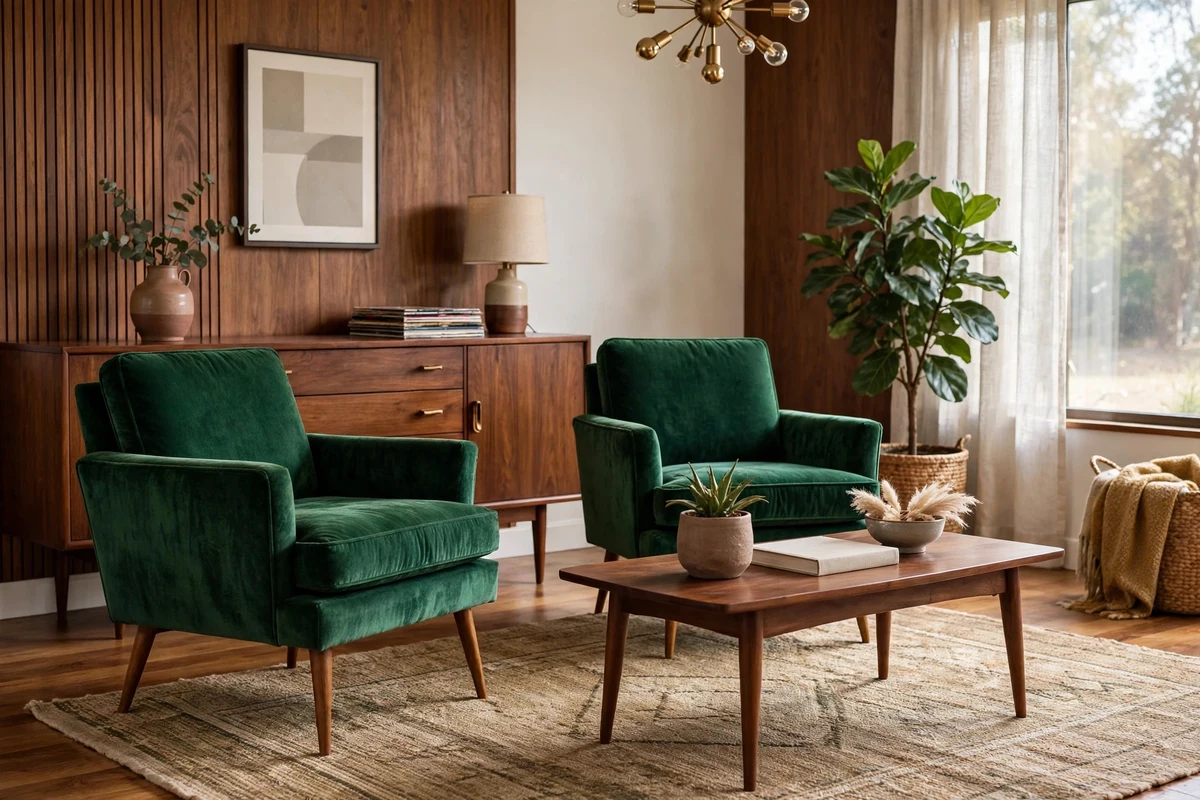
Jewel-tone velvet upholstery in emerald, sapphire, or ruby gives mid-century furniture a luxurious edge. Velvet was a beloved 1960s upholstery fabric, and its light-catching pile adds depth that flat weaves cannot match. A pair of velvet accent chairs costs $600 to $1,800, while a velvet sofa runs $1,200 to $3,000. The rich color becomes the room’s jewelry, so keep surrounding pieces quieter. Performance velvet resists stains and fading better than traditional cotton velvet. Pro tip: Brush velvet weekly with a soft clothes brush in one direction to prevent crushed patches and keep the sheen even.
Lighting and Finishing Details
27. Sputnik Chandelier Centerpiece
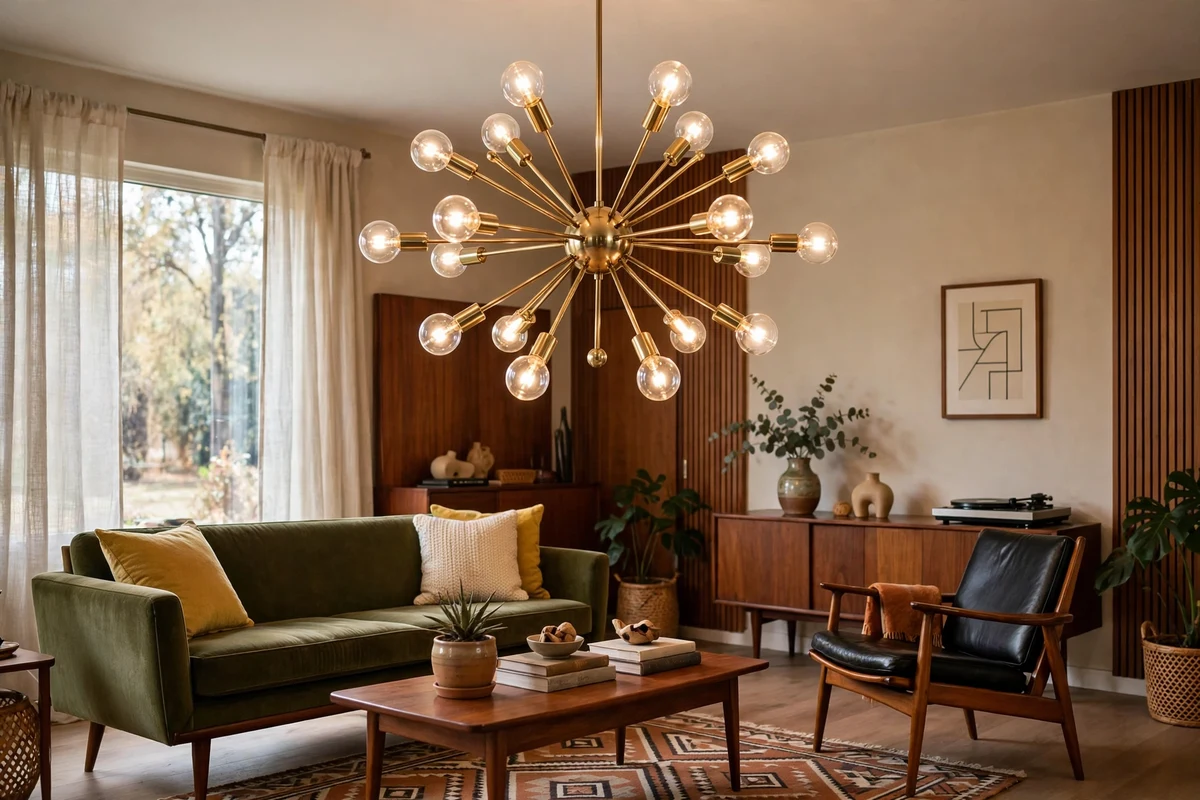
A sputnik chandelier with radiating brass arms is the crown jewel of mid-century lighting. The explosive starburst form throws light in every direction and becomes instant sculpture overhead. Quality sputnik chandeliers cost $150 to $600, with 12 to 24 arms for full drama. Hang it 30 to 36 inches above a coffee table or centered in the seating area at least 7 feet from the floor. Use warm-white LED globe bulbs ($3 to $6 each) for the authentic mid-century glow. Pro tip: Install a dimmer switch ($20 to $40) so the chandelier shifts from bright task lighting to moody evening ambiance.
28. Arc Floor Lamp Over the Reading Corner
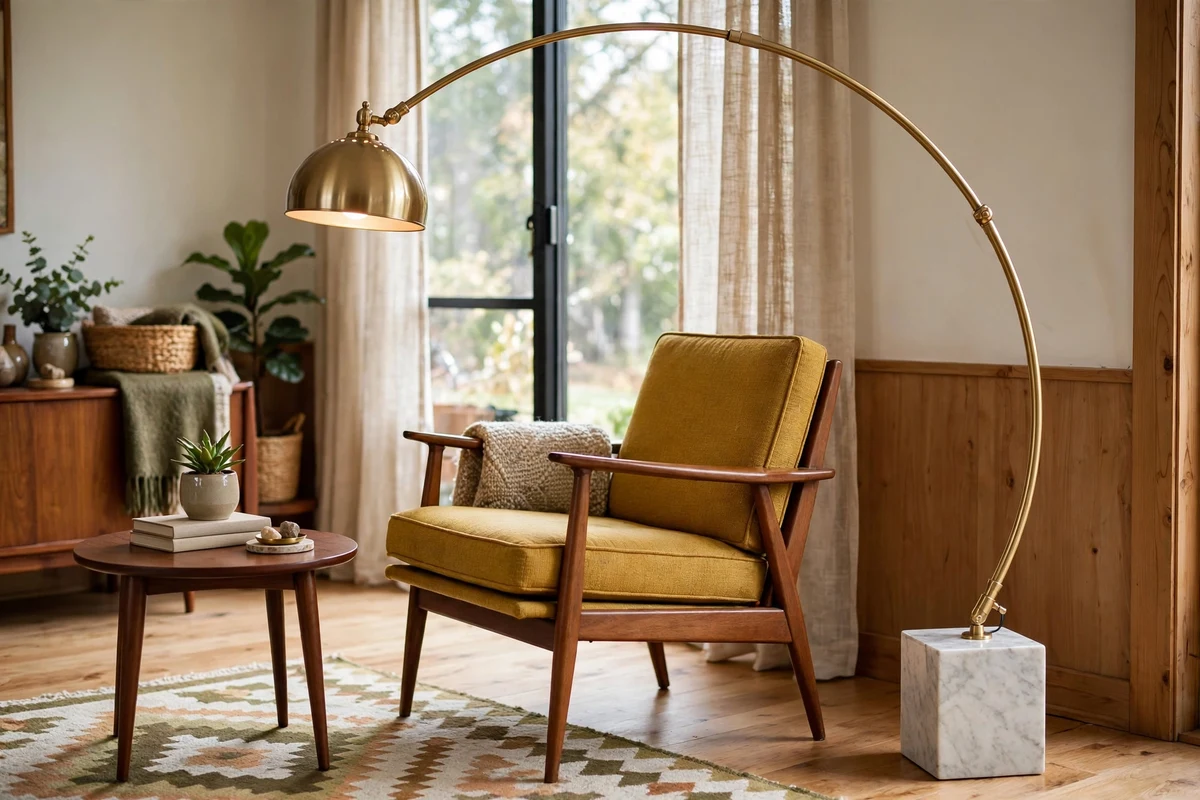
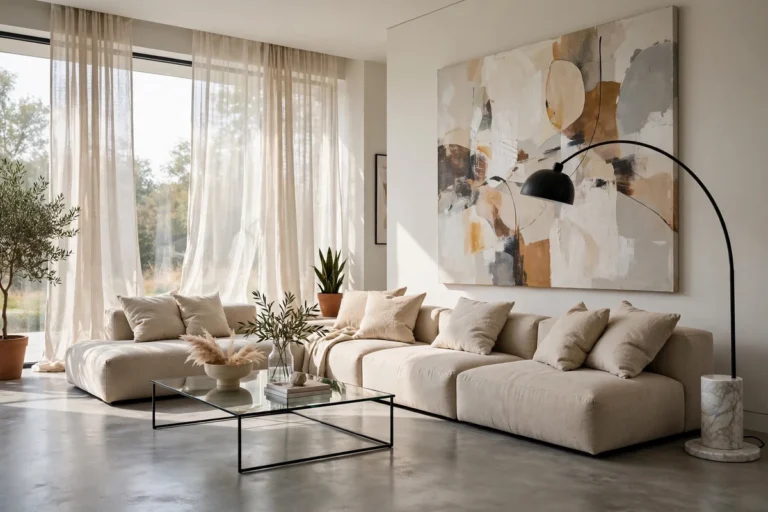
An arc floor lamp sweeping over a reading chair delivers overhead light without ceiling wiring. The dramatic curve is pure mid-century sculpture, and the marble or metal base keeps it stable. Arc lamps cost $100 to $400, with brass and black finishes the most authentic. Position the shade 18 to 24 inches above the chair seat for comfortable reading light. The heavy base, usually 30 to 50 pounds, prevents tipping on carpet. Pro tip: Choose an arc lamp with an in-line foot switch so you can turn it on without bending behind the chair.
29. Mushroom Table Lamp in Smoked Glass
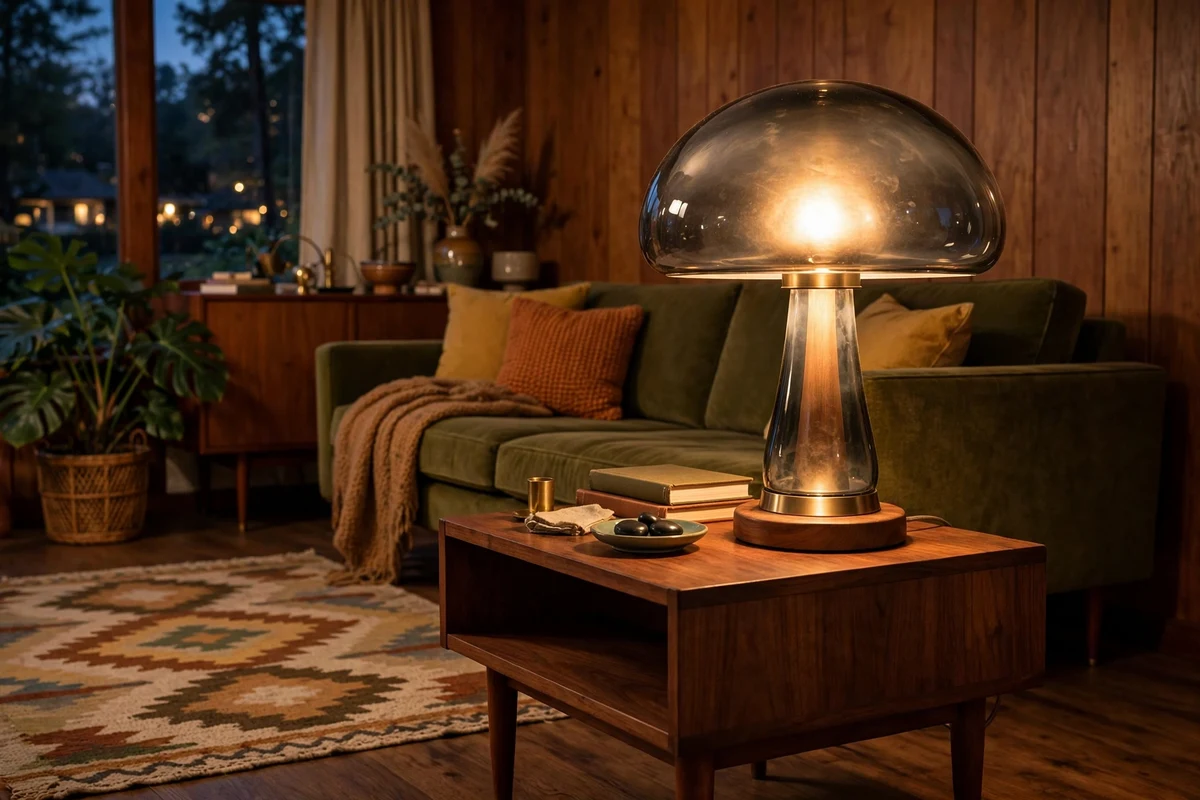
The mushroom table lamp, with its domed shade in smoked glass or opal acrylic, casts the softest ambient glow in the room. This 1970s-adjacent icon fits perfectly into mid-century spaces craving warmth. Reproductions cost $40 to $150, while vintage originals run $150 to $400. Place a pair on matching side tables flanking the sofa for symmetry, or use one alone on a credenza. The low height keeps sightlines clear across the room. Pro tip: Use a warm 2700K bulb to get the amber glow that makes smoked glass look its best.
30. Ceramic Table Lamps with Drum Shades
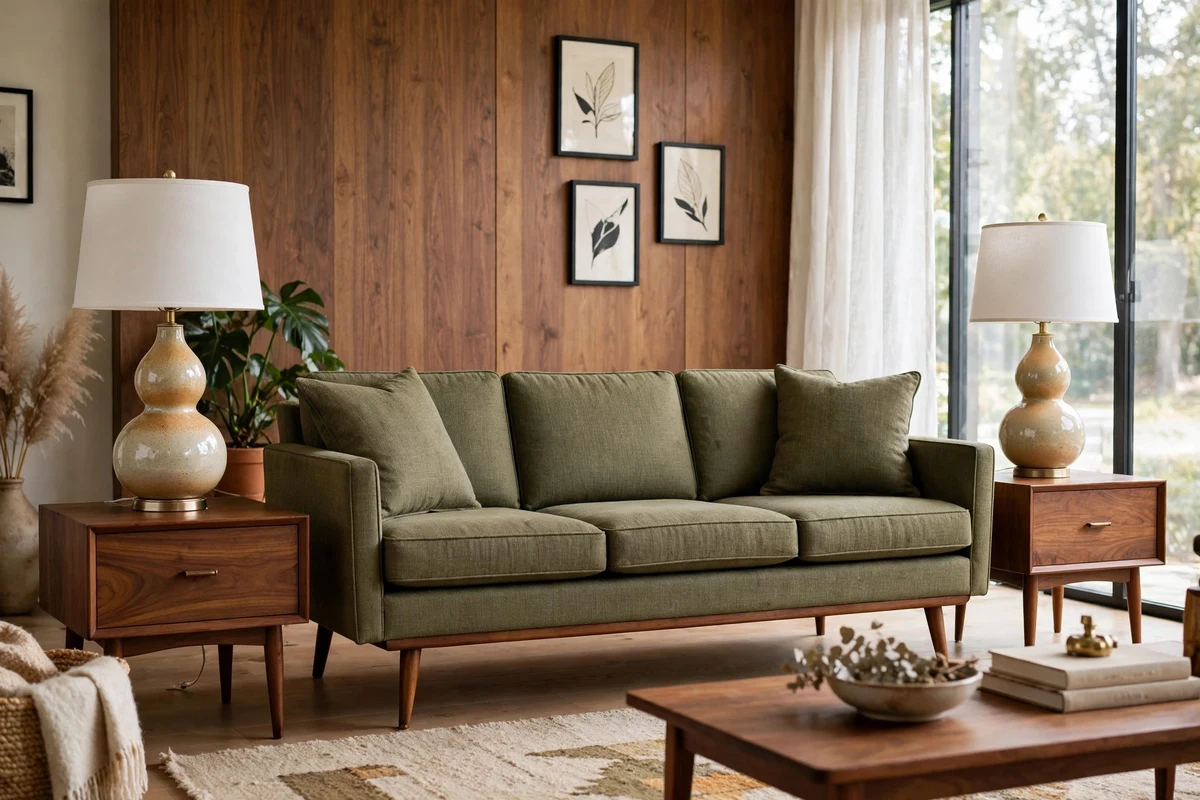
Ceramic gourd lamps with crisp white drum shades are the workhorse lighting of mid-century living rooms. The sculptural ceramic base adds artisanal texture while the drum shade throws even, glare-free light. A pair costs $80 to $300 depending on size and glaze quality. Look for bases in matte white, teal, or mustard to tie into your palette. The ideal table lamp height is 24 to 30 inches so the shade sits at eye level when you are seated. Pro tip: Buy lamps in pairs for side tables, since symmetry is a hallmark of mid-century styling.
31. Starburst Pendant Over the Coffee Table
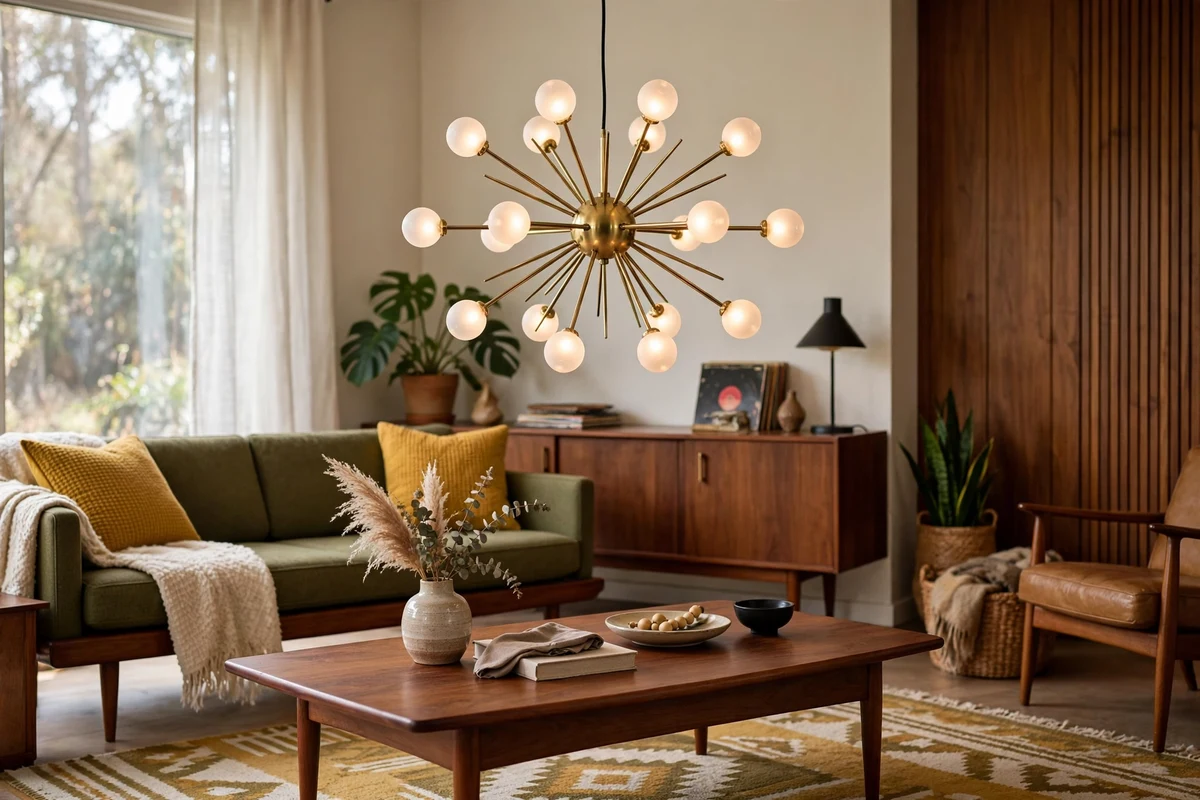
A starburst pendant with small glass globes on radiating arms focuses mid-century drama over the coffee table. Smaller than a full sputnik chandelier, it suits rooms with 8-foot ceilings where a big fixture would overwhelm. Starburst pendants cost $80 to $300 and install on a standard ceiling box. Hang it 30 to 34 inches above the coffee table surface so it lights the table without blocking conversation. Cluster two pendants at staggered heights over a long credenza for extra impact. Pro tip: Frosted globe bulbs diffuse the light softly and hide the LED filaments for a cleaner look.
32. Snake Plant and Fiddle-Leaf Fig Greenery
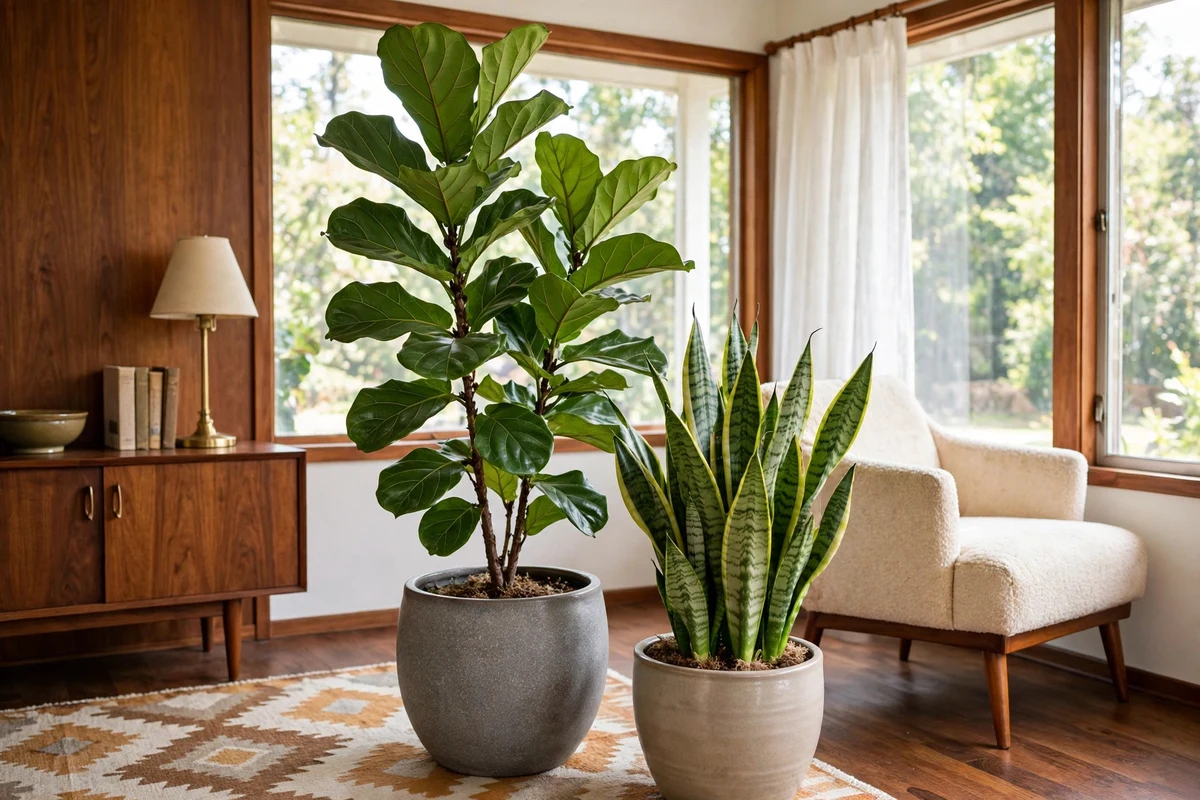
Mid-century rooms love plants, and the snake plant and fiddle-leaf fig are the era’s green icons. Their bold, architectural leaves echo the sculptural forms of period furniture. A 3-foot fiddle-leaf fig costs $40 to $100 and a snake plant $20 to $50, both thriving in the bright light of big mid-century windows. Pot them in simple ceramic or terracotta planters ($15 to $50) rather than fussy containers. Group plants at varying heights in one corner for a collected jungle effect. Pro tip: Rotate the fiddle-leaf fig a quarter turn weekly so it grows straight instead of leaning toward the window.
33. Vintage Record Player Corner
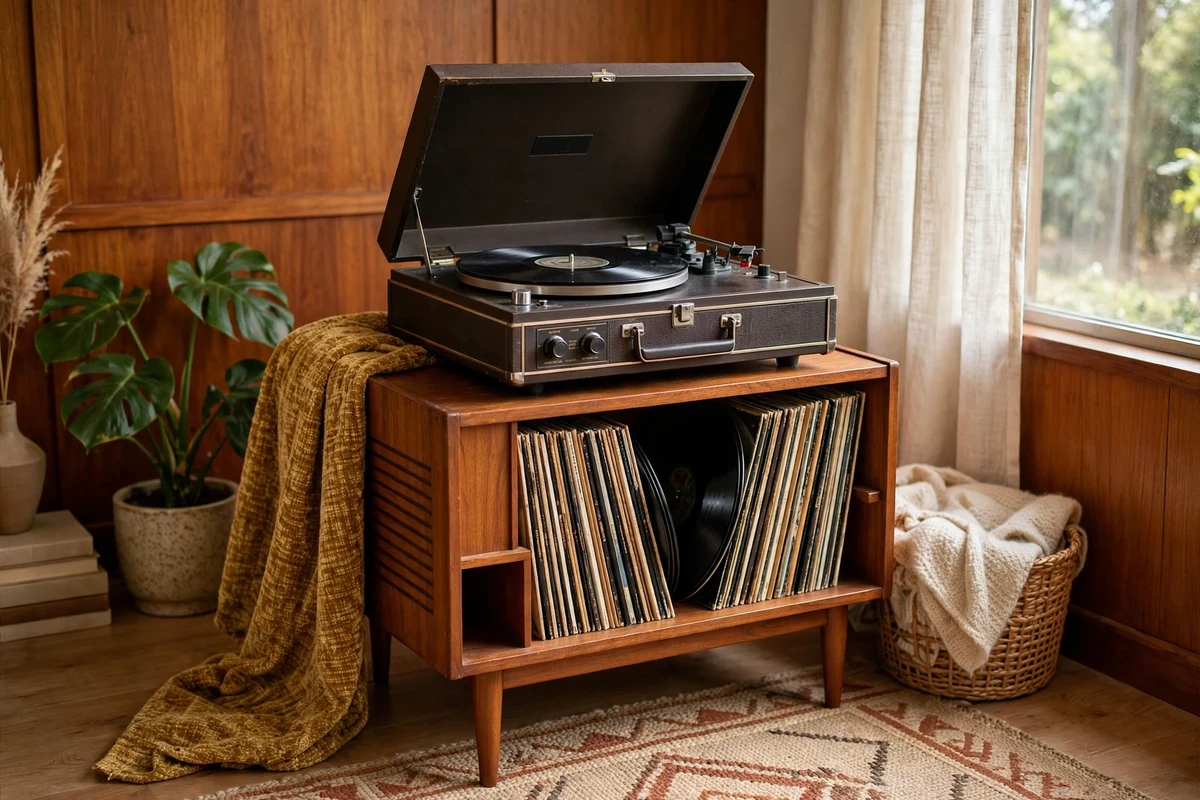
A vintage-style record player on a teak stand turns a quiet corner into the soul of the living room. The warm analog sound and the ritual of flipping records fit the mid-century lifestyle perfectly. Modern turntables with retro styling cost $150 to $500, and a simple teak record stand runs $100 to $300. Store vinyl vertically in the stand’s cubbies, spine out, to prevent warping. Add a small stack of favorite records on top as rotating decor. Pro tip: Connect the turntable to a compact Bluetooth speaker ($50 to $150) hidden behind the stand for great sound without visible modern tech.
34. Brass Bar Cart for Entertaining
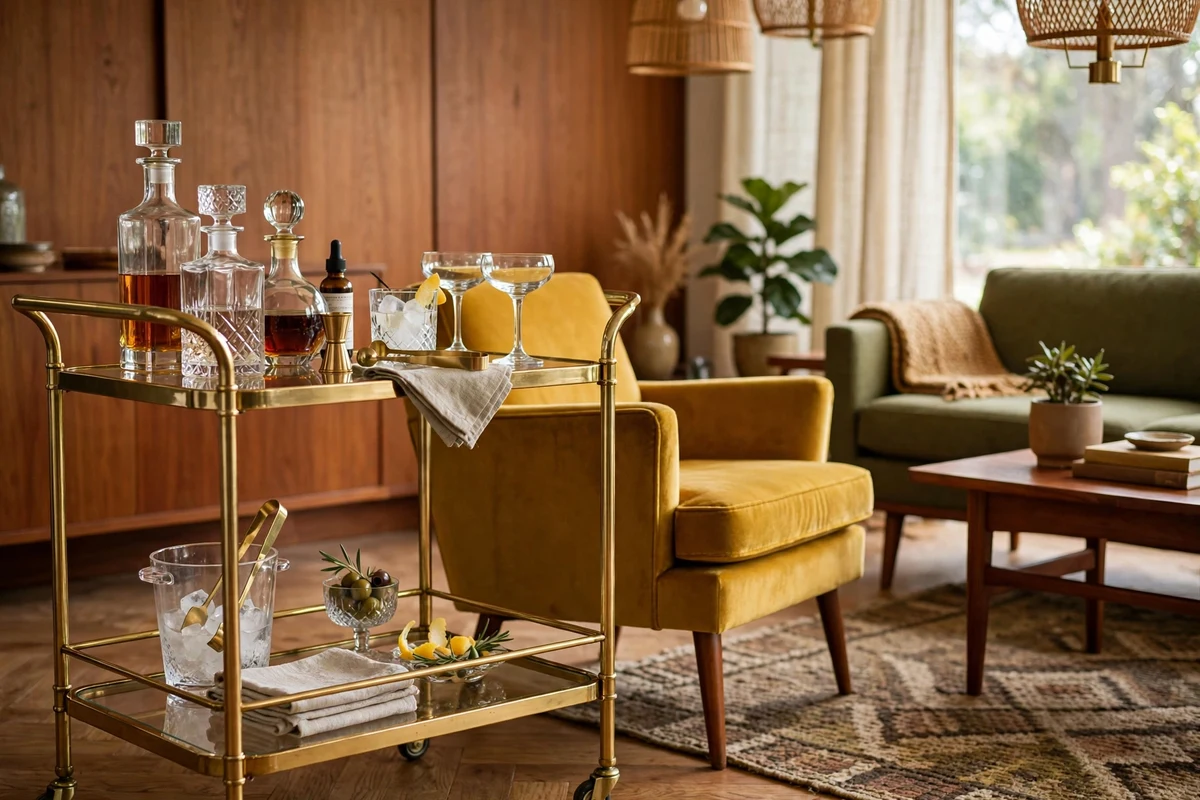
A brass bar cart with glass shelves brings cocktail-hour glamour to the mid-century living room. The rolling cart was a 1960s entertaining essential, and it still works as both decor and function. Quality brass bar carts cost $100 to $350, with two tiers offering the best balance of storage and footprint. Style the top with decanters and a small plant, the bottom with bottles and an ice bucket. Park it near the seating area so it is always within reach during gatherings. Pro tip: Add a small round mirror tray ($15 to $30) on the top shelf to corral bottles and catch the light beautifully.
Design Notes: Mixing Mid-Century Modern with Other Styles
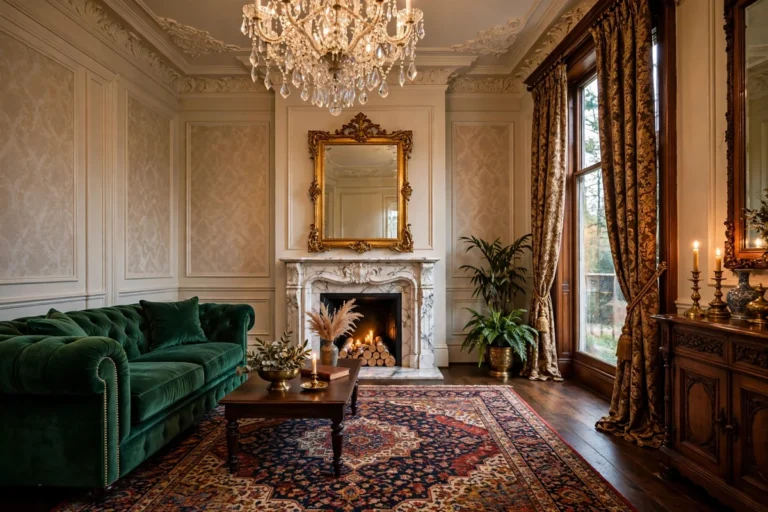
Mid-century modern plays well with other styles because its clean lines act as a neutral foundation. Pair it with the soft textures of Japandi living rooms for a calm, warm minimalism, or lean into the sleek surfaces of modern living rooms for a more contemporary edge. If you love the era’s bedroom side too, explore mid-century modern bedroom ideas to carry the look through the whole home. For contrast, the ornate details in Victorian living rooms show how far you can push the opposite direction, while minimalist living rooms prove that less can be more. The key is keeping wood tones consistent and letting one style lead while the other accents.
Frequently Asked Questions
What are the key colors in mid-century modern living rooms?
The classic palette combines warm neutrals like cream, beige, and walnut brown with bold accents of mustard, burnt orange, olive green, and teal. White or warm white walls keep the background calm while the furniture and accessories carry the color. This balance of earthy and vibrant tones is what gives mid-century rooms their timeless warmth.
How can I get the mid-century look on a budget?
Start with thrifted and vintage finds, since authentic mid-century pieces flood secondhand markets. Focus your budget on one statement piece like a credenza or lounge chair, then fill in with affordable reproductions of lamps, rugs, and pillows. Paint, plants, and rearranged furniture you already own can create the foundation for under $200.
What wood tones work best for mid-century modern style?
Walnut and teak are the signature woods, with their rich brown tones and beautiful grain. Rosewood and oak appear too, but walnut is the safest anchor. Keep wood tones within the same warm family throughout the room so pieces feel collected rather than mismatched, and avoid mixing in cool gray-stained woods.
Can mid-century modern work in a small living room?
Absolutely, since the style was designed for postwar homes with modest footprints. Choose low-profile furniture with exposed legs, which lets light flow underneath and makes the room feel larger. A glass-top coffee table, a sunburst mirror, and a restrained color palette all help small mid-century rooms feel open and airy.
How do I mix vintage and new mid-century pieces?
Let one or two authentic vintage pieces be the stars, then support them with quality reproductions in matching wood tones. Keep the color palette tight so old and new blend seamlessly. Check vintage wood for stability and refinishing needs before buying, and invest in reproductions where comfort matters most, like sofas and lounge chairs.
What lighting is essential for a mid-century living room?
Layer three types: a statement overhead fixture like a sputnik chandelier, task lighting like an arc floor lamp by the reading chair, and ambient table lamps on side tables and the credenza. Warm 2700K bulbs throughout keep the glow consistent, and dimmers let you shift from bright daytime to cozy evening moods.
Final Thoughts
Mid-century modern endures because it gets the fundamentals right: honest materials, clean lines, and furniture designed for real life. You do not need a house full of expensive vintage pieces to capture the look. Start with warm wood tones and a restrained palette, add one sculptural light fixture, and layer in the textures and colors that make you happy. The 34 ideas in this guide give you a complete roadmap, from floors to finishing touches, with realistic prices and practical tips at every step. Pick your favorites, shop smart, and enjoy building a living room that will still look great decades from now.