32 Small Bathroom Decor Mistakes (and How to Fix Them)
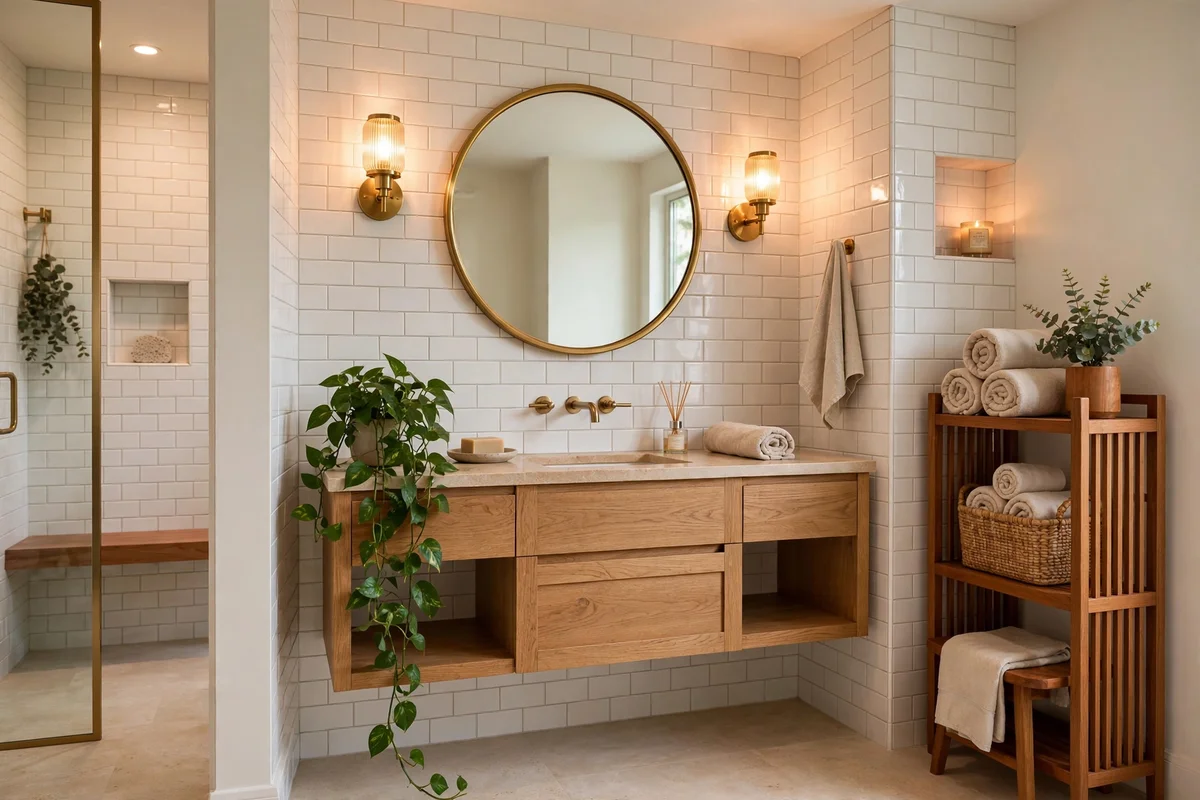
Small bathrooms punish every decorating mistake twice as hard. In a 40-square-foot bath, one wrong paint color makes the whole room feel like a cave, one harsh light makes everyone look tired, and one cluttered counter makes the space feel dirty even when it’s clean. The good news? Every one of these mistakes has a simple, affordable fix — most cost under $100 and take a single weekend. Below are the 32 bathroom decor mistakes I see most often in small spaces, each paired with the designer-approved correction that actually works.
1. Painting It a Dark, Flat Color With No Light Plan
Deep charcoal walls can look dramatic in a magazine, but in a windowless 5×8 bath with one sad ceiling light, they turn the room into a cave. The mistake isn’t dark color itself — it’s dark color without a lighting strategy to support it. The fix: repaint in a warm white or pale greige with an eggshell finish that bounces light around ($35-$60 per gallon), then add a second light source like sconces. Your bathroom will instantly feel twice as bright without changing a single fixture.
Pro tip: Test paint swatches on all four walls and check them morning and night — small baths change character dramatically under artificial light.
2. Keeping the Builder-Grade Vanity
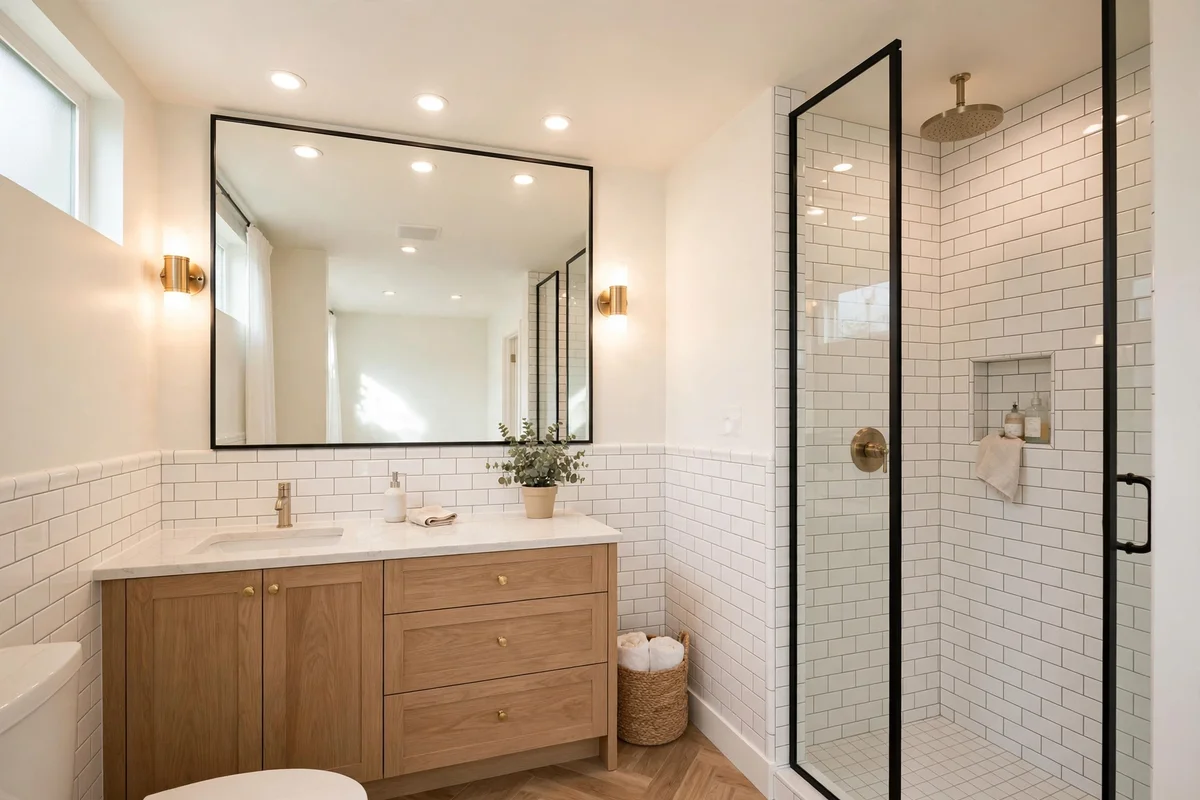
That boxy oak vanity with the cultured-marble top screams “rental circa 2004” and eats floor space visually. A wall-mounted floating vanity ($180-$400) frees up the floor underneath, which tricks the eye into reading the room as bigger. Choose one with at least one deep drawer for real storage, and pair it with a simple white vessel or undermount sink. It’s the single highest-impact swap in a small bath — guests will assume you renovated the whole room.
Pro tip: Wall-mount the vanity a few inches higher than standard (34-36 inches) — it reads more custom and makes cleaning underneath effortless.
3. Relying on One Harsh Overhead Light
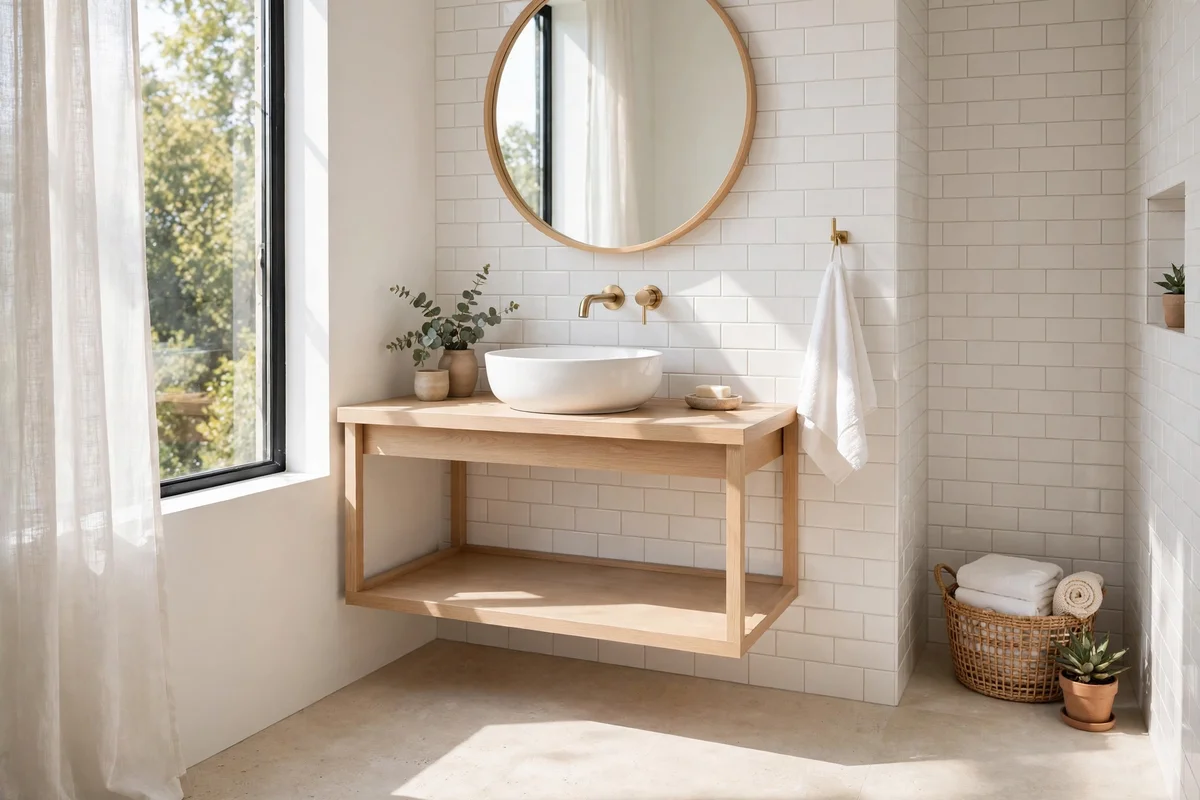
A single flush-mount ceiling light blasting 5000K daylight-white is why you look exhausted in your own bathroom mirror. Small baths need layered light: sconces at face height flanking the mirror for grooming ($60-$150 per pair), plus the overhead for general brightness. Warm 2700K-3000K bulbs flatter skin and make tile and paint look richer. This one change costs less than a dinner out and transforms your morning routine.
Pro tip: If you can’t hardwire sconces, plug-in swing-arm sconces with cord covers give the same layered look with zero electrician cost.
4. Hanging a Tiny Mirror
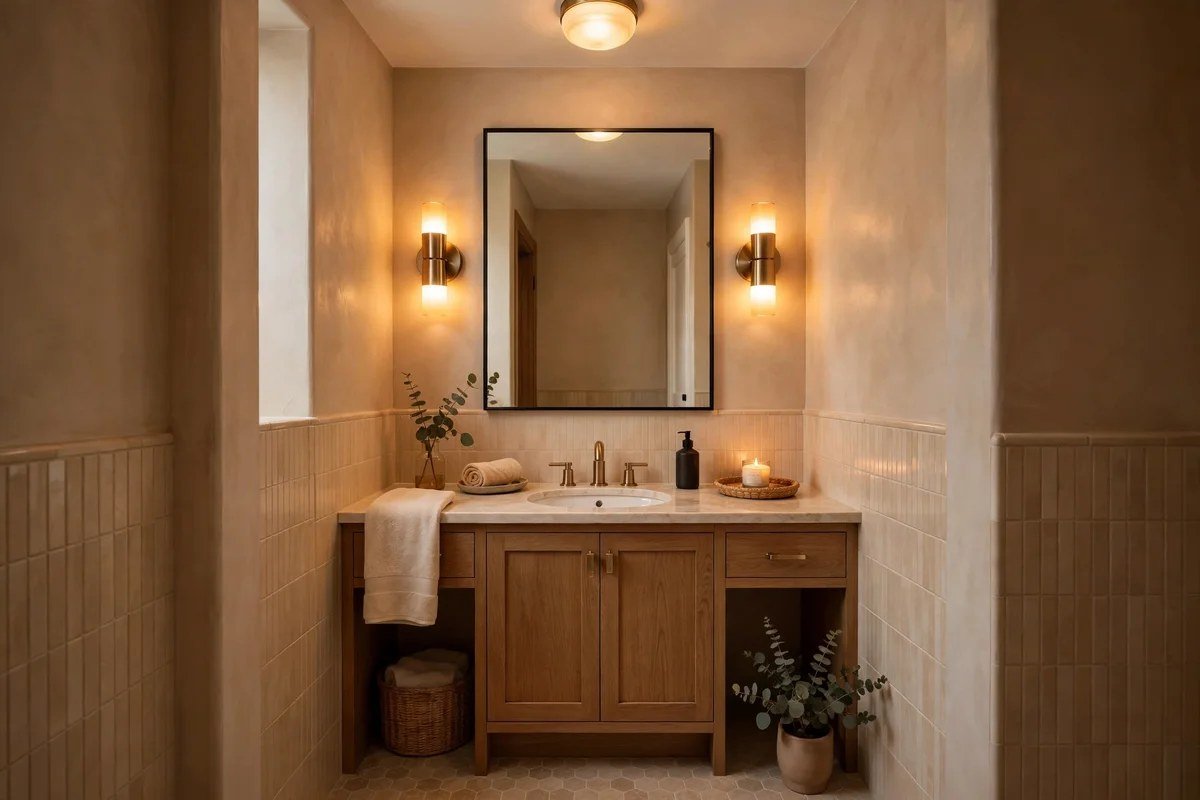
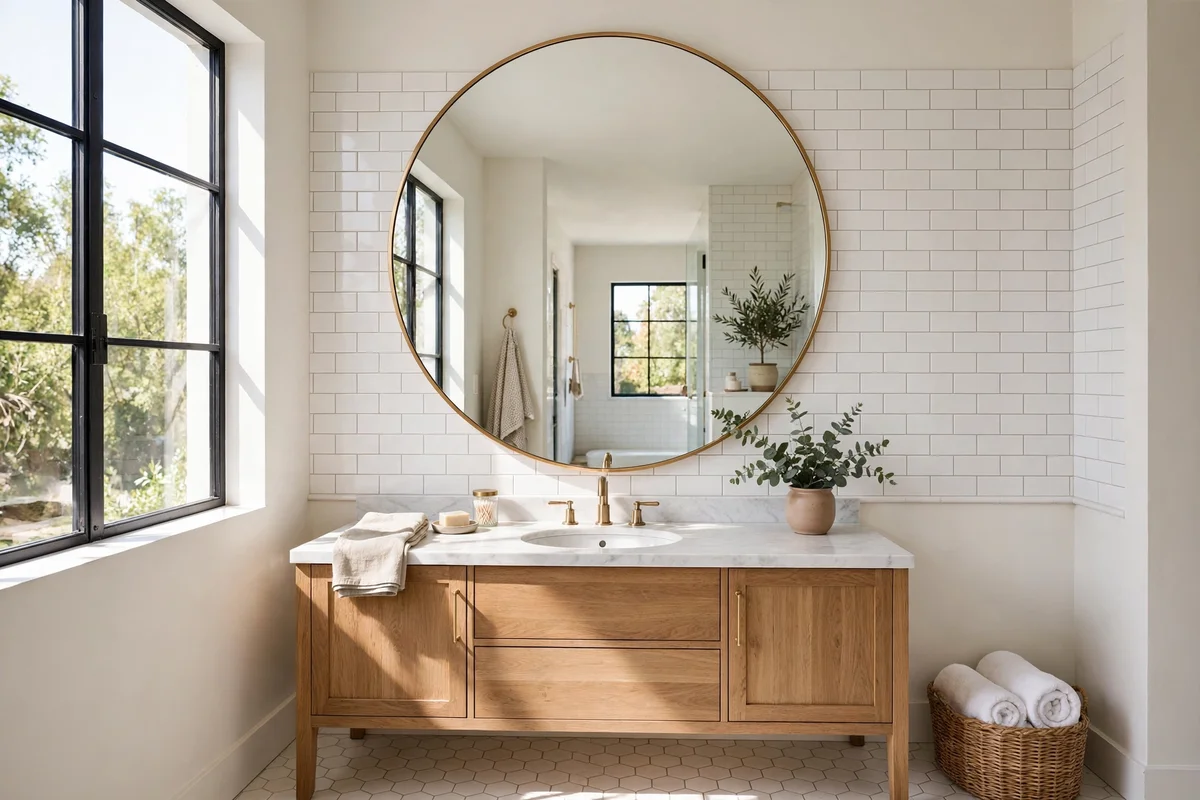
A medicine-cabinet-size mirror floating on a big empty wall wastes the cheapest space-doubling trick in design. Mirrors reflect light and view, effectively duplicating your square footage visually. Go as large as the wall allows — an oversized round mirror with a thin brass frame ($70-$160) over the vanity, or even mirror the full wall behind the sink. In a small bath, there is almost no such thing as too much mirror.
Pro tip: Hang the mirror to reflect a window or the prettiest wall, not the toilet — you control what gets doubled.
5. Leaving Floors Bare and Cold
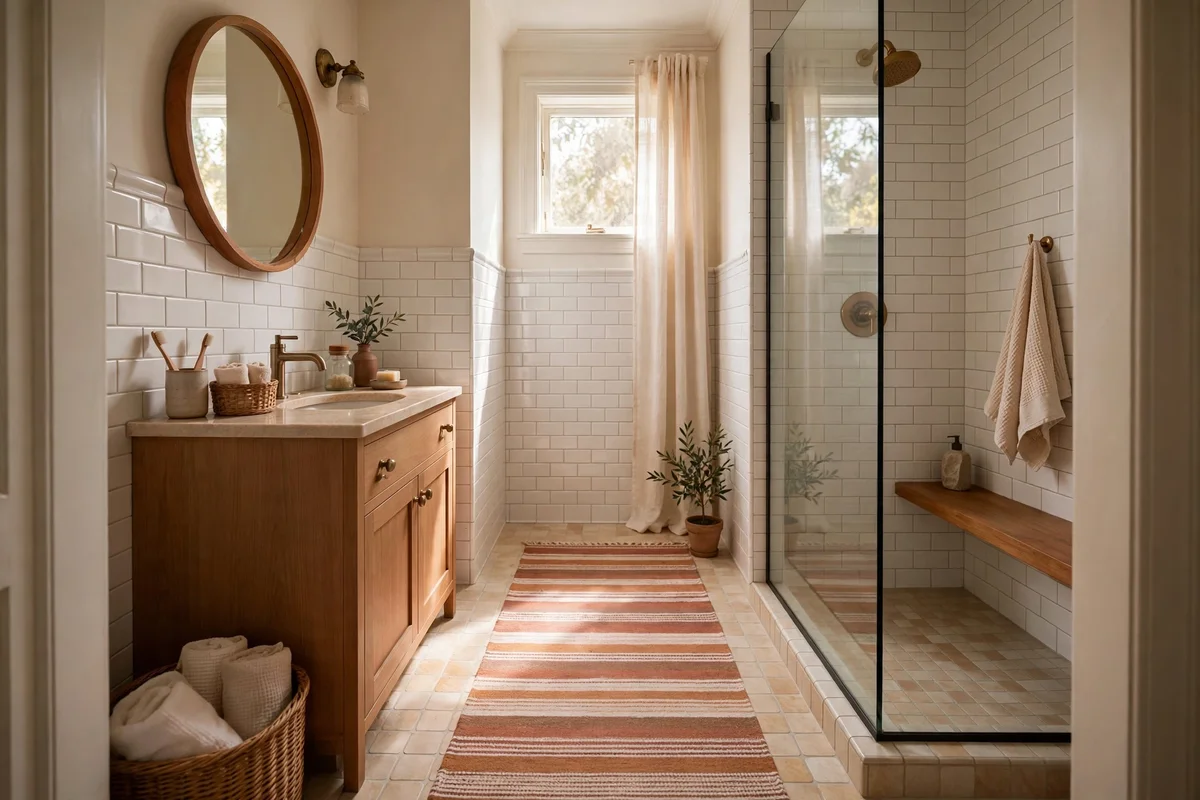
Cold tile underfoot makes a bathroom feel unwelcoming no matter how pretty it is, and bare floors show every water spot. The fix is a proper runner or bath mat in a washable, quick-dry material ($25-$60). Choose one long enough to span from vanity to shower — it creates a visual path that elongates the room. Layer a small absorbent mat inside the shower door for function. Washable cotton or performance rugs handle the humidity far better than memory foam.
Pro tip: A runner with a subtle stripe pattern laid lengthwise makes narrow baths feel wider — it’s a classic designer trick.
6. Letting the Counter Become a Clutter Zone
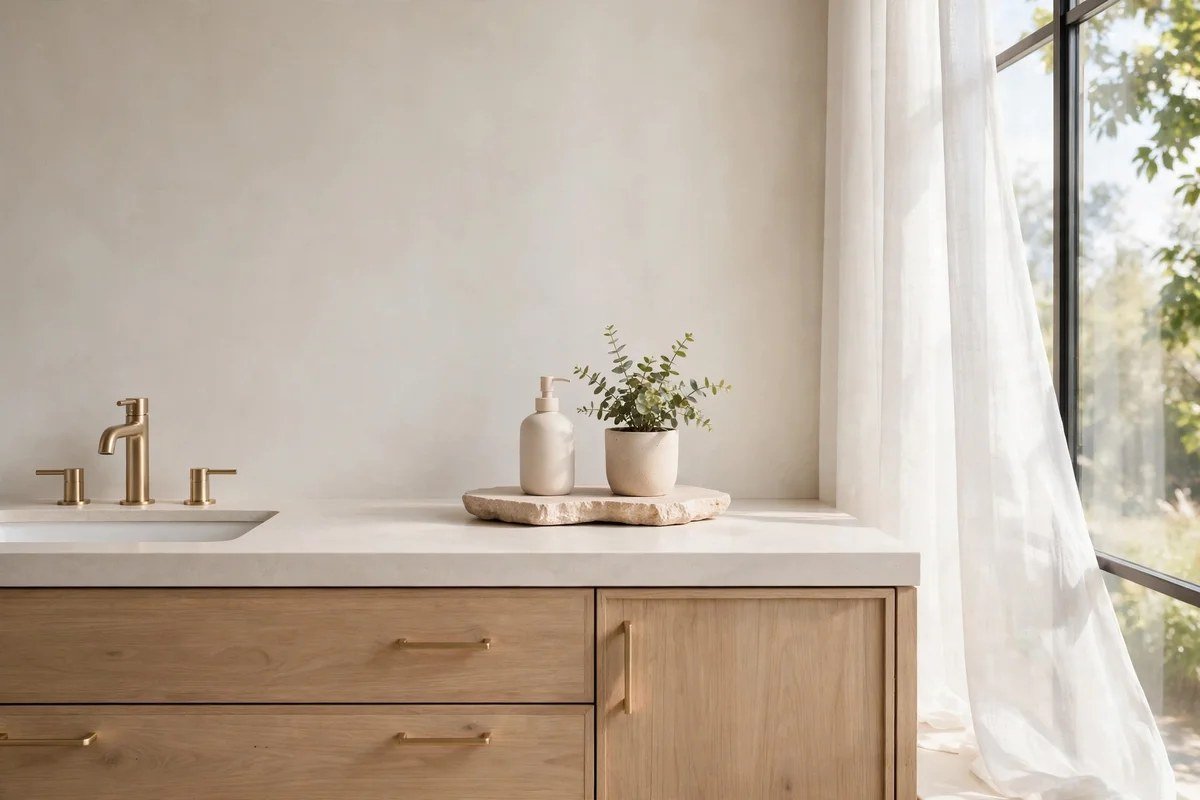
Twenty bottles crowded around the sink make even a clean bathroom look chaotic — and in a small bath, the counter is prime visual real estate. Corral daily items onto a single stone or wood tray ($20-$40), decant soap into one matching dispenser, and move everything else into a drawer or cabinet. The rule: if you don’t use it every single day, it doesn’t earn counter space. Clear counters read as calm, and calm reads as clean.
Pro tip: Do a weekly 60-second counter reset every Sunday night — it prevents the slow creep that turns tidy into cluttered.
7. Using the Wrong Paint Finish
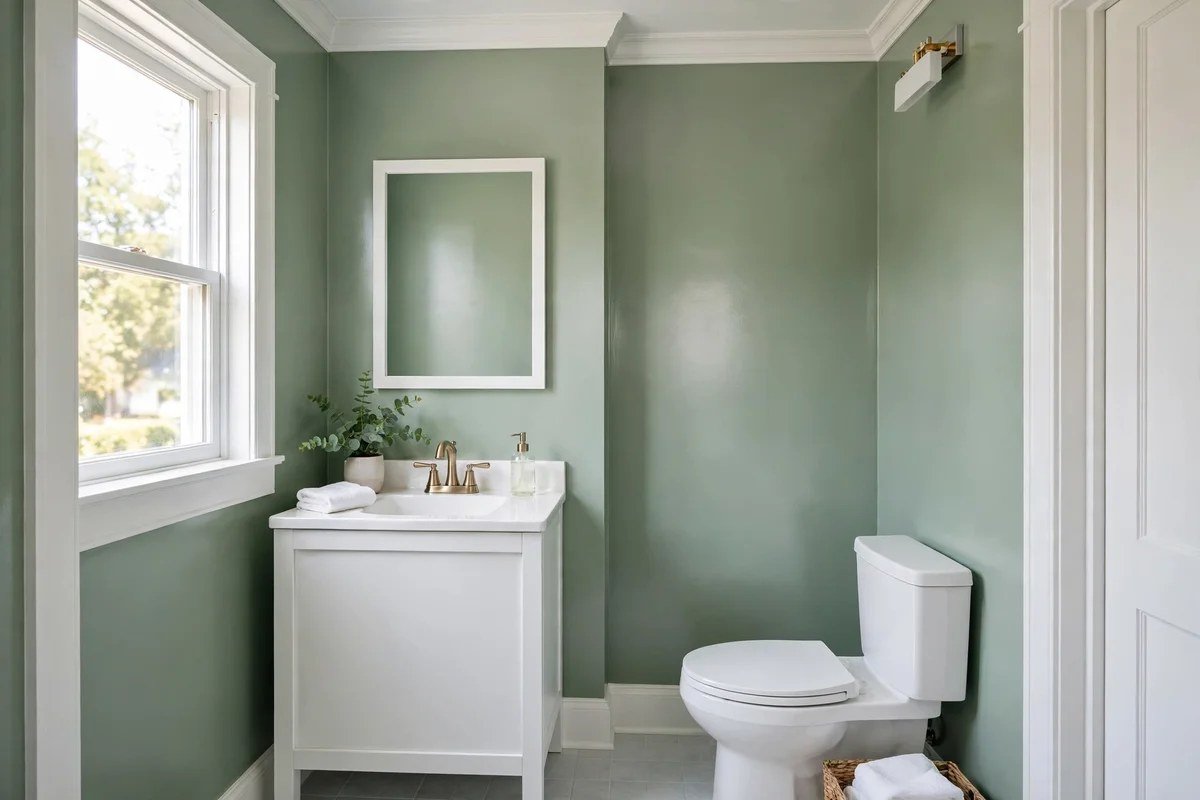
Flat paint in a steamy bathroom is a mildew magnet — it absorbs moisture, stains, and can’t be scrubbed. The correct fix is a satin or eggshell finish labeled for bathrooms or kitchens ($40-$65 per gallon), which resists moisture and wipes clean. Semi-gloss works too but highlights every wall imperfection, so satin is the sweet spot for most small baths. Repainting with the right finish is a weekend project that protects your walls for years.
Pro tip: Run the exhaust fan 20 minutes after every shower — even the best paint fails in constant steam without ventilation.
8. Ignoring Vertical Storage
When floor space is zero, the only direction left is up — yet most small baths leave walls completely empty above eye level. A tall narrow storage tower or floating shelves above the toilet ($50-$140) absorbs towels, toilet paper, and toiletries without touching the floor. Keep open shelves styled with folded towels and a plant; hide the ugly stuff behind cabinet doors. Vertical storage is how small bathrooms gain the equivalent of an extra closet.
Pro tip: Anchor any tall freestanding unit to the wall — bathrooms are slippery places and tip-overs are no joke. For more ideas, see our studio apartment organization ideas.
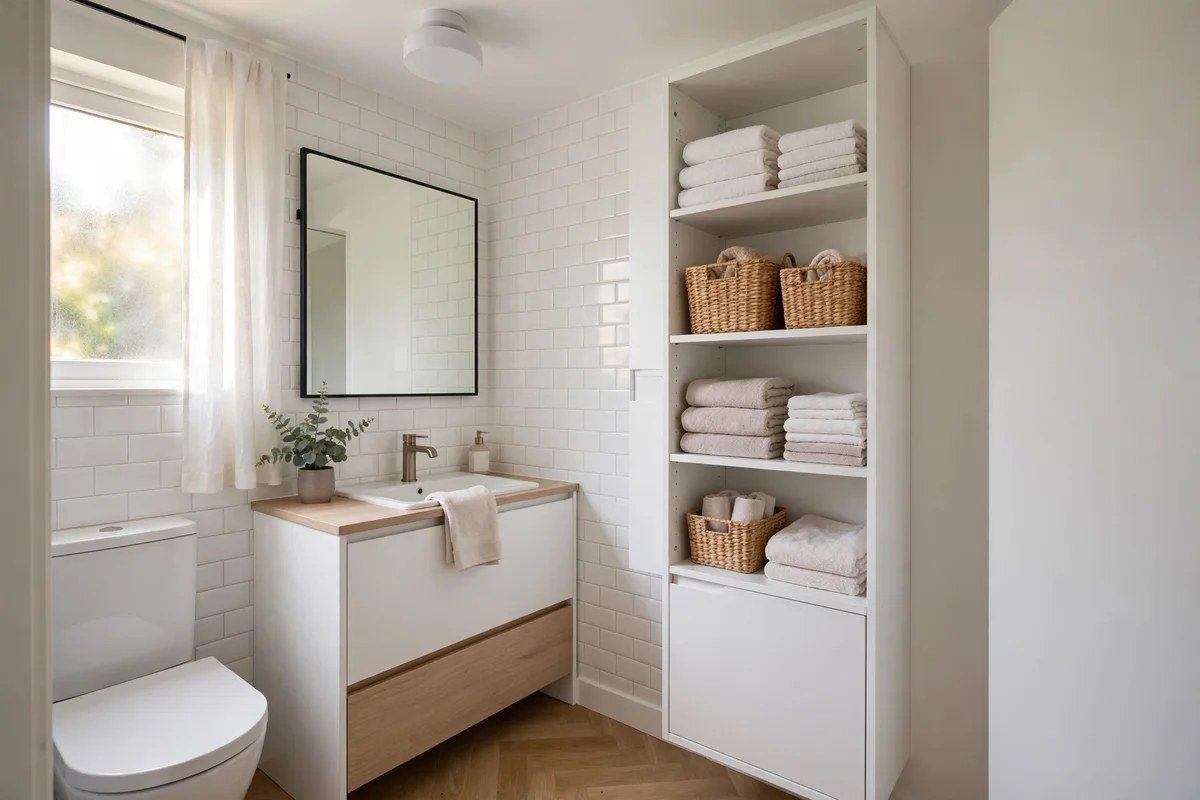
9. Leaving Toiletries Out in the Open
A forest of half-empty bottles on every flat surface is the fastest way to make a bathroom feel dirty. The fix is ruthless editing plus hidden storage: a mirrored medicine cabinet or shallow wall cabinet ($80-$200) swallows daily products while keeping them reachable. Decant the few things that stay out into matching containers. When guests open your cabinet and see order instead of chaos, the whole bathroom feels more luxurious.
Pro tip: Toss anything expired or nearly empty first — most people can cut visible products in half without missing anything.
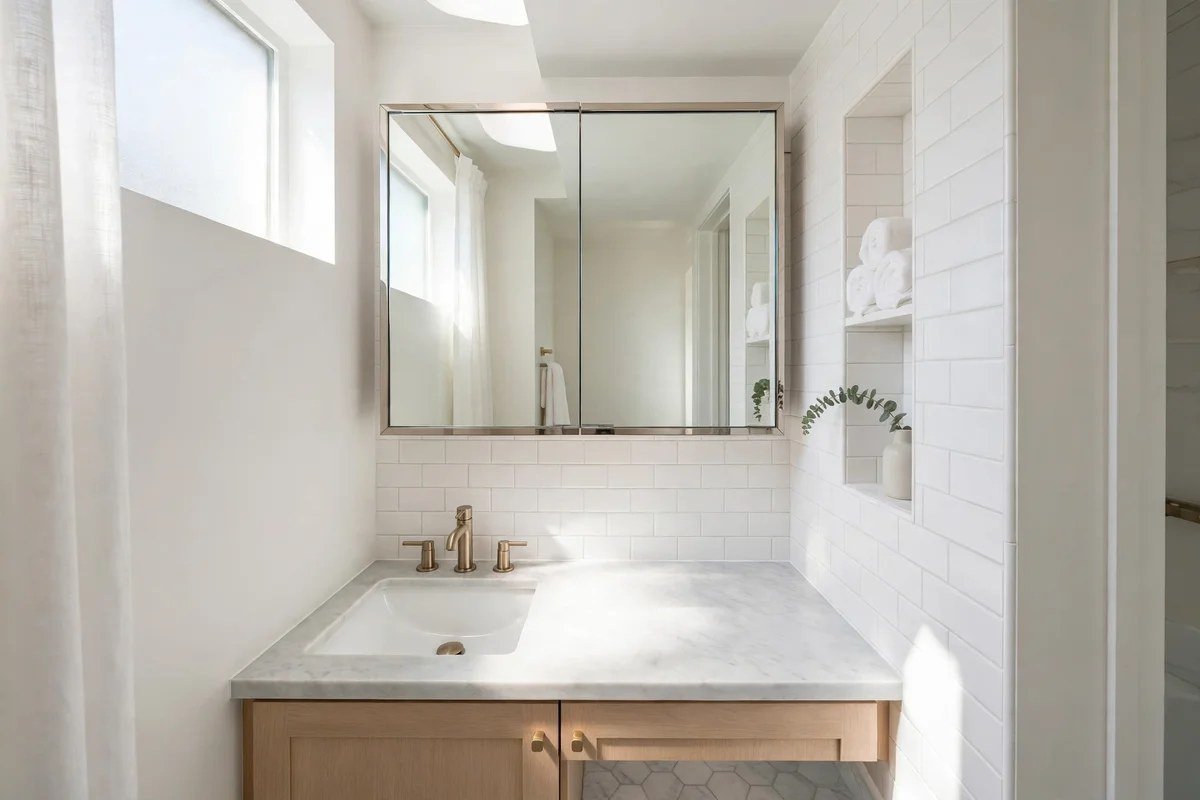
10. Draping Wet Towels Everywhere
Towels slung over the shower door, the vanity edge, and the floor create instant visual mess — and they never dry properly, inviting mildew. Install a heated towel rail ($90-$250) or at minimum sturdy hooks on the back of the door ($15-$30). One hook per person, towels hung flat with air around them. Dry towels smell better, last longer, and the bathroom looks intentionally designed instead of lived-in-messy.
Pro tip: A heated rail doubles as a gentle room heater in winter — small baths warm up noticeably with one running.
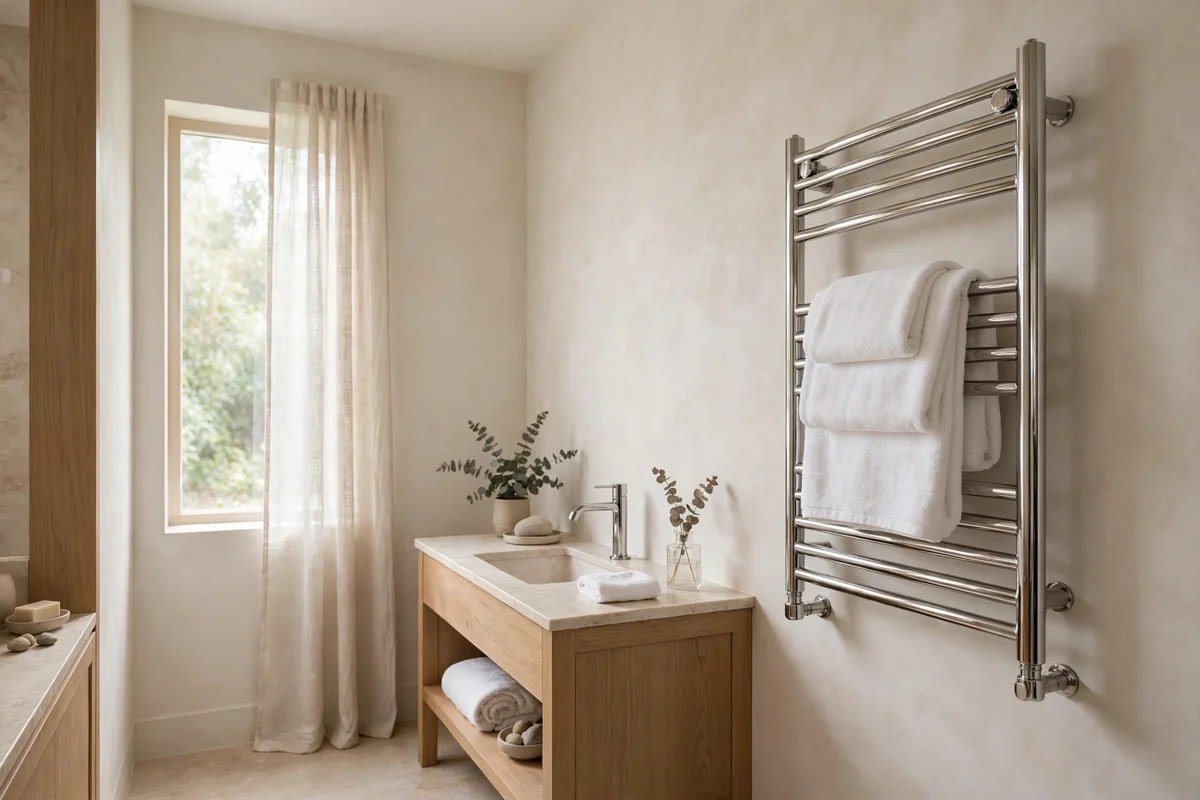
11. Sticking With a Grimy Shower Curtain
A stained, mildewed shower curtain drags down the entire room — it’s often the largest single visual element in a small bath. If a glass door isn’t in budget, a fresh extra-long fabric curtain in white or a subtle pattern ($30-$60) hung from the ceiling on a curved rod instantly elevates the shower. The curved rod adds elbow room, and ceiling-mounting makes the ceiling feel higher. Wash it monthly and it stays crisp.
Pro tip: A clear glass panel ($120-$200) beats any curtain for small baths — it keeps sightlines open so the room reads twice as large.
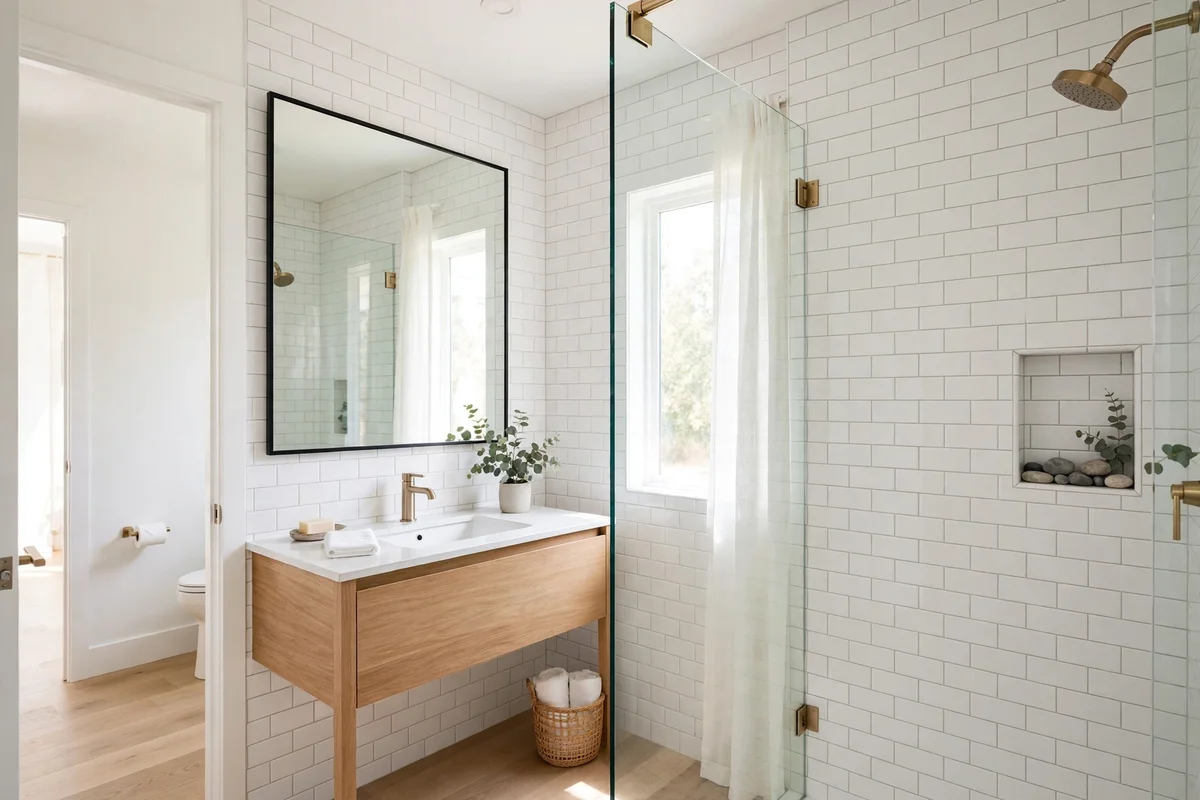
12. Keeping the Dated Faucet
Pitted chrome builder faucets age a bathroom faster than almost anything else, yet swapping one is a 30-minute job. A modern single-handle faucet in matte black or brushed brass ($70-$160) becomes a jewelry-like focal point that makes the whole vanity look new. Turn off the water valves, unscrew two supply lines, and the new one drops in. It’s the highest style-per-dollar upgrade in bathroom decorating.
Pro tip: Match your faucet finish to the mirror frame and cabinet hardware — three matching metals read as intentional design. See our small bathroom color palettes for finish pairing ideas.
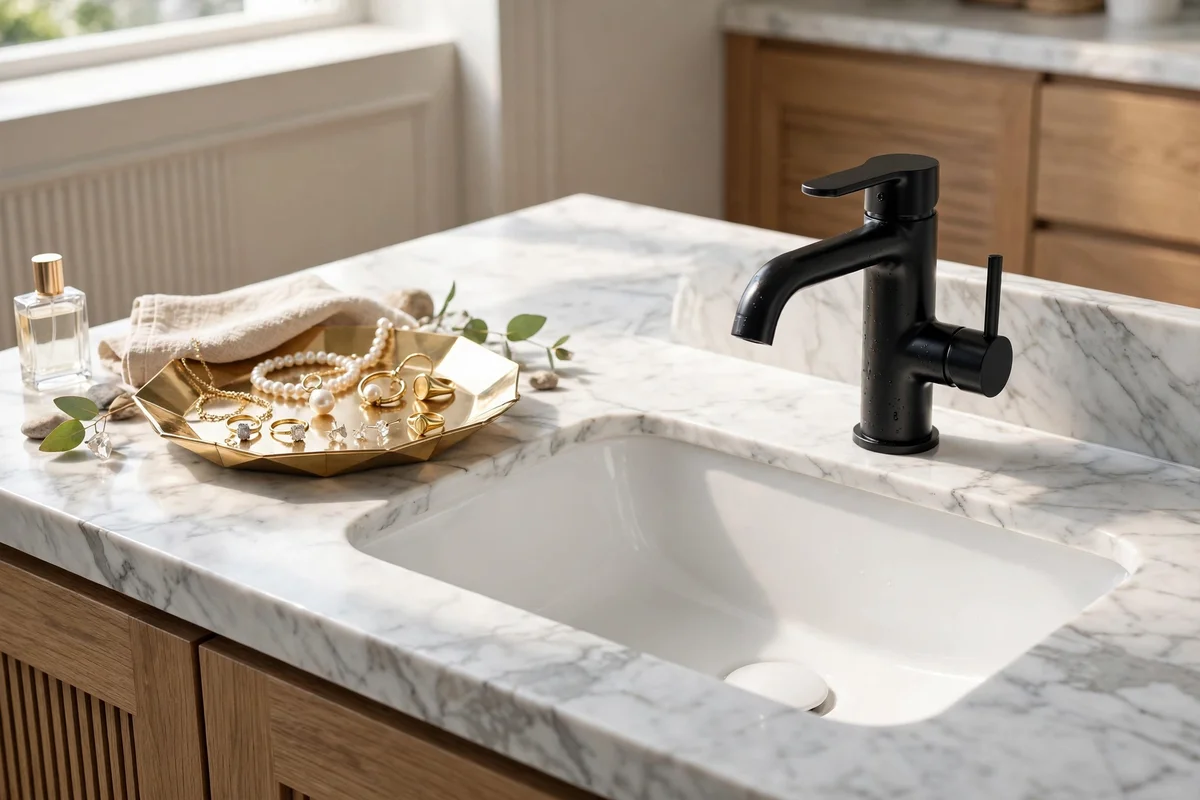
13. Letting Grout Go Grimy
Dark, stained grout makes even expensive tile look cheap and dirty. Before considering retiling, try a grout refresh: a steam cleaner or oxygen-bleach paste ($10-$20) restores most grout to near-new, and grout paint pens ($15) recolor stubborn lines in an afternoon. For a permanent fix, epoxy grout resists staining entirely. Clean grout lines are the difference between a bathroom that looks renovated and one that looks neglected.
Pro tip: Seal cement grout annually with a penetrating sealer — it takes 20 minutes and prevents 90% of future staining.
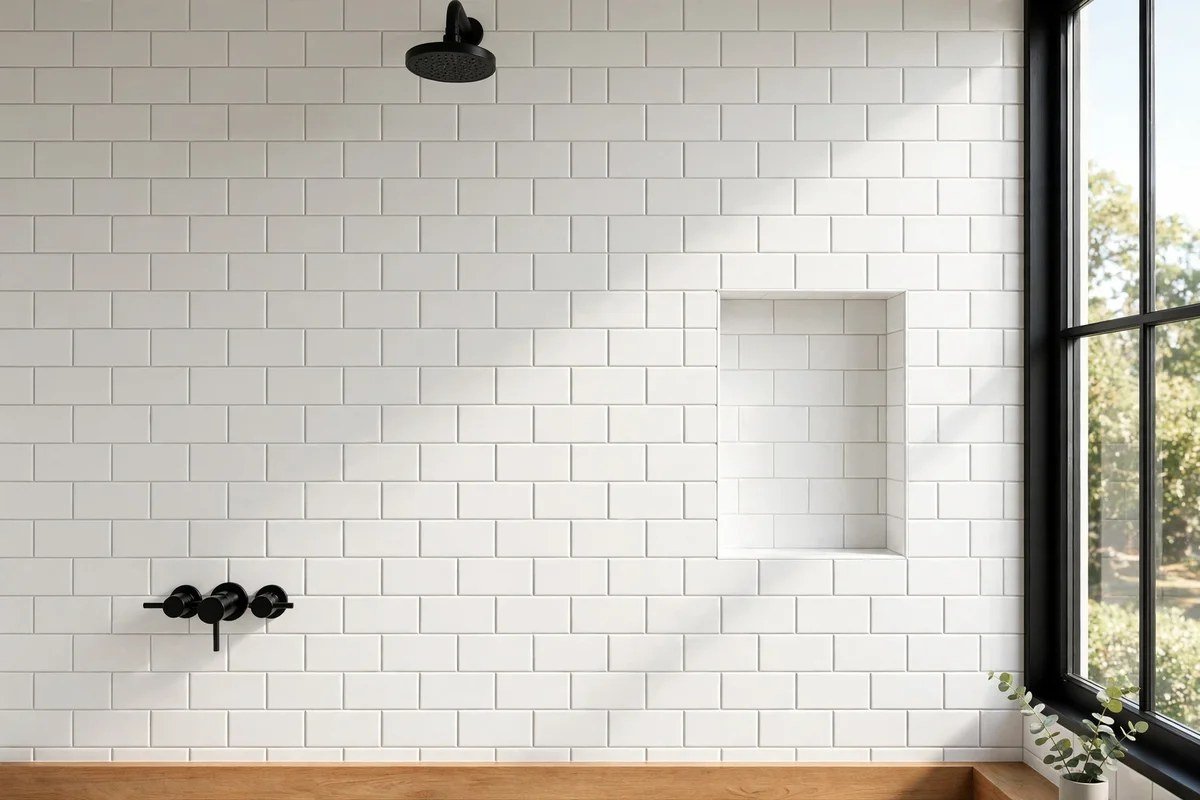
14. Skipping Ventilation
No exhaust fan — or a loud, useless one — means every shower coats walls and ceilings in moisture, feeding mold and peeling paint. A modern quiet fan (under 1.0 sone, $80-$150) clears steam fast without the jet-engine soundtrack. If ducting a new fan is impossible, even a small dehumidifier or cracking the door with a fan pointed outward helps enormously. Ventilation isn’t glamorous, but it protects every pretty choice you make.
Pro tip: Put the fan on a humidity-sensing switch ($30) — it runs automatically after showers and you never have to remember.
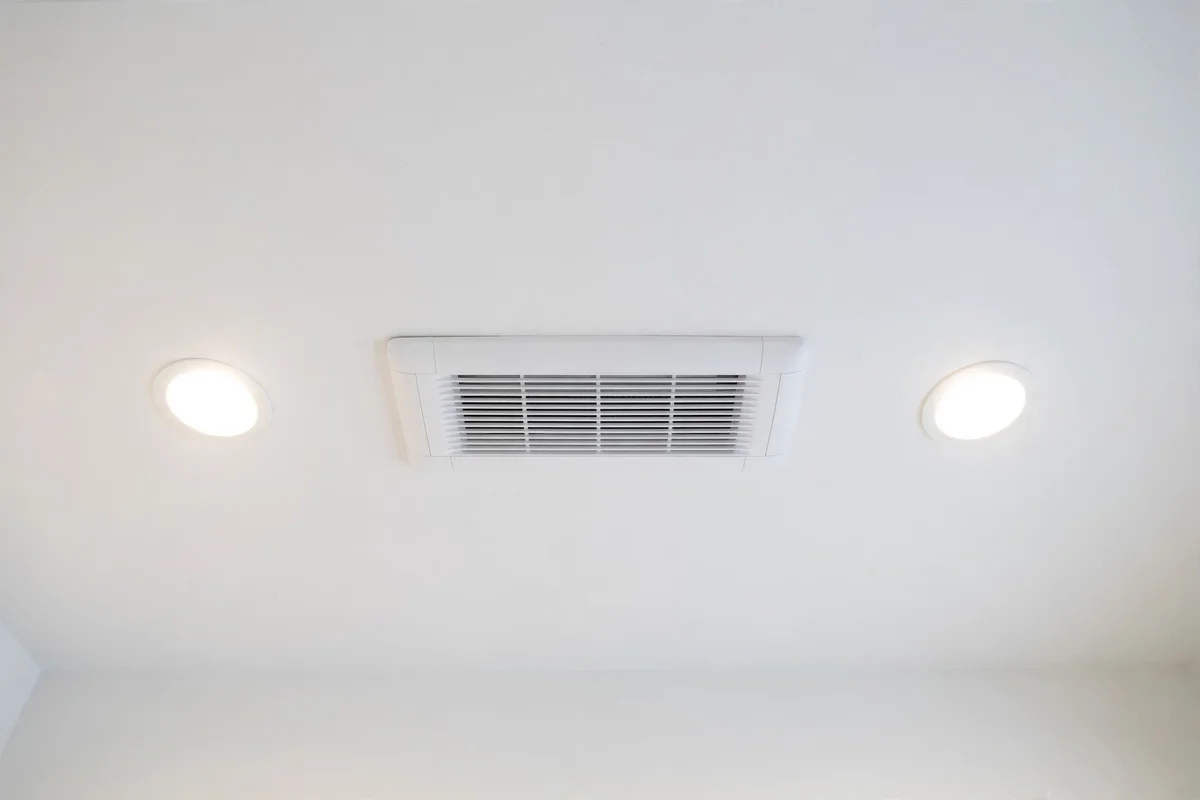
15. Wasting the Space Above the Toilet
The wall above the toilet is prime real estate that most people leave completely bare. Two floating shelves ($40-$90) styled with rolled towels, a plant, and a lidded basket for supplies turn dead space into the bathroom’s prettiest vignette. Keep the bottom shelf at least 12 inches above the tank for clearance. It’s storage and decor in one — the rare fix that solves two problems at once.
Pro tip: Use the rule of three on each shelf — one tall item, one medium, one small — for a styled look instead of a cluttered one.
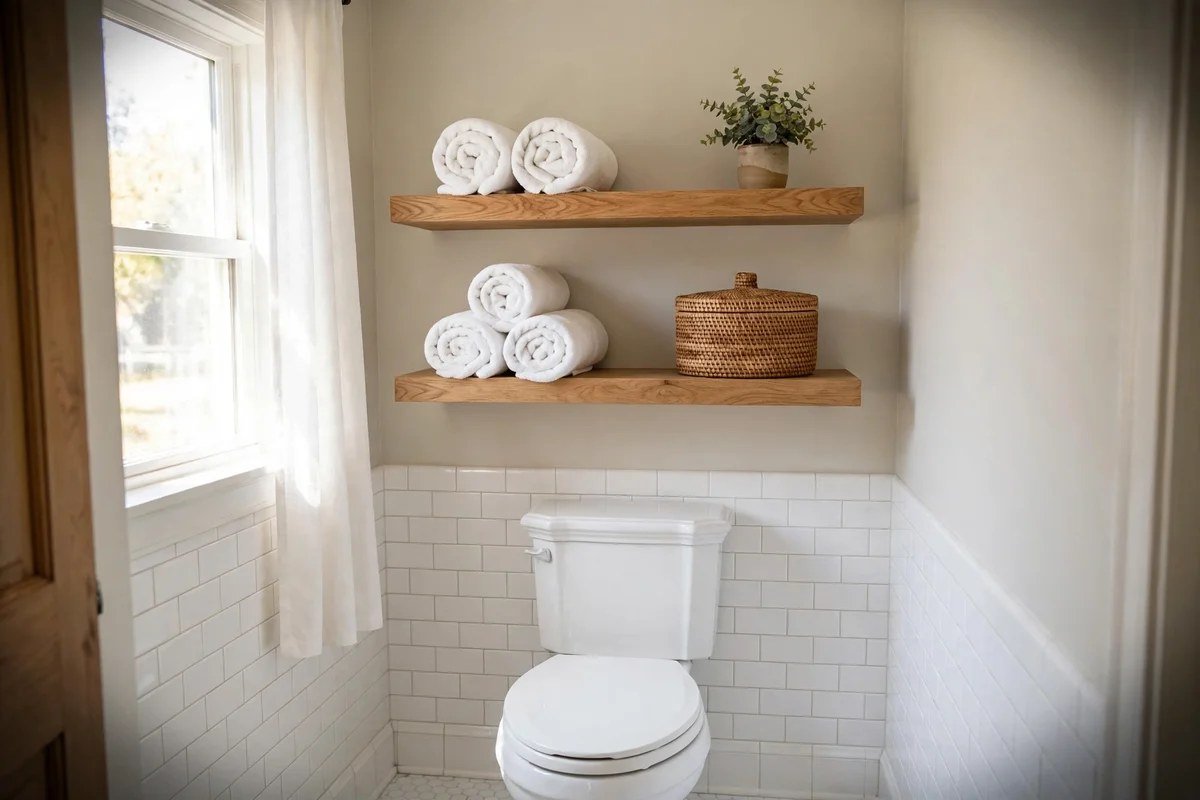
16. Mixing Random Hardware Finishes
Chrome faucet, brass mirror, black towel bar, nickel hinges — a fruit salad of metals makes a small bath feel chaotic and unfinished. Pick ONE finish and commit: brushed brass for warmth, matte black for modern edge, or polished nickel for classic shine. Swapping cabinet knobs, hooks, and the towel bar to match ($40-$100 total) creates instant cohesion. In tiny rooms, visual consistency is what separates “designed” from “accumulated.”
Pro tip: Brushed finishes hide water spots far better than polished ones — a practical win in hard-water homes.
17. Banning All Plants From the Bathroom
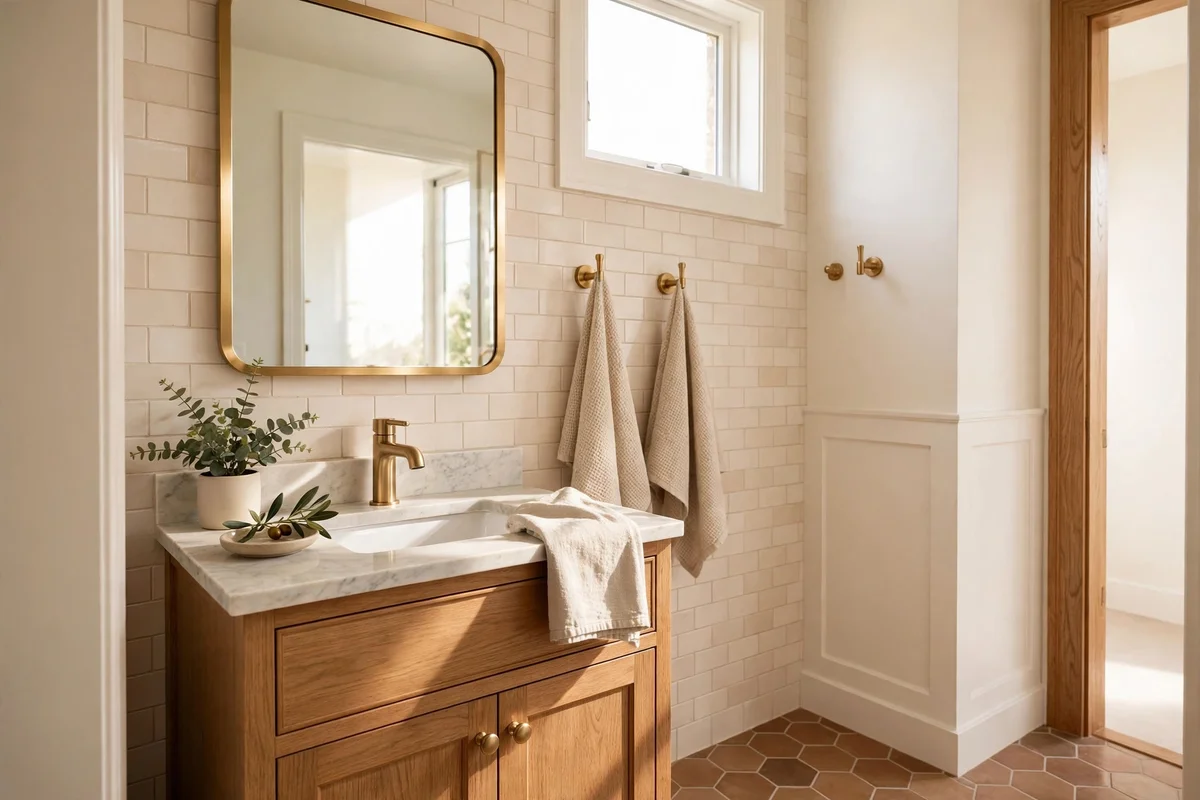
Many people assume bathrooms are too humid for plants, but humidity-loving varieties like pothos, ferns, and orchids absolutely thrive in steamy air. A single trailing pothos on a shelf ($12-$25) softens hard tile edges and makes the room feel alive — it’s the cheapest decor upgrade that exists. No window? A small grow bulb in an existing fixture keeps them happy. Plants turn a sterile bath into a spa retreat overnight.
Pro tip: Hang the plant high and trail it down — vertical greenery draws the eye up and makes ceilings feel taller. More plant ideas in our studio apartment plant ideas.
18. Going Sterile All-White With No Warmth
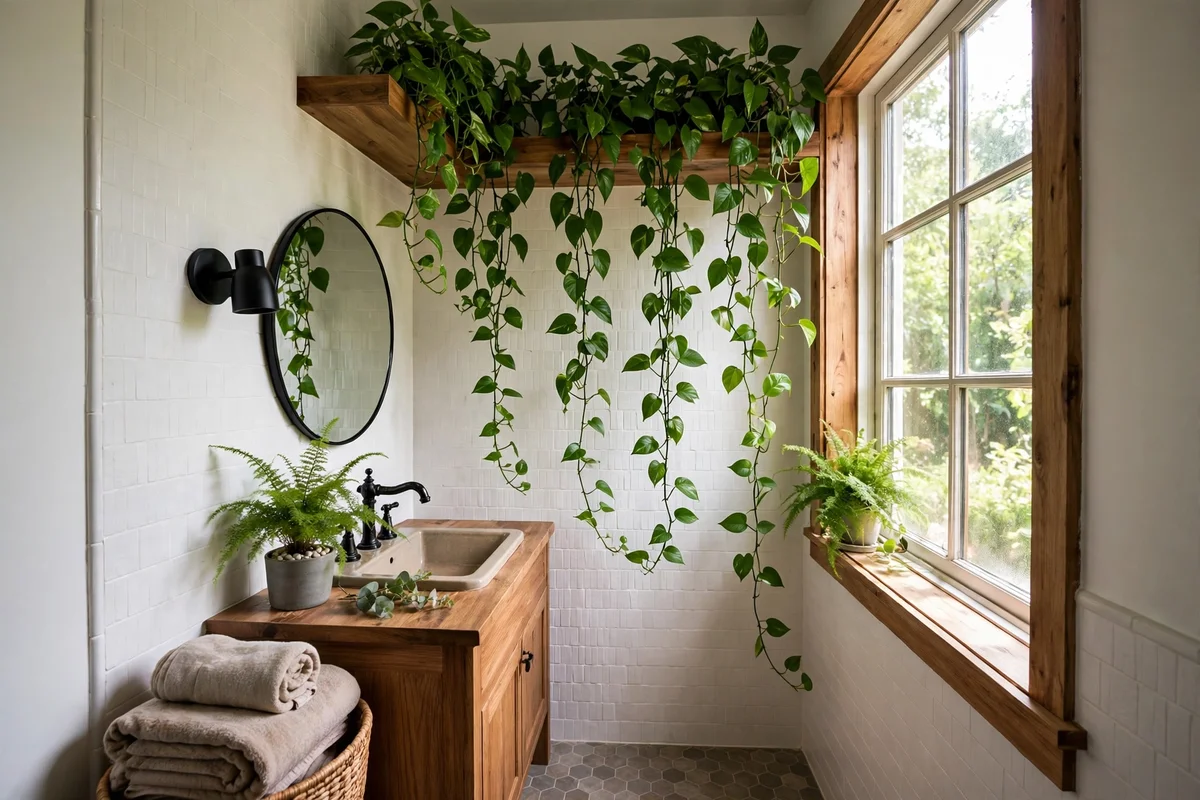
All-white bathrooms can feel crisp — or like a laboratory. The difference is warmth: without any wood, texture, or warm metal, white-on-white reads cold and clinical. Add one warm element — a teak bath mat ($40-$70), oak shelf, or brushed-brass fixtures — and the same white tile suddenly feels spa-like. Warmth is what makes minimalism inviting instead of stark.
Pro tip: A single wooden stool in the shower corner works as both a shelf and a sculptural warm accent.
19. Using an Open, Ugly Trash Can
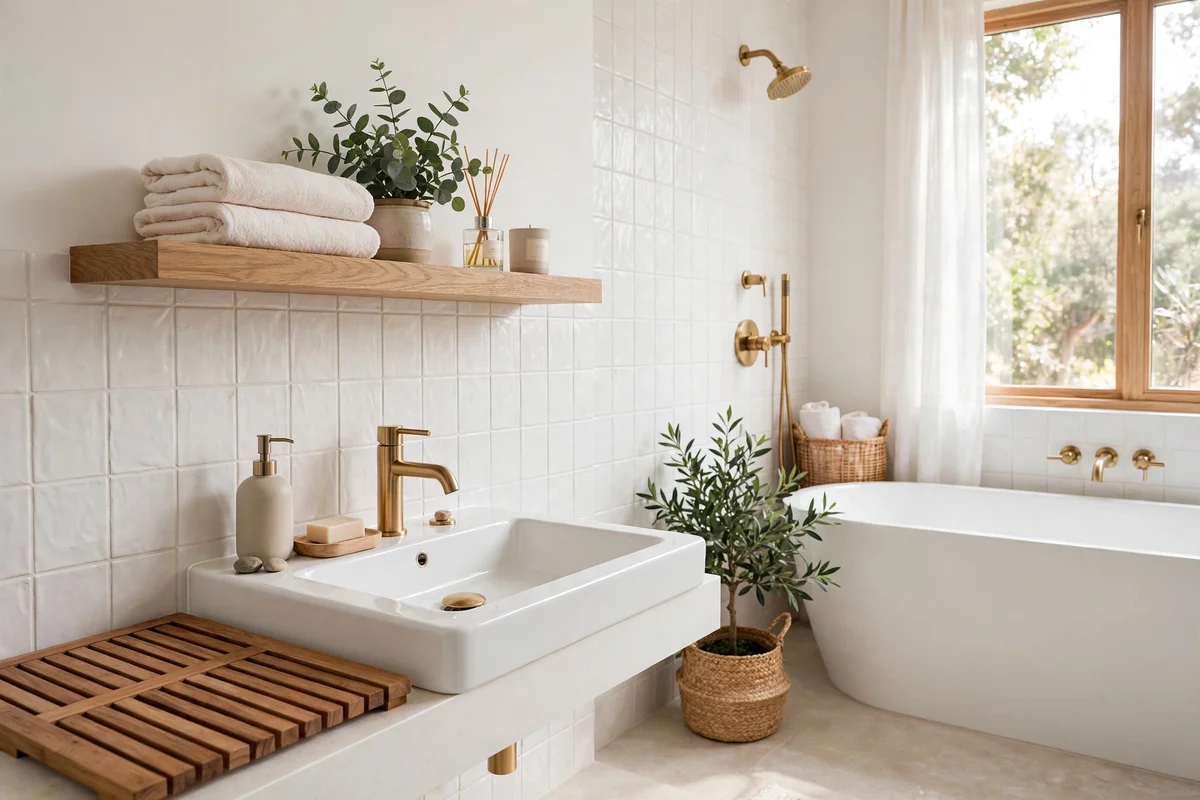
A flimsy open wastebasket overflowing with tissues ruins the look faster than you’d think — and nobody wants to see bathroom trash. A slim lidded bin in matte metal or bamboo ($20-$40) tucks beside the vanity and keeps everything discreet. Choose a step-open lid so it’s touch-free. It’s a tiny detail, but polished bathrooms hide the unglamorous stuff.
Pro tip: Line it with scented bags — a small bath traps odors, and this is the easiest win against them.
20. Piling Laundry in the Corner
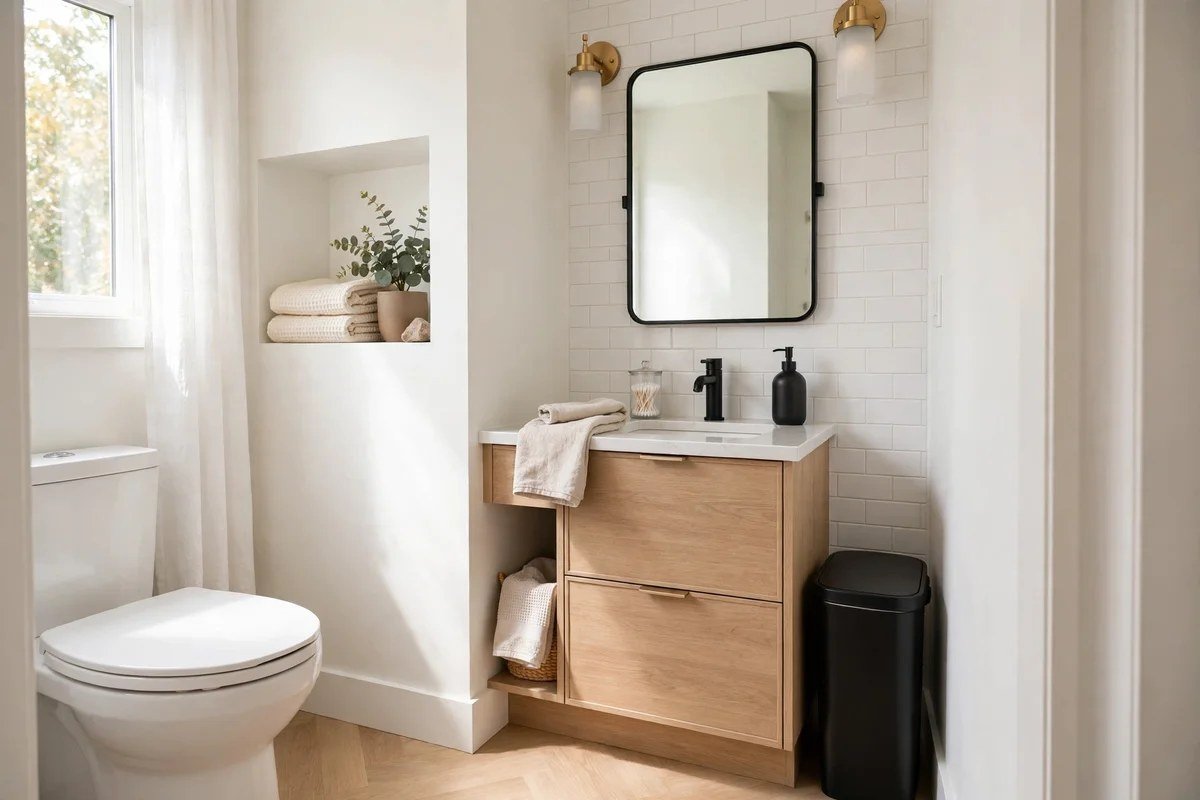
A heap of damp towels in the corner is both an eyesore and a mildew farm. A lidded ventilated hamper ($30-$60) — slim enough to slide between vanity and wall — contains the mess and lets air circulate so things don’t sour. Bamboo or lidded canvas designs look like decor, not laundry equipment. Out of sight, properly aired, problem solved.
Pro tip: A hamper with two compartments sorts lights and darks automatically — future you will be grateful.
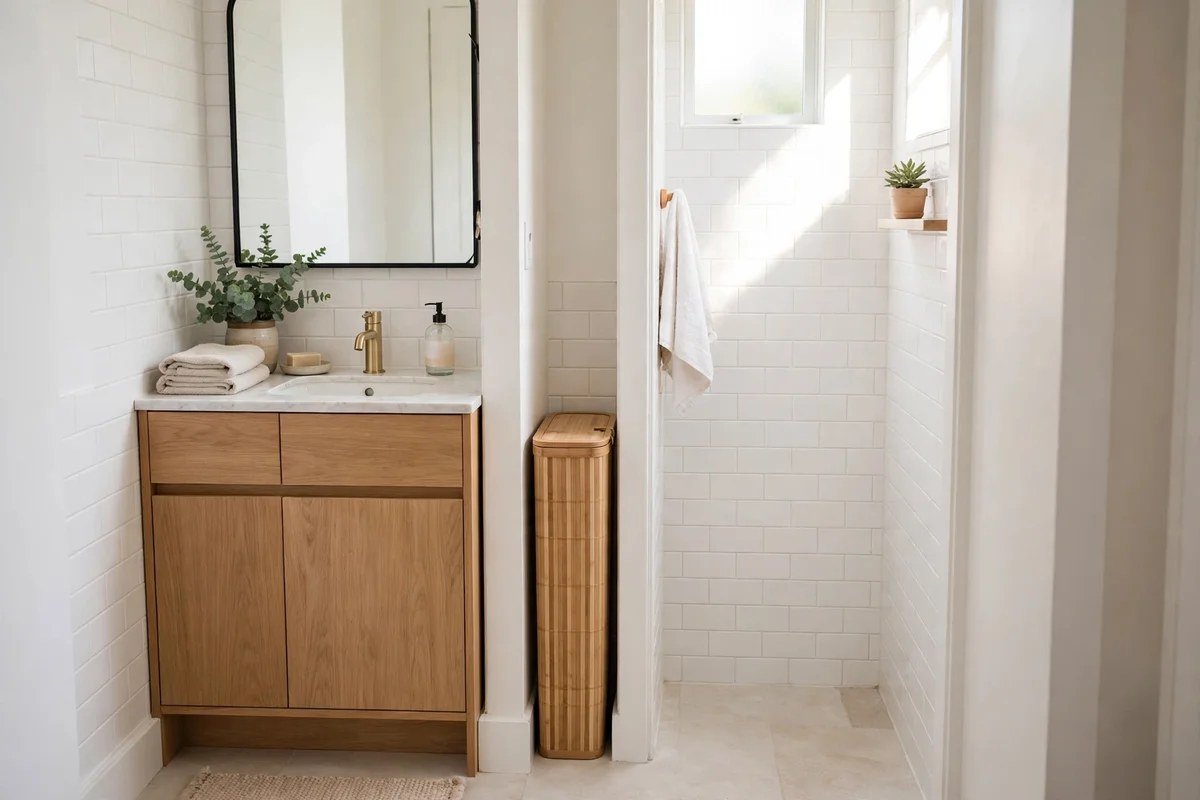
21. Cramming a Chaotic Medicine Cabinet
A medicine cabinet stuffed so full the shelves avalanche every opening defeats its purpose. Pull everything out, toss expired items, and reorganize by frequency of use with small acrylic bins ($15-$30 for a set). Daily items at eye level, occasional items up high. A recessed mirrored cabinet ($100-$220) adds storage without protruding into the room — the ultimate small-bath upgrade.
Pro tip: Stick a small magnetic strip inside the cabinet door for bobby pins and tweezers — tiny items stop getting lost.
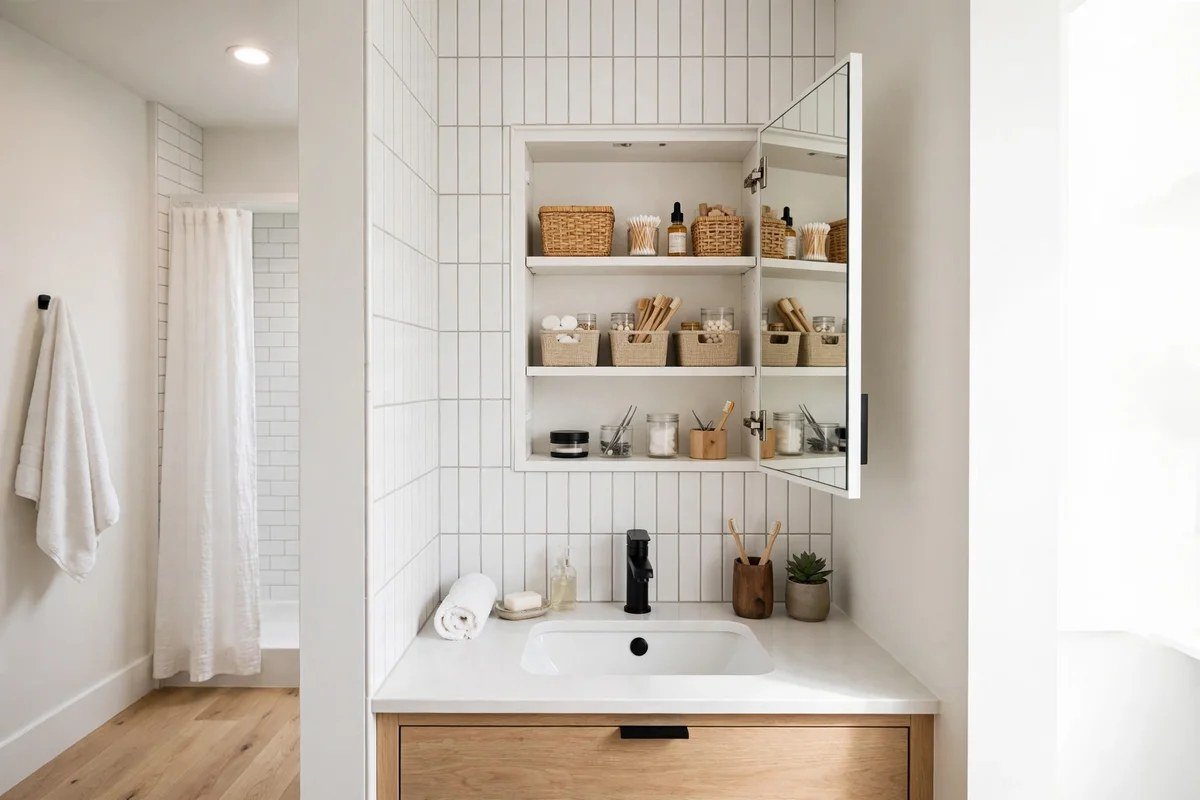
22. Skipping Bath Mats Entirely
No bath mat means wet footprints across the whole floor and a slippery, unwelcoming room. Layer properly: a quick-dry absorbent mat right at the shower or tub exit ($20-$35), plus the runner from mistake #5 for the main floor. Choose mats with rubber backing so they stay put, and wash them weekly — a fresh mat is one of those subconscious signals that a bathroom is well cared for.
Pro tip: Buy two sets and rotate — one in use, one in the wash — so there’s never a bare-floor day.
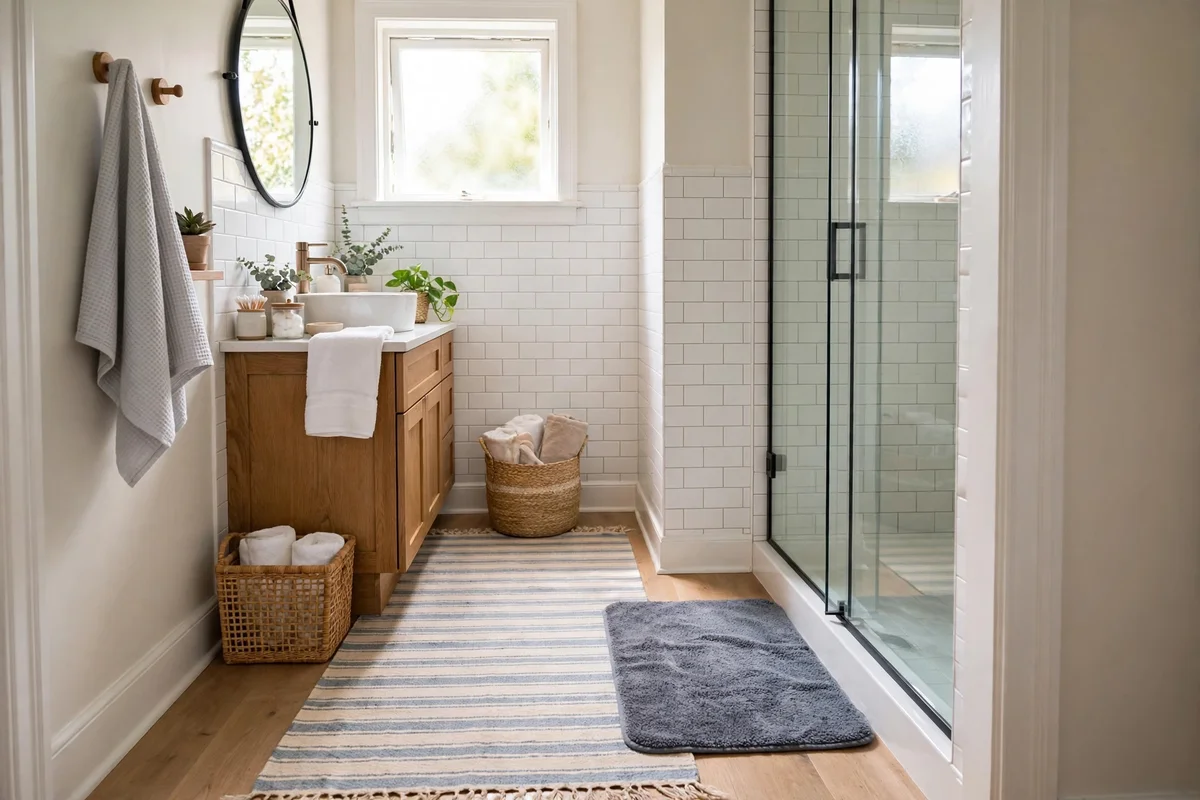
23. Keeping the Dated Hollywood Light Bar
That strip of exposed globe bulbs above the mirror is the bathroom equivalent of fluorescent office lighting — harsh, unflattering, and dated. Replace it with two modern sconces at eye level flanking the mirror ($70-$180 per pair), which eliminate under-eye shadows and flatter every face. The room instantly looks like a boutique hotel instead of a backstage dressing room.
Pro tip: Choose frosted-glass shades — they diffuse light softly and hide the bulb, doubling as decor. Lighting ideas also covered in our small studio bathroom ideas.
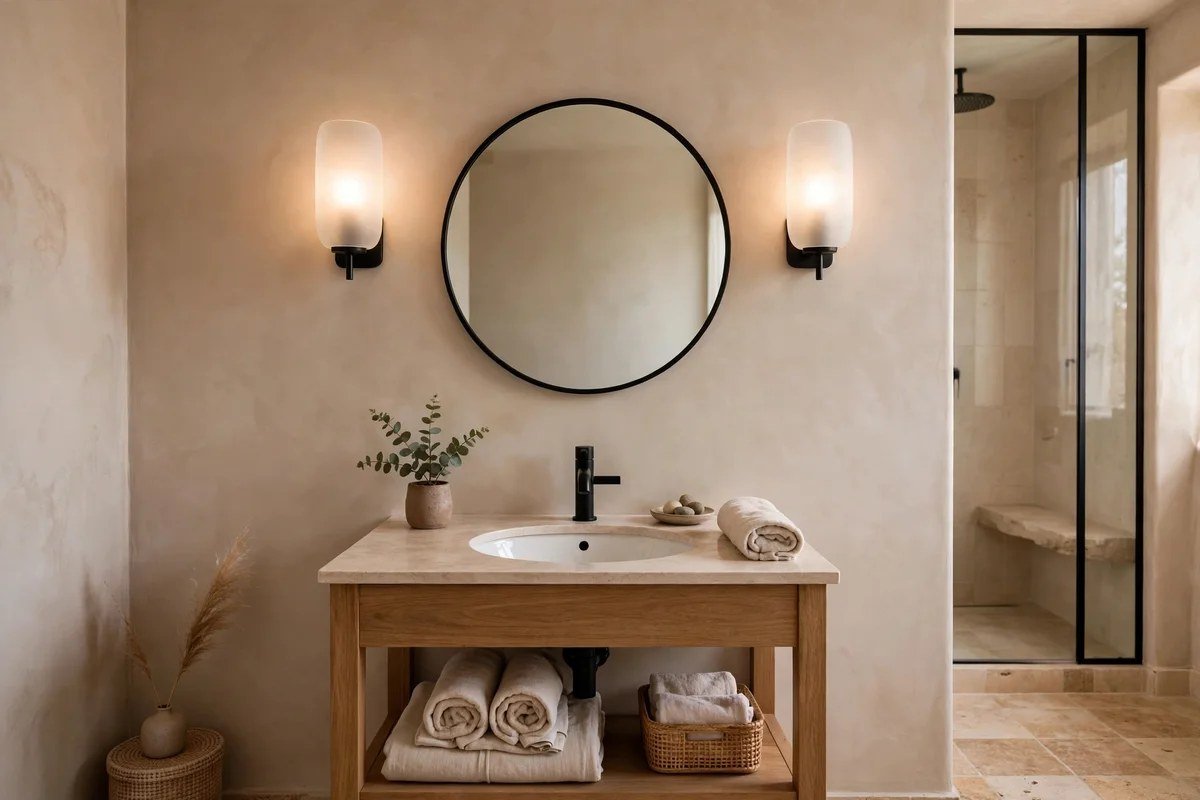
24. Having Zero Shower Storage
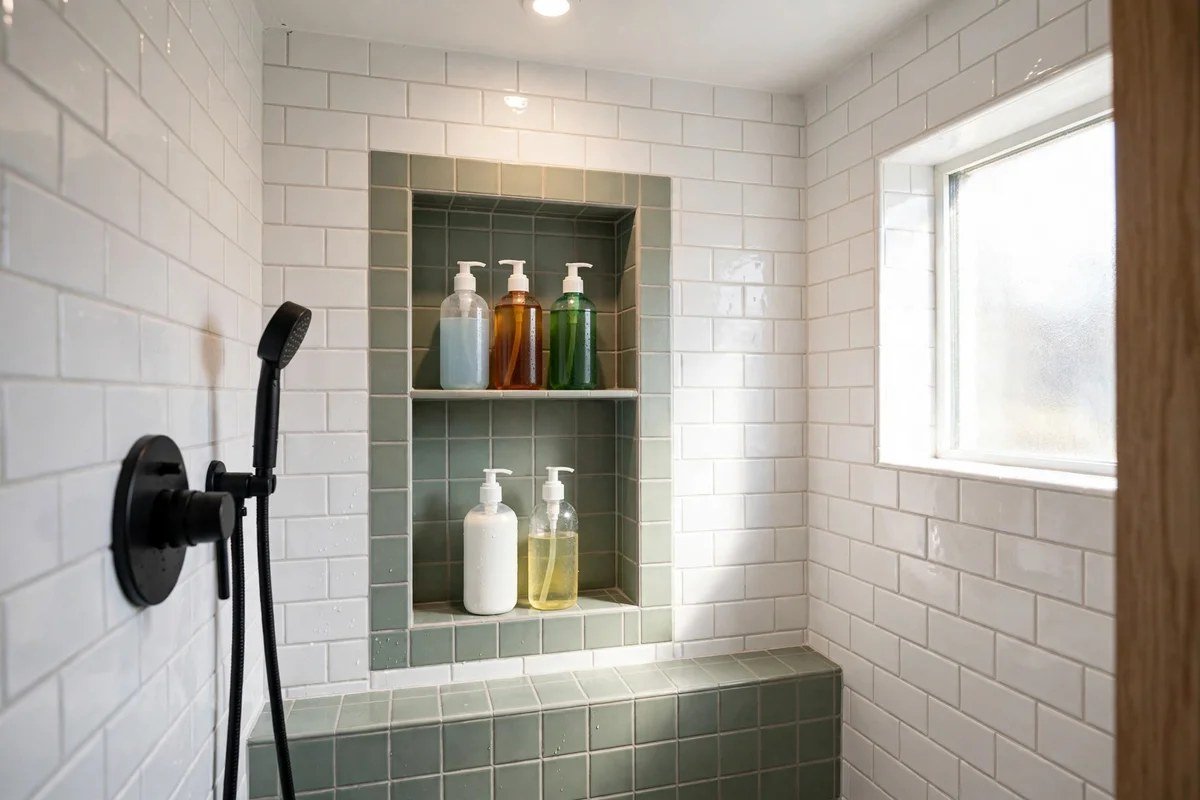
Bottles balanced on the tub edge or the shower floor look terrible and tip over constantly. A tiled shower niche ($150-$300 installed during a re-tile, or a tension-pole caddy for $25-$50 as a renter fix) gives every bottle a proper home at a reachable height. Corral products into two or three — decant into matching bottles if you’re feeling fancy. An organized shower reads as a designed shower.
Pro tip: Position the niche on the side wall, not the back wall — it’s reachable without standing directly under the water stream.
25. Leaving Pipes Exposed Under the Sink
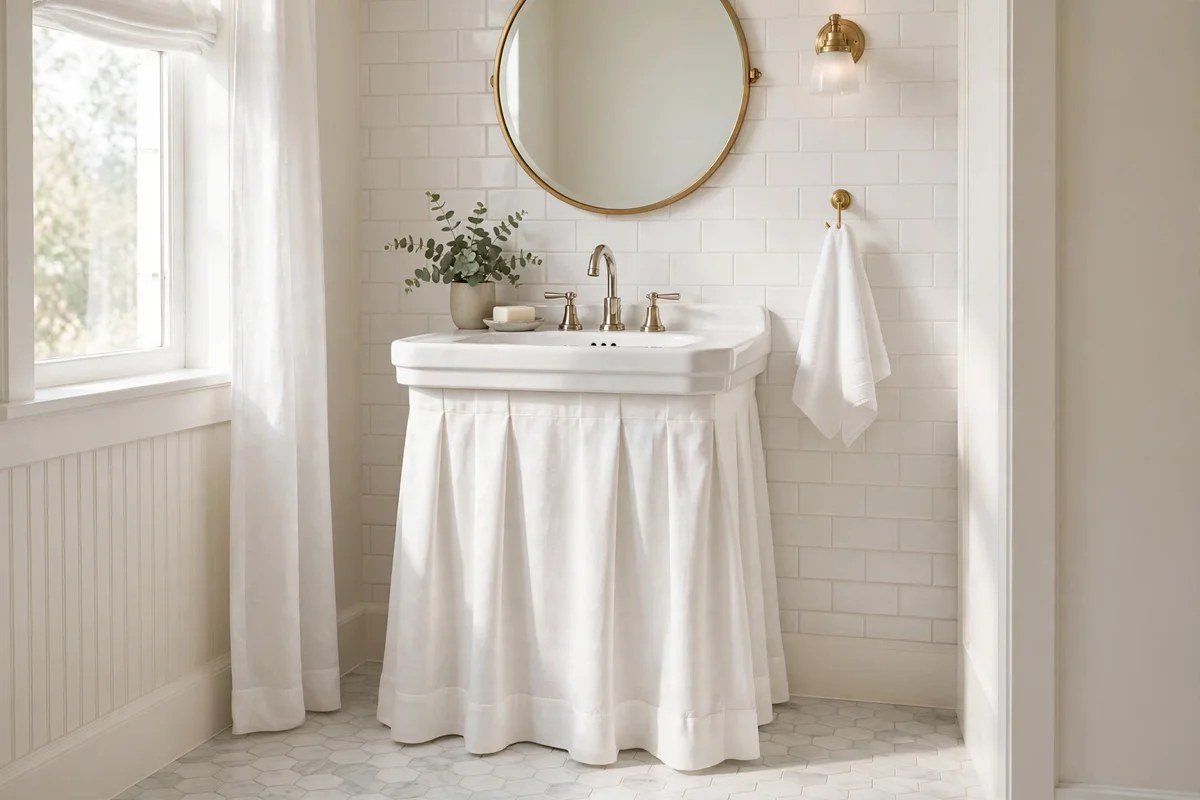
An exposed pedestal sink shows off every pipe, valve, and cleaning bottle underneath — not the look anyone wants. The fix depends on your setup: a skirted sink with a tailored fabric skirt ($30-$60, renter-friendly and washable) hides everything while adding softness, or swap to a small vanity with doors. Either way, the plumbing disappears and the room looks finished instead of half-built.
Pro tip: A skirt in a performance fabric with a velcro top removes in seconds for plumbing access — no commitment issues.
26. Treating Walls as Undecoratable
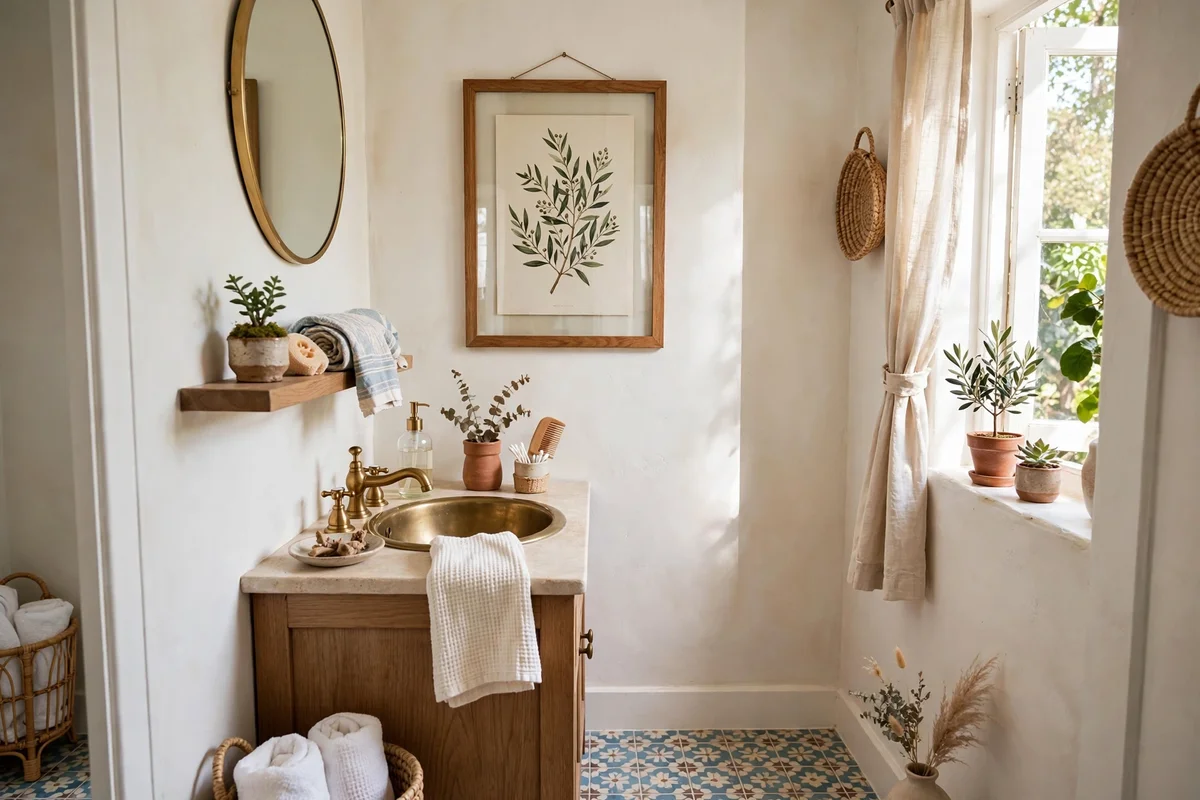
Bare bathroom walls feel institutional, yet people fear art will be ruined by steam. The truth: framed prints behind glass or acrylic ($20-$50) handle bathroom humidity fine, especially away from direct shower spray. One well-chosen piece — a botanical print, abstract, or vintage map — gives the room personality and makes it feel like part of the home, not a utility closet.
Pro tip: Hang art with the center at 57 inches — gallery height works in bathrooms too and keeps pieces clear of splashes.
27. Using Wrong-Scale Decor
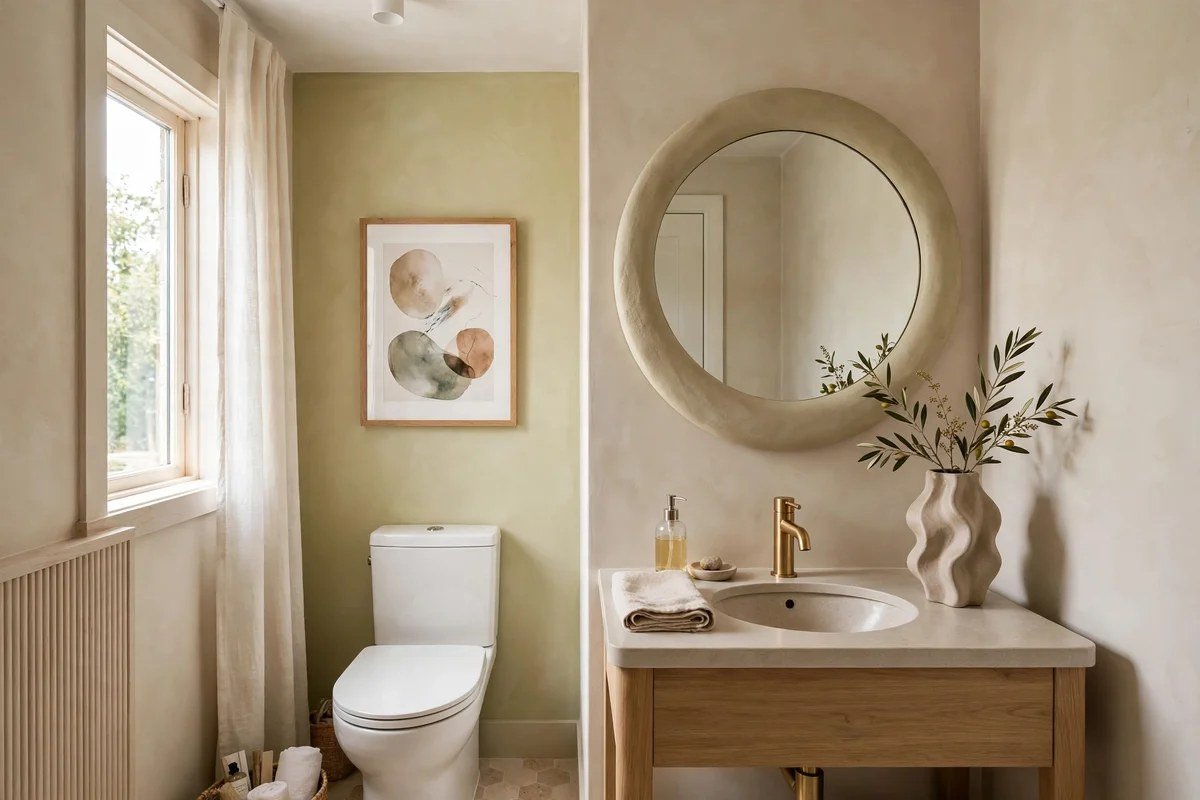
A giant floor vase in a 40-square-foot bath or a postage-stamp print on a big empty wall both scream “decorating by accident.” Scale everything to the room: medium art over the toilet, a small sculptural object on the vanity tray, one substantial mirror. In small baths, fewer, correctly-sized pieces always beat many tiny ones — tiny decor reads as clutter, not charm.
Pro tip: When in doubt, go one size bigger than feels safe — small rooms can handle bold single pieces better than fussy small ones.
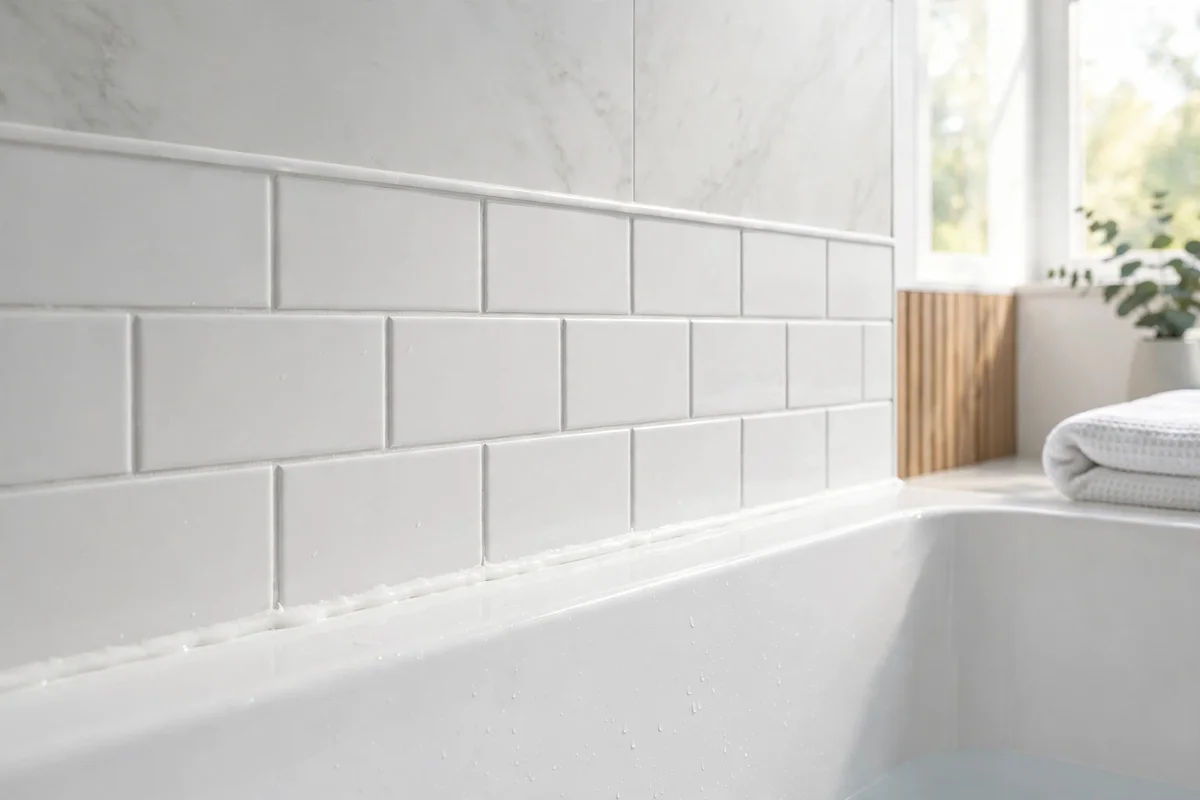
28. Ignoring Dirty Caulk Lines
Blackened, peeling caulk around the tub and sink makes the whole bathroom look unsanitary, no matter how clean it is. Recaulking is a $10 tube of silicone and an hour of work: cut out the old, clean with rubbing alcohol, and lay a smooth new bead. Fresh white caulk lines are the facelift of bathrooms — the room looks newly renovated for the price of lunch.
Pro tip: Use painter’s tape on both sides of the joint for a perfectly straight bead, even on your first try.
29. Choosing a Pedestal Sink With Zero Storage
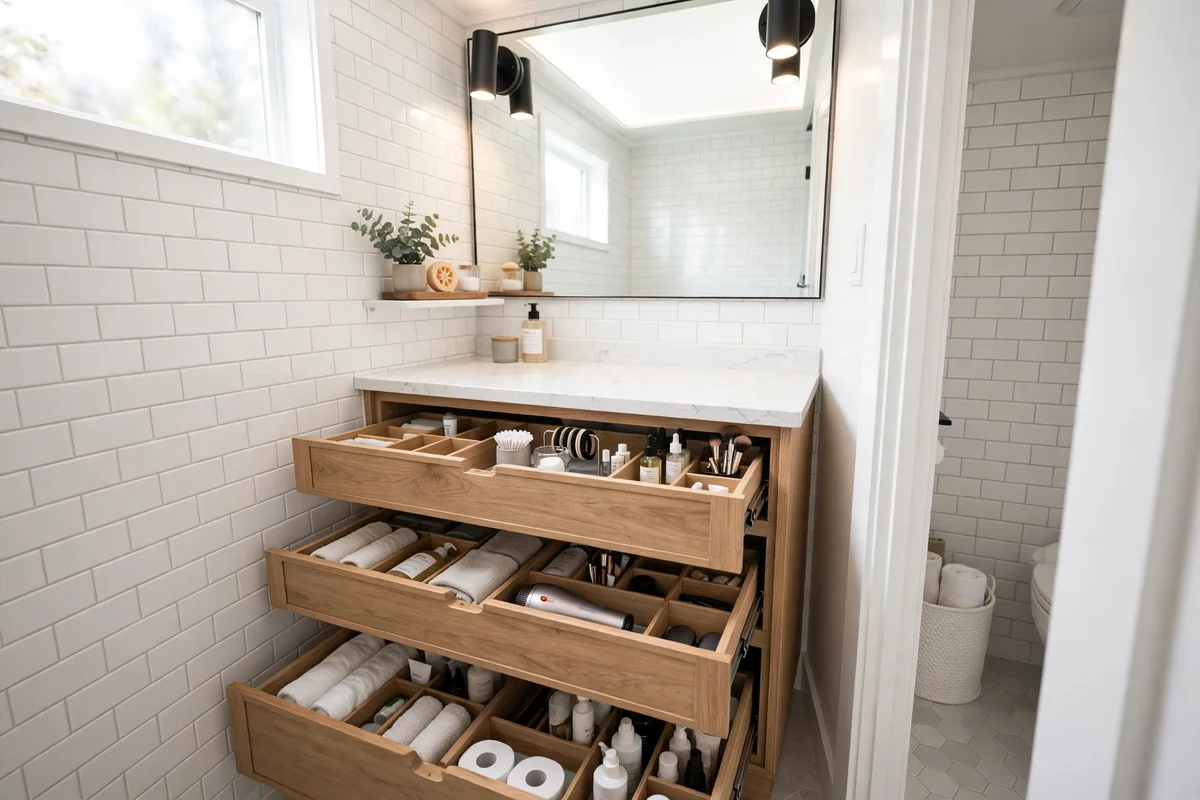
Pedestal sinks look elegant but offer literally no storage — in a small bath with no linen closet, that’s a dealbreaker. A compact vanity with drawers ($200-$450 for an 18-24 inch model) provides the same footprint with room for everything. Drawers beat doors for bathrooms: no more kneeling to dig behind pipes for the spare toilet paper. Form should never defeat function in 40 square feet.
Pro tip: U-shaped drawer organizers ($20) fit around plumbing and turn one deep drawer into a proper storage system.
30. Installing No Dimmer
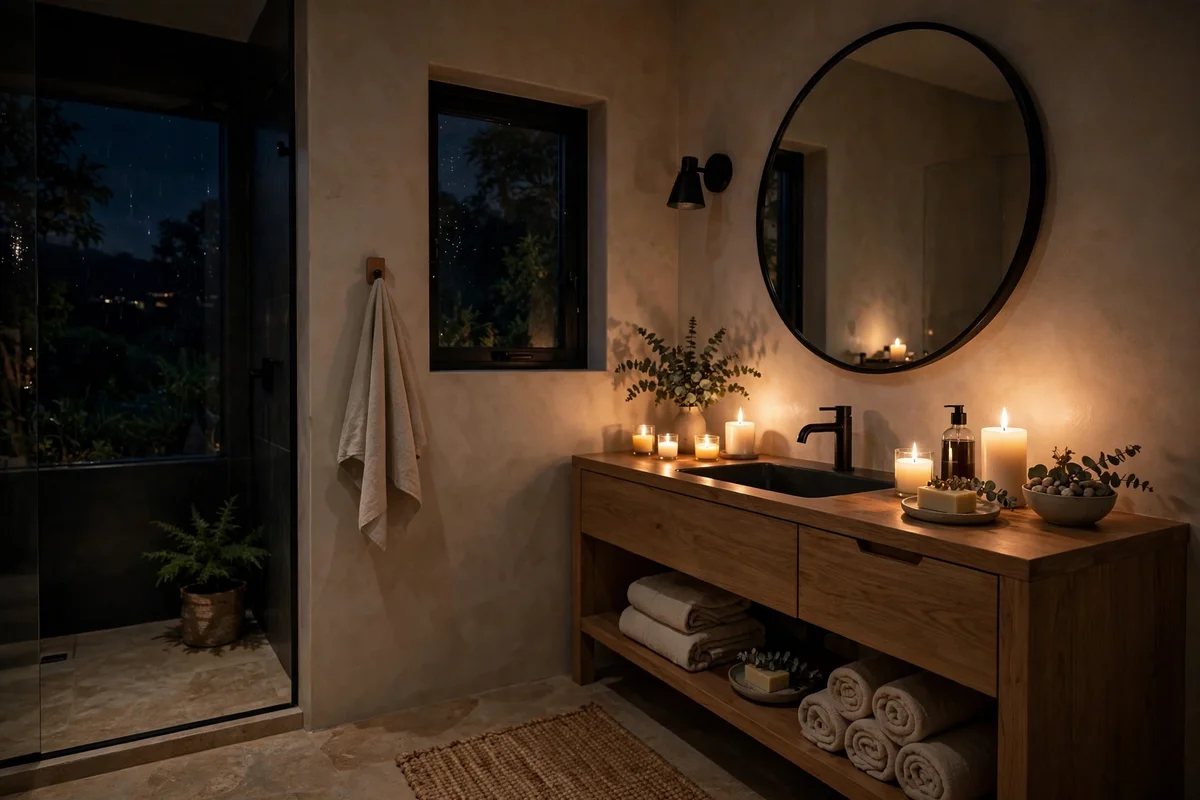
Full-blast bathroom light at 11pm destroys any chance of winding down — and makes midnight trips blinding. A dimmer switch ($20-$35, 15-minute install) lets the same fixtures serve bright grooming light by day and soft spa glow by night. Pair with warm bulbs and your evening bath becomes a genuine ritual instead of an interrogation. Small luxury, massive daily impact.
Pro tip: Make sure your bulbs are dimmable LEDs — non-dimmable bulbs buzz and flicker on dimmers. Check our bedroom decor mistakes for more lighting fixes.
31. Using Cheap Plastic Accessories
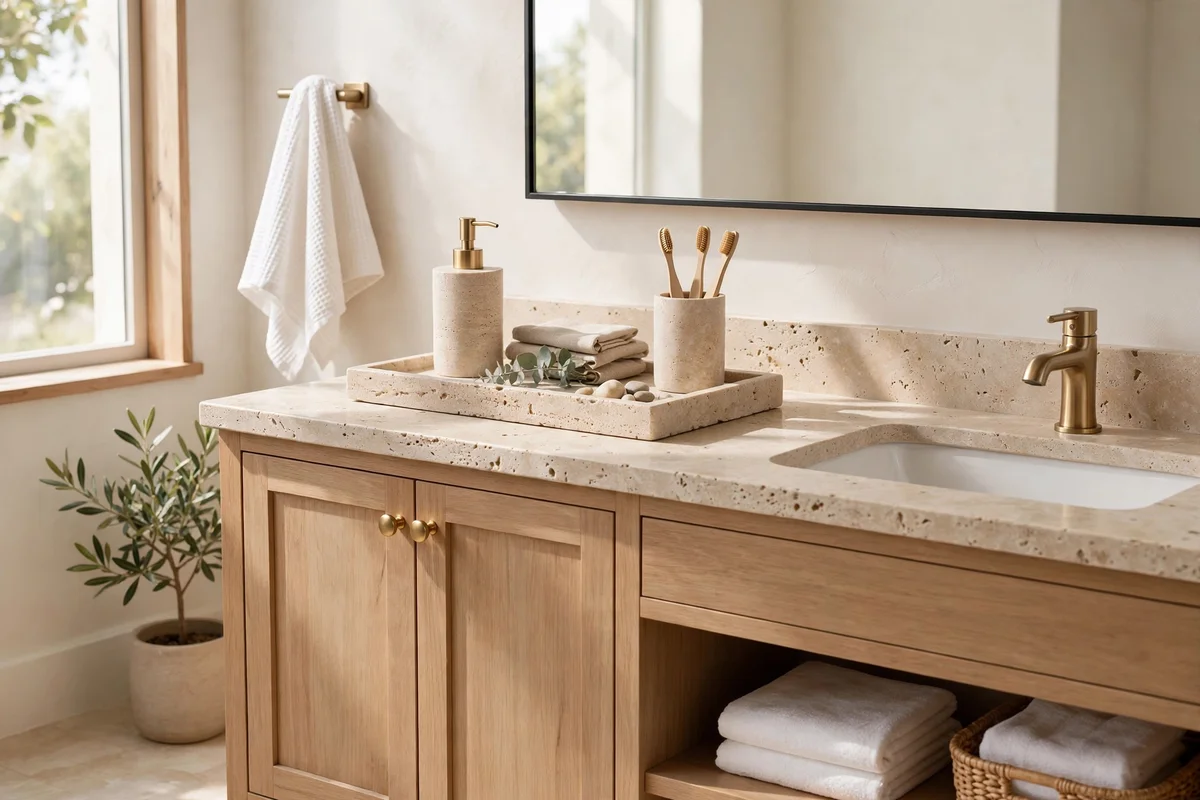
A mismatched plastic soap dish, toothbrush holder, and trash can cheapen the whole room — these small items are at eye level every day. A coordinated set in stone, ceramic, or sealed wood ($30-$70 for a 4-piece set) elevates the vanity instantly. You touch these objects daily; making them beautiful is one of the most cost-effective mood upgrades in the home.
Pro tip: Natural stone accessories hide water spots and soap scum far better than glossy plastic or chrome.
32. Forgetting the Ceiling Exists
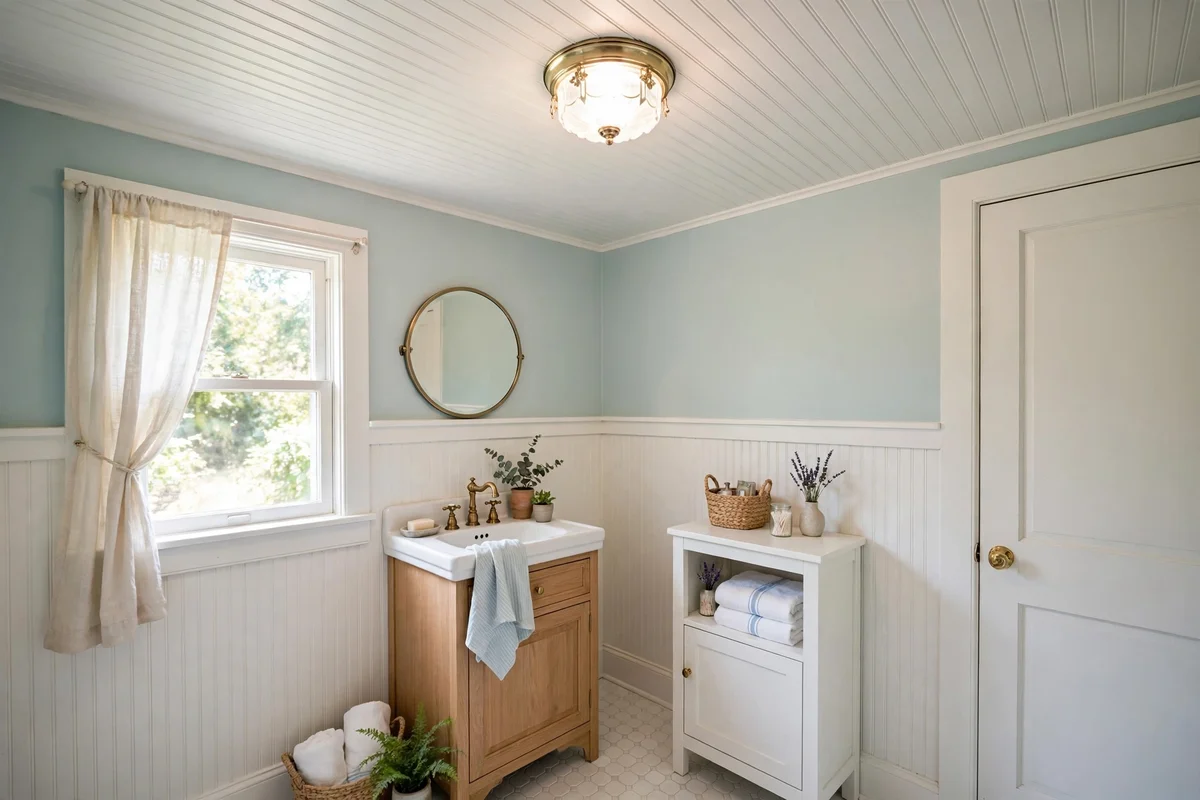
The ceiling is the fifth wall, yet in small baths it’s always flat white and forgotten — a missed opportunity in a room where you look up constantly. Paint it a soft color pulled from the palette, add beadboard for cottage charm ($3-$6 per square foot), or install a statement flush-mount light. A finished ceiling makes the whole room feel intentionally designed from every angle, and it costs almost nothing extra during a repaint.
Pro tip: Painting the ceiling the same color as the walls (in a lighter tint) erases the visual boundary and makes low ceilings feel higher.
Quick Fixes You Can Do This Weekend
Overwhelmed by the list? Start with these five highest-impact, lowest-effort wins: clear the counter down to one tray ($0), recaulk the tub ($10), swap the faucet ($70-$160), hang a bigger mirror ($70-$160), and add a dimmer switch ($20-$35). Total cost under $400, total time one weekend — and your bathroom will feel like a different room on Monday morning.
Frequently Asked Questions
What’s the biggest mistake people make in small bathrooms?
Poor lighting combined with dark colors. A small bath with one harsh overhead light and deep paint feels like a cave. Fix the light first (layered, warm, dimmable), then lighten the color — in that order, because good light makes any color work better.
How can I make my small bathroom look expensive on a budget?
Cohesive hardware finishes, a modern faucet, fresh caulk, and clear counters. These four fixes cost under $300 total and mimic the details of high-end renovations. Matching metals alone makes a bathroom read as “designed” rather than “assembled.”
What paint finish is best for bathrooms?
Satin or eggshell labeled for kitchens and baths. They resist moisture, wipe clean, and don’t highlight wall flaws the way semi-gloss does. Flat paint in a bathroom is asking for mildew stains within a year.
Can I hang art in a humid bathroom?
Yes — framed prints behind glass or acrylic handle bathroom humidity well, especially hung away from direct shower spray. Avoid unprotected canvas or paper. A good exhaust fan matters more for art longevity than the frame choice.
How do I add storage without a renovation?
Go vertical: over-toilet shelves, a tall narrow tower, or floating shelves use wall space that costs nothing. A recessed mirrored medicine cabinet adds hidden storage without protruding. And always declutter first — most small baths have 30% more storage than their owners think once expired products are tossed.
What’s the best lighting for a small bathroom?
Layered and warm: sconces at face height flanking the mirror for grooming, a ceiling light for general brightness, and a dimmer for evening. Stick to 2700K-3000K bulbs — they flatter skin tones and make tile, paint, and finishes look richer than harsh daylight bulbs.
Final Thoughts
Small bathrooms don’t need bigger footprints — they need smarter decisions. Every mistake on this list shares one root cause: treating a compact bath like a shrunken big bathroom instead of designing for its actual scale. Light it in layers, store vertically, hide the chaos, warm it with wood and plants, and finish the details like hardware and caulk. Do that, and your 40 square feet will feel like the most thoughtfully designed room in your home. For more small-space guidance, explore our organization ideas and kitchen decor mistakes guides.