32 Small Kitchen Color Palettes That Feel Bigger
32 Small Kitchen Color Palettes That Feel Bigger
Here is the truth about small kitchens: color does more heavy lifting than square footage ever will. The right palette bounces light into shadowy corners, blurs the edges of a tight galley, and makes a 60-square-foot cook space feel calm instead of cramped. The wrong one — usually a muddy mid-tone with no contrast — shrinks the room visually before you have even unpacked the groceries. Below you will find 32 designer-tested small kitchen color palettes, from classic white-on-white to moody forest green, each broken down with exact color combinations, realistic budget numbers, and a pro tip for making it work in a rental or a renovation. Whether you are painting cabinets, swapping hardware, or just choosing textiles, there is a palette here that will make your small kitchen feel bigger starting this weekend.
The Classics — Palettes That Always Work
1. Classic White-on-White
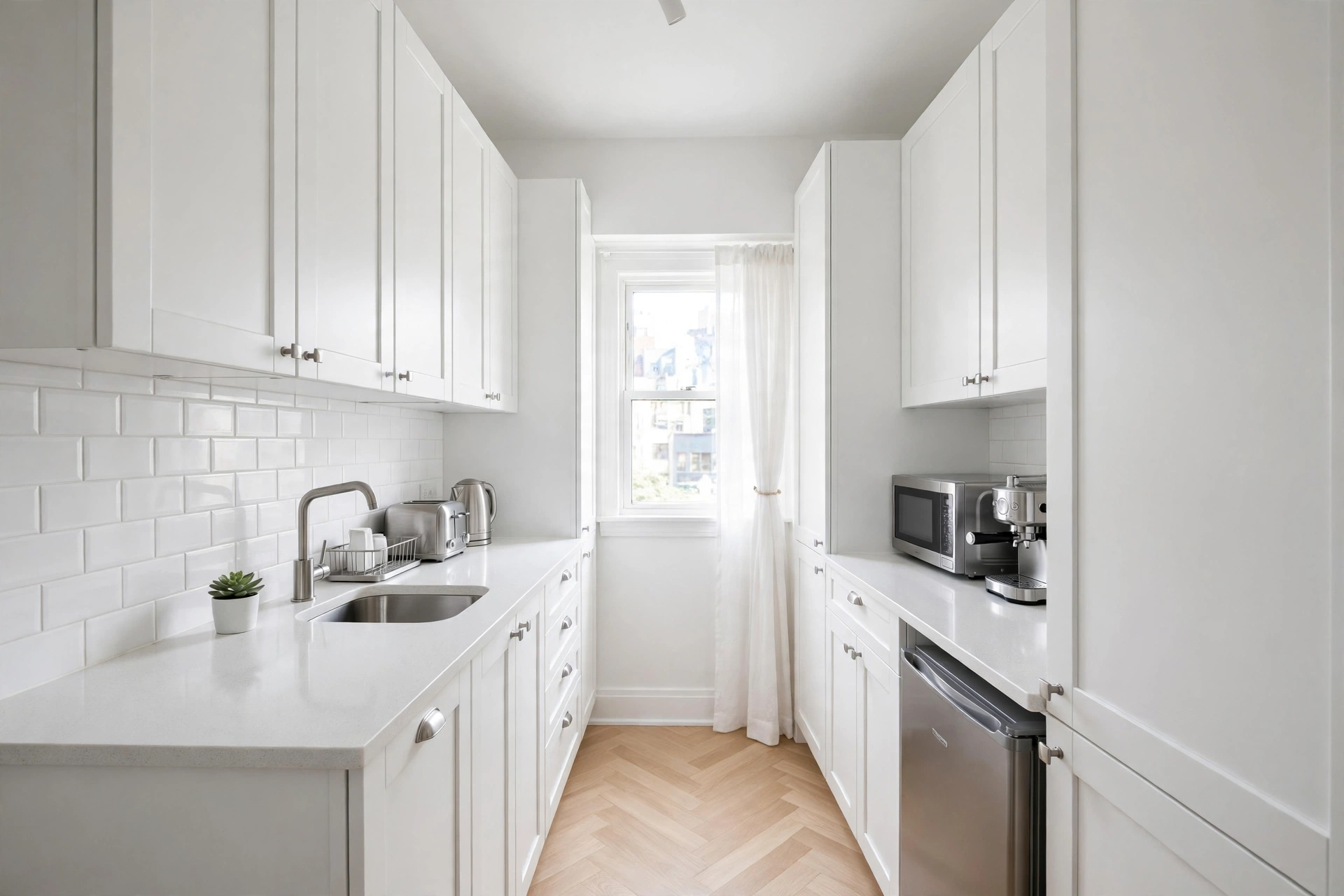
White cabinets, white subway tile, white quartz counters — the all-white kitchen remains the undefeated champion of small spaces because it erases visual boundaries. When walls, cabinetry, and backsplash share one light value, the eye reads the whole room as a single continuous surface, which can make a galley kitchen feel up to 30 percent larger. Keep it from feeling sterile by layering textures: handmade-look subway tile ($6–$12 per square foot), a honed rather than polished countertop, and warm wood cutting boards. A gallon of quality cabinet paint runs $45–$70 and covers most small kitchens with two coats. Pro tip: choose a white with a whisper of warmth (like Benjamin Moore White Dove) — stark blue-whites can feel cold and clinical under LED lighting.
2. Warm Cream & Butcher Block
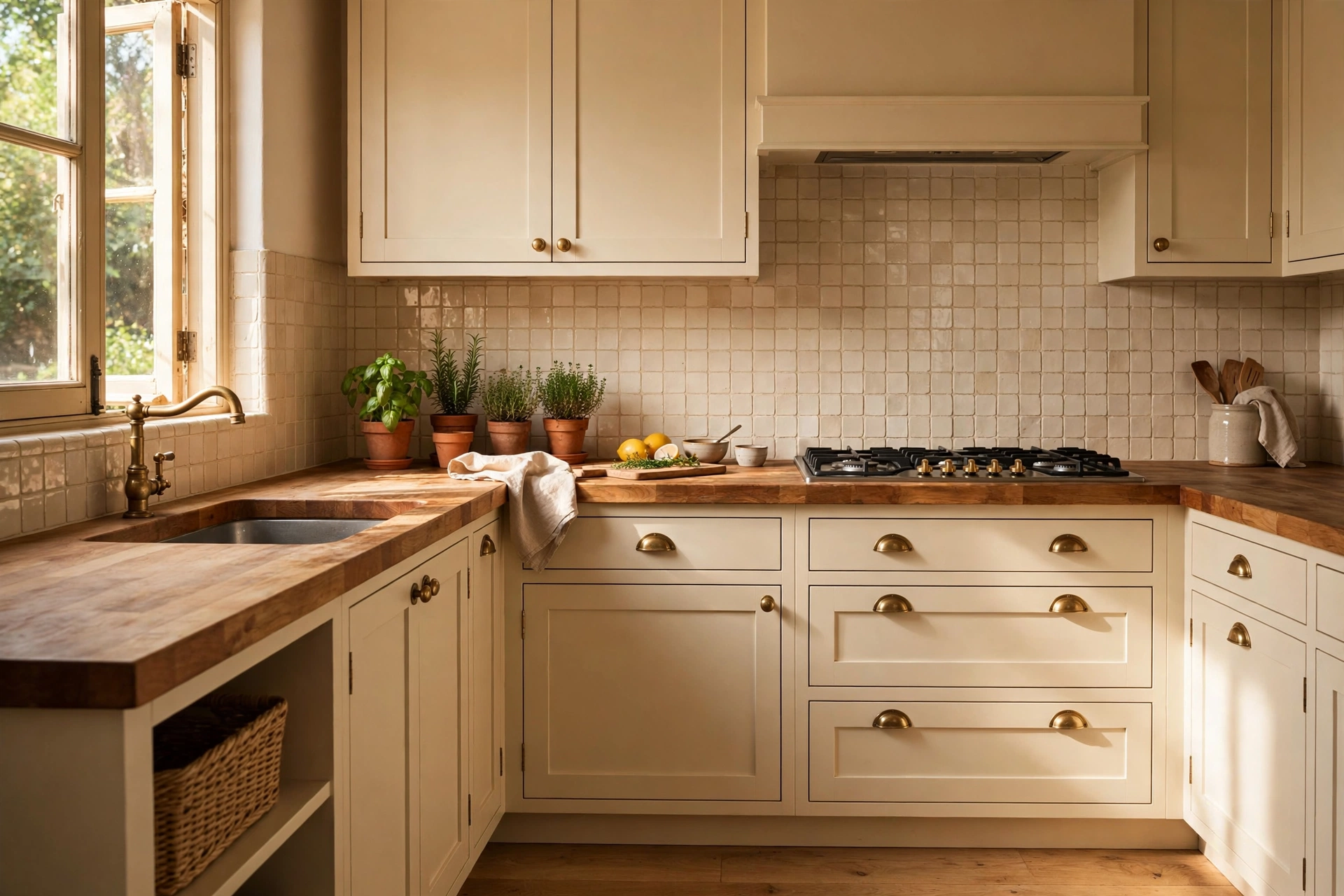
If pure white feels too stark, warm cream cabinets paired with a butcher block countertop deliver the same space-expanding effect with far more soul. Cream reflects nearly as much light as white while adding a honeyed glow that flatters skin tones and food alike — your small kitchen will feel like a sunlit cottage rather than a laboratory. Butcher block counters ($30–$60 per square foot installed, or under $200 for a DIY IKEA NUMERAR section) warm up the palette and are forgiving to refinish: just sand and re-oil once a year. This is also one of the most budget-friendly palettes here, which is why it stars in our guide to decorate a studio apartment on a budget. Pro tip: seal butcher block around the sink with Waterlox or marine-grade oil — standard mineral oil will not survive daily dish splashes.
3. Sage Green Cabinets
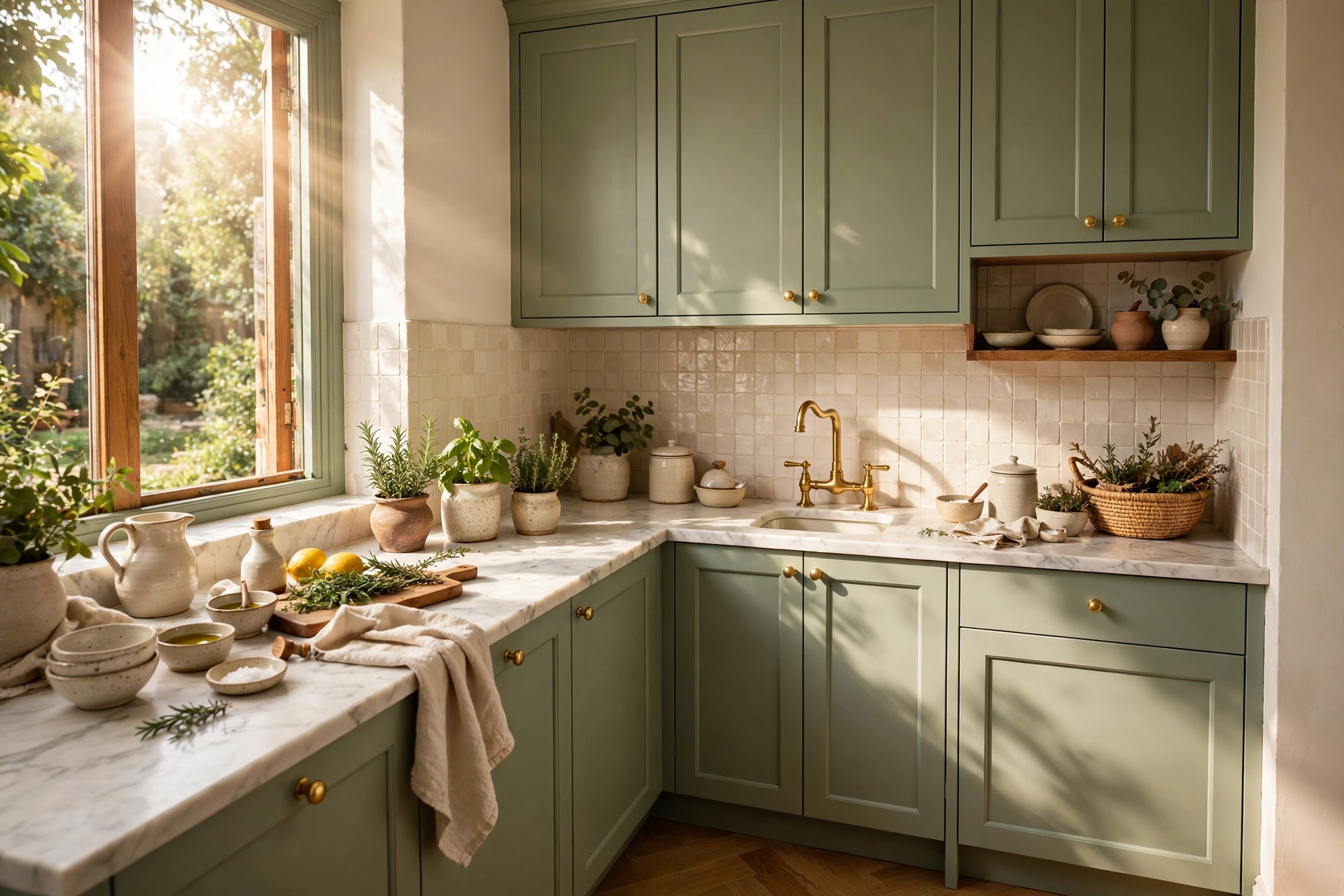
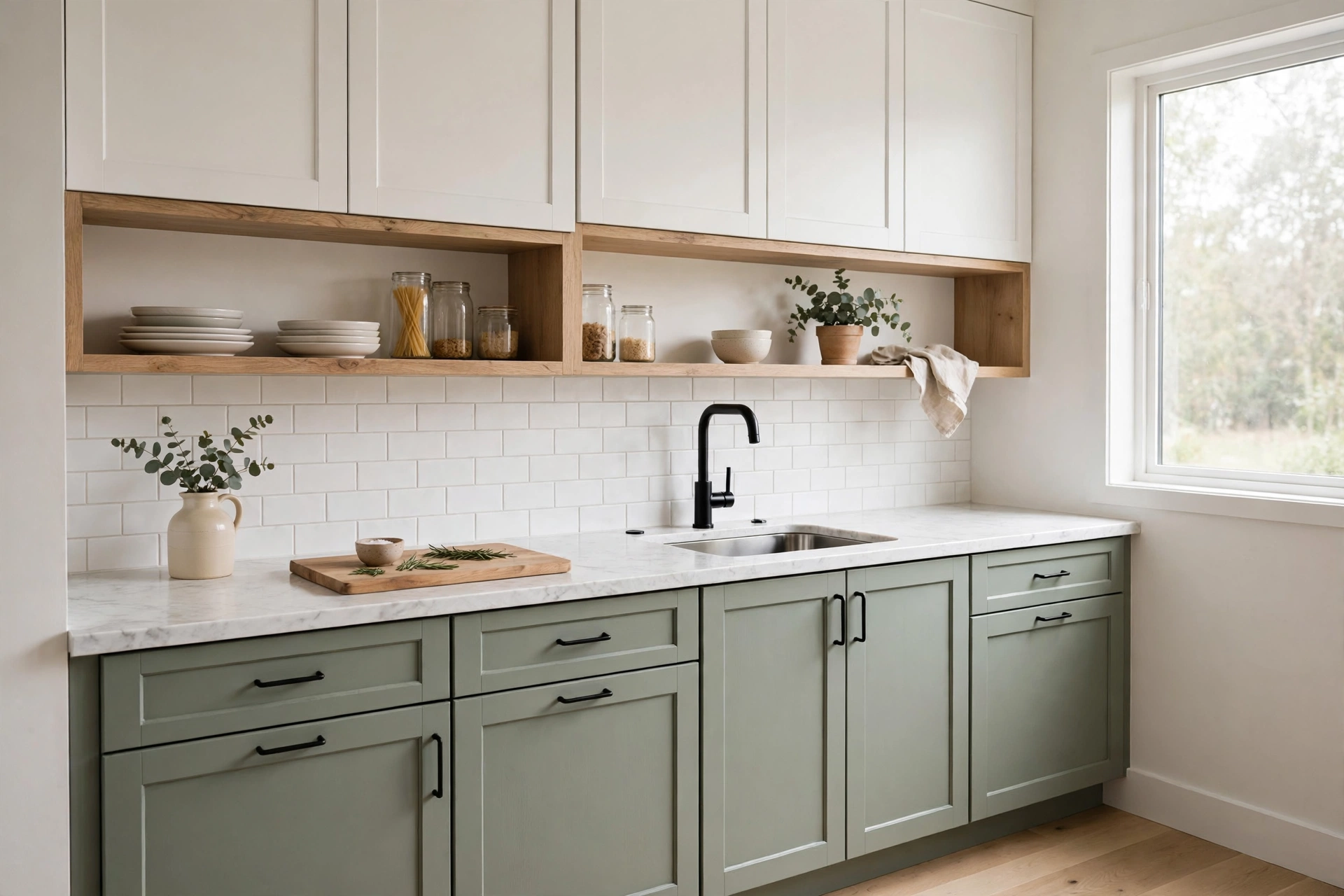
Sage green is the color of the moment for good reason: it reads as a neutral in small kitchens while adding infinitely more character than gray. The muted, grayish-green tone recedes visually like a pale color but grounds the room with organic depth — think eucalyptus leaves rather than a bold statement. Pair sage lowers with white uppers (or open shelving) to keep the palette light, and let the green carry the design so everything else can stay simple. A two-gallon cabinet painting kit costs $90–$140; popular shades include Evergreen Fog and Retreat. The palette shares DNA with the calm, nature-first rooms in our Japandi studio apartment ideas. Pro tip: test sage swatches on the cabinet boxes, not just a board — green shifts dramatically between morning and evening light.
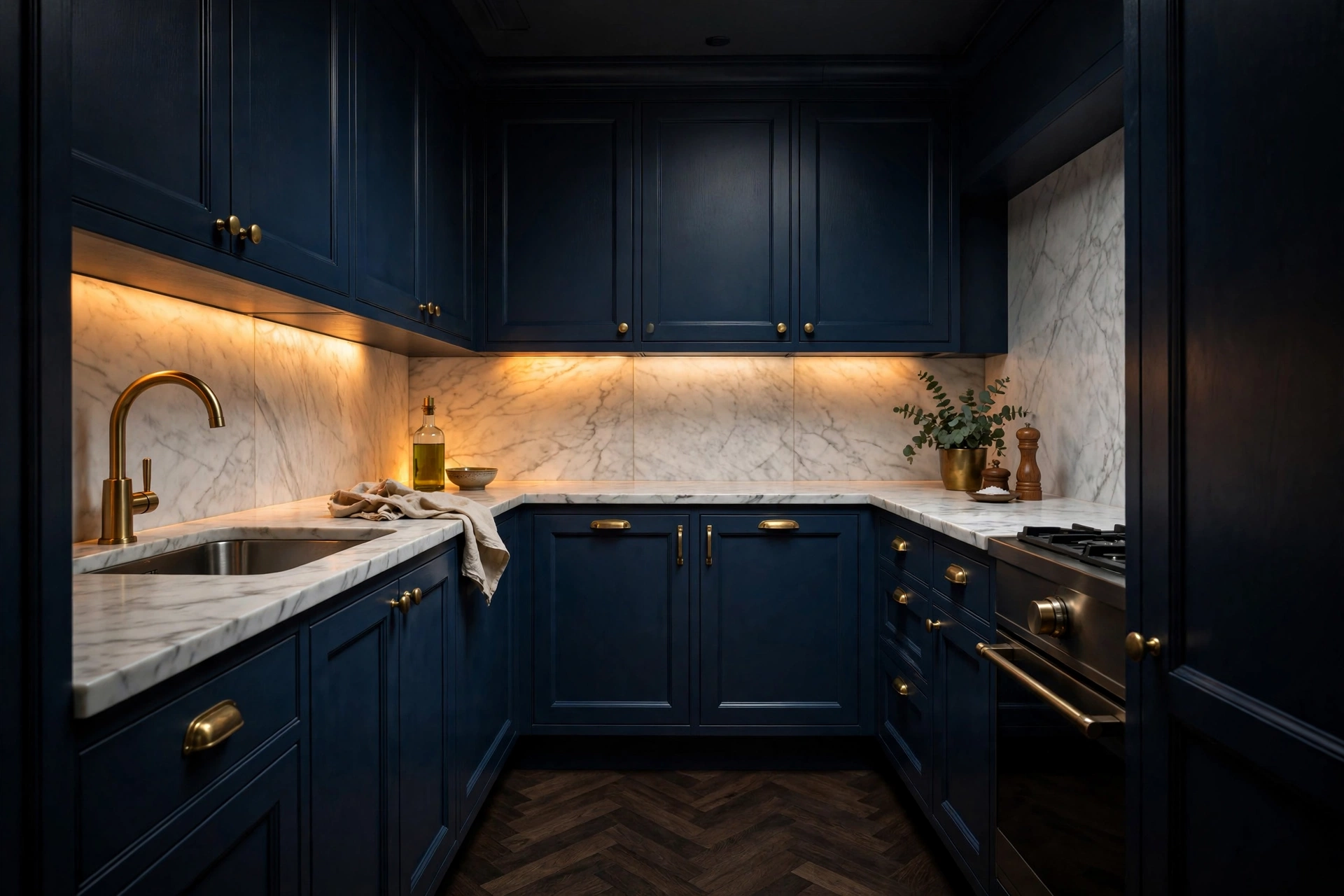
4. Navy Blue & Brass
Conventional wisdom says dark colors shrink small rooms — navy blue politely disagrees. A deep, inky navy on lower cabinets creates the illusion of depth, like looking into twilight, while white uppers and a light backsplash keep the overall light level high. The contrast actually defines the room’s architecture instead of letting it blur into a beige box. Brass hardware ($3–$8 per pull) and a brass faucet ($150–$300) warm up the cool blue and add the jewelry this palette needs. Keep counters light — white marble or quartz — so the navy has something to play against. Pro tip: in a windowless galley, add LED strip lighting under the uppers ($20–$40); it bounces off the white backsplash and stops navy lowers from feeling cave-like.
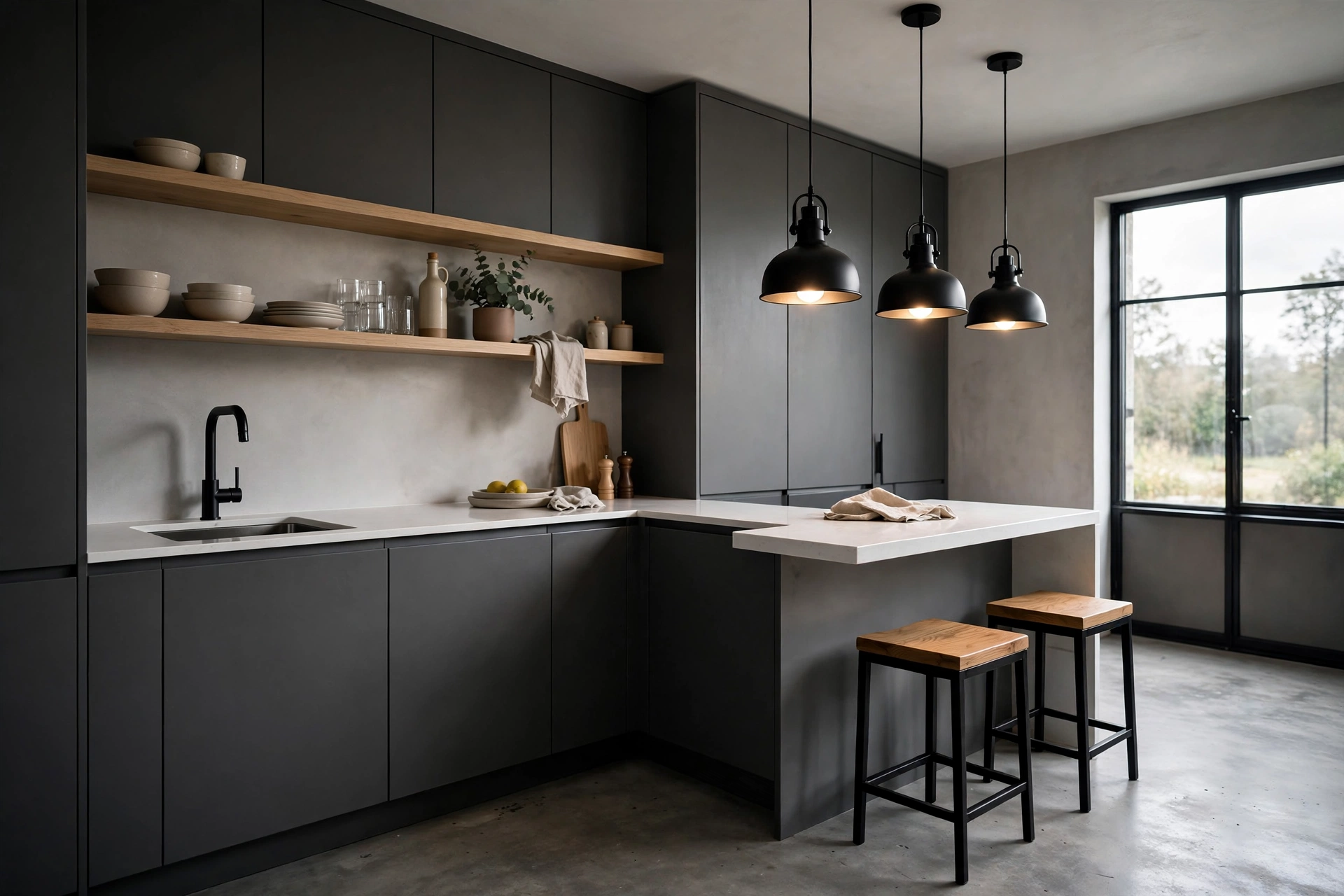
5. Charcoal & Light Oak
Charcoal gray cabinets with light oak open shelving strike the perfect tension between moody and airy. The dark lowers anchor the room and hide everyday wear (a blessing in a hardworking small kitchen), while pale oak shelves and a white countertop lift the upper half so the space never feels heavy. This palette loves texture: rift-sawn oak, honed black granite or quartz, and a simple white handmade tile. If you are nervous about dark cabinets, start with a charcoal island or a single run of lowers — about $200–$400 in paint and primer for a small kitchen. Our studio apartment lighting ideas show how under-cabinet LEDs make dark cabinetry glow instead of loom. Pro tip: choose a charcoal with warm undertones (not blue-gray) or the palette can read chilly next to oak’s honey tones.
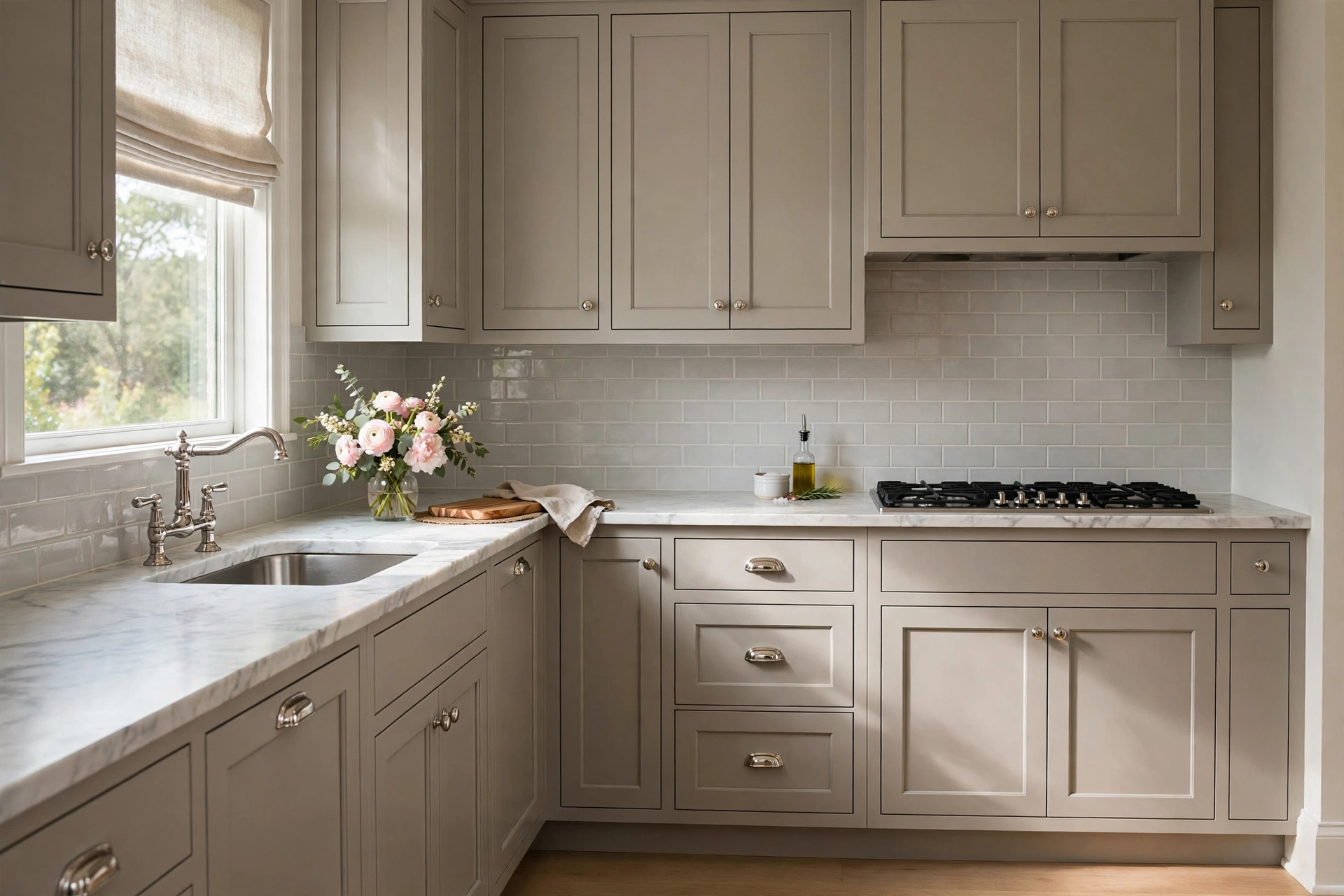
6. Soft Gray & White Marble
Soft warm gray is the diplomat of kitchen palettes — it gets along with stainless steel, white appliances, wood floors, and just about any accent color you will ever love. In a small kitchen, a light warm gray on cabinets paired with white marble (or marble-look quartz at $50–$80 per square foot installed) feels tailored and timeless without the starkness of all-white. The gray adds just enough depth to define the cabinetry while the marble’s veining gives the eye something beautiful to travel across, which subtly expands the sense of space. Add polished nickel hardware for a classic finish. Pro tip: avoid gray with purple undertones — in small rooms they intensify; instead pick a gray that looks beige-adjacent on the swatch (a true “greige”).
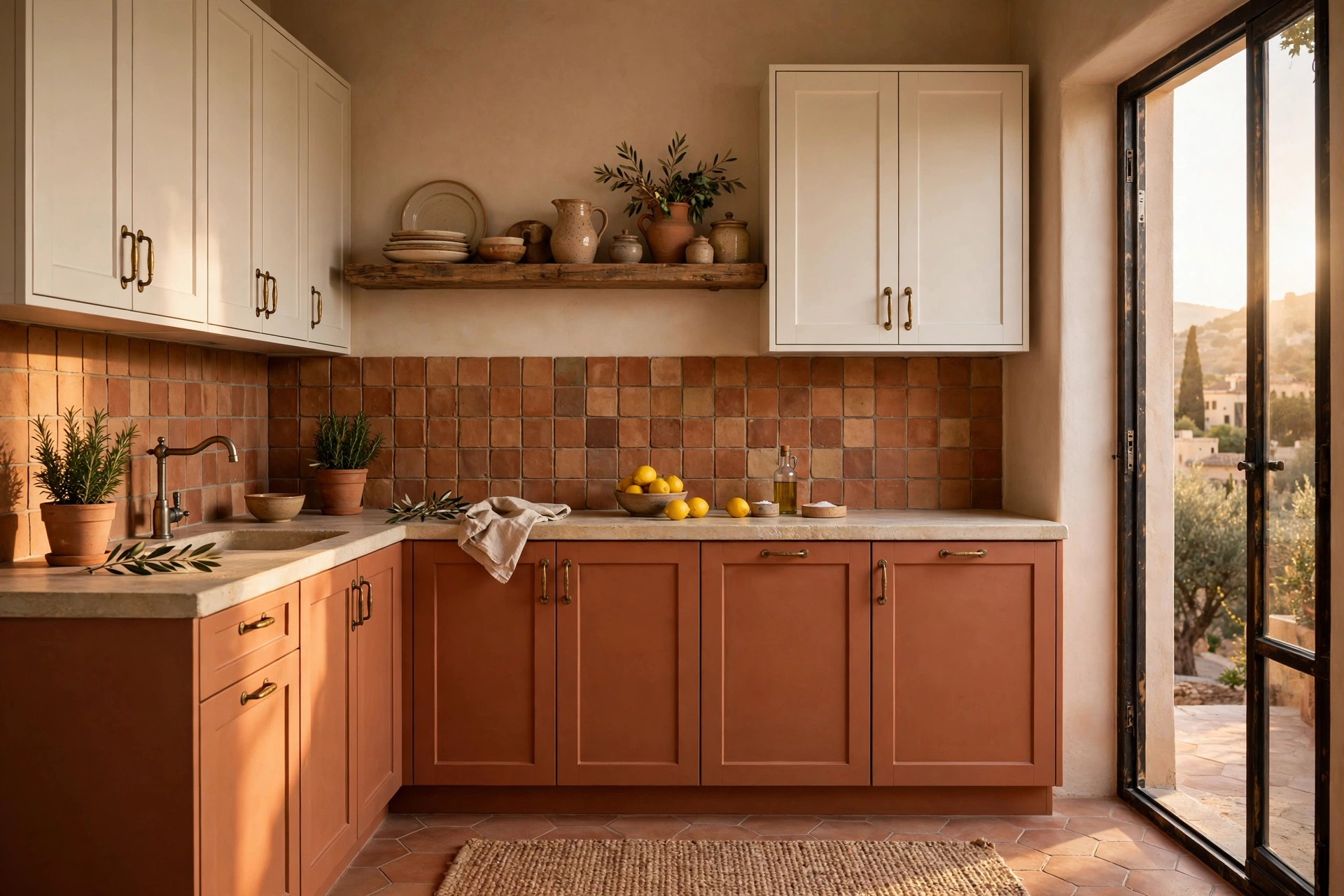
7. Terracotta & Cream
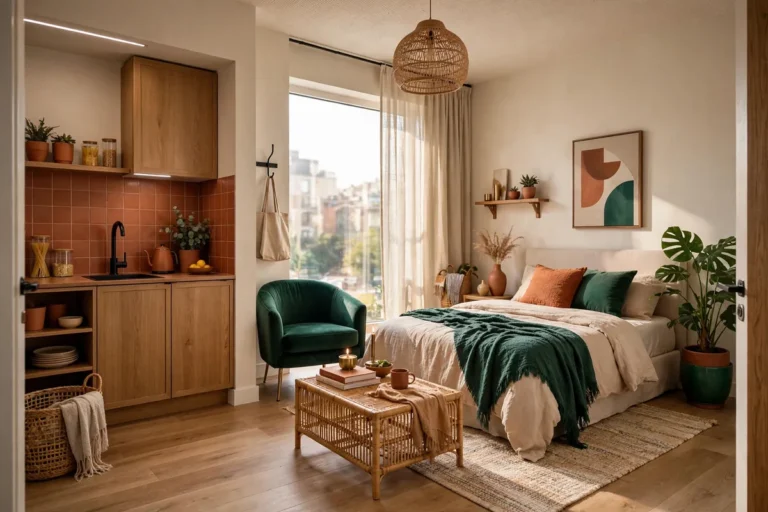
Terracotta lower cabinets with creamy white uppers bring sun-baked Mediterranean warmth to even the tiniest kitchen. The burnt-orange clay tone is saturated enough to feel intentional and joyful, yet earthy enough to act almost like a neutral — it pairs beautifully with wood, brass, black, and white. In a small space, keep terracotta to the lowers and let cream dominate above eye level so the room stays light. Handmade-look terracotta tile for the backsplash ($8–$15 per square foot) doubles down on the warmth without adding visual clutter. Pro tip: terracotta intensifies under warm bulbs — use 3000K lighting to keep it glowing rather than garish, and avoid pairing it with cool daylight LEDs.
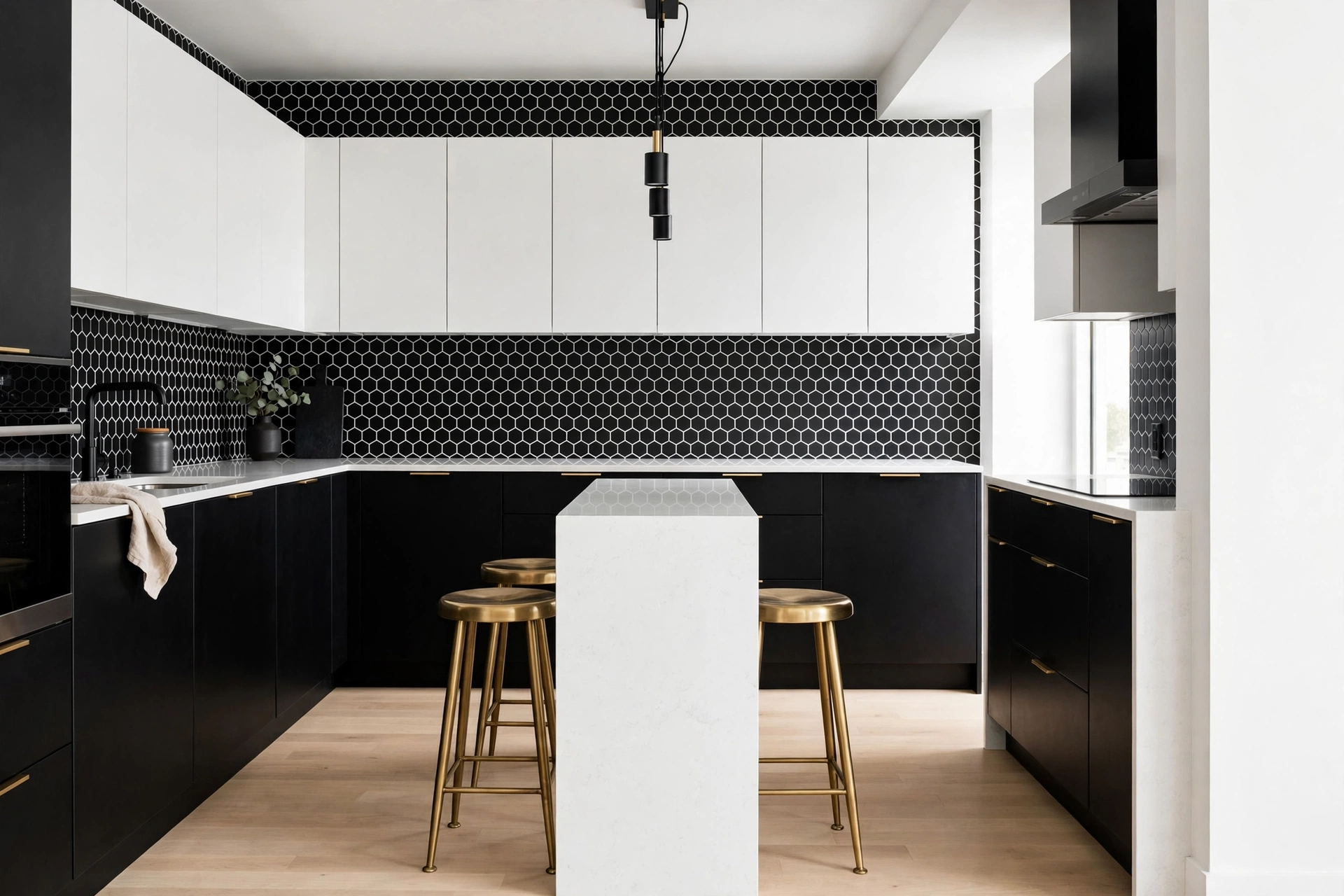
8. Black & White Contrast
High-contrast black and white is graphic design for kitchens — and in a small space, strong contrast paradoxically creates clarity. Black lower cabinets with crisp white uppers, a white waterfall counter, and a black patterned backsplash give the eye clean lines to follow, which reads as order and spaciousness. The trick is balance: roughly 60 percent white to 40 percent black keeps the palette from tipping dark. Black hardware on white cabinets ($2–$5 per knob) is the cheapest way to test the look before committing to paint. A small black-and-white kitchen also photographs beautifully, which matters if you ever list your rental. Pro tip: use a soft black (like Iron Ore or Wrought Iron) rather than pure jet black — it has dimension and will not show every dust speck.
Soft Color With Staying Power
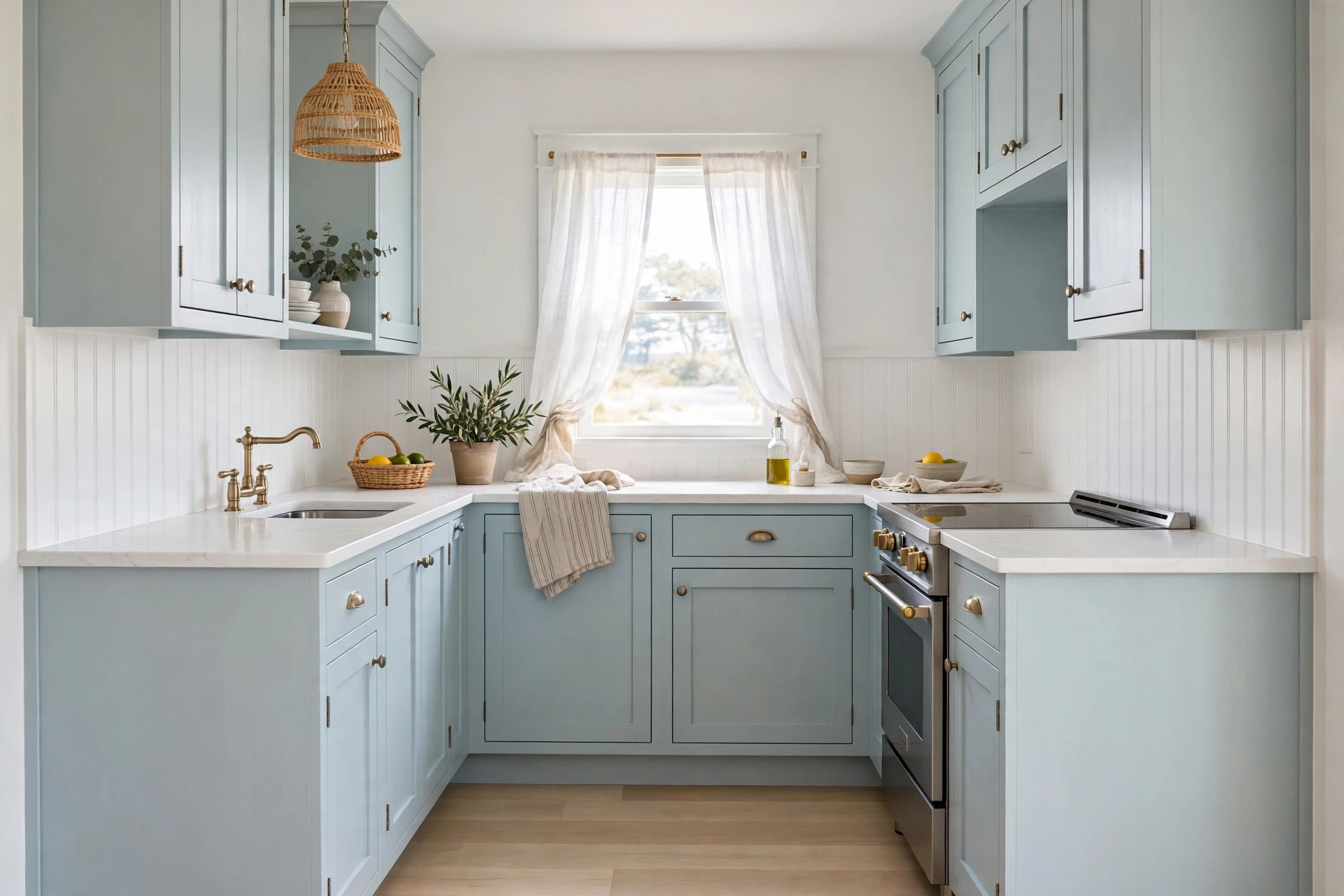
9. Pale Blue & White
Pale powder blue is essentially white with a personality — it reflects almost as much light while adding a whisper of color that makes a small kitchen feel fresh and intentional. Pair it with white counters, a white beadboard backsplash, and light wood floors for a coastal-cottage look that never feels cramped. This palette is especially forgiving in north-facing kitchens, where cool light can make true whites look dingy; the blue undertone harmonizes with the light instead of fighting it. Cabinet paint in a soft blue runs the standard $45–$70 per gallon. Pro tip: carry the pale blue onto the ceiling at 50 percent strength — it lifts the ceiling visually and makes the whole kitchen feel taller.
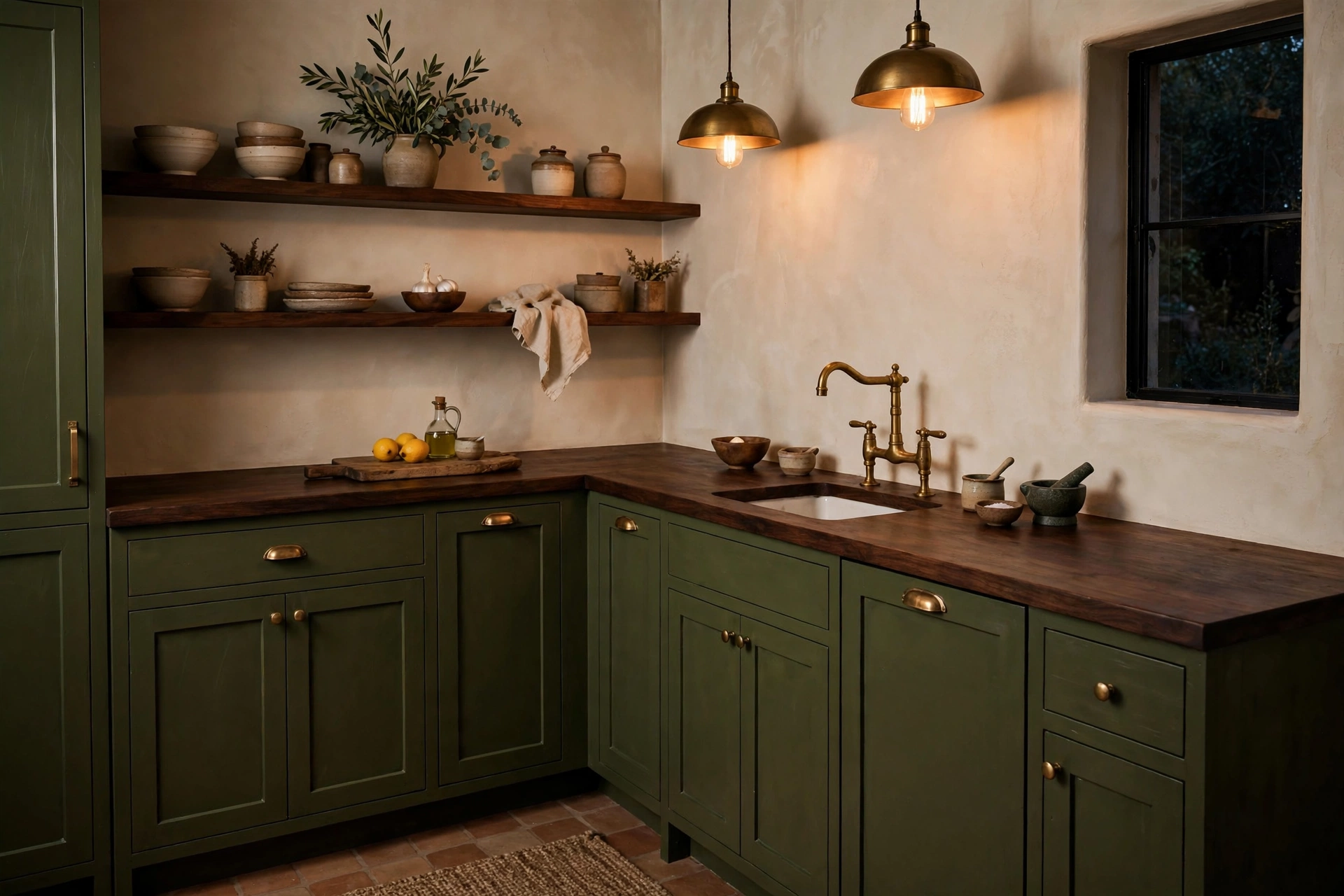
10. Olive Green & Walnut
Olive green and walnut is the palette equivalent of a well-worn leather chair — earthy, confident, and quietly luxurious. The deep yellow-green of olive recedes like a neutral but adds organic richness, while dark walnut counters and shelves bring warmth and weight. Cream plaster walls keep the combination from going too dark in a small footprint. Unlacquered brass ($120–$250 for a faucet) will develop a living patina that suits the palette’s aged character. This is a palette for cooks who want their small kitchen to feel like a Tuscan farmhouse rather than a showroom. Pro tip: olive can go muddy next to gray floors — anchor it with warm wood or natural stone underfoot instead.
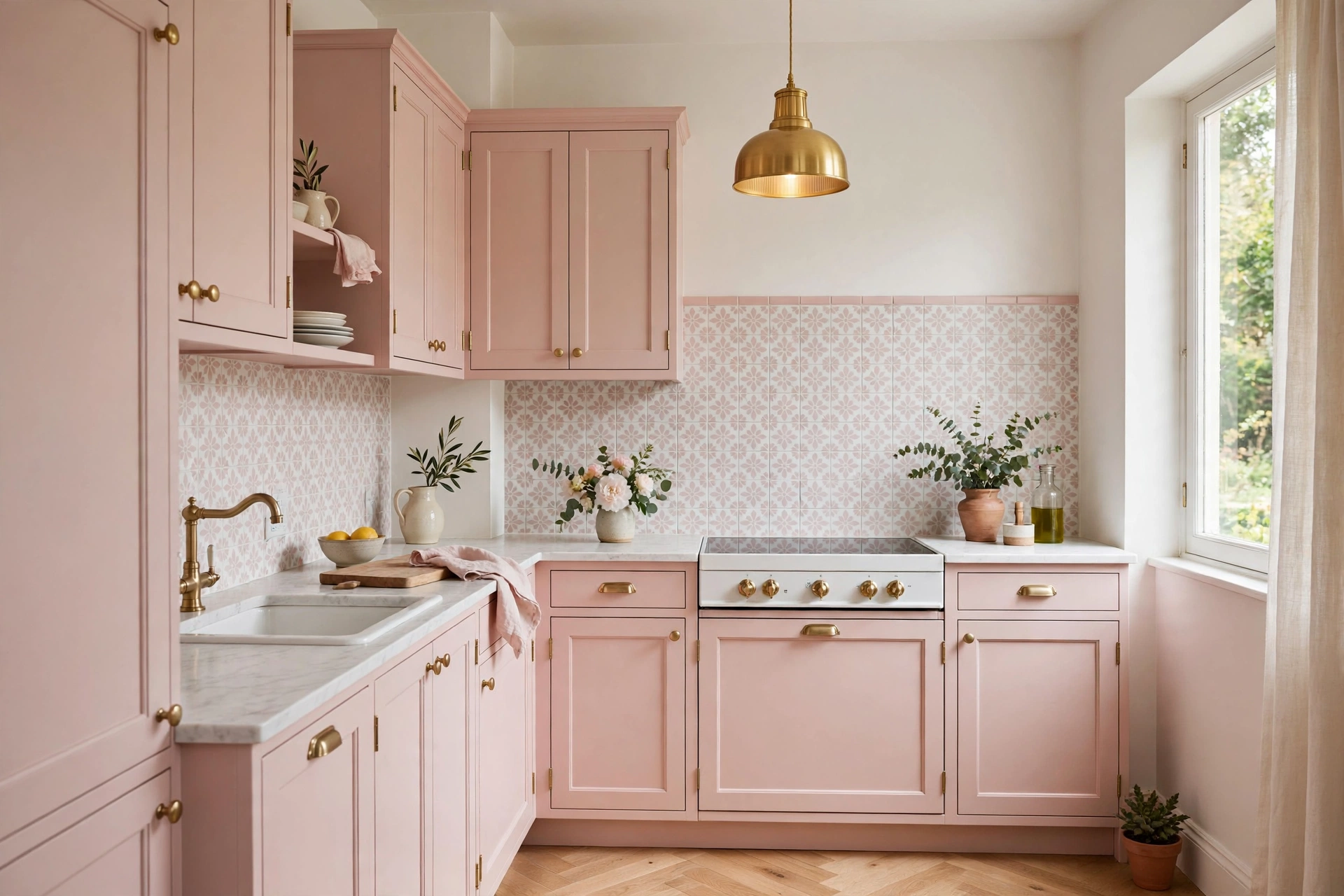
11. Blush Pink & Brass
Blush pink kitchens sound daring until you see one — the soft, desaturated pink reads as a warm neutral, like the inside of a seashell, and it flatters everything around it. Paired with brushed brass hardware and a white marble counter, blush cabinets make a small kitchen feel romantic and light rather than sugary. Keep the pink muted (think Setting Plaster, not bubblegum) and balance it with plenty of white: white backsplash, white ceiling, light floor. A blush-and-brass palette also transitions beautifully into open-plan studios where the kitchen is visible from the sofa. Pro tip: blush intensifies in small doses — if you are hesitant, paint just the island or a single bank of cabinets first and live with it for a week.
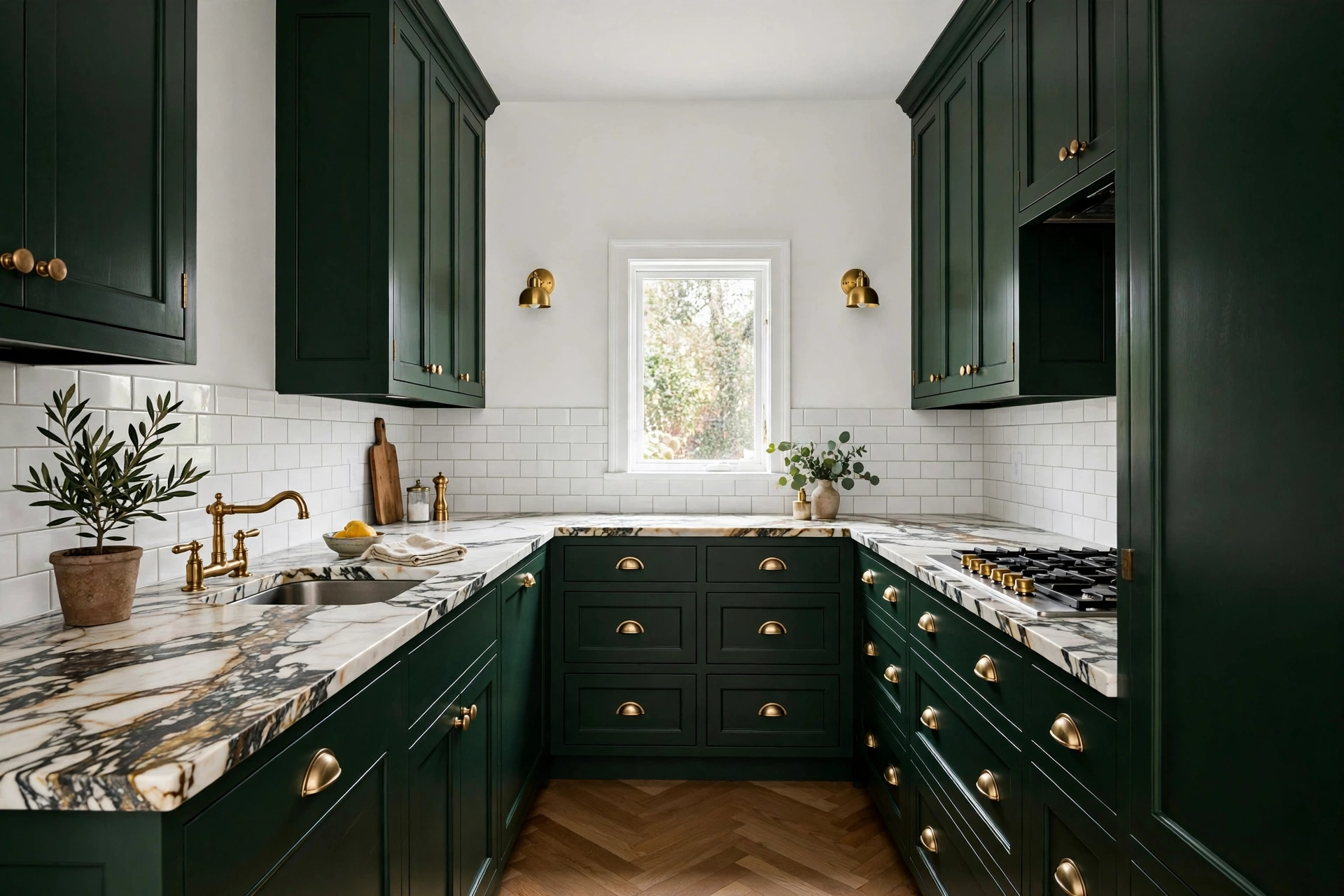
12. Forest Green & Marble
Deep forest green is the dark palette that small kitchens wear best. Unlike black, which can flatten a room, forest green has enough color complexity to create genuine depth — walls seem to fall away like looking into woods at dusk. Pair it with a white marble counter with bold veining and brass cup pulls for a jewel-box effect, and keep walls above the cabinets white to preserve light. This palette demands good lighting: small brass sconces ($40–$90 each) or picture lights over open shelves keep the green luminous. Pro tip: forest green looks black in dim hallways — always sample it in the actual kitchen at night before committing, since small kitchens are often darkest after sunset.
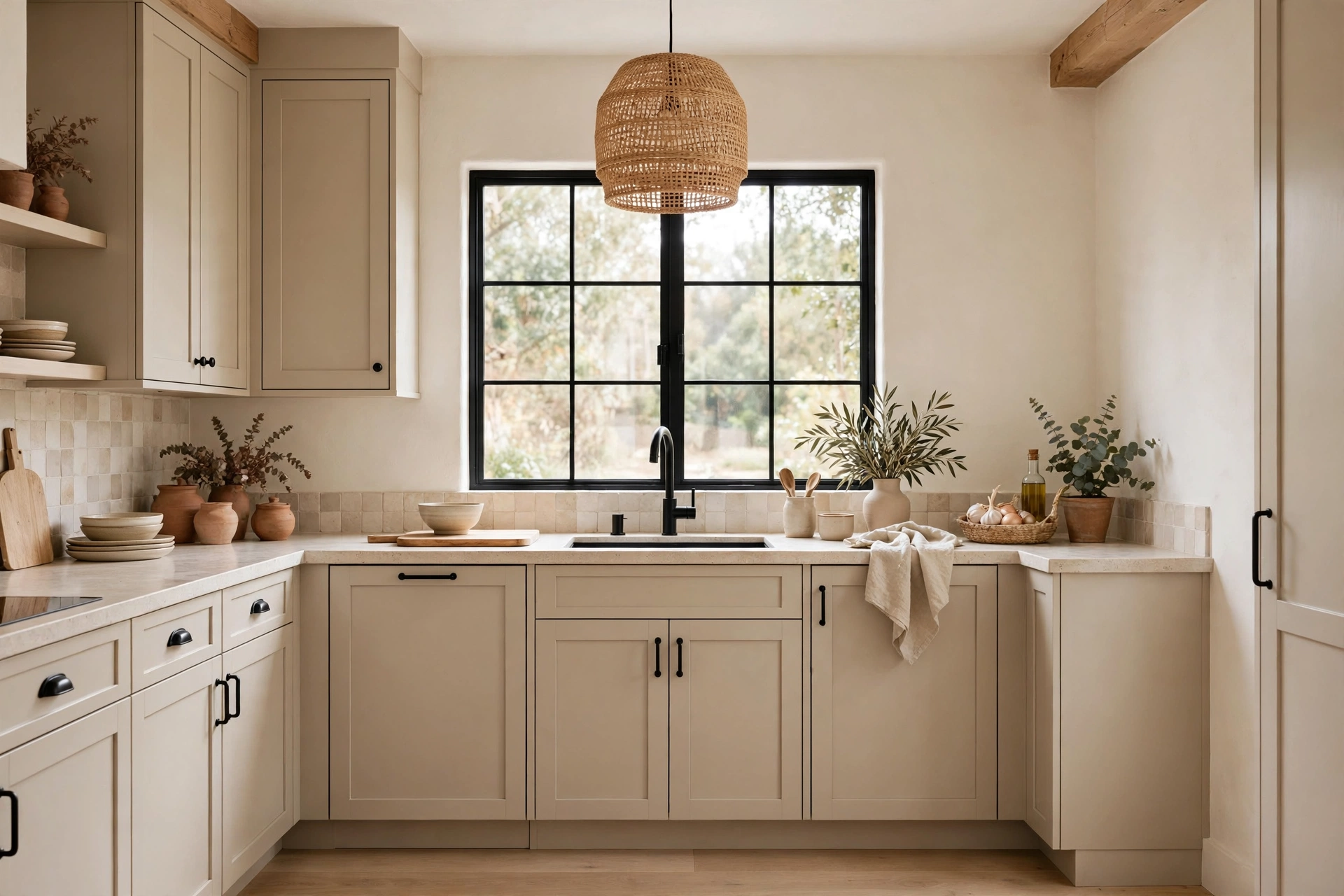
13. Warm Beige & Black Accents
Warm beige — the modern greige — with matte black accents is the quiet-luxury palette for small kitchens. The beige keeps every surface light-reflective while adding warmth that white alone cannot, and black hardware, faucet, and light fixtures provide the graphic punctuation that stops beige from going bland. Think of it as the 60-30-10 rule in action: 60 percent warm beige, 30 percent light stone, 10 percent black. A woven pendant light ($60–$150) in natural fiber bridges the beige and black beautifully. Pro tip: beige cabinets show fewer fingerprints and smudges than white — a practical win in a compact kitchen where every surface gets touched daily.
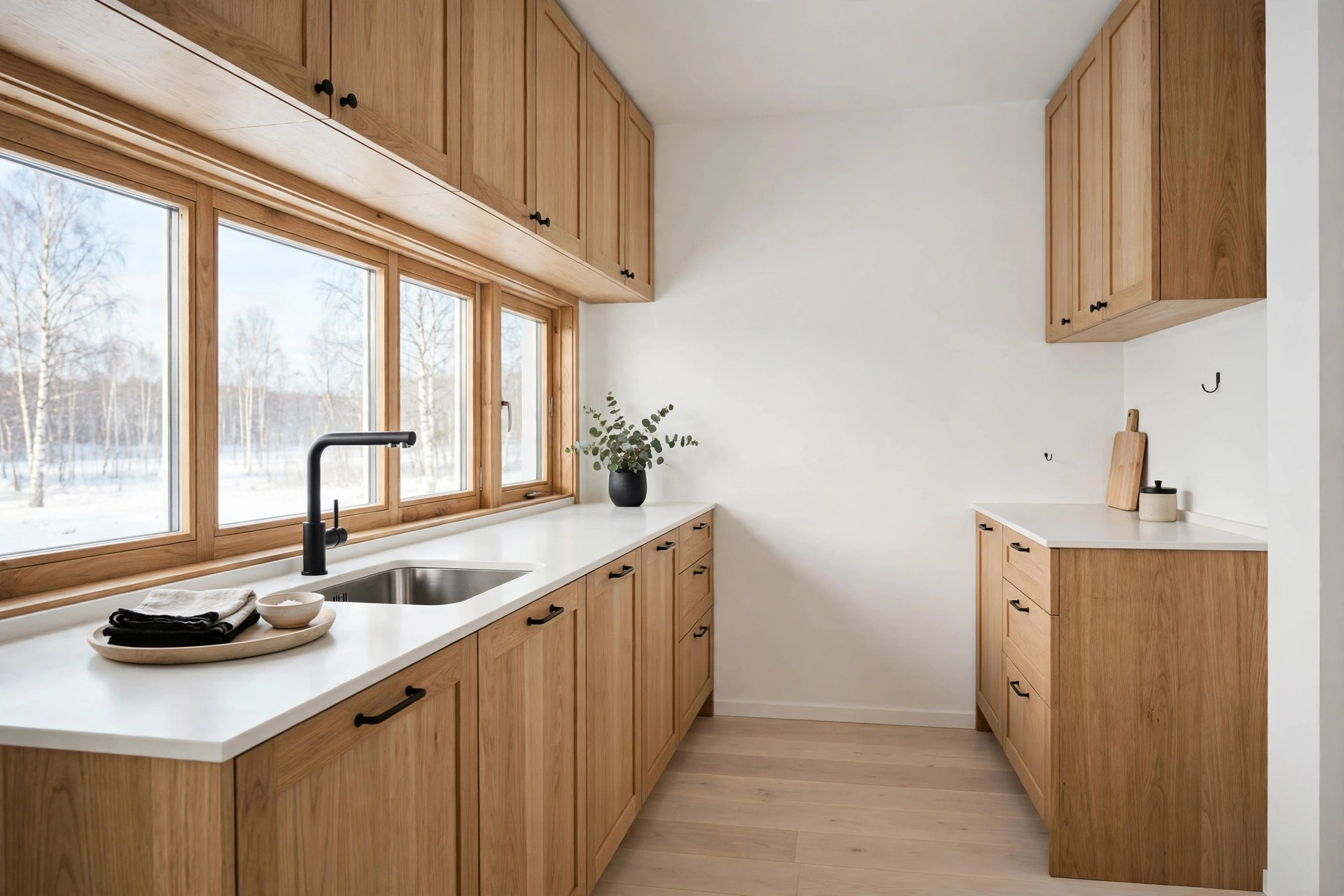
14. Light Oak & White
Light oak cabinetry with white walls is Scandinavian serenity in kitchen form. The pale wood adds warmth and natural texture without any visual weight — oak’s fine grain reads almost like a solid color from a distance, so the kitchen stays calm and uncluttered. White counters and a white backsplash keep the palette bright, while a few black accents (faucet, handles) give it definition. This palette is ideal for open-plan studios because it flows seamlessly into living areas; see how it connects spaces in our studio apartment layout ideas. Pro tip: choose rift-sawn or vertical-grain oak for slab fronts — busy cathedral grain can look chaotic in a small kitchen.
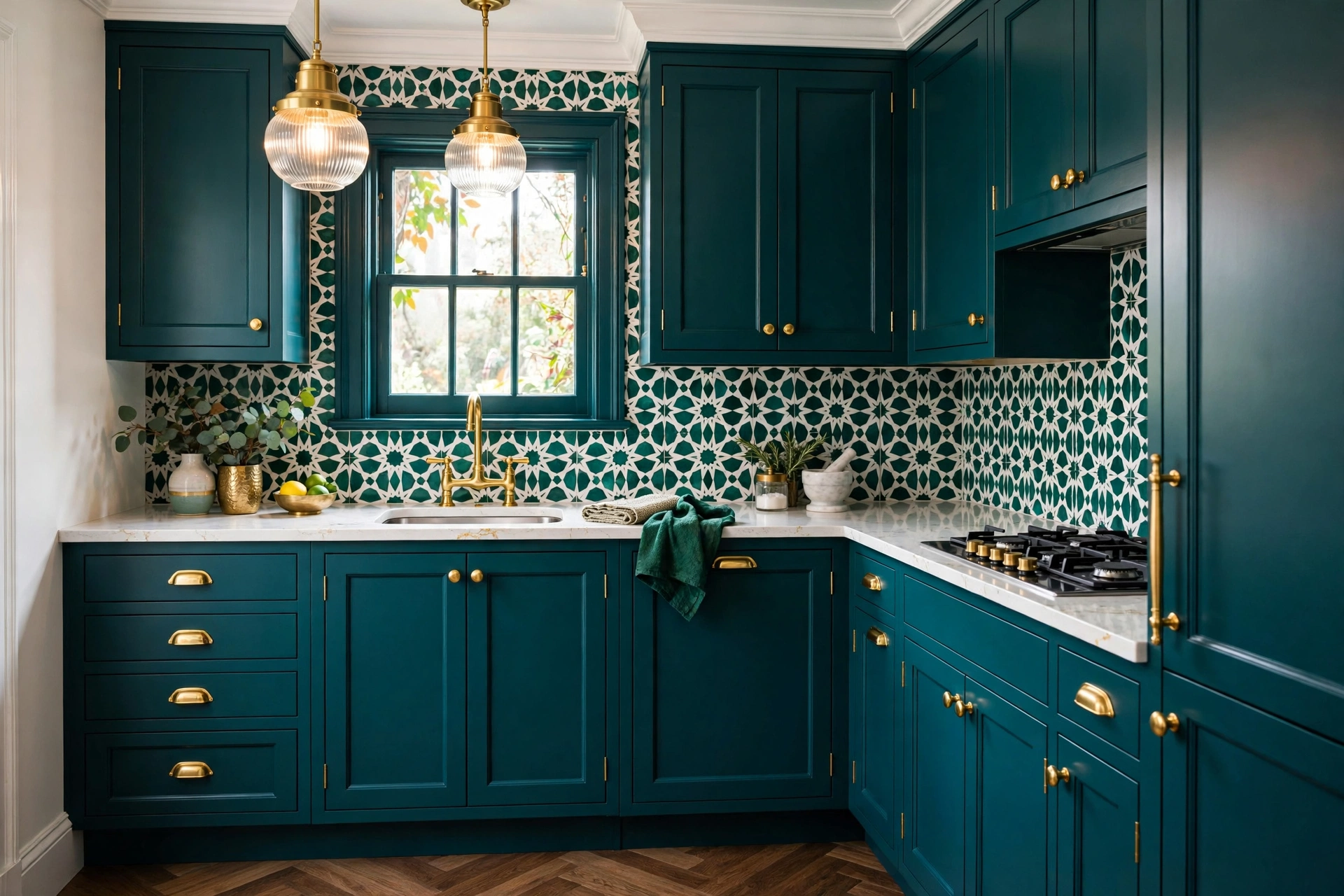
15. Deep Teal & Gold
Deep teal with gold brass hardware is the maximalist’s answer to a small kitchen — saturated, glamorous, and surprisingly space-enhancing because dark, rich color creates an illusion of infinite depth. The blue-green tone flatters both warm wood and cool marble, so you have flexibility with counters and floors. Keep the backsplash light or mirrored to bounce illumination around, and let the teal own the room: this is not a palette for timid accessorizing. Gold fixtures ($150–$400 for a faucet) are non-negotiable — chrome would chill the whole scheme. Pro tip: teal shifts green under warm light and blue under cool light — decide your bulb temperature (2700K recommended) before finalizing the paint color.
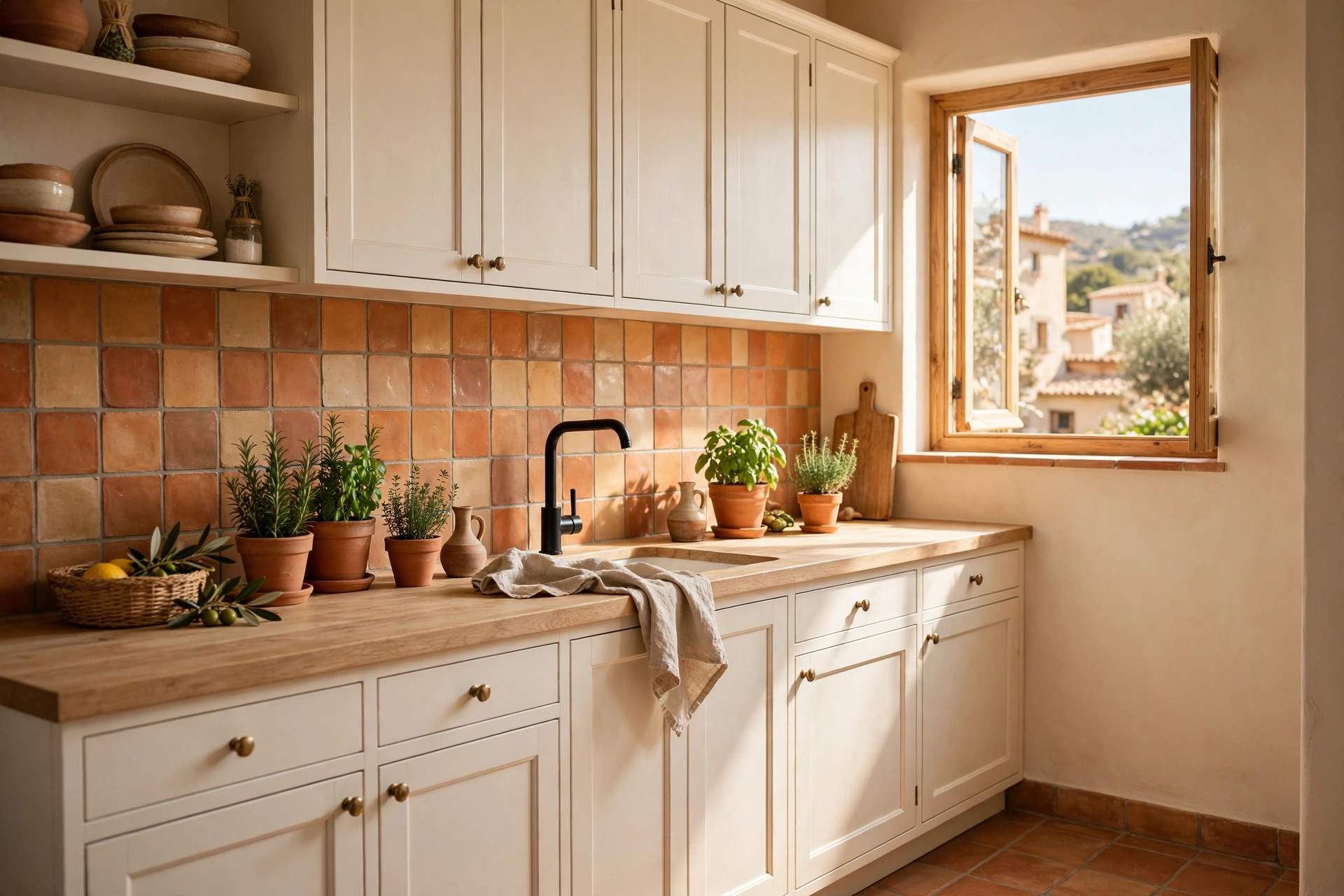
16. Cream & Terracotta Tile
Instead of painting cabinets terracotta, flip the formula: creamy white cabinets with a handmade terracotta tile backsplash. You get all the sun-warmed Mediterranean character concentrated in one horizontal band at eye level — exactly where it has the most impact — while the cabinets stay light and renter-friendly. Zellige or handmade-look square tiles ($8–$18 per square foot) in varied clay tones create movement that makes a small backsplash feel like art. Pair with a light wood counter and black faucet for contrast. Pro tip: use a grout color close to the tile (warm sand, not white) — high-contrast grout on handmade tile looks busy in a compact kitchen.
Two-Tone & Statement Palettes
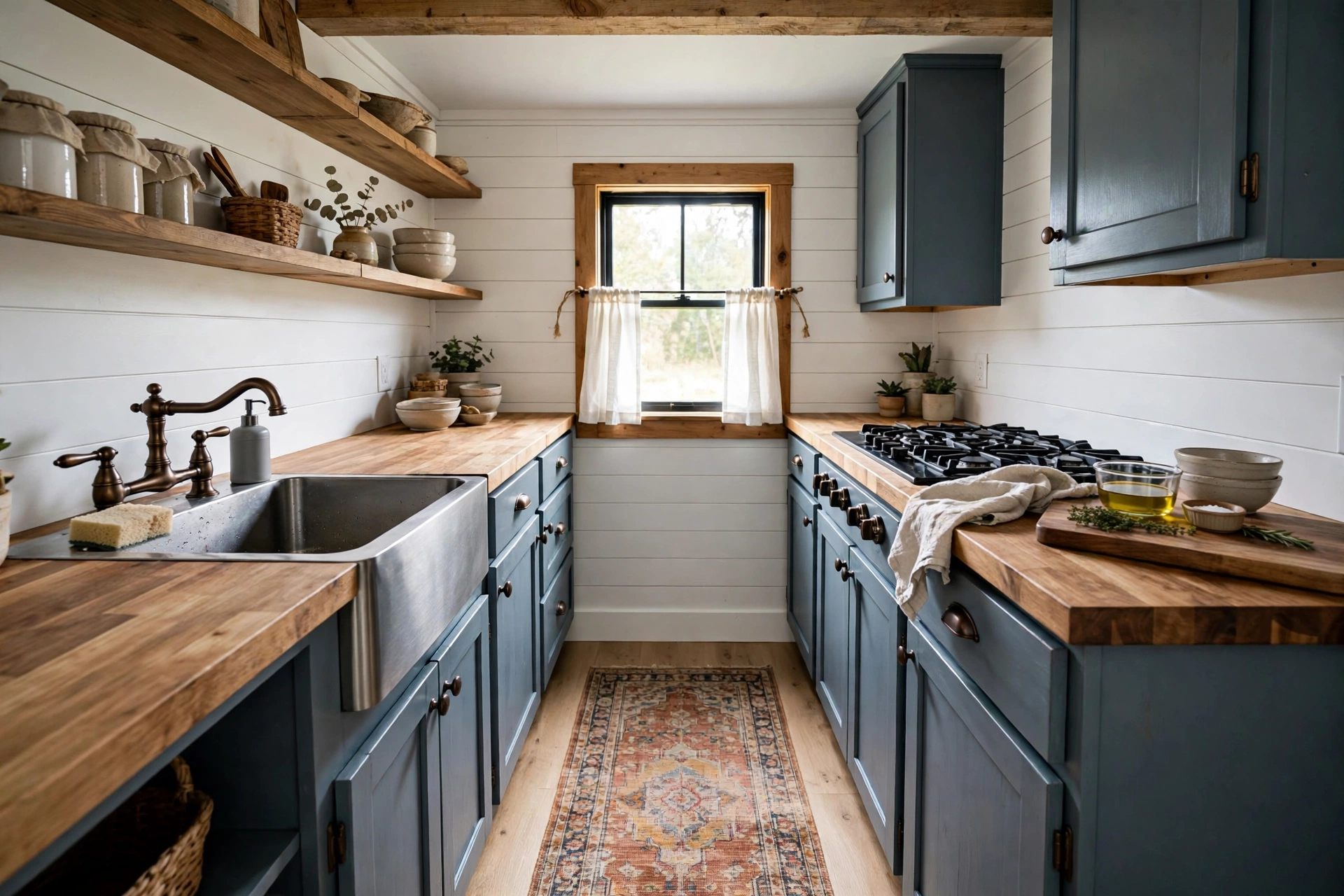
17. Slate Blue & Butcher Block
Dusty slate blue cabinets with a butcher block counter hit the sweet spot between colorful and livable. The blue-gray tone is desaturated enough to behave like a neutral — it will not fight your dishes, textiles, or artwork — while the warm wood counter keeps the palette grounded and farmhouse-friendly. White shiplap or subway tile above the counter adds brightness, and oil-rubbed bronze hardware ($3–$7 per piece) suits the palette’s vintage soul. This combination hides wear beautifully, a real advantage in a small kitchen that works hard. Pro tip: slate blue can read gray in low light — add one warm element (wood counter, brass light) per sightline so the blue never feels cold.
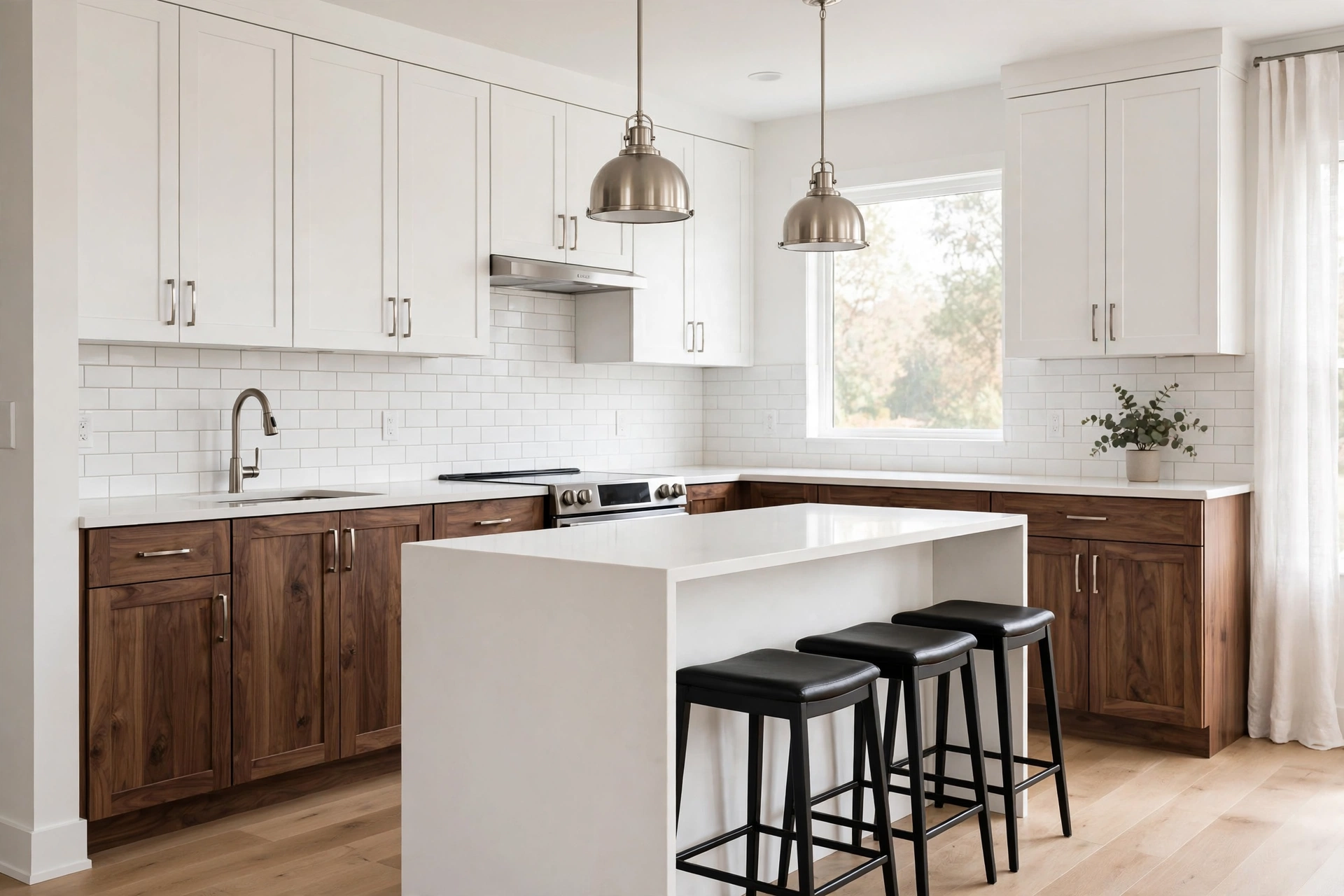
18. White & Walnut Two-Tone
Two-tone cabinetry — white uppers, walnut lowers — is the tailored suit of small kitchen palettes. The white upper cabinets visually lift the ceiling and keep the room bright, while rich walnut below adds the warmth and luxury that all-white kitchens sometimes lack. A white waterfall island edge ties the two tones together. This palette works with both modern slab fronts and classic shaker profiles, and it photographs as high-end even on a modest budget: walnut-look laminate has become remarkably convincing at $40–$70 per linear foot. Pro tip: run the walnut on the island only if a full two-tone commitment feels risky — one walnut island against white perimeter cabinets delivers 80 percent of the effect.
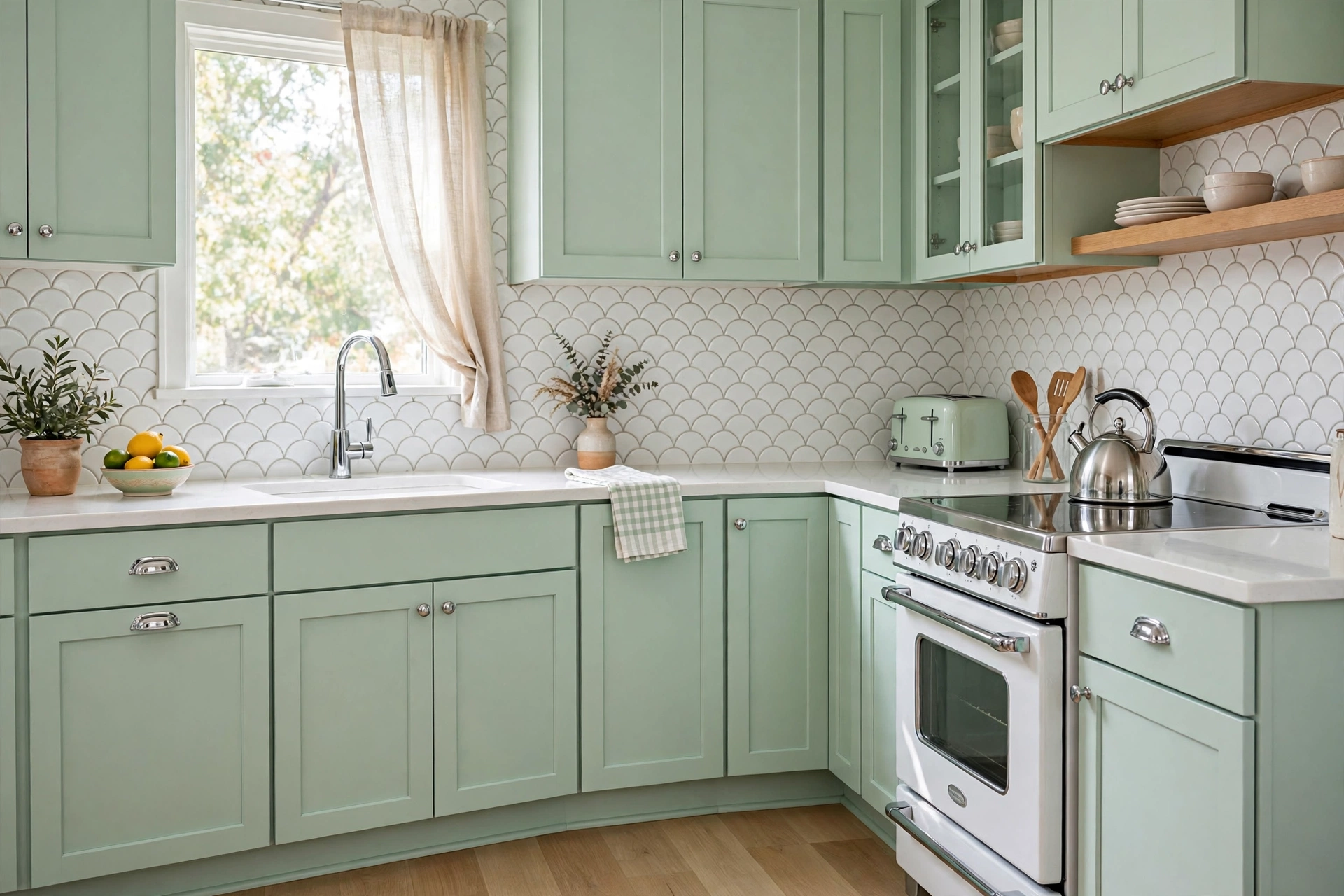
19. Soft Mint & White
Soft mint green is retro charm without the kitsch — think 1950s icebox reimagined for a modern studio. The pale, cool green reflects plenty of light while adding a cheerful freshness that makes a small kitchen feel like morning all day. Pair it with white counters, a white scallop-shell tile backsplash, and chrome fixtures for a vintage-diner-meets-Scandi look. Mint is also one of the easiest colors to live with long-term because it is so desaturated it nearly reads as white. Cabinet paint costs the usual $45–$70 per gallon. Pro tip: mint + warm wood floors can clash (cool vs. warm) — choose a pale neutral floor or lean into the retro look with black-and-white checkerboard vinyl.
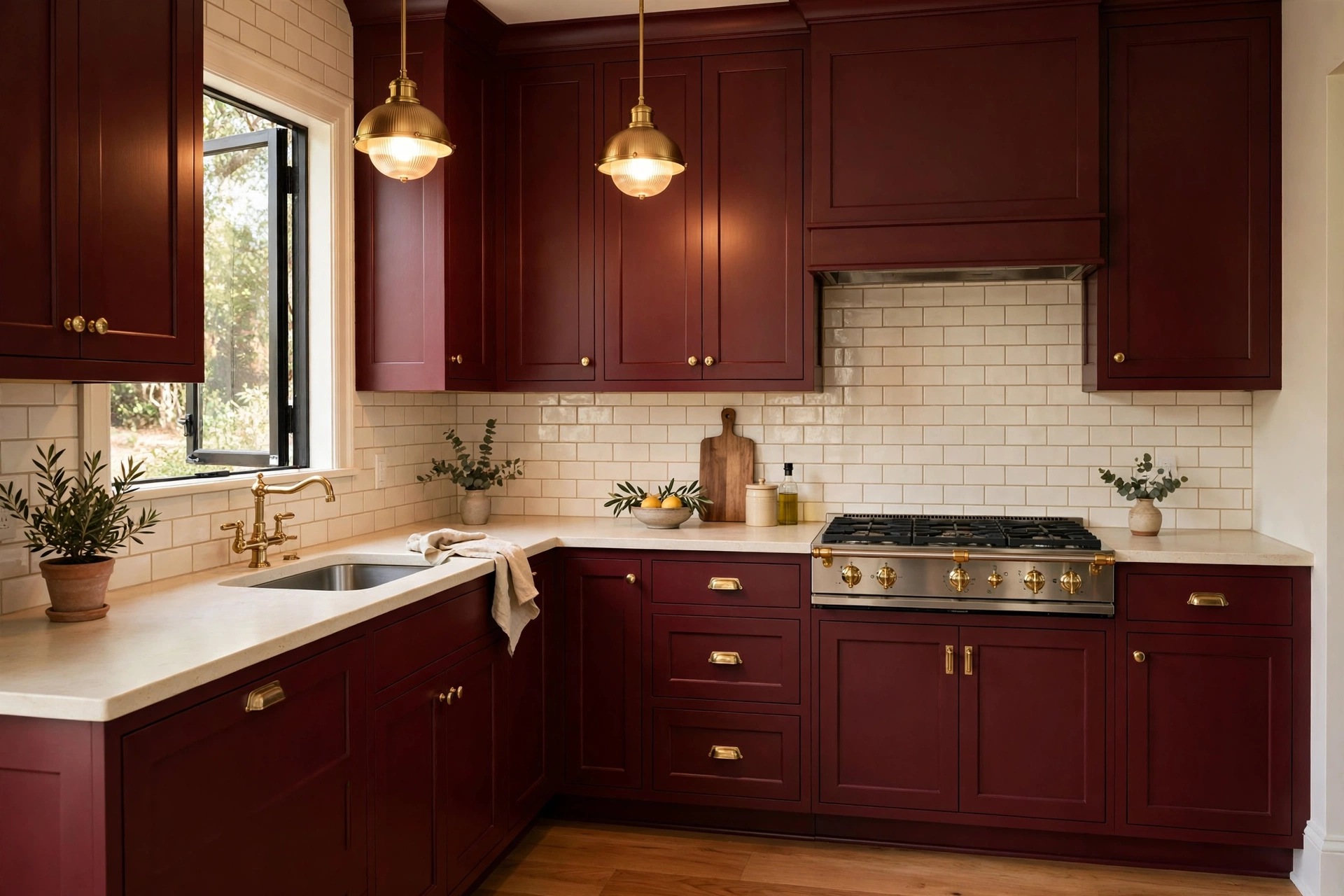
20. Burgundy & Cream
Deep burgundy — wine red with brown undertones — brings a moody, European-bistro richness to small kitchens that few colors can match. Paired with cream stone counters and brass hardware, burgundy feels historic and enveloping rather than dark; the warm red advances slightly, which paradoxically makes walls feel farther in a tiny room because the color has so much depth. This palette loves warm lighting: 2700K pendants ($50–$120 each) make burgundy glow like candlelight. Keep the ceiling and backsplash cream to preserve brightness overhead. Pro tip: burgundy shows brush strokes more than lighter colors — use a foam roller and Floetrol additive, or budget $800–$1,500 for a professional cabinet painter.
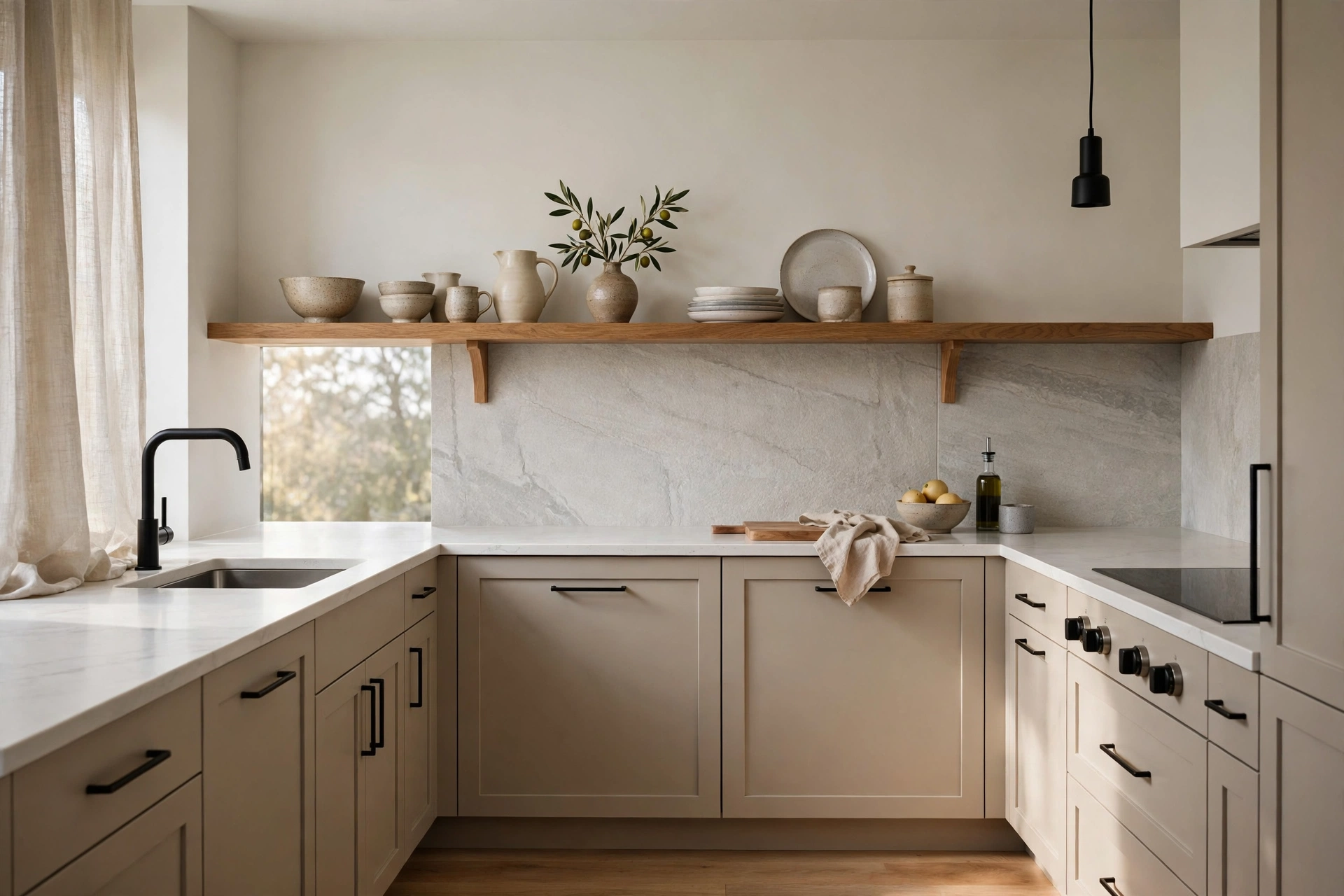
21. Greige & Black Hardware
Greige — the perfect marriage of gray and beige — with matte black hardware is the “I hired a designer” palette that is secretly very DIY-friendly. The warm gray-beige keeps the kitchen light and calm while the black bar pulls, faucet, and window frames add crisp definition. A light stone countertop and oak open shelf complete the layered-neutral look. Greige’s superpower in small kitchens is adaptability: it harmonizes stainless appliances, wood floors, white tile, and virtually any accent color you add later. Repainting existing cabinets in greige costs under $150 in materials for most small kitchens. Pro tip: sample greige on a large board and view it next to your floor — the wrong greige can pull pink or green against certain wood tones.
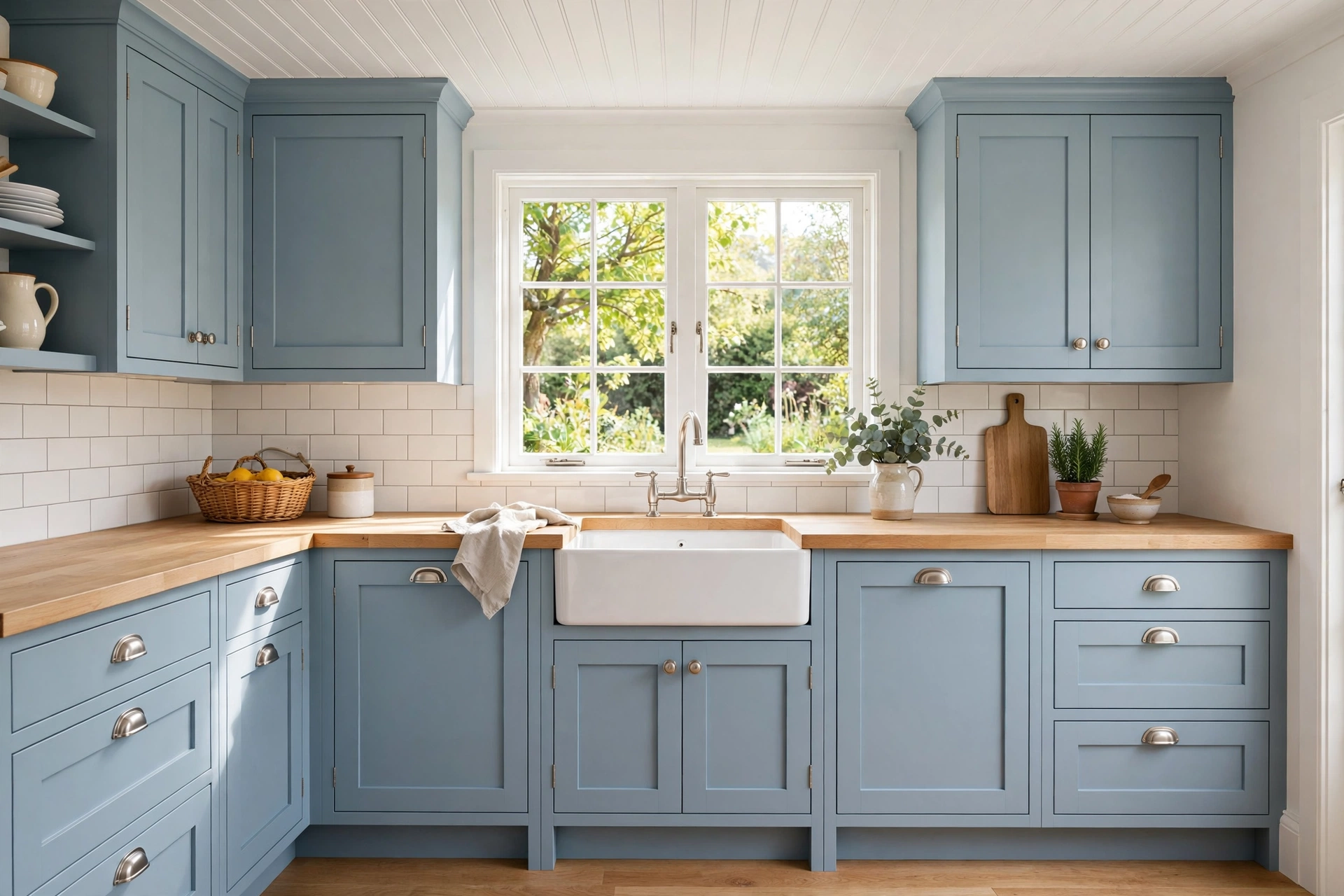
22. Powder Blue & Oak
Powder blue shaker cabinets with a light oak countertop channel English cottage kitchens — charming, unfussy, and wonderfully light-reflective. The soft blue has enough pigment to feel intentional but stays firmly in “colorful neutral” territory, so it will not overwhelm a compact space. A white apron-front sink ($200–$400) and nickel bin pulls complete the cottage look, while a white beadboard ceiling keeps everything bright. This palette is especially lovely in kitchens with vintage or secondhand finds, since the blue harmonizes beautifully with aged wood and ironstone. Pro tip: powder blue + oak + white is a complete palette — resist adding a fourth color, or the small kitchen starts to feel scattered.
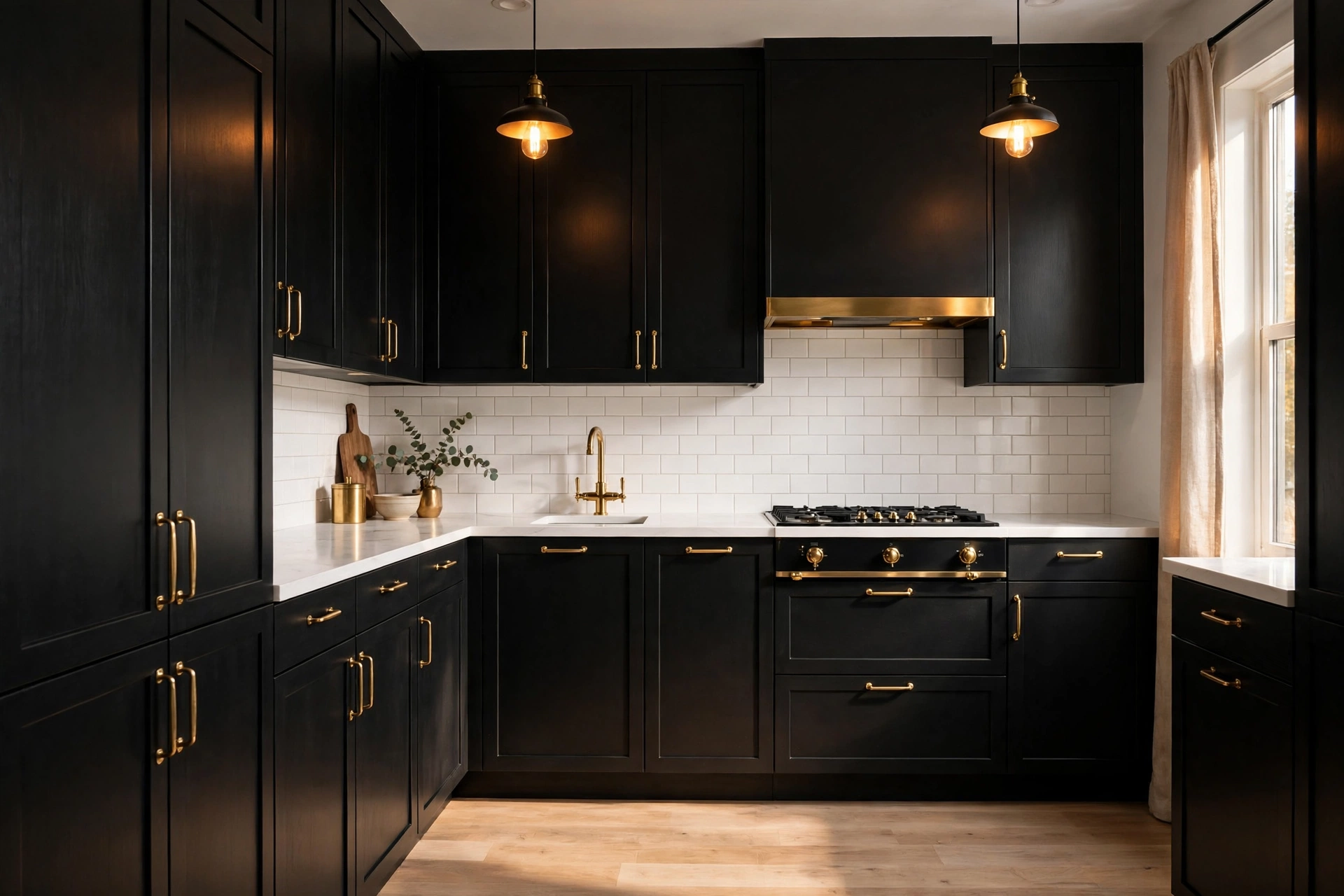
23. Matte Black Cabinets
Full matte black cabinetry in a small kitchen is the boldest move on this list — and one of the most rewarding. Black absorbs visual noise: clutter, mismatched small appliances, and busy countertops all recede into the dark background, which can make a chaotic small kitchen feel calmer and more intentional. The non-negotiable partner is light: bright white counters and backsplash, a light wood floor for contrast, and generous lighting. Brass or gold fixtures warm up the scheme. For renters who love the look, black contact paper on cabinet fronts ($30–$60 total) is a reversible test drive. Fans of edited, essential-only spaces will also love our minimalist studio apartment decor ideas. Pro tip: matte finishes show fingerprints — choose a satin or eggshell sheen on black cabinets for a wipeable surface that still looks soft.
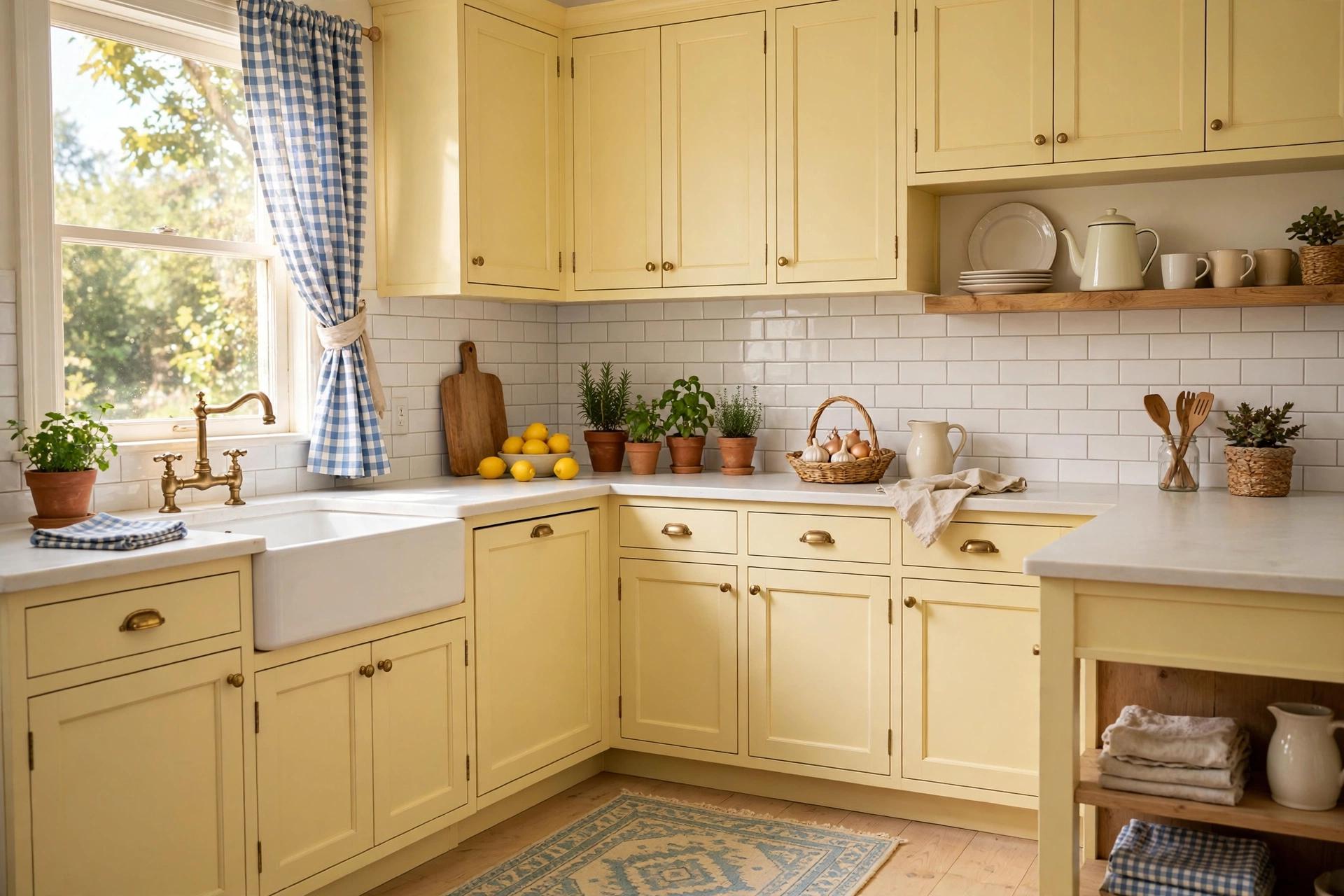
24. Butter Yellow & White
Soft butter yellow is pure optimism in paint form — it makes a small kitchen feel sunlit even on gray days. Unlike bolder yellows, butter is desaturated enough to function as a warm neutral, pairing beautifully with white counters, white subway tile, and light wood accents. A gingham curtain or vintage rug runner leans into the cheerful farmhouse vibe. This palette is also incredibly renter-friendly: even painting just the lower cabinets (or adding yellow through textiles and a rug) transforms the mood for under $100. Pro tip: butter yellow deepens under warm bulbs — sample it under your actual kitchen lighting, and consider 3000K bulbs to keep it creamy rather than golden.
Rich, Moody & Glamorous
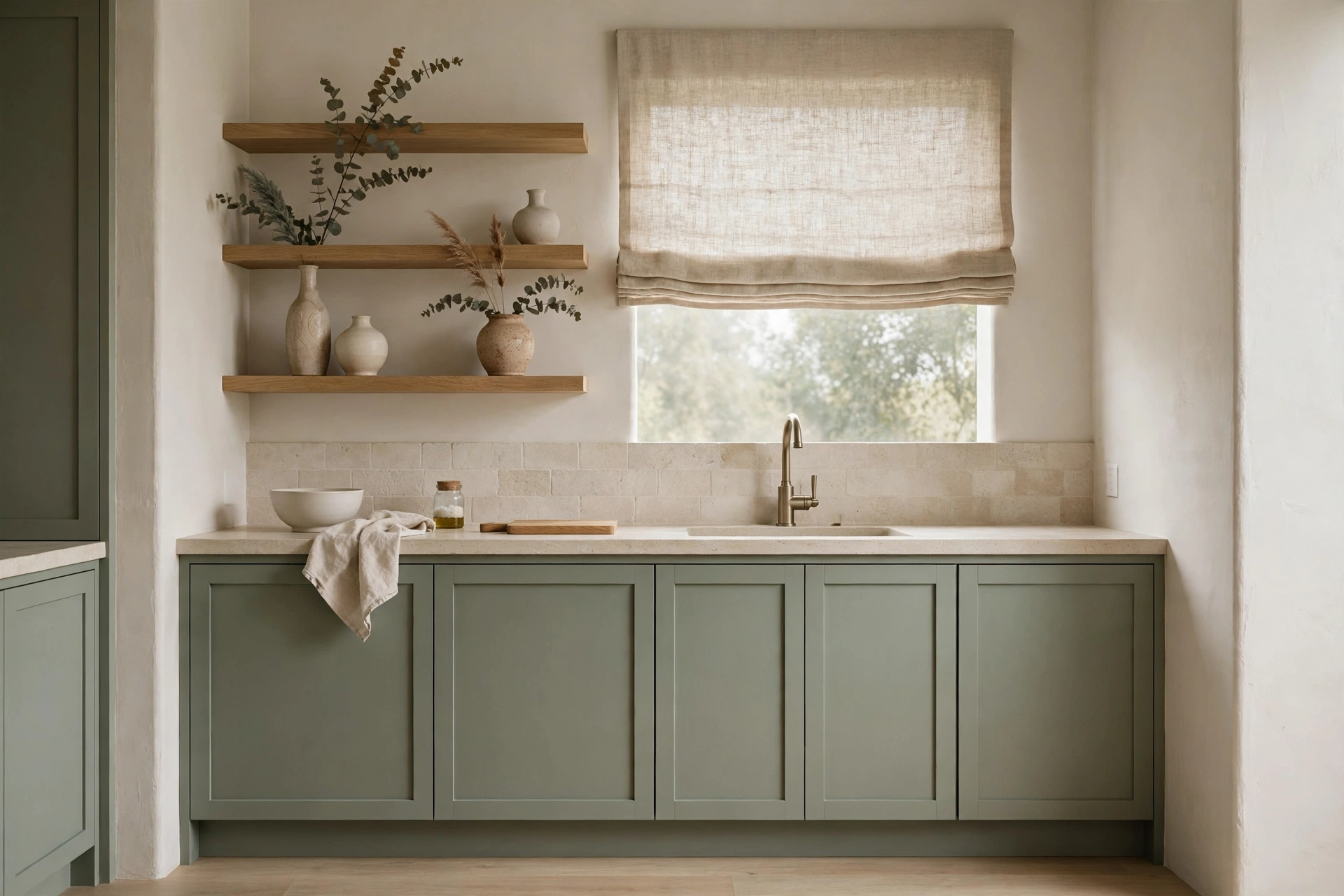
25. Eucalyptus Green & Linen
Muted eucalyptus green with natural linen textures is the spa-day palette for small kitchens. The gray-green tone is deeply calming and recedes like a soft neutral, while linen roman shades, ceramic vases, and oak floating shelves add the organic layers that keep it from feeling flat. A light stone countertop completes the serene, tonal look. This palette thrives in diffused natural light, so keep window treatments sheer and minimal. It is also wonderfully low-maintenance: the muted green hides splashes and smudges far better than white. Pro tip: eucalyptus green pairs beautifully with unlacquered brass that has aged to a soft brown-gold — shiny new brass can look too yellow against it.
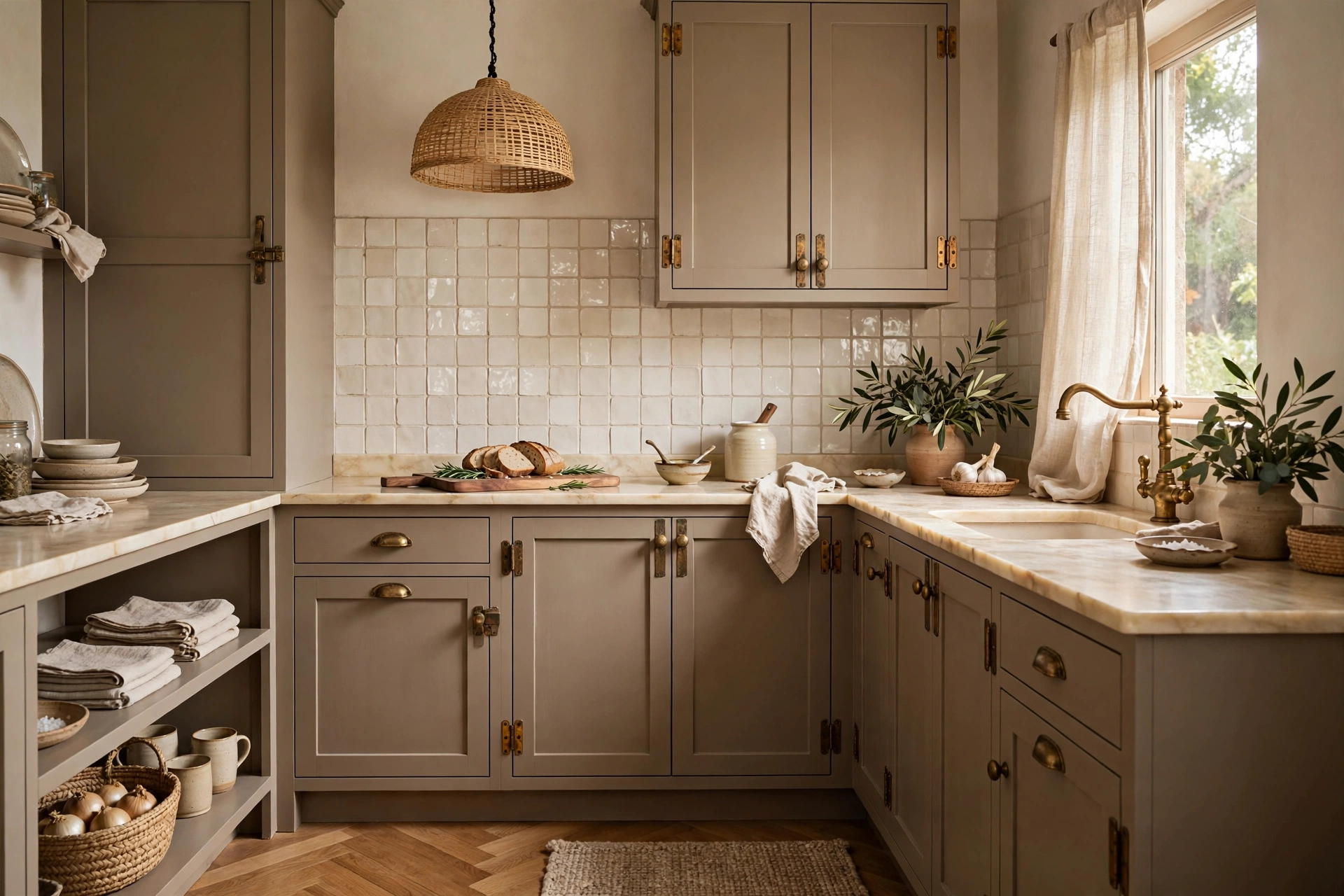
26. Warm Taupe & Brass
Warm taupe cabinets with aged brass hardware feel like a cashmere sweater — soft, enveloping, and quietly expensive. Taupe’s brown-gray balance keeps it firmly warm, which flatters food, wood tones, and skin, while brass adds the metallic glow this earthy palette craves. A creamy marble counter and handmade ivory backsplash tile keep the overall value light enough for a small kitchen. A woven pendant light ($60–$150) in seagrass or rattan bridges the taupe and brass with natural texture. Pro tip: taupe is the hardest neutral to get right — buy three sample pots and paint large boards, then live with them for 48 hours before committing.
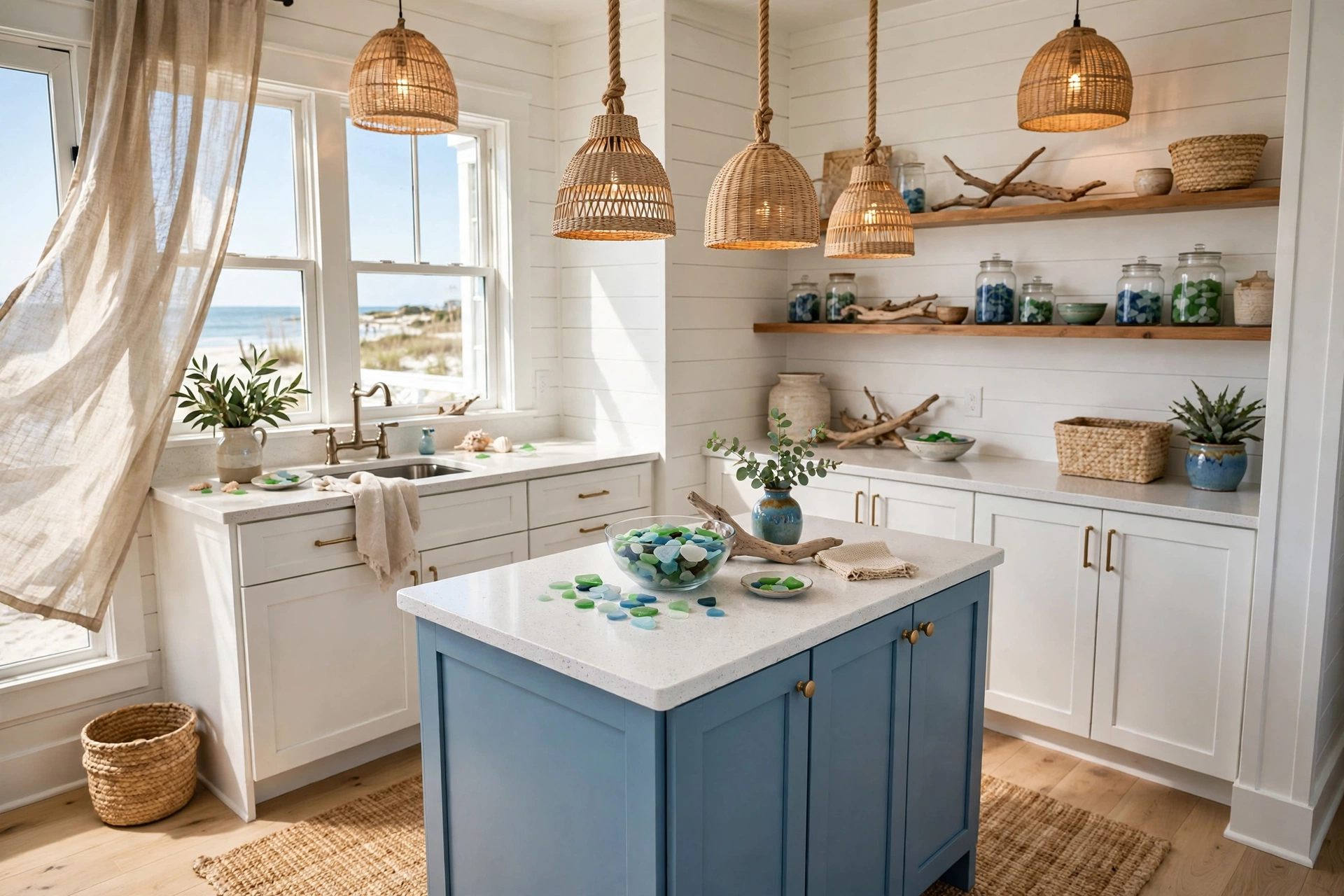
27. Coastal Blue & White Shiplap
White shiplap walls with a coastal blue island bring the beach house to even the most landlocked studio kitchen. The white shiplap maximizes light reflection on every wall, while the single blue island provides a concentrated dose of color that defines the kitchen zone without overwhelming it — a zoning trick that works beautifully in open-plan studios. White quartz counters, rope pendant lights ($40–$100 each), and a jute rug complete the breezy look. Sea-glass accents and woven baskets add texture without visual weight. Pro tip: in a galley with no island, paint the base cabinets coastal blue and keep uppers white — you get the same two-tone coastal effect.
28. Espresso & Cream
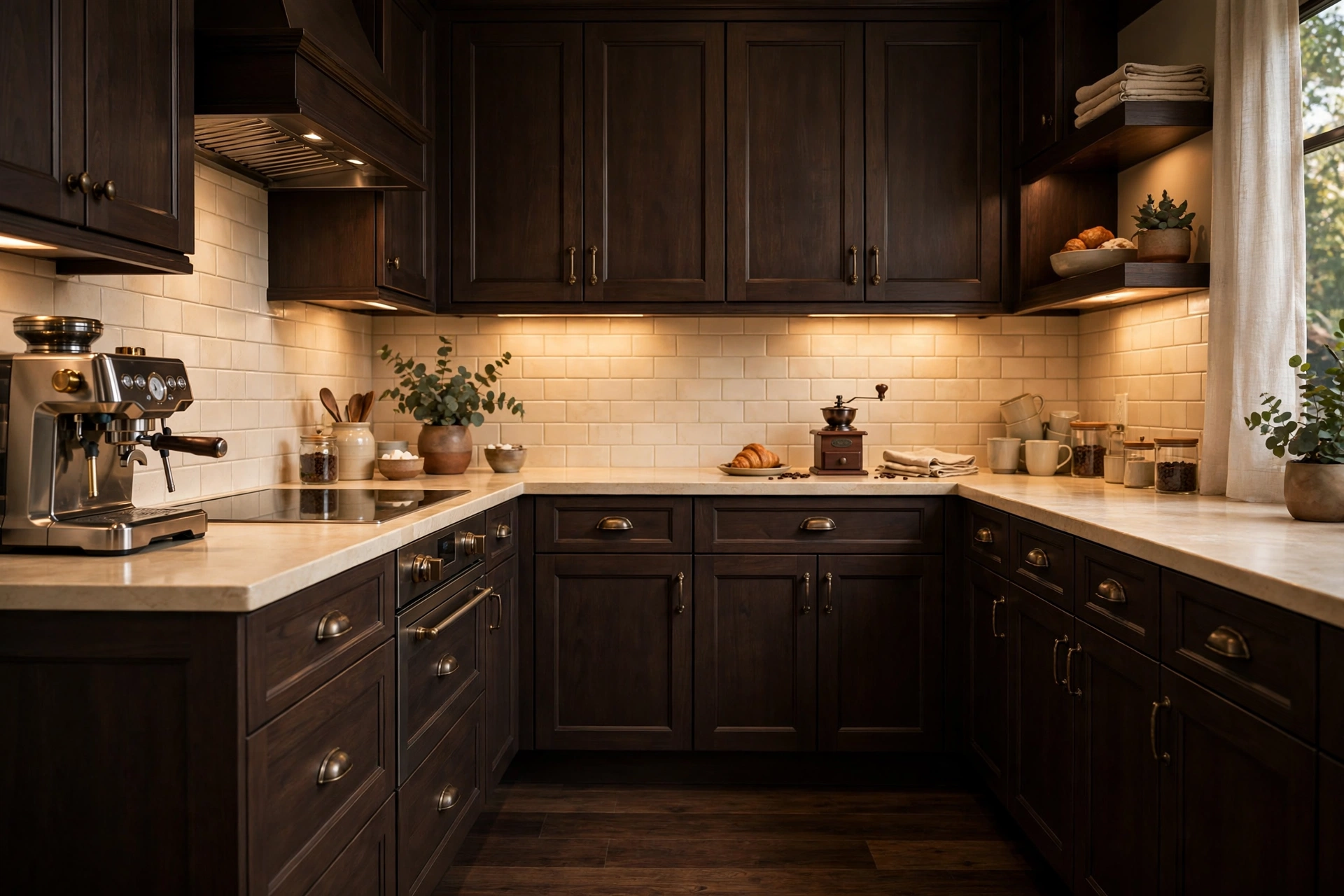
Dark espresso brown cabinets with warm cream counters and backsplash create a rich, coffee-house atmosphere that makes a small kitchen feel intimate rather than cramped. Brown is warmer and more forgiving than black — it has natural depth that flatters wood floors and brass or bronze hardware. Under-cabinet lighting is essential here: LED strips ($20–$40) washing down a cream backsplash keep the espresso luminous instead of heavy. This palette hides cooking wear better than any light color, making it ideal for serious home cooks. Pro tip: espresso can read almost black in rooms with little natural light — if your kitchen has one small window, keep the backsplash and counters extra light to compensate.
29. Dusty Rose & Gray
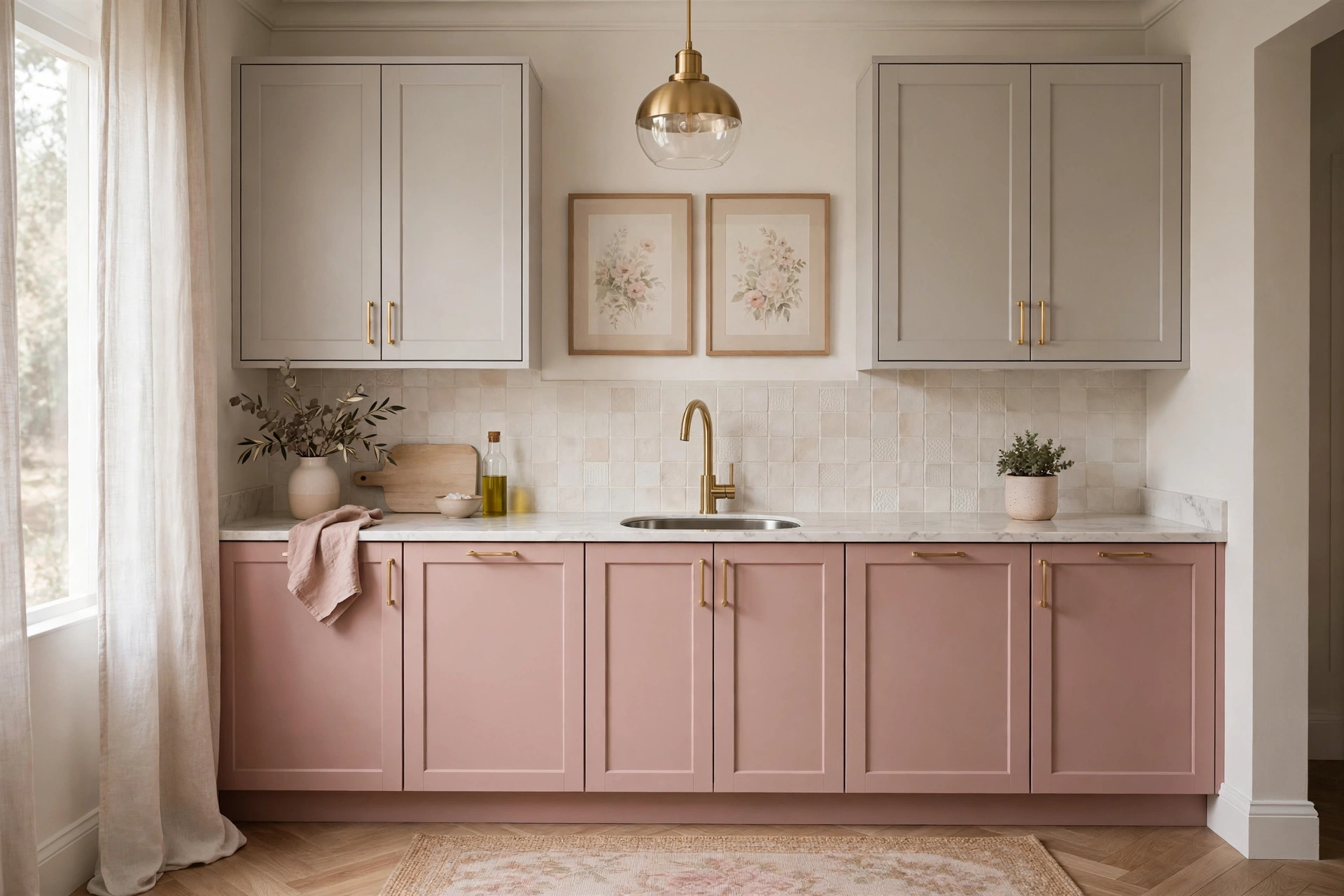
Dusty rose lower cabinets with light warm gray uppers are the sophisticated grown-up version of pink — muted, earthy, and surprisingly versatile. The desaturated rose behaves like a warm neutral, pairing beautifully with white marble, brushed gold fixtures, and natural wood. In a small kitchen, the two-tone split keeps the palette light on top where it matters most for perceived spaciousness. This combination also transitions gracefully into adjacent living spaces, since dusty rose complements everything from sage green to charcoal. Pro tip: dusty rose is sensitive to lighting — it can look beige under warm bulbs and pink under cool ones, so finalize your bulb temperature first.
30. Hunter Green & Butcher Block
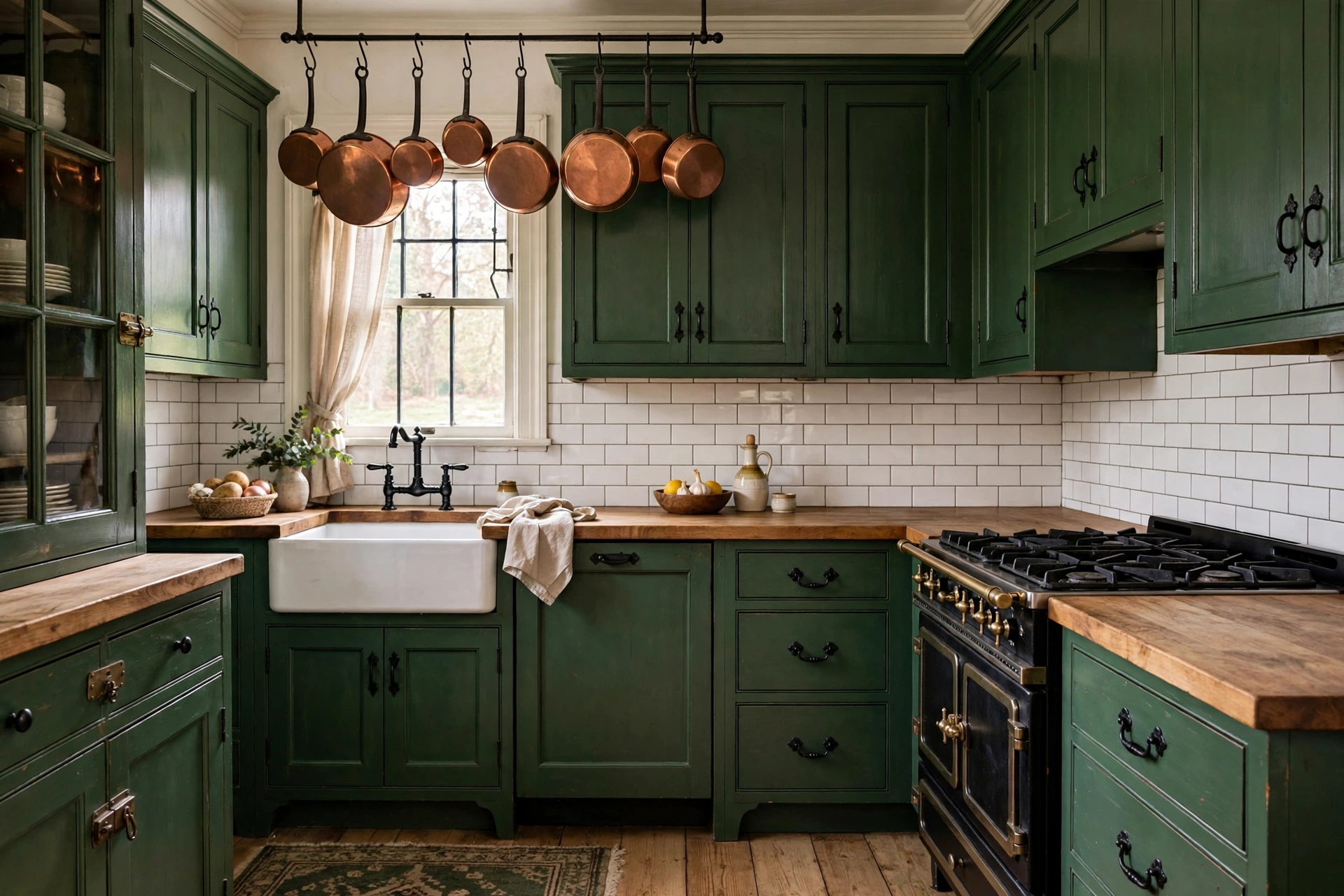
Hunter green cabinets with a thick butcher block counter are heritage style at its most livable. The deep, true green feels historic and grounded — like a centuries-old English kitchen — while the warm wood counter keeps it approachable and hardworking. White subway tile and black iron hardware complete the timeless trio, and hanging copper pots ($15–$40 each secondhand) add a gleam that plays beautifully against the green. This palette, with its honest materials and classic proportions, shares spirit with our farmhouse studio apartment ideas. Pro tip: hunter green + butcher block + white tile is a complete, balanced palette — adding a fourth strong color risks tipping it into busy.
31. Crisp White & Navy Island
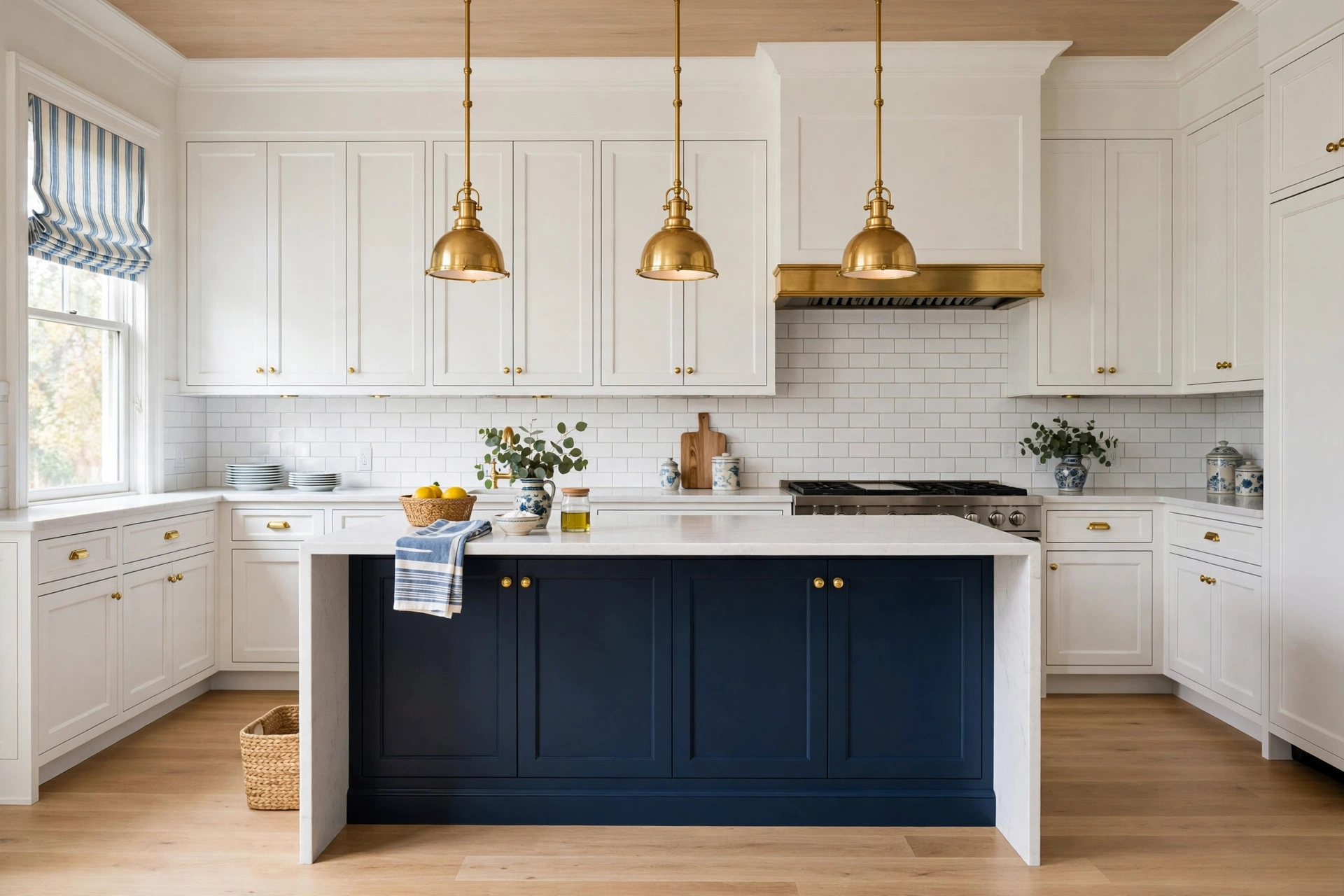
Crisp white perimeter cabinets with a single navy island deliver maximum impact with minimum commitment — the navy is concentrated in one furniture-like piece, so the kitchen stays overwhelmingly bright while gaining a confident focal point. Brass pendant lights over the island ($60–$150 each) tie the navy to the white perimeter with a jewelry-like gleam. A light oak floor warms up the contrast. This is the ideal palette for anyone who loves color but fears commitment: repainting one island is a weekend project under $100. Pro tip: make the island look like furniture, not cabinetry — add turned legs or a furniture-style toe kick so the navy reads as an intentional statement piece.
32. Champagne Beige & Chrome
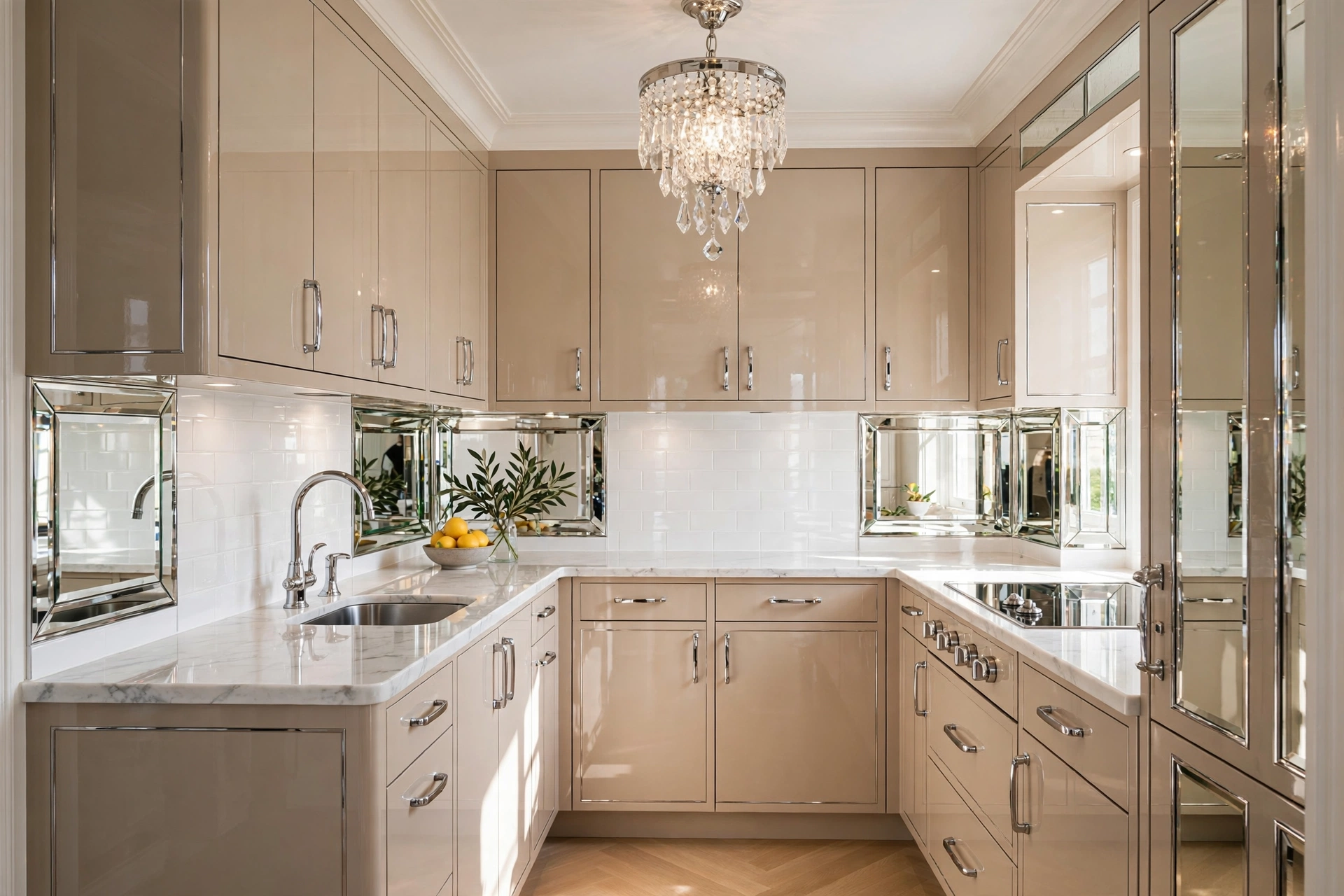
Champagne beige lacquered cabinets with polished chrome hardware are pure glamour scaled for small spaces. The warm, pearlescent beige reflects light almost like a mirror, bouncing brightness into every corner, while chrome fixtures and a white glass backsplash amplify the luminous effect. A crystal or glass pendant light becomes the jewelry of the room. This palette works best with minimal clutter — its reflective surfaces reward editing, so it is perfect for cooks who keep counters clear. High-gloss lacquer can be pricey ($150–$300 per linear foot professionally sprayed), but peel-and-stick high-gloss vinyl offers a convincing shortcut. Pro tip: champagne beige shows every imperfection in the cabinet surface — fill, sand, and prime meticulously, or the gloss will magnify flaws.
Frequently Asked Questions
What is the best color for a small kitchen?
Light, reflective colors — white, cream, pale blue, soft gray — make small kitchens feel larger by bouncing light around. That said, deep colors like navy, forest green, and charcoal can also work beautifully because they create an illusion of depth. The real rule is contrast management: pair any dark color with light counters, backsplash, and good lighting, and avoid muddy mid-tones with no contrast, which tend to make small rooms feel flat and smaller.
Should small kitchen cabinets be lighter or darker than the walls?
There is no single rule, but the most space-expanding approach is cabinets close in value to the walls (tone-on-tone), which blurs boundaries and makes the room feel seamless. A popular alternative is darker lower cabinets with light uppers and walls — the dark base grounds the room while the light upper half keeps it airy. Avoid dark uppers with light lowers, which can feel top-heavy in a compact space.
What backsplash color makes a small kitchen look bigger?
Light, reflective backsplashes — white subway tile, pale handmade tile, or even mirrored tile — bounce light and visually extend the wall. Extending the backsplash all the way to the ceiling (behind open shelves or around a window) draws the eye upward and makes ceilings feel taller. Avoid small, busy mosaic patterns in dark colors, which add visual clutter in tight quarters.
Can I use dark colors in a small rental kitchen?
Absolutely — dark colors are some of the most renter-friendly choices because they hide wear and create depth. If painting is off-limits, get the effect with peel-and-stick options: dark contact paper on cabinet fronts, removable wallpaper on one wall, or a dark Roman shade. Concentrate dark tones at counter level and below, keeping walls and ceiling light so the room never feels closed in.
How do I choose a kitchen palette that flows with my studio apartment?
Since studio kitchens are usually visible from the living area, repeat at least one color from your main space in the kitchen — the sofa’s beige in the backsplash, the rug’s navy on the island. Keep undertones consistent (warm with warm, cool with cool) and you can vary the actual colors freely. When in doubt, a neutral kitchen (white, cream, greige, light wood) flows with literally any living room palette.
What is the cheapest way to change my kitchen’s color palette?
Paint is the cheapest transformation: $100–$200 in quality cabinet paint covers most small kitchens. Next cheapest is hardware — swapping knobs and pulls ($2–$8 each) changes the jewelry of the room instantly. Then textiles: a new runner rug, curtain, and dish towels in your target palette ($50–$120 total) shift the color story without touching a permanent surface. Peel-and-stick backsplash tile ($30–$80) comes fourth.
Final Thoughts
The best small kitchen color palette is not the trendiest one — it is the one that makes you want to cook in the room you actually have. Light palettes buy you perceived square footage; dark palettes buy you depth and drama; warm palettes buy you comfort. All 32 combinations above are proven in real compact kitchens, and most can be achieved with paint, hardware, and textiles rather than a full renovation.
Start with your light: north-facing kitchens love warm whites and creams, while sunny south-facing rooms can handle cool grays and blues. Then pick the one palette from this list that made you pause — the one you keep picturing with your morning coffee in hand. Paint a single cabinet door first, live with it for three days, and trust your gut. Small kitchens reward the brave: the bolder your palette choice, the more intentional and designed the tiniest cook space feels.