30 Small Living Room Decor Mistakes (and How to Fix Them)
30 Small Living Room Decor Mistakes (and How to Fix Them)
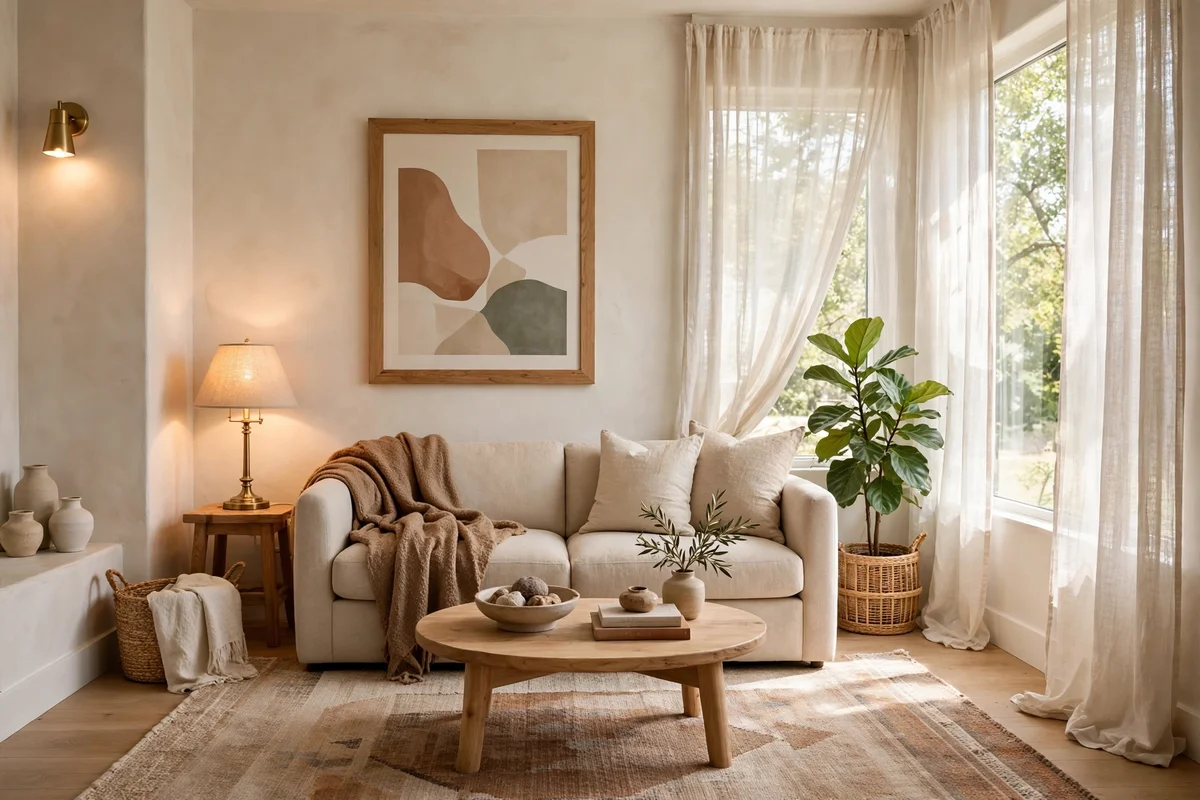
A small living room forgives almost nothing. Every oversized sofa, every poorly hung curtain, every dark corner gets magnified when square footage is tight — and most of us are making at least a few of these classic mistakes without realizing it. The good news is that nearly every small living room decor mistake has a simple, affordable fix. You do not need to gut the room or hire a designer; you need to know what to stop doing and what to do instead. In this guide, you will find 30 of the most common small living room mistakes, each paired with a designer-approved fix, realistic costs, and a pro tip. Every fix is shown with a realistic visualization so you can see exactly what “right” looks like. Work through the list, fix what applies, and watch your small living room feel bigger, brighter, and far more pulled together.
1. Pushing All Furniture Against the Walls
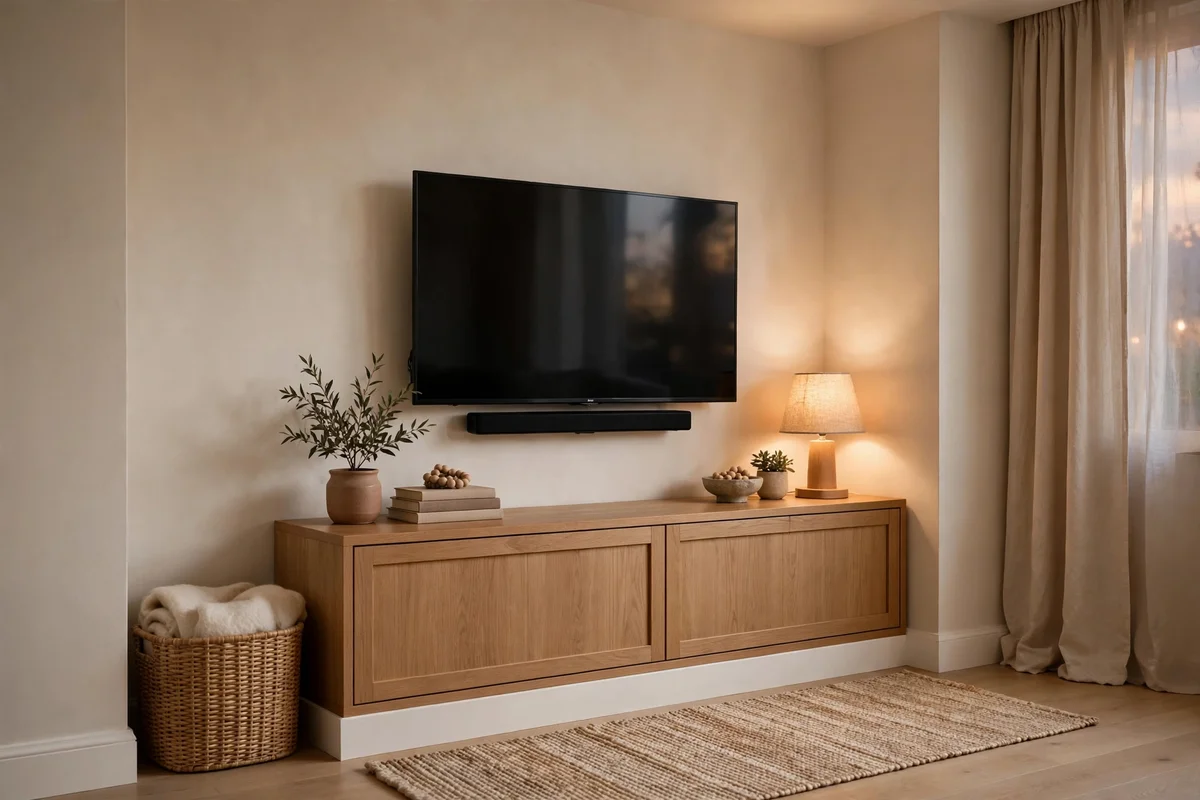
The instinct to shove every piece against the wall to “save space” actually makes a small living room feel smaller and more awkward. It creates a dead zone in the middle and makes conversation feel like shouting across a gym. The fix is counterintuitive: float your seating even a few inches off the wall. Pull the sofa forward, angle a chair into the room, and let breathing space behind pieces create depth. Your eye reads that visible gap as extra square footage. Cost: $0 — this fix is free, just rearrange. Pro tip: Even 3-4 inches of space behind the sofa changes the room’s energy; anchor the arrangement with a rug so it feels intentional, not drifting.
2. Buying a Sofa That’s Too Big
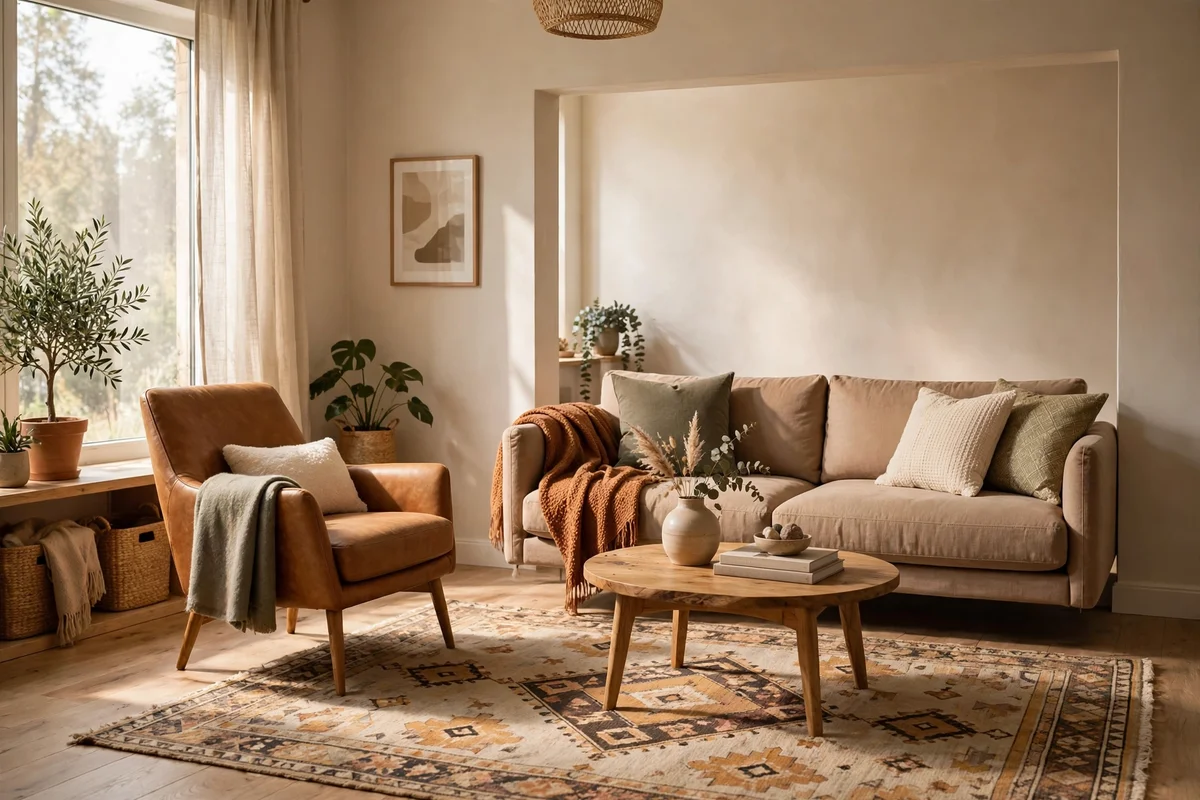
A deep, oversized sectional swallows a small living room whole, leaving no room to walk and making everything else look miniature. The mistake is shopping by comfort fantasies instead of measuring tape. The fix: choose an apartment-scale sofa — typically 68 to 78 inches wide with a shallower seat depth around 36 inches. You keep the lounging comfort but gain precious floor space and visual air. Cost: $600-$1,400 for a quality apartment sofa. Pro tip: Tape the sofa’s footprint on your floor with painter’s tape before buying; if you cannot walk comfortably around the tape, the sofa is too big.
3. Choosing a Rug That’s Too Small
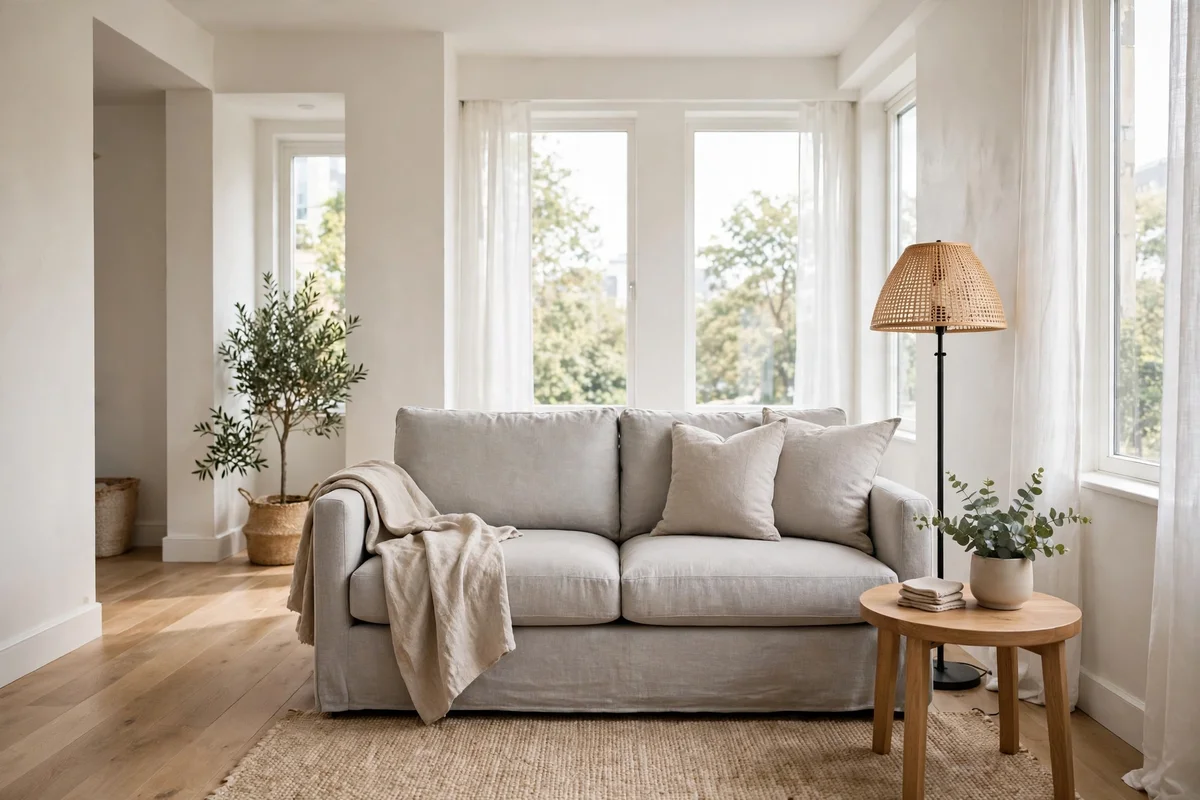
A postage-stamp rug floating in the middle of the seating area chops the room into pieces and makes everything look adrift. This is one of the most common living room mistakes designers see. The fix: size up. In a small living room, the front legs of the sofa and chairs should sit on the rug — a 5×8 or 6×9 usually does the job. A larger rug unifies the seating zone and tricks the eye into reading the whole area as one generous space. Cost: $120-$400 for a good 5×8 rug. Pro tip: If budget is tight, layer a large affordable jute rug under a smaller patterned rug you love — you get the scale and the style.
4. Hanging Curtains Too Low and Too Narrow
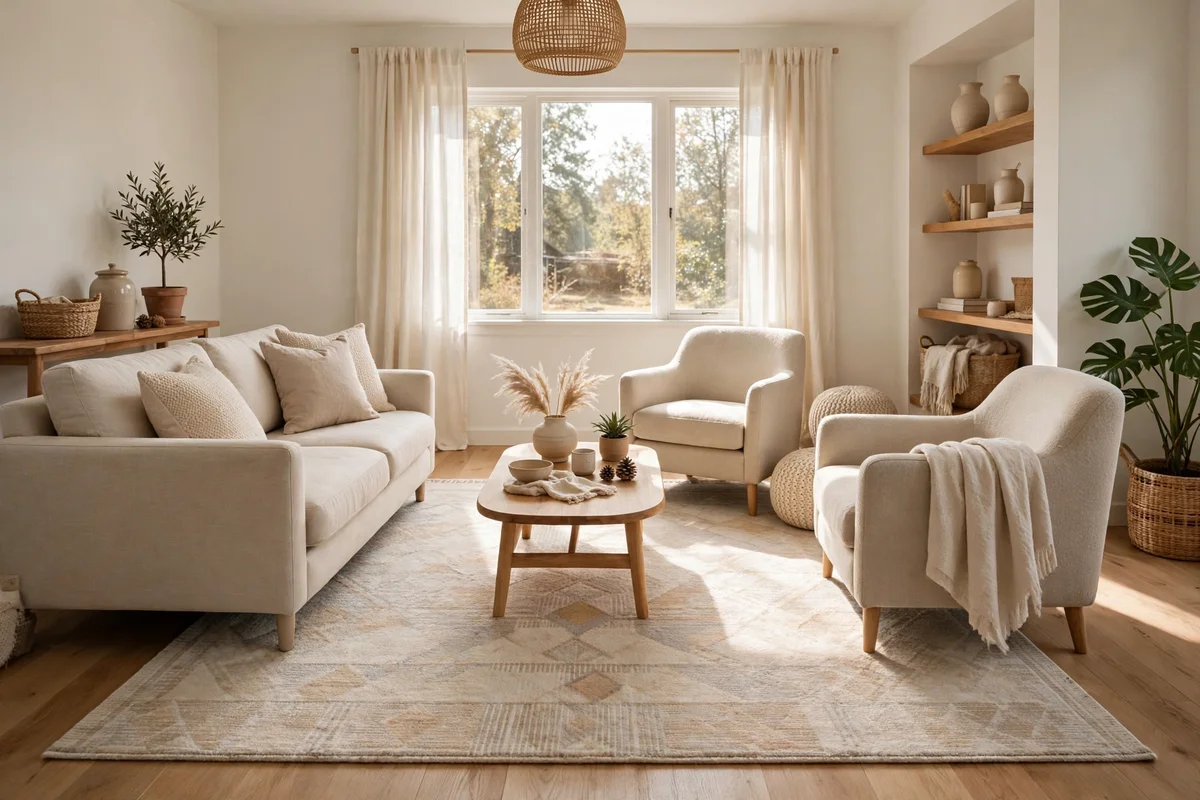
Mounting the curtain rod right at the window frame with panels that barely cover the glass makes windows — and the whole room — look squat and cramped. The fix costs almost nothing: mount the rod 4-6 inches above the frame (or near the ceiling) and extend it 6-10 inches beyond each side. Hang panels so they just kiss the floor. The window instantly looks taller and wider, and the room gains vertical drama. Cost: $40-$150 for a longer rod and extra panel width. Pro tip: Keep curtain fabric light and simple in small rooms; heavy patterns at this scale fight the airy effect you just created.
5. Relying on a Single Overhead Light
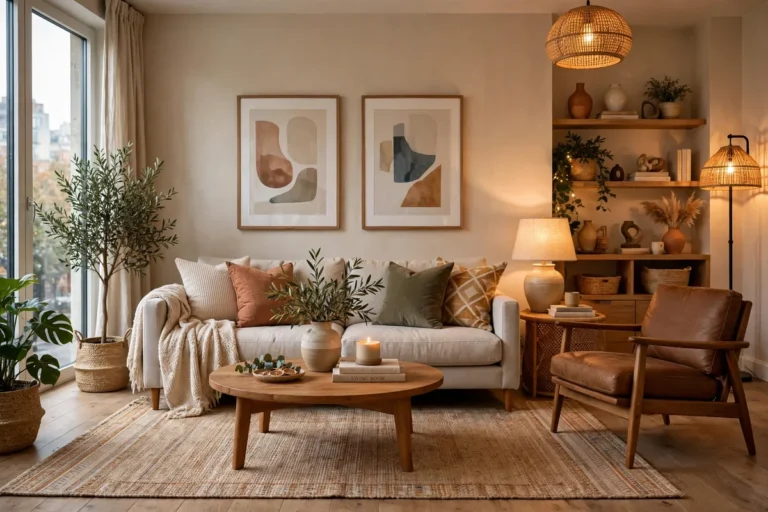
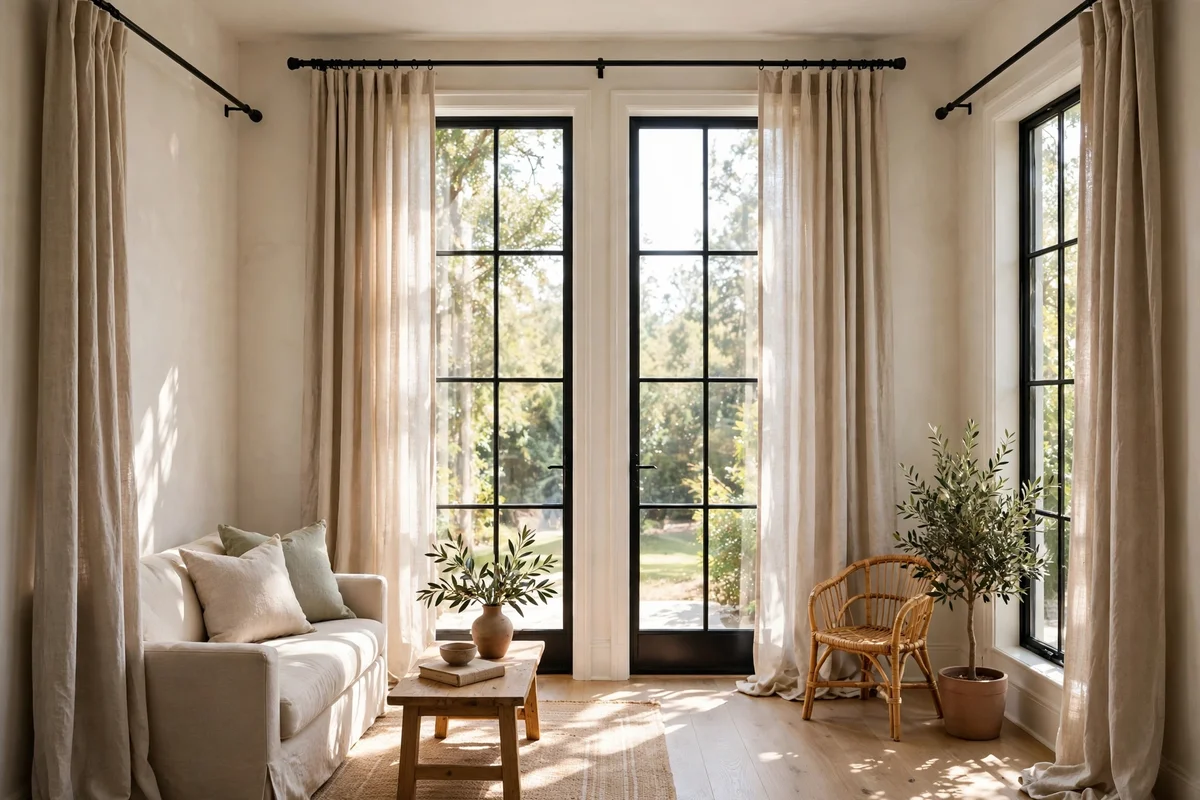
One harsh ceiling light flattens everything, casts unflattering shadows, and makes a small living room feel like an interrogation room. The fix is layered lighting: aim for three sources at different heights — ambient (floor lamp or ceiling), task (reading lamp), and accent (table lamp or candles). Warm bulbs around 2700K keep the small space cozy rather than clinical. Cost: $80-$300 for two or three affordable lamps. Pro tip: Put lamps on opposite sides of the room rather than clustered together; spread light pulls the eye across the space and makes it feel larger. Our cozy living room ideas show layered lighting done right.
6. Cluttering Every Surface
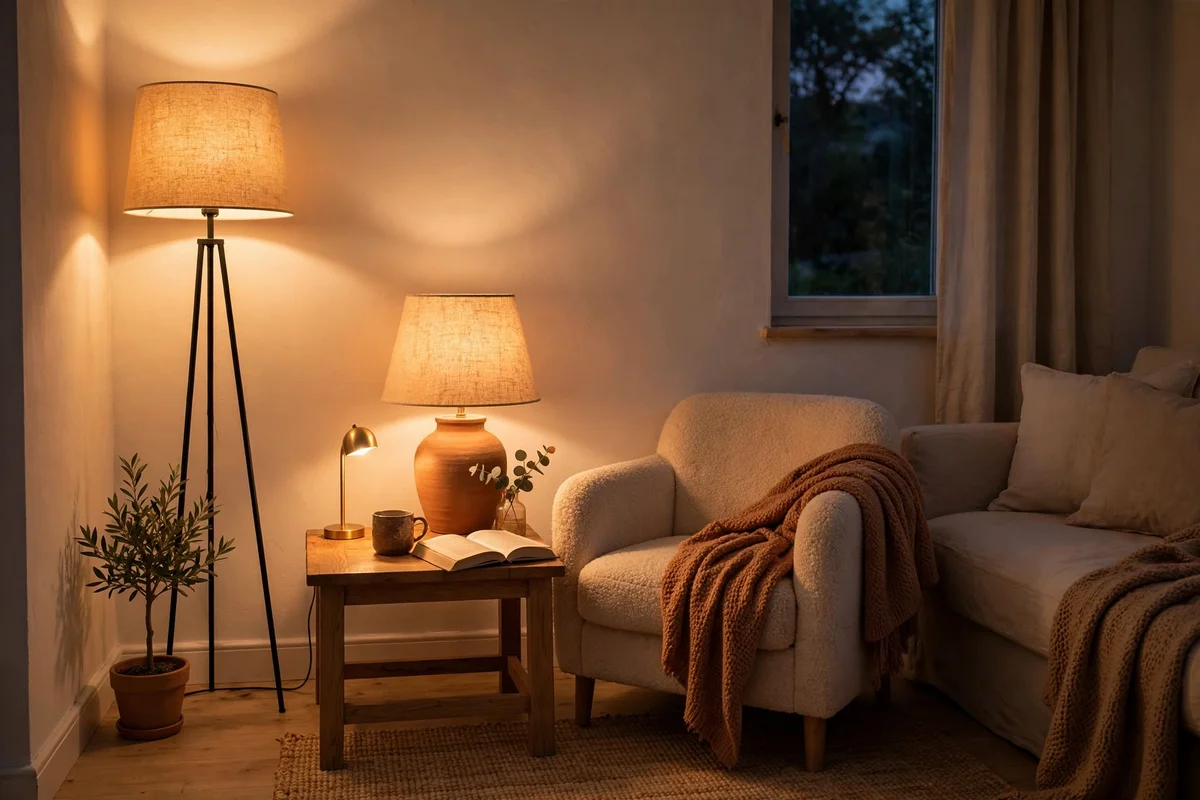
Every horizontal surface crowded with frames, candles, and trinkets creates visual noise that makes a small room feel chaotic and cramped. The fix is intentional styling: clear everything off, then add back only 3-5 items per surface in varying heights. Leave genuine empty space — negative space is what lets the eye rest and the room breathe. Cost: $0 — editing is free. Pro tip: Use the “one in, one out” rule going forward; small rooms stay styled only when every new object earns its place by replacing something else.
7. Scattering Too Many Tiny Decor Items
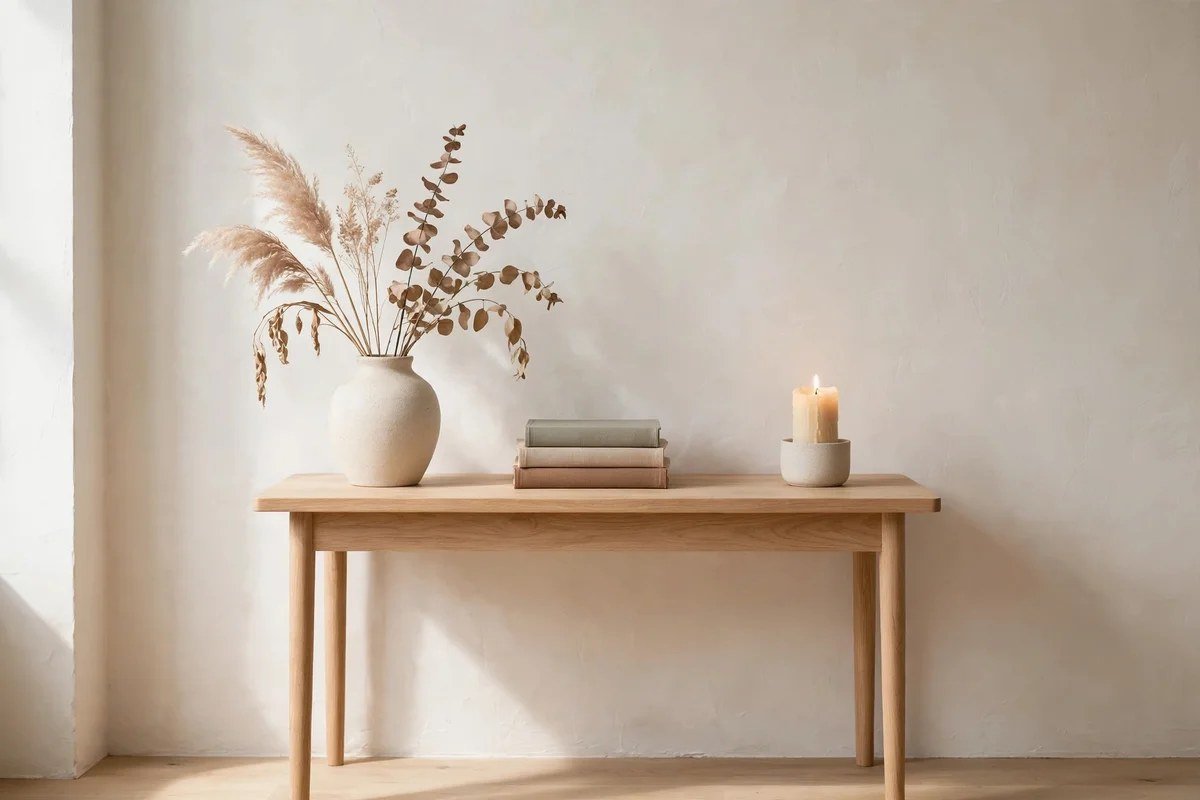
Dozens of small knick-knacks read as clutter in a compact room, while one bold piece reads as design. The mistake is thinking small rooms need small decor. The fix: swap clusters of tiny objects for fewer, larger statement pieces — a big vase, an oversized art print, a substantial tray. Larger items give the eye confident anchor points and paradoxically make the room feel more spacious. Cost: $50-$200 for two or three statement pieces from thrift or discount stores. Pro tip: Corral remaining small items on a single tray; grouped objects read as one intentional vignette instead of scattered clutter.
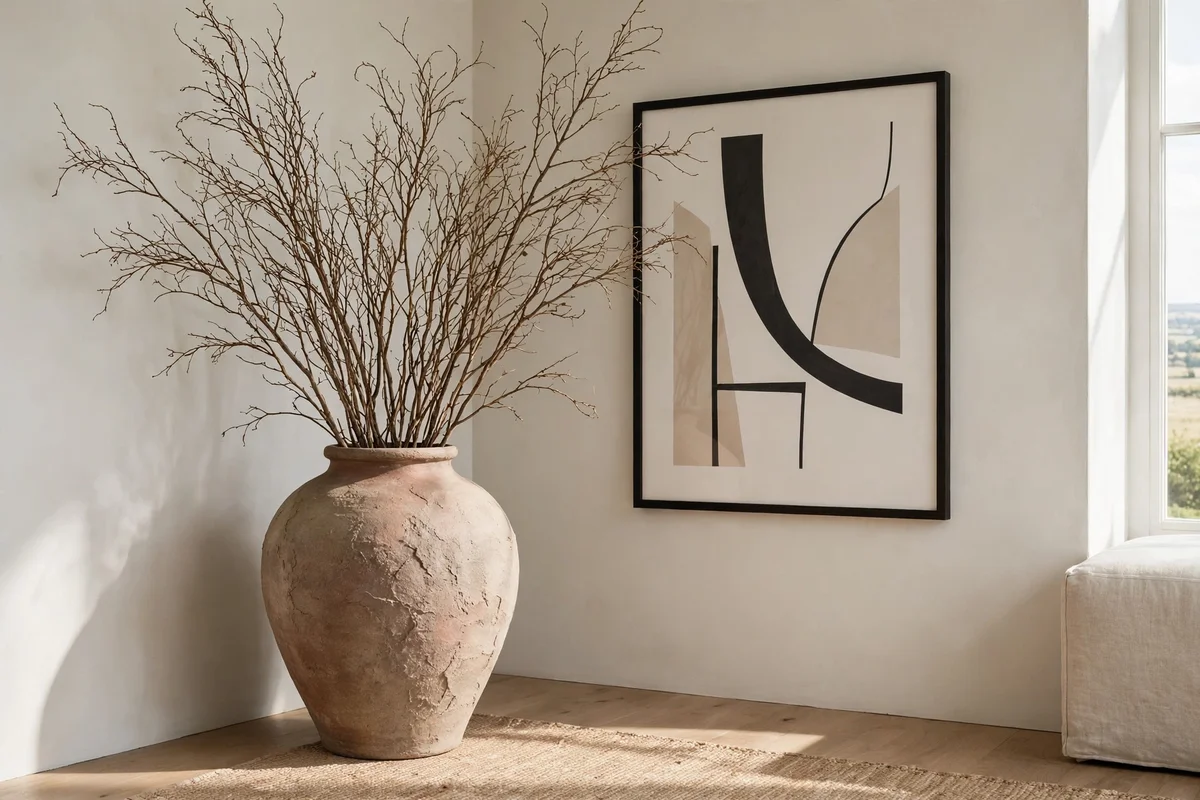
8. Ignoring Vertical Space
When floor space is scarce, the walls are your extra square footage — yet most small living rooms leave them bare below eye level chaos. The fix: go vertical with tall, narrow bookcases, floating shelves stacked high, or a gallery wall that climbs. Drawing the eye upward makes ceilings feel higher and frees the floor. Cost: $60-$250 for floating shelves or a tall narrow bookcase. Pro tip: Style shelves with books plus breathing room — cramming every shelf defeats the purpose; aim for 70% styled, 30% empty.
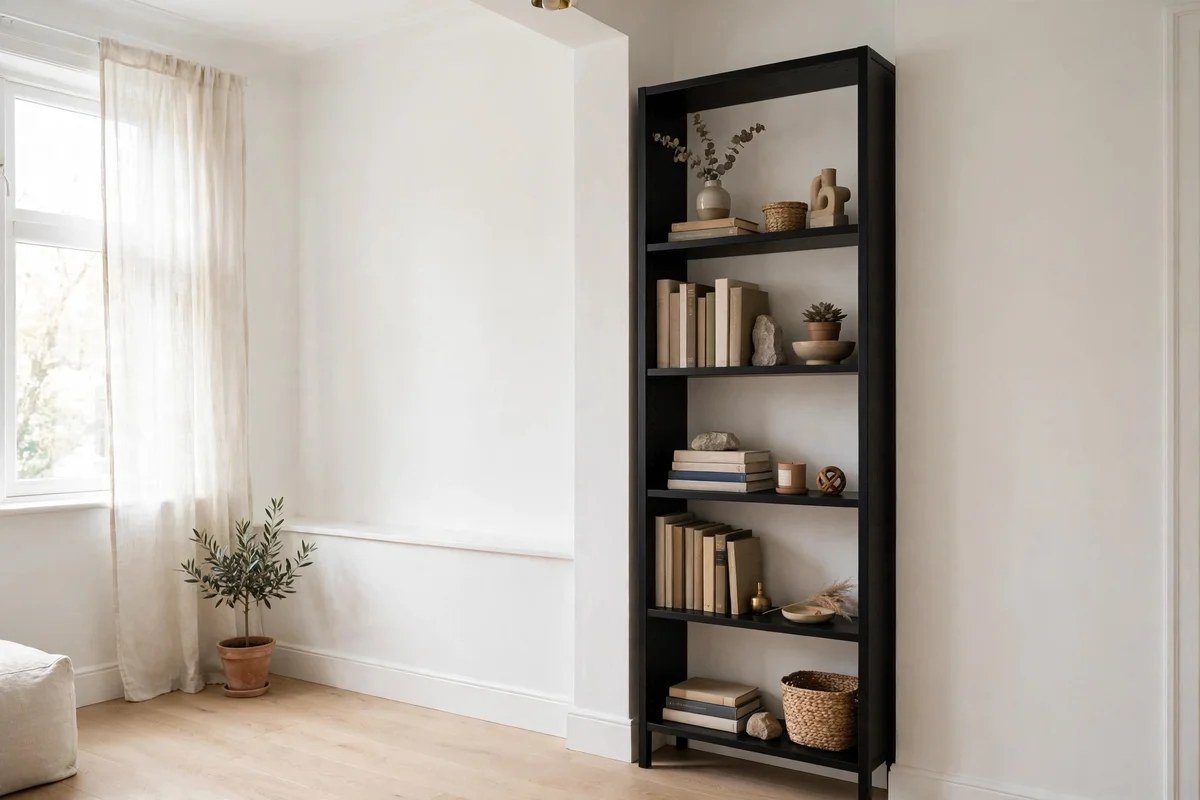
9. Blocking Natural Light With Heavy Drapes
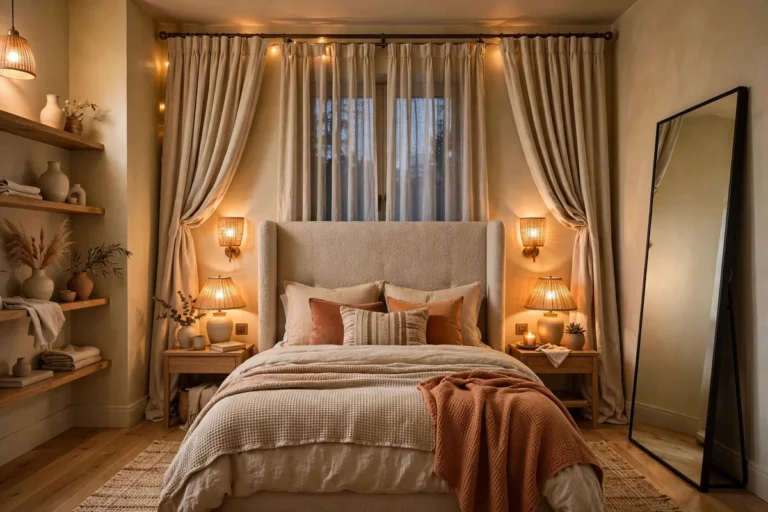
Thick, dark curtains swallow daylight — the single most valuable asset a small living room has. The fix: switch to light-filtering sheers or linen panels that glow when backlit. You keep privacy while daylight pours through, and the room feels twice as bright. If you need darkness for naps or movies, add a discreet roller shade behind the sheers. Cost: $50-$180 for sheer or linen panels. Pro tip: White or ivory sheers bounce the most light; they practically disappear against a bright window, extending the view outward.
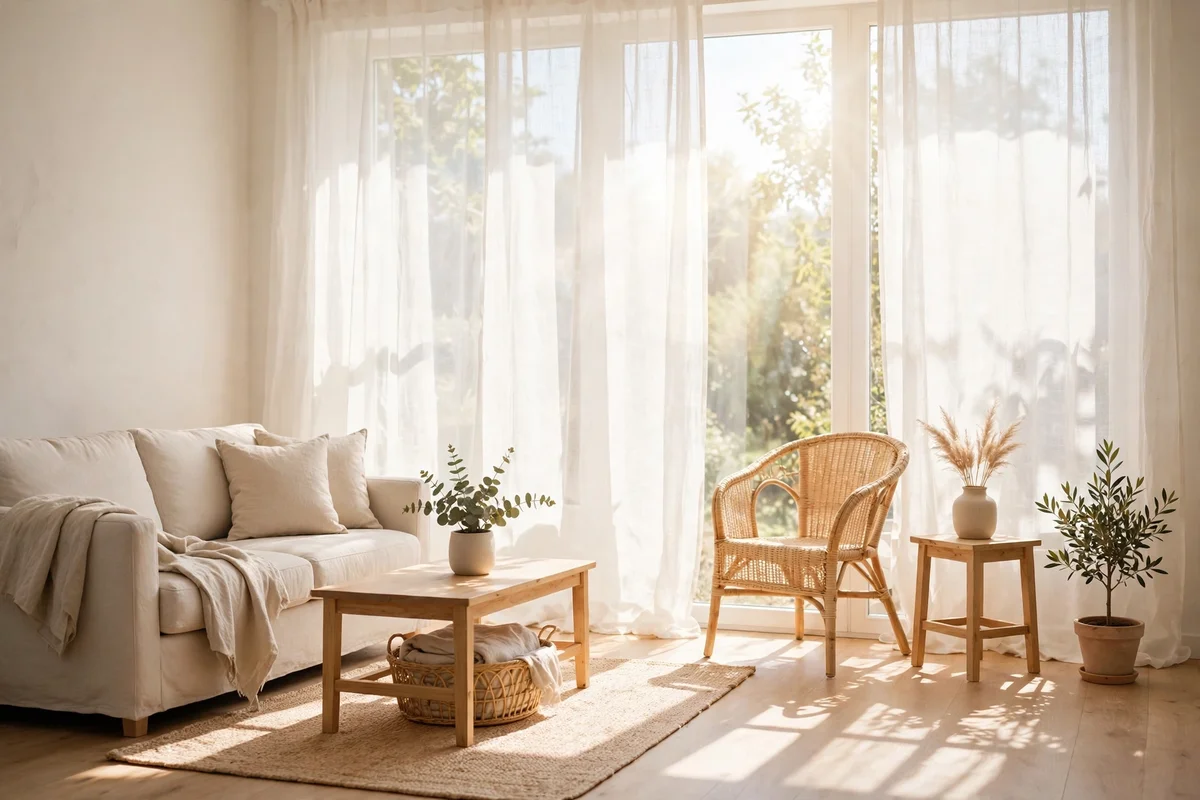
10. Having No Focal Point
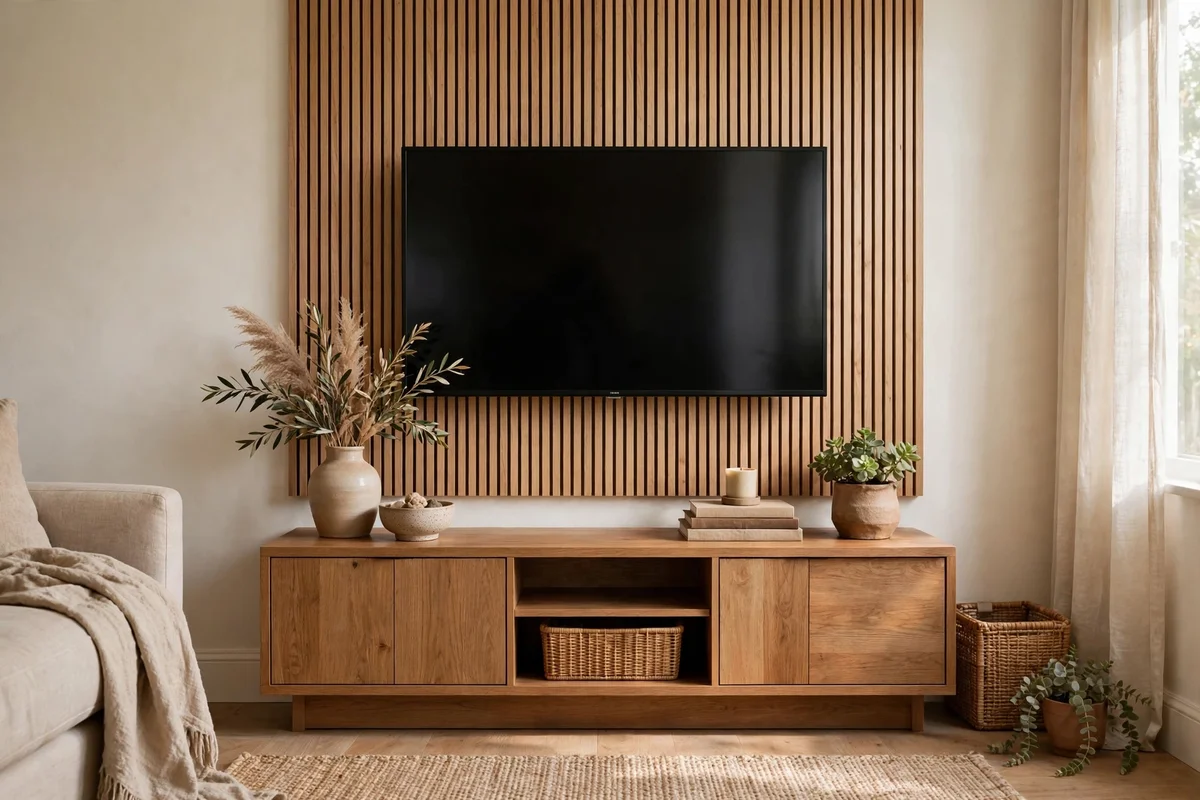
A room with no visual anchor feels restless — the eye wanders and nothing feels settled. The fix: deliberately create one focal point, whether it is a gallery wall, a bold piece of art, a styled media console, or even a painted accent wall. Arrange seating to face it. One strong focal point organizes the entire room around it and gives small spaces a sense of purpose. Cost: $40-$200 for a large art print or accent wall paint. Pro tip: The focal wall should be the first thing you see entering the room; that single composed view sets the tone for everything else.
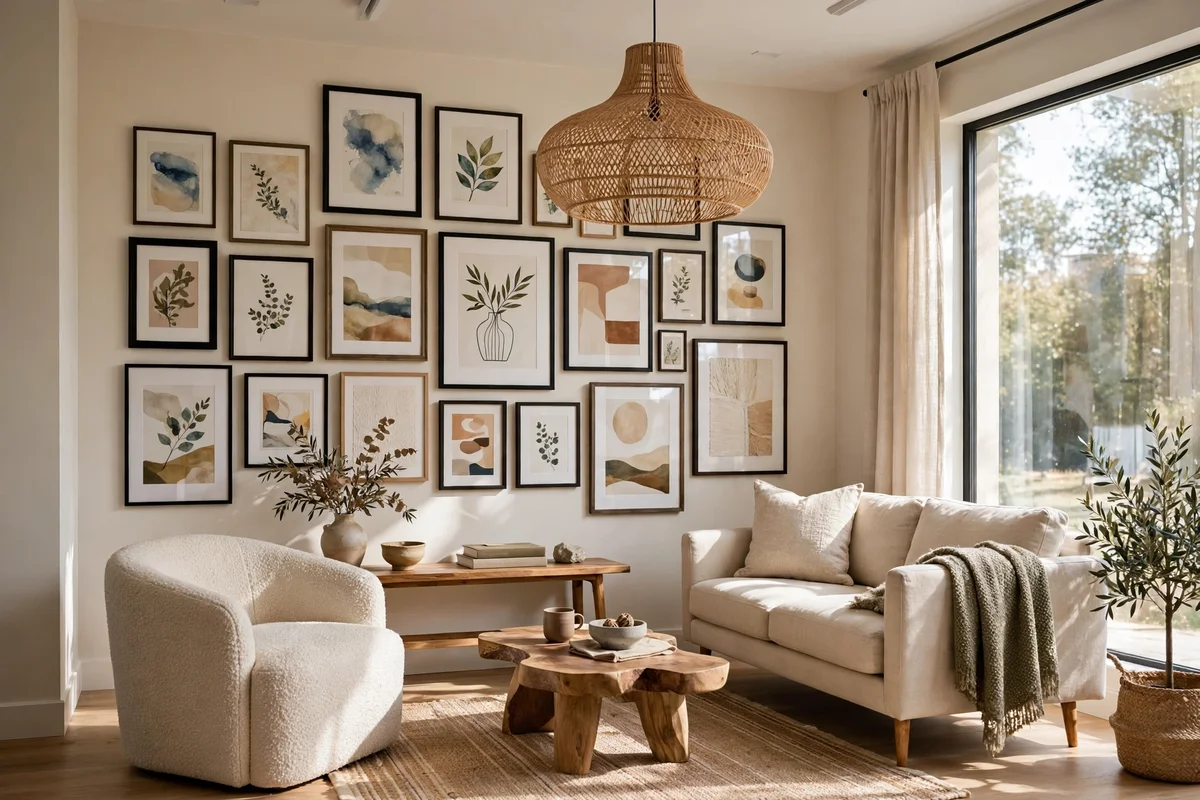
11. Mounting the TV Too High
A TV cranked halfway up the wall forces neck-craning and visually chops the room in an awkward spot. The fix: mount the screen so its center sits at seated eye level — roughly 42 inches from the floor. The TV then reads as part of a composed media wall instead of a floating afterthought. Style the console beneath it with a few intentional objects. Cost: $25-$60 for a tilting wall mount. Pro tip: Sit on your sofa and have someone hold cardboard cut to your TV’s size against the wall; mark where it feels natural before drilling a single hole.
12. Buying Matchy-Matchy Furniture Sets
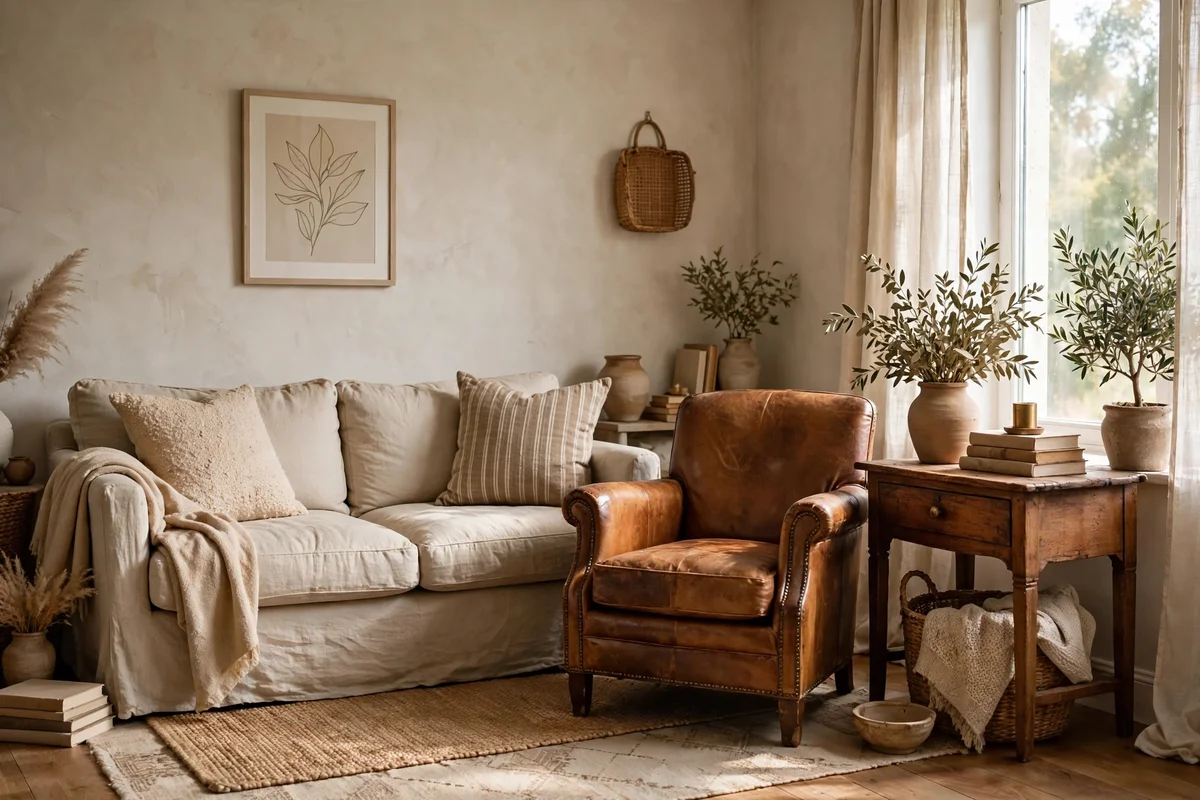
The sofa-loveseat-chair set in identical fabric looks like a showroom floor, not a home — and in a small room it reads as one heavy block. The fix: mix pieces with a common thread. Keep one unifying element (a color, a wood tone, a leg style) and vary the rest: a linen sofa, a leather accent chair, a vintage side table. The collected look adds personality and visual lightness. Cost: $0-$500 depending on what you swap — even reupholstering one chair changes the story. Pro tip: Start by replacing just the most “set-like” piece; one different chair is often enough to break the showroom spell.
13. Keeping All Furniture the Same Height
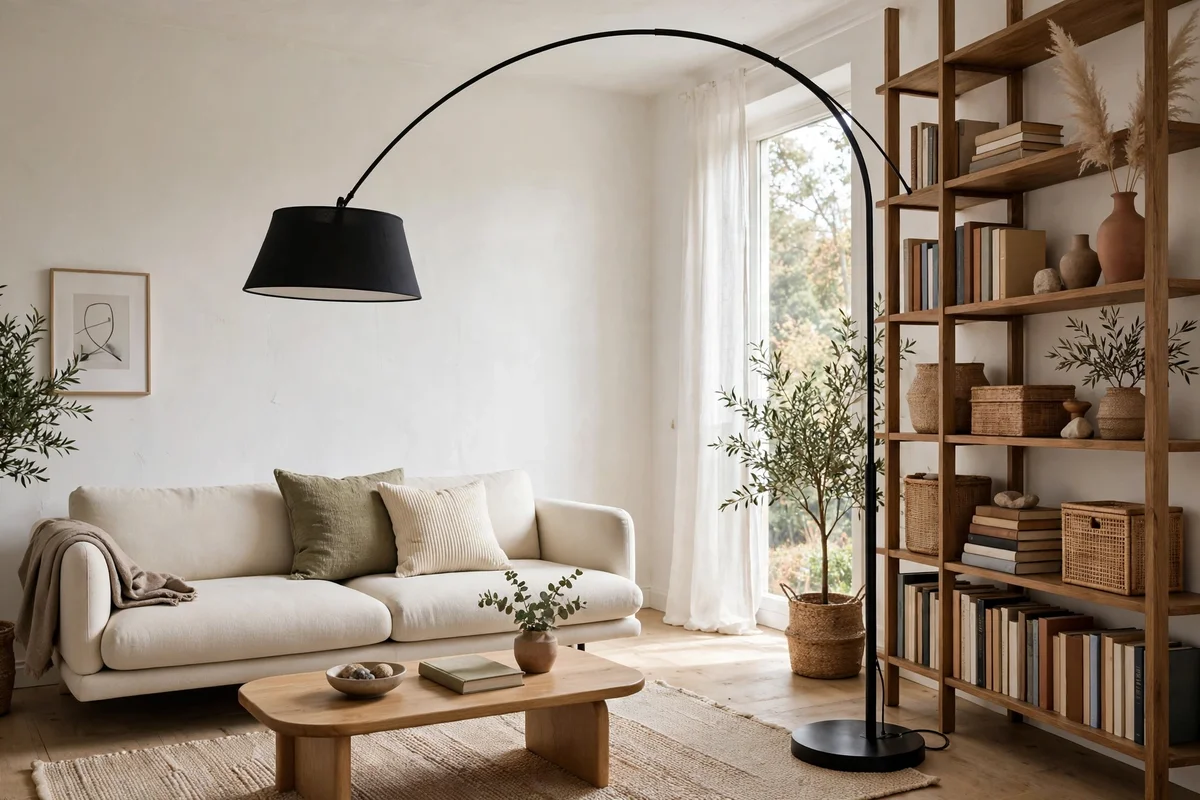
When the sofa, chairs, console, and shelves all hit the same horizontal line, the room feels flat and monotonous. The fix: vary heights deliberately. Pair a low-profile sofa with a tall arc floor lamp, a high bookcase, or a large vertical artwork. The up-and-down rhythm gives the eye somewhere to travel and makes the space feel dynamic rather than boxy. Cost: $60-$200 for a tall lamp or vertical art. Pro tip: An arc floor lamp is the small-room secret weapon — it adds dramatic height and overhead light without a single ceiling hole.
14. Skipping Side Tables
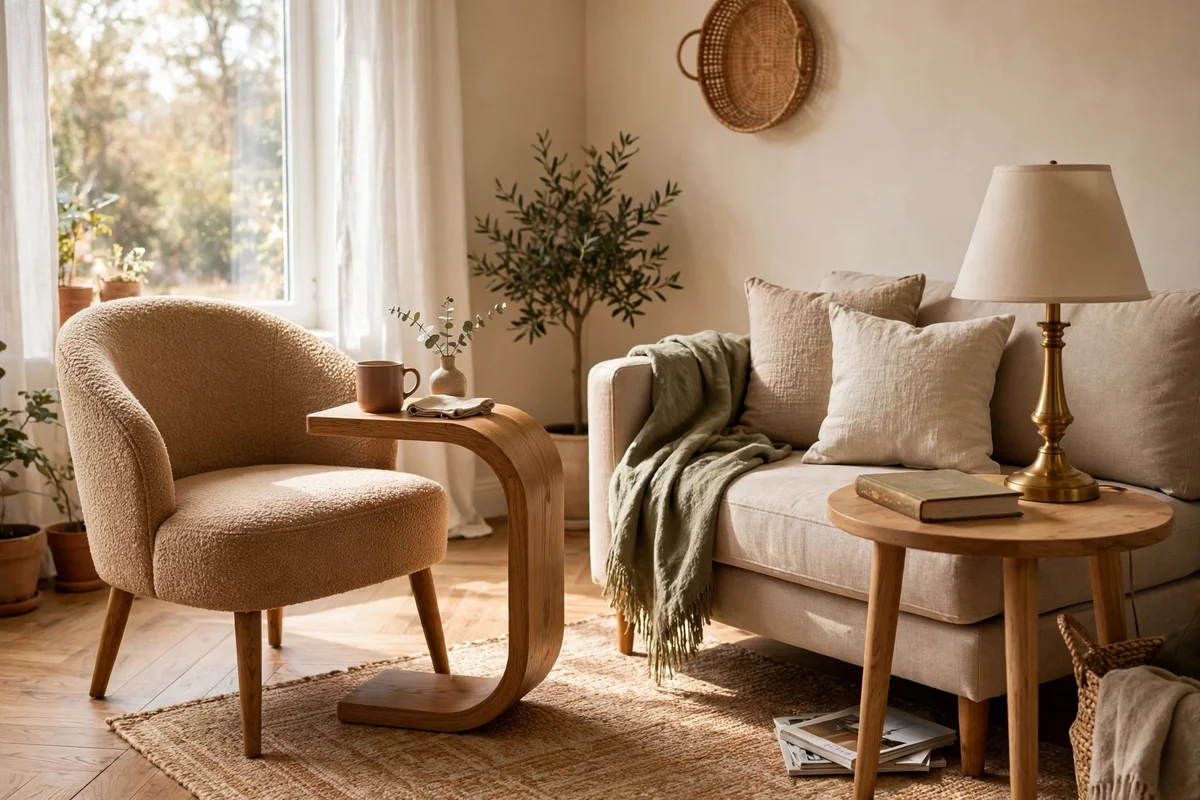
Guests balancing drinks on their knees and no spot for a lamp or book makes a living room feel unfinished and impractical. The fix: give every seat a surface within arm’s reach — a C-table that slides over a chair arm, a small round side table, even a sturdy stool. In tight rooms, nesting tables are gold: pull one out when needed, tuck it away when not. Cost: $30-$120 per small table. Pro tip: A C-shaped side table beside an accent chair doubles as a laptop desk for small-space dwellers — function disguised as furniture.
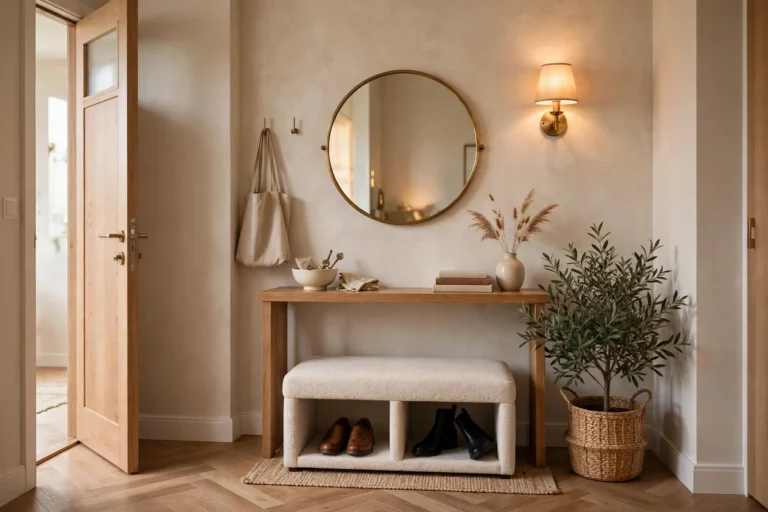
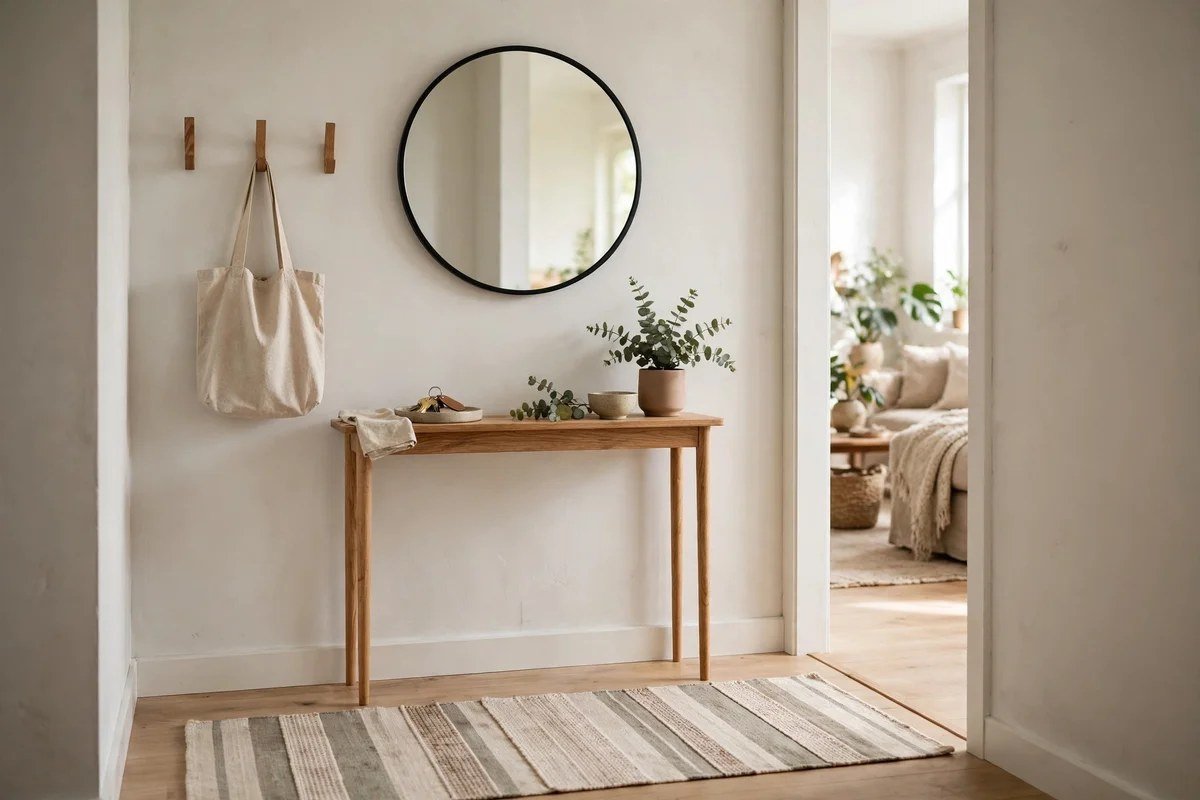
15. Forgetting the Entry Zone
When the front door opens straight into the living room, keys, shoes, and bags pile up with nowhere to land, and the room never feels truly “arrived.” The fix: carve out a micro-entry with a slim console or wall hooks, a small tray for keys, and a washable runner. Even 24 inches of defined space tells the brain “the living room starts here.” Cost: $50-$180 for hooks, a tray, and a runner. Pro tip: A round mirror above the entry spot bounces light, gives a last look on the way out, and visually widens the pinch point by the door.
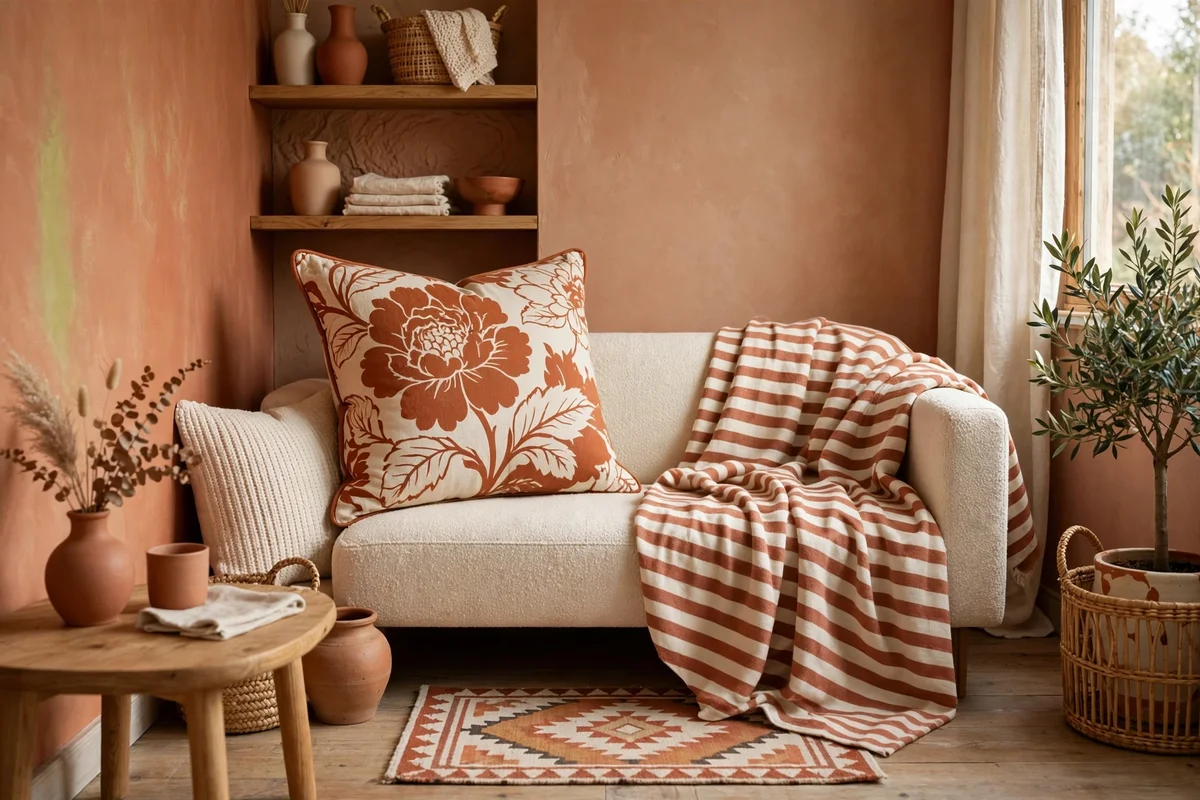
16. Clashing Too Many Competing Patterns
Florals fighting stripes fighting geometrics turns a small room into visual static. The fix is the pattern scale rule: mix one large-scale pattern, one medium, and one small — all sharing at least one color. A big floral pillow, a medium stripe throw, and a small geometric rug in the same palette feel rich, not chaotic. Cost: $60-$180 for coordinated pillow covers and a throw. Pro tip: When in doubt, make the largest pattern the simplest; bold small patterns shout while bold large patterns whisper. Our living room color palettes give you ready-made color families to pattern within.
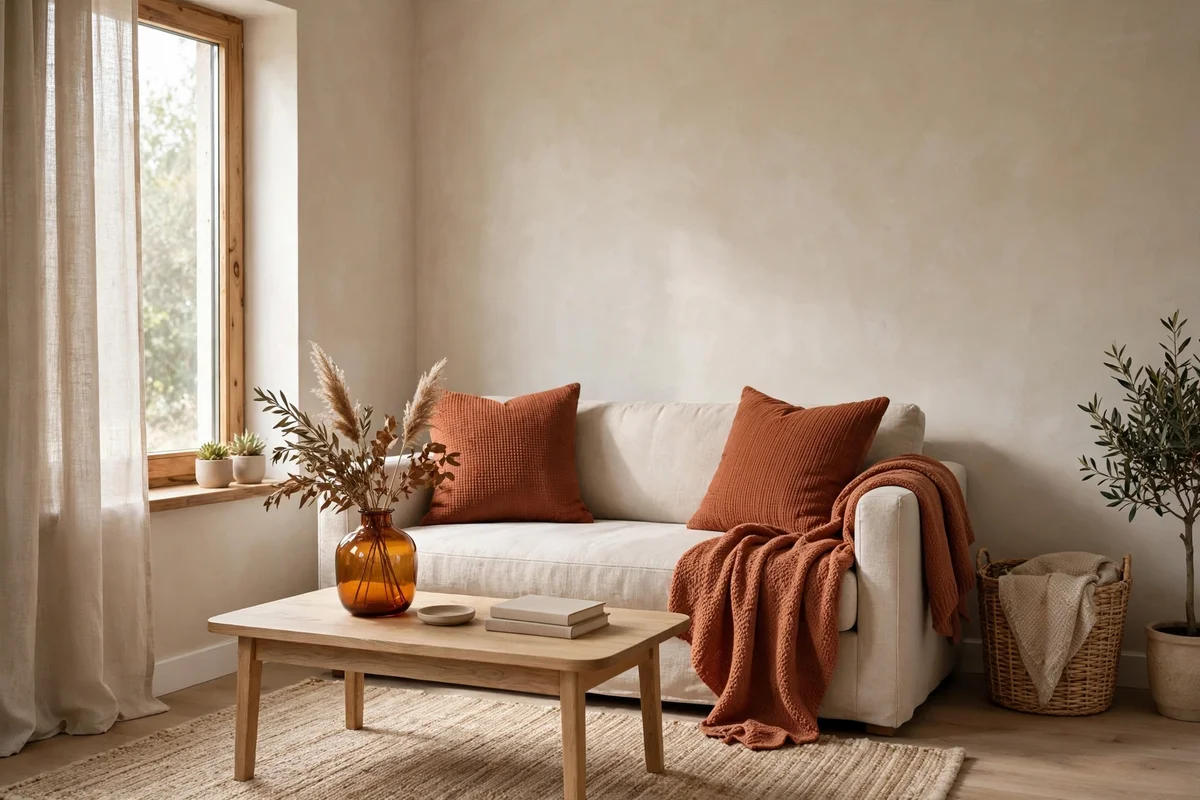
17. Playing It Too Safe With All Neutrals
An all-beige room meant to feel calm often ends up feeling bland and washed out — especially under flat lighting. The fix: keep your neutral base but add one confident accent color in three places (the rule of three). Terracotta pillows, a rust throw, and an amber vase. The repetition makes the color feel deliberate, and suddenly the neutrals around it look richer. Cost: $50-$150 for pillows, a throw, and one accessory. Pro tip: Pull your accent from existing art or a rug you love; a color already in the room will never feel random.
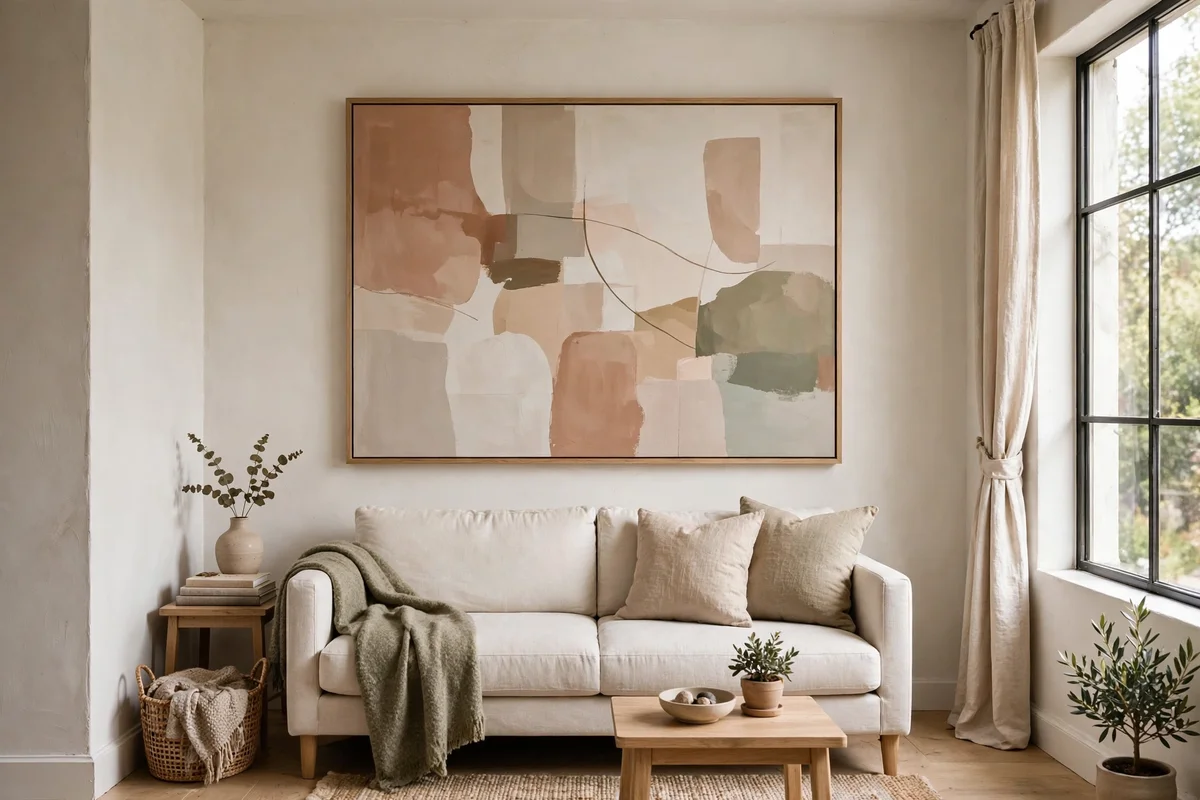
18. Hanging Art Too Small or Too High
A tiny frame lost on a big wall — or art hung near the ceiling — makes the room feel off-balance and the art feel like an afterthought. The fix: art should be roughly two-thirds the width of the furniture below it, and its center should sit at 57-60 inches from the floor (gallery standard, roughly eye level). One right-sized piece beats three timid ones. Cost: $30-$150 for a large-scale print in an affordable frame. Pro tip: In a small room, one oversized piece of art actually makes the wall — and the room — feel bigger than a cluster of small frames.
19. Letting Cords Run Wild
Tangled black cords snaking across the floor and behind the TV are visual clutter you stop noticing — but guests notice instantly. The fix: a weekend cable-management session. Use adhesive cord clips along baseboards, a cable box to hide the power strip, and velcro ties to bundle what remains. Paintable cord covers make wall runs disappear. Cost: $20-$60 for clips, ties, and a cable box. Pro tip: Unplug and remove one device you barely use before organizing; fewer cords to manage is the ultimate cable hack.
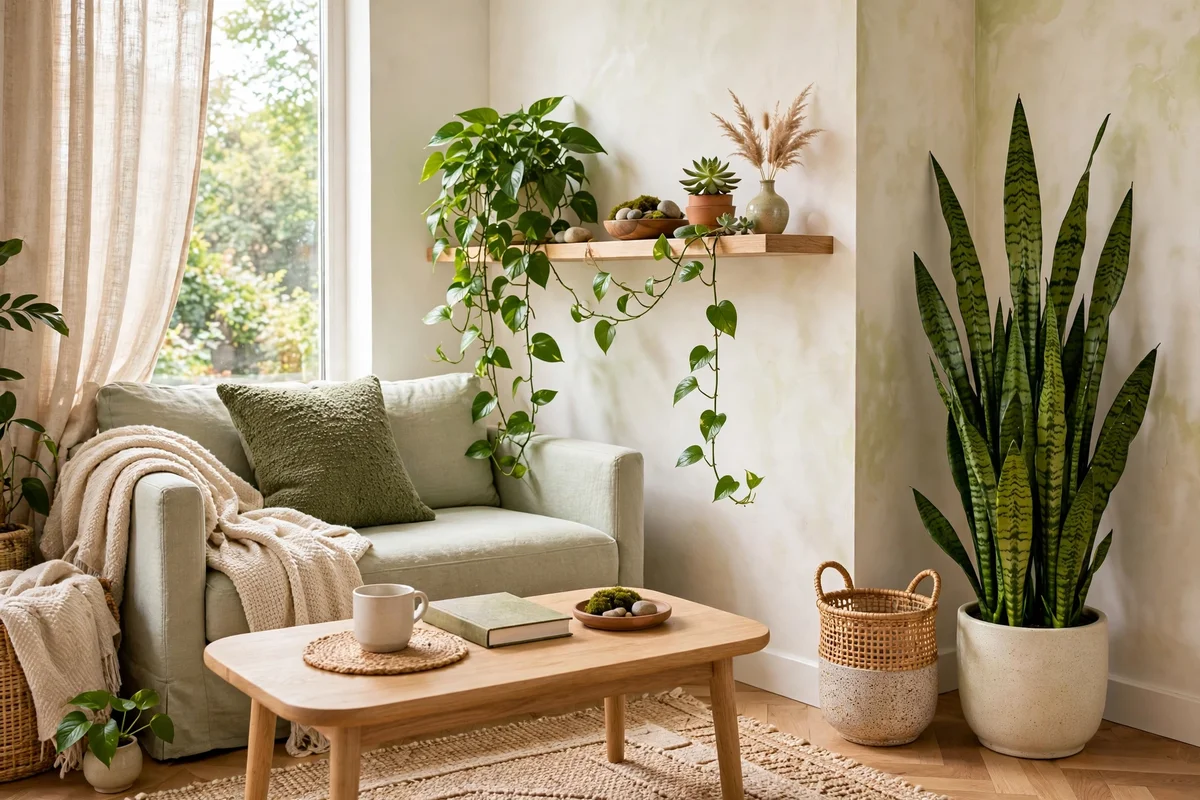
20. Having Zero Greenery
A room with no living thing in it can feel flat and sterile no matter how well it is decorated. The fix: add at least one plant — a tall snake plant in a corner adds height, a trailing pothos softens a shelf, a small olive tree becomes a living sculpture. Plants add color, texture, and life that no object can fake. Cost: $15-$80 for a plant and a good-looking pot. Pro tip: If you kill plants, start with a snake plant or ZZ plant — they thrive on neglect and low light. Our indoor plant ideas for small spaces cover the best low-maintenance picks.
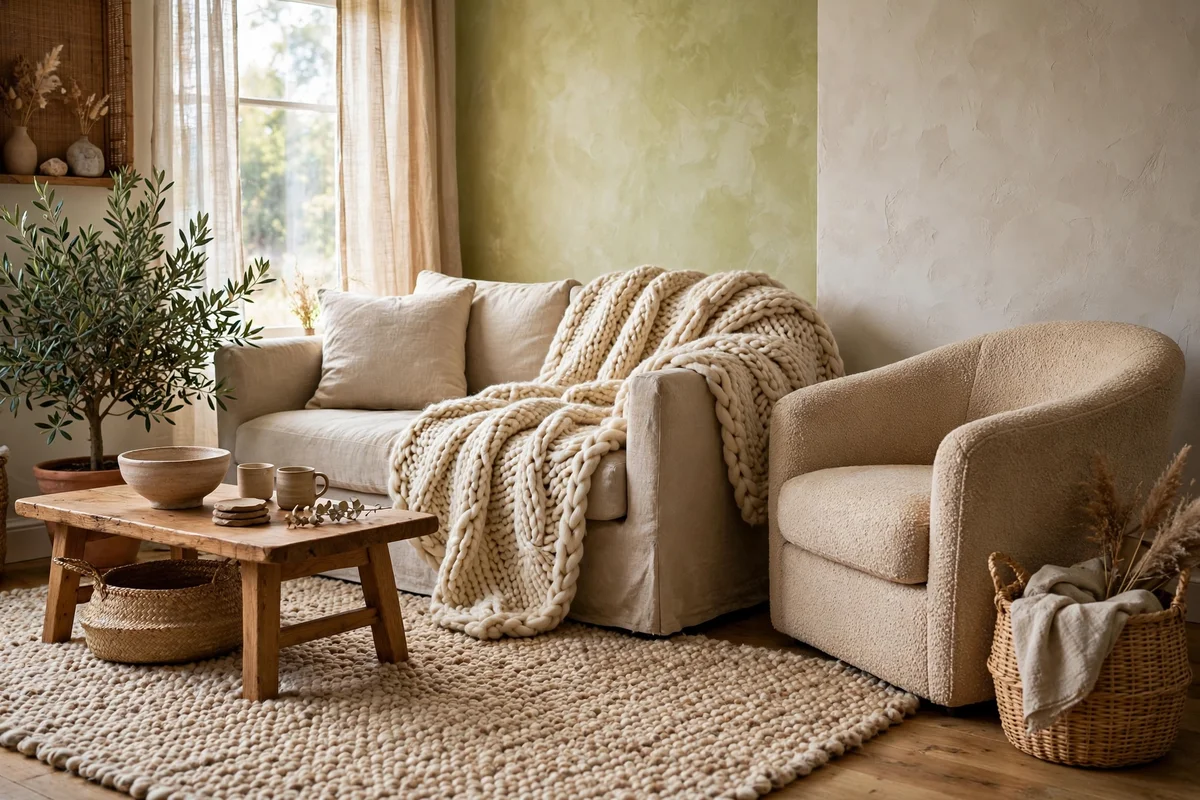
21. Forgetting Texture
A room that is all smooth surfaces — flat sofa, flat rug, flat walls — feels cold and one-dimensional even in warm colors. The fix: layer at least three textures. Chunky knit throw over smooth linen sofa, nubby wool rug underfoot, woven basket beside the chair. Texture is what makes a small room feel rich and touchable instead of showroom-stiff. Cost: $60-$200 for a throw, basket, and textured pillow covers. Pro tip: Natural materials — wool, linen, rattan, wood — mix effortlessly; if your textures are all natural, they almost cannot clash.
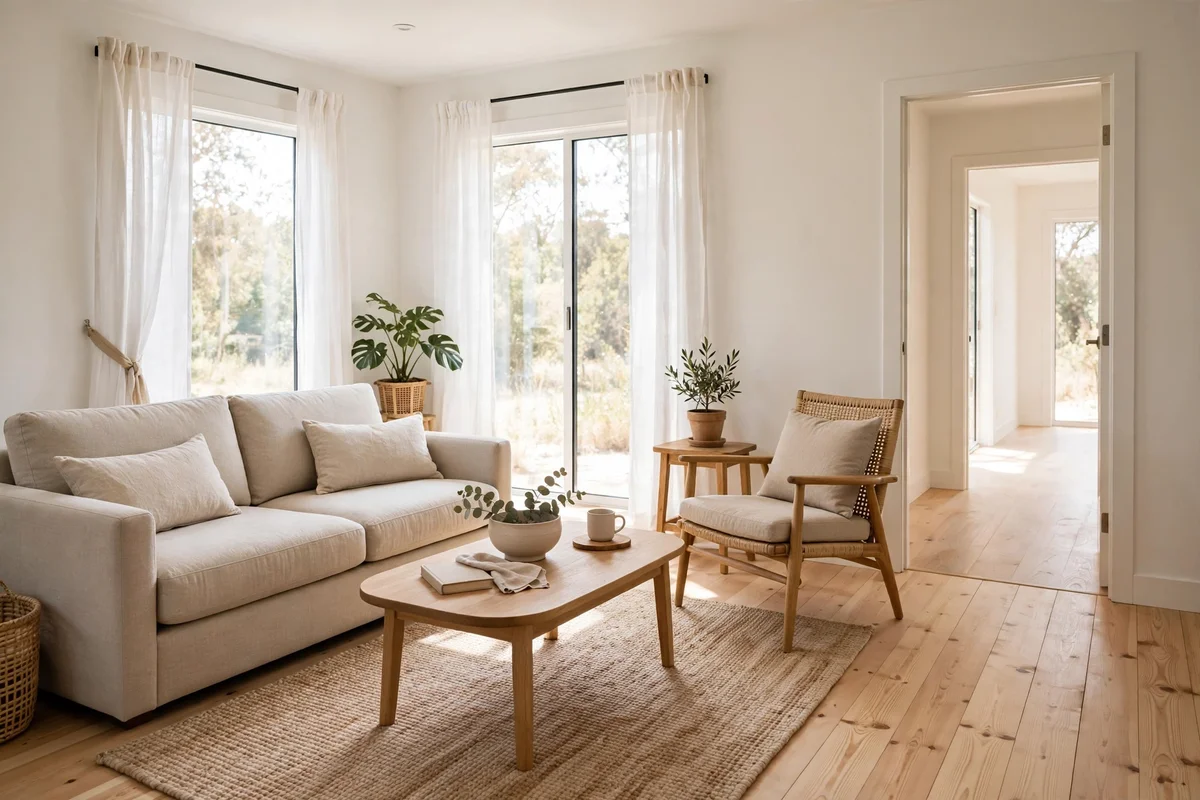
22. Blocking Traffic Flow
Having to sidestep the coffee table or squeeze past a chair every time you cross the room makes even a pretty space feel stressful. The fix: protect clear pathways 30-36 inches wide for main routes. Pull the coffee table 18 inches from the sofa — close enough to reach, far enough to pass. If a piece constantly gets bumped, it does not belong in the path. Cost: $0 — rearranging is free. Pro tip: Walk your main routes with a laundry basket in your hands; if you cannot pass comfortably, the path is too tight and something needs to move.
23. Choosing an Oversized Coffee Table
A massive coffee table eats the center of a small seating area and traps everyone in their seats. The fix: size the table to about two-thirds your sofa’s length and keep it the same height as the seat cushions. Better yet, try a round ottoman — no sharp corners to bruise shins, extra seating when guests come, and soft visual lines. Cost: $100-$300 for a right-sized table or ottoman. Pro tip: Two small side tables pushed together work as a coffee table for daily life and split apart for parties — flexibility small rooms crave.
24. Ignoring the Ceiling Completely
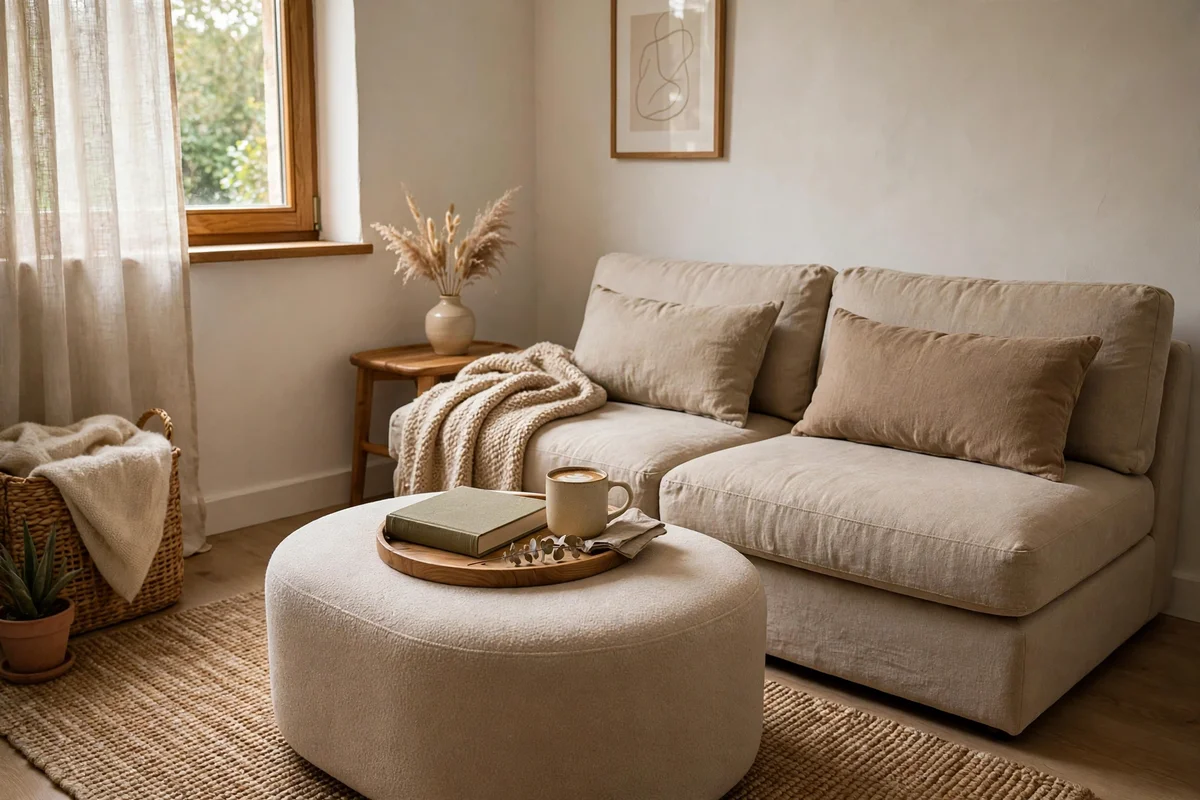
The “fifth wall” gets forgotten in almost every small living room — flat white, maybe a sad flush-mount. The fix: give the ceiling a whisper of attention. Paint it a soft tint of your wall color, add a statement pendant or sculptural flush-mount, or even apply subtle wallpaper. The eye travels up, the room feels taller, and the whole space looks considered. Cost: $40-$250 for paint or a new light fixture. Pro tip: Painting the ceiling the same color as the walls blurs the boundary between them, which can make a low ceiling feel higher — the opposite of what you would expect.
25. Throw Pillow Overload
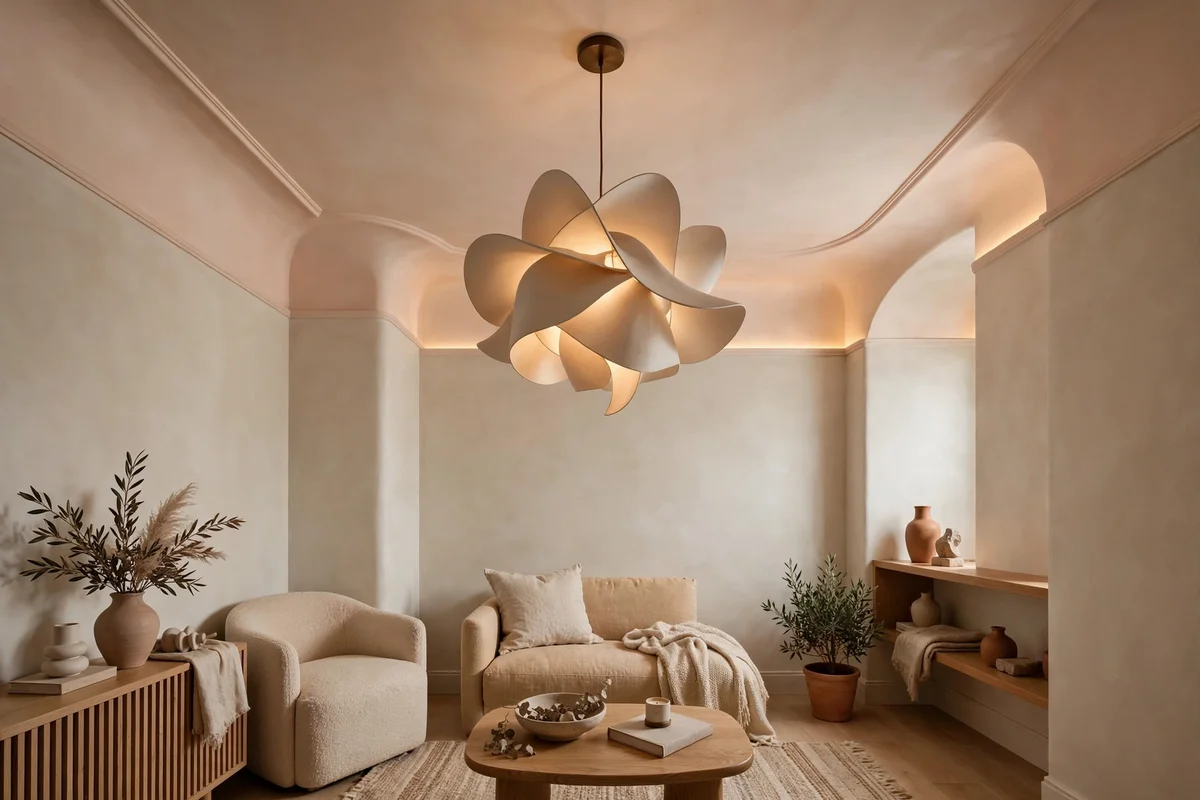
Nine pillows on a loveseat means spending five minutes clearing a seat every time you sit down — and the sofa disappears under the pile. The fix: the 2-2-1 formula for a standard sofa — two 20-inch squares, two 18-inch squares, one lumbar. Odd numbers, descending sizes, done. Every pillow earns its spot and the sofa stays usable. Cost: $40-$120 for coordinated covers in the right sizes. Pro tip: Pillow inserts should be 2 inches larger than the cover (a 22-inch insert in a 20-inch cover) for that plump designer look instead of sad flat pancakes.
26. Choosing Furniture With No Hidden Storage
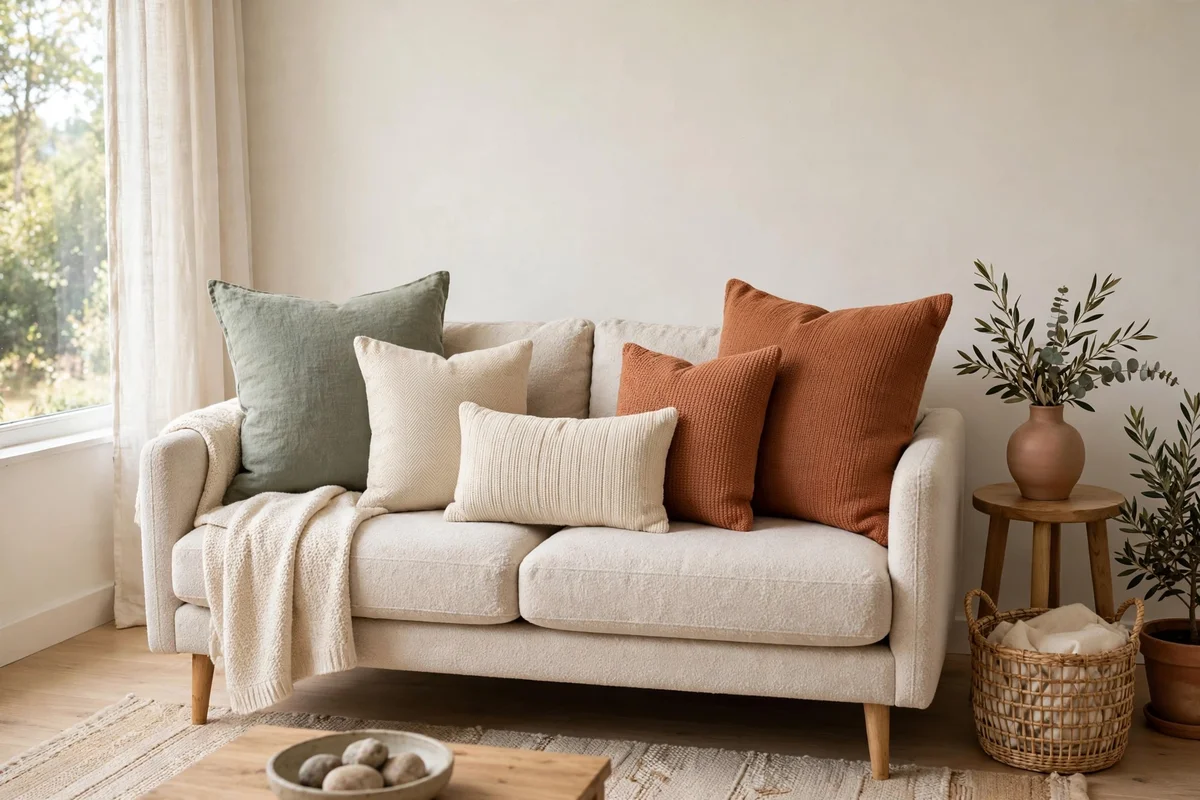
In a small living room, every piece that only does one job is a wasted opportunity. The fix: make storage invisible. A storage ottoman swallows throws and remotes, a lift-top coffee table hides laptops and chargers, a console with doors conceals the mess behind closed fronts. The room stays serene because the clutter has somewhere to go. Cost: $120-$400 for a storage ottoman or lift-top table. Pro tip: Do a “ten-minute tidy” test mentally for each storage piece — if you cannot stash the room’s daily mess in under ten minutes, you need one more hidden-storage piece.
27. Hanging the Mirror in the Wrong Spot
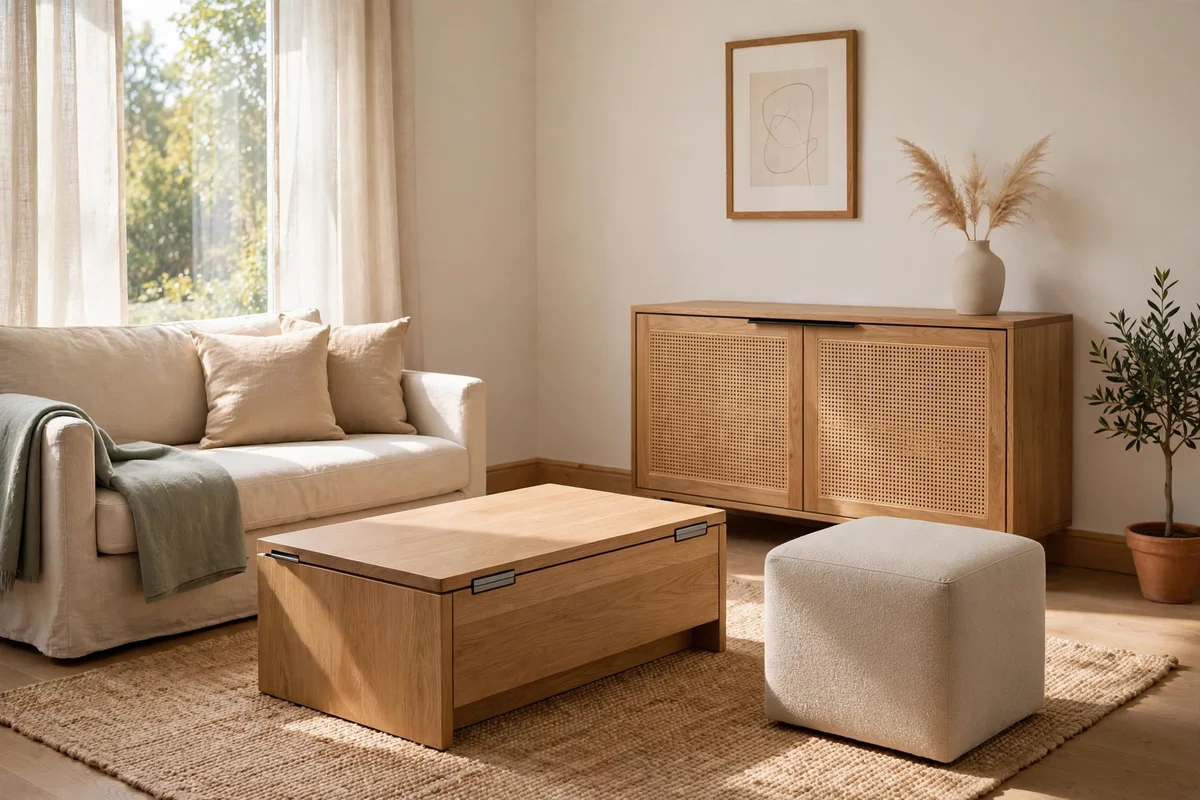
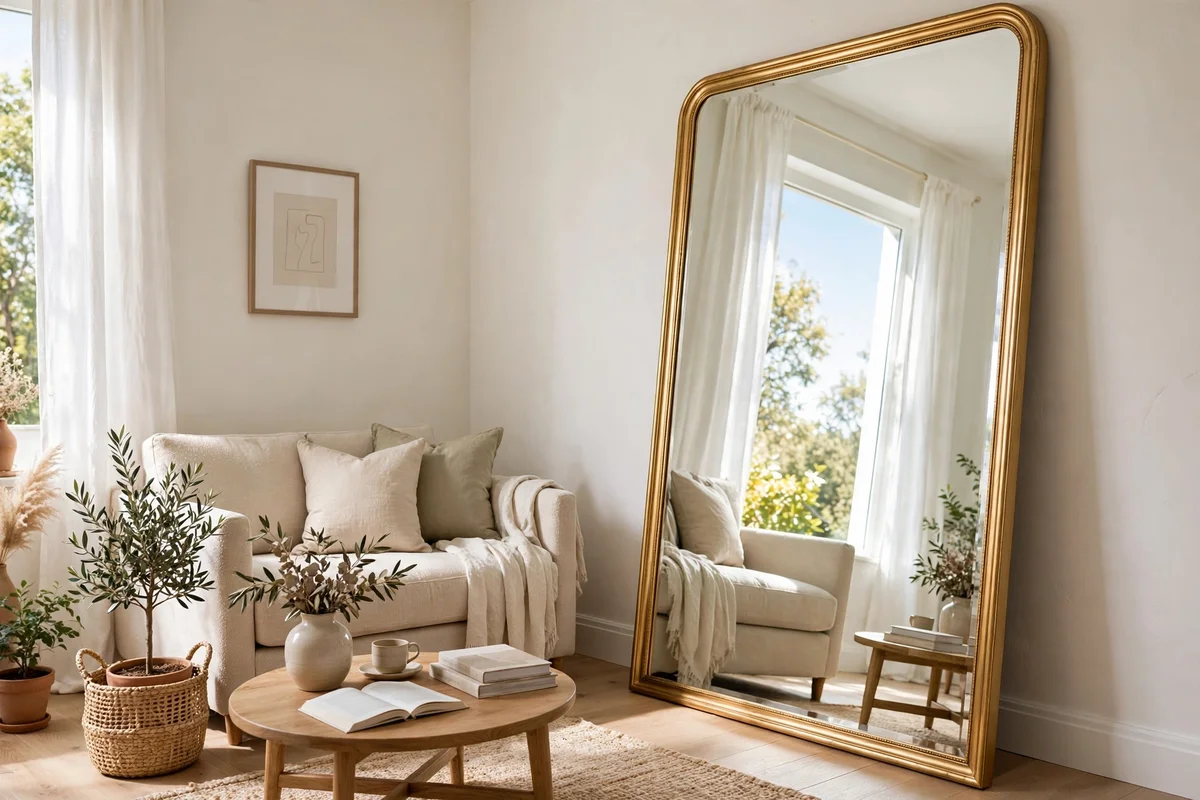
A mirror reflecting a blank wall or the messy kitchen just doubles what you did not want to see. The fix: hang mirrors to reflect light sources and pretty views — opposite or adjacent to windows, never facing clutter. A large leaning floor mirror doubles daylight and visually doubles the room’s depth. Cost: $60-$200 for a large mirror. Pro tip: Before hanging, hold the mirror in place and check its reflection from your usual seat; the reflection is the real artwork, so compose it deliberately.
28. Neglecting Scent and Ambiance
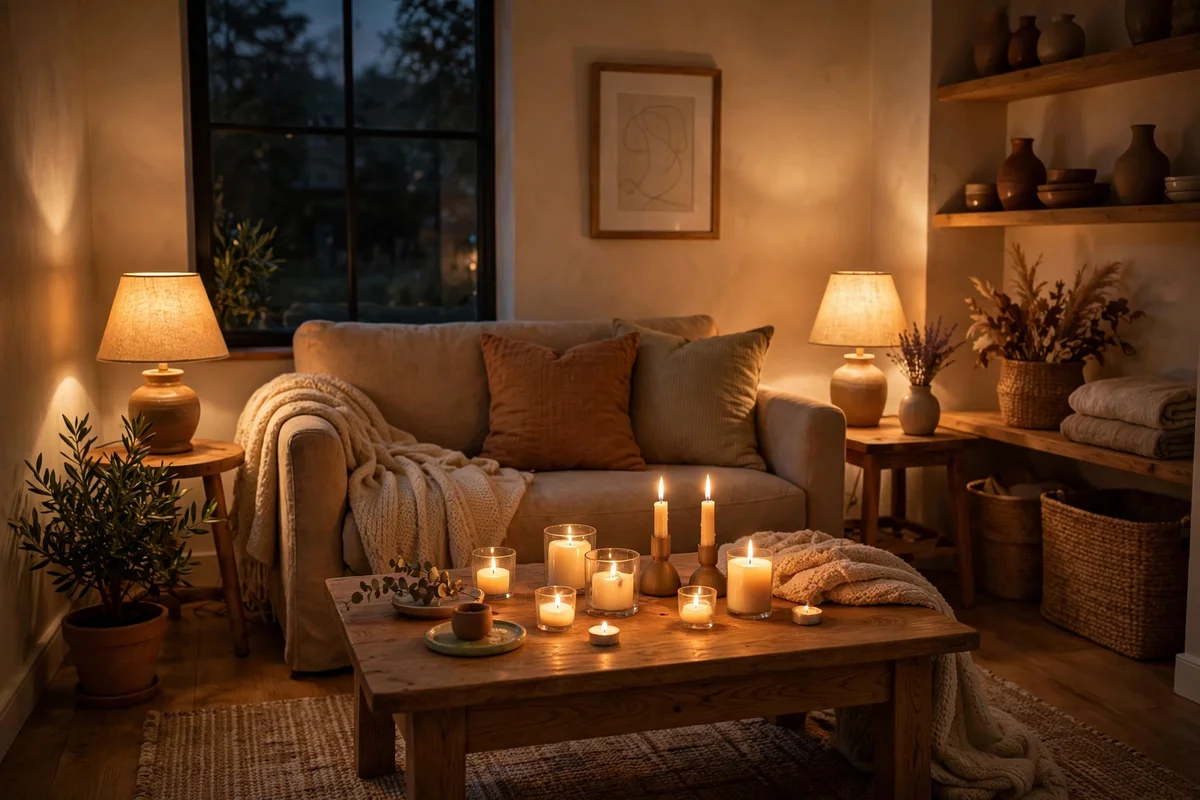
Design is not only visual — a room that looks good but smells stale or feels harsh under bright light never quite feels finished. The fix: layer the invisible senses. A candle or reed diffuser with a warm scent (cedar, amber, fig), dimmable warm bulbs, and soft background music turn a decorated room into an experience. Cost: $20-$70 for a quality candle and dimmable bulbs. Pro tip: Stick to one scent per floor of your home; competing fragrances in a small space create the olfactory equivalent of clashing patterns. For whole-home cohesion, see our studio color schemes — scent layering follows the same “one family” rule.
29. Trying to Decorate Everything at Once
The one-weekend makeover usually ends with impulse buys that do not quite work together and a drained budget. The fix: decorate in layers over time. Start with the big anchors — sofa, rug, lighting — live with them for a few weeks, then add art, then textiles, then objects. Each layer responds to the last, and the room develops the collected depth that instant makeovers never achieve. Cost: $0 extra — pacing actually saves money by preventing wrong purchases. Pro tip: Keep a running note on your phone of what the room still needs; when you spot the perfect piece months later, you will recognize it instantly instead of settling.
30. Copying Trends Instead of Your Taste
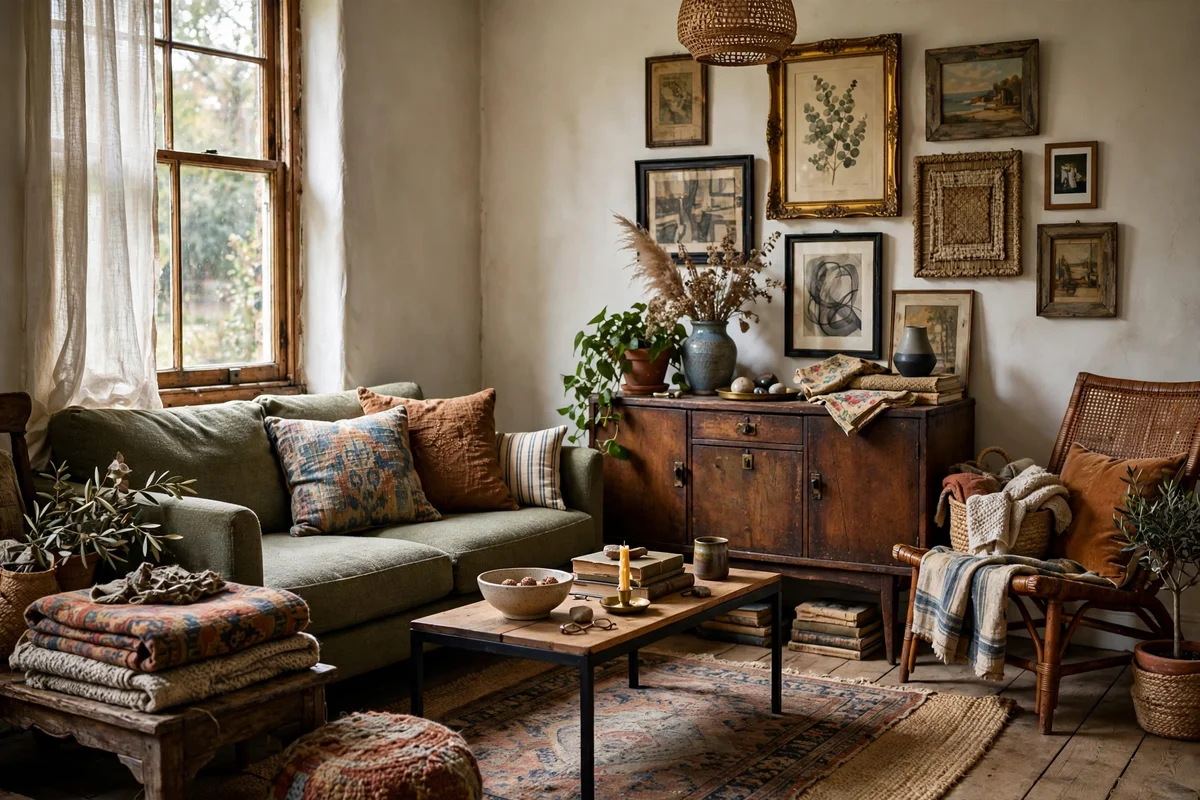
Filling your room with whatever is trending — boucle everything, sad beige, the viral chair — creates a space that feels dated within a year and never felt like you. The fix: use the 80/20 rule. Keep 80% of the room timeless (good sofa lines, classic rug, neutral walls) and let 20% play with trends through easily swapped pillows, art, and accessories. Your taste, not the algorithm, should drive the big decisions. Cost: $0 — it is a mindset shift, and trend pieces are cheaper when they are small. Pro tip: Before buying anything trendy, ask: “Would I still like this if I had never seen it online?” If the answer is yes, it is your taste. If no, it is the trend talking.
Frequently Asked Questions
What is the biggest mistake people make in a small living room?
Buying furniture that is too large is the number one mistake. An oversized sofa or coffee table eats the room’s circulation and makes everything feel cramped. Always measure your space and tape out footprints on the floor before purchasing — apartment-scale pieces designed for smaller rooms will serve you far better than full-size showroom furniture.
How can I make my small living room look bigger without renovating?
Hang curtains high and wide, use a properly sized rug, add mirrors opposite windows, layer your lighting, and keep furniture a few inches off the walls. These five changes cost little but dramatically expand how large the room feels. Decluttering surfaces and sticking to a cohesive color palette multiply the effect.
Should a small living room have dark colors or light colors?
Both can work. Light colors reflect daylight and feel airy, which is the safer default. But a deep, saturated color on all walls can make a small room feel intimate and cocooning rather than cramped — the key is committing fully and balancing it with good lighting. What fails is a timid middle: one dark accent wall with weak lighting usually just looks unfinished.
How many decor items are too many in a small living room?
If you cannot dust a surface in under a minute, it holds too much. Aim for 3-5 intentional objects per surface with genuine empty space between groupings. One large statement piece almost always looks better than a cluster of small ones in a compact room.
Is it okay to have a sectional in a small living room?
Yes, if it is scaled correctly. A compact apartment sectional (around 80-90 inches) can actually seat more people with a smaller footprint than a sofa plus two chairs. The mistake is buying a full-size deep sectional meant for a suburban great room. Measure carefully and keep 30+ inches of walkway around it.
How do I fix bad lighting in a rental living room?
Since you cannot rewire, go plug-in: floor lamps, table lamps, and plug-in wall sconces with cord covers. Use warm 2700K bulbs, put lights at three different heights, and add dimmers via smart plugs. For more rental-friendly ideas, see our renter-friendly small space ideas.
Final Thoughts
Here is the reassuring truth behind all 30 of these mistakes: almost none of them require spending a fortune to fix. Most are about arrangement, scale, light, and editing — the free or nearly free levers that separate a room that fights you from one that welcomes you. Start with the mistakes that cost nothing (float the furniture, clear the pathways, declutter the surfaces), then tackle lighting and textiles, and save the bigger swaps for last. Fix even half this list and your small living room will feel like a different home — one that finally works as hard as you do.