30 Studio Apartment Entryway Mistakes (and How to Fix Them)
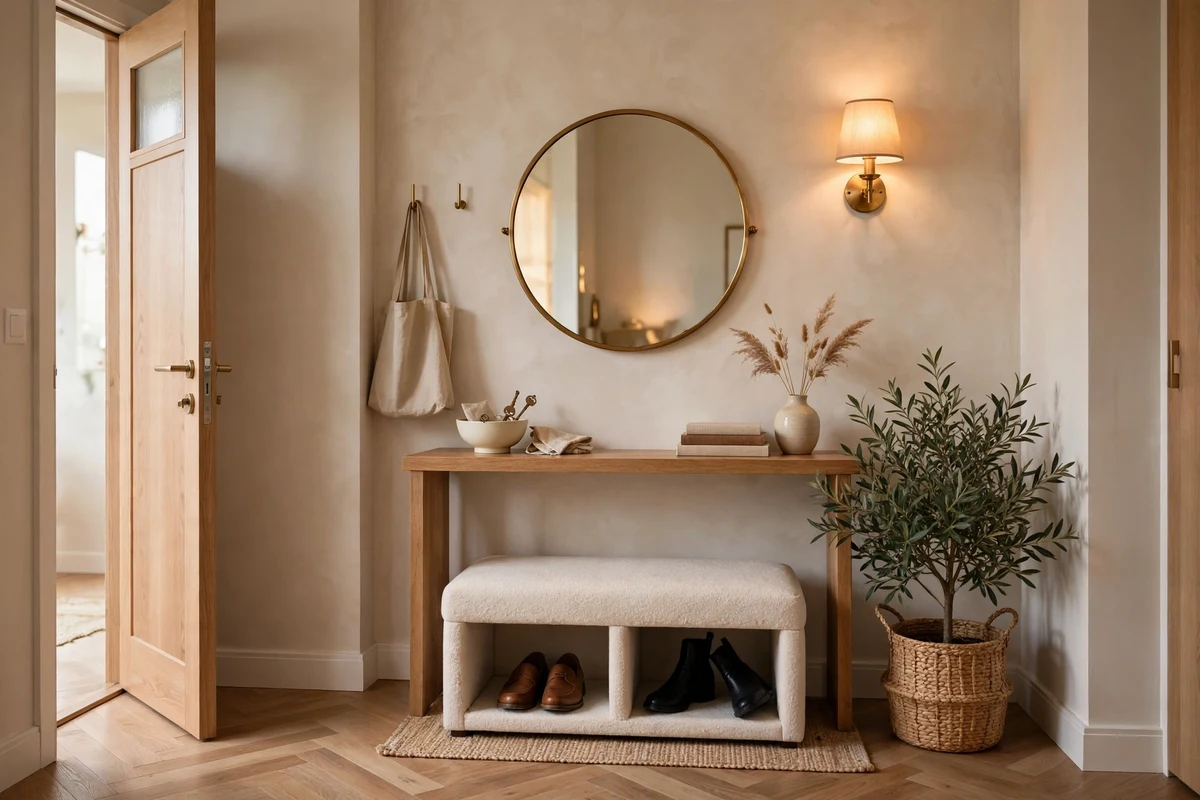
Your entryway is the first thing you see when you walk in and the last thing you see when you leave — yet in a studio apartment, it is usually the most neglected three feet of the entire home. Without walls to define it, the “foyer” becomes a shoe avalanche by the door, a coat pile on the nearest chair, and a tangle of keys you can never find. The good news? Entryway mistakes are the easiest decor problems to fix, because the space is tiny and every change makes an outsized impact. These 30 studio apartment entryway mistakes — and their designer-approved fixes — will turn that chaotic patch by your front door into a hardworking, welcoming moment that sets the tone for your whole home.
The Foundation — Claiming Your Entryway
1. Having No Defined Entryway at All
The most common studio mistake is letting the front door open straight into the living area with zero transition. Without a visual cue, shoes migrate, bags sprawl, and the whole apartment feels like one big hallway. The fix costs almost nothing: anchor the zone with a rug ($35–$80 for a washable 2×3), add a slim console or wall hooks, and suddenly your brain registers “I’m home” instead of “I’m in a corridor.” Even a painted arch or a change in lighting marks the boundary beautifully.
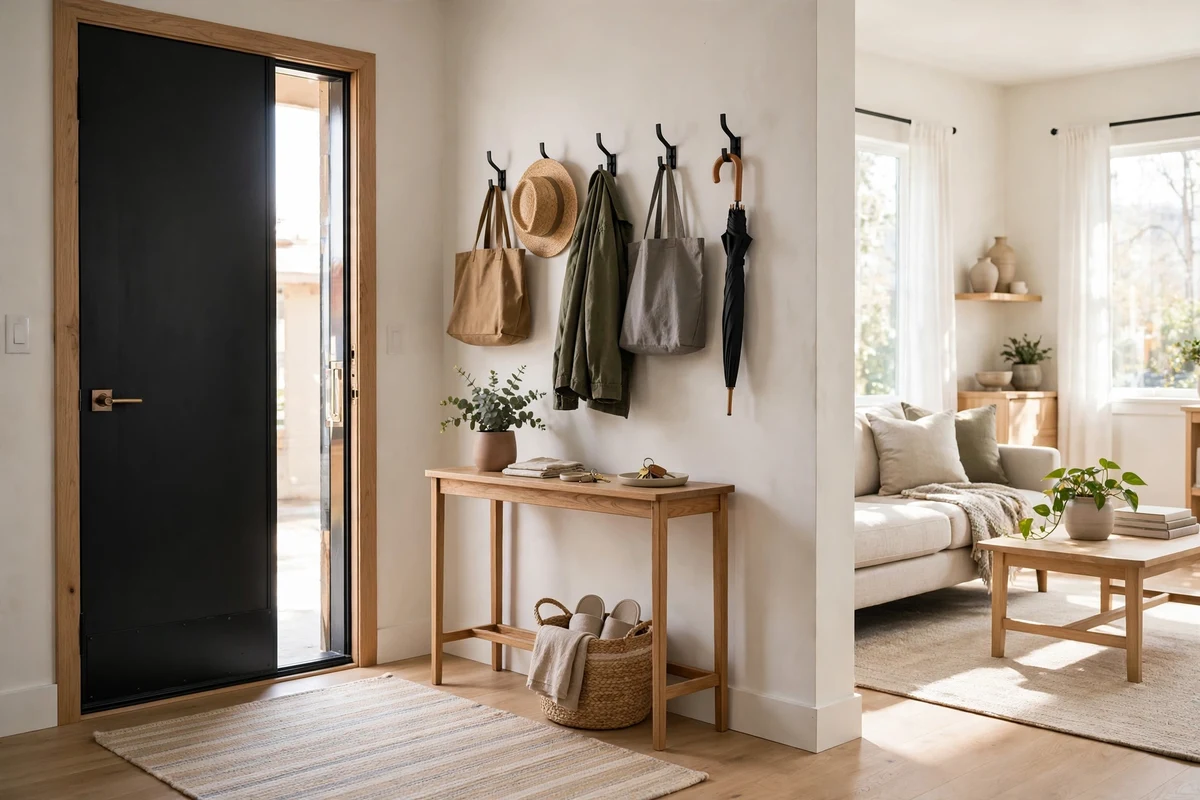
Pro tip: A rug is the cheapest “wall” you can buy — it defines the entryway footprint instantly without a single nail.
2. Letting Shoes Take Over the Floor
Nothing shrinks a studio faster than a minefield of shoes greeting you at the door. Twelve pairs scattered across the floor reads as chaos and eats precious square footage. The fix: a closed shoe cabinet ($60–$150) that doubles as a console, or a bench with hidden compartments. Limit the visible pairs to two per person — the rest live in the closet. Closed storage matters here; open shoe racks still look cluttered in a space this small.
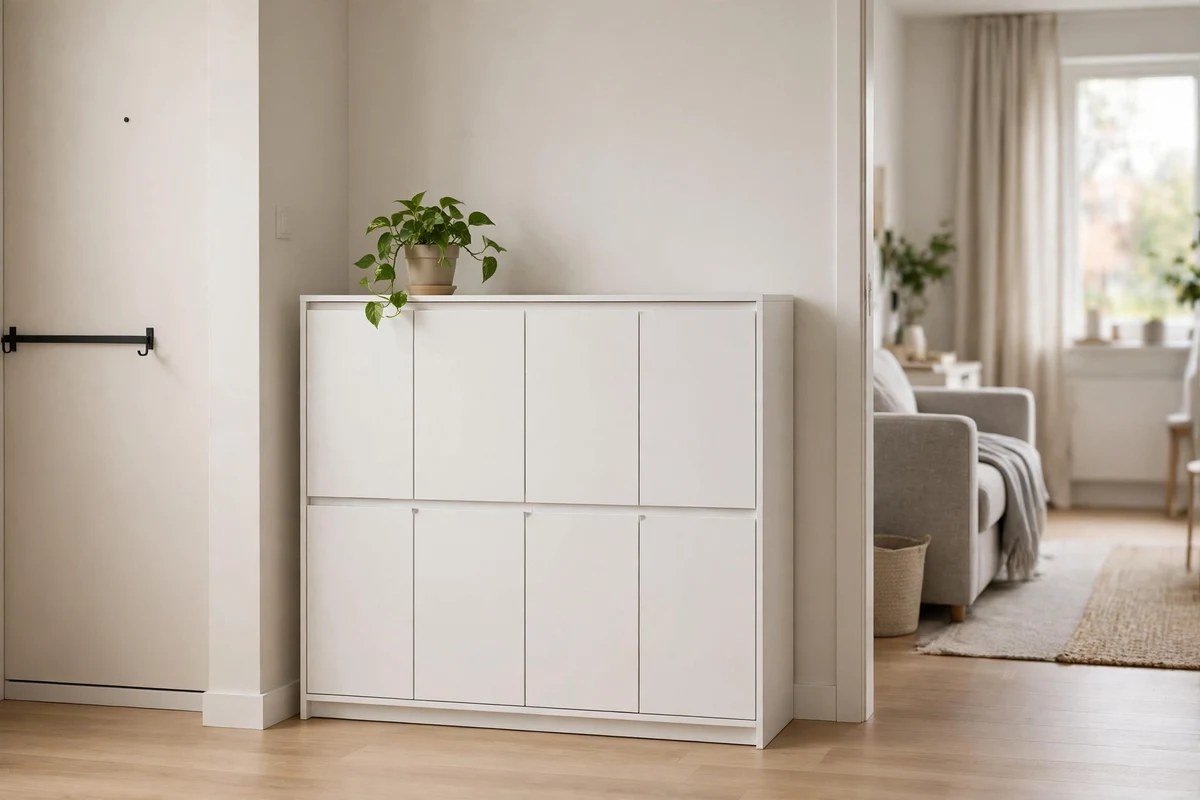
Pro tip: One pair in, one pair out — when new shoes arrive, an old pair gets donated or relocated to the closet.
3. Choosing a Console That Is Too Deep
A standard 16-inch-deep console in a 36-inch-wide entry path leaves you sidestepping like a crab every time you come home. In studios, depth is everything. Swap it for a 10-inch-deep slim console ($70–$180) or a floating shelf, and you reclaim a full half-foot of walkway. Measure your clearance first: you want at least 30 inches of clear passage, 36 if you carry groceries through daily.
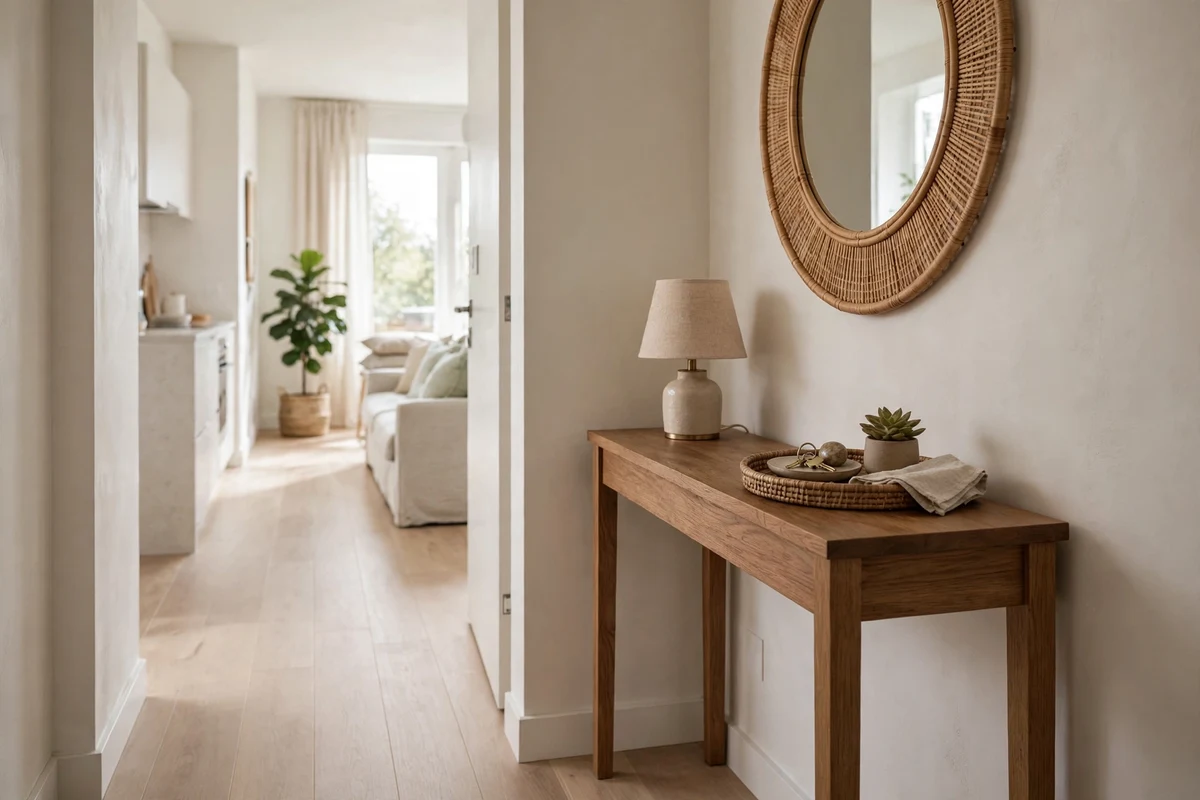
Pro tip: Tape the footprint on the floor with painter’s tape and live with it for two days before you buy anything.
4. Skipping Coat Hooks Entirely
Coats draped over the sofa, the dining chair, the bed — sound familiar? Without a designated home, outerwear colonizes every surface in a studio. A simple wall-mounted hook rail ($20–$45) with four to six sturdy hooks solves it in one afternoon. Mount into studs or use heavy-duty anchors; a rail of winter coats is heavier than you think. Bonus: hooks keep bags and scarves off the floor too.
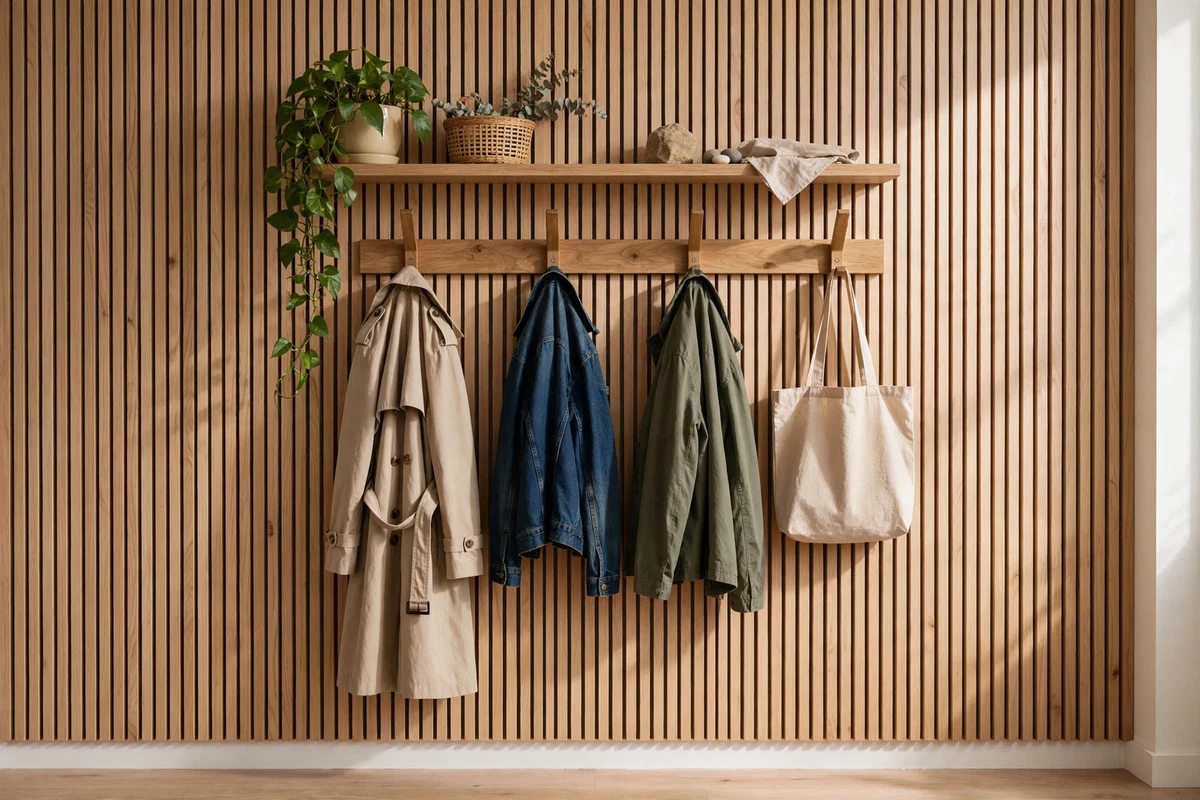
Pro tip: Assign one hook per person plus one for guests — when hooks are full, it is time to rotate seasonal coats to the closet.
5. Leaving the Entryway in the Dark
That sad, unlit corner by the door makes your whole apartment feel smaller and gloomier than it is. Studios often have one sad overhead light — or none near the entrance at all. The fix: a plug-in wall sconce ($30–$70) or a slim table lamp on the console at 2700K warm white. Layered, warm light at the entrance signals “welcome” and makes the space feel intentionally designed rather than forgotten.
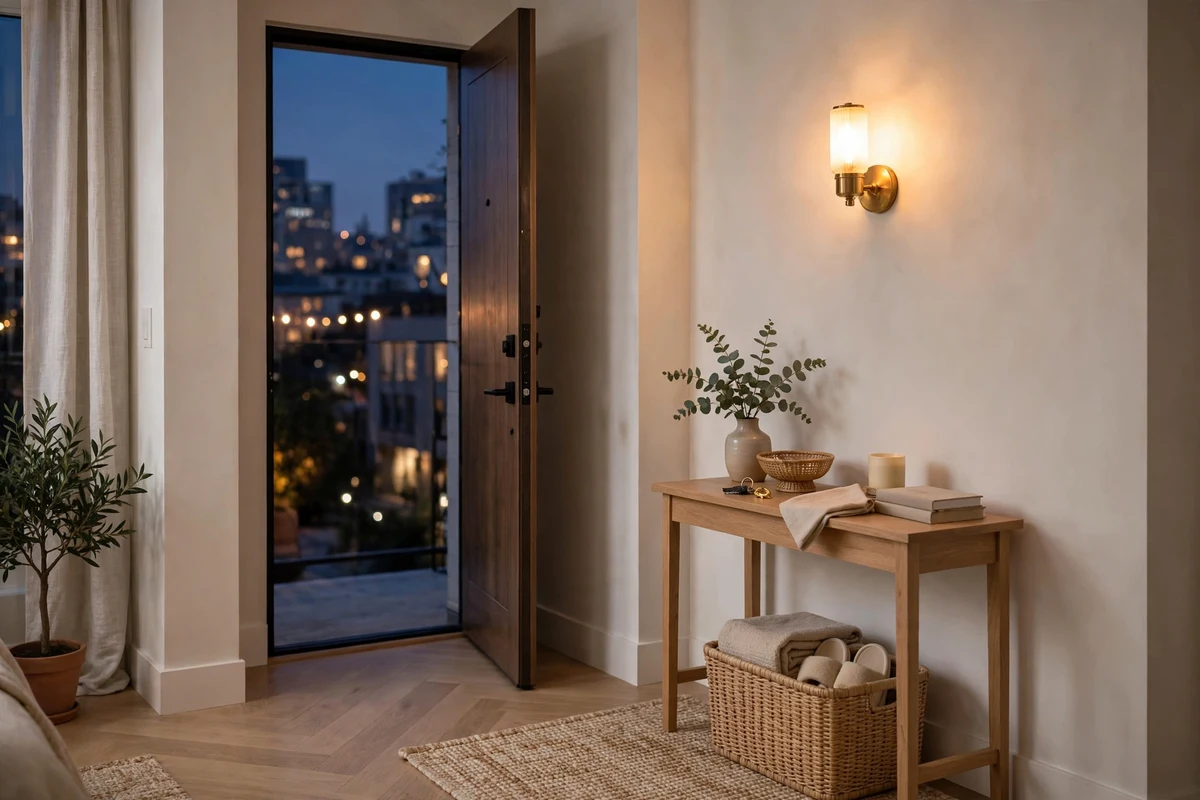
Pro tip: Put the entryway lamp on a smart plug or timer so you never walk into a dark apartment again.
6. Using a Doormat That Is Comically Small
A postage-stamp doormat floating in a sea of floor looks like an afterthought and does nothing to catch dirt. Scale matters: your mat should be at least as wide as the door (36 inches standard) and ideally extend a foot beyond on each side. A generously sized coir or washable mat ($25–$60) grounds the space, traps grime before it reaches your rug, and instantly makes the entrance feel proportioned.
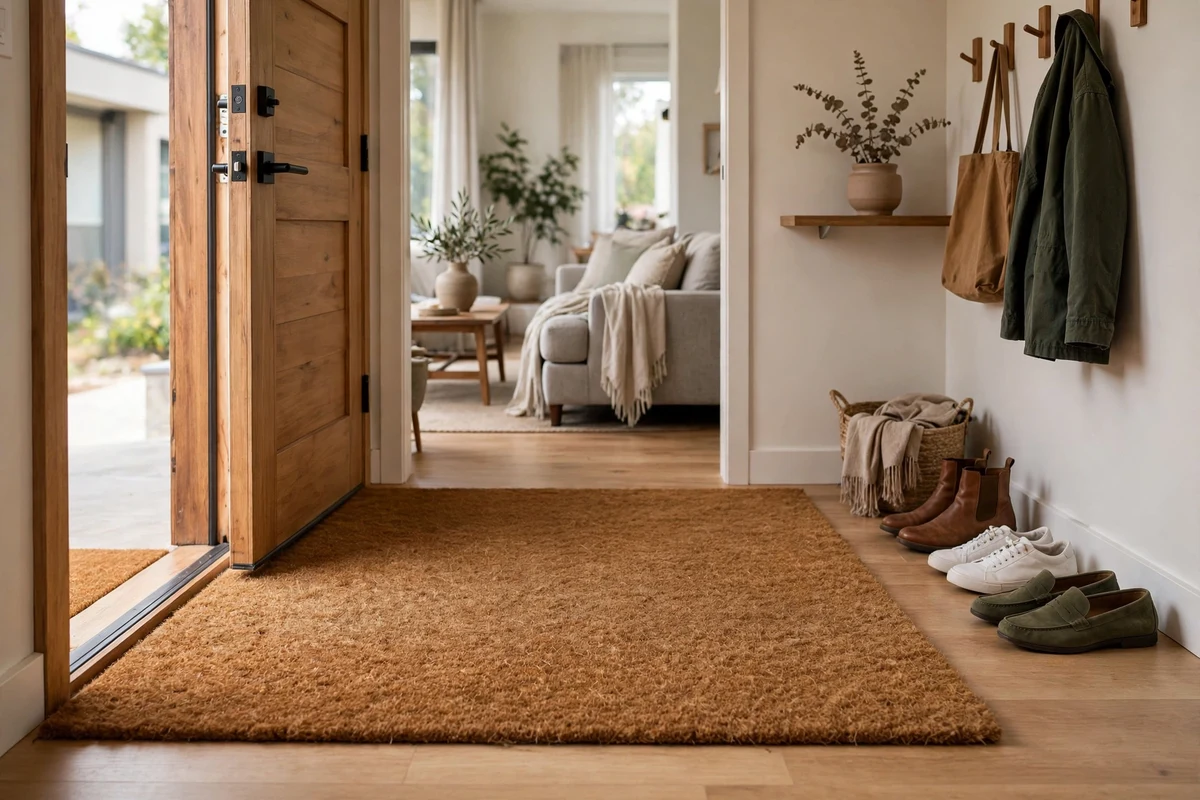
Pro tip: Layer a washable flat-weave rug over a larger coir mat for a designer look that still traps dirt.
Daily Function — Zones That Actually Work
7. Hanging the Mirror at the Wrong Height
A mirror hung too high above the console becomes ceiling art — useless for last-minute checks and visually disconnected. The sweet spot: the center of the mirror at 57–60 inches from the floor (average eye level), or 6–8 inches above the console surface. A round mirror ($40–$120) at the right height bounces light, doubles the sense of space, and gives you that final glance before heading out.
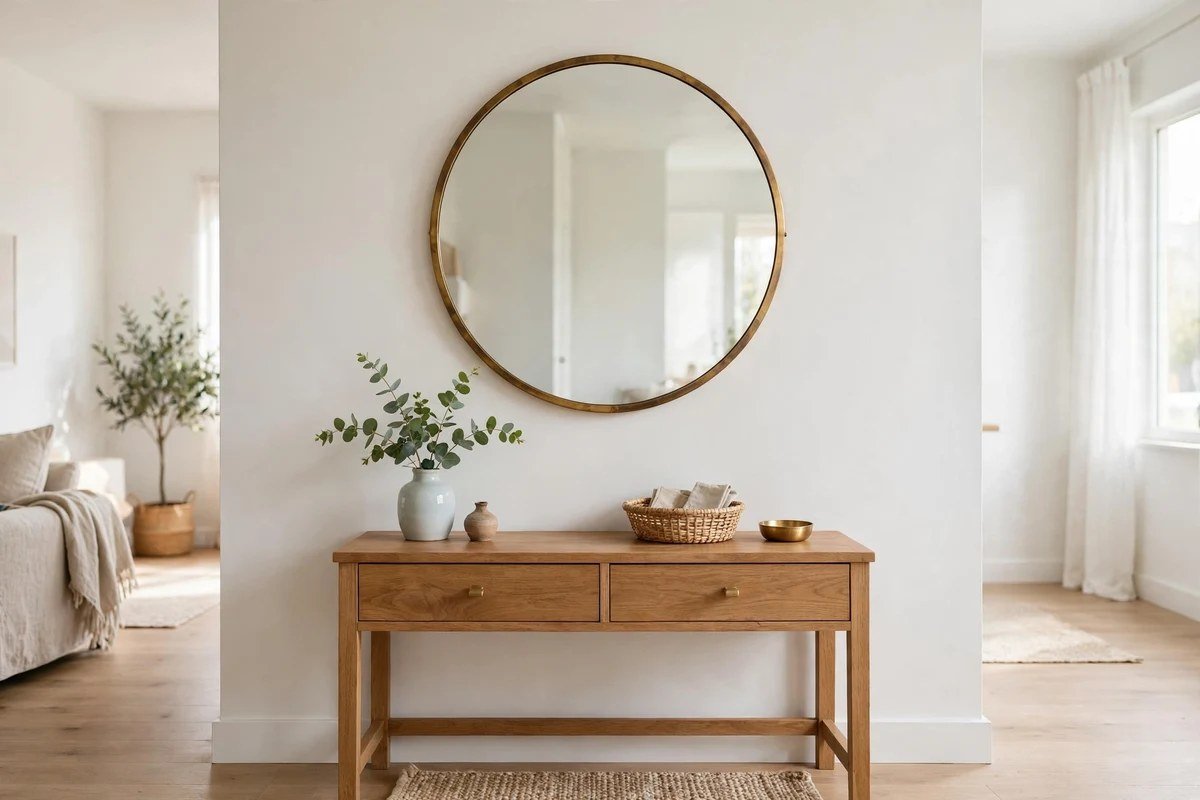
Pro tip: Have someone hold the mirror while you stand at the door — if you cannot see your face comfortably, it is too high.
8. Blocking the Door Swing
Placing furniture inside the door’s swing arc means every entrance starts with a shove, a scrape, or a bruised shin. Before arranging anything, open the door fully and mark its arc with tape — that entire zone stays clear, forever. In tight studios, consider swapping the swing direction (a $10 hinge job if the frame allows) or using the arc zone only for flat wall-mounted items like hooks.
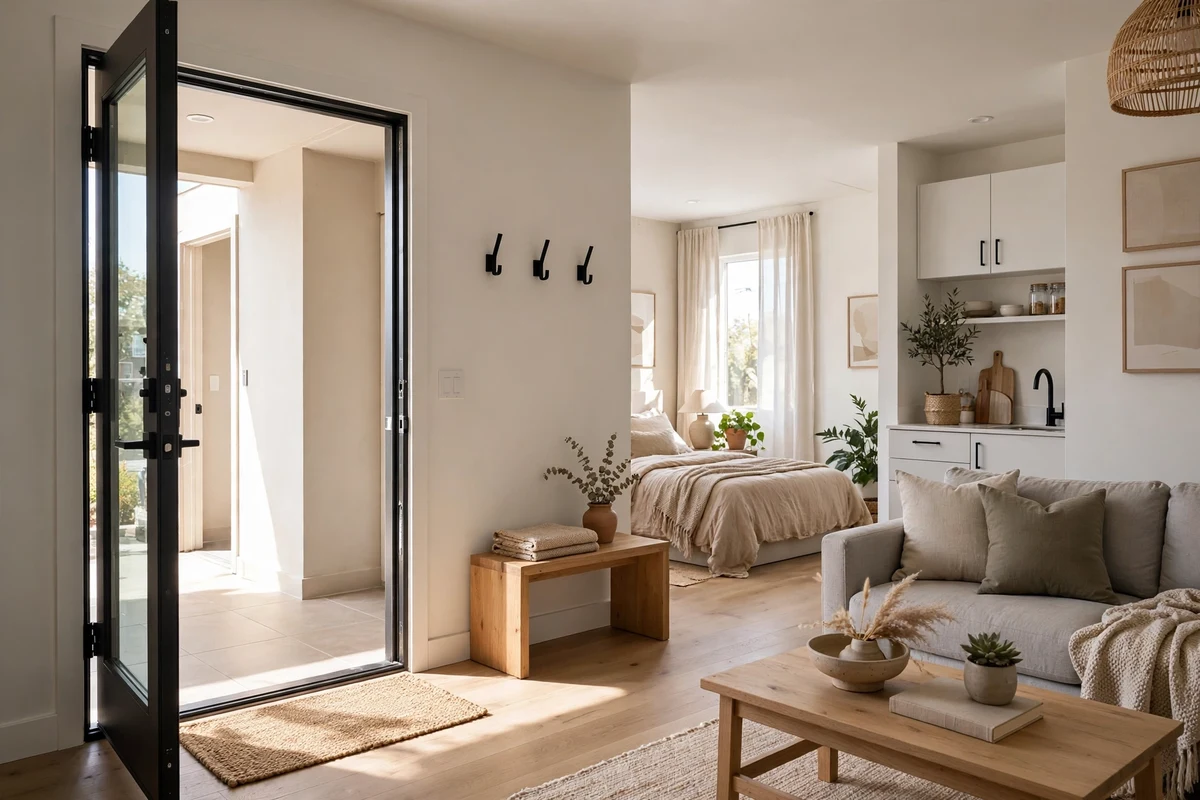
Pro tip: Felt pads on the door’s edge prevent wall damage if the arc occasionally gets crowded.
9. Having No Landing Zone for Keys and Wallet
The frantic morning key-hunt is a symptom, not a personality trait — it means your entryway lacks a landing zone. Dedicate one small tray or bowl ($12–$30) on the console as the sacred spot for keys, wallet, and sunglasses, plus a wall-mounted key holder if surface space is tight. The rule is absolute: these items live there or in your bag, nowhere else. Two weeks of discipline and the habit sticks.
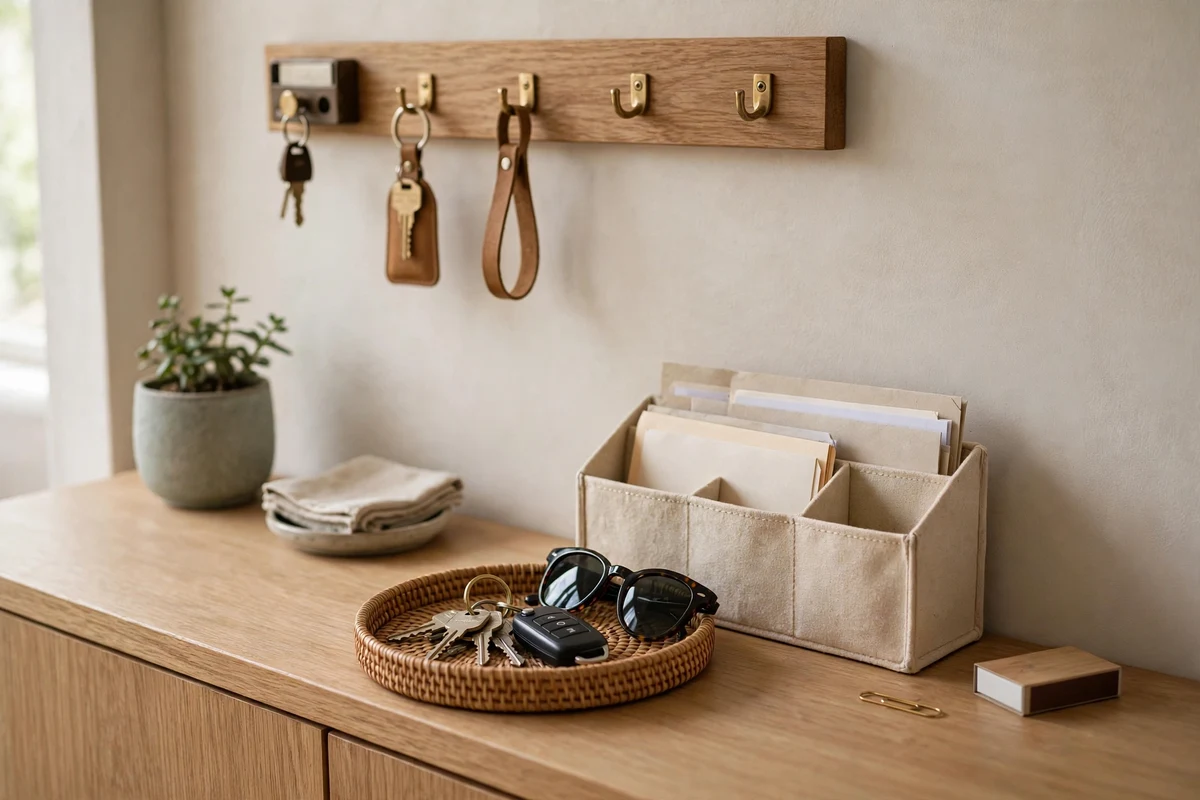
Pro tip: Add a tiny trash-adjacent recycle spot nearby so junk mail dies at the door instead of migrating to the counter.
10. Letting the Entryway Clash With the Living Room
In a studio, your entryway is visible from the sofa, the bed, everywhere. A farmhouse console crashing into a minimalist living room creates visual static across the whole apartment. Carry two or three elements through — the same wood tone, a repeated metal finish, a consistent color palette — so the entrance feels like a chapter of the same story. For cohesive inspiration, browse these studio apartment entryway ideas that flow with small-space living.
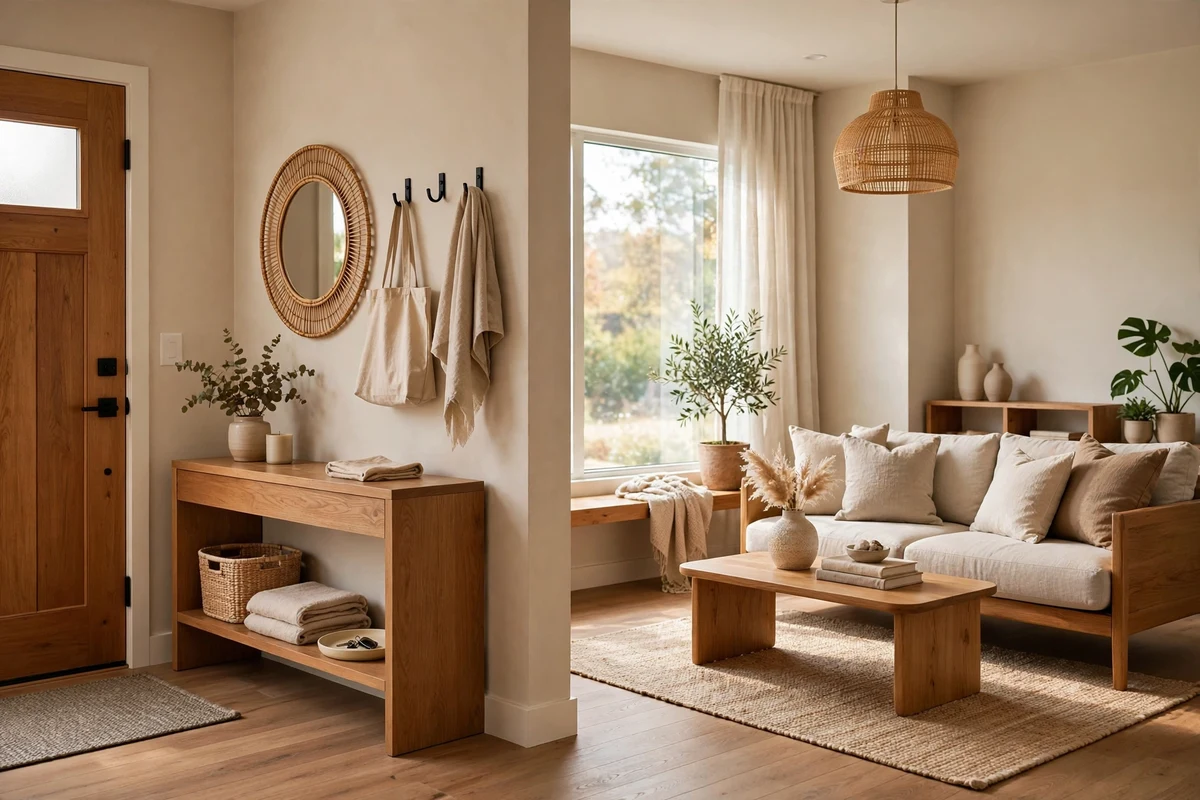
Pro tip: Photograph your living room, then shop for entryway pieces while looking at the photo — instant cohesion check.
11. Ignoring the Wall Above the Console
A console with a vast blank wall looming above it looks unfinished, like you gave up halfway. That vertical real estate is prime decorating territory: a mirror, a pair of art prints, or a small floating shelf with a trailing plant ($30–$90 total with thrifted frames). Keep the arrangement within the width of the console so it reads as one composed vignette rather than random wall clutter.
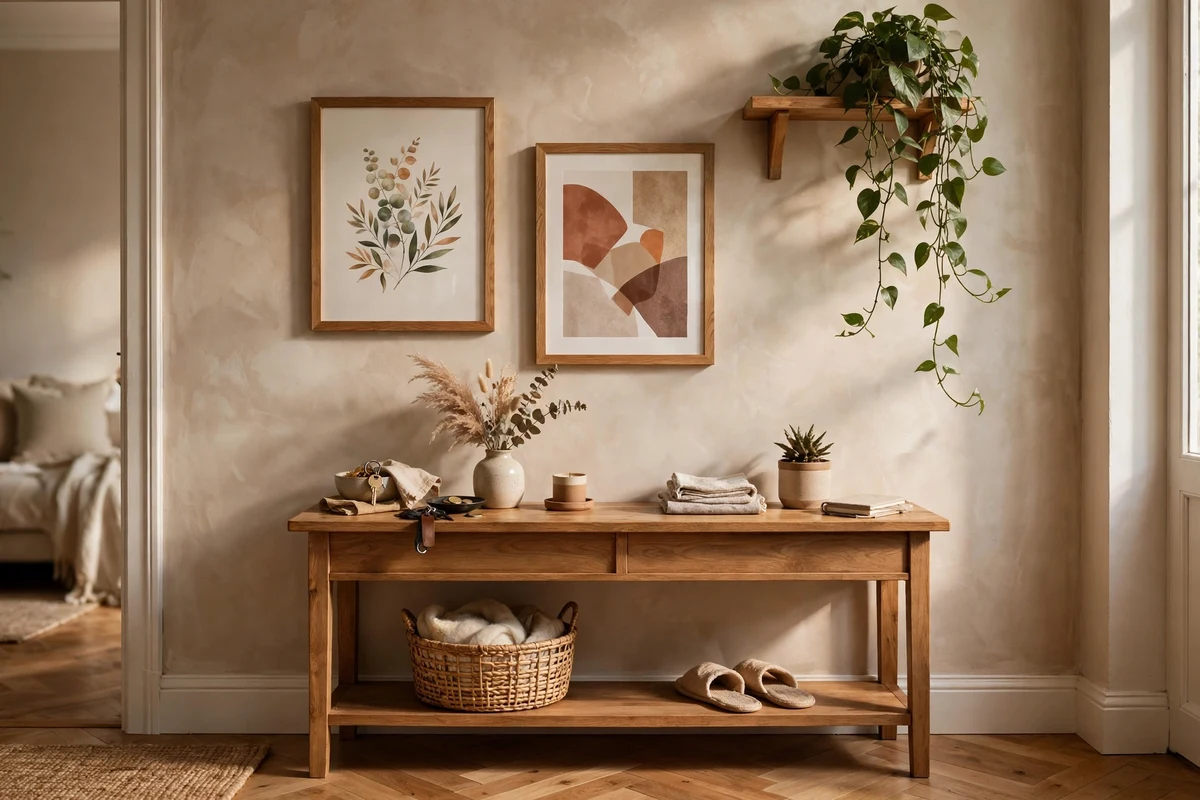
Pro tip: Trace your frames on kraft paper, tape the templates up first, and adjust until the composition feels balanced.
12. Overcrowding the Console With Tiny Decor
Seven tiny trinkets on a 36-inch console reads as clutter, not curation — especially in a studio where the entryway is always in sight. Edit ruthlessly to three items max: something tall (vase with stems), something flat (stack of books or a tray), something living or glowing (plant or candle). Negative space is a design element; let the console breathe and the whole entrance feels calmer.
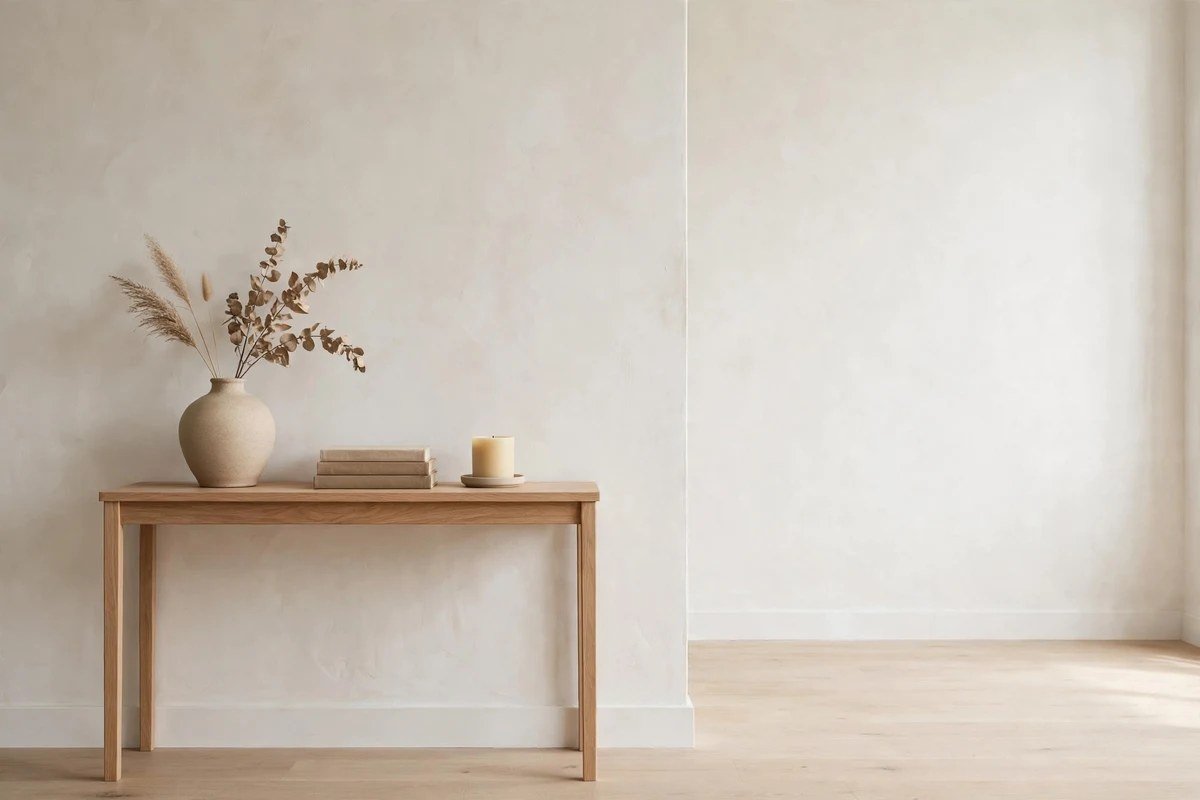
Pro tip: The “one in, one out” rule applies to decor too — a new find means an old piece gets relocated.
Storage & Smart Surfaces for Tight Quarters
13. Forgetting the Back of the Door
The interior face of your front door is roughly 20 square feet of storage most renters never use. An over-the-door hook rack ($15–$30) holds tomorrow’s outfit, the dog leash, or a tote bag without touching a single inch of floor space. It is renter-friendly (no holes), invisible when the door is open, and absurdly practical. Just check clearance so it does not scrape the frame.
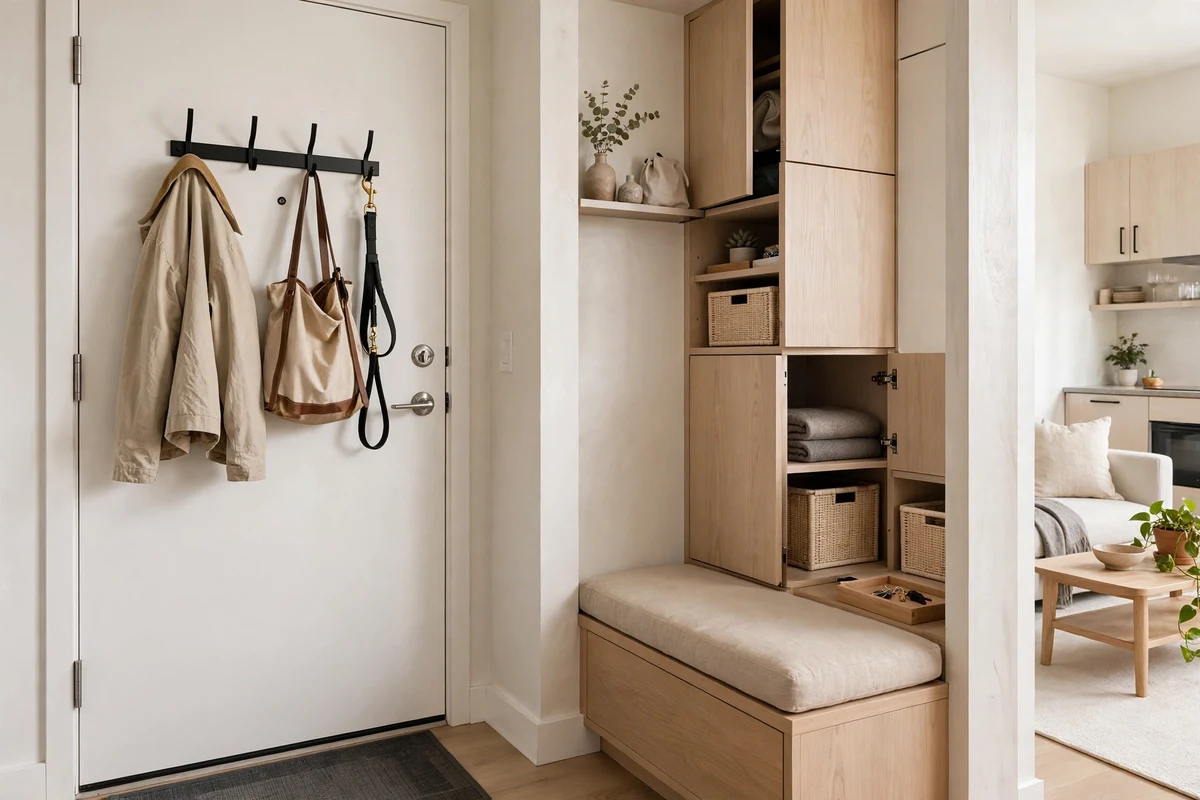
Pro tip: Felt pads on the rack’s back prevent rattling and protect the door’s finish.
14. Choosing the Wrong Rug Size or Shape
A square rug in a long narrow entry chops the space awkwardly; a runner that stops halfway looks like it gave up. Match the rug shape to your footprint: runners for hall-style entries, 3×5 or 4×6 for squarer zones. The rug should span nearly the full length of the entry path ($40–$110 for washable options). A continuous runner literally draws the eye inward, making the whole studio feel longer.
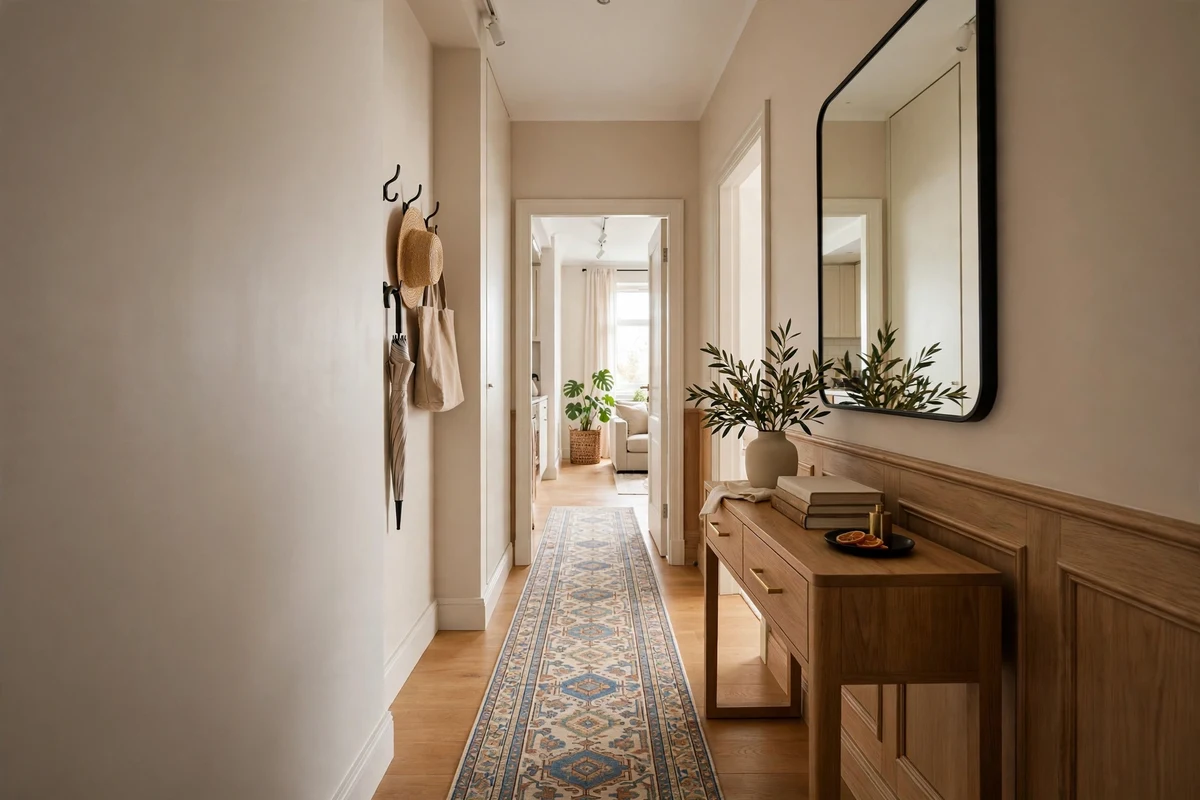
Pro tip: Washable rugs are non-negotiable at the entrance — this is the highest-traffic, dirtiest zone in the home.
15. Skipping a Spot to Sit and Put Shoes On
Hopping on one foot while lacing boots gets old fast, and perching on the bed drags outdoor dirt across your bedding. A compact bench ($80–$200) with storage inside solves two problems: a seat and hidden shoe space. In truly tight entries, a wall-mounted flip-down seat ($50–$90) disappears when not needed. Your back — and your floors — will thank you daily.
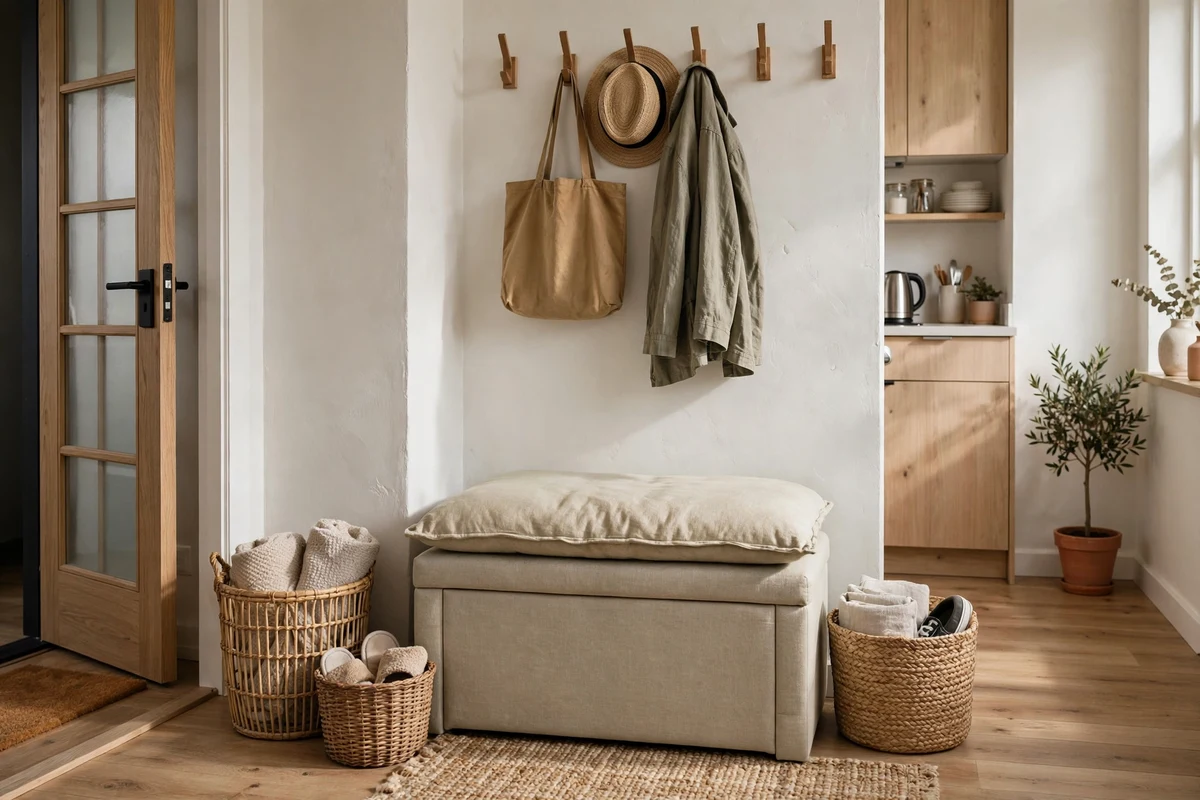
Pro tip: A bench with a washable cushion cover survives muddy paws and wet jeans without stress.
16. Letting Charging Cords Become Spaghetti
Phones, earbuds, and smartwatches all charging on the entryway console creates a Medusa of cables in your most visible corner. The fix: a charging drawer or a lidded box ($20–$40) with a power strip inside, cords routed through a small notch. Everything charges invisibly; the console top stays serene. Mount the strip with adhesive so it does not slide around inside.
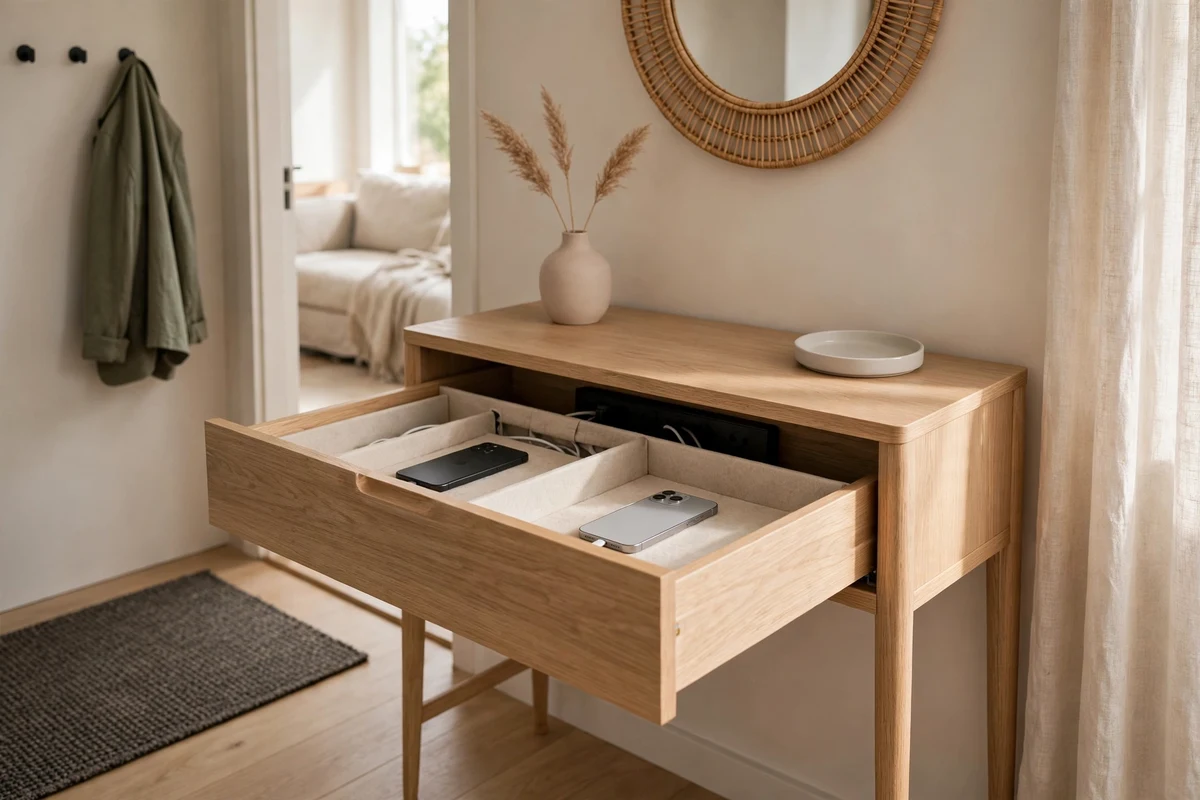
Pro tip: Short 1-foot charging cables eliminate the coiled-cable mess entirely inside the box.
17. Letting Mail Pile Up With No System
The entryway console becomes the paper graveyard: unopened envelopes, flyers, receipts forming geological layers. Install a wall-mounted mail sorter ($25–$50) with slots for “action,” “file,” and “recycle,” and process it twice a week. Pair it with a small recycling bin right by the door so junk mail never makes it past the threshold. These studio apartment organization ideas have more paper-taming systems that work in tiny spaces.
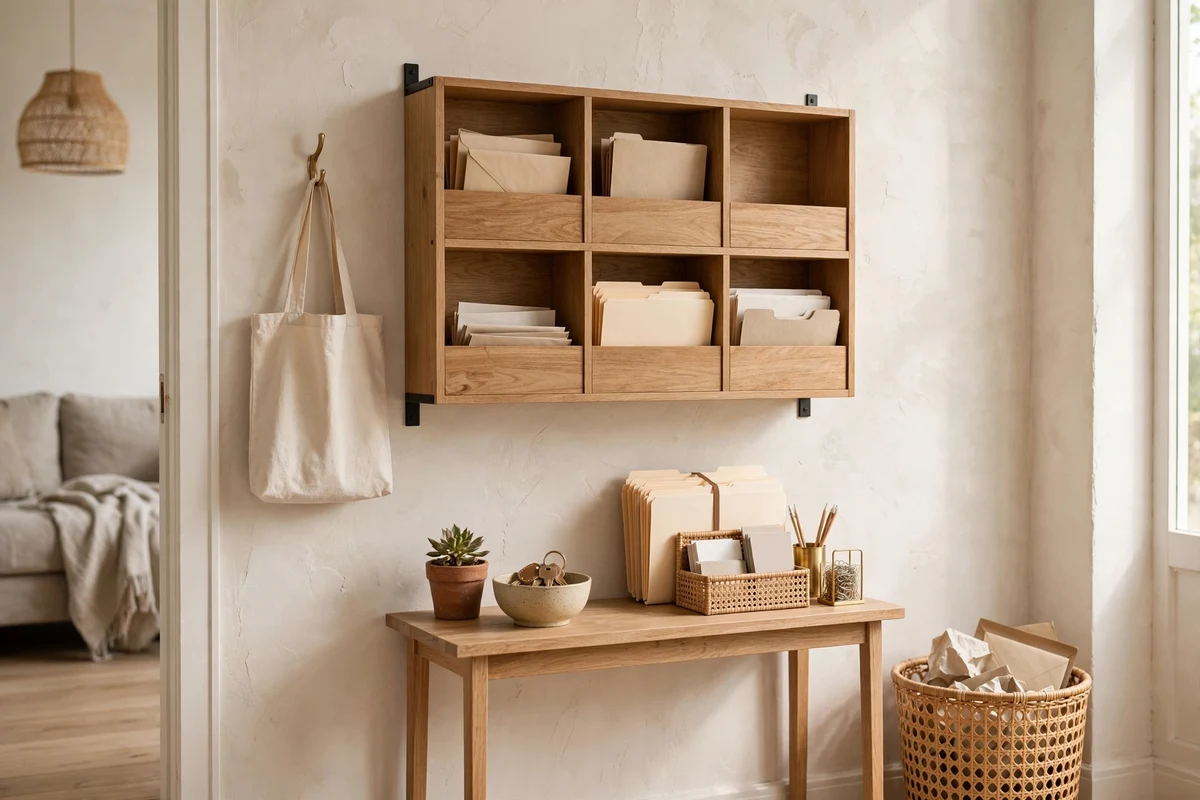
Pro tip: Open mail standing at the door — decide, recycle, or file on the spot instead of “later.”
18. Painting the Entryway Too Dark
A moody charcoal accent wall can look incredible — unless your entryway gets zero natural light, in which case it becomes a cave you dread entering. In windowless entries, stick to warm whites, pale greige, or soft sage ($30–$60 per gallon) that bounce every photon around. Save the drama for the living area where daylight can handle it; the entrance should feel like a breath of fresh air.
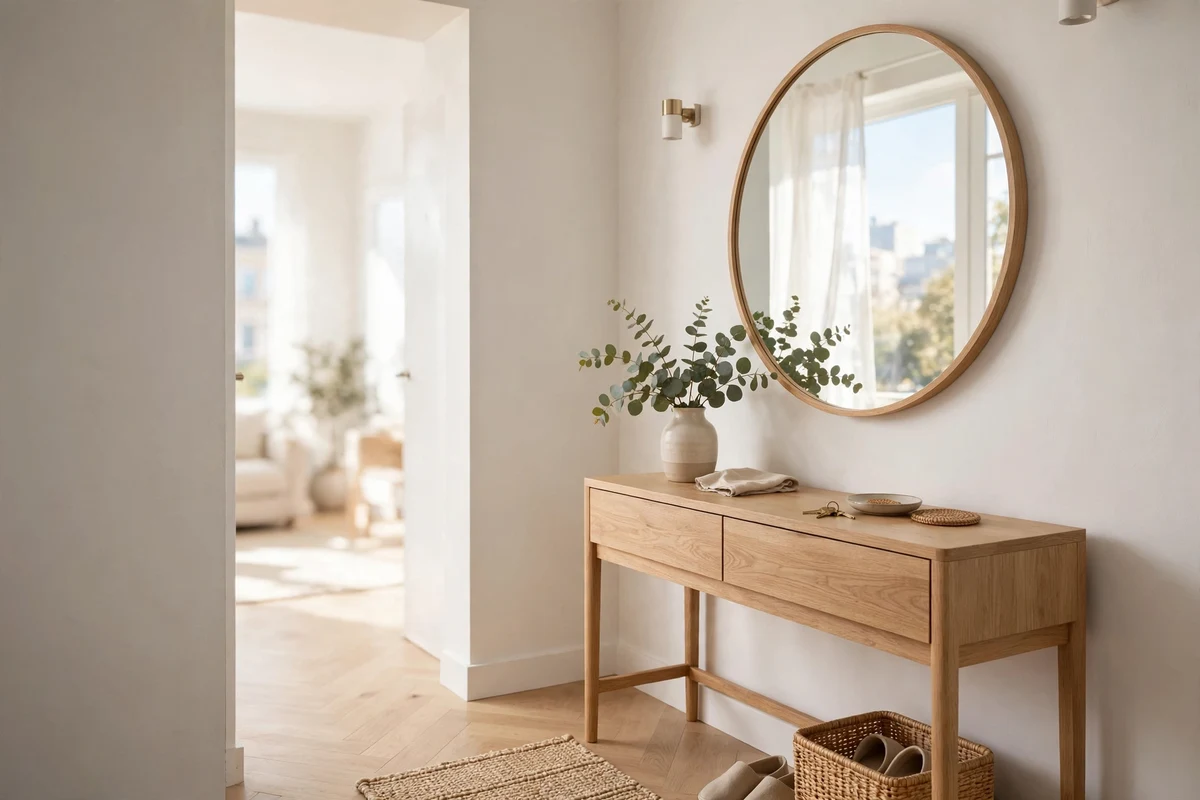
Pro tip: An eggshell or satin finish reflects more light than flat paint and wipes clean from scuffs.
Light, Air & Atmosphere
19. Having No Dedicated Bag Drop
Work bag on the sofa, gym bag by the bed, tote on the kitchen counter — without a bag home, they migrate everywhere. Give bags a proper landing: sturdy hooks rated for 20+ pounds ($15–$35) or a lidded basket ($25–$45) tucked under the bench. One hook per daily bag keeps the system honest. When every bag has an address, the whole studio stays calmer.
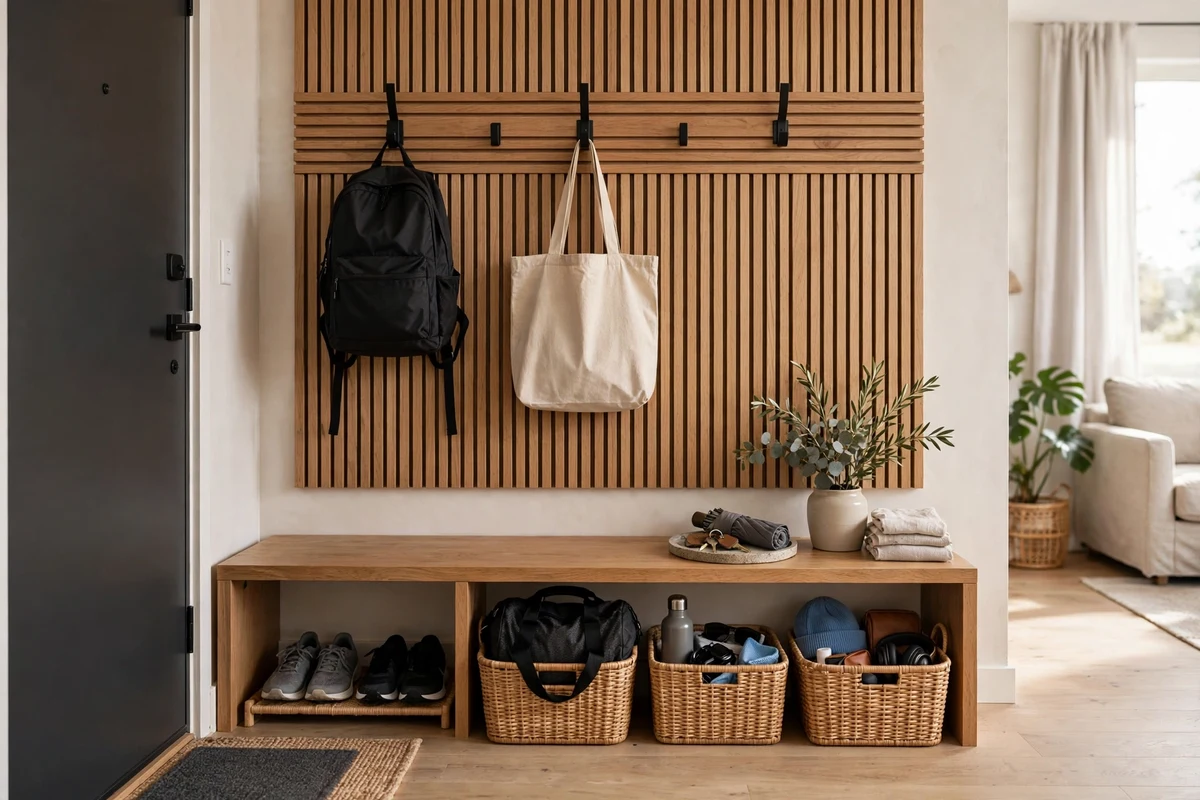
Pro tip: Unpack bags at the door nightly — tomorrow’s essentials get staged, everything else goes to its real home.
20. Using Bulky Furniture That Blocks Flow
A deep dresser or chunky cabinet in a 40-inch-wide entry turns coming home into an obstacle course. When floor space is truly minimal, go vertical instead of horizontal: a slim floating shelf ($30–$70) with hooks beneath handles keys, mail, and a small plant while leaving the floor completely clear. Traffic flow beats storage volume at the entrance — you can store bulkier items just inside the closet.
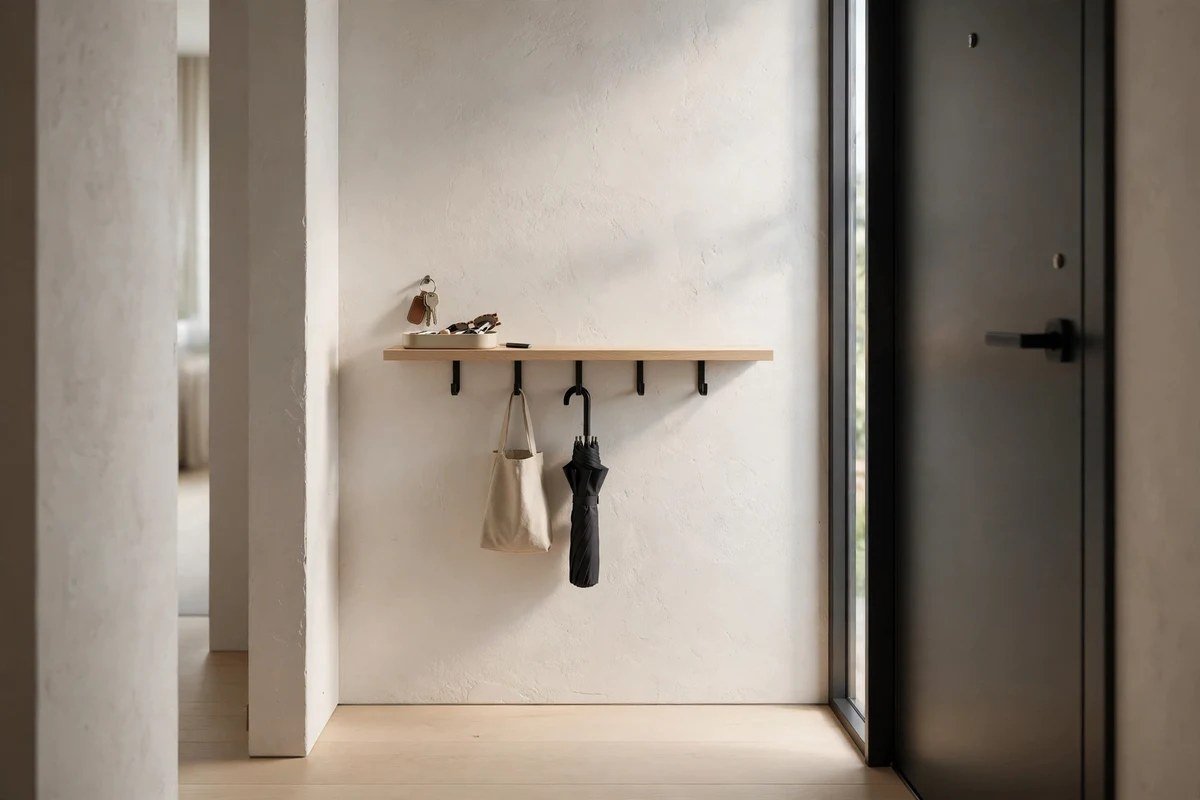
Pro tip: A floating shelf at 42 inches high keeps sightlines open and makes the entry feel twice as wide.
21. Wasting Vertical Space Above Eye Level
Most studio entryways use only the bottom four feet of wall and ignore everything above — in a small home, that is prime real estate going to waste. A tall, narrow storage tower ($90–$220) with a 12-inch footprint reaches the ceiling and swallows shoes, bags, and seasonal gear. High shelves hold the rarely-used; daily items stay at arm’s reach. Think up, not out.
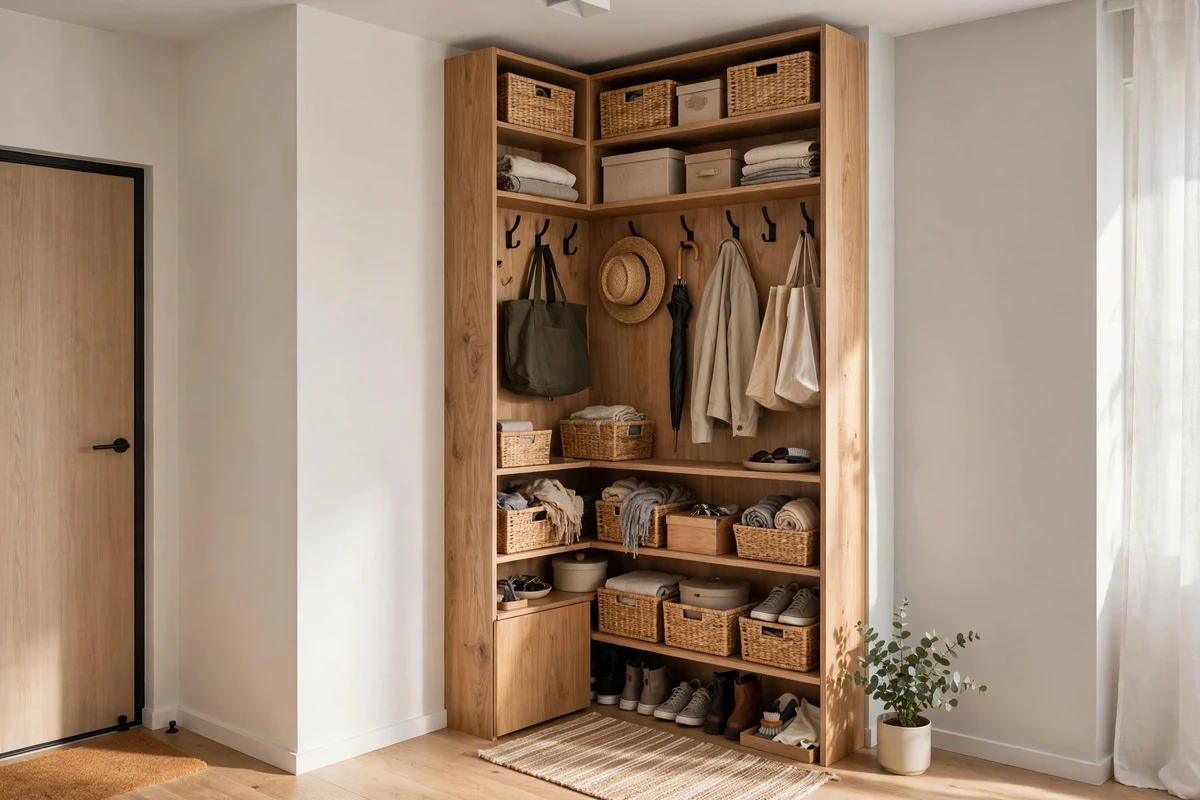
Pro tip: Anchor tall furniture to the wall — a toppling tower in a narrow entry is a genuine safety hazard.
22. Letting Seasonal Gear Invade Year-Round
Winter boots in July, beach bag in January — off-season gear hogging the entryway is a silent space thief. Twice a year, do a 20-minute seasonal swap: out-of-season items go into labeled bins ($10–$25 each) on the closet’s top shelf or under the bed. The entryway then holds only what the current season demands, and suddenly it feels twice as big.
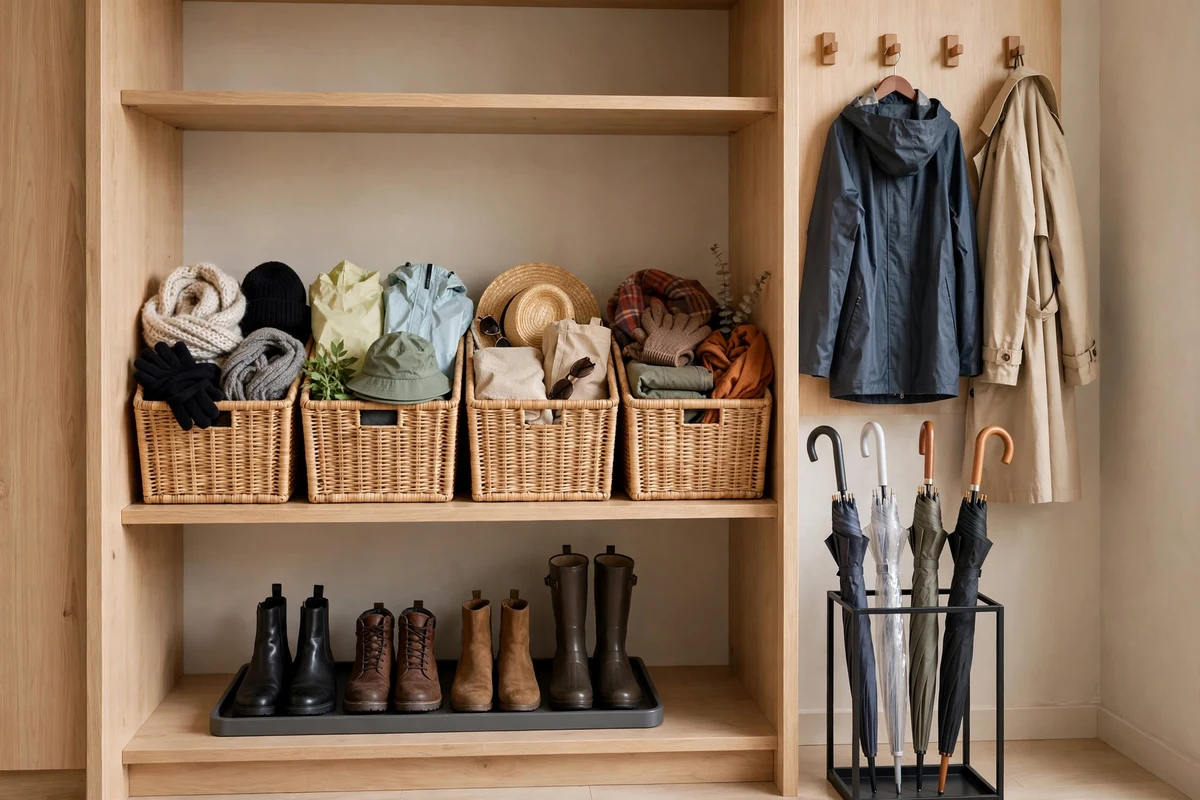
Pro tip: Set a phone reminder for the first weekend of spring and fall — the swap becomes a 15-minute habit.
23. Sticking With Harsh, Cold Lighting
A bare 5000K “daylight” bulb at the entrance makes everyone look ill and the space feel like a dentist’s office. Swap to 2700K warm white bulbs ($8–$15 for a multipack) and add a shade — a rattan pendant or fabric drum ($35–$80) diffuses the glow beautifully. Warm light at the threshold literally changes your mood when you walk in; it is the cheapest ambiance upgrade in the home.
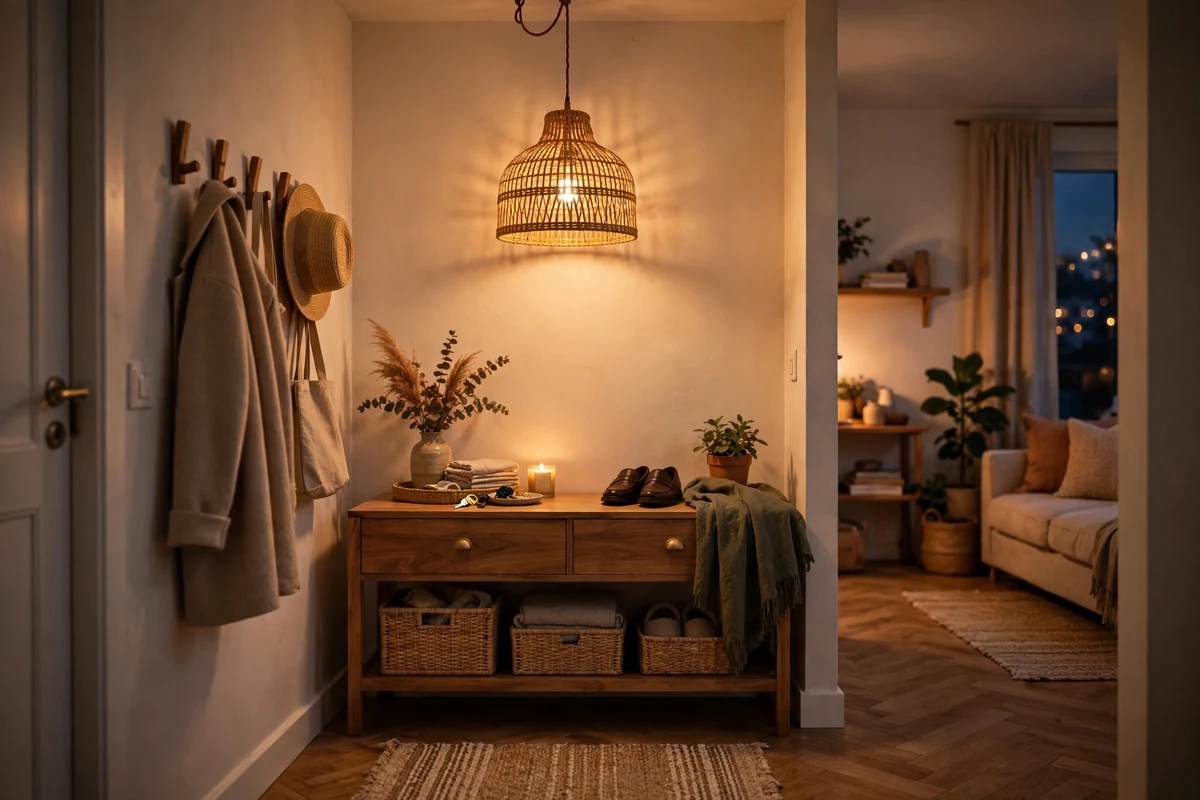
Pro tip: Plug-in pendant kits with long cords mean renters get ceiling-style lighting with zero wiring.
24. Ignoring Scent and the Senses
You style for the eyes and forget the nose — then wonder why the entrance never feels quite welcoming. First impressions are multisensory: a reed diffuser ($15–$30) or a small candle with a warm, clean scent transforms the emotional register of the space. Add one tactile element (a soft runner underfoot) and one living thing (a pothos or snake plant), and the entryway engages every sense.
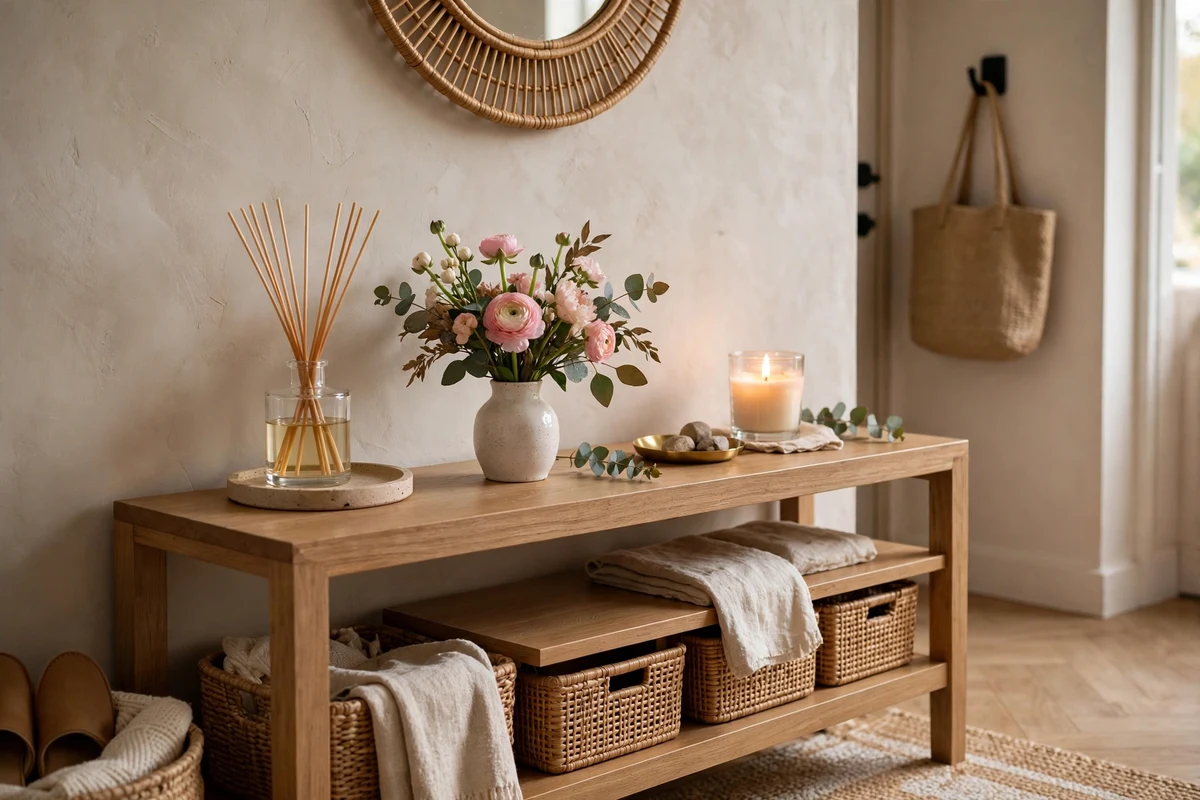
Pro tip: Choose one signature scent for the entryway — scent memory makes “home” feel like home faster.
25. Mounting Hooks Too High to Actually Use
Hooks at 72 inches look great in photos and terrible in real life when you are juggling groceries and cannot reach your own coat. Mount the main rail at 60 inches — reachable, comfortable, and low enough that kids can use the bottom hooks. Pair with a low bench beneath and the whole wall becomes an ergonomic drop station instead of decorative frustration.
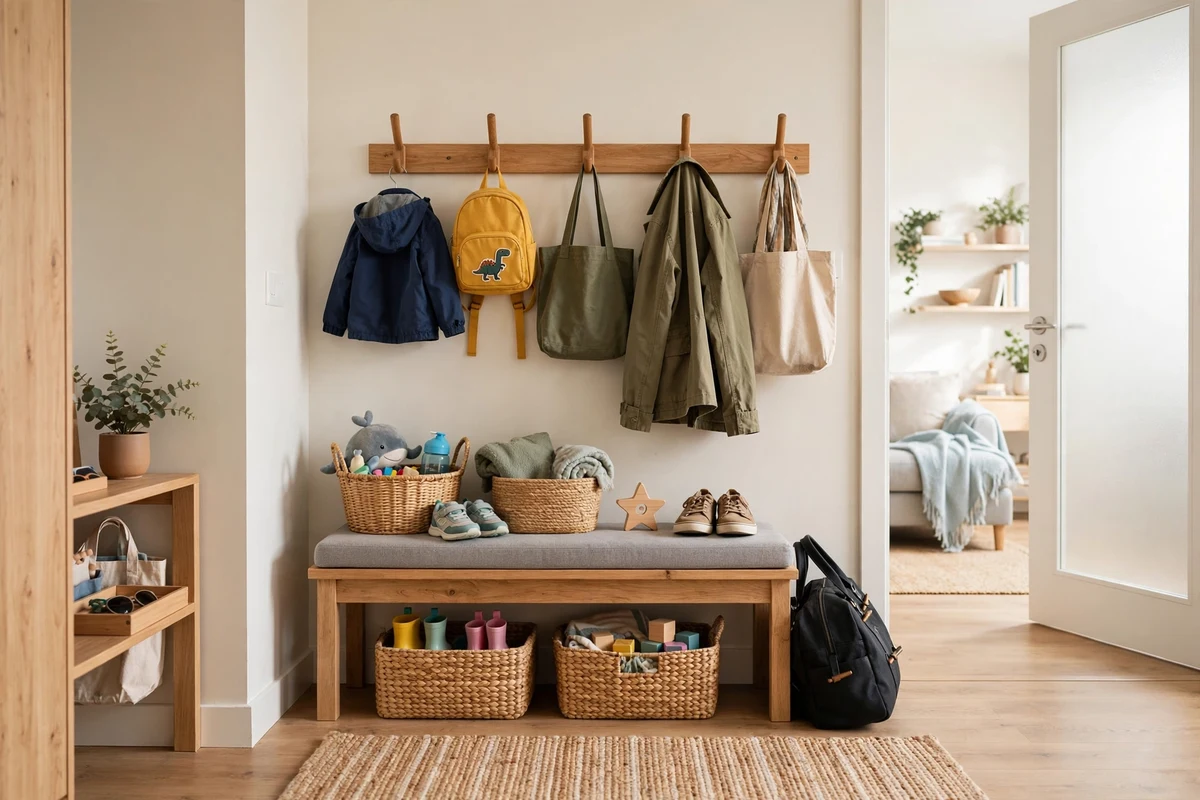
Pro tip: Test the height by miming hanging a coat while holding a grocery bag — if it is awkward, it is too high.
The Finishing Details
26. Forgetting the Ceiling Entirely
The entryway ceiling is the most ignored surface in the apartment — usually a sad flush-mount boob light from 1997. Swapping it for a stylish flush-mount or semi-flush fixture ($40–$110) takes twenty minutes and transforms the space from “rental default” to “designed.” In low ceilings, flush mounts keep headroom; the style upgrade is all in the material — brass, rattan, or opal glass beats builder beige every time.
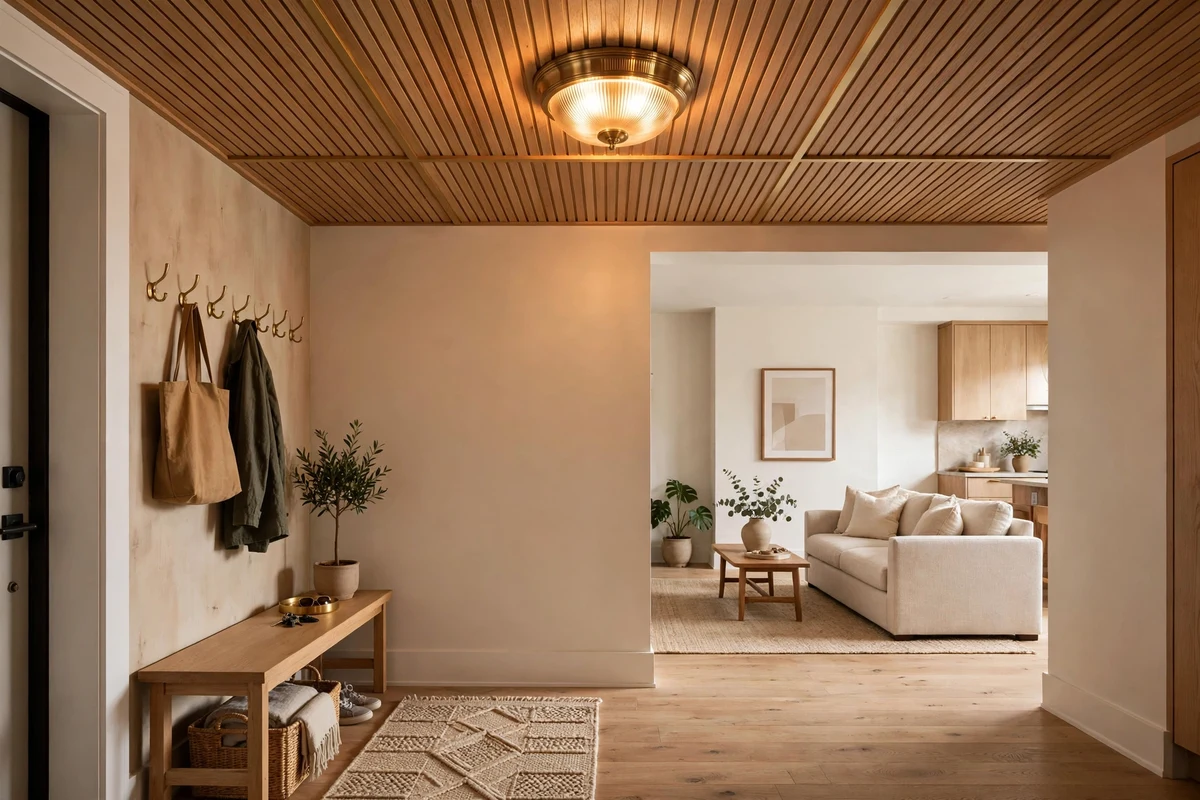
Pro tip: Keep the old fixture in a box — landlords appreciate getting their “vintage” light back at move-out.
27. Choosing High-Maintenance Glass Surfaces
A glass-top console shows every fingerprint, dust mote, and water ring — in the highest-traffic zone of your home, that means daily wiping or permanent smudge. Swap to wood, stone, or sealed concrete ($70–$200), materials that develop character instead of showing neglect. A quick weekly dust is all a wood console asks; glass demands a relationship.
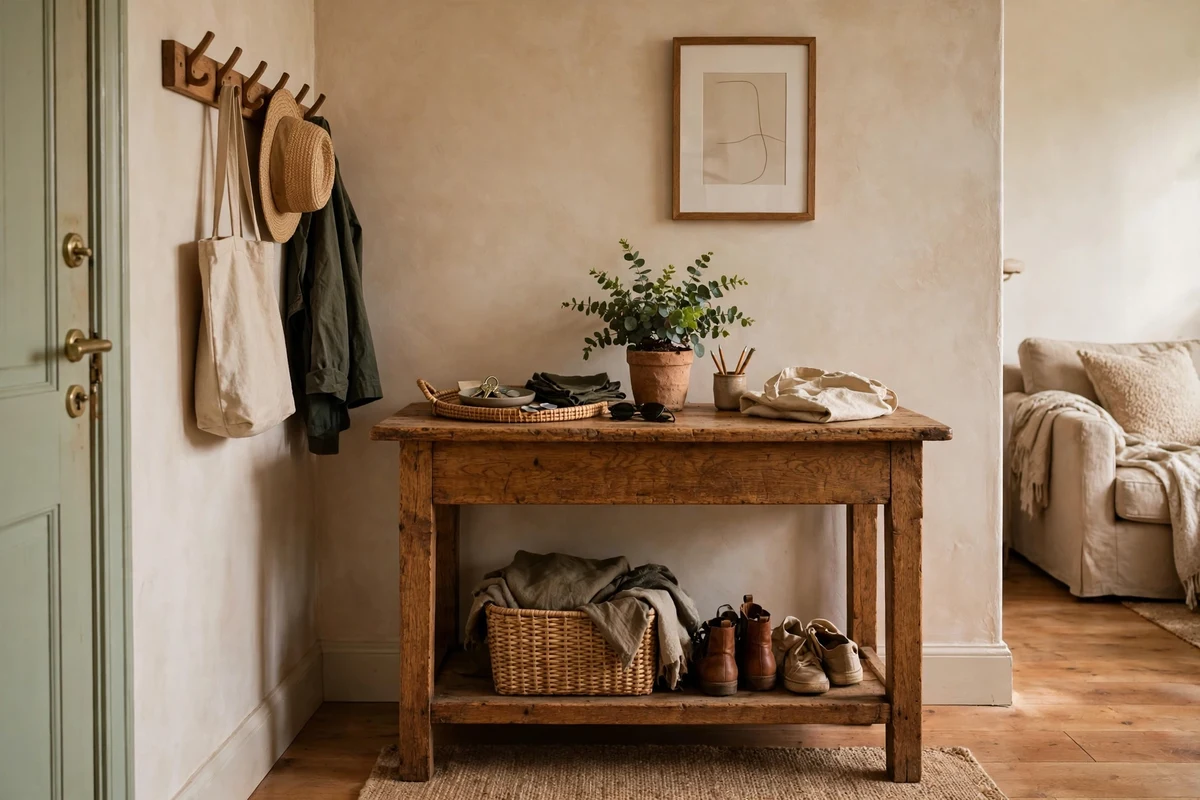
Pro tip: A matte sealant on wood makes it nearly as wipeable as glass without the fingerprint drama.
28. Skipping the Full-Length Mirror
You check your face in the round mirror but discover the outfit disaster only in the elevator. A full-length mirror ($50–$140) leaning in the entryway corner solves the last-look problem and visually doubles the space by reflecting light deep into the studio. Leaning (not hanging) keeps it renter-friendly, and an arched or rounded frame softens the corner it occupies.
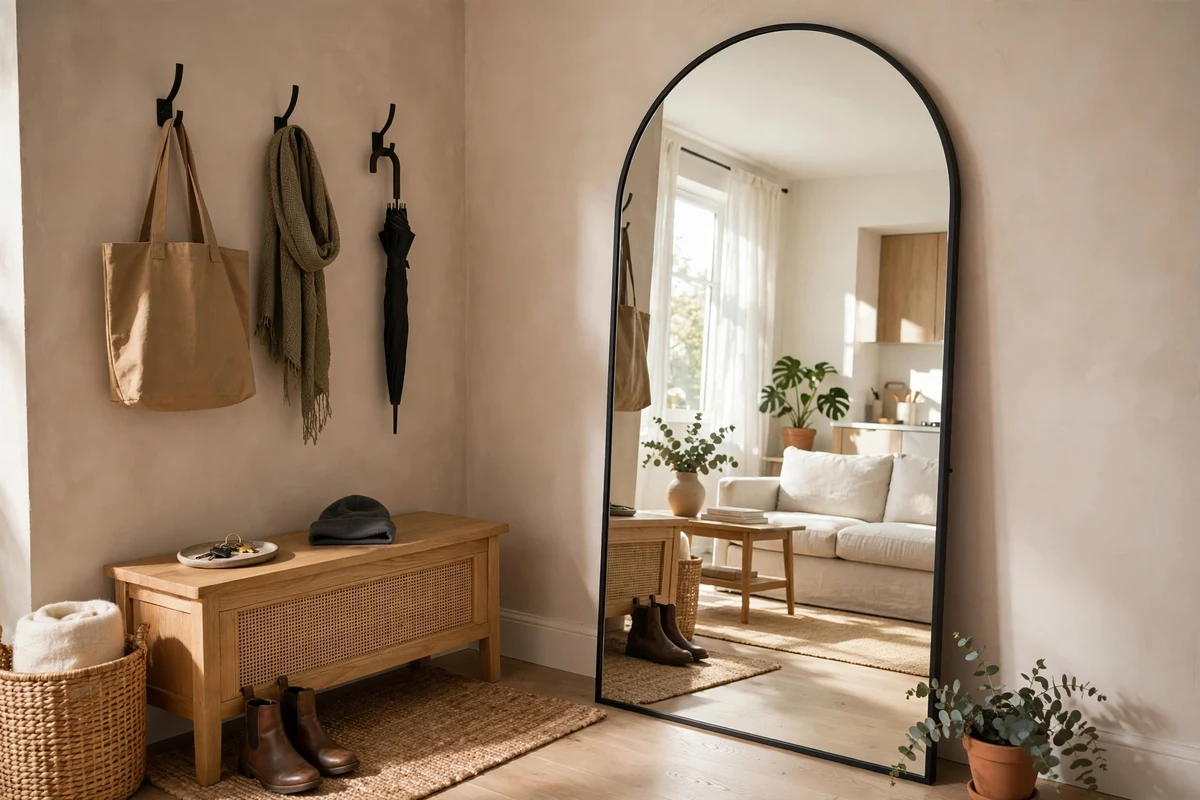
Pro tip: Angle the mirror slightly toward the room’s light source for maximum brightness bounce.
29. Copying a Suburban Foyer in 400 Square Feet
Pinterest foyers with grand staircases and 8-foot consoles do not translate to studio life — and trying makes your space feel like a failed imitation. Design for the apartment you have: apartment-scale furniture, multifunctional pieces, and honest proportions. A $90 bench with storage beats a $400 “statement” console that blocks your door. If you have made other scale mistakes around the house, these small living room decor mistakes cover the same traps in the main space.
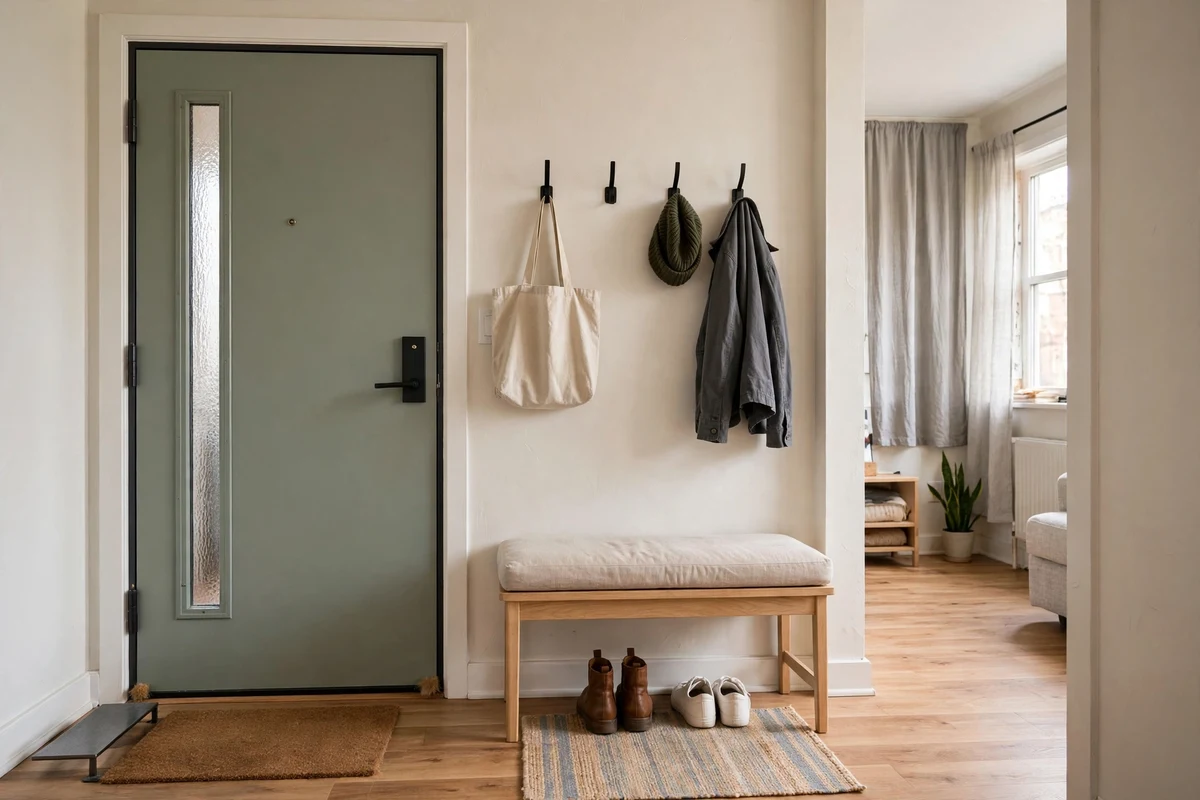
Pro tip: Measure twice, screenshot once — keep your entryway dimensions in your phone for impulse-buy prevention.
30. Leaving Zero Personal Personality
A perfectly organized but soulless entryway feels like a hotel lobby — impressive, forgettable. The final layer is you: a framed travel photo, the handmade bowl from a market trip, a plant you actually love. These personal artifacts ($0–$40, mostly things you own) are what make guests feel they are entering someone’s home, not a showroom. Function gets you organized; personality gets you home. For the bedroom version of this philosophy, see these small bedroom decor mistakes and their fixes.
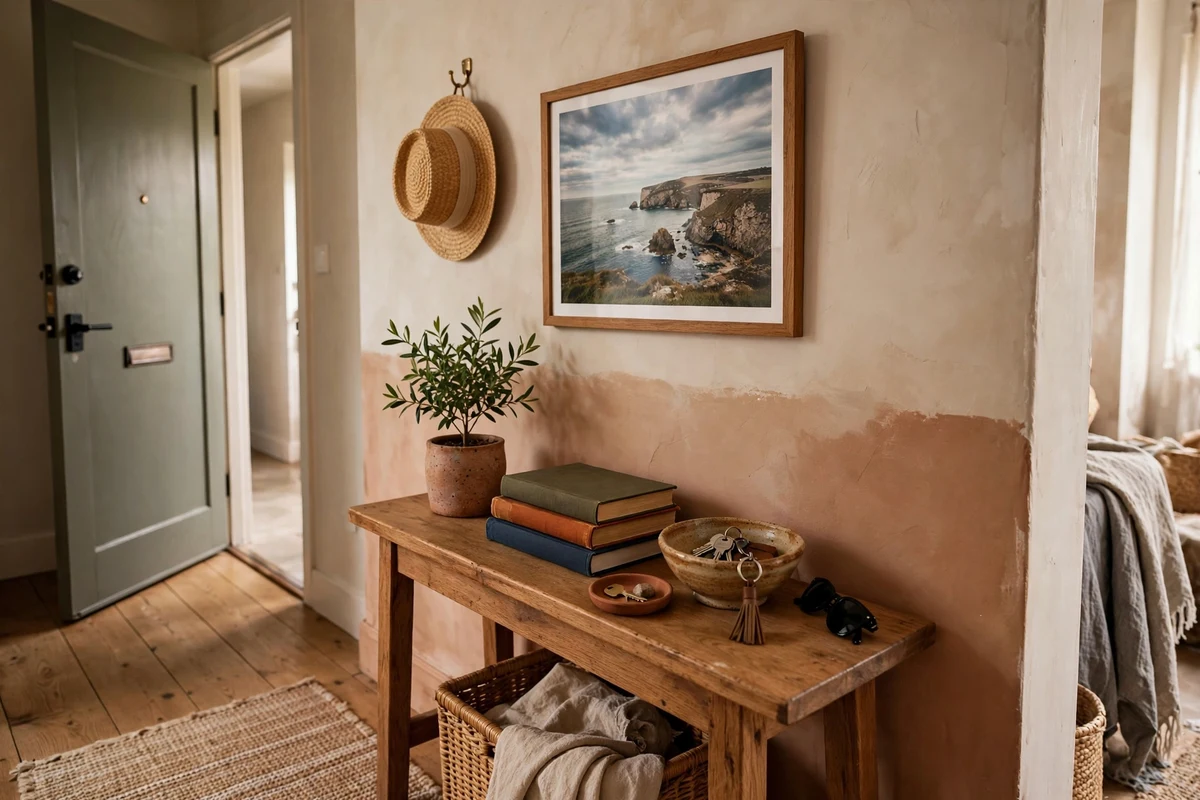
Pro tip: Rotate one personal item seasonally — a tiny refresh keeps the entryway feeling alive without redecorating.
Quick Fixes You Can Do This Weekend
Overwhelmed by 30 mistakes? Start here — these five fixes take under two hours total and deliver the biggest transformation per minute. First, lay down a properly sized washable rug to define the zone ($40–$80, 20 minutes). Second, mount a hook rail at 60 inches for coats and bags ($25–$45, 30 minutes with anchors). Third, designate a single tray as the sacred landing spot for keys and wallet ($12–$25, 5 minutes). Fourth, swap the entry bulb for a 2700K warm white and add a plug-in sconce or small lamp ($30–$60, 15 minutes). Fifth, hang a mirror at eye level above your console ($40–$100, 25 minutes). Two hours, roughly $150, and your entryway goes from chaotic afterthought to intentional welcome. Do these five this Saturday; tackle the remaining 25 systems over the next month, one 20-minute project at a time.
Frequently Asked Questions
How do I create an entryway in a studio with no foyer at all?
Use a rug to mark the zone, add a slim console or floating shelf on the nearest wall, and hang hooks at 60 inches. Three elements — rug, surface, hooks — are enough for your brain to read it as a distinct space, no walls required.
What is the best entryway storage for a very narrow space?
Go vertical and shallow: a 10-inch-deep closed cabinet, wall hooks, an over-the-door rack, and a tall narrow tower. Closed storage beats open shelving in tiny entries because it hides visual clutter.
How can renters upgrade an entryway without drilling?
Adhesive hooks rated for the weight, over-the-door racks, leaning mirrors, plug-in sconces, peel-and-stick wallpaper on one wall, and freestanding furniture. You can transform the space completely with zero holes.
What color should I paint a small dark entryway?
Warm whites, pale greige, or soft sage in an eggshell or satin finish. Light colors bounce the limited light around, and a wipeable sheen handles scuffs from shoes and bags.
How do I keep the entryway from becoming a clutter magnet?
Give everything a labeled home (hooks per person, a tray for keys, a mail sorter), enforce the one-minute rule — if putting it away takes under a minute, do it now — and do a 5-minute reset each evening. Systems beat willpower.
Is a mirror really necessary in a small entryway?
Yes — it is the hardest-working item you can add. A mirror doubles perceived space, bounces light into dark corners, and gives you a last look before leaving. One well-placed mirror outperforms almost any other single upgrade.
Final Thoughts
Your studio apartment entryway may be small, but it punches far above its weight: it is the handshake of your home, the launchpad of your mornings, and the landing pad of your evenings. Fixing these 30 mistakes does not require a renovation — most take an afternoon and under $100. Start with the foundation (define the zone, tame the shoes, add light), then layer in the systems that match your life. A year from now, you will not remember the chaotic pile by the door — but you will feel the calm every single time you walk in.