34 Budget Decorating Mistakes That Cost You More (and How to Fix Them)
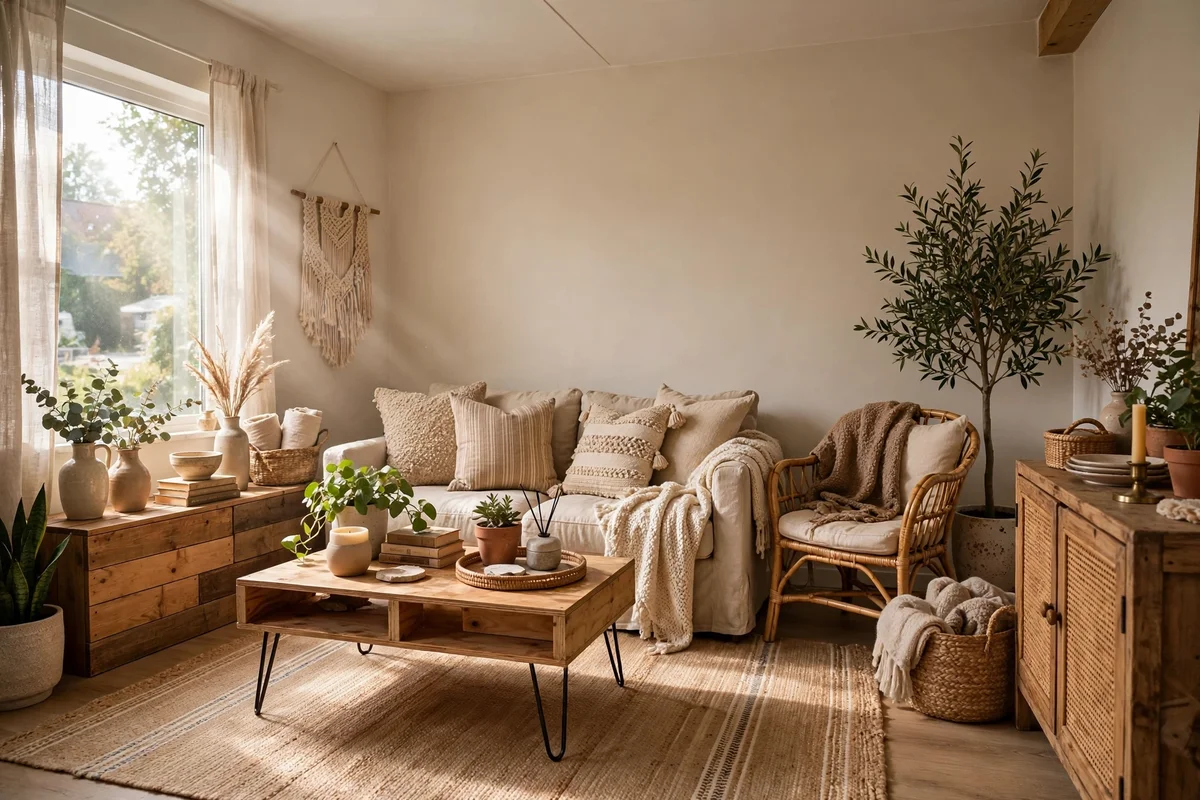
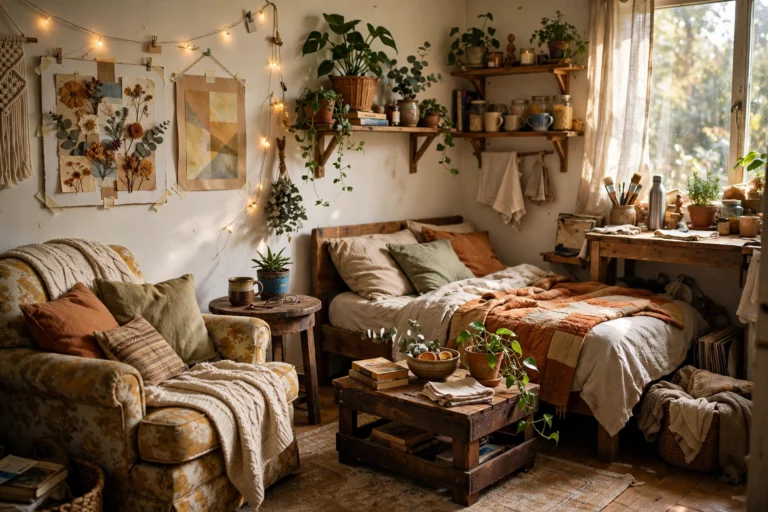
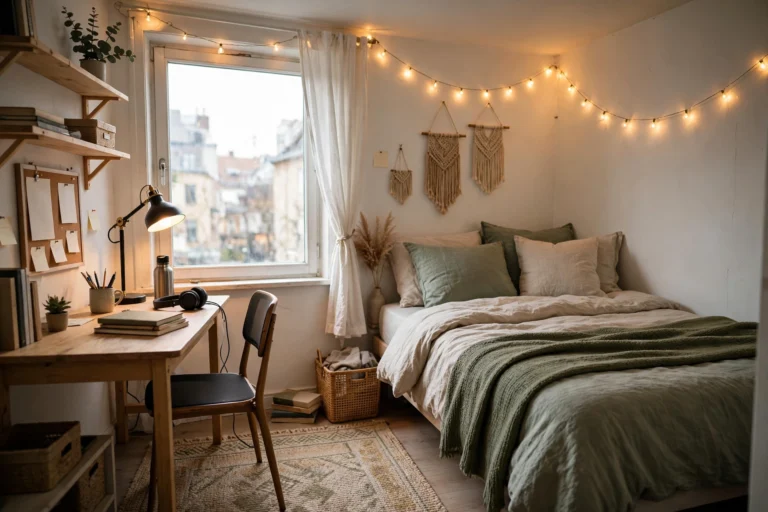
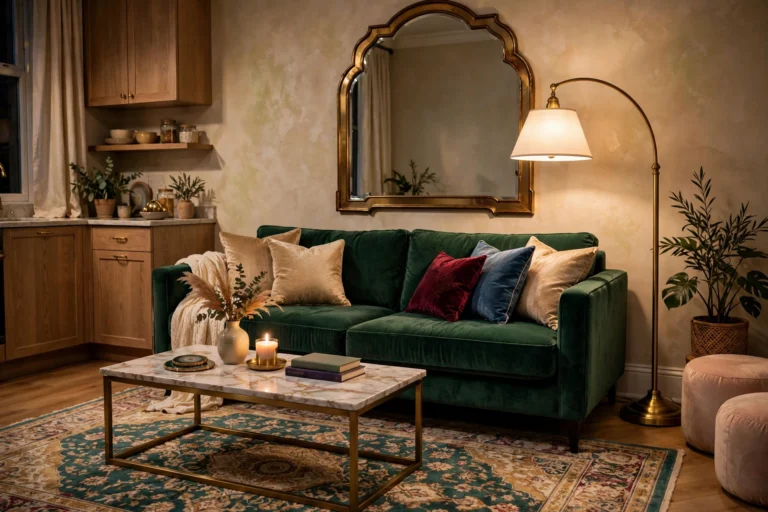
Decorating on a budget is not the problem — decorating on a budget without a strategy is. Most people do not overspend because they love expensive things; they overspend because of small, avoidable mistakes that quietly drain hundreds of dollars: the too-small rug that gets replaced twice, the trendy chair that looks dated in a year, the “bargain” bookshelf that wobbles apart in eighteen months. Budget decorating done right looks rich, layered, and intentional. Done wrong, it looks cheap and costs more in the long run. These 34 budget decorating mistakes — each paired with a designer-approved fix and real price ranges — will help you spend less, waste nothing, and end up with a home that looks far more expensive than it was.
Money Traps — Where Budgets Go to Die
1. Buying Everything at Once
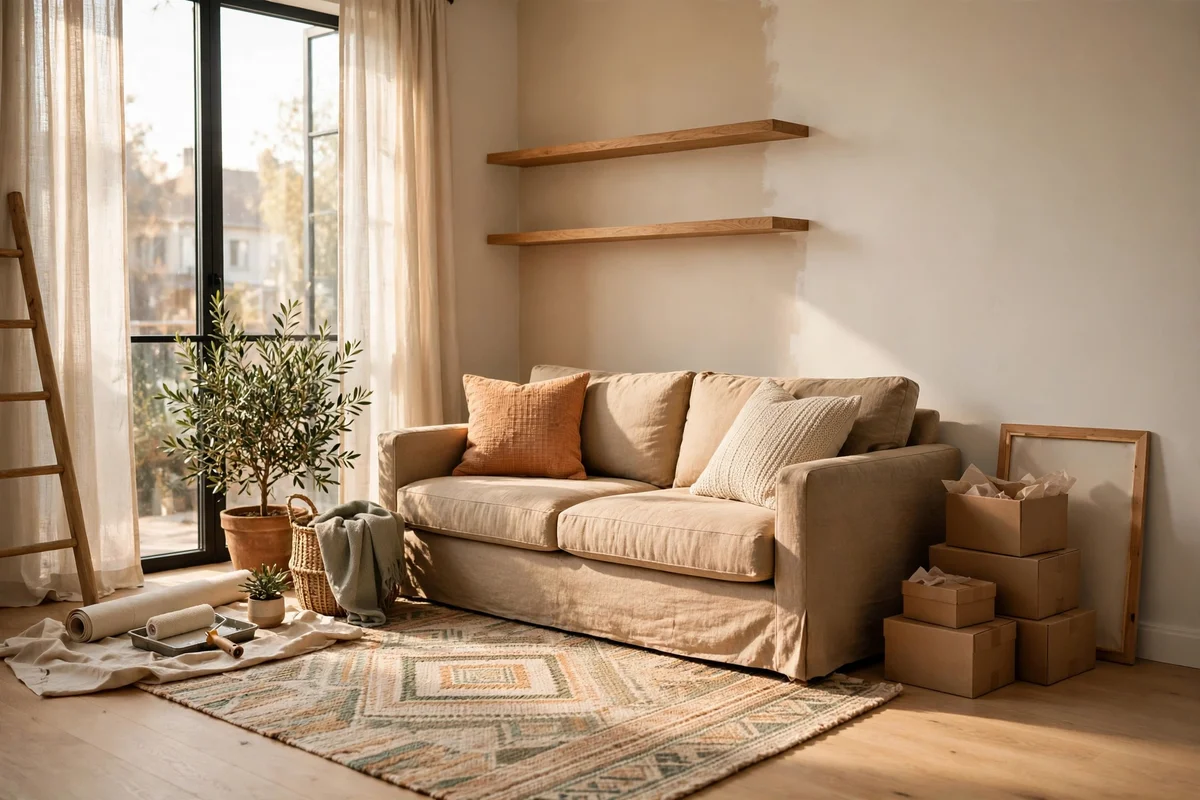
The biggest budget mistake is treating decorating like a shopping sprint — filling a cart with an entire room in one weekend. Rushed buying leads to impulse pieces, mismatched styles, and zero time to hunt deals. The fix: decorate in layers over 2–3 months. Buy foundation pieces first (sofa, rug, bed), live with them, then add lighting, art, and textiles as you find the right pieces at the right prices. Staged decorating routinely saves 30–40% versus one-shot buying, and the result looks collected instead of catalog-staged.
Pro tip: Set a monthly decor budget ($100–$200) and stick to it — constraints force smarter, more creative choices.
2. Decorating Without Any Budget Plan
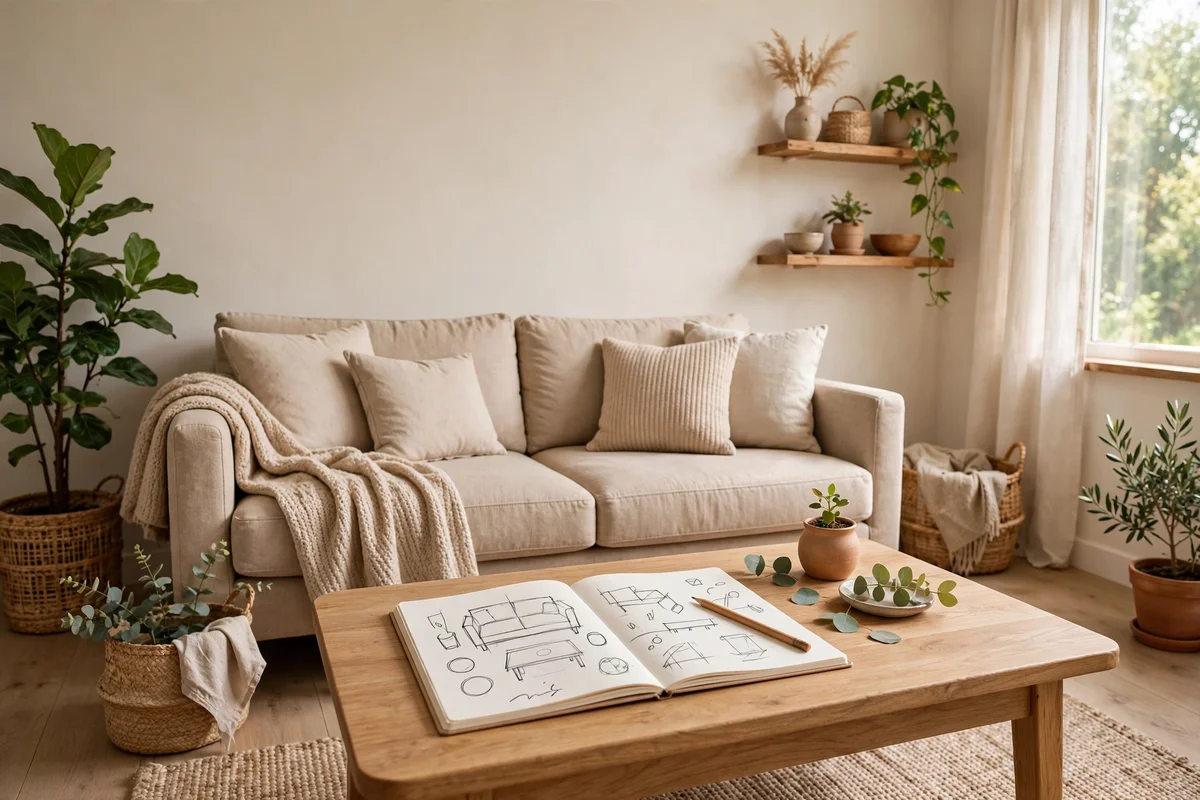
Walking into a home store “just to look” is how $600 disappears with nothing to show for it. Without a written plan, money flows to whatever catches your eye instead of what your room actually needs. The fix costs nothing: list every room, note what is missing, assign a max price per item, and total it before you shop. A simple spreadsheet or notebook keeps you honest. People who plan their decor spending report saving $300–$800 per room simply by avoiding duplicate and impulse purchases.
Pro tip: Rank your list by impact — spend first on what you see and touch daily (sofa, lighting, bedding).
3. Buying Cheap Furniture That Breaks
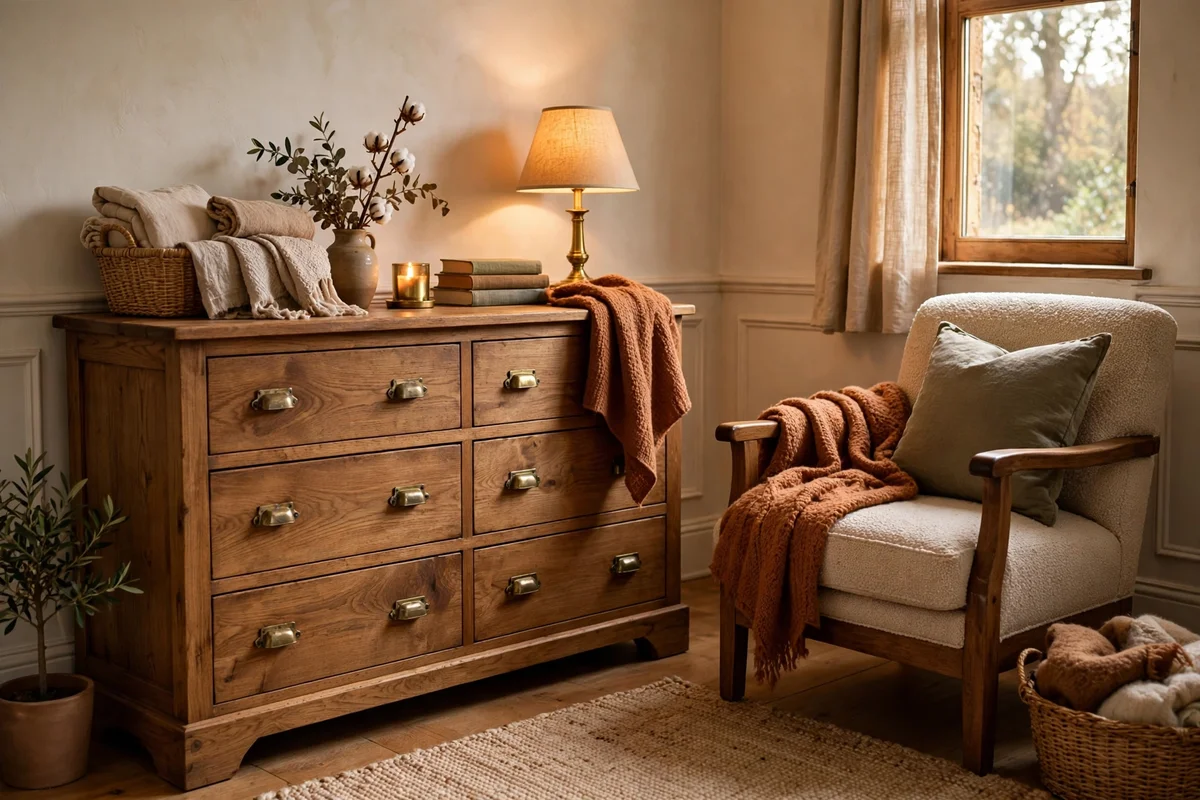
That $80 particleboard dresser seems like a steal until the drawers jam and the back panel peels in year two — then you buy it again. This “buy twice” tax is the most expensive budget mistake of all. The fix: spend more on high-use pieces (sofa, mattress, dresser) and economize on low-wear items (side tables, decor). A $400 solid-wood dresser that lasts 15 years costs $27/year; a $120 disposable one replaced three times costs far more. Check our budget decorating ideas for where to splurge versus save.
Pro tip: The sit-and-wiggle test never lies — if a floor model wobbles in the store, it will collapse in your home.
4. Ignoring Thrift Stores and Secondhand
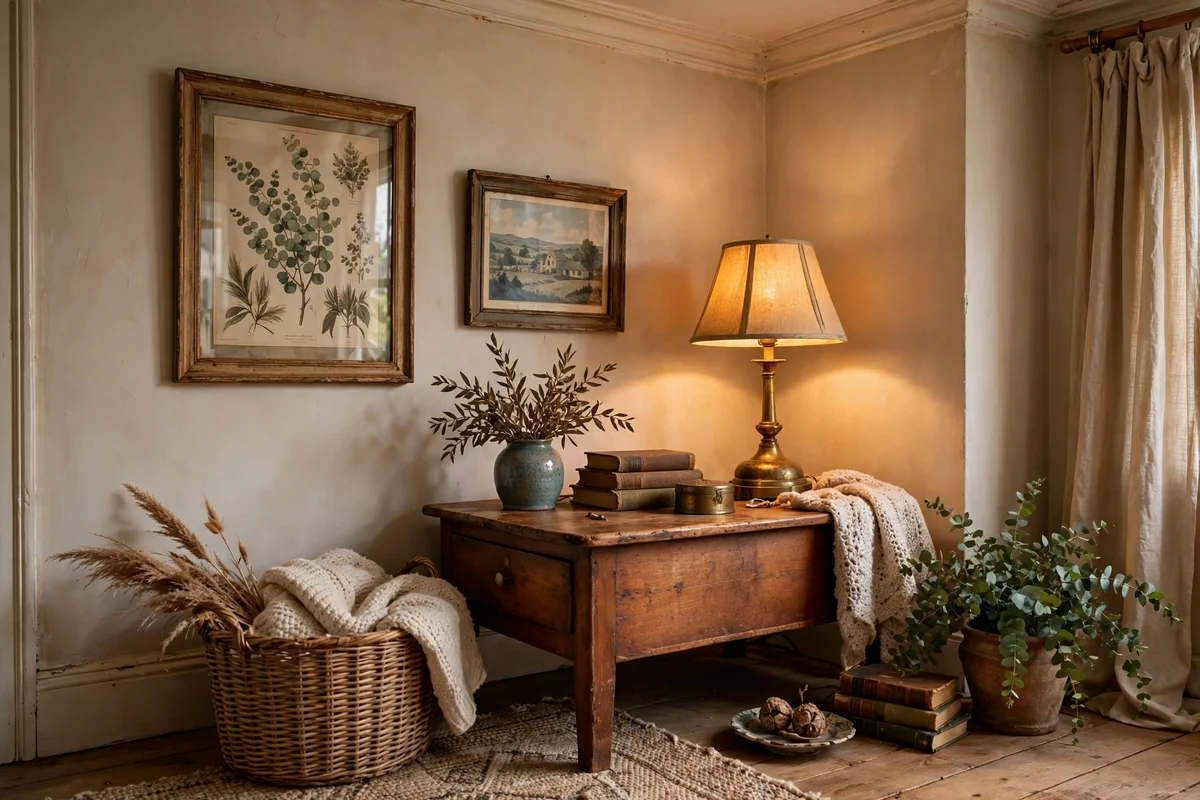
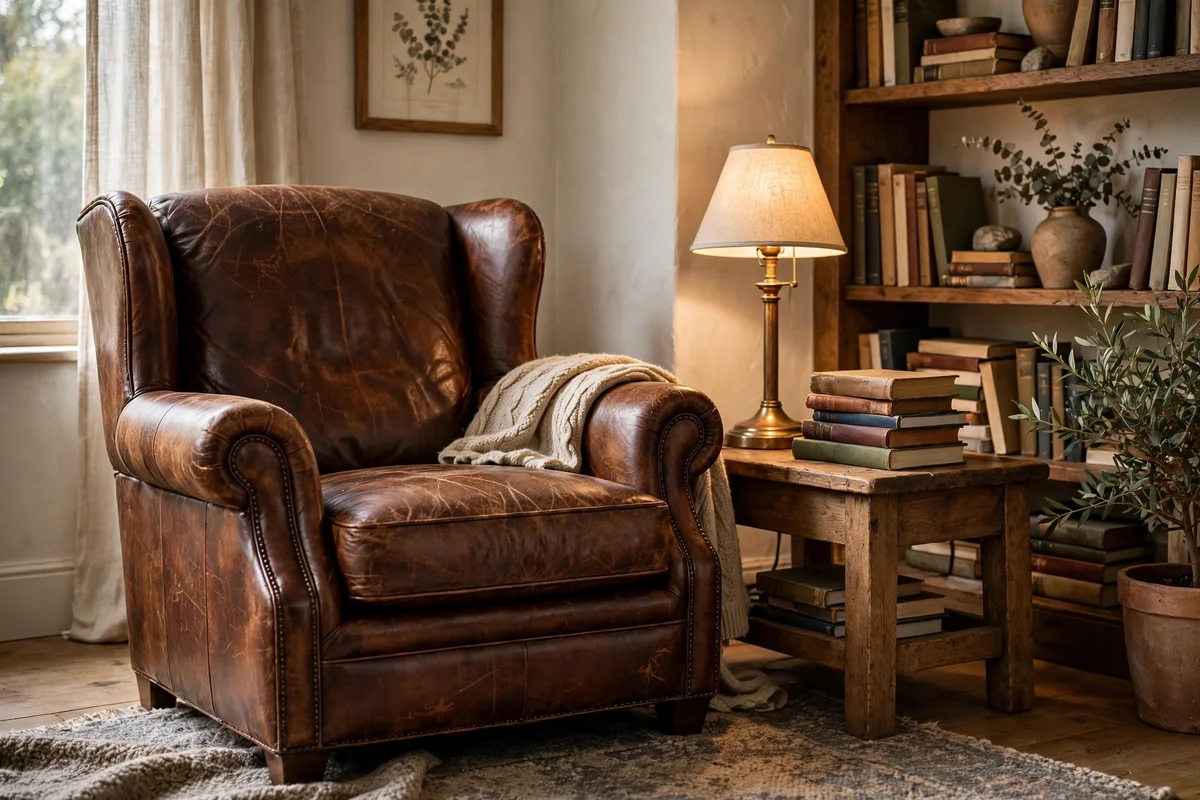
Skipping secondhand is like refusing free money. Solid wood furniture, brass lamps, and original art sell at thrift stores for 10–20% of retail — pieces with character that new budget furniture cannot fake. The fix: make thrifting a habit, not an event. Visit twice a month, know your measurements, and pounce on quality bones (wood, brass, wool). A $25 vintage lamp with a $30 new shade looks like a $200 designer piece. One afternoon of thrifting can furnish an entire reading corner for under $100.
Pro tip: Go on weekday mornings — new donations hit the floor early and the good stuff vanishes by noon.
5. Chasing Trendy Pieces That Date Fast
That ultra-trendy boucle chair or checkerboard rug feels exciting today and embarrassing in eighteen months — and replacing trend pieces is a budget killer. The fix: keep big-ticket items timeless (neutral sofa, classic wood, simple lines) and scratch the trend itch with cheap, swappable accents: pillow covers ($15–$25), throws, or a $40 print. When the trend dies, you swap a pillow, not a $900 chair. Timeless foundations plus trendy accessories give you a fresh look every season for under $100.
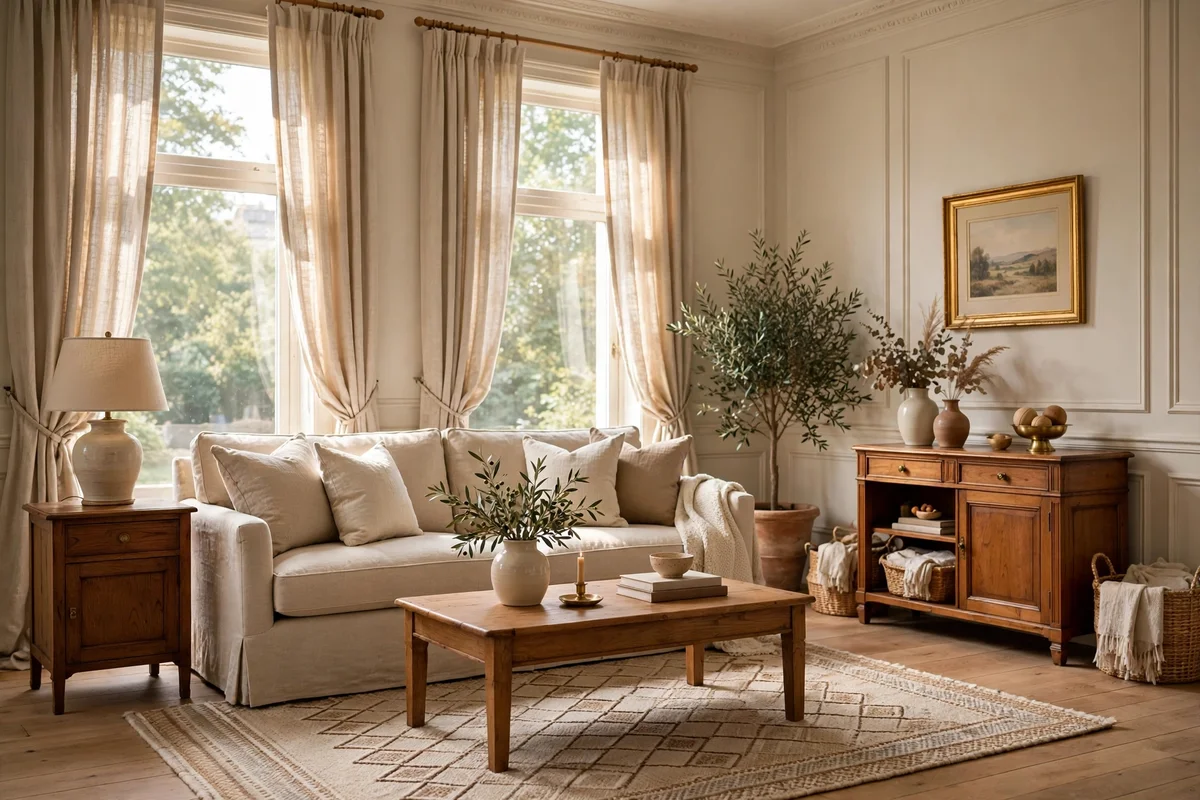
Pro tip: The 5-year test: if you cannot picture it in your home in five years, do not spend more than $50 on it.
6. Buying a Rug That Is Too Small
A postage-stamp rug floating in the middle of the floor makes the whole room look cheaper and smaller — and most people eventually replace it, paying twice. The fix: size up from the start. In living rooms, the front legs of all seating should sit on the rug (usually 8×10 for a standard layout, $150–$350 for a good washable one). In bedrooms, the rug should extend 18–24 inches beyond the bed’s sides. One correctly sized rug beats two wrong ones every time, and it is the single fastest way to make budget furniture look expensive.
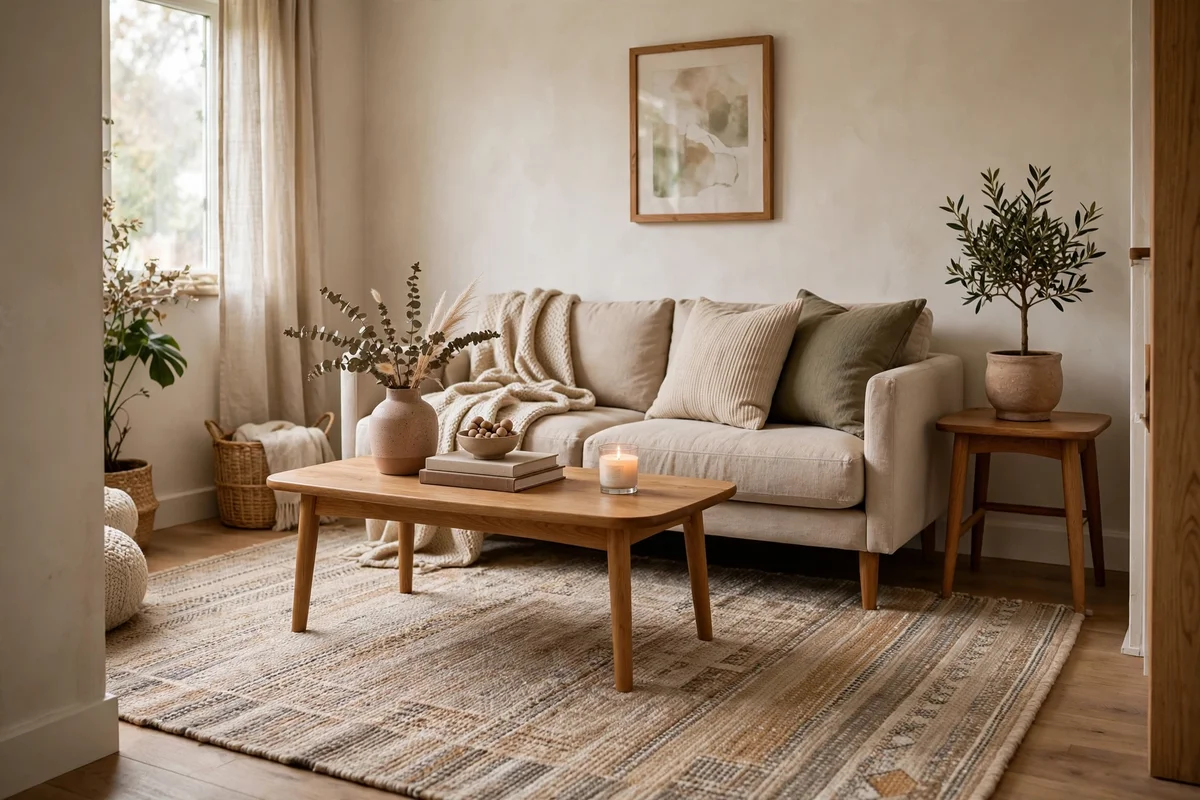
Pro tip: Tape the rug size on the floor with painter’s tape before buying — your eyes will thank you.
7. Skipping Paint — the Cheapest Transformation
People will spend $400 on decor to “fix” a room but refuse a $60 gallon of paint — the single highest-impact budget move in existence. Paint transforms walls, dated cabinets, thrifted furniture, and tired doors for almost nothing. The fix: one gallon ($35–$65) plus a roller kit ($15) can remake an entire accent wall or a whole small room in a weekend. A $200 paint budget (walls + one furniture piece) delivers more visual change than $1,000 of accessories. It is the closest thing decorating has to a cheat code.
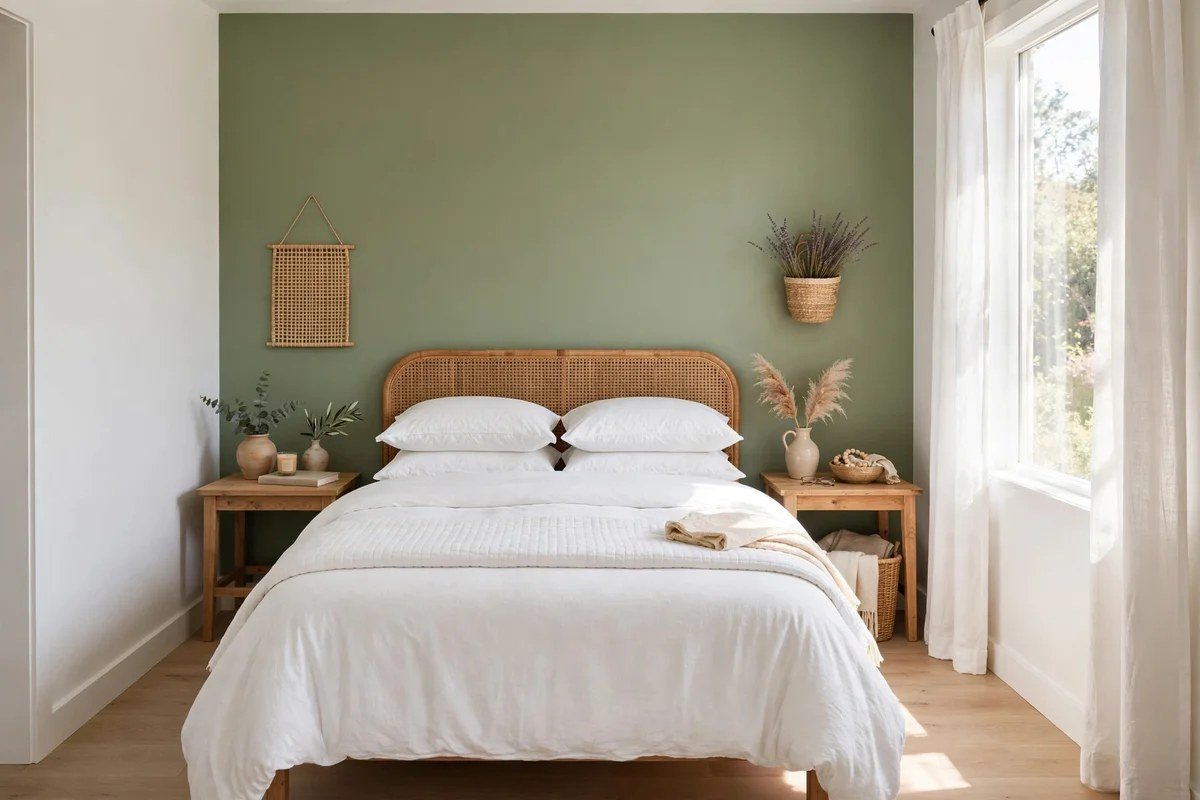
Pro tip: Sample pots ($5–$8) painted in big swatches prevent $60 mistakes — always test in your light first.
8. Buying Matching Furniture Sets
The 5-piece “bedroom set” or matchy living room package screams showroom — and you pay a premium for furniture designed to look coordinated rather than good. The fix: buy pieces separately and mix. A $300 vintage dresser + $250 simple bed frame + $80 thrifted nightstands looks richer than a $900 set, and costs less. Mixed pieces create the collected, designer look that matching sets never achieve. Shop your rooms as individuals, not as a package deal, and pocket the difference.
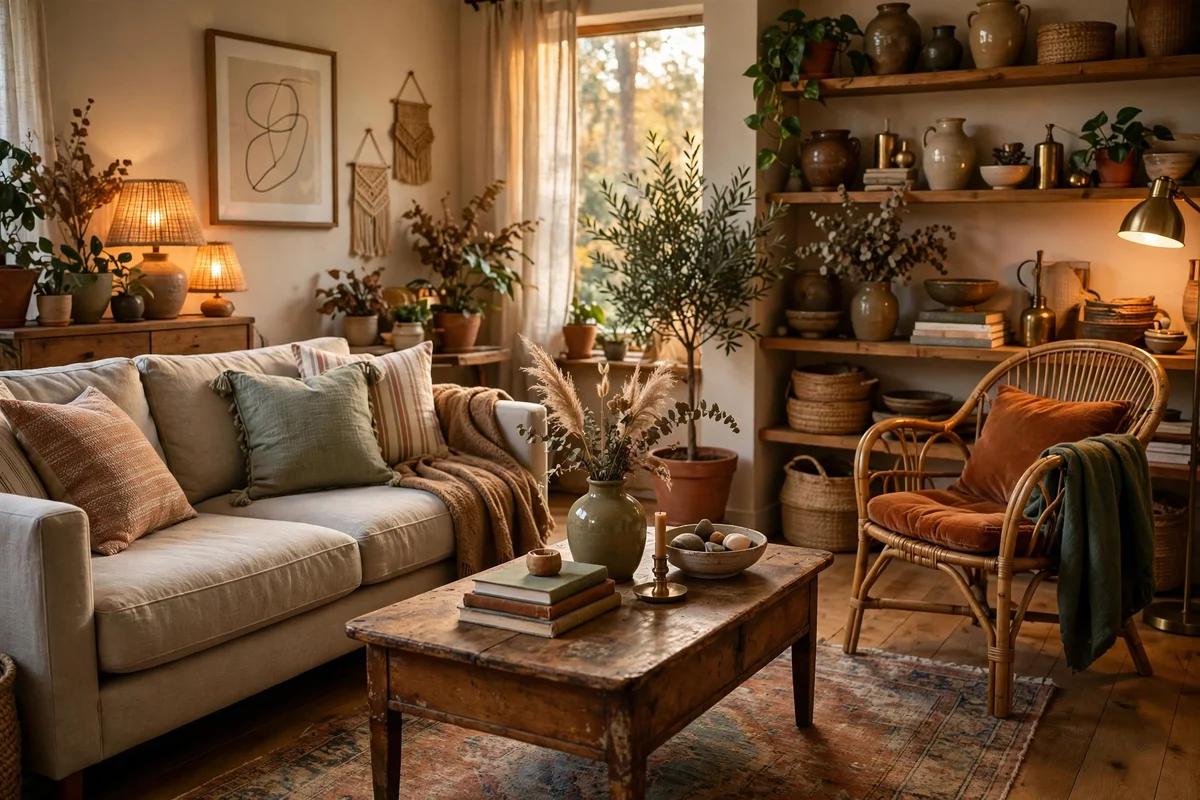
Pro tip: Unify mixed pieces with one repeated element — same wood tone, same metal finish, or one color.
The Cheap Look — Finishes That Give You Away
9. Living With One Harsh Overhead Light
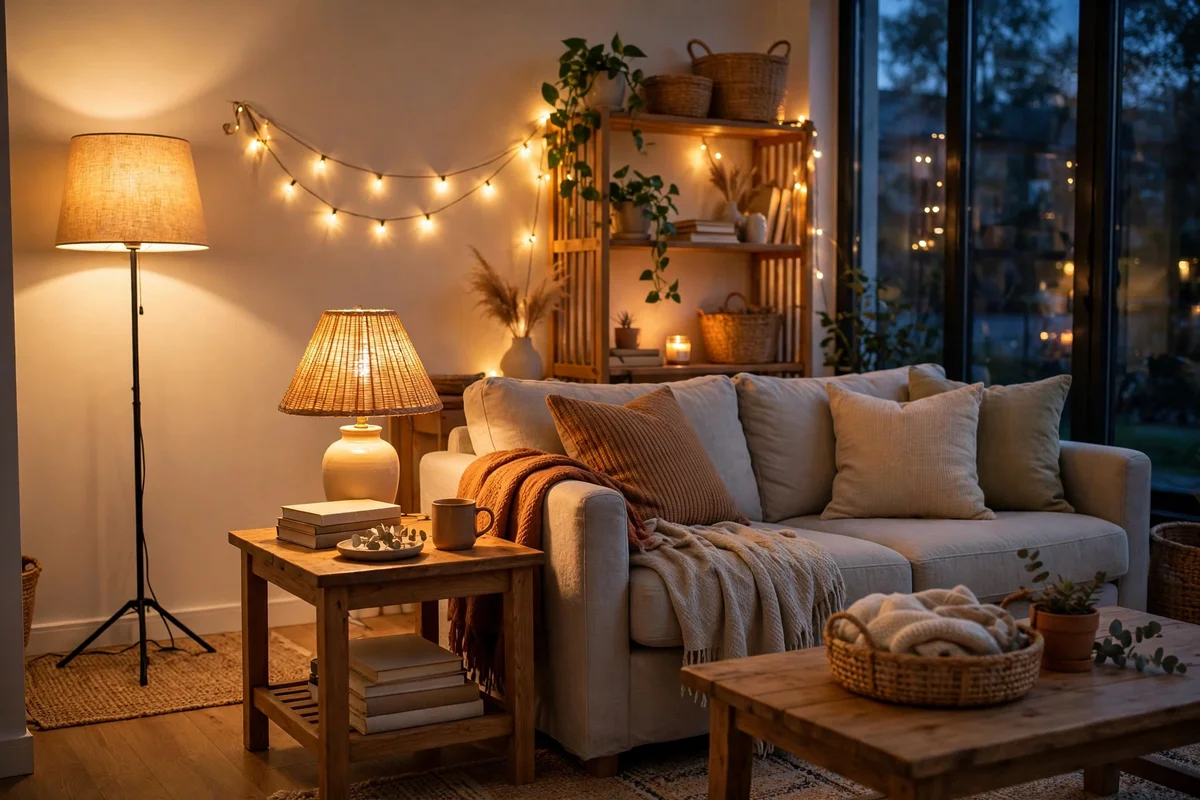
Nothing makes a budget room look cheaper than a single glaring ceiling light — it flattens everything and casts unflattering shadows. The fix: layer three light sources per room. A $25 floor lamp, a $20 table lamp, and a $15 string of warm fairy lights transform a room’s feel for $60 total. Always choose warm-white bulbs (2700K). Good lighting is the fastest way to make inexpensive furniture look intentional and expensive — designers call it the “$60 room makeover” for a reason.
Pro tip: Put your main lamp on a $12 dimmer plug — instant ambiance control for the price of lunch.
10. Ignoring DIY Completely
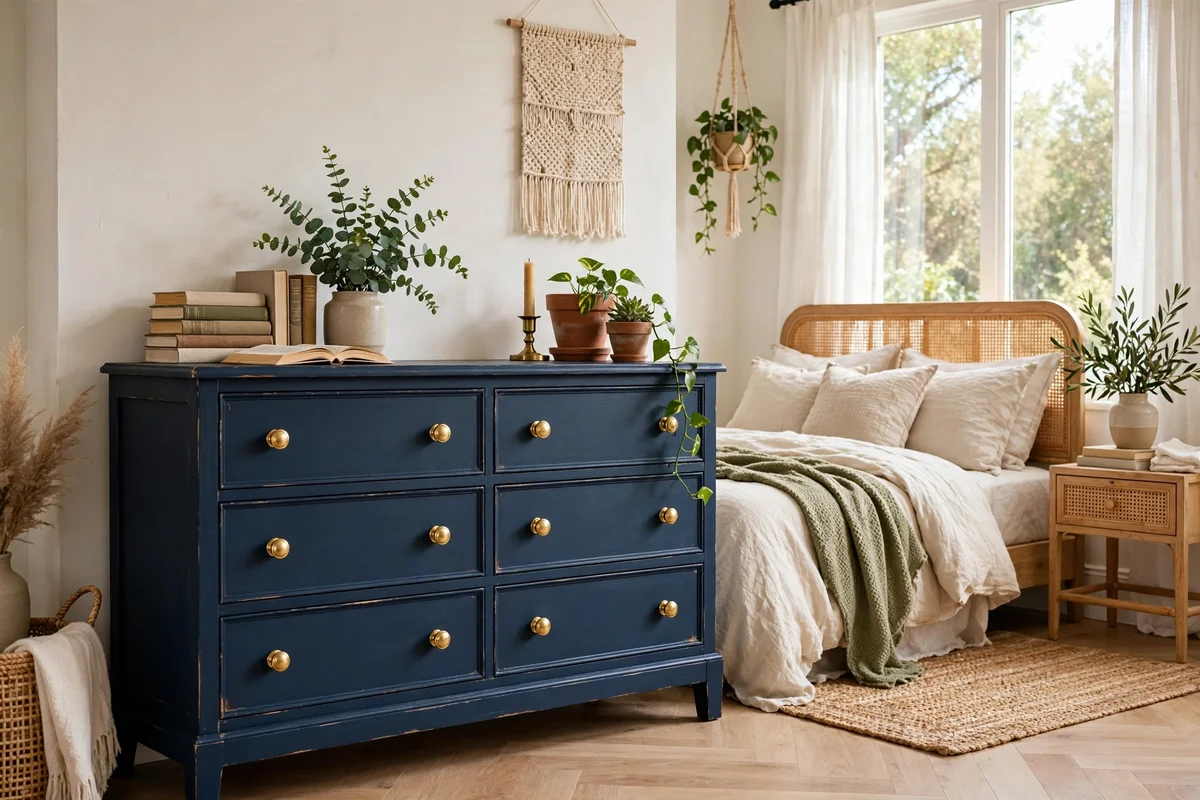
Assuming everything must be bought new is a budget leak. A $40 thrifted dresser plus $15 of paint and $20 of new knobs becomes a $300-looking piece in one weekend. The fix: start with beginner-friendly projects — painting furniture, swapping hardware, framing free printables, or reupholstering a dining chair seat ($10 of fabric + a staple gun). YouTube has a tutorial for everything. Even two DIY pieces per room can save $400–$600 while adding the handmade character money cannot buy.
Pro tip: Paint is the great equalizer — mismatched thrifted pieces painted the same color look like a set.
11. Hanging Art at the Wrong Scale
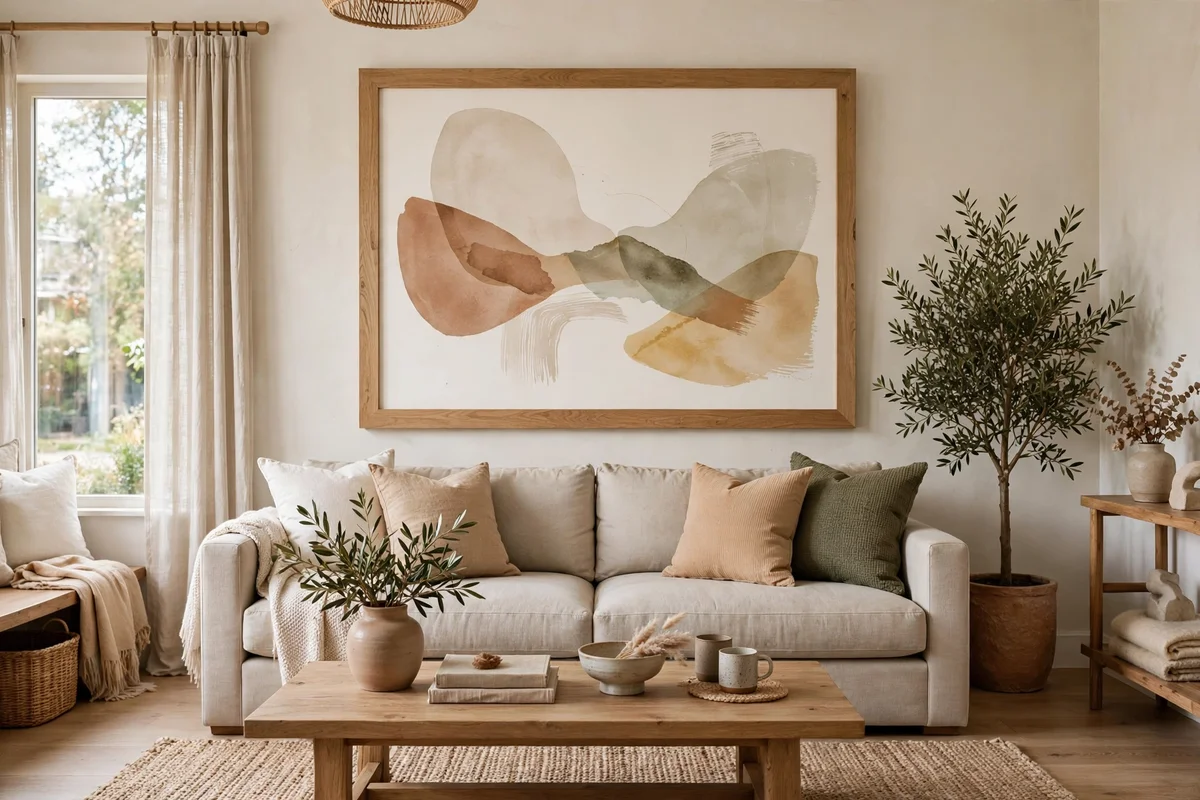
Tiny art floating alone on a big wall looks lost and cheap — and people keep buying small frames hoping they will “fill in later.” The fix: go big or go gallery. One oversized piece (24×36 or larger) above a sofa anchors the wall; a $30 engineering print from a copy shop in a $40 IKEA frame looks gallery-grade. Alternatively, group 6–9 small frames into a tight gallery wall ($60–$100 total). Scale is free — it is about arrangement, not price. Our organization ideas show how intentional walls reduce visual clutter too.
Pro tip: Art should be roughly two-thirds the width of the furniture below it — measure, do not guess.
12. Skipping Curtains (or Hanging Them Wrong)
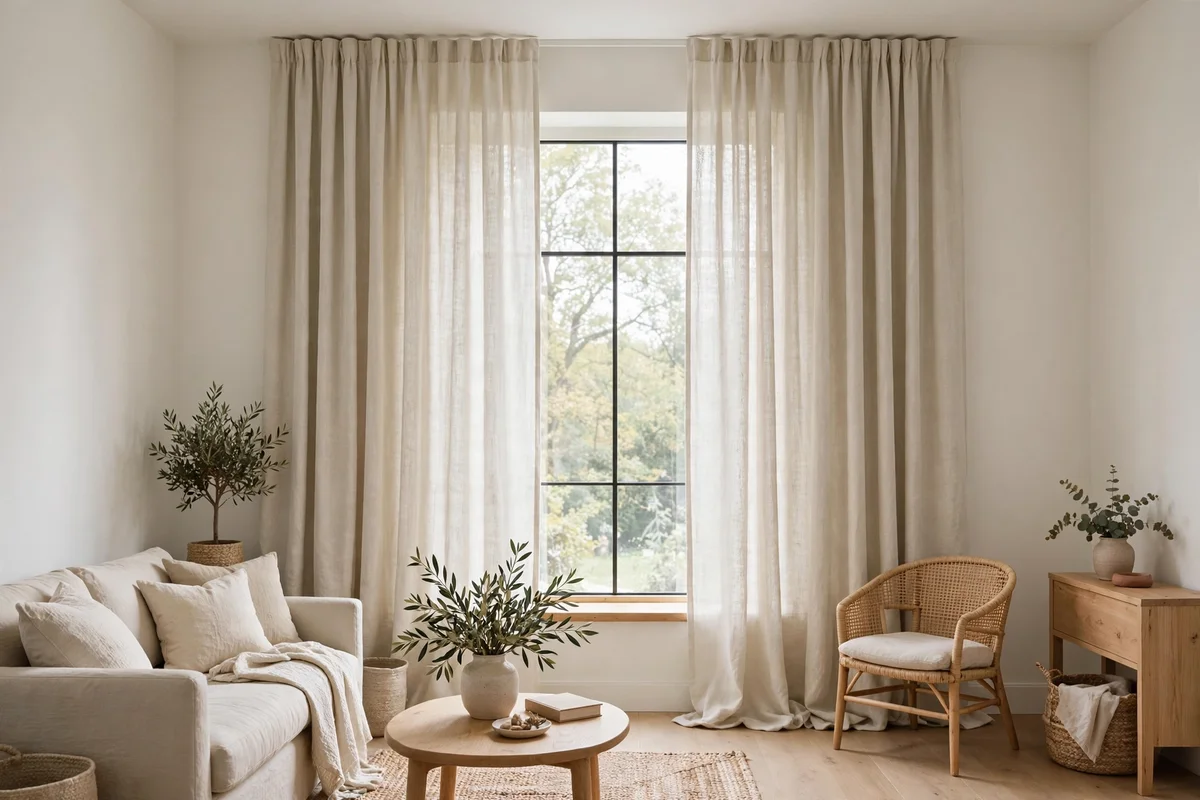
Bare windows or too-short curtains make even nice rooms feel unfinished and cheap. The fix: hang curtains high and wide — rod 4–6 inches above the frame and 8–12 inches wider on each side, with panels kissing the floor. A $40 pair of IKEA linen-look curtains hung correctly looks like $200 custom drapes; a $150 pair hung too short looks like a mistake. It is the highest-ROI $40 in decorating. Floor-length panels also make ceilings feel taller and rooms feel finished.
Pro tip: Buy curtains one size longer than you think — hemming is cheap, too-short is forever.
13. Buying Flat, Cheap-Looking Throw Pillows
Sad, deflated $8 pillows are a dead giveaway of budget decorating — they pancake within weeks and drag the whole sofa down. The fix: buy quality inserts once ($12–$18 for feather-blend 20×20) and swap cheap covers seasonally ($10–$20 each). A plump insert makes even a $12 cover look luxurious. The karate-chop crease only works on full pillows. Two good inserts with rotating covers beat six flat pillows every time, and cost less over two years.
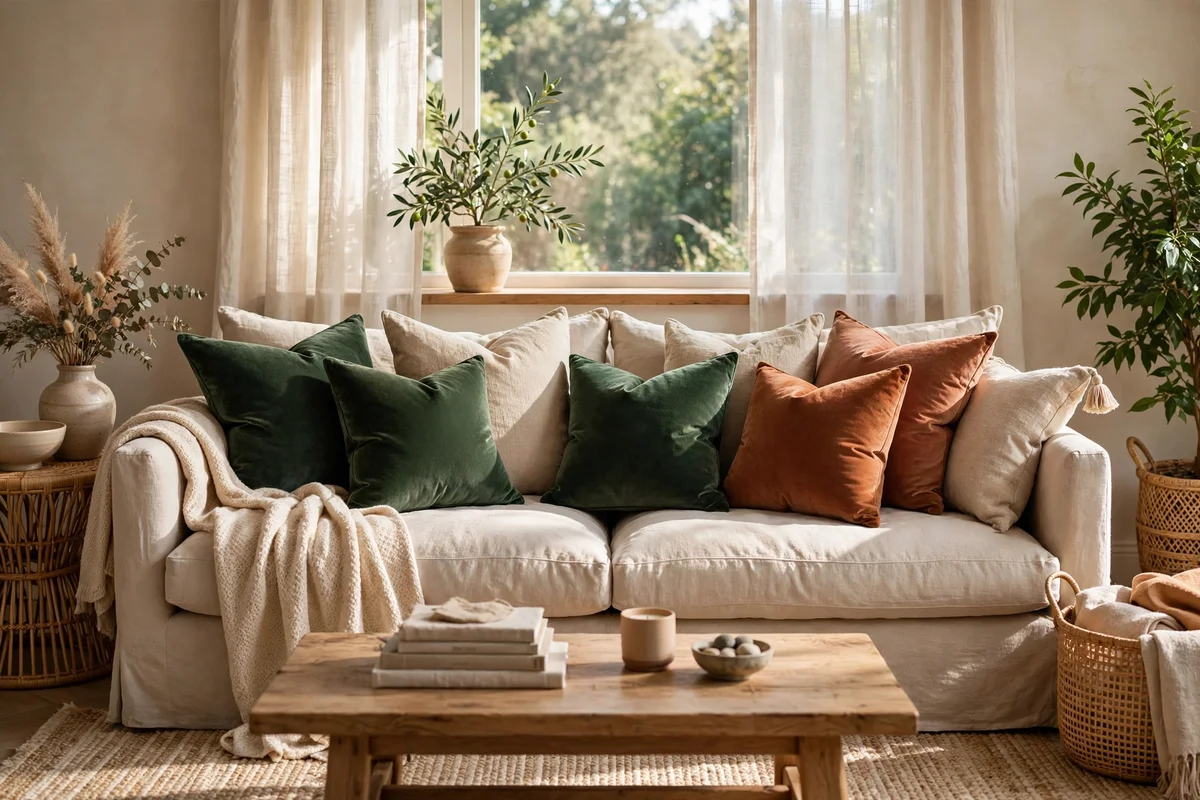
Pro tip: Buy inserts 2 inches larger than the cover (22″ insert in a 20″ cover) for that designer plumpness.
14. Buying Furniture Without Measuring
The “great deal” sofa that blocks the doorway, the bookshelf that does not fit the wall — unmeasured purchases lead to returns, restocking fees, or living with the wrong piece. The fix: measure everything twice. Doorways, stairwells, wall widths, and the exact footprint where the piece will live. Keep measurements in your phone notes. A $0 tape measure prevents $150 delivery-and-return disasters. In small spaces, two inches is the difference between perfect and painful — as our living room mistakes guide shows, scale errors are the costliest kind.
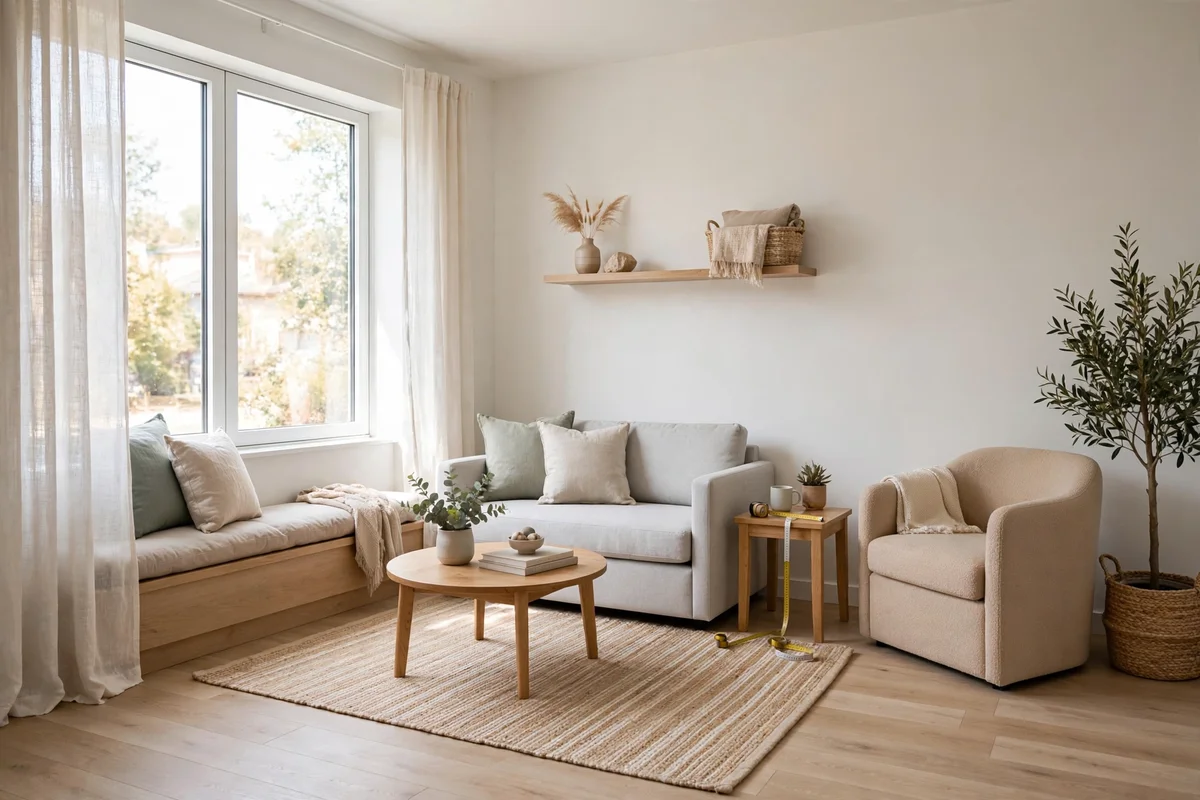
Pro tip: Photograph your room’s measurements and keep them in a phone album labeled “apartment dimensions.”
15. Falling for “Fast Furniture”
Ultra-cheap flat-pack furniture with a 2-year lifespan is the payday loan of decorating — cheap now, expensive forever. The fix: buy used quality instead of new disposability. A $150 solid-wood vintage dresser outlasts three $100 particleboard ones and looks better every year. Check Facebook Marketplace, estate sales, and Habitat ReStores for real wood at flat-pack prices. When you must buy new on a budget, choose the simplest designs — fewer moving parts means fewer things to break.
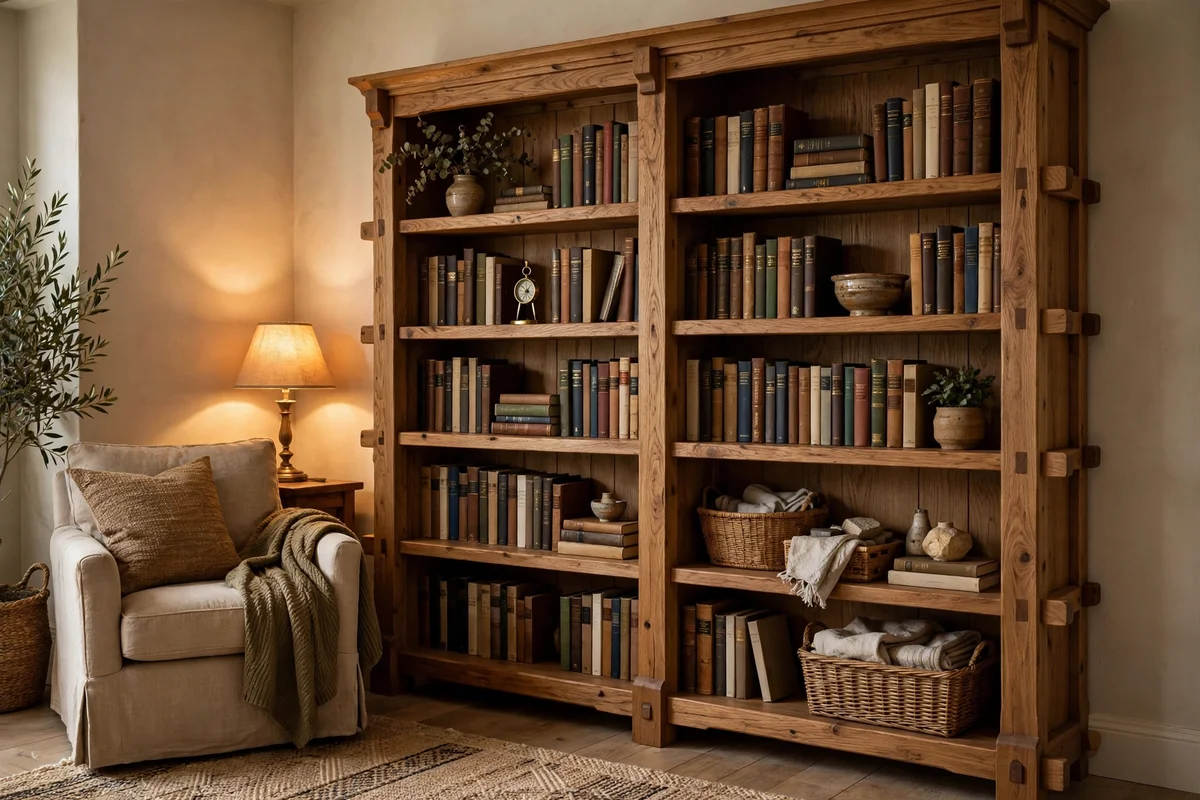
Pro tip: Lift one corner in the store — solid wood is heavy, particleboard is suspiciously light.
16. Skipping Plants — the Cheapest Life
A room with zero greenery feels sterile no matter how much you spent on furniture — and plants are the cheapest decor per square inch of impact. The fix: start with unkillable, affordable plants. A $12 pothos, a $15 snake plant, and a $10 propagated cutting in thrifted pots ($2–$5 each) bring a whole room alive for under $45. Plants add color, texture, and height that no $45 object can match. See our studio plant ideas for the best low-cost picks.
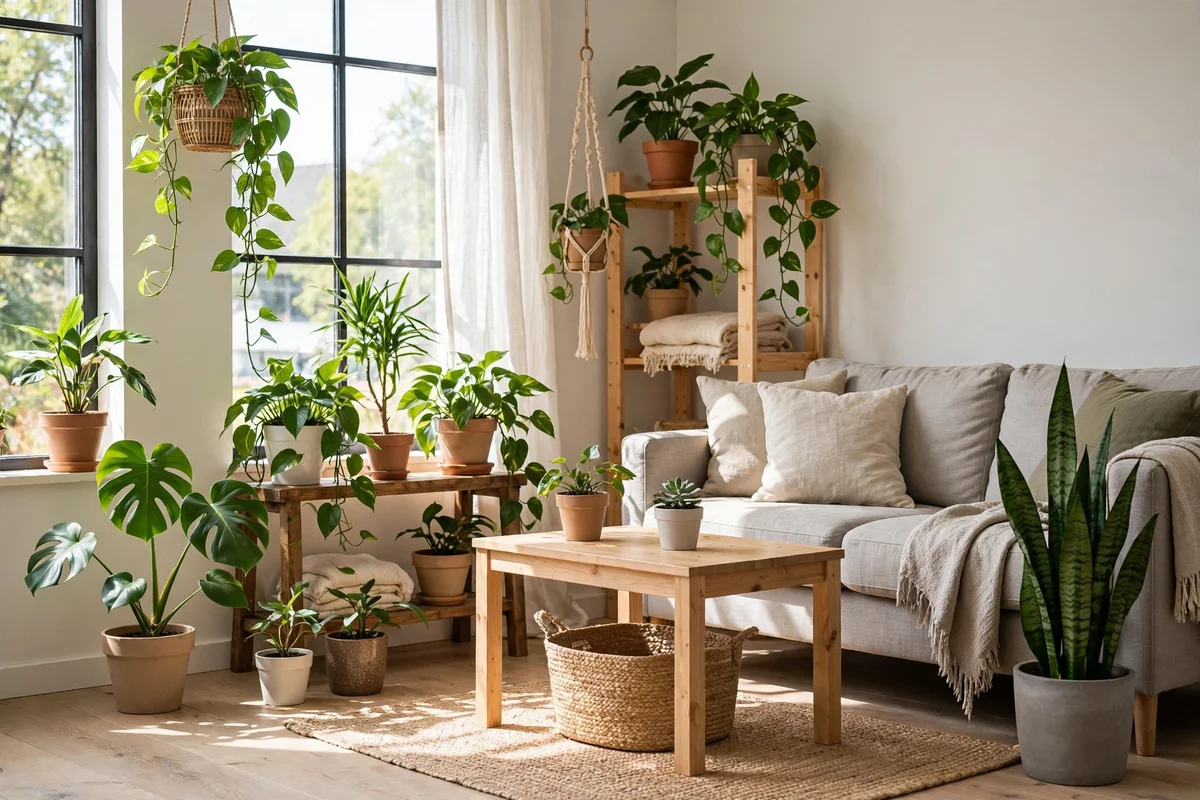
Pro tip: Propagate pothos cuttings in water — free plants forever from one $12 mother plant.
Strategy Errors — Decorating Without a Plan
17. Choosing the Wrong Paint Finish
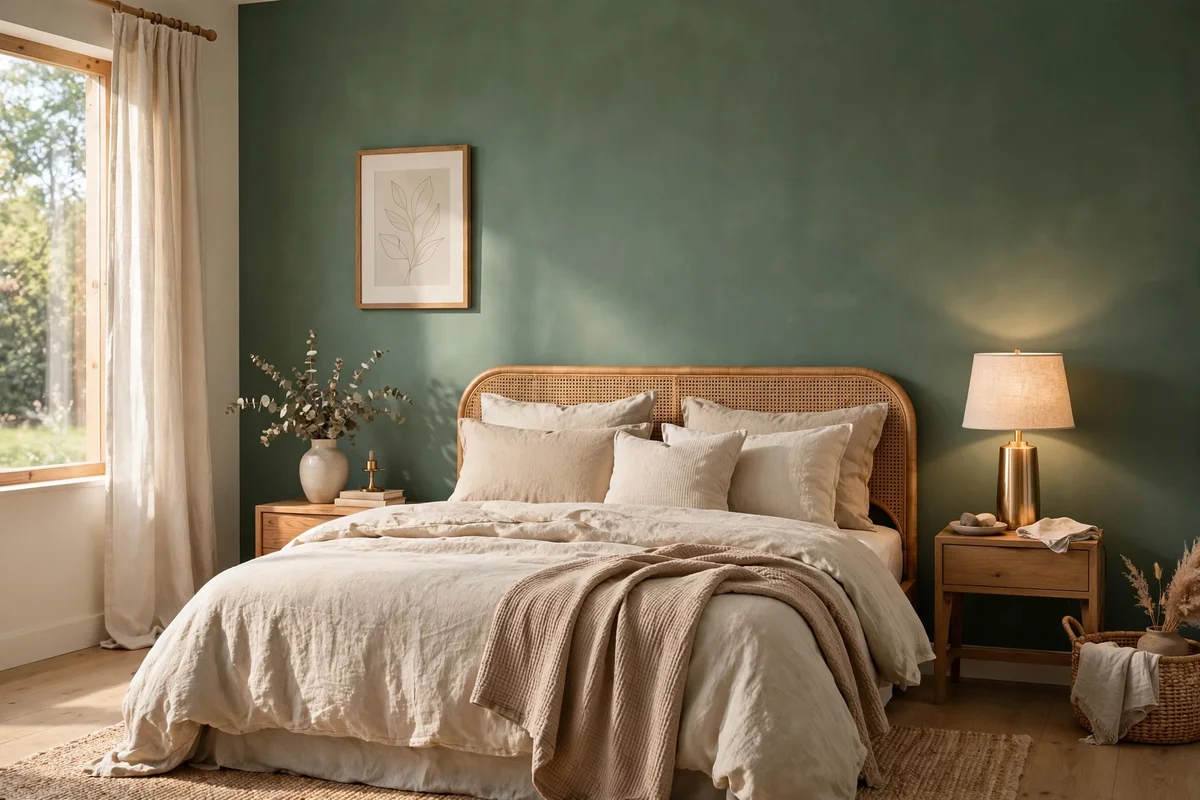
Flat paint in a hallway shows every scuff; high-gloss on imperfect walls highlights every bump — wrong sheen wastes both paint and effort. The fix: eggshell or satin for living areas and bedrooms (wipeable, forgiving, $35–$55/gallon), semi-gloss for trim and kitchens, flat only for low-traffic ceilings. The right finish makes budget paint look premium and lasts years longer, while the wrong one needs repainting in eighteen months. One extra $10 for the right sheen saves a $200 repaint.
Pro tip: Buy the best paint you can afford in the right finish — coverage is better, so you use fewer coats.
18. Buying Everything Brand New
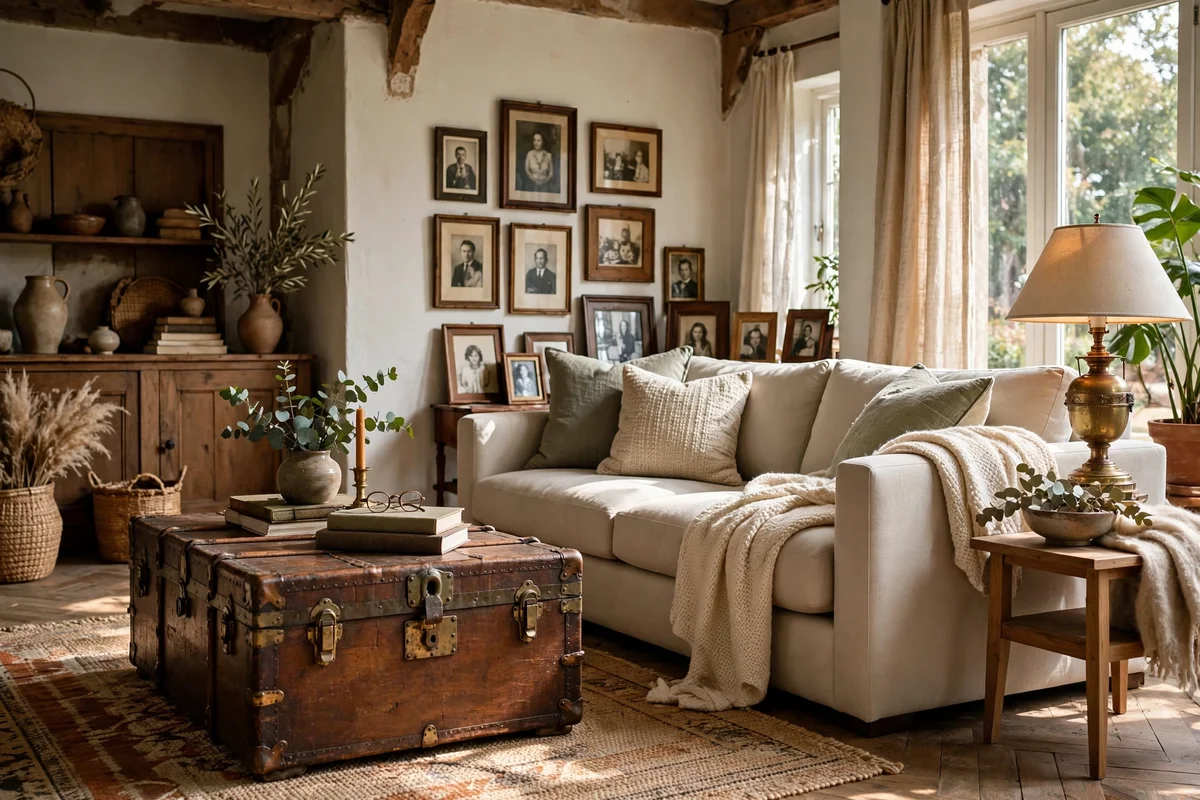
Insisting on new for every single item means paying full retail on things where used is identical — frames, vases, books, side tables. The fix: adopt the 50/50 rule. Buy new what touches your body daily (mattress, sofa cushions, towels) and go secondhand for everything else. Decorative objects, storage, lighting, and accent furniture are thrift-store gold. Mixing old and new also creates the layered look designers charge thousands for — pure-new rooms often look flat and soulless by comparison.
Pro tip: Estate sales in nice neighborhoods are the secret source — quality goods at garage-sale prices.
19. Ignoring Hardware Swaps
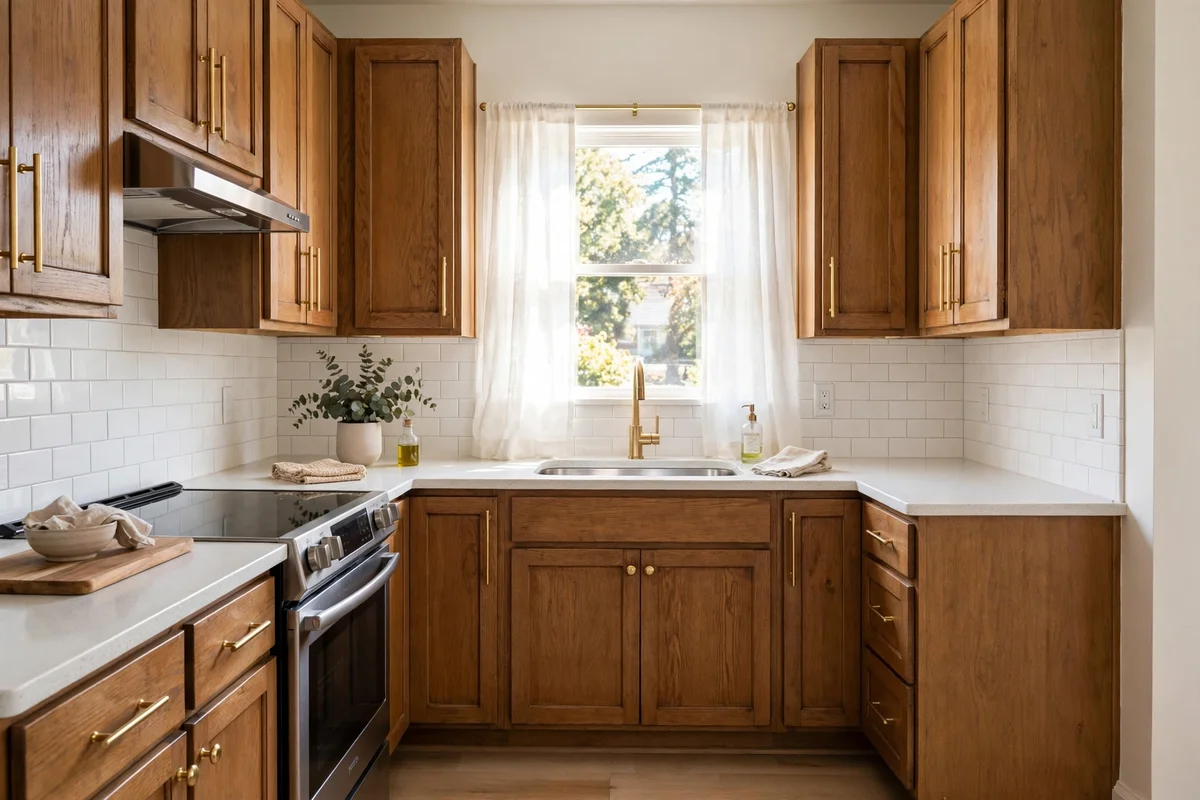
People replace entire $800 vanities or $2,000 kitchens when $40 of new knobs and pulls would have done the job. Hardware is jewelry for furniture. The fix: swap dated brass or plastic knobs for modern matte black or brushed brass pulls ($2–$5 each). A 10-drawer dresser transforms for $30; kitchen cabinets for $60–$100. It is a one-hour project with a screwdriver that delivers the highest visual ROI of any budget upgrade. Keep the old hardware in a bag for move-out day if you rent.
Pro tip: Buy one knob first to test the look and fit — hole spacing varies and returns are annoying.
20. Cheap Bedding That Looks Cheap
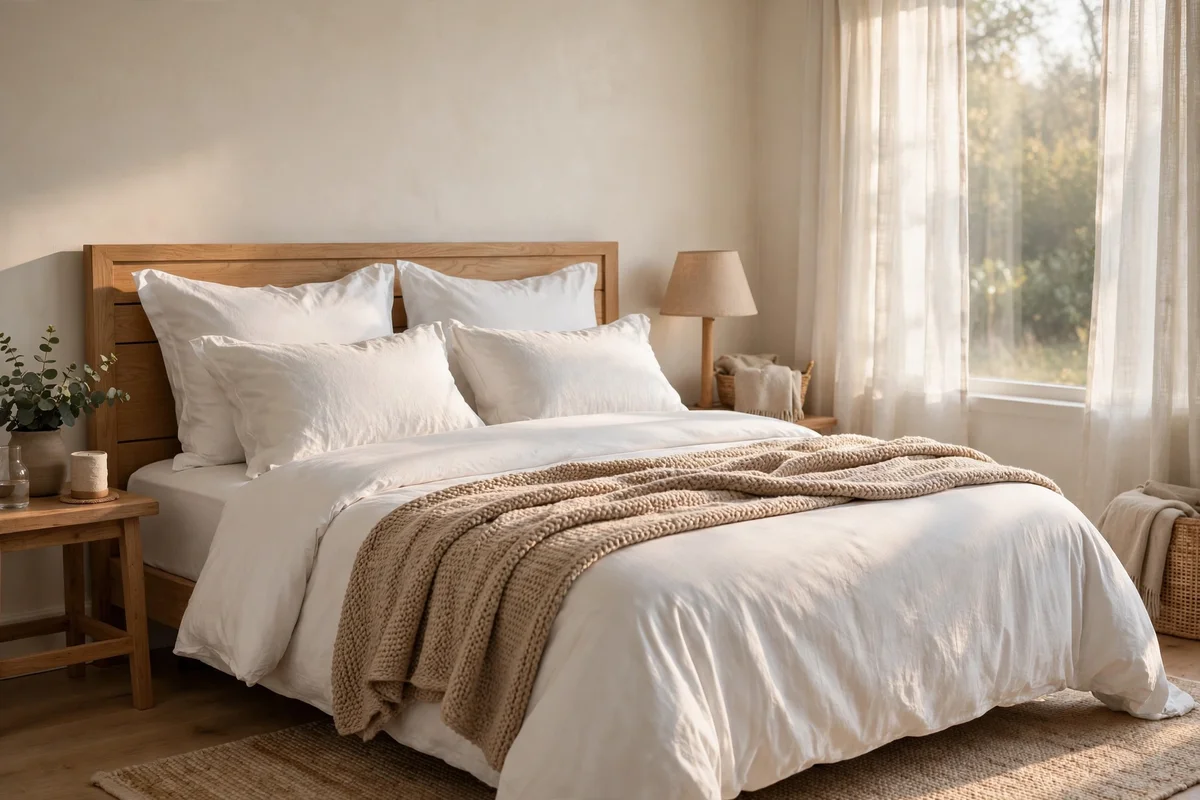
Shiny microfiber sheet sets and flat thin comforters make the whole bedroom feel budget — and you see your bed every single day. The fix: invest in bedding first, decor second. White cotton duvet cover ($40–$70), two extra sleeping pillows ($25 each), and a textured throw ($30) create a hotel look for around $150. Layering is the secret: flat sheets + duvet + folded throw + two sleeping pillows + two shams. Nobody guesses the price when the bed looks this inviting.
Pro tip: White bedding always looks expensive and every piece is bleachable — practical luxury.
21. Decorating With No Focal Point
Rooms where the eye wanders with nowhere to land feel chaotic — so people buy more decor trying to “fill” the unease, wasting money on clutter. The fix: choose one focal point per room (fireplace, big art, statement headboard, beautiful window) and arrange everything to support it. A $50 large-scale print becomes a focal point; a styled mantel costs almost nothing. Once the eye has an anchor, you need fewer objects, not more — restraint saves money and looks richer.
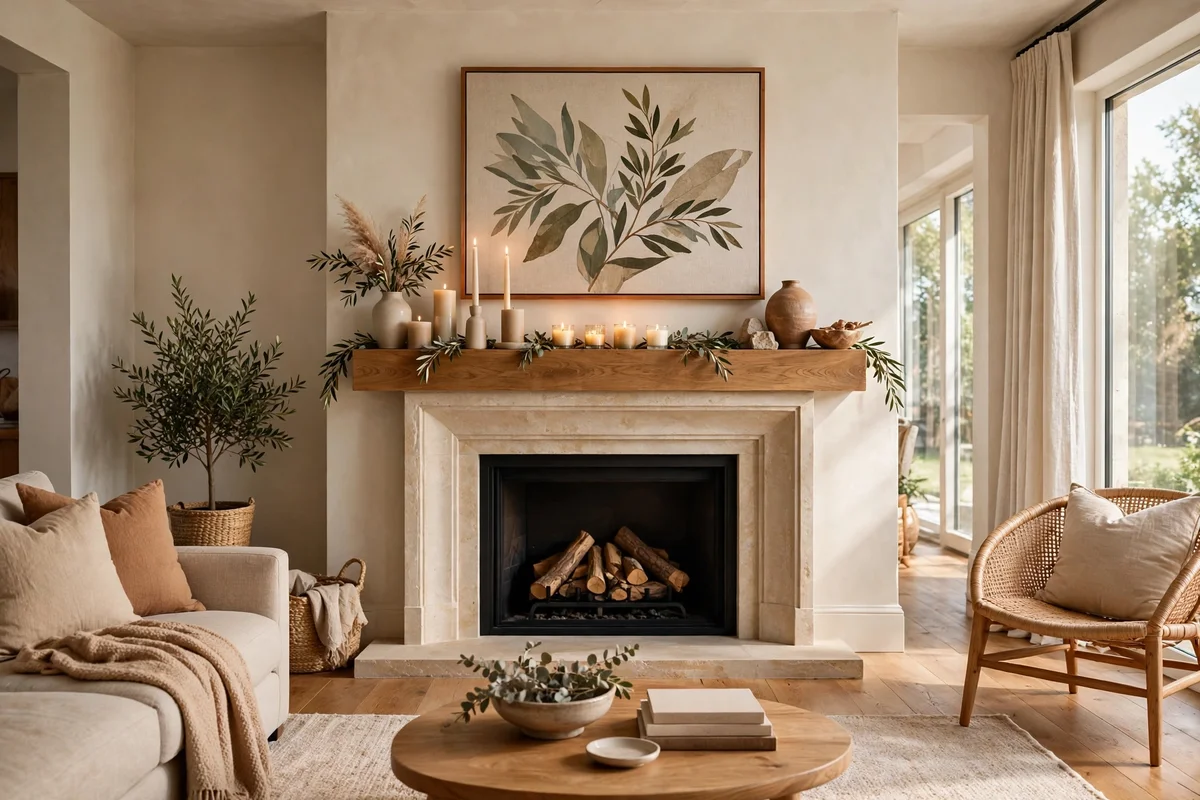
Pro tip: Stand in the doorway — the first thing your eye hits should be the focal point. Rearrange until it is.
22. Buying Decor Before Furniture
Loading up on cute throw pillows, candles, and wall signs before owning a proper sofa is decorating backwards — accessories cannot fix missing foundations. The fix: follow the order — furniture first, then rug, then lighting, then textiles, then decor last. Budget accordingly: roughly 60% furniture, 20% rug and lighting, 20% textiles and decor. A room with great bones and minimal decor always beats a room with great decor and bad bones. Patience here saves hundreds in regretted accessory purchases.
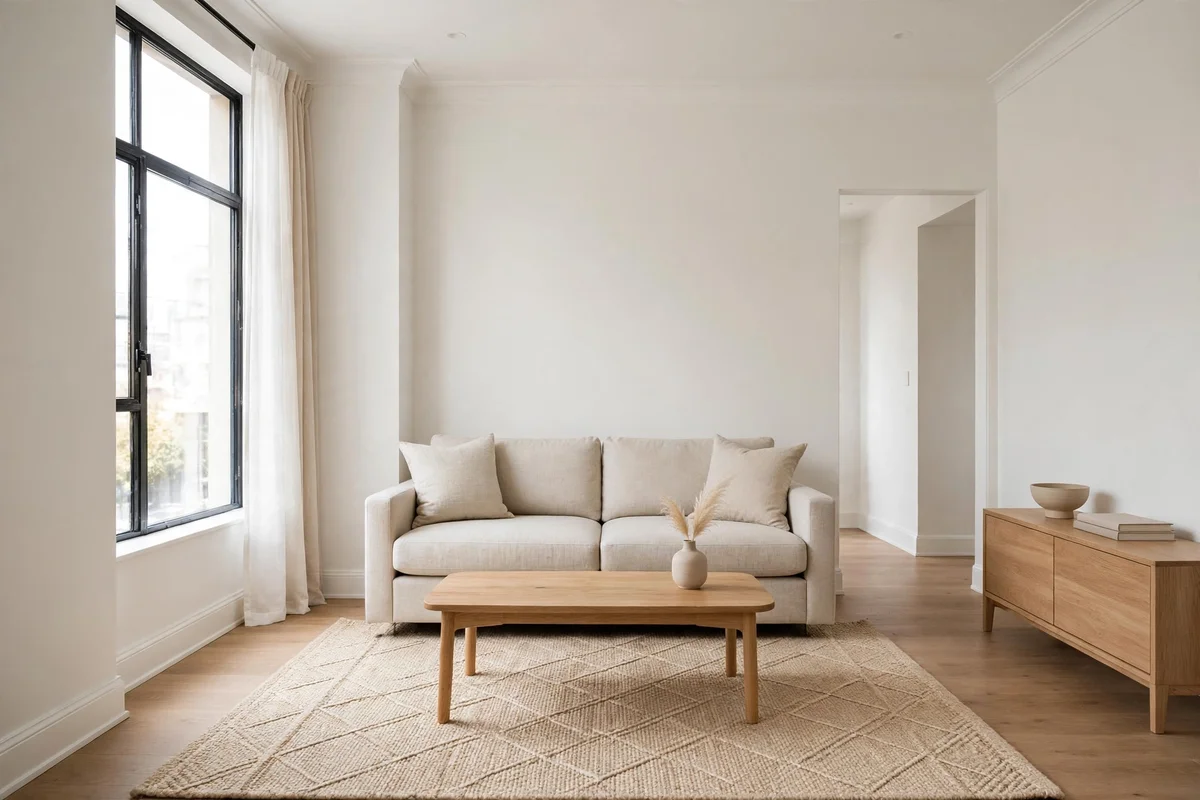
Pro tip: If you cannot sit, sleep, eat, and see comfortably, you do not need decor yet — you need furniture.
23. Ignoring Lighting Layers
One light source per room is the fastest way to make any space — budget or not — feel flat and unwelcoming. The fix: aim for three layers — ambient (ceiling or floor lamp), task (reading or desk lamp), and accent (candles, fairy lights, picture light). Total cost can stay under $80 with thrifted and discount finds. Layered warm light adds depth that makes inexpensive furniture glow. Check our entryway ideas for how one warm pendant changes a whole zone.
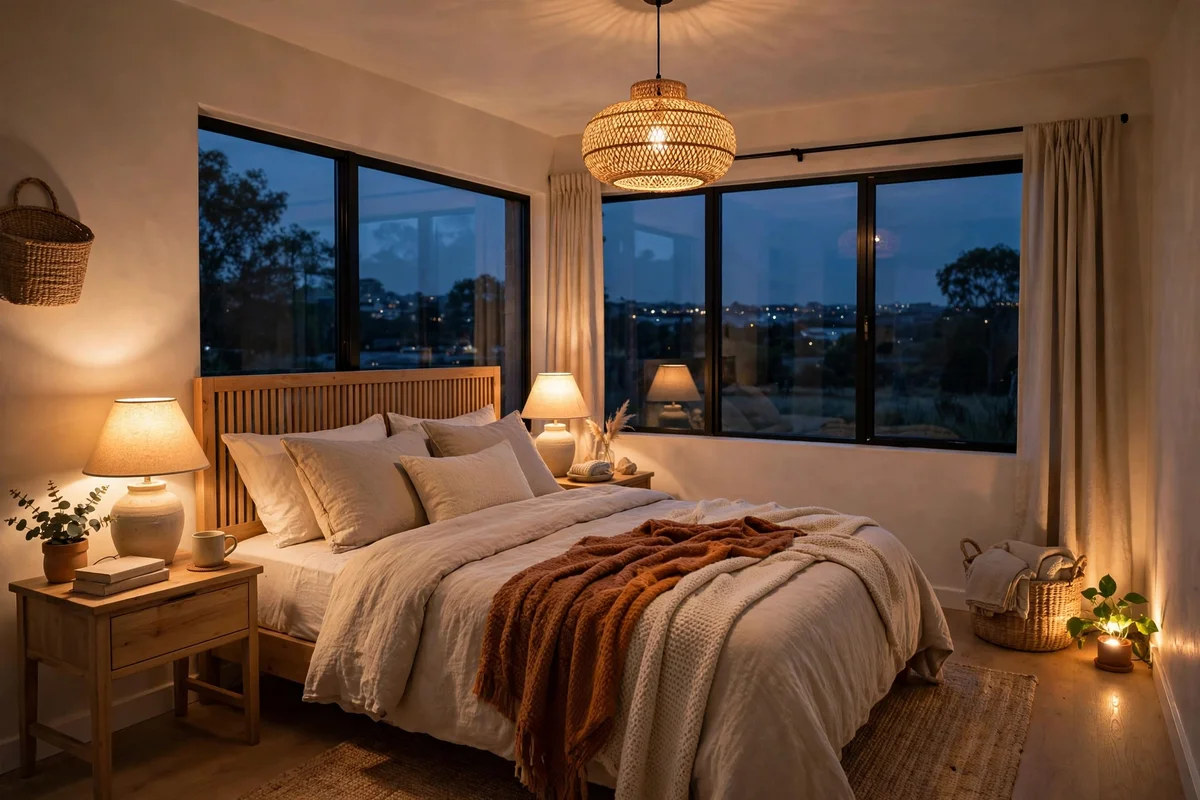
Pro tip: Never use the overhead alone in the evening — lamps on, overhead off is the designer rule.
24. Using Flimsy Cheap Frames
Warped plastic frames with wavy “glass” instantly cheapen whatever art is inside — even a beautiful print looks bad in a bad frame. The fix: buy simple solid frames and add mats. A $15 wood frame with a $5 white mat makes a $10 print look like $150 art. Buy frames in standard sizes (easier to find, cheaper) and print to fit. For gallery walls, using identical frames unifies thrifted art into a cohesive, expensive-looking display for under $100 total.
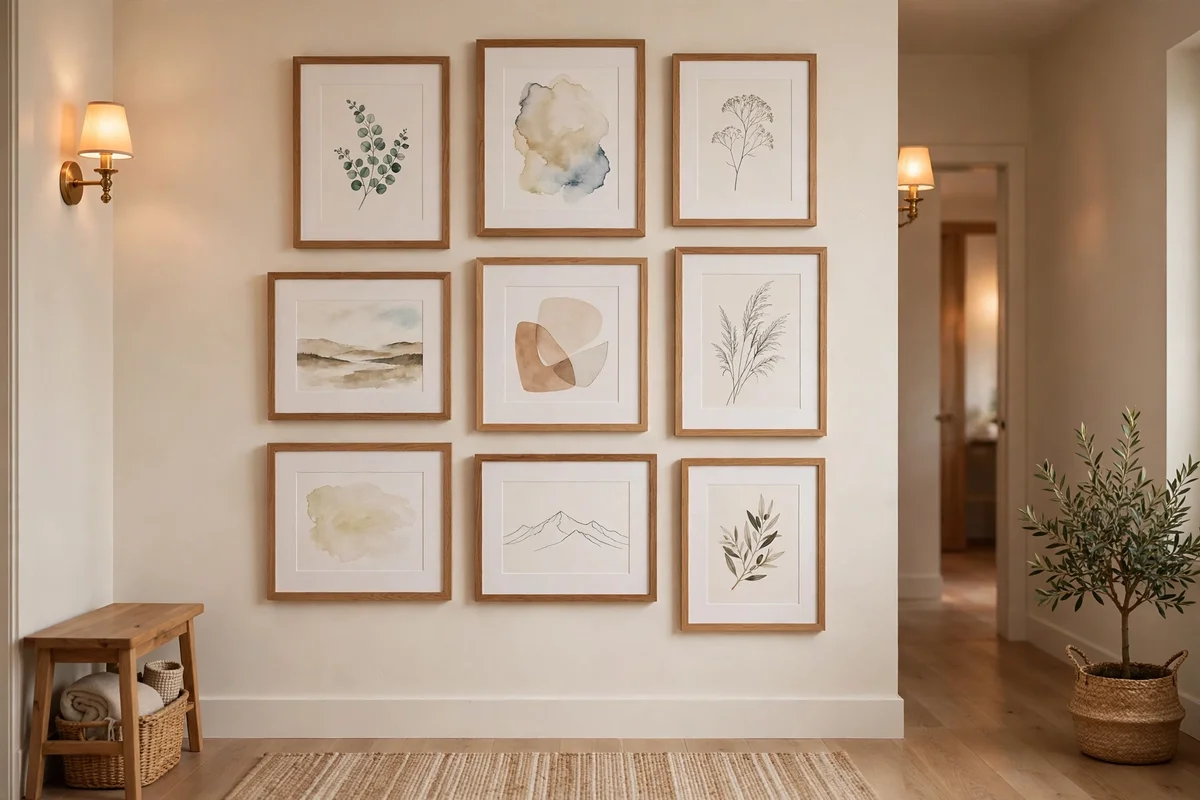
Pro tip: Thrift stores are full of solid wood frames for $3–$8 — spray paint unifies any mismatched set.
Smart Shopping — Getting More for Less
25. Not Shopping Your Own Home First
Before spending a dollar, most people are sitting on decor gold they have forgotten — art in closets, furniture in the wrong room, accessories boxed since the last move. The fix: “shop” every room and storage space first. Move the bedroom lamp to the living room, swap art between rooms, restyle shelves with books you own. Rearranging is free and often solves the “something is missing” feeling completely. Designers do this on every project before buying anything — it is called “using what you have,” and it saves $200–$500 per room refresh.
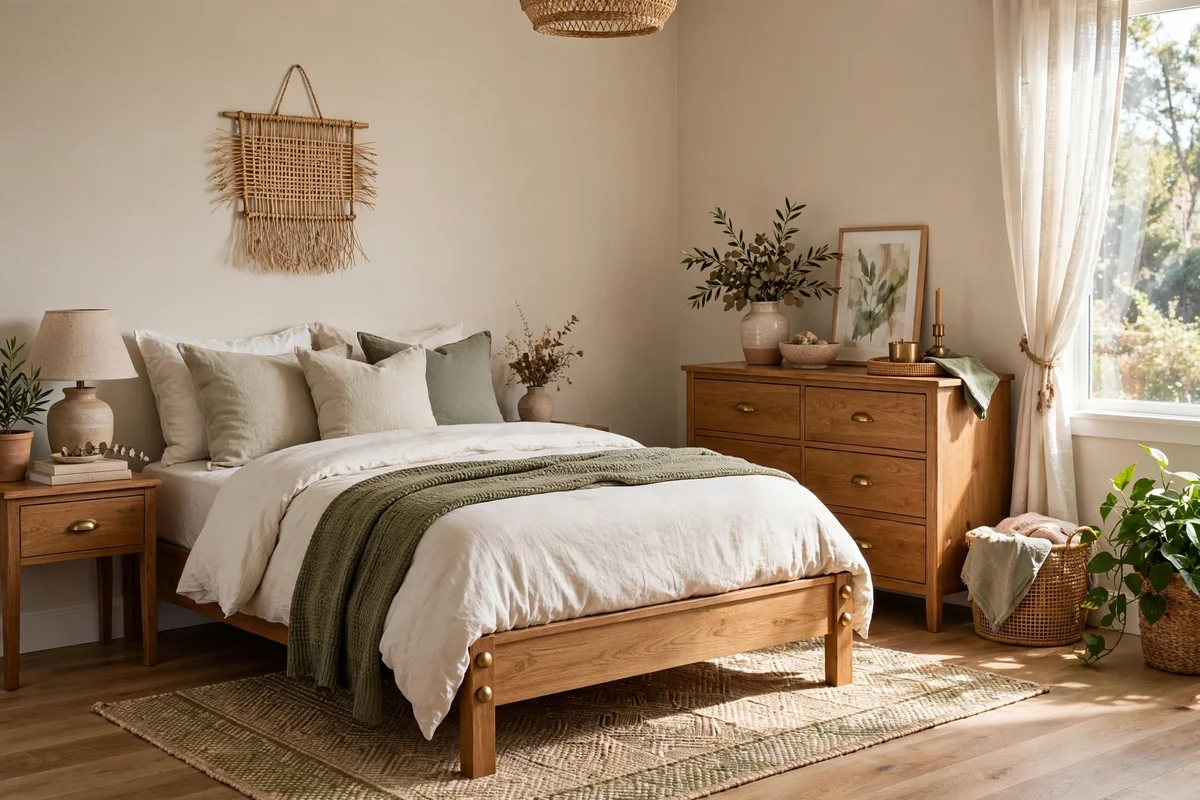
Pro tip: Photograph each room, then look at the photos — you will spot misplaced pieces instantly.
26. Buying Too Much Stuff
More decor does not mean better decor — overfilled shelves and crowded surfaces look cluttered, not rich, and every extra object cost money. The fix: edit ruthlessly. Remove half the small objects, keep only what you love or what serves the look, and give remaining pieces breathing room. A $15 vase alone on a shelf looks intentional; five $15 vases crowded together look like a gift shop. Fewer, better-chosen pieces photograph beautifully and cost less — minimalism is the ultimate budget strategy.
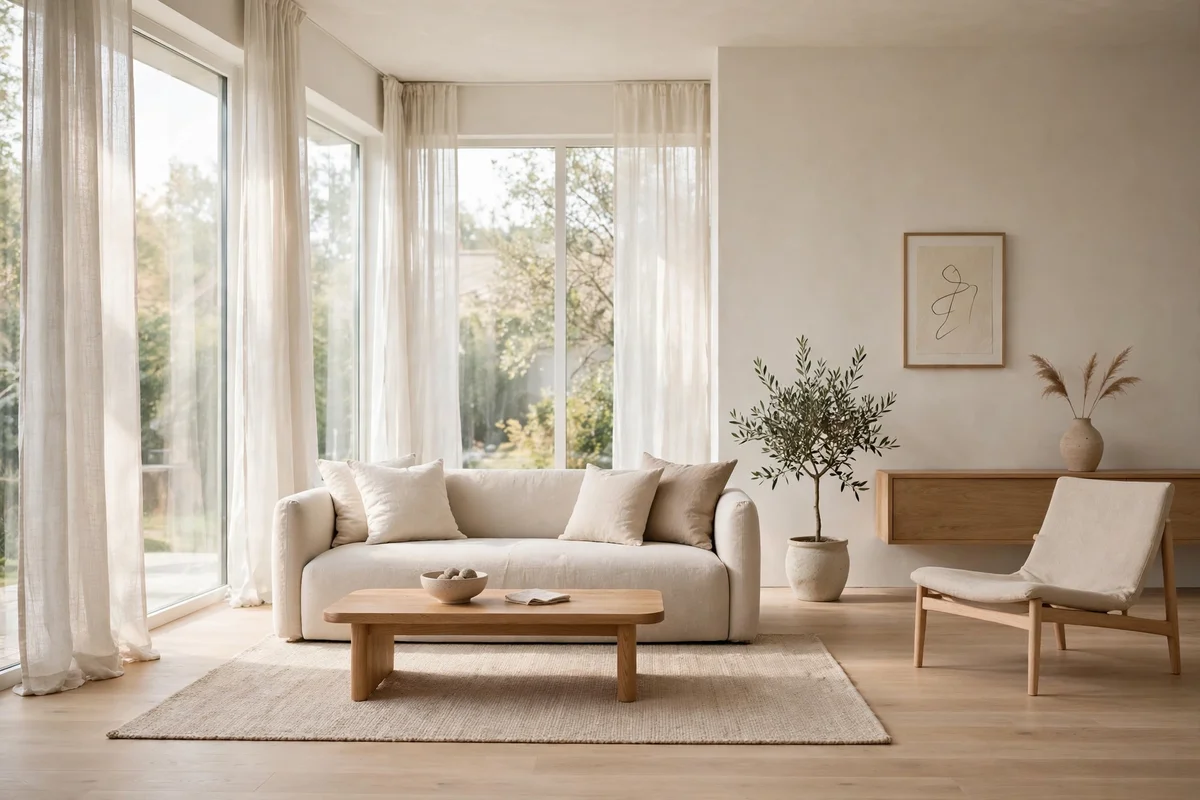
Pro tip: The box test — pack away half your decor for two weeks; only bring back what you actually miss.
27. Never Waiting for Sales
Buying at full price when the same item goes 30–50% off predictably is just donating money to retailers. The fix: learn the sale calendar. Furniture: January and July clearance, Memorial Day and Labor Day weekends. Rugs: constant rotating sales — never pay sticker. Lighting and decor: end-of-season clearance. Sign up for price alerts and wait 2–4 weeks for big purchases. Patient shoppers routinely save 30–40% on identical items, which on a $2,000 room budget is $600–$800 back in your pocket.
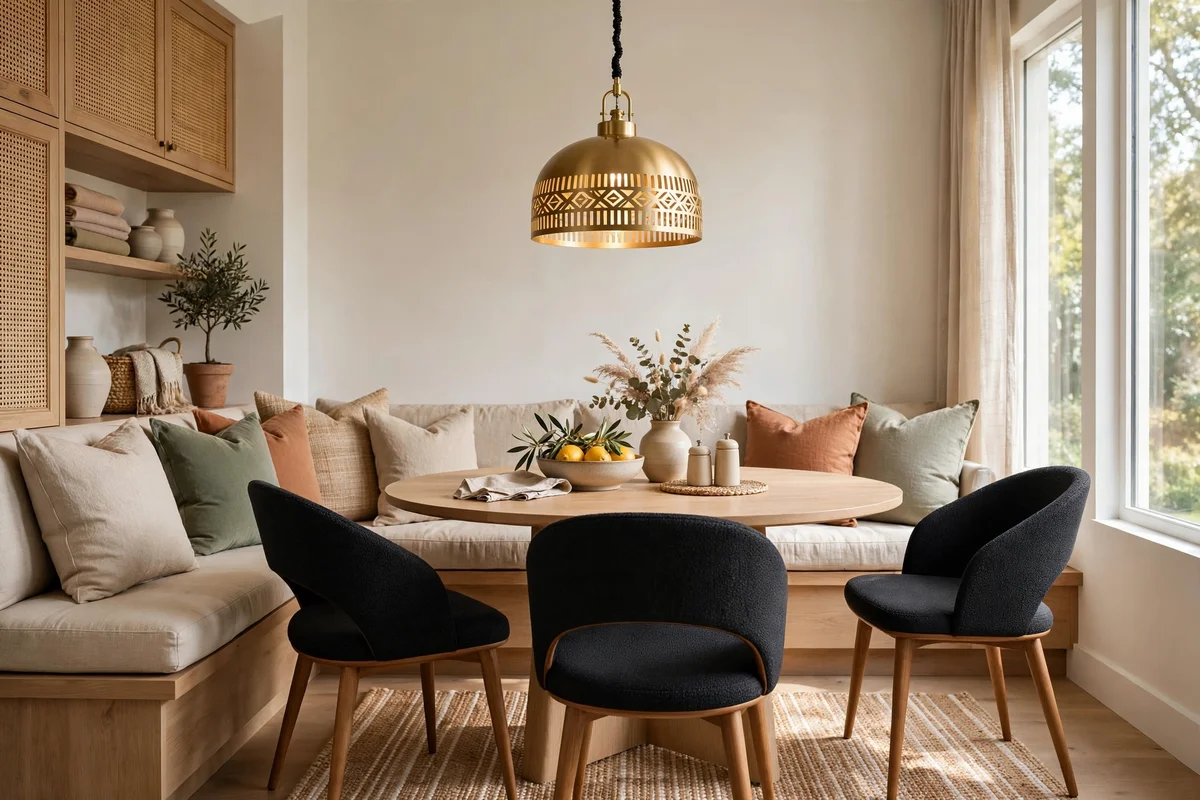
Pro tip: Ask about floor models and open-box items — often 40–60% off with tiny, invisible flaws.
28. Buying the Wrong Sofa
The sofa is the most expensive single purchase in most rooms — and the most regretted. Too big overwhelms, too cheap sags within a year, wrong color limits everything. The fix: choose a mid-range sofa ($700–$1,200) in a neutral performance fabric, with removable washable covers if possible. It is the workhorse everything else coordinates with. A good sofa lasts 8–10 years; a bad one gets replaced in three, doubling your cost. Measure twice, sit-test in store, and never buy a sofa you have not sat on.
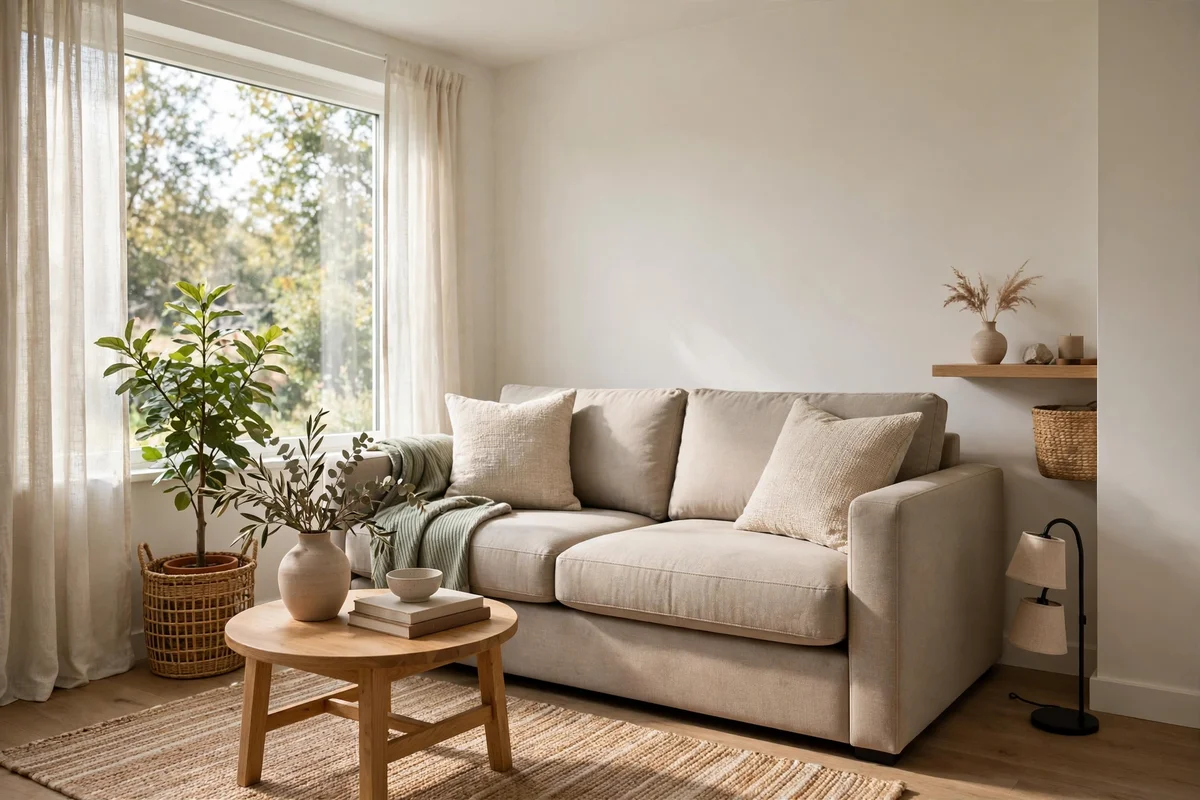
Pro tip: Kiln-dried hardwood frame + high-density foam is the durability combo — ask before you buy.
29. Ignoring Texture (the Flat Cheap Look)
Rooms decorated only in smooth, flat surfaces — sleek sofa, flat rug, bare walls — read as cheap no matter the price tags. Texture is what makes spaces feel rich. The fix: layer at least four textures per room. Chunky knit throw ($30), woven basket ($20), velvet cushion ($18), jute rug ($60), linen curtains ($40). Mixed textures catch light differently and create the visual richness people associate with expensive design. It is the cheapest luxury in decorating — under $150 transforms a flat room completely.
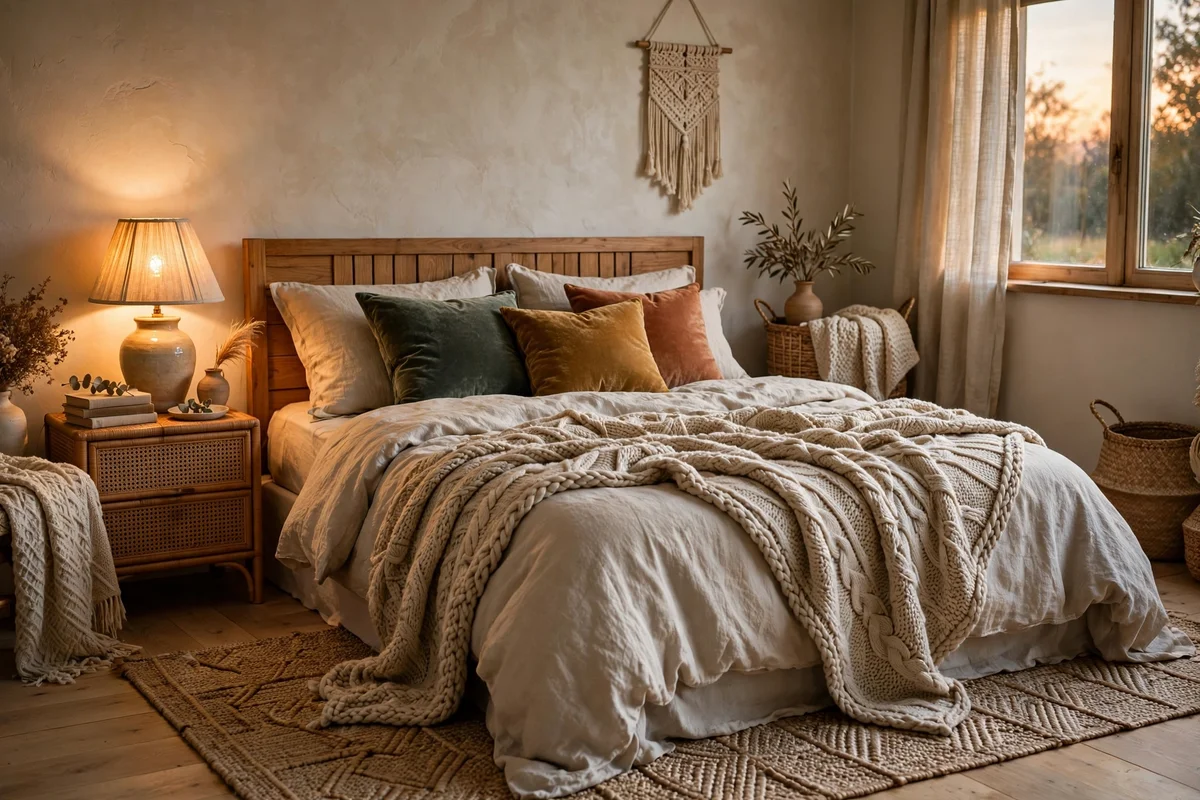
Pro tip: Touch everything before buying — if it all feels the same, your room will look the same.
30. Wasting Money on Disposable Seasonal Decor
Buying a whole new set of plastic pumpkins, tinsel, and themed signs every season is a slow budget bleed — $50–$100 four times a year adds up to $400 annually for landfill fodder. The fix: invest in reusable natural seasonal decor. Dried stems, real pumpkins, pinecones, candles, and neutral textiles work year after year. A $60 collection of timeless fall pieces used for five years costs $12/year versus $75/year for disposable sets. Store them properly in labeled bins and they become a tradition, not trash.
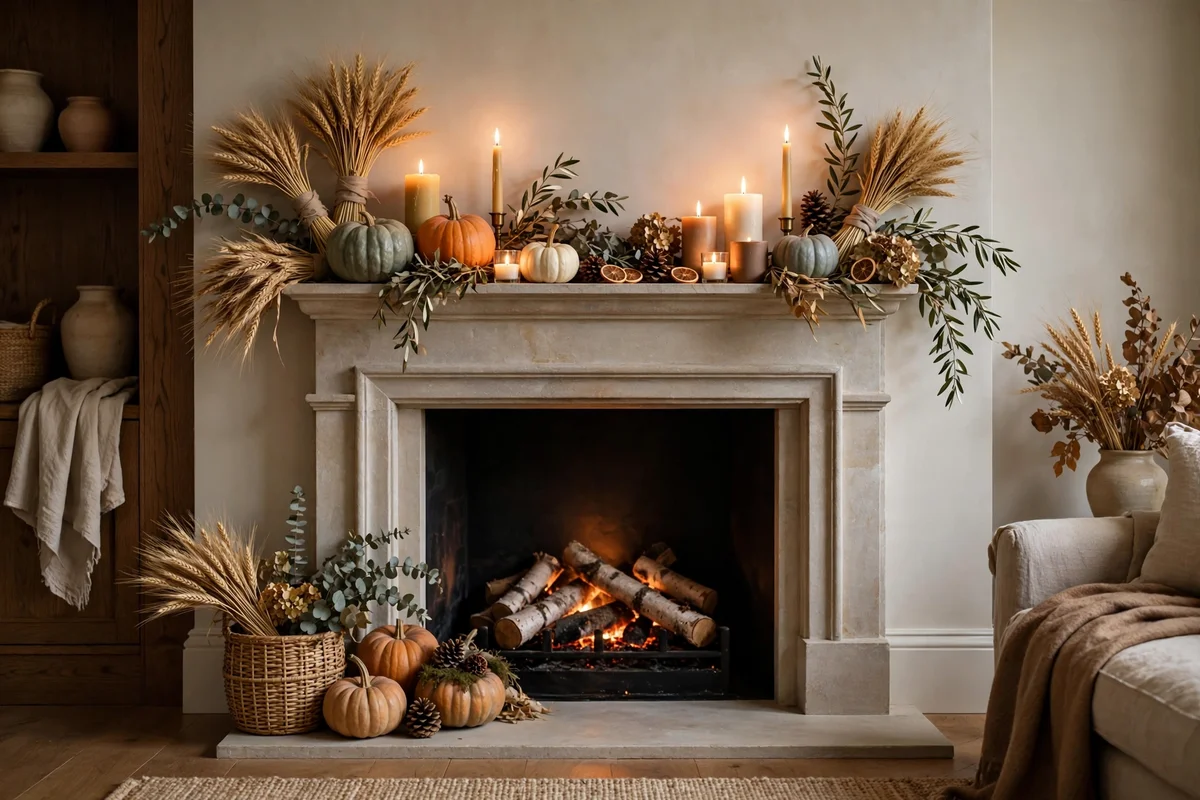
Pro tip: Shop seasonal decor the week after the holiday — 70–90% off for next year’s reusable pieces.
31. Skipping a Mood Board (Impulse Buying)
Without a visual plan, every store trip becomes a gamble — pieces that looked great alone clash at home, leading to returns and regrets. The fix: make a free mood board before buying. Use Pinterest, Canva, or a physical board with paint chips and fabric swatches. Seeing everything together reveals clashes before money changes hands. Ten minutes of planning prevents $200 of “it does not go with anything” mistakes. Cohesion is what separates designed rooms from random collections — and it costs nothing.
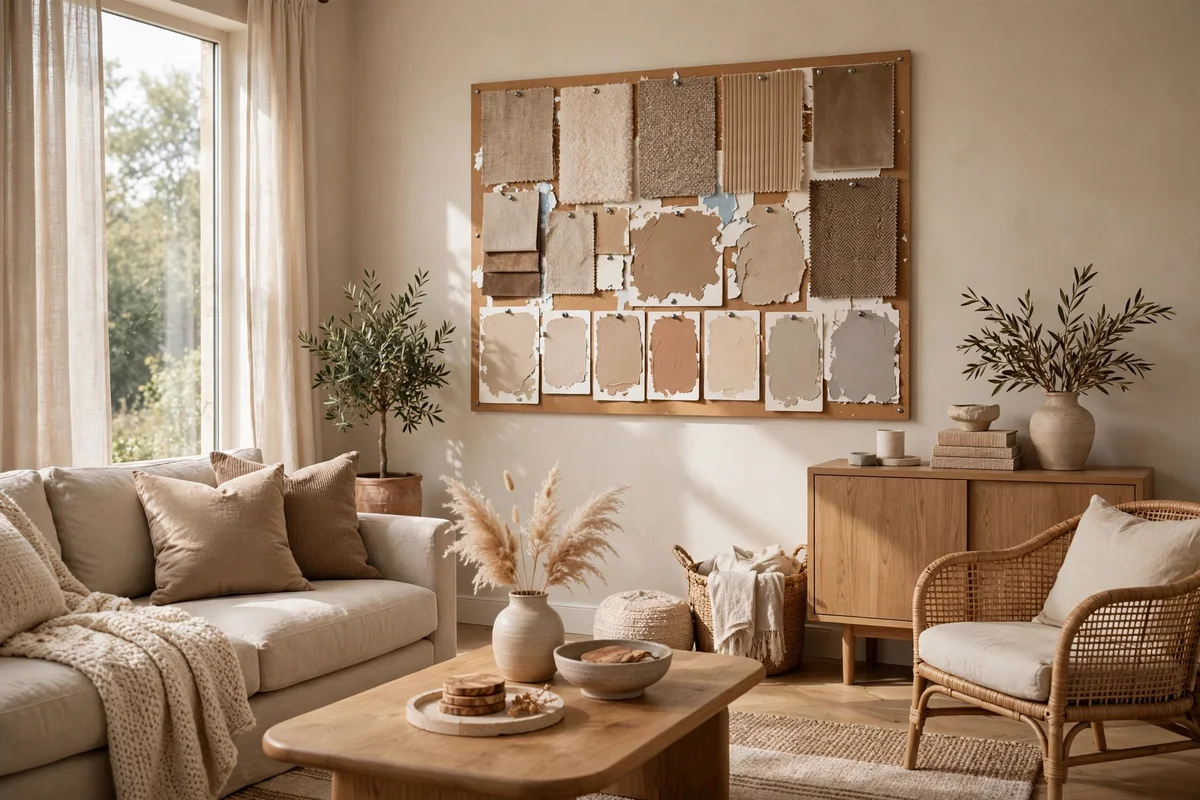
Pro tip: Photograph items in-store against your mood board colors before buying — instant compatibility check.
32. Buying Cheap Mirrors That Distort
Thin, wavy discount mirrors distort reflections and look visibly cheap — the opposite of the space-expanding effect you wanted. The fix: buy mirrors with real glass thickness (look for weight — heavy is good) in simple frames. A $80–$150 quality mirror doubles light and space convincingly; a $30 wavy one just looks wrong. Check reflections from an angle in-store. One good large mirror beats three cheap small ones, and it is one of the few decor items where spending a bit more pays off visibly every day.
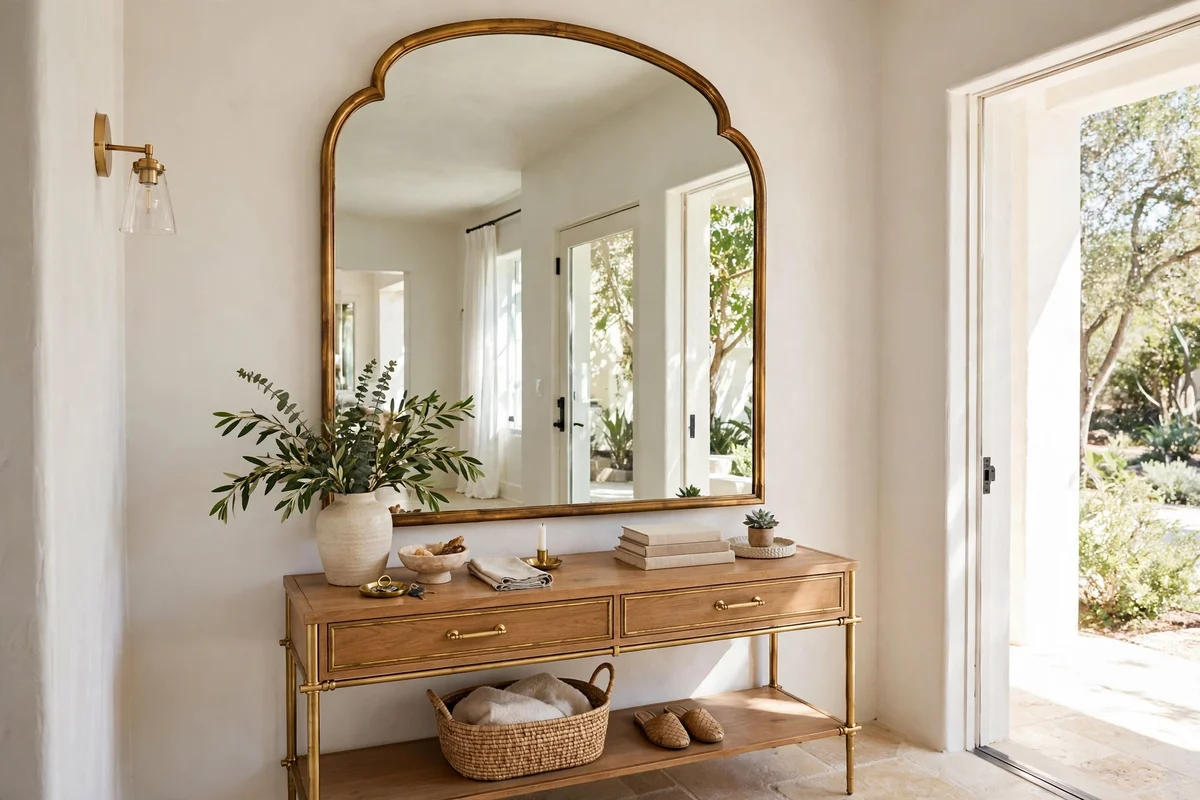
Pro tip: The angle test — view the mirror from 45 degrees; ripples and waves reveal themselves immediately.
33. Never Negotiating or Price-Matching
Most people pay sticker price on everything, leaving 10–20% on the table — especially on furniture, rugs, and at independent stores. The fix: always ask. “Is this the best price?” works at local shops, on floor models, and for minor flaws. Many big retailers price-match competitors — a five-minute chat or phone call can save $50–$200 on large items. On Marketplace and at estate sales, polite offers 15–20% below asking are expected and routinely accepted. Negotiation is free money most decorators leave behind.
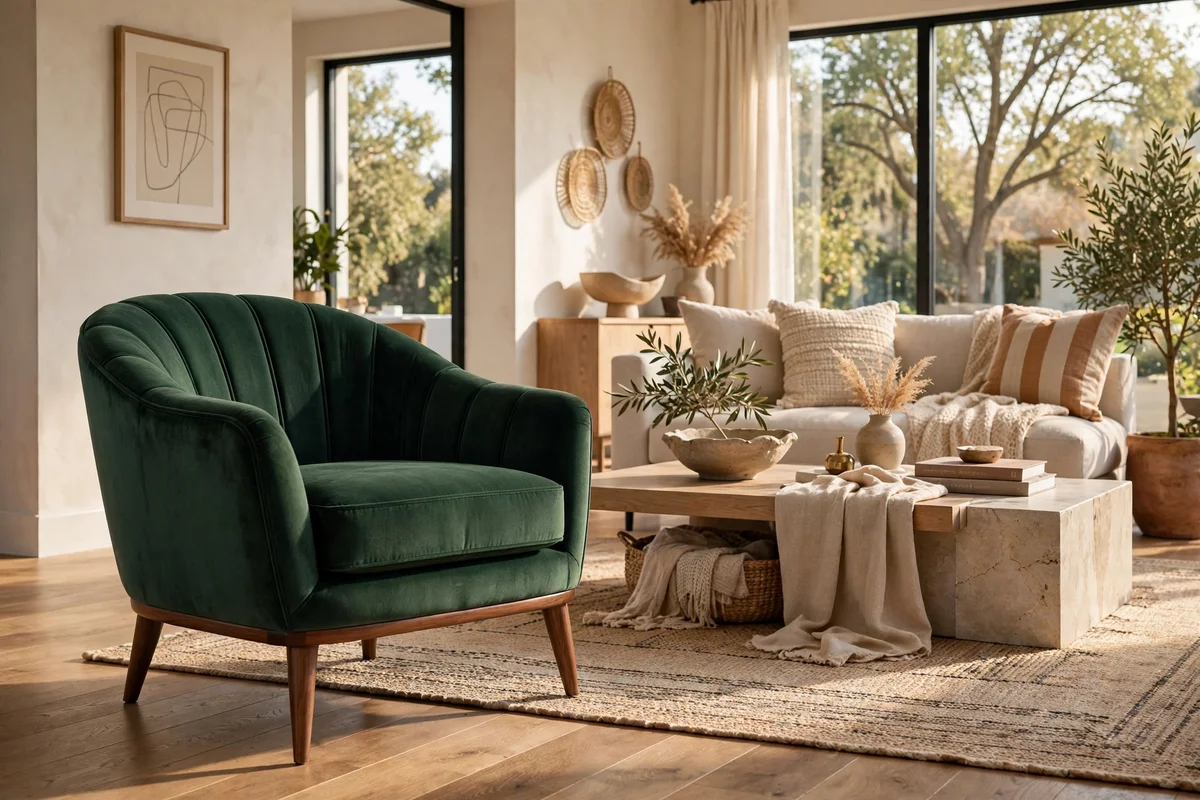
Pro tip: Bundle negotiating — buying rug + lighting + decor together gives you leverage for a package discount.
34. Forgetting Cost-Per-Use Math
The final budget mistake: judging everything by sticker price instead of cost per use. A $900 sofa used daily for 10 years costs 25 cents a day; a $200 trendy chair used twice costs $100 per sit. The fix: divide price by expected years of daily use before buying. Spend generously on high-use items (sofa, mattress, dining chairs) and go ultra-budget on rarely-touched decor. This single mental shift stops both overspending and under-spending — you buy right, once, and the per-day cost of a beautiful home drops to pocket change.
Pro tip: Write the per-day cost on a sticky note and put it on big purchases for one week — clarity kills regret.
Quick Fixes You Can Do This Weekend (Under $100)
Do not wait for a full renovation — these five moves deliver the biggest budget impact in a single weekend: 1) Paint one accent wall ($50). 2) Swap all bulbs to warm 2700K and add one thrifted lamp ($35). 3) Hang curtains high, wide, and floor-length ($40). 4) Declutter surfaces and style what remains with breathing room (free). 5) Add three plants in thrifted pots ($40). Total: under $165 for a room that looks completely redesigned. Start with the room you see first when you walk in — momentum matters more than perfection.
Frequently Asked Questions
What is the biggest budget decorating mistake?
Buying cheap furniture that needs replacing — the “buy twice” tax. A $120 particleboard dresser replaced three times costs more than one $400 solid-wood piece that lasts 15 years. Always weigh lifespan against sticker price, especially for high-use items like sofas, mattresses, and dressers.
How can I decorate on a really tight budget?
Start with free moves: rearrange furniture, shop your own home, and declutter. Then spend on the highest-ROI items: paint ($50), proper curtains ($40), warm lighting ($60), and plants ($40). Under $200 total transforms most rooms. Thrift stores and Facebook Marketplace cover furniture at 10–20% of retail.
Is it better to buy cheap now and upgrade later?
Only for low-wear items like side tables and decor. For daily-use pieces (sofa, bed, dining chairs), cheap-now costs more long-term through replacements. The sweet spot: buy the best quality you can afford for high-use items, go ultra-budget on everything else, and upgrade decor gradually.
How do I make cheap furniture look expensive?
Four tricks: right-size rug underneath it, warm layered lighting around it, plump quality textiles on it, and new hardware if it has any. Paint unifies mismatched pieces. These styling moves matter more than the furniture’s price tag — designers use them on $200 and $2,000 pieces alike.
Should I hire a designer on a budget?
A one-hour consultation ($75–$150) can save multiples of that by preventing expensive mistakes — wrong sofa size, bad paint color, poor layout. Many designers offer e-design plans for $200–$400 per room. If your total budget exceeds $2,000, professional guidance usually pays for itself in avoided errors.
What should I never skimp on?
Five things: your mattress, your sofa (if you sit daily), paint quality, lighting (warm bulbs and enough sources), and anything safety-related (stable shelving, proper mounting hardware). Everything else — decor, side tables, art, seasonal items — is fair game for extreme budgeting, thrifting, and DIY.
Final Thoughts
Budget decorating is not about spending as little as possible — it is about spending right. Every mistake on this list has the same root cause: rushing, skipping the plan, or judging by sticker price instead of true cost. Slow down, measure twice, thrift boldly, paint bravely, and let texture and light do the heavy lifting. The most beautiful rooms are rarely the most expensive ones; they are the most intentional ones. Start with one weekend fix, feel the difference, and let momentum carry you through the rest. Your wallet — and your home — will thank you.