32 Retro Living Room Ideas for Fun Vintage Vibes
32 Retro Living Room Ideas for Fun Vintage Vibes
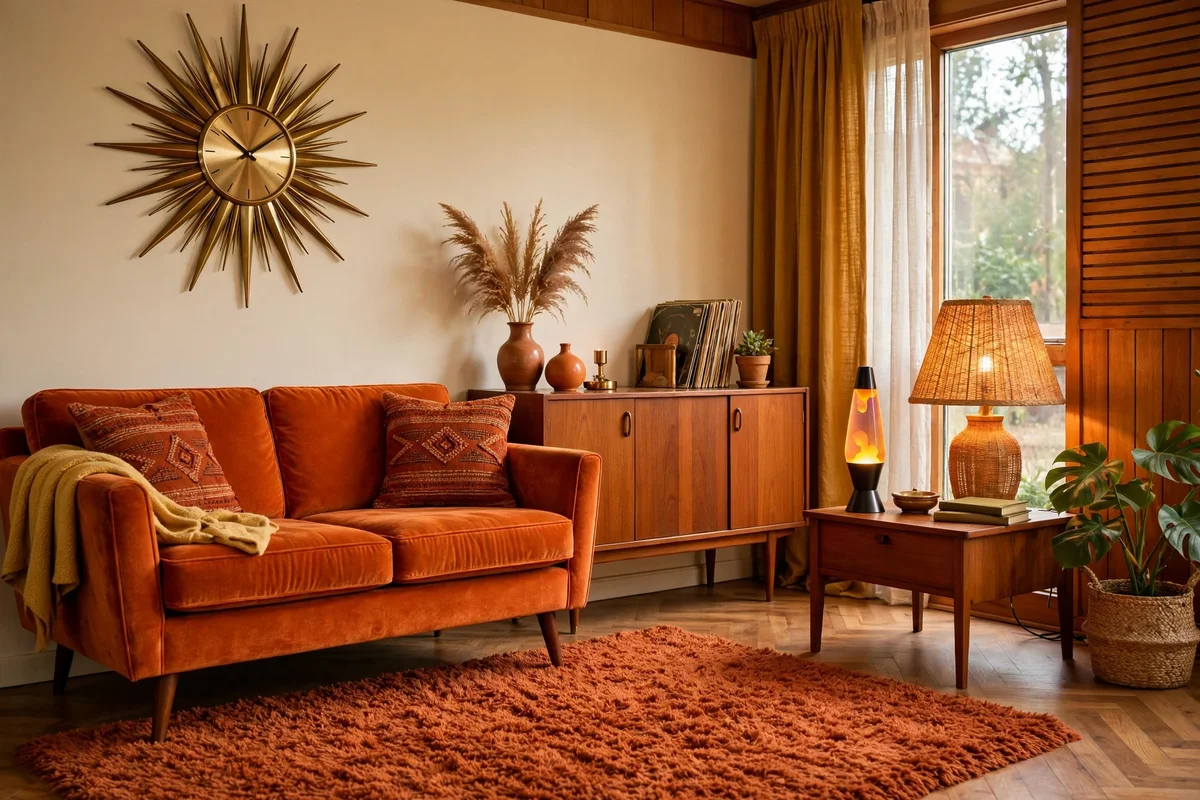
There is a special kind of joy that lives inside a retro living room, the kind that hits you the second the needle drops on a vinyl record or the lava lamp warms up in the corner. Retro style is not about copying the past museum-style. It is about borrowing the boldest, happiest ideas from the 1950s through the 1980s and letting them loose in a modern home. Think sunburst clocks over atomic-age sofas, harvest gold next to avocado green, and a jukebox glowing in the corner while friends argue about which decade had the better parties. This guide rounds up 32 retro living room ideas with real prices, pro tips, and decorating tricks that keep the look fun instead of frumpy. Whether you go full 70s lounge or just add one starburst mirror, these ideas will bring vintage energy, warm color, and serious personality into your living room without turning it into a theme park.
Section 1: Iconic Walls and Statement Pieces (1-8)
1. Hang a Sunburst Clock as the Room’s Crown Jewel
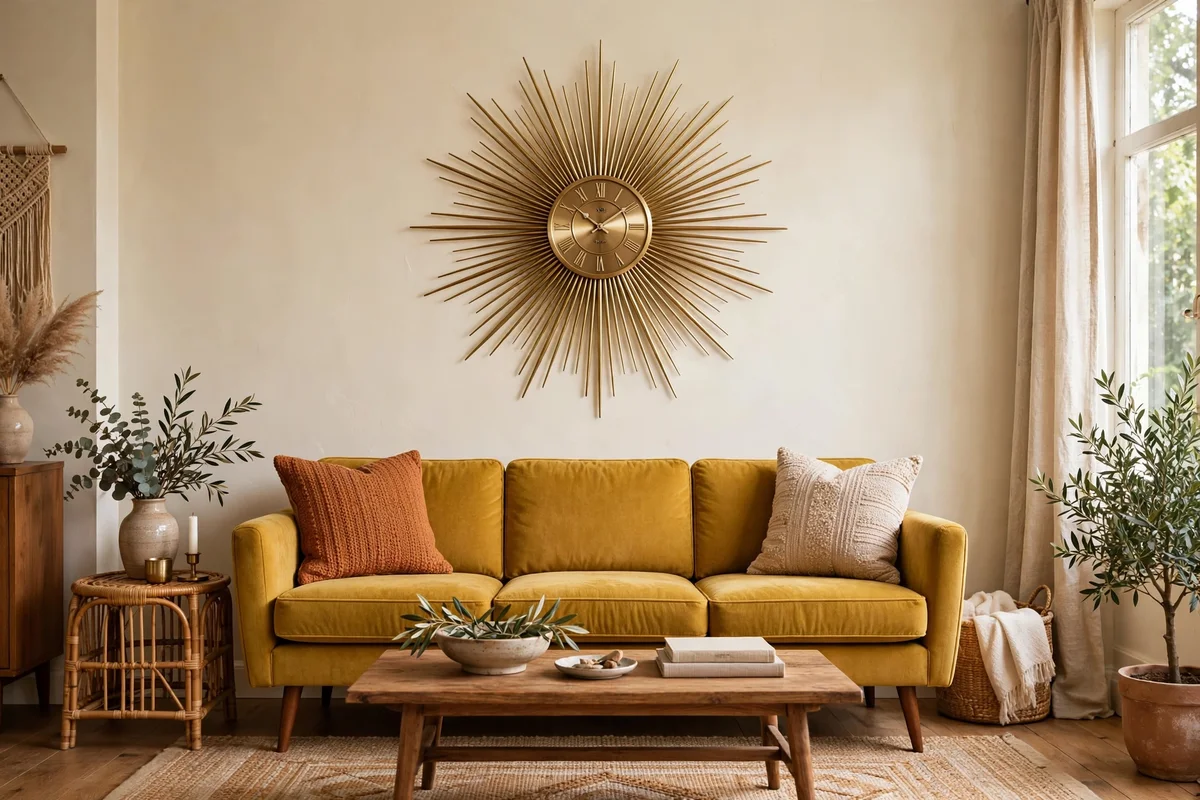
Nothing says retro faster than a sunburst clock with brass rays fanning out across the wall, and it works because the shape reads as pure 1960s optimism from across the room. Mount it centered above your sofa or mantel, roughly 8 to 10 inches above the furniture line, and let it anchor the whole wall. Authentic mid-century versions from makers like George Nelson run $200 to $600 on vintage sites, while solid reproductions cost $45 to $120 and look convincing once hung. Pair it with a warm neutral wall color like cream or soft sage so the brass rays pop, and keep surrounding art minimal so the clock keeps its star power. If your ceilings are low, choose a medium 18-inch diameter rather than a giant 30-inch one, since oversized rays can crowd a compact wall. For a similar vintage-meets-modern energy, our mid-century modern bedroom ideas show how starburst shapes work in sleep spaces too.
Pro tip: Hang the clock at eye level in a spot you see from the entryway, since it doubles as a cheerful welcome sign for guests.
2. Choose an Atomic-Age Sofa With Tapered Legs
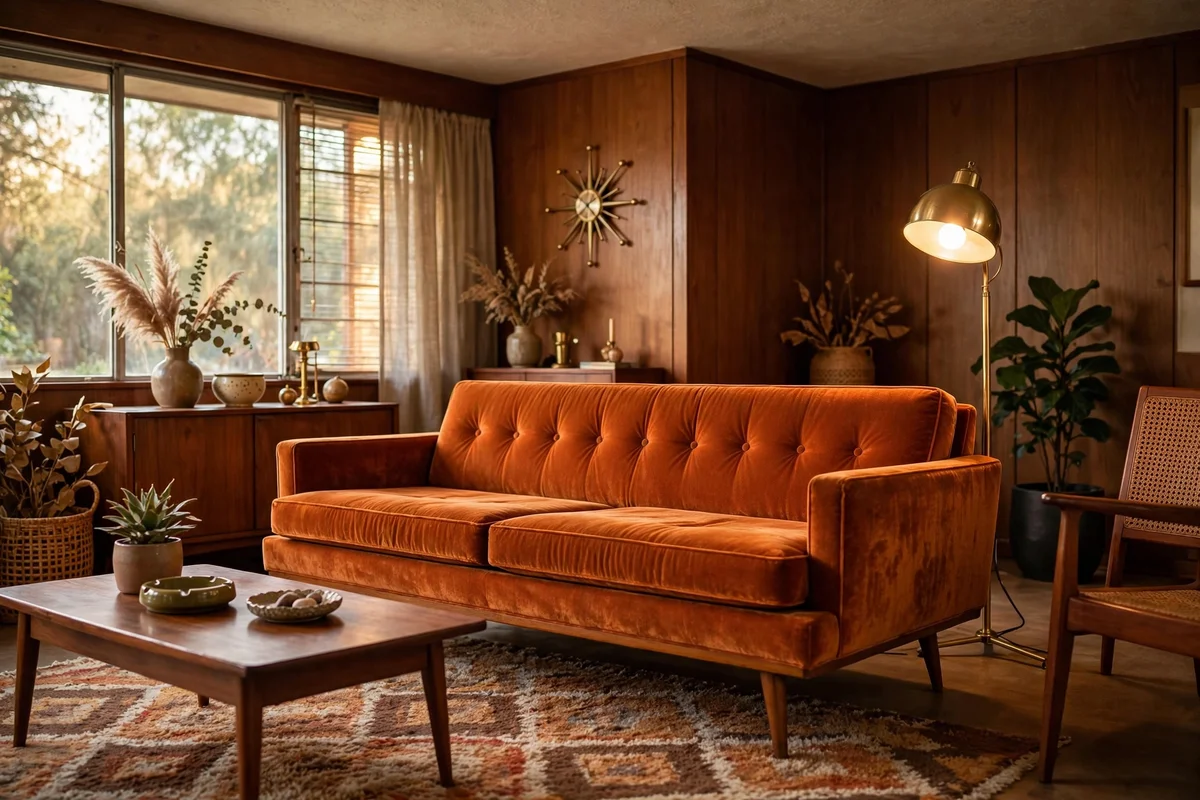
The low-slung atomic-age sofa is the backbone of any retro living room, with its clean lines, button tufting, and peg legs that show off the floor underneath. Look for one in a punchy period color like burnt orange, mustard, or teal velvet, because a neutral sofa wastes the era’s best feature: fearless color. Vintage sofas in good condition run $400 to $1,200 depending on the maker, while quality reproductions cost $700 to $1,500 and arrive with fresh foam. Check that the seat depth suits your household, since many 60s sofas sit shallow at 20 inches, which works for upright chatting but less for napping. Add two contrasting throw pillows, maybe a geometric print and a solid velvet, to break up a single bold color. Keep the coffee table kidney-shaped or oval to echo the sofa’s curves, and your seating area will feel like a set from a classic variety show.
Pro tip: Sit-test any vintage sofa for at least five minutes, because 60-year-old springs can be charming to look at and brutal to sit on.
3. Turn a Vinyl Console Into a Music Shrine
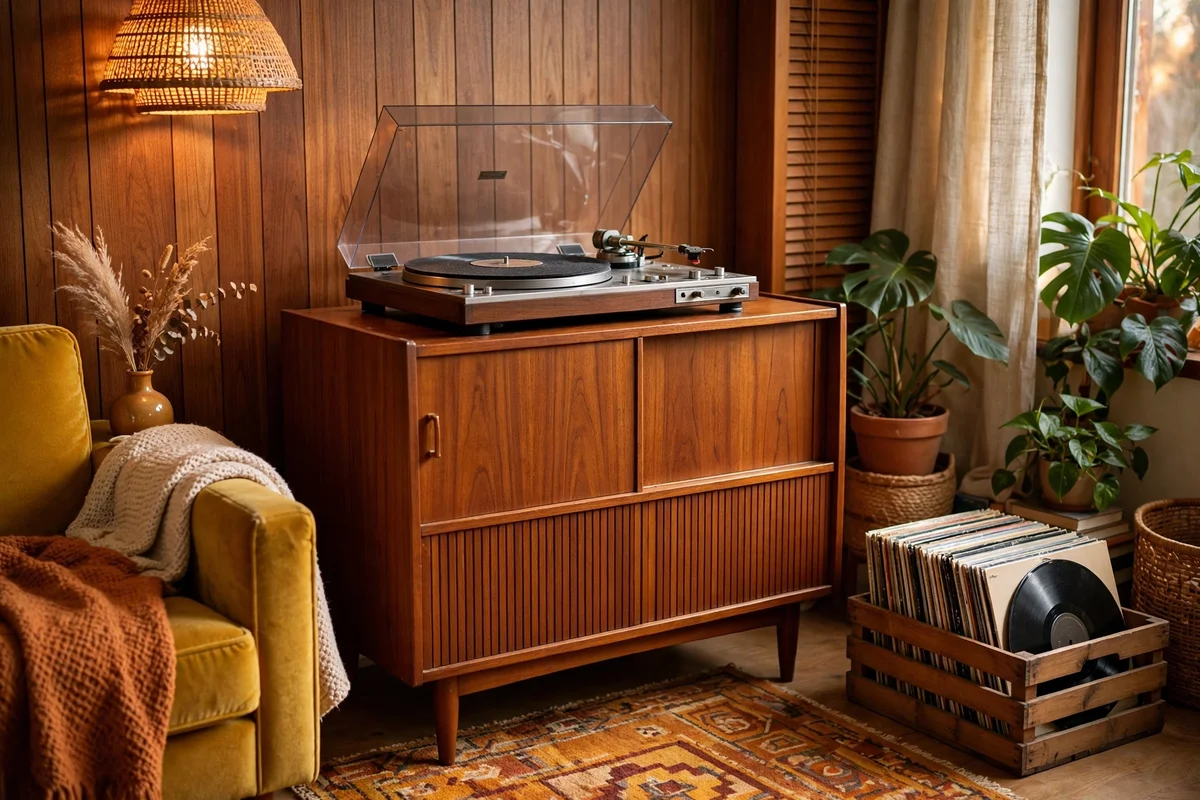
A teak vinyl console with a turntable on top is both furniture and entertainment, and it tells guests exactly what kind of house this is before anyone says a word. Hunt thrift stores and estate sales for consoles in the $75 to $250 range, then budget $50 to $150 for a basic belt replacement and cleaning so it actually plays. If you prefer new, record cabinets with built-in storage run $180 to $450 and pair well with a modern turntable at $120 to $300. Style the top with a small stack of records leaning in a crate, a trailing pothos plant, and one framed concert poster, and keep the surface half-empty so the wood grain shows. Wire the turntable to a compact bookshelf speaker set tucked behind the console for warm analog sound without visible clutter. Our Japandi living room ideas take the opposite low-clutter approach if you ever want to calm the room down.
Pro tip: Store records vertically and out of direct sun, because warped vinyl is the saddest retro casualty of all.
4. Light a Corner With a Classic Lava Lamp
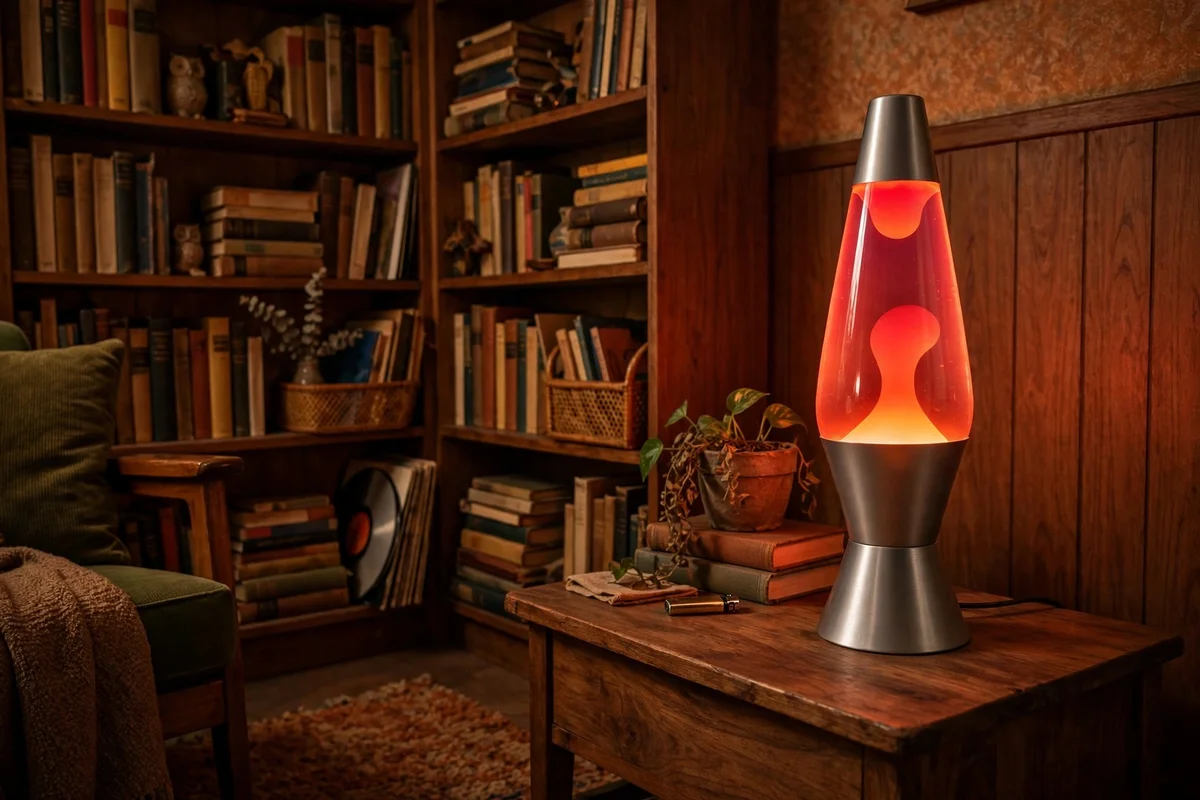
The lava lamp is the unofficial mascot of retro decorating, and a single glowing blob column instantly softens a room’s edges and mood. Place a 14.5-inch classic lamp ($25 to $40 new, $15 to $30 vintage) on a side table or bookshelf where it catches your eye from the sofa, and let it warm up a full two hours before guests arrive for maximum blob action. Choose wax colors that match your palette: red and yellow for 70s warmth, or blue and silver for a cooler space-age corner. Keep it away from direct sunlight and drafty windows, since temperature swings make the wax sluggish or cloudy. Pair it with a shag rug and a low lounge chair, and you have a reading nook that practically hums with nostalgia. Replacement bulbs cost under $10, so the ongoing cost is nearly zero while the vibe payoff is enormous.
Pro tip: Never shake a lava lamp, because cloudy wax never fully clears and you will regret it forever.
5. Style a Side Table Around a Rotary Phone
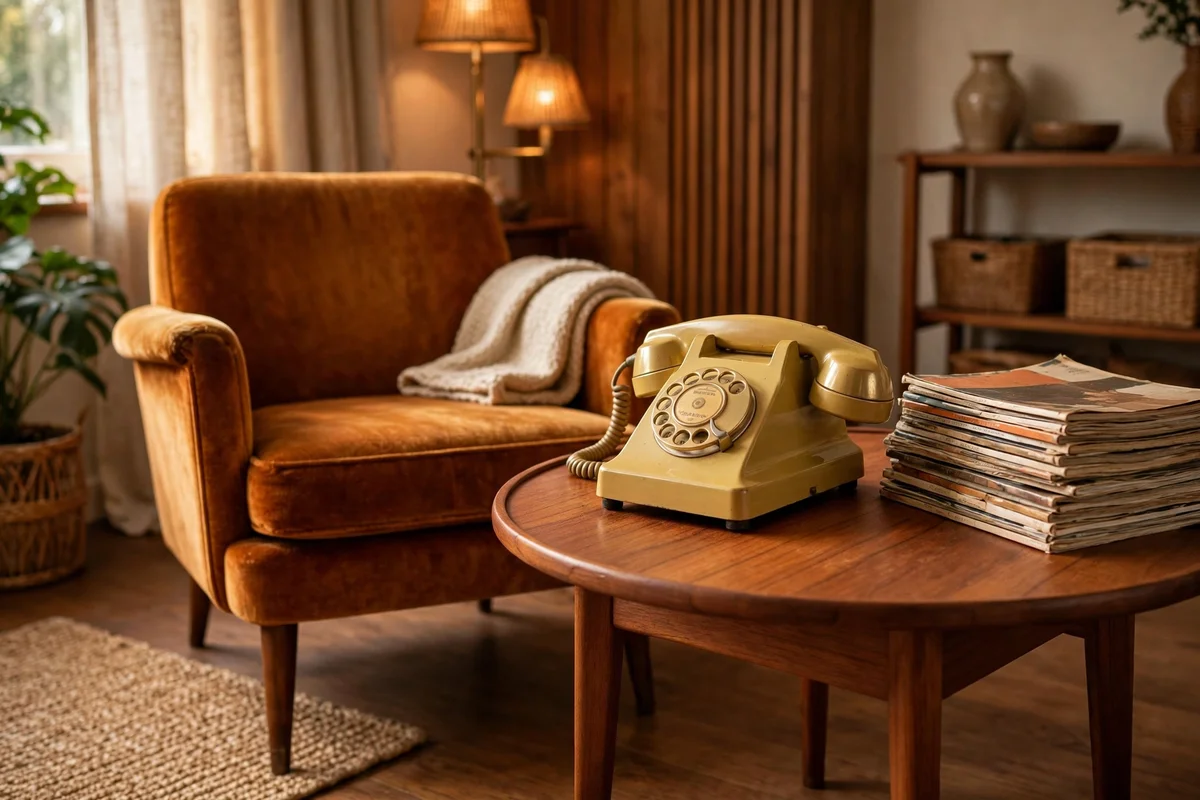
A chunky rotary phone in harvest gold, avocado, or classic black turns an ordinary side table into a conversation starter that guests cannot resist picking up. Working models sell for $40 to $120 on vintage marketplaces, and non-working display pieces cost $15 to $35 if you only want the look. Set it on a round teak side table ($60 to $180 vintage) next to your reading chair, add a small stack of retro magazines or a glass ashtray repurposed as a catch-all, and the vignette tells its own story. If the phone works, plug it into a landline jack or a VOIP adapter for $30 and enjoy the most satisfying hang-up click in existence. Keep cords neatly wrapped with a velcro tie so the setup looks styled rather than tangled, and dust the dial weekly since brass finger wheels show fingerprints fast.
Pro tip: Teach kids how the rotary dial works, because watching them figure it out is half the fun.
6. Float a Kidney-Shaped Coffee Table
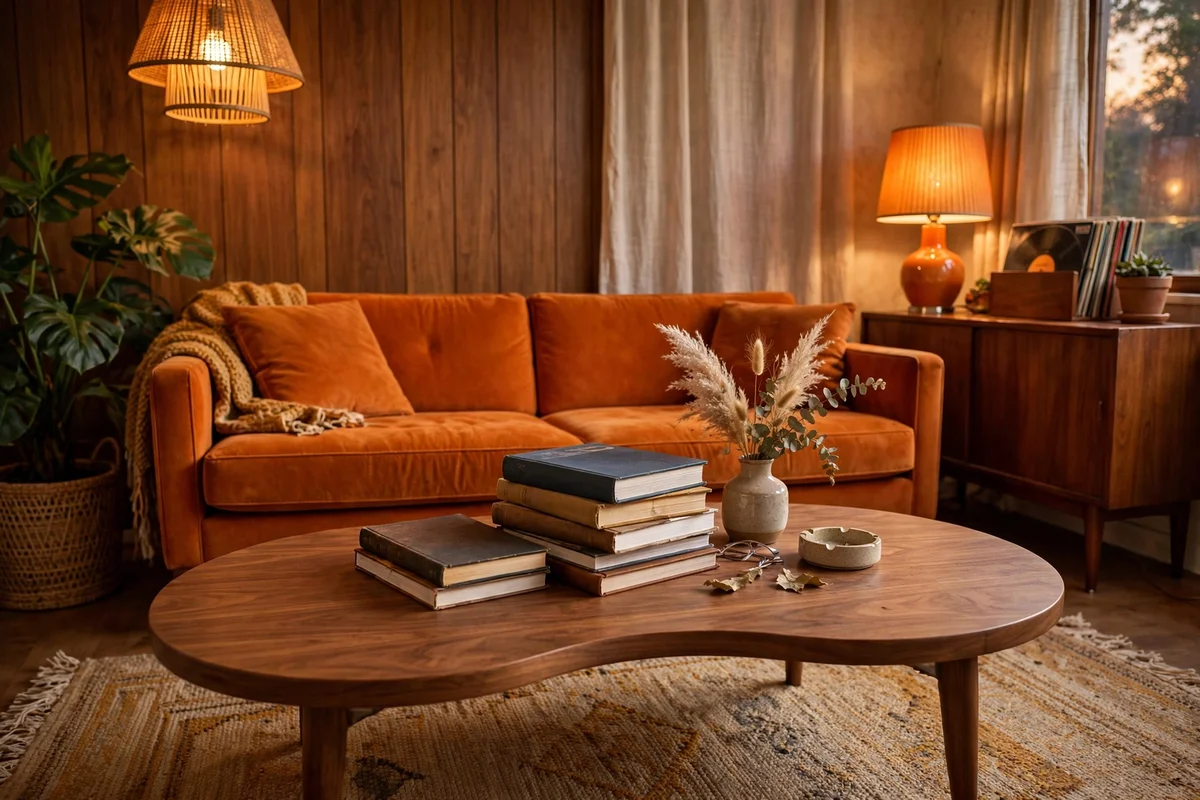
The kidney-shaped coffee table is the 1950s silhouette that refuses to die, and its amoeba curve softens all the straight lines in a living room in one move. Vintage kidney tables with original laminate tops run $150 to $400, while reproductions in walnut veneer cost $250 to $600 and hold up better to daily use. Position it 14 to 18 inches from the sofa front, leaving enough legroom for traffic but close enough to set down a drink without leaning. Style it with a low stack of art books, one sculptural object like a ceramic hand or atomic ashtray, and a small plant in a brass pot, keeping two-thirds of the surface clear. The curved shape is also a gift in small rooms, since there are no sharp corners to bruise shins on. If your style leans wilder, our eclectic living room ideas show how to mix kidney curves with global patterns.
Pro tip: Choose a table with a lower shelf, because retro coffee tables are sneaky-good at hiding remotes and magazines.
7. Glow Up With a Mushroom Lamp
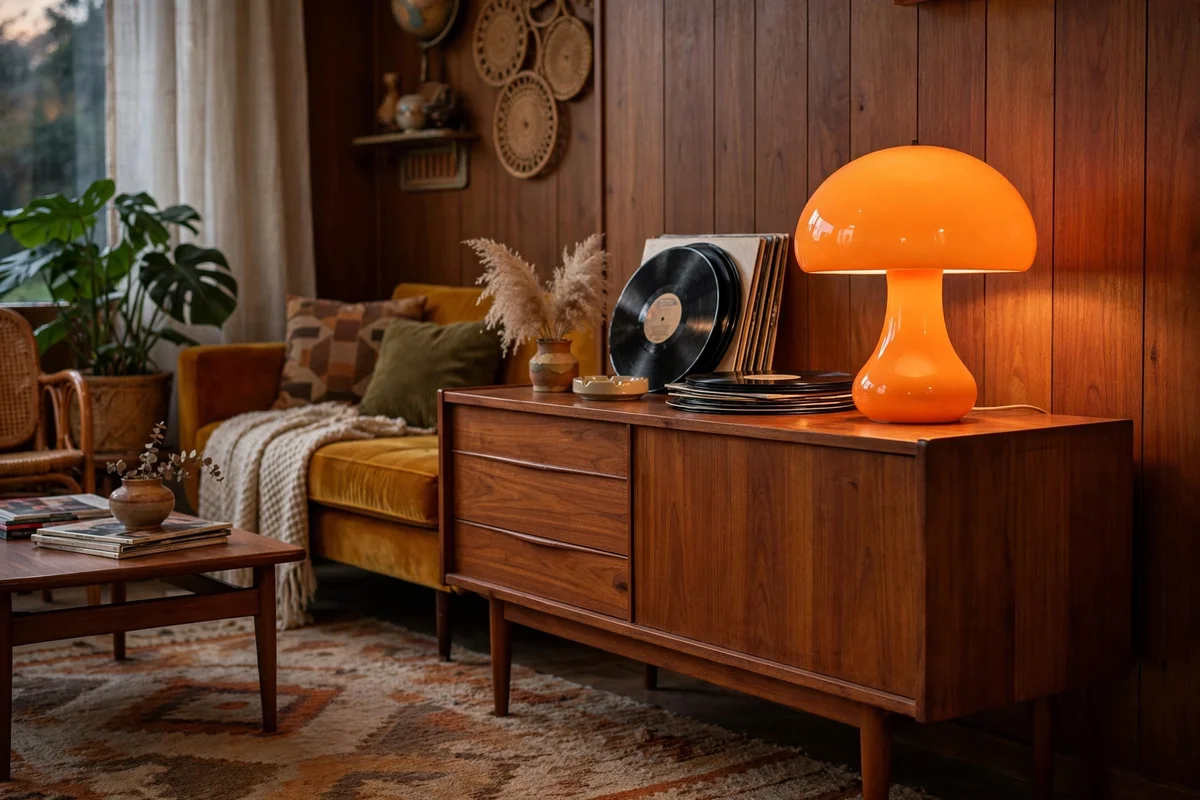
The mushroom lamp, with its domed cap and soft downward glow, is the 70s lighting icon that designers keep rediscovering, and it flatters absolutely everything it touches. Original Murano-style glass versions cost $150 to $400, while quality metal and opal-glass reproductions run $40 to $110 and give the same cozy pool of light. Place a pair on matching nightstands flanking the sofa, or one statement lamp on the bar cart for a warm welcome glow. Choose orange or amber glass for authentic 70s warmth, or white opal for a softer modern-retro blend. Use a warm 2700K LED bulb to mimic the original incandescent feel without the heat, and put it on a dimmer if your model allows. The low height makes it perfect for side tables, where tall lamps would block sightlines across the room.
Pro tip: Buy the rechargeable cordless version for shelves with no outlet, because retro style should never depend on outlet placement.
8. Sink Your Toes Into a Shag Rug
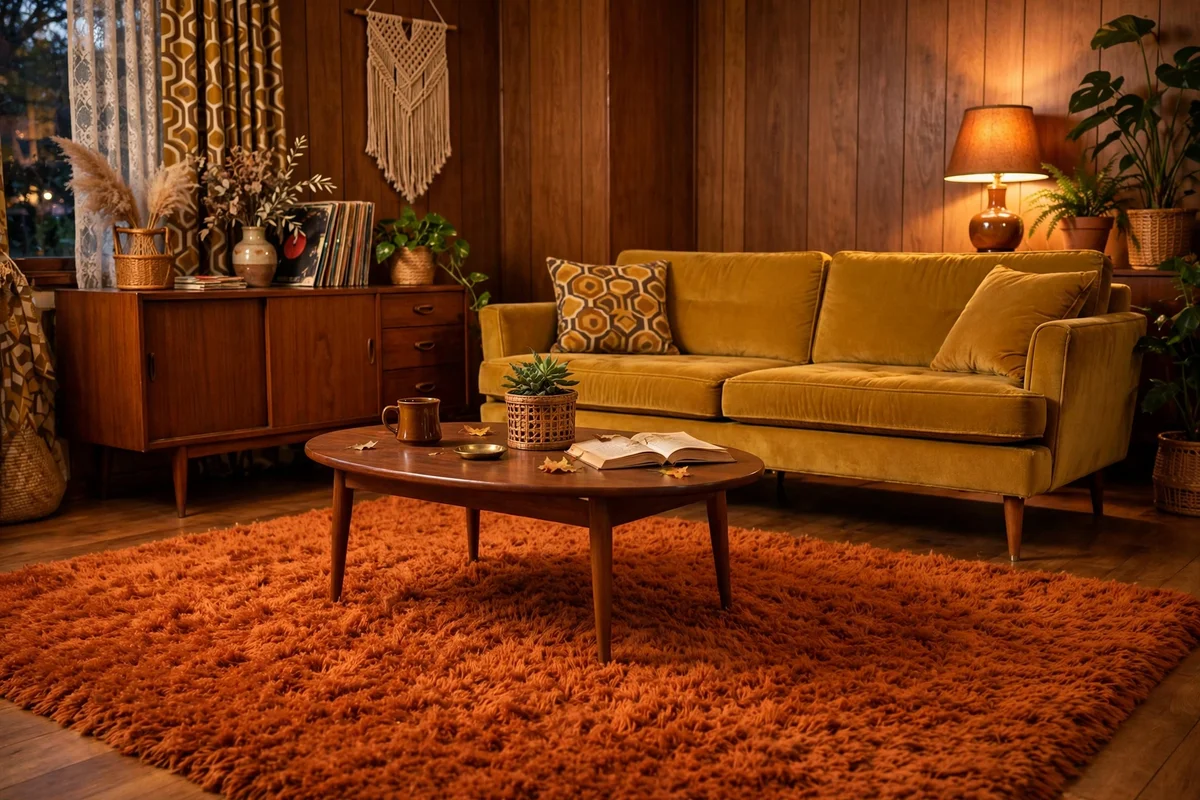
A high-pile shag rug in rust, gold, or cream is the fastest way to make a living room feel like 1972, and the texture underfoot is pure luxury. Real wool shags cost $300 to $800 for an 8×10, while synthetic versions run $120 to $350 and resist stains better in homes with kids or pets. Lay it centered under the coffee table with the front legs of the sofa resting on the edge, which grounds the seating group and keeps the rug from sliding. Vacuum with suction only (no beater bar) and shake it outside seasonally, since shag hides crumbs like a professional. If the full 70s look feels heavy, choose a cream or ivory shag instead of a bold color, because texture alone delivers the retro message. Layer a smaller patterned flat-weave rug on top at an angle for a collected, stylist-approved twist.
Pro tip: Use a rug pad underneath, because shag on hard floors migrates like it has somewhere to be.
Section 2: Furniture With Throwback Bones (9-16)
9. Anchor the Room With a Teak Sideboard
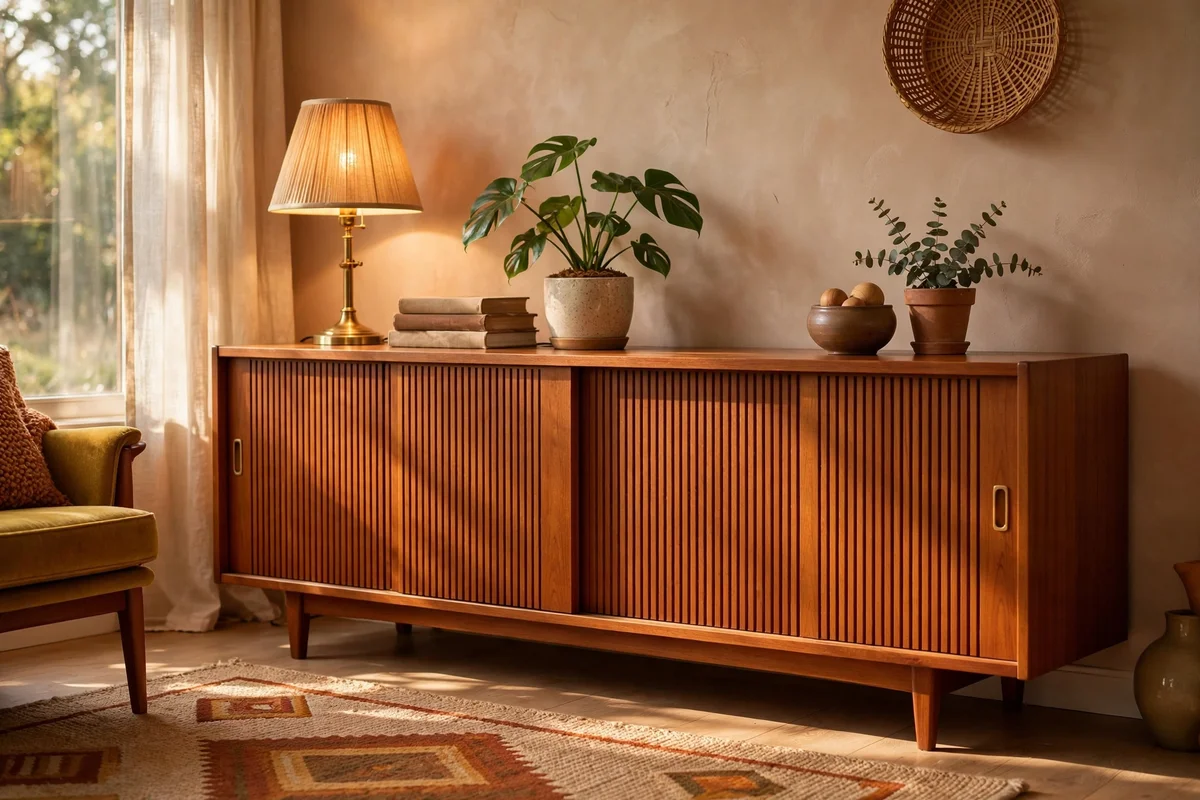
A long teak sideboard with sliding doors is the workhorse of retro living rooms, hiding clutter behind wood grain that glows like honey. Danish and mid-century pieces in good shape cost $300 to $900 at vintage dealers, while thrifted finds run $100 to $250 if you are willing to refinish. Use it against the longest empty wall as a media stand, bar station, or display shelf, keeping the top styled with a lamp, a stack of books, and one trailing plant. The sliding doors are a gift for hiding gaming consoles, chargers, and board games that would ruin the vintage illusion. Check that drawers glide and veneer is intact before buying, since repairs on thin mid-century veneer get expensive fast. If your walls need a calmer backdrop behind all that wood, our minimalist living room ideas prove quiet walls make statement furniture shine.
Pro tip: Oil the teak once a year with Danish oil to keep that warm glow from going gray and tired.
10. Lounge in an Eames-Style Chair
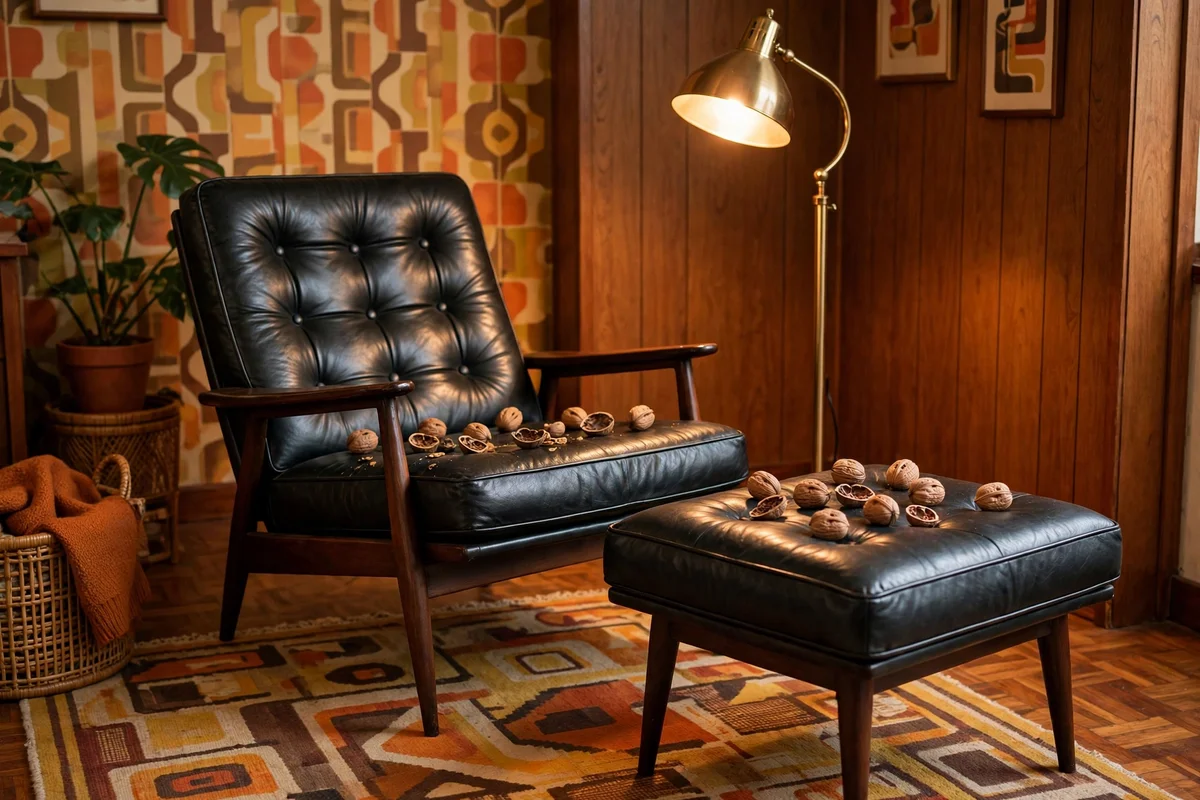
The Eames-style lounge chair and ottoman is the throne of retro comfort, and one in the corner instantly upgrades a whole living room’s credibility. Genuine vintage pieces cost $1,500 to $4,000 depending on condition, while high-quality reproductions run $400 to $900 and fool everyone except collectors. Place it angled toward the sofa with the ottoman close enough for feet but not blocking the coffee table, creating a reading spot that people will fight over. Choose black leather with walnut shells for the classic look, or cognac leather for a warmer 70s feel. Add a small side table and a brass pharmacy lamp, and the corner becomes a complete retreat. Condition the leather twice a year, because cracked leather on an icon chair is a tragedy you can prevent for $15.
Pro tip: Check reproduction weight ratings before buying, since cheap frames creak under daily use.
11. Reflect Light With a Starburst Mirror
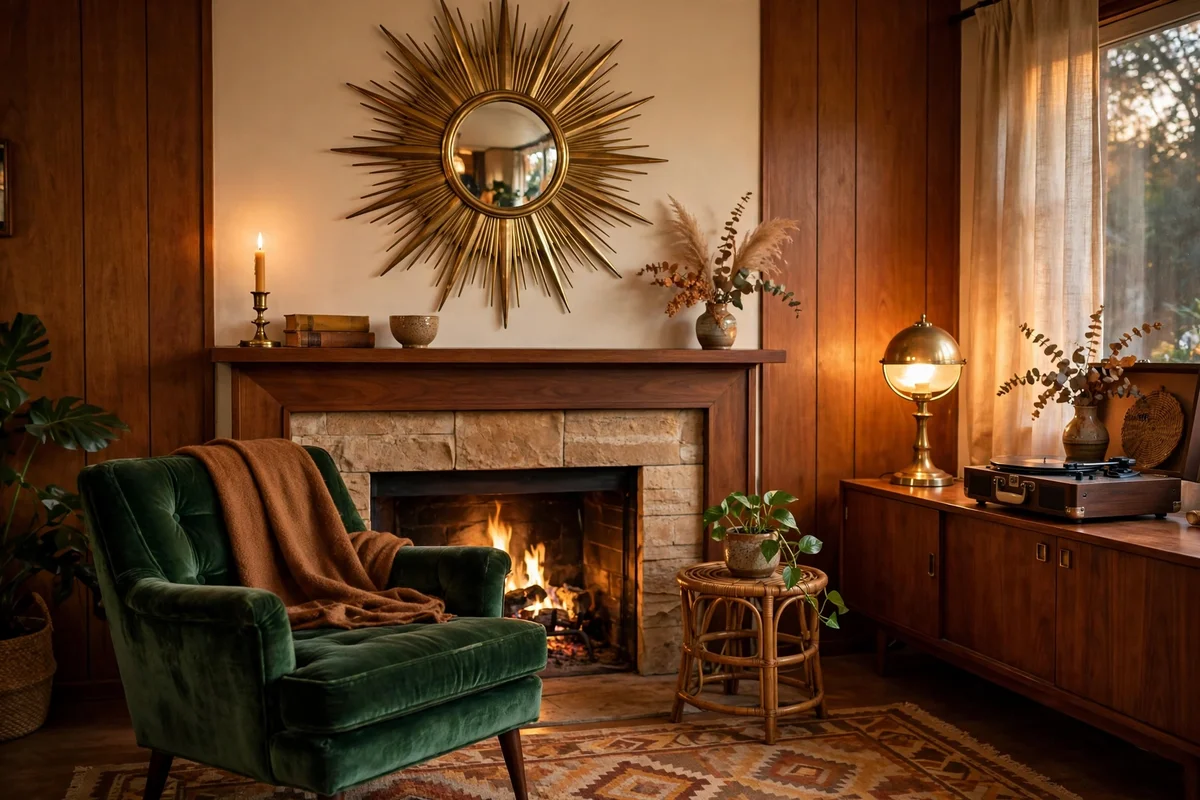
A starburst mirror with brass or teak rays does double duty, bouncing light around the room while delivering peak 60s glamour. Hang a 24 to 36-inch version above the mantel, console, or in a dark hallway that needs brightening, spending $35 to $90 for reproductions or $80 to $250 for vintage brass. Keep the wall around it simple, since the rays need breathing room to read as a star rather than clutter. If you already have a sunburst clock, put the mirror on a different wall to avoid competing star shapes, because two suns in one sightline cancel each other out. Clean the rays with a dry microfiber cloth, since brass polish gets messy in the crevices. Pair it with a velvet chair underneath and a small side table, and the corner photographs like a magazine spread.
Pro tip: Hang it opposite a window to double your natural light for free.
12. Build a Retro TV Corner With a Console Television
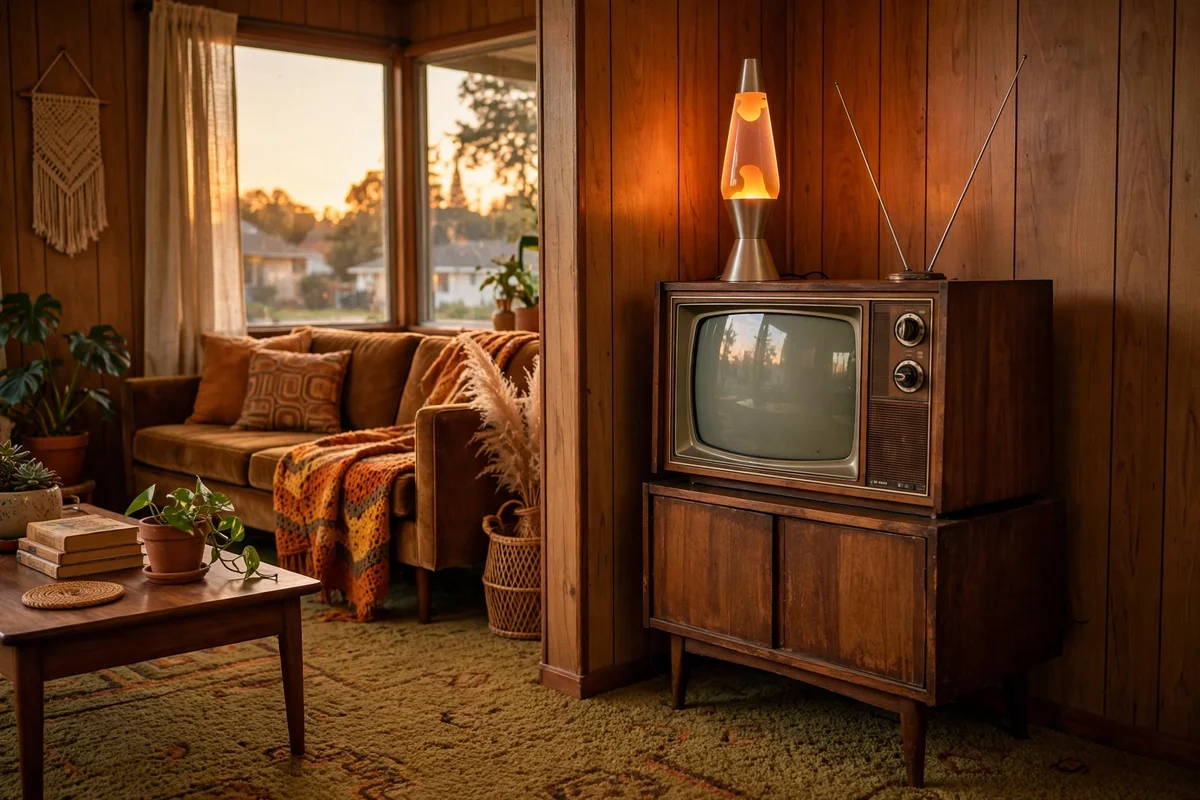
A wooden console television, even a non-working one, is the ultimate retro living room flex, and it hides modern tech better than any cabinet ever could. Non-working consoles cost $25 to $100 at estate sales, and handy owners gut them to hold a flat-screen inside for the full illusion. Working CRT models run $50 to $150, though finding one with a good picture takes patience. Style the top with a pair of rabbit-ear antennas (pure decoration, $10), a lava lamp, and a stack of TV Guides for maximum period detail. If you gut it for a flat-screen, add a remote-controlled LED strip inside for a soft glow that makes the setup feel alive. Measure your flat-screen carefully before committing, because console openings were built for 25-inch tubes, not 55-inch panels.
Pro tip: Keep the original knobs and dials intact, since they are the details that sell the illusion.
13. Pop the Walls With Pop Art Posters
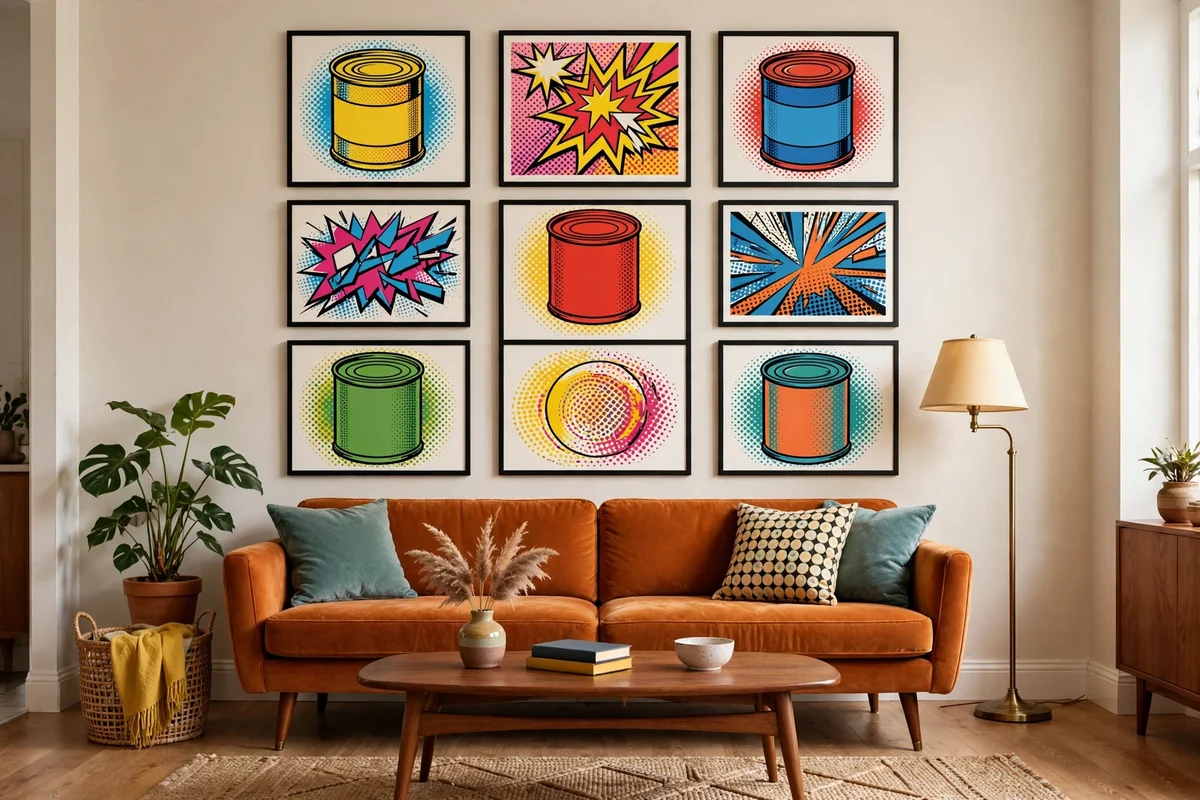
Pop art posters in the style of Warhol and Lichtenstein bring 60s gallery energy to a living room for the price of a nice dinner out. Quality giclee prints in 18×24 run $20 to $60 each, and a grid of four to six in matching thin black frames creates a gallery wall that anchors the whole room. Choose soup cans, comic panels, or celebrity silkscreen styles in colors pulled from your furniture, which ties the wall to the seating below. Hang the grid centered over the sofa with the bottom edge about 8 inches above the back cushions, and keep frame spacing tight at 2 inches for a cohesive block. If you collect vintage originals ($100 to $500 each), frame them with UV-protective glass, because sunlight fades bright inks fast. For a moodier gallery approach, our art deco living room ideas show how to go glamorous instead of playful.
Pro tip: Lay the arrangement on the floor first and photograph it, because rearranging on the wall leaves holes you will regret.
14. Carve Out a Record Player Nook
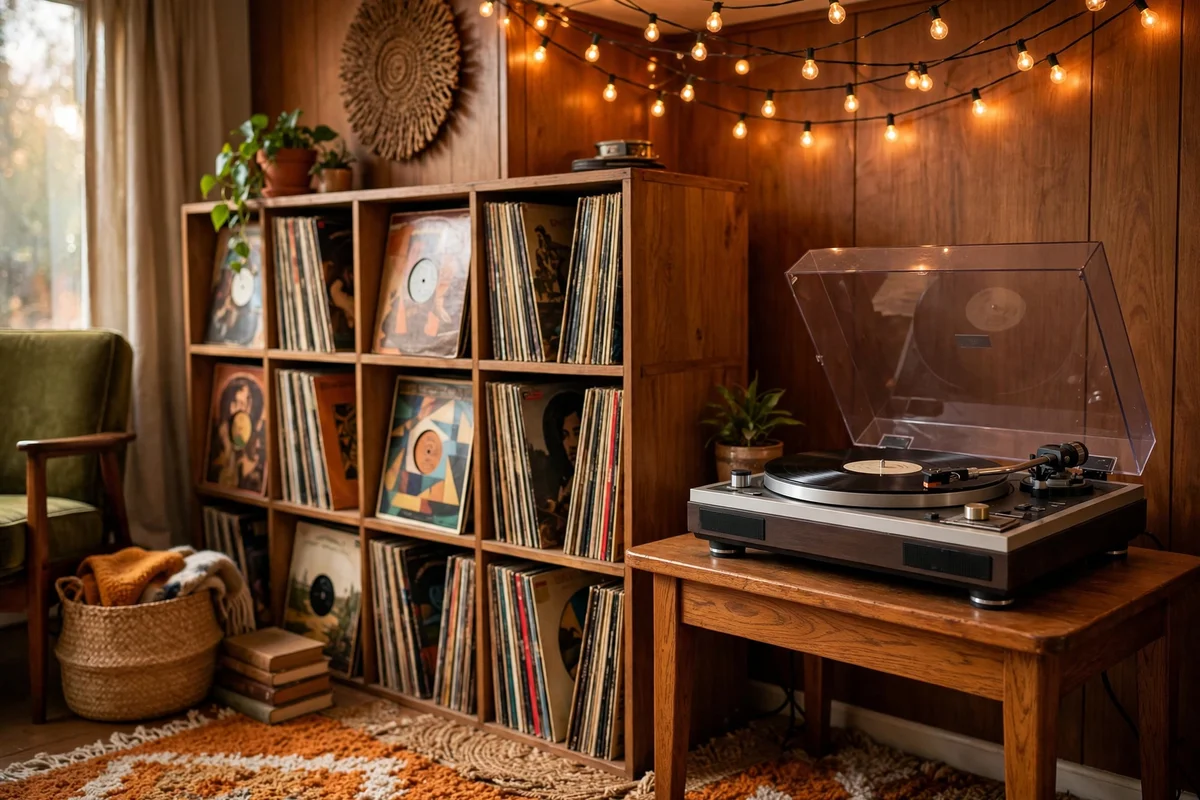
A dedicated record player nook turns listening into a ritual, and it needs only a corner, a small table, and your favorite albums within reach. Set a compact turntable ($120 to $300) on a vintage end table, flank it with a cube shelf holding 100 to 200 records ($40 to $120 for the shelf), and add a floor cushion or low stool for the listener. String a warm Edison-bulb garland ($15 to $30) overhead to define the zone, and hang one framed album cover as the nook’s artwork. Keep a soft brush and record sleeves nearby, because clean vinyl sounds dramatically better and the ritual becomes part of the pleasure. If the household includes kids, choose a turntable with a dust cover that latches, since little fingers and styluses are natural enemies. This nook works in rooms as small as 4×4 feet, making it the most space-efficient retro upgrade here.
Pro tip: Alphabetize by artist once, then never reorganize again, because the system only has to make sense to you.
15. Roll Out a Diner-Style Bar Cart
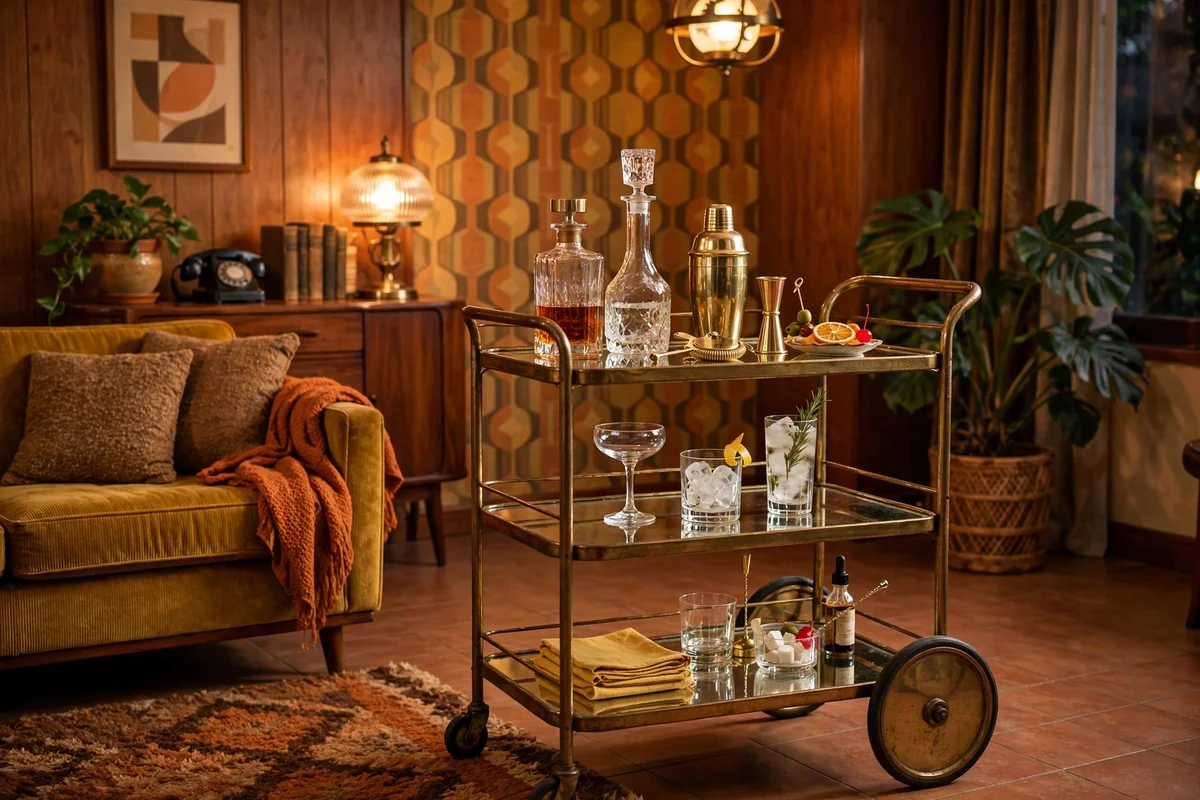
A brass bar cart with mirrored shelves is the 60s cocktail hour on wheels, and styling one is the most fun decorating task in this entire list. Vintage carts cost $80 to $250, while new reproductions run $100 to $220 and arrive without wobbly wheels. Stock the top shelf with two or three decanters ($20 to $50 each), a cocktail shaker, and a small bowl of limes, and use the lower shelf for glasses, a vintage ice bucket, and a stack of cloth napkins. Park it near the seating area but out of the main traffic path, since carts migrate during parties. Add a tiny framed drink menu or a retro cocktail book propped open for personality. Polish the brass quarterly, because tarnish dulls the sparkle that makes the whole thing work.
Pro tip: Lock the wheels once styled, because a rolling cart on hardwood during a party is an accident waiting to happen.
16. Paper a Feature Wall With Boomerang Wallpaper
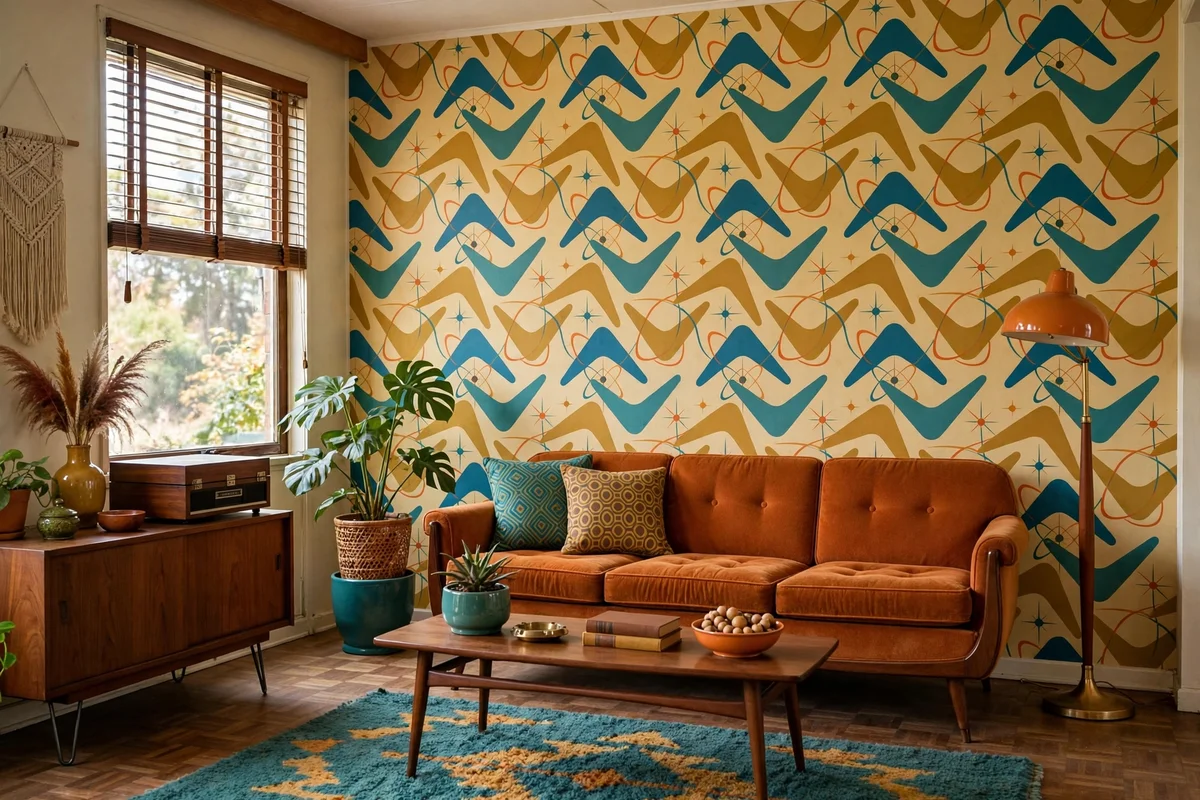
Boomerang wallpaper, with its scattered atomic shapes in mustard, teal, and orange, is the boldest retro move on this list and the one guests photograph most. Peel-and-stick versions cost $40 to $90 per roll and cover about 28 square feet, making a single accent wall a $120 to $270 weekend project with zero landlord drama. Choose the wall behind the sofa or the TV wall, and keep the other three walls a quiet neutral so the pattern can perform. Match one wallpaper color to your sofa or rug to tie the room together, and repeat the motif small elsewhere, like on a throw pillow. If full wallpaper feels brave, frame three large panels of it as art instead, which delivers the pattern at a fraction of the commitment. Order samples first, because boomerang scale varies wildly and tiny motifs read busy while large ones read chic.
Pro tip: Start papering from the least visible corner, because your first panel is always your worst panel.
Section 3: Color, Light, and 70s Warmth (17-24)
17. Drape a Swag Lamp Over the Seating Area
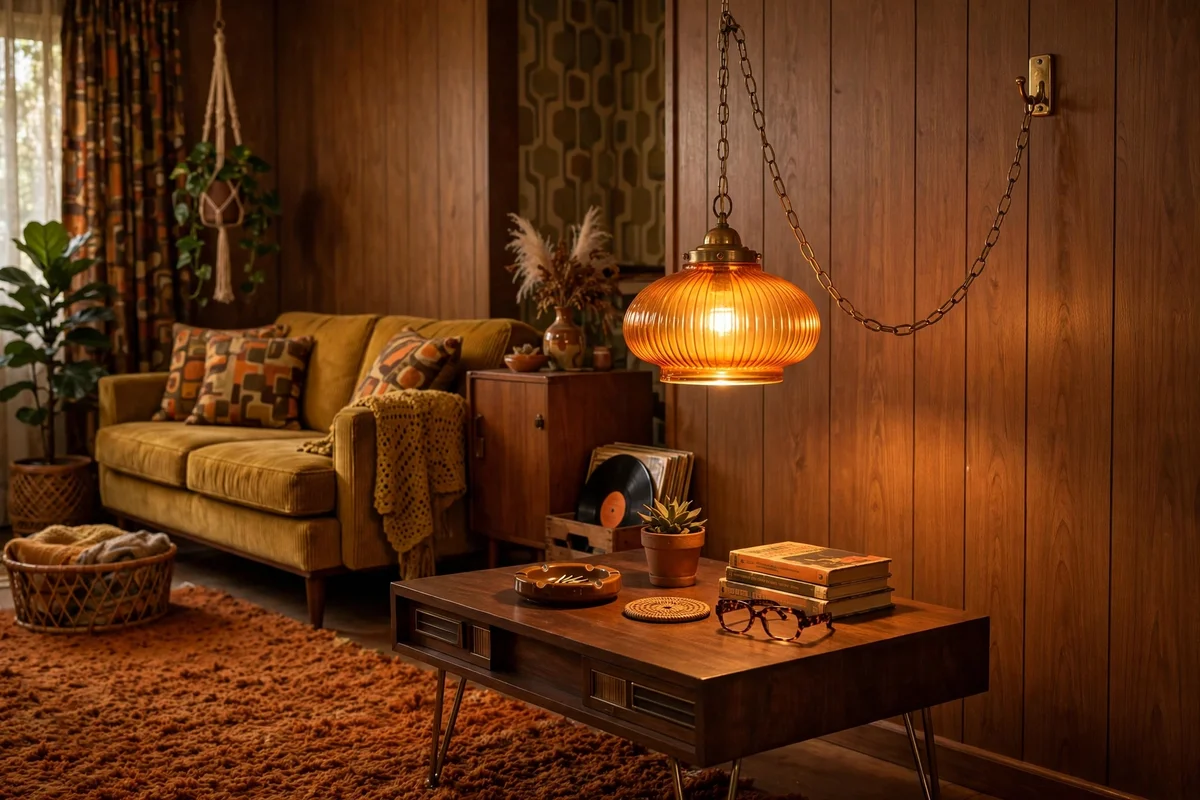
The swag lamp, chained from the ceiling and draped to a wall hook, is pure 70s drama, and it lets you hang a pendant exactly where you want light without an electrician. Vintage swag lamps with original shades cost $60 to $180, while reproductions run $50 to $120 and come with safer modern wiring. Hang it low over the coffee table, about 30 inches above the surface, and swag the cord to a wall hook so the shade centers perfectly over the seating group. Choose amber glass or a drum shade in a bold print, and use a warm dimmable bulb to control the mood from bright chat to late-night lounge. Secure the ceiling hook into a joist, not just drywall, because a falling lamp ruins the vibe and possibly the coffee table. The draped cord is part of the look, so embrace the swag instead of hiding it.
Pro tip: Plug it into a smart plug, because walking across the room to pull a chain gets old by week two.
18. Work Avocado Green Into Soft Furnishings
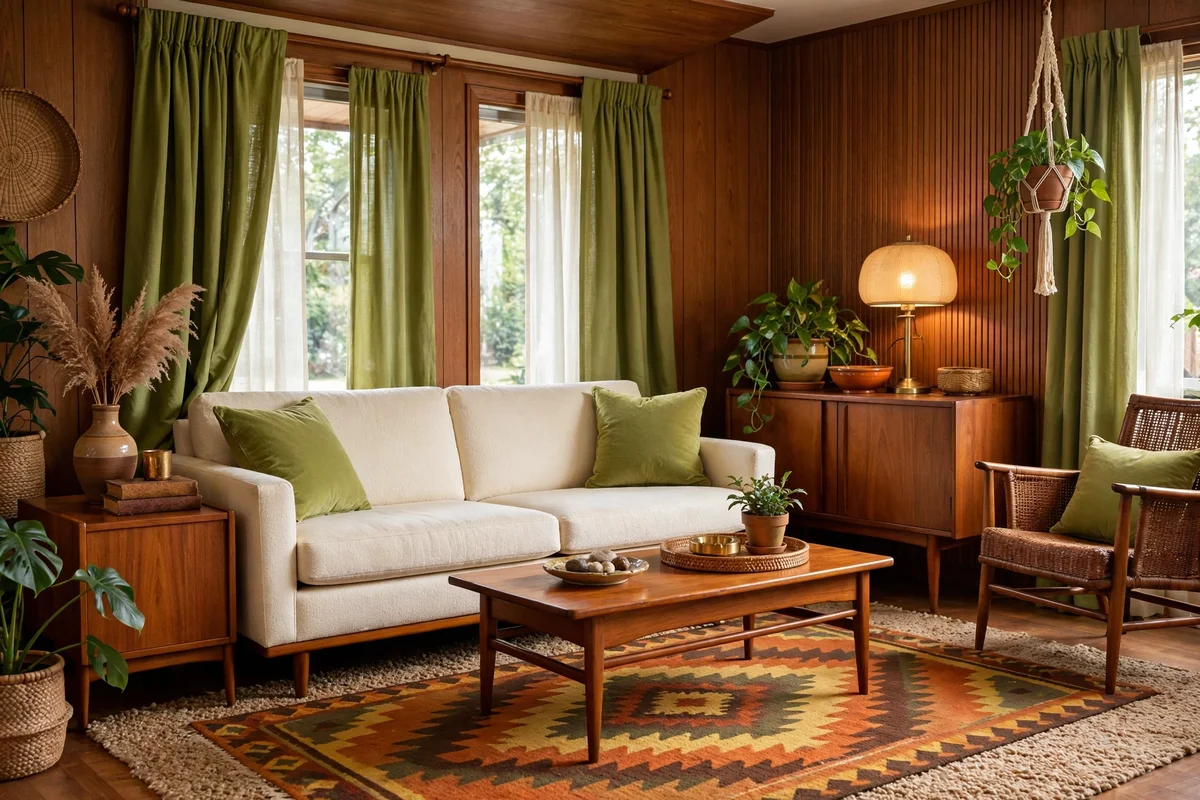
Avocado green is the 70s color that deserves its comeback, and used in soft furnishings it feels earthy rather than dated. Add it through curtains ($40 to $120 a pair), throw pillows ($15 to $40 each), or a velvet accent chair ($200 to $450), keeping big permanent surfaces like walls neutral. Pair avocado with harvest gold and warm wood tones for the full 70s palette, or with cream and black for a fresher modern-retro mix. The color hides everyday wear beautifully, which is why it survived decades of family rooms in the first place. If you commit to an avocado sofa, balance it with cream walls and a jute rug so the room breathes. Test the exact shade in your light before buying, because avocado swings olive in warm bulbs and sage in daylight, and you want to love both versions.
Pro tip: Repeat the color three times in the room (pillows, throw, art), because a single avocado item looks like a mistake while three look like a plan.
19. Go Bold With a Harvest Gold Sofa
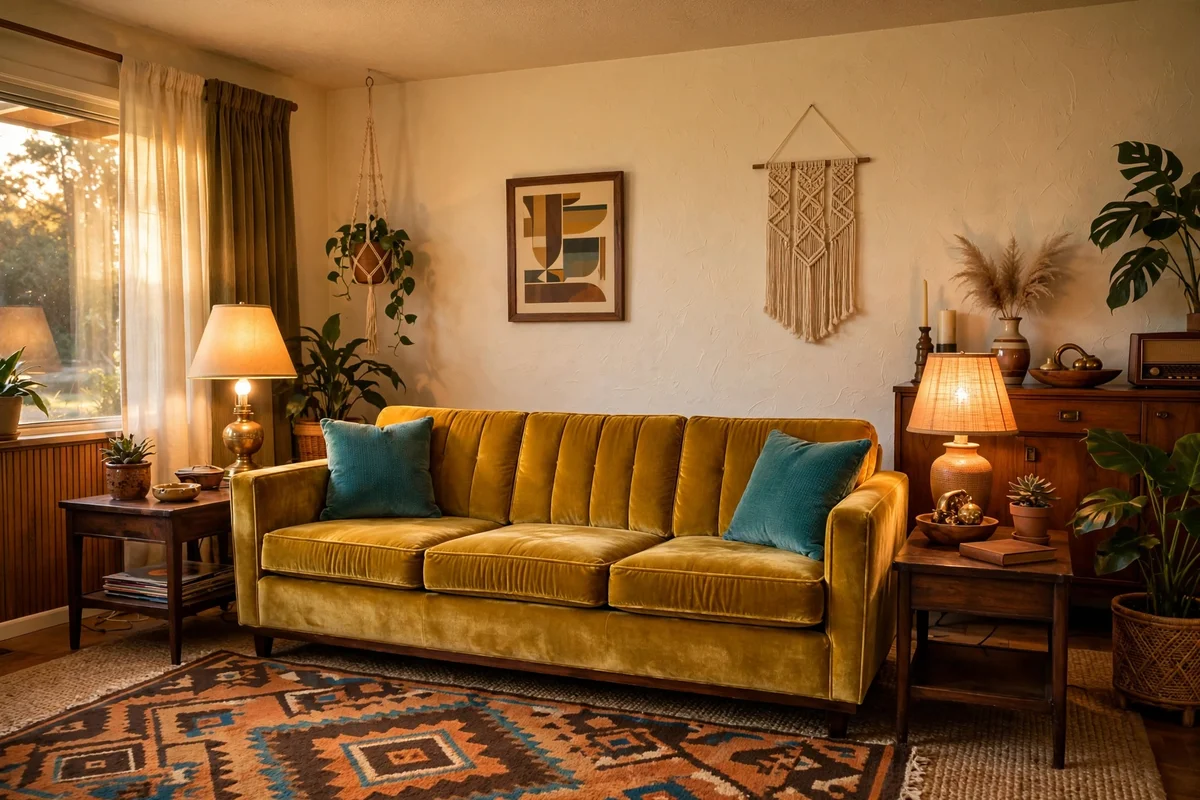
A harvest gold sofa is the 70s statement that commits the whole room, and done right it glows like late-afternoon sun all day long. Vintage velvet sofas in good shape run $350 to $900, while new reproductions cost $800 to $1,600 with better cushions and stain-resistant fabric. Surround it with deep brown wood, cream walls, and one contrasting accent like teal pillows to keep the gold from overwhelming the space. The warm tone flatters skin and lamplight, which is why 70s living rooms always look so inviting in old photographs. Keep the silhouette simple and low, because the color is already doing the talking and fussy details compete with it. If full gold feels brave, start with a harvest gold loveseat ($300 to $700) and see how the household reacts before going bigger.
Pro tip: Choose performance velvet if you have pets, because claws and vintage velvet are a heartbreak combination.
20. Weave in a Macrame Wall Hanging
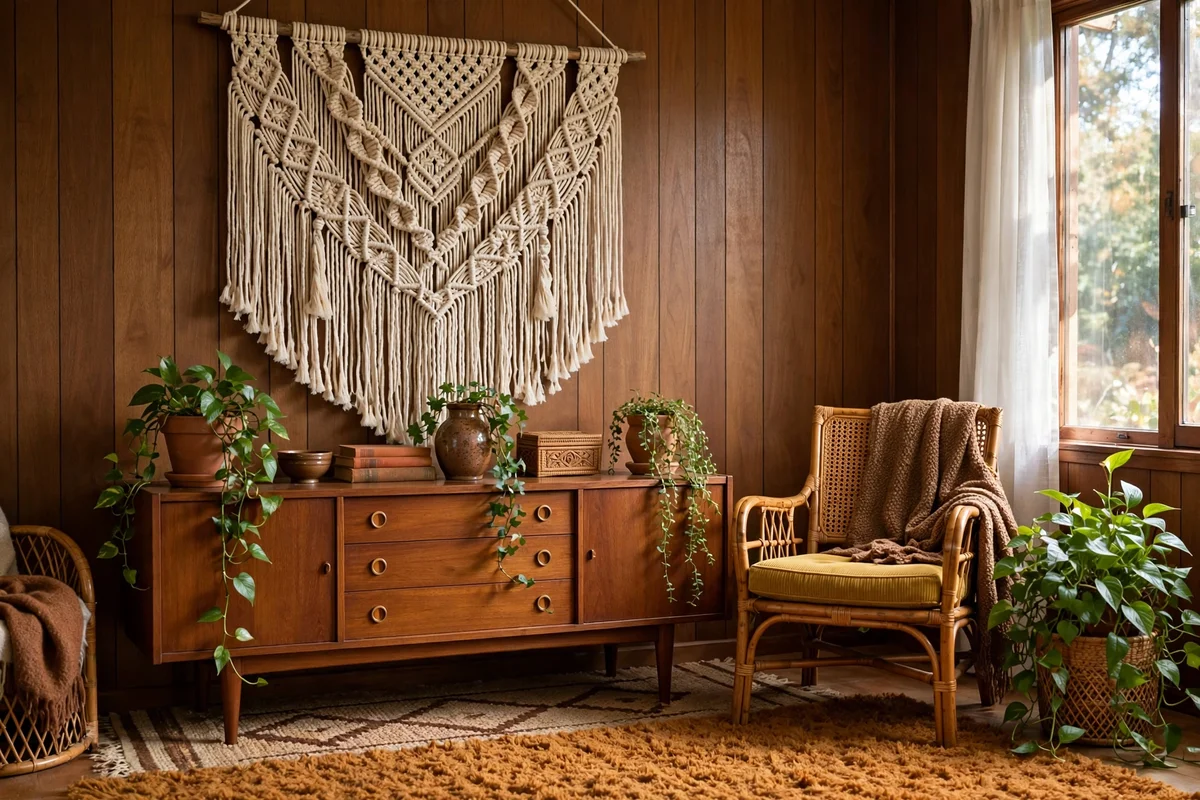
A large macrame wall hanging brings 70s craft texture to bare walls, and the knotted cotton softens rooms full of hard vintage furniture. Handmade pieces in the 3×4-foot range cost $60 to $180 on artisan marketplaces, while smaller ones run $25 to $60 and work well in pairs. Hang it centered over a sideboard or reading chair, using a wooden dowel and simple wall hooks, and let the fringe fall naturally without trimming. Choose natural cotton for authentic 70s texture, or black cord for a moodier modern take. Dust it monthly with a cool hairdryer blast, because macrame collects dust in its knots like a champ. Pair it with a rattan chair and a trailing plant, and the corner practically smells like patchouli, in the best way.
Pro tip: Learn three basic knots and you can make a small one yourself for under $20 in cord.
21. Claim a Corner With a Rattan Peacock Chair
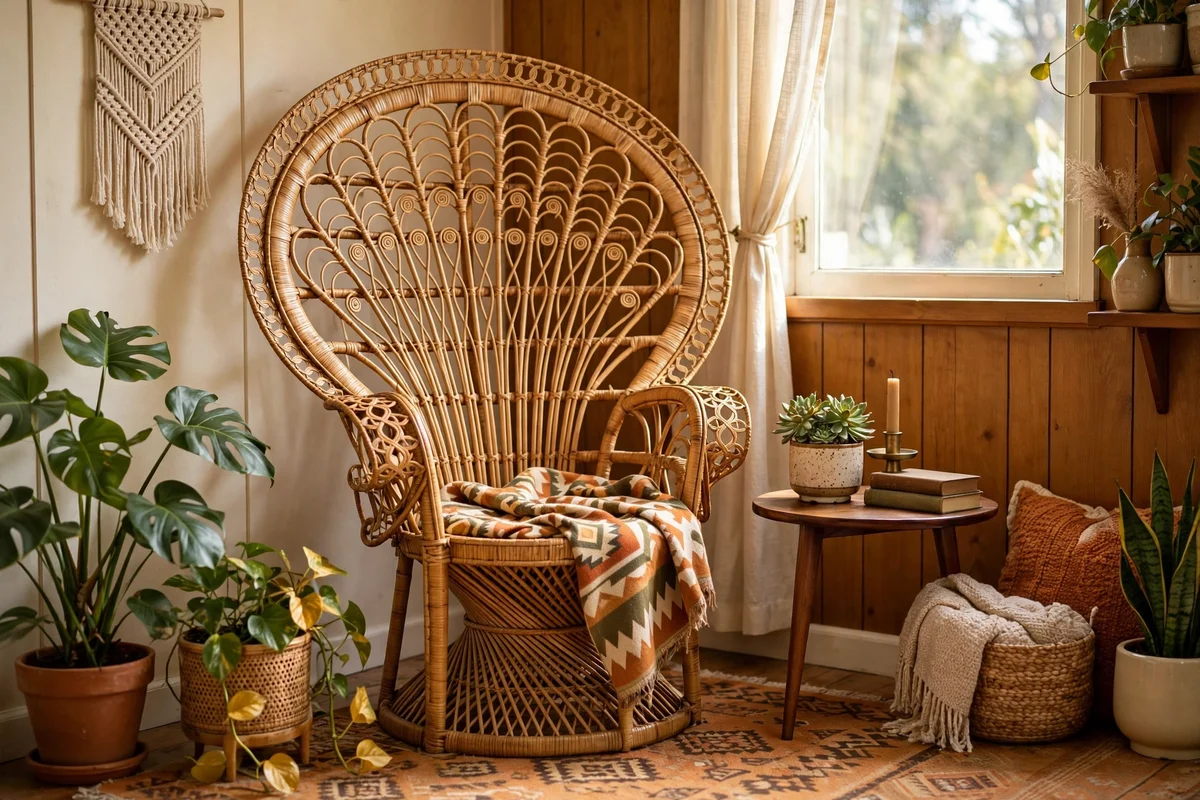
The rattan peacock chair, with its fanned back rising like a throne, is the 70s bohemian statement that turns any corner into a photo spot. Vintage wicker peacock chairs cost $150 to $400 depending on condition, while new rattan versions run $180 to $350 and arrive sturdier. Place it in a bright corner with a small side table and a floor cushion at its base, creating a reading throne that doubles as the room’s sculpture. Check the weave for breaks before buying vintage, since reweaving costs more than the chair. Add a sheepskin or patterned throw over the seat for comfort, because bare rattan is beautiful and briefly comfortable. Keep it out of direct rain and heavy sun if it ever moves to a porch, since natural fibers age fast outdoors.
Pro tip: Photograph it against a plain wall, because the fan silhouette deserves its own gallery moment.
22. Glow Up a Corner With a Jukebox
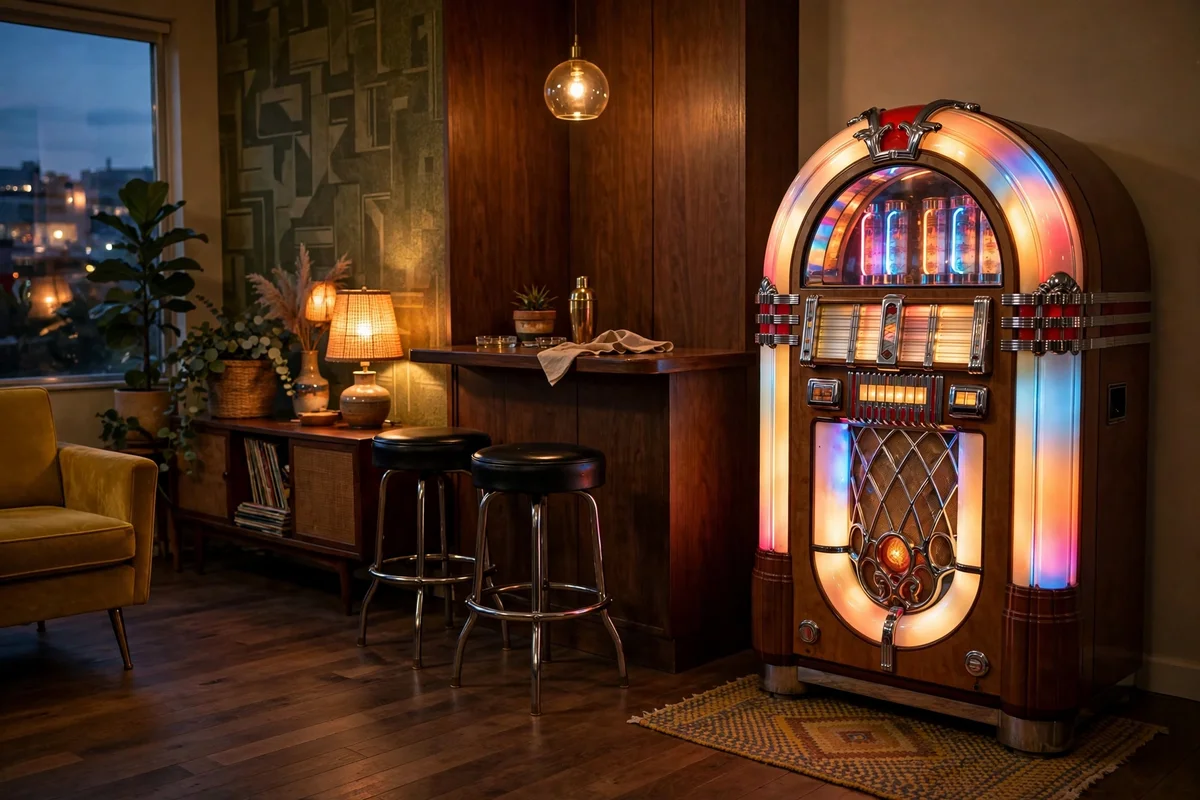
A jukebox with its arched top and bubbling tubes is the ultimate retro living room splurge, and nothing else in decorating gets this reaction from guests. Working vintage jukeboxes cost $2,000 to $6,000 restored, while non-working display models run $400 to $1,000 and still glow beautifully. Budget options include tabletop jukebox-style Bluetooth speakers ($80 to $200) that deliver the look and the music without the mortgage. Give it a dedicated corner with a small rug underneath and a couple of bar stools nearby, turning it into the room’s entertainment zone. Keep it on a dedicated circuit if it is a real tube model, since the power draw and heat are real. Load it with 45s from every decade, because the best jukebox debates start with someone’s questionable taste.
Pro tip: Buy the Bluetooth replica first and live with it for six months before committing to a real one.
23. Script the Wall With a Neon Sign
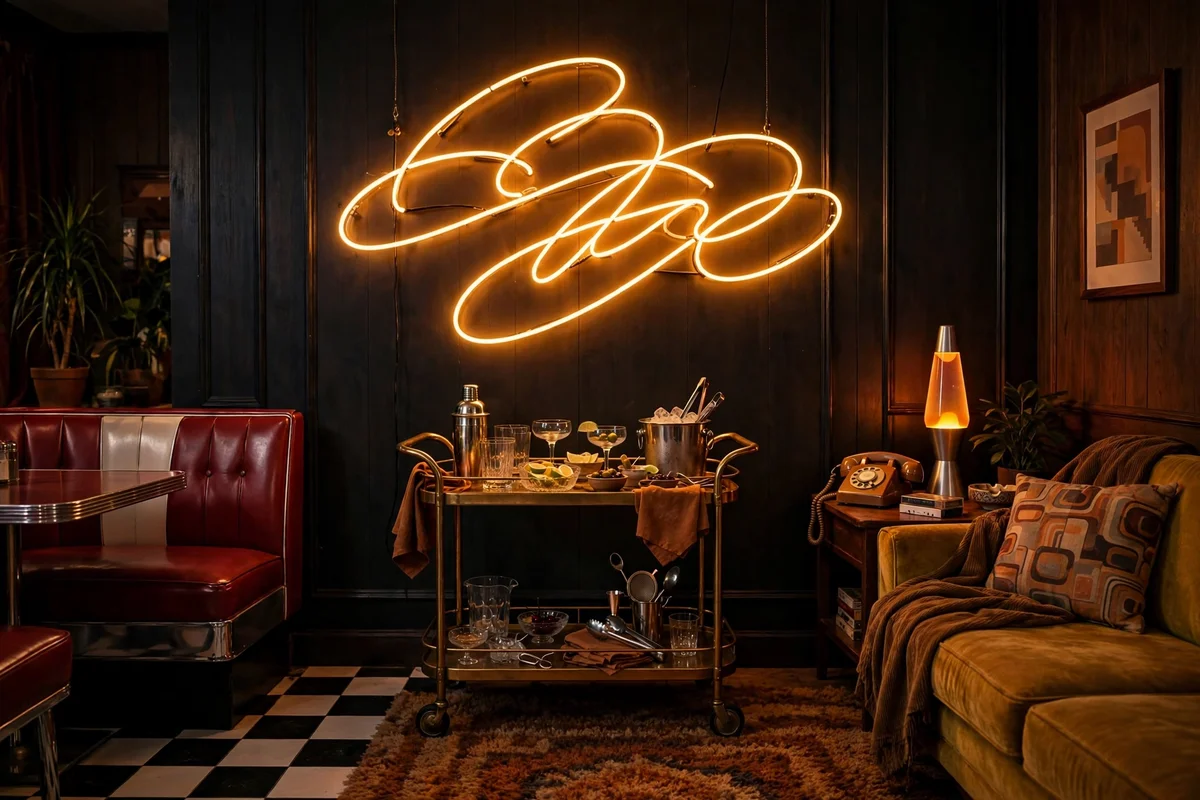
A neon sign in script lettering brings 80s diner and motel energy to a living room, and modern LED neon gives the glow without the buzz or the electric bill. Custom LED neon signs cost $80 to $250 depending on size and wording, while vintage glass neon runs $200 to $600 and needs professional hanging. Mount it above the bar cart, the record nook, or the sofa, choosing a word that fits the household: a family name, “good vibes,” or a favorite song lyric. Keep the wall behind it dark or moody, since neon pops hardest against deep paint. Use the included dimmer to drop it to a soft glow for movie nights, because full brightness neon is a lot at 11pm. Secure the mounting hardware into studs, since even LED signs are heavier than they look.
Pro tip: Pick warm white or amber tubing for a vintage feel, because cool blue reads nightclub instead of retro.
24. Roll Out a Globe Bar for Cocktail Hour
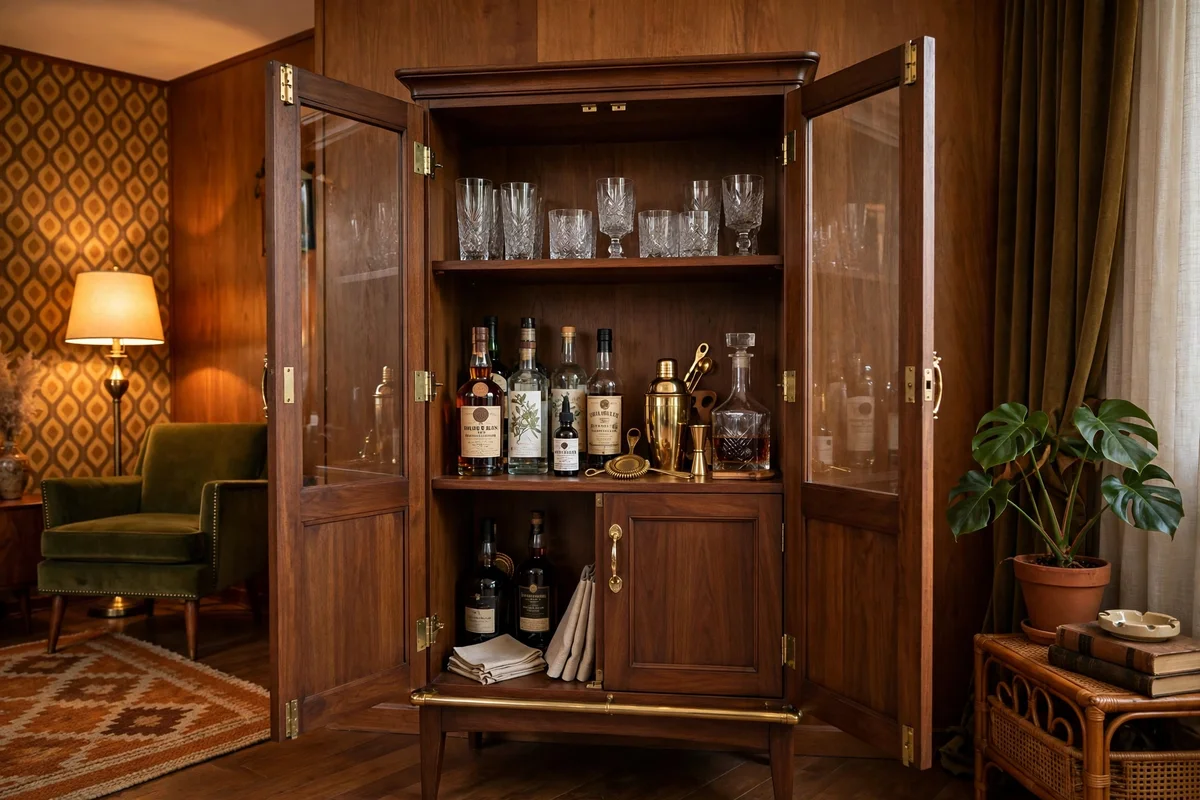
The globe bar, a 60s party trick disguised as geography, opens to reveal bottle storage and never fails to delight first-time guests. Vintage Italian globe bars cost $150 to $450 depending on condition and map detail, with the most charming ones showing delightfully outdated country names. Place it near the seating area where guests can spin it, and stock the interior with four to six bottles, a set of lowball glasses, and a small ice bucket. Check that the hinge opens smoothly and the interior fittings are intact before buying, since replacement parts are scarce. Dust the map surface gently, because old varnish scratches easily. When closed it reads as a handsome decorative globe, and when open it is the best conversation starter in the room, which is exactly the retro spirit.
Pro tip: Keep a vintage cocktail guide inside, because the globe bar demands period-appropriate drinks.
Section 4: Finishing Touches and Fun Details (25-32)
25. Upholster an Accent Chair in Tweed
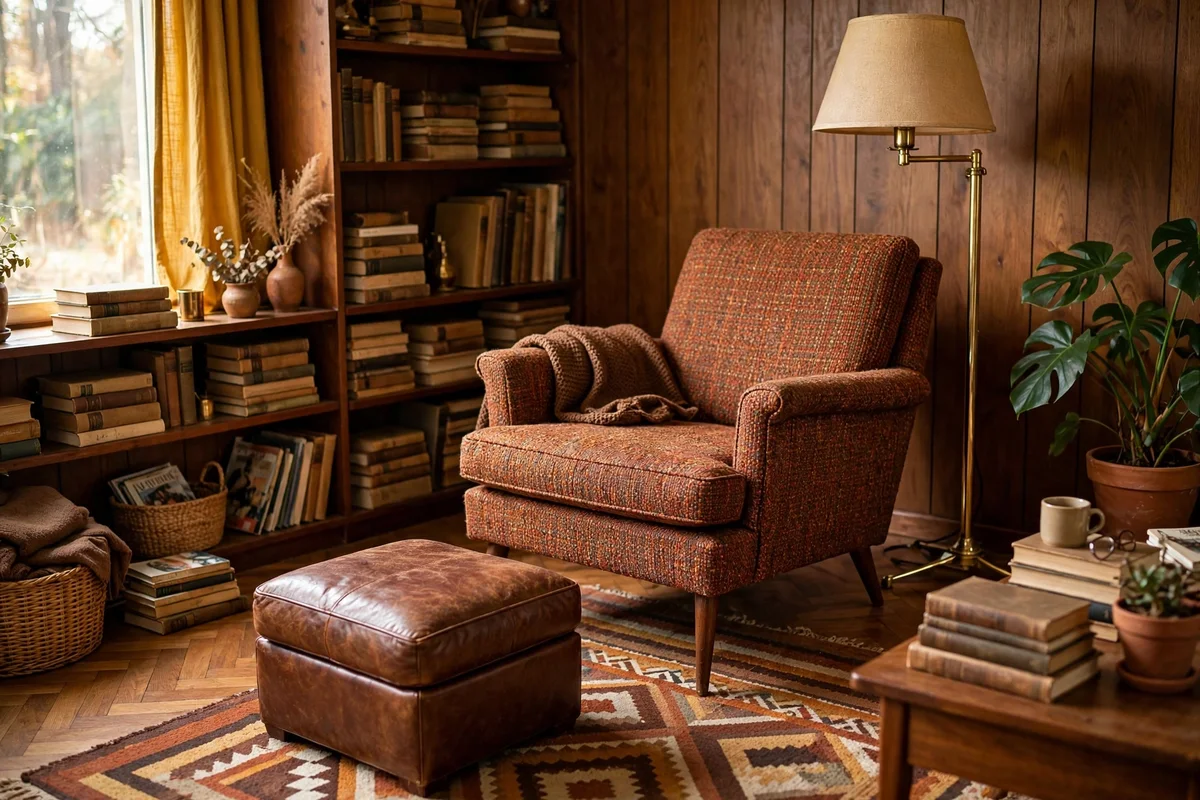
A tweed accent chair in rust, brown, or olive brings 60s professorial charm to a retro living room, and the nubby texture plays beautifully against smooth teak and velvet. Vintage tweed chairs cost $100 to $300 at thrift stores, while reupholstering an existing frame in new tweed runs $250 to $500 including fabric. Place it angled into the conversation area with a small side table for books and tea, creating the room’s quiet corner. Pair it with a leather ottoman and a brass floor lamp for a study-like vignette that still feels relaxed. Check vintage frames for solid joinery before reupholstering, since new fabric on a wobbly frame is money wasted. Brush the tweed monthly with a soft garment brush, because the texture traps dust and pet hair with enthusiasm.
Pro tip: Choose a tweed with multiple colors in the weave, because it hides stains and ties together the whole palette.
26. Center the Floor With a Sunburst Rug
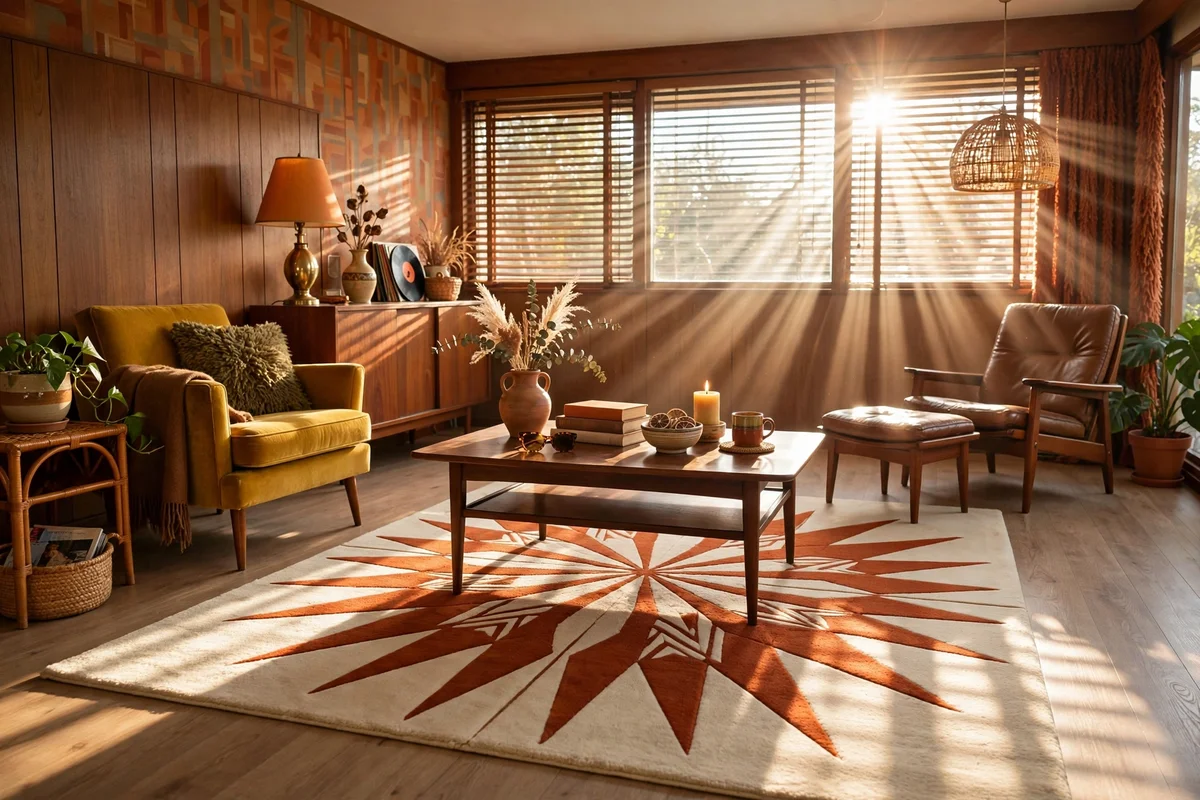
A sunburst or starburst pattern rug ties every star-shaped decor piece in the room into one cohesive story underfoot. Flat-weave versions in 5×8 cost $120 to $300, while hand-tufted wool versions run $400 to $900 and last decades. Lay it centered under the coffee table with bold rays pointing outward, which makes even a small room feel dynamic. Choose colors that echo your sofa or curtains, since the rug is large enough to dictate the palette. The geometric pattern hides traffic wear and pet hair better than solid rugs, a practical bonus in busy living rooms. If the pattern feels loud, choose a version in two tones like cream and rust rather than four colors, because restraint in color keeps bold geometry sophisticated.
Pro tip: Rotate it 180 degrees every six months, because sunburst rugs show uneven fading fast in sunny rooms.
27. Display Vintage Cameras on a Floating Shelf
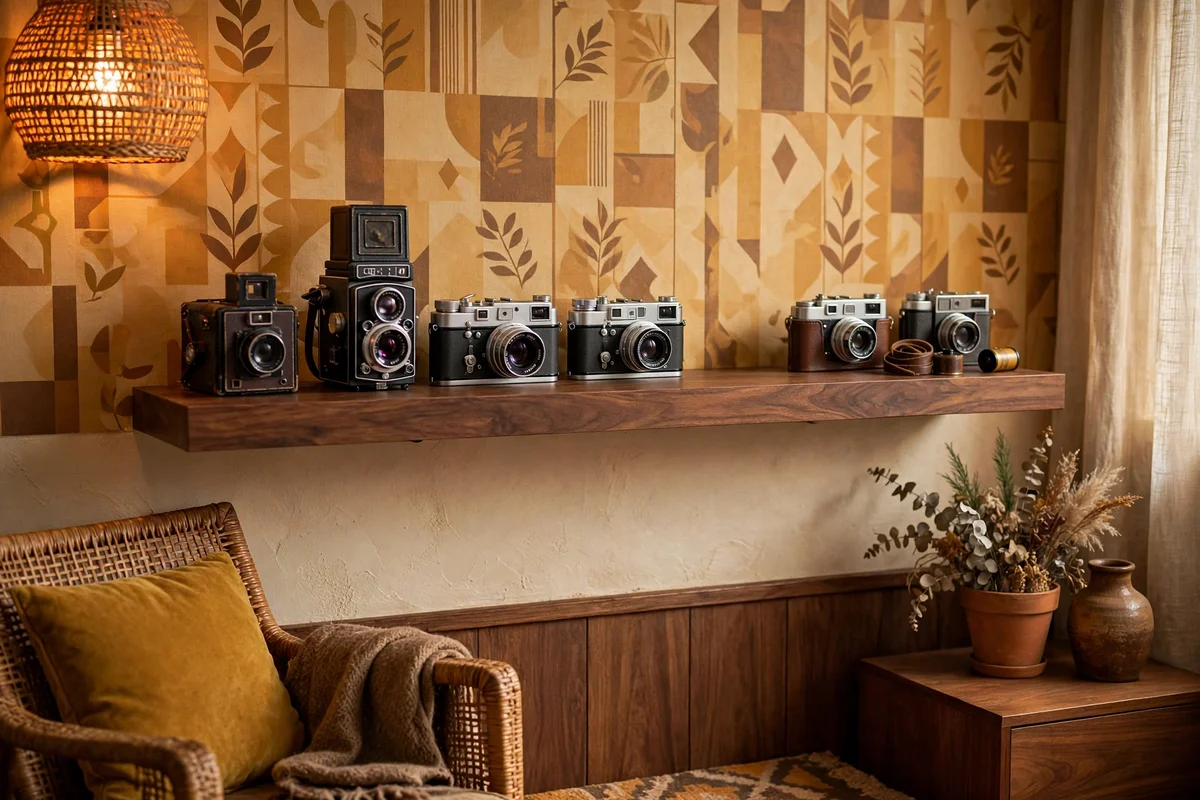
A floating shelf of vintage cameras turns a blank wall into a mini museum of 20th-century design, and each camera is a sculpture in leather and chrome. Non-working display cameras cost $10 to $40 each at flea markets, and five to seven of varying sizes fill a 4-foot shelf beautifully. Mount a simple walnut shelf ($30 to $80) at eye level in a hallway or beside the TV wall, spacing cameras with small gaps so each silhouette reads clearly. Mix boxy Brownies, sleek rangefinders, and one chunky Polaroid for variety in shape and era. Dust with a soft brush, never a damp cloth, since leather bellows and old finishes hate moisture. Add tiny brass labels with the model and year, because guests will ask and you will enjoy knowing the answers.
Pro tip: Check the film compartment of any “non-working” camera, because forgotten vintage film sometimes still develops into magic.
28. Lay Down a Checkerboard Floor Moment
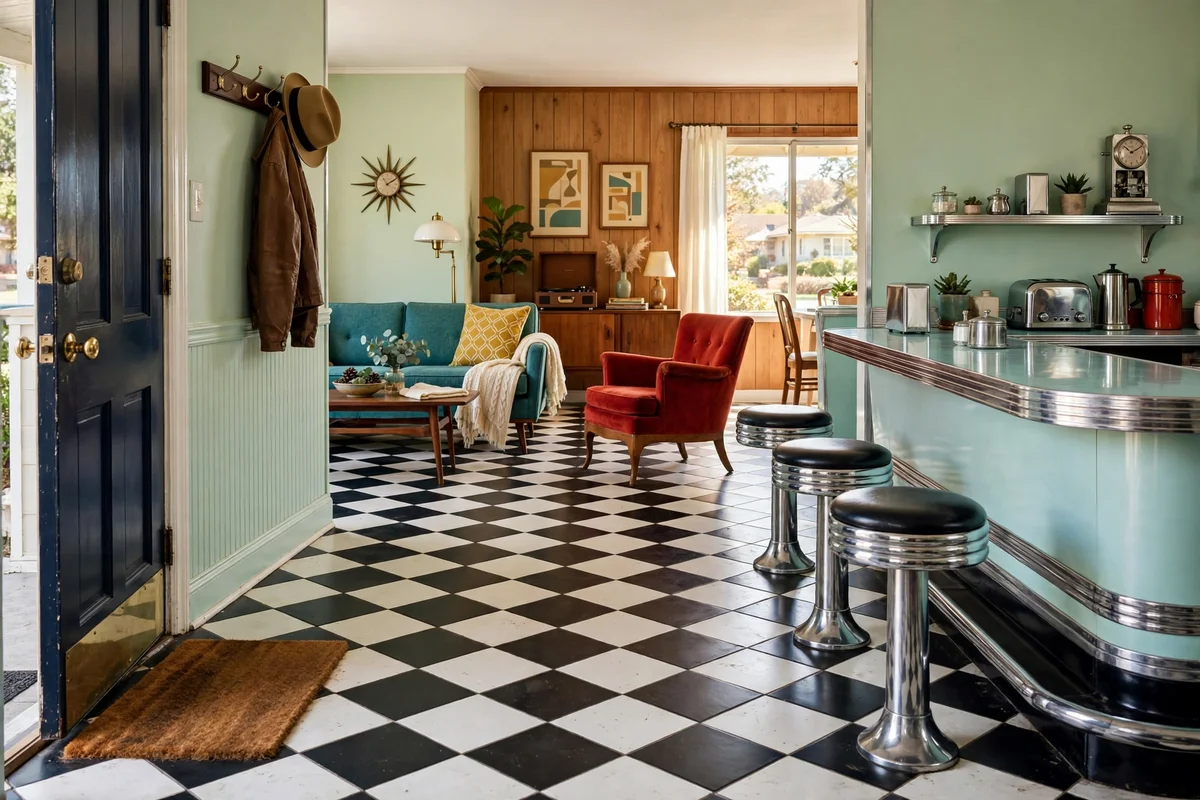
A black-and-white checkerboard floor in the entry or under the dining zone screams 50s diner in the most delightful way, and it makes the whole living area feel like a set piece. Peel-and-stick vinyl tiles cost $1 to $3 per square foot, making a 6×8 entry a $50 to $150 weekend project, while real tile runs $5 to $12 per square foot installed. Keep the checkerboard to one zone, like the entry or a bar nook, rather than the whole living room, because full-room checkerboard overwhelms furniture. The high contrast hides dirt impressively, which is why diners chose it in the first place. Seal grout lines on real tile installations, because white grout in a traffic zone needs protection. Pair it with chrome bar stools and a red accent, and the 50s fantasy is complete.
Pro tip: Lay tiles on the diagonal, because diamond orientation makes small entries feel twice as big.
29. Float the Room With a Lucite Coffee Table
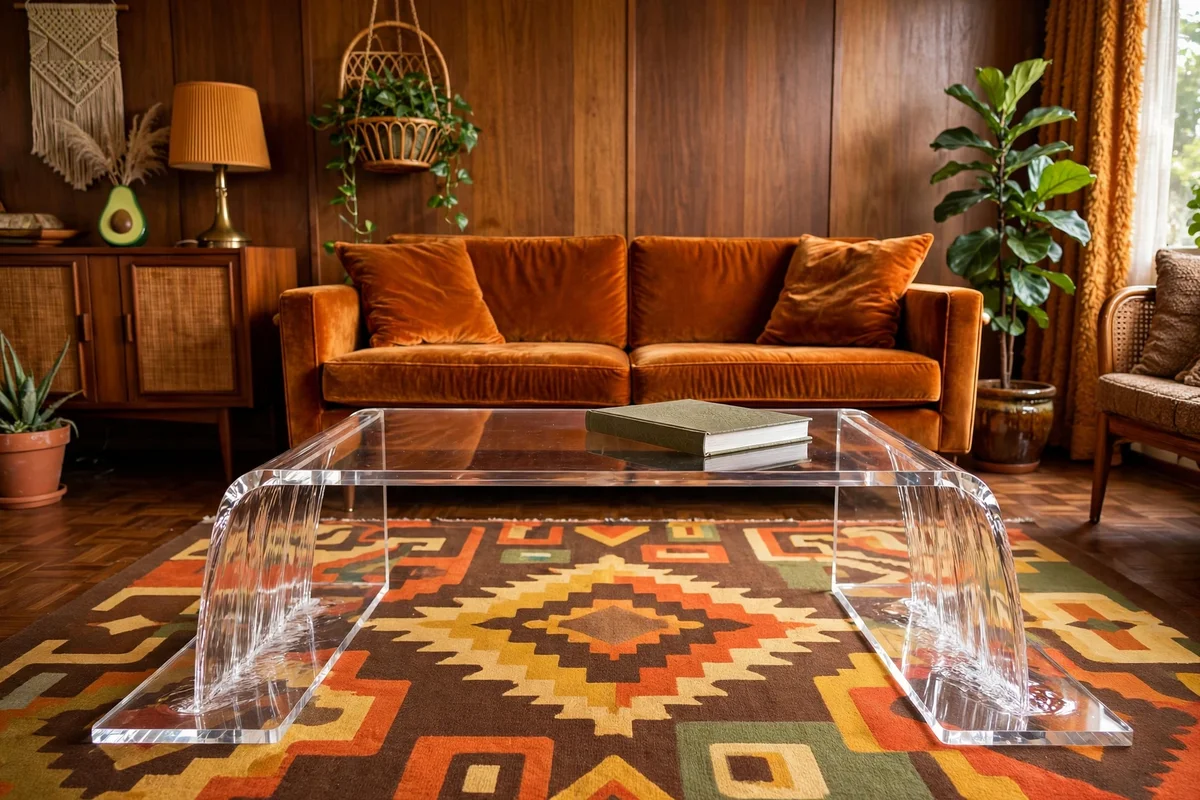
A lucite waterfall coffee table brings 70s glamour without visual weight, and it lets a bold rug show straight through the furniture. Vintage lucite tables cost $200 to $600, while new acrylic versions run $150 to $400 and arrive without the scratches that cloud old pieces. Place it over your statement rug, since transparency turns the rug into the table’s artwork, and keep styling minimal: one book, one object, nothing else. Clean with a dedicated acrylic cleaner ($10), never ammonia-based glass cleaner, because the wrong product hazes the surface permanently. The see-through form is a gift in small rooms, where a solid table would chop the space in half. Pair it with velvet seating for the classic 70s contrast of hard shine against soft texture.
Pro tip: Put felt pads under everything you set on it, because lucite scratches if you look at it wrong.
30. Divide Space With a Beaded Curtain
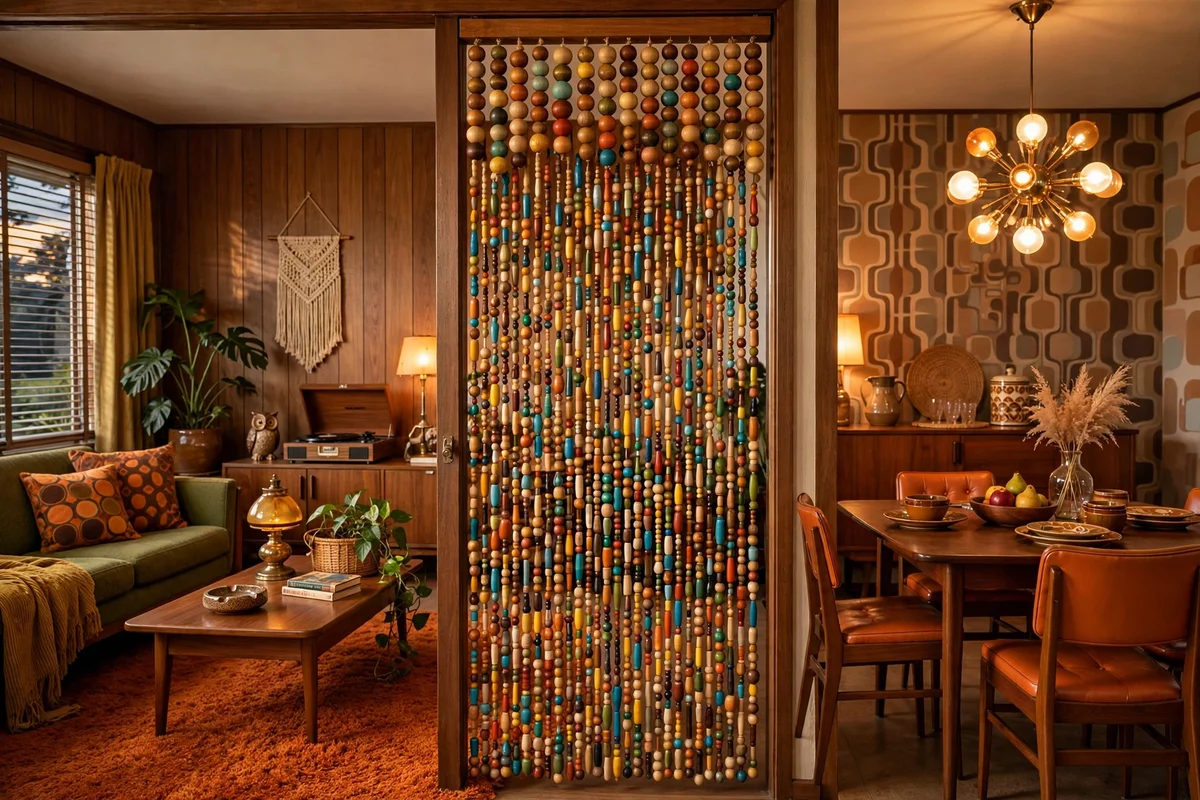
A beaded curtain in a doorway or open arch is the 70s room divider that still works, adding movement, sound softening, and instant nostalgia. Wooden bead curtains cost $25 to $70, while glass or acrylic versions run $40 to $120 and catch light beautifully. Hang one in a wide doorway between the living room and dining area, or across an open closet to hide clutter with style. Choose natural wood beads for warmth or multicolor for full 70s exuberance, and make sure the strands hang at least to mid-thigh so they part properly. The gentle clicking sound as people pass through is part of the charm, though light sleepers should keep them out of bedroom doorways. Trim any tangled strands rather than yanking, because beaded curtains knot permanently if forced.
Pro tip: Hang it from a tension rod inside the frame, because you will want to take it down for untangling day.
31. Tower Over the Corner With a Tripod Floor Lamp
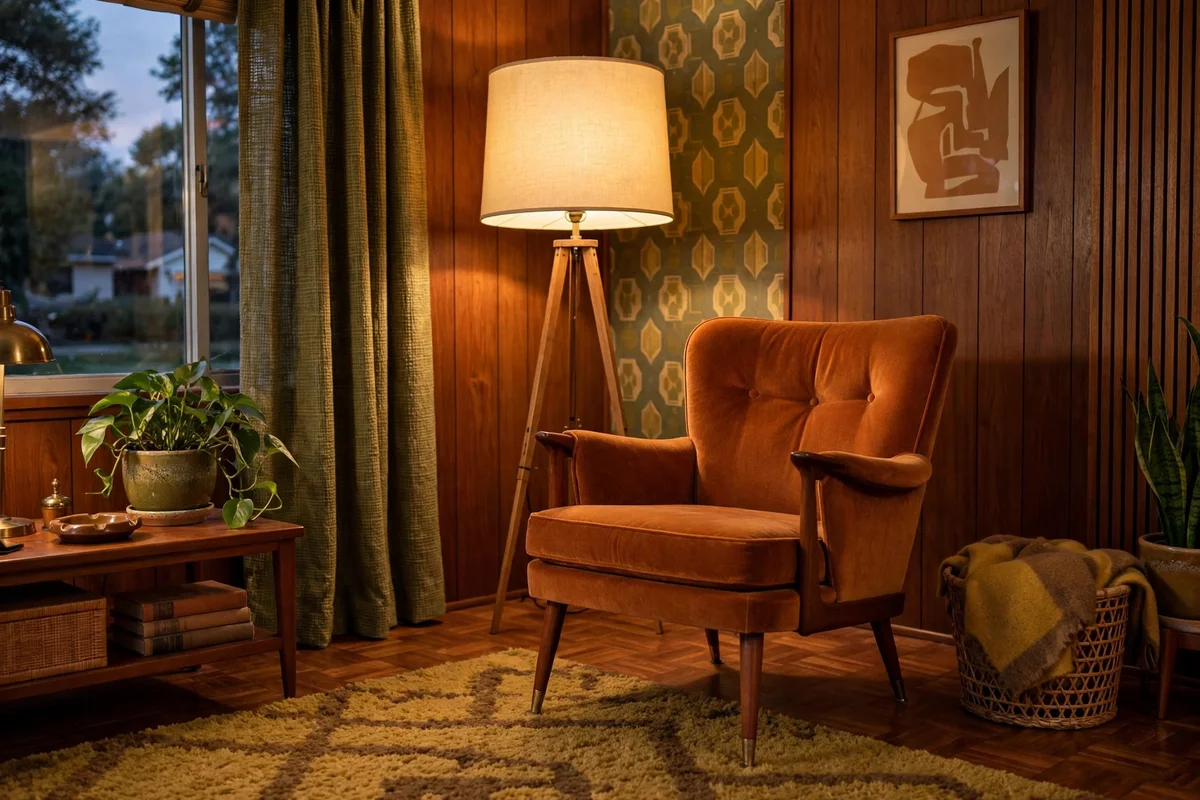
A wooden tripod floor lamp with a drum shade is the 60s lighting workhorse that still looks sharp, and its three legs tuck neatly into corners. Vintage teak tripod lamps cost $80 to $220, while reproductions run $70 to $150 with safer modern wiring. Place it behind a reading chair or beside the sofa’s arm, with the shade bottom at seated eye level to avoid glare. Choose a linen drum shade in cream or a bold print, and use a warm LED bulb for that golden 60s glow. Check that vintage tripod joints tighten firmly, since wobbly legs on a tall lamp are a tipping hazard. The open leg design keeps sightlines clear, which matters in rooms where every sightline should end at something interesting.
Pro tip: Wrap the cord around one leg with clips, because a loose cord across the floor ruins the whole silhouette.
32. Travel Back With Vintage Travel Posters
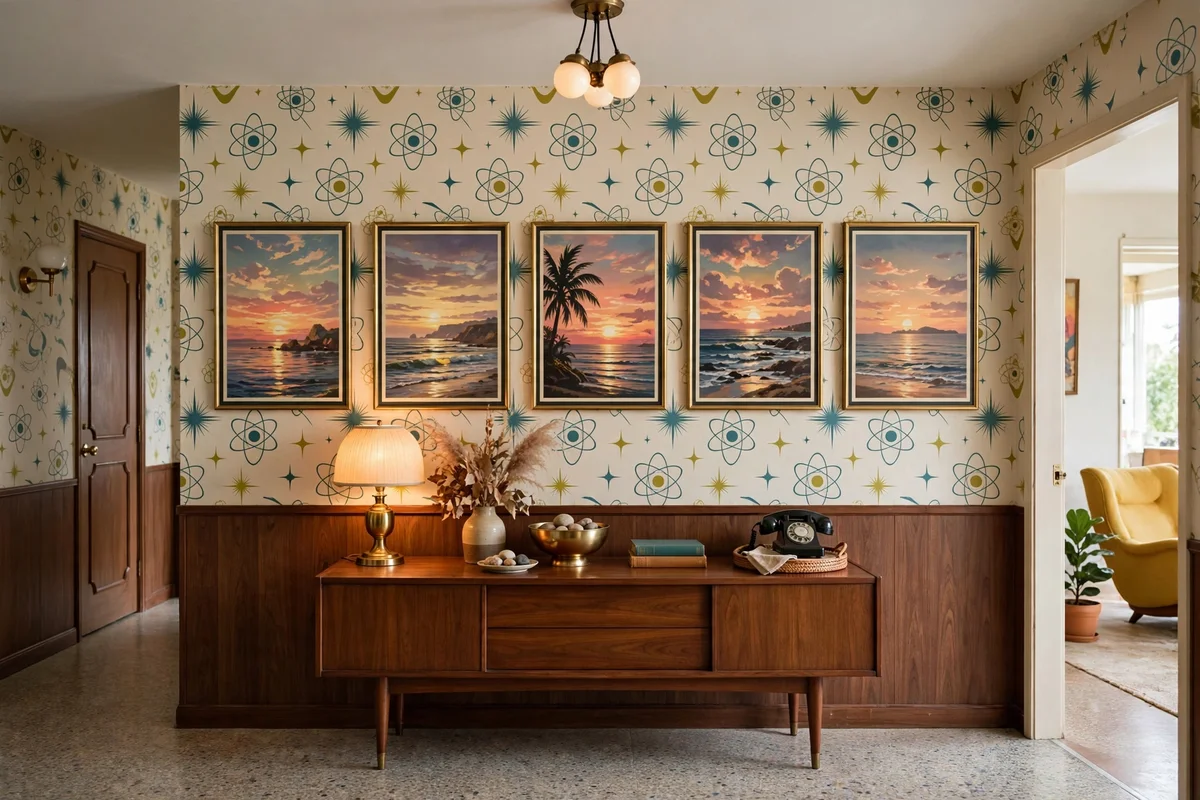
Framed vintage travel posters bring 50s jet-set glamour to the walls, and a row of them turns a hallway or sofa wall into a departure lounge. Quality reproductions in 24×36 cost $25 to $70 each, while original lithographs run $150 to $800 for sought-after destinations. Choose three to five posters with a shared color story, like all warm sunset tones or all cool ocean blues, and frame them identically for a curated look. Hang them in a tight horizontal row above a console or in a vertical stack in a narrow hallway, keeping spacing even at 3 inches. Destinations with personal meaning beat random pretty ones, because guests always ask and the stories are the point. If your walls already carry pop art, put the travel posters in the hallway instead, since two poster collections in one sightline compete.
Pro tip: Buy the frames first and the posters to fit, because odd poster sizes make framing shockingly expensive.
Frequently Asked Questions
How do I decorate retro without it looking like a thrift store exploded?
The secret is editing: choose one decade as your anchor, repeat two or three colors throughout the room, and give statement pieces breathing room. Mix in a few clean modern basics, like simple white walls or a plain jute rug, so the vintage pieces read as intentional rather than accumulated. If every surface is covered in objects, remove a third of them and watch the room instantly look designed instead of cluttered.
What colors define a retro living room?
Each decade has its palette: 50s pastels and cherry red, 60s mustard and teal, 70s harvest gold, avocado green, and burnt orange, and 80s jewel tones with black and chrome. Pick the decade you love most and pull two or three of its colors into upholstery, art, and accents. Warm wood tones like teak and walnut tie every retro palette together, so they are the safest investment pieces.
Where is the best place to find authentic retro furniture?
Estate sales and flea markets offer the best prices, typically 40 to 60 percent below vintage dealers, though you need patience and a truck. Online marketplaces work well for specific pieces like sunburst clocks and bar carts, with buyer protection built in. Always check joinery, veneer, and upholstery condition in person when possible, because restoration costs can erase a bargain fast.
Can I mix retro with modern furniture?
Absolutely, and the mix usually looks better than a pure period room. Try a 70-30 split: 70 percent retro statement pieces and 30 percent clean modern basics like a simple sofa, plain curtains, or a minimal TV stand. The modern pieces give the eye resting places, which makes the vintage items look curated rather than costume-like. Stick to one shared color or wood tone across both styles to keep the blend cohesive.
How do I light a retro living room properly?
Layer three types: one overhead statement like a sputnik chandelier or swag lamp, two table lamps with warm shades for evening glow, and one fun accent like a lava or mushroom lamp. Use 2700K warm bulbs everywhere, because cool daylight bulbs kill vintage warmth instantly. Put the main lamps on dimmers so the room shifts from bright daytime hangout to moody evening lounge with one slide.
Is retro style expensive to achieve?
It can be the cheapest decorating style if you thrift patiently, since 60s and 70s pieces flood secondhand markets. A full room makeover with thrifted finds can cost $500 to $1,500, while buying reproductions and restored icons runs $3,000 to $8,000. Start with high-impact cheap wins, a sunburst clock, a shag rug, and pop art posters, then save for one splurge piece like a great sofa or jukebox.
Final Thoughts
Retro decorating works because it is honest about what it loves: bold color, playful shapes, and furniture with stories to tell. You do not need a jukebox or a full 70s conversion to capture the feeling. One sunburst clock, one velvet sofa in a fearless color, or one glowing lava lamp can shift a whole room’s personality. Start with the piece that makes you smile widest, build around it patiently, and let the room collect character the way the best vintage collections do: one great find at a time. Your living room should feel like the happiest version of the past, not a museum of it, so play the records loud, dim the swag lamp low, and enjoy every bit of the vintage fun.