36 Dark Moody Studio Apartment Ideas for Dramatic Style
36 Dark Moody Studio Apartment Ideas for Dramatic Style
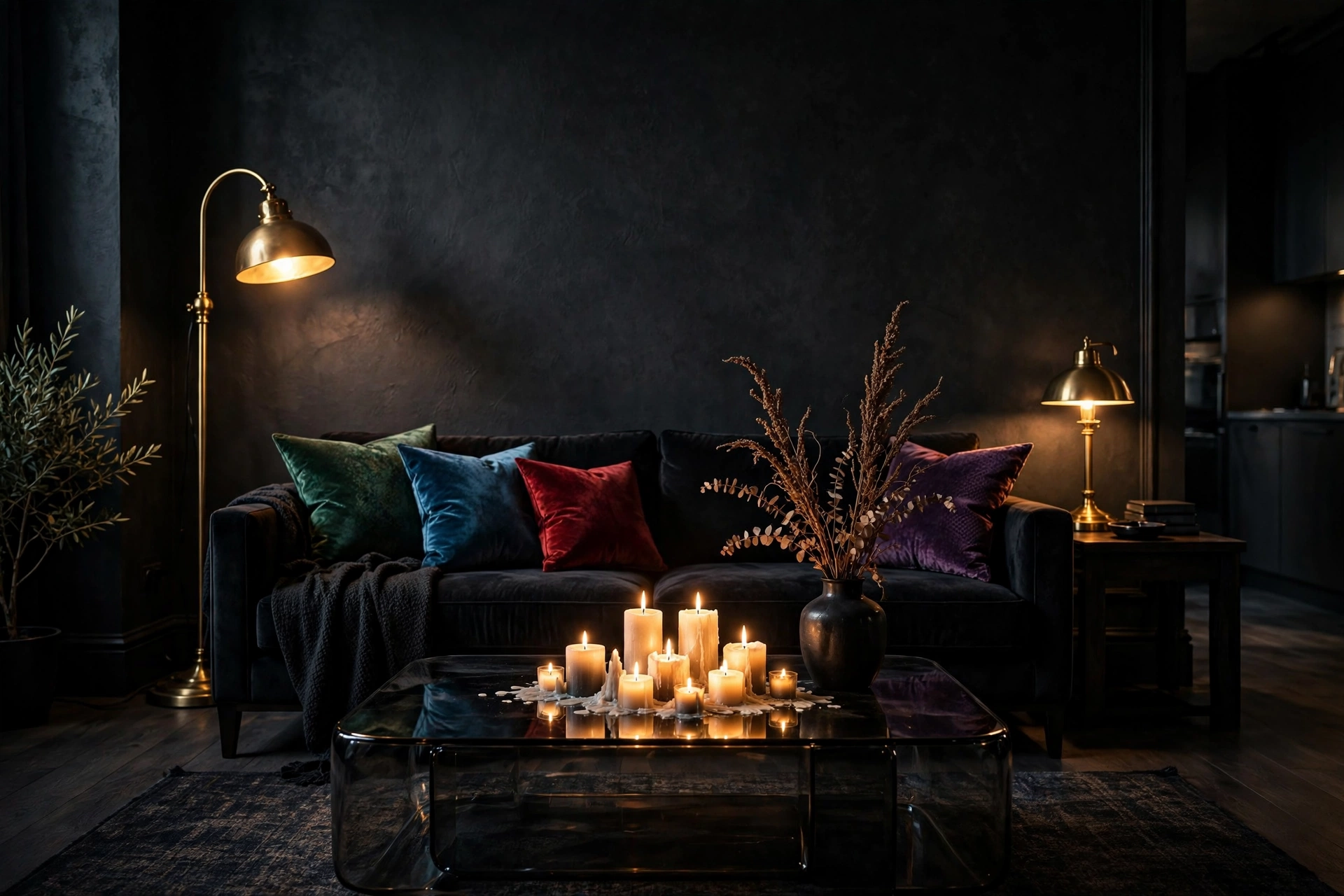
Forget everything you’ve heard about small spaces needing to be white and bright. Dark, moody interiors are having a major moment — and a studio apartment might be the best place in the world to try them. Deep charcoal walls, emerald velvet, flickering candlelight and aged brass turn a one-room rental into something that feels like a private members’ club: intimate, dramatic, and impossibly cozy. The secret is that dark colors don’t shrink a studio — they blur its edges, hide its flaws, and make every lamp glow like a spotlight. Whether you go full color-drenched drama or just dip a toe in with blackout curtains and jewel-toned pillows, these 36 dark moody studio apartment ideas will show you how to layer shadow, texture, and warm light for a small space with serious atmosphere.
Walls & Color — The Moody Canvas
1. Paint One Charcoal Accent Wall
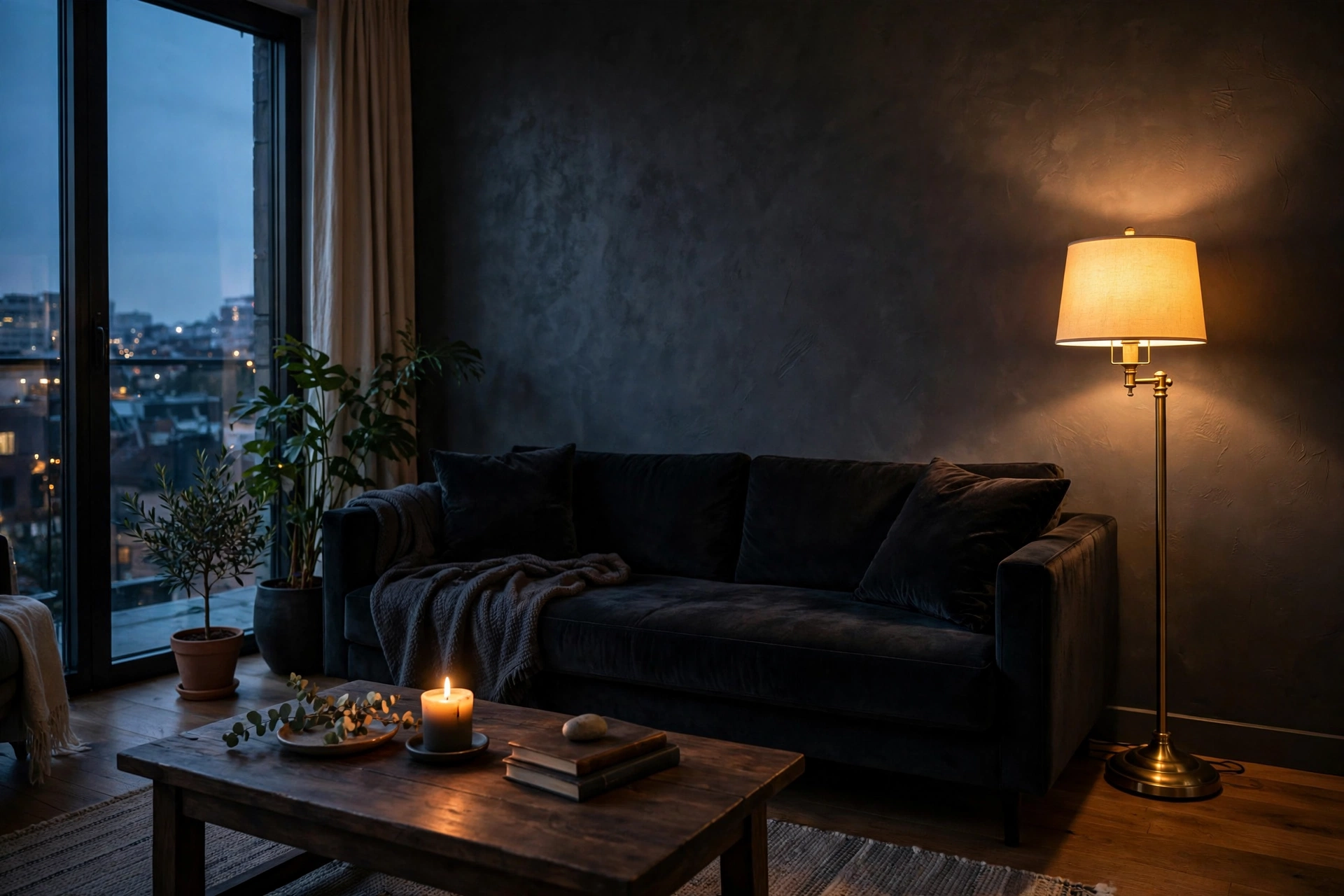
A single deep charcoal wall is the fastest route to drama — one gallon of paint ($30–$60) behind the sofa or bed instantly gives the studio a focal point and makes everything in front of it pop. Charcoal reads as a neutral, so it plays well with wood tones, brass, and every jewel color you throw at it. In a rental, keep it to one wall so repainting later is a weekend job, not a saga. Pro tip: test your paint swatch at night under lamplight, not just in daylight — charcoal shifts dramatically, and you want to love the evening version since that’s when moody rooms shine.
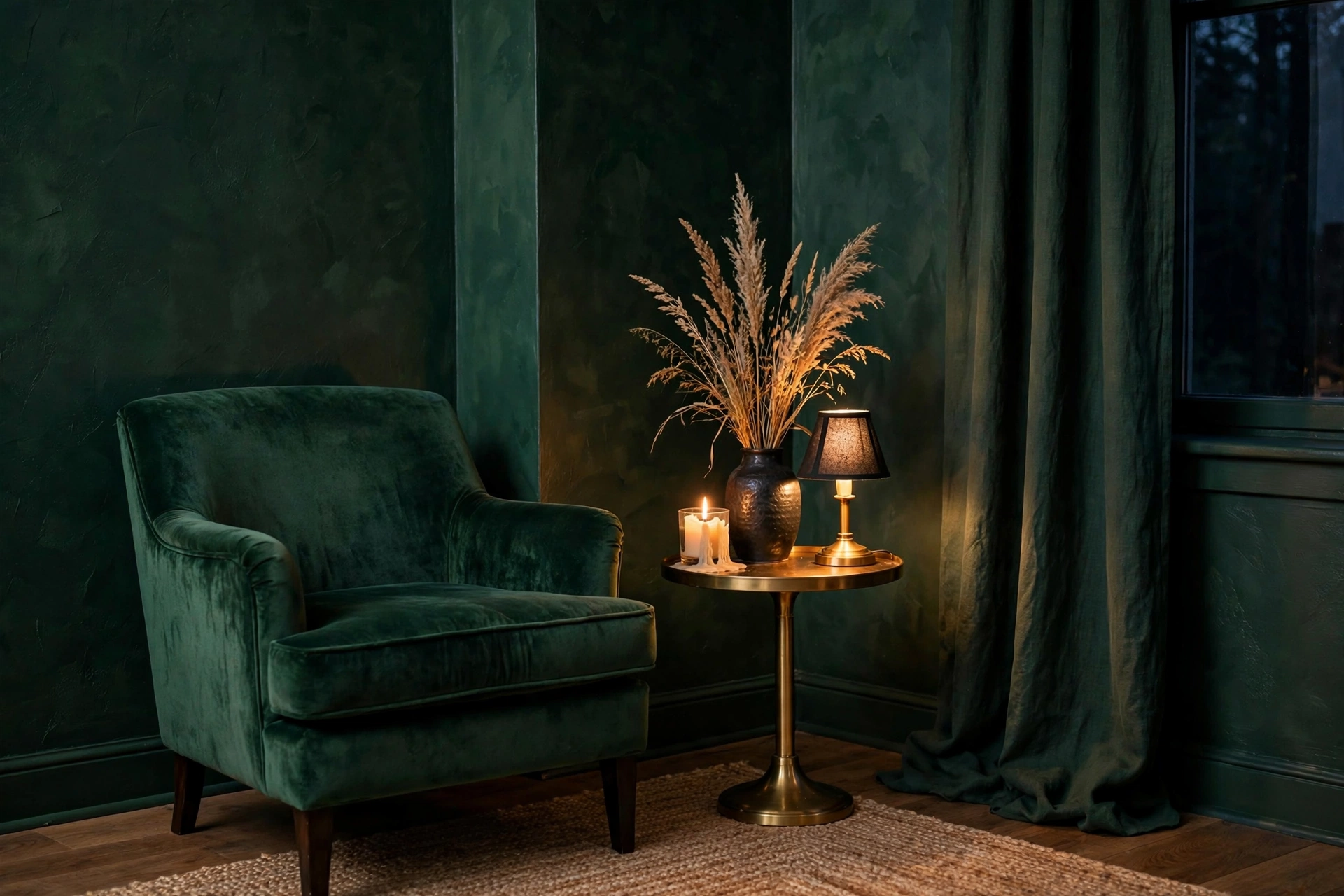
2. Go All-In with Deep Forest Green Walls
If charcoal feels too gray, deep forest or emerald green is the moody color with a pulse — rich, botanical, and endlessly flattering to warm wood and brass. Paint the wall behind your bed or dining nook ($30–$60 per gallon) and watch the whole zone feel like a hidden speakeasy. Green is also forgiving: it hides scuffs better than black and glows beautifully under warm bulbs. Pair it with cognac leather and dried grasses for a look that’s part library, part jungle. These deep, saturated hues are some of the most striking in our studio apartment color schemes roundup. Pro tip: choose a green with warm undertones (think moss, not mint) — cool greens can turn chalky under artificial light.
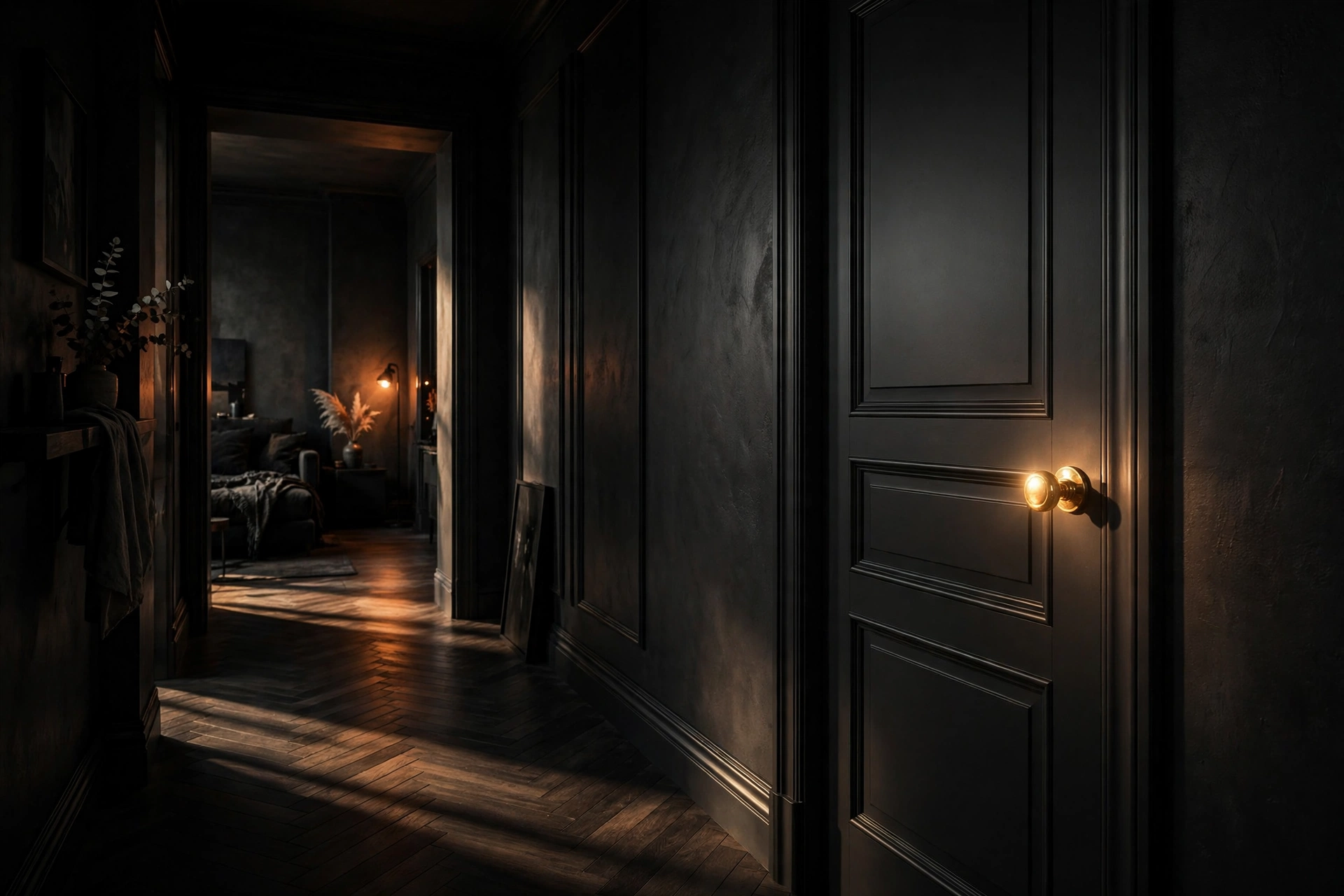
3. Paint Trim and Doors Matte Black
Walls get all the attention, but black trim and doors are the quiet power move — they frame every view like a photograph and add architecture where a rental has none. A quart of matte black enamel ($15–$25) covers a door and its trim; use a satin finish so it wipes clean. Even if your landlord won’t allow wall color, many will approve painted doors since they’re easy to repaint. The contrast against light walls is graphic and modern; against dark walls it’s seamless and cocooning. Pro tip: remove the hardware before painting and spray it matte black too — matching hinges and knobs look custom and cost almost nothing.
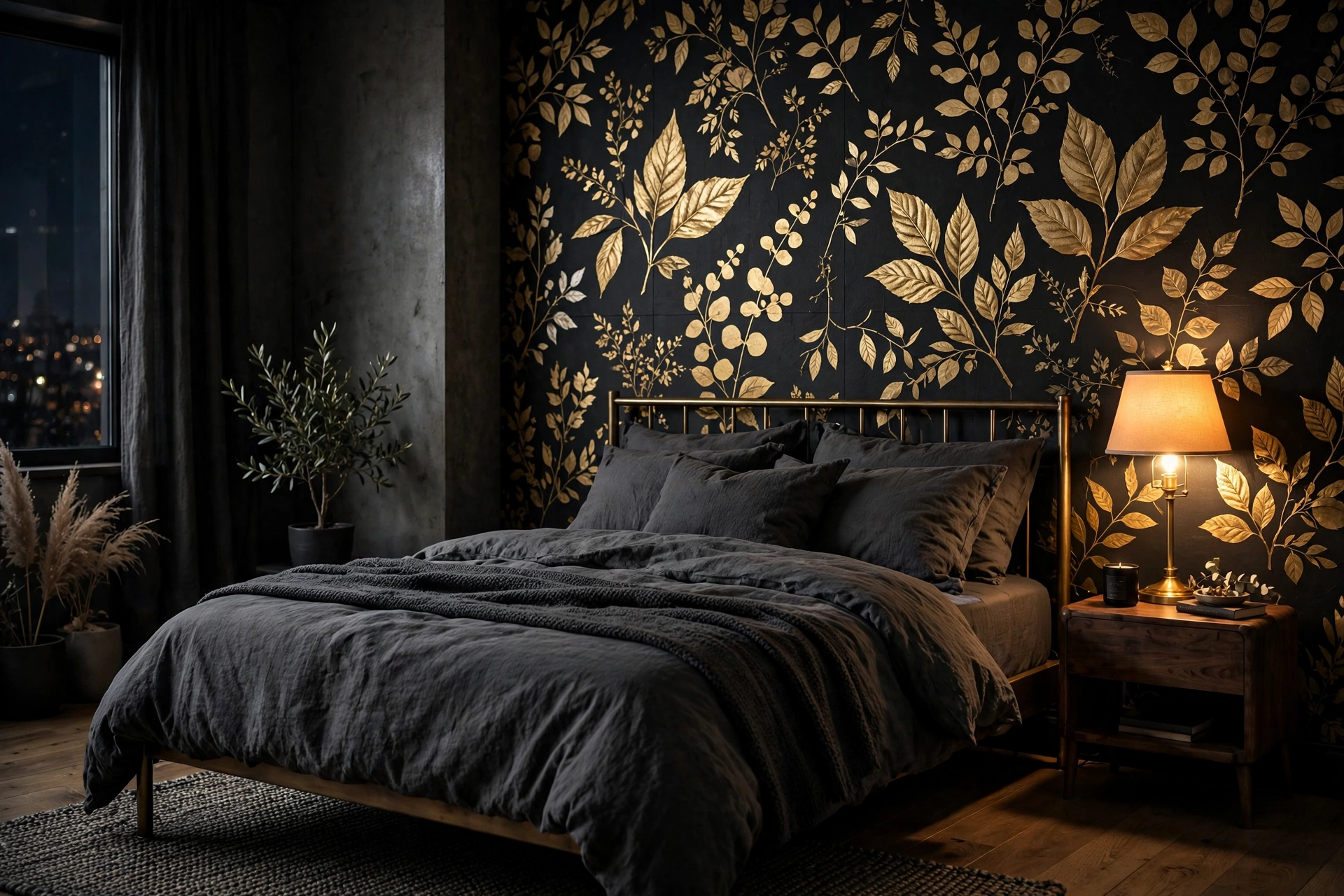
4. Use Dark Peel-and-Stick Wallpaper
Renters, this one’s for you: dark botanical or art-deco peel-and-stick wallpaper ($40–$80 per roll) delivers all the drama with zero paint and zero deposit risk. Black backgrounds with gold foliage, moody florals, or smoky marble prints turn a plain wall into a statement in an afternoon. It’s also the easiest way to try the look before committing — if you hate it, peel it off. One accent wall behind the bed is the classic placement, but wrapping a small entry nook feels incredibly luxe. Pro tip: order one extra roll beyond your measurements — pattern matching on dark prints eats more paper than you expect, and dye lots vary.
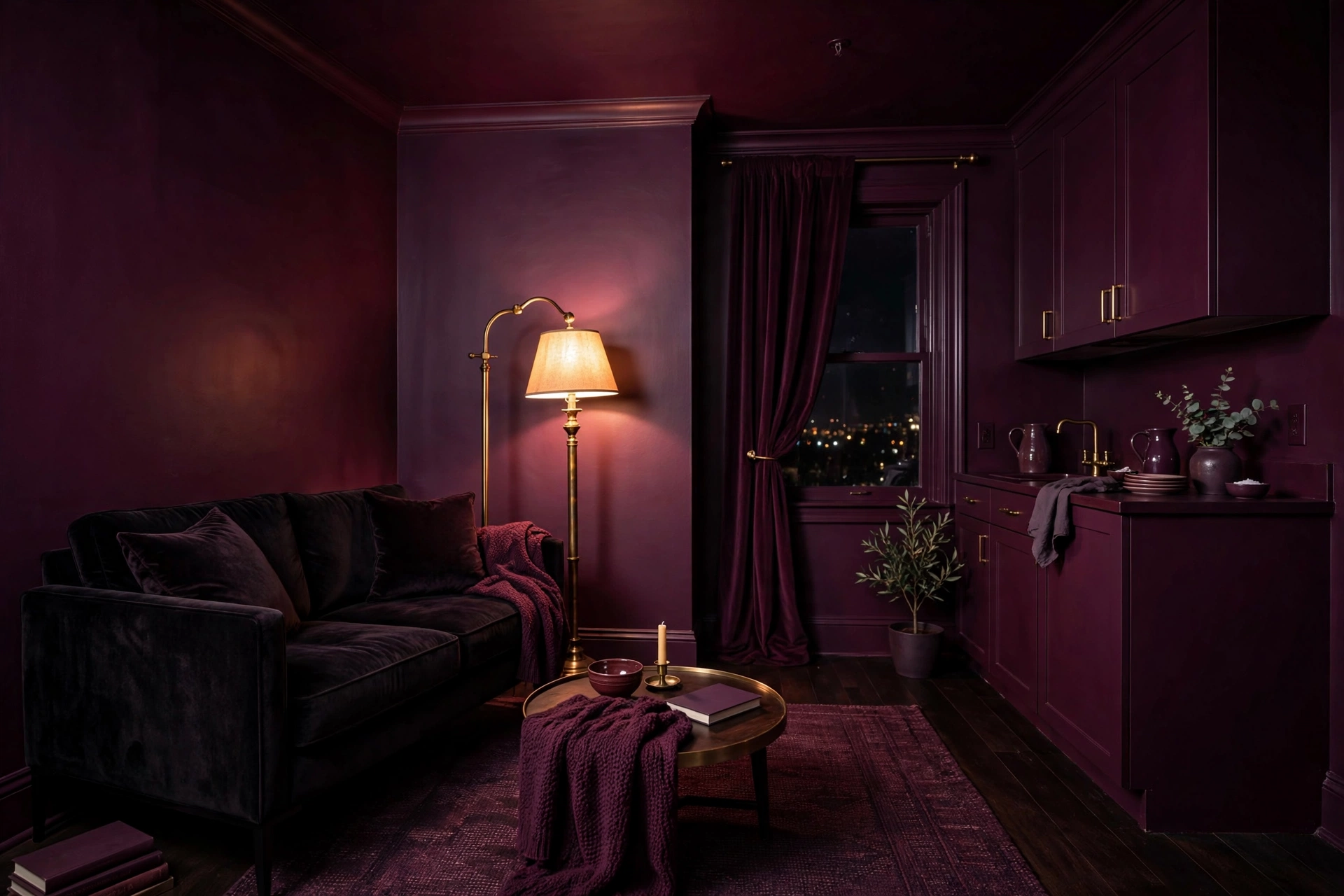
5. Color-Drench the Whole Studio
Color drenching — painting walls, ceiling, and trim all in one deep tone — sounds terrifying in a studio, but it’s actually a small-space cheat code. Without contrasting edges, the eye can’t find the room’s boundaries, so the space feels boundless and cocooning rather than cramped. Deep plum, espresso, or ink navy all work; the trick is committing fully. Yes, it’s more paint ($120–$200 for a studio), but the result looks like a designer did it. Pro tip: keep the floor and one large textile light — a natural jute rug or cream bedding stops a drenched room from feeling like a cave and gives the eye somewhere to rest.
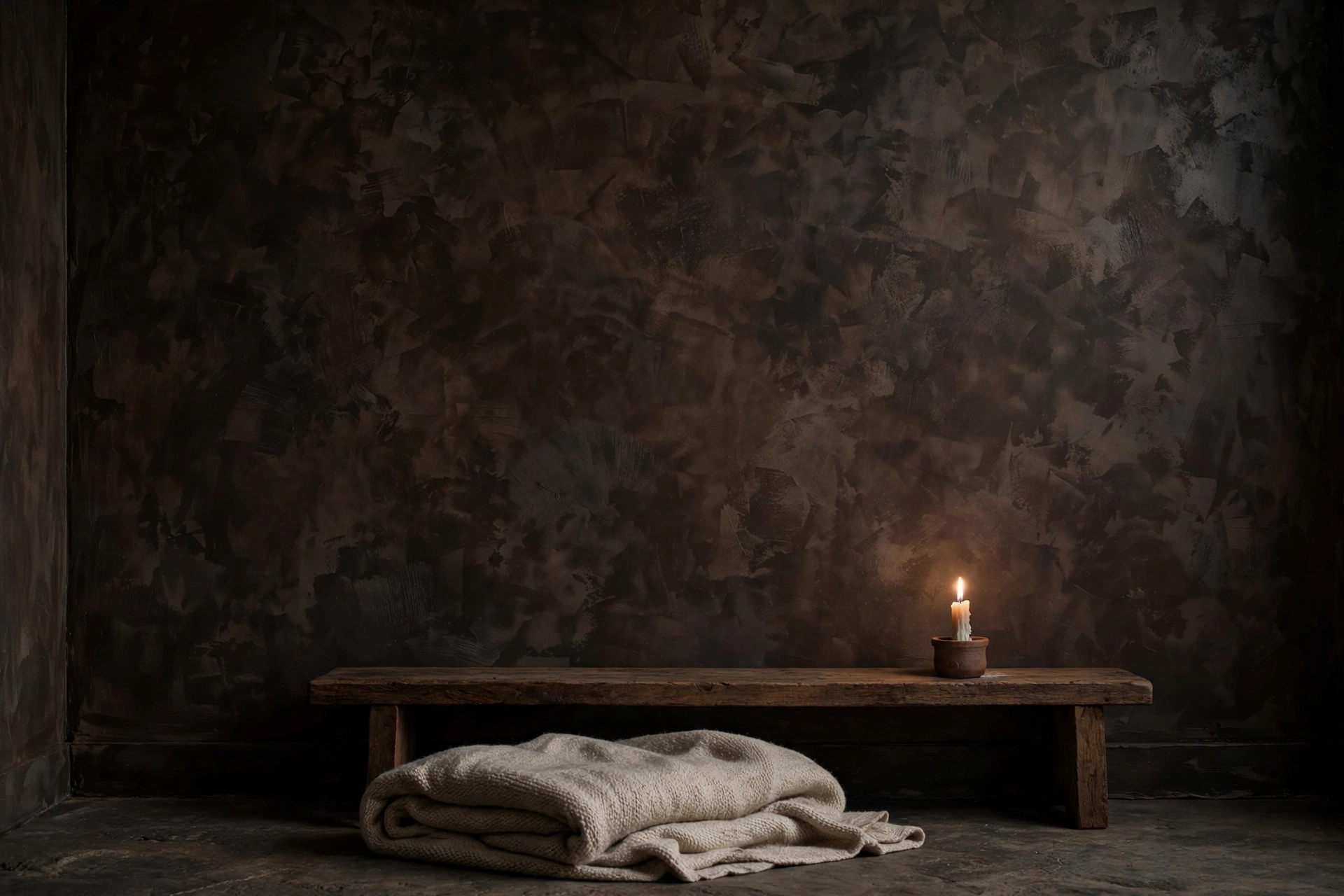
6. Try a Limewash or Textured Finish
Flat dark paint can look a little one-note; limewash or Roman clay ($50–$100 for a studio wall) adds the cloudy, old-world texture that makes moody walls feel expensive. The mottled finish catches lamplight in patches, so the wall seems to shift as you move — it’s the difference between a painted wall and a plastered one. Application is forgiving (crisscross brush strokes hide sins), making it a great first DIY. Stick to deep tones: espresso, slate, or oxblood. Pro tip: limewash looks patchy for the first few hours and perfect the next morning — don’t panic and overwork it; walk away and let it dry.
Furniture with Drama
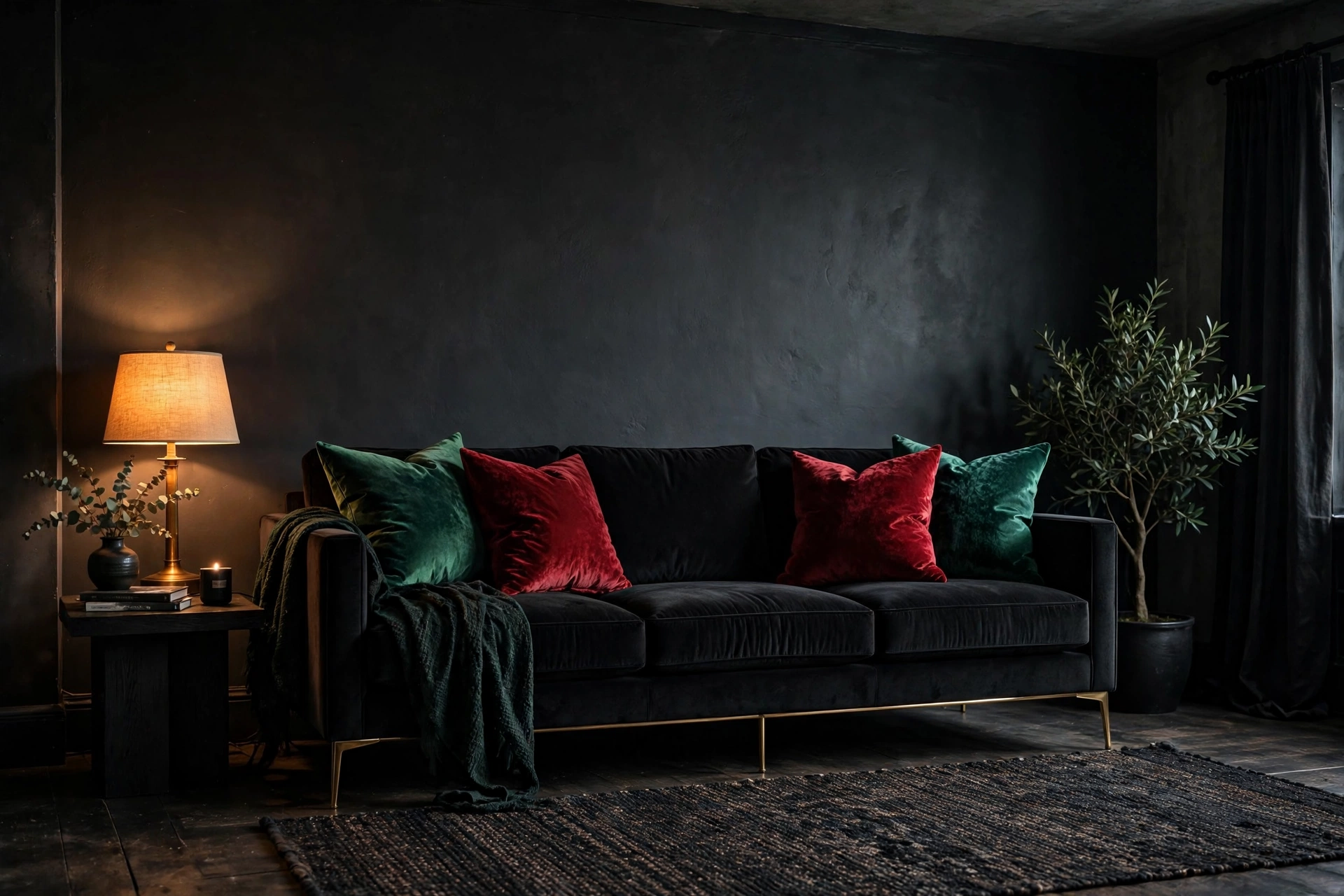
7. Choose a Black Velvet Sofa
Nothing says moody like a black velvet sofa — it drinks the light, feels like midnight, and makes every throw pillow look like jewelry. Velvet’s pile catches lamplight in shifting tones, so the sofa never looks flat. Budget versions start around $400–$700; the key is a low profile and clean lines so it doesn’t overwhelm a studio. Keep the surrounding palette tight — charcoal, brass, and one jewel tone — and the sofa becomes sculpture. Pro tip: brush velvet weekly with a soft clothes brush in one direction; it prevents the crushed patches that make black velvet look tired and keeps the nap rich and even.
8. Anchor with a Dark Leather Armchair
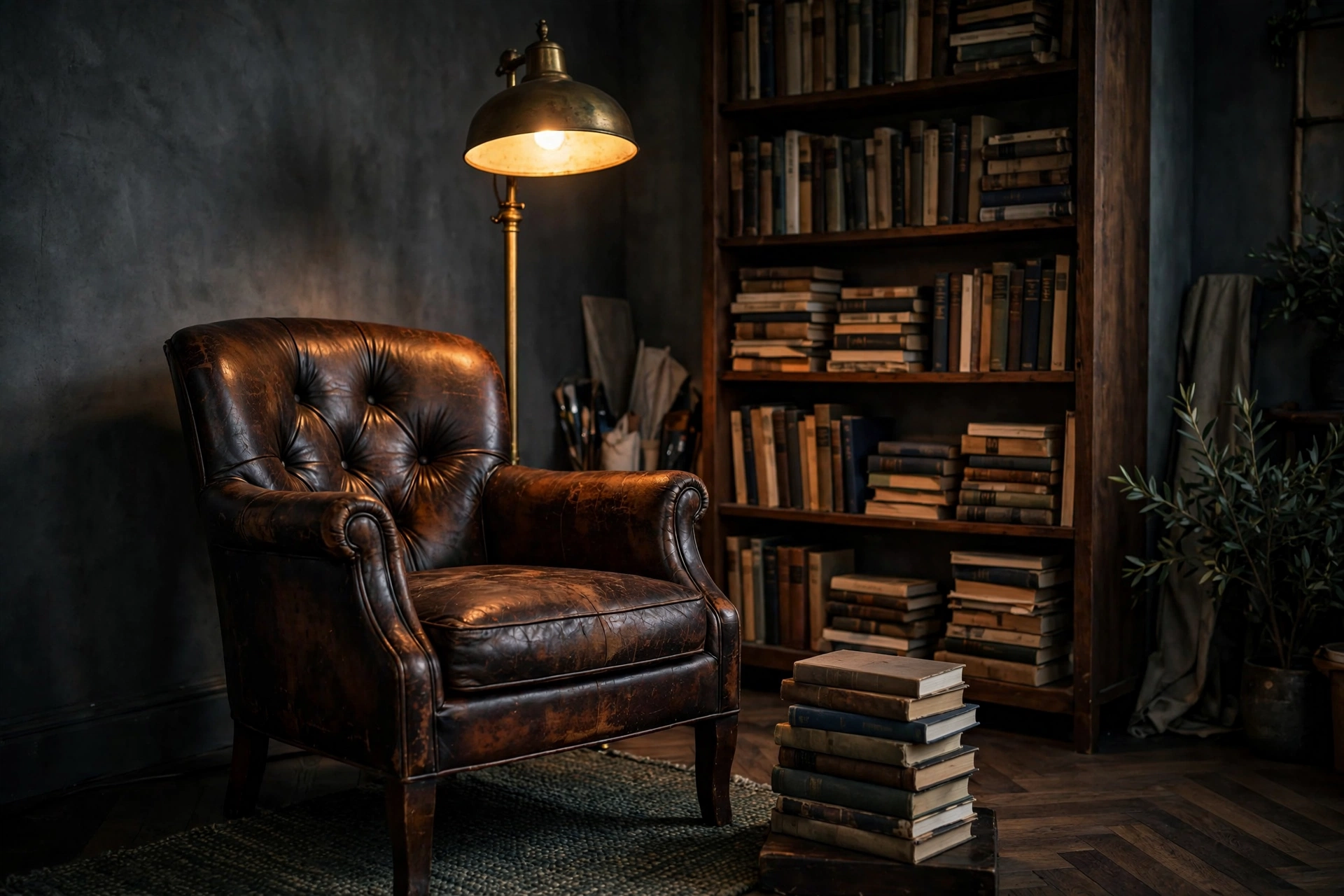
A worn, dark brown or oxblood leather club chair is the moody room’s soul — it looks better with age, smells like a library, and gives the studio a masculine, collected edge. Vintage finds run $150–$400 at flea markets and estate sales; the patina is the point, so don’t fear scratches. Tuck it into a reading corner with a brass floor lamp and a stack of books, and you’ve built the coziest square footage in the apartment. Pro tip: condition the leather twice a year with neatsfoot oil or a quality cream — dry heated apartment air cracks leather fast, and ten minutes of care keeps a vintage chair supple for decades.
9. Go for Black Metal-Frame Furniture
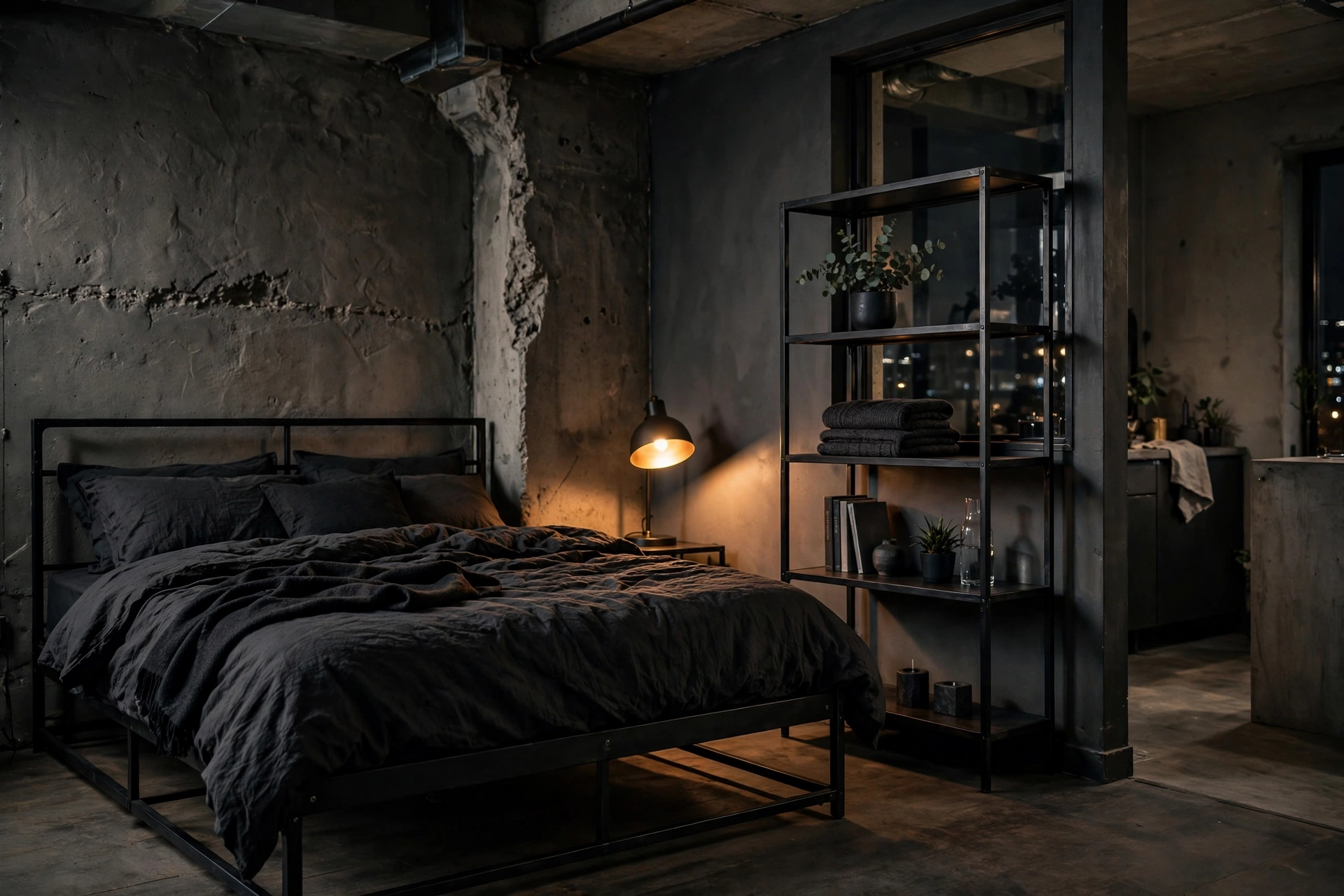
Black metal bed frames, shelving units, and side tables bring an industrial edge that keeps a moody studio from feeling stuffy. The thin profiles take up almost no visual weight — important when every piece is dark — while the matte finish recedes into shadow. A black metal platform bed ($150–$300) plus a matching etagere creates a cohesive, architectural bedroom zone without a single wall. Pro tip: mix black metal with one warm material — oak shelves, a wool throw, leather — or the look tips from moody into cold; warmth is what separates dramatic from dreary.
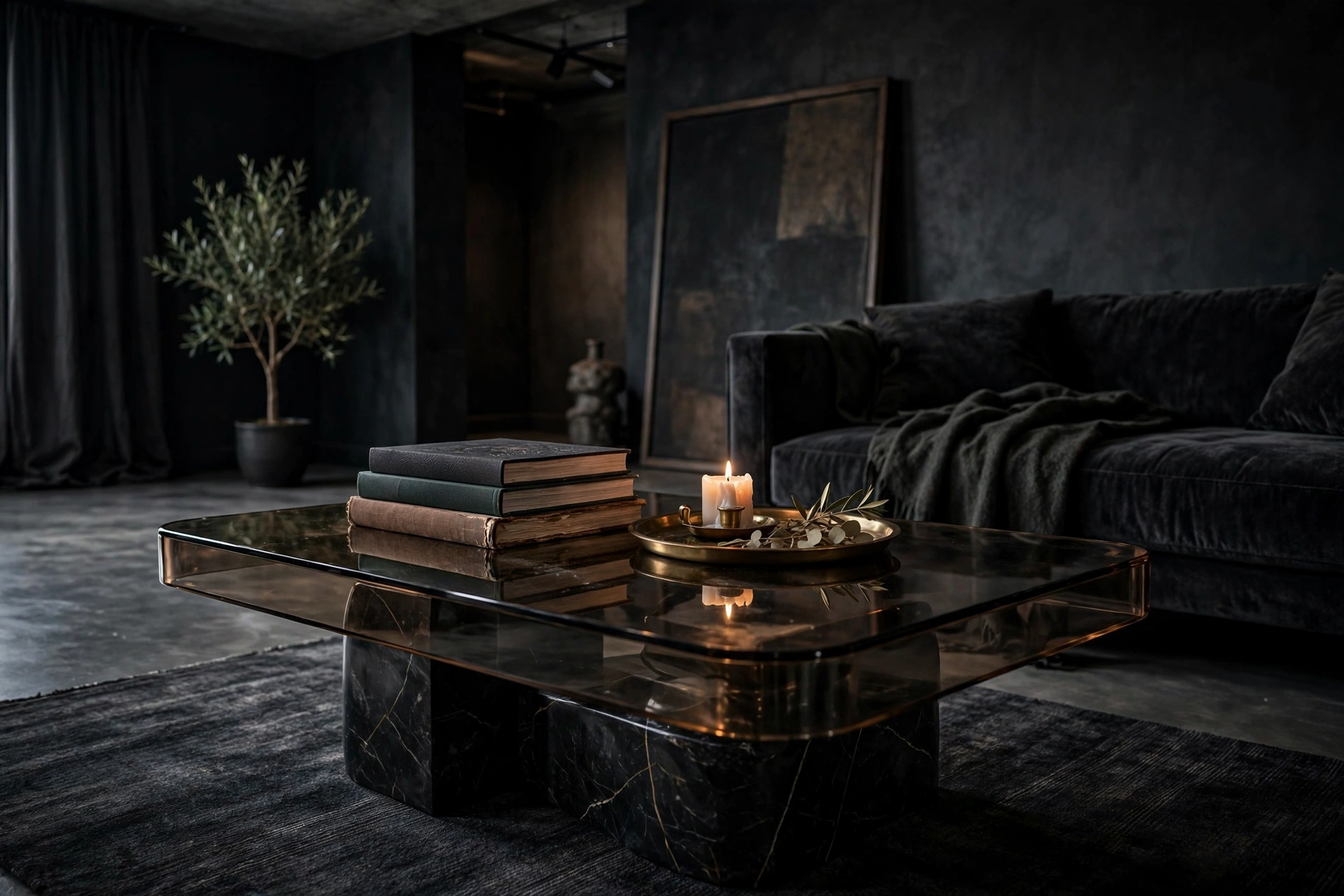
10. Add a Smoked-Glass Coffee Table
A smoked or bronze-tinted glass coffee table ($120–$280) is the moody living room’s secret weapon: it reflects candlelight, shows the rug beneath it, and visually disappears so a small seating area breathes. Unlike clear glass, the tint hides dust and fingerprints — practical and glamorous. Style it with a low stack of art books, a brass tray, and one sculptural object; restraint is everything on glass. Pro tip: put felt pads on everything that sits on the glass — in lamplight, every scratch on a dark tinted surface shows, and prevention beats polishing.
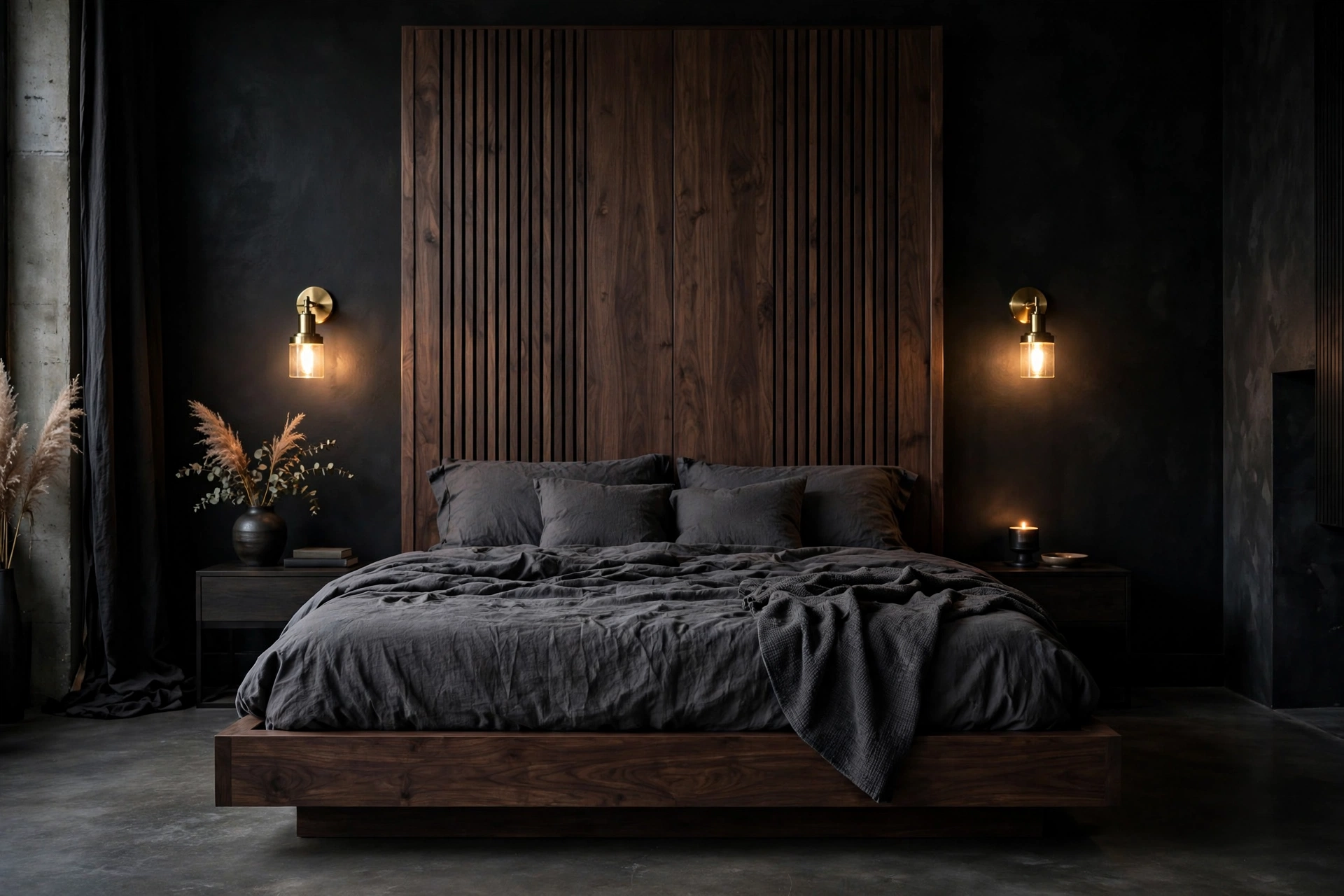
11. Pick a Dark Wood Bed Frame
A dark walnut or espresso platform bed ($250–$600) grounds the sleeping zone with weight and warmth — exactly what a moody bedroom needs. Dark wood reads as permanent and intentional, unlike the pale pine that can look temporary in a rental. Keep the bedding in deep tones (slate, charcoal, aubergine) and let one brass or amber accent glow against it. The bed becomes the room’s dark anchor, especially when paired with the right studio apartment lighting ideas on the nightstands. Pro tip: choose a frame with a tall headboard — in a studio, it creates a visual “wall” that separates sleep from living without blocking a single photon of light.
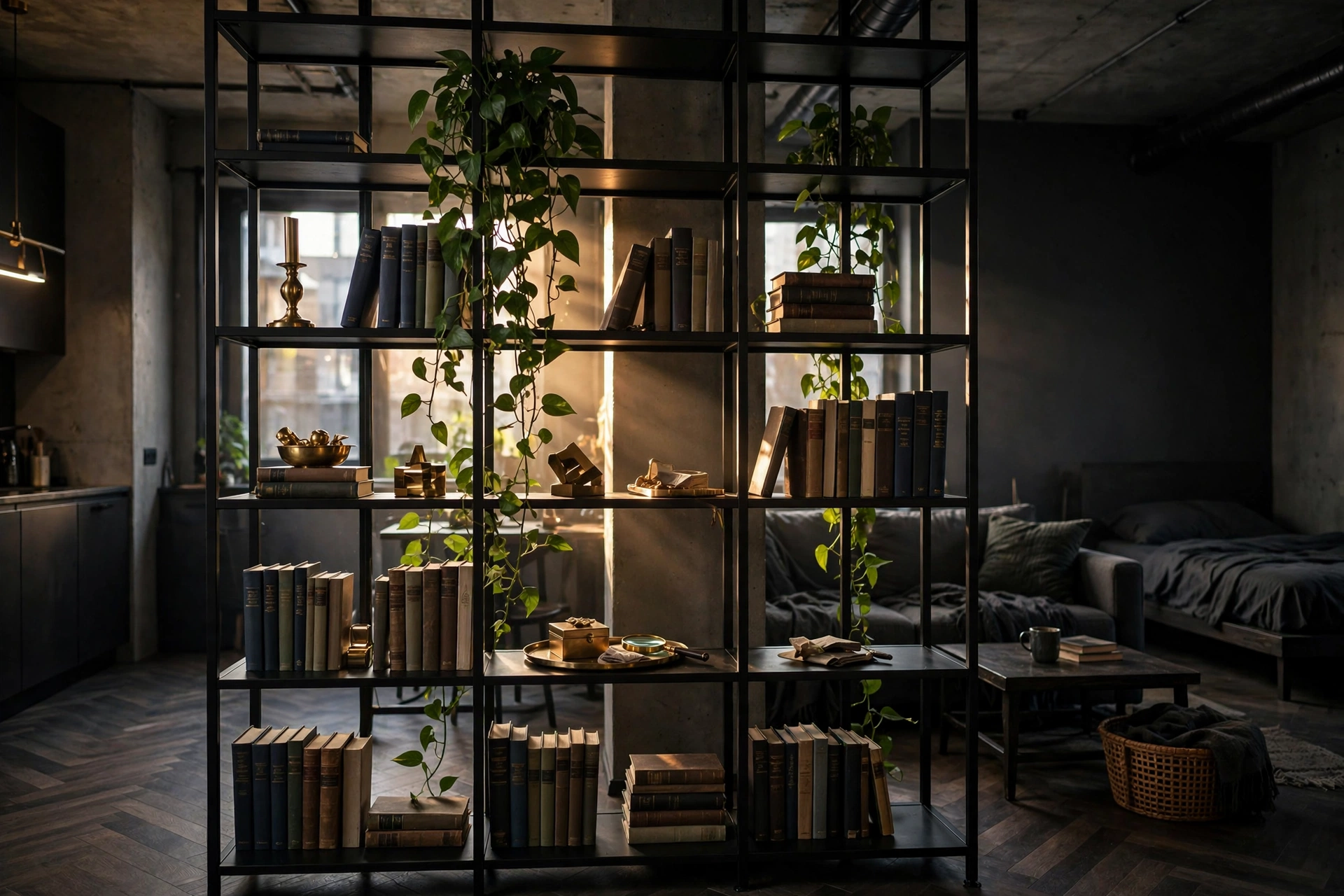
12. Use a Black Bookshelf as a Room Divider
A tall open black bookshelf ($100–$250) placed perpendicular to the wall carves a bedroom zone out of a studio while staying true to the moody palette — it divides without the visual interruption of a curtain or screen. Style it with books, brass objects, and a few trailing plants; the dark frame makes everything on it look curated. Because it’s open, light still filters through, so the “wall” never feels solid. Pro tip: anchor it to the wall with anti-tip straps ($8) — in a studio you brush past your divider daily, and a loaded bookshelf must never wobble, no matter how good it looks.
Textiles & Layers
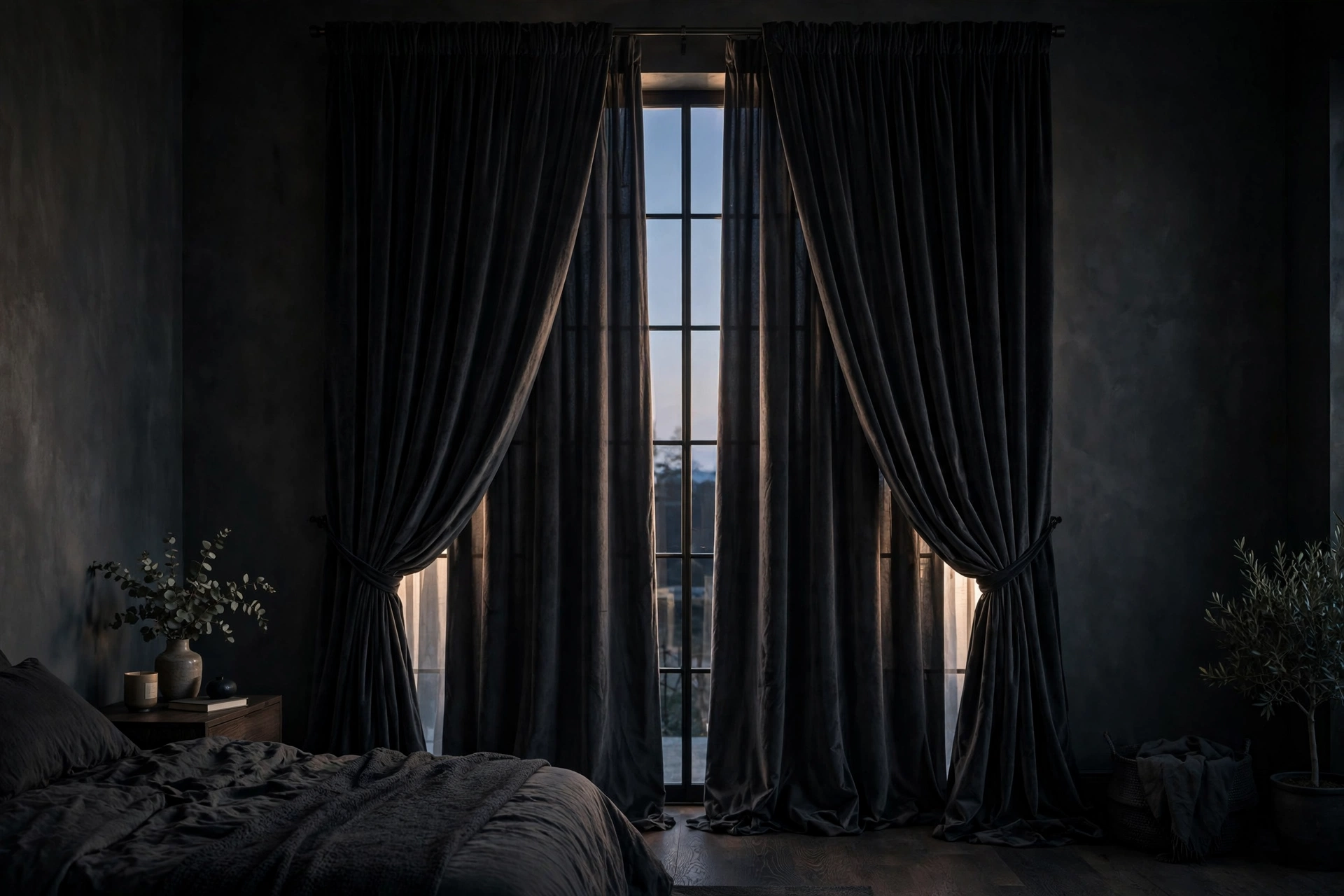
13. Hang Heavy Blackout Curtains
Floor-to-ceiling curtains in heavy black velvet or thick linen ($40–$90 per panel) do triple duty in a moody studio: they block morning light for better sleep, add acoustic softness, and frame windows like theater drapes. Hang the rod 4–6 inches above the frame and 8–12 inches wider on each side so the window looks grand even when the curtains are open. In a dark room, curtains are architecture. Pro tip: velvet curtains collect dust — vacuum them with an upholstery attachment every couple of months, and they’ll keep their rich pile instead of going gray at the folds.
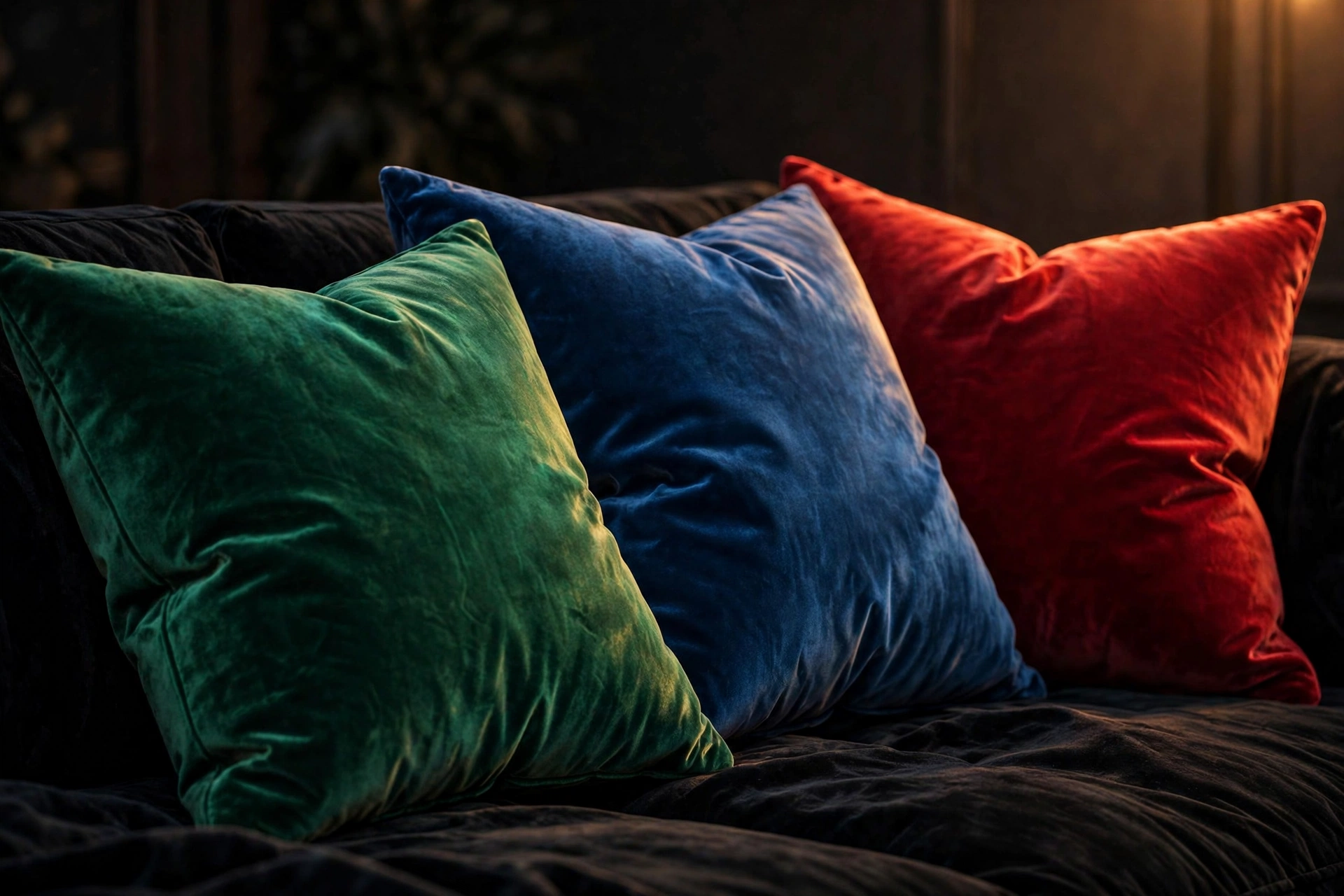
14. Pile On Jewel-Tone Velvet Pillows
Against black and charcoal, jewel tones — emerald, sapphire, ruby, amethyst — glow like stained glass. Velvet pillow covers run $12–$28 each; five or six in mixed jewels on a dark sofa create the layered, collected look moody rooms demand. Vary the sizes (22-inch squares behind 18-inch ones) and add one lumbar for depth. This is the cheapest way to commit to the palette without painting a thing. Pro tip: buy the best inserts you can afford ($18–$25 down-alternative) and cheap covers — plump pillows make even $12 covers look designer, while flat inserts ruin expensive ones.
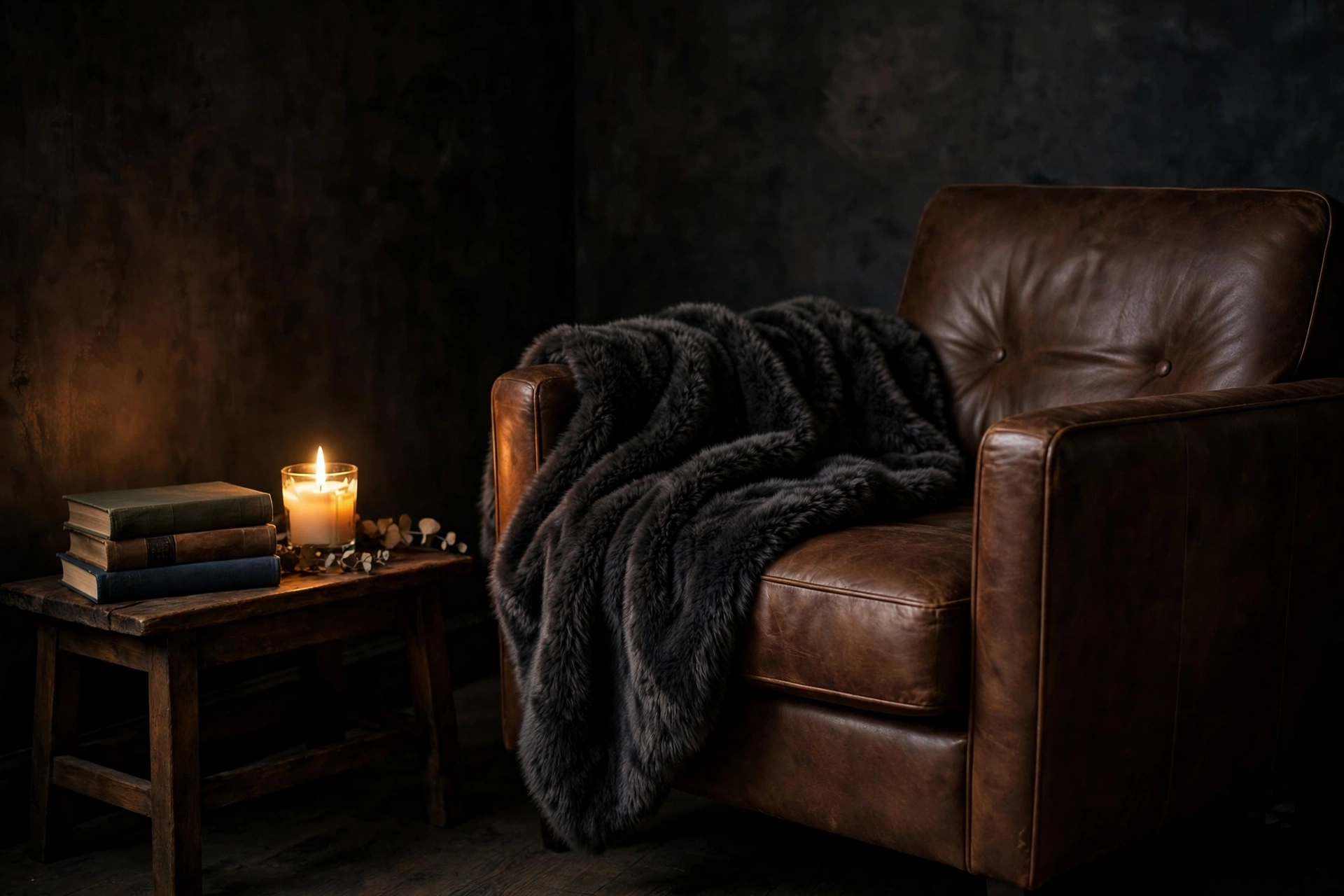
15. Drape a Dark Faux-Fur Throw
A charcoal or espresso faux-fur throw ($30–$60) tossed over the arm of a chair or the foot of the bed adds the tactile luxury that makes moody rooms feel expensive. Fur catches light differently than every other textile in the room, so it becomes an instant focal point — the eye goes straight to texture in a dark space. It also photographs beautifully, if your Pinterest board is part of the plan. Pro tip: shake faux fur outside monthly and never machine-wash it — agitation mats the fibers permanently, while a good shake and occasional spot-clean keeps it cloud-soft for years.
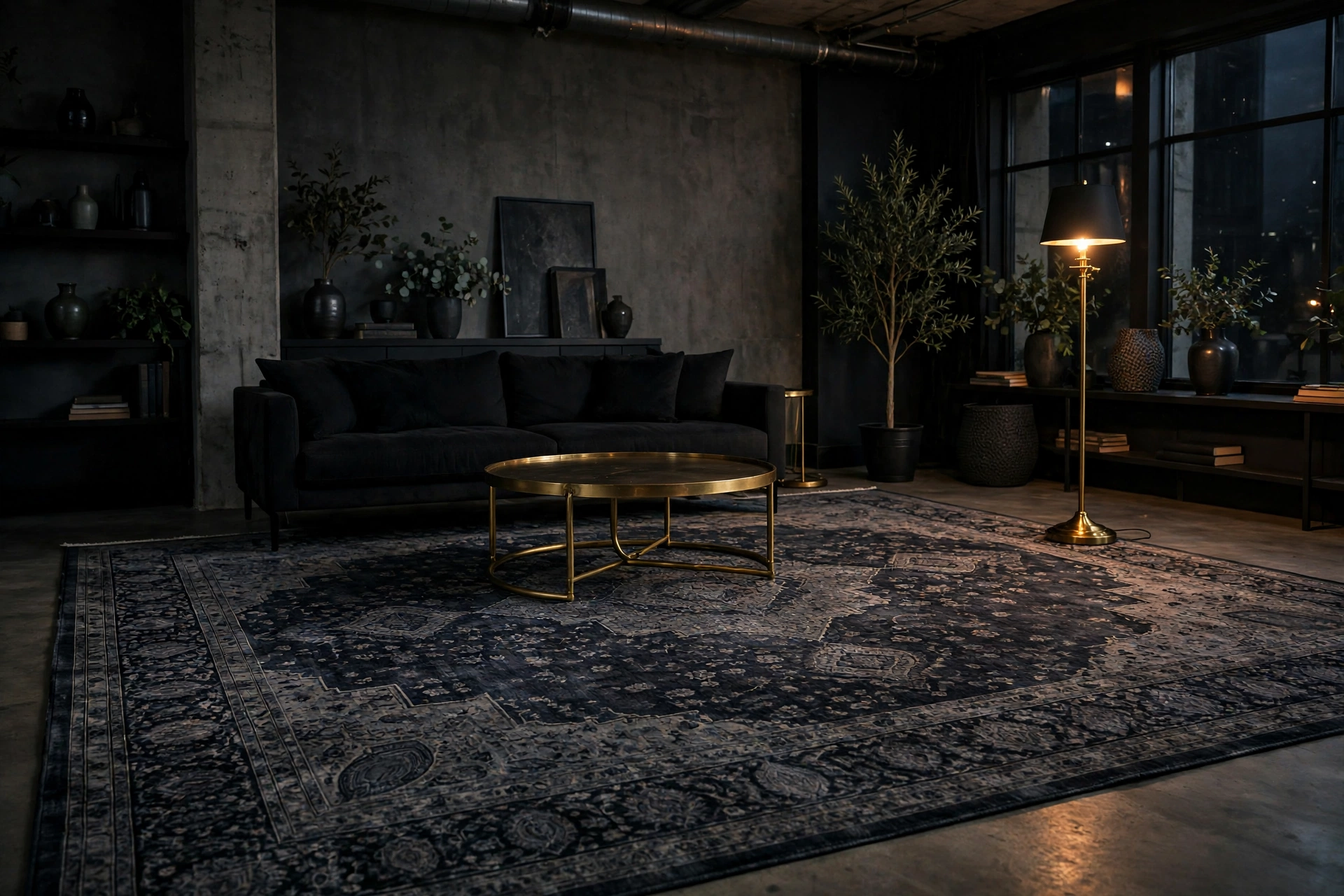
16. Ground the Room with a Charcoal Patterned Rug
A large charcoal or near-black patterned rug ($120–$300 for 8×10) anchors a moody living zone and hides the sins of rental floors — every scuff and stain disappears into the pattern. Persian-style or abstract designs in charcoal, ink, and warm gray add movement without introducing competing color. Size up: the front legs of all seating should sit on the rug, or the room fragments. Our studio apartment rug ideas cover sizing tricks that matter doubly in dark rooms. Pro tip: layer a smaller vintage-style rug over a large flat charcoal base — the tonal layering adds the depth that makes designer rooms look effortless.
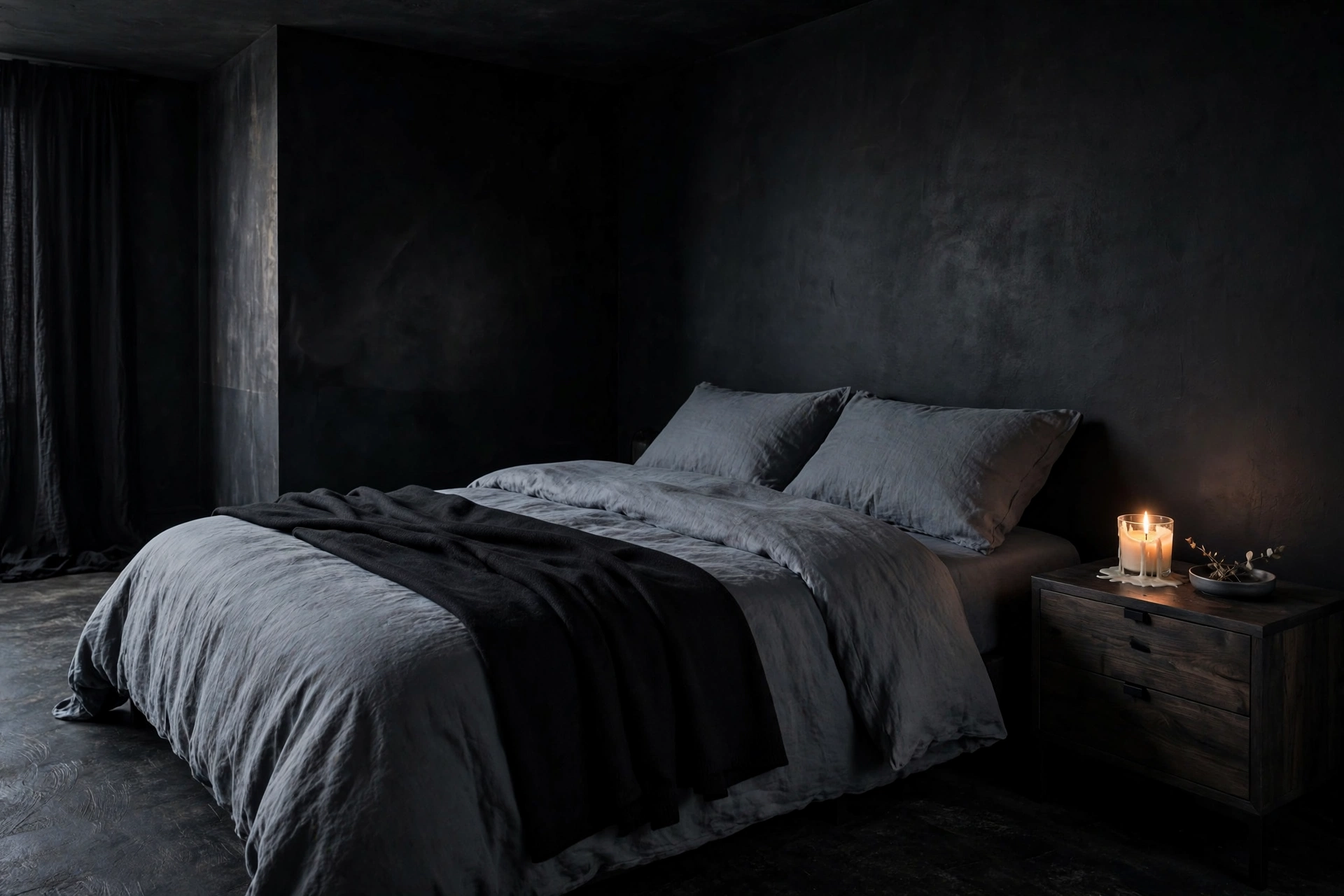
17. Dress the Bed in Deep-Toned Linen
Bedding is the largest textile in the sleeping zone, so deep slate, forest, or aubergine linen ($80–$160 for a duvet set) sets the entire mood. Linen’s rumpled texture is made for moody rooms — it looks better unmade, which is convenient. The matte finish absorbs light instead of reflecting it, deepening the cocoon effect. Finish with a black or oxblood throw folded across the foot. Pro tip: wash linen with a cup of white vinegar instead of fabric softener — it softens the fibers naturally without coating them, and the vinegar smell vanishes completely in the dryer.
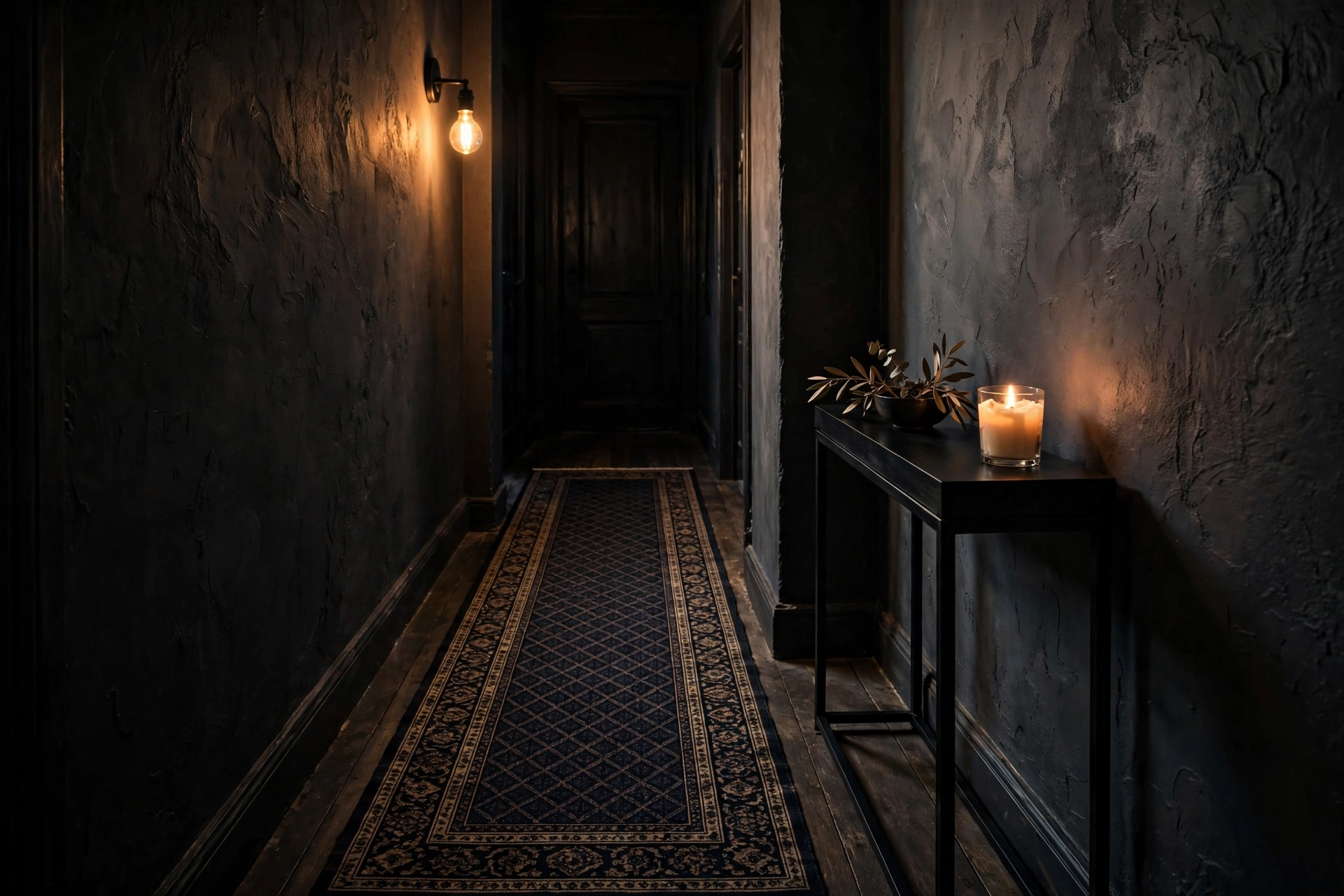
18. Run a Dark Runner to Zone the Entry
A dark patterned runner ($40–$90) in the entry does two jobs: it catches dirt before it reaches the living area, and it draws a visual path that separates “arrival” from “home” — crucial zoning in a studio with no foyer. Choose something with a border or medallion in charcoal and warm gray; the pattern disguises wear beautifully. It also muffles footsteps on hard floors, a gift to downstairs neighbors. Pro tip: use a rug pad even on carpet — it stops the runner creeping across the floor every time the door opens, and adds the plush underfoot feel that makes an entry feel considered.
Lighting & Ambiance
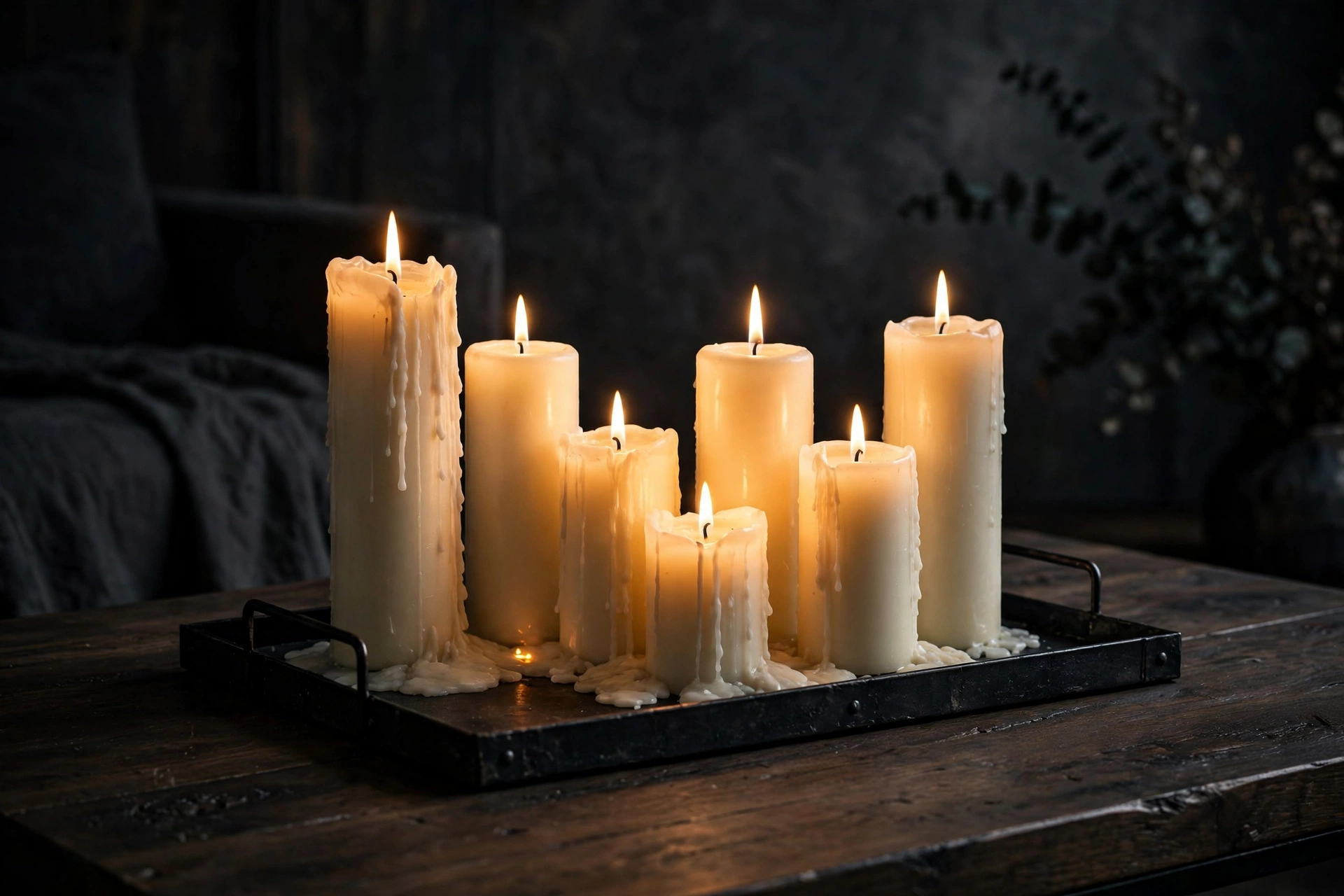
19. Cluster Candles Everywhere
Candlelight is the moody room’s native language — nothing flatters dark walls like flicker. Group pillar candles in odd numbers on black or brass trays ($15–$40 for a cluster): coffee table, nightstands, bathroom shelf, windowsill. Vary the heights for a collected look, and stick to unscented pillars for the big clusters (scented ones compete). LED flameless pillars ($20–$35 for a set) give the same glow with zero fire worry for forgetful evenings. Pro tip: trim wicks to a quarter inch before every lighting — it prevents soot from marking your dark walls and ceilings, which shows far more on charcoal than on white.
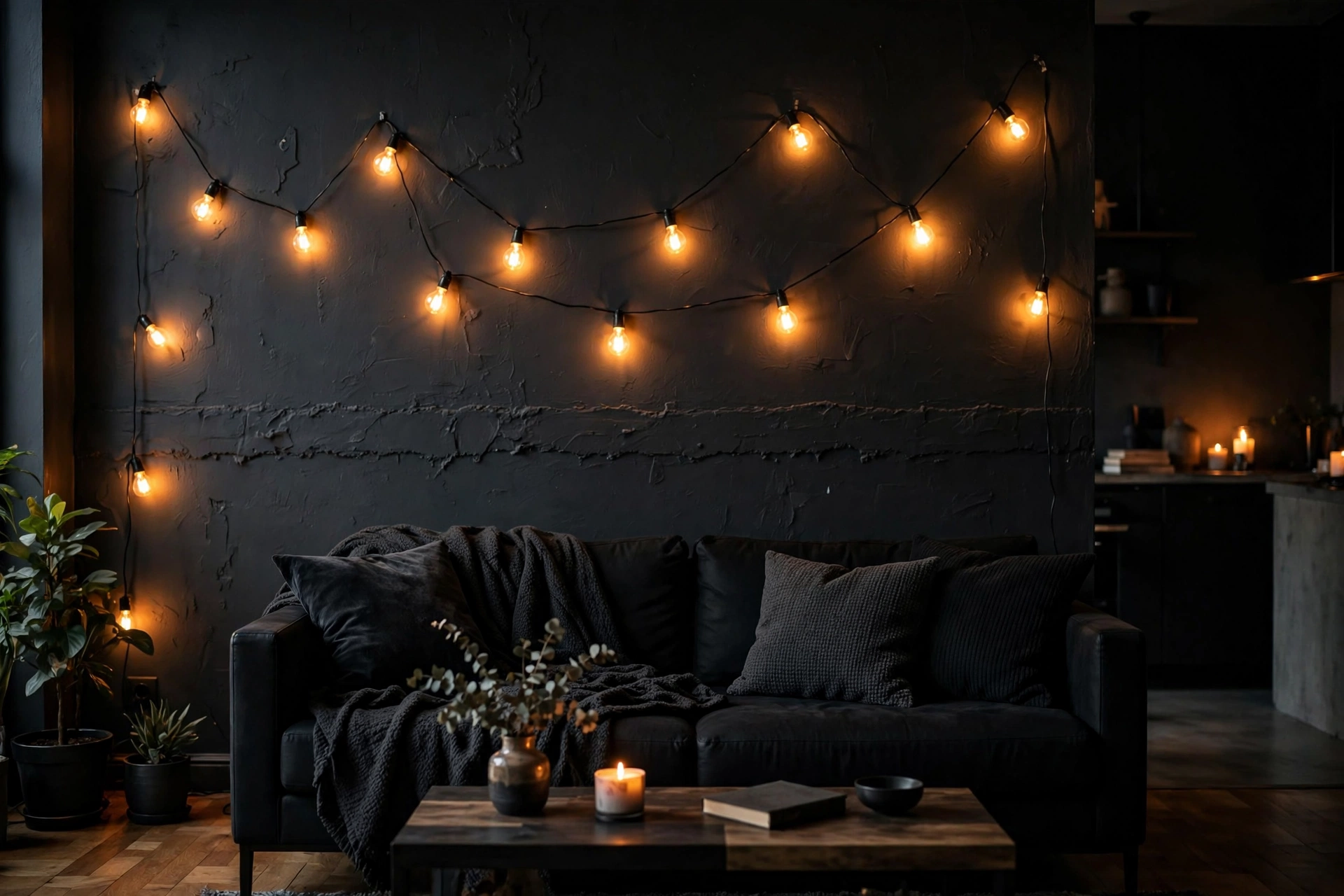
20. Hang Edison-Bulb String Lights
Edison string lights ($15–$30) draped along a dark wall or over a headboard add the warm, amber glow that makes moody rooms feel alive — think bistro meets boudoir. The exposed filaments read as decor even when off, doubling as wall jewelry in daylight. Keep the strands loose and swagged rather than taut; the casual drape is what keeps it romantic instead of dorm-room. Choose warm 2200K bulbs for maximum amber. Pro tip: put string lights on a plug-in timer ($10) set for dusk — coming home to a studio that’s already glowing changes the entire feeling of walking through the door.
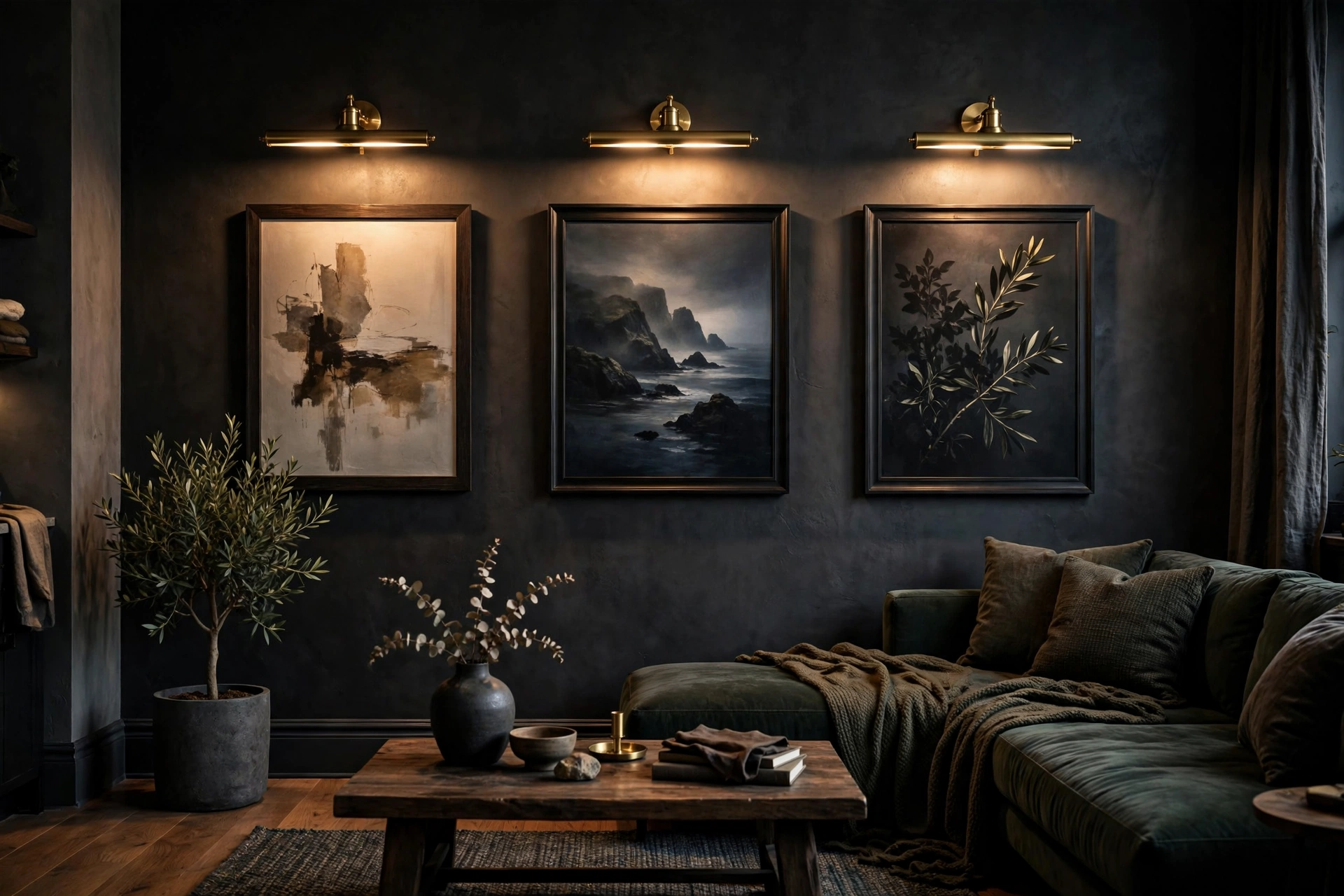
21. Add Brass Picture Lights Over Art
Brass picture lights ($40–$90 each, plug-in or battery) washing down over dark-framed art is pure gallery drama — the lit artwork becomes a glowing focal point while the surrounding wall recedes into shadow. It’s the oldest museum trick in the book, and it works even harder in a studio where every focal point has to earn its keep. Battery-operated versions with remotes mean no electrician and no cords. Pro tip: size the light to about half the artwork’s width — too small looks stingy, too large floods the frame; the halfway rule nails the museum proportion every time.
22. Use a Sculptural Black Floor Lamp
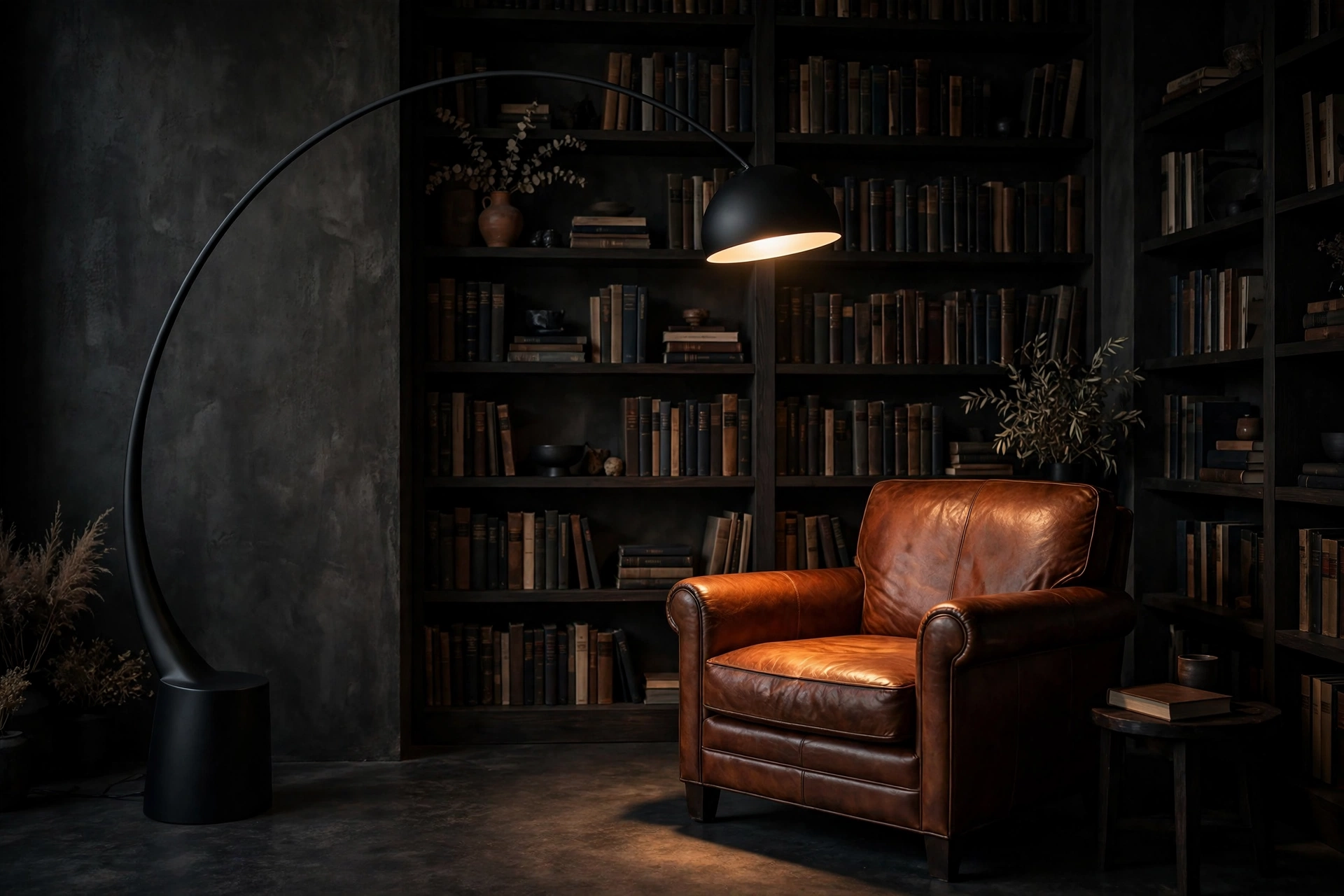
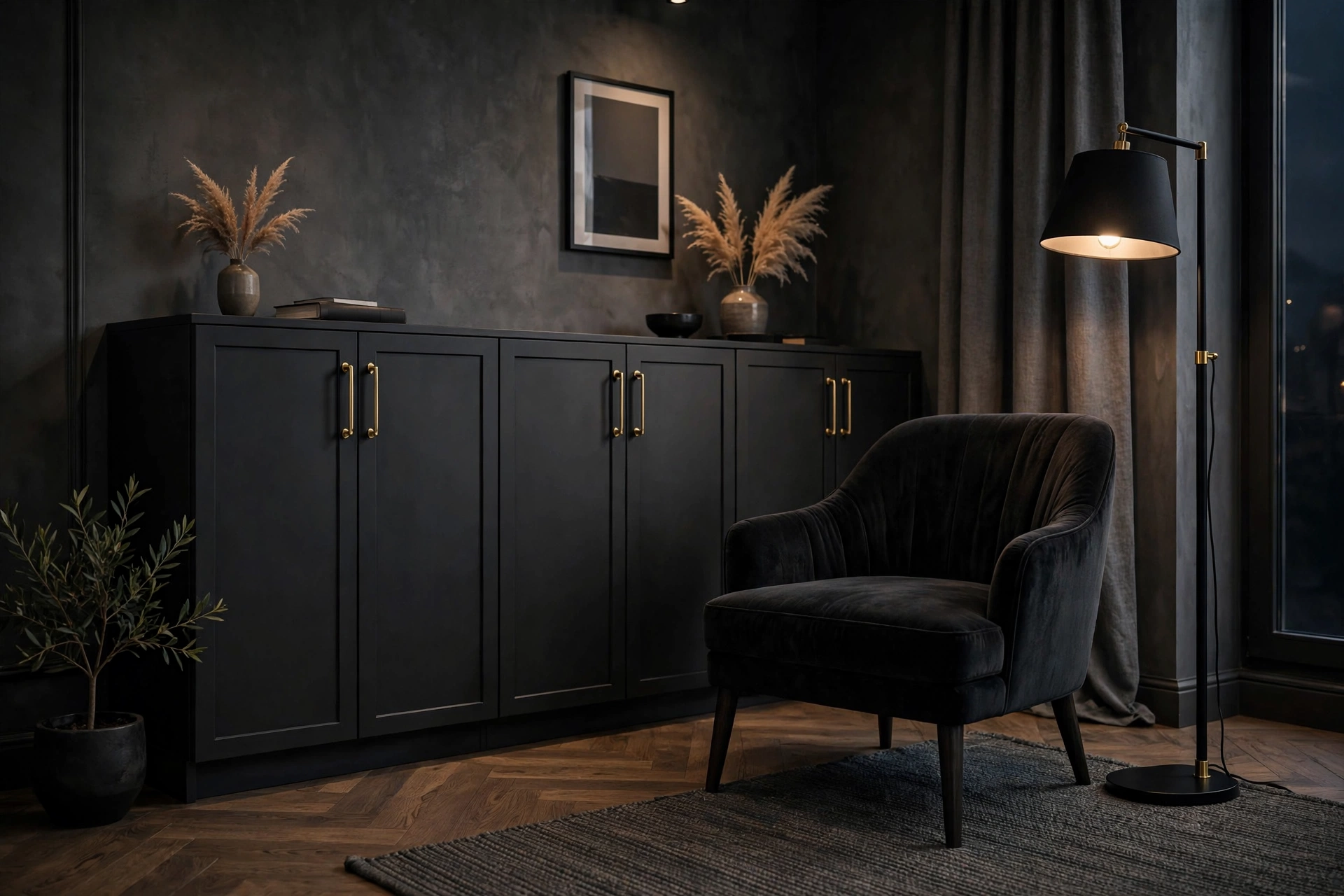
In a moody room, lamps are sculpture first and lighting second — a matte black arc or tripod floor lamp ($80–$200) adds a bold silhouette by day and a warm pool of light by night. Position it to wash light down a dark wall rather than into the room’s center; grazing light across texture (limewash, wallpaper, bookshelves) creates the depth that makes dark rooms mesmerizing. One great floor lamp beats three forgettable ones. Pro tip: always use warm 2700K bulbs in a moody room — a single cool-white bulb will shatter the entire atmosphere faster than anything else you can do wrong.
23. Install Dimmer Switches Everywhere
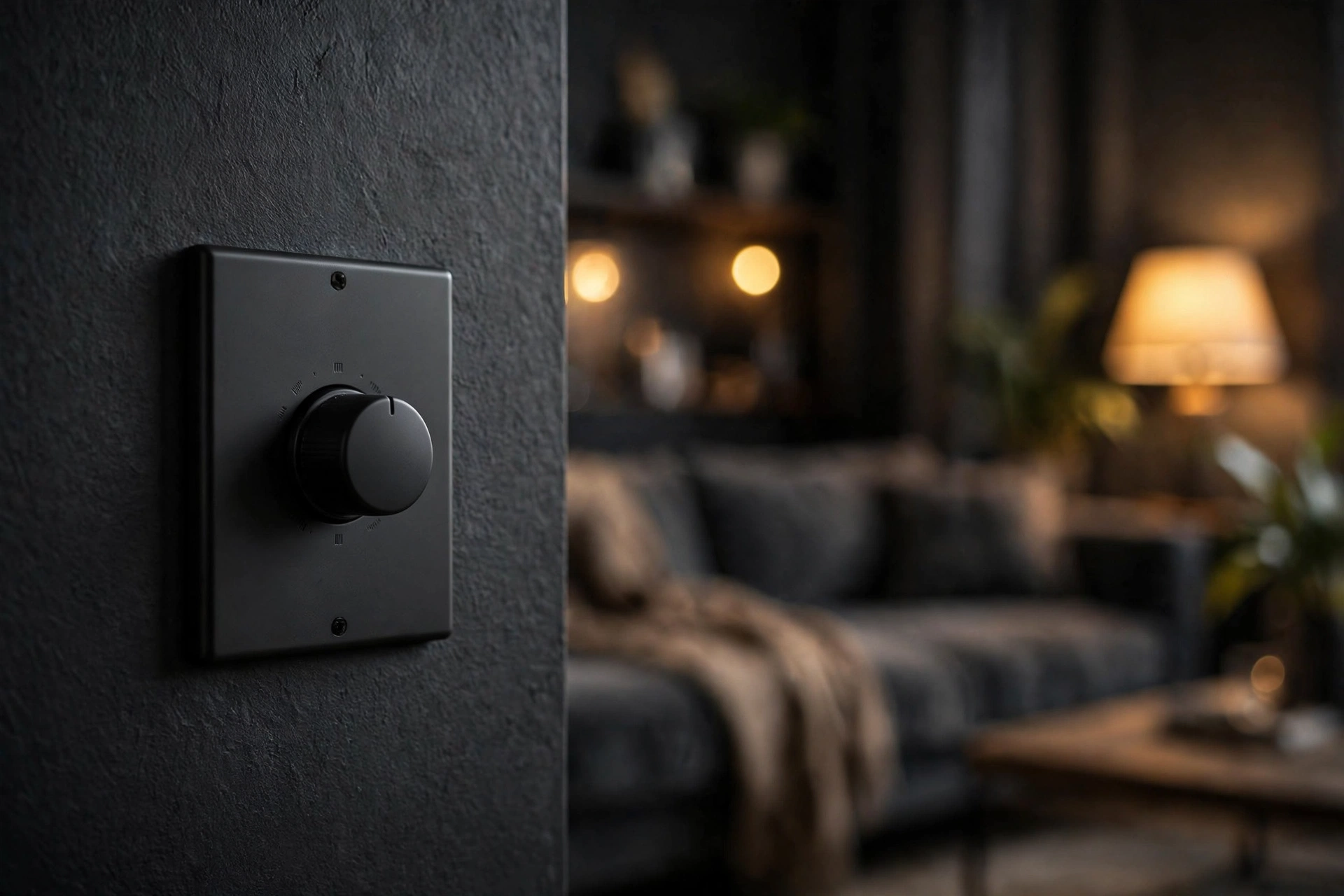
If you do one electrical upgrade in a moody studio, make it dimmers — a $15 dimmer switch transforms every existing light into a mood machine. Bright for cleaning and getting ready, low for evenings; the room becomes two rooms in one. Most rentals allow switch swaps as long as you keep the originals to reinstall later (photograph the wiring before you touch it). Smart dimmer plugs ($20 each) achieve the same for lamps with zero wiring. Pro tip: check your bulbs are dimmable before installing — non-dimmable LEDs flicker and buzz on dimmers, which ruins the vibe and shortens bulb life.
24. Try a Smoked-Glass Pendant
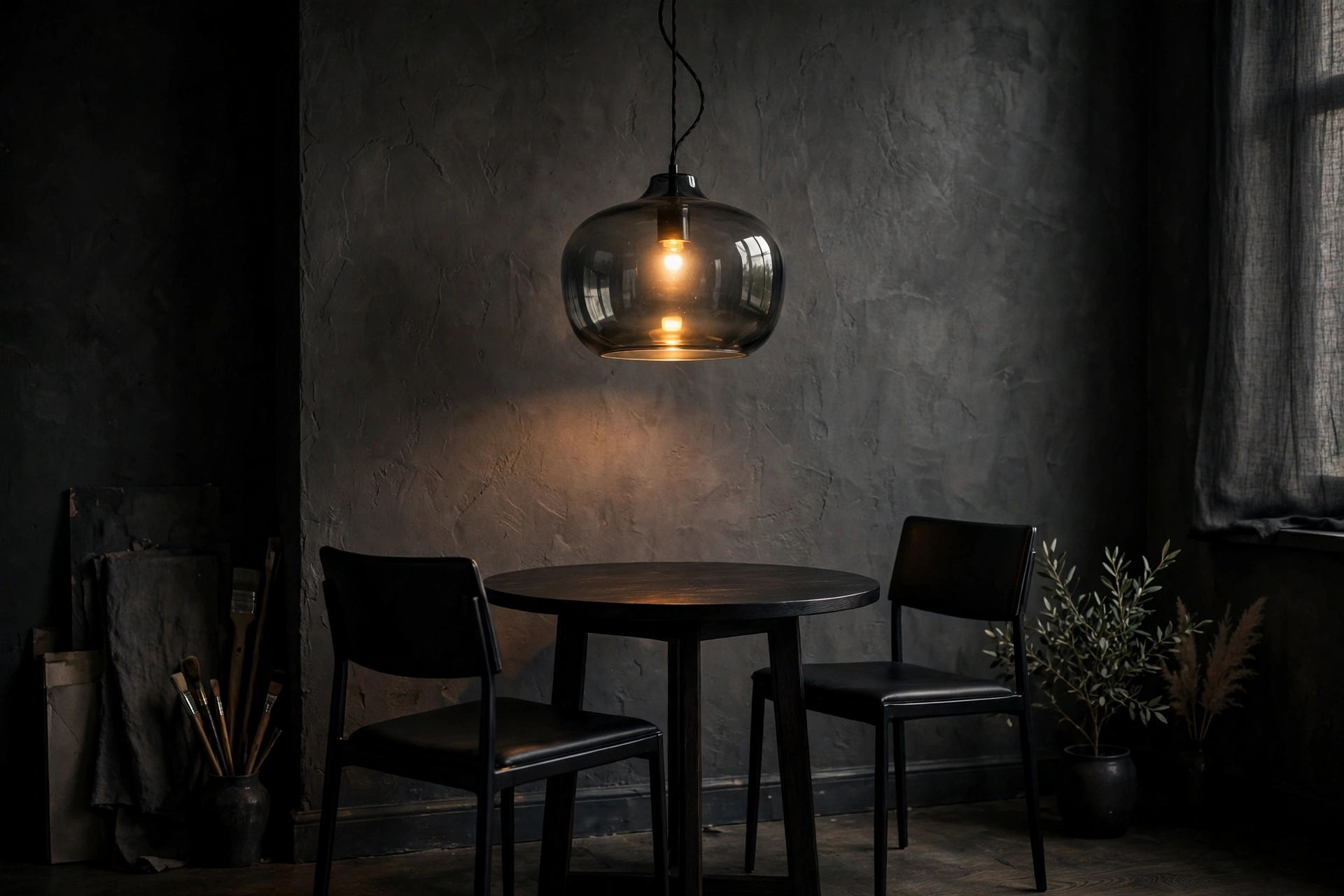
A smoked or amber glass pendant ($60–$150) over the dining nook or bed casts the tinted, golden light that defines moody interiors — it’s jewelry that also happens to illuminate. Plug-in swag versions hang from a ceiling hook with the cord draped to the wall, so renters get the look with no electrician. Hang it low (30 inches above a table) for intimacy; the pool of light becomes its own little room. Pro tip: pair the pendant with an Edison-style filament bulb — the visible filament through tinted glass doubles the glow effect and looks stunning even switched off.
Decor & Artistic Touches
25. Hang Oversized Dark-Framed Art
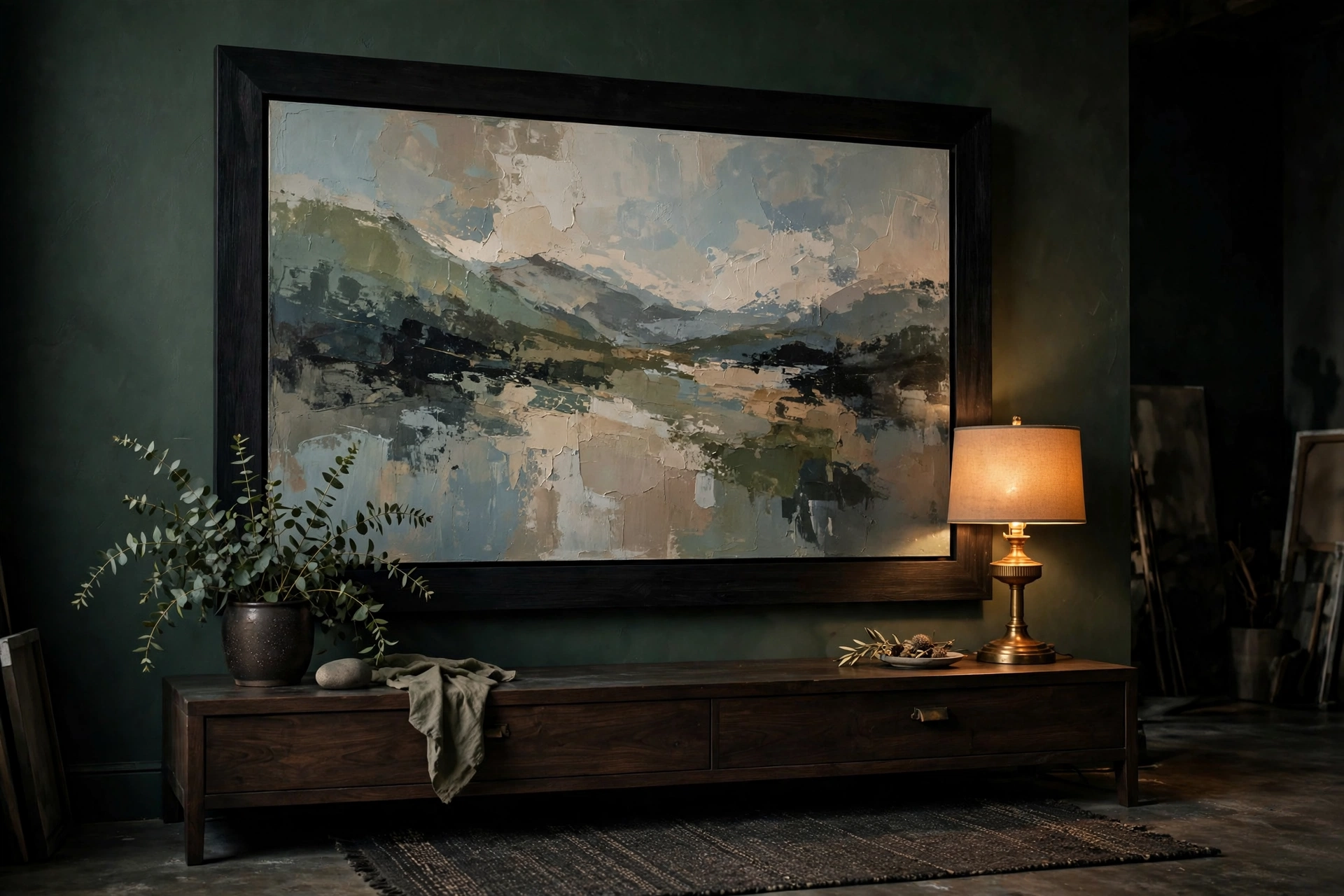
One oversized piece in a thick black frame ($30–$80 for a large print plus frame) anchors a moody room the way nothing else can — scale is drama. Abstract landscapes, dark botanicals, or black-and-white photography all work; the frame should be chunky enough to read from across the studio. Hang it low over the sofa or console so it feels connected to the furniture, not floating. Pro tip: leave generous empty wall around one big piece instead of filling every inch — in dark rooms, negative space reads as confidence and keeps the mood luxurious rather than cluttered.
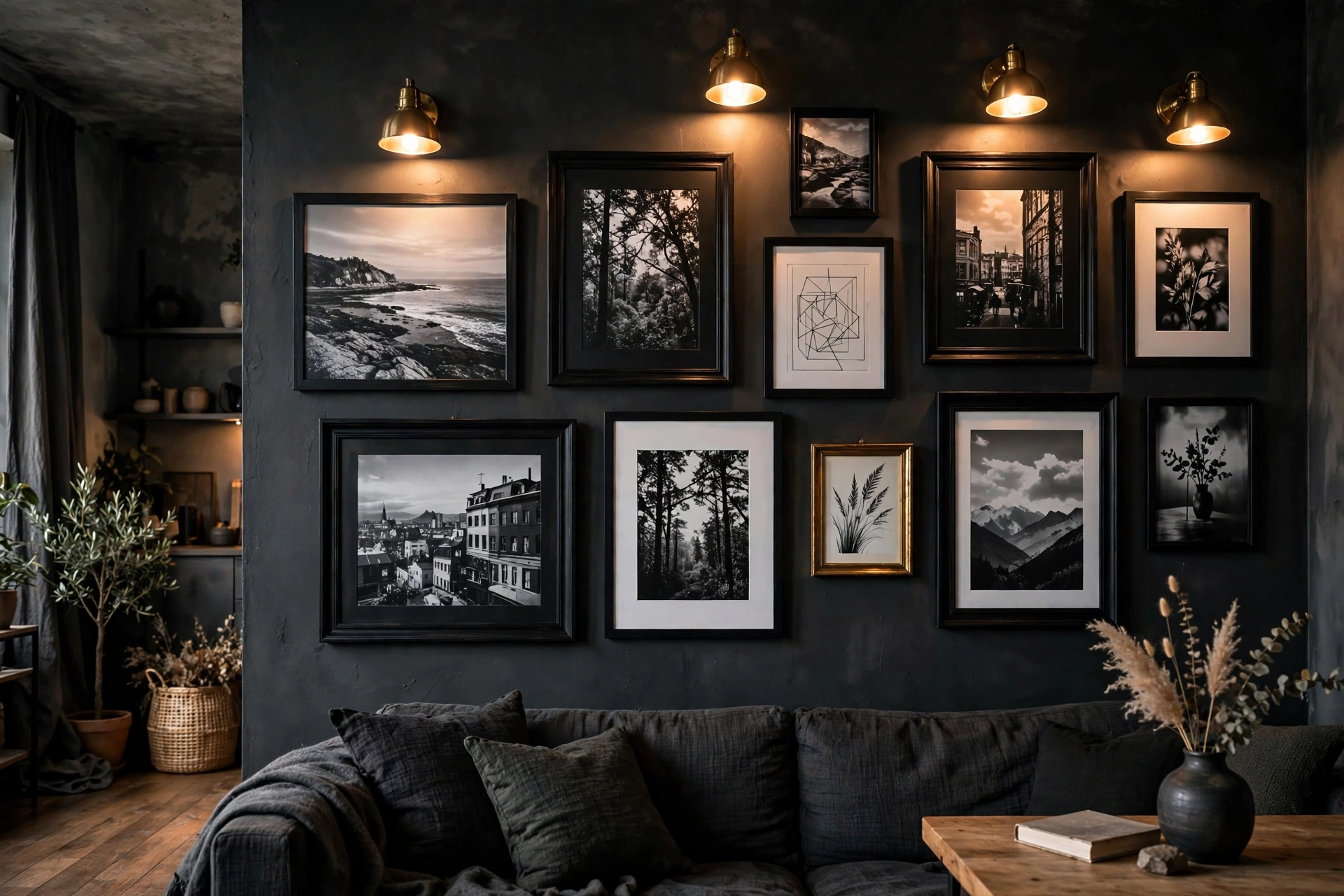
26. Style a Gallery Wall in Black Frames
A gallery wall of black-framed prints ($8–$15 per frame) turns a dark hallway or bedroom wall into a personal exhibition. Mix photography, typography prints, and small paintings — the uniform black frames unify everything, so the content can be eclectic. Plan the arrangement on the floor first, photograph it, then hang. In a moody room, a gallery wall feels like a private collection rather than decoration. These studio apartment wall art ideas include layout templates that work beautifully with dark frames. Pro tip: include one brass or gold frame among the black — the single warm accent keeps the wall from feeling cold and ties it to the room’s metal finishes.
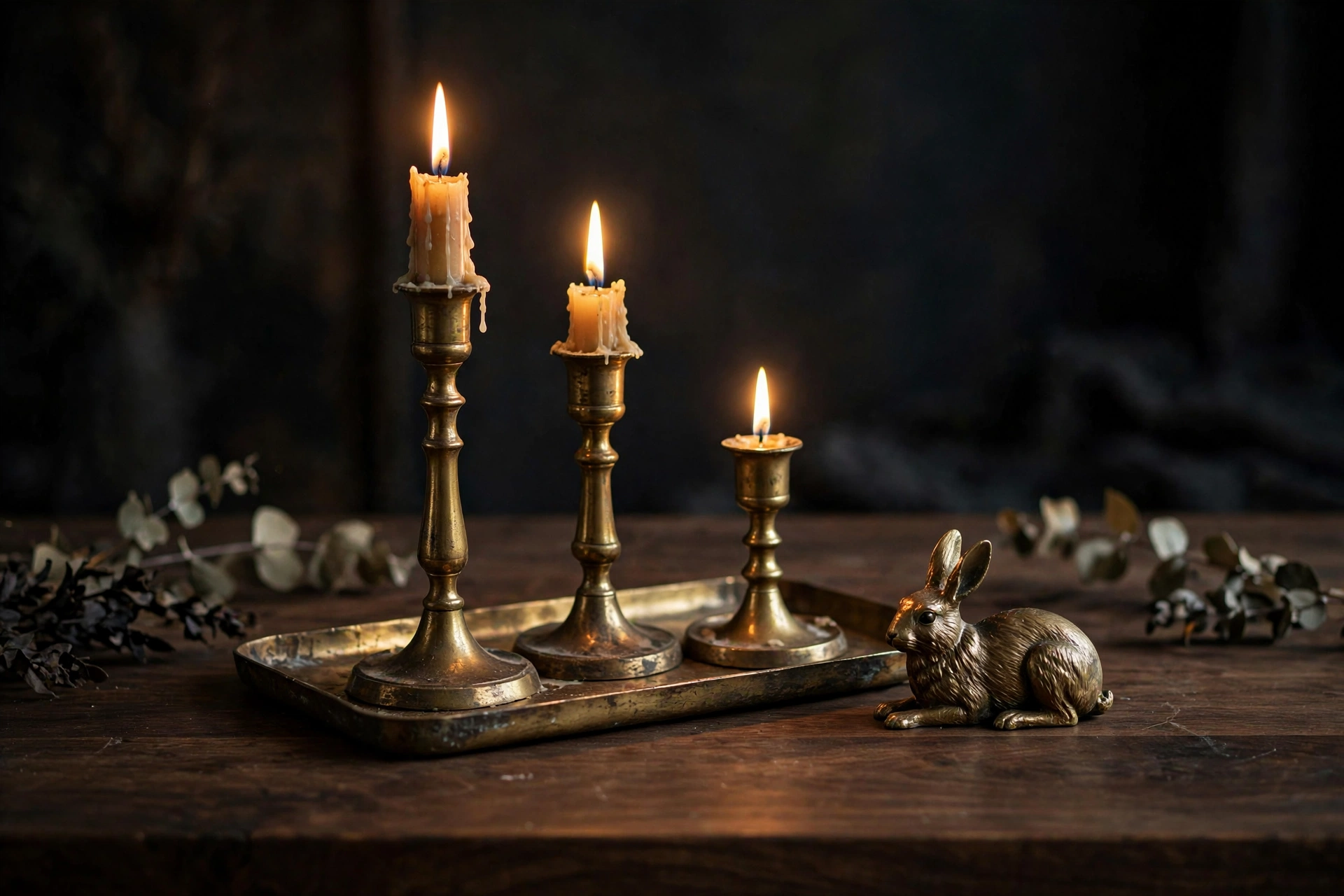
27. Add Brass and Gold Accents
Brass is the moody room’s best friend — candlesticks, trays, small sculptures, and drawer pulls ($10–$40 each) catch every scrap of light and scatter it back as warm glow. Aged or brushed brass beats mirror-polished; patina is the point. Scatter it in small doses across every zone so the whole studio glints as you move through it. Against charcoal and black, brass doesn’t just decorate — it illuminates. Pro tip: never polish vintage brass to a shine — the aged finish is what makes a $10 flea-market find look like a $100 antique, and over-polishing actually erases its character.
28. Display Black Ceramic Vases
A cluster of matte black ceramic vases in varying heights ($12–$35 each) is sculpture that happens to hold branches — grouped on a shelf or console, their silhouettes read beautifully against a dark wall. The matte finish absorbs light, creating soft shadows that shift through the day. Leave some empty; negative space inside the grouping is as important as the pieces themselves. Pro tip: buy vases in odd numbers and vary heights by at least 4 inches between pieces — the asymmetry is what makes a grouping look collected rather than store-bought.

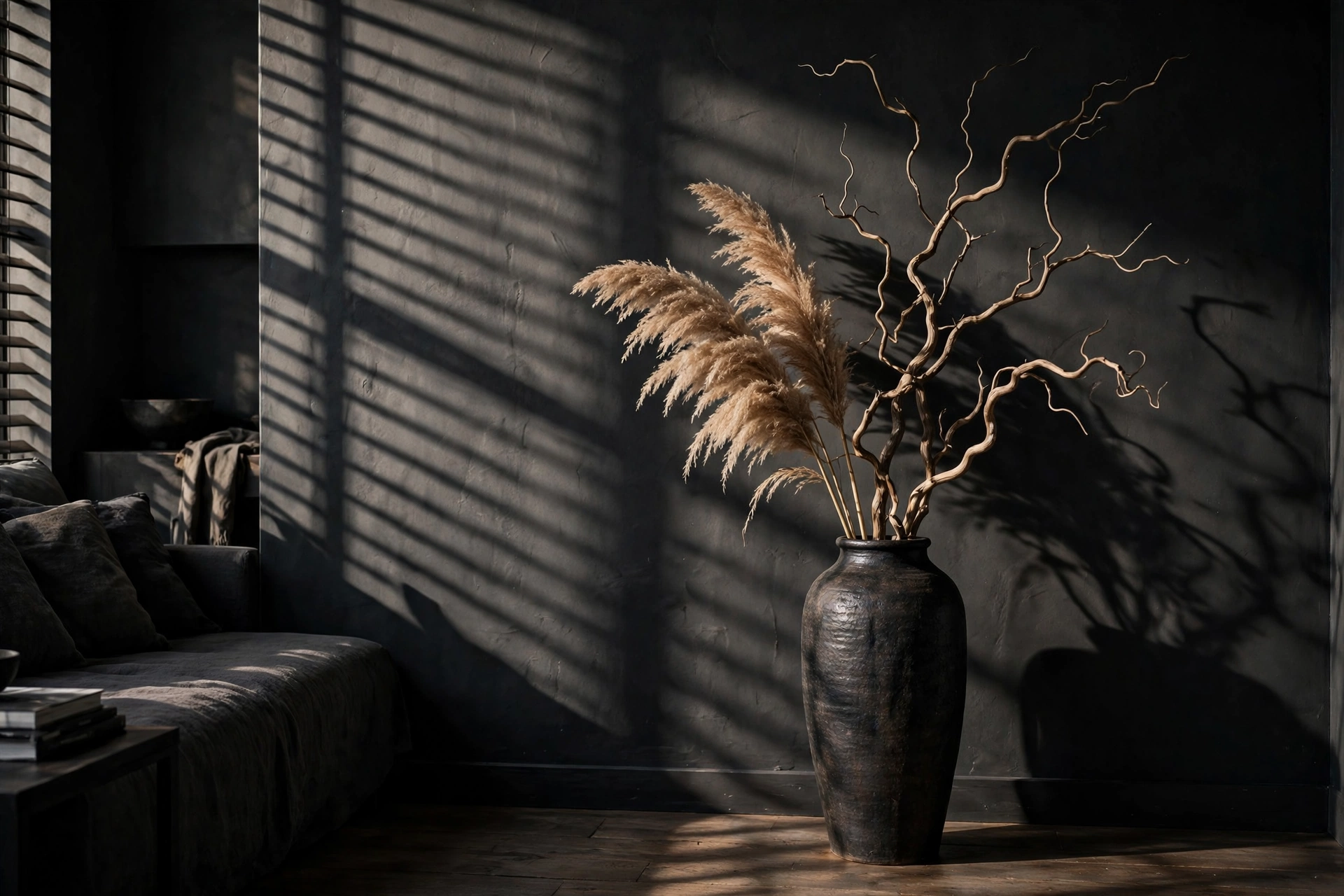
29. Bring In Dried Florals and Branches
Fresh flowers die; dried pampas grass, eucalyptus, and sculptural branches ($10–$25 per bundle) last for months and suit the moody palette perfectly — their muted tans and grays harmonize with dark walls instead of fighting them. A tall vase of branches in a corner adds height and organic movement, softening all the hard dark edges. It’s the lowest-maintenance greenery a studio can have. Pro tip: keep dried arrangements away from direct sun and radiators — UV bleaches them pale within weeks, and heat makes them brittle; a shaded corner keeps them beautiful for a year or more.
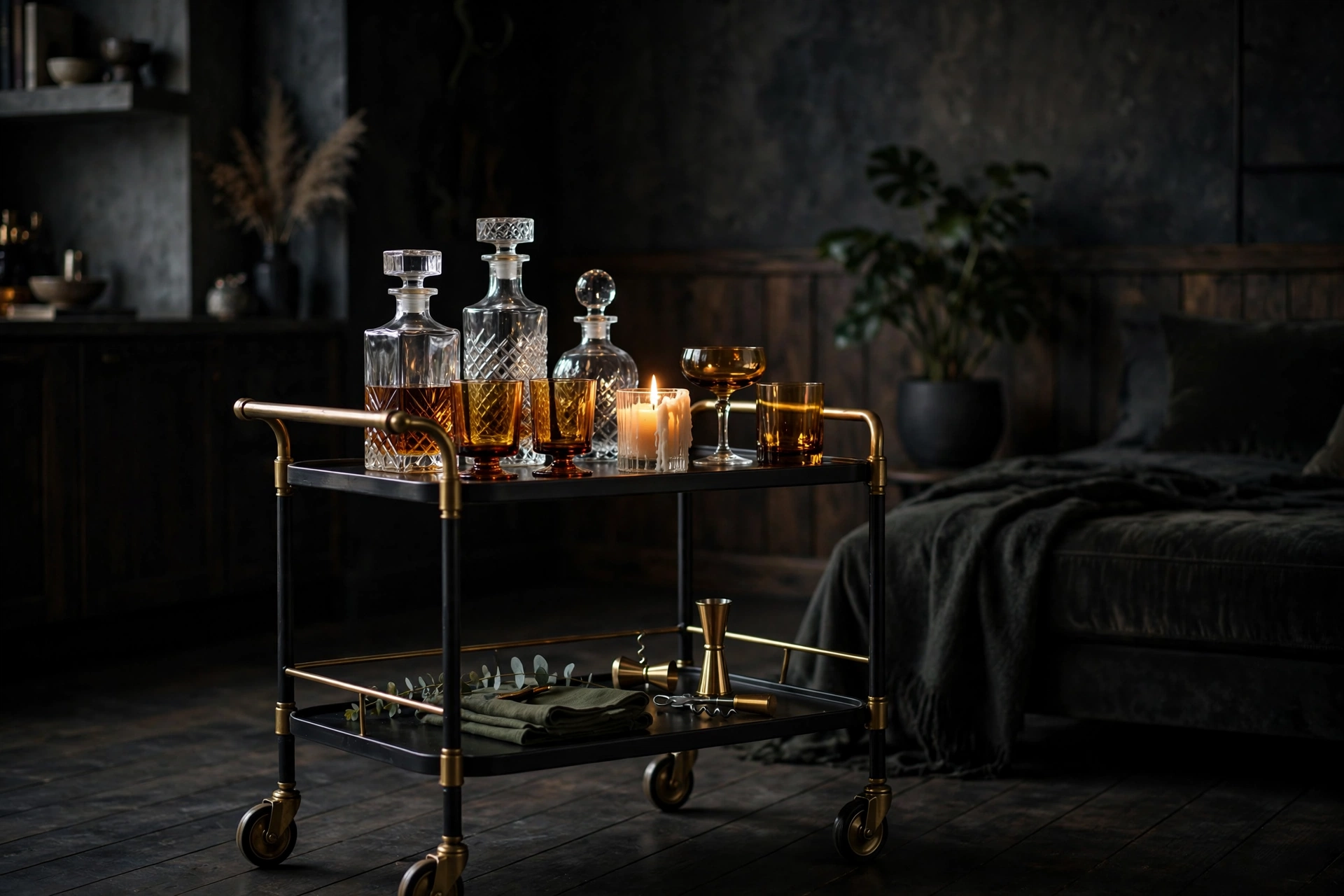
30. Add a Vintage-Style Bar Cart
A black and brass bar cart ($80–$200) is moody entertaining in miniature — decanters catch the lamplight, glassware glints, and the whole thing reads as old-world glamour. In a studio it multitasks as a side table, plant stand, or coffee station when the party’s over. Style the top with bottles and a small candle, the bottom with books and extra glassware. Pro tip: lock the casters once it’s positioned — a bar cart that drifts across a dark studio at midnight is a shin-bruise waiting to happen, and you’ll never see it coming.
Small-Space Moody Tricks
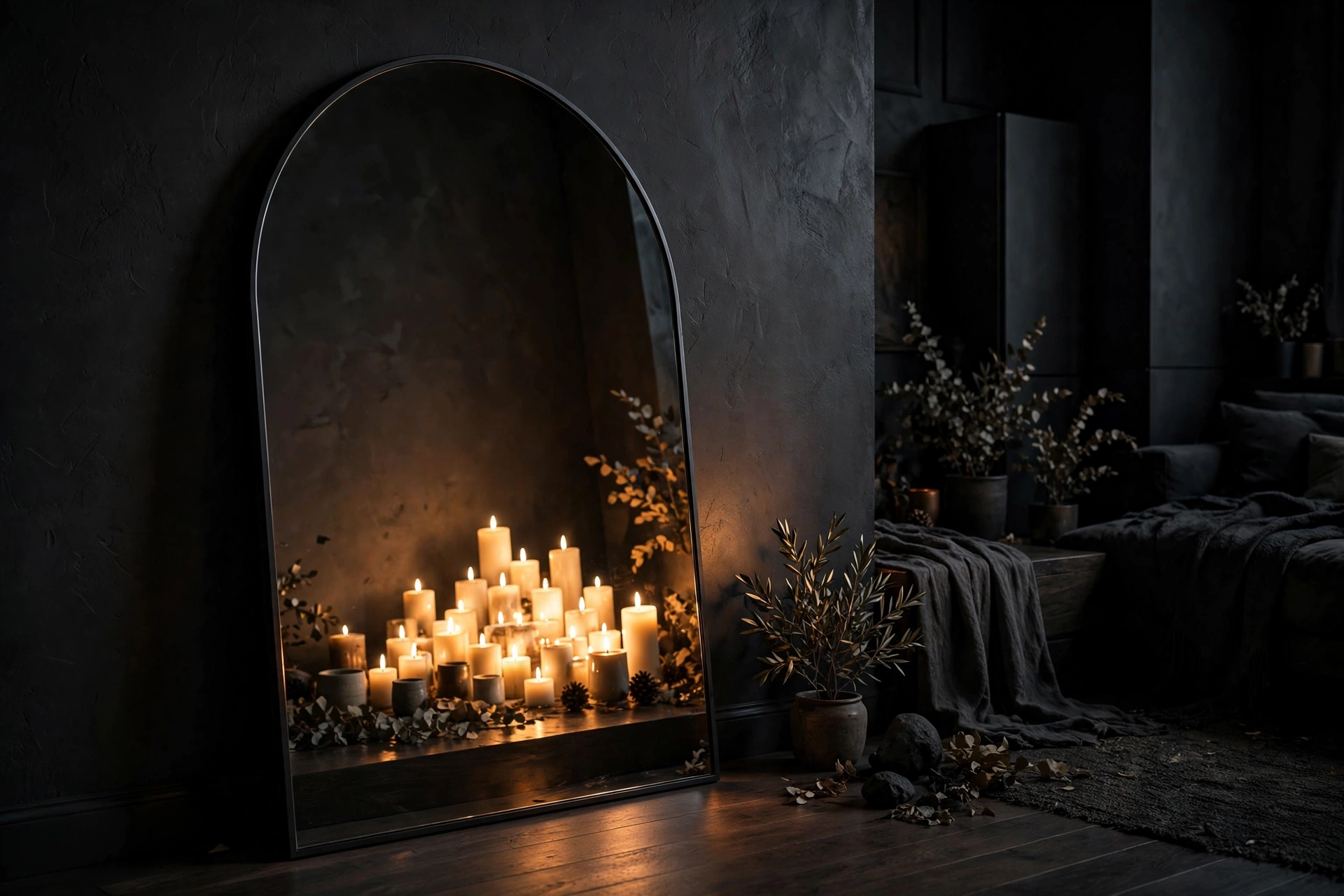
31. Use Mirrors to Bounce Candlelight
Dark rooms need light multiplication, and mirrors are the tool — a large arched or round mirror in a black frame ($60–$150) opposite your candles or lamps doubles every glow in the room. It also visually doubles the studio’s square footage, the oldest small-space trick there is. Lean an oversized mirror against the wall for a casual, collected feel; the reflection of flickering light is pure magic after dark. Pro tip: angle the mirror to reflect the prettiest thing in the room — candles, art, or a plant — never the cluttered corner; a mirror doubles whatever it sees, good or bad.
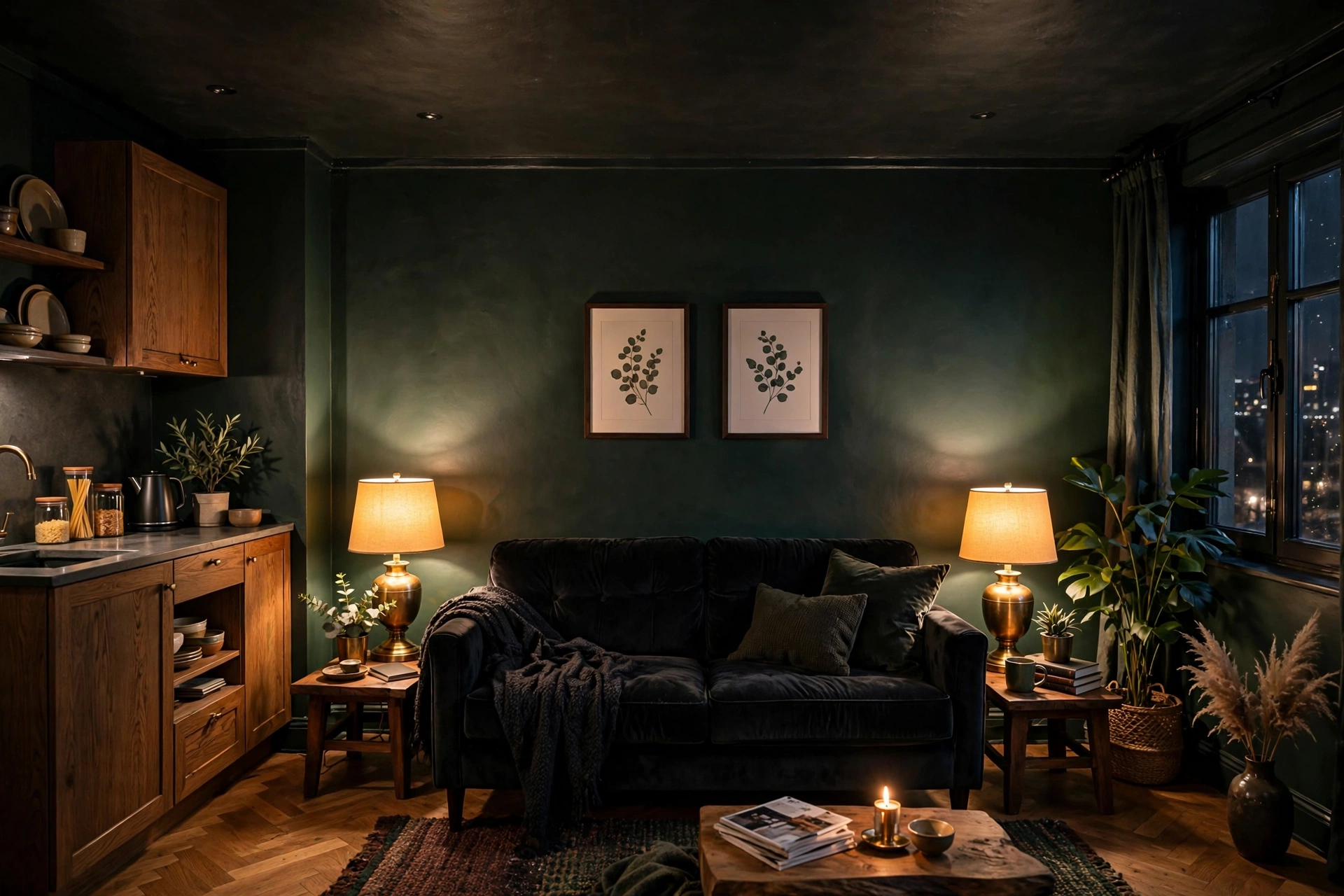
32. Keep the Ceiling Dark for Coziness
A dark ceiling is the moodiest move of all — painting it charcoal or ink navy ($30–$50) erases the “lid” of the room and makes the studio feel like a den rather than a box. It sounds counterintuitive, but removing the bright ceiling line makes walls feel taller because the eye can’t find where they end. This pairs beautifully with the zoning principles in our studio apartment layout ideas — dark overhead, defined zones below. Pro tip: use flat or matte paint on a dark ceiling — any sheen will catch light unevenly and highlight every roller mark, while flat finish disappears into shadow.
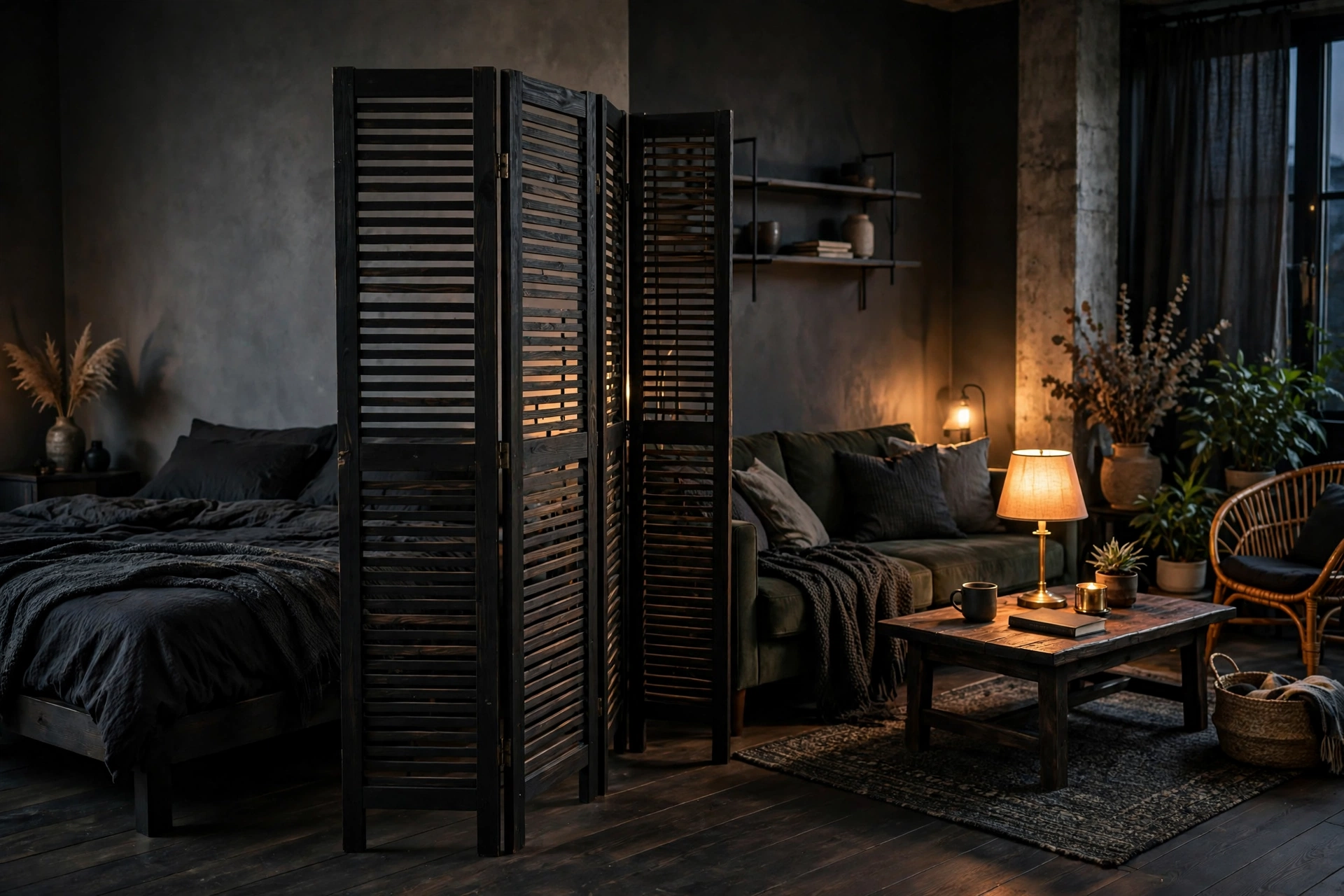
33. Zone with a Dark Folding Screen
A black wooden or cane folding screen ($80–$200) divides the sleeping zone in seconds, folds flat when guests come, and adds architectural interest even when open. Unlike curtains, it needs no installation; unlike bookshelves, it moves. In a moody palette it reads as intentional decor rather than a compromise — especially in black lacquer or dark stained wood. Pro tip: position the screen at a slight angle rather than straight across — the diagonal line feels dynamic and designerly, while a perpendicular screen can read as a barrier.
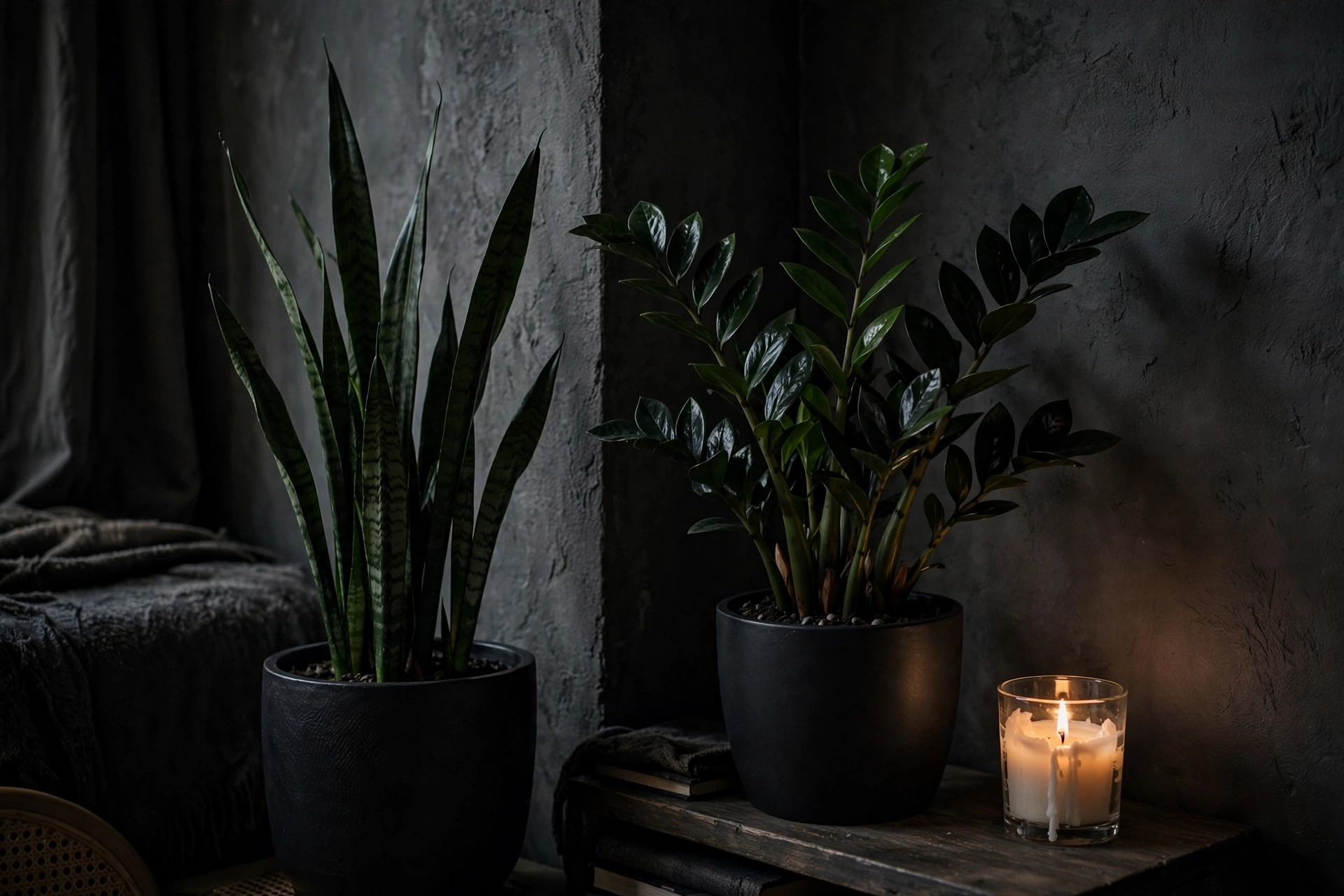
34. Add Plants That Thrive in Low Light
Moody rooms are often dim rooms, so choose plants that agree: snake plants, ZZ plants, and pothos ($15–$40) tolerate low light and their deep green leaves look almost black in shadow — perfectly on-palette. Pot them in matte black planters to disappear into the scheme, and let one trailing pothos spill off a dark bookshelf for organic contrast against all the hard edges. Pro tip: wipe leaves monthly with a damp cloth — dust shows dramatically on dark green foliage in lamplight, and clean leaves photosynthesize better in the low light they’re already tolerating.
35. Hide Clutter — Dark Rooms Punish Mess
The honest truth about moody interiors: they are ruthless with clutter. A stray pile that disappears on white screams against charcoal. Invest in closed storage — dark cabinets, lidded baskets, a storage ottoman ($60–$200) — and commit to the ten-minute nightly reset. The payoff is enormous: a tidy dark room feels like a boutique hotel, while a messy one feels like a cave. Our minimalist studio apartment ideas pair perfectly with this discipline. Pro tip: give every daily item a closed home — keys in a lidded box, mail in a drawer, throws in a basket; if it doesn’t have a hiding place, it will live on your surfaces forever.
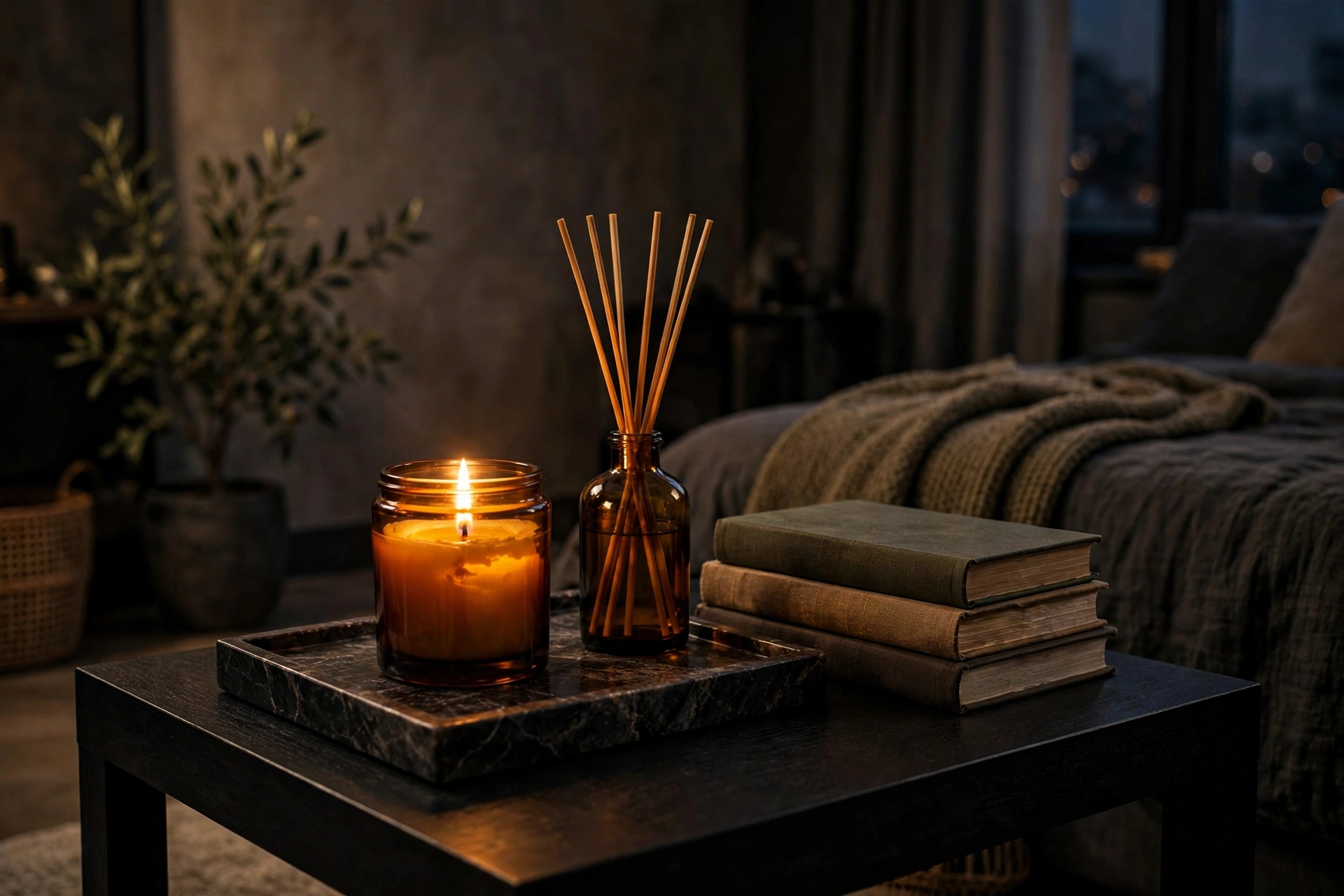
36. Layer Scents: Amber, Cedar, Smoke
Atmosphere isn’t only visual — the right scent completes a moody room the way the right lighting does. Amber, cedarwood, smoked vetiver, and oud ($12–$30 for candles or diffusers) smell like the room looks: warm, deep, a little mysterious. Layer a candle in the living zone and a diffuser in the sleeping zone so the scent shifts as you move, the way light does. It’s the detail guests remember without knowing why. Pro tip: stick to one scent family per zone — mixing amber, citrus, and floral in a small studio creates a muddled fog; restraint in scent is as important as restraint in color.
Frequently Asked Questions
Do dark colors make a small studio look smaller?
Not when done right — dark colors blur the room’s edges so the eye can’t find the boundaries, which can actually make a studio feel larger and definitely more intentional. The key is committing: one dark accent wall in an otherwise white room can feel like a cave wall, but a fully layered dark scheme with varied lighting feels boundless. Keep lighting warm and layered, and the room glows instead of shrinking.
How do I keep a moody studio from feeling depressing?
Warmth is the difference between moody and gloomy: warm 2700K lighting, brass and wood tones, textured textiles, and living plants keep dark rooms feeling embraceable. Also mind the light you do have — keep windows unobstructed by day so natural light floods in, then let the lamps take over at dusk. A moody room should feel like evening all day, not like a basement.
Can renters do dark moody decor without painting?
Absolutely — dark furniture, blackout curtains, peel-and-stick wallpaper, large-scale dark art, and charcoal textiles deliver 90% of the mood with zero paint. A black velvet sofa against white walls with dark curtains and brass lamps reads unmistakably moody. Focus on the big pieces (sofa, curtains, rug, bedding) and the palette does the rest.
What is the best lighting for a dark moody apartment?
Layered, warm, and low: aim for at least three light sources per zone (floor lamp, table lamp, candles or string lights), all at 2700K or warmer, all on dimmers. Avoid overhead fluorescents entirely — they flatten dark walls and kill the atmosphere. Wall-washing (light grazing across a textured wall) creates the depth that makes moody rooms mesmerizing.
What colors work best for a moody studio?
The classic moody palette: charcoal, ink navy, deep forest green, espresso brown, aubergine, and matte black — warmed with brass, cognac leather, amber glass, and jewel tones (emerald, sapphire, ruby). Start with one dark neutral on the largest surfaces, then layer one saturated color and one metallic; restraint keeps it sophisticated.
Is moody decor expensive to achieve?
It can be one of the cheapest styles — paint, thrifted dark furniture, candles, and dimmers do most of the work, and our budget decorating guide is full of renter-friendly tricks that apply here. Dark rooms are forgiving of imperfect vintage finds (patina is the point), and a $30 gallon of charcoal paint transforms more square footage per dollar than almost any other decor move.
Final Thoughts
A dark, moody studio apartment isn’t about rejecting light — it’s about choreographing it. Every lamp becomes a spotlight, every candle a small ceremony, every brass object a mirror for the glow. The shadows aren’t empty; they’re what make the lit moments feel precious. In a world of white-box rentals, choosing darkness is choosing intention.
Start where the commitment is lowest — the curtains, the pillows, a cluster of candles on a dimmer — and let the mood seduce you further. Paint the wall. Hang the art. Before long, your studio won’t just look dramatic. It will feel like the most atmospheric room you own — because you built it one shadow, one texture, one flicker of candlelight at a time.