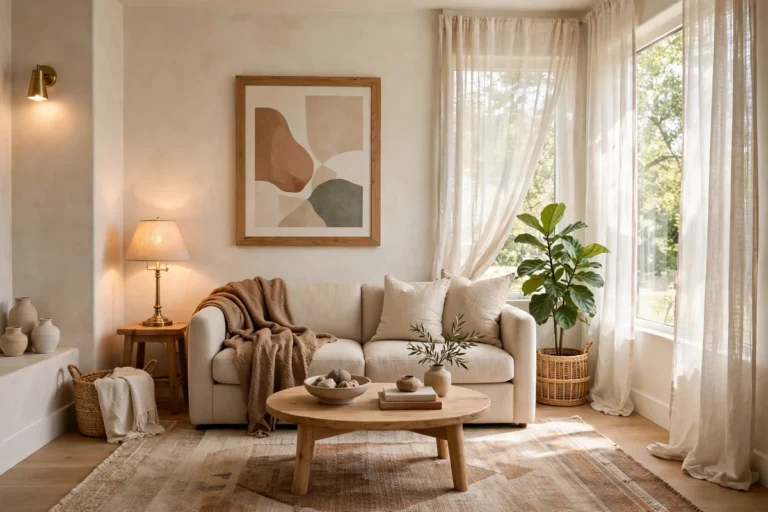
32 Small Bedroom Decor Mistakes (and How to Fix Them)
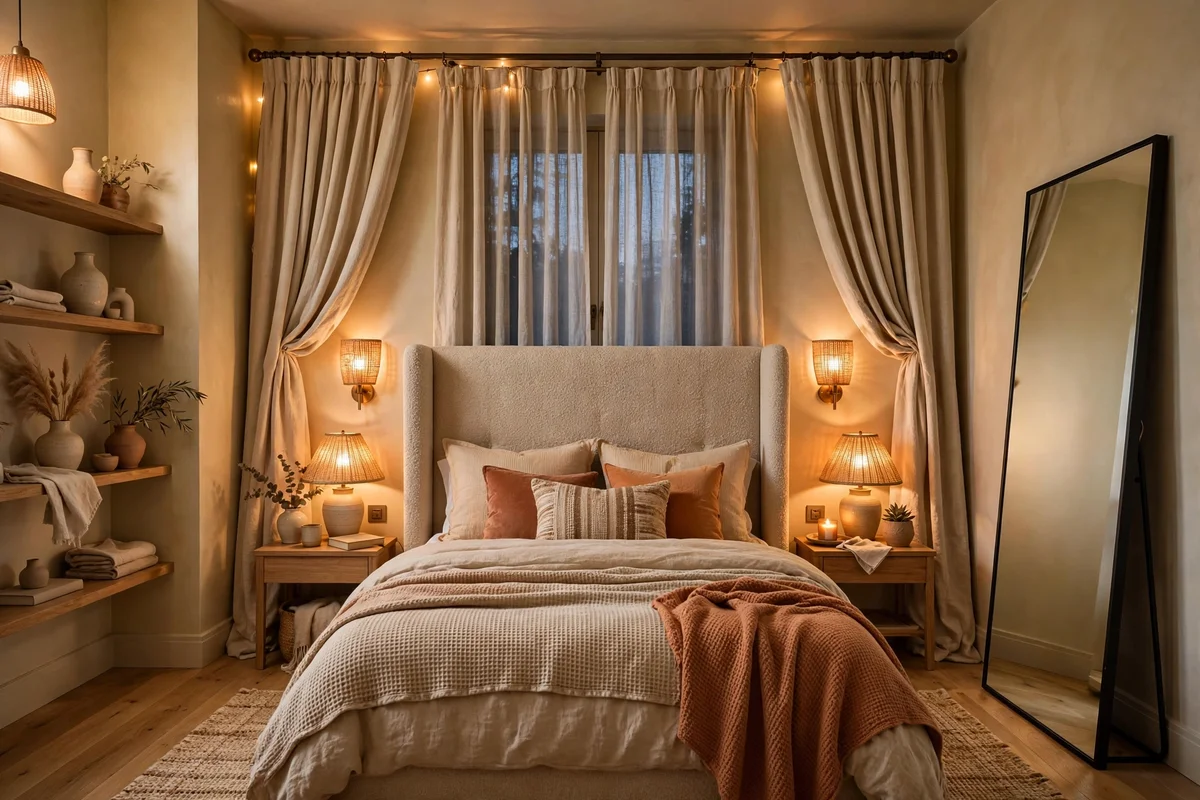
32 Small Bedroom Decor Mistakes (and How to Fix Them)
Your bedroom should be the calmest room in your home — but small bedrooms punish decorating mistakes harder than any other space. A bed that’s two inches too wide, curtains hung a foot too low, or a single harsh ceiling light can make the whole room feel cramped, dark, and restless. The frustrating part is that most of these small bedroom decor mistakes are completely fixable, often for little or no money. You don’t need a renovation or an interior designer; you need to know what to stop doing and what to do instead. Below are 32 of the most common small bedroom mistakes, each paired with a designer-approved fix, realistic costs, and a pro tip. Every fix includes a realistic visualization so you can see exactly what “right” looks like. Fix even half of these and your small bedroom will feel bigger, calmer, and genuinely restful.
1. Choosing a Bed That’s Too Big for the Room
A king-size bed in a 10×10 room leaves you shimmying sideways to get dressed, and the whole space reads as “mattress warehouse” instead of bedroom. The mistake is buying for the bed you want rather than the room you have. The fix: leave at least 24 inches of clear walkway on each side of the bed (30 is ideal). In many small bedrooms that means a queen instead of a king, or a full instead of a queen — and honestly, a right-sized bed with breathing room sleeps better than a giant one you have to climb over. Cost: $500-$1,200 for a quality right-sized bed frame and mattress setup. Pro tip: Tape the bed’s footprint on the floor before buying; if you can’t walk comfortably around all three sides, size down.
2. Shoving the Bed Into a Corner Against the Wall
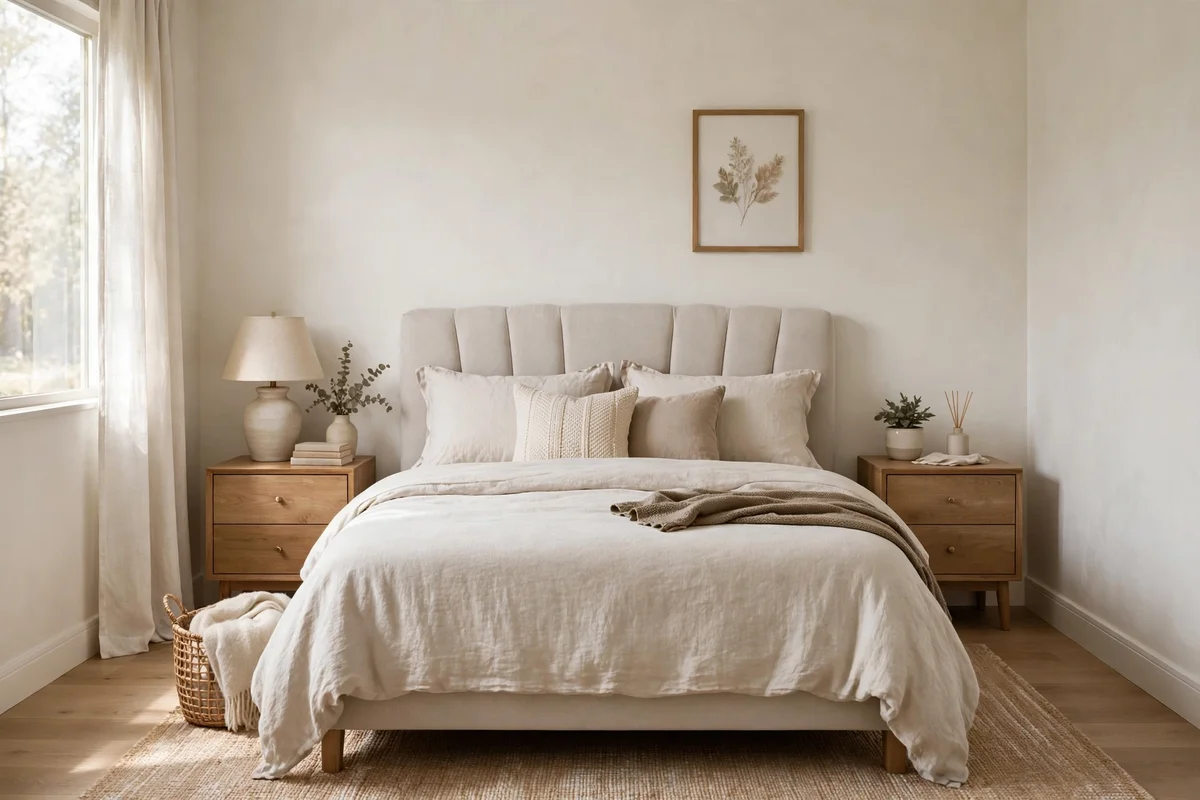
Pushing the bed into a corner feels like a space-saver, but it traps one sleeper against the wall, kills symmetry, and makes bed-making a wrestling match. The fix: center the bed on the longest wall with a nightstand on each side, even if the nightstands are small. Symmetry instantly makes a small bedroom feel intentional and twice as designed. If the room is truly too narrow for two nightstands, use one nightstand plus a wall-mounted shelf on the other side so both sleepers get a landing spot. Cost: $40-$120 for a wall shelf and small nightstand. Pro tip: Even 18-inch-wide nightstands work; what matters is the balanced look, not the size.
3. Skipping a Headboard Entirely
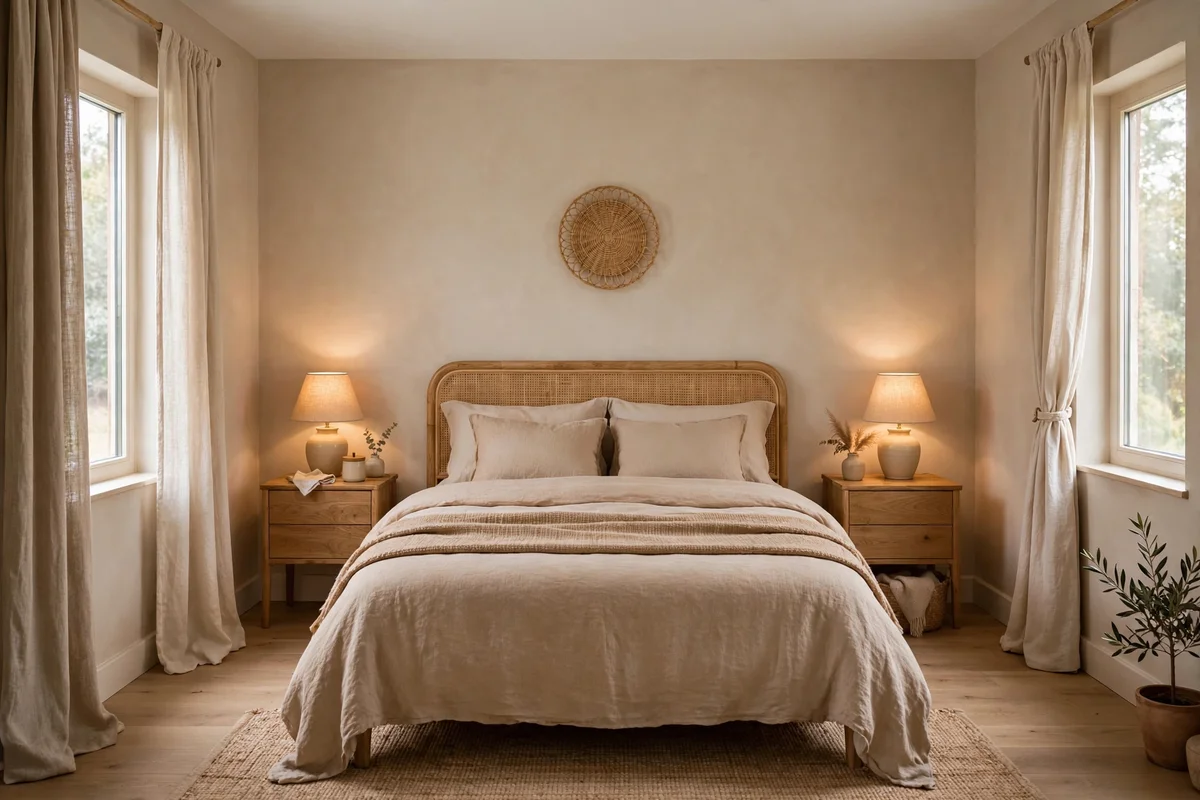
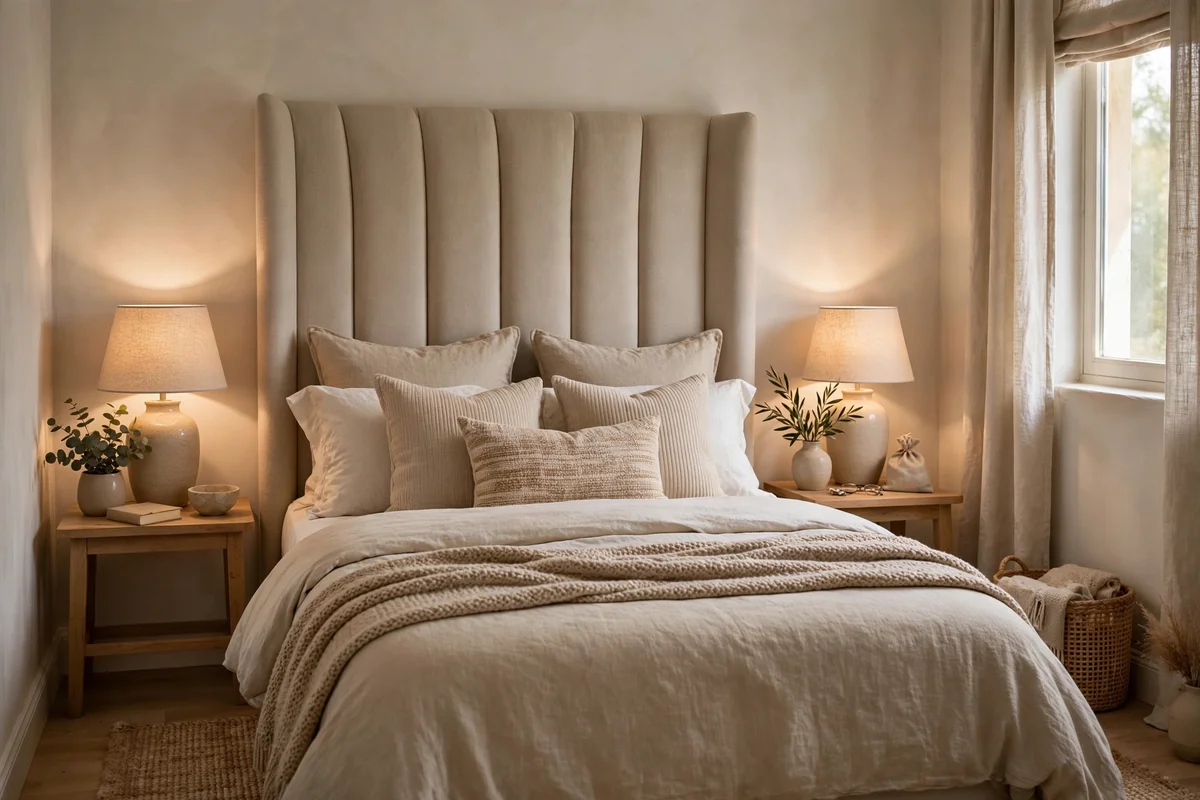
A bed floating against a bare wall looks unfinished, like you just moved in — even if you’ve lived there for years. Without a headboard the eye has nowhere to land and the room feels lower and smaller. The fix: add a headboard, and in a small bedroom go upholstered. A tall, simple upholstered headboard draws the eye upward, adds softness, and makes the bed look like a deliberate focal point. It doesn’t need to be expensive — a clean linen-look headboard transforms the room for the price of a dinner out. Cost: $80-$250 for an upholstered headboard. Pro tip: Choose a headboard 48 inches or taller; the vertical emphasis makes low ceilings feel higher.
4. Relying on One Harsh Overhead Light
A single ceiling fixture blasting down from above is the fastest way to make a small bedroom feel like an interrogation room. It flattens everything, creates harsh shadows, and kills any chance of a cozy evening mood. The fix is layered lighting: keep the overhead for cleaning and getting dressed, but add two warm bedside lamps and, if you can, a soft accent like LED strip behind the headboard or a small floor lamp in a dark corner. Three light sources at different heights is the designer rule, and it works magic in small rooms. Cost: $60-$180 for two table lamps with warm bulbs. Pro tip: Use 2700K warm-white bulbs everywhere in the bedroom; anything cooler feels clinical.
5. Hanging Curtains Too Low and Too Narrow
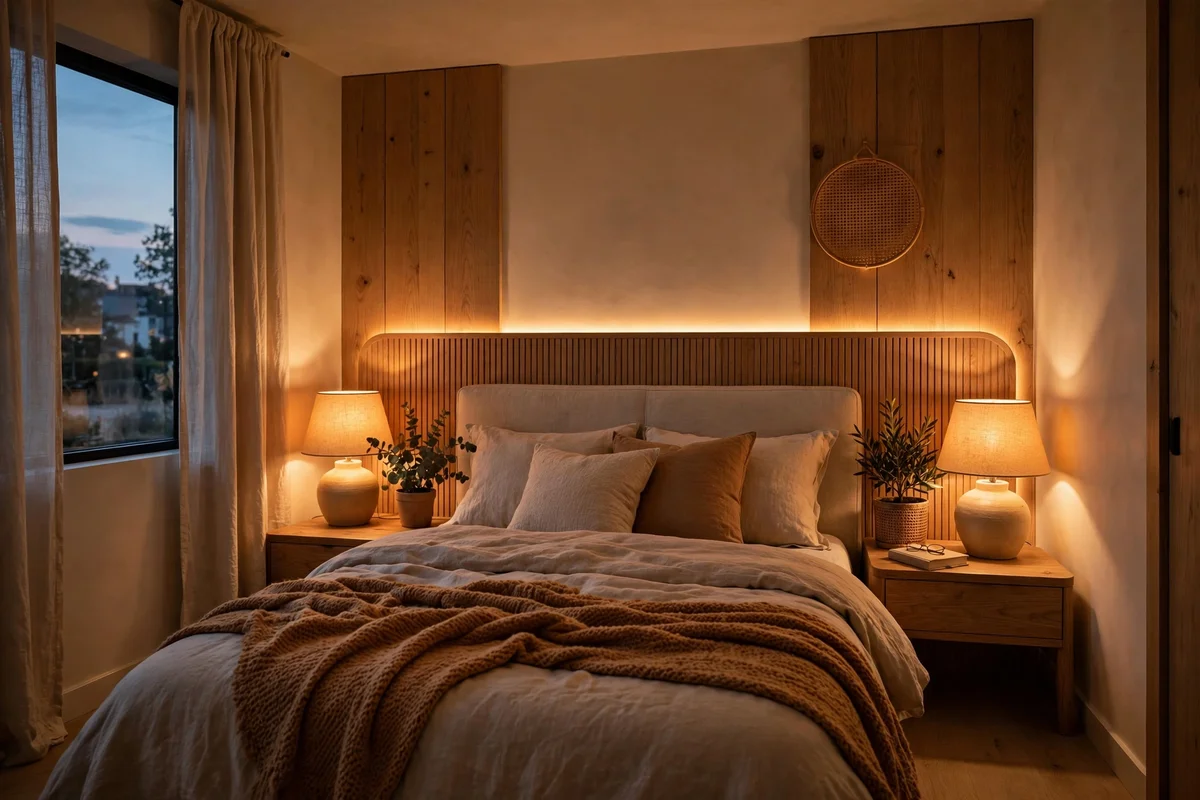
Curtains hung right at the window frame, barely wider than the glass, chop the window down and make the whole wall — and room — feel smaller. It’s one of the most common mistakes in every room, and bedrooms suffer most because the window is often the main light source. The fix: mount the rod 4-6 inches above the window frame (or near the ceiling) and extend it 6-10 inches beyond each side. Floor-length panels that just kiss the floor make the window look grand and the ceiling higher. Cost: $50-$150 for a rod and two floor-length panels. Pro tip: Even on a small window, wide-hung curtains make it look twice the size — the wall space the panels cover reads as window.
6. Using a Rug That’s Too Small
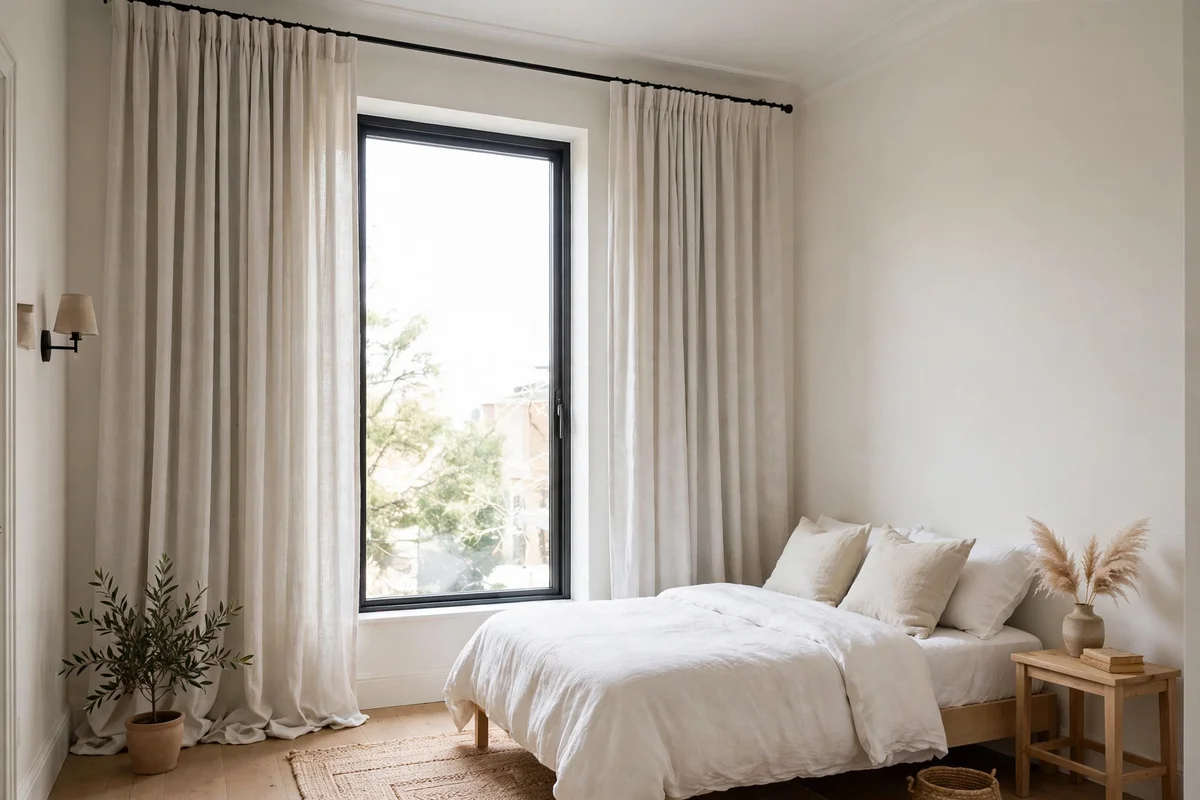
A tiny rug floating in the middle of the floor, touching nothing, looks like a postage stamp and visually shrinks the room. In bedrooms the rug mistake is even more specific: a rug that stops short of the bed looks accidental. The fix: the rug should extend at least 18-24 inches beyond each side of the bed and sit under the bottom two-thirds of the bed. In a truly small bedroom, two runners — one on each side of the bed — are a smart, budget-friendly alternative that still gives you soft landings. Cost: $80-$250 for a bedroom-sized rug or pair of runners. Pro tip: If a big rug busts the budget, layer a smaller flat-weave rug over existing flooring just under the bed’s foot — it reads as intentional.
7. Letting Nightstands Become Junk Piles
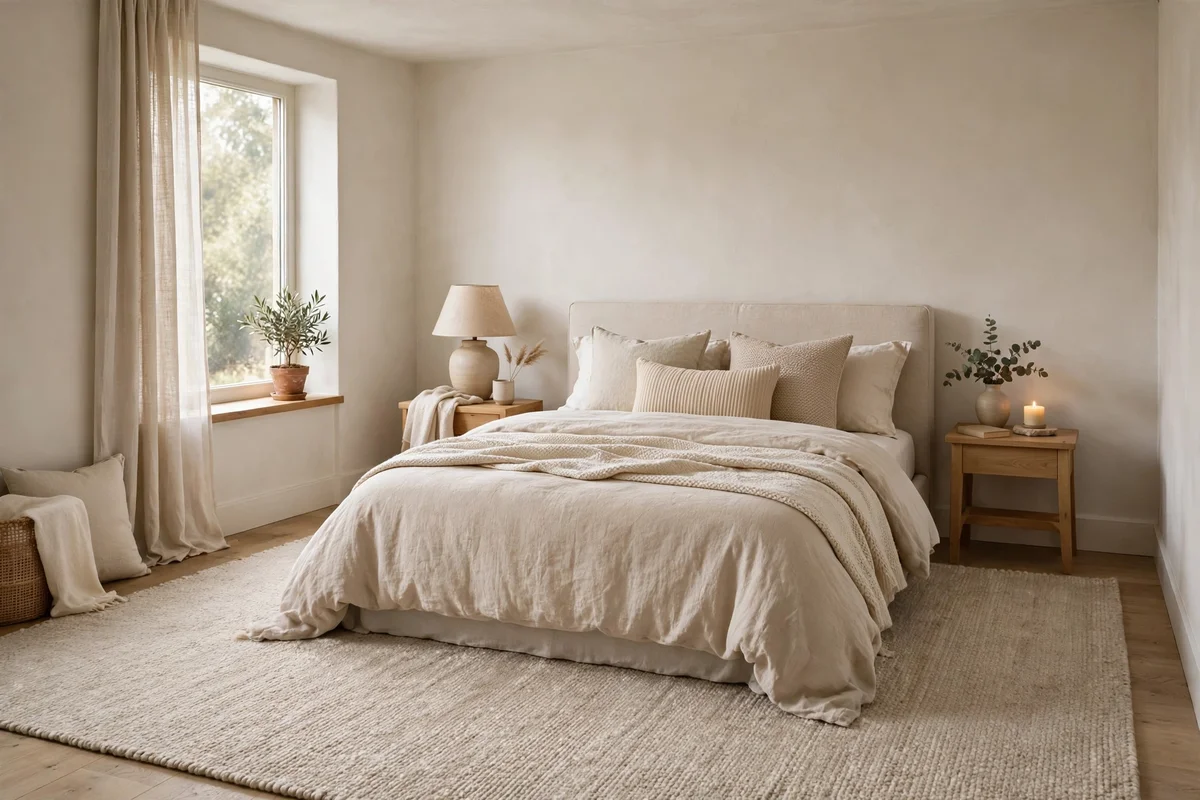
The nightstand is the first thing you see in the morning and the last at night, yet most become a landslide of chargers, books, water glasses, and mystery clutter. Visual chaos next to your pillow genuinely affects how restful the room feels. The fix: edit ruthlessly — lamp, one book, water carafe, nothing else on top. Corral the small stuff (lip balm, meds, remote) in a small tray or lidded box, and give chargers a home inside the drawer with a cable hole. A styled, minimal nightstand makes the whole bedroom feel calmer. Cost: $15-$40 for a tray and drawer organizer. Pro tip: If your nightstand has no drawer, a lidded basket underneath hides the overflow while looking like decor.
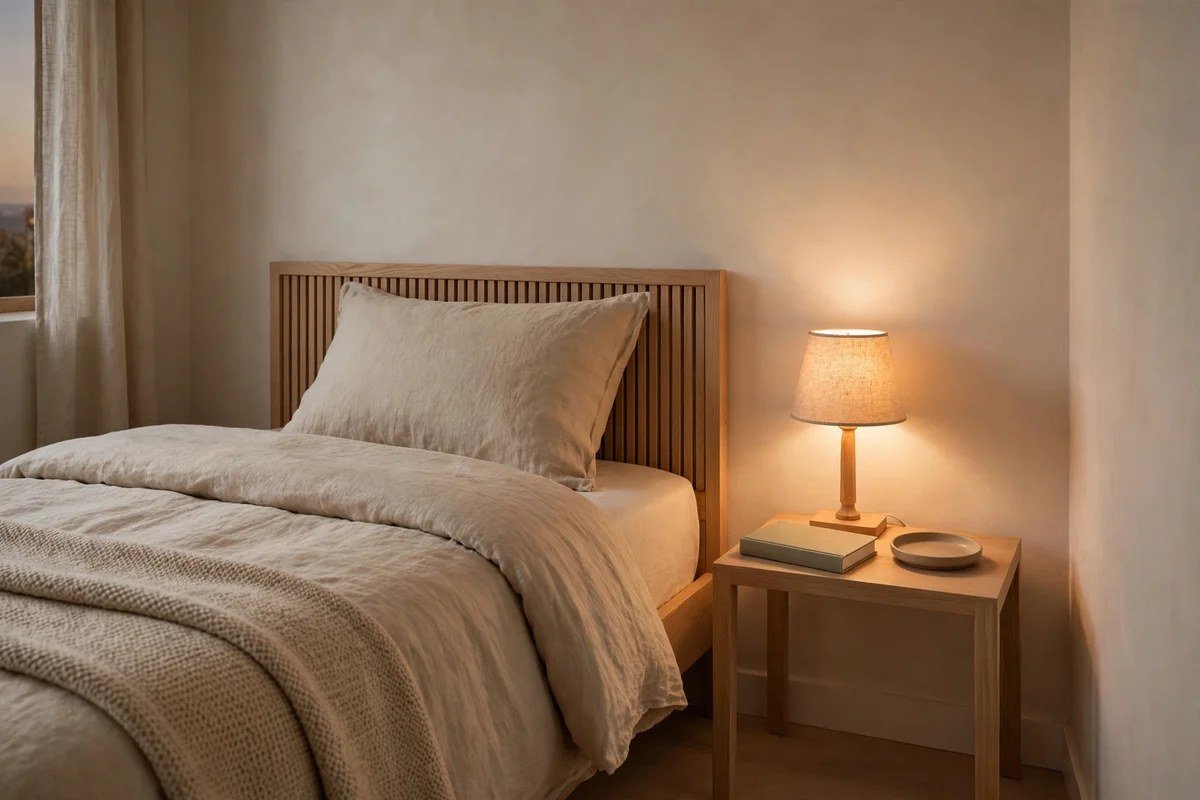
8. Wasting the Space Under the Bed
In a small bedroom, the 7-8 inches under your bed is prime real estate — and most people either leave it as a dust-bunny farm or shove things under in a panic. Both are mistakes. The fix: use it deliberately with low-profile rolling bins or zippered under-bed bags for off-season clothes, extra linens, and shoes. Choose a bed frame with at least 6 inches of clearance, or add risers. Suddenly your closet breathes again and the room stays tidy because everything has a home. Cost: $30-$80 for a set of under-bed storage bins. Pro tip: A simple bed skirt hides the bins completely if open storage bothers you visually.
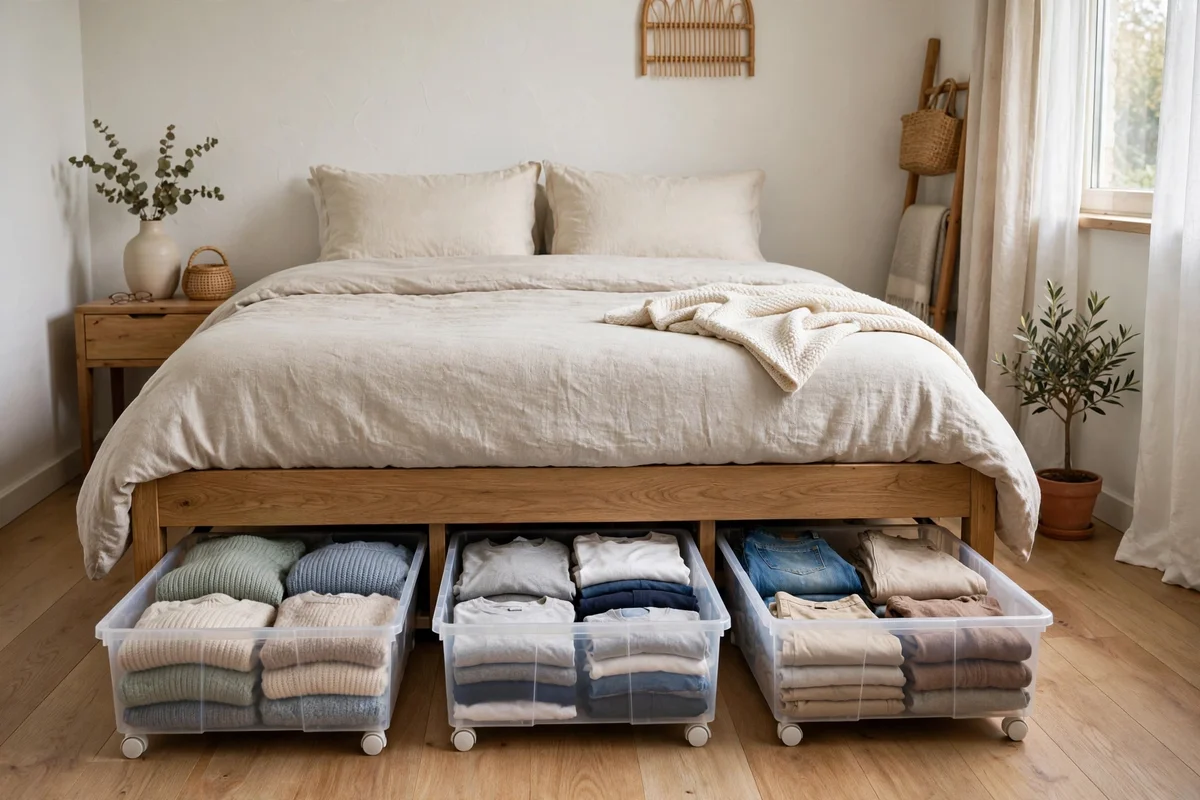
9. Painting a Small Bedroom Too Dark With No Balance
Dark walls can be gorgeous, but painting all four walls charcoal in a small, north-facing bedroom with one window turns it into a cave. The mistake isn’t the dark color — it’s the lack of balance. The fix: keep dark walls but balance them with light bedding, a large mirror, warm lighting, and pale curtains. Or limit the drama to one accent wall behind the bed. Dark + light contrast actually adds depth and makes small bedrooms feel more expensive, not smaller. Cost: $40-$100 for paint and supplies for an accent wall. Pro tip: Test dark paint with a large swatch first; colors read much darker on all four walls than on a chip.
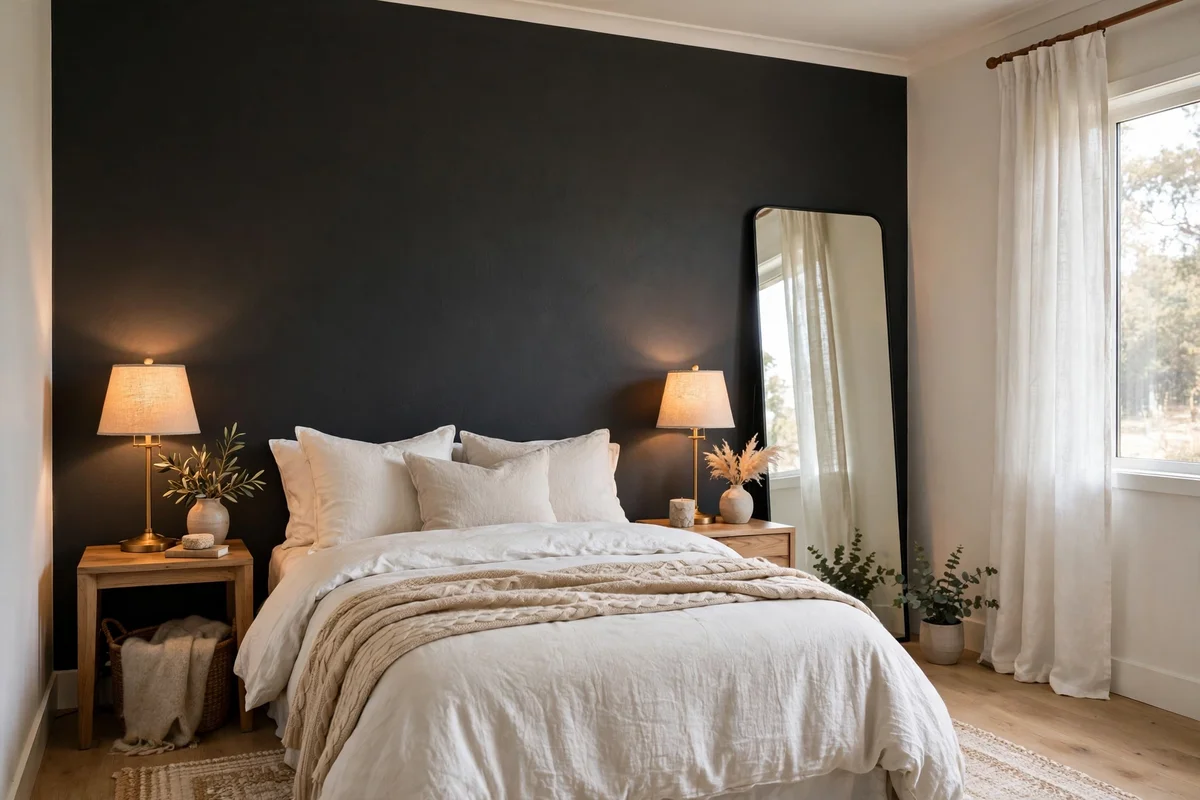
10. Scattering Dozens of Tiny Decor Items
A forest of tiny frames, trinkets, and mini vases on every surface creates visual noise that makes a small bedroom feel cluttered and restless. Ten small things read as mess; one larger thing reads as design. The fix: edit ruthlessly and go bigger. One oversized art print, one substantial vase with stems, one beautiful tray — fewer, larger pieces calm the eye. Box up the small stuff and rotate a few pieces seasonally if you can’t part with them. Cost: $30-$90 for one statement art print and frame. Pro tip: The “rule of three” still applies, but make each of the three items generously sized rather than miniature.
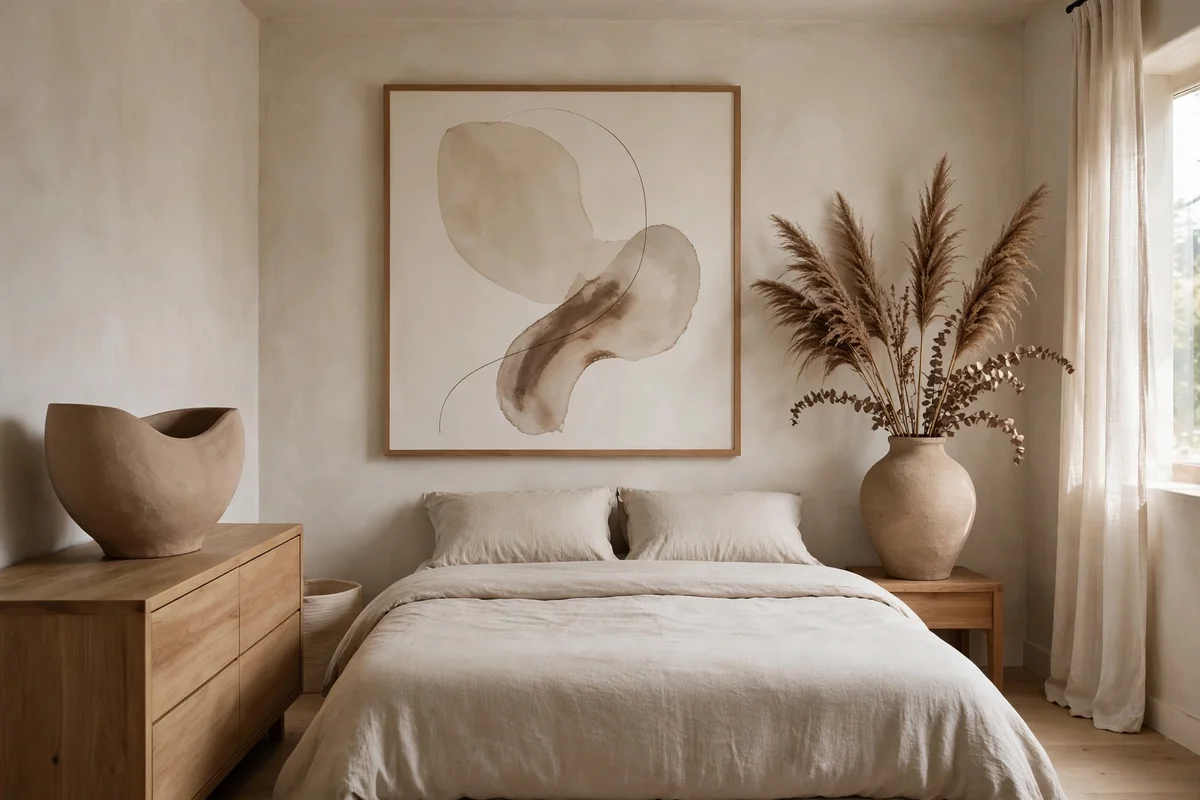
11. Ignoring the Ceiling Completely
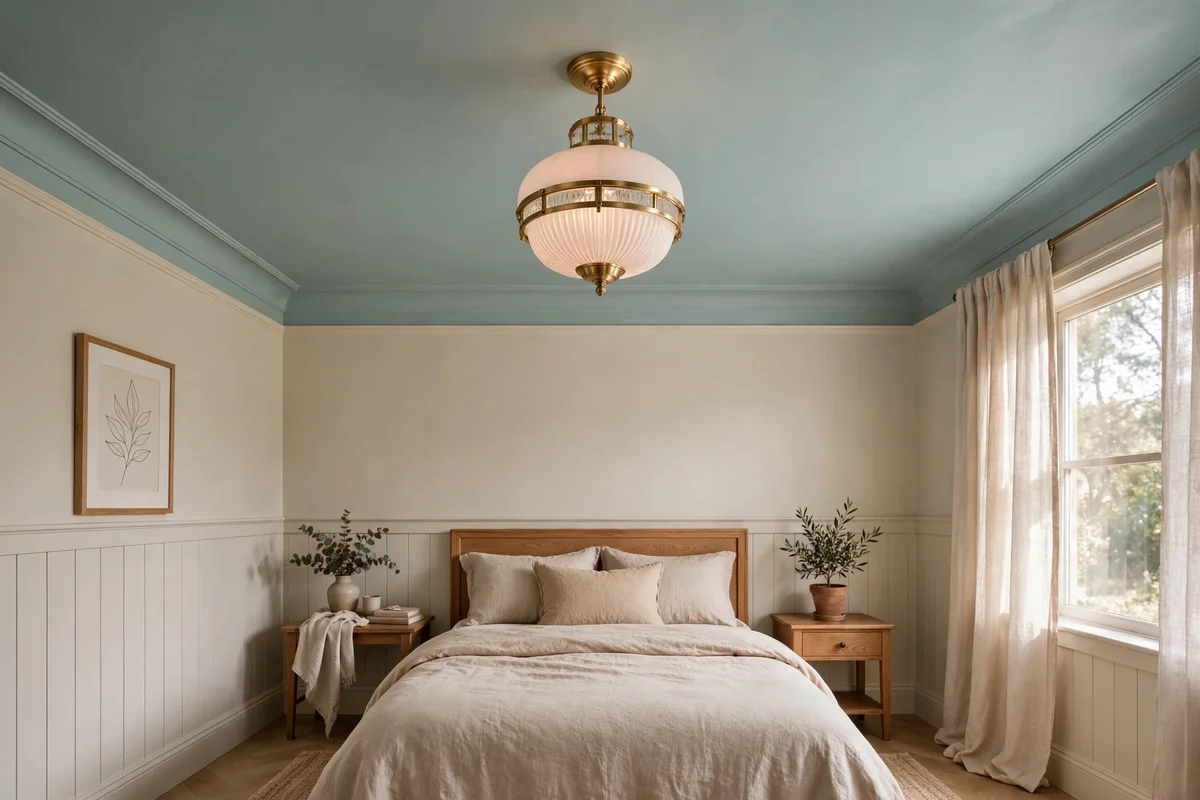
Four styled walls and a forgotten flat-white ceiling leaves a small bedroom feeling boxy and unfinished — the “fifth wall” is free design space you’re wasting. The fix doesn’t require drama: a soft tint on the ceiling (even 50% of the wall color), a beautiful flush-mount or pendant light, or simple picture-frame molding painted out in the ceiling color. Any of these draws the eye up and makes the room feel taller and more considered. Cost: $40-$150 for ceiling paint or a new flush-mount fixture. Pro tip: In rooms under 8-foot ceilings, skip hanging pendants over walkways; a semi-flush fixture gives the interest without the head-bump risk.
12. Buying the Matching Bedroom Set
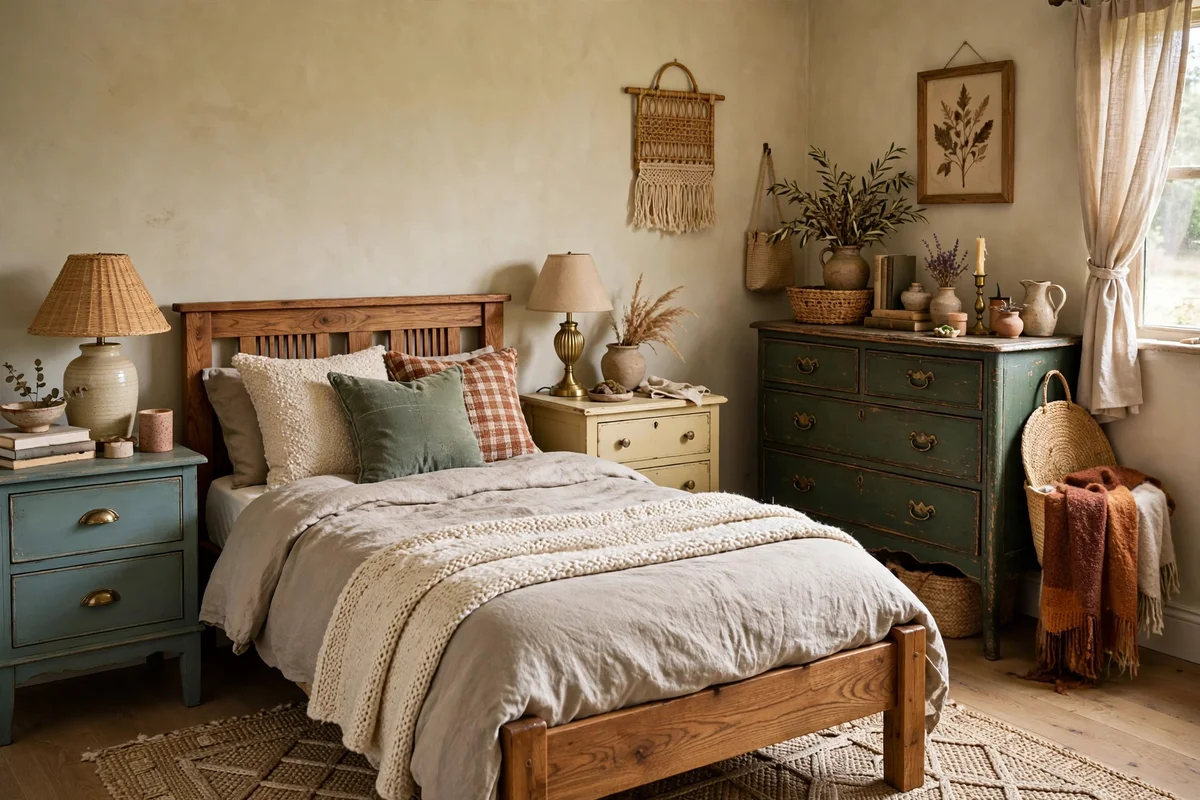
The headboard-nightstands-dresser set in identical finish screams “furniture showroom” and flattens all personality out of a small bedroom. Matching sets also tend to be bulky, which small rooms can’t afford. The fix: mix on purpose. Pair your bed with nightstands in a different finish, add a vintage or painted dresser, and vary wood tones and textures. Curated beats coordinated every time — and mixing lets you buy slimmer pieces that actually fit. Cost: $0-$300 depending on whether you paint existing pieces or buy one new one. Pro tip: Keep one common thread — like matching hardware or a repeated wood tone — so the mix feels intentional, not random.
13. Having No Mirror at All
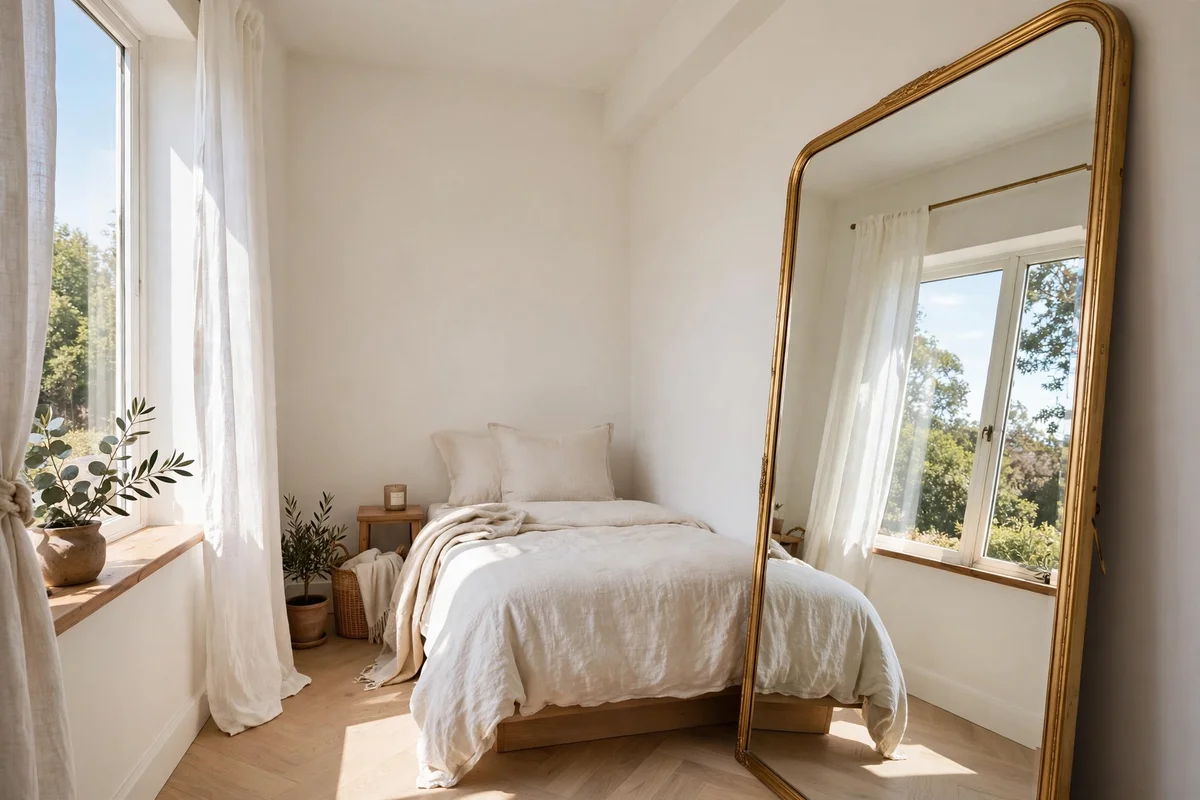
Small bedrooms desperately need what mirrors do best: bounce light, double the sense of space, and give you somewhere to check your outfit. Skipping a mirror is leaving free square footage on the table. The fix: hang the largest mirror you can fit — opposite or adjacent to the window is ideal for maximum light bounce. A leaning floor mirror behind a door or beside the dresser works when wall space is tight. Cost: $50-$150 for a large leaning or wall mirror. Pro tip: Angle the mirror to reflect the window, not the bed — you get daylight bounce without the “watching yourself sleep” weirdness.
14. Sleeping on a Mattress on the Floor
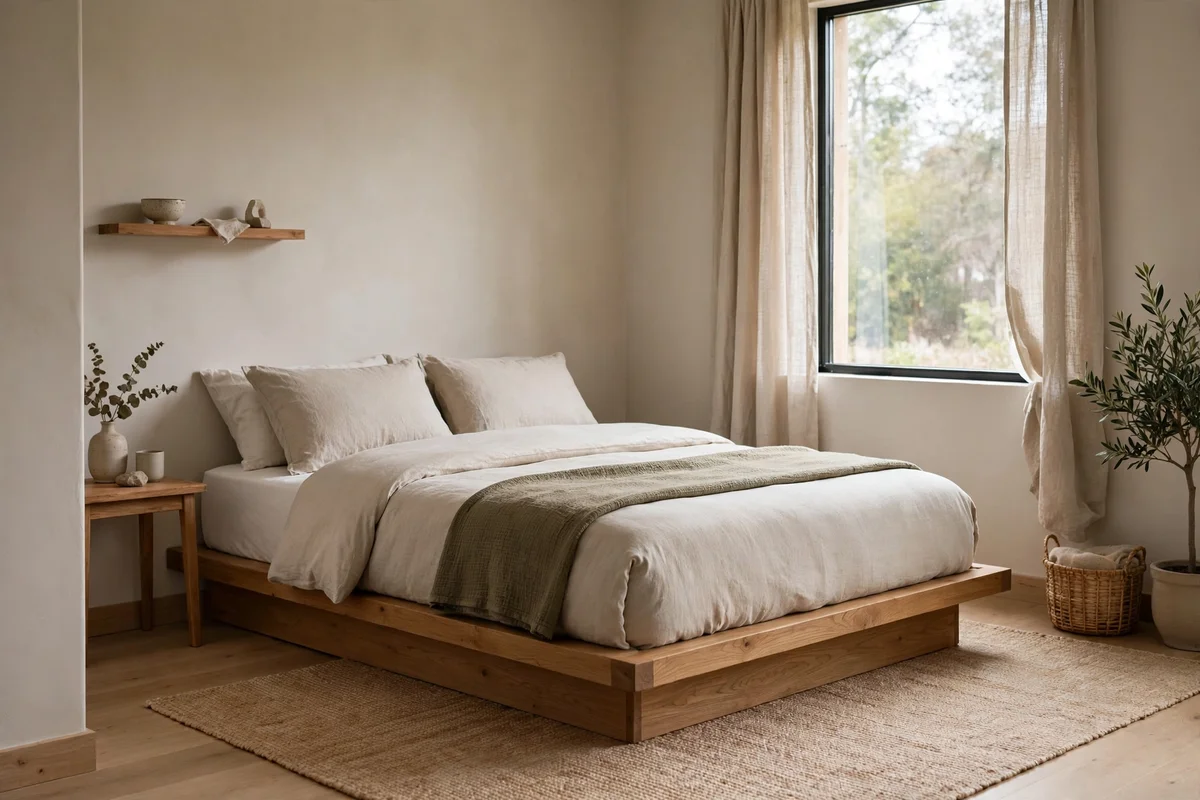
A mattress directly on the floor might feel bohemian for a month, but long-term it traps moisture (hello, mold risk), makes getting up harder, and visually drags the whole room down. The fix: get the mattress up on a frame — even a simple low platform. Raising the bed to a proper height (top of mattress around 22-25 inches) changes the room’s proportions instantly and gives you under-bed storage as a bonus. Cost: $100-$300 for a simple platform bed frame. Pro tip: No-box-spring platform frames sit lower and sleeker, which suits small bedrooms better than tall traditional frames.
15. Letting Cords and Chargers Take Over
A Medusa tangle of phone chargers, lamp cords, and alarm-clock cables behind the nightstand is ugly, dusty, and genuinely stressful to look at. The fix: a $15 cable management box hides the power strip entirely, adhesive cord clips route lamp cords along furniture legs, and a short 1-foot charging cable keeps your phone tidy. If you’re renovating even slightly, add an outlet with USB ports right at nightstand height. Cost: $15-$50 for a cable box, clips, and short cables. Pro tip: Charge devices inside the nightstand drawer with a small hole drilled in the back — surfaces stay completely clear.
16. Having Nowhere to Sit Except the Bed
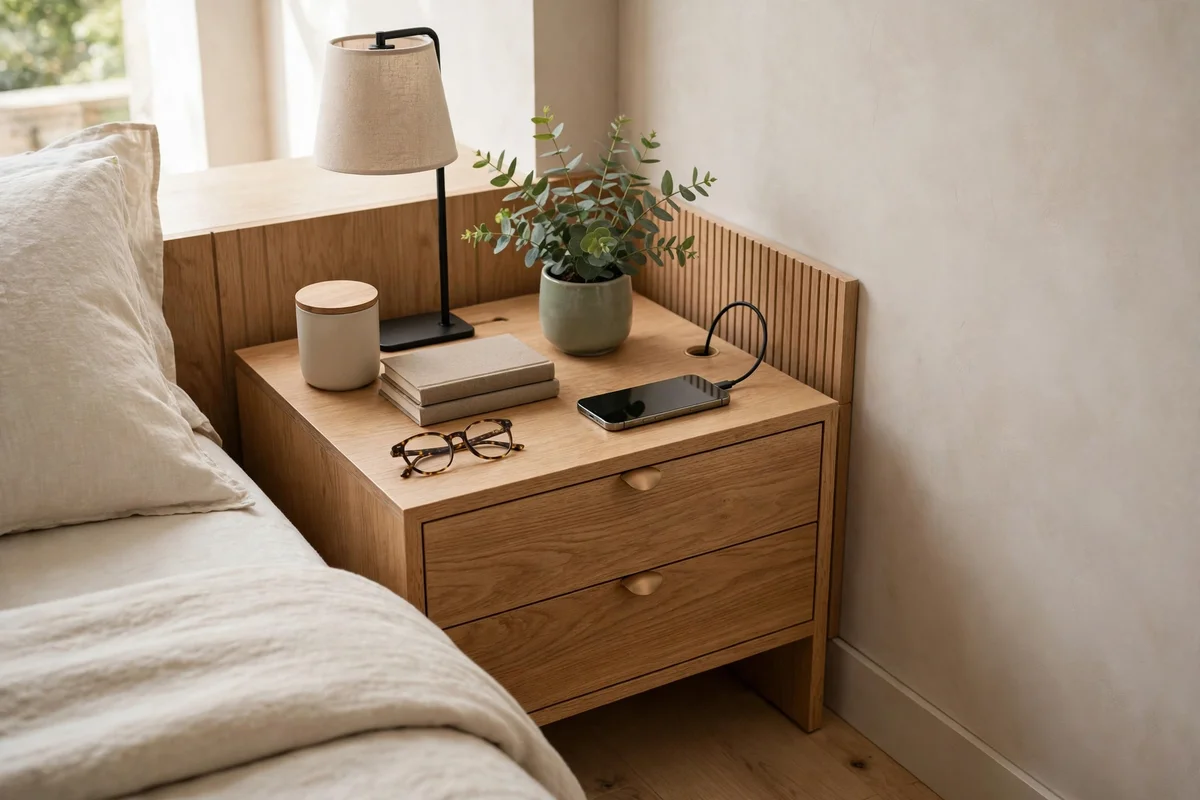
When the bed is the only place to sit, it becomes the desk, the closet, and the couch — and it never looks made. A small bedroom still deserves one proper seat. The fix: a slim accent chair in a corner, a storage bench at the foot of the bed (double duty!), or even a comfortable vanity stool. It gives you somewhere to put on shoes, read, or fold laundry that isn’t the duvet. Cost: $80-$250 for an accent chair or storage bench. Pro tip: A storage bench at the foot of the bed is the highest-ROI seat — seating plus hidden storage in one footprint.
17. Using Harsh Cool-White Bulbs Everywhere
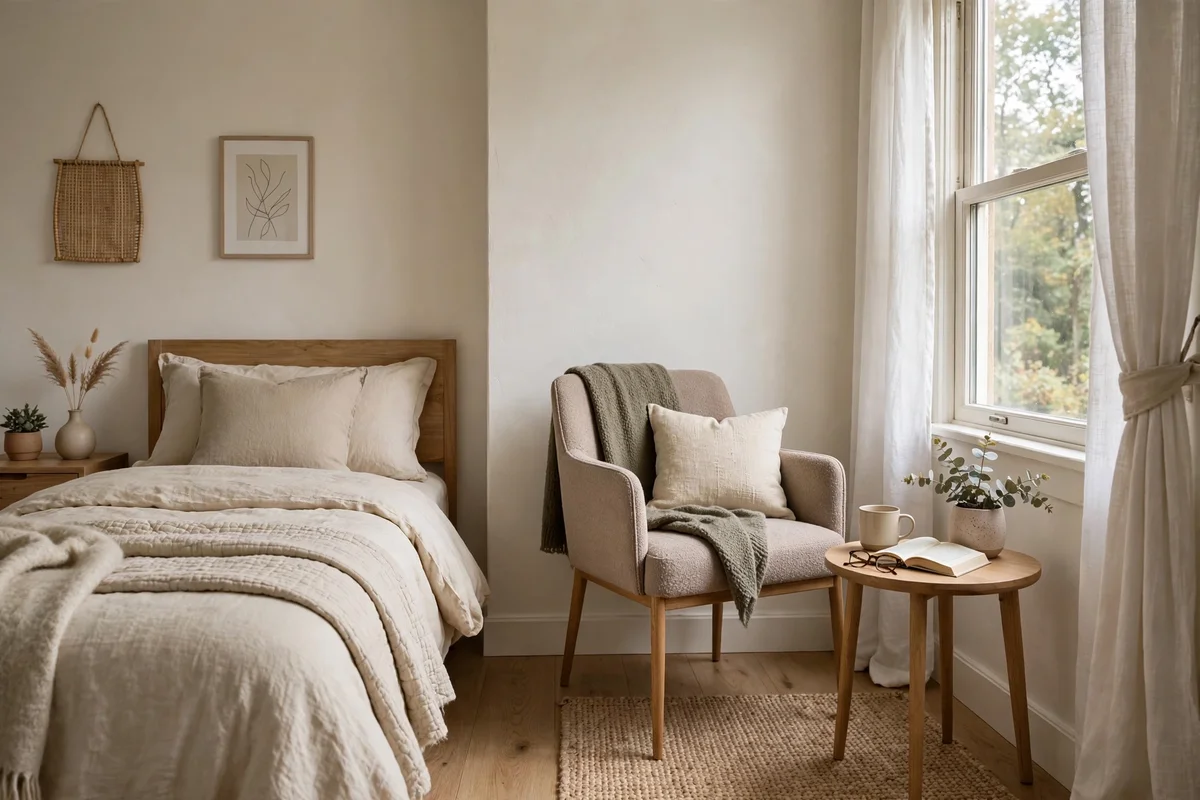
Those 5000K “daylight” bulbs might seem energizing, but in a bedroom at 10pm they feel like a hospital corridor and actively fight your wind-down. Light temperature shapes mood more than almost any decor choice. The fix: swap every bedroom bulb to 2700K warm white, and put bedside lamps on dimmers or smart bulbs. Warm dim light in the evening signals your brain it’s time to rest — designers call it “evening mode” and it’s transformative. Cost: $20-$60 for warm LED bulbs and a plug-in dimmer. Pro tip: Smart bulbs with a sunset routine that auto-dim to warm amber are the ultimate lazy upgrade.
18. Blocking the Window With Furniture
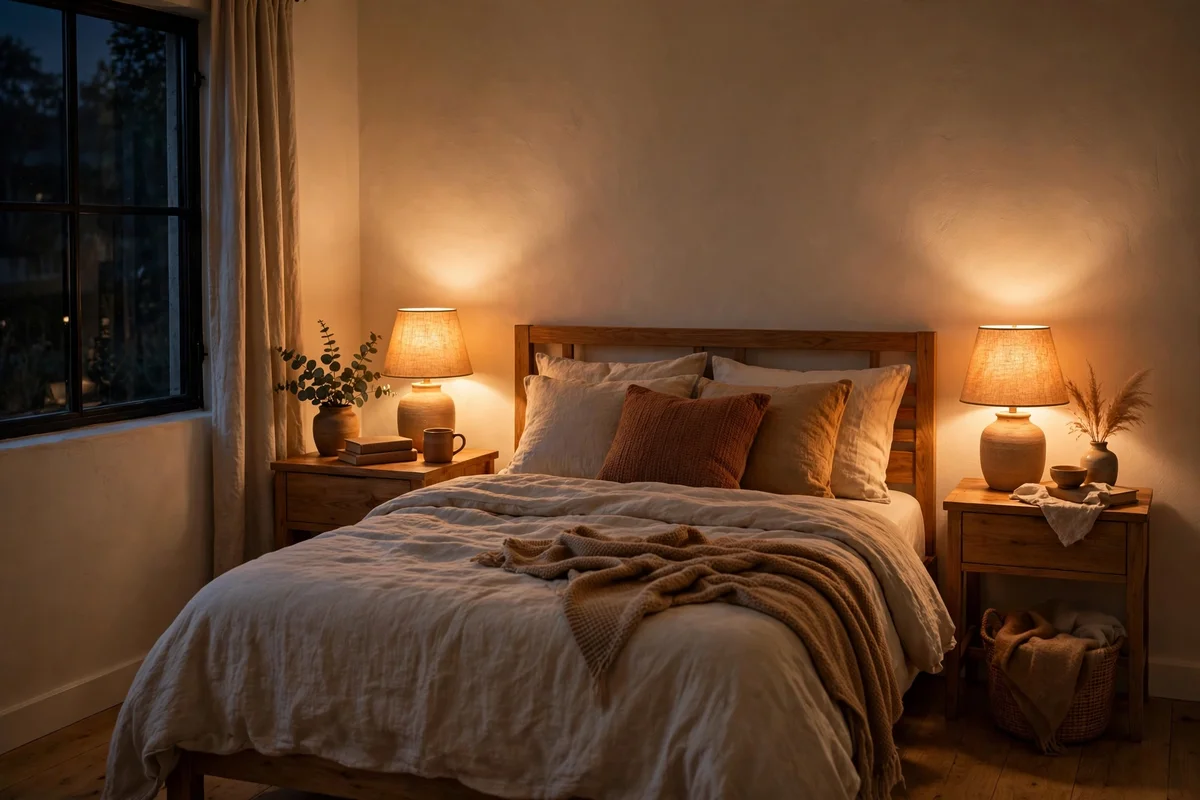
Cramming the dresser or a bookshelf against the window wall chokes off your best light source and makes the room feel boxed in. In a small bedroom the window is precious — treat it that way. The fix: keep the window wall as clear as possible. If layout forces furniture near it, choose low pieces that sit below the sill. Pair with light-filtering shades or sheers instead of heavy blackout curtains used 24/7, so daylight actually enters the room. Cost: $30-$80 for light-filtering shades. Pro tip: Keep blackout for the curtain layer you close only at night; let sheers handle the daytime.
19. Choosing a Bulky Tall Dresser That Eats the Room
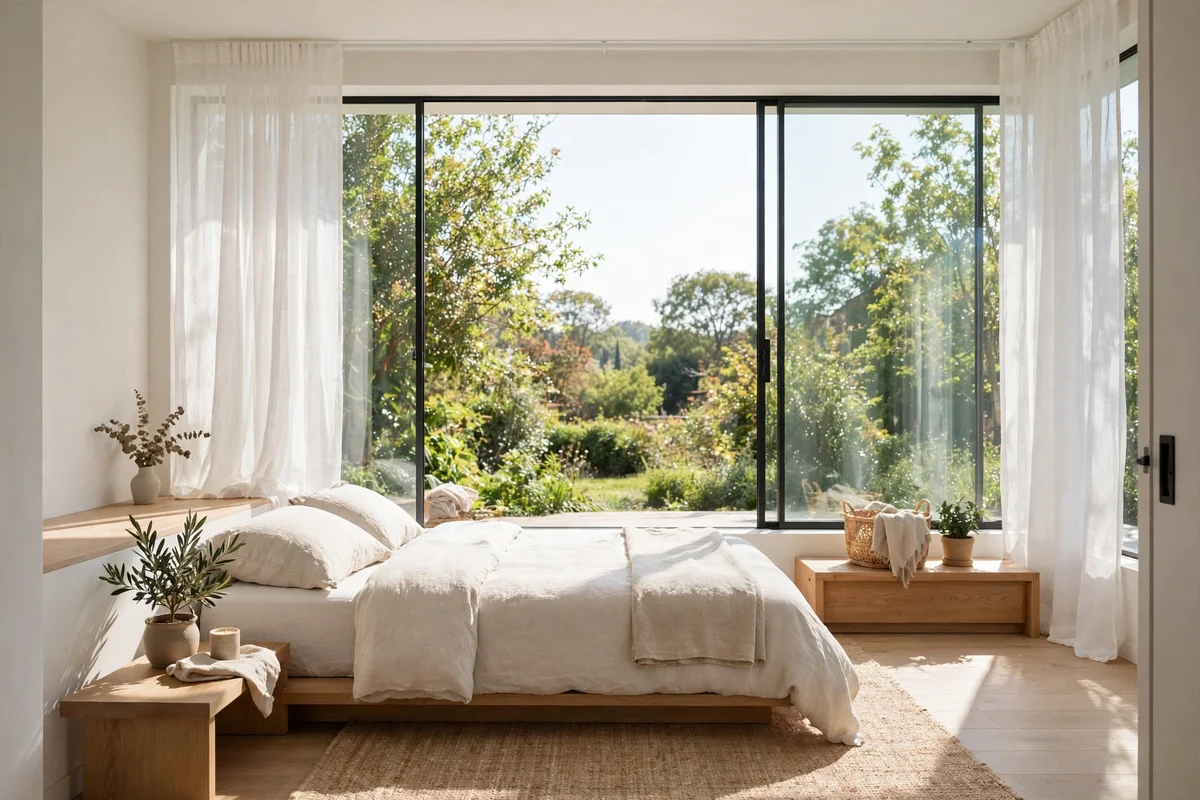
A massive 5-drawer tallboy looming in a small bedroom dominates sightlines and blocks natural pathways. Scale matters more than storage volume. The fix: swap to a low, wide dresser (under 34 inches tall) that doubles as a display surface, or split storage between the closet and under-bed bins so the dresser can be slimmer. Low furniture keeps sightlines open and the room feels airier instantly. Cost: $150-$400 for a low-profile dresser. Pro tip: A dresser top styled with a mirror above it becomes a vanity moment — function and beauty in one.
20. Keeping the Bedroom Sterile All-White With No Warmth
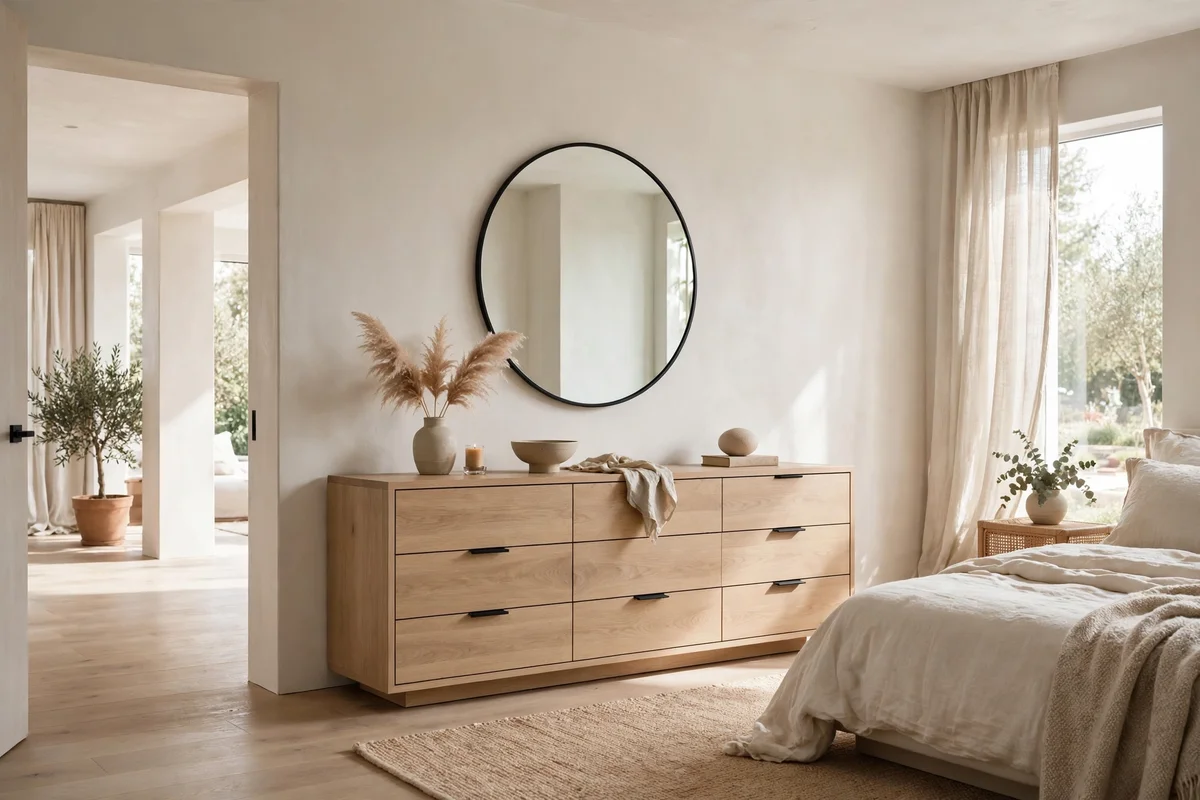
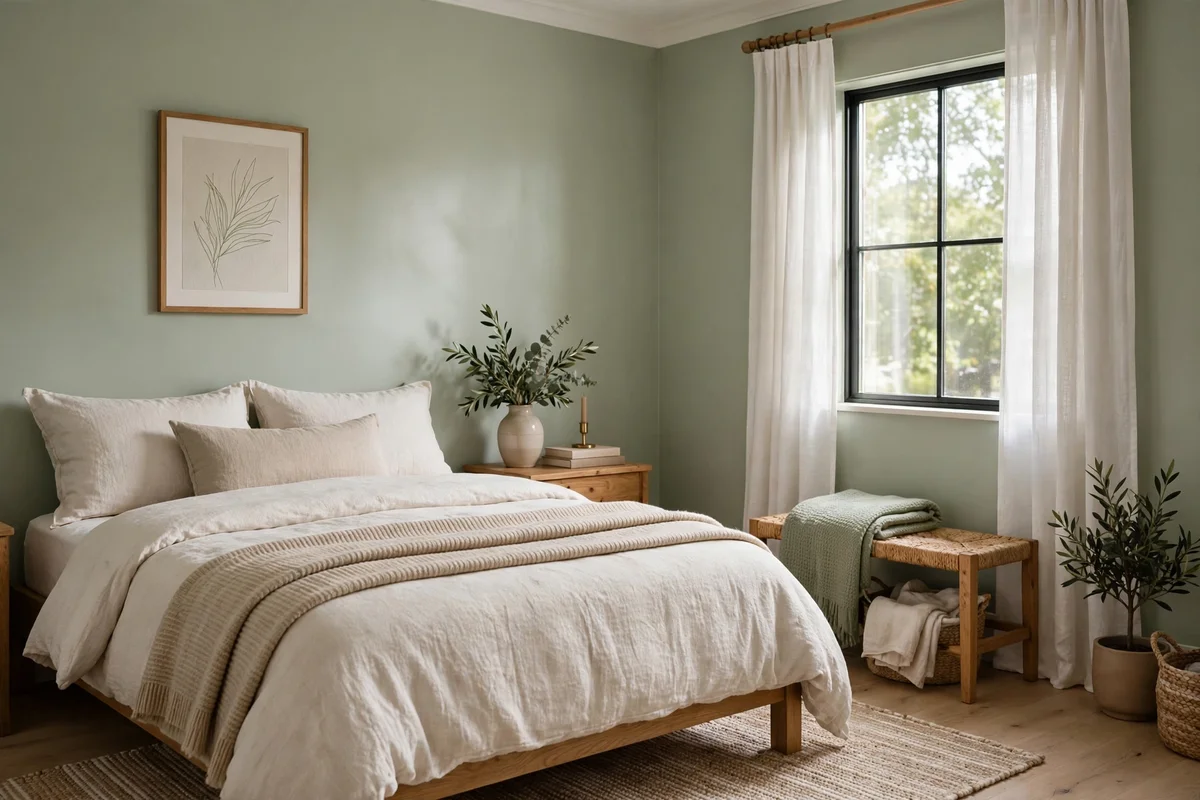
All-white can be serene, but without texture and warmth it reads as cold and unfinished — more rental listing than restful retreat. The mistake is stopping at white instead of layering it. The fix: keep the white base but add warmth through natural materials — a wood bench, woven baskets, linen bedding in cream and oatmeal, a jute rug. Texture is what makes white feel cozy instead of clinical. Cost: $60-$180 for throws, baskets, and textured pillows. Pro tip: Mix at least three textures (linen, knit, woven) in your white bedding alone and the bed instantly looks designer.
21. Doing an Accent Wall That Fights the Bedding
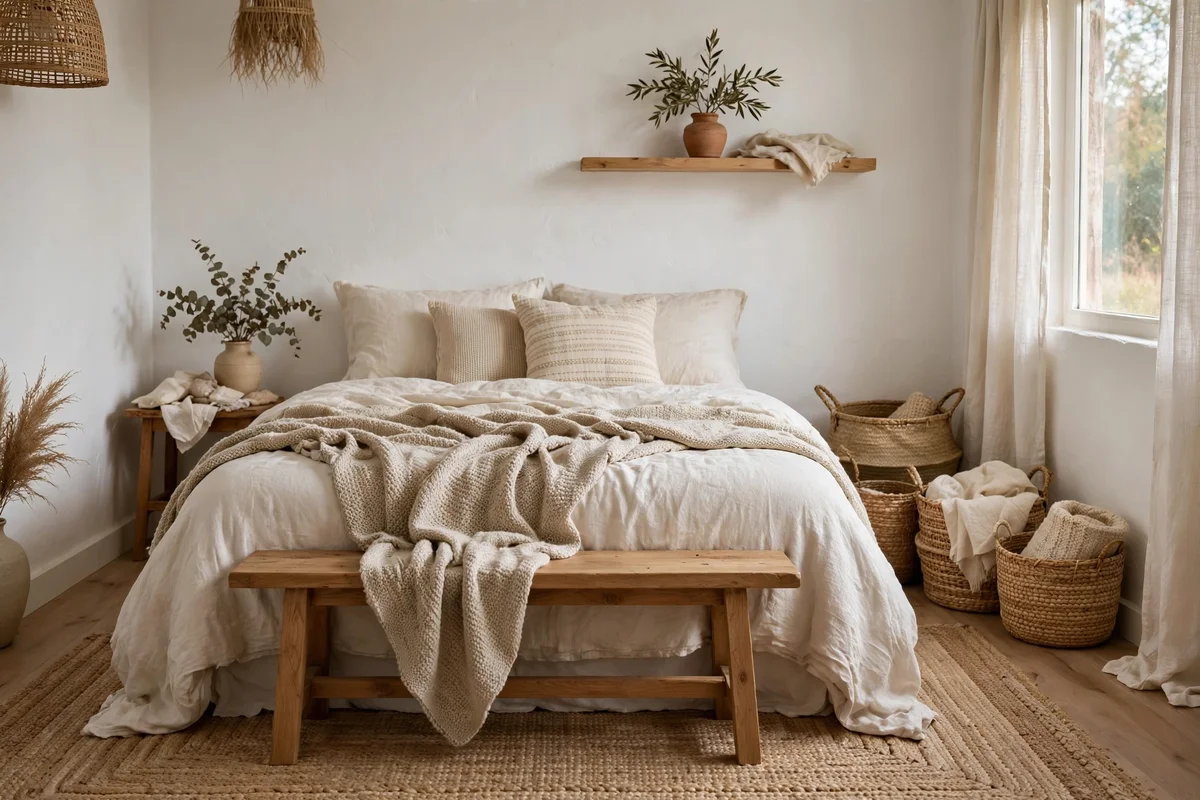
A bold terracotta accent wall with clashing blue bedding looks like two rooms arguing. Accent walls fail when they’re chosen in isolation from everything else. The fix: pull the accent color from something you already love — your duvet, a rug, or art — and repeat it in at least two other spots (pillows, throw, curtain trim). That repetition is what makes the wall look intentional. In small bedrooms, deep greens, warm clay, and soft charcoal work beautifully behind the bed. Cost: $40-$100 for paint plus coordinating pillows. Pro tip: Photograph your bedding at the paint store and color-match on the spot — phone screens lie.
22. Leaving Walls Bare or Taping Up Posters
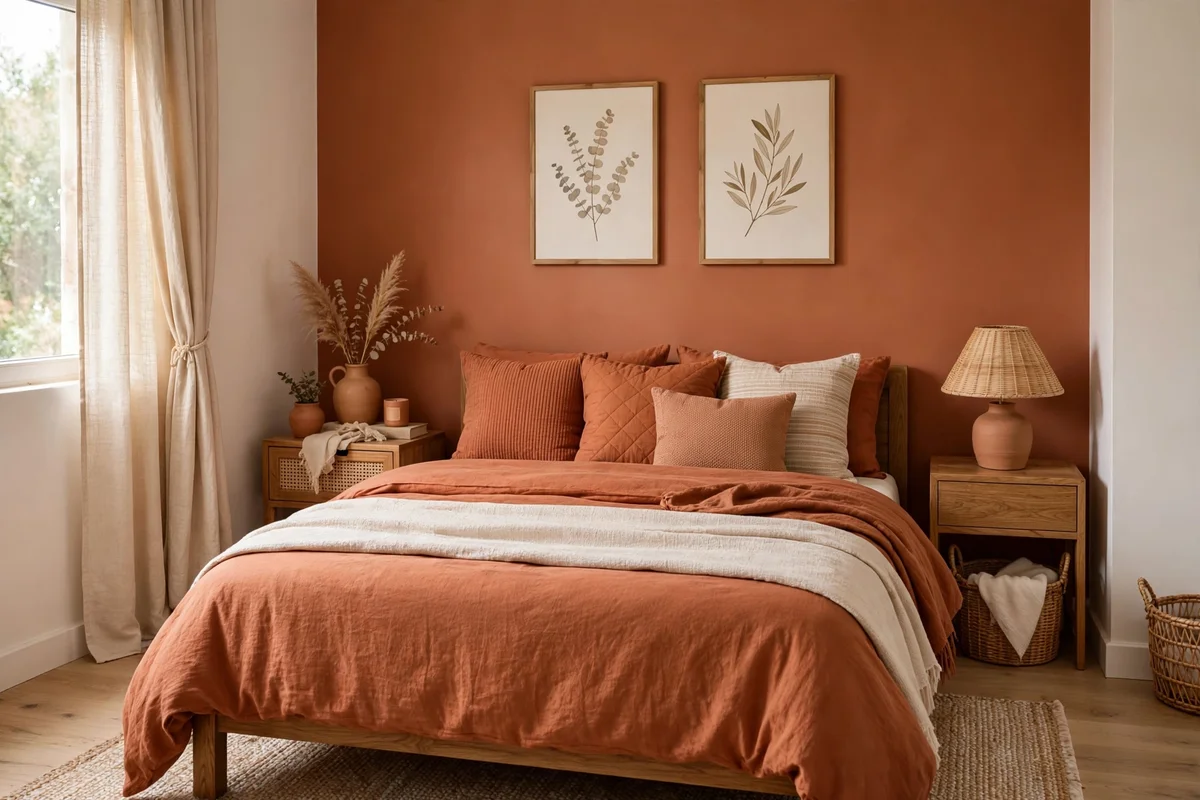
Bare walls make even a nicely furnished small bedroom feel temporary, while taped posters age the room down instantly. Art is what makes a bedroom feel like yours. The fix: one framed piece above the bed at eye level (center 57-60 inches from the floor) changes everything. It doesn’t need to be expensive — a $20 print in a simple frame looks infinitely better than a bare wall. A small gallery of 3-4 framed prints works on a side wall. Cost: $20-$80 for a framed print. Pro tip: In small bedrooms, one large piece beats many small ones — it anchors the room instead of scattering attention.
23. No Proper Reading Light
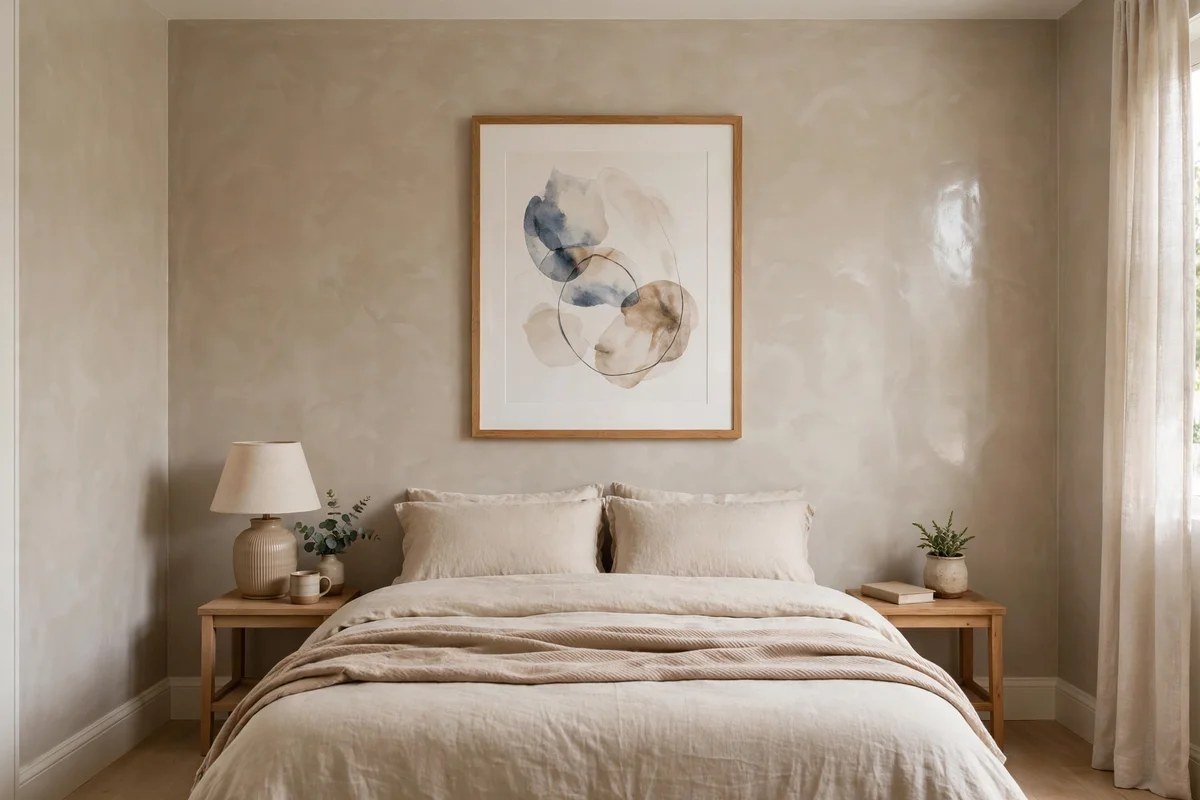
Reading in bed with only an overhead light means either blasting your partner or squinting — and a chunky table lamp eats precious nightstand space in a small bedroom. The fix: wall-mounted sconces on either side of the bed. They free the entire nightstand surface, put light exactly where you need it, and look incredibly polished. Plug-in sconces with cord covers need no electrician. Cost: $50-$140 for a pair of plug-in wall sconces. Pro tip: Choose sconces with adjustable arms or shades so each sleeper aims their own light.
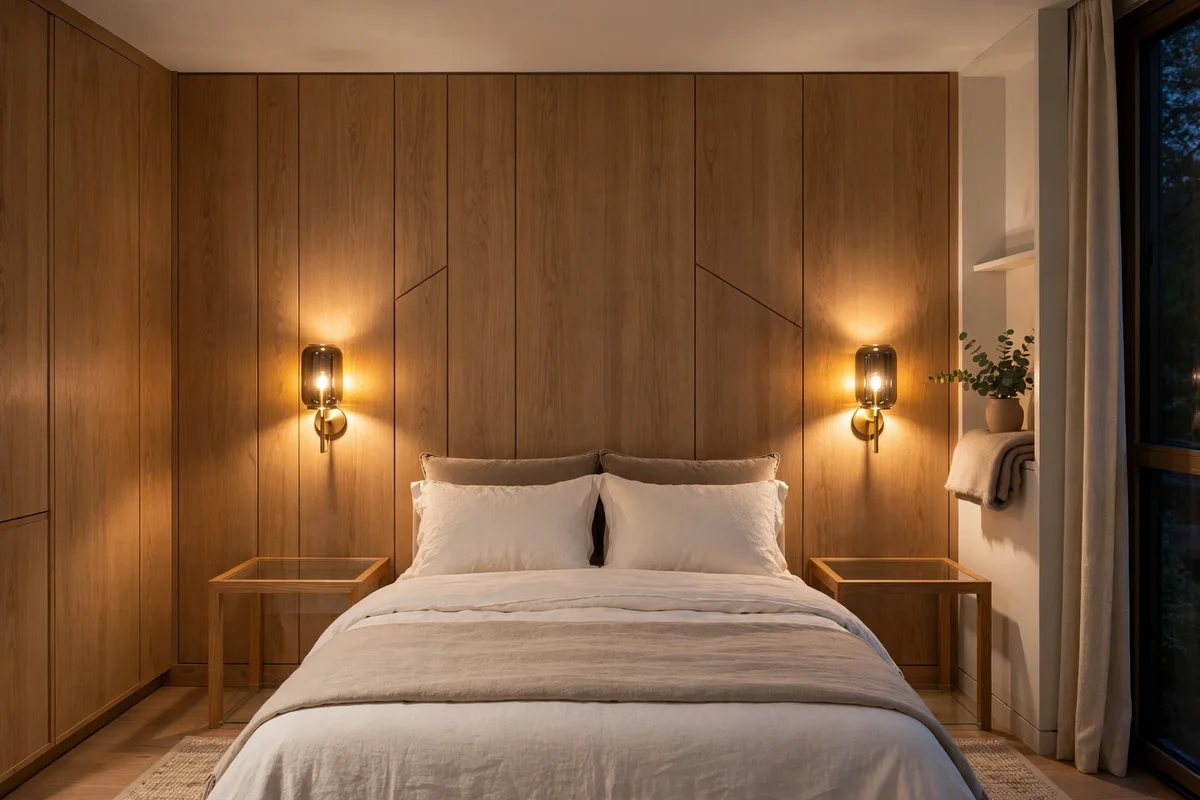
24. Piling On So Many Pillows You Can’t Find the Bed
The 9-pillow Instagram bed looks great for exactly one photo, then becomes a nightly chore of stacking pillows on the floor. In a small bedroom that pile eats real floor space. The fix: edit to the classic formula — two sleeping pillows, two shams standing upright, and one lumbar or accent pillow in front. Five total. The bed still looks styled, and making it takes 60 seconds. Cost: $0 — just remove pillows. Pro tip: Store the retired pillows in a lidded basket or under-bed bin if you can’t part with them; rotate seasonally.
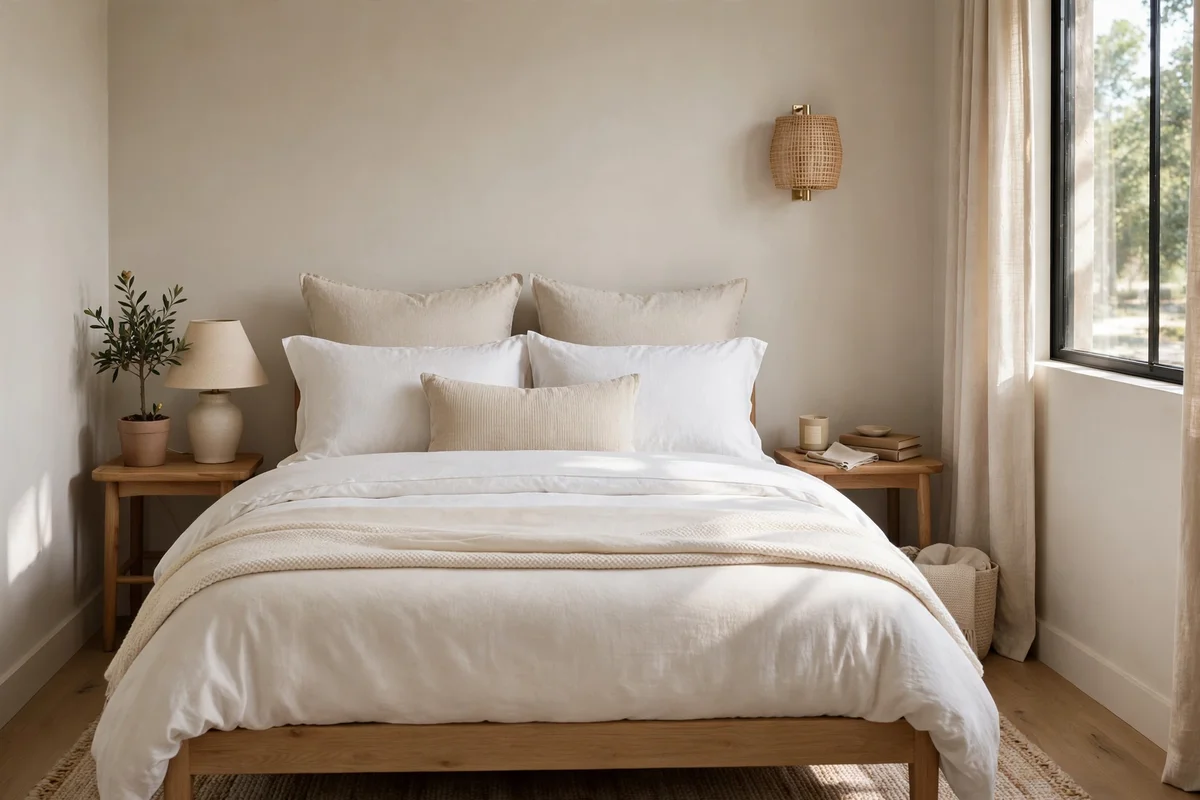
25. Mismatching Nightstand Height With the Mattress
A nightstand towering above the mattress — or one so low you can’t reach your water — looks wrong and functions worse. Designers aim for nightstand tops level with the top of the mattress, give or take an inch or two. The fix: measure before you buy, and don’t be afraid of wall-mounted floating nightstands in a small bedroom — they hit any height you want and free up floor space underneath. Cost: $40-$120 for floating nightstand shelves. Pro tip: Floating nightstands make small bedrooms feel larger because you see continuous floor underneath — a classic visual trick.
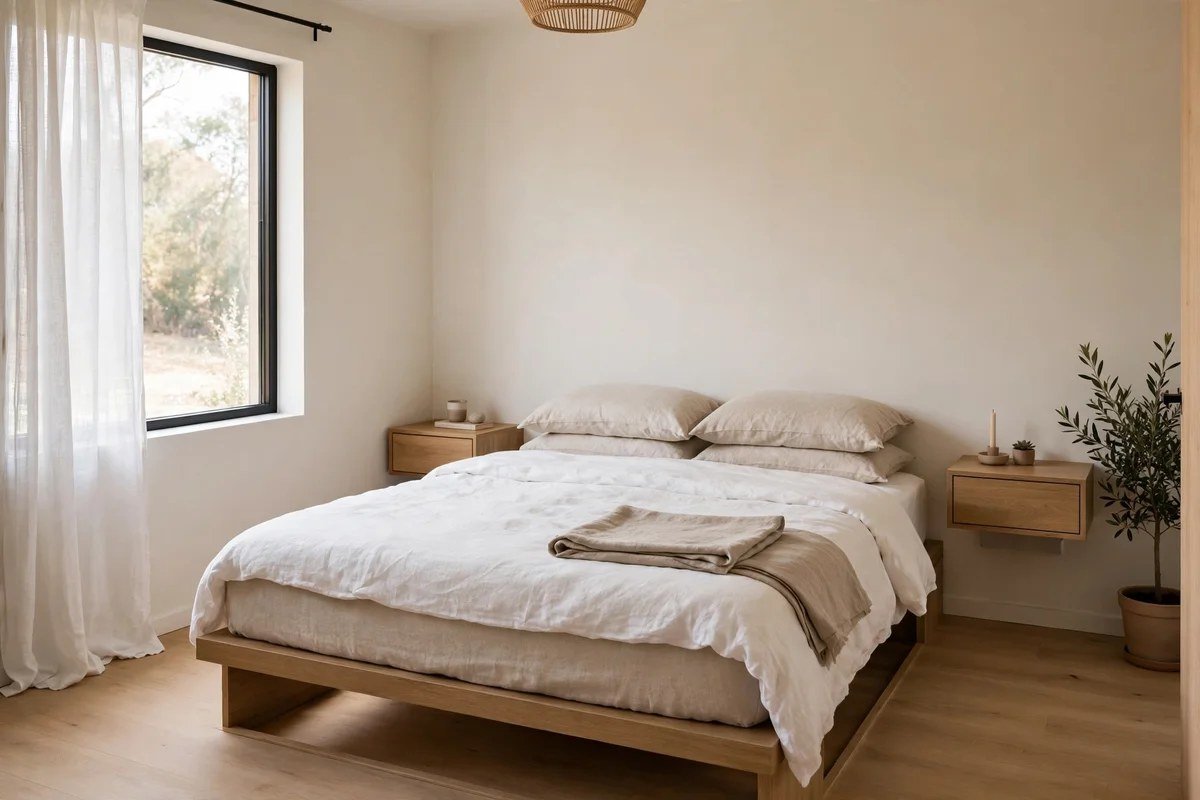
26. Bare Cold Floors With No Soft Landing
Stepping onto cold hard flooring every morning is a small daily punishment, and bare floors around the bed make the room feel unfinished. The fix: runners on each side of the bed — even in the smallest bedroom there’s room for an 2×3-foot soft landing. Choose washable low-pile runners if you’re worried about upkeep. Cost: $40-$100 for a pair of washable bedside runners. Pro tip: Runners with a bit of color or pattern peek out from under the bed and add personality without committing to a huge rug.
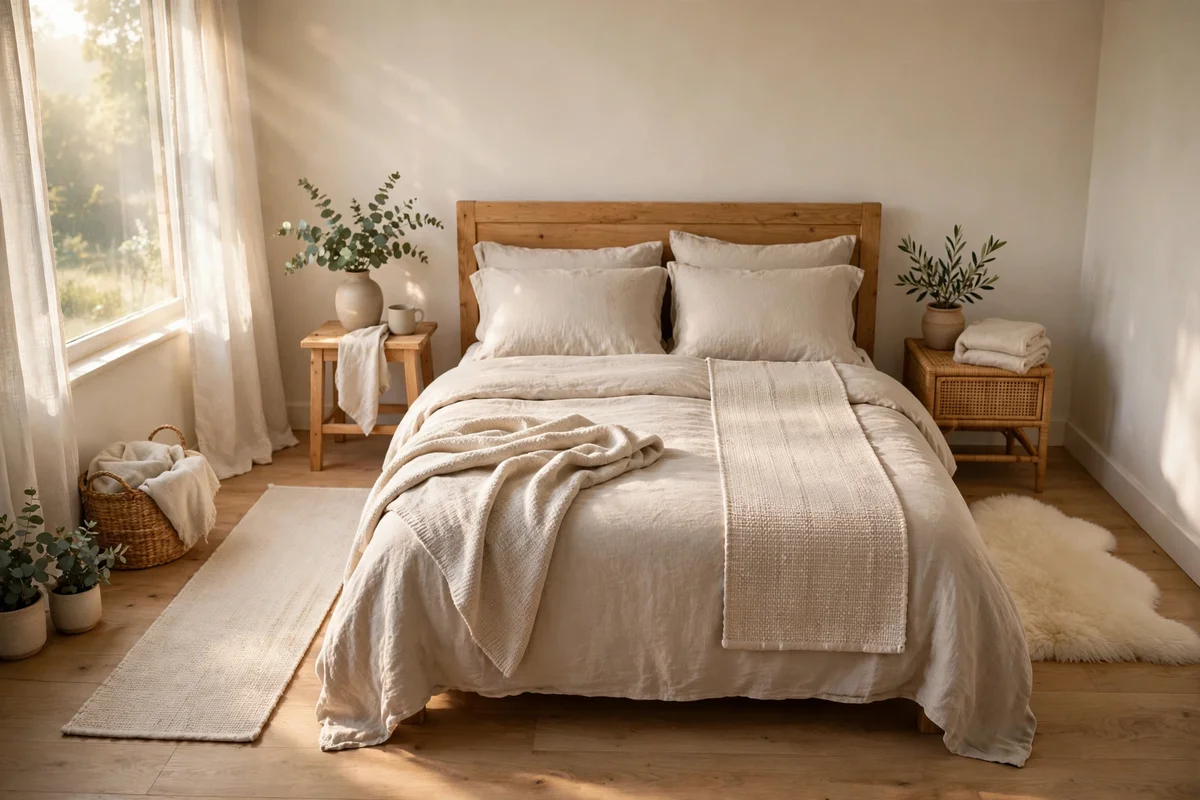
27. The Laundry Chair (or Floor Pile)
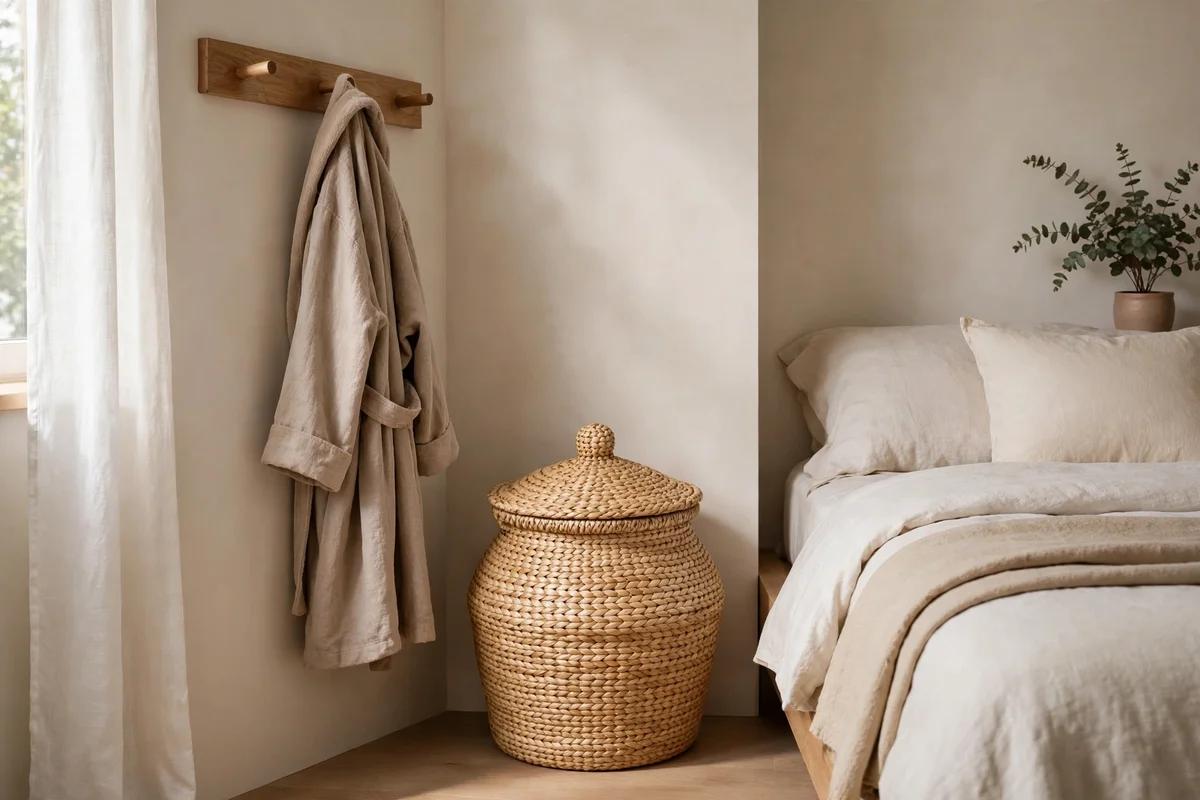
Every small bedroom has one: the chair buried under “not dirty, not clean” clothes, slowly becoming a textile mountain. It’s the fastest way to make a tidy room look chaotic. The fix: a lidded hamper that looks like furniture — a woven seagrass hamper, a lidded wooden bench, even a pretty lidded basket. Add wall hooks for the in-between clothes. The pile disappears and the room stays serene. Cost: $30-$80 for a lidded hamper and a set of wall hooks. Pro tip: A divided hamper (lights/darks) in a nice woven finish earns its floor space twice over.
28. Mounting the TV Too High or Too Big
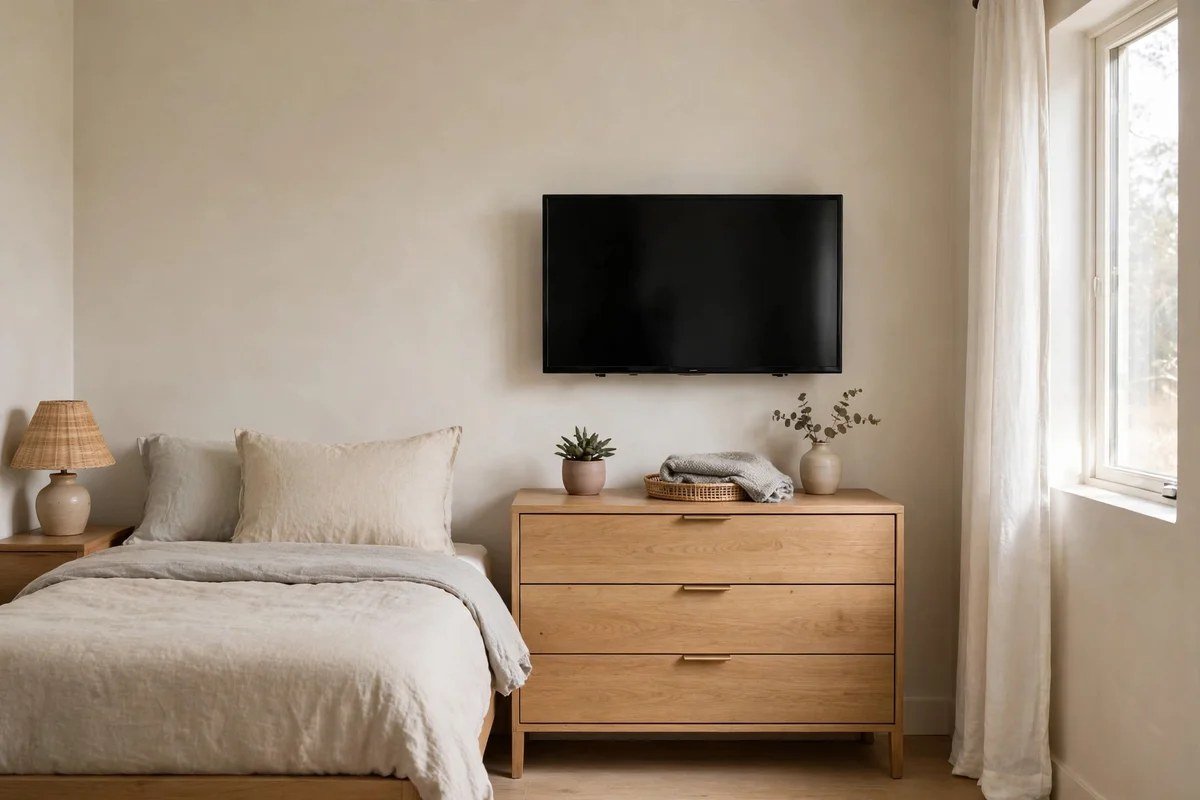
A 55-inch TV looming over a small bedroom like a cinema screen — mounted near the ceiling so you crane your neck — ruins both the room’s proportions and your posture. The fix: size the TV to the viewing distance (in small bedrooms 32-43 inches is plenty) and mount it so the center sits at eye level from your pillows, usually 40-45 inches from the floor. Better yet, hide it in a dresser cabinet or skip it for art. Cost: $30-$60 for a tilting wall mount. Pro tip: A Samsung-style frame TV displaying art when off turns the black rectangle into decor.
29. Forgetting Plants and Fresh Air Entirely
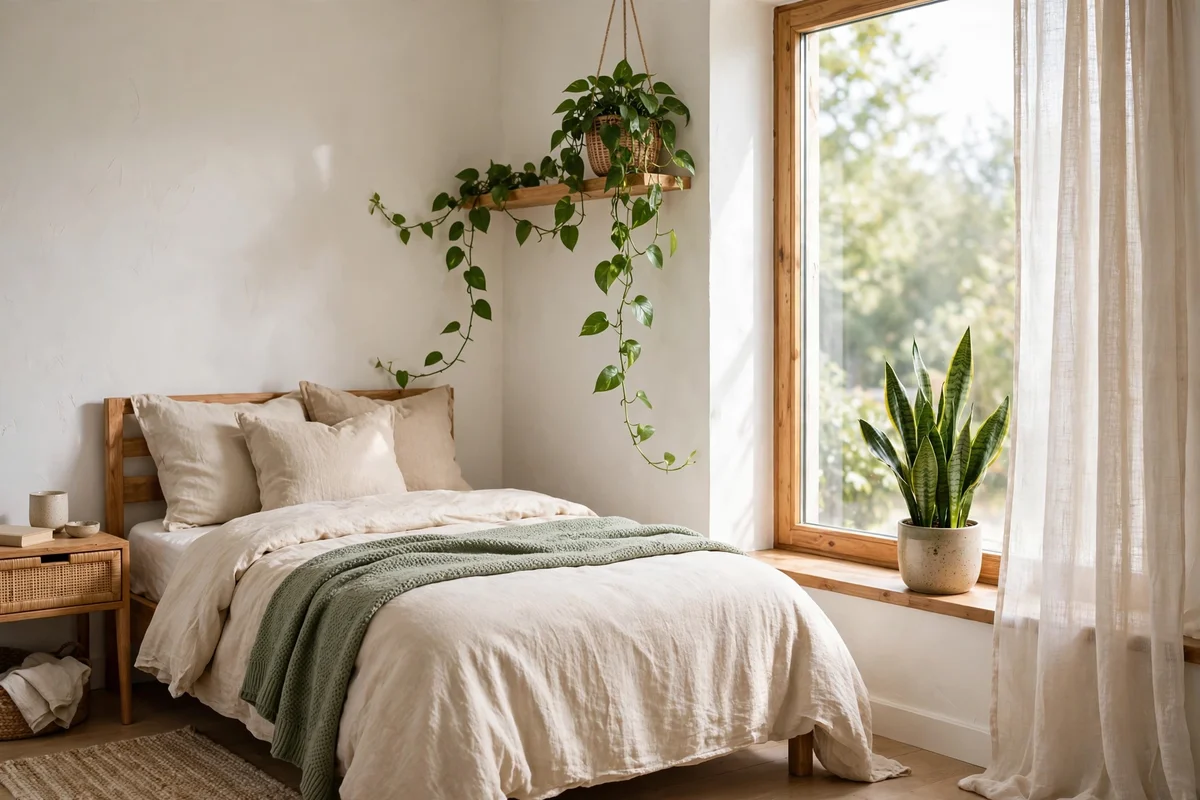
Bedrooms get stale — literally. No greenery, no airflow, and heavy synthetic bedding make the room feel stuffy and lifeless. The fix: one or two low-maintenance plants (a snake plant or pothos thrives on neglect and tolerates low light), washable natural-fiber bedding, and a habit of airing the room 10 minutes daily. A small essential-oil diffuser with lavender adds the spa factor. For more greenery ideas, see these studio apartment plant ideas — most work beautifully in bedrooms too. Cost: $20-$60 for plants and a diffuser. Pro tip: Snake plants release oxygen at night, making them the rare plant genuinely suited to bedrooms.
30. Making It Look Like a Hotel, Not Your Home
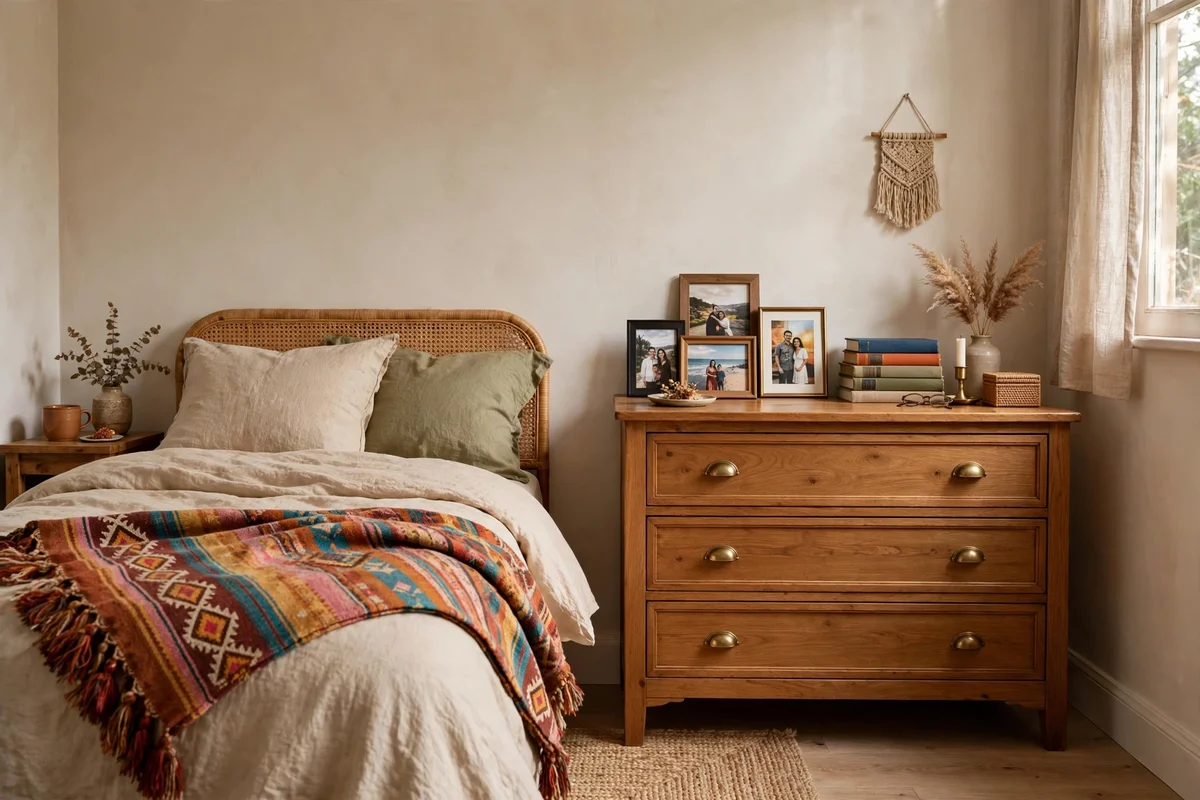
Perfectly neutral, perfectly impersonal — a bedroom with zero trace of its owner feels cold no matter how “designed” it is. The fix: add three personal things — framed photos, a stack of your actual books, a textile from your travels, your instrument in the corner. Personality is the difference between a showroom and a sanctuary. Cost: $0-$50 using things you already own plus a frame or two. Pro tip: Corral personal items on a tray or single shelf so they read as curated, not scattered.
31. Using the Wrong Paint Finish
Flat paint shows every scuff near the bed, while high-gloss on bedroom walls bounces light harshly and highlights every imperfection. Finish matters as much as color. The fix: eggshell or satin on bedroom walls — wipeable enough for real life, soft enough to look calm. Reserve semi-gloss for trim and doors only. If you’re choosing colors, these bedroom color palettes pair beautifully with an eggshell finish. Cost: $40-$90 for a gallon of quality eggshell paint. Pro tip: In humid climates, a satin finish resists moisture better — worth it if your bedroom runs damp.
32. Ignoring What You See From the Doorway
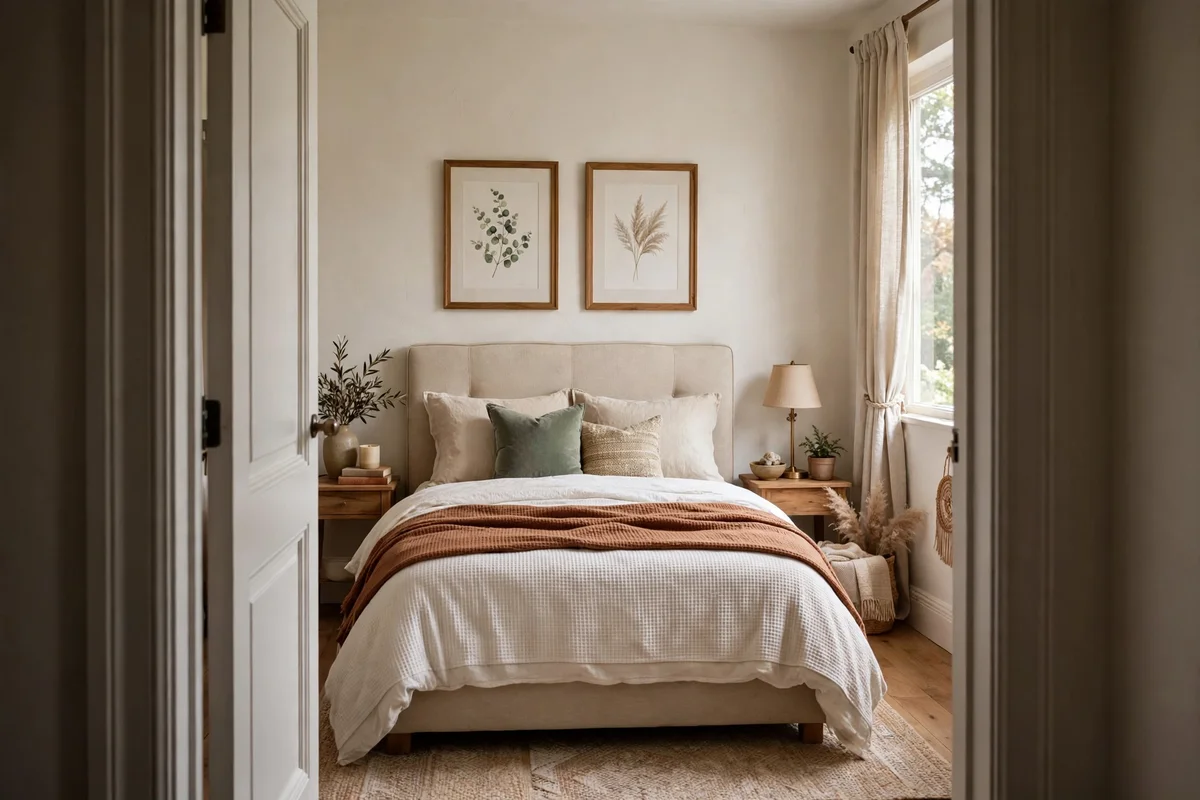
The view from the doorway is the room’s first impression — yet most people arrange furniture for the bed’s perspective and never check the entry sightline. A direct view of clutter, the laundry pile, or the bed’s unmade side sets the tone badly. The fix: stand in your doorway and look. Rearrange so the first thing you see is something beautiful — the made bed with the headboard, art, or a styled dresser. Add hooks inside the door for robes and bags so they never land on the floor. Small bedrooms benefit hugely from this one check; for whole-home flow, these studio apartment organization ideas keep every zone tidy. Cost: $0-$30 for over-door hooks. Pro tip: Photograph the doorway view — the camera reveals clutter your eyes have learned to ignore.
Quick Fixes You Can Do This Weekend
Overwhelmed by 32? Start with the five highest-impact, lowest-cost fixes: raise your curtains (mistake #5), edit your nightstands (#7), swap to warm bulbs (#17), fix the pillow pile (#24), and check your doorway view (#32). All five cost under $100 combined and take a single afternoon. Once those are done, the bigger moves — right-sizing the bed, adding a mirror, layering lighting — will feel like natural next steps rather than a daunting overhaul. If you want to go deeper on bedroom style afterward, browse these small living room decor mistakes to keep the rest of your home consistent, and these small bathroom ideas for the room next door.
Frequently Asked Questions
What’s the single biggest small bedroom mistake?
An oversized bed. It dictates everything — walkways, nightstand fit, rug size, and how the room feels. If your bedroom feels cramped no matter what you try, measure the bed against the room; sizing down one bed size solves more problems than any decor trick.
Can dark colors work in a small bedroom?
Absolutely — dark walls add depth and coziness when balanced with light bedding, mirrors, and warm lighting. The mistake is going dark on all four walls without that balance. One dark accent wall behind the bed is the safest way to try the look.
How do I make a small bedroom feel bigger without renovating?
Hang curtains high and wide, add a large mirror opposite the window, keep furniture low-profile, use floating nightstands to show more floor, and stick to a cohesive light-ish palette with layered lighting. Each trick adds perceived space; combined, they’re dramatic.
Should the bed go against the wall in a tiny bedroom?
Only as a last resort. Centering the bed with access on both sides looks and functions far better. If the room is genuinely too narrow, push it to one wall but compensate with a wall shelf on the trapped side and keep the visible side beautifully styled.
What lighting is best for a small bedroom?
Three layers: a dimmable overhead for general light, warm bedside lamps or wall sconces for reading and ambiance (2700K bulbs), and one soft accent like an LED strip or small floor lamp. Avoid relying on a single ceiling fixture.
How do I keep a small bedroom from looking cluttered?
Give everything a hidden home: under-bed bins, lidded hampers, nightstand drawer organizers, and wall hooks. Then edit surfaces to the essentials and choose fewer, larger decor pieces over many small ones. Closed storage is the real secret — out of sight, out of mind.
Final Thoughts
Small bedrooms don’t need more stuff — they need fewer mistakes. Every fix in this list shares the same philosophy: respect the room’s scale, give everything a place, layer light and texture, and let the bed be the calm star of the show. You don’t have to tackle all 32 at once. Pick the three that made you wince, fix them this week, and notice how differently the room feels. A small bedroom done right isn’t a compromise — it’s the coziest room in the house.