35 Afrohemian Studio Apartment Ideas for a Bold, Soulful Home
35 Afrohemian Studio Apartment Ideas for a Bold, Soulful Home
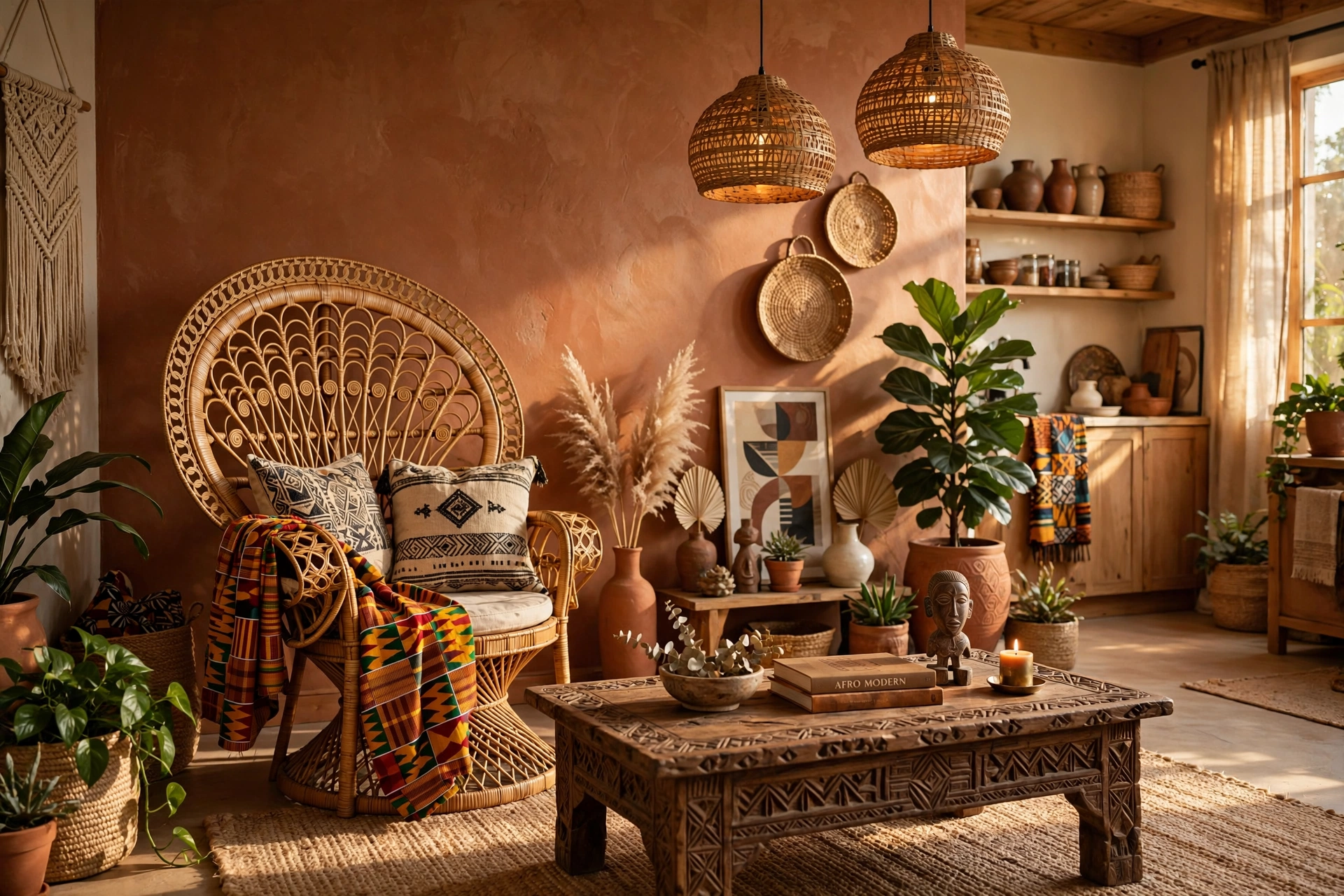
There’s a design movement that’s been quietly taking over Pinterest and Instagram, and it’s about time your studio apartment joined in. Afrohemian decor — the soulful fusion of African artistry and bohemian free-spiritedness — brings warmth, culture, and unapologetic personality to small spaces. Think rich terracotta walls, handwoven mudcloth textiles, carved wooden sculptures, and layers of natural texture that make even the tiniest studio feel like a curated gallery of global finds.
What makes Afrohemian perfect for studio apartments? It’s inherently layered and collected — the style celebrates mixing patterns, textures, and eras, which means your space looks intentional rather than cluttered. The warm earth-tone palette (ochre, burnt sienna, deep browns, creamy whites) creates coziness in compact quarters, while natural materials like rattan, jute, and carved wood add organic depth. Whether you’re drawn to bold Ankara prints or prefer the subtle elegance of neutral mudcloth, these 35 Afrohemian studio apartment ideas will help you create a home that’s as bold and beautiful as you are.
Foundations: Color & Walls
1. Paint a Terracotta Accent Wall
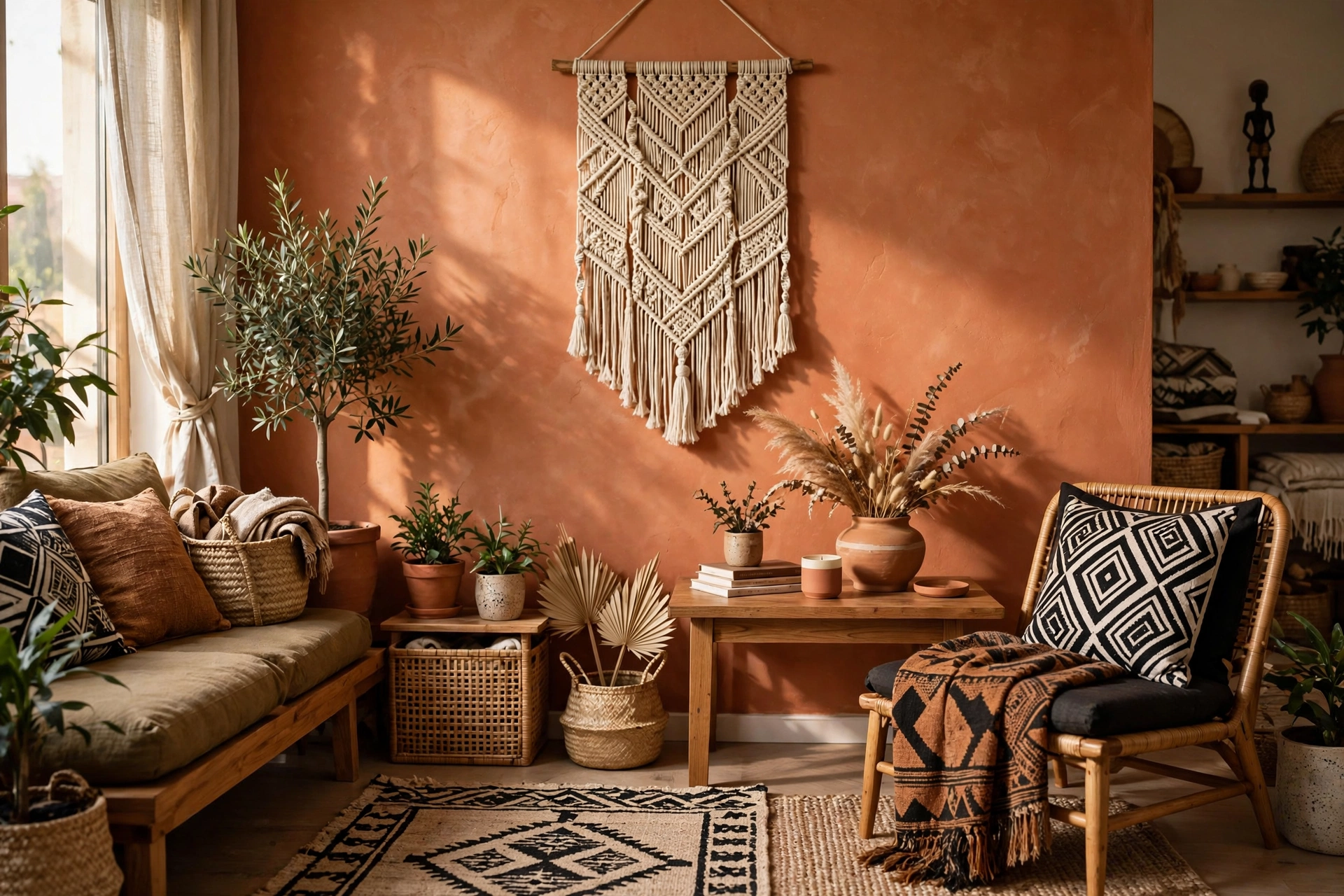
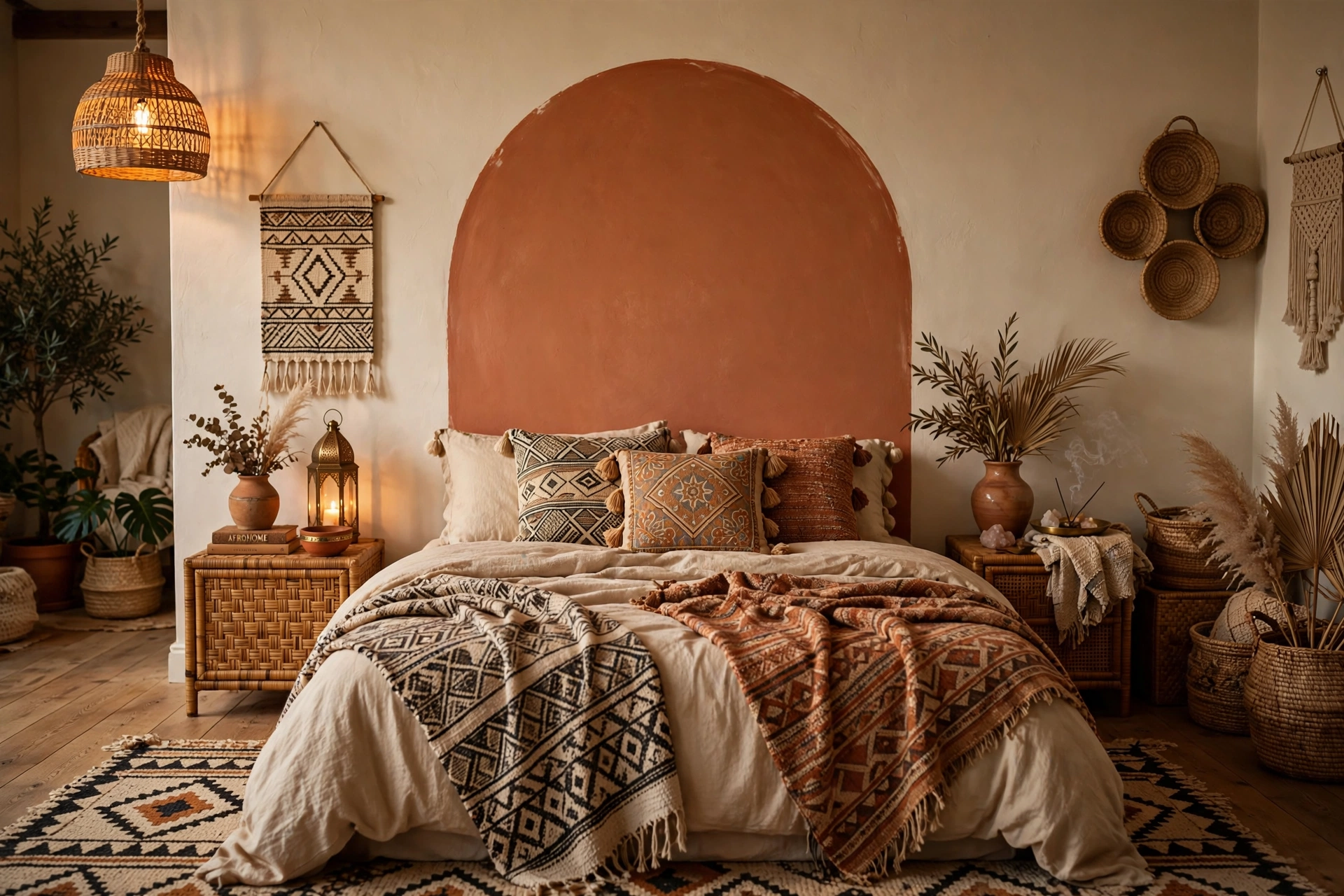
Terracotta — that sun-baked clay orange — is the heartbeat of Afrohemian color. One accent wall in rich terracotta ($30–$50 for paint) instantly warms a studio and provides the perfect backdrop for woven wall hangings and wooden art. In a small space, paint the wall behind your bed or sofa to create a natural focal point. The earthy tone pairs beautifully with cream textiles and dark wood furniture. Pro tip: test the color at different times of day — terracotta shifts dramatically from morning to evening light, and you want a shade that glows rather than shouts in your specific space.
2. Embrace Deep Ochre Tones
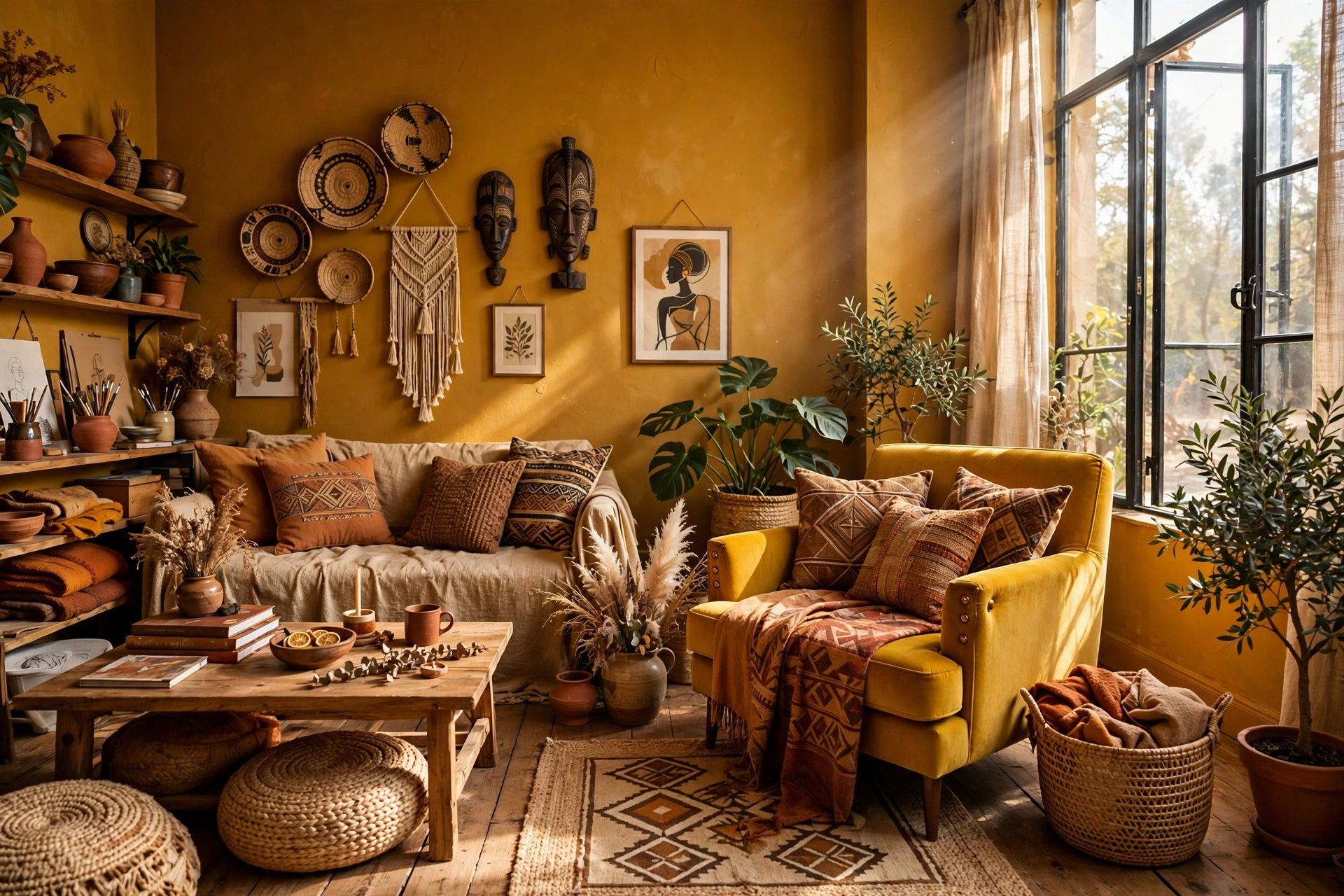
Ochre — that golden, earthy yellow — brings sunshine indoors year-round. Use it on a single wall, through a large area rug, or via a statement armchair ($200–$400). In Afrohemian design, ochre represents warmth, harvest, and joy. It pairs stunningly with deep browns and creamy whites, creating a palette that feels both exotic and grounding. For renters who can’t paint, ochre curtains or a large textile wall hanging achieves the same golden glow. Pro tip: balance ochre with plenty of white or cream — too much golden tone without relief can feel overwhelming in a small studio.
3. Try Mudcloth-Inspired Wallpaper
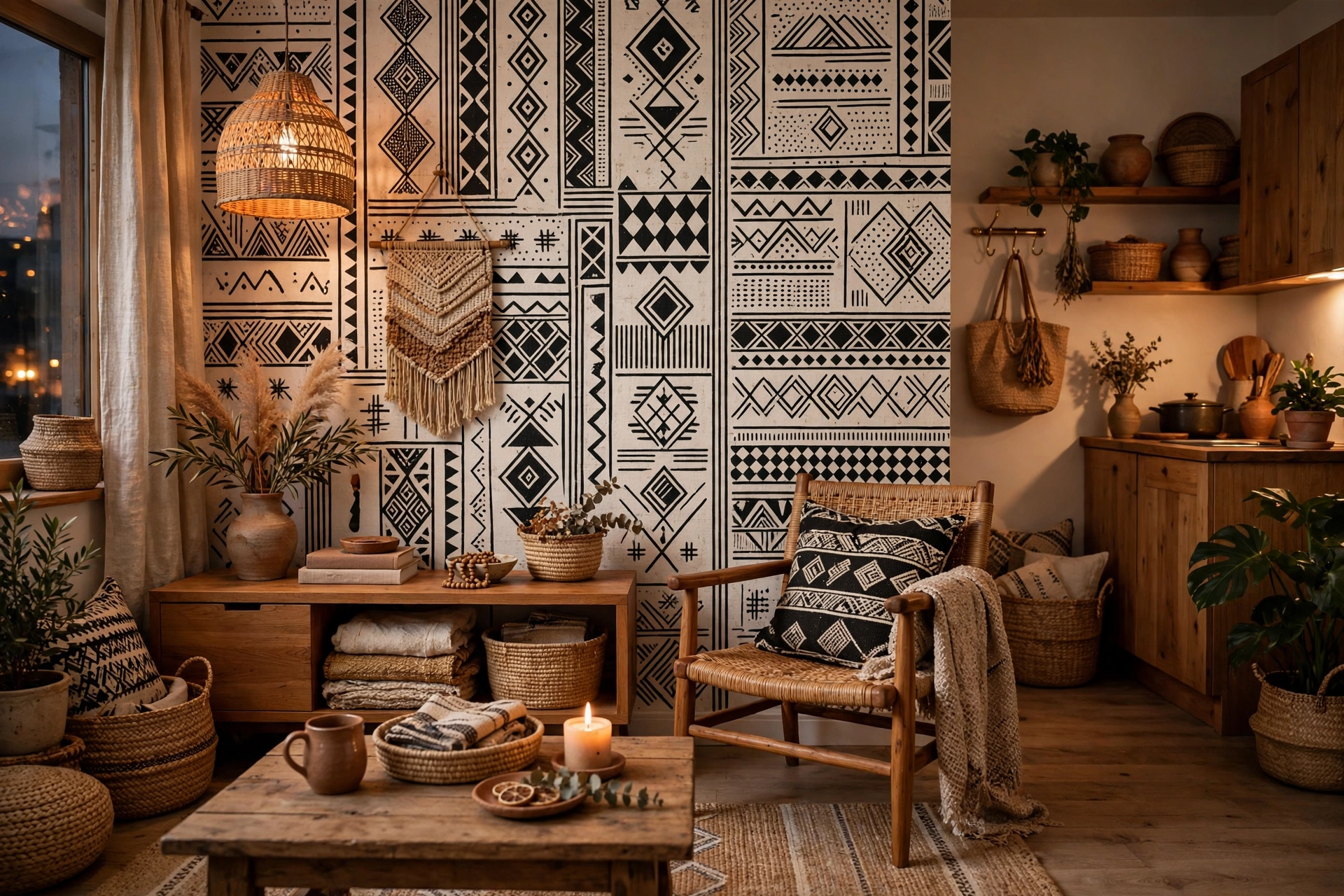
Mudcloth (bogolan) — the hand-dyed Malian textile with geometric patterns — translates beautifully to wallpaper. A mudcloth-inspired accent wall ($50–$100 for peel-and-stick) adds authentic African pattern without overwhelming a small space. Choose black-and-white geometric designs for a modern take, or traditional brown-and-cream for warmth. The graphic patterns create visual interest that makes walls feel like art. This is one of those studio apartment wall art ideas that doubles as architecture. Pro tip: use peel-and-stick wallpaper if you’re renting — it removes cleanly and lets you experiment with bold patterns risk-free.
4. Create an African Art Gallery Wall
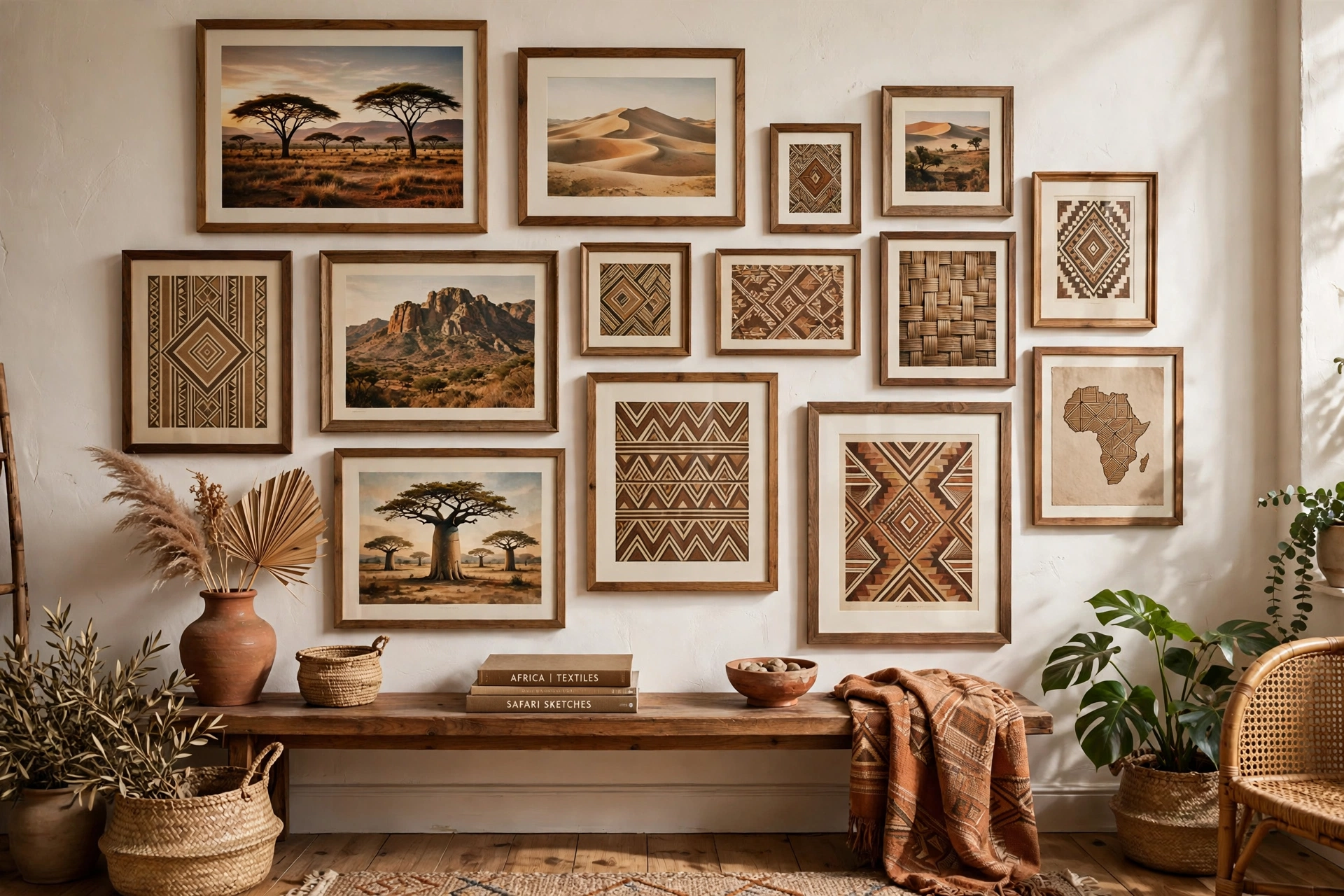
Transform a blank wall into a celebration of African artistry with a curated gallery wall. Mix framed prints of African landscapes, abstract tribal patterns, and photography of African textiles ($15–$40 per frame). Include a mix of sizes — one large statement piece surrounded by smaller works creates dynamic energy. The key is cohesion through color: stick to earth tones, blacks, and creams for a collected-not-chaotic feel. Pro tip: lay out your gallery on the floor first and photograph it — what looks good on the ground translates perfectly to the wall, saving you from extra nail holes.
5. Use Warm White as Your Base
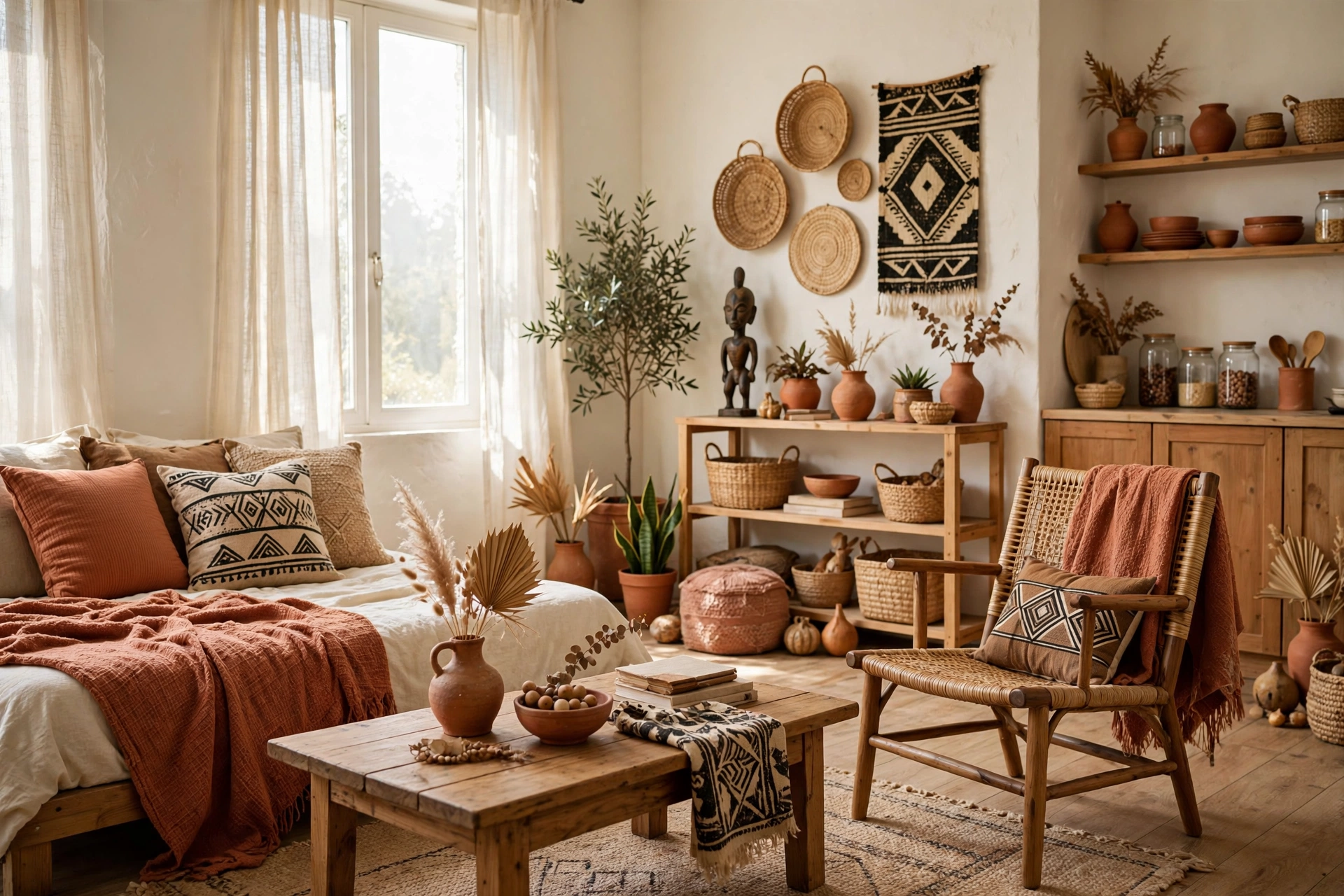
Every bold Afrohemian element needs breathing room, and warm white walls provide it. Unlike stark cool whites, warm whites (with yellow or pink undertones, $30–$45 per gallon) complement the earthy Afrohemian palette instead of fighting it. They reflect light beautifully in small studios while letting your terracotta, ochre, and patterned textiles take center stage. If your rental has cool white walls you can’t change, warm them up with cream curtains, beige rugs, and golden lighting. Pro tip: choose a warm white with a hint of peach — it flatters skin tones and makes the whole studio feel sun-kissed.
6. Add an Arched Accent
Arches — inspired by Moroccan and North African architecture — add instant soul to boxy studio apartments. Paint an arch directly on the wall ($20 in paint) behind your bed or reading nook, or use a peel-and-stick arch decal ($25–$40). The curved shape softens angular rooms and creates a natural focal point. Fill the arch with a contrasting color (terracotta on cream, or black on white) for maximum impact. Pro tip: use a large compass or string-and-pencil to draw a perfect arch — freehand arches often look wobbly, while a geometric curve looks intentional and professional.
Textiles & Patterns
7. Layer Mudcloth Throw Pillows
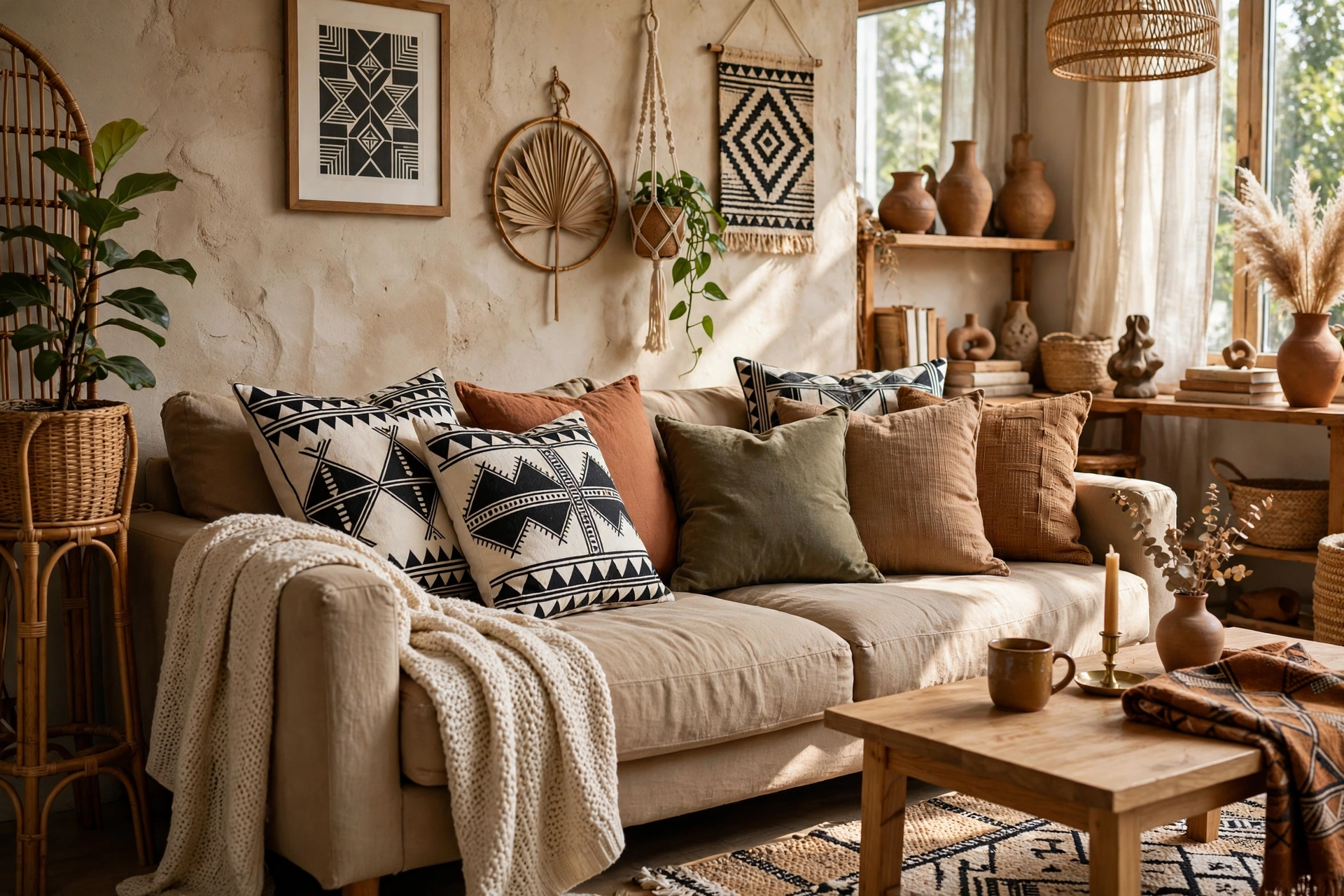
Mudcloth pillows are the fastest way to Afrohemian-ify any sofa or bed. Authentic Malian mudcloth pillow covers run $25–$50 each; quality reproductions are $15–$30. Mix black-and-white geometric patterns with solid earth-tone pillows for a layered, collected look. The graphic patterns add visual energy while the neutral palette keeps things sophisticated. On a small studio sofa, three to five pillows in varying sizes creates abundance without clutter. Pro tip: look for handmade mudcloth with slight irregularities — the imperfections prove authenticity and add character that mass-produced prints can’t replicate.
8. Drape a Kente Cloth Throw
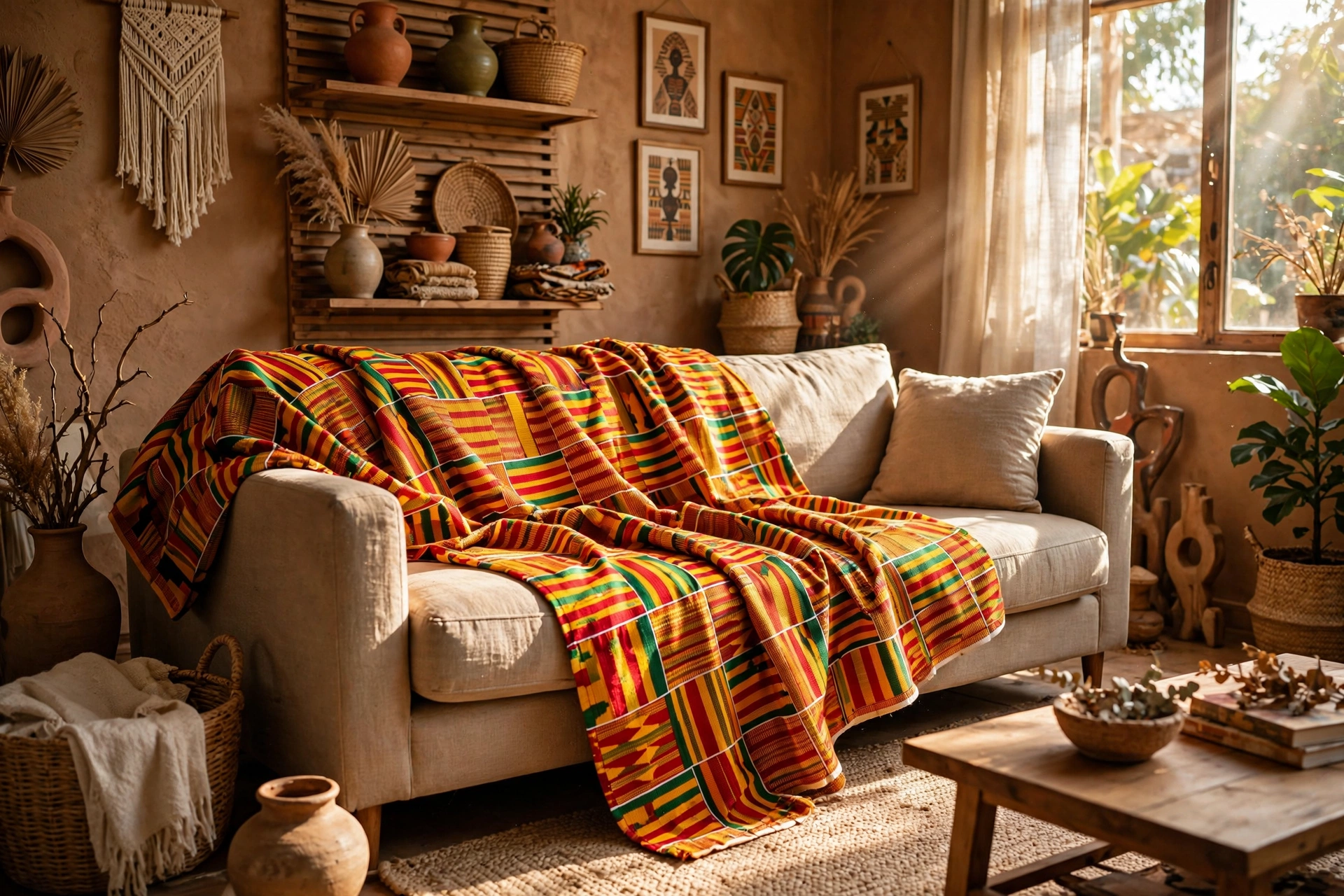
Kente — the vibrant, multicolored Ghanaian textile — brings celebratory energy to Afrohemian spaces. A kente throw ($40–$80) draped over your sofa arm or bed foot adds bold color and cultural richness. The intricate woven patterns tell stories through color: gold for royalty, green for harvest, red for sacrifice. In a studio, one kente piece is enough — let it be the exclamation point among quieter earth tones. Pro tip: display kente where it catches natural light — the vibrant colors glow in sunlight and become a living piece of art that changes throughout the day.
9. Add Ankara Print Cushions
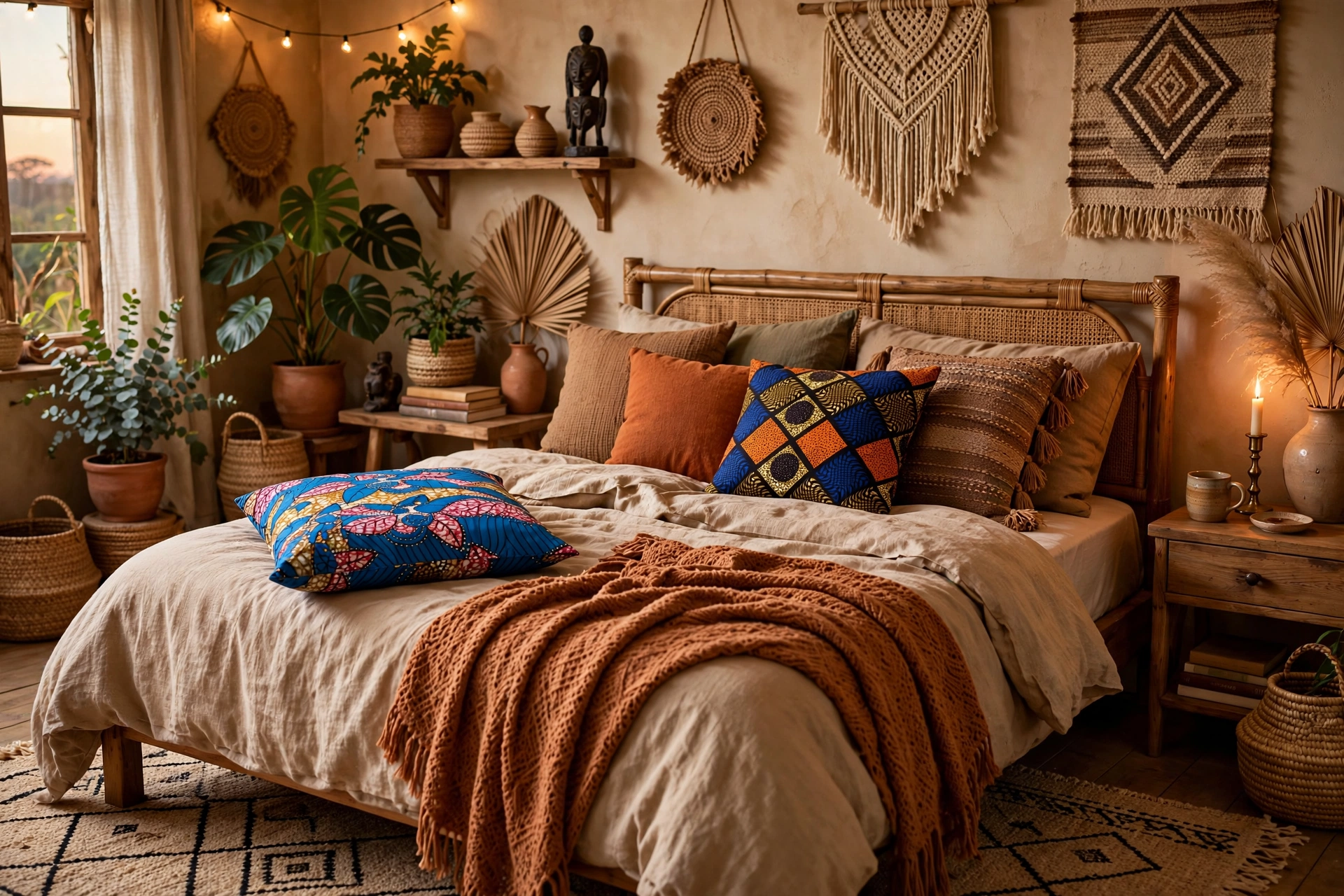
Ankara (African wax print) cushions inject bold, joyful pattern into your studio. These vibrant fabrics — with their distinctive crackled wax texture and bold motifs — range from $20–$40 per cushion cover. Mix Ankara prints with solid mudcloth or linen cushions to avoid pattern overload. The key is scale: pair large Ankara florals with small geometric mudcloth for balanced contrast. These textiles connect your space to contemporary African fashion and culture. Pro tip: choose Ankara prints that share at least one color with your existing palette — the common hue ties disparate patterns together cohesively.
10. Layer a Jute Area Rug
Jute rugs are the Afrohemian foundation — natural, textured, and endlessly versatile. A large jute area rug ($80–$200 for 8×10) grounds your living zone with organic warmth while letting bolder textiles shine above it. The nubby texture adds tactile interest underfoot and complements carved wood furniture perfectly. In a studio, jute rugs define zones without visual weight — they basically disappear while doing important spatial work. Layer a smaller patterned rug on top for added dimension. Pro tip: choose a tightly woven jute rug for high-traffic areas — loosely woven jutes shed more and show wear faster in a compact studio where every inch gets used.
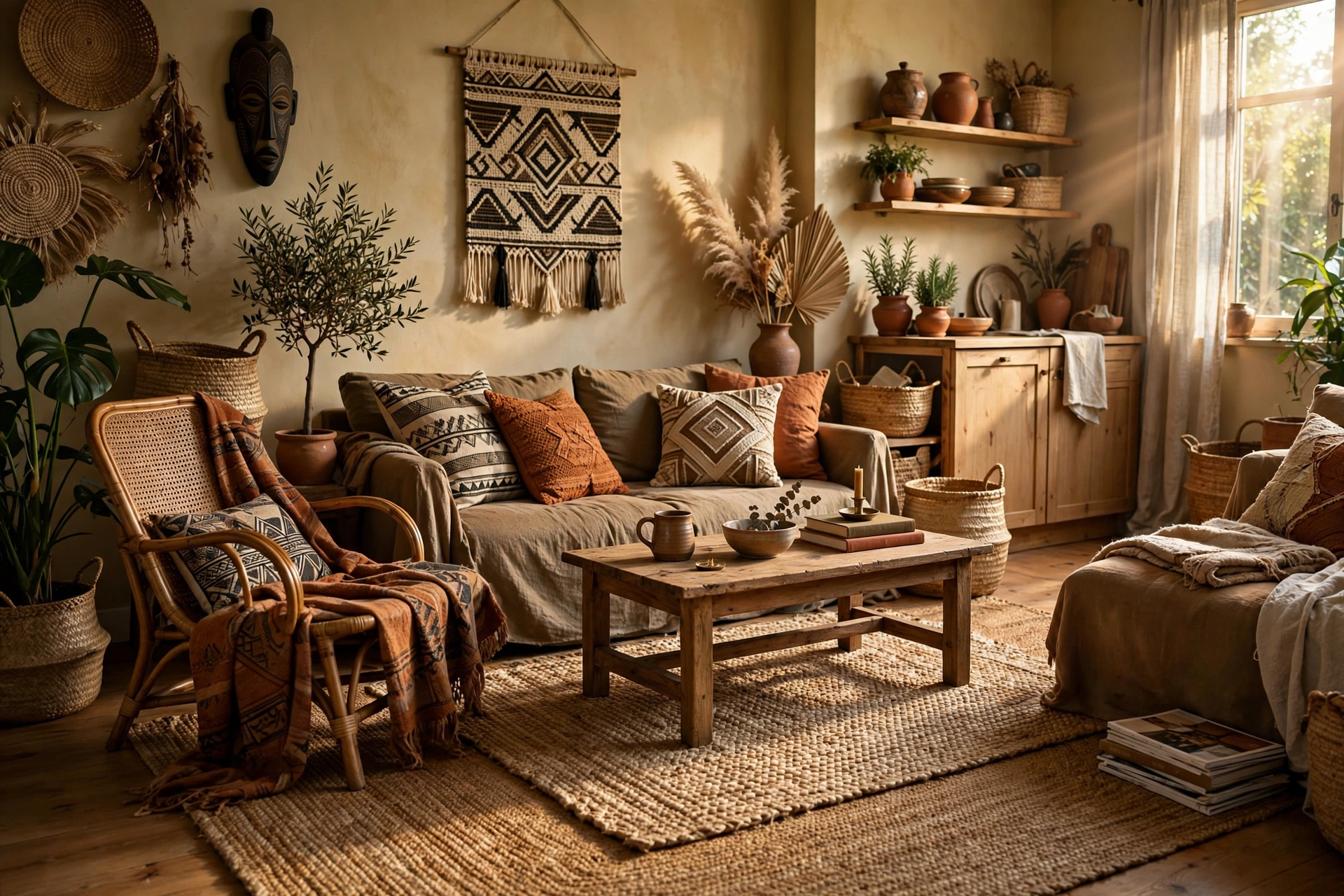
11. Choose a Woven Wool Rug
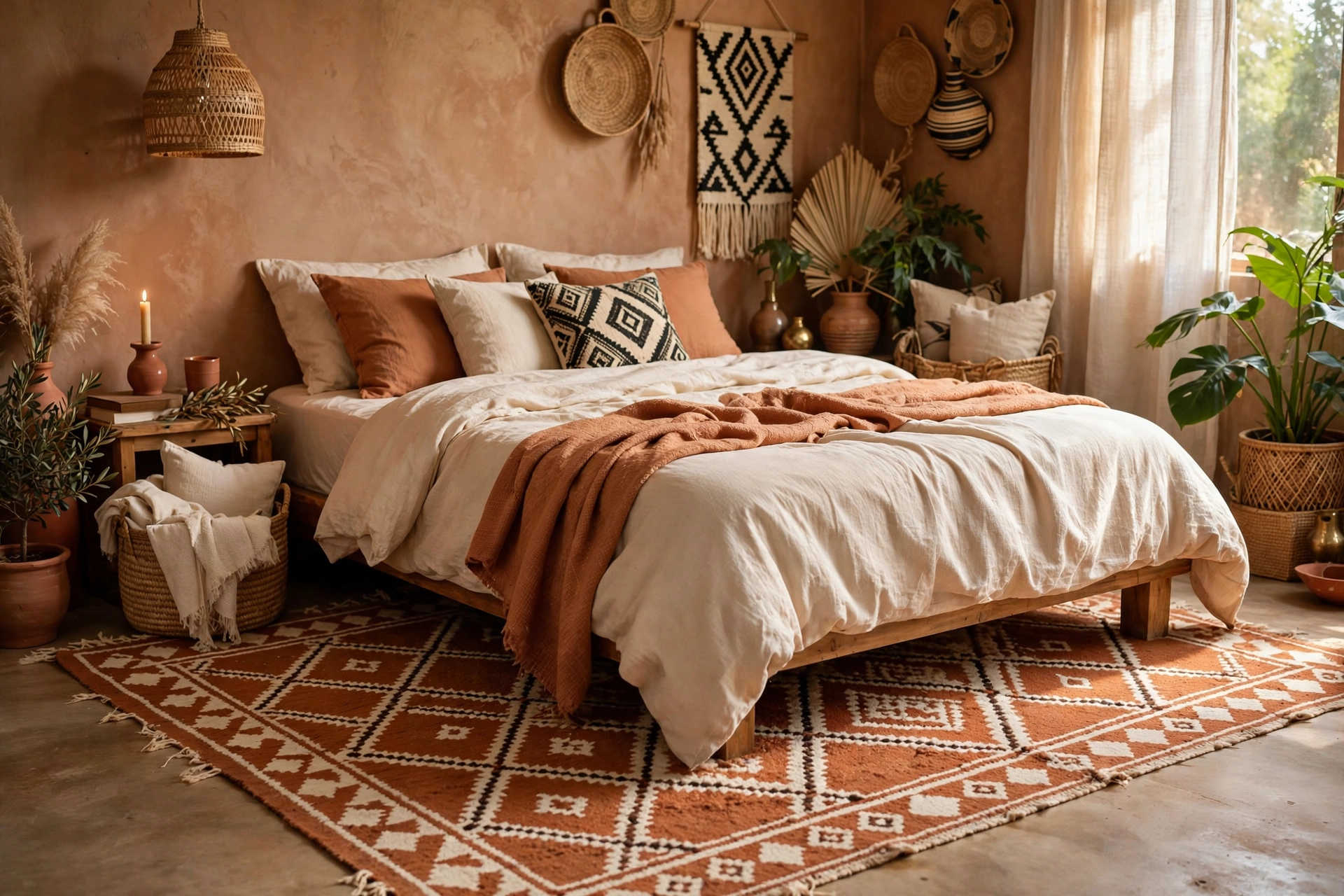
For the sleeping zone, a handwoven wool rug in warm earth tones ($120–$300) adds softness and luxury underfoot. Look for Moroccan-inspired Beni Ourain styles with geometric black lines on cream, or choose rich terracotta and brown kilims for deeper color. Wool rugs are naturally durable and insulating — perfect for studios with hard floors. The handmade quality aligns with Afrohemian values of artisanal craftsmanship. Pro tip: place the rug so it extends at least 18 inches beyond your bed on each side — your feet hit softness every morning, and the room feels intentionally designed rather than rug-as-afterthought.
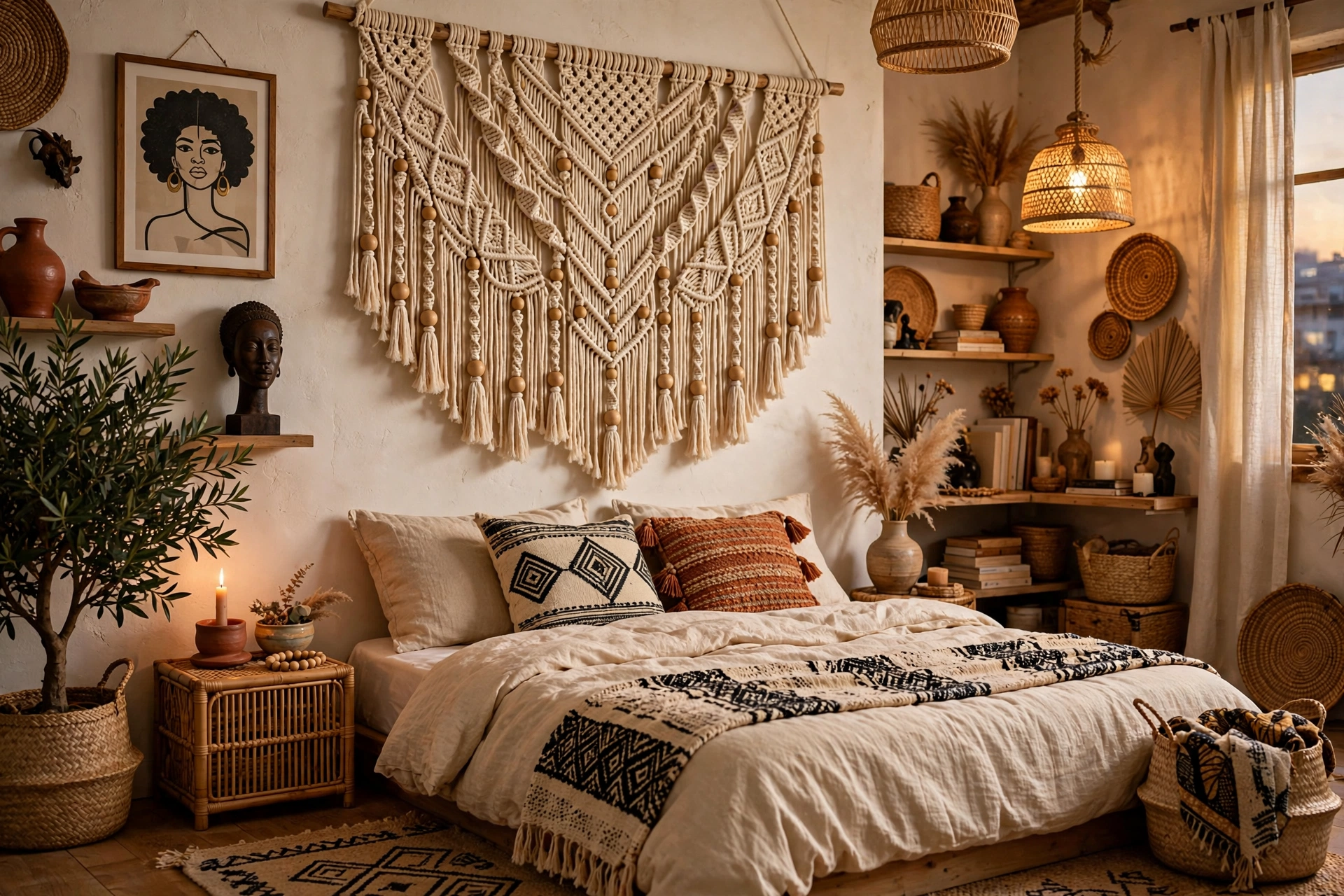
12. Hang a Macrame Wall Hanging
Macrame — the knotted textile art — brings bohemian softness to Afrohemian walls. A large macrame wall hanging ($40–$100) in natural cotton adds texture and visual warmth without the commitment of paint or wallpaper. Hang it above your bed as a soft headboard alternative, or in the living zone as a focal point. The intricate knotting catches light and shadow beautifully, adding depth to flat walls. For more textile layering ideas, see how rugs and wall hangings work together. Pro tip: choose macrame with wooden beads or copper accents — the mixed materials bridge the gap between pure boho and Afrohemian’s richer material palette.
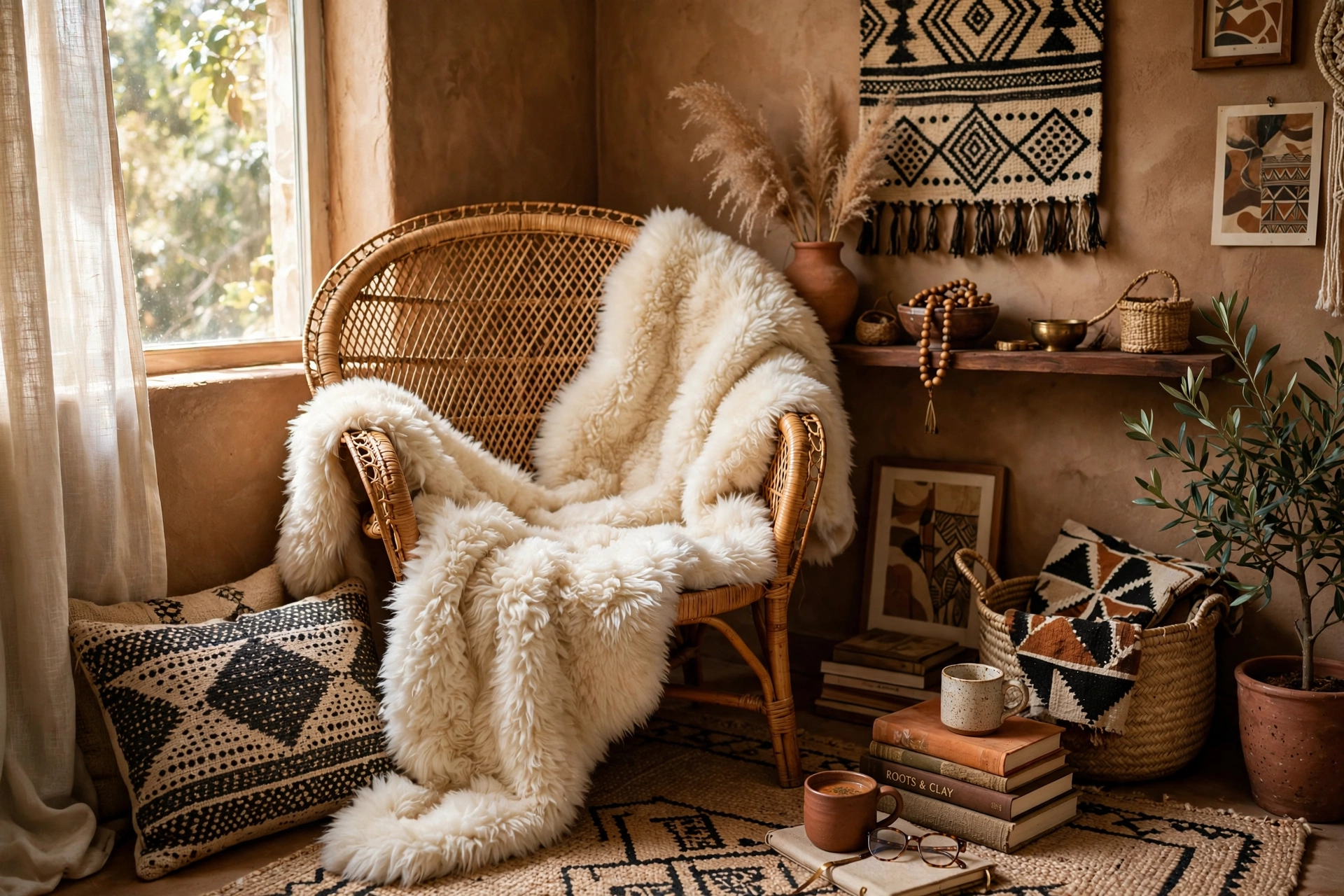
13. Add a Faux Fur Throw
Afrohemian isn’t all rough texture — a faux fur throw ($30–$60) in cream or caramel adds luxurious softness that contrasts beautifully with jute, wood, and woven textiles. Drape it over your reading chair or bed corner for instant coziness. The plush texture invites touch and makes the studio feel like a high-end safari lodge. In small spaces, one fur throw is enough — it becomes a tactile focal point without overwhelming. Pro tip: choose faux fur with varied pile lengths — the dimensional texture looks more realistic and catches light in a way that flat faux furs don’t.
Furniture with Soul
14. Choose a Rattan Accent Chair
A rattan peacock or papasan chair ($150–$350) is the quintessential Afrohemian statement piece. The natural woven texture and sculptural silhouette instantly transport your studio to a tropical, artistic realm. Place it in a reading corner with a mudcloth pillow and faux fur throw for the ultimate cozy spot. Rattan’s open weave keeps it visually light — crucial in small studios where bulky furniture overwhelms. Pro tip: check vintage shops and Facebook Marketplace first — genuine vintage rattan peacock chairs ($50–$150 used) have richer patina and sturdier construction than many new reproductions.
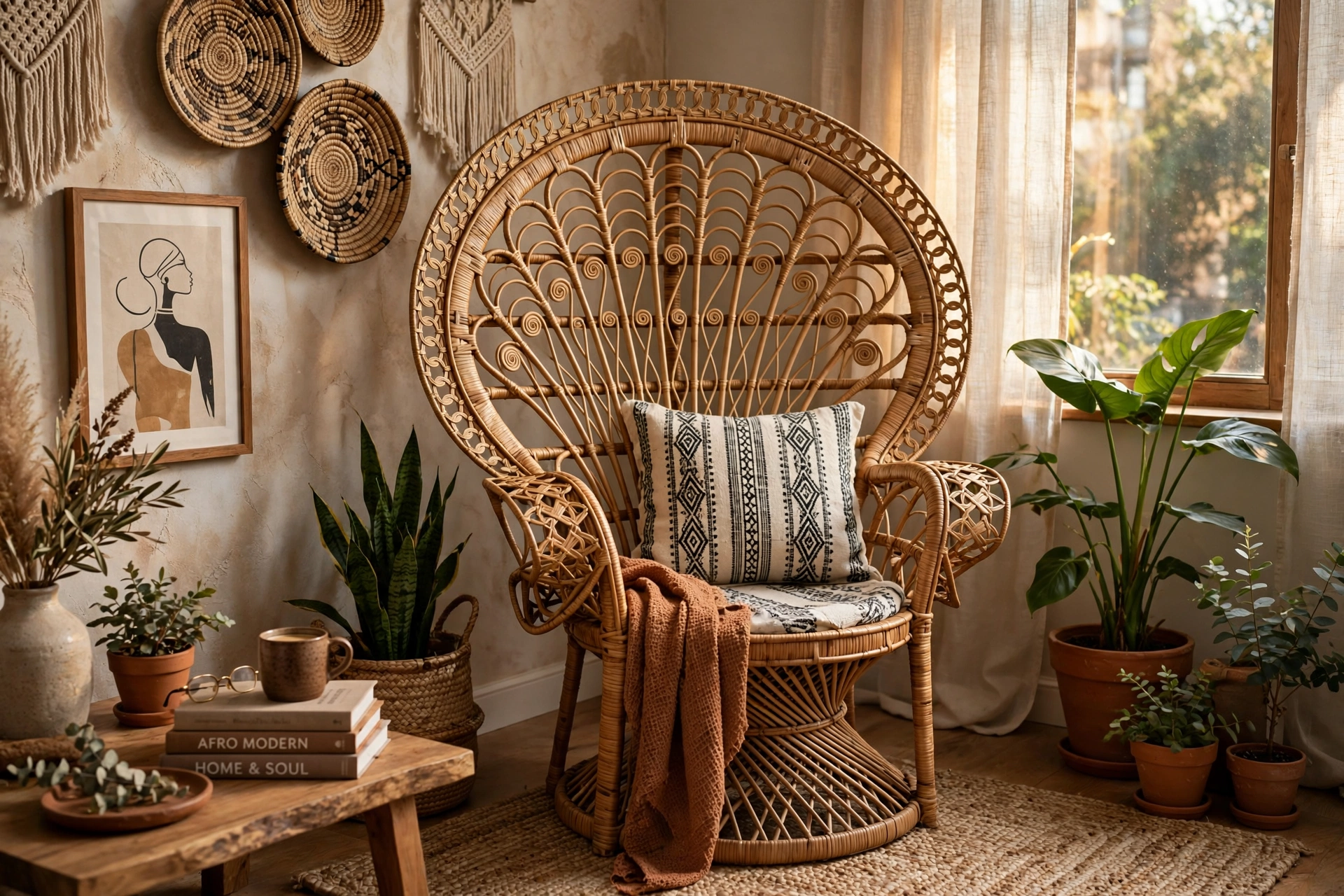
15. Add a Carved Wooden Coffee Table
A hand-carved wooden coffee table ($120–$300) serves as functional sculpture in your living zone. Look for pieces with tribal motifs, geometric carvings, or live-edge natural forms. The rich wood tones (walnut, acacia, mango wood) anchor the Afrohemian palette while the carvings add artisanal detail. In a studio, choose a table with lower shelf storage to maximize function. Style the top with a stack of art books, a brass tray, and a small sculptural object. Pro tip: apply beeswax wood conditioner ($12) twice a year — carved details collect dust in their crevices, and conditioned wood releases dust easily while maintaining its rich luster.
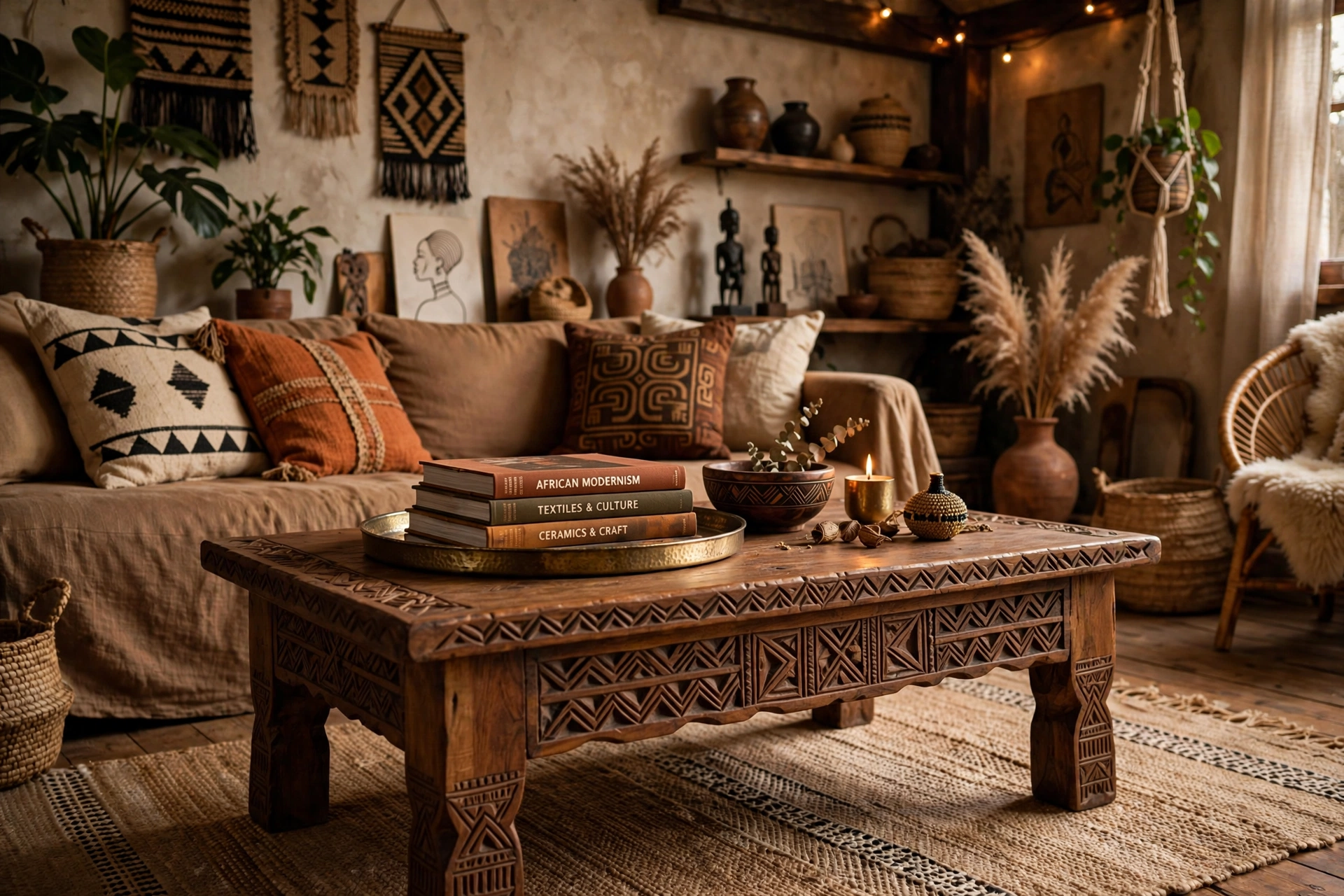
16. Use Moroccan Leather Poufs
Moroccan leather poufs ($40–$80 each) are the ultimate Afrohemian multitaskers — footrest, extra seat, side table (with a tray on top). The rich cognac or dark brown leather develops beautiful patina, and the hand-stitched details add artisanal charm. In a studio, two poufs can replace a bulky ottoman, tucking under tables when not needed. They add warmth and cultural authenticity while being incredibly practical for small-space living. Pro tip: stuff poufs firmly with old clothes or fabric scraps instead of buying fill — they hold their shape better and you’re repurposing textiles that would otherwise go to landfill.
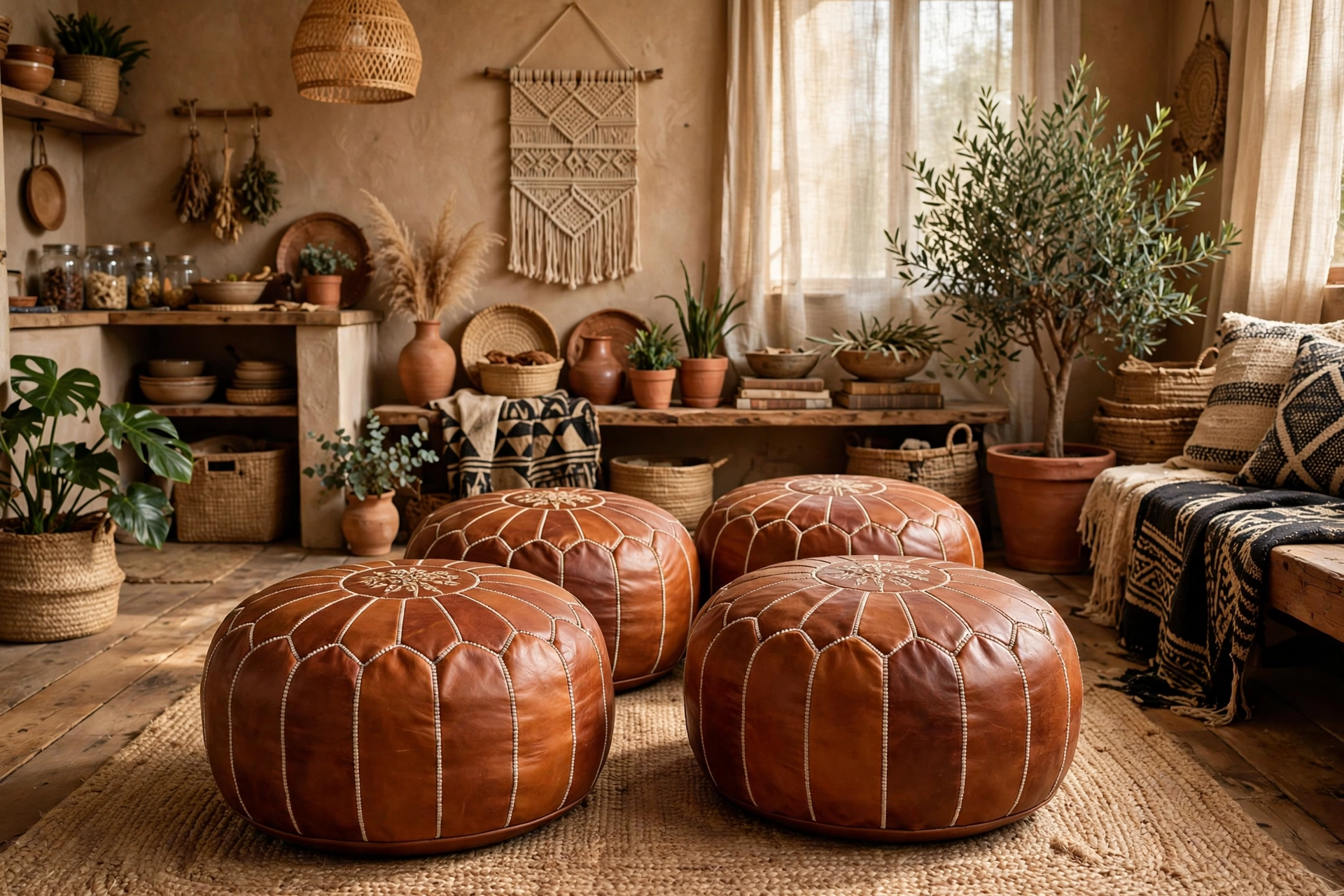
17. Pick a Low-Profile Sofa in Earth Tones
Your sofa is the studio’s largest furniture piece — choose wisely. A low-profile sofa in warm earth tones (camel, terracotta, warm beige, $600–$1200) provides the perfect neutral canvas for Afrohemian textiles. Low profiles keep sightlines open in small spaces, making studios feel larger. Linen or cotton upholstery in natural tones complements the organic Afrohemian aesthetic better than synthetic fabrics. The sofa becomes a backdrop; your mudcloth pillows, kente throws, and Ankara cushions become the stars. Pro tip: choose a sofa with removable, washable covers — light earth tones show life, and being able to toss covers in the wash keeps your investment looking fresh for years.
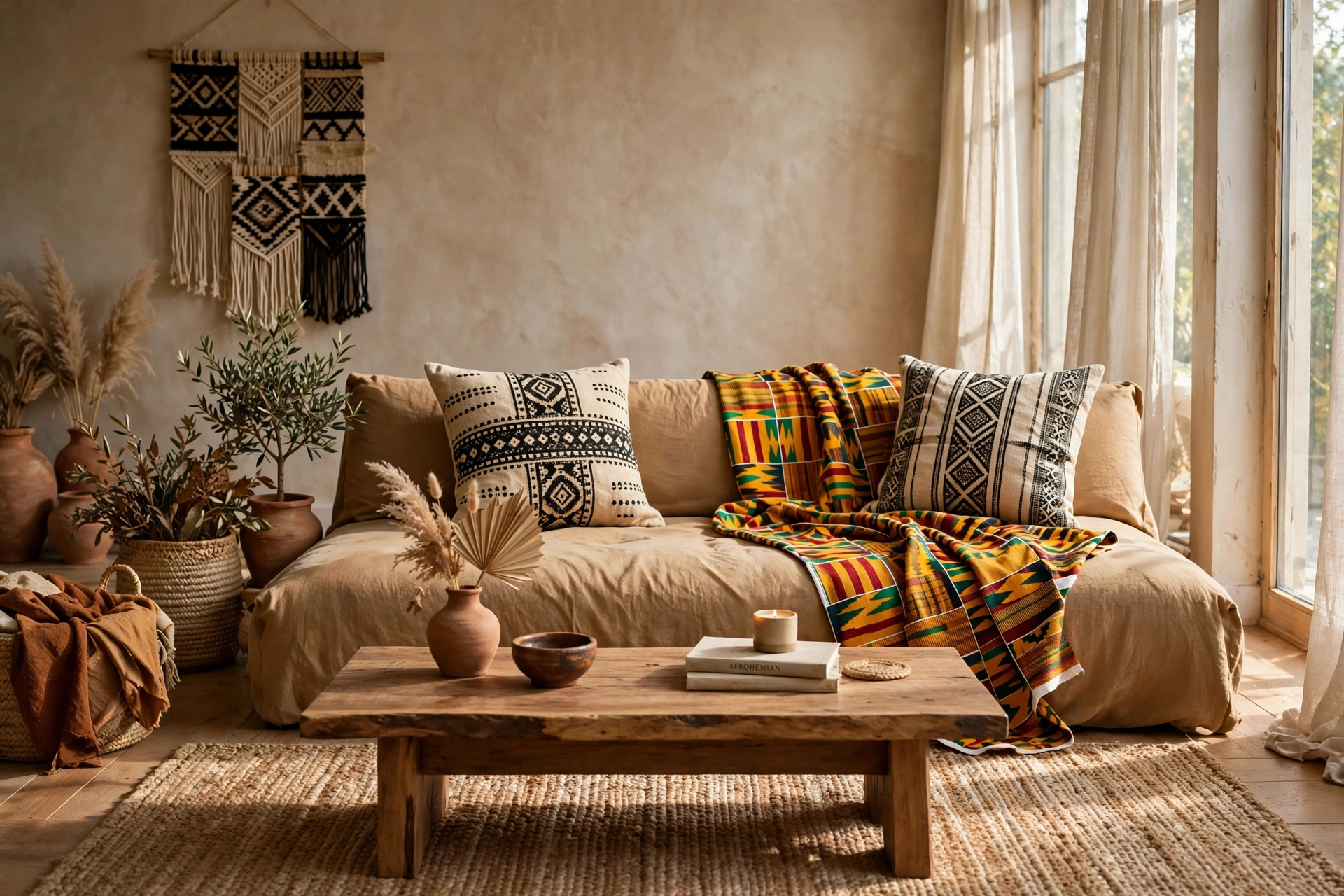
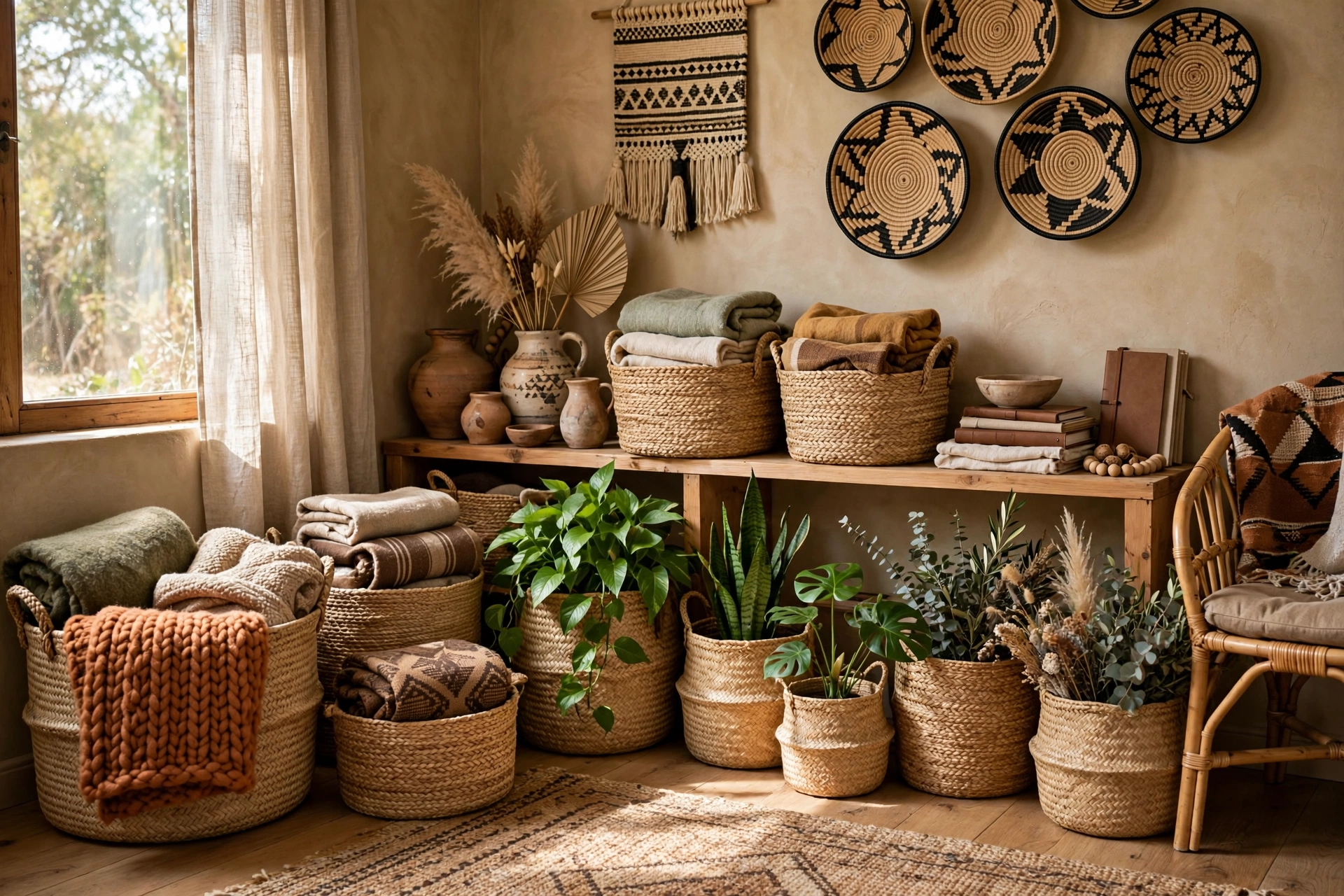
18. Add Woven Storage Baskets
African woven baskets ($25–$60 each) solve studio storage while doubling as decor. Use large seagrass baskets for throw blankets, medium ones for plants, and small ones for remotes and daily essentials. The natural textures add warmth while hiding clutter — essential in a studio where everything is visible. Stack them, group them in threes, or use them as planters. These baskets are central to studio apartment storage ideas with Afrohemian flair. Pro tip: line baskets with fabric if storing textiles — the natural fibers can snag delicate fabrics, but a simple cotton liner prevents damage while staying invisible.
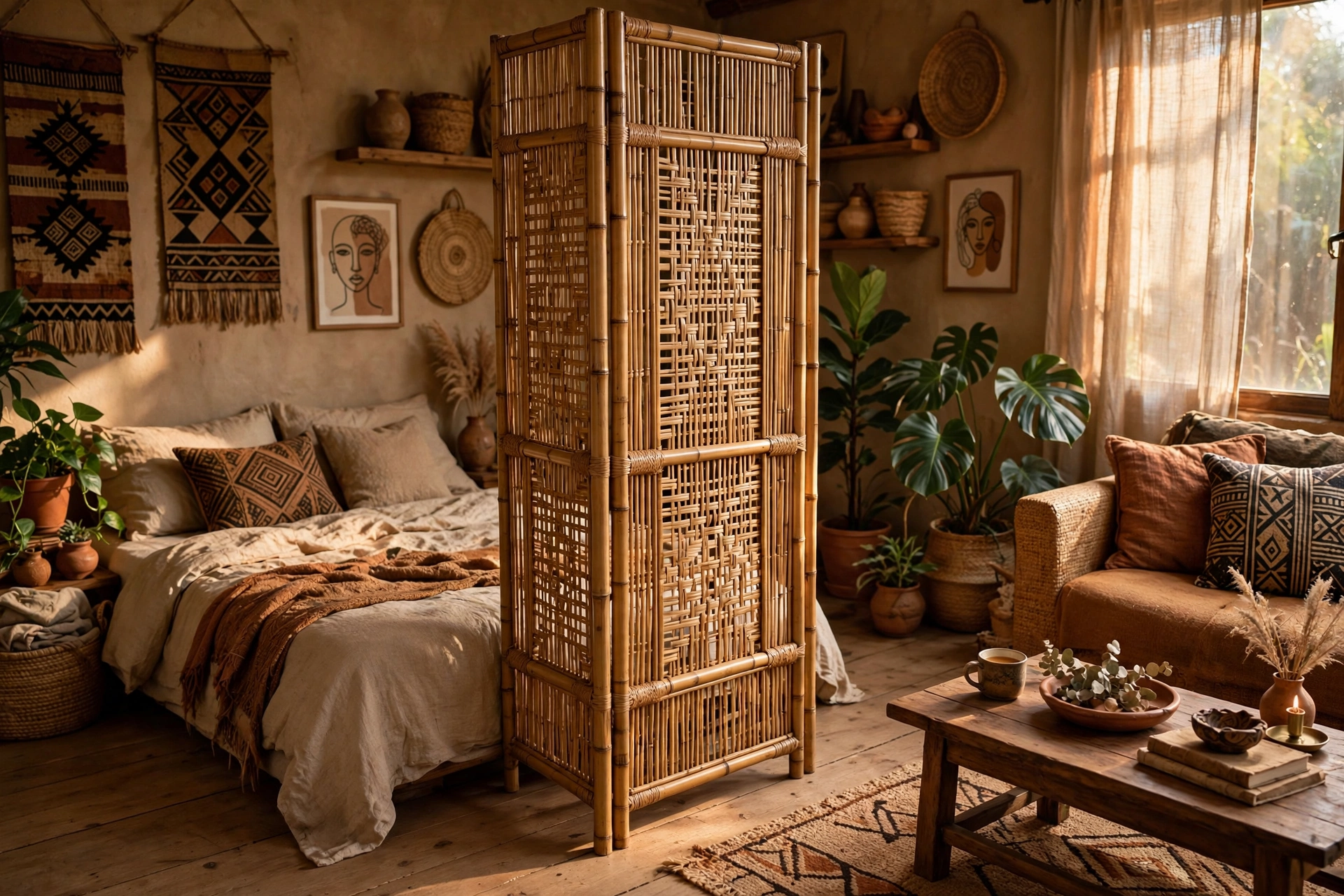
19. Choose a Bamboo Room Divider
In a studio, zoning is everything, and a bamboo or rattan room divider ($80–$200) does it with Afrohemian style. Unlike solid dividers that block light, bamboo’s open weave defines spaces while maintaining airiness. Use it to separate your sleeping zone from living area, or to create a dressing corner. The natural material and organic pattern reinforce the Afrohemian aesthetic while solving a practical studio problem. For more divider inspiration, see our studio apartment divider ideas for renters. Pro tip: position the divider at a slight angle rather than straight across — the diagonal creates more interesting sightlines and makes both zones feel larger.
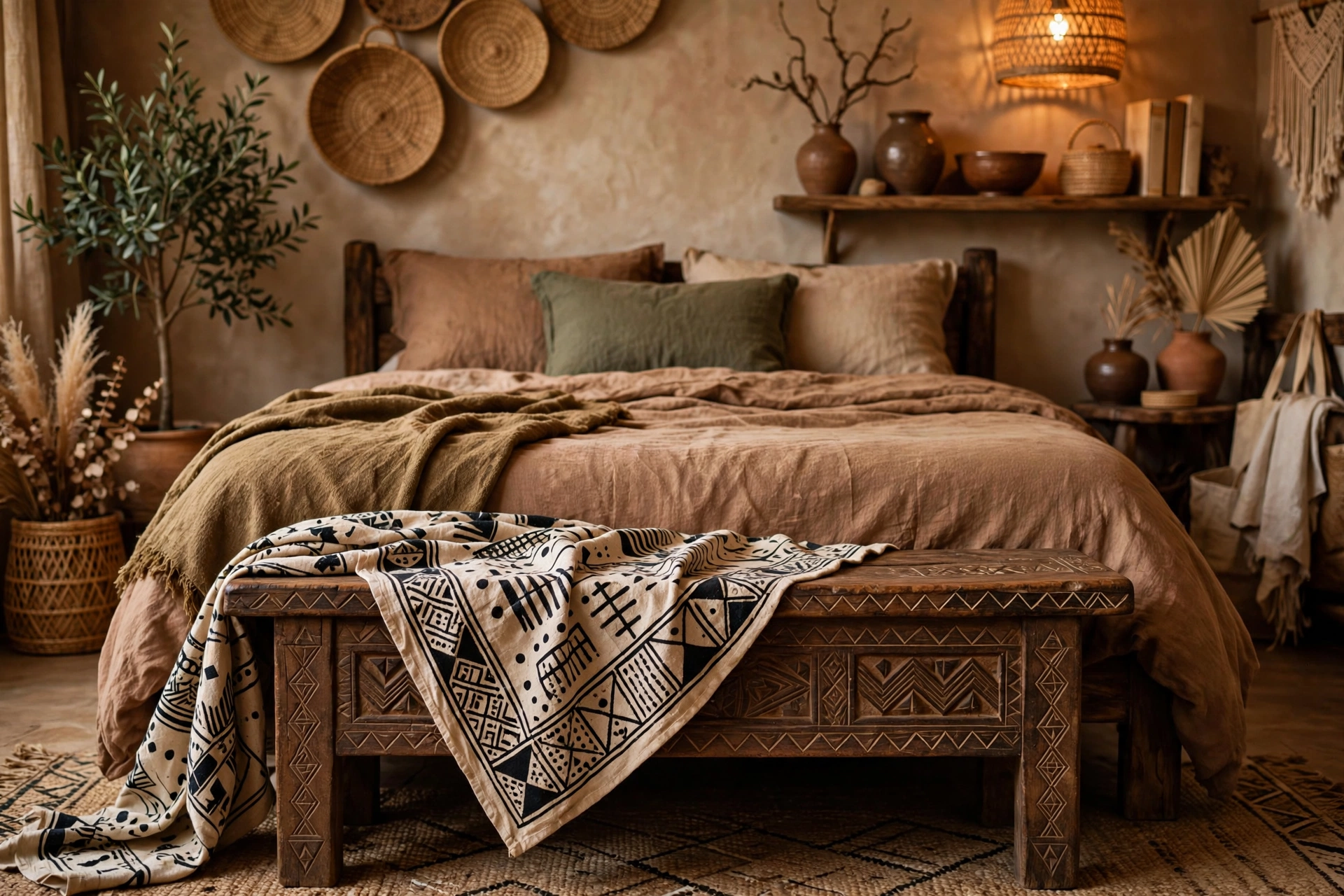
20. Add a Carved Wooden Bench
A carved wooden bench ($100–$250) at the foot of your bed or in your entry zone adds function and artistry. Look for benches with tribal carvings, or simple live-edge designs that showcase natural wood grain. In a studio, a bench provides seating, a surface for folding clothes, and hidden storage (if it has a lift-top). The solid wood mass grounds the space and provides visual weight that balances lighter rattan and textile elements. Pro tip: top the bench with a folded mudcloth textile — it protects the wood from scratches while adding another layer of pattern to your Afrohemian mix.
Wall Decor & Artistic Touches
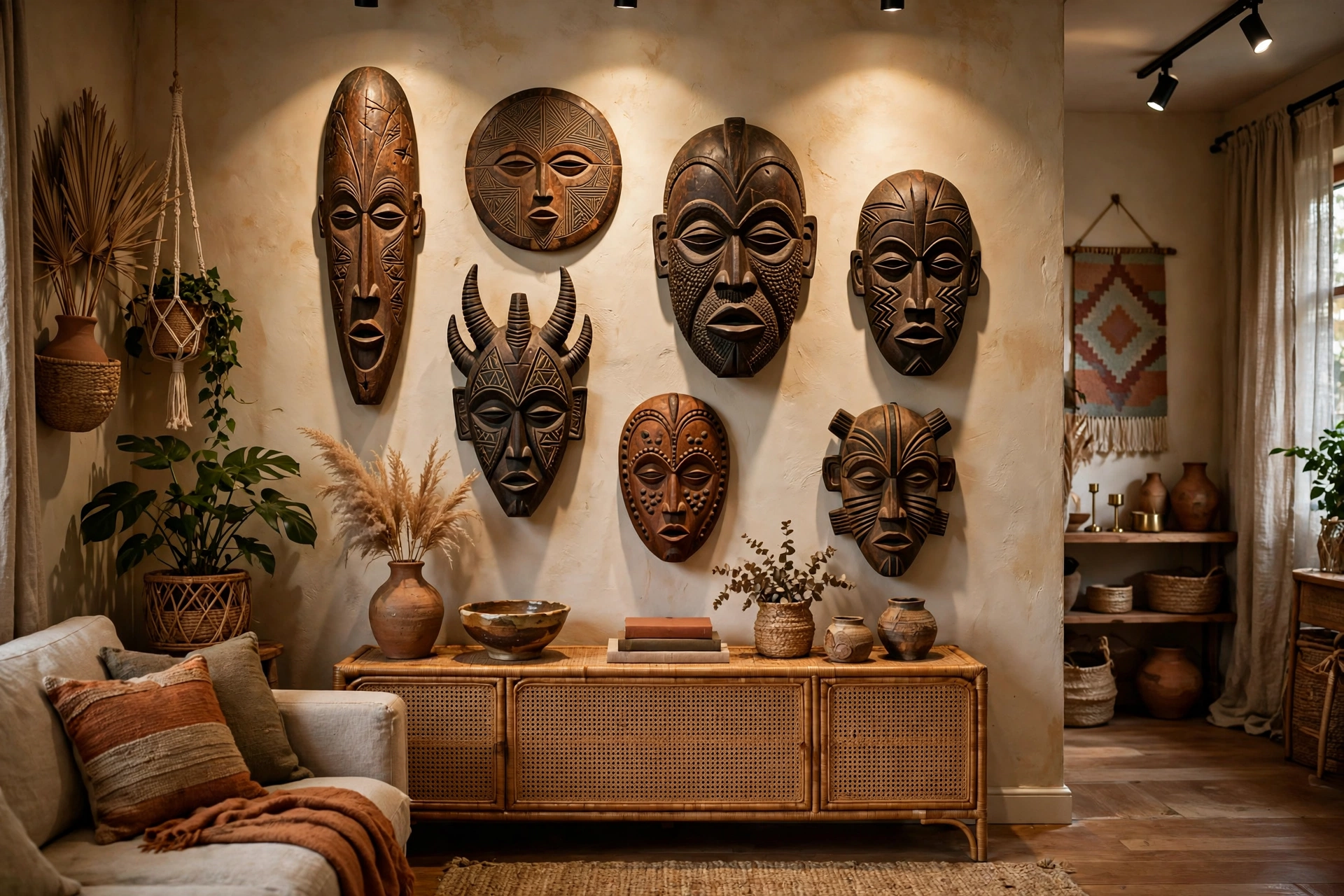
21. Hang African Masks as Art
African masks — whether authentic vintage pieces ($50–$200) or quality reproductions ($25–$60) — bring powerful artistic presence to Afrohemian walls. Hang a single large mask as a statement, or group three to five smaller masks in an asymmetric cluster. Each mask carries cultural significance and craftsmanship that mass-produced art can’t match. In a studio, masks add vertical interest and draw the eye up, making ceilings feel higher. Pro tip: research the masks you buy — understanding their cultural origin (Dogon, Baule, Fang, etc.) deepens your appreciation and lets you share their stories with guests, transforming decor into dialogue.
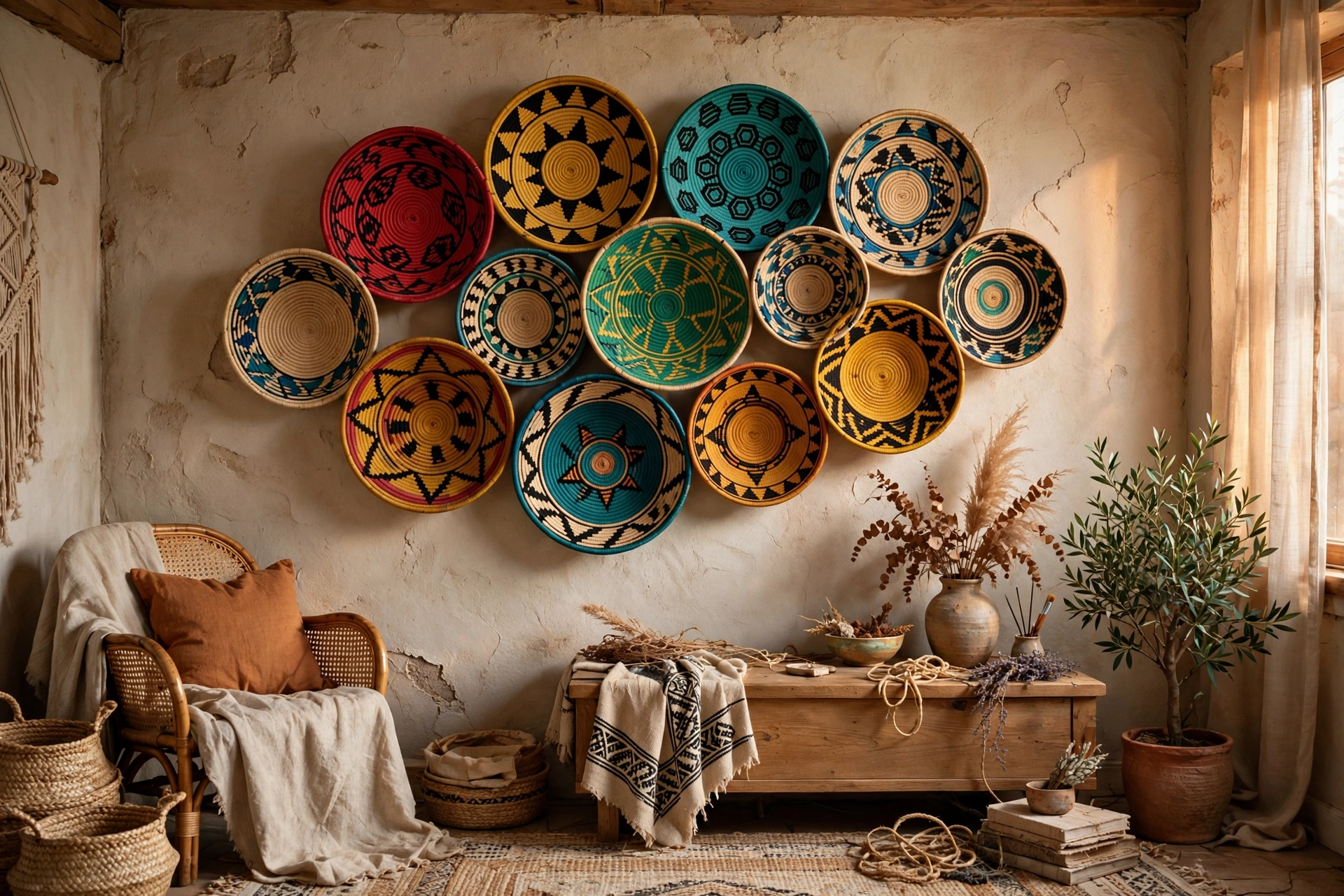
22. Display Woven Baskets as Wall Art
Flat woven baskets — Rwandan sisal, Ugandan raffia, or Senegalese coil baskets ($20–$50 each) — create stunning wall installations. Arrange five to nine baskets in an organic cluster, mixing sizes and patterns. The natural fibers and geometric designs add texture and cultural depth while remaining lightweight (important for rental walls). This is wall art that’s also a celebration of African women’s weaving traditions. Pro tip: use small adhesive hooks rated for 2-3 pounds — most flat baskets weigh under a pound, so you can create dramatic installations without drilling a single hole.
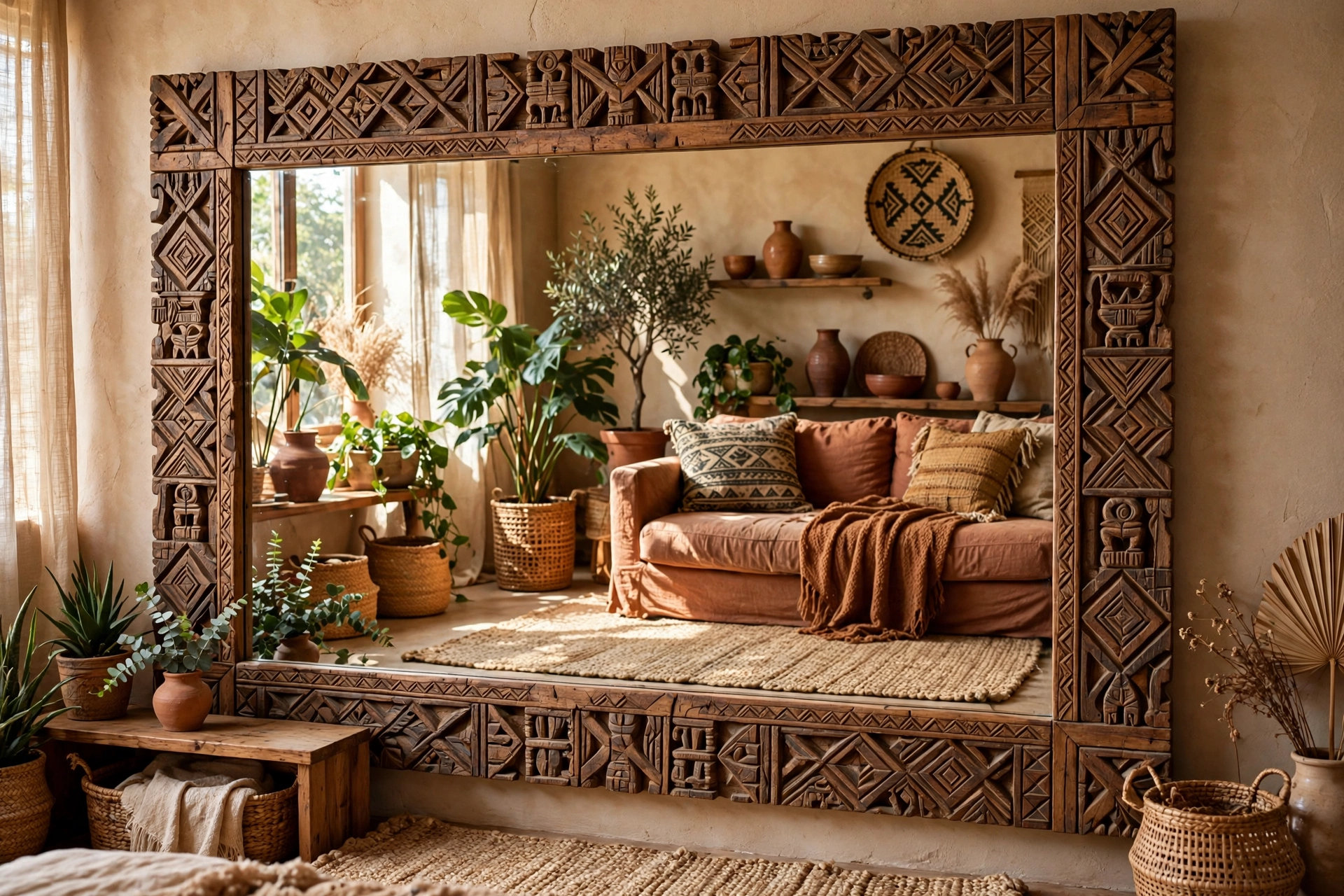
23. Add a Large Mirror with Wooden Frame
Mirrors are studio essentials — they double light and visual space. Choose one with a carved wooden or rattan frame ($80–$200) to keep it Afrohemian. A large leaning floor mirror in the living zone reflects your beautiful textiles and makes the studio feel twice as large. Or hang a round rattan mirror above your dresser for a softer effect. The natural frame material ties the mirror into your Afrohemian palette instead of feeling like a generic addition. Pro tip: position mirrors to reflect windows or your most beautiful textile wall — they double the impact of your best design elements while brightening dark corners.
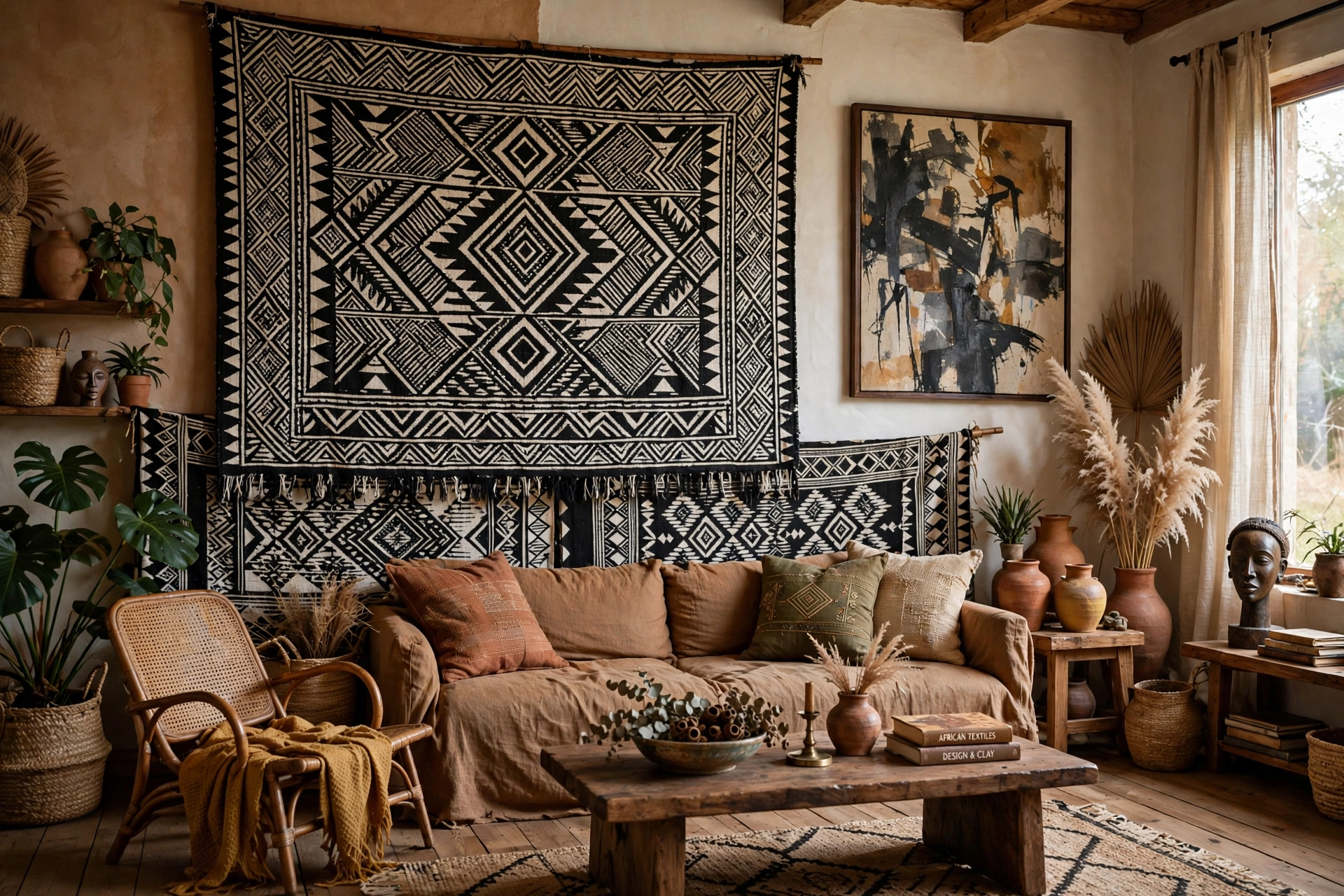
24. Hang a Statement Tapestry
A large African-inspired tapestry ($60–$150) can define your entire studio’s aesthetic. Look for mudcloth patterns, kente-inspired designs, or abstract tribal motifs in earth tones. Hang it behind your sofa as a textile headboard alternative, or use it to zone your sleeping area. Tapestries add massive visual impact with minimal weight — perfect for renters. They also improve acoustics in studios with hard floors, softening echo. Pro tip: hang tapestries with a wooden dowel and leather cord rather than tacks — the natural materials complement the textile and create a more polished, intentional look.
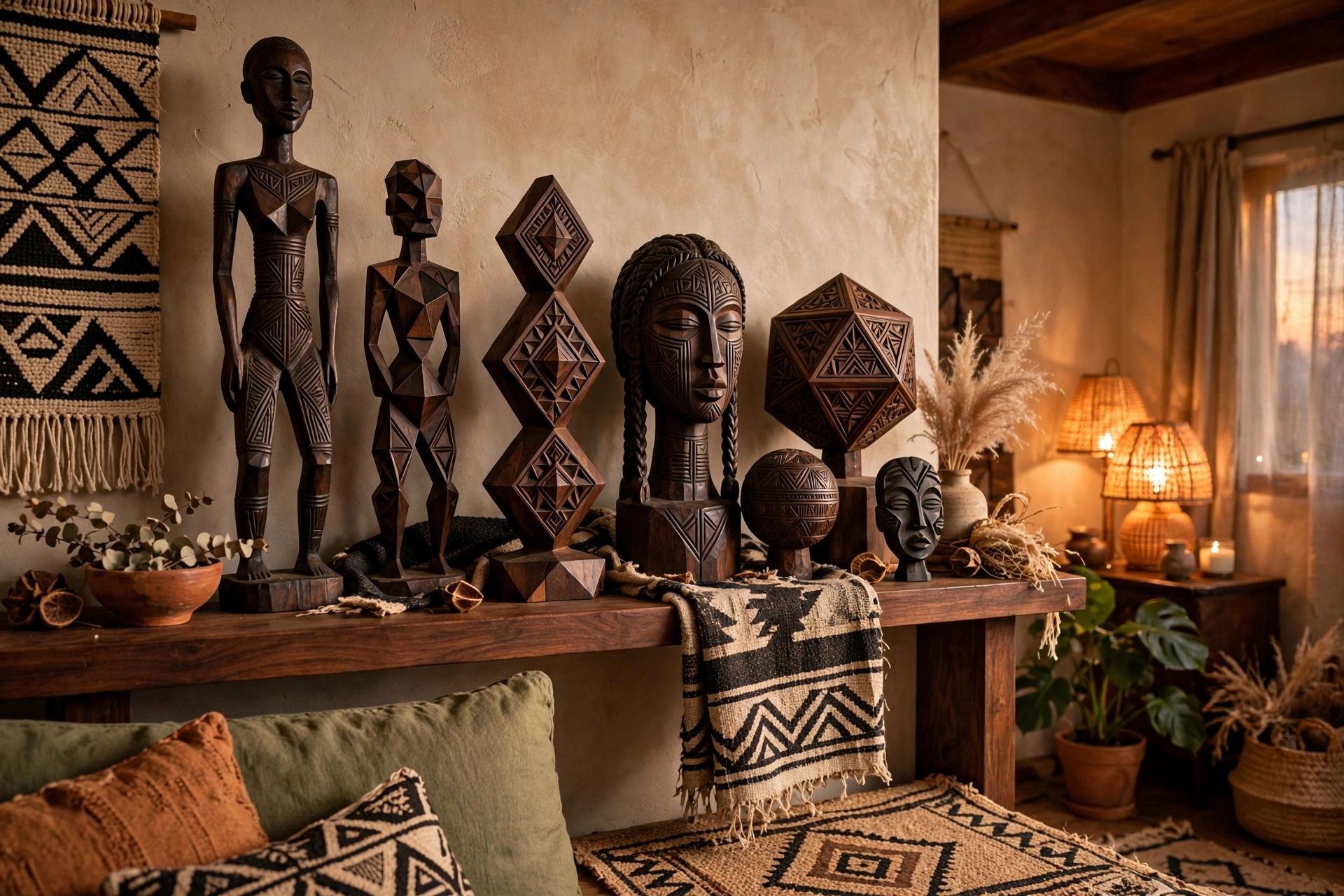
25. Display Sculptural Wood Pieces
Hand-carved wooden sculptures — abstract figures, animals, or geometric forms ($30–$100) — add three-dimensional art to your Afrohemian studio. Place a tall sculpture in an empty corner to fill vertical space, or group smaller pieces on your coffee table and shelves. The rich wood tones and organic shapes contrast beautifully with soft textiles. Each piece tells a story of the artisan who carved it, bringing human connection into your space. Pro tip: choose sculptures with different heights and group them in odd numbers — the varied silhouettes create dynamic visual rhythm that single pieces can’t achieve.
26. Create a Plant Wall Corner
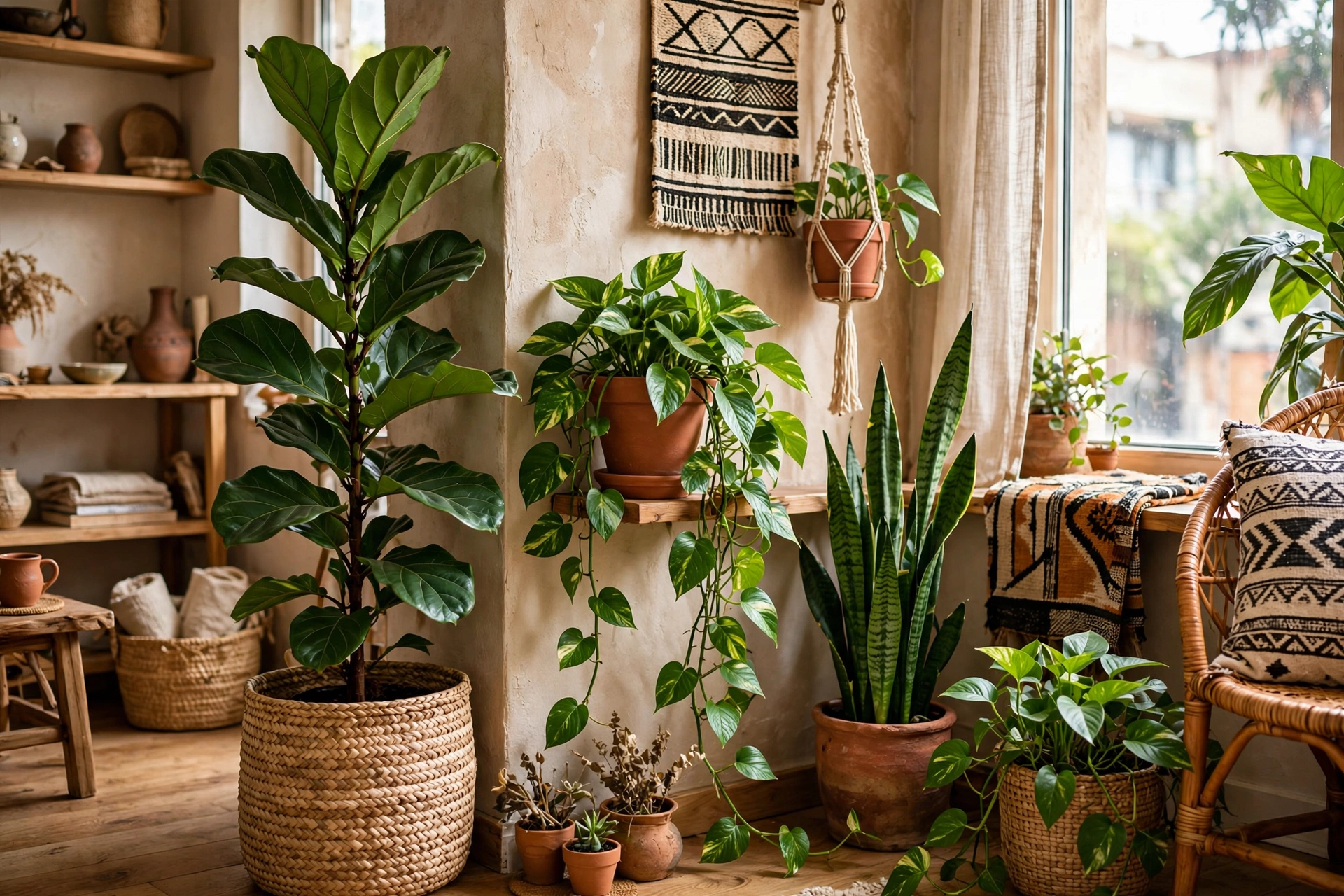
Afrohemian style loves lush greenery — it echoes the tropical landscapes that inspire the aesthetic. Dedicate one corner to a plant collection: a tall fiddle leaf fig, trailing pothos on a high shelf, and a snake plant in a woven basket ($15–$50 per plant). The varied leaf shapes and heights create a living sculpture. Plants also improve air quality in small studios and add life that no decor object can replicate. For plant styling tips, see our minimalist studio ideas for balancing greenery with clean space. Pro tip: group plants in odd numbers with varying heights — the asymmetry looks natural and abundant, while even groupings can feel stiff and formal.
Lighting & Ambiance
27. Use Woven Pendant Lights
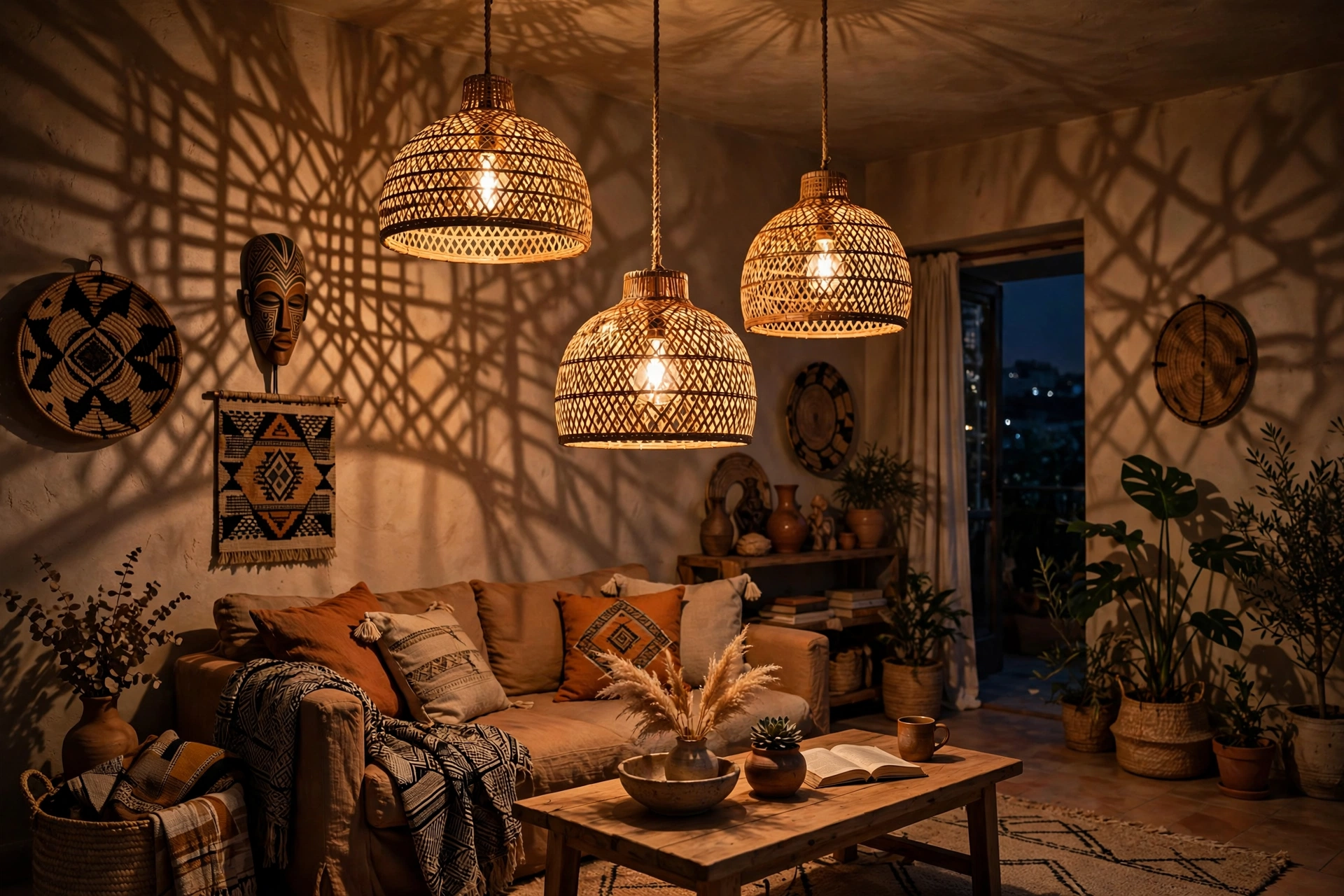
Woven rattan or bamboo pendant lights ($40–$100) cast beautiful patterned shadows while providing warm, diffused light. Hang one over your dining nook or a cluster of three at varying heights over your living zone. The natural materials complement Afrohemian textures while the woven patterns create mesmerizing light play on walls and ceilings. In a studio, pendants define zones without taking floor space — they draw the eye up and make the space feel intentional. Pro tip: use warm 2700K Edison bulbs — the amber glow enhances the natural rattan tones and creates the cozy, golden ambiance that’s essential to Afrohemian style.
28. Add Brass Candle Holders
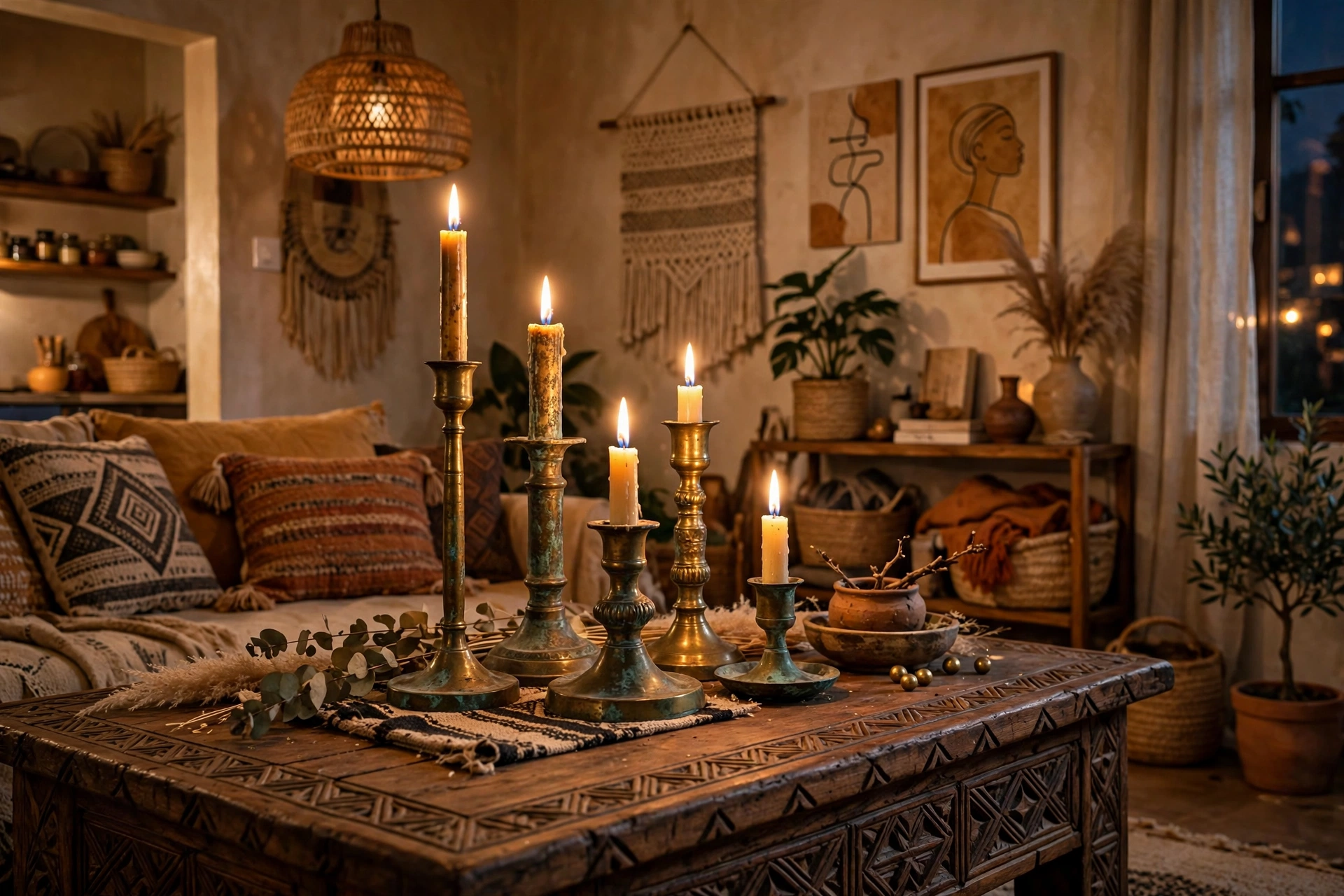
Brass candle holders ($15–$40 each) add warm metallic gleam that elevates Afrohemian’s earthy palette. Group them in threes on your coffee table, dining surface, or windowsill — the varied heights create visual interest while the brass catches and reflects candlelight. The aged, patinated finish (not shiny polished) aligns with Afrohemian’s collected, storied aesthetic. Flameless LED candles provide the same ambiance without fire risk in a small studio. Pro tip: mix brass with carved wood and woven textures on the same surface — the material contrast is what makes Afrohemian styling feel rich and layered rather than matchy-matchy.
29. Choose a Sculptural Floor Lamp
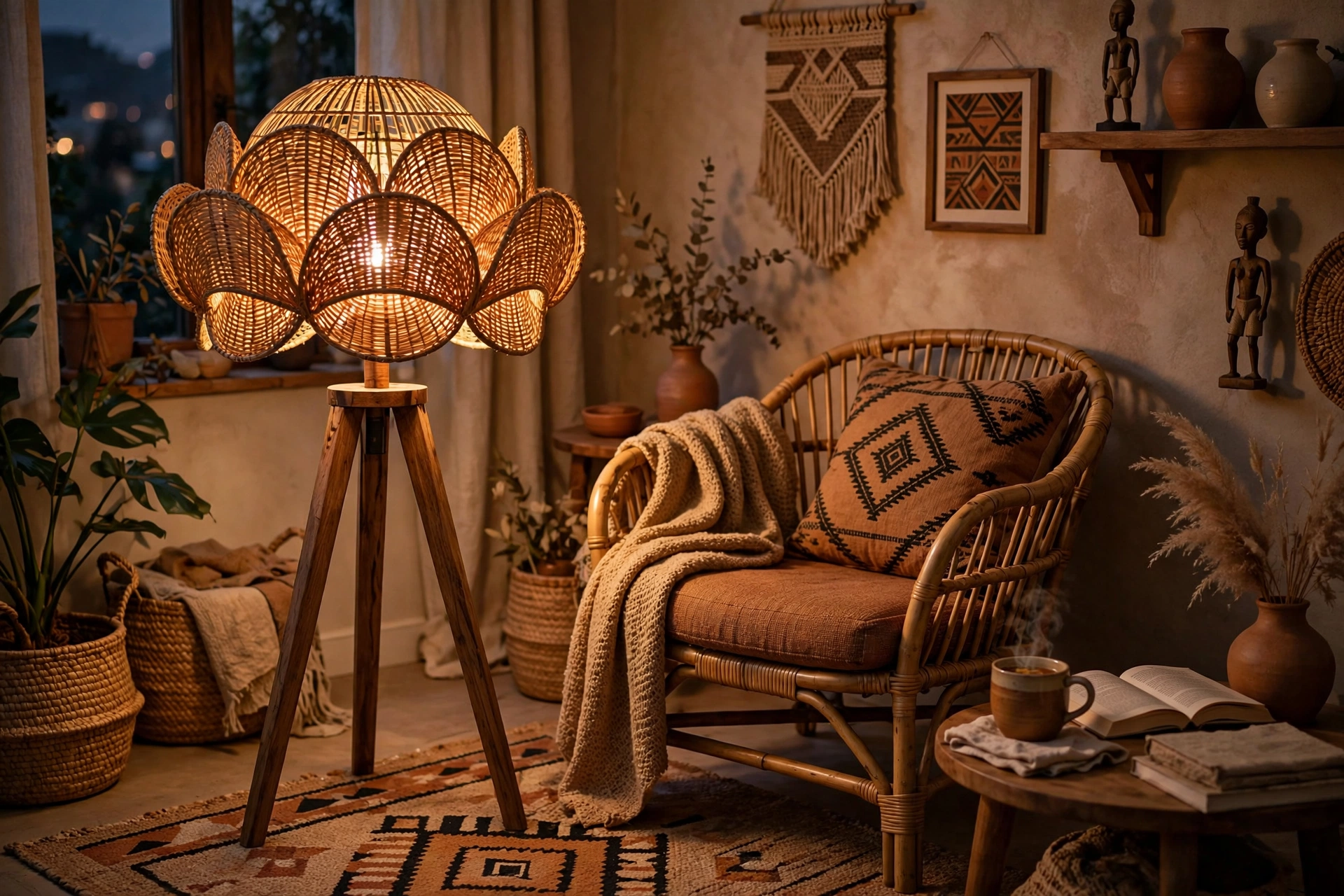
A sculptural floor lamp with a natural material shade — rattan, linen, or carved wood ($80–$200) — provides both light and art. Place it beside your reading chair or in a dark corner that needs warmth. The lamp becomes a functional sculpture, adding height and visual interest. Look for tripod bases in dark wood or arc designs that reach over seating areas. This kind of statement lighting is central to our studio apartment lighting ideas. Pro tip: choose a lamp with a dimmer switch — Afrohemian ambiance relies on layered, moody lighting, and the ability to adjust brightness transforms your studio from daytime bright to evening cozy.
30. String Warm Fairy Lights
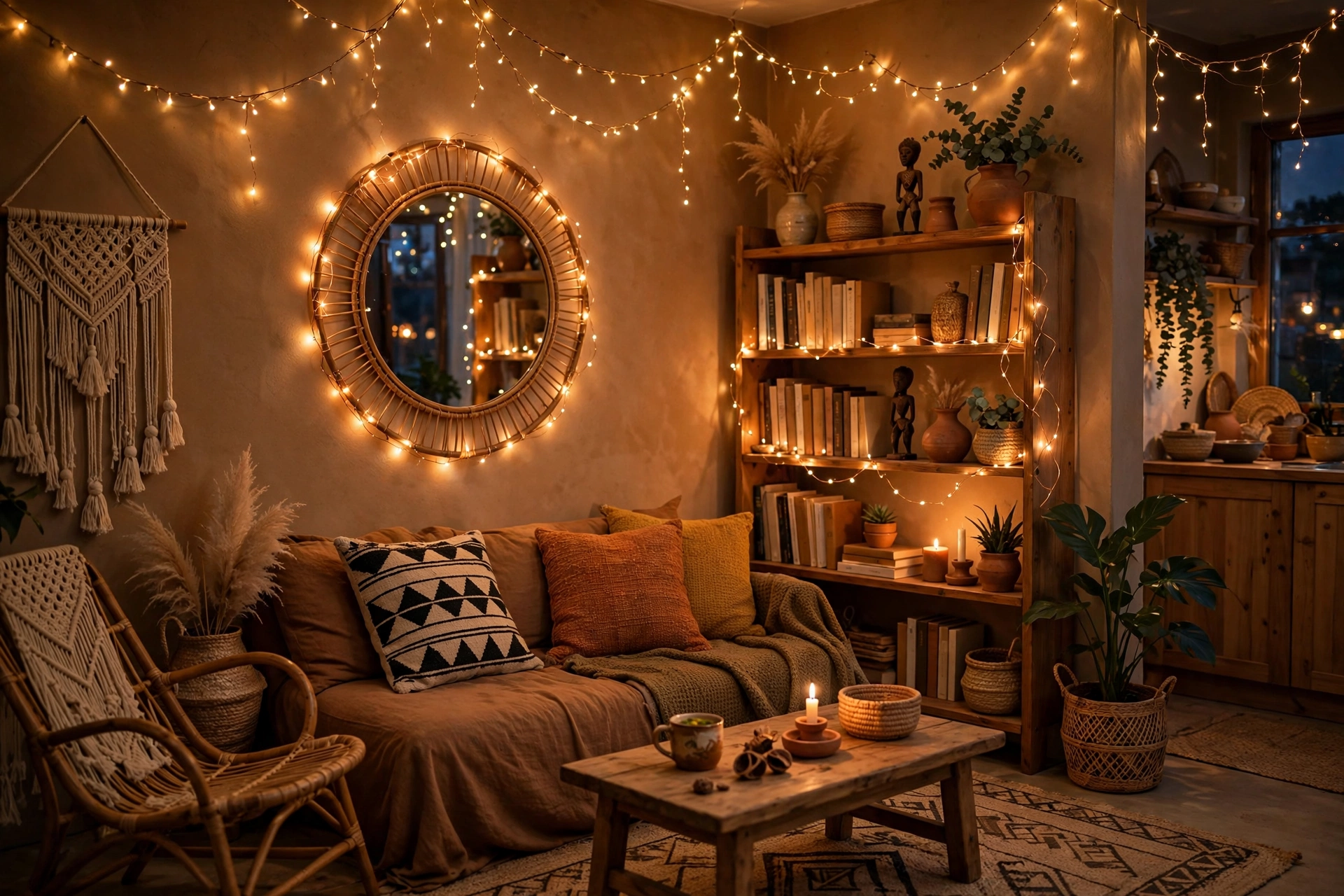
Warm white fairy lights ($10–$20) draped along a bookshelf, around a mirror, or across your headboard add magical ambiance for pennies. In Afrohemian style, they mimic fireflies or starlight — natural, warm, enchanting. Use copper wire lights for the most delicate effect; the thin wire disappears while the tiny lights glow. In a studio, they’re perfect for renters who can’t install fixtures but want layered lighting. Pro tip: put fairy lights on a timer plug ($12) — they automatically turn on at dusk, so you come home to a warmly lit studio every evening without thinking about it.
Plants & Finishing Touches
31. Go Big with a Fiddle Leaf Fig
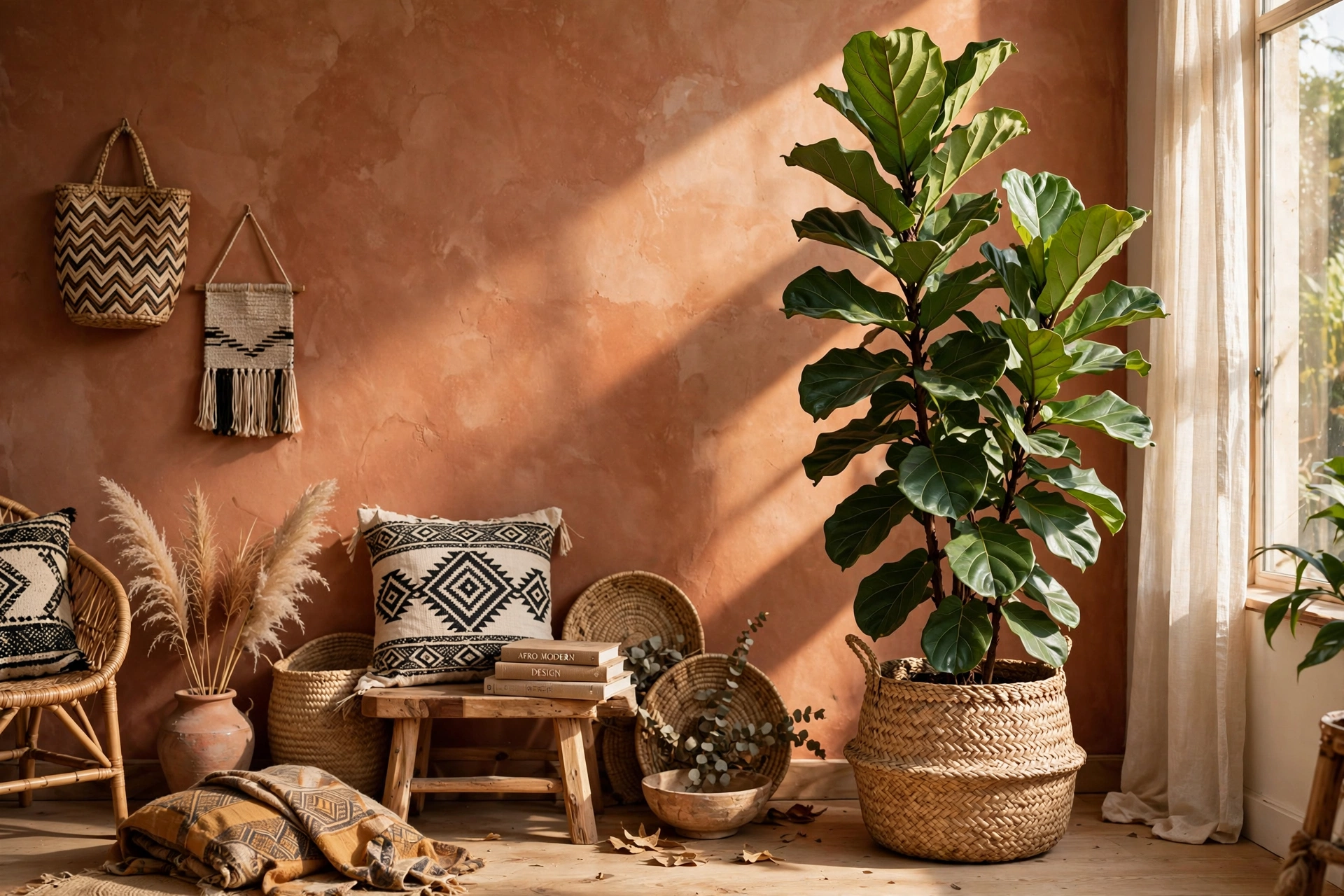
Every Afrohemian studio needs one dramatic plant, and the fiddle leaf fig ($40–$80) is the queen. Its large, sculptural leaves echo the bold shapes in African art and textiles. Place it in a woven basket or terracotta pot in your brightest corner — it becomes a living sculpture that anchors the room. The deep green contrasts beautifully with terracotta walls and warm wood tones. One large plant makes more impact than five small ones in a compact studio. Pro tip: rotate your fiddle leaf a quarter turn weekly — they grow toward light and will lean dramatically if not rotated, ruining that perfect sculptural silhouette.
32. Use Terracotta Planters
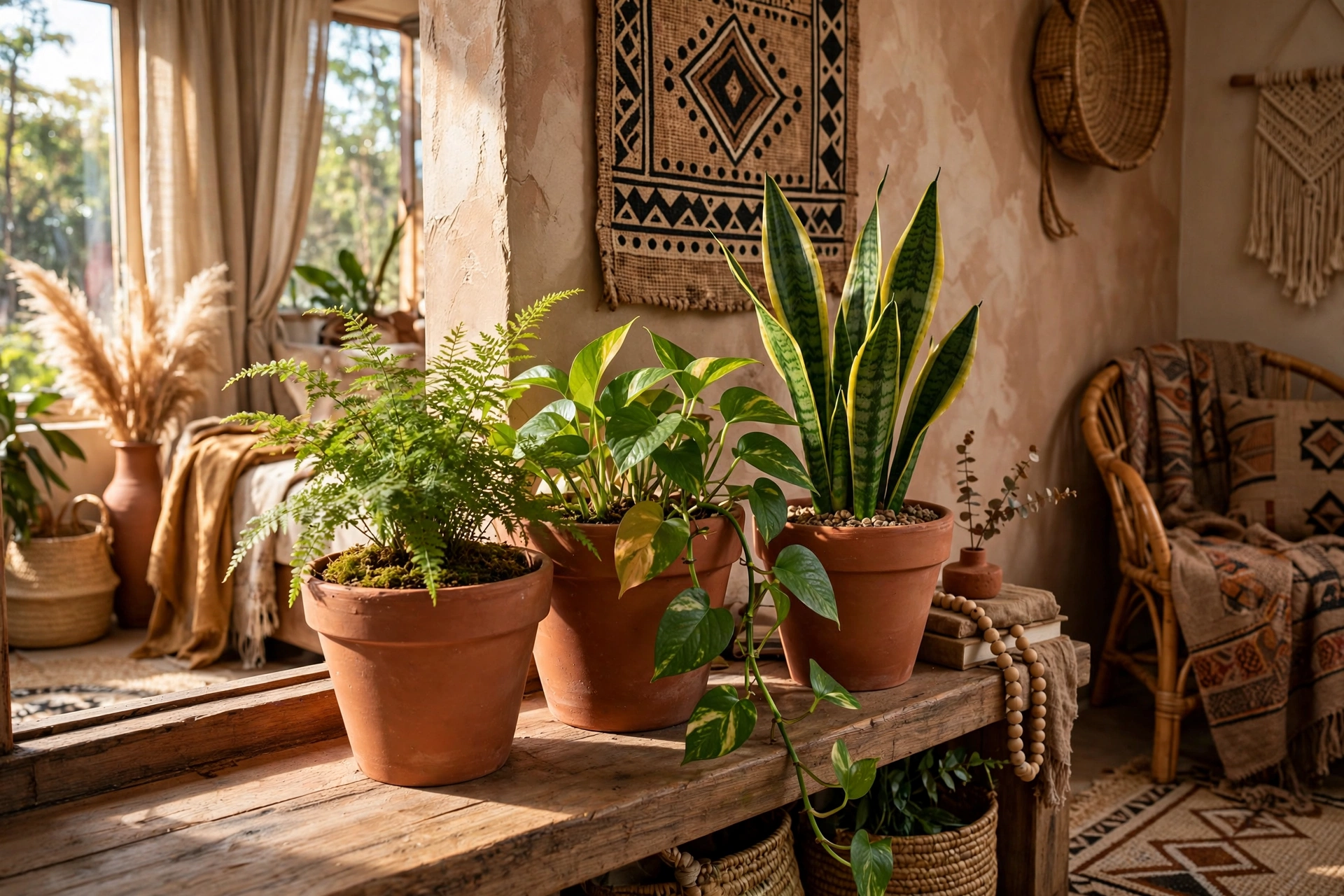
Terracotta planters ($8–$25 each) are the perfect vessels for Afrohemian greenery. The warm clay color complements the earthy palette while the porous material is healthy for plants. Group three planters of varying heights with different plants — a trailing pothos, an upright snake plant, and a bushy fern create dynamic composition. The natural material and handmade feel align perfectly with Afrohemian values. Pro tip: age new terracotta pots with yogurt or buttermilk — paint it on, leave in shade for a week, and you’ll get that beautiful mossy patina that makes pots look decades old.
33. Add an Earthy Scent Diffuser
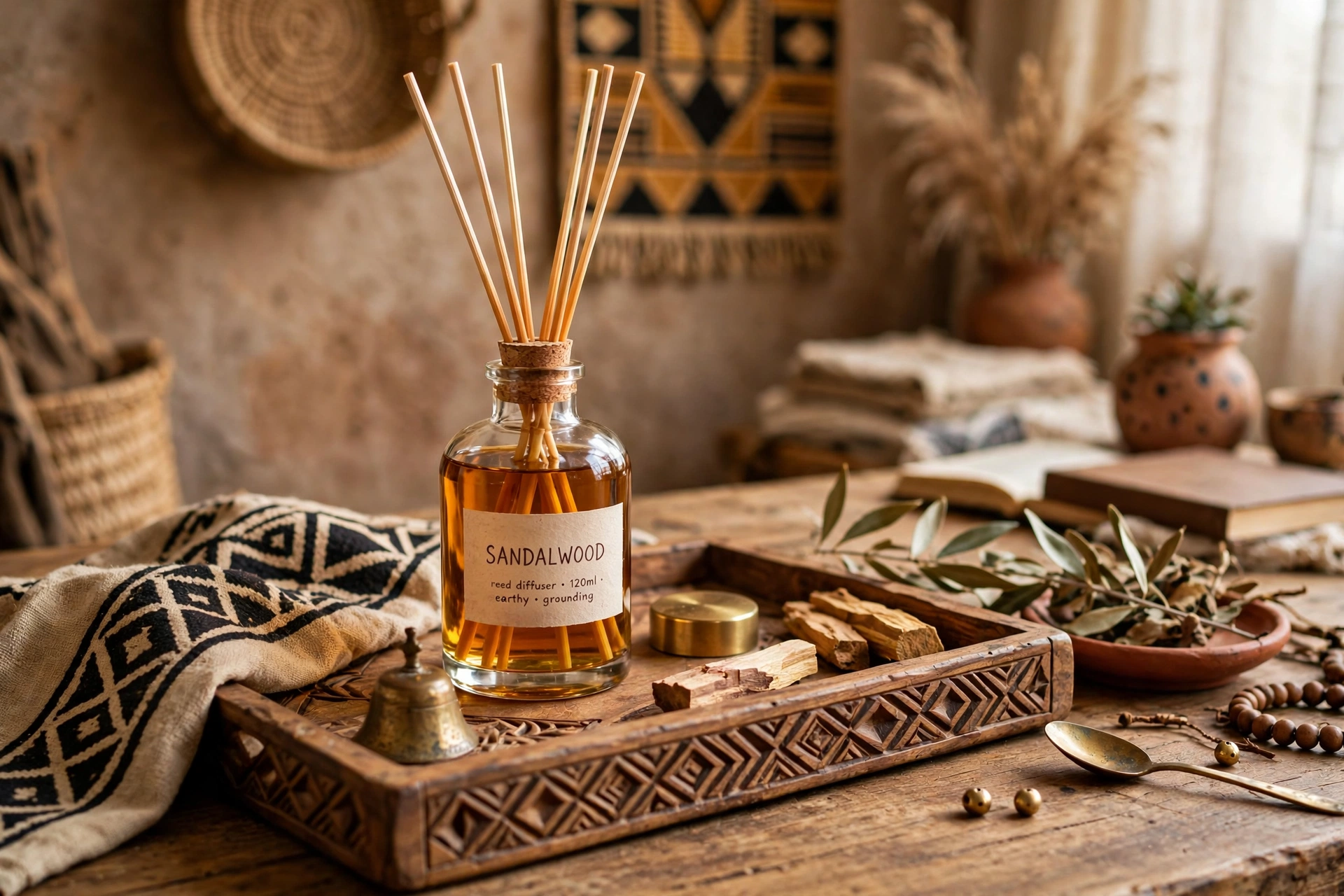
Afrohemian is a full-sensory experience — scent matters. A reed diffuser with earthy fragrances like sandalwood, amber, vetiver, or frankincense ($20–$40) adds invisible ambiance that makes your studio feel like a high-end boutique hotel. Place it in your entry zone so guests are greeted with warmth. The diffuser vessel itself (glass, ceramic, or carved wood) becomes another decor object. Scent is the finishing touch that makes a space feel truly curated. Pro tip: flip the reeds weekly and replace them monthly — old reeds stop diffusing effectively, and fresh reeds in the same oil make the scent feel new again.
34. Style with Art Books and Artifacts
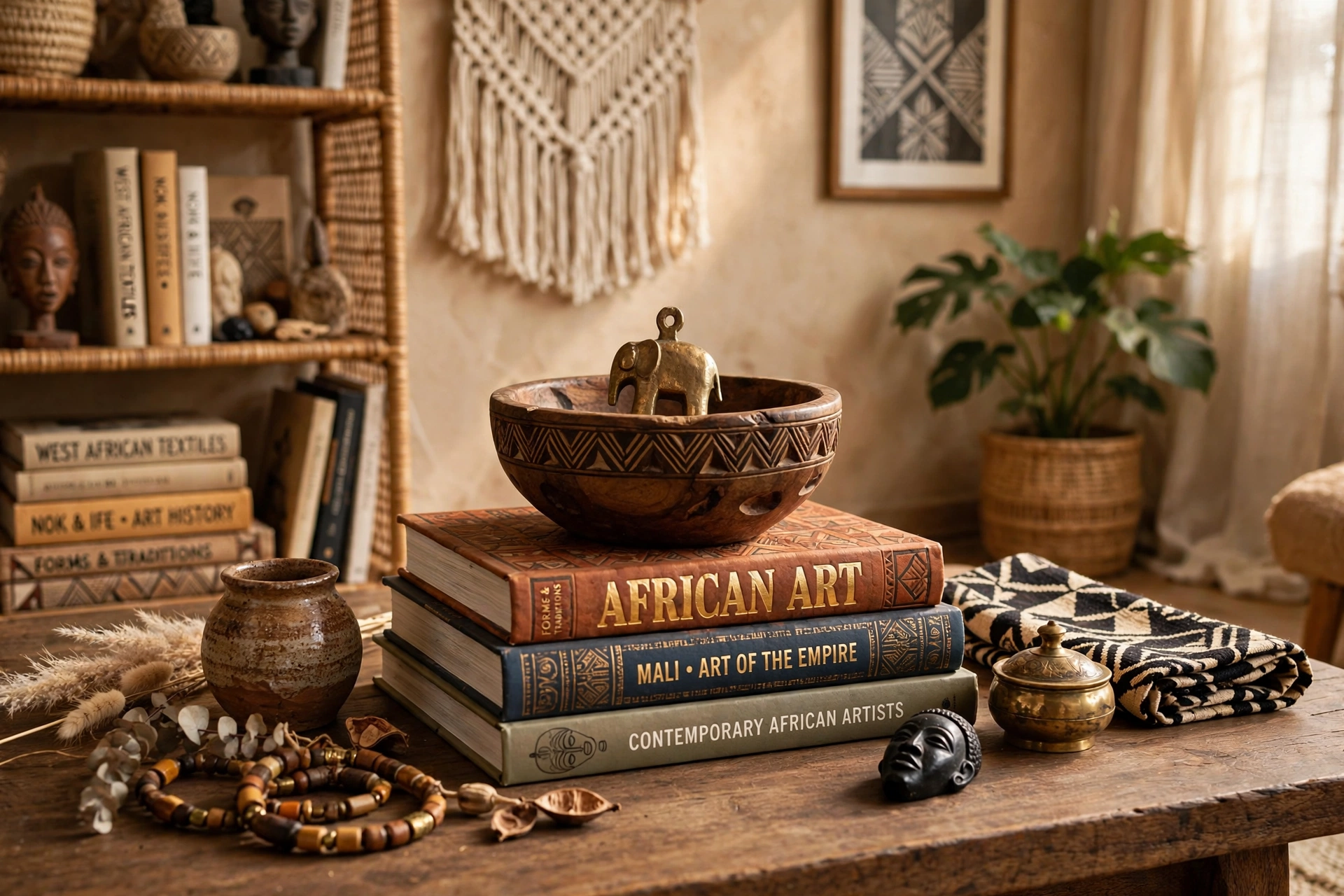
Coffee table styling is where Afrohemian personality shines. Stack two to three art books on African art, textiles, or photography ($20–$40 each, or thrifted for less), topped with a small sculptural artifact — a carved wooden bowl, brass object, or stone. The books add intellectual depth and color, while the artifact provides tactile interest. This curated cluster tells visitors about your interests and travels (real or aspirational). Pro tip: choose books with beautiful spines and covers — in a studio, they’re always visible, so they need to be as attractive closed as the content is inside.
35. Create a Cozy Reading Nook
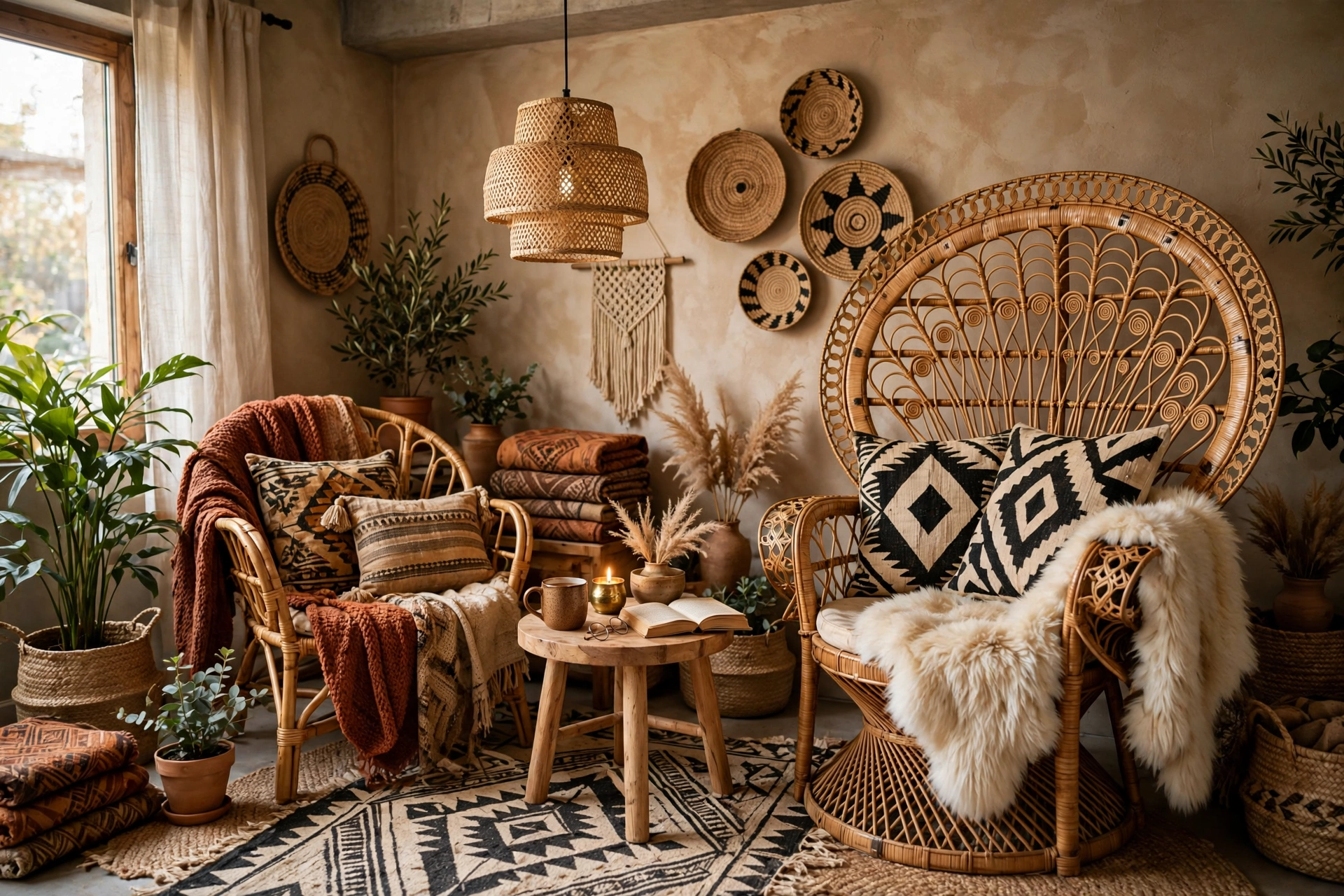
Every studio deserves a dedicated retreat, and an Afrohemian reading nook is pure soul-nourishment. Combine your rattan chair (Idea 14), a small side table for tea, a woven pendant light or floor lamp, and a basket of throws. Add a small bookshelf or floating shelves with your favorite books. This corner becomes your sanctuary — a place to recharge surrounded by textures and colors that feel like a warm embrace. In a studio, this nook proves that small spaces can still have distinct, purposeful zones. Pro tip: include a soft rug under the chair — it defines the nook as separate from the main floor and makes the space feel intentionally designed rather than chair-in-a-corner.
Frequently Asked Questions
What is Afrohemian decor style?
Afrohemian is a design fusion blending African artistry with bohemian free-spiritedness. It features rich earth tones (terracotta, ochre, deep browns), bold African textiles (mudcloth, kente, Ankara), natural materials (rattan, jute, carved wood), and handcrafted artisan pieces. Unlike pure bohemian’s sometimes chaotic layering, Afrohemian maintains sophistication through a cohesive warm palette and intentional curation of cultural pieces.
Is Afrohemian appropriate for a small studio apartment?
Absolutely — Afrohemian is ideal for studios. The style celebrates layering and collected pieces, which means your small space looks intentionally curated rather than cluttered. The warm earth-tone palette creates coziness in compact quarters, while natural materials like rattan and jute keep things visually light. Focus on one statement piece per zone and let textiles do the heavy lifting.
Where can I find authentic African decor on a budget?
Start with Etsy for handmade mudcloth pillows and woven baskets ($20–$60), Facebook Marketplace for vintage rattan furniture, and thrift stores for carved wood pieces. World Market and IKEA carry affordable Afrohemian-inspired lines. For authentic pieces, look for fair-trade shops that work directly with African artisans — you’ll pay slightly more but get genuine craftsmanship and support makers.
How do I avoid cultural appropriation with Afrohemian decor?
Approach Afrohemian with respect and education. Buy from African artisans or fair-trade sources when possible, learn about the cultural significance of pieces you display (masks, textiles, sculptures), and avoid sacred or ceremonial objects used purely as decoration. Appreciation means understanding stories and supporting creators — not just aesthetics. When in doubt, choose pieces from artisans who willingly share their craft with the world.
What colors define Afrohemian style?
The core palette: warm whites and creams as base, terracotta and burnt sienna for warmth, ochre and golden yellows for joy, deep browns and blacks for grounding, with vibrant accents from kente cloth (red, green, gold) and Ankara prints. Natural textures — jute, rattan, wood, leather — add depth. The overall effect is sun-baked, earthy, and richly layered.
Can I mix Afrohemian with other styles?
Yes — Afrohemian blends beautifully with Scandinavian (for cleaner lines), mid-century modern (shared love of organic shapes and wood), and minimalist (as vibrant accents). Keep 70% Afrohemian (the textiles, natural materials, earth tones) and add 30% of another style. The warm palette is versatile, and natural materials bridge almost any aesthetic gap.
Final Thoughts
An Afrohemian studio apartment is more than a design choice — it’s a celebration of culture, craftsmanship, and the beauty of a life well-layered. Every mudcloth pillow, carved sculpture, and woven basket tells a story of human hands and heritage. In a world of mass-produced minimalism, choosing Afrohemian is choosing soul over sterility, warmth over cold perfection.
Start with what speaks to you — perhaps the terracotta wall, or that rattan chair you’ve been eyeing. Let your collection grow organically, piece by meaningful piece. Before long, your studio won’t just look Afrohemian. It will feel like home in the deepest sense: a space that honors artistry, embraces warmth, and tells your unique story through every texture, pattern, and treasured object.