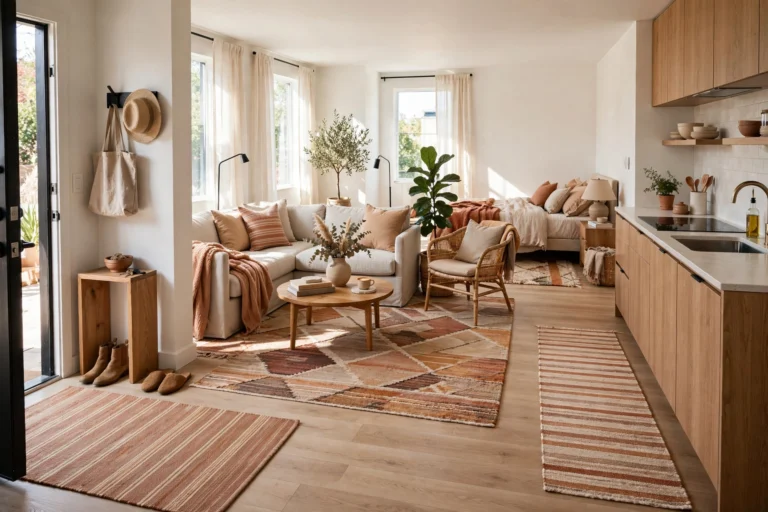
30 Pet-Friendly Studio Apartment Ideas for Happy Coexistence

Sharing 400 square feet with a creature who sheds, scratches, and occasionally mistakes your rug for a bathroom sounds like a recipe for chaos — but some of the most beautiful studios belong to devoted pet people. The secret isn’t choosing between a stylish home and a happy animal; it’s designing for both from the start. Pet-friendly studio living comes down to three principles: give every animal a designated place of their own, choose materials that forgive fur and claws, and hide the unglamorous stuff — litter boxes, crates, kibble — inside real furniture. Do that, and your studio won’t smell like a kennel or look like a pet store exploded. It will look intentional, calm, and deeply personal. Below are 30 pet-friendly studio apartment ideas that keep tails wagging and your security deposit intact, most under $100 and renter-friendly. They pair beautifully with our guide to decorate a studio apartment on a budget — and when the sun goes down, our studio apartment lighting ideas keep every corner glowing for you and your four-legged roommate.
Cat Essentials That Look Like Decor
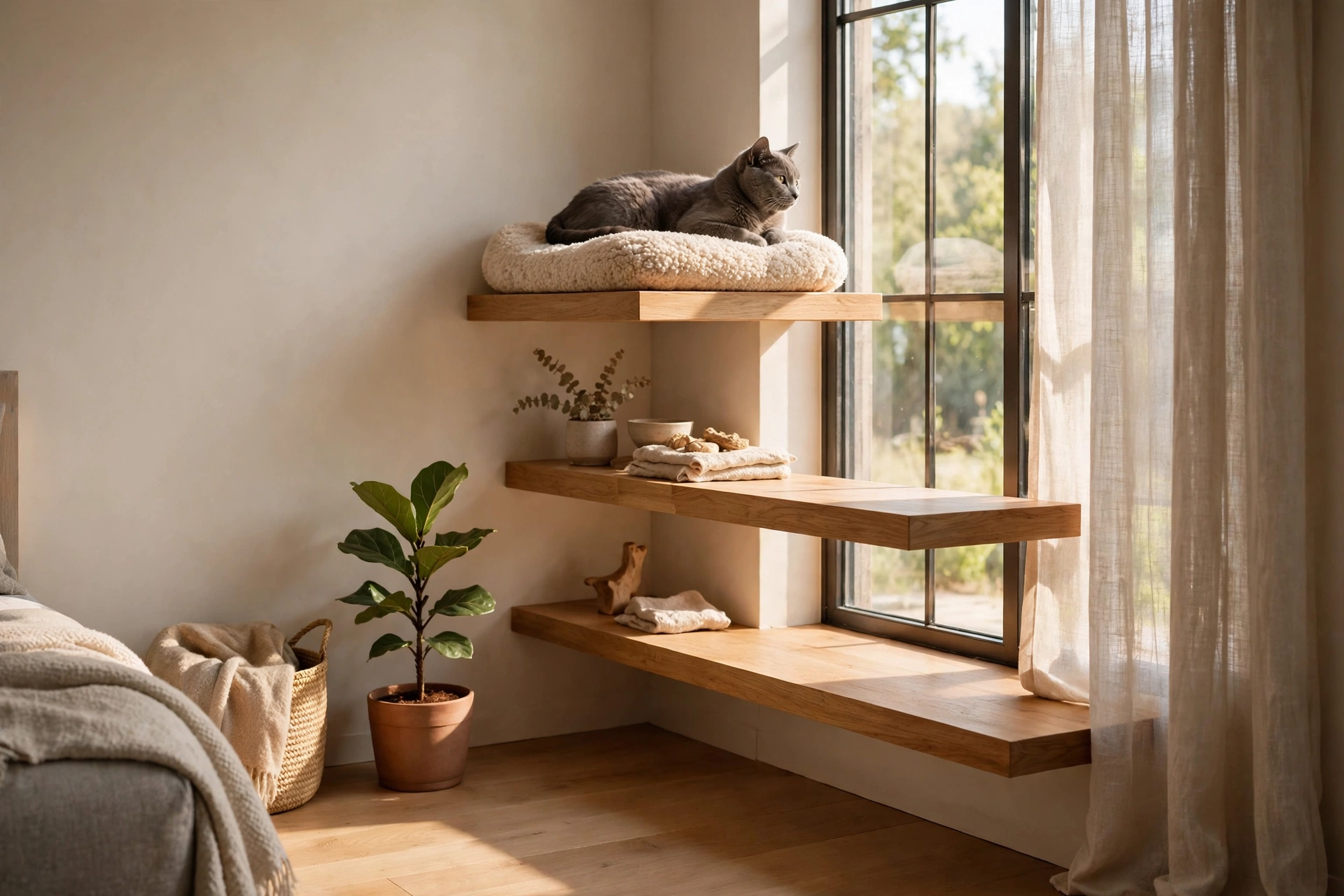
1. Build a Window-Perch Cat Shelf
Cats are solar-powered, and in a studio the window is prime real estate. Instead of surrendering your sill, mount two or three floating shelves ($25–$60) in a staircase arrangement beside your tallest window and top them with a washable cushion. Your cat gets a front-row seat to the pigeon channel, and your desk and counters stay cat-free. Choose wood tones that match your existing shelves so the whole thing reads as intentional design, not an afterthought. Pro tip: anchor every shelf into studs, not just drywall — a 12-pound cat launching off a shelf at 3 a.m. is a disaster in two acts.
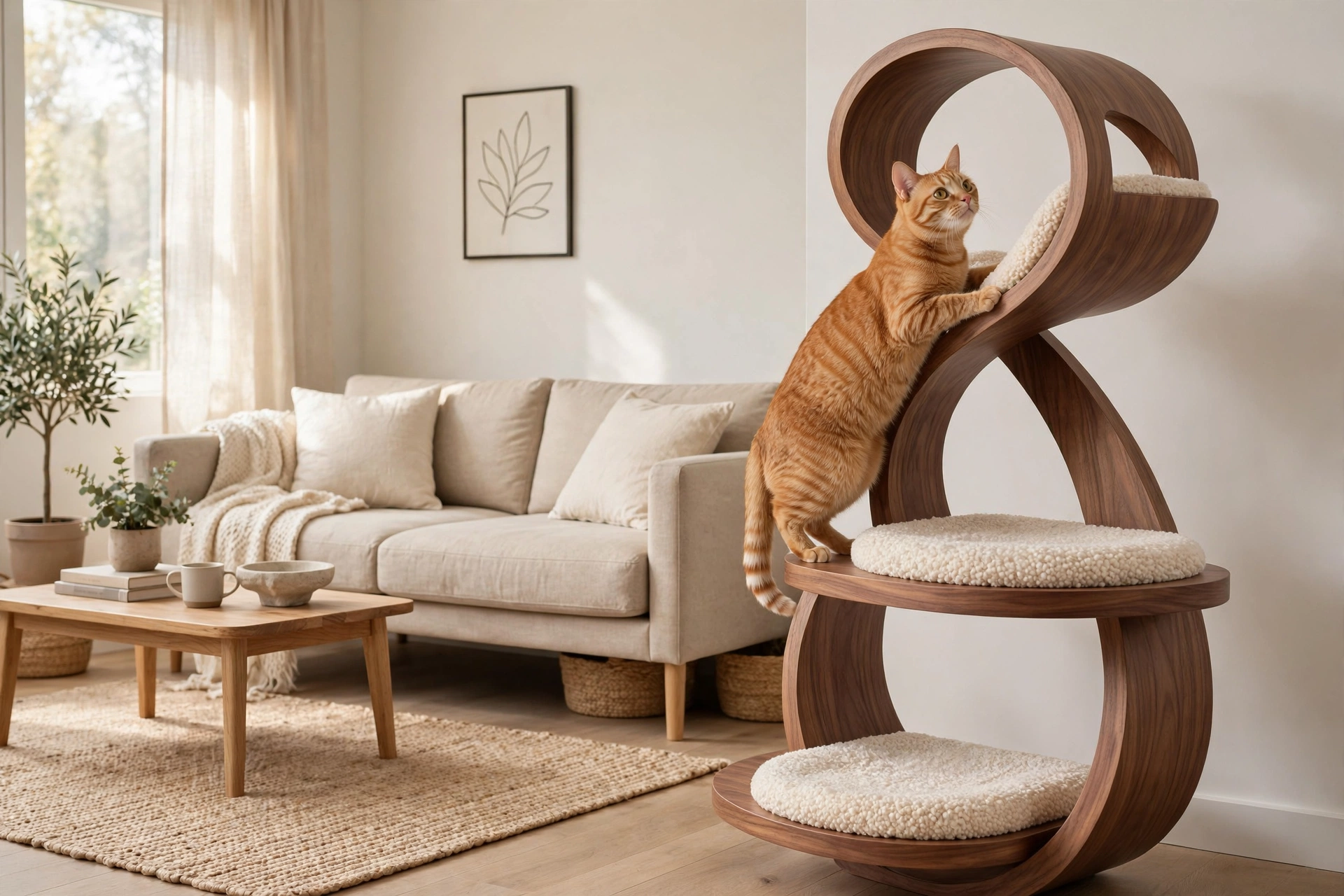
2. Invest in a Sculptural Cat Tree
Cheap carpet-covered cat trees scream “pet owner” in the worst way. A sculptural tree in walnut and boucle ($150–$350) reads as modern art that happens to have scratching surfaces. Position it near the window perch to create a vertical cat highway that keeps climbing off your curtains and bookshelves. The curved platforms double as display space for a small plant (cat-safe, of course). Pro tip: look for models with replaceable sisal pads — the frame lasts for years while only the scratching surface needs refreshing, saving you from buying a whole new tree.
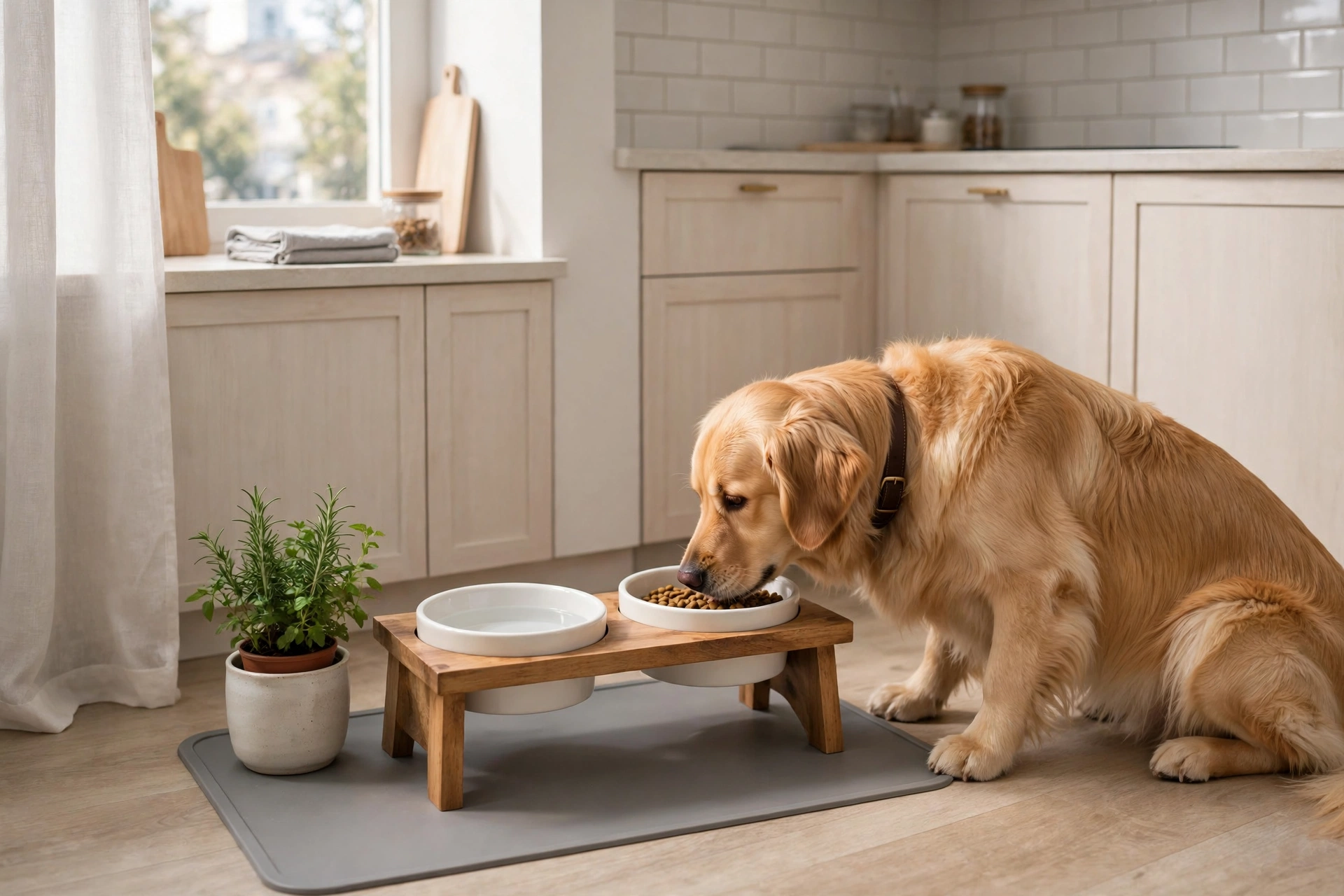
3. Create a Dedicated Feeding Station
Food and water bowls sliding across the kitchen floor look chaotic and spill constantly. A raised wooden stand ($20–$45) holding ceramic bowls on a washable silicone mat ($12) contains the mess in one handsome footprint. Tuck the station in a low-traffic kitchen corner, away from the main walkway, and it becomes a tidy vignette instead of an eyesore. Raised bowls are also easier on older pets’ necks and joints. Pro tip: place the water bowl a few feet from the food — many cats drink noticeably more when water isn’t beside their meal, which veterinarians love to see.
Fabrics & Surfaces Built for Fur
4. Choose a Machine-Washable Slipcover Sofa
The single best investment for a pet studio is a sofa with removable, machine-washable slipcovers ($600–$1,200 for the sofa). When the covers can go straight in the wash, muddy paws stop being a crisis and become a laundry cycle. Look for performance fabrics marketed as stain-resistant — they shrug off drool, dirt, and the occasional hairball with dignity. Keep a spare cover set so the sofa is never naked on wash day. Pro tip: wash covers inside-out on cold with a cup of white vinegar in the rinse — it dissolves pet odor far better than scented detergents that just mask it.
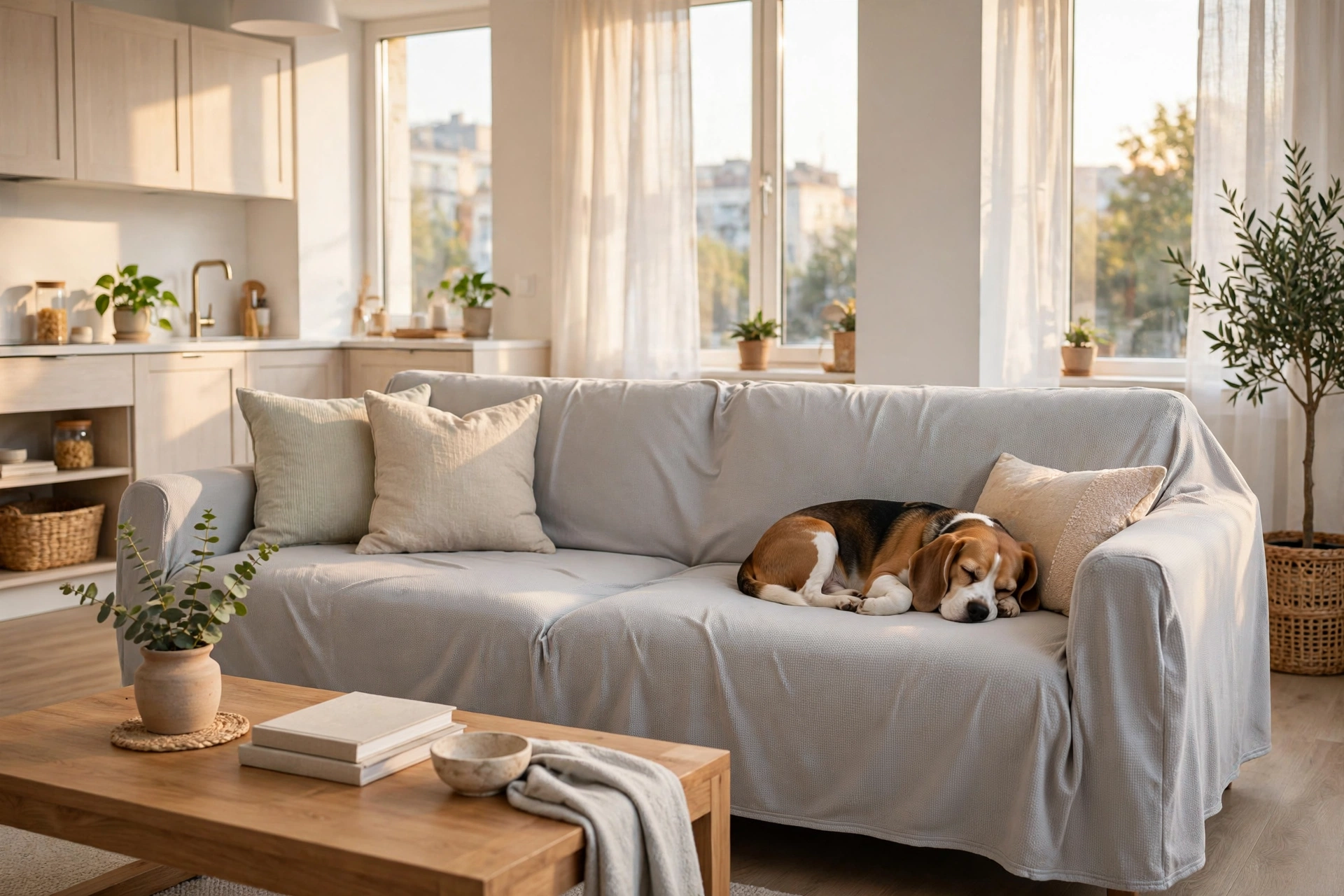
5. Lay Down a Washable Area Rug
Wall-to-wall carpet and pets are a doomed combination, but bare floors feel cold and echo in a studio. The answer is a machine-washable rug ($80–$250): the decorative top layer peels off its pad and goes straight into the washer. Choose low-pile patterns that hide fur between washes, and size it generously — a rug that anchors the whole seating area is the backbone of our studio apartment rug ideas that define every zone. Pro tip: keep a second washable rug cover if your brand sells them separately — swapping takes two minutes, washing takes an afternoon.
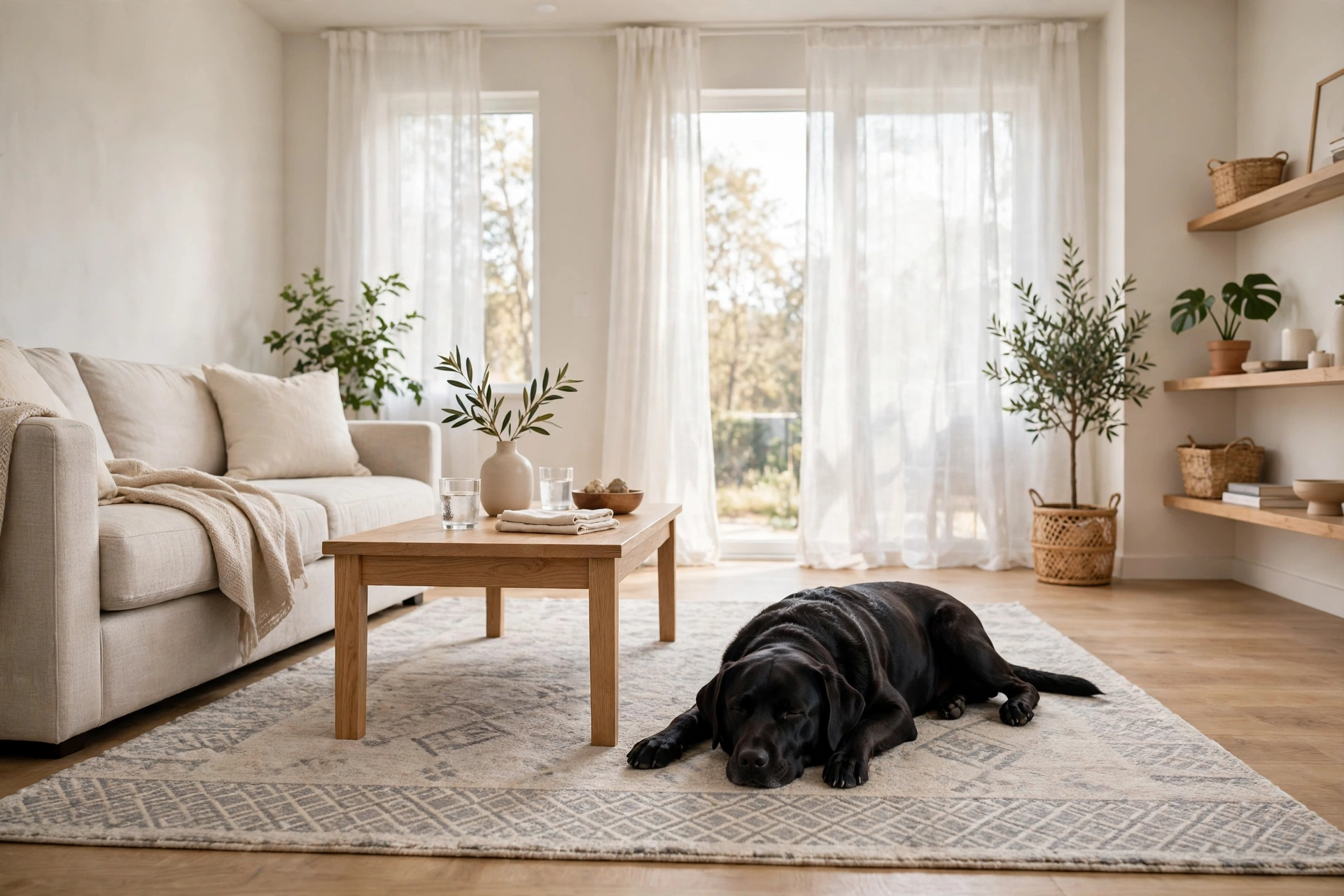
6. Pick a Wipeable Leather Ottoman
Leather — real or good faux — is the pet owner’s secret weapon: fur doesn’t stick to it, claws glance off, and muddy paw prints wipe away with a damp cloth. A cognac leather ottoman ($120–$300) works as footrest, extra seat, and coffee table in a studio, earning its footprint three times over. The patina it develops over years of use only makes it more beautiful. Pro tip: condition the leather twice a year with a simple cream ($12) — studio heating dries leather out, and supple leather resists scratches far better than dried-out hide.
Necessities, Beautifully Disguised
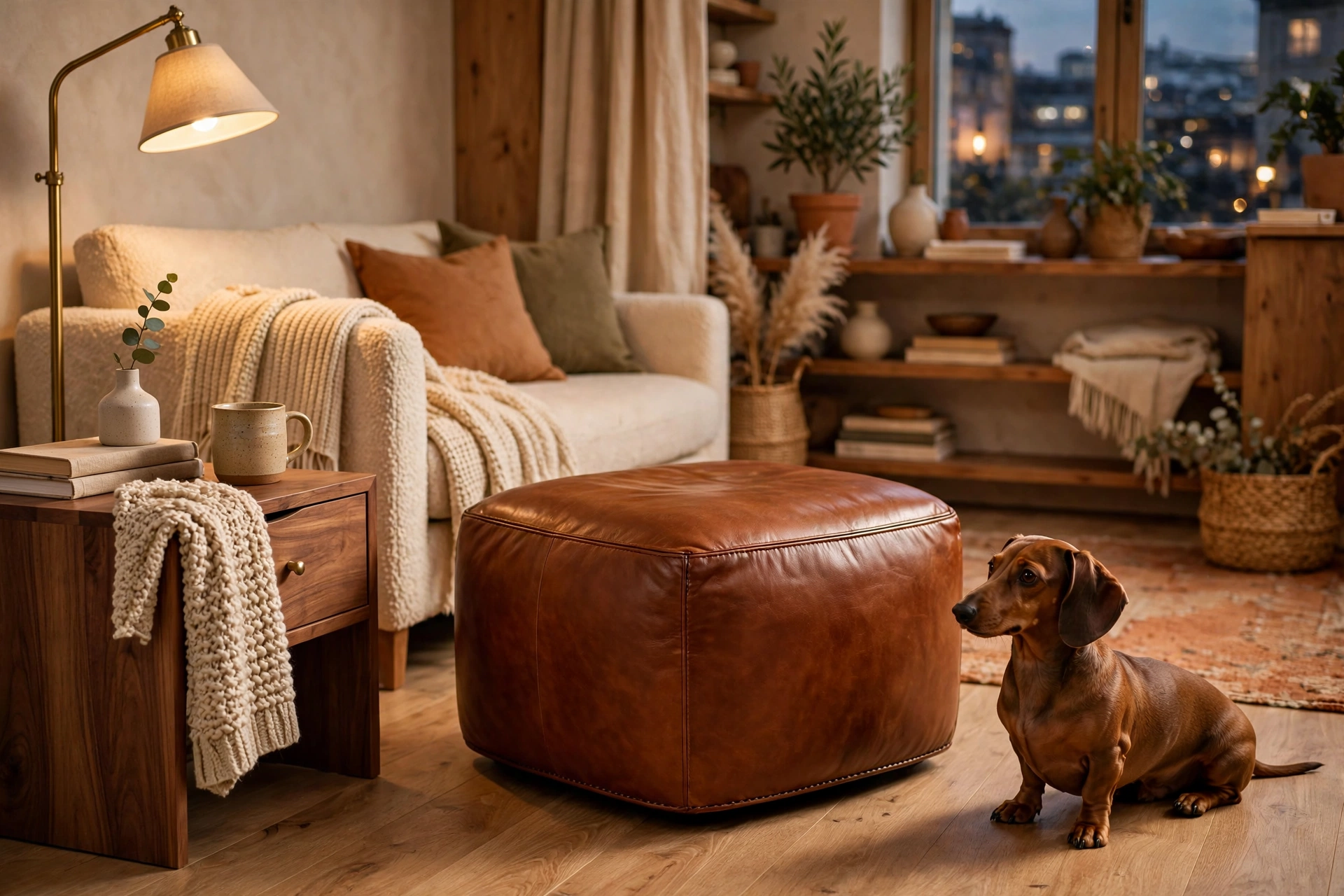
7. Hide the Litter Box in a Cabinet
Nothing kills a studio’s vibe like a plastic litter tray in the corner. A wooden cabinet with a discreet side entry ($90–$220) conceals the box inside what looks like a handsome sideboard — guests will never know. Cut or buy a model with a round cat-sized opening, add a motion-sensor light inside for nighttime visits, and scoop daily so odor never builds. Place it near a vent or window, never beside your bed. Pro tip: put a washable litter-trapping mat ($15) directly outside the entry hole — it catches 90% of tracked litter before it reaches your floors.
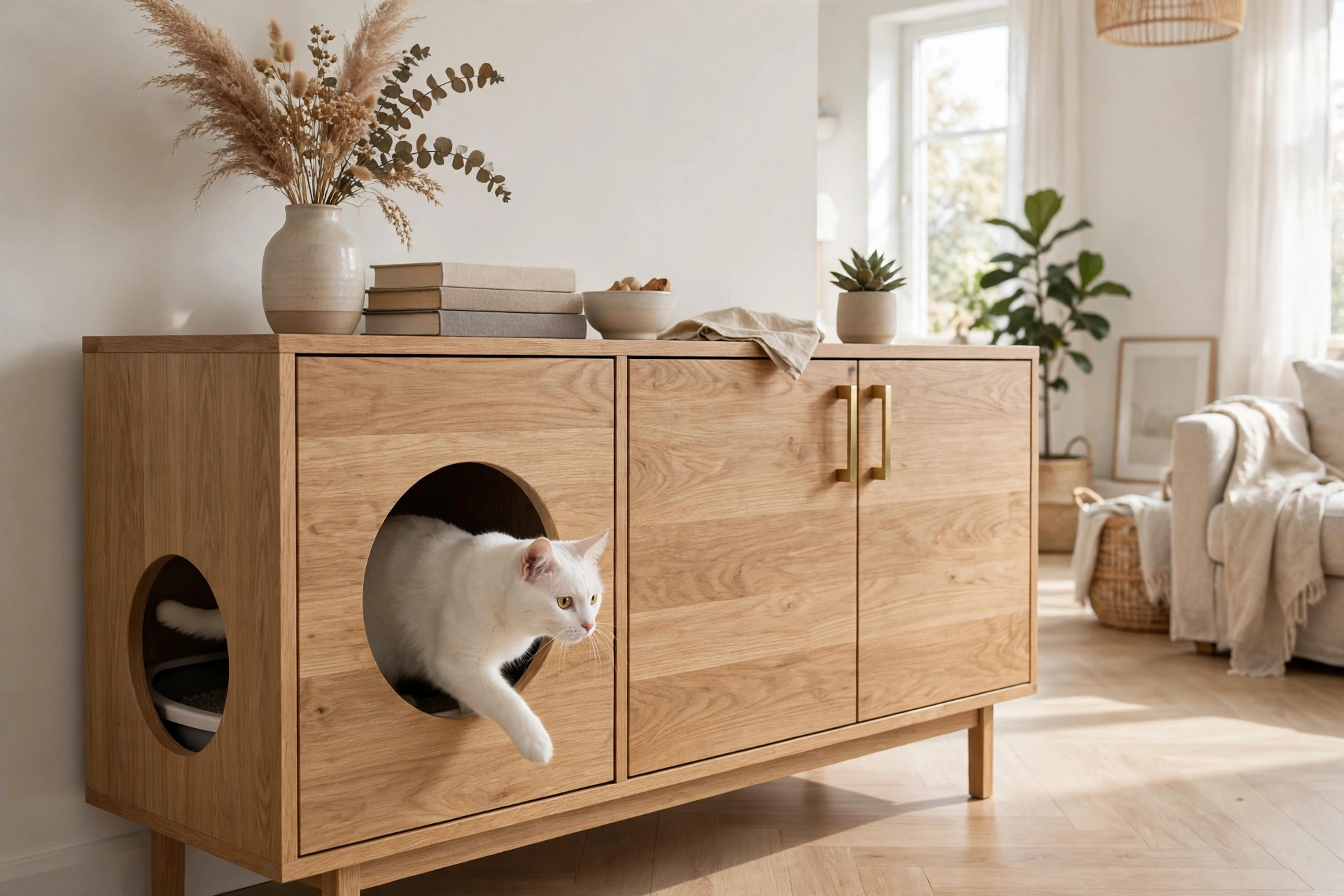
8. Turn the Dog Crate Into an End Table
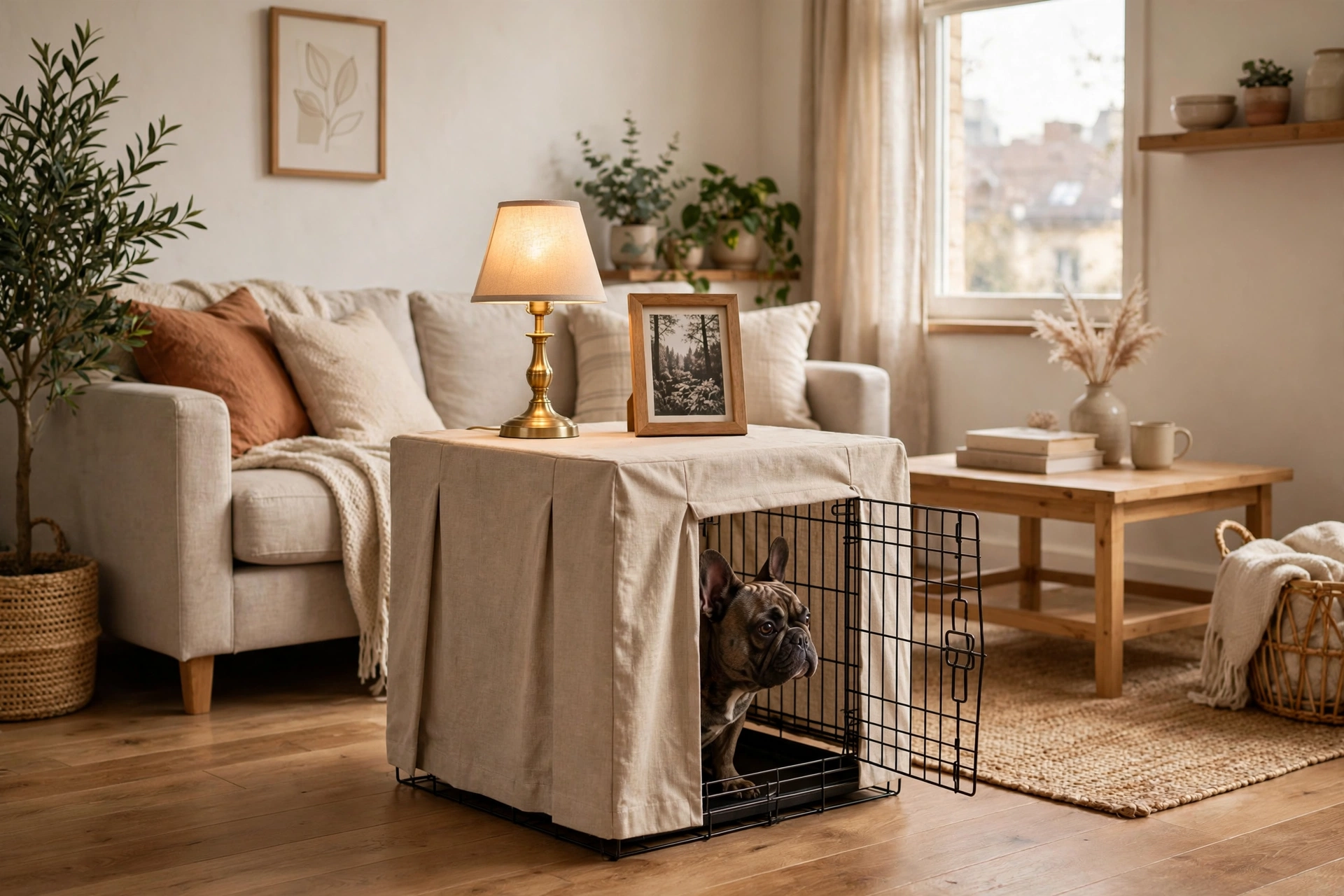
A wire crate in the middle of a studio is an eyesore, but many dogs genuinely love their den. Furniture-style crates ($120–$300) in wood with metal-bar sides look like an end table — style a lamp and a small plant on top and it disappears into the room. Keep the door open during the day so it reads as a cozy nook, not a cage. Pro tip: never use the crate as punishment — a dog that loves its den settles quietly, which your neighbors in a thin-walled building will deeply appreciate.

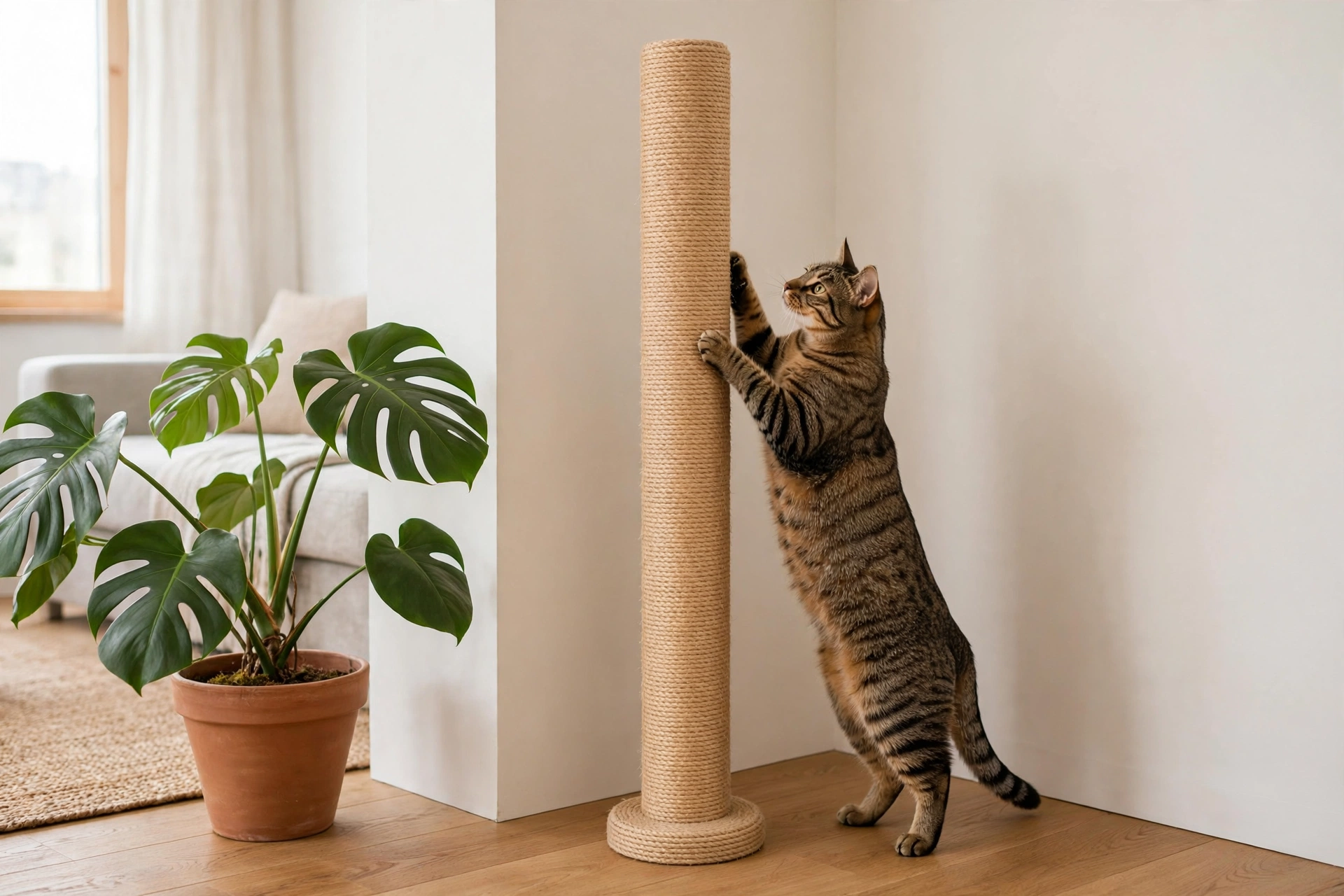
9. Offer a Scratching Post Worth Using
Cats don’t scratch your sofa out of spite — they scratch because the sofa is tall, sturdy, and conveniently located. Beat it at its own game with a tall sisal post ($30–$70) in natural tones placed exactly where the cat already scratches. A post that matches your decor gets used; an ugly one gets ignored while the armchair suffers. Rub a little catnip into the sisal for the first week to seal the deal. Pro tip: the post must be tall enough for a full vertical stretch — at least 30 inches — or your cat will keep choosing the taller, better sofa.
Boundaries, Feeding & the Entry Drop Zone
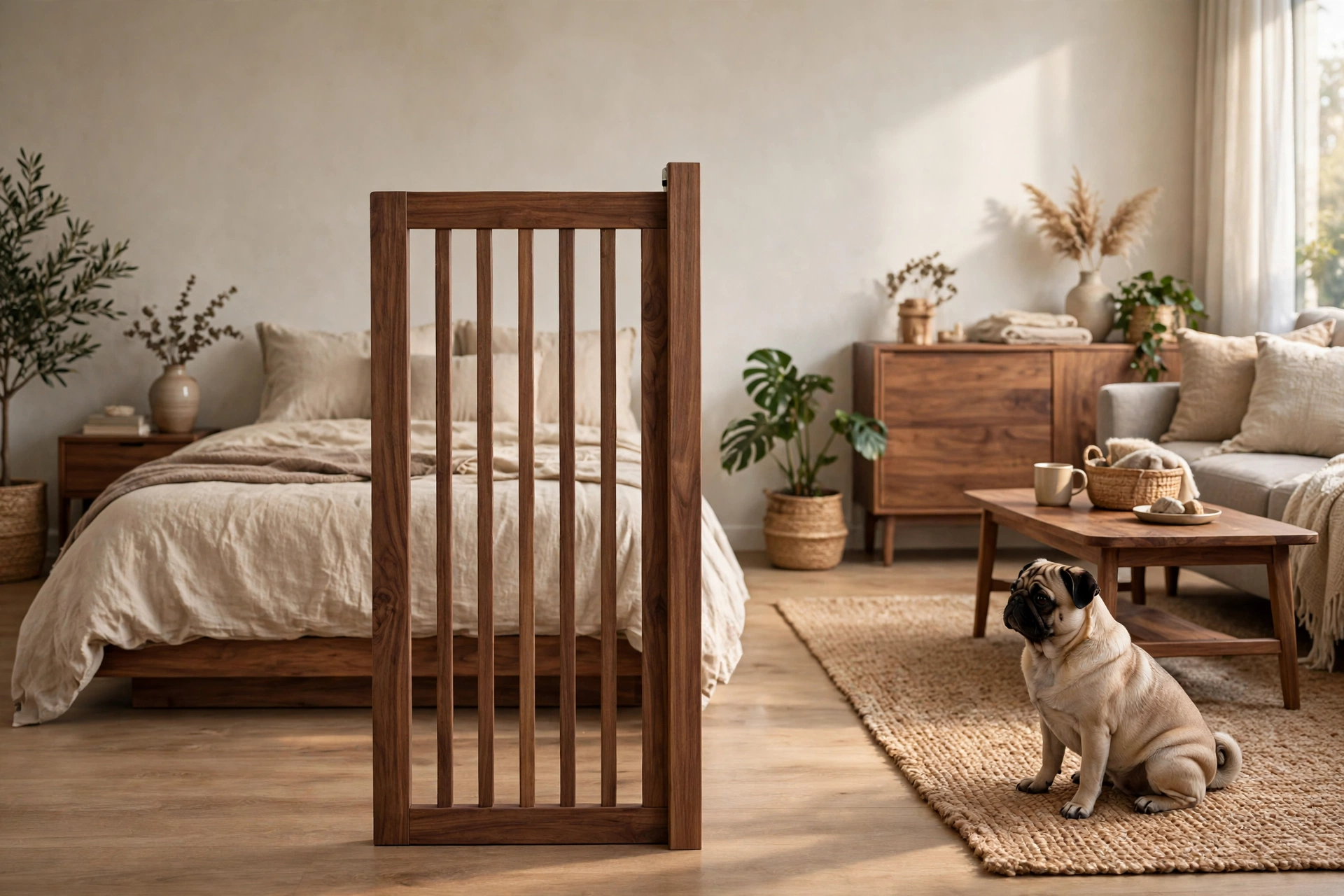
10. Zone With a Stylish Pet Gate
In an open studio, sometimes you need the dog out of the kitchen while you cook or the cat away from a fragile display. A freestanding wooden gate with vertical slats ($60–$140) creates a boundary that looks like intentional room division — the same zoning logic behind our studio apartment layout ideas, applied to pets. Choose a finish that matches your furniture and it reads as decor. Pro tip: get a pressure-mounted model, not a drill-in one — renters can reposition it endlessly and take it along to the next apartment.
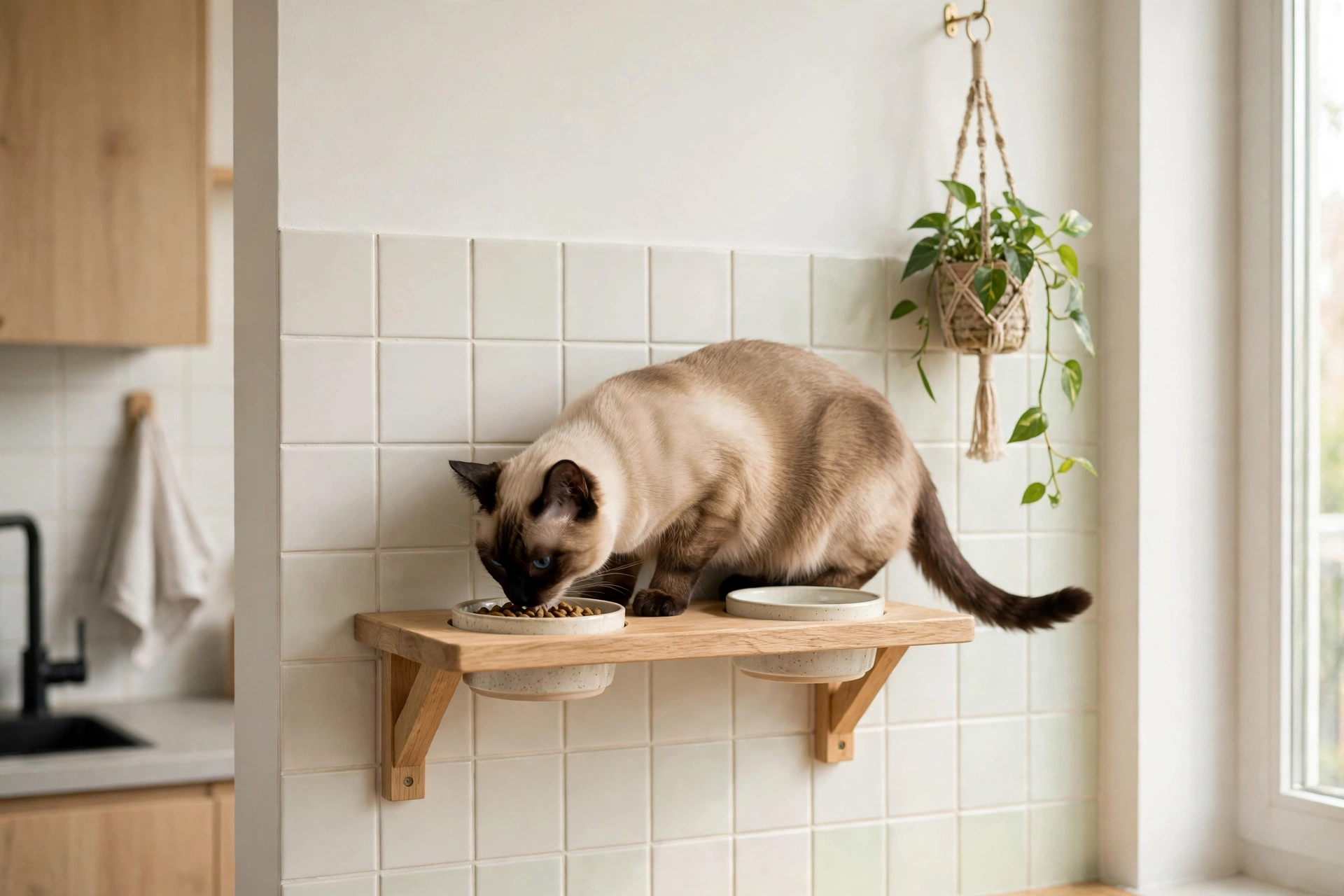
11. Mount a Wall Feeding Shelf for Cats
Floor space is precious in a studio, so move the cat’s dinner upstairs. A sturdy wall-mounted shelf ($25–$50) with a raised lip holds two small bowls at chest height — safely out of the dog’s reach and off your limited floor. Mount it near the kitchen for easy refills and wipe-downs. Cats also prefer eating elevated; it feels safer to them. Pro tip: install it away from the litter area — cats instinctively dislike eating near their bathroom, and honoring that keeps mealtime stress-free.
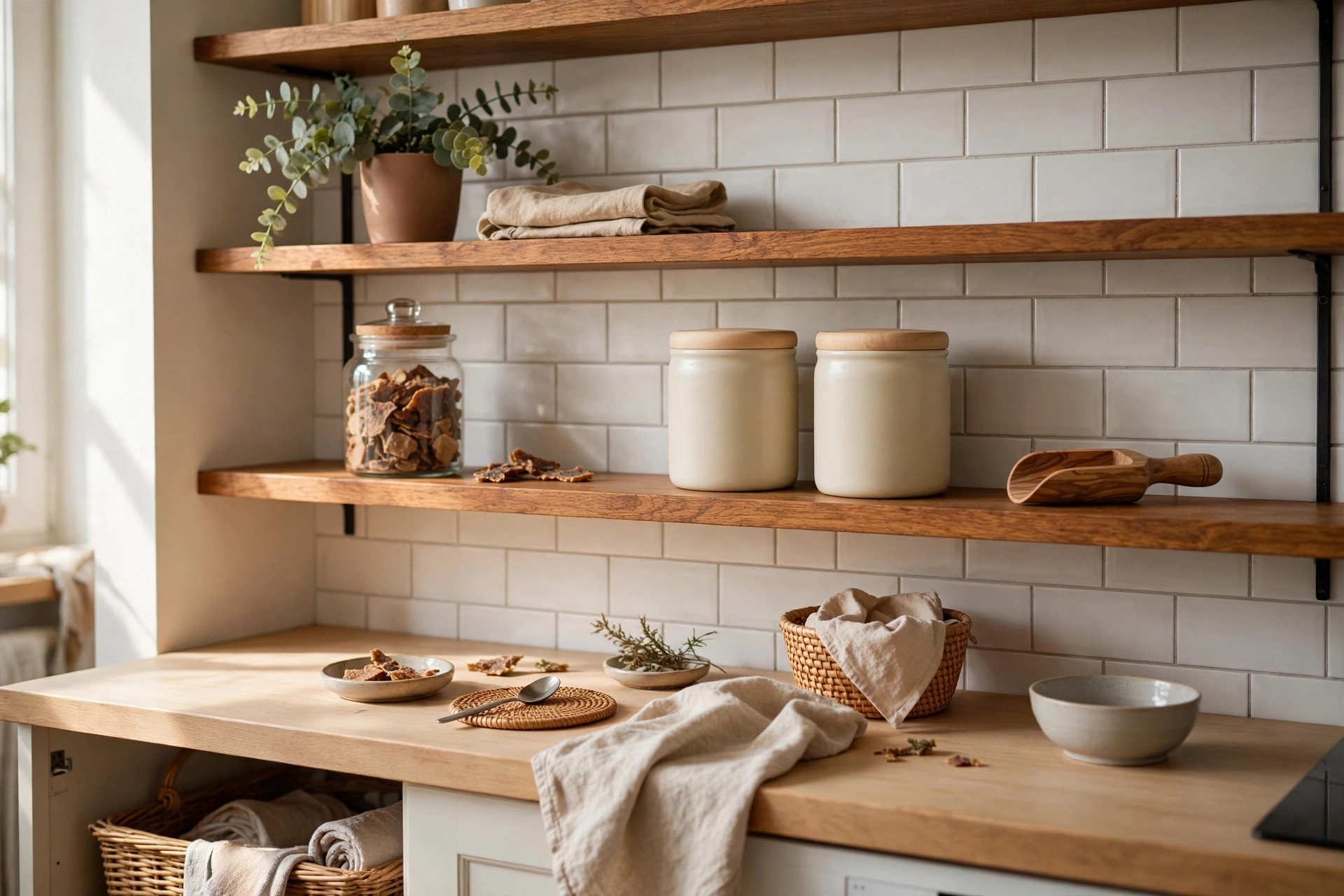
12. Store Kibble in Decor-Worthy Canisters
A crinkly kibble bag slumped in the corner ruins even the prettiest kitchen. Decant dry food into airtight ceramic canisters ($20–$40 for a set) and style them on open shelving alongside your own pantry jars. The food stays fresher, the bags stay out of sight, and the shelf looks curated. Add a small matching scoop and you’ve got a vignette. Pro tip: keep the original bag’s feeding-guideline panel clipped inside a kitchen drawer — you’ll want the portion chart and the food’s lot number if there’s ever a recall.
13. Corral Leashes in an Entry Basket
Leashes draped over doorknobs and poop bags migrating across the counter make an entry feel chaotic. One woven basket ($18–$35) by the front door corrals the leash, spare bags, a rope toy, and paw balm into a single grab-and-go station. Everything for the walk lives in one place, and the basket itself looks like intentional entry styling. Pro tip: keep a spare roll of poop bags and a backup leash in the basket — the morning you discover you’re out of bags mid-walk is a morning you never forget.
Washable Layers & Cleaning Systems
14. Drape Dark Throws on Favorite Spots
Pets are creatures of habit — your cat has already chosen “their” cushion. Instead of fighting it, drape a dark, washable throw ($20–$45) over each claimed spot. The throw takes the fur and the claw marks; the sofa underneath stays pristine. Choose throws in colors that complement your palette so they look like styling, not surrender. Pro tip: buy throws slightly larger than the cushion — tucking the edges in keeps them in place through even the most dramatic 4 a.m. zoomies.

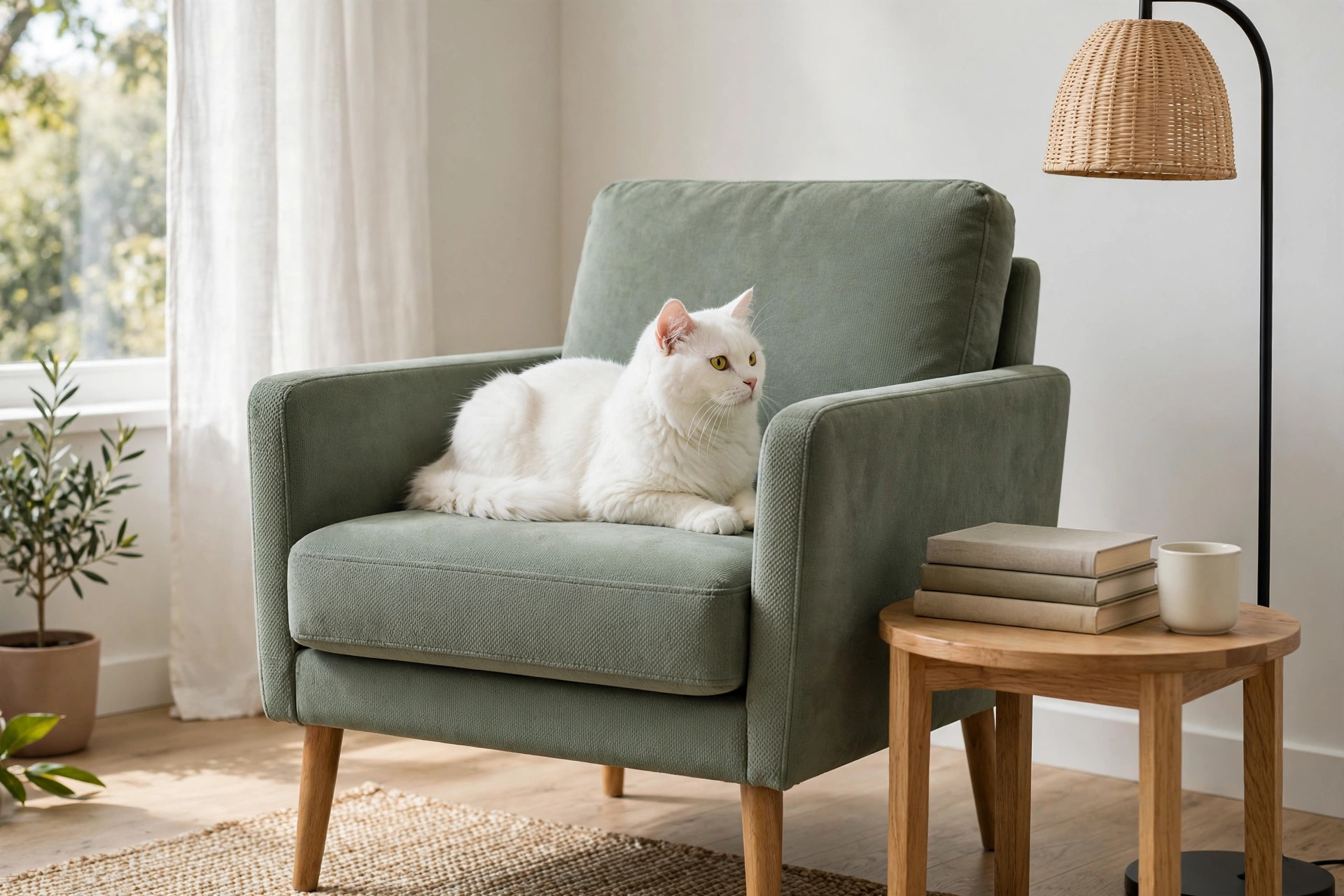
15. Choose Performance Fabric for Accent Chairs
That reading chair is prime cat territory, so upholster it accordingly. Microfiber and modern performance fabrics ($250–$600 for a good accent chair) resist stains, release fur with a single wipe, and stand up to kneading claws far better than linen or velvet. A sage or charcoal chair hides fur between cleanings while looking completely high-end. Pro tip: run a slightly damp rubber glove over the fabric to lift embedded fur — the static pulls hair out of the weave in seconds, faster than any lint roller.
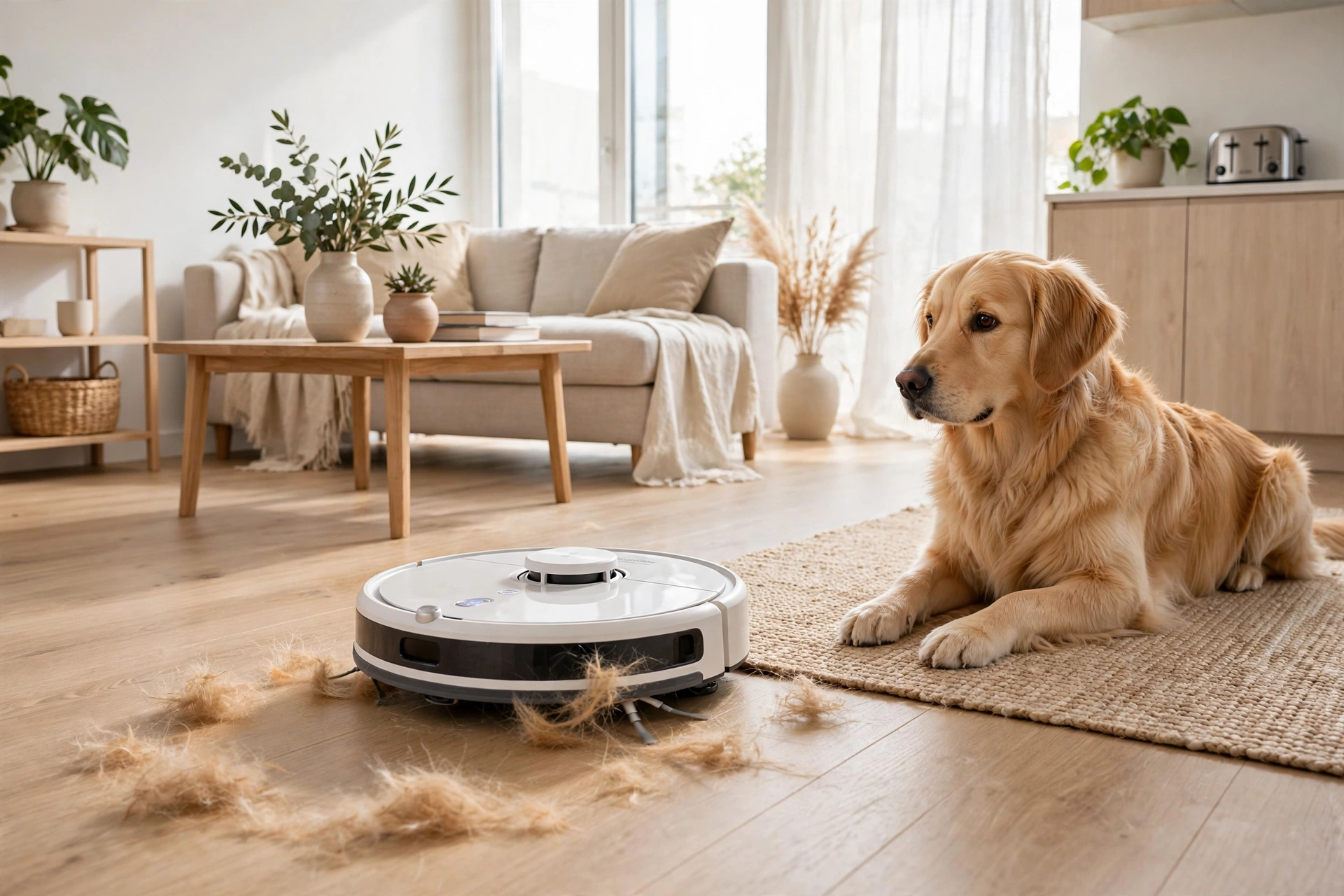
16. Let a Robot Vacuum Do the Daily Sweep
In a studio, pet hair has nowhere to hide — it’s on every surface by dinner. A robot vacuum ($180–$400) running daily while you’re at work is the single biggest quality-of-life upgrade for pet studios. It keeps floors guest-ready, cuts down the dander that triggers allergies, and means your weekend deep-clean takes twenty minutes instead of two hours. Pro tip: run it at the same time daily and empty the bin every other day — a full bin just pushes hair around, and consistency is what keeps a small space truly clean.
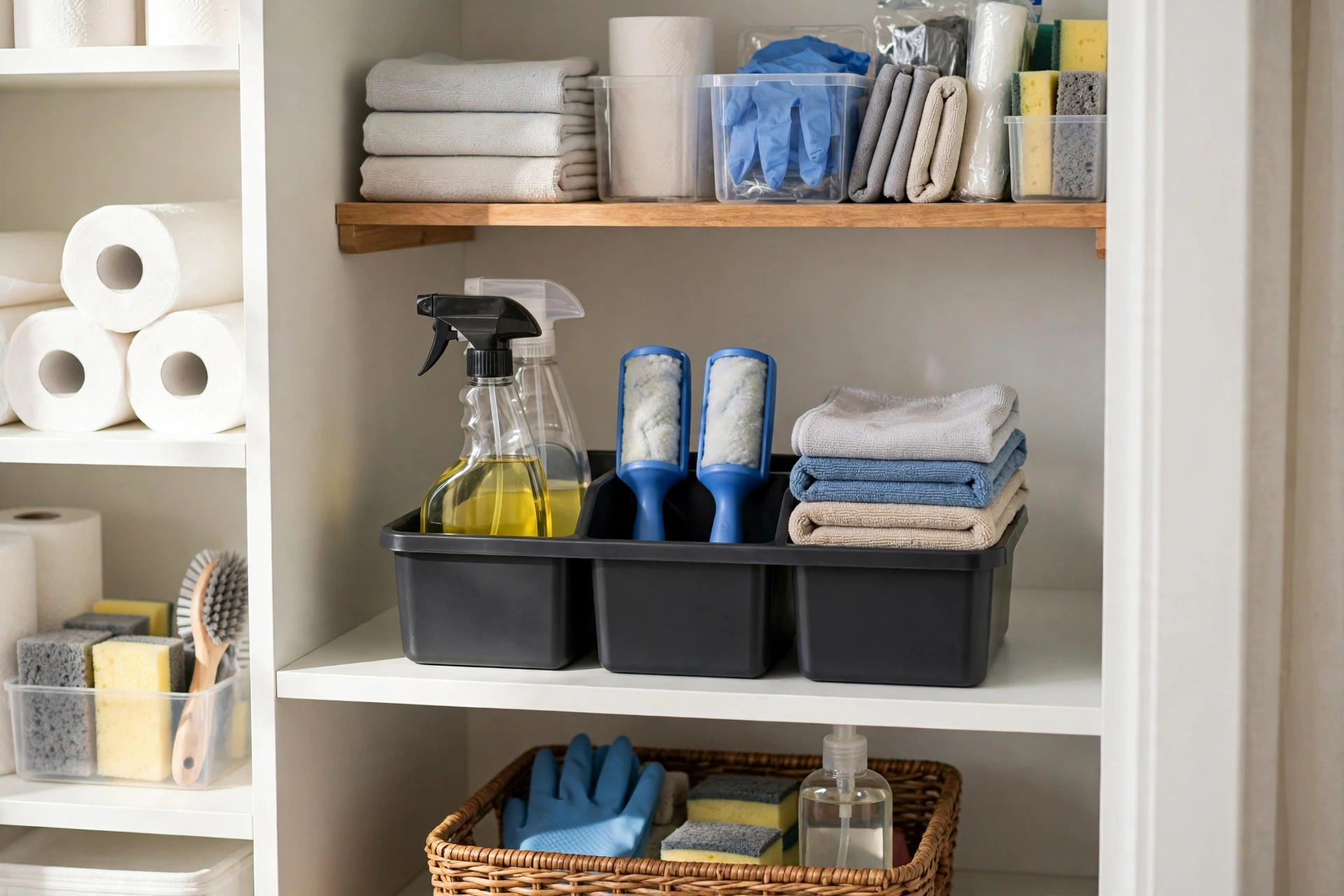
17. Build a Pet Cleaning Caddy
When accidents happen — and in a studio, they happen three feet from your bed — speed matters. Keep a dedicated caddy ($15–$30) stocked with enzymatic cleaner, paper towels, microfiber cloths, and lint rollers in the closet or under the sink. Enzymatic formulas actually break down the proteins that cause lingering odor and repeat offenses, unlike regular cleaners. Pro tip: treat the spot, then cover it with an upside-down laundry basket for an hour — it keeps paws off the damp cleaner while it works and stops re-soiling.
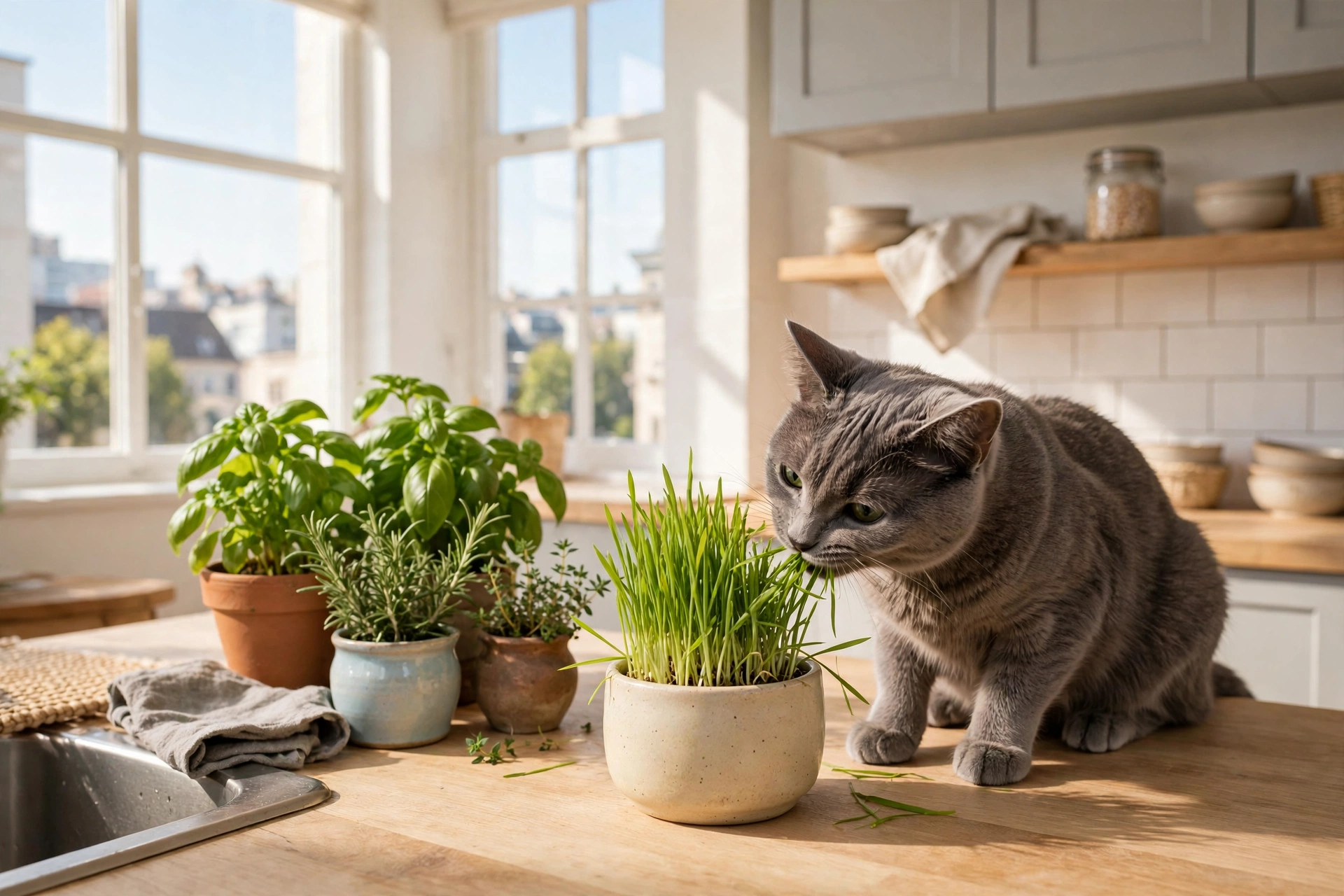
18. Grow Cat Grass on the Counter
Indoor cats crave greens, and without an outlet they’ll sample your monstera — many houseplants are toxic to pets. A small pot of cat grass ($5–$12 for seeds and a ceramic planter) on the kitchen counter gives them a safe chew, aids digestion, and adds a tuft of living green to your kitchen styling. It sprouts in about a week and cats genuinely prefer it to your plants. Pro tip: start a second pot every two weeks in rotation — one always growing while the other gets grazed keeps the supply endless and your houseplants untouched.
Comfort, Safety & Everyday Rituals
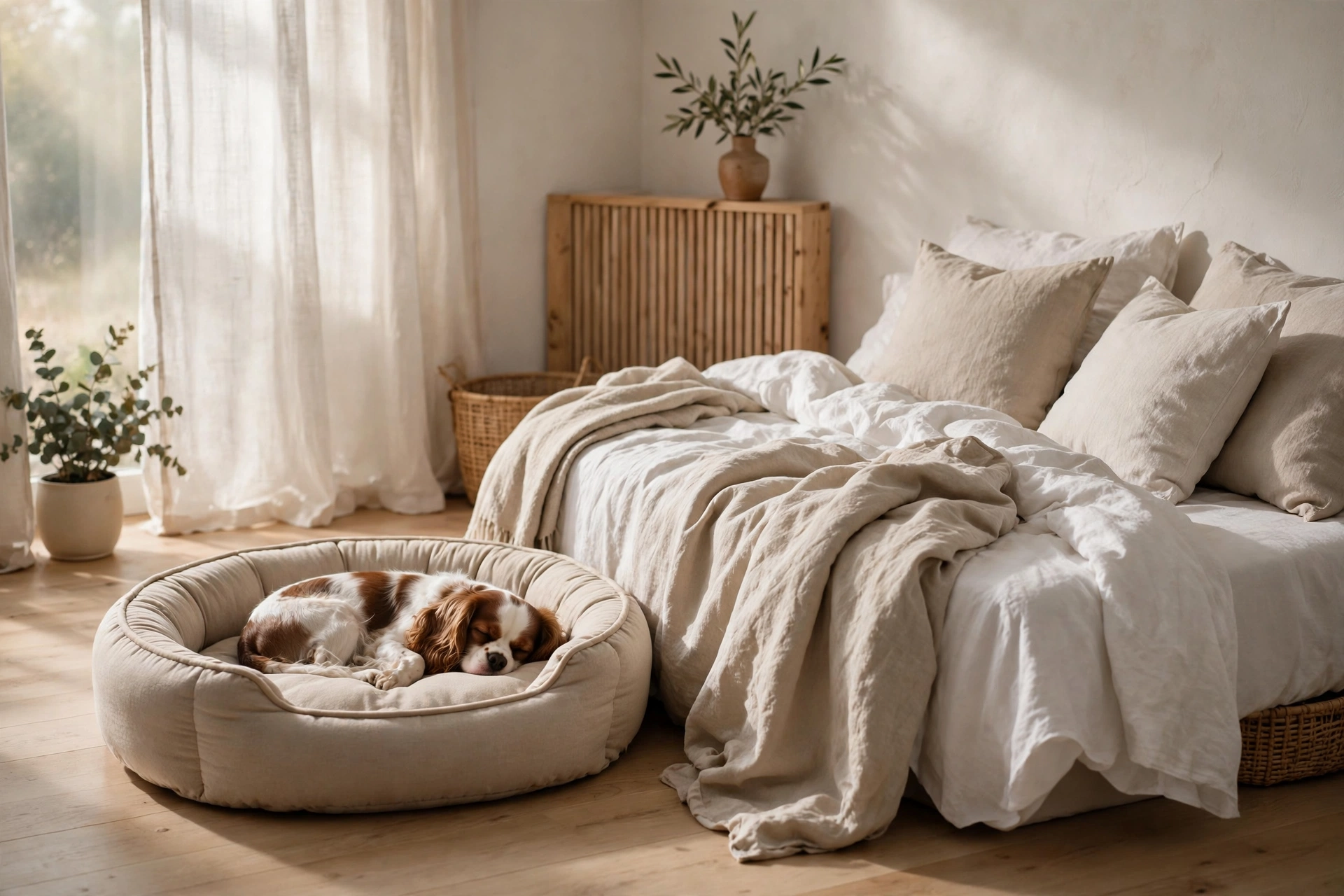
19. Match the Pet Bed to Your Bedding
A neon dog bed clashes with everything in a small space. Choose a washable round bed ($35–$80) in the same palette as your duvet — beige bed, beige dog bed — and place it right beside yours. Your dog gets the comfort of proximity without the 2 a.m. kick-boxing match, and the sleeping zone looks coordinated instead of chaotic. Pro tip: buy two removable covers and rotate them weekly — one in the wash, one on the bed, zero downtime and zero dog smell.
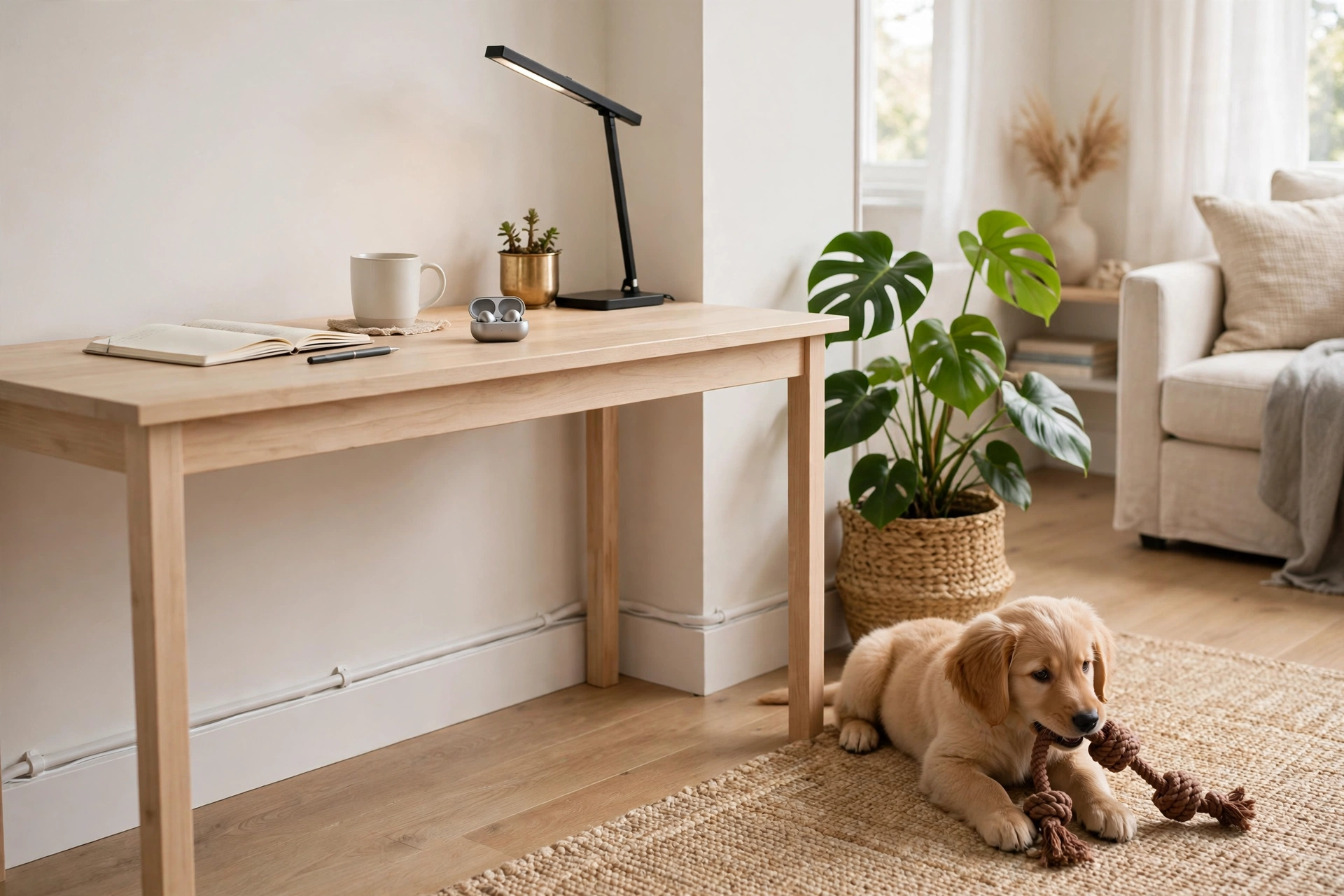
20. Protect Cords With Covers
Puppies and kittens explore the world with their teeth, and a studio’s chargers, lamp cords, and laptop cables are all at chew height. Slim cord covers ($12–$25 for a pack) snap over cables along baseboards and behind the desk, removing both the danger and the visual clutter in one move. Your home office instantly looks tidier too. Pro tip: bitter-apple spray on the covers adds a second layer of deterrent for persistent chewers — most pets try once, grimace, and never return.
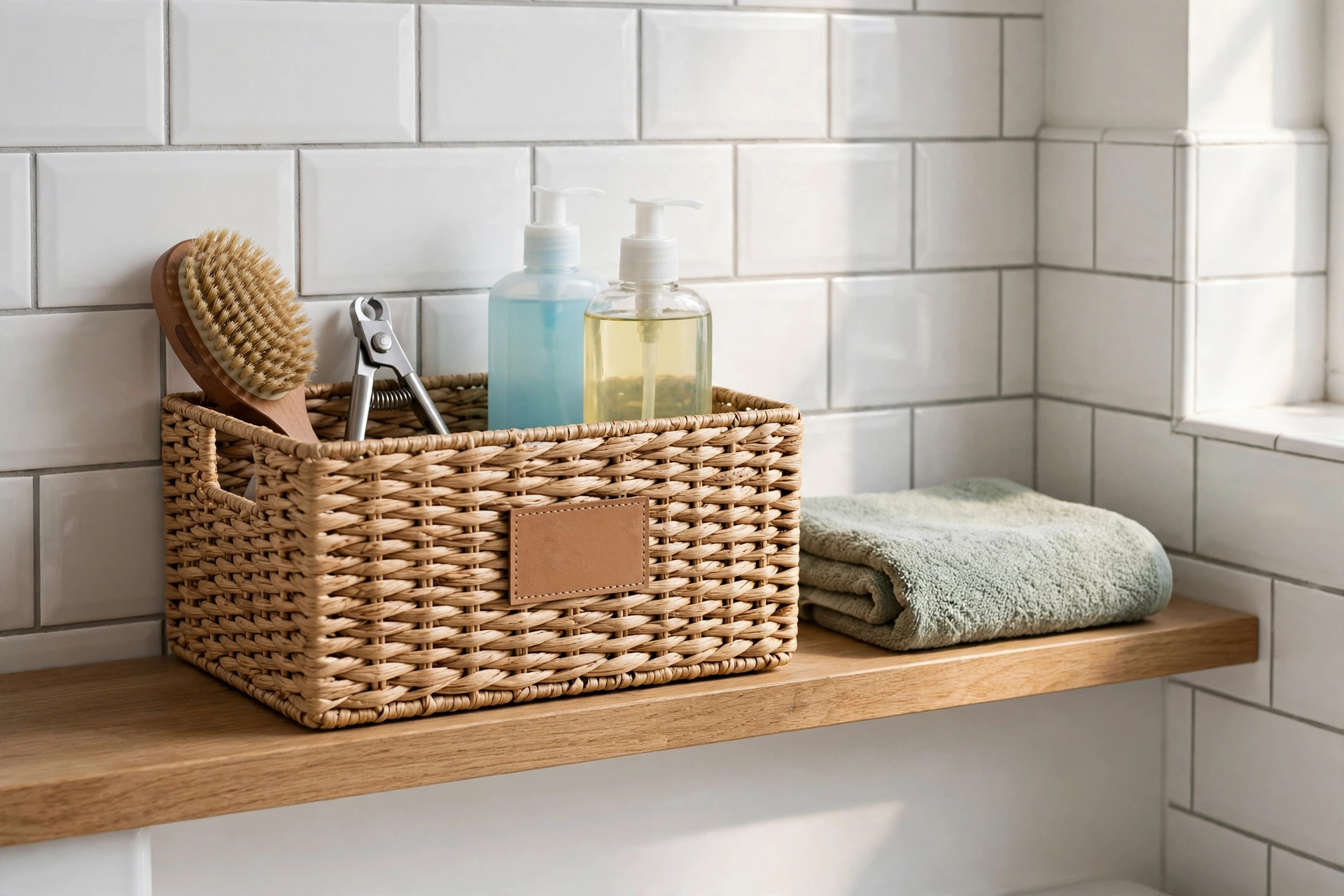
21. Keep a Labeled Grooming Bin
Brushes, nail clippers, pet shampoo, and ear wipes scattered across the bathroom counter make the whole space feel messy. One labeled woven bin ($15–$30) on a bathroom shelf holds the entire grooming kit in a tidy package. Regular brushing — even five minutes twice a week — dramatically cuts the fur tumbleweeds rolling across a studio. Pro tip: brush long-haired pets right before the robot vacuum’s scheduled run — the vacuum immediately collects everything the brush loosened.
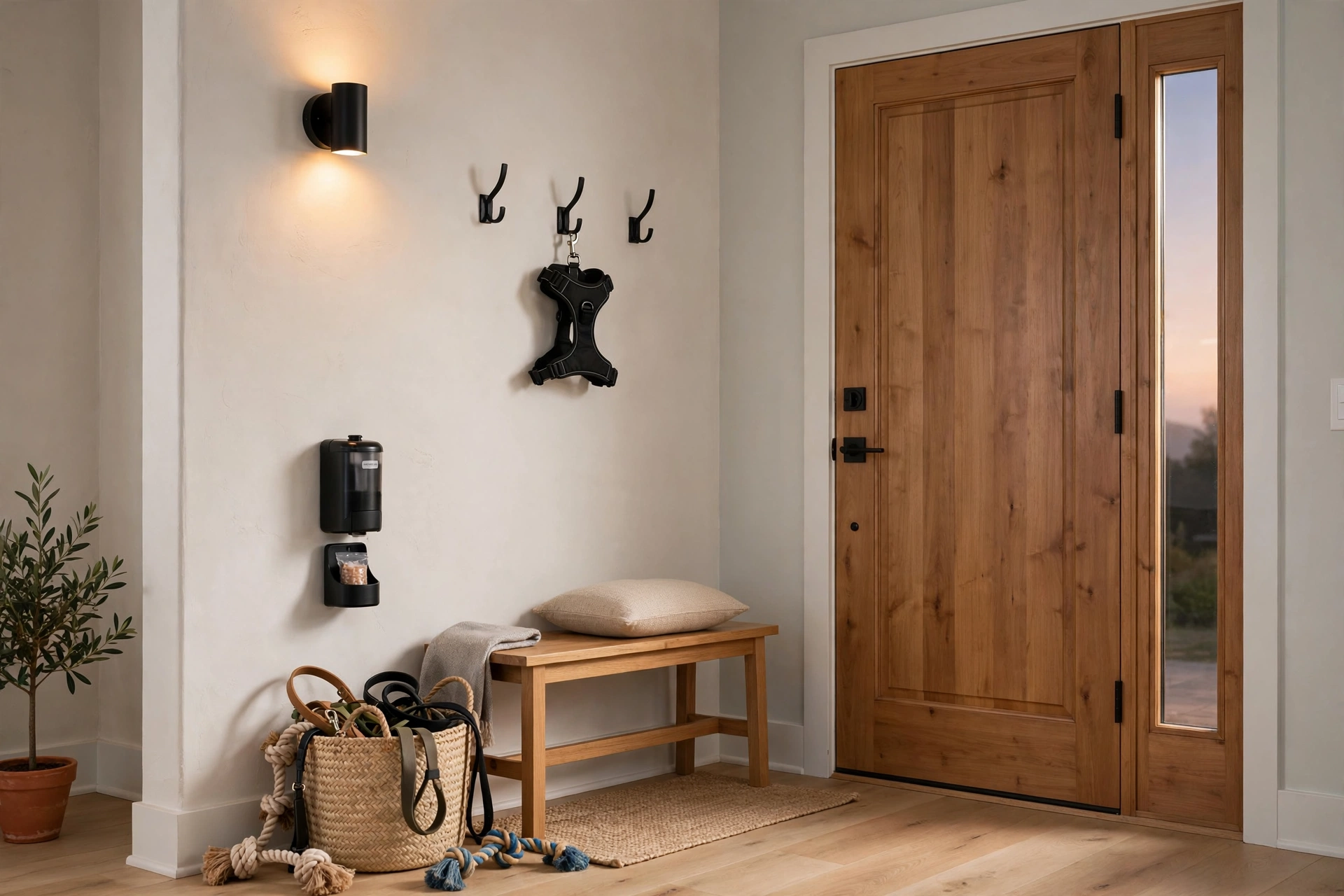
22. Hang a Leash Station by the Door
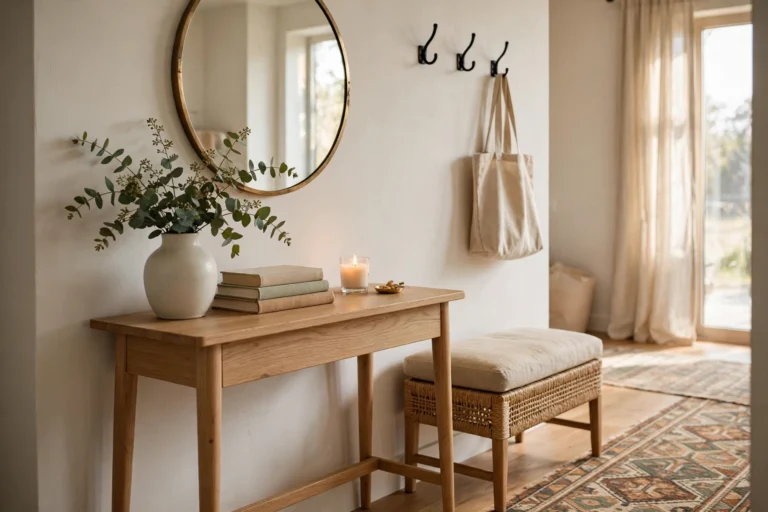
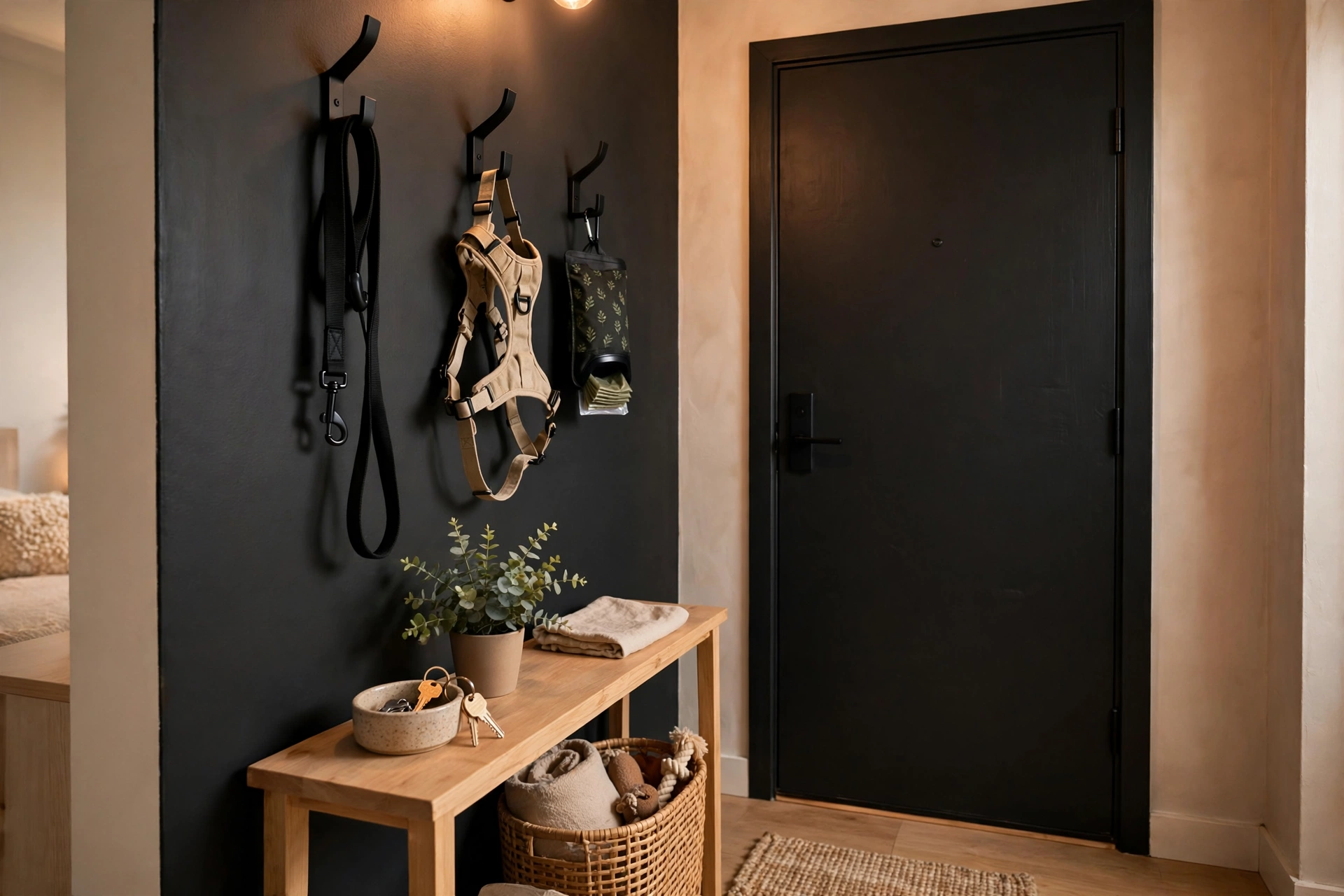
The two minutes spent hunting for the leash while your dog spins in excited circles are two minutes too many. Matte-black wall hooks ($15–$30) by the front door hold the leash, harness, and a poop-bag pouch at grab height, with a small bowl below for keys. The whole pre-walk ritual becomes one smooth motion. Pro tip: add a tiny lidded trash bin right beside the door for used bags on the way back in — it keeps the smell out of your kitchen trash entirely.
23. Soften the Crate With a Tailored Cover
A bare wire crate reads as kennel, not home. A tailored fabric cover ($25–$60) in a neutral linen-look instantly transforms it into what appears to be a side table — and the den-like darkness actually helps anxious dogs settle faster. Leave the front panel open or rolled up during the day so it stays inviting. It’s the same visual-calming principle behind our minimalist studio apartment decor ideas: fewer harsh lines, calmer room. Pro tip: choose a cover with roll-up sides rather than a fixed one — airflow matters in summer, and versatility beats a single-season solution.
24. Set Up an Indoor Grass Patch
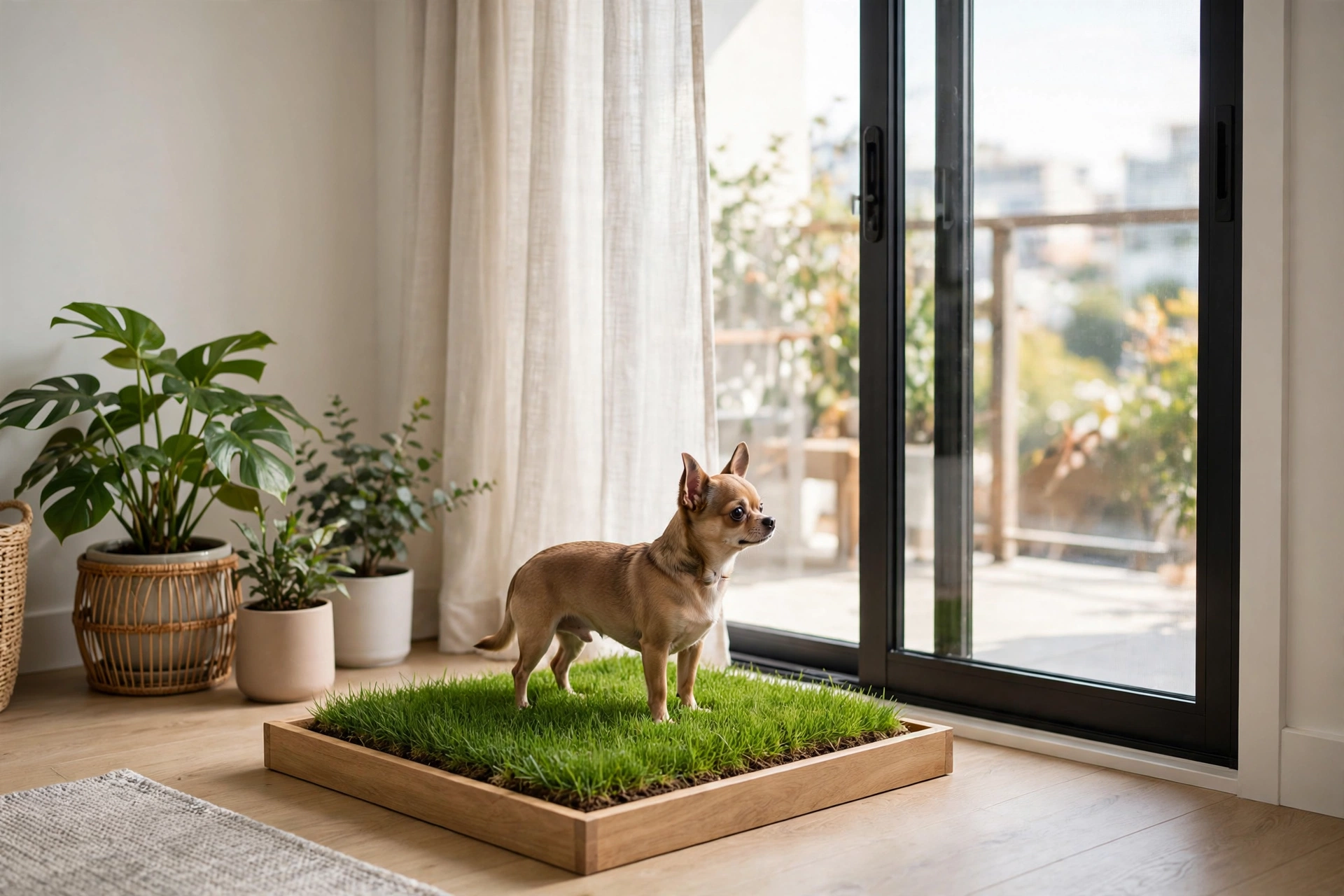
High-rise studio life means the elevator ride downstairs for every potty break — brutal at 6 a.m. in winter. A fresh grass patch in a tray ($30–$60 per subscription delivery) near the balcony door gives small dogs a real-grass option for emergencies and late nights. It’s far more hygienic and odor-controlled than pee pads, and dogs take to real grass instinctively. Pro tip: replace the patch every 1–2 weeks without fail — an old patch is what creates the “dog smell” people blame on the dog instead of the maintenance.
Clean Air, Tidy Spaces & Celebrating Your Pet
25. Run an Air Purifier for Dander
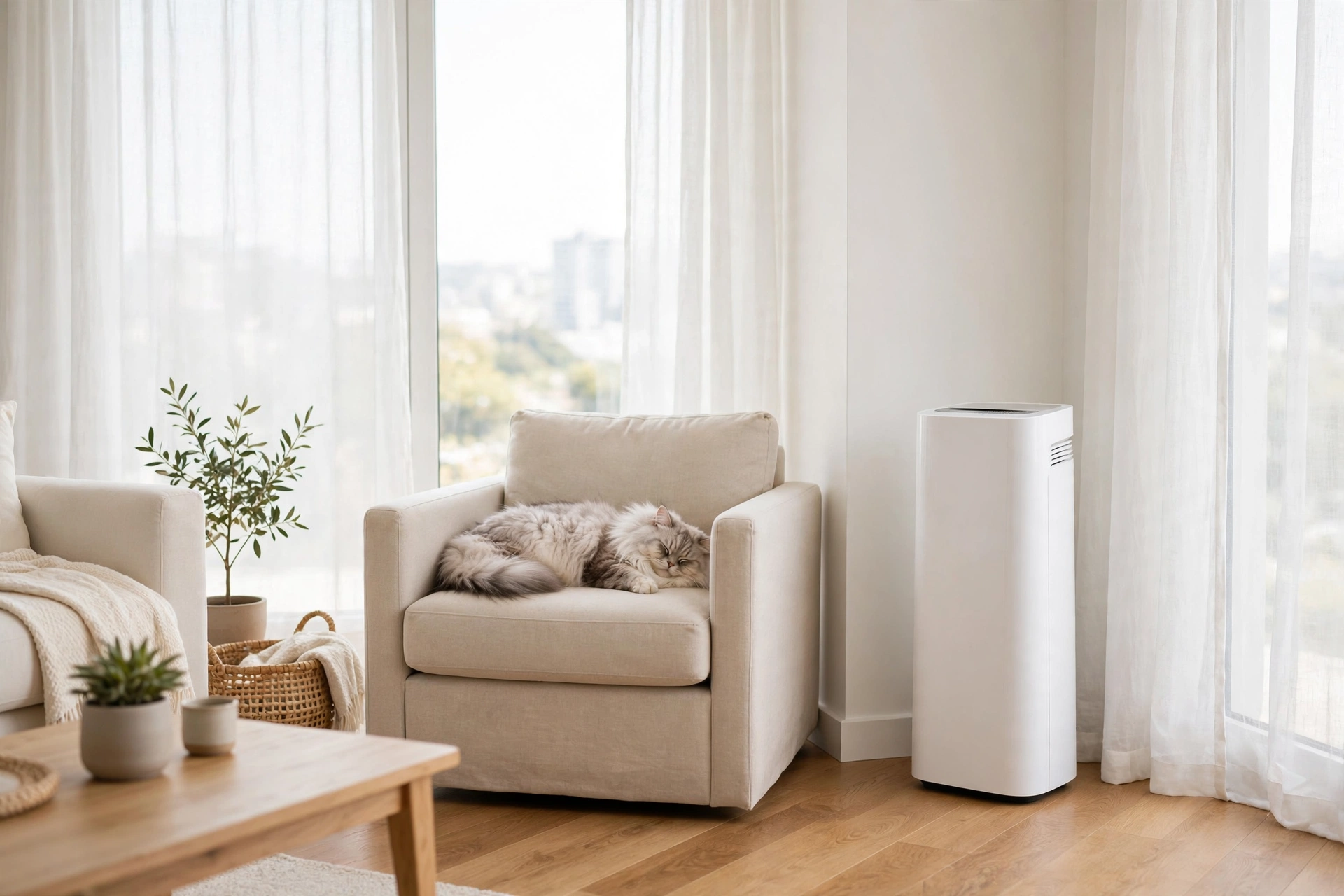
In 400 square feet, dander and litter dust have nowhere to dissipate — they just recirculate. A HEPA air purifier ($80–$200) sized for a studio runs quietly in the corner, pulling dander, dust, and odors out of the air around the clock. Guests with mild allergies will notice the difference immediately, and so will your sinuses. Pro tip: place the purifier near the litter box or pet bed — capturing particles at the source is far more effective than purifying from across the room.
26. Slipcover the Dining Chairs
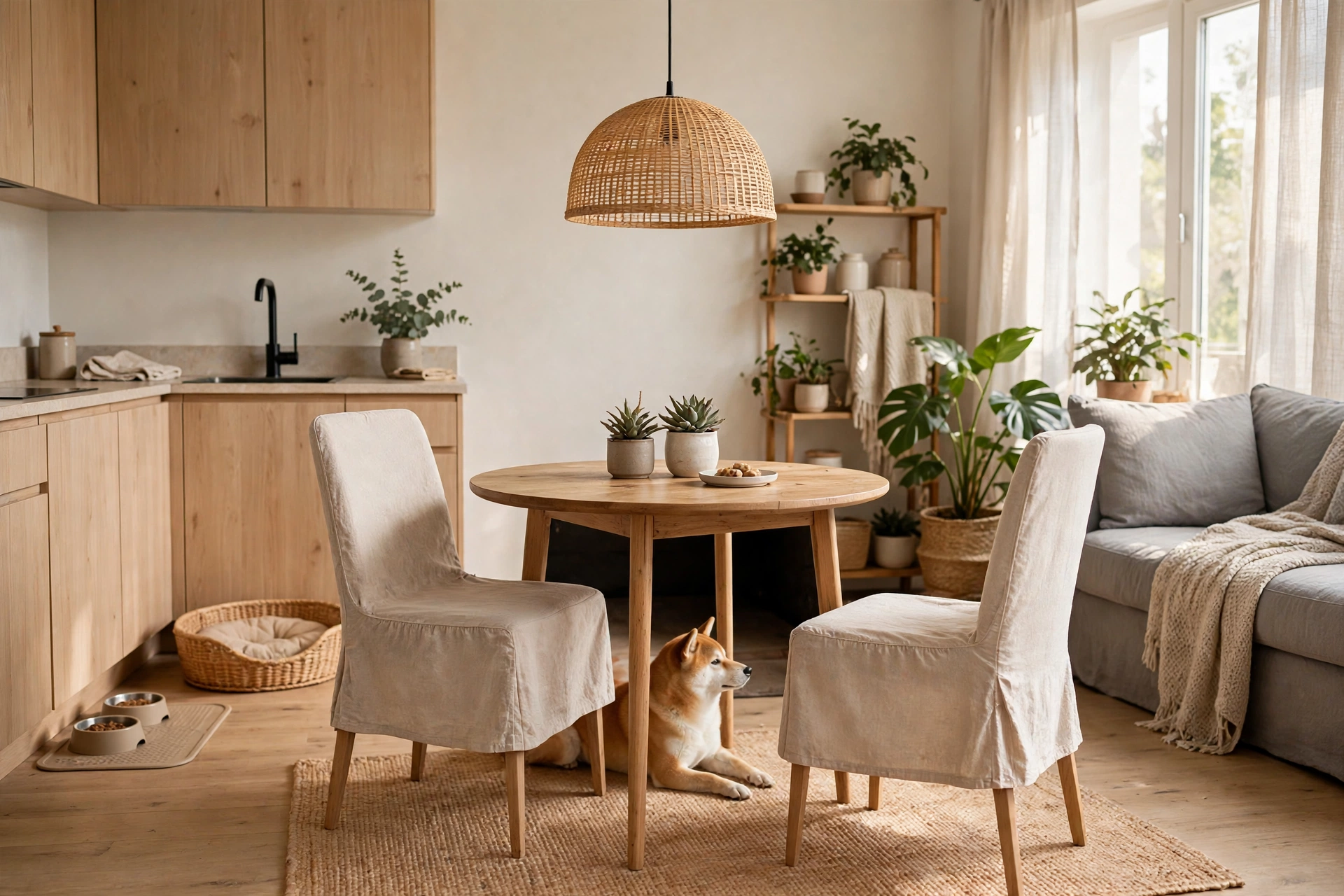
Dining chairs are stealth pet magnets — the dog claims one the moment you stand up. Stretchy, wipeable chair slipcovers ($25–$50 for a set) protect the upholstery underneath and peel off for the wash in seconds. Choose a color close to your pet’s fur and you’ll barely notice shedding between washes. Pro tip: keep the original chairs’ fabric in a dark or patterned tone underneath — even if a cover slips mid-dinner-party, what’s beneath still looks intentional.
27. Rotate Toys From One Basket
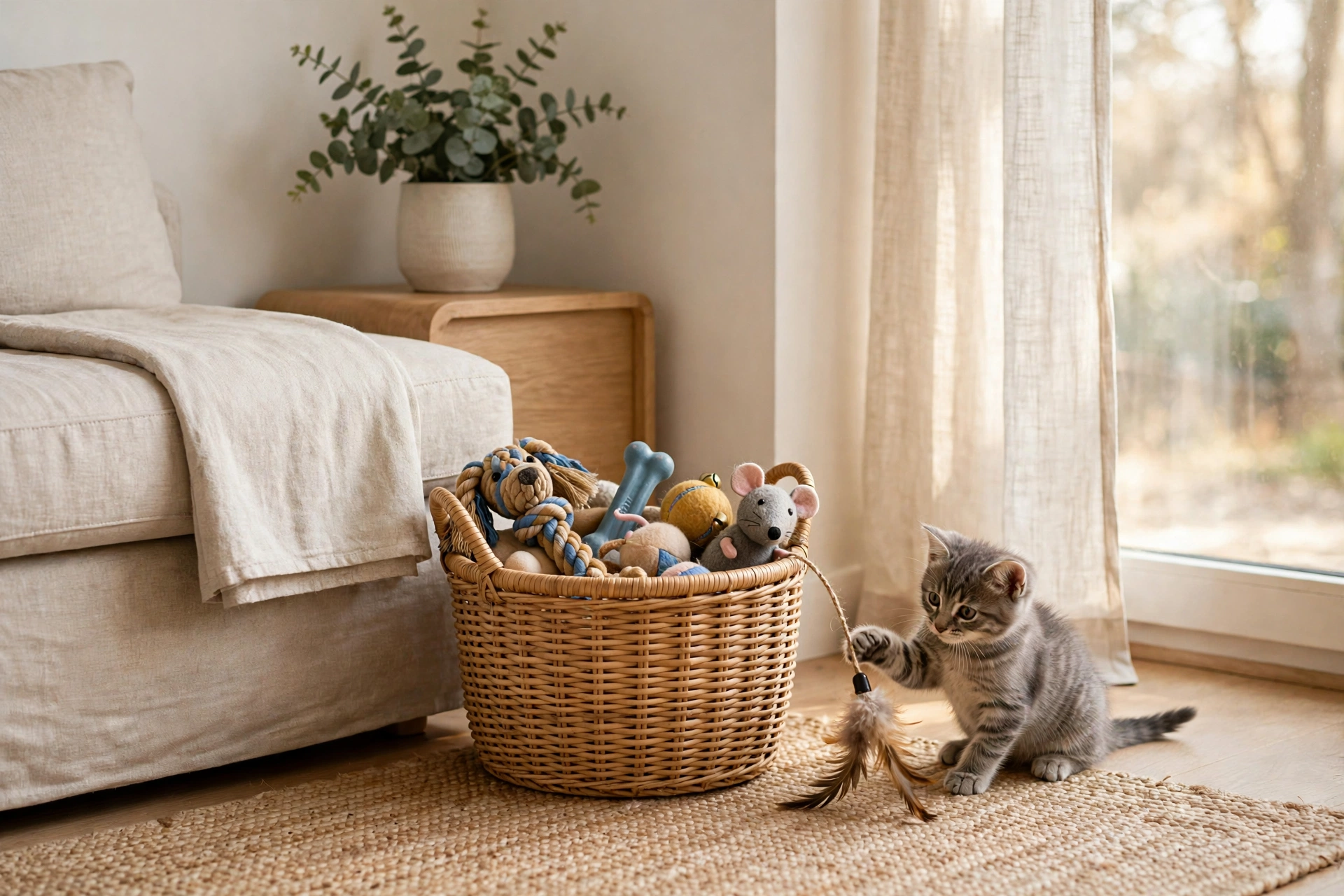
Twenty toys scattered across a studio floor make it look like a daycare. Keep one woven basket ($18–$35) as the toy home and rotate just five or six toys into it each week, storing the rest away. Your pet gets “new” toys regularly — novelty reignites interest — and your floor stays clear. The basket itself becomes a styled accent. Pro tip: toss any toy with loose stuffing or broken squeakers during each rotation — damaged toys are a choking risk and the number-one source of mysterious fluff everywhere.
28. Hang Potty Bells on the Door
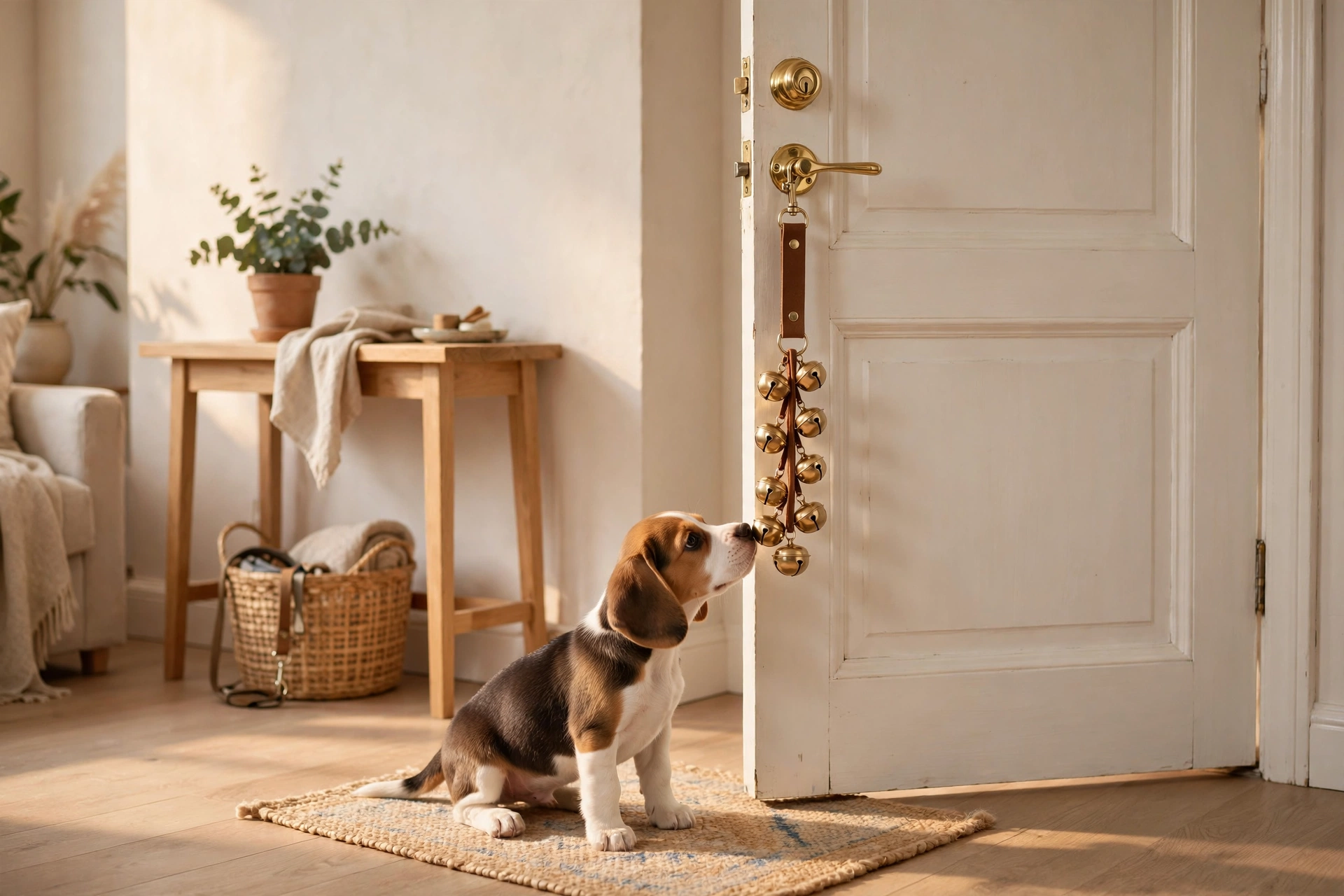
In a studio you’re always within earshot, which makes bell training almost foolproof. A strap of bells ($10–$18) hung at nose height on the front door lets your dog signal clearly instead of pacing anxiously — and it beats scratched-up door paint. Most dogs learn the association within two weeks of consistent rewarding. Pro tip: respond to every single ring immediately during training, even the false alarms — delayed responses teach the dog that ringing doesn’t work, and the training unravels.
29. Build a Paw-Wipe Station at the Door
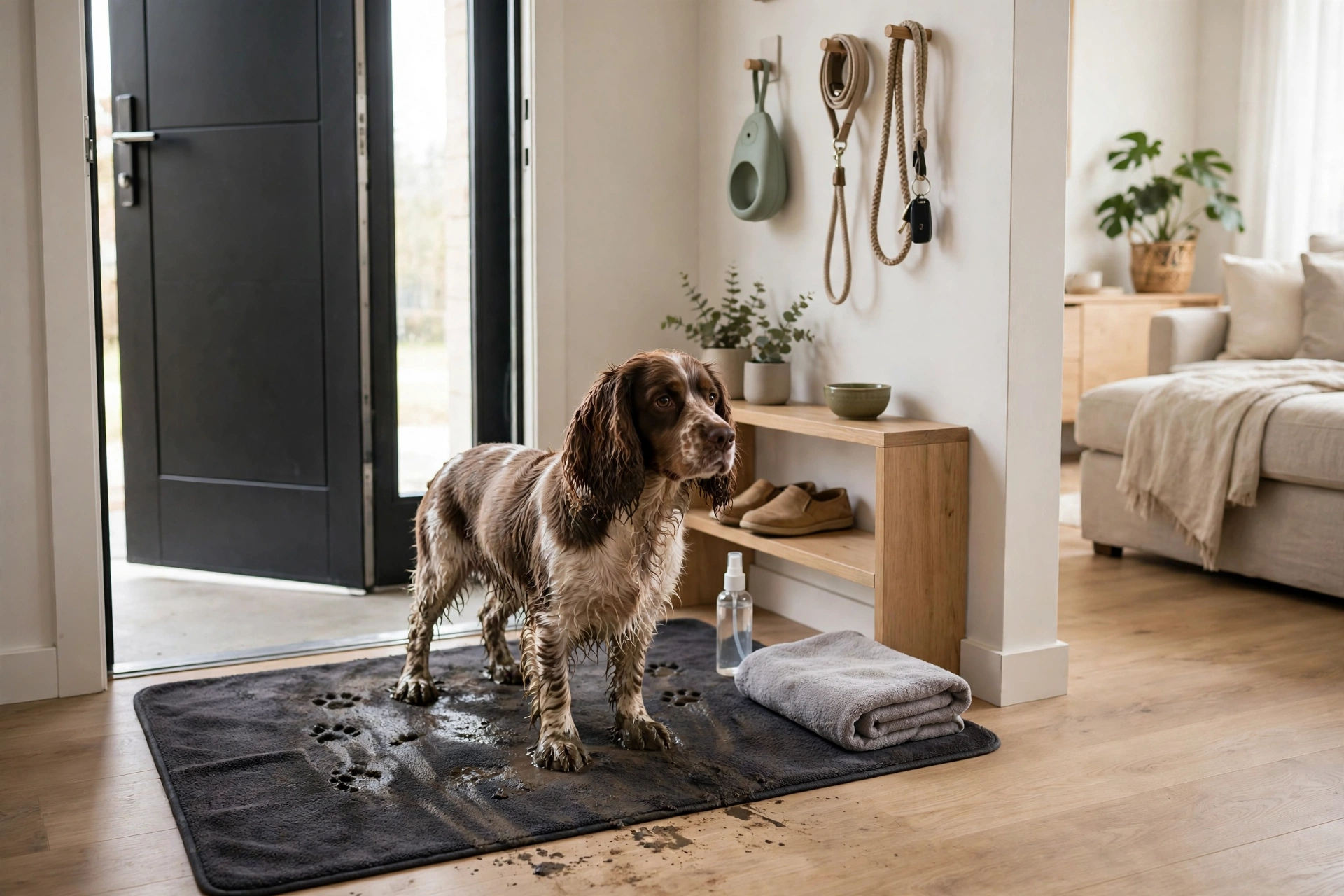
Rainy-day walks end with muddy paw prints trailing straight to your bed — in a studio, there’s no hallway to contain them. A dark microfiber mat ($15–$25) just inside the door, plus a folded towel and a small spray bottle of paw-safe rinse, creates a two-minute decontamination ritual. Wipe paws before the dog gets three steps inside. Pro tip: teach a “wait on the mat” cue with treats — within a week most dogs walk to the mat and offer their paws automatically, turning a chore into a trick.
30. Frame Your Pet Like Family Art
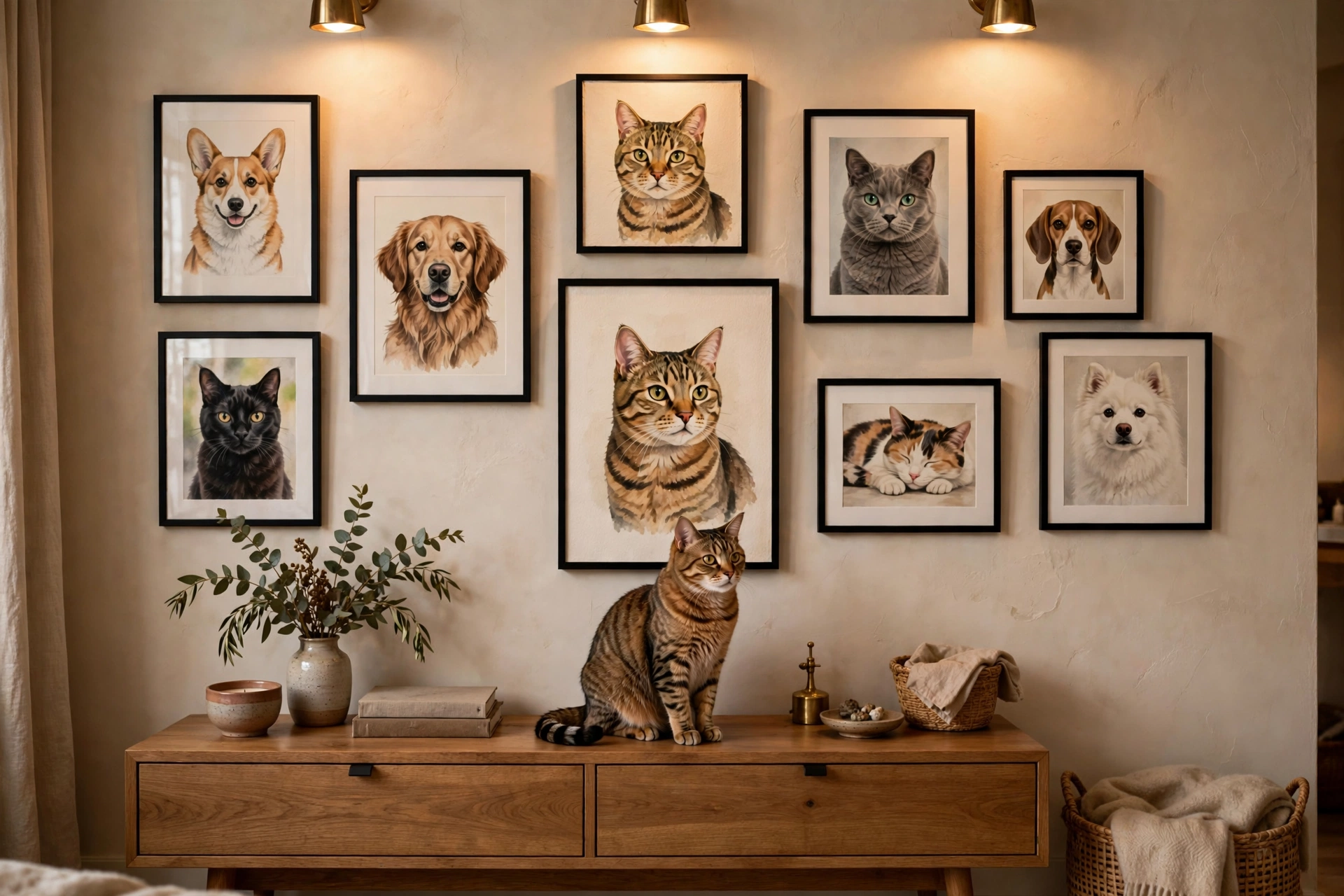
After all this work making the studio beautiful despite the pet, celebrate the pet as the decor. A small gallery wall of framed pet portraits ($8–$15 per frame) — the goofy tongue-out photo, the regal shelter-day portrait — turns your animal into the home’s honored resident. It tells every guest exactly what this home is about. Pro tip: mix one professional photo with candid phone shots in matching thin frames — the consistency of framing is what makes snapshots look like a curated collection.
Frequently Asked Questions
How do I keep a studio apartment from smelling like pets?
Odor control is a system, not a spray. Scoop litter daily and change it fully weekly, wash pet bedding every 7–10 days, run a HEPA air purifier continuously, and use enzymatic cleaners on any accident — they break down odor-causing proteins instead of masking them. Washable rugs and slipcovers mean soft surfaces never harbor old smells. Most “pet smell” is actually dirty-textile smell, and this routine eliminates it at the source.
What is the best flooring for pets in a rental studio?
You usually can’t change rental flooring, so work with what’s there: layer washable low-pile rugs over hard floors for traction and warmth, and use waterproof mats under bowls and litter areas. If you’re choosing flooring, luxury vinyl plank is the pet gold standard — waterproof, scratch-resistant, and warm underfoot. Avoid wall-to-wall carpet with pets whenever you have the choice; it traps dander and odor permanently.
Where should I put a litter box in a studio apartment?
The best spot is a ventilated corner away from both your bed and the kitchen — a bathroom nook, a closet with the door propped, or inside a cabinet with a cat-sized entry. Never place it beside food and water; cats dislike eating near their bathroom. In a true studio, a cabinet-style enclosure near a window or vent keeps it discreet and controls odor and tracked litter best.
How do I stop my cat from scratching the sofa?
Give the cat something better to scratch, placed exactly where the sofa-scratching happens. A tall, sturdy sisal post (30+ inches for a full stretch) in natural tones, rubbed with catnip for the first week, redirects the instinct. Temporarily cover the sofa’s targeted spot with a throw or double-sided tape while the habit transfers. Punishment doesn’t work — a superior alternative does.
Can a dog really be happy in a studio apartment?
Absolutely — dogs care far more about routine, exercise, and companionship than square footage. A studio dog needs committed daily walks, mental stimulation (puzzle feeders, training games), and a cozy den of their own. Smaller and lower-energy breeds adapt most easily, but even larger dogs thrive when their exercise needs are met. The studio’s advantage: you’re never far away, which anxious dogs genuinely prefer.
Which pets are lowest-maintenance for small spaces?
Adult cats are the classic low-maintenance studio pet — litter-trained, independent, and content with vertical space. Among dogs, older rescues and calm small breeds need less than high-energy puppies. Beyond that, betta fish, leopard geckos, and hamsters offer companionship in almost zero footprint. Match the pet’s energy to your lifestyle honestly; the lowest-maintenance pet is the one whose needs you can actually meet every day.
Final Thoughts
A pet-friendly studio isn’t a compromise between your design dreams and your animal’s needs — it’s proof that the two were never in conflict. The homes that feel most alive are the ones designed around real life: the cat asleep in a sunbeam on her window shelf, the dog snoring softly in a bed that matches yours, the leash hanging ready by a door that opens onto your shared adventures.
Start with the foundations — washable fabrics, a designated spot for every creature, and systems that make daily care effortless. Add the disguises for the litter box and crate, the cleaning rhythms that keep 400 square feet smelling like a home instead of a kennel. Before long, guests won’t ask how you “manage” with a pet in a studio. They’ll ask where you got the cat tree.